
Grad Chat - Queen's School of Graduate Studies and Postdoctoral Affairs
281 episodes — Page 1 of 6
Saba Tabesh (Geography) evaluating the reliability of SWOT (Surface Water and Ocean Topography) satellite
Curtis Shorts (Electrical and Computer Engineering) High Performance Computing (HPC) Architecture
John Turnbull (Electrical and Computer Engineering) Making machine learning hold up when the real world drifts away from the training data — tackling natural distribution shifts.
Paul Yousif (Industrial Relations) – When Transparency Isn’t Clear: Electronic-Monitoring Policy Clarity and Organizational Trust in Ontario Public Hospitals.
Mahta Fakhraei-Rad (Mining) – Recovery of Rare Earth Elements form a Canadian Ore
Saying Good-bye to KM on the FM
Introducing the New Host of Grad Chat
Dr. Amoon Jamzad (Computing) – Artificial Intelligence and Computer Assisted Intervention for Cancer Care
Dr. Sylvia Pinheiro (Psychology) – Children’s Sharing Behaviours Online
Join Dr. Slyvia Pinherio, a lab coordinator and researcher in Psychology, for a discussion of her current research project which explores children’s sharing behaviour online. See more of her work with the Social Cognition Lab!
Sophia Charyna (English) – Imagining New Divinities in Twentieth Century Speculative Fiction.
Join Sophia Charyna (English) for a discussion of her research which is titled Imagining New Divinities in Twentieth Century Speculative Fiction.
Chris Greencorn (History) – Race and authenticity in Helen Creighton’s collection of Nova Scotian folk culture
Join Chris Greencorn (History) for a discussion of his research on race and authenticity in Helen Creighton’s collection of Nova Scotian folk culture.
Associate Dean Dr. Ian Matheson – Research Program and New Role
Join new Associate Dean Dr. Ian Matheson to learn about his research and his new role in the School of Graduate Studies and Postdoctoral Affairs.
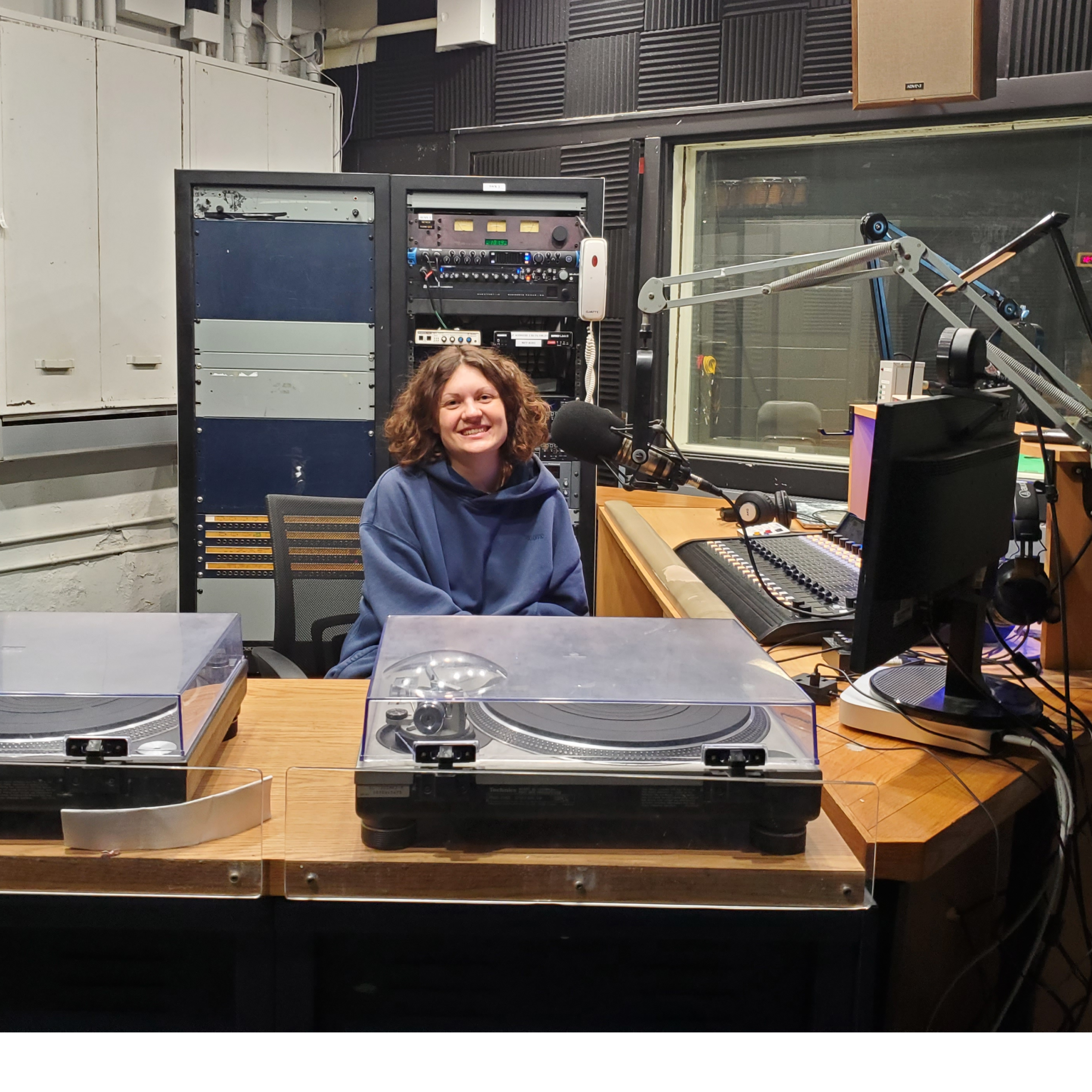
Hannah Burrows (Psychology) – Dog-human relationships
Join Hanna Burrows (Psychology) for a discussion of her research on dog-human relationships.
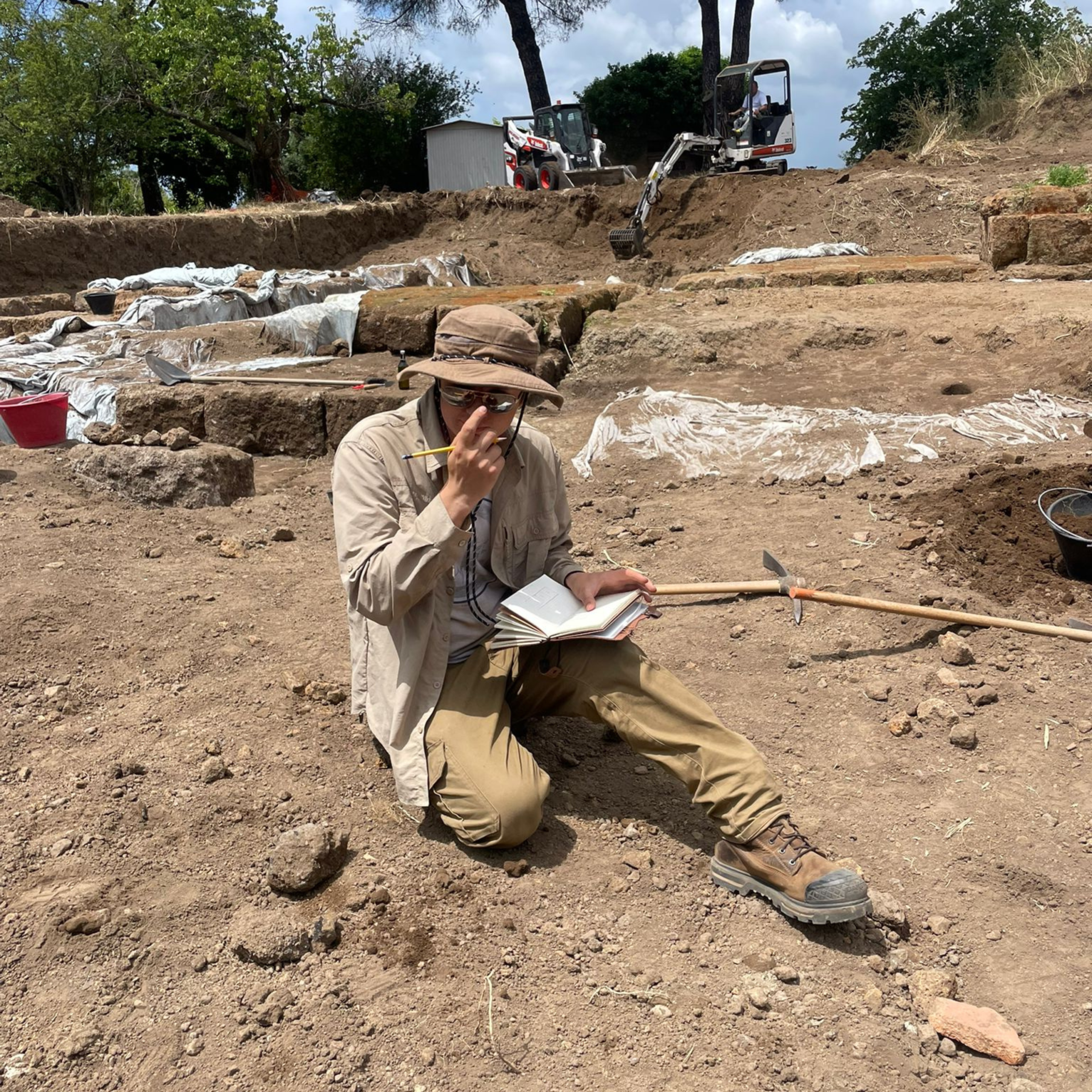
Joshua Holmes A Court (Classics) – Greek influence on the early development of monumental Etruscan temples
Join Joshua Holmes A Court (Classics) for a discussion of his research on the Greek influence on the development of monumental Etruscan temples.
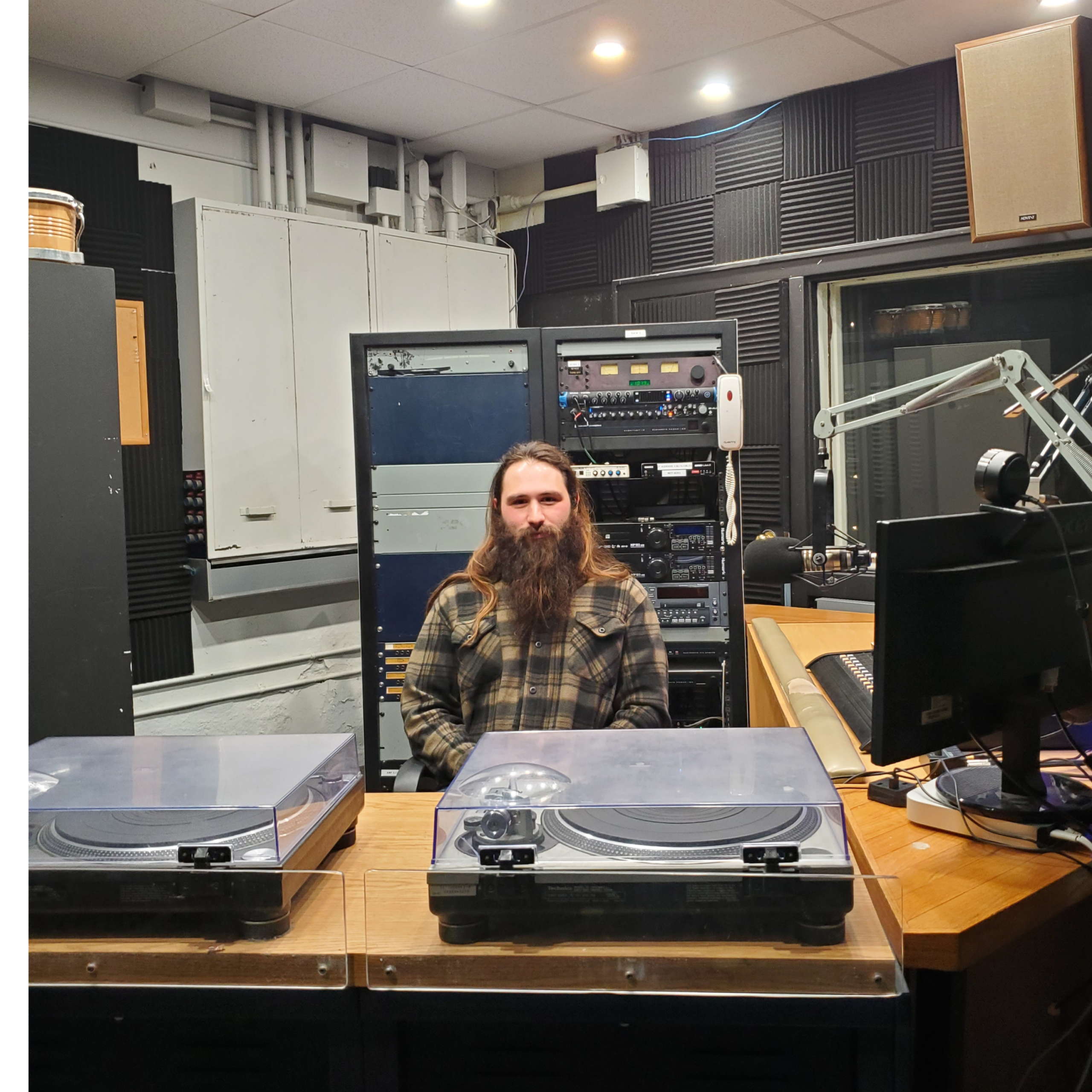
Maximilian Biezenski (Philosophy) – The contemporary significance of Stoic Ethics
Join Maximilian Biezenski (Philosophy) for a discussion of his research on the contemporary significance of Stoic Ethics.
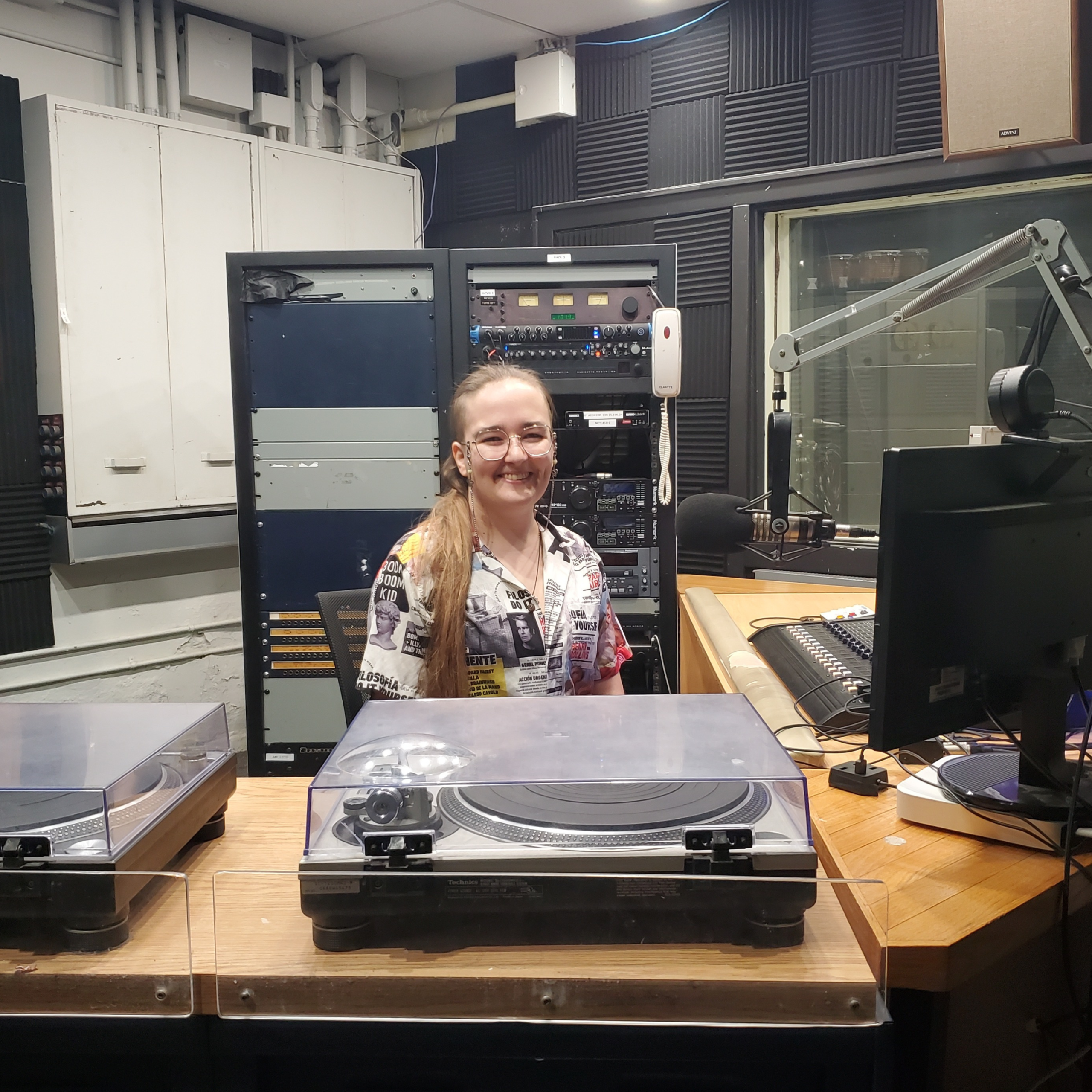
Anna Smythe (Classics) – Epigraphy, or everyday writing, from subordinate people in pre-Hellenistic Greece
Join Anna Smythe (Classics) for a discussion of their research on epigraphy, or everyday writing, from subordinate people in pre-Hellenistic Greece.
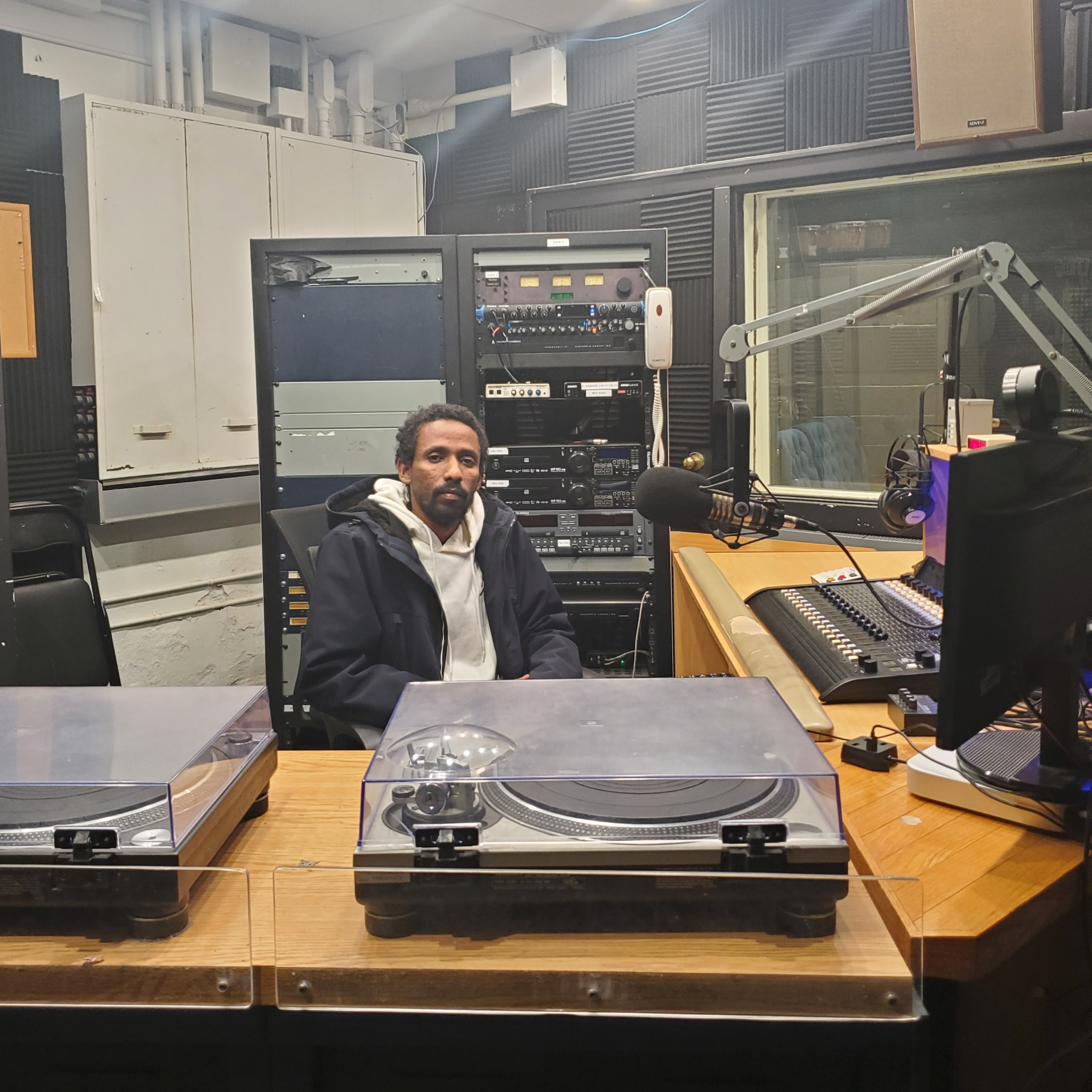
Getachew Tadese (Rehabilitation Sciences) the role of community-based rehabilitation programming in enabling formal and natural supports for person’s with disabilities and their families in Ethiopia
Join Getachew Tadese (Rehabilitation Sciences) for a discussion of his work on the role of community-based rehabilitation programming in enabling formal and natural supports for person’s with disabilities and their families in Ethiopia.
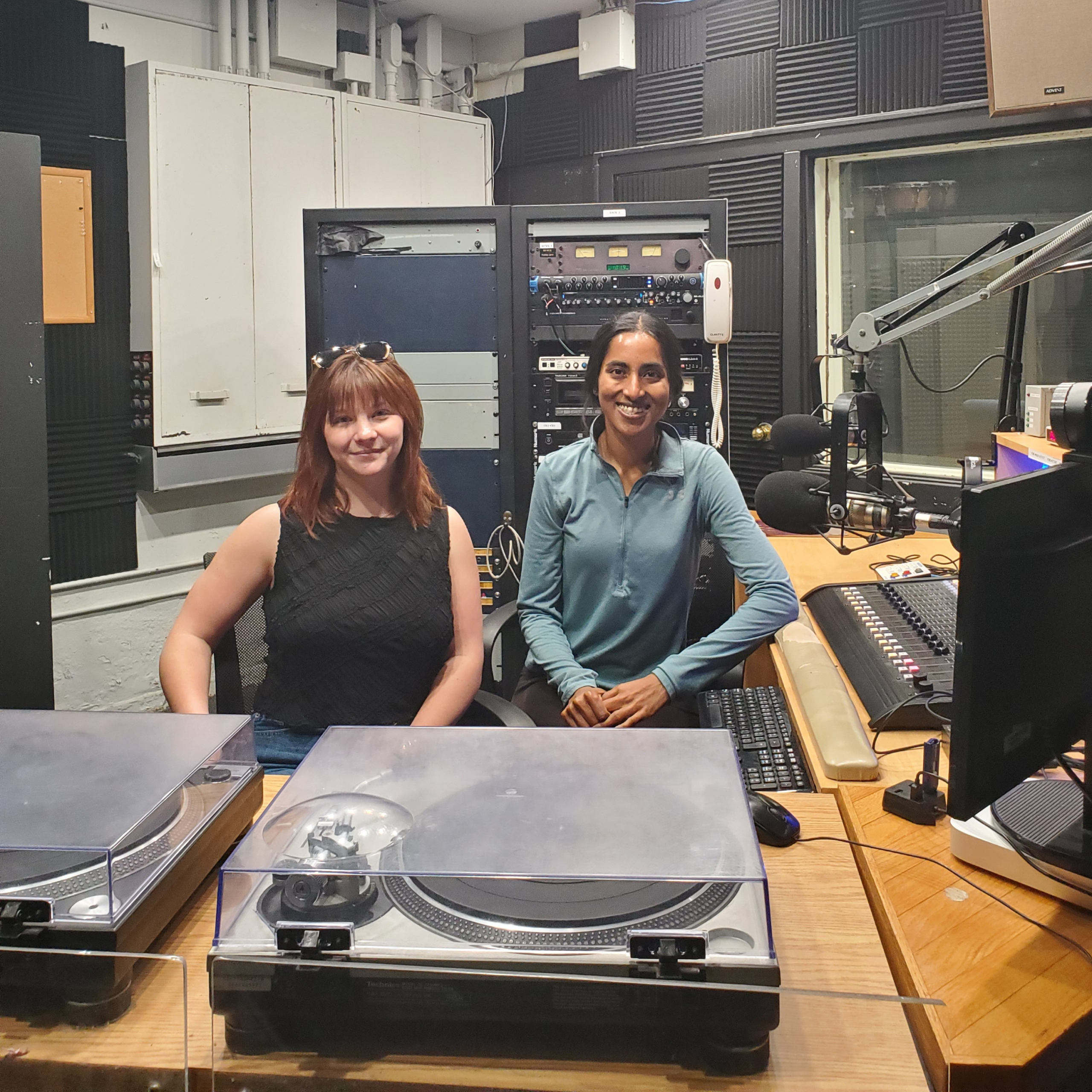
Rachel Korchinsky (Chemistry) and Prama Roy (Environmental Studies) on the Contaminants of Emerging Concern – Research Excellence Network
Join Rachel Korchinsky (Chemistry) and Prama Roy (Environmental Studies) for a discussion of their work as the Youth Public Outreach and Education Coordinators for the Contaminants of Emerging Concern – Research Excellence Network (CEC-REN).
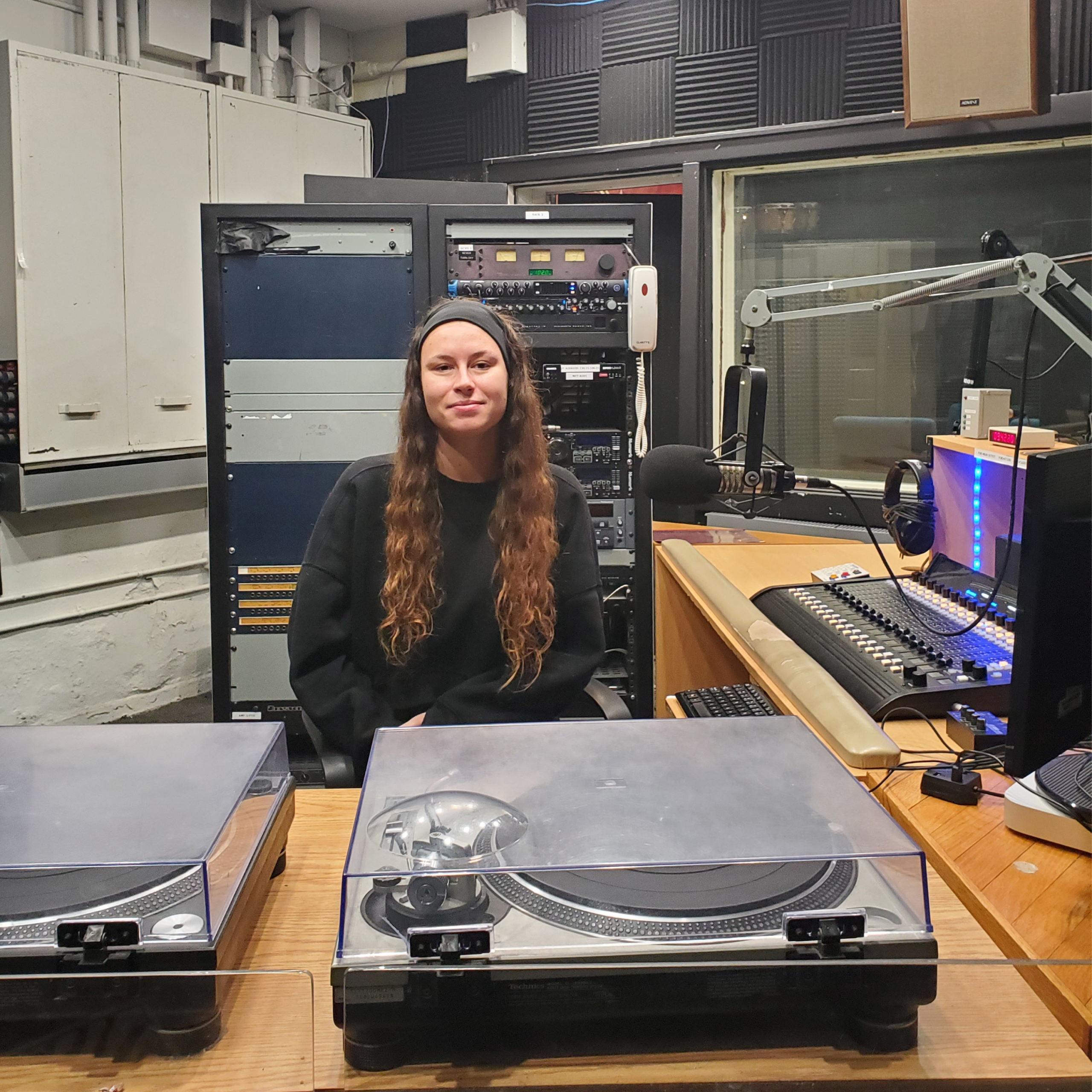
Abigail Bergeron (Philosophy) – Albert Borgmann and the role of technology in modern life
Join Abigail Bergeron (Philosophy) for a discussion of her dissertation research on American philosopher Albert Borgmann (1937-2023) and his work on the role of technology in modern life.
KM on the FM and Suyin the DJ Bear – Fall Wrap Up Part 2
Join KM on the FM and Suyin the DJ Bear for a discussion of events, workshops, and support services on campus to explore in 2026.
KM on the FM and Suyin the DJ Bear – Fall Wrap Up Part 1
Join KM on the FM and Suying the DJ Bear for a review of Grad Chat in Fall 2025.
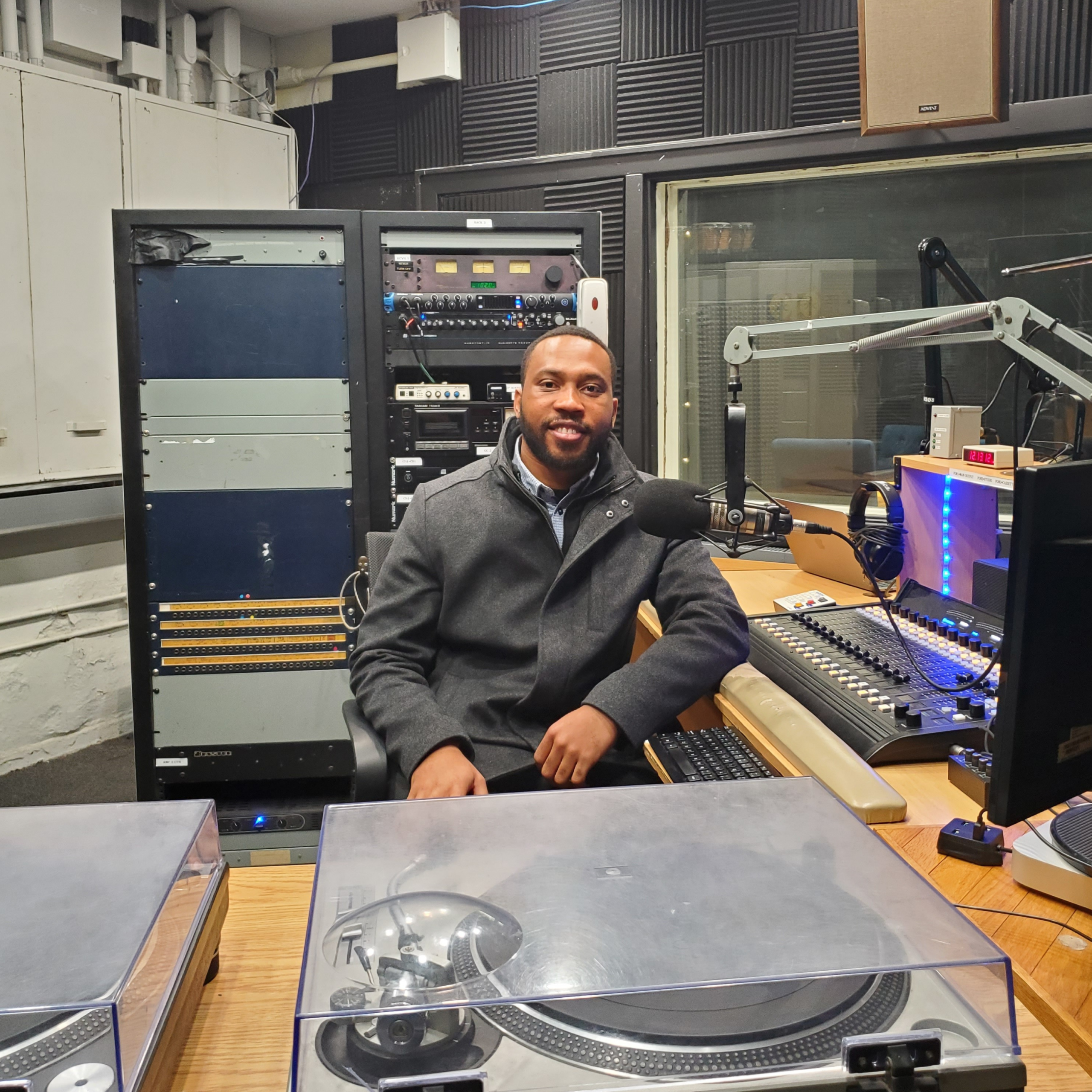
Dr. Chikezirim Nwoke (Geography and Planning) – Tech-in-to-the-Future: Immigration, Black Youth Empowerment, and Digital Technology in Canada’s Shifting Economy
Join Dr. Chikezirim Nwoke, a SSHRC postdoc in Geography and Planning, for a discussion of his research “Tech-in-to-the-Future” which explores immigration, Black youth empowerment, and digital technology in Canada’s shifting economy.
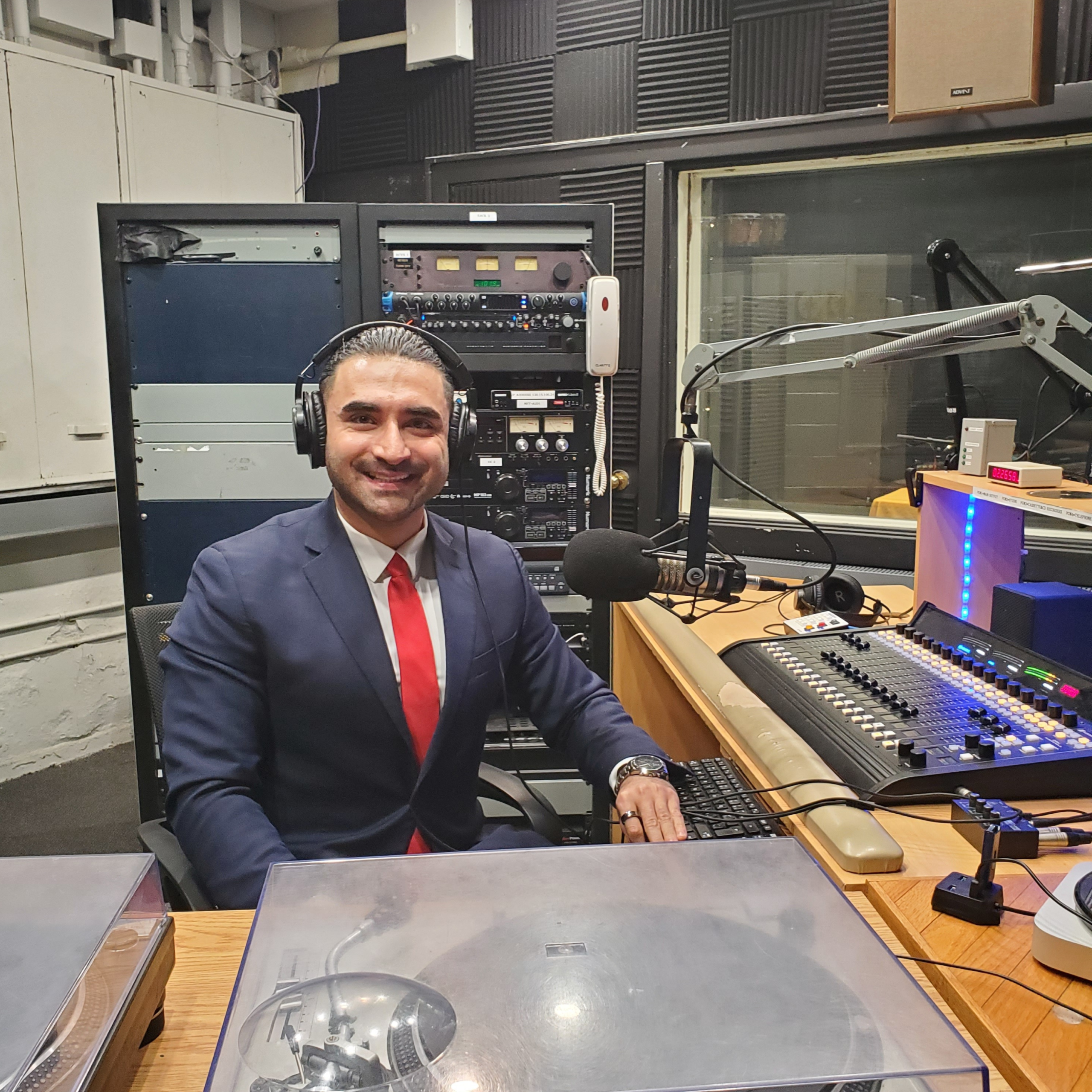
Ramtin Mojtahedi (Computing) – Deep learning approaches for liver cancer segmentation, tumour-type classification, and survival prediction from contrast-enhanced CT imaging
Join Ramtin Mojtahedi (Computing) for a discussion of his PhD research on deep learning approaches for liver cancer segmentation, tumour-type classification, and survival prediction from contrast-enhanced CT imaging. Ramtin is open to discussing his research further and can be reached at [email protected].
Barb Lotan, Manager of Sexual Violence Prevention & Response Services, Overview of Supports and Services Available
This week, join Barb Lotan, Manager of Sexual Violence Prevention & Response Services, to learn about the many supports and services the office provides to the Queen’s community.
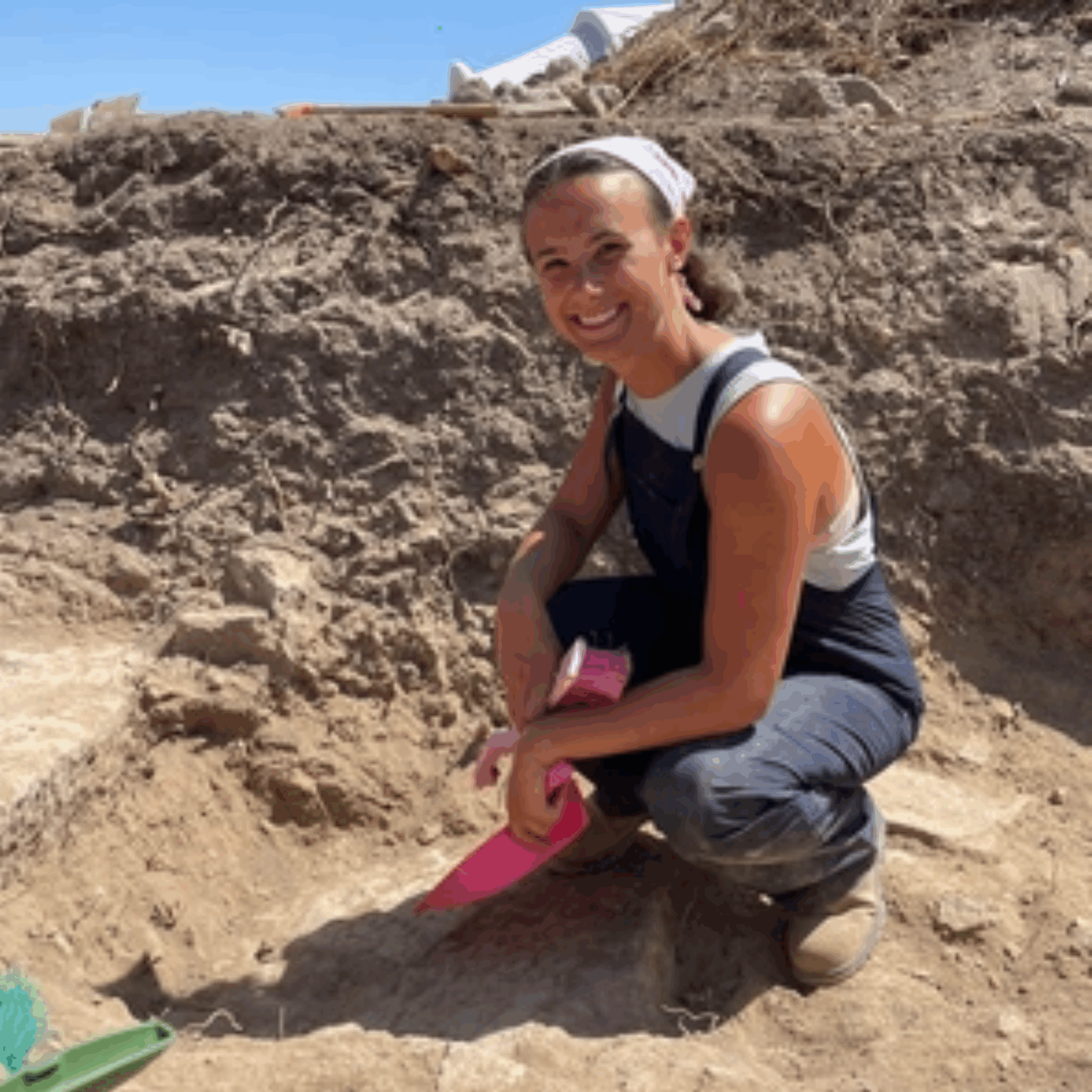
Emily Croft (Art History) – The development of archaeological museums in Sardinia, Italy between 1861-1939
Join Emily Croft (Art History) for a discussion of her dissertation research on the development of archaeological museums in Sardinia, Italy between 1861-1939.
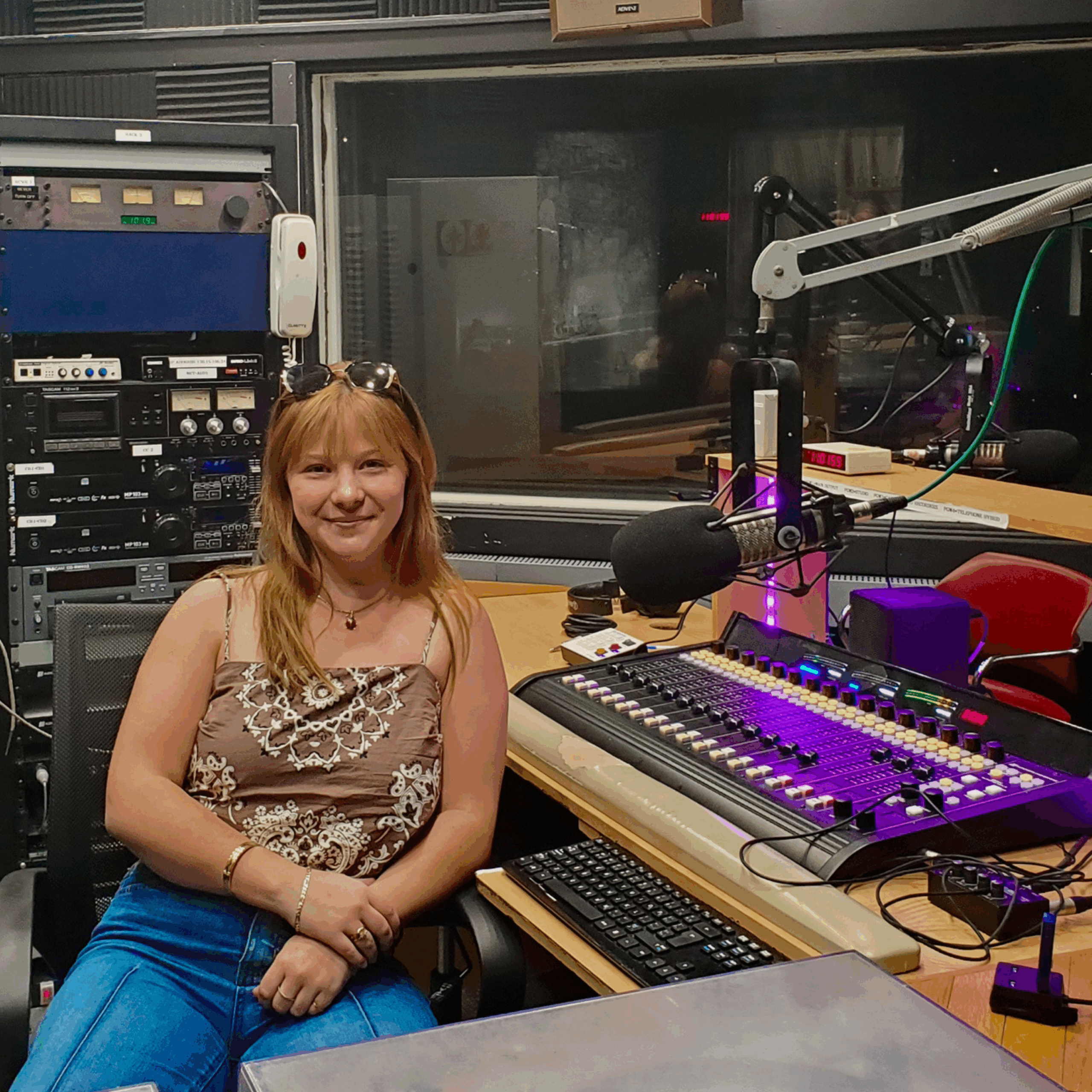
Rachel Korchinsky (Chemistry) – Forward osmosis followed by reverse osmosis for the removal of contaminants of emerging concern using a CO2-responsive draw agent
Join Rachel Korchinsky (Chemistry) for a discussion of her PhD research which utilizes forward osmosis followed by reverse osmosis for the removal of contaminants of emerging concern using a CO2-responsive draw agent. Rachel also discusses her work as a member of Q-ACS (the Queen’s University International Student Chapter of the American Chemical Society).
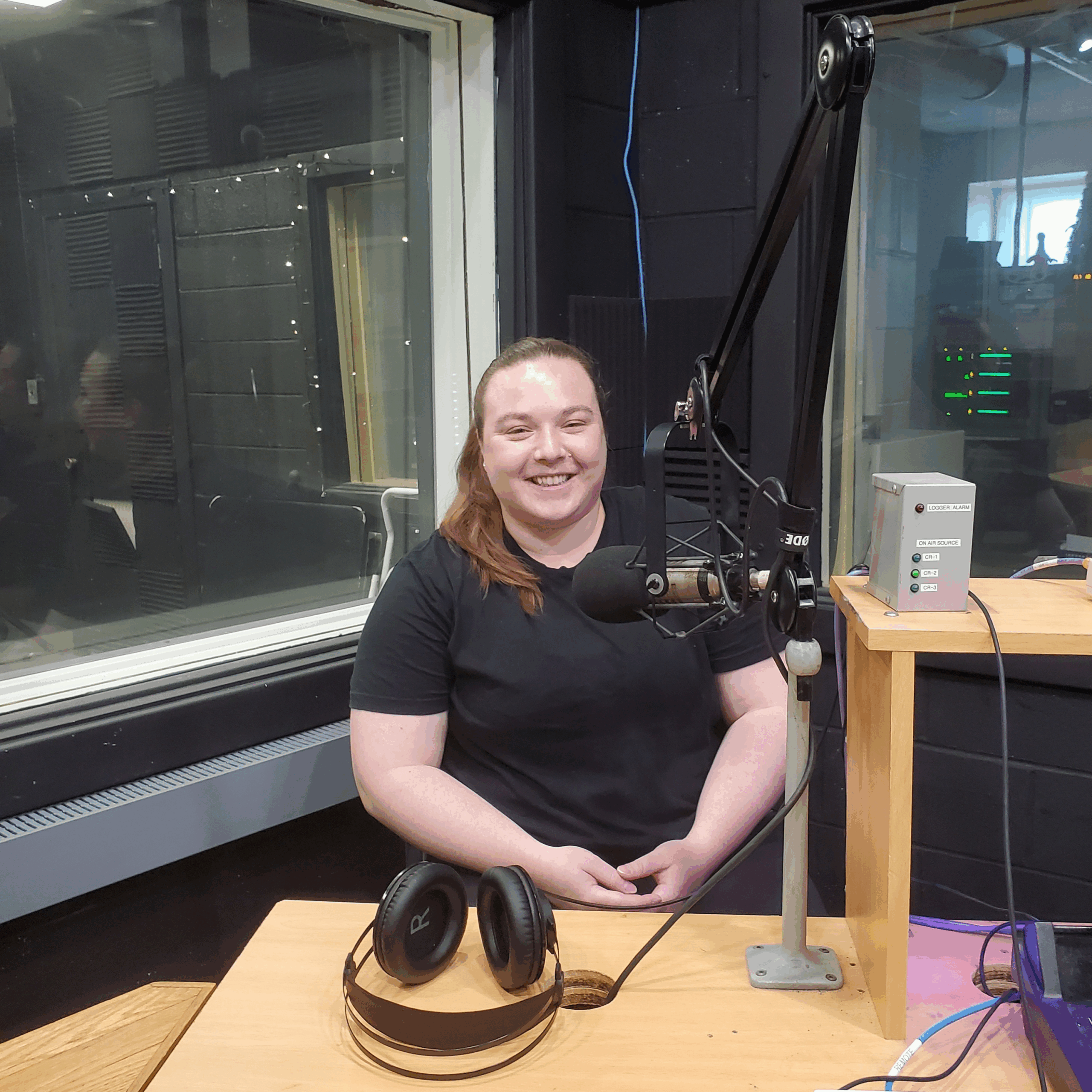
Emily Ferguson (Kinesiology) – Mitochondrial responses to skeletal muscle-disuse
This week, join Emily Ferguson (Kinesiology) as she explains her PhD research on mitochondrial responses to skeletal muscle-disuse and other exciting projects happening in the McGlory Lab. To learn more, check out https://www.queensu.ca/grad-postdoc/research/share/grad-chat .
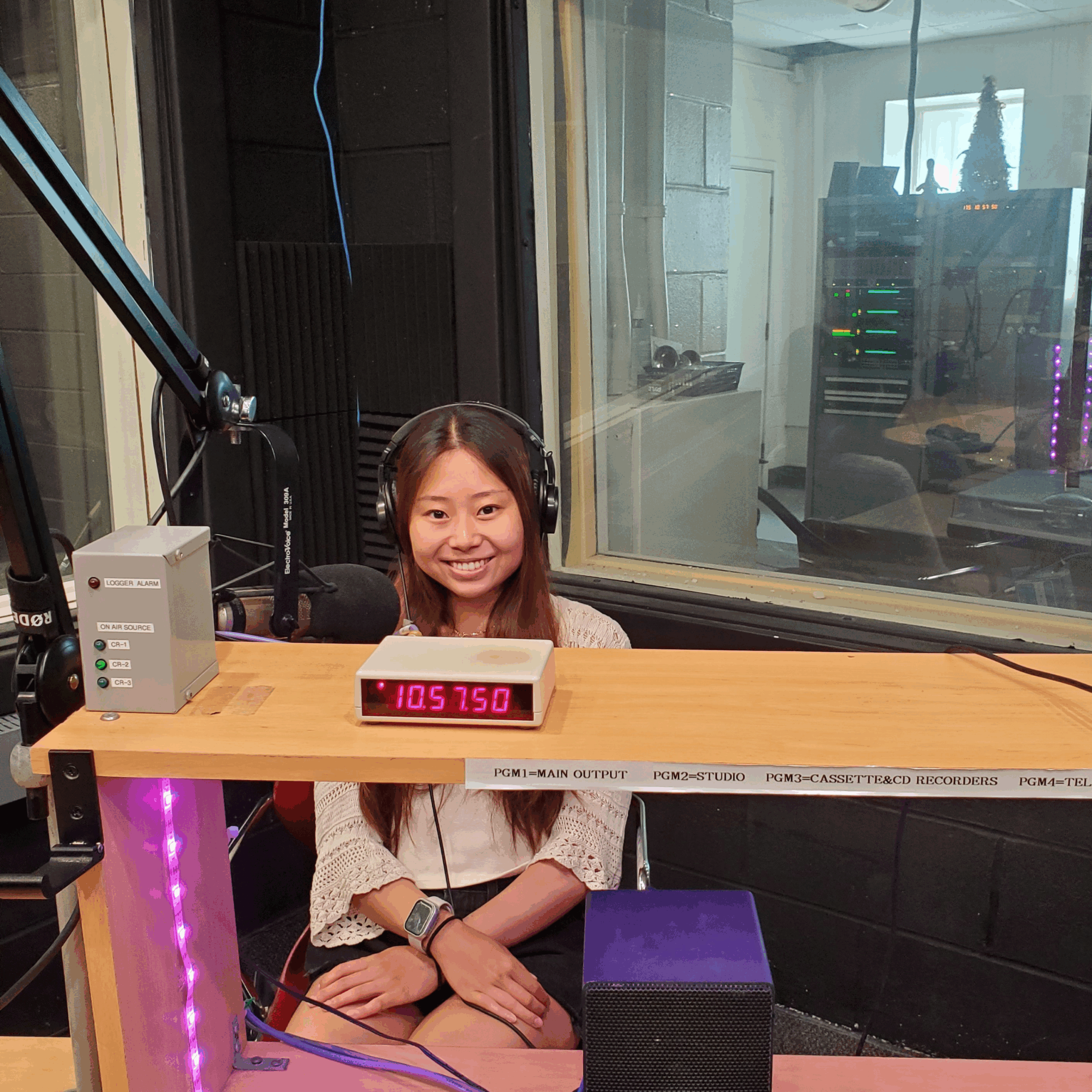
Kana Ogawa (Translational Medicine) – The generation of alternative transcripts as a means of regulating phosphorylation in sonic hedgehog medulloblastoma
Join Kana Ogawa (Translational Medicine) for a discussion of her Master’s research on the generation of alternative transcripts as a means of regulating phosphorylation in sonic hedgehog medulloblastoma. For more information check out the Grad Chat webpage on Queen’s University School of Graduate Studies & Postdoctoral Affairs website – https://www.queensu.ca/grad-postdoc/research/share/grad-chat
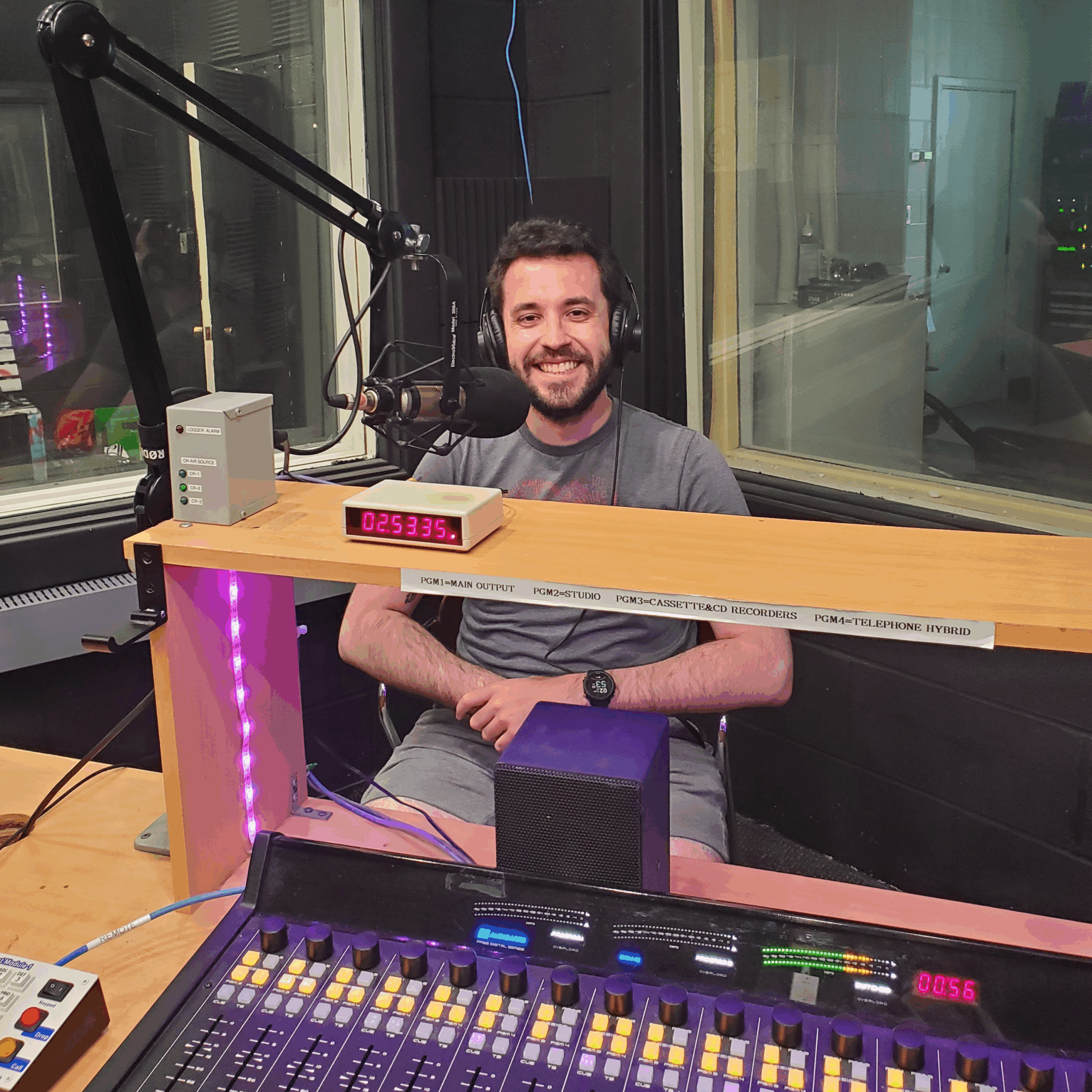
Mateus Karvat Camara (Computing) Collaborative Perception Under Adverse Weather Conditions
Join Mateus Karvat Camara this week for a discussion of his Master’s thesis exploring how collaborative perception can be used to improve autonomous vehicle operation under adverse weather conditions. For more information check out the Grad Chat webpage on Queen’s University School of Graduate Studies & Postdoctoral Affairs website – https://www.queensu.ca/grad-postdoc/research/share/grad-chat
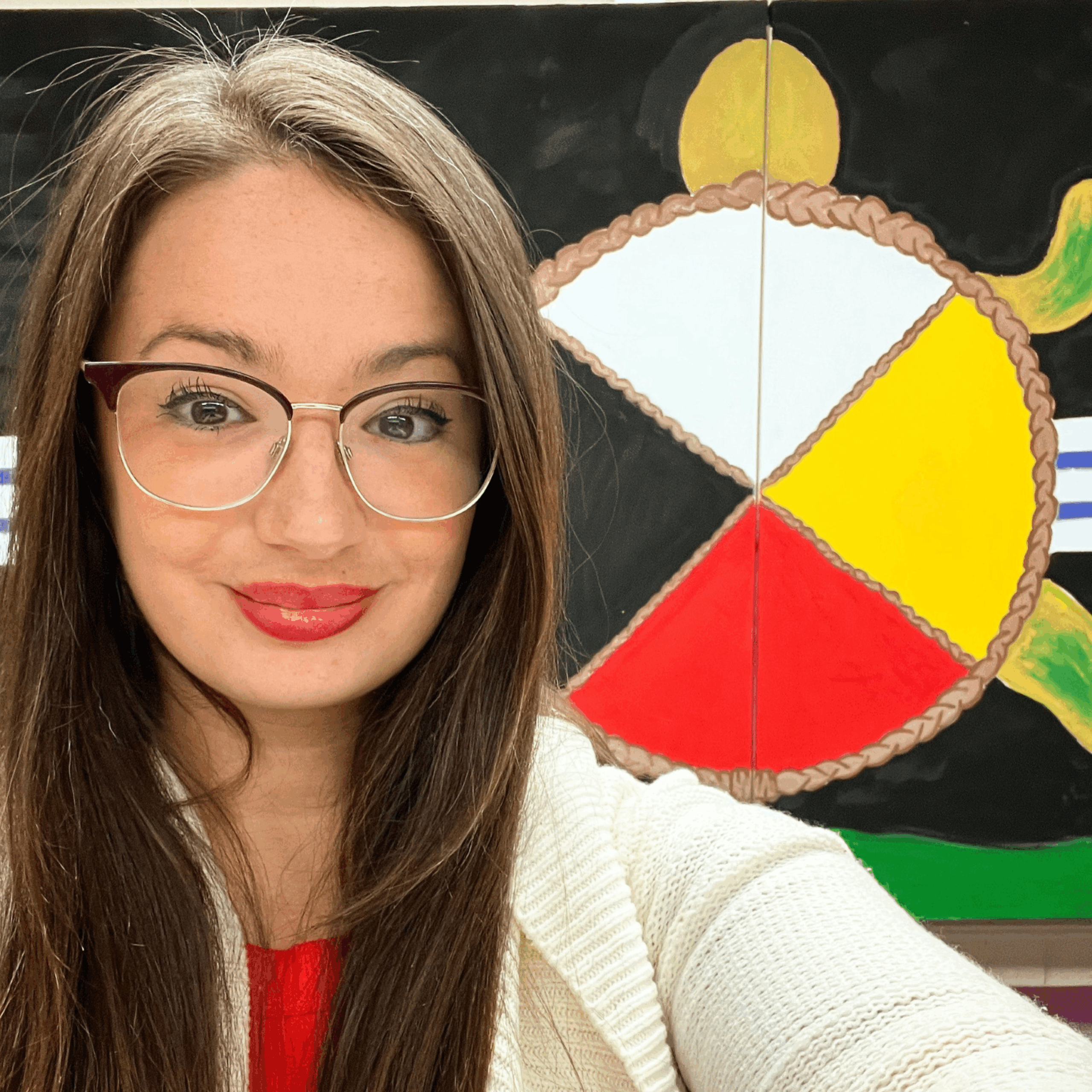
Alicia Cuzner (Education) Decolonizing Educational Environments: An Analysis of Experiences Shared by Educators in the National Capital Region
This week, join Alicia Cuzner for a discussion of her Master of Education research on decolonizing education in the classroom, specifically in the National Capital Region. For more information check out the Grad Chat webpage on Queen’s University School of Graduate Studies & Postdoctoral Affairs website – https://www.queensu.ca/grad-postdoc/research/share/grad-chat
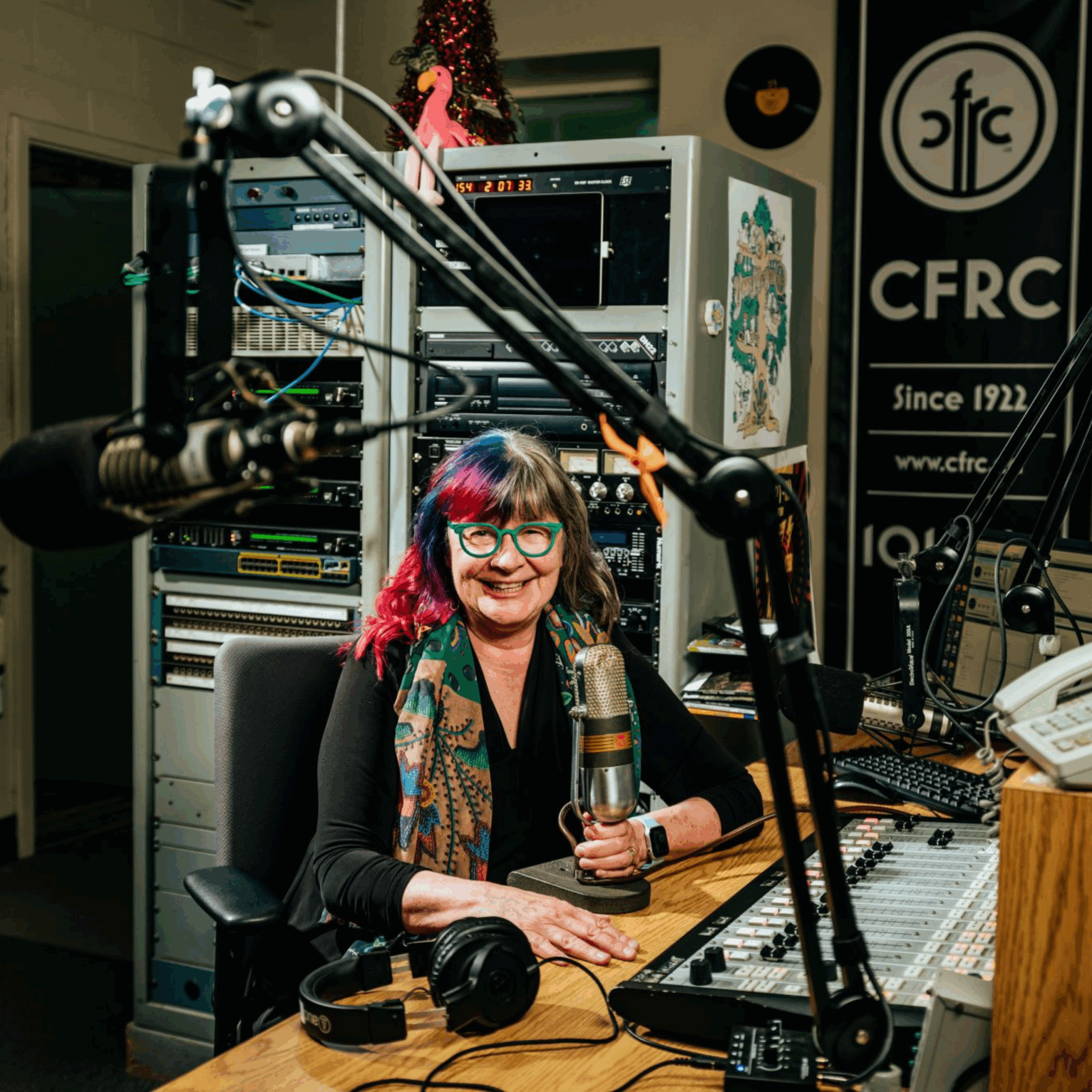
Shelagh Rogers and Colette Steer – Communication Skills
Join CJ the DJ for a very special episode with Queen’s University Chancellor Shelagh Rogers! The show focuses on the importance of strong communication skills, storytelling, and being a good listener. Chancellor Rogers also shares about her career in radio and TV which all started at CFRC. For more information check out the Grad Chat webpage on Queen’s University School of Graduate Studies & Postdoctoral Affairs website – https://www.queensu.ca/grad-postdoc/research/share/grad-chat Photo by: Johnny C.Y. Lam.
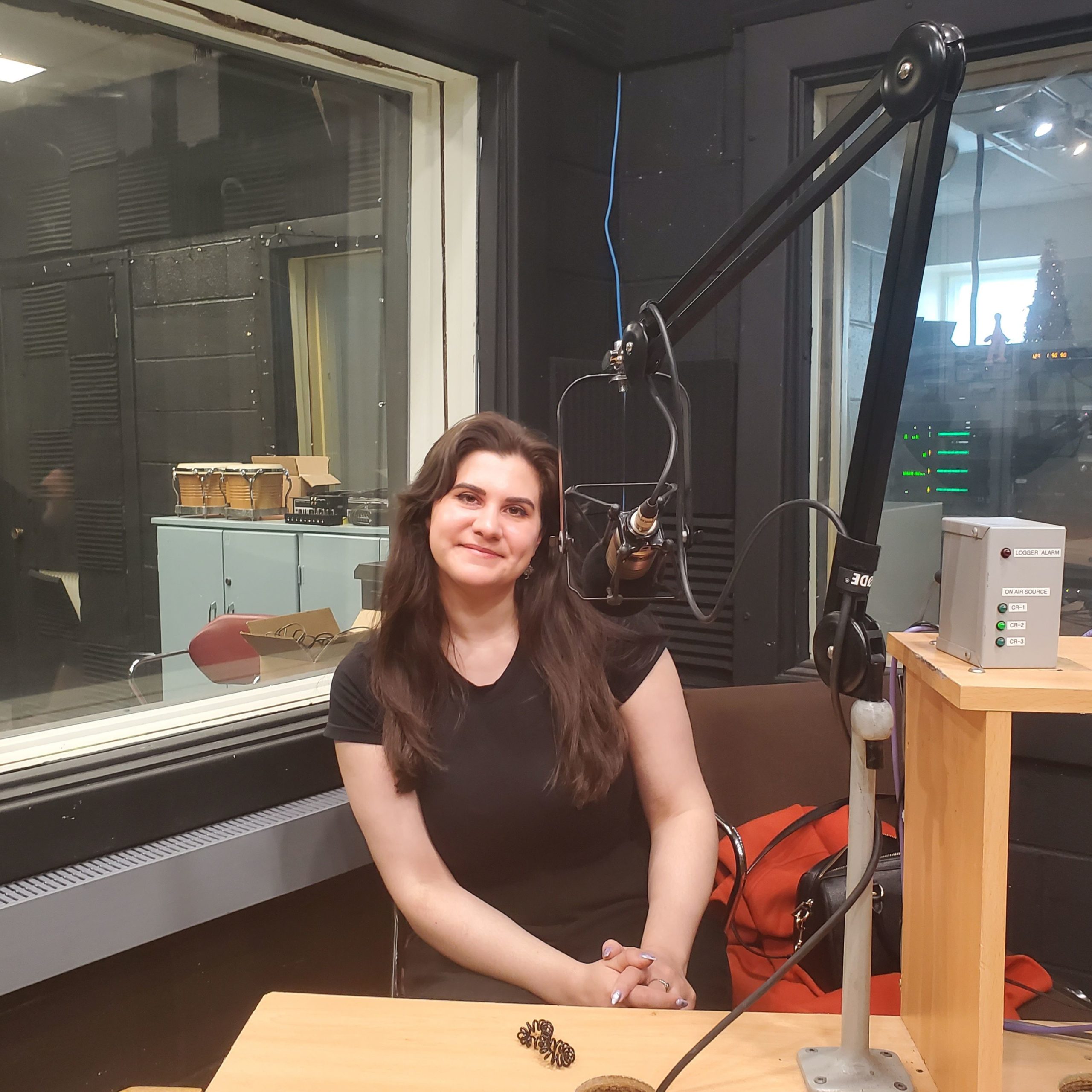
Jessica Caravaggio (English) – Young Adult Fiction, Feminist Theory, and Fandom Studies
Join Jessica Caravaggio (English) for a discussion of her research Fantasy, Fandom, and Feminist Community-Building which explores the connections of young adult fiction, feminist theory, and fandom studies in different communities of readers. For more information check out the Grad Chat webpage on Queen’s University School of Graduate Studies & Postdoctoral Affairs website – https://www.queensu.ca/grad-postdoc/research/share/grad-chat

Grad Chat Transitions
This week’s show is hosted by Suyin the DJ Bear. Suyin the DJ Bear interviews CJ the DJ, Colette Steer, and KM on the FM, Katie-Marie McNeill, about Grad Chat’s history and future. As you may have heard, CJ the DJ is retiring from her role at Queen’s University, and she has passed hosting duties of Grad Chat to her colleague KM on the FM. For upcoming interviews check out the Grad Chat webpage on Queen’s University School of Graduate Studies & Postdoctoral Affairs website – https://www.queensu.ca/grad-postdoc/research/share/grad-chat
Peash Saha (Computing) – Improving Efficiency of Societal Services for the Vulnerable through Algorithmic Approach
A social choice represents the collective decision of the individuals based on their preferences over the alternatives. There are societal services operated by governmental or non-governmental organizations which implement a social choice model. For example, the allocation of shelters to homeless individuals considers both the preferences of homeless individuals and the shelters. However, the preferences of such vulnerable populations may not be as structured as required in the system for them to receive an effective service. Peash’s research focus is on building a unified preference system to reflect the unconventionality in the natural preferences of the vulnerable attempting to access such services. The novel fairness criteria are defined as an end goal of such allocation of services to improve the service for more individuals and broader communities. Peash designs algorithmic solutions to satisfy such fairness requirements on unified preference models. The research outcome has the potential to improve the operational efficiency of ongoing societal services by providing services to more individuals as required. For upcoming interviews check out the Grad Chat webpage on Queen’s University School of Graduate Studies & Postdoctoral Affairs website – https://www.queensu.ca/grad-postdoc/research/share/grad-chat
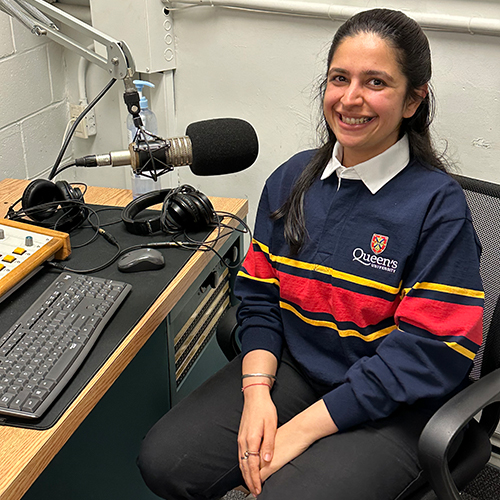
Bhavya Bogra (Geography) – Travel Needs of Older Adult Women in Mid-Sized Canadian cities
With Canada’s aging population and rising immigration rates, this research explores the unique transportation challenges faced by older adult women—both local-born and immigrants—in mid-sized Canadian cities. For upcoming interviews check out the Grad Chat webpage on Queen’s University School of Graduate Studies & Postdoctoral Affairs website.
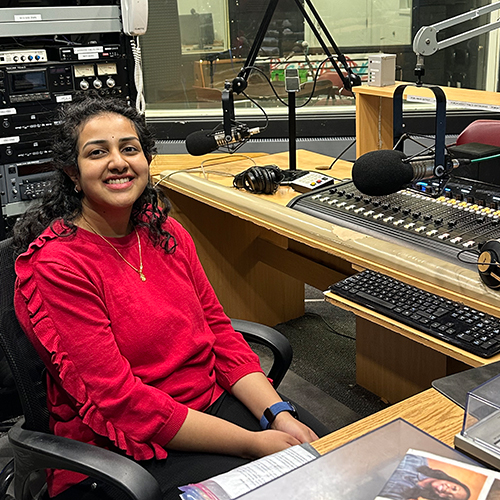
Nithikaa Shashikanth (Rehabilitation Science) – Parent-Administered Sensorimotor Intervention (PASI) Program
Nithikaa looks at the effect of the Parent-Administered Sensorimotor Intervention (PASI) on the developmental outcomes in infants born preterm at 18 months of age and to determine the long-term impact of this program. For upcoming interviews check out the Grad Chat webpage on Queen’s University School of Graduate Studies & Postdoctoral Affairs website.
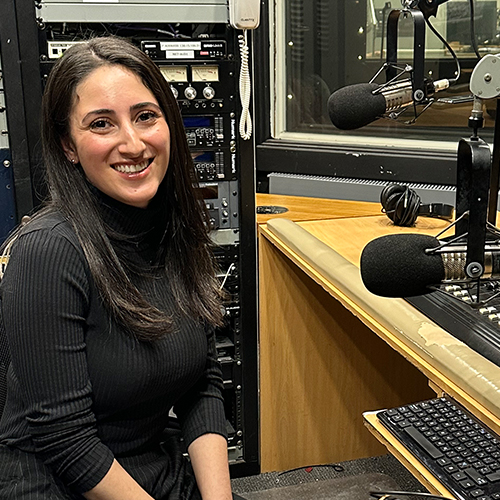
Nikta Sadati (English Literature) – Afrofuturism and Diaspora Studies
Nikta’s research for my dissertation, titled “Queer Remembering: Fractured Memory and Haunted Futures in Contemporary Novels of the Black Diaspora,” focuses on the contemporary re-imagining of archiving Black pasts and futures in Afrofuturist, diasporic, fantasy novels. The authors and texts that I examine refuse the fluidity of time and truth, opting for fantastical representations of space and history. These alternative representations range from ghosts and possessions, to imagining a dystopic life in space. I call these alternative modes of memory, imagination, and geography queer re-membering in the Black diaspora. For upcoming interviews check out the Grad Chat webpage on Queen’s University School of Graduate Studies & Postdoctoral Affairs website.
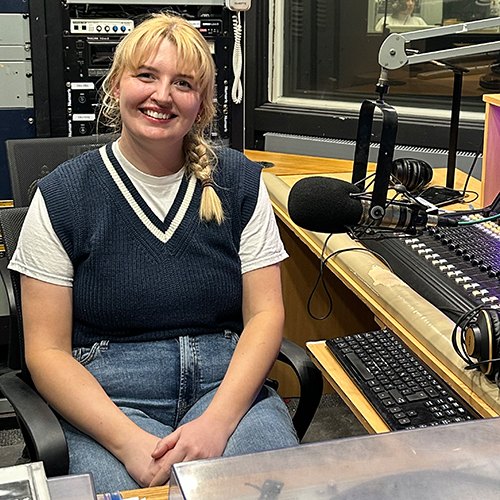
Danielle Harper (Pathology & Molecular Medicine) – Genetic disruption to decrease breast cancer metastasis
Danielle studies triple-negative breast cancer (TNBC), an aggressive breast cancer subtype associated with poor survival. Unlike other subtypes for which there are targeted therapies, treatment options for TNBC are limited. In order to better understand the biology underlying TNBC, she studies a family of proteins called calpains. For upcoming interviews check out the Grad Chat webpage on Queen’s University School of Graduate Studies & Postdoctoral Affairs website.
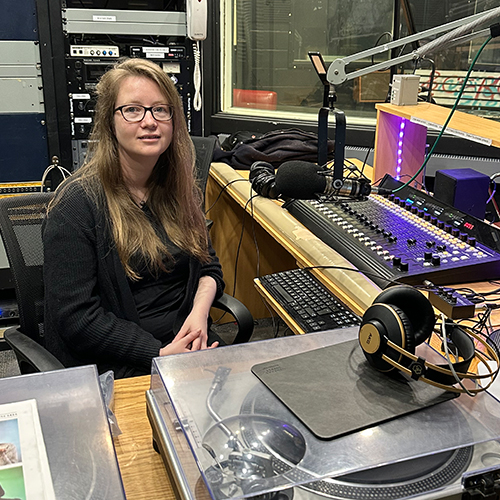
Margot Smith (Geography) – An Astrobiologists’s study of lipids in spring waters up in the high Arctic
The Arctic is host to cold, hypersaline, perennial springs that flow through 600m of permafrost. I studied 44 samples from cores, sediments, filtrates and microbial mats from these springs. Surficial life at these springs has been studied for decades, but this is the first investigation that looks at the deep subsurface life. This is of interest as a Mars analogue site for deep subsurface life on Mars. For upcoming interviews check out the Grad Chat webpage on Queen’s University School of Graduate Studies & Postdoctoral Affairs website.
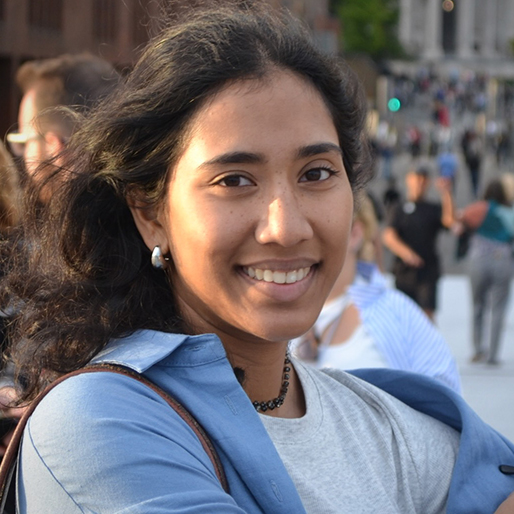
Basmah Rahman (English Literature) – Canadian BIPOC Literature and Educational Pedagogies
Canadian provincial education systems play a vital role in developing the social and academic interests of youth who, typically, spend over thirty hours in classrooms per week. Yet, significant consistency in terms of provincial guidelines and teacher booklists restrict these classrooms’ approaches to diverse literary content. The lack of both diverse content and representative teachers can skew ongoing perceptions of identity, academic success, and later socio-economic security, especially for racialized students. For upcoming interviews check out the Grad Chat webpage on Queen’s University School of Graduate Studies & Postdoctoral Affairs website.
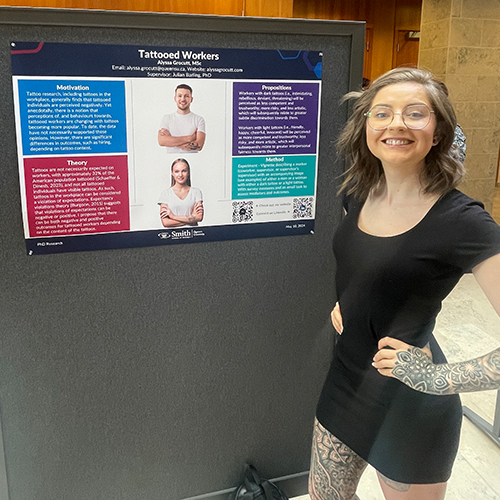
Alyssa Grocutt (Management) – Employee perceptions and behaviours towards tattooed colleagues
Alyssa’s research focuses on nuances in observer perceptions and treatment of tattooed colleagues based on tattoo content. For upcoming interviews check out the Grad Chat webpage on Queen’s University School of Graduate Studies & Postdoctoral Affairs website.

Lara Bulger (Cultural Studies) – Documentary Film, how we can use it as a pedagogical tool and a medium for social change
Lara is looking at Canadian documentary film through both a contemporary and historical lens, as well as the limits of radical pedagogy and activism. Some of the themes that interest her include environmental racism, Indigenous sovereignty and food security. For upcoming interviews check out the Grad Chat webpage on Queen’s University School of Graduate Studies & Postdoctoral Affairs website.
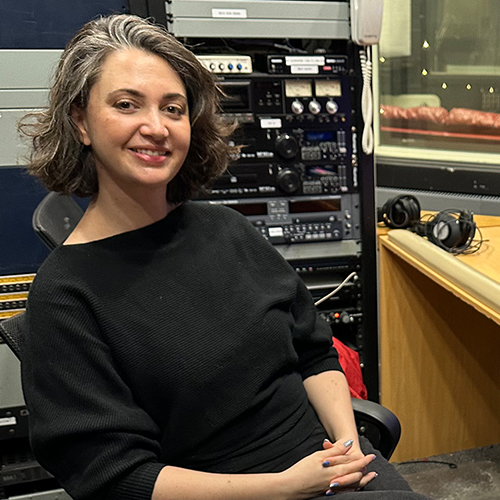
Zoe Brisson-Tsavoussis (Astro-particle Physics) – Neutrinos, Blazars and Black holes
My research focuses on looking at black holes. Some black holes are so energetic, that they tear up the bright hot matter spinning around them and funnel it into jets shooting out their top and bottom. And once in a while, we luck out and a few black holes are oriented so that the jets are pointed straight towards the earth! We call these kinds of black holes Blazars, and it’s my job to look at their most energetic and extreme cases and try to figure out if there are any neutrinos in those jets! If we can find neutrinos coming out of them, we can follow their trail back to what in the jet created them and learn more about black holes themselves! For upcoming interviews check out the Grad Chat webpage on Queen’s University School of Graduate Studies & Postdoctoral Affairs website.
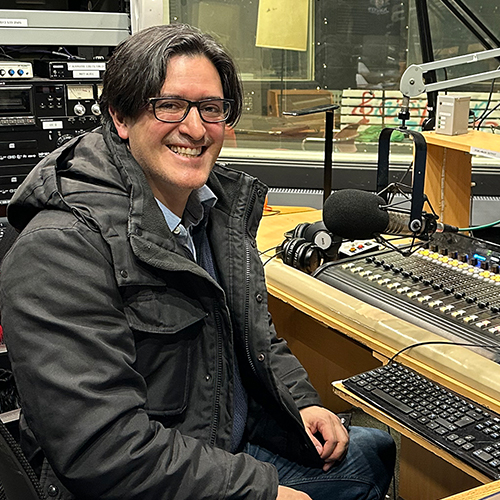
Francisco Zepeda Trujillo (Cultural Studies) – Failed Aspirations: Modernity, Religion, and the Interplay of Social and Political Imaginaries in Twentieth Century Mexico
This research explores the interplay of social and political imaginaries in Mexico, both secular and religious, during the twentieth century. It uses archival research and discourse analysis to examine how liberal and revolutionary political leaders and various Catholic groups have interacted, how they have handled their contradictions, how their relationships and imaginaries have evolved, and what role these imaginaries have played in building Mexico as a modern nation. For upcoming interviews check out the Grad Chat webpage on Queen’s University School of Graduate Studies & Postdoctoral Affairs website
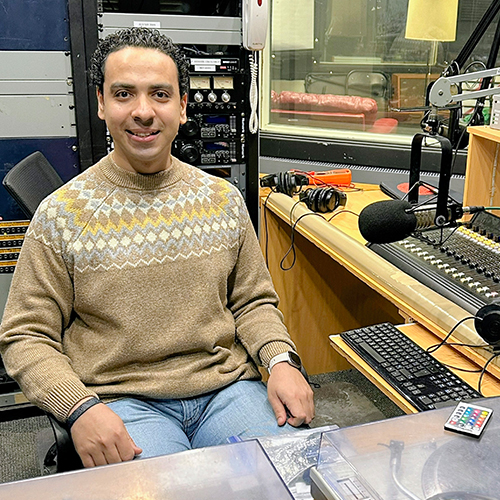
Ahmad Nagib (computing) – Building Trust in Reinforcement Learning for Next-Generation Wireless Networks
Machine learning is very popular nowadays for solving problems in many fields, including wireless networks such as 5G networks that we use to make calls and connect to the internet using our phones. Next-generation wireless networks (NGWNs), such as 6G networks, will include more diverse devices and applications that make them more complex to control, even using machine learning approaches. In my Ph.D. thesis, I addressed some of the practical challenges of applying machine learning approaches, specifically reinforcement learning, in real deployments of NGWNs. For upcoming interviews check out the Grad Chat webpage on Queen’s University School of Graduate Studies & Postdoctoral Affairs website
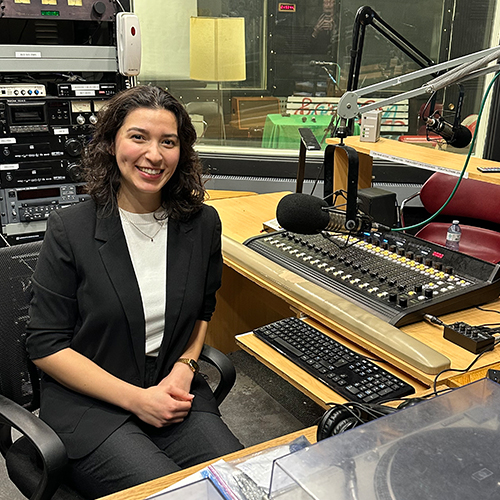
Gabby Torretto (Pathology & Molecular Medicine) – Assessing BRCA1 Genetic Variants involved in Hereditary Breast and Ovarian Cancer
Between 5-10% of breast and 20-25% of ovarian cancers are inherited. The majority of hereditary breast and ovarian cancer cases are caused by deleterious mutations (variants) in the BRCA1 and BRCA2 genes, which normally prevent cancer through protecting and repairing our DNA. Genetic testing is used to identify pathogenic BRCA carriers who would subsequently benefit from personalized screening, preventative and management plans. However, its widespread implementation has resulted in a significant increase in findings of variants of uncertain significance (VUS) – DNA sequence variants with uncertain effects on disease risk. VUSs pose a critical clinical challenge as they limit clinicians’ ability to effectively interpret genetic test results. For upcoming interviews check out the Grad Chat webpage on Queen’s University School of Graduate Studies & Postdoctoral Affairs website.
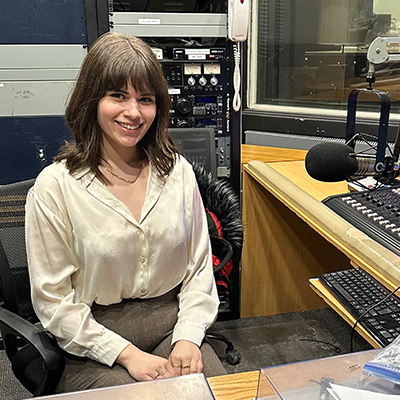
Christina Ferazzutti (Biomedical & Molecular Sciences) – Why One Complicated Pregnancy Can Lead to Another: The Role of Immune Memory
Recurrent pregnancy loss (RPL) is a significant complication linked to uncontrolled inflammation, which not only causes immediate distress but also heightens risks in future pregnancies. It is hypothesized that inflammation during pregnancy induces long-term changes in maternal immune cells, altering their responses in subsequent pregnancies and increasing complications. For upcoming interviews check out the Grad Chat webpage on Queen’s University School of Graduate Studies & Postdoctoral Affairs website
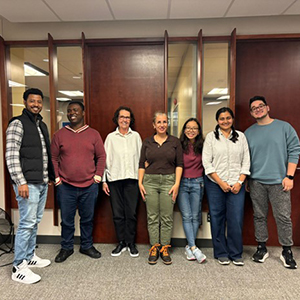
PHD-CI project with KFL&A Public Health
This session talks about the PhD-Community Initiative program at Queen’s University and one of the projects with a community partner (KFL&A Public Health) to provide a Program Evaluation of the Efforts to Prevent Invasive Meningococcal Disease in Kingston. For upcoming interviews check out the Grad Chat webpage on Queen’s University School of Graduate Studies & Postdoctoral Affairs website.
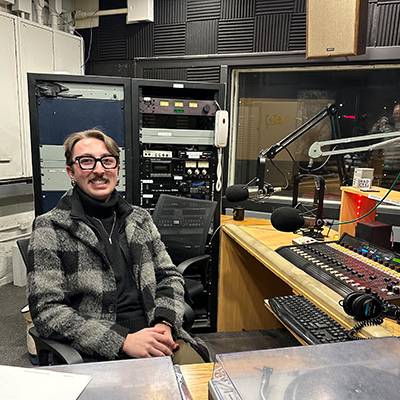
Trent Atkinson (MA, Religious Studies) – Muscular Christianity
Rooted in Victorian England as a response to a number of social and religious factors, Muscular Christianity is a set of beliefs that revolves around contact sports, the physicality of the male body, and a return to a “traditional” masculinity (a term always fraught), much writing has been done on Muscular Christianity in it’s heyday during the late 19th and early 20th centuries. What my research aims to do then is to examine the role that it plays in the 21st century through the lens of American sports culture and American colleges, and how Muscular Christianity is shaping a new generation of men. For upcoming interviews check out the Grad Chat webpage on Queen’s University School of Graduate Studies & Postdoctoral Affairs website.
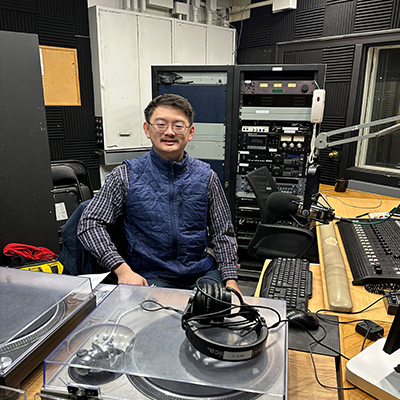
Allen Tian (Biology) – Assessing the impact of invasive mollusk species on native mollusk communities and algal blooms with eDNA
Zebra mussels are some of the most high profile and impactful invasive species in Canada, and have transformed the Great Lakes watershed in the past three decades. Voracious feeders that consume all algae, they have clarified our lakes, caked our beaches with their sharp shells, and denied other species precious food. Interactions between zebra mussels and algal blooms, another notorious nuisance, are largely unknown. My research uses environmental DNA, an emerging technology, to examine what factors make an ecosystem resilient to zebra mussel invasion, how native mollusk communities react to zebra mussels, and if they help or hinder algal blooms. For upcoming interviews check out the Grad Chat webpage on Queen’s University School of Graduate Studies & Postdoctoral Affairs website.