
Glorian Podcast
694 episodes — Page 13 of 14

Path of the Bodhisattva 11 Heroic Action
How the aspirant must utilize the virtue of Heroic Action (diligence) and confidence in order to overcome the obstacles of laziness and defeatism. Lecture relates to the Sephirah Tiphereth, the world of willpower. Lecture quote: "When the ego is taken out of the way, a joyful quality erupts into view, it emerges, because that is the nature of our free, unconditioned consciousness. When you see a sour practitioner, or a meditator who has a very bitter flavor about their practice, then they are not accessing Samadhi. Someone who is really cultivating the science of developing Samadhi is a joyful person, a very happy person, a peaceful person, because those are the qualities of the real, free consciousness. In that way, you can understand that the more you develop your connection with the consciousness through the repeated moment to moment effort to be aware of yourself, to be conscious, the more that natural joyfulness will arise, the more natural, spontaneous serenity becomes present for you. And in that context, the work to liberate yourself no longer is a matter of defeatism, it is no longer a matter of "Oh, it is going to take forever," or "Oh, I am not at my goal yet. I still do not have my astral body." Those attitudes fall away. It no longer is the point, because the joyfulness of the Buddha nature has emerged." Read the lecture transcription.

Path of the Bodhisattva 10 Theophany or Christophany
How Christ manifests in front of the Bodhisattva and guides him: how God guides the human being. The revelation of Theos (God) or Khrestos (Christ) upon the Mountain of Initiation and throughout the esoteric path. Lecture relates to the Sephirah Tiphereth, the world of the prophets. Lecture quote: "Do you want to talk with your Being? Do you want to know who your Being is, or the name of your own Spirit? Listen: you can receive that in your own Mount of the Olives. In the Mount of Olives, the Mount of Sinai, is how you see God face to face." Read the lecture transcription.

Path of the Bodhisattva 09 How to Endure Suffering
The Paramita of Patience or Endurance, how through Generosity and Ethics the student initiates spiritual practice, yet through the virtue of patience how one endures the resistance and difficulties that arrive within any spiritual endeavor. Relates to Netzach or how we deal with the mind. Read the lecture transcription.

Path of the Bodhisattva 08 Hypostasis of the Bodhisattva
The entrance of Jesus into the Holy City, symbolic of dominating the lunar mind and achieving union of the Solar Christified Mental Body with the Spirit. Lecture refers specifically to the Sephirah Netzach. Lecture quote: "... the Bodhisattva, instead of identifying himself/herself with those two minds (Pharisees and Sadducees, believers and skeptics), what he does is to utilize his mind, he controls his mind, he works his Bodhichitta. This is why Jesus rides the animal when going to enter into Jerusalem, into the world of the mind, which is the world of Buddha, because in order to be enlightened you have to control completely your mind..." Read the lecture transcription.

Path of the Bodhisattva 07 Freedom of Discipline
The Paramita of Ethics or Discipline, the necessary psychological parameters by which to produce any profound spiritual change. Lecture quote: "The discipline to come out of the cage cannot be imposed upon us by an external source. No person can come to us and say, "Follow all these rules and you will be free." It doesn't work like that. If someone comes to us and says, "The teachings say you must renounce anger, so never be angry." And so then we take this attitude, a discipline upon ourselves, "I will not be angry," so we begin to resist anger. What will happen? What will happen is that we will modify our external behavior, we will act sweet, we will act patient, we will behave as if anger has been vanished, and we may even convince ourselves of it. But at a certain moment, circumstances and Karma will conspire against us, something will happen to make us angry, and then we will explode. This is because the more we reject something, the more we push away, the more we resist it, the less is our understanding." Read the lecture transcription.

Path of the Bodhisattva 06 Metamorphosis or Transfiguration
The Metamorphosis or Transfiguration of Jesus, an explanation of the Christified Astral Body, or our own particular, intimate Jesus Christ. Relates to the Sephirah Hod on the Tree of Life. Lecture quote: "We want to understand the knowledge of God, but we have to comprehend that within the Astral body is the Solar Mind (who is like God), who is Elias shining, and that Elias is the one that comprehends the language of God. You have to generate; you have to create that within. Otherwise, you fall into the sad mistake of following your own particular Jezebel, a mind that reads the Gospels literally and interprets them literally; and, that Jezebel is within the head of many millions of people and calls herself a prophetess. Nevertheless she does not understand Kabbalah, because in order to understand the wisdom of God, you have to be a Kabbalist. You have to develop your own Elijah. Your own mind has to be under service of God. And, in order to do that, you have to follow the Law of God, which is your own individual Moses, meaning that you have to use your willpower in order to create within your own Elijah. And when that is created, then you transfigure in the Third Initiation of the Major Mysteries of the Light, which is the Path of the Bodhisattva." Read the lecture transcriptions.

Path of the Bodhisattva 05 The Perfections (Paramitas)
A general introduction to the six Paramitas or virtues of the consciousness. Lecture quote: "The qualities of the Consciousness that are required in order to merge with divinity are called in Sanskrit "Paramitas." This term Para means "beyond." In its synthesis the word Paramita means, "that which is beyond" or "transcendental." Usually, they are called "the perfections." But in this course, we prefer to call them "conscious attitudes." The teachings of the Paramitas are very common in all forms of Buddhism-and in fact, they are common in all religions, but organized in slightly different ways. In Buddhism they are usually presented as Six Paramitas, or six qualities that we need. These six qualities are not simply virtues in the way we think of them. They are rather transcendental. They are beyond common virtues. And the Paramitas in their ultimate expression relate to the three Kayas, the three bodies of the Buddha. In that way we can understand that the Paramitas are beyond Samsara, this world of suffering. They are beyond Nirvana, which is the world of the Gods, and instead the perfection of the Paramitas is in Non-Abiding Nirvana, which is a state of Consciousness that only a Bodhisattva can have. So this emphasizes that the full development of Paramitas is possible only for those on the Bodhisattva path." Read the lecture transcription.

Path of the Bodhisattva 04 Bodhichitta in Christianity
Bodhichitta as represented by John the Baptist in Christianity. The importance and role of Bodhichitta for "making straight the way [or incarnation] of the Lord." Lecture relates to the Sephirah Yesod. Lecture quote: "...to have the mind of the Lord is to have the Bodhichitta, which in the Bible is symbolized by Elijah or ELIAO in Hebrew. We are not going to explain about Elijah or the prophet Eliao himself, but we are going to explain Elijah directly related to our psyche. Every personage that you find - whether in Christianity, Judaism, Buddhism, Islam, Hinduism, etc. - is always a symbol; even though the personage existed, understand that they symbolize something within our psyche, within our true selves. This is precisely the point when examining the Gospels. Elijah the Prophet symbolizes the forces of the solar energy that we have to manage. Remember that in Greek, Elijah, Eliao, is Elios (Helios), the Sun, the solar force. So here, when we refer to Elijah or Eliao, we are referring to Helios the sun, which is not a person. We are referring directly to the solar energy that we have to learn how to handle and manage in our body. If I am emphasizing Elijah or Eliao, it is because in the Gospels, as well as in the Old Testament, it is written that it is necessary for Elijah to come before the Messiah. The Messiah is the Bodhisattva and Elijah is the Bodhichitta. Elijah represents the completely developed solar mind, that solar mind which is utilized by the Spirit. Read the lecture transcription.

Path of the Bodhisattva 03 Bodhichitta
This lecture explains the nature of Bodhichitta, the awakening consciousness in relation to Christ or Shunyata (the Emptiness or Absolute). Understand the three levels of any teaching as outlined by Buddhism: Shravakayana (Foundational Vehicle), Mahayana (Greater Vehicle) and Vajrayana (Tantric or Diamond Vehicle). Also includes an introduction to the six Paramitas, or six principle virtues required of any aspirant to achieve the innermost Self-realization of the Being. Read the lecture transcription.

Path of the Bodhisattva 02 The Epiphany of Christ
The four gospels, the symbolism of the birth of John the Baptist, and the birth of Christ. Lecture quote: "Epiphania is the manifestation of the divine essence of Christ within the human being, or the ascension of the christic solar energy through the spinal column of the initiate, as represented by the Magi. Epiphania! talks about the way in which the human being manifests the only begotten Light—from the unknowable abstract space—which in the Greek language is called Christ. The Cosmic Drama—that is, the Birth, Life, Crucifixion, Death, Resurrection and Ascension of the Cosmic Christ, which is always performed in every single cosmic unit (planet) in the universe—has to be repeated in each one of us, in order for us to attain the level of the Solar Man or True Human Being. The Gospels were written so that the initiates can understand and comprehend the steps." Read the lecture transcription.

Path of the Bodhisattva 01 The Nativity of Christ
Understand how the universal, cosmic Christ - also called Avalokitesvara, Kuan-yin, Quetzalcoatl, Chenresig, or Vishnu - manifests in the universe, and the importance of the 25th of December in world mythology. Lecture quote: "It requires intelligence to organize all of those galaxies in the infinite space. Observing that in the telescope, you become amazed by all of those stars, galaxies, comets, planets, how they rotate around their centers, around their suns, and how everything is organized by many laws. Just to think, just to assume, that the infinite is there without any intelligence is foolishness. That intelligence is what we, the Gnostics, call Christ, which is not a person. You have to understand and to comprehend that intelligence can exist as itself, by itself, without form. This Intelligence is not one, but is what we call the Multiple Perfect Unity, which is everywhere and that uses the Solar Light as a vehicle to express itself." Read the lecture transcription.

Sacraments of the Gnostic Church 09 Sacrament of Extreme Unction
The way to heal ourselves and humanity through the balm of knowledge. Read the lecture transcription.

Sacraments of the Gnostic Church 08 Sacrament of Priesthood
The office and duties of the Gnostic Priest of the order of Melchezidek, in contrast with Gnostic Priests (Simoniacs) who reject the authority and rules of Christ. Lecture quote: "The word priest comes from Greek "presbyteros," which means "an elder in a church." Those who devote themselves to the sacraments are the one who are called "priests," in other words, those who devote themselves to the practice, to the service or sacrifice of the sacred Amens. The sacraments of Priesthood relate to Tiphereth, which is the sixth Sephirah of the Tree of Life. It is related to the heart. These sacraments were instituted by Jesus Christ who relates to our Nous atom in the left ventricle of our heart. The Eucharistic Priesthood was instituted at the Last Supper. The first initiates who received the power of Eucharistic Priesthood were his apostles. After that, his apostles anointed other initiates. After his resurrection, Jesus said to his Apostles, "Go therefore and make disciples of all the nations, baptizing them in the name of the Father, and of the Son and of the Holy Spirit [the three Amens, Kether, Chokmah, Binah, related to the first triangle of the Tree of Life], teaching them to observe all things that I have commanded you." (Matthew 28:19-20) Thus, it is required in the Gnostic Church that all those who are to be ordained as priests or priestesses must undergo the previous sacraments and some years of studies of Kabbalah and Alchemy for their spiritual formation." Read the lecture transcription.

Sacraments of the Gnostic Church 07 Sacrament of Matrimony
The union of man and woman is a sacred bond, the most ancient and holy religious sacrament. Matrimony is "the state or condition from which the Divine Mother can act." Lecture quote: "Like all of the sacraments, the sacrament of matrimony is sacred (these two words - sacrament, sacred - come from a common source). This is why in all of the ancient religions and mystical traditions of humanity, matrimony or marriage has always been considered a religious act, a sacred act. That is why marriage has always been in the domain of the priesthood, not the government, until recent times, when marriage has become more of an economic factor. When we talk about the sacraments, what we are really discussing are sacred initiations or levels of instruction that the soul passes through. These sacraments have been instituted by the Gnostic Church, which has its primary domain in the realm of Daath (Hebrew for knowledge, which is that realm where the Father/Mother unite in order to create; this is the level of the Yab/Yum, the Father/Mother, the Elohim. From their sacred union, all creation is realized. The sacrament or sacred act of matrimony is a reflection of the union between the Divine Father and the Divine Mother, Shiva/Shakti, Abba and Aima. That union in the sphere of Daath is an act of sacrifice; it is an act of love. The sphere of Daath is synonymous with love. It is here where God and Goddess unite because of their profound love; the very substance of that union is love, and its result is love. The child, the son, Osiris, or Christ, is the very embodiment of the love of Father/Mother, Yab/Yum; so that son, that love, is Christ the Savior, the sacred force of pure, cognizant Bodhichitta, love. This is a form of love that is beyond the seven spheres below Daath. It is beyond the spirit (Chesed), the consciousness (Geburah), the will (Tiphereth), the mind (Netzach), the emotion (Hod), beyond energy (Yesod), beyond anything physical (Malkuth). This is a form of love that is incomprehensible to our mind, but is knowable through our heart. This is why the sacrament of matrimony is so sacred." Read the lecture transcription.

Sacraments of the Gnostic Church 06 Sacrament of Confirmation
The initiation of the teenager into puberty and the sexual mysteries of the Gnostic Church. Lecture quote: "The sacrament of confirmation must be understood as the sacrament of initiation. This is because this sacrament should be administered during the time of adolescence where the sexual aspects of our life related with puberty are strongly affecting us." Read the lecture transcription.

Sacraments of the Gnostic Church 05 Sacrament of Communion
Explains the importance and the magic of the ritual of transubstantiation that exists in every religion. Includes the manna of the desert, Melchisedek, Moses, Jesus, the Eucharist, the Unction, Passover, and more. Also explains why transmutation and psychological work are not enough to be saved from suffering. Includes a description of the Three Chambers or initiatic levels of the Gnostic Church. Read the lecture transcription.

Sacraments of the Gnostic Church 04 Sacrament of Penance
After Baptism, the period of Lent: the temptation and initiation of the human soul. Read the lecture transcription.

Sacraments of the Gnostic Church 03 Sacrament of Baptism
The inner meaning and importance of Baptism: the transmutation of sexual energy. Explains the esoteric meaning of water (mayim and schamayim) in the book of Genesis and the Gospels of Jesus. Read the lecture transcription.

The Sacraments of the Gnostic Church 02 Sacraments Part 2
Christ, rituals, and the requirements of the priesthood of the Gnostic Church. Read the lecture transcription.

Sacraments of the Gnostic Church 01 Sacraments Part 1
An explanation of the seven sacred acts (sacraments) of the Gnostic Church: Baptism, Penance, Communion, Confirmation, Matrimony, Priesthood, and Extreme Unction. These rituals are visible in every religion in the world, and do not belong to one group or another, since they all emerge from the same source. Lecture quote: "In this course, we are going to explain the sacraments instituted since ancient times in the church of Christ, which has its latest roots in Egypt. Internally, the Holy Gnostic Church is situated in the superior dimensions. Yet, in this day and age, the Holy Gnostic Church has in the physical world a physical exponent in every Lumisial of our visible and invisible Gnostic organisations that form the gigantic Gnostic Movement. The Gnostic Church was instituted by the Master Jesus two thousand years ago in the Middle East, but is a church that has a history much longer than that. It is related with the mysteries of ancient Egypt that has its roots in Atlantis, which come from a Neptunian-Amentian epoch directly related with the World of Yesod, the fourth dimension and beyond. As you know, Gnosis is a Greek word for knowledge, and this doctrine of knowledge is related with the famous tree of knowledge of the book of Genesis. Many times in our lectures we point out the tree of life, which is a hieroglyphic within which we find the tree of knowledge, the mysterious Sephirah Daath. So it is good for you to have a graphic representation of the tree of life in order for you to understand what the Gnostic Church is. The Gnostic Church is related with the Sephirah Daath, which is in the middle pillar of the tree of life, and is interrelated with Tiphereth and Yesod. In order to understand what a sacrament is we have to understand the word itself. As you observe, the word 'sacrament' comes from 'sacred' and 'amen': "Sacred Amen" - Sacraments. Read the lecture transcription.

Twenty two Arcana of Tarot and Kabbalah 14 Arcanum 14 Temperance
A free audio lecture download about the arcanum of the Tarot, "Temperance ," and the Hebrew letter nun. Read the reference article. Read the lecture transcription.

Ring of the Nibelungen Explained 04 The Meanings of Gotterdammerung
A brief summary of the opera, followed by a discussion of the hidden meaning. Read a synopsis of the opera. Read a transcription of the lecture. Quoted from the lecture: "Gotterdammerung, "the twilight of the gods": We are now arriving at the end of this great masterpiece that hides profound mysteries that only those who walk on the path of the self-realization of the being can understand. Friedrich Nietzsche talked about the superman but he was mistaken thinking that the man existed. He did not know that first the man has to be created in order for the super man to act in that man. And this is precisely what here, in this great opera, is hidden, which is that superior aspect that only those that walk on the path and who are already on the level of human being can understand. Remember that it is written that the man is only a bridge between the intellectual animal and the superman. But we don't have to fall into the mistake of believing that the human being already exists, because it does not exist. The human being has the possibilities of existing within each on of us. And when we reach that level then we can walk on the path of the superman."

Ring of the Nibelungen Explained 03 The Meanings of Siegfried
A brief summary of the opera, followed by a discussion of the hidden meaning. Read a synopsis of the opera. Read a transcription of the lecture. Quoted from the lecture: "Siegfried is the third opera in this series by Richard Wagner. And in this third part we penetrate even deeper into profound Initiatic mysteries whose true meaning and true content had never before been publicly revealed. In this story of Siegfried we see symbolized aspects of the Cosmic Drama that any initiate from any time or place has to live within their own consciousness. This Cosmic Drama is universal. It has always existed, and it will always exist. Very few have seen the Cosmic Drama for what it is, because very few have lived it."

Ring of the Nibelungen Explained 02 The Meanings of Die Walkure
A brief summary of the opera, followed by a discussion of the hidden meaning. Read a synopsis of the opera. Read a transcription of the lecture. Quoted from the lecture: "So, in this part of Wagner's opera, Die Walkure, is hidden a marvelous doctrine of Alchemy, which is always shown through the different myths of different religions. The Nordics are precisely the descendants from the Hyperboreans, and the Hyperboreans are the manifestation of an ancient past, which in esotericism is called the Mahamanvantara of the Sun, or the Solar Round."

Ring of the Nibelungen Explained 01 The Meanings of Das Rheingold
A brief summary of the opera, followed by a discussion of the hidden meaning. Read a synopsis of the opera. Read a transcription of the lecture. Quoted from the lecture: "This story of the Rhinegold is a prologue or a preface; it is the introduction to the main story. Das Rheingold is the archaic past upon which the remaining three operas are founded. So it is important for the audience of Das Rheingold to understand the point of the opera and to understand the conflicts that are expressed in it. It is these conflicts, related to Alberich and the Rhinegold and the Gods, that play out over the course of the remaining three operas."

Transformation of Energy 07 The Eightfold Path and the Pentalpha
The conclusion of the series. Explains the five aspects of the Divine Mother and the eight steps of the Eightfold Path, as embodied in both Buddhism and Christianity.

Transformation of Energy 06 Tantra The Continuum
Tantra is the science of harnessing the continuum of energy that exists on all levels of the universe. Lecture quote: "This continuum of energy, the constant flow of energy as cause and effect, is called in Sanskrit: Tantra. The word Tantra means "loop, flow, continuum." It is the constant movement of energy and matter. The word Tantra has great power, because it refers to the root movement of energy in all levels of existence. When we use the word Tantra in Gnosis, it has two primary applications: Tantra as the continuum of energy Tantra as the practices and techniques that harness and use that energy Now, this word Tantra is unfortunately being grossly misused by humanity..." Read the lecture transcription.
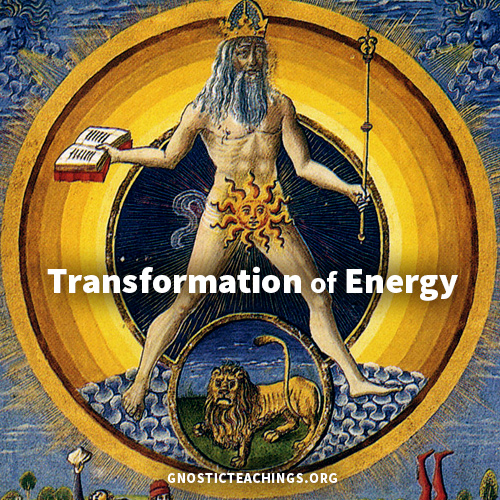
Transformation of Energy 05 The Five Causes of Illness
The five causes of illness, and a overview of the twelve apostles and their symbolic relationship to the biological organism. Quote: "Now, it is necessary to comprehend and understand what the Glorian is, in order to comprehend and understand what we state on the Five Causes of Illness. In Hinduism and Theosophy, you hear about the Trimurti, of Atman, Buddhi, Manas. Yet here, we talk about the Glorian, which, we have to understand, is made by another Trimurti that is above the Trimurti of Atman, Buddhi, Manas). Glorian is related to the word Glory. In Kabbalah, in Hebrew , Glory is Hod. the astral light. Yes indeed, the Glorian is pure astral light – Spiritual light. The Glorian also relates to the Ray of Okidanokh. The master Madame Blavatsky states in her Secret Doctrine that Okidanokh (the Glorian) is a ray of the Absolute, profoundly unknowable to itself, profoundly mysterious to itself. The comprehension of this statement helps us to understand why the universe exists, and why we exist. The Glorian is an emanation of the Ain Soph. It enters into the universe in order to discover, to realize, to acquire cognizance of itself. Imagine a Glorian; each one of us has their own particular Glorian. There are as many Glorians in the universe as there are human beings, animals, plants. Every one has its own particular Glorian." Read the lecture transcription.

Transformation of Energy 04 Work with the Mercury
Hermes or Mercury is the most important symbol of the tradition of Alchemy. Yet, the Alchemists always kept its true identity veiled. In the modern era, the veil has been removed; now it is time to work with Mercury and transform oneself in a radical way. Lecture quote: "Hermes has an ancient tradition. He is the messenger of the sun. He is the closest companion to the sun. And of course we know the planet Mercury is the closest planet in our solar system to the sun, and has a very rapid orbit. In mythology he is said to be an intercessor, or a messenger who works on behalf of the sun, or with the Christ. When we study Hermes or Mercury, we understand that he was always viewed as a God of fertility. And as a God of fertility, he was worshipped symbolically by piles of stones that were placed at crossroads. And this contains a very potent symbolism." Read the lecture transcription.

Transformation of Energy 03 The Metallic Planets of Alchemy
Learn about the influence of the planets across the course of life and their importance in alchemy, or the science of transformation. Lecture quote: "We have to understand and comprehend that the fluid of the Logos is related with the seven main metals, because when we talk about the planets we always refer to the law of heptaparaparshinokh, which is the law of seven, the law that organizes. And that reminds me, or brings into my mind, the Book of Revelation; it is stated there that the lamb, which is a symbol of fire, or that fluidic energy, has seven eyes and seven horns. And it is because the Solar Christ or that fluidic energy organizes itself in this solar system, and in any solar system, through the law of seven, which are represented by the seven planets, related with the week. Monday, Tuesday, Wednesday, Thursday, Friday, Saturday and Sunday, which is of course a wrong organization, because the right organization of the planets is Moon the first, Mercury the second, Venus the third, Sun the fourth, Mars the fifth, Jupiter the sixth, and Saturn the seventh. So here we find the seven metals of the earth, silver for the Moon, quicksilver for Mercury, copper for Venus, gold for the Sun, iron for Mars, tin for Jupiter and lead for Saturn. So these seven metals are, we will say, in the kingdom of metals in any planet, the seven physical vehicles, in order for that fluidic force of the Logos, of that lamb of seven eyes and seven horns, to manifest in our world, in the earth. This is how we understand and comprehend that the Logos in its septuple activity helps the evolution of every single element in the earth." Read the lecture transcription.

Daath 03 The Wives of Adam
The real meanings hidden in the symbols of Cain, Abel, and Seth and the mark or seal of Revelation. Lecture quote: "Daath [דעת] is Hebrew and means knowledge. It is spelled with three letters: Daleth [ד], Ayin [ע], and Tav / Tau [ת]. The Tree of Knowledge is one of those symbolic trees described in the myth of Adam and Eve. In order for us to grasp the meaning of Daath, we have to first grasp that Adam and Eve are a myth—not a myth in the sense that it is not true or not real, but a myth in the sense that it is a mystery. Adam and Eve is a mystery—a story that contains and hides the truth. The mystery of Daath relates to the entirety of what we are as Being." Read the lecture transcription.

Transformation of Energy 02 The Pancatattva Ritual
The Pancatattva Ritual is an ancient ritual known in India whose goal is the transformation of substances into higher energies. Panca is a Sanskrit word that means five, and tattva is a Sanskrit word that means truth, suchness, true being; We understand that a tattva is a vibration of the Ether, which in its place is a transformation or vibration of Prana or Solar Light. Pancatattva refers to five vibrations or five types of energy, harnessed by those who want to merge into the highest forces of the universe. Lecture quote: "From the point of view of Gnosis, in fact, in any real spiritual tradition, we understand that everything that exists has its origin in the womb of the Divine Mother. That womb is a vastness, an emptiness we call the Akash or Akasha. It is a primordial substance, but it is also not a substance. You could say it is "undifferentiated matter," but it is before matter. It is called Mulaprakriti, which is the great womb of Divine Mother space, and from that womb arises everything that exists, everything that manifests. So, in synthesis, we are saying that all atoms, all matter, all energy in its root is derived from this womb. The womb of the Divine Mother space is symbolized in the Book of Genesis as the primordial waters. Likewise, in many other traditions we have the Great Ocean or the Great Waters from which life emerges; and you have this tradition in Hinduism and in various traditions in central and South America. Those waters are feminine and they are the raw material or the raw source of all manifestation." Read the lecture transcription.
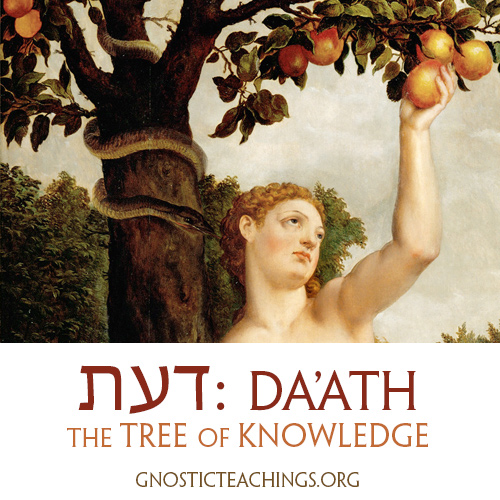
Daath 02 The Duality of Knowledge
The sexual mysteries hidden in Genesis; the creative fire of God in the union of man and woman. Lecture quote: "Those of us who have some background in the Jewish or Christian religions are familiar with the story of the man and woman in the primeval garden, who, it is said, were there in complete innocence and happiness, without any manner of suffering or death. It seems a fairly common understanding that if you have a story about a naked man and a naked woman in a beautiful garden, somehow sex must be part of the picture; there must be a sexual aspect. Yet, unfortunately for many centuries, public religions have failed to explain the sexual symbolism hidden in this ancient story. This is much to the detriment of this world, because in fact an in depth understanding of the tree of knowledge of good and evil is precisely the doorway out of suffering. It is the doorway back to Eden. We know this is true because the first letter of Daath (knowledge) is Daleth, which in the Hebrew language symbolizes a door; this is the doorway back to Eden. It is through knowledge, through Daath or Gnosis (Greek for knowledge), that this fallen humanity can return to a state of happiness, a state of ecstasy or bliss, which in Hebrew is Eden. The word Eden literally means bliss or pleasure. This again points out to us that the garden of Eden and the story of the tree of knowledge must have something to do with sex. The very name Eden means pleasure." Read the lecture transcription.

Transformation of Energy 01 The Transformation of Energy
Physical bodies in the four kingdoms of Nature transform energy for the benefit of the planet. Includes explanations of the Askokin, esoteric symbols from Richard Wagner's master opera "Der Ring des Nibelungen," and the past, present and future Root Races. Read the lecture transcription.

Daath 01 The Doorway of Knowledge
The meaning of the Tree of Knowledge of Good and Evil [עץ הדעת טוב ורע] depicted in the book of Genesis / Bereshit. Lecture quote: "The doorway to knowledge is what we seek when we enter into a religion, or any kind of spirituality, that doorway of which Jesus spoke in the Gospel: "Ask, and it shall be given you; seek, and ye shall find; knock, and it shall be opened unto you: For every one that asketh receiveth; and he that seeketh findeth; and to him that knocketh it shall be opened." - Matthew 7:7-8 To knock on that doorway, we have to know where it is, and to aid us we have many religions in the world, many mystical teachings throughout all the different groups and ages of humanity. Contained within them all are the clues that can guide us towards that singular door which does not reside in only one religion or in any force or group outside of us. That door is not in any book. It is not in any priest, preacher, or master. The doorway is within ourselves. This is why the ancient Greek oracle said, "Man, know thyself." The doorway that we need to knock upon and pass through is within." Read the lecture transcription.

Samael the Fifth Angel 03 Advent of Samael
Kabbalah explains how the angel Samael is related to the astrological signs, the tribe of Dan, Esau and Jacob, the book of Revelation, the plague of locusts, and the second coming of Christ. Lecture quote: "The spelling of Samael is the letters סמאל: Samech, Mem, Aleph, Lamed. Samech means support. Mem means water. Aleph means breath. Lamed means to teach. Therefore, Samael means "to hold up in the waters the teachings of the breath of God." "Samael's force in the physical body is in the blood. Samael controls the forces of Esau in the liver. Through the blood he blesses Jacob. Yes, through the blood, because Jacob is the heart and Esau is the liver. Both relate with the blood. So, the fiery energy, the forces of Samael in the physical body, work in the blood. So the vesture of Samael in our body is our blood. Through the blood, Samael works, whether down or up depends on how we utilize our sexual energy, as already explained when Jacob is fighting with him." Read the lecture transcription: The Advent of Samael.

Samael the Fifth Angel 02 Sacrifice of Samael
Kabbalah explains how the angel Samael works through the sephirah Geburah to fufill the will of God. "Jahavah Elohim said to Samael: "Since it is so, give me advice. (Jehovah Elohim asked Samael for advice) on what I should do, so that the children of Jacob would accept it, as you say." "Samael said to Jehovah Elohim: "Master of the universe, there is a need to bribe them. Take light from the light of the legions in heaven and impart it to them. By this, they will accept her (the Torah) and here is some OF MY LIGHT, which I will give first. Thus, Samael removed from himself the light that enveloped him and gave it to the Holy One, Blessed Be He, to present it to Israel." - Zohar Read the lecture transcription: The Sacrifice of Samael.

Samael the Fifth Angel 01 Sons of Samael
The Angel Samael in the Garden of Eden, and his offspring. Lecture quote: "We have learned that Samael, THE ANGEL, descended from heaven riding on this Serpent at that time. All the creatures saw his image and fled from him. Then SAMAEL AND THE SERPENT approached the woman with words, and brought death upon the world." - Zohar "This is profoundly different from what is taught in Sunday schools. Samael is the name of an angel, a very important angel who unfortunately has been removed from the Christian religion and has been trampled in the mud in the Jewish tradition, but in the very scriptures it is stated that Samael is a great angel." Read the lecture transcription.

Astrology 12 Pisces
The twelfth and final lecture of the Astrology course explains the zodiacal sign Pisces (Feb 19 - Mar 20). Quoted from the lecture: "Let us now dive within the great ocean of the sign of Pisces; a beautiful sign, ruled by Neptune and Jupiter. Pisces is symbolized by two fish united by a hyphen between the hands of Neptune. This is a very profound symbol related with the Monad." Read the lecture transcription.

Astrology 11 Aquarius
The eleventh lecture in the Astrology course explains the zodiacal sign Aquarius (Jan 20 - Feb 18). Quoted from the lecture: "The eleventh sign of the Zodiac corresponds to the stellar influence of Aquarius. The symbol of Aquarius is most commonly seen as a water-bearing human - usually male - pouring forth the waters of wisdom." Read the lecture transcription.

Astrology 10 Capricorn
The tenth lecture of the Astrology course explains the zodiacal sign of Capricorn (Dec 22 - Jan 19). Quoted from the lecture: "This beautiful zodiacal sign, Capricorn, house of Saturn, sign of Earth, relates to death. In the physical body it governs the knees. The goat, which is a symbol of Capricorn, reminds us of the god Pan in the Greek and Roman mythology." Read the lecture transcription.

Astrology 09 Sagittarius
The ninth lecture in the Astrology course explains the zodiacal sign Sagittarius (November 23 - December 21). "The sign of Sagittarius with its famous centaur, half man, half beast, is something that should never be forgotten." -Samael Aun Weor Read the lecture transcription.

Astrology 08 Scorpio
Continuing with the Astrology course, the eighth lecture explains the zodiacal sign Scorpio (Oct 34 - Nov 22). "Scorpio rules the sexual organs and in the latter resides all the power of the magician." -Samael Aun Weor Read the lecture transcription.

Astrology 07 Libra
In the seventh lecture of the Astrology course, the zodiacal sign Libra (Sept 23 - Oct 23) is explained. Quoted from the lecture: "Libra is the sign of the balance. The symbol of Libra is a set of scales. It is interesting to note that of all of the symbols of the astrological signs, the only one that is mechanical, that is a device, that is not a living thing, are the scales of Libra. " Read the lecture transcription.

Astrology 06 Virgo
In the sixth lecture of the Astrology course, the zodiacal sign Virgo (August 23 - September 22) is explained. Virgo—the zodiacal sign of the virgin—is a beautiful zodiacal sign that has a very profound esotericism. When we study the Greek-Roman mythology, we discover that Mercury - which is the planet that rules or that is in the house of Virgo - is the messenger of the Gods. In Greek terms, Mercury is called Hermes; this word Hermes is utilized in different ways, for instance, in order to imply that behind certain phrases or terminologies or words, there is something Hermetic, something hidden, which is knowledge, wisdom. That is why Hermes-Mercury was qualified as the one that brings the word of God; he is the messenger of the Gods. Pausanias, the great geographer, in his fifth book, shows Mercury sharing a common altar with Jupiter (a curious Prawn gem represents Mercury enthroned and bearing the attributes of Jupiter) this is very significant and profound. We have to inquire, to dig, to delve into the waters in order to discover the mystery of Mercury.

Astrology 05 Leo
The fifth lecture in the Astrology course explains the fifth sign in the zodiac: Leo (July 23 - August 22). "Leo is the heart of the zodiac and the throne of the Sun. Leo is the dwelling of the children of the flame, whom the Bible calls "thrones." Leo is the house of the four "Kumaras." Leo is in the house of the Sun and governs our heart." -Samael Aun Weor Read the lecture transcription.

Astrology 04 Cancer
In the fourth lecture of the Astrology course, the zodiacal sign of Cancer (June 22 - July 22) is explained. "Cancer is the sign of the sacred scarab. Cancer is the sign of reproduction. Fetal conception is verified with the rays of the sign of Cancer. This is why it is the sign of the sacred scarab." -Samael Aun Weor Read the lecture transcription.

Astrology 03 Gemini
In the third lecture of the Astrology course, the zodiac sign Gemini (May 21 - June 21) is explained. Quoted from the lecture: "The astrological sign of Gemini illustrates a function of duality. When you observe the astrological sign of Gemini, you will see two columns or two rods placed side by side. Of course, this illustrates two brothers, twins who work together, and this illustrates a fundamental axis of nature." Read the lecture transcription.

Astrology 02 Taurus
In the second lecture of the Astrology course, the zodiacal sign Taurus (April 20 - May 20) is explained. Quoted from the lecutre: "The zodiacal sign of Taurus - according to the esoteric course of astrology or Astrotheurgy - reminds us that the Logos, the Word, is Theos, God itself, who is not a person, but what we call the Army of the Voice." Read the lecture transcription.

Astrology 01 Aries
In the Astrology course, listeners are introduced to the foundations of Gnostic Astrology and how we can learn to take advantage of the stellar radiations in order to improve life for all of us. This first lecture explains the first sign of the zodiac, Aries, the influence of which ranges from March 21 - April 19. Quoted from the lecture: "Related to Aries, there are certain virtues, certain capacities, that we receive, and in particular it is the potential for Penance, or the gifts that Penance can deliver onto the soul. This is the capacity to withstand suffering, to transform it, and make it into something beautiful, the way the great saints and martyrs have always done." Read the lecture transcription.