Gastropod
298 episodes — Page 6 of 6
V is for Vitamin
They’re added to breakfast cereal, bread, and even Pop-Tarts, giving the sweetest, most processed treats a halo of health. Most people pop an extra dose for good measure, perhaps washing it down with fortified milk. But what are vitamins—and how did their discovery make America’s processed food revolution possible? On this episode of Gastropod, author Catherine Price helps us tell the story of vitamins, from Indonesian chickens to Gwyneth Paltrow. Learn more about your ad choices. Visit podcastchoices.com/adchoices
Hacking Taste
Taste is the oldest of our five senses, and yet perhaps the least understood. It’s far more complicated than salty versus sweet: new research is dramatically expanding our knowledge of taste, showing that it’s intimately connected to obesity, mood, immunity, and more. In this episode, we get into the science of how taste works, why we taste what we do, and what makes supertasters unique. And finally, we hack our taste buds—for fun, but, in the future, maybe for health, too. Learn more about your ad choices. Visit podcastchoices.com/adchoices
Cork Dork: Inside the Weird World of Wine Appreciation
“There’s the faintest soupçon of asparagus and just a flutter of Edam cheese,” says Paul Giamatti in the movie Sideways. Believe it or not, he’s describing pinot noir, not quiche. The world of sommeliers, wine lists, and tasting notes is filled with this kind of language, prices seemingly rising in step with the number of bizarre adjectives. It’s tempting to dismiss the whole thing as B.S., but listen in: this episode, author Bianca Bosker takes us along on her journey into the history and science behind blind tasting, wine flavor wheels, and the craft of the sommelier. You’ll never feel lost in front of a wine list again. Learn more about your ad choices. Visit podcastchoices.com/adchoices
To Eat or Not to Eat Meat
With flexitarianism on the rise throughout the developed world, and everyone from Bill Clinton to Beyoncé endorsing the benefits of a vegetarian or vegan diet, it can sometimes seem as though meat is just a bad habit that the majority of us are too weak-willed to kick. But is giving up meat morally superior, healthier, and better for the planet, as its advocates insist? This episode, we fearlessly dive into the long, tangled history and surprisingly nuanced science behind those claims. Listen in now for the truth on Pythagoras, cow farts, and more. Learn more about your ad choices. Visit podcastchoices.com/adchoices
We Heart Chocolate
In the weeks before Valentine’s Day, U.S. consumers will buy nearly 58 million pounds of chocolate. This love affair is not limited to just one day or one country: chocolate has spread from its native home in Central and South America to conquer the world. But today, cacao cultivation is facing a series of wicked problems—ones that threaten to drastically shrink the supply of chocolate just as global demand grows. If the threats aren’t taken seriously, might we lose one of our favorite treats? And, if so, will we also lose our next wonder drug? Learn more about your ad choices. Visit podcastchoices.com/adchoices
Inventing the Restaurant: From Bone Broth to Michelin
Early humans may have visited each others’ caves for a shared meal, but they wouldn’t have expected to be served at their own table, or to choose when and what to eat. But today, restaurants are ubiquitous: there are millions of them worldwide, and the average American eats roughly 200 meals a year in one. So who invented the first restaurant, and when and where did it appear? How did it change society—and change along with society? And, in today’s saturated market, is there a scientific way to choose the best? Learn more about your ad choices. Visit podcastchoices.com/adchoices
Gettin’ Fizzy With It
‘Tis the season for a glass of bubbly—but this episode we’re not talking champagne, we’re talking seltzer. America is in the throes of a serious seltzer craze, with consumption of the bubbly stuff doubling in only a decade, from 2004 to 2014. But where does seltzer come from, and why is it called “seltzer,” rather than simply “sparkling water”? Is there any truth to the rumors that seltzer can combat indigestion—or that it will rot our teeth? Why are all the hipsters crushing cans of LaCroix, and what’s the story behind Polar’s ephemeral sensation, Unicorn Kisses? Learn more about your ad choices. Visit podcastchoices.com/adchoices
The Spice Curve: From Pepper to Sriracha with Sarah Lohman
American food has a reputation for being bland—but, according to historical gastronomist Sarah Lohman, “It’s nonsense that Americans don’t like spicy food.” Lohman is the author of a new book, Eight Flavors: The Untold Story of American Cuisine, which explores the stories behind the flavors that have come to define American cuisine. In this episode, she takes us on a journey through the history and science of black pepper, the oldest flavor described in her book, to the hot new taste sensation that is sriracha. Learn more about your ad choices. Visit podcastchoices.com/adchoices
The Buzz on Honey
Honey seems like a simple, comforting food, slathered on toast, spooned down to soothe sore throats, and beloved of bears, both plush and real. In reality, this sticky combination of bee spit and evaporated nectar is a powerful and ancient ingredient. For much of history, honey was humanity’s main source of sweetness, as well as our first vehicle for getting drunk. Unlike table sugar, honey also comes in an infinite variety of textures and flavors, influenced by the two million blossoms from which each jar is made. And, from ancient Egypt to modern medicine, honey has been valued for its healing powers. Join us this episode as we get stuck in the sweet stuff. Learn more about your ad choices. Visit podcastchoices.com/adchoices
What is Native American Cuisine?
Pasta, sushi, tacos, samosas, and pad thai: In the U.S., enthusiastic eaters will likely be able to name traditional dishes from a wide variety of cuisines around the world. But most of us couldn’t name a single Native American dish from any one the vast network of tribes, cultures, and cuisines that spread across the U.S. before Europeans arrived. Today, farmers, activists, and chefs are trying to change that. They’re bringing back Native foods—not just to teach all Americans about the indigenous foods of their country, but to improve the lives of Native Americans themselves, who suffer from some of the highest levels of debilitating and often deadly diet-related diseases. Can a return to a Native diet help? Learn more about your ad choices. Visit podcastchoices.com/adchoices
Counting Fish
This week, we are taking on one of the universe’s great mysteries: how many fish are in the sea? If you stop to think about it, it seems almost impossible to figure out how many fish there are—after all, they’re basically invisible, not to mention constantly moving. But how else are we to know how many we should take out to eat? Join us as we set sail to figure out how we count fish—and why it matters. Learn more about your ad choices. Visit podcastchoices.com/adchoices
Seaweed Special
Seaweed farming is booming: the global harvest has doubled in the past decade, according to a new report from the United Nations University, and it’s now worth more than all the world’s lemons and limes. Most of that seaweed ends up in our food, though there is a growing market in seaweed-based cosmetics and drugs. So what does a seaweed farm look like? How does it help restore the ocean? And what can you do with kelp in the kitchen, other than wrap sushi? Join us for a conversation with Bren Smith, fisherman-turned-seaweed farmer, for the answers to these questions and more. Learn more about your ad choices. Visit podcastchoices.com/adchoices
The Salt Wars
Salt is a magical substance. It reduces bitterness, enhances sweetness, boosts flavor, and preserves perishable foods. Without it, we would die: the human body can’t make sodium, but our nerves and muscles don’t work without it. It was considered rare until quite recently, so it’s hardly surprising that, throughout history, salt has been the engine behind empires and revolutions. Today, there’s a new battle in the salt wars, between those who think that we eat too much of it and it’s killing us—and those who think most of us are just fine. Join us for a serving of salt, seasoned with science, history, and a little politics. Learn more about your ad choices. Visit podcastchoices.com/adchoices
Kombucha Culture
If you haven’t tasted kombucha yet, you probably will soon. The sour-sweet, fizzy, fermented tea is becoming ubiquitous in trendy cafes, workplaces, and health food stores across America. Where did it come from, and how did it get so popular? And what in the world is the slimy, beige blob that produces it? From German POWs to Lindsey Lohan to a kombucha zoo at Tufts University, this episode explores the history and science of summer’s hottest drink. Learn more about your ad choices. Visit podcastchoices.com/adchoices
Keeping Kosher: When Jewish Law Met Processed Food
Roughly two percent of Americans are Jewish, and only a small fraction of them keep kosher. Yet between a third and a half of all packaged food in an American supermarket has a kosher label on it. How did kosher law become big business? Join us this episode as we find out how ancient Jewish dietary laws have shaped and been shaped by the science of processed food, from Coca-Cola to Jell-O and beyond. Learn more about your ad choices. Visit podcastchoices.com/adchoices
Poultry Power: The Fried Chicken Chronicles
Juicy, crispy, crunchy…fried chicken is undoubtedly delicious. But it’s also complicated, in ways that go far deeper than the science behind that perfect crust. From slavery to entrepreneurship and from yard fowl to Gospel bird, the story of fried chicken is filled with challenging contradictions. Grab a drumstick and listen in. Learn more about your ad choices. Visit podcastchoices.com/adchoices
Outside the Box: The Story of Food Packaging
The invention of food packaging is one of humanity’s greatest achievements. It may seem hard to imagine today, but the first clay pots made the great civilizations of the ancient world possible, while paper’s first use, long before it became a surface for writing, was to wrap food. But packaging’s proliferation, combined with the invention of plastics, has become one of our biggest environmental headaches. In this episode, we explore the surprising history of how our food got dressed—and why and how we might want to help it get naked again. Learn more about your ad choices. Visit podcastchoices.com/adchoices
Who Invented the Cherry Tomato?
In the 1960s, cherry tomatoes were nearly impossible to find in the grocery store. By the 1990s, it was hard to get a salad without them. Somehow, within a couple of decades, the tiny tomatoes had taken over. Where did they come from? And who lay behind their sudden rise to glory? Learn more about your ad choices. Visit podcastchoices.com/adchoices
Everything Old is Brew Again
Pull up a bar stool and prepare to open both your mind and your palate: it’s time to meet beer before it settled down into the fizzy brown brew we know and love today. The ales in this episode of Gastropod represent the future of flavor, but take their inspiration from the pre-industrial pint. Join us as we meet brewers who are making beer with local herbs, roast chicken, and yeasts scraped off the skin of wild blueberries—and then taste the surprisingly delicious results. Learn more about your ad choices. Visit podcastchoices.com/adchoices
Museums and the Mafia: The Secret History of Citrus
A slice of lime in your cocktail, a lunchbox clementine, or a glass of OJ at breakfast: citrus is so common today that most of us have at least one lurking on the kitchen counter or in the back of the fridge. But don’t be fooled: not only were these fruits so precious that they inspired both museums and the Mafia, they are also under attack by an incurable immune disease that is decimating citrus harvests around the world. Join us on a historical and scientific adventure, starting with a visit to the ark of citrus—a magical grove in California that contains hundreds of varieties you’ve never heard of, from the rose-scented yellow goo of a bael fruit to the Pop Rocks-sensation of a caviar lime. You’ll see that lemon you’re about to squeeze in a whole new light. Learn more about your ad choices. Visit podcastchoices.com/adchoices
Grand Theft Food
It’s easy to assume that burglars and thieves are always after conventional valuables: cash, jewels, or high-end electronics. But some of the most memorable heists actually involve food. Inspired by Geoff Manaugh’s new book, A Burglar’s Guide to the City, we dive into the ancient history and detective science behind food crime. Learn more about your ad choices. Visit podcastchoices.com/adchoices
Caffeine: The World’s Most Popular Drug
A tablespoon of it will kill you, but most of us feel like death without it: we’re talking about caffeine this episode. Inspired by a listener question — does green tea have more or less caffeine than black? and what about yerba mate? — Cynthia and Nicky explore the history and science of the world’s most popular drug. Listen in as we discover the curious effect of birth control pills on how our bodies process it, calculate how much of an edge it gives athletes, and learn what dolphin dissection and the American Constitution have to do with each other, and with caffeine. Learn more about your ad choices. Visit podcastchoices.com/adchoices
The Maple Boom
Many people only think of maple syrup at the breakfast table, when they’re facing down a stack of hot, fluffy pancakes or some French toast. They’re missing out. Maple is undergoing a major boom, newly ascendant in beverage aisles, Asian kitchens, and even biomedical research laboratories. In this episode, we visit sugar shacks and talk to the experts to find out why tree sap is so hot right now—and whether it can live up to the hype. Learn more about your ad choices. Visit podcastchoices.com/adchoices
First Foods: Learning to Eat
How do we learn to eat? It may seem like an obvious question, but it’s actually quite a complicated process. Who decided that mushed-up vegetables were the perfect first food—and has that always been the case? What makes us like some foods and hate others—and can we change? Join us to discover the back story behind the invention of baby food, as well as the latest science on flavor preferences and tips for how to transform dislikes into likes. Learn more about your ad choices. Visit podcastchoices.com/adchoices
The Food of Love
Throughout history, humans have attributed aphrodisiac powers to certain foods, from legendary lover Casanova’s diet of fifty oysters for breakfast to chocolate, the default Valentine’s Day gift for the uninspired. But how did such varying vegetables as asparagus, potatoes, and Peruvian maca acquire this reputation—and do any of them actually deserve it? Join us to find out the history and science behind edible aphrodisiacs in this NSFW episode of Gastropod. Learn more about your ad choices. Visit podcastchoices.com/adchoices
The End of the Calorie
For most of us, the calorie is just a number on the back of the packet or on the display at the gym. But what is it, exactly? And how did we end up with this one unit with which to measure our food? Is a calorie the same no matter what type of food it comes from? And is one calorie for you exactly the same as one calorie for me? To find out, we visit the special rooms scientists use to measure how many calories we burn, and the labs where researchers are discovering that the calorie is broken. And we pose the question: If not the calorie, then what? Learn more about your ad choices. Visit podcastchoices.com/adchoices
End-Of-Year Feast
Cheese science, cilantro phobia, and fork usage: we’ve covered it all on Gastropod. And, for our special end-of-year episode, we’re bringing you updates on some our favorite stories. Join us to find out what happened next… Ever wondered what happened to those researchers in Colombia who discovered they could grow five times more food by adding specially-bred microbes to the soil? Or what’s new in cheese microbiology? This is your chance to find out! To celebrate the end of 2015, we’ve created a tasting menu to update past episodes. Listen in for news from the front lines of fork etiquette and for the science behind Camembert’s color change from minty-green to today’s white rind. We’ve also included your stories of successful cilantro conversion techniques as well as your suggestions for state dishes—including plenty that we’d never even heard of, from Benedictine sandwiches to Cincinnati chili. There’s even a mezcal-tasting party featuring Cynthia’s mom. And, as we share a toast and head into 2016, we’d love to hear from you. Do you have a question about some aspect of food history or science? Ever wondered why tonka beans are banned in the United States, despite being a popular spice in much of the rest of the world? Maybe your teeth feel weird after eating spinach, and you want to know why—and whether anyone else has the same reaction? Or perhaps you’re curious about how tomatoes, which don’t seem as if they should store particularly well for long boat-rides, succeeded in making the leap from the Americas to become a staple in European cuisine? Send us an email or a voice memo, or leave us a message at +1 310.876.2427, and we’ll see what we can do! Finally, a huge thanks to you, our listeners, for a great year. We wouldn’t exist without you, and we’re so grateful for your support. If you enjoy listening to Gastropod, please tell your friends and relatives: we need to build our audience in order to thrive in the future. You can also write a review at iTunes, which helps other podcast lovers find us. Don’t forget to like us on Facebook, follow us on Twitter, and sign up for our email list. And, if you’re feeling particularly generous at the end of the year, please consider making a donation to support future episodes of Gastropod. It’s not tax-deductible, but you’ll be helping to make sure we can serve up another year’s worth of delicious food science and history. Thanks for all you’ve done to help make this show a success, and here’s to 2016!EPISODE NOTESThe Golden Spoon Our very first episode, The Golden Spoon, was a deep dive into the history and science of cutlery: you can listen to it here. For this episode, we spoke to Guardian columnist Tim Dowling about the shocking findings from a new survey on British fork usage.The Microbe Revolution Back in November 2014, we spoke with scientists Ian Sanders and Alia Rodriguez about their successful field trials, in which they found that coating cassava roots in a gel containing specially bred mycorrhizal fungi increased the final harvest by up to five times. Learn more about your ad choices. Visit podcastchoices.com/adchoices
The Mushroom Underground
They’re a kingdom unto themselves, neither animal, vegetable, nor mineral. They count among their number both the world’s largest organism and millions of microscopic, single-celled creatures. And yet not only have they been an important—and delicious—food source for thousands of years, but they also seem to have powerful medicinal properties. What are these mysterious creatures? Fungi! Learn more about your ad choices. Visit podcastchoices.com/adchoices
Peak Booze
Are you part of Generation Peak Booze? In this episode, we dive into the factors behind the ups and downs in alcohol consumption in the U.K. and the U.S. over the course of the twentieth century, we explore the long-term health effects of peak booze, and we get a sneak peek at the synthetic alcohol of the future. Cheers! Learn more about your ad choices. Visit podcastchoices.com/adchoices
Mezcal: Everything but the Worm
It’s nearly the Day of the Dead in Mexico, which gives us the perfect excuse to get familiar with the country’s national spirit: tequila. Or wait, should that be mezcal? And what’s the difference, anyway? In this episode of Gastropod, Cynthia and Nicky travel to Mexico to explore the history and science of distilled agave, and get tangled up in a complex story of controversies, clones, and culture. Learn more about your ad choices. Visit podcastchoices.com/adchoices
The Good, The Bad, The Cilantro
On the surface, it’s just a leafy green herb. Its feathery fronds add a decorative note and a distinctive flavor to dishes across Latin America and Asia, from guacamole to phở. And yet cilantro is the most divisive herb in the kitchen, inspiring both deep dislike and equally deep devotion. What’s the history and science behind these strong reactions—and can cilantro disgust ever be overcome? Learn more about your ad choices. Visit podcastchoices.com/adchoices
The Bitter Truth
It’s one of the five basic tastes, along with salty, sweet, sour, and umami. It’s also the least popular and the most mysterious. “That tastes bitter” is not usually a compliment, and yet scientists are increasingly concerned that by banishing bitter from our diets, we’re affecting our health in ways we don’t fully understand. In this episode, we get to know bitter a little better, finding good reasons and new ways to appreciate its complex charms. Learn more about your ad choices. Visit podcastchoices.com/adchoices
The United States of Chinese Food
Wander into any town in the U.S., no matter how small and remote, and you’re likely to find at least one Chinese restaurant. In fact, there are more Chinese restaurants in America than McDonalds, KFC, and Burger King combined. And the food they serve is completely unlike anything you’ll find in China. In this episode of Gastropod, we ask one crucial question: why? From the Gold Rush to MSG, via the scandalous story of gender-bending Chinese restaurants in 1920s New York City, this episode of Gastropod serves up a tasty buffet of American Chinese food. Grab your chopsticks and dive in! Learn more about your ad choices. Visit podcastchoices.com/adchoices
The Whole Hog
Bacon, bratwurst, bangers, barbecue: these are just a few of the many ways people around the world enjoy feasting on pigs. Of all the domesticated animals humans consume, Sus scrofa domesticus is the most fascinating, the most divisive, and, arguably, the most delicious. In this in-depth conversation with author and historian Mark Essig, author of the book Lesser Beasts: A Snout-to-Tail History of the Humble Pig, Gastropod discovers the evolutionary source of the pigs’ intelligence (scientists have judged them the cognitive equal of a human three-year-old), and why the animals’ physiology so closely resembles our own. We also uncover the real reason Jews originally eschewed pork, and how pigs were the essential but forgotten weapon, alongside guns and germs, that allowed the Spanish and English to conquer and colonize the Americas. Plus, we read and review Barry Estabrook’s book, Pig Tales: An Omnivore’s Quest for Sustainable Meat, which picks up the porcine tale in the present, where Mark Essig leaves off. From helicopter hunting to manure spraying and more, join us and pig out! Learn more about your ad choices. Visit podcastchoices.com/adchoices
The Scoop on Ice Cream
It’s one of the most complex food products you’ll ever consume: a thermodynamic miracle that contains all three states of matter—solid, liquid, and gas—at the same time. And yet no birthday party, beach trip, or Fourth of July celebration is complete without a scoop or two. That’s right—in this episode of Gastropod, we serve up a big bowl of delicious ice cream, topped with the hot fudge sauce of history and a sprinkling of science. Grab your spoons and join us as we bust ice-cream origin myths, dig into the science behind brain freeze, and track down a chunk of pricey whale poo in order to recreate the earliest published ice cream recipe. Learn more about your ad choices. Visit podcastchoices.com/adchoices
Crunch, Crackle, and Pop
“Sound is the forgotten flavor sense,” says experimental psychologist Charles Spence. In this episode, we discover how manipulating sound can transform our experience of food and drink, making stale potato chips taste fresh, adding the sensation of cream to black coffee, or boosting the savory, peaty notes in whiskey. Composers have written music to go with feasts and banquets since antiquity—indeed, in at a particularly spectacular dinner hosted by Duke Philip of Burgundy in 1454, twenty-eight musicians were hidden inside an immense pie, beginning to play as the crust was opened. Today, however, most chefs and restaurants fail to consider the sonic aspects of eating and drinking. That’s a mistake, because, as we reveal in this episode, sound can affect how fast we eat, how much we’re prepared to pay for our meal, and even what it tastes like. Learn more about your ad choices. Visit podcastchoices.com/adchoices
Field Recordings
Plants that can hear themselves being eaten. Microphone-equipped drones that eavesdrop on sick chickens. Lasers that detect an insect’s wing-beats from dozens of feet away. In this James Bond-inspired episode of Gastropod, we listen to the soundtrack of farming, decode the meaning hidden in each squawk, moo, and buzz, and learn how we can use that information to improve our food in the future. Tune in now for this special broadcast of the barnyard orchestra! Learn more about your ad choices. Visit podcastchoices.com/adchoices
The Cocktail Hour
Whether you sip it with friends, chug it before hitting the dance floor, or take it as a post-work pick-me-up, there’s clearly nothing like a cocktail for bracing the spirit. In addition to its peculiar history as a medicinal tonic, plenty of hard science lies behind the perfect cocktail, from the relationship between taste perception and temperature to the all-important decision of whether to shake or stir. What’s more, according to historian David Wondrich, mixology is “the first legitimate American culinary art”—and one that has since caught on around the world. Raise a glass, and listen in as we discover the cocktail’s historical origins, its etymological connection to a horse’s butt, and its rocky history, post-Prohibition. We also check out an original copy of the world’s first cocktail recipe book at New York City’s bartending mecca, Cocktail Kingdom; take a private cocktail science class with Jared Sadoian of The Hawthorne in Boston; and talk red-hot pokers with culinary scientist Dave Arnold. Cheers! Learn more about your ad choices. Visit podcastchoices.com/adchoices
Gastropod on Gastropods
Finally, Gastropod is tackling gastropods! In this episode, Cynthia visits one of America’s first and only snail farms. Though Gastropod is, as regular listeners know, a podcast about the science and history of all things gastronomical, we do share a name with Gastropoda, the taxonomic class that includes slugs and snails. And, as it turns out, the history and science of heliciculture, or snail farming, is completely fascinating. Join Cynthia on a trip to rural Washington State to learn how to raise snails and whether fresh and vacuum-packed taste any less rubbery than canned. Plus, you’ll hear about the earliest evidence for human snail consumption, how the Romans fattened theirs up, and all about the bizarre world of snail sex. Learn more about your ad choices. Visit podcastchoices.com/adchoices
Savor Flavor
Why does grape candy taste so fake? What on earth is blue raspberry, anyway? And what is the difference between natural and artificial, at least when it comes to flavor? Join us as we taste the rainbow on this episode of Gastropod, from artificial flavoring’s public debut at the 1851 Crystal Palace exhibition, to the vanilla-burping yeasts of the future. We’ll experiment with Skittles, discover how invented flavors first appeared in our daily diets, and visit a synthetic biology lab, all in our quest to understand what artificial flavor is, was, and might be. Along the way, we’ll learn what exactly goes into designing the perfect pineapple from one of America’s top flavorists, investigate beaver butts, and discover the taste of an extinct banana. Listen now! Learn more about your ad choices. Visit podcastchoices.com/adchoices
Say Cheese!
Cheese is the chameleon of the food world, as well as one of its greatest delights. Fresh and light or funky and earthy, creamy and melty or crystalline and crumbly—no other food offers such a variety of flavors and textures. But cheese is not just a treat for the palate: its discovery changed the course of Western civilization, and, today, cheese rinds are helping scientists conduct cutting-edge research into microbial ecology. In this episode of Gastropod, we investigate cheese in all stinking glory, from ancient Mesopotamia to medieval France, from the origins of cheese factories and Velveeta to the growing artisanal cheese movement in the U.S. Along the way, we search for the answer to a surprisingly complex question: what is cheese? Join us as we bust cheese myths, solve cheese mysteries, and put together the ultimate cheese plate. Learn more about your ad choices. Visit podcastchoices.com/adchoices
No Scrubs: Breeding a Better Bull
In 1900, the average dairy cow in America produced 424 gallons of milk each year. By 2000, that figure had more than quadrupled, to 2,116 gallons. In this episode of Gastropod, we explore the incredible science that transformed the American cow into a milk machine—but we also uncover the disturbing history of prejudice and animal cruelty that accompanied it. Along the way, we’ll introduce you to the insane logic of the Lifetime Cheese Merit algorithm and the surreal bull trials of the 1920s. This is the untold story behind that most wholesome and quotidian of beverages: milk. Prepare to be horrified and amazed in equal measure. Learn more about your ad choices. Visit podcastchoices.com/adchoices
Breakfast of Champions
Breakfast: the most important meal of the day. Or is it? In this episode of Gastropod, we explore the science and history behind the most intentionally designed, the most industrialized, and the most argued about meal of all. Armed with a healthy dose of caffeine chronopharmacology, we embark on a global breakfast tour that exposes the worldwide dominance of Nutella, as well as the toddler kimchi acclimatization process. Meanwhile, back in the U.S., we trace the American breakfast’s evolution from a humble mash-up of leftover dinner foods to its eighteenth-century explosion into a feast of meats, griddle cakes, eel, and pie—followed swiftly by a national case of indigestion and a granola-fueled backlash. Breakfast has been a battleground ever since: in this episode, we not only explain why, but also serve up the best breakfast contemporary science can provide. Learn more about your ad choices. Visit podcastchoices.com/adchoices
Kale of the Sea
Call off the search for the new kale: we’ve found it, and it’s called kelp! In this episode of Gastropod, we explore the science behind the new wave of seaweed farms springing up off the New England coast, and discover seaweed’s starring role in the peopling of the Americas. The story of seaweed will take us from a medicine hut in southern Chile to a high-tech seaweed nursery in Stamford, Connecticut, and from biofuels to beer, as we discover the surprising history and bright future of marine vegetables. Along the way, we uncover the role kelp can play in supporting U.S. fishermen, cleaning up coastal waters, and even helping make salmon farms more sustainable. Learn more about your ad choices. Visit podcastchoices.com/adchoices
Bite: Smoked Pigeon and Other Subnatural Delights
In this week’s bite-sized episode, Nicky travels to the campus of Duke University, in Durham, North Carolina, for a day of talks and tastings exploring the shifting status of stinky cheese, offal, insects, and other funky foods. At different times and places, these foods have been regarded as “subnatural”—low-class, disgusting, even unhygienic. But what does categorizing these foods as subnatural say about us, and what happens when we decide that they’re desirable, after all? Episode Notes Here are links to the peculiar but fascinating events, ideas, and books we discuss in this bite-sized episode.Subnature: Architecture’s Other Environments,David Gissen The term “subnature” was coined by architectural theorist David Gissen in 2009 to describe the less desirable aspects of the built environment: puddles, pollution, and pigeons. His book explores the historical assumptions behind this mostly unquestioned hierarchy in which light, air, and greenery are perceived as “good,” while the equally natural dust, dirt, and weeds are unwelcome. Image from the Brooklyn Pigeon Project, Aranda/Lasch, 2004 It also includes a selection of projects by contemporary architects and preservationists that engage with historical perceptions of subnatural environments and attempt to re-imagine them for the future. For example, Gissen includes both a discussion of anti-pigeon spikes and a description of the Brooklyn Pigeon Project, in which architecture firm Aranda/Lasch developed a set of algorithms and tools to help humans re-visualize the city from the point of view of a flock of pigeons.Subnature and Culinary Culture, Duke University By collaborating with colleagues from a wide range of departments at Duke, as well as chefs, cheese-makers, and foragers from the local community, Tom Parker, a visiting scholar from Vassar, created a campus-wide program of events, talks, installations, and edible experiences exploring what the idea of subnature might mean in terms of food, and why particular foods, texture, and flavors have been marginalized in certain societies. Chef Kim Floresca smokes sturgeon at the Duke University campus smokehouse, with Tom Parker and Josh Evans from the Nordic Food Lab. Photo by Nicola Twilley. Roasting quail in a downtown Durham parking lot. Photo by Nicola Twilley. Highlights included the construction of a smokehouse on the lawn outside the university president’s offices, as well as a dinner in which the chefs from five local restaurants came together to showcase local subnatural ingredients prepared in transformative ways. On the menu: car-park roasted quail, cooked using a set-up that chef Matt Kelly described as “redneck ingenuity,” and sturgeon coated in a crust of corn fungus and its own heart and collagen, smoked in the Duke smokehouse. “Sturgeon: Its Roe, Marrow, Collagen, & Heart. Lacto-Fermented Onions. Our Soured Cream. Saltwort.” As prepared by chefs Kim Floresca and Daniel Ryan, [ONE] Restaurant. Photo by Nicola Twilley.“How Wine Became Metropolitan,”Edible Geography This is the post about David Gissen’s new map of France’s wine regions that started the ball rolling by introducing Tom Parker to the idea of subnature. Gissen represents wine appellations as stops on a subway line rather than as geographic territories in an attempt to communicate the relationship between each region, rather than their legal boundaries. The Metro Wine Map of France, David Gissen The post Bite: Smoked Pigeon and Other Subnatural Delights appeared first on Gastropod. Learn more about your ad choices. Visit podcastchoices.com/adchoices
The Microbe Revolution
Unless you’ve been living under a rock for the past couple of years, you’ve probably heard about the human microbiome. Research into the composition, function, and importance of the galaxy of bacteria, fungi, and viruses that, when we’re healthy, live in symbiotic balance in and on us has become one of the fastest moving and most intriguing fields of scientific study. But it turns out that plants have a microbiome too—and it’s just as important and exciting as ours. In this episode of Gastropod, we look at the brand new science that experts think will lead to a “Microbe Revolution” in agriculture, as well as the history of both probiotics for soils and agricultural revolutions. And we do it all in the context of the crop that Bill Gates has called “the world’s most interesting vegetable”: the cassava. Learn more about your ad choices. Visit podcastchoices.com/adchoices
Dan Barber’s Quest for Flavor
In this latest episode of Gastropod, chef and author Dan Barber takes listeners on a journey around the world in search of great flavor and the ecosystems that support it, from Spain to the deep South. You’ll hear how a carefully tended landscape of cork trees makes for delicious ham, and about a squash so cutting edge it doesn’t yet have a name, in this deep dive into the intertwined history and science of soil, cuisine, and flavor. It’s hard to imagine now, but there was a time before refrigerators, before long-distance trucks and ships. Most people had to survive on food from their immediate surroundings, no matter how poor the soil or challenging the terrain. They couldn’t import apples from New Zealand and potatoes from Peru, or rely on chemical fertilizer to boost their yields. From within these constraints, communities around the world developed a way of eating that Dan Barber calls “ecosystem cuisines.” Barber, the James Beard-award-winning chef of Blue Hill restaurant and author of the new book The Third Plate, spoke to Gastropod about his conviction that this historically-inspired style of cuisine can be reinvented, with the help of plant-breeders, his fellow chefs, and the latest in flavor science, in order to create a truly sustainable way to eat for the twenty-first century. Learn more about your ad choices. Visit podcastchoices.com/adchoices
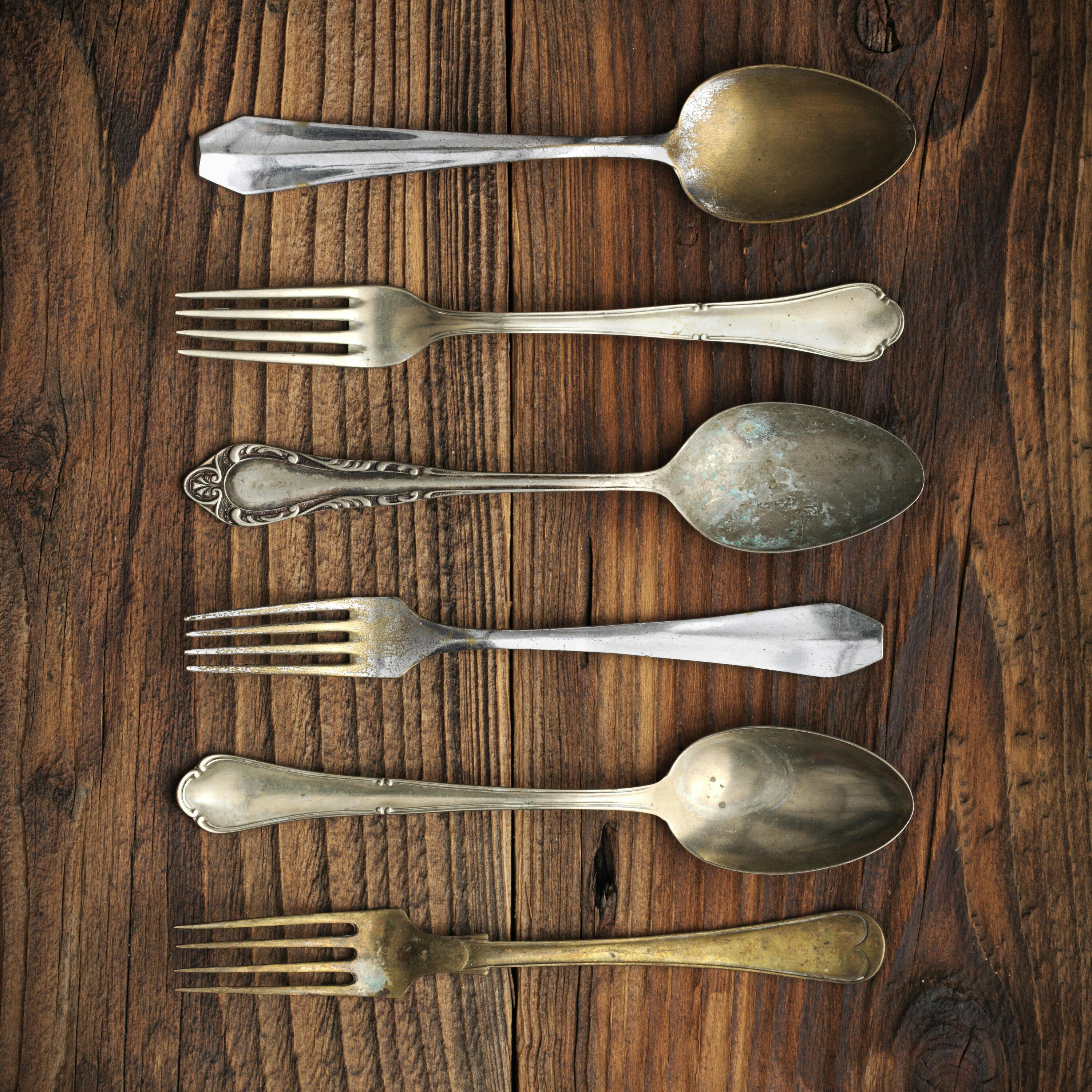
Episode 1: The Golden Spoon
Chances are, you’ve spent more time thinking about the specs on your smartphone than about the gadgets that you use to put food in your mouth. But the shape and material properties of forks, spoons, and knives turn out to matter—a lot. Changes in the design of cutlery have not only affected how and what we eat, but also what our food tastes like. There’s even evidence that the adoption of the table knife transformed the shape of European faces. To explore the hidden history and emerging science of cutlery for our brand new podcast, Gastropod spoke to Bee Wilson, food historian and author of Consider the Fork, and Zoe Laughlin, co-founder of the Institute of Making at University College London. Learn more about your ad choices. Visit podcastchoices.com/adchoices