Futurized - thought leadership on the future
193 episodes — Page 3 of 4
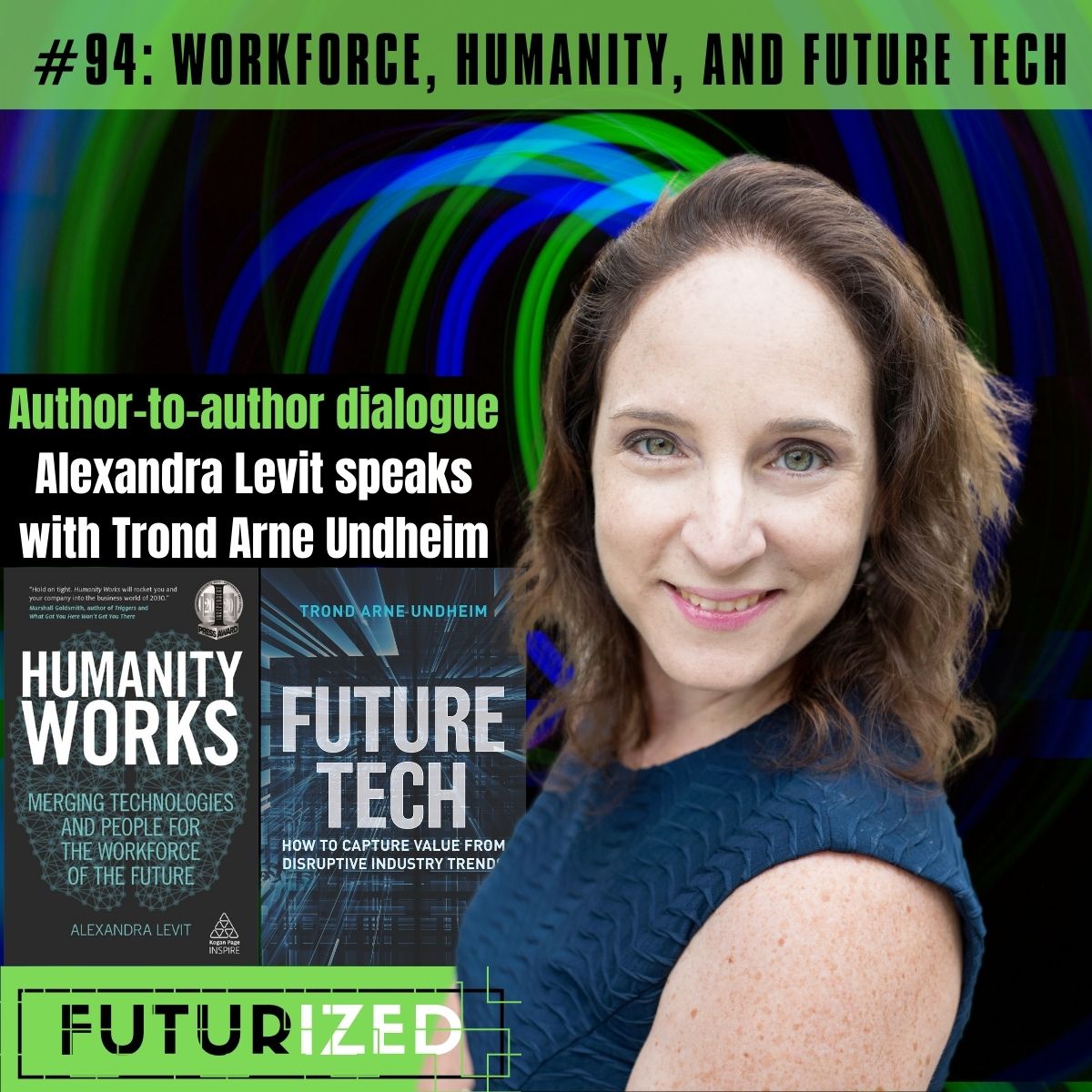
S1 Ep 94Workforce, Humanity, and Future Tech
Alexandra Levit, 8x author, speaker, and career expert, interviewed by Trond Undheim, futurist and author. In this conversation, we talk about the future of careers and strategic HR. We discuss a recent book by Levit: Humanity Works: merging tech and people for the workforce of the future (2019). Alexandra and I agree that there is lots of work required to integrate tech in the workforce. Paradoxically, it requires hard, human work to adapt to new realities. We then discuss a brand new book penned by myself, Trond Undheim: Future Tech: how to capture value from disruptive industry trends--a framework for understanding tech/society (2021). We talk about the trends of co-working, remote work, portfolio careers, gig economy, design thinking, workplace culture, experience retail, applied tech skills, the importance of training. We also discuss the future and what that entails for the workforce and for how technology will evolve. Having listened to this episode, check out Humanity Works, Future Tech as well as Alexandra Levit and Trond Undheim's online profiles: Humanity Works: https://www.amazon.com/Humanity-Works-Merging-Technologies-Workforce/dp/0749483458 Future Tech: https://www.amazon.com/Future-Tech-Capture-Disruptive-Industry/dp/1398600326 Alexandra Levit (LinkedIn, Twitter: @alevit): https://www.alexandralevit.com/ Trond Undheim (LinkedIn, Twitter @trondau): https://trondundheim.com/ My takeaway is that paradoxically, the future of technology is not so much about tech as it is about getting the human part right. We need to train, retrain, and adapt. We will spend more time doing that than actually developing new technology. Also, successful technology requires being in close touch with its prospective users. Failing that, technology fails. The Future of work can be bright for young people if they are proactively explore the opportunities in front of them. Conversely, the world we have already entered rewards creativity and initiative. Without that, any trend, technology or otherwise, will come as an unpleasant surprise. Thanks for listening. If you liked the show, subscribe at Futurized.org or in your preferred podcast player, and rate us with five stars. If you like this topic, you may enjoy other episodes of Futurized, such as episode 49, Living the Future of Work, episode 41, The Future of Work, or episode 71, Future Tech - a preview. Keep in mind that so far, there are over 20 episodes of Futurized that tackle the Future of Work, so you may wish to browse more episode using the categories and search function provided on the Futurized.org website. Futurized—preparing YOU to deal with disruption.

Ep 90Upskilling Youth for the 21st Century Bioeconomy
Natalie Kuldell, Executive Director & founder, BioBuilder Educational Foundation, interviewed by Trond Arne Undheim, futurist, investor, and author. In this conversation, we talk about synthetic biology for all, bringing engineering into life science and about deep science in classrooms. We discuss disruptive forces (tech, regulation, business models, social dynamics). We discuss skills shortage initiatives, biomanufacturing jobs, business models, exciting startups such as Ginkgo Bioworks and Asimov. She explains Biobuilder.org's pivot to online during COVID-19, scaling the efforts to the rust belt, community science, and community labs such as Genspace, BosLabs, BioCurious, Biogen Community Lab, Bricobio, and (iGEM) Foundation Jamboree. Finally, we discuss next decade's self-taught scientists and agri-bio revolution in rust belt farming communities. Having listened to this episode, check out BioBuilder Educational Foundation as well as Natalie Kuldell's online profile: BioBuilder Educational Foundation (@SystemsSally): Natalie Kuldell: https://www.linkedin.com/in/natalie-kuldell-9947408/ My takeaway is that synthetic biology must become a skillset of every young person. They need it to understand the world they will grow up in. It will increasingly become a life skill, perhaps even a survival skill depending on how the world goes. "Citizen science is more than looking at stars, and looking at birds", says Natalie. For sure. Deep science is cool and it needs to be cool for a while. That much is certain. Thanks for listening. If you liked the show, subscribe at Futurized.org or in your preferred podcast player, and rate us with five stars. If you like this topic, you may enjoy other episodes of Futurized, such as episode 22 The Future of Engineering Education, episode 36, The Future of Cultured Meat, or episode 81, 2x Community Science -- Cancer Map and COVID-19 Testing in Schools. Futurized—preparing YOU to deal with disruption.
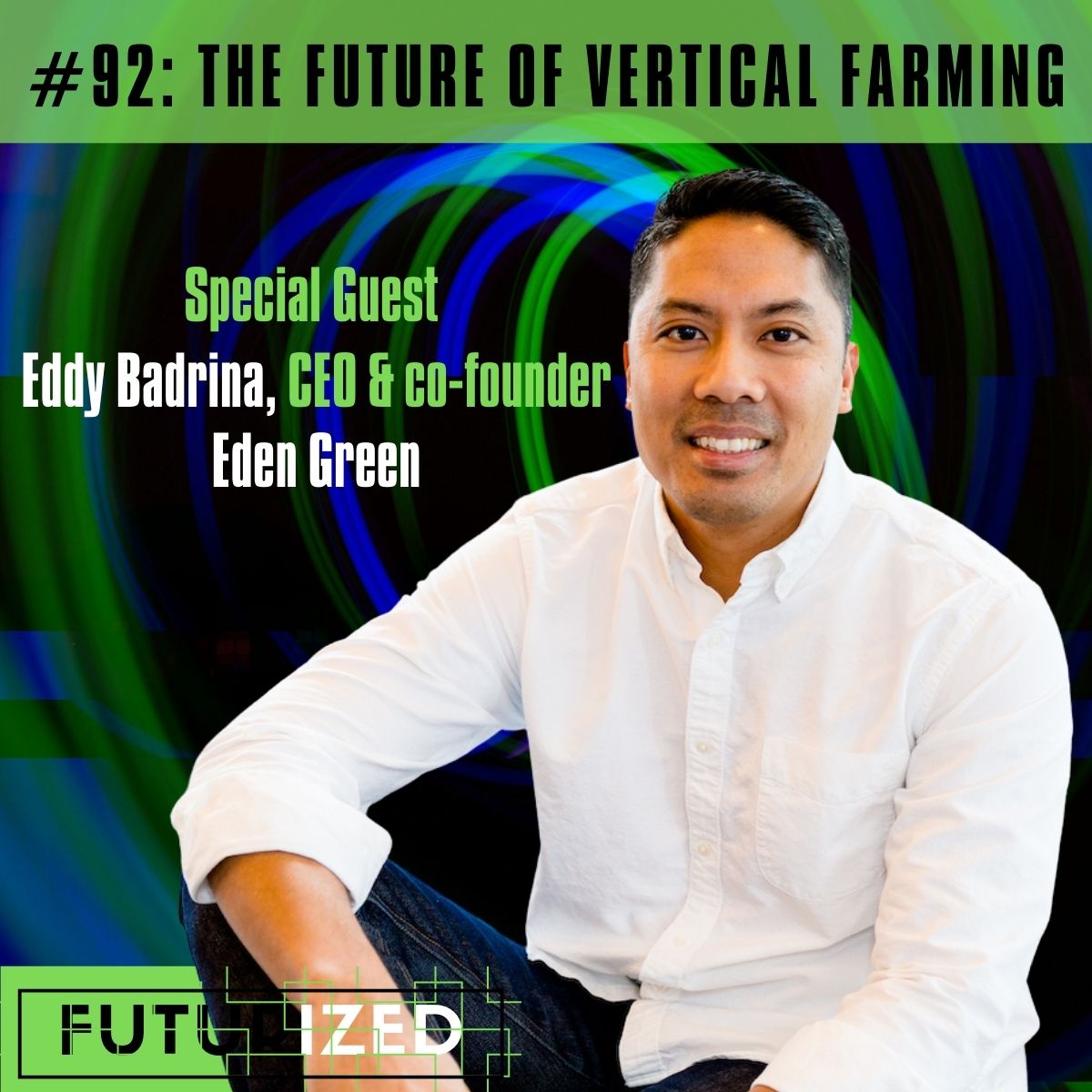
S2 Ep 92The Future of Vertical Farming
Eddy Badrina, CEO of Eden Green, interviewed by host Trond Arne Undheim, futurist, investor, and author. In this conversation, we talk about whether indoor grown food is equally healthy? How has the space of vertical farming emerged? We discuss the demand for organic food, environmental concerns, soil quality depletion, groundwater depletion, and chemical pollution. Eddy explains the main distinctions and concepts, including Greenhouses, Hydroponics, Aeroponics, Aquaponic, Vertical farming, and the various growth vectors, such as greenhouse, shipping container, skyscraper, or warehouse. We discuss sensors, climate control, LED lighting. How do you define the vertical farming market? Who are the players? Which disruption forces are most actively influencing the field of vertical farming right now? How does he stay up to date? How does he recommend my listeners (and I) stay up to date? Looking at the next decade, I ask Eddy what he thinks will happen to vertical farming? We discuss high yield local food production in inner cities, near deserts, on islands, on in space and beyond My takeaway is that vertical farming is poised for growth, and I don't just mean that as a pun. There are legitimate reasons why foodtech is exploding right now. Food and Ag coupled with tech is necessary, exciting, and is becoming scalable. Can the costs of vertical farming come down? Will we see vertical farms in every country and every municipality? Time will show. Having listened to this episode, check out Eden Green as well as Eddy Badrina's online profile: Eden Green (@edengreentech): https://www.edengreen.com/ Eddy Badrina (@eddybadrina): https://www.linkedin.com/in/eddybadrina Thanks for listening. If you liked the show, subscribe at Futurized.org or in your preferred podcast player, and rate us with five stars. If you like this topic, you may enjoy other episodes of Futurized, such as episode 87 Performance Food, episode 52 The Future of Peer-to-Peer, or episode 36 The Future of Cultured Meat. Futurized—preparing YOU to deal with disruption.
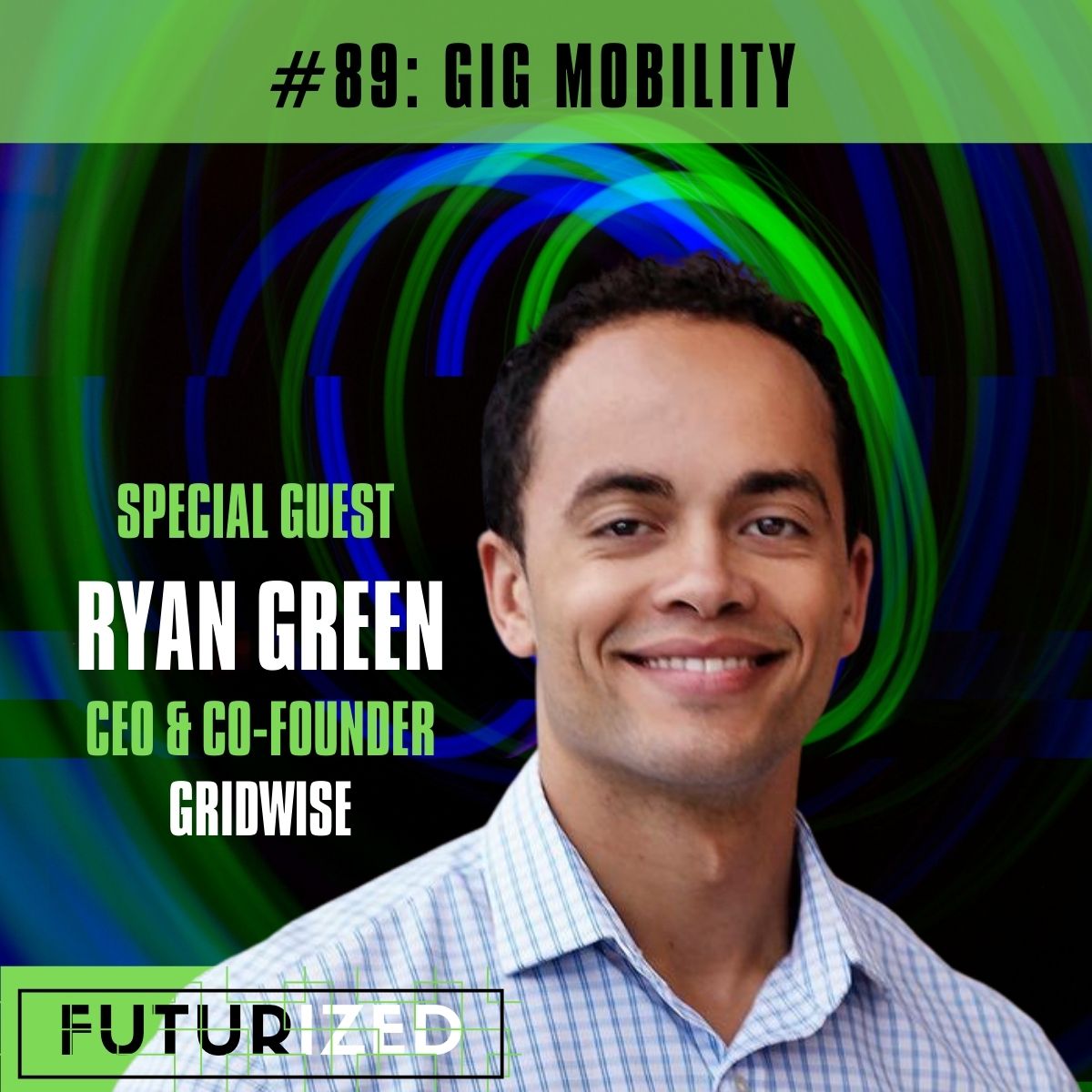
Ep 91Gig Mobility
Ryan Green, CEO & co-founder, Gridwise, interviewed by host Trond Arne Undheim, futurist, investor, and author. In this conversation, we talk about whether gig mobility services (MaaS) become the standard for how to move in cities? What does the future of driver intelligence look like? We discuss the emerging market size and key verticals such as transportation, city government, real estate, and financial services. We cover disruptive forces and barriers such as COVID-19, security, data protection, and IP. I ask Ryan about the exciting startups he sees in the space and we discuss the next decade's autonomy, data sharing, and mobility-as-a-service adoption. My takeaway is that gig mobility is becoming the standard for how to move in cities. We are moving into a period with a hybrid fleet of various degrees of human and autonomous driving enabled. The quest for data and the question of who owns it, will also hit transportation. Being a connector between different mobility services is an interesting space to be in, a role one would have expected national, regional and city governments to occupy, but now becoming a battleground for large mobility players as well as emerging startups. Are we at the cusp of the truly smart city? Just maybe but there's going to be dumb infrastructure challenges remining for some years to come. Having listened to this episode, check out Gridwise as well as Ryan Green's online profile: Gridwise (@gridwise_io): http://www.gridwise.io/ Ryan Green: https://www.linkedin.com/in/ryanagreen/ Thanks for listening. If you liked the show, subscribe at Futurized.org or in your preferred podcast player, and rate us with five stars. If you like this topic, you may enjoy other episodes of Futurized, such as episode 3, The Remaking of Transportation, episode 82, The Future of Grid Energy Innovation, or episode 16, The Future of Human Perception AI. Futurized—preparing YOU to deal with disruption.
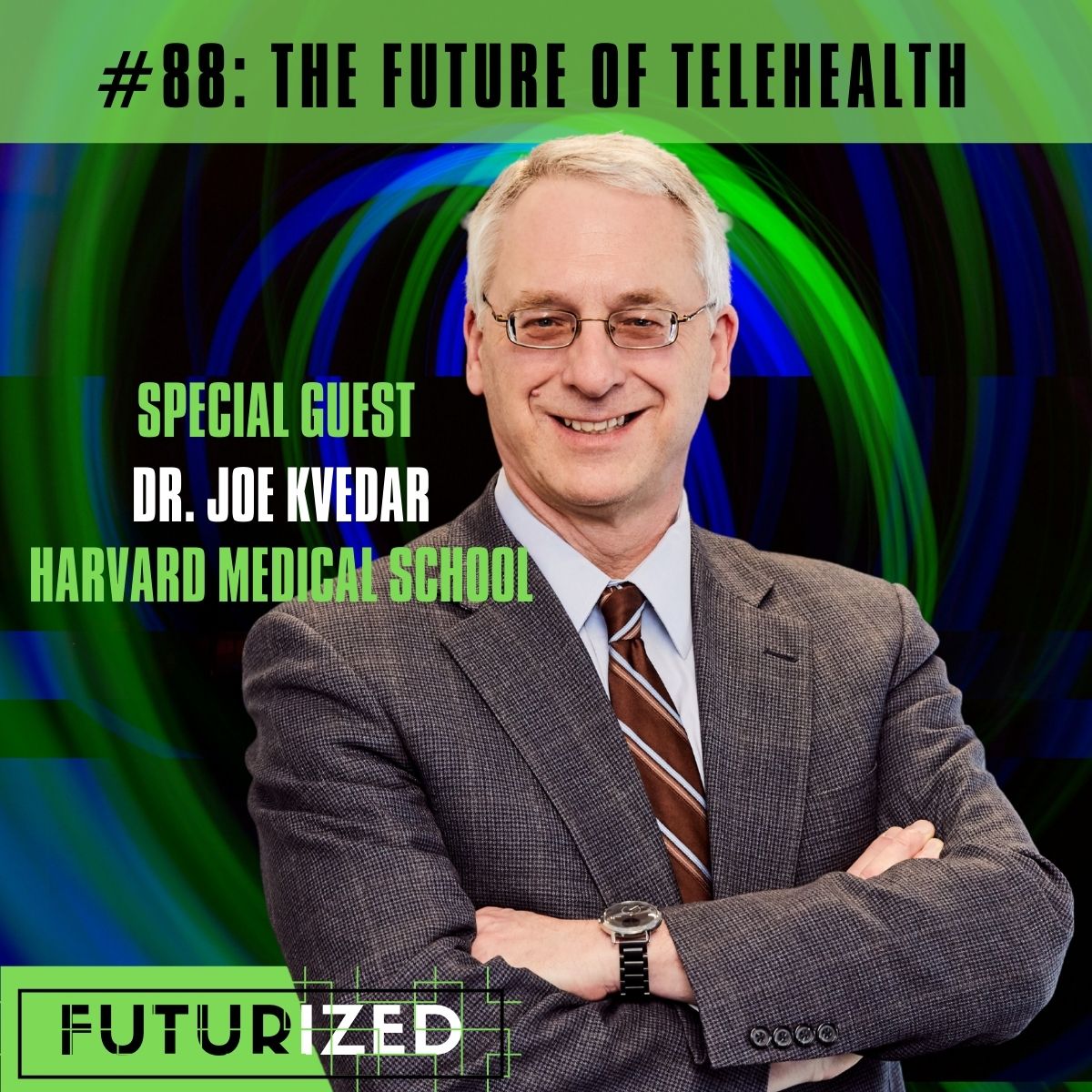
Ep 88The Future of Virtual Care
Dr. Joe Kvedar, Professor of Dermatology, Harvard Medical School, author, editor, advisor and telehealth evangelist, interviewed by Trond Arne Undheim, futurist, investor, and author. In this conversation, we talk about the history Telehealth and it's transformation into a two-channel delivery system combining in-person and virtual care. A precursor in the field, Joe charts the 20 year evolution from "show me the data" to "how do I implement?". We briefly discuss the use case of Melanoma therapy and AI/imaging from Kvedar's own field, dermatology. We discuss COVID-19 effects and other disruptive forces. Joe shares the startups he sees disrupting the game and how he stays up to date. We cover the emerging two-channel care delivery system and discuss the future of virtual care in the next decade. My takeaway is that Telehealth has come a long way in 20 years and it's not just about the technologies, but it is also about adapting to a hybrid model of care where you each time select the communication mode that best serves the patient given the constraints, and still is efficient for the health system at large. The future of virtual care is up for grabs, it is already starting to look different from five years ago. Leapfrogging seems entirely possible and we will see new winners but also old champions rise to the challenge having invested time and resources in the area for decades. What's certain is that both infrastructure and skills will need to evolve with the challenges and opportunities ahead. Having listened to this episode, check out Harvard Medical School as well as Dr. Joe Kvedar's online profile: TEDx Talk: Why Humans are the Future of Digital Health | Joe Kvedar | TEDxBeaconStreet - YouTube Harvard Medical School (@harvardmed): https://hms.harvard.edu/ Dr. Joe Kvedar (@jkvedar): https://www.linkedin.com/in/joekvedar/ Homepage: https://www.joekvedar.com/ Thanks for listening. If you liked the show, subscribe at Futurized.co or in your preferred podcast player, and rate us with five stars. If you like this topic, you may enjoy other episodes of Futurized, such as episode 19, Digital Health in Future Pandemics, episode 55 AI for Medicine, or episode 82 The Future of Digital Health AI. Futurized—preparing YOU to deal with disruption.

Ep 87Performance Food
Luci Gabel, Nutritionist, Adjunct Professor at San Jose State University, and author of Eat to Lead, interviewed by host Trond Arne Undheim, futurist, investor, and author. In this conversation, we talk about Luci's own path to healthy eating. We go through a brief history of diets, from low Fat, low Carb, Atkins, Veg, Organic, Low Sugar, and Keto. I ask Luci about best practices from her Eat To Lead book, we get into the Dynamic Lifestyle Roadmap and get the lowdown on Fruit, Carbs, Protein and Fat. We discuss microbiome awareness as well as her Five-Star restaurant secrets. Lastly, we hit on the emerging future of personalized wellness, longitudinal nutrition research, longevity, brain health, tech, and increased performance. My takeaway is that performance food is not yet here but it will be. When it is, hopefully the lessons can be shared widely. For now, we have precursors like Luci, who are inviting each of us to be more mindful of what we eat and watch the results closely. Clearly, positive effects can be had, but we still don't fully understand the cause and effect. Nutrition is indeed a topic for the future. We should Eat to Lead, that's a great aspiration. Having listened to this episode, check out Eat To Lead as well as Luci Gabel's online profile: Eat To Lead (book): https://www.eattolead.com Personal website: https://www.lucigabel.com LinkedIn: https://www.linkedin.com/in/lucigabel/ Instagram: https://www.instagram.com/lucigabel/ Facebook: https://www.facebook.com/EattoLead/ Twitter: https://twitter.com/lgfit?lang=en Thanks for listening. If you liked the show, subscribe at Futurized.org or in your preferred podcast player, and rate us with five stars. If you like this topic, you may enjoy other episodes of Futurized, such as episode 2 on The Future of Beverages, episode 36 Future of Cultured Meat, or episode 80 The Future of Personal Development. Futurized—preparing YOU to deal with disruption.
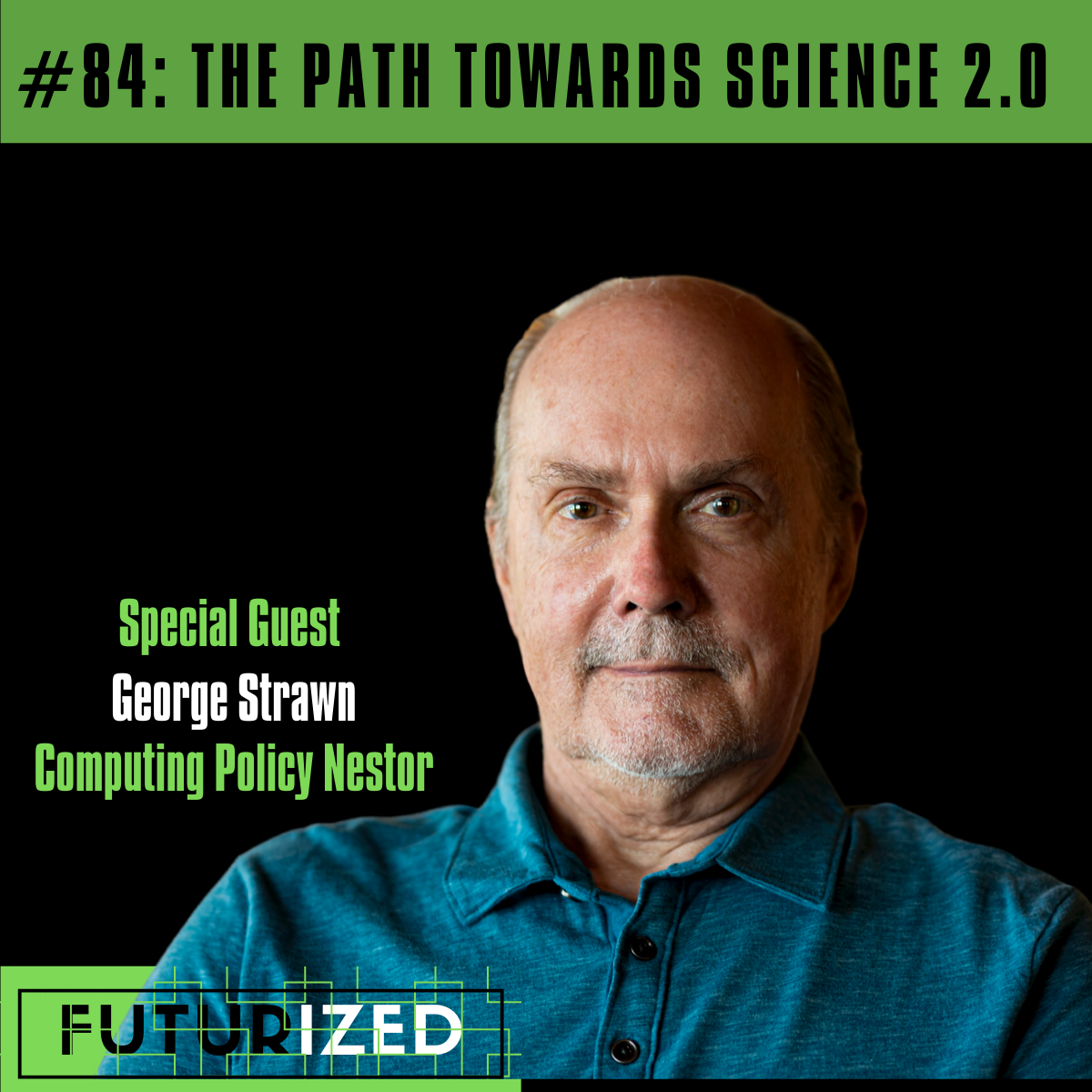
Ep 85The Origins and Future of Open Science
George Strawn, computing policy nestor, interviewed by, interviewed by host Trond Arne Undheim, futurist, investor, and author. In this conversation, we talk about the Origins and Future of Open Science. We investigate the decisions that turned ARPAnet into the global internet and the first ISP via educational institutions. We discuss the rise and fall and rise again of the Office of Science and Technology Policy at the White House, the role of the National Academies in the US and abroad, the path towards open science with open access, preprint servers, and why big science publishers resist it. George muses on the role of science and data in the next decade. My takeaway is that the origins of open science and the internet were a combination of savvy futuristic planning, and surprising twists and turns. The magnitude of the changes have been felt by all. The future of open science still looks open ended, but the promise of bottom-up self-regulation is more alluring than the alternative, a regulatory grab to avoid damaging lock-in effects. Data is the new business model, but the holders of big data become the arbiters of human destiny. Can we achieve George's vision of one computer, one dataset? The implications would be world-changing. Having listened to this episode, check out National Academies as well as George Strawn's online profile: National Academies: https://www.nationalacademies.org/ George Strawn: https://www.linkedin.com/in/george-strawn-8a1171/ Thanks for listening. If you liked the show, subscribe at Futurized.org or in your preferred podcast player, and rate us with five stars. If you like this topic, you may enjoy other episodes of Futurized, such as episode 84 The path towards Science 2.0, episode 48, The Future of AI in government or episode 29 Future of Computational Media. Futurized—preparing YOU to deal with disruption.
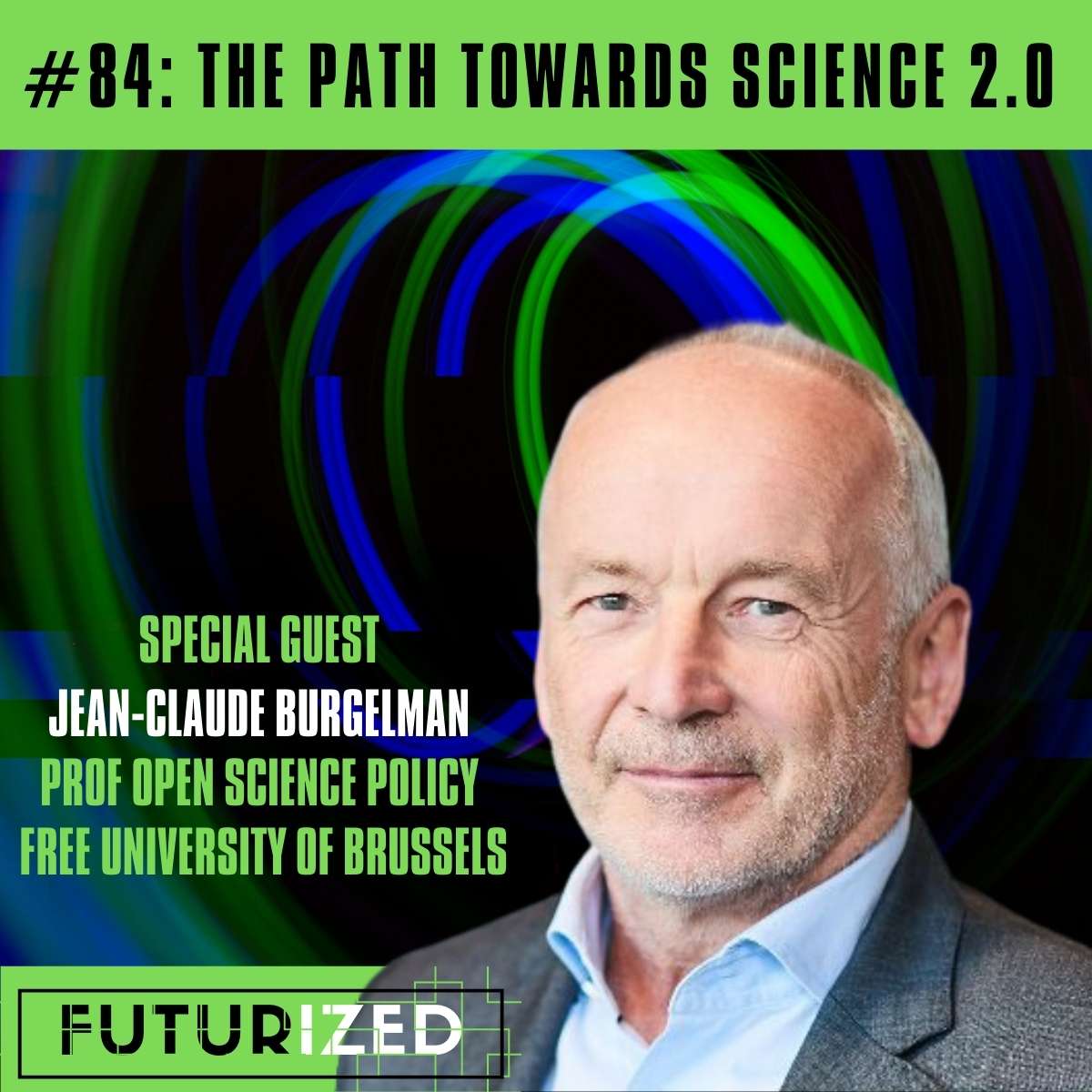
Ep 84The path towards Science 2.0
Jean-Claude Burgelman, Professor of Open Science Policy at the Free University of Brussels, interviewed by host Trond Arne Undheim. In this conversation, they talk about The Impact of Digital on Science. JC Burgelman’s career spans the EU, foresight, Media, and tech assessment. We discuss the role of foresight in EU policy. What are the big challenges? Fallout of COVID has compelled science from closed to open, from premium to collaborative. Is a 5th revolution in science irreversible? What has been learned? We talk about how the business model is shifting from articles to data and touch on next decade’s science and publishing. My takeaway is that data is the new oxygen and science is opening up. How quickly will it happen? Quicker than you would think. Yet, proprietary publishing models still have some gas in the tank and don't misunderstand that with open science everything will somehow be free. Scientific institutions, teams of scientists, and perhaps even individual scientists, will, rather, be able to price themselves more accurately. There might be a bigger discrepancy between good science and bad science, and perhaps less of the latter. Having listened to this episode, check out Frontiers Policy Lab as well as Jean-Claude Burgelman's online profile: Frontiers Policy Lab: https://policylabs.frontiersin.org Jean-Claude Burgelman (@BurgelmanJean): https://www.linkedin.com/in/jean-claude-burgelman-528a7566/ The show is hosted by Podbean and can be found at Futurized.co. Additional context about the show, the topics, and our guests, including show notes and a full list of podcast players that syndicate the show can be found at https://trondundheim.com/podcast/. Music: Electricity by Ian Post from the album Magnetism. For more about the host, including media coverage, books and more, see Trond Arne Undheim's personal website (https://trondundheim.com/) as well as the Yegii Insights blog (https://yegii.wpcomstaging.com/). Undheim has published two books this year, Pandemic Aftermath and Disruption Games. To advertise or become a guest on the show, contact the podcast host here. If you like this topic, you may enjoy other episodes of Futurized, such as episode 22 The Future of Engineering Education, episode 51 on AI for learning, or episode 55 AI for Medicine.

S2 Ep 82The Future of Digital Health AI
Catherine Havasi, CEO and co-founder, Dalang Health, interviewed by futurist Trond Arne Undheim. In this conversation, they talk about Patient experience. Telehealth. Personalizing digital health. The AI space (ConceptNet, crowdsourcing for AI, word embeddings, transfer learning, multilingual natural language processing (NLP), and machine learning, federated learning). Chronic Disease Management. Exciting applications (health coaching, telehealth, mHealth, chatbots, agent assist, augmentation, scaling personalization, digital characters, animation, avatars). Perspectives on the future. The takeaway is that Digital Health AI must emerge but only when we are sure the software truly works. For now, what we have is scattered machine learning applications that approximate meaning and compute fairly mindlessly. Hyperpersonalized health will indeed depend on AI, but the tech will only succeed if its developers realize that life is complex, people are different, and there was a reason healthcare has been somewhat tailored to each person in a manual fashion. Behavioral health apps are great, but need to be integrated into the health system in an interoperable manner before it can have its true effect on population health and individual health outcome. Having listened to this episode, check out Dalang Health as well as Catherine Havasi's online profile: Catherine Havasi (@catherinehavasi) https://www.linkedin.com/in/havasi/ Dalang Health (@dalangtech) https://www.dalanghealth.com/ Homepage https://www.catherinehavasi.com/ The show is hosted by Podbean and can be found at Futurized.co. Additional context about the show, the topics, and our guests, including show notes and a full list of podcast players that syndicate the show can be found at https://trondundheim.com/podcast/. Music: Electricity by Ian Post from the album Magnetism. For more about the host, including media coverage, books and more, see Trond Arne Undheim's personal website (https://trondundheim.com/) as well as the Yegii Insights blog (https://yegii.wpcomstaging.com/). Undheim has published two books this year, Pandemic Aftermath and Disruption Games. To advertise or become a guest on the show, contact the podcast host here. Thanks for listening. If you liked the show, subscribe at Futurized.co or in your preferred podcast player, and rate us with five stars. If you like this topic, you may enjoy other episodes of Futurized, such as episode 55 AI for Medicine, episode 19 on on Digital Health in Future Pandemics, , episode 26 How to Write a book on the Future of Healthcare. Futurized—preparing YOU to deal with disruption.
S2 Ep 86Future tech as a disruptive force
In episode 86 of the podcast, the topic is: Future Tech: Disruptive technology forces. Futurist Trond Arne Undheim talks about Chapter 2 of his forthcoming book Future Tech: How to capture value from disruptive industry trends, which is about how science and technology enable innovation. We listen to some clips from earlier episodes of Futurized, in the domains of AI, engines, quantum computing and more. After listening to this episode, check out the Future Tech book, which can be obtained in near any bookseller around the globe: Future Tech (author website): https://trondundheim.com/future-tech/ Future Tech (Amazon.com): https://www.amazon.com/Future-Tech-Capture-Disruptive-Industry/dp/1398600326/ Future Tech (Amazon.co.uk): https://www.amazon.co.uk/Future-Tech-Capture-Disruptive-Industry-ebook/dp/B08PQ1X6RJ/ Future Tech (Publisher website): https://www.koganpage.com/product/future-tech-9781398600324 The show can be found at Futurized.co. Additional context about the show, the topics, and our guests, including show notes and a full list of podcast players that syndicate the show can be found at https://trondundheim.com/podcast/. Music: Electricity by Ian Post from the album Magnetism. To advertise or become a guest on the show, contact the podcast host here. If you like this topic, you may enjoy other episodes of Futurized, such as episode 51 which is on AI for Learning, episode 16 on Perception AI, episode 49 Living the Future of Work, or episode 71 Future Tech - a Preview.
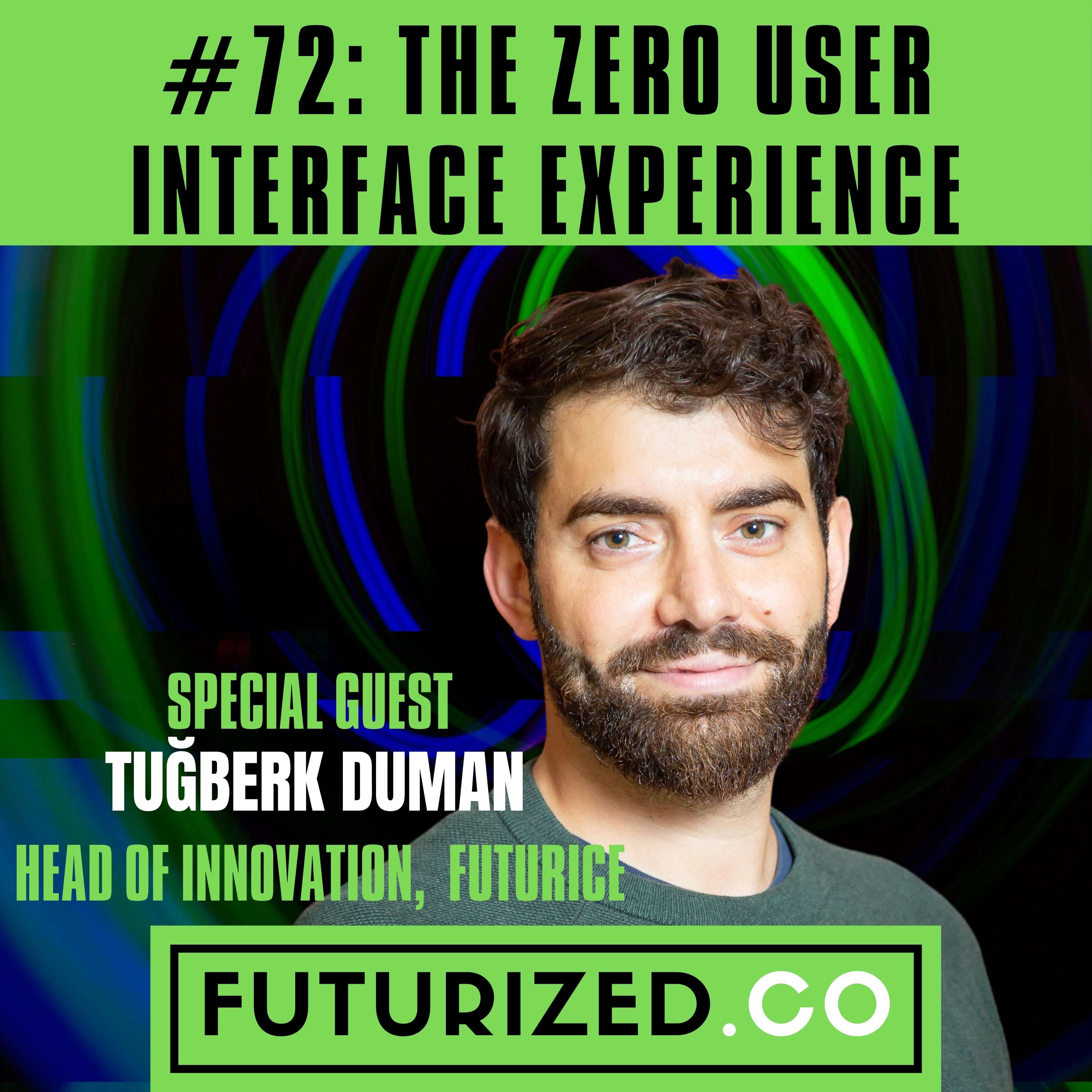
S2 Ep 72The Zero User Interface Experience
Tuğberk Duman, Head of Innovation at Futurice, the Finnish consultancy, interviewed by futurist Trond Arne Undheim. In this conversation, they talk about Why thinking about a world beyond the screen? Invisible user interface where natural gestures (body movements, perhaps even thoughts) trigger interactions. Current examples making use of Alexa, Google Home, Siri, Cortana, or Google Glass). Experiments, Trends in UI design, Design thinking inspiration and components (chatbots, biometrics, computer vision, new ecosystem business models). Emerging use cases. Surprising industries are first adopters. The next decade—what will happen next to Zero UI and in which sequence?. The takeaway is that whilst it would be nice to think we are there, we in fact have a ways to go before we reach the ultimate Zero User Interface Experience. Having said that, the world beyond the screen is desperately needed, as we reel from coronavirus-induced work fatigue. The surprising thing is that it’s not really the technology that’s stopping us--it’s our imagination. We would be fully capable of coming up with compelling user interfaces already today, using existing technologies, if we only knew how. After listening to this episode, check out Futurice as well as Tuğberk Duman's online profile: Futurice https://futurice.com/ Tuğberk Duman (@tugberkdmn) https://www.linkedin.com/in/tu%C4%9Fberk-duman-b0947148/ The show is hosted by Podbean and can be found at Futurized.co. Additional context about the show, the topics, and our guests, including show notes and a full list of podcast players that syndicate the show can be found at https://trondundheim.com/podcast/. Music: Electricity by Ian Post from the album Magnetism. For more about the host, including media coverage, books and more, see Trond Arne Undheim's personal website (https://trondundheim.com/) as well as the Yegii Insights blog (https://yegii.wpcomstaging.com/). Undheim has published two books this year, Pandemic Aftermath and Disruption Games. To advertise or become a guest on the show, contact the podcast host here. Thanks for listening. If you like this topic, you may enjoy other episodes of Futurized, such as episode 30 on Artificial General Intelligence, episode 51 which is on the AI for Learning, episode 16 on Perception AI, episode 49 Living the Future of Work, episode 35 on How 5G+AR might revolutionize communication, episode 47 on How to Invest in Sci-Fi Tech, episode 54 on the Future of AR, and episode 31 on The Future of Commoditized Robotics. Futurized—preparing YOU to deal with disruption.
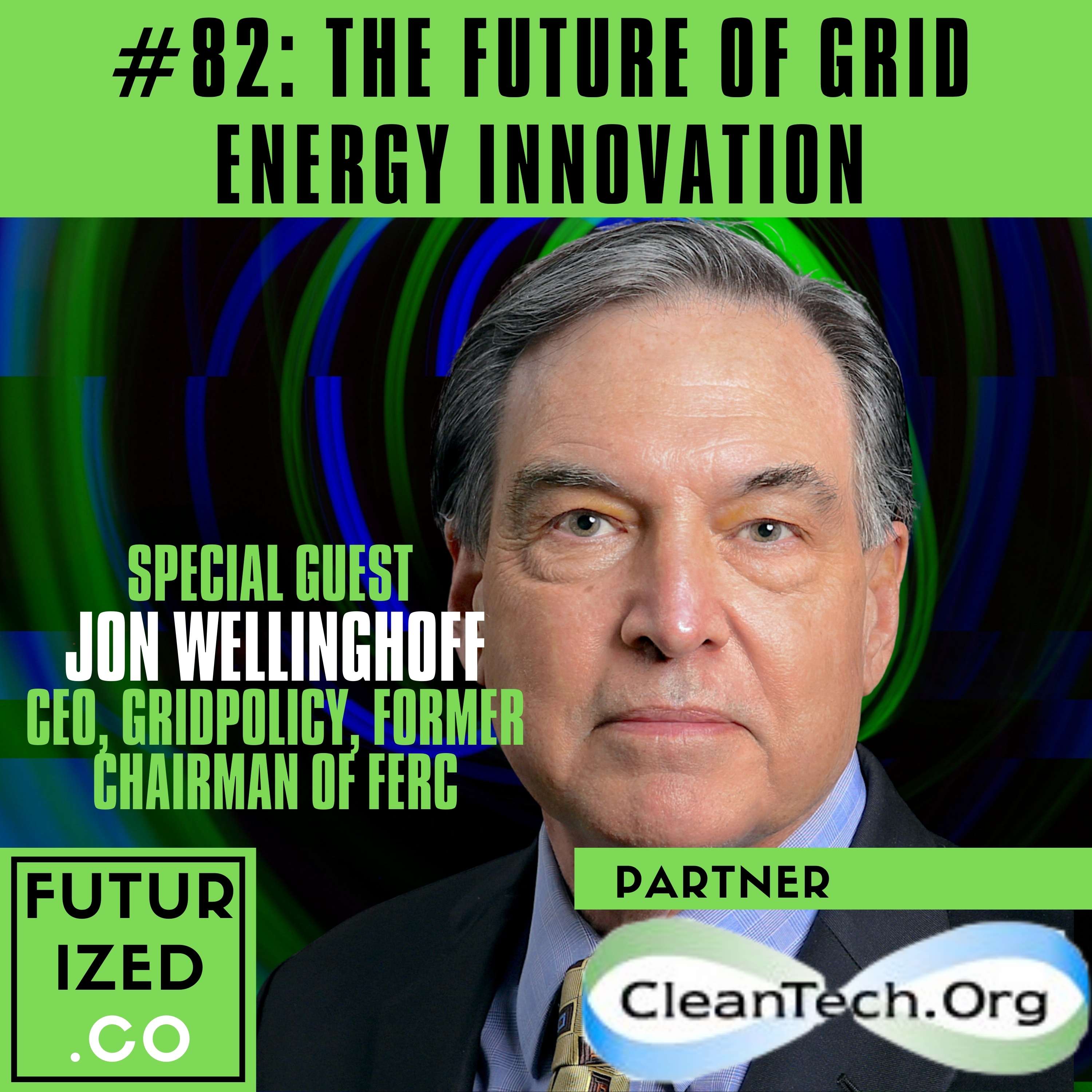
S2 Ep 82The Future of Grid Energy Innovation
Jon Wellinghoff, CEO of GridPolicy and former Chairman of the Federal Energy Regulatory Commission (FERC), interviewed by futurist Trond Arne Undheim. Now a quick word from our partners: Cleantech.org is a leading virtual research institute and incubator to the cleantech sector, with an online membership base of over 45,000. Subscribe to the site to learn more about cleantech and meet scientists and entrepreneurs to commercialize your ideas. Contact info AT cleantech.org. That’s cleantech.org/ In this conversation, they talk about The transdisciplinary mindset needed to understand energy innovation, The policy/regulation impasse. The downside of monopolistic utilities (at the distribution, transmission, and generation levels). Sustainable energy systems, Distributed energy resource (DER) systems. Disruptive forces--particularly policy barriers (and opportunities). The regulatory tools available in the US and abroad (FERC, State regulators), the Texas case of free utility competition, exciting startups in the space (Smartwires, Whisker Labs, etc), the impact of innovation on the policy mix and outcome. Lastly, we discuss the next decade. The takeaway is that Grid Energy Innovation seems to finally be underway, and with that, we can see transformation across the grid and consumers can finally get involved. However, energy still consists of a myriad of separate markets, both nationally and regionally, and that total picture is not likely to change any time soon. Once it does, we are looking at opportunities that are very hard to fathom, and implications for how we live and how our planet responds. Having listened to this episode, check out Federal Energy Regulatory Commission (FERC), GridPolicy and Jon Wellinghoff's online profile: Federal Energy Regulatory Commission (@FERC) https://www.ferc.gov/ Grid Policy http://gridpolicy.com/ Jon Wellinghoff (@jbwellinghoff) https://www.linkedin.com/in/jonwellinghoff/ The show is hosted by Podbean and can be found at Futurized.co. Additional context about the show, the topics, and our guests, including show notes and a full list of podcast players that syndicate the show can be found at https://trondundheim.com/podcast/. Music: Electricity by Ian Post from the album Magnetism. For more about the host, including media coverage, books and more, see Trond Arne Undheim's personal website (https://trondundheim.com/) as well as the Yegii Insights blog (https://yegii.wpcomstaging.com/). Undheim has published two books this year, Pandemic Aftermath and Disruption Games. To advertise or become a guest on the show, contact the podcast host here. Thanks for listening. If you liked the show, subscribe at Futurized.co or in your preferred podcast player, and rate us with five stars. If you like this topic, you may enjoy other episodes of Futurized, such as episode 70 on The Future of Cleantech, episode 12 Future of nuclear waste or episode 15 The future of pre-seed investing, episode 20 Future of engines, episode 21 What's next in Energy storage, episode 63 Hunting for Emerging Tech, episode 76 Risk and Resilience, or episode 38 Disaster risk management. Futurized—preparing YOU to deal with disruption.
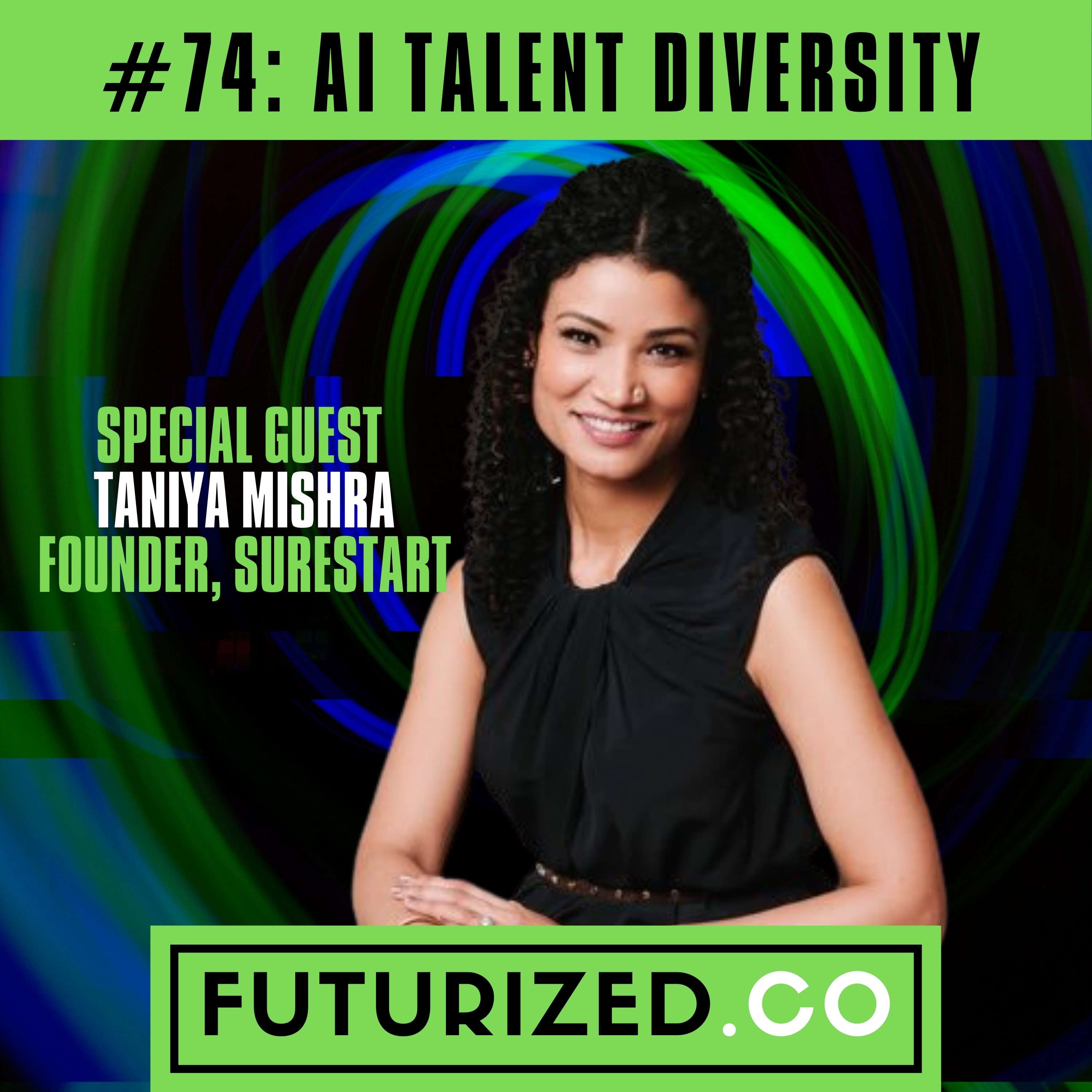
S2 Ep 74AI Talent Diversity
Taniya Mishra, Founder of SureStart, the diverse AI training platform, interviewed by futurist Trond Arne Undheim. In this conversation, they talk about why STEM or STEAM is not enough. They discuss pre-college and post-college--the leaky inflection points for students 16-23. What about Diversity, Equity, and Inclusion (DEI), the importance of relational, proximate mentoring, fairness in algorithms, affective computing, emerging applications (learning, factories, automotive, healthcare). Emotionally literate AI. Surestart.com-a startup mentoring the next generation. How can AI change the world for the better? The future of AI education. How to scale kindness? After listening to this episode, check out SureStart as well as Taniya Mishra's online profile: SureStart https://mysurestart.com/ Taniya Mishra (@taniyatts) https://www.linkedin.com/in/taniya-mishra-phd/ The show can be found at Futurized.co. Additional context about the show, the topics, and our guests, including show notes and a full list of podcast players that syndicate the show can be found at https://trondundheim.com/podcast/. Music: Electricity by Ian Post from the album Magnetism. To advertise or become a guest on the show, contact the podcast host here. If you like this topic, you may enjoy other episodes of Futurized, such as episode 51 which is on AI for Learning, episode 16 on Perception AI, or episode 49 Living the Future of Work.
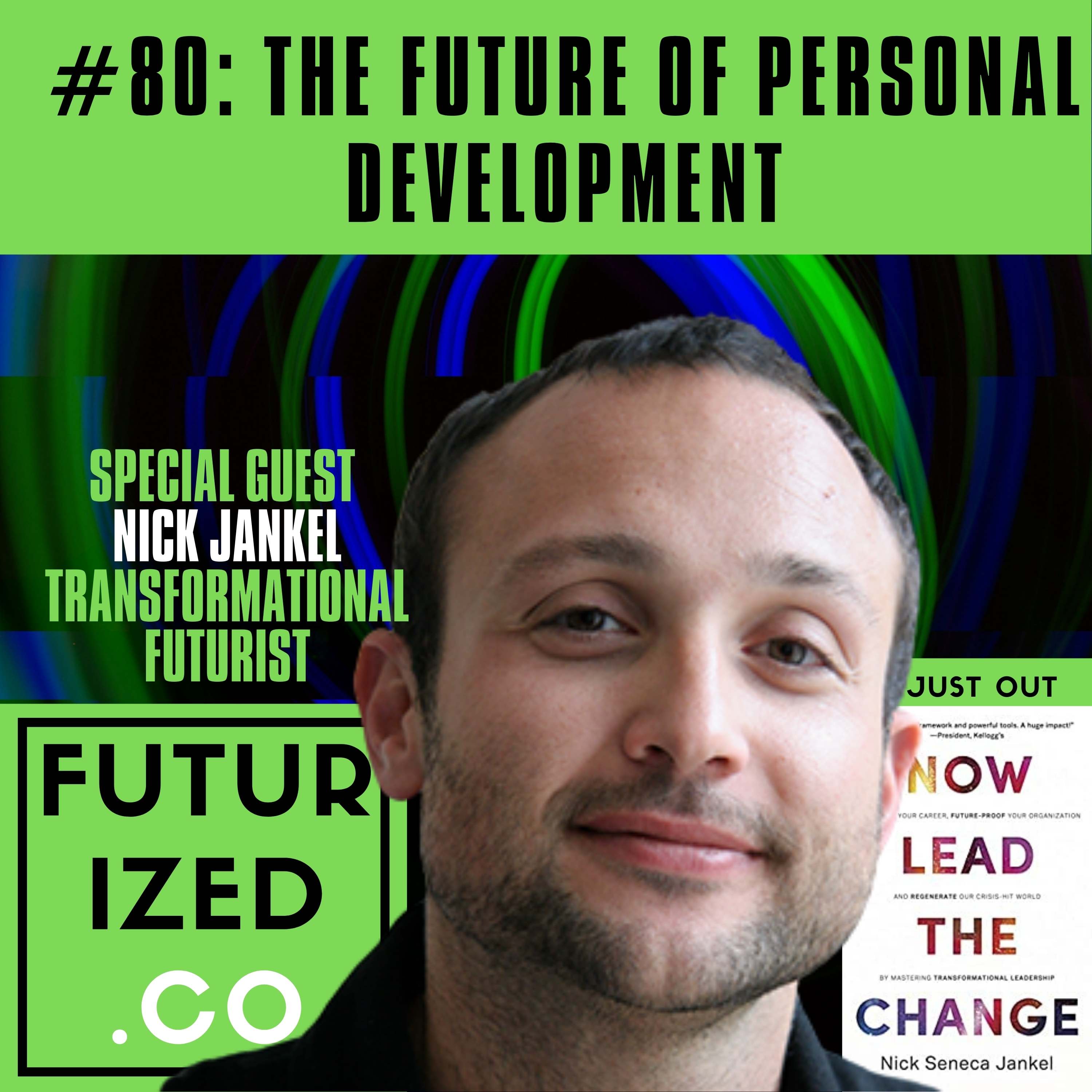
S2 Ep 80The Future of Personal Development
Nick Jankel, transformational futurist, the CEO and co-founder of Switch On, and author of the new book Now Lead The Change, interviewed by futurist Trond Arne Undheim. In this conversation, they talk about The Personal Development Market. VUCA (volatility, uncertainty, complexity, and ambiguity). Trends in Self-help, Leadership, Therapy, Coaching, and Healing. Brain science. Wisdom. Practical psychology. Bio-Transformation Theory. Reading cognitive v. emotional signals in yourself and others. The future of business and human personal development, next decade and beyond. Being future-proof (as organizations and individuals). The takeaway is that the Personal Development Market is just starting up. If you include Therapy, Coaching, Leadership, and Mindfulness apps, it may well be a 100 billion market. The idea that we should be the change we want to see in the world, a saying that has been attributed to the famous Indian leader Mahatma Gandhi, is easy to pronounce but hard to do, but may well be an essential insight. What is for certain is that we cannot sit around waiting for positive change, no matter where we are on the societal ladder. Tying it explicitly to futurist thinking was novel to me and quite refreshing. After listening to this episode, check out Switch On, Now Lead the change--the book, as well as Nick Jankel's online profile: Switch On https://switchonnow.com/ Now Lead the change https://www.amazon.com/Now-Lead-Change-Future-Proof-Transformational-ebook/dp/B085TRK243 Nick Jankel (@nickjankel) https://www.linkedin.com/in/nickjankel/ The show is hosted by Podbean and can be found at Futurized.co. Additional context about the show, the topics, and our guests, including show notes and a full list of podcast players that syndicate the show can be found at https://trondundheim.com/podcast/. Music: Electricity by Ian Post from the album Magnetism. For more about the host, including media coverage, books and more, see Trond Arne Undheim's personal website (https://trondundheim.com/) as well as the Yegii Insights blog (https://yegii.wpcomstaging.com/). Undheim has published two books this year, Pandemic Aftermath and Disruption Games. To advertise or become a guest on the show, contact the podcast host here. Thanks for listening. If you liked the show, subscribe at Futurized.co or in your preferred podcast player, and rate us with five stars. If you like this topic, you may enjoy other episodes of Futurized, such as episode 51 which is on AI for Learning, episode 16 on Perception AI, episode 49 Living the Future of Work, episode 24 on The Future of The Second Half of Life, episode 32 Future proof your business, episode 33 One Woman's Empowerment Quest to help one million, episode 73 The Future of Social Learning, and episode 34 Behavioral Science in Product Design. Futurized—preparing YOU to deal with disruption.
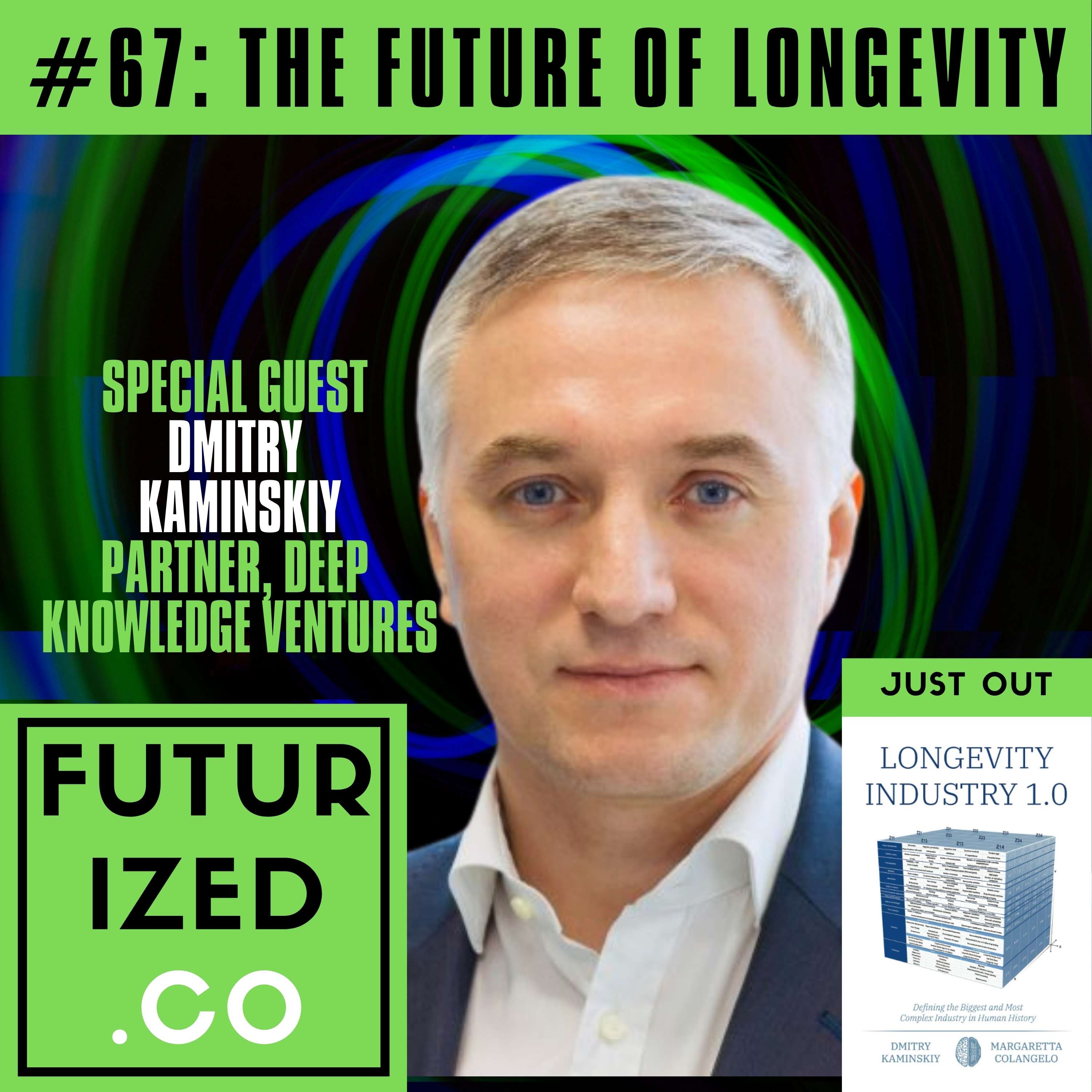
S2 Ep 67The Future of Longevity
Dmitry Kaminskiy, Partner, Deep Knowledge Ventures, interviewed by futurist Trond Arne Undheim. In this conversation, they talk about What is longevity and why does it matter if we live longer? Health span v. Lifespan. The Intersection of AgeTech, WealthTech and FinTech. The silver tsunami (of aging). Quality-adjusted life-year (QALY). Scenarios. Rise of policy scene for longevity. Biomarkers on the path to population health. How AI intersects with longevity. P4 (Preventive, Precision, Personalized and Participatory) Medicine. Who will first reach their 123rd birthday? A Manhattan project for longevity. The Longevity Industry 1.0 and 2.0—towards the next trillion dollar industry. The takeaway is that longevity may indeed be the next trillion dollar industry and may perhaps be the most complex industry as well. Staying in good health is an important shared goal across the globe, and our health is constantly under threat from diseases, including aging. However, there is a drastic difference in the goals of increasing healthspan v. increasing life span. To my mind, there might even have to be a significant ethical debate whether life span is worth increasing on a general basis. Do we really need to live that much longer? Is there an optimal life span and does it depend on the available resources or the available meaning of life that the individual has at any given time? These are complex questions without obvious answers. After listening to the episode, check out Deep Knowledge Ventures, Longevity 1.0, the book, as well as Dmitry Kaminskiy's online profile: Deep Knowledge Group https://www.dkv.global/ Longevity 1.0 https://www.longevity-book.com/ Dmitry Kaminskiy (@DmitryKaminskiy) https://www.kaminskiy.info/ and https://www.linkedin.com/in/dmitrykaminskiy/ The show is hosted by Podbean and can be found at Futurized.co. Additional context about the show, the topics, and our guests, including show notes and a full list of podcast players that syndicate the show can be found at https://trondundheim.com/podcast/. Music: Electricity by Ian Post from the album Magnetism. For more about the host, including media coverage, books and more, see Trond Arne Undheim's personal website (https://trondundheim.com/) as well as the Yegii Insights blog (https://yegii.wpcomstaging.com/). Undheim has published two books this year, Pandemic Aftermath and Disruption Games. To advertise or become a guest on the show, contact the podcast host here. Thanks for listening. If you liked the show, subscribe at Futurized.co or in your preferred podcast player, and rate us with five stars. If you like this topic, you may enjoy other episodes of Futurized, such as episode 55 AI for Medicine, episode 19 on Digital Health in Future Pandemics, episode 26 How to Write a book on the Future of Healthcare, episode 30 on Artificial General Intelligence, episode 35 on Augmented Reality, episode 47 on How to invest in Sci-Fi Tech, and episode 54 on the Future of AR. Futurized—preparing YOU to deal with disruption.
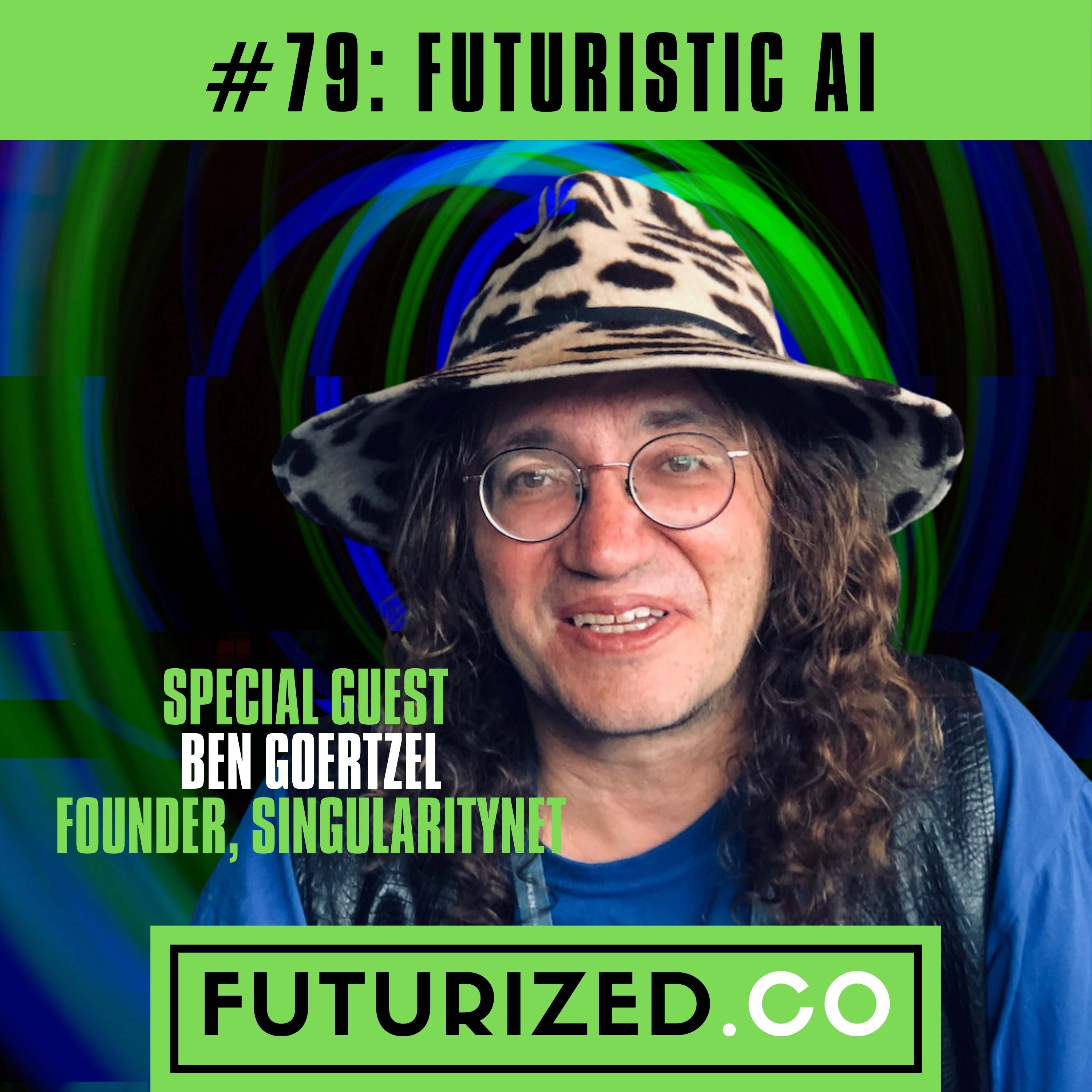
S2 Ep 79Futuristic AI
Ben Goertzel, CEO and founder of SingularityNET and Chairman of the Artificial General Intelligence Society, interviewed by futurist Trond Arne Undheim. In this conversation, we talk about Futuristic applications of interoperable AI. Sophia- the robot. Singularity. Transhumanism. How to define intelligence . Decentralized, Distributed, interoperable AI. The importance of trust to progress with technology. Future of human-computer interaction. My takeaway is that futuristic AI will continue to fascinate, whether we ever get there--or not. It is a Janus faced future the proponents of Artificial General Intelligence are exploring. Will it solve more problems than it creates? In reality, it’s not a question of when we get there --un less we suddenly find ourselves needing that level of intelligence for an existential survival issue for our race, but how we get there. At some point, we likely will. But whether it will take 50 or 150 years, I’m less sure about. After listening to this episode, check out SingularityNET and Ben Goertzel's online profile: SingularityNET https://singularitynet.io/ Ben Goertzel https://www.linkedin.com/in/bengoertzel/ The show is hosted by Podbean and can be found at Futurized.co. Additional context about the show, the topics, and our guests, including show notes and a full list of podcast players that syndicate the show can be found at https://trondundheim.com/podcast/. Music: Electricity by Ian Post from the album Magnetism. For more about the host, including media coverage, books and more, see Trond Arne Undheim's personal website (https://trondundheim.com/) as well as the Yegii Insights blog (https://yegii.wpcomstaging.com/). Undheim has published two books this year, Pandemic Aftermath and Disruption Games. To advertise or become a guest on the show, contact the podcast host here. Thanks for listening. If you liked the show, subscribe at Futurized.co or in your preferred podcast player, and rate us with five stars. If you like this topic, you may enjoy other episodes of Futurized, such as episode 30 on Artificial General Intelligence, episode 51 which is on the AI for Learning, episode 16 on Perception AI, episode 49 Living the Future of Work, episode 35 on How 5G+AR might revolutionize communication, episode 47 on How to Invest in Sci-Fi Tech, episode 54 on the Future of AR, and episode 31 on The Future of Commoditized Robotics. Futurized—preparing YOU to deal with disruption.
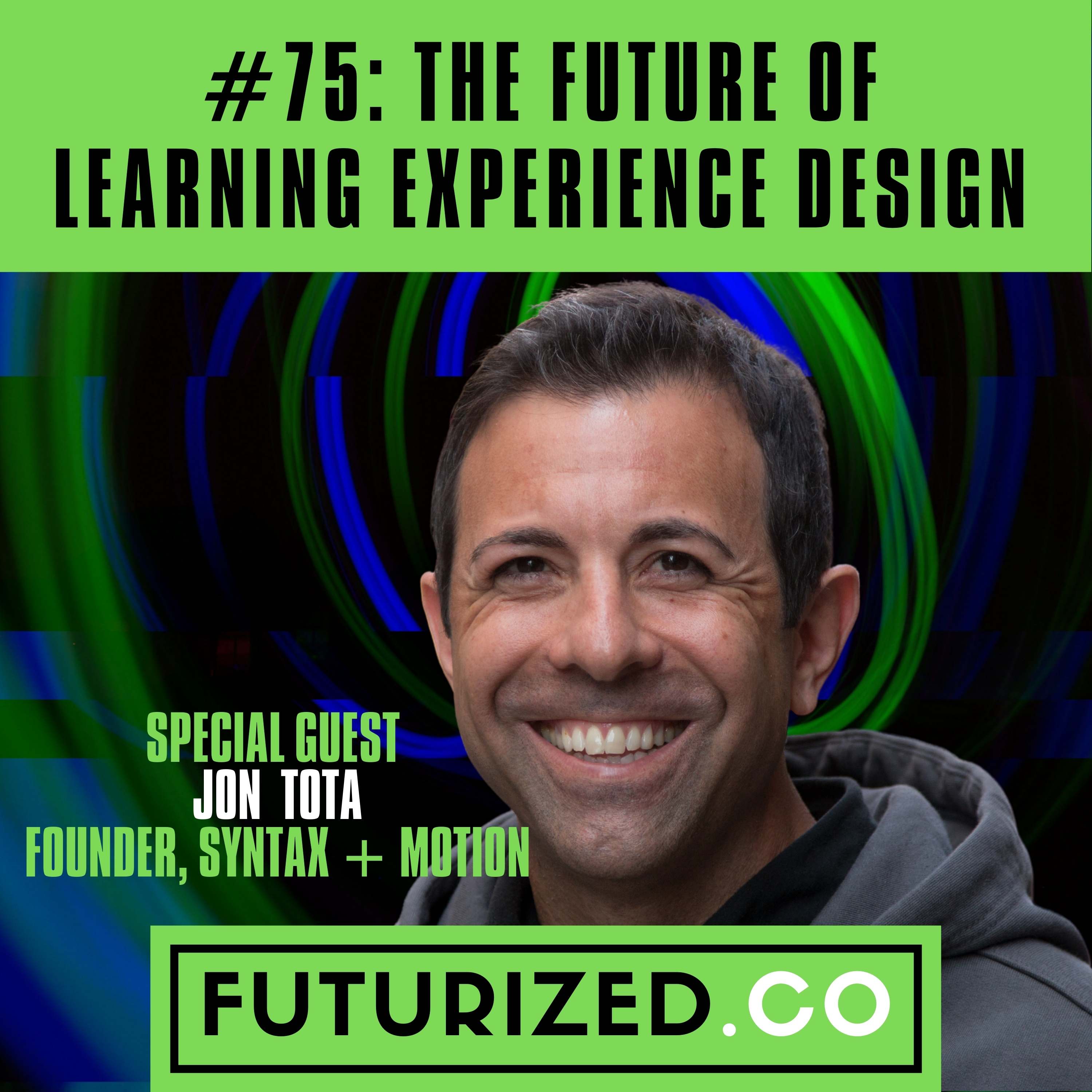
S2 Ep 75The future of learning experience design
Jon Tota, CEO and founder of Syntax + Motion and host of the Learning Life Podcast, interviewed by futurist Trond Arne Undheim. In this conversation, we talk about The future of learning experience design. Shifting focus from the teacher to thinking about learners first. How to teach true skills? How do you get the user to interact? From learning management systems (LMS) via design thinking to learning experience platforms (LXP). Should everybody have their own online course for personal branding? Corporate learning. Individual thought leadership. How to navigate the noise? What to consume? What to produce? How to earn money with content? The takeaway is that learning experience design is an ever-evolving field which finally is taking off. We need it. Learning should be fun, interactive, engaging and learning software platforms should be well thought out and easy to use. It’s slowly starting to happen. After listening to the episode, check out Syntax + Motion, the Learning Life Podcast as well as Jon Tota's online profile: Jon Tota (@jontota) https://thriveloud.com/thrive_loud/272-jon-tota/ Syntax+Motion ( https://www.syntaxproduction.com/ Learning Life podcast https://learninglifeshow.com The show is hosted by Podbean and can be found at Futurized.co. Additional context about the show, the topics, and our guests, including show notes and a full list of podcast players that syndicate the show can be found at https://trondundheim.com/podcast/. Music: Electricity by Ian Post from the album Magnetism. For more about the host, including media coverage, books and more, see Trond Arne Undheim's personal website (https://trondundheim.com/) as well as the Yegii Insights blog (https://yegii.wpcomstaging.com/). Undheim has published two books this year, Pandemic Aftermath and Disruption Games. To advertise or become a guest on the show, contact the podcast host here. Thanks for listening. If you liked the show, subscribe at Futurized.co or in your preferred podcast player, and rate us with five stars. If you like this topic, you may enjoy other episodes of Futurized, such as episode 73 on The Future is Social Learning, episode 65 which is on The Urgency of a Social-Emotional Learning Fix, or episode 51 which is on AI for Learning, episode 27 on the Future of Online Learning, episode 28 on The Future of K-12 Education, or episode 22 on the Future of Engineering Education. Futurized—preparing YOU to deal with disruption.
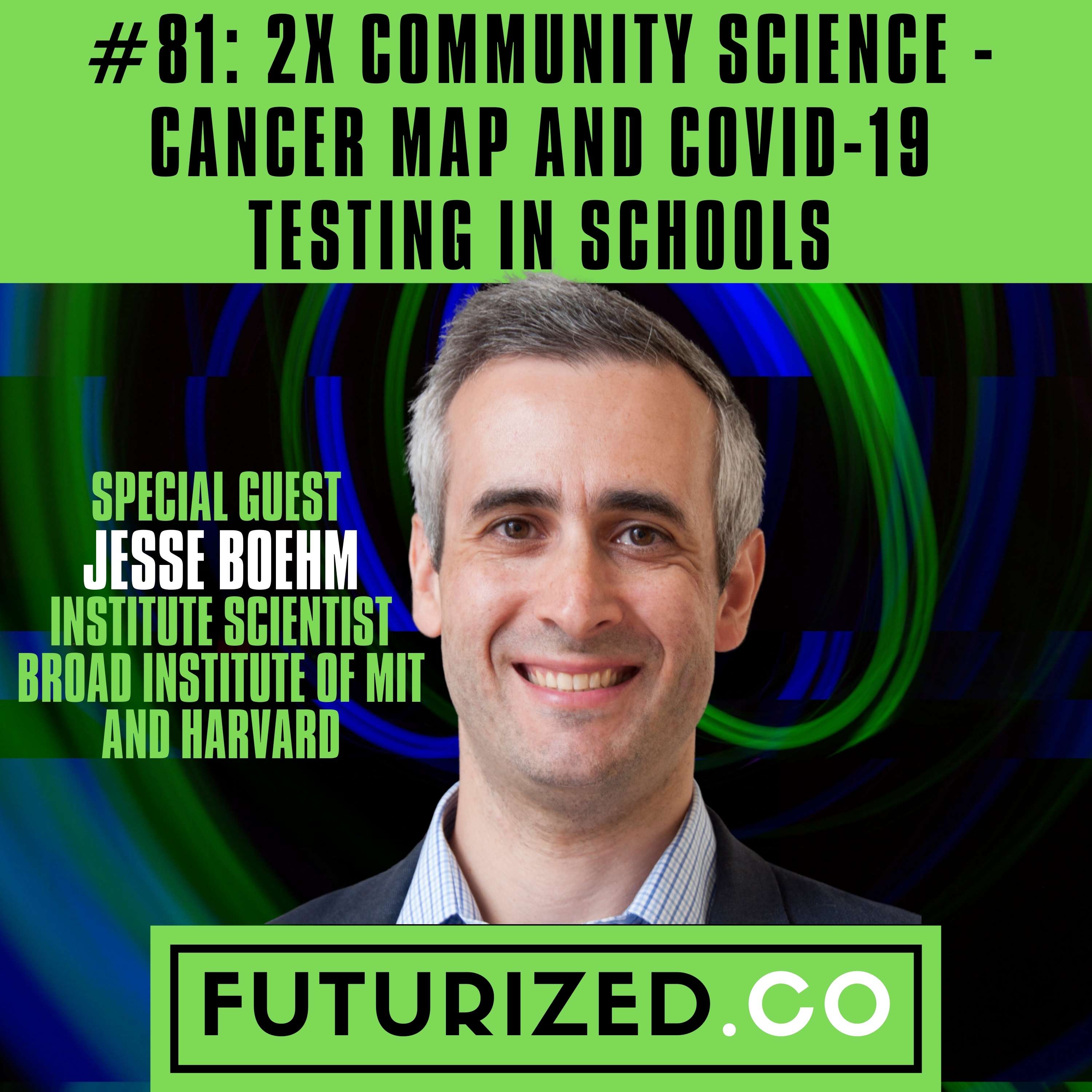
S2 Ep 812x Community Science -- Cancer Map and COVID-19 Testing in Schools
Jesse Boehm, the scientific director of the Broad Institute’s Cancer Dependency Map Initiative and an institute scientist at the Broad Institute of MIT and Harvard, interviewed by futurist Trond Arne Undheim. In this conversation, they talk about mobilizing the unique sci-tech environment for health in Massachusetts. They discuss the Broad Institute's ethos and the Boehm Lab’s cancer collaboration for rare diseases. They cover the Healthtech Map, Test & Trace efforts including a 3-month pilot program of weekly COVID testing for certain students and staff. and how it got off the ground. We look at Wellesley Education Foundation (WEF) COVID-19 Innovation Fund and what is has accomplished. Finally, we discuss the future of healthtech and the future of community scientists and ‘community resource maps’, towards Science 2.0. The takeaway is that community science is crucial at this juncture in history. We can no longer take for granted that people listen to experts, nor should we. Rather, it needs to be a dialogue. Trust is and should be contingent on proving value and disclosing evidence and rationale. Also, the data is increasingly all of us, so we are the science. This is a very different future than many had imagined. Yet, it might be the only one available. After listening to this episode, check out Jesse Boehm's online profile, the Broad Institute’s Cancer Dependency Map Initiative and The Wellesley Education Foundation (WEF) COVID-19 Innovation Fund: Broad Institute’s Cancer Dependency Map Initiative https://www.broadinstitute.org/cancer/cancer-dependency-map Boehm Lab http://www.boehmlab.org/ Jesse Boehm (@boehmjesse) https://www.linkedin.com/in/jesse-boehm-0881145/ The Wellesley Education Foundation (WEF) COVID-19 Innovation Fund https://www.wellesleyeducationfoundation.org/innovation-fund Thanks for listening. If you liked the show, subscribe at Futurized.co or in your preferred podcast player, and rate us with five stars. If you like this topic, you may enjoy other episodes of Futurized, such as episode 55 AI for Medicine, episode 19 on Digital Health in Future Pandemics, episode 26 How to Write a book on the Future of Healthcare, and episode 67 on The Future of Longevity Futurized—preparing YOU to deal with disruption.
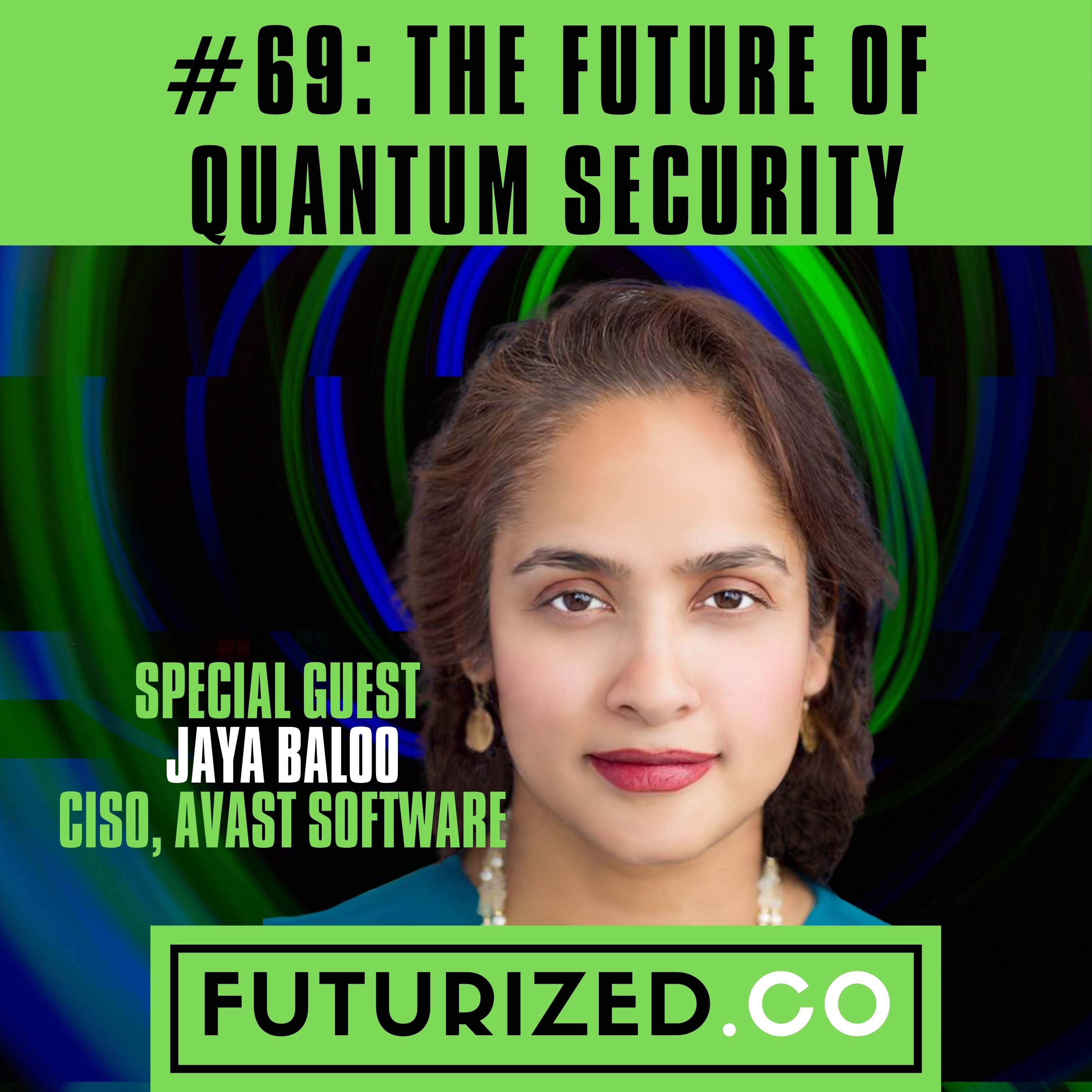
S2 Ep 69The Future of Quantum Security
Jaya Baloo, Chief Information Security Officer (CISO), Avast Software, interviewed by futurist Trond Arne Undheim. In this conversation, they talk about why is it so hard to eradicate cybersecurity challenges? Internet Organised Crime Threat Assessment (IOCTA). Threats we are ready for and know about vs. Threats we don’t know about are not ready for. The Quantum Market Players, Challenges, and applications. What quantum security challenges do you worry about in the next decade? Jaya uses the story of Alice, Bob, and ex-girlfriend Eve to illustrate quantum security. How to teach quantum computing to a new gen of engineers. The takeaway is that quantum security is just around the corner--because if it isn’t, we are all in trouble. Quantum computing has gone from being a theoretical possibility, to a highly experimental, niche application among a few computer firms, to a significant, emerging government concern, and a future business opportunity for those with a lot of data to crunch fast. Most of us don’t need to worry about it in this decade, but doing so, is a bit like not thinking about retirement in your twenties. It isn’t necessary, but it is smart to do. After listening to the episode, check out Avast Software as well as Jaya Baloo's online profile: Avast Software https://www.avast.com/en-us/index#pc Jaya Baloo (@jayabaloo} https://www.linkedin.com/in/jaya-baloo-558492/ The show is hosted by Podbean and can be found at Futurized.co. Additional context about the show, the topics, and our guests, including show notes and a full list of podcast players that syndicate the show can be found at https://trondundheim.com/podcast/. Music: Electricity by Ian Post from the album Magnetism. For more about the host, including media coverage, books and more, see Trond Arne Undheim's personal website (https://trondundheim.com/) as well as the Yegii Insights blog (https://yegii.wpcomstaging.com/). Undheim has published two books this year, Pandemic Aftermath and Disruption Games. To advertise or become a guest on the show, contact the podcast host here. Thanks for listening. If you liked the show, subscribe at Futurized.co or in your preferred podcast player, and rate us with five stars. If you like this topic, you may enjoy other episodes of Futurized, such as episode 13 Cybersecurity: Review of the RSA Asia Pacific & Japan (APJ) 2020 Virtual Event, episode 30 on Artificial General Intelligence, episode 51 which is on the AI for Learning, episode 16 on Perception AI, episode 49 Living the Future of Work, episode 35 on How 5G+AR might revolutionize communication, episode 47 on How to Invest in Sci-Fi Tech, episode 54 on the Future of AR, and episode 31 on The Future of Commoditized Robotics. Futurized—preparing YOU to deal with disruption.

S2 Ep 68Industrial-grade Mixed Reality
Urho Konttori, co-founder and Chief Innovation Officer of Varjo, the mixed reality equipment maker, interviewed by futurist Trond Arne Undheim. In this conversation, they talk about The Future of Industrial-grade Mixed Reality (MR). The advent of enterprise/industrial-grade AR/VR/XR/MR/hybrid reality and its impact on RR. Which companies are using it already? Current professional user types. Emerging use cases. Why is Varjo so focused on human-eye resolution devices and hi-res MR? We discuss adoption timelines and formfactors as well as remaining technical/market challenges. We look into the Future of mixed reality (5-10 years ahead). The takeaway is that industrial mixed reality has now come of age. It is only a question of few years, until large swaths of industry and a plethora of professionals will depend on it to do their job. The pandemic could not have come at a bigger inflection point for the industry. After listening to this episode, check out Varjo as well as Urho Konttori's online profile: Varjo https://varjo.com/ Urho Konttori (@konttori) https://www.linkedin.com/in/urho-konttori-aa16835/ The show is hosted by Podbean and can be found at Futurized.co. Additional context about the show, the topics, and our guests, including show notes and a full list of podcast players that syndicate the show can be found at https://trondundheim.com/podcast/. Music: Electricity by Ian Post from the album Magnetism. For more about the host, including media coverage, books and more, see Trond Arne Undheim's personal website (https://trondundheim.com/) as well as the Yegii Insights blog (https://yegii.wpcomstaging.com/). Undheim has published two books this year, Pandemic Aftermath and Disruption Games. To advertise or become a guest on the show, contact the podcast host here. Thanks for listening. If you liked the show, subscribe at Futurized.co or in your preferred podcast player, and rate us with five stars. If you like this topic, you may enjoy other episodes of Futurized, such as episode 30 on Artificial General Intelligence, episode 51 which is on the AI for Learning, episode 16 on Perception AI, episode 49 Living the Future of Work, episode 35 on How 5G+AR might revolutionize communication, episode 47 on How to Invest in Sci-Fi Tech, episode 54 on the Future of AR, and episode 31 on The Future of Commoditized Robotics. Futurized—preparing YOU to deal with disruption.
S1 Ep 70The Future of Cleantech
Neal Dikeman, Managing partner and founder of Energy Transition Ventures, interviewed by futurist Trond Arne Undheim. In this conversation, they talk about Where do we currently stand on energy transition? Disruptive forces (tech, regulation, business models, social dynamics). What is the role of energy policy v. the free market? Which energy models to trust? The emergent energy mix and how it will evolve? When will renewables surpass fossil fuels in the US and globally? Exciting startups. Emerging business model plays. Macro trends. The role of clean energy into the next decade. The takeaway is that cleantech is coming of age. The reason is slightly counterintuitive. It is not happening because of government action, at least not (yet) in the USA. It’s not happening because more people want to save the planet. Rather, it’s happening because renewables, after a slow rise over decades, are reaching energy parity with fossil fuels. No matter what happens to policy, to global treaties, or what might be the Biden Presidency priorities, over the next few years we will witness an energy transition without parallel in our history. Add some policy action to that, and we will experience a sea change, which is about time, because sea levels are rising. After listening to the episode, check out Energy Transition Ventures, Cleantech.org, as well as Neal Dikeman's online profile: Energy Transition Ventures https://energytransitionventures.com/ Cleantech.org http://www.cleantech.org/ Neal Dikeman (@nealdikeman) https://www.linkedin.com/in/dikeman/ Thanks for listening. If you liked the show, subscribe at Futurized.co or in your preferred podcast player, and rate us with five stars. If you like this topic, you may enjoy other episodes of Futurized, such as episode 12 Future of nuclear waste or episode 15 The future of pre-seed investing, episode 20 Future of engines, episode 21 What's next in Energy storage, episode 63 Hunting for Emerging Tech, episode 76 Risk and Resilience, or episode 38 Disaster risk management. Futurized—preparing YOU to deal with disruption.
S1 Ep 78The Next Generation Marketplaces
Gabriel Luna-Ostaseski is the Co-Founder and Chief Revenue Officer of Braintrust, the first user-controlled talent network, interviewed by futurist Trond Arne Undheim. In this conversation, they talk about the results from building and investing in 1st, 2nd and 3rd generation marketplaces. Is blockchain overhyped? Emerging marketplaces with non-extractive externalities and truly sharing control and ownership. The path and possible end point(s) of decentralization in the next decade and beyond. My takeaway is that next generation marketplaces that favor the users as opposed to corporations, are rare but increasingly important for the marketplace concept to survive. After listening to the episode, check out Braintrust as well as Gabriel Luna-Ostaseski's online profile: Braintrust https://www.usebraintrust.com/ Gabriel Luna-Ostaseski (@gabelunao) https://www.linkedin.com/in/gabelunaostaseski/ The show is hosted by Podbean and can be found at Futurized.co. Additional context about the show, the topics, and our guests, including show notes and a full list of podcast players that syndicate the show can be found at https://trondundheim.com/podcast/. Music: Electricity by Ian Post from the album Magnetism. For more about the host, including media coverage, books and more, see Trond Arne Undheim's personal website (https://trondundheim.com/) as well as the Yegii Insights blog (https://yegii.wpcomstaging.com/). Undheim has published two books this year, Pandemic Aftermath and Disruption Games. To advertise or become a guest on the show, contact the podcast host here. Thanks for listening. If you liked the show, subscribe at Futurized.co or in your preferred podcast player, and rate us with five stars. If you like this topic, you may enjoy other episodes of Futurized, such as episode 52 on The Future of Peer-to-Peer, episode 66 on Serendipity of Social Innovation, or episode 49 Living The Future of Work. Futurized—preparing YOU to deal with disruption.
S1 Ep 76The Future of Risk and Resilience
Chloe Demrovsky, CEO of Disaster Recovery Institute, interviewed by futurist Trond Arne Undheim. In this conversation, we talk about The Future of Risk and Resilience. How to handle disasters. Chronic stressors v. Sudden shocks. What organizations should be worrying about right now. Risk management. How to increase resilience. Opportunities from crisis. How organizations can survive and thrive in the next decade. The takeaway is that in order to fully prepare for the next decade, there is really no way around developing a systematic take on risk and resilience. There is so much to know but a first step is to be aware of the organizations and frameworks that exist to help executives map their risk and start developing approaches that might work no matter what happens to their organizational assets in a crisis. After listening to the episode, check out Disaster Recovery Institute and Chloe Demrovsky's online profile: Disaster Recovery Institute https://drii.org/ Chloe Demrovsky chloe-demrovsky (LinkedIn) and @ChloeDemrovsky (Twitter) The show is hosted by Podbean and can be found at Futurized.co. Additional context about the show, the topics, and our guests, including show notes and a full list of podcast players that syndicate the show can be found at https://trondundheim.com/podcast/. Music: Electricity by Ian Post (exclusive Artlist.io composer) from the album Magnetism. For more about the host, including media coverage, books and more, see Trond Arne Undheim's personal website (https://trondundheim.com/) as well as the Yegii Insights blog (https://yegii.wpcomstaging.com/). Undheim has published two books this year, Pandemic Aftermath and Disruption Games. To advertise or become a guest on the show, contact the podcast host here. If you like the show, please subscribe and consider rating it five stars. Thanks for listening. If you liked the show, subscribe at Futurized.co or in your preferred podcast player, and rate us with five stars. If you like this topic, you may enjoy the precursor to this recording, episode 38: Disaster Risk Management, episode 11: Disruption Games: Introduction, episode 14: Post-pandemic Tech, episode 17: Pandemic Aftermath: Introduction, episode 27: Future of Child Trafficking, or episode 32: Future proof your business. Futurized—preparing YOU to deal with disruption.
S1 Ep 77How To Fix Fake News?
Sebastiaan van der Lans, founder of WordProof, the startup using blockchain to authenticate content on the internet, interviewed by futurist Trond Arne Undheim. In this conversation, they talk about How to Fix Fake News? Players in the Internet content industry, Emerging challenges (Digital Rights Management-DRM, interoperability, fake news, copyright infringement/protection, trust on the internet). Potential solutions (watermarking, DRM schemes, open source, blockchain, timestamping, Schema.org, search engine content authenticity validation). Emerging use cases. Disruptive forces (tech, regulation, biz modes, social dynamics). Future of the Internet (how to get out of the mess, perspectives on the next decade). The takeaway is that fixing fake news will mean needing to adapt each of the disruptive forces, technological, regulatory, business-model related, and social fixes. After listening to the episode, check out WordProof as well as Sebastiaan van der Lans' social media profile: WordProof (@wordproofio) https://wordproof.com/ Sebastiaan van der Lans (@delans) https://www.linkedin.com/in/basvdlans/ Will Europe Lead the ‘Trusted Web’ after GDPR? Thanks for listening. If you liked the show, subscribe at Futurized.co or in your preferred podcast player, and rate us with five stars. If you like this topic, you may enjoy other episodes of Futurized, such as episode 4 which is on The Future of remote activism or episode 6 which is on Solving for Surveillance Capitalism, episode 25 on The Future of Enterprise Blockchain, or episode 52 on The Future of Peer-to-peer. Futurized—preparing YOU to deal with disruption.
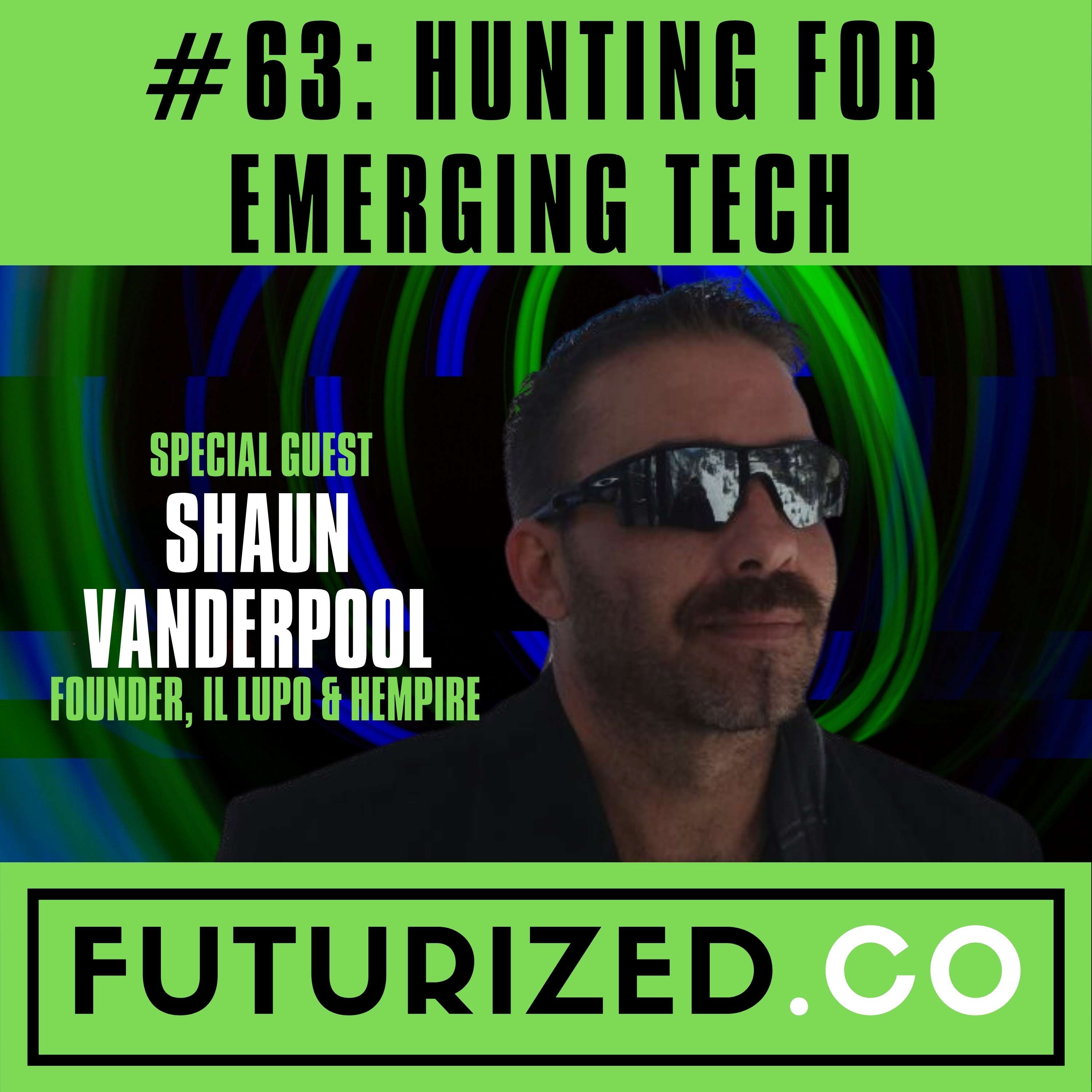
S1 Ep 63Hunting for Emerging Tech
Shaun Vanderpool, CEO and founder of Il Lupo and Hempire, an avid hunter of emerging technology to commercialize, interviewed by futurist Trond Arne Undheim. In this conversation, they talk about how difficult it is for our educational system to recognize and adapt to individual exceptional abilities. We discuss the massive potential of Hemp, the vast energy potential of a new five phase engine, and briefly cover an emerging opportunity to extract Water directly from air humidity, each technologies Vanderpool has dug up ‘from under a rock’ and not at universities, and is now exploiting. The takeaway is that the future of emerging tech is, for all the hype around it, vastly underrated, given that it can be developed with such vastly improved efficiencies at such rapid pace. On the other hand, perhaps it takes a unique mind to identify and commercialize breakthrough tech. The show is hosted by Podbean and can be found at Futurized.co. Additional context about the show, the topics, and our guests, including show notes and a full list of podcast players that syndicate the show can be found at https://trondundheim.com/podcast/. Music: Electricity by Ian Post from the album Magnetism. For more about the host, including media coverage, books and more, see Trond Arne Undheim's personal website (https://trondundheim.com/) as well as the Yegii Insights blog (https://yegii.wpcomstaging.com/). Undheim has published two books this year, Pandemic Aftermath and Disruption Games. To advertise or become a guest on the show, contact the podcast host here. If you like the show, please subscribe and consider rating it five stars.
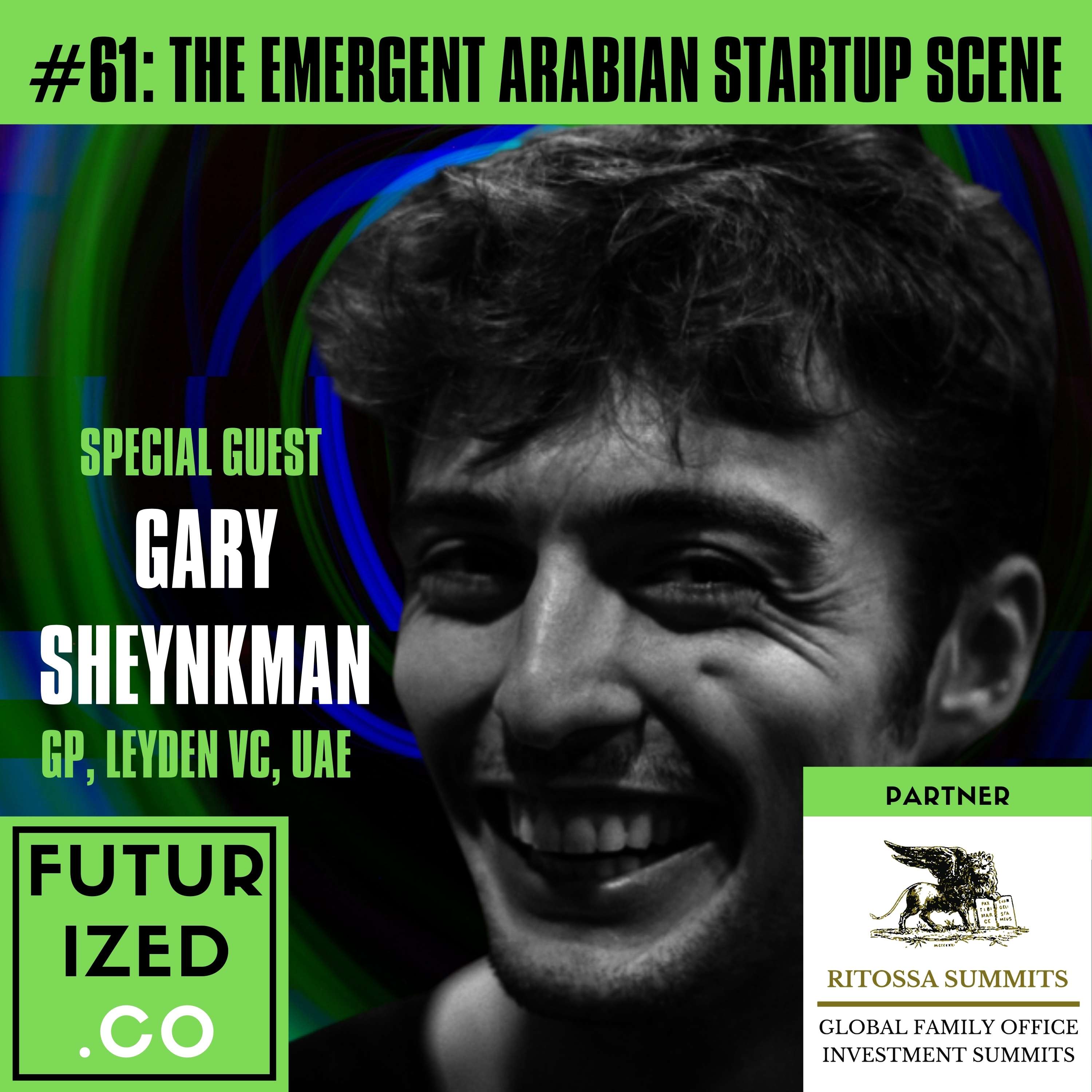
S1 Ep 61The emergent Arabian startup scene
Gary Sheynkman, a first generation immigrant (to the US) from Kiev, Ukraine living in Dubai who runs Leyden Ventures, interviewed by futurist Trond Arne Undheim. In this conversation, they talk about Arabian Tech. The Arabian startup scene. Accelerators and VC in the Middle East. Digital transformation of Arabic private equity approaches. Building a startup ecosystem from scratch. The Area 2071 initiative. The Middle East of the future. The takeaway is that the future of Arabian tech looks promising, although still nascent. The startup ecosystem in the Middle East will undoubtedly emerge strongly as traditional industries start to expire and a transition will occur. For now, the Middle East of the future is a vision, a reality in the hands of literally a handful of entrepreneurs in a small subset of cities across the region, most notably in Dubai. Don’t count them out. Also don’t assume it will happen overnight. After listening to the episode, check out Leyden VC as well as Gary's social media profile: Leyden VC https://leyden.vc/ GINCO Ventures https://www.ginco.investments/ Gary Sheynkman (@sheynk) https://www.linkedin.com/in/sheynkman/ Gary's personal homepage sheynkman.com The show is hosted by Podbean and can be found at Futurized.co. Additional context about the show, the topics, and our guests, including show notes and a full list of podcast players that syndicate the show can be found at https://trondundheim.com/podcast/. Music: Electricity by Ian Post from the album Magnetism. For more about the host, including media coverage, books and more, see Trond Arne Undheim's personal website (https://trondundheim.com/) as well as the Yegii Insights blog (https://yegii.wpcomstaging.com/). Undheim has published two books this year, Pandemic Aftermath and Disruption Games. To advertise or become a guest on the show, contact the podcast host here. If you like the show, please subscribe and consider rating it five stars.
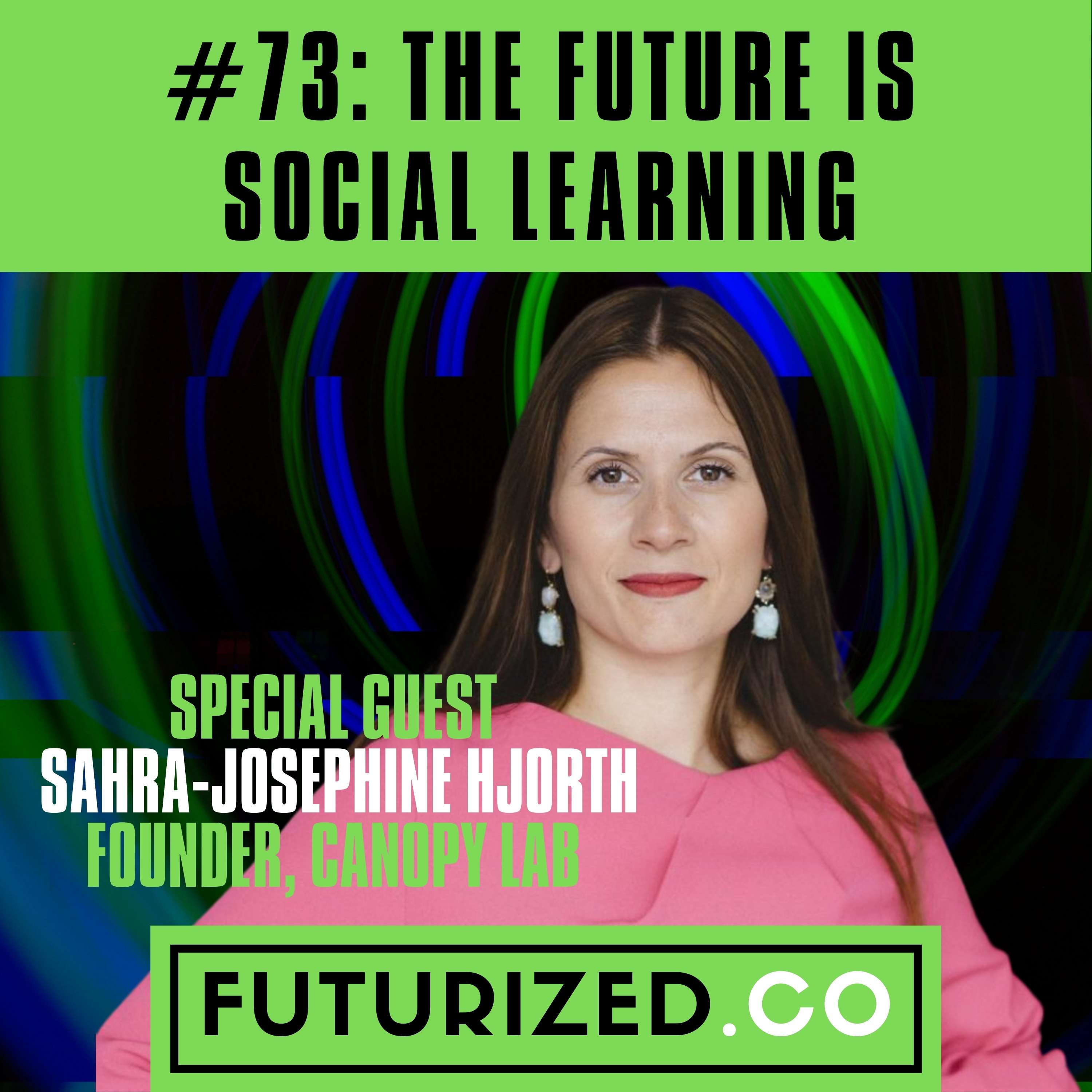
S1 Ep 73The Future of Social Learning
Sahra-Josephine Hjorth, CEO and co-founder of CanopyLAB, interviewed by futurist Trond Arne Undheim. In this conversation, we talk about empowering learners, and about blended learning, moving beyond screen time to Virtual immersionm AI/AR – how to use tech the right way. We discuss tackling scaling challenges in social learning, EdTech post-COVID-19. We cover how Sahra collated and digitized more than 50+ ways of classroom learning in a teacher’s toolbox. How to plug the 21st-century skills gap? The next decade's learning reality. The takeaway is that social learning is much talked about but poorly understood. How could it be that Sahra-Josephine Hjorth -- in 2020 no less -- is among the few to describe each of the social and pedagogical components that go into teaching, this ancient practice that is so important? It boggles the mind. After listening to the episode, check out CanopyLAB as well as Sahra-Josephine Hjorth's social media profile: CanopyLAB (@Canopy_LAB) https://canopylab.com/ Sahra-Josephine Hjorth (@Sahra_Josephine) https://www.linkedin.com/in/sahrajosephine/?originalSubdomain=dk SU profile https://su.org/about/faculty/sahra-josephine-hjorth/ The show is hosted by Podbean and can be found at Futurized.co. Additional context about the show, the topics, and our guests, including show notes and a full list of podcast players that syndicate the show can be found at https://trondundheim.com/podcast/. Music: Electricity by Ian Post from the album Magnetism. For more about the host, including media coverage, books and more, see Trond Arne Undheim's personal website (https://trondundheim.com/) as well as the Yegii Insights blog (https://yegii.wpcomstaging.com/). Undheim has published two books this year, Pandemic Aftermath and Disruption Games. To advertise or become a guest on the show, contact the podcast host here. If you like the show, please subscribe and consider rating it five stars. If you like this topic, you may enjoy other episodes of Futurized, such as episode 65 which is on The Urgency of a Social-Emotional Learning Fix or episode 51 which is on the AI for Learning, episode 37 on The Future of Online Learning, episode 27 on the F, or episode 22 on The Future of Engineering Education. Futurized—preparing YOU to deal with disruption.
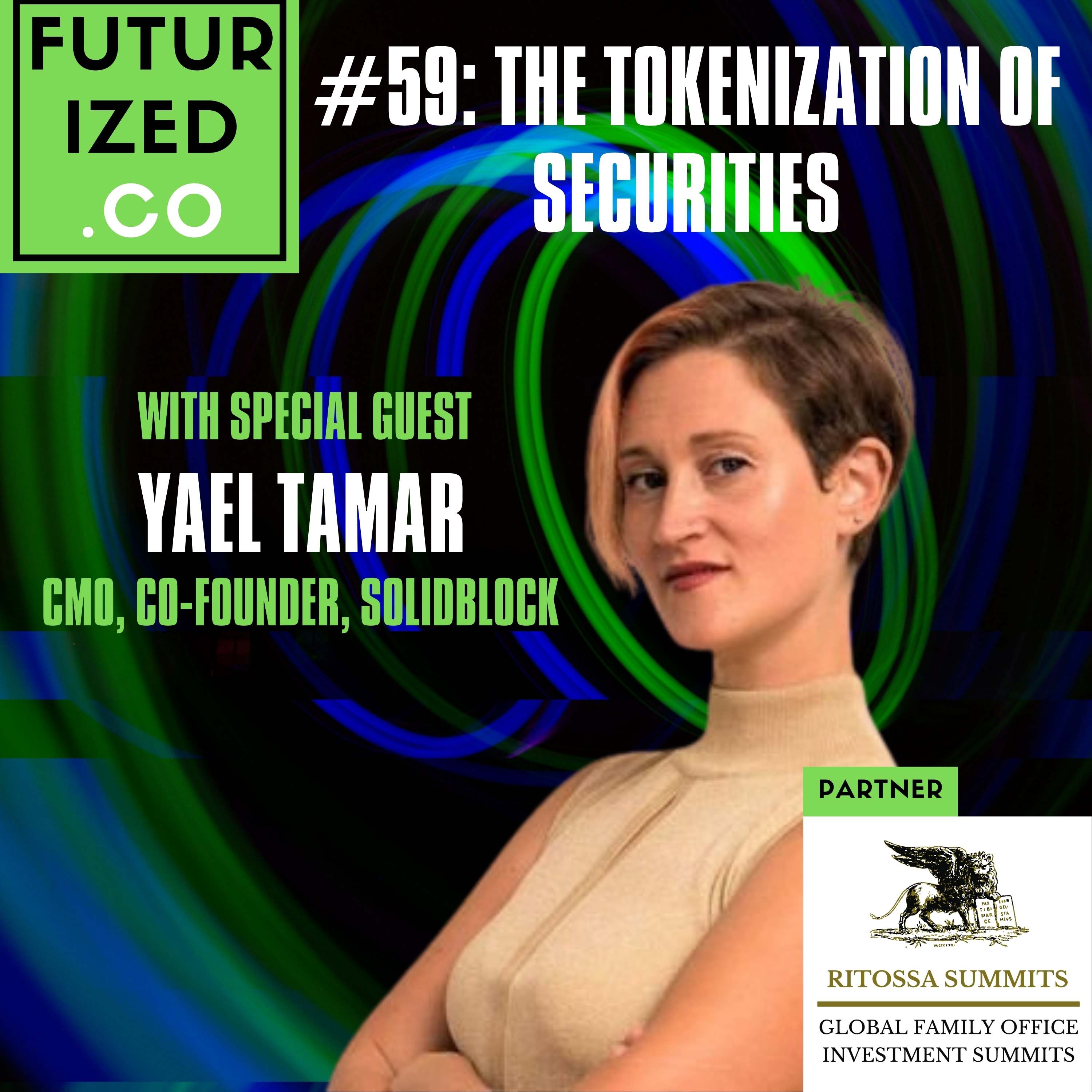
S1 Ep 59The Tokenization of Securities
Yael Tamar, CMO and co-founder of SolidBlock, the issuance platform for digital securities, interviewed by futurist Trond Arne Undheim. In this conversation, they talk about The tokenization of securities, starting with the pioneering use case of real estate, where SolidBlock in 2018, in collaboration with its partners, created Aspen Coin to finance the renovation of the St. Regis Aspen Resort, a 179-room luxury hotel. We spend some time discussing the basics of securitization and tokenization before moving to discussing how the deepening digitization creates financial transformation as well. Lastly, we discuss the ever present need for information on blockchain developments. Yael herself started the site Top of Blockchain. The takeaway is that the tokenization of securities has only just begun. Given its novelty, even real estate will take some time to onboard at scale to such a platform. However, when it does, the true revolution of fractionalized ownership and tradeability will enable swaths of new, emerging investors to enter the market, even from very low starting amounts. This could prove transformational for the emerging markets in Asia, South America and even Africa. After listening to the episode, check out SolidBlock as well as Yael Tamar's social media profile: SolidBlock (@SolidBlockCo) https://www.solidblock.co/ Yael Tamar (@yaeltamar) https://www.linkedin.com/in/yaeltamar/ Top Of Blockchain https://topofblockchain.com/ The show is hosted by Podbean and can be found at Futurized.co. Additional context about the show, the topics, and our guests, including show notes and a full list of podcast players that syndicate the show can be found at https://trondundheim.com/podcast/. Music: Electricity by Ian Post from the album Magnetism. For more about the host, including media coverage, books and more, see Trond Arne Undheim's personal website (https://trondundheim.com/) as well as the Yegii Insights blog (https://yegii.wpcomstaging.com/). Undheim has published two books this year, Pandemic Aftermath and Disruption Games. To advertise or become a guest on the show, contact the podcast host here. If you like the show, please subscribe and consider rating it five stars.
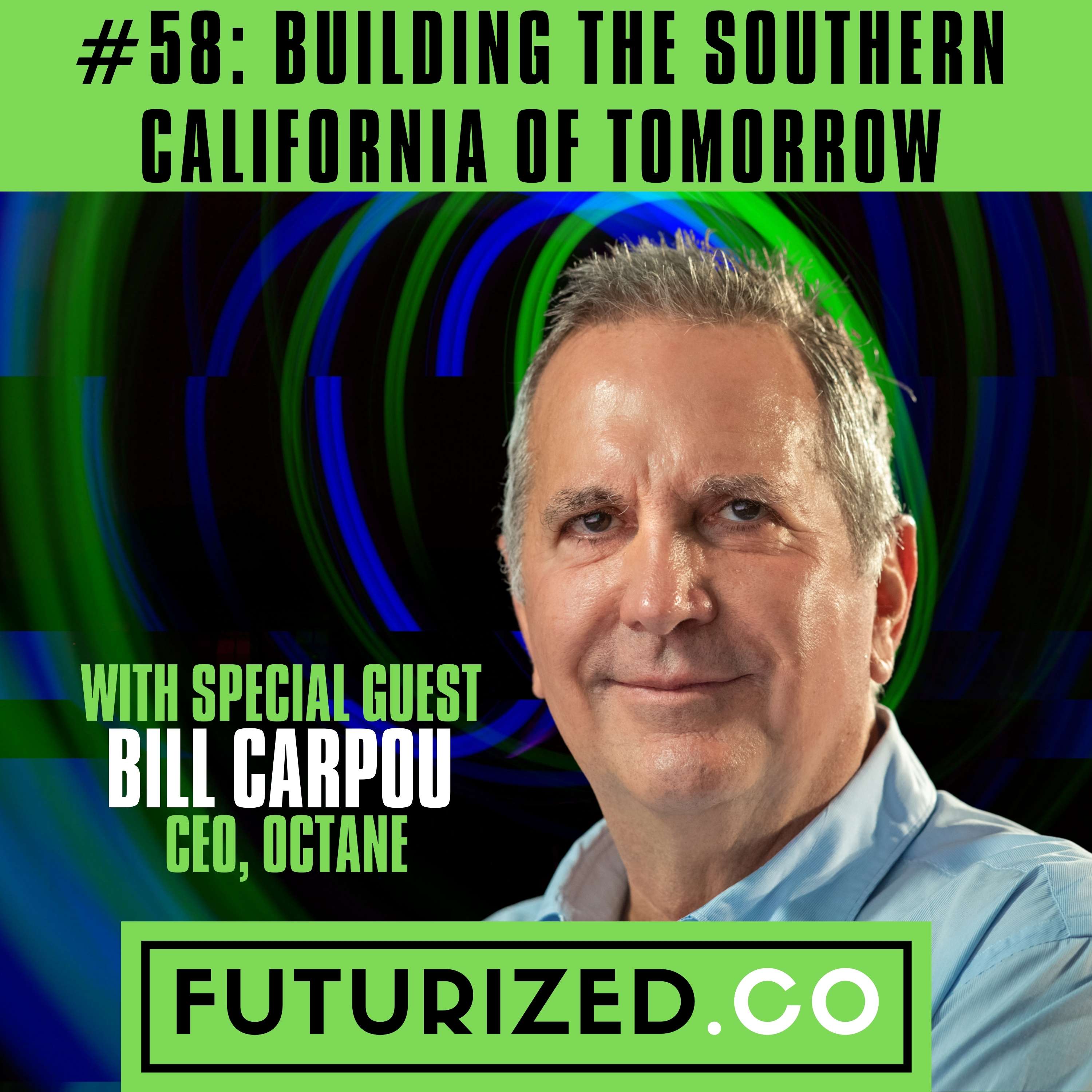
S1 Ep 58Building the Southern California of Tomorrow
Bill Carpou, CEO at OCTANE, the accelerator in California and General Partner at Visionary Ventures a growth stage fund is interviewed by futurist Trond Arne Undheim. In this conversation, they talk about how the newly formed Innovation Network of Southern California (InSoCal) is Building the Southern California of Tomorrow. We discuss how to build any innovation ecosystem, what the ingredients are, how to adapt to local and cultural dynamics, and how to thrive and grow. We also muse about ecosystems of the future. The takeaway is that the future of innovation ecosystems is up in the air. What worked in the past must be continuously adapted. Attempting to make a poor carbon copy of Silicon Valley is not going to cut it. inSoCal seem to have found a cool, networked model where they pool the resources from several existing regional networks and achieve momentum that way. After listening to the episode, check out OCTANE as well as Bill Carpou's social media profile: OCTANE (@OctaneOC) https://octaneoc.org/ EvoNexus (@EvoNexus) https://evonexus.org/ Bill Carpou (@bcarpou) https://www.linkedin.com/in/bill-carpou-1b26b88/ OCTANe Collaborates with LAVA and SDVG to Form “Innovation Network of Southern California” https://octaneoc.org/octane-collaborates-with-lava-and-sdvg-to-form-innovation-network-of-southern-california/ The show is hosted by Podbean and can be found at Futurized.co. Additional context about the show, the topics, and our guests, including show notes and a full list of podcast players that syndicate the show can be found at https://trondundheim.com/podcast/. Music: Electricity by Ian Post from the album Magnetism. For more about the host, including media coverage, books and more, see Trond Arne Undheim's personal website (https://trondundheim.com/) as well as the Yegii Insights blog (https://yegii.wpcomstaging.com/). Undheim has published two books this year, Pandemic Aftermath and Disruption Games. To advertise or become a guest on the show, contact the podcast host here. If you like the show, please subscribe and consider rating it five stars.
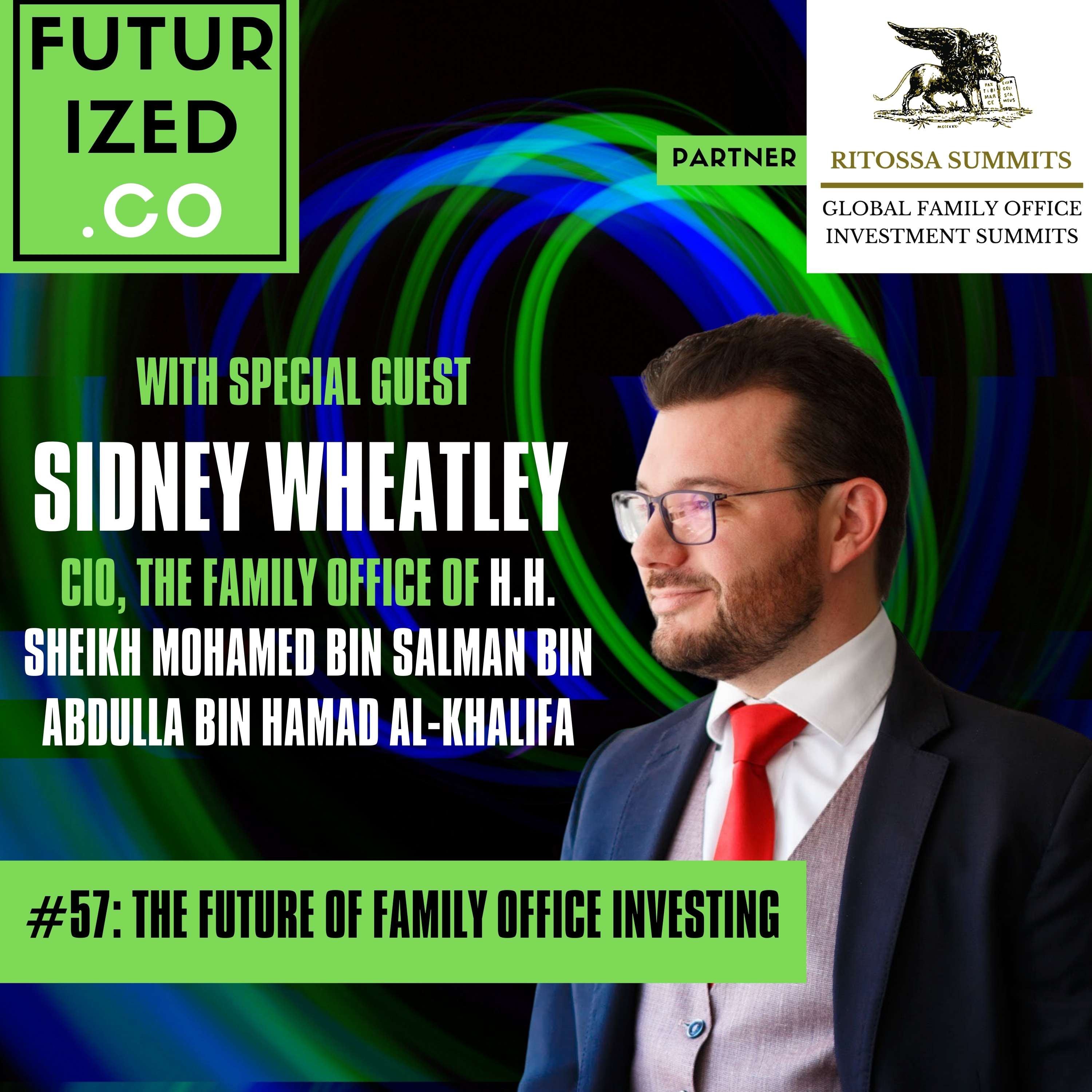
S1 Ep 57Future of Family Office Investing
Sidney Wheatley, CIO, Private Office of H.H. Sheikh Mohamed bin Salman bin Abdulla bin Hamad Al-Khalifa, Kingdom of Bahrain, is interviewed by futurist Trond Arne Undheim, host of the Futurized podcast, and author of Future Tech (2021), Pandemic Aftermath (2020), Disruption Games (2020), and Leadership From Below (2008). In this conversation, they talk about The Future of Family Office Investing. Trends in family office investment portfolios. Global shifts, industry trends, foresight, tech investing, fintech, and blockchain. They discuss new consumption patterns for multimedia and film as well as other emerging sector plays. Furthermore, they cover diversification during times of turmoil, the changing nature of the petroleum industry towards the post-petroleum world and post-virus world. They cover the Bahrain Economic Vision 2030 and wonder what does the next decade look like? The takeaway is that Family Office Investing is adjusting to global events, innovative opportunities, and societal disruption with diversification and increased emphasis on technology startups as a new asset class. However, traditional assets, such as real estate, industry, and manufacturing still stand strong. After listening to the episode, check out the family office works for as well as Sidney's social media profile: Sidney Wheatley https://www.linkedin.com/in/sidney-wheatley-316a1227/ Sheikh Mohamed Bin Salman https://www.mohamedbinsalman.com/ The show is hosted by Podbean and can be found at Futurized.co. Additional context about the show, the topics, and our guests, including show notes and a full list of podcast players that syndicate the show can be found at https://trondundheim.com/podcast/. Music: Electricity by Ian Post from the album Magnetism. For more about the host, including media coverage, books and more, see Trond Arne Undheim's personal website (https://trondundheim.com/) as well as the Yegii Insights blog (https://yegii.wpcomstaging.com/). Undheim has published two books this year, Pandemic Aftermath and Disruption Games. To advertise or become a guest on the show, contact the podcast host here. If you like the show, please subscribe and consider rating it five stars.
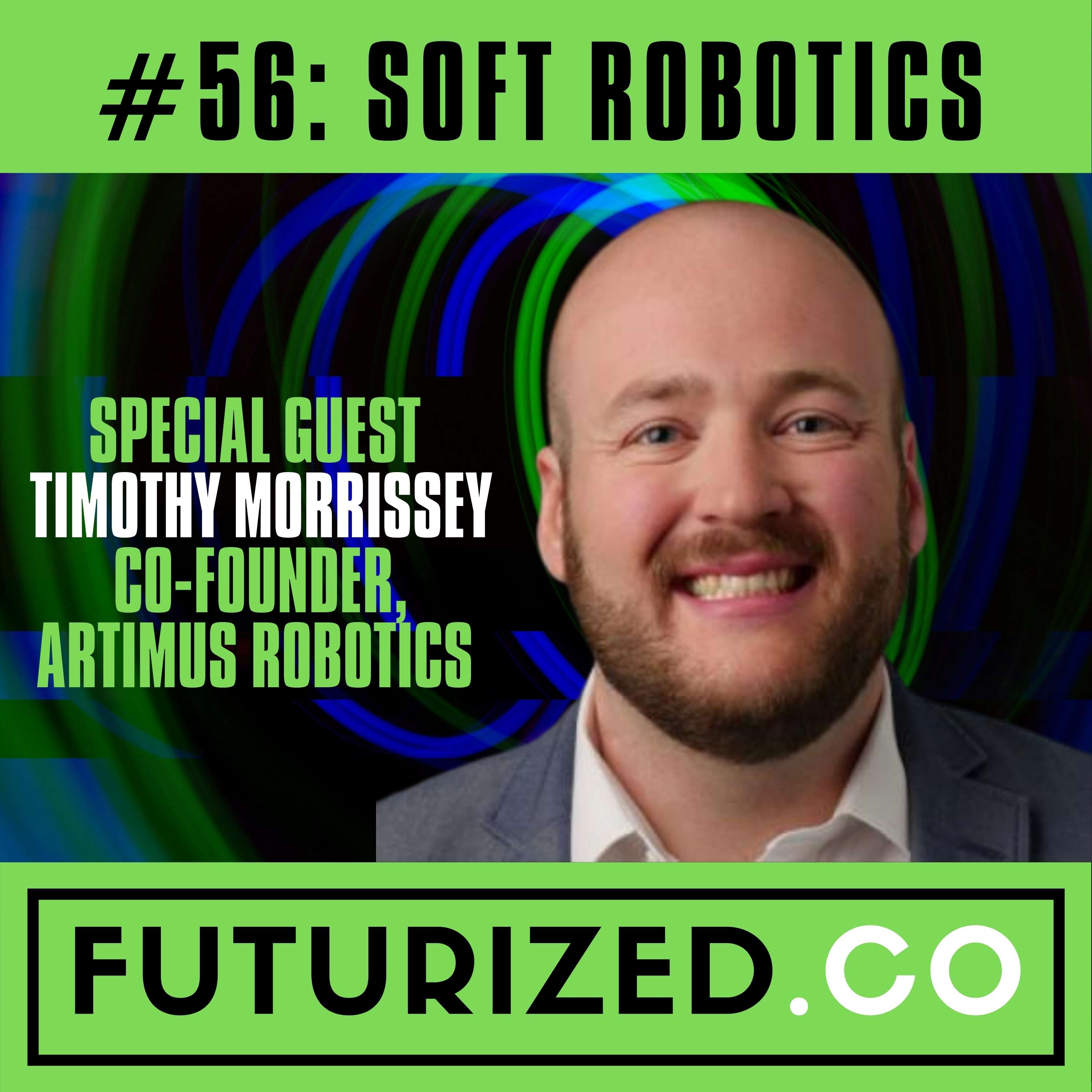
S1 Ep 56Soft Robotics
Timothy Morrissey, CEO and co-founder of Artimus Robotics interviewed by futurist Trond Arne Undheim. In this conversation, we talk about why develop artificial muscles? Tim explains the differences between; actuators, motors, engines, machines, robots, automation, augmentation, and humans—what a mouthful. We discuss how robots are poised to take over the dull, dangerous and dirty jobs, but not really many other jobs—in the near future. A soft robot’s artificial muscles’ advantages includes speed, energy density, power and efficiency. We discuss key emerging applications in industry, medicine and other fields, from berry pickers to automobiles, robots in the home, adult toys and beyond—yes, artificial can be REALLY soft, too. My takeaway is that soft robotics is what will make robots seem more human, which is nice and a bit scary, but that’s not really the point. The applications emerging are capable of non-human feats that will transform science, engineering, products, and—ultimately, our society. The immense progress envisioned is a ways out, what we are seeing now is really only scratching the surface. Prepare to be amazed a decade from now, and within the next thirty years, robots will be unrecognizable from what they are today. Some soft robots, nanobots, will also be so small that they will be invisible to the human eye. All exciting, exhilarating, and slightly perplexing. However, understanding soft robotics is not that hard—I’m going to make it recommended reading and exploration for my kids, at lest. Might as well prepare their for their adulthood, which will truly be he age of robotic coexistence. Science fiction come true, one might say. After listening to the episode, check out Artimus Robotics as well as Timothy Morrissey's online presence: Artimus Robotics (@ArtimusRobotics) https://www.artimusrobotics.com/ Timothy Morrissey https://www.linkedin.com/in/tgmorrissey/ The show is hosted by Podbean and can be found at Futurized.co. Additional context about the show, the topics, and our guests, including show notes and a full list of podcast players that syndicate the show can be found at https://trondundheim.com/podcast/. Music: Electricity by Ian Post from the album Magnetism. For more about the host, including media coverage, books and more, see Trond Arne Undheim's personal website (https://trondundheim.com/) as well as the Yegii Insights blog (https://yegii.wpcomstaging.com/). Undheim has published two books this year, Pandemic Aftermath and Disruption Games. To advertise or become a guest on the show, contact the podcast host here. If you like the show, please subscribe and consider rating it five stars.
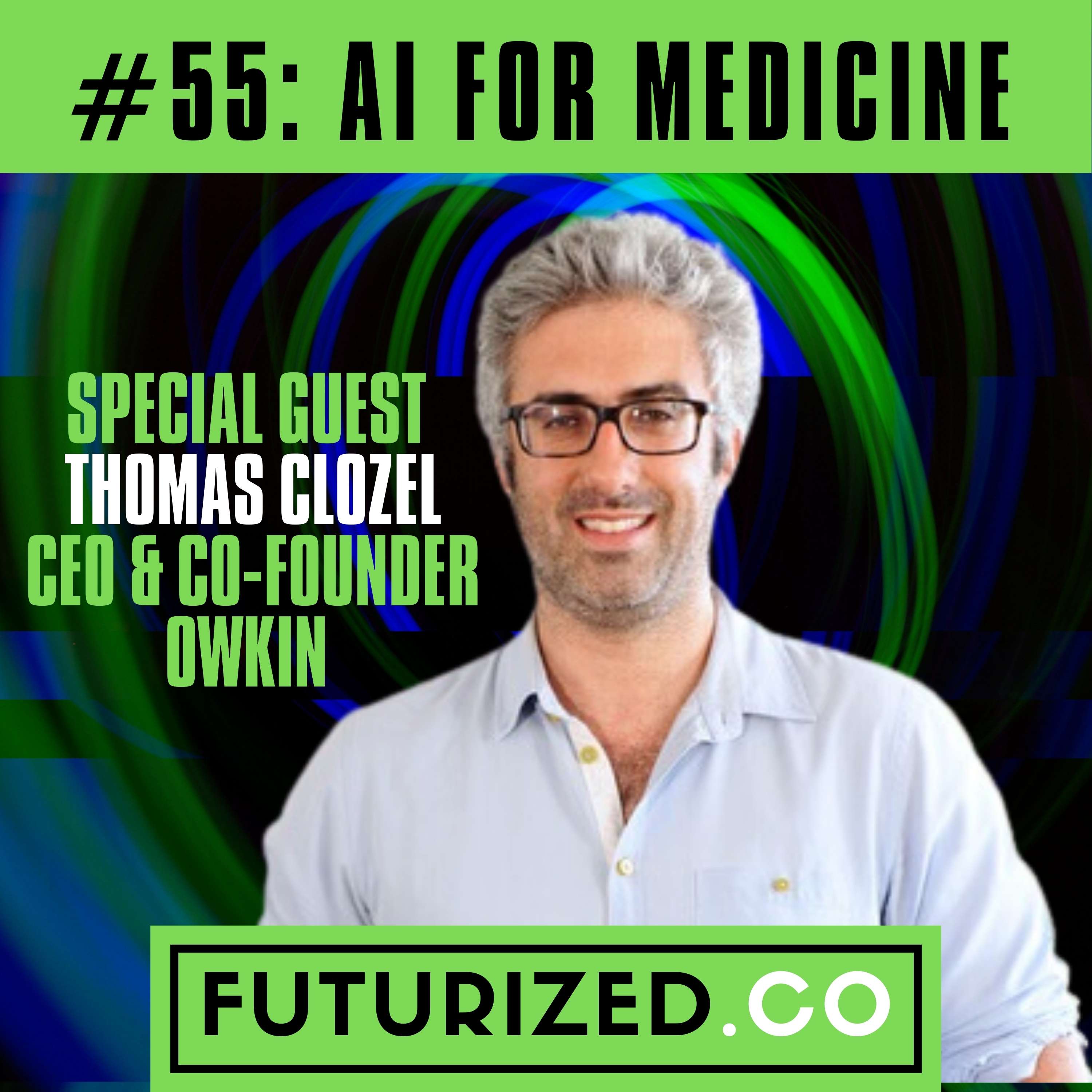
S1 Ep 55AI for Medicine
Thomas Clozel, CEO and co-founder of Owkin, the federated data network startup boosting AI for medicine, interviewed by futurist Trond Arne Undheim. In this conversation, they talk about integrating AI and system biology to enable breakthrough medical moments. They explore how machine learning can be used to augment medical and biological research. In Owkin’s federated learning approach, the data stays put with the owners, but the learning models travel. Theydiscuss the data heterogeneity in healthcare, the need for interoperability, and we touch on hype versus reality. The takeaway is that AI for medicine is here to stay, it has come far, but has bumped into some fundamental obstacles—interoperability, explainability, privacy, and transparency—that need to be resolved before reaching its full potential. That’s even more important than evolving the base technology to become more efficient. This is why federated learning is such a crucial experiment. Can it work? Will it satisfy everyone? Time will show. AI is not monolithic and neither is medicine. There seems to be many contenders for glory, and there are many puzzles to solve. They won’t all go away this decade. After listening to the episode, check out Owkin as well as Thomas Clozel's online presence: Owkin (@OWKINscience) https://owkin.com/ Thomas Clozel (@TClozel) https://www.linkedin.com/in/thomas-clozel-m-d-408a9321/ The show is hosted by Podbean and can be found at Futurized.co. Additional context about the show, the topics, and our guests, including show notes and a full list of podcast players that syndicate the show can be found at https://trondundheim.com/podcast/. Music: Electricity by Ian Post from the album Magnetism. For more about the host, including media coverage, books and more, see Trond Arne Undheim's personal website (https://trondundheim.com/) as well as the Yegii Insights blog (https://yegii.wpcomstaging.com/). Undheim has published two books this year, Pandemic Aftermath and Disruption Games. To advertise or become a guest on the show, contact the podcast host here. If you like the show, please subscribe and consider rating it five stars.
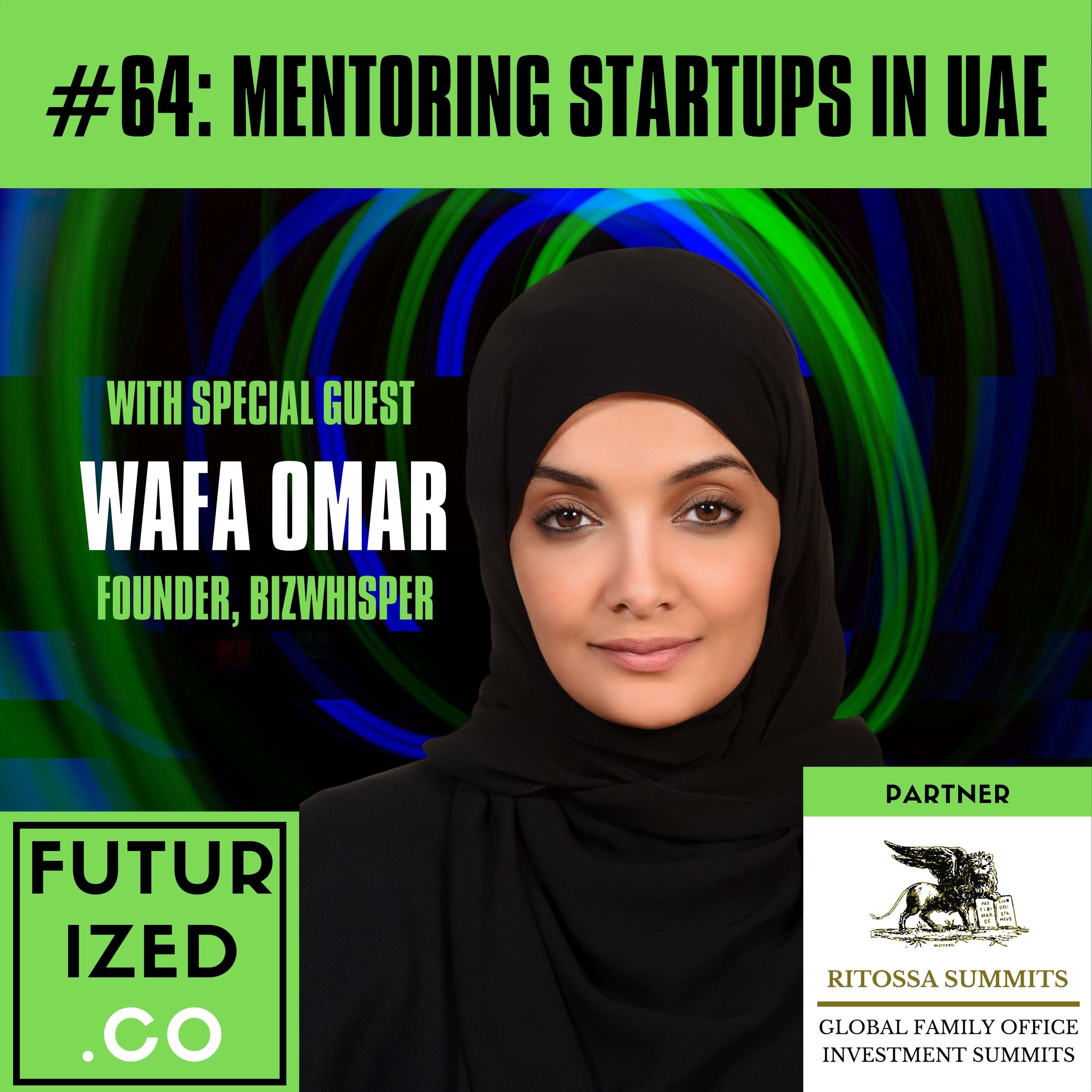
S1 Ep 64Startup Mentoring in UAE
Wafa Omar, founder of BizWhisper, a startup which is specialized in creative problem solving for entrepreneurs in the MENA region through mentoring, interviewed by futurist Trond Arne Undheim. In this conversation, we talk about startup mentoring in the UAE, in the Gulf Cooperation Council (GCC), the political and economic alliance of six Middle Eastern countries—Saudi Arabia, Kuwait, the United Arab Emirates, Qatar, Bahrain, and Oman, and ostensibly in the MENA region as a whole. We discuss being a female entrepreneur in the Middle East and what the future holds. My takeaway is that the future of mentoring startups in the UAE, GCV, and MENA region is crucial for growing a healthy, thriving startup ecosystem. Having a home grown mentoring platform that caters to culturally specific mentoring needs is terrific. After listening to the episode, check out as well as Wafa Omar's online presence: Wafa Omar https://www.linkedin.com/in/wafa-omar-5392b0173/ BisWhisper LinkedIn profile https://www.linkedin.com/in/bizwhisper-business-coaching-7384b01b3/ Wafa Omar https://www.instagram.com/wafa_sbc The show is hosted by Podbean and can be found at Futurized.co. Additional context about the show, the topics, and our guests, including show notes and a full list of podcast players that syndicate the show can be found at https://trondundheim.com/podcast/. Music: Electricity by Ian Post from the album Magnetism. For more about the host, including media coverage, books and more, see Trond Arne Undheim's personal website (https://trondundheim.com/) as well as the Yegii Insights blog (https://yegii.wpcomstaging.com/). Undheim has published two books this year, Pandemic Aftermath and Disruption Games. To advertise or become a guest on the show, contact the podcast host here. If you like the show, please subscribe and consider rating it five stars.
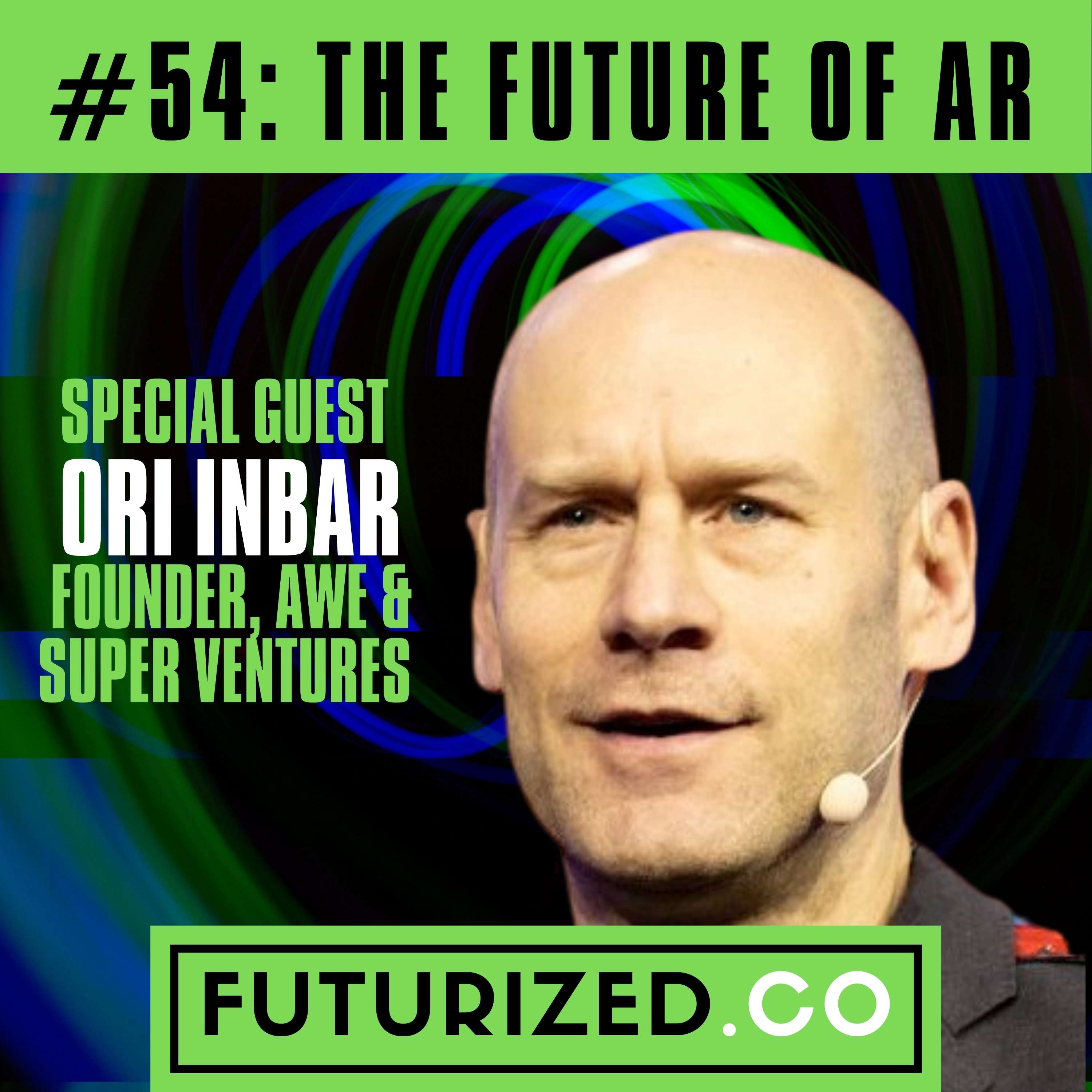
S1 Ep 54The Future of AR
Ori Inbar, Founder of Superventures and also CEO and founder of AugmentedReality.org, the organizer of AWE, the world’s most essential AR/VR conference since 2010, interviewed by futurist Trond Arne Undheim. In this conversation, they talk about community building in the no longer so embryonic AR/VR space, the emergence of spatial computing, the Augmented Reality Expo (AWE). They discuss AR/VR venture capital, exciting and emerging use cases and form factors, market size, mobile AR, and COVID’s impact on remote tech. They explore the world in 2030 and the threats that the world is facing. The takeaway is that augmented reality has come a long way and is no longer a fringe technology, and the COVID-moment has made progress in the field a global tech priority. As for VR, the community is growing but developing true killer apps will take time. Maybe a good thing, because we are not really ready for what is to come. Will we evolve into a virtual species? Neither Ori nor Trond think so at this point. Ask them in thirty years, though. After listening to the episode, check out AWE as well as Ori Inbar's online presence: AWE (@ARealityEvent) https://www.awexr.com/ Super Ventures (@super_ventures) https://www.superventures.com/ Ori Inbar (@comogard) https://www.linkedin.com/in/oriinbar/ The show is hosted by Podbean and can be found at Futurized.co. Additional context about the show, the topics, and our guests, including show notes and a full list of podcast players that syndicate the show can be found at https://trondundheim.com/podcast/. Music: Electricity by Ian Post from the album Magnetism. For more about the host, including media coverage, books and more, see Trond Arne Undheim's personal website (https://trondundheim.com/) as well as the Yegii Insights blog (https://yegii.wpcomstaging.com/). Undheim has published two books this year, Pandemic Aftermath and Disruption Games. To advertise or become a guest on the show, contact the podcast host here. If you like the show, please subscribe and consider rating it five stars.
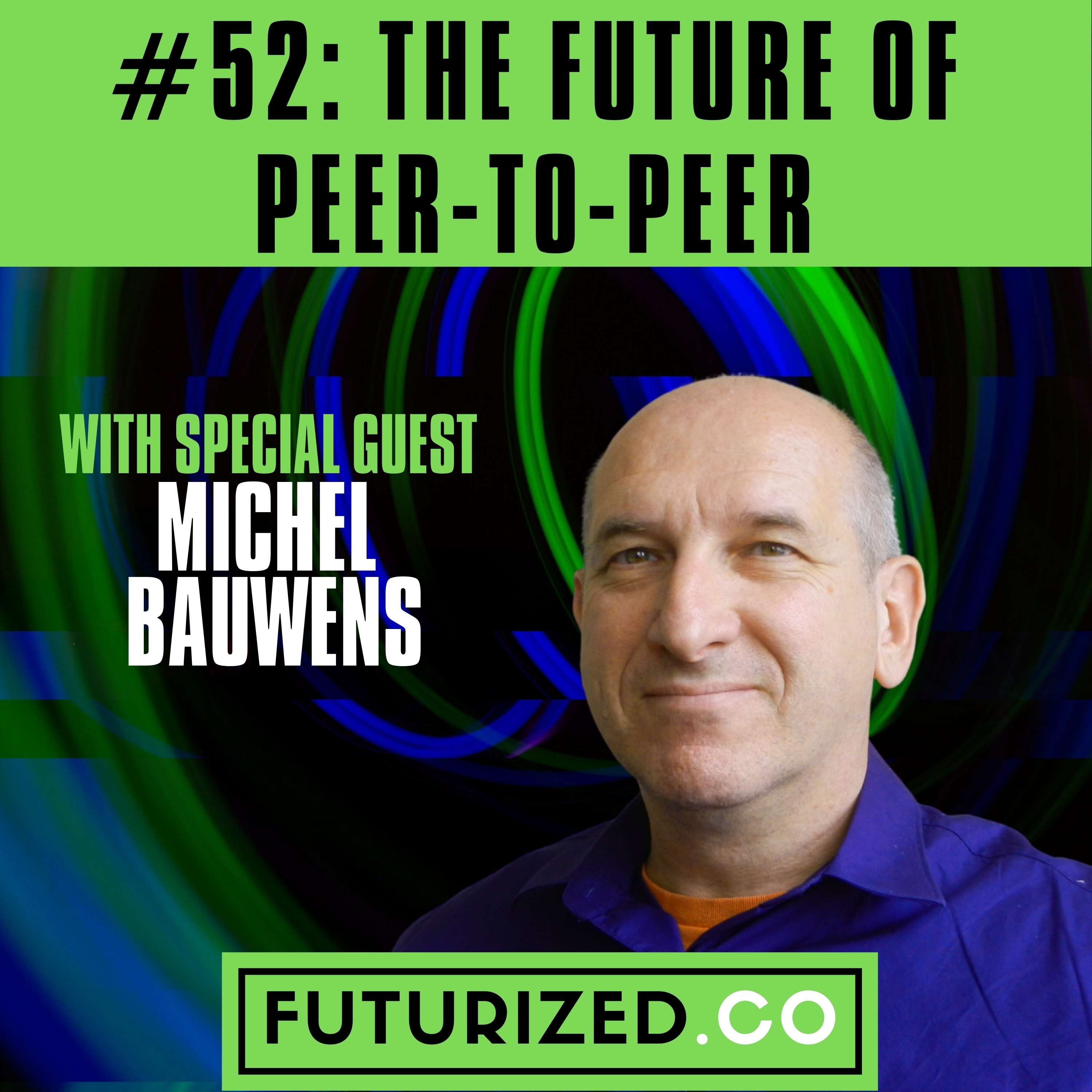
S1 Ep 52The Future of Peer-to-Peer
Michel Bauwens, Founder of the P2P Foundation and co-author of Peer-to-Peer: The Commons Manifesto, interviewed by futurist Trond Arne Undheim. In this conversation, we talked about how the world may have reached a tipping point where the balance between centralized and distributed activity as well as for profit and not for profit activity have overreached its boundaries. In Bauwens’ analysis, historically when this happens, with civilizations such as the Mayans, or the Chinese, a reversal of polarity happens, and society moves into healing mode. The difference this time, is that the system is global, and that we have nowhere else to go. Our challenge now is, whether we are capable of living within planetary boundaries. Bauwens, in this respect, subscribes to a functionalist pulse-wave theory of cyclical change. My takeaway is that the commons is indeed an interesting seemingly growing sentiment and a reaction to both big capitalism and libertarianism, a third way, if you will. I wrote about this phenomenon in my 2008 book Leadership From Below. Arguably, an increased focus on developing the commons, would help foster a more egalitarian, just and sustainable world. I found Bauwens critique of the crypto-anarchic divide between commoners and libertarians, the latter underlying blockchain quite interesting, as I had earlier perhaps put that effort more in the commons camp than it deserves, because at the surface, they are both about getting rid of the middleman. After listening to the episode, check out Michel's most recent book, the P2P Foundation, as well as his social media profile: Peer-to-Peer: The Commons Manifesto https://www.uwestminsterpress.co.uk/site/books/m/10.16997/book33/ P2P Foundation https://p2pfoundation.net/ Michel Bauwens (@mbauwens) https://www.linkedin.com/in/mbauwens/ The show is hosted by Podbean and can be found at Futurized.co. Additional context about the show, the topics, and our guests, including show notes and a full list of podcast players that syndicate the show can be found at https://trondundheim.com/podcast/. Music: Electricity by Ian Post from the album Magnetism. For more about the host, including media coverage, books and more, see Trond Arne Undheim's personal website (https://trondundheim.com/) as well as the Yegii Insights blog (https://yegii.wpcomstaging.com/). Undheim has published two books this year, Pandemic Aftermath and Disruption Games. To advertise or become a guest on the show, contact the podcast host here. If you like the show, please subscribe and consider rating it five stars.

S1 Ep 71Future Tech - a preview
In this mini-episode, futurist Trond Undheim briefly discusses his upcoming book Future Tech: How to capture value from disruptive industry trends, to be published by Kogan Page in March 2021. He also reads an excerpt from the book. Future Tech explains how the four forces of technology, policy, business models and social dynamics work together to create industry disruption and how this understanding can help to predict what is coming next. The book will be on the syllabus for an upcoming course at Cornell Tech and has already received raving endorsements. Check out Future Tech and Trond's social media profile: Future Tech https://trondundheim.com/future-tech/ Future Tech (Kogan Page's site) https://www.koganpage.com/futuretech Trond Arne Undheim (@tautec) https://www.linkedin.com/in/undheim/ The show is hosted by Podbean and can be found at Futurized.co. Additional context about the show, the topics, and our guests, including show notes and a full list of podcast players that syndicate the show can be found at https://trondundheim.com/podcast/. Music: Electricity by Ian Post from the album Magnetism. For more about the host, including media coverage, books and more, see Trond Arne Undheim's personal website (https://trondundheim.com/) as well as the Yegii Insights blog (https://yegii.wpcomstaging.com/). Undheim has published two books this year, Pandemic Aftermath and Disruption Games. To advertise or become a guest on the show, contact the podcast host here. If you like the show, please subscribe and consider rating it five stars
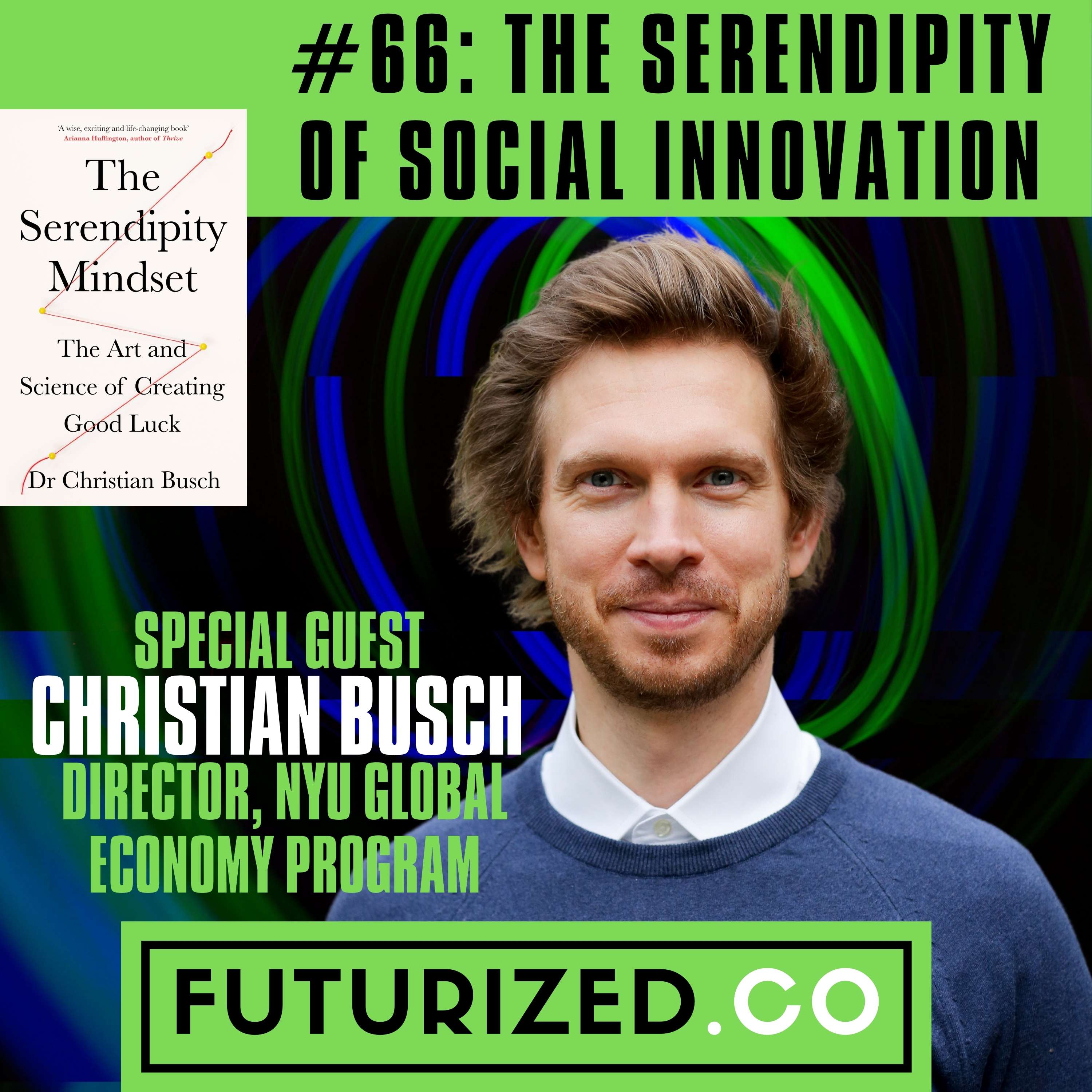
S1 Ep 66The Serendipity of Social Innovation
Christian Busch, Director, NYU Global Economy Program, interviewed by Trond Arne Undheim, futurist and author. In this conversation, they talk about serendipity, the art and science of creating good luck, and how it is intimately related to future trends in social innovation. By learning to see the events, people or objects that come to us as opportunities for change and for adjusting course, we have the potential to achieve breakthroughs. The takeaway is that serendipity is more than chance and isn’t really magical at all. We can all experience serendipitous encounters, we just have to learn to look out for them, that is, unless we are attuned to such opportunities already. The real question is how to systematize it so that whole populations can benefit from the social innovations that typically ensure. For that, you might have to delve deeper into The Serendipity Mindset. After listening to the episode, check out The Serendipity Mindset as well as Christian Busch's online presence: Serendipity Mindset (book) https://theserendipitymindset.com/ Christian Busch (@ChrisSerendip) https://www.linkedin.com/in/christianwbusch/ NYU Center for Global Economy https://www.sps.nyu.edu/homepage/academics/masters-degrees/ms-in-global-affairs/global-economy.html The show is hosted by Podbean and can be found at Futurized.co. Additional context about the show, the topics, and our guests, including show notes and a full list of podcast players that syndicate the show can be found at https://trondundheim.com/podcast/. Music: Electricity by Ian Post from the album Magnetism. For more about the host, including media coverage, books and more, see Trond Arne Undheim's personal website (https://trondundheim.com/) as well as the Yegii Insights blog (https://yegii.wpcomstaging.com/). Undheim has published two books this year, Pandemic Aftermath and Disruption Games. To advertise or become a guest on the show, contact the podcast host here. If you like the show, please subscribe and consider rating it five stars.
S1 Ep 51AI for Learning
Futurist David Shrier, Managing Director and co-founder of Esme Learning Solutions. and Associate Fellow at Oxford University, interviewed by futurist Trond Arne Undheim. In this conversation, they talk about what’s next in digital learning innovation. We discuss the challenge of bringing cognitive science to online learning. We explore the effects of real-time feedback on social learning metrics. How to develop critical thinking? How to use AI to solve problems in the world, and how to scale it beyond elite institutions. We explore a future where online learning might be even better than campus learning. The takeaway is that AI already is becoming an integral learning tool. Startups are increasingly using advanced analytics to transform the learning process with instant, quantifiable feedback. At the same time, AI does have the potential for harm, even on learning outcomes. We need to do it right. We need to make sure AI is used to better learning experiences for all students, not just the elite. After listening to the episode, check out Esme Learning Solutions as well as David Shrier's social media profile: Esme Learning Solutions https://esmelearning.com/ Saïd Business School https://www.sbs.ox.ac.uk/ David Shrier (@DavidShrier) https://www.linkedin.com/in/david-shrier/ The show is hosted by Podbean and can be found at Futurized.co. Additional context about the show, the topics, and our guests, including show notes and a full list of podcast players that syndicate the show can be found at https://trondundheim.com/podcast/. Music: Electricity by Ian Post from the album Magnetism. For more about the host, including media coverage, books and more, see Trond Arne Undheim's personal website (https://trondundheim.com/) as well as the Yegii Insights blog (https://yegii.wpcomstaging.com/). Undheim has published two books this year, Pandemic Aftermath and Disruption Games. To advertise or become a guest on the show, contact the podcast host here. If you like the show, please subscribe and consider rating it five stars.
S1 Ep 65The Urgency of a Social-Emotional Learning Fix
Shai Fuxman, Project Director at Education Development Center (EDC), interviewed by futurist Trond Arne Undheim. In this conversation, they talk about what’s the big deal with social and emotional learning. They cover the tremendous measurable benefits in terms of performance, attendance, and college entry, or even societal savings and economic success. They discuss the trends in education and the pendulum swings between STEM focus and educating the whole person. They discuss the criticism at times leveled against he SEL curriculum for being white centric and what the educational community it’s has done to address this —at times—legitimate criticism. They also discuss EDC’s new program for school districts to revamp their social and emotional learning approach. They briefly discuss education towards the next decade. The takeaway is that social and emotional learning is fundamental to academic success and to success in life. Every student deserves to reap its benefits— it in ten years, but now. With COVID-19, shaping the educational experience is both more important and more difficult to execute well. We all have a role to play, private sector, Superintendents, local policy makers on the school committee, parents, teachers, and students. After listening to the episode, check out EDC (Education Development Center) as well as Shai Fuxman's online presence: EDC (Education Development Center) Shai Fuxman (@shai_fuxman) https://www.linkedin.com/in/shaifuxman/ Shai Fuxman (EDC page) https://www.edc.org/staff/shai-fuxman The show is hosted by Podbean and can be found at Futurized.co. Additional context about the show, the topics, and our guests, including show notes and a full list of podcast players that syndicate the show can be found at https://trondundheim.com/podcast/. Music: Electricity by Ian Post from the album Magnetism. For more about the host, including media coverage, books and more, see Trond Arne Undheim's personal website (https://trondundheim.com/) as well as the Yegii Insights blog (https://yegii.wpcomstaging.com/). Undheim has published two books this year, Pandemic Aftermath and Disruption Games. To advertise or become a guest on the show, contact the podcast host here. If you like the show, please subscribe and consider rating it five stars.
S1 Ep 49Living the Future of Work
Gary Bolles, Chair for the future of work at Singularity University, interviewed by futurist Trond Arne Undheim. In this conversation, they talk about how organizations try to channel human energy-but still need processes and practices, that can become a distraction. We discuss the concept of exponential tech and the rapid pace of change. We touch on digital distraction devices. We discuss the unbundling of education, the eroding contract between knowledge workers and employees, and indeed the blurring boundaries between learning, work, and leisure. Singularity University, where Bolles is engaged, is a learning platform, which is useful because we are all having to think like a network. To succeed, he says, we need a mind shift. The takeaway is that the future of work might already be here for knowledge workers. Some of us feel like we have been living it for decades already. In fact, not much is new for digital workers in the tech industry. The change is more profound for non-tech sectors. In fact, the ground might be eroding but it is definitely not evaporating. Perhaps we should stop talking about the future of work for things that are contemporary? Then again, each person ought experience this differently, and that might be an even bigger challenge for organizations that now need to personalize their response. After listening to the episode, check out Singularity University as well as Gary Bolles's online presence: Singularity University https://su.org/ Gary Bolles (@gbolles) https://www.linkedin.com/in/gbolles/ Homepage https://www.gbolles.com/ The show is hosted by Podbean and can be found at Futurized.co. Additional context about the show, the topics, and our guests, including show notes and a full list of podcast players that syndicate the show can be found at https://trondundheim.com/podcast/. Music: Electricity by Ian Post from the album Magnetism. For more about the host, including media coverage, books and more, see Trond Arne Undheim's personal website (https://trondundheim.com/) as well as the Yegii Insights blog (https://yegii.wpcomstaging.com/). Undheim has published two books this year, Pandemic Aftermath and Disruption Games. To advertise or become a guest on the show, contact the podcast host here. If you like the show, please subscribe and consider rating it five stars.

S1 Ep 62Financial Megatrends in the Middle East
Biswajit Dasgupta, Chief Investment Officer - Head of Global Markets at Emirates Investment Bank, interviewed by futurist Trond Arne Undheim. In this conversation, they talk about financial and social Megatrends, COVID-19’s impact on the region and the world, geopolitical risk, economic challenges at the start of the decade in the MENA region and beyond, and what that means for the future. My takeaway is that the future of the Middle East is crucial to the future of everything else. It’s increasingly a gateway region between Europe, Asia, and America. A region fraught with risk, it seems to emerge with a mixed picture—both highly developed and somewhat vulnerable if the post-petroleum transition does not go well. The COVID-adaptions similarly show a mixed picture. A region to watch and engage with. After listening to the episode, check out Emirates Investment Bank as well as Biswajit Dasgupta's social media profile: Emirates Investment Bank https://www.eibank.com/ Biswajit Dasgupta https://www.linkedin.com/in/biswajit-dasgupta-1103225/ The show is hosted by Podbean and can be found at Futurized.co. Additional context about the show, the topics, and our guests, including show notes and a full list of podcast players that syndicate the show can be found at https://trondundheim.com/podcast/. Music: Electricity by Ian Post from the album Magnetism. For more about the host, including media coverage, books and more, see Trond Arne Undheim's personal website (https://trondundheim.com/) as well as the Yegii Insights blog (https://yegii.wpcomstaging.com/). Undheim has published two books this year, Pandemic Aftermath and Disruption Games. To advertise or become a guest on the show, contact the podcast host here. If you like the show, please subscribe and consider rating it five stars.
S1 Ep 50The Future of Corporate Venturing
James Mawson, CEO and founder of Mawsonia, the publishing company producing Global Corporate Venturing, interviewed by futurist Trond Arne Undheim. In this conversation, we talk about the current state and the future of corporate venturing, the activity of big corporations who invest in startups in various ways, during and post-COVID-19. My takeaway is that corporate venturing has emerged as a more and more reliable and impactful asset class, born out of a desire to catch up on innovation but maturing into a significant, positive force for sustainable, high impact innovation, growing through shocks in the economy. After listening to the episode, check out Global Corporate Venturing as well as James Mawson's social media profile: Global Corporate Venturing https://globalcorporateventuring.com/ Corporate Venturing: A Survival Guide (2019) https://www.amazon.com/dp/1999369904 Mawsonia https://mawsonia.com/ James Mawson (@mawsonia) https://www.linkedin.com/in/jamesmawson/ The show is hosted by Podbean and can be found at Futurized.co. Additional context about the show, the topics, and our guests, including show notes and a full list of podcast players that syndicate the show can be found at https://trondundheim.com/podcast/. Music: Electricity by Ian Post from the album Magnetism. For more about the host, including media coverage, books and more, see Trond Arne Undheim's personal website (https://trondundheim.com/) as well as the Yegii Insights blog (https://yegii.wpcomstaging.com/). Undheim has published two books this year, Pandemic Aftermath and Disruption Games. To advertise or become a guest on the show, contact the podcast host here. If you like the show, please subscribe and consider rating it five stars.
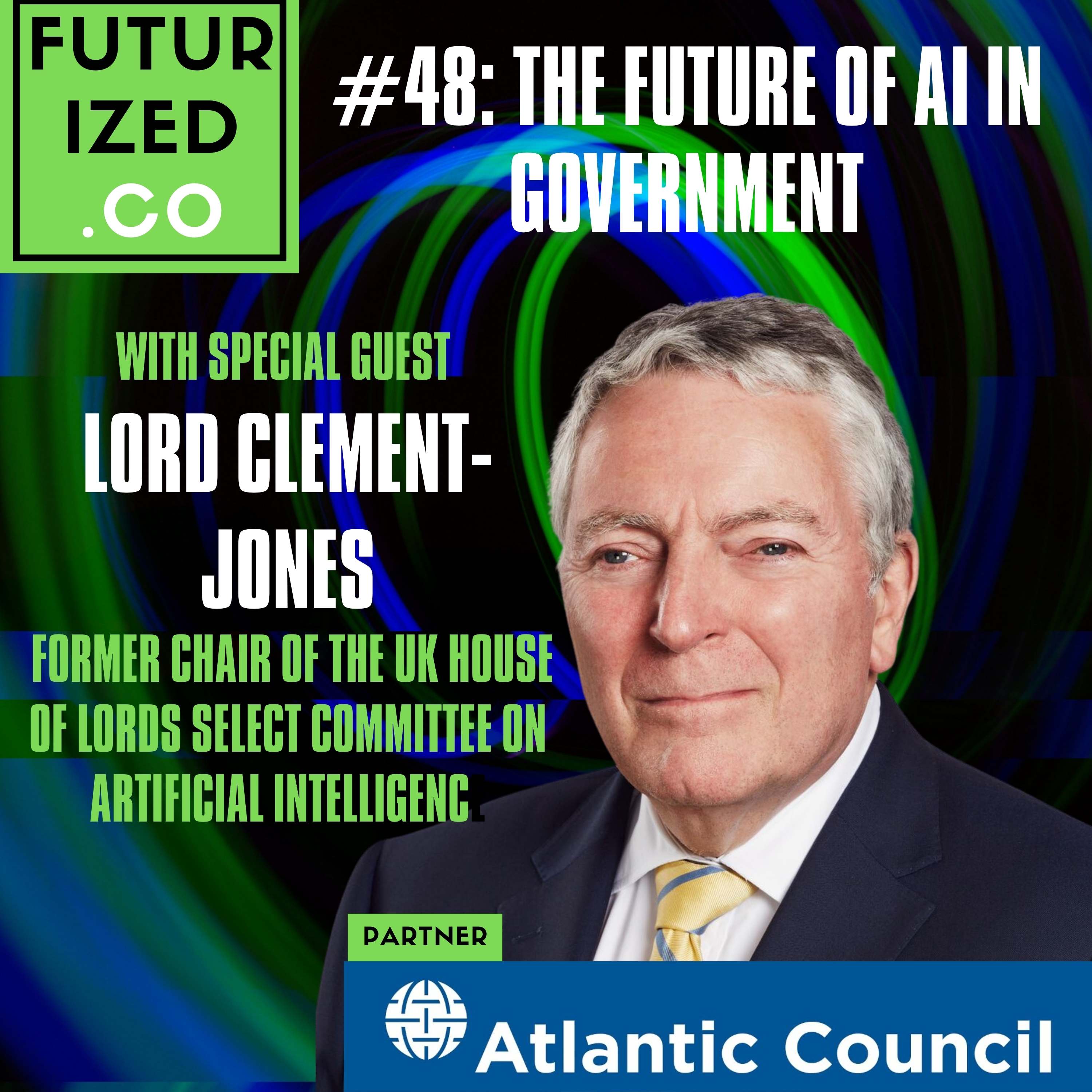
S1 Ep 48The Future of AI in Government
Lord Clement-Jones, consultant of global law firm DLA Piper, former chair of the UK House of Lords Select Committee on Artificial Intelligence, interviewed by futurist Trond Arne Undheim. In this conversation, we talk about emerging regulations for substituting AI for human labor and routine work, regulating big tech, AI for grand societal challenges, data trusts, and UK strengths in AI. My takeaway is that there are crucial risks and opportunities involved with AI that do need to be resolved this decade, by governments, even though the pace of adoption might not be as steep as some industry visionaries predict. The existing governance frameworks around the world are not enough. He government simply needs a new approach to algorithmic decision making. Data trusts is one piece of the puzzle, not the only approach, but perhaps an important one. After listening to the episode, check out Lord Clement-Jones' report to Parliament on AI as well as his social media profile: AI in the UK: ready, willing and able? (2018) https://publications.parliament.uk/pa/ld201719/ldselect/ldai/100/100.pdf Lord Clement-Jones https://www.lordclementjones.org/ Lord Clement-Jones (@whiterhino1949) https://www.linkedin.com/in/tim-clement-jones-59a3254/ The show is hosted by Podbean and can be found at Futurized.co. Additional context about the show, the topics, and our guests, including show notes and a full list of podcast players that syndicate the show can be found at https://trondundheim.com/podcast/. Music: Electricity by Ian Post from the album Magnetism. For more about the host, including media coverage, books and more, see Trond Arne Undheim's personal website (https://trondundheim.com/) as well as the Yegii Insights blog (https://yegii.wpcomstaging.com/). Undheim has published two books this year, Pandemic Aftermath and Disruption Games. To advertise or become a guest on the show, contact the podcast host here. If you like the show, please subscribe and consider rating it five stars.
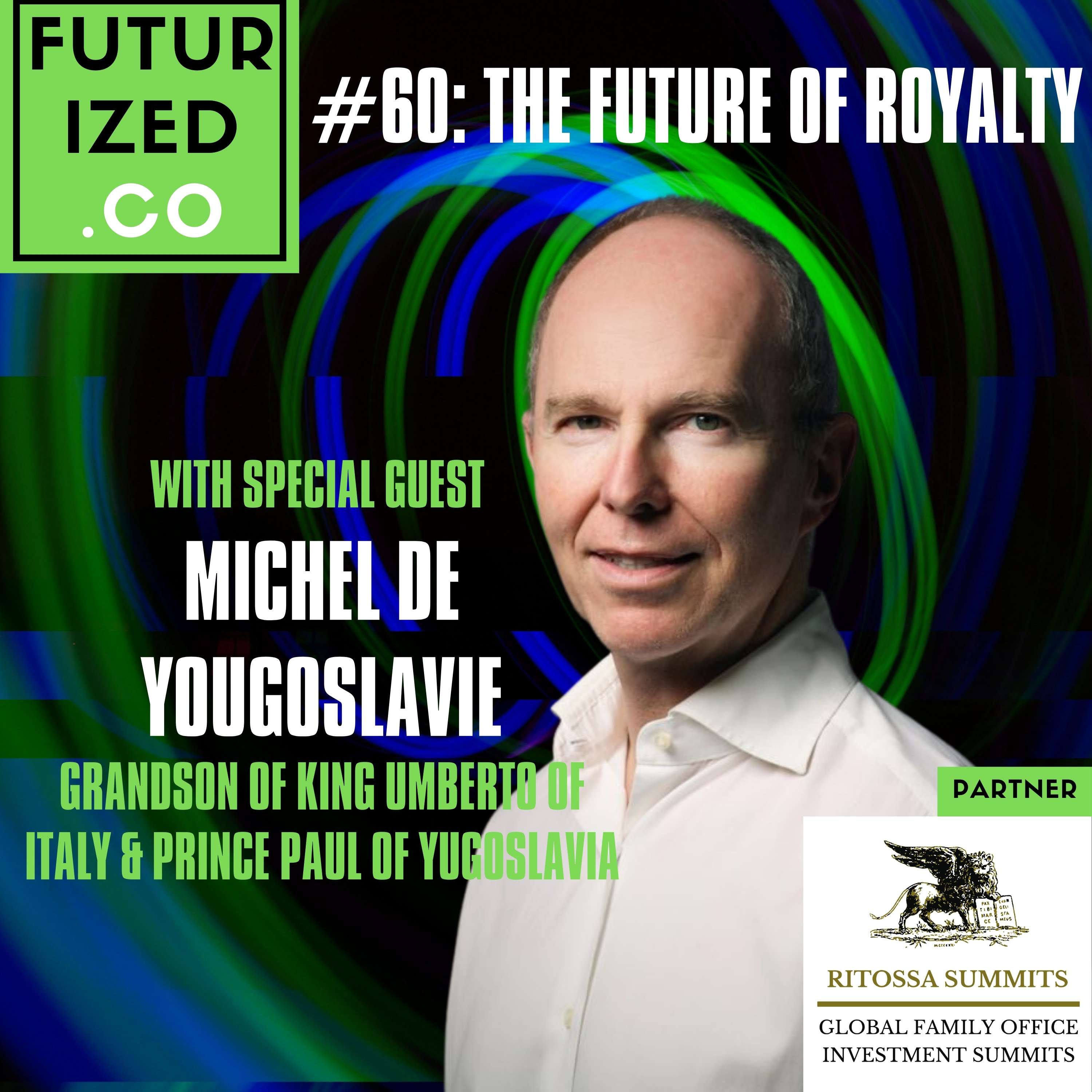
S1 Ep 60The Future of Royalty
H.R.H. Prince Michel de Yougoslavie, interviewed by futurist Trond Arne Undheim. In this conversation, they talk about growing up as a Pan-European royal. We cover his deep interest in art and success with exhibiting his photography. We also touch on trends in family wealth considerations, we discuss his time as a high end real estate broker in Palm Beach, Florida, and he shares his life experience as a royal and the lessons that apply for anybody with a family legacy. At the end we briefly discuss the future role of royalty. The takeaway is that the future of royalty is going to be interesting to watch. In this day and age of constant frenzy, the timeless aspects of royalty, even as history wrecks kingdoms, provides a context by which to view ourselves in a perspective that values legacy and experience across generations. I’m reminded that, regardless of wealth or stature, families tend to outlast individual destinies. After listening to the episode, check out Prince Michel de Yougoslavie's art as well as his social media profile: Prince Michel de Yougoslavie (@mdeyougoslavie) https://www.linkedin.com/in/michel-de-yougoslavie-80255213/ Photography https://www.micheldeyougoslavie.com/ Instagram https://www.instagram.com/micheldeyougoslavie_official/ The show is hosted by Podbean and can be found at Futurized.co. Additional context about the show, the topics, and our guests, including show notes and a full list of podcast players that syndicate the show can be found at https://trondundheim.com/podcast/. Music: Electricity by Ian Post from the album Magnetism. For more about the host, including media coverage, books and more, see Trond Arne Undheim's personal website (https://trondundheim.com/) as well as the Yegii Insights blog (https://yegii.wpcomstaging.com/). Undheim has published two books this year, Pandemic Aftermath and Disruption Games. To advertise or become a guest on the show, contact the podcast host here. If you like the show, please subscribe and consider rating it five stars.
S1 Ep 47How to Invest in Sci-Fi Tech?
Adam Draper, Managing Director and co-founder of Boost, the startup accelerator and VC firm, is interviewed by futurist Trond Arne Undheim. In this conversation, they talk about taking your investment advice from sci-fi movies. Exoskeletons, jet packs, iron man suits, time travel, deep ocean exploration. Which specific sci-fi technologies are coming online in the next decade and which have already? The takeaway is that Sci-fi Tech is here already, and is shaping our world in thought provoking ways. In fact, we no longer need to watch Westworld, Alien, Blade Runner, The Terminator, Back to The Future, The Matrix, Ex-Machina, or even Ready Player One, in order to experience a sci-fi moment, suffice to glance at your smart phone, look inside a contemporary factory, or talk to a deep tech startup founder over coffee. The world of our dreams —and fears—is rapidly coming to life in this decade alone. After listening to the episode, check out Boost as well as Adam's social media profile: Boost VC https://www.boost.vc/ Adam Draper (@AdamDraper) https://www.linkedin.com/in/adraper/ The show is hosted by Podbean and can be found at Futurized.co. Additional context about the show, the topics, and our guests, including show notes and a full list of podcast players that syndicate the show can be found at https://trondundheim.com/podcast/. Music: Electricity by Ian Post from the album Magnetism. For more about the host, including media coverage, books and more, see Trond Arne Undheim's personal website (https://trondundheim.com/) as well as the Yegii Insights blog (https://yegii.wpcomstaging.com/). Undheim has published two books this year, Pandemic Aftermath and Disruption Games. To advertise or become a guest on the show, contact the podcast host here. If you like the show, please subscribe and consider rating it five stars.
S1 Ep 46Parliamentary Tech and Hypertransparency
Fotis Fitsilis, Head of the Scientific Service, Hellenic Parliament, interviewed by futurist Trond Arne Undheim. In this conversation, we talked about how parliamentary transparency, steeped in legal informatics, innovation in govtech, open data and ongoing digitization, is slowly inching forward because of innovative initiatives such as the Hellenic OCR Team. OCR stands for Optical Character Recognition. Emerging use cases include access, archiving, analysis, transparency and traceability of the enormous amount of information passing through any national parliament. The market for such application is muc vaster that the 190 or so national parliaments. Virtually any legislative body at any level might be a target, and there might be tens of thousands such governance structures, not counting non-governmental bodies that also have a highly structured governance. My takeaway is that government hypertransparency is still a decade or so away, but the Hellenic Parliament is leading the way, together with the US, UK and Canadian parliaments, as well as a set of countries in Northern Europe. Parliamentary documents are highly specialized texts and making them meaningful for machine analysis is not easy. However, precisely because they are so information rich, the promise of linguistic, political, historical and industrial analysis is great. Hyper transparency is definitely within sight, if not yet within reach. After listening to the episode, check out Fotis' most recent book, the Hellenic OCR Team as well as his social media profile: Imposing regulation on advanced algorithms (Springer, 2019) https://www.springer.com/gp/book/978303027978 Hellenic OCR Team https://hellenicocrteam.gr/ Fotis Fitsilis (@fotisfitsilis) https://www.linkedin.com/in/ffitsilis/ Fotis Fitsilis webpage https://fitsilis.gr/ The show is hosted by Podbean and can be found at Futurized.co. Additional context about the show, the topics, and our guests, including show notes and a full list of podcast players that syndicate the show can be found at https://trondundheim.com/podcast/. Music: Electricity by Ian Post from the album Magnetism. For more about the host, including media coverage, books and more, see Trond Arne Undheim's personal website (https://trondundheim.com/) as well as the Yegii Insights blog (https://yegii.wpcomstaging.com/). Undheim has published two books this year, Pandemic Aftermath and Disruption Games. To advertise or become a guest on the show, contact the podcast host here. If you like the show, please subscribe and consider rating it five stars.
S1 Ep 43The Future of the High Net Worth Lifestyle
Dalton Skach, CEO of Gold Gate, a fintech focused on real estate is interviewed by futurist Trond Arne Undheim. In this conversation, they talk about how to own homes in Beverly Hills, Dubai, Tokyo, Singapore and London for the price of one through fractional real estate investing. The approach builds in tokenization. We discuss the needs of the wealthy post-COVID-19. The takeaway is that the future of High Net Worth Lifestyle is changing rapidly with COVID as well as new blockchain based opportunities to invest with a fractionalized approach, even in the traditional asset class of real estate. Could this re-invigorate the asset class? Will commercial real estate tank first? Many questions linger. After listening to the episode, check out Gold Gate as well as Dalton's social media profile: Dalton Skach https://www.linkedin.com/in/daltonskach/ Gold Gate https://goldgate.co/home/ Gold Gate https://www.linkedin.com/company/goldgate/ The show is hosted by Podbean and can be found at Futurized.co. Additional context about the show, the topics, and our guests, including show notes and a full list of podcast players that syndicate the show can be found at https://trondundheim.com/podcast/. Music: Electricity by Ian Post from the album Magnetism. For more about the host, including media coverage, books and more, see Trond Arne Undheim's personal website (https://trondundheim.com/) as well as the Yegii Insights blog (https://yegii.wpcomstaging.com/). Undheim has published two books this year, Pandemic Aftermath and Disruption Games. To advertise or become a guest on the show, contact the podcast host here. If you like the show, please subscribe and consider rating it five stars.
S1 Ep 44The Future of Open Finance
Amrit Kumar, President and co-founder of Zilliqa, the blockchain platform, is interviewed by futurist Trond Arne Undheim, host of the Futurized podcast and author of Future Tech (2021), Pandemic Aftermath (2020), Disruption Games (2020) and Leadership From Below (2008). In this conversation, they talk about bridging the worlds of legacy finance and blockchain, scaling blockchain protocols with sharing, security trade-offs, holding community and operational funds by staking, emerging startups, and divergent regulatory paths around the world. The takeaway is that the future of open finance is rapidly evolving, but that trust will ebb and flow for a while ahead as decentralized and open finance is spreading across the globe with new players building protocols with increasingly smart contracts, speedy platform solutions, and alternative tokens that provide new benefits that appeal to new groups of users and investors. Once you have listened to the episode, check out Zilliqa as well as Amrit Kumar's social profile: Zilliqa.com http://zilliqa.com/ Amrit Kumar (@maqstik) https://www.linkedin.com/in/amrit-kumar-6aa66151/ The show is hosted by Podbean and can be found at Futurized.co. Additional context about the show, the topics, and our guests, including show notes and a full list of podcast players that syndicate the show can be found at https://trondundheim.com/podcast/. Music: Electricity by Ian Post from the album Magnetism. For more about the host, including media coverage, books and more, see Trond Arne Undheim's personal website (https://trondundheim.com/) as well as the Yegii Insights blog (https://yegii.wpcomstaging.com/). To advertise or become a guest on the show, contact the podcast host here. If you like the show, please subscribe and consider rating it five stars.

S1 Ep 53The Future of Brands in Politics
Victoria Sakal, Managing Director of Brand Intelligence at Morning Consult, interviewed by futurist Trond Arne Undheim, host of Futurized podcast and author of Future Tech, Pandemic Aftermath, Disruption Games and Leadership From Below. In this conversation, they talk about how big brands should deal with the US election, political intelligence, emerging survey results on how consumers think brands should react to social movements. Do consumers expect CEOs to take a stance on emerging issues such as climate change, #MeToo, safe elections, or COVID-19? Who do consumers trust the most, politicians or brands? What are the top issues on Americans’ minds? How will the political role of brands evolve? The takeaway is that, at least based on the survey findings we discussed today, brands have no choice but to enter the policy debate on important societal issues. That does not mean that they can or should necessarily take sweeping views on all issues at hand. Consumers don’t —yet—expect brands to behave as responsibly as governments. But that may change. For now, the advice for brands would be to take a stand on issues that are close to heart and where you have integrity. Then, you need to follow up. Post-election, brands will likely find themselves in a renewed game of stakeholder capitalism. Gone are the days where shareholders were all that mattered. After listening to the episode, check out the recent report on brands in politics, Morning Consult as well as Victoria's social profile: Great Expectations | The Evolving Role of Companies in a Post-Election World https://go.morningconsult.com/2020-Q4-3140-Brands-and-Politics-Report-Download.html Morning Consult (@MorningConsult) https://morningconsult.com/ Victoria's Author page: https://morningconsult.com/author/vsakal/ Victoria Sakal (@victoriasakal) https://www.linkedin.com/in/victoriasakal/ The show is hosted by Podbean and can be found at Futurized.co. Additional context about the show, the topics, and our guests, including show notes and a full list of podcast players that syndicate the show can be found at https://trondundheim.com/podcast/. Music: Electricity by Ian Post from the album Magnetism. For more about the host, including media coverage, books and more, see Trond Arne Undheim's personal website (https://trondundheim.com/) as well as the Yegii Insights blog (https://yegii.wpcomstaging.com/). To advertise or become a guest on the show, contact the podcast host here. If you like the show, please subscribe and consider rating it five stars
S1 Ep 42The Future of Cryptocurrency
Ryan Selkis, founder and CEO of Messari, the crypto economy analyst firm, interviewed by futurist Trond Arne Undheim, host of Futurized podcast and author of Future Tech, Pandemic Aftermath, Disruption Games and Leadership From Below. In this conversation, they talk about what cryptocurrency is in simple terms, what's next in terms of adoption, and where we are going in the next decade. The takeaway is that the future of cryptocurrency is of such transformational character that the global economy is likely to change forever as a result. The only question is the speed of adoption and the important regional differences in terms of speed of adoption, governance models and new, emerging powerhouses. If Ryan Selkis is right, Bitcoin will take on aspects that make it similar in function to the gold standard. These are earth shattering predictions indeed. Combine that, with the fact that volatility will continue to be high for some time to come. How to prepare for a period where stability includes volatility? If this comes to pass, entire economic paradigms will get smothered. After listening to the episode, check out Messari as well as Ryan Selkis' online profile: Ryan Selkis (@twobitidiot) https://www.linkedin.com/in/ryanselkis/ Messari.io https://messari.io/ The show is hosted by Podbean and can be found at Futurized.co. Additional context about the show, the topics, and our guests, including show notes and a full list of podcast players that syndicate the show can be found at https://trondundheim.com/podcast/. Music: Electricity by Ian Post from the album Magnetism. For more about the host, including media coverage, books and more, see Trond Arne Undheim's personal website (https://trondundheim.com/) as well as the Yegii Insights blog (https://yegii.wpcomstaging.com/). To advertise or become a guest on the show, contact the podcast host here. If you like the show, please subscribe and consider rating it five stars.