
Free Money with Sloane and Ashby
61 episodes — Page 2 of 2
Ep 11Capturing Opportunities at CalPERS with Marci Frost
How have pension funds handled the last few months?We’re told markets are in turmoil. But they’re also just an inch away at all-time highs. Retail investors are racking up triple-digit returns, and seem to be making an attempt at necromancy with the bankrupt husk of Hertz, the rental car market’s onetime global leader.So we called Marcie Frost. She oversees a team of 2,800 professionals as CEO of CalPERS, the agency charged with managing roughly $400 Billion on behalf of California’s public employees, retirees, and their families.We’ve highlighted a few of her choice observations below, but you should really listen to the whole thing.One quick programming note before you do: we’ve partnered with Columbia University’s Center on Sustainable Investment and Beyond Alpha research on a study of the investment industry’s role in meeting the UN Sustainable Development Goals. If you are interested in participating, please fill out this form.On COVID-related volatility: “Our liquidity position was much better in this pandemic than it was in '08-09. So we didn't have to sell assets to pay benefits. We didn't have to sell assets to make capital calls. And I think even more importantly, we had liquidity that we could actually take advantage of the market dislocation with opportunities, and we were able to do that. So we have to think long-term, we plan on being here for decades, paying benefits out over a member's, lifetime and their beneficiaries' lifetimes.” (11:16)On operational changes stemming from COVID: “It is likely that, so we will have half of our workforce working remotely from this point on. We don't see a need to carry the cost of having, you know, an office or a workstation or having two sets the desktop computer. If you all having a docking station, there'll be times that we'll need people to come into the office. We'll have hoteling available for those individuals then.” (15:00)On meeting a 7% return target: “it's a really strange group of expectations that we have, if you will, that it's expected to get the 7% return, we're expected to pay out 24 billion. And while we do that, we want to find opportunities where we can do well while we can also do good for the environment and for governance issues.” (21:00)On recent pressure from Congress to divest CalPERS’ Chinese investments: “it wasn't any different than any other requests that we get from any other entity. It just happened to be a member of Congress. It happened to be on a television channel and it was done in a really horrific way.” (30:14)On her career path: “the traditional way is you graduate high school, you go to college, you start working, and then maybe you go in for an advanced degree. I really didn't have the means at the time I, I grew up in a household that didn't have many financial options. I started working right out of high school. I started a family when I was quite young and those were my priorities. And I was able to work my way through these systems, if you will. I started as a typist in October of 1985 and worked my way through until starting here at CalPERS in October of 2016.” (41:38)A computer-generated transcript of our full conversation is available by clicking here.As is tradition, we also took questions from listeners at the end of the show. If you have a question, a comment, or just a wry observation, please write us at [email protected] week, we answered the following:A leaked British Petroleum brand document made headlines recently for asking how the company can be more like Greta Thunberg. How can they? Private equity funds are often proud to mention that their investors include police pension funds. Should we expect that to change in the...
Ep 10Black Investors Make a Difference to Your Bottom Line Featuring Daryn Dodson of Illumen Capital
Black lives matter.And not just in the abstract. When given the proper space and support, Black investors can materially improve portfolio returns. But that almost never happens. In aggregate, only about 1% of the $70 Trillion managed by professional investors is overseen by minority-owned firms.On this episode of Free Money, we were fortunate to speak with Daryn Dodson, a Managing Director at Illumen Capital who knows perhaps more than anyone else what needs to be changed in order to create a more equitable future. We spoke on Friday, June 5th. And because the perspective he shared was so valuable, we decided to dispense with our regular essay and include a transcript of the conversation instead.Enjoy!Ashby Monk (10:44):We were just kind of talking through the issues of the week, obviously a pretty heavy week out there and wanted to connect with somebody who could really explain a couple of things. You know, why the asset owner community isn't doing more to support the managers that are people of color, but even before we get there, how are you doing?Daryn Dodson (11:13):I am a hosting a group in a conversation of a hundred billion dollars in asset allocators to put a through line from slavery to lynching, to mass incarceration, to tuck that into the asset management overlay so that people can understand how assets got to be so imbalanced and the huge disparities that lead to suboptimal returns for our portfolios. They also violate fiduciary duty. We have about 30 hours of work over the weekend. SoI just finished the opening session. We offer for a lot of our investors at Illumen Capital something called the Illumen impact experience to bring them together, to put these dots together. So I'm heartened by that work. A lot of this is doing the work to move capital in ways that's optimal as I've worked with Dr. Jennifer Eberhart, and as well as Dr. Ashby monk to hit to work on this paper, uh, with a few other authors, really to prove and show the bias managers of color face as they increase performance, particularly black managers. So after we proved that in a paper and published it, then the question becomes, what do we do about it?A lot of people are making statements all over the country around how they value communities of color and black communities. But when you look at their balance sheets, I've been kind of thinking about things like, not public statements, but balance statements and financial statements, and whether those mirror the statements that people are making publicly. So that's something we believe in as a firm at Illumen Capital. It's something that is evidenced in the paper that we published. It's something that we share with our investors, who currently manage over a trillion dollars in capital so that they can begin to apply these ideas to their broader portfolio.Sloane Ortel (13:15):Let me just hone in on a sub point of that. I think throughout history, whether through red lining or another process, you might want to name, the financial community has been a big player in perpetuating inequality, perpetuating in effect segregation. Is it still...
Ep 9How Resilience Drives Investment Returns Featuring LTSE’s Jean Rogers
Good things are happening even as we endure a global crisis.A Mumbai-based startup has successfully reversed the aging process in rats, a previously unthinkable breakthrough.A new era in American spaceflight begins tomorrow, when two astronauts travel to the International Space Station onboard a SpaceX Falcon 9 Rocket. It will be the first crewed launch from the US since the shuttle program ended in 2011 and the first time a new type of spacefaring vehicle has carried humans from Cape Canaveral to the heavens since 1981.And Blackrock — the world’s most humongous asset manager — reported that the recent downturn in financial markets had only strengthened their conviction in sustainable investing strategies. At this and other firms, Environmental, Social, and Governance (ESG) driven investment strategies are increasingly understood as a source of comparative resilience in portfolios, not just ethically admirable allocations that are “nice to have.”This is clearly rad.But it also pushes one to wonder about the harbingers of resilience. We wanted to do better than hoping we’d know it when we saw it. So we called Jean Rogers, Chief Resilience officer at the Long-Term Stock Exchange (LTSE) and a founding mother of the global sustainable investing movement.As founder and CEO of the Sustainable Accounting Standards Board (SASB), she created industry-specific materiality frameworks that opened the investment profession’s eyes to the promise of ESG investing. And she’s hard at work to compound that contribution.In our conversation, she pushed us to see the set of things that matter to a company’s performance as more than just a static list. Conditions change. And circumstances can arise where something “wasn't material for a company one day and now stakeholders are up in arms about it. Now it's a material condition for the company.”She recently outlined a framework for this process of transformation in a paper co-authored with Harvard Business School’s George Serafeim which urged investors to understand materiality as a “process of becoming” rather than a “state of being.”In our conversation, she outlined five factors analysts can use to assess a company’s capacity for resilience to acute events or exogenous shocks. The first, is "bigness of vision," or:The transformative impact of their vision. “Bigness of vision matters because it creates momentum. People — other stakeholders, policy makers, employees, and investors — rally around the company because they want the company to succeed in achieving that big vision. So think of Tesla and its vision not only of producing amazing cars, but transitioning to a renewable infrastructure. That bigness of vision really can carry a company through volatile events and tough times.”On inventiveness:“That's prolific innovation where you don't have to really worry about your intellectual property much because you're actually confident you're going to produce more. So you don't have to protect it, you can open source it and enable human progress, enable others to build on what you're doing. And you're going to continue to execute because you're investing in innovation and you’ve created a culture of experimentation. Think of Google, which puts a great deal of of its capital expenditures into innovation and long-term strategy. Think of Amazon, which invests more in R&D than...
Ep 8A Surprising Silver Lining Featuring Tom Baruch of Baruch Future Ventures
Unless we recognize “Something has died, and something new is coming after it,” it could take until 2040 before humanity emerges from the aftermath of this pandemic.That comes from Tom Baruch, a prolific “clean tech” venture capitalist who has led investments resulting in 18 IPOs and 8 M&A transactions and now operates from his family office, Baruch Future Ventures.He was our token optimist on this episode of Free Money, which was recorded on May 15th. But his outlook didn’t take the shape that one might expect. As an introduction, he offered “I believe this is going to last awhile. I don’t see us bouncing back until 2023 or 2024…. I don’t believe that the world [we used to live in] is going to come back.”Our mouths hung agape as he talked.But then he started describing a future that doesn’t sound so bad. His belief that, thanks to technology, “we’re entering a period of free clean water, free energy, and free protein” is beyond provocative. It brings to mind the world of Star Trek, where scarcity has altogether ceased to exist.Tom thinks we can get there soon.“People used to think that to really effect the kind of change we’re talking about it’ll take 20 years, you have all these scaling issues. And it’s all true. But now we have tools that we’ve never had before.” That means “It’s not gonna be a 20 year deal. we can do it in 10 years.”That sounds pretty good. But of course Tom isn’t saying it’s a guaranteed outcome. What scares him is that “the government - especially our current government - is gonna try and prop up broken old Industries. So we’re not going to add to GNP. That’s the problem. The way to add to GNP is free energy, free food, free water. That way we’ll build a very prosperous society.”Tom describes some of what’s needed to accomplish his vision in a recent paper on Medium, but the best way to access his imagination is by listening to this conversation and looking through his portfolio. He blends optimism and pessimism together in a way that can’t help but open your mind.We also answered three questions from listeners at the end of the show. This week we discussed:Why exactly is it bad that PE funds don't get marked down during a selloff?CalPERS caught some flak recently for unwinding a tail hedge program literally right before the market fell off a cliff. Was that bad luck or a bad decision?There is a fairly significant movement to cancel rent, which sounds pretty good. Would that create long-term consequences that are actually...bad? And as a bonus, here’s Sloane’s wipeout compilation from the 2020 ski season, which she mentioned in the introduction.
Ep 7The Next Wave Could Be a Doozy
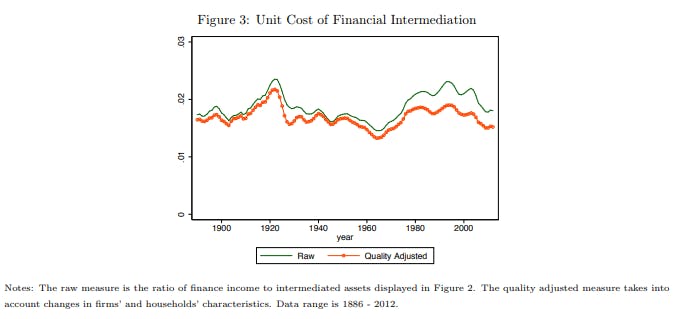
There is “a time bomb waiting to go off” in some American states.That’s according to Ben Oppenheim, PhD, a computational epidemiologist at Metabiota and our guest on this episode of Free Money. We spoke on the first of May, one day after the United States endured its highest death toll so far in this pandemic. And the outlook isn’t great. The places with growing case counts “have older populations, a lot of preexisting conditions, worse health systems, and more structural barriers to people getting the kind of care they need.”He stressed that “my worry is not wave one [of infections], but wave two.” That’s because “we can be successful in the first round, but until we’ve got a vaccine, really good therapeutics, or herd immunity, this thing could come back in a hurry. We’ve seen that in some countries that were initially successful.”These events — often thought of as the public health equivalent of a ‘hundred year flood’ — are vastly more likely to occur than people generally think. In fact, this is the third coronavirus outbreak this century. SARS struck in 2003, followed by MERS in 2012.So it’s not like this wasn’t on our radar. The chart below comes from a textbook chapter Ben contributed to entitled Pandemics: Risks, Impacts, and Mitigation. It shows estimates of the annual probability that the death toll from an influenza pandemic will exceed a given quantity.Note that the x-axis is denominated in millions, which means Metabiota simulations show a roughly 1% annual chance of more than one million dead.At one point in our interview, Ben muses about our collective priorities before the pandemic and wonders aloud: “What the hell were we doing?”And that’s where we want you to concentrate. This is likely to be the crisis that makes ESG-aware investment processes not just commercially viable, but highly relevant. The Wall Street Journal reported over the weekend that ESG funds protected investors from some losses during the recent selloff, likely because they held fewer investments in energy companies.Long term investors, take notice. This is the second historically aberrant natural disaster we’ve endured recently. When we recorded our last episode shortly before New Year’s Eve, much of the west coast had lost power due to widespread wildfires. Integrating ESG processes won’t predict these events, but they will prepare portfolios with an awareness of future risks and promote better corporate citizenship.Ben reminds us that “Pandemics are not a health system event…when they hit, they engulf the whole of society.” So the question for you is: can you find your part in creating a better whole?We also discussed all of these questions in this week’s Dear Ashby segment:If states do wind up declaring bankruptcy due to the coronavirus, what would happen to state pensions?What have you started doing during lockdown that you plan to continue when life returns to normal? Because of the pandemic, lots of Americans are making more in unemployment benefits than they typically make in income. How should we be thinking about that?
Ep 6Five Forces Fighting Free Money
It’s the end of the year. What have we spent all of this time talking about?Mostly what it means that pension funds, sovereign funds, endowments, and other asset owner institutions collectively manage roughly a third of all the money on earth.They tend to be globally diversified and invest with long time horizons, which aligns them with the public interest because they cannot succeed unless human enterprise flourishes around the world. They also provide most of the world’s risk capital, which makes them the base of modern capitalism.Our mission at Free Money is to help them find the freedom to properly fulfill their potential, orient their operations toward projects that build collective value, and serve as truly effective stewards of society’s accumulated capital. It’s more profitable to try and extract value from them, so we have plenty of competition. But our greatest enemy is ignorance, not malevolence. So we spent the last episode of the year talking about at least five forces which work together to leave the world’s financial plumbing in thrall to the tyranny of low expectations. We’ll enumerate and examine each in essay form after this quick word from our sponsor.Are you aggravated by average? Obsessed with outperforming ordinary? Tired of what's typical?You're not alone. Most investors expect exemplary experiences, but reality seldom satisfies. That doesn't have to be true for you! Free Money is pleased to introduce Portable Alpha, a revolutionary sports drink with a propriety mix of caffeine, taurine, and orange.Future profits* are assured once we've given you permission to order, and the first serving is free! It will be shipped in a black box with only a few additional fees once you order an additional 127 servings. You'll start performing abnormally once it hits your lips.The global supply of Portable Alpha is limited, and Free Money is its exclusive distribution agent. Don't miss your chance to buy it! Click here to sign up for the Free Money email list today.*Profits will accrue to Free Money Holdings, a Cayman Islands limited liability company.The Influence of Unexamined NormsSubstantially every form of diversity imaginable is present among institutional investors. They exist in China, California, Canada, Texas, Taiwan, and Tuvalu. Some invest to support educational institutions while others provide insurance or fund members of a certain family. At least one is meant to stabilize the country of Iran.With so much inherent difference, we wonder: why do they act so similarly?One reason is that they have constraints which vary in their specifics but create similar operating conditions. For instance, they often hold monopolies over the assets they manage, which creates incentives for staff to optimize for not getting fired, rather than what’s best for the organization.On top of that, conformity tends to be written into the law in the form of the prudent person rule, which states:A fiduciary must discharge his or her duties with the care, skill, prudence and diligence that a prudent person acting in a like capacity would use in the conduct of an enterprise of like character and aims.On the surface, this makes a lot of sense. Skill, prudence, and diligence clearly belong inside of an investment decision-making process.But imagine trying to apply investment skill while required to mimic a person acting “in a like capacity” at “an enterprise of like character and aims.” What if you are...

Ep 5Submerging Manager Programs
Many institutional allocators are troubled by the self-evident lack of diversity in investment management. It’s easy to suggest that one fix that: cultivate more diverse talent! Build a more welcoming environment for new funds! But how exactly would one accomplish that? Many pensions made worthy attempts with emerging manager programs, which were meant to support asset managers that did things a little differently. Unfortunately, those different managers were very much the same as others when it comes to delivering lackluster performance. So now they’re canceled. Not everywhere, but at enough pensions that it makes a trend. On this episode of free money, Ashby and I talk about what this means for diversity, inclusion, and innovation in the industry. And as always, we answer the questions on every institutional allocator’s mind. Specifically:Why are “long-run short sellers” worried about GPIF’s move to restrict stock lending? It’s legal to do anything you want to an opossum in North Carolina from December 29th - January 2nd. What would you do with those five days?Apparently allocators will still consider backing investors who've had trouble with sexual harassment. WTF? But like actually.

Ep 4Misogyny and Maple Syrup
Does misogyny cost money? Yes, but not enough.Ken Fisher - who runs the eponymous Fisher Investments - has a long history of inappropriate invective. One particular instance earlier this month at an investment conference triggered an outcry and then outflows of about $3 Billion.That response took remarkably quick action from the asset owner community. On this podcast, Ashby wondered aloud why these large institutions were quick to respond when a man says bad things, but drag their feet when it comes to deeper issues of racism, climate change, and technological disruption.Good questions to ask!But I wonder why Fisher doesn’t just lean into sexism. His Camas, WA advisory firm is only about three percent smaller after all of the fallout. I even went ahead and mocked up a new ad campaign featuring the man’s prodigious forehead.It could work! Misogynists need money managers too.Anyway, we also took questions from listeners. This week we answered:What’s the worst name you’ve ever come across for a financial services firm?What do you believe about investing, but know that you could never prove?What’s the best investment advice you’ve gotten from someone outside the industry?
Ep 3How to Hedge against the Heterosexual Ideology
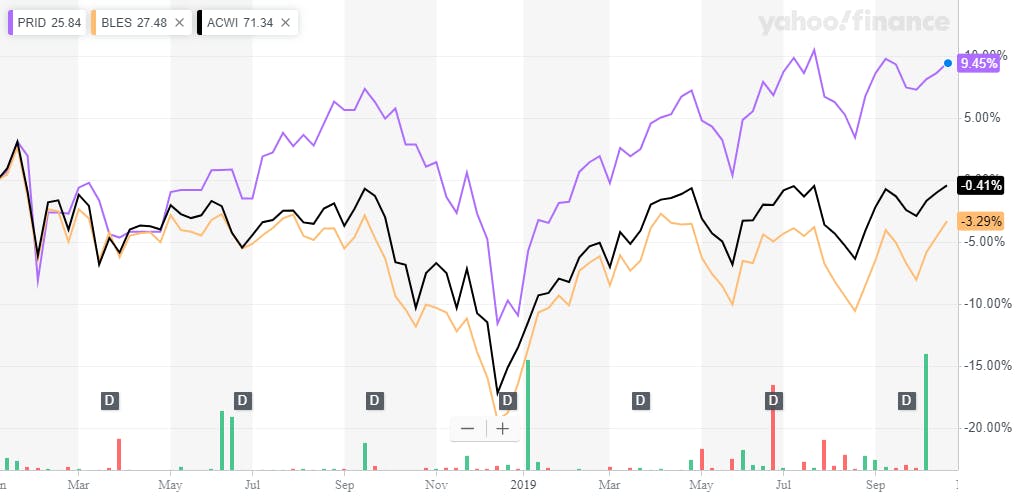
Capital markets are an inherently queer place. Securities produce financial returns by manifesting intrinsic value.Or as some might say, “living their best life.”As America’s leading loft-based finance transsexual, the inherent gayness of creating shareholder returns this way has long been old news to me. But while Ashby and I were discussing queer issues on this latest episode of the Free Money Podcast, he reminded me that some have been working to exclude companies which support (among other things) the “LGBT Lifestyle” from their investment portfolios.The Inspire Global Hope ETF (BLES) is perhaps the largest such fund. And with roughly $150MM in assets under management, it’s no behemoth. But with a slightly bigger base of assets, it might form the basis for a poetically beautiful pairs trade. That’s where investors buy one security and bet against another, hoping to profit from the difference between their performance.The chart below shows:The aforementioned BLES ETF in khaki (the official heterosexual color).The LGBT Employment Equality ETF (PRID) in lavender (the official gay color).The MSCI ACWI index in black (the official color of benchmarks).An investor who bought PRID and bet against BLES at the beginning of 2018 would have captured a 12.7% performance spread before fees and transaction costs. In other words, if this fund gets a little bigger, one could build a business around betting against it.Here’s hoping.Have a listen to the podcast for some further discussion about queer issues, coming out, and (as always) pensions. And for fun, here’s a picture I took right before coming out two years ago and a selfie I took yesterday. You might say I’ve womanifested some intrinsic value in the meantime.

Ep 2Pascal’s Wager and the Religion of Climate Change
Fox News host David Webb accused American liberals of “turning climate change into their religion” last week.An interesting thought.Pascal’s Wager came to mind while Ashby and I were exploring it on the podcast. It’s a 17th century philosophical argument about the existence of god advanced by the French polymath Blaise Pascal. The gist: humans bet with their lives that god either does or does not exist.He argued that a rational person should live as though god exists. If they’re wrong, they avoided sin for no reason. But if they’re right, the potential gain (an eternity in heaven) is infinite.I think this logic holds for climate change. If we’re wrong and the planet isn’t dying, we’ll have cleaned it up for no reason. A specific loss. But if we’re right, the potential gain is infinite.To me, it’s an easy choice.Check out the podcast to hear us talk through the logic in more detail. As always, we answered questions from listeners. Write with a question and we’ll answer it in the next episode!HBO’s show succession features a plot line where investors from a Canadian pension fund issued the most creative and aggressive swear words in the entire series. Is this realistic? I thought Canadians were nice. I saw that someone tweeted candid, negative comments about a startup and caught a lot of flak. Why is outward positivism such an entrenched norm in Silicon Valley?Why do we keep calling it a risk free rate when there is no risk free rate?
Ep 1Rethinking Risk With UC Regents’ Rick Bookstaber
If financial risk doesn’t confuse you, you’re not paying attention.That’s advisable.Market minutia gets treated like breaking news around the world, and people listen even though it’s “a tale told by an idiot, full of sound and fury, signifying nothing,” as the late Jack Bogle told me in 2017 (and Shakespeare wrote a few hundred years earlier).But the mad moron has a megaphone. Traders listen and then act altogether, which makes them feel like risk exists in two states: on and off.It’s not so binary in real life.I’ve pasted a slide from Deutsche Bank’s 2019 market outlook below. At first glance, it shows that risk comes in at least thirty flavors. But seventeen of the scary things it lists have happened, and US Equity markets are just a hair’s breadth from all-time-highs.So are these things even risks?Ashby and I weren’t sure when we sat down to tape the last episode of Free Money, so we decided to phone a friend: Rick Bookstaber. He’s the chief risk officer for the University of California’s investment funds—which oversee roughly $120 billion—and a founder of the financial technology firm Talagent.Before that, he developed risk models to assess vulnerabilities and help stabilize the U.S. financial system at the US Treasury after the financial crisis and served as chief risk officer at Bridgewater, Moore Capital, Solomon Brothers, and Morgan Stanley. He also wrote The End of Theory, an in-depth look at how to account for the human complexity of our financial system.In other words, we were glad he picked up.We talked about how agent-based modeling can be used to build a better picture of what’s happening in the markets and why you’re better off ignoring the ones which most often make headlines, like Brexit and the trade wars.Then as always, we took questions from our listeners. Check out the podcast to find out how the office ball pit below featured in our conversation.I am an Indian citizen, but has kept its money in Swiss bank accounts since my grandfather's time. As of this month, government has all my account details. I'm worried they are going to take my money. What can I do?I run a venture-backed startup in Austin, and the firm that led my "A" round is based in China. I love working with them, but worry that the trade war will somehow affect their ability to follow on in later rounds of funding and doom our company. Am I wrong to worry about this? What should I do?I'm a few years out of business school, working at a multinational company that signed onto the Business Roundtable's recent statement about shareholder value. Their words are nice, but nothing seems to have changed. Should I whistleblow? Would anyone care? Would it help?