
Freakonomics Radio
941 episodes — Page 4 of 19
Ep 607607. Is America Switching From Booze to Weed?
We have always been a nation of drinkers — but now there are more daily users of cannabis than alcohol. Considering alcohol’s harms, maybe that’s a good thing. But some people worry that the legalization of cannabis has outpaced the research. (Part one of a four-part series.) SOURCES:Jon Caulkins, professor of operations research and public policy at Carnegie Mellon University.Yasmin Hurd, director of the Addiction Institute at Mount Sinai.Michael Siegel, professor of public health and community medicine at Tufts University.Tom Standage, deputy editor of The Economist.Ryan Stoa, associate professor of law at Louisiana State University. RESOURCES:"Cannabis Tops Alcohol as Americans’ Daily Drug of Choice," by Christina Caron (The New York Times, 2024)."Deaths from Excessive Alcohol Use — United States, 2016–2021," by Marissa B. Esser, Adam Sherk, Yong Liu, and Timothy S. Naimi (Morbidity and Mortality Weekly Report, 2024)."Nixon Started the War on Drugs. Privately, He Said Pot Was ‘Not Particularly Dangerous,'" by Ernesto Londoño (The New York Times, 2024)."A Brief Global History of the War on Cannabis," by Ryan Stoa (The MIT Press Reader, 2020).Craft Weed: Family Farming and the Future of the Marijuana Industry, by Ryan Stoa (2018)."How the Sugar Industry Shifted Blame to Fat," by Anahad O’Connor (The New York Times, 2016)."The Perils of Ignoring History: Big Tobacco Played Dirty and Millions Died. How Similar Is Big Food?" by Kelly D. Brownell and Kenneth E. Warner (The Milbank Quarterly, 2009).A History Of The World In Six Glasses, by Tom Standage (2005)."Cancer and Coronary Artery Disease Among Seventh-Day Adventists," by E. L. Wynder, F. R. Lemon, and I. J. Bross (Cancer, 1959). EXTRAS:"Why Is the Opioid Epidemic Still Raging?" series by Freakonomics Radio (2024)."Daron Acemoglu on Economics, Politics, and Power," by People I (Mostly) Admire (2024)."Let’s Be Blunt: Marijuana Is a Boon for Older Workers," by Freakonomics Radio (2021)."What’s More Dangerous: Marijuana or Alcohol?" by Freakonomics Radio (2014). Hosted by Simplecast, an AdsWizz company. See pcm.adswizz.com for information about our collection and use of personal data for advertising.
Ep 606606. How to Predict the Presidency
Are betting markets more accurate than polls? What kind of chaos would a second Trump term bring? And is U.S. democracy really in danger, or just “sputtering on”? (Part two of a two-part series.) SOURCES:Eric Posner, professor of law at the University of Chicago Law School.Koleman Strumpf, professor of economics at Wake Forest University. RESOURCES:"A Trump Dictatorship Won’t Happen," by Eric Posner (Project Syndicate, 2023).The Demagogue's Playbook: The Battle for American Democracy from the Founders to Trump, by Eric Posner (2020)."The Long History of Political Betting Markets: An International Perspective," by Paul W. Rhode and Koleman Strumpf (The Oxford Handbook of the Economics of Gambling, 2013)."Manipulating Political Stock Markets: A Field Experiment and a Century of Observational Data," by Paul W. Rhode and Koleman S. Strumpf (Working Paper, 2007)."Historical Presidential Betting Markets," by Paul W. Rhode and Koleman S. Strumpf (Journal of Economic Perspectives, 2004). EXTRAS:"Has the U.S. Presidency Become a Dictatorship? (Update)," by Freakonomics Radio (2024).“Does the President Matter as Much as You Think?” by Freakonomics Radio (2020)."How Much Does the President Really Matter?" by Freakonomics Radio (2010). Hosted by Simplecast, an AdsWizz company. See pcm.adswizz.com for information about our collection and use of personal data for advertising.
Ep 260Has the U.S. Presidency Become a Dictatorship? (Update)
Sure, we all pay lip service to the Madisonian system of checks and balances. But presidents have been steadily expanding the reach of the job. With an election around the corner, we updated our 2016 conversation with the legal scholar Eric Posner — who has some good news and some not-so-good news about the power of the presidency. (Part one of a two-part series.) SOURCE:Eric Posner, professor of law at the University of Chicago Law School. RESOURCES:"Presidential Leadership and the Separation of Powers," by Eric Posner (Daedalus, 2016).The Executive Unbound: After the Madisonian Republic, by Eric Posner and Adrian Vermeule (2010). EXTRA:"Does the President Matter as Much as You Think?" by Freakonomics Radio (2020). Hosted by Simplecast, an AdsWizz company. See pcm.adswizz.com for information about our collection and use of personal data for advertising.
Ep 605605. What Do People Do All Day?
Sixty percent of the jobs that Americans do today didn’t exist in 1940. What happens as our labor becomes more technical and less physical? And what kinds of jobs will exist in the future? SOURCES:David Autor, professor of economics at the Massachusetts Institute of Technology.Paula Barmaimon, manager of coverage and audience analytics at The New York Times.Ellen Griesedieck, artist and president of the American Mural Project.Adina Lichtman, co-host of the Our Friends Are Smart party.Avi Popack, co-host of the Our Friends Are Smart party.Huck Scarry, author and illustrator.James Suzman, anthropologist and author.Ben Varon, rabbi and chaplain at NYU Langone Hospital—Brooklyn . RESOURCES:"New Frontiers: The Origins and Content of New Work, 1940–2018," by David Autor, Caroline Chin, Anna Salomons, and Bryan Seegmiller (The Quarterly Journal of Economics, 2024).Work: A Deep History, from the Stone Age to the Age of Robots, by James Suzman (2020).Working: People Talk About What They Do All Day and How They Feel About What They Do, by Studs Terkel (1974).What Do People Do All Day?, by Richard Scarry (1968)."Economic Possibilities for our Grandchildren," by John Maynard Keynes (1930).American Mural Project. EXTRAS:"Will the Democrats 'Make America Great Again'?" by Freakonomics Radio (2023)."How to Stop Worrying and Love the Robot Apocalypse," by Freakonomics Radio (2021)."Did China Eat America’s Jobs?" by Freakonomics Radio (2017).People I (Mostly) Admire. Hosted by Simplecast, an AdsWizz company. See pcm.adswizz.com for information about our collection and use of personal data for advertising.
Ep 514EXTRA: Roland Fryer Refuses to Lie to Black America (Update)
His research on police brutality and school incentives won him acclaim, but also enemies. He was suspended for two years by Harvard, during which time he took a hard look at corporate diversity programs. As a follow-up to our recent series on the Rooney Rule, we revisit our 2022 conversation with the controversial economist. SOURCE:Roland Fryer, professor of economics at Harvard University. RESOURCES:"How to Make Up the Covid Learning Loss," by Roland Fryer (Wall Street Journal, 2022)."Roland Fryer on Better Alternatives to Defunding the Police," by Roland Fryer (The Economist, 2020)."Harvard Suspends Roland Fryer, Star Economist, After Sexual Harassment Claims," by Ben Casselman and Jim Tankersley (The New York Times, 2019)."Why Diversity Programs Fail: And What Works Better," by Frank Dobbin and Alexandra Kalev (Harvard Business Review, 2016)."An Empirical Analysis of Racial Differences in Police Use of Force," by Roland G. Fryer, Jr (NBER Working Paper, 2016)."Getting Beneath the Veil of Effective Schools: Evidence from New York City," by Will Dobbie and Roland G. Fryer (American Economics Journal, 2013)."Financial Incentives and Student Achievement: Evidence From Randomized Trials," by Roland G. Fryer (The Quarterly Journal of Economics, 2011)."Toward a Unified Theory of Black America," by Stephen J. Dubner (The New York Times, 2005).Equal Opportunity Ventures.Intus Care.Reconstruction.Sigma Squared. EXTRAS:"Did the N.F.L. Solve Diversity Hiring?" series by Freakonomics Radio (2024)."The True Story of the Gender Pay Gap," by Freakonomics Radio (2016)."Does “Early Education” Come Way Too Late?" by Freakonomics Radio (2015). Hosted by Simplecast, an AdsWizz company. See pcm.adswizz.com for information about our collection and use of personal data for advertising.
Ep 604604. Did the N.F.L. Solve Diversity Hiring? (Part 2)
What happened when the Rooney Rule made its way from pro football to corporate America? Some progress, some backsliding, and a lot of controversy. (Second in a two-part series.) SOURCES:Tynesia Boyea-Robinson, president and C.E.O. of CapEQ.N. Jeremi Duru, professor of law at American University.Herm Edwards, former N.F.L. player and head coach.Christopher Rider, professor of entrepreneurial studies at the University of Michigan.Jim Rooney, author and co-partner of Rooney Consulting.Scott Shephard, general counsel at the National Center for Public Policy Research. RESOURCES:The Social Impact Advantage: Win Customers and Talent By Harnessing Your Business For Good, by Tynesia Boyea-Robinson (2022).A Different Way to Win: Dan Rooney’s Story from the Super Bowl to the Rooney Rule, by Jim Rooney (2019)."If There’s Only One Woman in Your Candidate Pool, There’s Statistically No Chance She’ll Be Hired," by Stefanie K. Johnson, David R. Hekman and Elsa T. Chan (Harvard Business Review, 2016)."Racial Disparity in Leadership: Performance-Reward Bias in Promotions of National Football League Coaches," by Christopher I. Rider, James Wade, Anand Swaminathan, and Andreas Schwab (SSRN, 2016).Advancing the Ball: Race, Reformation, and the Quest for Equal Coaching Opportunity in the NFL, by N. Jeremi Duru (2010). EXTRAS:"Did the N.F.L. Solve Diversity Hiring? (Part 1)," by Freakonomics Radio (2024).“When Is a Superstar Just Another Employee?” by Freakonomics Radio (2023).“How Much Does Discrimination Hurt the Economy? (Replay),” by Freakonomics Radio (2023). Hosted by Simplecast, an AdsWizz company. See pcm.adswizz.com for information about our collection and use of personal data for advertising.
Ep 603603. Did the N.F.L. Solve Diversity Hiring? (Part 1)
The biggest sports league in history had a problem: While most of its players were Black, almost none of its head coaches were. So the N.F.L. launched a hiring policy called the Rooney Rule. In the first episode of a two-part series, we look at how the rule succeeded — until it failed. SOURCES:N. Jeremi Duru, professor of law at American University.Herm Edwards, former N.F.L. player and head coach.Jim Rooney, author and co-partner of Rooney Consulting. RESOURCES:A Different Way to Win: Dan Rooney's Story from the Super Bowl to the Rooney Rule, by Jim Rooney (2019)."For ASU's Herm Edwards, Sports Bubble Helped to Overcome Racism Growing Up," by Jeff Metcalfe (The Arizona Republic, 2018).Advancing the Ball: Race, Reformation, and the Quest for Equal Coaching Opportunity in the NFL, by N. Jeremi Duru (2010)."Differences in the Success of NFL Coaches by Race, 1990-2002: Evidence of Last Hire, First Fire," by Janice Madden (Journal of Sports Economics, 2004). EXTRAS:"When Is a Superstar Just Another Employee?" by Freakonomics Radio (2023)."How Much Does Discrimination Hurt the Economy? (Replay)," by Freakonomics Radio (2023). Hosted by Simplecast, an AdsWizz company. See pcm.adswizz.com for information about our collection and use of personal data for advertising.
Ep 263EXTRA: In Praise of Maintenance (Update)
We revisit an episode from 2016 that asks: Has our culture’s obsession with innovation led us to neglect the fact that things also need to be taken care of? SOURCES:Martin Casado, general partner at Andreessen Horowitz.Ruth Schwartz Cowan, professor emerita of history and sociology of science at University of Pennsylvania.Edward Glaeser, professor of economics at Harvard University.Chris Lacinak, founder and president of AVPreserve.Andrew Russell, provost of SUNY Polytechnic Institute.Lawrence Summers, professor and president emeritus of Harvard University; former Secretary of the Treasury and former director of the National Economic Council.Lee Vinsel, professor of science, technology, and society at Virginia Tech. RESOURCES:“Hail the Maintainers," by Andrew Russell and Lee Vinsel (Aeon, 2016).“A Lesson on Infrastructure From the Anderson Bridge Fiasco,” by Lawrence Summers and Rachel Lipson (The Boston Globe, 2016).Triumph of the City: How Our Greatest Invention Makes Us Richer, Smarter, Greener, Healthier, and Happier, by Edward Glaeser (2008).More Work for Mother: The Ironies of Household Technology from the Open Hearth to the Microwave, by Ruth Schwartz Cowan (1983). EXTRAS:"Freakonomics Radio Takes to the Skies," series by Freakonomics Radio (2023)."Edward Glaeser Explains Why Some Cities Thrive While Others Fade Away," by People I (Mostly) Admire (2021)."Why Larry Summers Is the Economist Everyone Hates to Love," by Freakonomics Radio (2017). Hosted by Simplecast, an AdsWizz company. See pcm.adswizz.com for information about our collection and use of personal data for advertising.
Ep 602602. Is Screen Time as Poisonous as We Think?
Young people have been reporting a sharp rise in anxiety and depression. This maps neatly onto the global rise of the smartphone. Some researchers are convinced that one is causing the other. But how strong is the evidence? SOURCES:David Blanchflower, professor of economics at Dartmouth College.Lauren Oyler, novelist and cultural critic.Andrew Przybylski, professor of human behavior and technology at the University of Oxford. RESOURCES:"The Declining Mental Health Of The Young And The Global Disappearance Of The Hump Shape In Age In Unhappiness," by David G. Blanchflower, Alex Bryson, and Xiaowei Xu (NBER Working Paper, 2024)."Further Evidence on the Global Decline in the Mental Health of the Young," by David G. Blanchflower, Alex Bryson, Anthony Lepinteur, and Alan Piper (NBER Working Paper, 2024).No Judgment: Essays, by Lauren Oyler (2024)."To What Extent are Trends in Teen Mental Health Driven by Changes in Reporting?" by Adriana Corredor-Waldron and Janet Currie (Journal of Human Resources, 2024).The Anxious Generation: How the Great Rewiring of Childhood Is Causing an Epidemic of Mental Illness, by Jonathan Haidt (2024)."Global Well-Being and Mental Health in the Internet Age," by Matti Vuorre and Andrew K. Przybylski (Clinical Psychological Science, 2023)."Are Mental Health Awareness Efforts Contributing to the Rise in Reported Mental Health Problems? A Call to Test the Prevalence Inflation Hypothesis," by Lucy Foulkes and Jack L. Andrews (New Ideas in Psychology, 2023)."The Association Between Adolescent Well-Being and Digital Technology Use," by Amy Orben and Andrew K. Przybylski (Nature Human Behaviour, 2019).iGen: Why Today's Super-Connected Kids Are Growing Up Less Rebellious, More Tolerant, Less Happy — and Completely Unprepared for Adulthood — and What That Means for the Rest of Us, by Jean M. Twenge (2017). EXTRAS:"Are You Caught in a Social Media Trap?" by Freakonomics Radio (2024)."Are We Getting Lonelier?" by No Stupid Questions (2023)."Is Facebook Bad for Your Mental Health?" by Freakonomics, M.D. (2022)."Why Is U.S. Media So Negative? (Replay)," by Freakonomics Radio (2022). Hosted by Simplecast, an AdsWizz company. See pcm.adswizz.com for information about our collection and use of personal data for advertising.
Ep 601601. Multitasking Doesn’t Work. So Why Do We Keep Trying?
Only a tiny number of “supertaskers” are capable of doing two things at once. The rest of us are just making ourselves miserable, and less productive. How can we put the — hang on a second, I've just got to get this.Come see Stephen Dubner live! “A Questionable Evening: A strategic interrogation from two people who ask questions for a living,” featuring Stephen Dubner and PJ Vogt from Search Engine.Thursday, Sept. 26th, at the Bell House in Brooklyn, NY. https://www.eventbrite.com/e/a-questionable-evening-evening-with-stephen-dubner-and-pj-vogt-tickets-1002544747327 SOURCES:Olivia Grace, senior product manager at Slack.Gloria Mark, professor of computer science at the University of California, Irvine.David Strayer, professor of cognition and neural science at the University of Utah. RESOURCES:"Immersion in Nature Enhances Neural Indices of Executive Attention," by Amy S. McDonnell and David L. Strayer (Nature: Scientific Reports, 2024)."Contribution to the Study on the ‘Right to Disconnect’ From Work. Are France and Spain Examples for Other Countries and E.U. Law?" by Loïc Lerouge and Francisco Trujillo Pons (European Labour Law Journal, 2022)."Task Errors by Emergency Physicians Are Associated With Interruptions, Multitasking, Fatigue and Working Memory Capacity: A Prospective, Direct Observation Study," by Johanna I. Westbrook, Magdalena Z. Raban, Scott R. Walter, and Heather Douglas (BMJ Quality & Safety, 2018)."Supertaskers: Profiles in Extraordinary Multitasking Ability," by Jason M. Watson and David L. Strayer (Psychonomic Bulletin & Review, 2010)."The Effects of Video Game Playing on Attention, Memory, and Executive Control," by Walter R. Boot, Arthur F. Kramer, Daniel J. Simons, Monica Fabiani, and Gabriele Gratton (Acta Psychologica, 2008)."'Constant, Constant, Multi-Tasking Craziness': Managing Multiple Working Spheres," by Victor M. González and Gloria Mark (Proceedings of the 2004 Conference on Human Factors in Computing Systems, CHI, 2004). EXTRAS:"Why Is the U.S. So Good at Killing Pedestrians?" by Freakonomics Radio (2023)."Why Did You Marry That Person?" by Freakonomics Radio (2022)."How Much Should We Be Able to Customize Our World?" by No Stupid Questions (2021). Hosted by Simplecast, an AdsWizz company. See pcm.adswizz.com for information about our collection and use of personal data for advertising.
Ep 503What Is the Future of College — and Does It Have Room for Men? (Update)
Educators and economists tell us all the reasons college enrollment has been dropping, especially for men, and how to stop the bleeding. (Part 3 of our series from 2022, “Freakonomics Radio Goes Back to School.”) SOURCES:Zachary Bleemer, assistant professor of economics at Princeton University and faculty research fellow at the National Bureau of Economic Research.D'Wayne Edwards, founder and President of Pensole Lewis College.Catharine Hill, former president of Vassar College; trustee at Yale University; and managing director at Ithaka S+R.Pano Kanelos, founding president of the University of Austin.Amalia Miller, professor of economics at the University of Virginia.Donald Ruff, president and C.E.O. of the Eagle Academy Foundation.Morton Schapiro, professor of economics and former president of Northwestern University.Ruth Simmons, former president of Smith College, Brown University, and Prairie View A&M University.Miguel Urquiola, professor of economics at Columbia University. RESOURCES:"What Gay Men’s Stunning Success Might Teach Us About the Academic Gender Gap," by Joel Mittleman (The Washington Post, 2022)."We Can't Wait for Universities to Fix Themselves. So We're Starting a New One," by Pano Kanelos (Common Sense, 2021)."Academic Freedom in Crisis: Punishment, Political Discrimination, and Self-Censorship," by Eric Kaufmann (Center for the Study of Partisanship and Ideology, 2021).“A Generation of American Men Give Up on College: ‘I Just Feel Lost’,” by Douglas Belkin (The Wall Street Journal, 2021)."Community Colleges and Upward Mobility," by Jack Mountjoy (NBER Working Paper, 2021)."Elite Schools and Opting In: Effects of College Selectivity on Career and Family Outcomes," by Suqin Ge, Elliott Isaac, and Amalia Miller (NBER Working Paper, 2019)."Leaving Boys Behind: Gender Disparities in High Academic Achievement," by Nicole M. Fortin, Philip Oreopoulos, and Shelley Phipps (NBER Working Paper, 2013). EXTRAS:"Freakonomics Radio Goes Back to School," series by Freakonomics Radio (2024).“'If We’re All in It for Ourselves, Who Are We?'” by Freakonomics Radio (2024). Hosted by Simplecast, an AdsWizz company. See pcm.adswizz.com for information about our collection and use of personal data for advertising.
EXTRA: Why Quitting Is Usually Worth It
bonusStephen Dubner appears as a guest on Fail Better, a new podcast hosted by David Duchovny. The two of them trade stories about failure, and ponder the lessons that success could never teach. SOURCES:David Duchovny, actor, director, writer, and musician. RESOURCES:"Martin Seligman and the Rise of Positive Psychology," by Peter Gibbon (Humanities, 2020)."Rick Reilly: ‘Donald Trump Will Cheat You on the Golf Course and Then Buy You Lunch,'" by Donald McRae (The Guardian, 2019)."How The X-Files Invented Modern Television," by Emily St. James (Vox, 2018)."Happiness & the Gorilla," by Scott Galloway (No Mercy/No Malice, 2018). EXTRAS:Fail Better with David Duchovny, podcast by Lemonada Media (2024)."How to Succeed at Failing," series by Freakonomics Radio (2023)."Annie Duke Thinks You Should Quit," by People I (Mostly) Admire (2022)."The Upside of Quitting," by Freakonomics Radio (2011). Hosted by Simplecast, an AdsWizz company. See pcm.adswizz.com for information about our collection and use of personal data for advertising.
Ep 501The University of Impossible-to-Get-Into (Update)
America’s top colleges are facing record demand. So why don’t they increase supply? (Part 2 of our series from 2022, “Freakonomics Radio Goes Back to School.”) SOURCES:Peter Blair, professor of education at Harvard University and faculty research fellow at the National Bureau of Economic Research.Zachary Bleemer, assistant professor of economics at Princeton University and faculty research fellow at the National Bureau of Economic Research.Amalia Miller, professor of economics at the University of Virginia.Morton Schapiro, professor of economics and former president of Northwestern University.Miguel Urquiola, professor of economics at Columbia University. RESOURCES:“Elite Schools and Opting In: Effects of College Selectivity on Career and Family Outcomes,” by Suqin Ge, Elliott Isaac, and Amalia Miller (Journal of Labor Economics, 2022).“Why Don’t Elite Colleges Expand Supply?” by Peter Q. Blair & Kent Smetters (NBER Working Paper, 2021).“Lori Loughlin Pleads Guilty via Zoom in College Admissions Case,” by Kate Taylor (The New York Times, 2020).Markets, Minds, and Money: Why America Leads the World in University Research, by Miguel Urquiola (2020).“To Cheat and Lie in L.A.: How the College-Admissions Scandal Ensnared the Richest Families in Southern California,” by Evgenia Peretz (Vanity Fair, 2019).The Case Against Education: Why the Education System Is a Waste of Time and Money, by Bryan Caplan (2018).“The World Might Be Better Off Without College for Everyone,” by Bryan Caplan (The Atlantic, 2018).“Are Tenure Track Professors Better Teachers?” by David N. Figlio, Morton O. Schapiro, and Kevin B. Soter (NBER Working Paper, 2013).“Estimating the Payoff to Attending a More Selective College: An Application of Selection on Observables and Unobservables,” by Stacy Berg Dale and Alan Krueger (NBER Working Paper, 1999)."Report on the University’s Role in Political and Social Action," by the Kalven Committee (1967). EXTRAS:"What Exactly Is College For? (Update)," by Freakonomics Radio (2024). Hosted by Simplecast, an AdsWizz company. See pcm.adswizz.com for information about our collection and use of personal data for advertising.
Ep 500What Exactly Is College For? (Update)
We think of them as intellectual enclaves and the surest route to a better life. But U.S. colleges also operate like firms, trying to differentiate their products to win market share and prestige points. In the first episode of a special series originally published in 2022, we ask what our chaotic system gets right — and wrong. (Part 1 of “Freakonomics Radio Goes Back to School.”) SOURCES:Peter Blair, faculty research Fellow of the National Bureau of Economic Research and professor of education at Harvard University.Catharine Hill, former president of Vassar College; trustee at Yale University; and managing director at Ithaka S+R.Morton Schapiro, professor of economics and former president of Northwestern University.Ruth Simmons, former president of Smith College, Brown University, and Prairie View A&M University.Miguel Urquiola, professor of economics at Columbia University. RESOURCES:"Progressivity of Pricing at U.S. Public Universities," by Emily E. Cook and Sarah Turner (NBER Working Paper, 2022)."Community Colleges and Upward Mobility," by Jack Mountjoy (NBER Working Paper, 2021)."How HBCUs Can Accelerate Black Economic Mobility," (McKinsey & Company, 2021).Markets, Minds, and Money: Why America Leads the World in University Research, by Miguel Urquiola (2021)."Mobility Report Cards: The Role of Colleges in Intergenerational Mobility," by Raj Chetty, John N. Friedman, Emmanuel Saez, Nicholas Turner, and Danny Yagan (NBER Working Paper, 2017). EXTRAS:"'If We’re All in It for Ourselves, Who Are We?'" by Freakonomics Radio (2024)."'A Low Moment in Higher Education,'" by Freakonomics Radio (2024)."The $1.5 Trillion Question: How to Fix Student-Loan Debt?" by Freakonomics Radio (2019)."Why Larry Summers Is the Economist Everyone Hates to Love," by Freakonomics Radio (2017). Hosted by Simplecast, an AdsWizz company. See pcm.adswizz.com for information about our collection and use of personal data for advertising.
Ep 351EXTRA: Here’s Why You’re Not an Elite Athlete (Update)
There are a lot of factors that go into greatness, many of which are not obvious. As the Olympics come to a close, we revisit a 2018 episode in which top athletes from a variety of sports tell us how they made it, and what they sacrificed. SOURCES:Lance Armstrong, former professional cyclist.David Canton, director of African American studies and professor of history at the University of Florida.David Epstein, science journalist and author.Domonique Foxworth, former professional football player.Justin Humphries, former professional baseball player.Andre Ingram, professional basketball player.Shawn Johnson, former professional gymnast and Olympian.Steve Levitt, professor of economics at the University of Chicago.Simone Manuel, professional swimmer and Olympian.Brandon McCarthy, former professional baseball player.Mike McGlinchey, offensive tackle for the Denver Broncos.Daryl Morey, president of basketball operations of the Philadelphia 76ers.Lauren Murphy, professional mixed martial artist.Kim Ng, advisor with Athletes Unlimited Pro Softball, former general manager of the Miami Marlins.JJ Redick, head coach for the Los Angeles Lakers.Mikaela Shiffrin, professional alpine ski racer and Olympian.Mark Teixeira, former professional baseball player.Sudhir Venkatesh, professor of sociology at Columbia University.Kerri Walsh-Jennings, professional beach volleyball player and Olympian. RESOURCES:"Compromising Talent: Issues in Identifying and Selecting Talent in Sport," by Joseph Baker, Jörg Schorer, and Nick Wattie (Quest, 2017)."Practice and Play in the Development of German Top-Level Professional Football Players," by Manuel Hornig, Friedhelm Aust, and Arne Güllich (European Journal of Sport Science, 2016).The Sports Gene, by David Epstein (2013)."The Effect of Deliberate Play on Tactical Performance in Basketball," by Pablo Greco, Daniel Memmert, and Juan Carlos Pérez Morales (Perceptual and Motor Skills, 2010). EXTRAS:"The Hidden Side of Sports," series by Freakonomics Radio (2018).“How to Become Great at Just About Anything” Freakonomics Radio (2016). Hosted by Simplecast, an AdsWizz company. See pcm.adswizz.com for information about our collection and use of personal data for advertising.
Ep 600600. “If We’re All in It for Ourselves, Who Are We?”
Tania Tetlow, a former federal prosecutor and now the president of Fordham University, thinks the modern campus could use a dose of old-fashioned values. SOURCE:Tania Tetlow, president of Fordham University. RESOURCES:"Not a Priest, Not a Man, but Ready to Run Fordham," by David Waldstein (The New York Times, 2024)."Tech Glitch Upends Financial Aid for About a Million Students," by Oyin Adedoyin and Melissa Korn (The Wall Street Journal, 2024)."Where Protesters on U.S. Campuses Have Been Arrested or Detained," by The New York Times (The New York Times, 2024)."15 Arrested as NYPD Clears Protester Encampment at Fordham's Lincoln Center Campus," (NBC News, 2024)."Inside the Week That Shook Columbia University," by Nicholas Fandos and Sharon Otterman (The New York Times, 2024)."Address of his Holiness Pope Francis to the Members of the Blanquerna — Universitat Ramón Llull Foundation, Barcelona," by Pope Francis (The Holy See Press Office Bulletin, 2024)."Why Don’t Elite Colleges Expand Supply?" by Peter Q. Blair and Kent Smetters (NBER Working Paper, 2021). EXTRAS:"Freakonomics Radio Goes Back to School," series by Freakonomics Radio (2022). Hosted by Simplecast, an AdsWizz company. See pcm.adswizz.com for information about our collection and use of personal data for advertising.
Ep 599599. The World's Most Valuable Unused Resource
It’s not oil or water or plutonium — it’s human hours. We've got an idea for putting them to use, and for building a more human-centered economy. But we need your help. SOURCES:Nathan Dietz, research director at the Do Good Institute at the University of Maryland.Al Roth, professor of economics at Stanford University.Krista Wyatt, C.E.O. of Timebanks.org.Andrew Yang, co-chair of the Forward Party and former U.S. presidential candidate. RESOURCES:"The Employment Effects of a Guaranteed Income: Experimental Evidence from Two U.S. States," by Eva Vivalt, Elizabeth Rhodes, Alexander W. Bartik, David E. Broockman, and Sarah Miller (NBER Working Paper, 2024)."Where Are America's Volunteers," by Nathan Dietz and Robert T. Grimm Jr. (Do Good Institute, 2018)."Believe in People," talk by Edgar Cahn at TEDxAshokaU (2010).The Pencil, by Allan Ahlberg (2008).No More Throw-Away People: The Co-Production Imperative, by Edgar S. Cahn (2000).Time Dollars: The New Currency That Enables Americans to Turn Their Hidden Resource-Time-Into Personal Security and Community Renewal, by Edgar S. Cahn and Jonathan Rowe (1992). EXTRAS:"Why Don’t We Have Better Candidates for President?" by Freakonomics Radio (2024).“Andrew Yang Is Not Giving Up on Politics — or the U.S. — Yet,” by People I (Mostly) Admire (2021).“The Future of New York City Is in Question. Could Andrew Yang Be the Answer?” by Freakonomics Radio (2021).“Why Is This Man Running for President? (Update),” by Freakonomics Radio (2019)."Make Me a Match," by Freakonomics Radio (2015). Hosted by Simplecast, an AdsWizz company. See pcm.adswizz.com for information about our collection and use of personal data for advertising.
Ep 373EXTRA: Why Rent Control Doesn’t Work (Update)
A new proposal from the Biden administration calls for a nationwide cap on rent increases. Economists think that’s a terrible idea. We revisit a 2019 episode to hear why. SOURCES:Tommy Andersson, professor of economics at Lund University.Vicki Been, professor of law at New York University and former deputy mayor for housing and economic development in New York City.Rebecca Diamond, professor of economics at Stanford Graduate School of Business.David Eisenbach, history lecturer at the Manhattan School of Music and Columbia University.Ed Glaeser, professor of economics at Harvard University. RESOURCES:"The State of the Nation's Housing 2024," by the Joint Center for Housing Studies of Harvard University (2024).“The Effects of Rent Control Expansion on Tenants, Landlords, and Inequality: Evidence from San Francisco,” by Rebecca Diamond, Tim McQuade, and Franklin Qian (American Economic Review, 2019).“Housing Market Spillovers: Evidence from the End of Rent Control in Cambridge, Massachusetts,” by David H. Autor, Christopher J. Palmer, and Parang A. Pathak (Journal of Political Economy, 2014).“An Econometric Analysis of Rent Control,” by Edgar O. Olsen (Journal of Political Economy, 1972).Roofs or Ceilings?: The Current Housing Problem, by Milton Friedman and George J. Stigler (1946). Hosted by Simplecast, an AdsWizz company. See pcm.adswizz.com for information about our collection and use of personal data for advertising.
Ep 598598. Is Overconsolidation a Threat to Democracy?
That’s the worry. Even the humble eyeglass industry is dominated by a single firm. We look into the global spike in myopia, how the Lemtosh got its name, and what your eye doctor knows that you don’t. (Part two of a two-part series.) SOURCES:Maria Liu, professor of clinical optometry at the University of California, Berkeley.Harvey Moscot, C.E.O. of MOSCOT Eyewear and Eyecare.Zachary Moscot, chief design officer of MOSCOT Eyewear and Eyecare.Cédric Rossi, equity research analyst at Bryan Garnier.Tim Wu, professor of law, science and technology at Columbia Law School. RESOURCES:"Meta in Talks to Buy Stake in Eyewear Giant EssilorLuxottica," by Salvador Rodriguez and Lauren Thomas (The Wall Street Journal, 2024)."The Story Behind Soaring Myopia Among Kids," by Manoush Zomorodi, Katie Monteleone, Sanaz Meshkinpour, and Rachel Faulkner White (Body Electric, 2024)."Why So Many People Need Glasses Now," by Christophe Haubursin (Vox, 2023)."Eyes on World Sight: Taking Action to Advance Eye Health in China," by EssilorLuxottica (2022)."Global Prevalence of Myopia and High Myopia and Temporal Trends from 2000 through 2050," by Brien A. Holden, Timothy R. Fricke, Serge Resnikoff, et al. (Ophthalmology, 2016)."Increased Prevalence of Myopia in the United States Between 1971-1972 and 1999-2004," by Susan Vitale, Robert D. Sperduto, and Frederick L. Ferris (Archives of Ophthalmology, 2009). EXTRAS:"The Economics of Eyeglasses," series by Freakonomics Radio (2024). Hosted by Simplecast, an AdsWizz company. See pcm.adswizz.com for information about our collection and use of personal data for advertising.
Ep 597597. Why Do Your Eyeglasses Cost $1,000?
A single company, EssilorLuxottica, owns so much of the eyewear industry that it’s hard to escape their gravitational pull — or their “obscene” markups. Should regulators do something? Can Warby Parker steal market share? And how did Ray-Bans become a luxury brand? (Part one of a two-part series.) SOURCES:Neil Blumenthal, co-founder and co-CEO of Warby Parker.Dave Gilboa, co-founder and co-CEO of Warby Parker.Jessica Glasscock, fashion historian and lecturer at the Parsons School of Design.Neil Handley, curator of the British Optical Association Museum at the College of Optometrists.Ryan McDevitt, professor of economics at Duke University.Cédric Rossi, equity research analyst at Bryan Garnier.Tim Wu, professor of law, science and technology at Columbia Law School. RESOURCES:"Leonardo Del Vecchio Dies at 87; Transformed Eyeglass Industry," by Jonathan Kandell (The New York Times, 2022).Making a Spectacle: A Fashionable History of Glasses, by Jessica Glasscock (2021)."Dave Gilboa and Neil Blumenthal: A Vision for Business," by Lucy Handley (CNBC, 2020)."The Roots of Big Tech Run Disturbingly Deep," by Tim Wu and Stuart A. Thompson (The New York Times, 2019)."The Spectacular Power of Big Lens," by Sam Knight (The Guardian, 2018).The Curse of Bigness: Antitrust in the New Gilded Age, by Tim Wu (2018)."Statement of the Federal Trade Commission Concerning the Proposed Acquisition of Luxottica Group S.p.A. by Essilor International (Compagnie Generale d’Optique) S.A.," FTC File No. 171-0060 (2018).Cult Eyewear: The World's Enduring Classics, by Neil Handley (2011).A Far-Sighted Man, by Luca Goldoni (1991). EXTRAS:"Direct-to-Consumer Mattresses," by The Economics of Everyday Things (2024)."Are Two C.E.O.s Better Than One?" by Freakonomics Radio (2023).“Are We in a Mattress-Store Bubble?” by Freakonomics Radio (2016). Hosted by Simplecast, an AdsWizz company. See pcm.adswizz.com for information about our collection and use of personal data for advertising.
Ep 340EXTRA: People Aren’t Dumb. The World Is Hard. (Update)
You wouldn’t think you could win a Nobel Prize for showing that humans tend to make irrational decisions. But that’s what Richard Thaler has done. In an interview from 2018, the founder of behavioral economics describes his unlikely route to success; his reputation for being lazy; and his efforts to fix the world — one nudge at a time. SOURCES:Richard Thaler, professor of behavioral science and economics at the University of Chicago. RESOURCES:“Behavioral Economics,” by Richard Thaler (The Past, Present, and Future of Economics: A Celebration of the 125-Year Anniversary of the JPE and of Chicago Economics, December 2017).Misbehaving: The Making of Behavioral Economics, by Richard Thaler (2015).Nudge: Improving Decisions About Health, Wealth, and Happiness, by Richard Thaler and Cass Sunstein (2008). EXTRAS:"Farewell to a Generational Talent," by Freakonomics Radio (2024)."Why Is Richard Thaler Such a ****ing Optimist?" by People I (Mostly) Admire (2021)."All You Need Is Nudge," by Freakonomics Radio (2021)."How to Launch a Behavior-Change Revolution," by Freakonomics Radio (2017).“How To Win A Nobel Prize," by Freakonomics Radio (2015).The Big Short, film by Adam McKay (2015). Hosted by Simplecast, an AdsWizz company. See pcm.adswizz.com for information about our collection and use of personal data for advertising.
Ep 596596. Farewell to a Generational Talent
Daniel Kahneman left his mark on academia (and the real world) in countless ways. A group of his friends and colleagues recently gathered in Chicago to reflect on this legacy — and we were there, with microphones. SOURCES:Maya Bar-Hillel, professor emeritus of psychology at the Hebrew University of Jerusalem.Shane Frederick, professor of marketing at the Yale School of Management.Thomas Gilovich, professor of psychology at Cornell University.Matt Killingsworth, senior fellow at the Wharton School of the University of Pennsylvania.Barbara Mellers, professor of psychology at the University of Pennsylvania.Eldar Shafir, director of the Kahneman-Treisman Center for Behavioral Science & Public Policy at Princeton University.Richard Thaler, professor of behavioral science and economics at the University of Chicago. RESOURCES:"Experienced Well-Being Rises With Income, Even Above $75,000 Per Year," by Matthew A. Killingsworth (PNAS, 2021)."The False Allure of Fast Lures," by Yigal Attali and Maya Bar-Hillel (Judgment and Decision Making, 2020)."Learning Psychology From Riddles: The Case of Stumpers," by Maya Bar-Hillel and Tom Noah (Judgment and Decision Making, 2018).Thinking, Fast and Slow, by Daniel Kahneman (2011)."High Income Improves Evaluation of Life but Not Emotional Well-Being," by Daniel Kahneman and Angus Deaton (PNAS, 2010)."Varieties of Regret: A Debate and Partial Resolution," by Thomas Gilovich, Victoria Husted Medvec, and Daniel Kahneman (Psychological Review, 1998)."Some Counterfactual Determinants of Satisfaction and Regret," by Thomas Gilovich and Victoria Husted Medvec (What Might Have Been: The Social Psychology of Counterfactual Thinking, 1995). EXTRAS:"Remembering Daniel Kahneman," by People I (Mostly) Admire (2024)."Academic Fraud," series by Freakonomics Radio (2021)."Here’s Why All Your Projects Are Always Late — and What to Do About It," by Freakonomics Radio (2018)."The Men Who Started a Thinking Revolution," by Freakonomics Radio (2017). Hosted by Simplecast, an AdsWizz company. See pcm.adswizz.com for information about our collection and use of personal data for advertising.
Ep 595595. Why Don't We Have Better Candidates for President?
American politics is trapped in a duopoly, with two all-powerful parties colluding to stifle competition. We revisit a 2018 episode to explain how the political industry works, and talk to a reformer (and former presidential candidate) who is pushing for change. SOURCES:Katherine Gehl, former president and C.E.O. of Gehl Foods.Michael Porter, professor at Harvard Business School.Andrew Yang, co-chair of the Forward Party and former U.S. presidential candidate. RESOURCES:"Why U.S. Politics Is Broken — and How to Fix It," by Andrew Yang (TED, 2024).The Politics Industry: How Political Innovation Can Break Partisan Gridlock and Save Our Democracy, by Michael Porter and Katherine Gehl (2020).“Why Competition in the Politics Industry is Failing America,” Katherine Gehl and Michael Porter (Harvard Business School, 2017).“Stronger Parties, Stronger Democracy: Rethinking Reform,” by Ian Vandewalker and Daniel I. Weiner (Brennan Center for Justice, 2015).On Competition, by Michael Porter (2008).Competitive Strategy: Techniques for Analyzing Industries and Competitors, by Michael Porter (1980). EXTRAS:"Andrew Yang Is Not Giving Up on Politics — or the U.S. — Yet," by People I (Mostly) Admire (2021)."The Future of New York City Is in Question. Could Andrew Yang Be the Answer?" by Freakonomics Radio (2021)."Why Is This Man Running for President? (Update)," by Freakonomics Radio (2019).“Ten Ideas to Make Politics Less Rotten,” Freakonomics Radio (2016). Hosted by Simplecast, an AdsWizz company. See pcm.adswizz.com for information about our collection and use of personal data for advertising.
Ep 594594. Your Brand’s Spokesperson Just Got Arrested — Now What?
It’s hard to know whether the benefits of hiring a celebrity are worth the risk. We dig into one gruesome story of an endorsement gone wrong, and find a surprising result. SOURCES:John Cawley, professor of economics at Cornell University.Elizabeth (Zab) Johnson, executive director and senior fellow with the Wharton Neuroscience Initiative at the University of Pennsylvania.Alvin Roth, professor of economics at Stanford University. RESOURCES:"Kanye and Adidas: Money, Misconduct and the Price of Appeasement," by Megan Twohey (The New York Times, 2023)."The Role of Repugnance in Markets: How the Jared Fogle Scandal Affected Patronage of Subway," by John Cawley, Julia Eddelbuettel, Scott Cunningham, Matthew D. Eisenberg, Alan D. Mathios, and Rosemary J. Avery (NBER Working Paper, 2023)."How Celebrity Status and Gaze Direction in Ads Drive Visual Attention to Shape Consumer Decisions," by Simone D'Ambrogio, Noah Werksman, Michael L. Platt, and Elizabeth Johnson (Psychology & Marketing, 2022)."Consumer Responses to Firms’ Voluntary Disclosure of Information: Evidence from Calorie Labeling by Starbucks," by Rosemary Avery, John Cawley, Julia Eddelbuettel, Matthew D. Eisenberg, Charlie Mann, and Alan D. Mathios (NBER Working Paper, 2021)."Consumer Heterogeneity and Paid Search Effectiveness: A Large Scale Field Experiment," by Thomas Blake, Chris Nosko, and Steven Tadelis (NBER Working Paper, 2014)."The Economics of Obesity," by John Cawley (The Reporter, 2013)."Repugnance as a Constraint on Markets," by Alvin Roth (Journal of Economic Perspectives, 2007). EXTRAS:"Does Advertising Actually Work? (Part 2: Digital)," by Freakonomics Radio (2020)."Does Advertising Actually Work? (Part 1: TV)," by Freakonomics Radio (2020). Hosted by Simplecast, an AdsWizz company. See pcm.adswizz.com for information about our collection and use of personal data for advertising.
Ep 593593. You Can Make a Killing, but Not a Living
Broadway operates on a winner-take-most business model. A runaway hit like Stereophonic — which just won five Tony Awards — will create a few big winners. But even the stars of the show will have to go elsewhere to make real money. (Part two of a two-part series.) SOURCES:David Adjmi, author and playwright.Sonia Friedman, theater producer and founder of Sonia Friedman Productions.John Johnson, theater producer and co-founder of Wagner Johnson Productions.Tom Pecinka, actor.Sarah Pidgeon, actor. RESOURCES:"Tony Award Winners 2024: The Full List," by Rachel Sherman (The New York Times, 2024)."Everything to Know About the Stranger Things: The First Shadow Play in London," by Tara Bitran (Tudum, 2024).Stereophonic, by David Adjmi, Will Butler, and Daniel Aukin (2023). EXTRAS:"How to Make the Coolest Show on Broadway," by Freakonomics Radio (2024). Hosted by Simplecast, an AdsWizz company. See pcm.adswizz.com for information about our collection and use of personal data for advertising.
EXTRA: The Fascinatingly Mundane Secrets of the World’s Most Exclusive Nightclub
bonusThe Berlin dance mecca Berghain is known for its eight-hour line and inscrutable door policy. PJ Vogt, host of the podcast Search Engine, joins us to crack the code. It has to do with Cold War rivalries, German tax law, and one very talented bouncer. SOURCES:Lutz Leichsenring, executive board member of Clubcommission Berlin and co-founder of VibeLab.PJ Vogt, reporter, writer, and host of the podcast Search Engine. RESOURCES:"Berghain: 36 Hours Inside the World's Most Exclusive Nightclub," by Linux (Paper Magazine, 2022).Berlin Bouncer, documentary by David Dietl (2019)."High Culture Club: Berghain Secures Same Tax Status as Berlin Concert Venues," by Philip Oltermann (The Guardian, 2016)."One Eye on the Door, the Other on His Photography," by Nicholas Kulish (The New York Times, 2011).Lost and Sound: Berlin, Techno and the Easyjet Set, by Tobias Rapp (2009). EXTRA:Search Engine, podcast by PJ Vogt. Hosted by Simplecast, an AdsWizz company. See pcm.adswizz.com for information about our collection and use of personal data for advertising.
Ep 592592. How to Make the Coolest Show on Broadway
Hit by Covid, runaway costs, and a zillion streams of competition, serious theater is in serious trouble. A new hit play called Stereophonic — the most Tony-nominated play in history — has something to say about that. We speak with the people who make it happen every night. (Part one of a two-part series.) SOURCES:David Adjmi, author and playwright.Sonia Friedman, theater producer and founder of Sonia Friedman Productions.John Johnson, theater producer and co-founder of Wagner Johnson Productions.Tom Pecinka, actor.Sarah Pidgeon, actor. RESOURCES:Stereophonic, by David Adjmi, Will Butler, and Daniel Aukin (2023).Lot Six: A Memoir, by David Adjmi (2020)."On the Performing Arts: The Anatomy of Their Economic Problems," by W. J. Baumol and W. G. Bowen (The American Economic Review, 1965). Hosted by Simplecast, an AdsWizz company. See pcm.adswizz.com for information about our collection and use of personal data for advertising.
Ep 591591. Signs of Progress, One Year at a Time
Every December, a British man named Tom Whitwell publishes a list of 52 things he’s learned that year. These fascinating facts reveal the spectrum of human behavior, from fraud and hypocrisy to Whitwell’s steadfast belief in progress. Should we also believe? SOURCES:Tom Whitwell, managing consultant at Magnetic. RESOURCES:"Supercentenarian and Remarkable Age Records Exhibit Patterns Indicative of Clerical Errors and Pension Fraud," by Saul Justin Newman (Working Paper, 2024)."52 things I learned in 2023," by Tom Whitwell (Magnetic Notes, 2023)."Job Satisfaction 2023," by The Conference Board (2023)."What Fax Machines and Floppy Disks Reveal About Britain’s Productivity Problem," (The Economist, 2017).Fighting Traffic: The Dawn of the Motor Age in the American City, by Peter D. Norton (2008)."Beyond Propaganda," by John Kenney (The New York Times, 2006). Hosted by Simplecast, an AdsWizz company. See pcm.adswizz.com for information about our collection and use of personal data for advertising.
EXTRA: The Opioid Tragedy — How We Got Here
bonusAn update of our 2020 series, in which we spoke with physicians, researchers, and addicts about the root causes of the crisis — and the tension between abstinence and harm reduction. SOURCES:Gail D’Onofrio, professor and chair of emergency medicine at the Yale School of Medicine and chief of emergency services at Yale-New Haven Health.Keith Humphreys, professor of psychiatry and behavioral sciences at Stanford University.Stephen Loyd, chief medical officer of Cedar Recovery and chair of the Tennessee Opioid Abatement Council.Nicole O’Donnell, certified recovery specialist at the University of Pennsylvania's Center for Addiction Medicine and Policy.Jeanmarie Perrone, professor of emergency medicine at the University of Pennsylvania.Eileen Richardson, restaurant manager. RESOURCES:“Toward Healthy Drug Policy in the United States — The Case of Safehouse,” by Evan D. Anderson, Leo Beletsky, Scott Burris, and Corey S. Davis (The New England Journal of Medicine, 2020).“Buprenorphine Deregulation and Mainstreaming Treatment for Opioid Use Disorder,” by Leo Beletsky, Kevin Fiscella, and Sarah E. Wakeman (JAMA Psychiatry, 2018).“Emergency Department–Initiated Buprenorphine/Naloxone Treatment for Opioid Dependence,” by Gail D’Onofrio, Patrick G. O’Connor, Michael V. Pantalon, Marek C. Chawarski, Susan H. Busch, Patricia H. Owens, Steven L. Bernstein, and David A. Fiellin (JAMA, 2015).“Buprenorphine-Naloxone Therapy In Pain Management,” by Lucy Chen, Kelly Yan Chen, and Jianren Mao (National Institutes of Health, 2014).“Prevalence and Correlates of Street-Obtained Buprenorphine Use Among Current and Former Injectors In Baltimore, Maryland,” by Jacquie Astemborski, Becky L. Genberg, Mirinda Gillespie, Chris-Ellyn Johanson, Gregory D. Kirk, Shruti H. Mehta, Charles R. Schuster, and David Vlahov (U.S. National Library of Medicine National Institutes of Health, 2014).“The Promotion and Marketing of OxyContin: Commercial Triumph, Public Health Tragedy,” by Art Van Zee (U.S. National Library of Medicine National Institutes of Health, 2009). EXTRAS:"Why Is the Opioid Epidemic Still Raging?" series by Freakonomics Radio (2024)."The Opioid Tragedy, Part 1: 'We’ve Addicted an Entire Generation,'" by Freakonomics Radio (2020).“The Truth About the Vaping Crisis,” by Freakonomics Radio (2019). Hosted by Simplecast, an AdsWizz company. See pcm.adswizz.com for information about our collection and use of personal data for advertising.
Ep 590590. Can $55 Billion End the Opioid Epidemic?
Thanks to legal settlements with drug makers and distributors, states have plenty of money to boost prevention and treatment. Will it work? (Part two of a two-part series.) SOURCES:Keith Humphreys, professor of psychiatry and behavioral sciences at Stanford University.Stephen Loyd, chief medical officer of Cedar Recovery and chair of the Tennessee Opioid Abatement Council.Christine Minhee, founder of OpioidSettlementTracker.com. RESOURCES:"Court Conflicted Over Purdue Pharma Bankruptcy Plan That Shields Sacklers From Liability," by Amy Howe (SCOTUSblog, 2023).NationalOpioidSettlement.com.OpioidSettlementTracker.com.The Helios Alliance. EXTRAS:"The Opioid Tragedy, Part 2: 'It’s Not a Death Sentence,'" by Freakonomics Radio (2020). Hosted by Simplecast, an AdsWizz company. See pcm.adswizz.com for information about our collection and use of personal data for advertising.
Ep 589589. Why Has the Opioid Crisis Lasted So Long?
Most epidemics flare up, do their damage, and fade away. This one has been raging for almost 30 years. To find out why, it’s time to ask some uncomfortable questions. (Part one of a two-part series.) SOURCES:David Cutler, professor of economics at Harvard University.Travis Donahoe, professor of health policy and management at the University of Pittsburgh.Keith Humphreys, professor of psychiatry and behavioral sciences at Stanford University.Stephen Loyd, chief medical officer of Cedar Recovery and chair of the Tennessee Opioid Abatement Council. RESOURCES:"Thick Market Externalities and the Persistence of the Opioid Epidemic," by David Cutler and J. Travis Donahoe (NBER Working Paper, 2024)."Responding to the Opioid Crisis in North America and Beyond: Recommendations of the Stanford-Lancet Commission," by Keith Humphreys, Chelsea L. Shover, Christine Timko, et al. (The Lancet, 2022)."When Innovation Goes Wrong: Technological Regress and the Opioid Epidemic," by David Cutler and Edward Glaeser (Journal of Economic Perspectives, 2021). EXTRAS:"Nuclear Power Isn’t Perfect. Is It Good Enough?" by Freakonomics Radio (2022)."The Opioid Tragedy, Part 2: 'It’s Not a Death Sentence,'" by Freakonomics Radio (2020)."The Opioid Tragedy, Part 1: 'We’ve Addicted an Entire Generation,'" by Freakonomics Radio (2020). Hosted by Simplecast, an AdsWizz company. See pcm.adswizz.com for information about our collection and use of personal data for advertising.
Extra: Car Colors & Storage Units
bonusPresenting two stories from The Economics of Everyday Things: Why does it seem like every car is black, white, or gray these days? And: How self-storage took over America. SOURCES:Tom Crockett, classic car enthusiast.Zachary Dickens, executive vice president and chief investment officer of Extra Space Storage.Mark Gutjahr, global head of design at BASF.Kara Kolodziej, self-storage unit tenant.Anne Mari DeCoster, self-storage consultant.Nikkie Riedel, carline planning manager at Subaru of America. RESOURCES:“A Fifth Of Americans Rent Self Storage, With Millennials Overtaking Gen Xers In Generational Storage Wars,” by Francis Chantree (Storage Cafe, 2024).“Lessors of Mini Warehouses and Self-Storage Units Show Significant Financial Gains During COVID-19 Pandemic,” by Ben Chandler and Robin Enlow (United States Census Bureau, 2024).BASF Color Report 2023 for Automotive OEM Coatings, (2023).“The Fate of Oversupplied Self-Storage Markets and How to Pull Back From the Brink,” by Frank DeSalvo and David Perlleshi (Inside Self Storage, 2023).“A Pandemic Space Race: Self-Storage Roars Back,” by Ellen Rosen (The New York Times, 2021).“Beige on an S.U.V. Will Cost You, but for Pickups It’s Golden,” by Roy Furchgott (The New York Times, 2021).“A Brief History Of Car Colors — And Why Are We So Boring Now?” (Consumer Reports, 2018).“The Link Between the Colour of Cars and the Economy,” (The Economist, 2018).“Need to Store That? Booming Self-Storage Industry Says No Problem,” by Liam Pleven (The Wall Street Journal, 2015). EXTRAS:“Car Washes,” by The Economics of Everyday Things (2023).Storage Wars, TV series (2010-present).Auction Hunters, TV series (2010-2015). Hosted by Simplecast, an AdsWizz company. See pcm.adswizz.com for information about our collection and use of personal data for advertising.
Ep 588588. Confessions of a Black Conservative
The economist and social critic Glenn Loury has led a remarkably turbulent life, both professionally and personally. In a new memoir, he has chosen to reveal just about everything. Why? SOURCE:Glenn Loury, professor of economics at Brown University and host of The Glenn Show. RESOURCES:Late Admissions: Confessions of a Black Conservative, by Glenn Loury (2024)."Amy Wax – The DEI Witch Hunt at Penn Law," by Glenn Loury (The Glenn Show, 2024)."The Conservative Line on Race," by Glenn Loury (The Atlantic, 1997)."Will Affirmative-Action Policies Eliminate Negative Stereotypes?" by Stephen Coate and Glenn Loury (The American Economic Review, 1993). EXTRAS:"Roland Fryer Refuses to Lie to Black America," by Freakonomics Radio (2022)."How Much Does Discrimination Hurt the Economy?" by Freakonomics Radio (2021)."The Pros and Cons of Reparations," by Freakonomics Radio (2020). Hosted by Simplecast, an AdsWizz company. See pcm.adswizz.com for information about our collection and use of personal data for advertising.
Ep 587Should Companies Be Owned by Their Workers?
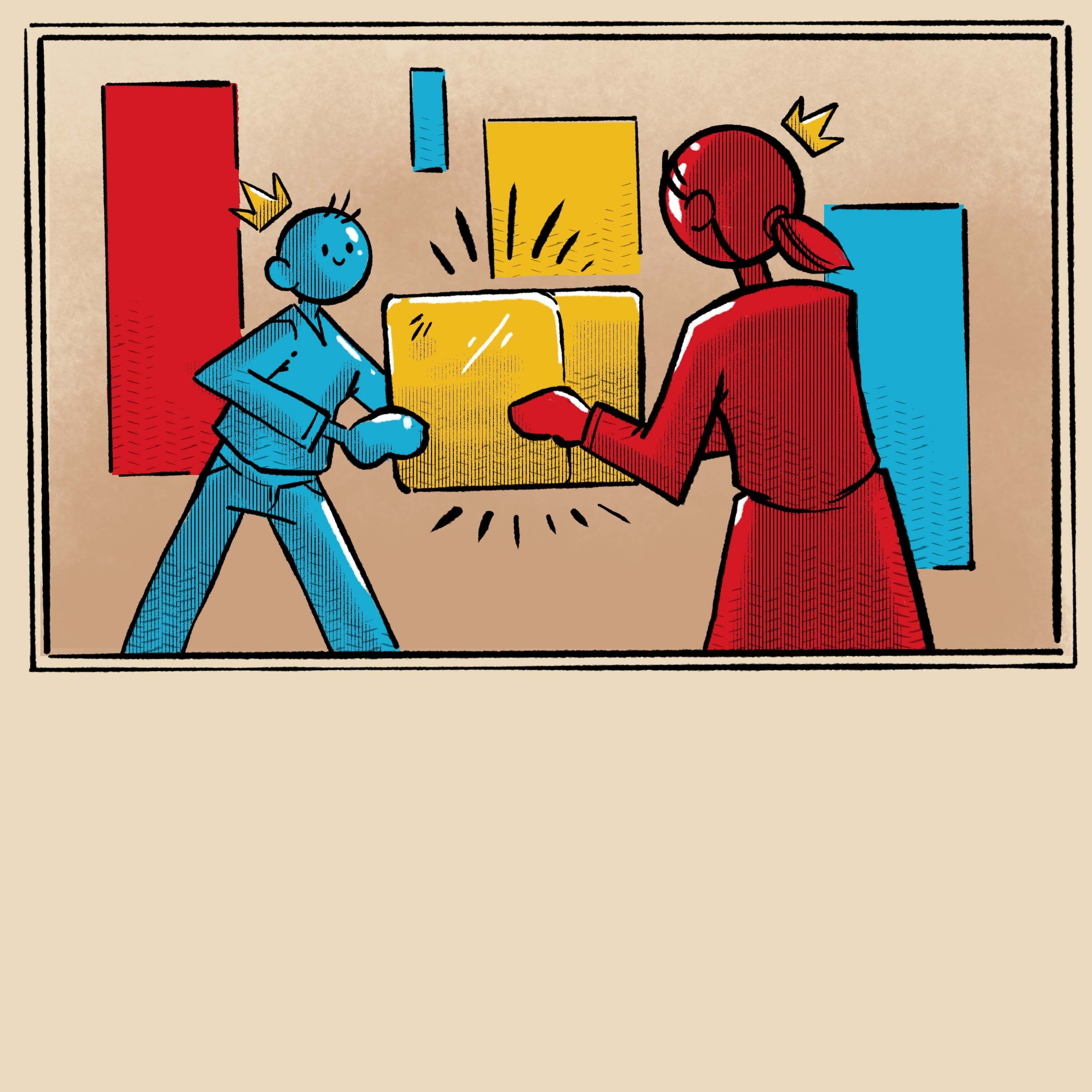
The employee ownership movement is growing, and one of its biggest champions is also a private equity heavyweight. Is this meaningful change, or just window dressing? SOURCES:Marjorie Kelly, distinguished senior fellow at The Democracy Collaborative.Corey Rosen, founder and senior staff member of the National Center for Employee Ownership.Pete Stavros, co-head of Global Private Equity at KKR. RESOURCES:"Private Equity Is Starting to Share With Workers, Without Taking a Financial Hit," by Lydia DePillis (The New York Times, 2024)."Private Equity Heavyweight Pushing Employee Ownership," (60 Minutes, 2024)."Ownership Works: Scaling a Profitable Social Mission," by Ethan Rouen, Dennis Campbell, and Andrew Robinson (HBS Case Collection, 2023)."Research on Employee Ownership," by the National Center for Employee Ownership (2023).Wealth Supremacy: How the Extractive Economy and the Biased Rules of Capitalism Drive Today’s Crises, by Marjorie Kelly (2023)."Is Private Equity Joining — or Co-Opting—the Employee Ownership Movement?" by Marjorie Kelly and Karen Kahn (Fast Company, 2022)."How Well Is Employee Ownership Working?" by Corey Rosen and Michael Quarrey (Harvard Business Review, 1987). EXTRAS:"Are Private Equity Firms Plundering the U.S. Economy?" by Freakonomics Radio (2023)."Do You Know Who Owns Your Vet?" by Freakonomics Radio (2023)."Should You Trust Private Equity to Take Care of Your Dog?" by Freakonomics Radio (2023). Hosted by Simplecast, an AdsWizz company. See pcm.adswizz.com for information about our collection and use of personal data for advertising.
Ep 586586. How Does the Lost World of Vienna Still Shape Our Lives?
From politics and economics to psychology and the arts, many of the modern ideas we take for granted emerged a century ago from a single European capital. In this episode of the Freakonomics Radio Book Club, the historian Richard Cockett explores all those ideas — and how the arrival of fascism can ruin in a few years what took generations to build. SOURCE:Richard Cockett, author and senior editor at The Economist. RESOURCES:Vienna: How the City of Ideas Created the Modern World, by Richard Cockett (2023)."Birth, Death and Shopping," (The Economist, 2007).The Hidden Persuaders, by Vance Packard (1957)."An Economist's View of 'Planning,'" by Henry Hazlitt (The New York Times, 1944).The World of Yesterday: Memoires of a European, by Stefan Zweig (1942). EXTRA:"Arnold Schwarzenegger Has Some Advice for You," by People I (Mostly) Admire (2024). Hosted by Simplecast, an AdsWizz company. See pcm.adswizz.com for information about our collection and use of personal data for advertising.
Extra: Why Is 23andMe Going Under? (Update)
bonusFive years ago, we published an episode about the boom in home DNA testing kits, focusing on the high-flying firm 23andMe and its C.E.O. Anne Wojcicki. Their flight has been extremely bumpy since then. This update includes an additional interview with the Wall Street Journal reporter who has been investigating the firm’s collapse. SOURCES:Rolfe Winkler, reporter at The Wall Street Journal.Anne Wojcicki, co-founder and C.E.O. of 23andMe. RESOURCES:"23andMe’s Fall From $6 Billion to Nearly $0," by Rolfe Winkler (The Wall Street Journal, 2024)."23andMe User Data Stolen in Targeted Attack on Ashkenazi Jews," by Lily Hay Newman (Wired, 2023).Inheritance: A Memoir of Genealogy, Paternity, and Love, by Dani Shapiro (2019).How To Raise Successful People: Simple Lessons for Radical Results, by Esther Wojcicki (2019).“Diet and exercise changes following direct-to-consumer personal genomic testing,” by Daiva Elena Nielsen, Deanna Alexis Carere, Catharine Wang, J. Scott Roberts, and Robert C. Green (BMC Medical Genomics, 2016).“The impact of communicating genetic risks of disease on risk-reducing health behaviour: systematic review with meta-analysis,” Gareth J Hollands, David P. French, Simon J. Griffin, A. Toby Prevost, Stephen Sutton, Sarah King, Theresa M. Marteau (The British Medical Journal, 2016). EXTRAS:"Does Your DNA Determine Your Weight?" by No Stupid Questions (2023)."What’s Stopping Us From Curing Rare Diseases?" by Freakonomics, M.D. (2023)."We Can Play God Now," by People I (Mostly) Admire (2022)."Susan Wojcicki: 'Hey, Let’s Go Buy YouTube!'" by People I (Mostly) Admire (2020). Hosted by Simplecast, an AdsWizz company. See pcm.adswizz.com for information about our collection and use of personal data for advertising.
Ep 585585. A Social Activist in Prime Minister’s Clothing
Justin Trudeau, facing record-low approval numbers, is doubling down on his progressive agenda. But he is so upbeat (and Canada-polite) that it’s easy to miss just how radical his vision is. Can he make it work? SOURCE:Justin Trudeau, Prime Minister of Canada. RESOURCES:2024 Canadian Federal Budget."Canada to Set First-Ever Cap on Temporary Residents," by Nadine Yousif (BBC News, 2023).Common Ground, by Justin Trudeau (2014). EXTRAS:"Why Is Everyone Moving to Canada?" by Freakonomics Radio (2024). Hosted by Simplecast, an AdsWizz company. See pcm.adswizz.com for information about our collection and use of personal data for advertising.
Ep 584How to Pave the Road to Hell
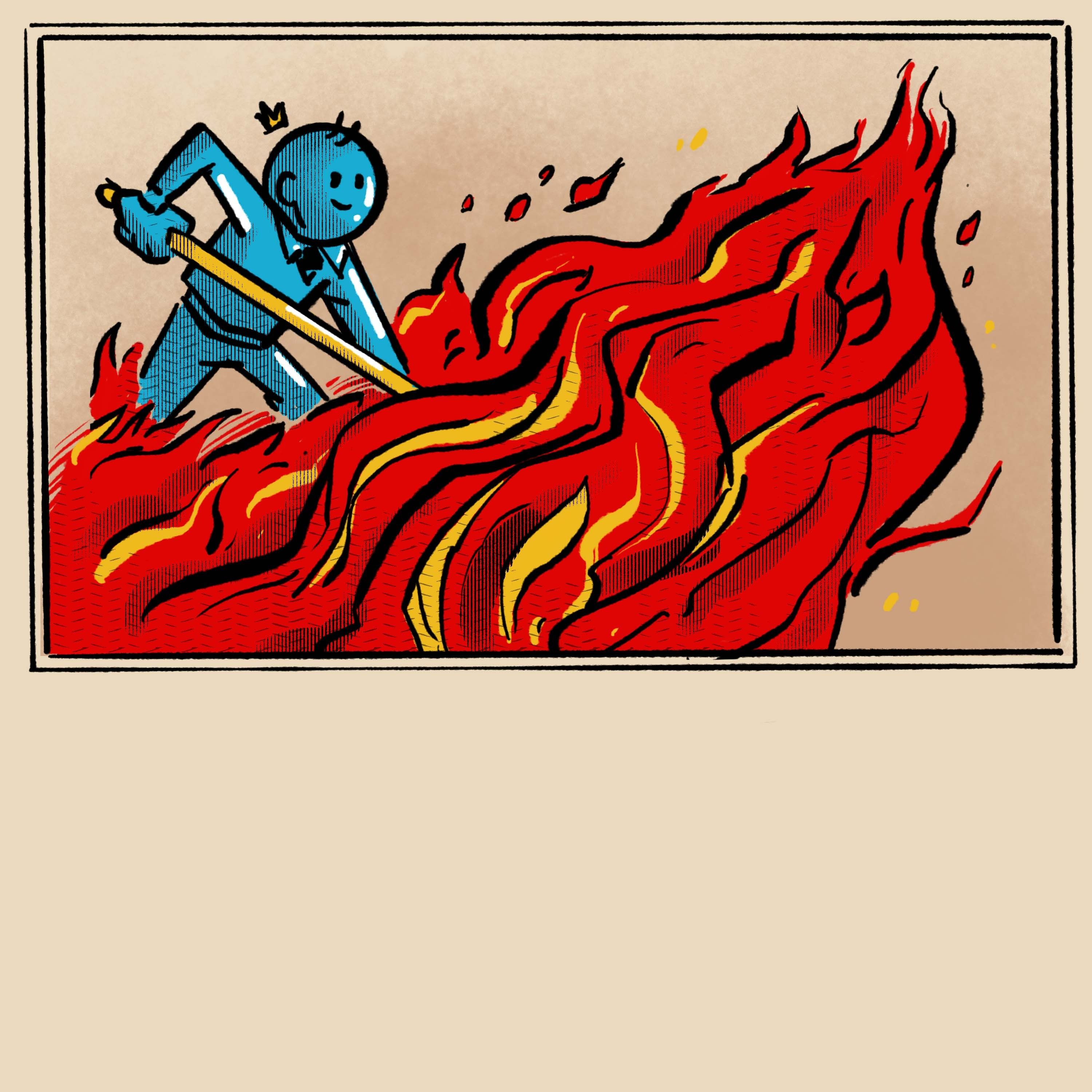
So you want to help people? That’s great — but beware the law of unintended consequences. Three stories from the modern workplace. SOURCES:Joshua Angrist, professor of economics at the Massachusetts Institute of Technology.Zoe Cullen, professor of business administration at Harvard Business School.Marina Gertsberg, senior lecturer in finance at the University of Melbourne. RESOURCES:"Is Pay Transparency Good?" by Zoë Cullen (Journal of Economic Perspectives, 2024)."DP18969 Economics Coauthorships in the Aftermath of MeToo," by Noriko Amano-Patino, Elisa Faraglia, and Chryssi Giannitsarou (CEPR Discussion Paper, 2024)."The Underground Economy of Company Reviews," by Shikhar Sachdev (Career Fair, 2023)."Why Did Gender Wage Convergence in the United States Stall?" by Peter Q. Blair and Benjamin Posmanick (NBER Working Paper, 2023)."The Unintended Consequences of #MeToo: Evidence from Research Collaborations," by Marina Gertsberg (SSRN, 2022)."Outsourcing Tasks Online: Matching Supply and Demand on Peer-to-Peer Internet Platforms," by Zoë Cullen and Chiara Farronato (Management Science, 2021)."Equilibrium Effects of Pay Transparency," by Zoe B. Cullen and Bobak Pakzad-Hurson (NBER Working Paper, 2021)."How Much Does Your Boss Make? The Effects of Salary Comparisons," by Zoë Cullen and Ricardo Perez-Truglia (NBER Working Paper, 2018)."Wall Street Rule for the #MeToo Era: Avoid Women at All Cost," by Gillian Tan and Katia Porzecanski (Bloomberg, 2018)."A Comprehensive Analysis of the Effects of US Disability Discrimination Laws on the Employment of the Disabled Population," by Patrick Button, Philip Armour, and Simon Hollands (NBER Working Paper, 2016)."Consequences of Employment Protection? The Case of the Americans with Disabilities Act," by Daron Acemoglu and Joshua Angrist (Journal of Political Economy, 2001). Hosted by Simplecast, an AdsWizz company. See pcm.adswizz.com for information about our collection and use of personal data for advertising.
Extra: The Men Who Started a Thinking Revolution (Update)
bonusThe psychologist Daniel Kahneman — a Nobel laureate and the author of Thinking, Fast and Slow — recently died at age 90. Along with his collaborator Amos Tversky, he changed how we all think about decision-making. The journalist Michael Lewis told the Kahneman-Tversky story in a 2016 book called The Undoing Project. In this episode, Lewis explains why they had such a profound influence. SOURCE:Michael Lewis, writer. RESOURCES:The Undoing Project, by Michael Lewis (2016).Thinking, Fast and Slow, by Daniel Kahneman (2011).The Big Short: Inside the Doomsday Machine, by Michael Lewis (2010).Nudge: Improving Decisions About Health, Wealth, and Happiness, by Richard Thaler and Cass Sunstein (2009).Moneyball: The Art of Winning an Unfair Game, by Michael Lewis (2004).“Who’s On First,” by Richard Thaler and Cass Sunstein (New Republic, 2003).“The Framing of Decisions and the Psychology of Choice,” by Daniel Kahneman and Amos Tversky (Science, 1981).“Prospect Theory: An Analysis of Decision Under Risk,” by Daniel Kahneman and Amos Tversky (Econometrica, 1979).“Judgment under Uncertainty: Heuristics and Biases,” by Daniel Kahneman and Amos Tversky (Science, 1974).“Subjective Probability: A Judgment of Representativeness,” by Daniel Kahneman and Amos Tversky (Cognitive Psychology, 1972). EXTRAS:"Remembering Daniel Kahneman," by People I (Mostly) Admire (2024)."Why Are People So Mad at Michael Lewis?" by Freakonomics Radio (2023)."Did Michael Lewis Just Get Lucky with 'Moneyball'?" by Freakonomics Radio (2022). Hosted by Simplecast, an AdsWizz company. See pcm.adswizz.com for information about our collection and use of personal data for advertising.
Ep 495Why Are There So Many Bad Bosses?
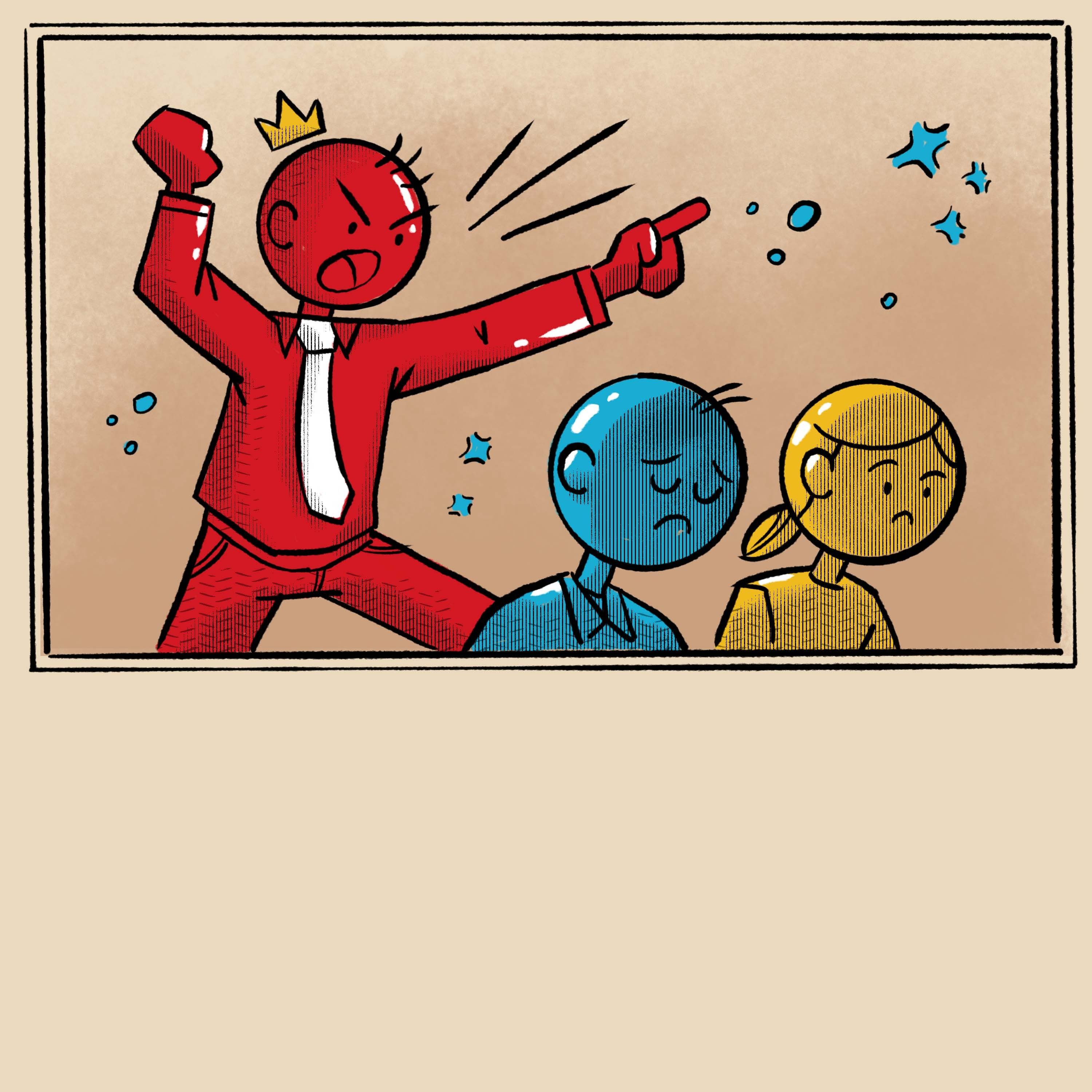
People who are good at their jobs routinely get promoted into bigger jobs they’re bad at. We explain why firms keep producing incompetent managers — and why that’s unlikely to change. SOURCES:Nick Bloom, professor of economics at Stanford University.Katie Johnson, freelance data and analytics coach.Kelly Shue, professor of finance at the Yale University School of Management.Steve Tadelis, professor of economics at the University of California, Berkeley Haas School of Business. RESOURCES:“People Management Skills, Employee Attrition, and Manager Rewards: An Empirical Analysis,” by Mitchell Hoffman and Steven Tadelis (Journal of Political Economy, 2021).“Promotions and the Peter Principle,” by Alan Benson, Danielle Li, and Kelly Shue (The Quarterly Journal of Economics, 2019).“Bosses Matter: The Effects of Managers on Workers’ Performance,” by Kathryn L. Shaw (IZA World of Labor, 2019).“The Value of Bosses,” by Edward P. Lazear, Kathryn L. Shaw, and Christopher T. Stanton (Journal of Labor Economics, 2015).The Peter Principle: Why Things Always Go Wrong, by Laurence J. Peter and Raymond Hull (1969). EXTRAS:“The Secret Life of C.E.O.s” series by Freakonomics Radio.“What Does a C.E.O. Actually Do?” by Freakonomics Radio (2018). Hosted by Simplecast, an AdsWizz company. See pcm.adswizz.com for information about our collection and use of personal data for advertising.
Ep 583583. Are We Living Through the Most Revolutionary Period in History?
Fareed Zakaria says yes. But it’s not just political revolution — it’s economic, technological, even emotional. He doesn’t offer easy solutions but he does offer some hope. SOURCES:Fareed Zakaria, journalist and author. RESOURCES:Age of Revolutions: Progress and Backlash from 1600 to the Present, by Fareed Zakaria (2024)."The Ultimate Election Year: All the Elections Around the World in 2024," by Koh Ewe (TIME, 2023)."The Tea Party and the Remaking of Republican Conservatism," by Vanessa Williamson, Theda Skocpol, and John Coggin (Perspectives on Politics, 2011).The Post-American World, by Fareed Zakaria (2008).The Future of Freedom: Illiberal Democracy at Home and Abroad, by Fareed Zakaria (2003). EXTRAS:"Is the U.S. Really Less Corrupt Than China?" by Freakonomics Radio (2021). Hosted by Simplecast, an AdsWizz company. See pcm.adswizz.com for information about our collection and use of personal data for advertising.
Extra: How Much Do You Know About Immigration?
bonusThe political debates over immigration can generate a lot of fuzzy facts. We wanted to test Americans’ knowledge — so, to wrap up our special series on immigration, we called some Freakonomics Radio listeners and quizzed them. SOURCES:Zeke Hernandez, professor at the Wharton School at the University of Pennsylvania. RESOURCES:The Truth About Immigration: Why Successful Societies Welcome Newcomers, by Zeke Hernandez (2024, available for pre-order). EXTRA:“The True Story of America’s Supremely Messed-Up Immigration System,” series by Freakonomics Radio (2024). Hosted by Simplecast, an AdsWizz company. See pcm.adswizz.com for information about our collection and use of personal data for advertising.
Ep 582582. Why Is Everyone Moving to Canada?
As the U.S. tries to fix its messy immigration system, our neighbor to the north is scooping up more talented newcomers every year. Are the Canadians stealing America’s bacon? (Part three of a three-part series.) SOURCES:Zeke Hernandez, professor at the Wharton School at the University of Pennsylvania.William Kerr, professor of business administration at Harvard Business School.David Leonhardt, senior writer at the New York Times.Sindhu Mahadevan, creator of This Immigrant Life newsletter.Marc Miller, Member of Parliament and Minister of Immigration, Refugees, and Citizenship of Canada.Mike Savage, Mayor of Halifax, Nova Scotia. RESOURCES:The Truth About Immigration: Why Successful Societies Welcome Newcomers, by Zeke Hernandez (2024, available for pre-order)."The Border Where Different Rules Apply," by Seth Freed Wessler (The New York Times Magazine, 2023)."Last Year, Canada Became My Home. Feeling Like a Canadian Will Take a Bit Longer," by Sindhu Mahadevan (CBC News, 2023)."Canadians Are Starting to Sour on Migration," (The Economist, 2023).The Gift of Global Talent: How Migration Shapes Business, Economy & Society, by William Kerr (2018). EXTRAS:“The True Story of America’s Supremely Messed-Up Immigration System,” series by Freakonomics Radio (2024)."Is the American Dream Really Dead?" by Freakonomics Radio (2017). Hosted by Simplecast, an AdsWizz company. See pcm.adswizz.com for information about our collection and use of personal data for advertising.
Ep 581581. What Both Parties Get Wrong About Immigration
The U.S. immigration system is a massively complicated machine, with a lot of worn-out parts. How to fix it? Step one: Get hold of some actual facts and evidence. (We did this step for you.) (Part two of a three-part series.) SOURCES:Zeke Hernandez, professor at the Wharton School at the University of Pennsylvania.David Leonhardt, senior writer at the New York Times.Sindhu Mahadevan, creator of This Immigrant Life newsletter. RESOURCES:The Truth About Immigration: Why Successful Societies Welcome Newcomers, by Zeke Hernandez (2024, available for pre-order)."Illegal Immigration Is a Bigger Problem Than Ever. These Five Charts Explain Why," by Andrew Mollica, Alicia A. Caldwell, Michelle Hackman, and Santiago Pérez (The Wall Street Journal, 2023).Ours Was the Shining Future: The Story of the American Dream, by David Leonhardt (2023).The Economic and Fiscal Consequences of Immigration, by the National Academies of Sciences, Engineering, and Medicine (2017). EXTRAS:“The True Story of America’s Supremely Messed-Up Immigration System,” series by Freakonomics Radio (2024)."And the New Six-Word Motto for the U.S. Is …," by Stephen Dubner (Freakonomics blog, 2008). Hosted by Simplecast, an AdsWizz company. See pcm.adswizz.com for information about our collection and use of personal data for advertising.
Extra: Madeleine Albright’s Warning on Immigration
bonusShe arrived in the U.S. as an 11-year-old refugee, then rose to become Secretary of State. Her views on immigration, nationalism, and borders, from this 2015 interview, are almost strangely appropriate to the present moment. SOURCE:Madeleine Albright, U.S. Secretary of State under President Bill Clinton and former U.S. Ambassador to the United Nations. RESOURCES:"Madeleine Albright, First Woman to Serve as Secretary of State, Dies at 84," by Robert D. McFadden (The New York Times, 2022)."The Case for Getting Rid of Borders — Completely," by Alex Tabarrok (The Atlantic, 2015). EXTRAS:"The True Story of America's Supremely Messed-Up Immigration System," series by Freakonomics Radio (2024)."Is Migration a Basic Human Right?" by Freakonomics Radio (2015). Hosted by Simplecast, an AdsWizz company. See pcm.adswizz.com for information about our collection and use of personal data for advertising.
Ep 580580. The True Story of America’s Supremely Messed-Up Immigration System
How did a nation of immigrants come to hate immigration? We start at the beginning, sort through the evidence, and explain why your grandfather was lying about Ellis Island. (Part one of a three-part series.) SOURCES:Leah Boustan, professor of economics at Princeton University.Zeke Hernandez, professor at the Wharton School at the University of Pennsylvania.Roger Nam, professor of Hebrew Bible at Emory University. RESOURCES:The Truth About Immigration: Why Successful Societies Welcome Newcomers, by Zeke Hernandez (2024, available for pre-order)."The Refugee Advantage: English-Language Attainment in the Early Twentieth Century," by Ran Abramitzky, Leah Platt Boustan, Peter Catron, Dylan Connor, and Rob Voigt (NBER Working Paper, 2023).Streets of Gold: America's Untold Story of Immigrant Success, by Leah Boustan and Ran Abramitzky (2022)."If Liberals Won't Enforce Borders, Fascists Will," by David Frum (The Atlantic, 2019). EXTRAS:"Is Migration a Basic Human Right?" by Freakonomics Radio (2015)."Who Are the Most Successful Immigrants in the World?" by Freakonomics Radio (2013). Hosted by Simplecast, an AdsWizz company. See pcm.adswizz.com for information about our collection and use of personal data for advertising.
Ep 579579. Are You Caught in a Social Media Trap?
Economists have discovered an odd phenomenon: many people who use social media (even you, maybe?) wish it didn’t exist. But that doesn’t mean they can escape. SOURCES:Leonardo Bursztyn, professor of economics at the University of Chicago.Benjamin Handel, professor of economics at the University of California, Berkeley. RESOURCES:"When Product Markets Become Collective Traps: The Case of Social Media," by Leonardo Bursztyn, Benjamin Handel, Rafael Jimenez, and Christopher Roth (NBER Working Paper, 2023)."Social Media and Xenophobia: Evidence from Russia," by Leonardo Bursztyn, Georgy Egorov, Ruben Enikolopov, and Maria Petrova (NBER Working Paper, 2019)."Status Goods: Experimental Evidence from Platinum Credit Cards," by Leonardo Bursztyn, Bruno Ferman, Stefano Fiorin, Martin Kanz, and Gautam Rao (NBER Working Paper, 2017)."'Acting Wife': Marriage Market Incentives and Labor Market Investments," by Leonardo Bursztyn, Thomas Fujiwara, and Amanda Pallais (American Economic Review, 2017)."Measuring Crack Cocaine and Its Impact," by Roland G. Fryer Jr., Paul S. Heaton, Steven D. Levitt, and Kevin M. Murphy (Economic Inquiry, 2013). EXTRAS:"Is Facebook Bad for Your Mental Health?" by Freakonomics, M.D. (2022)."Why Is U.S. Media So Negative?" by Freakonomics Radio (2021). Hosted by Simplecast, an AdsWizz company. See pcm.adswizz.com for information about our collection and use of personal data for advertising.
Ep 506Extra: What Is Sportswashing — and Does It Work? (Update)
In ancient Rome, it was bread and circuses. Today, it’s a World Cup, an Olympics, and a new Saudi-backed golf league that’s challenging the PGA Tour. Can a sporting event really repair a country’s reputation — or will it trigger the dreaded Streisand Effect? Also: why the major U.S. sports leagues are warming up to the idea of foreign investment. SOURCES:Jodi Balsam, professor of clinical law at Brooklyn Law School.Brandel Chamblee, Golf Channel analyst.Karen Crouse, sports journalist.Bomani Jones, sports journalist.Victor Matheson, professor of economics at the College of the Holy Cross.Alan Shipnuck, sports journalist. RESOURCES:"The New N.F.L. Owners?" by Lauren Hirsch, Kevin Draper, Michael J. de la Merced and Sarah Kessler (The New York Times, 2024)."PGA Tour Raises $1.5 Billion From Group of U.S. Investors," by Lauren Hirsch (The New York Times, 2024)."PGA Tour, LIV Golf Agree to Merge," by Andrew Beaton and Louise Radnofsky (The Wall Street Journal, 2023).Phil: The Rip-Roaring (and Unauthorized!) Biography of Golf's Most Colorful Superstar, by Alan Shipnuck (2022)."Dustin Johnson Paid £100m to Perform Late U-Turn and Join Saudi-Backed Rebel Series," by By James Corrigan and Tom Morgan (The Telegraph, 2022)."Russia Was the Hottest Place in Sports. Now It’s Frozen Out," by Joshua Robinson, Ben Cohen, and Louise Radnofsky (The Wall Street Journal, 2022)."Could This Be the Year ‘Sportwashing’ Backfires?" by Andrés Martinez (The Los Angeles Times, 2022)."The Truth About Phil and Saudi Arabia," by Alan Shipnuck (The Fire Pit Collective, 2022).The New Yale Book of Quotations, by Fred Shapiro (2021)."The Surprising Reason That There Are So Many Thai Restaurants in America," by Myles Karp (Vice, 2018). EXTRAS:"Greg Norman Takes On the P.G.A. Tour," by People I (Mostly) Admire (2023). Hosted by Simplecast, an AdsWizz company. See pcm.adswizz.com for information about our collection and use of personal data for advertising.
Ep 578578. Water, Water Everywhere — But You Have to Stop and Think
What surprises lurk in our sewage? How did racist city planners end up saving Black lives? Why does Arizona grow hay for cows in Saudi Arabia? Three strange stories about the most fundamental substance we all take for granted. SOURCES:Brian Beach, professor of economics at Vanderbilt University.Marc Johnson, professor of molecular microbiology and immunology at the University of Missouri School of Medicine.Amy Kirby, program lead for the National Wastewater Surveillance System at the Centers for Disease Control and Prevention.Natalie Koch, professor of geography at Syracuse University. RESOURCES:Arid Empire: The Entangled Fates of Arizona and Arabia, by Natalie Koch (2023)."How a Saudi Firm Tapped a Gusher of Water in Drought-Stricken Arizona," by Isaac Stanley-Becker, Joshua Partlow, and Yvonne Wingett Sanchez (The Washington Post, 2023)."Arizona Is in a Race to the Bottom of Its Water Wells, With Saudi Arabia’s Help," by Natalie Koch (The New York Times, 2022)."Tracing the Origin of SARS-CoV-2 Omicron-Like Spike Sequences Detected in Wastewater," by Martin Shafer, Devon Gregory, Marc Johnson, et al. (medRxiv, 2022)."Water and Waste: A History of Reluctant Policymaking in U.S. Cities," by Brian Beach (Working Paper, 2022).Water, Race, and Disease, by Werner Troesken (2004).COVID Data Tracker: Wastewater Surveillance, by the Centers for Disease Control and Prevention. EXTRAS:"What Is Sportswashing (and Does It Work)?" by Freakonomics Radio (2022)."Covid-19," series by Freakonomics Radio (2020-2021). Hosted by Simplecast, an AdsWizz company. See pcm.adswizz.com for information about our collection and use of personal data for advertising.
Ep 522Is Google Getting Worse? (Update)
It used to feel like magic. Now it can feel like a set of cheap tricks. Is the problem with Google — or with us? And is Google Search finally facing a real rival, in the form of A.I.-powered “answer engines”? SOURCES:Marissa Mayer, co-founder of Sunshine; former C.E.O. of Yahoo! and vice president at Google.Ryan McDevitt; professor of economics at Duke University.Tim Hwang, media researcher and author; former Google employee.Elizabeth Reid, vice president of Search at Google.Aravind Srinivas, C.E.O. and co-founder of Perplexity.Jeremy Stoppelman, C.E.O. and co-founder of Yelp. RESOURCES:“A Fraudster Who Just Can’t Seem to Stop … Selling Eyeglasses,” by David Segal (The New York Times, 2022).Subprime Attention Crisis: Advertising and the Time Bomb at the Heart of the Internet, by Tim Hwang (2020).“Complaint: U.S. and Plaintiff States v. Google LLC,” by the U.S. Department of Justice (2020).“Fake Online Locksmiths May Be Out to Pick Your Pocket, Too,” by David Segal (The New York Times, 2016).“‘A’ Business by Any Other Name: Firm Name Choice as a Signal of Firm Quality,” by Ryan C. McDevitt (Journal of Political Economy, 2014).In the Plex: How Google Thinks, Works, and Shapes Our Lives, by Steven Levy (2011).“The Anatomy of a Large-Scale Hypertextual Web Search Engine,” by Sergey Brin and Lawrence Page (Computer Networks and ISDN Systems, 1998). EXTRAS:“Is Dialysis a Test Case of Medicare for All?” by Freakonomics Radio (2021).“How Big is My Penis? (And Other Things We Ask Google),” by Freakonomics Radio (2017). Hosted by Simplecast, an AdsWizz company. See pcm.adswizz.com for information about our collection and use of personal data for advertising.