First Principles
71 episodes — Page 2 of 2
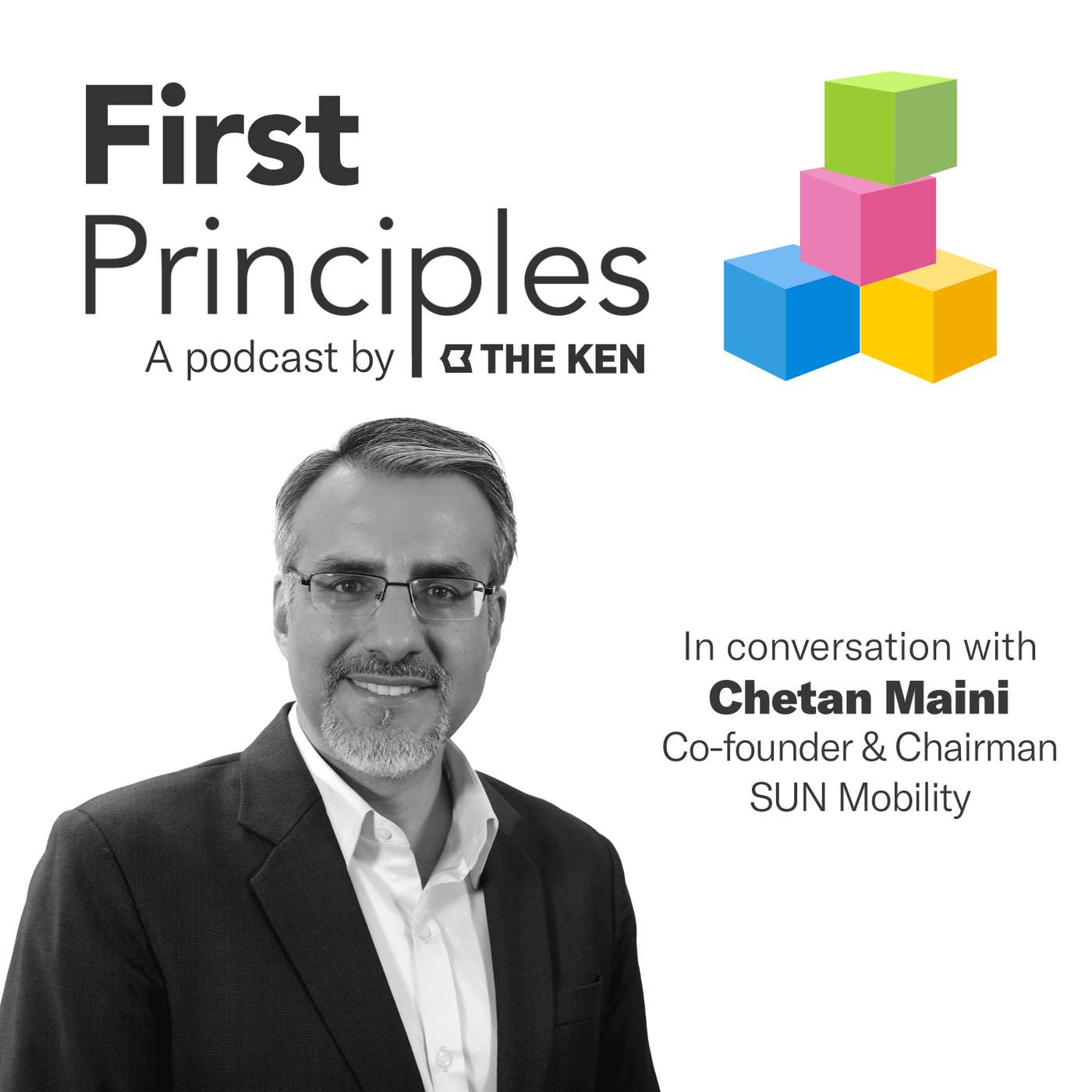
S2 Ep 20Part 1: Why Chetan Maini of SUN Mobility stopped making EVs when it got cool
Chetan Maini, the co-founder and Chairman of Sun Mobility has done a whole lot in his life. He’s been forever a tinkerer as you’re bound to find out if you read his father Dr.S.K.Maini’s book REVA: India’s Green Gift to the World.Chetan’s raced solar cars, built his own car company REVA and is now building a pay-as-you-go energy infrastructure for a greener future with Sun Mobility. You’ll see in this a proper evolution of owning the chain of control as well.Well, it has to be said this is not fully intentional. Because in a world where REVAs are speeding down the road left and right you’re not gonna see Chetan going out and building a BaaS, battery as a service business. But it was 2001, and India, and most of the world, was not ready for electric cars.Chetan, however, persevered even under the shadow of the Mahindra Group and made strides in their electric mobility aspirations before leaving in 2015.He took a break of two years, observed the EV market across the globe and when he saw the opportunity back home, came back with his expertise and took charge to create what we know today as Sun Mobility. The vision is bigger this time around and time is on his side as well. The only thing left to see out: Execution.And they are not pulling any punches on that front either.Additional reading: this edition of Green Margins published way back in late 2022 to understand how, here.Welcome to Season 2, episode 44 of First Principles - A weekly leadership podcast from The Ken.
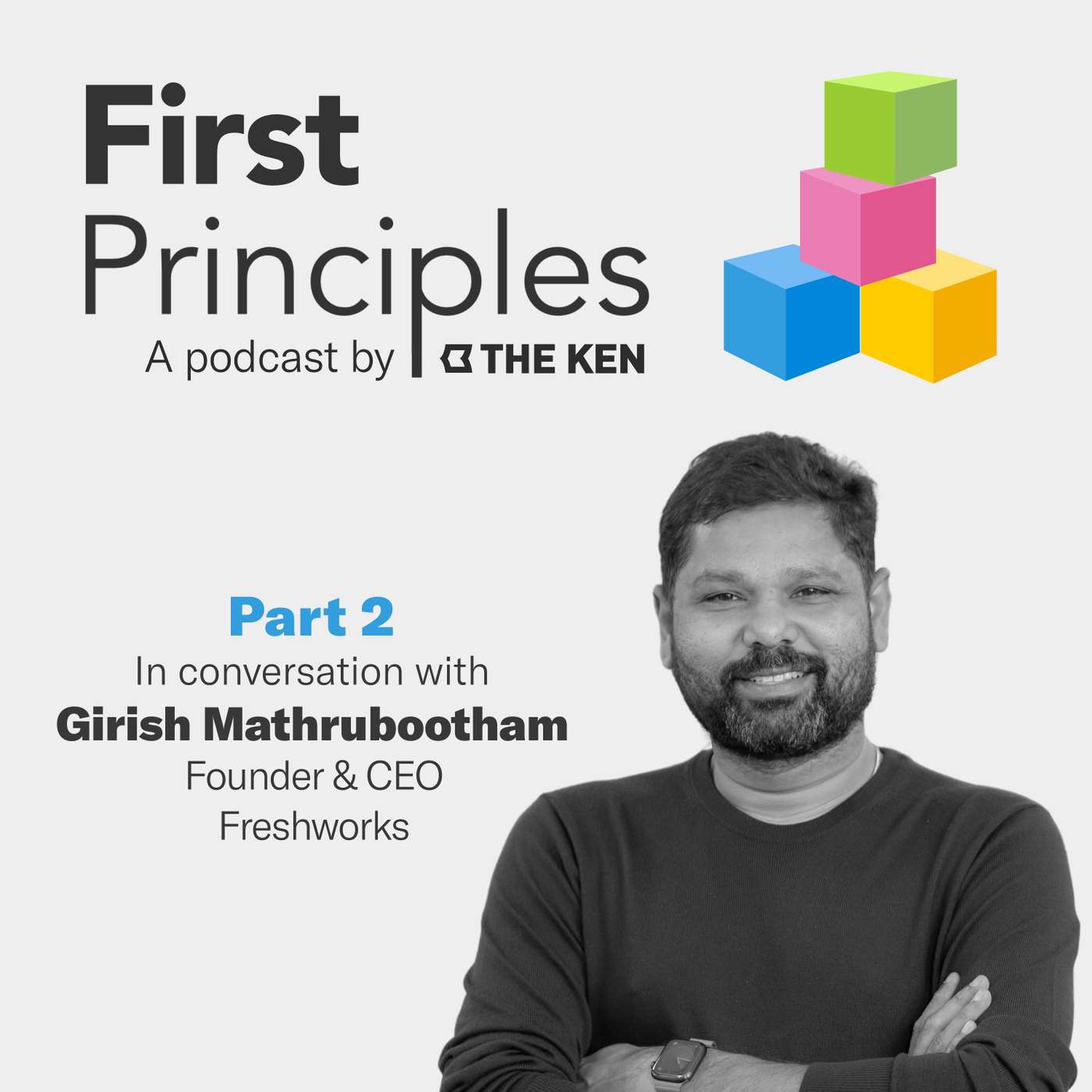
S2 Ep 19Part 2: Girish Mathrubootham on Freshworks' trade secrets – and why he opened them up to competitors
Girish Mathrubootham – founder and CEO of Freshworks – feels strongly about having the authority to take one’s own decisions, from a young age.He made a very apt example in our conversation with him earlier this month at his office in Chennai: a kid never gets to make his own decisions, even if it is to just order food of their liking. This in turn translates into their adulthood as an inability to make decisions.Girish has been out there making most of his decisions for himself from a young age, including which school he would go to, which college he’ll enrol in and having a say in most of his major life decisions.The biggest learning he got out of this: understanding the consequences of your actions and reflecting on them to see the untapped opportunities that lay ahead. And once he got good at that, he became adept at learning so that he could do something about the untapped opportunities.Girish isn’t just the CEO of a NASDAQ-listed SaaS company, he’s also deeply involved in SaaSBoomi, a community that calls itself The World’s Largest Pay-it-forward Community of SaaS Founders.As one of SaaSboomi’s founding members, Girish played a big role in shaping its culture of openness and paying it forward. He did it by sharing in detail the methods and tactics that got a young Freshworks to $1M in annual revenue. Then, a few years later – as he explained – he took Freshworks from $1M to $5M.How often do you see a company explain their growth playbook to a possible future competitor and enable them?It’s rare.Girish also doesn’t limit his wish to pay-it-back just within the SaaS universe. He’s also out there with a mission to build world class champions from the football academy he set up, FC Madras. He’s infused 100 crores into his academy for the game he loves because he knows the talent is there and it needs to be nurtured properly and in the future we might have a shot at the world stage.Welcome to part 2 of our conversation with Girish. This episode too, like the first part, is filled with colorful quotes and examples ranging from Steve Jobs to Rajnikanth movies!This is episode 43 of First Principles–The Ken’s weekly leadership podcast. Let’s get started.
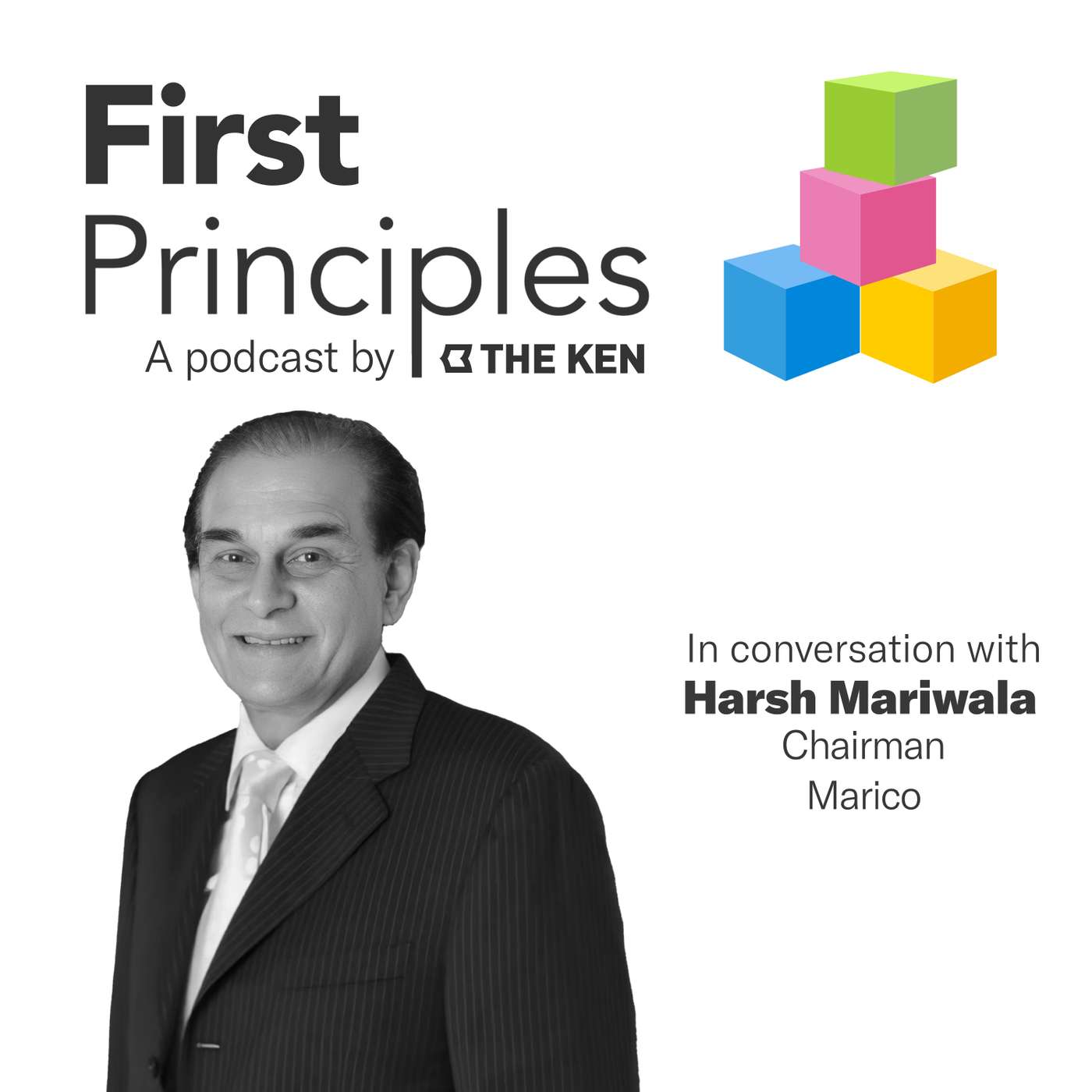
S2 Ep 18Part 1: From Parachute to Saffola, Marico's Harsh Mariwala on building and branding India's biggest consumer products
Sometime in the early 1970s a young Harsh Mariwala joined Bombay Oil Industries, a company set up by his grandfather in 1948, just a year after India’s independence. The company would trade in spices, oils and chemicals.Over the next two decades Harsh learnt the ropes of the family business. Till in 1991 - two decades after he had joined Bombay Oil - he left it to start his own company, Marico.He had already seen the power of quality and brand in a category that was still almost entirely commoditized and unbranded. For instance, the huge 15 liter tin cans of Parachute coconut oil Bombay Oil sold to shopkeepers were resold in smaller quantities at much higher prices. Harsh rightly wondered, why should someone else capture the margin and premium for my product? The company that Harsh founded - Marico - had two powerful brands at its core - Parachute Coconut Oil and Saffola cooking oil. That is true even today, 33 years later. Nearly 1 in 3 Indians use Parachute oil, our research tells us. Of course, a lot else has changed since then. Marico, which went public just 5 years after being founded in 1991, today boasts a turnover of over 1.2 billion dollars. And Harsh is 72, but still learning, exploring, experimenting and unable to take it easy.Earlier this week, I had the chance to speak to Harsh about his entire (and might I add still evolving) professional journey!It’s a long time, but Harsh talks about the day Marico was separated from Bombay Oil just like it was yesterday. He talked about how in 1991 they attracted talent by positioning themselves as the disruptive outsiders. Sample one of the headlines from Marico’s ads: 200 employees walk out of Bombay Oil. Harsh had a lot of stories for me – from creating differentiation in consumer products even when the market is crowded, to how he fought back and won against the much larger Hindustan Unilever when it wanted to acquire Marico. And then he switched back to the present – and how he’s focussing all his learnings, experience, attention into cultivating innovation in India. This is an episode packed with anecdotes and lessons – you’ll hear Harsh talking about a ‘right to win’ in the market, strategizing acquisitions, and making ‘a difference without expectations’ to the shareholders. All in the context of Harsh’s years at Marico, the Mariwala Health Initiative, Ascent foundation and Marico Innovation Foundation! Let’s go!This is episode 42 of First Principles–a weekly leadership podcast from The Ken.
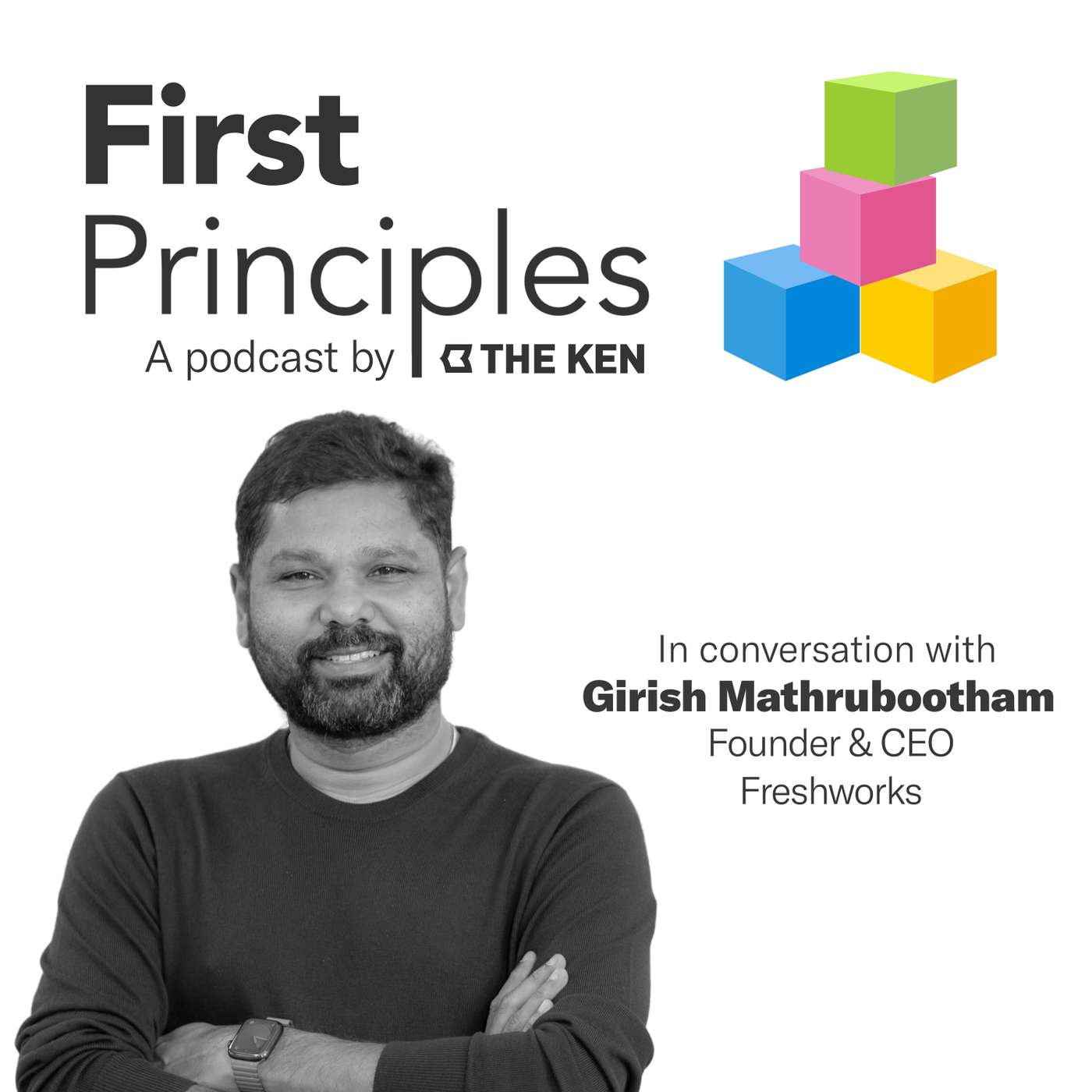
S2 Ep 17Part 1: Girish Mathrubootham of Freshworks on why he doesn't measure 'winning' by numbers
If you're here to find out more about our brand new early careers podcast, check out The First Two Years and how you can join the TFTY community here! You can also listen to our trailer on Spotify and Apple. Welcome to Episode 41 of First Principles.When asked, Girish Mathrubootham* – the CEO and Co-Founder of Freshworks, says that there’s one thing most of his direct reports would agree about him – that he leads from the heart. Many Freshworks employees have a different way of describing Girish. He’s a product manager first, and then a CEO. Product and People are thus two words to describe Girish. One of them - Product - was something he got into accidentally. But both of them are areas where he’s built organisational strengths and culture very intentionally. The news headlines when Freshworks went public on NASDAQ was that Girish had created 500 crorepatis within his organization. That is, employees whose Freshworks shares made them worth over 1 crore rupees.Freshworks was the first Indian SaaS company to become a unicorn. It was also the first Indian SaaS company to be listed on the US markets. Last year it clocked revenues of nearly 600 million dollars. All before its 15th birthday. Across this episode, Girish the product manager is front and centre. It was evident in the way that he rattled off sharp and fun analogies to explain how he views Freshworks and his role at the organization as a CEO. It was almost as if Freshworks the company itself were an organically evolving product, with its CEO also its lead product manager. And to think that Girish’s entry into product management came over two decades ago when his then manager told him to build a product he had pitched – and essentially become a “product manager.” That day, he went back home and googled what a product manager is. He has very sharp and distinct views on leadership and organization building. As a leader, he’s opposed to measuring performance by numbers or execution alone. His metric for “winning” – as in, winning as an organization – is shaped by energy and vibes. He isn’t just hiring the best talent for a role. He’s giving the right role to the best talent.In this episode, you’ll understand this curious mix of people and product that keeps the lights on at Freshworks. Girish talks about why a company like Freshworks – which entered and continues to play in a crowded and competitive market – succeeds. Why and how he’s made peace with growing at close to 20% annually, so long as he’s also aiming for around the same percentage in profits. And what the best way is to chart a path to entrepreneurship in this day and age. And, also – why he loves Chennai so much! This is episode 41 of First Principles—The Ken's weekly leadership podcast.*Girish Mathrubootham is an investor in The Ken.
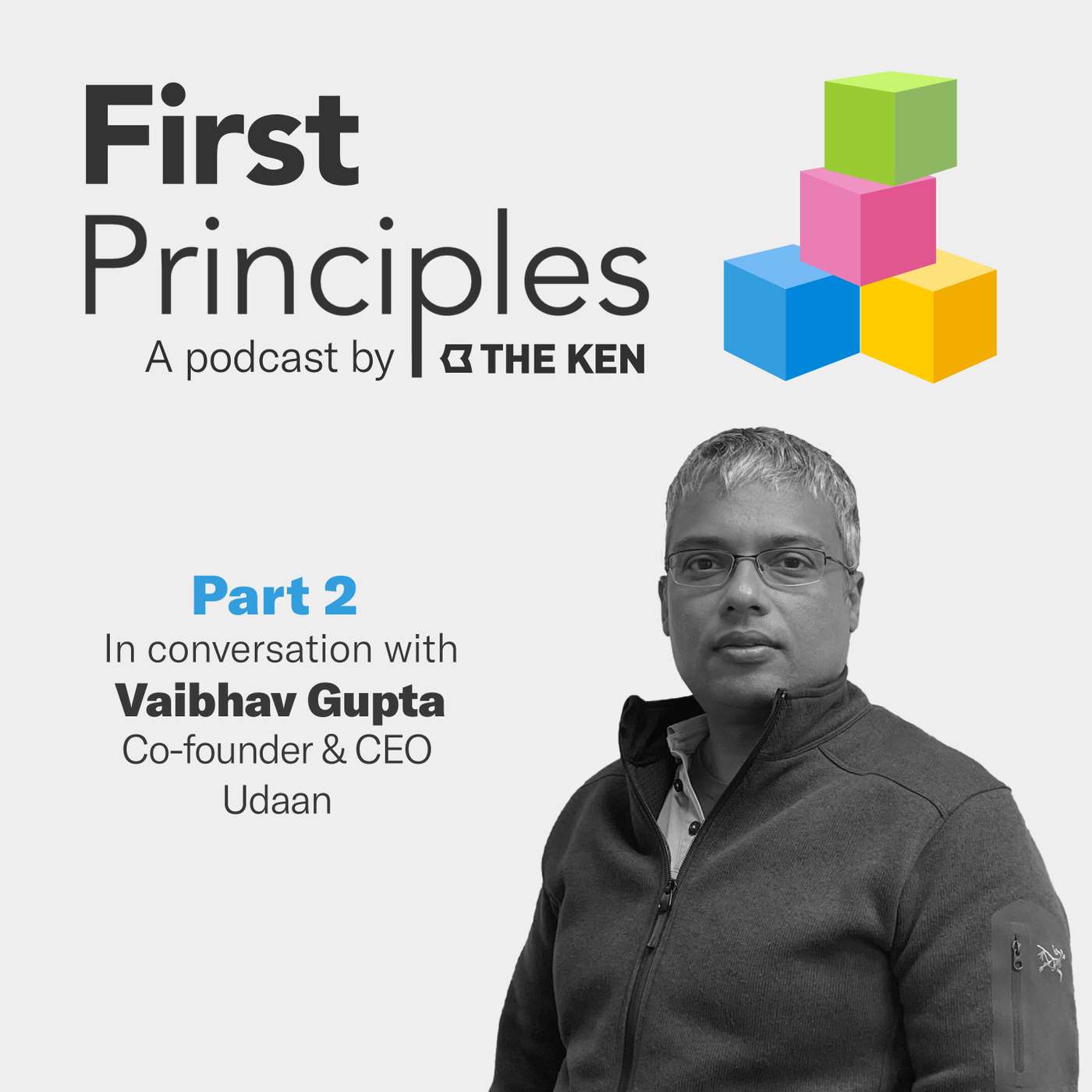
S2 Ep 16Part 2: Why Vaibhav Gupta of Udaan doesn’t identify problems by patterns
There is a cliche often associated with hyper growth startups. That running one is like learning how to fly a plane while you’re already up in the air. Or perhaps it's like learning to change an engine while you’re driving a car. There is another version of this analogy: it's like learning how to build a plane and learning how to fly it and also mastering how to change an engine mid-air, even as you’re hurtling at hundreds of kilometers per hour through the air. A great example of such a startup is Udaan, which in 2019 became India’s fastest unicorn within just 3 years of starting up. What does it take to build and scale a company in that manner? A few weeks ago, you heard Vaibhav Gupta – Udaan’s co-founder and CEO – answer this question in granular detail. Right down to how Udaan looked at the trade cycle of a small mobile accessories shopkeeper in Mysore, who got his supply from Bangalore every 15 days. Or the exact changes Udaan has made to their warehouses, so that they’re more efficient. He even broke down Udaan’s execution playbooks and what makes them reliable and repeatable. But…what happens when you zoom out a little?The more high-level decisions. Which bets to take, which to let go. Which patterns to follow. What the B2B retail space in India will look like, in 10 years. And what is Udaan doing to prepare for it?This is the episode where Vaibhav zooms out and reflects on some of these questions. He’s still very sharp and detail-oriented, of course. In fact, you’ll hear him say “retail is detail” with an unshakable conviction very soon, in the episode. But this time, you’ll notice that the larger decisions that Vaibhav makes for his organizations stems from his own strong beliefs and learnings. He’s an introvert, but he has learnt to discuss even his half-formed, unbaked ideas with his team. He’s driven by solving big problems, and so is Udaan. He’s become comfortable with being wrong, and that’s a feeling that his employees are encouraged to embrace at every stage.We talk about all the mental models, habits and frameworks that drive Vaibhav – and the culture at Udaan. And, of course – how First Principles thinking is very crucial to all of these!This is episode 40 of First Principles with Vaibhav Gupta—The Ken’s weekly leadership podcast.
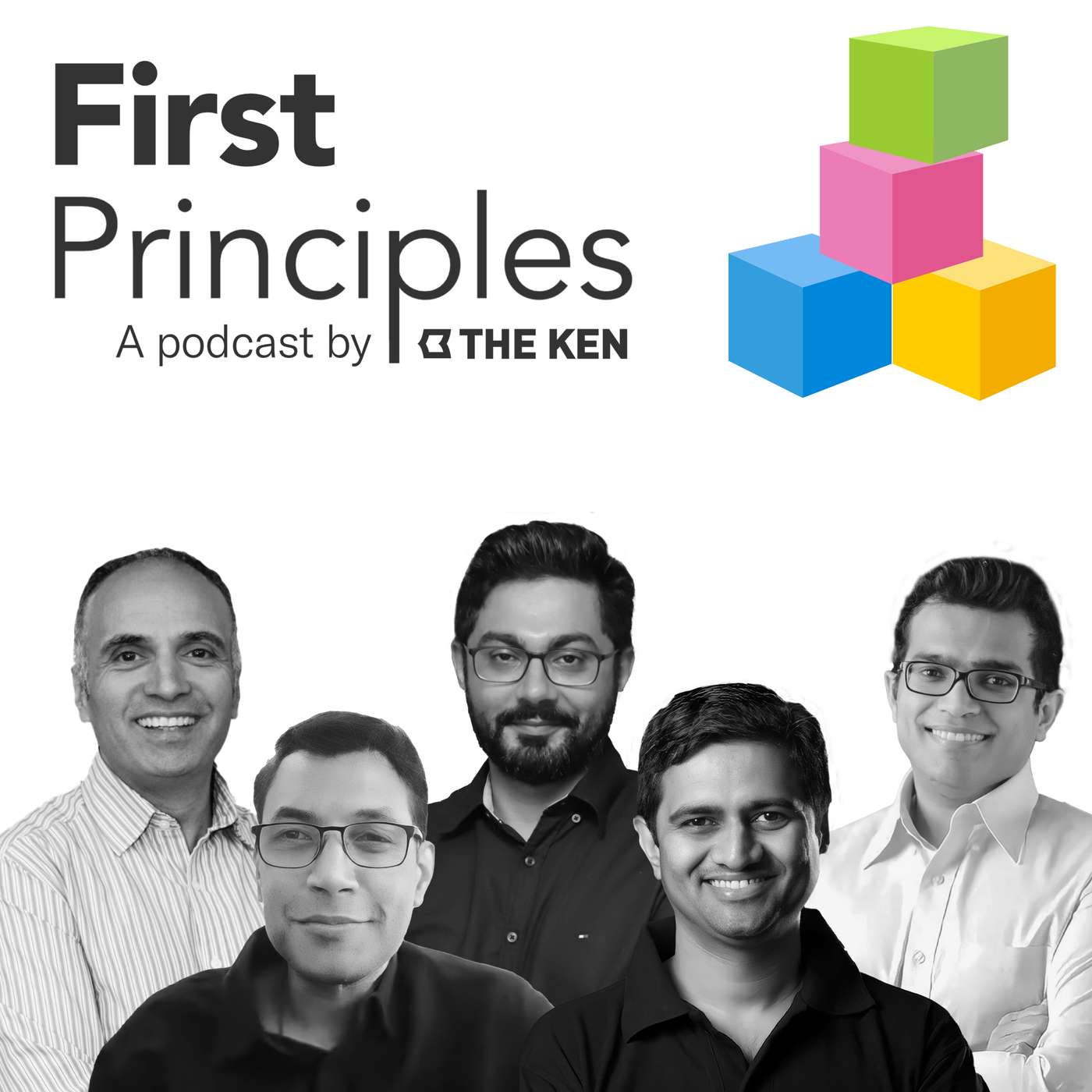
Five founders on creating trust, patience and careers in their organisations
Welcome back to First Principles. I’m your host, Rohin Dharmakumar. Thank you for listening to us. We’re thankful that you choose to spend a few hours with us each week! Today we have a “supercut” episode. Normally our conversations go deep with one specific guest, but every now and then we zoom out and go broad by stitching together a multi-guest conversation. And the invisible thread that connects the conversations with 5 founders we picked for today is company culture. What’s the best way to empower your talent? What do founders expect from employees? And how do they build their company culture? This is where it gets interesting. In most cases, our guests have differing opinions on these subjects. But while putting this episode together, we kept encountering one word – or a substitute for it, in some cases. And that was, patience. Patience in the way that they give feedback to their employees. Patience in investing in your employees. Building this patience not just within themselves, but the entire organization. There are some very interesting perspectives in this episode on how these founders approach and practice patience, among other principles of leadership and management. Here’s a rundown of our guests in this episode: First up, we have Krish Subramanian of Chargebee, who has a simple and powerful dictum, “Move the chairs and get out of the way of good people.” At Chargebee, you wouldn’t fit in if you limit yourself to a strict hierarchy – he sees employees more as his peer group. Next, we have Varun Dua of Acko Insurance, who spoke about growing in a company from an employee’s point of view. One of the things he told me was that when you find something you love, you should be at it for 10-15 years. Because it is the payoff of years of perseverance that is fruitful – and not the short term gains you make along the way. Yashish Dahiya, the co-founder of PolicyBazaar, was quite candid in our chat. He spoke about why an employee who spent five years at PolicyBazaar is considered a new employee. He also went on to explain why he distances himself from making hiring decisions. Next, you’ll hear Archit Gupta of Clear. When talking about employees, Archit was very specific. He told us why investing into the ‘sincere’,‘earnest’ people in the organization is necessary, and why uplifting them is important. Lastly, MN Srinivasu or Vasu, as he’s often called, spoke to me how he built BillDesk by essentially teaching the first set of employees to be well-versed in the line of business BillDesk was creating. This is a part of BillDesk’s culture. There is a broad belief in patience, at Billdesk. Why does patience matter? What allows his employees to be patient? And how do you find meaning in practicing it? This is First Principles—The Ken’s weekly leadership podcast.The Ken is India's first subscriber-only business journalism platform. Check out our deeply reported long-form stories, insightful newsletters, original podcasts and much more here.
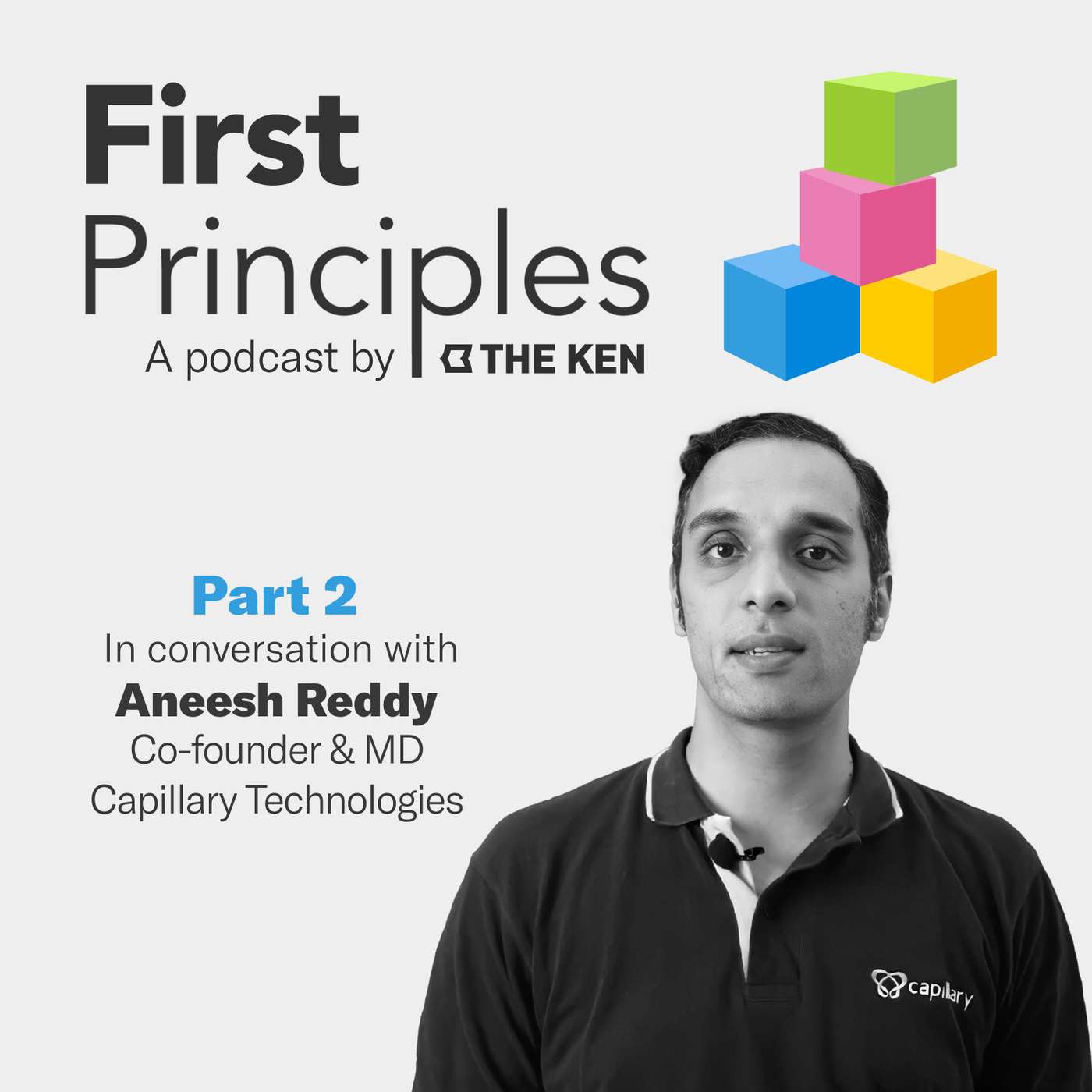
S2 Ep 15Part 2: Aneesh Reddy of Capillary Tech on how being called a “bully” led him to be a better leader
Welcome back to Episode 39 of First Principles!A few weeks ago, you heard the first part of our conversation with Aneesh Reddy, the CEO and Co-Founder of Capillary Tech, a software company offering products and services in the customer experience space.And you might remember that in that episode, Aneesh took us through the journey of Capillary in instalments – because as he explained, Aneesh dreams in instalments. The second instalment was the years 2013 to 2018 – which Aneesh called “Capillary’s confusing years.” They were particularly difficult years for them. Having raised a massive amount of venture funding at an expensive valuation, Capillary started burning cash as they expanded ambitiously beyond India. The leadership had to justify their valuation, Aneesh said. During this time, Aneesh’s co-founder Krishna Mehra, or KK, had moved to San Francisco in the US. Communication between the co-founders started breaking down even as the pressure on Capillary Tech started mounting.Eventually, both of Aneesh’s co-founders left within months of each other. But before leaving, KK was upfront with Aneesh. He told Aneesh that he had become a bully. He wasn’t workable anymore.Aneesh went to the Capillary board and told them he wanted to quit. In this second part, you’ll hear the two things that Aneesh ended up doing to bounce back. The first was executive coaching. A difficult process, because Aneesh, in his own words, ‘was a hard nut to crack.’ Eventually, the coaching process proved to be so transformative for Aneesh, that Capillary today offers coaching to not just its entire leadership team but also down to first-time managers. The second, very interestingly, was Vipassana. And again, as Aneesh explained, it was very difficult at first. But it changed him. He calls it a process of self-discovery and self-purification that every entrepreneur should experience.In this episode, Aneesh talks to me about how these two interventions transformed him and Capillary. He takes me through both processes – day by day, in the case of Vipassana — and how it made a difference to his temperament, leadership style, and his approach to managing.We also talk about Aneesh’s fitness journey, finding a purpose in working, and the future of Capillary. This is episode 39 of First Principles—The Ken’s weekly leadership podcast.
S2 Ep 14Part 1: How Vaibhav Gupta of Udaan builds, scales and improves execution playbooks
Welcome to Episode 38 of First Principles!If you're here to sign up for the First Principles Newsletter, here you go!In this episode, you will hear Vaibhav Gupta, the CEO and co-founder of Udaan, an online trade platform whose mission is to "transform India".It hopes to achieve that lofty goal by bringing tens of thousands of shopkeepers and grocery store owners closer to their suppliers and offering them competitive pricing, guarantees on quality, and easy deliveries and returns.Vaibhav and his co-founders—Amod Malaviya and Sujeet Kumar—were all senior Flipkart leaders before starting Udaan. And yet, he insists Udaan isn't merely a "Flipkart for businesses".Since 2016, when it first began operations, Udaan has raised over a billion dollars in venture capital. It was one of the fastest startups to achieve the coveted "unicorn tag".It has also gone through its ups and downs in terms of valuations and headcount.In this episode—Part 1 of our conversation with Vaibhav Gupta, we discuss:--> Why Udaan evolved from a marketplace to a first-party business--> Why the firm instituted a formal CEO position after five years of its existence--> The five pillars of Udaan's culture--> What daily conversations inside Udaan's leadership team look likeThis is episode 38 of First Principles—The Ken's weekly leadership podcast.
S2 Ep 13Part 2: How Viren Shetty of Narayana Health is building a career free of ‘groundhog days’
Welcome back to Episode 37 of First Principles.If you’re here to find our latest edition of the First Principles Newsletter, here you go!A few weeks ago, we had a wonderful conversation with Viren Shetty – the executive vice chairman of Narayana Health. Narayana Health – formerly called Narayana Hrudalaya – is a hospital network that’s also listed on the stock exchanges. Today’s episode is the second part of our conversation with Viren. In part 1, Viren talked about healthcare in India – something he described as an “assembly line.” If you remember listening to it, you’ll know that Viren has both intricate knowledge and undeniable intuition about the healthcare landscape in India. We discussed Viren’s ambitions to fix healthcare in India and where Narayana Health is headed. That led us to why Viren holds this mission so close to his heart, in this second part of our conversation.What led him to healthcare? What drives him to wake up and do this, day after day? In our opening, you heard about Viren’s innate pattern recognition superpower, which is very different from his father Dr. DeviShetty’s.So, how did he build this intuition? And how does he use it to run a vast hospital network?Viren answers all of these questions with stories from his life, career and even from the hospitals where he grew up. This is episode 37 of First Principles—The Ken’s weekly leadership podcast.P.S. Please recommend your favourite books for the First Principles community here!
S2 Ep 12Part 1: Aneesh Reddy of Capillary Tech on his wins, mistakes and a breakout SaaS model
Welcome to Episode 36 of First Principles!If you're here to find our latest edition of the First Principles Newsletter, here you go!Our guest for this episode is Aneesh Reddy, the co-founder and CEO of Capillary Technologies, a Bangalore-headquartered software-as-a-service – or SaaS – company that is one of the global leaders in customer loyalty and engagement.Capillary powers the customer loyalty operations of hundreds of companies around the world. From companies like Domino’s, Puma, Shell, Marks & Spencers, and the Tata Group, to 15 of the world’s top Fortune 100 companies. Each time you transact at one of their stores or respond to a marketing message or upgrade your room, it’s probably Capillary’s tech at play behind the scenes. In its 16th year now, Capillary powers close to 7 billion annual transactions for its customer’s customers.But – and there’s always a but in great stories – Capillary and Aneesh didn’t have an easy ride.They went through multiple economic downturns. They raised large venture rounds and expanded globally, only to shut down many of those operations after losing millions of dollars. Of the three co-founders, two left. One having burnt out and the other because Aneesh was too stressful to work with.Aneesh himself wanted to quit. But his board wouldn’t have it.In this episode, Aneesh explains how CapillaryTech bounced back from this point, by slicing their journey into three “dream installments.”He also talks about:How CapillaryTech “bounced” into SaaS in a global recession The breakout SaaS model that gets them $1 million deals Building a people-first organization Learning and changing as a leaderThis is episode 36 of First Principles—The Ken's weekly leadership podcast.P.S. Please recommend your favourite books for the First Principles community here!
S2 Ep 11Part 2: Soumya Rajan of Waterfield Advisors on entrepreneurship, liberation and legacy
A few weeks ago, we published an episode with Soumya Rajan of Waterfield Advisors. We discussed what it was like to bet your future on an idea that no one had tried before, in India. In Soumya’s case, that idea was a business model around wealth management.You might remember Soumya saying it really wasn’t easy. Her peers had doubts. Her clients had doubts. Her family had doubts. She had doubts. But she dug her heels in. 12 years in, Waterfield Advisors is now India’s largest multi-family office and wealth advisory, managing over 40,000 crores for its clients. We covered a lot of ground around Waterfield’s early years. And then, we took a break. We had some coffee, looked around the studio offices, and came back in to record again. And slowly, the next hour of our conversation became about looking ahead. Soumya detailed her vision to me. Waterfield is planning to expand to Dubai this year. And perhaps even more international offices after that. In fact, Soumya said, she wants to build an organization like J.P. Morgan – out of India.JP Morgan traces its history nearly 150 years back. So naturally, I asked Soumya: how do make sure you build a company that’s around for 10, 20…even 50 years? How do you build a truly defensible and lasting moat?Her answer was very interesting. Soumya said Waterfield will continue what it started with – never manufacturing their own products, and continuing to remain only an advisory.She explained, Waterfield would never go into distribution – which is where the money is. It will always be an advisory. Again, Soumya has a big bet – she believes that Waterfield needs to give up growth and scale in the short term, to succeed in the long term. And in this episode, she explains why this will work. We also talk about: --> Being unapologetic about entrepreneurship--> Learning to let go as a CEO--> How to use AI as a friend --> Building a ritualistic work ethic This is episode 35 of First Principles—The Ken's weekly leadership podcast.P.S.: If you have any submissions for book recommendations, interesting reads, #SilentSunday pictures or songs for the First Principles newsletter, send them here.
S2 Ep 10Part 1: Viren Shetty of Narayana Health on becoming ‘worse’ to become better and other ways to fix healthcare in India
Welcome to the first 2024 episode of First Principles! Though we’re only 15 months old, we’re also technically into our third calendar year, after our first episode in August 2022. A happy new year to you. Here’s to many more years of wonderful conversations, learning and growing.Our guest today is Viren Shetty, the executive vice chairman of Narayana Health—the publicly listed healthcare group that operates over two dozen hospitals across India. Refreshingly, Viren thinks about healthcare…as an assembly line. And there are many, many steps in this line. Many of these are very small...they seem unimportant. Even forgettable. Like scheduling an annual healthcare checkup. Or filling out a feedback form at your clinic. Or just waiting in line for your doctor's appointment. When I asked Viren how healthcare can be fixed in India, he pointed to this assembly line. Basically, what if you tweak every small step of this line a little bit? Small, unnoticeable changes at every step? He’s confident that the result will be a smooth, well-oiled machine that takes care of your health end-to-end. This is what, Viren says, Narayana Health is trying to do. It reminded me of Apple. Take existing technologies and make improvements while putting the user at the centre of the experience. Narayana Health is a name you might have heard, especially if you’re from Bangalore. It was founded in 2000 by Dr. Devi Shetty. It went public in 2016 and is valued at over US$1 billion.But what we know as Narayana Health today began as Narayana Hrudayalaya, a super speciality hospital with a laser-sharp focus on cardiac health. Twenty years on, however, it's changed a lot.In addition to its numerous hospitals across India, it's also venturing into health insurance policies, partnering with clinics and pharmacies, and building an ambitious bundled subscription plan for its customers. This episode is a first in more ways than one. It’s not just our first episode of 2024. It’s also the first episode with a guest from the healthcare sector. And it’s the first episode which may sound a little different to you. In this episode, I ask Viren:Why are health checkups such a hassle?Is the answer to better healthcare in hardware or software?What are the health tech startups doing right?And then there is the unshakable mistrust that the Indian population holds against hospitals and doctors. Can this even be solved?Patiently and confidently, Viren answers every one of my questions. He talks about building sticky habits in customers, changing the messaging in healthcare, and becoming “worse” as an insurance company to be better as a healthcare one.In this episode, we truly get down to the first principles of healthcare in India.Check out the First Principles Newsletter, a weekly Sunday read on entrepreneurship, mental models, leadership and reflection here.Send in submissions for book recommendations, interesting reads, Silent Sunday pictures or songs for the First Principles newsletter here.This is Episode 34 of First Principles, Viren Shetty—The Ken’s fortnightly leadership podcast.The Ken is India’s first subscriber-only business journalism platform. Check out our deeply reported long-form stories, insightful newsletters, original podcasts and much more here.
S2 Ep 9Part 2: Why Ritesh Agarwal is a 'peacetime CEO' despite OYO's many wars
A couple of weeks ago, you heard our episode with Ritesh Agarwal, the founder and Group CEO of OYO rooms. If you remember, he talked to me about the atmosphere at the organization after COVID hit.To put it simply, it was wartime inside OYO.Cash needed to be protected. Leadership had to be let go. The company completely changed.In the first hour of the conversation with Ritesh, who explained in detail what it took to come back from this near-death experience. We’d urge you to check out that episode.Anyway, we took a short break after the first hour. We stepped out, had a coffee, and chatted a bit. Which helped immensely, because once we stepped back inside the studio, the conversation turned…inwards. We got to reflecting. Retrospecting. How has Ritesh grown, and what has he learnt as a founder, as a CEO, as a leader…And something he said was really surprising. Rohin asked him if he considered himself a wartime CEO or a peacetime one.With cool conviction, he said he’s a peacetime CEO. With OYO being in war mode through all its years of difficulties, Ritesh could very well be considered a great wartime CEO.But when you’ll listen to this episode, you’ll know that Ritesh knows what kind of a CEO he is, because he is an extremely deliberate, reflective person. He’s thought about every challenge and every opportunity that has come his way. And what he’s learnt from it. Reflection is non-negotiable for a CEO, he says.In this episode – part 2 of our conversation with Ritesh Agarwal of OYO, he explains this. Why you must take time to reflect. When you should do it. And of course, the process at OYO to collectively reflect as an organisation. I think this is the perfect episode for us to wind down the year with, here at the First Principles podcast. Ritesh looks back on his decade as a young founder and CEO – how he’s changed, and how his own mission has evolved. We talk about recognizing which opportunities to grab and which to pass up, and how to deal with regret when it comes. We now have chapters available for this episode on Spotify and Apple Podcasts! Click on any chapter you like to jump to the parts you want to listen to.This is episode 33 of First Principles with Ritesh Agarwal, Part 2—The Ken’s fortnightly leadership podcast.Send in submissions for books recommendations, interesting reads, Silent Sunday pictures or songs for the First Principles newsletter here.
S2 Ep 8Part 1: Soumya Rajan of Waterfield Advisors on turning a 'sceptical' idea into a resilient business
“What is something you believe in, that no one else around you does?”If you’ve heard episode 30 with Ritesh Agarwal, the founder and CEO of OYO Rooms, then you’ll recognize this as a question that he had to answer while applying for the Thiel Fellowship.It’s a simple but powerful question that usually differentiates motivated, passionate and unreasonable founders from other equally capable professionals. Because what is a startup if not a mere belief in something that should exist?This question is also equally apt for our guests today. Because Soumya Rajan believed in something that no one else around her did. Soumya is the Founder and CEO of Waterfield Advisors – India’s largest multi-family office and wealth advisory firm which manages over 40,000 crore – that’s over $4 billion – for its clients.But in 2010, Soumya was working at Standard Chartered Bank, a bank she’d joined straight from college after back-to-back mathematics degrees. A bank where she’d worked at for 17 straight years – her first and only job. She’d been the head of Standard Chartered’s Private Banking arm and reached the top. But having reached there, Soumya wondered why she wasn’t interested in playing the same game.2010 was also the year Soumya turned 40. The age when many professionals hit their mid-life crisis. If you remember, Karthik Jayaraman, the co-founder and CEO of Waycool, decided to start up too after hitting 40. Soumya too decided to quit her job and start on her own by making a contrarian bet – that it was better to charge her wealthy clients directly for financial advice instead of making money via commissions paid by financial services companies whose products she would recommend. Soumya says that in 2010, this went completely against the tide in India’s wealth management sector. No one else was doing it. Even her peers and ex-colleagues were dismissive of her belief. In this episode, Soumya, in her calm and reflective manner, tells me her story. There is a strong thread of vision that runs through our entire conversation – Soumya is driven by a sharp sense of curiosity and purpose in everything that Waterfield Advisors is doing. You’ll notice it in the way she breaks down her midlife crisis, her role as CEO, her beliefs about products and incentives, and even her work for empowering women as investors. We also talk about:What the wealth management landscape of India looks likeWhy Waterfield is like the lawyer or the doctor of financial wellbeingHow to survive in the short-term when you’re building to lastThe one question she asks people before hiring them.Check out the First Principles Newsletter, a weekly Sunday read on entrepreneurship, mental models, leadership and reflection here.Send in submissions for book recommendations, interesting reads, Silent Sunday pictures or songs for the First Principles newsletter here.This is Episode 32 of First Principles, with Soumya Rajan.—The Ken’s fortnightly leadership podcast.The Ken is India’s first subscriber-only business journalism platform. Check out our deeply reported long-form stories, insightful newsletters, original podcasts and much more here.
S2 Ep 7Part 2: Karthik Jayaraman of WayCool looks back on his career, starting up at 40 and building leaders
Welcome to to episode 31 of First Principles! If you’ve been listening to us for a while, you’ll notice that this was supposed to be an off week for us as a fortnightly show. We used to release new episodes every other Thursday. And last Thursday was our episode with Ritesh Agarwal of OYO Rooms. But starting this week, First Principles is now a weekly podcast. We’re going to bring you a fresh conversation every Thursday. But in a slightly different way. Well, the supply of truly original, accomplished and candid founders and business leaders in India is what we believe, a finite resource. So while we’d love to – at some point – have a roster of guests talking to us every single week, that isn’t possible right now. And so, we’re now increasing the duration of our conversations with the leaders we meet to roughly two hours each. Only to split it into two distinct conversations and episodes. That’s where this episode comes in. A couple of weeks ago you heard our episode with Karthik Jayaraman – the co-founder and CEO of WayCool Foods, an agri-tech start up that distributes and processes fresh produce, grains, staples and milk. It was a wonderfully candid and authentic conversation in which Karthik spoke about complementing, instead of disrupting; treading lightly while making decisions; and starting up at 40.In fact, we’d urge you to check out the episode – or, if you'd like to go through the full transcript. You can click here to do so. But what you didn’t hear in that conversation is what we’re releasing today as episode 31. We talk about why Karthik took such a big risk at 40 by jumping from automobiles into a completely different sector, agri-tech. He also reflects on his career, what got him here, and what keeps him going. We talked about who Karthik is – as a leader and a CEO. What are the habits that he’s picked up? What has he been reading, and why? We’ve tied all of this together for today’s episode – a Part 2, on Karthik’s life, career and values. Check out the First Principles Newsletter, a weekly Sunday read on entrepreneurship, mental models, leadership and reflection here.Send in submissions for books recommendations, interesting reads, Silent Sunday pictures or songs for the First Principles newsletter here.This is episode 31 of First Principles with Karthik Jayaraman, Part 2—The Ken's fortnightly leadership podcast.The Ken is India's first subscriber-only business journalism platform. Check out our deeply reported long-form stories, insightful newsletters, original podcasts and much more here.
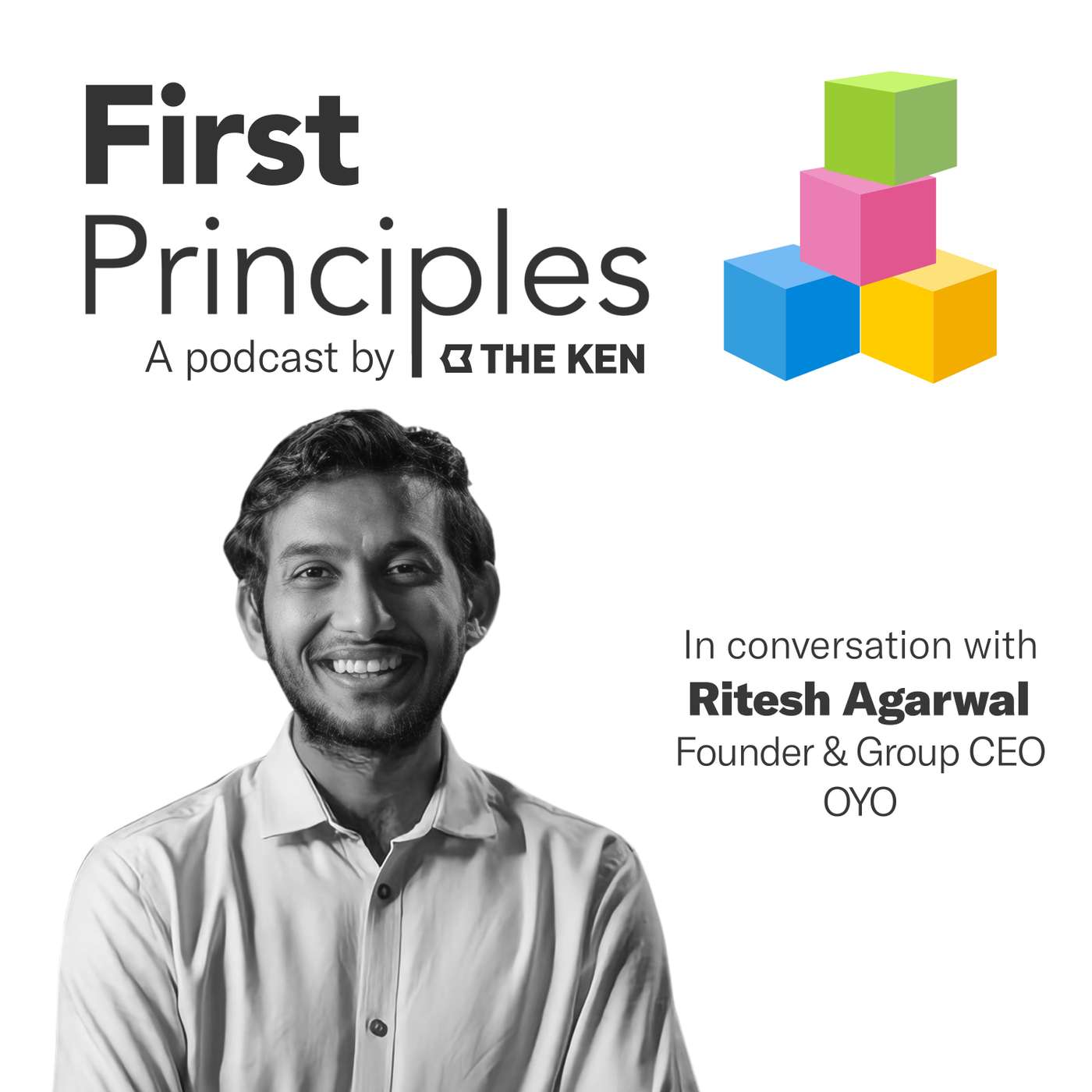
S2 Ep 6Part 1: Ritesh Agarwal of OYO on building a business on differentiation, communication and resilience
Welcome to Episode 30 of First Principles!We recorded this episode at Spacebot Studio, a new, sleek space overlooking the metro in IndiranagarOur guest, Ritesh, was already at the studio.Ritesh was asking the owners of the studio a bunch of questions: how big is this space? How many bookings do you get in a day? Are there other studios around in this location? And it’s not surprising, because our guest for this episode is Ritesh Agarwal – the Founder and Group CEO of OYO. This even came up in our conversation. The rest of us saw a wonderful studio, but Ritesh saw a space with the potential to be utilized and monetized. He sees the world differently – as founders often do. For example, Ritesh explains how he sees the hospitality industry – in fact, the entire of India – as a space with a supply problem. The solution, he explains, is not in increasing or decreasing supply. It’s in utilizing it. Changing the supply quality altogether. And if you go back and look at how Ritesh OYO was conceptualized and built – at age 19, by the way – you’ll realize that this is the foundation of his business model. Across the conversation, his lens of the world became sharper and sharper. Ritesh answers all of my questions with very specific models and frameworks that he uses – but he’s not the guy who leaves it at that.He breaks them down. He offers examples from his life, the journey of OYO and even from books he’s read. And it makes sense because the first thing Ritesh says that he loves great questions!Across this episode, we also talk about:Why Ritesh loves being called the Chief Clarity OfficerWhat is OYO’s unbeatable strengthThe three ways in which young folks can learn from the school of lifeAnd why Ritesh wears his naivety on his chestWe now have chapters available for this episode on Spotify and Apple! Click on any chapter you like to jump to the parts you want to listen to. Check out Day Zero, The Ken's limited-run newsletters tracking this year's challenging placements season here. Day Zero is a premium newsletter for our subscribers, but if you're a college student or faculty with an official email ID, you can sign up to read for free!Send in submissions for books recommendations, interesting reads, Silent Sunday pictures or songs for the First Principles newsletter here.This is episode 30 of First Principles with Ritesh Agarwal—The Ken's fortnightly leadership podcast.The Ken is India's first subscriber-only business journalism platform. Check out our deeply reported long-form stories, insightful newsletters, original podcasts and much more here.
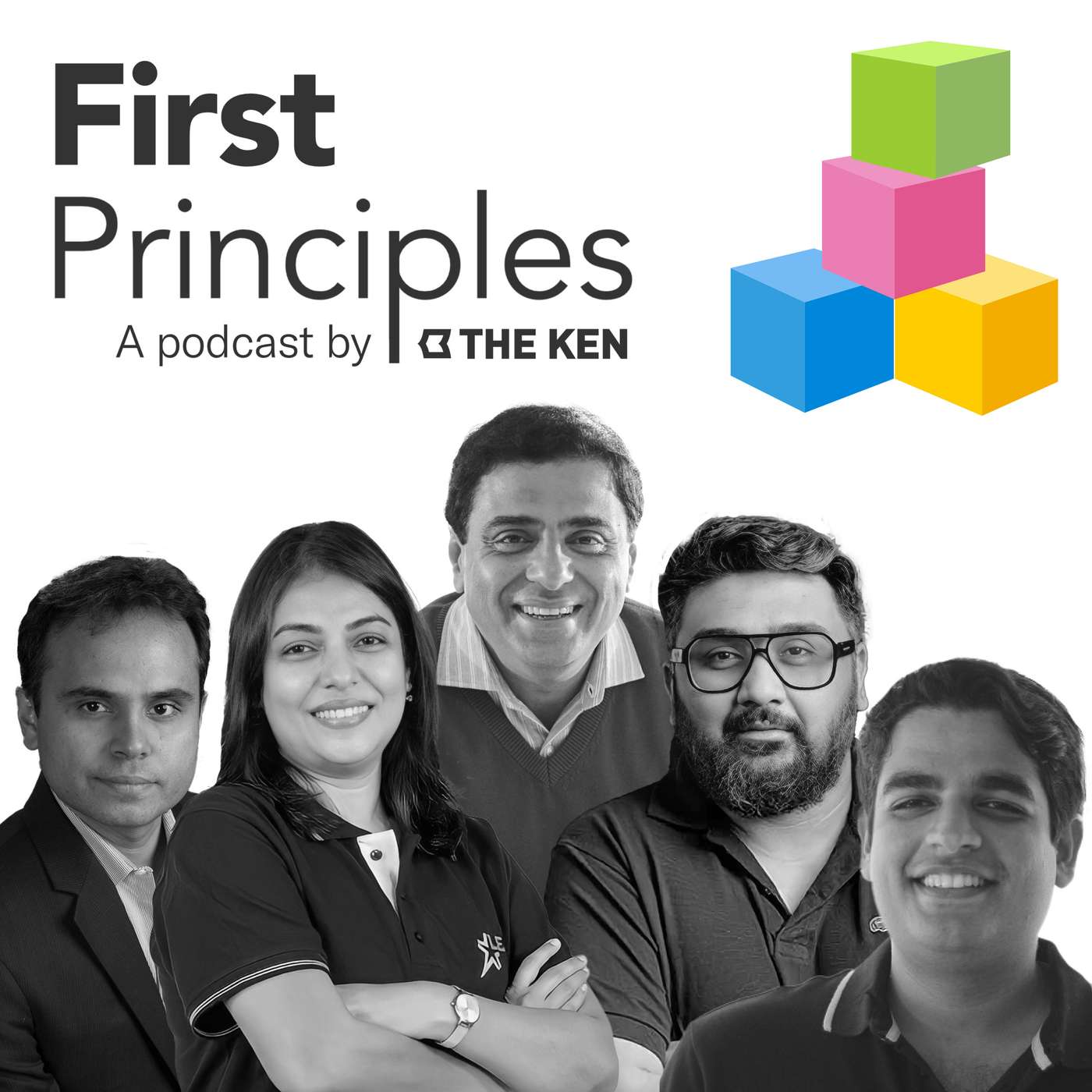
Five founders on their childhood, choices and what drove them to start up
Welcome back to First Principles! If you’ve been listening to us for a while, you know that First Principles covers a lot of topics. Leadership, organization building, decision making, learning methods, careers, life principles, habits, people management, parenting..it goes on.But if there’s a common thread that connects them all together, it’s entrepreneurship. Thus, today we have a “supercut” episode about the lives of founders. You’re probably familiar with our supercut episodes. Every now and then we go back to our earlier episodes and stitch together some of the most interesting conversations from them. And so, we’ve put together this special supercut episode that takes you through the lives of five accomplished, original and diverse founders. They are Kunal Shah, the founder and CEO of CRED, Srikanth Velamakanni, the co-founder and Group CEO of Fractal, Ronnie Screwvala, the co-founder and Chairperson of UpGrad, Gaurav Munjal, the co-founder and CEO of Unacademy, and Smita Deorah, the co-founder and CEO of LEAD School. We cover their childhood, their careers and the choices they made, all of which helped them become the people they are today.Of course, I’ll urge you to go back and listen to our full episodes – but this if you’re not caught up on our older episodes, this is the perfect place to start. Here’s a quick glance at the conversations in this episode: I spoke with Kunal earlier this year, in a conversation full of wonderful analogies and sharp perceptions of the world. And how Kunal’s childhood and teenage years, when he was thrust into work to support his family, led him to the core philosophy behind CRED.Next up is Srikanth Velamakanni, the co-founder and Group CEO of Fractal. And Srikanth’s childhood, too, is an important part of his journey as a founder. Especially when you consider the fact that growing up, he decided never to go into business. Because his father would often tell him that there was no such thing as an honest businessman.And yet, in 200o, Srikanth pooled in 2 lakh rupees to build Fractal. That’s right – they’ve been around for nearly 25 years.Srikanth tells me what changed. Next, we have Ronnie Screwvala, the chairperson and co-founder of UpGrad. Ronnie’s on the opposite end of the spectrum from Srikanth – growing up, he told his parents he’s never going to work for someone else. Ronnie calls it serendipity – or even karma or destiny, and explains how he went from earning 500 rupees on the weekends to running multiple successful and colourfully varied organisations. This brings me to Gaurav Munjal, who you will know as the co-founder and CEO of Unacademy. And his story starts in college – when he ran a very successful blog devoted to - wait for this - the actress Priyanka Chopra. And then a facebook page that earned him thousands of dollars from ads.He was a content creator before it was even a profession — and he explains how this led to Unacademy. Lastly, we have Smita Deorah, the co-founder and CEO of LEAD school. Like Gaurav and Ronnie, she’s built a massive institution in education, too.Smita built LEAD school as a way to completely rejig the education system and everything that it’s built of: the curriculum, pedagogy, technology, even the parents’ mindset. And like our other guests, she has a very interesting story driving her too – and it starts when her daughter was only six months old. Thanks for being part of the First Principles community — you can now submit questions for our upcoming guests, book recommendations & image submissions for the First Principles podcast and newsletter and much more, here.This is First Principles— The Ken's fortnightly leadership podcast. The Ken is India's first subscriber-only business journalism platform. Check out our deeply reported long-form stories, insightful newsletters, original podcasts and much more here.
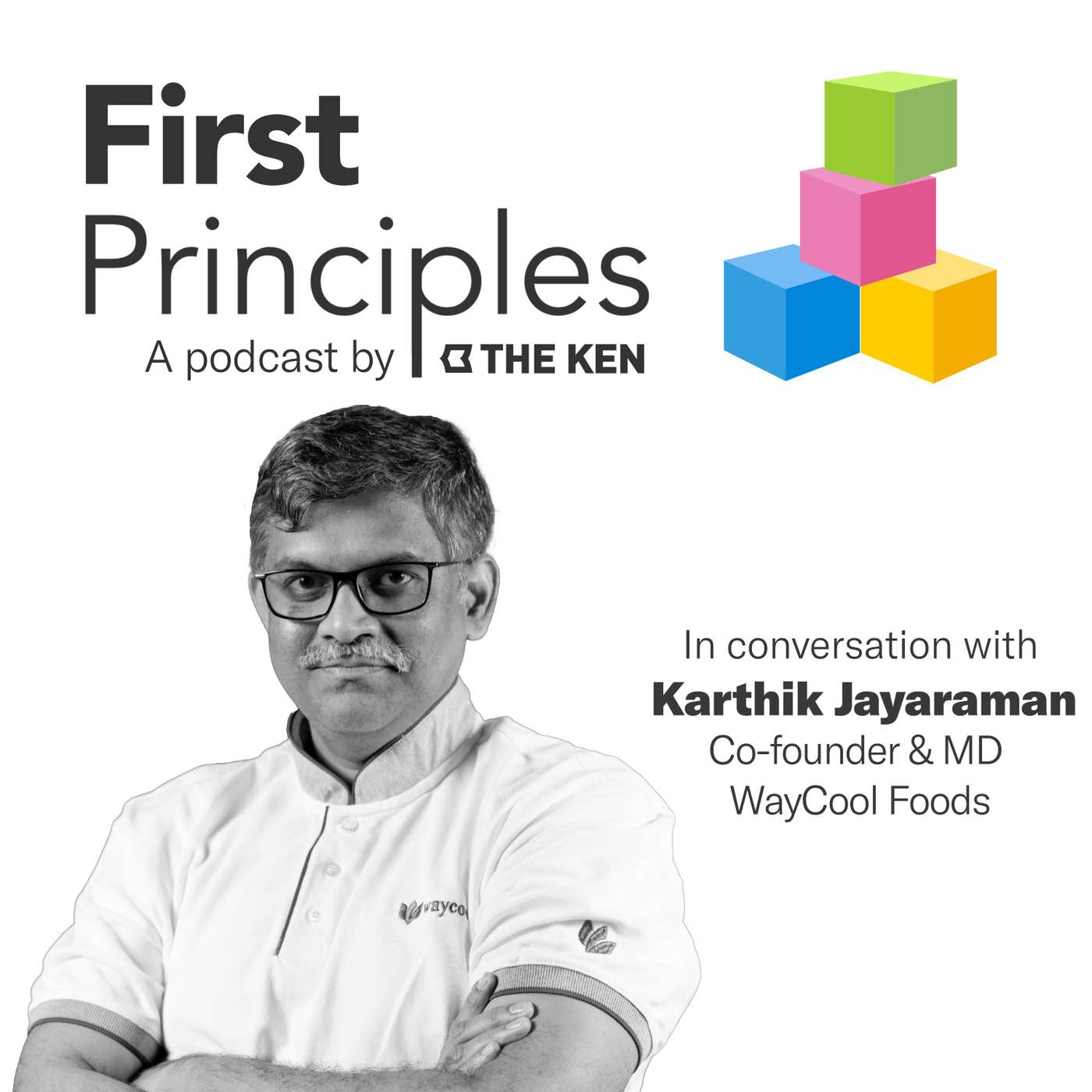
S2 Ep 5Part 1: Karthik Jayaraman of WayCool Foods on why disruption isn't always necessary for innovation
Welcome to Episode 29 of First Principles.Our guest for this episode is Karthik Jayaraman, the co-founder and MD of WayCool Foods.Karthik's leadership style and philosophies differ from many of the earlier leaders and founders featured in the last 28 episodes of First Principles. Perhaps it's because he started WayCool, an agri-tech startup, after turning 40. Karthik jokes that some people buy a Ferrari as a response to their midlife crisis. Instead, he decided to start up.WayCool was last valued at over $700 million. It's headquartered in Chennai and focused on South India. It's a distributor and processor of fresh produce greens, staples and milk, and though it operates from farm to fork, it is a supply chain company at its heart, says Karthik.One that tries to predict the demand from retailers and consumers and then works backwards to source the supply. I know this might sound complex, but Karthik explains it really well. And when he does, you'll notice he has a very keen understanding of supply chains.That's because before starting an agri-tech company, Karthik had been in the automotive industry for nearly 20 years. He's also spent time as a consultant with McKinsey.Perhaps this offbeat combination makes him somewhat different from many founders, which, in turn, leads to a set of contrary but humbly held perspectives on business and startups.For instance, Karthik talks about how he's built WayCool, not to be disruptive but to complement the geographies it is in. It's a business that sways with the landscape and tries to tread lightly.Karthik is also a founder who doesn't hesitate to admit where he's made mistakes before or where there are still opportunities to learn.In this conversation, Karthik talks about:Two questions he asks to find out if an idea is truly novelHow do you build a brand when it comes to staple products where every commodity is similar?How does he observe, learn, document and implement knowledge?And what is the job of a CEO?This is Episode 29 of First Principles—The Ken's fortnightly leadership podcast.The Ken is India's first subscriber-only business journalism platform. Check out our deeply reported long-form stories, insightful newsletters, original podcasts and much more here.
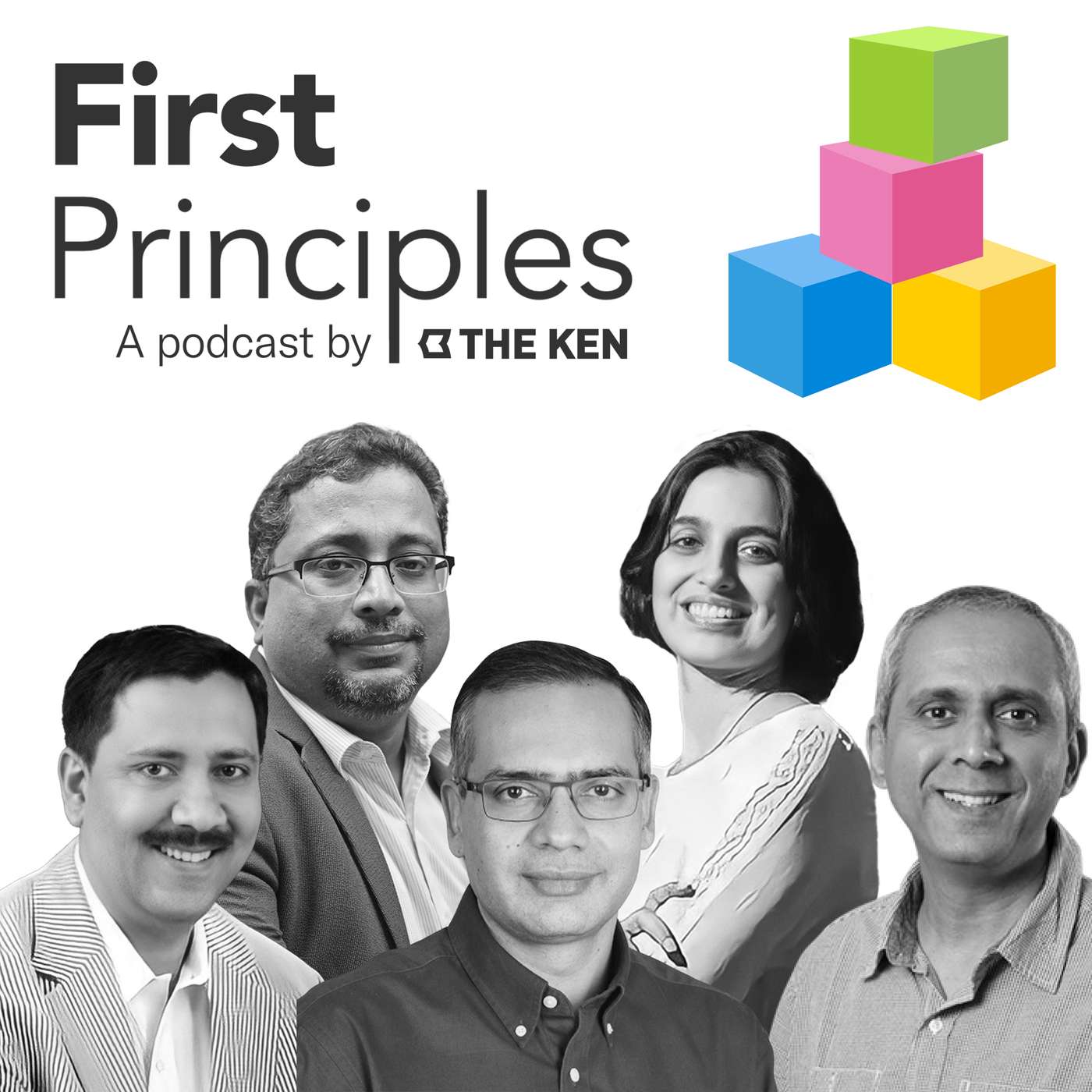
Five founders on building a unique product and making it last
Welcome to First Principles, The Ken’s fortnightly leadership podcast! I am Rohin Dharmakumar, your host.First, if you’re a new listener of this podcast, I think you’ve clicked on the right episode. And if you’re a long-time listener – thank you, by the way – then you might know that here at First Principles, we have a few favourite questions. And we try and ask these questions to most of our guests. The most interesting part of this is that every guest has a vastly different answer to the same question – their age, experience, outlook on life…even their co-founder or their family plays a significant role in how they answer our questions. Take motivation, for example. What drives founders/CEOs, even when things aren’t looking so good?It could simply be untameable perseverance – like in the case of Deep Kalra, the founder of MakeMyTrip. For Ruchi Kalra of OxyCo, it was the people around her. Srikanth Iyer of Homelane, in fact, quotes from a book that changed the game for him.We highly recommend going back and listening to our full episodes, but this is a great place to start, too. We went back to some of our older episodes to make a supercut of some very specific answers from our guests to questions on motivation, perseverance, finding the right opportunity in a difficult market and fighting stress. Good stress, as one of our guests calls it.Here are our guests:We start with Deep Kalra, the founder and chairman of MakeMyTrip – a company that began when India wasn’t even ready for internet businesses. Deep talks about surviving as a travel business through the pandemic, learning to stay in the game and building to last. Deep Kalra of MakeMyTrip on being “22 years young”, presenting from Excel sheets instead of Powerpoint slides, the importance of open disagreements, and the good stress of buildingNext, we have Ruchi Kalra – who has built two profitable unicorns in seven years: OfBusiness and Oxyzo. She takes us through an important maxim that drives both her businesses: finding the right opportunity in the right sector, even if it’s crowded.Ruchi Kalra of Oxyzo on creating two unicorns in 7 years, spotting gigantic market opportunities, putting profits and cash flow first, and letting go of personal ambitionsKamal Sagar, the founder of Total Environment, has had one thing driving him for 27 years: good quality. Good quality that even thousands of real estate companies in the West are just not able to deliver on. The most interesting part is how he does it: Kamal builds homes the way software is built. Kamal Sagar of Total Environment on picking principles over convenience, reimagining real estate, design, authenticity and learning to say noWhen I asked how Srikanth Iyer, the founder of Homelane, fought through the first few years of absolute chaos at his startup, Srikanth said he focuses on understanding what you’re bad at. He explains how he learnt and applied this First Principle in his career.Srikanth Iyer of Home Lane on embracing what you’re bad at in order to do better at what you’re good at, and being a wartime generalShan Kadavil of FreshToHome cracked a really tough business in a super competitive market. And then, he evolved as a CEO and a leader. He talks about scaling a 40-employee organisation to a 4000-employee organisation, encouraging his team to “be their own CEO,” obsessing over the right metrics, and much more. Shan Kadavil of FreshToHome on selling fish, building moats, encouraging bottom-up “shots on goal”, and being honest with boardsThis is First Principles— The Ken’s fortnightly leadership podcast.The Ken is India's first subscriber-only business journalism platform. Check out our deeply reported long-form stories, insightful newsletters, original podcasts and much more here.
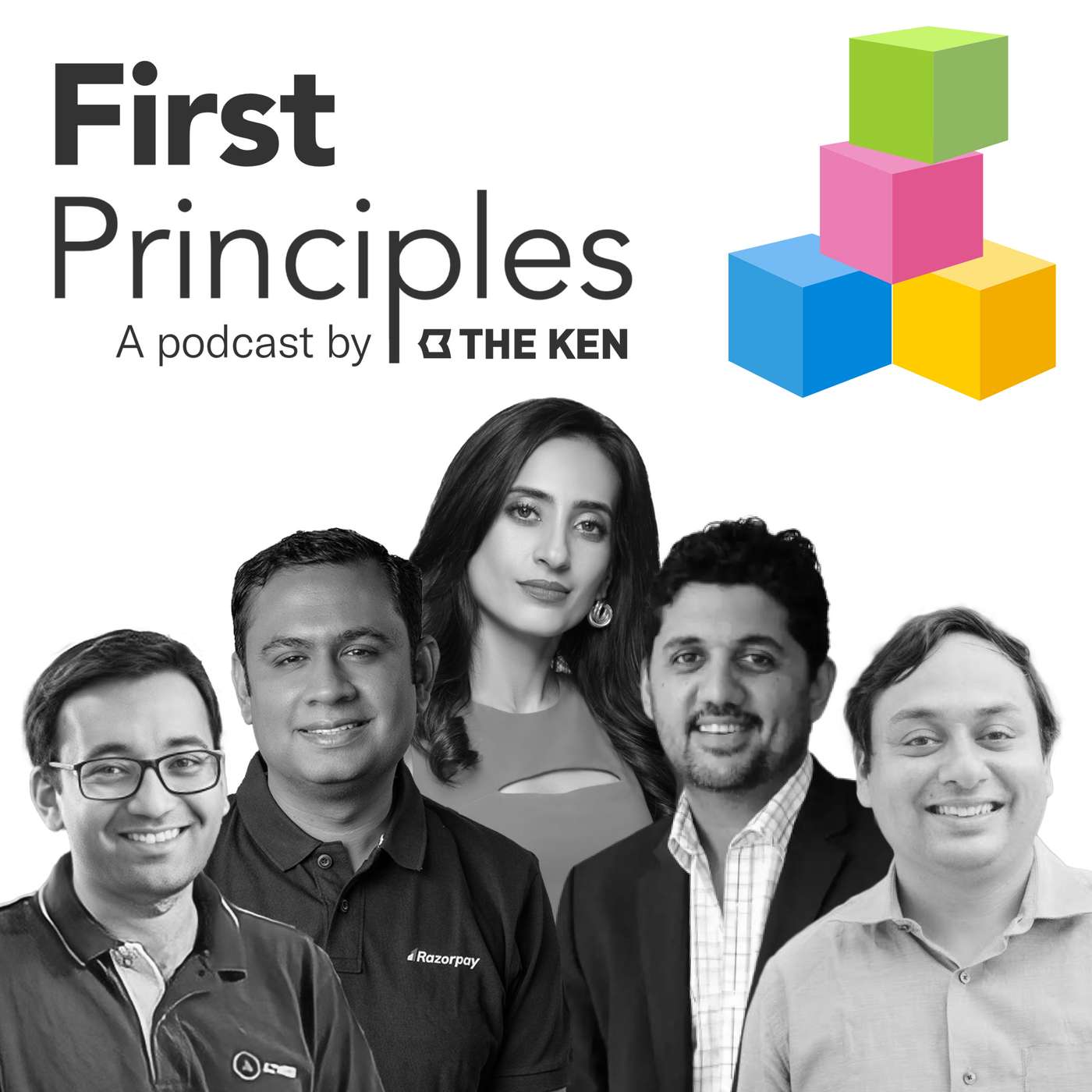
Five CEOs talk about their journeys, struggles, successes, and failures
If you started listening to First Principles—The Ken's fortnightly leadership podcast—in 2023, then today's special episode might be something you'll love. We went back to guests from episodes 6 to 10 from 2022 and created a supercut episode highlighting some of the most interesting bits from conversations with these accomplished leaders.We'd urge you to listen to the full episodes, but this is a great place to start if you've been meaning to check out our older episodes but haven't gotten around to it.We begin with Harshil Mathur, the co-founder and CEO of Razorpay—a fintech giant offering loans, payroll services, and even bank accounts.Harshil talks about his journey into entrepreneurship, how Razorpay develops products, the importance of deliberately driving company culture, and much more. Episode 6: Razorpay CEO Harshil Mathur talks about deliberate culture, building to a need, and the principles of product developmentNext, we have Vineeta Singh, the co-founder and CEO of SUGAR Cosmetics—one of India's most popular and fastest-growing cosmetics brands.Vineeta talks about overcoming stereotypes as a female founder, the importance of passion when selecting your workplace, and why hustle, hunger, humour, and humility are key pillars of SUGAR's culture. Episode 7: Vineeta Singh of SUGAR Cosmetics talks about building products, educating consumers, and focusing on the long termAnd then, we have Amrish Rau, the CEO of Pine Labs—the payments solution provider whose point-of-sale terminals are visible in most Indian shops and stores.In 2016, Citrus Pay, an online payments provider Amrish co-founded, was acquired by rival PayU for $130 million in cash. It was one of the most significant acquisitions back then. But Amrish says it is also one of his biggest regrets. As a first-time founder, he decided to sell his company too quickly. Amrish tells us why.Episode 8: Amrish Rau of Pine Labs talks about the differences between being a founder and CEONext, we have Amit Agarwal, the co-founder and CEO of NoBroker—the 8-year-old Bengaluru-headquartered real estate platform that wants to disrupt the very concept of brokerage fees.Amit speaks about entering management consulting as a young MBA because it paid the most, starting a business that almost no investor wanted to fund, convincing notoriously value-minded Indians to pay a subscription fee before finding a rental apartment, and running a frugal organisation with a cockroach mentality.Episode 9: Amit Agarwal of NoBroker talks about his single-minded mission to disrupt brokerage, building a cockroach company, and why his office address is a secretAnd finally, we have Tarun Mehta, the co-founder and CEO of Ather Energy—India's best-known electric scooter maker. Tarun speaks about his journey to convince investors of his vision, doing hard things that defied common sense, building an organisation over decades, and why it takes at least three years to make a true impact at work.Episode 10: Tarun Mehta of Ather Energy talks about doing hard things, going down multi-year rabbit holes, building companies over 30-40 years, and being chief storytellerThe Ken is India's first subscriber-only business journalism platform. Check out our deeply reported long-form stories, insightful newsletters, original podcasts, and much more here: https://the-ken.com/?utm_source=website&utm_medium=podcasts&utm_campaign=podcast_ep
We don't have an episode today, but a newsletter
We don’t have a new First Principles episode this week, but we do have something special for you.If you’ve enjoyed this podcast, you’ve already built a curiosity for mental models that force you to look at the world differently. To break down complex problems from the ground up. To analyse and synthesise.This, precisely, is also what the First Principles newsletter is about.Each Sunday, this newsletter will bring fresh insights into how accomplished founders, leaders, and changemakers apply First Principles thinking to see the world differently and remake it in their vision.If you’re a free or paying subscriber of The Ken, you’ll find this newsletter in your inbox already.But if not, please click here, sign up for free on our website, and you'll receive the newsletter in your inbox for free: https://the-ken.com/?utm_source=website&utm_medium=podcasts&utm_campaign=podcast_ep