Fintech Impact
445 episodes — Page 7 of 9

Ep 145OneSpan with Sam Bakken | E145
In this 145th episode of Fintech Impact, Jason Pereira, award-winning financial planner, university lecturer, writer, and host interviews Sam Bakken, the Senior Product Marketing Manager at OneSpan. OneSpan is a cybersecurity technology company that works to improve customer experience by improving security systems using things such as biometrics. Sam is here to talk about biometrics and the role that it will play in the future of technological security!Episode Highlights:0:36 – Sam introduces OneSpan and the services that it provides.1:40 – Diving into the history of OneSpan and how Sam got involved.3:41 – Sam defines biometrics and how they are built.4:59 – Where does Sam see biometrics going in the future?7:15 – How much of a challenge is it for security-minded companies competing with the likes of Apple?10:28 – In what fashion are we using biometrics today without knowing?12:55 – Sam breaks down the multitude of biometrics information that comes together in technological security systems.14:20 – Mike and Sam discuss the outdated practice of giving a written signature and how COVID has affected that.17:20 – How does Sam see the gamut of biometrics evolving concerning how we want to interface with our tech?23:57 – What is the craziest use of biometrics that Sam has seen?25:31 – What are the reactions of financial institutions to new biometrics-based technology?30:42 – What is the one thing that Sam would change in his industry?32:08 – What has been the biggest challenge with taking biometrics-based technology to market?34:10 – What excites Sam the most about what he is working on right now?3 Key PointsBiometrics are the biological traits that can be used to identify humans, such as fingerprint, facial recognition, etc., and are being used more and more in technological security today.People have come a long way from being reluctant to put their information out on the internet to trusting technology enough to store personal information on their phones.Financial institutions are reluctant to adopt new biometrics-based technology due to cases of bias in the systems and also because a lot of tech allows multiple registered identities.Tweetable Quotes:“Solving the problem, selling the security controls that can help solve those weaknesses that are identified, that really appealed to me at OneSpan.” – Sam Bakken“It’s always a balance between convenience and security.” – Sam Bakken“You can’t always deliver a consistent user experience across all devices...but there are options to still offer those biometrics across devices in a consistent manner.” – Sam Bakken“A good user experience is a secure one.” – Sam Bakken“I just know that a lot of people are reporting on digital fraud, so to start to dive a little bit deeper into web vs. mobile I think would be helpful...so that we can take mobile-app security a little more seriously.” – Sam BakkenResources Mentioned:Facebook – Jason Pereira’s FacebookLinkedIn – Jason Pereira’s LinkedInFintechImpact.co – Website for Fintech ImpactJasonPereira.ca – Sign up for Jason Pereira’s newsletteronespan.com/ – Website for OneSpanLinkedIn – Sam Bakken’s LinkedIn Hosted on Acast. See acast.com/privacy for more information.

Ep 144Hydrogen Platform with Michael Kane | E144
In this 144th episode of Fintech Impact, Jason Pereira, award-winning financial planner, university lecturer, writer, and host interviews Michael Kane, co-founder of Hydrogen Platform, a fintech company working to build seamless financial platforms in an attempt to digitize the world financial system. Episode Highlights: ● 0:38 – Michael Kane introduces Hydrogen Platform. ● 1:22 – How did Hydrogen come to be? ● 3:22 – What is it like for Michael running a company with his twin brother? ● 4:55 – Michael breaks down the different fintech solutions that Hydrogen Platform offers to end-users. ● 12:20 – Explain the concept of high-code, low-code, and no-code programming. ● 18:03 – How does Michael see the end-vision for other brands and companies leveraging Hydrogen Platform and other platforms like it? ● 24:44 – Collaboration between the financial and tech industries will only grow in the future. ● 27:43 – Michael believes that pricing is far too high in his industry. ● 29:52 – What has been the biggest challenge for Hydrogen Platform to get where it is today? ● 32:00 – What excites Michael the most about what he is doing right now? 3 Key Points 1. Hydrogen Platform has made financial-technology integration easy by layering no-code and low-code applications on top of it. 2. Most vendors usually stick to their specialty silo and that’s where Hydrogen comes in, putting together all the pieces in an open banking platform. 3. In the future, companies all over the world will be integrating the different financial platforms that can be found with Hydrogen Platform. Tweetable Quotes: ● “Why can’t we just take our expertise, put it into a platform and then allow all these companies to use the technology that we had built in a more B2B enterprise application layer?” – Michael Kane ● “Applying for loans, it’s very painful. What if you could pull that in without any integration work...so the end user doesn’t know that they’re using Hydrogen.” – Michael Kane ● “You can’t necessarily go to one vendor to do some of these things...a vendor that does payments or cards or banking may not offer KYC.” – Michael Kane ● “The speed at which some of the development I’m seeing get done now is just neck-breaking compared to what it used to be.” – Jason Pereira● “It’s a challenge when you’re doing something new and getting people aligned with what you’re doing, but so far we’ve been successful.” – Michael Kane Resources Mentioned: ● Facebook – Jason Pereira’s Facebook ● LinkedIn – Jason Pereira’s LinkedIn ● FintechImpact.co – Website for Fintech Impact ● JasonPereira.ca – Sign up for Jason Pereira’s newsletter ● Hydrogen Platform - Website ● LinkedIn - Michael Kane’s LinkedIn Hosted on Acast. See acast.com/privacy for more information.

Ep 143Blockchain Valley Ventures with Heinrich Zetlmayer | E143
In this 143rd episode of Fintech Impact, Jason Pereira, award-winning financial planner, university lecturer, writer, and host interviews Heinrich Zetlmayer, the Founder and CEO of Blockchain Valley Ventures, a Swiss venture firm that focuses on industry-leading blockchain businesses.Episode Highlights: 0:32 – Heinrich introduces Blockchain Valley Ventures.1:48 – Heinrich left IBM in 2008 to enter the venture capital industry.2:55 – Investments in the blockchain space needed to be separated from the business.4:26 – Blockchain Valley Ventures helps entrepreneurs by taking care of their problems.5:48 – Switzerland is a hotspot in the crypto world because of its unique regulations.7:07 – BVV invests in only two types of sectors.8:18 – With all the remote working brought on by COVID, Keyless has been brought to the forefront.9:32 – Heinrich discusses the multiple clusters in the supply chain management industry.12:03 – How are consumers finding product-market fit right now?17:49 – What excites Heinrich about the blockchain industry in the near future?20:09 – How will gaming play a part in the future of blockchain?21:40 – Coin Source is developing a system of crypto ATMs.24:20 – Why do people fear the volatility of the bitcoin market?26:10 – If Heinrich could change one thing about the blockchain sector, what would it be? 26:44 – What is the biggest challenge in Heinrich’s company today?27:49 – Heinrich discusses what excites him the most about his career.3 Key PointsBlockchain Valley Ventures provides value to entrepreneurs by helping them with their problems.Blockchain is just moving out of its infancy as an industry.People struggle with blockchain because of the volatility of bitcoin, but in reality, world currency is just as volatile. Tweetable Quotes:“We’re fully dedicated to the impact of blockchain technology and blockchain innovation...because it is such a fundamental innovation. It’s so complex in itself as it combines legal, technology, innovation.” - Heinrich Zetlmayer“If you want to be relevant in the blockchain space and deliver value, you cannot be just an investor. You need to add value.” - Heinrich Zetlmayer“The whole industry is moving out of an early-stage industry. It’s moving from proofs-of-concept into pilate projects and rollouts.” - Heinrich Zetlmayer“Value is not in a physical object; it can be abstracted. Just for the sake of convenience, it’s going to continue to grow around the world.” Jason PereiraResources Mentioned:Facebook – Jason Pereira’s FacebookLinkedIn – Jason Pereira’s LinkedInFintechImpact.co – Website for Fintech ImpactJasonPereira.ca – Sign up for Jason Pereira’s newsletterLinkedIn – Heinrich Zetlmayer’s LinkedInBvventures.ch – Blockchain Valley Ventures Website Hosted on Acast. See acast.com/privacy for more information.
Ep 142Nexj Systems Inc. with Matthew Bogart | E142
In this 142nd episode of Fintech Impact, Jason Pereira, award-winning financial planner, university lecturer, writer, and host interviews Matthew Bogart, Vice President of Marketing at NexJ Systems, a financial-specific CRM and data analytics tool. Episode Highlights: ● 00:27 – Matthew Bogart introduces himself and NexJ Systems. ● 01:35 – What is the history of NexJ ? ● 02:30 – How does NexJ go beyond just basic tracking? ● 03:48 – How has NexJ’s customer base evolved? ● 04:42 – What do they offer financial advisors? ● 06:12 – Matthew Bogart discusses the data points that NexJ looks at. ● 10:27 – NexJ has been around since 2004. ● 10:48 – What does Matthew see coming down the pipeline? ● 19:29 – Those that engage the most with their clients drive loyalty and are also usually the higher performing firms. ● 20:19 – What would Matthew Bogart change in his business or industry? ● 21:04 – What have been the biggest challenges Matthew Bogart has faced? ● 23:41 – What keeps Matthew Bogart excited each day about his work? 3 Key Points 1. NexJ looks at about 44 points of data. 2. Machine learning is when the systems analyzes pieces of data, looks for common patterns, and uses that to take action. 3. Exporting data is becoming a greater priority than it has ever been. Tweetable Quotes: ● “NexJ delivers intelligent customer management solutions to the financial industry, focused specifically on wealth management.” – Matthew Bogart ● “Who would have thought back in the year 2000 that a firm like Shopify would be designated as a CRM vendor?” – Matthew Bogart ● (NexJ) “Having thi very vertical-specific product that focuses on really the sales, service, and marketing elements that a financial advisor would need.” – Matthew Bogart Resources Mentioned: ● Facebook – Jason Pereira’s Facebook● LinkedIn – Jason Pereira’s LinkedIn ● FintechImpact.co – Website for Fintech Impact ● JasonPereira.ca – Sign up for Jason Pereira’s newsletter ● Linkedin – Matthew Bogart’s Linkedin ● nexj.com – Website for NexJ Hosted on Acast. See acast.com/privacy for more information.

Ep 141Bambu with Ned Phillips | E141
In this 141st episode of Fintech Impact, Jason Pereira, award-winning financial planner, university lecturer, writer, and host interviews Ned Phillips, Founder and CEO of Bambu. Bambu is a digital platform that helps businesses deploy robo advisor solutions quickly, fast, and customized. Episode Highlights: ● 00:56 – Ned Phillips introduces himself and Bambu. ● 02:48 – What led to the creation of Bambu? ● 04:04 – What was it about robo advisors that they gravitated towards? ● 05:50 – What problems did they run into with Bambu? ● 09:15 – When customers want Bambu to build them a robo advisor, what does that experience look like? ● 12:47 – What have been the responses to their robo advisors? ● 16:11 – How far down market in terms of client size or enterprise does Ned see this going? ● 17:48 – What does the pricing look like? ● 22:08 – What has demand been looking like? ● 26:04 – What would Ned Phillips change in his business or industry? ● 27:17 – What have been the biggest challenges Ned has faced? ● 29:32 – What keeps Ned Phillips excited each day about his work? 3 Key Points 1. If you build what everybody wants it becomes a random bunch of codes which isn’t a product. If you build a product and no one buys it, you are out of business. 2. Bambu built up their initial customer base by finding out what problems businesses had that they could solve for them. 3. Bambu can typically have you up and running with a robo advisor in 4-8 weeks if they are willing to go with their fixed version with the front end customized to the client. Tweetable Quotes: ● “We design, build, and integrate robo advisors. So the simplest way I can describe it is that financial institutions say to us, ‘I want a betterment. I want a wealth front. I want my own robo-advisor. We are a pure technology company.” – Ned Phillips ● “We are technology guys, 4-years-old. Yes, we are based in Singapore. But we have been pretty global. We have been really lucky. We have clients in the U.S. We have clients in Europe, and across Asia and in the Middle East.” – Ned Phillips ● “We have built over 20 financial institutions now. Some of the biggest Franklin, Standard Chartered, HSBC.” – Ned Phillips Resources Mentioned: ● Facebook – Jason Pereira’s Facebook ● LinkedIn – Jason Pereira’s LinkedIn ● FintechImpact.co – Website for Fintech Impact ● JasonPereira.ca – Sign up for Jason Pereira’s newsletter ● Linkedin – Ned Phillips’s Linkedin ● bambu.co – Website for Bambu Hosted on Acast. See acast.com/privacy for more information.

Ep 140Vise with Runik Mehrotra & Samir Vasavada | E140
In this 140th episode of Fintech Impact, Jason Pereira, award-winning financial planner, university lecturer, writer, and host interviews Samir Vasavada the Co-Founder & Chief Executive Officer of Vise and Runik Mehrotra the Co-Founder & Chief Investment Officer of Vise. Vise is a next generation asset measurement platform that allows for the development, tracking, monitoring, and testing of portfolios made up of individual stocks. Episode Highlights: ● 00:30 – Samir Vasavada and Runik Mehrotra explain Vise. ● 01:40 – What led to the origin of Vise? ● 05:28 – What was the journey to getting Vise started? ● 06:55 – What does the workflow look like and the core data points? ● 08:45 – They talk about employment as a risk factor. ● 11:52 – What does a conventional portfolio look like to them? ● 15:57 – What are their thoughts on direct indexing? ● 19:39 – What has the feedback for Vise been like? ● 24:38 – What would Samir Vasavada and Runik Mehrotra change in their business or industry? ● 27:50 – What have been the biggest challenges Samir Vasavada and Runik Mehrotra have faced? ● 33:23 – What keeps Samir Vasavada and Runik Mehrotra excited each day about their work? 3 Key Points 1. Vise can customize strategies around financial advisors and explains why a portfolio is built the way it was. 2. A portfolio can be as few as 25-30 individual stocks to 100 individual stocks. 3. Vise helps advisers differentiate themselves, giving advisors some of their time back. Tweetable Quotes: ● “Essentially what Vise is, is that we are using AI to automate investment management for financial advisors. The vast majority of financial advisors really struggle to differentiate. They provide their clients the same generic portfolios.” – Samir Vasavad ● “We’ve essentially built this AI where we can analyze clients’ needs, money they have to invest, goals, networth needs, career risks, private holdings, to build a highly personalized portfolio of individual stocks, bonds, other assets. .” – Samir Vasavad ● “The thesis behind the company is the advisor is their relationship with their client, and we do everything else in an automated yet personalized way.” – Samir Vasavad Resources Mentioned: ● Facebook – Jason Pereira’s Facebook ● LinkedIn – Jason Pereira’s LinkedIn ● FintechImpact.co – Website for Fintech Impact ● JasonPereira.ca – Sign up for Jason Pereira’s newsletter ● Linkedin – Samir Vasavada’s Linkedin ● Linkedin – Runik Mehrotra● vise.com – Website for Vise AI Hosted on Acast. See acast.com/privacy for more information.

Ep 139Framework Venture Partners with Peter Misek | E139
In this episode of Fintech Impact, Jason Pereira, award-winning financial planner, university lecturer, writer, and host interviews Peter Misek, Founding Partner of Framework Venture Partners. Framework Venture Partners is a venture capital firm that takes a data-driven approach to investigate and benchmark companies before they even invest in them, and also provide consulting investment feedback before and after the engagement process. Episode Highlights: ● 00:39 – Peter Misek introduces himself and Framework Venture Partners. ● 01:35 – What is the history of Framework? ● 04:04 – How does being data-driven benefit startups? ● 08:08 – What does Framework Venture Partners come back to a startup with after scoring them? ● 10:48 – What types of levels of dropping out have occurred? ● 12:56 – Are their results leading to a more diverse group of founders? ● 18:25 – What is the next step after a company scores well? ● 22:29 – Peter Misek describes the experience of his team. ● 25:21 – What would Peter Misek change in his business or industry? ● 27:02 – What have been the biggest challenges Peter Misek has faced? ● 29:32 – What keeps Peter Misek excited each day about his work? 3 Key Points 1. Founders need advice and mentorship. 2. Framework Venture Partners tracks 15,000-plus startups across North America, which is about 3%. 3. Framework Venture Partners interviews with startups take 15-30 minutes with cursory consulting. Tweetable Quotes: ● “Framework was started with the premise that data can help us both find great startups, but also help our startups know where they need to go on a journey to become a world-class company.” – Peter Misek ● “We layer in operational expertise that we’ve developed over 20-plus years, my partner and I and the team, in very specific areas such as vertical expertise. So think financial services and artificial intelligence, and then think talent.” – Peter Misek● “All of the levels of government across Canada, the average sales cycle...is 24 months. All of the levels of government across the United States, the average sales cycle is below 12 months.” – Peter Misek Resources Mentioned: ● Facebook – Jason Pereira’s Facebook ● LinkedIn – Jason Pereira’s LinkedIn ● FintechImpact.co – Website for Fintech Impact ● JasonPereira.ca – Sign up for Jason Pereira’s newsletter ● Linkedin – Peter Misek’s Linkedin ● framework.vc – Website for Framework Venture Partners Hosted on Acast. See acast.com/privacy for more information.

Ep 138Cosmos with Ethan Buchman | E138
In this 138th episode of Fintech Impact, Jason Pereira, award-winning financial planner, university lecturer, writer, and host interviews Ethan Buchman, Co-Founder of Cosmos and CEO of Informal Systems. Cosmos is one of the largest blockchains and one of the most valuable cryptocurrencies in the world, of which Ethan Buchman was an integral part of creating. Episode Highlights: ● 00:32 – Ethan Buchman explains Cosmos. ● 02:53 – What is Ethan Buchman’s history? ● 09:20 – What is the differences between and proof of work and proof of stake? ● 10:10 – Which countries consumed less power than bitcoin? ● 11:09 – Where else can you go besides bitcoin to maximize options? ● 12:00 – They discuss public and private blockchains. ● 16:06 – Where are the limitations with authurium? ● 25:24 – What does Informal Systems do? ● 35:01 – What would Ethan Buchman change in his business or industry? ● 35:49 – What have been the biggest challenges Ethan has faced? ● 36:50 – What keeps Ethan Buchman excited each day about his work? 3 Key Points 1. Blockchain is the evolution of automating human processes, moving from personal computers, to the cloud, and now to the multi-stakeholder operation. 2. In 2019, bitcoin consumed more power than Switzerland. 3. Reducing compliance is an important use case in the blockchain world. Tweetable Quotes: ● “We want to make it as easy as possible for people to build their own blockchains, launch their own blockchains, structure them in the ways that they need to that fit their needs and fit their values, and the values of their community.” – Ethan Buchman ● “In 2013 I programmed my first bitcoin transaction from scratch, which is almost like a religious experience to be able to do that.” – Ethan Buchman ● “The public blockchain becomes this source of truth that you can audit against without necessarily revealing all the information to the whole world. The boutry between public and private becomes significantly blurred .” – Ethan Buchman Resources Mentioned: ● Facebook – Jason Pereira’s Facebook ● LinkedIn – Jason Pereira’s LinkedIn ● FintechImpact.co – Website for Fintech Impact ● JasonPereira.ca – Sign up for Jason Pereira’s newsletter ● Linkedin – Ethan Buchman● cosmos.network – Website for Cosmos ● informal.systems – Website for Informal Systems Hosted on Acast. See acast.com/privacy for more information.

Ep 137Charitable Impact with John Bromley & Michael Todd | E137
In this 137th episode of Fintech Impact, Jason Pereira, award-winning financial planner, university lecturer, writer, and host interviews John Bromley, Founder and CEO of Charitable Impact and Mike Todd, Director of Charitable Investment Programs at Charitable Impact. Charitable Impact is a fintech online platform that enables charitable donations through donor-advised funds. John Bromley and Mike Todd talk about how they are able to get this done and what a donor-advised fund is. Episode Highlights: ● 00:38 – What is Charitable Impact? ● 01:30 – What was the impetus for Charitable Impact getting started? ● 03:44 – What is a donor-advised fund and why do they get used? ● 13:26 – How many people come directly and how many people come from other sources? ● 14:44 – Charitable Impact works with close to 100 investment managers across various firms. ● 16:58 – How does the technology work? ● 23:48 – What would John Bromley and Michael Todd change in their business or industry? ● 32:21 – What have been the biggest challenges John Bromley and Michael Todd has faced? ● 36:52 – What keeps John Bromley and Michael Todd excited each day about their work? 3 Key Points 1. The questions that pushed John Brimley to start Charitable Impact are: Where do you go to get advice in the charitable giving world? How can charitable giving be made possible and fluidly during any translation on a cost-effective basis? 2. There are over 85,000 charities in Canada. 3. Donor-advised funds are like having a bank account for charitable giving. Tweetable Quotes: ● “Charitable Impact asks the questions, who is really there to support the donor who is looking to participate, or who is participating in charitable giving? .” – John Bromley ● “We give people their own individual giving account, it is what is referred to as a donor-advised fund and they take on that account, they can put their charitable donations into it.” – John Bromley ● “We have higher net worth donor, and generally the majority of those people we meet through financial advisors. The majority of our donors, however, are everyday Canadians, I would refer to as grassroots donors.” – John Bromley Resources Mentioned: ● Facebook – Jason Pereira’s Facebook ● LinkedIn – Jason Pereira’s LinkedIn ● FintechImpact.co – Website for Fintech Impact ● JasonPereira.ca – Sign up for Jason Pereira’s newsletter ● charitableimpact.com – Website for Charitable Impact ● Linkedin – John Bromley ● Linkedin – Michael Todd’s Linkedin Hosted on Acast. See acast.com/privacy for more information.
Ep 136Biller Genie with Garima Shah | E136
In this 136th episode of Fintech Impact, Jason Pereira, award-winning financial planner, university lecturer, writer, and host interviews Garima Shah, President of Biller Genie, a SaaS company that helps companies get paid faster on their accounts payable. Garima Shah explains how Biller Genie got started, how it works for clients, and the benefits of their value proposition. Episode Highlights: ● 00:29 – Garima Shah explains Biller Genie and the origin of the company. ● 02:57 – Which accounting systems does she commonly encounter? ● 05:28 – What was the journey to getting Biller Genie started? ● 06:55 – How does the billing model work for Biller Genie? ● 09:09 – Garima Shah takes us through the Biller Genie process? ● 11:52 – What has been the general feedback they have been getting from most companies? ● 22:06 – They talk about accounts payable automation efficiency. ● 27:04 – What would Garima Shah change in her business or industry? ● 30:39 – What have been the biggest challenges Garima Shah has faced? ● 32:17 – What keeps Garima excited each day about her work? 3 Key Points 1. 90% of businesses in the world handle accounts receivable manually. 2. Biller Genie charges a monthly fee plus a percentage only when they collect on invoices. 3. On average, Biler Genie gets businesses paid 15 days faster, collecting 60% of their outstanding balances no matter what within the first 30 days ,and saves them between 15-20 hours a week in manual labor. Tweetable Quotes: ● “Biller Genie is an automated account receivable software, which is a whole lot of words that don’t mean a lot to most people.” – Garima Shah ● “Our average client does between $70,000-$100,000 a month in revenue or invoicing, and a client that does $100,000 a month would only pay $550 for Biller Genie in the entire month.” – Garima Shah ● “The average cost for an invoice, according to the Wall Street Journal, is between $16-$38 to process a single invoice manually.” – Garima Shah Resources Mentioned: ● Facebook – Jason Pereira’s Facebook ● LinkedIn – Jason Pereira’s LinkedIn ● FintechImpact.co – Website for Fintech Impact ● JasonPereira.ca – Sign up for Jason Pereira’s newsletter ● Linkedin – Garima Shah● billergenie.com – Website Hosted on Acast. See acast.com/privacy for more information.

Ep 135Conquest Planning with Mark Evans & Brad Joudrie | E135 (corrected)
In this 135th episode of Fintech Impact, Jason Pereira, award-winning financial planner, university lecturer, writer, and host interviews two members of senior leadership at Conquest Planning, Mark Evans, President and CEO, and Brad Joudrie, Chief Revenue Officer. Conquest planning is a next generation financial planning software that is bringing in various forms of modern technologies to planning that will help expedite and increase the accuracy and the effectiveness of financial planning. Episode Highlights: ● 00:35 – Mark and Brad explain Conquest Planning. ● 01:12 – How did Conquest Planning get started? ● 05:20 – What were the gaps in the industry that they were looking to fill? ● 16:14 – Why is the API infrastructure so important to customers? ● 21:40 – What has been the response from the potential clients they have spoken to? ● 24:24 – How have they made this easier and more efficient? ● 30:34 – Advisors will be able to learn the nuances of various strategies while they use the service. ● 35:18 – What would Mark Evans and Brad Joudrie change in the business or industry? ● 39:47 – What have been the biggest challenges Mark Evans and Brad Joudrie has faced? ● 45:07 – What keeps Mark Evans and Brad Joudrie excited each day about their work? 3 Key Points 1. Conquest Planning uses 50+ defined financial planning strategies and they can test them all in less than a second against the plan to see which works best and rank the impact. 2. Having a strong API strategy helps with workflow and the power of data. 3. Conquest Planning’s digital stories are like live reports with key performances indicators. Tweetable Quotes: ● “Conquest Planning is coming to the market to really make financial planning more accessible to more Canadians. We feel like there is a huge gap in the industry today with the amount of people that have access to good and sound financial advice.” – Brad Joudrie ● “It’s easier once you have done it to come back and go, ok, I know what I need to build and how I can improve it and I’m starting from scratch and I am not using technology from the 1990s. I’m using today’s technology.” – Mark Evans ● “When something changes, you want to be able to react and see which new strategies might be applicable now that you have modified the plan, using a set of other strategies.” – Mark Evans Resources Mentioned: ● Facebook – Jason Pereira’s Facebook ● LinkedIn – Jason Pereira’s LinkedIn ● FintechImpact.co – Website for Fintech Impact ● JasonPereira.ca – Sign up for Jason Pereira’s newsletter ● Linkedin – Hayden James● conquestplanning.com – Website for Conquest Planning ● Linkedin – Mark Evans● Linkedin – Brad Joudrie Hosted on Acast. See acast.com/privacy for more information.

Ep 134Quber with Jen Leger & Venky Kulkarni
In this 134th episode of Fintech Impact, Jason Pereira, award-winning financial planner, university lecturer, writer, and host, welcomes Jennifer Leger and Venky Kulkarni, co-Founders of Quber. They discuss common barriers to saving money, how Quber works to help its users overcome those barriers, and how they’re planning to grow the company. Episode Highlights: ● 00:41 – Quber is a money-saving app that helps people to save for specific life events and goals. ● 01:02 – Jennifer was inspired to create Quber out of her own personal financial frustration. ● 01:40 – When you download the app and create an account, you’re prompted to create your first savings goal, like an emergency fund. ● 02:06 – Quber stores the money that users are saving in a trust account so they can’t easily spend it. ● 02:38 – This is not investing in the stock market, it is simply setting aside cash to have on hand. ● 03:09 – Quber starts with saving rules, outlining how money will be moved from your bank account into your “savings jar” on the app. ● 03:32 –Quber creates savings goals and challenges for people to participate in within the app. ● 04:17 – Their target market is middle to low income people who have children. ● 06:05 – Quber is for really foundational savings, built for people who think they can’t save their money. ● 07:02 – For every $20 you save in the app, you get an entry into a drawing to win more money, and this attracts and retains users. ● 07:20 – Quber also has business partnerships, which is the primary way they get new users. ● 12:21 – Their next step is outreach to more Canadians through community savings initiatives and more traditional marketing. ● 13:53 – Quber’s monetization is primarily through their B2B partnerships. ● 15:02 – If Jennifer could change one thing within Quber or the industry, it would be to be able to move money faster. ● 16:24 – If Venky could change one thing, it would be to stop fees from disproportionately hitting the financially underserved. ● 18:26 – The biggest challenges for Venky were figuring out regulations and compliance as the company was starting, building partnerships with banks, and getting people to provide their bank account information. ● 21:00 – The biggest challenge for Jennifer is similar, but it’s mainly that growth has been slower than they’d hoped. ● 21:29 – What excites both Jennifer and Venky the most is hearing user testimonials. 3 Key Points 1. People often don’t look at their spending habits to understand where their money goes. 2. Quber has found success by incentivizing people to save through contests and partnerships. 3. Cultures in other parts of the world emphasize community savings and Quber hopes to bring that to North America. Tweetable Quotes: ● “A lot of people have cash but they’re spending it on things that they don’t really need. So what we’re trying to do is help people to save for the things that they want by changing their spending.” –Jennifer Leger ● “Those coffees and those foods really do add up, and people don’t realize it. When you’re spending, you’re not actually looking at it or looking at it in depth. So once they see that they can start cutting back on those things, they really see their savings grow.” –Jennifer Leger Resources Mentioned: ● Website – Jason Pereira’s Website ● Facebook – Jason Pereira’s Facebook ● LinkedIn – Jason Pereira’s LinkedIn ● FintechImpact.co – Website for Fintech Impact ● Quber Website Hosted on Acast. See acast.com/privacy for more information.

Ep 133Fraction with Hayden James | E133
In this 133th episode of Fintech Impact, Jason Pereira, award-winning financial planner, university lecturer, writer, and host interviews Hayden James, Co-Founder and CEO of Fraction. Fraction is a company that is enabling a new method for getting equity out of your home or providing equity to purchase a home. Episode Highlights: ● 00:50 – Hayden James explains Fraction. ● 01:12 – How did Fraction get started? ● 02:44 – How do they facilitate the transaction of home ownership for the homeowner? ● 05:45 – Does selling a fraction of their home decentivise customers from maintaining their home? ● 06:44 – Where does the money from the interest reserve come from? ● 09:00 – Where are they finding the investors for this? ● 09:58 – What determines the amount of reserve someone would have? ● 12:29 – Where are they sourcing the real estate properties to securitize? ● 15:01 – Why is blockchain the right way to go with Fraction? ● 19:07 – What has been the negative feedback and how have they been combating it? ● 21:21 – What would Hayden James change in his business or industry? ● 22:01 – What have been the biggest challenges Hayden James has faced? ● 22:55 – What keeps Hayden excited each day about his work? 3 Key Points 1. Fraction’s Loan to Value is a maximum of 40%. 2. What determines the amount of reserve some would have is just based on the minimum interest rate that Fraction charges over the 5-year term. 3. Fraction’s mortgage rates are closer to a HELOC rate or a second mortgage. Tweetable Quotes: ● “Fraction is a digital lending platform based in Vancouver. We have the broad vision of transforming homeownership and and how people finance and buy and sell homes with the focus right now on providing liquidity for home equity.” – Hayden James ● “The key piece of us is that It is a debt product that enables homeowners to take a portion of their home equity and put it into alternative investments through a vehicle that hasn’t really been available before.” – Hayden James ● “Because the way we structure there are technically interest payments that don’t come from the homeowner but come from the interest reserve. We are able to claim those. So it is actually very tax efficient” – Hayden James Resources Mentioned: ● Facebook – Jason Pereira’s Facebook ● LinkedIn – Jason Pereira’s LinkedIn ● FintechImpact.co – Website for Fintech Impact ● JasonPereira.ca – Sign up for Jason Pereira’s newsletter ● Linkedin – Hayden James● fractionrealestate.co – Website Hosted on Acast. See acast.com/privacy for more information.

Ep 132Wagepoint with Shrad Rao | E132
In this 132th episode of Fintech Impact, Jason Pereira, award-winning financial planner, university lecturer, writer, and host interviews Shrad Rao, CEO of Wagepoint. Wagepoint is an easy to use payroll provider that seeks to compete both on ease of use and friendliness. Episode Highlights: ● 00:38 – Shrad Rao explains Wagepoint. ● 04:37 – How did Wagepoint get started? ● 09:18 – How does Wagepoint make payroll not painful? ● 11:57 – What does their UI look like and what has informed those decisions? ● 14:21 – What are the benefits and the costs? ● 20:51 – What would he change in his business or industry? ● 22:20 – What have been the biggest challenges he has faced? ● 23:43 – What keeps Shrad Rao excited each day about his work? 3 Key Points 1. Wagepoint aims to take the guesswork out of as many things as possible as they pertain to payroll. 2. If there is a payroll in process for a very high amount, they contact the client for proactive fraud prevention. 3. Wagepoint invests very heavily in customer service and they don’t use call centers. Tweetable Quotes: ● “Wagepoint software built just for small businesses and backed by the world’s friendliest team. So essentially it is a combination of research that I’ve done a long time ago, we are talking 7 years minimum.” – Shrad Rao ● “Our NPS score is way over 60, which is very unbelievable for a payroll company and we actually get comments all the time about how friendly we are to work with. How easy we are to work with.” – Shrad Rao ● “When a small business owner calls us, it should feel like they are calling a friend who just happens to know a lot about payroll. That is how the experience should be and it should be across every level of the company.” – Shrad Rao Resources Mentioned: ● Facebook – Jason Pereira’s Facebook ● LinkedIn – Jason Pereira’s LinkedIn ● FintechImpact.co – Website for Fintech Impact ● JasonPereira.ca – Sign up for Jason Pereira’s newsletter ● Linkedin – Shrad Rao’s Linkedin ● Twitter – Shrad Rao’s Twitter ● wagepoint.com – Website for Wagepoint Hosted on Acast. See acast.com/privacy for more information.

Ep 131Become with Shuli Mantsur | E131
In this 131th episode of Fintech Impact, Jason Pereira, award-winning financial planner, university lecturer, writer, and host interviews Shuli Mantsur, Director of Partnerships at Become. Become is an aggregation company that provides a single-stop source for business owners to go to one website and potentially apply for multiple lines of business with multiple lenders. Episode Highlights: ● 00:42 – Shuli Mantsur explains Become. ● 02:30 – Become is like Expedia for business lending. ● 05:35 – What kind of businesses are they attracting as borrowers? ● 06:45 – How robust are their risk models at this point? ● 09:21 – How many data points are they taking in? ● 10:59 – Become can analyze why a client didn’t get approved for loans and suggest what they need to do to get funding in the near future. ● 12:05 – What does the customer experience look like? ● 15:27 – Do they provide support after the funding process? ● 16:37 – What has the response from lenders been like when they started? ● 18:35 – What would he change in his business or industry? ● 19:38 – What have been the biggest challenges he has faced? ● 20:39 – What keeps Shuli Mantsur excited each day about his work? 3 Key Points 1. Become started in Australia in 2016 and opened up in the United States as well in 2017. 2. Become is very analytical and creates customized filters. 3. Become is taking in over 50 data points. Tweetable Quotes: ● “We came up with a way for customers to come into a platform and sort of make it a one-stop shop where they can fill in just one application, ours, which is all-encompassing.” – Shuli Mantsur● “You don't need your application filled in as well. Use ours. Everything you ask is in yours, we ask in ours. Within I think 6-7 months, we partnered up with all the biggest lenders in Australia and pretty much took over the market, as far as a marketplace.” – Shuli Mantsur ● “We are partnered up with about 20 different lenders and two microlenders, and basically the main difference between these two is one will look with young businesses and start-ups and the others most likely won’t.” – Shuli Mantsur Resources Mentioned: ● Facebook – Jason Pereira’s Facebook ● LinkedIn – Jason Pereira’s LinkedIn ● FintechImpact.co – Website for Fintech Impact ● JasonPereira.ca – Sign up for Jason Pereira’s newsletter ● Become.co – Website Hosted on Acast. See acast.com/privacy for more information.

Ep 130Payability with Alex Sklar | E130
In this 130th episode of Fintech Impact, Jason Pereira, award-winning financial planner, university lecturer, writer, and host interviews F. Alexander Sklar, Head of Development at Payability. Payability is a company that offers financing to online merchants as a means of shortening their collection cycles. Episode Highlights: ● 00:48 – F. Alexander Sklar explains Payability. ● 01:17 – What is the origin story of Payability? ● 03:30 – How long does it traditionally take sellers to get paid on sales? ● 07:22 – What are the factors to determine how long it takes to traditionally get paid? ● 09:38 – How is Payability able to give sellers money upfront daily? ● 13:10 – Payability’s ideal customer is trying to scale their company. ● 14:57 – F. Alexander Sklar talks about the mechanics of payment. ● 18:04 – How did their fundraising occur? ● 20:49 – What would he change in his business or industry? ● 22:00 – What have been the biggest challenges he has faced? ● 23:54 – What keeps L. Alexander Sklar excited each day about his work? 3 Key Points 1. Selling on Amazon traditionally can take 14 days to get paid. 2. Payability, the can turn a 14 days sales payment turnaround time into a one day turnaround providing daily payments instead of bimonthly payments. 3. Negative working capital is being paid faster than you have to pay up for the goods. Tweetable Quotes: ● “We are a capital service for the modern day supply chain. We provide both payment solutions and cash flow solutions to e-commerce sellers.” – F. Alexander Sklar ● “For those e-commerce sellers selling on marketplaces we are shortening their cash conversion cycle when they are paid on terms. For those selling on their own websites, we’re providing liquidity and financing solutions for them to scale their business.” – F. Alexander Sklar ● “We have been able to deploy a little over $2.5 billion in growth capital.” – F. Alexander Sklar Resources Mentioned: ● Facebook – Jason Pereira’s Facebook ● LinkedIn – Jason Pereira’s LinkedIn ● FintechImpact.co – Website for Fintech Impact ● JasonPereira.ca – Sign up for Jason Pereira’s newsletter ● F. Alexander Sklar – F. Alexander Sklar’s Linkedin ● Payability.com – Website for Payability ● F. Alexander Sklar – F. Alexander Sklar’s Linkedin Hosted on Acast. See acast.com/privacy for more information.
Ep 129Find Bob with Roland Chan | E129
In this 129th episode of Fintech Impact, Jason Pereira, award-winning financial planner, university lecturer, writer, and host interviews Roland Chan, CEO of Find Bob, Find Bob is an online transition platform that enables advisors and firms that employ them to better facilitate their succession planning and better transition their practice to another advisor in order to ensure continuity for them and for and their clients. Episode Highlights: ● 00:51 – Roland Chan explains Find Bob. ● 02:00 – What does the on-boarding experience look like for clients? ● 03:50 – Which types of tools and education do they have for clients? ● 06:44 – What led Roland Chan to start Find Bob? ● 14:50 – Find Bob can compare your practice against others practices and benchmarks. ● 17:12 – What does Find Bob do to facilitate the acquisition? ● 24:02 – What would he change in his business or industry? ● 27:09 – What have been the biggest challenges he has faced? ● 31:54 – What keeps Roland Chan excited each day about his work? 3 Key Points 1. Find Bob provides valuable tools to help agents and advisors discover and better understand what the value of their block is. 2. 83% of financial advisors and agents don’t have a succession plan in place. 3. 90% of financial advisors and agents don’t even have a business continuity plan. Tweetable Quotes: ● “Find Bob, we are the transition management company for the insurance and financial services industry. We help large financial and insurance services enterprises encourage better transition behavior in their distribution networks.” – Roland Chan ● “The first thing that we will actually do, we will work with the enterprise to help them predict which are the advisors or agents that are the highest risk of loss and who has the biggest impact of losses within their network.” – Roland Chan ● “Once you dip below that 30-hour work week, especially if you have a retail wealth block, that is when attrition sets in and you start seeing an accelerated departure of AUM from your block because you are no longer physically present.” – Roland Chan Resources Mentioned: ● Facebook – Jason Pereira’s Facebook ● LinkedIn – Jason Pereira’s LinkedIn ● FintechImpact.co – Website for Fintech Impact ● JasonPereira.ca – Sign up for Jason Pereira’s newsletter Hosted on Acast. See acast.com/privacy for more information.

Ep 128YCharts with Sean Brown | E128
In this 128th episode of Fintech Impact, Jason Pereira, award-winning financial planner, university lecturer, writer, and host interviews Sean Brown, President and CEO of YCharts. YCharts is an online next generation platform for charting and displaying various forms of data in easy-to-use and digestible user-friendly ways. Episode Highlights: ● 00:42 – Sean Brown explains YCharts.● 01:12 – What is the history of YCharts? ● 02:20 – What led to the evolution further away from the consumer market? ● 03:47 – What is the most popular function that people utilize YCharts for? ● 04:47 – Sean Brown explains YCharts' value proposition. ● 06:58 – Which other forms of data beyond market data does YCharts offer? ● 09:00 – What are the primary areas for engagement with YCharts? ● 11:08 – How much customization and flexibility can consumers apply? ● 17:53 – What would Sean Brown change in his business or industry? ● 18:55 – What have been the biggest challenges Sean Brown has faced?● 23:34 – What keeps him excited each day about his work? 3 Key Points1. YCharts has been tailored-made for wealth advisors and asset managers. 2. People typically spend a lot of time on the YCharts dashboard. 3. YCharts' value proposition is that they make the complex easy and the easy quick. Tweetable Quotes:● “YCharts is a cloud-based swish army knife that helps you with two things. One is it helps you with making smarter investment decisions, and number two is, it helps you improve communication.” – Sean Brown ● “We have about 5,500 total clients right now, about 1,000 of them are retail investors. So, we have not in any way turned our back on the retail market.” – Sean Brown● “We have a great set of capabilities that is really most relevant to RIAs and broker dealers and to asset management wholesalers, and so those are who we create a product road map for. Those are who we market to.” – Sean Brown Resources Mentioned:● Facebook – Jason Pereira’s Facebook● LinkedIn – Jason Pereira’s LinkedIn● FintechImpact.co – Website for Fintech Impact● JasonPereira.ca – Sign up for Jason Pereira’s newsletter● Linkedin – Sean Brown’s Linkedin● ycharts.com – Website for YCharts Hosted on Acast. See acast.com/privacy for more information.

Ep 127Clearbanc With Andrew D'Souza | E127
In this 127th episode of Fintech Impact, Jason Pereira, award-winning financial planner, university lecturer, writer, and host interviews Andrew D'Souza, Co-Founder and CEO of Clearbanc. Clearbanc is an online lender to businesses that helps them gain access to capital through royalty models that serve as alternatives to lending and venture capital. Episode Highlights: ● 00:42 – Andrew D'Souza explains Clearbanc and the needs that it helps to solve. ● 04:20 – Who much of his time has been spent in just fund-rasing alone. ● 08:57 – What does the lending experience look like? ● 10:50 – Their goal is to fund businesses with less bias. ● 14:11 – What do their offers generally look like? ● 14:58 – Which niches seem to be some of the best fits for Clearbanc? ● 16:16 – What does Clearbanc do to mitigate risk? ● 17:51 – How much do they look at the founders themselves before making a decision? ● 23:17 – How does Clearbanc get their message out there? ● 26:50 – How have their risk models that they have built been holding up? ● 30:05 – How much repeat business are they seeing? ● 32:14 – What would Rob Koyfman change in his business or industry? ● 34:00 – What have been the biggest challenges Rob has faced? ● 35:29 – What keeps him excited each day about his work? 3 Key Points 1. Clearbanc has funded about 2500 businesses globally. 2. Clearbanc has provided over a $1 billion in funding to businesses. 3. Fundraising can take about 3 months and can take about 20% of your time. Tweetable Quotes: ● “Clearbanc, we’re aiming to help more founders access capital across the globe than has ever been possible before, and we do that through non-dilutive revenue share structure.” – Andrew D'Souza ● “We can fund a business to continue to accelerate their online growth in exchange for a fixed portion of revenue until we get our initial revenue back plus a fixed percentage, ranging typically between 6%-12% back.” – Andrew D'Souza ● “Our goal has always been to help founders win, help founders behttps://www.linkedin.com/in/andrewdsouza/?originalSubdomain=ca more successful, tilt that balance of power in favor of founders versus capital providers and banks and other people who may have had different interests.” – Andrew D'Souza Resources Mentioned: ● Facebook – Jason Pereira’s Facebook ● LinkedIn – Jason Pereira’s LinkedIn ● FintechImpact.co – Website for Fintech Impact ● JasonPereira.ca – Sign up for Jason Pereira’s newsletter ● Linkedin – Andrew D’Souza● Clearbanc – Website for Clearbanc Hosted on Acast. See acast.com/privacy for more information.

Ep 126Koyfin with Rob Koyfman | E126
In this 126th episode of Fintech Impact, Jason Pereira, award-winning financial planner, university lecturer, writer, and host interviews Rob Koyfman, Founder and CEO at Koyfin. Koyfin is an online financial data terminal that aggregates data from various data sources like indexes and funds into an easy-to-use interface. Episode Highlights: ● 00:50 – Rob Koyfman explains Koyfin. ● 01:20 – Where did the idea for Koyfin come from and how did it come to be? ● 04:57 – What is the current price to try out the Koyfin platform? ● 06:36 – What will the future premium plans look like? ● 09:44 – What are the innovations and design elements that went into Koyfin? ● 10:27 – How did they go about finding the right blend of data? ● 16:41 – There are several inspiring products that have added influence to Koyfin. ● 21:36 – What were the surprises that occurred along the way while building Koyfin? ● 24:08 – How does the user experience unfold and what has the feedback been? ● 26:31 – What are the most requested featured that they are working on and looking to launch shortly? ● 28:47 – What would Rob Koyfman change in his business or industry? ● 29:55 – What have been the biggest challenges Rob has faced? ● 30:47 – What keeps him excited each day about his work? 3 Key Points 1. The third sections of Koyfin’s value proposition are professional grade data, analytics and tools to turn data into information, and an accessible and intuitive user interface. 2. In the future Koyfin plans to still offer a free version as well as premium versions with more advanced data and functionality. 3. FInancial advisors have been typically using Koyfin for picking stocks, mutual funds, ETFs, creating watchlists, Tweetable Quotes: ● “Koyfin is a financial data and analytics platform and it allows investors to research stocks, ETS, mutual funds, and understand broader macro trends in the marketplace.” – Rob Koyfman ● “Koyfin is currently free. We don't have any advertising on our system.” – Rob Koyfman ● “At the end of the day, consumers and professionals analyze thoughts or analyze the market in very similar ways.” – Rob Koyfman Resources Mentioned: ● Facebook – Jason Pereira’s Facebook ● LinkedIn – Jason Pereira’s LinkedIn ● FintechImpact.co – Website for Fintech Impact ● JasonPereira.ca – Sign up for Jason Pereira’s newsletter ● Linkedin – Rob Koyfman’s Linkedin ● koyfin.com – Website Hosted on Acast. See acast.com/privacy for more information.

Ep 125AltruWisdom with Alisha Mawji & Zakir Kanji | E125
In this 125th episode of Fintech Impact, Jason Pereira, award-winning financial planner, university lecturer, writer, and host interviews Alisha Mawji and Zakir Kanji the founders of AltruWisdom, a light financial planning platform for individuals to understand more about how to better improve their financial lives and also find out back other financial benefits they may be entitled to. Zakir Kanji and Alisha Mawji explain how AltruWisdom works, the value it offers users, and what onboarding looks like. Episode Highlights: ● 00:50 – Alisha Mawji explains AltruWisdom. ● 01:22 – Zakir Kanji shares where the idea of the company came from. ● 03:53 – How does the AltruWisom experience unfold, start to finish? ● 10:06 – What do their more commonly used checklists look like? ● 12:44 – How much human interaction is involved? ● 14:27 – What are people paying when they sign up and who is signing up? ● 16:31 – They discuss the benefits, values, and digitization of AltruWisdom. ● 18:36 – What would they change in their business or industry? ● 19:31 – What have been the biggest challenges they have faced? ● 20:47 – What keeps them excited each day about their work? 3 Key Points 1. When onboarding on AltruWisdom, the four steps you can take are checklists, past story archive, benefit repository, and their document repository where they teach you about the documents. 2. AltruWisom offers a digital filing cabinet system and is passionate about educating users. 3. Their subscription model is currently $9 a month and they have partnered with many start-ups and fintechs. Tweetable Quotes: ● “AltruWisdom is an online platform that provides Canadians with independent financial education and life advice. We have a lot of curated lessons, powerful tools.” – Alisha Mawji ● “AltruWisdom basically aims to get you through life’s unexpected events by sharing the practical wisdom of those that have been there before. We are an online subscription platform. You sign up. You let us know what life events you are going through.” – Alisha Mawji ● “There are a lot of Canadians out there that don’t have such high asset levels, who don’t really get the advice they should be getting. So, we thought in our age, why not use technology to deliver that information to all Canadians, regardless of asset level.” – Zakir Kanji Resources Mentioned: ● Facebook – Jason Pereira’s Facebook ● LinkedIn – Jason Pereira’s LinkedIn ● FintechImpact.co – Website for Fintech Impact ● JasonPereira.ca – Sign up for Jason Pereira’s newsletter ● Linkedin – Zakir Kanji’s● Linkedin – Alisha Mawji’s● altruwisdom.com – Website Hosted on Acast. See acast.com/privacy for more information.

Ep 124Apprise Labs with Edmond Walters | E124
In this 124th episode of Fintech Impact, Jason Pereira, award-winning financial planner, university lecturer, writer, and host interviews Edmond Walters, CEO and Founder of Apprise Labs, and the original Founder of eMoney. Edmond Walters talks about building both services, how Apprise Labs can be a fun tool for clients and advisors to gage financial plans and how spending impacts them, and integration with Invest Net Connect. Episode Highlights: ● 00:15 – Jason Pereira introduces Edmond Walters. ● 00:37 – Edmond Walters explains what Apprise Labs is. ● 01:20 – He shares his career background. ● 04:28 – What does Apprise Labs do differently than what eMoney did? ● 10:49 – What does the process look like to onboard a client from start to finish? ● 13:01 – What is it like to come up with the final plan using the service? ● 16:24 – Edmond talks about the tools that advisors can utilize. ● 19:02 – How does the income studio differ from the lifestyle studio? ● 20:42 – How does the lifestyle studio function? ● 22:02 – Good trust planning is about doing what is right from the family. ● 25:55 – What does the integration of Invest Net Connect with Apprise Labs add? ● 30:45 – What would Edmond Walters change in his business or industry? ● 32:16 – What have been the biggest challenges that Edmond has faced? ● 33:04 – What has kept Edmond Walters excited about the work he is doing? 3 Key Points 1. The purpose of Apprise Labs is to allow the advisor to show their value. 2. Apprise Labs allows clients to ticker around with it at home to try out various spending scenarios to see how they would affect their financial plan. 3. If your portfolio is producing excess income and it is being taxed, you should reposition some assets. Tweetable Quotes: ● “Apprise is all about the experience, all about the advisor and their client, how they are going to co-create and co-design.” – Edmond Walters ● “If you are going to make the advisor into an ‘anchorman’ and he has to read off a script or a canned presentation, no wonder the client wonders why they are paying a fee.” – Edmond Walters ● (Customers) “They’re actually engaged in making changes as it is being designed, they are actually more forthright in getting the documents and others things you need during the process because they feel it’s their plan they’re creating.” – Edmond Walters Resources Mentioned: ● Facebook – Jason Pereira’s ● LinkedIn – Jason Pereira’s● FintechImpact.co – Website ● JasonPereira.ca – Sign up for newsletter ● Linkedin – Edmond Walters’● Apprise Labs–appriselabs.com Hosted on Acast. See acast.com/privacy for more information.

Ep 123Tulip with Dr. Daniel Crosby | E123
In this 123rd episode of Fintech Impact, Jason Pereira, award-winning financial planner, university lecturer, writer, and host interviews Dr. Daniel Crosby, Founder of Tulip, Chief Behavioral Officer at Brinker Capital, and Best-Selling Author. He is known for figuring out ways to take behavioral finance theory and implement in real life. Dr. Daniel Crosby speaks about his new platform, Tulip which puts that process into action. Episode Highlights: ● 00:16 – Jason Pereira introduces Dr. Daniel Crosby. ● 01:03 – Dr. Daniel Crosby explains what Tulip is. ● 01:53 – He shares his career history. ● 05:33 – Where did he start when tasked with this effort with Tulip? ● 09:01 – How does he account for the advisor buffer with Tulip? ● 11:01 – What are the three forms of risk? ● 15:48 – What does the Tulip user experience look like from start to finish? ● 25:42 – Is there any contextual change with Tulip based on dollar amount? ● 30:14 – How does Tulip deal with a differentiating context of risk? ● 33:22 – What does the output to the advisor look like? ● 37:34 – What would Dr. Daniel Crosby change in his business or industry? ● 38:17 – What have been the biggest challenges that Daniel has faced? ● 39:04 – What has kept Dr. Daniel Crosby excited about the work he is doing? 3 Key Points 1. One of the best predictors of future behavior is past behavior. 2. Tulip looks at past behavior, uses a gamified simulation of 30 years of market history that allows the client to sort of pre-experience what markets are like to try out different decisions within 5-6 minutes. 3. Some data points that Tulip looks at include frequency of inbound contact, how often do they log in, and the gamified simulation itself. Tweetable Quotes: ● “Tulip is a behavioral analytics platform for financial advisors. So, it all operates from the premise that the highest value that a financial advisor adds to her or his clients’ lives comes through behavioral coaching.” – Dr. Daniel Crosby ● “One of the first things you learn as a psychologist is that self-reported behavior is a horrible measure of actual behavior.” – Dr. Daniel Crosby ● “One of the critiques of other measures of risk-taking behavior is that they’ll ask questions in a vacuum, like, ‘if you lost $10,000, would that be a big deal or not?’ If you have $10 million, it is not a very big deal.” – Dr. Daniel Crosby Resources Mentioned: ● Facebook – Jason Pereira’s Facebook ● LinkedIn – Jason Pereira’s LinkedIn ● FintechImpact.co – Website for Fintech Impact ● JasonPereira.ca – Sign up for Jason Pereira’s newsletter ● Linkedin – Dr. Daniel Crosby’s Linkedin ● The Behavioral Investor by Dr. Daniel Crosby – Book by Dr. Daniel Crosby ● The Laws of Wealth by Dr. Daniel Crosby – Book by Dr. Daniel Crosby Hosted on Acast. See acast.com/privacy for more information.

Ep 12237 Angels with Lisha Davis | E122
In this 122nd episode of Fintech Impact, Jason Pereira, award-winning financial planner, university lecturer, writer, and host interviews Lisha Davis, Founder of Arable Ventures LLC, an innovation and startup consulting/advisory practice in NYC. Davis is also an investor at 37 Angels, Venture Partner at VU Venture Partners, and Former Head of Innovation at Vanguard. Episode Highlights: ● 00:40 – Lisha Davis introduces herself and her career history. ● 02:28 – Lisha talks about being the Head of Innovation at Vanguard. ● 05:44 – What are some common problems she would come across when proposing change at Vanguard?● 07:00 – She talks about staffing talent at Vanguard. ● 09:00 – What types of projects, categories, and areas she worked to improve at Vanguard? ● 15:30 – What drove her transition into her current role? ● 17:47 – She discusses the 37 Angels investment group of women investors. ● 21:27 – Women-founded businesses statistically do better in terms of growth, traction, and returns. ● 23:44 – What change in her business or industry she would like to see? ● 25:46 – What has been the biggest challenge that Lisha has faced?● 27:03 – What has kept Lisha Davis excited about the work she is doing? 3 Key Points1. In the innovation space, you have to have a planning mindset. But, there is no fixed plan you are going to execute flawlessly to get to a predetermined outcome.2. Horizons Framework for Innovation is a methodology for the types of innovation that can take place: Horizon 1 is about making the business better/faster/cheaper, Horizon 2 is growth innovation, and Horizon 3 is things that disrupt or create new categories. 3. Generation Z, Generation Y, and Generation Z have an all-time low of mistrust in financial institutions. Tweetable Quotes:● “I am interested in identifying the most interesting start-ups to invest in in the early stage, across a variety of verticals, primarily consumer, enterprise SaaS, and within the fintech space.” – Lisha Davis● “With a lot of success and growth also comes size, operations, policies, procedures, and all of the trappings of what good companies rely on to make their ship run.” – Lisha Davis● “There is a saying in innovation that we value diversity of the crowd. We actually want people who think differently, have different backgrounds and experiences.” – Lisha Davis Resources Mentioned:● Facebook – Jason Pereira’s Facebook● LinkedIn – Jason Pereira’s LinkedIn● FintechImpact.co – Website for Fintech Impact● JasonPereira.ca – Sign up for Jason Pereira’s newsletter● Linkedin – Lisha Davis’ Linkedin Hosted on Acast. See acast.com/privacy for more information.

Ep 121The Money Hackers with Daniel P. Simon | E121
In this 121st episode of Fintech Impact, Jason Pereira, award-winning financial planner, university lecturer, writer, and host interviews Daniel P. Simon, Author of the book The Money Hackers. Daniel P. Simon talks about the different founders and companies that have changed the finance world in the last 10 years. Episode Highlights: ● 00:55 – Daniel P. Simon introduces himself. ● 01:47 – How did his book The Money Hackers come to be? ● 03:44 – What was the biggest surprise Daniel came across while writing the book? ● 06:18 – What made his interview subjects different? ● 10:00 – Teaching financial literacy is a difficult thing. ● 14:21 – What was the craziest story he came across while writing the book? ● 16:48 – Daniel talks about the founders of the robo advisors. ● 23:42 – What are the two types of competition according to Daniel? ● 26:14 – Where will the robo movement most likely lead us? ● 27:23 – Daniel tells the story of Green Dot Banking. ● 32:55 – He shares stories about Margaret Keane from Synchrony and Blythe Masters from JPMorgan. ● 36:00 – What would Daniel P. Simon change in his business or industry? ● 40:05 – Was there a commonality to the people he interviewed that they faced a common challenge? ● 44:57 – What kept Daniel P. Simon excited about working on his book every day? 3 Key Points 1. Over 150 entrepreneurs were interviewed for the book The Money Hackers. 2. Typically, if you don’t implement the learnings of financial literacy within a couple months, it is as if you didn’t learn them at all. 3. Steve Streit, the founder of Green Dot Banking, coined the music genre ‘Soft Rock.’ Tweetable Quotes: ● “I’ve spent most of my career on Wall Street. So, I’m a communications guy. I advise, obviously, some of the largest banks and asset managers and trading companies and technology firms in the world.” – Daniel P. Simon ● “If you add up all of the assets of the robo advisors, they are not even 1% of Vanguard.” – Daniel P. Simon ● “More people in this country (USA) own a cellphone than a bank account, and we don’t see it every day. But a vast amount of this population is woefully underserved by the traditional financial industry.” – Daniel P. Simon Resources Mentioned: ● Facebook – Jason Pereira’s Facebook ● LinkedIn – Jason Pereira’s LinkedIn ● FintechImpact.co – Website for Fintech Impact ● JasonPereira.ca – Sign up for Jason Pereira’s newsletter ● DanielPSimon.com – Website for Daniel P Simon ● Linkedin – Daniel P. Simon’s Linkedin ● The Money Hackers – The book The Money Hackers Hosted on Acast. See acast.com/privacy for more information.

Ep 120Intuit with Melika Hope (HoP) | E120
In this 120th episode of Fintech Impact, Jason Pereira, award-winning financial planner, university lecturer, writer, and host interviews Melika Hope, Head of Product for Small Business and Self-Employed Group at Intuit. Intuit is the world’s largest provider of accounting software. Melika Hope talks about how Intuit has managed to, through customer focus, continuously innovate up it’s product. Episode Highlights: ● 00:48 – Melika Hope explains what Intuit is. ● 02:36 – How did Intuit start and develop to where they are today? ● 03:53 – What does Melika Hope do on a day-to-day basis? ● 05:35 – What are some of the bigger product steps that she has taken with Intuit in recent memory? ● 11:23 – How do they gather information from end-users? ● 14:12 – How do their ideas end up getting implemented? ● 16:00 – Average features get built with speed, typically within weeks or months. ● 17:30 – What types of businesses do they consider as ideal candidates? ● 19:45 – Where do the people at the top put their input? ● 21:33 – What is the cloud adoption rate from the desktop products? ● 23:07 – Where does she feel the challenges are in her position and what goes into product decisions? ● 26:09 – What would Melika Hope change in her business or industry? ● 27:44 – What have been the biggest challenges that Melika has faced? ● 29:12 – What gets Melika Hope excited about her work every day? 3 Key Points 1. After the 10% subsidy for payroll taxes that was announced during COVID-19, her payroll team built out the calculations to support all the complex rules that are associated with that and has released it to market. 2. Cash flow management is such a critical area that small businesses are affected by, especially after COVID-19. 3. To gather data and be customer-centric they use their Follow Me Home component, multiple user sessions, and rapid prototyping. Tweetable Quotes: ● (Intuit) “We produce TurboTax. That is a product we build in Canada and the United States. We have professional tax products and we also have QuickBooks, which is our primary product that serves the small business sector.” – Melika Hope ● (QuickBooks) “It covers a number of different components, automates complex tasks, allows people to work together, it allows users to work anywhere and anytime from the cloud.” – Melika Hope ● “My team covers, within Canada, the QuickBooks online platform, the mobile app, the payments platform, the QuickBooks online payroll product, and the self-employed products.” – Melika Hope Resources Mentioned: ● Facebook – Jason Pereira’s Facebook ● LinkedIn – Jason Pereira’s LinkedIn ● FintechImpact.co – Website for Fintech Impact ● JasonPereira.ca – Sign up for Jason Pereira’s newsletter ● Linkedin – Melika Hope’s ● Intuit – Website for Intuit Hosted on Acast. See acast.com/privacy for more information.
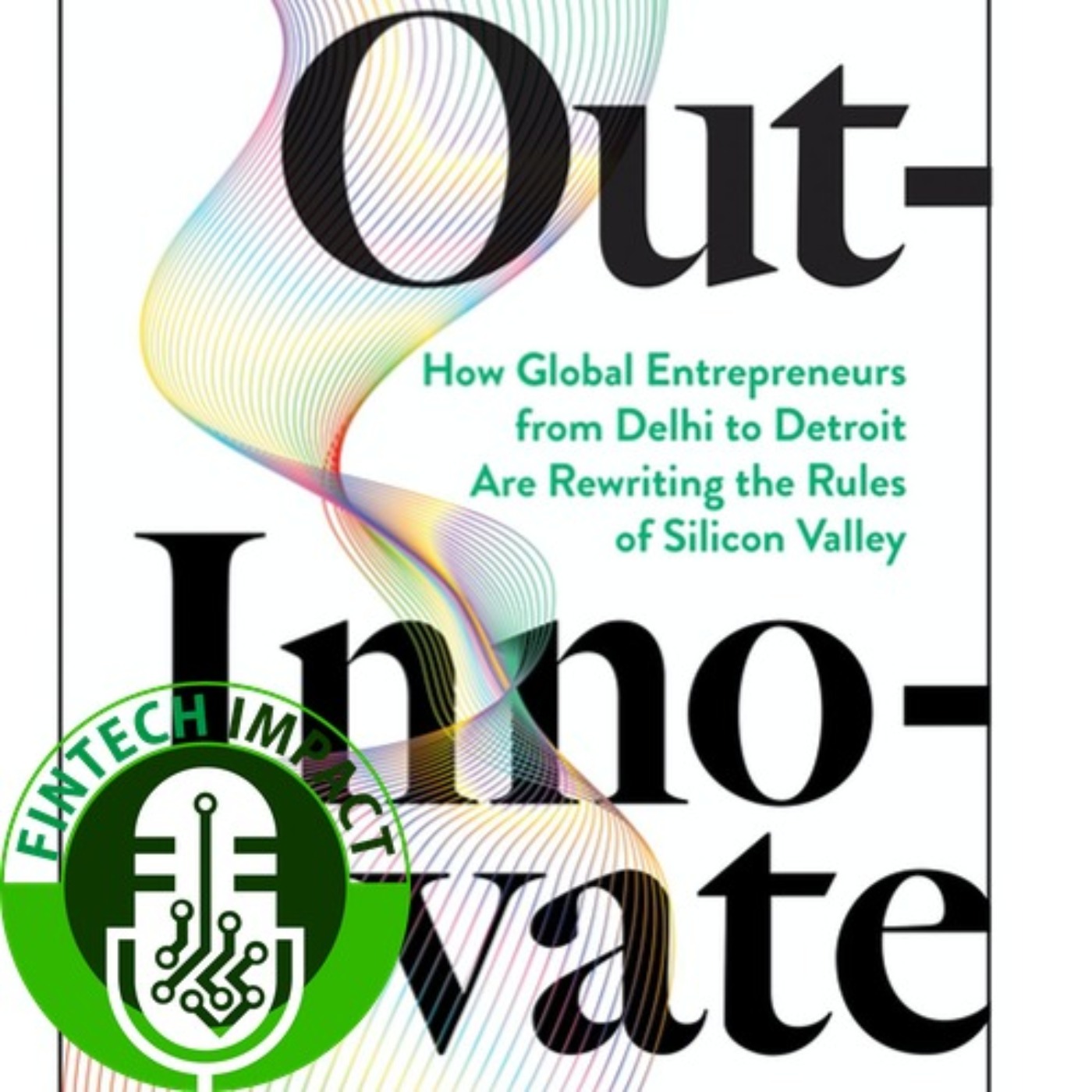
Ep 119Out Innnovate with Alex Lazarow (Author) | E119
In this 119th episode of Fintech Impact, Jason Pereira, award-winning financial planner, university lecturer, writer, and host interviews Alex Lazarow, Venture Capitalist and Investment Director at Cathay Innovation and Author of the book Out-Innovate: How Global Entrepreneurs--from Delhi to Detroit--Are Rewriting the Rules of Silicon Valley. Alex Lazarow talks about how entrepreneurs around the world approach various problems differently in order to achieve success. Episode Highlights: ● 00:24 – Jason Pereira introduces Alex Lazarow. ● 01:21 – Alex Lazarow talks about his book Out Innovate. ● 03:46 – What is a ‘camel’ company? ● 04:58 – Alex talks about what can be learned from Grubhub. ● 06:00 – Alex and Jason talk about the concept of ‘blitz scaling’ and Company types that it is applicable to. ● 09:26 – How many companies did he talk to when writing his book? ● 10:36 – What is going on in North Korea in the fintech scene? ● 12:41 – What is the most unconventional story of how a company grew that Alex heard when writing his book? ● 15:53 – Alex talks about a theme in his book about advantages that emerge from challenges. ● 17:33 – What are recurring themes did Alex notice when working on his Book Out-Innovate? ● 22:29 – North America has a lot of problems that need to be solved by companies with lessons learned from around the world. ● 24:43 – What would Alex Lazarow change in his business or industry? ● 25:34 – What have been the biggest challenges that Alex has faced? ● 27:24 – What kept Alex going and not giving up while writing his book? 3 Key Points 1. Alex Lazarow’s term ‘the camel’ is like the term ‘unicorn,’ but instead it is businesses labeled a ‘real animal’ that can sustain in harshest environments by building a business model that works, managing costs and burn, and by taking a long-term view. 2. Within a context of adversity, there are advantages that come about. 3. The best entrepreneurs are creators, not disruptors. Tweetable Quotes: ● “I work for a firm called Cathay Innovation, a globally-focused venture firm that invests across Asia, Europe, North American, and Africa. But, outside of work, I’ve been teaching an MBA class.” – Alex Lazarow ● “Outside the (Silicon) Valley, I coined the term ‘the camel,’ it is this idea of balanced growth, businesses that still want to grow really fast. But, still infuse their business with sustainability and resilience.” – Alex Lazarow ● (Out-Innovate book) “This is a 2-year effort. I interviewed about 200 entrepreneurs from around the world.” – Alex Lazarow Resources Mentioned: ● Facebook – Jason Pereira’s Facebook ● LinkedIn – Jason Pereira’s LinkedIn ● FintechImpact.co – Website for Fintech Impact ● JasonPereira.ca – Sign up for Jason Pereira’s newsletter ● Linkedin – Alex Lazarow’s Linkedin ● Cathay Innovation – Website for Cathay Innovation ● Out-Innovate – Alex Lazarow’s Book Hosted on Acast. See acast.com/privacy for more information.

Ep 118Surex with Matt Alston (COO) | E118
Summary:In this 118th episode of Fintech Impact, Jason Pereira, award-winning financial planner, university lecturer, writer, and host interviews Matt Alston, COO & Co-Founder at Surex, an online digital insurance broker that caters to home, auto, and various forms of casualty, seeking to digitize the entire consumer experience. Matt Alston explains the origin of Surex, the solutions that it provides to its users, increasing automation to compete long-term, and providing intelligent distribution. Episode Highlights: ● 00:16 – Jason Pereira introduces Matt Alston and what Surex is. ● 00:43 – Matt Alston explains what Surex is and its history. ● 01:54 – What opportunity did Matt see that he needed to take advantage of? ● 03:33 – What exactly does Surex’s app do? ● 04:02 – What does the experience look like when applying for insurance? ● 04:58 – Matt talks about focusing on quote accuracy and working with the carriers they work with. ● 08:27 – What was the experience like with the carrier that embraced Surex the most and ones they convinced? ● 12:41 – How agreeable are carriers in updating their automation and digitizing? ● 16:18 – Matt Alston says that when it comes to disruption, ‘only the paranoid survives.’ ● 20:03 – Companies need to focus on their customers. ● 20:36 – Matt Alston talks about Surex’s artificial intelligence strategies. ● 24:25 – Surex wanted to be viewed by carriers as intelligent distribution. ● 25:50 – Their advisors don’t just sell on price. ● 27:22 – What would Matt Alston change in his business or industry? ● 29:22 – What have been the biggest challenges that Matt has faced? ● 31:24 – What is the most exciting thing that he is working on? 3 Key Points 1. Surex currently covers insurance for primary homeowners, auto insurance, personal auto, tenant & condo, and they are building out landlord insurance covering rental properties, boats, motorcycles, and travel trailers. 2. Surex works with 14 different carriers. 3. 30% of Surex’s back office transactions are automated. They are trying to get that to 85%-90% over the next year. Tweetable Quotes: ● “Surex is a digital brokerage. We operate across Canada. We’re basically nationwide minus Quebec and a couple of the provinces in Atlantic Canada.” – Matt Alston ● “We provide a transparent way for Canadians to be able to quote, compare prices, coverage, and buy online for home and auto insurance.” – Matt Alston ● “If you are quoting, say, one vehicle, one driver, it will take you five minutes to complete your quote and get your offers. Depending on the province you’re in, you will get anywhere from 6-12 different offers for insurance.” – Matt Alston Resources Mentioned: ● Facebook – Jason Pereira’s Facebook ● LinkedIn – Jason Pereira’s LinkedIn ● FintechImpact.co – Website for Fintech Impact ● JasonPereira.ca – Sign up for Jason Pereira’s newsletter ● Linkedin – Matt Alston ● Surex – Website for Surex Hosted on Acast. See acast.com/privacy for more information.

Securrency with Dan Doney (CEO) | E117
Summary:In this 117th episode of Fintech Impact, Jason Pereira, award-winning financial planner, university lecturer, writer, and host interviews Dan Doney, CEO of Securrency, a blockchain-enabled tokenization platform that bakes compliance into the actual token. This enables the token to represent the actual asset and simultaneously has rules set around who can participate, what the issuance policies are, and what government regulations come into play. Episode Highlights: ● 00:13 – Jason Pereira introduces Dan Doney and what Securrency is, ● 00:52 – Dan Doney explains Securrency. ● 02:21 – How and why did Securrency get started? ● 08:19 – What is the ideal situation for blockchain tokenization? ● 11:02 – What is happening with the WisdomTree investment in Securrency and innovations in the blockchain space? ● 17:16 – How do liquidity rules apply to Securrency? ● 18:32 – The boundary is only formed by the qualifications of the users and the instruments that they care trading and whether there is a match. ● 19:18 – Jason and Dan talk about securitization of real estate and usership. ● 24:47 – What would Dan Doney change in his business or industry? ● 28:34 – What have been the biggest challenges that Dan has faced? ● 30:30 – What is the most exciting thing that he is working on? 3 Key Points 1. Securrency patented a concept that allows you to flexibly generate an easy user interface to drag-and-drop rule sets so lawyers and regulators can see the frameworks to enforce global securities regulations. 2. Banks spend $240 billion a year on compliance. 3. If a venueless boundary can be created for rules and enforcement of rules, do you really need to have a central location under which the exchange takes place? Tweetable Quotes: ● “We emphasize specifically interoperability and one of our hallmark components is the ability to link existing financial service networks to the blockchain space.” – Dan Doney ● “The tokens know what they are allowed to do and they only allow themselves to participate in transactions between known and qualified parties, regardless of the type of instruments.” – Dan Doney ● “What you want is a global venue where the instrument itself knows what the rules are and it is able to enforce the rules without boundaries, or at least the only boundary is the regulatory framework that applies for the instrument and any participants in the trade.” – Dan Doney Resources Mentioned: ● Facebook – Jason Pereira’s Facebook ● LinkedIn – Jason Pereira’s LinkedIn ● FintechImpact.co – Website for Fintech Impact ● JasonPereira.ca – Sign up for Jason Pereira’s newsletter ● Linkedin – Dan Doney’s● Securrency – Website for Securrency Hosted on Acast. See acast.com/privacy for more information.

Ep 116Carta with Giles Sutherland (Managing Director) | E116
Summary:In this 116th episode of Fintech Impact, Jason Pereira, award-winning financial planner, university lecturer, writer, and host interviews Giles Sutherland, Managing Director for Growth Markets at Carta. Carta is a provider of underlining payment infrastructure for various players in the market, including many well-known fintechs. Episode Highlights: ● 00:37 – Giles Sutherland defines Carta and what it provides. ● 03:21 – What led the founders of Carta to create it? ● 08:34 – Giles provides some examples of companies that might be recognized that have utilized their service. ● 14:48 – What other sectors of the economy has Carta gone after to support? ● 21:17 – What is Carta’s unique value proposition? ● 25:19: – Why did the company begin its efforts in Europe? ● 31:39 – Platforms are baking in the proper security as necessary. ● 33:52 – Under 10% of process flows are touching a bank. ● 35:18 – It is roughly a 6-year process to upgrade platform systems. ● 37:03 – What would Giles Sutherland change in his business or industry? ● 39:48: – What have been the biggest challenges that Giles has faced? ● 41:45: – What is the most exciting thing that he is working on? 3 Key Points 1. Carta refers to themselves as ‘the engine powering some of these neo-banks or fintechs. 2. Carta’s business model is a service model in an infrastructure play. 3. Banks are spending billions of dollars on their IT and infrastructure. But, three-quarters of it is just going to maintain systems. Tweetable Quotes: ● “The reality is, almost all banks actually outsource the equivalent processing functionality. So, the merchant is outsourcing the processing of that, let’s say, accepting transaction to accept payments or receive payments.” – Giles Sutherland ● “The average consumer though, wouldn’t be aware of the fact that their life savings are in a bank with extinct programming language actually holding it all together.” – Giles Sutherland ● “You’ve got the new guys coming in to disrupt. Great, we want to sell them some technology that can enable them. The banks don’t want to let go quite so easily? No problem. We can use that technology to help banks.” – Giles Sutherland Resources Mentioned: ● Facebook – Jason Pereira’s Facebook ● LinkedIn – Jason Pereira’s LinkedIn ● FintechImpact.co – Website for Fintech Impact ● JasonPereira.ca – Sign up for Jason Pereira’s newsletter ● Linkedin – Giles Sutherland’s ● Carta – Website for Carta Hosted on Acast. See acast.com/privacy for more information.

Ep 115SideDrawer with Gaston Siri (CEO) & Jamie Wolkove (VPS) | E115
Summary:In this 115th episode of Fintech Impact, Jason Pereira, award-winning financial planner, university lecturer, writer, and host interviews J. Gaston Siri, Chief Executive Officer at SideDrawer and Jamie R. Wolkove, Vice President Sales & Marketing at SideDrawer. SideDrawer is an app and platform based in Toronto, Ontario, Canada that allows you to store all the stuff in your life in one place, not just as pdf files, but with intelligence to drive action and support. Episode Highlights: ● 00:56: – J. Gaston Siri and Jamie R. Wolkove define Sidedrawer and how it got started. ● 05:18: – What is SideDrawer doing to drive engagement with users? ● 07:38: – SideDrawer is implementing feedback that they are getting in the field from users. ● 08:59: – Jason Pereira defines ‘metadata’ and how it works with SideDrawer. ● 09:54: – What types of challenges and pushback have they gotten from people concerned about data security? ● 14:04: – How is the pricing model for SideDrawer laid out? ● 16:10: – How is SideDrawer tackling concerns about data security? ● 21:35: – J. Gaston Siri and Jamie R. Wolkove discuss the information acquisition side of SideDrawer. ● 23:43: – Is SideDrawer looking at using personal financial management tools? ● 28:48: – It is not just up to the end-user to upload all the data it is also on the professional service provider to do as well. ● 29:19: – How do executors get access to a deceased user’s SideDrawer? ● 31:27: – What would they change in their business or industry? ● 32:48: – What has been the biggest challenge to get the company where it is today? ● 33:51: – What is the most exciting thing that they are working on? 3 Key Points 1. Metadata is another point of data surrounding a digital file that is of relevance. 2. SideDrawer can help you save money and protect your assets and your entire portfolio. 3. SideDrawer’s entire production infrastructure online is serverless, making it less susceptible to hacking than other financial institutions. Tweetable Quotes: ● (SideDrawer) “Now you have a place in which you can organize your entire life on a weekly basis, daily basis, monthly basis, whatever the timeframe would be.” – J. Gaston Siri ● “When you look at SideDrawer, not only do you have the organization guardrails that we are giving you to help you organize better. But on top of that, we’re essentially giving you all this ability to load that meta data.” – J. Gaston Siri ● “If we can actually help you identify where you should actually be in terms of the right size in your insurance policies, then that is a benefit that we can give you.” – J. Gaston Siri Resources Mentioned: ● Facebook – Jason Pereira’s ● LinkedIn – Jason Pereira’s ● FintechImpact.co – Fintech Impact ● JasonPereira.ca – Jason Pereira’s newsletter ● Linkedin – J. Gaston Siri’s ● Linkedin – Jamie R. Wolkove’s ● Sidedrawer – Website Sidedrawer Full Transcript Hosted on Acast. See acast.com/privacy for more information.
Ep 114Celent with Awaad Amir (Analyst) & Neil Sheehan (Analyst) | E114
Summary:In this 114th episode of Fintech Impact, Jason Pereira, award-winning financial planner, university lecturer, writer, and host interviews Neil Sheehan and Awaad Amir who both work in the roles of Research & Advisory at Celent. Celent is a consultant to large financial and Fortune 500 institutions that deals with how they can better adapt to technological challenges that they are facing. Awaad Amir and Neil Sheehan discuss the uses and developments of voice activation. Episode Highlights: ● 01:15 – Neal Sheehan and Awaad Amir define Celent and how it got started. ● 02:43 – Why was Celent created as an offshoot of Oliver Wyman? ● 04:28 – What kind of developments have they seen arising with voice? ● 08:23 – They discuss some of the obstacles that voice has to overcome still. ● 13:14 – What are some of the use cases for voice? ● 19:22: – How many banks in Canada and the United States are using Virtual assistants? ● 22:50 – Voice accuracy and privacy issues are still not fully resolved. ● 24:53 – What is involved on the backend for delivering the best experience? ● 27:11 – Clean data is crucial to build new initiatives and products. ● 32:53 – Innovation labs are important for banks to create new solutions. ● 35:26 – What would they change in their business or industry? ● 37:17: – What have been the biggest challenges that they face? ● 41:31: – What is the most exciting thing that they are working on? 3 Key Points 1. All the major banks in Canada and the United States are experimenting with voice interactions. 2. We have the legal right to our data and to have it requested in a reasonable amount of time. 3. The industry needs to continue to educate those that use their services. Tweetable Quotes: ● “Celent is a technology research and advisory firm that is a subsidiary of Oliver Wyman, which is a global management consulting firm.” – Awaad Amir ● “We do have a software application on our website that is called VendorMatch where vendors can go on and put their applications on there, put a demo, a white sheet, any type of information on facts on the products.” – Neil Sheehan ● “What is so unique about voice, unlike desktop, mobile computing, it is an interface that the user has to learn. So, the voice kind of flips that around where it is the natural language of the person.” – Awaad Amir Resources Mentioned: ● Facebook – Jason Pereira’s ● LinkedIn – Jason Pereira’s ● FintechImpact.co – Website ● JasonPereira.ca – Jason Pereira’s newsletter ● Linkedin – Neil Sheehan’s ● Linkedin – Awaad Amir’s ● Celent – Website● VendorMatch –Webpage for Celent Hosted on Acast. See acast.com/privacy for more information.

Ep 113Dialogue Health with Zack Brown (VPS) | E113
Summary:In this 113th episode of Fintech Impact, Jason Pereira, award-winning financial planner, university lecturer, writer, and host interviews Zack Brown, Vice President of Sales at Dialogue in Montreal. Dialogue is a telehealth service that enables you to access healthcare right from your smart phone in a fast, user-friendly, and convenient manner. Zack Brown discusses how Dialogue began, how they service their ideal customers, and the benefits of Dialogue. Episode Highlights: ● 00:55: – Zack Brown defines Dialogue and how it got started. ● 01:59: – What is the origin of Dialogue? ● 04:44: – What are the main uses for the app? ● 10:51: – How is focusing on the employer market working out for Dialogue? ● 17:50: – Why was Germany the first non-domestic expansion of Dialogue? ● 20:15: – What has the user feedback been looking like? ● 22:38: – What would Zack Brown change in his business or industry? ● 23:31: – What has been the biggest challenge to get the company where it is today? ● 25:17: – What is the most exciting thing that they are working on? 3 Key Points 1. When using the Dialogue app you can contact a healthcare practitioner within minutes and receive services such as prescriptions, lab requisitions, navigation through the healthcare system, and referrals to a specialist. 2. Employers are paying for Dialogue’s service to help reduce absenteeism. 3. Dialogue’s Net Promoter Score feedback metric is on par with Apple and Tesla. Tweetable Quotes: ● “We are a virtual healthcare company. We are headquartered in Montreal with operations all over Canada as well as in Germany.” – Zack Brown ● “We are focused exclusively on working with business leaders, HR leaders, in effectively large groups to provide services at scale and to add value to the user, the patient, and as well as the payer.” – Zack Brown ● (Using Dialogue) “On average, users report saving more than four hours per interaction.” – Zack Brown Resources Mentioned: ● Facebook – Jason Pereira’s ● LinkedIn – Jason Pereira’s ● FintechImpact.co – Website● JasonPereira.ca – Jason Pereira’s newsletter ● Linkedin – Zack Brown’s ● Dialogue – Website ● Linkedin – Dialogue’sFull Transcript Hosted on Acast. See acast.com/privacy for more information.

Ep 112Addapar with Natalie Sunderland (CMO) | E112
Summary:In this 112th episode of Fintech Impact, Jason Pereira, award-winning financial planner, university lecturer, writer, and host welcomes Natalie Sunderland, Chief Marketing Officer of Addepar, to talk about embracing risk, the benefits of technology, and the importance of advancing data reporting in wealth management. Episode Highlights: ● 01:03: – Addepar is a wealth management platform that specializes in data aggregation and performance reporting that currently has $1.7 trillion being managed on the platform. ● 02:10: – Addepar was founded in the wake of the financial crisis when the founder was struggling to understand how the crisis was impacting their assets. ● 03:53: – Getting a complete picture and understanding your assets is even more difficult now that people often split up their assets into different accounts, different financial institutions, and with different wealth managers. ● 05:22: – Financial advisors are limited in the advice they can give clients by the legacy software and tools they have. ● 06:40: – Addepar strives to create a friction-free experience for wealth managers and their clients, including the use of a mobile app. ● 08:50: – Addepar’s core value proposition is to aim to serve those who manage wealth and allow them to create tailored conversations with their clients. ● 10:08: – The Addepar interface is referred to as “Apple lite” and is very intuitive. ● 10:58: – The platform is customizable and allows wealth managers to include their own branding on reports. ● 13:55: – Having a personal conversation with your financial advisor shouldn’t be reserved only for those with ultra-high net worth. ● 15:42: – Advisors have said that with Addepar, activities that used to take them days now only take them hours or even minutes to complete. ● 17:10: – Addepar has built over 200 pipes from scratch to different banks to ensure they have the highest quality data rather than using scrapers. ● 21:42: – If Natalie could change one thing it would be to help these firms to embrace more risk. ● 22:48: – The biggest challenge for Natalie has been building a story for a company that is 10 years old, and also helping the market understand that Addepar isn’t a niche product or solution. ● 24:40: – Natalie is most excited about the investment they’re making to improve the experience for clients who use the platform, and the overall data opportunity. 3 Key Points 1. Understanding your assets is even harder when they are divided among multiple financial institutions. 2. Addepar allows you to create custom reports in moments, built to answer specific questions. 3. Improving data collection and reporting allows for more personally tailored conversations between wealth managers and their clients. Tweetable Quotes: ● “There are some pretty complex assets out there and we could provide a very valuable service to the wealth managers and their clients to truly help them understand, get that 360 view, and help them make better decisions.” –Natalie Sunderland ● “Independent advisors who choose Addepar are doing so because they realize the value that technology can bring to helping them scale their practices, becoming much more efficient, and being able to service their clients in a way they demand it these days.” –Natalie Sunderland ● “One of the things I’m excited to do is help the market understand the capabilities that we have and help them realize that moving from legacy to modern technology doesn’t have to be as painful as they think it will be.” –Natalie Sunderland Resources Mentioned: ● Website – Jason Pereira’s Website ● Facebook – Jason Pereira’s Facebook ● LinkedIn – Jason Pereira’s LinkedIn ● FintechImpact.co – Website for Fintech Impact ● https://www.addepar.com/ – Addepar Website ● https://www.linkedin.com/in/nataliesunderland – Natalie Sunderland’s Linkedin Full Transcript Hosted on Acast. See acast.com/privacy for more information.

Ep 111eSentire with J. Paul Haynes (President) | E111
Summary:In this 111th episode of Fintech Impact, Jason Pereira, award-winning financial planner, university lecturer, writer, and host welcomes J. Paul Haynes, President and COO of eSentire, to talk about evolving cybersecurity threats, the challenges of the mid-size market, and more. Episode Highlights: ● 00:58: – eSentire is disrupting the way cybersecurity is managed. ● 03:28: – There are over 70 categories of cybersecurity companies because the problem keeps changing as technology evolves. ● 05:00: – eSentire serves mid-size companies with between 200-2,000 employees. ● 07:05: – Instead of offering certain features, eSentire sees themselves as a threat partner, making decisions about traffic and servers as if they were an employee of your company. ● 09:01: – eSentire was one of the first to solve security issues with hedge funds. ● 10:20: – A security breach with a hedge fund would be not just a reputational hit, but could end the business. ● 11:17: – A security analyst can identify the details of a threat as it happens, isolate it, and use that model as an update for all of their subscribers and are able to shut it down across their network. ● 16:55: – When a threat is detected, eSentire has eyes on it in under 1 minute and has usually completed its investigation within 10 minutes. ● 19:05: – They see somewhere between 7-10 million raw events every day, and of every 1,000 of those only about 1 needs to be investigated by a human. ● 21:48: – Half of the threats they see every day are unique to their network. ● 22:50: – When J started in this business 10 years ago, threats were measured in the 6 week range, and now it’s in the 5-7 day range, but eventually it will be down to minutes and seconds and the threat detection industry has to be able to keep pace. ● 23:30: – These breaches are mostly committed by opportunistic criminals, so you look at means, motive, and opportunity. ● 25:45: – As quantum computing becomes mainstream, we will first have to worry about state secrets of smaller nation-states. ● 28:39: – Most of these efforts are information-gathering rather than disruptive. ● 30:10: – A majority of data breaches are from self-inflicted wounds like clicking a link in a trusted partner’s email that you don’t know is compromised. ● 31:21: – If J could change one thing, it would be to flip the industry so that security conversations are had on the business’s terms instead of the tech terms to help with overall understanding of stakes. ● 34:39: – J’s biggest challenge has always been recruiting the talent he needs. ● 36:36: – What excites J the most is that there’s always a new challenge. 3 Key Points 1. The needs of cybersecurity are constantly evolving as technology evolves. 2. Many cyber threats seem innocuous and go unnoticed because they are information-gathering rather than disruptive. 3. AI improves how quickly a threat can be identified but we still need humans to verify and respond to those threats. Tweetable Quotes: ● “We will be your threat management partner... We will make decisions as though we were one of your employees. We will actually block traffic and we will shut down servers and then we will tell you what we were just able to stop.” –J. Haynes ● “The notion of relying exclusively on protective controls as the 100% solution is naive. They will fail, so you have to get competent at detecting when they fail and be able to react to that in a timely fashion.” –J. Haynes ● “No matter how good the AI gets, bad guys have AI too. They have cloud storage, they have all of the things that we have without any of the friction of rules of business or regulations. I often say, while they are morally corrupt, they are phenomenally gifted.” –J. Haynes Resources Mentioned: ● Jason Pereira’s Website | Facebook | LinkedIn ● Fintech Impact ● eSentire Website ● J. Paul Haynes Linkedin Full Transcript Hosted on Acast. See acast.com/privacy for more information.

Ep 110True Accord with Ohad Samet (CEO) | E110
Summary:In this 110th episode of Fintech Impact, Jason Pereira, award-winning financial planner, university lecturer, writer, and host welcomes Ohad Samet, Co-founder and CEO of True Accord, to talk about leading with empathy even in debt collection, how True Accord’s debt collection model has impacted both creditors and debtors, and more.Episode Highlights:00:37: – True Accord is a machine learning-based digital debt collection platform used by creditors and financial institutions.01:57: – Others often see people in debt either as villains or as victims.05:00: – The majority of people have debt collection horror stories, but the people working as debt collectors aren’t bad people, but the way the industry is structured, they are incentivized to do things that create a bad experience.05:55: – True Accord’s machine learning helps track user behavior to determine the best way to reach each customer and when to have human interaction versus digital intervention.10:35: – At first, Ohad would get laughed out of offices and was being threatened by other creditors.11:50: – Ohad sees True Accord as the payment provider for creditors.13:15: – Traditional debt collection models pressure customers to pay as much as possible over the phone instead of committing to a payment plan that will actually work for them, so by working with the customer empathetically to find manageable payment plans that customers will actually stick to, True Accord sees higher rates of return.14:41: – Their first communication with customers is always an email.16:30: – True Accord fits to customer’s schedule both in terms of times that they can access the system to pay and what their individual cash flow is like.19:50: – The biggest surprise for Ohad has been that their clients have been surprised by how few complaints they receive about their debt collection.22:55: – True Accord could really only exist now because of how technologically enabled it is; the overhead would have been much too high several years ago.24:33: – If Ohad could change one thing, it would be the mindset of some of the major financial institutions to make them care about user experience.26:07: – The biggest challenge has been compliance.27:48: – Ohad is most excited about the company’s Slack channel sharing compliments from customers.3 Key PointsProviding a good user experience for debt collection benefits both brands and their customers.Existing debt collection incentive structures encourage call center operators to be dehumanizing and lack compassion.Machine learning technology is what has enabled intelligent communication with customers to happen on their terms.Tweetable Quotes:“You have to have an empathetic approach to a complex issue, and you can solve it, you can help people end up on the good side of things.” –Ohad Samet“People come home after their second shift and they can engage with us and pay on their own terms, and that’s the important thing. Fitting to their payment periods, fitting to their unreliable cash flow, and that’s a lot of the negotiation.” –Ohad Samet“We needed to be in the right intersection between understanding compliance, caring about the problem, and knowing how to use technology to solve it.” –Ohad SametResources Mentioned:Website – Jason Pereira’s WebsiteFacebook – Jason Pereira’s FacebookLinkedIn – Jason Pereira’s LinkedInFintechImpact.co – Website for Fintech ImpactTrue Accord Website – https://www.trueaccord.com/Ohad Samet Website – https://www.ohadsamet.com/Ohad Samet Linkedin – https://www.linkedin.com/in/osametOhad Samet Twitter – https://twitter.com/ohadsametFull Transcript Hosted on Acast. See acast.com/privacy for more information.

Ep 109Lead Pilot with Samantha Russell (CEO) | E109
Summary:In this episode of Fintech Impact, Jason Pereira, award-winning financial planner, university lecturer, writer, and host interviews returning guest Samantha Russell, Chief Marketing & Business Development Officer at Twenty Over Ten. This time around, instead of discussing Twenty Over Ten, Samantha has come to talk about Lead Pilot, which is Twenty Over Ten’s content marketing platform for financial advisors. Samantha also explains inbound marketing, why it is so effective, and how inbound marketing differs from short-form marketing. Episode Highlights: ● 00:50: – Samantha Russell defines Lead Pilot. ● 02:43: – What led to the creation of Lead Pilot? ● 04:27: – What is inbound marketing and why is it so effective? ● 07:17: – You can’t expect results if you are not trying or doing the right things. ● 09:16: – How does inbound marketing differ from short-form marketing? ● 12:19: – Samantha provides advice for those that don’t think they have enough time for inbound marketing. ● 15:35: – What types of content can people currate on Lead Pilot? ● 18:01: – How is Lead Pilot reporting metrics back to advisors? ● 19:52: – What content platforms are available for integrating and posting? ● 20:30: – What amount of labor does an advisor have to put into Lead Pilot for it to work for them? ● 24:00: – What else would Samantha Russell like people to know about Lead Pilot? ● 25:11: – Is there something in the industry or the company that Samantha Russell would like to see change? ● 26:02: – What has been the biggest challenge to getting Lead Pilot to where it is today? ● 27:29: – What excites Samantha the most about what she is working on? 3 Key Points 1. Lead Pilot allows for content creation, landing pages for the dissemination of that content, social media scheduling, email marketing, and the gathering of your prospect’s data as they engage with the content. 2. Inbound marketing involves providing as many answers and as much helpful information to anybody that wants it for free. Then those people absorb that information and come to you when they are ready to engage with your services. 3. 70% of the buying decision is made online before the customers ever contact you. Tweetable Quotes: ● “Lead Pilot is an inbound marketing platform that makes it easy for advisors to manage and automate all of their marketing messages in one place.” – Samantha Russell ● “We really see the future of marketing in 2020 and this next decade consisting of two things, personalization and automation, and our platform allows advisors to handle both of those.” – Samantha Russell ● “Quoting Michael Kitces here, he had a great quote where he said, ‘Would you hand over your life-savings to someone before looking them up on Google?’ And the answer is ‘no, absolutely not.’” – Samantha Russell Resources Mentioned: ● Facebook – Jason Pereira’s ● LinkedIn – Jason Pereira’s ● FintechImpact.co – Website● Linkedin–Samantha Russell ● twentyoverten.com – Website ● Lead Pilot – Website ● They Ask You Answer by Marcus Sheridan–BookFull Transcript Hosted on Acast. See acast.com/privacy for more information.
Ep 108ConnectionPoint with Daryl Hatton (CEO) | E108
Summary:In this 108th episode of Fintech Impact, Jason Pereira, award-winning financial planner, university lecturer, writer, and host welcomes Daryl Hatton, Founder and CEO of Connection Point, to talk about Connection Point’s crowdfunding model, some major successes challenges the platform has faced, the psychology behind philanthropy, and more. Episode Highlights: ● 00:35: – Connection Point is a social commerce company that helps people crowdfund money for personal and professional/non-profit organizations. ● 02:50: – Connection Point began as a fundraising site for unregistered and non-charitable non-profits like children’s sports teams. ● 05:25: – They were one of the 30 companies included in Facebook’s beta for the Timeline feature to know how it worked ahead of time. ● 06:20: – The site allows companies and groups to use their own branding on their funding campaigns. ● 07:10: – The site includes technology called Coco Pay to allow companies to help potential customers crowd fund to purchase their product. For example, individuals with mobility issues crowd-funding to purchase a bike. ● 13:10: – The platform has now had to prevent defendants in violent crimes from fundraising for their legal defense due to the negative pushback from the community. ● 14:45: – The platform can be used to collect subscription or membership payments from supporters. ● 17:52: – It is free to begin using Connection Point and even to fundraise (less transaction fees, which no one can avoid) and optional to add a “tip” to each transaction for the platform. ● 20:53: – University of California used the platform to raise over $3 million to fund a study into the human microbiome. ● 22:50: – Another group funded several projects at Burning Man. ● 24:18: – If Daryl could change one thing it would be for people to take a broader view of what crowdfunding can be and be used for beyond the GoFundMe model. ● 29:00: – If you can see the impact of your donation, you’re more likely to give again. ● 30:22: – The biggest challenge has been funding and finding investors. ● 31:50: – What Daryl finds most exciting is the cumulative impact that Connection Point can have. ● 32:42: The platform has raised $160 million for over 200,000 projects in over 40 countries so far. 3 Key Points 1. Connection Point expands how people think about crowdfunding and its potential use cases. 2. Millennials are more philanthropic than we give them credit for. 3. Small donations on small projects can make a huge cumulative impact on the world. Tweetable Quotes: ● “I think it should be all about my customer and their brand experience, not mine. I’m not trying to push my Indiegogo and Kickstarter brand, I’m trying to say hey, what’s your product?” –Daryl Hatton ● “One of the things we’re looking at is how do we make philanthropy more of an entertaining experience? Because the feelings we get from giving are very similar to the feelings we get when we consume entertainment, like a movie.” –Daryl Hatton ● “Good natured people are a platform” – Daryl Hatton Resources Mentioned: ● Website – Jason Pereira’s ● Facebook – Jason Pereira’s● LinkedIn – Jason Pereira’s● FintechImpact.co – Website● Connection Point website – https://connectionpoint.com/ ● Fundrazr website – https://fundrazr.com/ ● Community website - ● Daryl Hatton Twitter – https://twitter.com/darylhatton ● Daryl Hatton Linkedin – https://www.linkedin.com/in/darylhatton Full Transcript Hosted on Acast. See acast.com/privacy for more information.

Ep 107Limelight Health with Garrett Viggers (Co-Founder) | E107
Summary:In this 107th episode of Fintech Impact, Jason Pereira, award-winning financial planner, university lecturer, writer, and host interviews Garrett Viggers. Co-Founder at Limelight Health, a company that is working to digitize the entire experience of insurance applications from start to finish. Garrett Viggers talks about how Limelight Health got started, obstacles in getting the industry to accept innovation, and not trying to be a one-stop solution for everything. Episode Highlights: ● 00:08: – Check out JasonPereira.ca to sign up for the newsletter and notifications. ● 00:51: – Garrett Viggers describes Limelight Health. ● 02:07: – What really drove the foundation of Limelight Health? ● 04:35: – How did his first experiences go with insurance companies trying to show them that there is a better way? ● 11:16: – Limelight Health is not overextending itself to try to be a policy admin system, CRM, or an enrollment platform. ● 11:54: – Are they running into the ‘one magic bullet solution’ syndrome in the insurance world? ● 14:56: – It is important to understand the ecosystem. ● 16:14: – What is causing the pushback from admins? ● 18:12: – What have been the success stories? ● 20:41: – The strategy to make things difficult is not a winning strategy. ● 27:12: – Jason shares a common podcast saying, ‘The reason that fintech exists is because traditional carriers allowed it to exist.” ● 33:21: – What would Garrett change in his business or his industry? ● 36:40: – What has been the biggest challenge in his business? ● 39:44: – What is the most exciting thing Garrett Viggers is working on? 3 Key Points 1. Streamlining down to one tech solution has negative effects such as increasing risk not getting a great solution and needs not being met. 2. Getting broker admins to accept online enrollment instead of paper is of high value. 3. You can’t build your experience for the naysayers who want to operate the way they did 20 years ago. Tweetable Quotes: ● “We are really focused on new business renewals and making that a beautiful experience for group products & group carriers working with their distribution partners.” – Garrett Viggers ● “We started with medical. We went from phone, iPad, to full desktop because the feedback was, ‘Hey, does it work on Internet Explorer 6?’ We were thinking, can you just use Google Chrome?’” – Garrett Viggers ● “We realised that we have to solve the carrier’s problem so they can actually best serve their brokers.” – Garrett Viggers Resources Mentioned: ● Facebook – Jason Pereira’s ● LinkedIn – Jason Pereira’s ● FintechImpact.co – Website ● JasonPereira.ca – Website ● Linkedin –GarrettViggers ● Limelight Health – Website Full Transcript Hosted on Acast. See acast.com/privacy for more information.

Ep 106Utrust with Filipe Castro (CIO) | E106
In this 106th episode of Fintech Impact, Jason Pereira, award-winning financial planner, university lecturer, writer, and host welcomes Filipe Castro, co-founder and CIO of Utrust, to talk about Utrust’s growth strategy, how blockchain payment technology competes with credit cards and other existing forms of payment, the future of payment tech, and more.Episode Highlights:00:55: – Utrust is a platform that enables e-commerce merchants to accept various forms of cryptocurrency as payment.01:24: – Filipe met his co-founders online in 2010 in cryptocurrency and blockchain forums.03:30: – On the merchant’s side, they don’t have to worry about the accounting or conversion of cryptocurrency, because Utrust handles all of that automatically on the back end and the merchant simply receives their US Dollars or Euros or whichever currency they operate under.04:28: – For the user, you select Utrust as your payment method, which takes you to the Utrust website and allows you to select and set up your crypto wallet with a QR code.06:00: – Utrust currently has ten vendors using the platform because they had to select the optimal vendors to start the platform with in order to optimize the experience and collect the data needed to scale up effectively.07:30: – Utrust has competitors, but most of the vendors that were interested in using Utrust approached them, not the other way around, partly because it’s free to integrate.09:23: – Filipe believes Utrust is the best solution because it has the strongest community support and a seamless integration, which is crucial for a blockchain technology.10:17: – Transaction fees are competitive with regular credit cards, at only 1%.11:30: – Currency conversion happens almost instantaneously to protect both the merchant and the consumer, so the merchant gets the price they listed and the consumer isn’t overcharged due to fluctuating conversion.13:04: – Utrust is compatible with any wallet that supports scanning a QR code.14:38: – Having a diverse range of merchants on board with Utrust allows them to collect more accurate metrics to perfect the platform more quickly.19:20: – For the user, there is almost immediate settlement of payment, and for the merchant you get a notification of incoming payment and the settlement depends on the cryptocurrency protocol.22:37: – Filipe is paying attention to growing competition, but acknowledges that we are still in the building phase of this space where major players haven’t entered crypto yet.27:30: – If Filipe could change anything, it would be for all the communities in blockchain to simply get along better and coexist better.28:53: – The biggest challenge has been establishing a company culture and building a team as a startup.29:45: – Filipe is excited by the way Utrust is changing the future of payments to empower consumers and merchants.3 Key PointsUtrust gives online vendors more payment options to be more competitive.Collecting metrics from a deliberately crafted pool of users will enable you to develop and scale your business more quickly.The future of payments is a seamless digital experience. Tweetable Quotes:“We always want to protect the merchant, just to make sure that whatever the quoted price that they put in their system, they’re going to get that minus 1%, always.” –Filipe Castro“We’re trying to get metrics to perfect the system. The best way to get different metrics is to integrate with different types of businesses that have different users, have different patterns of usage, sell different types of goods, have different frequencies.” –Filipe Castro Resources Mentioned:Website – Jason Pereira’s WebsiteFacebook – Jason Pereira’s FacebookLinkedIn – Jason Pereira’s LinkedInFintechImpact.co – Website for Fintech ImpactUtrust websiteUtrust TwitterFilipe Castro TwitterFull Transcript Hosted on Acast. See acast.com/privacy for more information.

Ep 105Better Money Choices with Doug Dahmer (CEO) | E105
Summary:In this 105th episode of Fintech Impact, Jason Pereira, award-winning financial planner, university lecturer, writer, and host welcomes Doug Dahmer, CEO of Better Money Choices, to talk about democratizing financial planning, having a long-term view of planning, and more. Episode Highlights: ● 00:32: – Better Money Choices is a financial platform that puts the power in the consumer’s hands. ● 01:25: – Before Better Money Choices, Doug founded Retirement Navigator. ● 02:22: – Better Money Choices allows consumers to gamify their choices to explore what their financial options are. ● 04:50: – The biggest obstacle to financial planning is the initial data collection, so the Better Money Choices platform has a wizard that allows for that data collection in 7.5 minutes or less, and to identify the places that need further detail and clarity later. ● 08:59: – Financial planning is a verb, not a noun. ● 10:20: – Better Money Choices is owned by the client and can be shared with any other financial advisor if the client wants a second opinion. ● 13:12: – The platform is based on the idea of adult learning; it isn’t effective to tell an adult what to do, but if you give them the tools to learn, then they’ll come to you for help. ● 20:24: – Doug is able to duplicate a client’s plan to play around with it and explore options without touching their actual plan, but then can send that new version of the plan back to the client for review. ● 21:50: – It’s almost never as easy or simple as choosing one option or another. ● 24:06: – Financial advisor decisions are best guesses at the time of the decision based on the information they have and the factors at play. ● 26:17: – The majority of Doug’s time is spent reassuring high-income people that they can spend money and won’t run out of money, which sounds strange to the average person who typically overspends. ● 27:40: – Doug pushes clients to decide if their current life is the best life they can live, if this is their goal, or if they can reallocate their money to get closer to goals. ● 31:27: – If Doug could change one thing in the industry, it would be to democratize access to financial planning. ● 32:06: – Doug’s biggest challenge has been the current state of the financial services industry and the lack of new thinking. ● 35:06: – What excites Doug the most is that the need out there is so huge, and he wants to get out there as fast as he can. 3 Key Points 1. Financial planning isn’t a one-time action, but an ongoing process. 2. Better Money Choices empowers clients to learn the process and help them make decisions or propose changes to a financial advisor themselves instead of relying entirely on someone else to tell them what to do. 3. People should stop looking at financial choices as permanent or definitive when the best anyone can do is to make their best guess based on the information they have at the time. Tweetable Quotes: ● “Close to 30 years of financial planning has taught me that it’s not the latte’s that are killing financial plans. What’s killing financial plans is that people aren’t getting what they want because they don’t know what they want.” –Doug Dahmer ● “More of one thing usually means less of another. What choice do you want to make? Your life will be defined by those choices, but now for the first time in your life you have a tool that allows you to discover the outcome of those choices before you make them.” –Doug Dahmer Resources Mentioned: ● Facebook – Jason Pereira’s Facebook ● LinkedIn – Jason Pereira’s LinkedIn ● FintechImpact.co – Website for Fintech Impact ● Better Money Choices website – http://web.bettermoneychoices.com/index.html ● Doug Dahmer Twitter – https://twitter.com/dougdahmer2 Full Transcript Hosted on Acast. See acast.com/privacy for more information.

Ep 104Soarpay with Scott Hawksworth (SMD) | E104
Summary:In this 104th episode of Fintech Impact, Jason Pereira, award-winning financial planner, university lecturer, writer, and host interviews Scott Hawksworth, Sales and Marketing Director at Soar Payments. Soar Payments is a company that focuses on providing payment solutions to higher risk businesses in the United States. Scott Hawksworth explains chargebacks, examples of high-risk businesses that banks tend to have trouble with, and the value that Soar Payments offers to its clients. Episode Highlights: ● 00:33: – Scott Hawksworth defines Soar Payments. ● 01:11: – Soar Pay was launched in 2015 in Houston, Texas. ● 03:10: – What are examples of higher-risk industries from the standpoint of payment processing companies and banks? ● 06:38: – Scott explains a chargeback and why the threshold is a small number. ● 10:51: – How is Soar Payments solving this problem? ● 12:11: – Soar Payments’ goal is to present merchants in places where they have the best chance of getting approved. ● 14:22: – How do they implement the tech solution into their business? ● 16:16: – How does their pricing to the end-user differ from other options? ● 20:45: – Soar Payment is not a technology company. They’re a company that provides tech to users to fill a gap in the market. ● 22:41: – What would Scott change in his business or his industry? ● 23:48: – What has been the biggest challenge in his business? ● 25:25: – Soar Payments has an underwriting process that every business goes through to get approved. ● 26:11: – What is the most exciting thing Jamie Hale is working on? 3 Key Points 1. Soar Payments focuses on business in the high-risk space that needs payment solutions. 2. High-risk companies from bank perspectives include: credit repair companies, document preparation, online marketing/SEO services, subscription services, the adult industry, E-Cig/vape/smoking accessories, nutraceuticals, moving companies, and transportation services. 3. The bank threshold percentage for low-risk businesses is 1% or less, calculated based on the dollar amount that you’re having charged back. Tweetable Quotes: ● “We offer merchant services to businesses of all kinds to help them get set up to accept payments, mostly for credit card processing. But we also offer ECheck and ACH options.” – Scott Hawksworth ● “If you have a business and you are having lots and lots of chargebacks, that is a problem for the bank because they are having to give that money back and that doesn’t reflect well on your business itself.” – Scott Hawksworth ● “The merchant comes to us and then we take a look at your business. We look at your documentation and all of that and we have these established relationships so we can pass you along to the best possible option.” – Scott Hawksworth Resources Mentioned: ● Facebook – Jason Pereira’s Facebook ● LinkedIn – Jason Pereira’s LinkedIn ● FintechImpact.co – Website for Fintech Impact ● Linkedin –Scott Hawksworth ● Soarpay.com – Website for Soar PaymentsFull Transcript Hosted on Acast. See acast.com/privacy for more information.

Ep 103Wealthbar & Snap Projections with Tea Nicola (CEO) & Pawel Brzeminski | E103
Summary:In this 103rd episode of Fintech Impact, Jason Pereira, award-winning financial planner, university lecturer, writer, and host welcomes Tea Nicola, Co-founder and CEO of Wealthbar, and Pawel Brzeminski, Founder and CEO of Snap Projections, to talk about what led to their companies’ partnership, fintech’s rise and the financial planning industry’s move towards technology, and more. Episode Highlights: ● 00:46: – Wealthbar is one of Canada’s first robo-advisors. ● 01:18: – Snap Projections is a financial planning platform for advisors. ● 02:38: – Tea was interested in Snap Projections after using it herself for years as a solution to having to do calculations in Excel and then manually transfer data over into reports for clients. ● 04:33: – Pawel was interested in the relationship because he wanted a partner to help grow and improve the platform. ● 06:44: – Snap Projections has helped Wealthbar grow because it has been helpful to own software that allows advisors to work more efficiently and effectively service more clients. ● 08:15: – Pawel believes Snap Projections has added a lot of value for advisors over the years, including estate planning. In the future he’d like to develop APIs. ● 11:11: – Tea’s vision is for a platform that automates routine tasks but has a human safety net to help you understand your finances. ● 13:09: – Tea envisions her advisors as salaried employees on the same level as her developers as opposed to the current model of advisors as sole proprietors of their business. ● 17:33: – Pawel intends to reduce friction and heavy lifting for advisors by providing recommendations to advisors while acknowledging that no one algorithm can account for all scenarios. ● 21:19: – Snap Projections has between 600-700 feature requests on their list right now. ● 21:40: – Pawel wants to spend more time exploring issues around stress testing. ● 22:03: – Algorithms are better at doing the heavy lifting but a human still needs to be involved to make sure the recommendations apply to a client’s reality. ● 24:21: – If Tea could change one thing about the industry it would be that the average Canadian’s financial literacy level would go up tenfold. ● 25:45: – If Pawel could change one thing it would be to change the backend of financial planning software to focus less on the individual and more on the household. ● 28:26: – The biggest challenge Tea has faced in scaling Wealthbar to where it is today would, again, be the issue of financial literacy. ● 29:33: – Pawel’s biggest challenge in scaling Snap Projections was lack of resources. ● 32:40: – What most excites Tea is the way the industry is changing and moving towards more technology, including AI. ● 35:33: – Pawel is most excited by helping people and seeing the impact he’s making. 3 Key Points 1. The ideal robo-advisor platform would automate routine tasks while allowing clients to speak to a human for deeper understanding and specific issues. 2. Increasing the level of financial literacy among the population is crucial for the growth of fintech. 3. Canadian tax code poses a challenge for advisors because of its focus on the individual rather than the household. Tweetable Quotes: ● “I’ve always had this vision in my mind of a busy mom walking into her house with a bunch of groceries and getting a push notification from Wealthbar... and she can react to it with one button and at the same time have access to an advisor if things aren’t clear enough.” –Tea Nicola ● “It’s all about making planning pleasant and easy to use. We don’t have to use all the complex tools with lots of inputs. It’s all about making sure that information that we’re using to make decisions is right in front of us.” –Pawel Brzeminski ● “FInancial planning and investment management is a slow and boring process. If it’s exciting, you’re doing it wrong.” –Tea Nicola Resources Mentioned: ● Facebook – Jason Pereira’s Facebook ● LinkedIn – Jason Pereira’s LinkedIn ● FintechImpact.co – Website for Fintech Impact ● Wealthbar Website – https://www.wealthbar.com/ ● Snap Projections Website – https://snapprojections.com/ ● Tea Nicola Twitter: https://twitter.com/teanicola?lang=en ● Pawel Brzeminski Twitter: https://twitter.com/pawelwb?lang=en Full Transcript Hosted on Acast. See acast.com/privacy for more information.

Ep 102Haven Life with Yaron Ben-Zvi (CEO) | E102
In this 102nd episode of Fintech Impact, Jason Pereira, award-winning financial planner, university lecturer, writer, and host welcomes Yaron Ben-Zvi, founder of Haven Life, to talk about how he ended up in the life insurance industry, the problems he found once he got there, and how Haven Life aims to fix those problems.Episode Highlights:00:36: – Haven Life is a service that rethinks how people purchase life insurance policies using better tech.01:24: – Yaron started Haven Life because he was shocked at how outdated the process was when he went to purchase his first life policy after the birth of his first child.04:25: – Every step of purchasing life insurance had tons of friction that Yaron believed could be alleviated using technology, from understanding the product to applying to underwriting and the customer decision.05:25: – Jason notes that Yaron includes policy examples in the application process to remove the intimidation factor.06:54: – The best insights while developing the Haven Life website came from in-person conversations with users, not A/B testing.07:18: – People mainly wanted to see what kinds of policies other people were buying and how much they were paying.10:20: – Haven Life is backed and wholly owned by MassMutual. Each Haven Term policy is issued by their parent company. 11:00: – When a customer submits an application, the Haven Life software reviews application and third party data in real-time to determine eligibility immediately.11:57: – Yaron started the company as an online, intermediary insurance broker, but quickly decided he wanted to partner with an underwriter, and that’s what led to MassMutual.13:58: – Haven Life is built for a younger, previously unapproached customer for life insurance.14:53: – The hardest part of underwriting is gathering medical information from doctors.16:42: – Haven Life removes the communications barrier of the customer not knowing the status of their policy.18:43: – Everything on Haven Life is managed online. You can access your policy information and manage it in a customer portal online.20:27: – If Yaron could change one thing about the life insurance industry, it would be to create a better way to get products into the hands of underserved customers.21:09: – The customers who need life insurance most are often the ones for whom it would cost the most and for whom it would be most difficult to afford.21:50: – Yaron’s biggest challenge has been the specific complexities of the industry since he entered it as an outsider.23:08: – What excites Yaron the most is that he truly believes he is making a difference in people’s lives and that he still has so much work to do to make the product better.3 Key PointsHaven Life is trying to remove the traditional friction and pain points in buying a life insurance policy.Partnering with MassMutual allowed Yaron to rethink the entire life cycle of an insurance policy to be digital from the ground up.The life insurance industry is not set up to make the product accessible to underserved populations. Tweetable Quotes:“It’s a tough thing to wrap your head around. We’re talking to them about the two things we’re wired to want to talk about least—your mortality and your finances.” –Yaron Ben-Zvi“How do we redesign the life insurance process, how do we think about the underwriting process in a way that is completely digital from the ground up? It kind of let us rethink the entire life cycle of the process in a way that you couldn’t if you were just an outside intermediary.” –Yaron Ben-Zvi Resources Mentioned:Facebook – Jason Pereira’s FacebookLinkedIn – Jason Pereira’s LinkedInFintechImpact.co – Website for Fintech ImpactHaven Life website – www.havenlife.com Haven Life Facebook – https://www.facebook.com/havenlifeinsurance/Haven Life Twitter – https://twitter.com/HavenLifeInsureYaron Ben-Zvi’s LinkedIn – https://www.linkedin.com/in/yaron-ben-zvi-16676Yaron’s blog – https://medium.com/@yaronbz Hosted on Acast. See acast.com/privacy for more information.

Ep 101Mylo with Phil Barrar (CEO) | E101
Summary:In this 101st episode of Fintech Impact, Jason Pereira, award-winning financial planner, university lecturer, writer, and host welcomes Phillip Barrar, founder of the Mylo savings and investment app, to talk about banking differences in Canada versus the EU, banking regulations, and more. Episode Highlights: ● 00:33: – Mylo is an app that rounds up your purchases and invests the change to help you work towards your savings goals. ● 03:18: – Phillip started Mylo after he was already teaching his friends and family savings techniques. ● 04:24: – Canada has an under-banked population and aren’t saving or investing. ● 04:40: – 53% of Canadians have under $1,000 in their bank account. ● 04:54: – For Phillip, it’s about inclusion; how do you make products more accessible and affordable and remove friction points? ● 09:06: – The roundup process in Mylo helps people go from saving nothing to saving their first $1,000 in a year. ● 09:15: – Users can also set up recurring deposits in addition to the roundup. ● 09:47: – Users typically save between $10-30 in roundups over the course of a week. ● 10:16: – Mylo is not investment focused, it’s life goal-focused for users. ● 10:46: – Each goal you set up in Mylo has its own risk profile and allows you to invest differently depending upon the goal time frame and your preferences. ● 12:29: – Mylo isn’t monetized off of robo-investor fees, but from $1-3/month subscription fees. ● 13:24: – Mylo also offers cash back offers with partner brands. ● 16:01: – Phillip is expanding Mylo into the EU. ● 16:50: – Banks regularly change their websites and APIs to break connections with third party aggregator apps. ● 18:09: – Companies in most English-speaking countries are afraid to expand to the EU because it’s multilingual and multi-domicile, but for Mylo, which was founded in the bilingual Montreal, it felt natural. ● 22:55: – Mylo partners with Canada Helps and allows you to connect a goal to a charity and directly give to them through the platform. ● 23:28: – Mylo recently launched a beta version of Mylo Advisor, which allows you to ask a one-off question to a financial planner. ● 24:58: – Most Mylo users are high-income users for the age group. ● 28:45: – If Phillip could change one thing in the industry it would be to push people on the regulatory side to be more open to change more quickly in order to remove friction. ● 30:10: – The biggest challenge has been that the bar to get funding is so much higher in fintech than in other industries due to the money needed to navigate regulatory bodies. ● 31:59: – What most excites Phillip are the messages he gets from users. 3 Key Points 1. Canada is an underbanked population that does not save or invest its money. 2. Mylo is focused on helping users achieve their financial goals. 3. Banking security comes from regulation not from the size of the bank. Tweetable Quotes: ● “We need to be able to start putting together the right practices in place. It’s something everyone wants to do. It’s more financial literacy through doing versus more financial literacy through learning or education.” –Phillip Barrar Resources Mentioned: ● Facebook – Jason Pereira’s Facebook ● LinkedIn – Jason Pereira’s LinkedIn ● FintechImpact.co – Website for Fintech Impact ● https://mylo.ai/ Hosted on Acast. See acast.com/privacy for more information.

Ep 100Episode 100 with Michael Kitces | E100
Summary:In this 100th episode of Fintech Impact, Jason Pereira, award-winning financial planner, university lecturer, writer, and host welcomes Michael Kitces of the Nerd’s Eye View blog, XYPN, and AdvicePay, to talk about product iteration, specialization within the field of financial planning and more. Episode Highlights: ● 01:40: – Michael ended up in financial services by accident after majoring in Psychology and minoring in Theatre in undergrad. ● 02:55: – Michael had a job selling life insurance policies, and he hated it and was bad at it, but luckily ended up finding mentorship from the one certified financial planner in the company. ● 06:25: – Michael sees the evolution of the fintech space as having several small epochs. ● 08:35: – Developers tried making a holy grail all-in-one software which resulted in every area of the program being mediocre. ● 09:02: – The rise of APIs have turned the industry upside down, allowing financial planners to create their own perfect all-in-one solution. ● 12:55: – Small companies that specialize can evolve so much faster than any enterprise software ever could. ● 16:22: – Michael observes that most fintech software companies in the US are homegrown, with developers trying to solve problems, rather than big venture-funded startups. ● 18:00: – Scaling your product to enterprise solutions means pivoting to a lot of enterprise features and iterations instead of iterating on your core product for end users. ● 19:45: – Because enterprise companies evolve more slowly, when they approach smaller companies for solutions they’re often asking them to move backwards to match where their advisors are in their mindsets. ● 22:20: – Michael believes that financial planning software has the most room for disruption of any software category. ● 25:30: – It is still useful to know old, antiquated programming languages because companies that have evolved slowly and are still written in old code need people who understand that architecture in order to modernize it. ● 27:45: – Michael sees a lot of companies trying to solve culture and training problems with technology instead of addressing the real issues. ● 29:20: – Companies trying to pivot to financial planning advice without certified financial planners means the employees are selling the plan as a product rather than providing advice as added value. ● 31:10: – In order to reduce liability that comes up with offering advice, companies centralize their planning departments and put excessive compliance procedures in place. ● 33:24: – A lot of specialized programs are cropping up to streamline processes for things like planning for your money management in the event that you are cognitively impaired with dementia, for parents and children managing student loans, etc. ● 37:50: – If Michael could make one change to the industry it would be to decrease the requirements to be called a financial advisor. ● 39:00: – The biggest challenge Michael has faced is figuring out how to get out of his own way. ● 40:53: – What excites Michael and gets him out of bed in the morning is, surprisingly, checking his email. 3 Key Points 1. The development of APIs has allowed for much faster iteration and development. 2. You can’t solve company culture problems with tech. 3. The fintech space has so much room for disruption and specialization. Tweetable Quotes: ● “You’re still going to get out-expertised, out-devved, out-scaled, out-manned, because the independent companies have been able to get so large. I think it’s a thing that could not have happened until the internet showed up and API connectivity became possible.” – Michael Kitces Resources Mentioned: ● Facebook – Jason Pereira’s Facebook ● LinkedIn – Jason Pereira’s LinkedIn ● FintechImpact.co – Website for Fintech Impact ● https://www.kitces.com/ ● https://www.kitces.com/blog/category/21-financial-advisor-success-podcast/ ● https://www.xyplanningnetwork.com/ ● https://advicepay.com/ ● https://twitter.com/MichaelKitces ● https://www.pinnacleadvisory.com/ Hosted on Acast. See acast.com/privacy for more information.

Ep 99Learnedly with John Waldron (CEO) | E99
Summary:In this 99th episode of Fintech Impact, Jason Pereira, award-winning financial planner, university lecturer, writer, and host welcomes John Waldron, founder of Learnedly, to talk about how financial services firms handle ongoing education. Episode Highlights: ● 00:30: – John explains Learnedly as Lynda.com/LinkedIn Learning but for Canadian financial services professionals. ● 01:37: – John founded Learnedly because he found that it’s empowering to learn new ways to help your clients, and he wanted to make that learning accessible. ● 02:55: – There was a demand in the industry for video-based content that was accessible on mobile. ● 05:00: – A lot of Learnedly is inspired by and based in part on Lynda.com, which has now even sent Learnedly business. ● 06:51: – With things changing in the industry and with technology so quickly, a platform that can be updated and referenced in real-time became more and more necessary. ● 08:42: – With short-form courses like this, you can make a commitment to lifelong learning with only 30 minutes a week. ● 09:25: – People are most motivated to learn and retain the information the best when they are in a position of needing to know something, and then put that knowledge to use shortly thereafter. ● 11:00: – We take for granted how incredible a resource YouTube is, providing all this education for free, but you have to wade through a lot of low-quality content and Learnedly is a curated, high-quality platform. ● 11:30: – Learnedly costs only $20 per month, in alignment with John’s belief that education is a right, not a privilege, and should be priced accordingly. ● 12:15: – John shares how he was introduced to the financial services world by taking a Securities course in order to learn how to be responsible with his own money. ● 17:00: – Some of Learnedly’s courses are approved for Continuing Education credits, and users can expect a true mobile experience with video that can stream on desktop, tablet, or phone, and can be downloaded for offline viewing. ● 19:03: – Everything on Learnedly is researched and written beforehand, and video content takes ten times the effort of merely writing when you have to prepare, film, and edit the videos. ● 20:55: – Learnedly has received positive feedback thus far and they plan to grow exponentially over the next six months. ● 23:09: – In addition to supporting your current work needs, Learnedly can be used to grow your skills and help you advance in your career. ● 28:10: – An advantage to Learnedly is that because their content is so modular, in 1-2 minute videos, if something changes in the industry, they only have to edit and replace small clips rather than entire courses. ● 29:13: – If John could change one thing in the industry, it would be the level of complacency. ● 31:50: – AI and automation are real things that will impact the industry in the future. ● 33:35: – The advisors who believe that automation will eliminate their jobs are usually the advisors who don’t often deal with people face-to-face and those who treat their jobs in a highly transactional way that could easily be replaced by a computer. ● 36:53: – The biggest challenge has been that Learnedly is a subscription service, so getting the content ready for launch and continuing to build the library was a big lift. ● 39:18: – John is most excited about filling the need for education among the financial services industry. 3 Key Points 1. Learnedly supports an attitude of lifelong learning. 2. Learnedly disrupts the traditional model of very expensive, outdated certification courses. 3. The future is not a choice between human labor and automation, but will inevitably be a hybrid. Tweetable Quotes: ● “People learn more and they retain more when they need to know something. When they’re in that moment where they need to know, that’s when they are motivated to learn and when their retention is the greatest.” –John Waldron ● “One of the other big challenges is that regulations do change, taxes change, new tax incentives, credits, and other things change, but the industry textbooks don’t change nearly as often.” –John Waldron Resources Mentioned: ● Facebook – Jason Pereira’s Facebook ● LinkedIn – Jason Pereira’s LinkedIn ● FintechImpact.co – Website for Fintech Impact ● https://www.learnedly.com/ ● https://www.miraclemorning.com/ Hosted on Acast. See acast.com/privacy for more information.

Ep 98Information Venture Partners with Toan Huynh (Partner) | E98
Summary:In this 98th episode of Fintech Impact, Jason Pereira, award-winning financial planner, university lecturer, writer, and host welcomes Toan Huynh, from the VC firm Information Venture Partners, to talk about automation, what an “early stage” company means to IVP, and how to explain venture capital to a five-year-old. Episode Highlights: ● 00:42: – Information Venture Partners is a venture fund that focuses on enterprise SaaS in the financial services market. ● 01:02: – Research confirms that the spend by financial services SaaS companies will triple every year of the millennium. ● 01:20: – They are an early stage investor that works to help scale a company. ● 04:52: – The company Toan worked for became partners with Salesforce early in its life. ● 08:33: – IVP is interested in piping and helping banks and other companies digitize their back end and digitize the user experience and employee experience. ● 09:28: – Online SaaS platforms are more flexible than downloadable software; it turns a fixed cost into a variable cost. ● 13:14: – When talking to entrepreneurs, Toan reminds them that they are solving a problem in a way of doing things that a company has been entrenched in for many years, so you can’t just march in and say stop what you’re doing. ● 13:35: – The sales cycle in these scenarios isn’t quick as a result. ● 14:50: – Automation isn’t scary, it’s necessary. ● 15:38: – True automation isn’t here yet. ● 17:02: – YayPay is a company in their portfolio that automates accounts receivable to free up CFOs to manage financial planning and strategy instead of collections. ● 18:37: – Another company in their portfolio is Procurify, which provides insights on expense management. ● 20:05: – Knowtions Research uses natural language processing and AI to improve health insurance for people with preexisting conditions or terminal illness, and how to use the same systems to help insurance companies combat fraud and abuse. ● 21:10: – Start your business where you can test your model and troubleshoot. ● 22:45: – To Toan, funding eligibility for IVP means being a fintech company aiming to solve a problem in the financial services or healthcare space. ● 23:37: – Companies they fund are “early stage” companies, which means different things to different funders and depends upon whether your clients are individuals or enterprise. ● 25:47: – If Toan could change one thing about her industry, it would be to improve gender parity. ● 27:50: – Try not to make the excuse of a pipeline issue for not hiring diversely; instead, take a risk on somebody. ● 28:17: – Toan advocates for bringing back the apprenticeship model. ● 28:52: – Entrepreneurs should take a long view of their partnerships; money is only half the equation, and the other half is growing a team. ● 31:05: – One of IVP’s biggest challenges has been marketing. ● 32:40: – Toan explains venture capital to her five year old as “growing baby companies.” 3 Key Points 1. Companies that IVP funds are ones that are working to solve a problem in the financial services or healthcare industries, mainly by digitizing and automating processes that improve user experience. 2. Automation isn’t a threat, it’s necessary for the industry to stay competitive. 3. Citing a pipeline issue is no excuse for lack of diversity in hiring. Tweetable Quotes: ● “Automation is a necessity for us to compete globally.” –Toan Huynh ● “Founders become funders... We need to be consciously investing in non-traditional founders and diverse founders so we can spread the pool of potential wealth accumulation a little bit better. And that’ll create better opportunities for everybody.” –Toan Huynh Resources Mentioned: ● Facebook – Jason Pereira’s Facebook ● LinkedIn – Jason Pereira’s LinkedIn ● FintechImpact.co – Website for Fintech Impact ● https://www.informationvp.com/ ● https://www.linkedin.com/in/toanhuynh ● https://www.yaypay.com/ ● https://www.procurify.com/ ● https://www.knowtions.com/ Hosted on Acast. See acast.com/privacy for more information.

Ep 97BizEquity with Jason Early (CRO) | E97
Summary:In this 97th episode of Fintech Impact, Jason Pereira, award-winning financial planner, university lecturer, writer, and host welcomes Jason Early, Chief Revenue Officer of the cloud-based business valuation platform BizEquity. Episode Highlights: ● 00:43: – BizEquity is a cloud-based business valuation platform. ● 01:25: – Jason Early comes from a financial services background. ● 02:52: – A lot of business owners fixate on a number they think their company is worth and then are shocked when it isn’t as valuable as they thought, so BizEquity provides transparency to the valuation process for business owners. ● 03:45: – BizEquity uses a simple seven-step process to input your financial data and watch the valuation number dynamically change throughout, then gives you a 20 page valuation report that benchmarks them against industry peers. ● 07:05: – Traditional valuation assessments are only a snapshot in time, but using BizEquity means your advisor can come back to you later and provide updates as the market changes and as your business changes. ● 08:17: – 78% of business owners plan to fund their retirement almost entirely on the value of their business, without knowing what the value of their business actually is. ● 09:41: – $13.2 trillion dollars of business owner wealth is set to transition over the next ten years. ● 11:32: – More and more accountants are coming onto the BizEquity platform and it is a growing vertical for the company. ● 12:22: – The biggest pushback for the company is that their platform does not spit out certified results, because they have no way of verifying that the numbers that business owners are putting into the platform are accurate to begin with. ● 13:22: – BizEquity doesn’t intend to replace certified valuations, but is there to supplement them as a low-cost alternative for business owners to know the approximate value of their business at any point in time without having to go through the arduous process of a certified valuation. ● 14:20: – In Jason Early’s view, it is crucial now more than ever for financial advisors to provide a comprehensive view, aided by technology. ● 15:43: – One of BizEquity’s biggest challenges has been that they have created this market, so there is no one to look to, and education has to be a big component of their product. ● 17:30: – Jason Early is most excited about the potential BizEquity has in the future, as they have only scratched the surface with their 5,000 subscribers. 3 Key Points 1. Most business owners don’t know the value of their business, yet it’s crucial information to have for future planning. 2. Traditional valuation takes a long time, is complex, very costly, and only gives you information about a snapshot in time, whereas BizEquity can provide dynamic results. 3. BizEquity hopes to supplement traditional, certified valuation; Tweetable Quotes: ● “Only 2% of businesses value themselves in a given year, and so none of them have an understanding.” –Jason Early ● “What we believe is that business owners deserve to know their value at any point in time and shouldn’t have to go through a process to get a certified valuation any time they want to know the value of their business.” –Jason Early Resources Mentioned: ● Facebook – Jason Pereira’s Facebook ● LinkedIn – Jason Pereira’s LinkedIn ● FintechImpact.co – Website for Fintech Impact ● https://www.bizequity.com/ – Website for BizEquity Hosted on Acast. See acast.com/privacy for more information.

Ep 96nanopay with Laurence Cooke (CEO) | E96
In this 96th episode of Fintech Impact, Jason Pereira, award-winning financial planner, university lecturer, writer, and host welcomes Laurence Cooke, founder of nanopay, a payment platform that allows vendors to settle payments faster than traditional banking infrastructure. Episode Highlights: ● 00:31: – Laurence founded nanopay in 2013 with the goal of creating digital cash as opposed to a cryptocurrency. ● 01:30: – At his former job in telecommunications, Laurence proposed offering free access to a SIM card so they could control all transactions and monetize it later, but the company wanted to determine how to monetize it first. ● 01:57: – Jason agrees, using Facebook as an example of a company that got millions of people in their network for free and monetized later once they had a foundation. ● 02:25: – Infrastructure used to require huge upfront costs for hardware, but now infrastructure is software and is much easier and cheaper to implement. ● 03:00: – Jason points out that paying with a credit card is like a game of roulette, where you don’t know if it will be chip and PIN, swipe, contactless pay, Apple Pay, whether you will be asked for a signature, etc. ● 04:08: – Laurence says that in Canada, there are about $50 billion in payment friction. ● 04:57: – The poorest people end up paying the most for basic services. ● 05:15: – nanopay’s goal is to make their money from the wealthiest people so they can offer free transactions to the poorest people. ● 05:50: – Most improvements in payments have been in user interface and user experience, rather than the underlying infrastructure. ● 06:32: – nanopay uses centralized blockchain technology rather than distributed. ● 07:29: – Their infrastructure can do 60,000 transactions per second on a laptop, as compared to current infrastructure that can’t do 50,000 transactions per second. ● 08:04: – nanopay’s cost per transaction per second is almost 100,000x cheaper. ● 09:40: – Payments should work 100% of the time, like cash in a digital format. ● 10:38: – nanopay focuses on solutions for banks and accounting firms rather than individual businesses, although a business can sign up using their SaaS platform. ● 12:30: – To be a competitive business today, you need good telecom infrastructure and a good and thriving payment ecosystem. ● 14:50: – For banks to compete against cryptocurrency to maintain the sovereignty of their currency, they have to digitize their currency. ● 18:20: – You always have to be investing in cybersecurity in order to stay competitive. ● 18:48: – They want to eventually open source all of their user interfaces. ● 19:30: – nanopay allows for cloud deployment, and most of their business is in the cloud because it’s a much faster and easier way to innovate. ● 20:39: – Major banks dealing with hundreds of billions of dollars of transactions and needing to manage cash flow and liquidity implement the infrastructure on premise and not in the cloud. ● 22:00: – We have to get away from the mindset that we can’t innovate without permission. ● 23:39: – Their biggest challenge has been wanting to move quickly, but have been delayed by regulatory issues in dealing with people’s money. ● 24:18: – Most of their opportunities are abroad and not in Canada. ● 26:08: – Laurance is most passionate about making a difference on a global scale. 3 Key Points 1. Building a base for free and monetizing later sounds backwards but often has much longer-lasting effects, like with Facebook. 2. Most improvements to payment technology has happened at the user experience level and not the underlying infrastructure where innovation is more sorely needed. 3. Not being competitive in this market will lead to a devaluation of currency in favor of cryptocurrencies or other options with better, more trustworthy, faster infrastructure. Tweetable Quotes: ● “It’s absurd that you can send a wire and not know where it is for days on end, and that can be a $16 million wire, but you know where your pizza is, which is only 16 bucks, to the second.” –Laurence Cook ● “We are passionate about making a difference at a global scale. Every morning I wake up excited and challenged to try and take this business globally. There are not many Canadian companies that are global, but I think we can achieve that.” –Laurence Cook Resources Mentioned: ● Facebook – Jason Pereira’s Facebook ● LinkedIn – Jason Pereira’s LinkedIn ● FintechImpact.co – Website for Fintech Impact ● nanopay: Website, Twitter Hosted on Acast. See acast.com/privacy for more information.