
Financial Survival Network
1,000 episodes — Page 19 of 20
Make Inflation Go Away - Gordon Stein #5584
Summary: Wondering how you can cut back on costs and decrease the effects of inflation on your day-to-day life? In this episode, Gordon Stein and I talk about some methods for doing exactly that. Gordon comes on the show to talk about his recent book, The Cash Flow Cookbook, and discusses how he went from cutting smaller costs (such as car washes) to making a career teaching others about this topic. Inflation in the US economy affects the cost of many necessities, but by mindfully spending and strategizing, you can minimize the effects of these price increases. Tune in for more insight. Highlights: -Every month, consumer credit goes up and consumers are in the hole -The Cash Flow Cookbook can help you -Gordon Stein was inspired to write the book when he found a way to get car washes for free; it was an effortless matter. He found the way to cut the costs of a few things, and make a list of these ideas. He eventually made a spreadsheet, book, and a speaking career about it -When people think about saving money, they assume they have to give something up. The purpose of the book is to evaluate how you can save with minimal effort -Your credit score can change the interest cost of your loan, your insurance cost, etc. by a large percentage -We end up buying a lot of things we don’t use rather than shopping mindfully—especially when it comes to clothing -Gordon helps clients free up cash to grow their relationship with their advisor -It’s never too late to implement these strategies. If you start earlier, you can see your growth over time. Someone in their twenties can add a lot of wealth to their investing/retirement -You can unwind the effects of inflation by cutting down on certain expenses -It’s better to spend money on things you enjoy than spend more money than necessary on things you need Useful Links: Financial Survival Network Cashflow Cookbook
Keep Your Eye on Inflation - Matthew Johnson #5583
Summary: With the appearance of inflation getting better and prices going down, is it a safe time for investors? Furthermore, what should you be investing in right now? Matthew Johnson from Johnson Wealth and Income Management comes on the show to talk about this. Growing up with a Father that ran a business himself, Matthew has always been attentive to things like interest, and has noted the way that inflationary effects have shifted over the years. Matthew debunks various misconceptions about the root of the problems, and addresses some of the things to be attentive to going forward. Highlights: -The CPI only rose at 8.5%, gas prices are going down…is it a safe time for investors? -Why is this inflation different from the last? -Johnson’s Father was a business manager, and he recalls learning about interest at a young age. He has been able to observe the way in which things have changed -Inflation is not as transitory as people believe. One of the biggest misconceptions about inflation is the Fed being able to drive down demand. In reality, demand is not the problem; there has been little investment in the supply chain, which has been the real culprit of many problems -There are so many areas besides gasoline that need to be addressed -Stimulus checks increased the money supply, and the current issues we’re seeing are purely economic -Matthew works to help people use the money they’ve worked hard to save as income Useful Links: Financial Survival Network Johnson Wealth and Income Management
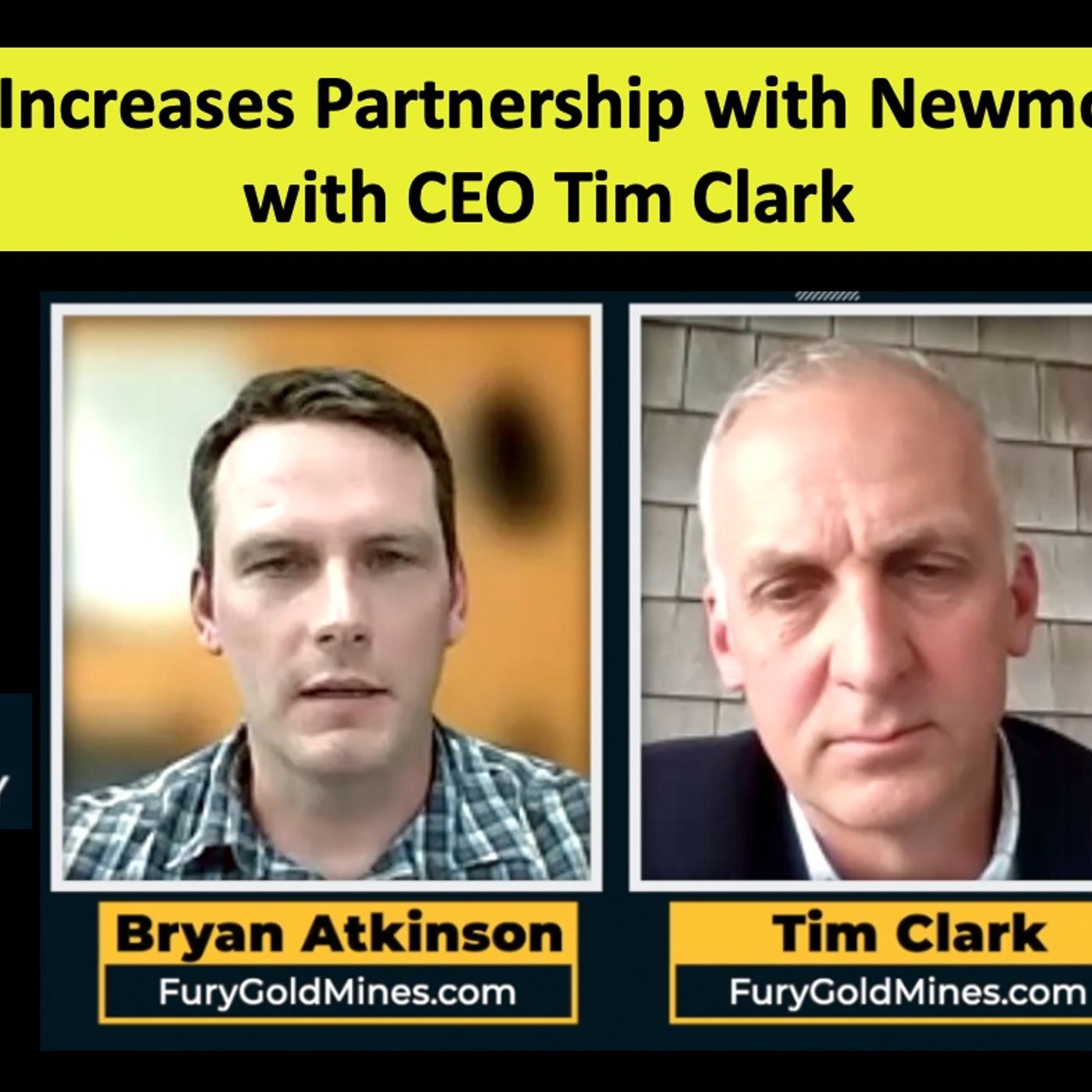
Fury Gold’s Increased Newmont JV Clears Way for Éléonore Project with CEO Tim Clark
We were joined by Fury Gold Mines’ CEO Tim Clark and SVP of Exploration Bryan Atkinson for a sponsor update. News has picking up in the past month and CEO Clark assured us that more is on the way. Dolly Varden Silver's recent strike further underpins the thinking behind Fury’s recent sale of its Homestake project DVS. Fury became a 1/3 owner of Dolly Varden and is poised to benefit greatly from future developments there. Fury in concert with Newmont upped their respective stakes in the Éléonore joint venture, buying out their partner Azimut’s interest in the project. The Éléonore South JV is located in an area of prolific gold mineralization and is 11km to the north of Newmont’s Éléonore Mine. According to CEO Clark, “The consolidation of the property ESJV is a key transactional milestone for Fury and a positive outcome for all parties. We see a tremendous amount of exploration upside in the joint venture and are thrilled to have a great working relationship with Newmont.” It was Exploration SVP Bryan Atkinson's first time on the show. He reviewed the significance of this month’s drill results. Further drilling in the Hinge is yielding impressive results. Atkinson remarked that, “The Hinge Target is taking shape with an over 20% plus increase to the mineralized footprint of the Eau Claire deposit… As we have started to gain a better understanding of the geometry of the Hinge Target and narrow in on the sweet spot of gold mineralization, we are planning continued aggressive drilling.” Multiple zones of high grade and broad widths of moderate grade, intercepts included: 3.50m of 4.79 g/t gold, 1.00m of 14.19 g/t gold, 3.50m of 5.86 g/t gold, 1.00m of 20.6 g/t gold and 17.50m of 1.29 g/t Au. This year's drilling is about 2/3 complete. Assay labs remain backed up, but more results are due in shortly. CEO Clark is rightfully pleased with Fury’s accomplishments during the past year. With C$10 million in the treasury, there's no need to raise capital at current share prices. He’s convinced that a massive metals bull market is rapidly approaching and is quite satisfied with Fury’s vantage point and its unique position to capitalize upon it. Seasonality favors a run-up in the sector, come Q4 ’22 and Q1 ’23 and Fury is a likely beneficiary, which is why we’re holding our position. Company website: www.FuryGoldMines.com Ticker Symbol TSX and NYSE: FURY
Happy Days Aren’t Here Again - Drew Pelton #5582
Summary: Can we start celebrating the “end of inflation?” Furthermore, do you have a plan for the changes inflation has brought about, and how these are going to affect your retirement plans? Drew Pelton comes on the show to talk about these things, and it’s extremely crucial—now more than ever—to consider whether your money will last through your retirement or not. There are multiple investing strategies you can look into if you want to focus on planning ahead, and Drew shares some of these in this episode. Tune in for more. Highlights: -Is it too early to celebrate the “end of inflation?” Political figures are claiming that we have hit 0% inflation -Prices are still going up, and the issue remains. We may be seeing a lull in inflation with commodity prices taking a dip, but it is still happening -Recently, the confidence index fell as consumer view of the situation weakened -Other reports have showed consumer confidence being higher; people get excited when they’re missing the big picture -Another important factor to consider with inflation is how to make one’s money last through retirement -Drew’s firm emphasizes investing for dividends -Will the economy revert to low interest rates/easy money? If the Fed is going to be smarter than they have been before, they will be smarter relative to the upcoming election. They’ll probably make more reasonable decisions -84% of Americans do not have a formal retirement plan, which reflects within people’s financial planning. Some people don’t get as organized as they need to for the best results Useful Links: Financial Survival Network Drew Pelton

Take Advantage of the Free £200 Billion in Loans Available to Small Businesses - Stephen Sacks #5581
Summary: What are some of the alternatives to small business financing? Stephen Sacks comes on the show to talk about some of the alternative methods for funding your business; luckily, there are many you can take advantage of if you’re willing to look. In the UK, there is £200bn in business and startup grants that is waiting to be allocated to companies. Tune in to this episode for advice from Stephen, and to learn how you can better fund your business. Highlights: -In business, it’s all about cash flow. Sometimes you have to arrange financing/equity in other ways, and there is a whole world of financial sources to master -It’s good to surround yourself with people who are going to be honest with you and tell you the situation as it is -It’s important to acknowledge what you don’t know, and take it upon yourself to learn or find someone who is an expert -Stephen proposes a method for businesses to retain all of their equity and maintain ownership of business Useful Links: Financial Survival Network Funding Nav
Real Estate Market Isn’t Dead Yet — Debbie Bloyd #5580
Summary: The Fed increased the funds rate by 75 points, as they promised. How does this affect your portfolio? Mortgage expert and financial advisor Debbie Bloyd comes on the show to talk about where the housing market is headed with the shift in interest rates, and mentions various factors to consider if you’re looking to get in the market any time soon. It’s very important to be attentive to the current market and speak with experts that understand what real estate is like now, and it’s absolutely crucial to have a solid plan for this sector. Tune in for more insight. Highlights: -Debbie specializes in mortgages, and says that this will make it harder for people to buy the homes that they want -People sometimes neglect to realize how good things are (i.e. lower rates) until they go away -No one is going to relocate if they don’t have to because it will inevitably cost more -The quality of the home you’re going to get with your money decreases as well -When you buy down a rate, your buying power becomes stronger -It can be frustrating because we want more than we can afford -A lot of first time buyers are much older now—listening to advice from people who haven’t bought a home in 20+ years are are misinformed on the current industry -If you’re in a state where many people are leaving, real estate prices aren’t going to increase as much due to lower demand. You can also get better deals on homes in these places -Durable goods are getting more expensive; your house is going to be twice as expensive before you sell it -It’s crucial to be intentional and have a plan Useful Links: Financial Survival Network DLB Mortgage Services
Investors Need to Play the Numbers Game and Win - Pranay Parikh #5579
Summary: What is going to happen in real estate as a result of the recession? I sit down and chat with Pranay Parikh in this episode, and we discuss the presence of high interest rates and housing shortages that are having major effects on the entire industry. We’ve already seen a 5-10% drop across the board, and it seems that successful real estate investing is a game of numbers. Tune in to hear more about what sectors of real estate to pay attention to, and what’s to come in the near future. Highlights: -How are you going to get through the recession? -We talk about real estate, high interest rates, and what’s forecasted for this industry given the housing shortage across the US -There has already been a 5-10% drop across the board -What you pay a month is determined by your mortgage interest rate and the purchase price -Could we go into a prolonged real estate bear market? The market is huge, and we have to be specific. When most people think about real estate, they things of single family homes -Over the past 5-8 years, people have gotten into short and adjustable mortgages -A lot of homebuyers and investors have a better idea of what they can afford -The people on the sidelines who have been saving for years to buy a house are the ones that are going to get hurt -Cap rates are going higher because cash flow is going down -It’s all a numbers game -Keep your eye on the sunbelt, because people are relocating there Useful Links: Financial Survival Network Ascent Equity Group
Are Happy Days Here Again? - Andrew Arons #5578
Summary: Is the market still going up, or is it going to fall away? I have Andrew Arons on the show to address this topic, in which he is quite optimistic about the future of the markets. This optimism stems from a number of things we can observe right now; earnings are pretty good, and earnings inflation may have peaked. Looking forward, the market could possibly move higher in the next six months, and there are a few key stocks related to rampant consumerism that you should keep your eye on. Tune in for more insight! Highlights: -In May, Andrew was calling for a rally—which is happening now. How long is this going to continue? -Earnings are pretty good; the market was scared about rising interest rates and inflation -Earnings inflation may have peaked, and all of this is looking good for the market -The market could also recover from the lows in June -We’re looking out and seeing where things could be six months from now -The market could possibly move higher -There will be some volatility and resistance as we retrace -Andrew likes stocks such as Amazon, Boeing, and other companies that thrive from lots of consumer spending (i.e. Disney) -Overall, Andrew is optimistic Useful Links: Financial Survival Network Synergy Advisory Management Group
Are You Ready for the Big Economic Roll-Over with John Rubino #5577
Summary: We’re seeing huge signs that the economy is about to roll over—especially with the current commodity prices. John Rubino comes on the show to talk about this, and explains some of the trends that allude to the forthcoming recession. If oil and housing move in a particular direction, then the rest of the economy has to go in this direction as well. People are changing the way that they interact with the market, staying on the cautious side and feeling more inclined to sell. To hear more on what’s to come, be sure to tune in to this episode. Highlights: -There is a decent chance that the current quarter is negative, and this will carry us through to the election -People are starting to save less money with alternative energy (i.e. electric cars) -We’re in a transition that needs to be managed -We’re headed into a time of very slow growth, which leads to people being nervous in the market. We could see a lot of big cap being sold, bringing it back down to fair valuation -Some people would like to see the country divided—people are moving to other states because of their beliefs -There’s lots of civil unrest in multiple European countries because of farmers being targeted. -Things are too crazy right now for rational participation Useful Links: Financial Survival Network Dollar Collapse
Don’t Fall in Love With Bear Market Rallies - Simon Ree #5576
Summary: Why are the next five years going to be different from the last five years on Wall Street? During the last five years, it was easy to make money, but Simon Ree thinks that the next five years (2022-2027) are going to be a lot different. According to Simon, the Fed has two options—which will either result in the stunting of economic growth or a repeat of the 1970s. His advice to people is to maintain a growth mindset, determining how and when to expose money to risk. Use the link below to check out Simon’s book on options trading, and tune in to this episode to hear some amazing market advice from Simon. Highlights: -In the previous 15 years, stocks have had a massive tailwind -The balance sheet expansion has gone in reverse -We’re experiencing inflation for the first time in four decades -In the next five years, the Fed will either stick to their guns—having dramatic effects on economic growth—or rate hikes will stop and the 1970s conditions will come back to life -Stocks are down, bonds are down, cryptos are down, but cash isn’t down -Simon encourages people to approach things with a growth mindset: how and when do I expose my money to risk? -Simon’s preferred method is to use technical analysis to pick out the best assets -Monthly compounding is a better strategy for some, achieved through short term trading -There is a shortage of residential housing, and this market is also going to be affected by rates -The residential real estate market will not necessarily crash, but prices could come down 10%-20% -If the fed maintains tightening, this could filter into unemployment -His book on options trading is to help people become successful, independent traders -He wrote the book to engage readers and simplify concepts in options trading -In a bear market, you can’t ignore the counter-trend moves -We’re in a structural down-trend, but don’t fall in love with bear market rallies and think that the worst is over Useful Links: Financial Survival Network Tao of Trading

Sound Passive Real Estate Investing - Pranay Parikh #5575
Summary: Many people go into one career but feel unfulfilled, and go on to find their calling in a different profession. This was the case for Pranay Parikh, who was once strictly involved in the medical field and decided to expand his career to real estate. He addresses how this dual career allows you to shape your medical profession in the way that you want—making passive money through real estate to avoid overworking yourself. Pranay has an equity group devoted to helping physicians earn passive income, so be sure to listen to this episode and check out his website to find out how you can get involved. Highlights: -If you’re able to make money outside of medicine, you can craft your medical career into what you want. Most people think that they need to be either all in or all out, which means that a lot of doctors in the industry are overworked -The nature of practicing medicine in the US has changed dramatically over the last 30 years—it has become very de-personalized, which is a systems issue -If you make passive money in real estate, you can spend more time with your clients without being concerned about not making money for that extra time -Doing real estate passively and working with people that help you manage your investments can help you save time while being involved in the industry -Many factors are influencing this passive income and the industry. A lot of people want to buy a house but are getting priced out Useful Links: Financial Survival Network Ascent Equity Group
Junior Miners Down But Not Out - Dudley Baker #5574
Summary: The markets are at the mercy of the federal reserve right now. What do you do about it? Dudley Baker has been through many downturns and bull markets, and gives his take on the volatility in the markets. The mining sector has taken some hits, and many investors have endured losses because of this. Dudley is confident, however, that the mining sector will take off in the near future. This is not a sector where you can get in and out; rather, it’s going to require patience and a lot of focus on its movements. Tune in to hear more insight from Dudley. Highlights: -It’s important to have trusted individuals to look to as mentors during this time -There are a lot of companies right now with stock warranties that are trading -On a good day, the mining sector is terrible—there is no long term growth, and it is a cyclical environment -There is no confidence that upside moves in mining will last -Dudley is confident that the mining sector will take off at some point in the near future -If you’re a trader trying to get in and out, the mining sector is probably not for you -The one year chart is far below its one year low -The focus is very much on uranium—there’s going to be a winner for the twenty cent range -When uranium spikes, there’s no saying how high it could go -This sector will have its day in the sun one more time Useful Links: Financial Survival Network Common Stock Warrants
Lowest Cost Way to Invest in Real Estate - Grace Mills #5573
Summary: If you’re wondering how exactly to get into real estate, you may want to consider the world of wholesaling. I sit down and chat with Grace Mills, who has coached over 300 people on making profits in wholesale real estate. To get into this area of real estate, it’s important to take inventory of your current resources and understanding, and decide what your overall goal is. She also talks about different marketing methods—especially the ones that are overlooked—and which ones can be the most effective. Tune in to hear more of Grace’s knowledge on wholesale real estate. Highlights: -We’ve been bullish about real estate. Even though it’s a market like any other, there are housing shortages, demographic trends, and other factors that are unique to real estate -This episode focuses on wholesale real estate -Grace initially got into this industry in efforts to pay off some of her student loans -She started working full time for a real estate investment company -She had an opportunity to transition into acquisitions, but was more intrigued by helping other people making money -If you want to get into wholesale real estate, first pinpoint your end goal. Then, consider where you would want to do wholesaling. You can do it in the market you’re in, or do wholesales virtually in a market you’re not in. Third, take inventory of your current understanding and resources -The best marketing channel is an inbound strategy -Utilize a marketing channel that has always been out there. A surprisingly effective medium can be the radio -Direct mailing is still a bit over-saturated -If you’re always in business to solve a problem, you will stay in business -Pay attention to the market and pain points that drive people’s decisions -You need to use marketing to first attract the seller and pitch them a plan for how you will help them. The other piece of your marketing is the disposition—moving the property to an actual buyer -There are lots of Facebook groups for real estate investors, and these are great places to introduce yourself -Build a flyer to give people information about a property Useful Links: Financial Survival Network Wholesaling Inc. - REI Radio Program with Grace Mills
Why is This Recession Different Than All the Others? - John Rubino #5572
Summary: When is a recession not a recession? This seems to be our current positions as people try to redefine what a recession is, and John Rubino discusses this with me in this episode. A recession has always been two consecutive quarters of negative GDP growth—which we’ve been seeing. The government is reluctant to call our current circumstance a recession, and people are being accused of spreading misinformation. Deeper analyses show that we are not where the government says we are economically, and we must consider many pieces of data to assess our current situation. Tune in to hear more of John’s perspective. Highlights: -We’re getting serious negative indicators right now that will contribute to a decline in growth -Inflation can be used to mask what is happening, and growth has been slower than what they are reporting -There is a problem with how we’ve traditionally defined recession with how we’ve calculated GDP -It’s important to look at GDP - government debt to see what’s actually happening -A depression is a much more realistic assessment of where we are -A lot of charts show that we have not been a growing economy for decades -The war could potentially be a tool for distraction -Interest rates are not spiking in Europe; the bond market is calling a recession -Everyone is piling into what they see as the most risk free asset: treasury bonds -Commodity prices spiked six months ago and have been trending downward ever since -Home prices haven’t done what we would expect—especially in California Useful Links: Financial Survival Network Dollar Collapse
Recession Ahead - Dee Carter #5571
Summary: The Fed rate hike is expected shortly, and we’re anticipating and increase of 75-100 basis points. How much of an impact will this have on you and your retirement? I chat with Dee Carter, the President of Carter Financial Group, and he shares his knowledge on what is coming in terms of rate increases and the recession we’re experiencing. The most important thing to do right now is put your money in a place where you can take advantage of the downside when the market moves back up again. Listen in for more tips on how to prepare for the future. Highlights: -We’re experiencing a dichotomy: there are some things that indicate a strong recession, but on the flip-side, there are earnings that are up a bit -All of the numbers point to the fact that we need to tighten up a bit -How long will al of this last? A lot will be determined by what happens in the November election -Once we get past the election, we will see a change in the final quarter. But it could be nine months to a year until we get out of the recession we’re in -It doesn’t look like we’ll see rate decreases in the third quarter -Interest rates are going up, which means you’ll pay more for your home -Nationwide, we could see real estate dropping as much as 10% across the country -Demand is going down a bit, but supply is still down -If you’re considering an electric vehicle, Florida is a great place for EVs. But this isn’t a convenient option everywhere -Put your money in a place where you can take advantage of the downside when the market moves back up again Useful Links: Financial Survival Network Carter Financial
FPX Nickel Strategically Poised to Meet Coming EV Nickel Shortage with CEO Martin Turenne
We were joined by FPX Nickel’s CEO Martin Turenne for a much awaited sponsor update. A major paradigm shift has taken place in the battery metal space. Automakers around the globe have been in a state of near panic, racing to line up reliable and “friendly” sources of copper, lithium, nickel and other metals required to produce electric vehicles. As Martin said, “... talking about the global supply chain, the demand of auto makers, now we've seen a race. … All of these companies are snapping up or attempting to snap up supplies of crucial metals, because … if they don't get these metals it's game over, [due to] the shift to EVs.” If they don’t secure supplies, they won’t survive. March 2022 witnessed a major nickel short-squeeze took place, with prices jumping 5-fold in just 48 hours. Now it has settled back into the $9-10 per pound level, a level at which FPX will see high profits and substantial cash-flow. However, Martin believes that nickel prices will continue to increase, as there is just not enough supply to satisfy the burgeoning EV demand. FPX is uniquely situated to profit from these trends. Its Baptiste and Van projects are some of the largest undeveloped sources of nickel on the planet. Due to their composition, these deposits are environmentally friendly, thus they’re able to forgo the costly/polluting smelting process. Martin hinted that outside interest in the company’s projects is high and he will provide more information at the appropriate time. But one thing is for certain, nickel is essential to global adoption of EV’s and its future demand insures higher prices and the need to increase production at rates far higher than today’s levels. This leaves FPX Nickel in an extremely advantageous position with the likelihood of extraordinary returns to shareholders. Company website: www.FPXNickel.com Ticker symbols: OTC: FPOCF — TSX-V: FPX
Crypto Tax Mitigation - Micah Fraim #5570
Summary: You’ve made money in crypto and managed to sell it for a profit; however, there is still an important question to answer. What are the strategies for minimizing tax burden with crypto, and can you use the losses to offset other gains? Micah Fraim, a bestselling author and CPA of an accounting firm, comes on the show to explain how you can lower your crypto taxes by the legal means available. Many people don’t understand this component when investing in digital assets, and Micah’s mission is to help people successfully manage these new age investments. Tune in for more insight. Highlights: -If you’ve made money in crypto and you managed to sell it for a profit, you have to figure out strategies for minimizing tax burden with crypto, or try and use the losses to offset other gains -The average crypto investor has three main categories of income (i.e. trading, capital gains, staking income) -If you’re trading and holding for more than a year, you get the same treatment as long term capital gains -With crypto, you can sell your whole portfolio and buy it back, but you realize the loss -After 30 days you can buy a stock back but with crypto you don’t have to worry about waiting -The IRS has only issued guidance on five or six things in crypto -With the things that are ubiquitous, there is no guidance -Your duty as a citizen is to minimize your taxable incomes through whatever legal means are available -It’s going to take multiple iterations of regulations to close the loopholes/gray areas that exist right now -Micah bought some crypto back in 2017. When the market recovered, Micah got involved in a project with cryptocurrency, and realized that no one understood the tax side of digital assets Useful Links: Financial Survival Network Fraim, Cawley & Company, CPAs
Making Money in the Coming Recession - Eddy Gifford #5569
Summary: With inflation, the war in Ukraine, and supply chain disruptions, the most pressing problems in the nation right now are clear. To get some perspective on solutions, I talk to Eddy Gifford—whose job as a wealth advisor is to critically think through these problems and help others subsequently implement investing strategies. Interacting with the market during inflationary, uncertain times requires identifying what type of market we’re in and thinking through all of the possible outcomes. This is what Eddy refers to as being proactive with investing methodology, and you can learn more about it during this episode. Highlights: -Eddy Gifford is a wealth advisor who is also into alternative investments -Cryptos have gotten slammed—Bitcoin is down two thirds and could go lower -The one alternative investment holding on so far is real estate, but it has an inverse relationship with interest rates. Property costs have doubled -When you’re dealing with something like cryptocurrency, it’s not a buy and hold situation -Traditional diversification doesn’t work in bear markets—it’s more about diversification of strategy. We need to be proactive with our methodology—analyzing why one would buy or sell something -It’s important to pinpoint what your mass loss is -So how do you approach the market? First, you should identify whether the market is a bull market or bear market and the appropriate strategies based on which one you’re dealing with -Once you own, have targets in place -Buying everything for the sake of buying everything is not a recipe for success -Just because we’re going to be positive over the next few months does not mean this is indicative of recovery -We could end up in a situation where some of the big names have poor earnings\ -It’s okay to have some cash on the sideline right now—it’s not a bad thing to be sitting in cash when the market is down -If you’re going to go all in, it’s good to have some sort of hedge in place -Commodities are more volatile in general than the stock market as a whole -The inflation we’re dealing with now is a three headed monster—some of these things can’t be fixed with interest rates -A word of advice - focus on what you control. Focus on paying off credit cards to reduce debt, plan your day to be efficient with fuel/time, Useful Links: Financial Survival Network Tactive - Eddy Gifford
Cryptos are Down But Hardly Out - Gregory Johnson #5568
Summary: Bitcoin is down in the low twenty thousands, and cryptos are in the dumps. Is it your chance to buy, or is this a good time to flee? Gregory Johnson—Co-Founder and CEO of Rubicon Crypto—appears in this episode to help us imagine the future of crypto and how to wisely invest. One entering the industry has to be mindful of its volatility, and maintain a long term perspective in order to strategize. Gregory gives excellent advice about digital assets, which will become even more prevalent as time goes on. Tune in to hear more. Highlights: -People need to take a step back and use common sense when it comes down to crypto—regardless of which side of the industry you’re coming into -People need to think about how dependent we’re going to be on technology in the future, and how much of this technological development will be digital -There is no absolute guarantee that crypto is going to do things differently than other equity assets people have in their portfolios -Anyone entering the space should not just be prepared for volatility, but the most extreme volatility they’ve seen when investing -You have to have a very long term perspective -It’s important to know the difference between a currency and an asset; assets aren’t divisible or portable, and can’t be spent in the way that currency can -The evolution of these technologies is only going to continue -Future reward programs will have a tokenized NFT aspect -There is a new economy that will involve blockchains, and this is already being implemented with larger corporations Useful Links: Financial Survival Network Rubicon Crypto
Raging Inflation and Recession are Here - Nathan Cox #5567
Summary: Is inflation going to continue, and what effect does this have on your retirement? Retirement expert Nathan Cox comes on the show to talk about how to adjust your strategy for investing/retirement in light of what we’re experiencing in the current economy. Indications of a recession mean that we must re-think our investments, which includes being more selective and making sure that your income is generated naturally. Tune in to this episode to hear Nathan’s advice on setting yourself up for success. Highlights: -Inflation was running a bit over expectations and came out around 9.1% -What we do largely depends on what the Fed decides to do in response to inflation -They can increase interest rates, but they don’t have any control over the supply chain issue -People remember the 2008 recession, which was an immediate effect -Our current situation is progressing much more slowly -Unemployment is the lagging indicator -We could be in the recessionary position very quickly, and by the formal definition of recession we are technically already there -The Fed is probably going to have to continue raising rates through 2023 rather than raising and then backing off -Supply chain issues and the war in Ukraine are making things more complex -The majority of Americans were relying on things like the 401k, but it’s smart to be more selective with your investment strategy—focusing on quality and dividends -What investments are more protected from inflation? Make sure your income is being generated naturally; don’t exclusively rely on growth and capital appreciation Useful Links: Financial Survival Network Retirement Income Solutions
Inflation Coming Down for Now - Charles Nenner #5567
Summary: Markets are going crazy, and we’re seeing a bit of a crash/pullback in commodities. Charles Nenner comes on the show to present how we can understand this phenomenon in terms of cycles. Charles has been known for using cycle analysis to predict future market moves, and in this episode, he explains some of the logic behind cycles in commodities, gold, and the prevalent markets in these circumstances. Tune in for more insight. Highlights: -You can calculate how high/low moves go, and when they happen -The news isn’t necessarily important; it’s more useful to look at cycles and patterns in the markets -You can only get a bounce when cycles bottom -When cycles aren’t in sync, it’s not as easy -Charles’ rule of thumb is don’t go against the cycle -We’re looking at a bit of a bounce on Bitcoin -Cycles are generally ahead of fundamentals Useful Links: Financial Survival Network Charles Nenner Research Center
The Present Dictates the Future - Jerry Robinson #5566
Summary: The world is bankrupt. How does the impending global bankruptcy affect you? This episode’s guest chats with me about how we got to where we are economically, and what we can expect in the coming years. Jerry Robinson’s saying is “Follow the Money,” but in order to do so, we have to consult past decisions and events to understand the economic effects that come into play years later. This is especially relevant to the pandemic and the policy responses back in 2020 that produced the inflationary situation of 2022. Similarly, what happens in this year will dictate our financial situation in the next 2-3 years, which will hopefully look better as rates adjust and balance is restored. Tune in for expert insight from Jerry. Highlights: -We’re in a problematic time of our own making; we’ve depended upon a system that clearly is leading us to a place where people cannot afford basic sustenance in many places -We’re in a very unprecedented time, monetarily speaking. People are realizing that something is very wrong with the US and global economy -2022 is a function of the policy responses we had in 2020. We discuss this particularly in reference to COVID and the response of the federal reserve -Subsequent years will be functions of what happens in 2022 -We don’t know how long the insanity will go, but we do know that we can’t expect to have unprecedented intervention in the economy without unprecedented consequences -You can’t just follow the money now, you have to go back in history and pinpoint where things start -They can’t lower interest rates now because policy drove them to this situation -The fed will reach a place where they increase interest rates, and inflation will then start to settle -Everything is down across the globe, and it’s coinciding with rate increases -The initial inflation rate has already come down in some ways (i.e. oil, copper, gold, etc.) -When input costs come down, the inflation figures will come down -We may not go back to 2% inflation any time soon, but the fed is managing expectations -A decrease in inflation, even if it isn’t extreme, will feel like a victory -When things get somewhat better, this is where a lot of money is made -When pessimism is rampant, investors look for high quality, dividend paying companies Useful Links: Financial Survival Network Follow the Money
The World According to Martin Armstrong - Martin Armstrong #5565
Summary: We’re seeing oil price shocks, commodity booms and busts, and various factors that are threatening to de-throne the US dollar. Why is this happening, and what does this mean for the global economy? I have Martin Armstrong on the show to discuss this, and he explains the various changes that have occurred—such as sanctions in Russia and countries opting to not borrow in dollars—that put the dollar at risk. Not only is the dollar in danger in these conditions—this shift in currency use greatly affects the world economy. Tune in for more information. Highlights: -The dollar has been the one currency that anyone can write a bond in -So many emerging markets issue debt in dollars so that they can sell to American investors without the foreign exchange risk -The dollar has had less restrictions globally, which has made it the reserve currency -The sanctions imposed upon Russia are devastating to the global economy, and have ultimately split it in half -The world economy has functioned by the free movement of capital, but these sanctions have essentially sent off a warning to the entire world related to getting assets confiscated -When sanctions are put on individuals, the situation worsens -The dollar has been weaponized effectively -This issue will probably become more serious after 2024 -This is not worth destroying the entire world economy over -Russia seems to have been provoked into this war -We’re going to have high energy prices in Europe and Asia no matter what happens -2023 is going to be a massive turning point; it looks as though it can’t possibly get any better, and it’s probably going to cascade into chaos -A lot of the real estate has been European buying -As the dollar goes up, Japan and China are selling their bonds -We’re in a complex situation; there isn’t just one factor that is contributing to the economic turmoil -Chinese real estate is the largest asset class in the world, and it appears to be imploding -China warned banks years ago not to borrow in dollars Useful Links: Financial Survival Network Armstrong Economics
Rising Delinquencies and Repos - Wolf Richter #5564
Summary: Has the housing bubble popped? Is it in the process of popping right now? Here to give us the latest news on this is Wolf Richter. The housing market is going through a major shift as stocks decline and mortgage rates go up. Even though we can’t see the progress of this in real time, we can note how the underlying dynamics are changing dramatically. To find out what’s to come, be sure to tune in and hear what Wolf has to say. Highlights: -The momentum is draining out and housing stocks are down -The housing market nationwide is going through a “come to Jesus" moment because of the mortgage rate -Layers of buyers are going to be moved out of the market -We see widespread drops in asking prices and volume is dropping as well -This isn’t like watching a crypto chart; we can’t see the progress in real time, but we can look at the underlying dynamics which are changing dramatically -Foreclosures are up, but they’re still near historic record lows. This is due to home prices spiking—people can sell their home rather than paying it off -Formerly, people were using stimulus to catch up on loans -Many delinquencies were cured last year, and now they’re going up -We’re probably going to see somewhat of a return to normal levels Useful Links: Financial Survival Network Wolf Street

The 4 “L’s” - Robert Bendetti #5563
Summary: You can never invest too much in human capital. But what are the specific steps you can take to effectively invest in yourself and others? Robert Bendetti comes on the show to provide specific direction regarding this, and talks about learning, leading, listening, and leaving—the 4 L’s of investing in human capital. Robert emphasizes the importance of continually educating yourself as you advance in your career, and taking time to listen and understand others. The tips he gives are applicable to one’s career, but also apply to many other areas of life. Listen in for more insight from Robert. Highlights: -You can never invest too much in human capital. Every time you invest in yourself, the benefits and return on investment are at least 10x. -The four key concepts presented by Robert are learning, leading, listening, and leaving -These can apply to individuals as well as teams/businesses -Learning is lifelong. Wherever you are in your career, there is still more to learn. There is formal training, which is extremely important (i.e. higher education or professional certification) and then there is subject learning—acquiring knowledge of the latest happenings in your field -It’s important to give back in the aspect of learning, and you can do this by being a mentor to others and sharing your experiences. You can also seek out a mentor for yourself. -You can offer to volunteer in cross-functional teams and learn about the other positions in your field -If you’re an entrepreneur, you need to look for the client that is in the worst situation. You can often learn the most by taking on the harder tasks -Remember that you are not the smartest person in the room. Listening to others can be very powerful and presents the opportunity to hear other perspectives -Talk to your customers and listen. It’s important to take time to listen to your team members as well -How do you get yourself focused? -Leaving implies that there are some things that you need to eventually stop doing. This can include too much media consumption. This will free up time for you to listen and learn -Things you may also need to leave include a job, negative habits, a negative mindset, or toxic people -Now may be the time to speak or write on what you know; there are many websites that facilitate in getting your voice heard -Nutrition, exercise, and sleep are things that people often take for granted, which is something that you can change in your own life today Useful Links: Financial Survival Network Robert Bendetti LinkedIn
Germany Plays Stupid Games and Wins Stupid Prizes - John Rubino #5562
Summary: Germany has been capable of making well reasoned decisions over the years, but recent events have indicated quite the opposite. John Rubino comes on the show to talk about the chaos occurring with Germany’s lack of gas, and the lack of faith in the euro. With civil unrest and the inevitable need for the European central bank to tighten, unfortunate outcomes are in store for Germany—and the future of Europe. Listen in for more information. Highlights: -A few years back, Germany decided to cut deals with Russia for natural gas—which would make Russia a primary supplier for their natural gas -They put a hostile military alliance right on their border, and now Russia isn’t exporting natural gas to Germany -Germany is currently setting up warming stations -Energy is crucial to Germany’s economy, and now they’re running a trade deficit -The only reason the euro was a viable currency was because everyone perceived the euro to be a new version of German currency. They also thought of the other outstanding debt as being German debt -Nothing is propping up the euro, which is why there is now chaos -People are losing faith in the euro and Germany. The only solution would be taking back the sanctions and trying to make peace with Russia—but it’s also not in Russia’s best interest to do this -There is a lot of civil unrest taking place -Damage is being done to agriculture; all of the farmers in the EU are rebelling -The European central bank has no other choice but to tighten Useful Links: Financial Survival Network Dollar Collapse
Rising Dollar, Rising Rates, Rising Instability - Andy Schectman #5561
Summary: When the price of gasoline doubles and the overall CPI goes up 9.1%, something seems to be wrong. Everything is doubling and tripling, and the Fed has yet to tackle the true root of inflation. Andy Schectman sits down with me to talk about this, and we compare today’s inflation to that of the 80s. If it were measured in the same way as it previously was, we would see an inflation rate of about 13.6%. The entire system is experiencing major fragility, and the effects of this have only just begun. Tune in for more expert insight from Andy. Highlights: -When was the last time you saw the price of something go down? Andy did see $4.85 gas, so it has gone down slightly, but prices are steadily rising for the most part -The originally reported core CPI in 1980 was 13.8% -Our 9.1% inflation rate measured the way it used to be measured would be 13.6% -In 2020, we had a rate of 1.4%, so the current inflation is 6.5 times more intense than it was two years ago -The federal funds rate has risen, but we’re not getting tough on inflation -Thanks to low interest rates and easy money, assets have become extremely distorted (stocks, bonds, real estate) -If they raised rates to 9%, you would see the immediate implosion of the markets -The dollar is trading at a premium to the euro and yen -With a debt based currency, everything is going to unravel -The real manipulation has always centered around interest rates -With low interest rates, companies and consumers take risks that they wouldn’t otherwise take -We’re seeing a move away from the dollar hegemony because other countries are wondering if they are next Useful Links: Financial Survival Network Miles Franklin

Your Success is in Your Hands - Ash Cash #5560
Summary: Some people overachieve despite a difficult upbringing, and this is the case for this episode’s guest speaker, Ash Cash Exantus. Growing up in the projects of Manhattan, Ash had the cards stacked against him. Nonetheless, he worked his way up and is now one of the best financial advisors in the country. Ash is committed to working hard to reach his highest potential, while consistently reminding others of his humble beginnings and where he came from. He hopes to inspire others to pursue their dreams, upholding the idea that anything is attainable if you’re focused on the right things and have a solid model to follow. Tune in for more incredible advice from Ash. Highlights: -Some people overachieve despite a difficult upbringing -Ash Cash grew up in the projects of Manhattan and became an entrepreneur at the age of 8 -Ash Cash is now one of the best financial advisors in the country, and is the author of 13 books -If he can beat the odds, so can others. He aims to help other people find greatness rather than making excuses due to their obstacles -By 24, he was a VP for one of the top financial institutions in the world -If you’re focused on the right things and have a model to follow, you can achieve anything you desire -You will only get as far as your belief system. If you believe you will not move forward and be successful, this will be your reality -Instead of trying to lower to someone else’s level to convince them to succeed, Ash believes in continuing to rise up while reminding people where you came from -If you constantly look at negative news, you won’t be able to focus on the positive aspects of life and the opportunities available -His latest book, From the Block to the Bank, recounts his life story to emphasize that regardless of your background, you can maximize your full potential. He outlines 40 key ideas/principles to fulfill this Useful Links: Financial Survival Network Ash Cash From the Block to the Bank
China Debt Jubilee Underway, US Next? - David Stryzewski #5559
Summary: A storm is brewing as people stop paying their mortgages, realizing that the system is rigged and things are bound to change. Here to discuss this is David Stryzewski, and he unpacks some of the inflationary phenomena taking place as well as how to strategize in these tumultuous times. You won’t want to miss David’s useful tips, so be sure to tune in to this episode. Highlights: -A storm is brewing—millions of people have realized that the system is rigged, and have stopped paying their mortgages as a result -This phenomenon is happening in China -If 20-30 million stop paying their mortgage, the legal system grinds to a halt -We have inflation and mass defaults, which go hand in hand -We’re seeing inflation, record high prices, and supply chain issues -We’re probably going to see different dimensions of these issues -The new CPI came out at 9.1% -If we raise rates too high, we kill business activity. If we don’t raise them enough, we kill the dollar -We must analyze the velocity of the situation—or what the actual cost to the consumer is -The Fed is going to be more aggressive, and rates need to go up about another 1.5% by September -The destruction of debt leads to the destruction of money -Everybody’s debt is somebody else’s asset -If debt doesn’t get paid, banks will go down the toilet and have to be re-capitalized again -This time’s housing bubble is different -They may want to do debt consolidation, but the existing laws could trigger a potentially catastrophic event -You need to make sure you have a plan and mitigate risk; budget is something that you CAN control -Have cash ready to deploy -Invest in yourself. If you want to learn how to do your trade more effectively, take the time to acquire those skills Useful Links: Financial Survival Network Sound Planning Group
Don’t Let College Break the Bank - Brad Baldridge #5558
Summary: College can be a great investment for anyone’s human capital, but you have to do it right. Here to discuss how individuals and families can plan for college and minimize debt is Brad Baldridge, a certified financial planner that specifically deals with college planning. It is a process that is different for each individual because there are so many moving factors, so it’s important to take into account all of the ways that one can save money ahead of time and eliminate extra costs. Brad gives a lot of great advice that can help young adults and families prepare for this milestone, so be sure to tune in. Highlights: -It’s a twofold process—picking an are of expertise that will give you a return on your investment, and using all of the hacks/tips that will minimize your future debt -College planning is not a cookie cutter process. There are a lot of moving factors that differ for each individual -Start planning sooner than you think you need to; there is early stage planning and late stage planning -Late stage happens when you’re dealing with the admissions process, testing, etc. -The early stage happens when people are younger and not at the end of their high school career -For some, Brad advises not to attend college immediately after high school -Once you get a serious job, it’s difficult to go back to school -Some people take longer to get their degree, and face more debt later -There are many professionals that help students figure out what they want to eventually do, and what college major will help them funnel into their desired career -College is paid for by income, savings/investments, financial aid, scholarships, and reductions/other expenses -Becoming more efficient is half the battle, and it’s important to be aware of the resources that are available to you Useful Links: Financial Survival Network Baldridge College Solutions
It’s the Time of the Vulture - Darryl Schoon #5557
Summary: We’re experiencing financial, societal, and global insanity that has been a long time coming. In this episode, I speak with Darryl Schoon, who predicted our current situation many years ago when he wrote The Time of the Vulture. Darryl notes the way that the money supply has increased and subsequently lost any value it had. Join us for this episode to hear some of Darryl’s knowledge, and to get an idea of what’s to come. Highlights: -Darryl Schoon saw all of this coming many years ago -Darryl talks about the concept of the ‘vulture,’ who feeds on blind ignorance and denial -His book predicts the event that we are in now -Individuals and corporations will go bankrupt before the government -After the Federal Reserve took control of the money supply, money no longer had the same value -If all debt was paid, money would disappear; in a capitalist society, there is debt based currency Useful Links: Financial Survival Network Darryl Schoon

You Need Ann Garcia if Your Children are Going to College - Ann Garcia #5556
Summary: Student debt is higher than ever. Many young adults applying for universities, scholarships, and student loans don’t always know what they’re getting into in terms of financial commitment. Here to talk about this is Ann Garcia, who recently wrote a book called How to Pay for College. Ann stresses that a great education can come from universities that aren’t as costly or exclusive, and we discuss multiple tips for saving money when preparing to apply for college. Tune in for more amazing insight from Ann, and be sure to check out the links below if you want to purchase her book or browse her online resources. Highlights: -There is over a trillion dollars in student loan debt -It’s important for students to understand the reverse mortgage they are taking out when they enroll in an institution -If you’re signing up for six figures worth of college debt, it’s important to look at the return on this investment -The collateral is the student’s future -People often equate cost and exclusivity with quality, assuming that only the most high caliber universities produce the most successful people -When Rhodes scholars are announced, more than half of them usually come from public universities with higher acceptance rates -The factor that will really impact a young adult’s life is the amount of debt that they face after they complete their degree -Transferring institutions and spending more years enrolled can add on to your debt immensely -It’s good to talk with your children about how to set up savings and grow them over time -You can often save money by taking Advanced Placement or IB courses during your high school career, or enrolling in prerequisite courses at a local community college -It is important to keep in mind, however, that not all universities accept these courses. Taking these classes needs to be part of your research on what university to attend -It’s also crucial to focus on having a high GPA; if you’re going to take AP or IB courses, make sure that you will still be able to perform well in these classes -Dual enrollment is also a great option that many schools offer; you can experience the four year college experience without the high price tag -What you see on your FAFSA is not necessarily what college will cost you in total -Students whose families that have saved some money for their education are more likely to graduate -Read the fine print on your financial aid letter Useful Links: Financial Survival Network How to Pay for College Ann Garcia's Book
Powell Pivot Just Months Away - Michael Pento #5555
Summary: A major concern in the economy is preventing recession, but it looks as if we are already in one. I sit down and chat with Michael Pento, the President and Founder of Pento Portfolio Strategies, and he has been accurately predicting the Fed’s moves for quite some time. People are losing their jobs, home prices are about to tank, and we are experiencing the direct effects of a recession. Tune in for more insight from Michael. Highlights: -Michael Pento has been predicting the Fed’s moves very accurately -Powell is saying that there is no recession in sight, but we seem to be in one now -A recession is two consecutive quarters of negative GDP growth -The Fed is forced to hike into a recession because they have no other choice -They keep raising and the dollar is going higher, which is killing manufacturing and exports -If they want to get to neutral, they have to be restrictive -They’re just now starting to flight inflation, but we’re already in a recession -With a deflationary collapse in the economy, we would need cash -Employment fell last month -The household survey shows that 315,000 people lost their jobs -The banks are the big winners on inflation; they get -When lending begins again, that’s when the banks take off Useful Links: Financial Survival Network Pento Portfolio Strategies
Self Storage Real Estate is Booming - Drew Dolan #5554
Summary: While all asset classes are experiencing volatility, the self storage sector of real estate has a lot of promise. Drew Dolan comes on the show to discuss some of the advantages of investing in self storage. As the Principal and Fund Manager of DXD Capital, he is extremely knowledgable on this sector, and explains how it has flourished in recently years. If you want to know more about self storage and the logic behind investing in it, be sure to tune in to this episode. Highlights: -Real estate is up in the air, and virtually every asset class is going through tremendous volatility -Self storage is a sector of real estate that may become a beneficiary of this uncertainty -It’s extremely efficient from an operational standpoint -Picking location matters the most in self storage, and you can look at a lot of data before making investment decisions -Even though interest rates and constructions costs are up, there are still many great deals available in self storage -In development, it’s riskier and requires more effort -In the last fifteen years, the utilization of self storage has doubled -The pandemic was good for self storage; there were a lot of new users Useful Links: Financial Survival Network DXD Capital
The Greatest Financial Bubble of 2022 - Bob Hoye #5553
Summary: With the dollar going higher and precious metals going lower, the markets are crazy. Here to analyze this is Bob Hoye, who uses historical trends in financial markets to evaluate what is happening in the contemporary economy. The current patterns within precious metals and interest rates are indicative of a great financial bubble. Tune in to hear Bob’s perspective, and data driven predictions on what’s to come. Highlights: -The markets are crazy; the dollar is going higher and precious metals are going lower -Bob has looked at extensive history on financial markets, and over time we’ve seen patterns with financial bubbles -With the conclusion of a great bubble, copper’s real price goes up and gold’s real price goes down -In July 2020, the precious metals sector got completely overbought -In a financial bubble, gold deflated goes down; then it stabilizes and goes up -Bob has been specifically looking at the rise of gold’s real price in relation to the CPI -If you’re in the mining business, get out of base metals and into the gold business -Gold, base metals, and real long interest rates have done what they are supposed to—indicating that the bubble is over -The Fed has tried to inflate in previous crashes -The dollar is going to keep going up -In China, base metal mining and gold mining have soared -High prices for metals build capacity Useful Links: Financial Survival Network Charts and Markets

Jay Powell is a Lousy Poker Player - Octavio Marenzi #5552
Summary: Markets are in turmoil, commodities are crashing, and instability seems to be the overarching theme. Here to talk more in depth about this is Octavior Marenzi, CEO/co-founder of Opimas. The fundamental issues and problems have not changed, as central banks pump huge amounts of money into the markets. Once these inflationary waves start, they’re extremely difficult to suppress. Is there hope for the future? Tune in to find out. Highlights: -Wars are continuing—perhaps with more on the way -It’s a hazardous minefield you have to navigate through to protect your wealth -It’s better to lose to inflation than to lose in the markets or in bonds -Is this decline/bear market different than the previous ones? -The deciding factor in this market is what the Fed does—and Jay Powell seems to be playing a poker game -The fundamental issues and problems have not changed—central banks pump a huge amount of money into the markets -There may be expectation that they will drain liquidity out of the markets in the future -When inflationary waves start, they’re hard to suppress and become intractable -People want to trade their cash for items that they believe will be more valuable -There isn’t a clear strategy to pursue right now -Bitcoin is looking weak, and the housing market looks shaky as well Useful Links: Financial Survival Network Opimas
The World is a Mess with No Way Out - John Rubino #5551
Summary: Have we already reached a recession? As the economy slows down and people begin to stop purchasing, it seems as if this is the case. Here to discuss this is John Rubino from Dollar Collapse, and he unpacks the current decline of the global economy—expanding beyond the US and touching all markets. Things are only going to get messier, so tune in to hear what to expect in the near future. Highlights: -Gold and silver are getting decimated, and everything else seems to be getting decimated worse—such as oil -The economy is slowing down; people are buying less stuff because prices have increased astronomically -We are possibly in a recession already -The dollar is going up relative to other currencies; the European bank was forced to tighten, and yields started to go up -Their plan was to tighten German bonds, and they are going to keep financing deficits -Investors have to figure out how to allocate their money based on what the economy of the world is going to do going forward -By the end of this year, there is a chance that we will be back in easing mode -This is just like what has happened the last three/four times around, but on a bigger scale -In many areas of the world, we’re seeing food riots -Things are going to continue to get very messy -A lot more people are probably going to come out and vote in this midterm election Useful Links: Financial Survival Network Dollar Collapse
Your Entrepreneurial Success - Kevin Stansfield #5550
Summary: Many people are leaving their corporate jobs to become entrepreneurs. This can be good move in many circumstances, but it’s important to know what you’re getting into. Business coach Kevin Stansfield comes on the show to talk about how you can minimize your risk when purchasing or starting a business, and there are a number of factors to keep in mind with both. You must have a clear vision of where you want the business to be in the future, and it’s crucial to get advice to someone who has bought or started a business before. Tune in for more insight. Highlights: -Many people are leaving their jobs to become entrepreneurs -There is a big difference, however, between starting a business and buying one -Kevin has been coaching businesses now for about 16 years -Kevin’s Dad had a difficult experience buying/owning a business -Kevin got into business coaching for business owners like his Dad who are passionate about what they do -Try to find the business that is going to be the next big thing—what Kevin calls the ‘unicorn.’ A lot of luck is involved -It’s also important to ensure that you can get paid forever -The biggest mistake people make is that they don’t have clarity about where they want the business to be in the next 5-10 years -You must master your brand, which entails sales, advertising, marketing, and all of the factors involved -A lot of learning happens through trial and error -Get advice from someone who has bought a business before. To mitigate your risk, you can buy a franchise -When you start a business from scratch, there are no systems in place, and you have to build them from the ground-up yourself Useful Links: Financial Survival Network Kevin Stansfield LinkedIn ABC - ActionCOACH The Big Dipper Book
Time to Retire the Idea of Retirement? - Randy Sevcik #5549
Summary: If you don’t change the way you’re doing things, you may have to retire the idea of retirement. Thankfully, Randy Sevcik has great advice about how to better plan/manage your retirement. In order to plan for the future, it’s important to consider the psychology behind what has brought us to the current point in the economy. Randy helps clients build timelines by looking at each individual investment, and then creating a strategic plan for balancing income and growth as someone gets closer to retirement. Tune in for more insight. Highlights: -There has been madness in the markets; we knew this was coming, but it still has a large impact on us -You have to look into the psychology of what has brought us to this point -Roughly 10,000 citizens are retiring every day, and it will stay like this for the next 8-9 years -For the first time, half of our population will be at or in retirement -This isn’t going to be your typical recessionary or inflation period because the psychology behind it is different -Most of the money in the market comes from people aged 55 and older -Randy builds timelines by looking at every single investment someone is going to do. As you move closer to retirement, you have to become more conservative and be okay with missing out on potential growth -Some people are going to panic and purchase things that they shouldn’t -Look at market sectors based on what’s going on with the overall economy (i.e. energy) -To get through the emotional part of it, it’s important to trust the math and map out your plan quantitatively -It’s also crucial to balance income and growth -The people fixing the problem must admit there’s a problem Useful Links: Financial Survival Network Elite Group Retirement Services
Market Madness - Mark Singer #5548
Summary: Is the madness coming to an end, or is there more in store? More importantly, what does this mean for your wealth, portfolio, and retirement? I have Mark Singer on the show to talk about the current state of the markets, and why the mayhem is any different this time around. Markets go through cycles, and the way we perceive the fluctuations is influenced by personal perspective and how we time our own financial decisions. Tune in for more insight. Highlights: -The markets always go through cycles, so nothing has necessarily changed in that regard -Bear markets happen every 3.5 years, so what has changed? -For most, the current markets don’t have a true impact on their long term lives unless they are highly dependent upon portfolio income -This time being different than last time in regard to the markets going down has to do with perspective -The markets overreact on the upside and downside -The real problem that people face in planning their retirement is timing -The fixed income markets have been disastrous -When consumer sentiment is at a low, markets rebound strongly -The biggest mistake you can make right now is to overreact Useful Links: Financial Survival Network Mark Singer
Gold Bear Market Firmly in Place - David Erfle #5547
Summary: Previously, we were seeing the potential for a new cycle in commodities with metal prices going up. 90 days later, the Federal Reserve is trying to fix what they created in the first place. Gold and stocks have somewhat of an inverse relationship, with worsening bear markets for stocks creating better conditions for gold stocks. With the lingering question of what the Fed is going to do, and where the markets are headed, there is a lot to cover. You don’t want to miss anything, so be sure to tune in to this episode. Highlights: -Everybody is wondering when/if the Fed is going to pivot -Congress’ first order of business is to get re-elected -If you’re leveraged or over-leveraged right now, it’s not a good feeling -The worse the bear markets get in stocks, the better it is for gold stocks -Gold price always bounces back and goes a lot lower than one would expect -Values/fundamentals don’t mean anything—the only thing that matters is the cash and leverage you can acquire in these instances -While everybody is selling, you’ll have cash and will be able to make rational decisions -The Federal Reserve was initially there as a backup -The goal of the Fed then shifted to keeping prices and employment stable. Finally, they decided they needed to keep stock prices going up permanently -We may have had a bottom because two days ago there was a rally -The stock market is ridiculously oversold and due for a bear market rally Useful Links: Financial Survival Network Junior Miner Junky

Bitcoin Going Much Lower - Michael Moor #5546
Summary: Michael Moor comes on the show to talk about the S&P and the overall market. He’s predicting that we’ll see some choppy, downward movement in the next few weeks. With gold, we’re also experiencing consolidation, and Bitcoin is on a trajectory to potentially go into negative territory. Tune in for a comprehensive, analytical overview of the markets from Michael. Highlights: -Markets are volatile; many people have suffered losses -With the S&P, we are now in a bearish corrections -We’ll probably see some choppy, consolidated, downward movement -You should always know where you want to get out if you’re down -We’re heading towards $10 Natgas; it’s broken above significant levels over the last ten years -Gold is in consolidation—testing a bearish pattern down below -We had broken below a significant number, but then traveled beneath that number and couldn’t move up -We’re sitting on a bearish formation -Bitcoin is below a significant bearish formation -Bitcoin could go into negative territory -We could be in the last stretch -The market can turn in four different ways Useful Links: Financial Survival Network Moor Analytics

Trillion Energy Ready to Drill SASB Gas Field with CEO Arthur Halleran
Trillion Energy’s CEO Arthur Halleran joined us for a much-anticipated sponsor update. The company is fresh from a C$22.5 million massively oversubscribed offering and how has the cash to start spudding wells. Halleran recently visited Turkey to accelerate the project and expects the first wells to be spudded later this summer. A lot has happened in the past 18 months. Turkish natural gas prices have more than tripled to $21 mcf and the expectation is that they will go higher still in the months ahead. There’s no end in sight to the Ukraine war and Russia has drastically curtailed European gas sales. A cold winter could lead to dramatically higher prices and Trillion is poised to profit from it. The plan is to eventually have at least 17 producing wells. While the SASB field was a prodigious producer in the past, new technology and drilling methods should lead to record production for many years ahead. Best of all capex will be low as existing infrastructure replacement according to Halleran is over C$500 million. The company’s Bulgarian project was on the backburner till recently due to the global pandemic. It has worked to Trillion’s advantage. The company now has optionality, it can use SASB cash flow to finance production, or it can bring on a production partner. The profit potential is clear with gas now trading at $22 per mcf and Russian induced shortages are prevalent. We’re still extremely bullish about Trillion and continue to hold shares. Company Website: www.TrillionEnergy.com Ticker Symbols: OTC: TRLEF -- CSE:TCF – Frankfurt Z62
You Need to Get Out of Debt - Paul Oster #5545
Summary: Credit repair expert Paul Oster comes on FSN to talk about the importance of paying off your debt—especially in our current economy. Since stimulus checks are no longer being issued, it’s time to re-acclimate and formulate a plan for debt free living. As rates go up, it will take people more money and a longer period of time to pay off debt. Once you create a plan to get out of debt, you’ll wish you had started sooner. Tune in for more insight from Paul, and visit his website for credit repair resources and coaching. Highlights: -The stimulus has run out, and defaults on housing are going up -Early on in a down-turn, we see 30-day lates with payments -We have to give people a chance to re-acclimate to reality -Consumers need to pay attention to their household budget -Middle to lower income families are the ones who are going to get hit the hardest -This is not a housing crisis at all—many factors have had a tremendous impact on all markets -The demand in housing is so high that it is driving prices through the roof -Most people in debt are not in a position to pay their current bills on time, and need to meet with a financial advisor -If we’re going to get out of debt, where is the money coming from? It ultimately comes from cutting expenses Useful Links: Financial Survival Network Better Qualified

Tier One Silver Begins 2022 Work at its High-Grade Silver Projects with CEO Peter Dembicki
We were joined by Tier One Silver’s CEO/President Peter Dembicki and SVP of Exploration Christian Rios for a sponsor update. The company is resuming its exploration program as the Peruvian rainy season has ended. The Phase one results at the Curibaya project were quite impressive. CEO Dembicki observed that, “… the company is at the start of a major silver discovery.” The company hit bonanza and high-grade silver in a number of drill holes. Exciting as these discoveries were, there’s every indication that a large copper porphyry deposit is lurking. To aid its efforts, the company brought in two world-class consultants to review the drill results and set the course for Phase two of the program. SVP Rios has laid out a strategy of doing more surface sampling to better develop future drill targets. The company is also moving forward with its Hurricane Silver project and will be conducting geochemical and geophysical surveys at the Magdalena target area, where five mineralized vein corridors were identified with recent channel sampling results including 6 m of 239 g/t Ag, 1.21% Cu, 0.34% Pb, 0.15% Zn and 1 m of 605 g/t Ag, 0.26% Cu, 5.79% Pb, 0.21% Zn. A social access agreement was recently obtained here. It’s hard to believe that Tier One was formed a little more than a year ago. The results to date have been impressive, but the company is picking up the pace and more positive news is expected. Fresh from a C$6 million capital raise, the company is well-funded. It’s noteworthy that even in the depressed junior sector, investors enthusiastically ponied up additional funds to advance the company. With a world-class team and the proven ability to get the job done, Tier One’s future looks bright, and we’re among the company’s shareholders looking for a large return from our patience. Company Website: www.TierOneSilver.com Ticker Symbols: OTCQB: TSLVF — TSX-V: TSLV
The Comeback of Reddy Kilowatt - Jeff Petrash #5544
Summary: Energy prices have skyrocketed. Who is to blame, and are they going to improve? Jeff Petrash, a lifelong participant in the energy system, chats with me in this episode about natural gas and its centrality to today’s energy usage. Current natural gas prices are the product of multiple factors, including the pandemic and the war in Ukraine. This energy source must be understood from the perspective of supply and demand, and its infrastructure. Tune in for more expert insight. Highlights: -Natural gas has been doing nothing but going up, and is in the midst of a parabolic move—having a profound effect on the economy -Natural gas has become more important to the economy over the past 20-30 years than petroleum -Current natural gas prices are attributed to the war in Ukraine and the pandemic -During the pandemic, demand for natural gas lowered, so production was decreased -The demand has come back, but production cannot ramp up again quickly -The economist will say that the cure to high prices is high prices -We’re seeing double digit gas prices in Europe, and they’re going to want to cut back on their dependency on Russia as much as possible -ESG bandwagon has tried to divert investments away from fossil fuels -Does it make sense to build an infrastructure that won’t be needed in the next 40 years? -We have a relatively basic industry, but it’s not fully understood Useful Links: Financial Survival Network Jeff Petrash LinkedIn

Commercial Real Estate is Imploding - Sam Liebman #5543
Summary: New York Times bestselling author Sam Liebman sits down and chats with me about real estate; specifically, the we discuss the valuation of office buildings, which is rapidly decreasing. This is largely attributed to the pandemic. Many tenants stopped paying rent, and Sam predicts that valuation of office buildings will soon be lower than mortgage. With less people going back to work, this sector of real estate is looking barren. Tune in for more information. Highlights: -Interest rates have gone through the roof -The real problem is the technology regarding the effects on office buildings and retail -You don’t have to live in the city to do business in the city anymore -Manhattan office buildings are only 40% occupied—which is terrible for the valuation of real estate -During the pandemic, tenants were not paying rent -Soon, valuation will be lower than mortgage -We are probably going to see an avalanche of foreclosures. -Rents are going up, but so are operating expenses (i.e. insurance) -Governance has fallen victim to politics -Remote work is still very attractive to people considering employment options -Florida wants to cap the amount you can increase rents to 15% -If Florida doesn’t have an income tax, where is the money going to come from to build? It needs more infrastructure Useful Links: Financial Survival Network Sam Liebman
China Ready to Grab World’s Largest Copper/Gold Mine - John D. Kuhns #5542
Summary: Author John D. Kuhns, an expert on Bougainville and the mining aspect, comes on the show to discuss the next big conflict that the US will have to face with China. Bougainville is going to become the newest nation, and its mining reserves approximate $100 million. In order to re-develop the mine, they’re going to need help financially and technologically. Tune in to hear what’s to come with Bougainville, the US and China, and the mining sector. Additionally, if you’re interested in John D. Kuhns’ They Call Me Ishmael, you can find it via the link to Amazon below. Highlights: -Bouganville is on the front line of what is expected to be the predominant conflict the US will face over the next decade—the conflict with China -Its reserves approximate $100 million -There is a lot of mining, but also a lot of poverty in this area -Bougainville is going to become the newest nation -Their constitution differs from that of Papa New Guinea -Bougainville’s mining/resource rules parallel the ones in the US -They need help financially and technologically to re-develop the mine -They Call Me Ishmael is John’s novel that discusses this topic -China is upgrading to a military involvement -A big problem is coming and we need to be financially/militarily prepared -China doesn’t always deal with their land properly or assess risk Useful Links: Financial Survival Network John D. Kuhns Wikipedia They Call Me Ishmael

You Can Profit from the Global Financial Storm - Mariusz Skonieczny #5541
Summary: There’s a major storm hitting financial markets across the globe. How do you use this as an opportunity rather than fearing it? I sit down and chat with Mariusz Skonieczny, and we focus on the destruction that needs to happen in order for the economy to ever be able to heal. Trying to indefinitely put off economic pain never works. At the end of the day, we have to face things like recession to move forward, which entails fixing the supply chain and lowering prices. Tune in for more insight. Highlights: -This looks like a genuine bear market—many people out there investing have never experienced a bear -It’s a matter of who is going to survive the storm -We’re experiencing creative destruction; recessions often cleanse the economy, allowing it to heal -Trying to put off economic pain indefinitely never works -As the economy has progressed, there seems to be a belief that we can prevent recessions, but these are inevitable -Look for companies that provide a solution and are useful to society -The economy has to re-allocate its resources so that we can solve supply chain disruptions and stop price increases Useful Links: Financial Survival Network Mariusz Skonieczny YouTube

Dragflation Compliments of the US Gov with Gerald Celente #5542
Summary: I sit down and chat with Gerald Celente to go over some of the major problems in the US at the moment that could prevent us from future prosperity. He suggests that there is a need for freedom and justice—and unity above all—so that we can thrive as one nation. Additionally, we’ve been seeing many shifts in work environments, which in turn affects the real estate industry. Tune in for more perspective on US economic and governmental matters, and changes we hope to see in the near future. Highlights: -Gerald has an event coming up on July 23rd—it’s a peace and freedom rally that is free to the public -Gerald thinks we need to start a new party and unite for freedom and justice; otherwise, we risk losing power as a nation entirely -The concept of working from home is liberating to a lot of people—especially if you have kids to take care of at home -This trend will probably extend into education, which could help increase the quality of education -On the other hand, working from home damages the office building/real estate sector -Artificially, the dollar will be a strong currency Useful Links: Financial Survival Network Trends Research Institute