Financial Survival Network
1,000 episodes — Page 17 of 20
Howard Yaruss is Making Economics Understandable - Howard Yaruss #5676
Summary: Understanding the economy is a lot easier than you think, and Howard Yaruss comes on this episode to prove it. His newest book, Understandable Economics, fosters a comprehensive understanding of the spectrum of markets—outlining clear justifications for government intervention and the creation and allocation of goods/services. Rather than labelling some markets ‘free’ and others ‘controlled,’ it is more helpful to explore the degrees to which each market utilizes both characteristics. Tune in to hear us discuss the most useful fundamentals of the economy, and be sure to check out Howard’s book for a fruitful source of concepts and explanations. Highlights: -Howard Yaruss discusses his new book, Understandable Economics -Howard is an attorney, author, business man, and professor at NYU -Howard believes that economics is not readily understandable because it is frequently not taught correctly. You may leave an economics course with even more confusion about how the economy works -Economics is not a science; it’s about producing and dividing up all of the goods and services that govern our world -His book is not economics for dummies; rather, it is an effort to explain economics as it should be explained -Markets exist on a spectrum. Every nation has some government control—even North Korea has some element of free markets -Free markets are like a highway. They are a great system of transportation, but if there were no rules, they wouldn’t work. -There should always be a clear justification for government intervention, but when they overreach, they create a negative view of the government -People need to get involved and understand what is going on in the economy, and Howard’s book contributes to this. -If the market isn’t working, then it is acceptable for the government to get involved in funding the progress of innovations like EVs. -You can’t dictate a transition just because the market isn’t ready for it yet. It’s important to let the markets work it out -A lot of people believe that the government is the spender of last resorts -We shouldn’t be for or against regulation. It’s all about coming to an agreement on what regulations are necessary and helpful Useful Links: Financial Survival Network Understandable Economics
You Can’t Run the World on Debt - Russell Stone #5675
Summary: I invite Russell Stone on the show to talk about what’s really happening with the employment numbers, because the data put out is often manipulated—failing to account for several criteria. Although it seems that jobs have gone up, Russell suggests that this could be attributed to old jobs resurfacing rather than organic growth. Furthermore, we discuss the underlying problem of the US dollar, which is that we are backed by credit that is eventually going to run out. For more insight and tips for how to prepare for the bumpy ride ahead, be sure to tune in to this episode. Highlights: -You can’t always take what you’re given from government sources because there is a lot of manipulation within these numbers -No one talks about the birth to death ratio, which alters the job numbers quite a bit -The trend over the last three months has been stagnant -Are these new jobs being created, or old jobs that people were laid off from? Russell believes it might be the latter option rather than organic growth -Wages went up 5.1%, but the real inflation number is close to 15% -They used to include fuel, food, energy, and housing when calculating inflation, but they no longer account for these factors. -History tells us that we’re ready for a large correction -There is no easy solution for this, and we should prepare ourselves for a bottom -The production value of oil is ten times greater than any other commodity -Countries are pulling away from purchasing our oil because of the fear that we can’t support our dollar -We have to change the way we interact globally, which is going to come at the price of the dollar -You can’t run the world on debt, and the governments can’t beat the economy -Russell tells his clients to put a percentage of their money into silver -Silver has the greatest upside over gold -Stay away from the markets until they reach the bottom. Focus on cash-flow investments right now, and the things that are bringing you money -Check the ratings of your banks and insurance companies to make sure that you’re prepared for what’s to come Useful Links: Financial Survival Network Scranton Financial Group
The Future According to Charts and Cycles - Charles Nenner #5674
Summary: What’s in store for inflation and the markets? Charles Nenner comes on the show to discuss some financial charts and explain how cycles work. We’re in an inflationary cycle that could go on for the greater part of a decade, and we can expect low inflation until February of next year. This cycle correlates with the prices of things like food and energy, and will determine how the Fed feels at any given moment. Tune in for more analytical insight from Charles. Highlights: -We’re in an inflationary cycle that could go on for quite a while—as long as a decade -We can expect low inflation until February of next year -This cycle is going to correlate with food prices and energy prices -Understanding these cycles makes investing more low risk because you can determine when it’s going up/down -Is the Fed going to be strict? It depends on how we feel at the moment, and cycles determine these feelings -Energy prices are headed lower until the end of the year -We are in the thick of the war cycle, and we have a new one coming in the middle of next year -There is a dominant hundred year cycle tied to war Useful Links: Financial Survival Network Charles Nenner
Inside the Mind of a Spy - Chris S. Simmons #5673
Summary: Recognizing red flags is helpful within personal relationships, but it can also help investigators unravel complex crimes. Chris S. Simmons, the author of Castro’s Nemesis, is extremely familiar with these behavioral analyses. He talks about discovering a subject that happened to be someone he already worked with—which was a surreal experience. Tune in for fascinating glimpses inside the mind of a spy, and be sure to check out Chris’s book linked below. Highlights: -After three years of working with a few puzzle pieces, they narrowed it down to 10,000 people in the US working in an intelligence community. From there, they narrowed it down to 50 people, and three weeks later they found their subject -Chris describes finding the subject surreal, especially because they knew her personally -A big life lesson Chris learned was to follow people’s actions and behaviors rather than their words -If you’re leading a double life, they will eventually coincide -How do you train people to recognize red flags? To train people, Chris commonly sends people to restaurants or other public places to try and read the people in the environment and their situations -We are emotional creatures. Every decision you will make in life is based on emotion, but we use logic to reinforce that we made the right decision. -Considering our personal biases, you have a 50% chance of gauging someone’s body language correctly Useful Links: Financial Survival Network Castro's Nemesis: True Stories of a Master Spy-Catcher
The Cure Is Worse than the Disease - Jim Welsh #5672
Summary: As rates continue to increase, it is difficult to pinpoint the Fed’s plan for the year ahead. I sit down and chat with Jim Welsh, who explains the thinking behind the rate increases and how to plan ahead using this information. Jim predicts that the Fed is going to keep the funds rate and monetary policy tighter for a longer period of time. Ultimately, we’re going to have to address problems that have been building up for decades, and although inflation will be reduced, it’s still going to hold above 3% for a while. Tune in for more valuable insight from Jim. Highlights: -Back in March/April, no one thought they were going to raise the Fed funds rate. By summer, people started to panic about rates going up -Rates increasing by 50 basis points does not represent a pivot -They are going to hold the funds rate at a high level for all of next year -Rather than jamming on the breaks to ease, they’re aiming to do it in a gradual manner—which will probably lead to a recession -We don’t have enough people to fill the jobs that are open, which is problematic -Energy prices will probably stay at a higher plateau -Globalization helped to bring costs down over the last 20 years -We’re going to see a reduction of inflation, but it’s probably going to hold above 3%. From there, we will see what the Fed decides to do. -We’re still seeing supply chain issues, commodity shortages, and high deficit -Either we’ve already started a bear market in the stock market, or we are about to -We’re going to have to address problems that have been building up for decades -Buy and hold isn’t working because the market isn’t buying higher highs -Every secular bull market has been followed by a secular bear market -China has used real estate residential development to power the economy -Real estate, however, will not continue to support the demographic it has -The risk of China going after Taiwan is rising -The secular bear market affects a lot of things -Rather than buying and holding, focus on being tactical Useful Links: Financial Survival Network Macro Tides [email protected]
Victims of Our Own Success - Edward Siddell #5671
Summary: As we start the final month of the year, sentiment is not looking great. The market is indecisive, and employment, confidence, and decisiveness are all intertwined, Edward Siddell comes on the show to discuss what’s in store for 2023, starting with the fact that we are a victim of our own success. We’ve pushed inflation all the way around the world, and the enlarging debt bubble has to pop eventually. Edward advises us to be cautiously optimistic during this time—being meticulous and adopting strategies for the year ahead. Amongst other market uncertainties, one should pay special attention to the energy sector as a solid area of investment for 2023. Tune in for more insight Highlights: -They’re not shedding jobs at a record rate yet, but this could change within the first month of the new year -There were close to 150,000 layoffs last month -We’re becoming a victim of our own success. We pushed inflation all the way around the world—importing goods and spreading the devaluing dollar -The debt bubble is inevitably going to pop -There is a correlation between the race to liquidity and all other consumer debt -The 22 million jobs we lost over COVID are getting filled in again, so next year we will probably see this number go down -You need to be cautiously optimistic in times like this. It’s important to be meticulous and have a thorough understanding of what is going on -Real estate prices are going higher, with lots of regional variation within the US -People can’t afford the houses that are out there right now, so renting is the more popular option -Edward suggests investing in the energy sector. Our oil reserves are at the lowest they’ve been since the 80s. As the reserve begins to dwindle, Edward estimates that prices will skyrocket next winter. Useful Links: Financial Survival Network EGSI Financial
It’s a Good Time to Not be ‘Interested’ in Credit - Matthew Johnson #5670
Summary: Between Black Friday and Cyber Monday there were over 61 million transactions, but not because inflation is getting better. I sit down and chat with Matthew Johnson, who points out that, as businesses make it increasingly easy to pay using credit, interest on these lines of credit is simultaneously skyrocketing. Credit card companies are taking full advantage of higher interest rates, and the problem isn’t being resolved any time soon. Tune in to hear more on this topic and to learn how you can be financially defensive in these circumstances. Highlights: -The items that had the biggest purchase increase under buy now and pay later were food and beverage related -We are up tremendously in debt, and credit card companies are taking full advantage of higher interest rates -The average interest rate on a new credit line opened today is over 22% -We have grown to expect that the government is always going to come to the rescue -Both people who have and don’t have money are spending -We need to be careful with how we are spending are money because interest rates are not done going up quite yet -There is a lot of potential pain to come between now and the new year Useful Links: Financial Survival Network Johnson Wealth and Income Management
Torq's Gold--Copper Discovery Defines an 800m Strike at Margarita Project
We received a further sponsor update from Torq Resources' (OTCQX:TRBMF -- TSX.V: TORQ) CEO/Chair Shawn Wallace and Chief Geological Officer Michael Henrichsen. There's been a steady stream of positive news and the pace is accelerating. The company announced that it has defined a gold--copper mineralized system over an impressive 800 meter strike length at the Falla 13 discovery (in its Margarita project). Most notable among the results: 64 m of 0.63 g/t gold (Au) and 0.63% copper (Cu) in 22MAR-017R, 130 m of 0.36 g/t Au and 0.28% Cu (including 30 m of 1.02 g/t Au and 0.57% Cu) in 22MAR-023R, and 62 m of 0.51 g/t Au and 0.38% Cu (including 16 m of 1.6 g/t Au and 0.98% Cu), in 22MAR-024R.'' CEO Wallace stated, "The successful completion of the second drill program at Margarita marks an important milestone for the project and the Company. It is incredible that less than one year ago, Margarita was a prospect without a single drill hole." Chief Geological Officer Henrichsen concurred, "With our second phase of drilling complete at the Margarita project we have been able to delineate a mineralized body over an 800m strike length in a short amount of time. Over the next several months we will refine our targets through additional soil sampling with an emphasis on gold, additional induced polarization (IP) lines in the northern region of the project and continued geologic mapping. We look forward to outlining our third phase drill program for the project.” The inaugural drill program at the Santa Cecilia project is next on the agenda. Torq expects major results here as well. CEO Wallace says: "I've never been more excited in my career...I cannot wait for this drill program. I'm giddy about it...The rarity of being able to go work on something like this...It's a dream come true." As Henrichsen said, "Torq is tracking in the right direction." Major progress is being made on its projects and investors will eventually realize the rewards of Torq's aggressive strategy. Company Website: www.TorqResources.com Ticker Symbols: OTCQX:TRBMF -- TSX.V: TORQ
Sanctuaries of the Downside - Kyle O’Dell #5669
Summary: Kyle O’Dell has a long history in the financial sector, and comes on the show to give his take on the latest GDP numbers. Although the 2.9% GDP headline looks promising, Kyle suggests that there is a lot more to it. Other variables such as increasing credit card balances, lower income levels, and lower savings indicate that the reality is less positive than we may be led to think. Kyle outlines some investing opportunities that provide safety within the downside, and we discuss the future implications of what is happening right now. Tune in for more insight. Highlights: -The employment numbers are looking weak and GDP is looking better -The reality isn’t quite as encouraging as the 2.9% GDP headline; Kyle suggests that there is a lot more to it -Credit card balances are going up, income is down, and savings are down. We’re also seeing sluggish business investments and a slowing housing market -The reality is that the 2.9% is not as positive as it looks on the surface -The reasons to stay away from the market or be cautious change every year -Over time, a well diversified portfolio plays out, but you need to be careful about where you’re investing in -Fixed index annuity has no downside at all, and this is a great place to draw from when the markets are down -You have to have a plan and implement it before the market takes a step back -As interest rates go up, the value of bonds decreases -Productivity is down and supply and demand are decreasing -Rising interest rates hurt business and the consumer -We want to see strong GDP with lower inflation -Banks sitting on money is going to hurt all sides of the economy -The United States being more energy dependent is the best option -Consumer sentiment reached its lowest point in June 2022 -We need to stop using a blunt object to solve all problems Useful Links: Financial Survival Network Edgerock Wealth
China’s Perfect Storm - Carl Delfeld #5668
Summary: With all the recent social unrest and demonstrations are taking place in China, it is important to gather perspectives from those that have insight on the entire situation. Asia & Emerging Markets Strategist Carl Delfeld comes on the show to discuss why everything unfolding in this way, emphasizing that China’s primary goal is to preserve the Communist party and reunite Taiwan with their mother country. The overarching concern for America right now is preserving our dynamic stability, and Carl outlines some things to watch out for in the near future. Highlights: -Carl Delfeld has a long history in this part of the world -Growth has been slowing and there is discontent among the private sector in China -Their healthcare infrastructure is nowhere close to what it needs to be for how densely populated it is -They have to put the rebellion down before they change the policy -Everything happening right now is the perfect storm for the communist party -Their ultimate goal is the preservation of the Communist party -It’s highly probable that they will tighten rather than loosen -It could be smart for them to open capital to the private sector; this could be the spark that gets the economy to the 5-6% growth rate that they need -Reuniting Taiwan with the mother country is a large priority for China. Carl predicts this will happen around 2024 or 2025 -China's leverage over Russia is now almost total, and Russia is going to rely on China to get through this period. Carl believes that China’s real goal is to dominate Eurasia -We need to take the right steps and preserve America’s dynamic stability Useful Links: Financial Survival Network Power Rivals: America and China's Superpower Struggle

Protect Your Wealth - Clint Coons #5667
Summary: As we start to think about tax planning, it’s important to plan for asset protection. How do you hold on to your wealth and establish protection? Clint Coons comes on the show to talk about how you can position your assets so that, in the event of a lawsuit, you won’t lose everything. Clint explains how you can use structures and trusts to keep your name hidden from the assets that you own if a creditor runs a search on you. Tune in for more insight and tips from Clint. Highlights: -There are lots of attorneys out there, and they bring in revenue by picking up clients with peculiar cases -Many of Clint’s clients have faced shakedown losses -Clint shows investors how to position their assets so that, if they get sued, they don’t lose everything. -If someone is going to come after you -People are typically focused on high value targets, which are people that have assets -If someone runs an asset search on you, it’s good to make sure that nothing found puts you at higher risk. You can set up structures and trusts to do this, and to make sure that your structure isn’t attached to your name. Discover what a creditor can see, and take steps to remove your personal information from that database -When you convert real property to personal property, you no longer have a homestay -Trust planning makes a lot of sense for privacy and personal protection Useful Links: Financial Survival Network Anderson Advisors
No Easy Way Out - Eddy Gifford #5666
Summary: This Black Friday didn’t look quite like last year’s, so I sit down and chat with Eddy Gifford to discuss the shift in shopping habits. Given the adjusted inflation numbers, online sales are not up in the way that businesses want us to think they are. As foot traffic declines, we’re starting to see the destruction of demand, which also means that employment will start to go up. Ultimately, things are going to get worse before they get better. Tune to get a glimpse of what’s to come in 2023. Highlights: -Black Friday is not what it used to be; the retail sector has spread out Black Friday promotions -Online sales are not actually up given the adjusted inflation numbers -We’re not seeing the same foot traffic we used to in stores -We’re seeing the destruction of demand, which means employment is going to start going up -Treasuries have started to retreat -The first/second quarter of next year are probably going to be ugly -We probably haven’t seen a bottom occur yet, and. things are going to get worse before they get better -The economy may have impacted the election in terms of Democrats attacking Roe v. Wade -The idea of the Fed easing at the perfect time may not be feasible Useful Links: Financial Survival Network Tactive
How to Win in This Economy - Carl Gould #5664
Summary: We saw the average price of a Thanksgiving meal go up this year as a direct result of inflation. How much longer will we see these trends, and can you experience financial wins despite volatility? Business transformation expert Carl Gould comes on the show to talk about this topic, and proposes a few different strategies for investing during this time. Furthermore, we discuss what is going to happen with employment, and things to be mindful of within your career or business. Tune in for more insight. Highlights: -The average cost of a Thanksgiving meal is up, which is directly indicative of inflation -Some retailers are rolling back their prices for Thanksgiving food items -We should expect higher than normal prices for the next 3-6 months -You want to look for industries that are low now and on the rise (i.e. real estate) -Invest and then participate in all of the up gains -The Federal Reserve is being careful not to stall the economy while raising rates -The job situation hasn’t deteriorated yet, but we can envision this happening -Salaries will probably come down, and an unemployment correction won’t happen for a while -When hiring, be cautious of those that have been moving around and may back out during tough times -The average tenure of an employee is now three years -Performance based pay is also very valuable -One of the top strategies in a volatile economy is to bundle products/services together. This eliminates the cost of client acquisition Useful Links: Financial Survival Network Carl Gould

Critical Regulations for Cryptocurrency - David Ackerman #5665
Summary: Unsurprisingly, the crypto space has been imploding. I have David Ackerman on the show to gain some perspective on the recent fraud that occurred, and how we can avoid these situations in the future. David talks about the importance of protecting information, says that clarity of regulation will ensure the safety and prosperity of cryptocurrency going forward. Tune in for more insight. Highlights: -The crypto space has been imploding, which is not surprising -David Ackerman comes on the show to give us a unique perspective on how the recent fraud occurred -At a high level, we’re seeing a lot of information being condensed into a few players -In the crypto world, you don’t have protections about what information can/can’t be shared -One of the flags that David missed was people not performing the same work across the board -If you don’t understand what cryptocurrency does or what makes it valuable, it’s best to stay away from it until you gain that understanding -Look inward and understand your own financial assets, get educated, and decide how much risk you are able to take -This exemplifies why we need to put some guardrails around the digital currency industry -Better clarity of regulation will prevent future crises with crypto -David reassures us that many people in the industry are looking out for others and trying to make cryptocurrency more secure Useful Links: Financial Survival Network MobileCoin
Get Beyond Your 401k - John Michailidis #5663
Summary: Author, international real estate expert, and Austrian economics devotee John Michailidis comes on the show to discuss strategic planning and investing, which happens to be part of the title of his latest book. Many people lean on their 401k as their primary retirement plan, but John aims to enlighten people about the world of investment opportunities that exists. Take charge of your future and invest in areas that interest you, putting your money into assets that you believe in. Tune in for more expert knowledge. Highlights: -John’s book is designated to be a series of tastes -A lot of people consider their 401k from their job to be their entire retirement plan -Wall Street intends to maximize their own returns -Is putting your money into the company 401k the best plan? Investing is more than just putting your money into something. There is a whole world of investing opportunity that the average person could know about -The book is not meant to make you an expert, but to provide a general survey of investment opportunities and a list of resources that will guide you in the right direction -With a 401k, funds are taken out of each paycheck and go towards a company that doesn’t necessarily have any allegiance towards you -You need advisors that look out for your best interest -You can self direct, but you need to research what that means. Investing is ultimately a team sport, and a solid collection of individuals will set you up for success -Understand the fundamentals of the things you are investing in -Go to conferences about what you want to invest in -A lot of money was created in the last two years, and this money shows up in price increases -Finances shouldn’t run your life, but they should be an important focus in life Useful Links: Financial Survival Network John Michailidis
Dumping Dollars: This is Just the Beginning - John Rubino #5662
Summary: China and Japan are dumping dollars, and many countries that borrowed in dollars have had their expectations of US currency being cheaper turned upside down. I sit down and chat with John Rubino to discuss this phenomenon, and he contends that extreme volatility is going to make its way from the financial markets to the currency markets. Furthermore, the prospect of a technological totalitarian state is no longer a distant theory, and direct actions are being taken to get us there. Tune in for more valuable insight. Highlights: -China and Japan are dumping dollars. Their currencies are tanking due to massive inflation, and they’re running through foreign exchange reserves to prop their currency up -They’re selling US treasury paper -How long will this last? You eventually run out of dollars -The problem is that many countries borrowed in dollars because they expected for it to be cheaper and for the dollar to go down -We can expect extreme volatility making its way from the financial markets to the currency markets -We’re still in the early innings -The US is giving billions of dollars to Ukraine, and they invested this money in a big crypto exchange The people running this crypto exchange were donating a lot of it to democrat politicians -The prospect of vaccine passports is more likely, building a technological totalitarian state in front of our eyes -The housing bubble has burst -With today’s mortgage rates/prices, you need to make $120k annually to afford a median priced home -Sales are crashing and home inventory is spiking; a recession looks unavoidable Useful Links: Financial Survival Network Dollar Collapse

Trillion Energy NatGas Producer Setup for Parabolic Profit Rise with CEO Arthur Halleran
Art Halleran, CEO of rising star natgas producer Trillion Energy (OTCQB: TRLEF – CSE: TCF) joined us for a sponsor company update. To date, two wells have been recompleted and immediately began selling production. The first payment is due December 20, 2022. These wells alone will be generating US$3 million per month or as much as $36 million per annum. Revenue could potentially go higher as the operator seeks to optimize production and stabilize pipeline gas pressure. Halleran has done the near impossible, he has taken a moth-balled gas field that was given up for dead and turned it into a potential billion-dollar asset. More importantly, while there are many new gas projects on the drawing board, under the best of circumstances they will take several years to come online. Europe needs the gas now! Trillion’s wells go from completion to revenue production in a matter of hours. This is due to some $600 million in off the books infrastructure that enables the company to rapidly connect new wells to its existing pipeline and gas processing system. And the best is yet to come. 15 more wells are due to be drilled in two programs, 5 more in program A and 8 in program B. A new well should be coming on approximately every 45 days. (At $3 million per month added cash flow). You do the math, we're talking hundreds of millions before the company drills an exploration hole. The company has many drill targets within its current block, as well as the ability to expand to other promising adjoining blocks. It has the seismic data and the infrastructure to rapidly tap into the most promising prospects. Trillion's huge potential upside has not yet been perceived by the market. In his low-key style, Halleran sums it up best, “We are very pleased that our multi-well drilling program is off to a very strong start. We are “Two for Two” so far with both South Akcakoca-2 and Akcakoca-3 wells now successfully producing gas. Each well additionally has 10s of meters of identified gas sands ready for perforation and production in the future to keep production levels up. This is a desirable situation for the Company to be in.” As well as shareholders like us. Company website: www.TrillionEnergy.com
The Right Place and Right Time for Energy Transitions - Dee Carter #5661
Summary: Inflation continues on, despite the efforts of the federal reserve and the government to make us believe that it is abating. With latent uncertainty and a long ride ahead, which sectors should we invest in right now? I sit down and chat with Dee Carter to recap what’s been happening in the markets—specifically in the energy sector. People are hesitant to invest in oil companies because of the push for renewable energy; on the other hand, fossil fuels are still an integral component of production. For general investing, Dee advises his clients to evaluate which sectors fit their particular situation, and mentions some things to consider in the current economy. Highlights: -We’re in a situation where we really don’t know what is going to take place over the next couple of months -The senate is still 50/50 -We’re in for a long, tough ride that will probably last beyond January -The problem right now is that no one wants to invest in energy—especially in oil companies -No one wants to invest in something that may not be around 5-10 years from now -Oil companies are receiving mixed directions in regard to production -You can’t get away from fossil fuels because of how many products they are tied to -We are perhaps entering the electrical situation a bit too early -Right now, it is not feasible for all cars to run on electricity. It’s too early to do away with fossil fuels; we have to take it one step at a time -Historically, energy transitions have been market driven—not government driven. The government needs to back down and let the markets do their work -Energy is the place to invest. There are still some companies drilling, but some refineries have reached capacity -We need to invest in the refinery process -Surprisingly, consumer buying has not slowed down. We’re also still looking at pharmaceuticals and other health related sectors -Look at sectors that fit your particular situation Useful Links: Financial Survival Network Carter Financial
Learn to Think Like an Entrepreneur - Steve Rozenberg #5660
Summary: Your job is never 100% secure, and this is why you need to learn how to think like an entrepreneur—no matter what career you are currently in. Steve Rozenberg comes on the show to talk about how he was forced to do this when he lost his job as a pilot back in 2001. As he reflects on this critical moment in his life, he wishes that he would have adopted this entrepreneurial mindset sooner. Losing his job was extremely difficult, but he gained the opportunity to invest in real estate and build a successful business. He is committed to helping others control their destinies and build wealth, and provides useful tips for adopting entrepreneurial skills and strategies. Highlights: -Steve Rozenberg was a pilot for a major airline for a long time, and was laid off after 9/11. This was a humbling moment for him, because he was solely focused on being a pilot up until this point -Even if you think your job is safe and secure, it is important to remember that your position could be affected at any point. -If you’re an employee, you still need to think like an entrepreneur. -How do you get secure workers to think like entrepreneurs? -Steve’s decision to invest in real estate was motivated by getting laid off; he was in survival mode. It’s difficult to have this mindset until you have a reality check -Motivation is like a battery. It drains over time, and your “why” is what will carry you through—even as you use your battery. -Taking action is the only thing that will propel you forward. Even as you encounter failures along the way, having a solid vision and reason for your action will allow you to keep going -Act as if a disaster is going to happen tomorrow, and start making changes now -Steve is still a pilot now, but he does it because he loves it—not because he needs to do it -The more you can put yourself in uncomfortable positions, these things won’t be a shock when they actually happen -In order to get to the next level in life, you must do something different -Surround yourself with people that have different patterns, or have already achieved goals that you are working towards -Create a date for when your business could run without you, or be a sellable asset Useful Links: Financial Survival Network Steve Rozenberg
What Comes After Capitalism? - Marco Dondi #5659
Summary: We outgrow many things over the course of our lives, financial systems included. Is it time to move beyond capitalism? Marco Dondi, the author of Outgrowing Capitalism: Rethinking Money to Reshape Society and Pursue Purpose, comes on the show to propose how we can rethink capitalism to build a better future. His book sheds light on how the financial system and money operate; furthermore, Marco fosters understanding about how money can be allocated to ensure smooth transitions within the global economy. Proposing more of an equal balance between freedom and government intervention, Marco unveils some solutions for the problems and inequalities that stem from capitalism. Highlights: -Is it time to move beyond capitalism? What’s the difference between capitalism and free markets? -Marco Dondi is the author of Outgrowing Capitalism: Rethinking Money to Reshape Society and Pursue Purpose -We are starting to outgrow capitalism—especially in developed economies -Capitalism has created many useful things, but it has also created many problems (i.e. inequality, environmental problems) -Lots of people today think that the government should intervene whenever they see fit -Capitalism entails a balance of freedom and government regulation -Marco proposes that some things can be designed to be much more free -Energy transitions have never been done by the government; they’ve taken place within markets -Hefty investments needed to bring new technology to a level of efficiency -There are times when the government needs to get involved, but sometimes they can do more harm than good (i.e. the energy crisis) -Is a carbon free world worth it considering the turbulent path required to get there? -The transition will not happen without new global regulations and countries that are willing to take the lead -We need to decide to what extent we can cause pain; some countries are in a better spot to make this transition -With climate change, there needs to be more strategic direction. -The constraint continues to be that money is limited. It’s important to understand where the financial system is putting this money, and how it can be allocated in a better way Useful Links: Financial Survival Network Outgrowing Capitalism
Stagflation Survival Network: How to Navigate Through Fluctuating Markets - David Stryzewski #5658
Summary: There’s talk of inflation, stagflation, and rates going up—is it too little too late? David Stryzewski joins us in this episode to discuss why this time will not be different, emphasizing that the true cause of our current economic turmoil stems from supply issues. With this in mind, currency continues to spiral downward, and the next crisis will come as a result of adjustments on the earnings side of things. Nonetheless, there are a few investment opportunities to take advantage of in fluctuating markets—fixed index annuities being particularly opportunistic right now. Listen in as David shares information that is relevant to the current situation and strategies to pull you through uncertain times. Highlights: -A lot of what policy has been doing is actually making inflation worse -Affording life is becoming a lot more expensive -The consumer is 70% of our economy today -41 and a half years account for a full cycle. The Fed cannot continue to raise rates like this -Inflation comes from spending, but how did we not see the problem earlier? We didn’t see it because these dollars went into the banks, and banks were lending out money for mortgages -More millionaires have been made in real estate over the years than any other industry -These dollars got out into society, and the catalyst for inflation going through the roof was Biden’s administration -When the Fed raises rates, the goal is that the consumer can borrow less and has less purchasing power -As much as we believe “this time will be different,” this is rarely the case -Analysts today are looking at earnings and noting that companies are making the same amount of money as they were in previous years. This is merely because prices are so high -What we’re going through right now has always been a supply crisis -The Fed essentially doubled mortgage rates, which has created a huge challenge. Rates have gone up about 4% -Who affects supply? Right now, no steps are being taken to fix the supply issue -Migration changes within the US are probably going to slow down -Builders are in a very difficult spot today; it has been extremely expensive to acquire property to build, and to get the assets needed to build. Approvals have also become more troublesome to get -Corporations are borrowing -In regard to pensions, it’s going to be the American consumer that feels the pain of this -We’re about to see the earnings side of things get adjusted, which is what the next crisis will stem from -Hedging is known as taking a long position but having some defense in the event that things don’t work out -You can make money in down markets; you just have to know where to go. You have to learn to understand cash, protected assets, and risk assets -Bonds can lose money in five major ways -Fixed Indexed Annuities have the ability to give you upsides when markets are going up, down, and sideways. They provide more certainty, and there has never been a better time to own these -Utilize an asset class that doesn’t follow the same rules to reduce risk and increase returns -Protected assets have less liquidity -In the short term, we’re seeing a bit of a relief rally Useful Links: Financial Survival Network Sound Planning Group
Brace Yourself for the Worst - Debbie Bloyd #5657
Summary: Printing money during the pandemic has unsurprisingly caught up with us. What does this mean for interest rates, real estate, and our everyday finances? Debbie Bloyd comes on the show to talk about some of the most pressing consequences of inflation—the shift in the psychology of the housing market being a major one. Since rates today are nearly double what they were last year, buyers have lowered their budgets and accepted that this is the new normal. There is not much that we can do to change these circumstances, but Debbie talks about the things we can control, such as leveraging the money you already have and looking to buy rather than rent when possible. Tune in for more great insights from Debbie. Highlights: -The decisions being made in D.C. have major consequences. We printed a lot of money to help people during the pandemic, but the effects of this catch up with us at some point -It is costing people to live more now than ever before -A lot of people on fixed income are struggling -Rates today are 7.7%—almost double what they were last year -People that wanted to buy houses last year decided to wait it out, but have now lowered their budget due to the increase in rates -On the flip side, home prices have gone down a bit -There aren’t going to be people buying homes unless they have the money to spare -People are waiting for prices to drop, but we have to accept that this is the new normal -The people that are going to move are the people that need to move, and the housing market is going to calm down. Debbie predicts that people are going to sit still for the next few years -Leverage the money that you have. When it sits in the equity of your home, it doesn’t gain anything -Put your money into an investment that makes more than your mortgage -If you’re moving from somewhere that has more expensive real estate, prices in states like Florida seem like a bargain. It’s important to remember that real estate is relative -The Fed won’t pivot for a while, according to Debbie. They will raise rates again one more time next year; the situation isn’t changing for the next 6-8 months -Home buying is still a better option than renting from a landlord Useful Links: Financial Survival Network Money Strategies with Debbie
When Is It Safe to Go Back to Crypto? - Joe Robert #5656
Summary: The crypto space is melting down, and we’re looking at a potential laundering scheme with donation funds. The Founder of Robert Ventures,Joe Robert, comes on the show to talk about the current state of cryptocurrency, and outlines some important things that he has learned over the last year. The crypto movement is ultimately about taking custody of your own assets, and it’s crucial to assess sustainability in the long term when it comes to digital assets. Joe recommends a few solid cryptocurrencies to invest in right now, and provides expert knowledge on holding digital currency. Highlights: -Many theories are circling, but we don’t have the full picture yet -When you have money that can be easily made, a lot of people show up on the scene and problems can arise. People try to take advantage of the situation -The loudest players end up being the people that get in trouble -Robert has learned that the ethos around the crypto movement is taking custody of your own assets so that no one can put them at risk -In any market, if the yield seems unreasonable, it typically always is. It isn’t sustainable over a long period of time -In a bad economy, you’re more concerned about return of investment rather than return on investment -When will it be time to get back into crypto? Bitcoin and Ethereum are safe bets at the moment -Anytime data integrity is necessary, the blockchain is going to be involved -Even as tens of billions of dollars have been invested, there are still busted trades Useful Links: Financial Survival Network Robert Ventures

Tier One Silver Finds More High-Grade Silver, Copper & Nickel with CEO Peter Dembicki
CEO Peter Dembicki and Exploration SVP Christian Rios gave us a sponsor update on Tier One Silver (OTCQB: TSLVF – TSX-V: TSLV). The latest channel sampling results from the Magdalena Target at Hurricane were reviewed. While the ultimate proof is delivered by the drill bit, these results show that Tier One is likely on to something big. They found 1 meter of 852.5 g/t silver, 1.54% copper, 0.34% lead and 0.23% zinc: 1 m of 522.5 g/t Ag, 1.15% Cu, 0.18% Pb and 0.18% Zn and 2 m of 232.5 g/t Ag, 0.37% Cu, 1.06% Pb and 1.78% Zn. Mineralization at Magdalena has been extended by 500 meters. So far 4 kilometers of vein corridors have been identified. SVP Rios related, “It’s exciting to see the Magdalena target significantly expand after just 15 days of field work. Mineralization is present across horizontal and vertical extents with more than 150 m in vertical exposure and two levels of historical underground workings. Additionally, we are seeing anomalies that are consistent with an intrusive related system and the mineralization remains open in all directions, making this area a strong exploration priority of the 13 targets in the Hurricane district.” Previously, SVP Rios’s efforts helped to reach a social agreement, which was rapidly approved by the communities adjoining Hurricane. Tier One took advantage and quickly started work, thus further dispelling many of the myths of dealing in Peru. CEO Dembicki relates that there could be a copper-nickel deposit present that may rival some of these huge deposits found in Russia and Brazil. Upon confirmation of the sampling, Tier One’s optionality will increase greatly. Peter gave us his take on the junior miner sector’s current state. He noted that silver has recently bounced back to nearly $22 and appears to be going higher. He further observed the paradox of increasing institutional investor interest, while the retail interest in the sector has been lackluster. Looking ahead to 2023, he thinks that investors will again start focusing on drill results, ore grades and other important data as they pour into miners again. Prospective drill programs are now being refined and in early 2023 they will re-commence. It’s an exciting time for Tier One and for us as shareholders. Website: www.TierOneSilver.com Ticker Symbols: OTCQB: TSLVF — TSX-V: TSLV
Income Focused Investing to Help You Retire - James Locke #5655
Summary: Will your investments keep up with inflation so that you can retire, or will you have to work forever? This episode’s guest, James Locke, provides some information on how you can invest to prepare for retirement, tailoring strategies to your personal portfolio and needs. He says that it is critical to shift to income focused investing, and to always consider how you can invest some of your current income back into future income. Moreover, be sure to work with someone who will listen to your needs and help you create a sustainable plan for retirement. Tune in for more insight. Highlights: -A lot of James’ clients have left the options world -The number one question James gets is “Can I retire?” -There aren’t as many pensions anymore. People start to wonder if their money supply will last longer than them -What do you want to base your retirement on? What you know, or what you hope? -Shift from growth focused investing to income focused investing -Bonds, dividend stocks, and preferred stocks are good things to look into -If you invest a little of your income back into income, you can grow it over time -Look at your portfolio/retirement as if it were a house. Even if it’s worth more at a specific time, that doesn’t mean you can spend more -Stocks won’t go up until people are confident that rate hikes have stopped -It’s good to collect a number of perspectives. Make sure you’re working with an income specialist who will listen to your needs rather than telling you what you need Useful Links: Financial Survival Network Poole Locke Associates
Passively Invest in Short Term Rentals - Sabrina Guler #5654
Summary: With the arrival of elections, many people are voting with economic issues in mind. Here to talk about the economic side of real estate is Sabrina Guler, the Co-Founder of Techvestor. Techvestor is a company that allows you to passively invest in short term rental investment properties, and has raised $21 million in the past 12 months. It runs through Airbnb and VRBO currently has 61 funds in total, over half of which are already active. Sabrina talks about the process of scaling Techvestor and maintaining short-term rentals to ensure the best experience possible. Tune in for more information on some of the exciting things Techvestor is doing, and to learn about the opportunity that lies in short term rental investments. Highlights: -Techvestor is primarily on Airbnb and VRBO -They have 61 funds right now, 30 of which are under contract and in the process of getting launched. They currently have 31 active listings up -They are primarily leveraged -When they started, they set a bar for the types of homes they would be buying—which is important within investment -They focus on larger homes with more amenities -It’s important to have good people on the ground that know the house very well, and understand your expectations -It’s the little things that contribute to a positive experience for guests across the board -As they scaled the business, they were able to move into new markets -They don’t have their own platform for direct bookings, but they plan to think more about this in the future -A lot of people (in Florida at least) get tripped up on sales tax, resort fees, etc. This makes accounting all the more important, Sabrina’s company performs this very thoroughly—taking location specifics into consideration Useful Links: Financial Survival Network Techvestor

Low-Risk Gold Stock with Realistic 5-Bagger Potential -- Osino Resources' CEO Heye Daun
Heye Daun, CEO of Osino Resources joined us for a sponsor update. Osino is developing the Twin Hills Gold District in Namibia; he’s moving rapidly to build a mine. Daun a native Namibian mining engineer has built several successful companies, which were successfully acquired. He cashed up Osino around 18 months ago, raising $19 million through a private placement and warrant exercise. Osino has been racing ahead ever since. It recently secured a non-dilutive $10 million credit facility to hasten the mine building process. Earlier in the year Osino acquired the nearby Ondundu project from B2Gold, adding nearly 1 million more gold ounces to the resource. Now it’s just a shade under 4 million ounces, Daun is confident that the company can push it over 5-million-ounce mark. He is undaunted by the junior sector’s current woes. While he’s open to Osino acquisition by an appropriate suitor, he’s very content to build this mine. Improving the lives of his countrymen is extremely important to him. Namibia is a very stable country that is openly supportive of the mining industry. When combined with the project’s economics the story is quite compelling. Based on $1700 per ounce gold, the company will be generating substantial cash flows upon mine completion, which Daun expects in 2025. Higher gold prices and enhanced exploration potential will make the project that much more profitable. Everything is looking up for Daun and Osino Resources and so is the share price. It seems that word has gotten out among well-heeled Namibian investors, they have been buying up shares at an impressive rate. Company website: www.OsinoResources.com Ticker Symbols: OTC:OSIIF TSXV:OSI FSE:R2R1
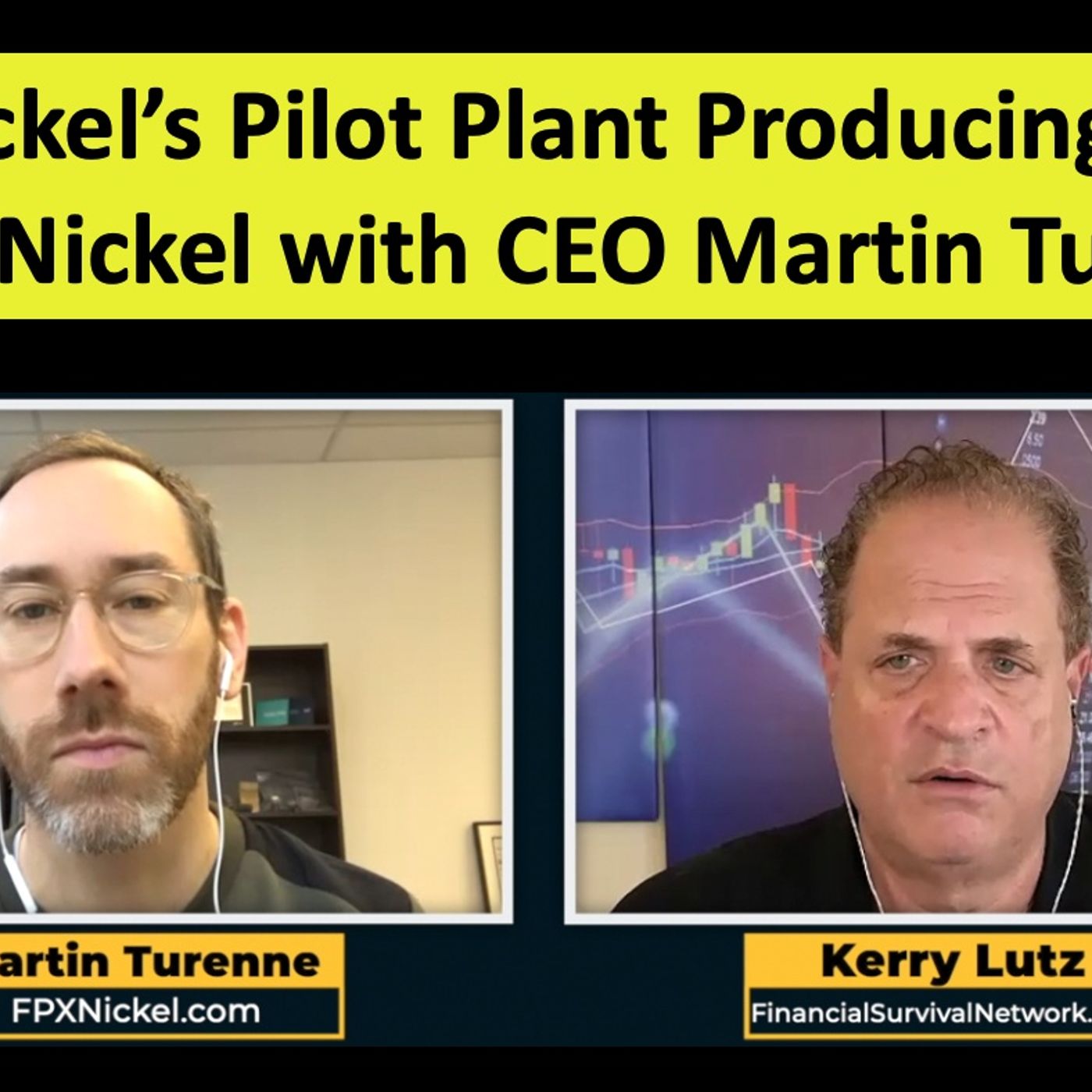
FPX Nickel’s Pilot Plant Producing High Grade Nickel with CEO Martin Turenne
We sat down for a sponsor update with FPX Nickel’s CEO Martin Turenne. Interest in FPX has increased greatly as major nickel customers line up to secure future deliveries. In addition, FPX built a pilot production plant to prove the efficacy of its nickel sulfate refining process and its ability to produce high-grade metal, without the need for smelting. Results from the first 18 tons of material are expected before year end (or early January) and Martin says the metallurgical results are huge and could be just the catalyst FPX needs for a revaluation of its shares. Nickel has been hot. A March short squeeze sent it soaring and it has since come back down to earth, but it was still trading at a healthy $11 per pound the day we spoke. That’s a level Martin is very comfortable with. He’s extremely bullish and for good reason. The recently passed US Inflation Reduction Act has many benefits for the battery metal sector and FPX in particular. The Act provides a $7500 tax credit to EV purchasers, provided that the batteries contained therein were produced in the US with materials from the US, Canada and Australia. This has led to a surge of companies seeking to build battery factories in the US. Additionally, the Act provides $750 million to junior companies to help them perform the requisite studies and compliance requirements needed to fast-track their production. This is a tremendous boost to smaller companies seeking ever more scarce capital. Step-out drilling continues at the Van Deposit. Results will be forthcoming shortly. An updated mineral resource estimate is on the way for the Baptiste Deposit. Therefore, all the steps are in place for FPX to advance its projects and ultimately realize its true value. Company website: www.FPXNickel.com Ticker symbols: OTC: FPOCF — TSX-V: FPX
Escape the Economy and Embrace Rural Life - Aaron Clarey #5653
Summary: An undeniable paradigm shift taking place lies in the move towards self sufficiency. This is a major component of the rural lifestyle, and Aaron Clarey comes on the show to talk about some of the things he noticed when transitioning out of urban life in his move to South Dakota. Aaron describes many of these changes as psychological. Leaving a big city means getting used to a slower pace of living, with less hustle and bustle and establishments that shut down earlier. He has found himself less concerned with the US/global economy, and has an interesting perspective on these things in relation to his life in a rural community. Tune in for more insight. Highlights: -There are paradigm shifts taking place, and a major trend taking place is the move towards self sufficiency -Many people experience a shock when they go to less urbanized areas -Aaron has adapted to the rural lifestyle, having lived in South Dakota for a while now -One of the biggest adjustments is going from the hustle and bustle of traffic and constant activity to the slower life or rural communities. It’s a psychological adaptation -Establishments have fewer employees, and thus close down earlier -Higher end amenities are few and far between -There is a greater sense of community in more rural areas, which comes with heightened accountability—but this is good thing -Aaron feels somewhat divorced with the US/global economy, but this comes from his job. He considers himself a contrarian investor -Aaron is also a minimalist; he doesn’t have many expenses -It’s good to pay attention to politics and economics, but responding with anger doesn’t accomplish anything. -Accept what you do and do not control, and don’t let the negative things that aren’t in your control bring you down Useful Links: Financial Survival Network Captain Capitalism Aaron's Consulting Company
Polls and Prices: Real Estate in November 2022 - Andrew Ragusa #5652
Summary: Are home values and securities/investments going to implode? I sit down and chat with New York real estate expert Andrew Ragusa to get the latest insight on what’s happening in real estate, especially in light of the economy and politics. Speaking from his experience in the industry, Andrew reports that many people are leaving New York City and settling in the suburbs, and this is largely influenced by crime. He also notes that, although people don’t have as much buying power as they once did, people are still buying and there is a lot of inventory on the market. Tune in for more information on what is happening and what is to come in real estate. Highlights: -Everyone is concerned about inflation, the price of food, and the prices of homes -People are headed to the ballots with financial issues in mind -People are upset with how much money is being spent -New leadership in Congress could help put some sort of check in place -Homeowners in NY are also thinking about crime -Lots of people are leaving the city and relocating to the suburbs -We’ve seen a 5-6 point increase in a year, and prices have still not budged very much -New York State could very well shift political views, with many voters going red this time around -The bidding wars with properties are no longer as drastic -People don’t have the same buying power they used to, but they are still buying nonetheless. There’s also a decent amount of inventory on the market. Beforehand, many people were settling for a home rather than finding one that fit all of their criteria Useful Links: Financial Survival Network Andrew Ragusa Instagram Andrew Ragusa Website
Join the 1%: Keep a Daily Ledger - J.D. Frost #5651
Summary: How do you reach your goals in difficult times? J.D. Frost has asked himself this question, and is coming out with a new book called The Life Ledger to help you make progress and work towards what you want. J.D. believes that writing down your goals and reviewing them each day is essential to reaching your desired life, wealth, and accomplishments. In his book, he introduces the daily ledger practice, which is a way for you to write down your targets and affirmations and track progress towards your goal. If you want to be in the 1%, be sure to tune in to this episode and pre-order J.D.’s book, which is linked below. Highlights: -J.D. Frost has a new book coming out called The Life Ledger, and talks about how he has prevailed in difficult times -The way you spend your time each day dictates how you spend your money. Additionally, your intentionality with your time is a lead indicator of your wealth -Every 30 minutes, take account of what you are doing -Ask yourself: is what you are doing an asset or liability -Time management alone won’t lead you to success. Writing down your goals every day and reviewing them will help you get to where you want to be -To stay in the coveted “1%,” you have to always keep in mind that the tasks you do every single day contribute to your situation. Daily effort is required to reach your goal -The daily ledger: write down your targets, which are short term daily confirmations that you can achieve your goal -We spend a lot of time thinking that we’re busy rather than being productive or focused -Define what wealth is for you, and determine what you really want -Intentionality and focus are crucial to create the wealth that you desire -Find somebody that has done it before you, and use them as a benchmark of where your focus should be. Seek mentors in people that want the same things as you and are working towards similar goals -Affirmations are also part of the daily ledger -If it’s not working yet, keep doing it Useful Links: Financial Survival Network The Life Ledger: How to Build a System to Reach Your Goals J.D. Frost
Multi-Bubble Popping Economy with John Rubino #5650
Maturing debt in a higher interest rate environment is spiking everyone's debt-carrying cost. US now spends more on interest than defense. Meta is firing thousands of employees this week. Lots of other tech companies doing the same on a smaller scale. Mortgage rates at 7.5%, mortgage demand plunging. The housing bubble has definitely burst. Huge shift in stock market leadership from tech to energy. Twitter take over by Musk and the fallout. Gold and silver had a massive up day on Friday. Meanwhile, central banks are buying gold at a record pace, some of them in secret. Can we talk about the Atlantic "covid amnesty" article and the response to it? Is a Red Wave coming on Tuesday?
Start Now With Startups - Adam Tank #5649
Summary: Looking for a breath of fresh air outside the corporate world? A startup company or small business environment might just be exactly what you need. I have Adam Tank on the show to undertake this topic, and he points out some of the benefits of this transition, which he made in his own career. After working in the corporate world, Adam made the decision to bet on himself and hasn’t looked back. He encourages people to create a product or service that lends itself to the skills they already have, and to target the more resilient/essential industries. Highlights: -When you look at what’s happening in real estate and the markets in general, it’s a bit disappointing. Perhaps you need to become a startup junkie -Adam used to work in the corporate world. His primary goal was to get paid every two weeks and earn benefits, and rely on big companies rather than himself -He wishes that he would have bet on himself a lot sooner. There is a lot of risk management that happens when you bet on yourself -We’re now seeing massive rounds of layoffs within tech companies -Create a product or service that lends itself to the skills that you already have as a creator -Look at industries that are resilient (i.e. water, power, etc.) -Is college still worth it? -Go out and do things; rather than just absorbing information, involve yourself in projects and gain real world experience -Adam wishes he would have transitioned to the small business environment or started his own business sooner -The best time to be greedy is now; its’s buying/investment season -We’re probably going to see a lot of new startups cropping up in the next year Useful Links: Financial Survival Network Adam Tank
Stock Market Gains Wiped Out, is Gold Next to Collapse? - Gary Wagner #5648
Summary: Gold has been lagging, but recently showed a bit of life. To get the proper gold forecast, I invite Gary Wagner to come and discuss this topic with me. There are multiple factors influencing the price of gold, a crucial one being dollar weakness. This weakness was the preemptive force in moving gold prices, but future gold prices will be largely determined by other reports, including third quarter GDP. Tune in for more insight. Highlights: -Dollar weakness was the preemptive force moving gold prices -The question becomes: how much have the intense rate hikes impacted inflation? -The third quarter GDP is going to be key -Will this be the last raise, or are we near the end? -Putin is not just fighting Ukraine, he is fighting the West -$17 in gold price were attributed to dollar weakness -We’re seeing resistance at 16.80 Useful Links: Financial Survival Network The Gold Forecast The Gold Forecast YouTube
The Long Road to Stopping Inflation - Phillip Streible #5647
Summary: How much lower can markets go? Perhaps the answer is in the futures market. To better understand the trends being exhibited in futures, I sit down and chat with Phillip Strieble, the Chief Market Strategist of Blue Line Futures. He explains that the Fed and central banks are not going to stop tightening any time soon, and these decisions are made retrospectively. Using data of the past to pave the way for the future is not always successful, and we can expect to see rates rise until late 2023/early 2024. Tune in for more insight. Highlights: -We are still in the midst of a tightening cycle; the Fed and central banks will continue to over-tighten into the new year -Things are essentially going to go from bad to worse -The GDP increased by 2.6%, but this data is in the rearview -The Fed bases their decisions with raising rates on the past -The unemployment rate is going to continue to tick up -Will the Fed be successful in bringing down inflation? -Energy costs in the UK will be up in the winter; in turn, the costs of other goods have to go up -The last quarter of 2023/first quarter of 2024 is when the Fed is expected to finally cut rates -There are a lot of things we can do to get oil prices lower -With the environment, we’re not going to see real change unless other countries around the world are involved as well Useful Links: Financial Survival Network Blue Line Futures

Now is the Time to Join Commercial Real Estate - Jennings Smith #5646
Summary: Economic growth is slowing, and with all of the economic instability, it’s necessary to rethink your plan for success. Jennings Smith comes on the show to talk about how you can do this with real estate—specifically the commercial realm. Real estate is one of the best ways to protect yourself from inflation because you can use debt as a lever; cash left sitting around is going to inevitably erode. Jennings provides some information on what’s happening in the commercial real estate industry, and gives tips on how to establish yourself whether you’re new to commercial real estate or already involved. Listen in for expert insight. Highlights: -We’re seeing rising inventory in real estate, and rents are peaking in many markets -He has built up a real estate portfolio of over $60M -Rents are peaking and even dropping. Is this a good time to invest in real estate? -Jennings primarily focuses on commercial real estate. Real estate is one of the best ways to protect ourselves from inflation because you can use debt to lever yourself -This is a great time to get into multi-family real estate; if you leave your cash sitting around, it is going to erode -Prices have cooled off a little bit in the commercial space, but we haven’t seen the drastic “fall off the cliff” we saw back in 2010 -Don’t sit around waiting; actively look for creative/non-retail price deals -Many people are not incentivized to sell right now -There is a lot more inventory flooding the market with multi-family real estate, but Jennings has not witnessed massive motivation -Many sellers are not willing to take a cheaper price unless they have to -More sellers are open to seller financing and other options -If you don’t have a track record, you should probably start with a single family home -Building your reputation amongst brokers can help you generate more deals -If you see a property in your town that is overgrown, this indicates that someone is not happy with their property. Calling the number on the sign and talking to the owner is a great start to sealing a potential deal Useful Links: Financial Survival Network Jennings Smith

The Rally Isn't Over Yet - Avi Gilburt #5645
Summary: -In spite of lower earnings, we’re getting a market bounce. Avi Gilbert comes on the show to give us an idea of what’s going to happen. Moving in the opposite direction of what was expected, we’re seeing a rally that could last a few more weeks. During a time like this, it’s easy to get swayed by the news, but Avi asserts that following charts and markets can help you pinpoint the highs/lows. Tune in for more insight on what’s to come. Highlights: -We’ve done the opposite of what everyone expected, and we could rally for a few more weeks -Avi is watching how the rally takes shape in order to determine if we’ll see a higher high over 4800 or not -Tune out of the news and listen to the charts and markets -It’s the interpretation of the market participants that will drive what happens -Silver possibly has a lesser potential for already hitting its low -With energy, Avi is questioning if the low has already been struck -Avi doesn’t believe that bonds are completely dead right now, but this is subject to change Useful Links: Financial Survival Network Elliot Wave Trader
Category Five Economic Storm Continues - Adrian Reid #5644
Summary: How much longer will we have to endure the treacherous economic waters? Adrian Reid comes on the show to give us some insight on the how these trends will play out in the near future, reminding us of some of the factors that contribute to a bear market. It’s more important than ever to study market history and know what the markets are capable of in these conditions. Tune in for more knowledge and tips from Adrian. Highlights: -We’re in a category five economic storm around the globe, creating treacherous waters for investors -How much longer will this trend continue? -If we don’t get inflation under control, bad things are going to happen -The biggest up days and strongest rallies occur in bear markets. It’s important not to be fooled; be wary of jumping on board -Many traders/investors lack patience, which is their biggest downfall. In the markets, you have to adopt a long-term view\ -Look for long-term change in a trend and lower volatility -Market volatility remains high, but we’re not in a bull market -Knowledge of market history is crucial. It’s important to look at charts (i.e. DOW, S&P) and study them at a granular level -Eventually, we’re going to have to start looking for a bottom, but it’s important to be patient Useful Links: Financial Survival Network Enlightened Stock Trading
Inflation Isn't Going Away Anytime Soon - Lobo Tiggre #5643
Summary: Inflation is here to stay, and Lobo Tiggre comes on the show to talk about why this is the case. Countries like China are paying the price for their totalitarian form of governing, as well as countries/states that were more strict during the pandemic. Additionally, we are in the midst of a bear market that is a product of the Fed raising rates, and the US consumer is still spending in hopes that the Fed will beat inflation. Tune in For more insight. Highlights: -Things look bad right now, but fear not—we’ve been here before, and we’ve gotten out of it -China is now paying the price for having totalitarian power; they are still struggling as a result of the lockdowns -The states that were more ‘free’ during the pandemic are doing better now -We’re in the midst of a bear market that is a reaction to the Fed’s raising of rates -In the US, the consumer is still spending -The average person still things the fed is going to beat inflation -Triple digit oil prices are probably going to be the new normal -If you don’t like the price of gasoline, buy some oil companies and profit on the upside -Utilities are regarded as a safe investment, but they don’t have control over their pricing—they’re governed by politics -In regard to currency, the dollar will be the last man standing Useful Links: Financial Survival Network Independent Speculator

Flipping Homes and Fortunes - Glenn and Amber Schworm #5642
Summary: If you’re interested in real estate and/or home flipping, you’ll want to tune in to this episode. Glenn and Amber Schworm have done a thousand home flips and brought in thousands of dollars of revenue from this business venture. They come from humble beginnings, entering the industry with no money but a surplus of determination and drive. They are passionate about helping everyday people create wealth through real estate investing, and you can hear more of their story and ambitions in this episode. Highlights: -Glenn started his first company at 19, and him and Amber were in networking/marketing companies -They were in debt and had to decide what professions to undertake -They went to a real estate seminar, and the speaker made them consider the concept of flipping homes -The first flip is always the hardest. Glenn and Amber used a bank loan to buy the house, and credit cards to do all of the flips. After they flipped it, they brought in $17k -In 2008, they lost all of their funding for their houses under contract, and started utilizing private lenders Useful Links: Financial Survival Network Glenn & Amber Schworm

Fury Gold Mines Expands High-Grade Gold Deposit with CEO Tim Clark and SVP Bryan Atkinson
We sat down for a sponsor update with Fury Gold Mines’ CEO Tim Clark and SVP of Exploration Brian Atkinson. The company recently concluded an 18,000 meter drill program and has received half of the results to date. Drill results from two holes came in particularly strong, with the first (drill hole 22EC-055) intercepting eight zones of mineralization across 290m, including 4.0m of 5.75 g/t gold, 1.0m of 9.81 g/t gold and 3.0m of 1.93 g/t gold and with the second (drill hole 22EC-049) intercepting six zones of gold mineralization across 350m including 1.0m of 21.40 g/t gold and 4.50m of 1.09 g/t gold, at the Hinge Target. This resulted in mineralization being extended by nearly 25%. SVP Atkinson explained, “We have now stepped out over 450m from the defined Eau Claire Resource and have yet to find the limits of the mineralized system…further drilling may potentially lead to a substantial increase in defined gold ounce resources. The goal is to find 2 million ounces.” CEO Clark added that he is very pleased with the results and the company is looking forward to next year’s drill program. The recent partial sale of Fury’s shares in Dolly Varden Silver, together with other earlier transactions has left Fury with C$13 million in the treasury. Thus next year's drill program is in the bank. The company's stability continues to attract additional institutional investors and interest from major producers. While many of its peers have had to put things on hold, Fury continues ahead unabated. The junior mining sector finds itself in a paradox. Institutions are following the sector closely, while individual investors are all but ignoring it. Quite clearly there is a disconnect and this could be the pathway to large profits, which is why we own shares in Fury and are committed to the sector. Company website www.FuryGoldMines.com Ticker Symbol: TSX/NYSE American: FURY
Mitigate Risk and Maximize Cash Flow - Russ Morgan #5641
Summary: What can you do to accomplish your goals and lower your risk within the current economic environment? Russ Morgan from Wealth Without Wall Street comes on the show to talk about how you can make sound investments in uncertain times, and ultimately mitigate your risk. Russ emphasizes the importance of monthly cash flow investments, and recommends the non-typical investments. Tune in to hear more about how you can manage your risk and make wise decisions in uncertain economic circumstances. Highlights: -Inflation is showing no signs of letting up, everything is getting more costly, and we’re seeing heightened geopolitical risks -You can’t live off of fixed income without it being impacted whenever the government makes changes -You can’t eliminate the effects of inflation, but you can creatively mitigate your risk in a few ways -Russ has been investing for cash flow very heavily over the last 2-3 years -Passive income greater than monthly expenses is financial freedom -Rents in the real estate are going up rather than down -It’s helpful to invest in multiple cash flow sectors—especially non-typical investments -Russ recommends The Art of Passive Income Podcast if you’re curious about land investments -How long is this down cycle going to last? -Interest rates will probably raise for the next 12-18 months, and then come down sharply -This makes sense if you consider that the commercial banks own the Federal Reserve -Find investment opportunities that make cash flow on a monthly basis. Everything can lose money, but making cash monthly puts you in a more secure position -Investing for rate of return and not understanding what you’re investing in are some of the greatest mistakes, according to Russ -Many people invest in things that they can’t touch, with no access to their cash flow Useful Links: Financial Survival Network Wealth Without Wall Street

Currency, Geopolitics, and Voting Are in Flux - John Rubino #5640
Summary: Could the Yen be the currency to collapse and set off a domino effect? I sit down and chat with John Rubino about all of the economic factors that are contributing to the state of flux we are in. At the most basic level, it is a problem of currency and inflation, but extends to relations with Russia, the prospect of war, and the major mindset shift that is taking place. We are in a time of immense change, and numerous issues are contributing to this change. Tune in for more insight. Highlights: -What’s going on with the Yen? It’s all the talk right now -For the past 30 years, the Japanese has been borrowing large amounts of money and using it to finance infrastructure programs -For a long time, this worked, and they could take debt at extremely low interest rates. Now, they are facing large inflation, and are struggling to support the currency -Could the Yen be the currency to collapse and set off a domino effect? Time will tell -China is the only major economy that is cutting rates, but their currency is falling as well -Previous bubbles have been sector specific, but this one is centered around money -Europe is stocking up on natural gas in preparation for the Russian cutoff -There is zero inflation in the commodity space -Used cars and home sales are also down -The people in charge right now seem to want a war -Elections are coming up as well, and we’re seeing people settling for candidates they may not normally prefer -States have changed their political alignments, with generational shifts. We may be on the verge of one now -These things change for a number of reasons. It looks as if we are now focused on things like crime and the declining country -The Republicans have shifted their rhetoric to appeal to working people rather than corporate CEOs -Groups such as Latinos have shifted their alignment -There is a shift in the voter profile that is taking place. This is a necessary shift; we should be focused on class issues and increasing the wealth of the working people Useful Links: Financial Survival Network Dollar Collapse

You Need Home Security--Now More Than Ever - Robert Siciliano #5639
Summary: If given the choice, why wouldn’t you reduce the risk of your home getting broken into? Thankfully, you DO have the choice, and Robert Siciliano comes on the show to talk about how this type of risk reduction is massively underutilized. We live in a society where people are preoccupied with information security measures, and yet, these same people neglect to install security systems in their own homes. These extra measures are not synonymous with paranoia; rather, they instill preparation for the criminal activity that can occur anywhere—no matter how safe you perceive your neighborhood to be. Tune in to hear more about why home security is especially important now, and to learn about how you can start taking extra measures. Highlights: -We’re in a post-pandemic inflationary environment. How do you survive and thrive in this world? -Lots of people are resorting to violence and theft. Throughout the pandemic we’ve seen increases in substance abuse, domestic violence, and more division than we’ve ever seen -There has been an increase in crime all across the board -Taking extra security measures is especially important right now -Security begins with the person; you need to understand personal security practices -15-20 million homes are going to be burglarized in the next decade -Most people don’t have a home security system because they believe they live in a “safe neighborhood.” Safe is an absolute; there is no such thing as a 100% safe neighborhood -Crime may be less frequent in certain locations, but it still occurs -People often perceive those that engage in extra security practices as paranoid -Most people are in denial about the level of risk they expose themselves to -It’s crucial to understand your risk and put various levels of security in place. When you do this, you are a much more difficult target -We know that the “it can’t happen to me” mentality is unrealistic, and this is why we take precautions in everyday life (i.e. putting on a seatbelt in a motor vehicle) -The people that are preoccupied with information security are the same individuals that don’t have home security systems -If you could cut your odds of being burglarized, why wouldn’t you? -Security is ongoing, and it is a process you need to be engaged in -As humans, we trust by default, and this trust is necessary for our society to function. But it is important to recognize risk Useful Links: Financial Survival Network Protect Now
Putting the Inflationary Genie Back in the Bottle - Mark Skousen #5638
Summary: The inflationary genie is out of the bottle…will we ever be able to get it back in? Here to weigh in on this is Mark Skousen, infamous economist and producer of FreedomFest. In regard to inflation, we are seeing some of the expected effects based on past inflationary periods, but some unexpected conditions for the dollar and gold. It is becoming more clear that, while our current circumstances resemble the 1970s, things are different this time around. We also discuss the global implications of the dollar, and look to the future of digital currency as our other currencies become increasingly unstable. Tune in for more insight from Mark. Highlights: -Inflation and interest rates are never neutral; they affect certain sectors more than others -The Fed’s hands are full, and we are in a time of instability -A recession in the stock market was inevitable -Inflation is not going away any time soon, but it will go down as the Fed tightens. Money supply growth is also down to 5-6% a year -The Fed is serious about fighting inflation -In the 70s, the dollar was weak and gold was going through the roof. We are currently seeing the opposite of this situation -This is having global effects; everything is priced in dollars -With high inflation, you would think that gold would be higher -Supply chains have been disrupted -There has been a slowdown in China, and real estate has been in turmoil as well. People are refusing to pay mortgages -They are also experiencing a population growth collapse -It’s easier to call a top in Bitcoin because they are obvious. The bottoms, on the other hand, are more sublime -It still doesn’t fall into the definition of a currency -They need to eliminate the tax disadvantages tied to digital currency transactions Useful Links: Financial Survival Network Mark Skousen FreedomFest Memphis 2023
Don't Let Rates Hold You Back - Alejandro Szita #5637
Summary: Alejandro Szita comes on the show to give us the latest insight on what’s happening with real estate. He touches on the confusion in the real estate market right now, and stresses that it is better to not focus so much on rates; rather, it’s important to get your mortgage to a point where you can live with the monthly payment. Listen in for more useful insight from Alejandro. Highlights: -There is a lot of confusion in the real estate market right now; many people still need a place to live, and lots of people are still trying to sell -There is a lot of pressure on the housing market—especially sellers -People are focusing on rates rather than their goals -You need to bid aggressively and take advantage of the market -Since rates will probably go higher, now is the time to negotiate -It’s not about what the Fed can or cannot do; the inflation in place is for the scarcity of goods -Holding a physical asset can get you through a situation like this -Get your mortgage to a point where you can live with the monthly payment, and stop worrying so much about the rate Useful Links: Financial Survival Network Prosperity Lending

Don't Go Down the Credit Rabbit Hole - Paul Oster #5636
Summary: Property values are going down, interest rates are increasing, and it looks as if a recession is around the corner. What does this mean for your credit? I sit down and chat with Paul Oster about strategies for managing your credit during times like this; he emphasizes that it’s crucial now to budget and lower your expenses. He recommends a few online tools that you can utilize to pay your bills on time and manage everything in one place, and you’ll find that keeping your credit under control may be easier than you imagined. Tune in for more information. Highlights: -Hopefully this doesn’t last long, but there’s no doubt we’re headed down a rabbit hole—if not a recession, a slow-down -In this environment, it is that much more important for people to pay attention to their credit score -Banks and creditors can use whatever score model they want to use -Focus on paying high interest credit cards off now -The only solution is to budget and lower your expenses; you need to run your household like a small business -Now is the time to change your behavior—you can’t keep doing the same thing and expect different results -Put your bills on autopay -He recommends mint.com which puts all of your bills in one place and gives you alerts/spending analysis -nerdwallet.com is also a good resource Useful Links: Financial Survival Network Better Qualified
A New Era for Crypto - Collin O'Brien #5635
Summary: It’s a new era for crypto, and I sit down and chat with Collin O’Brien to get the latest insight on digital asset prices, regulation, and long term feasibility when competing with other sovereign currencies. The company Collin works for, Rubic, is assisting with cryptocurrency transactions and making digital trading more fit for everyday use. He is helping to build the future of cryptocurrency, so be sure to tune in and hear some of his expert knowledge. Highlights: -What can you say about cryptos that you can’t say about other investment bubbles? Cryptos always go up, but it’s a new era -At the end of the day, it’s just a market -Collin looked at Bitcoin when it was priced around a dollar -He wanted to buy a thousand at $1.79, and everyone told him it was a waste of money -Six years later, the industry peaked his interest again -Bitcoin is a bit of a libertarian construct paradise -In terms of regulation, the authorities are behind the curve -We need the people in charge of writing crypto legislation to be very involved and tech savvy -Can independent cryptos compete with sovereign currencies? We don’t know if this will be the case in the long term -If you have credits for an application on one network, it is extremely complicated to use them on another network -Collin’s business is removing the middle men from the process of moving credits over -Rubic makes the process of moving values amongst blockchains easier Useful Links: Financial Survival Network Rubic
Economics Dictated by Demographics - Eddie Yoon #5634
Summary: Inflation numbers are coming out at 30 year highs, and CPI isn’t going down any time soon. What indicators should we analyze in order to explain the current economic circumstances? I sit down and chat with Eddie Yoon, who attributes some of the trends in labor force participation and unemployment to an unusual number of baby boomers working for decades and now retiring. We are trying to solve for something systemic by implementing short term solutions, and businesses ultimately have to shift gears to cater to one two two person households rather than the nuclear family. Tune in for more insightful remarks from Eddie. Highlights: -Inflation numbers are coming out at 30 year record highs -Unemployment numbers look good, but these are lagging indicators -CPI is not going down; is this good or bad? This is also a lagging indicator -We are causing inflation in order to fight inflation with interest rates -Consumer sentiment is trending up, which is a good sign -The number of travelers is still trending upwards -Labor force participation is low in comparison to the last 40 years -If unemployment was higher, the Fed may back off -There may be something simpler going on that explains what is going on -Baby boomers retiring may play into labor participation -It’s not that things are problematic in the near term, it’s that we had an unusually large work force for about three decades, and these people are now retiring and leaving -We’re solving for something systemic with short term solutions, which is going to cause more damage -The businesses that are going to do better will be less volume dependent and more premium oriented -Companies designed around the nuclear family will struggle, while businesses designed for one to two person households will be more successful Useful Links: Financial Survival Network Eddie Would Grow
A World of Trouble Ahead - Gordon T. Long #5633
Summary: When is the capitulation going to come by the central banks? Gordon T. Long comes on this episode to talk about our current economic problems—including energy, central bank issues, and the progression of inflation. There’s no easy way out of the current inflationary environment, and it looks as if the Fed is going to have to hold rates up longer than we want in order to reach capitulation. Tune in for Gordon’s analytic perspective and more information on what’s to come. Highlights: -We’re nowhere close to solving the energy problem, and now it has become a geopolitical issue -The implementation plan for green energy in the US makes no sense -Energy in Europe is a massive issue, and we are in a cycle -Pushing green energy without the market being ready/able would push us back to brown energy at this rate -Force feeding creates bad policies -We’re seeing central banks with serious problems that spring out of gyration that accompanies inflation -Too many people have their eyes on the Fed -The only way to get inflation under control is to hold up rates longer than people want and to get the capitulation to happen -The current situation is unique because, as things are breaking, the treasury is taking actions -If inflation pivots too quickly, people will turn against the Federal Reserve in a massive way -How do you make money in these circumstances? Sometimes it just takes patience; you have to establish the trends Useful Links: Financial Survival Network MATASII