Feel the Boot
134 episodes — Page 1 of 3
The Real Odds of Getting Funded, Stage by Stage
Why Great Advisors Give Terrible Startup Advice
Investors Judge You Before You Say a Word
131. Friends & Family Round: How to Protect Your Relationships AND Raise Money
How to Build a Go-to-Market Engine That Makes Investors Pay Attention — with Javier Lozano Jr.
Ep 129Your Product Won't Speak for Itself — Why Technical Founders Get Overlooked | Shayna Davis
Most technical founders think their product will do the talking. It won't.Shayna Rattler-Davis has spent 15+ years helping leaders at companies like IBM, L'Oréal, and dozens of STEM startups learn how to show up with credibility in high-stakes environments. She hosts The Influence Economy Podcast (top 3% globally) and works with technical founders who are brilliant at building but struggle the moment they have to represent their company externally.In this conversation, we dig into:The competency gap most technical founders don't realize they haveWhy investors bet on leaders, not products — and what they're actually looking forHow to develop your leadership identity before you start raisingThe difference between thought leadership and just reciting your feature listWhere to start if you have zero public presence and a fundraise on the horizonThe mistakes founders make when trying to project credibility they haven't built yetA dead simple weekly exercise your whole founding team can start todayShayna drops a story about watching 24 people on tech panels in a single day and only ONE who didn't need help. If that doesn't make you question how you're showing up externally, nothing will.📋 Get Shayna's free insights report on leadership identity, branding, and messaging for technical leaders: https://techinfluence.us🔗 Connect with Shayna on LinkedIn: https://www.linkedin.com/in/shaynarattler/🎬 Watch this episode on YouTube: https://ftb.bz/129V📝 Read the full blog post: https://ftb.bz/129B🛠️ Free Fundraising Toolkit — Investment Readiness Scorecard, Validation Blueprint, Pre-Seed Valuation Guide, and more: https://ftb.bz/raise
Ep 128Hockey Enforcer to $110M: Dave Burnett on Grit, Time, and Making AI See Your Startup
Former hockey enforcer Dave Burnett took punches for a living, then helped build Achievers.com (sold for $110M), watched his own business go to zero twice, and came back both times. In this episode, we dig into why founders with non-traditional backgrounds often outperform the textbook startup playbook, how to make sure AI models actually know your startup exists, and a time management system built around 1,440 minutes that will change how you think about your day. CHAPTERS0:00 Intro0:32 Dave's path from hockey enforcer to serial entrepreneur1:36 Building Achievers.com and the $110M exit3:08 Why non-traditional founders have an edge3:52 The enforcer mentality and entrepreneurial grit7:05 Building for the future: swappable AI engines8:25 AI models are commodities, not loyalties10:30 AI is table stakes now10:43 The dumbbell theory: where to build in the age of AI15:53 AI visibility: does ChatGPT, Claude, or Gemini know your startup exists?19:47 What separates visible companies from invisible ones21:00 How to use LLMTel to check your AI visibility23:01 What early-stage founders should do now to show up in AI25:18 GEO vs. SEO: what's different, what's the same26:48 Mid-roll break27:09 The 1,440-minute time management system31:04 Color-coding your day in 10-minute blocks32:23 Constraint-based prioritization: always work on the bottleneck34:36 Embracing uncertainty and getting comfortable with failure36:23 Building things nobody wants (and how to avoid it)38:27 Why Dave went so granular on time tracking40:51 Surviving a traumatic brain injury while running multiple companies41:51 Notifications are other people's priorities46:54 It's going to suck, and that's normal47:59 When to pivot vs. when to double down50:23 Going to zero twice: Great Recession and COVID53:03 Business as an infinite game55:01 Closing thoughts 🔗 LINKS & RESOURCES Dave Burnett's AI Visibility Tool (LLMTel): https://llmtel.comDave's Digital Marketing Agency: https://aokmarketing.comDave's Book "From Bricks to Clicks": https://aokmarketing.com/bookDave on LinkedIn: https://linkedin.com/in/davebburnett 📥 FREE FUNDRAISING TOOLKIT Grab templates and tools I built for the founders I coach: https://feeltheboot.com/raise 🎬 Watch the video version of this episode: https://ftb.bz/128V📖 Read the full blog post: https://ftb.bz/128B ABOUT FEEL THE BOOT Feel the Boot helps early-stage startup founders navigate the fundraising process. Whether you're preparing for your first pre-seed round or struggling to close a seed raise, we cover the strategies, frameworks, and mindset you need to raise capital and build a fundable company. Hosted by Lance Cottrell, angel investor and president of North Bay Angels. Subscribe and follow Feel the Boot wherever you listen to podcasts for episodes on startup fundraising, pitch decks, investor outreach, financial modeling, and founder strategy.
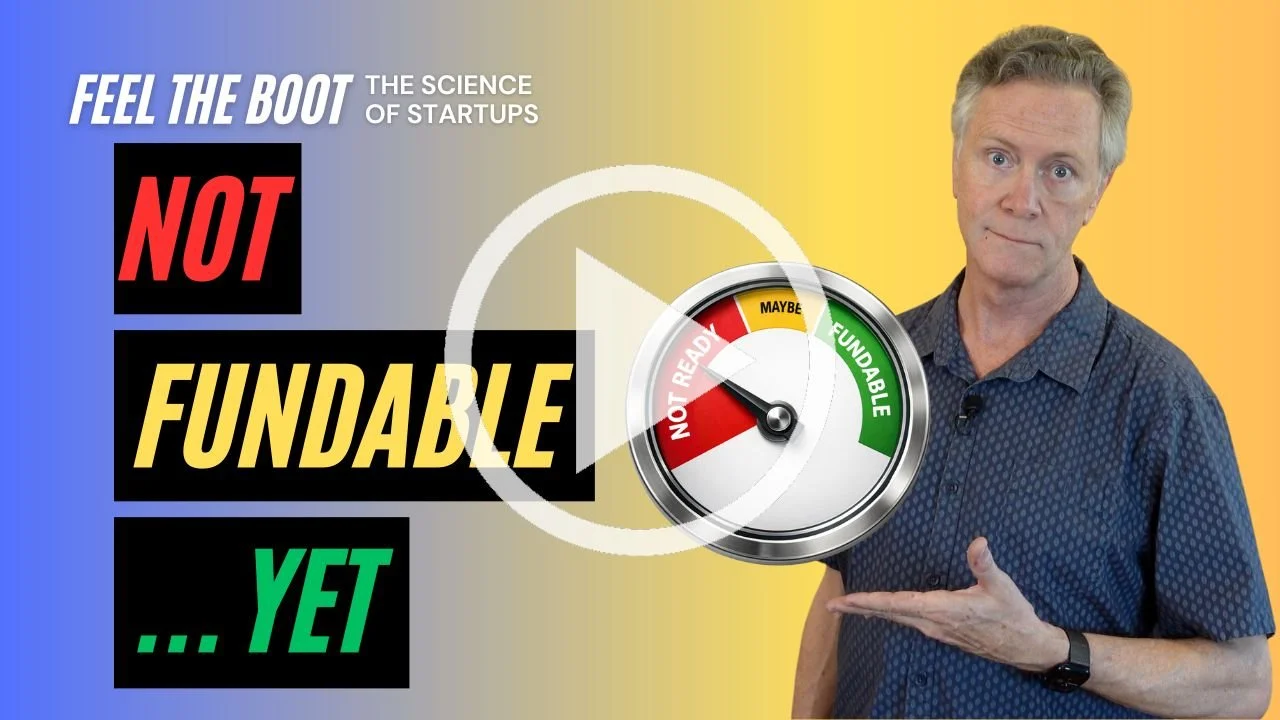
Ep 127The 4 Filters: Why You Aren’t Fundable... Yet
Most founders think fundraising fails because of "bad luck." Usually, it fails because of simple physics.Fundraising is a sales funnel. If you have a structural leak at the top, no amount of "slick" pitching will produce a check at the bottom. In this episode, we pop the hood on pre-seed fundraising to look at the four filters your startup must pass before you even think about building a deck.Stop the "Fundraising Theater" and start building a machine that investors actually want to buy.Read the full blog post: https://ftb.bz/127BWatch the video: https://ftb.bz/127V[FREE TOOL] THE INVESTMENT READINESS SCORECARDDon't guess if you’re ready. Use the same diagnostic tool I use to screen startups for the North Bay Angels. Identify your gaps and fix them before you waste your one "bite at the apple."Get the Toolkit & Scorecard: https://www.FeelTheBoot.com/raiseWHAT WE COVER:Filter 1: The Math (Portfolio Physics): Why a "nice" business isn't always a venture-investable business. We look at the $100M revenue requirement and the "Why Now" delta.Filter 2: The Evidence (Market Pull): The difference between "that’s a good idea" and "I need this now." We discuss unit economics and why $1 of marketing must generate $2 of net profit.Filter 3: The Moat (Structural Defensibility): Why being a "first mover" is often a disadvantage and how to build friction that stops well-funded predators from crushing you.Filter 4: The Machine (Founder-Market Fit): Why investors don't fund science experiments and how to prove you have the unique insight to execute your blueprint.TIMESTAMPS:0:00 The "Fundraising Theater" Trap1:30 Why 99% of Success is Decided Before the Pitch3:15 Filter 1: The Harsh Math of Venture Capital5:45 The "Corpse Audit": Why Timing is Your Delta8:10 Case Study: The "Empty Box" Pitch at North Bay Angels11:20 Filter 2: Proving Customer Hunger14:45 Filter 3: Defensibility & The First-Mover Fallacy17:30 Filter 4: The Machine & Unique Insights20:15 Is Your Startup Default Alive or Default Dead?22:00 Your Next Step: The Readiness ScorecardABOUT FEEL THE BOOTI’m Lance Cottrell. I’m a former astrophysicist and successful tech founder turned startup advisor. I view company building as an engineering problem with solvable mechanics. No fluff. No hype. Just the hard truths you need to reach escape velocity.Subscribe for more pragmatic startup advice: [Link to your channel]#PreSeedFundraising #StartupFunding #VentureCapital #AngelInvestors #PitchDeck #Entrepreneurship #FounderTips #FeelTheBoot
Ep 126The Investor Warm-Up Protocol: How to Turn Cold Investors into Warm Leads
EIf your first interaction with an investor is asking for money, you have already lost.Cold pitching investors has a success rate of nearly 0%. Warm introductions have a success rate of over 50%.The gap between those two numbers is where most fundraising rounds die.Most founders think they are stuck because they don't have a rich uncle or a deep network. The reality is: You just have the wrong process.In this episode, I break down the Investor Warm-Up Protocol, a 4-step engineering approach to manufacturing warm relationships from cold contacts. Read the full breakdown on the blog: https://ftb.bz/126B Watch The Video: https://ftb.bz/126V 🚀 RESOURCES & NEXT STEPS1. The Deep Dive (Workshop Recording):This episode is adapted from my full 90-minute workshop, "From Cold Outreach to Capital." It covers the entire system, including target list building, email scripts, and automation tools.👉 Get the Workshop: https://FounderQuest.com/cold-outreach2. The Full System (Founder Quest Intensive):Want to rebuild your entire fundraising stack (Model, Narrative, and Outreach) with hands-on coaching? Join the next cohort of the Founder Quest Intensive.👉 Apply here: https://FounderQuest.com/intensiveIn this episode, we cover:· The Radar Ping: How to become "familiar" before you ever send an email.· The "Quick Question": The specific type of DM that gets a reply (and what gets ignored).· The Update Loop: How to automate trust-building over time.· The Trap: Why pitching on the first call kills the deal.#startup #fundraising #venturecapital #founder #entrepreneurship

Ep 125The Super Connector System: David Homan on Building Relationships at the Speed of Trust
🛑 Stop Networking! Build Trust and Community to Fund Your Startup | David HomanAre you an introverted founder struggling to raise capital? Do you find most networking events to be a waste of time and purely transactional? Super connector, author, and composer David Homan reveals the systematic, high-integrity approach to connection that actually opens doors to investors, partners, and key advisors.In this powerful episode, David dismantles the myth that extroverts are the best connectors. He explains why your ability to listen deeply and build relationships at the speed of trust is your most valuable asset, turning the loneliness of the founder journey into a strength. You'll learn the crucial difference between building a transactional network and a supportive community. 🔑 Key Lessons You Will Learn:· The Introvert's Advantage: Why deep listening and high-quality, intimate connections beat "spray and pray" networking every time.· The Non-Ask Strategy: How to talk to investors before you need money to build momentum and let them experience FOMO.· Reputation Capital: The true cost of a bad introduction and why you must "honor the chain of connections" to protect your most valuable currency.· The Impact Ask: A systematic way to frame your requests to potential partners or investors so they immediately recognize how they can help.· Community Security: The high cost of opportunism and the strict rules required to filter out toxic, low-integrity contacts from your inner circle. 🔗 Resources & LinksFind the full transcript and blog post here:👉 https://ftb.bz/125BWatch the video:🎥 https://ftb.bz/125VConnect with David Homan: https://orchestratedconnecting.com/ 🚀 Struggling to Raise Capital?If you are a founder who needs checks now and hasn't built that network yet, don't worry. Learn the proven, systematic steps for warming up cold connections and securing investment directly:Cold Outreach Workshop for Founders:🔥 https://FounderQuest.com/cold-outreach#DavidHoman #FeelTheBoot #Founder #Startup #VentureCapital #RaisingCapital #Entrepreneurship #SuperConnector #RelationshipBuilding #Introvert #SEO

Ep 124124. The 6 Startup Pitches Every Founder Needs
The 6 Startup Pitches Every Founder Needs Most founders only create one pitch deck, and it costs them investors. In this video, I’ll show you the six pitches every startup founder needs to win funding. From your 3-minute competition pitch to your self-guided deck for investors to read on their own, each version has a specific purpose. Skip one, and you risk losing the deal. You’ll learn:✅ Why different contexts demand different pitches✅ The right length and structure for each type of pitch✅ How to avoid the common mistake of using the wrong deck at the wrong time✅ How to build a self-guided deck that actually gets read By the end, you’ll know exactly how to tailor your message whether you’re on stage, in a meeting, or in an investor’s inbox. 📌 Want to go deeper? Join my Pitch Deck Alchemy workshop for a 90-minute masterclass on designing a deck that gets you funded: https://founderquest.com/pitch-deck-alchemy Read the Blog: https://ftb.bz/124B Watch the Video: https://ftb.bz/124V
Ep 123123. Founder/Market Fit: Your Startup’s Early-Stage Advantage
Founder/Market Fit: Your Startup’s Early-Stage Advantage Stop guessing about “Founder–Market Fit.” In this episode I break down how investors spot it at the pre-seed stage— and what to do if you don’t have it yet. When founders enter a market they’ve never lived, credibility gaps, weak insight, and scarce access can stall everything from customer discovery to fundraising. I’ll show you:What “Founder–Market Fit” really means and why VCs look for it before they fundClear warning signs you don’t have it (yet)Practical moves to build or borrow the fit you needHow great FMF accelerates product-market fit, hiring, partnerships, and Series A readiness Whether you’re raising your first round or refining your pitch, use these ideas to turn experience into a strategic edge. 🔗 RESOURCES & NEXT STEPS Blog article & full transcripthttps://ftb.bz/123B The Feel the Boot Videohttps://ftb.bz/123V Free founder community — The Crossroadshttps://ftb.bz/crossroads Fundability Quiz — Are you really ready to raise?https://ftb.bz/fundable

Ep 122122. How Founders Sabotage Themselves with ChatGPT
Are you outsourcing your thinking to ChatGPT? That’s a fast track to sabotaging your startup. In this episode, I share two real conversations I had with founders who said they got their market size numbers from ChatGPT. That is a red flag for any investor. The problem is not that they used AI. The problem is that they didn’t understand what the answer meant or where it came from. I walk through the right and wrong ways to use tools like ChatGPT in your startup. Whether you’re researching your target market, writing content, or creating your financial projections, you need to know what is solid and what is just noise. You will learn:· When using AI makes sense and when it is a trap· How to ask for citations so you can verify the data· Why AI-generated financials almost always fall apart· What to do instead so you can sound sharp and raise with confidence This isn’t about avoiding AI. It is about using it well so you can think clearly, move faster, and make better decisions. 📍 Join The Crossroads Founder Community: https://ftb.bz/crossroads📊 Take the Fundability Quiz: https://ftb.bz/fundable🎙 Listen to the Podcast: https://ftb.bz/podcast📝 Read the Blog: https://ftb.bz/122B

Ep 121121. The mindset shift that separates stalled founders from successful ones – David Neagle interview
Most founders don’t fail because of a bad idea.They fail because fear, doubt, and hesitation stop them before they ever really start. In this episode of Feel the Boot, I sit down with internationally recognized mindset coach David Neagle to talk about what keeps talented people stuck, and how to break free. We explore:Why so many founders never launchThe mindset shift that drives real changeHow to push through fear and uncertaintyThe discipline behind every successful entrepreneurWhy authenticity beats confidence when raising capital or building a team David also shares his powerful personal story, from working a warehouse job to tripling his income in 30 days, and building a multi-million dollar coaching business. If you’ve been struggling with self-doubt, imposter syndrome, or fear of failure, this conversation will hit home. 🎯 Read the blog version with full highlights and the embedded video: https://ftb.bz/121B🎥 Prefer video? Watch here: https://ftb.bz/121V👥 Ready to connect with fellow founders? Join the Crossroads™ community: https://ftb.bz/crossroads 📘 Get David’s free Quantum Leap Blueprint to kickstart your next breakthrough: https://www.lifeisnowinc.com/pg-ftb

Ep 120120. Unlocking Startup Growth: Fundraising Strategies and Resilience Tips with Paulo Andrez
Unlocking Startup Growth: Fundraising Strategies and Resilience Tips with Paulo Andrez What separates the startups that raise capital and scale… from those that stall out? In this episode of Feel the Boot, I sit down with Paulo Andrez—angel investor, serial founder, and startup turnaround specialist—to talk about the real challenges early-stage founders face. We dig into:• Why most founders raise capital too early• What investors like Paulo actually look for in a startup• How to recover from failure and pivot the right way• Why founder resilience is more important than brilliance• The biggest reasons startups fail—and how to avoid them If you’re working on a startup and planning to fundraise (or already trying), this episode is a must-listen. 🎧 For the full blog recap: https://ftb.bz/120B🎥 Watch the full video: https://ftb.bz/120V💬 Join our founder community, Crossroads, to go deeper with conversations like this: https://ftb.bz/crossroads You can follow Paulo on LinkedIn at https:// www.linkedin.com/in/pauloandrez or on his website https://www.pauloandrez.com

Ep 119119. Pre-Sell Before You Build: Avoid Costly Startup Mistakes — with David Hirschfeld
Pre-Sell Before You Build: Avoid Costly Startup Mistakes — with David Hirschfeld Most startups fail because they build something no one wants.In this episode of Feel the Boot, I talk with David Hirschfeld, founder of Tekyz and creator of the Launch First method, about how to flip the script and pre-sell your product before you build it. We explore how high-fidelity mockups, early customer conversations, and focused problem validation can help founders avoid wasting time, money, and effort on products that miss the mark. If you’re an early-stage founder, this episode is packed with practical advice to help you test, sell, and refine your idea before writing a single line of code.👉 What you’ll learn:✅ Why most startup products fail✅ How to pre-sell using mockups✅ When to raise capital—and when NOT to✅ The difference between building what you want vs. solving real problems✅ Why narrowing your focus is critical in the early stages🎯 Thinking about raising capital?Take my free 5-question quiz to see if you’re fundable:👉 https://ftb.bz/fundable🔗 Connect with David Hirschfeld:🌐 Website: https://tekyz.com/🐦 Twitter/X: https://x.com/tekyzinc💼 LinkedIn: https://www.linkedin.com/in/dhirschfeld/📘 Facebook: https://www.facebook.com/dmhirschfeld📸 Instagram: https://www.instagram.com/tekyzinc📝 Want more from this episode?📖 Read the full blog: https://ftb.bz/119B🎞️ Watch the video: https://ftb.bz/119V🎥 Related video: Watch my episode on pre-pivoting your startup: [Insert link here]📍 Chapters00:00 Intro — Most founders build too soon02:09 Why solving the right problem matters06:37 The Launch First method explained10:27 High-fidelity mockups that look real15:17 Validating with real customer conversations18:07 Pre-selling before you write code21:42 Founder mindset mistakes to avoid27:12 Why you shouldn’t raise capital too early31:07 Real-world examples from David’s work34:57 Final advice for early-stage founders👍 Like this episode? Be sure to like, comment, and subscribe for more practical startup advice! #startups #founderadvice #productvalidation #entrepreneurship #FeelTheBoot #presell #startupfunding #startupmistakes

Ep 118118. Avoid These Startup Finance Mistakes — Insights from a Fractional CFO
Avoid These Startup Finance Mistakes — Insights from a Fractional CFO Most founders ignore finance until it becomes a problem—don’t be that founder. In this episode of Feel the Boot, I sit down with Josh Aharonoff, a fractional CFO who works with fast-growing startups to get their financials investor-ready. We talk about common finance mistakes, when to hire help, and what investors expect from your financials—especially when raising capital. If you’re pre-seed, pre-revenue, or thinking about raising capital, this conversation will help you avoid costly misstepsand get your financial house in order. Read this as a blog: https://ftb.bz/118BWatch the video: https://ftb.bz/118VTake the quiz to see if your ready for funding: https://ftb.bz/fundable 👉 Topics we cover in this episode:• When founders should start caring about finance• How to avoid common finance mistakes• When to hire a bookkeeper vs. CFO• What financials investors expect at different stages• How to think about accounting (cash vs. accrual)• Tools for sales tax, payroll, and compliance• Building an investor-ready financial model🔗 Connect with Josh AharonoffLinkedIn: https://www.linkedin.com/in/yourcfoguyModel Wiz (Financial modeling tool): https://www.modelwiz.com👉 Related episode: Watch my interview with John Li of PickFu to learn how to test and validate startup ideas: https://ftb.bz/102B👍 If you found this helpful, don’t forget to like, comment, and subscribe for more startup advice! #Startups #Fundraising #FractionalCFO #StartupFinance #FeelTheBoot

Ep 117117. Cold Start Your Startup Pitch: Hook Investors from the First Second
🔥 Your Pitch is Losing Investors in the First 5 Seconds—Here’s How to Fix It! Most founders waste the most critical part of their pitch—the opening. Investors remember the first and last things you say. But instead of making an impact, most founders start with: “Hi, I’m [name], CEO of [company]…” 🚨 That’s a HUGE mistake. In this episode of Feel the Boot, I show you how to cold start your pitch—a proven technique to instantly grab attention and keep investors engaged. You’ll learn: ✅ Why traditional intros weaken your pitch.✅ How to hook your audience from the first second.✅ The power of silence before you speak.✅ A real-world comparison of bad vs. great pitch openings. Want to make your pitch unforgettable? Watch now and start strong! 🎤🔥 🔗 Read the Blog: https://ftb.bz/117B🔗 Watch the Video: https://ftb.bz/117V🔗 More startup pitching tips: https://ftb.bz/pitching-playlist🔗 Get Help with your startup: https://ftb.bz/boost🔗 Take the quiz to see if you are ready for investment: https://ftb.bz/fundable 💬 Have you used a cold open in your pitch? Share your experience in the comments! 👍 Subscribe for more startup insights!

Ep 116116. Fear is the Startup Killer: How to Overcome It and Get Started
What’s stopping you from starting your dream business?For most people, it’s fear.Fear of failure, financial loss, looking foolish—or even fear of success.In this episode, we break down the most common fears entrepreneurs face and share actionable strategies to overcome them. Learn how to:✅ Do the research that calms fear of the unknown.✅ Test your idea with quick, low-cost experiments.✅ Build financial and emotional safety nets.✅ Surround yourself with mentors, advisors, and co-founders.✅ Start small and “act as if” you’re already a founder. Your entrepreneurial journey doesn’t have to be terrifying. Take the first step today—because hope isn’t a strategy, but action is. 👉 Don’t forget to like, comment, and subscribe for more startup advice and strategies! 📚 Explore more resources on https://FeelTheBoot.com✉️ Let’s connect: subscribe to Boot Prints https://ftb.bz/joinRead the blog: https://ftb.bz/116BWatch the Video: https://ftb.bz/116V #StartupAdvice #OvercomingFear #Entrepreneurship #FeelTheBoot

Ep 115115. Why Startup Plans Fail (and Why That’s Okay)
Why Startup Plans Fail (and Why That’s Okay) Welcome to Feel the Boot, the science of startups! In this episode, host I share three insightful sayings about planning and their relevance to startups. Using quotes from Dwight D. Eisenhower, Helmuth von Moltke, and Mike Tyson, I discuss the importance of planning and adaptability when facing unexpected challenges.Learn how to navigate the twists and turns of launching a business and how to pivot efficiently when your plans don't survive first contact.Join the discussion and share your experiences in the comments.Don't forget to like, subscribe, and ring the bell for more valuable content! Get help with your startup https://ftb.bz/boostSubscribe to Boot Prints https://ftb.bz/joinRead the blog https://ftb.bz/115BWatch the Video https://ftb.bz/115V

Ep 114114. Building Products Right: Essential Advice for Early-Stage Founders by Chad Perry
Building Products Right: Essential Advice for Early-Stage Founders by Chad Perry 🚀 Building a tech product as a non-technical founder can feel like a daunting challenge. Should you hire a developer? Outsource? What about mockups, tech stacks, and budgets? 😰 In this episode of Feel the Boot, I sit down with fractional CTO Chad Perry, who’s worked with countless early-stage startups to navigate these exact challenges. Chad shares insider advice on: ✅ Why you should start with mockups (not developers).✅ How to successfully outsource your tech development.✅ When to hire a CTO, developer, or team—and how to decide.✅ Tips for managing tech projects as a non-technical founder.✅ Why focusing on your minimum viable product (MVP) is key. This episode is a must-watch for any founder building a tech product, especially if you’re overwhelmed by the process or worried about costly mistakes. 💡 🔗 Connect with Chad Perry on LinkedIn: https://linkedin.com/in/perryonfire📢 Join the conversation: What’s been your biggest challenge when building your product? Share your thoughts in the comments below! 💬 Resources & Links: • Blog https://ftb.bz/114B • Video https://ftb.bz/114V • For help with fundraising, strategy, or messaging https://ftb.bz/Boost • More running your startup videos: https://www.youtube.com/playlist?list=PLgMU_ie96T-I8qMi2th8SIuJfMjAkuyAe Don’t forget to like, comment, and subscribe for more startup insights! 🚀 #startups #founders #entrepreneurship #techstartups #productdevelopment #FeelTheBoot --- Chad’s BioI help founders and CEOs plan, build, and go to market with B2B SaaS products.But deep down I'm just a nerd who loves to code, market, and sell - and started a few tech companies. 20+ years in tech and software development, started a few businesses, trained with the world’s top marketing coaches, now supporting founders and executive teams in product development and strategy.If you want help starting or growing your tech business – connect with me on LinkedIn. https://www.linkedin.com/in/perryonfire/Entrepreneur. Global citizen and former digital nomad. Closet hippie and probable hipster. Bicycle rider of the mountain and touring varieties. Former motorcycle rider. Aviator and pilot with a fascination for helicopters. Real life rocket scientist who's never built a rocket.

Ep 113113. Effective Team Building and Self-Management for Founders – Emily Hawkins Interview
In this episode of Feel the Boot, I sit down with leadership expert Emily Hawkins to tackle one of the biggest challenges founders face: effective team management. 🚀 Whether you’re a new founder or a seasoned entrepreneur, this conversation dives deep into the soft skills that are often overlooked but are crucial for scaling your business. Emily shares her journey from a corporate career to becoming a fractional COO and creator of the “Leadershift” framework, where she’s helped thousands of business owners transform their leadership style. We explore topics like: • Why making assumptions about your team’s skills can cripple your business • How to transition from being a “doer” to a true leader • Practical strategies for delegating effectively (even when it’s hard to let go) • Finding the sweet spot between too much and too little process • The importance of play, rest, and variety for boosting creativity and avoiding burnout Plus, Emily reveals her free business-owner assessment tool to help you understand your leadership style and where you might need to make some shifts for success. Link to the assessment tool: https://learn.emilyhawkins4u.com/type/ Blog: https://ftb.bz/113BVideo: https://ftb.bz/113VFundability assessment: https://ftb.bz/fundableAdvising: https://ftb.bz/advising Key takeaways:Founders often lack management experience and need to learn team optimization.Assumptions about team members can lead to significant business challenges.Transitioning from doer to leader requires a shift in mindset and skills.Different types of owners have unique strengths and weaknesses.Processes and systems are essential for scaling a business effectively.Play and relaxation can enhance creativity and problem-solving.Founders must manage their energy and time to avoid burnout.Creating a safe environment encourages open feedback and disagreement.Trust and autonomy are crucial for team dynamics.Self-awareness and personal development are key to effective leadership. Bio:Emily Hawkins is a seasoned business leader and the creator of LeaderSHIFT where Emily guides small business owners to implement strategies that not only keep more money in their businesses but also foster lasting success and growth. With over 15 years of experience in the corporate world—where she led teams, streamlined processes, and saved millions for large organizations—Emily made the pivotal decision in 2017 to leave the corporate sector and dedicate herself to helping small businesses thrive through her innovative approach. Equipped with a Supply Chain degree from the University of Tennessee, an MBA in Global Business from Georgia Tech, and a Robbins-Madanes life coaching certification, Emily has successfully coached over 2,500 individuals and business owners, guiding them to unlock their potential. Emily’s expertise and impact have earned her recognition, including being featured in Forbes in 2020 for her groundbreaking work. Emily believes meaningful changes in a business don’t require a fancy degree or technical know-how—just a healthy sense of curiosity and a willingness to adapt.https://www.emilyhawkins4u.comhttps://www.linkedin.com/in/emilyhawkins4u/

Ep 112112. Go Niche or Go Home: Why Your Startup Needs a Narrow Initial Market (and How to Pick One)
In this episode of 'Feel the Boot,' host Lance Cottrell delves into the strategic importance of targeting a niche market for startup success. He guides early-stage founders through the crucial process of focusing on specific customer segments that resonate with their products, illustrating how this can significantly improve customer acquisition and product development. Lance shares practical strategies for selecting a target niche, such as engaging early adopters, leveraging small communities, and identifying underserved markets. This approach not only helps in establishing a strong market presence but also lays the foundation for scaling into broader markets. Tune in to gain invaluable insights into effectively narrowing your focus for better startup execution. Blog https://ftb.bz/112BYouTube https://ftb.bz/112VBootPrints https://ftb.bz/join“Are you fundable?” tool https://ftb.bz/fundable

Ep 111111. Freemium Business Models: The Good, the Bad, and an Alternative You Should Consider
The freemium business model is popular, but is it right for your startup? In this video, I break down how freemium works, common mistakes founders make, and why it often leads to revenue problems. We’ll also explore an alternative approach—the reverse freemium model—that could be a better fit for your business. Ideal for early-stage founders, this video provides valuable insights and practical advice on setting up a successful freemium model, complete with real-world examples and suggestions for effective customer engagement. Blog https://ftb.bz/111BVideo https://ftb.bz/111VSubscribe https://ftb.bz/joinAdvising https://ftb.bz/advising

Ep 110110. How to Pivot Your Startup Before You Launch Pre-Pivot Strategies for Entrepreneurs
How to Pivot Your Startup Before You Launch 🚀 Pre-Pivot Strategies for Entrepreneurs In this episode of Feel the Boot, host Lance Cottrell dives into the concept of pre-pivoting for startups. Avoid the common pitfalls and wasted resources of traditional pivots by learning how to identify potential problems before building your product. Lance shares three effective ways to foresee issues, focusing on customer conversations, systematic testing of assumptions, and conducting a pre-mortem. Perfect for early-stage founders looking to navigate the complex journey of launching a successful business. Blog https://ftb.bz/110BVideo https://ftb.bz/110VNewsletter https://ftb.bz/joinAdvising https://ftb.bz/advising

Ep 109109. What is Secret Sauce? Why Every Startup Needs It!
EIn this episode of Feel the Boot, host Lance Cottrell delves into the concept of 'secret sauce' for startups. Learn why identifying and protecting your unique differentiator is crucial for attracting investors and maintaining a competitive edge. Cottrell shares insights on developing a valuable and defensible secret sauce, using trade secrets and patents, and the importance of articulating it effectively in your pitch deck. This video is a must-watch for early-stage founders seeking to innovate and secure their business's future. Blog https://ftb.bz/109BVideo https://ftb.bz/109VNewsletter https://ftb.bz/joinAdvising https://ftb.bz/advising

Ep 108108. The Waiting Game: Why Pre-Seed Investors Delay and How to Speed Up Commitment
In this episode of 'Feel the Boot,' I address a common frustration among startup founders: investors who show strong interest but delay their commitment. I explain the reasons behind this behavior, such as risk minimization and strategic leverage, and provides actionable techniques for founders to expedite investor commitments. Key strategies discussed include structuring funding rounds in tranches, leveraging social proof, and utilizing time-critical events to encourage quicker investments. Blog https://ftb.bz/108BYouTube https://ftb.bz/108VFundraising playlist https://ftb.bz/fundraising-playlistSubscribe to BootPrints https://ftb.bz/join

Ep 107107. Startup Failure Analysis Key Lessons from Abby Sugar
EStartup Failure Analysis 🔎 Key Lessons from Abby Sugar In this episode of Feel the Boot, host Lance Cottrell delves into the startup journey of Abby Sugar, the impressive founder of PlayOut Apparel, a gender-equal apparel brand. Despite the brand's promising concept and innovative approach, it ultimately failed. Abby bravely shares her experiences and the unique challenges she faced, providing valuable insights for early-stage founders. Topics covered include founder mental health, team dynamics, investor relations, and the impact of external market factors. This in-depth conversation offers actionable lessons for anyone navigating the complex world of startups. Abby Sugar’s Bio:Having worked as a writer, editor, and independent personal trainer, Abby Sugar is a lifelong learner and taught herself about fashion, business and startups after studying English Literature in college. Abby is a graduate of Barnard College, Columbia University, and studied abroad at Hertford College, Oxford University.To Abby, learning is everything, and her life motto is f*cking figure it out – so she set out to build the brand that she and her cofounders wish existed when they were younger. As an outgoing, unapologetically queer startup founder, she strives to be a leading voice in and for the LGBTQ+ community. Abby founded Play Out Apparel in 2018 with her cofounder, Grey Leifer. As Play Out's CEO, Abby:- Graduated from the Founder Institute as a Select Portfolio Company- Raised $750K in pre-seed from mission-aligned investors and secured loan opportunities- Won $20K from the National Business Inclusion Consortium’s pitch competition and $10K from Alibaba and HelloAlice (chosen as 1 of 50 winners from 12,000 applicants!), as well as winning other pitch competitions- Shared her story in the New York Times and ForbesAfter an incredible journey, Abby closed Play Out Apparel in 2024 to pursue other opportunities as a startup founder, consultant, and investor.Abby was named to the Forbes Next 1000 List in 2021, she speaks on podcasts, international panels, and gives frequent interviews about startups, fashion, diversity and inclusion, and topics important to LGBTQ+ individuals.Be sure to SUBSCRIBE to Multitudinous Musings, Abby's monthly Substack Newsletter, where she shares general educational articles about startups and investing, longform journalism, and poetry/literature that she reads - it's also known as Sugar's Recommended Reading. https://abbysugar.substack.comLinkedIn https://www.linkedin.com/in/abbysugar/Instagram https://www.instagram.com/a.n.other.sugar Blog https://ftb.bz/107BYouTube https://ftb.bz/107VSubscribe to BootPrints https://ftb.bz/join

Ep 106106. Why Startups Fail: Top 10 Mistakes to Avoid
🚀 Why Startups Fail: Top 10 Mistakes to Avoid 🚀🎥 In this podcast, I dive into the common pitfalls that cause most startups to fail within their first few years. Based on my decades of experience in the startup ecosystem, I share invaluable insights and practical tips to help you navigate these challenges effectively.👉 What You'll Learn:Market Needs: Understand how to validate the real demand for your product.Running Out of Cash: Strategies to prevent running out of cash before hitting your key milestones.Gaps in the Team: Tips on assembling a team that can pivot and adapt as needed.Competition: How to stand out in a crowded market.Pricing Mistakes: Aligning your pricing with the value you deliver.Prototype to 1.0 Transition: Avoiding the pitfalls of technical debt.Timing Your Launch: Identifying the perfect market entry point.Maintaining Focus: Keeping your startup on track amidst potential distractions.Go-to-Market Strategies: Ensuring you can reach your customers cost-effectively.Co-founder Dynamics: Preventing conflicts that could derail your venture.💡 Bonus Insight: Learn about "zombie corporations" and how to avoid becoming one.🔗 Stay Connected:📘 Read the full article for a deeper dive into each topic: [Link to article]💬 Join our community discussion below and share your startup experiences and questions.👍 Like, Subscribe, and 🔔 Ring the bell for more insights from Lance.🌟 Whether you're a budding entrepreneur or a seasoned founder, this video is your guide to avoiding common startup mistakes and steering your venture toward success. Let's get your startup on the path to thriving, not just surviving!#StartupAdvice #Entrepreneurship #BusinessStrategy #LanceCottrell #StartupSuccess Read the blog https://ftb.bz/106BWatch the Video https://ftb.bz/106VSubscribe to Boot Prints https://ftb.bz/Join

Ep 105105. How to Make Your Startup Elevator Pitch Effective and Get Venture Capital Investment
In this episode of 'Feel the Boot,' Lance Cottrell shares essential advice on crafting an effective elevator pitch to capture the interest of potential investors or partners quickly, stressing the importance of brevity, clarity, and engaging storytelling. He emphasizes that the goal of an elevator pitch is to spark interest for further conversation, not immediate commitment. Drawing from his experience and common mistakes observed, Lance provides practical tips on avoiding overly rehearsed or jargon-heavy pitches, suggesting instead to focus on conveying the unique value proposition plainly and compellingly. He highlights the versatility of elevator pitches across various contexts, from investment pitches to hiring and product sales. Throughout, Lance shares examples to illustrate key points, including how to structure a pitch, the significance of opening questions, and the importance of practicing pitches to ensure they are understood and engaging. Read the article https://ftb.bz/105BWatch the video https://ftb.bz/105VTalk to Lance about your startup https://ftb.bz/advisingSubscribe to Boot Prints https://ftb.bz/join 00:00 Introduction to Crafting an Impactful Elevator Pitch00:59 The Essence and Purpose of an Elevator Pitch02:12 Applying Elevator Pitches Beyond Investment02:45 Common Mistakes in Crafting Elevator Pitches04:15 Effective Strategies for Engaging Elevator Pitches07:28 Crafting Your Elevator Pitch: A Step-by-Step Guide10:46 The Importance of Practice and Feedback
Ep 104104. Negotiation skills for startup founders
This podcast is tailored for startup founders looking to enhance their negotiation skills. It emphasizes the importance of negotiation in various aspects of running a business, including dealing with investors, vendors, customers, employees, and co-founders. I know that many founders may lack experience or feel conflict-averse, so here I share practical advice and strategies to turn negotiations from potential conflicts into win-win situations. In the episode I discuss understanding everyone’s needs and priorities, adopting a collaborative and creative approach, and aiming for equitable outcomes to facilitate ongoing positive relationships. Read the blog https://ftb.bz/104BWatch the video https://ftb.bz/104V Get one-on-one advising https://ftb.bz/advisingSubscribe to Boot Prints https://ftb.bz/join Book Suggestions:Never Split the Difference https://amzn.to/3VTix4SNegotiate Anything https://amzn.to/4azwQA4 00:00 Negotiation Skills for Startup Founders01:40 Negotiation Challenges and Strategies03:26 Diving Deeper into Negotiation Tactics06:21 Framing Discussions and Preparing for Negotiations08:13 Adopting a Healthy Negotiation Philosophy10:00 Creativity in Negotiation: Finding Win-Win Solutions12:01 Conclusion
Ep 103103. Better than TAM SAM SOM startup market sizing
In this episode of Feel the Boot, host Lance Cottrell delves into the significance of understanding and presenting your startup's market size to investors through the concepts of Total Addressable Market (TAM), Serviceable Available Market (SAM), and Serviceable Obtainable Market (SOM). He emphasizes the importance of achieving a plausible market opportunity, critiquing the TAM, SAM, SOM methodology for its arbitrariness and complexity, and suggests a more dynamic approach through a bottom-up analysis. Cottrell walks through hypothetical examples to demonstrate how startups can realistically project their growth and market potential. He also covers common pitfalls in market size estimation and offers insights on how to conduct effective market research, ultimately guiding founders toward a more credible and compelling representation of their market opportunity to investors. Read the blog https://ftb.bz/103BWatch the video https://ftb.bz/103VSubscribe the newsletter (for free office hours) https://ftb.bz/Join The episode explaining why angels and VCs need such big exits https://ftb.bz/92V 00:00 Unlocking the Secrets of Market Size in Your Startup Pitch00:33 Welcome to Feel the Boot: Navigating the Startup Journey01:09 Why Market Size Matters to Investors02:29 Decoding TAM, SAM, and SOM: The Basics04:09 Common Mistakes in Market Size Presentation05:39 A Real-World Example: The Acme Clothing Company08:19 Bottom-Up Analysis: A More Accurate Approach09:36 Finding the Data: Tips for Accurate Market Analysis14:56 Presenting Your Market Size: A Strategic Timeline Approach20:49 Conclusion and Next Steps
Ep 102102. Testing Startup Ideas and Assumptions ⚖️ John Li of PickFu Interview
Testing Startup Ideas and Assumptions ⚖️ John Li of PickFu Interview In this interview, John Li, the co-founder of startup PickFu, discusses the innovative concept of his company as a digital focus group for businesses. He walks us through their transition from a physical product to a software solution after observing a growing need for unbiased design feedback. John also shares interesting customer success stories attributing to their product's efficiency. He emphasizes on the importance of regular testing in business and discusses their company's decision to employ a fully remote work model, the challenges faced, the tools used, and the benefaction of current technology to their work. Towards the end, John yields advice for aspiring entrepreneurs on testing and patience in realizing a startup's success. Read the transcript https://ftb.bz/102BWatch the Video https://ftb.bz/102VFollow John on LinkedIn https://www.linkedin.com/in/johnliFind PickFu at https://PickFu.com PickFu.com discount code FEELTHEBOOT for 50% off your first paid test. Guest Bio:John Li is the co-founder of PickFu, a consumer research platform for getting instant feedback from target audiences. Thousands of global brands rely on PickFu to help them make better data-driven decisions about their products and marketing. John is passionate about building systems that help others succeed. He has degrees in computer science from UC Berkeley and the University of Washington. John and his family live in the San Francisco area, where he shuttles his kids around in his dream car (a minivan).

Ep 101101. Decoding Startup Sales Strategy Michael Regnier Interview
In this discussion, Michael Regnier, founder of Sales Design & Delivery, shares vital insights into sales strategy tailored for startup founders, particularly those with a technical background. He explains that a company's sales strategy must encompass every aspect of the go-to-market message, including the target audience and the route to reach them. Smith articulates the importance of defining value propositions, pricing, and delivery models while underlining the necessity of iteration. He emphasizes the need to think from the customer's perspective and pitches the idea of 'if I were you selling'. Smith discusses adopting a sales strategy that proves one's belief in their product, building credibility for the customers. He also covers key points like avoiding paralysis and the significance of designing and delivering the sales process in a controlled manner for effective market feedback. Mike Regnier has been an executive sales manager for small companies for twenty-five years and has helped many entrepreneurs "crack the code" in unlocking their rapid and sustained growth. As a result of his successful exits, he was encouraged by several Private Equity and VC groups to create Sales Design & Delivery, his sales-scaling consulting firm, in 2012 and has been helping small companies achieve their potential ever since.
Ep 100100. Recognizing and Surviving a Startup Heart Attack
In this milestone episode, host Lance Cottrell dives deep into several critical topics inspired by his recent heart attack. First, he compares a heart attack with a financial crisis in a startup, emphasizing the need for recognizing early warning signs and taking immediate actions. He discusses how to identify critical situations where your venture is at risk and how to handle them effectively while sharing his personal experiences with his own startup. Then, he talks about the need to reassess one's priorities and the importance of aligning personal goals with the way we spend our time. He urges all founders to question their inherited societal goals and reflect on their passions. Lastly, as a public service announcement, he shares early warning signs for heart attacks and strokes, drawing parallels between them and potential dangers facing startups. He ends by stressing the urgency of immediate medical attention and action in such health crises. Read as an article https://ftb.bz/100BWatch the video https://ftb.bz/100V Schedule advising with Lance https://ftb.bz/Advising US Government Subsidized Health Insurance https://www.healthcare.gov/
Ep 9999. The 10x rule Why better is not enough
The 10x rule 🌟 Why better is not enoughHaving a superior solution is not good enough.The special barriers startups face force you to build at least ten times better products. Why Your Startup Needs to Be 10x Better In this episode of 'Feel the Boot', host Lance Cottrell breaks down why startups need to be substantially better than their competition, particularly in the B2B context. He explains the elements such as the high cost of switching, the immaturity of a startup product, and the typical risk of a startup failing, that force a startup to deliver a solution ten times better than the competitors. Read the article https://ftb.bz/99BWatch the video https://ftb.bz/99V See the rest of the Founder Insights https://ftb.bz/Insight Schedule advising with Lance https://ftb.bz/advising
Ep 9898. Startup Fundraising Facilitators Surviving the Pit of Serpents!
Startup Fundraising Facilitators 🐍 Surviving the Pit of Serpents!You might want to ask for help when you need to raise capital.Take care, most of those people are useless or actively harmful. Quoth the AI describing this episode:In this episode, Lance Cottrell, an experienced startup advisor, shares insights on the challenges of fundraising, focusing on the role of fundraising facilitators in the process. He offers a candid look at the pitfalls of working with unskilled or unethical fundraisers. The episode provides crucial pointers about operational red flags and underlines the importance of maintaining realistic valuations. Additionally, it explains the logistics of fee models and advises on how successful fundraising can be approached. Moreover, it includes a brief discussion on the regulations surrounding fundraising and the need for facilitators to be registered. The episode concludes with advice on selecting the correct people to work with and setting adequate standards for partners. Read the article: https://ftb.bz/98BWatch the Video: https://ftb.bz/98V The episode on the Startup Fundraising Paradox: https://ftb.bz/94B
Ep 9797. Exposing the top reasons for angel investment pre-screen rejections
🤯 Exposing the top reasons for fast angel investment rejectionsInvestors only take a few seconds to decide if a startup is worth a serious look.These eight factors lead to most of the fast NOs ☠️ In this episode, I discuss the screening process for companies seeking funding from angels and VC. Out of over a hundred applicants to my angel group, we only select about 20 for detailed consideration. We drop the rest after only a few moments' consideration.A handful of reasons dominate why investors eliminate companies in under a minute.If you can avoid those traps, you can force investors to take the time to understand your startup. At worst, you will get feedback to improve your business and your pitch. At best, you will get the funding you need to grow. Read this as an article https://ftb.bz/97BWatch the Video https://ftb.bz/97VGet advising for your startup https://ftb.bz/AdvisingSubscribe to Boot Prints https://ftb.bz/Join Check out the whole Fundraising Playlist https://www.youtube.com/playlist?list=PLgMU_ie96T-LoIvSK3hHFF0AmySuQjbKeWatch the video on valuation methodologies https://ftb.bz/66V
Ep 9696. Startup Privacy Policies What you need to know about GDPR, CCPA and beyond!
Startup Privacy Policies 🥷 What you need to know about GDPR, CCPA and beyond!In this interview, Sabir Ibrahim, an attorney and entrepreneur, provides valuable insights on the implications of privacy and privacy policies for startups. He emphasizes the importance of privacy laws, particularly highlighting the General Data Protection Regulation (GDPR) and the California Consumer Privacy Act (CCPA), and explains that these laws apply to all companies, regardless of their size. Sabir advises startups to prioritize privacy policies, starting with a comprehensive privacy policy that includes information about data collection, usage, and sharing. He also recommends engaging an attorney to ensure compliance with relevant regulations.Sabir highlights the potential risks and consequences of non-compliance with privacy laws, such as regulatory enforcement actions and lawsuits. He suggests implementing a plan for data privacy as companies grow, including the concept of privacy by design. The discussion also explores the relevance of privacy issues in specific sectors, such as Medtech, Fintech, and AI applications, mentioning the need to consider industry-specific regulations. The interview concludes by emphasizing the importance of engaging legal counsel, budgeting for legal expenses related to privacy policy creation and compliance, and treating privacy compliance as an investment rather than a cost. Read this as an article https://ftb.bz/96BWatch the Video https://ftb.bz/96V Subscribe to Boot Prints https://ftb.bz/JoinGet personal advising https://ftb.bz/advising 00:00 Introduction to Sabir Ibrahim02:24 Evolution of privacy laws and regulations04:43 Implications of privacy laws for startups07:14 FTC enforcement actions on smaller companies08:08 Importance of starting with a privacy policy08:58 Key elements of a privacy policy11:15 Considerations for international users and GDPR14:22 Key data privacy laws to be aware of: GDPR and CCPA17:54 Planning operations to ensure compliance19:28 Privacy by design and value proposition23:43 Privacy concerns in specific verticals25:54 My Health, My Data Act and regulatory gaps32:22 Cost considerations for early-stage startups37:48 Privacy compliance on a limited budget38:34 Avoiding conflicts in privacy-related terms Sabir Ibrahim’s Bio:During his 15-year career as an attorney and technology entrepreneur, Sabir has advised clients ranging from pre-seed startups to Fortune 50 companies on a variety of issues within the intersection of law and technology. He is a former associate at the law firm of Greenberg Traurig, a former corporate counsel at Amazon, and a former senior counsel at Roku. He also founded and managed an IT managed services provider that served professional services firms in California, Oregon, and Texas. Sabir received his BSE in Computer Science from the University of Michigan College of Engineering. He received his JD from the University of Michigan Law School, where he was an article editor of the Michigan Telecommunications & Technology Law Review. Sabir is licensed to practice in California and before the USPTO. He is a Certified Information Privacy Professional. His website is: https://www.optimedge.legalYou can also find him at:https://linkedin.com/in/sabir-ibrahim-a9505b1https://medium.com/@optimedgelegalhttps://youtube.com/@optimedgelegalhttps://tiktok.com/@optimedgelegalhttps://instagram.com/optimedgelegal

Ep 9595. You’re delivering your pitch deck ask wrong What you should say instead
You’re delivering your pitch deck ask slide wrong! What you should say instead.Learn the right and wrong thing to ask for.How to handle hard questions during your ask. I was listening to several founders deliver their pitches. Most of them did their “ask” wrong and seriously damaged their chances of success.In this episode, look at their mistakes and how they could improve this critical step in their pitches.You need to understand the whole angel and VC investment process. You pitch to get the next meeting, not for an immediate investment in your startup. Read this as an article: https://ftb.bz/95BWatch the video: https://ftb.bz/95V Subscribe to Boot Prints: https://ftb.bz/JoinGet Advice for Your Startup: https://ftb.bz/Advising
Ep 9494. Escape the Startup Paradox Strategies for Funding Product Development
Escape the Startup Paradox 😬 MVP Without VCCan’t Build Your Product Without FundingBut Can’t Get Funding Without a Product In the newest episode of Feel the Boot, we're diving headfirst into the world of product development sans angel investment. I provide strategies for startups to navigate the challenges of raising funding pre-MVP. Consider the paradox that most startups face: they need money to build their product, but struggle to obtain funding without a product. I lay out three strategies to overcome this challenge. The first is to build a cheaper version of the product by using off-the-shelf tools and proving its success. The second strategy is to validate the business by conducting interviews, surveys, and gathering evidence of customer interest. The third strategy is to explore alternative funding sources beyond traditional equity investors like: friends and family, grants, partnerships, or bootstrapping.By following one or more of these strategies, you can find alternative ways to build your minimum viable product (MVP), enabling you to progress towards your business objectives. Read this as an article: https://ftb.bz/94BWatch the Video: https://ftb.bz/94VSubscribe to Boot Prints: https://ftb.bz/JoinGet Advice for Your Startup: https://ftb.bz/Advising
Ep 9393. Startup Branding and Positioning Mara Rada Interview
Branding is far more than just a logo and color scheme.Learn how to leverage both positioning and branding in your startup buisiness In today's fiercely competitive business landscape, effective branding and positioning strategies are crucial for startups to stand out from the crowd. However, many founders underestimate the true scope and importance of these concepts. In this interview, we heard valuable insights from branding and positioning expert Mara Rada, shedding light on why these elements are vital for emerging companies. By understanding the multi-faceted nature of branding and the emotional factors that drive purchasing decisions, founders can create stronger connections with their target audience, ultimately leading to long-term growth and success. In the interview, Mara mentioned a few resources that will help founders learn more about branding and positioning:- 42Courses.com has many lessons on these and related topics. - Anything written by George Tannenbaum formerly with Ogilvy, and R/GA https://www.linkedin.com/in/georgetannenbaum/- Anything written by Manoj Jacob Creative Director at Crayons. Formerly at Ogilvy, DDB Mudra, Soho Square, & Havas https://www.linkedin.com/in/jacobwriter/ Get this as an article: https://ftb.bz/93BWatch the video: https://ftb.bz/93V Join Feel the Boot: https://ftb.bz/JoinGet advising from Lance: https://ftb.bz/Advising Mara Rada is a feral thinker, a brand whisperer, and a category positioner. She helps companies create the beast brands of the future without selling their souls. She has worked with some of the world's most remarkable startups, Fortune 500 corporations, and the world’s best advertising agencies (Ogilvy). She is also a veteran public speaker and keynote presenter who talks about topics such as brand naming, category design, perceptual positioning, and nin-cliche-istic branding. She is the founder of FERAL, a strategic consultancy that specializes in untamed thinking and identity commercialization. Mara is not a guru and detests the word. Maybe as much as the dreaded “digital transformation”. But she sure knows how to transform lemons. https://LinkedIn.com/in/mararada https://ThinkFeral.com

Ep 9292. The Economics of Angel Investing Angel Investing 101
How to create an angel investment portfolio for maximum returns.Learn what drives the returns for your angel investments. Read this as an article: https://ftb.bz/92BWatch the Video: https://ftb.bz/92VSubscribe to BootPrints: https://ftb.bz/JoinAngel Investing 101 series: https://ftb.bz/angel In episode, I delve into the economics of angel investing, emphasizing the need for a significant number of investments to increase the chances of success. Research shows that most angel investments result in losses or minimal returns, but a small percentage can yield substantial profits. To improve the likelihood of hitting those winners, you should make at least 20 angel investments. Diversification across different sectors is also crucial to mitigate risks associated with market fluctuations and sector-specific downturns. I then discuss the importance of planning an investment budget. Startups typically prefer pre-seed investments of at least $25,000 to avoid numerous small investments on their cap table. For investors with smaller check sizes, you might explore options like crowdfunding or syndicates. Syndicates involve a lead investor selecting an investment, while crowdfunding platforms allow for lower minimum investment requirements, enabling diversification through multiple smaller investments.
Ep 9191. Non-monetary Startup Rewards and Recognitions
Non-monetary Startup Rewards and Recognitions.Eight employee incentives that work better than cash. In this episode of "Feel the Boot: The Science of Startups," I, discuss seven highly effective motivators and rewards for employees that founders can use to attract and retain top talent. These motivators include having a strong vision, giving employees equity, providing public recognition, delegation and employee empowerment, giving personal attention, tailoring rewards to the individual, and unique “wow” rewards. I emphasize the importance of understanding what motivates individual employees, as what works for one may not work for another. I share two examples of "wow rewards" that have had a significant impact on employees, such as handmade plaques and giving solid gold coins to employees who have put in a "gold medal performance." Access all my content on Running your Startup https://ftb.bz/running Get this content at an article https://ftb.bz/91BWatch the Video https://ftb.bz/91V Sign up for advising https://ftb.bz/advising
Ep 9090. Thirteen Key Considerations for Evaluating Angel Deals Angel Investing 101
How to quickly eliminate the losers,and identify companies worthy of further due diligence. As an angel investor, you will need to look at many startups.This guide provides a framework for quickly analyzing deals to see if digging deeper is worth your time. This is part of a series on Angel Investing https://ftb.bz/AngelSubscribe to Boot Prints and access office hours https://ftb.bz/joinLearn about advising from Feel the Boot https://ftb.bz/advisingWatch the Video https://ftb.bz/90VRead as an article https://ftb.bz/90B Make a Quick First CutIs the Company Angel Investable?CompetitionValuationProblem/Solution ValidationBusiness EconomicsDefensibilityIntellectual PropertyNeed for Additional FundingWhat is There?ChurnAssumption ValidationIs This Possible?(bonus) Team
Ep 8989. Non-Dilutive Startup Fundraising SBIR Grants for Innovation
Non-Dilutive Fundraising 💰 SBIR Grants for InnovationGet cash for your startup without giving up ownership.Government grants can fund your development from idea to MVP and beyond. Read the transcript: https://ftb.bz/89BWatch the Video: https://ftb.bz/89V Subscribe to Boot Prints: https://ftb.bz/JoinGet FTB Merch: https://ftb.bz/merchJoin the Founders Alliance: https://ftb.bz/Alliance In this interview, Caroline Arzoo, Director of Partnerships at OmniSync, and I discusses the different options for funding a startup. She emphasizes that federal grants and contracts can be a great alternative to conventional angel and VC investment. However, she notes that the application process can be difficult, with over 80% of people who apply for federal funding on their own getting rejected for non-compliance. To help founders access non-dilutive funding, OmniSync has created an AI-powered platform that simplifies the process of finding and applying for federal funding. In addition to federal grants and contracts, Caroline also suggests considering crowdfunding and pitch competitions as creative funding avenues. She highlights the importance of community, transparency, and being open to change in order to navigate the complexities of growing a startup. We also also touch on the emotional toll of the founder journey and the importance of building a support system. Caroline Arzoo Bio:Caroline Arzoo is a passionate advocate of innovation, supporting early-stage founders through her community-building work at OmniSync Inc and as a mentor for Founder Institute. A graduate of UC Santa Barbara’s Technology Management program, Caroline has supported hundreds of early-stage startups in accessing non-dilutive capital from the federal Small Business Innovation Research (SBIR) program. In addition to her work supporting founders, Caroline also works to empower and build innovation ecosystems, partnering with universities, small business development centers, accelerators, and more to support their entrepreneurial initiatives. Find her on LinkedIn at https://www.linkedin.com/in/carolinearzoo/ Check out OmniSync’s grant application tools at https://www.turbosbir.com/
Ep 8888. Talking to friends and family about investing in your startup.
Your earliest investors are probably unsophisticated.You must help them understand how startup investing works. When you are at the idea stage, almost no angel or VC investors will back you, but people who know and care about you might.Unfortunately, this is usually all new and very confusing to them.You must ensure they understand what they are doing and paint a realistic picture of the possible outcomes.This video is for you, the founder. It explains your options for structuring the deal and how to communicate with them about this opportunity.I created another video to share with your potential investors that tells them what they need to know. https://ftb.bz/friends-and-family-explainer Read this as a blog: https://ftb.bz/88BWatch the video: https://ftb.bz/88V
Ep 8787. Get Angel Investor Dealflow
💸Get Angel Investor Dealflow You need to look at a lot of startups to find good investmentsLearn several ways to uncover quality startups Our Angel Investing 101 series teaches new Angel Investors how to invest in startups.This episode focuses on Angel Investor dealflow. You need to source a lot of potential deals to identify those few worthy of investment. Where to list yourself as an angel investors:https://LinkedIn.com/ https://signal.nfx.com/https://www.angellist.com/https://www.crunchbase.com/hub/angel-investors Syndicate sites:https://AngelList.com https://TheSyndicate.com Crowd Funding Sites:https://Wefunder.comhttps://Republic.comhttps://Seedinvest.comhttps://Fundable.comhttps://StartEngine.comhttps://MicroVentures.com Read the blog version: https://ftb.bz/87BWatch the video: https://ftb.bz/87V Get access to Boot Prints & Office Hours: https://ftb.bz/JoinFeel the Boot Merch: https://ftb.bz/Merch
Ep 8686. BoD vs. Shareholder ⚖️ Startup Corporate Governance
Who decides what between the board and shareholders?How to handle the BoD and Shareholder meetings as a founder. Read the blog: https://ftb.bz/86BWatch the Video: https://ftb.bz/86V Get access to office hours and Boot Prints: https://ftb.bz/Join In this episode, I explain the board of directors and shareholders roles and responsibilities.Some votes require both groups to approve. Others are specific to the BoD or shareholders.Running shareholder and board meetings as a startup is easier than you think.Having those meetings is essential, even if you are the only participant!
Ep 8585. How venture capital kills startups ☠️
VCs destroy more startups than they make unicornsLearn how to identify and avoid that trap The reason is the “marginal dollar problem”Understanding that will help you choose whether to accept venture capital investment with open eyes. Read the blog: https://ftb.bz/85BWatch the video: https://ftb.bz/85V Join Boot Prints for access to free office hours: https://ftb.bz/JoinMeet other founders in the Founders Alliance: https://ftb.bz/Alliance