
Exploring Prosperity- Challenging Pessimism in the US
69 episodes — Page 2 of 2

Banned for 70 Years Until this Changed Everything
Before 2012, if you weren't wealthy or well-connected, you couldn't invest in most private companies - and those companies couldn't publicly ask for investment. Douglas Ellenoff, one of the architects of modern crowdfunding regulation, explains how the JOBS Act changed everything.Through regulated portals, retail investors can now participate in early-stage investments, and entrepreneurs can raise up to $5M through crowdfunding. Despite initial resistance from the SEC and Wall Street, the program has shown remarkably low fraud rates while creating hundreds of thousands of jobs and new opportunities.Thank you to our sponsor Truflation. Learn more at https://truflation.com/Most importantly, crowdfunding has opened doors for those traditionally excluded from capital markets. Women and minority-led businesses have found significant success, and investment opportunities have spread beyond traditional financial hubs. Watch as Doug explains the battle to democratize investment in America and its impact on entrepreneurs and investors alike.Chapters:00:00 Reversing Securities Law01:20 Investment Limits and Protection02:33 Getting Through Congress05:51 Types of Crowdfunding06:37 The Impact of Regulation on Capital Markets09:36 The Evolution of Crowdfunding09:56 Impact and Jobs11:54 Fraud Statistics13:57 Geographic and Demographic Impact16:16 Exploring Pessimism and Optimism in Society This is a public episode. If you'd like to discuss this with other subscribers or get access to bonus episodes, visit robertdewey3.substack.com/subscribe

Bitcoin vs Gold- Part II- Michael Saylor
On November 11th, I wrote about Bitcoin's price divergence from gold following the November 5 election results, highlighting two key drivers: the success of pro-crypto candidates and Bitcoin's nascent adoption compared to gold's maturity. I also recommended Michael Saylor as a resource to understand Bitcoin.Just two days ago, on November 14th, Michael Saylor gave a one hour presentation that was posted to YouTube only yesterday, speaking about these two exact issues in extensive detail, providing a compelling framework for understanding these trends and their long-term implications.Exploring Prosperity: Challenging Pessimism in the US is a reader-supported publication. To receive new posts and support my work, consider becoming a free or paid subscriber.Why You Should Watch Saylor's Presentation Before continuing, I strongly recommend watching Saylor's presentation [link below]. While I previously stated I wasn't recommending buying Bitcoin at any price, Saylor makes his case for why he believes Bitcoin is worth buying at any price, and he is buying it at today’s highs, just as he has over the past 4 years. His presentation not only reinforces my analysis of why Bitcoin and gold have diverged in the past two weeks but extends the argument to suggest this divergence will continue for the next thousand years. No matter if you are new to Bitcoin, or skeptical about it, or wildly bullish, this presentation offers a fresh perspective that you might find enlightening - particularly his framework for viewing Bitcoin not as a digital currency, but as something entirely new: digital capital.The Digital Capital Framework Saylor frames Bitcoin not as a digital currency but as "digital capital" - a profound shift in how we should think about this asset. While stocks and real estate have served as traditional stores of value, they face what Saylor calls "entropy" - the inevitable degradation of physical assets through weather, war, taxes, and time. Bitcoin, he argues, represents the first "thousand-year asset," free from physical decay and counterparty risk.This perspective adds depth to our understanding of why Bitcoin and gold are diverging:1. Gold represents the best 19th-century solution to storing value2. Bitcoin represents the first native digital solution for the 21st centuryInstitutional Adoption: From Trickle to Flood In my previous piece, I noted the British pension fund's 3% allocation and MicroStrategy's $42 billion raise. Saylor's presentation puts these moves in stark context: traditional capital markets are failing to serve most businesses, with only 0.016% of U.S. businesses having access to public markets. This limitation is driving demand for new solutions.The implications are significant:- Of the $450 trillion in global capital seeking long-term store of value, only a tiny fraction has moved to Bitcoin- Current institutional frameworks are designed for the 20th century, not the digital age- The transition to digital capital could transform $500 trillion of assets from analog to digital formThe Argument for a Strategic Bitcoin Reserve Building on my previous mention of Senator Lummis's Strategic Bitcoin Reserve proposal, Saylor presents the case:- The proposal could lead to $16-81 trillion in benefits over 21 years, depending on implementation- It would cement U.S. dollar dominance while establishing a parallel "World Reserve Capital Network"- The strategy would attract foreign capital to the U.S., particularly from regions with less stable currenciesInvestment Implications The market is beginning to recognize Bitcoin's role as digital capital rather than merely digital currency. This shift helps explain why:- Bitcoin has outperformed traditional assets, delivering ~60% annual returns over the past four years- Institutional adoption is accelerating despite being in early stages- The divergence from gold reflects this fundamental difference in utility and potentialLooking Ahead The confluence of regulatory clarity, institutional adoption, and the conceptual shift toward viewing Bitcoin as digital capital suggests we're entering what Saylor calls a "Crypto Renaissance." This period could see:- Modernization of capital markets through digital asset frameworks- Expansion of access to capital for businesses of all sizes- Transformation of traditional assets into digital formsWhile my previous analysis focused on immediate catalysts like election results and ETF adoption, Saylor's framework suggests these are just early indicators of a more fundamental transformation in how we store and transfer value in the digital age.Note: As with my previous piece, this analysis is meant to be informative rather than promotional. The digital asset space remains highly volatile and speculative. Always conduct thorough research and consider your risk tolerance before making any investment decisions.Exploring Prosperity: Challenging Pessimism in the US is a reader-supported publication. To receive new posts and support my w

Building a Billion-Dollar Brand Without the Buzz: Athletic Brewing
Join us for a fascinating conversation with Bill Shufelt, founder of Athletic Brewing, who left a successful career in finance to revolutionize the beverage industry by creating premium non-alcoholic craft beer. What started as a personal lifestyle choice led to one of the fastest-growing beverage companies in America, now commanding 20% of the non-alcoholic beer market, but 37% of category growth. Bill shares how his commitment to quality, innovation, and community has transformed Athletic from a small Connecticut brewery to a national brand that's changing how people think about social drinking and healthy living. Thank you to our sponsor Truflation. Learn more at www.truflation.com. Chapters: 00:00 Highlight 1 00:26 Highlight 2 00:55 The Birth of Athletic Brewing 11:51 Innovating Non-Alcoholic Beer 14:48 The Role of Support in Entrepreneurship 15:38 The Entrepreneurial Journey: Sacrifices and Learning 18:49 The Power of Complementary Co-Founders 22:43 Innovative Marketing Strategies for Growth 25:41 Rapid Expansion and Market Demand 31:16 Navigating Competition in a Growing Market 35:33 Innovation and Product Diversity 39:13 The Impact of Athletic Brewing on Lives 43:07 Challenges Ahead: Staying True to Roots This is a public episode. If you'd like to discuss this with other subscribers or get access to bonus episodes, visit robertdewey3.substack.com/subscribe

Right People, Right Time- Amplifying the Coincidence Factor in Deal-Making
In this episode, Rohan Doctor, CEO and Founder of Louisa.ai, shares his vision for revolutionizing business networking through AI. Doctor explains how Louisa.ai "systematizes serendipity" by connecting people at the right time with the right information, potentially transforming deal-making and collaboration across industries and communities. The conversation touches on the power of human connections, the limitations of current networking platforms, and the exciting possibilities when AI is used to bring people together proactively; and Louisa.ai's potential to significantly impact business and society. Thank you to our sponsor Truflation. Learn more at https://truflation.com/ Chapters: 00:00 Introduction to the Conversation 02:12 The Origin of Louisa.ai 04:11 Systematizing Serendipity with AI 07:36 The Challenge of Enterprise Sales 11:53 Building Relationships through Data 14:54 This AI Connects People, It Does Not Replace Them 15:36 Expanding Beyond Corporate Solutions 18:19 Implementation Process of Louisa.ai 21:49 Leveraging Existing Networks 26:03 The Role of LinkedIn in Networking 27:44 The Evolution of LinkedIn and Recruitment 29:28 Cultural Heritage and Personal Connections 31:49 The Role of AI in Human Connection 33:52 Creating Win-Win Scenarios through Networking 35:56 The Importance of Time and Engagement 37:54 The Power of Reciprocity in Problem Solving 40:12 Collective Problem Solving and Global Challenges 41:12 Exploring Business Connections and Opportunities 41:37 The Impact of Data-Driven Connectivity This is a public episode. If you'd like to discuss this with other subscribers or get access to bonus episodes, visit robertdewey3.substack.com/subscribe
Financial Repression- Darius Dale's Path to Survival
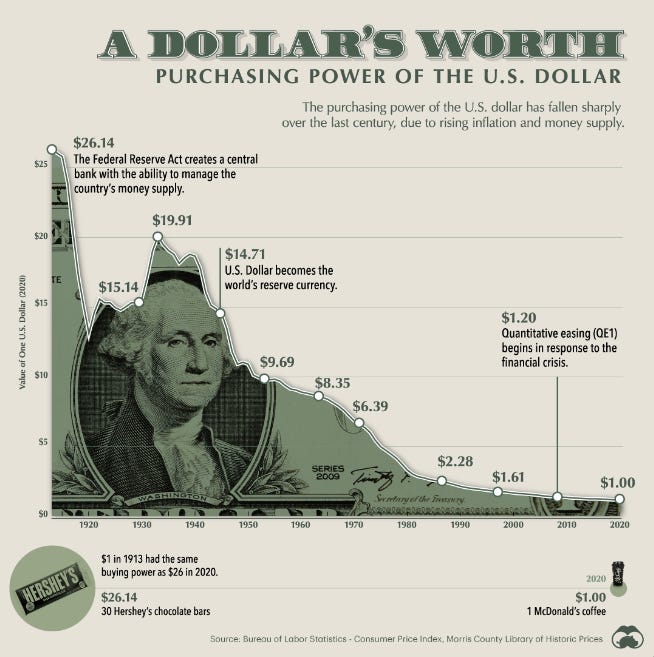
In this episode, Darius Dale, founder of 42 Macro, reveals why currency debasement in developed economies is inevitable and how to navigate the challenging transition ahead. Through examining term premia, central bank actions, and shifting global trade patterns, Dale builds a compelling case for why financial repression is already underway. But rather than just warning of trouble, he provides a systematic framework for protecting and growing wealth through this period of monetary upheaval. While many focus solely on risks, Dale explains why America's economic dynamism and technological innovation offer unique advantages in weathering these storms. From the role of Bitcoin and gold to the importance of understanding market regimes, this discussion provides crucial insights for anyone concerned about preserving wealth in an era of unprecedented monetary change. This is a public episode. If you'd like to discuss this with other subscribers or get access to bonus episodes, visit robertdewey3.substack.com/subscribe

The US Dollar as Reserve Currency
In this clip of my recent interview with Lyn Alden, we discuss the significance of the US dollar as the world's reserve currency, exploring the factors that have contributed to its enduring status and the potential challenges it faces in the future. She highlights the network effects that reinforce the dollar's dominance, the implications of rising debt, and the emerging multipolarity in global reserve assets.Takeaways* The US dollar is the primary reserve currency due to network effects and more.* Reserve currencies rely on deep capital markets and liquidity.* The dollar's status is likely to wane over time but not in the near-medium term.* Historical reserve currencies have lasted around 80-90 years.* The dollar is the first true reserve currency not tied to gold.* Debt creates inflexible demand for the dollar globally.* The dollar's value is propped up by its reserve currency status.* Rising debt and deficits challenge the sustainability of the dollar.* Censorship issues may lead countries to diversify away from the dollar.* The world is shifting towards a multipolar reserve asset system.* The US dollar’s reserve status is NOT likely to wane in the near to medium term.Chapters00:00 Understanding the US Dollar's Dominance00:47 The Future of the Dollar: Risks and Challenges03:20 Comparative Analysis: US vs Japan's Debt Dynamics06:30 The Impact of Populism on Currency Policy08:56 Introduction to the Conversation08:57 Exploring American Pessimism This is a public episode. If you'd like to discuss this with other subscribers or get access to bonus episodes, visit robertdewey3.substack.com/subscribe

Forbidden Pages: The Printing Press and the Divergence of Wealth
In this clip from our interview with Dr. Jared Rubin, co-author of "How the World Became Rich," we explore the profound impact of the printing press on economic development. Dr. Rubin explains how differing responses to this technology in Western Europe and the Islamic world created a 250-year "natural experiment" in progress. Learn how religious authority, literacy rates, and political power intertwined to shape the economic trajectories of these regions, offering valuable insights into the broader question of how global economic prosperity evolved. Takeaways: * Western Europe and the Middle East reacted differently to the printing press. - Political legitimacy played a crucial role in maintaining power. * The printing press empowered individuals * Religious authorities benefited from controlling knowledge. * The spread of literacy had long-term implications for society. * The Protestant Reformation was enabled by the printing press. * Economic elites gained power as a result of the Reformation. * The Ottoman Empire's fear of printing stemmed from its impact on religious authority. * Knowledge transmission was historically monopolized by religious clerics. * The divergence in economic development can be traced back to these historical events. Chapters 00:00 The Printing Press: A Catalyst for Change 02:48 Political Legitimacy and Economic Divergence 06:46 The Impact of Literacy and the Reformation This is a public episode. If you'd like to discuss this with other subscribers or get access to bonus episodes, visit robertdewey3.substack.com/subscribe

Revolutionizing Pediatric Heart Surgery
In our latest episode of Exploring Prosperity, we dive deep into the world of regenerative medicine with Dr. Chris Breuer, director of the Center for Regenerative Medicine at Nationwide Children's Hospital. Dr. Breuer and his team are pioneering the use of tissue-engineered blood vessels in infants with congenital heart defects, potentially transforming pediatric cardiac care. His work was highlighted in a WSJ article Oct 16, 2024 here: https://www.wsj.com/health/healthcare/humacyte-lab-grown-arteries-c68fac39?mod=Searchresults_pos1&page=1#comments_sector 🕒 Timestamps: 00:00 - Highlights and Introduction 05:28 - The Evolution of Tissue Engineering 14:10 - Pioneering Experiments and Discoveries 20:27 - Navigating Regulatory Challenges 31:22 - Advancements in Surgical Procedures 47:57 - Healthcare System Inefficiencies 53:07 - Future of Congenital Heart Disease Treatment 56:34 - The Role of Artificial Intelligence in Surgery Thank you to our sponsor Truflation. Learn more at https://truflation.com/ 🔑 Key Takeaways: * Learn how tissue-engineered blood vessels can grow with a child, potentially reducing the need for multiple surgeries * Discover the unexpected ways the human body contributes to tissue regeneration * Understand the challenges and triumphs of bringing innovative medical technologies from the lab to the clinic * Explore the potential for prenatal treatments that could revolutionize congenital heart defect care * Gain insights into the future of healthcare and the role of artificial intelligence in medicine Dr. Breuer's work is a testament to the power of innovation in solving complex medical challenges. This interview offers a glimpse into a future where previously incurable conditions become manageable, even curable. Whether you're a medical professional, a tech enthusiast, or simply curious about the future of healthcare, this episode has something for you. Join us as we explore the cutting edge of medical science and discover reasons for optimism in the face of daunting health challenges. Don't forget to like, subscribe, and share if you found this content valuable! This is a public episode. If you'd like to discuss this with other subscribers or get access to bonus episodes, visit robertdewey3.substack.com/subscribe

The Birth of Modern Prosperity: Britain's 3 Game-Changers in 1750
Dr. Jared Rubin, co-author of "How the World Became Rich," traces the beginning of economic prosperity to Britain in the mid-1700s. In this illuminating clip, he explains three of the key factors that set the stage for unprecedented growth and innovation. From political shifts to cultural transformations and western economic expansion, Dr. Rubin unravels the complex tapestry of elements that allowed Britain to launch the age of progress. Discover how these intertwining factors created the perfect storm for sustained economic growth, forever changing the course of human history. Thank you to our sponsor Truflation: Learn more at https://truflation.com/ 0:00 Introduction to Britain's economic takeoff 0:58 None of the factors was unique to Britain 1:30 Factor 1: Political institutions and constraints on monarchy 3:15 Factor 2: Cultural shift and the high rate of innovation 4:42 Factor 3: Easy access to western economic expansion This is a public episode. If you'd like to discuss this with other subscribers or get access to bonus episodes, visit robertdewey3.substack.com/subscribe

Podcast: The Invisible Hand Meets the Iron Fist: State Capitalism's Global Ascent
The rise of State Capitalism represents a seismic shift in the global economic landscape. This phenomenon, characterized by increasing government ownership and influence over the private sector, has grown rapidly since 2000. Professor Adam Dixon, co-author of 'The Spectre of State Capitalism,' provides insights into this trend and its potential impact on human prosperity. Thank you to our sponsor Truflation. Learn more about the real inflation rate at www.truflation.com. State Capitalism has expanded dramatically across three key areas: - Sovereign Wealth Funds (SWFs) have grown sixfold, from 30 to 176, with assets increasing from $1 trillion to $12 trillion. - State-Owned Enterprises (SOEs) in the global top 500 companies have quadrupled, with assets growing 11X to $145 trillion. - Government intervention through industrial policies and tariffs has notably increased. Dixon identifies four state capitalist impulses: productivist, absorptive, stabilizing, and disciplinary. While the immediate impact of State Capitalism seems limited, the long-term implications could be profound. Potential risks include market distortions, reduced innovation, and geopolitical implications. However, the impact varies across different forms of State Capitalism. SWFs typically pose lower risks, often focusing on returns and managed like traditional investors. SOEs present higher risks due to potential direct state influence. Industrial policies directly intervene in free market behavior for political objectives. Get a free copy of The Spectre of State Capitalism here: https://academic.oup.com/book/57552 State Capitalism isn't inherently negative. It has played crucial roles in stabilizing economies during crises and fostering development. However, excessive state involvement could stifle the dynamism and efficiency of free markets. The manifestation of State Capitalism varies globally. Authoritarian countries like China have more direct and extensive state involvement, while democratic countries tend towards indirect forms. The U.S., traditionally a free-market champion, is seeing increased state involvement and discussions about a national sovereign wealth fund. Looking ahead, State Capitalism's trajectory seems set to continue, driven by economic challenges, geopolitical competition, crisis responses, and technological change. However, its impact on human prosperity remains uncertain. Historically, economic prosperity has been marked by limited direct government intervention. To safeguard prosperity, we must remain vigilant against excessive state intervention while recognizing its potential benefits. The key lies in striking a delicate balance between harnessing the potential of State Capitalism and preserving the core strengths of free markets that have driven human progress. This is a public episode. If you'd like to discuss this with other subscribers or get access to bonus episodes, visit robertdewey3.substack.com/subscribe

Podcast- Unleaching the Invisble Hand
In this episode of "Exploring Prosperity," we dive deep into the transformative work of Douglas Ellenoff, a pioneering attorney who has revolutionized small business funding over the past three decades. Ellenoff's efforts in shaping legislation for crowdfunding and Special Purpose Acquisition Companies (SPACs) have democratized access to capital markets, unleashing the power of Adam Smith's "invisible hand" in unprecedented ways. Thank you to our sponsor Truflation- learn more at www.truflation.com. Douglas Ellenoff's journey began with a focus on entrepreneurship and small companies, areas often overlooked by larger law firms. His work on SPACs dates back to the early 2000s, long before they became headline news. Ellenoff played a crucial role in developing the regulatory framework for SPACs, balancing investor protection with the need for capital formation. Despite recent scrutiny, Ellenoff believes SPACs will settle into a valuable niche in the capital markets, providing opportunities for both companies and investors. Perhaps Ellenoff's most significant contribution has been his work on crowdfunding legislation. The JOBS Act of 2012, which Ellenoff helped shape through numerous visits to Washington and testimonies before Congress, created a framework for equity crowdfunding. This revolutionary change allowed small businesses to raise capital from a broad base of individual investors, rather than relying solely on accredited investors or traditional financial institutions. The impact of Ellenoff's work extends far beyond the immediate effects on small businesses and individual investors. By creating new pathways for capital formation and investment, he has helped enhance the overall resilience and dynamism of the American economy. These innovations have led to increased innovation, economic diversification, new wealth creation opportunities, and improved market efficiency. Throughout the interview, Ellenoff provides valuable insights into the evolution of financial regulation, the challenges of balancing innovation with investor protection, and his vision for the future of capital formation. He emphasizes the iterative nature of financial regulation and the importance of persistent advocacy in creating effective regulatory frameworks. Ellenoff's journey underscores the power of persistence in effecting change in financial regulations. His experiences reveal how regulators, often viewed as obstacles to progress, are primarily concerned with preventing retail investors from losing money. Understanding this perspective can help entrepreneurs and innovators better navigate the regulatory landscape and design compliant yet innovative financial products. Looking to the future, Ellenoff sees great potential in the continued evolution of crowdfunding, SPACs, and other alternative capital formation methods. He envisions a future where these tools become mainstream, providing robust competition to traditional venture capital and investment banking models. Douglas Ellenoff's work over the past three decades embodies the spirit of Adam Smith's invisible hand. By creating new pathways for capital to flow between investors and entrepreneurs, he has helped unleash the collective power of millions of individual economic actors. This democratization of capital markets strengthens the foundational resilience of the American economy, fostering innovation, creating jobs, and opening up new opportunities for wealth creation. In an era often dominated by pessimism about economic prospects, Ellenoff's work serves as a powerful reminder of the enduring strength and adaptability of the American economic system when the invisible hand is given the freedom to work its magic. Join us for this illuminating conversation with Douglas Ellenoff and gain a deeper understanding of the forces shaping modern capital markets and the future of finance. This is a public episode. If you'd like to discuss this with other subscribers or get access to bonus episodes, visit robertdewey3.substack.com/subscribe

Podcast- Decoding the Dollar's Dominance and Decline with Lyn Alden
In this episode, we dive deep into the complexities surrounding the US dollar's role as the global reserve currency. Drawing from a fascinating conversation with macroeconomist and investment strategist Lyn Alden, we explore the factors that have contributed to the dollar's long-standing dominance and the potential risks that could threaten its status. Thank you to our sponsor Truflation. Learn more at www.truflation.com We begin by examining the characteristics that define a reserve currency and trace the historical development of the US dollar's ascent to this position. The discussion then turns to the long-term effects of reserve currency status, including its impact on domestic manufacturing and persistent trade imbalances. We also analyze how policy decisions, such as financial censorship and monetary actions, can significantly influence a currency's reserve status. The conversation takes an intriguing turn as we consider the growing challenges to US dollar dominance. We explore the rise of alternative reserve currencies, the increasing use of digital currencies, and the geopolitical shifts that are reshaping global trade patterns. Particular attention is given to the potential of Bitcoin as a long-term solution to the inherent problems of traditional reserve currencies. Finally, we confront the paradox facing the United States: while its growing national debt poses significant long-term risks, the dollar's reserve status remains resilient due to its entrenched position in global trade and unmatched liquidity. As we look to the future, we consider how the balance between these competing forces will shape the landscape of global finance and the role of the US dollar within it. This is a public episode. If you'd like to discuss this with other subscribers or get access to bonus episodes, visit robertdewey3.substack.com/subscribe

Podcast- Privacy in the Age of AI
In "Privacy in the AI Age," David Johnston, a pioneer in blockchain and AI, discusses the transformative potential of decentralized technologies. He argues that blockchain, starting with Bitcoin, introduced the concept of decentralized, programmable money, paving the way for innovations like Ethereum's smart contracts. Thank you to my sponsor Truflation. www.truflation.com Johnston then introduces the Morpheus Project, a decentralized AI system that allows for personalized AI assistants interacting with decentralized systems. Unlike previous centralized technologies, decentralized systems prioritize user sovereignty and data privacy. Johnston emphasizes that decentralized AI assistants are already a reality, simplifying complex tasks like cryptocurrency management. He envisions a future where these AI assistants can personalize financial advice, manage digital identities, protect privacy, and even interact with smart home devices—all without sharing data with corporations or governments. This permissionless nature of decentralized systems, where users interact freely and anonymously, could redefine personal freedom and economic empowerment, potentially disrupting traditional financial industries and promoting a more equitable distribution of prosperity. This is a public episode. If you'd like to discuss this with other subscribers or get access to bonus episodes, visit robertdewey3.substack.com/subscribe

The Wealth Paradox: Understanding Global Prosperity Amidst American Discontent
I interviewed Dr. Jared Rubin this week to explore the historical drivers of economic growth and we discussed the apparent disparity between the current global prosperity and the widespread pessimism in the United States, as evidenced by surveys. As an expert in economic history, Rubin provided valuable perspectives on these complex issues. Rubin, a professor and co-director of the Institute for the Study of Religion, Economics and Society at Chapman University, co-authored the book "How the World Became Rich: The Historical Origins of Economic Growth" with Mark Koyama which delved deeply into the theories of other economic historians to uncover the crucial elements that have propelled global economic advancement throughout history. Conclusion from the interview: “Best time to be born is now, but…” The interview reveals Rubin's perspective that the drivers of economic growth over the last few centuries have developed institutional and cultural inertia, causing prosperity to be resilient and highly likely to continue. However, his work showed that there are 3 key threats to be aware of from history: i) Erosion of constraints on executive power; Today’s political polarization is a concern/ ii) Major environmental change; Climate change can lead to accelerated changes and reactions/ and iii) Extreme warfare; Growing geopolitical instability draws nuclear powers closer to war which raises risks of nuclear war. These risks to sustained economic growth can carry a heavier emotional response than their likelihood of occurring and could explain the disconnect. Chapter Guide to the Interview: 00:00 - Introduction 02:12 - The Drivers of Global Economic Growth The main factors that have contributed to economic growth historically, including geography, demography, colonialism, institutions, and culture. 10:56 - England's Economic Rise (1000-1750) This section discusses the unique combination of factors that led to England becoming the birthplace of the modern economy. 17:19 - The Impact of the Printing Press This chapter explores how the adoption of the printing press differed between Western Europe and the Islamic world, and its consequences for economic development. 36:13 - Modern Challenges: War, China, and Global Prosperity This section covers contemporary issues, including the threat of nuclear war, China's economic rise, and the overall improvement in global living standards. 53:10 - Future Prospects and the Importance of Poverty Eradication The final chapter discusses the main threats to continued economic growth, the potential for further poverty reduction, and the importance of human ingenuity in solving global problems. This is a public episode. If you'd like to discuss this with other subscribers or get access to bonus episodes, visit robertdewey3.substack.com/subscribe

New Rules For Investors- Russell Napier
I hosted with my friends John Fagan and Brendan Walsh a very revealing, compelling, timeless and entertaining macro strategy session with Russell Napier on Friday, January 29, 2023. Russell is issuing a serious warning to his institutional and individual clients who subscribe to his newsletter- an era of financial repression has arrived that reverses many of the characteristics of successful investing. Here is a link to Russell's newsletter: https://russellnapier.co.uk/Today investors face a tipping point as significant as it was in 1971 when the US exited the Bretton Woods agreement and the world began a new economic experiment- never before had a major global currency disconnected itself from gold (or any other hard asset). This (as well as some other events he describes) allowed for the steady and powerful growth of credit to it current all-time record high. Central banks have raised rates which is threatening the global financial system with the prospects of eventual default. Russell points out how governments have resorted to currency debasement in the past, and why they will follow the same path this time. Debasement is the act of lowering the value of a currency through inflation to pay off debts- holding rates below true inflation. Russell calls this debasement “Financial Repression” and he describes it in the interview as “Stealing money from old people slowly”; slowly, he explains, because “You mustn’t frighten the horses, you can’t afford for them to stampede.” Russell describes how governments are doing this today, and what mechanisms they will use to get Debt:GDP levels back to more reasonable levels; a process that will take 10-15 years where markets and central banks must take a back seat to the power of governments. Listen to get a PHD- level understanding of what Russell believes will be a difficult decade for professional investors. Timeline: 00:00 Highlights 00:51 Introduction of Russell Napier 02:11 Debt has grown to all-time record levels and we have reached the trigger point 05:11 Japan, Europe, US Japan will be lynchpin- this test case may be unfolding this quarter, watch carefully 08:14 Bretton Woods in perspective and other contributing factors 10:50 Debt vs Debasement- What is the history? 14:17 A FEW GOOD MEN- Governments can't handle the truth 14:38 How do governments subvert central banks? 17:30 The pressures building in Europe 21:02 Significance of Draghi- "We will do whatever it takes" 22:38 Japan hedge funds have a one-sided bet, and the wrong way 27:44 The Surprise about freezing dollar assets in Russia Central Bank was not that the US did it… 29:57 Liquidity and velocity are huge issues- algorithms risk 35:25 China- its debt and its economy, the same kettle of fish 39:01 Chinese RMB vs US Dollar as reserve currency 41:51 The Chinese economy; Debt: GDP and exchange rate 44:41 Which assets should you own in the next decade? 47:54 Equities, rates, inflation- Infrastructure spending, industrial 49:48 Bitcoin, Stablecoins, Central Bank Digital Currencies 52:02 "The greatest threat to liberty in the world today" 54:10 WHY NOW? Why not many more years of more debt before it blows? 58:10 Why 400bp spread between inflation and interest rates? Don't frighten the horses. 60:05 Subscribe to Napier Research information ERIC for institutions 60:38 Take Russell's course- Advanced Valuation - Financial Markets This is a public episode. If you'd like to discuss this with other subscribers or get access to bonus episodes, visit robertdewey3.substack.com/subscribe

Breaking Barriers: Patricia Chadwick’s Rise Against the Odds
In this captivating interview, we delve into the remarkable journey of Patricia Chadwick, whose life story serves as a beacon of hope and resilience. Born into a strict cult, Patricia endured a childhood devoid of culture, fairness, and freedom. Despite these daunting circumstances, she found the strength to break free through the goodness she latched onto from those around her and through her keen sense of duty, responsibility and hard work that eventually helped carve her path to success. Hers is an inspiring tale of how curiosity and resilience propelled Patricia from the depths of deprivation to a life of fulfillment and achievement.Thank you to our sponsor Truflation (https://truflation.com/) that provides accurate pricing statistics for over 13mm datapoints for asset managers, governments, companies and the general public.This is a discussion about Patricia's remarkable life that she wrote about in her two books: Breaking Glass: Tales from the Witch of Wall Street, and Little Sister: A Memoir.Throughout the conversation, Patricia shares invaluable insights into her extraordinary rise from adversity. With humility, she credits her mentors for guiding her along the way, yet it's clear that her unwavering determination and flexibility played pivotal roles in her journey. Against the backdrop of societal progress, Patricia's story offers a powerful reminder that, despite challenges, progress is inevitable, and the human spirit is capable of overcoming formidable obstacles.Beyond the interview, Patricia's story unfolds in her books, providing a deeper understanding of the hardships she faced and the triumphs she achieved. Her journey serves as a testament to the resilience of the human spirit and the boundless potential that lies within each of us. Tune in to discover how Patricia's resilience, courage, and belief in a brighter future can inspire us all to embrace optimism and strive for greatness in our own lives. Subscribe to the Exploring Prosperity YouTube Channel (HERE). Buy her books! Breaking Glass: Tales from the Witch of Wall Street (BUY HERE)Little Sister: A Memoir (BUY HERE) This is a public episode. If you'd like to discuss this with other subscribers or get access to bonus episodes, visit robertdewey3.substack.com/subscribe

Truflation: Revolutionizing Inflation Tracking with Real-Time Data and Transparency
In this podcast, my friend Brendan Walsh and I sat down with Stefan Rust, the CEO and founder of Truflation, a company aiming to revolutionize how we measure and understand inflation. In our interview on Feb 23, 2024, Rust explained how his motivation to start Truflation stemmed from the shortcomings in the way the Bureau of Labor Statistics (BLS) calculates and reports inflation data - a process that is flawed and does not accurately reflect the true cost of living increases experienced by consumers. Truflation takes a fresh, data-driven approach by monitoring millions of real-time pricing data points across various spending categories like housing, transportation, and utilities.A key difference highlighted is Truflation's treatment of housing costs, which account for a 26% weighting compared to the BLS's 40%+ weighting. Truflation argues their housing data, pulled from real-time rental listings on sites like Zillow and Redfin, better reflects the true costs faced by consumers. In contrast, the BLS's housing data has a significant 9-month lag and relies on surveys of homeowners' estimates of rental values. Truflation also breaks down costs into 12 granular categories versus the BLS's 6 categories.Transparency is a core tenet of Truflation's approach. Their methodology is fully documented and open to community feedback for improvements every 6 months. All original data is immutably recorded on the blockchain, allowing tracking of any methodological changes over time through new data streams. Truflation offers various services from raw data feeds to analyst reports and forecasting up to 3 months out, with their 1-month inflation forecasts proving accurate within around 10 basis points of reported BLS numbers on average.A major advantage Truflation provides clients is the ability to access the raw data via APIs and calculate inflation measures based on their own preferred weightings across the 12 categories tracked. Some clients prefer leveraging Truflation's analyst interpretations through services like group webinars or one-on-one sessions. The goal is to provide options beyond just taking Truflation's headline inflation numbers at face value.While the BLS revises its CPI numbers over time, often suppressing reported inflation according to Rust, all of Truflation's original data is immutably recorded to the blockchain. Rust acknowledges challenges in longer-term 3-month forecasting due to potential "black swan" events but believes Truflation's core innovation is providing a more real-time, transparent and accurate measure of true consumer inflation than traditional government sources by leveraging modern data sources and computing power. This is a public episode. If you'd like to discuss this with other subscribers or get access to bonus episodes, visit robertdewey3.substack.com/subscribe

The Pivotal Shift in the CBDC Narrative
This podcast is my last essay on my Substack account. This is a public episode. If you'd like to discuss this with other subscribers or get access to bonus episodes, visit robertdewey3.substack.com/subscribe

Universities & Society: A Shifting Relationship-
The American university system has long been lauded for its excellence, but recent headlines paint a picture of turmoil. In this interview, Sam Chauncey, a veteran administrator with seven decades of experience in and around Yale University, offers his insights on the evolving landscape of higher education. This interview is timely given the growing protests at universities across the US that culminated last evening in the arrests of 300 students at Columbia University. Ray Dalio's "A Changing World Order" cites the higher education system as one of the glimmering hopes for reversing our country's declining status as a world power, but Sam points out that confidence in our university system has also been declining significantly along with many other institutions. About Sam Chauncey: Henry "Sam" Chauncey Jr. is a highly respected figure within the Yale University community. He has held various leadership positions throughout his long career, starting as a student in 1953. After graduating in 1957, he transitioned to administration, serving as Assistant Dean of Yale College, Special Assistant to President Kingman Brewster, and eventually Secretary of the University. Sam played a significant role in navigating the turbulent 1960s and 70s at Yale, including the admission of women to the undergraduate college and maintaining campus stability during the New Haven Black Panther trials as well as Vietnam and civil rights protests. He later ventured outside of Yale, founding the Science Park Development Corporation and serving as President and CEO of Gaylord Hospital. However, his passion for education led him back to Yale, where he established the innovative Yale Health Management Program, a first of its kind within the university. Thank you to our sponsor Truflation: Learn more at www.truflation.com. Bio: https://en.wikipedia.org/wiki/Sam_Cha... Subscribe to my Newsletter at: Sam's extensive experience and deep understanding of the university system make him a valuable voice in the ongoing conversation about the future of American higher education. Concerns and Challenges: Sam expresses concern about the declining ability of universities to fulfill their traditional mission of shaping individuals into positive contributors to society. He attributes this to several factors, including: • Fragmentation: Universities have grown in size and complexity, leading to a loss of focus and a dilution of their impact on individual students. • Leadership Decline: The diminishing role of university presidents and the erosion of public trust in universities further weaken their influence. • Shifting Priorities: Student interests have diversified, with numerous activities vying for their attention, potentially impacting the sense of community within college walls. The Evolving Landscape: Sam discusses the changing dynamics of student activism and how universities are navigating protests. He observes a shift in the concept of "justice," where outcomes often take precedence over process. He also notes the rising costs of higher education, which, coupled with questionable returns on investment, make traditional universities less attractive for some. The Impact of Education: Measuring the true impact of a university education remains a challenge. Sam highlights the difficulty in defining success solely based on titles like CEO or President, emphasizing the value of contributions like working with Doctors Without Borders. Universities, including Yale, haven't done enough to quantify the societal value of their graduates. Yale University: A Case Study: Sam reflects on how Yale has changed over time, including student demographics and the overall university experience. He ponders whether the Yale education truly sets its graduates apart. Conclusion: Sam's insights raise critical questions about the future of American universities. The interview emphasizes the need for universities to re-evaluate their priorities, address the concerns surrounding leadership and cost, and ensure their graduates are well-equipped to contribute positively to the world.Personal Note: Sam Chauncey has had a remarkable career marked by his clarity of thought, his ability to gain the trust and confidence of colleagues, to identify problems and opportunities and to motivate those around him to work towards a common goal, and to accomplish those goals consistently over the last 70 years since he matriculated at Yale in 1954. It was my privilege to have met him in 1980 and to have counted him among my closest friends ever since. This interview is loaded with insights drawn from his experience and wisdom. University presidents, administrators, faculty and students might all find this a valuable session. The last section of the interview covers his career progression beginning at 72:25 which I highly recommend viewing. This is a public episode. If you'd like to discuss this with other subscribers or get access to bonus episodes, visit robertdewey3.substack.com/subscr