
Exploring Prosperity- Challenging Pessimism in the US
A newsletter about what thought-leaders have to say about our American condition and whether we should be so pessimistic about the future.
Bob Dewey
Show overview
Exploring Prosperity- Challenging Pessimism in the US has been publishing since 2024, and across the 2 years since has built a catalogue of 56 episodes. That works out to roughly 35 hours of audio in total. Releases follow a fortnightly cadence.
Episodes typically run thirty-five to sixty minutes — most land between 9 min and 1h — with run-times ranging widely across the catalogue. None of the episodes are flagged explicit by the publisher. It is catalogued as a EN-language Society & Culture show.
The show is actively publishing — the most recent episode landed 5 days ago, with 11 episodes already out so far this year. Published by Bob Dewey.
From the publisher
Challenge Pessimism. Explore the Complexity of Progress. Headlines and survey results scream pessimism, but is it warranted? Join us on Exploring Prosperity as we delve into the complexities of human progress with leading thinkers across markets, economics, history, philosophy, and more. Discover how economic and societal factors shape our world, and gain a deeper understanding of the drivers of individual and societal prosperity and a fulfilling life. Our in-depth conversations may leave you empowered and optimistic about the future and equipped with insights to navigate the challenges and opportunities that lie ahead. Bob Dewey brings his expertise in investing and his network in the investment community and beyond to address the big issues of the day and whether we can solve problems faster than they grow. robertdewey3.substack.com
Latest Episodes
View all 56 episodesAI Is Rewiring Markets, Energy & Bitcoin | Matthew Sigel
Is Digital Security Ready for What’s Coming? (Zach Herbert)
Credit Stress Is Back: What Happens When Markets Stop Clearing?
What AI Can Actually Do — And What It Can’t
Artificial intelligence is changing finance, healthcare, education, and the future of work — but what is it actually doing under the hood?In this conversation, I sit down with Albert Berdellans, Global Head of AI at Invenium, for one of the clearest explanations I’ve heard of how large language models actually work, what AI can and cannot do, where the risks are overstated, and how it may reshape society in the years ahead.We discuss:• how large language models generate answers• why AI does not actually “think”• hallucinations, context rot, and why AI gets things wrong• whether AI will replace jobs• how AI is already changing finance• the future of healthcare and education• why fears of rogue AI may be overblownIf you’re trying to build a clear framework for understanding AI beyond the hype and fear, I think you’ll find this conversation to be invaluable.Subscribe to Exploring Prosperity for conversations on technology, economics, markets, and the forces shaping human progress.Thank you very much to our sponsors:Truflation: BUY Truflation products/services and save 10% using code BOBDEW10. Learn about what prices are actually doing by going to https://truflation.com/Foundation: Protect your Bitcoin using the latest off-line technology with easy-to-use Passport. Their next product, Passport Prime will protect all passwords off-line with even-better technology. https://foundation.xyz/River Financial: If not cold storage for your Bitcoin, I’d highly recommend River for buying and holding- River is engineered to protect your Bitcoin over the long run. Use this link for discounts: https://river.com/signup?r=T7GGAF7GTimestamps:00:00 Introduction — what AI actually is beyond the hype01:04 Albert’s background and how he entered AI04:55 Where AI impresses most — and where it doesn’t07:31 How AI is used in finance and large institutions12:11 Context rot and why too much information hurts AI14:05 How large language models actually work17:44 Hallucinations and false answers19:25 Can you trust AI outputs?22:31 Can AI reason and make predictions?27:21 Which jobs AI will change first31:13 How AI is transforming private markets and due diligence37:36 Tokenization, liquidity, and real estate40:49 How AI could improve healthcare and education47:12 AI in medicine, diagnosis, and surgery48:16 The future of education and personalized learning52:08 Will AI go rogue? The real risks55:15 Real-world examples of “rogue AI” explained59:23 Final thoughts This is a public episode. If you'd like to discuss this with other subscribers or get access to bonus episodes, visit robertdewey3.substack.com/subscribe
Are We Getting Weaker? Hard Money, Harder Virtues
Are we actually progressing—or quietly getting weaker?In this conversation, I sit down with Aleks Svetski, author of The Bushido of Bitcoin, to explore a deeper question that sits beneath economics, technology, and politics: what actually drives long-term human progress?Many believe that fixing money—through systems like Bitcoin—can restore discipline, align incentives, and solve structural problems in society. But as Aleks argues, that’s only part of the story. Human nature, culture, and values ultimately determine whether societies rise or fall.We discuss:- Why hard money is necessary—but not sufficient- The role of character, virtue, and “nobility” in shaping civilization- Whether democracy strengthens or weakens societies over time- How AI and technology may widen the gap between disciplined and undisciplined people- Why pain and suffering may be essential to growth and progressThis is a conversation about incentives, power, culture, and the uncomfortable possibility that no system alone can fix what is fundamentally human.This episode will challenge how you think about progress.Subscribe for long-form conversations on markets, macro, technology, Bitcoin, and the future of prosperity.Thank you very much to our sponsors:Truflation: BUY Truflation products/services and save 10% using code BOBDEW10. Learn about what prices are actually doing by going to https://truflation.com/Foundation: Protect your Bitcoin using the latest off-line technology with easy-to-use Passport. Their next product, Passport Prime will protect all passwords off-line with even-better technology. https://foundation.xyz/River Financial: If not cold storage for your Bitcoin, I’d highly recommend River for buying and holding- River is engineered to protect your Bitcoin over the long run. Use this link for discounts: https://river.com/signup?r=T7GGAF7GTimestamps:00:05 – What actually drives human progress?00:47 – Bitcoin doesn’t fix human nature03:33 – Culture, virtues, and the “20% that matter”04:22 – Are we entering a new era of leadership?08:40 – Bitcoin as an accelerant, not a solution10:55 – What defines a new aristocracy?13:57 – “Hard times create strong men” — where are we now?16:44 – The hidden flaw of democracy20:17 – Why democracy may be a historical anomaly22:10 – Leadership vs political short-termism24:50 – What Bitcoin actually enables27:15 – Incentives, savings, and generational wealth30:12 – AI: tool or crutch?34:08 – Productivity vs dependence in the age of AI38:39 – The role of pain and suffering in growth44:11 – Why avoiding hardship creates weakness47:45 – Will AI widen the gap between people?48:29 – Writing, thinking, and the discipline of ideas52:06 – Why Svetski wrote The Bushido of Bitcoin56:05 – From pessimism to responsibility and action1:00:30 – The difficulty of writing and rewriting ideas1:04:57 – A book that challenges everything you believe This is a public episode. If you'd like to discuss this with other subscribers or get access to bonus episodes, visit robertdewey3.substack.com/subscribe

OpenAI’s Trillion-Dollar Obligations: Can the Math Work?
In this episode of Exploring Prosperity, I sit down with investor Ram Ahluwalia to examine one of the most important — and least discussed — risks in the AI buildout.OpenAI reportedly has nearly $1 trillion in committed obligations tied to data center capacity and compute infrastructure. With revenue far below that scale, the key question is simple:Can the math foot?This conversation is not anti-AI. AI is clearly transformational. But the expansion of AI depends on capital markets. If funding conditions tighten, what happens to the trillion-dollar commitments already in place?We discuss:• OpenAI’s revenue performance obligations and data center exposure• The capital markets dependency of the AI buildout• Why tech stocks may continue to lag• The rotation into energy, commodities, and real assets• Software valuations and whether this is truly a “COVID-style” opportunity• Bitcoin’s current bear market psychology• Quantum computing risk and institutional hesitation• The role of KOLs and narrative investing in late-cycle marketsRam argues that this moment resembles past cycles where crowded themes detach from balance sheet reality — and markets begin to demand discipline again.If you care about AI, tech stocks, Bitcoin, or the direction of capital markets in 2026, this is a conversation worth watching.Subscribe for more long-form interviews on markets, technology, and economic reality.Thank you very much to our sponsors: Truflation: BUY Truflation products/services and save 10% using code BOBDEW10. Learn about what prices are actually doing by going to https://truflation.com/Foundation: Protect your Bitcoin using the latest off-line technology with easy-to-use Passport. Their next product, Passport Prime will protect all passwords off-line with even-better technology. https://foundation.xyz/River Financial: If not cold storage for your Bitcoin, I’d highly recommend River for buying and holding- River is engineered to protect your Bitcoin over the long run. Use this link for discounts: https://river.com/signup?r=T7GGAF7GTimestamps:00:00 Intro00:48 OpenAI & “Sam Altman Broke the World”01:54 OpenAI’s $1 Trillion in Committed Obligations03:41 Why the AI Revenue Math Doesn’t Foot04:40 Microsoft, Oracle & Revenue Performance Obligations (RPO)06:45 What Happens If OpenAI Can’t Raise Capital?08:47 The AI–Capital Markets Dependency10:59 Does This Slow Down AI Development?12:50 Investment Implications: Tech Rotation Begins14:40 Inflation-Resistant Sectors Outperforming16:50 Why Tech May Continue to Lag18:20 Is Software a COVID-Level Bargain?23:25 Bitcoin, Software & the “Tech Bro Portfolio”24:45 Satoshi Conference: Institutional Bitcoin Debate29:58 Tokenization & Crypto’s Strategic Misstep34:10 Why Crypto Ignored Small Business Capital36:14 Venture Capital Overvaluation & Private Market Marks38:34 Quantum Risk to Bitcoin41:45 Is Bitcoin in a Bear Market?49:00 Real-World Investing vs. Techno-Optimism51:57 Tribalism, KOLs & Market Cycles55:36 The Four Phases of a Market Rally58:07 Was the Bitcoin Top Already In?59:45 What Capitulation Might Look Like This is a public episode. If you'd like to discuss this with other subscribers or get access to bonus episodes, visit robertdewey3.substack.com/subscribe
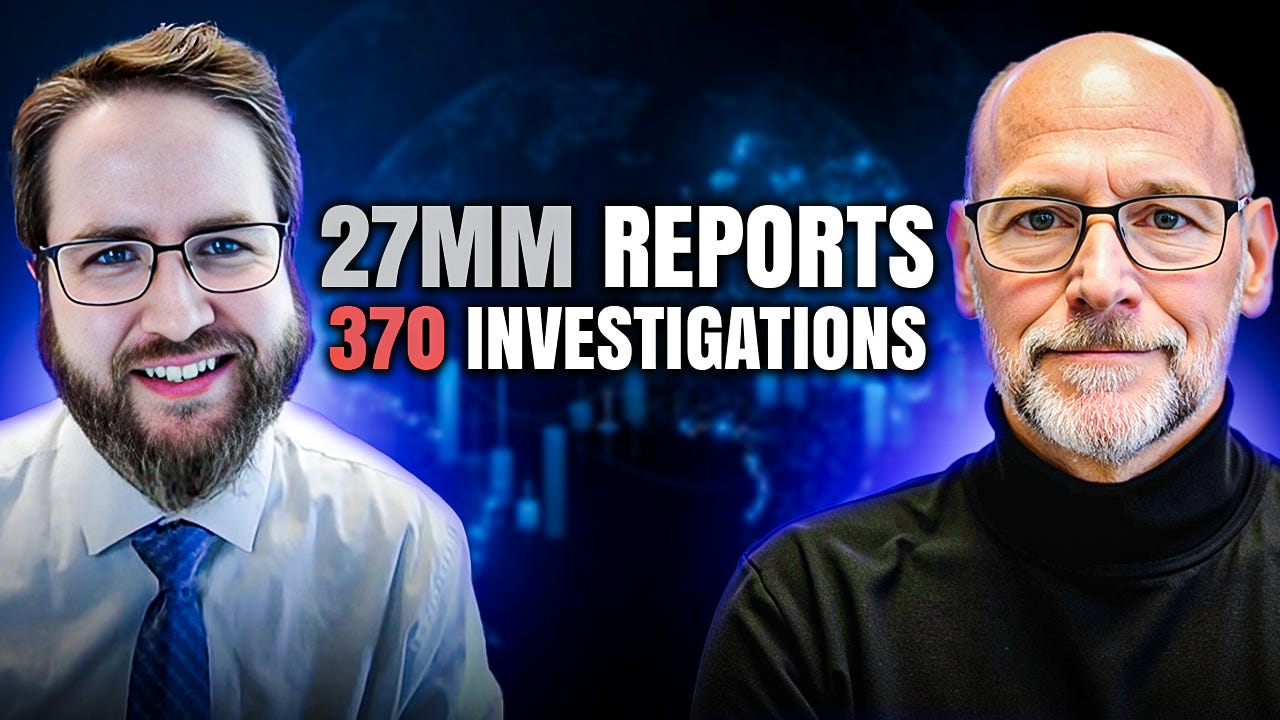
27 Million Reports: Will Congress Scale Back Financial Surveillance?
More than 27 million financial reports are filed each year under the Bank Secrecy Act, flagging ordinary banking activity as “suspicious.” Yet, as the data shows, only 370 investigations were tipped off by these reports. In this conversation, Nick Anthony of the Cato Institute explains how U.S. financial surveillance expanded quietly over decades, why routine cash transactions now generate government reports, and how banks have effectively been deputized as law enforcement investigators. We discuss the real-world consequences for individuals, including account closures, the "sense of confusion" that comes with debanking, and the steady erosion of financial privacy.The interview also examines current legislation in Congress, including proposals to reform the Bank Secrecy Act and the Saving Privacy Act. These proposals aim to raise outdated reporting thresholds that haven't been adjusted for inflation since 1970. At stake is whether Congress will meaningfully scale back financial surveillance or allow the status quo to continue.This discussion covers:– The $10,000 threshhold- Why inflation has expanded surveillance far beyond its original intent.– The Investigative Gap- Why 27 million reports result in only ~370 investigative tips.– Confidentiality Laws- Why banks are legally forbidden from telling you why your account was closed.– CBDC Update- The shift from voluntary pilots to "force mandates" in international digital currencies.Nick Anthony is a policy analyst focusing on financial regulation, privacy, and central bank digital currencies. He is the author of the CBDC Tracker and writes extensively on banking surveillance and civil liberties.Read the full report by Nick Anthony "Understanding Debanking" at: https://www.cato.org/policy-analysis/understanding-debanking-evaluating-governmental-operational-political-religiousThank you very much to our sponsors:Truflation: BUY Truflation products/services and save 10% using code BOBDEW10. Learn about what prices are actually doing by going to https://truflation.com/Foundation: Protect your Bitcoin using the latest off-line technology with easy-to-use Passport. Their next product, Passport Prime will protect all passwords off-line with even-better technology. https://foundation.xyz/River Financial: If not cold storage for your Bitcoin, I’d highly recommend River for buying and holding- River is engineered to protect your Bitcoin over the long run. Use this link for discounts: https://river.com/signup?r=T7GGAF7GTimestamps:00:00 Legislative Changes and Government Surveillance06:30 The Impact of the Bank Secrecy Act12:17 Debanking and Its Consequences17:07 The Future of Surveillance and Privacy20:37 The Importance of Financial Privacy23:05 Raising Awareness on Financial Issues24:12 The Challenge of Debanking25:20 Congress and Financial Reporting28:02 Central Bank Digital Currencies (CBDCs) Overview28:37 Global CBDC Developments32:20 The European Central Bank's Push for Digital Euro37:33 Adoption Challenges of CBDCs40:10 Government Mandates and CBDC Adoption43:40 The Political Landscape of CBDCs This is a public episode. If you'd like to discuss this with other subscribers or get access to bonus episodes, visit robertdewey3.substack.com/subscribe

The One-Hour Problem: How High School Counseling Fails Families
Families navigate the college decision process rarely—but the consequences can last decades.In this episode of Exploring Prosperity, I speak with Jon Carson, CEO of College Guidance Network, about why the traditional college guidance system no longer works—and why rising costs, declining ROI, and information asymmetry have made the decision riskier than ever.We break down the real math behind high school counseling, why most students receive only about one hour of guidance per year, and how parents are left without the tools they need to make informed decisions. We also explore how colleges market to families, how student debt reflects systemic failure, and why confidence in higher education has collapsed over the past decade.The conversation then turns to technology and AI—where it helps, where it falls short, and why scalable, expert-anchored guidance may be the missing piece. Jon explains how AI can augment human judgment, rather than replace it, and how better incentives and better information could dramatically improve outcomes for students and families alike.This episode examines how a high-stakes decision process broke—and what it would take to make it work again.🎧 Exploring Prosperity focuses on the forces shaping long-term economic outcomes: education, technology, incentives, and growth.Thank you very much to our sponsors: Truflation: BUY Truflation products/services and save 10% using code BOBDEW10. Learn about what prices are actually doing by going to https://truflation.com Foundation: Protect your Bitcoin using the latest off-line technology with easy-to-use Passport. Their next product, Passport Prime will protect all passwords off-line with even-better technology. https://foundation.xyz/ River Financial: If not cold storage for your Bitcoin, I’d highly recommend River for buying and holding- River is engineered to protect your Bitcoin over the long run. Use this link for discounts: https://river.com/signup?r=T7GGAF7GTimestamps:00:00 The State of High School Guidance04:45 Other Destinations after High School06:01 Technology's Role in Guidance Solutions19:09 The Need for Personalized Guidance21:12 Building a Tech-Enabled Guidance System23:53 Personalized Project Plans for Students26:21 AI-Powered Guidance Counseling28:27 Transforming Counseling with AI Data31:21 Creating Comprehensive Resource Centers34:14 Live Programming and Community Engagement35:36 Building a Public Mission in Education37:39 Navigating Challenges in K-12 Education41:38 The Importance of AI Talent42:35 First Mover Advantage in AI Education46:33 The Value of School Partnerships This is a public episode. If you'd like to discuss this with other subscribers or get access to bonus episodes, visit robertdewey3.substack.com/subscribe

Crypto’s Institutional Reset: Why 2026 Changes Everything | Zach Pandl (Grayscale)
In this episode of Exploring Prosperity, I’m joined by Zach Pandl, Head of Research at Grayscale, to explore why 2026 may mark the true beginning of crypto’s institutional era.We discuss how regulatory clarity — including the impact of Grayscale’s successful challenge of the U.S. Securities and Exchange Commission — shifted crypto from the margins into mainstream finance, and why Bitcoin ETFs were only the first step.Zach explains:* What the “institutional reset” really means for crypto markets* Why privacy is non-negotiable as institutions move on-chain* How AI increases the need for cryptographic identity and authenticity* Why quantum computing and digital asset treasuries are likely red herrings for 2026- * How staking, tokenization, and issuance could reshape capital marketsRead my essay about this topic on Substack here: https://open.substack.com/pub/robertd...Thank you very much to our sponsors: Truflation: BUY Truflation products/services and save 10% using code BOBDEW10. Learn about what prices are actually doing by going to https://truflation.com/If you are interested in the Bitcoin Blockchain Traded Fund, you can find infornation here: https://truflation.com/blog/quantamm-...Foundation: Protect your Bitcoin using the latest off-line technology with easy-to-use Passport. Their next product, Passport Prime will protect all passwords off-line with even-better technology. https://foundation.xyz/River Financial: If not cold storage for your Bitcoin, I’d highly recommend River for buying and holding- River is engineered to protect your Bitcoin over the long run. Use this link for discounts: https://river.com/signup?r=T7GGAF7GTimestamps:00:00 The Institutional Reset in Crypto02:20 Regulatory Clarity and Its Impact05:42 The Evolution of Financial Systems11:11 Democratization of Finance13:35 Legislative Developments and Market Structure16:13 Consumer Experience and Blockchain Integration18:33 Institutional Needs in Crypto21:25 The Importance of Privacy in Crypto23:53 Market Dynamics and Competition25:11 Analyzing Blockchain Fundamentals28:13 Market Pullbacks and Future Outlook34:00 Emerging Topics: Quantum and DATs37:48 Staking and Its Significance This is a public episode. If you'd like to discuss this with other subscribers or get access to bonus episodes, visit robertdewey3.substack.com/subscribe

Growth Without Jobs: AI and the End of the Old Capitalist Bargain
I sat down with Jordi Visser to discuss a historically new phenomenon: economic growth without job growth—and what artificial intelligence means for the future of work, capital, and capitalism itself.We discuss I why economic growth is increasingly happening without job creation and what artificial intelligence means for the future of work and capitalism. This conversation explores how AI is breaking the historic relationship between capital and labor, why this moment feels different from past technological shifts, and why the transition path may be more destabilizing than the destination itself.Read my Substack on this essay here: https://robertdewey3.substack.com/p/w...We also talk about how AI changes competition, erodes traditional sources of career stability and corporate advantage, and forces a rethinking of how prosperity is created and distributed in the years ahead.Thank you very much to our sponsors: Truflation: BUY Truflation products/services and save 10% using code BOBDEW10. Learn about what prices are actually doing by going to https://truflation.com/If you are interested in the Bitcoin Blockchain Traded Fund, you can find infornation here: https://truflation.com/blog/quantamm-...Foundation: Protect your Bitcoin using the latest off-line technology with easy-to-use Passport. Their next product, Passport Prime will protect all passwords off-line with even-better technology. https://foundation.xyz/River Financial: If not cold storage for your Bitcoin, I’d highly recommend River for buying and holding- River is engineered to protect your Bitcoin over the long run. Use this link for discounts: https://river.com/signup?r=T7GGAF7GTimestamps:00:00 Introduction to AI and Labor Market Disruption04:58 The Impact on Younger Generations10:09 AI's Role in Competitive Advantage and Capitalism19:47 Embracing AI for Productivity and Creativity24:45 The Future of Capitalism and Economic Reform31:30 The Case for Bitcoin as a Hedge32:54 AI's Impact on Industries44:08 Revolutionizing Healthcare with AI48:20 The Future of Education in an AI World55:47 Navigating Societal Changes and Wealth Distribution This is a public episode. If you'd like to discuss this with other subscribers or get access to bonus episodes, visit robertdewey3.substack.com/subscribe

Inflation Isn’t 3% — Here’s Why the Official Numbers Are Wrong
Inflation isn’t 3%. In this episode of Exploring Prosperity, I’m joined by Stefan Rust, CEO of Truflation, to explain what real-time inflation data is actually showing — and why the official CPI number may be missing what’s really happening to prices.See my essay about this interview here: We discuss how Truflation measures inflation daily across thousands of goods and services, how its methodology differs from CPI and PCE, and what the data reveals about tariffs, energy prices, food costs, and the U.S. dollar. We also explore whether inflation can be anticipated at all, how global inflation dynamics differ by country, and what investors, policymakers, and households should take away from real-time price data.If you’ve questioned whether inflation has really fallen to 3%, this conversation breaks down what the data says, why it differs from government statistics, and what matters most going forward.Topics covered:* Why inflation isn’t really 3%* Real-time inflation data vs CPI* How Truflation measures prices differently* Tariffs, energy prices, and inflation* Can inflation be forecast?* Global inflation trends * What inflation data means for markets and policyTimestamps:00:00 Impact of Tariffs on Inflation11:35 Understanding True Inflation Data20:02 Labor Statistics and Employment Index26:41 Innovations in Data and Trading30:41 Future Outlook on InflationThank you very much to our sponsors: Truflation: BUY Truflation products/services and save 10% using code BOBDEW10. Learn about what prices are actually doing by going to https://truflation.com/ Foundation: Protect your Bitcoin using the latest off-line technology with easy-to-use Passport. Their next product, Passport Prime will protect all passwords off-line with even-better technology. https://foundation.xyz/ River Financial: If not cold storage for your Bitcoin, I’d highly recommend River for buying and holding- River is engineered to protect your Bitcoin over the long run. Use this link for discounts: https://river.com/signup?r=T7GGAF7G This is a public episode. If you'd like to discuss this with other subscribers or get access to bonus episodes, visit robertdewey3.substack.com/subscribe

"It’s a Rigged Game": Larry Lepard on the Moral Case for Bitcoin
In this episode, I sit down with investment manager and author Lawrence Lepard (The Big Print) to examine how America’s monetary system actually works—and why its failures increasingly feel moral, not just economic.Larry breaks down the Cantillon Effect: how Federal Reserve money creation and artificially low interest rates disproportionately benefit Wall Street, large financial institutions, and asset owners, while eroding the purchasing power of wages and savings on Main Street. What emerges is a system that rewards proximity to newly created money rather than productive contribution.We discuss what Larry calls the “Gradual Print” now underway—a slow but persistent expansion of the monetary base that avoids crisis headlines while steadily debasing the currency. To illustrate the scale of this debasement, he introduces the concept of a “shadow price” of gold: a theoretical calculation showing that gold would need to be priced near $90,000 per ounce to fully back today’s M2 money supply. This is not a near-term price forecast, but a framework for understanding how far the system has drifted from monetary discipline.The conversation also explores the historical origins of central banking, the moral hazards created by bailouts and credit expansion, and why Larry believes sound money is essential to restoring fairness, trust, and long-term stability. We conclude by discussing why he holds both gold and Bitcoin as protection against monetary debasement—and what a realistic transition to sound money could look like.Topics Discussed:- The "Rigged" Game: How low interest rates and bailouts favor the elite banks.- The Big Print vs. Gradual Print: Why the Fed is trapped and what comes next.- The $90,000 Gold Calculation: What the price of gold would be if it backed today's money supply.- Bitcoin vs. Gold: Why Larry holds both to protect purchasing power.- The Solution: How we transition to sound money and a fairer system.Thank you very much to our sponsors: Truflation: BUY Truflation products/services and save 10% using code BOBDEW10. Learn about what prices are actually doing by going to https://truflation.com/Foundation: Protect your Bitcoin using the latest off-line technology with easy-to-use Passport. Their next product, Passport Prime will protect all passwords off-line with even-better technology. https://foundation.xyz/River Financial: If not cold storage for your Bitcoin, I’d highly recommend River for buying and holding- River is engineered to protect your Bitcoin over the long run. Use this link for discounts: https://river.com/signup?r=T7GGAF7GTimestamps: 00:00 - Intro 03:38 - The "Moral Crusade": Why the System is Unfair 07:04 - The Cantillon Effect: How Banks Rigged the Game 13:13 - Larry’s "Radicalization" (The GFC Moment) 17:15 - The "Gradual Print" vs. The "Big Print" 26:49 - The End of the Dollar Reserve Currency? 34:15 - The Secret Meeting at Jekyll Island (Fed History) 46:16 - The Solution: How We Transition to Sound Money 52:01 - The Michael Saylor 2032 Prediction 56:51 - The Debt-to-Gold Ratio & The $90k "Shadow Price" 1:03:14 - Volatility & The "God Candle": Why Selling is Dangerous 1:08:22 - Bitcoin vs. Gold: Which to Buy Now? This is a public episode. If you'd like to discuss this with other subscribers or get access to bonus episodes, visit robertdewey3.substack.com/subscribe

How Schools Can Heal a Generation: Meera Viswanathan on Hope, Learning, and the Social Media Trap
Ethel Walker head of school Meera Viswanathan joins Exploring Prosperity to explain what’s really happening to today’s students — from the rise of social media, smartphones, and anxiety to the decline of confidence, resilience, and curiosity.Drawing on insights aligned with Jonathan Haidt, The Anxious Generation, and current research on teen mental health, Meera breaks down:- How phones and social media are reshaping childhood- The real drivers behind rising anxiety and self-doubt- Why schools are struggling — and how to fix them- What great teachers and parents can do right now- Why education is still a fundamentally hopeful institutionThis conversation is for parents, educators, policymakers, and anyone who cares about the future of young people.Timestamps:00:00 The Evolution of Education02:58 The Core Mission of Ethel Walker School04:22 The Benefits of Single-Sex Education06:53 Addressing Busy Work in Education10:56 Preparing Students for a Rapidly Changing World12:16 The Role of Autodidacticism in Learning13:15 The Importance of Engaging Teachers13:48 The Capabilities Approach to Education15:26 Bridging the Confidence Gap for Girls17:04 Developing Essential Skills for Life19:27 Financial Literacy and Community Engagement22:47 Engaging Students in Investment Education25:15 Expanding Financial Literacy Programs27:39 Real-World Impact of Financial Education30:33 The Role of Education in Building Confidence32:28 Scalability of Educational Innovations34:50 Adapting Successful Programs to Other Schools36:32 Challenges Facing Public Education39:16 The Importance of a Liberal Arts Education43:11 Fostering Freedom of Inquiry in Education46:02 Navigating Modern Challenges in Education46:58 The Limits of Algorithms and Imagination49:25 The Importance of Daydreaming in Education52:48 The Role of Public Libraries and Financial Aid56:41 The State of Higher Education in the U.S.01:00:38 The Politics of Education and Academic FreedomThank you very much to our sponsors: Truflation: BUY Truflation products/services and save 10% using code BOBDEW10. Learn about what prices are actually doing by going to https://truflation.com/Foundation: Protect your Bitcoin using the latest off-line technology with easy-to-use Passport. Their next product, Passport Prime will protect all passwords off-line with even-better technology. https://foundation.xyz/River Financial: If not cold storage for your Bitcoin, I’d highly recommend River for buying and holding- River is engineered to protect your Bitcoin over the long run. Use this link for discounts: https://river.com/signup?r=T7GGAF7G This is a public episode. If you'd like to discuss this with other subscribers or get access to bonus episodes, visit robertdewey3.substack.com/subscribe

Can America Keep Its AI Advantage?
Artificial intelligence is transforming the global economy — but will America stay ahead? In this audio edition of Exploring Prosperity, host Robert Dewey examines whether U.S. innovation can outpace regulation, comparing today’s AI revolution to past eras when new technologies reshaped productivity, jobs, and global power.From Silicon Valley’s open-source momentum to Europe’s regulatory headwinds and China’s centralized push, this essay explores the balance between freedom, experimentation, and control — and why the future of prosperity may depend on which model wins.Topics include:* The real drivers of America’s AI edge* How overregulation could slow innovation* Lessons from past technology revolutions* The global race for AI leadershipListen to understand how policy choices today could decide whether AI accelerates prosperity — or stifles it.Thank you very much to our sponsors:* Truflation: Truflation: BUY Truflation products/services and save 10% using code BOBDEW10. Learn about what prices are actually doing by going to https://truflation.com/marketplace/us-inflation-rate* Foundation: Protect your Bitcoin using the latest off-line technology with easy-to-use Passport. Their next product, Passport Prime will protect all passwords off-line with even-better technology. https://foundation.xyz/* River Financial: If not cold storage for your Bitcoin, I’d highly recommend River for buying and holding- River is engineered to protect your Bitcoin over the long run. Use this link for discounts: https://river.com/signup?r=T7GGAF7G This is a public episode. If you'd like to discuss this with other subscribers or get access to bonus episodes, visit robertdewey3.substack.com/subscribe

Gold Surges 30% | Lyn Alden, Bob Murphy & Troy Cross on Fiat, Inflation, and Hard Money
Gold just surged 30% in only 56 days — its fastest rise since 1979.In this episode of Exploring Prosperity, Bob Dewey revisits a roundtable with Lyn Alden, Bob Murphy, and Troy Cross to ask: what does this record-setting move reveal about the weakness of fiat money and the enduring power of hard money?The discussion explores:* How fiat money distorts price signals and encourages debt-driven growth* Why gold and Bitcoin represent sound-money alternatives in a financialized economy* How hard money could reshape investment, innovation, and wealth distribution* What might have happened if the U.S. had reconnected the dollar to gold in 1971Lyn Alden explains how easy money fuels financial arbitrage rather than productivity.Bob Murphy shows that even under deflation, real investment and growth would continue.Troy Cross highlights how fiat’s distortions make it harder for markets to reveal true value.📈 Gold’s record run has reignited the debate over sound money, inflation, and individual freedom.This conversation connects today’s headlines to the deeper question: what kind of money best supports prosperity?Thank you very much to our sponsors:* Truflation: Truflation: BUY Truflation products/services and save 10% using code BOBDEW10. Learn about what prices are actually doing by going to https://truflation.com/marketplace/us-inflation-rate* Foundation: Protect your Bitcoin using the latest off-line technology with easy-to-use Passport. Their next product, Passport Prime will protect all passwords off-line with even-better technology. https://foundation.xyz/* River Financial: If not cold storage for your Bitcoin, I’d highly recommend River for buying and holding- River is engineered to protect your Bitcoin over the long run. Use this link for discounts: https://river.com/signup?r=T7GGAF7G This is a public episode. If you'd like to discuss this with other subscribers or get access to bonus episodes, visit robertdewey3.substack.com/subscribe

Uneventful Miracle: The Quiet Triumph Over Infant Mortality
Every generation inherits miracles that once seemed impossible. Childbirth used to be among humanity’s greatest risks—today, it’s routine. In this episode of Exploring Prosperity, I look at the extraordinary fall in infant mortality and what it reveals about the quiet triumph of modern medicine. From 1800—when nearly half of all children died before age five—to today’s rates in the US at 0.5%, this is one of history’s clearest measures of human progress. Yet our healthcare system, despite these miracles, has become a source of frustration and pessimism. Why? Costs, complexity, and bureaucracy now obscure the deeper story of achievement. This video explores both sides of that paradox: how far medicine has come—and why so many feel left behind by it. Subscribe! Explore how innovation, capitalism, and human creativity continue to shape a more prosperous future. Thank you to our sponsors! Truflation: Learn about what prices are actually doing by going to https://truflation.com/Foundation: Protect your Bitcoin using the latest off-line technology with easy-to-use Passport. Their next product, Passport Prime will protect all passwords off-line with even-better technology. https://foundation.xyz/River Financial: If not cold storage for your Bitcoin, I’d highly recommend River for buying and holding- River is engineered to protect your Bitcoin over the long run. Use this link for discounts: https://river.com/signup?r=T7GGAF7G Timestamps: 00:00 The Miracle of Modern Childbirth 02:42 The Paradox of Healthcare Progress This is a public episode. If you'd like to discuss this with other subscribers or get access to bonus episodes, visit robertdewey3.substack.com/subscribe

Bitcoin's $1.3M Future: Bitwise CIO Matt Hougan on US Debt Crisis & Institutional Boom
In this episode of Exploring Prosperity, I sit down with Matt Hougan, CIO of Bitwise, and Ryan Rasmussen, Head of Research, to unpack their groundbreaking report on Bitcoin’s long-term capital market assumptions. We cover why Bitcoin is increasingly viewed as a hedge against U.S. debt and deficits, how institutional investors are approaching allocation, the rise of corporate treasuries adopting Bitcoin, and the risks every investor should understand. Key topics we discuss include:* Why Bitcoin is gaining traction with pensions, endowments, and other institutions* The surge in corporate Bitcoin buyers and the impact of limited supply* The U.S. debt crisis, inflation concerns, and reserve currency debates* How to think about risk: volatility vs. conviction* Long-term catalysts like regulation, ETFs, and central bank adoptionMatt and Ryan explain why they believe Bitcoin could capture 1–5% of institutional portfolios — representing trillions in potential inflows — and why the supply-demand equation makes this moment so pivotal. Whether you’re a long-term investor, corporate leader, or simply curious about Bitcoin’s future, this conversation offers rare insights from two of the sharpest minds in crypto research. Learn why Bitcoin may be one of the most important assets for the next decade. Read their report here: Bitcoin Long-Term Capital Market Assumptions: 2025Thank you very much to our sponsors: Truflation: BUY Truflation products/services and save 10% using code BOBDEW10. Learn about what prices are actually doing by going to https://truflation.com/ Foundation: Protect your Bitcoin using the latest off-line technology with easy-to-use Passport. Their next product, Passport Prime will protect all passwords off-line with even-better technology. https://foundation.xyz/ River Financial: If not cold storage for your Bitcoin, I’d highly recommend River for buying and holding- River is engineered to protect your Bitcoin over the long run. Use this link for discounts: https://river.com/signup?r=T7GGAF7G Timestamps: 00:00 Introduction to Bitcoin's Capital Market Assumptions 02:56 Understanding Bitcoin's Value Proposition 06:03 The Macro Economic Landscape and Debt Concerns 09:05 The Role of Gold and Central Banks 12:42 Regulatory Environment and Institutional Interest 15:45 Bitcoin's Scarcity and Demand Dynamics 18:58 Risks and Future Outlook for Bitcoin 38:22 The Rise of Corporate Bitcoin Adoption This is a public episode. If you'd like to discuss this with other subscribers or get access to bonus episodes, visit robertdewey3.substack.com/subscribe

80 Years Without World War: How Has Peace Lasted?
For nearly 80 years, the world’s leading powers have avoided direct war — a stretch historians call the “Long Peace.” This video explores why peace has lasted so long, what forces have kept it in place, and how fragile it may be in the years ahead. Drawing on my essays from my research, (https://robertdewey3.substack.com/p/g...) we look first at the historical rarity of 80 years without great power conflict. Then we examine the global forces that shaped this era: U.S. hegemony after World War II, nuclear deterrence and the Cuban Missile Crisis, economic interdependence between rivals like the U.S. and China, and international institutions such as the UN, WTO, and EU. While these systems have enabled extraordinary global prosperity, each contains weaknesses — and history shows that peace is never guaranteed. Cycles described by Ray Dalio in Principles for Dealing with the Changing World Order and Strauss & Howe in The Fourth Turning suggest new challenges may be approaching. The Long Peace has been a foundation for growth and progress. But can it endure — and what happens if it doesn’t? These are questions that matter for the prospects of the next generation. Thank you to our sponsors! Truflation: BUY Truflation products/services and save 10% using code BOBDEW10. Learn about what prices are actually doing by going to https://truflation.com/ Foundation: Protect your Bitcoin using the latest off-line technology with easy-to-use Passport. Their next product, Passport Prime will protect all passwords off-line with even-better technology. https://foundation.xyz/ River Financial: If not cold storage for your Bitcoin, I’d highly recommend River for buying and holding- River is engineered to protect your Bitcoin over the long run. Use this link for discounts: https://river.com/signup?r=T7GGAF7G Timeline: 0:00 — Overview of The Great Peace. 0:26 — Modern Flashpoints: 2025, two flashpoints, Israel airstrike, Russian drones, historical precedent. 1:05 — Theories and Historical Context: Extraordinary events, global powers, extended peace, historical cycles. 3:33 — Hegemonic Stability & Nuclear Deterrence: US dominance, nuclear weapons, deterrence, global order. 6:11 — Systemic Forces & Fragility: International institutions, recent escalations, fragility of peace, looking ahead. This is a public episode. If you'd like to discuss this with other subscribers or get access to bonus episodes, visit robertdewey3.substack.com/subscribe

The Drivers of Prosperity Since 1750: Labor, Energy and Sound Money
What if the key to prosperity isn't natural resources, but human labor itself? In this podcast, we explore economist Saifedean Ammous's compelling argument from "The Bitcoin Standard" that human ingenuity, not scarce resources, drives economic growth—but only when amplified by two critical factors: abundant energy and sound money. Through historical data and charts spanning from the gold standard era to today's fiat currency system, we examine why living standards exploded after 1750 and why they may be at risk today. The evidence reveals a striking pattern: the 1971 end of the gold standard coincides precisely with the divergence of productivity and wages, suggesting that monetary policy profoundly affects whether workers benefit from their increased output. As we face mounting US debt and energy constraints, this analysis offers both a framework for understanding prosperity's foundations and a warning about the institutional prerequisites for continued human flourishing. Could Bitcoin restore the sound money necessary to unlock labor's full potential, leaving energy abundance as our only remaining constraint?Thank you very much to our sponsors:* Truflation: Learn about what prices are actually doing by going to https://truflation.com/marketplace/us-inflation-rate* Foundation: Protect your Bitcoin using the latest off-line technology with easy-to-use Passport. Their next product, Passport Prime will protect all passwords off-line with even-better technology. https://foundation.xyz/* River Financial: If not cold storage for your Bitcoin, I’d highly recommend River for buying and holding- River is engineered to protect your Bitcoin over the long run. Use this link for discounts: https://river.com/signup?r=T7GGAF7G This is a public episode. If you'd like to discuss this with other subscribers or get access to bonus episodes, visit robertdewey3.substack.com/subscribe

Why AI Models Are Collapsing & How Crypto Fixes It
In this revealing interview from Digital Future Fest, David Nage, Portfolio Manager at ARCA, breaks down the dramatic regulatory shift that's transforming crypto from "enemy of the state" to innovation enabler. Nage shares with co-host Eleanor Terrett (co-founder of Crypto in America) and me his firsthand experience meeting with SEC officials who are now actively seeking industry input, drawing compelling parallels to the 1990s encryption export battles that ultimately unleashed the secure internet. He explains why this regulatory clarity is unlocking real-world blockchain applications and creating genuine investment opportunities beyond speculative trading.Nage dives deep into the most exciting trend he's tracking: the convergence of AI and Web3 technology. He reveals how current AI models are experiencing "model collapse" due to outdated training data, using Delta's chatbot as a prime example, and explains how crypto incentives could solve this by rewarding users for continuously improving AI systems. The conversation also covers blockchain's potential to combat AI-generated misinformation—like the fake Pentagon explosion image that briefly crashed markets—through immutable content verification, plus insights on tokenized real estate and his advice for emerging crypto fund managers navigating this transformed landscape.Thank you very much to our sponsors:* Truflation: Learn about what prices are actually doing by going to https://truflation.com/marketplace/us-inflation-rate* Foundation: Protect your Bitcoin using the latest off-line technology with easy-to-use Passport. Their next product, Passport Prime will protect all passwords off-line with even-better technology. https://foundation.xyz/* River Financial: If not cold storage for your Bitcoin, I’d highly recommend River for buying and holding- River is engineered to protect your Bitcoin over the long run. Use this link for discounts: https://river.com/signup?r=T7GGAF7G This is a public episode. If you'd like to discuss this with other subscribers or get access to bonus episodes, visit robertdewey3.substack.com/subscribe