Evidence Strong | Weightlifting Science
157 episodes — Page 1 of 4
Why You Can Keep All Your Muscle but Still Lose Strength on a Cut — with Khash Farzam
Retiring from elite weightlifting with Meredith Alwine
Why Coming Home Can Be the Hardest Part of the Olympics — with Dr Karen Howells
Which Isometric Pull Best Predicts Weightlifting Performance? — with Wesley Gawel
The Valsalva Maneuver: Blood Pressure, Blackouts and Heavy Lifting — with Blake Perry
How Much Does Cardio Hurt Weightlifting Power? With Emidio Pistilli
Can Shoe Sensors Measure Weightlifting Technique? — with Veni Kong
Can One Test Predict Long-Term Weightlifting Performance? With Shaun Joffe
How to Pick the Right Weight Class for Long-Term Progress — with Kedric Kwan
Are Weights Safe for Kids and Teens? 20 Years of Data — with Ben Carnovale
What It Takes to Coach Your Child to the Olympics – with Tripp Morris
Eating Disorders in Weightlifting — with Sarah Gulyamov
Why Weight Releasers Can Improve Your Split Jerk — with Kurt Roderick
The Biomechanics That Separate Elite Weightlifters — with Paul Arauz
How to Choose Cleans, Pulls, and Jumps for Power Training – with Sei Takei
Menopause and Strength Training: What Really Changes? — with Luke Pelton
A Fairer Way to Compare Weightlifters Across Weight Classes and Sexes – with Marianne Huebner
What Successful Split Jerks Have in Common — with Hideyuki Nagao
Is the Vitruve Device Actually Accurate for VBT? With Juan Garcia Lopez
Can You Lift Heavy While Pregnant? What Research Shows – with Therese Fostervold Mathisen
Does Menstrual Cycle Affect Elite Weightlifters? New Study with Paul Schatz
How the Chinese Weightlifting System Builds Champions — with Manuel Buitrago
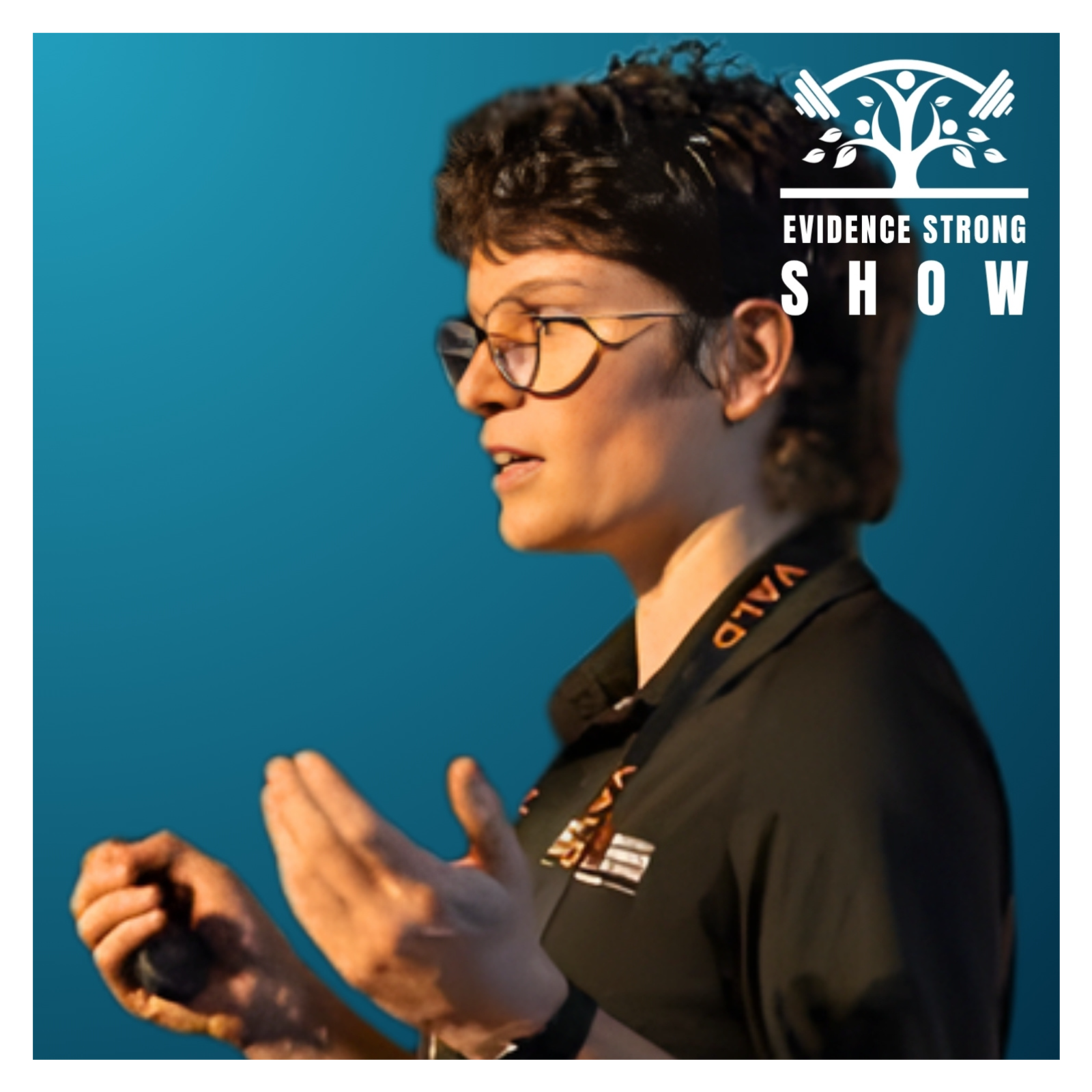
Ep 135Can Jump Tests Replace Squats? — with Mary Claire Geneau
🏋️♀️ Extended version of this interview: https://www.patreon.com/posts/154060814 🏋️♀️Strength testing is gaining popularity in many sports nowadays. With wider availability in measurement technologies, strength testing is also becoming fast and easy. But the thing is, sometimes it is too much data to handle. You could be testing hundreds of tasks, but you probably shouldn't. Dr. Mary Claire Geneau compared back squat and jump tests (loaded and unloaded) to see if one can be eliminated but still deliver the information coaches need.Mary Claire (MC) is a Postdoctoral Research Fellow with the University of Victoria and Canadian Sport Institute-Pacific, and is a sport scientist with the Professional Women's Hockey League in Vancouver, BC. MC has over a decade of S&C and sport science experience, working with several Canadian national teams, including soccer, volleyball, rowing, freestyle skiing, field hockey, and triathlon. MC’s PhD research focused on the analytical and practical aspects of lower-body strength diagnosis using force platforms, and her current research focuses on leveraging wearable and microsensor technologies to quantify athlete load and performance.Enjoy!Original research paper(s):Geneau MC, Carey DL, Gastin PB, Robertson SJ, James LP. Relationships Between Loaded Countermovement Jumps and 1-RM Back Squat: A Discrete Metrics and Waveform Analysis. Biomechanics. 2026 Jan 1;6(1):3.https://www.mdpi.com/2673-7078/6/1/3❤️ Join Evidence Strong Patreon:https://www.patreon.com/evidencestrong▶️ Watch the episodes on YouTube:https://www.youtube.com/playlist?list=PL9L-_m0WGD_7xV0sf87Zy7oMVDdtqR3bG🖼️ Weightlifting research infographics:https://evidencestrong.com✉️ Follow Mary Claire Geneau:🔹 https://www.linkedin.com/in/mary-claire-geneau-60a74b93/🔹 https://www.instagram.com/mcgeneau/🔹 https://www.researchgate.net/profile/Mary-Claire-Geneau💪 Follow Evidence Strong:🔹 https://www.instagram.com/evidence_strong🔹 https://x.com/EvidenceStrongAll the content is for informational purposes only and is not intended as medical, nutritional, coaching, or financial advice, nor does it substitute for advice from your health care professional/provider. Any actions you will take, changes you will make to your nutrition, training or health care, are on your own responsibility and not mine.
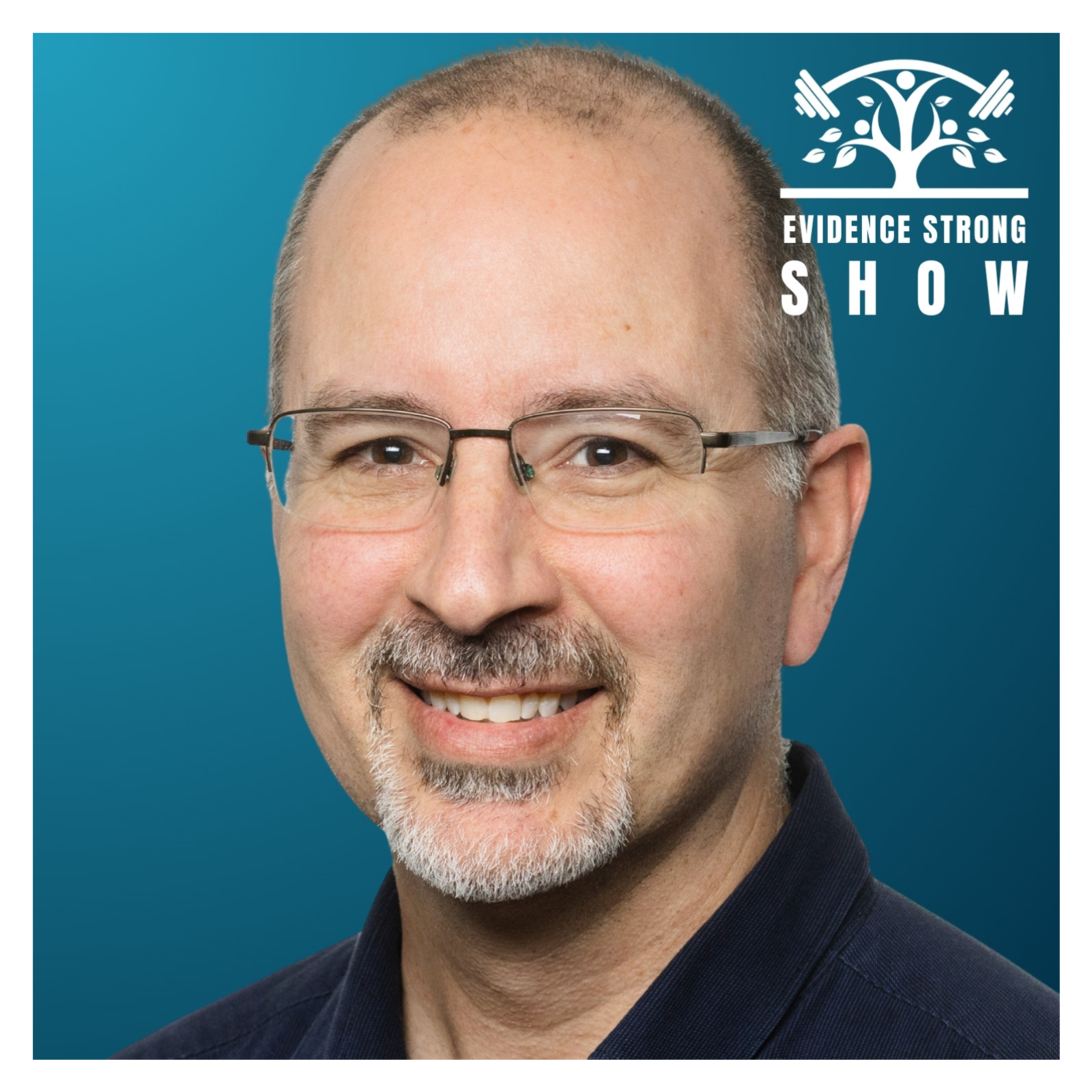
Ep 134How to Stay Focused Under Pressure – with Chris Mesagno
🏋️♀️ Extended version of this interview: https://www.patreon.com/posts/how-to-deal-with-153127993 🏋️♀️Choking under pressure is one of the most frustrating experiences in sport, but it is not random. In this conversation, Chris Mesagno breaks down the psychology behind choking, the role of anxiety and perfectionism, and how to build strategies to reduce it.Christopher Mesagno is an Associate Professor in Sport and Exercise Psychology at Victoria University in Melbourne, Australia. With over 25 years of research expertise in anxiety, attention, and concentration skills, Christopher has successfully developed theory-matched interventions to improve performance for highly anxious and "choking-susceptible" athletes. Christopher maintains a robust academic research profile with 75+ research articles and book chapters, and has given various conference and keynote presentations at national and international conferences.Enjoy!Original research paper(s):- Gröpel, P., & Mesagno, C. (2019). Choking interventions in sports: A systematic review. International Review of Sport and Exercise Psychology, 12(1), 176–201.https://www.tandfonline.com/doi/full/10.1080/1750984X.2017.1408134❤️ Join Evidence Strong Patreon:https://www.patreon.com/evidencestrong▶️ Watch the episodes on YouTube:https://www.youtube.com/playlist?list=PL9L-_m0WGD_7xV0sf87Zy7oMVDdtqR3bG🖼️ Weightlifting research infographics:https://evidencestrong.com✉️ Follow Chris Mesagno:🔹 https://x.com/CMesagno🔹 https://www.researchgate.net/profile/Christopher-Mesagno?ev=hdr_xprf🔹 https://researchers.vu.edu.au/24494-christopher-mesagno💪 Follow Evidence Strong:🔹 https://www.instagram.com/evidence_strong🔹 https://x.com/EvidenceStrongAll the content is for informational purposes only and is not intended as medical, nutritional, coaching, or financial advice, nor does it substitute for advice from your health care professional/provider. Any actions you will take, changes you will make to your nutrition, training or health care, are on your own responsibility and not mine.
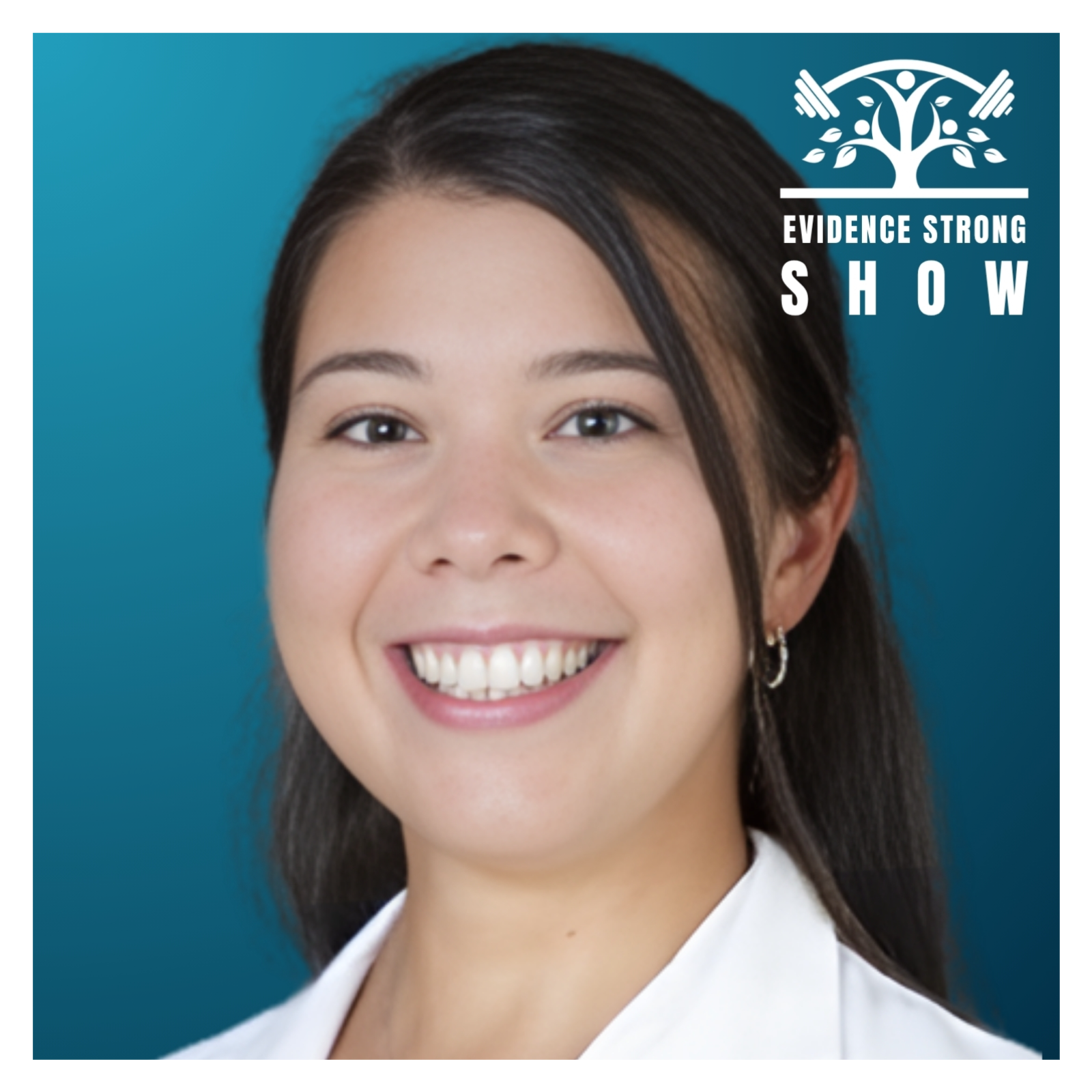
Ep 133Can Heavy Lifting Damage Your Eyes? – Feliciana Menna
🏋️♀️ Extended version of this interview: https://www.patreon.com/posts/eye-health-and-152561923 🏋️♀️There are very few health risks related to Olympic weightlifting when the training is reasonable. Are eye problems one of the issues that may develop? Feliciana Menna comes on the Evidence Strong Show to discuss her newest study on eye health in Olympic weightlifters. Feliciana Menna is an ophthalmologist and clinician-scientist with expertise in retinal diseases, glaucoma, and multimodal ocular imaging. She has trained and worked across Italy and Switzerland and is currently involved in both clinical practice and research. She has recently focused on the investigation of intraocular pressure variations, particularly in relation to physical activity and different sports disciplines, with relevant implications for glaucoma risk assessment.Enjoy!Original research paper(s):Menna F, De Luca L, Lupo S, Meduri A, Vingolo EM. Variations in Intraocular Pressure Among Athletes Across Different Sports Disciplines. Journal of Clinical Medicine. 2025 May 6;14(9):3211.https://www.mdpi.com/2077-0383/14/9/3211❤️ Join Evidence Strong Patreon:https://www.patreon.com/evidencestrong▶️ Watch the episodes on YouTube:https://www.youtube.com/playlist?list=PL9L-_m0WGD_7xV0sf87Zy7oMVDdtqR3bG🖼️ Weightlifting research infographics:https://evidencestrong.com✉️ Follow Feliciana Menna:🔹 https://www.linkedin.com/in/feliciana-menna-226636197/🔹 https://www.researchgate.net/profile/Feliciana-Menna/research💪 Follow Evidence Strong:🔹 https://www.instagram.com/evidence_strong🔹 https://x.com/EvidenceStrongAll the content is for informational purposes only and is not intended as medical, nutritional, coaching, or financial advice, nor does it substitute for advice from your health care professional/provider. Any actions you will take, changes you will make to your nutrition, training or health care, are on your own responsibility and not mine.
Ep 132Best Attempt Jumps for Squat, Bench & Deadlift (New Data) – with Ian Darragh
🏋️♀️ Extended version of this interview: https://www.patreon.com/posts/perfect-jumps-152354506 🏋️♀️What is an optimal jump between the first and the second lift in the powerlifting competition? What is the best jump between the second and the third?Dr. Ian Darragh has analyzed 90 thousands of competition records to establish what the successful jumps should be between bench, squat, and deadlift attempts in competition.Ian Darragh holds a PhD in Exercise Physiology and has recently completed a postdoctoral fellowship in data science and biostatistics. He is a former junior international weightlifter and has over 15 years of lifting and 10 years of coaching experience. He has an interest in physiology, performance, and health research. He currently works as a research fellow in orthopedics and sports medicine at the Geisinger Health System in northeast Pennsylvania.Enjoy!❤️ Join Evidence Strong Patreon:https://www.patreon.com/evidencestrong▶️ Watch the episodes on YouTube:https://www.youtube.com/playlist?list=PL9L-_m0WGD_7xV0sf87Zy7oMVDdtqR3bG🖼️ Weightlifting research infographics:https://evidencestrong.com✉️ Follow Ian Darragh:🔹 https://www.researchgate.net/profile/Ian-Darragh🔹 https://www.linkedin.com/in/ian-darragh-001287125/🔹 https://www.instagram.com/beanswole/💪 Follow Evidence Strong:🔹 https://www.instagram.com/evidence_strong🔹 https://x.com/EvidenceStrongAll the content is for informational purposes only and is not intended as medical, nutritional, coaching, or financial advice, nor does it substitute for advice from your health care professional/provider. Any actions you will take, changes you will make to your nutrition, training or health care, are on your own responsibility and not mine.

Ep 131Why Lifters Break Under Pressure (And How to Fix It) – With Hilary Galvin
🏋️♀️ Extended version of this interview: https://www.patreon.com/posts/underperforming-152008960 🏋️♀️Have you ever heard of “choking”, when a lifter is unable to perform on the platform what should be an easy lift? Hilary Galvin devoted her undergraduate thesis to this phenomenon, researching choking in Irish weightlifters.Hilary Galvin is a personal trainer, weightlifting coach, and psychology graduate with nine years of experience in the sport as an athlete, fan, and technical official. A former nurse with ten years of clinical experience, Hilary recently transitioned into coaching and brings a strong background in health and psychology to her practice.She is passionate about helping lifters and everyday people improve their confidence, resilience, and performance through evidence-informed coaching.Enjoy!❤️ Join Evidence Strong Patreon:https://www.patreon.com/evidencestrong▶️ Watch the episodes on YouTube:https://www.youtube.com/playlist?list=PL9L-_m0WGD_7xV0sf87Zy7oMVDdtqR3bG🖼️ Weightlifting research infographics:https://evidencestrong.com✉️ Follow Hilary Galvin:🔹 https://www.instagram.com/hilary.weightlifting💪 Follow Evidence Strong:🔹 https://www.instagram.com/evidence_strong🔹 https://x.com/EvidenceStrongAll the content is for informational purposes only and is not intended as medical, nutritional, coaching, or financial advice, nor does it substitute for advice from your health care professional/provider. Any actions you will take, changes you will make to your nutrition, training or health care, are on your own responsibility and not mine.
Ep 130How Overtraining Destroys Strength (And How to Prevent It) — with Andy Fry
🏋️♀️ Extended version of this interview: https://www.patreon.com/posts/overtraining-for-151419281 🏋️♀️Overtraining can be a serious problem for any athlete. In this conversation, Dr Andy Fry explains how coaches can monitor, detect, and prevent overtraining to protect athlete health and performance.After a long career in academia, including directing the Jayhawk Athletic Performance Laboratory at the University of Kansas, Andy launched Fry Sports Performance, LLC. Drawing on his experience as a coach, teacher, and researcher, Fry Sports Performance focuses on helping athletes maximise their potential. Andy also served as Vice President of the National Strength & Conditioning Association and received the NSCA’s Boyd Epley Award for Lifetime Achievement.Enjoy!❤️ Join Evidence Strong Patreon:https://www.patreon.com/evidencestrong▶️ Watch the episodes on YouTube:https://www.youtube.com/playlist?list=PL9L-_m0WGD_7xV0sf87Zy7oMVDdtqR3bG🖼️ Weightlifting research infographics:https://evidencestrong.com✉️ Follow Andy Fry:🔹 https://www.linkedin.com/in/andrew-fry-a3a21137a/🔹 Fry Sports Performance LLC | Athletic Performance💪 Follow Evidence Strong:🔹 https://www.instagram.com/evidence_strong🔹 https://x.com/EvidenceStrongAll the content is for informational purposes only and is not intended as medical, nutritional, coaching, or financial advice, nor does it substitute for advice from your health care professional/provider. Any actions you will take, changes you will make to your nutrition, training or health care, are on your own responsibility and not mine.

Ep 129Youth Weightlifting Norms: How to Tell If an Athlete Is Ahead or Behind — Zack Gillen
🏋️♀️ Extended version of this interview: https://www.patreon.com/posts/normative-values-150647943 🏋️♀️If you’ve ever wondered how well your youth lifter is progressing, this interview is for you. Zack analysed data from the IWF Youth World Championships (2019–2023), examining percentile rankings, sex differences, and weight class differences. You can compare the snatch, clean & jerk, or total directly (in kg) or using scaled values.Zack Gillen is an Assistant Professor in the Department of Kinesiology at Mississippi State University, where he directs the Resistance Exercise Performance Lab. His lab researches non-invasive assessments of musculoskeletal adaptations to training, with a primary emphasis on resistance training. He completed his bachelor’s and master’s degrees in Exercise Physiology at Midwestern State University, and his PhD in Exercise Physiology & Nutrition at the University of Nebraska–Lincoln. He has also competed in Olympic weightlifting and has several years of experience as a strength and conditioning coach at both the collegiate and youth levels.Enjoy!Original research paper(s):Gillen Z. Percentile Rankings and Normalization of Performance for Youth International Weightlifting Federation World Championships Competitors. International Journal of Strength and Conditioning. 2025 Aug 15;5(1).https://journal.iusca.org/index.php/Journal/article/view/404❤️ Join Evidence Strong Patreon:https://www.patreon.com/evidencestrong▶️ Watch the episodes on YouTube:https://www.youtube.com/playlist?list=PL9L-_m0WGD_7xV0sf87Zy7oMVDdtqR3bG🖼️ Weightlifting research infographics:https://evidencestrong.com✉️ Follow Zack Gillen:🔹 www.linkedin.com/in/zmgillen🔹 https://www.instagram.com/zmgillen/💪 Follow Evidence Strong:🔹 https://www.instagram.com/evidence_strong🔹 https://x.com/EvidenceStrongAll the content is for informational purposes only and is not intended as medical, nutritional, coaching, or financial advice, nor does it substitute for advice from your health care professional/provider. Any actions you will take, changes you will make to your nutrition, training or health care, are on your own responsibility and not mine.
Ep 128Why Steroid Science Is More Complex Than You Think — with Luke Pelton
🏋️♀️ Extended version of this interview: https://www.patreon.com/posts/anabolic-and-150216092 🏋️♀️How do anabolic androgenic steroids actually work? What do we know from human studies versus animal models? And do steroids alter gene expression in skeletal muscle?In this episode, Luke Pelton breaks down the science behind anabolic androgenic steroids—separating evidence from speculation—without hype or exaggeration.Dr. Pelton is an Assistant Professor of Exercise Science and Human Performance Lab Coordinator at Springfield College, where his teaching and research focus on neuromuscular physiology, reproductive endocrinology, and resistance training. His work bridges clinical research and applied performance, and he also serves as Head of Coaching Education at Strong for Life Co., an online strength-training platform.Enjoy!❤️ Join Evidence Strong Patreon:https://www.patreon.com/evidencestrong▶️ Watch the episodes on YouTube:https://www.youtube.com/playlist?list=PL9L-_m0WGD_7xV0sf87Zy7oMVDdtqR3bG🖼️ Weightlifting research infographics:https://evidencestrong.com✉️ Follow Luke Pelton:🔹 https://www.instagram.com/dr_lukey_lifts/🔹 https://www.researchgate.net/profile/Luke-Pelton🔹 https://springfield.edu/directory/luke-pelton💪 Follow Evidence Strong:🔹 https://www.instagram.com/evidence_strong🔹 https://x.com/EvidenceStrongAll the content is for informational purposes only and is not intended as medical, nutritional, coaching, or financial advice, nor does it substitute for advice from your health care professional/provider. Any actions you will take, changes you will make to your nutrition, training or health care, are on your own responsibility and not mine.
Ep 127Youth Weightlifting — What Really Drives Performance? With Bartosz Malak
🏋️♀️ Extended version of this interview: https://www.patreon.com/posts/performance-in-148171612 🏋️♀️What does the performance of youth Olympic weightlifters depend on? And does this relationship differ between girls and boys? In this episode, Bartosz Malak and his team discuss findings from their study of young lifters across six weightlifting clubs in Poland.Bartosz Malak is a weightlifting coach, neurobiologist, and entrepreneur. He currently works with LKS Budowlani-Kucera and the Polish Junior Weightlifting National Team, and is the head of the weightlifting coaching program at the Poznań University of Physical Education. He is also the founder of the Institute of Sport and Science.Enjoy!Original research paper(s):Bartkowiak S, Kozieł S, Krzykała M, Karpowicz K, Konarski JM, Malak B. Are Sex Differences in Youth Weightlifting Performance Explained by Fat-Free Mass? A Controlled Analysis. The Journal of Strength & Conditioning Research. 2022 May 9:10-519.https://journals.lww.com/nsca-jscr/fulltext/2026/01000/are_sex_differences_in_youth_weightlifting.8.aspx❤️ Join Evidence Strong Patreon:https://www.patreon.com/evidencestrong▶️ Watch the episodes on YouTube:https://www.youtube.com/playlist?list=PL9L-_m0WGD_7xV0sf87Zy7oMVDdtqR3bG🖼️ Weightlifting research infographics:https://evidencestrong.com✉️ Follow Bartosz Malak:🔹 https://www.researchgate.net/profile/Bartosz-Malak🔹 https://budowlani-kucera.pl💪 Follow Evidence Strong:🔹 https://www.instagram.com/evidence_strong🔹 https://x.com/EvidenceStrongAll the content is for informational purposes only and is not intended as medical, nutritional, coaching, or financial advice, nor does it substitute for advice from your health care professional/provider. Any actions you will take, changes you will make to your nutrition, training or health care, are on your own responsibility and not mine.

Ep 126Strength Training in Pregnancy: What’s Actually Safe? With Katja Ungersböck
🏋️♀️ Extended version of this interview: https://www.patreon.com/posts/strength-in-with-148168365 🏋️♀️Research increasingly shows that exercise — including heavy lifting — can be beneficial during pregnancy. But how do health professionals view strength training for pregnancy in real-world practice? Katja interviewed five healthcare professionals to explore their perspectives and uncovered several important insights.Katja Ungersböck completed her Bachelor’s degree in Physiotherapy at IMC Fachhochschule Krems, Austria. She currently works at Universitätsklinikum Hochegg, primarily with neurological patients, and has recently completed additional training in sports physiotherapy. Outside of work, she is passionate about physical activity, including gym training, climbing, hiking, and skiing.Enjoy!Original research paper(s):Ungersböck, K., Lichtenwörther, J., & Miksch, T. (2024). Strength Training in the Third Trimester of Pregnancy: A Qualitative Survey of Health Care Experts. Poster session presented at ICS Congress 2024, Madrid, Spain.https://research.imc.ac.at/en/publications/strength-training-in-the-third-trimester-of-pregnancy-a-qualitati/❤️ Join Evidence Strong Patreon:https://www.patreon.com/evidencestrong▶️ Watch the episodes on YouTube:https://www.youtube.com/playlist?list=PL9L-_m0WGD_7xV0sf87Zy7oMVDdtqR3bG🖼️ Weightlifting research infographics:https://evidencestrong.com✉️ Follow Katja Ungersboeck:🔹 https://www.instagram.com/katjaungersboeck/💪 Follow Evidence Strong:🔹 https://www.instagram.com/evidence_strong🔹 https://x.com/EvidenceStrongAll the content is for informational purposes only and is not intended as medical, nutritional, coaching, or financial advice, nor does it substitute for advice from your health care professional/provider. Any actions you will take, changes you will make to your nutrition, training or health care, are on your own responsibility and not mine.
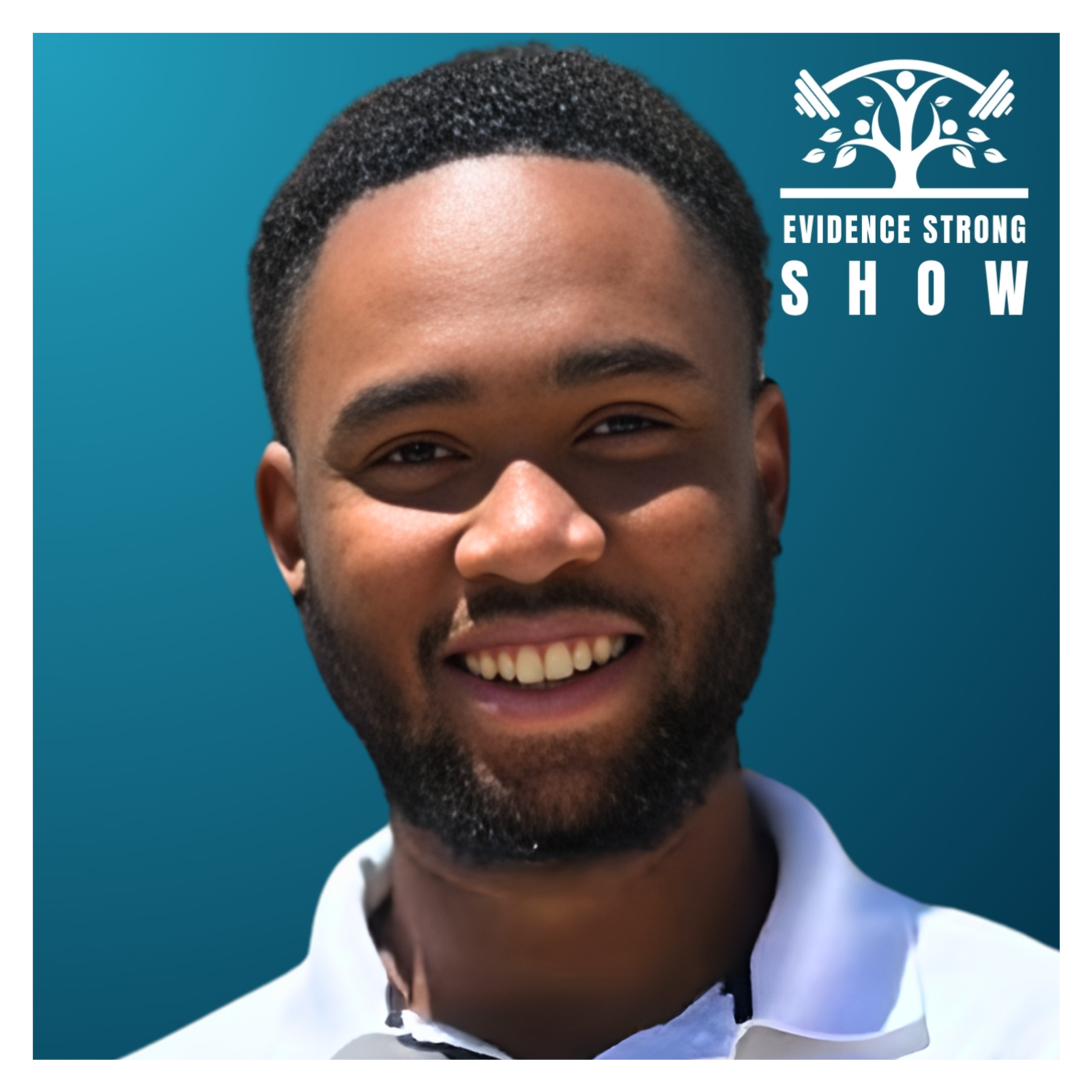
Ep 125Belt or no belt when squatting? With Yoshaun Hunter
🏋️♀️ Extended version of this interview: https://www.patreon.com/posts/belt-or-no-belt-148165933 🏋️♀️In this interview, Yoshaun Hunter breaks down findings from his Master’s research comparing belted and unbelted back squats, using barbell velocity to understand how belts influence load, speed, and power. We discuss what the data means for coaches, when belt use makes sense in training, and when it may be unnecessary.Yoshaun Hunter completed his Master’s degree in Kinesiology at Troy University. He is a Certified Strength and Conditioning Specialist (NSCA) and was born and raised in Kingston, Jamaica.Enjoy!Original research thesis:Hunter YS. A Comparison Between Barbell Back Squat Velocity Belted vs Unbelted (Master’s thesis, Troy University).https://www.proquest.com/openview/87071759fc7a052fd49a791d1fb33b97/1?pq-origsite=gscholar&cbl=18750&diss=y❤️ Join Evidence Strong Patreon:https://www.patreon.com/evidencestrong▶️ Watch the episodes on YouTube:https://www.youtube.com/playlist?list=PL9L-_m0WGD_7xV0sf87Zy7oMVDdtqR3bG🖼️ Weightlifting research infographics:https://evidencestrong.com✉️ Follow Yoshaun Hunter:🔹 https://www.tiktok.com/@yolifting🔹 https://www.instagram.com/yo.lifting/💪 Follow Evidence Strong:🔹 https://www.instagram.com/evidence_strong🔹 https://x.com/EvidenceStrongAll the content is for informational purposes only and is not intended as medical, nutritional, coaching, or financial advice, nor does it substitute for advice from your health care professional/provider. Any actions you will take, changes you will make to your nutrition, training or health care, are on your own responsibility and not mine.
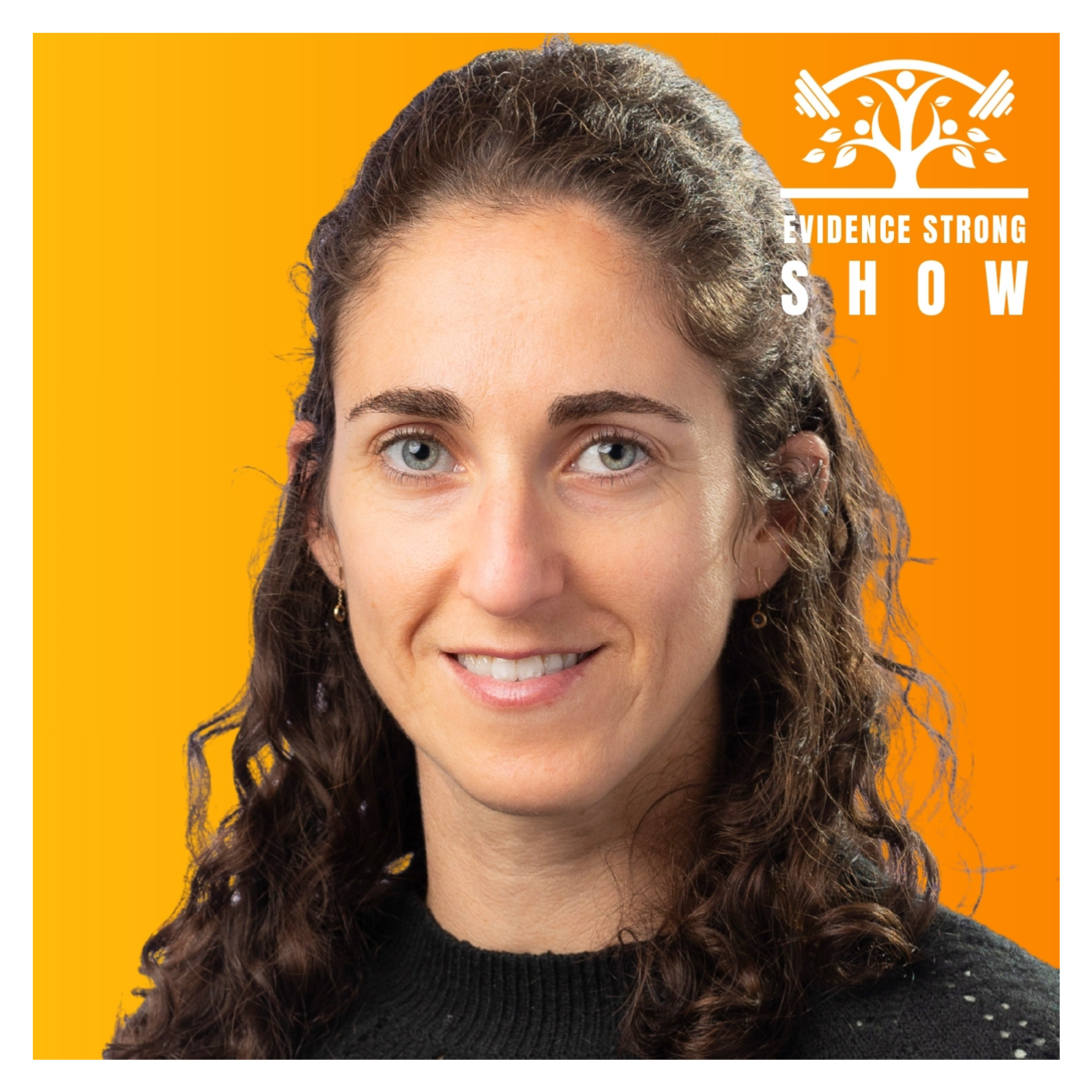
Ep 124The Genetics Behind Sex Differences in Sport – with Shanie Landen
🏋️♀️ Extended version of this interview: https://www.patreon.com/posts/dsd-and-athletes-147365834 🏋️♀️DSD (differences in sex development) athletes and transgender athletes are actually very different. Dr Shanie Landen explains why the two groups should not be discussed as one, how complicated the individual cases can be, and how well policies in sport reflect (or do not reflect) the biology.Shanie has a PhD from Victoria University in Melbourne, Australia, where she investigated sex-specific epigenetic adaptations to endurance exercise training. She has authored 22 publications in the field of gene regulation. Shanie is interested in gene regulation mechanisms and the mechanisms by which exercise improves health and disease. She is researching how sex-biasing forces influence gene regulation and function.Enjoy!❤️ Join Evidence Strong Patreon:https://www.patreon.com/evidencestrong▶️ Watch the episodes on YouTube:https://www.youtube.com/playlist?list=PL9L-_m0WGD_7xV0sf87Zy7oMVDdtqR3bG🖼️ Weightlifting research infographics:https://evidencestrong.com✉️ Follow Shanie Lander:🔹 https://x.com/LandenShanie🔹 https://www.linkedin.com/in/shanie-landen-33421280💪 Follow Evidence Strong:🔹 https://www.instagram.com/evidence_strong🔹 https://x.com/EvidenceStrongAll the content is for informational purposes only and is not intended as medical, nutritional, coaching, or financial advice, nor does it substitute for advice from your health care professional/provider. Any actions you will take, changes you will make to your nutrition, training or health care, are on your own responsibility and not mine.
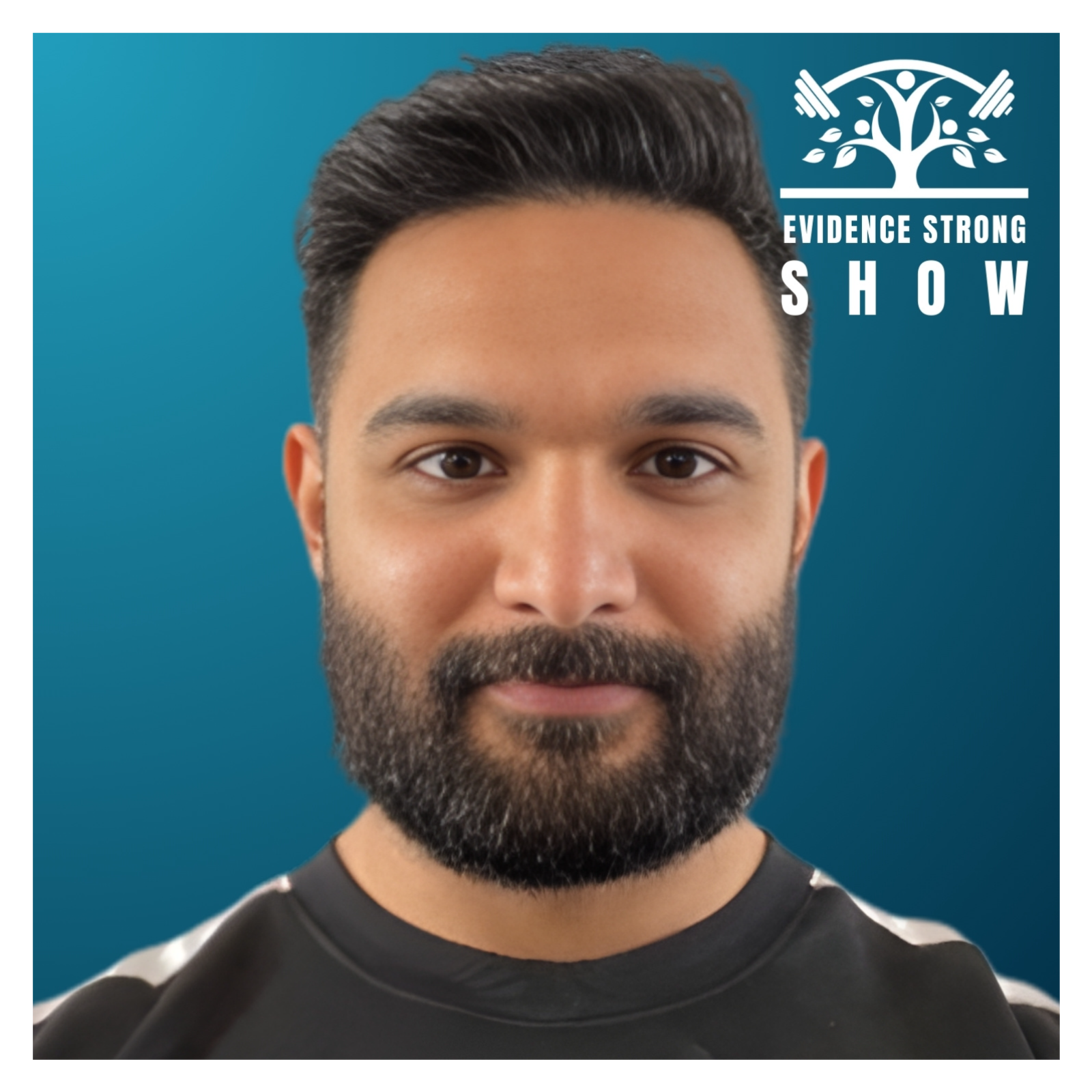
Ep 123Training for the Olympics When the World Shut Down – with Shyam Chavda
🏋️♀️ Extended version of this interview: https://www.patreon.com/posts/coaching-through-147209495 🏋️♀️Coaching a lifter towards the Olympics is hard. How much harder does it become when the lifter is part of a refugee team and must train through COVID?Dr Shyam Chavda analyses the three years leading up to the Tokyo Olympics, including his plans for training and athlete monitoring, the changes made along the way, and the factors that influenced key decisions.Shyam is the Programme Lead for the Strength & Conditioning Distance Education MSc at Middlesex University and the Lead Performance Scientist at British Weightlifting.Original research paper(s):Chavda S. The (Rocky) Road to the Olympic Games: A Longitudinal Case Study on the Preparation, Monitoring, and Training of an Elite Weightlifter. Applied Sciences. 2025 Aug 26;15(17):9373.https://www.mdpi.com/2076-3417/15/17/9373❤️ Join Evidence Strong Patreon:https://www.patreon.com/evidencestrong▶️ Watch the episodes on YouTube:https://www.youtube.com/playlist?list=PL9L-_m0WGD_7xV0sf87Zy7oMVDdtqR3bG🖼️ Weightlifting research infographics:https://evidencestrong.com✉️ Follow Shyam Chavda:🔹 https://twitter.com/shy_2tweet🔹 https://www.instagram.com/coach_chavda🔹 https://www.linkedin.com/in/shyam-chavda-6b4480a5💪 Follow Evidence Strong:🔹 https://www.instagram.com/evidence_strong🔹 https://x.com/EvidenceStrongAll the content is for informational purposes only and is not intended as medical, nutritional, coaching, or financial advice, nor does it substitute for advice from your health care professional/provider. Any actions you will take, changes you will make to your nutrition, training or health care, are on your own responsibility and not mine.
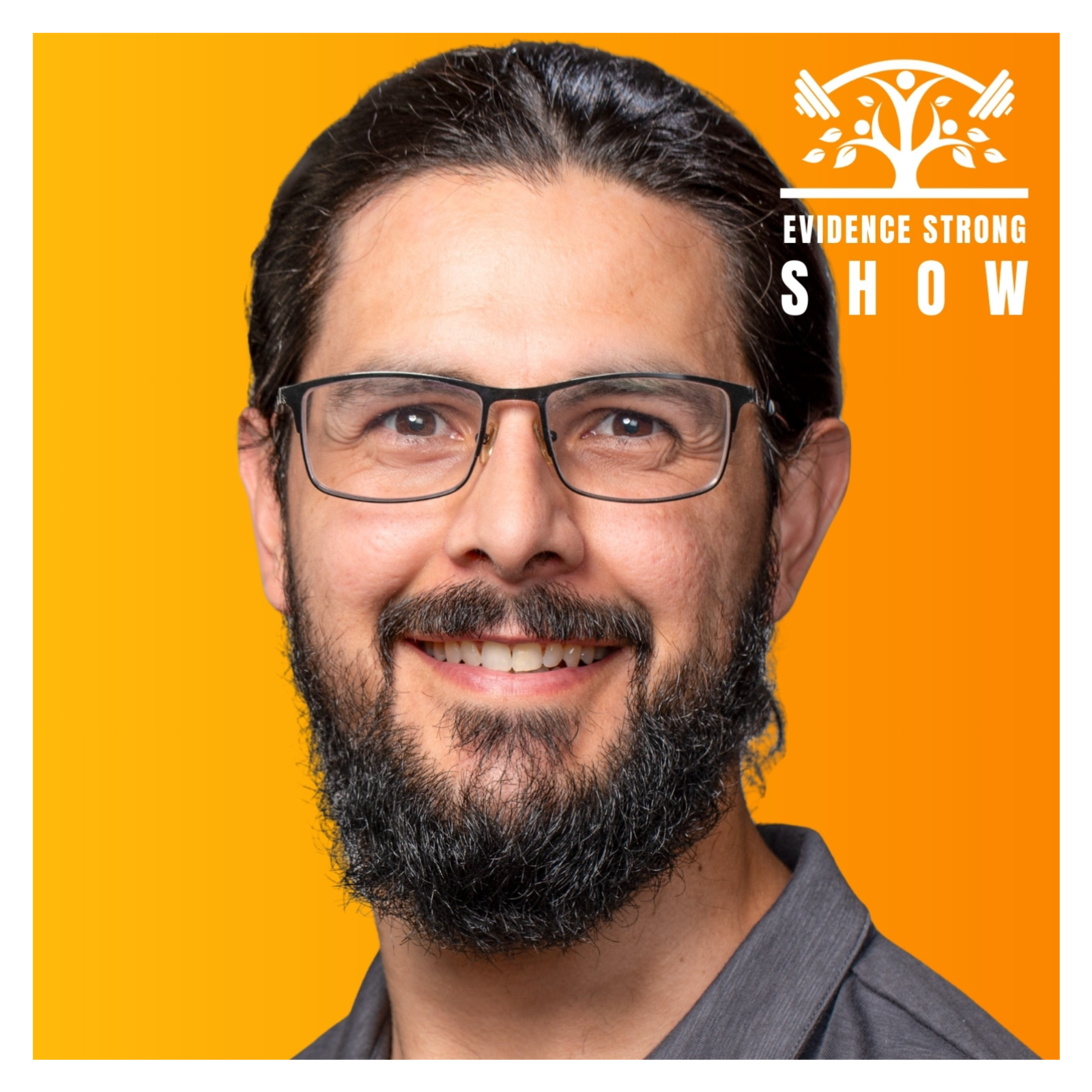
Ep 122Why You Get Strong Again Faster After the Break (Muscle Memory Explained). With Nate Serrano
🏋️♀️ Extended version of this interview: https://www.patreon.com/posts/is-muscle-memory-145811567 🏋️♀️Is muscle memory scientifically proven? And if muscle memory is real, what is the underlying mechanism? Dr. Nate Serrano explores these questions, explaining the current state of research and where the science is heading next.Dr. Nate Serrano holds a PhD in Biology from Arizona State University and is currently a postdoctoral researcher at the University of Arkansas in Fayetteville. His research focuses on the regulation of skeletal muscle, including muscle fiber types in relation to human performance, and the molecular regulation of muscle fibers and their role in metabolism.Dr. Serrano was a Division I track athlete at Boise State University, where he completed his undergraduate degree in exercise science and got interested in research. He went on to complete a master’s degree in exercise science under the mentorship of Dr. Andy Galpin at California State University of Fullerton. Nate has over a decade of experience as a performance coach and competed in weightlifting for nearly ten years. He has since shifted his main hobby to rock climbing, but still lifts regularly.Enjoy!❤️ Join Evidence Strong Patreon:https://www.patreon.com/evidencestrong▶️ Watch the episodes on YouTube:https://www.youtube.com/playlist?list=PL9L-_m0WGD_7xV0sf87Zy7oMVDdtqR3bG🖼️ Weightlifting research infographics:https://evidencestrong.com✉️ Follow Nate Serrano:🔹 https://www.instagram.com/_nateserrano_🔹 https://www.linkedin.com/in/nathan-serrano-0ab933a9🔹 https://www.researchgate.net/profile/Nathan-Serrano🔹 https://bsky.app/profile/dr-nateserrano.bsky.social💪 Follow Evidence Strong:🔹 https://www.instagram.com/evidence_strong🔹 https://x.com/EvidenceStrongAll the content is for informational purposes only and is not intended as medical, nutritional, coaching, or financial advice, nor does it substitute for advice from your health care professional/provider. Any actions you will take, changes you will make to your nutrition, training or health care, are on your own responsibility and not mine.
Ep 121What’s Really Happening in Olympic Weightlifting? Governance, Athletes & Media — with Brian Oliver
🏋️♀️ Extended version of this interview: https://www.patreon.com/posts/state-of-olympic-145657821 🏋️♀️What if the best part of the sport is the stories of the athletes rather than the numbers on the board? In this Evidence Strong Show episode, Brian Oliver explains why highlighting athletes’ backgrounds and voices can change how we broadcast and watch weightlifting, what was really happening in Olympic weightlifting governance within the last decade, and how media in the sport are changing.Brian Oliver is a seasoned journalist who spent 35 years in English newspapers, including serving as sports editor of The Observer. He worked at the London 2012 Olympics as weightlifting media manager and has freelanced since, focusing on weightlifting. He worked for the Insidethegames website during the sport's troubled times and now writes mostly for the IWF website, reporting on major competitions.Enjoy!❤️ Join Evidence Strong Patreon:https://www.patreon.com/evidencestrong▶️ Watch the episodes on YouTube:https://www.youtube.com/playlist?list=PL9L-_m0WGD_7xV0sf87Zy7oMVDdtqR3bG🖼️ Weightlifting research infographics:https://evidencestrong.com✉️ Follow Brian Oliver:🔹 https://x.com/brianroliver🔹 https://www.linkedin.com/in/brian-oliver-398b81b💪 Follow Evidence Strong:🔹 https://www.instagram.com/evidence_strong🔹 https://x.com/EvidenceStrongAll the content is for informational purposes only and is not intended as medical, nutritional, coaching, or financial advice, nor does it substitute for advice from your health care professional/provider. Any actions you will take, changes you will make to your nutrition, training or health care, are on your own responsibility and not mine.
Ep 120Why Heavy Lifting Is a Must for Healthy Bones as We Age – with Amy Harding
🏋️♀️ Extended version of this interview: https://www.patreon.com/posts/strength-and-amy-145491810 🏋️♀️Can eight months of heavy, high-load training reverse bone loss in older adults? Dr Amy Harding explains an exercise program using 80–85% 1RM with high-impact loading, reporting 4.1% bone mass gains in older men with low bone mass. She discusses progression, safety, coaching support, and practical takeaways for coaches and clinicians.Dr Amy Harding is a Research Fellow in the School of Allied Health, Sport and Social Work and a member of the Griffith University Bone Densitometry Research Laboratory. Her research focuses on musculoskeletal health and fracture prevention across the lifespan. She holds a Bachelor of Exercise Science (Hons) and a PhD, and currently coordinates the Australian-based Strength Training for Optimum Prevention of Fracture program, building on the LIFTMOR and LIFTMOR-M trials.Enjoy!Original research paper(s):Harding AT et al. High-intensity resistance & impact training for bone health in older men (LIFTMOR-M). Osteoporosis Int. 2020;32(3):451–465. https://doi.org/10.1007/s00198-020-05583-xHarding AT et al. High-intensity resistance vs machine training for bone geometry & strength (LIFTMOR-M). Bone. 2020;136:115362. https://doi.org/10.1016/j.bone.2020.115362Harding AT et al. Bone-targeted exercise strategies to reduce fracture risk (LIFTMOR-M). J Bone Miner Res. 2020;35(8):1404–1414. https://doi.org/10.1002/jbmr.4008❤️ Join Evidence Strong Patreon:https://www.patreon.com/evidencestrong▶️ Watch the episodes on YouTube:https://www.youtube.com/playlist?list=PL9L-_m0WGD_7xV0sf87Zy7oMVDdtqR3bG🖼️ Weightlifting research infographics:https://evidencestrong.com✉️ Follow Dr Amy Harding:🔹 https://x.com/Amy_T_Harding🔹 https://www.linkedin.com/in/amyhardinggriffith🔹 https://www.researchgate.net/profile/Amy-Harding-6💪 Follow Evidence Strong:🔹 https://www.instagram.com/evidence_strong🔹 https://x.com/EvidenceStrongAll the content is for informational purposes only and is not intended as medical, nutritional, coaching, or financial advice, nor does it substitute for advice from your health care professional/provider. Any actions you will take, changes you will make to your nutrition, training or health care, are on your own responsibility and not mine.
Ep 119Why Male and Female Strength Differs (Genetics, Hormones, Muscle Fibres, and More) — Shanie Landen
🏋️♀️ Extended version of this interview: https://www.patreon.com/posts/how-and-why-and-145262357 🏋️♀️Differences in sports performance are present between females and males. Why do these develop, how, and when exactly? Dr Shanie Landen explains what is known so far and what is currently being researched. The topics we cover include genetics, epigenetics, hormones, and muscle fibres and their influence on athletic performance.Shanie has a PhD from Victoria University in Melbourne, Australia, where she investigated sex-specific epigenetic adaptations to endurance exercise training. She has authored 22 publications in the field of gene regulation. Shanie is interested in gene regulation mechanisms and the mechanisms by which exercise improves health and disease. She is researching how sex-biasing forces influence gene regulation and function.Enjoy!Some of the research papers mentioned in this interview:Landen S, Jacques M, Hiam D, Alvarez-Romero J, Schittenhelm RB, Shah AD, Huang C, Steele JR, Harvey NR, Haupt LM, Griffiths LR. Sex differences in muscle protein expression and DNA methylation in response to exercise training. Biology of Sex Differences. 2023 Sep 5;14(1):56.https://link.springer.com/article/10.1186/s13293-023-00539-2Amar D, Lindholm ME, Norrbom J, Wheeler MT, Rivas MA, Ashley EA. Time trajectories in the transcriptomic response to exercise-a meta-analysis. Nature Communications. 2021 Jun 9;12(1):3471.https://www.nature.com/articles/s41467-021-23579-xTestosterone in females in the conversation by Severine Lamon:https://theconversation.com/do-naturally-high-testosterone-levels-equal-stronger-female-athletic-performance-not-necessarily-160009❤️ Join Evidence Strong Patreon:https://www.patreon.com/evidencestrong▶️ Watch the episodes on YouTube:https://www.youtube.com/playlist?list=PL9L-_m0WGD_7xV0sf87Zy7oMVDdtqR3bG🖼️ Weightlifting research infographics:https://evidencestrong.com✉️ Follow Shanie Landen:🔹 https://x.com/LandenShanie🔹 https://www.linkedin.com/in/shanie-landen-33421280/💪 Follow Evidence Strong:🔹 https://www.instagram.com/evidence_strong🔹 https://x.com/EvidenceStrongAll the content is for informational purposes only and is not intended as medical, nutritional, coaching, or financial advice, nor does it substitute for advice from your health care professional/provider. Any actions you will take, changes you will make to your nutrition, training or health care, are on your own responsibility and not mine.
Ep 118Behind-Neck Push Jerk for Explosive Power Training - with Mark Chiang
🏋️♀️ Extended version of this interview: https://www.patreon.com/posts/behind-neck-push-144125751 🏋️♀️How and why does Dr. Mark Chiang recommend using the behind-the-neck push jerk? Mark discusses two of his recent studies and shares practical lessons for coaches and athletes.Dr. Chieh-Ying Chiang, also known as Mark Chiang, is an accomplished sports scientist with extensive experience in strength and conditioning. He is currently an Associate Professor in the Department of Sports Training Science-Combats at National Taiwan Sports University and also serves as the Director of the Master Strength and Conditioning Program.Dr. Chiang’s research focuses on strength and power development in athletes, along with the use of sports science testing for performance enhancement and injury prevention. He has served as a consultant for the strength and conditioning division at the National Taiwan Sport Training Center and was the sports science manager for the 2024 Paris Olympic women’s boxing team. His other notable roles include serving as a sports science consultant for the 2021 Tokyo Olympic karate team and as a member of the sports science committee at the 2016 Rio Olympics. Dr. Chiang’s dedication to mentorship is also evident through his supervision of 30 master’s students and one doctoral student at National Taiwan Sport University.Enjoy!Original research paper(s):Chiang YC, Chiang CY, Suchomel TJ. Differences in Mechanical Output between One Repetition Maximum and Body Mass-Based Load Determination in The Behind-Neck Push Jerk. Journal of Sports Science and Medicine. 2025 Sep 1;24(3):626-33.https://www.jssm.org/jssm-24-626.xml%3EFulltextChiang YC, Lin HY, Chiang YC, Chang CC, Suchomel TJ, Shiang TY. An Investigation of Kinetic and Kinematic Characteristics in the Behind-the-Neck Push Jerk Across Loads.[under review]❤️ Join Evidence Strong Patreon:https://www.patreon.com/evidencestrong▶️ Watch the episodes on YouTube:https://www.youtube.com/playlist?list=PL9L-_m0WGD_7xV0sf87Zy7oMVDdtqR3bG🖼️ Weightlifting research infographics:https://evidencestrong.com✉️ Follow Mark Chiang:🔹 https://www.instagram.com/ntsu.sport.performance.team🔹 https://www.researchgate.net/profile/Chieh-Ying-Chiang💪 Follow Evidence Strong:🔹 https://www.instagram.com/evidence_strong🔹 https://x.com/EvidenceStrongAll the content is for informational purposes only and is not intended as medical, nutritional, coaching, or financial advice, nor does it substitute for advice from your health care professional/provider. Any actions you will take, changes you will make to your nutrition, training or health care, are on your own responsibility and not mine.
Ep 117How Music Really Affects Lifting – with Michael Richards
🏋️♀️ Extended version of this interview: https://www.patreon.com/posts/influence-of-on-143817240 🏋️♀️Is music helping or hindering your lifting? EdD Michael Richards discusses available research on music and lifting.Michael has been a strength and conditioning coach since 2017, working with youth, middle/high school, D3 college, D1 college, and professional football. He has also been a weightlifting coach since 2019, starting with T3 Barbell in Avon, Ohio, and moving to the Attitude Nation with Jon North, and a weightlifter (2025 Masters Pan American Champion (30-35 age bracket) and best lifter). He has just finished his Doctorate of Education in Kinesiology and Exercise Science.Enjoy!❤️ Join Evidence Strong Patreon:https://www.patreon.com/evidencestrong▶️ Watch the episodes on YouTube:https://www.youtube.com/playlist?list=PL9L-_m0WGD_7xV0sf87Zy7oMVDdtqR3bG🖼️ Weightlifting research infographics:https://evidencestrong.com✉️ Follow Michael Richards:🔹 https://www.instagram.com/coachmike311🔹 https://www.youtube.com/@MikesGarageGym🔹 https://youtube.com/playlist?list=PL4JBmnV47-ty6N0znmgeQdqe6xw-Y7IL1🔹 https://www.tiktok.com/@mikesgaragegym🔹 https://www.linkedin.com/in/michael-richards-edd-c-cscs-ep-c-a40603152/💪 Follow Evidence Strong:🔹 https://www.instagram.com/evidence_strong🔹 https://x.com/EvidenceStrongAll the content is for informational purposes only and is not intended as medical, nutritional, coaching, or financial advice, nor does it substitute for advice from your health care professional/provider. Any actions you will take, changes you will make to your nutrition, training or health care, are on your own responsibility and not mine.
Ep 116Lifter's Heart Explained: Normal vs Risky Changes – with Jessica Orchard
🏋️♀️ Extended version of this interview: https://www.patreon.com/posts/lifters-heart-143612670 🏋️♀️Dr Jessica Orchard is an Associate Professor and NHMRC Emerging Leadership Fellow at the School of Public Health, University of Sydney. She serves as Editor-in-Chief of the Journal of Science and Medicine in Sport Plus, Associate Editor at the British Journal of Sports Medicine, and a Cardiac Research Fellow at Cricket Australia. In 2023, she was selected for the World Heart Federation Emerging Leaders Program and received the NSW Ministerial Award for Rising Stars in Cardiovascular Research.Her research aims to improve the quality of cardiac screening programs to prevent sudden cardiac death and catastrophic disability from stroke. She is Director and Principal Investigator of the Australasian Registry of ECGs of National Athletes (the ARENA Project), which provides a long-term data repository to improve understanding of athlete ECG interpretation, cardiac diagnoses, and cardiovascular outcomes in screened athletes. She is also interested in digital health and legal/ethical issues in cardiac screening.The ARENA project website:https://www.sydney.edu.au/medicine-health/our-research/research-centres/the-arena-project.htmlGreat paper on the athlete’s heart:https://www.jacc.org/doi/10.1016/j.jacc.2022.07.014Enjoy!❤️ Join Evidence Strong Patreon:https://www.patreon.com/evidencestrong▶️ Watch the episodes on YouTube:https://www.youtube.com/playlist?list=PL9L-_m0WGD_7xV0sf87Zy7oMVDdtqR3bG🖼️ Weightlifting research infographics:https://evidencestrong.com✉️ Follow Jessica Orchard:🔹 https://x.com/jessicajorchard🔹 https://www.linkedin.com/in/jessicajorchard/🔹 https://www.sydney.edu.au/medicine-health/about/our-people/academic-staff/jessica-orchard.html💪 Follow Evidence Strong:🔹 https://www.instagram.com/evidence_strong🔹 https://x.com/EvidenceStrongAll the content is for informational purposes only and is not intended as medical, nutritional, coaching, or financial advice, nor does it substitute for advice from your health care professional/provider. Any actions you will take, changes you will make to your nutrition, training or health care, are on your own responsibility and not mine.
Ep 115Chinese Weightlifting Explained: How Athletes Are Recruited and Trained – with Steph Gregory
🏋️♀️ Extended version of this interview: https://www.patreon.com/posts/chinese-system-143002826 🏋️♀️How are weightlifters in China developed and recruited? What does their day-to-day schedule look like? What support systems are in place for elite lifters? Dr. Stéphane Gregory breaks down training, rehabilitation, medical care, competition qualification, and more.Dr. Stéphane Gregory is a Canadian chiropractor and strength and conditioning specialist with over 15 years of experience working in high-performance sport. He currently leads Sports Rehabilitation for Guangxi Province in China and consults for the Chinese Olympic Committee, supporting national teams in weightlifting, gymnastics, wrestling, and track & field. His expertise lies in managing rehabilitation, load, and performance continuity to help Olympic and world-level athletes maintain competitive readiness without interrupting their training.Enjoy!❤️ Join Evidence Strong Patreon:https://www.patreon.com/evidencestrong▶️ Watch the episodes on YouTube:https://www.youtube.com/playlist?list=PL9L-_m0WGD_7xV0sf87Zy7oMVDdtqR3bG🖼️ Weightlifting research infographics:https://evidencestrong.com✉️ Follow Steph Gregory:🔹 https://www.instagram.com/drstephperformance🔹 https://www.linkedin.com/in/stephane-gregory-62992135💪 Follow Evidence Strong:🔹 https://www.instagram.com/evidence_strong🔹 https://x.com/EvidenceStrongAll the content is for informational purposes only and is not intended as medical, nutritional, coaching, or financial advice, nor does it substitute for advice from your health care professional/provider. Any actions you will take, changes you will make to your nutrition, training or health care, are on your own responsibility and not mine.
Ep 114What Drives People to Weightlift for Life – with Francois Gravelle
🏋️♀️ Extended version of this interview: https://www.patreon.com/posts/what-allows-to-141926230 🏋️♀️Lifelong involvement in Olympic weightlifting, or any sport, is uncommon and deeply impressive. How is it that some athletes stay committed for decades? In this interview, Dr François Gravelle discusses his research into the psychological and social factors that motivate weightlifters to remain in the sport over the long term.François Gravelle is a Professor in the School of Human Kinetics at the University of Ottawa and an Adjunct Professor at the Université du Québec à Trois-Rivières. His work focuses on how individuals sustain active lifestyles across the lifespan, with a special emphasis on recreational and competitive Olympic-style weightlifters.A lifelong advocate of sport and active living, François began as a competitive lifter in the late 1970s and has since served as a certified coach, a national coach-education leader, and an international referee recognized by the International Weightlifting Federation. Combining decades of hands-on experience with academic research, he offers a rare perspective on how sport, leisure, and leadership foster lifelong engagement and well-being.Enjoy!❤️ Join Evidence Strong Patreon:https://www.patreon.com/evidencestrong▶️ Watch the episodes on YouTube:https://www.youtube.com/playlist?list=PL9L-_m0WGD_7xV0sf87Zy7oMVDdtqR3bG🖼️ Weightlifting research infographics:https://evidencestrong.com✉️ Follow Francois Gravelle:🔹 https://www.linkedin.com/in/francois-gravelle-79730640/🔹 https://www.researchgate.net/profile/Francois-Gravelle🔹 https://www.uottawa.ca/faculty-health-sciences/human-kinetics/our-professors/francois-gravelle💪 Follow Evidence Strong:🔹 https://www.instagram.com/evidence_strong🔹 https://x.com/EvidenceStrongAll the content is for informational purposes only and is not intended as medical, nutritional, coaching, or financial advice, nor does it substitute for advice from your health care professional/provider. Any actions you will take, changes you will make to your nutrition, training or health care, are on your own responsibility and not mine.
Ep 113Weightlifting as Physical Education in High School – with Paul Coover
🏋️♀️ Extended version of this interview: https://www.patreon.com/posts/building-high-pe-140875638 🏋️♀️Paul has built a weightlifting-based physical education program at the high school where he teaches. In this episode, he shares his three-year journey of developing the program from the ground up.Paul Coover is a high school athletic director and physical education teacher in San Diego, California. He is also the founder and head coach of Grey Castle Strength and Conditioning. This USA Weightlifting-affiliated club operates out of a classroom converted into a fully equipped weight room. During his time at San Diego High, the weightlifting program was profiled by USAW as the region’s first comprehensive physical education department with a curriculum centered on the Olympic lifts.Enjoy!❤️ Join Evidence Strong Patreon:https://www.patreon.com/evidencestrong▶️ Watch the episodes on YouTube:https://www.youtube.com/playlist?list=PL9L-_m0WGD_7xV0sf87Zy7oMVDdtqR3bG🖼️ Weightlifting research infographics:https://evidencestrong.com✉️ Follow Paul Coover:🔹 https://www.instagram.com/coach_coover🔹 https://www.linkedin.com/in/paul-coover🔹 https://x.com/paul_coover💪 Follow Evidence Strong:🔹 https://www.instagram.com/evidence_strong🔹 https://x.com/EvidenceStrongAll the content is for informational purposes only and is not intended as medical, nutritional, coaching, or financial advice, nor does it substitute for advice from your health care professional/provider. Any actions you will take, changes you will make to your nutrition, training or health care, are on your own responsibility and not mine.
Ep 112Why Weightlifters Black Out – with Sinead Roberts
🏋️♀️ Extended version of this interview: https://www.patreon.com/posts/what-why-and-how-141407470 🏋️♀️A weightlifter’s blackout is a rare but potentially serious issue that can affect lifting performance. Despite its impact, there is a notable lack of specific research on the topic. Dr. Sinead Roberts shares her experience in successfully managing the condition among British weightlifters.Sinead is an SENR-registered Performance Nutritionist with a background in cell metabolism and exercise physiology. She helps both recreational and elite athletes understand their physiology and nutritional needs to optimise training, recovery, and performance. Central to her philosophy is the belief that every body is different—and that individual needs evolve over time. What the body requires depends on factors such as sport, training cycle, load, age, sex, genetics, stress, and physiological state. Just as importantly, personal preferences and lifestyle matter too. Food is not only a tool to drive performance but also something to be enjoyed and shared.Enjoy!❤️ Join Evidence Strong Patreon:https://www.patreon.com/evidencestrong▶️ Watch the episodes on YouTube:https://www.youtube.com/playlist?list=PL9L-_m0WGD_7xV0sf87Zy7oMVDdtqR3bG🖼️ Weightlifting research infographics:https://evidencestrong.com✉️ Follow Sinead Roberts:🔹 https://www.instagram.com/sinead.feedfuelperform🔹 https://www.feedfuelperform.com💪 Follow Evidence Strong:🔹 https://www.instagram.com/evidence_strong🔹 https://x.com/EvidenceStrongAll the content is for informational purposes only and is not intended as medical, nutritional, coaching, or financial advice, nor does it substitute for advice from your health care professional/provider. Any actions you will take, changes you will make to your nutrition, training or health care, are on your own responsibility and not mine.
Ep 111Why Masters Weightlifters Age Differently – with Andrew Hatchett
🏋️♀️ Extended version of this interview: https://www.patreon.com/posts/body-of-masters-140705998 🏋️♀️Who are Masters weightlifters — and how do they differ from an average adult? Dr. Andrew Hatchett shares findings from his study on Masters athletes who competed at the 2021 World Weightlifting Championships in Orlando, USA.Dr Hatchett is Professor and Chair of Exercise and Sports Science at the University of South Carolina Aiken, where he teaches exercise physiology, biomechanics, and behavior change. He also directs student research in the Human Performance Lab and mentors future professionals in allied health and applied exercise science. Dr Hatchett earned his Ph.D. in Exercise Science from the University of Mississippi in 2008, specializing in exercise physiology and human behavior.Enjoy!Original research paper:Hatchett A, Helms M, Grieve G, Hatchett I, Huebner M, Riemann B, Wolford D, Rodriguez A. Anthropomorphic profile of masters competitive Olympic weightlifters. Journal of Sports Research. 2025;12(1):12-23.https://ideas.repec.org/a/pkp/josres/v12y2025i1p12-23id4235.html❤️ Join Evidence Strong Patreon:https://www.patreon.com/evidencestrong▶️ Watch the episodes on YouTube:https://www.youtube.com/playlist?list=PL9L-_m0WGD_7xV0sf87Zy7oMVDdtqR3bG🖼️ Weightlifting research infographics:https://evidencestrong.com✉️ Follow Andrew Hatchett:🔹 https://www.linkedin.com/in/andy-hatchett-6b10626a🔹 https://www.researchgate.net/profile/Andrew-Hatchett🔹 https://www.usca.edu/research/undergraduate-research/hatchett-lab💪 Follow Evidence Strong:🔹 https://www.instagram.com/evidence_strong🔹 https://x.com/EvidenceStrongAll the content is for informational purposes only and is not intended as medical, nutritional, coaching, or financial advice, nor does it substitute for advice from your health care professional/provider. Any actions you will take, changes you will make to your nutrition, training or health care, are on your own responsibility and not mine.
Ep 110The Warm-Up That Boosts Your Max Lift – with Tony Blazevich
🏋️♀️ Extended version of this interview: https://www.patreon.com/posts/can-post-help-in-138795246 🏋️♀️Can a warm-up actually multiply your power in minutes, or is PAP (post-activation potentiation) mostly hype? Tony Blazevich explains how temperature, hydration, and motor-control warm-up shape a real performance boost. He discusses what fundamentals drive the biggest improvements, and debunks a few myths.Tony Blazevich, PhD, is a Professor of Biomechanics in the School of Medical and Health Sciences and the Director of the Centre for Exercise and Sports Science Research (CESSR). His research explores how musculo-tendinous and neural factors shape movement performance and how these systems adapt to training and detraining. Tony has worked with athletes at all levels, from development programs to Olympic Gold medallists, and currently works as a consultant at both domestic and international levels in Australia and Europe. An author of Sports Biomechanics: The Basics (3rd edition, Bloomsbury), Blazevich bridges biomechanics, neurophysiology, and practical coaching. He focuses on translating cutting-edge research into actionable coaching strategies for athletes, including weightlifters and sprinters.Enjoy!Original research paper:Blazevich AJ, Babault N. Post-activation potentiation versus post-activation performance enhancement in humans: historical perspective, underlying mechanisms, and current issues. Frontiers in physiology. 2019 Nov 1;10:1359.https://www.frontiersin.org/journals/physiology/articles/10.3389/fphys.2019.01359/full❤️ Join Evidence Strong Patreon:https://www.patreon.com/evidencestrong▶️ Watch the episodes on YouTube:https://www.youtube.com/playlist?list=PL9L-_m0WGD_7xV0sf87Zy7oMVDdtqR3bG🖼️ Weightlifting research infographics:https://evidencestrong.com✉️ Follow Tony Blazevich:🔹 https://www.instagram.com/tonyblazevich🔹 https://x.com/TonyBlazevich🔹 https://www.linkedin.com/in/anthony-blazevich-a4270513🔹 www.tonyblazevich.com💪 Follow Evidence Strong:🔹 https://www.instagram.com/evidence_strong🔹 https://x.com/EvidenceStrongAll the content is for informational purposes only and is not intended as medical, nutritional, coaching, or financial advice, nor does it substitute for advice from your health care professional/provider. Any actions you will take, changes you will make to your nutrition, training or health care, are on your own responsibility and not mine.
Ep 109How Lifters Rehearse Success – with Tom Smalley
🏋️♀️ Extended version of this interview: https://www.patreon.com/posts/mental-imagery-136142372 🏋️♀️How can a lifter rehearse a perfect lift without even touching the barbell? Tom Smalley breaks down a practical mental imagery framework built on two core types—cognitive and motivational—and shows coaches and athletes how to identify the goal, select imagery, and script with sensory detail. You'll learn a simple, repeatable process to stay calm, sharpen focus, and perform with confidence on meet day, whether for youth lifters or pros.Tom Smalley is the Founder of Struggle into Strength Performance, LLC. He is a Certified Mental Performance Consultant (CMPC) through the Association for Applied Sport Psychology (AASP). He earned his Master’s degree in Exercise and Sports Science from Merrimack College and a Bachelor’s degree in Psychology from Siena College. He has extensive experience working with athletes at youth, high school, collegiate, and professional levels, as well as with high school and college coaches and teams, helping them build confidence, focus, regulate emotions, improve communication, and develop leadership. In this episode, Tom shares a mental imagery approach tailored for Olympic weightlifting, including cognitive vs motivational imagery, a practical 3-step scripting process, and guidance to avoid common pitfalls.Enjoy!❤️ Join Evidence Strong Patreon:https://www.patreon.com/evidencestrong▶️ Watch the episodes on YouTube:https://www.youtube.com/playlist?list=PL9L-_m0WGD_7xV0sf87Zy7oMVDdtqR3bG🖼️ Weightlifting research infographics:https://evidencestrong.com✉️ Follow Tom Smalley:🔹 https://www.struggleintostrength.com🔹 https://www.instagram.com/s2s_smalls🔹 https://www.linkedin.com/in/s2sfof💪 Follow Evidence Strong:🔹 https://www.instagram.com/evidence_strong🔹 https://x.com/EvidenceStrongAll the content is for informational purposes only and is not intended as medical, nutritional, coaching, or financial advice, nor does it substitute for advice from your health care professional/provider. Any actions you will take, changes you will make to your nutrition, training or health care, are on your own responsibility and not mine.
Ep 108What Predicts Olympic Weightlifting Performance – with Florian Venus
🏋️♀️ Extended version of this interview: https://www.patreon.com/posts/influence-of-and-138179264 🏋️♀️Which predictor matters most for Olympic weightlifting: explosive power or muscle size? Do you track long-term training load and its outcomes? Florian Venus breaks down the findings of his study looking at jumping performance, training experience, and muscle mass in relation to weightlifting performance.Florian Venus is a Strength & Conditioning coach from Germany, and the founder of ALPHANITAS (Health & Performance App). He holds a BSc in Sports & Exercise Science and is pursuing a Masters in Sports Science in Salzburg. He competes in Olympic weightlifting and judo.Enjoy!Original research paper:Venus F, Danner L, Buchecker M, Wagner H. The influence of power, muscle mass, and training experience on Olympic weightlifting performance. Kinesiology. 2025 Jun 30;57(1):143-9.https://hrcak.srce.hr/clanak/481501❤️ Join Evidence Strong Patreon:https://www.patreon.com/evidencestrong▶️ Watch the episodes on YouTube:https://www.youtube.com/playlist?list=PL9L-_m0WGD_7xV0sf87Zy7oMVDdtqR3bG🖼️ Weightlifting research infographics:https://evidencestrong.com✉️ Follow Florian Venus:🔹 https://www.instagram.com/florianvenus/🔹 https://www.linkedin.com/in/florian-venus-29a793223💪 Follow Evidence Strong:🔹 https://www.instagram.com/evidence_strong🔹 https://x.com/EvidenceStrongAll the content is for informational purposes only and is not intended as medical, nutritional, coaching, or financial advice, nor does it substitute for advice from your health care professional/provider. Any actions you will take, changes you will make to your nutrition, training or health care, are on your own responsibility and not mine.