EUVC
717 episodes — Page 3 of 15
E618 | EUVC Live powered by Woven Capital at The Drop | Jamie Rowles, Regeneration VC: Europe’s Conscious Consumer Lab
Welcome back to EUVC Live in Malmö, where we bring you unfiltered conversations with the voices shaping Europe’s venture ecosystem.In this session, Jamie Rowles, Partner at Regeneration VC, takes the stage to explore Europe’s role in the global climate transition — and why consumer climate tech might just be the continent’s hidden superpower.Regeneration VC is a transatlantic early-stage fund investing in what they call consumer climate tech — the intersection of sustainability, circular systems, and the products we touch every day. From fashion and food to electronics and personal care, these industries account for over half of Europe’s GDP and are ripe for climate-driven reinvention.Jamie makes the case that Europe is the world’s “conscious consumer lab” — home to 450 million affluent consumers, global brands with long-term outlooks, and cultural leadership in taste and sustainability. In a world divided by politics and partisanship, Europe’s climate leadership might emerge not from regulation or tech — but from what people choose to buy.🎧 Here’s what’s covered:00:30 From California to Europe — why Regeneration VC shifted its center of gravity across the Atlantic.01:00 Climate Tech 2.0 — five years in, why the sector still battles skepticism and political headwinds in the US.02:00 What China has won — manufacturing scale in renewables and batteries — and where Europe still has an edge: brands, culture, and consumers.02:40 Europe’s $17T consumer market — 450 million developed consumers representing half of Europe’s GDP across food, fashion, electronics, and home care.03:30 The overlooked industries — fashion’s carbon footprint beats shipping and aviation combined, yet remains underfunded in climate solutions.04:10 The Regeneration thesis — investing across the value chain “from the molecule to the product and back,” with circularity and regeneration at the core.04:30 The “movie” metaphor — brands as directors, climate technologies as actors, and consumers as the audience. Changing the script from extractive to regenerative.05:30 Europe’s unique role — home to the world’s most influential consumer brands, from IKEA to Adidas, that define global taste and culture.06:00 Taste as system change — when European design and lifestyle drive demand for better, circular products, the world follows.06:30 Partnerships that matter — why the next decade of climate progress will be built on collaboration between startups and corporates.07:00 Next-gen materials — microbes dyeing clothes, enzymes digesting plastics, and circular chemistry reshaping trillion-dollar industries.07:30 The European consumer advantage — more conscious, regulation-aware, and quality-driven than anywhere else in the world.08:00 Human health = planetary health — how awareness of PFAS and microplastics is shifting mainstream behavior and regulation.08:30 Regulation as tailwind — why Europe’s high standards and strict product rules accelerate innovation, not stifle it.09:00 The takeaway — Europe as a living experiment in regenerative consumer capitalism, where culture, capital, and conscience align.
E617 | EUVC Live powered by Woven Capital at The Drop | Rokas Pečiulaitis, Contrarian Ventures: Why Today’s Tech Becomes Tomorrow’s Infrastructure
Welcome back to EUVC Live at Malmö, where we bring you unfiltered conversations with the voices shaping Europe’s venture ecosystem.In this episode, Rokas Pečiulaitis, Founder & Managing Partner at Contrarian Ventures, joins Andreas on stage to unpack one of the most fundamental questions in climate and deep tech: why the technology of today becomes the infrastructure of tomorrow.Rokas takes us from Rockefeller’s Standard Oil to today’s climate transition, explaining how every technological revolution ends in infrastructure and why venture capital must evolve to bridge the gap between innovation and deployment.From energy transitions and the rise of China’s solar dominance to why investors must learn to fund the “missing middle” between venture and project finance, Rokas lays out a vision for Europe’s climate future — and a roadmap for how to fund it.🎧 Here’s what’s covered:00:30 Standard Oil & the Tech-to-Infra ThesisHow Rockefeller’s oil refinement monopoly explains why technology success always ends in infrastructure dominance.03:00 From Fossil Fuels to ElectronsWhy the next 150 years of global growth will be powered by electrons — and why infrastructure, not IP, will capture the value.04:30 Bridging Venture and InfraWhy 80% of capital in climate tech will flow into infrastructure — and how founders and VCs must learn to speak both venture and project finance.05:10 Risk Discipline: Product or Market — Not BothRokas’ hard-learned rule for climate investing: if you take both technology and market risk, you end up “in the cemetery.”06:00 The Wedge StrategyHow to enter consolidated industries like pulp & paper or agriculture — solve one problem, give the solution away, and monetize through embedded transactions.07:40 Vertical Integration WinsFrom Amazon to climate tech: why owning the full stack from technology to infrastructure creates the real moat.09:00 From Rockefeller to GoogleWhy today’s tech giants mirror Standard Oil — accumulating monopoly power until the system forces a break-up.10:30 The Missing Middle in Climate CapitalWhy Europe doesn’t have a “growth gap,” but an “emerging infra gap” — and how to fill it with blended venture and project finance.13:00 China’s Lesson in ScaleHow China captured solar’s value by building, not inventing — and what Europe must learn about owning deployment.14:30 Long Cycles, Real ImpactWhy true infrastructure transitions take decades — and why those who get it right redefine economies and history itself.
E616 | This Week in European Tech with Dan, Lomax & Andrew
Welcome to a new episode of the EUVC podcast, where our good friends Dan Bowyer and Lomax Ward from Outsized Ventures in a discussion with Andrew J. Scott, Founding Partner at 7percent Ventures, cover recent news and movements in the European tech landscape 💬They debate whether governments should backstop industrial giants, what Germany’s lithium find really means for European sovereignty, and how the venture model itself is being reimagined with AI, secondaries, and multi-product funds.🎧 Here’s what’s covered:00:10 Welcome & Quick NewsUS government shutdown symbolism, Labour’s fading momentum, Apple’s backdoor standoff, OpenAI’s half-trillion valuation, and EF’s pivot to the US.09:45 Entrepreneur First’s US ShiftWhy EF’s consolidation westward feels emotional for Europe — and why Lomax calls it validation of stronger European founders who still need US DNA early.15:30 Germany’s Lithium FindA 43-million-ton discovery worth an estimated $600B could cover 50 years of EU demand — if energy costs, extraction tech, and permitting don’t stall it.22:20 London’s IPO CrisisThe UK drops to #23 globally — behind Mexico, Singapore, and Oman. How pensions, regulation, and lack of tech listings hollowed out the market, and what real fixes look like.30:20 Governments, Bailouts & Moral HazardJLR’s £1.5B loan guarantee and Germany’s €500B stimulus spark debate: when should governments step in, and how to ensure taxpayers get upside and discipline in return.40:15 Reinventing VentureDan’s bugbear topic: are new VC models emerging? RIAs, revenue-share hybrids, AI pickers, and Europe’s path to multi-product platforms.50:00 Deals of the WeekFrom Periodic Labs’ $300M seed to Cusp AI, legal tech’s boom, and a surge of defense and deep-tech capital — including Black Forest Labs’ $4B valuation rumor.57:30 Defense MomentumInside London’s Resilience Conference: NATO’s new funds, European urgency gaps, and why founders must think faster to keep pace with US counterparts.
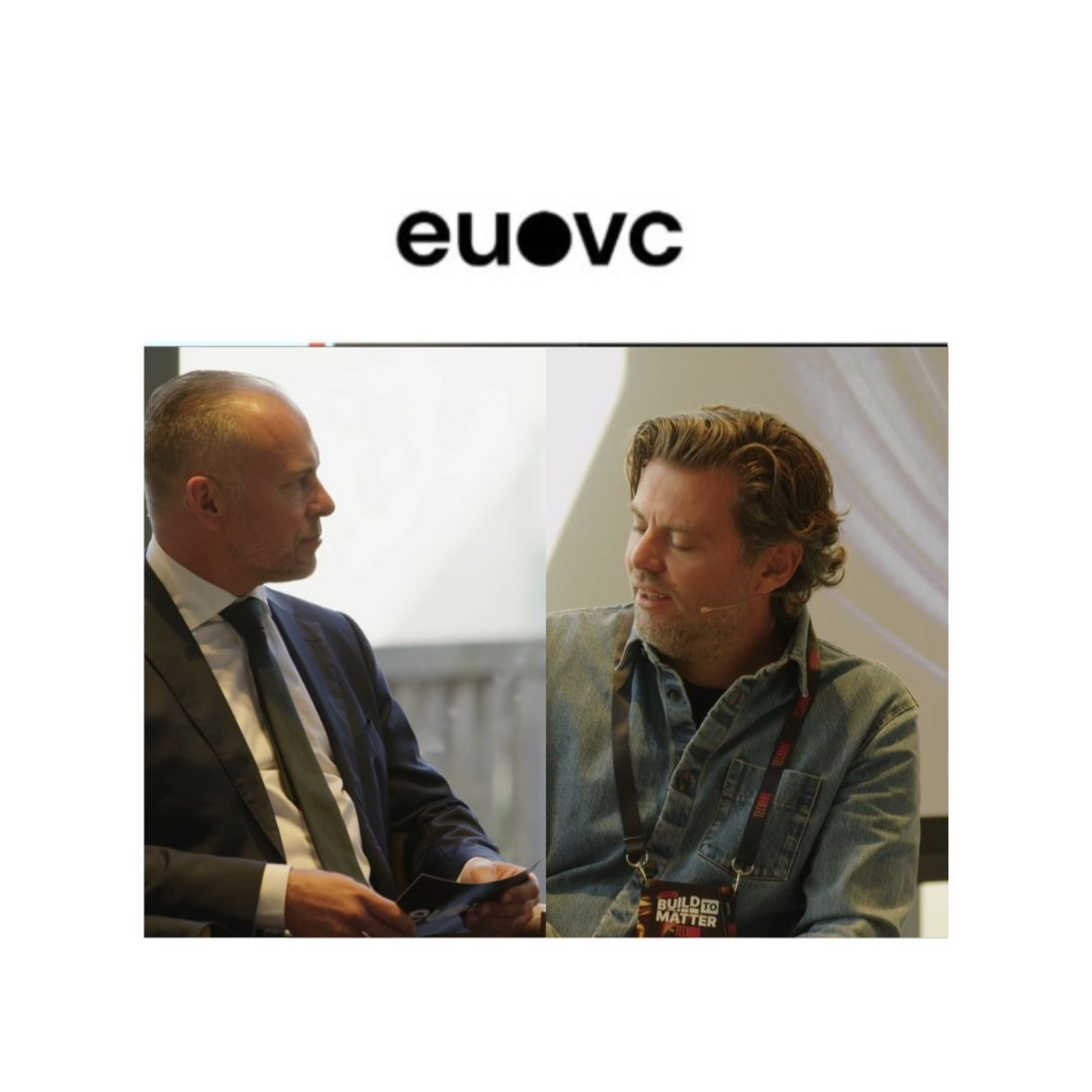
E615 | EUCVC Summit 2025: Simon Boas Hoffmeyer, Carlsberg & Kasper Hulthin, Future Five: Resetting ESG: Beyond Compliance to Real Change
Welcome back to the EUCVC Summit Talks, where we bring you candid conversations with Europe’s leading founders, corporate leaders, and investors shaping the future of venture collaboration.In this episode, Andreas Munk Holm sits down with Simon Boas Hoffmeyer, Global Head of Sustainability & ESG at Carlsberg, and Kasper Hulthin, serial entrepreneur and investor at Future Five (co-founder of Peakon, Podio, and more).With ESG facing political backlash, accusations of greenwashing, and shifting investor sentiment, the question looms: is ESG still a lever for real change—or does it need a reset? Simon and Kasper explore what’s broken, what still works, and how corporates and startups can embed sustainability into real business value.🎧 Here’s what’s covered00:10 ESG under fire — political pushback, greenwashing, and regulatory flip-flops.01:00 Carlsberg’s take: facts, faith, and fear as the drivers of sustainability.02:00 Why startups must reframe ESG as financial return, not a premium add-on.03:00 Culture vs. compliance — how corporates integrate ESG into decision-making.05:00 Born-green startups vs. legacy corporates: different pressures, same imperatives.06:00 Where opportunities lie: inputs for future food systems, alternative coffee and chocolate.07:00 From “sustainability” funds to “energy transition” — reframing the narrative.08:00 Partnerships in practice: pilots, off-take agreements, and startup collaborations.09:00 The investment paradox — more money into NFTs than climate at ESG’s peak.
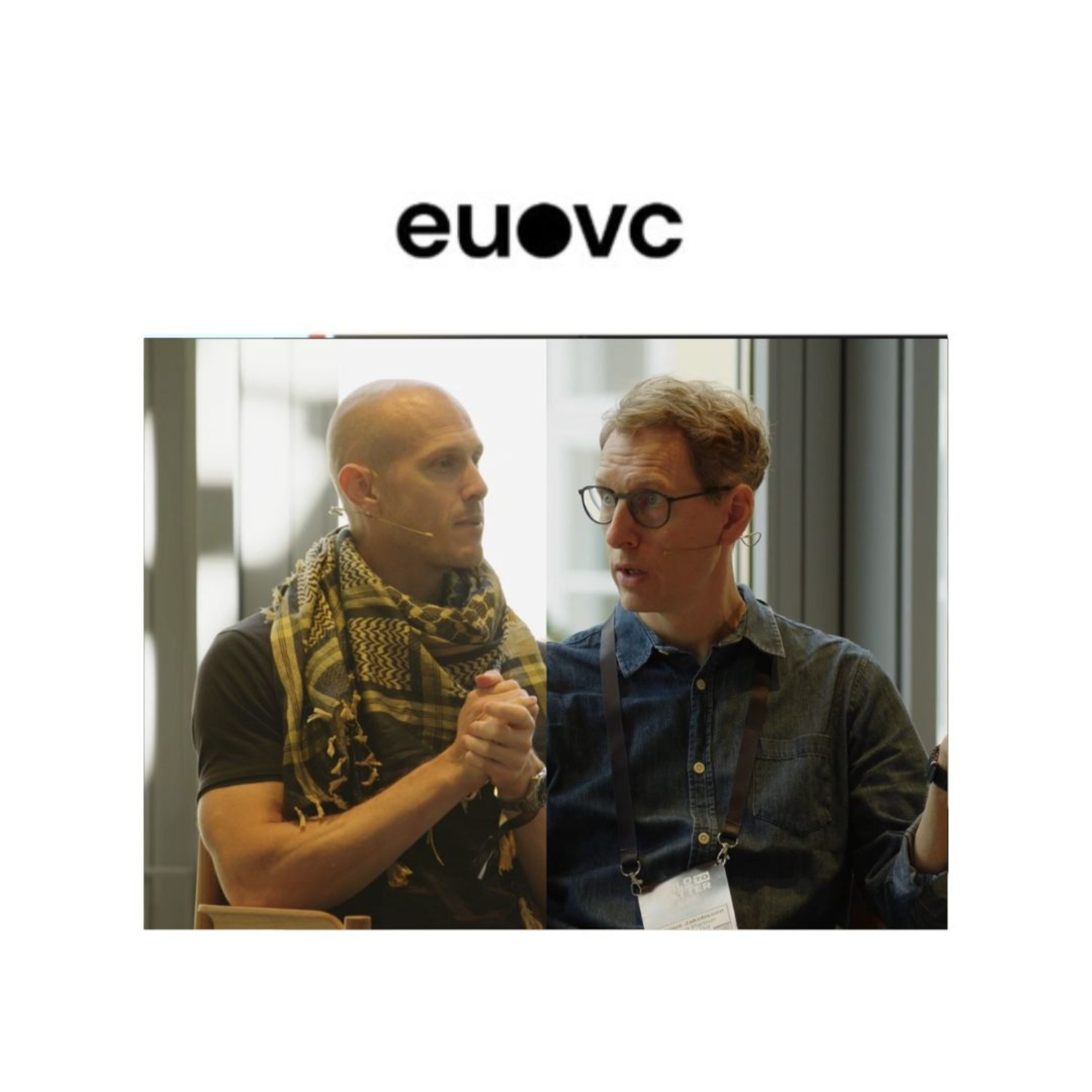
E614 | EUCVC Summit 2025: Hampus, Pale Blue Dot & Andreas Munk Holm, EUVC: Climate Tech in a Trump Era
Welcome back to the EUCVC Summit Talks, where we bring you candid conversations with Europe’s leading founders, corporate leaders, and investors shaping the future of venture collaboration.In this episode, Andreas Munk Holm sits down with Hampus Jakobsson, General Partner at Pale Blue Dot, one of Europe’s leading climate-focused funds. With shifting U.S. politics, renewed uncertainty around climate policy, and growing skepticism of “green hype,” Hampus shares why he defines climate investing as simply “not dumb investing.”From Donald Trump’s return to the White House to Europe’s resilience, China’s role, and the gritty reality of scaling “boring but effective” solutions, this conversation is a masterclass in how investors, corporates, and founders can navigate climate risks — and seize opportunities.🎧 Here’s what’s covered:00:10 Political whiplash — Trump, vibes, and the stress test for climate policy.02:41 Why Europe must stop looking to the U.S. and start managing risk at home.04:55 Climate investing = not dumb investing — the overlooked opportunities in obvious inefficiencies.06:50 Case study: last-mile delivery — why disruption often comes from solving “boring” problems.08:15 Advice to corporates — how CFOs should think about risk and resilience.09:30 Advice to founders — why no more free pilots, and how forward-deployed engineering wins.

E613 | EUVC Live Powered by Woven Capital at The Drop | Alex Bakir, Norrsken Evolve: Climate, Competition & Chaos in a Fractured World
Welcome back to EUVC Live powered by Woven Capital at The Drop, where we bring you unfiltered conversations with the voices shaping Europe’s venture ecosystem.In this episode, Alex Bakir, founding partner at Norrsken Evolve, takes the stage fresh off his latest fund close — but instead of talking about fundraising, Alex dives into the bigger picture: how competition, climate, and chaos are reshaping the world we invest in.From the cycles of history and the rise of populism to the structural shocks of climate change, Alex challenges us to rethink Europe’s role, its vulnerabilities, and why rebuilding around cleantech and climate tech isn’t just optional — it’s inevitable.🎧 Here’s what’s covered:00:30 Competition at every level — from startups chasing scarce resources to nation states fighting for security.01:30 The age of AI: why superintelligence could solve everything — or sharpen competition.02:30 Populism’s return: when economics and expectations don’t align, and why inequality fuels discontent.03:30 Comparative advantage & free trade: why the “end of history” never arrived.04:30 Wealth concentration and the broken promise of the nation state.05:30 Cycles of history: Ray Dalio, Harvard sociologists, and why we’re at the realist end of an 80–100 year cycle.06:30 Climate crisis as self-organized criticality — when stress tips systems into avalanches and floods.07:30 Europe’s long decline since 1900 — and why reliance on external manufacturing is now a liability.08:30 Why Europe must rebuild industry on cleantech and climate tech foundations.09:00 Populism isn’t a blip — it’s a decade-long cycle that requires addressing lived realities.10:00 Final call: in a world of shocks, AI, and climate, people and collaboration matter more than ever.
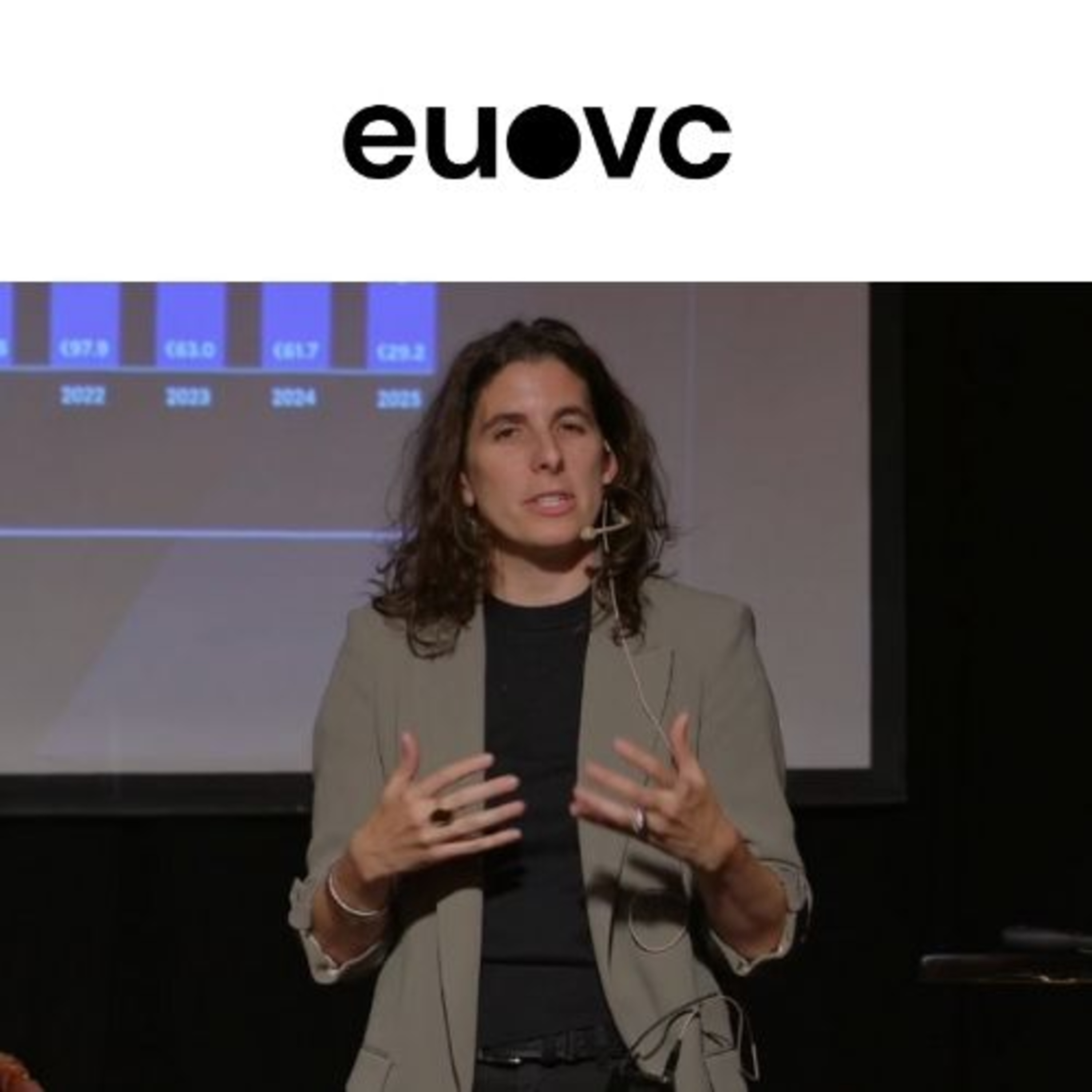
E612 | EUVC Live Powered by Woven Capital at The Drop: Nicole LeBlanc, Woven Capital: Why Europe is Toyota’s Testbed for Climate and Deep Tech
Welcome back to EUVC Live powered by Woven Capital at The Drop, where we bring you the candid conversations with the investors shaping Europe’s venture ecosystem.In this episode, Nicole LeBlanc, Partner at Woven Capital, joins us on stage in Malmö to share why Toyota’s $800M global fund is doubling down on Europe. From talent pools and global mindsets to climate tech leadership, Nicole explains why Europe is the testbed for scaling climate, mobility, and automation solutions worldwide.🎧 Here’s what’s covered:00:30 Why Europe matters: 15% of global VC and growing deal sizes.01:00 Diversification — why global funds can’t rely on just one market.01:30 Talent in Europe: strong engineering pools and founders thinking global from day one.02:30 Climate tech in Europe’s DNA — regulation, partnerships, and net-zero by 2050.03:30 Inside Woven Capital: Toyota’s $800M LPGP fund, financial-first approach, and global mandate.04:30 Toyota Open Labs: Europe-exclusive program giving startups structured access to Toyota.05:30 Portfolio spotlight: Corvus, zero-emission shipping with batteries + hydrogen.06:30 What’s next: circularity, advanced materials, and figuring out AI.
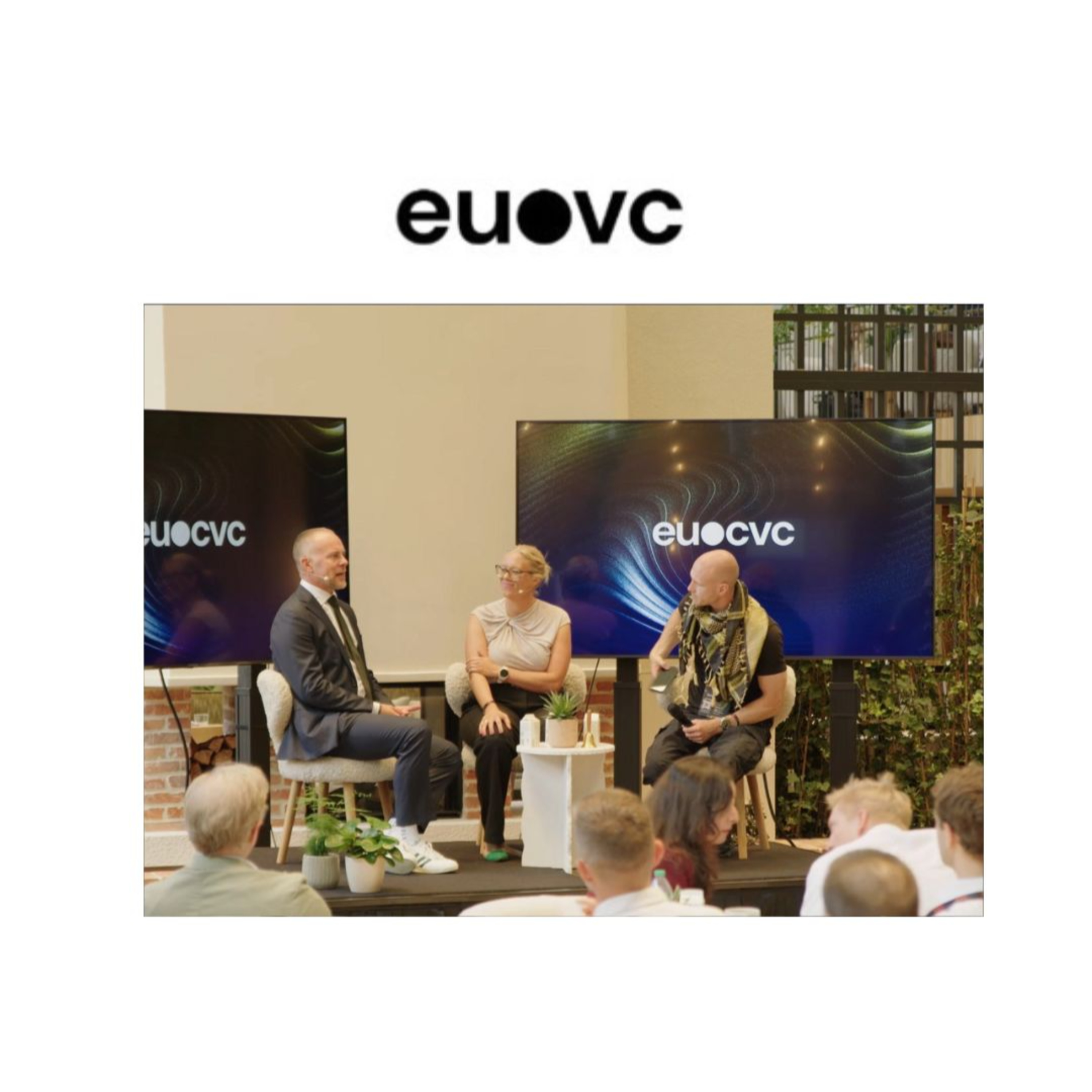
E611 | EUCVC Summit 2025: Mette Hoberg Tønnesen (CEO, The Link) and Jeppe Høier (EUVC Corporates), moderated by Andreas Munk Holm (EUVC): Building Corporate VC Networks
Welcome back to the EUCVC Summit Talks, where we bring you candid conversations with Europe’s leading founders, corporate leaders, and investors shaping the future of venture collaboration.In this session, Mette Hoberg Tønnesen, CEO of The Link, joins Jeppe Høier, EUVC Corporates, for a candid conversation moderated by Andreas Munk Holm. Together they explore how corporate venture networks can outlive the 3.7-year average lifespan of CVCs, bridge the gap between startups and corporates, and unlock Europe’s full potential as an alternative to US and Chinese capital.From translating corporate complexity for startups to tackling “startup theater” and making CVCs real value creators, this is a roadmap for corporates who want to build networks that actually last.🎧 Here’s what’s covered00:00 Why most CVCs only last 3.7 years — and how networks can change that.01:00 The Link’s mission: making startups scale faster by bridging silos and translating corporate-speak.02:00 Where corporates fumble: unclear pilots, wasted startup time, and overbearing “strategic” investors.04:00 The classic value-adds — brand, expertise, assets, customers, data — and why most corporates should start small.05:00 Venture = high school: why networks and rubbing shoulders matter more than PowerPoints.06:00 Corporates must show up — at TechBBQ and startup events, not just closed-door investor tracks.07:00 Early-stage CVC is hard: why late-stage corporates can wait, but seed/A needs sweat and trust.08:00 Europe’s opportunity: corporates stepping up to keep startups from exiting to the US.09:00 LP investing as a gateway: why corporates should back funds to tap networks and learn the game.
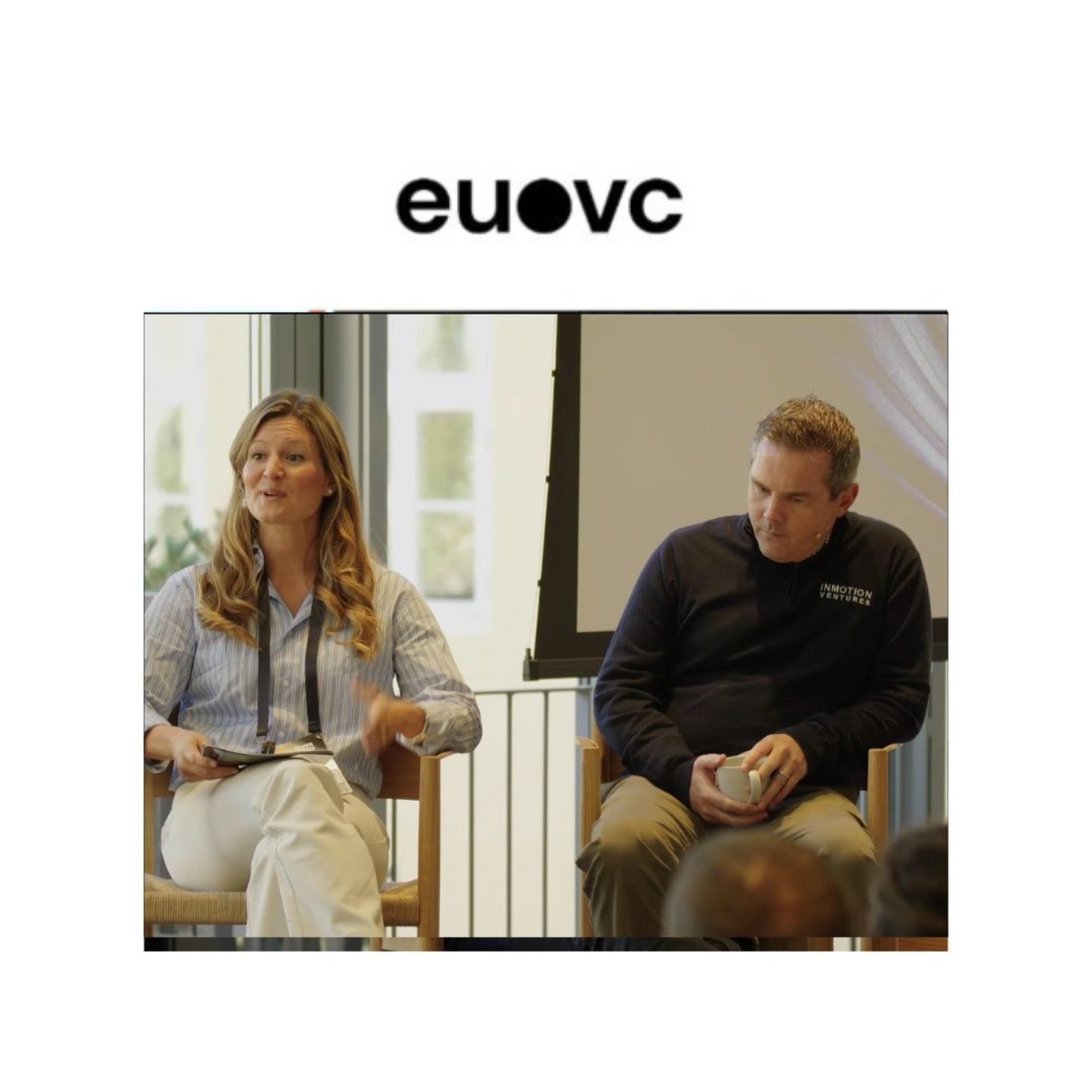
E610 | EUCVC Summit 2025: Mike Smeed, InMotion; Ida Christine Brun, Maersk Growth & Jeppe Høier, EUCVC: Rebooting a CVC
Welcome back to the EUCVC Summit Talks, where we bring you candid conversations with Europe’s leading founders, corporate leaders, and investors shaping the future of venture collaboration.In this session, Jeppe Høier sits down with Mike Smeed, Managing Director of InMotion Ventures (the venture arm of Jaguar Land Rover), and Ida Christine Brun, Partner at Maersk Growth. Together, they dive into how two global giants—one in mobility and one in logistics—approach corporate venturing, what they’ve learned about balancing financial returns with strategic purpose, and how they decide where to play in a fast-changing landscape.From decarbonization and electrification to supply chain innovation and customer-centric business models, Mike and Ida share firsthand lessons on what works, what doesn’t, and how corporates can create real value in venture.🎧 Here’s what’s covered00:10 Why corporates must venture beyond the core — InMotion and Maersk Growth’s mandates.01:00 Balancing financial return with strategic alignment — why both guests insist on “financial first.”03:00 The big themes: decarbonization, electrification, and digital supply chains.05:00 What corporates can offer startups that VCs can’t — customer access, distribution, and industrial know-how .06:00 Avoiding “tourist investing” — the discipline corporates need to compete with top-tier VCs .07:00 Building trust with founders — transparency, aligned incentives, and patient capital .08:00 Lessons learned: when corporate bureaucracy kills speed, and how to prevent it .09:00 Looking forward: why corporate venturing will be central to Europe’s green and digital transitions .
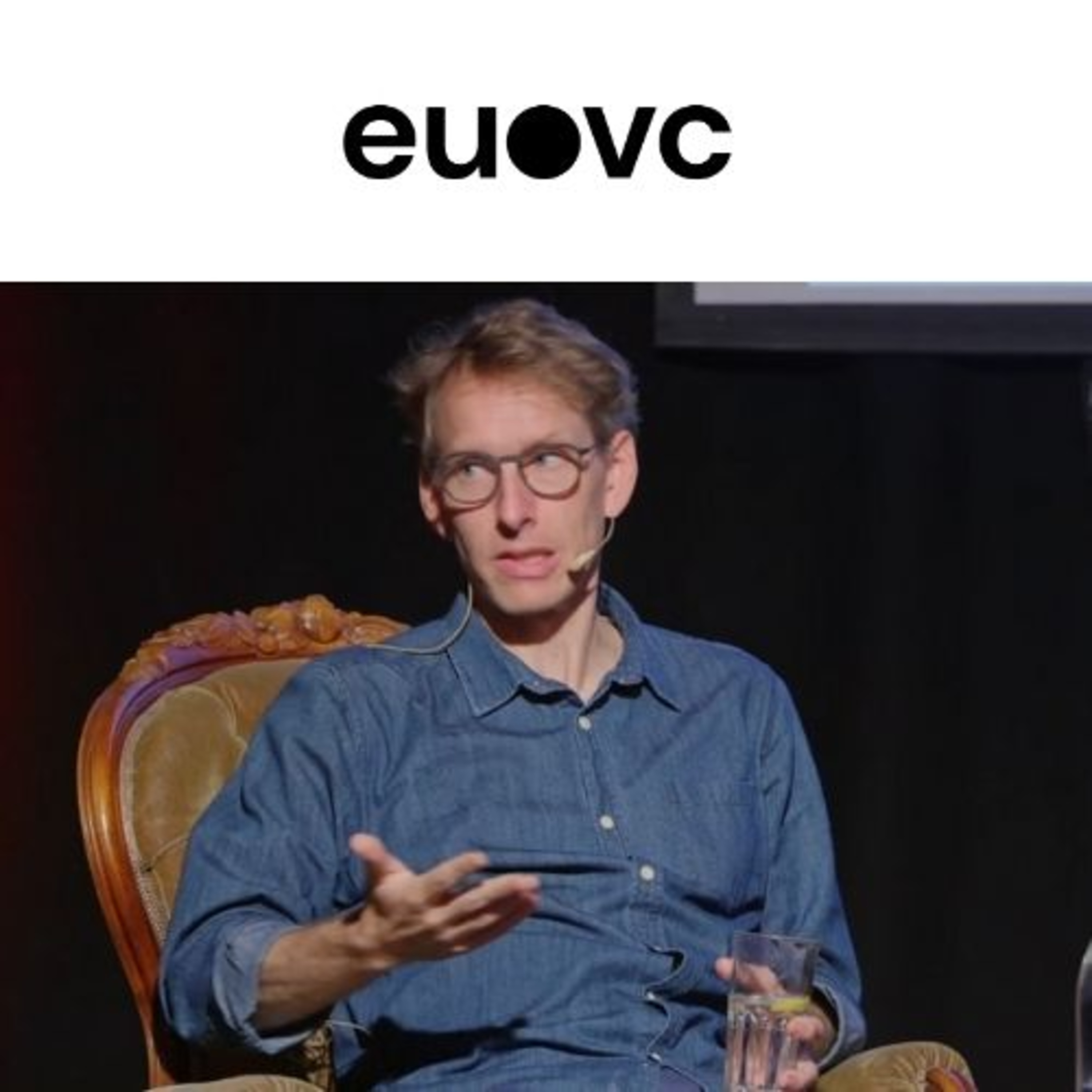
E609 | EUVC Live at The Drop: Hampus Jakobsson — From Corporate VC Scars to AI’s Role in Climate
Welcome back to EUVC Live powered by Woven Capital at The Drop, where we bring you raw and unfiltered insights from Europe’s venture ecosystem.In this episode, Hampus Jakobsson - serial founder, angel investor, and one of the driving forces behind The Drop - takes the stage to share two big themes: his hard-earned lessons on corporate venturing, and how AI is set to reshape both energy demand and climate solutions.From scars of failed CVC deals to the epiphany that corporates must be at the table, and from the risks of AI’s off-grid energy needs to its potential as “a thousand free interns” in old industries, Hampus delivers a candid, fast-paced perspective you won’t want to miss.🎧 Here’s what’s covered:00:30 Why Hampus once banned CVCs from The Drop — scars from 150+ angel investments and failed corporate deals.01:30 The epiphany: corporates aren’t optional — they’re core to scaling industries like construction, mobility, and climate.02:30 Why we need a clearer language to explain the full spectrum of corporate venture — from balance sheet strategics to spun-out financial-first funds.03:30 Case study: Motorola’s smart deal structure with Hampus’s first company, aligning incentives without blocking other partnerships.05:00 Enterprise sales realities: 18-month sales cycles and €7M average contracts — why corporates matter most for scaling.06:30 Transition to AI: how Hampus’s background in AI shapes his view of its role in climate.07:00 The challenge: AI’s energy demand could reach 10–50% of global consumption, forcing off-grid solutions.08:00 The opportunity: AI as “a thousand free interns” — driving efficiency in old industries from waste management to construction.09:30 Why AI isn’t magic — it’s about practical applications, compilers for design, and tools that boost margins in unsexy industries.10:30 Closing thoughts: solving off-grid energy production and deploying AI where it can have real impact.
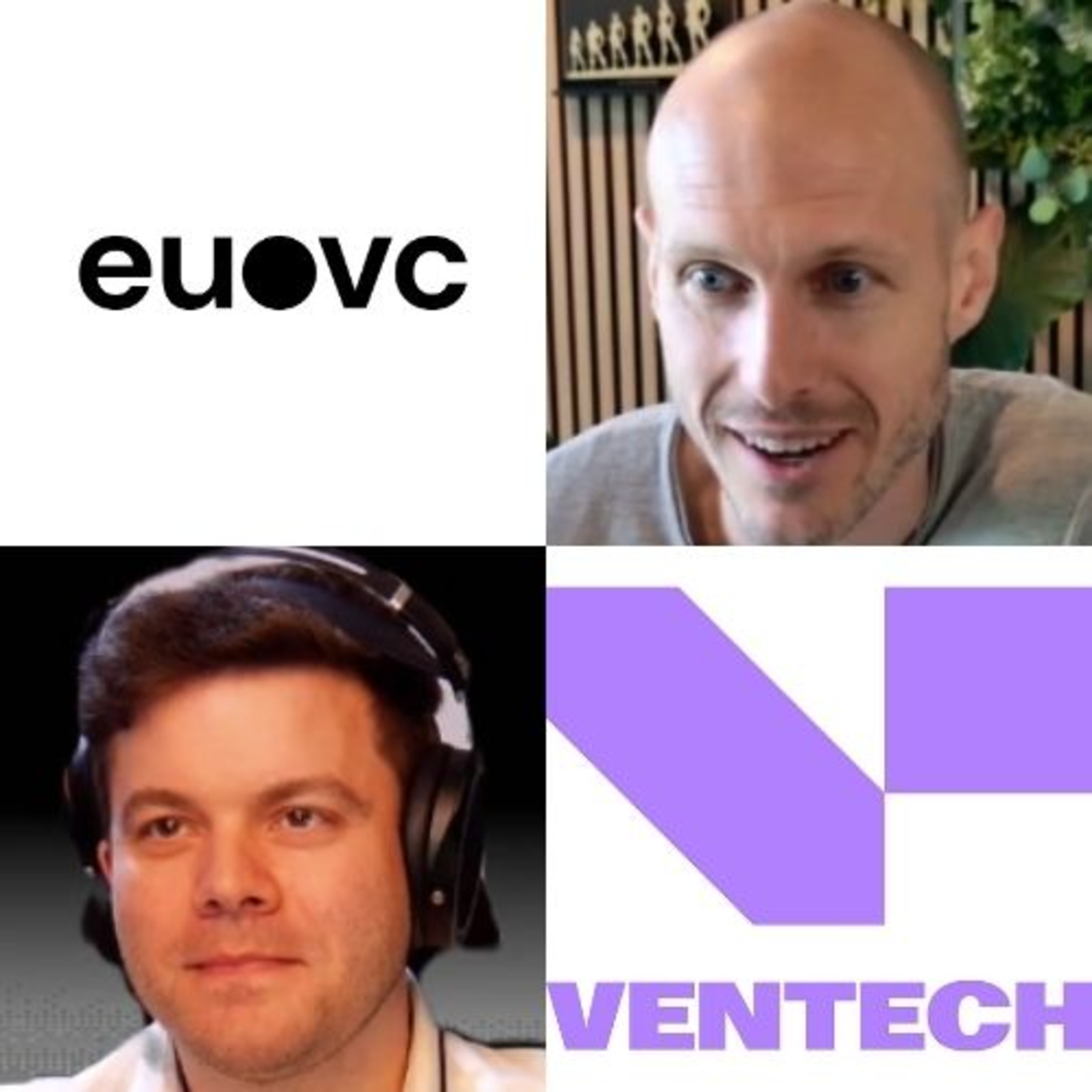
E608 | Stephan Wirries, Ventech: Announcing Fund VI: €175M for AI, Industrial Software & Europe’s Sovereignty
Welcome back to another EUVC Podcast, where we gather Europe’s venture family to share the stories, insights, and lessons that drive our ecosystem forward.Today, we dive into the announcement of Ventech’s Fund VI, which has closed at €175M — the firm’s largest fund yet, with an impressive 95% LP re-up rate. To unpack it all, Andreas Munk Holm sits down with Stephan Wirries, General Partner at Ventech. From AI and industrial software to European sovereignty and late-stage capital markets, Stephan shares how Ventech is positioning itself for the next decade — and why Europe still has structural gaps to fix if it wants to scale globally.🎧 Here’s what’s covered:01:00 Announcing Fund VI: €175M close, Ventech’s largest ever, with 95% LP re-up.03:00 What LPs are telling us: trust in the model and appetite for AI.04:00 Ventech’s pan-European footprint: Paris, Munich, Berlin, Helsinki, Stockholm.06:00 Why 50% of capital is aimed at AI, with cross-pollination into health, cyber, and industry.08:00 AI inside VC itself: sourcing, diligence, and portfolio support.09:30 Sovereignty & cybersecurity as Fund VI’s core theme.12:00 Industrial software & robotics: Europe’s edge in automation and “physical AI.”15:00 Lessons from the dot-com crash to today’s AI wave.18:00 Why Ventech avoids foundational LLMs but backs applied AI.20:00 Strategic European bets: Mistral, ASML, and deep tech leadership.22:00 The road ahead: growth capital, IPO markets, and pension reform.
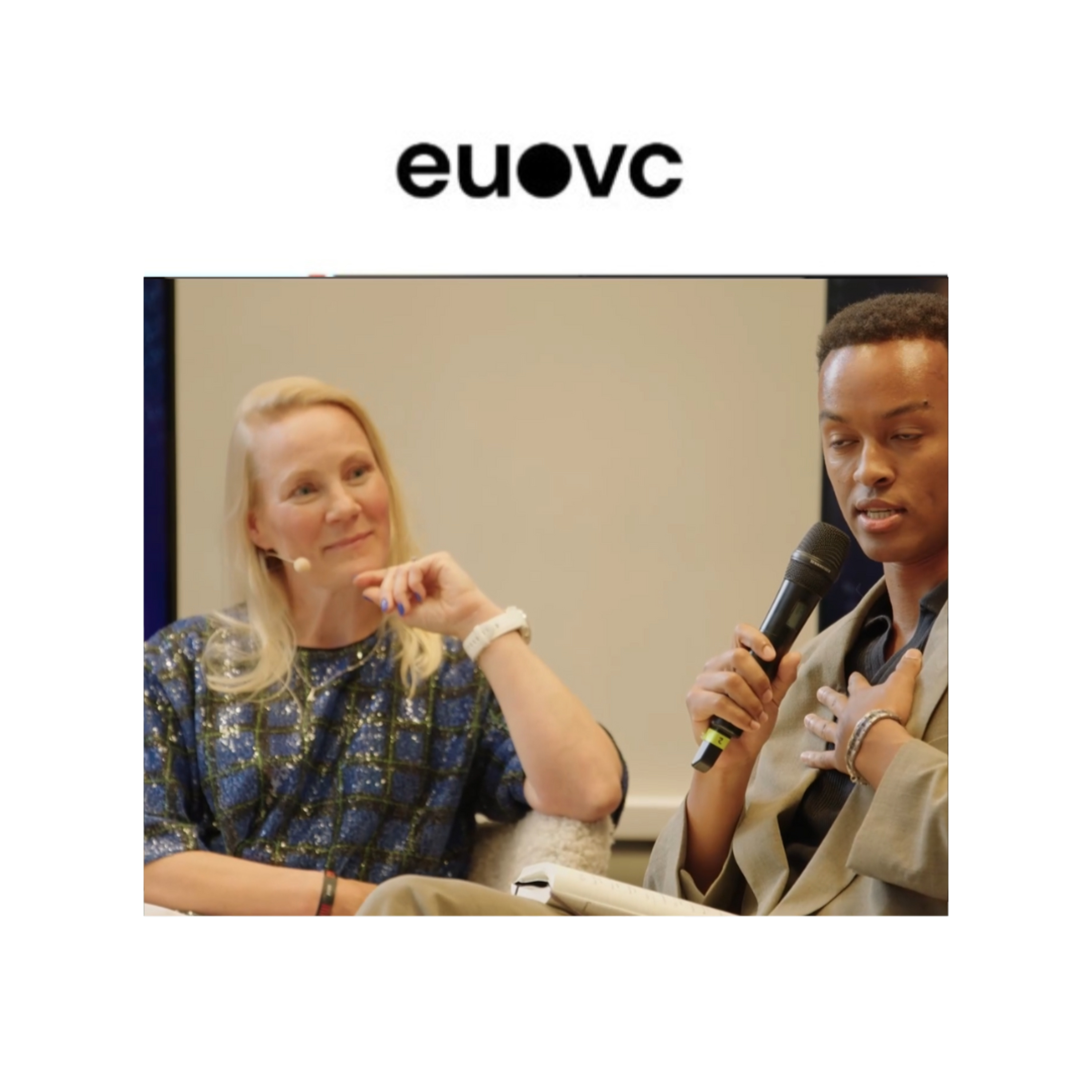
E607 | EUCVC Summit 2025: Linn Clabburn (Inter IKEA Group) & Destana Herring (Regeneration.VC) — Scaling With, Not Over, Founders
Welcome back to the EUCVC Summit Talks, where we bring you candid conversations with Europe’s leading founders, corporate leaders, and investors shaping the future of venture collaboration.In this session, Linn Clabburn, Head of CVC at Inter IKEA Group, and Destana Herring, Partner at Regeneration.VC, explore how corporates and VCs can partner with founders without overshadowing them.From aligning on objectives to translating “corporate scale” into startup reality, Linn and Destana share how trust, sparring, and clarity in the boardroom can make or break collaboration.🎧 Here’s what’s covered:00:10 Scale with, not over, founders: why trust is the foundation.01:00 The “love triangle” — navigating the CVC, VC, and founder dynamic.02:30 Different ambitions, shared value — why alignment before investing is key.04:00 Case study: IKEA + Regeneration joint investment and aligning KPIs.05:00 Translation role of VCs — turning corporate jargon into tangible founder action.06:00 What scale means at IKEA vs. in a startup — and how to bridge the gap.07:00 Success looks different — iterating market applications until corporate fit arrives.08:00 Boardroom courage — how to challenge each other without pulling founders apart.09:00 Unified front — why investors must spar privately, align publicly.
E606 | EUCVC Summit 2025: Thijs Povel, dealflow.eu & Ekke Van Vliet, EIC: Bridging Corporates and Startups in Europe
Welcome back to the EUCVC Summit Talks, where we bring you candid conversations with Europe’s leading founders, corporate leaders, and investors shaping the future of venture collaboration.In this episode, Thijs Povel, CEO of dealflow.eu, and Ekke Van Vliet, Investment Coordinator at the European Innovation Council (EIC), sit down to discuss one of the biggest challenges in Europe’s venture ecosystem: bridging the gap between corporates and startups.From EIC’s €10B budget for deep tech to the lessons learned from more than 70 “corporate days,” this session explores what works — and what doesn’t — when building collaboration between Europe’s most innovative startups and its largest corporates.🎧 Here’s what’s covered:00:10 Why startups want scale and corporates want innovation — and why it’s still hard to align.01:00 Inside dealflow.eu: making EU-funded startups visible and accessible to corporates and investors.02:00 The EIC’s €10B fund — grants and equity for deep tech across Europe.03:00 From grants to growth: how EIC supports startups after initial funding.04:00 Lessons from 70+ corporate days — what works, what fails, and the magic ratio of corporates to startups.05:00 Why in-person, 1:1 meetings matter — but too many can backfire.06:00 Tomorrow’s corporate day at TechBBQ — a live case study in matchmaking.07:00 Why deep tech startups in energy, climate, and healthcare are prime for corporate collaboration.08:00 What corporates actually get: curated startups, ready-to-scale solutions, and no cost to participate.09:00 Tomorrow’s 14 featured startups — from solar blinds to healthy air and construction tech.
E605 | EUCVC Summit 2025: Jesper Bang Olsen, BEAM & Kerk Wichmann, Jungheinrich: Incubating startups
Welcome back to the EUCVC Summit Talks, where we bring you behind-the-scenes conversations with the founders, corporates, and investors shaping Europe’s venture collaboration landscape.In this episode, Jeppe Høier sits down with Jesper Bang Olsen, Partner at BEAM, and Kerk Wichmann, VP of Corporate Strategy at Jungheinrich and Managing Partner at Uplift Ventures. Together, they unpack the realities of corporate venture building: why corporates need to separate venture initiatives from the mothership, how to anchor strategically, and what it takes to balance startup agility with industrial scale.From governance and champions to customer infiltration and fast decision-making, this is a candid look at how leading corporates are building real ventures—not just innovation playgrounds.🎧 Here’s what’s covered00:19 Why Uplift Ventures was born—responding to Chinese competition and software-driven disruption.01:00 Why ventures fail inside the mothership—rules, governance, and slow cycles.03:00 Jesper’s story: from DVDs wiped out by Spotify to creating BEAM as a venture builder.04:00 Value triggers at BEAM—finding good niche problems, anchored near but not inside the core.05:00 Anchoring strategy: why top management commitment is non-negotiable.06:00 Balancing two worlds—leveraging 6,000 service engineers and 2,000 sales reps while learning startup speed.07:00 Secret sauce at BEAM—separation from the corporate, but with champions inside who love the speed.08:00 Customer infiltration—winning over corporate clients directly to create positive friction.09:00 Venture governance—independent venture board, external members, and strict stage-gate decisions.
E604 | This Week in European Tech with Dan, Mads, Lomax & Andrew
Welcome back to another episode of Upside at the EUVC Podcast, where Dan Bowyer, Mads Jensen of SuperSeed and Lomax from Outsized Ventures unpack what’s happening in European tech and venture capital.This week: The UK lands $150B of US pledges and 120,000 Nvidia GPUs—can London turn its AI hype into substance? NATO on edge after Russian incursions across Poland and Denmark. Are we witnessing an AI bubble, or just the infrastructure wave of the century? Plus: cyber risk after JLR’s ransomware hit, Trump’s $100K H-1B visa fee, and the week’s billion-dollar deals.🎧 Here’s what’s covered:01:59 The UK Economy: stalled housing, digital ID hopes, and why Gatwick beats Heathrow.08:02 Macro Context: UK at 1% growth vs US 3.8%, but Revolut and AI unicorns offer upside.11:23 Trump’s UK State Visit: $150B in pledges, Nvidia’s mega GPU cluster, and hidden strings.17:34 Pageantry vs Reality: Andrew on IMF forecasts and why the UK still outpaces France & Germany.20:41 Pensions & Equity Gap: Why Europe lags the US in growth capital.25:17 Are We in an AI Bubble? Big tech’s circular bets, Nvidia’s chokehold, and history repeating.35:12 Cybersecurity & AI: JLR hack fallout, ransomware surge, and a $500B market by 2030.43:21 NATO on Edge: Russian drones in allied airspace, Trump’s hawkish rhetoric, and Europe’s defense unicorns.53:28 The H-1B Shock: Trump’s $100K fee and whether Europe can seize the talent opportunity.59:44 Deal of the Week: N-Scale’s $1.1B data center raise and Oura Ring’s $875M round.

E603 | EUCVC Summit | Gina Domanig, Emerald Technology Ventures & Nicolas Sauvage, TDK Ventures: Evolving CVC Programs
Welcome back to the EUCVC Summit Talks, where we bring you candid conversations with Europe’s leading founders, corporate leaders, and investors shaping the future of venture collaboration.In this episode, Andreas Munk Holm speaks with Gina Domanig, Managing Partner at Emerald Technology Ventures, and Nicolas Sauvage, President of TDK Ventures, on what it really takes to design, launch, and evolve corporate venture capital programs that endure.They explore how corporates can balance financial credibility with strategic impact, why governance and structure matter, and how to bridge the cultural gap between startups and corporates. From KPIs and deal flow to long-term commitment, this is a masterclass in building CVCs that deliver more than returns.Here's whats covered:00:30 Building a CVC program is more than financial—it’s a cultural shift.01:00 Exploitation vs. exploration — balancing today’s business with tomorrow’s bets.02:00 The role of funds, reserves, and acting like financial VCs to gain credibility.04:00 Gina’s “CVC as a service” model — how Emerald engages with multiple corporates.05:00 Why corporates must commit resources to both financial and strategic value creation.06:00 Engagement processes — KPIs, partnerships, and designing for tangible outcomes.07:00 Mining deal flow — helping corporates benefit even from startups not invested in.08:00 Deliverables matter — deal flow, pilots, KPIs, and leadership pressure for follow-through.09:00 Investor + consultant? Or financial + strategic VC? — the real identity of CVCs.💡 One-liner takeaway: Corporate venture programs succeed when they combine financial discipline with strategic alignment—backed by clear KPIs, strong governance, and leadership commitment.

E602 | David Sutter, OpenTrade & Itxaso del Palacio, Notion: Stablecoin Yield, Real-World Assets & the Future of Embedded Finance
Welcome back to another EUVC Podcast, where we gather Europe’s venture family to share the stories, insights, and lessons that drive our ecosystem forward.Today we dive into the mainstreaming of stablecoin yield with David Sutter, CEO & Co-founder of OpenTrade, and Itxaso del Palacio, GP at Notion Capital. With $11M raised in just six months, transaction volumes already topping $200M, and growth at 20% month-on-month, OpenTrade is one of the fastest-scaling fintech infrastructure plays in Europe. But this is about much more than another fintech: it’s about embedding yield into the financial internet, bridging stablecoins with real-world assets, and building institutional-grade trust for millions of users across Latin America and Europe.🎧 Here’s what’s covered:00:00 Introduction: Andreas sets the stage on stablecoin yield; welcomes David (OpenTrade) & Itxaso (Notion).05:00 OpenTrade Origins: David on early stablecoin work, the “yield gap,” and why embedded yield is the next frontier.10:00 Why Notion Invested: Itxaso explains the fintech infra angle, regulatory tailwinds, and parallels to prior bets.15:00 Stablecoins & AI: How AI agents will need financial rails, and why stablecoins are the only money fit for machines.20:00 The B2B2C Model: Why OpenTrade scales via fintech partners, lessons from Circle & Stripe.25:00 Real-World Asset Yield: Treasuries, commercial paper, trade finance, private credit, and DeFi strategies.30:00 Traction & Growth: $200M processed, $65M balances, 20% MoM growth — early but fast-scaling.35:00 Investor Diligence: Itxaso on team quality, regulatory strategy, asset transparency, and Notion’s conviction.40:00 Scaling Priorities: David on building the right team, institutional safeguards, and systems for growth.50:00 Closing Reflections: Investor opportunity in crypto infra, regulation as an enabler, and why “now is the time.”
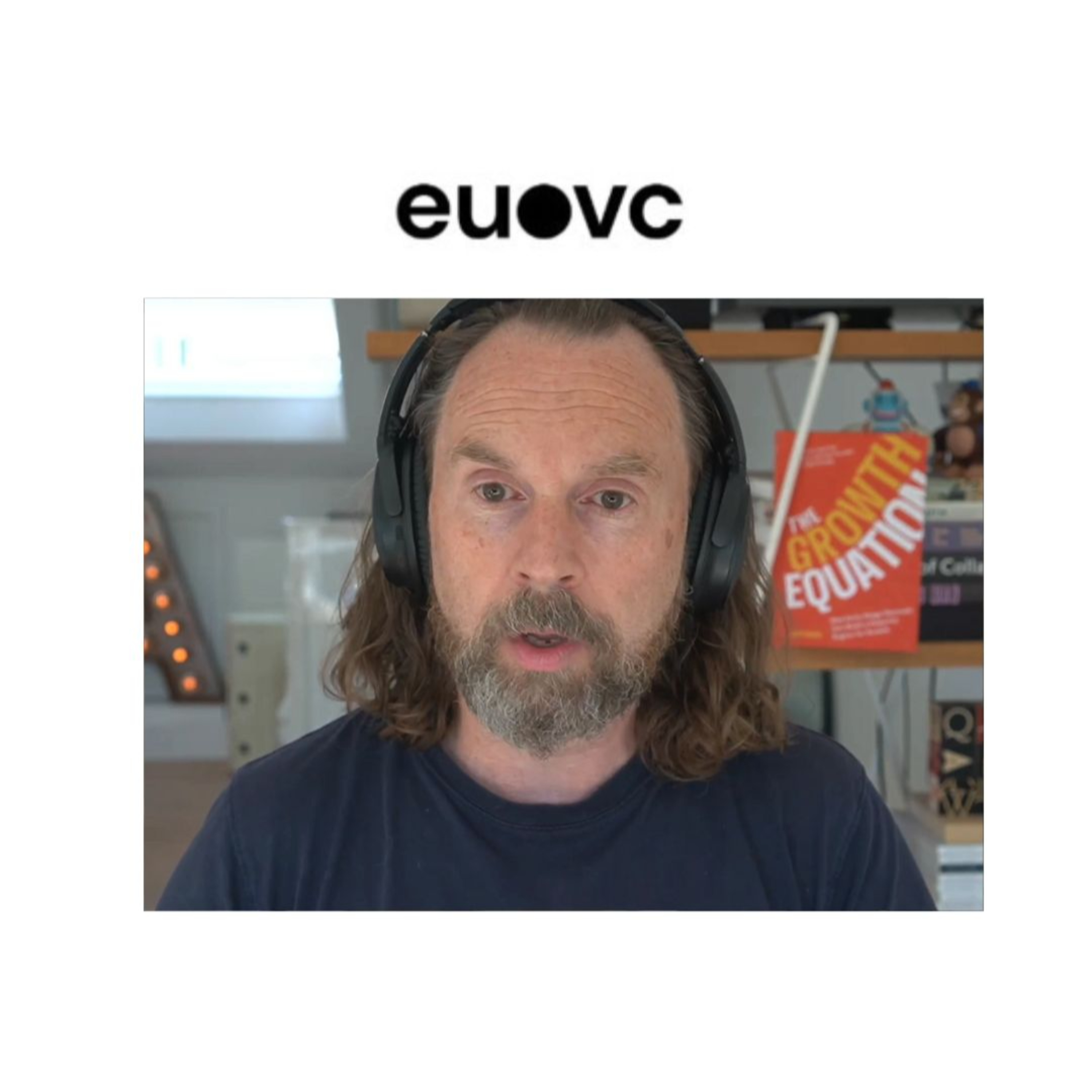
E601 | Andy Budd, Seedcamp: From CSS to Seedcamp - Why Design Is a Startup Superpower
Welcome to a new episode of the EUVC Podcast, where we bring you the people and perspectives shaping European venture.This week, Andreas sits down with Andy Budd, Venture Partner at Seedcamp, founder-turned-investor, and one of the earliest pioneers of UX design in Europe.Andy’s journey spans two decades of building and scaling—from creating one of the UK’s first CSS-based websites to founding Clearleft, Europe’s first UX agency, to now advising founders at Seedcamp. He’s used that knowledge to write a new book all about startup growth. Something we’re sure your portfolio companies will find super useful.In this episode, Andy unpacks why design is central (not cosmetic)to early-stage success, how product-market fit often hides behind poor UX, and what AI might (and might not) automate in a founder’s journey.Here’s what’s covered:02:00 | UX Before It Was Cool: Launching Europe’s first UX agency04:00 | Mentor to Partner: The Seedcamp connection and how it evolved07:30 | Design in Venture: Why UX is essential to product-market fit11:00 | AI & UX: Johnny Ive, ChatGPT, and designing for mass adoption15:00 | Super Users vs. Everyone Else: Where AI tools fail the average user18:00 | Operator Value: What Andy brings to the Seedcamp portfolio22:00 | The Growth Equation: Seven factors every founder needs to master30:00 | Fundraising Is Also UX: Using growth principles to pitch better33:00 | Small Is Smart: The rise of leaner, faster, better startups39:00 | Can Seed-Strapping Work? Why not all winners need to be unicorns43:30 | Product-Led Growth: When it works—and when it doesn’t
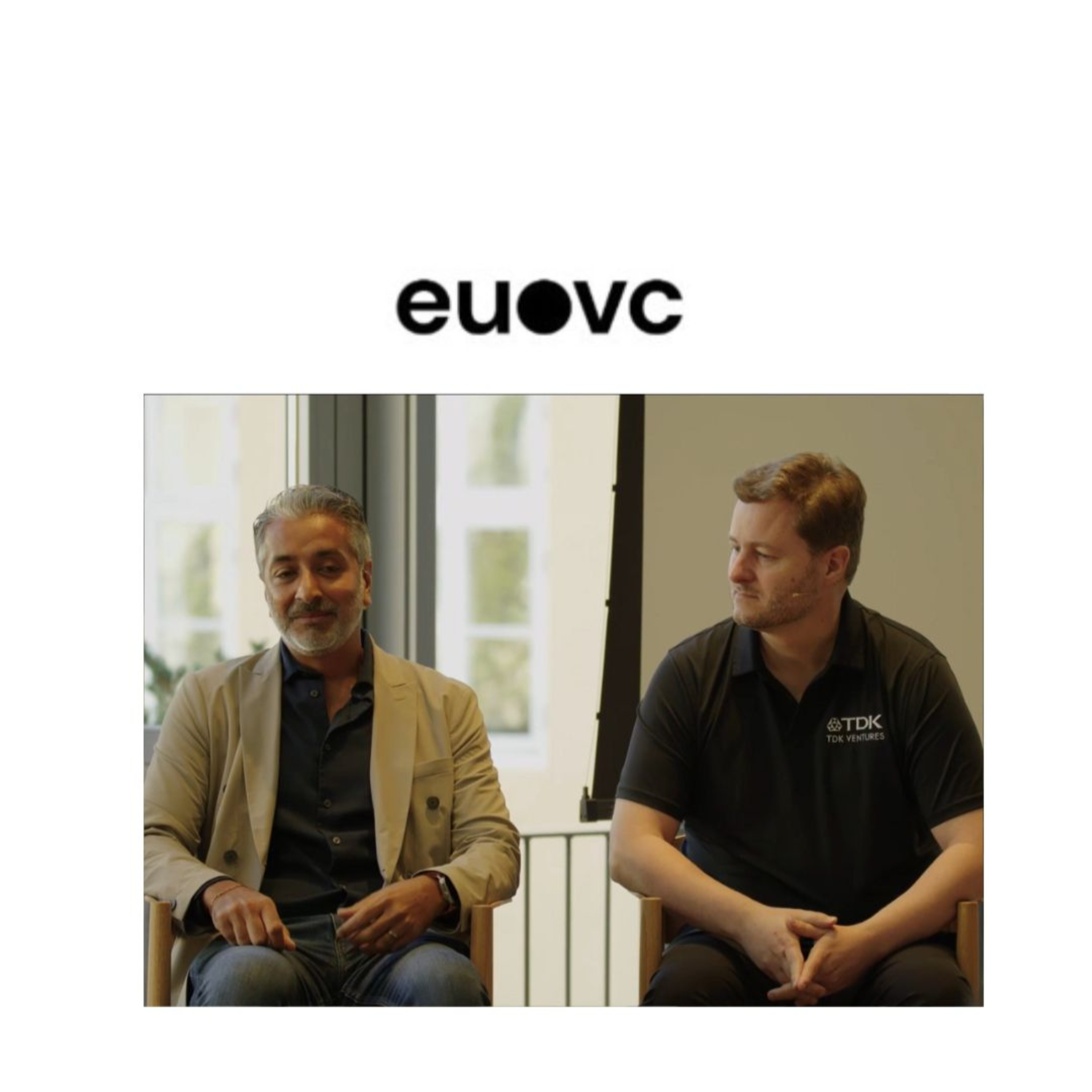
E600 | EUCVC Summit 2025: Alokik Advani (Fidelity International Strategic Ventures), Nicolas Sauvage (TDK Ventures): Built to Last: Long-Term CVC Strategy
From governance models to internal alignment, they share the blueprint for how corporate venture arms can thrive beyond the 3.7-year industry average lifespan. The discussion ranges from financial vs. strategic returns, to the “King of the Hill” philosophy, to why equal-win partnerships are essential if corporates want to play the long game.This is essential listening for corporate leaders, founders, and investors who want to understand how to build CVCs that stand the test of time.🎧 Here’s what’s covered00:35 Balancing short-term pressures with long-term horizons in corporate venture.01:00 Measuring strategic impact: why financial returns aren’t enough, and how to keep communication continuous.02:00 Governance models: how Fidelity and TDK designed their investment committees.03:12 Strategy vs. finance: why it’s a false choice and the case for picking future market leaders.05:00 The “King of the Hill” concept: investing in potential category leaders even before markets exist.06:00 Why the financial bar must come first—and how corporates can offer startups more than just capital.07:00 Avoiding the “strategic-only” trap: why CVCs fail and how to last beyond the 3.7-year average.08:00 Working with champions inside the mothership and building early success stories.09:00 Equal-win partnerships: why both corporates and startups must feel the value for relationships to endure.

E599 | EUCVC Summit 2025: Florian Noell (PwC) and Gina Domanig (Emerald Technology Ventures): LP Investing as a Smart Starting Point for CVC
Welcome back to the EUCVC Summit Talks, where we bring you candid conversations with Europe’s leading founders, corporate leaders, and investors shaping the future of venture collaboration.In this episode, Florian Noell, Partner at PwC, and Gina Domanig, Managing Partner at Emerald Technology Ventures, join Jeppe Høier to explore why limited partner (LP) investing is emerging as the smartest entry point for corporates entering venture.From accessing deal flow and ecosystems to building internal conviction and avoiding common mistakes, Florian and Gina share their playbooks for making LP positions deliver both financial returns and strategic impact.🎧 Here’s what’s covered00:00 Why PwC chose LP investing as part of its corporate venturing activities.02:00 Ecosystems, neighborhoods, and the importance of other LPs around the table.03:00 Gina on structuring LP relations to meet both financial and strategic goals.04:30 The role of sector specialists, KPIs, and deal platforms in delivering value.05:45 Running “sprints” with corporates to align strategy and business units.06:45 Beyond capital: how LP investing enables startups to access global corporates.08:00 Building trust and staying engaged with GPs to unlock real value.09:00 Complementary models — Emerald’s cleantech depth vs. PwC’s global reach.
E598 | Florian Schweitzer, b2venture: Building Angel-Led VC That Actually Works
Welcome back to another episode of the EUVC Podcast, your trusted inside track on the people, deals, and dynamics shaping European venture.This week, Andreas is joined by Florian Schweitzer, Founding Partner at b2venture, one of Europe’s longest-running VC funds — and one of the only firms to scale a structured angel investing model alongside institutional capital.They unpack how Florian built an active, deeply interlinked community of 350 angels, the philosophy behind their 90/10 investment model, and why chasing unicorns is the wrong game. The conversation also dives into trust-building with LPs, culture as a strategy, and what it takes to build trillion-euro thinking into Europe’s founder psyche.Whether you’re an emerging manager trying to scale responsibly, or an LP wondering what durable early-stage outperformance actually looks like — this one’s for you.Here’s what’s covered:01:00 | The impossible alignment: angels vs. institutions02:30 | Treating angels as partners — not a sourcing channel03:30 | The founder–angel–VC triangle04:00 | Winning institutional support: data, not just story05:40 | Why most firms abandon the angel model — and how btov didn’t06:00 | Culture, rules, and the “honourable merchant”08:00 | The numbers: 350 angels, 80 core collaborators09:00 | The unicorns: how every single one came via angels10:30 | When angels lead and VCs co-lead12:30 | Why chasing unicorns is “silly” — and what to do instead14:00 | Building trillion-euro aspirations into early diligence15:00 | 90/10: The case for a dual investment strategy17:00 | DPI lessons from Fund 1 & 2 — and what they forgot in 3 & 4
E597| EUCVC Summit 2025: Petr Mikovec, Inven Capital & Andreas Munk Holm, eu.vc: Building a culture for innovation
Welcome back to the EUCVC Summit Talks, where we bring you the candid insights of Europe’s leading founders, corporate leaders, and investors reshaping venture collaboration.In this episode, Andreas Munk Holm speaks with Petr Míkovec, Managing Director of Inven Capital, the CVC arm of ČEZ, one of Central Europe’s most conservative utilities. From nuclear power plants to climate tech bets, Petr shares how Inven Capital was born inside a 30,000-person corporate giant—and why culture by design, not default, is the only way to make innovation stick.From boardroom alignment to founder empathy, this conversation reveals what it takes to balance corporate DNA with startup speed—and how Inven Capital won founders’ trust despite starting from scratch.#VC #VentureCapital #Investing #TheEuropeanVC #Podcast #Tech #Startup
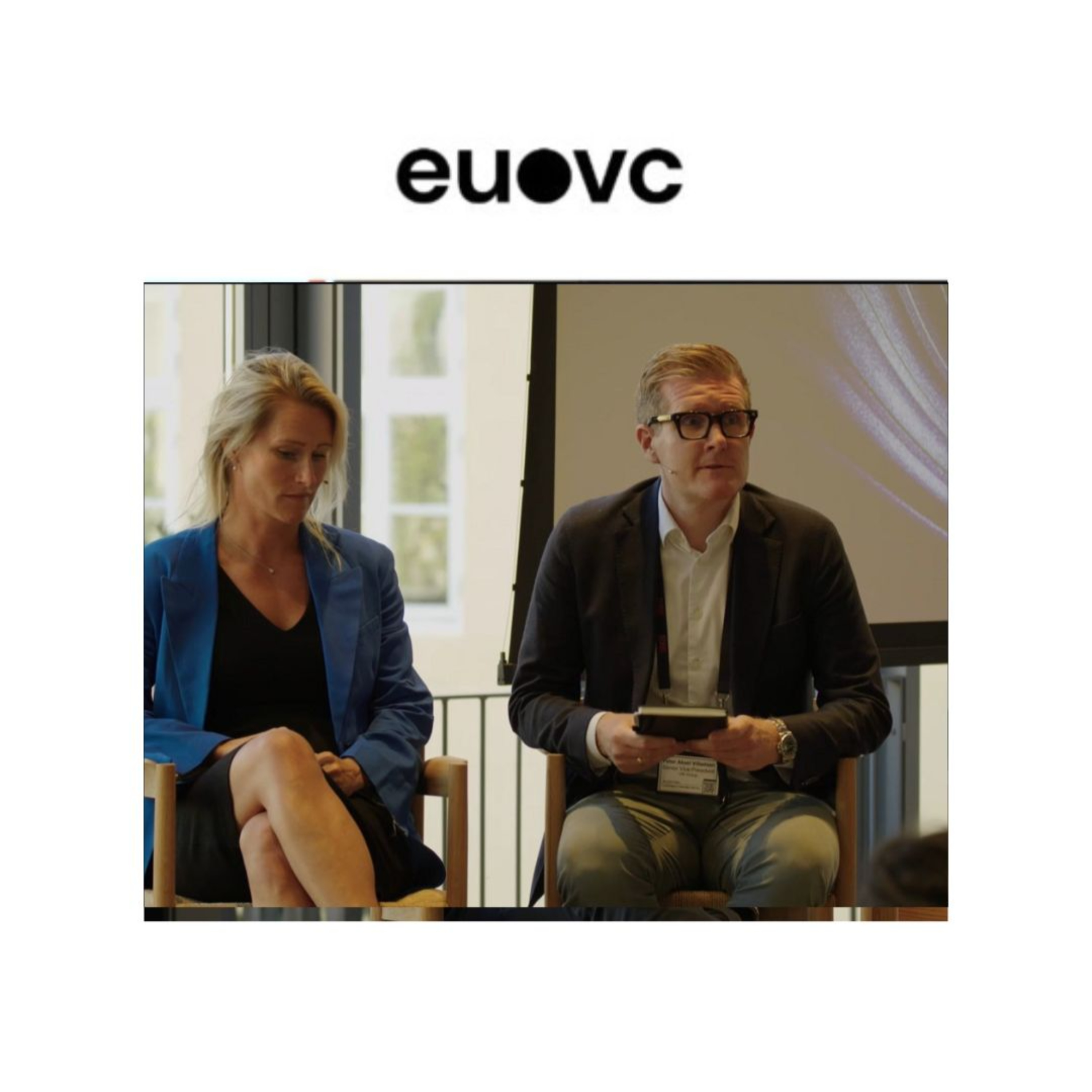
E596 | EUCVC Summit 2025: Peter Aksel Villadsen, GN Hearing & Helle Hee, PwC: Integrating acquired companies
Welcome back to the EUCVC Summit Talks, where we bring you candid conversations with Europe’s leading founders, corporate leaders, and investors shaping the future of venture collaboration.In this episode, Jeppe sits down with Peter Aksel Villadsen (GN Hearing) and Helle He (PwC) to unpack the messy middle of post-merger integration: aligning strategy and governance, protecting talent and culture, and getting the operating model right so the deal value actually shows up. From pre-close planning to the first 100 days, they share what works, what fails, and how to keep the integration machine honest.This is essential listening for any corporate venturer, founder, or investor navigating M&A.
E595 | EUCVC Summit 2025: Kasper Hulthin & Heini Zachariassen: Getting Acquired by a Corporate
Welcome back to the EUCVC Summit Talks, where we bring you candid conversations with Europe’s leading founders, corporate leaders, and investors shaping the future of venture collaboration.In this episode, Kasper Hulthin, serial founder now at Future Five (and co-founder of Peakon, Podio, and others) and Heini Zachariassen, founder of Vivino, the world’s largest wine app and marketplace. Both have experienced firsthand what it means to be acquired by a corporate—and they don’t hold back on the reality behind the headlines.From culture shock and governance friction to the trade-offs of autonomy versus scale, Kasper and Heini share the inside story of what happens post-acquisition. They also reflect on when collaboration works, how to preserve founder spirit, and what corporates must do to retain the trust and agility of entrepreneurial teams.This is essential listening for any corporate venturer, founder, or investor navigating M&A.
E594 | EUCVC Summit 2025: Hermann Haraldsson, Boozt: Scaling a Nordic E-commerce Powerhouse & Lessons for Corporate Venturing
In this EUCVC Summit Talks episode, Hermann Haraldsson, CEO of Boozt, unpacks the journey of taking a Nordic e-commerce scale-up from scrappy beginnings to a billion-dollar listed company. He discusses Boozt’s playbook for customer trust, operational discipline, and balancing growth with profitability. Hermann reflects on how corporate partnerships can (and can’t) accelerate scale, why governance is critical earlier than founders think, and how AI and sustainability are reshaping retail.Whether you’re a corporate VC, startup founder, or institutional investor, this is a candid look at the realities of building Europe’s digital champions.🎧 Here’s what’s covered00:30 – Boozt Journey: Founded in 2011, IPO in Stockholm (2017), dual listing in Copenhagen (2020). Once the most valuable e-commerce company in the Nordics.01:30 – Culture From Day One: Three pillars: trust, freedom, and responsibility — built on Nordic values. Hiring the right people and giving them space to grow.02:30 – The “Care Why” Culture: From “know what” to “know why” to “care why.” How Boozt tests for true ownership mindset (like picking up trash in the warehouse).03:30 – Scaling Culture: How to keep startup mentality when growing from 5 to 500 people. Inspiration from Bain’s Founder’s Mentality framework.04:30 – Founder’s Mentality in Action: Key principles: skin in the game, challenging industry wisdom, and obsessively reducing friction for customers and staff.06:00 – IPO as a Turning Point: Why going public didn’t mean “growing up” — compliance is outsourced, while startup culture is doubled down.07:00 – Staying a Startup Post-IPO: Hermann’s role shift: from “machinist greasing the wheels” to communicator of values, frontline obsession, and owner mindset.08:00 – Don’t Fear Compliance: Investors buy into the startup spirit, not the corporate bureaucracy. Compliance is license to operate, not a competitive advantage.09:00 – Closing Lesson: An IPO doesn’t have to make you corporate — if you focus on what matters, your company’s immune system will fight bureaucracy, not innovation.
E592 | EUVC Summit 2025 | Lucille, Eight Roads & Marc, Altitude: Europe’s Path to Vertical SaaS Leadership
In a high-energy session that sparked nods across the room, Lucille and Marc tackled the shifting paradigms in the SaaS market—and made a compelling case for why vertical SaaS is quickly outpacing horizontal models.Marc opened with a candid assessment of the current SaaS landscape. “What’s the flaw in the current market?” he asked. In his view, horizontal SaaS faces serious headwinds:AI is leveling the playing field: Tools like AI-assisted coding have lowered the barrier to entry. Startups can now build and scale to $10–20M in revenue without a CTO, making it easier than ever to launch—but harder to stand out.Enterprise sales are brutal: Horizontal SaaS faces challenges in defining clear ICPs (Ideal Customer Profiles), making it harder to gain traction quickly. This often results in sluggish proof points and delayed product-market fit.Vertical SaaS—companies that serve a single, well-defined industry—has several structural advantages that Lucille and Marc believe make it the smarter play:Clear Go-To-Market MotionWith deep domain knowledge, vertical SaaS teams know exactly how to sell and to whom. Their understanding of customer pain points gives them a clear runway for product adoption.Economic Moats from the StartBy solving a niche problem deeply (rather than broadly), vertical SaaS players build sticky products with defensible positioning. This leads to easier upselling and faster PMF (product-market fit).Composable GrowthOnce established in one vertical, these companies can expand into adjacent markets or layers—embedding financial products like payments, insurance, or lending. That transforms them into mini-operating systems for their customers.AI as an Embedded EdgeAI isn’t just a buzzword here—it’s embedded into the business model. These companies use AI to build smarter workflows, increase automation, and create differentiated products right out of the gate.M&A and Platform PotentialVertical SaaS allows for cleaner M&A and roll-up strategies, given the homogeneity of the user base. This is significantly harder with broad horizontal plays. Layering in APIs and platforms makes them extensible and scalable.Lucille emphasized that success in vertical SaaS hinges on one key ingredient: deep workflow integration. These companies become indispensable to their customers, reducing churn and increasing lifetime value. It’s not about shallow features—it’s about becoming mission-critical.“The future is not just SaaS—it’s vertical SaaS,” Marc concluded. “That’s how you build enduring, category-defining software companies.”
E591 | EUVC Summit: Nicholas Sauvage, TDK Ventures: The Path to CVC Success
Corporate Venture Capital (CVC) can be both a powerful ally and a cautionary tale for founders and financial VCs alike. At the EUVC Summit, Nicholas Sauvage of TDK Ventures took the stage to break down the CVC landscape — past, present, and future — and give practical advice for founders considering CVCs on their cap tables.Nicholas challenged the audience with a question: who’s had a good experience with a CVC? Hands shot up and fewer hands went up for “bad experiences.” This, he noted, shows we’re at a new stage for corporate venture.He outlined the three eras of CVC:CVC 1.0: The early days, marked by balance-sheet-driven investments and corporate sponsorships. These often came with odd term sheets and slower processes, but could unlock synergies.CVC 2.0: Skipped over, just like today’s pre-seed to Series A jumps.CVC 3.0: The modern era: financially disciplined, strategically aligned, fast-moving, and structured like financial VCs without sacrificing strategic purpose.Importantly, Nicholas debunked the idea that financial and strategic returns are a trade-off - a "false premise," as he called it. The best CVCs aim for both: venture-type returns and deep strategic synergies.Nicholas shared the characteristics of high-performing CVCs:Fast decision-making (some in under 2 weeks!)Clear investment thesesSlim, empowered ICs (not consensus-based groups of 12)Strategic clarity and preparednessA giver mindset — value-add first, not value-extractHe also offered advice for traditional VCs:“Be thoughtful about when a CVC joins your cap table. Some are great at de-risking science, others support go-to-market — it's all about matching their superpower to your founder’s needs.”TDK Ventures uses a strict three-pillar framework:Contribution to societyVenture-type returnsStrategic synergy (giver-focused)If an opportunity scores less than 9/10 on any one of the three, they won’t invest. Why? Because climate tech and deeptech take time and patience, and TDK is playing a long game to back meaningful technologies — like Type One energy and nuclear fusion — that can shape humanity’s future.Before taking CVC money, ask the hard questions:What’s their why?What value do they add?Are they ready to support at the right stage of your journey?“Without exits, we don’t have a VC ecosystem,” Nicholas reminded the room — so make sure you’re partnering with CVCs who can help drive toward them.
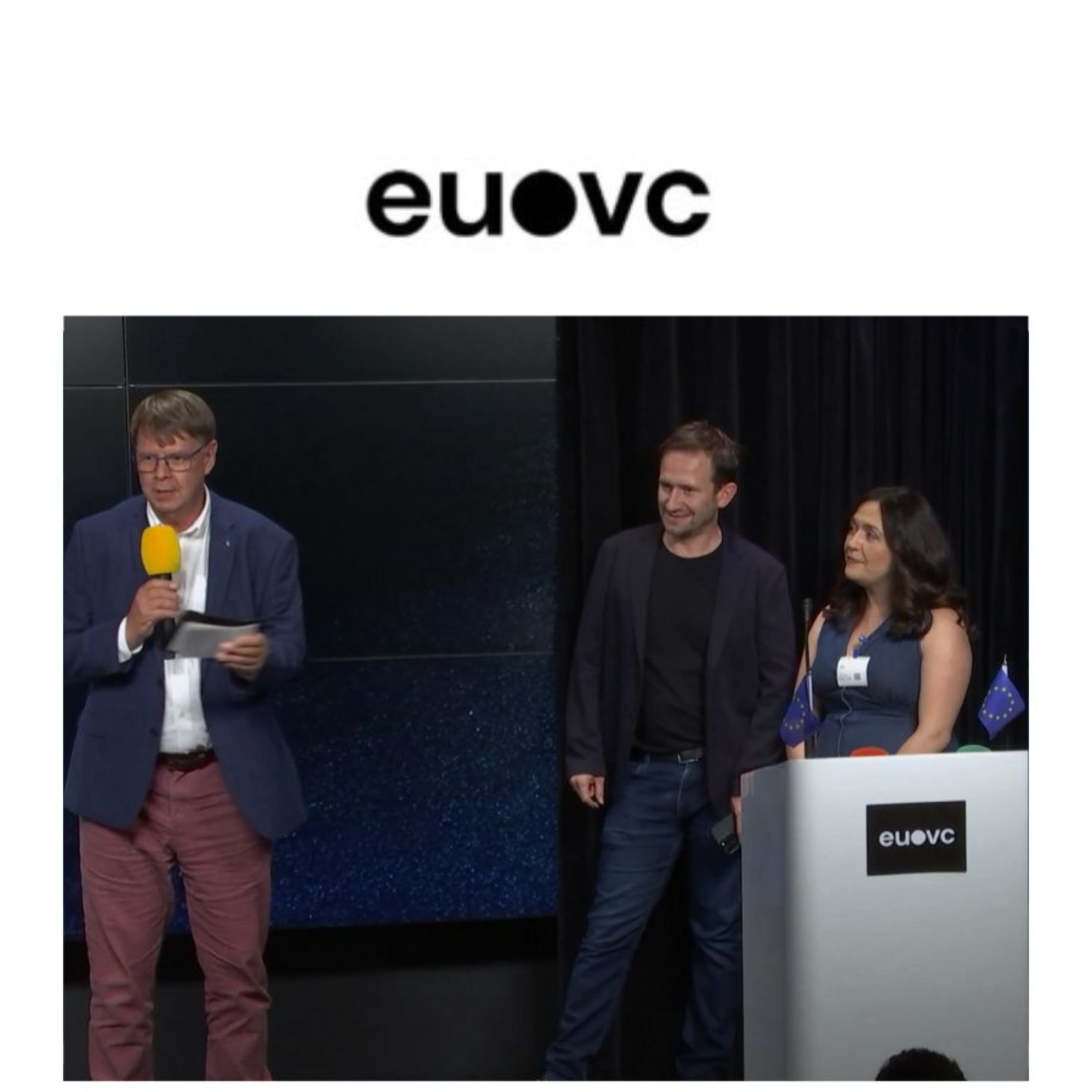
E590 | EUVC Summit 2025 | Achievement of the Year Award: Tom Wehmeier, Atomico
Tom Wehmeier of Atomico took the stage to present the Achievement of the Year Award, offering a touching reminder of the power of community, storytelling, and persistence in building Europe’s venture identity.Before diving into the award itself, Tom took a moment to pay tribute to the unsung heroes who make the EUVC Summit possible. Special thanks went to:Dan Taylor, Director of Content, whose voiceovers shaped the tone of the event’s videos—even if he had to duck out early for a birthday party.Geraldine, for her tireless efforts behind the scenes, now rewarded with, in Tom’s words, “a very well-earned glass of wine—or two, three, I don’t mind!”It was a warm and human moment, reminding the audience that even in high-stakes venture circles, gratitude and team spirit are what truly drive momentum.Tom also took the opportunity to reflect on Atomico’s long-standing effort to amplify the voice of the ecosystem—particularly through their widely circulated surveys and reports. He playfully acknowledged the flood of emails and DMs over the years, encouraging people to contribute to the State of European Tech report.But beyond the spam, the intent was serious:“It’s been massively important to have the voice of tens of thousands of people shared and elevated… We’re all here because we believe Europe needs to tell its story in a positive way.”The Achievement of the Year Award isn’t just about one startup’s exit or one investor’s return—it celebrates initiatives that move the whole ecosystem forward. In a continent still carving out its narrative on the global venture stage, this recognition honors those who go beyond capital to inspire, build infrastructure, and create shared momentum.With that, Tom handed the mic back to Chris to announce the winner—but not before delivering a final rallying cry:“The need was great then. The need is even greater today.”
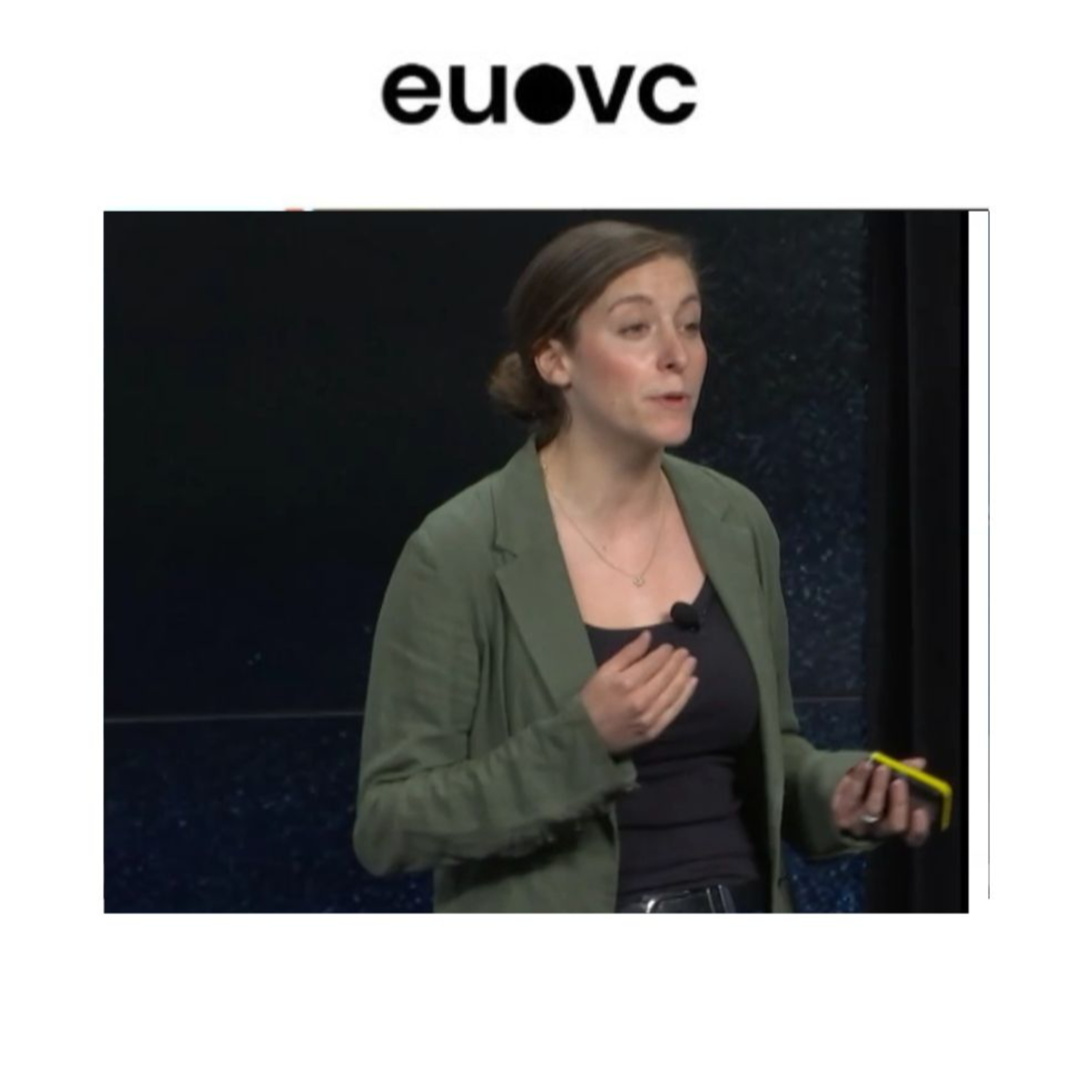
E589 | EUVC Summit 2025 | Juliet Bailin, General Catalyst: European Resilience Through Applied AI
“Europe Can Win in Applied AI — If We Play to Our Strengths”In one of the most focused and forward-looking sessions of the summit, Juliet Bailin of General Catalyst made a compelling case for why Europe is uniquely positioned to lead in applied AI—not by copying Silicon Valley, but by doubling down on what makes the continent distinct.Juliet opened with a reminder of Europe’s superpowers:Regulatory complexity,Cultural and linguistic diversity, andStrong traditions in research and privacy.These aren’t weaknesses—they’re strategic advantages for human-centric, domain-specific, and trust-first AI.“Highly regulated industries are perfect for specialized AI,” Juliet argued. “And cultural diversity is crucial for building human-centric systems.”Rather than pursuing general-purpose models that require vast compute resources (a game already dominated by US giants), Juliet emphasized applied AI—targeted solutions built into real-world workflows. Europe’s leadership in sectors like healthcare, finance, and mobility offers the perfect foundation.General Catalyst is backing this with:Incubation of applied AI startupsAI roll-ups of legacy businesses with strong distributionPublic-private convenings via the General Catalyst InstituteJuliet called on governments to do more than fund foundational research:“We need governments that can incentivize the adoption of European, homegrown applied AI companies.”That means clear pathways for public procurement, regulation that encourages innovation, and aligned industrial policy.Her message to entrepreneurs was crisp and actionable:Build in regulated industries where Europe leadsPrioritize trust-first AI—privacy, explainability, fairnessJoin the EU AI Champions Initiative → AIChampions.eu(A platform to connect startups with the corporates and investors driving Europe's AI future)Juliet closed with a powerful vision—not just of returns or GDP growth, but of rewriting the social and economic history of Europe:“If we do this right… future historians will talk about it at the next EUVC summit.”
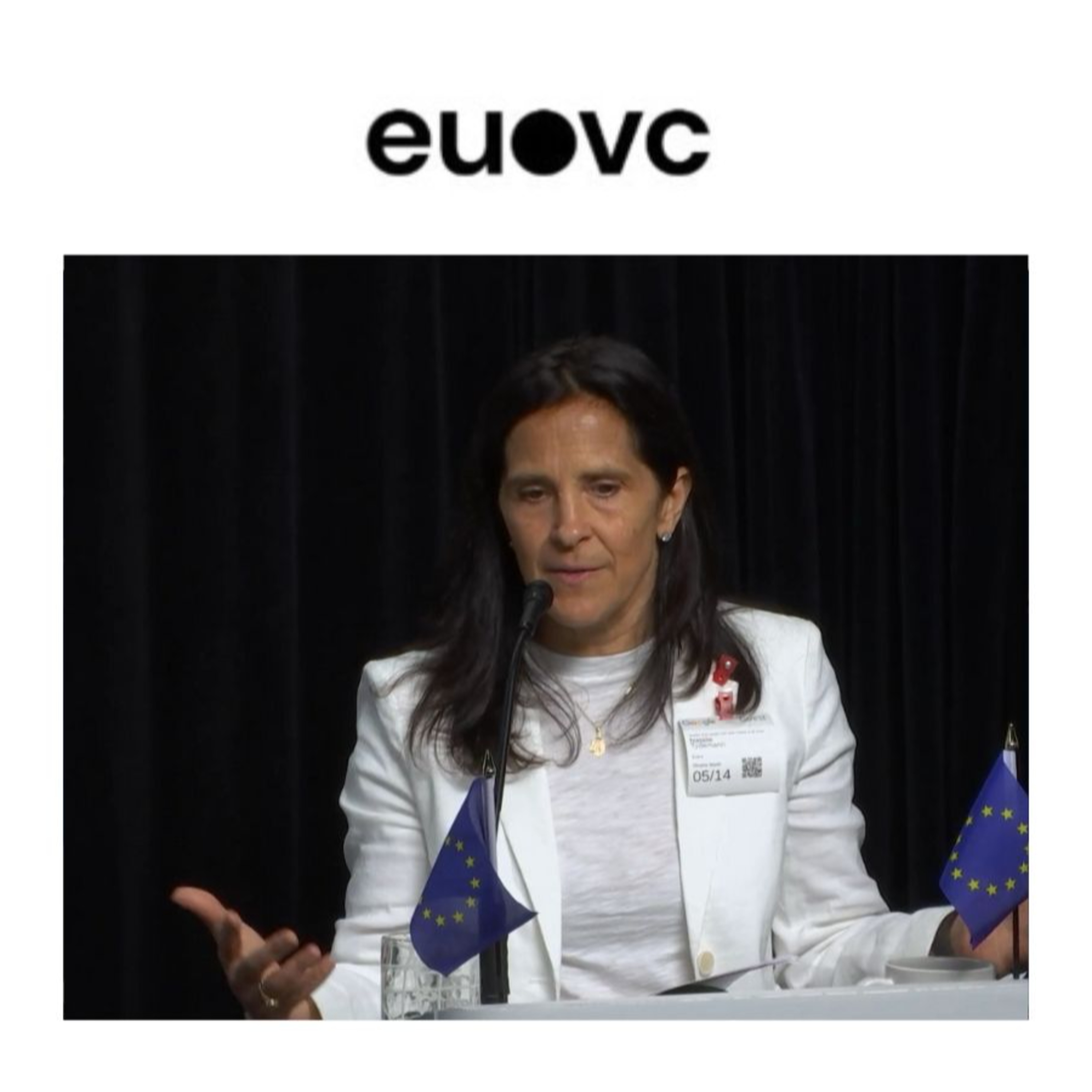
E588 | EUVC Summit 2025 | Natalie Tydemann, Kinnevik: The Path to Large-Scale Climate Impact
Europe’s tech playbook has evolved — from mastering consumer internet and telecoms to now confronting the most ambitious challenge yet: the green transition. In a compelling Summit address, Natalie Tydeman of Kinnevik framed climate tech not just as a hot trend, but as the defining commercial and industrial transformation of our time.Despite political headwinds and shifting corporate rhetoric in some markets, Europe’s climate policy support remains strong. More importantly, we’re finally witnessing a turning point: climate tech is no longer about sacrificing economics for sustainability. As Natalie put it, the new breed of green solutions are both commercially viable and environmentally necessary.What’s needed from founders and investors alike? Patience, resilience, adaptability, and creativity. The capital profiles of these companies often look very different from classical tech — they’re more capital intensive, and success often depends on building coalitions of aligned investors.Natalie emphasized two core themes where Kinnevik is most focused:Green Supply ChainsEnergy TransitionThese areas are where the visibility of future revenue streams is strongest — crucial for unlocking project financing and credit facilities. Joint development agreements, government-backed low-cost financing, and project equity play a far bigger role than in SaaS or consumer models.Europe might lag in some tech metrics, but in climate it’s starting to pull ahead:~50% of EU energy is now renewable vs. under 20% in the US84% of consumers express a desire to shop more sustainablyGovernment and blended finance are now key backers of green venturesThis ecosystem makes it possible to build large, climate-positive businesses in Europe without sacrificing scale or returns.Natalie closed by reaffirming Kinnevik’s conviction: the green transition isn’t just a moral imperative — it’s a multi-decade economic opportunity. The fund is staying highly selective, but deeply committed to supporting the few ventures that can deliver climate impact and venture-scale returns in tandem.“We’re not looking for the most startups — we’re looking for the ones that will matter most.”Investing in Climate Requires Patience — and CreativityFinancial Ecosystems & Policy: Europe Has a TailwindThe Takeaway: Selective but Bold
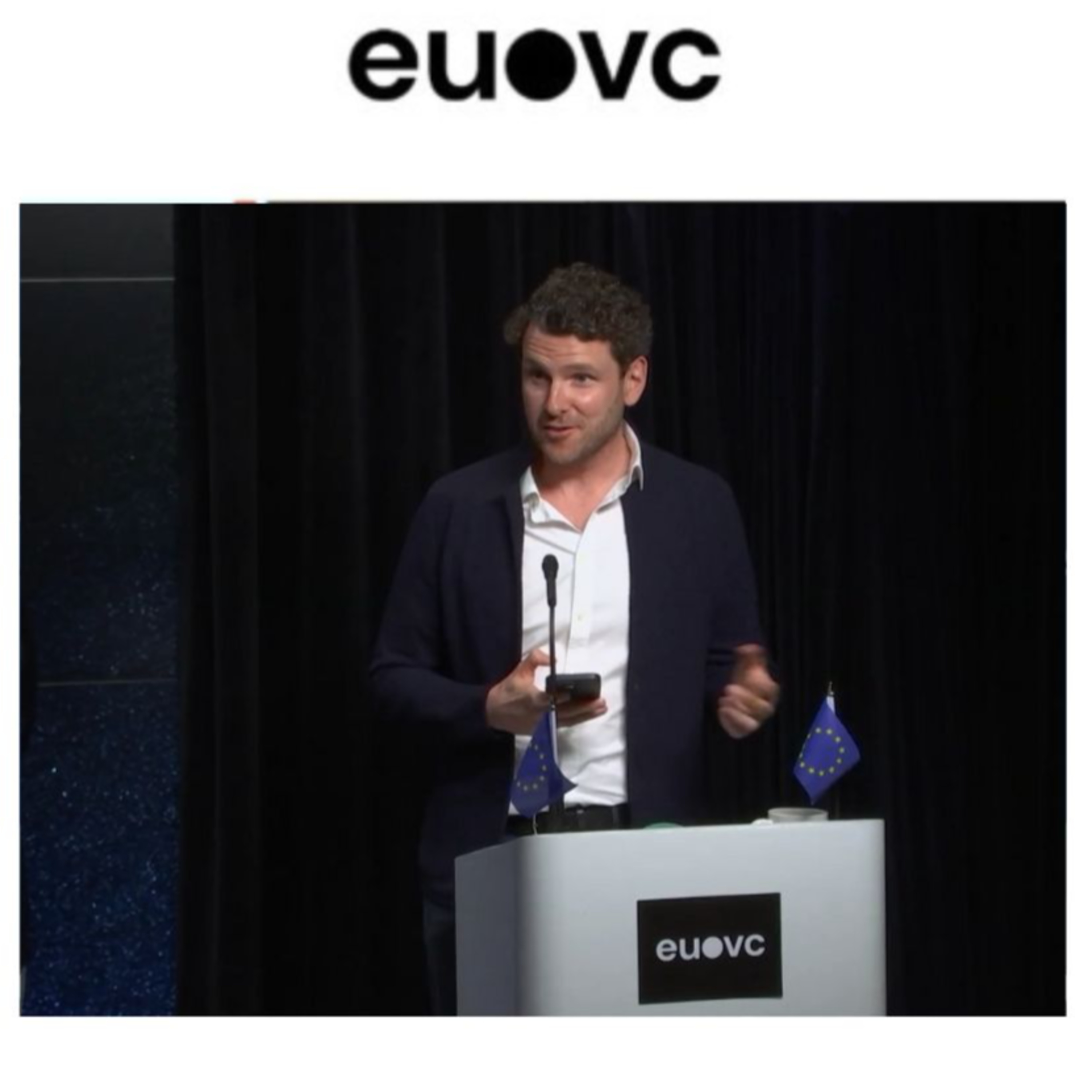
E587 | EUVC Summit 2025 | Tapestry Venture: Emerging Manager of the Year
At the EUVC Summit 2025, the award for Emerging Manager of the Year went to a team that has carved its place in Europe’s venture ecosystem with grit, heart, and vision: Tapestry Venture.Founding Partners Patrick Murphy, Audrey Miller, David Kelly, and Alex McKenzie were celebrated for their relentless effort to build something new—not just for themselves, but for founders and LPs across the continent.Not Just Another Fund. Not Just Another Story.Tapestry isn’t simply adding capital to the market. They’re challenging the established players in Luxembourg’s fund admin industry, pushing through barriers that often make it hard for emerging managers to break in.Patrick Murphy took the stage to accept the award, on behalf of his partners:“It’s amazing to be able to work with people I like so much every day for the last five years. At least now we’re all back in person—because it wasn’t so fun on Zoom.”From Ireland to VenturePatrick’s journey into venture wasn’t planned.“I grew up in Ireland building computers and websites. I didn’t know venture capital was even a thing—that people could believe in your dreams and then give you money to do something about them. It’s pretty wild. I’m glad venture found me.”That spirit—of discovery, belief, and persistence—is what defines Tapestry.In Service to FoundersIf there was one theme in Patrick’s words, it was service.“To be in venture is to be in service,” he said. “There’s no exam, no syllabus, no license for board members—though I wish there was. There’s no ombudsman, no complaint line for founders. So it’s up to us to raise our own standards. To be in service to the great founders who want to change Europe and change the world.”That vision is backed by their LPs and by a belief that the ecosystem thrives not through competition alone, but through collaboration—co-investors and friends lifting each other up.Leadership That Raises the BarFor Tapestry Venture, winning Emerging Manager of the Year is less about the trophy and more about the mandate:To challenge entrenched structuresTo empower founders head-onTo raise the standards of venture itselfCongratulations to Patrick Murphy, Audrey Miller, David Kelly, and Alex McKenzie of Tapestry Venture—Emerging Manager of the Year.Because in their words: “We’re all winners in this ecosystem. And we’re going to be here for a long time.”
E586 | EUVC Summit 2025 | Itxaso del Palacio, Notion Capital: Building European Cloud Challengers
At EUVC Summit 2025, one of the most anticipated sessions broke down a powerful data set: 100 of Europe’s breakout startups. This wasn’t theory—it was company-by-company insight, straight from interviews and bottom-up analysis.Yes, there were rogue slides.Yes, the crowd wanted to skip to the AI part.And yes, it delivered.~75% of these startups are based in Germany, France, and the UK.Despite growing noise around new hubs, Europe’s big three remain dominant. It reflects ecosystem maturity—but also a challenge: how do we better back breakout teams in the Nordics, Baltics, Southern Europe, and CEE?For the first time in years, Fintech dropped in sector rankings.Instead, we saw a wave of AI-native sales and marketing tools—building products that help companies grow smarter, automate go-to-market, and personalize customer acquisition at scale.“This year’s cohort is selling before building. AI is their leverage.”One of the most notable shifts: a significant increase in solo-founder companies.This reflects:A rise in repeat operatorsGreater early-stage toolingMore confidence in focused executionIt also implies VCs may need to shift their bias—many of these founders are no longer waiting for a co-founder to “complete” them.The moment everyone waited for: AI-native insights.49% of these 100 startups are AI-native at their core.This means:AI is not bolted on—it's the product itselfMany founders have already moved beyond horizontal LLMs to verticalized applicationsThey're monetizing via use-case depth, not just model architectureLast year’s 100 had an average of 25 employees per company.This year’s cohort? Just 14. That’s a 40% drop.But don’t mistake that for weakness—roles are more specialized, and teams are more surgical. These aren’t MVPs—they’re hyper-focused execution machines.“Today’s teams are smaller, sharper, and trained on efficiency from Day 1.”Across hundreds of founder interviews, one theme stood out:Tool loyalty is low.Founders are switching infra, models, APIs, and tooling with no hesitation.That’s not a sign of flakiness—it’s a sign of rapid evolution, where AI-native teams optimize continuously.Controversially, the speaker closed with a contrarian take:“I believe European AI regulation will actually accelerate enterprise adoption.”Why?Clarity breeds confidenceCorporate buyers need frameworksKnowing what’s allowed = faster go/no-go decisionsIn a twist, Europe might become the first-mover on enterprise AI—not in spite of regulation, but because of it.Final Message:“AI-native is not a trend. It's a new category of company. And Europe is building it—faster and leaner than ever before.”Let’s keep watching the signals. Let’s keep fueling the flywheel.
E585 | EUVC Summit 2025 | Sebastian von Ribbentrop, Join Capital: The Path to European Resilience
At the EUVC Summit 2025, the stage belonged to a voice shaped by geopolitics, defense, and the future of industrial innovation: Sebastian von Ribbentrop, Managing Partner at Join Capital.Sebastian took us on a journey—one that started in Berlin in 2017 with a cornerstone commitment from Eiser Capital, and has since expanded to NATO, Ukraine, and beyond.Not Just Startups. Not Just Capital.Join was born when European engineers left corporates like Siemens and Airbus to build their own ventures—but weren’t getting funded.Sebastian and his team stepped in. Today, with 148 LPs (90% from across Europe’s industrial heartlands), Join has become a backbone for the builders reimagining enterprise and defense.The paradigm shift became undeniable in 2023, when the NATO Innovation Fund wrote its largest ticket into Join Fund II. It wasn’t just capital—it was a mandate to help reshape defense and industrialization.A New Industrial MomentFrom Washington’s NATO anniversary to trips into Ukraine, Sebastian’s message was clear: the defense supply chain has transformed.It is now:FastTargetedSmartAnd while Europe faces inefficiencies (43 different tanks vs. one Abrams in the U.S.), it also faces a massive market opportunity.Billions at PlayThe scale is unprecedented:€200 billion from Ursula von der Leyen into defense & infrastructure€500+ billion from Germany’s new chancellor, Matz$500 billion floated by Trump over the next five yearsThese aren’t subsidies—they’re revenues. Offset programs that give companies the ability to build products, not just pitch ideas.DARPA, Dual Use & the Technology RaceSebastian reminded the room: shocks create breakthroughs. Sputnik birthed DARPA, which still deploys $4 billion annually into challenges.Now, the race is on—dual-use technology, export restrictions, inexpensive smart radar systems taking down next-gen jets.Europe, he argued, must catch up. But it has the chance to lead.“Geopolitics,” he quoted Kissinger, “is 100% personal.” And Europe must take responsibility—urgently.Leadership With TeethSebastian’s talk wasn’t about abstractions. It was about:How wars reshape supply chains overnightHow NATO’s backing changes venture capitalHow Europe can seize its industrial and defense momentBecause leadership in this decade won’t be written in press releases. It will be written in supply chains, radar systems, and the speed of capital deployment.Congratulations to Sebastian von Ribbentrop and Join Capital—for reminding the ecosystem that industrial innovation isn’t just defense spending. It’s Europe’s opportunity to lead in a world being reshaped, fast.
E584 | EUVC Summit 2025 | Andreas Klinger, Prototype Capital: The Path to EU Inc: A Unified Future for European Startups
At the EUVC Summit 2025, Andreas Klinger didn’t mince words.Europe lacks something every other industry has had for decades:→ Big spending→ Big infrastructure→ Big exitsAnd without them, we can’t pretend we’re building a sovereign innovation ecosystem.“Europe needs tech innovation to work—because without it, we will never be fully sovereign.”Andreas opened by flipping a common narrative:“Startups are too often framed as small, creative, ambitious companies. But in reality—they’re the foundation of sovereignty in tech.”Europe doesn’t need more “projects.”It needs repeatable, scalable, founder-first infrastructure to unlock its next wave of global tech companies.“The easiest way to explain EO Inc? It’s Deliveroo—but for incorporation. A European legal and operational standard for startups.”The idea is deceptively simple:Standardized formationRecognized structures across all member statesSeamless stock option systemsTaxation only at exitBank acceptance by default“This isn’t just for startups. It’s a company structure any business can use—built for the modern economy.”And the movement? It’s already here:16,000+ signatoriesBacking from founders of Wise, Bold, and countless unicornsSupport from every major VC fund and ecosystem body in EuropeGrowing traction in BrusselsThis wasn’t launched by a ministry.It wasn’t cooked up by consultants.“EO Inc was built by founders, VCs, and ecosystem people who literally just got together in a WhatsApp group.”The message is clear:You don’t need permission. You need momentum.Andreas ended on a blunt but vital point:“If one of my founders did an IPO in Europe right now—I’d sue them.”Why? Because there’s no pan-European IPO framework. No deep exit market. And without exits, VC doesn’t work.“So please. Someone. Anyone. Get together and fix this.”He wasn’t joking.He was inviting.Andreas closed with the same clarity he opened with:“You can just do things.”This wasn’t a stage for platitudes—it was a platform for action.So if you know a policymaker, a president, a minister—connect them to EO Inc.And if you care about making European venture work—get involved.Thanks, Andreas—for reminding us that sovereignty isn’t just about borders. It’s about infrastructure.Let’s build it.Startups Aren’t Small. They’re Strategic.Introducing EO Inc: Europe’s Standard Startup InfrastructureFounders Did This. In a WhatsApp Group.The Missing Piece: IPOs in EuropeFinal Words: Just Do Things
E583 | EUVC Summit 2025 | Reece Chowdhry, Concept Ventures: The State of European Pre-Seed
At EUVC Summit 2025, Reece Chowdhry from Concept Ventures made a bold claim:Pre-seed isn’t just a quirky corner of venture. It’s the layer that will define the future of European tech.“Pre-everything. Backing crazy people. No product. No traction. Just vision.”And if that makes your IC uncomfortable? Good.Reece laid it out clearly:No productOften no teamUp to €3M raisesEntry valuations where true upside is unlockedThis is not a place for 60-page memos. It’s a place for conviction, operating instincts, and guts.“If you’re running a market-sizing exercise at pre-seed, you’ve already missed the point.”With a wink, Reece shared some hard truths:“Sorry to our French and German friends—but the UK is trouncing you.”From unicorn creation to capital deployed to founder density, London continues to pull ahead.Backed by data (and a few cheeky slides), he reinforced that high-density talent hubs are gravity wells—and London’s orbit is strong.Reece didn’t sugarcoat it:“Pre-seed is also about luck. Let’s just say it.”And that’s why portfolio construction matters.→ Too many GPs still run over-concentrated portfolios at pre-seed.→ The layer needs larger portfolios, faster deployment, and more acceptance of variance.“You want your winners to carry the fund? You better give yourself enough shots.”One of the most striking trends?“Founders can now go straight from pre-seed to Series A.”Why?AI tools let solo operators do more with lessMVPs are faster, GTMs are leanerSeed rounds are getting compressed—and sometimes skipped entirelyThis means pre-seed is becoming a more critical entry point than ever, and if Europe wants to compete, we need more risk-on LPs and ICs willing to lean into the earliest bets.“If you’re in an IC meeting with a 60-page memo for a pre-seed deal, please… just remember this talk.”Pre-seed is where the crazy ideas live. It’s where the upside is wild. It’s where founders take real swings—and where GPs must be brave enough to back them.“We need more European GPs to take more risk, earlier.”Thank you Reece for the reminder: you don’t de-risk the future by waiting—you do it by backing the people building it.No product? No problem. Just conviction.Defining Pre-Seed: Where the Real Risk LivesThe UK Is (Still) Leading—Sorry, Everyone ElsePre-Seed is High Risk, High Volume—and High RewardThe AI Effect: Shrinking the StackFinal Advice? Just Write the Damn Check.
E582 | Alex Bakir, Norrsken Evolve: Resilience, Climate, and Building Europe’s Future
Welcome back to another episode of the EUVC Podcast, where we gather Europe’s venture family to share the stories, insights, and lessons that drive our ecosystem forward.Today we welcome Alex Bakir, General Partner at Norrsken Evolve, the new €57M pre-seed fund spun out of the legendary Norrsken family of funds. Together with Johan Attby and Rebecka Löthman Rydå, Alex is doubling down on impact-driven founders building Europe’s resilient and sustainable future—with backing from EIF, Saminvest, SmartCap, and operators like Taavet Hinrikus and Sten Tamkivi of Plural.We dive into Alex’s journey - with family roots in Iraq and England to Cambridge, the World Bank, Climate Change Capital, and Planet Labs; his lessons from the clean-tech crash of 2008; why resilience is now the lens for Europe’s industrial strategy; and how Norrsken Evolve is rethinking fund construction with 80 portfolio companies, automated follow-ons, and a sprint model for founder collaboration.Here’s what’s covered:01:38 Alex’s path: Iraqi–English upbringing, Cambridge climate science, World Bank, first-wave cleantech VC04:30 Lessons from the cleantech crash (’08): macro can kill even great theses07:19 Why this time is different: realism, supply chains, energy security10:31 Fundraising the hard way: €40M → €57M; satellites vs. raising a fund12:36 Mistakes & pivots: from naive global to Europe-first resilience15:50 LP profiling: local anchors + institutional validation (Saminvest, EIF)19:00 The trough of despair & team completion with Rebecka Löthman Rydå22:11 The “funky” model: 80 companies, €250K tickets, no boards, automated follow-ons26:06 Sprint model: six-week in-person collaboration (not a school)31:22 Investment focus: The carbon-free economy, the infrastructure of tomorrow, future of Europe40:57 Founder fit: mission-driven, experienced builders with scars and purpose
E581 | Olav Ostin, TempoCap: Europe’s Secondaries Boom
Welcome back to another episode of the EUVC Podcast, where we gather Europe’s venture family to share the stories, insights, and lessons that drive our ecosystem forward.Today we welcome Olav Ostin, Founder & Managing Partner at TempoCap, one of Europe’s few dedicated secondary direct firms. With a nine-year track record, a 12-person team in London and Berlin (soon Paris), and multiple $500M+ exits, Olav is perfectly placed to explain why secondaries have gone from taboo to the hottest corner of venture.From buying whole portfolios from corporates to cherry-picking strip deals with VCs under LP pressure, TempoCap has built a reputation for navigating complex transactions and delivering liquidity in a market starved of exits. In this conversation, Olav shares what makes secondary directs different, how pricing really works, and why “who isn’t selling?” is the right question in today’s market.🎧 Here’s what’s covered:01:00 TempoCap’s story: founded in 2016, 9 years of secondary directs, team and footprint02:00 What secondary directs really are: single-asset vs. portfolio transactions03:03 What they buy: later-stage, €10–30M ARR, fully funded enterprise software, fintech, cyber & more05:00 Typical deal sizes: €5–20M singles, €20M–€100M+ portfolios06:30 How deals come in: board seats, VC relationships, and corporate inbound09:50 Portfolio deals: cherry-picking vs. full takeovers, strip deals, and tailored solutions15:00 Misconceptions: discounts are not automatic; valuation discipline and liquidity dynamics23:40 How a secondary deal is actually done: NDA, desktop analysis, confirmatory DD, SPA28:20 Who’s selling? Corporates offloading, GPs under DPI pressure, but few fire sales36:00 Notable exits: Onfido ($650M), D-Orbit ($500M), and what they say about today’s market39:20 The future of TempoCap: bigger funds, becoming Europe’s leading secondary direct player

E580 | EUVC Summit 2025 | Marius Istrate, Romanian Tech Angels: The Need for Inspirational Leadership in Europe
At EUVC Summit 2025, Marius Istrate didn’t come to pitch a fund or debate capital structures.He came to talk about something harder to define—but more urgent than ever: inspirational European leadership.And it wasn’t all comfortable.“It’s great to win together with others. But we should be capable of winning alone if needed.”Marius spoke as someone who’s helped shape ecosystems from the ground up. As the leader of Romania’s largest angel group, he’s seen firsthand what local ambition looks like—and what it lacks.“I don’t want to be the VC who accidentally becomes a politician because no one else stepped up.”But leadership, he argued, isn’t about power. It’s about clarity, empathy, and ownership.“If you pinned every place in Europe that calls itself the ‘Silicon Valley of Europe,’ the map would collapse.”The obsession with copying Silicon Valley is a distraction. What Europe needs isn’t mimicry—it’s confidence in its own identity. And that means policies, capital structures, and culture that reflect our values, not someone else’s blueprint.One of the most poignant parts of Marius’ talk centered on something distinctly European:“It’s not fair that I should work more than my parents. It’s not fair that my retirement is uncertain.”That sense of fairness—a shared European moral compass—isn’t a bug. It’s a feature.And it can inform the kind of political and ecosystem leadership we need now.“People don’t want perfection. They want dignity. And when possible, empathy.”In a time of rising populism and political gridlock, this felt like a quiet manifesto for something different.“It shouldn’t be our job to inspire people—because our political leaders should already be doing that.”Marius wasn’t calling for VCs to become politicians. He was calling for a renaissance of purpose in Europe. For a generation of builders, thinkers, and yes, investors, to step up and fill the vacuum—not with slogans, but with systems, strategy, and soul.“Give us something to hope for—something we can call our own.”This wasn’t a policy talk. It was a wake-up call.And in classic EUVC fashion, it ended with an open invitation: Let’s talk more. Let’s build better. Let’s define what European leadership really means—together.From VC to VisionSilicon Valley of Europe? Please.Fairness, Dignity, EmpathyA Call to Build What’s Ours
E579 | This Week in European Tech with Dan, Mads, Andrew, Lomax & Mike
Welcome back to another episode of Upside at the EUVC Podcast, where Dan Bowyer, Mads Jensen of SuperSeed, Andrew J Scott of 7percent Ventures, and Lomax unpack the forces shaping European venture capital.This week, veteran journalist Mike Butcher (ex-TechCrunch Europe, The Europas, TechFugees) joins the pod. From the creator economy eating media brands, to Europe’s fragmented ecosystem and the capital gap that just won’t die, we dive into EU-Inc, Draghi’s unfulfilled reforms, ASML’s surprise bet on Mistral, Europe’s defense awakening, Klarna’s IPO, and quantum’s hot streak.Here’s what’s covered:00:01 – Mike’s ResetTechCrunch Europe closes; Mike reflects on redundancy, summer off, dabbling in social and video.03:00 – Media Evolution & Creator EconomyFrom ’90s trade mags → TechCrunch → The Europas & TechFugees. Blogs as early social media; today’s creators (MrBeast, Bari Weiss, Cleo Abram) echo that era. Bloomberg pushes reporters front and center as media becomes personality-driven.06:45 – Europe’s Ecosystem & Debate CultureEurope isn’t Silicon Valley’s 101 highway — it’s dozens of fragmented hubs. Conferences like Slush, Web Summit, VivaTech anchor the scene, but the missing ingredient is debate. US VCs spar on stage then grab a beer; Europe is still too polite.12:00 – All-In Summit DebriefMads’ takeaways from LA: Musk on robotics (the “hand” bottleneck), Demis Hassabis on AGI (5–10 yrs away), Eric Schmidt on US–China AI race, Alex Karp on Europe’s regulatory failures. The Valley vibe captured, but it’s only one voice.17:00 – EU-Inc & Draghi ReportDraghi’s 383 recommendations, just 11% implemented. €16T in pensions sit mostly in bonds; only 0.02–0.03% flows into VC (vs 1–2% in the US). Permitting bottlenecks: 44 months for energy approvals. Panel calls for a Brussels “crack unit,” employee stock option reform, and fixing skilled migration.35:00 – Deal of the Week: ASML × MistralASML leads a €2B round in Mistral at €11B valuation. Strategic and cultural fit (Netherlands ↔ Paris) mattered more than sovereignty. Mads: 14× revenue is a bargain vs US peers. Andrew: proof Europe’s VCs are too small — corporates must fill the gap. Lomax: ASML knows it’s a one-trick pony with 90% lithography share; diversifying into AI hedges risk.49:00 – Defense & Industrial BaseRussian drones hit Poland, NATO urgency spikes. UK pledges defense spend to 2.5% GDP by 2027, but procurement bottlenecks persist. Poland cuts red tape under fire; UK moves at peacetime pace. Andrew: real deterrence is industrial capacity. Mike: primes must be forced to buy from startups; dual-use innovators like Helsing show the way.59:00 – Klarna IPO & the Klarna MafiaKlarna IPOs at $15B (down from $46B peak). Oversubscribed; Sequoia nets ~$3.5B; Atomico 12M → 150M. A new “Klarna Mafia” of angels and operators will recycle liquidity back into Europe’s ecosystem.01:03:00 – Quantum’s Hot StreakPsiQuantum ($7B, Bristol roots), Quantinuum ($10B, Cambridge), IQM (Finland unicorn), Oxford Ionics’ $1B exit. Europe has parity in talent but lacks growth capital. Lomax: “Quantum is hot, but a winter will come.” Andrew: Europe can win here — if the money shows up.01:05:00 – Wrap-upThe pod ends on optimism: Europe may not own AGI, but in quantum it has a fair fight.

E577 | EUVC Summit 2025 | Will Maunder-Taylor, EUVC Rebel Alliance: Sales Talent Over Experience
At EUVC Summit 2025, one speaker opened with an unexpected challenge:“Let’s stop munching grass like a herd of sheep—and start looking toward the horizon.”What followed was a deeply tactical session on how VCs and founders can recruit, test, and develop top-tier talent, with lessons drawn from—of all places—English football and cybersecurity unicorns.Will Maunder-Taylor shared the story of Leicester City FC, one of the most improbable sporting triumphs of modern times.In 2008, they were relegated to the UK’s third divisionIn 2010, bought by new ownersIn 2011, hired Steve Walsh as head of recruitmentBy 2016, against 5,000-to-1 odds, they won the Premier LeagueHow? By focusing on:Mindset over CVData over brandTeam chemistry over big-name signingsThey built an entire team for £25M—less than what a competitor paid for one player.“They believed in talent and mindset over character. And they trained accordingly.”Once founders have the confidence to hire ambitiously, the next question becomes: How?The speaker offered a practical framework:Be brutally honest in interviews – Share real concerns and observe how candidates respond. Can they absorb and reflect?Create structured feedback loops – Let people improve in real time, not post-mortem.Test behavior, not polish – Past brand names don’t predict future startup grit.Build in weekly accountability – The only difference in the top-performing teams? They check in—regularly, honestly, and constructively.“If you're a VC or board member and you’re not instilling weekly accountability in your portfolio, you’re missing the biggest lever.”Will Maunder-Taylor called on VCs to get tactical—not just strategic:Ask founders how they’re hiringWho’s mentoring the team?What KPIs exist for internal talent development?How is feedback being delivered?Because talent isn’t just about who you hire—it’s how you coach, test, and level them up.Let’s give founders the confidence to stop hiring like sheep—and start winning like Leicester.Accountability, mindset, and trust in the process win out over pedigree, every time.
E576 | Dom Hallas, Startup Coalition: Founder-Led Policy & The Startup Coalition's Fight for European Tech
In this episode, Andreas Munk Holm speaks with Dom Hallas, Executive Director of the UK’s Startup Coalition, to explore how the organization is influencing policy at the intersection of startups, venture capital, and government. From immigration reform to capital access and regulatory red tape, Dom brings a candid view on what it takes to create real impact for founders across Europe.They dive into the power of founder-first advocacy, the evolving lobbying landscape in Europe, and the urgent need for a united tech voice across the continent.Here’s what’s covered:01:10 Why Policy is a Competitive Sport03:42 GDPR, Brussels & Lessons from Tech Regulation05:12 What is the Startup Coalition & Who Funds It?07:13 The Three Buckets: Talent, Capital, Regulation11:20 Why Founders Need Their Own Voice in Politics16:31 Making Advocacy Fun, Human & Effective17:56 What Startups Can Learn from Farmers21:30 Time Horizons & Playbooks in Policy Work26:18 How the Coalition Sets its Agenda31:46 A Crossroads for European Tech35:46 The Current Policy Agenda: Talent, Finance & Reg43:27 Funding the Underfunded: Inclusion as Policy47:01 Regulation That Clears the Way for the Next Thing
E576 | EUVC Summit 2025 | Firm of the Year: Credo Ventures
At the EUVC Summit 2025, the Firm of the Year award didn’t go to a household name—or a partner of the presenter. It went to a firm that’s quietly built one of the most impactful portfolios in European venture over the past decade:Credo Ventures – winner of this year’s Firm of the Year Award.And the irony? They didn’t see it coming.“I never really liked awards like this… but maybe I’m ready to reconsider.”Credo Ventures’ rise hasn’t always been center stage. Based in Central and Eastern Europe, they’ve long bet on founders and ecosystems that many in mainstream venture overlooked.But the results speak for themselves—category-defining companies, global expansion stories, and a consistent track record of backing ambitious founders early.“Maybe having such an award can be a new KPI for us—right next to DPI.”The Credo team kept the moment light, thanking not just their founders and LPs—but even the investors who didn’t back them.“Thank you, Thomas, for not investing in us. Maybe that pushed us forward even more.”This self-awareness is part of what’s made Credo so beloved in the ecosystem: no arrogance, no buzzwords—just clear conviction, strong founder relationships, and outcomes that speak louder than headlines.This award wasn’t just about Credo—it was a signal to every fund building off the beaten path:That it’s possible to build world-class performance from anywhereThat recognition follows consistencyAnd that humility and humor are strengths, not liabilities“The real credit goes to the founders we’ve backed. Their success is why we’re here today.”Congratulations to Credo Ventures—EUVC Firm of the Year 2025.May DPI stay high, and KPIs stay fun.
E575 | EUVC Summit 2025 | Tom Wilson, Seedcamp: Europe’s Flywheel Moment
At the EUVC Summit 2025, Tom Wilson took the stage to highlight something we often overlook when talking about Europe’s breakout tech stories:“The real engine of growth isn’t just the unicorns. It’s what happens after.”Tom opened with a striking stat:“Over 2,000 startups have been founded by alumni of just 250 European unicorns.”This ripple effect—beautifully documented in the Atomico State of European Tech report—is the unsung compounding force in our ecosystem. Each breakout company doesn’t just create returns—it creates founders. And each founder then builds the next set of teams, products, and outcomes.“Tech is right at the heart of Europe’s growth story. It’s what drives jobs, resilience, and momentum.”While the flywheel is turning, one spoke is still weak: liquidity.“The recycling of capital is still too thin across the ecosystem.”Without steady exits—IPOs, large acquisitions, secondary markets—we limit:Angel reinvestmentEmerging manager formationOperator talent flowing back into early-stage companiesTom called for more policy, infrastructure, and cultural support to celebrate exits—not just fundraises—and to empower alumni to give back as investors, advisors, or future founders.Tom also made a powerful point about non-linear outcomes.“Not every startup becomes a unicorn. But the people who build them still carry value—and often show up in the next big story.”He cited examples of founders who, after shutdowns, joined early teams at Revoo, Vizier, and other category leaders—and played crucial roles in their success.This isn’t just resilience. It’s how ecosystems mature.“We need to do more to recognize and encourage the second act: the angels, the early hires, the operators who cycle back in.”Because Europe’s breakout companies aren’t just wins.They’re launchpads for the next generation.And every reinvested euro—and recycled founder—keeps the flywheel spinning faster.2,000 Startups Later: The Alumni EffectWhat’s Still Missing? Liquidity.Failures That Feed the FutureFinal Message: Celebrate the Cycle
E574 | Paul Morgenthaler, CommerzVentures: Why CVC Works Best with a Single LP
In this episode, Andreas Munk Holm and Jeppe Høier sit down with Paul Morgenthaler, Partner at CommerzVentures, to unpack the inner workings of a single-LP CVC and how strategic structure can drive long-term VC success. Paul shares insights from over a decade of fintech investing, offering a rare look into how one of Europe’s leading corporate venture arms thinks about climate, compliance, and the coming wave of agentic AI in financial services.They explore what it takes to make a single-LP model work, how GenAI is reshaping fintech workflows, and why European regulation may be a global feature, not a bug.🎧 Here’s what’s covered:03:54 How LP alignment shapes internal incentives & decision-making06:28 What fundraising looks like when your only LP is a bank12:52 How CommerzVentures handles regulatory risk15:24 Customer insights from climate fintech portfolio founders17:27 Climate policy, public budgets & surviving U.S. turbulence19:10 Why ROI matters more than mission in today’s market21:11 Timing markets vs. betting on long-term trends33:35 What metrics matter most in AI x FinTech startups39:19 Can the EU AI Act be a wedge for new startups?41:55 Paul’s call to Series A/B fintech founders across Europe
E573 | Enrique Hablutzel, Chi Impact Capital & Marvin Nusseck, Circle Economy: Financing the Circular Economy
Welcome back to another episode of the EUVC Podcast, where we gather Europe’s venture family to share the stories, insights, and lessons that drive our ecosystem forward.Today we welcome Enrique Alvarado Hablutzel, Co-founder and Chief Investment Officer of Chi Impact Capital, and Marvin Nusseck, Finance Lead at Circle Economy. Together they’re behind the landmark Circularity Gap Report, the reference point for tracking how much capital flows into the circular economy — and where it still falls short.We dive into the latest data, why most money is still chasing recovery-phase solutions with the least systemic impact, the outdated risk models blocking capital flows, and how circularity can address not only climate but also geopolitics, competitiveness, and resource security.🎧 Here’s what’s covered:01:00 Why the Circularity Gap Report matters: tracking where capital really flows.03:00 The numbers: From $10B in 2018 to $42B peak in 2021 — and why momentum slowed.05:00 VC on the ground: Enrique on why linear models still attract most capital.07:00 Where the money goes: 50% of flows target recovery, not design or use phases.08:00 Geopolitics & resources: Why circularity = resource security in a multipolar world.10:00 Cynics & excuses: Why “China won’t play along” isn’t a reason to sit out.12:00 Linear risk models: Outdated finance ignores systemic and material risks.15:00 What’s missing: Correctly pricing resources — recycled vs. virgin.17:00 Investor levers: Bio-based chemicals, methanol, hydrogen as circular enablers.20:00 Circularity as systemic lens: Tackling biodiversity, climate, and geopolitics together.23:00 Local loops: Why Amsterdam and Dutch PP partnerships matter.25:00 Misalignment: Money goes to transport, but construction offers far bigger impact.26:00 The 7.2% economy: More than 90% of global materials are still in a linear economy.
E572 | This Week in European Tech with Dan, Mads & Lomax
Welcome back to another episode of Upside at the EUVC Podcast, where Dan Bowyer, Mads Jensen of SuperSeed, and Lomax unpack the forces shaping European venture capital.This week: Can Europe build a “VC Alliance” like the US and India? Why pensions remain the missing piece of Europe’s capital markets. Gold, bonds, and macro risk: what really matters for startups. Google’s antitrust reprieve, the UK’s “middling AI power,” and how Europe should play catch-up. Plus: Xi Jinping’s military parade, why manufacturing supremacy is destiny, and quantum’s hot streak in Europe.Here’s what’s covered:00:01 Europe’s VC Alliance? Lessons from the US–India deeptech pact00:06 Europe’s Capital Gap: pensions, late-stage funding, and IPO droughts00:09 Macro Forces: gold, bonds, deficits, and what founders should care about00:24 Google’s Antitrust Ruling: no breakup, just data-sharing00:29 The UK’s Middling AI Power: Eisenberg supercomputer & Europe as a “power user”00:34 Tesla, humanoid robots, and China’s military parade00:41 Europe’s Defense & Industrial Base: what’s at stake00:44 Deal of the Week: Quantum computing’s billion-dollar moment00:46 Looking Ahead: All-In Summit, new funds, and Lisbon reflections
E571 | EUVC Summit 2025 | Bernard Dalle, Index Ventures & Thomas Kristensen, LGT Capital Partners: Lessons from Building Index
At EUVC Summit 2025, few sessions packed as much history, humility, and hard-earned wisdom as the conversation with Bernard Dallé and Thomas Kristensen.What began as a one-man show in the early ’90s—when venture in Europe was barely a concept—has become one of the most respected platforms in the global industry.“I joined Index before it even existed as a venture firm. It was still Index Securities.”This was more than a talk. It was a journey through time, with insights for every fund manager—new or seasoned—building for the long haul.Before Skype, before unicorns, before European VC had a flag to wave, it was about scraping together conviction and capital.Index Fund I: $17 millionRaised in 1999, following years of groundwork and trialNo real ecosystem, no pattern recognition, and no “easy” capital“You can’t raise without a track record. So we used Fund I to create it.”And then came the landmark deal: Skype’s acquisition by eBay for $3–4 billion. That one outcome shifted the trajectory of Index—and of European venture as a whole.“After Skype, we could raise with more ease. It gave us credibility.”One of the standout themes was Index’s philosophy around team building:“The hires that worked? People we knew—or people who joined slightly below partner level and grew into the role.”In contrast, hiring senior talent cold—especially across geographies—proved far harder. Culture cohesion was key, and misalignment at the top often broke the system.The advice was clear:Grow talent internally when you canOnly bring in outsiders when they’re “known entities”Avoid parachuting in partners who haven’t lived the firm’s values“At some point, having someone senior focused purely on operations becomes essential.”This wasn’t about back office—it was about survival.Today’s LP demands include:ESG complianceFund reportingExit prepOngoing fundraisingPortfolio support“You need to start thinking about this 10 years in advance.”“It takes 15 years to become somewhat successful in this business. And once you get there—you need to start thinking about who’ll take over.”Venture isn’t just about spotting founders. It’s about building the kind of firm that can back them for decades to come.Bernard and Thomas left the stage with no fluff—just a quiet reminder:Build slowly. Hire wisely. Think in generations.And good luck to all of us doing the same.The Early Days: A Market Without MomentumScaling a Firm: Culture First, Titles LaterOps Matter More Than You ThinkThe Final Lesson: Play the Long Game
E570 | EUVC Summit 2025 | Hampus Jakobsson, Pale Blue Dot: Impact Leader of the Year
At the EUVC Summit 2025, the “Impact Leader of the Year” award went to a voice that’s impossible to ignore—and equally impossible to copy.Hampus Jakobsson, General Partner at Pale Blue Dot, was honored for his relentless push to bring urgency, clarity, and conviction to climate investing.The award, presented by Google Cloud, recognized not just a fund or a firm, but a force in the ecosystem—someone who has helped reshape the narrative on impact itself.As Google Cloud put it:“Innovation isn’t just the next feature. It’s about who’s solving the world’s most pressing challenges.”What Hampus and the Pale Blue Dot team have done is create a space—both intellectually and practically—that brings together VCs, LPs, founders, and operators who actually want to build things that matter.From climate investing as a sector (not a virtue), to challenging LPs who see ESG as a checkbox, to advocating for clarity over carbon offsetting theatre—Hampus has never opted for the easy soundbite.When he came back to the stage to accept the award, Hampus didn’t offer a speech. Just a sharp observation—about his T-shirt:“Some smart people noticed my T-shirt today. It’s not the Zuckerberg one that says ‘We need more emperors.’ It’s the one that says—‘We need fewer emperors.’”Because that’s the vibe:Less ego.Less bluster.More building.More impact.Hampus leads not with scale, but with substance.Not with "thought leadership", but with actual thought.He reminds the ecosystem that climate investing is:UrgentSmartPotentially enormousAnd yes, a little uncomfortable—because it means changing how capital behavesCongratulations to Hampus Jakobsson—Impact Leader of the Year.Let’s keep turning clarity into action. And ambition into outcomes.Not Just Widgets. Not Just Warm Words.We Need Fewer EmperorsLeadership That Leaves a Mark
E569 | Saul Klein & Yoram Wijngaarde: Dealroom’s Powerlaw, Europe’s $50B Gap & Backing Breakout Founders
European VC Power Law Report: Why Revenue Beats Unicorn StatusDealroom's recently released 2025 Power Law Investors Ranking 2025 report offers a unique milestone for European venture capital: 700 companies across EMEA now generate over $100 million in annual revenue. These aren't just unicorns floating on paper valuations. These are businesses with real customers paying real money.The report introduced a new category called "thoroughbreds" to capture this shift toward fundamental business metrics. While unicorns still matter for their forward-looking promise, thoroughbreds tell us something different: which companies actually built sustainable businesses that can weather market cycles.Today, Andreas Munk Holm digs into this topic and more with Saul Klein, co-founder of Phoenix Court (home to LocalGlobe, Latitude, Solar, and Basecamp) and the #1-ranked investor in the report, alongside Yoram Wijngaarde, founder & CEO of Dealroom.⏱️ Here’s what’s covered:00:39 - Saul on what topping the ranking says about Phoenix Court's approach01:53 - Yoram explains the thoroughbreds metric03:49 - Revenue vs valuation debate, lessons from Skype07:36 - Why Phoenix Court became multi-stage13:02 - The $35-50 billion growth stage funding gap17:38 - Advice for seed firms considering multi-stage expansion22:31 - Defense of the methodology's seed weighting24:58 - Picking companies at seed vs later stages
E568 | Ivan Burazin, Daytona: Building Daytona, the Computer for Agents
Welcome back to another episode of the EUVC Podcast, where we gather Europe’s venture family to share the stories, insights, and lessons that drive our ecosystem forward. Today’s conversation takes us on a global journey from Croatia to San Francisco to uncover how one founder caught lightning in a bottle and is now racing to harness it.Our guest: Ivan Burazin, founder of Daytona. With a career spanning Toronto, Croatia, Infobip, Shift Conference, and now Daytona, Ivan brings a rare, global perspective on how Europe can lead in DevTools and AI infrastructure. Alongside him, our dear friend Enis Hulli from E2VC joins to spotlight Daytona’s story, the lessons from its dramatic pivot, and what it means for founders and investors navigating this new AI wave.Ivan has spent two decades at the intersection of infrastructure and developer communities. From racking servers in the early 2000s to launching one of the first browser-based IDEs in 2009 to scaling the Shift Conference to thousands of attendees, his career has consistently circled around enabling developers.Daytona’s first act was a cloud IDE provider for enterprises — “one-click setup for secure developer environments.” With Fortune 500 customers onboard, revenue flowing, and a healthy pipeline, Daytona 1.0 showed promise. But something was missing.Six months ago, Ivan and his team made a bold decision to pivot. Daytona 2.0 is no longer about provisioning dev environments for humans — it’s about powering AI agents with the computers they need.“Agents are not computers themselves. They need access to computers to run browsers, clone repos, analyze data. Daytona gives them that — an isolated sandbox with machine-native interfaces built for agents.” – IvanThe differences between human and agent runtimes turned out to be massive:Humans tolerate 30 seconds of spin-up; agents need milliseconds.Humans solve problems sequentially; agents branch into parallel “multiverse” solutions.Humans parse terminal output; agents require clean APIs.By recognizing this, Daytona carved out a new category: the computer for agents.The pivot coincided with a deliberate move to San Francisco. Ivan recalls how Figma embedded with designers at Airbnb, or how Twilio found adoption among early Valley startups. To own mindshare in a new category, location mattered.“From San Francisco outwards, adoption flows naturally. From Europe inwards, it’s like pushing uphill.” – IvanSo Daytona went all-in: presence at AI meetups, team members flying in and out, and early product evangelism on the ground.HAfter the pivot, Daytona saw extraordinary pull from the market:Customer conversations ended with “send me the API key”.Infrastructure demand showed power-law dynamics: just a handful of fast-growing customers could drive scale.Instead of polished decks, Ivan shared raw revenue dashboards with authenticity.The momentum was immediate and tangible.Ivan admits he hadn’t explicitly asked permission to pivot. He hinted at it in updates, tested the idea with a hackathon, and only later informed his cap table. The response? Overwhelmingly positive.“Almost half the angels replied. Go f***ing go. Let’s go. I should’ve told them sooner.” – IvanEnis highlights this as a key distinction: experienced angels with broad portfolios encourage bold swings, while less diversified angels may fear the risk.Catching lightning is one thing. Harnessing it is another. Ivan’s current focus:Hiring deliberately: keeping the team small and ownership-driven.White-glove onboarding: every serious customer gets a Slack channel with the whole team.Balancing speed and reliability: ship daily, but solve today’s scale problems without over-engineering.Enis introduces a new term: seed-strapping — raising a seed, skipping A and B, and scaling straight to unicorn status.Ivan is cautious. Infra is capital-intensive, and while Daytona could raise a Series A today, he’s committed to doing it on his terms.