Show overview
EUVC has been publishing since 2020, and across the 6 years since has built a catalogue of 717 episodes. That works out to roughly 500 hours of audio in total. Releases follow a several-times-a-week cadence.
Episodes typically run thirty-five to sixty minutes — most land between 33 min and 52 min — though episode length varies meaningfully from one episode to the next. It is catalogued as a EN-language Business show.
There hasn’t been a new episode in the last ninety days; the most recent episode landed 5 months ago. The busiest year was 2025, with 280 episodes published.
From the publisher
The home of European tech. Connecting the people, capital, and companies building Europe. Conversations with the investors, founders, and operators shaping the continent.
Latest Episodes
View all 717 episodes
E718 | Cameron McLain, Giant Ventures On Why Europe Needs to Own the Stack
For decades, Europe built around efficiency — global supply chains, outsourced infrastructure, and distributed value creation. That model is now breaking down.In this episode, Cameron McLain (Co-Founder & Managing Partner at Giant Ventures) argues that the next era isn’t about startups — it’s about control.Who owns the infrastructure determines who captures the value.We discuss why venture is moving from convenience to systems, why “purpose-driven founders” outperform, and what it actually means to build a European stack across energy, manufacturing, and financial rails.Timestamps00:00 – Introduction: From impact to sovereignty02:00 – Why purpose-driven founders build enduring companies05:00 – Giant Ventures and the transatlantic perspective07:30 – The shift from efficiency to resilience10:00 – Why infrastructure is the new venture frontier12:00 – What the “European stack” actually means15:00 – Can Europe compete with hyperscalers?18:00 – The role of government: builder vs buyer23:00 – Why energy, manufacturing, and financial rails matter30:00 – AI, labour disruption, and the future of work34:00 – Europe’s biggest bottleneck: exits and capital markets
E717 | Jessica Persson, Scania on Why Most Corporate VCs Are Built for a World That No Longer Exists
Most corporate venture capital models were built for a world that no longer exists.They were designed for software cycles and optional innovation. Today, venture is shaped by deep tech, supply chains and industrial scale.In this EU CVC episode, Jessica Persson (Scania) joins our hosts Jeppe Høier and Andreas Munk Holm (EUVC Corporate) to explain why corporate venture must evolve from a side activity into a core strategic capability.Scania’s approach reframes venture entirely: not as access to startups, but as a way to position the company inside a changing system.In this episode:00:00 Why most CVC models are outdated04:30 From outsourced to embedded venture12:10 Deep tech changes everything20:45 The cap table as a system28:30 Strategic returns = financial returns35:00 Preparing for multiple futures
E716 | This Week in European Tech with Dan Bowyer, Lomax Ward & Harry Destecroix
Welcome back to Upside, where Dan Bowyer of SuperSeed and Lomax Ward of Outsized Ventures, joined by Harry Destecroix, MBE, of SCVC unpack the forces shaping European venture, deep tech and capital.This week’s conversation reflects a system shifting: Europe is writing bigger checks, physical AI is moving into focus, and the economics of AI are starting to change.The question is no longer where innovation happens.It is where value accrues.The stack isn’t just scaling. It is being contested.What's covered:00:00 Intro and the week’s themes02:00 Europe’s €15B fund-of-funds and the capital gap08:00 Seed vs growth: where Europe is actually underfunded14:00 Bezos’ $100B physical AI strategy20:00 Roll-ups vs rebuilds in the industrial economy25:00 China’s token model and the cost collapse of AI31:00 Security, sovereignty and model choice36:00 Innovate UK and founder-led policy41:00 Capex vs revenue: the emerging imbalance47:00 Predictions and market direction52:00 Deals of the week
E715 | Cathy White, CEW Communications on Why Comms is now infrastructure in European tech
Comms isn’t PR anymore. It’s becoming infrastructure and most founders haven’t caught up.In this episode, Cathy White (Founder, CEW Communications) joins our co-founder David Cruz e Silva to break down how the media landscape is changing—and what founders are still getting wrong.From the collapse of traditional gatekeepers to the rise of creators, newsletters, and AI-driven discovery, credibility today is no longer built through one big headline. It’s earned through consistent visibility, clear storytelling, and strong founder presence.They also unpack a key gap in European tech: we’re great at building, but often poor at explaining.Key topics:Why the “one big media hit” no longer worksComms as infrastructure, not a luxuryHow AI is reshaping discoveryWhy storytelling is a competitive advantageHow founders can build distributionTimestamps:00:00 – Intro & why comms = infrastructure 03:00 – Why most AI storytelling is boring 07:00 – The end of media gatekeepers 09:00 – The myth of the “one big hit” 10:00 – Substack vs traditional media 12:00 – Europe vs US media dynamics 16:00 – How journalists actually work today 21:00 – How founders should build visibility 26:00 – Is media biased? (spicy take) 32:00 – AI, search & your company narrative 39:00 – What founders get wrong about comms 42:00 – Final takeaways: Europe’s storytelling gap
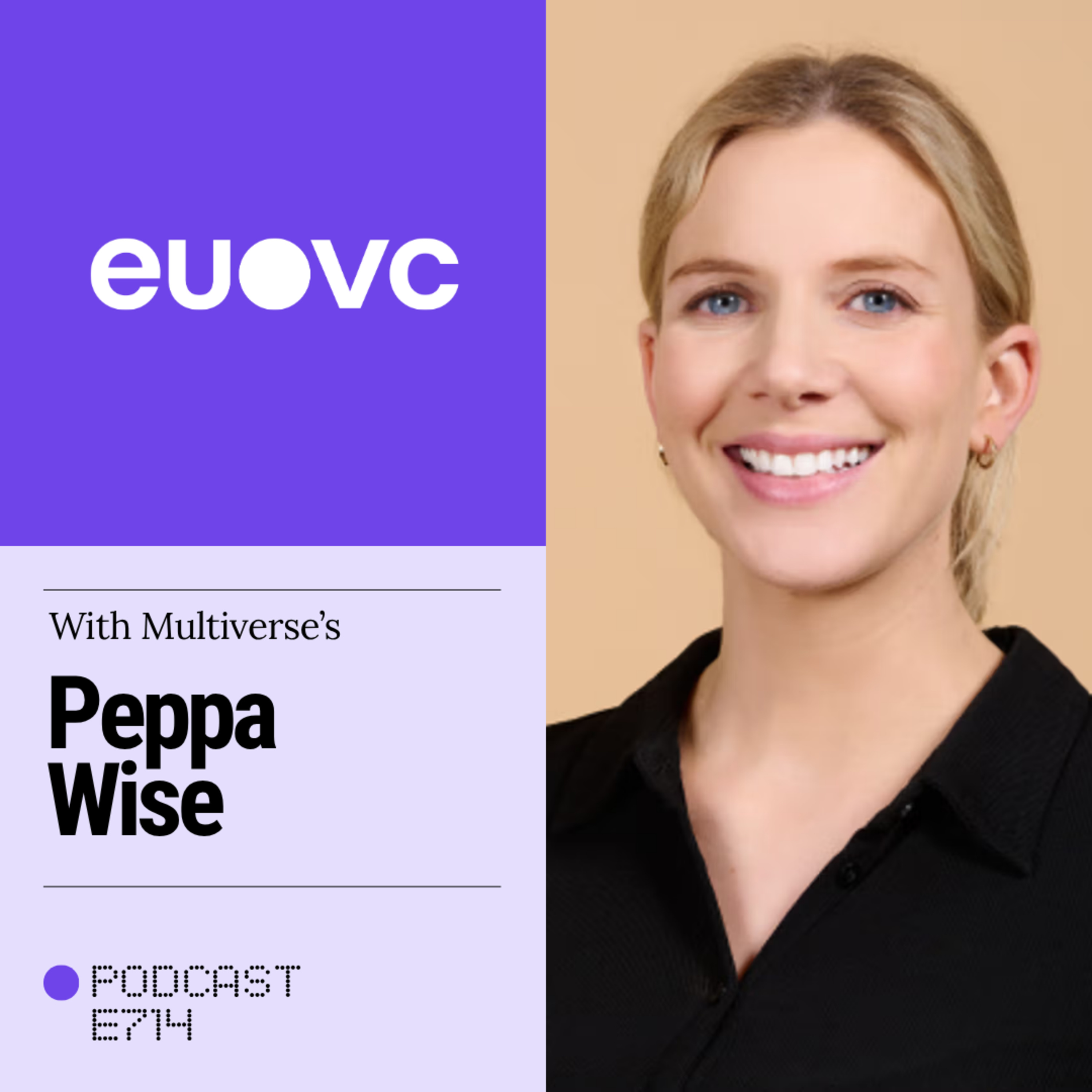
E714 | Peppa Wise, Multiverse on Meritocracy in Action: How Great Sales Leaders Are Made
Most people think their options are simple: climb the corporate ladder or start something from scratch.But there’s a third way.Together with Will Maunder-Taylor, we’re excited to bring Unsung to life — a podcast exploring one of the most important (and overlooked) opportunities in Europe today: entrepreneurship through acquisition.Instead of starting from zero, what if you could buy and grow a small business that already works?In the first episode, Will sits down with Peppa Wise, sales leader at Multiverse, to unpack what actually drives performance — in startups, scaleups, and the kinds of businesses most people overlook.This episode goes deep on:Why talent and drive often beat experienceHow the best companies build true meritocraciesWhat separates high performers from everyone elseWhy sales is one of the fastest ways to change your trajectoryHow to hire, develop, and scale great teamsPeppa’s story — from leading teams in her early 20s to helping scale one of Europe’s top sales organisations — shows what happens when companies bet on potential, not just CVs.Whether you’re building a startup, thinking about buying a business, or just questioning your path — this episode gives you a practical lens on what actually matters.Follow Unsung for more stories on building through acquisition.Timestamps(00:00) Introduction to Unsung and the guest(03:00) Peppa Wise’s early career & Darktrace(05:00) Talent vs experience(15:00) Hiring frameworks & what actually matters(25:00) Building high-performance sales teams(35:00) Pipeline, metrics & operating cadence(45:00) Advice for founders and early-career operators

E713 | Marta Sjögren, Paebbl on Scaling Carbon-Storing Materials Through Capital and Industrial Alignment
Europe’s industrial future will be defined not by ambition, but by execution.In this episode, Marta Sjögren (Co-Founder & Co-CEO, Paebbl) joins Carmel Rafaeli (Founding Partner, The Table) and Andreas Munk Holm to explore what it really takes to build and scale deep tech companies in Europe.Paebbl is turning captured CO₂ into permanent mineral form—replacing emissions-intensive materials like cement while removing carbon from the atmosphere. But as Marta explains, the real challenge isn’t just scientific. It’s aligning capital, timing, and conviction.They discuss:– Why deep tech companies fail (and it’s rarely the tech)– Fundraising as a system of signals, not storytelling– How to evaluate investors beyond capital– Designing capital stacks for industrial scale– Why rounds stall—and how to build real momentum– The role of co-CEO leadership in complex companiesThe conversation also highlights the structural funding gap for women-led climate ventures—and how The Table is working to change it.This episode is part of Leaders Shaping a Resilient Planet, spotlighting founders building Europe’s industrial future with discipline, depth, and long-term conviction.Listen now and follow for more.
E712 | Nvidia’s $1T AI Bet, Hyperscaler Risk & The Real AI Battleground | Upside
This week on Upside, Dan Bowyer and Mads Jensen of SuperSeed and Lomax Ward of Outsized Ventures unpack a moment where AI infrastructure, enterprise adoption and market risk are all moving at once.Nvidia is laying out a path toward a $1 trillion AI market, driven by major advances in inference performance. At the same time, hyperscalers are investing at unprecedented levels — with AI capex increasingly supported by debt rather than free cash flow. But the real shift is happening higher up the stack.The AI race is moving away from pure model performance and toward distribution, enterprise control and monetisation.This episode explores:• Nvidia’s roadmap and the scaling of AI infrastructure• Hyperscaler capex and the return of balance sheet risk• Why the AI battleground is shifting to enterprise• OpenAI’s monetisation challenge and strategic positioning• The growing gap between AI capability and adoption• Where value actually accrues in the AI stack• And how hyperscalers are reshaping startup opportunitiesThis isn’t just another AI cycle.It’s infrastructure, capital and business models being rewritten at the same time.Chapters00:00 Intro02:00 Nvidia GTC and inference leap07:00 The trillion-dollar AI question12:00 Hyperscaler capex and leverage18:00 Models vs distribution23:00 OpenAI’s strategy28:00 Enterprise AI battleground34:00 Market risk and concentration39:00 Capability vs adoption45:00 Where value accrues50:00 Startups vs hyperscalers55:00 Europe policy signalsUpside is a weekly deep dive into the forces shaping European venture, AI, defence and deep tech.Hosted by:Dan Bowyer (SuperSeed)Mads Jensen (SuperSeed)Lomax Ward (Outsized Ventures)About Upside
E711 | This Week in European Tech with Dan Bowyer, Mads Jensen & Lomax Ward
In this episode of Upside, Dan Bowyer, Mads Jensen of SuperSeed and Lomax Ward of Outsized Ventures unpack a week where geopolitics, AI arms races and Europe’s tech momentum took over the headlines.A new oil shock triggered by tensions around the Strait of Hormuz threatens global energy flows and raises the spectre of another inflation cycle with direct consequences for venture capital and startup funding. At the same time, the economics of modern warfare are shifting rapidly, with cheap drones and fast-iteration defence technology reshaping how conflicts are fought and who builds the tools.Against that backdrop, Europe delivered a surprisingly strong week for tech: France produced the continent’s first $1B seed “Instacorn”, Revolut finally secured its UK banking licence, and new proposals could finally push Europe closer to unified capital markets.Meanwhile in AI, the race for chips, coding platforms and infrastructure continues to accelerate, from Nvidia’s looming announcements at GTC to Meta building its own inference silicon and the meteoric rise of AI coding startup Cursor.This isn’t just a tech news cycle.It’s energy markets, AI infrastructure, and European innovation ecosystems moving at the same time.What’s covered• The Strait of Hormuz oil shock and its ripple effects on venture markets• Ukraine’s emergence as a real-time defence innovation ecosystem• The shifting economics of warfare: cheap drones vs expensive missiles• Europe’s first $1B AI seed round and the rise of frontier labs in Paris• Yann LeCun’s new “world models” bet and the next frontier in AI• Capital markets integration and whether Europe can finally unify funding• Cursor’s $50B trajectory and the future of AI coding platforms• The AI chip war: Meta’s inference silicon vs Nvidia’s dominance• AI layoffs and whether productivity narratives are masking pandemic over-hiring
E710 | Helen McShane, Young Lives vs Cancer and Zoe Peden, Ananda on Mission-Driven Capital: When a 60-Year-Old Frontline Charity Becomes an Investor
Healthcare startups rarely fail because of bad technology. They fail because the system won’t let them in.In this episode, Andreas speaks with Helen McShane, who leads the Innovation Lab at Young Lives vs Cancer, and Zoe Peden, Partner at impact venture firm Ananda, about a new experiment in healthcare innovation: a charity investing directly in startups.After more than 60 years supporting children and families affected by cancer, Young Lives vs Cancer has deep insight into where the system works — and where it doesn’t. Through its Innovation Lab, the charity is now deploying mission capital to support startups building solutions for young cancer patients.Their first investment: £30,000 into Little Journey, a platform designed to help children prepare for medical procedures.Helen and Zoe explore how charities can combine institutional knowledge with venture discipline to help startups navigate complex healthcare systems and accelerate adoption where it matters most.In this episode:Why healthcare startups struggle with adoptionWhat “mission capital” means in practiceHow charities can support startup innovationWhy credibility and partnerships often matter more than cheque size
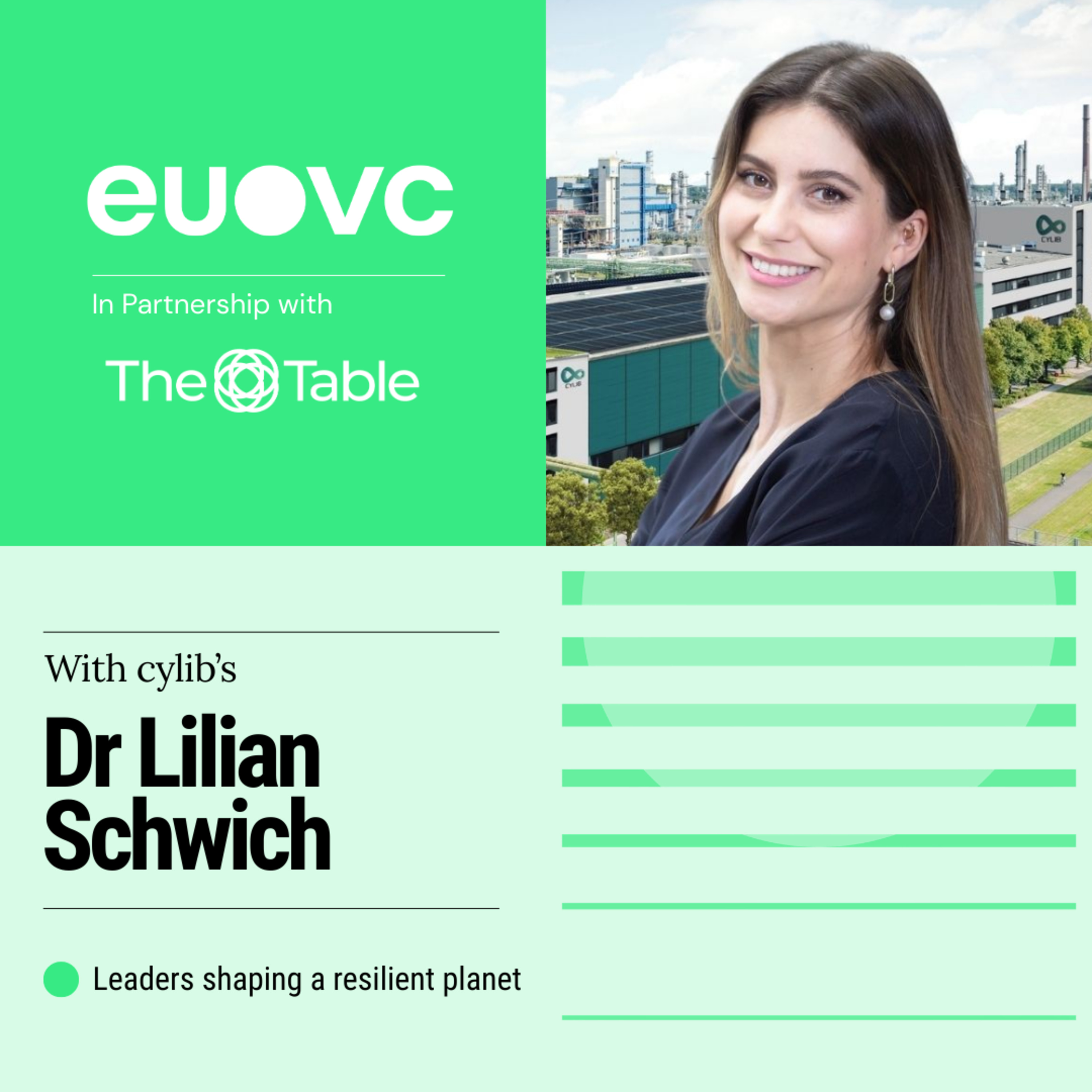
E709 | Dr Lilian Schwich, cylib on Europe’s Battery Recycling Gap
Europe’s climate transition is no longer only about emissions.It is increasingly about sovereignty: control over industrial capacity, critical materials, and resilient supply chains.In this episode of Leaders Shaping a Resilient Planet, Carmel Rafaeli, Founding Partner at The Table and our very own Andreas Munk Holm, are joined by Dr Lilian Schwich, Co-Founder & Co-CEO cylib, a company building one of Europe’s most advanced lithium-ion battery recycling platforms.Together they unpack one of the least understood gaps in Europe’s battery value chain: refining metallurgy — the step that converts battery scrap into high-purity critical raw materials that gigafactories can actually use.Dr. Schwich explains why Europe still lags Asia in the battery ecosystem, what it takes to scale an industrial climate company, and why recycling is becoming a foundational capability for Europe’s industrial future.In this episode• Why refining metallurgy is Europe’s missing battery capability• How cylib is closing the loop in the battery value chain• Why battery recycling is a sovereignty issue• How to finance industrial climate companies• What makes corporate partnerships actually work
E708 | This Week in European Tech with Dan Bowyer, Mads Jensen & Lomax Ward
This week on Upside, Dan Bowyer, Mads Jensen (SuperSeed) and Lomax Ward (Outsized Ventures) unpack a moment where energy, AI and geopolitics collide.The ongoing conflict in the Middle East is threatening one of the world’s most important energy routes.AI companies are discovering that governments may ultimately control frontier models. And hyperscalers are committing hundreds of billions to AI infrastructure while venture investors quietly debate whether the cycle is overheating.The conversation explores:• Why energy shocks ripple directly into venture markets• How modern warfare is shifting toward startup-speed innovation• The clash between Anthropic and the Pentagon• Whether AI layoffs reflect real productivity gains or pandemic over-hiring• The massive infrastructure bet powering the AI boom• Germany’s productivity wake-up call for Europe• And why Europe is still capable of deep-tech moonshots like fusionThis isn’t just a news cycle.It’s capital, sovereignty and technology power shifting at the same time.🎧 Listen if you’re building or investing in AI, defence, deep tech or European venture.#euvc #VC #VentureCapital #Investing #TheEuropeanVC #Podcast #Tech #Startup

E707 | Ash Pournouri (Belong), Sundar Arvind (Mozart AI) & Daniel Waterhouse (Balderton Capital): AI Music, Control and the Next Creative Era
This special episode is an inside look at AI music from three very different vantage points: the builder, the investor, and the industry insider.Andreas is joined by Sundar Arvind, CEO & Co-Founder at Mozart AI, building a collaborative generative audio workstation; Daniel Waterhouse, General Partner at Balderton Capital; and Ash Pournouri, Co-Founder of Belong, entrepreneur, producer, and former manager of Avicii.Together, they unpack how AI is reshaping music creation, how serious investors underwrite risk in a litigious industry, why “one-click songs” miss the point, and whether AI expands creativity or commoditizes it.If you want a grounded view of where the real fault lines are — rights, training data, authorship, collaboration, and the psychology of creativity — this is it.ShareWhat’s covered:00:40 Mozart AI’s vision: a collaborative generative audio workstation05:10 DAWs, EDM, and why tech has always expanded music creation06:35 Why “one-prompt songs” optimise for quantity, not craft09:20 Underwriting AI music: how VCs think about billion-dollar incumbents13:00 Is this a new instrument or a 100x larger market?18:45 Are professional artists already using AI tools?21:00 Copyright, training data, and legal diligence in AI music25:15 Philosophically: what are “rights” when machines learn from music?33:40 Diffusion models explained simply: how AI generates sound36:30 The return of the band? Multiplayer music creation40:00 Ash Pournouri joins: the industry’s instinct is protection44:10 “You can’t stop development”: why demand always wins48:50 Packaging matters: AI as tool vs AI as replacement51:20 Lowering thresholds and democratization across decades56:30 Five-year predictions? We’re on the vertical part of the curve58:10 The “vibe coding” moment for music
E706 | Jo Slota-Newson & Marc Sabas, Almanac Ventures: Systemic Deep Tech for Industrial Decarbonisation
Industrial systems are responsible for 75% of global emissions, yet only a quarter of climate-focused VC money flows into them. Not because investors don’t care — but because these systems are hard. They’re interconnected. Capital-intensive. Slow-moving. Technically dense. And deeply under-innovated.Almanac Ventures is built to change that.In this episode of the EUVC Podcast, Andreas Munk Holm sits down with Jo Slota-Newson and Marc Sabas, co-founders of Almanac Ventures — a new European seed and pre-seed deep tech fund laser-focused on unlocking decarbonisation in industrial systems through scientific breakthroughs and commercial discipline.This is a pitch episode — a chance for the EUVC LP & GP community to hear directly what Almanac stands for, how they invest, and why the next decade of industrial innovation will be shaped by specialist deep tech funds with true scientific and financial edge.Here’s what’s covered:00:49 | What Almanac Ventures is — a European seed/pre-seed deep-tech fund backing scientific breakthroughs applied to industrial systems01:31 | The founding team — Jo’s nanoscience PhD + 18 years commercialising deep tech, Marc’s finance → CVC → impact VC journey (and Jo’s 37km Channel swim)03:52 | The complementary edge — technical rigor meets financial/commercial structuring, evidenced through 45 investments and a 2.3× MOIC track record05:22 | The industrial innovation gap — 75% of emissions come from industry, yet only ~25% of climate VC targets it (because the systems are hard, complex, and interconnected)06:11 | Why industry is ripe for deep-tech disruption — 20th-century inefficiencies, high value pools, and the need for performance + cost + decarb together10:17 | “Deep tech works for venture—if you know where to look” — how to identify capex-efficient, scalable industrial technologies vs. science projects that need different capital12:25 | Case study: Hot Green — a new compressor architecture enabling industrial heat pumps for 200–400°C processes (F&B, manufacturing) with electrification upside13:49 | Case study: ReClinker — Cambridge spinout recycling cement inside steel arc furnaces, piggybacking heat, removing the CO₂-heavy chemistry step15:19 | Do you need to be an operator to invest in deep tech? — why complementary experience (science + venture + corporate + some ops) beats any single “must-have”18:35 | Investment strategy — first-check investor at TRL 4–7, pan-Europe, €300k–€1M tickets, aiming for a 25–30 company portfolio with follow-on capacity
E705 | Martin Schilling, Deep Tech Momentum: Why Europe’s Deep Tech Problem Isn’t Funding
Europe does not have a deep tech problem. It has a commercialisation problem.The last European companies to reach €100B+ market caps were SAP and ASML, both founded 40–50 years ago. If Europe wants a new generation of deep tech champions, venture capital alone won’t get us there. Customers have to step in.In this episode, Andreas Munk Holm is joined by Martin Schilling, former operator, investor, and founder of Deep Tech Momentum, to unpack why Europe excels at funding breakthroughs, but consistently fails to industrialise them.This is a conversation about:why enterprise buyers are the missing link in European deep techwhat corporates are doing wrong (and how they can fix it)how founders actually win large customers in complex, regulated marketsand why courage — not grants — is Europe’s real constraintShare🎧 Here’s what’s covered:01:15 Martin’s background: from N26 operator to deep tech ecosystem builder01:52 What is Deep Tech Momentum (DTM)?03:00 Why commercialisation — not capital — is the real bottleneck04:19 The age gap: Europe’s top companies vs the US06:26 Why US corporates acquire twice as many startups as Europe06:54 The uncomfortable truth: Europe funds innovation others industrialise08:54 Why corporates (not just VCs) must change behaviour10:49 Neo-primes: the new system integrators Europe desperately needs12:50 The four things corporates must fix to work with startups15:06 Why startup collaboration must be CEO-owned17:14 Buyers first: why conferences get this wrong19:03 Money + customers: the only two things founders really need21:27Trust, speed, and why procurement kills startups23:25 Why trust starts inside the corporate, not with founders27:03 Selling deep tech to enterprises & governments: what actually works32:03 When CVCs help — and when they hurt33:08 Enterprise sales mistakes founders keep making38:28 Deep tech sales reality: defense, policy, and long cycles44:57 Why DTM is not EU-funded — by design49:07 The state’s real role: customer, not grant machine49:23 Final takeaway: Europe needs courage, not more programs
E704 | This Week in European Tech with Dan Bowyer, Mads Jensen & Lomax Ward
Welcome back to another episode of Upside where Dan Bowyer, Mads Jensen of SuperSeed, and Lomax Ward of Outsized Ventures go behind the headlines shaping European tech, capital, and power.This week felt less like a market update and more like a structural reset.Nvidia posts another blowout quarter — and the market barely reacts.Ukraine, four years into war, is quietly becoming Europe’s most important defence innovation engine.Anthropic adjusts its safety posture as AI labs collide with geopolitics and procurement reality.And beneath it all, questions around margins, sovereignty, and capital allocation are getting sharper.This isn’t just a tech cycle.It feels like a systems cycle.This is Upside, where optimism is earned, not assumed.What’s covered:03:30 Nvidia earnings: perfection priced in?09:40 Ukraine four years on: from aid recipient to defence capability supplier17:30 Europe’s defence spend: real budgets or slow procurement?23:30 AI safety becomes conditional: competitive pressure meets ethics31:00 Distillation at scale: China, IP leakage, and national security35:00 SaaSpocalypse vs SaaS redemption: systems of record vs systems of action40:30 OpenAI & Anthropic margins: the hidden constraint under the hype46:00 Chips & quantum: Europe’s deep tech wedge — if scale capital shows up54:30 Abundant intelligence: what breaks if intelligence gets cheap?#euvc #VC #VentureCapital #Investing #TheEuropeanVC #Podcast #Tech #Startup

E703 | Max Bray and Juliet Bailin, Kindred Capital VC: LP Conviction, $15B Funds & The Venture Barbell
What exactly are LPs buying when they allocate to venture today and do they still believe in it?In this episode, Andreas sits down with Max Bray and Juliet Bailin, both Venture Partners at Kindred Capital VC to unpack what’s really happening beneath the fundraising headlines.Max brings the raw perspective of trying to raise a first-time fund in 2025 with unicorn-founder GPs, strong angel track records, and still struggling to secure second meetings.Juliet brings the sharper counterpoint: LP frustration isn’t always ignorance. Sometimes it’s a rational response to how venture has been practiced, especially around transparency, liquidity discipline, and the unrealistic expectation that a GP should be world-class at everything.This is a conversation about:LP behavior in uncertain cyclesThe myth of the “full-stack investor”Why solo GP economics are brutalWhether software still needs ventureAnd why the fund model is splitting at the extremesNot hot takes. Not doom.Just honest mechanics.ShareWhat’s Covered:01:04 Max’s 2025 fundraising reality: even strong “on-paper” stories struggle to get second calls03:46 LP rotation: capital moving toward liquidity, security, and shorter-duration bets05:08 LP frustration: transparency gaps + liquidity decision-making07:09 LPACs as sparring partners, not governance theatre09:31 Europe’s structural issue: too few LPs and GPs have lived full cycles12:47 The “full-stack investor” myth: investing + fund management + compliance + IR14:46 Solo GP economics: why 2/20 breaks at the small end26:08 The barbell thesis: platforms on one end, specialists on the other27:56 Software defensibility compression in the AI era30:24 Will AI decentralize outcomes — or centralize them further?33:10 The rise of AI roll-ups and alternative capital models35:19 The “middle-market squeeze” — real or overhyped?39:34 What founders actually care about when choosing a fund

E702 | Lubomila Jordanova, Plan A: Climate Isn’t “Over”
Climate isn’t “over.” But building in climate has entered a new chapter, defined by shifting regulation, politicized narratives, buyer confusion, and a market that funded dozens of overlapping platforms.In this episode, Andreas and co-host Carmel Rafaeli, Founding Partner at The Table, sit down with Lubomila Jordanova, Co-founder & CEO of Plan A, just weeks after Plan Ajoined forces with Diginex, the NASDAQ-listed sustainability technology company, at the end of 2025.The conversation is part of Leaders Shaping a Resilient Planet, a series spotlighting exceptional founders in climate tech who happen to be women. The focus is not identity as a theme, but execution as a discipline. These are operators building in some of the most complex and capital-intensive parts of the real economy.This is not an acquisition recap. It is a clear-eyed discussion about what it takes to build and responsibly exit a climate tech company in a market that is maturing quickly.What’s covered:00:52 The Table: co-investing community + the Foundation’s recoverable grants model02:05 Introducing Lubomila Jordanova and Plan A02:45 The acquisition: why Plan A chose to lead consolidation04:35 Fundraising logic → acquisition logic: what changed06:40 Founder outcome vs VC outcome: how alignment works in an exit11:30 “The truth is where the real economy sits”: what carbon software actually sells13:30 The uncomfortable line: “glorified consulting with a digital angle”15:05 What VC portfolios get wrong in climate: return distribution, capital stack, secondaries16:55 Why “climate” can’t be one bucket: hardware vs SaaS vs reporting20:00 Managing investor perception: visibility, bias, and boardroom baggage23:15 The broader financial pyramid: VC vs public markets vs real-economy signals27:35 Post-exit reality: why a public-company KPI lens changes the conversation31:10 Three founder learnings (humility, ecosystem, real-world problems)33:55 A rare founder truth: pregnancy during the exit + building with “more hats than one”
E701 | Andy Lurling, Lumo Labs: Smart Capital from Eindhoven and Investing in AI for Health
In a market where “AI fund” can mean almost anything, Lumo Labs is unusually specific: digital deep tech, deployed early, and anchored in one of Europe’s densest innovation clusters—Eindhoven, home of Philips’ legacy and the High Tech Campus (“smartest square kilometer” energy).In this EUVC pitch episode, Andreas sits down with Andy Lurling, founder & GP of Lumo Labs, to unpack how an entrepreneur-turned-investor built a fund that’s deliberately more than money: a structured support program, deep technical selection, and a thesis shaped by real-world constraints, health systems under pressure, and cities as the source of most emissions and pollution.ShareWhat’s covered: 00:59 Why “Labs” and why Eindhoven: origin story + Philips legacy02:31 Andy’s founder journey: EyeOpener, ESA as first investor, and the exit06:15 From angel tickets to a fund: two cornerstone LPs pull them into fund building08:26 Fund I recap: €20m, 23 pre-seed/seed investments08:58 Fund II status: just over €40m raised, targeting €100m final size10:34 The actual thesis: AI + digital deep tech (security, IoT, AR)13:12 SDG focus: health, education, sustainable cities + climate action (urban)15:31 Why these sectors: prevention over curing, and cities as the “source problem”19:22 Where they invest: Netherlands/Belgium/Germany core; Spain/Portugal + Nordics via scouts20:30 “Smart capital” in practice: leadership, market fit, storytelling, follow-on readiness23:30 Track record snapshot: 30 companies; 3 dead; 9 (soon 11) moving into scale-up territory
E700 | This Week in European Tech with Dan Bowyer, Lomax Ward & Eyal Malinger
Welcome back to another episode of Upside where Dan Bowyer and Mads Jensen of SuperSeed go behind the headlines shaping European tech, capital, and power.This week we’re joined by Eyal Malinger, co-founder of Resurge Growth Partners, to unpack a genuinely strange week in global tech.China unveils humanoid robots that look disturbingly battlefield-ready. Anthropic tries to draw moral lines in defence AI. Peter Steinberger leaves Europe almost as fast as he went viral. Munich becomes less “security conference” and more “Europe, wake up.” And in the background, billion-dollar AI seed rounds and quantum mega-funds quietly signal that the frontier is accelerating again.This isn’t just a tech cycle.It feels like a systems cycle.This is Upside, where optimism is earned, not assumed.What’s covered:02:10 China’s humanoid robot moment: hardware dominance meets AI brains06:20 Battlefield AI and the ethics problem Anthropic can’t avoid14:00 Raspberry Pi, edge AI, and Europe’s accidental meme stock20:30 Anthropic vs Palantir: moral lines vs deterrence logic25:10 Peter Steinberger leaves Europe — ecosystem gravity in action31:00 AI inside venture: workflow automation vs real alpha43:00 Munich Security Conference: defence budgets, sovereignty, and Stark vs Thiel52:10 Psychedelics and glucose monitors: Europe’s quiet biotech strength55:30 Quantum funds and Europe’s billion-dollar AI seed round

EUVC Live at GoWest | The Outlook for European Capital Sovereignty feat. Olivier Tonneau, Jeppe Høier, Paolo Pio, Fergus Bell and Prashant Agarwal
In this EUVC Live at GoWest episode, Olivier Tonneau, Founding Partner Quantonation, Jeppe Høier, Co-Host at EUVC Corporate, Paolo Pio, Co-founder and General Partner at Exceptional Ventures, Fergus Bell, Founder and Managing Partner at The Players Fund, and Prashant Agarwal, Chairman and Managing Director at Scandian xplore one defining question:How does Europe turn frontier innovation into global scale?Across quantum, corporate capital, longevity, and sport, the same pattern emerges: Europe doesn’t lack talent or research. It lacks the capital and market architecture required to scale strategic industries fast enough to stay independent.Olivier opens with Europe’s quantum paradox. Europe supplies a meaningful share of deployed quantum computers globally, with strong startup and research clusters across the Nordics, France, Germany, and the UK. The science is world-class — but the financing is breaking. Over the last 12 months, the funding ratio between Europe and the US has shifted from roughly 1:2 to nearly 1:7, accelerating US scale-up, public listings, and acquisition pressure. Europe has 12–24 months to respond — not to avoid failure, but to avoid becoming the lab while others become the market.Jeppe shifts the lens to corporates. Corporate venture capital represents roughly 25% of global VC volume, yet the average lifespan of a CVC unit is only 3.7 years. His argument is blunt: most corporates launch venture arms believing they are “doing VC,” when they are actually building a strategic instrument without the operating system required to sustain it. Without durable governance — and a clear Build, Buy, Partner model — corporate venture becomes fragile instead of strategic.Paolo reframes health and longevity as deep tech moving at software speed. Genome sequencing has collapsed from decades to hours. mRNA proved that biology timelines can compress dramatically. With AI now embedded in diagnostics and discovery, health is entering an exponential era — and venture is being pulled with it.The session closes with a thesis most investors still underestimate. Fergus and Prashant argue sport is no longer entertainment — it is venture infrastructure. Athletes and rights holders are becoming capital allocators and distribution rails. Elite sport has evolved into a real-world deployment environment for deep tech, health tech, AI, and performance systems — where validation happens under pressure and at global scale.The takeaway across all five perspectives is clear:Europe invents early.But scale requires architecture.Late-stage capital depth.Liquidity.Corporate integration.Coordination.What’s covered:00:30 Europe’s scale question — five lenses on one problem02:00 Quantum’s paradox — Europe leads in science, not in financing05:00 The 1:7 funding gap — why the next 12–24 months matter07:00 What Europe can do — capital architecture, procurement, scale funds11:30 Corporate venture — 25% of global VC, but structurally fragile13:30 Why CVCs fail — the 3-year vs 6-year test and governance gaps16:30 Longevity as deep tech — health moving at software speed21:30 AI in health — diagnostics, discovery, and exponential biology27:30 Sport as venture infrastructure — athletes and rights holders as rails34:30 Deep tech in sport — validation, performance systems, adoption under pressure40:00 Final takeaway — Europe has innovation; it needs scale architecture