
Eric Hörst's Training For Climbing Podcast
108 episodes — Page 2 of 3
#84: The Role of Genetics in Climbing Performance & What It Means for You
In this fascinating episode, Eric Hörst provides a deep and thoughtful overview of the research on the role genetics plays in sports prowess and climbing performance. Leveraging his decades of experience as a climbing coach and 30 years engaging with climbing researchers, Eric tells an empowering story of how the average climber can pursue peak climbing performance. RUNDOWN 0:15 - Welcome 0:40 - First in a series of podcasts examining the role of genetics, physical strength/power, body weight, and dietary and nutritional practices on training adaptions and climbing performance. 2:06 - The focus of this podcast is the fascinating topic of the role that genetics play in determining climbing performance. 2:30 - Brief backstory on Eric and Training For Climbing. 5:00 - Intro to the role genetics play in climbing performance. Eric describes the 4 parts of this podcast: Eric will share his general observations about climbing performance given his 46 years as a climber...and 30+ years as a climbing researcher and coach. Next, Eric will provide a research-based overview of the role genetic traits play in sports performance in general. Eric will drill down into the data on the influence genetics might have in determining maximal bouldering and lead climbing performance. Eric provides a coaching perspective for the mass of climbing wanting to improve in climbing. How meaningful, really, are genetics in determining how the average passionate climber will perform over the years as a gym climber, boulderer, or lead climber? 6:05 - Part 1: Eric's general observations and 4 powerful take-home points about climbing as a recreational activity and sport. 10:00 - Part 2: The Role of Genetics in athletic performance...and sports in general. What does genetic research reveal? 18:42 - Part 3: What Role does genetics play in climbing? What does the research reveal? 30:15 - A word from this podcast's sponsor, PhysiVantage. Get 15% off full-priced nutrition with checkout code: PODCAST15 (North America only). Europe and elsewhere visit EPIC-TV Shop or BananaFingers.com to get your PhysiVantage! 32:00 - Part 4: The real-life implications of the genetic research...and what it means passionate climbers wanting to excel at this sport? 37:45 - A brief look at epigenetics -- the study of how our behaviors and environment can cause changes that affect the way our genes work. How can we play a role in epigenetic changes...to improve health, fitness, and climbing performance? 40:45 - Summary of key points and actionable items. 43:30 - Best best climber in the world is.... 43:45 - PLEASE write a 5-star review on Apple Podcasts and SHARE this podcast with a friend! 44:00 - Check out PhysiVantage Nutrition -- Get 15% off full-priced nutrition with checkout code: PODCAST15 (North America only). 44:35 - Closing comments -- Horst Out! SAVE on La Sportiva shoes here >> Thank you! La Sportiva, Maxim Ropes, DMM Climbing, Friction Labs Music by Misty Murphy Follow Eric on Twitter @Train4Climbing Check out Eric's YouTube channel. Follow Eric on Facebook! And on Instagram at: Training4Climbing Copyright 2023 Eric Hörst | Horst Training, LLC.
Ep 83#83: Training (and Life) "Edits" to Climb Better & Achieve Greatly
If you're passionate about improving your training, elevating your climbing, and advancing in other important life areas....then this is a must-listen podcast! With the perspective of a new year's renewal, Coach Hörst explains the power of making occasional training, climbing, and life "edits" in the quest for peak performance and a deeper sense of joy and happiness. RUNDOWN 0:15 - Welcome 0:48 - The importance of "editing" -- in writing...and in training, climbing, and living effectively! 4:33 - You are the author of your training (and life), so it's essential that you act with intention! 6:43 - #1: EDIT your daily and weekly schedule to maximize time spent engaged in important activities. 14:13 - #2: EDIT your training to provide optimal results, not maximal fatigue. 24:22 - #3: EDIT your thoughts and self-talk to create a state of mind for massive action towards your goals. 33:03 - #4: EDIT your diet and nutrition to support energy, focus, strength gains, recovery ability, and injury resistance. 41:28 - #5: EDIT your stress levels. Strive to reduce (or eliminate) "bad stress", while seeking out and embracing sources of good stress. 48:48 - A word from this podcast's sponsor, PhysiVantage. Get 15% off full-priced nutrition with checkout code: PODCAST15 (North America only). Europe and elsewhere visit EPIC-TV Shop or BananaFingers.com to get your PhysiVantage! 49:28 - Closing comments on the power of climbing. PLEASE write a 5-star review on Apple Podcasts and SHARE this podcast with a friend! SAVE on La Sportiva shoes here >> Thank you! La Sportiva, Maxim Ropes, DMM Climbing, Friction Labs Music by Misty Murphy Follow Eric on Twitter @Train4Climbing Check out Eric's YouTube channel. Follow Eric on Facebook! And on Instagram at: Training4Climbing Copyright 2023 Eric Hörst | Horst Training, LLC.
#82: 7 End-of-Climbing-Season Mistakes You Don't Want to Make (by Dwight Schrute, kind of!)
In this fast-paced episode, Eric details 7 end-of-climbing-season mistakes that you don't want to make! Becoming aware of common training mistakes, seasonal traps, and/or counterproductive behaviors that climbers commonly succumb to can save you a lot of time and energy, elude setbacks and unintended consequences, and perhaps even avoid injury. Launch into the New Year healthy, motivated, and with a plan for reaching your training and climbing goals! RUNDOWN 00:43 - Intro to 7 End-of-Climbing-Season Mistakes You Don't Want to Make (by Dwight Schrute, kind of!) 01:40 - Learn a powerful decision-making mantra to help avoid gross errors in training, risk management, and more! 03:28 - Mistake #1: Not taking an inventory of the past year's successes (and not counting your blessings). 05:42 - Mistake #2: Not analyzing the causes of your climbing shortcomings and/or setbacks. 08:14 - Mistake #3: Ignoring your end-of-season aches and pains. 14:28 - A word from this podcast's sponsor, PhysiVantage Nutrition. Get 15% off full-priced nutrition with checkout code: PODCAST15 (North America only). Europe and elsewhere visit EPIC-TV Shop or BananaFingers.com to get your PhysiVantage! 16:14 - Mistake #4: Not engaging in a brief "deload" period of reduced training intensity and/or frequency. 18:12 - Mistake #5: Taking a nearly total break from all training and climbing for many weeks or months. 21:45 - Mistake #6: Putting on a "Winter 10" (i.e. ~10 pounds of off-season weight gain). 25:20 - Mistake #7: Not setting a few compelling climbing goals for the new year...and not developing a training program and system for reaching those specific goals. 28:55 - Here are a few must-listen T4C episodes on developing training programs and a system for success: Podcast #57 – A Simple System for Extreme Success! Podcast #59: Back to Basics – Effective Training for Climbing Podcast #70 – A System for Achieving Greatly in Climbing…and Beyond! Podcasts #73 & #74 – 40 Ways to Improve Your Training and Climbing! 29:48 - Bonus Mistake to Avoid Making: Engaging in holiday "party tricks!" 31:00 - Closing comments and Eric's Best Wishes for the Holiday and New Year! PLEASE write a 5-star review on Apple Podcasts and SHARE this podcast with a friend! SUPPORT THIS PODCAST! Visit PhysiVantage.com and get a 15% discount on full-price items with checkout code: PODCAST15. European climbers can get PhysiVantage from the EPIC-TV shop and BananaFingers.com SAVE on La Sportiva shoes here >> Thank you! La Sportiva, Maxim Ropes, DMM Climbing, Friction Labs Music by Misty Murphy Follow Eric on Twitter @Train4Climbing Check out Eric's YouTube channel. Follow Eric on Facebook! And on Instagram at: Training4Climbing
#81: Boulder & Crag Day Nutrition for Peak Performance (FLASH Edition #2)
You have been waiting all week to get out to get outside and climb! You've been training hard and your stoke is high to top some great boulders and/or take the sharp end up a few killer routes. Now that it's "game day", what can you do nutritionally to support—and perhaps enhance—your performance? This content-dense FLASH edition of the T4C podcast will serve up actionable steps you can take, including how much water your should drink, the types and amounts of foods to consume, and possible ergogenic supplements that might give you an extra edge when climbing at your limit. RUNDOWN 0:25 - Intro to "FLASH edition" #2 of the Training For Climbing podcast 1:30 - TOPIC: Performance nutrition for a crag day or bouldering session. 2:50 - Part #1 - How much water should you drink? This depends on many things, including the temperature and humidity, the length and rigor of your session, and your hydration status at the start of your climbing day. Listen in for details. 6:16 - Part #2 - What foods...and how much should you consume? This will depend heavily on the length and intensity of your bouldering session or climbing day. Learn Eric's snack suggestions for sustaining energy throughout the day. 10:30 - Part #3 - What supplements, if any, might acutely enhance game-day performance? The list is short...but Eric reveals a few items that are proven to enhance strength and endurance among hard-working athletes. 16:36 - Wrap up and sponsor message. Visit PhysiVantage.com and get a 15% discount on full-price items with checkout code: PODCAST15. European climbers can get PhysiVantage from the EPIC-TV shop and BananaFingers.com Did you enjoy this new FLASH edition format? If so, PLEASE write a 5-star review on Apple Podcasts and SHARE this podcast with a friend! SAVE on La Sportiva shoes here >> Thank you! La Sportiva, Maxim Ropes, DMM Climbing, Friction Labs Music: FYYC! Remix of "It's Already for You" (The Police - aka. the best band ever) Follow Eric on Twitter @Train4Climbing Check out Eric's YouTube channel. Follow Eric on Facebook! And on Instagram at: Training4Climbing
#80: Weekday Training for Weekend Sending! (FLASH edition #1)
Do you work or school full-time during the week, then on the weekends set off on a mission to climb your hardest? If so, then you've surely considered how to train most effectively during the workweek...to set yourself up for success on the rocks over the weekend. It is this situation that is the focus of this episode, in which I'll arm you with some strategies and tips for making the most of your weekday training. I'll also touch on some important non-training influences on your weekend climbing--arriving at the boulders or crag 100% ready to send is more than just a matter of physical preparation. 0:25 - Intro to the new "FLASH edition" of the Training For Climbing podcast 1:30 - TOPIC: Effective Weekday Training for Weekend Sending! (aka. Workweek training for the Weekend Warrior) 3:12 - Part #1 - The goals of weekday training....and how many days to climb/train? Weekday training should be designed to maintain energy system power, sharpen skills, and allow for enough rest to "peak" for weekend sending. 4:50 - Part #2 - What to do when you train? Limit serious weekday training/climbing to just two days (for most people that's two sessions, although for some elites it may be 2-a-day workouts on 2 days)....this could be Tuesday/Wednesday or Tuesday/Thursday. Which is right for you? 8:32 - Part #3 - The influence of non-climbing/non-training activities on your climbing performance. What you do when you're NOT climbing/training during the weekdays is massively important -- sleep, diet/nutrition, managing stress, and staying motivated to crush come the weekend are all vital factors. 11:00 - Wrap up and sponsor message. Visit PhysiVantage.com and get a 15% discount on full-price items with checkout code: PODCAST15. European climbers can get PhysiVantage from the EPIC-TV shop and BananaFingers.com Did you enjoy this new FLASH edition format? If so, PLEASE write a 5-star review on Apple Podcasts and SHARE this podcast with a friend! SAVE on La Sportiva shoes here >> Thank you! La Sportiva, Maxim Ropes, DMM Climbing, Friction Labs Music: FYYC! Remix of "It's Already for You" (The Police - aka. the best band ever) Follow Eric on Twitter @Train4Climbing Check out Eric's YouTube channel. Follow Eric on Facebook! And on Instagram at: Training4Climbing
Episode #79 - 13 Send Tips That Can Make All The Difference In The World!
In this episode, coach Hörst shares 13 little things that can make a BIG difference when it comes to sending your near limit—or, perhaps, beyond limit!—project boulder or route. Quite often it's the tiniest of things that can make or break your ascent. Eric covers a lot of territories including the power of proper breathing, the best time of the day to send, the effects of food and drink on energy and focus, how to get the perfect warm-up, how long to rest between attempts, how to win the skin game, the importance of the shoes you wear, how your thinking can make or break a send go, and so much more. RUNDOWN 3:40 - 13 Little Things That Make a BIG Difference When Limit Climbing 4:15 - 1. The first "little, big thing" is to breathe more intentionally. Learn how to do it...to save energy, accelerate recovery, and help maintain focus and confidence. 10:30 - 2. Climb during the optimal time of the day. Learn how to plan your send goes for your strongest (and the stickiest) time of day. 14:17 - 3. Eat & drink appropriately. Learn how much you should drink and eat for a short session--or a full day--at the boulders or crags. 20:00 - 4. Empty bladder and bowels beforehand. Learn how to deal with golf ball bladder...and lighten the load before your send go. Click here for information about the benefits of MAG-ATP supplement from PhysiVantage. 26:30 - 5. Get a perfect warm-up! Learn the 7 steps of doing a perfect pre-send warm-up. Also, listen to Podcast #67 for a comprehensive discussion of the physiology of getting properly warmed up for hard climbing. SPONSOR MESSAGE: Less pump, more endurance -- Endure X! Visit PhysiVantage.com and get a 15% discount on full-price items with checkout code: PODCAST15. European climbers can get PhysiVantage from the EPIC-TV shop and BananaFingers.com 32:45 - 6. Don't Take Any Wasted Any Goes! AKA make every go count! Don't start up the climb with any uncertainty in beta. If needed, take a practice go (with hangs) to sure-up your beta. 39:15 - 7. If needed, take a practice go (with hangs) to sure up your beta. 41:13 - 8. Rest appropriately between goes. How minutes (or hours) should you rest between boulder problem and sport climb attempts? 44:35 - 9. Rest optimally on the route. Climb fast and rest well! Know how to use optimally whatever rests the boulder or route offers you! 45:45 - 10. Win the skin game! Learn how to make your skin last longer... 50:45 - 11. Brush the most critical holds! This is critical for increasing friction on small, slopey holds. Brush liberally. 52:00 - 12. Make sure you're wearing the right shoes for the boulder or route at hand. If you're not packing in two different pairs of shoes, you should consider it! 54:45 - 13. Believe in a positive outcome, but let go of the need to succeed. Accept that the send will happen when it's meant to happen. Enjoy climbing the piece of rock in front of you...and take it one move at a time. 58:15 - Bonus Tip: Have a great belayer you can trust…AND a stoked and supportive ground crew that knows when to yell encouragements at you…and when to shut up and let you take care of business. 1:00:10 - Do YOU have a favor send tip? Share your "little, big" send tip to Eric and perhaps he'll feature it on a future podcast. You can leave your tip on Eric's Twitter @Train4Climbing or on the Training for Climbing Instagram @Training4Climbing or T4C Facebook page. PLEASE write a 5-star review on Apple Podcasts and SHARE this podcast with a friend! SUPPORT THIS PODCAST! Visit PhysiVantage.com and get a 15% discount on full-price items with checkout code: PODCAST15. European climbers can get PhysiVantage from the EPIC-TV shop and BananaFingers.com SAVE on La Sportiva shoes here >> Thank you! La Sportiva, Maxim Ropes, DMM Climbing, Friction Labs Music by Misty Murphy Follow Eric on Twitter @Train4Climbing Check out Eric's YouTube channel. Follow Eric on Facebook! And on Instagram at: Training4Climbing
Episode #78 - Lattice Training's Tom Randall Interviews Eric Hörst on Training Past, Present, and Future!
This episode is a 75-minute training-for-climbing tour de force by two of the world's top trainers, Tom Randall (Lattice UK) and Eric Hörst (TrainingforClimbing.com). The fascinating format has Tom interviewing Eric on a variety of foundational topics, including finger strength testing and training, methods of endurance training, the pros/cons of System Wall and Campus Training...and the future of training for climbing. This is a must-listen episode for anyone passionate about training for the next grade! RUNDOWN 0:40 - Intro to this epic conversation between Tom and Eric. 1:35 - Eric reflects on seminal conversations with top climbers and coaches, past and present. 2:30 - Eric's first appearance on the Lattice Training Podcast in Spring 2022. 3:23 - Podcast Sponsor message on Supercharged Collagen. Save 15% off full-priced PhysiVantage Nutrition with checkout code PODCAST15 >> 5:45 - Interview begins... 8:00 - Endurance Training...past and present. 15:00 - The value of a Treadwall for testing and training. 18:20 - Finger strength training past and present. 22:25 - Importance of personalized training programming. 24:20 - Finger force testing and performance databases. 30:00 - The many paths to harder climbing (besides finger training). 32:30 - Performance profiling and testing. 36:00 - Movement quality assessment. 37:40 - Udo Neumann movement videos. 40:00 - Longevity in climbing. Climbing hard into your 30s, 40s, and beyond! 41:40 - Discussion of key training tools for finger training and more. 43:20 - Importance of climbing outside more often! 44:10 - "Copy cat" training. 45:25 - Hangboard protocols...and "dead ends". 48:00 - Hang boarding to AVOID failure (local aerobic system training). 49:50 - Tom describes how many climbers underperform their strength testing results. 50:55 - The dilemma of weekend warriors -- more time spent training inside than climbing outside. 53:25 - Send Bros (Cameron & Jonathan Horst) need more climbing time, too! 55:00 - System Wall training pros/cons. 1:01:00 - Next level training with a System Wall and Treadwall. 1:04:10 - Eric comments on the advent of the Campus Board. RIP Wolfgang Gullich. 1:07:00 - Tom asks about the nutritional influence on training and climbing performance. 1:09:10 - Importance of getting nutrition right, especially among elite-level climbers. 1:10:25 - About launching PhysiVantage, the first complete line of nutritional products for climbers. 1:12:00 - European climbers can get PhysiVantage from the EPIC-TV shop and BananaFingers.com PLEASE write a 5-star review on Apple Podcasts and SHARE this podcast with a friend! SUPPORT THIS PODCAST! Visit PhysiVantage.com and get a 15% discount on full-price items with checkout code: PODCAST15 SAVE on La Sportiva shoes here >> Thank you! La Sportiva, Maxim Ropes, DMM Climbing, Friction Labs Music by Misty Murphy Follow Eric on Twitter @Train4Climbing Check out Eric's YouTube channel. Follow Eric on Facebook! And on Instagram at: Training4Climbing
Episode #77: Climbing Tactics & Pro Climber Analysis
Fast-paced and content-rich, this episode features Coach Horst's analysis of pro climber tactics and strategies as featured on The Struggle Climbing Show #14. Eric discusses vital tactics used by pros including Emily Harrington, Alex Megos, Jordan Cannon, Alex Honnold, Kevin Jorgeson, Justin Salas, and more! This is the third-in-a-series of podcasts on things you can do to climb harder at the boulders and crags this summer…when during this performance season, it's really the mental, technical, and tactical skills that matter most. Listen, learn, apply, be inspired....and then go send your project! RUNDOWN 0:40 - Intro to this episode on climbing tactics 2:00 - Eric remarks about Ryan Devlin's new podcast, The Struggle Climbing Show. 3:08 – My analysis episode of The Struggle on "Tactics of the Pros". 3:40 – Backstory on my enduring interest in climbing…and training for climbing! 6:50 – My personal struggles… 10:00 – Generally, some of the most vital tactics of the pros involve strategies to acquire higher efficiency in their climbing. 11:25 – Using "reframing" as a mental tactic to overcome their struggles. Mental toughness is a superpower of these pro climbers. 13:00 – Developing "mental agility" is central to the goal pursuit of top pros. 15:20 – Recreational climbers share many of the same struggles as the pros! 16:26 – Analysis of Emily Harrington's comments on free climbing El Capitan's Golden Gate. Efficiency is everything! (Well, almost.) 19:00 – Learn one way to train climbing efficiency at the gym… 21:10 – Pursue efficiency (and recovery!) when climbing outdoors! 23:15 – Analysis of Kevin Jorgenson's epic struggle—and win!—on the crux pitch of Dawn Wall. 24:40 – Problem solving tactics that we can apply to our climbing… 30:20 – Sometimes it takes a one-off novel tactic to send! (Emily Harrington adapting to the Monster Offwidth!) 32:00 – More gym training tactics for boulderers… 36:00 – The importance of taking breaks from project boulders/routes…to experience more "wins" and to remember the joy of climbing successes! 37:00 – View difficult days—the struggle—as both part of the process…and a "tuition" of sorts paid to become a better climber. 37:50 – Alex Megos projecting process often includes a route-specific training block. Perhaps, so should yours! 40:55 – Eric's comments on the Alex Honnold interview…and his different approaches to sport climbing and trad (or solo) climbing. 42:35 – When it's safe…become fully unbridled and climb until you fall…or send! 44:40 – Learning climbing tactics comes with experience--be patient and frequently challenge yourself with diverse climbing experiences, and you will become a master climber! 48:00 – Some of the common traits/strategies of the pros… 48:38 – 1. They have struggles—more than you may think! 49:35 – 2. Mental agility. Make a game out of problem solving and the process of sending. 50:30 – 3. Trust the process. Learn every day, act with intention, and believe in the end game! 51:20 – 4. Route-specific training…especially for long-haul projects. 52:00 – 5. Build a sport team…and remember to pay it back (or pay it forward)! 54:20 – Final comments about Eric's multi-decade journey to have an impact on climbers around the world! PhysiVantage Nutrition for climbers is the capstone of Eric's climbing career. Save 15% off full-priced PhysiVantage Nutrition with checkout code PODCAST15. here >> 58:20 – Wrap-up of this T4C podcast. PLEASE write a 5-star review on Apple Podcasts and SHARE this podcast with a friend! SUPPORT THIS PODCAST! Visit PhysiVantage.com and get a 15% discount on full-price items with checkout code: PODCAST15 SAVE on La Sportiva shoes here >> Thank you! La Sportiva, Maxim Ropes, DMM Climbing, Friction Labs Music by Misty Murphy Follow Eric on Twitter @Train4Climbing Check out Eric's YouTube channel. Follow Eric on Facebook! And on Instagram at: Training4Climbing
Episode #76 - The Optimal Mindset for Projecting & Sending!
Your training is done. You've arrived at the boulders or crags. You're ready to begin work on a project...or perhaps you hope to send your ongoing project. It's at these times that your mindset matters most! In this episode, Coach Hörst provides insights into how you can foster an optimal mental state to begin work on a new project...or send an ongoing project boulder, sport climbing, or big wall. The optimal mindset is highly distinct and dependent on your goal du jour. You'll learn how to quiet your mind with meditation and support your projecting and sending with self-talk. This is powerful information...so lean into this podcast and find some clues for taking your performance to the next level! RUNDOWN 0:15 - Intro to mental training and mindset optimization for climbing. 2:20 - Brief recall of Podcast #75 on Self-Awareness -- an essential first step to taking control of your mindset. 5:06 - Controlling your thoughts -- harder than you think. 6:14 - Who controls your thinking? 8:46 - Developing a powerful mindset for climbing is a decades-long journey -- begin today! 10:00 - "To outperform the masses, you must do things they don't do!" 11:00 - PART 1 - Your thoughts are powerful! 14:00 - Quiet your mind with meditation. 15:50 - Experience John Gill's "moving meditation." 17:00 - Dealing with racing thoughts. 18:18 - How to meditate. Getting good at it takes practice...ideally daily! *** Message about our Sponsor, PhysiVantage Nutrition, the leader in climbing-specific nutrition. Enhance endurance and recovery between efforts with ENDURE X! Visit PhysiVantage.com and get a 15% discount on full-price items with checkout code: PODCAST15 *** 25:50 - PART 2 - How to build an optimal mindest for projecting and performance. 28:00 - Keep the valence of your self-talk POSITIVE! 29:04 - Be quick to reframe failed attempts or setbacks. 29:45 - "No Big Deal Honnold"! Learn about beginner- and elite-level reframing. 31:13 - WARNING: You must embrace the reality of a dire situation! 32:42 - Summary of self-talk techniques - The 4 keys to effective self-talk. 34:05 - Details on effective Self-Talk for Projecting vs. Redpointing 35:28 - Self-Talk techniques for Projecting. Learning is the goal...NOT sending! 41:30 - Ask yourself lots of questions. 46:35 - Mention of The Struggle Podcast -- Listen to 10 pro climber interviews! 46:48 - Developing the Optimal Mindset for Redpointing Your Project! 49:45 - Pre-climb self-talk 52:25 - Self-talk while you climb 55:14 - Mid-route rest self-talking strategy 57:35 - Thoughts to quash with positive self-talk 59:18 - Have a sense of humor in your self-talk 1:01:50 - Summary of 9 common climbing examples of how to reframe dis-empowering thoughts with positive self-talk 1:09:50 - Final tips and comments PLEASE write a 5-star review on Apple Podcasts, Spotify, or elsewhere....and SHARE this podcast with a friend! *** Support our sponsor! Visit PhysiVantage.com and get a 15% discount on full-price items with checkout code: PODCAST15 *** View a list of pro climbers who use PhysiVantage to support their training and climbing >> SAVE on La Sportiva shoes >> Thank you! La Sportiva, Maxim Ropes, DMM Climbing, Friction Labs Music by Misty Murphy Follow Eric on Twitter @Train4Climbing Check out Eric's YouTube channel. Follow Eric on Facebook! And on Instagram at: Training4Climbing
Episode #75 - Increasing Self-Awareness in the Pursuit of Excellence
Self-awareness is the ability to monitor your internal climate, comprising your thoughts, physical sensations, and emotions, as well as the quality of your actions in the gym, at the crag, and in pursuing your life goals. Improving performance in anything demands that you develop higher awareness in each of these areas. Only this way can you improve your efficacy, make beneficial course corrections, and elevate your performance. In this podcast, Coach Horst details six areas to strive for increased self-awareness in order to pursue excellence in climbing...and beyond. RUNDOWN 0:40 - Intro to leveling up your climbing in-season. 3:50 - It's the mind that matters most when it's "send day" for you at the boulders, crag, or in competition. 4:55 - Overview of self-awareness...and its importance in elevating performance. SIX AREAS TO INCREASE YOUR SELF-AWARENESS 11:53 - #1 is Self-Awareness of Your Thoughts 15:55 - Four techniques to exercise your self-awareness. Learn more about self-awareness and mental training for higher climbing performance in the book Maximum Climbing >> 18:00 - #2 is Self-Awareness of Body & Emotions 21:10 - #3 is Self-Awareness Your Strengths & Weaknesses 22:18 - Exercise: Click here to view the episode webpage with the PDF download of a brief self-assessment to aid your self-awareness of climbing strengths/weaknesses >> *** Message about our Sponsor, PhysiVantage Nutrition, the leader in climbing-specific nutrition. Visit PhysiVantage.com and get a 15% discount on full-price items with checkout code: PODCAST15 *** 24:36 - #4 is Self-Awareness of your Actions and Results 27:40 - Link to the previous podcast on Proprioception >> 31:00 - #5 is Self-Awareness of your Self-Image 34:!5 - Learn how to reshape your self-image with techniques detailed in Chapter 11 of Training for Climbing. Purchase a copy here >> 34:30 - #6 is Self-Awareness of Your Values. 35:20 - Click here to view episode webpage with a PDF dowload to rank your values here >> 37:52 - Summary of tips and strategies to improve your self-awareness and elevate your performance. 40:50 - Final thoughts *** Support our sponsor! Visit PhysiVantage.com and get a 15% discount on full-price items with checkout code: PODCAST15 *** View a list of pro climbers who use PhysiVantage to support their training and climbing >> PLEASE write a 5-star review on Apple Podcasts, Spotify, or elsewhere....and SHARE this podcast with a friend! SAVE on La Sportiva shoes >> Thank you! La Sportiva, Maxim Ropes, DMM Climbing, Friction Labs Music by Misty Murphy Follow Eric on Twitter @Train4Climbing Check out Eric's YouTube channel. Follow Eric on Facebook! And on Instagram at: Training4Climbing
Episode #74 - 20 Tips for Advanced- and Elite-Level Climbers
In this Part 2 in the series, 40 Ways to Improve Your Training and Climbing, Coach Hörst provides 20 tips for advanced and elite-level climbers. Discover how to employ a more nuanced and holistic approach to training and performance -- essential for eeking out further gains for high-level climbers with many years of experience. RUNDOWN 0:30 - Eric's Welcome! 4:04 - Intro to Advanced Climber Tips 6:06 - #1. Strive for a greater nuance of actions taken on and off the rock. 8:02 - #2. Become a true master of rock -- seek to elevate weaknesses...physical, mental, technical. 10:15 - #3. Re-evaluate (and switch up) your finger training. 13:30 - #4. MORE CORE! Learn what to do more/less of. 17:02 - #5. Seek to build a more robust, balanced, and injury-resistant physique. 19:40 - #6. Consider an occasional period of specialization. 23:00 - #7. Create a "seasonality" of your training/climbing system. 25:20 - #8. Employ brief periods of "overreach" training followed by a shorter spell of deload. 28:40 - #9. Clean up your diet and strive to fill in any nutrient shortcomings -- adequate protein consumption is important, but also be sure you're getting the necessary minerals to support muscle function (electrolytes and, in particular, magnesium). Learn how Magnesium supports ATP production here >> 32:30 - #10. Always have fun! Climbing is NOT your job....yet! 34:15 - Intro to Elite-Level Training and Performance 36:00 - #1. Develop a deep, long-term relationship with a coach...or seek out a veteran pro climber to be your mentor. 38:40 - #2. Attack lingering weaknesses...physical, mental, technical. 39:30 - Pro Tip...on the importance of training for a lower resting heart rate 41:40 - #3. Build a stronger cardiovascular system to power longer days of training/climbing, and to speed recovery between exercises, climbs, and workouts. 44:10 - #4. Engage in year-round climbing-specific training -- at least one session per week! 49:02 - #5. Commit to comprehensive core training -- high-level athletic achievement demands exceptional core strength and strength-endurance. 50:12 - #6. Design occasional project-specific training exercises and sessions. 52:38 - #7. Occasionally engage in outdoor climbing styles that are outside your wheelhouse. 54:20 - #8. Embark on a relentless journey to achieve higher efficiency in even the smallest aspects of climbing performance. 58:10 - #9. Be willing to sacrifice greatly. Learn more in this podcast "The 8 Superpowers of the Very Best Climbers" >> 1:01:45 - #10. Elevate your character, and seek a higher level of spiritual awareness and engagement with your surroundings. Believe in your mission! 1:06:20 - Summary comments. 1:07:00 - Support our sponsors, visit PhysiVantage.com and get a 15% discount on full-price items with checkout code: PODCAST15 View a list of pro climbers who use PhysiVantage to support their training and climbing >> PLEASE write a 5-star review on Apple Podcasts, Spotify, or elsewhere....and SHARE this podcast with a friend! SAVE on La Sportiva shoes >> Thank you! La Sportiva, Maxim Ropes, DMM Climbing, Friction Labs Music by Misty Murphy Follow Eric on Twitter @Train4Climbing Check out Eric's YouTube channel. Follow Eric on Facebook! And on Instagram at: Training4Climbing
Episode #73 - 40 Ways to Improve Your Training & Climbing - Part 1
In this two-part series, Coach Hörst provides tips for an effective, holistic approach to steady, long-term improvement. No matter your ability level or weakness (physical, technical, or mental), this podcast will arm you with tips and techniques to put to work, beginning today. Take your game to the next level with tips from episodes 73 and 74! RUNDOWN 0:35 - Eric's Welcome! 2:40 - Recap of Episodes 71 & 72, and how that sets up this Episode 73. 5:00 - Sponsor ad read - please support our sponsors, visit PhysiVantage.com and get a 15% discount on full-price items with checkout code: PODCAST15 7:45 - Intro to 40 Ways to Improve Your Training & Climbing 9:00 - The importance of making small course corrections...which can make massive changes in your climbing in the long-term. 9:50 - PART 1 - 10 Tips for Beginner-level Climbers (0 to 2 years of regular climbing) 10:30 - KISS 12:20 - The "3- or 4-day-per-week Rule" 14:00 - Importance of Bouldering and Route climbing 15:15 - Score your sessions by moves (or feet) climbed, not absolute difficult climbed. 16:55 - The 80/20 Split 18:10 - The value of some strength training exercises 21:20 - Don't overlook flexibility training 23:40 - "Read" (visualize) every boulder or route before you begin to climb 25:20 - Learn the difference between Good Pain and Bad Pain 27:20 - Consider your BMI....and what it means for your health and climbing experience 29:45 PART 2 - 10 Tips for Intermediate Climbers (~2 to 5 years experience) 30:45 - Don't get injured training...as you begin to engage in more advanced, targeted training techniques! 32:22 - Don't Specialized...in just one form of climbing 34:40 - Do some outdoor climbing! 36:24 - Stick with the "80/20 split" 38:00 - Commit to understanding and learning to manage your fears. 40:50 - Learn to fall trying (in safe situations) 42:07 - Strive to increase awareness of your changing physical and emotional states...and learn countermeasures to optimize these states for performance. 44:30 - Practice climbing more efficiently--reclimbing boulders and routes on a quest for higher economy and elite movement skills. 47:00 - Be okay with failure--it's part of the process of learning and advancing as a climber. (If you're not failing sometimes, you're not advancing.) 53:24 - Intro to the new "The Struggle" podcast with Ryan Devlin - Episode #1 featuring Emily Harrington PLEASE write a 5-star review on Apple Podcasts and SHARE this podcast with a friend! SUPPORT THIS PODCAST! Visit PhysiVantage.com and get a 15% discount on full-price items with checkout code: PODCAST15 SAVE on La Sportiva shoes >> Thank you! La Sportiva, Maxim Ropes, DMM Climbing, Friction Labs Music by Misty Murphy Follow Eric on Twitter @Train4Climbing Check out Eric's YouTube channel. Follow Eric on Facebook! And on Instagram at: Training4Climbing
Episode #72: Training Case Studies - Part 2
In this PART 2, hear Eric's training advice for two elite/pro-level climbers. For each of the climbers, Eric provides a Climber Overview, Impressions, Training Recommendations to achieve the next level, and a Personalized Program Summary. In PART 1 (podcast #71) and this episode combined, Eric coaches four climbers that cover the full spectrum of ability from first-year beginner to full-time professional climber. Chances are, you'll be able to relate to one of these climbers and benefit from Eric's recommendations. Or perhaps, you're at a place in the climbing journey that's midway between two of these climbers...and you'll be able to glean actionable tips from a couple of these consults. RUNDOWN 0:35 - Eric's Welcome! Climber #3 - Twenty-something "Elite Climber" 12:28 - Climber Overview 14:28 - Eric's Impressions 18:18 - Training Recommendations. 30:50 - Program Summary Climber #4 - "Professional Climber" with 20+ years experience 24:20 - Climber Overview 26:02- Eric's Impressions 30:00 - Training Recommendations 30:44 - Strength/Power Training Advice 42:08 - Power-Endurance Training Advice Listen to Eric's Energy System Podcasts #21 - #28 Listen to the first in the 5-part series here >> 58:50 - Program Summary PLEASE write a 5-star review on Apple Podcasts and SHARE this podcast with a friend! SUPPORT THIS PODCAST! Visit PhysiVantage.com and get a 15% discount on full-price items with checkout code: PODCAST15 PhysiVantage is now available in Europe from the EPIC-TV Shop! SAVE on La Sportiva shoes >> Thank you! La Sportiva, Maxim Ropes, DMM Climbing, Friction Labs Music by Misty Murphy Follow Eric on Twitter @Train4Climbing Check out Eric's YouTube channel. Follow Eric on Facebook! And on Instagram at: Training4Climbing
Episode #71: Training Case Studies - Part 1
Gain clues to improving the effectiveness of your training-for-climbing system from this fascinating two-part podcast! Listen to Eric's personalized training advice as given to four climbers of widely varying ability. For each of the climbers, Eric provides a Climber Overview, his Impressions, Training Recommendations to achieve the next level, and a Personalized Program Summary. The four climbers Eric coaches here cover the full spectrum of ability from first-year beginner to full-time professional climber. Chances are, that you'll be able to relate to one of these climbers and benefit from Eric's recommendations. Or perhaps, your place in the climbing journey is midway between two of these climbers...and you'll be able to glean actionable tips from a couple of these consults. RUNDOWN 0:35 - Eric's Welcome! 2:00 - Introduction to Training Case Studies, and the value of a personalized training program. 5:20 - Horst Training backstory. Visit PhysiVantage.com and get a 15% discount on full-price items with checkout code: PODCAST15 Announcing PhysiVantage now available in Europe via the EPIC-TV Shop! 9:25 - Overview of the 4 climbing training case studies coming in this episode (and next week's episode). Climber #1 - "Enthusiastic Beginner" with 1 year of climbing experience. 12:28 - Climber Overview 14:28 - Eric's Impressions 18:18 - Training Recommendations. 30:50 - Program Summary Climber #2 - "Strong, Experience Intermediate" with 5 years of experience. 31:35 - Climber Overview 34:20 - Eric's Impressions 38:05 - Training Recommendations. 49:50 - Program Summary PART 2 will be released Monday February 14th! PLEASE write a 5-star review on Apple Podcasts and SHARE this podcast with a friend! SUPPORT THIS PODCAST! Visit PhysiVantage.com and get a 15% discount on full-price items with checkout code: PODCAST15 SAVE on La Sportiva shoes >> Thank you! La Sportiva, Maxim Ropes, DMM Climbing, Friction Labs Music by Misty Murphy Follow Eric on Twitter @Train4Climbing Check out Eric's YouTube channel. Follow Eric on Facebook! And on Instagram at: Training4Climbing

Episode #70 - A System for Achieving Greatly in Climbing...and Beyond!
In this empowering New Year's podcast, Eric details effective strategies for uncommon success in climbing and any other high-value life activity or mission. Learn 3 essential steps for departing onto a road less traveled--a journey defined by intentional daily action that yields rapid progress, while avoiding common "black holes" that can consume time, energy, and focus...and rob you of your future greatness. SUPPORT THIS PODCAST! Visit PhysiVantage.com and get a 15% discount on full-price items with checkout code: PODCAST15 RUNDOWN 0:30 - Introduction -- Happy New Year! Let's make 2022 a great one! 1:00 - Why most people fail with their New Year's Resolutions and goals. 2:40 - My unpublished book manuscript "Mental Wings" -- about how all performance is brain-based...and begins with the quality of your thoughts. 3:50 - My most powerful published book is "Maximum Climbing". Available from Amazon.com and PhysiVantage.com 5:00 - I'm passionate about inspiring you...and helping you become the best climber you can be...and to see you live your dream life! 6:30 - What are the biggest factors...and limiting constraints on your progress in climbing (and other life endeavors)? 7:50 - Your THOUGHTS are EVERYTHING! Who and what controls your thoughts minute by minute? 10:45 - Exercise: List 5 or 10 things you would attempt to do if you were assured you could not fail? 11:25 - Exercise: Create a list of things you fear...bad habits...and other things that are holding you back...tethering you to living in a state of status quo. 12:30 - STEP #1: Change is a MUST! All improvement in climbing (or life) begins with a decision that change and improvement is a MUST! 13:20 - Creating leverage for making the (painful) changes that are essential for leveling your situation. 16:00 - The "Feedforward" Exercise...for identifying a meaningful step to take TODAY to advance you toward your goals. 18:30 - Mental Wings principle: "To outperform the masses you must do things they don't do." 24:10 - The power of becoming a "practical non-conformist". 29:30 - Step #2: Set compelling goals. 31:00 - 6 steps for effective goal setting...and achievement! 34:30 - Introducing PhysiVantage Europe! We are proud to partner with the EPIC-TV shop to bring performance nutrition to European climbers. 36:15 - Step #3: Make Every Day Count 38:00 - Enjoy this moment--every moment!--because this moment is a piece of your life that you'll never get back. 39:20 - Do you ever feel like there's not enough time in the day? 42:35 - What are your time black holes? 45:00 - Exercise: Track your time use (from waking up) for at least 3 days. Be accurate in documenting your "time-wasting" activities? 48:00 - The importance of developing a personal time-management system. You must not just let your day unfold without intention...and a schedule for taking some meaningful action towards your goals. 52:10 - Concluding thoughts...and wishes for your grand success in the New Year! PLEASE write a 5-star review on Apple Podcasts and SHARE this podcast with a friend! SUPPORT THIS PODCAST! Visit PhysiVantage.com and get a 15% discount on full-price items with checkout code: PODCAST15 SAVE on La Sportiva shoes >> Thank you! La Sportiva, Maxim Ropes, DMM Climbing, Friction Labs Music by Misty Murphy Follow Eric on Twitter @Train4Climbing Check out Eric's YouTube channel. Follow Eric on Facebook! And on Instagram at: Training4Climbing
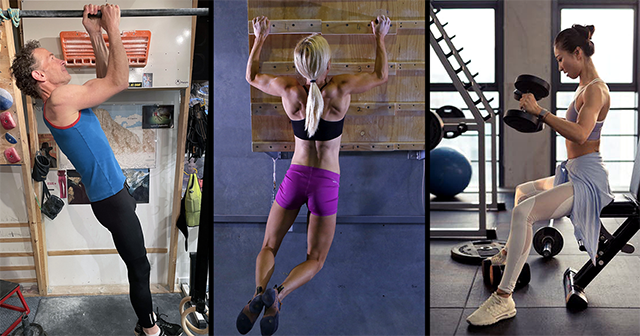
Episode #69 - 10 Common Training-for-Climbing Mistakes
"The best training program for you is one that you're not currently doing." — Coach Hörst In this revealing podcast, learn 10 common training mistakes that stunt progress in climbing, slow strength and endurance gains, waste time and energy, and potentially contribute to injury. This is a must-listen impactful podcast for anyone wanting to take their training — and climbing! — to the next level. SUPPORT THIS PODCAST! Visit PhysiVantage.com and get a 15% discount on full-price items with checkout code: PODCAST15 RUNDOWN 0:20 - Introduction -- the value of an end-of-season analysis and training program redesign. 3:16 - Mistake #1: Arriving at the gym and training without a plan 6:50 - Mistake #2: Copying someone else's training program 11:00 - Mistake #3: "Groundhog Day" Training 17:58 - Mistake #4: Doing little or no sub-maximal climbing Listen to the first in a series of 5 podcasts on Energy System Training >> 26:42 - Mistake #5: Not doing any generalized aerobic training 32:45 - Mistake #6: Doing little or no max-strength hangboard training 39:34 - Mistake #7: Not doing any antagonist and stabilizer muscle training 43:43 - Mistake #8: Getting drawn into a serious weight lifting, body building, or cross-fit style program 49:00 - Mistake #9: Ignoring (and training through) developing aches and pains Listen to podcast #39 on the "Perfect Storm" for climbing injuries >> 58:00 - Mistake #10: Overeating...or undereating 1:08:40 - Summary: Eric's closing comments on improving the effectiveness of your training and taking your climbing to the next level. PLEASE write a 5-star review on Apple Podcasts and SHARE this podcast with a friend! SUPPORT THIS PODCAST! Visit PhysiVantage.com and get a 15% discount on full-price items with checkout code: PODCAST15 SAVE on La Sportiva shoes >> Thank yous: La Sportiva, Maxim Ropes, DMM Climbing, Friction Labs, Organic Climbing. Music by Misty Murphy Follow Eric on Twitter @Train4Climbing Check out Eric's YouTube channel. Follow Eric on Facebook! And on Instagram at: Training4Climbing
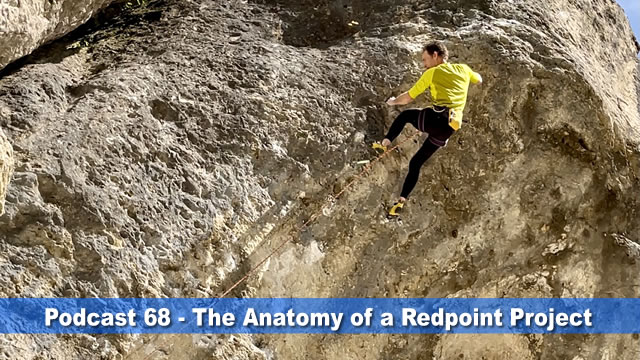
Episode #68 - Anatomy of a Redpoint
I've got something different for you in this episode...which I hope that you'll find revealing, instructive, and extremely beneficial. I will take you through the process of working my mini-project during a recent trip to Germany. I'll share with you my thoughts, wide-ranging emotions, and problem-solving techniques in sussing out the beta, challenging my physical limitations (and fears), and going for the send on my final climbing day of the trip. I trust you'll find some techniques and tactics to adopt and adapt to improve your boulder or route projecting. RUNDOWN 0:30 - And now for something completely different -- I hope you love this podcast! 6:18 - Deconstructing a project route: HERCULES (5.13a/7c+) Learn about my 3-session journey of sussing beta, managing fears, and developing a strategy for the send. 13:40 - Session 1: Sussing out the project. 15:40 - Session 2: Getting down to business... 16:20 - Address fears first. Working the first of 4 "chucks"....the unpleasant slab start. 22:52 - Working Chuck #2 - power climbing out a 25-foot overhanging wall and roof. Move by move beta is refined for efficiency and power conservation. 32:20 - Pro Tip: Taking "mental snapshots" of key holds. 34:25 - Dismissing phantom fears... 37:48 - Working chuck #3...the redpoint crux. 41:10 - Dialing in chuck #4...the anchor run. 44:00 - Time for two redpoint goes. So close! (Or, was I?) 50:40 - Message from the podcast sponsor PhysiVantage Nutrition. Visit PhysiVantage.com and get a 15% discount on full-price items with checkout code: PODCAST15 52:00 - HERCULES on my mind...for days! Visualization and game-changing beta ideas. 57:27 - Session 3 - Mother Nature provides a chance...but could Eric take down Hercules? 1:05:10 - Blow-by-blow commentary of the redpoint go -- a look inside the mind of Coach Horst. 1:12:00 - Closing comments. PLEASE write a 5-star review on Apple Podcasts and SHARE this podcast with a friend! SUPPORT THIS PODCAST! Visit PhysiVantage.com and get a 15% discount on full-price items with checkout code: PODCAST15 SAVE on La Sportiva shoes >> Thank yous: La Sportiva, Maxim Ropes, DMM Climbing, Friction Labs, Organic Climbing. Music by Misty Murphy Follow Eric on Twitter @Train4Climbing Check out Eric's YouTube channel. Follow Eric on Facebook! And on Instagram at: Training4Climbing
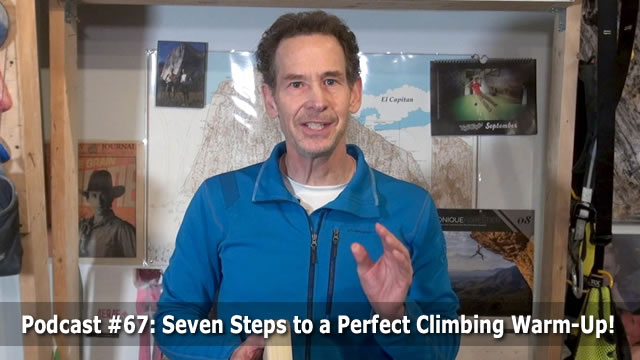
Episode #67 - The Perfect Warm-up Protocol for Optimal Training & Sending!
One of the most powerful concepts I coach is that simple and seemingly "minor things" can make a MASSIVE difference in your training results and climbing performance. This is why I use the word "nuance" so often in my Training For Climbing podcasts! Warming up before training and climbing is one of those "minor things" that many people do hastily--or dismiss completely. Little do they know that they're sabotaging their ability to train and climb their best. They will likely get "flash pumped" and leak energy, fail to recruit full power, move inefficiently and with undue tension, fail prematurely on near-limit movements, and perhaps even set the stage for experiencing a muscle spasm, tendon tweak, or worse. In this podcast, coach Horst provides rich detail on how to perform the perfect warm-up. Yes, it's a relatively slow process with lots of details and nuance. But taking the time to warm up completely will set you up for an optimally effective workout and just maybe a low-gravity send day! RUNDOWN 0:30 - First thoughts on warming up -- it's not sexy, but doing it right is essential if you're to train/climb your best! 2:38 - Different training/climbing situations demand different approaches to warming up. 3:55 - Doing the perfect warm-up will build confidence, empower you to release full power...and is a contributing factor to "low gravity days". 5:00 - Why what most people do (or call) a "warm-up" isn't enough. 6:30 - How you feel on your boulders and routes is massively influenced by your warm-up...or lack of it. 9:30 - The "perfect" warm-up is personal--experiment to discover what gives you the best results. 11:30 - Hone in on your perfect warm-up protocol--make it repeatable! 12:20 - A repeatable warm-up empowers you to use autoregulation of your day's training or climbing plan. This is a powerful topic covered in podcast #20. Listen here >> 15:15 - SEVEN STEPS TO THE PERFECT WARM-UP 16:52 - Step 1: Spend a few minutes firing up your cardiovascular system. It's a small investment of time/effort, but it's vital for preparing the body for the remainder of the warm-up protocol. 19:12 - Step 2: Engaging in some dynamic stretching activities to lubricate connective tissues and joints. (A bit of static stretching of the legs and hips may be useful to increase range of motion before climbing.) Perform some low-intensity climbing movements provides a good dynamic warm-up of the tendons, ligaments, shoulders, core, hips, and more! 21:54 - Step 3: Activate the climbing-specific muscles (agonists) with a series of progressively more difficult pull-up movements and finger hangs (various grip positions). 26:34 - Step 4: Turn on your power! This step requires you to do some quick movements with the climbing muscles (power pull-ups, a small amount of campusing on large holds, and similar) to increase the rate of force development (for maximal finger contact strength and dynamic climbing power). 32:00 - Step 5: Turn on the anaerobic lactic and climbing-specific aerobic energy systems with a few warm-up routes or bouldering intervals that get you moderately pumped (level 8 out of 10 pump). Don't NOT climb to the point of a severe (flash) pump and muscular failure during your warm-up--this will adversely affect the rest of your session. 36:10 - Step 6: Turn on the antagonist muscle with a set of push-ups (or one set of moderately heavy bench press), a submaximal set of dips, a set of shoulder press, and some rotator cuff (one set of external rotation) and scapular stabilizer warm-ups using a TRX sling training or exercise band. 41:25 - Step 7: Perform a targeted core warm-up. Yes, doing a few sets of core exercises to fully recruit the core before performance climbing can be game-changing! 45:35 - 90-second podcast sponsor message -- Learn how you can climbing better, gain strength and endurance, recover faster, and become more injury resistant with PhysiVantage! 47:00 - Learn how to adjust your warm-up protocol for 3 common climbing and training situations. 47:30 - #1: An easy session at the gym or day of climbing bouldering or climbing. 49:10 - #2: A session of high-end training in the gym, or near-limit bouldering. 53:20 - #3: Route climbing for performance in the gym or at the crag. 1:00:45 - Closing thoughts. PLEASE write a 5-star review on Apple Podcasts...and SHARE this podcast with a friend or on social media.! SUPPORT THIS PODCAST! Visit PhysiVantage.com and get a 15% discount on full-price items with checkout code: PODCAST15 SAVE on La Sportiva shoes >> Thank yous: La Sportiva, Maxim Ropes, DMM Climbing, Friction Labs, Organic Climbing. Music by Misty Murphy Follow Eric on Twitter @Train4Climbing Check out Eric's YouTube channel. Follow Eric on Facebook! And on Instagram at: Training4Climbing Visit PhysiVantage.com and get a 15% discount on full-price items with checkout code: PODCAST15
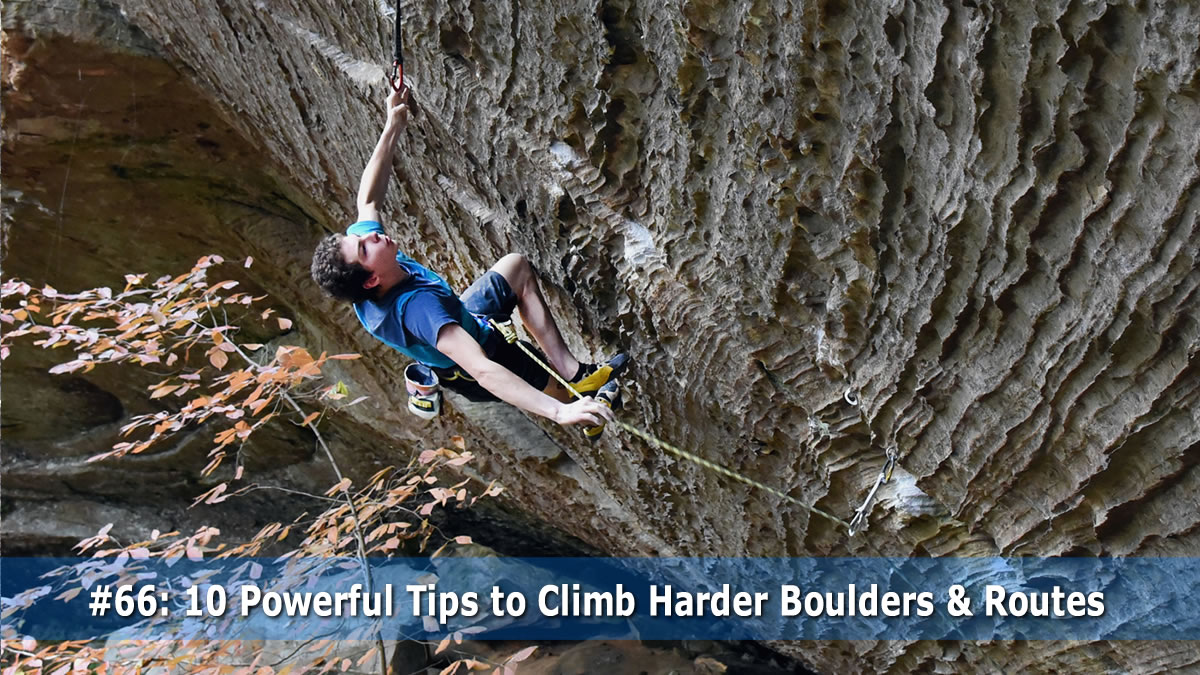
Episode #66 - 10 Powerful Tips to Climb Harder Boulders and Routes
This T4C episode serves up numerous powerful tips--that you can put to work immediately--to more effectively work on hard boulders and routes...and send more quickly! Learn about the power of proprioception and "feel beta" (a coach Hörst secret...shush!), why it's vital to keep an open mind in working crux sequences, how you can reduce your chances of "punting", the benefits of engaging in active recovery between send goes, and the importance of trusting the process and letting the outcome fold organically. RUNDOWN 0:40 - Podcast Intro 3:38 - Eric mentions his livestream Training Cafes--he invites you to join in and ask training questions. Tune in every other Monday at Noon ET on Eric's Training For Climbing YouTube and Training for Climbing Facebook page. 5:45 - Introducing the main topic: 10 Powerful Tips to project more effectively and send more quickly. 6:50 - TIP #1 - Don't view the boulder or route as an overwhelming whole, but instead break it down into more manageable and believable parts. 9:32 - TIP #2 - Don't rush to judgement on the crux sequence--keep an open mind and keep testing other beta options even when you're many days into a project. 15:50 - TIP #3 - In working the hardest moves identify the proprioceptive feel of doing the move effectively--take note of this powerful "feel beta" and leverage it to succeed on your send go. Lean into this one...listen, learn, and employ! 21:16 - TIP #4 - Practice the top portion of the route a lot more than you think is necessary--get it totally wired and automatic, so there's no doubt you can climb it pumped on point. 23:37 - TIP #5 - When you first succeed on the crux sequence, don't rush to redpoint...but instead repeat the crux again to confirm the foot beta and feel beta! 26:50 - Brief commercial break - Save $10 on your first purchase of PhysiVāntage Nutrition. Use checkout code "10DOLLARS". This promotion is valid only during the month of September--don't miss this chance to FEEL the PhysiVāntage at a great discount price! 28:15 - TIP #6 - Cut yourself free of unnecessary fear load! Learn to better manage your climbing fears...heeding legitimate fears and dismissing phantom fears. Listen to podcasts #62 and #65 which provide in-depth instruction on becoming an expert fear manager. 31:09 - TIP #7 - Engage in active recovery between working burns or send goes. A short walk can do wonders for your recovery--learn why...and exactly what you should do. 36:10 - TIP #8 - Build a boulder or route simulator to train for longer-term, distant projects. Build route-specific strength! 39:47 - TIP #9 - Begin each redpoint day with one no-pressure trial run to get a route-specific warm-up and to gain a refresher on the "feel beta". 41:55 - TIP #10 - Trust the process and let the send happen when it's meant to happen! Expect success, but accept that it's okay to feel...because you know the boulder or route will be yours exactly when it's meant to be. 47:40 - Parting comments. PLEASE write a 5-star review on Apple Podcasts...and share this podcast with a friend or on social media. SUPPORT THIS PODCAST! Visit PhysiVantage.com and get a 15% discount on full-price items with checkout code: PODCAST15 SAVE on La Sportiva shoes >> Thank yous: La Sportiva, Maxim Ropes, DMM Climbing, Friction Labs, Organic Climbing. Music by Misty Murphy Follow Eric on Twitter @Train4Climbing Check out Eric's YouTube channel. Follow Eric on Facebook! And on Instagram at: Training4Climbing Visit PhysiVantage.com and get a 15% discount on full-price items with checkout code: PODCAST15

Episode #65 - Tips & Strategies to Manage Common Climbing Fears - Part 2
To climb your very best -- and to truly enjoy climbing -- you need to become an expert fear manager! Nothing is more elemental to climbing than fear. The fears of falling, getting hurt, failure, embarrassment, and even the fear of the unknown...can be torturous and paralyzing. To climb efficiently and with confidence, you need to be able to assess and manage fear...which is the subject of this podcast. If you haven't already, do listen to Part 1 on Fear -- Episode #62 -- before commencing with this concluding episode on the topic. Enjoy! Podcast Rundown 0:15 - Welcome to Part 2 in our study of fear. 2:14 - A quick recap of Part 1...podcast #62. Listen here. 3:53 - FEAR #3: FEAR OF FAILURE. Ironically, fear of failure often results in failure! 6:10 - 3 strategies to eliminate the fear of failure. 6:20 - 1.) Acknowledge preparedness and training -- it's like money in the bank! 7:50 - 2.) Focus on the process -- stay in the moment. 9:30 - 3.) Accept all possible outcomes before climbing. Then let go of the outcome-oriented thoughts and live out the climb, one move at a time. 10:00 - It's in climbing for yourself -- win, lose, or hanging from a quickdraw -- that you will climb your best! 11:38 - FEAR #4: Fear of Embarrassment and Criticism 13:10 - Strategy 1.) Use failures to learn and improve. Ignore the critics...and focus on being a DOER! This is one of the 8 Superpowers of the very best climbers--listen to the Superpowers podcast! 16:27 - Strategy 2.) Take on a bigger perspective -- view your climbing performance over the long-term, not on a daily basis. Ups and downs are normal -- you are NOT your failures! 18:12 - FEAR #5: Fear of the Unknown 21:21 - Strategy 1.) Accept and welcome the unknown--it's a central part of the climbing experience! 23:41 - Strategy 2.) Anticipate and prepare for known, unknowns. 25:52 - Strategy 3.) Take control of self-talk and imagery. 28:00 - Podcast Sponsor - PhysiVantage...the performance nutrition used by dozens of pro climbers for strength gains, recovery, power endurance, and injury resistance. Save 15% off full-priced nutrition with checkout code PODCAST15 30:17 - Wrap-up with 11 powerful tips to assess and manage common climbing fears. 36:30 - Love climbing unconditionally! 38:00 - Final comments -- PLEASE WRITE A REVIEW...and share this podcast with your friends! SUPPORT THIS PODCAST! Visit PhysiVantage.com and get a 15% discount on full-price items with checkout code: PODCAST15 SAVE on La Sportiva shoes >> Thank yous: La Sportiva, Maxim Ropes, DMM Climbing, Friction Labs, Organic Climbing. Music by Misty Murphy Follow Eric on Twitter @Train4Climbing Check out Eric's YouTube channel. Follow Eric on Facebook! And on Instagram at: Training4Climbing Visit PhysiVantage.com and get a 15% discount on full-price items with checkout code: PODCAST15

Episode #64 - Performance Training Interview with Coach Hörst - Part 2
This is Part 2 of Steven Dimmitt's (Nugget podcast) interview of Eric Hörst on a wide range of climbing training and performance topics. In this episode you will learn...how young guns Cameron Hörst (20) and Jonathan Hörst (18) train compared to their coach dad (age 57), tips for parenting/coaching youth climbers, what it takes to climb the next grade (whether it's 5.10 or 5.15), sloper training, the importance of protein, and more. There's a ton of great tips and sage advice in this episode. Lean in and listen up! Podcast Rundown 00:12 - Intro and overview of Part 2 of Steven Dimmitt's interview with coach Eric Hörst 2:25 - How Cameron and Jonathan Horst train for elite-level climbing compared to the training of their coach father training for his master's climbing ascents. 4:05 - Advanced hangboard training protocol details. 6:30 - Importance of listening to your body, adjusting training, and route-specific training. 7:30 - Tendon "loading history" and effects of youth climbing on tendon core structure. 8:30 - The pros/cons of youth single-sport and multisport involvement. 16:05 - Tips for parents and coaches of youth climbers. 18:15 - Climbing benchmarks of the Hörst brothers (aka The Send Bros). 20:25 - Current status of the Hörst brothers climbing. Cameron (age 20) just climbed his fourth 5.14d and first 5.15a (after this interview was recorded) and Jonathan (age 18) send his second 5.14c in July. 23:35 - Eric's "old climber" dream goal: A free big wall...or sport 5.14a? 25:20 - How to "win" as a weekend warrior? 30:00 - What it takes to climb the next grade... 31:45 - Nature, nurture, and willpower! 33:55 - How to improve on big holds? 34:30 - Pinch training tips... 37:00 - Sloper training. 38:55 - Importance of training wrist flexion and extension. 41:40 - What's most exciting about training for climbing in 2021? 42:30 - Pros/cons of system wall training. 46:00 - The role of nutrition in training and performance. 48:30 - The importance of dietary protein...to support strength gains, connective tissue remodeling, muscle protein synthesis, and more. 50:10 - Overview of Eric's PhysiVantage product line...and the benefits for recreational and pro climbers alike. (Get a 15% discount off full-price nutrition with checkout code: NUGGET15) 52:45 - All about supplementing with hydrolyzed collagen powder--overview of the fascinating research...and the numerous benefits for hard-training climbers, if you time it correctly. 1:09:30 - The value of high-quality post-workout protein consumption...plant-based or whey isolate...it's a difference-maker 1:16:30 - Wrap up comments...and a few words about the podcast sponsor PhysiVantage Nutrition. SUPPORT THIS PODCAST! Save 15% off full-priced nutrition with checkout code PODCAST15 PhysiVantage is used by dozens of pro climbers and thousands of recreational climbers around the world. Give PhysiVantage a try, and feel the difference it makes in your climbing! SAVE on La Sportiva shoes >> Thank yous: La Sportiva, Maxim Ropes, DMM Climbing, Friction Labs, Organic Climbing. Follow Eric on Twitter @Train4Climbing Check out Eric's YouTube channel. Follow Eric on Facebook! And on Instagram at: Training4Climbing Visit PhysiVantage.com and get a 15% discount on full-price items with checkout code: PODCAST15 Podcast Audio and Content Copyright 2021 Hörst Training, LLC - All Rights Reserved.
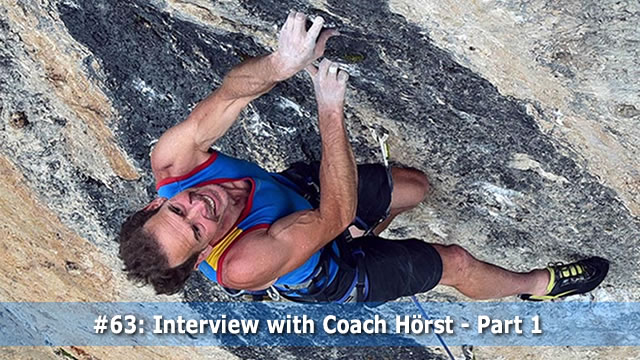
Episode #63 - Nugget Q & A with Coach Hörst About All Things Training - Part 1
This information-packed episode features Steven Dimmitt of the Nugget podcast interviewing Coach Hörst on all things training. This wide-ranging Q & A covers many vital topics including: how to train for stronger tendons and ligaments, the secrets to developing a really strong core, the benefits of campus training versus hangboard training, personalized training program design, and much more! There's a gold mine of information in this episode....and Part 2 of this interview will serve up even more! Coming soon... Podcast Rundown 00:12 - Intro to this "best of" the Nugget interview with coach Eric Hörst 2:56 - What core elements of training have passed the test of time? 6:23 - Current glut of training information can be overwhelming--what to do? 8:37 - Importance of re-inventing your training each year. 10:07 - Value of engaging an expert coach. 12:25 - What's the most central exercise/activity for climbers? 14:30 - You can improve technical, movement and mental skills for decades! 17:00 - You can improve at climbing for DECADES! 18:25 - You are likely already strong enough to climb the next grade! 19:56 - What should you look for in hiring a coach? 25:50 - New training concept: Sinew Training! Learn the importance of remodeling connective tissues. Visit T4C podcasts #33, #34, #36, and #39 for an in-depth study of this powerful topic. 30:00 - Learn how max finger hangs and campusing training have profoundly different effects on tendons and ligaments. 34:00 - Learn the difference between sinew training for tendon/ligament health versus training for peak power and performance. 35:10 - How to schedule these two types of training for optimal health and results. 36:30 - Learn training cycles and periodization. Linear versus non-linear. 44:40 - Importance of developing a truly personalized approach to training (the "snowflake principle"). 46:00 - Identify your limiting constraint. For some strong climbers it's "end-range" strength. 50:15 - How designing an advance training program is like playing 3D chess. Why the best coaches see the big picture and coach the "person" not just the athlete. 51:00 - Don't fall into the trap of obsessing on one type of training or one modality. 54:25 - Why developing a stronger core is SO VERY important. (Hint: A stronger core equals stronger fingers!) 56:30 - Eric comments about Alex Megos' coaches Patrick & Dicki 59:00 - Learn about deadlifting for climbers...the value...and the potential pitfalls. 1:06:30 - The value of doing more bouldering and traversing with very small footholds. 1:11:10 - Key idea: A weak core overcharges your finger force...resulting in rapid fatigue on near-limit climbs. 1:14:10 - More on DUP training versus a 10-week (or more) training cycle. 1:16:30 - Wrap up comments...and a few words about the podcast sponsor PhysiVantage Nutrition. Tune in to T4C podcast #64 for PART 2 of this Nugget Interview with coach Hörst! SUPPORT THIS PODCAST! Save 15% off full-priced nutrition with checkout code PODCAST15 PhyiVantage is used by dozens of pro climbers and thousands of recreational climbers around the world. Give PhysiVantage a try, and feel the difference it makes in your climbing! SAVE on La Sportiva shoes >> Thank yous: La Sportiva, Maxim Ropes, DMM Climbing, Friction Labs, Organic Climbing. Follow Eric on Twitter @Train4Climbing Check out Eric's YouTube channel. Follow Eric on Facebook! And on Instagram at: Training4Climbing Visit PhysiVantage.com and get a 15% discount on full-price items with checkout code: PODCAST15
Episode #62 - Managing Fear and Climbing Your Best - PART 1
Nothing is more elemental to climbing than fear. Fear of falling, fear of getting hurt or dying, fear of failure, fear of embarrassment, and even the fear of the unknown affects us all from time to time. The long-term goal is NOT to eliminate fear, but rather to become an expert fear manager....which is the focus of this (and the next) podcast. Listen in and learn how to assess your fears, manage risk, and take your climbing to the next level with a higher level of mental mastery. Podcast Rundown 0:30 - Introduction to this two-part study of fear. 4:45 - A few comments on recent events... 5:00 - World Cup Bouldering Gold for Team USA! 7:00 - My son Cameron sending his first 5.15a, Bone Tomahawk. 10:10 - My appearance on The Nugget Climbing podcast. 11:50 - Overview of FEAR...and what you'll learn in this podcast and the next. 12:28 - What are some of your recent climbing fears? Can you identify a few that were especially acute...or fears that held you back in some way? 14:55 - FEAR #1: Fear of Falling 19:12 - Technique 1: Determine if the fear is reasonable or unreasonable. 25:30 - Technique 2: Take some practice falls in a safe setting 32:54 - Technique 3: Change your interpretation of the fear response. 38:28 - Technique 4: Use positive self-talk to crowd out negative thoughts...and you breath-control to moderate tension and the stress response. 45:10 - FEAR #2 - Fear of Dying or Getting Hurt 49:40 - Technique 1: Is the fear you're experiencing legit or imaginary? 52:24 - Technique 2: Use risk management to shift the odds in your favor...and perhaps continue up the climb safely. Here are FIVE strategies for doing this: 52:52 - 1.) Proactively manage the most obvious dangers. 55:55 - 2.) Consider various "what if" scenarios...and how you will react in each situation. 57:37 - 3.) Constantly discern between "safe fall" and "no fall" situations. 1:01:15 - 4.) Determine if you can handle the worst-case outcome??? 1:06:55 - 5.) Listen to your gut instinct when the risk is incalculable. 1:13:00 - Wrap up comments...and a few words about the podcast sponsor PhysiVantage Nutrition. SUPPORT THIS PODCAST! Save 15% off full-priced nutrition with checkout code PODCAST15 PhyiVantage is used by dozens of pro climbers and thousands of recreational climbers around the world. Give PhysiVantage a try, and feel the difference it makes in your climbing! SAVE on La Sportiva shoes >> Thank yous: La Sportiva, Maxim Ropes, DMM Climbing, Friction Labs, Organic Climbing. Music by Misty Murphy Follow Eric on Twitter @Train4Climbing Check out Eric's YouTube channel. Follow Eric on Facebook! And on Instagram at: Training4Climbing Visit PhysiVantage.com and get a 15% discount on full-price items with checkout code: PODCAST15
Episode #61 - Slowing the Pump Clock
Training to get stronger is good. Learning to climb more efficiently so that you can get the most out of the strength and power you currently possess is SMART! So if you want to progress from good to great, then this podcast is for you! Learn 5 powerful strategies for climbing more efficiently, recovering more quickly, and leveling up your climbing. Podcast Rundown 0:15 - Roll up your sleeve to receive the Horst booster of Training For Climbing knowledge! 1:55 - Intro to becoming a more efficient climber with more endurance on steep terrain. 4:00 - Key point: When climbing near your limit, little things can make a BIG difference! Eric's favor word in coaching: "nuance"! 4:47 - Improvement demands change. Welcome it. 5:35 - 5 strategies for slowing down the pump clock, improving endurance, and leveling up! 6:34 - Strategy #1: Strive to climb with more economy. Make it a goal to improve a bit each your. Practice new techniques...with a never-ending desire to learn and improve. 9:00 - Key point: Importance of reducing time under tension while grip near-limit holds. 12:38 Exploit Eric's bi-modal approach to climbing steep, strenuous boulders and routes. 13:25 - When able, vary grip position throughout longer climbs. 16:17 - Climb more with hip turns, drop knees, back steps, and twist locks. On steep, difficult routes, try to void long sequences of "neutral" climbing. 20:43 - Strategy #2: Begin "micro resting" between hand grips on hard sequences. Encourage blood flow and maximize use of the aerobic energy system...so as to slow the drain of the finite anaerobic reserve. 25:15 - Strategy #3: Try to find a "thank God" rest on every hard route. Be creative. Experiment. Practice. Win more often...and punt less! 31:31 - Strategy #4: Use the "G-tox" recovery technique at rest positions on difficult routes. This will aid faster recovery compared with the standard dangling-arm shakeout. 38:00 - Strategy #5: Consume foods and supplements with nitrates...and other ingredients that improve circulation and enhance use of the oxidative energy system. Read more about Endure X here >> 46:50 - Summary of tips and strategies for improving your endurance and climbing harder! SUPPORT THIS PODCAST! Save $10 on your FIRST PhysiVantage Nutrition purchase of $40+ with checkout code: 10DOLLARS. Used by a growing number of pro climbers and thousands of recreational climbers around the world. Give PhysiVantage a try, and feel the difference it makes in your climbing! RETURNING CUSTOMERS: Save 15% off full-priced nutrition with checkout code PODCAST15 SAVE on La Sportiva shoes >> Thank yous: La Sportiva, Maxim Ropes, DMM Climbing, Friction Labs, Organic Climbing. Music by Misty Murphy Follow Eric on Twitter @Train4Climbing Check out Eric's YouTube channel. Follow Eric on Facebook! And on Instagram at: Training4Climbing Visit PhysiVantage.com and get a 15% discount on full-price items with checkout code: PODCAST15

Episode #60 - How to Create "Low-Gravity Days"...and Climb Your Very Best!
Learn 8 things to "get right" in order to climb your very best...and to help create more of those wonderful low-gravity send days! Coach Hörst provides powerful tips for priming your body for peak performance in the days leading up to your weekend climbing. He also gives valuable game-day master tips for optimizing your performance and accelerating recover at the boulders and crags. SUPPORT THIS PODCAST! Save $10 on your FIRST PhysiVantage Nutrition purchase of $40+ with checkout code: 10DOLLARS. RETURNING CUSTOMERS: Save 15% off full-priced nutrition with checkout code FRIENDS15 Podcast Rundown 3:40 - First, a few comments about the importance of reducing emotional "weight". 4:35 - Tip #1: Arrive at the boulders or cliff truly 100% fresh -- a rare thing among enthusiastic, hard-training climbers. Learn how to do it! 8:30 - Tip #2: Get your sleep and nutrition right both in the days leading up to your climbing...and while on climbing weekends or trips. 17:20 - Tip #3: Engage in a proper warm-up before every climbing day. Learn what things you should do...and how long it should take. 23:40 - Tip #4: Make the most of your day-one freshness and stoke. Should you invest your time and energy into onsight and flash climbing, or projecting? How much should you save of yourself for day two? 28:45 - Tip #5: Strive to "master" a boulder or route...not just thrash through and survive it. This is a rich topic that Eric drills deeply into...with many tips for climbing more efficiently and channeling your inner Ondra! 40:50 - Tip #6: Rest optimally between routes. Learn how long to rest between goes on your project boulder or route...and how you can accelerate recovery. 46:05 - Tip #7: Learn how to breathe more effectively. Yes, proper breathing (and brief breath-holding) is important! 53:53 - Tip #8: Eat and drink the right things and in the right amounts. Small things can make a massive different in your energy and climbing outcomes--this includes the things you eat and drink! 1:00:00 - BONUS TIP: Love climbing unconditionally! Enjoy each moment that you are on the rock. Let go of both past failures and thoughts of potential future outcomes. Trust the process! Let the send evolve organically...when it's meant to be. PLEASE write a 5-star iTunes review of the T4C podcast, and consider sharing this podcast with a friend and on your social media. Thank you! SUPPORT THIS PODCAST! Save $10 on a PhysiVantage performance Nutrition purchase of $40+ with checkout code: 10DOLLARS. Used by a growing number of pro climbers and thousands of recreational climbers around the world. Give PhysiVantage a try, and feel the difference it makes in your climbing! SAVE on La Sportiva shoes >> Thank yous: La Sportiva, Maxim Ropes, DMM Climbing, Friction Labs, Organic Climbing. Music by Misty Murphy Follow Eric on Twitter @Train4Climbing Check out Eric's YouTube channel. Follow Eric on Facebook! And on Instagram at: Training4Climbing Visit PhysiVantage.com and get a 15% discount on full-price items with checkout code: PODCAST15
Episode #59 - Back to Basics: Time-Tested Training That Works!
There are myriad exercises, activities, and sports that climbers engage in with the belief it will elevate climbing performance. For the typical climber, however, most of the climbing-performance benefits come from just a handful of exercises and activities that they do. Consider, dear listener, everything you do in the name of training--how beneficial is each activity and exercise? In this podcast, Eric discusses common training tangents, traps, and energy sinks, and he details 10 time-tested exercises/activities that are central to effective training for climbing. SUPPORT THIS PODCAST! Save $10 on your FIRST PhysiVantage Nutrition purchase of $40+ with checkout code: 10DOLLARS. RETURNING CUSTOMERS: Save 15% off full-priced nutrition with checkout code FRIENDS15 Podcast Rundown 4:10 - Opening comments about effective training for climbing. 4:45 - Importance of keeping an open mind about your training. 6:42 - Mention of the 8 Superpowers of the very best climbers -- go back and listen to podcast #37! 9:00 - Intro to 4 training tangents, traps, and energy sinks that rob you of time and energy...and dilute the quality of your training for climbing. 10:06 - You CAN achieve greater things than you can imagine today! 10:40 - #1 Training Tangent: Focusing on exercises and activities that create fatigue and consume time, but do little to really enhance climbing performance. 15:44 - #2 Training Tangent: Blindly copying another climber's workouts and training program. 17:22 - #3 Training Tangents: The shiny, new object at the gym...that is fun, engaging, and possibly high-tech...that consumes a lot of your focus and time but provides small (or negligible) performance gains given. 20:30 - Comments about the benefits of Auto-Regulation. Listen to podcast #20 for more coverage of Auto-Regulation. 25:00 - Comments on Blood Flow Restriction training - learn more in podcast #40. 28:00 - #4 Training Tangent: Constantly changing up your training...never sticking to a program for a month to be able to accurately gauge the results. 30:30 - Eric coaches you to "Plan your workout, then work your plan!" 32:45 - Please check out our podcast sponsor, PhysiVantage Nutrition. Save $10 or 15% on your online order! PhysiVantage is used by many of America's top boulders, sport climbers, and big wall crushers! 35:08 - 10 time-tested, back-to-basics exercises and activities that are central to effective training for climbing. 37:24 - #1: Climb frequently! 39:30 - #2: Hangboard train! 44:15 - #3: Weighted Pull-ups 45:35 - #4: Frenchies 48:08 - #5: Bouldering and System Wall climbing 50:15 - #6: Route climbing 54:34 - #7: Bouldering 4x4 Intervals 57:42 - #8: Campus board training 58:40 - #9: Running (in moderate doses) 1:01:21 - #10: Flexibility training (lower-body focus for hip turnout) 1:05:22 - Final thoughts.... PLEASE write a 5-star iTunes review of the T4C podcast, and consider sharing this podcast with a friend and on your social media. Thank you! SUPPORT THIS PODCAST! Save $10 on a PhysiVantage performance Nutrition purchase of $40+ with checkout code: 10DOLLARS. Used by a growing number of pro climbers and thousands of recreational climbers around the world. Give PhysiVantage a try, and feel the difference it makes in your climbing! SAVE on La Sportiva shoes >> Thank yous: La Sportiva, Maxim Ropes, DMM Climbing, Friction Labs, Organic Climbing. Music by Misty Murphy Follow Eric on Twitter @Train4Climbing Check out Eric's YouTube channel. Follow Eric on Facebook! And on Instagram at: Training4Climbing Visit PhysiVantage.com and get a 15% discount on full-price items with checkout code: PODCAST15
Episode #58 - The Secrets to Finger Strength...When It Counts!
Chances are...your fingers are already strong enough to climb the next grade. In this podcast, Eric details five ways to increase your apparent finger strength on the rock...and climb one grade harder! Whether you're an intermediate, advanced, or pro-level climber, you'll surely find a few of Eric's concepts and tips to be empowering...and just maybe provide you with the "secret" to breaking a plateau or sending your project. SUPPORT THIS PODCAST! Save $10 on a PhysiVantage Nutrition purchase of $40+ with checkout code: 10DOLLARS. Podcast Rundown 6:09 - Gaining more finger strength without training your fingers! Huh? Listen and learn some secrets to becoming a more efficient and effective climber. 11:00 - Eric's comments about finger force testing. 15:30 - Five secrets to stronger fingers on the rock. Non-finger training that will make your fingers stronger for climbing! 16:12 - #1: Learn the importance of climbing economy...and why a weaker climber can sometimes outperform a stronger climber. 21:33 - #2: Training hip flexibility increases finger strength-endurance, especially on near-vertical boulders and routes. 31:30 - #3: Stronger shoulders make fingers stronger. Learn why. 38:08 - #4: Stronger wrist flexors and wrist extensors will improve your sloper and crimp grips, respectively. 45:40 - #5: Increasing core strength and core strength-endurance make small hand and foot holds "bigger" and more solid...and increase apparent finger strength and endurance. But to obtain this effect, you must train comprehensive core strength with a wide range of exercises. 58:12 - Summary and final tips to improve your climbing. PLEASE write a 5-star iTunes review of the T4C podcast, and consider sharing this podcast with a friend and on your social media. Thank you! SUPPORT THIS PODCAST! Save $10 on a PhysiVantage performance Nutrition purchase of $40+ with checkout code: 10DOLLARS. Used by a growing number of pro climbers and thousands of recreational climbers around the world. Give PhysiVantage a try, and feel the difference it makes in your climbing! SAVE on La Sportiva shoes >> Thank yous: La Sportiva, Maxim Ropes, DMM Climbing, Friction Labs, Organic Climbing. Music by Misty Murphy Follow Eric on Twitter @Train4Climbing Check out Eric's YouTube channel. Follow Eric on Facebook! And on Instagram at: Training4Climbing Visit PhysiVantage.com and get a 15% discount on full-price items with checkout code: PODCAST15
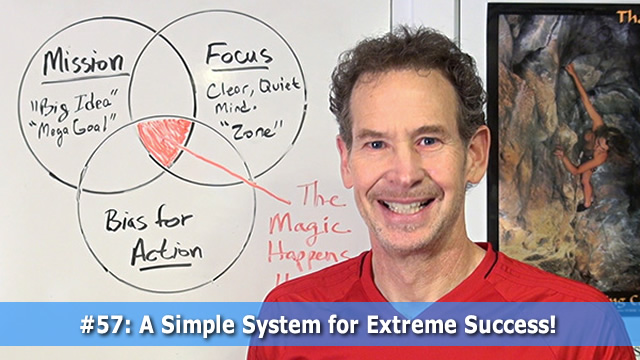
Episode #57: A Simple System for Extreme Success!
The beginning of a new year is a great time to think critically about your current situation…and trajectory. What are your short-term goals...and long-term destination? How will you get there? As you will soon discover, this short podcast transcends climbing performance—it's about human performance! What does it take to achieve extreme success? What's the #1 thing holding most people back from reaching their big life goals? Eric describes his formula for making steady daily progress towards achieving important goals. You can apply this conceptual model to accelerate progress in any endeavor. So what are you waiting for? Listen. Apply. Achieve! Watch the "Extreme Success" video here >> PLEASE write a 5-star iTunes review of the T4C podcast, and consider sharing this podcast with a friend and on your social media. Thank you! SUPPORT THIS PODCAST! Save 15% on PhysiVantage performance Nutrition. Used by a growing number of pro climbers and thousands of recreational climbers around the world. Give PhysiVantage a try, and feel the difference it makes in your climbing! SAVE on La Sportiva shoes >> Thank yous: La Sportiva, Maxim Ropes, DMM Climbing, Friction Labs, Organic Climbing. Music by Misty Murphy Follow Eric on Twitter @Train4Climbing Check out Eric's YouTube channel. Follow Eric on Facebook! And on Instagram at: Training4Climbing Visit PhysiVantage.com and get a 15% discount on full-price items with checkout code: PODCAST15

Episode #56: Ask Coach Hörst About Training!
What could be better than a one-hour Q & A with coach Hörst about all things training? 15 questions on a wide range of topics...and hopefully more than a few that will hit home with you. Enjoy! Podcast Rundown 4:15 – Question: What advice do you have for returning to crimping after an A2 pulley injury? 7:35 – Question: What are your recommendations for incorporating some strength training in a my routine? 11:40 – Question: What do you think of post-workout cold-water immersion for reducing pain and accelerating recovery? 16:00 - Question: What can I do to prevent getting sowing-machine leg? 19:22 - Question: What are your thoughts on deadlifting for climbing? 25:25 - Question: What can I do to reduce chronic pain and stiffness in my neck muscles? 28:15 - Question: What vitamin supplements do you take? 34:30 - Question: What's the ideal length of break between doing two climbing workouts in a day? 36:20 - Question: My project involves a lot of stemming--what can I do to train specifically for better stemming? 38:20 - Question: What finger grip positions do you recommend for training? 42:06 - Question: What the best strategy for pushing into the next level when projecting? 46:48 - Question: What do you think of campus training for youth climbers? 49:09 - Question: Since I didn't start climbing until age 35, how long can I improve in strength and climbing ability? 51:15 - Question: Do you agree with the idea that most climbers are already strong enough to climb the next grade? 53:25 - Question: Is there a vegan version of collagen supplement? 55:15 - Question: When's the right time for a new climber to begin some hangboard training? PLEASE write a 5-star iTunes review of the T4C podcast, and consider sharing this podcast with a friend and on your social media. Thank you! SUPPORT THIS PODCAST! Save 15% on PhysiVantage performance Nutrition. Used by a growing number of pro climbers and thousands of recreational climbers around the world. Give PhysiVantage a try, and feel the difference it makes in your climbing! SAVE on La Sportiva shoes >> Thank yous: La Sportiva, Maxim Ropes, DMM Climbing, Friction Labs, Organic Climbing. Music by Misty Murphy Follow Eric on Twitter @Train4Climbing Check out Eric's YouTube channel. Follow Eric on Facebook! And on Instagram at: Training4Climbing Visit PhysiVantage.com and get a 15% discount on full-price items with checkout code: PODCAST15
Episode #55 - Effective Training through the Holiday Season
2020 has been a challenging year with a global pandemic, a COVID lockdown at home (or two), and limited climbing travel for many of us. We're now entering the holiday season, with COVID lingering, but hopefully, it will bring some opportunity to celebrate (in small COVID-safe groups?), reset our training, and renew our mindset and body. Is this a good time to take a month off from climbing? NO! There are several options for holiday season training, even if it's all at home. I'll present the benefits and drawbacks of each approach. Which is best for you? Listen in...you decide! DEAR FRIENDS: PLEASE BE COVID SAFE THIS WINTER...A VACCINE IS NEAR! 0:15 - Introduction...lingering COVID, the approaching holidays, and your training for climbing! 2:30 - A brief message about the T4C podcast sponsor PhysiVantage. 3:45 - Winter is near...training season is here! What's the best approach to training in the holiday season? I will present 4 distinctly different approaches to training through the holidays. 5:30 - Training Approach #1: Taking a month or so off from training and climbing. Eric addresses the pros and cons of taking a few weeks (or more) off from training and climbing. 8:40 - Training Approach #2: Immediately adjust your training to deal with a current injury or tweak. Now is the time to resolve an injury with appropriate rehab and self-care. 13:25 - Elite level climber question: How would I train this winter to climb my best in the Spring season....versus training to climb at my highest level in a few years? 18:10 - Recap of Holiday Training Approaches #1 and #2. 19:20 - Training Approach #3: Continue with serious in-season training because this is your performance season...or you have a climbing trip scheduled in the next 4 to 8 weeks. In this case, it's important to train for a "peak" for your trip and not succumb to (or minimize the impacts of) holiday season...rich foods and "cheer"). 22:22 - A brief tangent on the diet/nutrition and the "issues" that some athletes have with food. Developing a healthy relationship with food is important for optimal training, beneficial physical adaptations, and maximizing performance. Especially for hard, steep climbing, strength-to-weight ratio directly correlates to performance...so consuming the right foods in the right amounts is vital. 27:32 - Holiday Season Training Approach #4: Strive for a balance between frequent training and occasional indulgences in holiday foods and drinks. You can enjoy the season without being self-destructive to your climbing potential for the early 2021 season. Learn how Eric will be doing it...and determine if it's the right approach for you! 35:35 - Warning: A couple of weeks (or more) of holiday gluttony can have a significant negative impact in terms of weight gain. While putting on a pound or two is no big deal, adding 5 to 10 pounds will hurt your climbing in early 2021...and it will likely require a month or more to lose. 38:13 - The bottom line: How seriously you take your diet and training should be proportional to how seriously you take your climbing! 39:20 - Effectiveness comes when you match your actions to your goals. Live intentionally! 39:50 - Eric's closing comments: In the end, performing optimally and experiencing maximally demands that you nuance your actions and explore the shades of gray...rather than living in a black and white world. PLEASE write an iTunes review of the T4C podcast, and consider sharing this podcast with a friend and on your social media. SUPPORT THIS PODCAST! Save 15% on PhysiVantage performance Nutrition. Used by a growing number of pro climbers and thousands of recreational climbers around the world. Give PhysiVantage a try, and feel the difference it makes in your climbing! SAVE on La Sportiva shoes >> Thank yous: La Sportiva, Maxim Ropes, DMM Climbing, Friction Labs, Organic Climbing. Music by Misty Murphy Follow Eric on Twitter @Train4Climbing Check out Eric's YouTube channel. Follow Eric on Facebook! And on Instagram at: Training4Climbing Visit PhysiVantage.com and get a 15% discount on full-price items with checkout code: PODCAST15
Episode #54: Turning "Impossible" into "I'm Possible"
Are you ready to rethink what's possible in your climbing life? There's a good chance that your perceived limit is actually a self-imposed imaginary boundary! Once again this month, I present an episode of Training Cafe, my twice-monthly video Livestream coaching show on YouTube and Facebook live. The main topic delves into pursuing next-level projects...and the importance of challenging your inner fears of failure and criticism, just like pro climbers do. Now is the time to think bigger...develop a system...and execute your plan with uncommon discipline! Podcast Rundown 2:57 - Beginning of TRAINING CAFE. Main topic is "Turning Impossible into I'm Possible!" 3:12 – But first, we sip coffee together! 3:30 – SHOUT OUT to Chuck Odette, age 64, for sending 5.14b last week! #Legend 4:20 – What it takes to climb hard late into life. 5:20 – MAIN TOPIC: Turning Impossible into I'm Possible 6:10 – Setting goals is easy. Developing an effective SYSTEM for progress towards the goal is harder….and maintaining long-term discipline is even harder yet! 6:55 – Examples of IMPOSSIBLE becoming POSSIBLE…big or small, they can be life-changing. 8:45 – Einstein's quote must be followed by action! 9:50 – Climbing examples of "I'm Possible"! 11:00 – Ignore the skeptics…don't take on their #Loserthink! 13:20– High achievers don't spend a lot of time on social media, gossip, or other time-wasting activities. 14:20 – Need to be somewhat of a compulsive planner. 15:00 – Have a vivid picture in mind every day–build a belief in the goal, and action for bias…and a "get shit done" attitude. 18:50 – Breaking into a new grade in climbing…demands a new level of thinking and novel, disciplined action. Learn from greats like Gullich, Ondra, Hill, Janja Garnbret, Margo Hayes. 20:20 – Great achievements don't happen by accident! 22:30 – Final tip for your Fall climbing season…. 23:30 - YOUR QUESTIONS ANSWERED! 23:40 – Question: Training suggestions for trip to Red River Gorge in December. 26:26 – Question: Can I combine Repeater hangboard training with another exercise like Pull-up training? 29:06 – Question: What is "Aerobic Power"? How to train it? 33:14 - Question: Thoughts on bouldering with weight on as training? 36:09 – Question: How to break a hangboarding finger strength plateau? 38:33 – Question: Can I do shoulder and core training every day? 40:50 – Question: Will taking Beta-Alanine benefit my training and climbing? 43:20 – Question: Can I use the 7/53 maximum strength protocol to train a variety of grip positions? 47:00 – Question: What training advice for a 13-year-old girl wanting to improve to 5.11? 48:09 – Question: How to incorporate technique-training into weekly strength-training schedule? 53:03 – Question: How to deal with naysayers, critics, and trolls? 56:30 – Episode wrap-up. Shout out to the many companies that support what I do: La Sportiva shoes, Maxim Ropes, DMM, Organic, Friction Labs, and PhysiVantage PLEASE write an iTunes review of the T4C podcast, and consider sharing this podcast with a friend and on your social media. SUPPORT THIS PODCAST! Save 15% on PhysiVantage performance Nutrition. Used by a growing number of pro climbers and thousands of recreational climbers around the world. Give PhysiVantage a try, and feel the difference it makes in your climbing! SAVE on La Sportiva shoes >> Thank yous: La Sportiva, Maxim Ropes, DMM Climbing, Friction Labs, Organic Climbing. Music by Misty Murphy Follow Eric on Twitter @Train4Climbing Check out Eric's YouTube channel. Follow Eric on Facebook! And on Instagram at: Training4Climbing Visit PhysiVantage.com and get a 15% discount on full-price items with checkout code: PODCAST15
Episode #53: Effective Projecting...and the Secret for Sending!
In this episode, Eric welcomes you into the Training Café...which is his live coaching video stream broadcast every other Monday. So in this podcast, you'll hear Eric's TC broadcast which includes in-depth coaching on effective projecting...and reveals the "secret" to sending! Eric also answers a slew of viewer questions on training, injury, nutrition, and more. You can participate in future Training Café livestreams--and submit a training question to Eric!--by tuning into this video simulcast on the Training For Climbing Facebook and T4C YouTube channels...typically broadcast at Noon Eastern Time (900 Pacific & 1600 GMT) on every other Monday. Podcast Rundown 1:15 - Intro to episode #53...and what Training Cafe is all about. 7:20 - Beginning of Training Cafe....with our virtual toast in the spirit of climbing! 7:35 - SHOUT OUT to Drew Ruana, perhaps the world's top boulderer this year, for sending his 10th V15 or harder boulder! Three of these were V16 ascents--watch the send videos here. 9:38 - Text message from Drew about keeping his fingers and skin healthy. Learn Drew's secret here. 12:00 - MAIN TOPIC: Effective Projecting...and Trusting the Process. 13:15 - The 6 steps/phases of effective projecting... 14:00 - Step 1: Picking the right project for you in the context of your current situation. Do you want/need to send it quickly? 15:15 - What type of project routes will make you a better climber? 16:40 - Step 2: Chuck down the route or boulder problem into 2 to 5 logical parts. 17:00 - Example: My project route "Warlords" at Mt. Charleston...and how I approached this route. 21:23 - Step 3: Work the route bolt to bolt to size up the sequences...then get to work on the crux chunk. 23:58 - Step 4: Identify the FEELING of doing the hardest moves the right way. CRITICAL! 24:30 - Learn the SECRET to succeeding on the crux sequence... 27:47 -Step 5: Begin linking chunks...from the crux chunk to the top, before beginning redpoint attempts from the ground. 29:06 - Step 6: Begin redpoint attempts from the ground. 30:00 - The "surprise send" phenomenon! 31:10 - Trust the process and let the send happen organically. 32:17 - What to do if your project becomes stressful...due to lack of progress over several days of work? 33:20 - Learn about my "10-4 Rule" of projecting... 34:00 - YOUR QUESTIONS ANSWERED! 34:28 - Question: What time of day does your body most synthesis collagen...in tendons and ligaments? When to train/rehab tendons....and consume collagen to support the process? 36:20 -The value of doing 2 or 3 shorter workouts per day rather than 1 long session. 38:00 - Learn about the tendon training process cycle here. 39:40 - How best to engage in ARC training for climbing-specific endurance?/p> 43:20 - How to train when I don't have access to a climbing gym? 45:00 - How much rest should I take between dedicated training blocks? 47:47 - Learn the benefits of a DELOAD week! 48:40 - Is there value in using fascial release tools? 51:00 - Comments about overuse injuries in climbers... 52:23 - What are some off-the-wall exercises and stretching that I can do, especially on rest days? 54:30 - When will PhysiVantage be available in Europe? PLEASE write an iTunes review of the T4C podcast, and consider sharing this podcast with a friend and on your social media. SUPPORT THIS PODCAST! Save 15% on PhysiVantage performance Nutrition. Used by a growing number of pro climbers and thousands of recreational climbers around the world. Give PhysiVantage a try, and feel the difference it makes in your climbing! SAVE on La Sportiva shoes >> Thank yous: La Sportiva, Maxim Ropes, DMM Climbing, Friction Labs, Organic Climbing. Music by Misty Murphy Follow Eric on Twitter @Train4Climbing Check out Eric's YouTube channel. Follow Eric on Facebook! And on Instagram at: Training4Climbing Visit PhysiVantage.com and get a 15% discount on full-price items with checkout code: PODCAST15
Episode #52 - 10 Tips for Pursuing Maximum Climbing Performance
Legendary climber, Wolfgang Gullich, famously said that "the brain is the most important muscle for climbing". Sure, strong fingers are important--but there are many strong-fingered climbers who never reach their potential. The pursuit of better climbing is ultimately an inward journey to gain mastery of the mind. Developing stronger "mental muscle" will enable you to achieve beyond your current imagination. Like wielding a sword with empty hands, your mind will lead your body to new summits. In this episode, I share with you 10 powerful concepts that can potentially re-invent how you think and what you will achieve. This material is more powerful than any hangboard training program you can do--the quotes and tips I present hold get to the heart and soul of taking your climbing (and life) to a higher level. RUNDOWN 0:30 - Introduction to this episode on how 7:13 - #1: What sets great climbers apart from others is not their physical prowess (amazing as it may be), but their brains. 10:18 - #2: The brain is a human being's most dynamic organ—it is shaped by the sum of our experiences, both what we do and what we have done. 13:28 - #3: You are not what you climb; you are how you climb. For you, you can substitute your brain. 15:43 - #4: To become better than we are, we must first become aware of what we are. 18:39 - #5: Achieving excellence is not just a matter of exploiting your strengths to the fullest, but also demands that you ruthlessly pursue improvement in the things that constrain your performance. 21:00 - #6: The thoughts you generate and dwell on are powerful. You can literally think yourself to success or failure. 24:54 - #7: You will accomplish in proportion to your ability to set compelling goals and overcome adversity. 29:12 - #8: Self-discipline and commitment are the great equalizers! 32:00 - #9: Perhaps nothing is more elemental to climbing than fear. Becoming a maximum climber, then, requires that you learn to understand and manage your fears. 35:40 - #10: Surround yourself with positive people and images, while avoiding the impossibility thinkers and complains of the world. PLEASE write an iTunes review of the T4C podcast, and consider sharing this podcast with a friend and on your social media. SUPPORT THIS PODCAST! Save 15% on PhysiVantage performance Nutrition. Used by a growing number of pro climbers and thousands of recreational climbers around the world. Give PhysiVantage a try, and feel the difference it makes in your climbing! SAVE on La Sportiva shoes >> Thank yous: La Sportiva, Maxim Ropes, DMM Climbing, Friction Labs, Organic Climbing. Music by Misty Murphy Follow Eric on Twitter @Train4Climbing Check out Eric's YouTube channel. Follow Eric on Facebook! And on Instagram at: Training4Climbing Visit PhysiVantage.com and get a 15% discount on full-price items with checkout code: PODCAST15

Episode #51 - Tips to Climb Your Best on Weekend Outings or a Road Trip
You've been dreaming about your boulder project, dream route, or road trip. You've trained smart and hard. Your psych is high. You're ready to crush! So, how can you best transition from gym to outdoor climbing, and what can you do to perform your best on weekends outdoors or on a long trip? In this episode, Eric presents a series of powerful tips that you can take to the send bank! He also provides awareness of the potential to self-sabotage, something that even the most experienced climber can succumb to. RUNDOWN 0:15 – Opening comments--I missed you! 2:58 - Introduction to this episode on climbing tips and strategies for optimal performance on weekend trips and on longer road trip 4:06 - A few brief comments about the challenging and, at times, tumultuous events of the past few months... 7:56 - Eric's philosophy about the power of climbing--it brings us together! 9:30 - Tips, topics, and techniques to help you reach your climbing goals this season...as a weekend warrior and on a longer road trip. 10:22 - How to properly taper your training in the days leading up to your outdoor climbing. "Tapering" ahead of a weekend trip is much different than doing a proper training taper ahead of a month-long road trip. Learn the details so that you get it right--a proper taper is hugely important for climbing your strongest! 14:10 - When you arrive at your destination crag...what's the best climbing approach on the first few days? Should you go straight to your project...or should you spend a few days adjusting and acclimating to the outdoor climbing location? 18:00 - On longer trips, most climbers experience a "peak" during the first 1 to 3 weeks of the trip...but they then experience a gradual decline in maximum strength and power with each additional week removed from your training. 19:15 - Why pro climbers often limit climbing trips to one month. 19:29 - Comments about Alex Megos sending Bibliographie, the world's second 5.15d/9c route. CONGRAT ALEX! 20:40 - How as a weekend warrior you can best schedule climbing trips and find the training-and-climbing "rhythm" that best serves you. Plan several months ahead on a paper calendar...this way you can better see the training blocks and travel dates. 22:06 - On a long trip, how many days in a row can you climb? How many days per week is it best to climb? Answer: It depends on many variables...which I'll describe. 23:53 - Learn why a significant number of climbers return from a road trip with a tweak or more significant injury. Learn how you can avoid "walking off the cliff" of sudden, debilitating injury. 26:26 - Specific tips for optimizing recovery and lowering injury risk while on a climbing trip. 28:28 - Learn how to wrap up a long road trip and transition back into training at home. Should you take a break from training for a few days or more? 32:50 - Post-trip, most climbers will need a 2- to 4-week training block to regain top-end finger strength and power. 33:40 - About self-sabotage...it's happened to me...and I'm sure to you as well at some point. Let's unpack a few common scenarios for self-sabotage. 34:24 - Self-Sabotage #1: "Flinching" on the first day working a near-limit project route. TRUST THE PROCESS! Don't give up too fast. 37:55 - However, don't over-reach too far...and get bogged down for many days (or weeks) on a single route. Don't allow your climbing trip to turn into a suffer-fest. Try to balance days of sending (sub-max routes) with days of projecting on near-limit routes. 40:00 - Self-Sabotage #2: Not doing an appropriate warm-up...and rushing to get on your project boulder or route too fast. You can NOT climb your best without a proper warm-up that turns on your nervous system, ignites your climbing-specific aerobic system, lubricates your tendons and joints, and readies your generalize aerobic/CV system. Learn how to do it right! 43:50 - Self-Sabotage #3: Not eating right. Consuming adequate protein and carbohydrates is essential to climbing your best, keeping energy levels ups, recovering optimally, and lowering injury risk. Learn how to keep your power-to-weight ratio up and accelerate recovery on a road trip. Read more about the protein needs of a hard-training strength/power athlete like you! 49:09 - Some meal suggestions and tips for breakfast, snacks, and dinner. What's a common breakfast food of many top climbers? Find out! 50:10 - How many calories do you likely need for bouldering and sport climbing...and on a sedentary rest day? (Big wall and mountain climbers have a much higher daily caloric need than climbers doing stop-and-go bouldering and sport climbing.) 52:06 - Eric's closing--and powerful--comments about setting big goals, pursuing them energetically, and stacking the odds in your favor. You must believe that "what you want, wants you"! Then take daily action and resist the ways (and traps) of the masses. Find your own unique life path, and enjoy your journey. 54:54 - What's the secret sauce that makes for unique and amaz

Podcast #50: 8 Superpowers of the Very Best Climbers
What makes great climbers great? What are the distinct and rare character traits that make climbers like Tommy Caldwell, Alex Honnold, Margo Hayes, Adam Ondra, and Alex Megos (I call this group "CHHOM")--and others like them--the barrier-breaking and transcendent climbers that they are? You might be thinking of things like "strong fingers", "low bodyfat, and "excellent sponsorship". Surely these are part of the equation, however, I believe the true Superpowers of these climbers are things you can't measure with a fitness test or financial summary. In this podcast I present the 8 Superpowers of the very best climbers--traits you can develop (gradually) to achieve great success on the rock and in your everyday life. I hope you find this presentation enjoyable and empowering! Rundown 0:58 - Introduction 2:50 - What does it take to turn an elite climber into one of the very best climbers on the planet? 8 Superpowers of the Very Best Climbers 5:28 - #1: Becoming comfortable with physical and mental discomfort. 11:53 - #2: Uncommon self-awareness and the willingness to embrace failures and personal weaknesses. 16:00 - #3: Effective goal setting and a habitual bias for action. 21:37 - #4: The power to sacrifice greatly. 27:00 - #5: Maintaining a beginner's mindset despite being a highly praised elite climber. 34:56 - #6: The power to handle failure and overcome adversity. 38:30 - #7: The power to handle their "addiction". 45:44 - #8: The power NOT to care what other people think. 50:00 - Summary of the 8 Superpowers of the very best climbers. 51:15 - Do you have a #9 or #10 superpower to suggest? Leave your comment on Eric's T4C Twitter @Train4Climbing 52:15 - A brief word about Eric's brand PhysiVāntage -- the first research-based, athlete-proven nutritional supplements for climbers! Get 15% off at PhysiVantage.com with the discount code PODCAST15 at checkout. Instagram - @PhysiVantage For a comprehensive study of Training for Climbing, check out the 3rd edition of Hörst's best-selling book! Follow Eric on Twitter @Train4Climbing Check out Eric's TRAINING FOR CLIMBING YouTube channel. Follow Eric on Facebook! Music by: Misty Murphy Subscribe on iTunes (or other podcast player) to "Eric Hörst's Training For Climbing" podcast. You can also listen to the T4C podcast on Stitcher and Spotify! Please write a review on iTunes!
Episode #49: How To Improve Your Concentration and Focus
As physical as climbing is, it is even more mental. Being technically sound and physically strong is not enough to navigate a high-ball boulder problem, personal-best redpoint, intimidating big wall, or treacherous mountain. Ultimately, you climb with your mind—your hands and feet are simply an extension of your thoughts and will. Becoming a better climber, then, requires that you improve your mental mastery. In this podcast, Eric describes the vital importance of concentration in a world with ubiquitous distractions conspiring to steal your focus and sabotage your performance. You will be armed with six powerful techniques for improving your concentration and, importantly, maintaining focus in stressful, painful, and fearful situations common to climbing. RUNDOWN 0:45 – Comments on returning to outdoor climbing after COVID-19 lockdown. 1:55 – Importance of the mental game in climbing your best…and sending your project. 3:00 – Distractions are concentration- and performance-killers. 5:30 – The role of stress in climbing and life—striving to avoid stress will limit personal growth. 7:00 – Stretching boundaries is naturally stressful. Embrace it in health doses! 9:30 – In climbing, a focused mind is like having a fifth contact point…and on hard routes that's all the difference in the world! 11:00 – The ability to maintain concentration over a long period of time is a discerning trait of peak performers. SIX ENEMIES OF CONCENTRATION 13:10 - 1. Focusing on the mechanics of well-learned skills. Let go and 14:05 - 2. Dwelling on internal feelings and sensations of fatigue. Embrace the good pain! 15:40 - 3. Entertaining nonproductive self-talk. Be loud. Be positive! 17:04 - 4. Focusing on the past. Let go of the past. Enjoy the moment! 17:38 - 5. Focusing on the future...and potential outcomes. Let go of the outcome—let it develop organically. 18:15 - 6. Visual and auditory distractions. The world is conspiring to distract you! Specifically, what people, places, and things distract you? SIX TECHNIQUES FOR IMPROVE CONCENTRATION WHILE CLIMBING 20:15 - 1. Deal with potential distractions before you climb. 21:20 - 2. Use rituals to narrow focus. 22:50 - 3. Use self-talk to direct the conscious mind. Be loud. Be positive! 25:08 - 4. Keep your eyes on task-relevant targets. 29:23 - 5. Keep your thoughts in the moment. Mind-body synchronization—and the Flow State—is possible only when your thoughts are in the moment! 31:25 - 6. Use willpower to narrow focus despite adverse or imperfect conditions. Use the pressure of the situation and your will power to create a laser-like focus to perform your best in the moment. 33:45 – The mental game is central to climbing your best and maximizing experience. The mental game doesn't change from one generation to the next—the risk, the fear, and the adversity of the steep are the same…and links us to past generations of climbers. Strive to become a master of your mind. 35:30 – For a comprehensive manual on mental training, check out my book Maximum Climbing. 36:00 – Please check out and support T4C podcast sponsor PhysiVantage. Research-based, athlete-proven performance nutrition for climbers--use checkout code PODCAST15 to save 15% on your order. Used by a growing number of pro climbers and thousands of recreational climbers around the world. Give PhysiVantage a try! PLEASE write an iTunes review of the T4C podcast, and consider sharing this podcast with a friend or on social media. Thank yous: La Sportiva, Maxim Ropes, DMM Climbing, Friction Labs, Organic Climbing. Music by Misty Murphy Follow Eric on Twitter @Train4Climbing Check out Eric's YouTube channel. Follow Eric on Facebook! And on Instagram at: Training4Climbing
Episode #48; Strategies for Success Despite Hardship and Adversity
Climbers are drawn to the challenges and potential adversity of the steep. Great climbers embrace grand challenges--and almost certain adversity--in achieving hard and rare accomplishments. This podcast will equip you with five powerful strategies to leverage, in times of hardship and adversity, as you pursue big goals both in climbing and in your everyday life. And now in this era of COVID-19, you face risk and potential adversity at every turn...so don't miss this powerful podcast--it's an instant classic in the genre of mental training for climbing! Podcast Rundown 0:15 - Opening comments about the ongoing COVID crisis, positive trends we're seeing, and the hope for a summer climbing season. 2:20 - Shifting gears with this podcast away from physical training to important strategies for succeeding on challenging outdoor adventures. Learn the importance of the mental game--perhaps it's exactly what you need to make the next grade?! 9:30 - Strive to become a Maximum Climber. Read the book. Pure gold! 10:00 - Introduction to the powerful topic of...persevering in the face of challenge...and overcoming adversity. 13:36 - The utility of PURSUING adversity....for recalibrating your brain and opening the door to great achievement. All legendary climbers have done it--Harding, Bridwell, Skinner, Hill, Caldwell, Honnold, Harrington, Ondra, and countless others. 22:05 - Embrace adversity...to learn, grow, build character, and "hardness". 23:06 - FIVE powerful strategies for succeeding, despite hardship, and overcoming adversity. 23:16 - #1 Strive for Flexibility of Perspective - Become a spin doctor! 29:30 - #2 Use Optimism as a Tool...a mental lever to sustain forward movement, trouble-shooting, belief in the end game, and finding a way to your goal. 32:04 - #3 - Become Reverse Paranoid! Believe that the universe is conspiring for your success...and that what you want, wants you! Stay aware for synchronicity and other clues from above. 36:36 - #4 Develop World-Class "Hanging-On Power". Mental fortitude is a skill developed over years of striving for one more move, one more rep, one more day of work on the project...or whatever it takes to hang-on to success! 40:45 - #5 Assume a Philosophical Forward-Looking Perspective. Powerful lessons from Tommy Caldwell, Jeff Batzer, and Hugh Herr. 49:05 - Closing comments on developing into a maximum climber. 50:20 - Please check out and support T4C podcast sponsor PhysiVantage. Research-based, athlete-proven performance nutrition for climbers--use checkout code PODCAST15 to save 15% on your order. Used by a growing number of pro climbers and thousands of recreational climbers around the world. Give PhysiVantage a try! 51:09 - Hörst Out! PLEASE write an iTunes review of the T4C podcast, and consider sharing this podcast with a friend or on social media. Thank yous: La Sportiva, Maxim Ropes, DMM Climbing, Friction Labs, Organic Climbing. Music by Misty Murphy Follow Eric on Twitter @Train4Climbing Check out Eric's YouTube channel. Follow Eric on Facebook! And on Instagram at: Training4Climbing
Episode #47 - Training Café: Energy System Training and more!
These are crazy times we're living through with the COVID crisis. Most of us are self-quarantined...left to train on a home wall, hangboard, and whatever else we can kludge together. My personal initiative during the growing stay-at-home spell is doing twice-weekly livestream videos that I call "Training Café". You can view these shows--and submit training questions--during the livestream shows simulcast on the Training For Climbing Facebook and T4C YouTube channels. In this podcast, however, I wanted to share with part of Training Café #6...which includes several training Q & As and a brief dive into using Energy System Training concepts to improve the effectiveness of your training. Podcast Rundown 0:15 - Opening comments about the ongoing COVID crisis...and stay-at-home situation we most face. 3:15 - Introducing my Make April Great Again initiative...Training Café! 7:25 - Audio begis from Training Café #6. 10:00 - SHOUT OUT...to Udo Neumann, the legendary Germany coach and movement expert. Check out his masterclass videos on climbing movement, analysis, and technique training. Watch trailors of "Ideas to Improve Your Climbing" and "Climbing Technique". 12:00 - Eric answers Training Cafe viewer questions. 12:18 - Question #1: Should I go all the way down when pull-up training? 18:16 - Question #2: How much hangboard training is too much? 21:00 - Question #3: Should I deadlift as part of my training for climbing? 24:45 - Question #4: In doing max hangs, as part of an alactic system workout, is it okay to do another different alactic exercise during the rest period between max hangs? 30:30 - MAIN TOPIC: Energy System Training - A brief review of the three bioenergetic systems that power our climbing...and how you can best training each system for optimal adaptations and gains. Listen to previous T4C podcasts #23 to #28 for a deep dive into the science and application of Energy System Training. Learn about PhysiVāntage and how performance nutrition. Use checkout code PODCAST15 to save 15% off full-price PhysiVantage products. PLEASE write an iTunes review of the T4C podcast, and consider sharing this podcast with a friend or on social media. Thank yous: La Sportiva, Maxim Ropes, DMM Climbing, Friction Labs, Organic Climbing. Music by Misty Murphy Follow Eric on Twitter @Train4Climbing Check out Eric's YouTube channel. Follow Eric on Facebook! And on Instagram at: Training4Climbing
Episode #46 - COVID-19 "Climbing Closedown"
An often-used proverbial phrase, to encourage optimism and proactive action in the face of adversity or misfortune, is to "make lemonade out of lemons." In this podcast, Eric Hörst presents a hopeful mindset and approach for persevering through the COVID-19 crisis. He details five tips for effective home training and fostering a stronger immune system. Employing this guidance will lower your risk of illness and prepare your body for a quick return to high-performance climbing this summer! Podcast Rundown 0:30 - Opening comments about the global pandemic...and its effects on climbing and life in general. 8:00 - Regarding self-quarantine and areas closed to climbing -- be a part of the solution! 12:10 - Adversity and forced change can sometimes be a blessing in disguise--look for a silver lining in your current situation. Think long-term, consider life course corrections, new goals, and refining your personal "life mission". Consider relistening to Podcast #32 on Success Strategies and Podcast #43 on Tips for Your Best Year Ever! 14:00 - Importance of having a bias for action. 15:38 - Overview of 5 Tips for Coping with the COVID-19 Climbing Closedown...in which gyms are closed, crags are closed, and travel is discouraged or prohibited. 17:54 - TIP #1: If you have a lingering injury or you are returning from a significant injury or surgery, use this climbing-closedown period to engage in deliberate rehab and training. Stay the course, and prepare to be 100% upon the re-opening of our climbing season! 22:00 - TIP #2: Do some generalized aerobic activity outside every day...while maintaining proper social distance. Invest 30 to 60 minutes each day into going for a walk, run, bike ride, or hike. Consider leaving the phone at home...and run, walk, or hike solo with a receptive mind open to innovative ideas, new goals, and other "gifts" from above. 26:39 - TIP #3: Maintain reasonable nutritional surveillance to avoid significant weight gain while away from your normal climbing and training schedule. 29:33 - TIP #4: Do some strength training exercises every day, but vary the muscles trained. Eric's recommended microcycle, using Energy System Training concepts, is as follows: Day #1: Climbing-specific maximum strength and power exercises; Day #2: Climbing-specific endurance training exercises; Day #3: Antagonist muscle training. Repeat this cycle twice per week. (Learn more about Energy System Training in podcasts #21 - #28.) 44:40 - TIP #5: Be proactive in doing a wide range of things to foster a strong immune system. Eric details 7 specific actionable items towards this end. 54:45 - Final comments about staying healthy, mentally positive, physically strong, and purposeful. Consider reading Viktor Frankl's Man's Search for Meaning: An Introduction to Logotherapy. Learn about PhysiVāntage and how performance nutrition. Use checkout code PODCAST15 to save 15% off full-price PhysiVantage products. PLEASE write an iTunes review of the T4C podcast, and consider sharing this podcast with a friend or on social media. Thank yous: La Sportiva, Maxim Ropes, DMM Climbing, Friction Labs, Organic Climbing. Music by Misty Murphy Follow Eric on Twitter @Train4Climbing Check out Eric's YouTube channel. Follow Eric on Facebook! And on Instagram at: Training4Climbing
Episode #45 - Ask Coach Horst (Training for Climbing Questions Answered)
In this episode of Ask Coach Hörst...Eric answers 9 wide-ranging questions from listeners. Some of the topics covered are...hangboard training, diagnosing a finger injury, autoregulation use in competition, energy system training, optimal training for a Masters climber, protein requirements, and blood flow restriction training. Listen in! Podcast Rundown 0:15 - Introduction to Ask Coach Horst 1:45 - About POWERPLEX plant-based protein and collagen alternative for vegan climbers. Use checkout code PODCAST15 to save 15% off full-price PhysiVantage products. 3:05 - Question #1 - What are your thoughts on hangboard training on climbing days...as well as on consecutive days? 7:50 - Question #2 - Can you give me some insight into my finger injury...which is painful at the base of the ring finger, but also extends down into the palm and forearm? 10:10 - Question #3 - What's the optimal length of rest between strength/power exercises and powerful bouldering? 14:15 - Question #4 - What do you think about the use of auto-regulation on competition days? Might the findings potentially hurt the mental state of the athlete? (Learn more about Auto-Regulation in Podcast #44.) 19:00 - Question #5 - How can I incorporate Energy System Training concepts into a periodized training program? (Learn more about Energy System Training in podcasts #21 - #28.) 26:00 - Question #6 - What advice do you have for a 50-something climber wanting to train right and climb for many years to come? 32:54 - Question #7 - How much protein do I need to consume daily to recover optimally? 41`:40 - Question #8 - When doing weighted pull-ups should I go down the whole way or should I maintain a bit of arm-bend at the bottom? 45:40 - Question #9 - I'd like to do some blood flow restriction training (BFR) -- what protocol do you recommend for a healthy climber? PLEASE write an iTunes review of the T4C podcast, and consider sharing this podcast with a friend or on social media. Learn about Eric's new brand PhysiVāntage and how performance nutrition can help you train harder and climb better. Thank yous: La Sportiva, Maxim Ropes, DMM Climbing, Friction Labs, Organic Climbing. Music by Misty Murphy Follow Eric on Twitter @Train4Climbing Check out Eric's YouTube channel. Follow Eric on Facebook! And on Instagram at: Training4Climbing
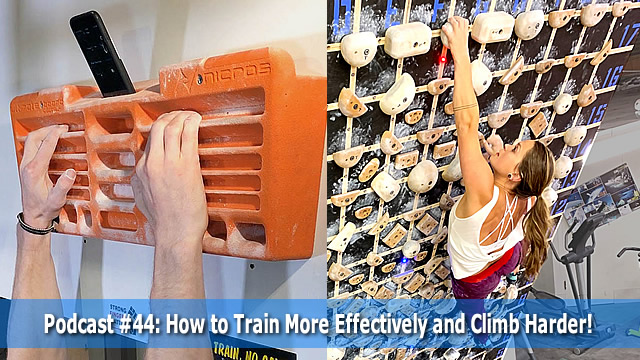
Episode #44 - How to Train More Effectively and Climb Harder!
4 Tips to Improve the Quality of Your Training and Accelerate Progress Toward Your Goals! It's been said that the definition of insanity is doing the same thing expecting to get different results. Progress demands change. Doing hard things demands great change. Uncommon success demands uncommon self-awareness, discipline, and effort. This podcast presents four ways to refine, re-invent, or perhaps completely overhaul your training to get better results in the pursuit of your goals. RUNDOWN 8:50 - Develop a detailed and compelling game plan for 2020. On a calendar, block in possible road trips, competitions, and other major life events. Consider what additional shorter trips (weekends and holidays) you can schedule. Now, think about developing a training plan to be maximally effective for preparing you for each trip. Don't forget to include a 3 to 7 days "training taper" before significant trips. 11:45 - Refine, re-invent, or overhaul your training! Do you do the same familiar training program day after day? Are you now training in the same basic ways you did one year ago? If so, it's time for a change! Listen closely for ideas how....and beware of the "shiny object"! 25:55 - Begin using Auto-Regulation before every serious climbing-specific workout. This is a big-time tip! Pretty much all elite athletes use auto-regulation, and so should you! In this section, I describe 4 "stages" of recovery, and how you can determine your stage of climbing-specific recovery on any given workout day. Listen closely, and develop your own personalized progressive warm-up to accurately auto-regulate all of your serious climbing workouts. 57:40 - Add a new element to your training! Something you don't ever do…or do infrequently. It must be climbing-specific and it must make sense to do…in terms of addressing a physical or technical weakness. View this new thing as a wild card—something that you might be apprehensive or scared to do. Sometimes in climbing, the thing you fear or avoid is exactly what you NEED to do to open the door to another level of performance. Watch video of Alex Megos wall campusing with perfect technique. SUPPORT THIS PODCAST! Visit PhysiVantage.com to learn about the first complete line of nutritional products designed by climbers, for climbers. PhysiVantage products are research-based...and they work! Get a physical advantage, beginning today! Save 15% with checkout code: PODCAST15 Want to learn more about training? Check out the 3rd edition of the international best-seller Training for Climbing! Please SHARE this podcast with a friend, and write a REVIEW in iTunes. Thank you! Instagram - @PhysiVantage Follow Eric on Twitter @Train4Climbing Check out Eric's TRAINING FOR CLIMBING YouTube channel. Follow Eric on Facebook! Music by: Misty Murphy Subscribe on iTunes (or other podcast player) to "Eric Hörst's Training For Climbing" podcast. You can also listen to the T4C podcast on Stitcher and Spotify! Please write a review on iTunes!

Episode #43 - 10 Tips and Concepts to Make 2020 Your Best Year Yet!
It's the dawn of a new decade, and so I wanted to take this rare opportunity to record a unique and, hopefully, impactful podcast. The topic is...effective training for the climb that is your life. This is a short and fast-paced episode, so I hope that you can find some quiet time to listen closely...and think critically about the 10 tips and concepts that I present. Please listen with an open mind. Search for clues to answering the very important question: "how can I become more effective at pursuing my life goals...and enjoying every day along the way?" I strongly recommend writing down some new and inspiring goals for 2020 (and beyond). Now, immediately get to work on developing a system for reaching your goals. Exude a bias for action each and every day, and I guarantee that many of your goals will be realized! RUNDOWN 0:20 – Intro to the 10 tips and concepts for effective training for life! 2:00 - Concept #1: The quality of your life is directly related to the quality of your thoughts. 4:11 - Concept #2: To outperform the masses, you must do things they don't do. 6:05 - Concept #3: Clarity of values and goals—and a clear purpose for living—form the foundation for a life full of rich and transcending experiences. 7:25 - Tip #4: Once you have set a compelling goal, you MUST develop a dynamic intelligent system of action…that will maximize the effectiveness of your daily efforts. Listen to podcast #42 for in-depth coverage >> 8:25 - Concept #5: Risk is a precursor to reward, and almost anything is possible once you conquer the fear of taking calculated risks. 10:00 - Concept #6: Singular focus and indomitable persistence know no limits. This is where you need to channel your inner CHHOM. What's CHHOM? Listen to podcast #37 to learn the superpowers of top climbers>> 10:50 - Concept #7: Obstacles and adversity make you stronger—and, they are often a blessing in disguise. 11:45 - Tip #8: Life is subtle: sweat the small stuff, NOT the big stuff. (This is the opposite of conventional wisdom—however, conventional wisdom is the way of the masses…and often NOT the way to uncommon success.) 16:10 - Concept #9: The most critical pivot points in life are often that brief moment between stimulus and response. Your destiny is a result of all the decisions you make, and so it's vital that you are fully engaged in the decision-making process as often as possible. 17:25 - Tip #10: Enjoy this moment: this moment is your life! Every passing minute and every single day….is a minute and a day that you will never get back. It's life currency spent (or invested) and now gone. Therefore, what could be more valuable than being fully engaged—mind, body, and spirit—in everything you do? 19:12 - My Happy New Year 2020 toast to you, Dear Listener... SUPPORT THIS PODCAST! Visit PhysiVantage.com to learn about the first complete line of nutritional products designed by climbers, for climbers. PhysiVantage products are research-based...and they work! Get a physical advantage, beginning today! Save 10% with checkout code: SAVE10 Want to learn more about training? Check out the 3rd edition of the international best-seller Training for Climbing! Please SHARE this podcast with a friend, and write a REVIEW in iTunes. Thank you! Instagram - @PhysiVantage Follow Eric on Twitter @Train4Climbing Check out Eric's TRAINING FOR CLIMBING YouTube channel. Follow Eric on Facebook! Music by: Misty Murphy Subscribe on iTunes (or other podcast player) to "Eric Hörst's Training For Climbing" podcast. You can also listen to the T4C podcast on Stitcher and Spotify! Please write a review on iTunes!

Episode #42 - An "Intelligent System" Approach to Climbing Training and Goal Pursuit
Effective training can't be haphazard, nor done ad-lib. In this podcast, you'll learn a supremely effective conceptual model for training that adopts an "intelligent system" approach. Eric describes the nine elements of an intelligent system, and how you can incorporate this system to optimize training results and accelerate goal pursuit! RUNDOWN 1:30 – Intro to the TFC podcast 3:19 – Learning to climb is simple; learning how to train effectively is complex! 8:10 – Employing a "systems" approach to your training and goal pursuit. 10:32 – The value of waking each morning with a mission. 16:20 – Eric shares some climbing history…and names 5 legendary, transformative climbers that influenced him and helped inspire this systems approach to training/climbing. 17:55 - #1 Warren Harding…applied a mission approach to big wall climbing…and took commitment and suffering to a new level. 20:00 - #2 John Gill – The father of modern bouldering and training for climbing. Read his biography, Masters of Rock (by Pat Ament). Gill was climbing V9 (in hiking boots) in 1959! 22:00 - #3 Wolfgang Gullich – Applied a systems approach to training and hard climbing…and opened up the world's first 5.14a, 5.14b, and 5.14d. Wolfgang helped invent the campus board, a climbing-specific form of plyometric training. 23:50 - #4 Todd Skinner – A pioneer of big wall free climbing, hard bouldering, and limit sport climbing, Todd employed a mission approach to climbing on a massive "all-in" and multi-year scale. 25:15 - #5 Lynn Hill – First female 5.14 ascent, World Cup Champion, and Free Ascent of The Nose of El Cap (1994). Lynn, like the other four legendary climbers, employed a systems approach to her climbing life. 27:40 – Two more important influences: my parents! My father, an engineer and inventor, helped shape my innate sense of needing to employ a systems approach to training/climbing. 29:10 – (oh yeah, climbing influence #6)….Jim Collins, a leading climber in the early1980s; later a best-selling author and business consultant, Jim described my mega-goal concept as a "BHAG". Big Audacious Hairy Goal! 30:30 – Conceptual model of a "System". 30:40 - Five elements of an open system: 1. Input, 2. Output, 3, Structure, 4. Transport, 5. Conversion. 33:30 – Making a system into an "Intelligent System" with four additional elements: 6. Goal, 7. Sensor, 8. Controller, 9. Disturbance. 40:00 – Applying an Intelligent System approach to your training and goal pursuit. If you're an advanced or elite climber, then employing a highly personalized system approach to training is essential for pursuing your genetic potential…and mega goals! 42:00 – Some climbing-specific examples of employing an intelligent system approach to training. Examples of how each system element relates to daily training activities and mission pursuit. 53:35 – Tips for applying a systems approach to your training and non-training activities 55:00 – Importance of having a mega-goal. What's your BHAG? You also need a series of short-term goals to make your journey more rich and enjoyable…and to help maintain motivation and a sense of progress. 57:00 – Importance of consciously selecting your INPUTs—training, rest, food, things you do to support recovery, etc. 1:01:50 – SENSOR…your subjective sense of movement quality and fatigue while climbing and training; but also via objective measures...such as tracking of metrics of fitness (grip strength, bodyweight, etc.) 1:04:30 – The power of DISTURBANCES to covertly sabotage your training and knock you off course from your goals. Strive to anticipate, avoid, or quickly course-correct. 1:07:20 – Most important: Be proactive and fully engaged in the process of training, climbing, and living. Don't be an NPC! 1:09:30 – Wrap-up: PLEASE support this podcast! Visit PhysiVantage.com to explore the first performance nutrition products designed for climbers. These products are research-based, used by pros and amateurs alike…and they work! Save 10% off non-sale items with the code "save10" at checkout. Want to learn more about training? For a comprehensive study of Training for Climbing, check out the 3rd edition of Hörst's best-selling book! Instagram - @PhysiVantage Follow Eric on Twitter @Train4Climbing Check out Eric's TRAINING FOR CLIMBING YouTube channel. Follow Eric on Facebook! Music by: Misty Murphy Subscribe on iTunes (or other podcast player) to "Eric Hörst's Training For Climbing" podcast. You can also listen to the T4C podcast on Stitcher and Spotify! Please write a review on iTunes!
Episode #41 - Personalized Nutrition for Training and Performance
If you're serious about training and climbing your best, then you must be serious about performance nutrition. The foods you consume play a central role in energy production, training adaptations, muscle recovery, connective tissue health, and your strength-to-weight ratio. Combined, these nutritional influences are nearly as significant as the influence of your training program--and, if you get both your training and nutrition right, then a powerful synergy will elevate your performance to a new level! RUNDOWN 00:40 – Intro to performance nutrition. Why it's important. 4:16 - As a guiding principle, climbers should "eat and train" not "diet and exercise." 5:19 - A short story about an aspiring elite climber... 6:40 - One of my favorite sayings...and a powerful guiding principle: "To outperform the masses you must do things they don't do." 7:00 - Pro tip: Eschew group think. Live by your own light. Build your own optimal system to reach your goals. 9:10 - Performance nutrition must be personalized. Many factors are at play...so it will take some effect to get it right. 15:45 - Nutrition is not a black & white topic. There are few "never eat" foods--enjoying rich foods is one of life's great pleasures. Moderation and discipline are critical, however. 18:00 - Beware of the flood of training and nutrition articles on the Internet (and social media posts). Some have great info, but many contain training and nutrition "fake news". 20:15 - Climbing is a strength-to-weight and power-to-weight ratio sport. Therefore, bodyweight is a critical factor and it should be optimized via smart training and nutrition. Caloric restriction may be valuable leading up to periods of performance climbing or competition. 24:15 - Your training and nutrition must be shaped to match your goals. The guidance of a veteran trainer and climbing-knowledgable nutritionist can be invaluable. 26:30 - Definition of "high-quality weight loss" -- this is the goal for elite climbers wanting to maximize performance. 27:30 - How to best create a slight caloric deficit to optimize body composition before competition or performance climbing. 28:50 - High-quality protein is essential for maintaining muscle mass, strength, and power during periods of hard training and/or caloric restriction. The protein requirement is 1.2 to 1.6 grams/kg of body weight per day. Supplementary protein, ideally a high-quality whey isolate, is often necessary to meet this goal while restricting calories. 30:30 - The importance of Leucine, especially in your post-exercise feeding. 31: 08 - Carbohydrate backloading as a powerful performance nutrition and recovery strategy. 34:00 - The value of post-exercise and bedtime whey protein isolate and/or micellar casein. Vegans should consider a pea protein supplement powder. 34:30 - Eric weights in on "fad diets"...low carb, keto, paleo, high carb, etc. 36:00 - The importance of adequate carbohydrates for power and strength-endurance athletes such as climbers. 38:00 - Eric's recommended macronutrient ratio...approximately 60% carbohydrates, 20% protein, and 20% fat. 39:23 - Eric's pyramid paradigm for healthy eating for peak performance. A balanced diet is the pyramid base, while sport-specific nutrition and supplements form the pyramid top. 41:54 - Regarding sports supplements--if you're eating right, then you may get added benefits from certain supplements. 43:30 - Eric briefly mentions the company he founded--PhysiVantage makes the first research-based supplements for climbers. 44:16 - What supplements might work for climbers? 44:30 - Post-workout/post-climbing protein can jump start and accelerate muscle and connective tissue recovery. 45:00 - BCAAs may have some value in a performance setting, but as a regular training aid there could be unintended consequences that may compromise muscle quality and performance in the long run. 47:00 - The importance of increasing muscle quality and muscle efficiency over the long term--this is the pathway to stronger more powerful muscles without gaining weight. 50:00 - What about creatine for climbers? Micro-doses may benefit, but creatine "loading" will likely hurt performance. 53:40 - Anti-oxidants (e.g. vitamin C, E, selenium) will limit the hormetic response to training and potentially reduce desired training adaptations in the long run. 56:45 - Supplements to "prime" the aerobic energy system and increase oxygen kinetics have great promise. Beetroot extract and citrulline malate will likely enhance climbing performance and recovery between bouts of high-intensity exercise. 1:01:00 - What about caffeine? 1:02:30 - Anaerobic lactic system buffers, beta alanine and sodium bicarbonate, have some potential benefits. 1:06:10 - Is a daily multivitamin helpful? What about minerals? 1:07:00 - A chunk of dark chocolate eaten each day has health and performance value. Seriously! 1:08:30 - The benefits of vitamin-C-enriched hydrolyzed collagen for climbers. Supporting connective tissue health is es
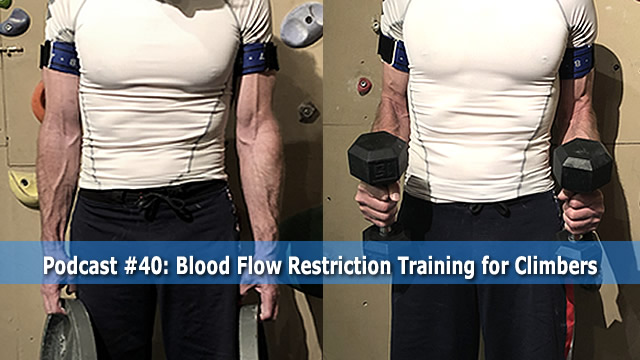
Episode #40: Blood Flow Restriction Training for Climbers
In a departure from my usual lecture style podcasts, I'm happy to feature a guest on this month's podcast--Dr. Tyler Nelson, a chiropractic physician and owner of Camp 4 Human Performance in Salt Lake City. This is my first podcast interview in about a decade--I believe my last audio interview was with Alex Honnold soon after his free solo of Half Dome (2008). Maybe some day I'll dig out that podcast from the audio vault and post it here! But I digress. The focus of this podcast is Blood Flow Restriction (BFR) training. This training modality has been around for decades, but has only been recently popularized by some physiotherapists and coaches. Among climbers, perhaps no one is more knowledgable on this topic than Dr. Nelson. In this 40-minute interview we'll explore the different BFR training protocols, and how BFR training may be a beneficial intervention for injured and healthy climbers alike. SUMMARY History of BFR and introduction into training in the USA. The difference between "passive" and "active" BFR. Ischemic preconditioning with passive BFR--complete arterial occlusion for up to 5 minutes with no exercise or loading. Keys for effective active BFR with intermittent loading: 40% to 80% of arterial occlusion pressure--or a subjective cuff tightness of 7 out of 10. Resistance/loading of 20% to 40% of 1RM. Protocol: 30 reps with first set, then 3 more sets of 15 reps with 30 seconds of rest between each set. Perform 3 or 4 exercises per BFR session with 30 to 60 seconds between exercises. Fatigue larger muscles first, then smaller muscles. Use BFR once or twice per week as an adjunct to regular training (for healthy climbers); or do up to 6 days per week, alternating upper-body and lower-body days, in the case of rehab from injury. BFR RESEARCH PAPERS: Blood Flow Restriction Exercise Position Stand: Considerations of Methodology, Application, and Safety (May 2019) The Efficacy of Blood Flow Restricted Exercise: A Systematic Review and Meta-Analysis(Journal of Science and Medice in Sport (2016) American Physical Therapy Association Video - Johnny Owens, PT, MPT, and Stephania Bell, PT, discuss blood flow restriction training within physical therapy. ABOUT PHYSIVANTAGE: I formed PhysiVantage to make research-based, athlete-tested performance nutrition for passionate climbers who place great demands on their bodies! Visit PhysiVantage.com and save 10% off non-sale items with the code "save10" at checkout. Need more Power Endurance? Want faster recovery between boulders or at mid-route rests? Try out the research-based Endure X pre-workout/pre-performance drink mix. Check out Eric's TRAINING FOR CLIMBING YouTube channel. Follow Eric and TFC on Facebook! Instagram - @PhysiVantage Facebook - @PhysiVantage For a comprehensive study of Training for Climbing, check out the 3rd edition of Hörst's best-selling book! Follow Eric on Twitter @Train4Climbing Music by: Misty Murphy Subscribe on iTunes (or other podcast player) to "Eric Hörst's Training For Climbing" podcast. You can also listen to the T4C podcast on Stitcher and Spotify! Please write a review on iTunes!
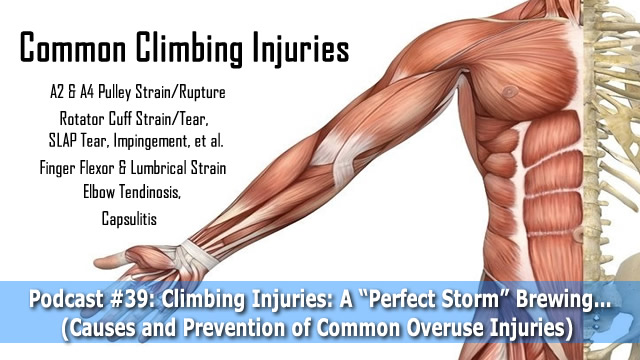
Episode #39: Climbing Injuries: A Perfect Storm Brewing
This is fourth in a series on sinew training with a specific focus on climbing injuries and prevention. Incidence of climbing injuries is growing, and overuse injuries to the fingers, elbows, and shoulders are common among beginners and expert alike. Eric lays out the perfect storm of factors that make upper extremity overuse injuries so common. You will learn countermeasures to reduce your injury risk and increase tendon health and finger flexor pulley strength. If you engage in hard finger training, frequently push your physical limits, and/or occasionally experience tendon or joint pain, then this podcast will be game-changer for you! RUNDOWN 0:24 – Intro to this episode and a quick recap of the previous episodes in this series. Be sure to listen to the first three podcasts in this series: Episode #33: Sinew Training #1 - Intro to Training for Stronger Tendons and Ligaments Episode #34: Sinew Training #2 - A Revolution in Finger Training for Climbers Episode #36: Sinew Training #3 -Training to Increase Tendon Strength, Muscle Power, and Connective Tissue Health 1:45 - Overuse injuries are incredibly common...almost every avid climber will experience tweaks (or worse) in their fingers, elbows, and/or shoulders. So the information covered in these podcasts is game-changing if you want to reduce injury risk and climb better. 3:20 - Eric introduces the three parts of this podcast...the 3 factors that combine to form a perfect storm for climbing injuries. 7:10 - Latest information from the Climbing Medicine Symposium in Squamish Canada in August. 10:24 - The latest data on types of climbing injuries and the injury trends over the last 20 years. 15:36 - A "Perfect Storm" brewing for climbing injuries. Understanding the storm will empower you to reduce injury risk and return from injury more quickly. There are 3 factors combining to build this storm. 17:00 - Perfect Storm Factor #1 - Climbing involves repetitive high-force loading on small body parts...including tiny tendons and ligaments in the fingers. 21:25 -Perfect Storm Factor #2 - Climbing is an addictive activities...and so we tend to climb a lot and rest too little. Furthermore, how your muscles feel (recover) isn't a good gauge of tendon recovery--we often climb again when our muscles feel recovered, yet the connective tissues take longer to recover from hard training/climbing. A vicious cycle of collagen breakdown in connective tissues begins... 33:10 - Perfect Storm Factor #3 - Poor nutritional habits and/or undernourishment. Deficiency in collagen-specific amino acids (Glycine & proline) are at the heart of the matter--if you're deficient in these two amino acids, then you're not synthesizng collagen optimally...and you may be in a chronic state of net collagen degradation...and on the fast track to injury. 41:45 - Not all proteins are created equal..in fact, the amino acid profile of foods varies widely...and most non-animal products are low in glycine and proline. 44:00 - The importance of consuming enough glycine and proline during periods of physical and mental stress, injury, and illness. Consuming 7 - 10 grams of glycine per day is a wise goal for serious athletes. 46:30 - What foods and supplements are highest in glycine? 50:50 - Vegan sources of glycine. 52:00 - The most glycine-rich food on the planet? Gelatin...and the more refined version (more easily mixed and digested) is Hydrolyzed Collagen. 54:40 - The research that changed my life....and how it reveals that we can possibly double collagen synthesis in our tendons, pulleys, ligaments. This is revolutionary information for serious climbers! 58:00 - Learn about the specific coupled training-nutritional intervention shown to target glycine and profile from hydrolyzed collagen to a specific body part...your fingers...injured pulleys...elbows...shoulders...knees...whatever. This really works! 1:00:00 - Why it's ideal to consume hydrolyzed collagen on an empty stomach before finger training, climbing, or rehab. Also learn about Eric's 6-minute finger workout you can do every day. 1:02:00 - Tips for those wanting to rehab an injury as fast as possible. 1:03:00 - Learn about Supercharged Collagen and why this is the most advanced collagen protein on the market....and the only product designed from specifically for power athletes. 1:06:00 - 6 things you can do to AVOID the perfect storm! 1:18:40 - Final thoughts on the power of this information...and how it can change your climbing for the better for many years to come. 1:19:00 - Help spread the word...please SHARE with a friend and please WRITE a review. ABOUT PHYSIVANTAGE: I formed PhysiVantage to make research-based, athlete-tested supplements that will benefit passionate climbers who place great demands on their bodies! Visit PhysiVantage.com and save 10% off non-sale items with the code "save10" at checkout. Need more Power Endurance? Want faster recovery during and between boulders or routes? Try out the research-based Endure X pre-worko

Episode #38: Ask Coach Horst (Round 6 of Training For Climbing Questions)
In this episode of Ask Coach Hörst...Eric answers 7 wide-ranging questions from listeners. Some of the topics covered are...energy system training for alactic power, climbing-specific aerobic energy system training, Tabata training on a hangboard, advice for a beginner wanting to hangboard train, the pros/cons of Ketogenic diet, accelerating healing of an A2 pulley injury. Listen in! Podcast Rundown 4:57 - Question #1 - How important is a climbing-specific aerobic training block at the beginning of a training cycle? 9:42 - Question #2 - Can you provide me with tips on staying healthy and motivated...and supporting my longevity in climbing? 16:12 - Question #3 - How many exercises can I include in an alactic energy system training session for developing maximum strength and power? 22:30 - Question #4 - I've read about the Tabata training protocol and I'm wondering what you think of applying it to hangboard training...by alternating 20-second hangs with 10 seconds of rest? 27:50 - Question #5 - I'm new to climbing and I feel that my weak fingers are a limiting constraint. Do you agree with the common rule of "no hangboard training in the first year of learning to climb"? 32:44 - Question #6 - I've been on a ketogenic diet for the past 3 weeks, and I feel terrific! What's your opinion the ketogenic diet and what are the pros and cons for a climber? 42:05 - Question #7 - I recently injured (mild pain) both of my middle fingers on a tweaky move. I've been doing light stretching and very light exercise to help support healing--what other things can I do to accelerate the healing process? Learn about Eric's new brand PhysiVāntage >> Listen to Podcast #36 on the vital topic of tendon trainng and health, and what you can do to improve tendon and ligament pulley strength and endurance. NOTE: If you'd like to submit a question for the next, please leave it as a comment to the Ask Coach Horst post on my Twitter @Train4Climbing -- include your first name, location, climbing ability level, and years climbing. Music by Misty Murphy Follow Eric on Twitter @Train4Climbing Check out Eric's YouTube channel. Follow Eric on Facebook! And on Instagram at: Training4Climbing
Episode #37: The 8 Superpowers of the Very Best Climbers
What makes great climbers great? What are the distinct and rare character traits that make climbers like Tommy Caldwell, Alex Honnold, Margo Hayes, Adam Ondra, and Alex Megos (I call this group "CHHOM")--and others like them--the barrier-breaking and transcendent climbers that they are? You might be thinking of things like "strong fingers", "low bodyfat, and "excellent sponsorship". Surely these are part of the equation, however, I believe the true Superpowers of these climbers are things you can't measure with a fitness test or financial summary. In this podcast I present the 8 Superpowers of the very best climbers--traits you can develop (gradually) to achieve great success on the rock and in your everyday life. I hope you find this presentation enjoyable and empowering! Rundown 0:58 - Introduction 2:50 - What does it take to turn an elite climber into one of the very best climbers on the planet? 8 Superpowers of the Very Best Climbers 5:28 - #1: Becoming comfortable with physical and mental discomfort. 11:53 - #2: Uncommon self-awareness and the willingness to embrace failures and personal weaknesses. 16:00 - #3: Effective goal setting and a habitual bias for action. 21:37 - #4: The power to sacrifice greatly. 27:00 - #5: Maintaining a beginner's mindset despite being a higherly praised elite climber. 34:56 - #6: The power to handle failure and overcome adversity. 38:30 - #7: The power to handle their "addiction". 45:44 - #8: The power NOT to care what other people think. 50:00 - Summary of the 8 Superpowers of the very best climbers. 51:15 - Do you have a #9 or #10 superpower to suggest? Leave your comment on Eric's T4C Twitter @Train4Climbing 52:15 - A brief word about Eric's new brand PhysiVāntage -- the first research-based, athlete-tested nutritional supplements for climbers! Get 15% off at PhysiVantage.com with the discount code PODCAST15 at checkout. Instagram - @PhysiVantage For a comprehensive study of Training for Climbing, check out the 3rd edition of Hörst's best-selling book! Follow Eric on Twitter @Train4Climbing Check out Eric's TRAINING FOR CLIMBING YouTube channel. Follow Eric on Facebook! Music by: Misty Murphy Subscribe on iTunes (or other podcast player) to "Eric Hörst's Training For Climbing" podcast. You can also listen to the T4C podcast on Stitcher and Spotify! Please write a review on iTunes!

Episode #36: Training to Increase Tendon Strength, Muscle Power, and Connective Tissue Health!
Sinew training. What the heck is that? Chances are you've never heard of "sinew training"...or even thought about it. After all, genetics and "luck" dictate the properties of our tendons and ligaments, right? WRONG! A growing body of recent research has shown that athletes can play an active role in developing stronger, higher performing tendons and ligaments by way of specific training and nutritional interventions. If you engage in hard finger training, frequently push your physical limits, and/or occasionally experience tendon or joint pain, then this podcast will be game-changer for you! This podcast is the third in a series on sinew training. You will learn about the structure of connective tissues, and how you can intervene in your connective tissue health and function...and elevate your power and power-endurance in the process. It's exciting stuff! Be sure to revisit the first two podcasts in this series episode #33 and episode #34, and don't miss the conclusion of this series in episode #37 coming in early July! RUNDOWN 0:15 – Introduction to these ground-breaking podcasts on how you can play an active role in developing stronger, more robust and higher-performance tendons, ligament pulleys (A2 and such). Be sure to listen to the first two podcasts in this series: Episode #33: Sinew Training #1 - Intro to Training for Stronger Tendons and Ligaments Episode #34: Sinew Training #2 - A Revolution in Finger Training for Climbers 2:35 – Eric explains why connective tissue injuries are so common among climbers... 4:00 - Quick review of the new research on muscle and tendon adaptations....which dispell many of the old myths about tendons and ligaments. 9:00 - Eric outlines the 5 parts of this podcast... 12:30 - Part 1: Foundational information about the tendon, ligament, and muscle extracellular matrix (ECM) structure. It's all about proper collagen alignment, supporting net gains in collagen synthesis via adequate rest, and proper hydration. Factoid: gram for gram, collagen is stronger than steel! 26:00 - Part 2: Eric details the subtle, yet vitally important adaptations to training in tendon, ligament, and ECM. Learn the importance of--and differences--between strengthening and stiffening connective tissues. This is hugely important information for fine tuning your tendons for health and periods of performance climbing (or competition). 31:00 - Adaptation #1: Collagen synthesis. Important detail on collagen synthesis following training/climbing. Given adequete rest, a net gain in collagen molecules can result in a very gradual tendon hypertrophy. Factiod: The tendons of veteran climbers may be as much as 50% thicker than lesser experienced climbers. 36:00 - Adaptation #2: Enzymatic crosslinking...a more quick-developing adaptation that can increase connective tissue stiffness and performance. Although certain exercises protocols will actually reduce crosslinking and stiffness--some important distinctions here! 42:48 - Part 3: Learn about 6 confounding factors in collagen synthesis, crosslinking, and connective tissue health. You MUST know this information...and think critically about what factors may make you at greater risk for connective tissue injury...or slow recovery from training/climbing. 50:35 - Part 4: Training interventions for developing stronger, thicker tendons and annular (finger) tendon pulleys, stiffer more robust connective tissues, and how you can reduce stiffness and increase tendon health in the case of tendinopathy or other soft tissue injury. Get ready for a massive download of important information on specific training interventions and protocols for improve tendon/ligament strength....and increasing (or decreasing) connective tissue stiffness. Engaging in a highly personalized program is key! 1:07:08 - Part 5: The revolutionary research-derived nutritional intervention shown to increase collagen synthesis after targeted exercise. IMO, this is truly revolutionary information for power-endurance athletes such as rock climbers. The key is to consume vitamin C-enriched high-quality hydrolyzed collagen 30 to 60 minute BEFORE you engage in targeted exercise--only this way will the glycine and proline in the blood stream reach the synovial fluid and get drawn into the tendons and ligaments support up to a doubling of collage synthesis. 1:14:10 - How to spike glycine, proline, and vitamin C as you train your fingers? Consume Supercharged Collagen and follow the research-based training protocol and you may be able to double collagen synthesis after climbing-specific exercise. Available only from PhysiVāntage! 1:18:20 - Guidelines for proper Supercharged Collagen use and optimal benefit...and how to use it to support recovery from training and/or rehab of a connective tissue injury. 1:22:50 - Podcast wrap-up--PLEASE write and review and SHARE with your partners and friends. IMPORTANT NOTES: I formed PhysiVantage to make research-based supplements that will benefit passionate climbers who pl
Episode #35: Ask Coach Hörst - Round 5
In this episode of Ask Coach Hörst...Eric answers 7 wide-ranging questions from listeners. Some of the interesting topics covered are...the science of "supercompensation", the use of gymnastic exercises in training, dealing with recurrent injuries, fingerboard training, mental training and "head space" development, endurance training, running, and more! It's 45 minutes of training-for-climbing information and fun. Listen in! Podcast Rundown 4:48 - Question #1 - What exactly is "supercompensation" and how does the intensity and frequency of my training affect supercompensation and my strength and fitness gains? 14:45 - Question #2 - Are calisthenics and gymnastic exercises beneficial for climbers? If so, how can I best add them to my program? 20:35 - Question #3 - For the past two years I've been stuck in a cycle of injury including both of my elbows and one shoulder. I tend to be hyper mobile...so perhaps I'm just not meant to be a climber. What do you think Eric? Is there any hope for me to have an injury-free climbing season? 26:10 - Question #4 - I'm a veteran climber, with lots of alpine experience, but I consider myself rather weak (I can redpoint 5.12c). I'm beginning a hangboard training program with weighted hangs and repeaters--can I do both of these in the same workout session or would that be counterproductive? Can you give me some advice on how to hangboard train effectively? 31:10 - Question #5 - I'm a 5.11 sport and gym climber, but I struggle at leading 5.9 trad (gear) routes...due to fear? How can I begin to "mental train" to improve my headspace for success on harder traditional climbs? 37:00 - Question #6 - I have climbed 5.14 and V10, yet on my recent (first) visit to the Red River Gorge I got totally spanked on the long steep endurance routes of a much lower grade? How can I better prepare for climbing at steep crags like at the Red River Gorge? 41:50 - Question #7 - I'm an avid boulderer with a background in cycling and running. Right now, I'm running for up to 45 minutes, a few days per week, because it makes me feel better and keep my weight in check for climbing. Is this amount of running hurting my recovery from climbing and training for climbing? When's the best time to do my runs--on climbing or on non-climbing days? Learn about Eric's new brand PhysiVāntage >> Listen to Podcast #34 on the vital topic of tendon health and what you can do to improve tendon and ligament pulley strength and endurance. NOTE: If you'd like to submit a question for the next, please leave it as a comment to the Ask Coach Horst post on my Twitter @Train4Climbing -- include your first name, location, climbing ability level, and years climbing. Music by Misty Murphy Follow Eric on Twitter @Train4Climbing Check out Eric's YouTube channel. Follow Eric on Facebook! And on Instagram at: Training4Climbing