Energ’Ethic - Climate Justice and Energy Transition
106 episodes — Page 1 of 3
What She Doesn't Know She's Owed - Nina Campbell, Consumers International
A Mirror or a Map? EUSEW at 20
You Have More Power Than You Think (Literally)
The public square - Ewelina Hartstein, DG Energy
The Subsidy That Went to the Wrong Address — Anna Bajomi, FEANTSA
[Replay] When Information Is the Infrastructure: Rethinking Energy Poverty from the Ground Up - Marta Garcia Paris
Fixing Europe's Energy System (Still Working on His Own House)
Your Flat Called. It Wants a Battery - Ashley Grealish, Windfall Energy
Half of European households live in flats or rented homes. For a decade, the clean energy transition has passed them by — smart tariffs assume an EV, rooftop solar assumes a roof, home batteries assume a wall you can drill into. Ashley Grealish has spent his career on exactly this structural gap: first at Bboxx, building pay-as-you-go solar for half a million homes in rural East Africa; then at ev.energy, scaling smart EV charging while pushing it beyond premium vehicles; now at Windfall Energy, with a 2.5 kWh plug-in battery that arrives overnight, plugs into a standard socket, and does the rest itself.What this episode coversSystem design over product design. At Bboxx, the team realised that importing a standard television into an off-grid kit didn't work — the power draw was too high. The solution was to rethink everything: low-power 12V appliances, right-sized panels, circular lead-acid battery recovery. The same logic is inside the Windfall battery: don't adapt the user to the system. Redesign the system around the user.Affordability as architecture. Bboxx started at $400 upfront and couldn't reach most of the people it was built for. The shift to pay-as-you-go unlocked scale. Windfall is at the same first stage — £1,000 on pre-order, with a clear ambition toward zero upfront cost through energy supplier partnerships and, potentially, the UK Warm Homes Discount.Desirability is not optional. Ashley filled his flat with test batteries from the European market. One arrived at 45 kg on a crate. Others had loud fans and permanent blue indicator lights. None were designed to be lived with. His conclusion: a product no one wants in their home will not reach the people who need it most.Organisations mentioned: Bboxx · e.quinox (Imperial College) · GemFair · ev.energy · Windfall Energy · Warm Homes Discount (UK)Marine Cornelis is the founder of Next Energy Consumer, a policy consultancy working on energy poverty, consumer rights, and housing at EU level. If you are working on a related mandate or research question, you can reach her at [email protected] Energ' Ethic goes out every other week.Keep up to date with new episodes straight from your inboxReach out to Marine Cornelis via BlueSky or LinkedInMusic: I Need You Here - KamariusEdition: Podcast Media Factory Support Energ'Ethic on Patreon© Next Energy Consumer, 2026Hosted on Ausha. See ausha.co/privacy-policy for more information.
Willing But Unable - Aurore Dudka
The EU's flexibility agenda promises to empower consumers. Demand-side response, dynamic tariffs, smart meters — the idea is that households can take control of their energy use and benefit from the transition. The evidence is less tidy.Vulnerable households are often willing to engage. What stops them is not reluctance — it is the architecture of their daily lives: caring responsibilities, health conditions, insecure housing, inflexible routines. When policy reads low participation as apathy, it designs for the wrong problem.Aurore Dudka is a researcher. She returns to Energ'Ethic with a systematic review of 66 empirical studies on demand-side response and energy-vulnerable households (Energy Research & Social Science, March 2026), and a co-authored analysis of gender and the energy transition (inGenere, January 2026).What this episode covers:Willingness vs. capacity. Vulnerable households want to participate in flexibility programmes. What constrains them is structural — rigid routines, limited technology access, low digital literacy, insecure tenure. Treating low uptake as disinterest produces schemes that exclude the households they were built for.Up to 20% higher bills — for those who can least absorb it. For sick and low-income households with inflexible consumption needs, poorly designed dynamic tariffs can increase energy bills by up to 20%. This is what happens when pricing mechanisms meet households whose energy use is not discretionary. No-harm guarantees exist as a design tool. They are not yet standard.The man decides. The woman adapts. Flexibility policy addresses households as single actors. Within households, someone takes the technology decision and someone else reorganises their daily life around it. The invisible labour of energy management falls disproportionately on women — and empowerment frameworks that ignore this redistribute burden, not agency.Stop designing for rationalistic consumers. Aurore's call to policymakers: stop thinking about citizens as rationalistic [sic] consumers who respond to price signals, and start thinking in terms of practice, time, and labour. The Citizens' Energy Package — which names farmers, carers, rural inhabitants and kindergartens as the citizens the transition must serve — opens this door. The design work to walk through it is still ahead.Marine Cornelis is the founder of Next Energy Consumer, a policy consultancy working on energy poverty, consumer rights, and housing at EU level. If you are working on a related mandate or research question, you can reach her at [email protected] Music: I Need You Here - KamariusEdition: Podcast Media Factory Support Energ'Ethic on Patreon© Next Energy Consumer, 2026Hosted on Ausha. See ausha.co/privacy-policy for more information.
She's Already Leading the Project. Why Isn't the System Designed Around Her?
Women are already the primary decision-makers in household renovation and low-carbon upgrades. They manage timelines, handle budgets, research materials, anticipate health impacts, and carry the cognitive load of the entire process. The retrofit system, however, is not designed around them.In this episode, Marine Cornelis speaks with Ellora Coupe, founder of Her Own Space, about the structural gap between where retrofit happens and how it is designed. The conversation examines why trust, not technology, is the real barrier to household action, why peer-based learning models fill a gap that institutional tools cannot, and what it would take for funding and policy frameworks to account for the full complexity of human-centred change.This is a conversation about why retrofit moves slowly when it ignores who is already leading the work.1. Trust as missing infrastructure. Retrofit faces a systemic trust deficit — not a communications problem, but a structural one. Households distrust contractors, product recommendations, and institutional schemes. Ellora argues that this trust erosion is the most underestimated obstacle to transition at scale.2. The patronising design gap Women approaching retrofit are routinely not taken seriously as technical interlocutors. This is not incidental. It generates an invisible friction cost — eroded confidence, delayed decisions, abandoned projects — that no current scheme measures.3. Community as a governance model Her Own Space is not a peer support forum, but a response to a specific governance failure: the loss of learning between individual retrofit journeys, and the incapacity of one-size-fits-all programmes to accommodate property diversity, budget variation, and different life stages. The community model absorbs complexity that institutional tools can't hold.4. Sequencing without a single entry point Rather than prescribing a starting point, Her Own Space deliberately removes sequencing pressure. Members enter at any stage and learn across the full continuum of a retrofit journey. This challenges the design logic of most public-facing programmes, which rely on a single message reaching everyone at the same moment.5. The early adopter argument — and what it means for policy Research cited in this episode suggests women adopt technology faster than men when it performs reliably, and abandon it faster when it does not. Designing for resilience is not the same as designing for uptake.6. The agility gap in retrofit funding Innovation funding models are built around static, deliverable-defined outcomes. They can't accommodate iterative, community-embedded forms of innovation. Ellora argues this is a structural bias, and Her Own Space's membership model exists partly to avoid it.Energ' Ethic goes out every other week.Marine Cornelis is the founder of Next Energy Consumer, a policy consultancy working on energy poverty, consumer rights, and housing at EU level. If you are working on a related mandate or research question, you can reach her at [email protected]: I Need You Here - KamariusEdition: Podcast Media Factory Support Energ'Ethic on Patreon© Next Energy Consumer, 2026Hosted on Ausha. See ausha.co/privacy-policy for more information.
Solar Is Easy. Neighbours Are Not.
I installed balcony solar panels at home. They work. They reduce my electricity bill. They also revealed something structural.Solar is technically simple. Scaling it is not.In Vilnius, I explored what happens when decentralised energy meets multi-apartment governance. In Central and Eastern Europe, 60% of people live in multi-family buildings.These buildings concentrate energy poverty, fragmented ownership, tight budgets and collective decision-making.Technology is progressing:Panels are lighter.Batteries are modular.Sodium-ion storage is emerging as a lower-cost option.Lithuania already counts 170,000 consumer-generators, with 12% of electricity production in 2025 coming from consumers.And yet, every time solar approaches a multi-family building, coordination begins.Who carries liability?Who guarantees mounting safety?Who stays present when after-sales disappears?This episode explores:Why 50% neighbour approval for shared solar is a relational threshold, not a technical oneHow standards on power limits, mounting systems and documentation reduce uncertaintyWhy flexibility policy collapses without visibility and information symmetryHow the revised EPBD and the upcoming Citizens Energy Package will depend on building-level coordinationMulti-family buildings are the proving ground.If decentralised energy depends on exceptional motivation, scaling will fragment.If governance absorbs friction, trust accumulates.From plug and play to trust and repair, this is the real work of the energy transition.Energ' Ethic goes out every other week.Marine Cornelis is the founder of Next Energy Consumer, a policy consultancy working on energy poverty, consumer rights, and housing at EU level. If you are working on a related mandate or research question, you can reach her at [email protected] Keep up to date with new episodes straight from your inboxReach out to Marine Cornelis via BlueSky or LinkedInMusic: I Need You Here - KamariusEdition: Podcast Media Factory Support Energ'Ethic on Patreon© Next Energy Consumer, 2026Hosted on Ausha. See ausha.co/privacy-policy for more information.
The Modernisation Fund: A Structural Blind Spot in EU Climate Policy
The Modernisation Fund is often treated as a technical financing tool. In reality, it is one of the most structural instruments in EU climate policy.In this episode, Marine Cornelis speaks with Morgan Henley, campaigner at CEE Bankwatch, about how the Modernisation Fund shapes energy systems in Central and Eastern Europe. Drawing on concrete examples from district heating, the conversation shows how funding design and governance choices lock in infrastructure pathways for decades.The episode examines why the Fund’s low political visibility enables priority drift, how limited scrutiny reinforces incumbent interests, and why these dynamics matter most in countries with constrained fiscal space. Rather than focusing on technologies, the discussion centres on power, accountability, and the long-term consequences of how climate money flows.This is a conversation about why climate credibility is built through governance, not announcements.Topics coveredThe Modernisation Fund as a structural EU instrumentGovernance gaps and low political visibilityPriority drift and incumbent advantageDistrict heating as a long-term system choiceWhy funding design determines transition outcomesCEE Bankwatch report on the Modernisation Fund (2026)Energ' Ethic goes out every other week.Marine Cornelis is the founder of Next Energy Consumer, a policy consultancy working on energy poverty, consumer rights, and housing at EU level. If you are working on a related mandate or research question, you can reach her at [email protected] Keep up to date with new episodes straight from your inboxReach out to Marine Cornelis via BlueSky or LinkedInMusic: I Need You Here - KamariusEdition: Podcast Media Factory Support Energ'Ethic on Patreon© Next Energy Consumer, 2026Hosted on Ausha. See ausha.co/privacy-policy for more information.
Heat Pumps, Systems, and People: Why Clean Heating Needs Alignment
Europe has set ambitious targets for clean heating. Heat pumps are central to that strategy. Yet deployment continues to slow, especially in multi-apartment buildings and social housing.In this episode, Marine Cornelis explores why.Joined by Vladimir Gjorgievski and Louise Meister, the conversation moves beyond technology to examine how clean heating actually works in real buildings.Drawing on experiences from North Macedonia and Austria, the episode looks at:why heating and cooling must be planned together,how sector coupling translates into comfort, resilience, and bill stability,why upfront costs and risk allocation remain major barriers,and how business models and coordination determine success in collective housing.The discussion also reflects on lessons from contexts with limited gas infrastructure, the role of energy communities and flexibility, and what alignment means for EU and national policy frameworks.A grounded, systems-level conversation on scaling clean heating without shifting cost and risk onto residents.Energ' Ethic goes out every other week.Marine Cornelis is the founder of Next Energy Consumer, a policy consultancy working on energy poverty, consumer rights, and housing at EU level. If you are working on a related mandate or research question, you can reach her at [email protected] Keep up to date with new episodes straight from your inboxReach out to Marine Cornelis via BlueSky or LinkedInMusic: I Need You Here - KamariusEdition: Podcast Media Factory Support Energ'Ethic on Patreon© Next Energy Consumer, 2026Hosted on Ausha. See ausha.co/privacy-policy for more information.
Energy Customers Do Not Need More Explanations, Sean Layerle
Why does the energy sector keep trying to explain, rather than designing better?In this episode of Energ’Ethic, Marine Cornelis speaks with Sean Layerle, Managing Partner at Baalbek Insights, about a stubborn reflex in the energy transition: the belief that low adoption can be fixed by better explanations.With 14 years in Silicon Valley and experience across five continents, Sean has worked at the forefront of digital energy products, demand-side management, and behavioural science, including roles at Opower and EnerNOC. Today, he supports energy and tech companies as electrification, flexibility and distributed energy resources accelerate.Together, they unpack why tech-first thinking persists, how behavioural biases quietly shape energy decisions, and why collecting more data rarely leads to better customer understanding.The conversation moves from early lessons in demand response to today’s challenge: designing digital products that align with real human motivations, not expert assumptions.Energ' Ethic goes out every other week.Marine Cornelis is the founder of Next Energy Consumer, a policy consultancy working on energy poverty, consumer rights, and housing at EU level. If you are working on a related mandate or research question, you can reach her at [email protected] Keep up to date with new episodes straight from your inboxReach out to Marine Cornelis via BlueSky or LinkedInMusic: I Need You Here - KamariusEdition: Podcast Media Factory Support Energ'Ethic on Patreon© Next Energy Consumer, 2026Hosted on Ausha. See ausha.co/privacy-policy for more information.
Stitching the Energy Transition in Cities - Eduardo Blanco
Cities are on the front line of the energy transition. They are also where energy poverty is most visible.In this episode of Energ’Ethic, Marine Cornelis talks with Dr Eduardo Blanco from Energy Cities, coordinator of the POWER UP project.The episode covers:Social energy players and new local business modelsMunicipal leadership and public risk-takingNeighbourhood-scale solutionsConcrete lessons from European pilot citiesEduardo explains why building fair energy systems looks less like engineering and more like embroidery. Slow, precise and deeply human.Energ' Ethic goes out every other week.Keep up to date with new episodes straight from your inboxReach out to Marine Cornelis via BlueSky or LinkedInMusic: I Need You Here - KamariusEdition: Podcast Media Factory Support Energ'Ethic on Patreon© Next Energy Consumer, 2025Hosted on Ausha. See ausha.co/privacy-policy for more information.
Heat, Light, Silence: What I Needed to Say About Europe and Energy Vulnerability
This episode is a departure — in the best possible way.Instead of an interview, Energ' Ethic host Marine Cornelis takes listeners inside the speech she delivered in Besançon for the French Day against Energy Poverty. A space filled with people who meet energy vulnerability every day: social workers, housing professionals, energy advisers, local officials. People who understand the transition not as a strategy, but as the temperature inside a room, the state of a wall, the anxiety behind an energy bill.The speech is in French, Marine’s mother tongue, because some truths land differently when spoken in the language where they were first felt.In this reflection, Marine revisits ten years of European policy through the lens of the people these laws are meant to protect. She digs into what happens when efficiency outruns dignity, why energy vulnerability has nothing to do with a simplistic income line, and how equity reshapes the right to energy in a continent living through rising bills and increasingly hostile summers.You will hear stories from homes across Europe, observations from the frontlines, and a clear-eyed look at what rebuilding trust actually requires: proximity, responsibility, and the ability to confront vulnerability without looking away.This episode invites you to slow down.To feel the spaces where policy becomes life.To remember that energy justice is not decorative language — it is the condition for a society that holds.A different format for Energ’Ethic.And a necessary one.Listen to the full speech.Energ' Ethic goes out every other week.Keep up to date with new episodes straight from your inboxReach out to Marine Cornelis via BlueSky or LinkedInMusic: I Need You Here - KamariusEdition: Podcast Media Factory Support Energ'Ethic on Patreon© Next Energy Consumer, 2025Hosted on Ausha. See ausha.co/privacy-policy for more information.
Better Buildings, Better Neighbourhoods, Better Lives - Erman Erogan
Erman Erogan, Policy and Campaign Officer at CAN Europe, joins Energ’Ethic to discuss the Build Better Lives campaign and Europe’s race to deliver affordable, energy-efficient homes. Europe’s homes tell a story — one of rising bills, cold rooms, and missed opportunities for fairness and comfort. But a new chapter is being written. The EU is reshaping its housing future through the Affordable Housing Dialogue, the first European Affordable Housing Plan, the Affordable Housing Initiative, and the New European Bauhaus, which reimagines places that are sustainable, beautiful and inclusive.At the heart of this transformation stands the Build Better Lives campaign, coordinated by CAN Europe. Bringing together over 95 organisations from across housing, social justice, youth, and climate movements, it calls for renovation that delivers affordable, energy-efficient, and people-centred homes.In this episode, Erman Erogan shares how renovation becomes powerful when it moves beyond walls — when it starts with people and spreads across neighbourhoods: “This is more than just adding a layer of insulation. This talks about your home, your comfort place, your relationship with your neighbours and your community.”Erman explains why district-level renovation can accelerate the energy transition and strengthen local trust. Drawing from cases across the EU, he shows how integrated planning can combine energy efficiency, affordability, and inclusion.“A good 40 percent of all waste generated in Europe is building waste. We need a culture shift that makes renovation the norm.”We discuss how circular construction, reuse of materials, and fair labour conditions can make the upcoming EU policies deliver lasting change. From Swedish projects that trained residents to German schemes that froze heating costs, the conversation reveals what equitable renovation looks like in practice.For Erman, success depends on aligning EU frameworks around ambition and justice. The goal: better buildings that create better neighbourhoods, and better neighbourhoods that sustain better lives.European Citizens' Initiative HouseEurope! Power to RenovationEnerg' Ethic goes out every other week.Keep up to date with new episodes straight from your inboxReach out to Marine Cornelis via BlueSky or LinkedInMusic: I Need You Here - KamariusEdition: Podcast Media Factory Support Energ'Ethic on Patreon© Next Energy Consumer, 2025Hosted on Ausha. See ausha.co/privacy-policy for more information.
To Build Fast, You Need Fair, with Arthur Hirsch
Europe knows it must move fast on renewables and grid infrastructure. But speed without fairness only builds friction.In this episode, Marine Cornelis speaks with Arthur Hinsch, Senior Expert at ICLEI – Local Governments for Sustainability, about the Fast and Fair Renewables & Grids Initiative — a first-of-its-kind European consensus on how to scale up solar, wind, and grid projects while ensuring that local communities see real benefits and have a voice.Endorsed by a broad alliance — from WindEurope and SolarPower Europe to Energy Cities, REScoop.eu, CAN Europe, EEB, and the European Youth Energy Network — the initiative sets out five principles defining what “fair” looks like on the ground.Arthur shares what it took to reach agreement among actors who rarely sit at the same table. He explains how fairness is not a barrier to progress, but a condition for it — and how a new checklist for local governments can help mediate tensions, bring transparency, and get projects off the ground faster.He also reflects on his own path from studying Japanese culture to shaping European energy diplomacy, and why, after steering this landmark collaboration, he’s taking a sabbatical in Japan to reconnect with long-term thinking.Highlights:Why fairness and speed are inseparable in Europe’s energy transition.The five principles behind the Fast and Fair Renewables & Grids Initiative.How local mayors can use the new checklist to talk with citizens and developers.What makes this cross-sector agreement unique — and replicable.Arthur’s reflections on collaboration, balance, and what Japan might teach Europe.Explore the initiative: https://fastandfairenergy.eu Energ' Ethic goes out every other week. Keep up to date with new episodes s=1">straight from your inboxReach out to Marine Cornelis via app/profile/marinenextenerg. bsky. socia">BlueSky</a> or&nbsp;<a target="_blank" rel="noopener noreferrer nofollow" href="https://www. linkedin. com/in/marinecornelis">LinkedInMusic: I Need You Here - KamariusEdition: Podcast Media Factory Support Energ'Ethic on com/Energethic">Patreon© nextenergyconsumer. eu/">Next Energy Consumer, 2025Hosted on Ausha. See ausha.co/privacy-policy for more information.
Finance as a Tool for Trust - Special episode at ACCE Conference
Special episode recorded live at the ACCE closing eventWhat if the most powerful technology for the energy transition wasn’t digital, but human?In this Energ’Ethic special, recorded live in Brussels, Marine Cornelis brings together the voices behind Access to Capital for Community Energy (ACCE) — a project that helped citizens across Europe finance their own energy future.From Romania to Belgium, from Croatia to the UK, communities built cooperatives, social funds, and ethical banking partnerships. What they discovered went far beyond kilowatts: finance can build trust, resilience, and democracy.Highlights• Europe as Enabler – CINEA’s Michele Sansoni on how EU support is nurturing a new generation of energy communities.• From Growth to Maturity – REScoop.eu’s Sara Tachelet on a movement growing stronger and more professional.• Courage in Romania – Camelia Sava’s team created a social fund and powered a kindergarten, despite limited resources.• Federations as Translators – Energie Samen and Énergie Partagée show how local networks bridge citizens and finance.• Solidarity in Action – Energy4All’s Mark Luntley on turning citizen investment into global cooperation.• Equal Rights, Everywhere – Corina Murafa calls for citizens in all EU countries to access and finance energy fairly.• Keeping Money Local – Dirk Vansintjan reminds us every euro reinvested strengthens communities.TakeawayFinance works best when it is a dialogue — between citizens, financiers, and institutions.When done well, it becomes a tool for trustEnerg' Ethic goes out every other week.Keep up to date with new episodes straight from your inboxReach out to Marine Cornelis via BlueSky or LinkedInMusic: I Need You Here - KamariusEdition: Podcast Media Factory Support Energ'Ethic on Patreon© Next Energy Consumer, 2025Hosted on Ausha. See ausha.co/privacy-policy for more information.
Cash Current: Financing the Flow of Citizen Energy (Replay)
This week on Energ’Ethic, we bring back a conversation worth hearing again. Stan d’Herbemont of REScoop.eu explains why citizen energy projects still face a “risk premium” simply because they are democratic. Ownership and participation are often misread by traditional finance as weakness instead of strength.As the ACCE project reaches its closing event on 7 October 2025, this replay offers the context behind our recent episodes with Chris Vrettos and Junior. Chris showed how ACCE has channelled millions into citizen-led projects. Junior reminded us that energy is also about hope and belonging. Stan sets the stage by showing why those tools were needed in the first place.What you’ll hear:Why democratic projects are still labelled “risky.”How public finance and guarantees can change the flow.Why communities deliver more than kilowatts: jobs, trust, inclusion.🎧 Cash Current is back to remind us that citizen energy is worth the investment.Energ' Ethic goes out every other week.Keep up to date with new episodes straight from your inboxReach out to Marine Cornelis via BlueSky or LinkedInMusic: I Need You Here - KamariusEdition: Podcast Media Factory Support Energ'Ethic on Patreon© Next Energy Consumer, 2025Hosted on Ausha. See ausha.co/privacy-policy for more information.
From Risky to Resilient: How Citizens Can Fund the Transition - Chris Vrettos, ACCE project
How do we move community energy from “too risky” for banks to a serious part of Europe’s clean energy future? In this episode, Marine Cornelis speaks with Chris Vrettos (REScoop.eu & Electra Energy) about the ACCE project, which is closing with its final event on 7 October.Key takeawaysCommunity Energy Financing Schemes (CEFS): tools built by and for communities that make projects bankable and scalable.From risk to resilience: bundling many small initiatives into portfolios that investors take seriously.Inclusion by design: solidarity shares and ethical finance models that bring vulnerable households into the transition.Policy momentum: how the Social Climate Fund, EU budget, and potential EIB guarantees can support citizen-led finance.Why listen?Finance is never neutral. As Chris reminds us, it can either lock communities out or bring them in. ACCE has shown that citizen-driven finance is not only possible, but scalable.🎧 Tune in now — and if you want to see what comes next, join the ACCE closing conference on 7 October 2025, where Marine will moderate the discussion.Energ' Ethic goes out every other week.Keep up to date with new episodes straight from your inboxReach out to Marine Cornelis via BlueSky or LinkedInMusic: I Need You Here - KamariusEdition: Podcast Media Factory Support Energ'Ethic on Patreon© Next Energy Consumer, 2025Hosted on Ausha. See ausha.co/privacy-policy for more information.
Power in the Roots: Rhizomes, Relationships, and the Energy Transition, with Junior Mbangala
with Junior Mbangala, researcher at Oxford and policy analyst at the WTOWhat if the energy transition was less about infrastructure—and more about invisible connections?In this episode, Junior Mbangala introduces a quietly radical idea: the rhizome. Borrowed from philosophy, this root-like, messy, decentralised structure becomes a powerful lens to rethink energy systems. Not as neat grids or market mechanisms—but as webs of trust, knowledge, and social ties.👣 From working-class neighbourhoods in Liège to sub-Saharan Africa, Junior uses social network analysis to map how energy communities actually function:Who participates?Who holds influence?And who gets left out, even when it all looks inclusive on paper?Forget the top-down diagrams. Junior invites us to see energy not as a service, but as a social system. One where:✨ Knowledge spreads like a rumour🔗 Participation relies on trust, not just access🌱 Change starts in the margins—and travels sideways💬 “Each one, teach one,” he says. “The rhizome helps us grow differently—but together.”🧠 What you’ll hear:How network thinking reveals invisible power structures in energy communitiesWhy the “community” in energy community needs to come firstWhat Deleuze and Guattari have to do with just transition policiesWhy hope—yes, hope—is a form of energy, too📍This episode isn’t about electrons. It’s about entanglements. And how, if we’re serious about justice, we need to start mapping the roots—not just building the tree.🎧 Listen now. And maybe never think about “inclusion” the same way again.Energ' Ethic goes out every other week.Keep up to date with new episodes straight from your inboxReach out to Marine Cornelis via BlueSky or LinkedInMusic: I Need You Here - KamariusEdition: Podcast Media Factory Support Energ'Ethic on Patreon© Next Energy Consumer, 2025Hosted on Ausha. See ausha.co/privacy-policy for more information.
[SUMMER REPLAY] The Access-Washing Dilemma: Are Development Goals Missing the Mark? William Brent
What if the key to a sustainable future lies in the hands of the most vulnerable? Join host Marine Cornelis in this enlightening episode of Energ’Ethic - Climate Justice and Energy Transition, as she sits down with William Brent, a passionate climate solution advocate and entrepreneur, whose journey from media and entertainment to championing energy justice is nothing short of inspiring. Driven by his experiences in China, Brent reveals how he became a fervent advocate for energy access, focusing on renewable energy solutions tailored for the Global South. As Brent shares his insights, he sheds light on the systemic inequities entrenched in the energy sector, emphasizing the critical need for energy transition that prioritizes the most marginalized communities. Despite significant strides in providing basic electricity access to millions, he highlights the stark reality that many still lack modern energy solutions. Brent's critique of the Sustainable Development Goals (SDGs), particularly Goal 7, is thought-provoking; he argues that these goals often lead to 'access washing,' where superficial progress is celebrated while genuine modernization remains elusive. Throughout the conversation, the urgency of reforming energy policy becomes evident. Brent calls for a transformative shift in institutional mindsets, advocating for greater collaboration among development finance institutions, governments, and the private sector. He believes that only through collective action can we address energy poverty and ensure equitable energy access for all. With a focus on clean tech and smart grids, Brent envisions a future where renewable energy, community energy initiatives, and off-grid solutions play pivotal roles in the just transition we so desperately need. This episode is a clarion call for climate action, urging listeners to rethink the frameworks surrounding energy efficiency and decarbonisation. As Brent passionately articulates, the path to sustainability is not just about technology; it’s about people-centric solutions that empower communities and create green jobs. Join us to explore how we can collectively foster a future where public ownership of energy and frugal innovation pave the way for a truly just transition. Don’t miss this opportunity to gain a deeper understanding of energy justice and the vital role it plays in the energy transition. Tune in and be inspired by the stories and insights that illuminate the path toward a more equitable and sustainable world. Energ' Ethic goes out every other week. Keep up to date with new episodes s=1">straight from your inboxReach out to Marine Cornelis via app/profile/marinenextenerg. bsky. socia">BlueSky</a> or&nbsp;<a target="_blank" rel="noopener noreferrer nofollow" href="https://www. linkedin. com/in/marinecornelis">LinkedInMusic: I Need You Here - KamariusEdition: Podcast Media Factory Support Energ'Ethic on com/Energethic">Patreon© nextenergyconsumer. eu/">Next Energy Consumer, 2025Hosted on Ausha. See ausha.co/privacy-policy for more information.
[SUMMER REPLAY] Building Better Lives: Monica Vidal's Journey to Promote Energy Efficiency and Climate Justice
How can we ensure that the journey towards a sustainable future is inclusive for all? Join host Marine Cornelis as she delves into the heart of climate justice and the energy transition with Monica Vidal, a passionate advocate whose journey from environmental science student to leader at Can Europe is truly inspiring. In this enlightening episode of Energ’Ethic - Climate Justice and Energy Transition, Monica shares her pivotal experiences that shaped her commitment to promoting energy efficiency and tackling energy poverty through the innovative Build Better Lives campaign. As Monica discusses her work, she highlights the critical intersection of energy policy, housing, and social justice, emphasizing that a truly just transition cannot occur without addressing the housing crisis and energy access. She passionately advocates for ambitious EU directives that can pave the way for real-world solutions, showcasing how energy efficiency can transform lives and communities across Europe. With a focus on collaboration among social justice organizations, housing groups, and trade unions, Monica illustrates the power of collective action in driving meaningful change in the energy transition. Throughout the episode, listeners will gain insights into the challenges of implementing effective energy policies, the necessity of inclusive public participation, and the vital role that data and science play in shaping advocacy efforts. Monica’s approach to energy justice and sustainability reflects a commitment to not just decarbonisation, but to fostering a future where clean tech and renewable energy are accessible to everyone. She makes a compelling case for community energy initiatives and off-grid solutions that empower individuals and promote energy efficiency, all while creating green jobs and enhancing public ownership of energy. As the episode unfolds, Monica’s warmth and optimism shine through, reminding us that the path to a sustainable future is not just about technology, but about people. Her call to action urges listeners to engage in building better lives, emphasizing that understanding the complexities of energy efficiency and housing is crucial for everyone who cares about climate action and sustainability. Tune in to this thought-provoking conversation and discover how you can be part of the movement towards a more equitable energy transition. Don’t miss out on this opportunity to learn from a true changemaker in the field of energy justice. Join us for an episode that promises to inspire and empower you to take action in your own community! Energ' Ethic goes out every other week. Keep up to date with new episodes s=1">straight from your inboxReach out to Marine Cornelis via app/profile/marinenextenerg. bsky. socia">BlueSky</a> or&nbsp;<a target="_blank" rel="noopener noreferrer nofollow" href="https://www. linkedin. com/in/marinecornelis">LinkedInMusic: I Need You Here - KamariusEdition: Podcast Media Factory Support Energ'Ethic on com/Energethic">Patreon© nextenergyconsumer. eu/">Next Energy Consumer, 2025Hosted on Ausha. See ausha.co/privacy-policy for more information.
[SUMMER REPLAY] Championing Energy Equity: Louise Sutherland on Inclusive Policies for a Just Energy Transition
What if the path to a sustainable future hinged not only on innovation but also on inclusivity? In this enlightening episode of Energ’Ethic, host Marine Cornelis reunites with Louise Sutherland, a prominent voice in Europe’s energy transition and managing principal at WRAP. Together, they delve into the EU's Fit for 55 framework, a pivotal step towards achieving ambitious climate targets. Louise shares her personal journey, illustrating how her commitment to energy justice has shaped her work, emphasizing the urgent need for policies that uplift vulnerable communities grappling with energy poverty. The conversation takes a compelling turn as they unpack the outcomes of New York Climate Week, revealing a global perspective on energy equity that transcends borders. Energy justice is not just about affordability; it encompasses ownership, control, and representation in energy decision-making. Louise and Marine explore how integrating social objectives into energy policy is critical for ensuring that no one is left behind in the energy transition. They discuss the necessity of fostering community energy initiatives, promoting public ownership of energy, and advancing off-grid solutions that empower local populations. As they reflect on the challenges and triumphs of the energy transition, the duo emphasizes the importance of learning from international experiences. They highlight innovative approaches like frugal innovation and smart grids that can drive decarbonisation while creating green jobs. The episode serves as a call to action for listeners to engage with the pressing issues surrounding energy access and sustainability, urging them to advocate for a just transition that prioritizes the needs of all citizens. Join us for this insightful discussion that not only sheds light on the intricacies of energy policy but also inspires hope and action towards a cleaner, fairer future. Discover how the principles of energy equity can guide us in shaping a resilient energy landscape that champions both environmental and social justice. Tune in and be part of the movement for a just energy future! Energ' Ethic goes out every other week. Keep up to date with new episodes s=1">straight from your inboxReach out to Marine Cornelis via app/profile/marinenextenerg. bsky. socia">BlueSky</a> or&nbsp;<a target="_blank" rel="noopener noreferrer nofollow" href="https://www. linkedin. com/in/marinecornelis">LinkedInMusic: I Need You Here - KamariusEdition: Podcast Media Factory Support Energ'Ethic on com/Energethic">Patreon© nextenergyconsumer. eu/">Next Energy Consumer, 2025Hosted on Ausha. See ausha.co/privacy-policy for more information.
[SUMMER REPLAY] Shana Gallagher on ISO Standards: Ensuring Accountability in Corporate Climate Strategies
What ignites a lifelong passion for climate justice and energy transition? For Shana Gallagher, it was the haunting beauty of the ocean and the stark realization of how human actions can devastate marine ecosystems. Join host Marine Cornelis as she delves into the inspiring journey of Shana, the Dynamic Net Zero Engagement Manager at the British Standards Institution (BSI). Shana's transformation from political activism in the U. S. to a pivotal role in the private sector underscores the essential need for corporate engagement in achieving ambitious net-zero emissions targets. In this enlightening episode of Energ’Ethic - Climate Justice and Energy Transition, Shana shares her insights on the significance of ISO standards as credible benchmarks for climate action. Discover the groundbreaking work behind the world's first formal certifiable net zero standard, which serves as a vital tool for organizations navigating the complexities of the energy transition. As the conversation unfolds, Shana candidly addresses the pressing challenges of greenwashing, emphasizing the urgent need for clear guidelines that ensure accountability in corporate climate strategies. With the climate crisis accelerating, the role of businesses in fostering sustainability has never been more critical. Shana highlights the ISO net zero guidelines, offering organizations a roadmap to craft effective net zero strategies. This episode resonates with the core themes of energy justice and decarbonisation, illuminating how companies can contribute to a just transition while aligning with global climate goals. Shana’s work exemplifies the intersection of clean tech, renewable energy, and community energy initiatives, showcasing how innovative solutions can empower businesses to thrive in an evolving landscape. Listen in as we explore the vital connections between energy access, electrification, and the broader implications of energy policy on our planet's future. Shana’s unique perspective not only sheds light on the corporate side of climate action but also inspires hope through frugal innovation and the pursuit of green jobs. This episode of Energ’Ethic is a clarion call for all stakeholders—business leaders, policymakers, and individuals—to engage actively in the energy transition, ensuring that we leave a sustainable world for future generations. Tune in and be part of the change! Energ' Ethic goes out every other week. Keep up to date with new episodes s=1">straight from your inboxReach out to Marine Cornelis via app/profile/marinenextenerg. bsky. socia">BlueSky</a> or&nbsp;<a target="_blank" rel="noopener noreferrer nofollow" href="https://www. linkedin. com/in/marinecornelis">LinkedInMusic: I Need You Here - KamariusEdition: Podcast Media Factory Support Energ'Ethic on com/Energethic">Patreon© nextenergyconsumer. eu/">Next Energy Consumer, 2025Hosted on Ausha. See ausha.co/privacy-policy for more information.
Trust is the Fast Track, Seda Orhan, CAN Europe
🎧 Guest:Seda Orhan, Renewable Energy Programme Manager at Climate Action Network (CAN) Europe and board member at the Renewable Grids Initiative🔎 Episode Summary:If the first time locals hear about your wind or solar project is when the diggers arrive, you’ve already lost.In this episode, Marine Cornelis is joined by Seda Orhan to discuss the invisible ingredient that makes or breaks renewable energy projects: trust. Seda unpacks CAN Europe’s latest report, Community Engagement and Fair Benefit Sharing of Renewable Energy Projects, which offers 14+1 concrete KPIs to help developers—and policymakers—move beyond box-ticking towards meaningful participation.Because here’s the thing: community engagement isn’t a brochure. It’s a conversation. And when it works, it’s magic.🌱 Highlights:From resistance to resilience: Why fair benefit sharing is essential to earning a social licence—and how failing to build trust delays or even kills projects.What bad engagement looks like: Seda lays out the patterns: poor site choices, vague timelines, late-stage notifications, and empty “consultations.”The 14+1 checklist for fairness: Practical indicators—from local jobs to co-ownership—to assess whether a project genuinely benefits its host community.Italy vs Germany: What different regulatory approaches reveal about who gets heard—and who gets sidelined.Why co-ownership matters: The transformative power of giving communities not just a voice, but a stake.🛠️ Resource spotlight:📄 Community Engagement and Fair Benefit Sharing of Renewable Energy Projects – CAN Europe Report🗣️ Like what you hear?Share the episode, rate the podcast, and follow us on LinkedIn for more unfiltered conversations about the future of energy.Energ' Ethic goes out every other week.Keep up to date with new episodes straight from your inboxReach out to Marine Cornelis via BlueSky or LinkedInMusic: I Need You Here - KamariusEdition: Podcast Media Factory Support Energ'Ethic on Patreon© Next Energy Consumer, 2025Hosted on Ausha. See ausha.co/privacy-policy for more information.
If You Don’t See Anyone Like You, It’s Because You’re Meant to Be There, with Joana Simão Costa and Ilaria Conti
This episode is a call to action.Recorded at the stunning Florence School of Regulation with sponsorship from Energy Traders Europe, this special episode of Energ’Ethic shines a very necessary light on the link between representation, power, and progress in the energy transition.Let’s say it again: there’s no energy transition without equality. From gas platforms with no toilets for women, to boardrooms still stuck in the status quo, the energy sector has work to do. But there are people doing that work, and doing it brilliantly.Enter Joana Simão Costa, who leads the European Commission’s Equality Platform, and Ilaria Conti, behind the Lights on Women initiative and the LUCE Awards.Together, we unpack:why the Equality Platform is rewriting the rules from the inside,how Lights on Women and the LUCE Awards went from grassroots frustration to global celebration, andwhat it really takes to turn systemic bias into collective momentum.This episode is for anyone who’s ever walked into a room and felt out of place, and for those ready to build rooms where everyone belongs.Highlights:“Should we fix the women or fix the system?”Spoiler: it’s the system. Always.“No ladies’ toilet at the gas substation? That’s the message.”Inclusion starts with infrastructure"If you don’t see anyone like you in the room, it’s because you are unique. Find what makes you you—and build on it.”Yes. That’s a quote worth framingFrom idea to impactHow Lights on Women handed out over 50 training scholarships, and why visibility is still half the battleMentoring, but smarterInside the Equality Platform’s B2B mentoring: because no one should have to reinvent equality on their ownLUCE means light, and actionWhy celebrating legacy leaders and emerging talents matters. For confidence. For visibility. For changeWant More?Equality Platform – European CommissionLights on WomenLUCE AwardsWatch on YouTube: https://youtu.be/ISnUkpKsz7o Energ' Ethic goes out every other week.Keep up to date with new episodes straight from your inboxReach out to Marine Cornelis via BlueSky or LinkedInMusic: I Need You Here - KamariusEdition: Podcast Media Factory Support Energ'Ethic on Patreon© Next Energy Consumer, 2025Hosted on Ausha. See ausha.co/privacy-policy for more information.
Too Young to Wait: How EYEN Built a Seat at the Energy Table, Federico Barbieri and Carlotta Ferri
This episode is about the people who got tired of waiting their turn — and built their own table instead.Marine Cornelis sits down with Federico Barbieri and Carlotta Ferri, President and Vice-President of EYEN – the European Youth Energy Network, a buzzing coalition of young minds who decided that youth in Europe didn’t need another panel slot or empty round of applause — they needed power, presence, and purpose.🚀 From sidelined to central: It all began in 2019 at a flashy international conference in Canada where youth delegates were invited... but kept out of the room where it happened. So what did they do? They took their post-its and ideas to a bar outside the European Commission and sketched out a new vision: an organisation built by and for youth to have a say in shaping Europe’s energy future.💡 Not another talking shop: EYEN doesn’t just publish position papers or run events — it’s become a think-and-do tank, launching initiatives like:The European Youth Energy ForumThe Young Energy Consumers Task ForceThe Energy Transition Career CompassAnd (soon) the first-ever survey on youth energy poverty in Europe🧠 Real talk, no tokenism: Federico and Carlotta are refreshingly honest about what it takes to build something meaningful — from struggling with Belgian bureaucracy to navigating what "youth" really means when you’re trying to serve students, young parents, electricians and policy nerds all in one go.🔧 Behind the scenes: EYEN’s secret? A network of over 2000 active volunteers across Europe, fuelled by mutual support, shared purpose — and zero membership fees. Because no one should be priced out of shaping the future.💬 “Every time a local youth organisation dies out, a connection between society and the energy transition disappears.”💬 “We don’t just want to be included. We want to bring value.”Why listen?Because if we keep talking about democratisation without asking who’s in the room, we’re missing the point. This episode is a celebration of doing things differently — and a roadmap for those brave enough to start from scratch.🎧 Listen now — and if you’re under 35, join EYEN. If you’re over 35, send this to someone who isn’t. Or better yet, help fund the next youth-led breakthrough. Thanks, Energy Traders Europe, for sponsoring this episode!Energ' Ethic goes out every other week.Keep up to date with new episodes straight from your inboxReach out to Marine Cornelis via BlueSky or LinkedInMusic: I Need You Here - KamariusEdition: Podcast Media Factory Support Energ'Ethic on Patreon© Next Energy Consumer, 2025Hosted on Ausha. See ausha.co/privacy-policy for more information.
Trading in Uncertainty, Investing in Europe, Mark Copley, Energy Traders Europe
In this episode of Energ’Ethic, host Marine Cornelis sits down with Mark Copley, CEO of Energy Traders Europe, to pull back the curtain on one of the most misunderstood parts of our energy system: trading.Energy trading often feels like a secret society—shrouded in jargon, heavy with high stakes, and, let’s be honest, not the most relatable part of the transition narrative. But Mark shows us a different side: one where traders act as the shock absorbers and oil in the engine of Europe’s energy system.Together, they explore:🔹 Mark’s Journey: From childhood train journeys across Europe to shaping policy at Ofgem, BEIS, and ACER, and ultimately championing energy trading at the European level.🔹 What Traders Actually Do: Far from the Wolf of Wall Street stereotype, traders manage risk, stabilise volatile markets, and enable investments in renewables. Without them, fixed energy prices and large-scale renewable projects would be almost impossible.🔹 The Role of Markets in Crisis: During the energy crisis, trading proved its strength—not its weakness—by keeping the system afloat amidst historic shocks.🔹 Decarbonisation and Trading: Mark shares how efficient, well-regulated markets are key to supporting Europe’s decarbonisation goals—and why trading will become even more crucial as renewables dominate.🔹 The Gender (and Diversity) Gap: We tackle the uncomfortable realities of trading’s male-dominated culture, the excuses still floating around, and why meaningful action is urgently needed.🔹 A Call for Systemic Thinking: No single solution will deliver the energy transition. It is about integration—large-scale grids and local energy communities, innovation and regulation, policy ambition and market efficiency.🔹 A Vision for Europe: Mark dreams of an "energy Hanseatic League," a Europe where collaboration and smart rules drive a cleaner, fairer, and more resilient system.💬 “There is no shortage of smart ideas. The real challenge is working together, across borders, across sectors, to make the energy transition happen.” — Mark Copley🌍 Why You Should ListenIf you want to understand why energy markets are essential to Europe’s green future—and how we can make them work better for people and the planet—this conversation is for you.Expect honesty, wit, and a few bad bee metaphors (yes, really).A big thanks to Energy Traders Europe for their generous sponsorship.Energ' Ethic goes out every other week.Keep up to date with new episodes straight from your inboxReach out to Marine Cornelis via BlueSky or LinkedInMusic: I Need You Here - KamariusEdition: Podcast Media Factory Support Energ'Ethic on Patreon© Next Energy Consumer, 2025Hosted on Ausha. See ausha.co/privacy-policy for more information.
AI’s Role in an Equitable Energy Transition (with Decisions Now)
In this episode, Marine Cornelis swaps roles and becomes the guest on Decisions Now, a podcast by Evalueserve exploring how AI and data are reshaping business decisions across sectors.Together with host Erin Pearson, Marine dives into a topic close to her heart: how to make sure that innovation in the energy sector actually serves people—not just systems or markets.This candid and wide-ranging conversation explores what it takes to build trust in a world increasingly driven by algorithms and automation.🎧 Originally aired on Decisions Now, this episode is shared on Energ’Ethic as part of our partner content series.Highlights🔌 What energy fairness really means—from global access gaps to the silent struggles of European households making impossible choices between heating and eating.🧠 AI as ‘augmented intelligence’—Marine explains why the human touch still matters, and how to use automation without losing accountability.💬 The power of good communication—Why the energy sector needs less jargon and more empathy. Spoiler: your marketing team might be your best asset in the transition.🧺 Toasters, transparency, and trust—A witty (and slightly unsettling) look at what our connected devices know about us, and why clear rules around data use matter more than ever.🧓🏽 Consumer segmentation meets compassion—How different generations relate to energy providers, and why the best businesses learn to listen first.Why listen?This episode will resonate with anyone working in or around the energy transition—especially those curious about how to keep people at the centre of it all.It’s also a great introduction to Decisions Now, a podcast that brings smart, engaging perspectives on how data and AI shape our world—without losing sight of human values.🎙️ Listen now, and discover why the energy transition is as much about hearts and minds as it is about grids and algorithms.Energ' Ethic goes out every other week.Keep up to date with new episodes straight from your inboxReach out to Marine Cornelis via BlueSky https://bsky.app/profile/marinenextenerg.bsky.social or LinkedInMusic: I Need You Here - KamariusEdition: Podcast Media Factory Support Energ'Ethic on Patreon https://patreon.com/Energethic© Next Energy Consumer, 2025Hosted on Ausha. See ausha.co/privacy-policy for more information.
Making Solar Disappear to Make It Belong, Fabrizio Chiara, Sunspeker
In this episode, Marine Cornelis welcomes Fabrizio Chiara, founder and CEO of Sunspeker — an Italian startup proving that energy does not have to stand out to make a difference.At Energ’Ethic, we have often asked what it takes to make the energy transition feel right.With Mirte Jepma, we explored how homes carry more than walls — they carry dignity, stories, and belonging.With Giulia Ulpiani, we stepped into cities — places where energy meets public space, beauty, and identity.With Rune Kirt, we reflected on the power of design in building trust and acceptance.Fabrizio brings these conversations to life — very practically.With Sunspeker, he is developing recyclable films that make solar panels disappear — blending into rooftops, landscapes, and facades, especially in places where beauty and heritage matter most.But this story is not just about technology. It is about love for a place. It is about industry coming back home. It is about making energy part of the scenery — not the problem.Highlights:🟡 “Who wants to see an ugly world?”This simple question sparked Fabrizio’s entrepreneurial journey — turning frustration with visual pollution into an industrial innovation rooted in beauty.🟡 From Canavese with AmbitionSunspeker was born in Italy’s Canavese valley — an area shaped by Olivetti’s industrial legacy and now home to a new generation of clean energy manufacturing.🟡 Energy Should Fit InFabrizio believes that in cities, beauty is not decorative — it is essential. Aesthetic integration can make the energy transition acceptable, desirable, and local.🟡 Invisible Does Not Mean Less PowerfulSunspeker’s technology maintains 80% panel efficiency — while overcoming regulatory and social barriers in heritage and urban areas.🟡 Building Energy Communities, Building Pride: For Fabrizio, the future of energy is both technical and human: empowering buildings to produce and share energy — while reconnecting people to their local industrial pride.Links → Learn more about Sunspeker: https://www.sunspeker.com/ → Support their crowdfunding campaign (until May 2025): https://www.crowdfundme.it/projects/sunspeker/ Energ' Ethic goes out every other week.Keep up to date with new episodes straight from your inboxReach out to Marine Cornelis via BlueSky https://bsky.app/profile/marinenextenerg.bsky.social or LinkedInMusic: I Need You Here - KamariusEdition: Podcast Media Factory Support Energ'Ethic on Patreon https://patreon.com/Energethic© Next Energy Consumer, 2025Hosted on Ausha. See ausha.co/privacy-policy for more information.
From the Ground Up: Housing, Resistance, and the Inclusive City, Mirte Jepma
Can urban renewal be fair? In this episode of Energ’Ethic, host Marine Cornelis meets Mirte Jepma, a PhD researcher, feminist activist, and documentary maker whose work explores how cities can be made more liveable—without pushing out the people who already live there. Mirte shares the story behind her film The Sinking Fringe, which follows the residents of a social housing neighbourhood in Amsterdam resisting displacement under the guise of urban “improvement.” With a background in politics, philosophy, and urban studies, she brings a sharp, grounded lens to the very human cost of gentrification and top-down planning. Together, we reflect on: Why housing is never just about housing What it means to co-create research and tell stories ethically The risk of renovictions in the name of climate-friendly cities Lessons from Amsterdam, Milan, and Barcelona on collective housing and energy transitions, based on her research for the PREFIGURE project https://prefigure.eu How care-based, feminist urbanism can shift how we plan our cities 🎬 We also go behind the scenes of documentary-making in an activist context—and what it means to hold the mic with, not for, a community. For those working on climate, housing, or citizen participation, this episode is a must-listen reminder: resistance often begins at home.Energ' Ethic goes out every other week.Keep up to date with new episodes straight from your inboxReach out to Marine Cornelis via BlueSky https://bsky.app/profile/marinenextenerg.bsky.social or LinkedInMusic: I Need You Here - KamariusEdition: Podcast Media Factory Support Energ'Ethic on Patreon https://patreon.com/Energethic© Next Energy Consumer, 2025Hosted on Ausha. See ausha.co/privacy-policy for more information.
Seeing is Believing: Visual Storytelling for the Energy Transition, with Rune Kirt
In this episode, Marine Cornelis sits down with Rune Kirt, industrial designer, futurist, and co-founder of Kirt & Thomsen. His mission? To make the invisible visible. Rune helps clean tech innovators, policymakers, and communities turn energy projects from abstract concepts into tangible, visually compelling narratives that drive trust and acceptance.Takeaways:🎨 Seeing is Believing: How Visuals Transform Energy PerceptionEnergy projects—wind farms, solar parks, and grid infrastructure—often feel distant or abstract. Rune explains how immersive 3D renderings, VR, and data-driven visualizations make these projects real, relatable, and easier to support.🤝 Building Public Trust Through DesignPeople are more likely to resist energy projects when they cannot fully grasp their impact. Rune’s approach fosters transparency, giving communities a clear visual understanding of proposed developments—turning skepticism into informed support.🏗️ From Opposition to Engagement: How Storytelling Drives AcceptanceInfrastructure changes landscapes and daily lives. Rune’s firm collaborates with municipalities, businesses, and citizens to co-create visual narratives, ensuring projects feel inclusive rather than imposed.⚡ Molten Salt Energy Storage: An Award-Winning VisionRune’s team won the Danish Design Award for their work on molten salt energy storage, a revolutionary solution for renewable energy storage. Their visual storytelling helped investors, policymakers, and the public see its potential and accelerate its adoption.🌍 Beyond User-Centric: Designing for the PlanetTraditional design thinking focuses on users, but the energy transition requires a broader, planet-centric approach. Rune ensures that clean energy solutions are designed to serve both people and the planet, aligning technology with real-world needs.📢 Why Seeing the Future is Key to the Energy TransitionThe biggest challenge in clean energy is not just technology—it’s communication. If people can see and understand the energy transition, they are far more likely to support it. Rune’s work proves that compelling visuals can turn bold ideas into reality, making the transition smoother, faster, and more inclusive.👉 Listen now to explore how visual storytelling is shaping the future of clean energy!Energ' Ethic goes out every other week.Keep up to date with new episodes straight from your inboxReach out to Marine Cornelis via BlueSky https://bsky.app/profile/marinenextenerg.bsky.social or LinkedInMusic: I Need You Here - KamariusEdition: Podcast Media Factory Support Energ'Ethic on Patreon https://patreon.com/Energethic© Next Energy Consumer, 2025Hosted on Ausha. See ausha.co/privacy-policy for more information.
Cities, Climate & the Laws of Human Dynamics, with Giulia Ulpiani
How do we make cities truly climate-neutral, according to science? In this episode, Marine Cornelis welcomes Giulia Ulpiani, a Scientific Project Officer at the European Commission’s Joint Research Centre, who is at the forefront of urban climate adaptation and mitigation.With a background in applied physics and energy efficiency, Giulia’s career has spanned building optimisation, urban overheating, and now large-scale climate governance. She shares her fascinating journey—from becoming a drone pilot in Australia to studying how cities can cool down and reduce emissions.Now supporting the EU’s 100 Climate Neutral and Smart Cities Mission, Giulia explains the biggest barriers cities face in reaching net zero and why climate governance is often as complex as thermodynamics! She also dives into the role of trust, storytelling, and public engagement in ensuring climate policies translate into real action.Key Takeaways: ✅ From Buildings to Cities: Giulia's journey from smart building optimisation to tackling urban overheating in Australia.✅ The Power of Implementation: Why local projects—like greening school streets—are crucial in winning hearts and minds.✅ Breaking Down Barriers: Cities struggle with funding, fragmented responsibilities, and bureaucratic inertia—but collaborative governance models and new financing approaches offer hope.✅ Science and Storytelling: Climate science needs compelling narratives and trusted messengers to drive action.✅ Empowering the Next Generation: The future of climate action lies in young leaders and community ambassadors.Energ' Ethic goes out every other week.Keep up to date with new episodes straight from your inboxReach out to Marine Cornelis via BlueSky https://bsky.app/profile/marinenextenerg.bsky.social or LinkedInMusic: I Need You Here - KamariusEdition: Podcast Media Factory Support Energ'Ethic on Patreon https://patreon.com/Energethic© Next Energy Consumer, 2025Hosted on Ausha. See ausha.co/privacy-policy for more information.
Unplugging from the Past - What the Baltic Synchronisation means for Europe, with Christoph Malzer
In this episode, Marine Cornelis hosts Christoph Malzer, Business Development Manager at Navitasoft, to discuss one of the most significant shifts in European energy history: the Baltic synchronisation. On 8 February 2025, Estonia, Latvia, and Lithuania officially disconnected from Russia’s BRELL system, marking the end of their reliance on Russian-controlled electricity operations and fully integrating into the European grid.This transition took 18 years of planning and €1.6 billion in investment, with the goal of strengthening European energy security. But beyond infrastructure and technical success, the real challenge is public trust. As disinformation campaigns attempt to paint the shift as a risk to stability and affordability, the question remains: how do we ensure the public stays on board?Highlights:🔌 Breaking Free from Russia – What does the Baltic synchronisation mean for European energy independence, and how did it happen?⚡ Balancing the Grid in a New Era – With volatile renewables replacing Russian baseload power, how will Estonia, Latvia, and Lithuania ensure grid stability?💰 The Price of Independence – While the estimated cost impact is minimal (~€1 per month per household), Russia has spread disinformation suggesting soaring prices and blackouts. How do we counteract these narratives?🗣️ Public Trust is Key – Marine was the only policy expert in the room during a panel discussion on the transition, highlighting how public engagement is often missing from technical conversations. Without trust, even the best-designed projects face resistance.📉 The Energy Trilemma in Action – The synchronisation is a case study in balancing security, sustainability, and affordability. It worked remarkably well, but ongoing efforts are needed to keep consumer confidence high.Why It Matters:The Baltic synchronisation isn’t just about cutting ties with Russia—it’s about proving that European energy independence can work for people, not just markets. The next few months will be crucial in ensuring that this transition remains a success, keeping energy affordable, reliable, and resilient against disinformation.🎧 Listen now to hear how this shift unfolded, what it means for the future of European energy, and what lessons we can learn from it.Energ' Ethic goes out every other week.Keep up to date with new episodes straight from your inboxReach out to Marine Cornelis via BlueSky https://bsky.app/profile/marinenextenerg.bsky.social or LinkedInMusic: I Need You Here - KamariusEdition: Podcast Media Factory Support Energ'Ethic on Patreon https://patreon.com/Energethic© Next Energy Consumer, 2025Hosted on Ausha. See ausha.co/privacy-policy for more information.
Local Action, Fossil-Free Future: Duygu Kutluay on going Beyond Fossil Fuel
In this episode, Marine Cornelis sits down with Duygu Kutluay, a campaigner at Europe Beyond Coal/Beyond Fossil Fuels, to explore her inspiring work in renewable energy and local solutions. Originally from Istanbul and now based in Berlin, Duygu brings a unique global perspective to the fight against fossil fuels, shaped by her journey from sustainable agriculture in Anatolia to advocating for community-driven energy projects across Europe.Highlights:Building Local Power: Duygu shares how projects like London’s Energy Gardens are transforming railway stations into vibrant hubs for solar energy and urban farming, improving air quality and empowering communities.Breaking Barriers for SMEs: With SMEs forming the backbone of Europe’s economy, Duygu reveals the challenges they face in accessing funding, technology, and knowledge—and the solutions needed to bring them into the energy transition.Lessons from Turkey: Insights into how rooftop solar and renewable energy initiatives are gaining momentum in Turkey, and what Europe can learn from these dynamic efforts.A Vision for 2035: Duygu discusses her mission to achieve a fossil-free power sector by 2035 while ensuring the transition benefits everyone, from urban neighbourhoods to rural communities.Join us as we dive into Duygu’s inspiring journey, the challenges of creating inclusive energy solutions, and her vision for a cleaner, fairer world.Resources and Links:Explore Duygu’s work and examples of local energy solutions on the Beyond Fossil Fuels website.Learn more about London’s Energy Gardens and how they’re turning railway stations into hubs for clean energy and community action.Listen now on your favourite platform and don’t forget to follow us on LinkedIn for more stories about the people powering the energy transition.Keep up to date with new episodes straight from your inboxReach out to Marine Cornelis via X @MarineCornelis or LinkedInMusic: I Need You Here - KamariusEdition: Podcast Media Factory Support Energ'Ethic on Patreon https://patreon.com/Energethic© Next Energy Consumer, 2025Hosted on Ausha. See ausha.co/privacy-policy for more information.
Balancing the Future - Olivia Sicurani, Sympower
In this episode, Marine welcomes Olivia Sicurani, Head of Innovation at Sympower, a flexibility aggregator leading the way in creating a renewable energy future. Olivia shares her journey from being inspired by An Inconvenient Truth to driving innovation in the energy sector. With Sympower’s mission to balance the grid through smarter use of energy assets, Olivia offers insights into the challenges and opportunities in the energy transition.Highlights:- A Mission to Disrupt: Olivia reflects on her journey into the energy sector, leveraging her engineering background and startup experience to challenge the status quo. - What is an Aggregator?: Discover how Sympower balances the electricity grid using flexibility from industrial and distributed assets, creating value and stability in renewable energy systems. - From 10 to 220: Sympower’s growth story highlights the impact of favourable regulations and the company’s ability to scale solutions across Europe. - Lessons in Leadership: As a woman in energy leadership, Olivia shares her experiences, challenges, and the importance of paving the way for others. - Innovation in Action: Olivia discusses Sympower’s ongoing efforts to innovate and adapt in a rapidly evolving energy landscape.Quote to Inspire: "Innovation is about trying, failing, and starting again with a smile on your face." — Olivia SicuraniWhy Listen? This episode offers a unique perspective on the energy transition from someone at the forefront of innovation. Whether you're curious about the role of flexibility in balancing the grid or inspired by stories of leadership in male-dominated fields, Olivia’s journey showcases how determination and creativity can drive meaningful change in the energy sector.Keep up to date with new episodes straight from your inboxReach out to Marine Cornelis via X @MarineCornelis or LinkedInMusic: I Need You Here - KamariusEdition: Podcast Media Factory Support Energ'Ethic on Patreon https://patreon.com/Energethic© Next Energy Consumer, 2025Hosted on Ausha. See ausha.co/privacy-policy for more information.
Building Better Lives: Energy Efficiency Meets Social Justice - Monica Vidal
In this episode, Marine Cornelis welcomes Monica Vidal, the powerhouse behind CAN Europe’s Build Better Lives campaign, to discuss the intertwined challenges of energy poverty, housing crises, and climate change.Monica shares how her science-driven background shaped her approach to advocacy and policy-making, focusing on collaboration and practical solutions. Together, Marine and Monica explore the pressing need for energy-efficient homes and the importance of policies that ensure no one is left behind in the energy transition.Highlights:- Tackling the Housing and Climate Crises: buildings contribute to 40% of EU energy consumption. Retrofitting and repurposing spaces are key for sustainability.- Building Bridges for Better Lives: Monica discusses uniting 92 organisations to drive ambitious, socially just building policies.- Energy Efficiency in Everyday Life: From old fridges to affordable solutions, why efficient appliances matter for vulnerable households.- Policy with a Purpose: Learn about the Build Better Lives campaign’s role in shaping inclusive national renovation plans and engaging with the EU’s new housing and energy initiatives.Why Listen? This episode is a must-listen for anyone passionate about creating a sustainable, equitable future. Monica offers a compelling vision for achieving energy-efficient, affordable homes for everyone, demonstrating that collaboration is key to driving the energy transition forward.Join the Conversation: Listen now on your favourite platform and follow Energ’Ethic on LinkedIn. Let’s unite to build better lives!Keep up to date with new episodes straight from your inbox. Reach out to Marine Cornelis via X @MarineCornelis or LinkedInMusic: I Need You Here - KamariusEdition: Podcast Media Factory Support Energ'Ethic on Patreon https://patreon.com/Energethic© Next Energy Consumer, 2025Hosted on Ausha. See ausha.co/privacy-policy for more information.
61 - 2024 in Review: Progress, Bottlenecks, and the Road to Resilient Energy, with Anna Gumbau
In this final episode of 2024, Marine Cornelis welcomes journalist and moderator Anna Gumbau for a deep dive into the pivotal moments, challenges, and opportunities in energy policy this year. Together, they explore the progress made on the EU’s Fit for 55 package, the shifting focus from social equity to competitiveness, and the pressing need for modernising Europe’s energy grids. Anna shares her insights on emerging challenges like grid modernisation, digitalisation, and gender equity in the energy sector. Marine brings her expertise to the table, offering insights on energy poverty, trust-building in the energy transition, and why fostering inclusivity in the middle-class and SME sectors is vital. Anna also shares her plans to launch "Resonate," a new consultancy dedicated to amplifying changemakers’ voices. Highlights: A Year of Transition: Marine and Anna reflect on the EU’s achievements in climate policy, discussing how Fit for 55 solidified regulatory frameworks and set the stage for action while revealing cracks in competitiveness and social equity narratives. Marine on Energy Poverty: Marine draws attention to the progress made in shielding vulnerable consumers through EU directives but stresses the importance of involving middle-class households and SMEs to ensure a truly inclusive transition. Building Resilience Beyond Crisis: Both discuss the need for Europe to build just resilience, balancing social justice with industrial competitiveness. Marine argues that equitable energy transitions should be embedded into Europe’s DNA.Digitalisation & Trust: Marine highlights how digitalisation could either bridge or widen gaps, advocating for a European approach grounded in transparency, privacy, and governance. She warns of missing the "digitalisation bus" without swift action. Anna on Gender Equity: Anna underscores the urgency of addressing gender imbalances in the energy sector, championing initiatives like the Brussels Binder and the importance of visible representation in technical and leadership roles. Looking to 2025: Political fragility in Europe and growing polarisation are identified as risks to the energy transition. Marine challenges listeners to consider the role of SMEs and the middle class in rebuilding trust and delivering meaningful progress. Why You’ll Love This Episode: Anna’s insider perspective and Marine’s sharp observations combine to provide a candid, accessible, and inspiring look at the state of energy policy. Whether you are curious about the challenges ahead, eager to champion equity in the energy sector, or want to stay informed, this episode is packed with insights you won’t want to miss.Reach out to Marine Cornelis via X @MarineCornelis or LinkedInMusic: I Need You Here - KamariusEdition: Podcast Media Factory Support Energ'Ethic on Patreon https://patreon.com/Energethic© Next Energy Consumer, 2024Hosted on Ausha. See ausha.co/privacy-policy for more information.

60 - Can Frugal Innovation Light Up the World? Thomas Samuel, MOON
In this episode, Marine Cornelis hosts Thomas Samuel, the visionary founder of Sunna Design and Moon, two transformative ventures aimed at extending clean, accessible energy to underserved regions. Thomas shares how his journey from a surfing trip in Senegal led him to revolutionize solar-powered solutions for remote and off-grid communities. He discusses his mission to empower regions worldwide with sustainable lighting and energy autonomy, blending idealism with pragmatism to create impactful, scalable solutions.Highlights:Path to Solar Innovation: Thomas’s journey to founding Sunna Design started with a transformative experience in Senegal, where he discovered the power of solar. This realization led to the creation of smart solar street lighting, bringing sustainable light to communities lacking reliable energy infrastructure.Community-Driven Design: Inspired by frugal innovation principles, Sunna Design focuses on creating affordable, efficient solar solutions that meet the specific needs of remote regions, from African villages to refugee camps, enhancing safety, education, and economic potential.Scaling with Purpose: Through Moon, Thomas introduces pre-electrification solutions like solar street lights and indoor lighting systems, enabling communities to thrive before full-scale grid connection arrives.A Local Mission with Global Insight: Bringing his solar mission home, Thomas has embarked on projects in Nouvelle-Aquitaine, France, emphasizing the need for energy autonomy through household solar installations, addressing energy security, and reducing consumption.A Pragmatic Approach to Energy Transition: Thomas shares his views on balancing energy autonomy with responsible land use, advocating for smaller, optimized installations over large-scale solar farms. He underscores the importance of not just producing renewable energy but also reducing overall consumption.Bridging Insights Across Continents: Thomas explains how his work in Africa informs his approach in Europe, where his solutions aim to create a global movement toward a frugal, responsible energy future.Keep up to date with new episodes straight from your inbox: https://podcast.ausha.co/energ-ethic-climate-justice-and-energy-transition?s=1Reach out to Marine Cornelis via X @MarineCornelis or LinkedInMusic: I Need You Here - KamariusEdition: Podcast Media Factory Support Energ'Ethic on Patreon https://patreon.com/Energethic© Next Energy Consumer, 2024Hosted on Ausha. See ausha.co/privacy-policy for more information.

59 - The Access-Washing Dilemma: Are Development Goals Missing the Mark? William Brent
In this compelling episode of Energ’Ethic, host Marine Cornelis sits down with William Brent, a true leader in climate solutions and energy justice. As the CMO of Husk Power Systems, a frontrunner in community solar energy, William shares his deep insights into the fight against energy poverty and the essential role of sustainable energy in the Global South. His journey—from early days witnessing China’s economic boom to shaping energy access initiatives in Africa—offers listeners a global perspective on systemic inequities in energy.William discusses the concept of “access-washing”—a reality check on global energy goals, where basic energy access is often mistaken for true energy equity. With candid examples, he explores how, despite advancements, millions in rural communities are still underserved, unable to access the full potential of energy that can transform lives. Reflecting on his article, William emphasizes the need for a fundamental shift in how development finance institutions and private sector players approach energy access.Marine and William touch on the pressing need for inclusive and transparent partnerships in the energy transition. As we approach COP29, they call for international collaboration and bold leadership to rethink and adapt strategies that truly address the needs of the most vulnerable. Highlights:- William’s Aha Moment – From a career in China to leading energy access initiatives, William shares his experiences shaping his commitment to climate and energy justice.- "Access-Washing" in Energy – Why are basic energy solutions only the beginning of the push for truly modern, sustainable energy access?- Finance & Equity at COP29 – A deep dive into how energy access relates to climate finance and the role of multilateral institutions.- Advice for Changemakers – William calls young professionals to look to Africa for impactful careers and meaningful work in energy access.Links:- William’s LinkedIn- Read William's Article on Sustainable Development Goals and Energy Justice- Support Energ’Ethic on Patreon to keep these conversations alive.Connect with Us:Follow Energ’Ethic on LinkedIn to stay up-to-date on the latest episodes and insights from the frontlines of the energy transition.Tune in and let this episode inspire you to contribute to a sustainable and just energy future!Keep up to date with new episodes straight from your inbox: https://podcast.ausha.co/energ-ethic-climate-justice-and-energy-transition?s=1Reach out to Marine Cornelis via X @MarineCornelis or LinkedInMusic: I Need You Here - KamariusEdition: Podcast Media Factory Support Energ'Ethic on Patreon https://patreon.com/Energethic© Next Energy Consumer, 2024Hosted on Ausha. See ausha.co/privacy-policy for more information.
58 - Bridging Gaps: Europe, New York, and the Global Quest for Energy Equity - Louise Sunderland
The EU Fit-From-55 policy framework aims to balance climate goals with social objectives, but is it enough? Host Marine Cornelis sits down with Louise Sunderland, Managing Principal at the Regulatory Assistance Project (RAP), to explore how Europe’s energy transition can become more equitable—and what lessons we can learn from global movements.The EU framework: a step forward, but…Europe has made strides with the Fit for 55 framework, but Louise raises an important point: Europe still has blind spots when addressing energy poverty and inequality.“The package does more than just cut emissions. There was a more significant than ever balancing of the climate and social objectives,” Louise explains. However, the real challenge is how these policies are implemented.Bringing civil society into the roomOne of the most groundbreaking elements of Fit for 55 is the involvement of civil society. “It’s about getting the right people in the room,” Louise says. For the first time, the framework ensures that civil society groups and national panels on energy poverty are part of the decision-making process. Learning from global movementsLouise shares her experience at New York Climate Week, where energy justice is part of a broader conversation about civil rights and environmental justice. “The conversation there feels much more visceral,” she notes. Unlike in Europe, where discussions are often technical, the U.S. approach is deeply rooted in addressing historical injustices faced by marginalized and indigenous communities.Louise urges Europe to adopt a similar global perspective, focusing on equity: “We’re talking about who controls energy, who benefits, and who’s left behind.”Key Takeaways:1. Fit for 55 is critical to balancing climate and social objectives, but it needs proper implementation.2. Civil society ensures that energy policies are fair and inclusive.3. Global lessons from places like the U.S. show that energy justice requires addressing historic and systemic inequities.4. Energy equity isn’t just about prices but control, access, and fairness.What’s next?In Louise's words: "We can either have a social lens when we change that infrastructure, or we can just deliver it for infrastructure's sake.”Keep up to date with new episodes straight from your inbox.Reach out to Marine Cornelis via X @MarineCornelis or LinkedInMusic: I Need You Here - KamariusEdition: Podcast Media Factory Support Energ'Ethic on Patreon https://patreon.com/Energethic© Next Energy Consumer, 2024Hosted on Ausha. See ausha.co/privacy-policy for more information.
57 - Land, Energy, and Community: What do we need for 100% renewables by 2040? - Cosimo Tansini, EEB
How Much Land Do We Really Need for 100% Renewable Energy?Imagine a world where Europe runs entirely on renewable energy by 2040. That’s the vision Cosimo Tansini shares in this episode of Energ’Ethic—but how much land will that take? And can we achieve this without harming our planet's biodiversity?In this engaging conversation, Marine Cornelis hosts Cosimo from the European Environmental Bureau (EEB) to break down the Paris Agreement Compatible (PAC) Scenario, which aims to fully power Europe with renewables. But what does that look like on the ground? Cosimo offers a surprising comparison: “The land needed for 100% renewable energy in Europe is about 2.2%, roughly the size of Croatia." He adds, "Today, Europe uses almost triple that amount just for growing fodder crops to feed livestock.” That’s right—renewable energy could take up less space than we might imagine.The conversation gets even more interesting when they dive into how renewables can do more than reduce emissions. Cosimo explains how renewable projects can strengthen communities, especially in rural areas: “Energy communities allow citizens to co-own their power plants, cut energy bills, and reinvest in local projects.” This isn’t just about electricity—it’s about empowerment.But achieving 100% renewables means careful planning. Cosimo stresses the importance of protecting biodiversity and using tools like "sensitivity mapping" to find the best places for these projects. “We not only need space for renewables, but we also need space for nature,” he says. Marine and Cosimo also discuss the need for energy sufficiency—using energy wisely, not just efficiently. “We’re too greedy for energy at the moment,” Cosimo admits. “We need to balance comfort with living within the limits of our planet.”Key Points from the Episode:1. Europe needs about 2.2% of its land to achieve 100% renewable energy, much less than the land used for fodder crops.2. Energy communities give people a stake in their energy future, cutting bills and boosting local economies.3. Renewables can be scaled up while protecting biodiversity, with proper planning and community involvement.This episode offers fresh perspectives on the energy transition, showing that the shift to 100% renewables is not only possible but can also bring wide—ranging benefits if done right.Want to know more about how much land we need, how energy projects can build stronger communities, and how we can balance renewable energy with nature?Listen to Episode 57 now and join the conversation!Keep up to date with new episodes straight from your inbox: https://podcast.ausha.co/energ-ethic-climate-justice-and-energy-transition?s=1Reach out to Marine Cornelis via X @MarineCornelis or LinkedInMusic: I Need You Here - KamariusEdition: Podcast Media Factory Support Energ'Ethic on Patreon https://patreon.com/Energethic© Next Energy Consumer, 2024Hosted on Ausha. See ausha.co/privacy-policy for more information.
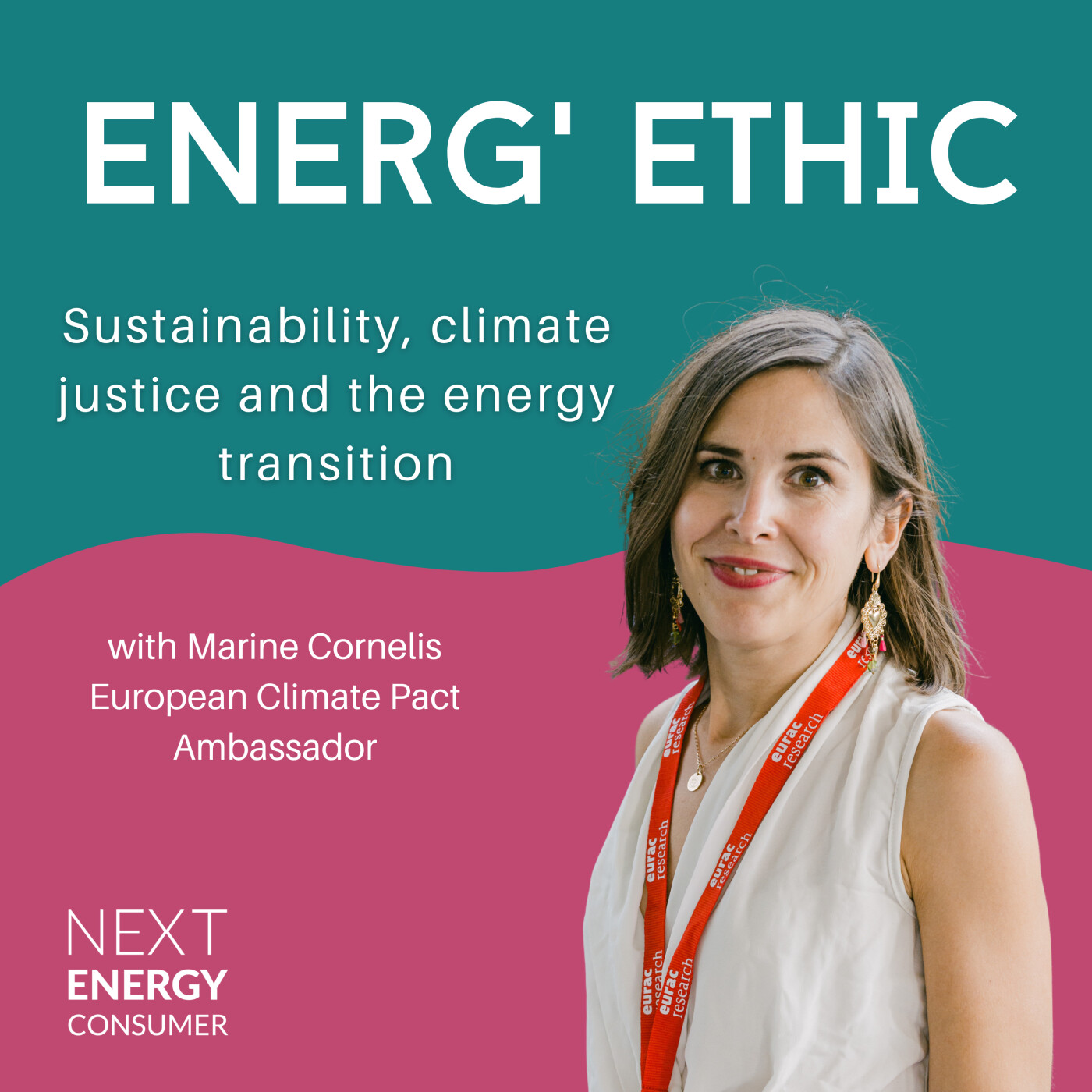
56 - How Unions are Shaping a Fair Transition to Renewables - Tuscany Bell
What role do unions play in driving a fair transition to renewable energy? In this episode of Energ'Ethic, we explore this critical question with Tuscany Bell, Utility Sector Lead at the European Federation of Public Service Unions (EPSU).In this episode of Energ'Ethic, we dive into the role of unions in driving a fair and inclusive transition to renewable energy. Tuscany Bell, Utility Sector Lead at the European Federation of Public Service Unions (EPSU), shares insights on how unions shape the shift to renewables while ensuring workers are not left behind.Tuscany explains why current mechanisms, like the Just Transition Fund, are too limited to meet the scale of the challenge. She advocates for a Just Transition Directive that provides the necessary funding and policies to protect all workers—not just those in fossil fuel industries—as we move toward a cleaner energy future.What’s at stake in the renewable energy shift?With industries rapidly transitioning to renewables, a growing skills gap and an ageing workforce are major concerns. Tuscany discusses how unions are working to attract younger generations to the renewable energy sector by promoting training and ensuring that these new energy jobs are both fair and sustainable."We can’t leave people behind," Tuscany says. "Without workers as part of the solution, we risk losing the support needed to achieve our climate goals."Promoting diversity in the renewable sectorTuscany also highlights the need for greater gender diversity in the energy sector, which remains male-dominated. From advocating for inclusive hiring practices to improving working conditions, unions are leading efforts to create a more welcoming environment for women in the renewable energy workforce.Union-led action for a renewable futureCollaboration is key. Tuscany emphasizes the importance of intergenerational knowledge transfer and how unions are partnering with NGOs and other stakeholders to ensure the transition to renewables is fair, democratic, and beneficial for all."Unions are critical to defending workers’ rights, and they must be involved in creating transition plans that work for everyone," she says.Key takeaways:Why a comprehensive Just Transition Directive is needed to ensure a fair shift to renewable energy.How unions are addressing the skills gap in the renewable energy sector.The critical role of gender diversity in creating a more inclusive renewable energy workforce.How intergenerational collaboration is helping preserve vital skills for the renewable energy transition.Tune in to hear how unions are ensuring the renewable energy transition is fair, inclusive, and just for all workers.This episode is brought to you by the European Environmental Bureau (EEB), Europe’s largest network of environmental groups, working to fight for sustainable development, environmental justice, and a voice for citizens in shaping a greener future. Find here the EEB report on How Renewables can Help Regions Move Beyond Fossil Industries. Don’t forget to tune in to the rest of our mini-series with the EEB where we explore the role of renewables in building a fair, inclusive energy future across Europe. Tune in to learn more about the energy transition and the people making it happen! Keep up to date with new episodes straight from your inbox: https://podcast.ausha.co/energ-ethic-climate-justice-and-energy-transition?s=1Reach out to Marine Cornelis via X @MarineCornelis or LinkedInMusic: I Need You Here - KamariusEdition: Podcast Media Factory Support Energ'Ethic on Patreon https://patreon.com/Energethic© Next Energy Consumer, 2024

55 - From Coal to Clean: Tackling Energy Poverty with Renewables - with Miłka Stępień, CEE Bankwatch Network
Episode 55: Tackling Energy Poverty and Building a Fair Transition with Miłka StępieńHow can renewable energy end energy poverty while creating better jobs? In this episode of Energ' Ethic, we explore how Central and Eastern Europe is confronting these challenges with Miłka Stępień, Just Transition Campaign Coordinator at CEE Bankwatch Network.Miłka brings 25 years of activism to the table, and she’s seen the energy transition from every angle. Her message is clear: the green transition must be fair, and it needs to work for everyone—especially those in vulnerable communities. "If I see something isn't working, I feel the need to fix it," Miłka says, reflecting on how her journey into activism began in high school. It’s that spirit of problem-solving that has shaped her work in fighting for just transition policies that bring real benefits to both people and the planet.What’s at stake for Central and Eastern Europe?In this episode, Miłka shares her experience growing up in Eastern Wielkopolska, a coal-mining region in Poland. She explains the deep connections people in these areas have to coal and how the shift to renewable energy can feel like a threat. But Miłka believes the conversation must go deeper than that."We need to address people's fears. You can't just come in and say 'we’re closing the mines'. You have to understand why this transition is difficult for them," Miłka explains.At the heart of these fears is heating poverty. In Central and Eastern Europe, it’s not just about the cost of electricity—it’s about how people heat their homes."For many households, heating is the biggest cost, not electricity. We need to focus on retrofitting homes and making them energy-efficient," she says.Breaking down barriers to the energy transitionMiłka also highlights the real challenges that come with accessing EU funds, especially for rural and smaller municipalities. "What we need is a network of energy advisors in every municipality, especially in rural areas. These advisors can guide people through the process of retrofitting homes and adopting renewable energy," Miłka explains.She talks about how decentralized funding can help communities access the resources they need. Big projects may get headlines, but it's small, local initiatives that will make the biggest difference to those struggling with energy and heating poverty.Throughout the episode, Miłka emphasizes the need for a participatory approach. Local communities must have a say in how the energy transition happens."It's not just about closing coal mines. It’s about listening to people and working together to create a future where everyone benefits," she says.Key takeaways:- The link between energy poverty and heating poverty in Central and Eastern Europe- The importance of keeping high environmental standards, even in regions facing economic challenges- The need for decentralized funding and technical assistance to make the green transition work in small communities- Why participatory approaches are key to ensuring a just and inclusive transitionRead here the EEB report on How renewables can help vulnerable households, released today!Check out the latest European Environmental Bureau (EEB) report on how the Social Climate Fund can help vulnerable households transition to renewable energy. And don't forget to tune in to the rest of our mini-series, where we explore how renewables can create jobs and fight energy poverty across the EU!Hosted on Ausha. See ausha.co/privacy-policy for more information.

[BACK TO WORK REPLAY] - Who Do We Want to Listen to and Trust in the Energy and Climate Transitions? - Jad Mouawad
In this thought-provoking episode of Energ’Ethic, we sit down with Jad Mouawad, a trailblazer in climate communication and a key figure in the International Energy Agency’s (IEA) pivot towards clean energy advocacy. With a career spanning over two decades, Jad has been at the forefront of merging energy policy with climate imperatives, advocating for a future where energy security and sustainability go hand in hand.Bridging Climate and Energy Policies:Jad reflects on the evolution of energy coverage, from its initial environmental footprint to its undeniable impact on climate change. He shares his journey from The New York Times, where he championed the integration of energy industry coverage with climate implications, to his pivotal role at the IEA.We delve into:The IEA’s TransformationMainstreaming InformationCombatting MisinformationCompeting for AttentionConvincing the AudiencesTrust in Science and AccessibilityThe Power of Positive NewsThe Power of Information:With a powerful message on the transformative potential of information, Jad calls for a concerted effort to reshape perceptions through factual storytelling, highlighting the economic and societal shifts already underway. Resources:Ipsos Earth Day poll (2023)https://www.ipsos.com/en/earth-day-2023-concern-and-focus-slipping-climate-changePew Trust in Scientists poll (2022)https://www.pewresearch.org/science/2022/02/15/americans-trust-in-scientists-other-groups-declines/Reuters Digital News Report 2023 (about Tik Tok and other social networks)https://reutersinstitute.politics.ox.ac.uk/digital-news-report/2023Rowan Atkinson (Mr Bean) editorial in the Guardianhttps://www.theguardian.com/commentisfree/2023/jun/03/electric-vehicles-early-adopter-petrol-car-ev-environment-rowan-atkinsonRebuttal by Simon Evanshttps://www.theguardian.com/environment/2023/jun/08/fact-check-why-rowan-atkinson-is-wrong-about-electric-vehiclesIEA’s World Energy Outlook 2023https://www.iea.org/reports/world-energy-outlook-2023IMF, Public Perceptions of Climate Mitigation Policies: Evidence from Cross-Country Surveys https://www.imf.org/en/Publications/Staff-Discussion-Notes/Issues/2023/02/07/Public-Perceptions-of-Climate-Mitigation-Policies-Evidence-from-Cross-Country-Surveys-528057?cid=bl-com-SDNEA2023002Reach out to Marine Cornelis via Twitter @MarineCornelis or LinkedInMusic: I Need You Here - KamariusEdition: Podcast Media Factory Support Energ'Ethic on Patreon https://patreon.com/Energethic© Next Energy Consumer, 2023Hosted on Ausha. See ausha.co/privacy-policy for more information.

[SUMMER REPLAY] - We need lawyers in the room - Tedd Moya Mose, University of Oxford
"We all live under the same sun"In this fascinating discussion, Tedd Moya Mose, a lawyer, academic, and consultant at the University of Oxford, looks at the power of law to broaden access to electricity worldwide. From his experience as a lawyer in Kenya to British universities, he has come to understand that “if we get the legal framework or policy or regulation wrong, it is very, very difficult to have effective energy systems, and it's very difficult to have modern life as we know it in a sustainable way.“He looks at the principles needed for energy justice to be truly implemented, the power of information sharing, and the need to ensure that the law is applied in a fair and equitable manner. “Even the best-written laws need people who understand them to apply them. But the community also needs to be aware that these laws exist and need to know what rights there are to enforce them.”The law is also instrumental in creating a level playing field and reconciling often conflicting objectives. This is what he calls the “energy trilemma”, opposing three equally strong interests: financial, environmental and political. The “law should come and be almost like the pivot; it should be at the centre of this dilemma and try to balance these interests”.Finally, he provides an expert view of international treaties and agendas such as the 7th Sustainable Development Goal and the newly recognised UN right to a “clean and healthy environment”. “The law establishes rules, regulations and standards that have to be followed. (…) We need to have the same legal aims and principles. And once those legal aims and principles are well known and documented, they can infuse any legal system. So instead of looking at changing legal systems, what we need to do is to continually develop and accept and adopt and pass laws that carry certain legal standards and legal principles and legal aims that then will lead to action.”Tedd Moya Mose is a lawyer, academic, and consultant Researcher and Fellow at the University of Oxford focused on mitigating climate change through the transition to a low carbon economy. In his work, he investigates the impact of law on various energy technologies and projects in sub-Saharan Africa, the UK, and the Middle East. Find him on Twitter @Contentedd or LinkedInReach out to Marine Cornelis via Twitter @MarineCornelis or LinkedInMusic: I Need You Here - Kamarius Edition: Podcast Media FactorySupport Energ'Ethic on Patreon https://patreon.com/Energethic© Next Energy Consumer, 2022Hosted on Ausha. See ausha.co/privacy-policy for more information.

[SUMMER REPLAY] Creating a world where disabled people can thrive - Lucie Middlemiss, University of Leeds
Why is energy poverty unsustainable? How do disabled people navigate the transition to net-zero? The “just transition” could be the right framework to rethink the way our societies are designed, and make sure disabled people are taking ownership of the opportunities presented. But first, we need to acknowledge that “The current distribution of energy is unfair to disabled people in the sense that they do not have as much access to energy." Prof. Lucie Middlemiss is Professor of Environment and Society in the Sustainability Research Institute, at the University of Leeds in the UK. She wrote the first textbook on Sustainable Consumption, and has research interests in sustainable consumption, energy poverty and participation in sustainable development. Her research bridges the gaps between energy consumption in daily life, planning, measuring, monitoring and decision-making.Read here Lucie's most recent paper, Characterizing the energy use of disabled people in the European Union towards inclusion in the energy transition, with Diana Ivanova.Lucie's on Twitter: @LucieMiddlemissReach out to Marine Cornelis via Twitter @MarineCornelis or LinkedIn Music: I Need You Here - KamariusEdition: Podcast Media FactorySupport Energ'Ethic on Patreon https://patreon.com/Energethic© Next Energy Consumer, 2022Hosted on Ausha. See ausha.co/privacy-policy for more information.
[SUMMER REPLAY] Fairness means listening to the experiences of all communities - Elizabeth Blakelock
"We cannot afford to exclude any community from this transition" What is energy justice and how can it be developed? In this episode, Dr Elizabeth Blakelock shares her experience as a fierce advocate for citizens' rights to fair treatment in the energy market. She tells us how she opened her eyes to the intersectionality of race and vulnerability in the sector, and how she is now fighting for energy policies to become explicitly anti-racist. She shares her advice on how to create strategies that put the lived experiences of citizens at the centre, in order to create services, products, programmes and strategies that are truly inclusive by design. Eventually, she addresses the opportunities that the energy transition represents for creating fairer societies "There is so much more to the energy system than technical decisions about moving electrons along a wire" Dr Elizabeth Blakelock is a champion of the rights of everyone to have access to a warm and safe home. She is passionate about tracking the impacts that firms' decision-making has on people's lives. Then she uses that data to help design essential service markets that are inclusive by design. Elizabeth has been working in the corporate world, as an academic, the charity sector and an energy regulator. As an academic, Elizabeth co-authored the report “Fairness in UK Energy Markets” and in 2020 she finished her Ph.D. on how powerful ideas influence the rules of the energy market to undermine processes that were supposed to ensure inclusive policymaking. Reports mentioned: Inclusive design in essential services https://fairbydesign.com/inclusive-design/ Diversifying Power: Why We Need Antiracist, Feminist Leadership on Climate and Energy. Stephens, Jennie https://islandpress.org/books/diversifying-power Powerful women: https://powerfulwomen.org.uk/board-statistics-by-company-2021/ Find Dr Elizabeth Blakelock’s work on LinkedIn: https://www.linkedin.com/in/elizabethblakelock/ Reach out to Marine Cornelis via Twitter @MarineCornelis or LinkedIn https://www.linkedin.com/in/marinecornelis Music: I Need You Here - Kamarius Edition: Podcast Media Factory Support Energ'Ethic on Patreon https://patreon.com/Energethic(c) Next Energy Consumer, 2021Hosted on Ausha. See ausha.co/privacy-policy for more information.