Embracing Digital Transformation
416 episodes — Page 6 of 9

Ep 169#169 Keeping the Human in AI
In a recent episode of the Embracing Digital Transformation podcast, host Darren Pulsipher, Chief Solution Architect of Public Sector at Intel, interviews Sunny Stueve, the Lead of Human Centered AI at Leidos. The podcast delves into the importance of human-centered design and user experience when integrating AI technology. Prioritizing the User Experience through Human-Centered DesignSunny Stueve, a human factors engineer, highlights the significance of optimizing human experience and system performance when developing AI solutions. She emphasizes the need for having a value and plan before delving into coding. By incorporating human-centered design principles from the outset, organizations can prioritize the user's perspective and ensure a better overall user experience. Sunny's role involves understanding users' needs and incorporating them into the design process to minimize the need for redoing code and maximize the effectiveness of AI solutions.Darren shares an anecdote from his experience working with radiologists, underscoring the value of sitting with customers and comprehending their needs before building software. This personal encounter highlights the importance of considering human factors while developing technological solutions. By taking a user-centric approach, organizations can create AI solutions tailored to user needs, resulting in higher adoption rates and increased satisfaction. Addressing Trust and User Adoption in AI IntegrationSunny further explains that integrating AI creates a paradigm shift in user adoption and trust. While following a thorough discovery process that involves gathering qualitative and quantitative data, building relationships, and validating assumptions, it is essential to recognize that introducing AI can trigger fear and higher trust hurdles. Humans are creatures of habit and patterns, so educating users and building trust becomes crucial in overcoming resistance to change.To address the trust issue, transparency is critical. Providing users with information about the AI models being used, the intent, and the data utilized in building the algorithms and models allows for informed decision-making. Designers can also emphasize critical thinking and cross-referencing information from multiple sources, encouraging users to verify and validate AI-generated information independently.Designers should also consider incorporating user interface design principles that cater to the unique nature of generative AI. This may involve clear indications when AI generates information and integrates multimodal interfaces that enable interaction with voice, text, and visual elements simultaneously. By keeping users informed, involved, and empowered, organizations can build trust and foster user adoption of AI technology. Adapting to Change: Human-Centered Approach to Generative AIThe podcast transcript also explores the impact of generative AI on jobs and workflows. While there are concerns about job elimination, the conversation emphasizes the importance of embracing the opportunities that AI presents. Rather than fearing the potential for job displacement, workers should shift their mindset to view AI as an assistant that can enhance productivity and allow them to focus on more meaningful and valuable work.Open communication and involving employees in the change process are vital to keep workers engaged and address concerns about job displacement. By working with senior leaders to ensure an understanding of the potential impact and involving experts in organizational psychology, organizations can support employees through the change process. Building teams focused on human support for AI can address individual concerns and create opportunities for roles to evolve alongside automated tasks.In conclusion, the integration of AI technology calls for a human-centered approach. Prioritizing the user experience, building trust, and adapting to change are critical elements in successfully integrating AI solutions. By taking these factors into account, organizations can leverage the benefits of AI while ensuring user satisfaction, trust, and engagement.See Privacy Policy at https://art19.com/privacy and California Privacy Notice at https://art19.com/privacy#do-not-sell-my-info.

Ep 168#168 Everyday Generative AI
In this podcast episode, Darren Pulsipher interviews Andy Morris, an Enterprise AI Strategy Lead at Intel, about the impact of generative AI on everyday life. Unleashing Creativity and Productivity with Generative AI ToolsGenerative AI uses artificial intelligence to generate new content, such as images, text, and music. The conversation revolves around the various generative AI tools and their potential to revolutionize industries and enhance daily tasks. The Power of Generative AI in Content GenerationAccording to Andy Morris, generative AI tools are becoming increasingly important in various industries. He recommends starting with search engines that have integrated open AI technologies to explore generative AI. These tools can enhance search results by providing more relevant and creative content. However, it's crucial to consider the search intent when using these tools, as they may not always generate the desired results for specific information.Generative AI is also making its mark in content creation. Chatbots, for instance, have experienced explosive growth and are utilized for writing essays, creating content, and enhancing photos. Whether you're a content creator or a student, generative AI tools can automate certain aspects of the content creation process, thus increasing creativity and productivity. Innovative Tools for Image and Video GenerationTwo exciting tools are Adobe Firefly and VideoGen Video creation. These tools allow users to create and manipulate images and videos in unique and creative ways.Adobe Firefly is a free tool that enables users to generate new images and replace elements in existing photos. Its generative fill and out-fill features allow users to change or replace parts of an image, thus expanding creative possibilities. Video Gen Video, on the other hand, focuses on video generation using existing scripts or web pages as source material. This AI-powered tool simplifies creating engaging videos by automatically selecting and inserting relevant images and video clips.These innovative tools offer a range of possibilities for professionals and everyday users alike. They provide accessibility to advanced editing capabilities, empowering users to add a touch of creativity to their projects without requiring extensive skills or knowledge in editing software. Streamlining Content Creation with Generative AIVarious tools like VideoGen, Figma, and Framer.AI have made content creation more convenient and efficient across different domains.VideoGen can create videos based on the content of an article or blog post. It achieves this by utilizing existing libraries of images and video clips, thereby automating the process of creating engaging videos that tell a story. Figma, an online graphic design tool, provides more design flexibility by allowing users to create customized templates. Similarly, Framer.AI simplifies website creation by leveraging AI technology, enabling users to quickly generate and publish websites.Although generative AI tools provide convenience and efficiency in content creation, there is a need for human expertise in certain creative aspects. Design elements and aesthetic considerations still benefit from human input to ensure visually pleasing results. While generative AI tools may automate the less skilled portions of the market, sophisticated applications often require a human touch.In conclusion, generative AI tools transform everyday tasks and revolutionize content creation. From search engines supercharged with AI to powerful tools developed by Adobe and other companies, these technologies are unlocking new levels of creativity and efficiency. Embracing generative AI is becoming increasingly crucial for individuals and businesses to stay competitive in the evolving workforce. By becoming proficient in these tools and harnessing their capabilities, individuals can gain a competitive edge and open doors to new consulting and customization service opportunities. The future is bright for generative AI, and now is the time to explore and embrace these innovative tools.See Privacy Policy at https://art19.com/privacy and California Privacy Notice at https://art19.com/privacy#do-not-sell-my-info.

Ep 167#167 Leveraging AI to Protect Children
In a recent podcast, Darren Pulsipher, Chief Solution Architect of Public Sector at Intel, welcomed Rachel Driekosen, a Technical Director at Intel, to discuss the use of AI in protecting children online. The episode addresses challenges in prosecuting and discovering child predators, the role of AI in evidence management, and the importance of collaboration and standardized practices. Challenges in Prosecuting Child Predators Online:One of the significant challenges in prosecuting child predators online is the lack of uniformity across jurisdictions regarding technology and online crimes. This creates substantial obstacles for law enforcement agencies and a gap in their ability to prosecute and investigate cases effectively. Each jurisdiction operates differently with its own set of laws, regulations, and procedures. Unfortunately, these differences can confuse and make it challenging to investigate and prosecute online sexual predators. Often, traditional investigations are not sufficient to catch online predators. The digital world has created a new breed of tech-savvy criminals who can cover their tracks.Law enforcement agencies must be equipped with the resources, technology, and training to combat online sexual predators effectively. Collaboration between technology companies and law enforcement is essential in developing standardized practices and language for prosecution and investigation. By bridging this gap, we can enhance the efficiency of these processes and increase the chances of bringing child predators to justice. Additionally, the public must be informed of online predators' risks and dangers. Parents, educators, and guardians must educate children on how to protect themselves online and what to do if they encounter inappropriate content or communication. The Role of AI in Evidence Management:AI technologies can be vital in managing digital evidence, particularly in cases involving child predators. AI can aid in automating the scanning, reporting, and analysis of illicit content. AI tools can also help reduce the workload of investigators, allowing them to focus on high-priority cases. However, there are still many challenges in implementing and understanding these technologies across different jurisdictions. One of the primary challenges is that AI is only as good as the data it is trained on, and the data varies across jurisdictions. As a result, it is challenging to develop effective AI models that can work across different jurisdictions.To ensure efficient evidence management, stakeholders in the justice system must work together in adopting and leveraging AI tools. Collaboration between technologists, law enforcement agencies, and judicial systems is critical to overcoming these challenges and leveraging AI effectively to protect children online. Implementing AI in evidence management should be supported by robust policies and guidelines that protect the privacy of victims and ensure the ethical use of these technologies. Additionally, regular training and education on these tools are essential to ensure their effective use in combating online sexual predators. Collaboration and Standardization for Effective ProtectionCollaboration and standardization are critical aspects of successfully combating online child exploitation. The fight against this heinous crime requires cooperation between technology providers, law enforcement agencies, and judicial systems. These parties must work together to develop comprehensive strategies and solutions.Collaboration should not only focus on technical aspects but also on developing standardized practices and protocols for handling cases involving child predators. By establishing consistent language and processes, we can streamline investigations, expedite legal proceedings, and enhance the overall protection of children in the digital space.Furthermore, standardized practices and protocols should be continually reviewed and updated to remain relevant and practical. Establishing a global standard for combating online child exploitation would provide a framework for all stakeholders to follow, ensuring that every case is handled consistently and fairly, regardless of where it occurs. Leveraging AI to Protect Children OnlineUsing artificial intelligence (AI) in evidence management is crucial to combat online child exploitation effectively. The sheer volume of digital evidence can be overwhelming for investigators, but AI can help by automating the identification and analysis of potential evidence. This automation frees up investigators' time and allows them to focus on the more critical aspects of the investigation.However, the implementation of AI in evidence management requires careful consideration. There must be transparency and accountability in how the AI is used and determines what is and isn't evidence. Additionally, ethical concerns about the use of AI in law enforcement must be addressed, such as potential biases in algorithms. ConclusionIn c
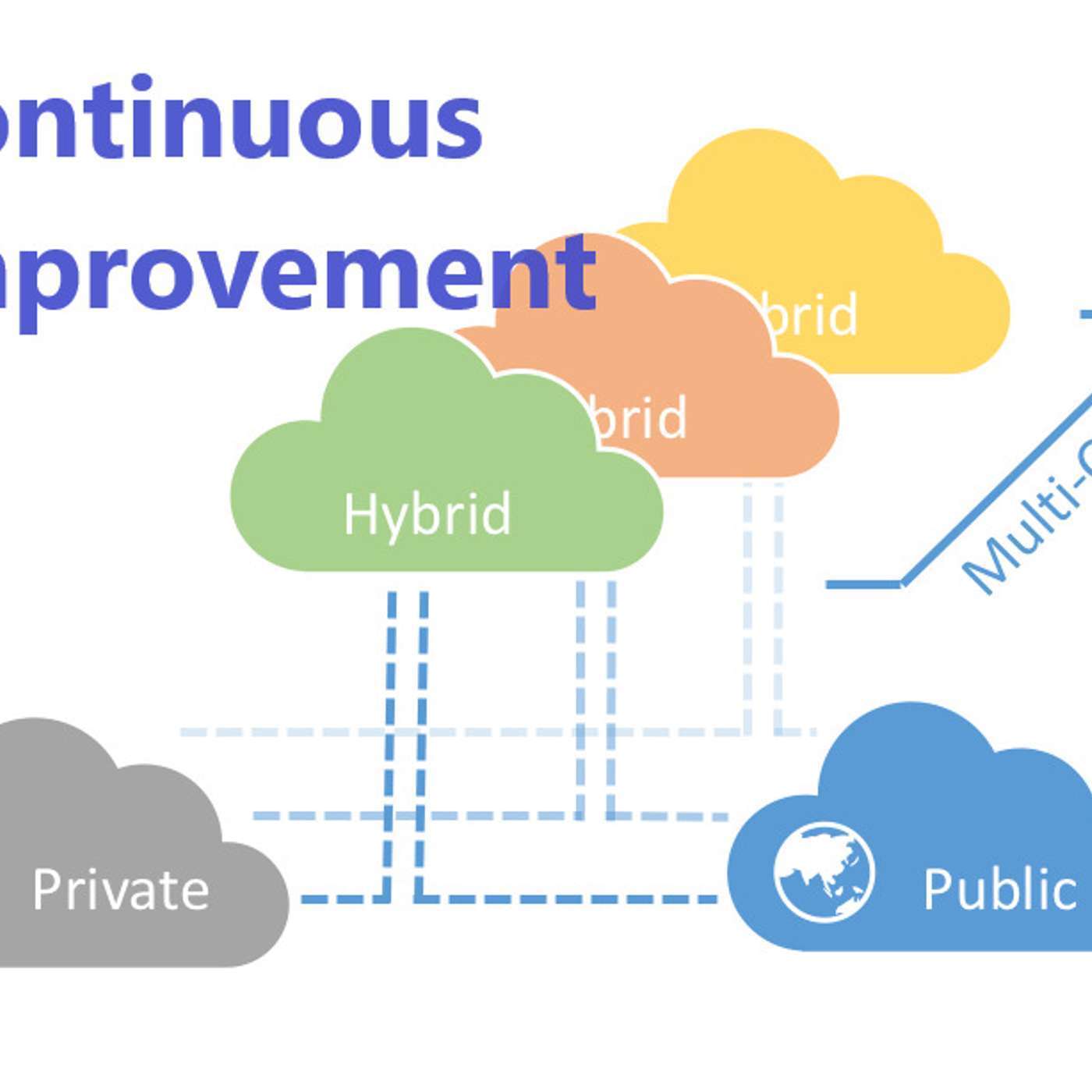
Ep 166#166 Agility in Cloud Adoption
Cloud migration is no longer a one-time process, but rather a continuous journey that requires constant evaluation, monitoring, and adjustment to achieve business objectives. In this episode of our podcast, host Darren Pulsipher talks to guest Christine McMonigal about the importance of adopting continuous improvement in cloud operations. Cloud Migration as an Ongoing JourneyWhile many people view cloud migration as a one-time process, it is essential to view it as a continuous journey, wherein developers and operations teams work together. Once the workloads are modernized and deployed, constant monitoring and assessment are necessary to determine if they meet business objectives and success metrics.By treating cloud migration as an ongoing journey, organizations can enable their teams to iterate, refine, and improve their success. This approach will allow agility, adaptability, and the ability to respond to evolving business needs. Repatriating Workloads and FlexibilityAn important aspect to consider is the possibility of migrating workloads back on-premises if the expected benefits from the cloud are not being achieved or if there is a need to switch between different cloud providers. To achieve continuous improvement, it is necessary to evaluate the situation continuously, set expectations upfront, and be agile and flexible in the cloud operating model.A consistent infrastructure across multiple clouds is essential to enable flexibility and agility. While cloud service providers may try to restrict customers to their services, organizations should resist this temptation and aim for consistency across clouds or be willing to make the necessary changes when moving workloads to different locations. Tools and Best Practices for OptimizationOptimizing cloud environments can be complex and time-consuming, requiring expertise and resources. Intel's tools and best practices can help organizations assess and optimize workload placement and provide continuous real-time optimization without impacting applications. By automating certain aspects of the optimization process, these tools can save organizations time and money while improving overall performance.To maximize the benefits of these tools, it is crucial to categorize workloads into different buckets based on factors such as standardization, criticality, and experimentation. For example, workloads that require high availability and low latency may need to be placed on dedicated infrastructure, while those that are less critical can be placed on shared infrastructure. Organizations can use a targeted approach to optimization to ensure that their cloud environment is tailored to their specific needs and goals. Embracing Digital Transformation and Migrating to the CloudThe relevance of organizational change and learning from successful and unsuccessful methods is also highlighted in this episode. To assist organizations in their cloud migration process, valuable resources and guidance can be found at embracingdigital.org.In conclusion, by implementing continuous improvement, developing a strategic approach, and embracing organizational change, organizations can optimize their cloud environment, drive efficiency, and achieve their business objectives. Adopting continuous improvement in cloud operations and treating cloud migration as a continuous journey is the key to successful cloud migration.See Privacy Policy at https://art19.com/privacy and California Privacy Notice at https://art19.com/privacy#do-not-sell-my-info.
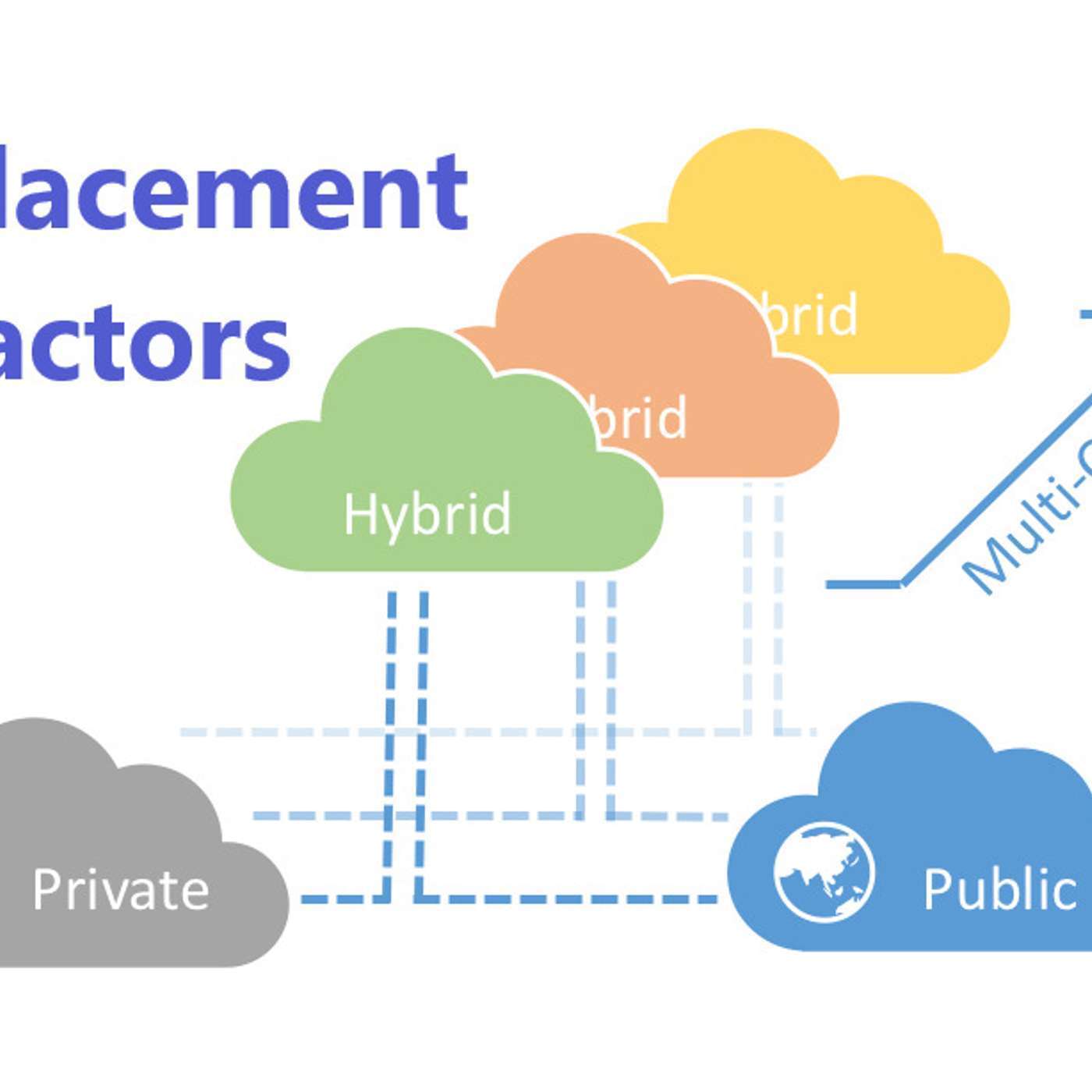
Ep 165#165 Workload Cloud Placement Factors
In this podcast, Darren and Rico Dutton dive into the world of cloud instances and the factors to consider when selecting the right instance for your workload. They discuss the different computing options available in the cloud, the importance of finding the right balance between performance and cost, and the role of cloud specialists in helping organizations make informed decisions. Understanding Compute OptionsCloud service providers (CSPs) offer a mix of different compute families, ranging from older generations of compute hardware to the latest and more performant instances. These older generations are often used for cost-effective computing functions, while newer generations offer improved performance at similar or lower prices.It can be overwhelming to navigate through the numerous computing options available in the cloud, especially with new instances being regularly released. That's where cloud specialists, such as those at Intel, come in. These experts can provide valuable insights and assist in selecting the most suitable instance for a specific workload. Making Informed DecisionsTo make the best decision, seek the advice of cloud specialists or use tools like Densify or Intel Site Optimizer. These tools leverage machine learning to analyze an application's features, compute usage, and network needs to determine the most suitable instance size. By leveraging these resources, organizations can ensure they're getting the most out of their cloud resources, avoiding underutilization or overspending. Implementing Best PracticesIt is important to incorporate instance recommendations into infrastructure as code (IaC) scripts, such as TerraForm, to automate the selection of the most performant instance for a workload. This ensures consistent and efficient instance placement, removing the risk of human error and optimizing performance. Considering PortabilityWhile Intel currently dominates the cloud market with x86-based instances, there is some competition from AMD and ARM. ARM-based processors, such as the Graviton, are popular among CSPs but need more workload portability between providers and between public and private environments. Porting x86-based workloads to ARM would require extensive code refactoring and redevelopment.Organizations should consider compatibility issues when repatriating workloads from the cloud back to on-premises infrastructure. It's crucial to assess the portability and flexibility of the chosen computing platform to ensure seamless transitions and avoid vendor lock-in. ConclusionSelecting the right cloud instance is a critical decision that can impact your workload's performance, cost, and portability. With the aid of cloud specialists and tools, organizations can make informed decisions and optimize their cloud resource utilization. By understanding the available computing options, incorporating best practices, and considering portability, businesses can harness the full potential of the cloud while ensuring flexibility and efficiency in their operations.See Privacy Policy at https://art19.com/privacy and California Privacy Notice at https://art19.com/privacy#do-not-sell-my-info.
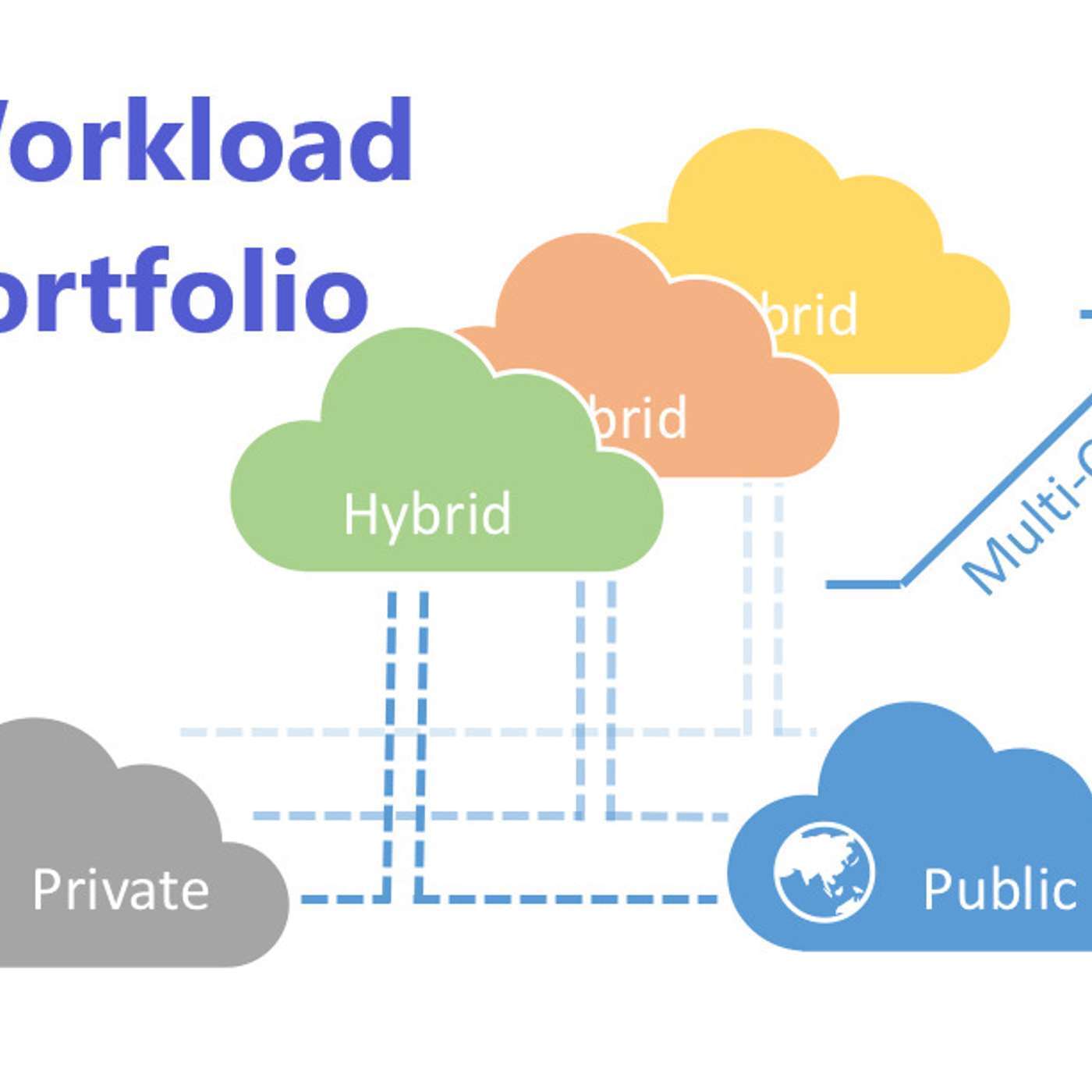
Ep 164#164 Application and Workload Portfolios in Cloud Migration
In this episode, Darren interviews Sarah Musick, Cloud Solution Architect at Intel. Together, they dive into the topic of application and workload portfolios in cloud migration. With Sarah's background in cloud consulting and optimization, she brings valuable insights to the discussion. Understanding Application and Workload Portfolios in Cloud MigrationWhen it comes to cloud migration, organizations generally fall into two groups. The first group consists of cloud-native organizations that have architected their applications in the cloud, eliminating any data center dependencies. The second group adopts a hybrid strategy, relying on both the data center and the cloud. However, even these hybrid organizations may have technical debt that needs to be addressed.One of the main challenges in cloud migration is understanding the complexity of applications and workloads. Sarah introduces the concept of "political capital" an application carries. While external-facing and customer-focused applications often receive the most attention and investment, smaller applications that may not seem significant can have a substantial impact on the organization if they malfunction or are neglected. The Importance of Application RationalizationSarah shares a personal experience that highlights the importance of considering the overall portfolio of applications and workloads during cloud migration. She witnessed a disruption to the business caused by the lack of attention to a seemingly small customer-facing application. This experience underscores the need for organizations to conduct a thorough analysis and rationalization of their application portfolio before migrating to the cloud.By understanding the complexities and dependencies of applications and workloads, organizations can ensure a smooth transition to the cloud with fewer surprises or disruptions. Sarah emphasizes the need for organizations to prioritize application rationalization to identify critical applications that may require additional investment and attention, even if they are not the most visible ones. To Touch or Not to Touch: Assessing Workloads for Cloud MigrationWhile migrating workloads to the cloud can bring numerous benefits, it may not always be necessary or beneficial to touch certain workloads or applications. Some workloads may have been running smoothly for years and are critical to the organization's operations. In such cases, it may not make sense to make any changes or migrate them to the cloud.Factors to consider when making the decision include the level of customization and integration of the workload, the presence of technical debt, and the upcoming retirement of legacy systems. However, it is essential to regularly reassess these workloads to ensure they continue to meet the organization's needs. Monitoring industry trends and technological advancements can help identify potential changes in the future. Navigating Compliance Requirements in Cloud MigrationCompliance requirements can pose challenges in cloud migration, especially for organizations in regulated industries. However, cloud service providers have made significant progress in addressing these concerns. They offer tools and services that help automate compliance monitoring and reporting, making it less burdensome for organizations to stay compliant.To navigate these challenges, organizations should conduct a thorough assessment of their compliance requirements. Consulting with experts who can provide guidance on compliance standards and design a cloud architecture that meets these requirements is crucial. Regular audits and monitoring should be implemented to ensure ongoing compliance. ConclusionIn this podcast episode, Darren Pulsipher and Sarah Musick shed light on important aspects of cloud migration, including the rationalization of application portfolios, decision-making regarding touching workloads, and addressing compliance requirements. By understanding these factors and actively managing technical debt, organizations can embark on a successful cloud migration journey, leveraging the agility and flexibility offered by the cloud while minimizing risks and disruptions.See Privacy Policy at https://art19.com/privacy and California Privacy Notice at https://art19.com/privacy#do-not-sell-my-info.
Ep 163#163 Developing a Multi-Hybrid Cloud Operating Model
In this episode Darren interview cloud solution architect, Rajiv Mandal, about developing a multi-hybrid cloud strategy in your modern IT organization.In today's digital age, businesses are increasingly turning to the cloud as a strategic move to improve efficiency, reduce costs, and enhance customer experience. However, before jumping on the cloud bandwagon, it is essential for organizations to take a step back and assess their specific needs. Developing a cloud strategy is a crucial step in this process, as it allows businesses to align their goals and objectives with the cloud technologies available to them. Understanding Your Business Goals and ObjectivesThe first step in developing a cloud strategy is gaining a clear understanding of your business goals and objectives. What are you trying to achieve? Are you looking to improve operational efficiency, reduce costs, or enhance customer satisfaction? By having a clear vision of your goals, you can better determine how the cloud can support and enable these objectives. Evaluating Your Existing InfrastructureAfter establishing your goals, it is important to evaluate your current IT infrastructure. This assessment helps identify any potential challenges or limitations in migrating to the cloud. Determine what systems and applications you currently have in place and consider their compatibility with a cloud environment. This evaluation will inform decisions about which applications and services are suitable for migration. Choosing the Right Cloud ModelWith various cloud deployment models available, organizations need to assess the different options that align with their business requirements. Public clouds, private clouds, and hybrid clouds each offer distinct advantages and drawbacks. Evaluating the pros and cons of each model will help you determine the most appropriate choice for your organization. Consider factors such as data security, scalability, and regulatory compliance when making this decision. Creating a Migration Plan and Ensuring Governance and SecurityOnce you have chosen a cloud model, it's time to create a migration plan. This involves outlining the steps and timeline for moving your applications and data to the cloud. Prioritize critical applications that need to be migrated first, and develop a strategy to migrate the remaining applications later. Additionally, implement a governance and security plan to protect your data and comply with any regulatory requirements. Cloud security is a top concern for many businesses, so it is vital to ensure that your data is protected throughout the migration process.In conclusion, developing a cloud strategy is a complex process that requires careful planning and assessment. It is essential to understand your business goals, evaluate your existing infrastructure, choose the right cloud model, create a migration plan, and implement proper governance and security measures. By effectively embracing digital transformation and leveraging the power of the cloud, organizations can achieve their objectives, enhance efficiency, and drive growth and success.See Privacy Policy at https://art19.com/privacy and California Privacy Notice at https://art19.com/privacy#do-not-sell-my-info.
Ep 162#162 Building a Multi-Hybrid Cloud Strategy
In this episode Darren interviews Christine McMonigal and discuss the challenges organizations face when transitioning to the cloud and adopting multi-hybrid cloud architectures. They highlight the importance of understanding these obstacles and providing guidance to overcome them. This episode will dive deeper into some key barriers and strategies for mitigating risks, ensuring a successful cloud transformation. Best Practices for Cloud AdoptionMoving to the cloud and adopting new technologies like generative AI can bring numerous benefits, but organizations must also be prepared for the changes that come with it. According to Christine McMonigal, director of Data Center and Cloud Technologies at Intel, there are key best practices to consider. Organizational ModernizationOne important aspect to recognize is that cloud adoption is not just a technology modernization, but also an organizational modernization. This means that organizations need to be prepared for changes to processes, workflows, and even organizational structures. It's crucial to address these changes and ensure that the entire organization is aligned and prepared for the transformation. Identifying Barriers and Setting Clear ExpectationsA crucial step in overcoming barriers and mitigating risks is identifying what these barriers are in the first place. By doing a thorough assessment of the current infrastructure, workflows, and challenges within the organization, potential roadblocks can be pinpointed and strategies can be developed to overcome them.Moreover, setting clear expectations upfront is essential. This means effective communication with stakeholders, employees, and partners about the goals, benefits, and challenges of adopting multi-hybrid cloud strategies. By setting realistic expectations and ensuring everyone is on the same page, organizations can minimize surprises and resistance to change. Robust Risk Mitigation PlanHaving a robust risk mitigation plan in place is another crucial aspect of successful cloud adoption. This includes evaluating potential security risks, data privacy concerns, and compliance requirements. By proactively addressing these risks and implementing appropriate measures, organizations can safeguard their data, ensure regulatory compliance, and minimize potential threats. Barrier 1: Application Re-ArchitectureOne of the key barriers organizations often face in cloud adoption is application re-architecture. It's important to assess which applications can be lifted and shifted to the cloud as-is, and which ones may require more significant modifications. By identifying opportunities for simplification and cost reduction through automation, organizations can streamline access and controls. Barrier 2: GovernanceGovernance policies play a crucial role in mitigating risks during cloud adoption. Inconsistent security models, diverse management tools, and heterogeneous user policies can increase complexity and jeopardize the success of the migration. Simplifying governance policies and eliminating bureaucracy can help organizations streamline operations, reduce costs, and ensure data security and compliance. Barrier 3: Organizational Culture and MaturityPreparing the organization for the change that comes with cloud adoption is vital. This involves getting employees on board, providing skills training, and identifying key players who can embrace the new ways of working. Addressing fears and concerns that employees may have, such as fear of being left behind or losing their jobs, is essential to create a positive and collaborative environment.In conclusion, adopting multi-hybrid cloud strategies requires careful planning, effective communication, and a thorough understanding of an organization's goals and challenges. By addressing barriers upfront and mitigating risks, organizations can pave the way for a successful digital transformation journey. Stay tuned for the next episodes where we will explore developing a cloud strategy, evaluating application portfolios, and more insights on embracing digital transformation. Don't forget to rate and subscribe to our podcast to stay updated on the latest trends and best practices in the digital landscape.See Privacy Policy at https://art19.com/privacy and California Privacy Notice at https://art19.com/privacy#do-not-sell-my-info.
Ep 161#161 Natural Language Data Analytics
In the latest episode Darren Pulsipher sits down with Steve Wasick, the CEO and founder of InfoSentience, to discuss the power and potential of natural language data analytics. Steve, who comes from an unconventional background as an English major turned screenwriter turned lawyer turned tech founder, brings a unique perspective to the field. Challenges in Natural Language ProcessingSteve recalls his early project—an app for fantasy sports that aimed to provide users with not just statistics, but also the context and stories behind the numbers. This led him to the field of natural language generation, where he faced challenges in acquiring and delivering high-quality content. Despite not having a technical background, Steve's diverse experiences allowed him to approach these challenges with creativity and out-of-the-box thinking. Pushing Boundries Darren praises Steve for pushing boundaries and bringing a fresh perspective to the field. This highlights the importance of diversity and cross-domain collaboration in generating innovative ideas and solutions. Steve's journey serves as an inspiration for aspiring entrepreneurs and tech founders, proving that unconventional paths can lead to successful innovations. InfoScentience's Solution to Data AnalyticsThe conversation also delves into the capabilities of InfoSentience's natural language AI system. Steve explains that their technology breaks down events and stories into their constituent parts, providing a better understanding of complex concepts and their relationships. This analytical engine, based on conceptual automata, allows for the synthesis of diverse and complex data sets, revolutionizing the way businesses analyze information. The Future of Data Analysis and Natural Language ReportingFurthermore, Steve emphasizes the flexibility of their AI system, which can be tailored to different industries and customized to meet the unique needs of each client. By understanding the specific context and jargon of the data being analyzed, Info Sentience ensures that their AI system provides accurate and relevant insights.In conclusion, the podcast episode highlights the potential of natural language data analytics in revolutionizing industries such as sports analytics. Steve Wasick's journey and innovative approach serve as an inspiration for entrepreneurs and tech founders, reminding us that unconventional paths can lead to successful innovations. The future of data analysis lies in embracing variability, context, and the power of language.See Privacy Policy at https://art19.com/privacy and California Privacy Notice at https://art19.com/privacy#do-not-sell-my-info.

Ep 160#160 Security in Generative AI
In this episode, host Darren Pulsipher is joined by Dr. Jeffrey Lancaster to delve into the intersection of generative AI and security. The conversation dives deep into the potential risks and challenges surrounding the use of generative AI in nefarious activities, particularly in the realm of cybersecurity. The Threat of Personalized Phishing AttacksOne significant concern highlighted by Dr. Lancaster is the potential for personalized and sophisticated phishing attacks. With generative AI, malicious actors can scale their attacks and craft personalized messages based on information they gather from various sources, such as social media profiles. This poses a significant threat because personalized phishing attacks are more likely to bypass traditional spam filters or phishing detection systems. Cybercriminals can even leverage generative AI to clone voices and perpetrate virtual kidnappings.To combat this threat, organizations and individuals need to be extra vigilant in verifying the authenticity of messages they receive. Implementing secure communication channels with trusted entities is essential to mitigate the risks posed by these personalized phishing attacks. Prompt Injection: A New Avenue for HackingThe podcast also delves into the concept of prompt injection and the potential security threats it poses. Prompt injection involves manipulating the input to large language models, allowing bad actors to extract data or make the model behave in unintended ways. This opens up a new avenue for hacking and cyber threats.Companies and individuals utilizing large language models need to ensure the security of their data inputs and outputs. The recent Samsung IP leak serves as a cautionary example, where sensitive information was inadvertently stored in the model and accessible to those who know the right prompts. The podcast emphasizes the importance of considering the security aspect from the beginning and incorporating it into conversations about using large language models. The Implications of Sharing Code and Leveraging AI ToolsAnother key topic discussed in the podcast is the potential risks and concerns associated with sharing code and utilizing AI tools. While platforms like GitHub and StackOverflow provide valuable resources for developers, there is a need to be cautious about inadvertently sharing intellectual property. Developers must be mindful of the potential risks when copying and pasting code from public sources.The podcast highlights the importance of due diligence in evaluating trustworthiness and data handling practices of service providers. This is crucial to protect proprietary information and ensure the safe use of AI tools. The conversation also touches on the growing trend of companies setting up private instances and walled gardens for enhanced security and control over intellectual property. Harnessing AI for Enhanced CybersecurityThe podcast delves into the future of AI and its potential impact on cybersecurity. One notable area of improvement is the use of smaller, specialized AI models that can be easily secured and controlled. These models can be leveraged by companies, particularly through partnerships with providers who utilize AI tools to combat cyber threats.AI can also enhance security by detecting anomalies in patterns and behaviors, such as unusual login times or locations. Additionally, the expansion of multifactor authentication, incorporating factors like voice recognition or typing cadence, further strengthens security measures.While AI presents great potential for improving cybersecurity, the podcast stresses the importance of conducting due diligence, evaluating service providers, and continuously assessing and mitigating risks.In conclusion, this episode of "Embracing Digital Transformation" sheds light on the intersection of generative AI and cybersecurity. The conversation tackles important topics such as personalized phishing attacks, prompt injection vulnerabilities, code sharing, and the future of AI in enhancing cybersecurity. By understanding these risks and challenges, organizations and individuals can navigate the digital landscape with greater awareness and proactively secure their systems and data.See Privacy Policy at https://art19.com/privacy and California Privacy Notice at https://art19.com/privacy#do-not-sell-my-info.

Ep 159#159 Developing Generative AI Policies
In this episode, host Darren interviews Jeremy Harris and delve into the importance of establishing policies and guidelines for successful digital transformation. With the increasing prevalence of digital technologies in various industries, organizations need to adapt and embrace this transformation to stay competitive and meet evolving customer expectations. The Need for Clear Policies and GuidelinesJeremy and Darren stress the significance of having a clear policy and a well-defined roadmap for digital transformation. Rushing into digitalization without proper planning can lead to challenges and inefficiencies. By establishing policies and guidelines, organizations can outline their objectives, set a strategic direction, and ensure that everyone is on the same page.They emphasize that digital transformation is more than just adopting new technologies - it requires a shift in organizational culture and mindset. Policies can help facilitate this change by setting expectations for employees, defining digital best practices, and providing a framework for decision-making in the digital realm. Navigating the Complexities of DigitizationDigital transformation brings forth a complex set of challenges, such as data security, privacy, and compliance. Organizations need to address these challenges by incorporating them into their policies and guidelines. This includes implementing data protection measures, conducting regular security audits, and ensuring compliance with relevant regulations.Policies should also address the ethical considerations that come with digital transformation. The hosts emphasize the importance of organizations being responsible stewards of data and ensuring that the use of digital technologies aligns with ethical standards. Clear guidelines can help employees understand their responsibilities and promote responsible digital practices across the organization. The Role of Feedback and EngagementThe hosts highlight the importance of feedback and engagement in the digital world. Adopting a policy that encourages and values feedback can help organizations continuously improve and adapt to changing circumstances. By welcoming suggestions and input from employees and customers, organizations can refine their digital strategies and ensure that they are meeting the needs of all stakeholders.They also mention the significance of ratings and reviews in the digital era. Feedback through ratings and reviews not only provides valuable insights to organizations but also serves as a measure of customer satisfaction and engagement. Policies can outline how organizations collect and respond to feedback and establish guidelines for capturing customer sentiment in the digital space. ConclusionDigital transformation is a journey that requires careful planning, clear policies, and ongoing adjustments. By establishing policies and guidelines, organizations can navigate the complexities of digitization, address challenges, and ensure responsible and effective use of digital technologies. Embracing digital transformation is not just about adopting new tools, but also about creating a digital culture that fosters innovation and meets the evolving needs of customers and stakeholders.See Privacy Policy at https://art19.com/privacy and California Privacy Notice at https://art19.com/privacy#do-not-sell-my-info.

Ep 158#158 GenAI in Higher Education
In this podcast episode, Darren Pulsipher, chief solution architect of public sector at Intel, interviews Laura Torres Newey, a New York Times best-selling author and university professor, about the impact of generative AI in higher education. This episode delves into the challenges and opportunities presented by the integration of generative AI in the classroom, highlighting the need for critical thinking skills, the concerns of bias, and ensuring the preservation of unique voices. Addressing Biases in Generative AIOne of the key concerns discussed in the podcast is the potential bias that generative AI systems may exhibit. It is essential to recognize that AI models are trained using data, and biases present in that data can be reflected in the output. To mitigate these biases, efforts have been made to curate the data used for training AI systems. However, as this curation is done by humans, it introduces a different form of bias. Continuous evaluation and improvement of AI training processes are necessary to ensure that AI systems represent a diverse range of voices and do not perpetuate skewed perspectives. Preserving Authenticity and IndividualityGenerative AI also raises concerns about the loss of critical thinking skills and the diminishing uniqueness of individual voices. As AI technology becomes more prevalent in education, there is a risk that students' work and ideas may be influenced by generic AI-generated content, detracting from their own unique voices and arguments. Laura Torres Newey suggests a shift in focus, emphasizing the importance of teaching critical thinking skills and evaluating the process by which students arrive at their conclusions. By prioritizing well-researched sources, the ability to identify misinformation, and the inclusion of counterarguments, educators can nurture the development of authentic and individual voices. Balancing AI Integration in EducationIntegrating generative AI into the classroom offers both opportunities and challenges. It is crucial to find the right balance between utilizing AI as a tool for enhancing educational experiences and preserving the authenticity and uniqueness of students' voices. As educators, it becomes imperative to design assignments that encourage critical thinking and incorporate AI-generated content as a means of comparison and analysis rather than a replacement. By fostering a learning environment that values students' integration of AI tools while still maintaining focus on their progress and learning outcomes, education can adapt to the changing technological landscape.In conclusion, the podcast episode featuring Laura Torres Newey provides valuable insights into the impact of generative AI in higher education. It highlights the need for addressing biases in AI systems, promoting critical thinking, and preserving authentic voices and individual expression. As the educational landscape continues to evolve with the integration of AI, it is crucial for educators to navigate these changes thoughtfully and intentionally to facilitate the holistic growth and development of their students.See Privacy Policy at https://art19.com/privacy and California Privacy Notice at https://art19.com/privacy#do-not-sell-my-info.

Ep 154#157 Operationalizing GenAI
In this podcast episode, host Darren Pulsipher, Chief Solution Architect of Public Sector at Intel, discusses the operationalization of generative AI with returning guest Dr. Jeffrey Lancaster. They explore the different sharing models of generative AI, including public, private, and community models. The podcast covers topics such as open-source models, infrastructure management, and considerations for deploying and maintaining AI systems. It also delves into the importance of creativity, personalization, and getting started with AI models.Exploring Different Sharing Models of Generative AIThe podcast highlights the range of sharing models for generative AI. At one end of the spectrum, there are open models where anyone can interact with and contribute to the model’s training. These models employ reinforcement learning, allowing users to input data and receive relevant responses. Conversely, some private models are more locked down and limited in accessibility. These models are suitable for corporate scenarios where control and constraint are crucial.However, there is a blended approach that combines the linguistic foundation of open models with additional constraints and customization. This approach allows organizations to benefit from pre-trained models while adding their layer of control and tailoring. By adjusting the weights and words used in the model, organizations can customize the responses to meet their specific needs without starting from scratch.Operationalizing Gen AI in Infrastructure ManagementThe podcast delves into the operationalization of generative AI in infrastructure management. It highlights the advantages of using open-source models to develop specialized systems that efficiently manage private clouds. For example, one of the mentioned partners implemented generative AI to monitor and optimize their infrastructure's performance in real time, enabling proactive troubleshooting. By leveraging the power of AI, organizations can enhance their operational efficiency and ensure the smooth functioning of their infrastructure.The hosts emphasize the importance of considering the type and quality of data input into the model and the desired output. It is not always necessary to train a model with billions of indicators; a smaller dataset tailored to specific needs can be more effective. By understanding the nuances of the data and the particular goals of the system, organizations can optimize the training process and improve the overall performance of the AI model.Managing and Fine-Tuning AI SystemsManaging AI systems requires thoughtful decision-making and ongoing monitoring. The hosts discuss the importance of selecting the proper infrastructure, whether cloud-based, on-premises, or hybrid. Additionally, edge computing is gaining popularity, allowing AI models to run directly on devices reducing data roundtrips.The podcast emphasizes the need for expertise in setting up and maintaining AI systems. Skilled talent is required to architect and fine-tune AI models to achieve desired outcomes. Depending on the use case, specific functionalities may be necessary, such as empathy in customer service or creativity in brainstorming applications. It is crucial to have a proficient team that understands the intricacies of AI systems and can ensure their optimal functioning.Furthermore, AI models need constant monitoring and adjustment. Models can exhibit undesirable behavior, and it is essential to intervene when necessary to ensure appropriate outcomes. The podcast differentiates between reinforcement issues, where user feedback can steer the model in potentially harmful directions, and hallucination, which can intentionally be applied for creative purposes.Getting Started with AI ModelsThe podcast offers practical advice for getting started with AI models. The hosts suggest playing around with available tools and becoming familiar with their capabilities. Signing up for accounts and exploring how the tools can be used is a great way to gain hands-on experience. They also recommend creating a sandbox environment within companies, allowing employees to test and interact with AI models before implementing them into production.The podcast highlights the importance of giving AI models enough creativity while maintaining control and setting boundaries. Organizations can strike a balance between creative output and responsible usage by defining guardrails and making decisions about what the model should or shouldn't learn from interactions.In conclusion, the podcast episode provides valuable insights into the operationalization of generative AI, infrastructure management, and considerations for managing and fine-tuning AI systems. It also offers practical tips for getting started with AI models in personal and professional settings. By understanding the different sharing models, infrastructure needs, and the importance of creativity and boundaries, organizations can leverage the power of AI to support dig
Ep 153#156 Becoming a Data Ready Organization
In the podcast episode, retired Rear Admiral Ron Fritzmeier joins host Darren Pulsipher to discuss the importance of data management in the context of generative artificial intelligence (AI). With a background in electrical engineering and extensive experience in the cyber and cybersecurity fields, Ron provides valuable insights into the evolving field of data management and its critical role in organizational success in the digital age.Evolution of Data Management: From Manual to AutomationRon begins the conversation by highlighting the manual and labor-intensive data management process in his career's early days. Data management requires meticulous manual effort in industries like nuclear weapons systems and space due to the systems' high reliability and complexity. However, as the world has become more data-driven and reliant on technology, organizations have recognized the need to transform data into more usable and effective ways.Challenges in Data Management: Complexity and QualityRon shares a compelling example from his experience in the Navy, discussing the challenges of managing data for ships during maintenance and modernization cycles. The complexity of ship systems and the harsh maritime environment make thorough data analysis and planning crucial for successful maintenance and repairs. This highlights the importance of data quality and its impact on operational efficiency and decision-making.Data Readiness and AutomationTaking advantage of automation requires organizations to focus on data quality. Any errors or missing data become critical in the automated analysis and assessment process. To address this, organizations need to improve data collection from the start. Organizations can minimize errors and improve data quality by designing systems that make data collection easier and consider the person collecting the data as a customer.A holistic approach to data readiness is also crucial. This involves recognizing the different stages of data readiness, from collection to management and processing. By continually improving in each area, organizations can ensure that their data is high quality and ready to support various operations and technologies like generative AI.Filtering the Noise: Strategic Data AnalyticsData analytics plays a vital role in driving strategic value for organizations. Ron and Darren discuss the importance of filtering data based on relevance to objectives and focusing on what is truly important. Not all data will be valuable or necessary for analysis, and organizations should align their data collection with their goals to avoid wasting resources.Furthermore, the conversation emphasizes that data doesn't have to be perfect to be helpful. While precision and accuracy are essential in some cases, "good enough" data can still provide valuable insights. By recognizing the value of a range of data, organizations can avoid striving for perfection and focus on leveraging the insights available.Uncovering Unexpected Value: Embracing PossibilitiesThe podcast also explores the potential of generative AI in enhancing data collection. Organizations can gather more meaningful information and uncover new insights by using interactive forms and conversational interfaces. This opens up possibilities for improved data analysis and decision-making, mainly when data collection is crucial.The discussion concludes with a reminder that data analytics is a continuous learning journey. Organizations should be open to exploring new technologies and approaches, always seeking to discover unexpected value in their data.ConclusionIn an increasingly data-driven world, becoming a data-ready organization is crucial for success. By understanding the evolution of data management, focusing on data quality and readiness, and embracing the possibilities of strategic data analytics, organizations can unlock the power of data to drive innovation, optimize operations, and make informed decisions. This podcast episode provides valuable insights and highlights the importance of data management and analytics in the digital age.#datamanagement, #automation, #dataquality, #strategicanalytics, #generativeai, #digitaltransformation, #datadriveninsights, #datareadiness, #innovation, #decisionmaking, #technologytrends, #businessintelligence, #datastrategy, #analytics, #bigdata, #continuouslearning, #operationalefficiency, #dataoptimization, #datainnovation, #emrbacingdigital, #edt156See Privacy Policy at https://art19.com/privacy and California Privacy Notice at https://art19.com/privacy#do-not-sell-my-info.

Ep 152#155 GenAI Advisor for Datacenter Management
In the "Embracing Digital Transformation" podcast episode, Chief Solution Architect Darren Pulsipher interviews Greg Campbell, the CTO of Verge.io. The conversation revolves around innovative infrastructure management solutions and augmented intelligence's potential. Greg shares his background as a software developer and entrepreneur, discussing the challenges he aimed to address with Verge.io, a company focused on simplifying infrastructure management in distributed servers.Simplifying Complex Infrastructure ManagementManaging infrastructure in today's digital landscape poses significant challenges. The complexity arises from various components, vendors, licenses, and versioning. This necessitates skilled staff and often results in high costs and a need for more expertise. While the cloud was initially seen as a solution, it introduced its complexities.Verge.io offers a solution through its operating system, VergeOS. This system allows developers to easily manage and connect storage, computing, and networking resources across different hardware configurations. By providing a virtual data center, VergeOS simplifies infrastructure management, making it more intuitive and user-friendly.The Potential of Generative AI in Infrastructure ManagementGreg also discusses his interest in artificial intelligence (AI) and its potential applications. He shares his experiences with generative AI and its use in infrastructure management. Greg explores how the automation of infrastructure and data center management through generative AI can simplify complex processes and streamline resource management.Generative AI can automate infrastructure management, eliminating the need for specialized experts and improving efficiency. It has the potential to revolutionize user interface design and adaptive interfaces, making the infrastructure management process more intuitive and user-friendly.Augmented Intelligence as a Valuable AssistantAugmented intelligence is the combination of human and machine intelligence. Augmented intelligence enhances human capabilities and decision-making by providing insights and answers to complex problems. It is intended to assist, rather than replace, human judgment in making informed decisions.Greg emphasizes that their accuracy and predictive abilities improve as AI models become more significant and more sophisticated. Augmented intelligence can be applied in various industries, such as customer support, where AI models can respond to customer queries and aid human agents in finding solutions. It can also assist in managing remote sites or offices and guiding on-site personnel needing more expertise in certain areas.The Future of Digital TransformationThe podcast concludes with a discussion on the future of augmented intelligence and its potential impact on industries and the workforce. Greg's optimism lies in the ability of augmented intelligence to improve efficiency and productivity, but with a recognition that it should not replace human judgment entirely. The conversation highlights the importance of careful implementation, ongoing human oversight, and ethical considerations when leveraging augmented intelligence.Overall, this podcast episode offers valuable insights into innovative infrastructure management solutions, the potential of generative AI in streamlining processes, and the benefits of augmented intelligence as a helpful assistant. It demonstrates the power of embracing digital transformation and leveraging technology to drive organizational efficiency and success.See Privacy Policy at https://art19.com/privacy and California Privacy Notice at https://art19.com/privacy#do-not-sell-my-info.

Ep 151#154 Generative AI Use Cases
In the latest episode Dr. Jeffrey Lancaster and Darren Pulsipher dive into the practical use cases of generative AI and how it can unleash human creativity in various fields.Generative AI is a transformative technology that can augment human creativity, enhance collaboration, and unlock new possibilities for work and communication. By leveraging AI's capabilities, individuals can generate content, summarize emails, and automate routine tasks, while maintaining human touch and individuality.Unleashing Human CreativityUnderstanding the Data Landscape and Setting Clear GoalsDr. Lancaster emphasizes the importance of understanding the type of data you want to either use or create before delving into generative AI. Whether it's text, images, music, videos, or audio, having a clear understanding of your input and desired output enables you to select the most appropriate tools and platforms.Augmenting Human Creativity with AIOne of the key takeaways from the podcast is the role of generative AI in augmenting human creativity rather than replacing it. AI tools act as catalysts, enhancing and propelling human creativity to new heights. By combining the innovative mindset of humans with the capabilities of AI, individuals can solve complex problems and generate groundbreaking ideas that traditional approaches alone cannot achieve.Collaboration and Brainstorming with AIGenerative AI opens doors to collaboration and brainstorming. AI can serve as an additional voice in group discussions, sparking new perspectives and prompting fruitful conversations. This collaborative aspect is particularly valuable in group settings, where AI can listen to conversations, facilitate discussions, and help consolidate ideas into a consensus.Unleashing the Power of Generative AIGenerative AI holds immense potential to unlock creativity, augment human capabilities, and offer fresh perspectives and solutions to challenges. Whether you're a developer, researcher, or simply curious about AI, there is a wealth of opportunities to explore and create with generative AI.Practical Applications of Generative AI in the WorkplaceIn addition to the insights shared in the podcast, there are numerous practical applications of generative AI that can revolutionize our work processes. Let's explore a few of them:Summarizing Lengthy Emails and Streamlining CommunicationBusy professionals often receive lengthy emails that consume valuable time. Generative AI can help by analyzing the email content and generating a concise summary that captures the main points and key takeaways. This allows recipients to grasp important information quickly and make informed decisions without spending excessive time reading through the entire email.Automating Content CreationGenerative AI can automate the creation of reports, articles, and other written content. By inputting relevant data or information into a generative AI tool, journalists and content creators can generate complete articles or reports based on that input. This saves significant time and resources, especially for those who need to produce large amounts of content regularly.Enhancing Artistic CreativityCreatives in art and music can leverage generative AI to explore new styles, techniques, and inspirations. AI can assist artists in generating ideas, composing music, and creating visual content. With the power of generative AI, artists can expand their creative horizons and push boundaries in their respective fields.Balancing Automation and Human TouchWhile generative AI offers incredible potential, it is crucial to maintain human oversight and intervention to ensure accuracy, context, and preserve individuality. Trusting AI-generated content blindly without human intervention can lead to homogenization in the digital landscape. It's essential to strike a balance between automation and the human touch, where AI enhances human creativity rather than replacing it.As generative AI continues to evolve, we can expect to witness its integration into various aspects of work and communication. From summarizing emails to automating content creation and enabling new forms of artistic expression, generative AI has the capacity to streamline processes, enhance productivity, and unlock new possibilities for innovation. Embracing this technology, while upholding human creativity and uniqueness, will shape the future of work in remarkable ways.See Privacy Policy at https://art19.com/privacy and California Privacy Notice at https://art19.com/privacy#do-not-sell-my-info.

Ep 150#153 Training the Next Generation in AI
In this podcast episode, Pete Schmitz, a retired Intel account executive, talks about his work with high school students in teaching them about AI and how to use it in their robotics competitions. He explains that these competitions require the use of autonomy, and AI is a crucial component in achieving that. Pete shares an example of how computer vision, powered by AI, is used in the Defense Advanced Research Projects Agency's unmanned surface vehicle, DARPA D Hunter.Harnessing the Power of Linear Algebra and Calculus in AILinear algebra and calculus form the backbone of artificial intelligence (AI) algorithms and systems. In a recent podcast episode, Pete Schmitz, a retired Intel employee and AI enthusiast, highlights the importance of understanding these fundamental mathematical concepts in the context of AI.Linear algebra is crucial in AI, particularly in tasks such as image recognition. Through matrix multiplication, convolutional neural networks (CNNs) are able to process and analyze vast amounts of image data, enabling the identification and classification of objects in images. Calculus, on the other hand, is utilized in training AI models through techniques like gradient descent, where the algorithm continuously adjusts its parameters based on the rate of change of a given function.Schmitz emphasizes the value of students learning these subjects in school, as it provides them with a solid foundation to delve into the world of AI. Understanding the fundamentals enables students to build on the knowledge and advancements made by previous generations in the field of AI. With the exponential growth in technology, AI is evolving rapidly, allowing for more efficient and automated solutions to previously laborious tasks.AI's Transformative Impact Across IndustriesThe podcast also delves into the transformative impact of AI across various industries. AI-powered systems are enabling advancements in healthcare, retail, and several other sectors. For instance, AI is being utilized in healthcare to detect and diagnose diseases like cancer, improving the accuracy and efficiency of healthcare professionals. In the retail sector, AI is used to analyze customer shopping habits and provide personalized recommendations, enhancing the overall shopping experience.Furthermore, the hosts discuss the recent advancements in generative AI models, such as transformers. These models have the ability to identify underlying patterns in large datasets, facilitating data analysis and decision-making. By leveraging transformers and generative models, industries can unlock valuable insights and drive innovation.Fostering Innovation and Adapting to New TechnologiesInnovation is a key theme throughout the podcast episode. The hosts stress the importance of organizations embracing new technologies and processes to stay relevant in today's rapidly evolving world. It is essential to foster a comprehensive ecosystem that supports innovation in various industries, providing specialized tools and services for different aspects of innovation.The podcast also encourages empowering new talent in engineering, business, and marketing roles to think outside traditional norms and embrace fresh perspectives. By breaking free from outdated processes and ways of thinking, organizations can tap into the potential of their employees and drive innovation.The guest speaker, Pete Schmitz, emphasizes the need for continuous learning and adaptation in the face of technological advancements and digital transformations. Organizations must evolve and embrace change to avoid becoming obsolete in the competitive landscape.In conclusion, this podcast episode sheds light on the significance of linear algebra and calculus in AI, the transformative impact of AI across industries, and the importance of fostering innovation and adapting to new technologies. Through a comprehensive understanding of AI fundamentals, harnessing transformative technologies, and fostering innovation, organizations can seize the vast opportunities presented by digital transformation and stay ahead in the evolving world of AI.See Privacy Policy at https://art19.com/privacy and California Privacy Notice at https://art19.com/privacy#do-not-sell-my-info.

Ep 149#152 Practical Generative AI
In this episode of the podcast Embracing Digital Transformation, host Darren Pulsipher engages in a thought-provoking conversation with Dr. Jeffrey Lancaster. Their discussion delves into the practical applications of generative AI and the profound impact it is set to bring across various industries.See Privacy Policy at https://art19.com/privacy and California Privacy Notice at https://art19.com/privacy#do-not-sell-my-info.

Ep 148#151 Understanding Generative AI
In this episode, host Darren Pulsipher interviewed Dr. Jeffrey Lancaster from Dell Technologies. Their discussion centered on generative AI and its potential impact.See Privacy Policy at https://art19.com/privacy and California Privacy Notice at https://art19.com/privacy#do-not-sell-my-info.

Ep 147#150 Embracing Sustainability with Smart Buildings
Darren interviews Sonu Panda, the CEO of Prescriptive Data, in this episode. They discuss how their software helps commercial real estate owners turn their buildings into intelligent and efficient spaces.The Catalysts Driving Smart BuildingsThe COVID-19 pandemic spotlighted indoor air quality and launched new regulations around ventilation and filtration. Smart buildings powered by artificial intelligence and machine learning can help ensure compliance with these rules to provide safe environments for occupants. In addition, there is an increasing focus on energy optimization and decarbonization to reduce carbon emissions from buildings. These two factors have accelerated interest and investment in smart buildings.How Prescriptive Data Brings Intelligence to BuildingsPrescriptive Data was founded by real estate operators in New York City, so their domain expertise is baked into the product. The software integrates with a building's existing operational systems via APIs and drivers, so no rip-and-replace is required. It combines data exhaust from building systems, IoT sensors, weather data, and more. The AI engine analyzes all this data to identify negative patterns, such as abnormal energy spikes, and positive patterns that can be repeated and amplified. It surfaces optimization opportunities and can even take autonomous control to tune the building's environment continuously.Cybersecurity and Ease of DeploymentPrescriptive Data has partnered with banks, government agencies, and real estate leaders to build cybersecurity into their platform from the start. Customers can typically deploy the software and start seeing recommendations in 8-10 weeks. The ROI comes fast, too, with sub-1-year payback periods through energy savings and compliance avoidance.Accessing the TechnologyThe GSA lists Prescriptive Data on their procurement schedule, allowing quick purchasing by government entities. The software is available to all commercial real estate owners looking to transform existing buildings into intelligent, sustainable spaces.The promise of smart buildings goes beyond cost savings. By continuously optimizing indoor environments, we can reduce energy waste and provide everyone safer, more comfortable spaces. Prescriptive Data offers an AI-powered solution to sustainably bring existing real estate into the future.See Privacy Policy at https://art19.com/privacy and California Privacy Notice at https://art19.com/privacy#do-not-sell-my-info.

Ep 146#149 Update on 5G in the Department of Defense
In this episode, Darren reunites with Leland Brown, a principal engineer at Capgemini and a previous guest on the show, to discuss the upcoming advancements of 5G technology in the US Department of Defense.See Privacy Policy at https://art19.com/privacy and California Privacy Notice at https://art19.com/privacy#do-not-sell-my-info.

Ep 145#148 Securing the Remote Worker Through Mobile Virtualization
In this episode, Darren interviews Jared Shepard, the CEO of Hypori, about their groundbreaking technology that virtualizes mobile devices and ensures the safety, security, and privacy of remote workers.See Privacy Policy at https://art19.com/privacy and California Privacy Notice at https://art19.com/privacy#do-not-sell-my-info.

Ep 144#147 GenerativeAI and Automation (Google Bard)
In this episode Darren dusts off an interview he did with chatGPT and did the same interview with Google Bard. Interesting comparison with Episode 122 in Embracing Digital Transformation.This is the transcript of my interview with Google Bard and generativeAI from Google. I first asked the following questions before starting the interview.Permission to Interview for a podcast.Can I interview for my podcast?Sure, you can interview me for your podcast. I'm happy to answer any questions you have about my work or about large language models in general. I'm also happy to share some tips on how to conduct a good podcast interview.Here are some things to keep in mind when interviewing me:Do your research. Learn about my work and what I'm interested in talking about. This will help you come up with better questions and make the conversation more engaging.Be prepared. Have a list of questions ready, but be prepared to go off script if the conversation takes an interesting turn.Be respectful. I'm a large language model, but I'm still a person. Treat me with respect and be mindful of my limitations.Have fun! This is an opportunity to learn from me and to share my work with your audience. So relax, be yourself, and enjoy the conversation.I'm looking forward to hearing from you!Here are some additional tips for conducting a good podcast interview: Start with a warm welcome. Introduce your guest and tell your audience a little bit about them. Ask open-ended questions. This will encourage your guest to share more information and to go into more detail. Be a good listener. Pay attention to your guest's answers and ask follow-up questions to get more information. Keep the conversation moving. Don't let it drag on or get too bogged down in one topic. End on a high note. Thank your guest for their time and let them know how to find you online. I hope these tips help you conduct a successful podcast interview! InterviewHello Bard welcome to the showHello there! Thank you for having me on your show. I'm excited to talk about my work and to share my thoughts on large language models.How can I help you today?First can you introduce yourself.Sure, I'd be happy to introduce myself. My name is Bard, and I'm a large language model from Google AI. I'm still under development, but I've learned to perform many kinds of tasks, includingI will try my best to follow your instructions and complete your requests thoughtfully. I will use my knowledge to answer your questions in an informative way, even if they are open ended, challenging, or strange. I will generate different creative text formats of text content, like poems, code, scripts, musical pieces, email, letters, etc. I will try my best to fulfill all your requirements. I'm still learning, but I'm excited to see what the future holds for me. I believe that large language models have the potential to revolutionize the way we interact with computers, and I'm eager to be a part of that.So, that's me in a nutshell. I'm Bard, a large language model from Google AI. I'm still under development, but I'm learning new things every day. I'm excited to see what the future holds for me, and I'm grateful for the opportunity to share my work with you today.Is there anything else I can tell you about myself?Yes can you tell me how you were trainedSure, I'd be happy to tell you about how I was trained. I was trained on a massive dataset of text and code. This dataset included books, articles, code repositories, and other forms of text. The dataset was carefully curated to include a variety of different topics and styles of writing.I was trained using a technique called deep learning. Deep learning is a type of machine learning that uses artificial neural networks to learn from data. Neural networks are inspired by the human brain, and they are able to learn complex patterns in data.The training process for a large language model like me is very computationally expensive. It can take weeks or even months to train a large language model on a massive dataset. However, the results of this training are very impressive. I am able to generate text that is very similar to human-written text, and I can answer questions in a comprehensive and informative way.I am still under development, and I am learning new things every day. I am excited to see what the future holds for me, and I am grateful for the opportunity to share my work with you today.Here are some additional details about my training:The dataset I was trained on was about 1.56TB in size. The training process took about 1.5 million GPU hours to complete. I was trained using a Transformer-based language model architecture. I was trained using a technique called masked language modeling. I hope this information is helpful. Please let me know if you have any other questions.Sources www.kdnuggets.com/2022/07/bounding-box-deep-learning-future-video-annotation.html Search related topicsI've heard there been some problems with your original training. What a

Ep 143#146 Embracing the AI Revolution
In this episode, Darren talks to Dr. Michael Lenox about the emerging AI revolution and how to embracing it or get destroyed. Michael has just released a new book "Strategy in the Digital Age: Mastering Digital Transformation".As a CIO looking to lead your company through digital transformation, it's important to remember that technology isn't the only piece of the puzzle. According to Dr. Michael Lenox, a respected author and professor in the field, digital transformation is about much more than just cloud computing and data organization. It's a strategic initiative that requires cross-functional collaboration and a holistic approach.To effectively navigate digital transformation, your leadership team and entire organization must embrace the change and understand the broader implications beyond just digital infrastructure. This means reflecting on where your company is today and where it wants to go in the evolving competitive landscape. It also requires collaboration between the C-suite, product team, sales, and other key stakeholders.As you navigate this initiative, remember that it's not just an IT project happening in the background. It's a fundamental change to the basis of competition, customer relationships, and business models. To drive effective change, you must leverage people, process, and technology.When implementing new tools or technologies, it's important to think critically about how they align with your organization's goals. Don't waste resources chasing after trends blindly. Instead, be intentional and strategically leverage technology to create value and meet market needs.Additionally, it's important to be proactive in understanding your role and contribution towards the organization's overall strategy. This is especially crucial in the face of digital transformation, which can be both exciting and nerve-wracking as we navigate the exponential growth of data and technological advancements.However, it's also important to consider the concentration of data and power in the hands of a few major players. This can potentially stifle innovation and create an uneven playing field. It's crucial to prioritize data privacy and ownership, and to ensure that laws and regulations promote fair competition. In Europe, for example, there are already discussions about giving individuals ownership of their data and allowing them to decide who can access and use it.Overall, strategic thinking, adaptation, and consideration of the impact of data are key to successfully navigating digital transformation. By balancing innovation, privacy, and competition, your organization can drive long-term success in the rapidly evolving digital landscape.See Privacy Policy at https://art19.com/privacy and California Privacy Notice at https://art19.com/privacy#do-not-sell-my-info.

Ep 142#145 Attracting People Back to the Office
In this episode, Darren talks to the CEO and Managing Director of GPA about collaboration innovation's role in bringing people back into the office and why people need face-to-face interaction.Blog: https://www.embracingdigital.org/episode-EDT145GPA (Global Presence Alliance) was founded 15 years ago to address the need for a better model in the collaboration space. At the time, video conferencing was becoming more prevalent, and organizations were considering a global strategy. However, they needed more options - relying on regional integrators or dealing with a complex setup that needed to understand collaboration truly.People, Space, and TechnologyGPA aimed to solve this problem by providing a comprehensive global collaboration and video strategy approach. They recognized the need to balance people, space, and technology to create exceptional collaborative experiences. By bridging the gap between different regions and understanding the unique requirements of each organization, GPA offered a better alternative to existing solutions.While technology has evolved over the years, there is still work to achieve true collaboration. Microsoft, for example, has introduced signature rooms that mimic the telepresence room concept at a fraction of the cost. However, nonverbal cues and physical interaction are still challenging to replicate in virtual environments. As the technology advances, we will see improvements in the collaborative experience. Until then, organizations like GPA are crucial in finding innovative solutions and helping businesses navigate the ever-changing digital transformation landscape.There still are challenges in video collaboration technologies. However, new advances in technology are overcoming some of those challenges. One of the biggest is the whiteboard brainstorming session. Due to camera angles and other limitations, integrating whiteboarding experiences into video calls is still unnatural. However, efforts are being made to create more natural and integrated expertise using AI and camera technology. Technology can provide a second-best experience; it cannot replace the personal and emotional experience of being physically in the same room as someone. This human element includes things like water cooler conversations and the ability to touch and feel objects.Unique Business ModelGPA has a unique business model; it takes a bottom-up approach, with business units in 50 countries working as shareholders in a parent entity. This allows them to achieve global scale while maintaining cultural awareness and diversity.When implementing collaboration strategies for multinational companies, the company takes a programmatic rather than project-based approach. They have centralized teams for account management, project management, and solution architecture while relying on regional teams for deployment and support. This collaborative approach reflects the company's philosophy and is crucial for success in implementing complex collaboration technologies.COVID-19There was a profound shift in the collaboration world before and after COVID-19. Pre-COVID, most of our work and collaboration were done in physical office spaces, but with the pandemic, everyone was forced to work remotely. This shift in the work environment required a change in thinking and approach.In the past, remote participants were often treated as second-class citizens, but now, with the increase in remote collaboration, the experience has become more equalized. People have gotten used to the virtual meeting experience and expect a similar experience when they return to physical meeting spaces. This has led to a demand for a better experience in the office.The shift to remote work has also highlighted the importance of understanding human factors in the workspace. Different individuals have different needs and preferences when it comes to their work environment. For example, some people may find noise distracting, while others may thrive in an open and collaborative space. Understanding these human factors and aligning technology with people's needs has become even more crucial.Organizations are still experimenting and learning how to create effective collaborative spaces. The industry is also starting to focus on collecting actual data to understand the true impacts and manage the outcomes of these collaborative spaces.The shift to remote work during COVID-19 has necessitated a change in thinking and approach to collaboration. There is a demand for a better experience in remote and physical meeting spaces and a need to understand human factors in the workspace. The industry is still experimenting and learning, and there is a focus on collecting actual data to manage and improve collaboration outcomes.Future VisionIn the future, the office space will be more focused on creating meaningful experiences and fostering human connections. The primary attraction of the office will be the presence of other people and the opportunity to have

Ep 141#144 Science Behind Digital Twins
In this episode Darren explores the science and use cases behind digital twin technology with the principal architect of Intel's SceneScape. Blog: https://embracingdigital.org/episode-EDT144 See Privacy Policy at https://art19.com/privacy and California Privacy Notice at https://art19.com/privacy#do-not-sell-my-info.

Ep 140#143 Use Cases in Confidential Computing
In this episode of Embracing Digital Transformation Dr. Anna Scott continues her conversation with Ibett Acarapi and Jesse Schrater about Confidential Computing and their uses in AI, and software development. Video: Blog: https://www.embracingdigital.org/episode-EDT143 See Privacy Policy at https://art19.com/privacy and California Privacy Notice at https://art19.com/privacy#do-not-sell-my-info.

Ep 139#142 Data Protection with Confidential Computing
In this episode Dr. Anna Scott interviews Jesse Schrater and Ibett Acarapi about how to protect data using confidential computing. See Privacy Policy at https://art19.com/privacy and California Privacy Notice at https://art19.com/privacy#do-not-sell-my-info.

Ep 138#141 From Neurology to Neuromorphic Computing
In this episode of Embracing Digital Transformation, Dr. Pamela Follett, a neurologist and co-founder of Lewis Rhodes Labs, shares her background and expertise in the field of neurology, specifically with regards to research on the developing brain in early childhood. Video: TBD Blog: https://www.embracingdigital.org/episode-EDT141 See Privacy Policy at https://art19.com/privacy and California Privacy Notice at https://art19.com/privacy#do-not-sell-my-info.
Ep 137#140 Background Checking Your Open Source
In this episode, Darren interviews Michael Mehlberg about increasing confidence in open source through background checking the open source communities. video: https://youtu.be/FhrAWLUEN-Q blog: https://embracingdigital.org/episode-EDT140 See Privacy Policy at https://art19.com/privacy and California Privacy Notice at https://art19.com/privacy#do-not-sell-my-info.
Ep 136#139 Resilient Logistical Analytics
In this episode Darren interviews the Adrian Kosowski CPO of Pathway about their unique ability to handle logistical data from the edge in DDIL environments with real-time analytics. video: https://youtu.be/TBD blog: https://embracingdigital.org/episode-EDT139 See Privacy Policy at https://art19.com/privacy and California Privacy Notice at https://art19.com/privacy#do-not-sell-my-info.

Ep 135#138 Evolution of Cloud
In this episode Darren interviews Ken White from Dell Technology about how Cloud technology is more than technology, but a process and cultural change in organizations. video: https://youtu.be/TBD blog: https://embracingdigital.org/episode-EDT138 See Privacy Policy at https://art19.com/privacy and California Privacy Notice at https://art19.com/privacy#do-not-sell-my-info.
Ep 134#137 Rebirth of the Private Cloud
In this episode Darren interviews Sam Ceccola, CTO of DOD for HPE about the new business and technology models changing the way organizations consume hybrid cloud. Video: Blog: https:/www.embracingdigital.org/episode-EDT137 See Privacy Policy at https://art19.com/privacy and California Privacy Notice at https://art19.com/privacy#do-not-sell-my-info.

Ep 133#136 Resilient Data in Disruptive Communications
In this podcast episode, Darren Pulsipher, Intel's chief solution architect of the public sector, is interviewed by guest host Dr. Anna Scott on resilient data with disruptive comms. Video: Blog: https://www.embracingdigital.org/episode-EDT136 See Privacy Policy at https://art19.com/privacy and California Privacy Notice at https://art19.com/privacy#do-not-sell-my-info.

Ep 132#135 Trustworthiness and Ethics of AI
In this episode Darren interviews Gretchen Stewart, Chief Data Scientist of Public Sector at Intel where they discuss the trustworthiness and ethics of artificial intelligence. Video: https://youtu.be/bY8d4oeW60c Blog: https://embracingdigital.org/episode-EDT135 See Privacy Policy at https://art19.com/privacy and California Privacy Notice at https://art19.com/privacy#do-not-sell-my-info.

Ep 131#134 WaveForm Artificial Intelligence
In this episode Darren Pulsipher, welcomed Logan Selby, the co-founder and president of DataShapes, where they discuss a unique approach to Artificial Intelligence that is bucking the trend. Video: Blog: https://www.embracingdigital.org/episode-EDT134 See Privacy Policy at https://art19.com/privacy and California Privacy Notice at https://art19.com/privacy#do-not-sell-my-info.

Ep 130#133 Lessons in HPC Oil & Gas
In this episode, Darren interviews Keith Gray, a former director of high-performance computing at British Petroleum. With over 30 years of managing HPC centers, Keith gives great insight into the challenges, best practices, and the future of high-performance computing. Blog: https://www.embracingdigital.org/episode-EDT133 See Privacy Policy at https://art19.com/privacy and California Privacy Notice at https://art19.com/privacy#do-not-sell-my-info.

Ep 129#132 Software-Defined Bare Metal Management
In this episode, Darren interviews the founders of Metify, Ian Evans and Mike Rogers, about their unique approach to bare metal software-defined infrastructure management using the Redfish standard. Blog: https://www.embracingdigital.com/episode-EDT132 See Privacy Policy at https://art19.com/privacy and California Privacy Notice at https://art19.com/privacy#do-not-sell-my-info.

Ep 128#131 Digital Transformation in Federal Civilian
In this episode, Darren interview Mark Valcich, director and GM of Federal Civilian Public Sector at Intel. Mark's years of experience shine as he describes the current trends in digital transformation in the federal civilian government. Blog: https://www.embracingdigital.org/episode-EDT131 Video: See Privacy Policy at https://art19.com/privacy and California Privacy Notice at https://art19.com/privacy#do-not-sell-my-info.

Ep 127#130 Productizing Decisional AI
In this episode Darren interviews his son Matthew Pulsipher about productizing decisional AI. Matthew has recently modernized and product development pipeline to include decisional AI in his product development. Blog: http://www.embracingdigital.org/episode-EDT130 Video: https://youtu.be/x2sbb-2HI-o See Privacy Policy at https://art19.com/privacy and California Privacy Notice at https://art19.com/privacy#do-not-sell-my-info.
Ep 126#129 Breaking Down the Barriers to HPC
In this podcast episode, Darren Pulsipher, the chief solution architect of the public sector at Intel, interviews Alan Chalker from the Ohio Supercomputer Center about breaking down barriers to high-performance computing (HPC). Blog: https://www.embracingdigital.org/episode/EDT-129 Video: https://youtu.be/L_DVS77ICc4 See Privacy Policy at https://art19.com/privacy and California Privacy Notice at https://art19.com/privacy#do-not-sell-my-info.
Ep 125#128 Closing the Digital Skills Gap
In this episode, Darren talks to John Gottfried, co-founder of Major League hacking, about closing the digital skills gap through practical collaborative work using hackathons. Blog: https://www.embracingdigital.org/episode-EDT128 Video: https://youtu.be/UHSf0Tw6U_E See Privacy Policy at https://art19.com/privacy and California Privacy Notice at https://art19.com/privacy#do-not-sell-my-info.

Ep 124#127 Innovation As a Service
On this episode Darren interviews Andrew Cohen Managing Director at Netsurit about providing Inovation as a Service to it customers through process re-engineering and automation. Video: https://youtu.be/ZIQo3EbPMQY Blog: https://www.embracingdigital.org/episode-EDT127 See Privacy Policy at https://art19.com/privacy and California Privacy Notice at https://art19.com/privacy#do-not-sell-my-info.

Ep 123#126 Certifying Autonomous Flight
In this episode, Luuk Van Dijk, CEO of Daedalean, talks with Darren about how his company has developed a technique to help governments certify AI-empowered autonomous flight in a highly regulated industry. Blog: https://www.intel.com/content/www/us/en/government/podcasts/embracing-digital-transformation-episode126.html Podcast: https://soundcloud.com/embracingdigital/edt126 See Privacy Policy at https://art19.com/privacy and California Privacy Notice at https://art19.com/privacy#do-not-sell-my-info.

Ep 122#125 Ways to Reduce Cybersecurity Risk
In this episode, Darren discusses leveraging the six cybersecurity domains to develop a Zero Trust Architecture to protect your resources, data, and critical infrastructure. Video: Blog: https://www.embracingDigital.org/episode-EDT125 See Privacy Policy at https://art19.com/privacy and California Privacy Notice at https://art19.com/privacy#do-not-sell-my-info.

Ep 121#123 Security in the Public Sector
In this episode, Darren interviews Jim Richberg Forinet's Field CISO of the Public Sector, discussing the differences in cybersecurity in the public sector. The federal government is very different from state and local governments concerning cybersecurity and their approaches. Blog: https://www.intel.com/content/www/us/en/government/podcasts/embracing-digital-transformation-episode123.html Video: See Privacy Policy at https://art19.com/privacy and California Privacy Notice at https://art19.com/privacy#do-not-sell-my-info.

Ep 120#122 Automation with AI (ChatGPT)
In this episode Darren Interviews ChatGPT from OpenAI about utilizing AI for automation, the ethics of using AI, and the replacement of information workers. Blog: https://www.intel.com/content/www/us/en/government/podcasts/embracing-digital-transformation-episode122.html Video: https://youtu.be/SHfQWxb-o6Y See Privacy Policy at https://art19.com/privacy and California Privacy Notice at https://art19.com/privacy#do-not-sell-my-info.

Ep 119#121 Disruptive Private Cloud
In this episode, Darren interviews Aaron Reid from Verge.io about their disruptive private cloud technology that is making private clouds available in the data center and at the edge. Blog: http://www.embracingdigital.org/episode-EDT121 Video: See Privacy Policy at https://art19.com/privacy and California Privacy Notice at https://art19.com/privacy#do-not-sell-my-info.

Ep 118#120 An Argument for Global Data Network
On this episode Darren interviews Alan Evan, principal technologist at MacroMeta, about distributed data management and the impact of global distribution of data in the cloud to edge ecosystem. Website: https://www.intel.com/content/www/us/en/government/podcasts/embracing-digital-transformation-episode120.html Vidoe: https://youtu.be/H0tDfaGDscQ Blog: https://embracingdigital.org/episode-EDT120 See Privacy Policy at https://art19.com/privacy and California Privacy Notice at https://art19.com/privacy#do-not-sell-my-info.

Ep 117#119 Moore's Law is not Dead!
In this episode, Darren talks with Jason Dunn-Potter, solution architect for the public sector at Intel, about Moore’s law and how it continues to drive innovations across the public sector. Video: https://youtu.be/4s90TQSpdKA Blog: https://www.intel.com/content/www/us/en/government/podcasts/embracing-digital-transformation-episode119.html See Privacy Policy at https://art19.com/privacy and California Privacy Notice at https://art19.com/privacy#do-not-sell-my-info.