Education Leaders | Strategic School Leadership
200 episodes — Page 4 of 4

Ep 44What Connects British International Schools? | A Conversation with John Gwyn Jones
This episode is supported by the University of Warwick's Centre for Teacher Education. Click here to learn more.In this episode I sit down with the esteemed John Gwyn Jones MBE to delve into the dynamic world of international education and leadership. John provides invaluable insights into the challenges and triumphs of managing diversity and cultural differences in schools across Asia. Drawing on his extensive experience, we explore the rapidly evolving landscape of British international schools, touching upon vital topics such as inclusivity and the global influence of the UK's education system. John's perspective illuminates the significance of community and collaboration, factors that remain crucial in the constantly shifting terrain of international education. Overview- Introduction and background of John Gwyn Jones’s career within international education.- The evolution of British international schools and the UK curriculum's global impact.- Addressing diversity and cultural differences in schooling systems, particularly in Asia.- Examination of FOBISIA’s role in supporting British international schools in the region.- The benefits and challenges faced by teachers working in international schools, especially when considering returning to the UK.- The shift towards virtual and hybrid learning methods as a result of the COVID-19 pandemic.- The strategies for fostering a sense of community and belonging within the FOBISIA network.- The growth of FOBISIA beyond Asia, indicating the increasing demand for British education around the globe.- The future of education technology and the hybrid model of schooling post-COVID.- John’s vision for international schools and the role of FOBISIA in leading innovation and supporting educators. Learn more about FOBISIA here.Thank you for tuning in, and as always, if you found this episode useful, please share your experience. You can find me online on X (@leaningshane), and LinkedIn. My website is shaneleaning.com. For international school leadership tips, subscribe to my newsletter here. About the hostShane Leaning is a passionate organisational development coach with over 14 years of international teaching and leadership experience. His approach to coaching and professional development is all about approachability and attentiveness to the unique strengths and contexts of schools and educators. Shane believes that empowerment fosters growth and success for both educators and students alike.Join Shane's Intensive Leadership Programme at educationleaders.co/intensiveShane Leaning, an organisational coach based in Shanghai, supports school leaders globally. Passionate about empowment, he is the author of the best-selling 'Change Starts Here.' Shane is a leading educational voice in the UK, Asia and around the world.You can find Shane on LinkedIn and Bluesky. or shaneleaning.com Hosted on Acast. See acast.com/privacy for more information.
LIVE: Are International Schools Cutting Corners? A Look Into Accountability
bonusThis is a recording of the latest Global Ed Leaders LIVE X Space where we took a deep dive into the multifaceted realm of accountability in international schools, exploring the tug-of-war between educational integrity and corporate influence. Joined by Dan Rosen and a host of experienced voices in the field, we peeled back the layers of what accountability means in an environment where diverse cultural contexts and business models coexist. We tackled the gritty details of how international schools navigate the complex web of governing boards, IB guidelines, and the often elusive quest for balance between profit and pedagogy.Venturing beyond the confines of formal accountability frameworks, we proposed a compelling perspective: Are the guardians of these educational institutions primarily accountable to themselves? We grappled with the enigma of 'whizbang' schooling and its resilience amidst privileged environments.The conversation culminated in a call to action; recognising the instrumental role that leaders hold in cultivating potent teaching forces, and ultimately, in defining and delivering on a school's core purpose.This frank exchange left us with more questions than answers—a hallmark of a truly reflective discussion on school accountability that resonates with the complexity of international schooling.Join Shane's Intensive Leadership Programme at educationleaders.co/intensiveShane Leaning, an organisational coach based in Shanghai, supports school leaders globally. Passionate about empowment, he is the author of the best-selling 'Change Starts Here.' Shane is a leading educational voice in the UK, Asia and around the world.You can find Shane on LinkedIn and Bluesky. or shaneleaning.com Hosted on Acast. See acast.com/privacy for more information.

Ep 43Gamifying Professional Development: The Scorecard Method
This episode is supported by the University of Warwick's Centre for Teacher Education. Click here to learn more.In this episode, I share a powerful tool to unlock the power of professional development in schools. I introduce the Education Endowment Foundation (EEF) and their report on effective professional development. I explain the three ways to identify professional development: forms, programs, and mechanisms. I then dive into the 14 mechanisms identified by the EEF that make professional development effective. Additionally, I suggest four additional mechanisms that are relevant to international schools and conclude by introducing a PD scorecard for gamifying professional development.Click here to download your free PD Scorecard!TakeawaysThe Education Endowment Foundation provides a valuable resource for understanding and improving professional development in schools.Professional development can be categorized into forms, programs, and mechanisms, each playing a role in its effectiveness.The EEF has identified 14 mechanisms that increase the chances of success in professional development.International schools face unique challenges in implementing sustainable and effective professional development, and additional mechanisms should be considered.Chapters01:04 The Education Endowment Foundation02:03 Forms, Programs, and Mechanisms of PD03:00 The 14 Mechanisms of Effective PD08:21 Additional Mechanisms for International Schools14:55 Gamifying Professional DevelopmentThank you for tuning in, and as always, if you found this episode useful, please share your experience. You can find me online on X (@leaningshane), and LinkedIN. My website is shaneleaning.com. For international school leadership tips, subscribe to my newsletter here. About the hostShane Leaning is a passionate organisational development coach with over 15 years of international teaching and leadership experience. His approach to coaching and professional development is all about approachability and attentiveness to the unique strengths and contexts of schools and educators. Shane believes that empowerment fosters growth and success for both educators and students alike.Join Shane's Intensive Leadership Programme at educationleaders.co/intensiveShane Leaning, an organisational coach based in Shanghai, supports school leaders globally. Passionate about empowment, he is the author of the best-selling 'Change Starts Here.' Shane is a leading educational voice in the UK, Asia and around the world.You can find Shane on LinkedIn and Bluesky. or shaneleaning.com Hosted on Acast. See acast.com/privacy for more information.
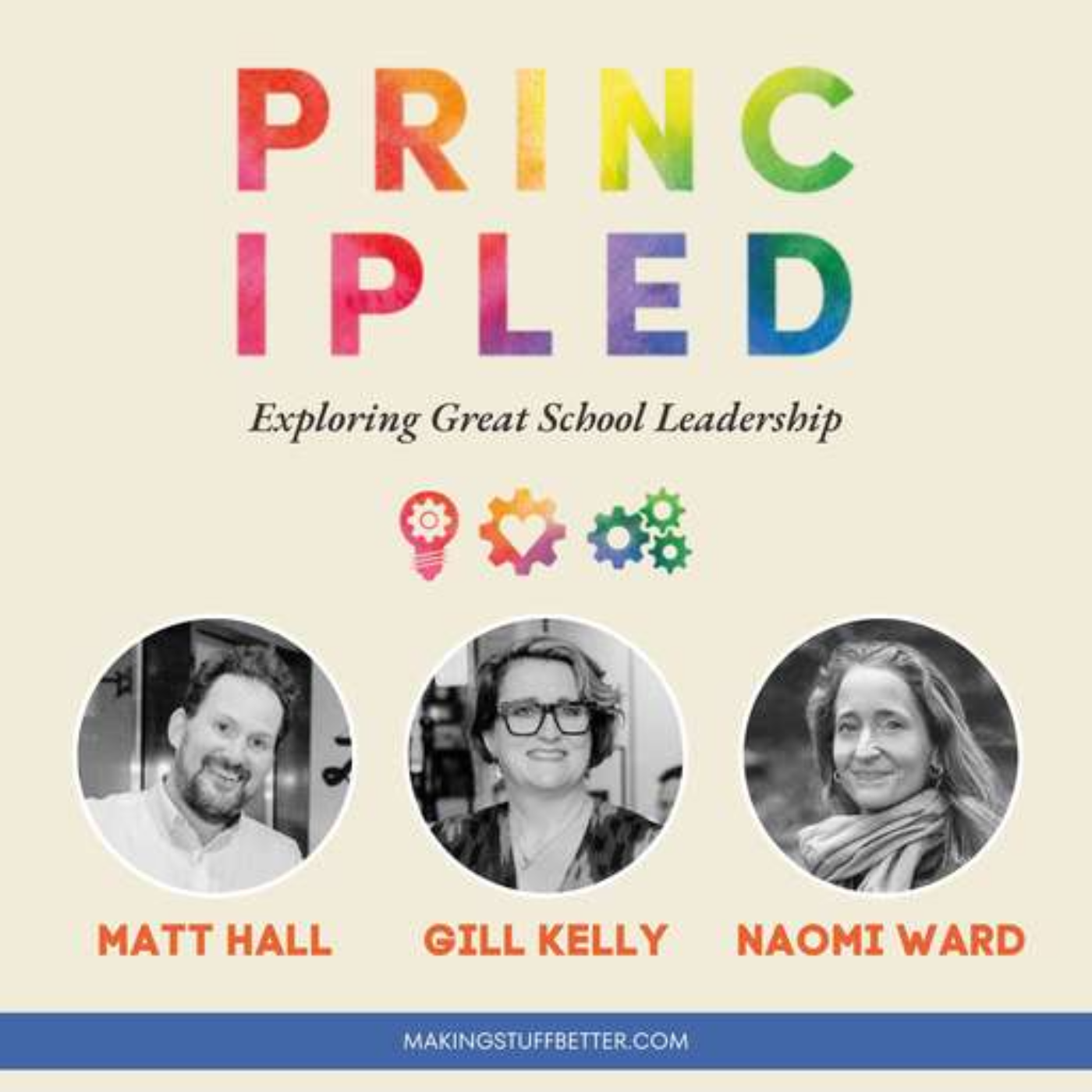
Guest Episode: Nurturing the Cultural Richness of International Schools
bonusGUEST EPISODEWelcome to the Principled podcast.In this episode, Matt Hall and Naomi Ward of Making Stuff Better are joined by Shane Leaning, international school leadership and organisational development coach, and creator and host of the Global Ed Leaders podcast for leaders shaping education on a global scale.They discuss cultural differences in communication, decision making, authority and criticism; lessons from a valuable and little-known resource; and the power of a coaching-style approach to leadership. How can we foster organisational health in international schools where cultural differences might result in vastly different approaches to crucial elements such as decision making or authority? What measures can we implement to overcome barriers presented by these differences? And how powerful can adaptability and curiosity really be?Resource mentioned in episode: Autobiography of Intercultural Encounters: https://www.coe.int/en/web/autobiography-intercultural-encounters --------------------------------------To get in touch with Shane, you can find him online here:LinkedIn: https://www.linkedin.com/in/leaningshane/Website: https://www.shaneleaning.com/Global Ed Leaders Podcast: https://www.shaneleaning.com/podcastJoin Shane's Intensive Leadership Programme at educationleaders.co/intensiveShane Leaning, an organisational coach based in Shanghai, supports school leaders globally. Passionate about empowment, he is the author of the best-selling 'Change Starts Here.' Shane is a leading educational voice in the UK, Asia and around the world.You can find Shane on LinkedIn and Bluesky. or shaneleaning.com Hosted on Acast. See acast.com/privacy for more information.

Ep 42Cut Back to Achieve More in Your School | A Conversation with Arran Hamilton
This week, I had the pleasure of sitting down with Dr. Arran Hamilton, Author, Researcher and Group Director of Education at Cognition Education. We dove deep into the concept of doing less to achieve more in education. Dr. Hamilton, who has worked closely with John Hattie and Dylan Wiliam, shared insights into the process of de-implementation in schools. Our discussion revealed that not all educational practices are equally effective, and by de-implementing, we can actually enhance student learning. Key Quotes:"The short answer is categorically yes. We do too much in schools." - Arran"So few of these things are really robust drivers...that on their own seem to significantly accelerate student learning." - Arran"It's really hard to unlearn. So if you've got an ingrained behavior...it's really hard to unlearn that behavior or that practice." - Arran"Everything we do generally makes a positive difference...but it's how much difference is that making?" - Shane"You're probably looking for no more than one to three high priority initiatives that you want to pursue in a given year." - Arran Arran’s insights from our conversation, along with his, Hattie and Wiliam’s book "Making Room for Impact", offer valuable guidance for school leaders seeking to streamline their practices for better outcomes.Thank you for tuning in, and as always, if you found this episode useful, please share your experience. You can find me online on X (@leaningshane), and LinkedIN. My website is shaneleaning.com. For international school leadership tips, subscribe to my newsletter here. About the hostShane Leaning is a passionate organisational development coach with over 14 years of international teaching and leadership experience. His approach to coaching and professional development is all about approachability and attentiveness to the unique strengths and contexts of schools and educators. Shane believes that empowerment fosters growth and success for both educators and students alike.Join Shane's Intensive Leadership Programme at educationleaders.co/intensiveShane Leaning, an organisational coach based in Shanghai, supports school leaders globally. Passionate about empowment, he is the author of the best-selling 'Change Starts Here.' Shane is a leading educational voice in the UK, Asia and around the world.You can find Shane on LinkedIn and Bluesky. or shaneleaning.com Hosted on Acast. See acast.com/privacy for more information.
LIVE: Why do we teach music in schools?
bonusThis is a recording of Global Ed Leaders LIVE, a live Space hosted every week on X. Our theme this week focused on the relevance of music education in schools. I was delighted to co-host with Dan Guerrard, and we were joined by some outstanding voices from across the world.Join Shane's Intensive Leadership Programme at educationleaders.co/intensiveShane Leaning, an organisational coach based in Shanghai, supports school leaders globally. Passionate about empowment, he is the author of the best-selling 'Change Starts Here.' Shane is a leading educational voice in the UK, Asia and around the world.You can find Shane on LinkedIn and Bluesky. or shaneleaning.com Hosted on Acast. See acast.com/privacy for more information.

Ep 41Which Social Media Platform is Best for Educators?
In this episode I explore the transformative role of social media in the educational landscape. I focus on X (formerly Twitter) and LinkedIn, sharing my personal experiences and insights on how these platforms have evolved into essential tools for professional growth and networking in education. The discussion emphasises the unique features and community dynamics of each platform, highlighting how they can facilitate meaningful conversations and connections amongst educators and thought leaders. Key Quotes:"I prefer to use X… I know this is quite a controversial statement to many.""On LinkedIn, because someone's put a lot of effort into [a post], you often get very positive comments. There's generally much less challenge... on LinkedIn than X." -"When the original poster has posted an idea... on X, it's much more equal when someone comments because their comment will also be short.""Elon Musk has big plans for this platform including making it what he calls an everything app.""I love those audio communities [on X]... The … idea for me is to bring everyone onto the mic and have an equal conversation about something." Thank you for tuning in, and as always, if you found this episode useful, please share your experience. You can find me online on X (@leaningshane), and LinkedIN. My website is shaneleaning.com. For international school leadership tips, subscribe to my newsletter here. About the hostShane Leaning is a passionate organisational development coach with over 14 years of international teaching and leadership experience. His approach to coaching and professional development is all about approachability and attentiveness to the unique strengths and contexts of schools and educators. Shane believes that empowerment fosters growth and success for both educators and students alike.Join Shane's Intensive Leadership Programme at educationleaders.co/intensiveShane Leaning, an organisational coach based in Shanghai, supports school leaders globally. Passionate about empowment, he is the author of the best-selling 'Change Starts Here.' Shane is a leading educational voice in the UK, Asia and around the world.You can find Shane on LinkedIn and Bluesky. or shaneleaning.com Hosted on Acast. See acast.com/privacy for more information.

Ep 40China’s Future in International Education | A Conversation with Julian Fisher
(REPLAY OF EPISODE 1)In this episode, I spoke to Julian Fisher, the co-founder of Venture Education, a market intelligence consultancy focusing on education in China. If you're an international education leader, you won't want to miss this fascinating discussion on the Chinese education system including the challenges of maintaining a strong school culture in a diverse and constantly changing environment.Here are some of the key takeaways:The Chinese school system is not uniform and varies from school to school, with some using more open teaching styles and group work.The best schools in China are arguably government schools where Chinese families prioritize their children attending good schools and universities in China, rather than international ones.The traditional model of international schools is seen by some with a somewhat neo-colonialist nature, and the transactional nature of the engagements.A school with a strong culture that lasts beyond any one leader or any one member of staff is crucial.Bilingual or international schools offer an advantage in terms of individual support for students.Chinese families have historically been brave and willing to explore opportunities, such as studying overseas.To learn more about Julian’s work and Venture Education, visit their website at https://www.ventureeducation.org/.Thank you for tuning in, and as always, if you found this episode useful, please share your experience. You can find me online on X (@leaningshane), and LinkedIN. My website is shaneleaning.com.For international school leadership tips, subscribe to my newsletter here. About the hostShane Leaning is a passionate organisational development coach with over 14 years of international teaching and leadership experience. His approach to coaching and professional development is all about approachability and attentiveness to the unique strengths and contexts of schools and educators. Shane believes that empowerment fosters growth and success for both educators and students alike.Join Shane's Intensive Leadership Programme at educationleaders.co/intensiveShane Leaning, an organisational coach based in Shanghai, supports school leaders globally. Passionate about empowment, he is the author of the best-selling 'Change Starts Here.' Shane is a leading educational voice in the UK, Asia and around the world.You can find Shane on LinkedIn and Bluesky. or shaneleaning.com Hosted on Acast. See acast.com/privacy for more information.
LIVE: AI In International Schools
bonusIn this special bonus episode of Global Ed Leaders, streamed live on X Spaces, the conversation centers on AI in International Schools. My co-host was Paul Matthews from Tasmania and CEO of https://www.myteacheraide.com/.The episode features a diverse panel of educators from around the world.Join Shane's Intensive Leadership Programme at educationleaders.co/intensiveShane Leaning, an organisational coach based in Shanghai, supports school leaders globally. Passionate about empowment, he is the author of the best-selling 'Change Starts Here.' Shane is a leading educational voice in the UK, Asia and around the world.You can find Shane on LinkedIn and Bluesky. or shaneleaning.com Hosted on Acast. See acast.com/privacy for more information.
LIVE: Goals and Coaching
bonusIn this special bonus episode of Global Ed Leaders, streamed live on X Spaces, the conversation centers on new year goals and coaching. I was delighted to cohost with Freya Odell who is based in Hanoi, Vietnam,The episode features a diverse panel of educators from around the world.Join Shane's Intensive Leadership Programme at educationleaders.co/intensiveShane Leaning, an organisational coach based in Shanghai, supports school leaders globally. Passionate about empowment, he is the author of the best-selling 'Change Starts Here.' Shane is a leading educational voice in the UK, Asia and around the world.You can find Shane on LinkedIn and Bluesky. or shaneleaning.com Hosted on Acast. See acast.com/privacy for more information.

Ep 39Become a Master of Difficult Conversations
In this episode I explore how to handle difficult as a school leader. This discussion is particularly pertinent for school leaders, teachers, and anyone in a managerial role who grapples with the challenge of providing feedback that is both impactful and compassionate. I start by sharing my experiences as a department lead, reflecting on the anxiety and uncertainty I faced when addressing a colleague's underperformance. This personal story leads into an in-depth look at the COIN framework, a structured approach developed by organsational consultant Anna Carroll, which is designed to help leaders deliver clear, effective, and non-confrontational feedback. The COIN model, which stands for Context, Observation, Impact, and Next Steps, is broken down with practical examples. I demonstrate its utility in various difficult situations, like discussing unmet responsibilities and dealing with sensitive issues such as sexist language in the workplace. Throughout the episode, I emphasise the significance of this framework in turning challenging conversations into chances for growth and mutual understanding, thus nurturing a more positive workplace atmosphere. Key Quotes:"Life is full of difficult conversations. We've all had them, we've all squirmed through them.""Using a framework or system makes these challenging conversations feel a bit more manageable.""The COIN model is an acronym for Context, Observation, Impact, and Next Step.""This framework... helps free up some of your cognitive space, which is crucial in these challenging situations." References:Anna Carroll, Organizational Consultant and Creator of the COIN Framework"The Feedback Imperative" by Anna Carroll Thank you for tuning in, and as always, if you found this episode useful, please share your experience. You can find me online on X (@leaningshane), and LinkedIN. My website is shaneleaning.com. For international school leadership tips, subscribe to my newsletter here. About the hostShane Leaning is a passionate organisational development coach with over 14 years of international teaching and leadership experience. His approach to coaching and professional development is all about approachability and attentiveness to the unique strengths and contexts of schools and educators. Shane believes that empowerment fosters growth and success for both educators and students alike.Join Shane's Intensive Leadership Programme at educationleaders.co/intensiveShane Leaning, an organisational coach based in Shanghai, supports school leaders globally. Passionate about empowment, he is the author of the best-selling 'Change Starts Here.' Shane is a leading educational voice in the UK, Asia and around the world.You can find Shane on LinkedIn and Bluesky. or shaneleaning.com Hosted on Acast. See acast.com/privacy for more information.

Ep 38Is Coaching Just Another Fad? | A Conversation with Rachel Lofthouse
Rachel Lofthouse and I explore the challenges and nuances of coaching and mentoring in education, particularly in the context of international schools. We discuss the potential drawbacks of implementing coaching at scale without proper consideration and support, emphasising the need for a nuanced, teacher-centered approach. The discussion also touches upon the CollectivEd award, which provides a framework for schools to evaluate and enhance their professional learning and development practices. This is part two of our conversation so if you haven’t listened to part 1, go there first.Key Quotes:"coaching is really an inside out process. It starts from the inside.""If you can do something well, then really hone that talent, really make that work to the very best of your ability. Don't ignore it or deliberately sideline it because somebody's come along to say, well, this seems to be the thing that will get you a 0.5 additional score regardless of who you are.""And it's not just a gut feeling of what will bring benefit, but an informed sense of what will bring benefit in their setting. So it's not just about coaching, it's also about mentoring and putting both of those in the wider context of professional learning. And I do think it's important to remember professional learning is not the same as training."" I think that word sustainable is the word that we perhaps need to most grapple with in education. We think about innovation and we think about change and development, and we probably don't think about how we create a sustainable workforce, a sustainable system that doesn't constantly undermine itself and compromise the outcomes that we're looking for."Links:CollectivED: https://www.leedsbeckett.ac.uk/research/collectived/New Guide to Teacher Coaching from CollectivED at Leeds Beckett University https://www.leedsbeckett.ac.uk/research/collectived/guide-to-coaching/Here be dragons - myth busting Instructional Coaching for teachers | Leeds Beckett UniversityThank you for tuning in, and as always, if you found this episode useful, please share your experience. You can find me online on X and LinkedIN: @leaningshane. My website is shaneleaning.com.For international school leadership tips, subscribe to my newsletter here.About the hostShane Leaning is a passionate organisational development coach with over 11 years of international teaching and leadership experience. His approach to coaching and professional development is all about approachability and attentiveness to the unique strengths and contexts of schools and educators. Shane believes that empowerment fosters growth and success for both educators and students alike.Join Shane's Intensive Leadership Programme at educationleaders.co/intensiveShane Leaning, an organisational coach based in Shanghai, supports school leaders globally. Passionate about empowment, he is the author of the best-selling 'Change Starts Here.' Shane is a leading educational voice in the UK, Asia and around the world.You can find Shane on LinkedIn and Bluesky. or shaneleaning.com Hosted on Acast. See acast.com/privacy for more information.
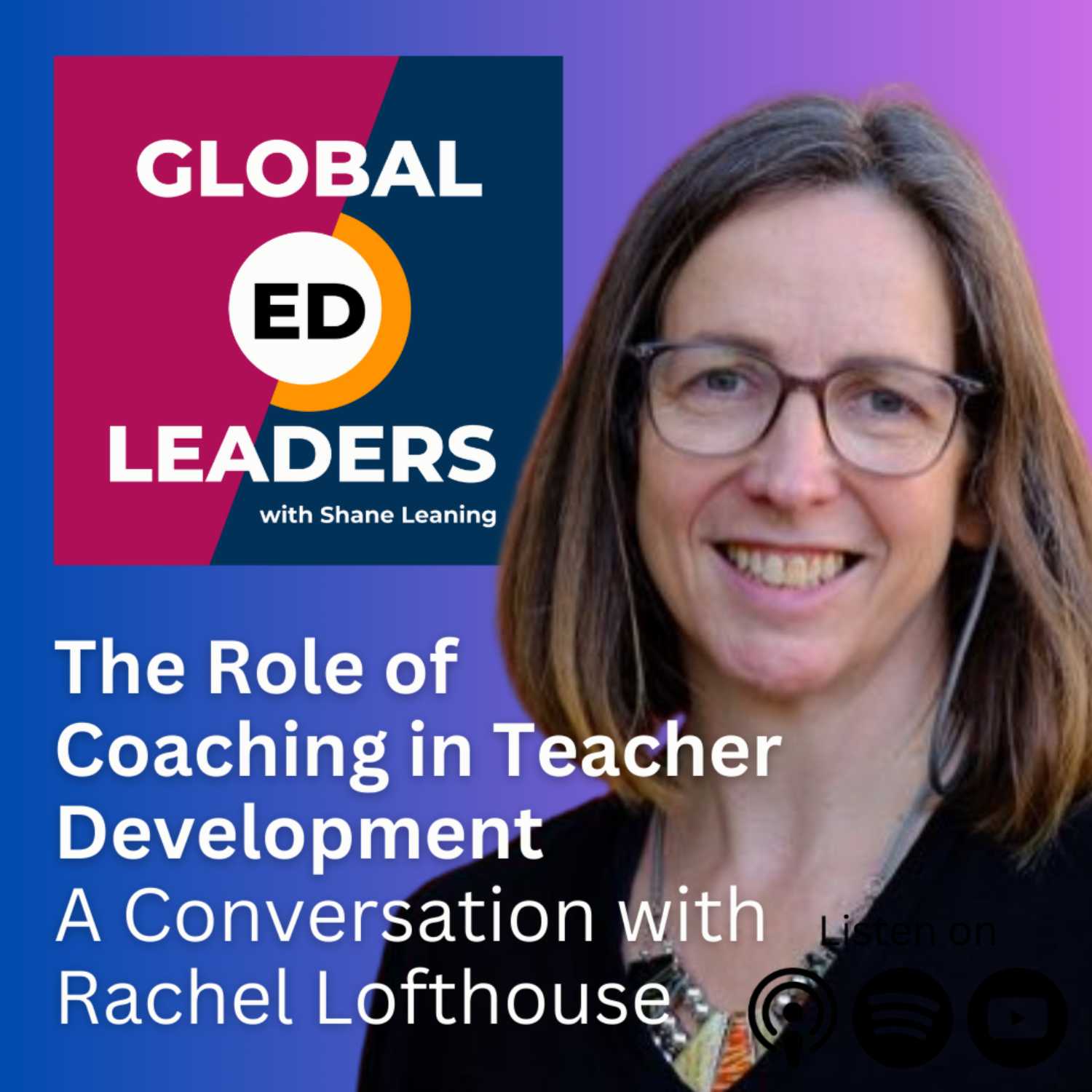
Ep 37The Role of Coaching in Teacher Development | A Conversation with Rachel Lofthouse
In this episode of Global Ed Leaders, I engage in a dialogue with Rachel Lofthouse, Professor of Teacher Education at Leeds Beckett University and founder of CollectivEd. We delve into the nuances of coaching in educational settings, exploring its definition, application, and impact. Rachel's extensive experience offers a unique perspective on the evolving role of coaching in education, making this episode a must-listen for international schoo educators and leaders seeking to integrate coaching into their practice.Key Quotes:The Impact of Brief Coaching Sessions: "And it doesn't mean that if you just have one really thoughtful, focused coaching conversation that it will do no good. If in that moment the focus is sustained, the purpose is sustained, the attention that the people give each other is sustained, it can still have quite a considerable impact."The Cycle of Educational Trends: "This tends to happen to all sorts of phenomena in education, particularly nowadays, where social media helps things spread so quickly... And we're absolutely in a surge phase."The Rise of Executive Coaching: "If it looks like coaching for executives in business is a good idea, then we've got a huge growth in the role of executive and education. Well, they all want a coach as well."Interdisciplinary Approaches in Education: "Something up and running in a hurry doesn't really acknowledge that slow and emerging knowledge base. And of course, the other thing that we're not generally good at, is connecting the different knowledge bases."The Evolution of Professional Terms: "Nothing stays unified and uniform. Nobody's got a trademark on the word instructional coaching. It's not copyrighted to anybody. So, of course, over time and in different locations, people have legitimately chosen to use similar language to describe things that."Time and Resource Constraints in Coaching: "we haven't got an infinite amount of time and an infinite resource."Links:CollectivED: https://www.leedsbeckett.ac.uk/research/collectived/New Guide to Teacher Coaching from CollectivED at Leeds Beckett University https://www.leedsbeckett.ac.uk/research/collectived/guide-to-coaching/Here be dragons - myth busting Instructional Coaching for teachers | Leeds Beckett UniversityThank you for tuning in, and as always, if you found this episode useful, please share your experience. You can find me online on X and LinkedIN: @leaningshane. My website is shaneleaning.com.For international school leadership tips, subscribe to my newsletter here.About the hostShane Leaning is a passionate organisational development coach with over 11 years of international teaching and leadership experience. His approach to coaching and professional development is all about approachability and attentiveness to the unique strengths and contexts of schools and educators. Shane believes that empowerment fosters growth and success for both educators and students alike.Join Shane's Intensive Leadership Programme at educationleaders.co/intensiveShane Leaning, an organisational coach based in Shanghai, supports school leaders globally. Passionate about empowment, he is the author of the best-selling 'Change Starts Here.' Shane is a leading educational voice in the UK, Asia and around the world.You can find Shane on LinkedIn and Bluesky. or shaneleaning.com Hosted on Acast. See acast.com/privacy for more information.
LIVE: International School Trends
bonusIn this special bonus episode of Global Ed Leaders, streamed live on X Spaces, the conversation centers on international school trends. The episode features a diverse panel of educators and experts who share their insights into the growth of international school groups, the impact of these institutions on global education, and the evolving role of technology in learning environments. The panel also addresses significant challenges such as teacher recruitment and retention. This live discussion is not only informative but also interactive, engaging a truly global audience in real-time. Link to Full Recording:Watch the full X Spaces recording hereJoin Shane's Intensive Leadership Programme at educationleaders.co/intensiveShane Leaning, an organisational coach based in Shanghai, supports school leaders globally. Passionate about empowment, he is the author of the best-selling 'Change Starts Here.' Shane is a leading educational voice in the UK, Asia and around the world.You can find Shane on LinkedIn and Bluesky. or shaneleaning.com Hosted on Acast. See acast.com/privacy for more information.
Ep 365 New Year’s Resolutions for International School Leaders
In this episode, host Shane Leaning explores the theme of New Year's resolutions with a unique twist, focusing on leadership and professional development in the education sector. Shane shares five innovative ideas for educators and school leaders to enhance their practices and better support their teams. From mental health initiatives to embracing cutting-edge technology like generative AI, this episode has insights for those looking to make impactful changes in their educational environments. Shane begins by emphasising the importance of mental health checks for staff, suggesting regular reflection sessions or online forums. He then moves on to discuss professional development, proposing a grant system to encourage staff autonomy in their learning journeys. The episode also delves into cognitive science, urging educators to integrate its principles into teaching strategies. Furthermore, Shane introduces the concept of 'deimplementation' – streamlining and reassessing current practices for more effective outcomes. Lastly, he highlights the necessity of engaging with generative AI, a rapidly evolving field with significant implications for education. Key Quotes:"Do you have a system of checking in on the mental health of the staff that you serve?""A professional development grant system... puts autonomy in staff and gets them really thinking about their professional development journey.""How are you using the latest research in cognitive science to enhance your practice?""Set 2024 to be your year of deimplementation not implementation.""Engaging with generative AI... plan it into your PD sessions or into your weekly staff newsletter." Links:"The Well-being Toolkit" by Andrew Coley"The ResearchEd Guide to Cognitive Science" edited by Kate Jones"Making Room for Impact: A Deimplementation Guide for Educators" by Dr. Aaron Hamilton, John Hattie, and Dylan WilliamEduaide episode from the archivesThank you for tuning in, and as always, if you found this episode useful, please share your experience. You can find me online on X (@leaningshane), and LinkedIN. My website is shaneleaning.com. For international school leadership tips, subscribe to my newsletter here.Join Shane's Intensive Leadership Programme at educationleaders.co/intensiveShane Leaning, an organisational coach based in Shanghai, supports school leaders globally. Passionate about empowment, he is the author of the best-selling 'Change Starts Here.' Shane is a leading educational voice in the UK, Asia and around the world.You can find Shane on LinkedIn and Bluesky. or shaneleaning.com Hosted on Acast. See acast.com/privacy for more information.

Ep 35How to Build a Professional Learning Culture | A Conversation with Cindy Adair
I speak with Cindy Adair, the Assistant Principal for Continued Professional Learning at Bangkok Patana School in Thailand. Cindy shares her pioneering approach to professional development in education. She delves into the transformation of performance management systems, emphasising teacher ownership, evidence-based education, and continuous improvement. Cindy outlines innovative strategies like instructional coaching, professional growth conversations, and integrating various educational tools for effective CPD.Shane and Cindy explore the nuances of fostering a culture of professional development that resonate across different school phases. Cindy also discusses how Bangkok Patana School leverages strategic partnerships with educational consultants and speakers to enhance professional development opportunities.Key Quotes from the Cindy"Professional growth is about becoming better, not just being good.""We are trying to actively decouple [performance management] so that people will be motivated by the fact that they are on this professional growth journey.""High-quality conversations... are key in any professional development.""You'll be surprised at the things that people are expert on and how willing they are to share."ReferencesBangkok Patana School CPL on XChris Moyes' research on professional growthJim Knight's Impact CycleGreat Teaching Toolkit by Evidence Based EducationWalkthroughs by Tom SherringtonThank you for tuning in, and as always, if you found this episode useful, please share your experience. You can find me online on X (@leaningshane), and LinkedIN. My website is shaneleaning.com.For international school leadership tips, subscribe to my newsletter here.About the hostShane Leaning is a passionate organisational development coach with over 14 years of international teaching and leadership experience. His approach to coaching and professional development is all about approachability and attentiveness to the unique strengths and contexts of schools and educators. Shane believes that empowerment fosters growth and success for both educators and students alike.Join Shane's Intensive Leadership Programme at educationleaders.co/intensiveShane Leaning, an organisational coach based in Shanghai, supports school leaders globally. Passionate about empowment, he is the author of the best-selling 'Change Starts Here.' Shane is a leading educational voice in the UK, Asia and around the world.You can find Shane on LinkedIn and Bluesky. or shaneleaning.com Hosted on Acast. See acast.com/privacy for more information.
Ep 34In Memory of Ruth Perry: A Call for Change in School Evaluation
In this episode, I discuss the tragic case of Ruth Perry’s death, OFSTED and its implications for the international school sector. I explore the need for a compassionate and reflective reevaluation of school inspection systems worldwide, taking lessons from Ruth's story to advocate for a more humane approach to educational oversight.Overview of the Episode:In memory: Understanding the circumstances leading to the passing of Ruth Perry, a head teacher in Reading, UK, and the role of OFSTED inspections in her experience.Impact of Inspection Systems on Mental Health: Examining how the current school inspection processes can severely affect the mental health and well-being of education leaders.Global Perspective on School Inspections: Discussing the relevance of Ruth Perry’s case for international schools and the various forms of quality assurance processes they undergo.Rethinking Quality Assurance: Reflecting on the traditional methods of school inspection and the shift towards more empathetic and growth-oriented approaches.The Role of Self-Evaluation and Internal Assessments: Highlighting alternative methods such as self-evaluation, with insights from John McBeath’s work on the evolving relationship between inspections and self-evaluation.Coaching in Educational Leadership: Exploring the potential of coaching and structured self-reflection in transforming school evaluation systems.Challenges of Implementing Self-Assessment: Addressing the potential difficulties in shifting to self-assessment, including cultural mindset changes, maintaining consistency and fairness, and balancing accountability with improvement.Thank you for tuning in, and as always, if you found this episode useful, please share your experience. You can find me online on X (@leaningshane), and LinkedIN. My website is shaneleaning.com.For international school leadership tips, subscribe to my newsletter here.About the hostShane Leaning is a passionate organisational development coach with over 14 years of international teaching and leadership experience. His approach to coaching and professional development is all about approachability and attentiveness to the unique strengths and contexts of schools and educators. Shane believes that empowerment fosters growth and success for both educators and students alike.Join Shane's Intensive Leadership Programme at educationleaders.co/intensiveShane Leaning, an organisational coach based in Shanghai, supports school leaders globally. Passionate about empowment, he is the author of the best-selling 'Change Starts Here.' Shane is a leading educational voice in the UK, Asia and around the world.You can find Shane on LinkedIn and Bluesky. or shaneleaning.com Hosted on Acast. See acast.com/privacy for more information.

Ep 33The Power of an Outside Voice | A Conversation with Richard Reid
In this episode, my guest is Richard Reid, a former principal who has transitioned into being a much-sought-after coach for school leaders. We unpack the transformative power of having an outside voice in leadership challenges, celebrate the importance of self-belief, and explore the impactful practice of peer coaching in educational settings.Overview:- Richard journey from principal to leadership coach.- The critical role of coaching in bolstering school leaders' confidence and self-belief.- A deep dive into a successful team-building exercise: principals sharing wins and engaging in peer coaching.- The significance of group coaching sessions and their structure to inspire and empower school leaders.- The transformative effect of recognizing successes and achievements within schools.- A first-hand account of a principal's breakthrough in redefining his role beyond the title of "acting principal."- Advice from Richard on how school leaders can incorporate external perspectives into their practice.Thank you for tuning in, and as always, if you found this episode useful, please share your experience. You can find me online on Twitter, LinkedIN and Instagram: @leaningshane. My website is shaneleaning.com.For international school leadership tips, subscribe to my newsletter here.About the host:Shane Leaning is a passionate organisational development coach with over 11 years of international teaching and leadership experience. His approach to coaching and professional development is all about approachability and attentiveness to the unique strengths and contexts of schools and educators. Shane believes that empowerment fosters growth and success for both educators and students alike.Join Shane's Intensive Leadership Programme at educationleaders.co/intensiveShane Leaning, an organisational coach based in Shanghai, supports school leaders globally. Passionate about empowment, he is the author of the best-selling 'Change Starts Here.' Shane is a leading educational voice in the UK, Asia and around the world.You can find Shane on LinkedIn and Bluesky. or shaneleaning.com Hosted on Acast. See acast.com/privacy for more information.
Ep 32Three Essential EAL Strategies for Success in International Schools
Today, I explore the vital role of English as an Additional Language (EAL) in international schools. I'll share three strategies that are key to supporting our multilingual students and promoting linguistic inclusion. Drawing from my experience in EAL, I offer practical tips from embracing an additive mindset to implementing scaffolding techniques and integrating language structures throughout the curriculum.Key InsightsCelebrating Linguistic Diversity: I discuss how multilingual students bring a wealth of diversity to our schools and why it's essential to shift from a deficit to an asset-based mindset.The Power of Scaffolding: I emphasise scaffolding learning to match students' cognitive levels, rather than simplifying content, allowing them to engage with complex ideas.Embedding Language Structures: I advocate for consistent language support in all subjects, highlighting how this can improve overall communication skills for every student.Strategies DiscussedShifting Mindsets: I reflect on the importance of viewing multilingualism as an enrichment rather than a challenge to overcome.Building Up, Not Watering Down: I talk about the necessity of providing students with the tools they need to grasp higher-level concepts, ensuring that all students can succeed.Language Across the Curriculum: I explore the benefits of reinforcing language structures in every lesson, aiding EAL students and their classmates alike.Thank you for tuning in, and as always, if you found this episode useful, please leave a review on your podcast platform. You can also find me online on Twitter, LinkedIN and Instagram: @leaningshane. My website is shaneleaning.com.For international school leadership tips, subscribe to my newsletter here.About the hostShane Leaning is a passionate organisational development coach with over 11 years of international teaching and leadership experience. His approach to coaching and professional development is all about approachability and attentiveness to the unique strengths and contexts of schools and educators. Shane believes that empowerment fosters growth and success for both educators and students alike.Join Shane's Intensive Leadership Programme at educationleaders.co/intensiveShane Leaning, an organisational coach based in Shanghai, supports school leaders globally. Passionate about empowment, he is the author of the best-selling 'Change Starts Here.' Shane is a leading educational voice in the UK, Asia and around the world.You can find Shane on LinkedIn and Bluesky. or shaneleaning.com Hosted on Acast. See acast.com/privacy for more information.
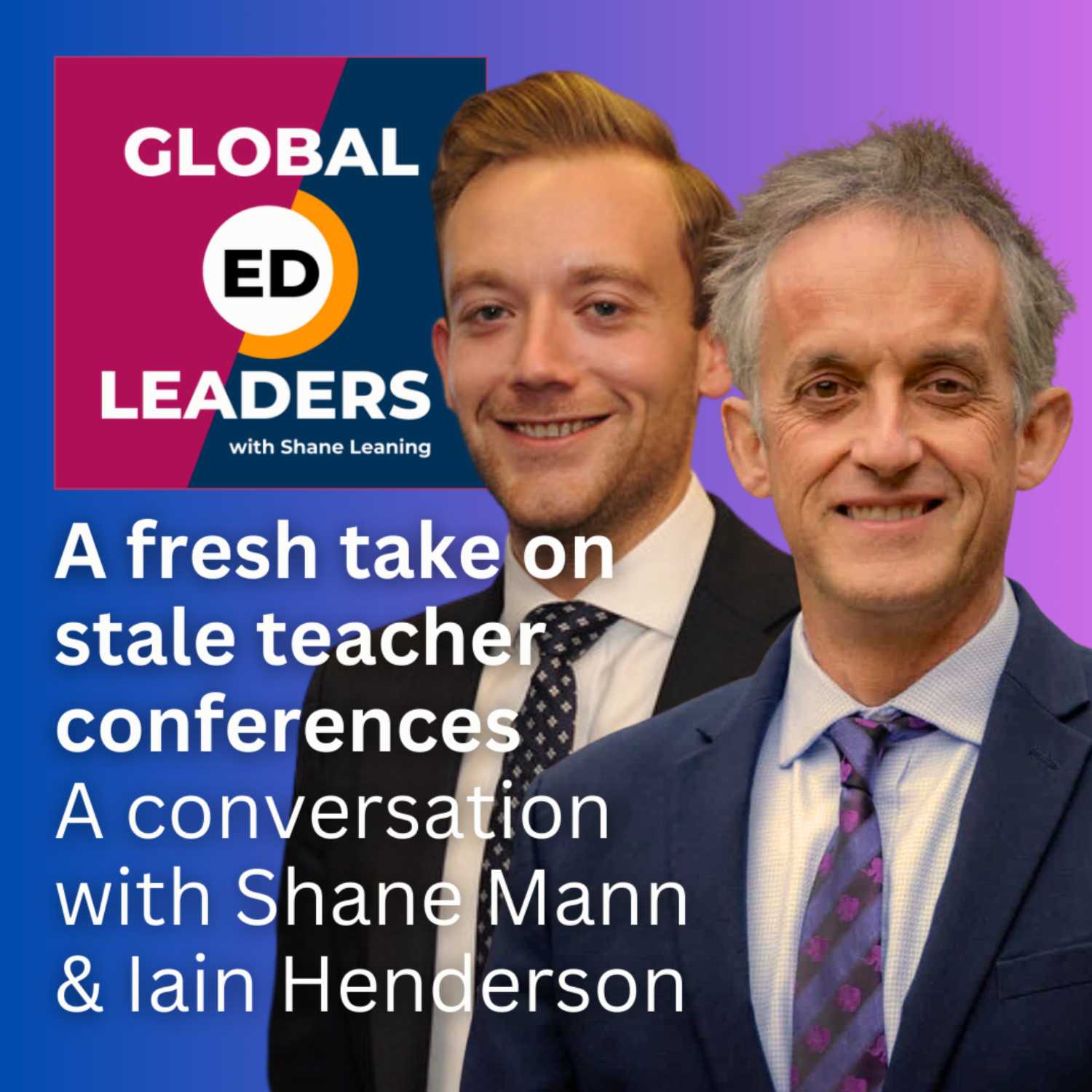
Ep 31A Fresh Take on Stale Teacher Conferences | A Conversation with Iain Henderson & Shane Mann
Education in Thailand. I am joined by Festival Directors, Iain Henderson and Shane Mann. We delve into the festival's mission to encourage dialogue, inclusivity, and diversity, shedding light on controversial sessions, powerful experiences, and the much-celebrated blend of in-depth talks and lively atmosphere. Not to mention, we touch on plans for expansion, offering an exciting peek into the impressive global journey of EdFest.Overview- An overview of the Festival, shedding light on its aim to foster a balance of ideas among its participants. [00:06:00]- Criticism and Controversy: We discuss the events that sparked controversy on social media, focusing on Eddie Izard's call for kindness and the backlash that ensued. [00:14:20]- Lessons to Remember: We explore some powerful and memorable sessions - including those by Chris Packham, Patrick Foster, Dan Willingham, and Jassa Ahluwalia - that spanned topics from autism to mixed heritage. [00:28:50]- The Bigger Picture: We talk about the decision to bring speakers from outside the education space and the broader impacts these sessions can have. [00:44:30]- Looking Ahead: We reveal the international journey the Festival of Education is embarking on, with future festivals planned in Shanghai, UK, USA, and potentially India. [00:58:20]Resources- Festival of Education Thailand: https://educationfestthailand.com/- Festival of Education UK: https://educationfest.co.uk/Thank you for tuning in, and as always, if you found this episode useful, please share your experience. You can find me online on Twitter, LinkedIN and Instagram: @leaningshane. My website is shaneleaning.com.For international school leadership tips, subscribe to my newsletter here.About the hostShane Leaning is a passionate organisational development coach with over 11 years of international teaching and leadership experience. His approach to coaching and professional development is all about approachability and attentiveness to the unique strengths and contexts of schools and educators. Shane believes that empowerment fosters growth and success for both educators and students alike.Join Shane's Intensive Leadership Programme at educationleaders.co/intensiveShane Leaning, an organisational coach based in Shanghai, supports school leaders globally. Passionate about empowment, he is the author of the best-selling 'Change Starts Here.' Shane is a leading educational voice in the UK, Asia and around the world.You can find Shane on LinkedIn and Bluesky. or shaneleaning.com Hosted on Acast. See acast.com/privacy for more information.
Ep 30The Art of Bouncing Back: A School Leader's Guide to Resilience
This week, I delve into a personal experience where I stumbled quite significantly but managed to find a silver lining in it. It's all about transforming setbacks into stepping stones. We'll explore how to incorporate resilience and forward-thinking when faced with unexpected challenges.I'll share my recent visa mishap, which unexpectedly stranded me in Hong Kong and how I turned this situation into a learning and growth opportunity by connecting with inspiring educators here. This episode is a journey through handling setbacks, with a focus on resilience, practical strategies, and emotional intelligence.Key Quotes"I'm going to be honest – this week I messed up, but this got me thinking: how do we turn our setbacks into stepping stones?"."We're often challenged with setbacks in education... I want to talk about common types of setbacks leaders face and how we can bounce back."."Emotional resilience is vital... Daniel Goleman's work on emotional intelligence focuses on self-awareness and self-regulation as crucial in handling setbacks effectively."."In crisis, first, immediately deal with the issue... then seek support and resources... and finally, adapt and find alternative solutions."Thank you for tuning in, and as always, if you found this international school leadership podcast episode useful, please share your experience. You can find me online on X, Linkedin and Instagram: @leaningshane. My website is shaneleaning.com.For international school leadership tips, subscribe to my newsletter here.About the hostShane Leaning is a passionate organisational development enthusiast with over 11 years of international teaching and leadership experience. His approach to coaching and professional development is all about approachability and attentiveness to the unique strengths and contexts of schools and educators. Shane believes that empowerment fosters growth and success for both educators and students alike.Join Shane's Intensive Leadership Programme at educationleaders.co/intensiveShane Leaning, an organisational coach based in Shanghai, supports school leaders globally. Passionate about empowment, he is the author of the best-selling 'Change Starts Here.' Shane is a leading educational voice in the UK, Asia and around the world.You can find Shane on LinkedIn and Bluesky. or shaneleaning.com Hosted on Acast. See acast.com/privacy for more information.

Ep 29Help your teachers supercharge verbal feedback | A Conversation with Nihad Ćehić
Discover how Nihad Ćehić, founder and CEO of Vibbl, is transforming the way teachers give feedback in the classroom. In this episode, Nihad introduces us to Vibbl, a digital tool that allows teachers to provide faster and more meaningful feedback to their students. Through Vibbl, teachers can record verbal feedback, snap student work, and send it directly to their students' accounts.Nihad discusses the power of verbal feedback, its impact on student learning, and the role of technology in enhancing feedback practices. Learn about the potential impact of AI in feedback and the importance of maintaining the irreplaceable human connection between teacher and student. And find out how Vibbl supports collaboration and continuous professional development among teachers, and how it provides valuable analytics to track feedback effectiveness.Key Quotes"Verbal feedback adds an additional seven months of learning, whereas written marking adds an additional five months of learning."“When you give verbal feedback, you have the tone of voice within that piece of information and that can make a big difference, I believe, in how a student relates to that feedback."'We’ve built a tool that allows teachers to very quickly record verbal feedback in a no nonsense, quick and easy way that they can then send to their students.”"The biggest challenge is changing behaviours. One of the things that we were mindful of when we built Vibbl is to build it in a way that was similar to the way in which teachers mark in that it's very difficult to change a behavior where someone's been doing something for two decades."Find out more about Nihad and Vibbl at vibbl.co.ukThank you for tuning in, and as always, if you found this episode useful, please share your experience. You can find me online on Twitter, LinkedIN and Instagram: @leaningshane. My website is shaneleaning.com.For international school leadership tips, subscribe to my newsletter here.About the hostShane Leaning is a passionate leadership development enthusiast with over 11 years of international teaching and leadership experience. His approach to coaching and professional development is all about approachability and attentiveness to the unique strengths and contexts of schools and educators. Shane believes that empowerment fosters growth and success for both educators and students alike.Join Shane's Intensive Leadership Programme at educationleaders.co/intensiveShane Leaning, an organisational coach based in Shanghai, supports school leaders globally. Passionate about empowment, he is the author of the best-selling 'Change Starts Here.' Shane is a leading educational voice in the UK, Asia and around the world.You can find Shane on LinkedIn and Bluesky. or shaneleaning.com Hosted on Acast. See acast.com/privacy for more information.

Ep 28Maximising Conference ROI: Translating Insights into School-wide Impact
How do you harness the wealth of knowledge and inspiration amassed from educational conferences. share pragmatic strategies for translating conference learnings into actionable steps capable of fostering growth within school communities. Here’s a breakdown of the key discussions:Pre-Conference Alignment (03:15)I highlight the significance of aligning conference attendance with both individual and school-wide objectives to ensure purpose-driven participation."It's vital that a school leader, a mentor, a coach is involved in that discussion so that they can tease out together what's going to be best for the individual and what's going to be best for the school."Engaging Post-Conference Speakers (05:13)I explore the possibility of inviting inspiring conference speakers for more personalized engagements within the school to extend the learning and inspiration."... a more powerful option is to draw on the energy that I took from the conference by bringing that speaker into our school."Structured Sharing Sessions (06:39)I advance a modified approach to sharing key conference learnings within the school to ensure a more targeted and personalised knowledge transfer."It's all about ensuring that the key messages reach the most engaged and the most relevant audience."Post-Conference Coaching (10:05)I introduce a coaching methodology to delve deeper into the conference learnings and ensure a committed action plan for implementation."Utilising these post-conference coaching sessions can really ensure that you're delving into those strategies, that there's an accountability framework involved, but also there's a depth of understanding from what comes from these conferences and a commitment to act."Post-Conference Survey (11:58)I discuss the essence of conducting post-conference surveys to gauge the effectiveness and impact of the conference attendance, and to facilitate a continuous improvement approach."... you can start tracking the effectiveness of impact after the conference, and hopefully gamify it a little bit so you can start to improve your score every time someone goes to that conference, getting more and more out of the conference every time, and make informed decisions about the future conference attendance."I underscore the potential of these strategies in creating a ripple effect of continuous learning and improvement within the whole school community. I encourage listeners to implement at least one of the strategies discussed and share their experiences.Thank you for tuning in, and as always, if you found this episode useful, please share your experience. You can find me online on Twitter, LinkedIN and Instagram: @leaningshane. My website is shaneleaning.com. For international school leadership tips, subscribe to my newsletter here.Join Shane's Intensive Leadership Programme at educationleaders.co/intensiveShane Leaning, an organisational coach based in Shanghai, supports school leaders globally. Passionate about empowment, he is the author of the best-selling 'Change Starts Here.' Shane is a leading educational voice in the UK, Asia and around the world.You can find Shane on LinkedIn and Bluesky. or shaneleaning.com Hosted on Acast. See acast.com/privacy for more information.

Ep 27How to build an Antiracist School | A Conversation with Orlene Badu
I speak with Orlene Badu, a passionate advocate for education equity and the elimination of systemic biases in schools. Orlene shares her personal experiences as a young black girl growing up and how those experiences motivated her to challenge low expectations and create opportunities for other children. She discusses the importance of racial literacy training for staff and the need to understand the perspectives and experiences of the communities international schools serve.Orlene also highlights the significance of creating safe spaces for marginalized members of the community to share their experiences and for staff voices to be heard without fear of negative consequences. We dive into the challenges of addressing biases within the education system, the importance of role modeling anti-racist behavior, and the use of rubrics for self-assessment and reflection. Orlene emphasizes that addressing biases and inequalities requires active effort and collaboration, and provides valuable insights for international school leaders who are committed to creating inclusive and equitable learning environments.Key Quotes"The actively antiracist educator or organization will be actively disrupting those inequalities, actively taking ownership of their own biases, whether that be in the individual or the system”"I think sometimes people think if you say unconscious bias, they seem to think that means that you're giving people you're allowing people to be biased because they were unconscious and they never knew. Rather than really understanding that it's knowing that we all have biases and we can admit them without realizing and we have to challenge ourselves to do better.""But us trying to challenge them on our own is not enough because the system can also have biased outcomes."“There are so many young people for whom if they had had the support that they needed when they needed it, then behavior would never have been a concern.""Your behavior policy is as strong or as it is as strong as the adult who administers it." "I think one of the mistakes that we can make is we can think we know what's needed, we can think as educators or as leaders that we know what's kind of where we need to go in terms of approach, but actually it's really important that we understand what our community feel as well."Resources MentionedHow to Build Your Antiracist ClassroomHackney diverse curriculum resources, adaptable, six weekly units of work that were developed by highly skilled teachers in Hackney for teachers. You can sign up for these resources here.Thank you for tuning in, and as always, if you found this episode useful, please share your experience. You can find me online on Twitter, LinkedIN and Instagram: @leaningshane. My website is shaneleaning.com.For international school leadership tips, subscribe to my newsletter here.Join Shane's Intensive Leadership Programme at educationleaders.co/intensiveShane Leaning, an organisational coach based in Shanghai, supports school leaders globally. Passionate about empowment, he is the author of the best-selling 'Change Starts Here.' Shane is a leading educational voice in the UK, Asia and around the world.You can find Shane on LinkedIn and Bluesky. or shaneleaning.com Hosted on Acast. See acast.com/privacy for more information.

Ep 26The Paradox of Leadership: When Your Best Strategy Becomes Your Worst
I discuss the concept of "leadership flexibility" and how strategies that were once effective can become counterproductive if not adapted to changing contexts. I also define the concept of a "lethal mutation" where an effective strategy mutates into something counterproductive.To finish, I provide a 5-step framework for developing leadership flexibility:1. Consistent self-assessment2. Seeking feedback from others3. Being open to change4. Avoiding ego by focusing on student outcomes rather than personal achievements5. Ongoing professional development focused on adaptive leadership skillsResources and books mentioned include:- Thinking Fast and Slow by Daniel Kahneman- Emotional Intelligence by Daniel Goleman- "The Power of Vulnerability" TED talk by Brené Brown- Good to Great by Jim CollinsThank you for tuning in, and as always, if you found this episode useful, please share your experience. You can find me online on Twitter, LinkedIN and Instagram: @leaningshane. My website is shaneleaning.com.For international school leadership tips, subscribe to my newsletter here.About the hostShane Leaning is a passionate leadership development enthusiast with over 11 years of international teaching and leadership experience. His approach to coaching and professional development is all about approachability and attentiveness to the unique strengths and contexts of schools and educators. Shane believes that empowerment fosters growth and success for both educators and students alike.Join Shane's Intensive Leadership Programme at educationleaders.co/intensiveShane Leaning, an organisational coach based in Shanghai, supports school leaders globally. Passionate about empowment, he is the author of the best-selling 'Change Starts Here.' Shane is a leading educational voice in the UK, Asia and around the world.You can find Shane on LinkedIn and Bluesky. or shaneleaning.com Hosted on Acast. See acast.com/privacy for more information.
Ep 25Fidelity vs. Adaptation in Professional Learning | A Conversation with Rob Coe
I chat with Rob Coe, a leading figure in evidence-based education. We delve into the complexities and paradoxes surrounding instructional coaching, a topic that has gained significant attention in educational circles. The conversation explores the tension between research and real-world application, between fidelity and adaptation, the importance of time allocation in professional development, and the need for adaptive expertise among teachers and leaders.Key Quotes“Adaptation is not a bug, it’s a feature.” -Rob Coe"Time is really, really important. Time is a barrier, but I am just incredibly intolerant of that as an excuse." - Rob Coe"If you're a leader of an organisation, your responsibility is to develop strategy... So if there isn't enough time to do something, that's because you've chosen to do other things." - Rob Coe"Professional learning is the most powerful thing you can do to improve students' learning... professional learning is the biggest lever you've got." - Rob Coe"Are we, as leaders, merely reacting to the immediate needs of our institutions, or are we proactively carving out time for what truly matters?" - Shane LeaningResources MentionedEvidence-Based-Education (EBE)Why are we holding out for more professional development time (even though school leaders say they can’t manage it)?Why aren’t we doing ‘instructional coaching’ (even though everyone else seems to be)?Why do we see teacher expertise as needing knowledge, skill and judgement (even though most people seem to focus on just one of these)?Why are we betting on giving teachers more effective feedback (even though no one else is really doing this)?Thank you for tuning in, and as always, if you found this episode useful, please share your experience. You can find me online on Twitter, LinkedIN and Instagram: @leaningshane. My website is shaneleaning.com. Subscribe to my newsletter here.About the hostShane Leaning is a passionate leadership development enthusiast with over 11 years of international teaching and leadership experience. His approach to coaching and professional development is all about approachability and attentiveness to the unique strengths and contexts of schools and educators. Shane believes that empowerment fosters growth and success for both educators and students alike.Join Shane's Intensive Leadership Programme at educationleaders.co/intensiveShane Leaning, an organisational coach based in Shanghai, supports school leaders globally. Passionate about empowment, he is the author of the best-selling 'Change Starts Here.' Shane is a leading educational voice in the UK, Asia and around the world.You can find Shane on LinkedIn and Bluesky. or shaneleaning.com Hosted on Acast. See acast.com/privacy for more information.

Ep 24How to Craft Your Personal Leadership Mission and Vision
I delve into the crucial topic of crafting a personal mission and vision, particularly for those in leadership roles within international schools. I discuss the significance of having a well-defined mission and vision as guiding stars for your professional journey. Additionally, I share a powerful visualization exercise to help you connect with your future self and set clear intentions for your leadership path.Episode BreakdownI kick off the episode by introducing the focus on crafting a personal mission and vision. I then explain the difference between a mission and a vision, highlighting their importance in planning your future and understanding your core values. Inspired by John Whitmore's seminal book, "Coaching for Performance," I guide you through a visualization exercise to help set a clear intention for your leadership journey.I also share my own mission and vision as an example of how to make your vision actionable through your mission. I introduce the concept of "memorable promises," which are specific, measurable commitments that align with your mission and vision. I encourage you to jot down your vision, mission, and promises, and to make them a part of your daily narrative. I conclude the episode by emphasising the importance of acting on these guiding principles.Key Quotes"Your vision is your North Star. It's what you're aiming for in the long run.""Your mission, on the other hand, that's your game plan for today.""My vision is to create a global network of empowered leaders who are transforming international education from the inside out.""These promises are important as they serve as actionable commitments that align with my mission.""These are your guiding principles and they're going to really help you make decisions that are aligned with your values and long-term goals."Thank you for tuning in, and as always, if you found this episode useful, please share your experience. You can find me online on Twitter, LinkedIN and Instagram: @leaningshane. My website is shaneleaning.com.For international school leadership tips, subscribe to my newsletter here.About the hostShane Leaning is a passionate leadership development enthusiast with over 11 years of international teaching and leadership experience. His approach to coaching and professional development is all about approachability and attentiveness to the unique strengths and contexts of schools and educators. Shane believes that empowerment fosters growth and success for both educators and students alike.Join Shane's Intensive Leadership Programme at educationleaders.co/intensiveShane Leaning, an organisational coach based in Shanghai, supports school leaders globally. Passionate about empowment, he is the author of the best-selling 'Change Starts Here.' Shane is a leading educational voice in the UK, Asia and around the world.You can find Shane on LinkedIn and Bluesky. or shaneleaning.com Hosted on Acast. See acast.com/privacy for more information.

Ep 23Building Schools that Balance Technology & Human Connection | A Conversation with Jack George
In this episode, I had the pleasure of speaking with Jack George, an innovative educator and leader in the field of education technology. We dive into the fascinating world of School 3.0, where blockchain technology, AI, and character education intersect. Jack shares Aiglon College’s journey towards creating a new system of badging, using Merits and Demerits as a form of currency. We explore the potential of NFTs and blockchain for student data ownership, as well as the importance of resilience in education. From the future of schools to the role of AI in education, this conversation is a thought-provoking exploration of the changing landscape of learning.Episode Outline:- Introduction to Jack George and his role in leading innovation in education technology.- School 3.0: Exploring the use of Merits and Demerits as a form of badging and currency within the school.- The potential of blockchain technology and NFTs for student data ownership and validation of credentials.- The role of character education and the celebration of soft skills in the future of education.- The importance of resilience as an ongoing skill and the use of skills wheels to track soft skill development.- Exploring Aiglon College's forward-thinking approach to reimagining education.- The launch of a new AI project and the potential of artificial general intelligence (AGI) in education.- The need to reimagine education and find the balance between technology and human connection.- Collaboration with other schools and think tanks to roll out the School 3.0 framework.- The responsibility of educators to drive positive change in education.Key Quotes:- "We're looking at how these things intersect and looking for ways to incentivize good behaviour and character traits, and demerits for weakening or negative character traits." [Timestamp: 00:04:25]- "The ultimate aim is that students would own their credentials and achievements for life, beyond school." [Timestamp: 00:14:30]- "AI can augment teachers, make them more efficient, amplify their impact, but it can't teach students how to be good, kind, world-changing humans." [Timestamp: 00:19:05]- "What if we could genuinely prove personhood online and protect our children from bots?" [Timestamp: 00:38:40]- "Education is at a crossroads. We need to reimagine education because when AGI comes, our whole lives will change. All that we think we know will have to be questioned and reevaluated.." [Timestamp: 00:49:15]Thank you for tuning in, and as always, if you found this episode useful, please share your experience. You can find me online on Twitter, LinkedIN and Instagram: @leaningshane. My website is shaneleaning.com. For international school leadership tips, subscribe to my newsletter here.About the hostShane Leaning is a passionate organisational development coach with over 11 years of international teaching and leadership experience. His approach to coaching and professional development is about approachability and attentiveness to the unique strengths and contexts of schools and educators.Join Shane's Intensive Leadership Programme at educationleaders.co/intensiveShane Leaning, an organisational coach based in Shanghai, supports school leaders globally. Passionate about empowment, he is the author of the best-selling 'Change Starts Here.' Shane is a leading educational voice in the UK, Asia and around the world.You can find Shane on LinkedIn and Bluesky. or shaneleaning.com Hosted on Acast. See acast.com/privacy for more information.

Ep 22Leading for an Ambiguous AI-Driven Future | A Conversation with Dan Fitzpatrick | Part 2
In this episode, I had the privilege of continuing my conversation with Dan Fitzpatrick, an expert in AI in education. As leaders in education, we understand the importance of staying ahead of the curve and preparing our students for the future. Dan shares valuable insights on how we can embrace innovation, strategically plan for the future, and navigate the disruptive forces of technology, specifically AI.In this episode, Dan emphasizes the need for leaders to take action and not wait for the future to unfold on its own. He introduces the concept of the three boxes, where Box One represents the current education system, and Box Three focuses on future innovations that have the potential to disrupt the current system. While Box One innovation aims to optimize the current system, Dan highlights the importance of nonlinear innovation in Box Three, which involves research, experimentation, and scaling of new ideas. He shares a seven-step strategy for easing into innovation and emphasizes the value of collaboration in the AI era.Throughout the episode, Dan Fitzpatrick provides valuable insights and practical advice for leaders in education. Here are some key quotes from our conversation:1. "Leaders should not wait too long to embrace innovation. It's about finding that balance between optimizing the current system and exploring future innovations."2. "The education system needs to embrace nonlinear innovation in Box Three to stay relevant and prepare students for the future."3. "Collaboration with different sectors is key in the AI era. We must work together to leverage the potential benefits of technology in education."4. "The AI Classroom, my book, offers frameworks, models, and prompts for educators to effectively communicate with AI and integrate it into their lesson planning."5. "Taking action and implementing nonlinear innovation is crucial to prepare students for the ambiguous future they will face."Resources mentioned- "The AI Classroom: The Ultimate Guide to Artificial Intelligence and Education" by Dan Fitzpatrick- AI Educator Facebook group- Aieducator Tools- The three-hour course on using AI technology for teachers on theaeducator.ioThank you for tuning in, and as always, if you found this episode useful, please share your experience. You can find me online on Twitter, LinkedIN and Instagram: @leaningshane. My website is shaneleaning.com.For international school leadership tips, subscribe to my newsletter here.Join Shane's Intensive Leadership Programme at educationleaders.co/intensiveShane Leaning, an organisational coach based in Shanghai, supports school leaders globally. Passionate about empowment, he is the author of the best-selling 'Change Starts Here.' Shane is a leading educational voice in the UK, Asia and around the world.You can find Shane on LinkedIn and Bluesky. or shaneleaning.com Hosted on Acast. See acast.com/privacy for more information.

Ep 21How AI is Disrupting Education | A Conversation with Dan Fitzpatrick | Part 1
In this first of a two-part episode, I explore the landscape of artificial intelligence (AI) in education with Dan Fitzpatrick, an award-winning author and Edtech strategist. As private enterprises' role in schools continues to grow, there is a prediction that it will disrupt the status quo.We delve into the current state of AI in education and the challenges faced by schools in implementing AI. Dan provides valuable insights into understanding the AI revolution and shares practical strategies for leaders.Tune in to gain a deeper understanding of how AI is transforming the education landscape.Overview- Introduction of Dan FitzPatrick, an expert on AI in education (00:00:00)- The current stage of AI adoption in schools (00:01:06)- Challenges faced by schools in implementing AI (00:03:16)- The need for schools to filter through AI tools and platforms (00:04:36)- Different positions of schools in relation to AI adoption (00:06:28)- Understanding the varying levels of staff familiarity with AI (00:06:59)- The challenge of delivering AI training and keynotes (00:07:51)- Strategies for school leaders to initiate AI integration (00:08:38)Key Quotes- "We're at a really interesting point in terms of the AI journey for a lot of schools at the moment...a few months into people becoming aware of generative AI." - Dan FitzPatrick (00:01:06)- "A lot of schools are under pressure...so to actually entertain something innovative and new...is just not possible for a lot of schools." - Dan FitzPatrick (00:03:56)- "Schools and teachers have got really good BS filters...they can really filter through what doesn't work and what works." - Dan FitzPatrick (00:05:55)- "You got to try and start at the beginning, but then also give everybody some value in the room, of course." - Dan FitzPatrick (00:07:36)- "School leaders can strategize by thinking about how AI can align with their broader goals and vision for the school." - Shane Leaning (00:09:16)In the next episode of Global Ed Leaders, Dan Fitzpatrick will offer practical strategies for school leaders to effectively navigate the AI revolution and leverage AI tools and platforms for improved educational outcomes.You can learn more about Dan’s work at https://theaieducator.io/Thank you for tuning in, and as always, if you found this episode useful, please share your experience. You can find me online on Twitter, LinkedIN and Instagram: @leaningshane. My website is shaneleaning.com.About the hostShane Leaning is a passionate leadership development enthusiast with over 11 years of international teaching and leadership experience. His approach to coaching and professional development is all about approachability and attentiveness to the unique strengths and contexts of schools and educators. Shane believes that empowerment fosters growth and success for both educators and students alike.Join Shane's Intensive Leadership Programme at educationleaders.co/intensiveShane Leaning, an organisational coach based in Shanghai, supports school leaders globally. Passionate about empowment, he is the author of the best-selling 'Change Starts Here.' Shane is a leading educational voice in the UK, Asia and around the world.You can find Shane on LinkedIn and Bluesky. or shaneleaning.com Hosted on Acast. See acast.com/privacy for more information.

Ep 20How to Calm Parental Fears on Teacher Turnover
Today, I'm tackling a topic that's a familiar to all leaders in the world of international education: teacher turnover. As school leaders, we often find ourselves at the crossroads of staff transitions, balancing both professional requirements and parental expectations. Whether you're leading a school in Shanghai, Doha, or New York, this episode provides actionable insights on how to navigate the sometimes turbulent waters of teacher turnover without capsizing the ship of trust you've built with parents.Key Quotes"Don't hide it. If there's a change in staff, notify the parents as soon as possible.""We can embrace individual teaching styles, but we can maintain that continuity through our curriculum and the educational philosophy that guides the teaching practice.""Sometimes it actually means picking up the phone or inviting the parent in and having a one-to-one conversation.""It's all about creating a community where turnover is not seen as a disruption, but as a natural and often enriching part of the international school experience."Whether you're grappling with unexpected staff changes or strategizing for the annual shuffle, these insights will guide you in sustaining a strong relationship with your parent community.Thank you for tuning in, and as always, if you found this episode useful, please share your experience. You can find me online on Twitter, LinkedIN and Instagram: @leaningshane. My website is shaneleaning.com.About the hostShane Leaning is a passionate leadership development enthusiast with over 11 years of international teaching and leadership experience. His approach to coaching and professional development is all about approachability and attentiveness to the unique strengths and contexts of schools and educators. Shane believes that empowerment fosters growth and success for both educators and students alike.Join Shane's Intensive Leadership Programme at educationleaders.co/intensiveShane Leaning, an organisational coach based in Shanghai, supports school leaders globally. Passionate about empowment, he is the author of the best-selling 'Change Starts Here.' Shane is a leading educational voice in the UK, Asia and around the world.You can find Shane on LinkedIn and Bluesky. or shaneleaning.com Hosted on Acast. See acast.com/privacy for more information.

Ep 19Improve your communication with School Parents | A conversation with Dr. Kathy Weston
I interview Dr. Kathy Weston about how to build strong parent partnerships to support student achievement. We discuss evidence-based strategies to increase parental engagement, empower families, and cultivate collaborative relationships between parents and schools.Topics covered include:- The importance of parent involvement for international school student outcomes- Practical tips to boost parental self-efficacy and confidence in supporting learning- Aligning home and school environments through clear communication and vision sharing- Using research evidence to inform parent engagement initiatives and school programs- Creating a test-and-learn approach to find what works for your parent community- Setting the tone and building trust through authentic conversations with families- Resources for international school leaders to equip staff and parents with the latest knowledgeThis episode provides reflection questions and actionable ideas for international school heads, principals, and leadership teams aiming to optimize parent partnerships and increase student success. It’s a useful leadership coaching episode for international school heads and principalsKey Quotes:"We know from the literature on parental engagement, which is quite established and substantial, that parents are a significant influence over their children's lives. And we need to remember that.""If we can help boost and develop parental self-efficacy, it's a game changer. So we need to help parents have more confidence in their own skills to support and help their child.""Ideally, they would understand … the evidence that's very, very strong as a basis for reading. The school would share particular points about the evidence base around particular initiatives. Why are we doing this? How can you help at home?""I've never even as a parent thought I'm sending my child into school and I'm hoping they're going to transform them. I think what have I done to support the school? What can I do?""we know that it can be quite difficult for academics and researchers to disseminate their work. So we see ourselves as a conduit."You can learn more about Tooled Up Education on their website: tooledupeducation.comIf you found this episode useful, please share your experience. You can find me online on Twitter, LinkedIN and Instagram: @leaningshane. My website is shaneleaning.com.Join Shane's Intensive Leadership Programme at educationleaders.co/intensiveShane Leaning, an organisational coach based in Shanghai, supports school leaders globally. Passionate about empowment, he is the author of the best-selling 'Change Starts Here.' Shane is a leading educational voice in the UK, Asia and around the world.You can find Shane on LinkedIn and Bluesky. or shaneleaning.com Hosted on Acast. See acast.com/privacy for more information.

Ep 18Emotionally Compelling Goals: The Secret to Teacher Success?
I’m delving into a critical aspect of education: goal setting. As we begin the school year, the need to set professional and developmental goals is at the forefront of educators' minds. While SMART targets (Specific, Measurable, Achievable, Relevant, Time-Bound) have been the go-to method, I explore why this might not be the best approach.I discuss the challenges of using SMART goals and introduce a promising alternative: PEERS framework (Powerful, Easy, Emotionally Compelling, Reachable, Student Focused). With its student-centric focus, practicality, and emotional resonance, PEERS aligns with what education should prioritize.Join me in exploring this new approach to goal setting that may better resonate with teachers, leaders, and most importantly, benefit our students.Key Quotes"SMART is Specific, Measurable, Achievable, Relevant, Time-Bound. It's one of the most popular acronyms for setting targets. And it's pretty good... but some argue that something is really missing and problematic with these goals.""One of the big areas that's leveled against smart targets is they're not connected to any sense of emotional connection. You're not necessarily having to be emotionally invested in the target.""PEERS goals start with a really strong focus on making a real difference on students' lives... powerful, easy, emotionally compelling, reachable, and student-focused.""By connecting to our emotions, the peers goal really drive our motivation and sustained effort in a way that the more analytical smart goals might not.""Take a moment to step back as a leader and reflect on those goal-setting procedures in your school... is your goal setting procedure helping teachers and staff to set emotionally compelling goals?"If you found this episode useful, please share your experience. You can find me online on Twitter, LinkedIN and Instagram: @leaningshaneAdditional LinksLink to the study mentioned in the episodeWhether you're a teacher, a school leader, or simply passionate about education, this episode offers a fresh perspective that may change the way you view goal setting. My exploration of PEERS goals is essential listening for those who wish to align their objectives with the true mission of education. Feel free to reach out to me on social media platforms to share your thoughts or ask any questions.Keywords: Goal Setting, SMART Goals, PEERS Goals, Education, School Leaders, Teaching, Professional Development, Student Focus, Intrinsic Motivation, International School Leader, Global Ed Leaders Podcast.Join Shane's Intensive Leadership Programme at educationleaders.co/intensiveShane Leaning, an organisational coach based in Shanghai, supports school leaders globally. Passionate about empowment, he is the author of the best-selling 'Change Starts Here.' Shane is a leading educational voice in the UK, Asia and around the world.You can find Shane on LinkedIn and Bluesky. or shaneleaning.com Hosted on Acast. See acast.com/privacy for more information.
Ep 17Does AI make teachers obsolete? A conversation with Thomas Thompson
I speak with Thomas Thompson, co-founder of Eduaide.ai, about the responsible integration of AI in education. We explore whether AI could make teachers obsolete, as well as AI's potential to enhance teaching and learning.Key Topics DiscussedHow Eduaide empowers teachers to become stronger instructional designersExamples of using AI ethically to supplement teaching, not replace teachersThe importance of developing proactive policies around classroom AI useCommon pitfalls to avoid when implementing education technologyPrinciples for leveraging AI to boost human flourishing in schoolsWrestling with existential questions posed by advances in AIKey Quotes"What AI does is it exposes teachers to techniques they may not have previously considered.""AI is not a panacea. It's not gonna solve all of our problems.""Skepticism is good. But you cannot allow skepticism to be paralysis.""If you prohibit something, students will find ways around it.""The goal is to create a collaborative human-AI model.""AI can provide personalized and differentiated resources.""AI is not the end of the world. Use it to support your mission."If you found this episode useful, please share your experience. You can find me online on Twitter, LinkedIN and Instagram: @leaningshaneJoin Shane's Intensive Leadership Programme at educationleaders.co/intensiveShane Leaning, an organisational coach based in Shanghai, supports school leaders globally. Passionate about empowment, he is the author of the best-selling 'Change Starts Here.' Shane is a leading educational voice in the UK, Asia and around the world.You can find Shane on LinkedIn and Bluesky. or shaneleaning.com Hosted on Acast. See acast.com/privacy for more information.
Ep 16How you can use humility as your leadership superpower
How can we foster a more humble approach in our leadership? In this episode, I share strategies that you can use right away to enhance your leadership practice through the act of being humble. I highlight the three key elements of humility: openness to learning, respect for others' ideas, and self-awareness.Humility is often misperceived as incompatible with assertiveness or decisiveness, but, in fact, it strengthens these qualities by enabling leaders to make well-informed and comprehensive decisions. I then share practical strategies for incorporating humility into leadership, such as seeking regular feedback, admitting when one is wrong, acknowledging others' contributions, learning from others, and embracing new ideas and perspectives.I cite real-life examples to demonstrate how humility can bridge cultural gaps, enhance school practices, and foster inclusive and supportive atmospheres.Quotes"Humility in leadership means openness to learning, respect for others' ideas, and self-awareness for effective decision-making.""Less showy, more humble leaders often prove to be more effective in their leadership practice.""Humility actually strengthens leadership qualities like assertiveness and decisiveness by basing decisions on diverse inputs and understanding the impact on all stakeholders.""In international schools, humility is a vital skill to navigate complex intercultural issues, adapt to different environments, and respect diverse education systems and traditions.""A brave leader holds town hall meetings with stakeholders to brainstorm solutions and ensure decisions are well-considered and supported by the community.""Admitting when you're wrong as a leader shows a commitment to growth over ego and sets an example for others to learn from their mistakes."Please share the episode and spread the word if you found this episode useful. You can find me online on Twitter, LinkedIN and Instagram: @leaningshaneJoin Shane's Intensive Leadership Programme at educationleaders.co/intensiveShane Leaning, an organisational coach based in Shanghai, supports school leaders globally. Passionate about empowment, he is the author of the best-selling 'Change Starts Here.' Shane is a leading educational voice in the UK, Asia and around the world.You can find Shane on LinkedIn and Bluesky. or shaneleaning.com Hosted on Acast. See acast.com/privacy for more information.

Ep 15Carrying the weight of school leadership | A conversation with Neil Renton
In this episode, Headteacher Neil Renton shares insights from his book "New School Leader, What Now?" on the journey of school leadership.Neil emphasizes leading with humility, curiosity and seeking input. He suggests having "allies" on your team who can support and advise you.Building trusting relationships is key - Neil talks about the concept of "bench stories" to foster human connections with all staff members. Neil reflects on the weight of responsibility leaders feel and says it gets more comfortable over time as you learn how to mobilize your team.He provides tips on school culture, including setting a positive narrative, language and modeling desired behaviors. Neil critiques the notion of "strong leadership" as too simplistic - he suggests reflecting on multiple leadership attributes to develop across.Making decisions takes energy and effort to do properly - leaders should gather perspectives, reflect carefully and then act decisively. Neil stresses the importance of leader visibility through presence and human relationships.He talks about using "Kopfkino," the cinema in your head, to imagine scenarios and plan for the future.The episode emphasizes leadership as an ongoing journey of growth, requiring courage, humility, self-awareness and human connections.Key Quotes"Leadership is about the professional will to drive change and humility”"If you can carry a calf for every day of its life, you can carry a cow.""Great things happen when you sit on a bench and you speak to a colleague or a friend.""Trust is a performance amplifier.""Setting up your culture is the number one thing in an international school you need to think about.""Morning is always wiser than evening."Pre-order your copy of ‘New School Leader, What Now?’ at www.criticalpublishing.com/new-school-leader. You can get 20% off using the code SCHOOL2023.Please remember to share the episode and spread the word if you found this episode useful. You can find me online on Twitter, LinkedIN and Instagram: @leaningshaneJoin Shane's Intensive Leadership Programme at educationleaders.co/intensiveShane Leaning, an organisational coach based in Shanghai, supports school leaders globally. Passionate about empowment, he is the author of the best-selling 'Change Starts Here.' Shane is a leading educational voice in the UK, Asia and around the world.You can find Shane on LinkedIn and Bluesky. or shaneleaning.com Hosted on Acast. See acast.com/privacy for more information.

Ep 14Reducing Turnover Through Effective Staff Induction
I discuss the importance of having an effective staff induction process at international schools. I talk about key elements to focus on, including:Pre-arrival communication and logisticsOrientation program content and balanceCultural sensitivity training and community integrationOngoing mentorship and professional developmentI also emphasise creating a supportive environment and minimizing staff turnover through induction and share a free PDF resource with a checklist, ideas and tools to help design an induction system.LinksDownload the free induction resource PDF: https://bit.ly/schoolinductionKey Quotes"Pre-arrival is probably the most important part of welcoming new staff to your school.""Don't cram the timetable so full that staff aren't able to get the things that they need personally and professionally as a teacher.""By not focusing on community integration, this led to feelings of isolation and ultimately was a contributing factor to a very high turnover rate.""We need to be thinking about all the way from pre-arrival, plotting a timeline, all the way to that ongoing professional development piece."Please remember to share the episode and spread the word if you found this episode useful. You can find me online on Twitter, LinkedIN and Instagram: @leaningshaneJoin Shane's Intensive Leadership Programme at educationleaders.co/intensiveShane Leaning, an organisational coach based in Shanghai, supports school leaders globally. Passionate about empowment, he is the author of the best-selling 'Change Starts Here.' Shane is a leading educational voice in the UK, Asia and around the world.You can find Shane on LinkedIn and Bluesky. or shaneleaning.com Hosted on Acast. See acast.com/privacy for more information.
Ep 13Autonomy in Education: A Key to Teacher Retention
In this episode, I explore the challenges facing teachers worldwide, focusing on workload management, teacher retention, and autonomy. I reflect on my experience at the UK's Festival of Education and share insights from leaders in the field. I also proposes three key recommendations for international school leaders based on his observations and research.Key Topics DiscussedShane's experience at the UK Festival of Education, and the issues of teacher retention and workload managementInsights from David Weston and Damilola Douda from the Teacher Development Trust on improving working conditions as a way to increase teacher retentionThe impact of standardization on teacher autonomyThe diverse interpretations of instructional coaching and its potential to aid teacher autonomy and retentionImportance of avoiding excessive standardization and focusing on workload management and work conditions in international schoolsA deep dive into different coaching models and their impact on teacher autonomy and workloadKey Quotes"We have to appreciate that in every school, the teachers are different, the leaders are different, the students are different.""The first step should always be to go to the teachers and really try to interrogate what is causing the difficulty.""Alleviating unnecessary tasks and focusing on those that apply directly to teaching can be a really good strategy.""Our aim is to inspire action, change, and continuous improvements in our school, and we should always come back to that aim."Please remember to share the episode and spread the word if you found this episode useful. You can find me online on Twitter, LinkedIN and Instagram: @leaningshaneJoin Shane's Intensive Leadership Programme at educationleaders.co/intensiveShane Leaning, an organisational coach based in Shanghai, supports school leaders globally. Passionate about empowment, he is the author of the best-selling 'Change Starts Here.' Shane is a leading educational voice in the UK, Asia and around the world.You can find Shane on LinkedIn and Bluesky. or shaneleaning.com Hosted on Acast. See acast.com/privacy for more information.

Ep 12A guided meditation for international school leaders
In this special episode, we depart from our traditional interview format, and instead, bring you a refreshing 5-minute meditation, custom-made for international education leaders by Adele Burdon-Bailey, a psychotherapist from Priory, one of the UK's leading independent providers of mental health care and adult social care.This episode underscores the importance of self-care and reflection in the demanding world of education leadership, highlighting practical mindfulness techniques that can help alleviate stress. It's short, it's calming, and it can be practiced whenever you need a moment of peace and reflection. Here are some key moments and quotes:"As educators, we often experience high levels of stress and we're not always good at self-care. Today, we're going to take a few moments to focus on ourselves rather than others." (01:35)"Now take a slow, deep breath, inhaling gratitude for the relationships you've fostered in your school community, and exhaling any stress or tension relating to that environment." (02:50)"Consider the relationships you've built with students, with colleagues and with parents. Picture these as a network of roads on a map." (04:04)"For a moment, imagine the joy you see in the children's eyes... Be present with this joy. How does it feel in your body? How can this joy be a part of your daily life?" (04:57)"This practice fosters relaxation and stress reduction, grounding you in the present moment and can be done at any time." (07:02)"As we near the end of this meditation, prepare yourself to return to your body. See yourself embracing activities that rejuvenate you and letting go of toxic practices." (07:14)In this powerful episode, Adele guides us through a tranquil meditation, encouraging us to reflect on our roles as leaders, our achievements, our challenges, and the impact we've had on our school communities.It is a much-needed reminder to take a breather, slow down, and give ourselves the care we deserve while navigating the high-pressure world of education leadership.Please remember to share the episode and spread the word if you found this meditation useful. You can find me online on Twitter, LinkedIN and Instagram: @leaningshaneIf you enjoy Adele’s meditation, you can find more of her online on Priory’s YouTube channel.International school leader stress management, meditation for educators, mindfulness techniques for school leaders, self-care in education leadership, stress reduction for international school administrators, how to cope with stress in international education, mental health resources for international school leaders, mindfulness in international education, meditation practices for school administrators, wellness in education leadership, mindfulness training for educators, guided meditation for education leaders, self-care strategies for school leaders, improving mental health in education, work-life balance for international school leaders, relaxation techniques for educators, mindful leadership in education, stress relief strategies for school administrators, coping mechanisms for education leaders, teacher stress management practices.Join Shane's Intensive Leadership Programme at educationleaders.co/intensiveShane Leaning, an organisational coach based in Shanghai, supports school leaders globally. Passionate about empowment, he is the author of the best-selling 'Change Starts Here.' Shane is a leading educational voice in the UK, Asia and around the world.You can find Shane on LinkedIn and Bluesky. or shaneleaning.com Hosted on Acast. See acast.com/privacy for more information.
Ep 11The Surprising Role of Work in Stress Recovery for International School Leaders
I discuss my recent experience with stress and the unconventional path I chose for recovery.Instead of completely distancing myself from work, I decided to embrace the part of my job that I love the most - this podcast. I dive into the common stress triggers in international schools and introduce the concept of a passion project as a potent tool for stress management.I delve into the major sources of stress in international schools - cross-cultural communication misunderstandings, high expectations and accountability, challenges in staffing and retention, regulatory compliance, and financial management. Also, I shed light on everyday micro stresses such as language barriers, time zone differences, cultural nuances, parental expectations, and local infrastructure challenges that gradually build up over time.While emphasizing the importance of maintaining physical and mental health through conventional methods like exercise, a healthy diet, and mindfulness, I question the widely accepted strategy of completely disconnecting from work to manage stress. For roles like educational leadership, which are profoundly intertwined with personal identity, a more nuanced approach may be beneficial.I suggest leaning into aspects of your work that truly inspire you as an effective stress management strategy. The idea is to use passion as a tool for healing, preventing education from becoming associated with stress, and eliminating the dread of returning to work.In the lead-up to the summer holidays, I encourage you, fellow education leaders, to reconnect with your passion in education. This will not only rejuvenate you but also make the thought of returning to work less daunting.Key Quotes"In occupations like educational leadership, roles are deeply intertwined with your personal identity… completely disconnecting from work might not be feasible and might not even be beneficial for everyone.""Engaging in the work that you really love can contribute significantly to wellbeing.""I suggest leaning into the aspects of your work that you truly love, which can serve as effective stress management strategies. Harnessing passion as a tool for healing is not only therapeutic, but it also prevents education from becoming associated with stress.""The summer holidays present a wonderful opportunity for education leaders to reconnect with their passion in education, which can help mitigate the dread of returning to work."Share the episode and spread the word if you found this episode useful. You can find me online on Twitter, LinkedIN and Instagram: @leaningshaneJoin Shane's Intensive Leadership Programme at educationleaders.co/intensiveShane Leaning, an organisational coach based in Shanghai, supports school leaders globally. Passionate about empowment, he is the author of the best-selling 'Change Starts Here.' Shane is a leading educational voice in the UK, Asia and around the world.You can find Shane on LinkedIn and Bluesky. or shaneleaning.com Hosted on Acast. See acast.com/privacy for more information.

Ep 10Video coaching to level-up professional learning | A conversation with Jim Thompson
Jim Thompson, an educator and instructional coach who has been referred to as the most positive person in education talks to me today about how to improve professional development using video coaching. We discuss:·Jim’s early careerWhat we’re doing with PD ain’t working so Jim started with instructional coaching and using videoThe difference between professional development and professional learningGood professional learning does not look like yearly principal evaluationsCOVID has lowered barriers to introducing video as PD toolHow to bring in video coaching into your school – using relationships to generate buy-inRecommended readingExamples of using ‘selfies’Enhancing your leadership using video reflectionKey Quotes“Something isn't right. I said, if our goal is to help people, help teachers advance student success and wellbeing, and if perhaps our greater goal that in this process that we help us all to become better versions of ourselves, what we're doing ain't working. But we keep doing it year after year.“We have a growing and tragic teacher shortage. People are not going into this field. They don't want to go into the field. And the folks that we invite into the field and become teachers: a lot of them don't stay.”“This doesn’t require a million dollars in investment. It just requires a will and a desire to look at something that might be more helpful than what we're already doing.”“Life isn't a linear progression of success after success after success.”“Growth happens when it's confidential, non-evaluative and there's trust.”“How honored do you think teachers feel with a 20-minute unannounced visit? You think a brain surgeon would advance their profession with a 20-minute unannounced visit from their colleagues. This is crazy, isn't it? But we keep doing it year after year.”Links mentioned by JimTeaching Learning Conference 2023, Orlando, FLCollectivED The Centre for Mentoring, Coaching and Professional LearningProf. Christian van Nieuwerburgh, Growth Coaching InternationalA quick guide to video coaching by Jim Thompson & Casey KosiorekThe Definitive Guide to Instructional Coaching: Seven Factors for Success, by Jim KnightRadical Learners: Online self-paced Instructional Coaching coursesYou can find Jim on Twitter using his handle @schoolguyI’m on Twitter and Instagram with the handle @leaningshane.You can also follow me on LinkedIn and Youtube.Join Shane's Intensive Leadership Programme at educationleaders.co/intensiveShane Leaning, an organisational coach based in Shanghai, supports school leaders globally. Passionate about empowment, he is the author of the best-selling 'Change Starts Here.' Shane is a leading educational voice in the UK, Asia and around the world.You can find Shane on LinkedIn and Bluesky. or shaneleaning.com Hosted on Acast. See acast.com/privacy for more information.
Ep 9Balancing the Scales: Nuanced Thinking for International School Leaders
Today I delve into the contentious territory of educational debates and polarizations. We discus the power of a balanced approach and the importance of nuanced thinking in the context of education.Key TakeawaysBalance isn't about compromise, but rather a blend of effective elements from both ends of the educational spectrum.We tackled the debates around phonics vs. whole language, traditional vs. progressive education, and the technology divide.Ultimately, the middle ground often yields the most effective solutions, combining the strengths of both sides.Continual professional development and the cultivation of empathy are keys to embracing the middle ground.Open-mindedness, understanding, and the readiness to adjust our views based on new insights and evidence are essential traits for leaders.Quotes"The most effective leaders often find themselves occupying that middle ground, weaving together the best elements from both ends of the spectrum.""Some of the most innovative classrooms actually seamlessly integrate technology, enhancing learning while still preserving that human connection element.""We should be engaging in professional development opportunities that really try to challenge your thinking.""As international school leaders, it's crucial to appreciate the complexity of these issues and the power of a balanced, informed decision-making process.""Educational leadership isn't about picking a side. It's about understanding all perspectives, finding the common ground, and forging a path that integrates the best from all viewpoints."Recommended Readings"Why Johnny Can't Read" by Rudolf Flesch"Reading Reconsidered" by Doug Lemov"Cultural Literacy" by E.D. Hirsch Jr."Finnish Lessons" by Pasi Sahlberg"The Flight of a Butterfly or The Path of a Bullet" by Larry CubanGet InvolvedYou can join the conversation on LinkedIn, Twitter and Instagram using the handle @leaningshane.Join Shane's Intensive Leadership Programme at educationleaders.co/intensiveShane Leaning, an organisational coach based in Shanghai, supports school leaders globally. Passionate about empowment, he is the author of the best-selling 'Change Starts Here.' Shane is a leading educational voice in the UK, Asia and around the world.You can find Shane on LinkedIn and Bluesky. or shaneleaning.com Hosted on Acast. See acast.com/privacy for more information.

Ep 8Traditional education’s place in international schools | A conversation with Dan Guerrard
Do traditional teaching methods still have a place in the modern international school? Are things like textbooks, call and response or direct instruction still valuable. If your school is grappling with these questions, this episode is for you.This episode features my conversation with Dan Guerrard, an experienced music teacher based in Penang. We delve into a crucial discussion on teaching approaches, the use of workbooks and textbooks, and the importance of traditional methodologies in international education.Episode Summary:We kick off the episode by navigating the "black or white mentality" dominating the education sphere. Dan brings to light the importance of avoiding categorizing teaching methods strictly as good or bad, emphasizing the necessity for nuance and context.Dan passionately advocates for the use of workbooks in international education. He underscores the benefits they offer, particularly for English as an additional language learners and transient students. Workbooks, as per Dan, provide a tangible resource for students to review and track their learning progress.Key Quotes"A workbook is actually incredibly useful for [students] to be able to go away and just look back over the work that they've been doing."_ - Dan GuerrardIn a captivating segment of our discussion, we explore the often controversial topic of textbooks in education. Dan shares an intriguing anecdote about a school discarding textbooks, illustrating the prevalent yet misguided belief that "no good teacher uses textbooks". We discuss the potential advantages and drawbacks of textbooks, ultimately agreeing that textbooks are merely resources that can be beneficial if utilized thoughtfully, not just blindly followed.The conversation shifts to the value of a more traditional teaching approach, with music education as the focal point. Dan expresses his concern about wasted opportunities in music education where students spend significant time without gaining substantial skills or knowledge."What have they learned in 360 hours of music tuition?... They spend most of the time, keyboards and messing around in groups."_ - Dan GuerrardWe wrap up our conversation discussing strategies to implement more traditional teaching methods. Dan suggests that starting with Rosenstein's principles of instruction could be a good way to initiate this shift."If you're going to try to get everybody to buy into something… you've got to do something which people will struggle to reject." - Dan GuerrardKey Links:Traditional Primary Music Blog: traditionalprimarymusic.com/You can find Dan on Twitter: @DanGuerrardRosenstein's principles of instruction – Playlist from Tom SherringtonDan Guerrard's insights challenge us to question traditional stances and to continuously strive for improvement in the way we approach teaching and learning.Find me on Twitter and Instagram using the handle @leaningshaneYou can also find me on LinkedIn at linkedin.com/in/leaningshaneJoin Shane's Intensive Leadership Programme at educationleaders.co/intensiveShane Leaning, an organisational coach based in Shanghai, supports school leaders globally. Passionate about empowment, he is the author of the best-selling 'Change Starts Here.' Shane is a leading educational voice in the UK, Asia and around the world.You can find Shane on LinkedIn and Bluesky. or shaneleaning.com Hosted on Acast. See acast.com/privacy for more information.

Ep 7Checklist for International School Leaders Post-COVID
In this I explore the challenges and opportunities for international schools in the wake of COVID-19. Drawing on last week’s conversation with educational psychologist Dr. Angie Wigford, I provide strategic insights and share practical examples of how schools can successfully navigate this new reality. The episode ends with a concise five-point checklist to guide school leaders on their journey towards a new normal.Key Moments00:17 Introduction01:25 Recap of conversation with Dr. Angie Wigford01:54 Integration of Technology in Post-COVID Classrooms, LanguageNut, MyOn02:53 Fostering Student Autonomy03:21 A Blended Learning Model04:17 Nurturing Emotional Well-being05:15 Asynchronous Learning05:44 Professional Development06:37 A Five-Point Checklist for Leaders07:49 ClosingKey Quotes"COVID's posed a lot of challenges to our schools. But it's also presented opportunities for us to reassess and to reshape the way we're thinking about our teaching and learning practices.""We're obviously not about to totally revolutionize education, but one thing we can do is to use a blended learning model.""As we journey towards this new normal, our goal should be on creating an environment where everyone can thrive.""With open communication, adaptability and a focus on student-centric learning, we can establish a new normal that benefits everyone."Find me on Instagram and Twitter using my handle @leaningshane or reach out on LinkedIn.Join Shane's Intensive Leadership Programme at educationleaders.co/intensiveShane Leaning, an organisational coach based in Shanghai, supports school leaders globally. Passionate about empowment, he is the author of the best-selling 'Change Starts Here.' Shane is a leading educational voice in the UK, Asia and around the world.You can find Shane on LinkedIn and Bluesky. or shaneleaning.com Hosted on Acast. See acast.com/privacy for more information.

Ep 6A New Normal: Post-Pandemic Education in International Schools | A conversation with Dr Angie Wigford
Educational psychologist, Dr. Angie Wigford, shares the findings of her survey conducted among students and educators across the Asia on the effects of COVID on international school students and staff.Key Points Discussed:Impact of COVID-19 on Student Wellbeing: The conversation starts with Angie's research findings revealing heightened anxiety levels across all student age groups due to the pandemic. She also discusses the challenges of declining emotional regulation among students, especially in the older age brackets.Positive Outcomes amidst the Challenges: In the midst of the hurdles, a silver lining emerges with students showing an enhanced ability to use technology and work independently. The pandemic, despite its downsides, has driven positive changes in teaching and learning methodologies.Navigating the 'New Normal': There's a critical need to reassess and adapt to the 'new normal' in education. A major concern is the tendency to revert to pre-COVID-19 pedagogical practices. Angie advocates for an evolved approach that resonates with the current realities and needs of students and educators.Fostering Post-traumatic Growth: A highlight of the discussion is the concept of post-traumatic growth. Angie stresses the importance of leveraging the potential benefits of the situation, such as asynchronous learning, which would help redefine educational practices in international schools.The Well-being Agenda: The significance of well-being for both students and educators has become more prominent in the pandemic context. The need for an individualized well-being approach that takes into account the unique needs of students and educators forms the crux of the conversation.Key Quotes1. "We haven't turned children off learning. We've just given them a different learning experience." - Dr. Angie Wigford2. "The way forward is a well-being approach which is individualized for teachers and for students." - Dr. Angie Wigford3. "We were all traumatized and teachers are scrambling to get back. Things are harder for them." - Dr. Angie Wigford4. "Many educators want to go back to the old normal. But … there's such a need and importance to create this new normal." – Shane Leaning5. "Wellbeing is now well and truly on the agenda. We were fighting for it before, and now it's there. That's a massive positive." - Dr. Angie Wigford6. "Students are better at working independently... because they've had to. Yes, they're not so good at working in groups and we know that the social impact is highly significant. But there are some positives." - Dr. Angie Wigford7. "Students now are better at using technology. They're cleverer, they're more focused, they know how to search, they know how to manipulate software and hardware, these are benefits that can be built on." - Dr. Angie WigfordGet involved in the conversation on Instagram or LinkedIn by following me: @leaningshane or send me an email at [email protected] Shane's Intensive Leadership Programme at educationleaders.co/intensiveShane Leaning, an organisational coach based in Shanghai, supports school leaders globally. Passionate about empowment, he is the author of the best-selling 'Change Starts Here.' Shane is a leading educational voice in the UK, Asia and around the world.You can find Shane on LinkedIn and Bluesky. or shaneleaning.com Hosted on Acast. See acast.com/privacy for more information.

Ep 5Unveiling the Future of Education: Insights from the OECD
Listen to my take on insights shared by Andreas Schleicher, Director of Education and Skills for the OECD. From the rise of artificial intelligence to rethinking teacher pay and status, I unpack key highlights from the OECDs view on the state of global education. Join me as we explore thought-provoking trends and data that challenge the way we think about education. Episode Summary:Shane kicks off the episode by introducing the webinar by the OECD on the state of global education. While Andreas Schleicher isn't on the show, Shane delves into some of the insights shared by him. The episode focuses on four key areas that international education leaders should pay attention to. Segment 1: The Rise of AI in EducationShane discusses how AI is making significant strides in education. He highlights a literacy test given to AI, revealing its growing ability to answer complex questions. Shane shares the OECD's prediction that by 2026, AI will outperform humans in answering the most difficult questions. The implications of AI automation and the importance of preparing students for an AI-driven future are explored. Segment 2: Rethinking Teacher Pay and StatusShane explores the connection between teacher pay, job satisfaction, and teacher recruitment. He challenges the notion that higher salaries alone make teaching more attractive, citing examples from Luxembourg and Finland. Shane emphasizes the need to consider factors beyond financial compensation to foster a thriving teaching profession. Segment 3: Addressing Gaps in Teacher DevelopmentShane examines the importance of professional development for teachers. While educators generally feel well-trained in pedagogy and subject content, there are areas where teachers lack confidence, such as technology integration and teaching in multicultural settings. Shane highlights the role of international schools in bridging these gaps and fostering intercultural understanding. Segment 4: The Power of Collaboration and SharingShane explores the importance of collaboration and professional learning among teachers. He shares the research findings that while informal exchanges and resource sharing are common, structured professional development and collaborative activities are lacking. The impact of effective collaboration on teaching practices and student outcomes is emphasized.Key Quotes: "The things that are very easy to teach and easy to test are becoming increasingly easier to automate, which has huge implications for us as educators." "Teacher pay alone is not the sole factor in attracting and retaining talented educators. We need to consider the overall professional environment and support for teachers." "Developing teachers' skills in technology integration and teaching in multicultural settings is crucial for fostering inclusive learning environments." "Effective collaboration and structured professional development are essential for improving teaching practices and promoting continuous improvement."To access visuals and more in-depth information, check out the Twitter thread created by Shane, available here. You can find the original webinar in the OECD website’s webinar archives.Join the conversation and share your thoughts on elevating the status of teaching and the role of international schools by reaching out to Shane on Twitter (@leaningshane) or LinkedIn.If you liked this episode, please subscribe, rate,Join Shane's Intensive Leadership Programme at educationleaders.co/intensiveShane Leaning, an organisational coach based in Shanghai, supports school leaders globally. Passionate about empowment, he is the author of the best-selling 'Change Starts Here.' Shane is a leading educational voice in the UK, Asia and around the world.You can find Shane on LinkedIn and Bluesky. or shaneleaning.com Hosted on Acast. See acast.com/privacy for more information.

Ep 4Email productivity hack for educators and leaders
bonusIn this bonus episode, something a little different. I share a quick email productivity hack that can help you maximize your time and get more done. Specifically, I talk about the best day to get things done with other people, based on research that shows when you are likely to get responses.What's your favourite edu-productivity hack? Get in touch with me using the social media links below:Twitter: @leaningshaneLinkedin: www.linkedin.com/in/leaningshaneJoin Shane's Intensive Leadership Programme at educationleaders.co/intensiveShane Leaning, an organisational coach based in Shanghai, supports school leaders globally. Passionate about empowment, he is the author of the best-selling 'Change Starts Here.' Shane is a leading educational voice in the UK, Asia and around the world.You can find Shane on LinkedIn and Bluesky. or shaneleaning.com Hosted on Acast. See acast.com/privacy for more information.

Ep 3Creating effective online teacher training | A conversation with Laura Wilkes
Laura Wilkes (Lucerne, Switzerland) and I discuss the future of online teacher training and how technology can support professional development. We explore the strengths and weaknesses of both online and face-to-face training, touching on the importance of reflective tools, peer feedback, and the use of multimedia in enhancing learning experiences. The conversation also covers micro-credential courses, AI-assisted learning management systems, and the potential pitfalls of the expanding online learning market.Laura Wilkes, TESOL Pop co-founder and passionate online learning advocate, also offers insights on upcoming trends in EdTech. Key quotes“Don’t make the mistake of just using online learning as a library.”"One of the great strengths of having online self-paced learning is that you can say, ‘You know what, in the morning I'm gonna study because that's when I learn best.’""AI assisted LMSs or … make it more personalized and tailored. For example, if you scored so much on a quiz and there's certain areas that you could review, the AI will push that to you to say ‘Hey, I know this was an area of difficulty. Why not review this or try this instead?’" Links referenced in the showTESOL Pop PodcastTrinity CertTESOL CourseEffective Professional Development Guidance from EEFBETT Conferences for EdTech --- Send in a voice message: https://podcasters.spotify.com/pod/show/traveled/messageJoin Shane's Intensive Leadership Programme at educationleaders.co/intensiveShane Leaning, an organisational coach based in Shanghai, supports school leaders globally. Passionate about empowment, he is the author of the best-selling 'Change Starts Here.' Shane is a leading educational voice in the UK, Asia and around the world.You can find Shane on LinkedIn and Bluesky. or shaneleaning.com Hosted on Acast. See acast.com/privacy for more information.

Ep 25 things every educator can learn from China
In this episode, host Shane Leaning explores the question of whether the world can learn from China's education system. With over 1.4 billion people, China has one of the largest education systems in the world and has made impressive progress in expanding access and improving outcomes. Shane shares five areas that international educators can learn from China's approach to education, including traditional teaching methods, emphasizing hard work and perseverance, high levels of parental involvement, prioritizing professional development, and encouraging learning from other education systems. While these areas have their critics, they offer valuable insights into how educators can improve student outcomes.Stick around for the fifth area, which may be difficult to hear, but offers important lessons on continuous learning improvement. Whether you're an educator or policymaker, this episode offers valuable insights into how China's education system can inform education across cultures. Don't forget to like, subscribe, and leave a rating wherever you listen to help spread the word.Key Quotes:"While there's some diversity in teaching methods in China, traditional methods are still widely used. The focus on rote learning and memorization in China has been criticized by some, but it's also been credited with helping students develop strong foundational knowledge and skills.""China does encourage learning from other education systems in order to gain new insight and improve student outcomes in China... While China has a strong education system, it does recognize the value of learning from other countries and systems.""China prioritizes professional development to improve teaching practice... Teachers in China often teach fewer hours than their counterparts in other countries, and this allows them to spend more time on planning, marking, and professional development."Join Shane's Intensive Leadership Programme at educationleaders.co/intensiveShane Leaning, an organisational coach based in Shanghai, supports school leaders globally. Passionate about empowment, he is the author of the best-selling 'Change Starts Here.' Shane is a leading educational voice in the UK, Asia and around the world.You can find Shane on LinkedIn and Bluesky. or shaneleaning.com Hosted on Acast. See acast.com/privacy for more information.

Ep 1China’s Future in International Education: A Conversation with Julian Fisher
In this episode, I speak to Julian Fisher, the co-founder of Venture Education, a market intelligence consultancy focusing on education in China. If you're an international education leader, you won't want to miss this fascinating discussion on the Chinese education system including the challenges of maintaining a strong school culture in a diverse and constantly changing environment. Here are some of the key takeaways from the episode: The Chinese school system is not uniform and varies from school to school, with some using more open teaching styles and group work. The best schools in China are arguably government schools where Chinese families prioritize their children attending good schools and universities in China, rather than international ones. The traditional model of international schools is seen by some with a somewhat neo-colonialist nature, and the transactional nature of the engagements. A school with a strong culture that lasts beyond any one leader or any one member of staff is crucial. Bilingual or international schools offer an advantage in terms of individual support for students. Chinese families have historically been brave and willing to explore opportunities, such as studying overseas. To learn more about Julian’s work and Venture Education, visit their website at https://www.ventureeducation.org/. Share the episode and spread the word if you found this episode useful. You can find me online on Twitter, LinkedIN and Instagram: @leaningshaneJoin Shane's Intensive Leadership Programme at educationleaders.co/intensiveShane Leaning, an organisational coach based in Shanghai, supports school leaders globally. Passionate about empowment, he is the author of the best-selling 'Change Starts Here.' Shane is a leading educational voice in the UK, Asia and around the world.You can find Shane on LinkedIn and Bluesky. or shaneleaning.com Hosted on Acast. See acast.com/privacy for more information.