Ecommerce Finance Podcast
Stephen Brown | LedgerGurus
Show overview
Ecommerce Finance Podcast has been publishing since 2024, and across the 2 years since has built a catalogue of 39 episodes, alongside 1 trailer or bonus episode. That works out to roughly 25 hours of audio in total. Releases follow a fortnightly cadence.
Episodes typically run thirty-five to sixty minutes — most land between 35 min and 48 min — and the run-time is fairly consistent across the catalogue. None of the episodes are flagged explicit by the publisher. It is catalogued as a EN-language Business show.
The show is actively publishing — the most recent episode landed 2 months ago, with 16 episodes already out so far this year. The busiest year was 2025, with 22 episodes published. Published by Stephen Brown | LedgerGurus.
From the publisher
Hosted by Stephen Brown, COO of LedgerGurus and co-owner of DTC brand Sole Toscana, this podcast is your go-to resource for mastering the financial side of ecommerce.Stephen and his team have worked with hundreds of brands through LedgerGurus which specializes in ecommerce accounting. Add to that his hands-on experience with Sole Toscana, gives him unique insights into the challenges and opportunities ecommerce businesses face. On The eCommerce Finance Podcast, we dive deep into the financial side of ecommerce. Any topic is open for discussion as everything you do in business has a financial impact. Be prepared to go deep with experts and brand leaders on a variety of topics with an understanding of their financial impacts.Join us as we bring you practical tips, expert insights, and real-world strategies to help you thrive with ecommerce.Tune in and transform your ecommerce business today!
Latest Episodes
View all 39 episodesE38: Accounts Payable Fraud: How Ecommerce Businesses Lose Six Figures to Fake Invoices
E37: Ecommerce Fintech Risks: What Happens When Your Payment App Goes Bankrupt?
E36: Build or Buy: Is It Cheaper to Vibe Code with AI or Use SaaS?
E35: AI Software Costs Are About to Explode: Is Your Ecommerce Brand Ready?
E34: Highbeam vs Traditional Banks: Which Wins for Ecommerce?
E33: Ecommerce Tax Strategy - The Big Beautiful Bill Just Changed the Game!
E32: Financial Impacts of EOS in Ecommerce
E31: IEPPA Tariff Refunds
E30: Ecommerce Debt Mistakes That Quietly Drain Your Margins
Ep 29E29: Why Your Ecommerce Metrics Don't Match the Top Performers (Ecommerce KPI Benchmark Report)
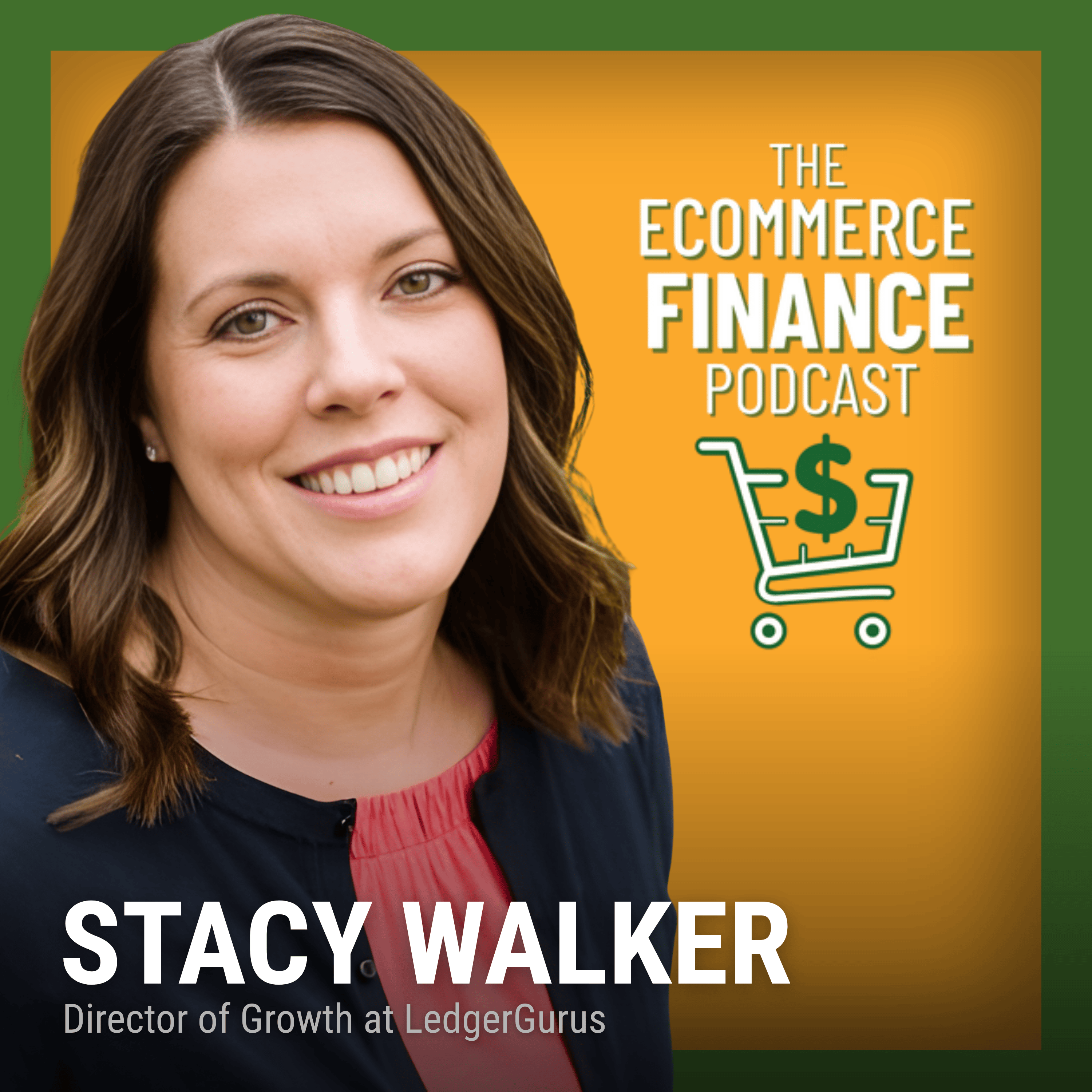
Stephen Brown, COO of LedgerGurus and co-owner of Sole Toscana, sits down with Stacy Walker, Director of Growth at LedgerGurus, to break down their 2025 Ecommerce KPI report. They walk through what actually separates profitable brands from struggling ones using clean, real financial data. They explain how growth, profitability, ad spend, and channel mix all connect. You will learn what the top-performing brands are doing differently and why many sellers are chasing growth without understanding their numbers. Key Takeaways Clean financial data is required for benchmarking. Bad accounting leads to wrong decisions. 44% of brands were both growing and profitable. Most brands are not hitting both. Gross margin alone does not guarantee profitability. It is only the starting point. Profitable brands still operate on single-digit net margins. Profit is tighter than most expect. Higher ad spend does not always lead to better results. Efficiency matters more than volume. Diversifying sales channels reduces reliance on paid ads and improves stability. Wholesale plays a major role in profitability for top-performing brands. Growth without profit creates cash pressure and risk. It is not a sustainable strategy. Cash balance follows profitability. Unprofitable brands burn through cash quickly. Most brands do not actually know their true profit due to poor COGS and inventory tracking. Chapters 00:00 Introduction to E-commerce Success Metrics 02:42 Understanding Benchmarking and Data Integrity 05:22 Analyzing Profitability Quadrants 08:24 Gross Margins and Their Implications 11:19 Ad Spend Insights and Sales Channels 14:21 Cash Flow and Financial Health 16:59 Growth vs. Profitability Dynamics 19:38 Strategies for Improving Profitability 22:17 Common Mistakes in E-commerce Accounting 25:08 Final Thoughts and Key Takeaways Guest Info Stacy Walker is the Director of Growth at LedgerGurus, where she leads the sales and growth strategy for one of the ecommerce industry's most specialized accounting firms. With a background that spans business development, sales, and marketing, Stacy brings a front-line perspective on what ecommerce brands are actually dealing with, having spent years talking directly with seven and eight-figure sellers navigating everything from scaling challenges to profitability gaps. Stacy Walker on LinkedIn -If you want to understand how your numbers translate into real business value, the team at LedgerGurus helps ecommerce operators build financial clarity that supports smarter growth decisions.https://link.ledgergurus.com/e26-rss
Ep 28E28: Growing Without Debt: The Slow, Sustainable Path to a Profitable Ecommerce Brand
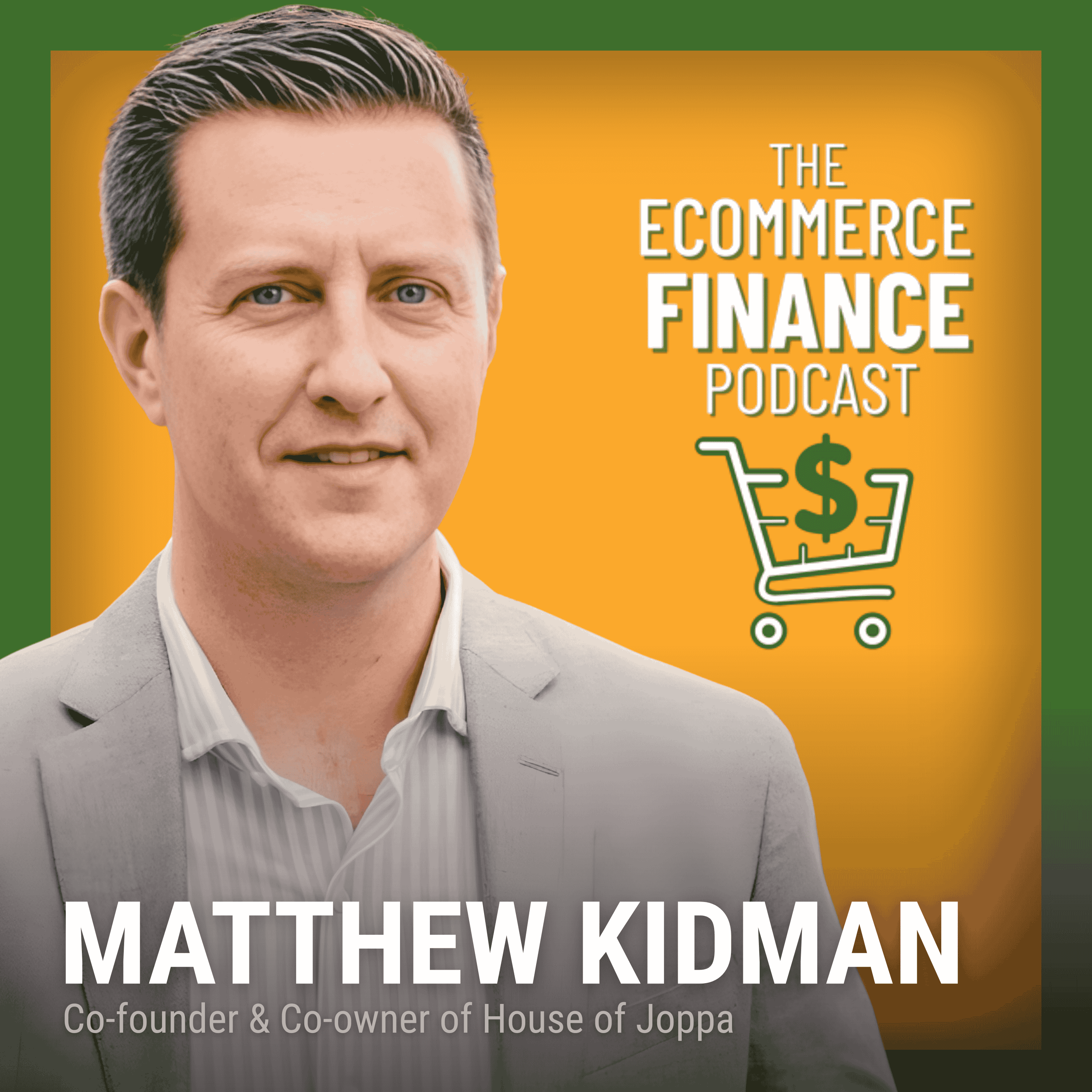
In this episode, Stephen Brown of LedgerGurus talks with Matthew Kidman, co-founder of House of Joppa. Matthew shares how he built a profitable ecommerce brand without taking on debt, even with the cash pressure that comes from inventory, long lead times, and seasonal demand.They break down what slow, sustainable growth actually looks like in practice. Listeners will hear how Matthew uses lean inventory, supplier terms, and tight cash discipline to stay in control while still growing the business.Key TakeawaysDebt enables growth but increases risk when inventory slowsLean inventory reduces cash pressure but leads to stockoutsBack-in-stock flows help recover missed salesSupplier terms ease upfront cash strainSlow growth protects margins and reduces stressForecasting tools help but judgment still mattersBuild holiday inventory gradually, not all at onceStrong margins support self-funded growthPartners help, but founders must stay involvedSustainable growth comes from cash disciplineChapters00:00 Introduction to House of Joppa01:36 Matthew's Journey and Philosophy on Debt04:16 The Launch of House of Joppa07:16 Inventory Management and Cash Flow Strategies10:14 Scaling and Supplier Relationships13:22 Challenges of Inventory Forecasting16:11 Customer Engagement During Stock Outs26:18 Negotiating Supplier Terms for Better Cash Flow27:58 Cash Management Strategies for Sustainable Growth29:49 Building a Long-Term Business Vision31:44 Inventory Management During Holiday Surges33:50 Effective Inventory Planning and Forecasting37:33 Navigating E-commerce Challenges39:42 Keys to Achieving Strong Profit Margins41:25 The Role of Effective Marketing Partnerships46:26 The Importance of Business Owner InvolvementGuest InfoMatthew Kidman is the co-founder of House of Joppa, an ecommerce brand that sells Catholic home decor, jewelry, and gifts. He built the business alongside his wife, starting from a simple Instagram account and growing it into a multimillion-dollar brand.Before ecommerce, Matthew worked in real estate and later owned an insurance agency, where he developed his approach to cash management and operations. After experiencing the pressure of credit card debt early in his career, he chose to build House of Joppa without using debt.Today, he focuses on running a profitable, sustainable business with strong margins, lean inventory, and disciplined cash flow. His approach prioritizes long-term stability over rapid, high-risk growth.Matthew Kidman on LinkedIn-If you want to understand how your numbers translate into real business value, the team at LedgerGurus helps ecommerce operators build financial clarity that supports smarter growth decisions.https://link.ledgergurus.com/e26-rss

Ep 27E27: Business Valuation Before the Sale: How to Build Value You Can Use Right Now
Stephen Brown from LedgerGurus sits down with Mark Lupton, founder of Greenhouse Business Advisors, to talk about what actually makes a business valuable while you are still running it.Most founders only think about valuation when they are ready to sell. But the choices you make every day about growth, profit, and risk are already shaping what your business is worth.Stephen and Mark break down the difference between chasing growth and building real value, why buyers care so much about risk and how the business is run, and why proof of traction matters more than a good idea on paper.Key TakeawaysCash flow, profit, and business value don't always move in the same direction.Value grows when opportunities are backed by proof they work.New channels only add value when the numbers already make sense.Relying too much on one supplier or platform hurts your valuation.Customer retention shows whether your business delivers real value.Buyers want to see revenue consistently turn into cash.Needing constant outside capital makes your business less attractive.How you run the business matters just as much as how much you make.The less the business depends on you, the more it is worth.Thinking long term moves you from putting out fires to building something valuable.Chapters00:00 Why founders misunderstand business value01:20 Mark Lupton's journey into ecommerce finance03:40 The three financial lenses every founder should use06:10 Why valuation matters even without a planned exit08:20 Looking at your business like a potential buyer10:10 Opportunity versus risk in company valuation13:00 When chasing growth can actually destroy value20:10 Proof and protection in business strategy23:10 How Porter's Five Forces applies to ecommerce28:10 Why customer value drives long-term growth31:10 Demonstrating that your financial engine works38:20 The different ways businesses are valued41:50 Financial returns versus founder satisfaction45:10 Knowing when someone else can scale the business further47:20 Turning a founder-led company into a real asset49:20 Where to connect with Mark LuptonGuest InfoMark Lupton is the founder of Greenhouse CFO, where he leads a team of CFOs who help consumer brands grow in a financially healthy way. He has served as CFO of Carnivore Snax for three years, helping them grow from $2 million to over $30 million in revenue. He also advises DTC fintech companies using his experience as an operational CFO.Before starting Greenhouse, Mark was a partner at a consulting firm where he provided CFO services and helped clients secure multi-million dollar raises. He holds an MBA in entrepreneurship and finance and a degree in engineering, and started his career as an engineer at a Fortune 300 company.Mark Lupton on LinkedIn-If you want to understand how your numbers translate into real business value, the team at LedgerGurus helps ecommerce operators build financial clarity that supports smarter growth decisions.https://link.ledgergurus.com/e26-rss

Ep 26E26: Metrics for Every Stage of Ecommerce Financial Maturity
Stephen Brown from LedgerGurus sits down with Geoff Gualano from A2X to break down the four levels of ecommerce accounting maturity and the metrics that actually matter at each stage.Many founders think they understand their numbers because they can see revenue in Shopify or Amazon. But once payouts, fees, inventory, and cash flow enter the picture, the story gets more complicated.This episode walks through what changes as a business grows, why accrual accounting matters sooner than most people think, and how clean financial data unlocks smarter decisions, better forecasting, and stronger investor conversations.TakeawaysIn an ideal world, everyone would have accurate metrics to track.Most e-commerce businesses fall into one of four maturity levels.Level one focuses on basic compliance and tax metrics.Level two emphasizes financial visibility and understanding past performance.Accurate revenue recording is crucial for higher maturity levels.Level three involves forecasting and budgeting based on accurate data.Level four is about being investor-ready with reliable financials.Understanding cash flow is essential for business sustainability.E-commerce businesses need to adapt to changing market conditions.Continuous improvement in financial practices leads to better outcomes.Chapters00:00 Why revenue is harder than it looks03:10 The four levels of accounting maturity07:20 Cash vs accrual accounting explained12:45 Why accurate revenue changes everything16:30 The key profit and margin metrics22:10 Advertising, fulfillment, and contribution margin28:00 Cash flow and inventory pressure32:40 The cash conversion cycle breakdown36:30 Moving into forecasting and planning40:15 Budget versus actual and scenario planning44:30 The era of the sophisticated seller47:20 Investor-ready financials and due diligence52:00 Final advice on leveling upGuest InfoGeoff Gualano leads go-to-market at A2X, where he oversees marketing, revenue operations, and partner relationships. He has spent nearly a decade in the cloud accounting ecosystem, including time at Hubdoc and Xero.At A2X, Geoff works with ecommerce sellers and accounting firms to automate revenue reconciliation and bring clarity to financial reporting across platforms like Shopify, Amazon, eBay, Etsy, Walmart, and PayPal. His focus is helping businesses trust their numbers so they can make better decisions and scale with confidence.Geoff Gualano on LinkedInIf you are unsure where your business sits on the maturity curve, our team at LedgerGurus helps ecommerce founders move from reactive bookkeeping to strategic financial clarity.https://link.ledgergurus.com/e26-rss
Ep 25E25: Data rich. Decision poor. What’s missing?
Stephen Brown from LedgerGurus talks with Nate Littlewood, founder of Future Ready CFO, about why ecommerce founders struggle to turn financial data into real decisions. Even with dashboards and reports, many operators feel stuck, overwhelmed, and unsure what actually matters.This episode breaks down why more data doesn’t create clarity, how to identify the numbers that matter most, and how simple frameworks help founders focus, reduce stress, and make better decisions without becoming finance experts. Key Takeaways More data does not lead to better decisions without context. Founders often focus on what they enjoy instead of what the business needs. Not knowing what “good” looks like creates decision paralysis. Gross margin problems make most growth efforts pointless. Too much inventory hides cash flow problems instead of fixing them. Cash flow issues often come from overstocking, not low sales. Bottlenecks show where effort will actually move the business forward. Financial clarity reduces stress and burnout for operators. Chapters 00:00 Why data doesn’t lead to decisions04:30 The real cost of ignoring financial context08:15 Why good data still creates confusion11:10 The context vacuum problem14:20 Founder archetypes and blind spots18:05 Focusing only on what you’re good at21:30 Why ecommerce is harder now24:45 Inventory as a risky bet27:55 The four stages of financial maturity32:40 Turning ideas into priorities36:00 Cash flow and inventory mistakes40:10 Why too much inventory hurts quietly43:00 Staying on the path to clarity45:00 Where to find Nate and final takeaways Guest Info Nate Littlewood is the founder of Future Ready CFO, where he helps early-stage ecommerce and CPG founders bring clarity to their numbers and make better business decisions. His work focuses on using financial data to guide priorities like marketing spend, product strategy, and growth decisions.Nate has built and run his own ecommerce business, served as a lead mentor for a NYC-based startup accelerator, and spent nearly a decade on Wall Street before becoming an entrepreneur. Today, he works with founders through content, courses, and 1:1 coaching to make finance more accessible and reduce the risk of avoidable business failure.Nate Littlewood on LinkedIn If your numbers feel overwhelming instead of helpful, our CFO advisory team helps founders turn data into clear, confident decisions. https://link.ledgergurus.com/e25-rss
Ep 24E24: How the Four Margins Explain Where Profit Disappears
Summary Stephen Brown, COO at LedgerGurus and host of the Ecommerce Finance Podcast, sits down with Stacy Walker, Director of Growth at LedgerGurus. They break down the four margins every ecommerce brand should be tracking and why most 7- and 8-figure sellers only understand one of them. The conversation focuses on why founders feel profitable but still struggle with cash and confidence in their numbers. This episode explains gross margin, contribution margin, net operating margin, and net profit margin in plain language. Stephen and Stacy walk through what each margin actually tells you, where brands get them wrong, and how bad data hides real problems. Listeners walk away knowing which margin points to pricing issues, ad efficiency problems, or bloated overhead. Key Takeaways Gross margin isolates product and inventory costs, so you can see pricing and supply chain pressure early. Bad inventory data makes gross margin look fine, while profit quietly erodes. Contribution margin shows what is left after selling costs and determines how much room you have to operate. Low contribution margin leaves no buffer for payroll, software, or growth mistakes. Advertising efficiency is often the biggest driver of contribution margin swings. Net operating margin reveals whether overhead is sustainable as the business grows. Payroll is usually the largest hidden drain on operating margin. Net profit margin can hide problems when debt, taxes, or owner expenses are mixed into operations. Chapters 00:00 Understanding Financial Margins in Ecommerce 02:41 The Importance of Accurate Profitability Tracking 05:36 Gross Margin: Definition and Common Misunderstandings 08:16 The Impact of Cost of Goods Sold on Profitability 10:55 Inventory Management and Its Financial Implications 13:48 Contribution Margin: What It Is and Why It Matters 16:38 Balancing Gross and Contribution Margins 19:26 The Role of Advertising in Contribution Margin 22:16 Operational Efficiency and Financial Health 25:44 Understanding Net Operating Margin 33:15 The Importance of Debt Management 39:10 Decoding Profit Margins 46:45 Cash Flow vs. Profitability 48:27 Scrutinizing Fixed Expenses 50:46 Final Thoughts on COGS Management Guest Info Stacy Walker on LinkedIn If you want clarity on which margin is actually hurting your business, our CFO advisory team helps ecommerce founders turn messy numbers into clear decisions. https://ledgergurus.com/ecommerce-accounting-services/?utm_source=RSS&utm_medium=podcast&utm_campaign=e24
Ep 23E23: 2026 Ecommerce Finance Predictions
Summary: In this episode, Stephen Brown and Preston Alder discuss their predictions for the e-commerce landscape in 2026. They cover a range of topics including tariffs, interest rates, inflation, the rise of AI, the value economy, and the implications of a K-shaped economy. The conversation delves into the challenges and opportunities that e-commerce businesses will face, emphasizing the importance of execution excellence and inventory optimization. They also explore the potential risks associated with private equity in the current economic climate. Key Takeaways Tariffs are likely at peak levels but will stay elevated long term. Sellers should budget assuming current tariff rates do not improve. Falling interest rates may not reduce ecommerce lending costs. Inflation pressure still threatens consumer spending power. Consumers continue spending, even under economic stress. AI tools are already reducing labor and service costs for operators. AI-driven commerce may reshape how customers discover products. Ad costs may rise, but better targeting can lower acquisition costs. Execution and operational discipline will matter more than size. Brands that fail to adapt may not survive the next cycle. Chapters 00:00 Predicting the Future of E-commerce 02:13 Understanding Tariffs and Their Impact 04:59 Interest Rates and Their Implications 08:48 Inflation: The Consumer's Perspective 11:48 The Rise of AI in E-commerce 24:22 Navigating the Value Economy 30:08 The Importance of Brand Communication 32:24 AI and Employment Concerns 34:14 Emerging Channels in E-Commerce 37:14T he Future of Advertising 42:10 Winners and Losers in E-Commerce 46:05 The State of the US Economy 56:20 The Private Equity Bubble If economic pressure is making your numbers harder to trust, our ecommerce accounting team helps you see what’s really happening so you can plan with confidence.https://ledgergurus.com/ecommerce-accounting-services/?utm_source=RSS&utm_medium=podcast&utm_campaign=e23
Ep 22E22: Grading Our 2025 Ecommerce Financial Forecast
SummaryStephen Brown, Founder of LedgerGurus, and Kelley Birrell, Marketing Manager at LedgerGurus, look back at the ecommerce predictions they made at the start of 2025. They review what actually happened across ecommerce growth, marketing costs, interest rates, inflation, and AI adoption. Each prediction is graded with real data and real-world operator context.They also unpack the biggest curveballs of the year, including tariffs, de minimis rule changes, TikTok Shop growth, and the limits of new ad channels. Stephen shares where he underestimated risk, what surprised him about consumer spending, and why 2025 felt harder than expected for many brands. The episode helps sellers think more clearly about planning for 2026.TakeawaysEcommerce returned to peak levels as a share of total retail sales.Marketing efficiency mattered more than chasing cheaper ads.Interest rate cuts did not meaningfully lower ecommerce lending costs.Inflation eased but continued to pressure consumer spending.Tariffs became the most disruptive force for ecommerce in 2025.De minimis rule changes reshaped dropshipping economics fast.TikTok Shop showed real growth but limited broad adoption.AI meaningfully reduced time and costs across teams.Supply chain risks faded compared to late 2024 fears.New sales channels added options but not replacements.Chapters00:00 Ecommerce Trends and Predictions for 202503:27 Marketing Costs and Brand Strategies06:16 Interest Rates, Inflation, and Economic Impact07:15 Business Regulations and Tariffs09:15 The Rise of TikTok Shop11:18 AI's Role in Ecommerce13:46 Supply Chain Complexities14:31 De Minimis Rule Changes16:00 Emerging Sales and Marketing AvenuesGuest InfoKelley Birrell on LinkedInBioKelley Birrell is the Marketing Manager at LedgerGurus, an ecommerce accounting firm serving growing online businesses. She built and runs LedgerGurus’ marketing engine, focusing on making complicated ecommerce accounting topics easier to understand so business owners can make better decisions with their numbers.If 2025 exposed weaknesses in your cash flow, inventory, or margins, LedgerGurus can help you fix the numbers behind your growth.https://ledgergurus.com/ecommerce-accounting-services/?utm_source=RSS&utm_medium=podcast&utm_campaign=e22
Ep 21E21: VAT vs Sales Tax Explained for US Sellers
SummaryIn this episode of the Ecommerce Finance Podcast, Stephen Brown speaks with Oliver Blackmore from Elver Ecommerce Accountants about the complexities of VAT (Value Added Tax) for ecommerce businesses, particularly those looking to expand into the UK and EU markets. They discuss the differences between VAT and sales tax, the registration process for American sellers, common mistakes in VAT compliance, and the tools available for calculating and filing VAT.The conversation also covers the implications of selling on platforms like Amazon versus direct sales, the importance of understanding filing frequencies, and the challenges of navigating GST in English-speaking countries. Oliver shares insights on best practices for managing VAT refunds and offers recommendations for businesses looking to expand internationally.TakeawaysVAT is a tax added at the point of sale, similar to GST.American ecommerce businesses must register for VAT to sell in the UK.The VAT registration process for overseas businesses is more complex.Amazon collects and remits VAT for sellers using their platform.It's crucial to keep sales from different platforms separate for VAT accounting.Businesses can reclaim VAT on their costs, improving cash flow.Late filing of VAT returns can result in significant penalties.Drop shipping has become more challenging due to VAT regulations in the UK.Understanding GST in countries like Canada and Australia is essential for international sellers.Businesses should consider their registration and filing requirements when expanding internationally.Chapters00:00 Introduction to VAT and Ecommerce01:34 Understanding VAT: Basics and Comparisons04:25 Selling in the UK: Registration Requirements06:10 VAT Registration Process for International Sellers10:09 Penalties and Compliance for VAT14:13 Common Mistakes by International Sellers16:28 Tools for VAT Calculation and Filing Frequency19:22 Expanding Beyond the UK: Global Marketplaces24:28 Navigating GST in English-Speaking Countries27:20 Common Pitfalls in VAT for International Sellers30:40 Understanding VAT Returns and Refunds32:54 The Impact of Brexit on International Trade38:00 Final Thoughts on Global Expansion StrategiesWork with Ushttps://ledgergurus.com/ecommerce-accounting-services/sales-tax/?utm_source=RSS&utm_medium=podcast&utm_campaign=e21
Ep 20E20: How to Spot (and Stop) Fraudulent Ad Traffic Before It Drains Your Budget
SummaryIn this conversation, Kurt Bell from Dash.fi discusses the innovative corporate credit card solutions offered by the company, focusing on their unique value propositions such as cash back incentives and ad pay protection services.The discussion highlights how these offerings can significantly benefit businesses engaged in digital advertising and shipping, ultimately leading to substantial savings and enhanced financial management.TakeawaysDash.fi specializes in corporate credit cards for digital advertising.The main value proposition is cash back and high limits.Ad pay protection is a complementary service to the credit cards.Businesses can save significantly on ad spend with Dash.fi.Incremental savings can reach 30-40K through ad pay protection.Cash back on ad spend enhances overall value for clients.Dash.fi targets companies with substantial digital advertising budgets.The combination of services provides a competitive edge.Understanding client needs is crucial for tailored financial solutions.Dash.fi aims to simplify financial management for businesses.Chapters00:00 Introduction to Ad Refunds in Ecommerce02:41 Understanding the Impact of Fraudulent Traffic05:31 Navigating Refund Requests with Meta and Google08:08 Identifying Bad Actors in Ad Traffic10:55 Trends in Ad Spend and Diversification13:21 The Evolution of Payment Methods in Advertising16:15 Emerging Advertising Channels and Strategies18:59 The Future of AI in Advertising21:37 Leveraging Cash Flow for Ecommerce Success24:31 The Changing Landscape of Ecommerce27:06 Dash.fi's Innovative Solutions for Brands34:06 General podcast ad.mp4Guest InfoDash.fiKurt Bell on LinkedInBioKurt Bell is the Director of Enterprise Sales at Dash.fi, where he helps businesses access innovative financial solutions to drive growth. With a strong foundation in business and leadership from Weber State University and experience mentoring teams in the Dominican Republic, Kurt is passionate about building lasting client relationships and delivering impactful results.Work with Ushttps://ledgergurus.com/ecommerce-accounting-services/?utm_source=RSS&utm_medium=podcast&utm_campaign=e20
Ep 19E19: Why Most Founders Operate Blind (and How to Fix It with Strategic Finance)
SummaryIn this episode of The Ecommerce Finance Podcast, Stephen Brown and Mark Lupton discuss the intricacies of strategic finance in the eCommerce sector. They explore the importance of understanding exit strategies, aligning founder goals with business strategies, and the significance of long-term and medium-term planning.The conversation delves into the common pitfalls in strategic finance, the role of intuition in decision-making, and the necessity of financial planning and budgeting. Mark emphasizes the importance of identifying blind spots and bottlenecks in business operations and the need for continuous learning and adaptation in financial strategies.TakeawaysUnderstanding what you want from your business is crucial.Aligning personal goals with business strategy prevents tension.Long-term vision should consider life stages and personal fulfillment.Medium-term planning focuses on enterprise value drivers.Prioritization is key in strategic planning for growth.Intuition plays a significant role in decision-making.Identifying blind spots can prevent costly mistakes.Financial planning should extend beyond the P&L to the balance sheet.Learning from budgeting helps improve future decisions.Smaller businesses can benefit from strategic finance practices.Chapters00:00 Introduction to Strategic Finance02:51 Understanding Exit Strategies05:23 Aligning Business Goals with Personal Vision08:02 Long-Term Planning and Vision10:40 Medium-Term Planning and Strategic Finance13:27 Prioritizing Business Growth16:17 The Importance of Strategic Thinking18:45 Avoiding Common Thinking Pitfalls21:38 Navigating Growth and Leadership Challenges26:37 Understanding Founders' Strengths and Weaknesses28:44 The Importance of Measuring Progress30:27 Bottlenecks and Strategic Planning32:17 Annual Planning and Budgeting Essentials35:46 Strategic Finance Beyond the P&L38:27 Debt Strategies and Cash Flow Management41:13 Learning from Budgeting and Forecasting43:50 Applying Strategic Finance to Smaller Businesses46:23 Common Pitfalls in Strategic FinanceGuest InfoGreenhouse Business AdvisorsMark Lupton on LinkedInWork with Ushttps://ledgergurus.com/ecommerce-accounting-services/inventory-consulting-for-ecommerce/?utm_source=RSS&utm_medium=podcast&utm_campaign=e19