
Eating the Fantastic
294 episodes — Page 5 of 6
S1 Ep 94Episode 94: Annalee Flower Horne
Float away with Annalee Flower Horne as we discuss the incident at their first con which was a catalyst for wanting to become a writer, the way a glare from Mary Robinette Kowal caused them to submit (and then sell) their first short story, how the intricacies of game design can teach fiction writers to write better, why writers shouldn't complain when editors reject stories too quickly, the first story they wrote while angry (and what was learned from the experience), the cuss word they wish they'd thought of in time to get into their first published story, the novel-in-progress that's a feminist take on The Demolished Man, how codes of conduct can (and should) help make fandom better, and much more.

S1 Ep 93Episode 93: Steve Stiles
Enjoy an enchilada with Steve Stiles as we discuss what it was like to work at Marvel Comics in the mid-'70s, the ironic reason he no longer owns his Silver Age Marvels, the time he thought he'd gotten the gig to draw Dr. Strange (but really hadn't), what it was like being taught by the great Burne Hogarth at the School of Visual Arts, his first professional art sale (and why it ended up hanging on Hugh Hefner's wall), how his famed comic strip The Adventures Of Professor Thintwhistle And His Incredible Aether Flier was born, why he didn't like being art-directed by Marie Severin, which current comics he keeps up with, what Robert Silverberg said to him when he won his first Hugo Award after 14 tries and 49 years, the phrase he most wants carved onto his gravestone, and much more.
S1 Ep 92Episode 92: Malka Older
Bond over bing bread with Hugo-nominated author Malka Older as we discuss why democracy is a radical concept which scares people (and what marriage has to say about the dramatic potential of democracy), the pachinko parlor which helped give birth to her science fictional universe, how what was intended to be a standalone novel turned into a trilogy, her secrets (and role models) when it comes to writing action scenes, which of her characters moves more merchandise, how (and why) editor Carl Engle-Laird helped her add 20,000 words to her first novel, what she learned about herself from the collaborative Serialbox project, the one thing about her background I was embarrassed to admit I'd never realized, and much more.

S1 Ep 91Episode 91: Colin Coyle
Dig into dessert with Parvus Press publisher Colin Coyle as we discuss the reason we're glad we got to record the episode rather than spend the night in jail, how the tragic events of Charlottesville inspired him to hire Cat Rambo to assemble the If This Goes On anthology, why he switched over to the Kickstarter model for this book and what surprises he discovered during the process, the reason his company isn't publishing horror even though he'd like to, the surprising shared plot point slush pile writers used to indicate future American culture was failing, what an episode of West Wing taught him about launching Parvus Press, what he isn't seeing enough of in the slush pile, the acting role of which he's proudest from back in his theater days (hint: you've probably seen Danny DeVito do it), the advice he wishes he could have given himself when he started out as a publisher, and much more.

S1 Ep 90Episode 90: Michael J. Walsh
Binge on Brisket Benedict with Michael J. Walsh as we discuss what it is about the annual World Fantasy Conventions that drew him to attend all 44 of them, how a generous teacher's gift of an Ace Double led to his first exposure to true science fiction, the big score which induced him to become a book dealer, the way Ted White was able to do so much with so little when he edited Amazing Stories in the '70s, what witnessing Anne McCaffrey and Isaac Asimov singing Gilbert and Sullivan tunes made him realize about writers, what his time in fandom taught him which made him realize he could make it as a publisher, the time he was left speechless by Robert Heinlein offering him a drink, why it would have been wrong for a certain book he published to have won a Hugo, what con-goers most misunderstand about con runners, and much more.

S1 Ep 89Episode 89: Ruthanna Emrys
Share spring rolls with Ruthanna Emrys, author of the H. P. Lovecraft-inspired Innsmouth Legacy series, as we discuss the ways in which her first exposure to Lovecraft was through pop culture references rather than the original texts, the reasons for the recent rise of Lovecraft recontextualisation, how tea with Jo Walton convinced her she was right to go ahead and write her first Innsmouth Legacy novel, why she ascribes to the tenets of the burgeoning Hopepunk movement, her love of writing X-Men fanfic and her hatred of gastropods, how she recovered from a college professor's unconstructive criticism, the time George Takei was nice to her at age 8 after she attended her first con in costume on the wrong day, and much more.

S1 Ep 88Episode 88: Alan Smale
Pig out on pork belly tacos with Alan Smale as we discuss why an astrophysicist's chosen field of fiction is alternate history rather than hard science, how his fascination with archeology and ancient civilizations began, the reason he started off his novel-writing career with a trilogy rather than a standalone, the secrets to writing convincing battle sequences, the nuances of critiquing partial novels in a workshop setting, how his research into Roman and Native American history affected his trilogy, what steps he took to ensure he handled Native American cultures appropriately, that summer when at age 12 he read both War and Peace and Lord of the Rings, one of the strangest tales of a first short story sale I've ever heard, how and why he joined forces with Rick Wilber for their recent collaboration published in Analog, and much more.
S1 Ep 87Episode 87: Scott H. Andrews
Gobble goat cheese fritters with Beneath Ceaseless Skies publisher and editor Scott H. Andrews as we discuss the treatment he received as a writer which taught him what he wanted to do (and didn't want to do) as an editor, how his time as member of a band helped him come up with the name for his magazine, why science fiction's public perception as a literary genre is decades ahead of fantasy, what it takes for a submission to rise to the level of receiving a rewrite request, the time he made an editor cry (and why he was able to do it), how he felt being a student at the Odyssey Writing Workshop and then returning as a teacher, the phrase he tends to overuse in his personalized rejection letters (and the reason why it appears so often), the way magazine editing makes him like Arnold Schwarzenegger in Conan the Barbarian, why writers shouldn't worry about the ratio of submitted stories to purchased ones, the reason he'll probably never edit novels, what anyone considering starting a magazine of their own needs to know, and much more.
S1 Ep 86Episode 86: Submersive Productions
Eavesdrop on my Thai dinner with the immersive (and totally science fictional) theatrical troupe Submersive Productions as we discuss the ways everything from Dragon Ball Z to Myst to Terry Gilliam's Brazil stoked their love of the fantastic, how the funding came together for their first mesmeric show about the women in the works of Edgar Allan Poe, the dare that made their recent durational play grow to eight hours and the half-scripted/half-improvised way they were able to keep their performance going that long, how the actors found their voices by channeling Katherine Hepburn and Roberto Benigni, the multiple meanings of the most transcendent pie-eating scene I've ever witnessed in the theater, how they deal with introverted (as well as overly extroverted) audience members during immersive performances, the differences between improv comedy and improvisational theater, and much more.
S1 Ep 85Episode 85: Andy Duncan: An Agent of Utopia
Have hot antipasto with Andy Duncan as we celebrate the publication of his new collection An Agent of Utopia and discuss why it took a quarter of a century to bring the book's lead story from title idea to completion, how he was influenced by the research regimen of the great Frederik Pohl, the way a short story is like an exploded toolshed, why he deliberately wrote a deal with the devil story after hearing he shouldn't write deal with the devil stories, the embarrassing marketing blurb he can't stop telling people about in bars, what caused a last-minute change to the title of one of the collection's new stories, how he feels about going viral after his recent J. R. R. Tolkien comments, what he learned about himself from completing this project and what it means for the future of his writing, what it is about his most reprinted story which made it so, and much more.

S1 Ep 84Episode 84: Stephen Kozeniewski
Slurp down Thai Beef Noodle Soup with Stephen Kozeniewski as we discuss how it took nearly 500 submissions before his first novel was finally accepted, why he has no interest in writing sequels, his advice for winning a Turkey Award for the worst possible opening to the worst possible science fiction or fantasy novel, why his output is split between horror and science fiction (but not mysteries), the reason Brian Keene was who he wanted to be when he grew up, why almost any story would be more interesting with zombies, when you should follow and when you should break the accepted rules of writing, where he falls on the fast vs. slow zombies debate, and much more.
S1 Ep 83Episode 83: Jo Walton
Join Jo Walton for a seafood lunch as we discuss how Harlan Ellison's fandom-slamming essay "Xenogenesis" caused her to miss three conventions she would otherwise have attended, why Robert Silverberg's Dying Inside is really a book about menopause, the reason she wishes George Eliot had written science fiction, the ways in which during her younger days she was trying to write like Poul Anderson, her technique for getting unstuck when she's lost in the middle of writing a novel, why she loathes the plotter vs. pantser dichotomy, how she developed her superstition that printing out manuscripts is bad luck, the complicated legacy of the John W. Campbell Award (which she won in 2002), how she managed to write her upcoming 116,000-word novel Lent in only 42 days, and much, much more.

S1 Ep 82Episode 82: Paul Levitz
Savor a steak dinner with comics legend Paul Levitz as we discuss why even though in a 1973 fanzine he wrote he had "no desire to make a career for myself in this industry" he's spent his life there, how wild it was the suits let kids like us run the show in the '70s, the time Marv Wolfman offered him a job over at Marvel (and why he turned it down), what he learned from editor Joe Orlando about how to get the best work out of creative people, the bizarre reason Gerry Conway's first DC Comics script took several years to get published, how he made the Legion of Super-Heroes his own, which bad writerly habits Denny O'Neil knocked out of him, the first thing you should ask an artist when you start working with them, why team books (of which he wrote so many) are easier to write, our shared love for "Mirthful" Marie Severin, how glad we are there was no such thing as social media when we got started in comics, why Roger Zelazny is his favorite science fiction writer, and much, much more.
S1 Ep 81Episode 81: Vina Jie-Min Prasad
Taste tiramisu with Vina Jie-Min Prasad as we discuss why she didn't start writing any fiction until the release of J.J. Abrams' Star Trek reboot, the reason food has such a prominent place in her fiction, why she might never have become a writer if the Internet hadn't existed, the lessons she took away from her fan fiction days, what she meant when she wrote in her bio that she's "working against the world-machine," why her multi-nominated story "A Series of Steaks" was her first submission to a speculative fiction magazine, her fascination with professional wrestling and wrestling fandom, why her story "Pistol Grip" needed a warning for sexual content but not violence (and what Pat Cadigan called her after reading that story during the Clarion workshop), the reason she likes working in the present tense, and much more.

S1 Ep 80Episode 80: Steve Rasnic Tem
Chow down on fish and chips with the award-winning Steve Rasnic Tem as we discuss the importance of writing until you get to page eight, what he did the day after Harlan Ellison died, why even though he was a fearful kid he turned to horror, the thing which if I'd known about his marriage might have caused problems with my own, how crushed we both were when comics went up to 12 cents from a dime, why his all-time favorite short story is Franz Kafka's "A Country Doctor," the way joining Ed Bryant's writing workshop taught him to become a writer, how math destroyed his intended science career, why he made an early pivot from science fiction to creating horror, the reason it took him 48 years to take Ubo from initial idea to finished novel, how TV shows like "So You Think You Can Dance" had an effect on the way he writes action scenes, why beginning writers should consciously read 1,000 short stories (and what they should do once they're done), and much more.

S1 Ep 79Episode 79: Rebecca Roanhorse
Eat empanadas with Rebecca Roanhorse as we discuss the spark without which her award-winning short story would never have been written, the differing reactions her tale garnered from inside and outside of the Native American community, the compelling reason she chose to write it in the second person, what she learned as a lawyer that helped in writing her first novel, how she upped her game when she decided to be a writer for real, why she fell out of the reading habit and how a Laurel K. Hamilton novel drew her back in, what it was like to hear Levar Burton read her award-winning story, and much more.
S1 Ep 78Episode 78: K.Tempest Bradford
Nibble naan with K. Tempest Bradford as we discuss how her Egyptian Afro-retro-futurism idea grew from a short story into a series of novels, the way she used crowdfunding to complete the research she needed, why her discovery of my Science Fiction Age magazine means I bear the responsibility for all she's done since, how an online writing community gave her the confidence to be a writer, the advice from Samuel R. Delany she embraces the most, why she set aside her goal of becoming an opera singer and decided to become a writer instead, the reason there are so many female monsters in Greek mythology, how she blew up the Internet with her "Stop Reading White, Straight, Cis Male Authors for One Year" challenge, her extremely strong opinions about Steven Moffat's version of Doctor Who, and much more.

S1 Ep 77Episode 77: Pat Cadigan
Binge on sushi with award-winning author Pat Cadigan as we discuss what it was like being Robert A. Heinlein's liaison at the 1976 Kansas City Worldcon, why John Brunner hated her when they first met and what she did to eventually win him over, her secret childhood life as a member of The Beatles, what she and Isaac Asimov had in common when it came to convincing parents to accept science fiction, her original plan to grow up and script Legion of Super-Heroes comics, what she learned about writing from her 10 years at Hallmark Cards, how editor Shawna McCarthy helped birth her first novel, what effect being dubbed the Queen of Cyberpunk had on her career, who's Thelma and who's Louise in her Thelma and Louise relationship with editor Ellen Datlow, our joint friendships with Gardner Dozois, how she came up with her stories in the Wild Cards universe, and much more.

S1 Ep 76Episode 76: Don McGregor
Share a steak dinner with legendary comics creator Don McGregor as we discuss how meeting Jim Steranko led to him selling his first comics story, why when he was 13 years old he wanted to be Efrem Zimbalist Jr., what he learned from Naked City creator Stirling Silliphant, how his first meeting with future Black Panther artist Billy Graham could have been disastrous, why the comics he wrote in the '70s wouldn't have been able to exist two years later, the reasons Archie Goodwin was such a great editor, how he convinced Stan Lee to allow the first interracial kiss in mainstream comics, what life lessons he took from Westerns in general and Hopalong Cassidy in particular, why he almost stopped writing Lady Rawhide, and much more.

S1 Ep 75Episode 75: Rachel Pollack
Dive into Vietnamese Seafood Noodle Soup with Arthur C. Clarke Award-winning writer Rachel Pollack as we discuss why Ursula K. Le Guin was such an inspiration, the reason celebrating young writers over older ones can skew sexist, what Tarot cards and comic books have in common, how 2001: A Space Odyssey isn't a science fiction movie but an occult movie, why Captain Marvel was her favorite comic as a kid (Shazam!), the serendipitous encounter which led to her writing Doom Patrol, how she used DC's Tomahawk to comment on old Western racial stereotypes, the problems that killed her Buffy the Vampire Slayer Tarot deck, how she intends to bring back her shaman-for-hire character Jack Shade, and much more.

S1 Ep 74Episode 74: John Langan
Join Bram Stoker Award-winning writer John Langan for fish and chips as we discuss how reading Conan the Barbarian comic books as a kid made him hope he'd grow up to be a comic book artist, why his evolution as a writer owes as much to William Faulkner as it does to Peter Straub, what he learned about storytelling from watching James Bond with his father and Buffy the Vampire Slayer with his wife, the best way to deal with the problematic life and literature of H. P. Lovecraft, the reason his first story featured a battle between King Kong and Godzilla, his process for plotting out a shark story unlike all other shark stories, why a writer should never fear to be ridiculous, what a science experiment in chemistry class taught him about writing, his love affair with semicolons, that time Lucius Shepard taught him how to box, the reason the Shirley Jackson Awards were created, and much more.
S1 Ep 73Episode 73: JY Yang
Eavesdrop on a Sunday brunch with JY Yang as we discuss why they consider themselves "a master of hermitry," the catalyst that gave birth to their award-nominated Tensorate Universe, why they think of themselves as terrible at world-building, how their dislike of the Matt Damon movie The Great Wall gave them an idea for a novel, the surprising results after they polled fans on which of their works was most award-worthy, their beginnings writing Star Trek and Star Wars fan fiction, why they never played video games until their 30s, the Samuel R. Delany writing advice they hesitated to share, and much more.
S1 Ep 72Episode 72: Ellen Klages
It's time to taste Toad in the Hole with Ellen Klages as we discuss why it took 40 years from the time she wrote the first sentence of her Nebula Award-nominated story "Passing Strange" to finish the tale, what a truck filled with zebras taught her about the difference between storytelling and real life, how cosplaying helped give birth to her characters, what she finds so fascinating about creating historical science fiction, why revising is her favorite part of writing, the reason she's the best auctioneer I've seen in my lifetime of con-going, what she teaches students is the worst mistake a writer can make, how her collaboration with Andy Duncan gave birth to an award-winning novella, whether she still feels like "a round peg in genre's polyhedral hole" as she wrote in the afterword to her first short story collection, and much more.

S1 Ep 71Episode 71: 1993 Science Roundtable: What SF Gets Wrong
Time travel to 1993 for lunch with Arlan Andrews, Sr., Gregory Benford, Geoffrey A. Landis, and Charles Sheffield as we discuss how Gilligan's Island gave TV viewers the wrong idea about scientists, the ways in which most science fiction isn't actually science fiction at all, but rather engineering fiction, what's wrong with portraying scientists as if they're any different than non-scientists, why Stephen King's The Stand gave such a negative picture of science and technology, the dangers of letting governments control science, why real science, like real art, is work, the reason scientists need to be more aggressive about the ways in which they're portrayed, and more.
S1 Ep 70Episode 70: Matthew Kressel
Share BBQ brisket with Matthew Kressel as we discuss the story of his accepted by an editor within an hour and then praised by Joyce Carol Oates, the ways in which famed editor Alice Turner was the catalyst which helped turn him into a writer, why after publishing only short stories for 10 years he eventually published a novel, how comments from his Altered Fluid writing workshop helped make his Nebula-nominated "The Sounds of Old Earth" a better story, why a writing self-help book made him swear off those kinds of self-help books, the secrets to having a happy, heathy writing career, why he's grown to be OK with reading bad reviews, what he learned from reading slush at Sybil's Garage, and much more.

S1 Ep 69Episode 69: A. M. Dellamonica
Eavesdrop on an Italian lunch with award-winning science fiction author A. M. Dellamonica as we discuss how a long list of random things she liked eventually grew into her first novel, the intricate magic system she created for her series, how her novel Child of a Hidden Sea taught her she was less of a plotter and more of a pantser than she'd thought, the doggerel she wrote when she was five years old (which you'll get to hear her recite), how discovering Suzy McKee Charnas at age 15 was incendiary, which run of comics made her a Marvel fan, what it was like attempting to live up to the pioneering vision of Joanna Russ while editing the anthology Heiresses of Russ, which YouTube series happens to be one of her favorite things in the world, the way John Crowley's teachings might have been misinterpreted by her class during the Clarion Science Fiction Writers Workshop, the three mystery novels of hers you'll hopefully be reading in the future, and much more.

S1 Ep 68Episode 68: Kelly Robson
Nebula Award-winning writer Kelly Robson had a little lamb (and you can eavesdrop) as we discuss how the first Connie Willis story she read changed her brain, the way a provocative photo got her a gig as a wine reviewer at a top national magazine, what she learned from the initial Taos Toolbox writers workshop, why completing Gods, Monsters and the Lucky Peach was like giving birth to a watermelon, how reading a Battlestar Galactica tie-in novel helped teach her how to write, where she would head if time travel were real, why she's contemplating writing a "frivolous" trilogy (and what that really means), the reason the story of hers she most likes to reread is a professionally published James Bond fanfic, and much, much more.

S1 Ep 67Episode 67: Nebula Awards Donut Jamboree
It's time for a special lightning-round episode of Eating the Fantastic as 15 guests devour a dozen donuts while recounting their favorite Nebula Awards memories. Michael Swanwick explains how his love of Isaac Asimov impelled him to walk out on guest speaker Newt Gingrich, David D. Levine remembers catching the penultimate Space Shuttle launch, Daryl Gregory recalls the compliment which caused him to get yelled at by Harlan Ellison, Barry Goldblatt reveals what cabdrivers do when they find out he's an agent, Cat Rambo puts in a pitch for SFFWA membership, Fran Wilde confesses a moment of squee which was also a moment of ooops, Steven H. Silver shares how he caused Anne McCaffrey to receive a Pern threadfall, Annalee Flower Horne tells of the time John Hodgman stood up for her onstage during the awards banquet, and much, much more!

S1 Ep 66Episode 66: Mary SanGiovanni
Chow down on chive dumplings with horror writer Mary SanGiovanni as we discuss H. P. Lovecraft's racism and sexuality (or lack thereof), how having grown up in New Jersey might have given her the toughness she needed to survive her early short story rejections, why she ended up writing horror instead of science fiction even though her father read her Isaac Asimov and Frank Herbert when she was a kid, which novella she wrote that will never see the light of day, how watching The Exorcist III changed her life, why she's no longer afraid of vampires, the reason her motto if she founded a religious cult would be "doorways are meant to be opened," the first writer she met who treated her like an equal, the identity of "the George Carlin of Horror," and much, much more.
S1 Ep 65Episode 65: T. E. D. Klein
Share a pastrami sandwich with critically acclaimed horror writer/editor T. E. D. Klein as we discuss what he hated most about editing The Twilight Zone magazine, how he ended up scripting the screenplay for "the worst movie Dario Argento ever made," what eldritch action he took after buying a letter written by H. P. Lovecraft, which movie monster gave him the most nightmares, what he'll likely title his future autobiography, why he feels cheated by most horror movies, the secret origin of the T. E. D. Klein byline, his parents' friendship with (and the nickname they gave to) Stan Lee and his wife, what he learned (and what he didn't) when taught by Anthony Burgess, the bittersweet autograph he once obtained from John Updike, whether we're likely to see his long-awaited novel Nighttown any time soon, and much more.
S1 Ep 64Episode 64: Elizabeth Massie
Share spring rolls with Elizabeth Massie as we discuss why Bionic Woman Lindsay Wagner is the one to thank for her Stoker Award-winning first novel Sineater, how reading Robert Bloch's Psycho at a young age was like a knife to her heart, which episode of Twilight Zone scared the crap out of her, why you'll probably never get to read her Millennium and Law & Order novels, her nearly impossible task of writing one spooky book for each of the 50 states in the U.S, why Kolchak: The Night Stalker was her favorite franchise to play in, the great-great grandfather who cut off his own head with a homemade guillotine, which Dark Shadows secret was only revealed in her tie-in novel, and much more.

S1 Ep 63Episode 63: Victor LaValle
Polish off Portuguese in Providence with Victor LaValle as we discuss the lunch during which his editor and publisher helped make The Changeling a better book, the graphic novel which made him fall in love with the X-Men, which magazine sent him the best rejection letter he ever received, why reading Clive Barker's "Midnight Meat Train" for the first time was glorious, the differing reactions his readers have depending on whether they come from genre or literary backgrounds, the unusual way a short story collection became his first publication, why he was so uncertain of his critically acclaimed "The Ballad of Black Tom" that he almost published it online for free, the reason so many writers are suddenly reassessing H. P. Lovecraft, how his graphic novel The Destroyer came to be, and much more.

S1 Ep 62Episode 62: Paul Di Filippo
Chow down on calamari with Paul Di Filippo — author of more than 200 works of fiction — as we discuss why the first story he ever wrote was Man from U.N.C.L.E. fan fiction, the pact he made with a childhood friend which explains why he owns none of the Marvel Comics he read as a kid, what caused the editor who printed his debut story to make the bold claim it would be both his first and last published piece of fiction, how his life changed once he started following Ray Bradbury's rule of writing at least 1,000 words per day, why he's written so much alternate history and for which famous person he's had the most fun imagining a different life, why after a career in science fiction and fantasy he's begun a series of mystery novels, what happened to the never-published Batman story he sold DC Comics which we never got to see, and much more.

S1 Ep 61Episode 61: David Mack
Polish off a Persian dinner with David Mack as we discuss the weird ways his life entwined with the famed comic book artist who shares his name, how worrying about the details of Star Trek canon helped him when it came time to unravel the secret history of WWII, how a near-death experience led to him working for the Syfy Channel, why it was so important for necromancers to pay a heavy price for the magic they choose to wield in his new novel The Midnight Front, how not making a pitch to a book editor resulted in him selling TV scripts to Star Trek, his unabashed love for the Beat author Richard Brautigan, the reason that after 27 Trek novels and a ton of other tie-in work he's chosen to publish his non-franchise breakout book now, and much more.
S1 Ep 60Episode 60: Thomas F. Monteleone
Gobble fried green tomatoes with Bram Stoker Award-winning writer/editor Thomas F. Monteleone as we discuss the tricks he teaches to transform writers at his famed Borderlands Bootcamp, the 200+ rejections he received before he finally made his first fiction sale, how Theodore Sturgeon helped him realize it was possible for him to become a writer, why he ended up as a horror icon after his big start in science fiction, which horror writers you'd want on your team when you're choosing sides for softball, the reason his live readings have become legendary, the way Peter Straub reacted when Tom put him on a list of most overrated writers, how a challenge from Damon Knight changed his life, and much more.

S1 Ep 59Episode 59: Norman Prentiss
Scarf down Szechuan crispy beef with two-time Bram Stoker Award-winning writer Norman Prentiss as we discuss the day he wowed the other kids on his school playground by reading them Edgar Allan Poe's "The Tell-Tale Heart," the movies a Catholic Church newsletter's warnings made him want to see even more, the supernatural superhero comic that led to a lawsuit against Harlan Ellison, the upside and (surprising) downside of having won a $35,000 college writing prize, how the freebies he got at a Horrorfind convention goosed him to start writing fiction again, why he wrote the last part of his novel Odd Adventures with Your Other Father first, how he's been able to collaborate with other authors without killing them, what can be taught about writing and what can only be learned, why he ended up writing horror instead of science fiction, and much, much more.

S1 Ep 58Episode 58: Barry Goldblatt
Sink your teeth into Sicilian with Barry Goldblatt as we discuss why he ended up as an agent rather than an astronaut, the happy accident that led to him being taught by the legendary science fiction writer James Gunn, the time Lloyd Alexander caused him to burst into squee-filled tears, J. K. Rowling's first U.S. book signing and how she changed children's publishing forever, what everybody thinks they know about agents that's totally wrong, the sorts of things he's told authors to help take their work to the next level, why it sometimes makes sense for him to submit a less than perfect book, whether the YA market is doing a better job with diversity than adult fiction, what he's been looking for that he hasn't been getting, and much more.

S1 Ep 57Episode 57: Sheila Williams
Share flash-fried cauliflower with Asimov's editor Sheila Williams as we chat about her first day on the job more than a third of a century ago, meeting Isaac Asimov at an early Star Trek convention when she was only 16, which writer intimidated her the most when she first got into the business, what she learned from working with previous Asimov's editors Shawna McCarthy and Gardner Dozois, the most common problems she sees in the more than 7,000 stories that cross her desk each year, the identities of the only writers she's never rejected, what goes through her mind in that moment she reads a manuscript and arrives at "yes," and much more.

S1 Ep 56Episode 56: Charles Sheffield and Arlan Andrews, Sr.
Share cannoli with Charles Sheffield and Arlan Andrews, Sr. in a 1994 flashback episode as we discuss the end of the world, including the (then) coming millennium and whether that would be thing which took us out (hint: it wasn't), whether the only way to survive might be for our species to evolve into something more, how strange it is that we worry more about changing the past than changing the future, whether we're likely to destroy the planet ourselves before nature does it for us, why personal extinction might be all that really matters, whether cryonics will be the thing that saves us, why the process of dying is more frightening than death itself, why aliens coming to kill us is not a likely end, whether even if we do survive the end of the world, we can survive the heat death of the universe, why it makes no difference whether we choose to live as pessimists or optimists, and more.

S1 Ep 55Episode 55: Irene Gallo
Eavesdrop on lunch with Tor Books art director Irene Gallo as we discuss what it was like the first time she realized she wasn't the only one in the world who cared so strongly about art, how she felt the day she discovered Harlan Ellison as well as the title of his that made her go "whoa," why seeing book covers as thumbnails started long before the trend of Internet bookselling, how a manuscript moves from cover concept through to final cover, whether the cliche that an author is the worst possible designer of their own book cover is true, how self-published authors who create their own books can get the best possible covers, and much more.
S1 Ep 54Episode 54: Marv Wolfman
Lunch on lasagna with legendary comic book writer/editor Marv Wolfman as we discuss his horrifying early job as a DC Comics intern destroying (and in some cases rescuing) original art, why he loves the science fiction writer Alfred Bester, how his writing back when he started out was a blend of John Broome and Stan Lee, what he learned from binge-reading 181 issues of Spider-Man before starting to script it himself, what it was like returning to DC after his years at Marvel, why he felt he could write Tomb of Dracula even though when he was handed the assignment he'd never read the Bram Stoker novel or seen any of the movies, his secret to making the Teen Titans seem like actual teens, why he owes his career to Gene Colan, and much, more.

S1 Ep 53Episode 53: Horror 101: 6 Writers Share Publishing Tips
Chow down on stromboli with six amazing horror writers and listen in as Brian Keene passes on the best writing advice he ever got, Mary SanGiovanni compares your social media presence to singing in your underwear, Lesley Connor explains what most writers don't realize about first serial rights, J. P. Sloan recommends the small press, while at the same time recommending you watch out, Damien Angelica Walters shares why you need to overcome your fear of saying no, and Eric Hendrixson points out why contracts are like a superpower. Join Brian Keene (author of more than 40 novels, and winner of the 2014 World Horror Grand Master Award), Lesley Conner (managing editor of Apex publications and author of the novel The Weight of Chains), Mary SanGiovanni (author of the The Hollower trilogy, whose most recent novels are Chills and Savage Woods), Damien Angelica Walters (Stoker-nominated writer of the short story collection Sing Me Your Scars and the novel Paper Tigers), J.P. Sloan (author of The Dark Choir urban fantasy series), and Eric Hendrixson (bizarro author of Drunk Driving Champion and Bucket of Face) for a fascinating afternoon as they share what they've learned about the business of writing horror.
S1 Ep 52Episode 52: Amal El-Mohtar
Nibble frozen cranberries with award-winning author Amal El-Mohtar as we discuss the importance of female friendship, the first poem she wrote at age 6 1/2 (which you'll hear her recite), how Charles de Lint helped her get her first bookstore job, the importance of welcoming newcomers into the tent of science fiction and fantasy, what she learned about empathy from Nalo Hopkinson, the only time she ever cosplayed, which book made her a writer, why Storm is her favorite member of the X-Men, the delicious magic of honey, the difficulties of reviewing books in a field where everybody knows everybody, and more.

S1 Ep 51Episode 51: Karin Tidbeck
Sink your teeth into samosa with Karin Tidbeck as we discuss the serious nature of Live Action Role-Playing games in Nordic countries, the way pretending to be a 150-year-old vampire changed her life, how discovering Neil Gaiman's Sandman comics made her forget time and space, the most important lesson she learned from the Clarion Science Fiction & Fantasy Writing Workshop, how she uses improvisational exercises to teach beginning writers, why Amatka grew from a poetry collection into a novel, what made her say, "I'm not here to answer questions, I'm here to ask them," and more.

S1 Ep 50Episode 50: Xia Jia
Bask in Basque beef stew with Xia Jia as we discuss how reading science fiction gave her the courage to take risks; what it means when she says she writes not hard SF, nor soft SF, nor slipstream, nor cyberpunk, but "porridge sci-fi;" why Ray Bradbury matters so much to her; the challenges of writing in Chinese, writing in English, and translating from one language to the other; our mutual love for Italo Calvino's If on a Winter's Night a Traveler; how The Three-Body Problem changed the perceptions of science fiction in China, why she has faith she'll eventually get to Mars, and more.

S1 Ep 49Episode 49: Chen Quifan
Eavesdrop on breakfast with Chen Quifan as we discuss why his favorite character from all of science fiction is Mr. Spock, what kept him going during the seven years between the sales of his first and second stories, the reasons H. G. Wells is a genius, why he believes science fiction is the greatest realism, the differences in reading protocols between Chinese and non-Chinese readers, why he hopes his own upcoming science fiction movie will defy his prediction there'll be many bad SF movies to come in Chinese cinema, and more.

S1 Ep 48Episode 48: Johanna Sinisalo
Ruminate over reindeer with the award-winning Johanna Sinisalo as we discuss what she learned in advertising that helped her be a better writer, how Moomins helped set her on the path to becoming a creator, why she held off attempting a novel until she had dozens of short stories published, the reason the Donald Duck comics of Carl Barks were some of her greatest inspirations, the circuitous way being an actor eventually led to her writing the science fiction film Iron Sky, and more.

S1 Ep 47Episode 47: John Kessel
Join award-winning science fiction writer John Kessel for a seafood feast as we discuss why he suddenly has two novels coming out within a year two decades after his last one, how attending the 1969 St. Louis Worldcon changed his life, the ways in which his objections to "The Cold Equations" and Ender's Game are at their heart the same, his early days attempting to emulate Thomas M. Disch, the time-travel short story he couldn't whip into shape for Damon Knight, which author broke his 26-year Nebula Awards record for the longest gap between wins, the secret behind the success of his many collaborations with James Patrick Kelly, and more.

S1 Ep 46Episode 46: James Patrick Kelly
Eavesdrop on Hugo and Nebula Award-winning writer James Patrick Kelly as we discuss the reason he needed to attend the Clarion Science Fiction & Fantasy Writers Workshop twice—and why the rules were then changed so no one could ever do it again, the suggestion Kate Wilhelm made that saved one of his short stories, why his reaction to comics as a kid was "Marvel, yes, DC, feh," how the science fiction field survived the Cyberpunk/Humanist wars of the '80s, why he takes an expansive view of fanfic, how Cory Doctorow inspired him to enter the world of podcasting early, what allows him and frequent collaborator John Kessel to work together so well, his advice for how writing 10 endings to a story in progress will help writers find the right ending, and more.
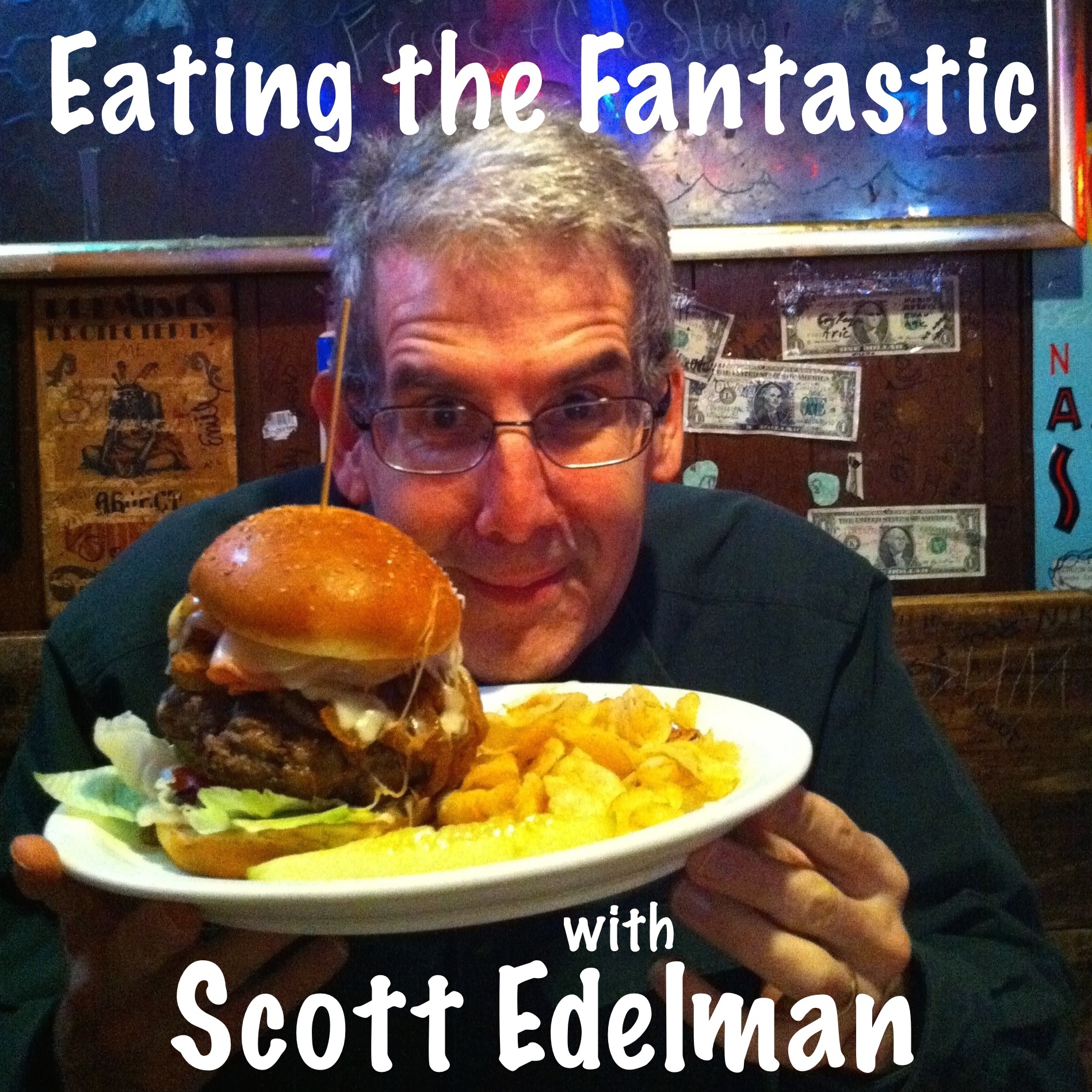
Episode 45: A. Merc Rustad
Brunch on Eggs Benedict with A. Merc Rustad as we discuss some terrible writing advice which messed with their head and the way they got over it, how the Redwall series by Brian Jacques turned them from a reader into a writer, why some fan fiction doesn't get labeled fan fiction while other fan fiction does, the reason the animated television series Beast Wars: Transformers was such a major influence both professionally and personally, why they almost destroyed their Nebula-nominated story "This Is Not a Wardrobe Door," the secrets to assembling a short story collection, and more.