Earth Dreams: Zen Buddhism and the Soul of the World
104 episodes — Page 2 of 3
Our Dream of The World
A monk asked Hongzhi, “What about the ones who have gone?”Hongzhi said, “White clouds rise to the top of the valleys, blue peakslean into the empty sky.”The monk asked, “What about the ones who return?”Hongzhi said, “Heads covered in white hair, they leave the cliffs andvalleys. In the dead of night they descend through the clouds to themarket stalls.”“What about the ones who neither come nor go?”“The stone woman calls them back from their dream of the world.”As the year comes to an end, I have been spending time with the archetype of the Stone Woman. A character who mysteriously turns up throughout the Chan koan tradition. We find her getting up to dance in the Precious Mirror Samadhi, giving birth to a child at night in the Mountains and Rivers Sutra and calling us back from our dream of the world in this dialogue with Hongzhi.Who is this woman of stone?Perhaps you have met her as the ancient boulders that watch over you during a favorite hike, or the large rocks you used to climb and rest on as a child. Perhaps you’ve held her hand while walking on the beach or along a river. Or maybe you’ve encountered her in the stone buildings or concrete sidewalks of your neighborhood.Her stillness and quiet are reminiscent of your own deeply silent Mind.Her pregnant darkness allows all of creation to spring forth. Including you, and me, and each thought, word, expression, desire, feeling and sensation.Koans contain layers of meaning, and while their intention is to aid us in awakening to the profound truth of non-separation—they also have a way of meeting us exactly where we are. So as one year turns into another. Let’s take the questioner’s inquiries to heart.What about the ones who have gone? They ask—Well, where have you gone? These last 12 months. What/who did you visit? What did you see? What experiences did you seek out? What did you learn from your going?Is there a word, phrase, image—that speaks to your going and learning this last year?Hongzhi gives us this one: “White clouds rise to the top of the valleys, blue peaks lean into the empty sky.”Then we are asked: What about the ones who return?What did you return to? Where did you take refuge?What are places of return for you? Physical, mental, emotional, spiritual? Who do you return to?How have you shared or offered yourself? Who/what are you in service to?Is there a connection to going/learning—and returning?Is there an image, word, phrase connected to returning, refuge or offering?Hongzhi again gives us one: “Heads covered in white hair, they leave the cliffs and valleys. In the dead of night they descend through the clouds to the market stalls.”Lastly the questioner asks, what about those who neither come nor go?What have you stayed with? Whether its sobriety, a relationship, vows, commitments, a creative project, a home, a child—reflect on stayingWhat commitments did you honor? What values did you live by?Reflect on the challenges and joys of staying.What image, word or phrase captures the art of staying for you.Hongzhi says: The stone woman calls them back from their dream of the worldNow, for a moment let yourself be here, let thoughts come and go, body sensations come and go, but really be here at the stillness of your being.Whats it like to be here—here?Be the stone woman.Connect to the stillness and quiet of stone—the unconditioned heartPrajna Paramita—wisdom beyond wisdomThere is something beautiful here, being called back from our dreams of the world, the things we did, didn’t do, our learnings.To just be here, right hereAnd let our dreams for the next year be in communion with the dream of the stone woman, the dream of awakening—What is that like?To let your dreams merge with the great dream, your life touch this one unconditioned life.To close, I’ll leave you with this poem by Marie Howe. Sending you blessings for the New Year.SINGULARITYby Marie Howe(after Stephen Hawking)Do you sometimes want to wake up to the singularitywe once were?so compact nobodyneeded a bed, or food or money —nobody hiding in the school bathroomor home alonepulling open the drawerwhere the pills are kept.For every atom belonging to me as goodBelongs to you. Remember?There was no Nature. Nothem. No teststo determine if the elephantgrieves her calf or ifthe coral reef feels pain. Trashedoceans don’t speak English or Farsi or French;would that we could wake up to what we were— when we were ocean and before thatto when sky was earth, and animal was energy, and rock wasliquid and stars were space and space was notat all — nothingbefore we came to believe humans were so importantbefore this awful loneliness.Can molecules recall it?what once was? before anything happened?No I, no We, no one. No wasNo verb no nounonly a tiny tiny dot brimming withis is is is isAll everything homeI’m Amy Kisei. I am a Zen Buddhist Teacher, Spiritual Counselor, budding Astrologer and Artist. I offer 1:1 Spiritual Counseling sessions in the styles of IFS and somatic mindfulness. I also offer astrol
The Dark Side of Enlightenment
When we enter the path of practice, two paths open up simultaneously—first we have the path of what we think we are doing. This is the practice method, the conceptual framework, the spoken vow that we turn towards, that we make effort at, that we can talk about more or less.The other path is the path of what is actually happening. It is darker, more mysterious, often below the level of consciousness, embodied in our soma. This path is before words, before concepts and identification, its a path that is more like an open field, without any directions, markers or guardrails. The pathless path.When someone asked one of Dongshan’s students—what does your teacher teach?The student replied: The dark way, the bird’s path and the open hand.As we enter the dark moon time of the year, the period of late autumn/early winter where the nights are long and dark. I want to talk about the Dark Side of Enlightenment—the path of what’s actually happening. To approach, we lean into story + metaphor and listen with our deeply secret minds, our innermost hearts.In the Zen tradition we celebrate the Buddha’s Awakening in early December, as a culmination of the year of practice. When we tell the Buddha’s story it is often told in the style of The Hero’s Journey. Its a path of revelation, hard work, mastering techniques and the conquering of Maara.Another story, I find important to tell is the story of the Buddha’s wife—Yasodhara.This story is from the Hidden Lamp, a collection of koans from the Buddhist Women Ancestors, the source of this story comes from the Sarvastivadin tradition.Yasodhara was Siddartha Gautama’s wife. In one of the less well-known stories told about her life, Yasdohara (The Glorious One) and Siddartha had been married in many previous lifetimes. The night that Siddartha left home, Yasodhara had eight dreams that foretold his awakening, and so she encouraged him to leave. They made love before he left, and their son, Rahula, was conceived.For the next six years, Yasodhara remained pregnant with Rahula, and although she did not leave home, she traveled the same spiritual path and experienced the same difficulties as her husband Siddhartha. She gave birth to Rahula (Moon God in this particular story) on the full moon night of the Buddha’s enlightenment. She prophesied that Siddhartha had awakened and that he would return in six years. Later, she and her son Rahula both became part of the Buddhist sangha.Yasodhara’s path is the Yin to the Buddha’s Yang way. It reminds us that in truth both are important, and make up the complete path of this life as spiritual practice.In Yasodhara’s story we open to mysteries of dream, embodiment, pregnancy, intuition and birth. We learn about the patience of staying with, of trusting the unseen processes at work. We ripen through our devotion to life—the creative force alive in each of us.So, let’s look a little closer at some of the teachings in Yasodhara’s story.Yasodhara has a series of eight dreams.Dreams—where do they come from?These images that sometimes seem to ring of deep clarity— yet appear when we are in deep slumber, one with the night—seemingly unconscious. Dreams illuminate the dark, dark.How is it that information, awareness, insight, wisdom, deep feeling and profound experience can happen in the times when our conscious mind is deeply asleep, when we are seemingly unaware of our surroundings?Dream invites us to explore the nature of mind/consciousness. The relationship between sleep and wakefulness. What is your experience of dream? Have you ever had a dream of insight, clarity or deep feeling? Have you ever trusted information that came through a dream? Do dream images linger in your heart from time to time? What is dream?I’d love to hear your reflections to these questions. Feel free to leave a comment!Throughout the buddhist tradition, dream is used as a metaphor for the nature of phenomena, thoughts, sensations, feelings, experience. We say they are dream-like, in that they can’t be grasped. If we try to hold onto a moment of experience, it slips away only to be filled with the ever presence of this.Yasodhara’s path invites us to explore the nature of dream and sleep. To include the wisdom of the night, in this mysterious path of practice-awakening.Many speak of pregnancy as a time when intuition is heightened and dreams take on a visionary quality.Another line from her story says—although she never left home.What is home? We often refer to insight or breakthroughs in Zen practice as a homecoming. When I lived at the monastery, many people would talk about the monastery as feeling like their home. Spiritual practice can often open us up to our innermost home.Byron Katie’s commentary to the Diamond Sutra is called A Mind at Home with Itself. I love this phrase. We can know this too. Our being deeply at home in itself.Mind resting in its own nature.Chozen Roshi would use the phrase—always at Home. This touches something about what Yasodhara knew or discovered.
Eight Realizations of Great Beings
As the calendar year comes to an end, I offer this poem as a re-write of a text that one of my Sanghas has been studying. The text is called The Eight Realizations of Great Beings, one story says it was one of the last teachings given by the Buddha before passing into PariNirvana.I re-wrote the teaching as a way of distilling and remembering the practices we did together during our Autumn Ango. The teaching is about liberation and the profound realization of our interconnected life. I offer it as a capping phrase to this Autumn of our practice life, and as something we can turn over in our hearts throughout the winter and coming year. For the dharma teachings always get better with age.The Eight Realizations: Pith Instructions for Living a Joyful LifeI—ImpermanenceAll the world is impermanent. Change is our nature.Our bodies, minds, the body of the great earth and everyone we loveThe universe with its stars and solar systemsWill change, are changing, will decay and give way toSomething newRealize the truth of impermanenceAnd wisdom will be your guideII—Clinging/SatisfactionWhen we try to hold on to something that is changingWe sufferGreed, hoarding, taking more than one’s shareThis is clingingThis is sufferingPractice satisfaction, know how much is enoughLive in reciprocity with the earth and all beingsIII—SimplicityThe mind is insatiable, always wanting moreand more, and moreFollow the path of liberationLive simplyMake wisdom + compassion your sole vocationIV—Joyful EffortTo follow the WayIs like trying to swim upstreamIt takes enthusiastic perseveranceAnd great carePractice with others andYou are buoyed by their generous currentsV—MindfulnessMindfulness is a great friendAttention is healingTruly an act of loveListen to the wisdom of yourBody, feelings, mind and awarenessPractice discernmentAnd you won’t be misledVI—GenerosityGenerosity is a pathA generous heart is always fullTake joy in givingAnd receivingAnd you will realizeThe gift of this lifeVII—InterconnectionVast is the Buddha’s robe of liberationA formless field of interconnectionAnd kindnessTransmute unskillful desiresInto the heart of bodhicittaFill your bowl with compassionAnd offer it to allVIII—VowIn this world of suffering and loveRemember that you are not separateFrom anyone or anythingVow to walk this pathFor the benefit of all beingsThroughout time and spaceThese are the 8 realizations, the practices of Buddhas, Bodhisattvas, Ancestors and other great beings. Practice them, develop wisdom and compassion, and live in reciprocity with all beings. This is the way to living a joyful life.I’m Amy Kisei. I am a Zen Buddhist Teacher, Spiritual Counselor, budding Astrologer and Artist. I currently live in Columbus, Ohio with my partner Patrick Kennyo Dunn, we facilitate an in-person meditation gathering every Wednesday from 7P - 8:30P at ILLIO in Clintonville through Mud Lotus Sangha. If you happen to be in Columbus, feel free to stop by. We have weekly meditation gatherings and monthly Saturday offerings as well.Thanks for reading friends! The recording is from a dharma talk that was given during Monday Night Meditation. You can find out more below. Also, I would love to hear from you, please feel free to like or comment on this post—and share it!Current OfferingsSpiritual Counseling — IFS informed, mindful somatic therapyAstrology— I am starting to offer astrology readings. I have found astrology to be a helpful map for connecting to the more mythic unfolding of life. It can help us honor our gifts, navigate challenges, get perspective and connect with planetary allies. It can also offer guidance on the questions that arise in our lives and aid us in stepping more fully into our wholeness. I am currently offering the following types of readings* Natal Chart Readings* Astro Counseling Package* Transit Readings* Great Work of Your Life Reading* Astrology Gift Card — give the gift of an astrology readingArt Shop — I sell my original paintings and printsMonday Night Meditation + DharmaEvery Monday 6P PT / 9P ETJoin me on zoom for 40 minutes of meditation and a dharma talk. We are currently exploring a text called The Eight Realizations of Great Beings, which gives us an opportunity to practice inquiry and embodying love as we discover our Awakened Nature together.This event is hosted by the Zen Community of Oregon. All are welcome to join. Drop in any time.Zoom Link for Monday NightSky + Rose: An Emergent Online Contemplative Community Braiding Spirit and SoulSunday Jan 510:30A PT - 12:30P PT / 1:30P ET - 3:30P ETWhat is it? An experiment in the impossible task of excluding nothing and loving everything. An alchemy of play, presence and wandering into the shadows, you could say.Sky & Rose is a practice container that will:* Center group parts work practices to explore the fluidity, span and dream of who we are - somebody, nobody, everybody. You will be invited to express yourself vocally and physically, engage your imagination and play outside habit
Let's Awaken Together
While sitting under the bodhi tree through the night, Shakyamuni Buddha saw the morning star, was enlightened and said:I, together with the great earth and all sentient beings, simultaneously attain the way.In the Zen tradition today is Bodhi day. The day that we commemorate the Buddha’s awakening and celebrate our buddha nature. Last night, locally, people from the Zen Columbus Sangha, Mud Lotus Sangha and Grove City Zen held a meditation vigil and sat into the dark of the night at the Pragmatic Buddhist Center. It was moving to join together across local sanghas here in Columbus, and sit with so many other practitioners across the globe.I’ve been reflecting on the Buddha’s life this week, the story I keep coming back to is when in the midst of exhaustion he has this memory from childhood arise of sitting in contentment and ease under the shade of a rose apple tree watching the plowing of the golden grain.Here’s an excerpt from the Pali Cannon.I thought: 'I recall once, when my father the Sakyan was working, and I was sitting in the cool shade of a rose-apple tree, then — quite withdrawn from sensuality, withdrawn from unskillful mental qualities — I entered & remained in the first jhana: rapture & pleasure born from withdrawal, accompanied by directed thought & evaluation. Could that be the path to Awakening?' Then, following on that memory, came the realization: 'That is the path to Awakening.' I thought: 'So why am I afraid of that pleasure that has nothing to do with sensuality, nothing to do with unskillful mental qualities?' I thought: 'I am no longer afraid of that pleasure that has nothing to do with sensuality, nothing to do with unskillful mental qualities, but it is not easy to achieve that pleasure with a body so extremely emaciated. Suppose I were to take some solid food: some rice & porridge.' So I took some solid food: some rice & porridge. Now five monks had been attending on me, thinking, 'If Gotama, our contemplative, achieves some higher state, he will tell us.' But when they saw me taking some solid food — some rice & porridge — they were disgusted and left me, thinking, 'Gotama the contemplative is living luxuriously. He has abandoned his exertion and is backsliding into abundance.'I love the reflection, could this be the path to awakening, this is the path to awakening.My teacher used to quote the bible saying, that to enter the kingdom of heaven, one must become like a child.Is it possible, that recovering something basic that we all knew as children is the path to awakening?To reclaim wonderment, to reconnect with innocence, to allow that innate curiosity and joy of just being you, alive together with the world.Today, on Bodhi Day, I wish that for us.…I’m Amy Kisei. I am a Zen Buddhist Teacher, Spiritual Counselor, budding Astrologer and Artist. I currently live in Columbus, Ohio with my partner Patrick Kennyo Dunn, we facilitate an in-person meditation gathering every Wednesday from 7P - 8:30P at ILLIO in Clintonville through Mud Lotus Sangha. If you happen to be in Columbus, feel free to stop by. We have weekly meditation gatherings and monthly Saturday offerings as well.Thanks for reading friends! The recording is from a dharma talk that was given during Monday Night Meditation. You can find out more below. Also, I would love to hear from you, please feel free to like or comment on this post—and share it! Current OfferingsSpiritual Counseling — IFS informed, mindful somatic therapyAstrology— I am starting to offer astrology readings. I have found astrology to be a helpful map for connecting to the more mythic unfolding of life. It can help us honor our gifts, navigate challenges, get perspective and connect with planetary allies. It can also offer guidance on the questions that arise in our lives and aid us in stepping more fully into our wholeness. I am currently offering the following types of readingsNatal Chart ReadingsAstro Counseling PackageTransit ReadingsGreat Work of Your Life ReadingAstrology Gift Card — give the gift of an astrology readingArt Shop — I sell my original paintings and printsMonday Night Meditation + DharmaEvery Monday 6P PT / 9P ETJoin me on zoom for 40 minutes of meditation and a dharma talk. We are currently exploring a text called The Eight Realizations of Great Beings, which gives us an opportunity to practice inquiry and embodying love as we discover our Awakened Nature together.This event is hosted by the Zen Community of Oregon. All are welcome to join. Drop in any time.Zoom Link for Monday NightSky + Rose: An Emergent Online Contemplative Community Braiding Spirit and SoulSunday Jan 510:30A PT - 12:30P PT / 1:30P ET - 3:30P ETWhat is it? An experiment in the impossible task of excluding nothing and loving everything. An alchemy of play, presence and wandering into the shadows, you could say.Sky & Rose is a practice container that will:* Center group parts work practices to explore the fluidity, span and dream of who we are - somebody, nobody, eve
A Sensuous Solidarity
What do you want?What do you really want?The cyber Monday sales have been flashing items, workshops, experiences that we could possibly want, that we should want, that we somehow need.In one of my Sanghas we are exploring a text called The Eight Realizations of Great Beings. This past week we have been exploring the nature of desire.The invitation to explore is part of what I love about the Zen Buddhist tradition. What is it like to bring a non-judgmental attention to the ordinary and natural experience of desire? To your relationship to desire?Sometimes desire carries a lot of shame, I want things that aren’t good for me or that I was told I shouldn’t want.Or confusion, I was told that my wanting was wrong, selfish, sinful.Some of us may have distanced ourselves from desire. Others may feel that our desires drive our lives in unhelpful ways.If we look closely we see that desire animates us. Desire fuels our life, seeds our dreams, feeds us, motivates many actions and can open the gate to actual pleasure, satisfaction, gratitude, compassion and connection.This podcast is a meditation on desire. It’s an invitation to reflect on your relationship to desire and to explore how the energy of desire is linked to compassion and interconnection.As I was reflecting on desire I listened to an interview with Bayo Akomolafe called From the Skin of Things to the Bone of Things, the interview was moving and spanned many topics at some point he posited.I wonder what a sensuous solidarity looks like, maybe it lives somewhere between the cracks of problems and solutions. I wonder what a sensuous becoming monstrous looks like—I wonder what it means to shape-shift. I wonder what the humpless camel said as it approached the desert. It wasn’t how do I solve this desert, maybe the solution for the desert is to shape-shift, to grow humps—to become the desert.I heard him say that and I felt a yes well up inside me. This is how desire becomes compassion, this is how longing opens to non-separation, this is how our vows intertwine with the vows of each other and the great earth. A sensuous solidarity is another name for bodhicitta.Deep love for all beings and this world.To close, I’d like to share a poem by Mary Oliver. I consider this a capping phrase to this meditation on desire. An offering and a gift to a heart that is learning to love one’s self and this beautiful, heart-breaking world.To Begin With, the Sweet Grassby Mary OliverI.Will the hungry ox stand in the field and not eatof the sweet grass?Will the owl bite off its own wings?Will the lark forget to lift its body in the air orforget to sing?Will the rivers run upstream?Behold, I say—beholdthe reliability and the finery and the teachingsof this gritty earth gift.II.Eat bread and understand comfort.Drink water, and understand delight.Visit the garden where the scarlet trumpetsare opening their bodies for the hummingbirdswho are drinking the sweetness, who arethrillingly gluttonous.For one thing leads to another.Soon you will notice how stones shine underfoot.Eventually tides will be the only calendar you believe in.And someone's face, whom you love, will be as a starboth intimate and ultimate,and you will be both heart-shaken and respectful.And you will hear the air itself, like a beloved, whisper:oh, let me, for a while longer, enter the twobeautiful bodies of your lungs.III.The witchery of livingis my whole conversationwith you, my darlings.All I can tell you is what I know.Look, and look again.This world is not just a little thrill for the eyes.It's more than bones.It's more than the delicate wrist with its personal pulse.It's more than the beating of the single heart.It's praising.It's giving until the giving feels like receiving.You have a life—just imagine that!You have this day, and maybe another, and maybestill another.IV.Someday I am going to ask my friend Paulus,the dancer, the potter,to make me a begging bowlwhich I believemy soul needs.And if I come to you,to the door of your comfortable housewith unwashed clothes and unclean fingernails,will you put something into it?I would like to take this chance.I would like to give you this chance.V.We do one thing or another; we stay the same, or wechange.Congratulations, ifyou have changed.VI.Let me ask you this.Do you also think that beauty exists for somefabulous reason?And, if you have not been enchanted by this adventure—your life—what would do for you?VII.What I loved in the beginning, I think, was mostly myself.Never mind that I had to, since somebody had to.That was many years ago.Since then I have gone out from my confinements,though with difficulty.I mean the ones that thought to rule my heart.I cast them out, I put them on the mush pile.They will be nourishment somehow (everything is nourishmentsomehow or another).And I have become the child of the clouds, and of hope.I have become the friend of the enemy, whoever that is.I have become older and, cherishing what I have learned,I have become younger.And what do
What Haunts You?
Greetings Friends! In these last few weeks I have been reflecting a lot on the story of Matchig Labdron and the roots of a practice known as Chod, a practice that works directly with fear through generosity. I want to share some of these reflections about fear, generosity and the awakened feminine. I also want to share that Jogen and I are facilitating our next session of Sky+Rose on Sunday Dec. 1. Sky+Rose is an emergent practice community blending soul + spirit work. More information is at the bottom of this post.What Haunts You?What are you so afraid of? Ask this question and perhaps a lot comes up, given our political climate right now, there is, perhaps, a lot to fear.Yet, what is fear?Fear has an elusive quality. Because we don’t want to feel it— it quickly morphs into some other feeling, emotion or behavior. Fear's presence turns into internet scrolling, online shopping, a bag of chips, worry, etc.In this way other emotions layer on top of our fears. And fear remains hidden, we start to fear it.Facing FearIn dharma practice, we are invited to turn towards fear. Which often starts as turning towards our fear of fear.The dharma teachings remind us that all experience is ungraspable, interdependent, changing. When we actually try to stake out any experience, it starts to transform into something else. Our minds have trouble with this teaching. It is difficult to comprehend the instability of a single moment of experience. The radical empty-yet-apparent nature of feelings, sensations and emotions.When we give our attention to the direct experience of fear, fear is allowed to transform—our relationship to it changes.The Awakened FeminineThe 11th Century Tibetan Teacher and Yogini Matchig Labdron explores the relationship between fear and generosity in the practice of Chod. A practice that is rooted in the insight of the Prajna Paramita Sutras and expressed through the forms of a indigenous Tibetan healing ritual.Matchig was born with the Tibetan seed syllable AH, on her third eye—which is considered the mark of a dakini. As a young child she memorized the Prajna Paramita sutras, and was invited to recite them in gatherings throughout her village. At some point she met her teacher, who helped her awaken to the insight contained within the Prajna Paramita Sutras, the insight into emptiness and interconnection.The Prajna Paramita Sutras emerged during what is called the Second Turning of the Wheel of Dharma. A revolution within the Buddhist community that overturned monastic authority. This revolution is known as Mahayana Buddhism and with it came the understanding that all beings are inherently buddha—one did not need to become a monastic, nor did one’s gender determine one’s capacity for awakening.Prajna Paramita in her embodied form is the Mother of all Buddhas, Great Mother Spaciousness, Wisdom beyond Wisdom—she came to symbolize emptiness as pure potential energy—pregnant darkness—the wisdom that is beyond intellectual understanding.Around the time that Prajna Paramita emerged in Buddhism, the gnostic tradition was arising in Christianity, and with it, the image of the Divine Sophia—the feminine expression of God.The emergence of these feminine embodiments of the divine came with a set of teachings in both traditions that focused on the immanence of god/awakened nature. That right here where we stand, we are on sacred ground— this is the land of awakening. This very body, our very life— the body of buddha, the body of divine nature.These teachings also pointed to knowledge beyond the intellect. For gnosis or knowing itself need not be mediated by rational thought, a religious authority figure or dualistic mind play. Our awakened nature is immediate, here, all-inclusive and all-encompassing. We can know this for ourselves.The Places that Scare YouWhen Matchig was taking leave of her teacher she asked: How can I benefit all beings? Her teacher replied with a set of pith instructions or slogans, which became Matchig’s path and practice. They are:Confess all your hidden faults Approach that which you find repulsive Whoever you think you can not help, help them Anything you are attached to, let go of it Go to the places that scare you, like cemeteries Sentient beings are limitless, like the skyBe aware! Find the Buddha inside yourself!Here are a set of instructions for turning towards our fears, with curiosity—a generosity of heart.When fear arises our normal reaction is to push it away, to get small, hide, distract, isolate…What happens when we turn towards fear, when we invite fear from a place of mindfulness, clarity and compassion?The Prajna Paramita sutras remind us that fear is elusive, that if we look for it, we won’t be able to grab a hold of it, that it is empty of an independent nature.Often, we are afraid of fear. So we avoid doing things, going places, talking to people and letting go of unhelpful attachments. We really don’t want to feel the sensations of fear.Generosity and FearMatchig discover
Fierce Hope
It’s beautiful to be taking refuge together in all the various places we find ourselves.Ah. Here we are. Survivors of the election. Spiritual warriors attempting to live a vow-fueled life. Hearts turned towards love larger then fear. Even if fear is rattling in your gut, or anger is raging strong in your body or numbness has you hiding out.Whatever you are feeling is welcome.Whatever you are feeling is wisdom.Its your body telling you something—That something might be: This isn’t ok. NO! I don’t feel safe. I am afraid. I don’t know what to do. I don’t know if I have the energy to fight. This matters. This is what i love. This is what i care about.Or something else. Listen. What is your body trying to say to you? This may change moment to moment.In the Zen Community of Oregon, we are currently studying a text called The Eight Realizations of a Great Being. A set of pith instructions given by the Buddha shortly before they died.This week we explored the Fifth RealizationIgnorance leads to birth and death. Bodhisattvas are always mindfulTo study and learn extensively, to increase their wisdomAnd perfect their eloquence, so they can teach and enlighten all beings,And impart great joy to all.Dogen Zenji calls it Always Maintaining Mindfulness and comments:Mindfulness helps you to guard the dharma, so you never lose it. If you practice this the robbers of fear and desire cannot enter you. Therefore you should always maintain mindfulness. It is like wearing armor going into a battlefield, so there is nothing to be afraid of.When we have mindfulness, or heartfulness—we know who we are, and where we stand. We are aligned with vow, the great vow—to awaken for the sake of all beings!Mindfulness has its popular dimensions in our culture. Its found its way into businesses, schools, the military—its featured in taglines like Mindful Car Washing, Mindful Jogging, Mindful Eating, Mindful Sleep Therapy. Its said to help workers stay focused, increase productivity, basically make everything better…Yet, mindfulness is also subversive. A mindfulness instructor, Zen practitioner and friend said to to me in a conversation once, mindfulness is shadow work. He has taught mindfulness in business settings, and when he said this, I felt the truth in his words. Mindfulness is empowering and it also brings us into direct relationship with the wisdom of our bodies, the feelings perhaps we have been trying to run from, the fixed beliefs that drive our life.Through mindfulness we aren’t lost in the wimbs or conditioning of our thinking / reactivity. We can live more authentically, we can ask questions, make space for our anger and feel the wisdom of our fears.Mindfulness is our best english translation of the word sati, which means more “to recollect” or “to remember.” What are we remembering? Our practice, the dharma, heart, we are reconnecting with what really matters.If you are feeling a lot right now, its your body saying yes, this matters, our interconnected life matters. The earth, immigrants in our country, trans + non-binary people, queer folks, women, people of color, the more than human world—matter.Love matters. Wisdom matters. Seeing through the forces of ignorance matter. Awakening from our collective delusion matters.Mindfulness also means being present with, allowing what’s here to be here—in the different dimensions of our being:My teacher Chozen Roshi would often teach the four foundations of mindfulness during morning meditation at the monastery. This teaching offers a ground up approach to experiencing this precious interconnected life. Here we start with our body.Body—bringing awareness to the felt sense of our bodies, part by part feeling our bodies from within the somatic experience of the body allows us to awaken to the wisdom of our embodied experience.Feelings—next we include feelings, allowing awareness to make space for the flow of life energy that we call emotion or feeling. To feel feelings without needed to make a story about them, without needing to name them. Just to feel the energy itself. This is our energy. This is our life.Thought—So often we just take our thoughts to be true, or we get in a fight with them. To bring mindfulness to the thought stream empowers us to see/hear what we are telling ourselves. It is possible to experience thought as pure sensation, another sense in the field of awareness. To do this, gives us freedom from the tyranny of our conditioned thoughts. Mind is freed up.Awareness itself—after opening to and including body, feelings and thought, next we open to awareness itself. Resting in pure awareness, senses open, one single unified life. This is our shared being, all is included, all is allowed.Thoughts and emotions often want to take us out of our experience, into story, worry, blaming others, searching for information—we can learn to follow them back home, to the liberated self.I have been reflecting on the teaching of the Five Wisdom Dakinis that comes from the Tibetan traditi
Hidden in the Shadows
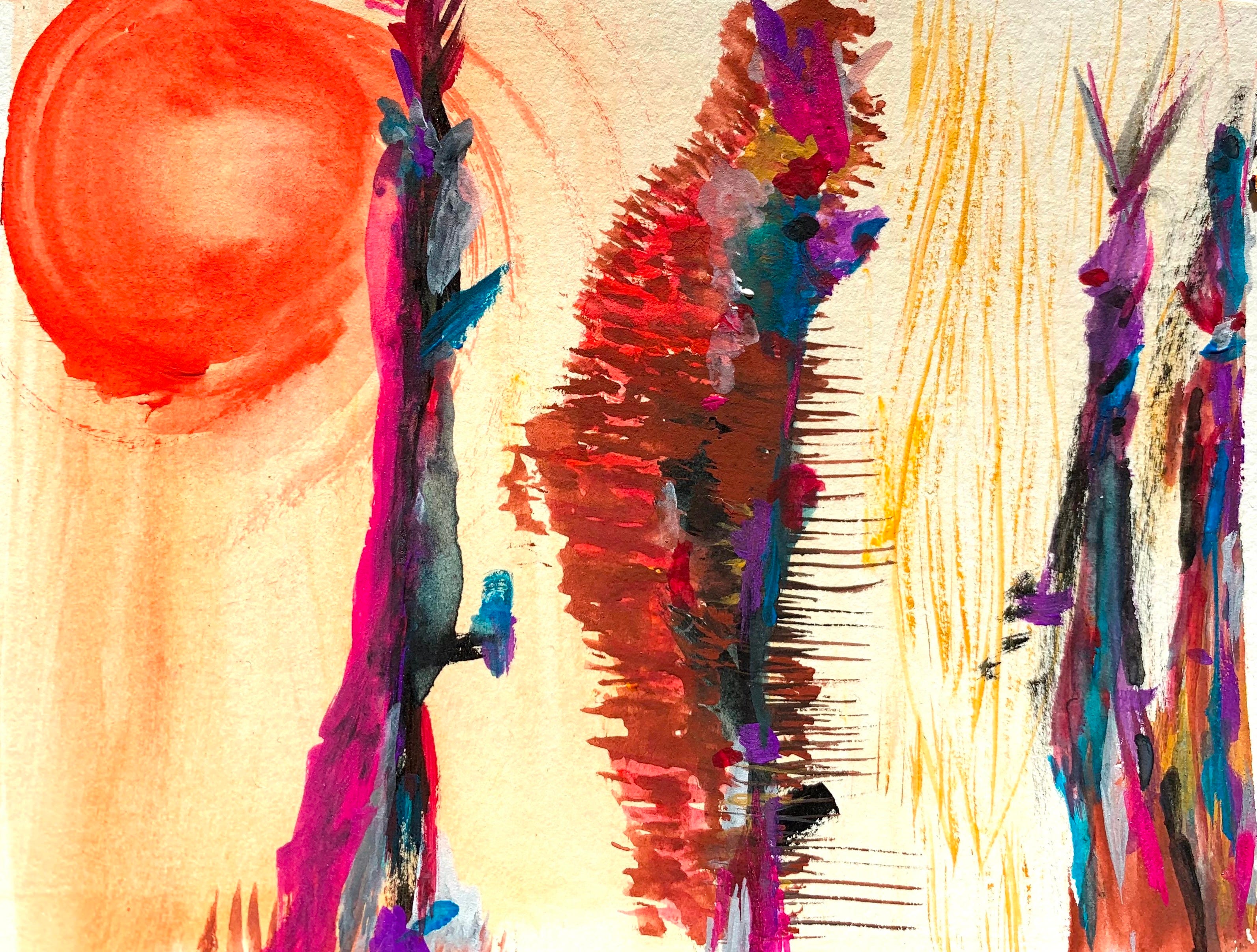
A couple weeks ago I heard a sound near our back screendoor, as if an animal were wrestling with a large bag of cat food. I assumed my cat Sasha was trying to break into her bag of treats, and noted the sound but didn’t respond right away.A few minutes later, the sound long faded, I went to check on Sasha to see how far she got with trying to claw her way into her treat bag. As I approached the backdoor I did not find Sasha, nor a clawed open bag of treats. Our screen door was open to the size of Sasha, outside her large bag of cat food lay open on the porch stairs. As I stood, stunned at the sight of a catless night—Sasha whipped around the backyard chasing something that remained in the shadows, her tail puffed out to the size of a racoon’s tail.I have been thinking about wanting. Hunger. The pull of a certain kind of desire to grasp for, reach out for…something else. This energy often creeps up the stairs of my body from somewhere in the dark and before I even realize it my hand is holding my phone, or reading news headlines, or I’m fixing myself a snack or another cup of coffee.This time of year wanting seems heightened.Something about the seasons turning deeper into autumn. Trees shedding leaves as the sun looms lower in the fading day-lit sky.The animal in us is preparing to hibernate. The hungry heart is trying to find nourishment. The pull to nourish, to find safety— in the midst of an uncertain world heightened by a polarizing election, on-going war and climate instability—is completely natural. Our bodies and nervous systems seek balance.Yet what is nourishing? What is safety when the ground appears to be constantly moving? Who is the one whose hand slips up from the shadows, then vanishes back into hiding, as spirals of shame circle?You just wasted an hour scrolling. I can’t believe you ate that. Wow, you pressed snooze again? You’re worthless. Unloveable. Unfit for human consumption. The shame says…When I lived at Great Vow Zen Monastery we had a practice of singing to the hungry heart. Calling to this part of us, this part of others and our world. And instead of shunning it or throwing shade on it or blaming and shaming it—we would invite a spirit of welcome, acceptance, love and understanding.The chant is called the Kanromon and was written together with Krishna Das and Bernie Glassman. Here are the words, if you would like to sing it too.Calling all you hungry hearts. Everywhere through endless time. You who wander, you who thirst.I offer you this bodhi mind. Calling all you hungry spirits. All the lost and the left behind. Calling all you hungry hearts. Everywhere through endless time. Gather round and share this meal.Your joy and your sorrow, I make it mine.It is part of a ceremony for the hungry heart, called the gate of sweet nectar. A version of this ceremony is part of the daily liturgy at Soto Zen Monasteries in Japan.It is one of the songs from our liturgy that I brought into my practice outside of the monastery walls. I sing it on walks through town, sometimes before I eat a meal, to my cat and before my altar with a stick of incense as my heart opens to the size of the world. It is a song of offering. It is a song of deep love. It's a song that lets me be lost—a song that speaks to those in the shadows. It has the power to save a ghost. To make the lonely, smile. It empowers us to hug our demons, and face the unpredictability of life in human flesh.This week I had the opportunity to facilitate and participate in three practice communities where we gathered together to welcome the hungry heart. The gatherings were simple. We sat in loving awareness and invited our hungry hearts to the table of our lives. And, through our collective attention, love and understanding the hungry part was given space to tell + show what it wants and needs, and then experience a deeper form of nourishment. The nourishment of compassionate attention and collective witnessing is powerful. When parts of us are hidden in shame, they often feel like they are the only ones who feel this way. Or that they are fundamentally wrong, or unloveable, or unworthy.To integrate the hungry heart into our lives, to invite them into the light of awareness— is healing. It's like reclaiming a piece of our nature. For in that invitation, transformation starts to happen, true nourishment becomes possible.As we head into election week, I feel it's important to remember my vows to myself and this world.I vow to create sacred spaces in this violent and beautiful world where we:* Center healing* Remember our true nature* Challenge our assumptions* Turn towards the shadow* And live as if love were the pointWhat are your vows? How do you intend to show up in this unpredictable, precarious, ever-changing experience we call human life, or the world, or america?Current OfferingsSpiritual Counseling — I practice at the confluence of spirituality and psychology, integrating mind, body and spirit. Spiritual Counseling can help you:* Compan
Realizing Impermanence
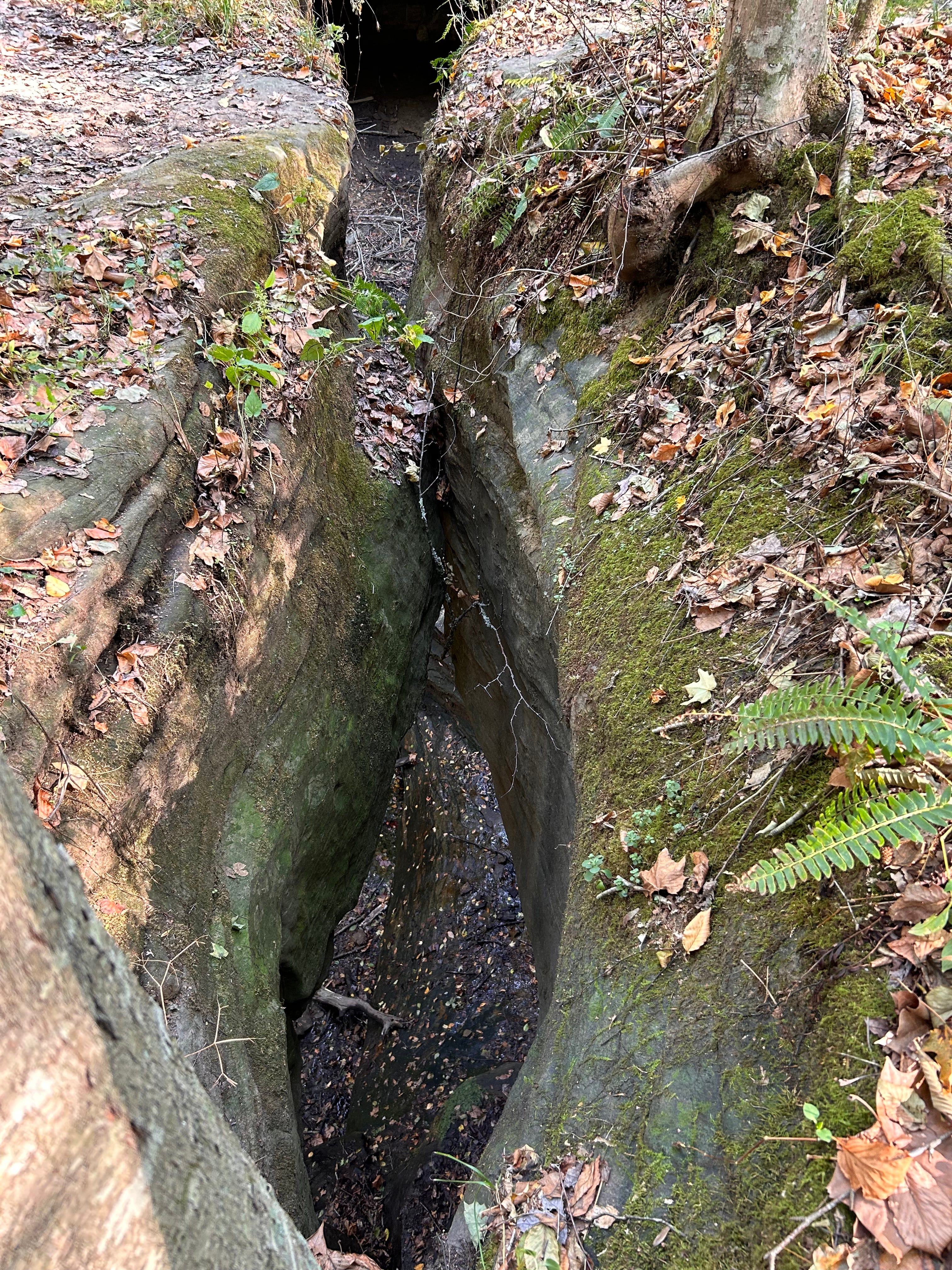
As part of Autumn Ango with the Zen Community of Oregon, we are contemplating a text called the Eight Realizations of a Great Being. A text that some sources say is the last teaching that the Buddha gave. We are working with an interpretation by Thich Nhat Hanh edited by Hogen Bays, Roshi.I want to start this reflection with a poem that was read to me by another Zen Teacher, Daniel Terrango during a sesshin he led here in Ohio a couple of weeks ago. I felt fortunate to get to sit sesshin with him, and to receive this poem. It’s one of those poems, at least for me, that I want to pass along.I Was Reading A Poem By David RutschmanI was reading a poem by Ryōkan about a leaf, and how it showed the front and the back as it fell, and I wanted to call someone — my wife, my brother — to tell about the poem.And I thought that maybe my telling about the poem was the front of the leaf and my silence about the poem was the back.And then I thought that maybe my telling and my silence together were honestly just the front of the leaf, and that the back was something else, something I didn’t understand.And then I thought that maybe everything I understood and everything I didn’t were both actually just the front of the leaf — so that the totality of my life was actually just the front of the leaf, just the one side — which would make the other side my death. . . .Unless my life and death together were really still only the front of the leaf?I had left the branch. I was falling.I was loose now in the bright autumn air.Now the first realization.All the world is impermanent. The earth is fragile and perilous.The four great elements are both suffering and emptiness.In the five skandhas there is no self.Everything that arises, changes, and perishes, is illusive, unreal,and without a master.Thought is the root of suffering, The body a reservoir of desire.Thus, observing and contemplating, one gradually breaks free frombirth and death.Here in both the poem and realization—we are invited to really take up impermanence as a contemplation. In Buddhism impermanence is considered one of the marks of existence. My teacher Hogen Roshi would often say that these marks are part of what make a teaching, a dharma teaching, so he would encourage us to consider them whenever we gave a dharma talk.The marks are:* Impermanence—insight into change, on the minute moment to moment level as well as on the level of our own lifespan, the lifespans of institutions, societies, world systems, the earth itself. This insight is to really see directly that all things are of the nature of change.* No-fixed-self—nothing is fixed, everything is in relationship, not a single thing or being exists independent of others. We interare, our nature is shared.* Dukkah/Nirvana—we suffer when we want things to be different then they are, whether that is trying to get rid of an experience we don’t want or trying to get more or hold onto to something that we do want, recognizing this we can discover through practice how to attune to the true nature of things as they are, which is interconnected, not-separate and flowingThe Buddha said: All the world is changing. We can not hold on to a single thing. Even the earth itself, our home is fragile and perilous. The four great elements (water, fire, earth, air/wind) can cause suffering, but are empty in their nature (composed of other parts, interdependent, spacious).How is this true in our experience? All the world is changing. Such a beautiful mantra. The poem I read in the beginning captures the beauty and mystery of a single leaf falling, and how in very real ways this is like our life, we are floating, tumbling, dancing, falling through space. We are really bearing witness to the unreliable nature of the earth itself, how the lives humans built isn’t sustainable with the earth’s natural balance. And we are seeing the loss and destruction from these great hurricanes. I happen to have many acquaintances, friends and teachers who live in the Asheville area. There has been so much destruction, devastation and loss from the hurricane. Same too in Florida, in Nepal, in parts of Africa and Europe this year. All over the world beings are experiencing devastation, loss, pain and hardship due to Climate Instability—wildfires, smoke, floods, damaged water supplies, loss of housing and infrastructure—this is the world we live in now.And, the Buddha gave this teaching before cars and planes and the industrial revolution. The earth has always been fragile and perilous, there have always been storms, volcanoes, fires, floods. Great forces of destruction rising up from the earth, from the great elements. This contemplation of impermanence is an invitation to really look deeply into the nature of our experience. What happens when we allow the truth of impermanence to be here. What do we notice? How does attuning to impermanence, contemplating impermanence help us face the climate crisis? Does it?I was listening to a podcast interview with
The Play of Light and Shadow
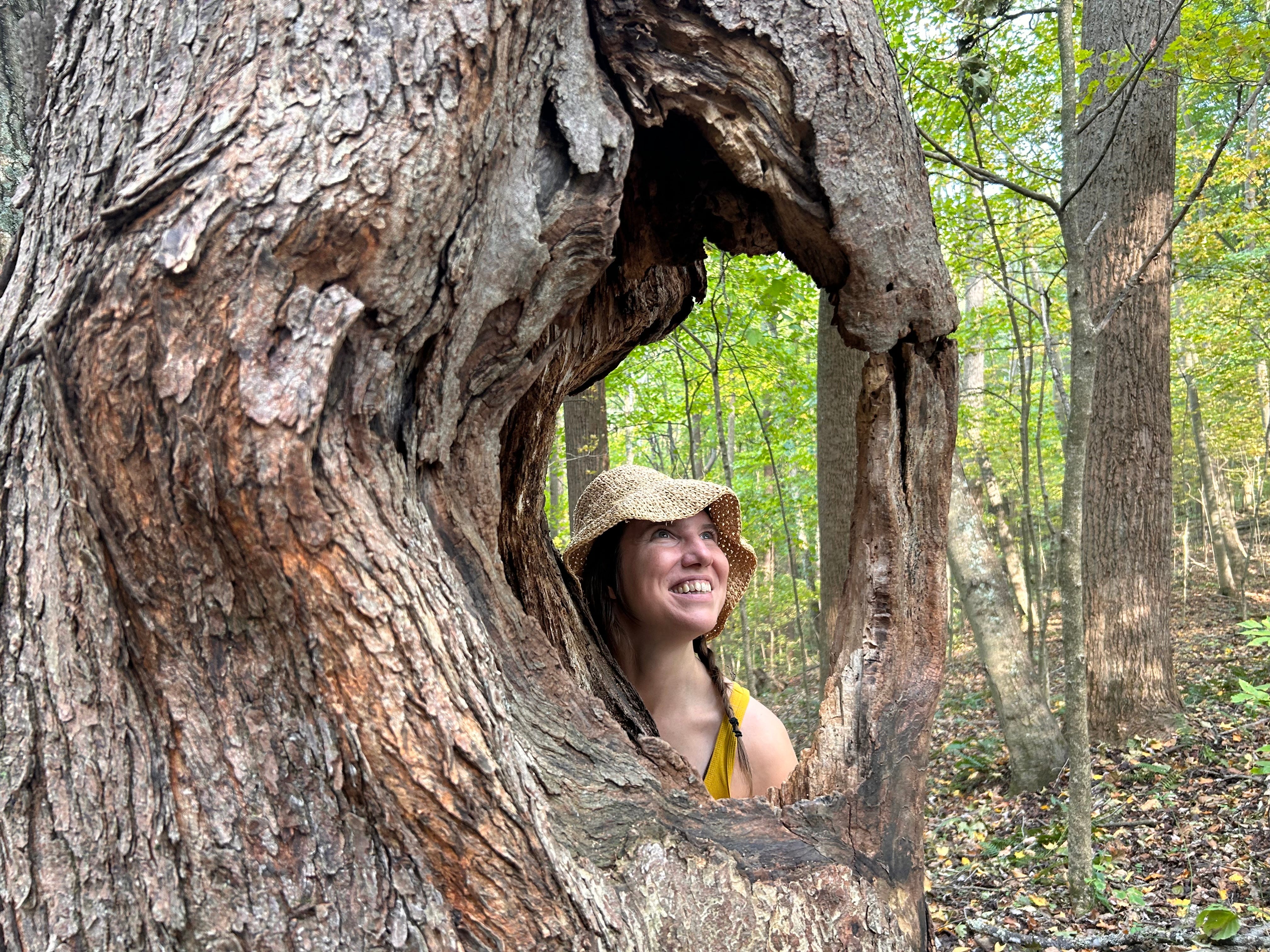
Since leaving the monastery a few years ago, I have become interested in how the ancient Zen teachers talked about the spiritual path. Language about the realizations that compose awakening are nested in the Zen chants that I would chant daily as a monastic, but we were so immersed in the continuous-ness of practice, that rarely would we stop and try to map out the territory. We were living it, who needed the borrowed words of those long dead to put a conceptual overlay onto something so fleeting as experience?My teacher Chozen was fond of saying that Zen was a practice without guardrails or measuring sticks—we stumble around in the dark. And somehow in this stumbling, in the dark terrain of life before concepts— our faith deepens and our sense of self loses its limiting bearings in exchange for an indescribable vastness that belongs to no-one. Zen teachers over the years have said of Zen that, “it is good for nothing”, or “a practice of non-attainment.”Others, including the early founders of the Soto school, described or attempted to show through poetry and image, some of the dynamics at play in this “good for nothing” journey of “non-attainment” and spiritual maturation.Two such teachers are Zen Masters Shitou and Dongshan Liangjie. Shitou’s famous work The Sandokai or The Identity of Relative and Absolute is still chanted at Soto Zen Monasteries and Temples all over the world. And Dongshan’s Precious Mirror Samadhi, which contains his teaching of the Five Ranks is similarly revered.There is a magic to language. A symbol is passed down for centuries, from spoken word, to ideogram, to letters and words in our own tongue, which become images again appearing in our imagination, references to a memory that we can almost taste.Words are sensual. We taste our words as we speak them. We feel their images and are invited into their song. Sentences are like spells. They captivate the heart. They have the power to render us transformed in this midst of their utterances. When used mindlessly words can kill the thing they are attempting to name. They can create landscapes of lies, delusive dreams that collectively capture our imaginations and send us spiraling further away from ourselves.Yet, words are also alive. Language lets us re-cast the spell on itself. A single word can be a deep medicine for the exiled heart. A point of connection—a way in.The theme of the absolute and the relative is a timeless dance of wholeness. What happens when we really venture to peer into Mind, inquire into the inner workings of our hearts, this experience we call my life?— well it's empty yet appearing, spacious yet seemingly tangible, here yet unfindable. What we call one, is also many—a relationship so intimately entwined, it can feel like a great wrong has been committed to even speak as if they were two separate and distinct experiences. And yet, we long to make meaning. To communicate the inner landscapes of the heart-mind. To celebrate the journey. We are map-makers of consciousness, knowing that as we chart the choppy, ever-changing waters of the heart, it's already shifting—there is nowhere where we truly stand besides the momentariness of standing right where we are.As I study the Sandokai and Dongshan’s Five Ranks, I have come to appreciate the play of light and shadow or relative and absolute as a generous reminder once spoken by Master Ma, and later by my own teacher Hogen Roshi—”we can’t fall out of the deep samadhi of the universe.” We are always on the path, and the path is always revealing a new face of this mystery.So let’s explore one map of the great ocean of awareness and perhaps through these words and images we will recognize some of our own footsteps.The Light within the Dark (the Relative with the Absolute)Dongshan: The third watch of the night, before moonrise—don’t be surprised if there's a meeting without recognition. One still harbors the elegance of former years.My meditation is so spacious, it reminds me of that time when…Dogen Zenji says, when the truth fills our body and mind, we realize that something is missing. As someone who spent a lot of days, months and years in zazen and retreat, a taste of spaciousness can trigger a longing for my time as a total beginner to practice, who just stumbled into this dark mystery of being and had no skin in the game, no vow, just a heart turned towards spaciousness.The Dao De Jing says, In the Dark, darken further…Have you ever meditated in the dark before moonrise? Have you ever let yourself let-go for a moment the ordinary distinctions of seeing, hearing, feeling, thinking? What kind of place is this? Does anyone remain?The Dark within the Light (The Absolute in the Relative)Dongshan: Having overslept, the elder woman encounters the ancient mirror. This is clearly meeting face-to-face, only then is it genuine. Don’t lose your head by validating shadows.I love this concept called non-linear emergence. A recognition that being human is non-linear. Healing in non-li
The Harmony of Difference and Sameness
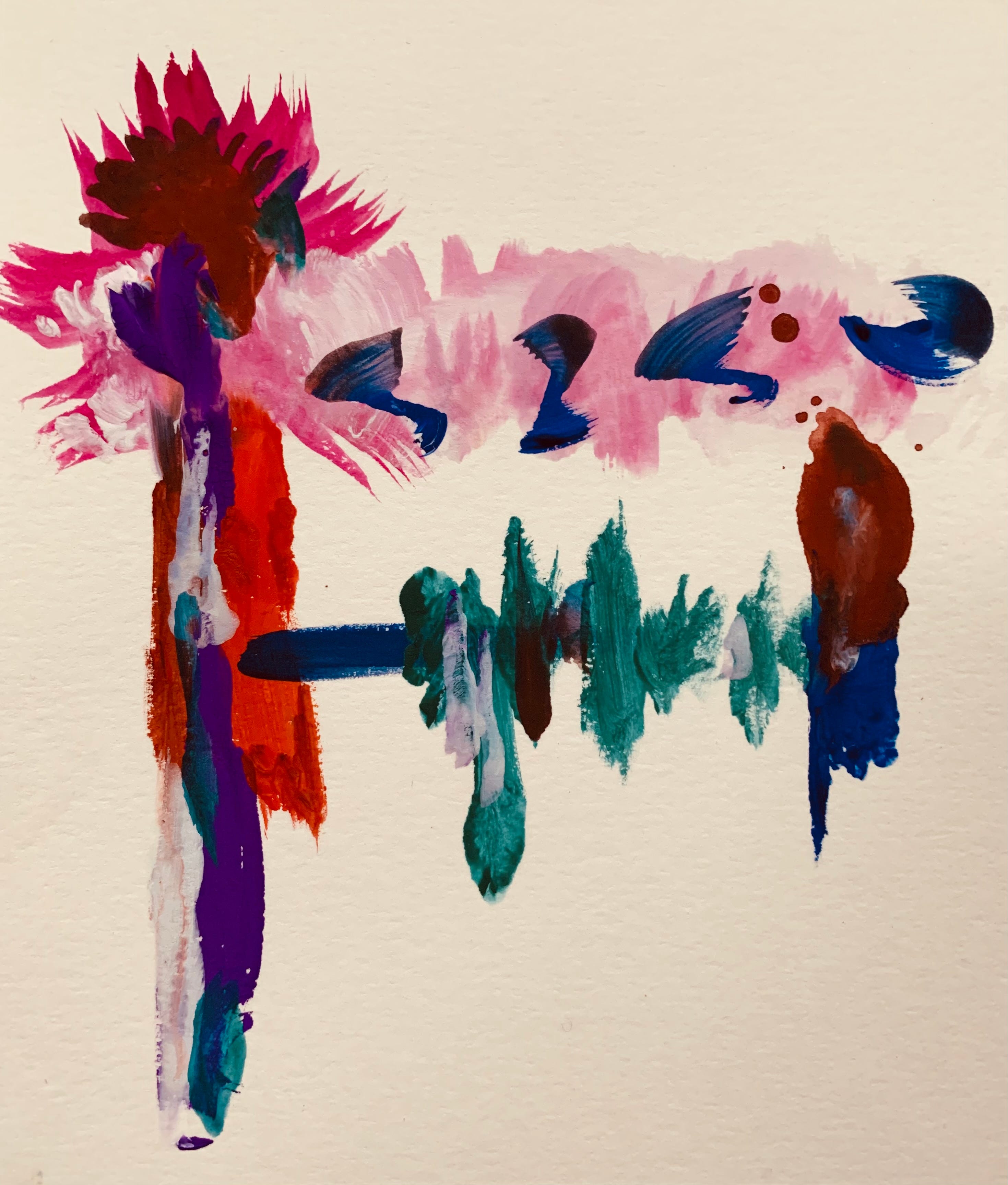
I am just returning from my first in-person Zen sesshin here in Ohio. It was wonderful to practice the familiar rhythm of a silent, Zen-style meditation retreat so close to the place I currently call home. We practiced as the winds and rain from Hurricane Helene blew through South Western Ohio felling tree branches and power lines on the property of the Jesuit Spiritual Center where we were sitting our retreat. Despite a days long power outage on the property, we continued to practice and deepen into our shared vows and sense of interconnection. Our prayers and dedication of merit began to open up and include those living in areas that are affected by the winds, floods and destruction of the hurricane as well as those suffering in other ways all over our world—may they and we find relief from suffering and realize true happiness.Sesshin has this way of amplifying our aloneness and our togetherness. With nothing to do but sit, walk, eat and sleep, we have the rare opportunity to really let-go of or soften the reification of some of the ordinary functions of the mind, such as naming, conceptualizing, narrating, story-telling, etc. One is free to just be. And what is that? Something we are invited to continuously discover. So we sit on the edge of knowing and not-knowing, the precipice of becoming, the mystery of appearance inchoate. Being nothing and everything at once. Stopping for times the need to define or find a foothold in such existential territory. For me, it has been a while since I sat a full sesshin completely as a student. I felt like I had permission to rediscover what this practice is, from the embodied source—ground up. And zazen also had permission to be nothing in particular. There wasn’t something to resolve, or fix or some insight to get. In a place of such permission zazen got to be so many things. At times a warm loving embrace, other times a sharpening stone, a quiet refuge, space, a place to explore fears + tensions, to make friends with myself in all its forms and manifestations, a hub of bodhicitta, the entire universe unhinged, rain + wind, a leaf falling, love of the ancestors through our teacher + guide, an iron yoke, a lover…nothing at all.I am appreciating how the practice does practice us, and how over the decade and a half that I have been engaged in intensive practice, there are so many practices that visit me, offering momentary medicine in this process of living. I don’t need to take anything with me from moment to moment, I can trust that practice truly does continue. Though I do find myself drawn to creating the conditions to recognize the dharma in all times and places.I left sesshin feeling humbled and full. Daniel Terrango, our teacher and guide kept reminding us that the dharma is generous. Ah, yes. Can you feel it too?Right here is the heart of bodhicitta, a commitment to awaken together with all beings. Right here, all beings are awakening together in the sometimes maddening, sometimes heart-wrenchingly beautiful conditions of our current world-systems.In the teaching realm, I have been exploring a Zen poem called the Sandokai or Harmony of Difference and Sameness. In this dharma talk I zoom out and look at how we encounter difference and sameness in our dharma practice as well as our daily lives. It was rich and enlivening for me to engage in this contemplation, and I would be curious for those who listen to the talk or read the transcript—how it is for you.…I’m Amy Kisei. I am a Zen Buddhist Teacher, Spiritual Counselor, budding Astrologer and Artist. In my Spiritual Counseling Practice, I practice at the confluence of spirituality and psychology, integrating mind, body and spirit. I am trained in Internal Family Systems (IFS), Dream Work, Hakomi (Somatic Therapy) and Mindful Eating. Below are some of my current offerings.Monday Night Meditation + DharmaEvery Monday 6P PT / 9P ETJoin me on zoom for 40 minutes of meditation and a dharma talk. We are currently exploring the freedom, spontaneity and love of our original nature through the teachings of the Zen koan tradition. Koans invite us into the mythos of practice awakening, gifting us with the ordinary images of our lives, they help awaken us to the wonder, intimacy and compassion of life as it is!All are welcome to join. Drop in any time.Zoom Link for Monday NightBeyond Mindfulness: Deepening Your Meditation Practice Class SeriesThis workshop style course is designed to provide a map of the meditation path as well as:* Introduce you to the five main styles of meditation (calm-abiding, concentration, heart-based practices, inquiry and open-awareness)* Help you understand the intention of each method and how to practice it* Help you understand how the various methods and techniques fit together and support each other* Provide a fun, non-judgmental learning environment where you can try things out, ask questions and explore* Give you the opportunity to work with a teacher with an extensive background in various med
Being One and Many
A thousand times at least I asked my Guru to give Nothingness a name. Then I gave up. What name can you give to the source from which all names have sprung? –Lal DedLanguage has a trickster quality. At one moment it limits. We find ourselves hard pressed to find the word that captures a feeling, mind state or emotion. Other times, a single word can invoke so many meanings and associations that we are left with a number of mind tangents or in a conversation with people who have very different images in their hearts.For example—the other day I was working with a colleague to come up with a name for an event that we are collaborating on. They wanted to use the word “vessel”, I said it reminded me of deep sea submarines, they said they thought of a cup or chalice, another friend said they immediately thought of blood flowing through their veins.Needless to say, we scrapped vessel.But, how often does this happen?One of my favorite books as a college student was The Unbearable Lightness of Being by Milan Kundera (who is a Czech writer and somehow captures something I know so deeply in my bones growing up in a large close knit Catholic extended family with Czech ancestry). In the book he defines words according to the different characters, which opens up a reflection on how a single word also contains personal meaning based on our histories. We all have experience with hearing a word, and an image appears in our mind, and suddenly we are in a scene from 10 years ago—smelling the ocean, filled with longing for a lost love or time of connection—or something else.Given our wide range of life experience and associations, how is it that we are able to communicate at all?In spiritual practice, we play the trickster, using language we point beyond concepts to a truth outside of our shared vernacular— a secret language of the innermost heart.Yet, the words themselves can act as traps. We say one thing, and the other side isn’t expressed. Our words amount to an incomplete teaching, a partial truth. As practitioners on this path of freedom—we learn to liberate language. To hear beyond the words. To—at times—forget words. Deviating from conventional conceptualizations — playing in pure potentiality. If a tree wasn’t a tree, what would you call it?If love wasn’t called love, how would you name it?What is the sound you would give to oneness? How would you capture Nothingness?Don’t tell me about it, my teacher would say in sanzen, show me!…For the month of September my dharma talks/podcasts will be exploring the relationship between the oneness and the many, or sameness and difference. We will be using the Zen poem by Shitou called the Sandokai, which is translated as the Harmony of Difference and Sameness or the Identity of Relative and Absolute. This podcast introduces the poem and some other teachings from Shitou, just to give you a flavor for his teaching style. On Monday Sept 16, I plan to zoom out and explore the ways sameness + difference show up in our lives + practice, exploring how we can practice integrating the teaching of one + many in our relational lives.Another theme I have been reflecting on lately, and this very much is part the exploration of oneness and many—is the relationship between Spirit and Soul in dharma practice. Almost every retreat I have led in a Zen context, someone asks at some point, where is the joy? And while I have found great joy in simply sitting in the stripped down style of a Zen sesshin. I also know that Joy, Beauty, Art, Wonderment and Ecstasy are potent elements to the unfolding and embodiment of dharma in our lives.Jogen and I have been envisioning a practice space that is both committed to the spiritual practice of waking up, while also exploring together elements of soul work. I am excited to introduce……sky + rose: an emergent, on-line contemplative community braiding Spirit and SoulMeets monthly on Sundays from 10:30A PT - 12:30P PT / 1:30P ET - 3:30P ETJoin us for our first practice session : The Ritual of LiminalitySunday October 27Spirit (sky): indestructible stillness-openness, clarity, perfection beyond the mind’s capacity to grasp or reconcile, the felt unity of all this multiplicity, the cosmos in your cup of coffee. Unstoppable, ever-graceful flow.Soul (rose): everything alive as Beauty. Art in the everyday quirks, cares, agonies and curiosities. Tending the need to create, relate, build and destroy. Reconciling Psyche’s movement towards wholeness. Answering the call to heal the meanness and alienation that fractures our worlds. Putting on the Altar the dark places and shining light in the shadowy corners of our very human hearts. The love and meaning for the flowers popping up in the cracks.This is a place for kisei and jogen to weave in practices and explorations of Soul Work that are typically not highlighted in the Buddhist tradition but that have nonetheless been sources of vitality, expansion and joy. Here we ask together: What if we lived as if Love were the point?W
The Deeply Secret Mind
We are emerging from the monthly return of the moon’s dark face—where from earth’s perspective the sun and moon appear to kiss, an aspect that astrologers refer to as a conjunction. In the Zen tradition, the moon cycles served as markers for the calendar year—with the new and full moons being opportunities for ritual and ceremony around atonement and renewal of vows.In my own life and practice, I have been contemplating the mystery of being, what is often unseen or unacknowledged in the ways we normally move through space and relate to others and the world. In celebration of this New Moon and the Great Mystery, I offer a reflection on the following koan, Zhaozhou’s Deeply Secret Mind.Hidden Lamp: Zhaozhou’s Deeply Secret MindA nun asked Master Zhaozhou: What is the deeply secret mind?Zhaozhou squeezed her handThe nun responded Do you still have this?Zhaozhou replied: You are the one who has thisI was reflecting the other day about why I started practicing Zen. In my home sangha, the Zen Community of Oregon, we have been having conversations about paths of practice. So, I invite you to reflect as well. Why did you start practicing meditation? And if you practice in a particular tradition, why that tradition?In my own reflection, it seems like Zen chose me. Someone gave me a Zen book and it resonated, then the meditation group I sat with in college was Zen, then my partner in college took me with him to a Zen Temple—at that point I didn’t really think about the other meditation traditions and if one would have been a better fit. I just followed the path that was opening itself up before me.When I entered a Zen Monastery for my first retreat, I was greeted by an ambiance that felt ancient. The dark zendo, the temple bells, physical mudras that evoked stillness, gratitude and wonder as the monastery building played with the natural world in a way that the two felt indistinguishable. Though my thoughts frequently played the worries and dreams of this particular person, I had a sense that these stories weren’t the whole of who I was. The ancient timeless peace of the monastery was my heart too.It was here that I felt, perhaps for the first time in my adult life, Zhaozhou’s hand reaching out and squeezing mine—the monastery + zen forms provided the physical invitation into this open secret.Another way this koan is translated is: The nun asks, What is the inner-most heart?We say Zen is transmitted heart to heart, mind to mind. A few weeks ago I was at Great Vow for a weeklong silent meditation retreat called Grasses and Trees Sesshin. The retreat takes place completely outdoors, we practice with the grounds and forest, the trees, leaves, meadows, birds and bats. During our sharing circle on the last day, someone shared a story of sitting with a spider, and feeling the spider extend one of its legs, as the person held out a hand.Others spoke of touching the earth, a rock, a tree —palm to palm, hand to heart, eyeball to eyeball, soma to soma.When we spend a week, or a day or years or even minutes sitting with another being in silence, in openness, in presence—we know each other in a way that words can’t even begin to explain.Think of all the hands you have held over the years. The hands you have squeezed. What was being communicated? What were you sharing? What state of Mind? What quality of Heart?All the time we are holding hands with this sacred life.Tooth brush hands, tea cup hands, peach + apple hands, dirt hands, human hands, dog hands.Sometimes maybe we are saying, I love you, I’m scared, hold me, other times especially with the seeming objects of our lives, it might feel more transactional, or maybe we fail to notice this ordinary intimacy.Chozen Roshi would invite us to take up the practice of Loving Hands. A way of really attending to all the beings, all the life energy that moves through our hands in a given day. How many hand squeezes are we giving and receiving? How many moments of intimacy kiss our lips, and pass us by?Patrick and I have been doing some teaching with a local sangha called Mud Lotus Sangha here in Columbus, OH, and sometimes the question comes up—what is Zen good for?Or another way a similar sentiment arises for folks who have been practicing for a while is, I know what Zen is good for. It helps me feel calm, or less anxious, or more connected.We have the habit of relating to this practice as another thing that we can measure—whether it is working for me, or not. Whether I am getting what I want from this, or not.This koan is reminding us that Zen or our spiritual lives don’t work that way. Even sitting meditation doesn’t work that way.When we try to measure our spiritual practice, we overlook the mystery—we violate the deeply secret transmissions, we forget about our inner-most heart.Many of you have heard me use the teaching tool of inner, outer and secret. Let’s go into that a little bit more in relationship to the practice of Zen, or spiritual practice more generally.So, we have the p
Encounters with the Golden Haired Lion
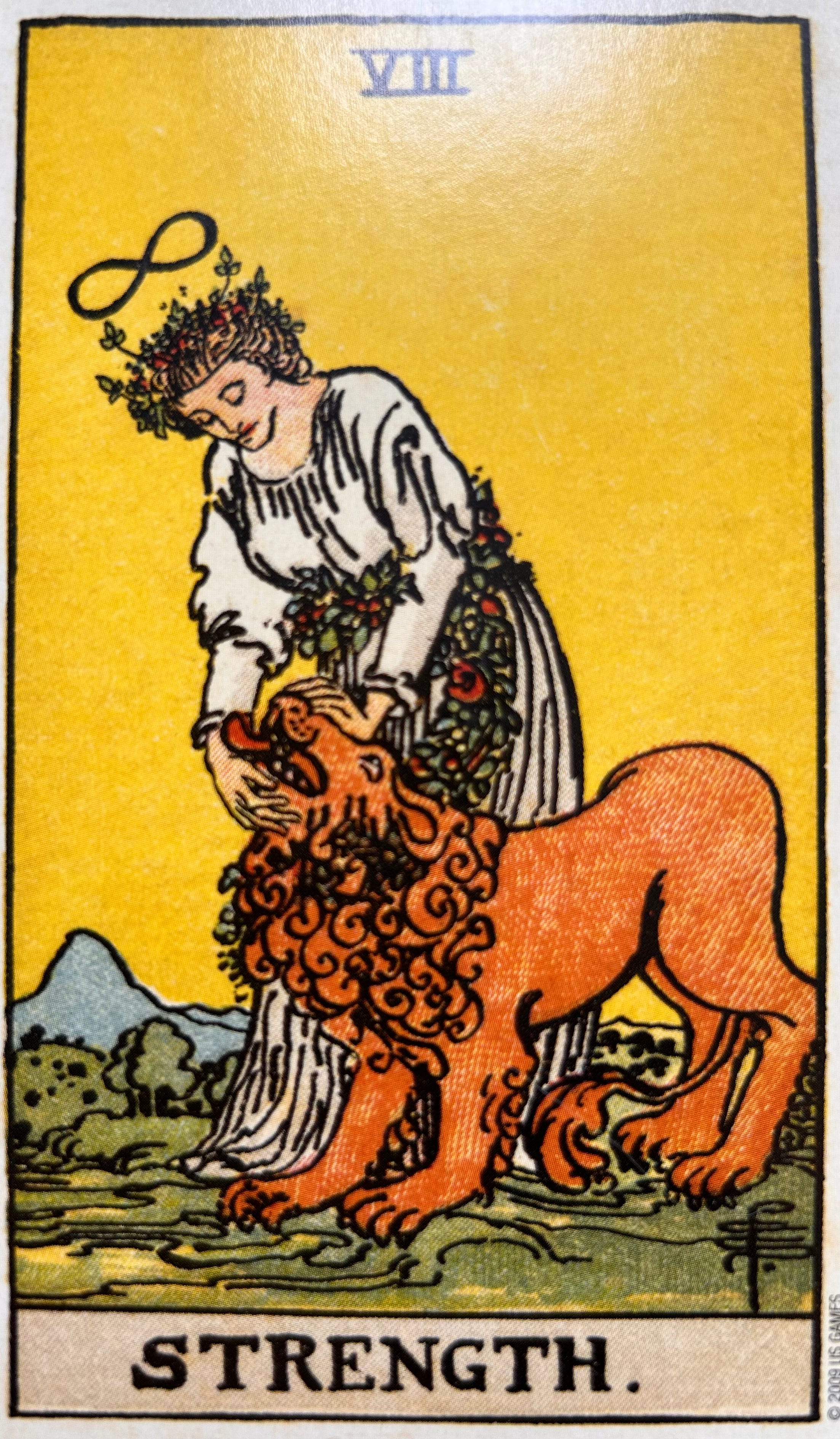
Blue Cliff Record Case 39: The Golden Haired LionA student asked Yunmen, “What is the pure and everlasting body of reality?”Yunmen said, “A fence of flowers and healing herbs.”The student asked, “What’s it like when I reach there?”Yunmen said, “A golden-haired lion!”I am landing back in Ohio after about two weeks visiting my old homes in Oregon, Great Vow Zen Monastery and Portland. I was at Great Vow for a weeklong sesshin that we call Grasses, Trees and the Great Earth—a unique retreat where we move the zendo outside, and sit in a circle together in ceremony with the Earth, Sky, Trees, Grasses and beings of the forest, meadow creek and pond. I initially gave this series of talks in the heart of the summer, when flowers, healing herbs, tomatoes and blueberries are fruiting on the fences, in the gardens and windowsill pots of our lives. A time of year that tropical astrologers assign to the constellation Leo, the lion—a fixed fire sign, ruled by the Sun. As Leo season ends, and we find ourselves in late summer, returning back to our own inner light, and the work that needs to be done. I offer these talks and reflections on the Golden Haired Lion, Koan Work and the Changing of the Seasons.The ancient greek astrologers saw the sun as the heart of the cosmic animal as well as the heart of the human being. To know one’s heart was to connect to the wild, mysterious heart of the cosmos.Lion-imagery crosses cultures. Lions have spoken to the human heart throughout antiquity we see remnants of this relationship today on the lion panel of the Chauvet Cave in France painted 30K years ago, in the image of the lion-headed dakini in Tibet, Sekhmet the Egyptian warrior-healer goddess with a lion head and in the strength card in the tarot. The RWS version of the strength card in the tarot is quite evocative of the imagery from this koan. A woman wearing flowers in her hair and on her dress, pets a seemingly tamed lion—framed by a bright yellow background invoking the summer sun. Who or what are these part lion-part human beings?Animals and nature frequent koans. I always feel like their appearance reminds us that our spiritual lives unfold within these animal bodies, within the place that we live, within our passions and desires. The appearance of a wild animal connects to our instincts. The lion to our sovereignty as well as our magical child.So here we are again. Conversing with a Zen teacher about the body of reality. And again, the teacher points to the flowers. This time blooming together with medicinal herbs on a fence.While the image was probably something in the immediate environment of the questioner. There are always levels of meaning and exploration within a single interaction. The questioner is asking—what is it? What is always present? Is there something that you can say to express the freedom and love of our original nature, how is it—what is it—right, here–right now?Yunmen shares a bit of his mind by naming— the flowering fence, the medicinal herbs.Images of beauty as well as nourishment—medicine. Alive right here in the present. Is beauty medicine? What nourishes your heart? This koan is very much a koan with heart.Earth Dreams is a reader-supported publication. To receive new posts and support my work, consider becoming a free or paid subscriber.Have you ever meditated on a flower? Or attended to a flower blooming over the course of days or weeks. Budding, the opening which is a process of contraction and expansion, then the full expression of its open-ness and followed by the falling petals that slowly turn to soil.Flowers reveal nature's beauty in full display. Their sweet smells and arresting appearance attract humans as well as pollinators. Long associated with the heart, they show us something about the tender process of moving towards openness. As well as reflecting to us the nature of cycles and deep interconnection. Flowers are in-bedded in a place, they are relational.In the Buddhist tradition the nature of mind, the pure body of reality, awareness is likened to a flower that is eternally blooming—always present. While simultaneously human life, the life of the world is —seasonal, is changing, is subject to the whims of nature, the turning of the earth, night and day and all the other beings that we share this cosmos with.What’s it like when we realize the pure body of reality for ourselves? A golden haired lion.Together we share the great heart of the cosmos, like the lemniscate above the woman in the strength card—we recognize our continual inter-connection, our shared being with animal, earth, flower, night sky. We find and lose and find ourselves in the heart of our being.In Hua-Yen Buddhism, the golden-haired lion is a symbol of inter-being, inter-penetration. Like a great hologram, it was said that each of the lion’s hairs contained the whole lion. So the lion itself was an embodiment of Indra's net. It was a symbol for the living body of reality, where everything is contained within everyt
What Are You Devoted To?
For whom do you bathe and make yourself beautiful?The cry of the cuckoo is calling you home;hundreds of flowers fall, yet her voice isn’t stilled;even deep in jumbled mountains, it’s calling clearly. —DongshanOne way of appreciating this experience we call life is to see it through the eyes of devotion. Whether we are conscious of it or not our lives are woven together through simple, ordinary acts of devotion. We are moved by our love, our sense of duty, our responsibilities and our passions. In spiritual practice we are invited to make our devotedness conscious. To ask —what am I devoted to? What do I devote my time and energy towards? How do I use my attention?As the poem echoes—For whom do you bathe and make yourself beautiful?What wakes you up in the morning? How do you greet your day?Why do you make breakfast, exercise, listen to music, work?And what if this was a living inquiry? Not another reason to shame yourself into being different, or think about how you should be waking up, or what you should be devoted to…But instead, perhaps allowing devotion a place at the table of your life. How are you already devoted to your living and loving? How does this devotion show up in your life? What is the shape of your love? What does it feel like to appreciate the commitments that you have? How are you already an accomplice to beauty?Sometimes we move on auto-pilot. We forget that in the midst of this giant machine of our society, we have agency. And are using it all the time in creative and kind ways. We create beauty. We nourish the ones we love. We turn towards love and compassion countless times throughout the day. We practice seeing more clearly.We are always in cahoots with the great mystery. The cuckoo calls to us. The cicadas sing. The tea pot whistles in a cadence with the mid-summer breeze. A child laughs, another cries—as our hearts and bodies respond.Our longing for healing + wholeness, our desire for connection, the passion with which we wish to share our gifts, talents and heart with others and the world—these are the ingredients for living a spiritual life. These are the seeds that open the world of wonder and interconnection.Underneath every action we take there is a thread of our devotion, a thread that can be traced back to the heart of who we are.For whom do you bathe and make yourself beautiful?The cry of the cuckoo is calling you home;hundreds of flowers fall, yet her voice isn’t stilled;even deep in jumbled mountains, it’s calling clearly.May we continue to hear its vital call.This podcast episode is an exploration of a Zen story from the koan collection The Hidden Lamp. It explores the themes of devotion and listening on the spiritual path. Asan’s RoosterAsan was a laywoman who studied Zen with Master Tetsumon and was unremitting in her devotion to practice. One day during her morning sitting she heard the crow of the rooster and her mind suddenly opened. She spoke a verse in response:The fields, the mountains, the flowers and my body too are the voice of the bird—what is left that can be said to hear?Master Tetsumon recognized her enlightenment.…I’m Amy Kisei. I am a Zen Buddhist Teacher, Spiritual Counselor, Meditation Coach, budding Astrologer and Artist. In my Spiritual Counseling Practice, I practice at the confluence of spirituality and psychology, integrating mind, body and spirit. I am trained in Internal Family Systems (IFS), Dream Work, Hakomi (Somatic Therapy) and Mindful Eating.I also lead a weekly online meditation group through the Zen Community of Oregon and am leading a class series on the Zen Bodhisattva Precepts this Fall. Also if you are interested in workshopping your meditation practice join me in collaboration with Pause Meditation for a 5-week online class series called Beyond Mindfulness. More information can be found below.Monday Night Meditation + DharmaEvery Monday 6P PT / 9P ETJoin me on zoom for 40 minutes of meditation and a dharma talk. We are currently exploring the freedom, spontaneity and love of our original nature through the teachings of the Zen koan tradition. Koans invite us into the mythos of practice awakening, gifting us with the ordinary images of our lives, they help awaken us to the wonder, intimacy and compassion of life as it is! All are welcome to join. Drop in any time.Zoom Link for Monday NightLiving the Questions: 16 Bodhisattva Precepts Class SeriesBe patient with all that is unsolved in your heart. Try to love the questions themselves. Do not seek the answers, which can not be given to you, because you would not be able to live them. And the point is to live everything. Live the questions now. And perhaps you will then gradually…find yourself living the answer. — RilkeFar from being a set of rules or doctrine that we must follow, the Bodhisattva precepts act as koans, inquiries that we are empowered to take into our life. They ask us to consider, what does love look like in this situation? In this relationship, how do I work with my an
Within there is a Jewel
Our attention is a precious resource. We use it all the time, and so, might forget what a resource it is. Contemplative traditions throughout the ages recognized the preciousness of attention. And also recognized that if we don’t put in the effort to train our attention, our attention may get hijacked, scattered, frittered away by the thieves of time or thoughts of worry, disappointment, greed and hatred.With the election news blaring right now. It might feel easier then ever for attention to get hijacked in doom-scrolling, anxieties about the future, worries and fear. It is an on-going practice to notice where our attention is being pulled, and to remember that we have choice about what we are attending to. To remember that attending to joy, compassion, equanimity and loving kindness awaken these qualities in our own hearts and in the world.The intellect can only get us so far, as individuals and as a species. We have other resources and capacities that are under-valued in our capitalist society, but are life-affirming and necessary for our wellbeing. Qualities like spaciousness, presence, clear-seeing, compassion for others, curiosity and play allow us to connect beyond our differences in views and even across species-lines. These qualities potentiate other ways of showing up for ourselves, others and the world—ways of being that empower us to companion uncertainty and awaken to our inter-connectedness.About a thousand years ago, a Zen teacher named Yunmen said to their community: Within heaven and earth, through space and time, there is a jewel, hidden inside the mountain of form. Pick up a lamp and go into the Buddha Hall, take the triple gate and bring it on the lamp.In Zen, we call statements like this koans. Words or phrases that can’t be understood with our intellects alone but require a different kind of attention and inquiry. Koans like this, invite us in to ways of seeing that are as multifaceted as this jewel. They invite us into their world, a world of possibility—a world that is right here, inside this one that we are already living. So if you can for a moment, slip below the apparent linearity of time—into the present—and conjure for a moment—MOUNTAIN.Maybe you live by a mountain. Maybe you have only seen pictures of them. Maybe at some point in your life you backpacked or camped or hiked on a mountain. Mountains have presence. To view a mountain, even an image of one can often invoke a sense of inner stillness, a sense of awe or even majesty.In the summer at great vow we would often study the Mountains and Rivers Sutra by Dogen Zenji. In it Dogen says:Mountains possess complete virtue with nothing lacking. They are always safely rooted yet constantly moving. You should study the meaning of always moving. You should study the green mountains. Just because the movement of mountains is not like the movement of human beings, do not doubt that it exists.We would practice sitting like a mountain. My teacher Chozen Roshi said, “If you sit like a mountain everyday for a month, it will change you.” What is it like to sit as a mountain. To sit in your completeness, to sit as though nothing were lacking. To be both safely rooted, connected to the earth, woven into the landscape, deeply connected to yourself as ecotone, as ecology, as a network of being—in constant movement, yet so Here.Mountain practice reminds us that we too are emplaced. Whether you live by mountains, or in the valley, or on the prairie, plains, forest, desert, coast—we are always emplaced. In a network of relations. In this city of sirens and heavy exhaust—a cardinal sings, a bright yellow finch bathes in the neighbors gutter, edible mushrooms grow in the metro park, walnut trees dine with paw-paws creating a ceaseless canopy near the rushing river, where a doe cleans her new born babe, whose fur is covered in white spots, legs still wobbly.Where-ever you find yourself right now, you are emplaced, connected to a geography, a living landscape of relationships. In part it is the quality of our attention that awakens a belonging to this earth community, to the breath of the wind and the space of the sky—Even though in parts of the human mind there appears to be so much division, contempt and fear. Interconnectedness is also true. We are also Mountain, landscape, a web of relatedness—we are also movement, breeze, sky, song. And within this mountain of form—there is a jewel.Within this mountain of form, within this life we find ourselves in, our particular karma—body pain, unanswered emails, childhood traumas, societal divides, violence, fear, disappointment, hope. There is a jewel.Within this body/mind with its beliefs about being unworthy, too much, not-good-enough. There is a jewel.In dharma practice, we are invited to awaken to the jewel of our true nature. To recognize it. To refamiliarize ourselves with it. And to remember that this precious jewel doesn’t exist outside of the actual emplacement of our living. The actual events, fea
Looking into the Source
With this and that I tried to keep the bucket together, and then the bottom fell out.Where the water does not collect, the moon does not dwell.—ChiyonoThis is the awakening poem of Chiyono, a Japanese Zen practitioner in the early 17th Century. The poem comes after a much longer story about this person’s path of practice. In the story, Chiyono has a sincere aspiration to practice the dharma, but isn’t able to spend a lot of time in formal meditation practice because of her work responsibilities.She seeks out an elder nun at the local convent—and though she is full of self-doubt, she expresses to the nun her aspiration to practice the dharma, as well as her situation and self-doubt. The nun meets her with reassurance, she affirms Chiyono’s aspiration and tells her that there is a path of practice that she can do—even if she doesn’t have time for a lot of formal practice.The nun gives Chiyono these instructions:* Affirm your sincere aspiration to awaken* Cultivate compassion for all beings* Recollect that you are complete as you are* Recognize delusive thoughts, and look into their sourceThis dharma talk/podcast episode was recorded on during the weekly Monday Night Meditation & Dharma event (learn more below). In this dharma talk I explore practices for looking into the source of thoughts. This is a vital practice that has the ability to completely change our relationship to thoughts and the power that they can have over us.What are thoughts made of?What happens when you take thoughts as the object of attention?Or trace thoughts back and feel the sensations/emotions in your body?To look into our thoughts is a courageous practice, to feel our feelings directly unmeditated by thought is also a courageous practice. Doing it can help us recognize the spaciousness and clarity of Mind’s nature. Doing it can awaken the heart of compassion.How much energy do we spend using thoughts to patch together this bucket of self?How much energy do we use trying to prove that we are unworthy, unloveable, undeserving?What if instead of believing these lies about ourselves, we looked into the nature of these thoughts? What if we began to truly trust that we and all beings are complete as we are?While sitting meditation can be a great support for looking into the source of our thoughts, this is a practice we can do throughout the day—try it, its empowering!….I’m Amy Kisei. I am a Zen Buddhist Teacher, Spiritual Counselor, Meditation Coach, Astrologer and Artist. In my Spiritual Counseling Practice, I practice at the confluence of spirituality and psychology, integrating mind, body and spirit. Spiritual Counseling can help you:* Companion Grief + Loss* Clarify Life Purpose* Healing Relational Conflict + Inner Conflict* Work with Shadow Material* Heal your relationship with Eating, Food or Body Image* Spiritual Emergence* Integrate Psychedelic or Mystical Experiences* Move Through Creative Blocks, Career Impasses and BurnoutI am trained in Internal Family Systems (IFS), Dream Work, Hakomi (Somatic Therapy) and Mindful Eating.I also lead a weekly online meditation group, you can read more about below.Monday Night Meditation + Dharma6P PT / 9P ETJoin me on zoom for 40 minutes of meditation and a dharma talk. We are currently exploring embodiment, compassion and the principles of engaged buddhism. All are welcome to join.Zoom Link for Monday NightI currently live in Columbus, Ohio with my partner, we facilitate an in-person meditation gathering every Wednesday from 7P - 8:30P at ILLIO in Clintonville through Mud Lotus Sangha. If you happen to be in Columbus, feel free to stop by!Earth Dreams is a reader-supported publication. To receive new posts and support my work, consider becoming a free or paid subscriber. This is a public episode. If you'd like to discuss this with other subscribers or get access to bonus episodes, visit amykisei.substack.com/subscribe
Bodhisattva Vision
Between aspiration, practice, enlightenment and nirvana there is not a moment’s gap. Continuous Practice is the Circle of the Way. —Dogen ZenjiIn Dharma practice we are invited to reflect on our view—the beliefs that rest at the root of our hearts and influence how we perceive, make sense of and respond to our lives.For what we think and believe has a deep effect on what we see and perceive. Our thoughts have power. As anyone who has observed or studied conflict may know—so much of the violence in the world stems from a difference in opinion, belief or view.In Dharma practice—we are invited to ask the radical question.What am I believing?What is my mind thinking right now?And is it true? Is it really true?When we take thoughts or beliefs as ultimate truth—divisiveness, conflict or isolation often follow suit. Our thoughts are powerful. And we can actually use this insight to try on other ways of viewing our lives or reality.What happens when we take up a view of unconditional acceptance? Love unbounded? Freedom for all beings?This is the heart of what we call—the Bodhisattva Vow. And it is often articulated as a vow to work towards liberation for all beings.This podcast episode is a recording of a Dharma Talk given on Monday June 17th during my online Zen Meditation gathering. During it I explore the power of Bodhisattva Vision. So often we engage our own dharma practice or meditation practice from a view of “what can I get out of this” and then judge the practice for “not giving us what we want.”Bodhisattva vision is grounded in the insight that we are interconnected with all beings and this living earth. What happens when we ground our practice and our living in compassion for all beings (including ourselves)? When our view of liberation is a view of liberation for everyone? When we recognize or even imagine that all being is shared being?….I’m Amy Kisei. I am a Zen Buddhist Teacher, Spiritual Counselor, Meditation Coach, Astrologer and Artist. In my Spiritual Counseling Practice, I practice at the confluence of spirituality and psychology, integrating mind, body and spirit. Spiritual Counseling can help you:* Companion Grief + Loss* Clarify Life Purpose* Healing Relational Conflict + Inner Conflict* Work with Shadow Material* Heal your relationship with Eating, Food or Body Image* Spiritual Emergence* Integrate Psychedelic or Mystical Experiences* Move Through Creative Blocks, Career Impasses and BurnoutI am trained in Internal Family Systems (IFS), Dream Work, Hakomi (Somatic Therapy) and Mindful Eating.I also lead a weekly online meditation group, you can read more about below.Monday Night Meditation + Dharma6P PT / 9P ETJoin me on zoom for 40 minutes of meditation and a dharma talk. We are currently exploring embodiment, compassion and the principles of engaged buddhism. All are welcome to join.Zoom Link for Monday NightI currently live in Columbus, Ohio with my partner, we facilitate an in-person meditation gathering every Wednesday from 7P - 8:30P at ILLIO in Clintonville through Mud Lotus Sangha. If you happen to be in Columbus, feel free to stop by! This is a public episode. If you'd like to discuss this with other subscribers or get access to bonus episodes, visit amykisei.substack.com/subscribe
Engaged Buddhism: The World Wound
This talk is part of a series of talks exploring the Engaged Buddhist Precepts of Thich Nhat Hanh and the Order of Interbeing. In this talk we explore how to practice with the suffering we encounter in ourselves, others and the world—recognizing that our suffering isn’t separate from the world’s suffering.The concept of the World Wound comes from Joan Halifax Roshi’s book A Fruitful Darkness, quoted below.As the environmental aspects of our alienation from the ground of life become increasingly apparent, the social, physical, mental, and spiritual correlates rise into view. We all suffer in one way or another. Consciously or unconsciously, we wish to be liberated from this suffering. Some of us will attempt to transcend suffering. Some of us will be overwhelmed and imprisoned by it. Some of us in our attempts to rid ourselves of suffering will create more pain. In the way of shamans and Buddhists, we are encouraged to face fully whatever form our suffering takes, to confirm it, and, finally, to let it ignite our compassion and wisdom. We ask, How can we work with this suffering, this “World Wound”? How can our experience of this wound connect us to the web of creation? And how can this wound be a door to compassion and compassionate action?The talk ends with a guided version of Tonglen practice, where we pay particular attention to how we feel and experience suffering, spaciousness/interconnection and compassion on a somatic level. This is a public episode. If you'd like to discuss this with other subscribers or get access to bonus episodes, visit amykisei.substack.com/subscribe
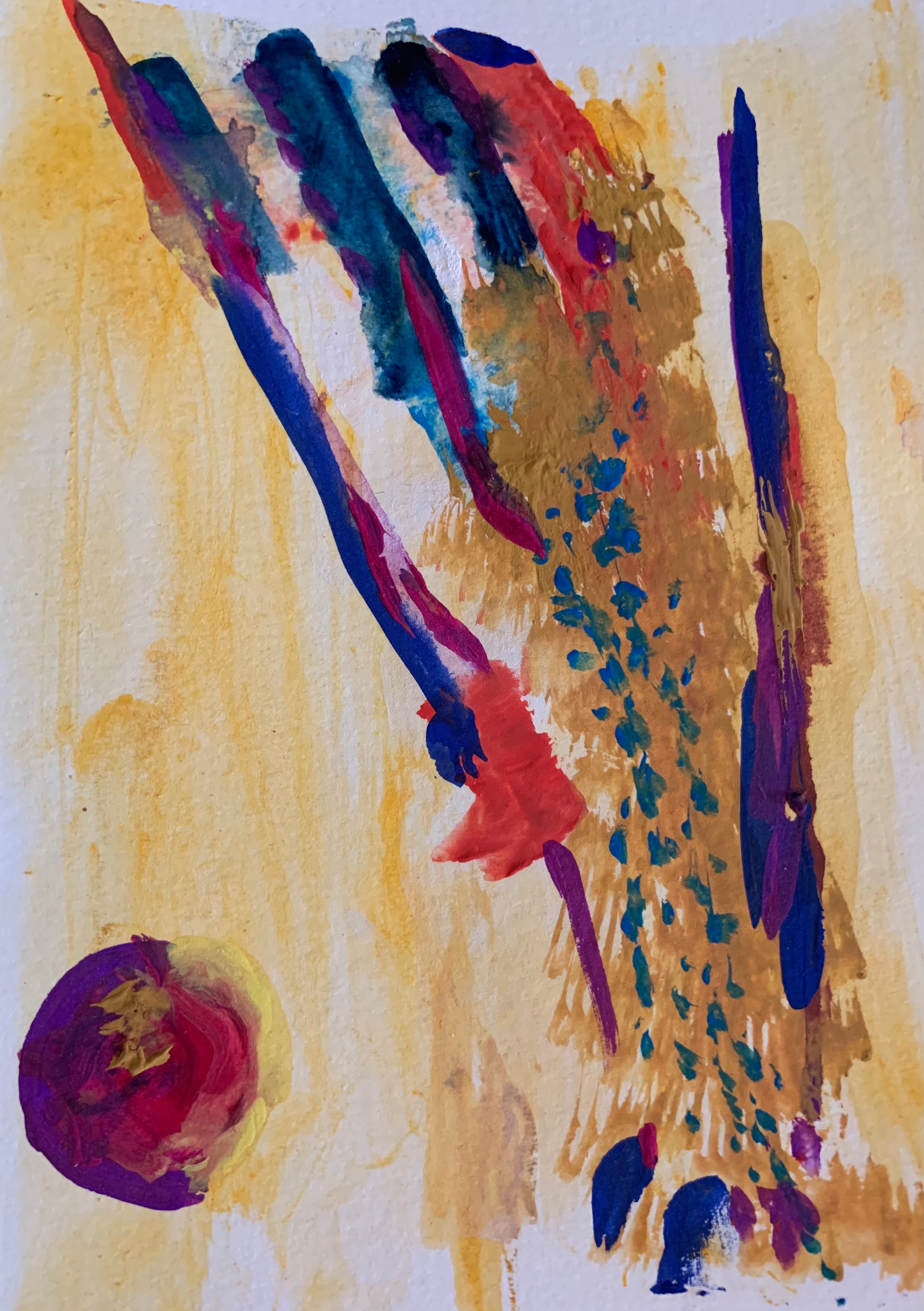
Engaged Buddhism: Turning Towards Suffering
In the Buddhist tradition we are invited to look into the nature of suffering. To do this we have to be willing to turn towards it. While this may seem obvious—we all have habits + behaviors for avoiding what is right in front of us, especially if what is right in front of us is painful, unpleasant or uncomfortable. For even a single-celled organism moves away from a painful stimulus.And yet, what teachers and practitioners throughout the tradition have found is that this moving away, fighting, resisting what is happening actually causes more suffering!To meet what is happening with openness and embodied curiosity—allows us to actual see what is going on here, to feel our feelings, the seemingly uncomfortable sensations in our bodies and minds and to realize that we actually have this capacity. This capacity to feel anxiety, shame, discomfort, doubt, rage. And when we feel the sensations and feelings without getting into the story about them—inevitably they change, they reveal more what they actually are, the fleeting movement of energy moving through a spacious awareness.Our capacity to turn towards our own discomfort and suffering with curiosity and openness, allows for a compassionate response to our own suffering—which also builds our capacity to turn towards the suffering we find in the world. In actually all suffering is connected, because our being is shared being. The systems of injustice, greed and hatred that seem to perpetuate suffering in our world, affect us all as individuals. This talk is an exploration of one of the foundational precepts of engaged buddhism. Do not avoid contact with suffering or close your eyes before suffering. Do not lose awareness of the existence of suffering in the life of the world. Find ways to be with those who are suffering, including personal contact, visits, images, and sounds. By such means, awaken yourself and others to the reality of suffering in the world.It is an invitation to turn towards suffering in our lives and the life of the world. It is an invitation into the deep realization of our shared being, our interconnection. It is an exploration of living a compassionate response as a practice of staying engaged with the heart of the world. This is a public episode. If you'd like to discuss this with other subscribers or get access to bonus episodes, visit amykisei.substack.com/subscribe
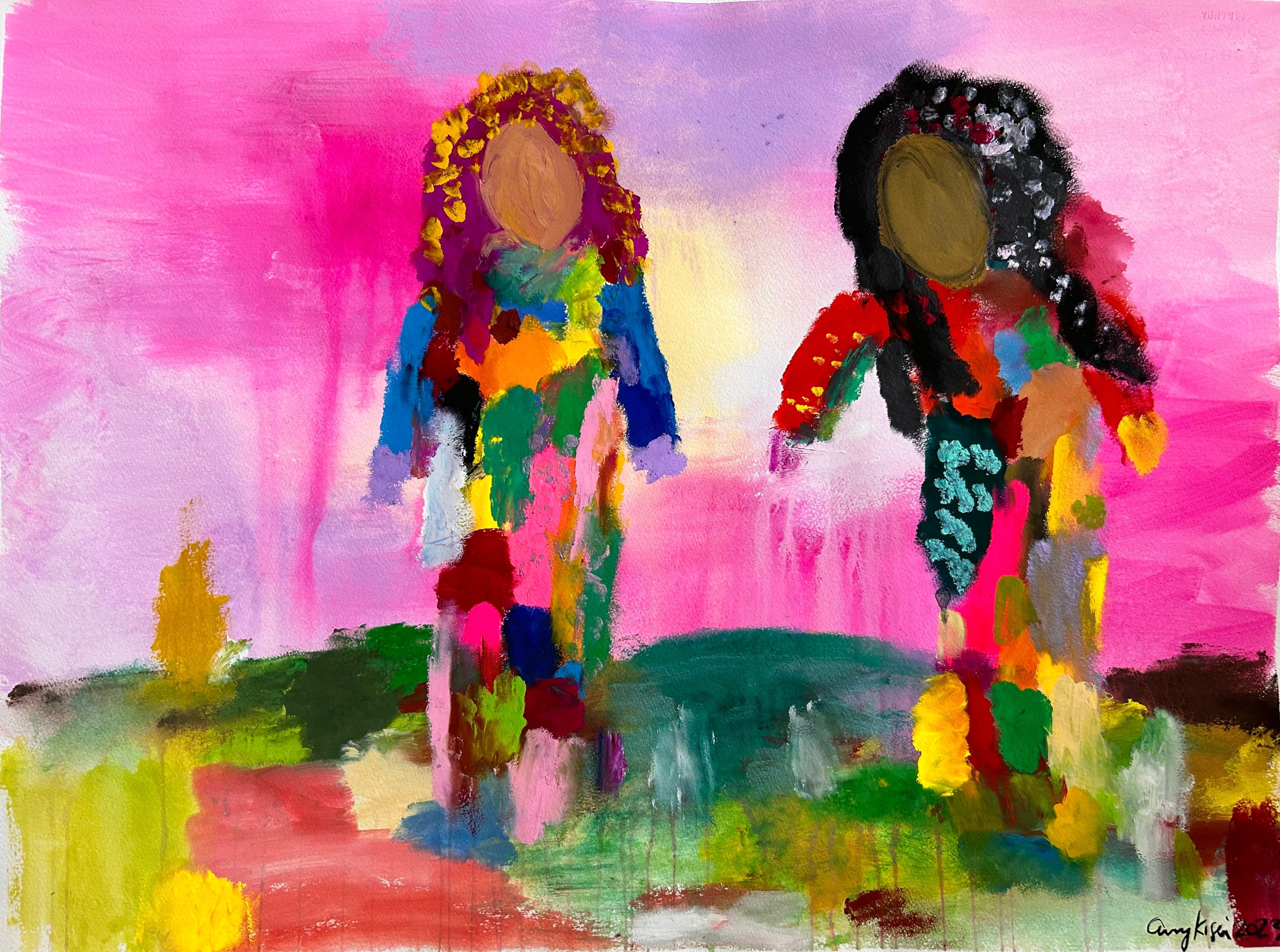
An Engaged Buddhism
The path of Zen meditation is a path grounded in love and the deep realization of our shared being, we often call these two aspects of the path—wisdom and compassion.During this Podcast Episode we meditate on the koan from Yunmen.What is Zen?An Appropriate Response.This question and response runs deep. An appropriate response isn’t something we find once and for all, and then live by it. It is an ongoing, alive inquiry that happens in the very situations of our lives, in our soma, our hearts, minds and being.In the Zen tradition we have the practice guidelines or inquiries that we call the Bodhisattva Precepts. Thich Nhat Hanh and the Order of Interbeing also devised the Engaged Buddhism Precepts as a way of helping us contemplate how to respond to injustice and suffering in our world. This talk also explores some methods for practicing with the precepts. This is a public episode. If you'd like to discuss this with other subscribers or get access to bonus episodes, visit amykisei.substack.com/subscribe

Sun Face Buddha; Moon Face Buddha
Greetings!I am sending this Podcast Dharma Talk that I recorded last Monday, after viewing the Total Solar Eclipse. Which was spectacular, really beyond words, eerie, beautiful, humbling, I was struck with a deep sense of awe and gratitude.Below is the written version of the Dharma Talk. The exploration inspired by the eclipse is an active contemplation of the koan, Sun Face Buddha, Moon Face Buddha. Sending blessings with this post for your own transformations, and transformation in our world. May we continue to see love and compassion.Eclipses are viewed mythologically, astrologically as times of transformation. Perhaps something in the shadows of our psyche, unconscious to us–rises to the surface or is able to be seen more clearly. Making the unconscious, conscious is crucial for transformation to occur. And there are other transformations possible in the spiritual alchemy symbolized by the kissing of the sun + moon.I want to share a koanKOAN:Ancestor Ma was sick. The superintendent of the monastery asked him, “How have you been feeling these days?” The Ancestor said, “Sun Face Buddha, Moon Face Buddha.”—Blue Cliff Record Case 3 (translation by John Tarrant & Joan Sutherland, titled Ma’s Sun Face, Moon Face Buddha)Sun Face Buddha, Moon Face BuddhaWhat kind of people where the ancient ancestors!For twenty years I have struggled fiercely;How many times have I gone down to the Blue Dragon’s Cave for you?This distress is worth recounting;Clear-eyed bodhisattvas should not take it lightly.—Xuedou’s Commentary on BCR Case 3I have always loved this koan. I think of the eclipse as a time when the sun-face buddha and moon-face buddha meet—In ancient Chinese and Indian cosmology the eclipse was thought to be caused by a dragon eating the sun, other cultures in the Americas believed it was a monster or a squirrel who ate the sun. In alchemy we have the image of the green lion eating the sun.It does look like someone is taking bites out of the sun, like the sun is a giant cookie, and the moon is taking bigger and bigger bites out of it. Until it is completely swallowed and night dawns in the middle of the day.Perhaps it is in blue dragons cave—in the belly of the monster– where the light of the sun is restored. Where our original light is realized.In this koan we have Ancestor Ma.Ma is a sound that corresponds to mother, in many languages–which is interesting in its connection to pre-axial religions, where mother goddesses ruled the heavens and the Earth.Sophie Strand in her research on the history of myth traces the monsters that emerge like the minotaur as having their roots in a mother goddess culture, where this goddess had energy like Kali meaning she could give life and take it away. Which is something that we say of Zen teachers or people with realization—they have the power to give life or take it away.For realization in Zen is more of a losing than a gaining. We see through our self and delusions to the point of realizing that we are everything and nothing belongs to us.The Sun and Moon archetypally play different roles in our collective imagination.Sun Face BuddhaThe Sun illuminates the day. The sun is connected with knowledge, the ego, clarity, our uniqueness, how we shine, vitality, consciousness, the mind–our knowing. If you look at the Sun card in the Rider-Waite-SmithTarot you see an image of a bright luminous sun, a naked baby so vibrantly full of life, riding a horse as sunflowers bloom all around. The Sun looks directly back at us. Bright and straightforward in its life-giving radiance.The sun you could say is what we know about ourselves.In the Tibetan Buddhist tradition the clear light of the sun is used to describe our true nature. There is this enduring, life-giving quality to the sun. Awakening is allowing the clear light of our nature to shine through us. Awakening dawns in us, as us—with the recognition that this light does not belong to us, but is the light of our shared being—our true nature.Practice-awakening involves a continual recognition of this light—our Sun Face Buddha—which is always present. We are in a sense continually recognizing what is always already here, basic to us. The clear light of mind is present even in the night or when the dark monster appears to eat the light for a few minutes twice a year.Because our inner light, the light of awareness does not dim. Even in sleep. Even when the outer world appears dark.Moon Face BuddhaAnd yet, change is our nature. As human beings, as earthlings—we change, we live on a changing planet.Some change happens to us. Or at least appears too. Friends move away. Our career pivots or the work environment undergoes changes, our relationships pass through their own seasons of connection, intimacy, seeming disconnection and rediscovery / drifting apart. People we love die. Our kids grow up. Our parents age. Our bodies age. Environmental disasters happen. The politics in our country changes.Other changes we seem to have more agency in.The Moon
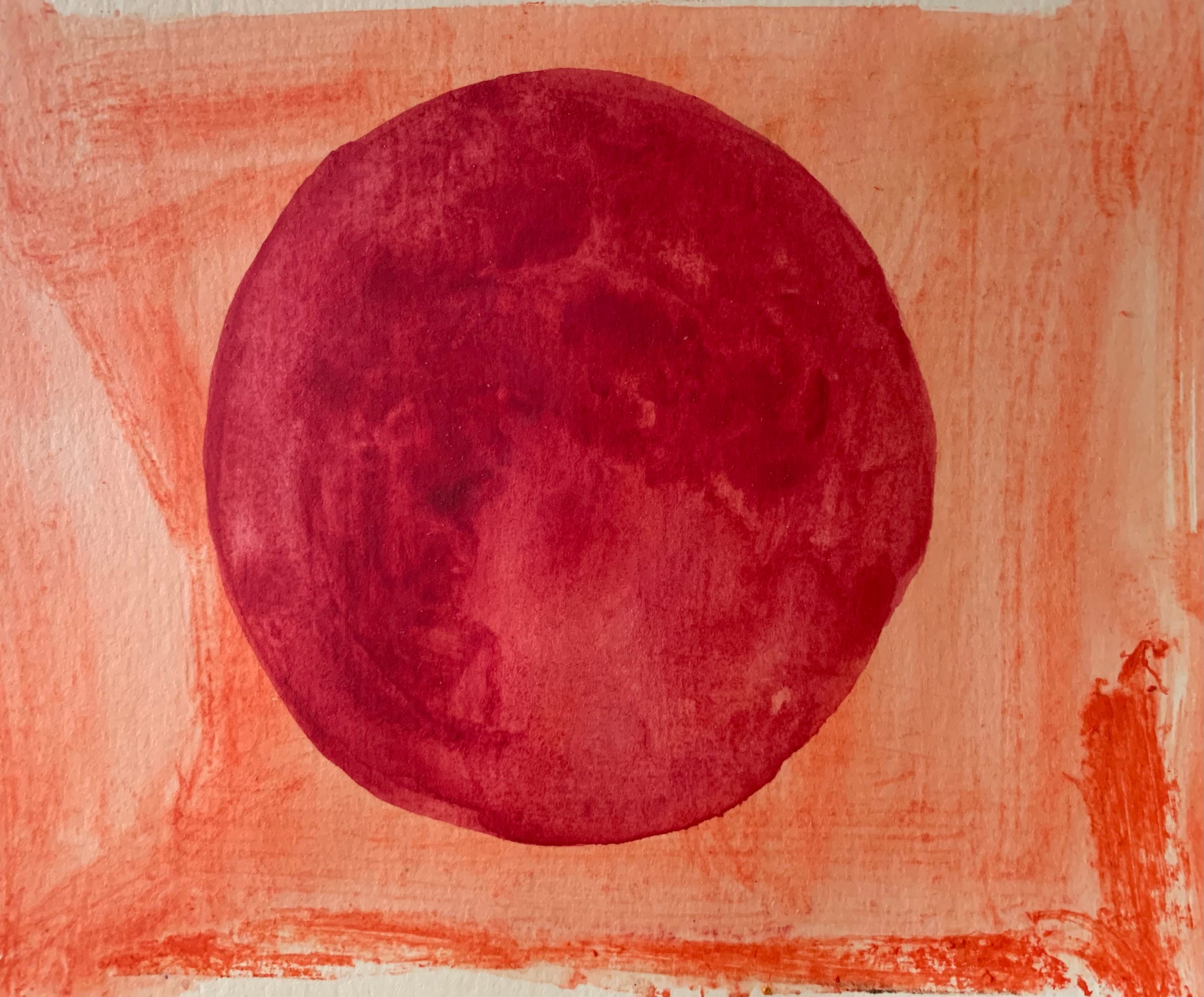
Within Darkness it is Most Bright
We are in the midst of eclipse season. And while it happens twice a year, many of us living in the US are living close to the zone of totality or traveling to a place that falls in the zone of totality. During this dharma talk I explore the Zen teachings of the dark/light. Included is exploration of practice of bowing or touching the earth, the Dark Night of the Soul and the Koan: Everyone has their own Light. Here’s an excerpt…Touching the earth, is a practice of humility, grace, receptivity. It allows us to temporarily set down the weight of our aloneness, the weight of our needing to be someone—a unique light that shines out in such a special way. It allows us to blend our light with the light of the world–to see how we depend on each other, how we interbe together.Often as we are going through our days, we give a lot more attention to the light. Light is vitality, life. Without it we die. And yet, the light of day, the light of knowing, the light of the Sun or our egoic selves, obscures another more foundational light.Within darkness there is lightIn darkness it is most brightWhen faced with darkness, whether that is the darkness of night, winter, eclipse, depression, non-doing of zazen, sleepWhere is the light?What shines forth still, no longer shadowed by the light of the sun?Everyone has their own light, says Zen Master Yunman, when you look for it, it appears dark or dim. What is this light?…Earth Dreams is a labor of love. To support my work, consider becoming a paid subscriber.See below for up-coming in-person and online group meditation events and retreats. I also offer 1:1 IFS-informed Spiritual Counseling and Meditation support. I incorporate dream work and hakomi skills in my sessions, you can learn more about my 1:1 work here, feel free to reach out with any questions.This talk is recorded during my weekly Online Monday Night Meditation and Dharma event. This event is open to anyone, you can drop in anytime. Meditation begins at 6P PT / 9P ET. Click here for more information and the zoom link.Other Upcoming EventsDreamSky: Community Dream Circle—Sunday, April 14th 3P PT / 6P ETThis drop-in online dream group is open to anyone with an interest in exploring dreams with community. You don’t have to be having profound dreams or even be remembering your dreams to join. Please contact me if you are interested in attending. Retreats in Oregon at Great Vow Zen MonasteryMay Zen Sesshin: The Light of Our Ancestors May 13 - 19 at Great Vow Zen Monastery in Clatskanie, OR co-led with Zen Teacher Patrick Bansho GreenDuring this 5-day silent Zen meditation retreat we will connect to the ancestral light of awakened nature. Drawing inspiration from the stories and practices of our Zen ancestors, fellow human beings who felt the call to practice the spiritual path of insight, love and presence.Love & Spaciousness: A Weekend Loving Kindness Retreat May 24 - 26 at Great Vow Zen Monastery in Clatskanie, OR with Dharma Holder Myoyu Haley VoekelWith wonderment on our side, and in relationship with all that is, we recognize the inherent compassion that naturally arises from deep and sustained presence. Held in a container of zen forms and the vibrant dance of a monastery waking up to spring, we will explore the nature of being anything at all! Love and Spaciousness are two qualities of our true nature. This retreat we will practice recognizing and opening to them.Love and wonderment,Kisei This is a public episode. If you'd like to discuss this with other subscribers or get access to bonus episodes, visit amykisei.substack.com/subscribe

Being Tamed by Our True Nature
I always consider it quite a blessing to have found my way to the Spiritual Path. I didn’t always feel this way. I remember early on in practice wishing that I could just be satisfied with the flow of everyday life—tv, movies, music, entertainment, a regular job. As an 18 year old, I wished that the urgency of my spiritual angst wasn’t so pressing. That I could go back to normal.I’ve heard this sentiment echoed a lot since the beginning of the pandemic. A desire for normal. When is it going to go back to the way it was? When will it go back to normal?In Dharma practice we are encouraged to bring curiosity to the desires and pulls that arise in our minds. We are invited to ask:What is normal?An illusion. A phantom. A dream.Can we ever achieve it? Is it even desirable?When my younger self dreamed of normal, it was a dream of going back to sleep—back to the ignorance and bliss of youth. It was also a dream of finding ease within the pressing weight of my existential doubt.My Zen teacher would often say, “the only way out is through.” There is another side, beyond the doubt, fear, confusion of the present situation. But running away, going to sleep, forgetting about it is not the way to the other side. It is only through acceptance, through being with, accompanying our apparent suffering, or our reaction to the suffering in the world, that a larger, more inclusive view emerges.Our struggles, our challenges can be fuel for a deeper intimacy, a more enduring love, a fiercer compassion and boundless wisdom to emerge. Our desire for normal, may be a wish for a raft, some ease or ground in the midst of transformation—some reassurance that we will survive, that we will be OK.In my experience, dharma practice offers such a raft—that develops into an embodied trust that we are held in the enduring pulse of the universe, in the spacious embrace of our true nature.At the beginning of the year, I took up the Ox-herding pictures as a teaching inquiry and exploration for our Monday Night Online Zen Meditation group. This podcast episode is the 5th of the Ox-herding pictures, entitled—Taming the Ox. These pictures are the stages of awakening in the Zen tradition, where we are OX and ox-herder. The OX being our true awakened nature, and the herder being our mind of both practice and habit energy.So when we say we are herding the OX we are really herding ourselves.And when we say the fifth picture is taming the OX, we are talking about the stage of practice where we are taming ourselves in our realization of our true nature. Despite the wonder, peace, satisfaction and beauty of awakened awareness, our habit mind seeks pleasure in fleeting desires and follows trains of thought that lead to despair, division, pain and suffering.We are learning here to recognize our true nature, the source of ultimate happiness and to stay in or stabilize this recognition. I shared a few stanzas of The Little Prince as a way of connecting to the spirit of taming in Spiritual Practice."Please--tame me!" he said."I want to, very much," the little prince replied. "But I have not much time. I have friends to discover, and a great many things to understand.""One only understands the things that one tames," said the fox. "Men have no more time to understand anything. They buy things all ready made at the shops. But there is no shop anywhere where one can buy friendship, and so men have no friends any more. If you want a friend, tame me . . .""What must I do, to tame you?" asked the little prince."You must be very patient," replied the fox. "First you will sit down at a little distance from me--like that--in the grass. I shall look at you out of the corner of my eye, and you will say nothing. Words are the source of misunderstandings. But you will sit a little closer to me, every day . . ."The next day the little prince came back.…And he went back to meet the fox."Goodbye," he said."Goodbye," said the fox. "And now here is my secret, a very simple secret: It is only with the heart that one can see rightly; what is essential is invisible to the eye.""What is essential is invisible to the eye," the little prince repeated, so that he would be sure to remember."It is the time you have wasted for your rose that makes your rose so important.""It is the time I have wasted for my rose--" said the little prince, so that he would be sure to remember."Men have forgotten this truth," said the fox. "But you must not forget it. You become responsible, forever, for what you have tamed. You are responsible for your rose . . .""I am responsible for my rose," the little prince repeated, so that he would be sure to remember.What have you let tame you? What practices help you connect with the innate, wild compassion and wisdom of your true nature? What supports help you remember your way back home especially when you feel untethered, ungrounded, seeking ease or something familiar?For me, retreat practice, regular meditation and 1:1 work with a seasoned practitioner have be
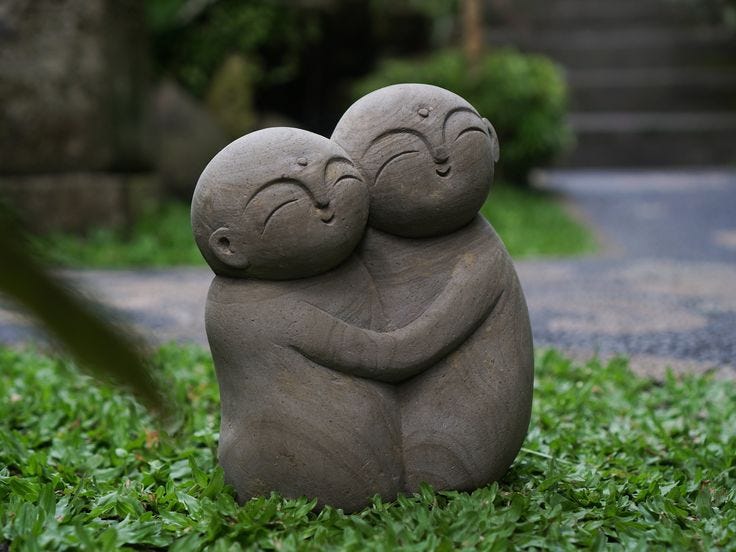
Caught by our True Nature
We explore the confusion or doubt that can come in when we habits return after having a taste of awakening. We also talk about how the mind will often try to recreate the peak experience, and how to meet that inclination.The heart of this stage is a deepening of faith, an awakening of devotion for the path and perhaps even beginning to recognize that we can’t fall off the OX, we can’t possibly lose our true nature—for it has been here all along. We are never separate from it!This stage can also deepen our commitment to continue to practice, trusting that it is possible to awaken to our true nature in a more sustaining way. Here we see how inclusive this path really is!Thank you for your support! Consider becoming a paid subscriber or sharing this with someone you think would enjoy it!Blessings + Love,Kisei This is a public episode. If you'd like to discuss this with other subscribers or get access to bonus episodes, visit amykisei.substack.com/subscribe
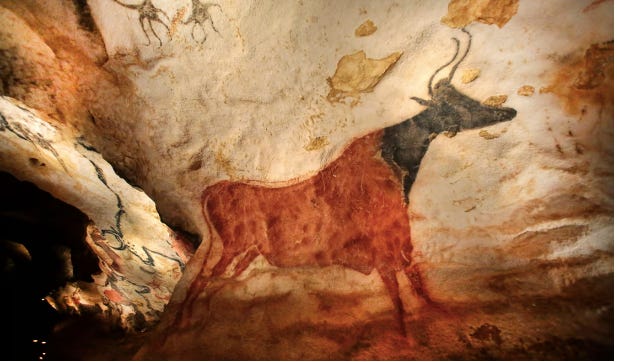
Seeing Our True Nature
Greetings Friends,In the on-going exploration of the Ox-herding pictures, this podcast episode focuses on Kensho—the Japanese Zen Buddhist word for seeing into our true nature, which is the third of the ten ox-herding or bull-herding pictures. The image above is a bull painted in the Lascaux cave in France around 20k years ago. While maybe not as apparent to a modern person, the Ox and bull have a long relationship to human beings and in the history of religion and spirituality.When I first encountered the cave paintings of Lascaux, I was awe-struck. They touch my artistic sensibilities and convey, at least to me, a spiritual intimacy. Painted in the dark, fertile womb of the earth—a cave—the animals within the walls portray a liveliness of both painter and animal. It is as if they share the same spirit.In her article on Enlightenment and Awakening, Zen Buddhist Teacher Joan Sutherland tells a story of Chekhov and Tolstoy as a way of illuminating the insight of a kensho experience, she says:How large is the self softly illuminated by the moon of enlightenment? Tolstoy and Chekhov were on a walk in the spring woods when they encountered a horse. Tolstoy began to describe how the horse would experience the clouds, trees, smell of wet earth, flowers, sun. Chekhov exclaimed that Tolstoy must have been a horse in a previous life to know in such detail what the horse would feel. Tolstoy laughed and said, “No, but the day I came across my own inside, I came across everybody’s inside.”She goes on to describe that awakening doesn’t belong to buddhists or buddhas saying: Awakening is autonomous, existing before there were humans, or anything else, to experience it. This is personified in Prajnaparamita, mother of buddhas, who holds the universe’s awakening, regardless of whether there are buddhas or Buddhist teachings in a particular era. Though I have never met these artists or animals, I feel something of them even 20k after they lived. Could it be that these artists too, knew the mind before thought—the great expanse of prajna paramita? Sitting in the womb of the earth, the radiant blackness of the wisdom mother—they lost themselves as individuals and became tiger, bull, horse—the goddess herself? Portraying their likeness on these cave walls as an act of devotion, a gesture of love?Once I came across my own inside, I came across everyone’s inside.In her book on the Image of the Goddess Anne Baring connects these early cave painting cultures to the earliest depiction of a mother goddess that historians are aware of. Wisdom beyond wisdom, need not be gendered for it points to that which is prior to gender, body, form, all dualities—and yet, the metaphor of the great mother captures something essential. From the darkness of this cave-like womb—bull, hand, paint, tiger, woman, voice, body, me, you!We are currently in week one of a 14-week class series I am offering on the Sacred Feminine—as I post this recording on kensho— I am feeling how deeply the two intersect for me. As a Zen practitioner Prajna Paramita—wisdom beyond wisdom—wasn’t something I immediately connected with as a feminine deity or mother goddess. Throughout the years of practice, my practice has taken on more of a devotional flavor. As I learned more about the image and history of the goddess, prajna paramita—mother of all buddhas, I feel how her depiction helps me open to the spaciousness, compassionate, freedom of Mind’s nature.I have a practice now of embodying the goddess, allowing my body to take the form of prajna paramita, and everything that arises in the space of awareness—body sensations, sounds, thoughts, images, feelings, emotions—are all a manifestation of prajna paramita—wisdom beyond wisdom. Inseparable for the light of awareness.Where have you encountered the goddess?Can you see her—right now?When I look, she is everywhere:In the freedom and play of The Art Ensemble of Chicago and Moor Mother’s spoken word poetry. In the oak tree still holding some of his leaves and the babbling creek running gently in spring sun, in the city lights twinkle, and the burgeoning trunk jade plant on my desk—she is everywhere, miss true nature—and gratitude, devotion, wonder and awe arise in this heart when I catch a glimpse of her various forms of compassionate expression.Can you really see her everywhere? In everyone and everything. When my heart trembles in fear, or I feel sadness over the suffering in the world—I invite this inquiry. This too, the wisdom and compassion of our awakened nature. This too, none other than the goddess’s compassionate manifestation. This too, the spontaneous expression of the OX. For me, this is a koan worth pursuing.With just one glance of Miss Original FaceStanding there you will fall in love with her. —Zen Master IkkyuEach of the ox-herding pictures has a prose teaching and poem to accompany them. Below is the image, prose and poem for the third picture sometimes called Seeing the OX or The First Glimpse of Self.PROSEThr
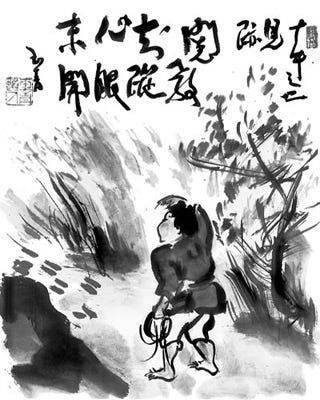
Traces of the Self
The path of Awakening is sometimes referred to as the Great Unbinding and consists of un-learning our deeply conditioned habits of mind and perception in order to truly meet our Selves as we are—This is a recording from my free online Zen Meditation group that is hosted through the Zen Community of Oregon. All are welcome to join, we meet at 6P ET on Monday nights for a period of meditation followed by a Dharma Talk. We are exploring the 10 Ox-Herding Pictures, which is a metaphor for the path of Awakening. This talk reflects on the 2nd of the Pictures, sometimes called Traces of Self.Learn more about the Monday Night Group here.I am also leading an online retreat on the Zen teachings of Emptiness with Jogen Sensei this coming Saturday Feb 10th, which corresponds with the New Moon. It’s called Beyond Self: The Zen Teachings of Shunyata. And is a guided exploration of the Zen teachings and practices of Emptiness, a commonly mis-understood part of the Buddhist path. Our aim is to give participants practices that you can take into your daily life to continue to explore the Mind ground and the pure potential energy that rests at the heart of your being. Click here to learn more!Lastly, I will be offering my monthly DreamSky Community Dream Practice Event this Sunday at 5P PT / 8P ET. This is a drop in Dream group. You can learn more here.I also offer 1:1 Spiritual Counseling using IFS, Hakomi and Dream Work, and 1:1 Meditation Coaching. You can learn more on my website.Take care and thanks for your support!Love,Amy Kisei This is a public episode. If you'd like to discuss this with other subscribers or get access to bonus episodes, visit amykisei.substack.com/subscribe
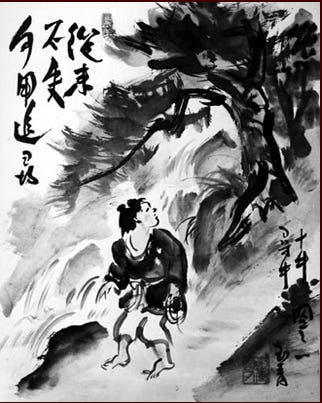
What is your motivation?
This is the first of a series of talks exploring the Ox-herding pictures, a set of teachings on the Zen path of Awakening. This first stage is foundational and is often called The Search, Arousing the Mind of Awakening or Awakening Bodhicitta.Each of the Ox-Herding pictures includes a stanza and a poem. The stanza reads as a teaching to accompany the image. What follows below is an excerpt of this Dharma Talk.The Ox has never really gone astray, so why search for it? Having turned his back on his True-nature, the man cannot see it. Because of his defilements he has lost sight of the Ox. Suddenly he finds himself confronted by a maze of crisscrossing roads. Greed for worldly gain and dread of loss spring up like searing flames, ideas of right and wrong dart out like daggers.Here we are confronted with one of the seeming paradoxes of dharma practice. The OX, our true nature–has never gone anywhere. It is right here. Prior to all experience. What has been with us since the moment we were born, through every breath, heart-beat, heart-break, loss, joy, thought, delusion, delight.The sense of being myself, prior to all conditioned ways of being / behaving.If it is so close, if it hasn’t gone astray–why search? Why practice?And yet, and I think we can resonate with this. Having turned our backs on our true nature–we don’t see. We’ve been conditioned to seek pleasure else-where, to look for validation and safety from others, to move towards success, to avoid failure, to appear competent and knowledgeable and avoid feeling incompetent or unknowledgeable. And so the maze of criss-crossing roads. Or you could say it another way, our feelings of isolation, of being separate, unloveable, or being afraid of being unloveable, or our need for approval—dominate our attention. Creating confusion, we start relating to the world as if things weren’t interconnected, as if we could just do it right and everything would work out, we start to blame ourselves or others for our conditions.And mean while, the freedom and love we seek. Is just right here. In the present. Yet, we don’t quite know how to be present with ourselves any more.In the long arc of practice, this stage or picture represents beginning to really see our own ignorance, isolation, confusion or our own suffering, and the insight or recognition –wait, it doesn’t have to be this way.I remember someone saying, you are not your thoughts. And really being able to hear it, like oh, wow–there is a me who isn’t this confusion, this shame, this anxiety, this narrating, this planning. Who is that me?Another way this comes up is through reflecting on the state of the world, seeing all of the division, conflict, war, discrimination–and recognizing, it doesn’t have to be this way. There is another way.…The talk continues by exploring some of the traditional reflections for Awakening Bodhicitta or cultivating motivation on the path of practice. This is a meditation on our own motivation for practice. How that motivation may have changed over the years, and how we continue to connect to motivation in whatever season of practice we find ourselves in.As always, I offer this as an expression of my practice and vow. Please feel free to leave a comment or reflection if anything touches or challenges you. I find the connection of community such a vital part of the of Awakening. The ways our hearts and minds shape and are shaped by each other’s is truly precious.This talk involves some screen shares where we look at some of the images of this OX-herding picture together. I am including the links below.Mumon Roshi’s CommentaryDaido Roshi’s Commentary This is a public episode. If you'd like to discuss this with other subscribers or get access to bonus episodes, visit amykisei.substack.com/subscribe
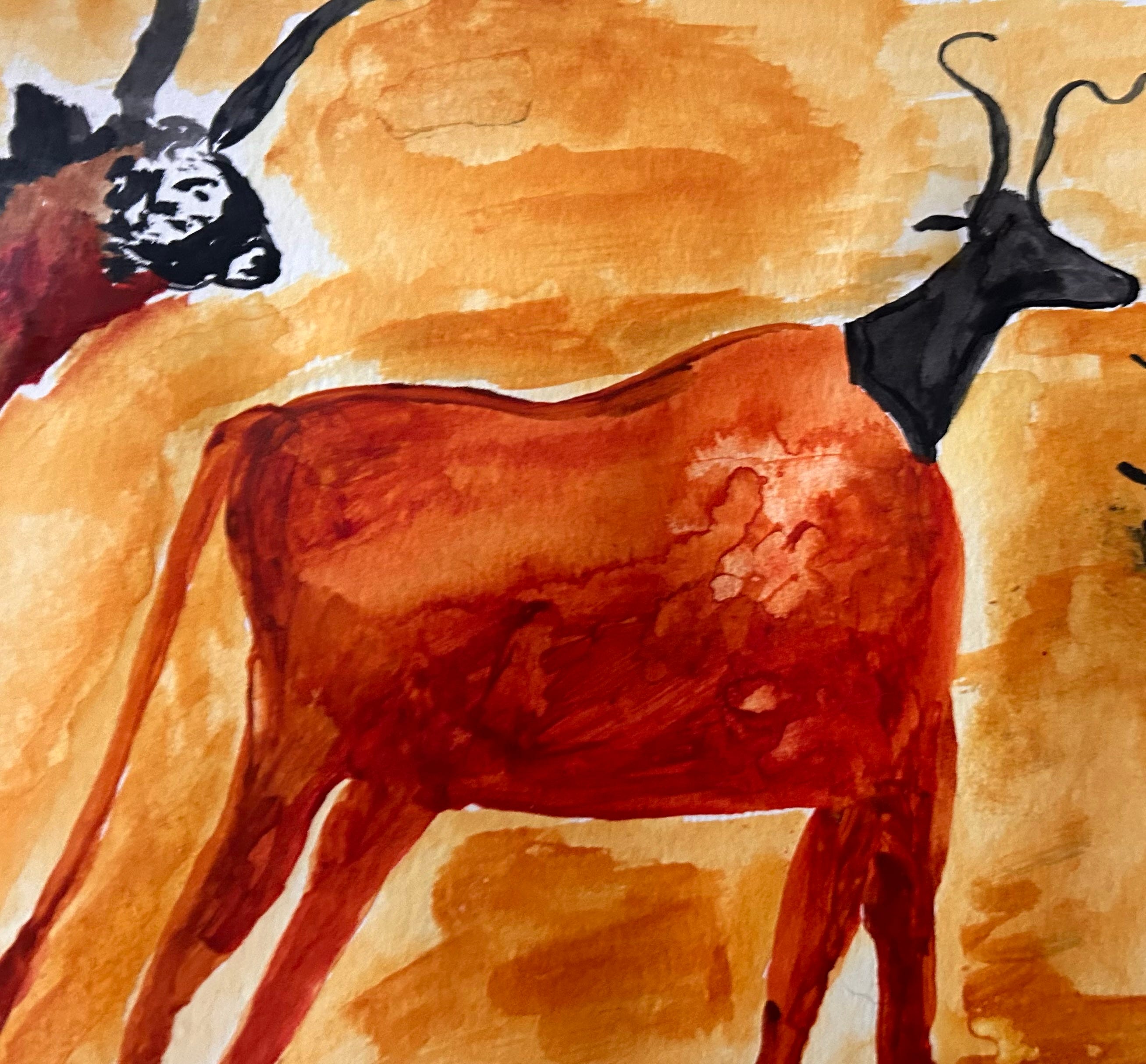
Awakening the OX
I originally started this Substack as a clear way to share my weekly dharma talks. Every Monday at 6P PT / 9P ET I host an online Zen gathering through the Zen Community of Oregon where I am one of the teachers.The gathering begins with two twenty minute periods of meditation, followed by a Dharma Talk.Dharma Talks are ways of connecting to the voice of the ancestors, the path of awakening that has been opened up and walked by real human beings over the course of millennia. Because our habitual minds tend towards confusion and distraction, we often need regular reminders about the path of practice. In the Zen Buddhist tradition these reminders point us to Buddhahood. To our intrinsic Buddha nature, that is spacious, free, compassionate and infinitely creative.This talk is the beginning of a series of talks on the Ten OX-Herding or Cow-Herding pictures. My teacher Chozen, Roshi would often remark that Zen practice is a practice without handrails. For how does one begin to measure or mark the infinite. And yet, there are states of mind we taste in our practice, and as we continue these states become more and more familiar and accessible.This talk is an introduction to the Ten OX-Herding pictures as well as an introduction to how I will be exploring this teaching.One invitation that is alive in the Zen school and in my personal teaching is that the metaphors that we use to describe Mind’s nature, can be entered directly. So here, in this teaching we are invited to meet the OX or the Cow. This is a symbol or metaphor of our true nature, our natural divinity.Awakening the OX perhaps is a journey to the pre-Buddhist Minoan culture on the island of Crete, where humans performed rituals dressing as bulls to summon the Great Goddess who could give life or take it away.But as always, more intimately awakening the OX is a journey of Self discovery. A revelation of what has always been here. Of course, as with any good teaching tool, the OX itself will be forgotten, as the functioning of Awakening lives on through us.There are many great resources to view the Ten Ox-herding Pictures, the prose and commentary. Here are two that I share during this talk:DT SuzukiJohn Daido Loori, RoshiThank you for reading / listening.I am getting over the flu, so you may notice that my voice is nasally and fatigued.Earth Dreams is a reader-supported publication. To receive new posts and support my work as a Dharma Teacher, consider becoming a paid subscriber. This is a public episode. If you'd like to discuss this with other subscribers or get access to bonus episodes, visit amykisei.substack.com/subscribe

Everyone Has Their Own Light
KOAN:Yun Men imparted some words saying, "Everyone has a light; when you look at it, you don't see it and it's dark and dim. What is everybody's light?" He himself answered on their behalf, "The kitchen pantry and the main gate." He also said, "A good thing isn't as good as nothing.”POEM: Spontaneously shining, bathed in solitary light It is an open secretFlowers fall, the tree has no shadowLook! Who does not see? Seeing, not seeingRide the OX backward and enter the Buddha HallAs the world darkens, this koan always slips to the surface of mind. It’s a koan I have worked on, or kept company with for years. This is part of koan practice, koans we work on rise up and invite further investigation, or help us reconnect, or resurface the insights that opened up when we sat with or inquired into or kept company with the koan in the past.So here in the koan, we have an invitation to consider that Everyone has their own light.The buddha as he was passing, invited his disciples to be a lamp unto themselves.In the Zen tradition, instructions for zazen invite us to turn the light to shine within.Koun Ejo in his treatise of luminosity says: Sitting under the open sky, weightless as a flame. Even if eighty-four thousand thoughts come and go, each will display itself as the luminosity of perfect knowing itself if you do not hold to them and allow them to just go on their own way.This display of luminosity must not just be something you experience in sitting but in each step. This step, this step, are all the walking of luminosity. In this luminosity usual people and sages, deluded and enlightened are one. In the midst of impermanence, this luminosity is unobstructed. Forests, flowers, grasses, leaves; humans and animals; large or small, long or short, square or round: all display themselves simultaneously, free of discriminating thoughts or intention. This is luminosity unobstructed in impermanence. Luminosity is its own open brilliance; it does not depend on your mind.Luminosity has no location. When Buddhas appear in this universe, it does not arise with them. When Buddhas cease, luminosity does not cease. When you are born, luminosity is not born; when you die, luminosity does not die. Buddhas do not have more of it; sentient beings do not have less. If you are deluded, it is not; if you are enlightened, it is not. It has no rank, no form, and no name. This is the Body of Totality of all things.You cannot grasp it; you cannot throw it away. It is unattainable. Although it is unattainable, it penetrates this whole body. From the highest heaven to the deepest hell, all realms are illuminated perfectly. This is wondrous and inconceivably subtle luminosity.Everyone has their own light—If we try to look for it, we don’t see it.This is an interesting conundrum, Hogen Roshi during Rohatsu sesshin pointed out then when we really look for something, it vanishes.Perhaps the looking and the vanishing and what is left in the vanishing are all light—the light of awareness, the light of buddha nature, the light of our true natureEveryone has it—this lightMore intimate then perception, it shines out of our eyes, it graces every word, image or thought, in streams through our blood vessels, it pools as our hands touch another's, each place of contact—each sound, smell, taste, touch, breath, feeling emotion—another color, texture of this radiant lightThis koan invites us into intimate recognition of the “light” of true nature.To see, know, experience the light of buddha nature in everyone and everything—this is the aspiration of someone on the path, when I try to articulate my vow–that is it.And what does the practice of this look like?A reminder—the light of awakened nature shines through everyone and everything, can you let yourself trust that, see it, know itAnd can you study, what gets in the way–of seeing your own light?Of affirming this light in everyone you meet?Perfectionism, fear, habits of distraction—these things appear to cover our light, and the light of the universe. And yet–they too are the light, in the moment of their arising.What does it look like to practice seeing everyone’s light?To see what is shining through before thought/projection?To see each person’s beauty, uniqueness?And—to help them see it too?We can even do this for the parts of ourselves—What is the light of the inner critic, anxiety, fear, greed, judgment, comparison?Can you see the light in the ordinary stuff of your life? The carpet, walls, the objects you interact with, your shoes, the work you do…This is a great koan to accompany us during this time of year, the holidays. Whether you are seeing family, or spending time alone.Can you see, know, awaken to the light that permeates everyone and everything. Can you see the unique light shining forth from this word, this color, this screen?!LISTEN FOR MORE! This is a public episode. If you'd like to discuss this with other subscribers or get access to bonus episodes, visit amykisei.substack.com/subscribe
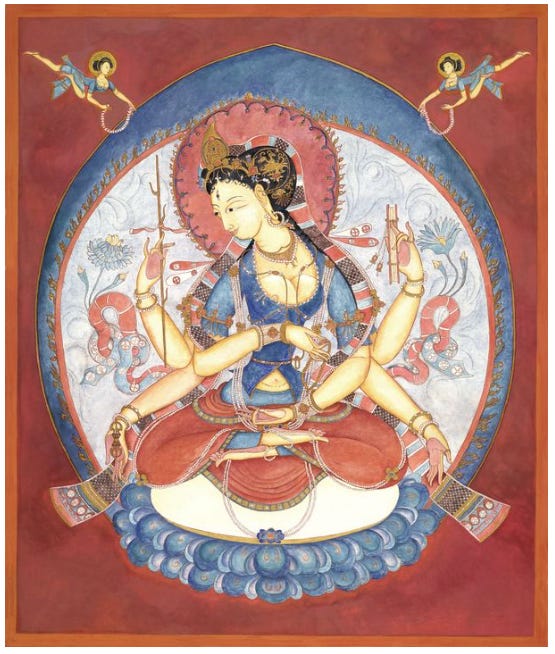
Prajna Paramita: Mother of the Buddhas
The path of the paramitas leads to the shore of freedom, of liberation / love.OM ! Gate, gate, para gate, parasum gate, bodhi svahaGone, gone, gone beyond, gone to the other shore–Svaha! Oh what a realization!The zen buddhist path is a path of mystery as much as it is a path of awakening, when we speak of awakening, we usually invoke a sense of realization, understanding, wisdom, knowing—enlightenment.The path of mystery invokes the dark, unknowing, the hidden, the secretPrajna Paramita is translated as wisdom beyond wisdom, wisdom beyond understandingTo talk about it inherently limits what can not be named, or grasped, or bound or containedSometimes we invoke prajna paramita as emptiness, pure potential energy, the womb of the great mother—pregnant nothingness, where anything, everything has the potential to emergeBut also, the mother of all manifest, of all life. The spacious, unconditional acceptance of things as they are, great love or great compassion.Listen to the Podcast for more!Also, I am excited to announce that I will be leading an online class series on Awakening the Sacred Feminine: The Practices and Teachings of the Women AncestorsYou can learn more here.February 2 - April 26, 2024Fridays 9:30A - 11A PTAn Online Class Series Meeting Every Other Week for a total of 7 Weeks What is the sacred feminine? A zen student may ask. And for good reason, aren’t we taught in Zen to transcend duality? Chozen Roshi would often say: Zen practice invites us to become completely male, completely female, both and neither.Still, cast under the cloud of patriarchy, for millennia the sacred feminine and the women ancestors have remained hidden and obscured within the Zen Buddhist tradition.Or have they? What if their hidden-ness is itself an invitation to descend into the depths? To encounter the mystery? To share in the open secret?In this spirit, this class series is a descent, an endarkenment, an underworld journey. For to awaken what is historically hidden and obscured one must be willing to enter the mysterious womb of Prajna Paramita, to carry the sacred embryo, to dream, to lose things, to fall down, to gaze into the empty mirror, to shapeshift, to love.Each week we will encounter one or more of the great women ancestors, beginning with the archetypal Mother of the Buddhas, Prajna Paramita. Each class will include a teaching and story from these wise women and a guided practice based on their teaching. There will be opportunities each week for further study and ways to deepen one’s home practice.This class is open to all genders and to any one who is interested in encountering the hidden, the veiled, the mysterious—just know, you may be transformed in the process.What’s included:* 7-Live Weekly Class Meetings (Meeting every other Friday)* Recordings of teaching/practices from each class* Home Study material* Weekly Practice Encouragements* Optional Journaling or Creative Prompts to help integrate the learningDATES:Week 1 – Feb 2Week 2 – Feb 16Week 3 – Mar 1Week 4 – Mar 15Week 5 – Mar 29Week 6 – April 12Week 7 – April 26A note from Kisei Sensei: Encountering the Women Ancestors and practicing with their teachings has been an ongoing part of my practice. I remember the waves of delight when I would discover a new (to me) ancestor, learn about her life and begin putting her teachings into practice. I sat with and lived into the poems of the Terigatha, gazed into the clear mirror, sat in the dark womb of Prajna paramita. The women ancestors really helped me see that my life is my practice and my offering. It is with great respect, joy and wonderment that I am offering this class. May your life be as enriched and transformed by their wisdom and compassion, as mine is.Weekly ThemesWeek 1 : In the Womb of the Great Mother: Awakening Prajna Paramita Darkness is the home from which we come.Emptiness is pure potential energy, spacious and wakeful— Prajna Paramita wisdom beyond wisdom. Words fail. To encounter Great Mother Spaciousness, we must be willing to un-know, to darken further and let the mystery guide us home. This week we will meet the mysterious mother of the Buddhas.Week 2 : Giving Birth in the Night: Yasodhara and MayaA stone woman gives birth to a child at night.Yasodhara is the Buddha’s wife and Maya is the Buddha’s birth mother, both of these women’s paths to awakening involved premonitory dreams, pregnancy and giving birth. This week we will explore the wisdom of the dharma teachings of the night, dreams, pregnancy and birth as both metaphors and lived experience (for some).Week 3 : Loss and Being Found: The Path of Heartbreak and LoveA coin that is lost in the river, is found in the river. What happens when you lose everyone and everything that is dear to you? Or that one precious person, your child, your love? This week we will explore grief and heartbreak as a path, through the stories of Patacara, Kisagotami, Ubbiri and Kannon.Week 4 : Falling Down : The practice of touching the EarthUntil a perso

Save a Ghost
How do we practice saving a ghost, when that ghost seems to be everywhere?In the zen buddhist tradition we have the archetype of the hungry ghost—a being who is often depicted as having a large belly and a teeny-tiny throat and a tongue of fire. The hungry ghost is always wanting, yet never, never satisfied.Sound familiar?We all host parts of ourselves that seem to be constantly wanting & never satisfied—often these parts come with shame and perhaps secrecy.During this dharma talk we explore the archetype of the hungry ghost, and how to turn towards our wanting. We also explore how to practice nourishment and satisfaction. Embracing the hungry ghost with compassionate awareness is an important on-going part of dharma practice. It is tempting to try to suppress or deny these parts of ourselves, but that doesn’t work and isn’t dharma practice.Dharma practice invites us to turn towards, embrace, bring curiosity to places of suffering and through that process we find liberation, love—and humility.This talk ends with the kanromon, a short ceremony and song for embracing the hungry heart. This is a public episode. If you'd like to discuss this with other subscribers or get access to bonus episodes, visit amykisei.substack.com/subscribe
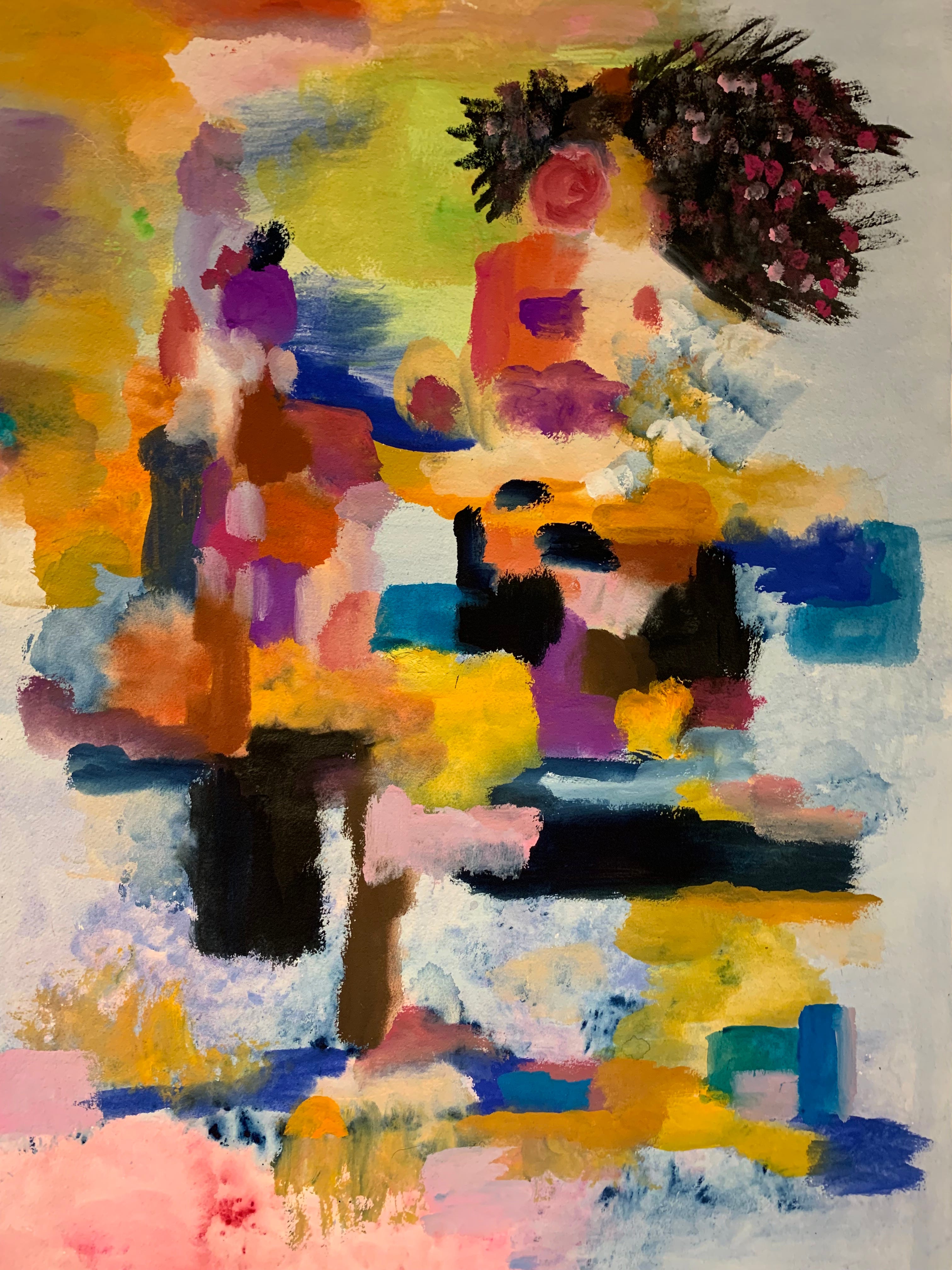
Dana Paramita: Simple Generosities
Offer flowers on a distant mountain to all beings —Dogen ZenjiIn this dharma talk we explore the beautiful practice of giving, generosity, on the three levels of experience, Inner, Outer and Secret.The invitation here is to open to the inherent generosity of life itself and explore ways we can cultivate and infuse generosity in our lives and practice.The talk opens with the poem below:simple generosities today I am appreciatingthe simple generositiesthe way things–in the act of beingJust as they aremake abundantofferingslike howcompacta’s crimsonleaves carrysuch a robust redthat i myself begin to blush–a warmththat fills me from the inside outand what of sidewalkseven the seemingly broken ones–who give unwavering support for every one of my foot fallseach step–a secret meetingof endless generosityand neighbors with their kind heartscreate halloween dioramas on their porchessacred altarsto the trickster, the child, the spookythe already deadjack-o-lanterns carvedto resemble each one of our facesoh, and the locustin their perfect rowalong this street of brickshow they wave their honey goldenlimbsin praiseof sun and windand every passerbyoh the simple generosities–of chair and cupof spoon and soilof red-tailed squirrel and house wrenof pumpkin and marigold–their bright orange faces that rise up and open to the worldtoday is the daywhere i will receiveyour bountyi will see each of youfor the blessing that you areand perhapsin doing soi will honor the generosityof my own lifenot for the acts done northe gifts givenbut for the giftthat is my lifeJust as I am This is a public episode. If you'd like to discuss this with other subscribers or get access to bonus episodes, visit amykisei.substack.com/subscribe
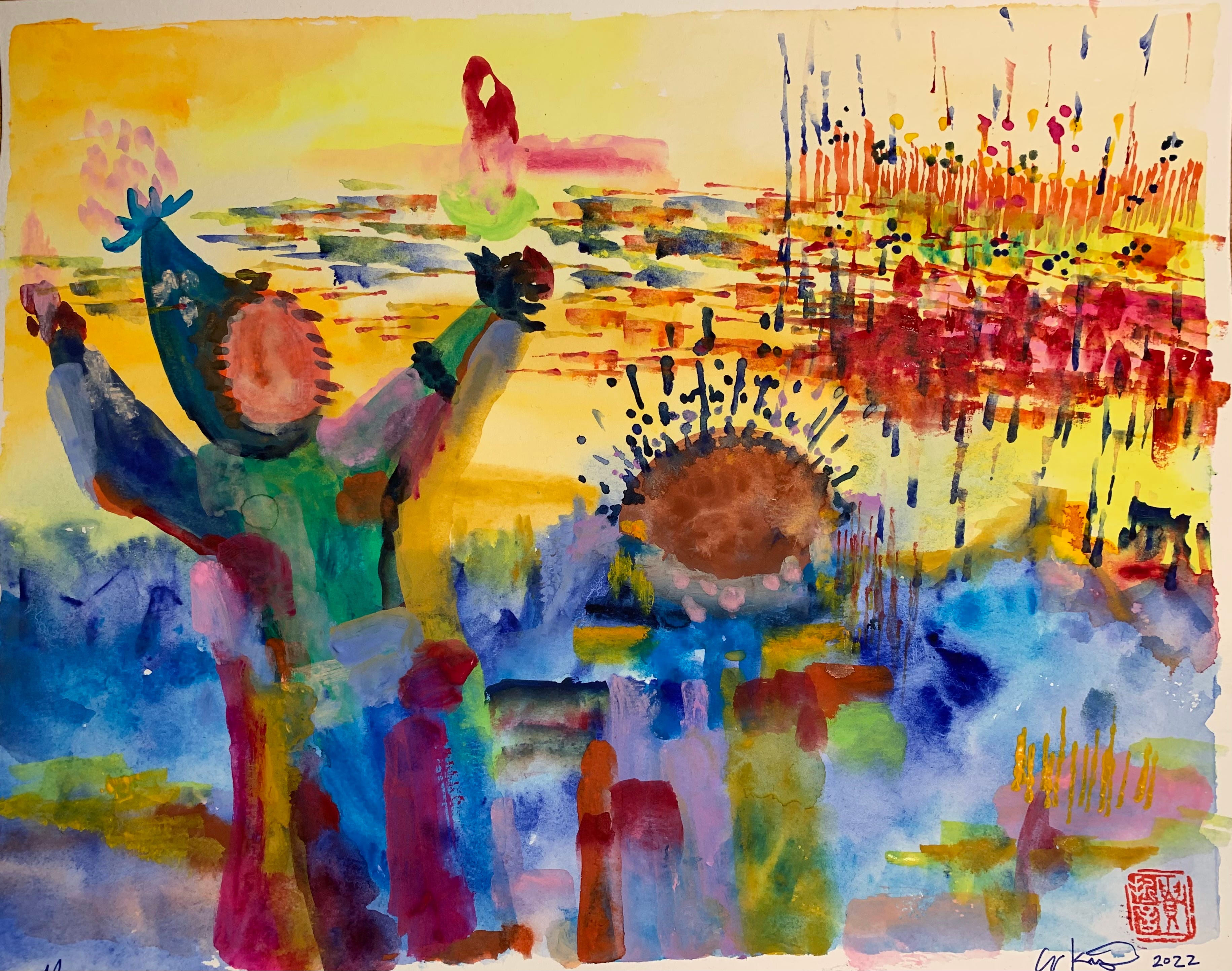
Right in the Middle of Our Longing
To follow one’s longing. Or even to listen to one’s longing–can be uncomfortable. It can be deeply inconvenient. Painful to feel this desire, this wanting, this longing for completion, wholeness, to love fully.We sense that to listen to such a longing can be destructive. Yes, mystical longing asks something from us. Sacrifice, surrender, giving up, letting go.We have this word in the Buddhist traditions–renunciation. And it’s an unpopular word. We want to believe we can have our awakening and our netflix, and our 60-hour a week job and our travel and a deep & meaningful relationship and, and and…or we just don’t want to feel the discomfort of our longing, the empty hole of our deepest mystical desires.To do spiritual practice in a way that leads to liberation involves sacrifice–wise sacrifice. I want to emphasize the wise here.We need to dedicate time and energy to the practices, teachings and path. Dharma practice reverses the flow of habit energy, the transformation is seismic, for the very foundation that we have constructed and built our lives upon is seen through. In order to create the conditions for this kind of shift in view to happen and be sustained–we must prepare our bodies, hearts and minds through stabilization and purification practices.And especially after any shifts occur we must continue to practice stabilizing and integrating these insights.Buddhahood is inherent to us, and yet if we do not practice and stabilize our awakening, we are like babies on the battlefield, sure to be overtaken by the power of our habitual thoughts and beliefs.--Dilgo Khyentse Rinpoche This is a public episode. If you'd like to discuss this with other subscribers or get access to bonus episodes, visit amykisei.substack.com/subscribe
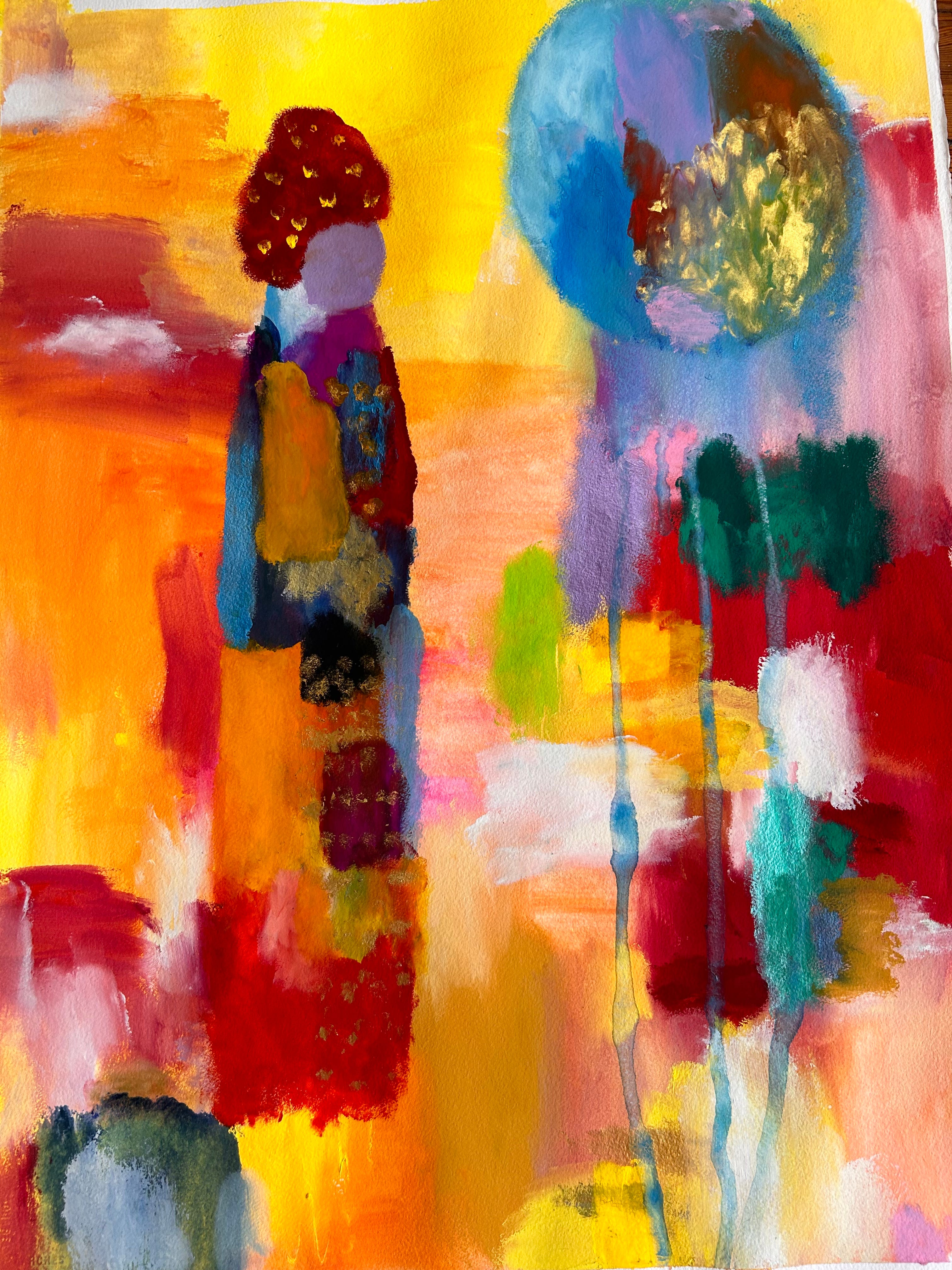
Living our Vows
In order to live our vows, or to live from our life purpose we will encounter challenges. During this talk we explore some common inner challenging voices or parts of us that may get activated as we endeavor to live our vows.These voices in voices dialogue parts work are often named the perfectionist, pusher and inner critic.As we conclude this series of talks on vow and purpose—we remember the mystic’s vow. The mystics vow, is a vow of immediacy. Right here–can you see the fulfillment? It invites us into deep presence. Into the truth of completion, perfection. The treasury of luminosity is right where you sit, shining from your heart, seeing with your eyes. The radiant light of awakened nature shines forth from every being, all at once. Buddha nature or awakened nature, isn’t something we get, if we are good, in the future. Buddha nature, awakened nature is us. Hakuin Zenji says it this way: This earth where we stand is the pure lotus land, This very body, the body of BuddhaWhen we awaken the mystic’s vow—we awaken to the ordinary perfection of things as they are. What a delicious invitation, to move from a great completion. To see the fulfillment even as we practice and actualize our purpose and vows. This is a public episode. If you'd like to discuss this with other subscribers or get access to bonus episodes, visit amykisei.substack.com/subscribe

Making Impossible Vows
We live our visions for ourselves and the world. If we see that world as a hopeless place, inevitably we will treat it as such.The Buddhas and Ancestors remind us, that this very land is the place of awakening, this very body, the body of awakening.This talk is an exploration in connecting with our biggest vision for ourselves and the world. As well as some practical magic for connecting with support from our human and more-than-human allies. This world is mysterious, if we allow ourselves to open to the unseen help available, we too can embody the impossible vows of the Buddhas and Ancestors.What vision are you cultivating?What vows are you living? This is a public episode. If you'd like to discuss this with other subscribers or get access to bonus episodes, visit amykisei.substack.com/subscribe

Life Purpose as Koan
The Dharma empowers us to ask essential questions. This talk is an invitation to question, to really question and to live into these questions. Often when we think about our life purpose, we makes assumptions about ourselves and the world that stem from fixed beliefs or inherited perspectives. For example the dharma invites a very different view of ourselves and the world, then say neo-capitalism does. The dharma invites us to see ourselves as a network of inter-relations, our lives completely intertwined with the lives of the natural world, animals, plants, the great earth and sky, the people on our block and all over the world. How does our sense of life purpose change when we open to experience of deep interconnection? This talk is a deconstructive contemplation. An invitation to question. An empowerment to sit with a question. To let self, world, purpose live as questions in your heart. This is a public episode. If you'd like to discuss this with other subscribers or get access to bonus episodes, visit amykisei.substack.com/subscribe

The Unconditioned Vow
The question of life purpose is one that comes up throughout our lives. Maybe you are in a life transitionMaybe you started out pursuing one career because family or societal pressure and now want to do something that is more in alignment with your heartMaybe you are in a career change for another more unexpected reasonOr are feeling the heat of the climate crisis and fraying of culture–that you wonder–what can be done? What can I do?To be willing to ask the question What is this life about? What is my offering? What do I do now, with these resources and time? What is my legacy? What is my Vow? Or Heart’s Aspiration? Has the potential to connect us to something beyond or individual human life. This talk is an exploration of our unconditioned vows or primary vows. An exploration of what we want to live for or from, no matter what the conditions of our lives. Whether we are healthy, sick, in a natural disaster or working a job that we don’t like, but need. What is the moment to moment vow or intention that guides your life?How do we re-connect to our heart’s aspiration when maybe we feel confused or out of sync? The unconditioned vow is the foundation for re-connecting with purpose. This is the first talk in a series of talks exploring vow and life’s purpose from a dharma lens. This is a public episode. If you'd like to discuss this with other subscribers or get access to bonus episodes, visit amykisei.substack.com/subscribe

What is Practice?
A common phrase you may hear in Zen meditation groups is: What is your practice? In this talk I explore the thread that runs through all practice forms, as well as clarifying how our different meditation methods (concentration, embodiment, inquiry, loving kindness/compassion and open awareness) fit together. This is an exploration of the spiritual path in both the broad and specific ways it manifests in our lives. This is a public episode. If you'd like to discuss this with other subscribers or get access to bonus episodes, visit amykisei.substack.com/subscribe

Practicing with Fear & Anxiety
Part of being human is that we have big emotional responses or have emotional responses. There is nothing wrong with having emotional responses. What often happens is that we are afraid of feeling our emotions. We are afraid of our fear.Parts-work has one way of languaging this that I have found helpful, buddhism has another way which I also feel is helpful.In parts-work language: parts of us got the message when we were young that it wasn’t OK to be afraid, or sad, or needy, or ashamed. So the parts that feel these emotions are often quite young and quite shunned in our inner system. Other parts learned how to manage our emotions or protect our system from feeling overwhelmed by these emotions by doing the various things we do to distract ourselves from the present moment, from the embodied emotional experience that is happening.This can be anything from working hard, to eating, to phone scrolling, to partying, to spacing out, to anger outbursts, to exercise, shopping, etc… even some forms of meditation–take us out for a while. These strategies aren’t bad, and you can see there is a spectrum of skillful - unskillful responses.So how do we practice with fear and anxiety?Practice is always about attention / compassion, awareness / love, presence / acceptance. First we need to notice what is happening (presence)…Listen to the Podcast episode for more! This is a public episode. If you'd like to discuss this with other subscribers or get access to bonus episodes, visit amykisei.substack.com/subscribe
Opening the Skies
Spaciousness/emptiness is considered the Ground of Being or the Mind-ground—the heart of who we are. Here spaciousness is love. But maybe not love in the traditional way that we think of love, which is often conditional. Often our loving has to do with–if you really loved me you would do…or say…or show it in some specific way that we feel like we need, or want, or must have in order to really feel or know love.Spaciousness is love unbounded, completely unconditional–a pure kind of love that is almost impossible to imagine, because we are so conditioned to think of love in a particular way. To think of love the way that we think of human love, which again is conditioned–because often we bring our fears, attachments, longings, desires + hidden agendas to our loving.Spaciousness-love is the love that accepts, knows, embraces whatever it is that is arising in the moment–simply because it is, simply because it is what’s happening.What’s amazing and inconceivable and miraculous is that spaciousness-love is our most intimate experience. It’s functioning within each of us, all of the time. Deep fundamental acceptance is the heart of who we are. This is a public episode. If you'd like to discuss this with other subscribers or get access to bonus episodes, visit amykisei.substack.com/subscribe

Unpacking Emptiness
Emptiness is an often misunderstood concept in modern Buddhist practice, partially because it is not really a concept so much as a realization. Yet, without the concept we can’t really prepare for what opens up in this path of practice or we may miss the freedom that is part of this path. To talk about emptiness is of course, not the same as realizing emptiness.In this talk I unpack emptiness as well as exploring how it fits on the paths of practice--exploring the Buddhist path as a path of healing and liberation. This is a public episode. If you'd like to discuss this with other subscribers or get access to bonus episodes, visit amykisei.substack.com/subscribe

The Heat of Spiritual Longing
Exploring the Great Element Fire we are invited into the heat within our bodies. Fire illuminates the heat of our living and connects us to our passions. In this talk we are invited to feel the heat of life within and also to reflect on spiritual longing. This is a public episode. If you'd like to discuss this with other subscribers or get access to bonus episodes, visit amykisei.substack.com/subscribe

The Waters of Compassion
In the Mountains and Waters Sutra, we are invited to study water--to take it up as our body and mind? This level of intimacy is characteristic of the Zen school. Water is alive and life-giving. In Mahayana Buddhism the archetype of Compassion is depicted as the Goddess Kannon, transmuting her tears of grief for the suffering in the world, into Compassion.This Dharma Talk explores the teachings of the waters of compassion. Compassion can meet us in the places that feel unbearable. Compassion can help us open our hearts to our emotional challenges, vulnerabilities and pain. And also give us the strength to show up for others and our world. This is a public episode. If you'd like to discuss this with other subscribers or get access to bonus episodes, visit amykisei.substack.com/subscribe

Rivers of Experience; Ocean of Awareness
The Water Element makes up around 65% of the human body. To attend to the element water we are invited to feel the gravity and flow of embodied experience. Contemplative practitioners throughout time use the images of bodies of water: ocean, lake, river -- to point to aspects of our nature. Flowing yet still, wavey and deep -- the invitation is one of all inclusive awareness, where wave and ocean, drop and lake are of one substance.Discover the playful joy and freedom of opening to the dimensions of your being. This is a public episode. If you'd like to discuss this with other subscribers or get access to bonus episodes, visit amykisei.substack.com/subscribe

The Wisdom of the Earth Element
The first of a five series exploration into the teachings of the Five Great Elements. In this episode we explore the Great Element Earth through embodiment, presence, contemplations on interconnection and the practice of generosity.If we lose connection to the Earth, our lives are chaotic.—Zenju Earthlyn ManuelHow do you stay embodied? How do you practice presence? This is a public episode. If you'd like to discuss this with other subscribers or get access to bonus episodes, visit amykisei.substack.com/subscribe

Practicing the Profound: Waking up to this Sacred Life
What we believe shapes how we perceive. If we think that we are separate from all the rest of life, we live an isolated life--ignoring the everyday magic of the earth, relationships and our human hearts and minds. In this episode we explore how view shapes our life, and what it's like to try on different views. Such as seeing our life as sacred. We also explore the practice of presence as a celebration of our unique beingness, and the freedom and creativity offered in the profound practice of presence. This is a public episode. If you'd like to discuss this with other subscribers or get access to bonus episodes, visit amykisei.substack.com/subscribe

Count the Stars in the Night Sky: Zen Koans and the Imagination
The miscellaneous koans of the Zen lineage are image rich, as is much of the teachings on awakening found in the Zen literature. In this talk we will open to the image of the koan Count the Stars in the Night Sky and discover within our own soma the wisdom and power of such a simple phrase.This is an invitation to enter both body and image as a way of utilizing the imagination as part of the awakening process. This is a public episode. If you'd like to discuss this with other subscribers or get access to bonus episodes, visit amykisei.substack.com/subscribe

Approaching Emptiness through Koan Practice
One of the great gifts of the Zen tradition is it's teachings on emptiness. Far from being nihilistic, the teachings and practices of emptiness remind us of the inherent spontaneity and creativity of the universe. This talk explores koan as a technology of awakening, and invites us into koan practice in an engaging way. Time is spent exploring the koan, Everyone Has Their Own Light by Zen Teacher Yunman, from the Blue Cliff Record. This is a public episode. If you'd like to discuss this with other subscribers or get access to bonus episodes, visit amykisei.substack.com/subscribe

Emptiness, Unknowing and the Dark
In this dharma talk Kisei explore's the phrase from Hongzhi in Silent Illumination:If serenity neglects illumination; murkiness leads to wasted dharma.This life is a play of emptiness and illumination, yin & yang. When the emptiness side (which also can be defined as silence, serenity, darkness, unknowing) gets off balance--what happens to our lives? our practice? our awakening?This talk is a deep exploration of the ins and outs of emptiness. This is a public episode. If you'd like to discuss this with other subscribers or get access to bonus episodes, visit amykisei.substack.com/subscribe