Earth Dreams: Zen Buddhism and the Soul of the World
Zen Buddhism, Dreams and the Soul of the World
Amy Kisei
Show overview
Earth Dreams: Zen Buddhism and the Soul of the World has been publishing since 2022, and across the 4 years since has built a catalogue of 106 episodes. That works out to roughly 55 hours of audio in total. Releases follow a fortnightly cadence.
Episodes typically run twenty to thirty-five minutes — most land between 28 min and 37 min — and the run-time is fairly consistent across the catalogue. None of the episodes are flagged explicit by the publisher. It is catalogued as a EN-language Religion & Spirituality show.
The show is actively publishing — the most recent episode landed 3 weeks ago, with 21 episodes already out so far this year. The busiest year was 2025, with 31 episodes published. Published by Amy Kisei.
From the publisher
Zen Buddhist teachings point to a profound view of reality--one of deep interconnection and non-separation. Awakening is a word used to describe the freedom, creativity and love of our original nature. This podcast explores the profound liberating teachings of Zen Buddhism at the intersection of dreamwork and the soul. The intention is to offer a view of awakening that explores our deep interconnection with the living world and the cosmos as well as to invite a re-imagining of what human life and culture could be if we lived our awakened nature. Amy Kisei is a Zen Buddhist Teacher, Somatic IFS Spiritual Counselor, Astrologer and Artist. She practices and teaches at the confluence of spirituality, psychology and somatics--affirming a wholistic path of awakening. You can learn more about Amy Kisei's upcoming retreats and/or 1:1 work on her website: https://www.amykisei.org/ amykisei.substack.com
Latest Episodes
View all 106 episodesLeaning Together
sparkling in pure light
All is blessed, all is blessed
Nothing in this World Frightens Me
equanimity's full range
the size of awakening?
Let the soft animal of your body, love what it loves
Shadeless Trees
Actualizing Care, Recognizing Beauty
Not-knowing is Love
In Praise of Poetry
Encounters with the Stone Woman
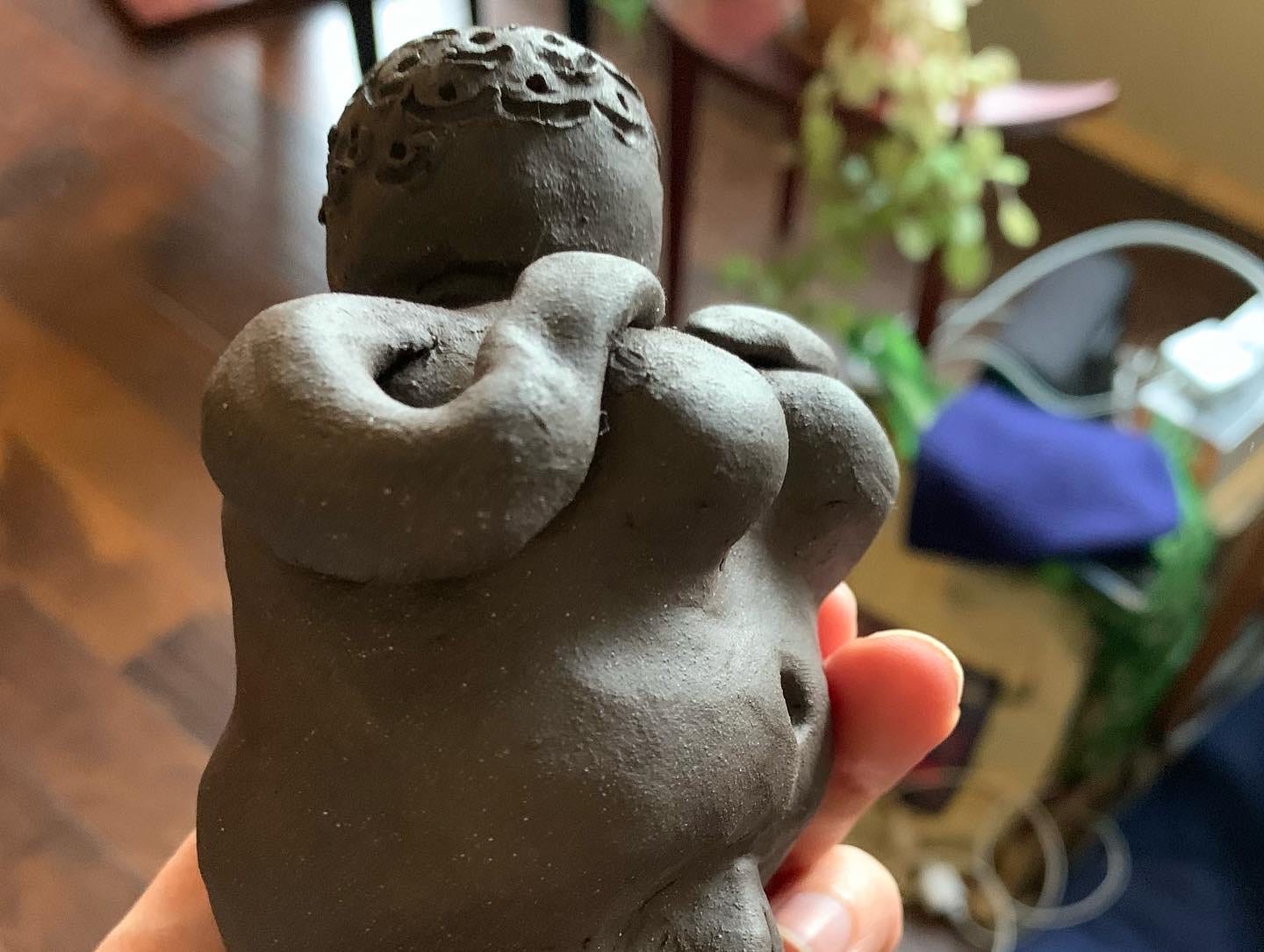
One of the figures that we encounter in the Zen literature is the stone woman. In the Precious Mirror Samadhi we find her dancing, in another story she calls us back from our dream of the world.In the study of the Mountains and Rivers Sutra, she shows up early on when Dogen quotes Furong Daokai. “The green mountains are always moving, a stone woman gives birth to a child at night.” He then comments on the stone woman, saying:“A stone woman gives birth to a child at night” means that the moment when a barren woman gives birth to a child is called “night.” There are male stones, female stones, and nonmale, nonfemale stones. (13) They are placed in the sky and in the earth and are called heavenly stones and earthly stones. These are explained in the ordinary world, but not many people actually know about it. You should understand the meaning of giving birth to a child. At the moment of giving birth to a child, is the mother separate from the child? You should study not only that you become a mother when your child is born, but also that you become a child. (14) This is the actualization of giving birth in practice-realization. You should study and investigate this thoroughly.So, who is this stone woman? Have you met her? Have you taken the time to hear the stories of the mountains, the stars, the river rocks, the stones you encounter on your walk? What is their experience of night? Of birth? Of silence, life, time and human?The Stone Woman SpeaksThere are stories told throughout the world, throughout time about the lives of mountains, stones, trees and the natural world. Stories of how the mountains were made. How the world was made, stories of creation. There are even stories of women being turned to stone. When I was living in the Pacific Northwest, I learned some of the creation myths of the indigenous people who live in the region. In the telling, the local mountains have a prominent role. The Chinook tell of Thunderbird laying eggs on top of Saddle Mountain, which an ogress will then throw down the Mountain, peopling the area.The Klickitat story involves the formation of Wy’east (Mt. Hood), Pahto (Mt. Adams) and Loo-wit (Mt. St. Helen’s). In this story Loo-wit is a beautiful woman, who once guarded the first fire for the Great Spirit. Wy’east and Pahto were brother warriors who both fell in love with Loo-wit, and started fighting over her by spitting fireballs over the land. Eventually Great Spirit turned them into stone, mountain-volcanoes—banishing the Stone Woman Loo-wit up to the northern regions.Do you know some of the stories about the mountains, rivers or landforms in your area? Or ones you have visited? Have you ever listened to or heard the story of a tree, rock, flower, river or some other being in the natural world?During the Grasses and Trees Sesshin at Great Vow Zen Monastery on the fourth full-day of the retreat we often invite participants to have sanzen with a being in the natural world. Sanzen, which means sitting zen together, is what we call the 1:1 practice meetings in Zen. We are invited to meet a blade of grass, a pond, a noble fire, sky with an open mind, a question, a willingness to listen and learn from. Often people come back with a story of transmission. Something happened in the encounter, often part of the practice involves a willingness to listen to the silence—for the natural world often doesn’t speak in human language.Mysterious TransmissionsThis image of the stone woman is also pointing to prajna paramita, the mother of all buddhas, wisdom beyond wisdom. To encounter the stone woman, is to meet the night, the darkness of not-knowing, the pure potential energy that we are—the great mystery. We are invited into the dark-unknowing, the womb of pure potential—where we become one with the wisdom of the ancestors, where we are born anew.From this place our life emerges, from this place it is fulfilled. —HongzhiFor more explorations of the stone woman giving birth at night, listen to the dharma talk. I would love to hear any reflections that you have. It’s poetry month, and I am also exploring encounters with the stone woman through poetry.The Stone Woman Speaks(a poem) the stone woman lives in the foundation of my house but also, in the potholed alley the river bed & on the rock face of the glen. she who was —before— people, animal, name. she who will be here —after— we are no longer. she speaks in cool, smooth ancient sounds the kind that turn you around and let you hear the voice of your own —inner silence.Weekly Online Meditation EventMonday Night Dharma — 6P PT / 9P ET Join weekly for drop-in meditation and dharma talk. We are currently exploring the Mountains and Waters Sutra by Dogen Zenji.Feel free to join anytime. Event lasts about 1.5 hours. ZOOM LINKIn-Person in OregonLight of the Ancestors Sesshin—May 11 - 17 at Great Vow Zen MonasteryGrasses, Trees and the Great Earth Sesshin— August 10 - 16 at Great Vow Zen MonasteryIn-Person in Columbus, Ohio through Mud Lotus Sang
Circling Back to Ourselves
Greetings Friends,Happy April Fool’s Day! Last week I had the opportunity to co-facilitate a Zen sesshin in the mountains of West Virginia at Saranam Retreat Center.Sesshin, a zen-style silent meditation retreat which translates as touching the heart-mind, has been a huge part of my adult life. While living at Great Vow Zen Monastery, I practiced sesshin together in sangha for a week every month. Such is the rhythm of monastic life we enter this cauldron of awakening together and let our hearts and minds simplify to reveal their true nature.Preparing for sesshin has a feeling of preparing for death— for opening to oneness is not the ego’s domain. Sesshin is grounded in the aspiration to awaken with all beings. An impossible vow that truly we are entangled in, this springing forth of great love is actualized through our practice—realized in this heart.For the dharma teachings are not just “good ideas” but insights we can come to know in our bones, as our body-mind.There is something utterly incomprehensible about sitting together in silence and allowing ourselves to be touched by the great mystery.To return from sesshin is impossible, and yet—here we are. Back from the dead, changed, transformed. Heart’s silent presence alive in our inter-relations. Vow awakened and lived into here-and-now.This is compassion!During sesshin we practiced with Dogen Zenji’s Mountains and Waters Sutra. Which I have been giving dharma talks on over the last few weeks, during the online Monday Night Dharma. This week we explored the practice of circling back to study ourselves. In the Mountains and Waters Sutra, Dogen says:The blue mountains devote themselves to the investigation of walking; the East Mountain studies “moving over the water.” Hence, this study is the mountain’s own study. The mountains, without altering their own body and mind, with their own mountain countenance, have always been circling back to study themselves.We encounter circles throughout this path of practice. As I said above, I circle back to sesshin regularly. Many of you have the experience of circling back to this practice of zazen-meditation. The study of the mountains and rivers sutra is a circling back to a teaching I have practiced with for over a decade. What do you find yourself circling back to in your practice-life? As we enter the season of Spring, what is beginning again for you? How are you circling back to yourself? This circling back to study ourselves is one of the core instructions for zazen practice—to recognize our original self, the unborn buddha mind. Listen to the Dharma talk for more explorations of this teaching in the Mountains and Rivers Sutra. I reference the chant-able version of the Mountains and Waters Sutra which you can find here.Below is a poem inspired by the practice of circling.Mountains Circling Back to Realize Themselves Circle back study yourself Who are you? What hears? Who is breathing this breath? What feels the heart beating, the touch of clothing, longing, aspiration? Circle back and listen to yourself What is your heart’s song? Do you know the compassion that you are? Are you in touch with this aspiration to awaken, to liberate all beings? What is the shape of your vow? What is the size of your heart? Can you see that it truly includes the entire world? Circle back and be yourself See that you too are mountain, and flowing You were never born, you will not die Circle back and love yourself For you are dying, too Wonder at this Self This miracle that you are Let yourself be amazed By this life you live Appreciate the challenges, the joys, all the happenings That make you — you Circle back, greet yourself For you are ancestor Parent, protector, caregiver, teacher, friend, guide To this earth, your family, community, all beings And you are also child A student of life, learning, being guided, protected Cared for by this earth, and all your inter-relations Circle back and meet yourself As you are born, from the stone woman From the dark Even as you age You are new Like spring Like a flower budding Circle back home to yourself Rest In the vast openness Of your original Heart-mind Always right hereBecoming Circle What must relax in you To become a circle? What assumptions made about who we are and why we are here Must dissolve So that feet can walk back towards head as ground rises up To meet the sky We who once stood erect in the middle Like pillar or tree Like mountain Now find ourselves Turning inside-out Walking backward as we move forward Being planet Or globe Flower Or mandala Or something else entirely Weekly Online Meditation EventMonday Night Dharma — 6P PT / 9P ET Join weekly for drop-in meditation and dharma talk. We are currently exploring the Mountains and Waters Sutra by Dogen Zenji.Feel free to join anytime. Event lasts about 1.5 hours. ZOOM LINKIn-Person in OregonLight of the Ancestors Sesshin—May 11 - 17 at Great Vow Zen MonasteryGrasses, Trees and the Great Earth Sesshin— August 10 - 16 at Great Vow
Mountains and Rivers are Sutra
I will be joining the Mud Lotus Sangha in West Virginia for our first sesshin of the year. Sesshin is now often translated as a Zen-style meditation retreat. But the words meditation and retreat are mis-leading. It is in its truest sense a practice of recognizing our true nature, of touching, encountering the heart-mind that abides everywhere.We are going to the mountains of West Virginia to practice. Stepping back into Mountain time to learn from the mountains, waters and great earth. To be students to the world before thought, which continues to blossom in the midst of all our human-made problems.Preparing for sesshin is like preparing for death.It is preparing for the unknown, for encountering the mystery. It is a practice and path of discovering who and what we are when we aren’t engaging constantly in the impulses and desires of modern life—with its near endless supply of surface level distractions and pleasures—that often keep us from encountering the deep questions and true satisfaction of our being.During sesshin we will be exploring the Mountains and Waters Sutra by Dogen Zenji. And we are also taking up this sutra on Monday nights, as part of the Monday Night Dharma teaching offered weekly on zoom (more info below).It is a beautiful teaching that scholars, ecologists, practitioners, artists, mystics, activists, poets have turned to over the centuries for inspiration on this path of being human, of living awake to our deep interconnection with all beings.So for the next couple months, we will be walking in the mountains together. We will be journeying in Mountain Time, studying the teachings of mountains and waters and how they are relevant in our own lives as modern, urban, technological beings. One of my questions is, can the teachings of mountains and waters, the teachings in this sutra and other teachings we find throughout buddhism about mountains—can they meet us in this current moment? Can they meet us here in what feels apocalyptic? What do the mountains and waters have to teach us about hope/fear, gain/loss, life/death, awakening/delusion, joy, compassion, equanimity, freedom and how to live together on this earth or even in this cosmos?The first line of the sutra says:These mountains and rivers right now are an actualization of the ancient buddha way.Pay attention to the mountains and waters, they are teaching us, they are the expression of the awakened ones, they are the way!People throughout cultures and traditions regard the mountains as sacred, regard the natural world as sacred— as teachers, as expressions-embodiments of our true nature. Mountains are mythic and evoke the spirit. They are often personified as spirit beings, praised, worshiped and prayed to. Many mountains are pilgrimage sites, temples were built on them, ceremonies are conducted on them. To live on the mountains, is to live with the mountains, to simplify—to be humbled and vulnerable in the mountains presence.To take up mountains and waters as sutra, is to encounter this ancient way of being, is to connect with our ancestors, is to connect with the Earth as ancestor and realize our deep inter-being with all of life.Are we willing to humble ourselves before the mountains and waters?Are we willing to hear their teachings?What kind of listening is required—to encounter earth as ancestor, lover, friend, mother, as the way, the path, true nature itself?Are we willing to abide in mountain time, to open to the deep time, presence and pace of mountains?Can we do this as modern people? Is this teaching relevant to us as people who are intertwined with technology and the creature comforts of urban life? What might we have to change, give-up, surrender or open to? Is it possible to study the sutra of mountains and rivers, right here—in our daily lives?Throughout the study and practice of reading this sutra, contemplating it and putting it into practice—we will encounter these questions and more. We will get to experience a new appreciation for what the mountains and waters are, how they are teachers, buddhas, and the way.The first paragraph of the sutra says:Mountains and waters right now are the actualization of the ancient Buddha way. Each, abiding in its phenomenal expression, realizes completeness. Because mountains and waters have been active since before the Empty Eon, they are alive at this moment. Because they have been the self since before form arose they are emancipation-realization.And I will leave it there for today. Listen to the podcast episode for more and join us tomorrow as we dive deeper into the sutra and the practice of mountain-walking. Feel free to share any comments or thoughts below!Weekly Online Meditation EventMonday Night Dharma — 6P PT / 9P ET Join weekly for drop-in meditation and dharma talk. We are currently exploring the Mountains and Waters Sutra by Dogen Zenji.Feel free to join anytime. Event lasts about 1.5 hours. ZOOM LINKIn-Person in OregonLight of the Ancestors Sesshin—May 11 - 17 at Great
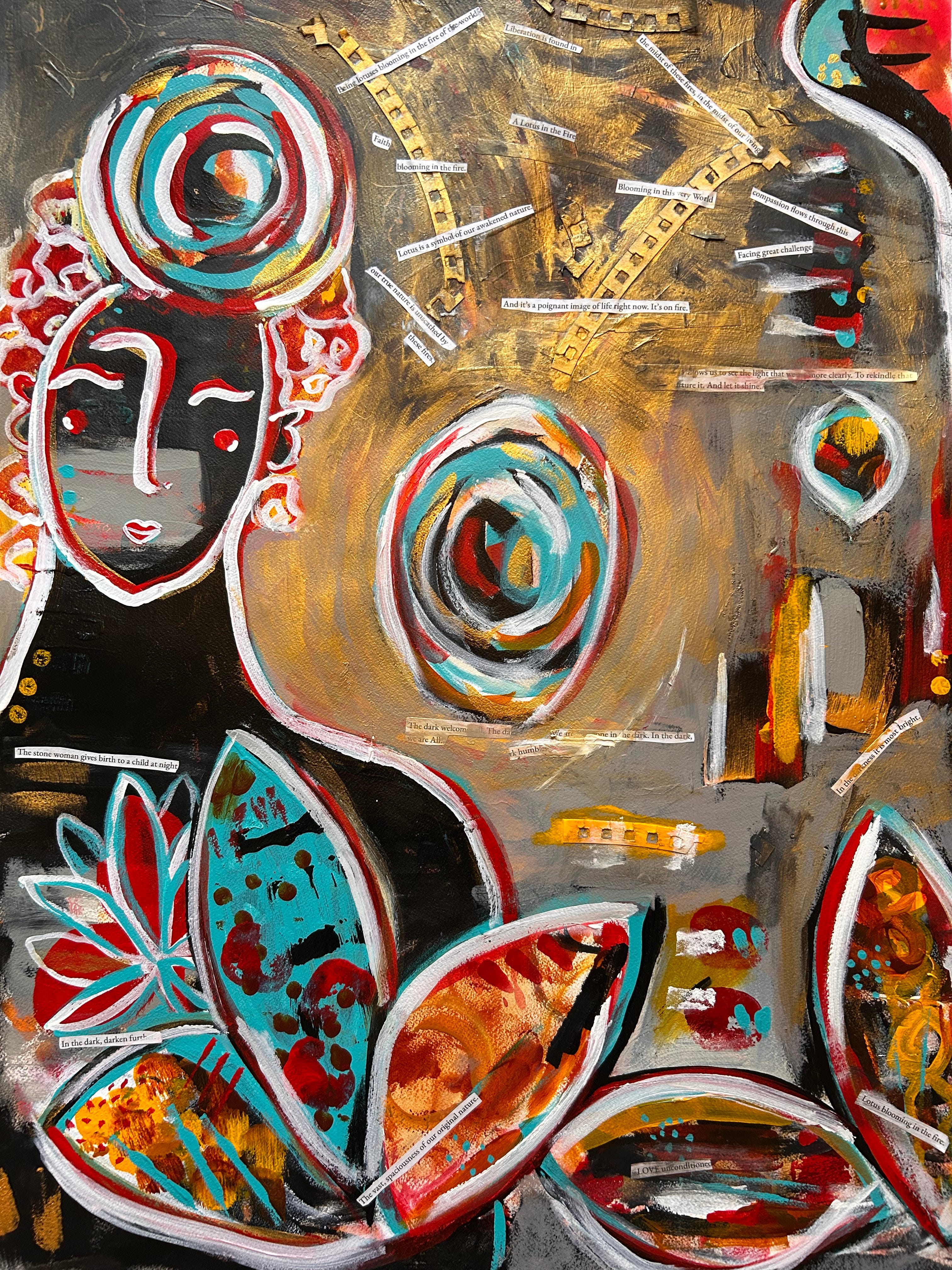
Being Born and Unborn
Greetings Friends,This past weekend I had the opportunity to join the Pause Meditation community for a deep dive into practice around the theme of the beginner’s mind. In the Zen tradition we celebrate the beginner’s mind. For it is both the unborn buddha mind— our original mind which is always right here and our curious, open mind that is constantly being born anew. So very much like the energy of spring, life is constantly bubbling up, recreating itself, blossoming in our awareness. “In every adult there is a child – an eternal child, something that is always becoming, is never completed, and calls for unceasing care, attention, and education. That is the part of the human personality which wants to develop and become whole.” —Carl JungThis podcast episode is a recording of the talk I gave about the Beginner’s Mind to the Pause Meditation Community and below is a guided meditation on recognizing the unborn buddha mind, the mind at home in itself.Also, in celebration and praise of the one who is always being born (tomorrow is my birthday) and to the unborn buddha mind in us all—I wanted to share a fairy tale I wrote. Fairy tales, folklore, myths and stories have been with us throughout human history. I find that they invite us into the mystery, as they attempt to story and image that which we can’t explain. They can leave us open to a world ensouled and to the inexplicable nature of reality.I’ve always appreciated that two folktales are included in the Mumonkan, one of the more popular collections of Zen koans and teaching stories. Like koans and dreams, fairytales invite us to consider all the characters, animals and landscape as our mind, as the various manifestations of one psyche.Happy Birthday, may you enjoy this tale and the great dream of this life!Also, starting tonight during the Monday Night Dharma practice we will be exploring the Mountains and Rivers Sutra by Dogen Zenji. I have some curiosity about practicing with this sutra during this seemingly apocalyptic time on the planet. How can the teachings of Mountains and Rivers and the unborn Buddha Mind meet us in this moment? What happens when we bring all our doubts, fears, confusions, grief, longings, etc. to this sutra & to our practice?the girl, the magician and the great tree (a fairy tale)Once upon a time there was a forest and in that forest there was a girl. The girl loved the forest and the forest loved the girl. By day the sun shone brightly, and she herself was radiant, she paraded with the panthers and lounged with the lions. At night the stars became her blanket and she dreamed vivid colorful dreams. She always felt safe and protected in her forest home.Time passed and the girl grew older. Her body started to change and with that change the forest seemed to change too. Parts of the forest grew dark. She often heard strange sounds, bad sounds, sounds that no being should ever hear—coming from those shadows.The girl started to feel fear and spent more time by herself. One misty morning as the girl was walking alone, a magician appeared from the shadows and greeted her. He told her he was on a journey to find the Great Tree, as he was hoping to make a prayer so that he may gather its fruit as medicine for his ailing mother, who was sick at home with night terrors.The girl once knew the Great Tree well. It was the place in the forest she first called home. Its bark was like the ocean, its roots ran through the entire forest and its fruit was splendid, every imaginable food and medicine grew from its branches. She and the animals would eat its fruit, and take its medicine whenever they were sick or injured. The Great Tree always provided them with all they could ever need.She wanted to help the boy find the Tree she loved so much. But she couldn’t remember where it was. Every path once led to the Great Tree, but now they all seemed to end in the shadows. Suddenly it hit her that she didn’t know where she was. She honestly couldn’t remember the last time she had been to the Great Tree.Instinctively, she reached into her pocket to touch the two golden seeds she kept there. Instead of providing comfort and clarity, as they usually did, she fell into a deep sleep. The magician took the golden seeds from her hands and immediately knew the way to the Great Tree.When the girl finally awoke she realized her golden seeds were gone. These were all she had from the Great Tree. It was like her whole life was being stolen from her, and she was left in the darkest of dark places.Then, a raven appeared and lifted the girl up by her shoulders, flying her deeper into the dark. Before the girl knew what was happening the raven cawed three times and released her. There she was face to face with an opening door and a huntsman.“You knocked?” Said the huntsman. “Well I did, and I didn’t” responded the girl.The huntsman liked this answer and he invited her to come in, as he was just about to fix his morning coffee and toast, and thought she might like to join h
the world is not what we name it or think it
I wanted to share with you a profound, beautiful and somewhat unsettling teaching from the Diamond Sutra.I would say its unsettling precisely because it is so radical, it touches something true that we know at the core of who we are, and it also reminds us that everything we think we are or think the world is —is not the whole story, our thinking inevitably misses something.we are inconceivable in our nature—and we all have, the same bright, clear, open, ungraspable heart-mind.here’s the verse from the diamond sutra, may you practice its profundity and dwell in the mystery of being.the world is not what we name it or think it, and there is no enduring thing that is self or other, each object and being in this fleeting world is like:A star at dawnA bubble in a streamA flash of lightning in a summer stormA flickering flameA wisp of smokeA dreamlisten to the podcast for a deeper exploration of the teachings from the diamond sutra.until next time,kiseiWeekly Online Meditation EventMonday Night Dharma — 6P PT / 9P ET Join weekly for drop-in meditation and dharma talk. We are currently exploring the Mountains and Waters Sutra by Dogen Zenji.Feel free to join anytime. Event lasts about 1.5 hours. ZOOM LINKOnline Meditative Deep Dive with Pause MeditationBeginner’s Mind Saturday March 7th from 10A PT/1P ET - 11:30A PT/2:30P ETIn-Person in OregonLight of the Ancestors Sesshin—May 11 - 17 at Great Vow Zen MonasteryGrasses, Trees and the Great Earth—In-Person in Columbus, Ohio through Mud Lotus SanghaWeekly Meditations on Tuesday, Wednesday and ThursdayRetreats, Meditation instruction and other events can be found on our website.Upcoming Sesshins at Saranam Retreat Center in West VirginiaMountains and Rivers Sesshin March 18 - 22 (Registration is now open!)Mountains are high and wide. The movement of clouds and the inconceivable power of soaring in the wind comes freely from the mountains. —Dogen Zenji, Mountains and Waters SutraDuring this silent, Zen-style retreat we will practice with the mountains and waters, opening to our own mountain-stability and the flowing nature of all experience.Meditation provides the opportunity for intimacy with self and world, recognizing the interconnectedness of this very life. Healing and transformation happen as we abide in the mystery of who we truly are.This will be a silent meditation retreat. After an initial meal, set-up and orientation we will enter noble silence. Supporting each other in connecting with our own inner silence, stability and confidence. We will follow a rigorous daily schedule which includes roughly seven hours of seated meditation, interspersed with periods of walking meditation, chanting practice, dharma talks, opportunities to check-in with one of the practice leaders, outdoor meditation sessions, mindful eating practice during meals, a late morning care-taking practice and breaks where participants have the opportunity to rest, exercise and explore the beautiful grounds and nature.Interdependence Sesshin June 29 - July 5 (save the date, registration opens soon!)I’m Amy Kisei. I am a Zen Buddhist Teacher, Spiritual Counselor, Astrologer and Artist. I offer 1:1 Spiritual Counseling sessions using IFS and Hakomi (somatic mindfulness). I also offer astrology readings. Check out my website to learn more. I currently live in Columbus, OH and am a supporting teacher for the Mud Lotus Sangha. This is a public episode. If you'd like to discuss this with other subscribers or get access to bonus episodes, visit amykisei.substack.com/subscribe
Realizing the Mind that Abides Nowhere
dust returns to dust earth to earth mind always at home in itself where does it return?This past week I was reflecting on the 6th Chan Ancestor, Huineng and his encounter with a verse from the diamond sutra.Huineng lost his father early in life, and supported himself and his mother by selling firewood. On one occasion, he was selling firewood to a customer, and someone passed by chanting the words of the diamond sutra.Huineng heard a single line and was profoundly moved—it touched something in him and his heart was opened.He managed to stop the person who was chanting to inquire as to what the origin of the verse was and found out that it was from the diamond sutra, and a teacher in a distant part of the country was encouraging their students to chant this sutra.For Huineng, this was a “call to adventure moment.” He knew he needed to meet this teacher, which meant leaving his current life. For Huineng, this worked out. He was able to find someone to care for his mom, and he set out on a difficult journey to meet this unknown teacher.I feel like this story is relatable. Has something like this ever happened to you? Have you ever heard a phrase from a song, poem, a prayer or a teaching and it touched you profoundly? It stoped you. Perhaps caused you to find out the source of the words, or left you on a quest to discover who wrote it? what book was it from? These moments can take us on an adventure of discovery. But also, more importantly—the words themselves touched something that is beyond words. They often wake us up to the immediacy, the intimacy of this life.Sometimes this happens with words from a chant or prayer we recite regularly, or have heard often. One day, they feel imbued with a new kind of meaning.This past Wednesday was Ash Wednesday, and the words: remember you are dust, and to dust you shall return—have been with me. I remember the first time the profundity of that simple phrase really got in—I was an adult and my grandfather had just passed away.I got interested this year in the practice of lent, and read the lenten gospel from Matthew, where Jesus is speaking about prayer. He is reminding his disciples that prayer isn’t about being seen doing something great, or making some big sacrifice—but perhaps the most genuine prayer is secret, a private affair between one’s self and the great mystery.We live in a time in the world where we share intimate details of our lives on social media platforms. There isn’t anything inherently wrong about this, but I got interested in the invitation towards a secret life of prayer or meditation. I think we long for an intimacy with ourselves and the universe—the great mystery, that can’t be displayed or need not be. That gets to be hidden, secret, kept close.I had a dream recently on this theme. In the dream I was given a bright green folder and told to always keep it close. When I explored what was in the folder there was a roll of masking tape, a book I wrote in kindergarten about a tree named Fred, and vast emptiness.I was left opened to the unnameable absence—roaring silence, pure potentiality.In this task of being human, in this life’s work of discovering our true nature—words, stories, images, dreams and symbols can serve as pointers, but we all will encounter the mystery of this life for ourselves.Dharma practice invites nearness. What are you keeping close? What practices allow you to stay with your inner-most heart? To stay with your self moment-to-moment? To stay close to the vows you wish to live by?This on-going commitment to awakening is something that for most of us operates in secret, its that inner orientation, remembering ourselves back to ourselves, recognizing what is nearest.I got curious about what Huineng actually heard and so did some research to find the passage from the Diamond Sutra. Below is Steven Mitchell’s translation for the last paragraph of Chapter 10 of the Diamond Sutra.Here is what is essential: All Bodhisattvas should develop a pure, lucid mind that doesn’t depend upon sight, sound, taste, touch, smell or any thought that arises in it. A bodhisattva should develop a mind that abides nowhere.Another way this is translated is a bodhisattva should develop mind at home with itself. What is this heart-mind that doesn’t depend on thoughts or the senses, that abides nowhere, everywhere, all at once. Always at home.Andrew Holecek in his book Preparing to Die, says that this practice of recognizing the mind that abides nowhere, is the best practice to do to prepare for death—for when the body returns to the earth, the senses cease—the mind of awakening continues—at home in itself.The audio portion of this post is mainly a dharma talk on the Diamond Sutra. I reference both Steven Mitchell’s translation and Red Pine’s translation. You can find Red Pine’s translation here.I’m excited to be co-creating space this Spring and Summer for in-person sesshin/meditation retreats. As well as online immersions with Pause Meditation. See below for
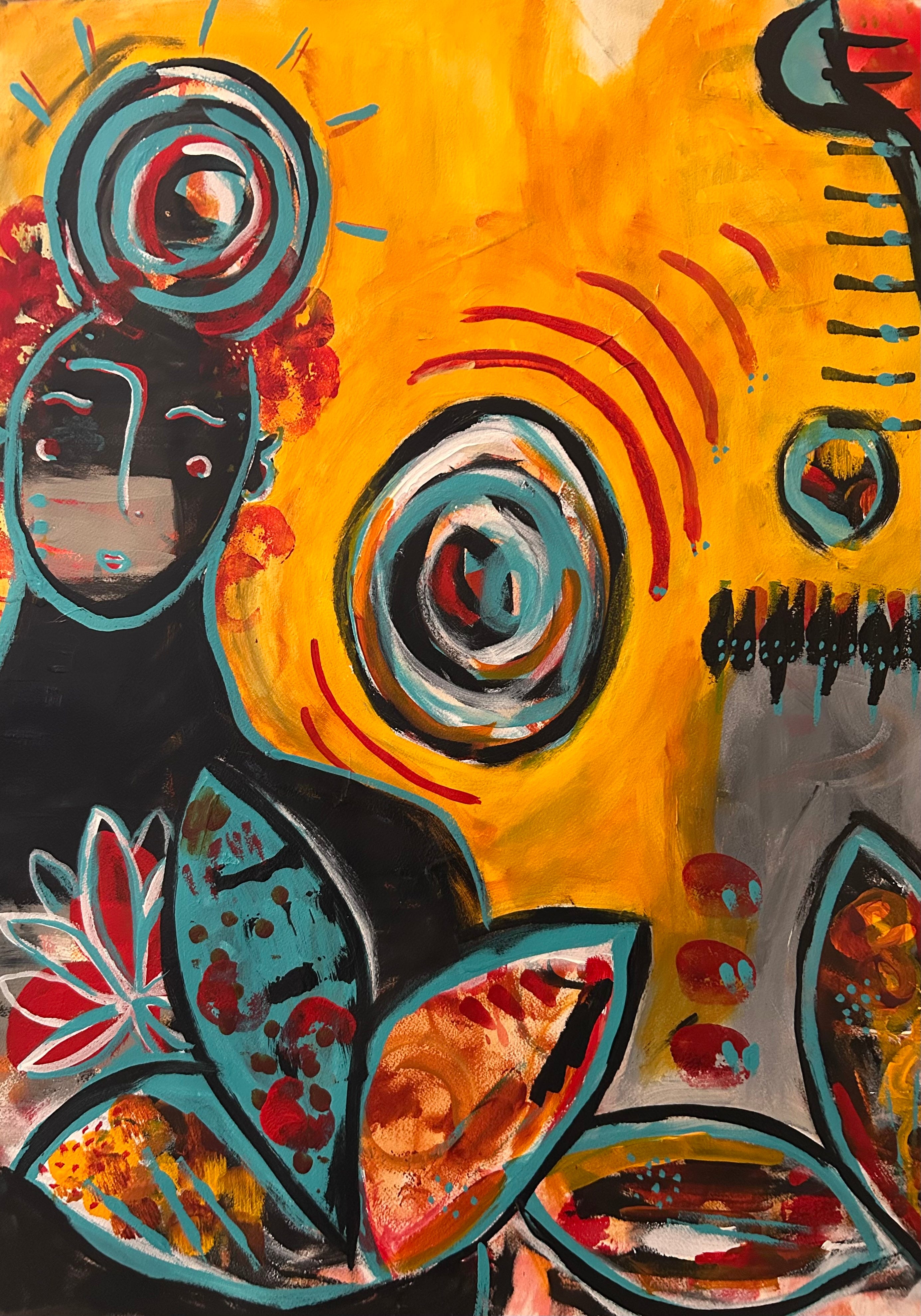
A Lotus Blooming in the Fire
A lotus blooming in the fire is an image that comes from the Zen tradition. And before I write further on the symbolism of the image or the dharma teachings it evokes—I would like to invite us to just sit with the image of a lotus blooming in the fire.For a moment, let yourself sense, imagine or feel into this image. Notice what you see, feel, hear, experience as you attempt to connect with the image of a lotus blooming in the fire. Now, if you haven’t already bring the image closer in. Sit as, be a lotus blooming in the fire.And stay with it for some time allowing associations, feelings, meanings, sensations to come and go. Returning simply to being a lotus in the fire.When you are ready, you can let the image dissolve.I am curious to hear what you noticed, what happened as you sat with or as a lotus blooming in the fire?The Power of Embodied ImaginationTo meditate with an image like this, is one form that koan practice can take in the Zen tradition. You sit with an image, becoming the image and learning about it through your direct experience. Notice how an image can contain seeming paradoxes. How can a lotus bloom in fire? Wouldn’t it burn? And yet, here it is.On Wednesday, in Columbus we did this practice with my local sangha Mud Lotus. We sat as lotuses blooming in the fire. People noticed different things about this dynamic of fire and blooming. Someone pointed out that a lotus isn’t trying to stop the fire, yet it is blooming there. Another said that it seemed like the lotus bloomed because of the fire. Others saw the lotus as a reminder of their own nature that isn’t burned in the fires of life.This image was popularized by the great Chan teacher of 11th Century China, Yuan-Wu. He used it to refer to the practice of what he called, Householder Bodhisattvas. Those of us whose practice-awakening happens in the fires of this world, in the challenges of our relationships, in our own inner conflicts or difficulties.How to be a householder bodhisattva, it requires a stand that is solid and true and faith that is thoroughgoing…When bodhisattvas who live a householder’s life cultivate the practices of deep meditation and insight, it is like a lotus blooming in the fire. It will always be hard to tame the will for fame and rank and power and position, not to mention all the myriad starting points of vexation and turmoil associated with the burning house of worldly existence. The only way is for you yourself to realize your fundamental, real wondrous wholeness and reach the stage of great calm, stability and rest. —Yuan-wuThich Nhat Hanh also used this image in his first book published in English, Vietnam: A Lotus in the Sea of Fire: A Buddhist Proposal for Peace. What are the Fires in your Life?Fire in the Buddhist tradition can be a symbol of suffering in all its manifestations. From the collective forms of suffering that appear as war, violence, injustice, conflict, misuse of power to the more personal forms of suffering that appear as anxiety, worry, terror, fear, shame, physical discomfort, pain.Fire can also be a symbol of the instability of all experience, the changing nature of everyone and everything—in Buddhism we call this impermanence.Suffering and impermanence are two of the marks of existence. A teaching the buddha gave about the nature of experience—basically reminding us that suffering and change are part of life. In the Buddhist teachings, liberation or freedom from suffering is not the absence of pain, violence, fear, change, anxiety, etc. —but is found in the midst of these fires, or whatever fires we find ourselves in.A Lotus Blooms in a Sea of FireWhich brings us to the image of the lotus.The lotus is a symbol of wholeness, it is an image of our true nature—which is always present, reliable, unbreakable yet soft—the blossoming of wisdom and compassion.To realize our buddha nature does not make the fires of our lives go away, it doesn’t mean that the fires in the world stop burning.Awakening is being the lotus blooming in the fire.Its having this refuge of love unconditioned, of spacious awareness, unbreakable kindness in every situation—even as our heart’s break, even as we feel at times like we are falling apart.The lotus of our true nature blooms— even here, even now.Even without our noticing the lotus blooms. Part of what dharma practice is all about is training to recognize the lotus of our true nature, which at times may mean finding ways to nurture and care for our practice in the midst of these world fires.Practicing with others whether it is in-person or online is a way to strengthen this refuge, to recognize for ourselves the lotus that doesn’t burn-up in the fires of stress, overwhelm, fear and all the other forms suffering can take in our lives and in this world.Listen to the dharma talk for a more in-depth discussion of the Lotus in the Fire, and Yuan-wu’s teaching on How to be a Householder Bodhisattva.I’m excited to be co-creating space this Spring and Summer for in-person s
Our Extra-Ordinary Heart
Greetings Friends,I have been reflecting on one of the simplest and perhaps most profound teachings in the Buddhist tradition— the teaching of our extra-ordinary heart. Our extra-ordinary heart is the aspect of our being that doesn’t die, and isn’t born. That isn’t dependent on us but is a deep refuge and resource—one that we know and rely on all the time. One that we also see demonstrated and embodied in our communities, on the world stage, in the people we love and care about. We are living in a time in this country that feels like we are going backward in many respects. Where state-enforced violence has entered our communities, and families are being separated, detained and deported at an unprecedented rate. While our human hearts break, fear, grieve, feel deeply, love and desire—which is beautiful and painful, and part of what makes this experience of being human.We, together, have an extra-ordinary heart—that is boundless in it’s nature and is always abiding right here. This heart isn’t separate from the very experience of being human, it is intrinsic to our nature. So we too can practice recognizing and abiding in this heart. We too can embody these qualities and let them manifest in our lives and the world.The Buddha taught that our boundless heart has Four Qualities of Boundlessness, also called the Four Divine AbodesBoundless Love/Kindness — which is a friendliness toward existence, agape or universal love, the love of Jesus Christ or Amitabha Buddha or other such figures who love unconditionallyBoundless Compassion — is a responsiveness to suffering in self or other which can have many different qualities(protective, patient, nurturing/gentle, strategic, discerning, creative, clear, resourceful)In the Zen tradition we have a story about boundless compassion. It involves two brothers walking down the road together, and one says to the other, “what do you think the bodhisattva of great compassion does with all of their hands and eyes?” To which the other brother replies, “it’s like reaching back in the middle of the night for a pillow.” Compassion is responsive; and takes many forms—so we have this image of a being with ten-thousand arms and hands. In each hand there is a different expression of compassion. So sometimes compassion looks fierce, it’s saying no to violence, it’s standing up for what we care about, other times its gentle, it’s grieving together, or care-taking each other, it can be protective, immediate, systematic and strategic.Boundless Joy — playfulness/spontaneity of being-realityI think we have a meme in our culture, “if you are happy you aren’t paying attention.” But play and creativity have always been part of the resistance, we find the trickster archetype in myths throughout human cultures. We find it throughout spiritual traditions as well from the play/spontaneity of the zen koans to the poetry of the mystics like hafiz, cold mountain and la ded. There is a lot of play, joy and creativity happening in the protests in Minneapolis right now.But boundless joy also speaks to being happy for no good reason, causeless happiness. It’s wonderful to experience the joy of simply being alive. No one can take that away from us.Boundless Peace/Equanimity — this is the wisdom of the deep equality or oneness of all things. Perhaps the hardest to conceive of, because it’s like the peace and presence of the sky. The sky simply allows all forms of weather to move through it, clouds, heavy rains, snow, tornadoes, planes, birds, sunsets all happen in the spaciousness of the sky. The sky simply allows.Our true nature is like the sky. Open, unhindered, allowing, at peace.These four boundless qualities are always abiding in our Extra Ordinary Heart that we call them the divine abodes.We too can abide here.Many people find that through recognizing equanimity the other boundless qualities source forth. They contain each other. And I invite you to explore this for yourself, which qualities feel most familiar? Which are more difficult for you to recognize? How are the four related to each other in your experience?One practice I like to do for connecting with the extra-ordinary-heart is to pay attention to or recognize these qualities as they appear or manifest in my life. So I invite you this week to notice kindness/love, compassion, joy and peace/equanimity. Notice when you experience these qualities, and linger with them, let yourself affirm that they abide in your innermost heart.And also notice when someone else is embodying these qualities, notice them in the natural world, in your community, at work, in the animals you cohabitate with.Another way I connect with the extra-ordinary-heart is I collect poems, art, songs, images that embody these qualities.Here is a favorite. Kindness by Naomi Shihab NyeKindness Before you know what kindness really is you must lose things, feel the future dissolve in a moment like salt in a weakened broth. What you held in your hand, what you counted and carefully sa
Compassion is Our Nature
Greetings Friends,In the heartbreak, pain, confusion of this moment. I wish to remember together the Way of the Bodhisattva. The image or archetype of the Bodhisattva resonates deep in the hearts of those oriented towards love for this beautiful and broken world.For a Bodhisattva is motivated to relieve suffering and pain, as they work towards a liberation for all beings. This is the spiritual warrior, who knows that this life is not our own but a shared life.Practice of a bodhisattva is a practice of compassion which has two important dimensions Boundless Compassion or Absolute Compassion and Engaged Compassion or Relative Compassion.Boundless Compassion is a view we can practice and eventually realize. It’s something we sense or know, without thinking. Boundless Compassion reminds us that compassion is our nature. That nothing need be done because it is already so.The spacious, clear source of our being gives rise to compassionate activity. Without needing to think about it, we respond, we care for others. Our heart is inseparable from all that appears in awareness.This body-heart-mind is an organ of compassion.Is the expression of compassion.Is the vehicle of compassion.There is nothing we need to do make it this way.We practice recognizing and trusting our innate compassion in meditation on and off the cushion.Engaged Compassion is the practice of cultivating compassion through our living. Shantideva in his treatise on The Way of the Bodhisattva invokes the aspirational spirit of compassionate service through this heart-felt prayer. Below is an excerpt, in the original Shantideva goes on and on, connecting to this deep intention to offer himself and is practice for the liberation of all beings.Shantideva’s Way of the BodhisattvaFor all those ailing in the world, Until their every sickness has been healed, May I myself become for them The doctor, nurse, the medicine itself. Raining down a flood of food and drink, May I dispel the ills of thirst and famine. And in the aeons marked by scarcity and want. May I myself appear as drink and sustenance. For sentient beings, poor and destitute, May I become a treasure ever-plentiful, And lie before them closely in their reach, A varied source of all that they might need. My body, thus, and all my goods besides, And all my merits gained and to be gained, I give them all and do not count the cost, To bring about the benefit of beings.My dharma brother Soten Danney Lynch wrote a rendition of Shantideva’s prayer that we would sing at the monastery. You can listen here.I share this prayer because it can invoke in us the spirit of offering, of recognizing our life as a shared life and awaken in us a deeper connection to the compassion at the heart of our being.I also want to share a teaching called the Five Compassions that can help us connect to a sustainable, joyful and wise compassionate response in our living. The Buddha warned that the near-enemy of compassion is pity. Others have pointed out that empathy, righteousness, and trying to be good out of guilt, or a sense of inadequacy can sometimes feel like compassion but often lead to burn-out, fatigue and resentment.The Five Compassions of Engaged CompassionWise/Curious Compassion—grounded in the experience of interconnection. A response coming from discernment and deep listening.Fierce/Courageous Compassion—a response aimed to protect self or others, this could include boundary setting, speaking up or acting in a way that even risks one’s own safety to protect anotherPatient/Calm Compassion—slow, steady, showing up for something or someone we care about or believe in. The longview in bodhisattva language that we will work to help all beings find liberation lifetime after lifetime. A recognition that true, deep, sustaining change often takes time.Joyful/Content Compassion—activity that is nourishing for us and brings us joy or contentment, in Hakomi they use the phrase non-egocentric nourishment to talk about this qualityUnified/Confident Compassion—in alignment with our vows, values, capacitiesUsually all or most of these qualities need to be present in order for our response to feel sustainable and genuine. Compassion is directionless sometimes our compassionate response is directed towards ourselves, and sometimes towards others—is there a difference?Upcoming Retreats and Weekly Drop-in EventsWeekly Online Meditation EventMonday Night Dharma — 6P PT / 9P ET Join weekly for drop-in meditation and dharma talk.Feel free to join anytime. Event lasts about 1.5 hours. ZOOM LINKIn-Person in OregonLight of the Ancestors Sesshin—May 11 - 17 at Great Vow Zen MonasteryIn-Person in Columbus, Ohio through Mud Lotus SanghaWeekly Meditations on Tuesday, Wednesday and ThursdayRetreats, Meditation instruction and other events can be found on our website.2026 Mud Lotus Sesshins at Saranam Retreat Center in West VirginiaMountains and Rivers Sesshin March 18 - 22Interdependence Sesshin June 29 - July 5I’m Amy Kisei. I am a Zen Budd