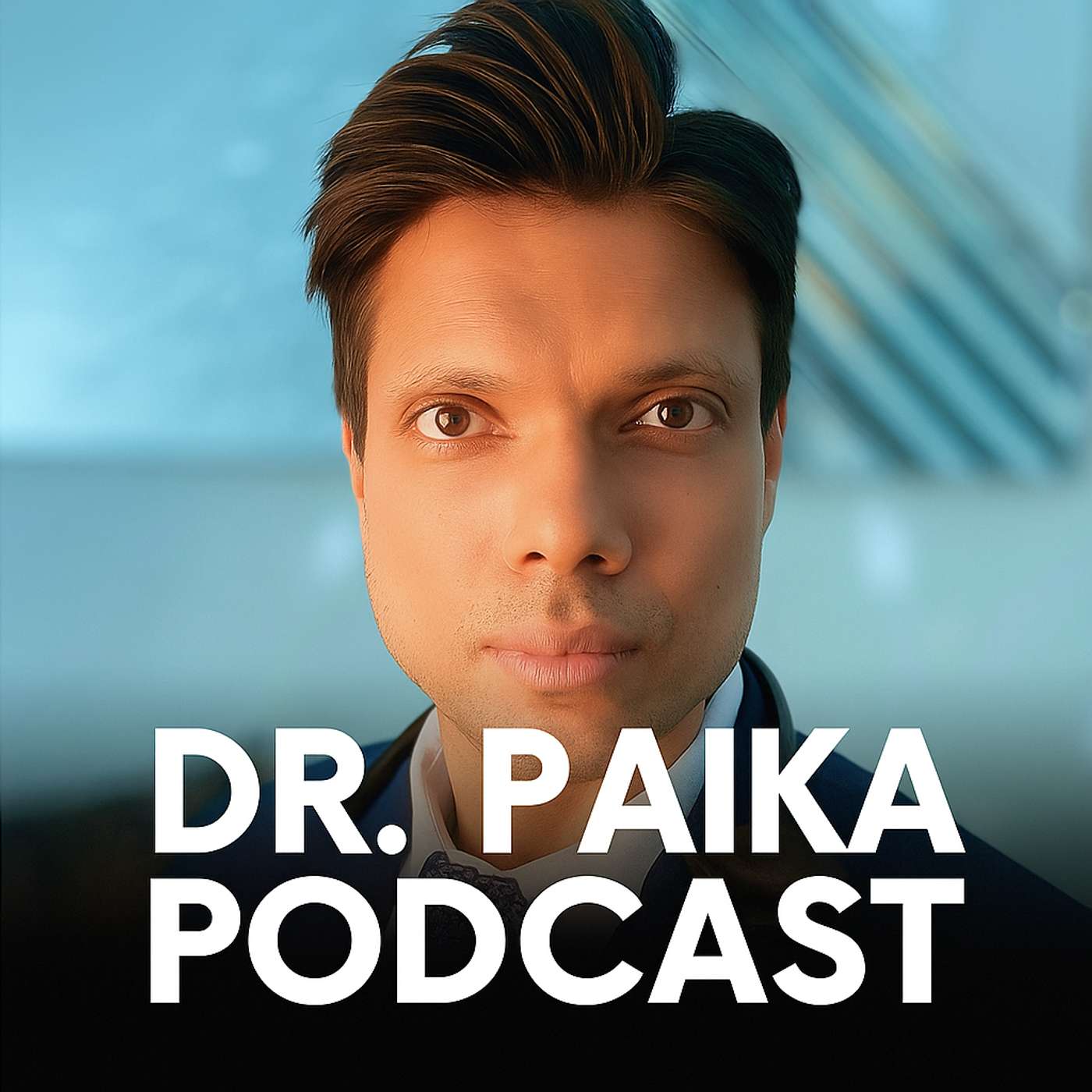
Dr. Paika Podcast
Welcome to the Dr.
Mohammed Paika
Show overview
Dr. Paika Podcast launched in 2025 and has put out 59 episodes in the time since. That works out to roughly 9 hours of audio in total. Releases follow a several-times-a-week cadence.
Episodes typically run under ten minutes — most land between 7 min and 11 min — though episode length varies meaningfully from one episode to the next. None of the episodes are flagged explicit by the publisher. It is catalogued as a EN-language Health & Fitness show.
The show is actively publishing — the most recent episode landed yesterday, with 46 episodes already out so far this year. The busiest year was 2026, with 46 episodes published. Published by Mohammed Paika.
From the publisher
Welcome to the Dr. Paika Podcast — where medicine, fitness, and humanity come together. Hosted by Dr. Mohammed K. Paika, M.D., double board-certified in obesity & internal medicine with over two decades of hospital experience, this show dives deep into the science of health, obesity, longevity, and mindset — but with compassion, not complexity. From hospital medicine to the gym floor, from patient care to personal growth — every episode blends real clinical insight with practical, inspiring stories that help you live better and think deeper. 💡 Topics include: Obesity & metabolic health Longevity & fitness Nutrition & preventive medicine Doctor insights from 20+ years in hospitals across the US! Mindset, mental health, and motivation 🎧 Subscribe for weekly conversations that are honest, empowering, and rooted in science — all from a doctor who believes medicine should heal the mind and body.
Latest Episodes
View all 59 episodesIt’s Not Your Fault: The Real Science of Obesity & GLP-1 Weight Loss
Why Most Workouts Fail: The Science of Strength & Muscle Growth | Dr. Paika Podcast
Contrave Side Effects Explained | What’s Normal, Dangerous & What To Do
Can You Lose Belly Fat in One Week? The Honest Truth (Doctor Explains)
Qsymia Warning: Side Effects You Should Never Ignore
Is Obesity in Your DNA? The Truth About Genetics & Weight
Sarcopenia vs. Obesity: Why You’re Losing Weight But Still Feel Weak | Dr. Paika Podcast
The New Cholesterol Guidelines Changed Everything | Why Your LDL of 128 May Be Too High | Dr. Paika Podcast
15 Silent Signs of Insulin Resistance Most People Ignore | Dr. Paika Podcast
Belly Fat = Kidney Damage: The Silent Link Between Obesity and Kidney Disease | Dr. Paika Podcast
Walking Every Day: The Most Underrated Medicine (Doctor Explains)
Polyps Found: What Your Colonoscopy Is Really Telling You
Why Belly Fat Won’t Go Away (Even When You’re Doing Everything Right)
Your Brain Is Being Hijacked by Food — The Science of Cravings
The Hidden Fat Killing Your Health — 10 Foods That Target Visceral Fat
Ep 44Why People Die in Their Sleep — 5 Night Habits You Shouldn’t Ignore
#HeartHealth #SleepHealth #PreventHeartAttack #DoctorExplains #healthtips Most people think heart attacks happen suddenly… and loudly.But in reality, some of the most dangerous events happen quietly — at night, while you’re asleep.In this video, I break down 5 common nighttime habits that can increase your risk of heart attack, stroke, and other serious health issues — and what you can do about them starting tonight.This is not about fear — it’s about awareness.Small habits before bed can have a bigger impact than you think.Watch this before you sleep tonight.⏱️ TIMESTAMPS 00:00 – Why some heart events happen during sleep00:32 – Why nighttime is different for your body01:10 – Habit #1: Late heavy meals02:00 – Habit #2: Medication timing mistakes02:50 – Habit #3: Ignoring sleep apnea03:45 – Habit #4: Going to bed dehydrated04:35 – Habit #5: Bedroom temperature & environment05:20 – The bigger picture: small habits add up05:50 – What to do starting tonight👨⚕️ ABOUT DR. MOHAMMED K. PAIKABoard-Certified in Internal Medicine and Obesity MedicineCertified Personal Trainer & Nutrition CoachHelping people understand metabolism, hormones, and sustainable health through evidence-based medicine.👍 Like💬 Comment📌 Share🔔 Subscribe for more honest conversations about obesity, metabolism, hormones, and real-world health solutions⚕️ MEDICAL & EDUCATIONAL DISCLAIMERThis channel and its content are provided by Dr. Mohammed K. Paika, MD for general educational and informational purposes only. The information presented is not intended as medical advice and does not replace consultation with your personal physician or qualified healthcare professional.Viewing this content does not create a doctor-patient relationship between you and Dr. Paika.Health, nutrition, exercise, and medication topics discussed on this channel may not be appropriate for all individuals. Always consult your own healthcare provider before starting or changing any medication, diet, exercise program, or weight-loss plan, including GLP-1 therapies such as Wegovy, Ozempic, Zepbound, Mounjaro, or similar medications.Exercise and lifestyle changes carry inherent risks. By choosing to follow any information from this channel, you accept full responsibility for your health decisions and outcomes.Dr. Paika and affiliated entities disclaim any liability for injuries, adverse effects, or damages resulting from use or application of information presented in this content.
Ep 43Why You Can’t Lose Weight: The Hidden Role of Insulin, Ghrelin, and Leptin
#WeightLoss #FatLoss #HormoneHealth #ObesityMedicine #insulinresistance Why are you eating less… but still not losing weight?In this video, Dr. Mohammed Paika (Internal Medicine & Obesity Medicine) breaks down the 3 key hormones that control your weight — and why weight loss is NOT just about calories.If you’ve ever felt stuck, frustrated, or like your body is working against you… this will finally make sense.We cover:Why insulin keeps you in fat storage modeWhy ghrelin makes you constantly hungryWhy leptin stops you from feeling fullWhy diets fail even when you’re disciplinedAnd how to actually work WITH your bodyThis is the science behind:👉 Weight loss plateaus👉 Constant cravings👉 Feeling hungry all the timeAnd why it’s not your fault.If you’re on (or considering) GLP-1 medications like Ozempic, Wegovy, or Zepbound — this is essential to understand.TIMESTAMPS00:00 – Why You’re Not Losing Weight (Hook)00:32 – It’s Not About Calories01:05 – Why People Feel Stuck01:42 – The 3 Hormones Overview02:10 – Insulin: The Fat Storage Switch03:20 – Why Your Body Stores More Easily04:05 – Ghrelin: Why You’re Always Hungry05:15 – Why Dieting Makes Hunger Worse06:00 – Leptin: Why You Never Feel Full07:00 – The “Perfect Storm” Explained07:40 – What You Can Actually Do08:10 – Final Takeaway + Subscribe👨⚕️ ABOUT DR. MOHAMMED K. PAIKABoard-Certified in Internal Medicine and Obesity MedicineCertified Personal Trainer & Nutrition CoachHelping people understand metabolism, hormones, and sustainable health through evidence-based medicine.👍 Like💬 Comment📌 Share🔔 Subscribe for more honest conversations about obesity, metabolism, hormones, and real-world health solutions⚕️ MEDICAL & EDUCATIONAL DISCLAIMERThis channel and its content are provided by Dr. Mohammed K. Paika, MD for general educational and informational purposes only. The information presented is not intended as medical advice and does not replace consultation with your personal physician or qualified healthcare professional.Viewing this content does not create a doctor-patient relationship between you and Dr. Paika.Health, nutrition, exercise, and medication topics discussed on this channel may not be appropriate for all individuals. Always consult your own healthcare provider before starting or changing any medication, diet, exercise program, or weight-loss plan, including GLP-1 therapies such as Wegovy, Ozempic, Zepbound, Mounjaro, or similar medications.Exercise and lifestyle changes carry inherent risks. By choosing to follow any information from this channel, you accept full responsibility for your health decisions and outcomes.Dr. Paika and affiliated entities disclaim any liability for injuries, adverse effects, or damages resulting from use or application of information presented in this content.
Ep 42Losing Weight But Still Look Fat? Here’s Why
#WeightLossTips #FatLoss #ObesityMedicine #HormoneHealth #DrPaikaWhy are you losing weight… but still don’t look lean?In this video, Dr. Mohammed Paika (Board-Certified in Internal Medicine & Obesity Medicine) explains the real reason behind this frustrating problem.👉 It’s not just about weight loss — it’s about what type of weight you’re losing.If you’ve experienced:Losing weight but still looking “soft”No visible body changes despite effortWeight loss plateausFrustration with GLP-1 medications like Ozempic or WegovyThis video breaks it down in a simple, practical way.You’ll learn:The difference between fat loss vs muscle lossWhy losing muscle makes your body look less definedHow GLP-1 medications can affect body compositionThe biggest mistake people make when trying to lose weightHow to fix it with protein, resistance training, and proper strategyThis is not about extreme dieting or quick fixes.👉 This is about understanding your body and getting real results.👨⚕️ ABOUT DR. MOHAMMED K. PAIKABoard-Certified in Internal Medicine and Obesity MedicineCertified Personal Trainer & Nutrition CoachHelping people understand metabolism, hormones, and sustainable health through evidence-based medicine.👍 Like💬 Comment📌 Share🔔 Subscribe for more honest conversations about obesity, metabolism, hormones, and real-world health solutionsTIMESTAMPS 0:00 – Stop: Losing Weight… But Still Look Fat?0:20 – The Truth Most People Miss0:50 – Weight Loss vs Fat Loss (Key Difference)1:25 – The 3 Types of Weight You Lose2:05 – Why You Still Look the Same (Skinny Fat Explained)2:45 – Why Muscle Matters for Your Body Shape3:30 – Biggest Mistake: Eating Too Little4:05 – Why You’re Losing Muscle Instead of Fat4:45 – GLP-1 Medications (Ozempic, Wegovy) & Muscle Loss5:25 – Metabolism Slowing Down (What’s Happening)6:00 – How to Fix It (Protein + Training + Strategy)6:50 – Shift Your Focus: Weight vs Body Composition7:40 – Final Takeaway + Subscribe⚕️ MEDICAL & EDUCATIONAL DISCLAIMERThis channel and its content are provided by Dr. Mohammed K. Paika, MD for general educational and informational purposes only. The information presented is not intended as medical advice and does not replace consultation with your personal physician or qualified healthcare professional.Viewing this content does not create a doctor-patient relationship between you and Dr. Paika.Health, nutrition, exercise, and medication topics discussed on this channel may not be appropriate for all individuals. Always consult your own healthcare provider before starting or changing any medication, diet, exercise program, or weight-loss plan, including GLP-1 therapies such as Wegovy, Ozempic, Zepbound, Mounjaro, or similar medications.Exercise and lifestyle changes carry inherent risks. By choosing to follow any information from this channel, you accept full responsibility for your health decisions and outcomes.Dr. Paika and affiliated entities disclaim any liability for injuries, adverse effects, or damages resulting from use or application of information presented in this content.
Ep 41The 9 Foods I Eat Every Week to Prevent Disease (Doctor Explains)
#HealthiestFoods #DoctorExplains #LongevityTips #HealthyEating #metabolichealth What are the healthiest foods you can eat every day for longevity, metabolic health, and disease prevention?In this 40-minute lecture, Dr. Mohammed Paika — double board-certified in Internal Medicine and Obesity Medicine — breaks down the 9 healthiest foods he personally eats every week and explains the science behind why they matter.After years of treating patients with obesity, type 2 diabetes, fatty liver disease, heart disease, and hypertension, one pattern becomes clear:👉 Chronic disease doesn’t happen overnight👉 It develops slowly through daily habits👉 And food plays a central roleIn this video, you’ll learn how simple, whole foods can support:• Metabolic health• Weight management• Heart health• Brain function• LongevityThese are not trends or fad diets — these are evidence-based foods consistently seen in long-living populations.🥗 Foods Covered in This Video• Water (hydration and kidney health)• Eggs (complete protein and muscle preservation)• Cottage cheese (high-protein, metabolic support)• Walnuts (omega-3 and heart health)• Edamame (plant protein + fiber)• Spinach (micronutrients + blood pressure support)• Salmon (anti-inflammatory omega-3 fats)• Blueberries (antioxidants and brain health)• Extra virgin olive oil (Mediterranean longevity staple)Timestamps0:00 – Hook: Why Most Diets Fail (Doctor Explains)0:25 – Intro: What I See in Patients Over 20+ Years1:05 – The Truth About Longevity Diets (It’s Simpler Than You Think)1:50 – #1 Water: The Most Overlooked Health Habit2:45 – #2 Eggs: Protein, Brain Health & Muscle Preservation3:55 – #3 Cottage Cheese: High Protein, Low Calorie Advantage5:00 – #4 Walnuts: Omega-3 & Heart Protection6:05 – #5 Edamame: Plant Protein + Fiber Combo7:05 – #6 Spinach: Blood Pressure & Nitric Oxide Benefits8:05 – #7 Salmon: Anti-Inflammatory Powerhouse9:05 – #8 Blueberries: Brain Health & Antioxidants10:05 – #9 Olive Oil: The Longevity Staple11:05 – Final Takeaway: What Actually Matters Long-Term11:40 – Call to Action: Subscribe + Next Video Tease👨⚕️ ABOUT DR. MOHAMMED K. PAIKABoard-Certified in Internal Medicine and Obesity MedicineCertified Personal Trainer & Nutrition CoachHelping people understand metabolism, hormones, and sustainable health through evidence-based medicine.👍 Like💬 Comment📌 Share🔔 Subscribe for more honest conversations about obesity, metabolism, hormones, and real-world health solutions⚕️ MEDICAL & EDUCATIONAL DISCLAIMERThis channel and its content are provided by Dr. Mohammed K. Paika, MD for general educational and informational purposes only. The information presented is not intended as medical advice and does not replace consultation with your personal physician or qualified healthcare professional.Viewing this content does not create a doctor-patient relationship between you and Dr. Paika.Health, nutrition, exercise, and medication topics discussed on this channel may not be appropriate for all individuals. Always consult your own healthcare provider before starting or changing any medication, diet, exercise program, or weight-loss plan, including GLP-1 therapies such as Wegovy, Ozempic, Zepbound, Mounjaro, or similar medications.Exercise and lifestyle changes carry inherent risks. By choosing to follow any information from this channel, you accept full responsibility for your health decisions and outcomes.Dr. Paika and affiliated entities disclaim any liability for injuries, adverse effects, or damages resulting from use or application of information presented in this content.
Ep 40The Salt Myth: Why Blood Pressure Stays High Even With a Healthy Diet
#HighBloodPressure #Hypertension #MetabolicHealth #InsulinResistance #DrPaikaPodcastWhy do some people still have high blood pressure even when they eat healthy, exercise regularly, and avoid salt?In this episode of the Dr. Paika Podcast, Dr. Mohammed Paika, double board-certified in Internal Medicine and Obesity Medicine, explains the hidden metabolic mechanisms that can drive hypertension even in health-conscious individuals.Many people believe that salt is the primary cause of high blood pressure, but the reality is far more complex. Hormones such as insulin, metabolic dysfunction, visceral fat, and modern eating patterns all play major roles in blood pressure regulation.In this video you’ll learn:• Why blood pressure can stay high even on a healthy diet• The relationship between insulin resistance and hypertension• How frequent eating and snacking may affect metabolic health• The role of the kidneys in sodium retention• Why some lean individuals still develop metabolic disease• Simple lifestyle strategies that may support better metabolic balanceUnderstanding the metabolic drivers of hypertension can help people approach cardiovascular health in a more comprehensive way.If you're interested in obesity medicine, metabolic health, GLP-1 therapies, longevity, and evidence-based lifestyle medicine, subscribe to the Dr. Paika Podcast for weekly educational lectures.Timestamps0:00 Introduction – Why Blood Pressure Stays High0:40 The Common Patient Scenario1:35 Is Salt Really the Main Cause?2:30 The Hidden Role of Insulin3:25 How Insulin Affects the Kidneys4:20 Why Healthy People Still Develop Hypertension5:15 The Problem With Constant Eating6:10 Snacking, Insulin, and Blood Pressure7:05 Visceral Fat and Metabolic Health8:05 Late Night Eating and Morning BP9:00 How to Reset Your Metabolic Signals10:05 Key Takeaways for Blood Pressure Control10:40 Final Thoughts👨⚕️ ABOUT DR. MOHAMMED K. PAIKABoard-Certified in Internal Medicine and Obesity MedicineCertified Personal Trainer & Nutrition CoachHelping people understand metabolism, hormones, and sustainable health through evidence-based medicine.👍 Like💬 Comment📌 Share🔔 Subscribe for more honest conversations about obesity, metabolism, hormones, and real-world health solutions⚕️ MEDICAL & EDUCATIONAL DISCLAIMERThis channel and its content are provided by Dr. Mohammed K. Paika, MD for general educational and informational purposes only. The information presented is not intended as medical advice and does not replace consultation with your personal physician or qualified healthcare professional.Viewing this content does not create a doctor-patient relationship between you and Dr. Paika.Health, nutrition, exercise, and medication topics discussed on this channel may not be appropriate for all individuals. Always consult your own healthcare provider before starting or changing any medication, diet, exercise program, or weight-loss plan, including GLP-1 therapies such as Wegovy, Ozempic, Zepbound, Mounjaro, or similar medications.Exercise and lifestyle changes carry inherent risks. By choosing to follow any information from this channel, you accept full responsibility for your health decisions and outcomes.Dr. Paika and affiliated entities disclaim any liability for injuries, adverse effects, or damages resulting from use or application of information presented in this content.