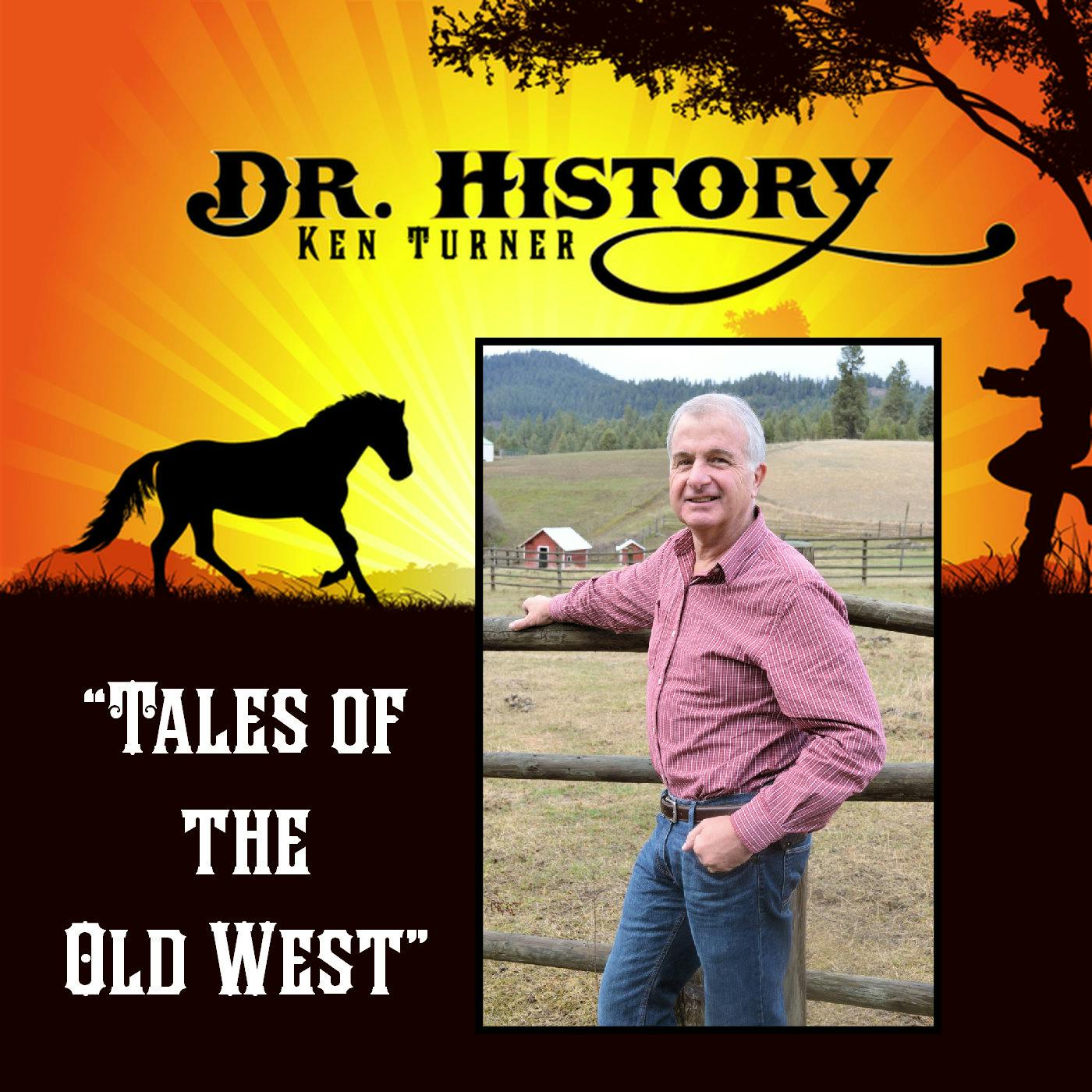
Dr. History's Tales of the Old West
583 episodes — Page 4 of 12
The Story Teller
Henry McDonald wanted his own freighting business, George Myers wanted to sell. McDonald ended up with Myers outfit, but how did he get it? Myers ended up dead, a jury found McDonald guilty of murder despite his many stories. His life ended on the gallows. Learn more about your ad choices. Visit podcastchoices.com/adchoices
Serial Wife
Ed Meyer was deathly sick in the hospital. He was recovering until he kept eating his wife’s daily picnic basket. Lyda Lewis's routine was to take out life insurance policies on her husbands, who soon died after marriage. Finally caught, she went to prison. Learn more about your ad choices. Visit podcastchoices.com/adchoices
Counterfeit
The Eddys and the Splawns used wooden molds of five, ten and twenty-dollar gold pieces to make their own money. With careful research they used plaster coins, coated with an alloy, then coated with a gold mixture and using an electric battery produced the counterfeit coins. Charley Reavis, an amateur detective solved the case, the family went to jail. Learn more about your ad choices. Visit podcastchoices.com/adchoices
Sawtooth Jack
The 900 pound grizzly was caught in a huge cage by Dutch Schwartz. After being shown around Ketchum, Idaho, he was taken to New Orleans to the World’s Fair, then sold and exhibited as “Idaho Jack.” Grizzly Johnson supposedly choked a bear to death, and the Swede who attacked a bear and another bear who ended up in a bunkhouse. Some of these sound more fiction than fact. Learn more about your ad choices. Visit podcastchoices.com/adchoices
The Wild West Show Business
It took incredible teamwork to prepare for the shows. Carpenters, blacksmiths, painters, harness makers, tent makers, horse trainers and cooks. On the road, organizing the train cars, wagons and performers. The Cossacks, trained elephants, bronc riders, sharp shooters, trick riding, Indian battles all took precise timing. Learn more about your ad choices. Visit podcastchoices.com/adchoices
Mules Led the Charge
Chief Gray Beard held two white girls captive. Lt. Frank Baldwin’s orders were to attack. Vastly outnumbered, he organized his men and 23 six-mule teams with wagons to charge the Indian Village. The Indians scattered and the girls were rescued. Learn more about your ad choices. Visit podcastchoices.com/adchoices
Dromedary Express
Using camels for a pack train sounded like a good idea. Unfortunately, the camels smelled terrible and frightened horses and mules causing them to go crazy with fear, sometimes plunging to their death. The plan was a total failure. Learn more about your ad choices. Visit podcastchoices.com/adchoices
Bible in a Bearskin
When Sumner Bacon found religion, he wanted to spread the word. With no formal training he began preaching, the first Protestant in Texas. He delivered hundreds of Bibles and helped General Sam Houston as a messenger. Learn more about your ad choices. Visit podcastchoices.com/adchoices
And The Band Played On
As Indians attacked a wagon train, the captain ordered the band to play. The Indians thought this might be a new powerful medicine, so they stopped and listened. The immigrants offered food and gifts, the Indians provided buffalo meat, disaster was averted. Learn more about your ad choices. Visit podcastchoices.com/adchoices
Quicksand
Movies and TV show people dying a slow death or getting rescued just before going under. Experts today say you cannot drown in quicksand and there are techniques to get yourself out with help or even by yourself. Learn more about your ad choices. Visit podcastchoices.com/adchoices
Deadwood Dick
A fictional character invented by author Edward Wheeler was a popular “Half Dime” novel. Six men claimed to be Deadwood Dick, but Richard Clark actually began to think he really was Deadwood Dick. Learn more about your ad choices. Visit podcastchoices.com/adchoices
Jim Bridger and Sir George Gore
Money was no object when Sir George Gore hired Bridger for a hunting expedition. It took forty men, 112 horses and 6 wagons to carry his gear. He shot forty bear, 2500 buffalo and many elk, deer, antelope and other small game. Unfortunately, he wasted the meat and pelts. Learn more about your ad choices. Visit podcastchoices.com/adchoices
Cole Young, Train Robber
He led a band of robbers in New Mexico, robbed a train in Santa Fe and killed a man. His last train robbery was fatal when U.S. Deputy Marshal H. W. Loomis was a passenger on the train. His gang got away, but he didn’t. Learn more about your ad choices. Visit podcastchoices.com/adchoices
Stagecoach Stories
Stage drivers took pride in being an expert in their profession facing outlaws, bad roads and terrible weather. Roadside Inns were crowded, dirty and the food was just as bad. Conditions improved as some stages operated as late as the 1920’s. Learn more about your ad choices. Visit podcastchoices.com/adchoices
Robbery of the Denver Mint
Jim Clark was a trusted employee until he embezzled $37,000 to cover his gambling debts. He got lost, his horse got away, he walked for miles, but with a $1000 reward he was captured. He escaped but was captured again and spent a few years in jail. Learn more about your ad choices. Visit podcastchoices.com/adchoices
Tobacco in the Old West
It was used in America long before the first settlers. Indian tribes used it in pipe ceremonies to seal a treaty or agreement and for spiritual ceremonies. It had medical uses as a pain killer and as a poultice. Old timers used pipes, cigars, cigarettes, snuff and chewing tobacco. Learn more about your ad choices. Visit podcastchoices.com/adchoices
The Chinese and the Central Pacific
It was said the western portion of the Transcontinental Railroad would not have been possible without the Chinese. They made good money and were skilled in the use of black powder. They did what no one else was willing to do and set the example of steadiness, diligence and clean living. Learn more about your ad choices. Visit podcastchoices.com/adchoices
Little Jo
Little Jo could run faster, shoot straighter, handle a lariat, and ride the toughest broncs. He started his own ranch and rode in a Wild West Show which was filmed and was the first western film shown west of the Mississippi. Little Jo died in 1903 and it was discovered that Little Jo was actually a woman. Learn more about your ad choices. Visit podcastchoices.com/adchoices
Pitamakan
Orphaned at age 15 she raised four younger siblings. Strong and independent and courageous, she joins war parties and is considered "good medicine" by the Medicine Man. She became a war chief of the Blackfeet tribe and was honored by naming a waterfall after her. Learn more about your ad choices. Visit podcastchoices.com/adchoices
Jed Smith and the Bear
Attacked by a grizzly bear, Smith’s scalp, ear and left eyebrow were nearly completely torn off. With scissors, needle and thread, Jim Clyman sewed the scalp and ear back on Smith’s head. He wore his hair long to try to cover the severe scars. At age 32, he was killed by Indians. Learn more about your ad choices. Visit podcastchoices.com/adchoices
End of the Open Range
Millions of dollars were spent raising cattle by ranchers, including Theodore Roosevelt. The 1862 Homestead Act opened the range for farmers which conflicted with ranchers. Windmills, the steel plow and barbed wire, along with severe winters contributed to the demise of the open range. Learn more about your ad choices. Visit podcastchoices.com/adchoices
The Lost Dutch Oven Mine
Tom Scofield stumbled onto a deserted mine with rich ore and a Dutch oven filled with gold nuggets. He was so excited to spread the news he didn’t identify landmarks as he left. He spent years trying to locate the mine without success. He was contacted by many people hoping to find his mine. Learn more about your ad choices. Visit podcastchoices.com/adchoices
Life on the Reservation
Freda Snell’s father was the Indian agent for the Northern Cheyenne and Sioux Indian Reservations. She grew up on the reservations as her father taught farming, canning, gardening and ranching. She met two Chiefs who were at the Custer Battle. The Indians were honest, hardworking, industrious and had a good life. Learn more about your ad choices. Visit podcastchoices.com/adchoices
Doc Crumbine
He was Dodge City’s doctor. His projects included treating alcoholism in babies, milk to be served in sealed containers, laws regulating patent medicines and food.He waged a war on flies and typhoid. Had “Don’t spit on the Sidewalk” printed on sidewalk bricks to help prevent tuberculosis and promoted pasteurization of milk. Learn more about your ad choices. Visit podcastchoices.com/adchoices
Doc Zahl
He and his brother learned to ride and shoot, in the Dakota Territory they began hunting buffalo. He was in the saloon when Wild Bill Hickok was killed. They were hired to rebury the soldiers who were killed with Custer at the Little Big Horn. He rescued Charles Russell and hunted with Theodore Roosevelt. Learn more about your ad choices. Visit podcastchoices.com/adchoices
Buffalo Migration and Hunters
Buffalo migrated north in summer and south in winter from New Mexico to Central Canada. Native American hunters defended what they considered their hunting ground from other tribes. It was a rite of passage for a young Native American to kill a buffalo on another tribe's land. Learn more about your ad choices. Visit podcastchoices.com/adchoices
John Muir in Alaska
He was eager to explore Glacier Bay, take notes and map the coastline 200 miles north. They pushed through ice floes in a dugout canoe. He explored Taylor Glacier, nearly falling to his death in a crevasse, but proved that the glacier was growing and later helped create Sequoia, Mount Rainier and Grand Canyon national parks. Learn more about your ad choices. Visit podcastchoices.com/adchoices
Custer and the Black Hills
General George A. Custer led an expedition into the Black Hills as the government was trying to buy the land from the Sioux and move them to a reservation. Gold was discovered which led to the Black Hills gold rush. Learn more about your ad choices. Visit podcastchoices.com/adchoices
Robert Kennecott
Hired by Western Union to prepare a telegraph route from Canada across Alaska in an attempt to connect with Europe across the Bering Strait. His crew worked mostly in the dark in sub-zero weather with little food, Kennecott died before learning that a cable had been laid across the Atlantic. Learn more about your ad choices. Visit podcastchoices.com/adchoices
Eugene Blair
Outlaws learned to avoid any Wells Fargo stage that was guarded by expressman, Eugene Blair. He not only guarded express, he also tracked down outlaws and escorted prisoners. He was considered a man of "courage and prompt action." Learn more about your ad choices. Visit podcastchoices.com/adchoices
Early Medicine
If purging, blistering, sweating or bleeding didn’t work, the patient didn’t have much hope. Homeopaths, hydropaths, botanic doctors, bonesetters and inoculators, Indian healers and midwives had their place. But rest, fluids and tender loving cured most illnesses. Learn more about your ad choices. Visit podcastchoices.com/adchoices
Pat Garrett
Before he killed Billy the Kid, he killed Joe Briscoe. Billy and Pat were great friends. Billy bought Pat clothes, gave him a horse and saved him from a gunfight. They ate, drank, double dated and played cards together and were known as "Big Casino" and "Little Casino." Learn more about your ad choices. Visit podcastchoices.com/adchoices
Billy the Kid - After Death - Part 2
Who knows the truth? Was his grave marker shot to pieces, made from a fence post, in a museum or washed away by a flood? And his coffin, filled with a saddle bag and rocks, a side of beef or just dirt? The exact location of the grave is anybody’s guess. Learn more about your ad choices. Visit podcastchoices.com/adchoices
Billy the Kid - After Death - Part 1
Newspapers sell papers with exciting headlines, true or not. Was his finger cut off, his body dug up and bones held together with wires, body parts on display at county fairs, his skull owned by an Albuquerque man? Not according to Pat Garrett. Learn more about your ad choices. Visit podcastchoices.com/adchoices
Uncommon Outlaws
Anthony Blum outwitted a priest. Cyclone Bill claimed a cyclone took him, his mules and wagon in Arizona and dropped them in Kansas. George and Wheeler destroyed an express car with dynamite. Amateur cattle thief “Russian Bill” ended up on the end of a rope. Learn more about your ad choices. Visit podcastchoices.com/adchoices
The Last Old Time Prospector
Frank “Shorty” Harris spent his life in search of the big bonanza. From Idaho, Montana, Arizona and California he found good mines, but not fortune. Buried in a national park, a bronze plaque reads, “Here Lies Shorty Harris, a single blanket jackass prospector." Learn more about your ad choices. Visit podcastchoices.com/adchoices
Trappers and Trailblazers - Part 3
Jim Beckworth became a war chief of the Crow, trapped for the Rocky Mountain and American fur companies. Trappers struggled to survive severe cold, Indians, dysentery, smallpox, tetanus, bears and rattlesnakes. A good year could net him as much as $2000 at the rendezvous to buy supplies for another perilous year. Learn more about your ad choices. Visit podcastchoices.com/adchoices
Trappers and Trailblazers - Part 2
William Ashley formed the Rocky Mountain Fur Company. In 1822 he hired Jed Smith, Jim Bridger, Tom Fitzpatrick, Hugh Glass and the Sublette brothers. He organized the first rendezvous at Henry’s Fork on the Green River, each year moving to other locations, Fort Hall, Pierre’s Hole, Jackson Hole and others. Learn more about your ad choices. Visit podcastchoices.com/adchoices
Trappers and Trailblazers - Part 1
John Colter was returning to St. Louis with Lewis and Clark when he returned to the wilderness to guide and trap beaver. He traveled through Idaho, Wyoming and Montana searching for beaver and working with Indians. He was chased for six miles by Blackfeet Indians, running naked he survived by hiding in a river. Learn more about your ad choices. Visit podcastchoices.com/adchoices
Pioneer Stage Lines - Part 2
Mail carriers began carrying express, cash, bank drafts, gold and silver resulting in the first stage robbery. Wells Fargo contracted with existing companies to carry their express. First class mail sometimes eventually made it, second class mail might be found along the trail or thrown under wagon wheels to help cross mud bogs. Learn more about your ad choices. Visit podcastchoices.com/adchoices
Pioneer Stage Lines - Part 1
Mail service from Missouri to Sacramento faced 2500 miles of freezing weather, snowstorms, Indians and waterless deserts. Many companies had no coaches, they used wagons, mules and even on foot to deliver the mail that many times never reached their destinations. Learn more about your ad choices. Visit podcastchoices.com/adchoices
Old West Newspapers
Thousands of papers started between 1846 to 1890, many were short lived. People were hungry for news. Papers printed speeches, sermons, poetry, murders, war news, ads, legal notices and even printed in some foreign languages. Learn more about your ad choices. Visit podcastchoices.com/adchoices
Indian Music
Music was very important in the lives of Native Americans. It tells their history, education, medicine and was sacred for special ceremonies. They used drums, flutes, whistles, rasps, rattles and chordophones. Singing was considered the most important part of their music. Learn more about your ad choices. Visit podcastchoices.com/adchoices
Native American Languages
There may have been as many as 300 Native American languages with only 175 remaining. They were complex and there was a tremendous variety among tribes. Navajo is the most difficult to learn and the most commonly spoken in the U.S. and was used in World War II. Learn more about your ad choices. Visit podcastchoices.com/adchoices
Great Plains Indians
They had a rich culture and organization. Some were nomadic, others were farmers who traded between tribes. Many cooperated to maintain peace. Marriage and raising children involved the whole family. Men and women had their roles. They believed in a spirit world. Learn more about your ad choices. Visit podcastchoices.com/adchoices
Yellow Wolf
A first cousin to Chief Joseph, he followed the famous chief and the Nez Perce. He fought at White Bird Canyon, the Clearwater River and in the Battle at the Big Hole. They nearly made it to join Sitting Bull in Canada but surrendered and ended up on the Colville Reservation. Learn more about your ad choices. Visit podcastchoices.com/adchoices
Bloody Island
Dueling was considered the gentlemen's code of honor. Dueling was illegal, so a small island in the Mississippi became the ideal site . The challenged party chose weapons, distance and volleys. One of the most famous was Abraham Lincoln, he chose the cavalry broadsword. Learn more about your ad choices. Visit podcastchoices.com/adchoices
Private Charlie Windolph
Windolph gives his first person account at the Battle of the Little Big Horn. At age 97 he was the last survivor of the troopers who fought there. Learn more about your ad choices. Visit podcastchoices.com/adchoices
Wyatt Earp in San Diego
After the gunfight at the O.K. Corral, Wyatt and his wife moved to San Diego. He invested in real estate, had three saloons, owned race horses, harness horses and refereed boxing matches. Wyatt acquired a small fortune while living in San Diego, he died January 13, 1929 in Los Angeles. Learn more about your ad choices. Visit podcastchoices.com/adchoices
Sooners and Boomers
Thousands waited for the starting gun to begin the race to stake their claim on 160 acres or townsite lots in several million acres. Each lot had been surveyed and the coordinates left on a pile of rocks they then rushed to town to file their claim. Learn more about your ad choices. Visit podcastchoices.com/adchoices