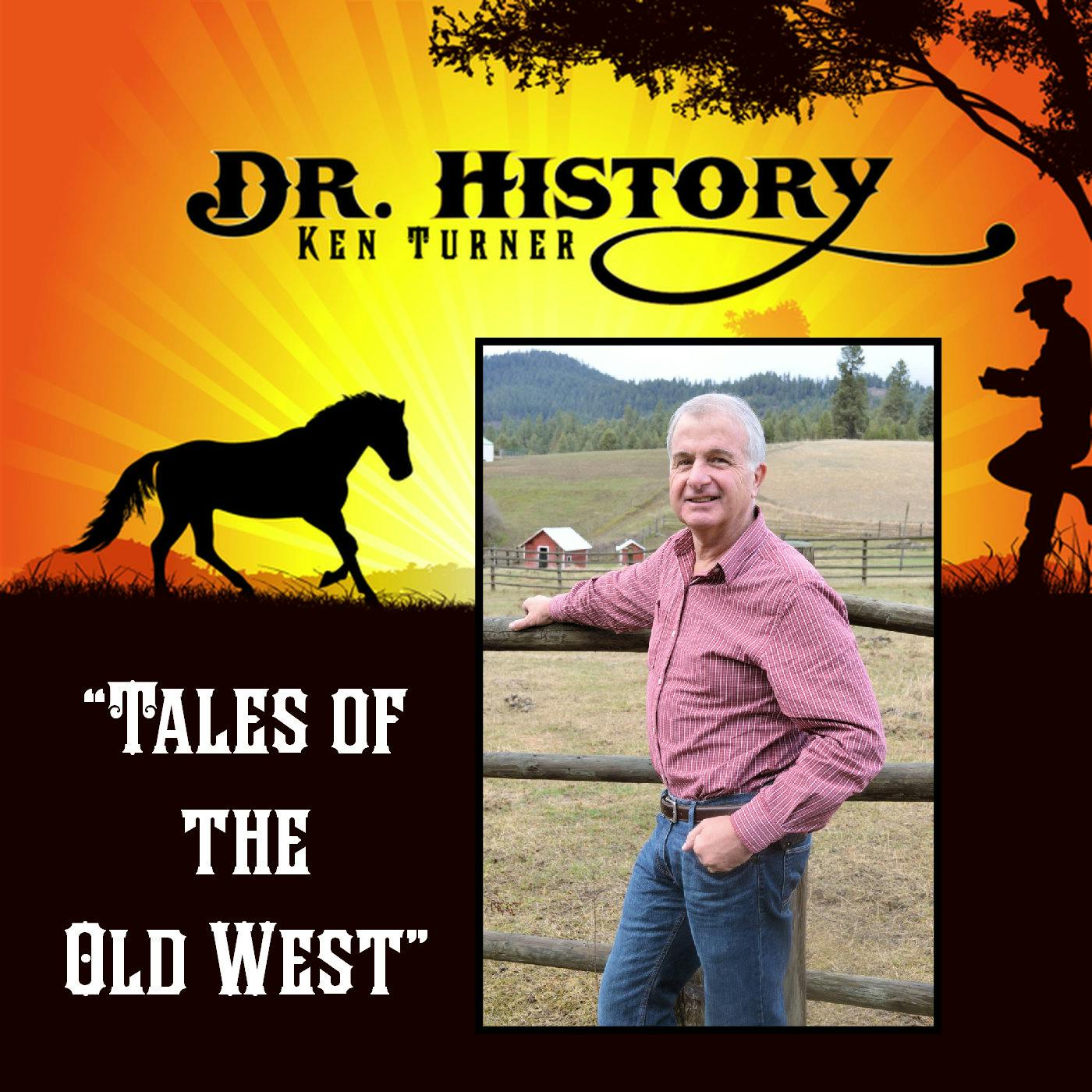
Dr. History's Tales of the Old West
Dr. Ken Turner
Show overview
Dr. History's Tales of the Old West has been publishing since 2013, and across the 12 years since has built a catalogue of 583 episodes. That works out to roughly 220 hours of audio in total. Releases follow a weekly cadence.
Episodes typically run twenty to thirty-five minutes — most land between 22 min and 24 min — and the run-time is fairly consistent across the catalogue. None of the episodes are flagged explicit by the publisher. It is catalogued as a EN-US-language Education show.
There hasn’t been a new episode in the last ninety days; the most recent episode landed 12 months ago. Published by Dr. Ken Turner.
From the publisher
Dr. History's audio stories of the Old West. Stories of Cowboys, Indians, Mountain men, pioneers, the Oregon Trail, miners, cattle drives, stagecoach and bank robbers, the cavalry, outlaws and lawmen, some famous and some you have never heard of. From the Custer Battlefield to the Klondike to Indian battles to buried treasure and lost mines to the early explorers. I love telling true stories that shaped the old west.
Latest Episodes
View all 583 episodesThe Final Podcast
The Final Doctor History Episode Learn more about your ad choices. Visit podcastchoices.com/adchoices
Billy the Kid’s Pistol
Lawmen often kept the firearms of the people the arrested. After the siege and arrest of Billy the Kid, Pat Garrett kept a Winchester rifle and Colt revolver that belonged to Billy Wilson. Garrett used that pistol to shoot Billy the Kid in a darkened room in 1881. In 2021 the Colt revolver sold at auction of over 6 million dollars. Learn more about your ad choices. Visit podcastchoices.com/adchoices
Buffalo Bill
In 1872 he was a scout for the army. He was sent to chase some Miniconjou Lakotas who had stolen some horses. Shots were fired; one Indian was killed. For his bravery he was awarded the Medal of Honor. His reputation was built on real experiences on the frontier and true heroism. Learn more about your ad choices. Visit podcastchoices.com/adchoices
Wild Bill Hickok
Wild Bill had a fight in a saloon that ended with a 7th Cavalry soldier dead and another wounded. There are several versions of the story, but it is believed the soldier’s pistol misfired when put against Hickock’s head. He fired in self-defense, killing one and wounding another. Learn more about your ad choices. Visit podcastchoices.com/adchoices
Montana Huckleberries
Lewis and Clark wrote in their journals of the abundance of wild huckleberries as well as serviceberries and currents. Native Americans used various berries and their roots for medicinal teas for treating coughs and other ailments and to make pemmican. Newspapers wrote of the berries. County fairs had berry pie contests. Learn more about your ad choices. Visit podcastchoices.com/adchoices
Outlaw Ladies
Etta Place robbed trains with the Sundance Kid. Calamity Jane associated with Wild Bill Hickok and is buried next to him. Bell Starr stole horses, rustled cattle and robbed stagecoaches. Jennie Stevens, "Little Britches" and Annie McDoulet, "Cattle Annie" rustled cattle. Pearl Hart and Joe Boot lured cowboys into a room, hit them over the head and robbed them. They robbed a stagecoach, but got lost and were arrested and spent time in jail. Learn more about your ad choices. Visit podcastchoices.com/adchoices
Elfego Baca
He had the usual characteristics of gunmen, and didn’t mind shooting people. However, he became a self-appointed lawman. He survived a siege by eighty cowboys for thirty-six hours. He became a peace officer, lawyer, mayor, county clerk, school superintendent, and district attorney. Learn more about your ad choices. Visit podcastchoices.com/adchoices
Bear River Tom Smith
Few gunmen were interested in using their fists. Smith was the exception, he was as handy with his fists as his six-shooters. Abilene hired Smith as their marshal, but required they pass an ordinance requiring cowboys surrender their weapons before entering town. Smith maintained peace in Abilene for several years until tragedy struck. Learn more about your ad choices. Visit podcastchoices.com/adchoices
The Shooters
The gunfighter portrayed by Hollywood is a myth. There were shootouts, people died, but the gunfighter only shot when the odds were in his favor. The fast draw did not exist. Murder was far down the list of crimes, most were drunkenness, assault, larceny, thievery, vagrancy, gambling and burglary. The gunfighter influenced literature, was a romantic figure and is the stuff of legends. Learn more about your ad choices. Visit podcastchoices.com/adchoices
4th of July - Request to My Listeners
Today is the 4th of July, we honor our founding fathers and those who fought and died for our freedom. Also, a request to you my listeners regarding the continuing of the Dr History Podcast. Learn more about your ad choices. Visit podcastchoices.com/adchoices
Native American Medicine - Part Three
Over hundreds of years, tribes discovered the use of food and herbs to promote health and healing. They were skilled at treating bullet and arrow wounds. They set and immobilized fractures. They had little difficulty with childbirth. The introduction of European diseases killed millions as they had no immunity. Learn more about your ad choices. Visit podcastchoices.com/adchoices
Native American Medicine - Part Two
The medicine man or Shaman was honored and respected second only to the chief, and sometimes was the chief. Some women were allowed to become shamans. It took seven years to become a shaman in the Blackfeet tribe. Herbs played a huge part for the shaman. There were at least 138 species of plants used for medicine and food. Learn more about your ad choices. Visit podcastchoices.com/adchoices
Native American Medicine
Thousands of years of trial and error, humans found ways to treat wounds and illnesses. The Indians had some methods better than the Europeans. They performed amputations, treated fractures and snakebites, removed arrows, used herbs and sweat lodges. Each family had a medicine bundle with special objects needed for a healthy survival. Learn more about your ad choices. Visit podcastchoices.com/adchoices
The Country Doctor
They practiced with little help and resources. No hospital, a laboratory or X-ray equipment, only the strongest and most courageous could endure the long nights, bad weather, home visit for little or no pay. He carried all his equipment in a bag including what limited medication was available in those days. "May the family doctor never be completely eliminated" (Montana Medical Association) Learn more about your ad choices. Visit podcastchoices.com/adchoices
The Shoshone Tribe
The Great Shoshone Nation ranged from Wyoming to Boise to Salt Lake and included Ute, Gosuit, Piute, Hopi, Comanche, Kiowa and the Aztec.They were hunters and gatherers, expert at basketry. Food included wild game and insects. Rabbit drives were for the skins which were used for clothing, blankets and saddle blankets. Tattooing and earrings were common. Horses were traded to the Shoshone by the Comanche and Kiowa and were considered the best horses. Learn more about your ad choices. Visit podcastchoices.com/adchoices
William W. Mayo
William W. Mayo immigrated in 1846, married and moved to Minnesota Territory. He was a surgeon in the Union Army in Rochester, Minnesota. In 1864 he opened his first medical practice. He was joined by both sons. They cared for survivors of a tornado, and with the help of Mother Alfred Moes and two hospitals formed the Mayo Clinic. Now, over 7,300 physicians and scientist, they saw 1.3 million patients in 2022. Learn more about your ad choices. Visit podcastchoices.com/adchoices
Widzhebue
While picking berries, she was captured by Assiniboine raiders, dreaded enemy of the Shoshone. She was taken to Northeastern Montana. Given to a warrior as a second wife, she found the first wife intended to kill her, so she planned her escape. She hid in a hole in a riverbank for three days, then made her way over 1200 miles back to her family on the Raft River. She was the mother of Chief Pocatello. Learn more about your ad choices. Visit podcastchoices.com/adchoices
Rocky Mountain Stage Drivers - Part Two
Not all drivers were honorable. Some had partners rob their own stage, others died defending their passengers. They were cramped, bored, lacked sleep, some even went crazy. Plenty of good food at times to poor quality if any. Buffalo hunters, scouts and adventurers could provide exciting stories. Learn more about your ad choices. Visit podcastchoices.com/adchoices
Rocky Mountain Stage Drivers - Part One
Passengers first sight of the Rocky Mountains was awe inspiring and scary. Drivers were king of the road, respected and admired. Through blinding snow storms, fog, flooded rivers and narrow mountain roads and robbers. Drivers had lots of stories if you were lucky enough to ride next to them. Learn more about your ad choices. Visit podcastchoices.com/adchoices
Entrepreneurs in California
Some miners found the work too hard. They found other ways to riches. Alexander Todd began the first mail service. Daniel Dancer used 150 mules to haul all the goods needed in the mining camps. James Burch started with an old ranch wagon to haul passengers over roads that were nothing more than trails, eventually buying fine coaches and horses. Learn more about your ad choices. Visit podcastchoices.com/adchoices