
(don't) Waste Water! | Water Tech to Solve the World
505 episodes — Page 5 of 11

The UN is Lying to You about SDG 6's Money!
bonusMaybe "Lying" is too strong of a word, but at least there's a serious imbalance between what's needed, what's spoken about, and what's really pledged. Wanna dive deeper into the topic? Check out my full video: https://youtu.be/7gksQHzCYVAHosted on Ausha. See ausha.co/privacy-policy for more information.

S8 Ep 24S8E19 - The Fascinating Story of the Man Who Has 35 Water Companies to Sell
with 🎙️ Karl Michael Millauer, Founder of KMM Consulting and a former C-Level executive in some emblematic water groups like BWT, Christ Water Technology, Aquatech International, and Aquarion AG. 💧 KMM Consulting helps clients around the globe leverage opportunities in the world of water through mergers & acquisitions, finance & funding, business development, and strategic support. What we covered: ▫️ How unlike McKinsey, Roland Berger, or KPMG, KMM Consulting works with small Water Companies and helps them get sold, further distributed or raising money 👴 How the most common case is to put a water company for sales to solve a succession challenge 🔨 How some other water businesses have reached a glass ceiling for their growth and how a M&A move is the way to break it 👐 How healthy water companies can be profitable for 45 years, active in a very good niche and scalable, and still not find any interested investor 🤑 How founders often overestimate the value of their Water Company, why they do so, and what's a good rule of thumb to determine the right valuation ⏰ How long a typical due diligence process lasts and what key milestones have to be crossed 🤝 How marketing is key in selling a water company and how that often boils down to the founder's ability to convey his message and value proposition 👔 How KMM Consulting packages its relationship to small water businesses and how that's a different approach to what most market players do 👨🏫 How ESG and sustainability investors may need to get educated to the specificities of the water sector when they first step in 📈 How some water companies are perfectly healthy and profitable and simply don't want to grow, why, and why that's absolutely fine! 👋 How when acquiring a small water company, new owners may get nervous if the founder leaves too quickly and which kind of mechanisms, such as earn-outs, work the best to please everyone 🍴 How the freshly created Aquarion AG acquired the established Hager und Elsässer behemoth and what you can learn from it 💰 Drivers that amend a company's valuation, healthy growth vs. burning money, the biggest hurdles in a water company sales process, how it's a people's business, the importance of risk management, pairing technical and commercial skills, focusing on the smaller end of the water sector's pyramid... and much more! 🔥 ... and of course, we concluded with the 𝙧𝙖𝙥𝙞𝙙 𝙛𝙞𝙧𝙚 𝙦𝙪𝙚𝙨𝙩𝙞𝙤𝙣𝙨 🔥 🔗 Check KMM Consulting's Website 🔗 Send your warmest regards to Karl Michael on LinkedIn ➡️ Check out the entire article on how to sell smaller-sized Water Companies, including an infographic and a full transcript on the (don't) Waste Water website! ➡️ Reach out to me: [email protected] Hosted on Ausha. See ausha.co/privacy-policy for more information.

[Extract] "He falls in so many nitty-gritty details that all investors fall asleep!" - Karl Michael Millauer - KMM Consulting
bonusKarl Michael Millauer is the founder of KMM Consulting and a former C-Level executive in some emblematic water groups like BWT, Christ Water Technology, Aquatech International, and Aquarion AG. KMM Consulting helps clients around the globe leverage opportunities in the world of water through mergers & acquisitions, finance & funding, business development, and strategic support. The water industry features some behemoths that regularly make the news: Veolia, Xylem, Suez... I mean, you know the usual suspects, as I have been featuring them every time there was noteworthy news to share about them. Then, there's a fascinating wave of cool kids worth several thousands of millions, like 374Water, which I had on this microphone, or NX Filtration, which I should have on this microphone at some point; that's my mistake for not inviting them yet, and a growing pack of high-profile scale-ups raising tens of millions in seed rounds and Series A like my former guests Klir, Epic Cleantec, Source, or ZwitterCo. Yet the water sector is also one of these typical places where the iceberg metaphor holds true! I see you rolling your eyes because that damn iceberg is overused but bear with me. The 50 largest water companies combined only represent 25% of the total market, which by extension, highlights how there's an ocean of small-sized players that support all shades of water applications! How many? I can't tell, and despite looking around, I couldn't put my hands on even the beginning of a statistic that would depict this bottom of the pyramid. I guess that's one more proof that while big players get a lot of attention, expert support, and coverage when they merge or consolidate, smaller actors have long been left in a no man's land. Well, this is the no man's land I'm inviting you to explore this week with Karl Michael. And it's pure serendipity: I wanted to cover that topic for a while, so I got very curious when Global Water Intelligence introduced their opportunity exchange platform, featuring dozens of smaller-sized water companies looking for funding, a new owner, a distribution partner, or a licensee. Why serendipity? Well, the 35 first opportunities listed on this marketplace were all coming from Karl Michael Millauer. So I reached out, and you'll get to discover in a minute all of his openness to share a bit of his work and world! Right before that, I'd like to thank from the bottom of my heart all the new listeners that came and joined me on this podcasting journey over the past weeks; I'm so happy to see the nice growth of this channel! I'm a one-man band, and I'm running this podcast on my free time and, let's be real, at my own expense as well, I love doing it for sure, but it's good in my long and tiring editing evenings to realize it's not for nothing, and it's bringing you some value. So here's today's call to action: we'll have a special episode next week to close this season 8, and I have almost finished recording a special mini-season 9 that will look into the depth of the lithium industry and value chain and how that's an incredible opportunity for the water industry. I'm super excited to share this one with you, so stay tuned! This also means that I now have a bit of time to think of the upcoming season 10, and that's where I need you! If you have special wishes, areas you'd like me to explore for you, questions that keep you up at night, or guests you'd like to suggest to me, that's your chance: reach out to me on LinkedIn or send me an email at [email protected] and I'll make sure that Season 10 serves you well! Come on, do it, and I'll meet you on the other side. ➡️ Check out the entire article on how to sell smaller-sized Water Companies, including an infographic and a full transcript on the (don't) Waste Water website!

S8 Ep 23S8E18 - How to Leverage Water Risk Assessment to Unlock Business Opportunities
with 🎙️ Jennifer Möller-Gulland, Water Risk Expert and Water Economist for the World Bank and the United Nations Development Programme 💧 Jennifer is the founder of the Water Risk Assessment Blueprint Training, a 12-week online course that helps water professionals to know the Water Risks, convince decision makers to consider and address them, be part of the solution, and accelerate their career. What we covered: 3️⃣ How there are three types of Water Risks, physical, infrastructure, and governance, and how one should tackle the assessment of these risks 👨🏫 How water risks shall be understood at all levels, from government to companies and individuals 📈 How water risks are connected to economic development, social development and gender equality and how ignoring water risks can have long-lasting impacts on individuals and communities 🚱 How the governance risk in managing water crisis (such as Flint) is often not given the attention it deserves 😵 How the "40% water availability gap" risk given by the 2030 Water Resource Group is often misused and doesn't consider qualitative risks such as polluted water 😅 How the UN Water Conference can be taken with a positive spin, assuming you joined with no expectations, and how the outcomes are pretty typical of this kind of multilateral behemoth ♻️ How political cycles don't match with the infrastructure investments required for long-term sustainability and how decision-makers over-focus on making voters happy 💰 How infrastructure problems cannot always be fixed incrementally, how they may require complete overhauls and how there's no clear plan on how to finance it 💵 How linking a water risk assessment to GDP impact can help incentivize governments to take action based on it 💪 How Jennifer created her water risk assessment training, who it caters to, and what one can expect to learn from it ✋ Positive reinforcement of Water newcomers, the human right to Water, PFAS and its potential health consequences, the fate of a consultant's report, working for the World Bank or the UN, Water Futures, Water Markets... and much more! 🔥 ... and of course, we concluded with the 𝙧𝙖𝙥𝙞𝙙 𝙛𝙞𝙧𝙚 𝙦𝙪𝙚𝙨𝙩𝙞𝙤𝙣𝙨 🔥 ➡️ Join me (and many others!) at the BlueTech Forum Get a 20% discount on checkout by using the code ANTOINE20 👋 See you in Edinburgh! 🔗 Check the Water Risk Blueprint Website 🔗 Get a Water Risk Crash Course 🔗 Get a FREE Masterclass on how to assess and communicate Water Risks 🔗 Send your warmest regards to Jennifer on LinkedIn or on Instagram ➡️ Check out the entire article on the importance of Water Risk Assessment, including an infographic and a full transcript on the (don't) Waste Water website!Hosted on Ausha. See ausha.co/privacy-policy for more information.

[Extract] "This attitude is very Dangerous! Especially around Water." - Jennifer Möller-Gulland - Water Risk Assessment Blueprint Training
bonusJennifer Möller-Gulland is a Water Risk Expert and Water Economist for the World Bank and the United Nations Development Programme. Jennifer is also the founder of the Water Risk Assessment Blueprint Training, a 12-week online course that helps water professionals to know the Water Risks, convince decision-makers to consider and address them, be part of the solution, and accelerate their career. Somewhere in Paris' headquarters of the OECD, an independent and diverse group of eminent policymakers joined forces in May 2022 to create the Global Commission on the Economics of Water. After the Stern Review on the Economics of Climate Change released in 2006 and the Dasgupta Review on the Economics of Biodiversity issued in 2021, they were about to complete what they called the Sustainability Trilogy with the release of their Pact for Voluntary Commitments - an incredible report that they launched on 22 March 2023 at the UN Water Conference. Did you hear of it? Well, let's say it wasn't a banger, but they must have a good PR team, so it gathered some mainstream media attention. That's where Jennifer picked it up and looked up their Water Risk Assessment. The result is history: a nicely crafted, pedagogic, positively toned yet affirmative LinkedIn post shared 113 times, where she calls out their b***s***. Hey, that intro is not about name and shame. But I'm telling you that story because it seems that even though the World Economic Forum's yearly Global Risk Report has water-related ones all over its top ten, there's a severe deficit in understanding, framing, and running water risk assessments. Yet how can we solve problems we don't understand and cannot size correctly? As Jennifer will explain in a minute, that's a challenge that shall be understood at all levels, from the government to companies and individuals, because water risks are connected to economic development, social development, GDP, every facet of the economy and even gender equality so clearly, ignoring water risks can have long-lasting impacts on individuals and communities. So let's fix that, and let me close this intro and leave the floor to Jennifer, just after reminding you that you still have a couple of days left to book your seats for the upcoming BlueTech Forum, happening in Edinburgh on the 17th and 18th of May under the tagline of Innovation with Impact. The agenda is packed with great speakers, mastermind roundtable sessions, "innovation for impact" box design sprints, 5 by 5 partnership case studies, lots of networking opportunities, and BlueTech's signature cherry-picked disruptive water tech innovations. Check out the full agenda on bluetechforum.com - the link is in the description - and consider joining me and many former guests of this podcast in Edinburgh this May. If that's of interest, here's the cherry on the cake: with the code Antoine20, like my name, 20, you'll get a 20% discount on your registration if you book before the end of April, so hurry up; the doors are closing! ➡️ Join me (and many others!) at the BlueTech Forum Get a 20% discount on checkout by using the code ANTOINE20 👋 See you in Edinburgh! 🔗 Check the Water Risk Blueprint Website 🔗 Get a Water Risk Crash Course 🔗 Get a FREE Masterclass on how to assess and communicate Water Risks 🔗 Send your warmest regards to Jennifer on LinkedIn or on Instagram ➡️ Check out the entire article on the importance of Water Risk Assessment, including an infographic and a full transcript on the (don't) Waste Water website!

S8 Ep 22S8E17 - Zwitterions' Super Powers Could Solve Wastewater Membranes' Number One Problem
with 🎙️ Alex Rappaport, CEO and Co-Founder of ZwitterCo. 💧 ZwitterCo leverages the benefits of Zwitterions to build Membranes that treat the world's toughest wastewater. What we covered: ⚛️ How ZwitterCo's unique leverage of zwitterions overcomes membranes' greatest weakness: fouling 🚀 How Alex Rappaport built a record-breaking membrane scale-up somewhat against the odds and how ZwitterCo was founded 📅 How improving membranes and wastewater treatment was on the founding team's agenda from Day 1 and how they executed on it 🦸 How ZwitterCo leveraged the SuperFiltration category to depict the unique properties of their wastewater membrane 💡 How Water Scarcity and its increased awareness in industrial circles create a massive opportunity for the right set of technologies to address it 🚚 How ZwitterCo defined its scope of deliveries and how the company decided for the best-suited Go-To Market Route 🙌 How Alex's company just raised a record-breaking Series A and what this will unlock 🌱 How the real impact ZwitterCo is aiming for goes beyond numbers - even if we are talking unicorn potential 🇩🇪 What "Zwitter" actually means, how zwitterions are special animals, extending the range, leveraging real-world cases and feedback 🔥 ... and of course, we concluded with the 𝙧𝙖𝙥𝙞𝙙 𝙛𝙞𝙧𝙚 𝙦𝙪𝙚𝙨𝙩𝙞𝙤𝙣𝙨 🔥 ➡️ Join me (and many others!) at the BlueTech Forum Get a 20% discount on checkout by using the code ANTOINE20 👋 See you in Edinburgh! 🔗 Check ZwitterCo's Website 🔗 Send your warmest regards to Alex on LinkedIn ➡️ Check out the entire article on ZwitterCo's leverage of Zwitterions and how it could revolutionize the World of industrial wastewater treatment, including an infographic and a full transcript on the (don't) Waste Water website!Hosted on Ausha. See ausha.co/privacy-policy for more information.

[Extract] "I was not the student they would have expected to have a career!" - Alex Rappaport - ZwitterCo
bonusAlex Rappaport is the CEO and Co-Founder of ZwitterCo. ZwitterCo leverages the benefits of Zwitterions to build Membranes that treat the world's toughest wastewater. Theoretically speaking, wastewater treatment is easy. You have water with stuff inside at the inlet, and you want water with much less stuff inside at the outlet. So you just have to define what has to be removed, and you could size a membrane to do exactly that job. Let's say, you want everything that's larger than 1 nanometer to be out of the picture. You take a reverse osmosis membrane, you push your wastewater on one end, and whatever comes out on the other end will fit your specification. Easy, the job's done, goodbye! Well... The problem is that if that system was to work, it would for sure not work long. Your membrane would be clogged, and irreversibly fouled, and after minutes to hours, you would have to throw it away and start fresh. Now, nobody except me would be stupid enough to try something like that out. So in most cases, you won't go for a one-step treatment; you'll rather opt for a clever combination, where stuff gets removed from water layer by layer with optimized efficiency. Stages of this process will probably be done with membranes, and if you want to end up reusing that water, the last step will for sure be done with membranes. But even if you have this time designed everything right, your membranes will still clog over time, and backwash will lose efficiency cycle after cycle until irreversible fouling is so high you have to replace your system. So, every 7 to 12 years, you're good to reinvest in membranes, modules, and some peripherals. Unless someone cracks the code for fouling-free membranes... But that's physically not possible, right? Well, that's before looking into the surprising physical properties of Zwitterions, a special family of molecules that are simultaneously positively and negatively charged. As a result, they're highly hydrophilic and very resistant to non-specific adhesion. So wouldn't that make them the best special sauce to pump up a membrane filtration system? I'll let Alex answer this in a minute, as he'll do it so much better than me. But you'll swiftly notice that it's a fascinating take at the toughest wastewaters and most difficult industrial reuse riddles. To that extent, ZwitterCo is a perfect example of innovation with impact. If that's a theme you'd like to explore in greater depth, Innovation with Impact is also the tagline of the upcoming BlueTech Forum, happening in Edinburgh on the 17th and 18th of May. The agenda is packed with great speakers, mastermind roundtable sessions, "innovation for impact" box design sprints, 5 by 5 partnership case studies, lots of networking opportunities, and BlueTech's signature cherry-picked disruptive water tech innovations. That's just a bite-sized summary of a packed agenda - if you'd like to know more, check out bluetechforum.com - and consider joining me and many former guests of this podcast in Edinburgh this May. I talked of cherry-picked innovation: well there's a cherry on the cake as well: with the code Antoine20, like my name, 20, you'll get a 20% discount on your registration if you book before the end of April. ➡️ Join me (and many others!) at the BlueTech Forum Get a 20% discount on checkout by using the code ANTOINE20 👋 See you in Edinburgh! ➡️ Check out the entire article on ZwitterCo's leverage of Zwitterions and how it could revolutionize the World of industrial wastewater treatment, including an infographic and a full transcript on the (don't) Waste Water website!Hosted on Ausha. See ausha.co/privacy-policy for more information.
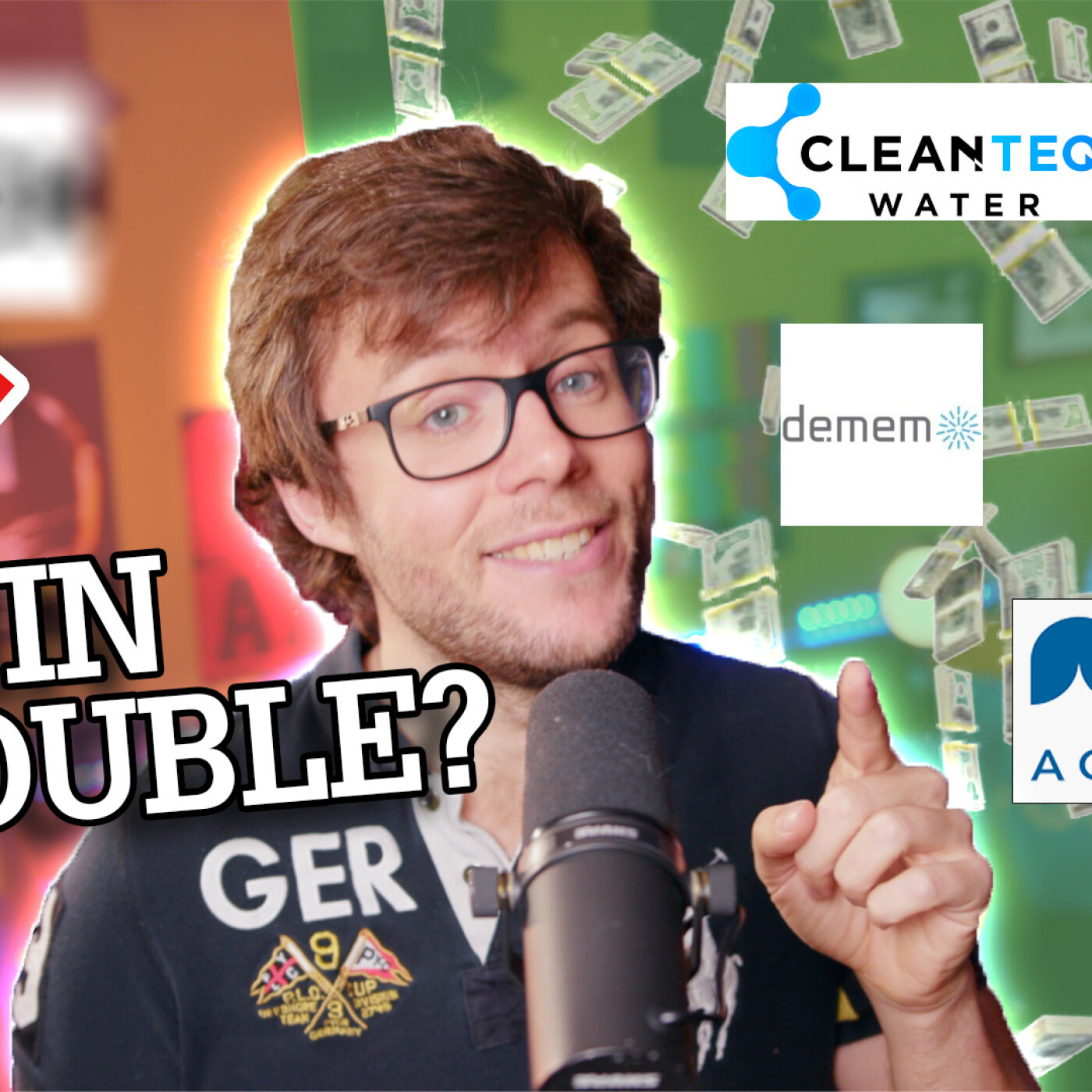
4 Money Bleeding Water Companies You Should Invest In (and one that's in Danger)
bonusJoin me (and many others!) at the BlueTech Forum ➡️ https://www.bluetechforum.com/ Get a 20% discount on checkout by using the code ANTOINE20 👋 See you in Edinburgh! *** Over the past five years: - NX Filtration lost $28.56 million - De.Mem burned $12.14 million - CleanTeq Water was $18.63 million in the red - Aquaporin lost... $67.1 million! Yet, I'll dare to say I think those four companies are on the right track! Why? Let's explore. Then, there's one more company that's lost $39 million over that same period of time, for which I'd be much more worried. Who's that? I'll reveal in the last segment! 00:00 Introduction 00:07 Aquaporin, NX Filtration, De.Mem and CleanTeq Water are bleeding money 00:53 Membrane Companies are "Special Beasts" 02:19 What is disruptive in the Membrane World? 04:30 What are these Membrane Companies investing their money on? 05:44 Is increased Water Scarcity the path to Profit for these companies? 06:58 Join me at the BlueTech Forum 2023! 07:50 This company is in BIG TROUBLE 09:16 Conclusion The Ultimate Guide of Membrane Filtration: https://youtu.be/RUpiL_x7680 Graeme Pearce tells us the full story of Membrane Filtration: https://dww.show/everything-you-always-wanted-to-know-about-mbrs-without-daring-to-ask/ Andrew Benedek adds up the story of MBRs: https://dww.show/how-to-be-alone-early-crazy-but-actually-right-the-history-of-zenon/ ▶️ Watch the video version of this episode on YouTube Hosted on Ausha. See ausha.co/privacy-policy for more information.

S8 Ep 21S8E16 - Could Neglecting 92% of Your Tasks be Costing You Money? Water Marketers Beware!
with 🎙️ Björn Otto, founder, and Managing Director of Interius Solutions. 💧 Interius Solutions supports Water Technology Companies with outsourced marketing solutions and a very special touch - it's marketing done by water professionals that understand water technologies. Marketing is not the Water Industry's forte. I dare you to find one out of the 187 previous episodes of this podcast in which we don't at least allude to the flaws in our sector's marketing. We've discussed how it impacts water's value, water's perception, water technology's take-off and market adoption, the general public's understanding of our sector, how it inhibits the fight against water scarcity, how it opens boulevards for bottled water or unsustainable practices and much more and much worse. But, once we've said all that. What do we do about it? Sitting on our hands and complaining is not really in the DNA of this sector, so it's about time we apply this forward thinking to marketing as well. That requires some know-how, some understanding of the root causes of the situation we're in, a ton of expertise, and, more important: practical, concrete, and actionable pieces of advice. That is why I reached out to my co-host on the Water Show, Björn Otto, and gave him this simple task. Provide water industry decision-makers, investors, and key actors with a blueprint for action. And god, did he deliver on the request! So without further due, I'll let you dive into my discussion with him. Last stop before that - if you like today's content, consider subscribing and sharing that episode with your boss, a colleague, your marketing manager or that promising young engineer in your team you'd think would make an incredible marketer going forward 🔥 ... and of course, we concluded with the 𝙧𝙖𝙥𝙞𝙙 𝙛𝙞𝙧𝙚 𝙦𝙪𝙚𝙨𝙩𝙞𝙤𝙣𝙨 🔥 🔗 Send your warmest regards to Björn on LinkedIn 🔗 Check out Interius Solution's website ▶️ Find the full article on why and how Water Companies shall Better their Marketing Game on the (don't) Waste Water website!Hosted on Ausha. See ausha.co/privacy-policy for more information.

S8 Ep 20S8E15 - How to Frustrate 90% of Start-Up Founders in 15 Minutes in their Best Interest
with 🎙️ Paul Gagliardo, Judge and advisor at Imagine H2O, and Principal at Gagliacqua. 💧 Paul also runs the Water Entrepreneur, an incredibly good water podcast that is one of my personal favorites and which also turns out to be a family business as Paul will elaborate on later on in the conversation. What we covered: 🚽 How leading the project that infamously popularized the term "toilet to tap" made Paul famous and what his job was in San Diego 👨🔬 How Paul led a research center that tested equipment, gave a brutally honest feedback and assessment and how he rapidly got praised for that 🈂️ How becoming a consultant engineer, one of his first duties was to translate what utilities said so that his colleagues could understand it 🏰 How the water sector used to be extremely conservative and somewhat trapped in the 19th century and how things drastically changed over the last decade 🧑 How the startup founder is almost as important as the technology and the market the company aims for, why, and what to do now that you're aware of that 🚧 How some inventors believe in their technology despite the fundamental laws of physics and how to overcome their harassing demands ⚖️ Defining a set of rules to check and assess technology in the most effective manner and how despite all precautions taken to make it a science, there is still some subjectivity in it 🧑⚖️ How the more disruptive your technology is, the more people will want to compare it to things they know and understand to better assess the value you're delivering 📊 How you need to think of data collection from the onset when piloting and how there are a set of best practices that support your efforts in this endeavor 🤌 How expertise can be tricky: the more expertise someone has, the less likely that person is to look at something new because they think they already know everything 0️⃣ Startups having zero experience in the water business, getting paid as a utility and having to figure out what to do with the money, how founders have to be prepared to be replaced when the company grows, being an open book, being smarter than everybody else, seeing the future... and much more! 🔥 ... and of course, we concluded with the 𝙧𝙖𝙥𝙞𝙙 𝙛𝙞𝙧𝙚 𝙦𝙪𝙚𝙨𝙩𝙞𝙤𝙣𝙨 🔥 🔗 Send your warmest regards to Paul on LinkedIn 🔗 Check out the Water Entrepreneur Podcast's Website 🔗 Find the full transcript of my conversation with the inventor of the Toilet to Tap on the (don't) Waste Water website!Hosted on Ausha. See ausha.co/privacy-policy for more information.

[Extract] "You need everything: Market, Technology, Founder and Team!" - Paul Gagliardo - The Water Entrepreneur
bonusPaul Gagliardo is a judge and advisor at Imagine H2O, and the Principal of a consultancy dedicated to developing water start-ups, Gagliacqua. If you're into podcasts, and I hope you are as you're listening to this, Paul also runs the Water Entrepreneur, an incredibly good water podcast that is one of my personal favorites and which also turns out to be a family business as Paul will elaborate on later on in the conversation. The path to success for a Water Start-Up is often everything but a straight line. It takes time, patience, effort, grit, passion, and a lot more to take a water company from zero to one, one to ten, ten to one thousand, and one thousand to one million. And we've covered some of the emblematic examples of that long road on that microphone, for instance, with Andrew Benedek, who told us how he maybe took Zenon from the lonely prophet in the middle of the desert to the leader of the MBR revolution, but in no less than two decades. Now, what Paul brings into the discussion today, as you already heard in the extracts, is that the Water Sector is evolving. It doesn't get easier, but it goes at a faster pace. And interestingly, the turning point that started that acceleration coincides with the inception of Imagine H2O - a story we've covered with Scott Bryan on that microphone, and in which Paul is an important actor. This new age of breaking things fast and striving for swifter impact materializes in many shapes. For instance, the financial results recently published by the new cool kids on the block in the Water Industry show that the money-burning path to scale, once reserved for the Uber, Twitter, or WeWork of this World, now also applies to the Water Sector. To take only one example. With a faster pace also comes greater uncertainty and increased importance in making the right decision at the right time. This is where profiles like Paul's are an incredible resource: having been on all ends of the Water Spectrum, they've gathered experience that can prove invaluable to the C-suite and founders of these scale-ups. To that extent, you'll see that today's conversation doubles down and enhances on concepts we've heard from Wayne Byrne, Graeme Pearce, Reinhard Hübner, or Piers Clark. In conclusion to this lengthy introduction, I can tell you that I enjoyed spending that hour with Paul, that I hope you will as well, and that if that's the case, I'd strongly encourage you to take this podcast and share it with a friend, a colleague, a start-up founder or an investor! So please do it, and I'll meet you on the other side. Hosted on Ausha. See ausha.co/privacy-policy for more information.
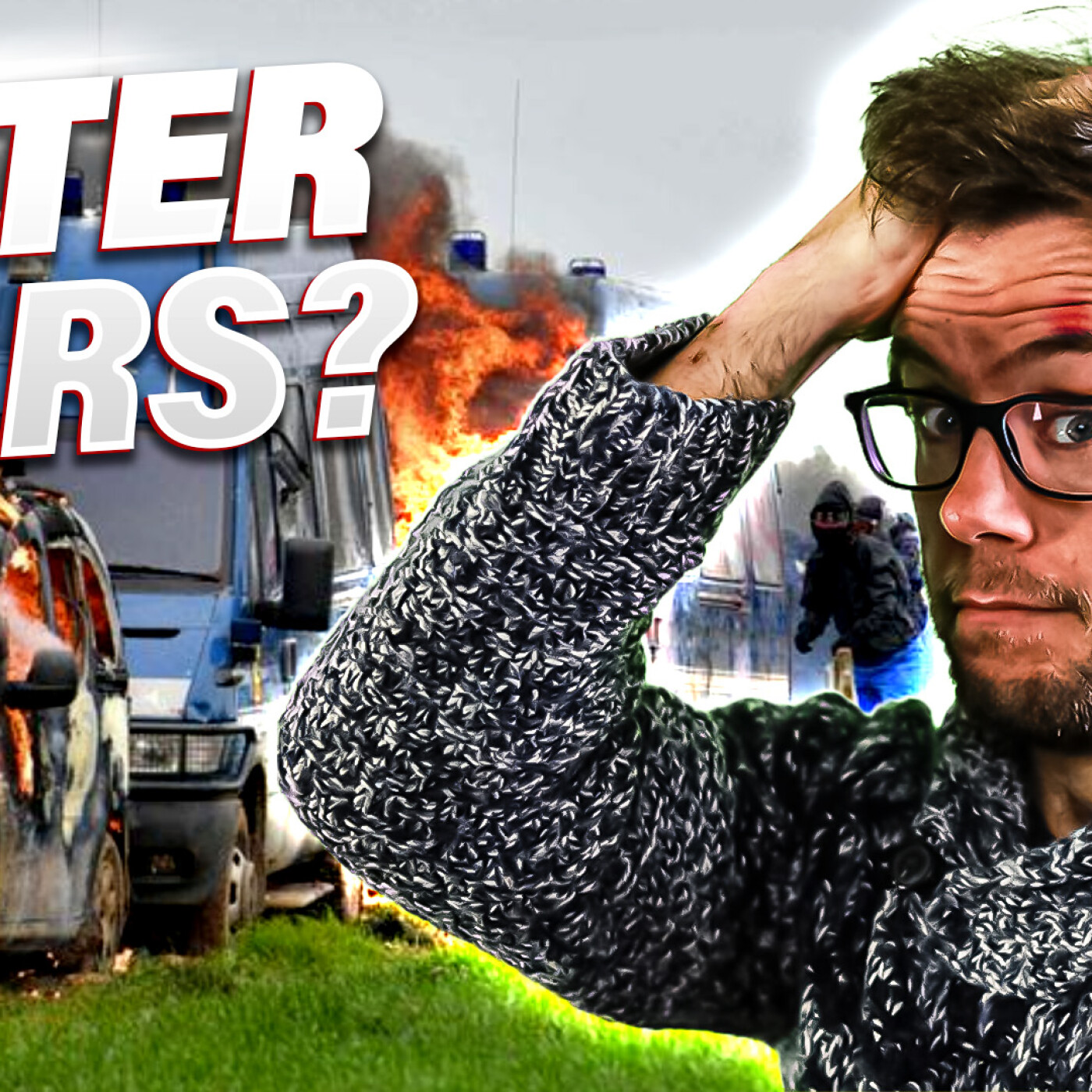
Water Wars in France? The 4 Riddles it Raises
bonusOver the weekend, a series of violent riots took place in Sainte Soline in the Western part of France. The reason for it is a water storage project that has raised contestation for several months now. Is it the first consequence of rising Water Scarcity? 🎙️ PODCAST 🎙️ Website: https://dww.show/podcast/ Smartlink: https://smartlink.ausha.co/dont-waste-water 👋 SOCIAL MEDIA 👋 LinkedIn: https://www.linkedin.com/in/antoinewalter1/ Instagram: https://www.instagram.com/dwwpodcast/ Twitter: https://twitter.com/AntoineWalter7 Facebook: https://www.facebook.com/DontWasteWaterPodcastHosted on Ausha. See ausha.co/privacy-policy for more information.

S8 Ep 19S8E14 - I Watched The UN Water Conference So You Don't Have To - Day 3
689 Registered Commitments! That's an impressive call to action that comes out of the #UNWaterConference in New York this week. Sure, there were the usual shenanigans we saw on Days 1 & 2, but still, the various commissions delivered impressive outputs. And yes, a special envoy for Water will be appointed. So here's the next question: who will it be? Here's the summary: 00:00 Introduction 00:15 Number of the day: 689! 00:48 Key Outcomes of the UN Water Conference 02:35 The Transboundary Water Bromance in South America 03:59 More water commitments by the Interactive Dialog Groups 04:34 Who did it better: young or old speakers? 06:18 Third series of Water Commitments 07:45 A New UN Water Envoy... and Beyond? 09:09 How to Leverage the UN Water Conference 09:44 Conclusion ➡️ Check out my entire collection of SDG 6 topics on the (don't) Waste Water website!Hosted on Ausha. See ausha.co/privacy-policy for more information.

S8 Ep 18S8E13 - I Watched The UN Water Conference So You Don't Have To - Day 2
The UN Water Conference keeps advancing in New York, with this second day and a new series of plenary sessions with many country statements. What's to remember from today? Here's the recap. 00:00 Introduction 00:22 Sentence of the Day: László Borbély, Romania 00:47 Learning 3 - Are we ambitious enough with #SDG6? 02:02 Learning 2 - PPPs have their role to play! 03:36 Learning 1 - We learn more about the UN Special Envoy for Water! 06:20 Daily Zapping 07:26 Flop 3 - Are UN attendees bad pupils? 08:16 Flop 2 - Water and War(s) Ukraine, Karabagh... 11:42 Flop 1 - Are UN Statements boring? 14:29 Conclusion ➡️ Check out my entire collection of SDG 6 topics on the (don't) Waste Water website!Hosted on Ausha. See ausha.co/privacy-policy for more information.

S8 Ep 17S8E12 - I Watched The UN Water Conference So You Don't Have To - Day 1
The UN Water Conference started on the 22 of March in New York. For the first time since Mar Del Plata in 1977, the Water Topic gets the largest possible exposure to solve this riddle: how can we finally ensure that SDG 6 is reached? That everybody receives access to safe drinking water and wastewater management? On Day 1, there were many very generic statements and some things to extract, which I did for you. 8 hours of plenary conferences condenses in under 15 minutes, a challenge? Yes. A stretch? Sure! But I did it, and here's what's inside: 00:00 Introduction 00:14 The Key Sentence 02:08 Top 3 Highlights of Day 1 07:51 Zapping - Good Words and High-End Sequences 10:00 Flop 3 - the Awkward moments 12:57 Conclusion ➡️ Check out my entire collection of SDG 6 topics on the (don't) Waste Water website!Hosted on Ausha. See ausha.co/privacy-policy for more information.

S8 Ep 16S8E11 - How To Win at Negotiating With the Most Powerful Stakeholders?
with 🎙️ Ben Kimura Gross, CEO of Systemics Academy, Negotiation Trainer, and Mentor. 💧 At Negotiation with Goliath, Ben trains sustainability professionals and entrepreneurs to get decision-makers on their side and make your goals their goals. What we covered: 🌱 How Sustainability professionals are pushing for change and how the greatest hurdles standing in the way of that change are overwhelmingly powerful individuals and organizations that are change resistant 😈 How defining people as "evil" is a major mistake that hinders your chances to convince them, why, and what to do instead 1️⃣ The one feature that drives human survival more powerfully than any other one and how you can leverage it for the better 🏗️ How reality is a construct and not an absolute and objective thing and how you need to understand that to succeed in negotiating 🎯 How being goal driven instead of objective is sadly a much more powerful survival feature and how you need to know that to drive sustainability forward 🥇 How the best way to kill a negotiation is to enter with a sense of moral superiority, why and what to do instead 👀 How you need to be driven to a clear and well defined strategic goal to succeed in negotiation and how you shall never lose sight of your strategy 💪 Teaching negotiation, realizing being on the wrong side, having an impact, human psychology, human evolution... and much more! 🔥 ... and of course, we concluded with the 𝙧𝙖𝙥𝙞𝙙 𝙛𝙞𝙧𝙚 𝙦𝙪𝙚𝙨𝙩𝙞𝙤𝙣𝙨 🔥 🔗 Send your warmest regards to Ben on LinkedIn 🔗 Check out Negotiating with Goliath's Website 🔗 Find my full article including a transcript on how to win at negotiating with the most powerful stakeholders Hosted on Ausha. See ausha.co/privacy-policy for more information.
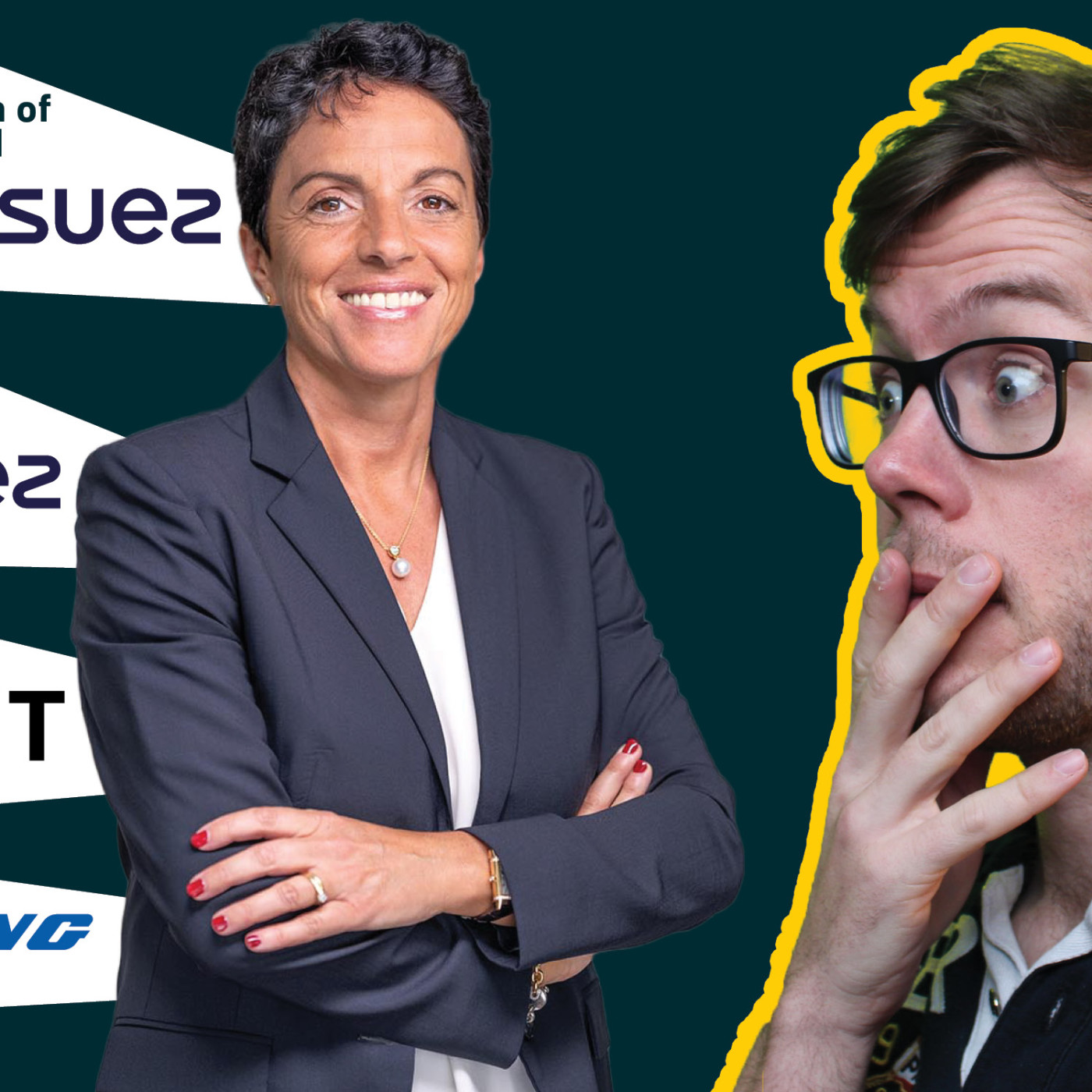
Is SUEZ's CEO Quietly Quitting?
bonusHow much is TOO much? That's the question I'm asking, as Sabrina Soussan is about to get appointed to the board of Boeing. Indeed, with her roles as CEO of SUEZ and Chairman of the Board, but also as a board member of ITT, that makes quite a lot of different hats to wear. Doesn't it start to be slightly too much to still deliver as CEO of SUEZ? ▶️ Watch the video version of this episode on YouTube Hosted on Ausha. See ausha.co/privacy-policy for more information.
S8 Ep 15S8E10 - 30 Experts Rewrite The UN Water Conference's Agenda. For The Better?
For some months now, I've been asking some of the most brilliant water professionals for insight on the UN Water Conference. I've asked them what they would have put on the conference's agenda. I've asked them what topics needed to be discussed amongst world leaders to finally solve the water riddle. Will their recommendations be applied? We'll discover that next week. And, even if I have watered-down hopes from the conference, I'll be following every word that's spoken in New York, and I'll prepare you a daily digest of what's noteworthy. If that's of interest, you may want to subscribe so that you don't miss it - and if you do, that might help to cheer me up and to sustain the workload over the three nights I'll spend on it, with the time zone difference, so I'd appreciate the support. For today, I've compiled the best inputs from the experts I spoke with so that we get a sense of the Agenda the Water Sector would have built. Will the UN follow track? I'll make sure to check. Would you have put something else on the schedule? Well, that one's fully up for discussion, so I'd be curious to read your input in the comments! ➡️ Check out my entire collection of SDG 6 topics on the (don't) Waste Water website!Hosted on Ausha. See ausha.co/privacy-policy for more information.

S8 Ep 14S8E9 - How to Win in a Competitive & Mature Niche Market: The Astonishing Aclarus Ozone
with 🎙️ Michael Doran, President & Co-Founder of Aclarus Ozone. 💧 Aclarus Ozone aims to solve complex water problems with advanced ozone technology. What we covered: 🧑🤝🧑 How the key to success is the team as it enables to turn a product into a solution 💁🏻 How when it comes to ozone, people don't look for a technology but for help - and how you can apply that in your everyday business 🔁 How engineering houses and consultants like to repeat what's proven to work - and how to convince them to embrace new approaches ⚡ How there's much more to understand about ozone than just the generation and the bubbling. It's all about the application! 📈 How to understand the development stage of your company, avoid to freak out and react accordingly 🛩️ How different it is to be an agile smaller player compared with established large moguls 👪 How trade organizations can be incestuous (that's me saying it, not Michael!) and what they bring to the overall industry 🌎 How you have to nail your domestic market before spreading yourself too thin in unknown waters 🤝 How there are synergies to find between market players to leverage everyone's strengths 🚀 Inheriting clients, aiming for higher agility, learning entrepreneurship the hard way, aiming for impact, Aclarus Ozone's figures and growth numbers, generational shifts in engineers... and much more! 🔥 ... and of course, we concluded with the 𝙧𝙖𝙥𝙞𝙙 𝙛𝙞𝙧𝙚 𝙦𝙪𝙚𝙨𝙩𝙞𝙤𝙣𝙨 🔥 🔗 Send your warmest regards to Michael on LinkedIn 🔗 Check out Aclarus Ozone's website ➡️ Check out the entire article on Aclarus Ozone's story and how it can inspire water entrepreneurs, including an infographic and a full transcript on the (don't) Waste Water website!Hosted on Ausha. See ausha.co/privacy-policy for more information.

[Extract] "Our clients aren't looking for Ozone, they're looking for Help!" - Michael Doran - Aclarus Ozone
bonusMichael Doran is the president and co-founder of Aclarus Ozone. Aclarus aims to solve complex water problems with advanced ozone technology. The ozone world is a 1.4 billion-a-year niche I used to know pretty well, as that's where I've cut my water teeth. It's been around for over a century, with the ozonation step of the Nice drinking water plant in France continuously operating since 1906. On the players' end, you've got Veolia and Xylem as established market leaders, a new wave of Chinese players that might well be of equivalent size today, like Newland or Guolin, proponents of modular approaches such as Primozone or Pinnacle, and historic Japanese moguls that quietly exist to hunt a white elephant from time to time, such as Metawater or Mitsubishi. All that little band meets several times a year in International Ozone Association gatherings, where they are joined by academics, and grows steadily under the influence of new regulations and higher water quality expectations on both ends of the Water Cycle. On the technological side, I remember how excited my R&D colleagues were when a multi-year development program yielded some percent of performance improvement - and they were and probably still are the top-notch guys in this industry. So safe to say there's a technological asymptote, and that sector tends to it. All in all, it's not the worst business to be in, I've enjoyed my ozone years, and I've learned so much, but it's probably not the most exciting either, still, if you ask me. So if you can't really expect to disrupt the technology, if it's around for a while, if it has established players, and if it won't go through the roof. Why would you start a company in this field? Well, that's one of the keys to today's conversation with Michael. Because it goes against all the preconceptions: there's much to innovate on the business side, the customer service, the go-to-market, the overall approach, the solution mindset, and many more that Michael will detail in a minute. You don't have to create a category or prove a technology from scratch. Executing better than anyone is also a key skill - if not THE key skill - but enough from hearing it from me. My guest will tell you all of that much better. So let us take off, just after this reminder, that if you like what you hear, if you think this will be of interest and value to someone else out there, there's only one way to spread the message: take this episode and share it with them. Drop a WhatsApp message, a LinkedIn InMail or status, an SMS, a hint at the coffee machine or simply tell them. Really, that's how podcasts spread, and that's how I know I shall continue to provide more of them! Come on, do it, and I'll meet you on the other side! How to Win in a Competitive & Mature Niche Market: The Astonishing Aclarus Ozone Hosted on Ausha. See ausha.co/privacy-policy for more information.

S8 Ep 13S8E8 - How to Leverage Life Cycle Assessment To Take Better Decisions
with 🎙️ Dubravka Skunca, LCA Representative and Expert for the European Commission, but also an SME Support leader at the European Regional Development Fund, Business Consultant, and Council Representative at various EIT groups. 💧 Dubravka is also LCA Leader for Green Protein, a European project which aims at a major innovation in the fields of protein production and food loss reduction in the EU by producing high-added value, food-grade functional proteins, and other ingredients out of green field waste. What we covered: ♻️ What Life Cycle Assessment actually is, and what outcomes to expect from it 🦶 How Water Footprint is one of the dimensions of Lifecycle Assessment 🌐 How there won't be any water circularity without a global circularity - a topic we had already addressed with Gonzalo Delacámara last week 👨⚖️ How sustainability can involve difficult calls to make for decision-makers and how LCA can help make the right decisions 🌱 How SMEs can benefit from Lifecycle Assessment not only for their own growth path but also to better interact with large companies 🛣️ How sustainability is on the roadmap of most CEOs for their companies' future but also their present 🍲 How circularity will have to play an increased role in the agri-food value chain 🛠️ What to do once you've completed your Lifecycle Assessment and which tools and steps come next 🗑️ How wasted food is also a lot of wasted water, and how new approaches strive to fight that sustainability non-sense 🫲 Coaching SMEs, Lecturing at the University, startups as a way to feed major's innovation, demonstrating impact to a wide audience... and much more! 🔥 ... and of course, we concluded with the 𝙧𝙖𝙥𝙞𝙙 𝙛𝙞𝙧𝙚 𝙦𝙪𝙚𝙨𝙩𝙞𝙤𝙣𝙨 🔥 🔗 Send your warmest regards to Dubravka on LinkedIn ➡️ Check out the entire article on how life cycle assessment can help make sustainable decisions, including an infographic and a full transcript on the (don't) Waste Water website!Hosted on Ausha. See ausha.co/privacy-policy for more information.
[Extract] "I would start with Circularity as a Concept" - Dubravka Skunca - European Commission
bonusDubravka Skunca is LCA Representative and Expert for the European Commission, but also an SME Support leader at the European Regional Development Fund, a Business Consultant, and a Council Representative at various EIT groups. Dubravka is also LCA Leader for Green Protein, a European project which aims at a major innovation in the fields of protein production and food loss reduction in the EU by producing high-added value, food-grade functional proteins, and other ingredients out of green field waste. If our industrial World wants, one day, to return to its circular origins, it will need to leverage the right tools. This is where LifeCycle Assessment or LCA kicks in. Indeed, by evaluating the environmental impacts of a product or service over its entire life cycle, LCA provides a systematic framework to identify and assess environmental impacts associated with a product or service, including energy use, greenhouse gas emissions, waste generation, and as probably most interesting for us, water use. Hence, LCA is a powerful decision-making tool that helps identify opportunities to reduce environmental impacts, improve efficiency, and promote circularity. I won't tell you too much about it in this intro, as Dubravka will do that much better than me in a minute, but I'm pretty sure that the toolbox she'll present today can be of interest to help you take better and/or more sustainable decisions in the future! So let's jump into it, of course, once I've reminded you that if you like what you hear, you can take this episode and share it with a friend, a colleague, your boss or your LinkedIn Network. Come on do it, and I'll meet you on the other side! How to Leverage Life Cycle Assessment To Take Better DecisionsHosted on Ausha. See ausha.co/privacy-policy for more information.

S8 Ep 12S8E7 - Why do we have so many Good Reasons to make Wrong Water Decisions?
with 🎙️ Gonzalo Delacámara, Consultant on Natural Resources Economics for the United Nations and Water Policy Advisor for the OECD, the European Commission, and the World Bank 💧 Gonzalo is also Director of the Center for Water & Climate Adaptation at IE University, aiming to reinvent education and train the people who will change the World tomorrow. What we covered: 🔗 How "Water" doesn't stop at the water sector itself but is heavily interlinked with the World around it and how "Water People" have a hard time figuring this out ☵ How nobody seeks Water in the end, but rather the benefits Water provides 👴 How the World's water institutions are not catered to the era we live in and how this has consequences 💵 How we benefit from nature's services and how those can be assessed in economic terms ♻️ How water circularity doesn't exist in isolation, and how the World needs to become circular first 🔖 How even if Water doesn't have a price, it always has a cost - and how we shall better account for that 📅 How getting our s*** together for 2050 will require breaking it down into digestible pieces 🤌 How the largest water challenges may well happen outside of the Water Sector and how to adapt to this new realm 🤖 Water trading, water governance, new technologies, planning for a World that doesn't exist anymore, the agriculture-energy-water nexus, the roadmap to real sustainability... and much more! 🔥 ... and of course, we concluded with the 𝙧𝙖𝙥𝙞𝙙 𝙛𝙞𝙧𝙚 𝙦𝙪𝙚𝙨𝙩𝙞𝙤𝙣𝙨 🔥 🔗 Send your warmest regards to Gonzalo on LinkedIn ➡️ Check out the entire article on how we make wrong water decisions, including an infographic and a full transcript on the (don't) Waste Water website!Hosted on Ausha. See ausha.co/privacy-policy for more information.
[Extract] "We've got 19th century institutions making decisions about 21st century challenges!" - Gonzalo Delacámara
bonusGonzalo Delacámara is Consultant on Natural Resources Economics for the United Nations and Water Policy Advisor for the OECD, the European Commission, and the World Bank. Gonzalo is also Director of the Center for Water & Climate Adaptation at IE University, aiming to reinvent education and train the people who will change the World tomorrow. Why does the World misbehave when it comes to Water? Why can't Water be truly circular when all water professionals agree it should be? Why do we still have to evangelize the World to the treasures of resource recovery? The list goes on and on. And from inside the Water Industry, it can get frustrating. Yet, there's an unpleasant truth to accept: the Water Sector is an epiphenomenon on the broader scale of things. I know it's unfair, and it probably doesn't make sense, but it is simply and coldly true. This is how, as per the example Gonzalo shares today, people will pump up desalinated Water from the Sea to the Atacama desert - which represents the trifle of 250 bars of pumping - just because the commodity market can cover the cost. No one will dare to argue that it is sustainable to waste Water and energy just for some bits of copper. But as Gonzalo will demonstrate in a jiffy, the wrong incentives lead to the wrong results. So I'll let him develop the argumentation, as he'll do it much better than what I would bastardize here, but I will lead into that conversation with a straightforward question for all of us. In one month from the date I release this episode, the Water's who's who will converge to New York for the UN Water Conference. You've heard it all: once in a lifetime, didn't happen since Mar Del Plata in 1977, bla bla bla. But are we sufficiently applying this advice we've got from Claudia Winkler and Alice Schmidt on this microphone by Season 3, Episode 6? Are we zooming out before we zoom in? Will we aim for real solutions that break the water silo and really embrace the circularity nexus, or will we waste this opportunity with short-sighted debates? If one assembly has the power to finally set the right incentives, that should be this one. So if you know a delegate that will attend the main or a side event, take this episode, and send it to him. Tell that water who's who that water people won't solve water alone. That we need circularity in the decision-making so that the entire system of systems ultimately gets circular. Tell them, do it, and I'll meet you on the other side! Why do we have so many Good Reasons to make Wrong Water Decisions?Hosted on Ausha. See ausha.co/privacy-policy for more information.

Why Greedy Capitalists is the Best Thing for America’s Water
bonusPrivate Capital very often has a bad rap in the Water Sector. It is indeed hard for many to overcome the misconception that water has to be free. Yet if everyone is in his full rights to run around with a bucket and freely collect rainwater; sourcing, treating, conveying, managing, and reclaiming the water that feeds America and its economy has a cost and a (tremendous) value. So, how can private capital help solve the broken economics that makes for the Water Crisis in America? Getting America’s broken water economics back on track is beyond the capacity of any of the economic sources individually. Hence, the solution will have to come from a blend of various sources. Federal money, in line with the $111 Billion Infrastructure investment, but not limited to it as it barely covers one-fourth of the immediate funding needs, one-tenth for the long term. Private-Public Partnerships to leverage the private sector’s capital and know-how together with the public sector’s frame. Private investment in water, probably beyond today’s 15% ownership, and conditioned to the ability to become profitable as an economic field to guarantee long-term sustainability. Philanthropic investments, blended with others, to build the perfect equilibrium that generates impact in the long run. ▶️ Watch the video version of this episode on YouTube ▶️ Check out my full article on what Greedy Capitalists can do to help the US Water SectorHosted on Ausha. See ausha.co/privacy-policy for more information.
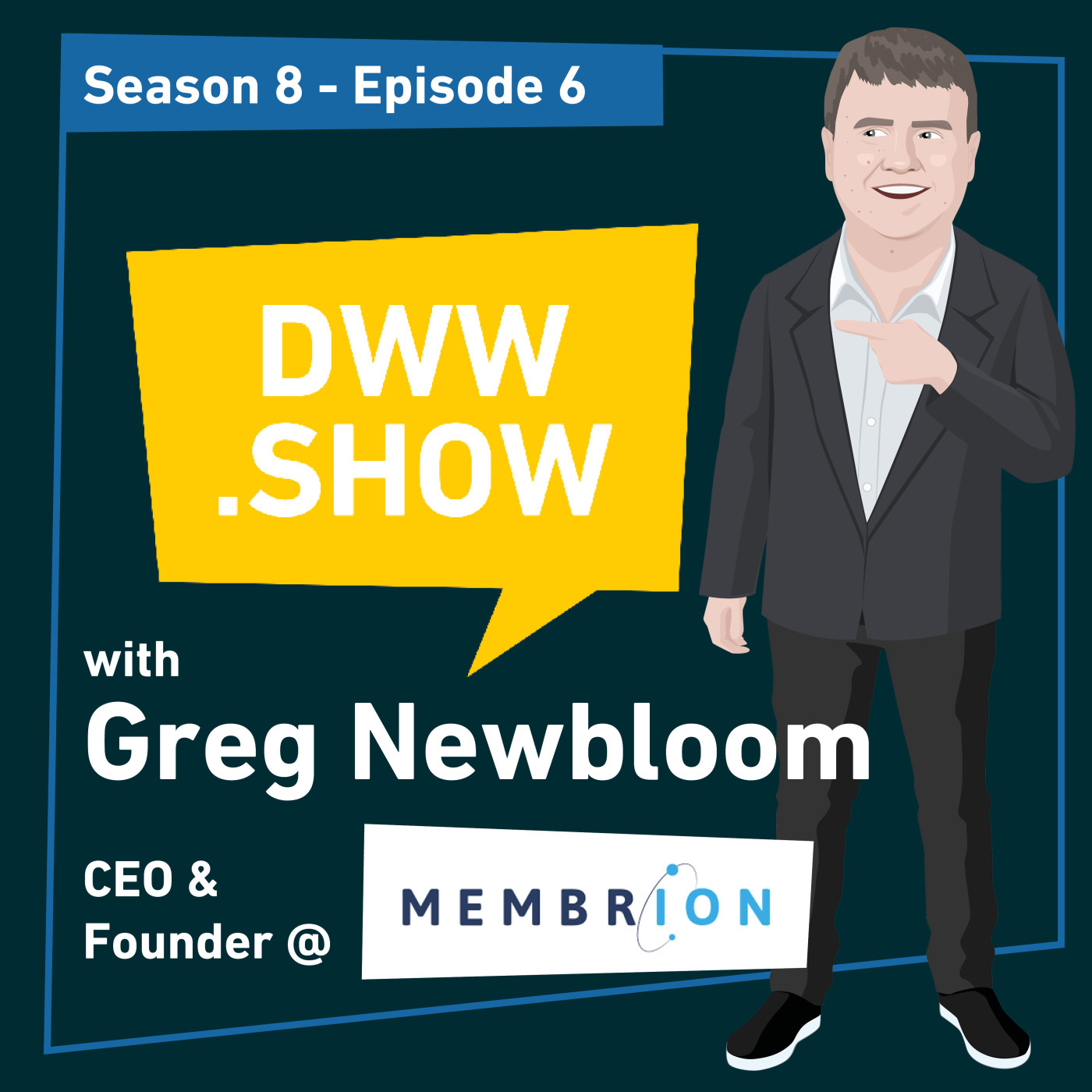
S8 Ep 11S8E6 - This CEO That Raised $22M Reveals His One Trick You MUST Copy Today
with 🎙️ Greg Newbloom, CEO and Founder of Membrion. 💧 Membrion strives to help industrial water users who aren’t satisfied with processes that are thousands of years old, and who’ve been searching for a better and lower-cost way to recycle or reuse their wastewater. What we covered: 🚀 How Membrion ended up becoming a Water Company and how it was due to some smart investors ♻️ How shocking some of the common traits of the Water Industry can be for outsiders, and how that's an opportunity to have a high impact 🔗 How the most precious asset for a young water company is to have a direct link to its customers and how to actually foster it 🛞 How there is nothing to win in reinventing the wheel: you shall leverage your peer's knowledge. Plus, they're willing to share! 💡 How you can treat any stream with a membrane, but only a few profitably - unless you have a trick to optimise or short-cut pre-treatment 🚚 How industrial wastewater that gets trucked away is a very complex soup to handle, and how to solve that riddle 🙌 How the right solution leads to a win-win: it is both profitable and sustainable 🤝 Starting a relationship by proving the solution can work in the worst possible conditions to win a customer's confidence 🎲 Pivoting the company to define the right value chain segment to cover and growing from a membrane to a module 📈 How to transform a pilot into a demo, a full scale and ultimately a flagship reference 💧 How water scarcity brings back the real sense of the value of water, especially in an industrial context 🏎️ Connecting passion, technology, entrepreneurship, and harsh realities, how it feels to get accelerated from the inside, derisking new solutions, replacing an industry standard, testing waters to find the best market fit, the perks, and limits of ceramics 🔥 ... and of course, we concluded with the 𝙧𝙖𝙥𝙞𝙙 𝙛𝙞𝙧𝙚 𝙦𝙪𝙚𝙨𝙩𝙞𝙤𝙣𝙨 🔥 🔗 Check Membrion's Website 🔗 Send your warmest regards to Greg on LinkedIn ➡️ Check out the entire article on Membrion's path, including a teaser, an infographic and a full transcript on the (don't) Waste Water website!Hosted on Ausha. See ausha.co/privacy-policy for more information.
[Extract] "A 2-3 payback period can change to a 1-2 months payback!" - Greg Newbloom - Membrion
bonusGreg Newbloom is the Founder and CEO of Membrion. Membrion strives to help industrial water users who aren't satisfied with processes that are thousands of years old and who've been searching for a better and lower-cost way to recycle or reuse their wastewater. Marketing guru Louis Grenier has some key advice within his STFO methodology. But whenever he has a chance to rank a number one within his selection, he mentions that you should talk with your customers. And not just talk: engage with them, get to know them beyond any made-up persona, and steal as much as you can from them. Not stealing like scamming or going out of their offices with some furniture. But stealing, in the sense that you'll let them tell you their real pains and cater your solution to what's really matters to them. Ok, so much for this hashed-down Marketing 101; where am I heading with that. Actually, this is something like my 150th interview on this podcast. And I think I never heard anyone else implementing the simple trick Greg has put in place at Membrion and shares today. And yet, it's disarmingly genius! Every single request you put in on Membrion's website actually goes straight to Greg. Don't spam him right away, but if you enjoy what he shares today, you can probably go tell him directly with Membrion's contact form! You'll hear in a minute how there's more than this trick. How even Membrion's presence in the Water Sector is actually the result from listening to market voices. And there's a ton of actionable advice in what you'll hear, so I'll let you make up your own minds, but I sense you will want to follow my advice and drop him a message by the end of today's episode! We actually recorded this episode some months ago - you know, I'm still a one-man-band, so sometimes production times are a bit longer; sorry for that, but I may have big news soon. The reason I mention it is that Membrion closed a Series B early this year for $7 million, and you might be surprised I didn't raise the question in the interview. But don't worry, I raise many others, including one that really puzzles me that comes even after the rapid-fire questions. I'll let you discover all of that, and remember, if you like what you hear, please take this episode and share it around you with a friend, a colleague, or an aspiring water entrepreneur that would praise some incredibly actionable advice and I'll meet you on the other side! Membrion's CEO That Raised $22M Reveals His One Trick You MUST Copy TodayHosted on Ausha. See ausha.co/privacy-policy for more information.
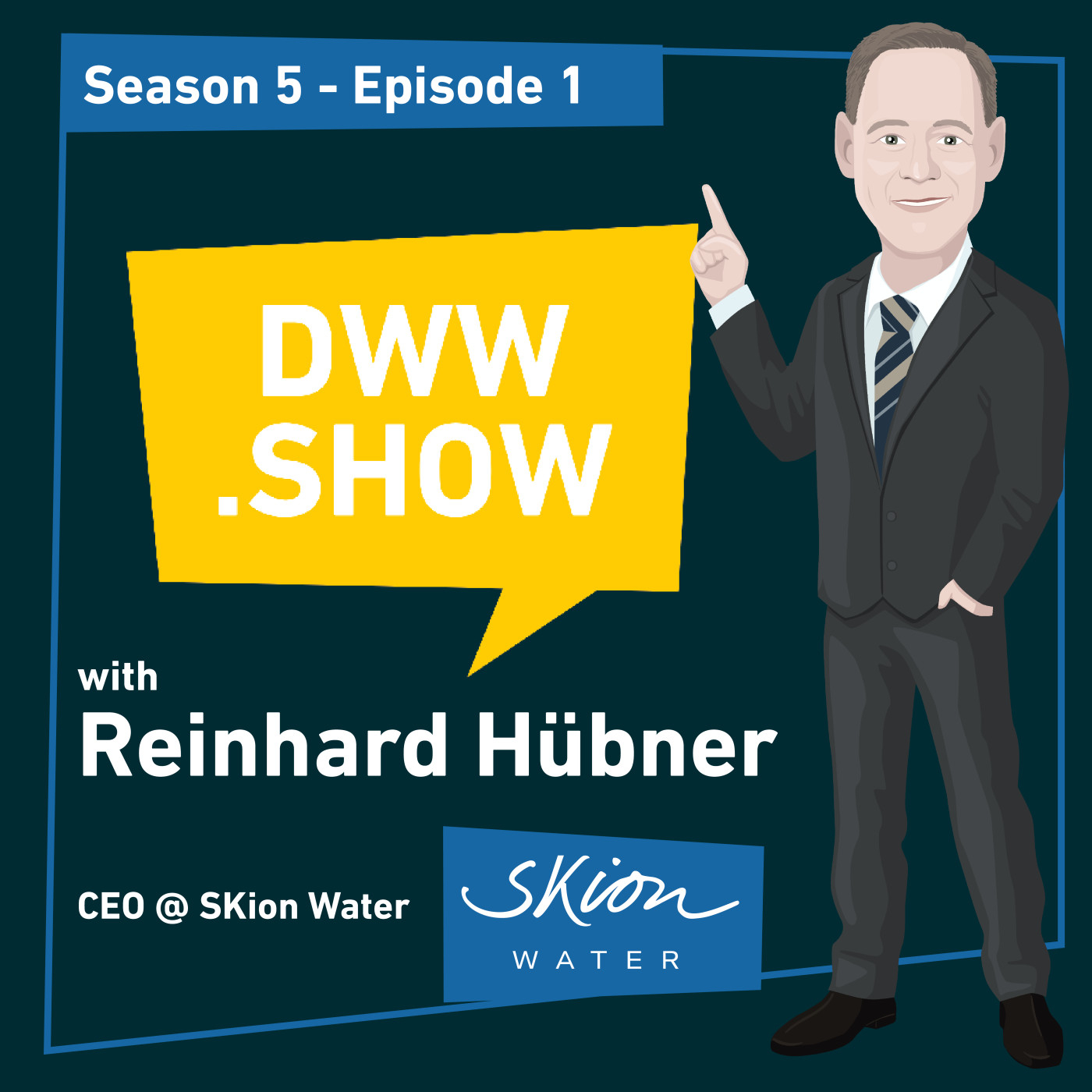
S8 Ep 10The Investor Who Built a $1 Billion Water Revenue Company from Scratch in 12 Years through 38 M&A Moves
with 🎙️ Reinhard Hübner, CEO of SKion Water, 2021's Water Company of the Year 💧 SKion Water is an international water technology platform, that aims to empower water technology companies to make a difference. What we covered: 📈 How SKion Water was built from scratch in a decade, to reach about 750 M€ yearly turnover 🛣️ How building a successful water company all starts with choosing your path (and what the options are) 🤑 How cheap money comes with drawbacks and how this can be problematic for water entrepreneurs 🤪 How water market capitalizations totally go through the roof these days (and what to think about it) ☠️ How there's no magical way to skip steps and how it is dangerous to even try 💧 How the water industry is segmented, and how important it is to target the right section of the food chain 🤯 How it might be tempting to see yourself as much more clever than everyone before, and how that can lead to terrible mistakes as a water entrepreneur 🌳 How trees don't grow up to the sky, and how being reasonable on your business expectations is the best way to really deliver 🤝 How it might be tempting to see tremendous synergies between various branches of the water industry... and how those rarely (if ever) exist 🍏 How what matters at the end of the day is less the plan than the way you execute it (and how you might have to go in the trenches) 🧱 All in all, how Reinhard built the 2021 "Water Company of the Year" 💧 How Reinhart almost fell into investing by accident 🍏 The two reasons why one would want to invest in Water (despite all the challenges) 🍎 How SKion's success was born in early, rapid, and spectacular failures 🍏 How the focus is not to acquire companies but to serve the real customer needs (and the foolproof trick to always keep that market pulse) 👝 How the Water Sector's structure is quite unique in terms of company sizes and how a certain one doesn't exist at all 💰 What's the best way to invest in water companies and why 🧍 Who are the best water entrepreneur profiles, why, and how they have to take risks 💸 Water Industry's consolidation frenzy, too much money potentially killing companies, crazy valuations, learning from history, giving atypical companies a chance... and much more! 🔥 ... and of course, we concluded with the 𝙧𝙖𝙥𝙞𝙙 𝙛𝙞𝙧𝙚 𝙦𝙪𝙚𝙨𝙩𝙞𝙤𝙣𝙨 🔥 ➡️ Get the Full Story ➡️ Come say hi to Reinhard on LinkedIn Hosted on Ausha. See ausha.co/privacy-policy for more information.

S8 Ep 9S8E5 - Why bother with Residential Water Struggles? It's an Industry Risk!
with 🎙️ Damian Georgino, Partner at Womble Bond Dickinson 💧 Womble Bond Dickinson is a leading law firm that provides support to organizations operating within the fast-moving, challenging, and dynamic energy, water, and food nexus. What we covered: 🚜 How Water's Rethink needs to happen at the Energy-Water-Food nexus level - and why 🤝 How this caters perfectly to the private sector's abilities 🌎 How many countries in the World trust the private sector to manage water - and how the US may get inspired to follow the track 🏭 How when you do a water mass balance, you rapidly understand why the right focus is on industrial water 📣 How looking at sustainable water and best value for money inevitably leads to distributed and water fit-for-purpose approaches 💰 How industrial water is the perfect example of a potential private-private partnership leading to win-wins 🧑💼 Getting capital to work, Finding the best know-how, understanding the value of water in each context, striving for impact, facilitating change... and more! 🔥 ... and of course, we concluded with the 𝙧𝙖𝙥𝙞𝙙 𝙛𝙞𝙧𝙚 𝙦𝙪𝙚𝙨𝙩𝙞𝙤𝙣𝙨 🔥 ➡️ The 104 pages cartoon on the Water Crisis in America ➡️ Send your warm regards to Damian on LinkedIn. ➡️ Check out Womble Bond Dickinson's website ➡️ A big THANK YOU to Sciens Water for enabling this episode! ➡️ Check out the entire article on why industrial water is the real deal , including teasers and a full transcript on the (don't) Waste Water website!Hosted on Ausha. See ausha.co/privacy-policy for more information.
[Extract] "Water is not Energy or Agriculture: it's All of that!" - Damian Georgino - Womble Bond Dickinson
bonusDamian Georgino is Partner at Womble Bond Dickinson. Womble Bond Dickinson is a leading law firm that provides support to organizations operating within the fast-moving, challenging, and dynamic energy, water, and food nexus. That was a hell of a ride. What am I talking about? Well, this exploration of the Water Crisis in America. I know, to some of you, it may sound like the definition of a First-World problem. Yet, when you look at the challenges that the wealthiest country on earth faces when it comes to water, you get a better sense of the global water riddle we have to solve. I hope that with the twenty stops on that journey, we started in September, you got to grasp that beyond the real and daunting challenges, there's also an array of solutions. That it's not a lost battle at all and that we can win it, assuming we align ourselves, put all the pieces of the jigsaw in place and get the ball rolling at all levels. Now I get it as well that it can be challenging to connect so many dots - here's why I have a special offer for you. If you go to dww.show/water-crisis-in-america you can download a 104 pages cartoon that synthesizes what all my New York guests have told us over the past weeks, combined with the best insights from previous guests and literature review, with a bit of my own brain juice to do the jointing. 104 pages of a simple, down-to-earth cartoon that's taken me 6 months to write, design and compile. 104 pages where you'll find all the protagonists you've heard on that microphone, carefully pictured in a cartoon shape by my talented illustrator. What do I ask you in exchange of that download? Well, nothing. It's free. Forever. What's the catch? Well, I hope you'll trust me if I tell you that there is absolutely no catch. I simply want that knowledge to go to as many people as possible! Now, if you want to help me in this endeavor, you can share the cartoon with whoever you think shall read it! And if you have a website, internet is about linking, so you could consider linking to the cartoon page from your resources section, your blog, or your media page. Whatever suits you suits me and brings us one step forward! Finally, if you don't like reading and prefer to listen to or watch the content of the cartoon, I've already released chapter one as a podcast on this podcast channel and as a video on my youtube channel - go check it out; three more are in the making, my one-man-band is spinning its wheels to make it happen as fast as possible. That being said, we have a last leg in our interview journey to air today: that's my conversation with Damian. I swear you'll swiftly get why I thought it would be the proper one to close the series: we're revisiting some of themes we already covered, like water fit for purpose or distributed approaches, but we're also framing it by looking at it from a different angle. Sure, residential water is a trouble, and we're rightfully concerned about getting water of sometimes questionable quality. But all the industrial goods and food we rely on every day also need water, and actually a lot more. So, by the volumes, different parts of the water cake may request more of our attention, and Damian will remind us of that! I've already been exceptionally long with this intro, so I'll leave the floor to Damian, and I'll see you on the other side! Why bother with Residential Water Struggles? It's an Industry Risk! Hosted on Ausha. See ausha.co/privacy-policy for more information.
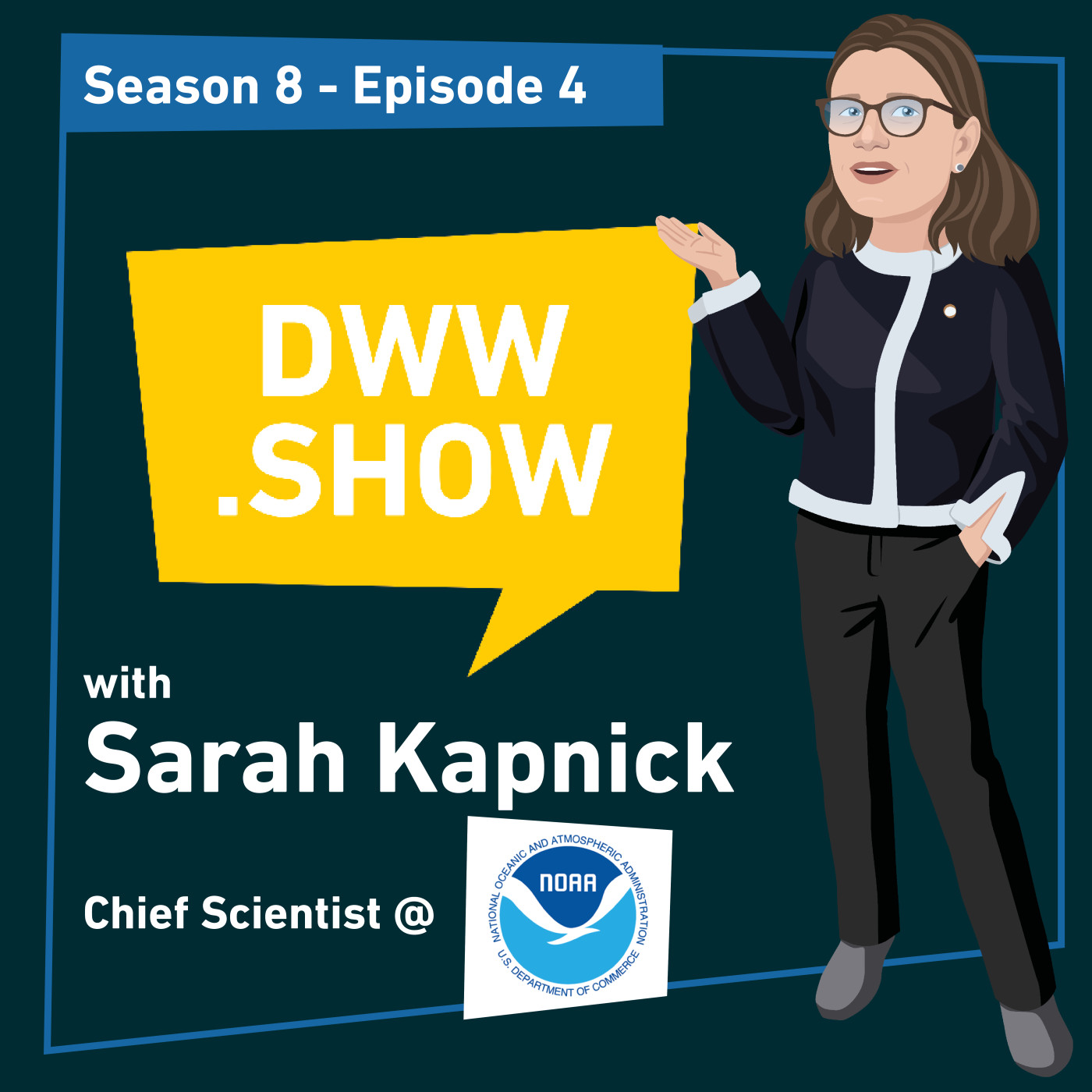
S8 Ep 8S8E4 - Where's Practical Climate Data when you Desperately Need It?
with 🎙️ Sarah Kapnick, Chief Scientist at the National Oceanic & Atmospheric Administration 💧 The National Oceanic & Atmospheric Administration (NOAA) aims to enrich life through science. From the sun's surface to the ocean's depths, the Agency works to keep the public informed of the changing environment around them. What we covered: 🌳 How Climate Data will help to rethink water, infrastructure and the link between both 🤝 How it takes a village to solve the climate and infrastructure riddle and how NOAA teamed up with ESRI (and why) ⛈️ How climate change's impact on the American infrastructure can already be felt today and how it will intensify in the future - unless the right actions are taken 📊 How climate change disrupts the way infrastructure planning is organized and how climate data has to play a prominent role in the future 📣 How there's an effort to pursue communicating the right information with the general opinion but also key decision-makers 💰 Finding the right metric for impact, the Biden-Harris infrastructure bill, scattered information (and especially climate data), teaming up... and more! 🔥 ... and of course, we concluded with the 𝙧𝙖𝙥𝙞𝙙 𝙛𝙞𝙧𝙚 𝙦𝙪𝙚𝙨𝙩𝙞𝙤𝙣𝙨 🔥 ➡️ Send your warm regards to Sarah on LinkedIn. ➡️ Check out the NOAA's website ➡️ A big THANK YOU to Sciens Water for enabling this episode! ➡️ Check out the entire article on how practical climate data help solve the water crisis in America, including teasers and a full transcript on the (don't) Waste Water website!Hosted on Ausha. See ausha.co/privacy-policy for more information.
[Extract] "Climate Issues aren't decades off from now..." - Sarah Kapnick - National Oceanic & Atmospheric Administration
bonusSarah Kapnick is Chief Scientist at the National Oceanic & Atmospheric Administration. The US NOAA aims to enrich life through science. From the sun's surface to the ocean's depths, the Agency works to keep the public informed of the changing environment around them. There are a lot of parameters to consider when planning infrastructure for today and the decades to come. It is a compound of existing assets, communities, social issues, vulnerabilities, and so on and so on. But maybe before all of that, there's one essential compound: data. Indeed, if you don't know where your infrastructure lies - sounds crazy, I know, but that happens every day; check my conversation with Olivier Narbey if you want to hear some nasty stories about that - how are you supposed to plan your infrastructure's evolution? Yet, that's arguably data you can acquire locally, which almost depends entirely on you. The same is true for social issues or, to a certain extent, communities and their evolution. But when it comes to broader climate insights, that changes quite a bit. Climate change is global, and even if its impact is very local, linking both isn't a piece of cake at all. Information exists, but it's often quite scattered and hard to compile. This is why having central initiatives to compile relevant datasets, combine them in a purposeful way, and deliver them in a format that ensures they can be used straight away is so important. And that's the baton the National Oceanic & Atmospheric Administration has taken up in the US; I'll let Sarah explain how and why. For now, I'll let you dive into her work with my usual reminder that if you like what you hear, please take this episode and share it with a colleague, a friend, or your LinkedIn network! That's the best way to support me and to get that podcast known to more people, one pair of ears at a time. Come on, do it, and I'll meet you on the other side! Where's Practical Climate Data when you Desperately Need It?Hosted on Ausha. See ausha.co/privacy-policy for more information.

S8 Ep 7BREAKING NEWS - Will Xylem succeed with Evoqua where Veolia and Siemens failed?
Xylem and Evoqua just announced their merger. This will create the second-largest water company in the World with a $7 Bn turnover! Yet, Evoqua has quite a history in M&A moves, having successively been part of Veolia and Siemens, without success. Will this deal be different, and if yes, why? Let's review!Hosted on Ausha. See ausha.co/privacy-policy for more information.
S8 Ep 6The 4 Horsemen of America's Water Apocalypse
"Water Apocalypse" may come in as an exaggerated stretch; I'm sorry. Yet if you want a number to understand the magnitude of what we're discussing here: fixing America's water challenges is estimated at... $1 trillion. So, what makes for this Water Crisis in America? This is the consequence of decades of flawed water management along four main lines. Broken infrastructure starts showing with nearly 15% of US citizens served with water that recently breached the Safe Water Act. When they get served at all, as 2.2 million Americans don't get any water services. Water economics are in dangerous imbalance. The combined effects of the "wrong pockets problem" and recurrent underinvestment place an entire section of the Water Sector in a perilous situation. Policies move and adapt slower than the changing world we live in. And even when they tend to evolve, enforcement is an entirely new problem. Beyond policies, an entire sector struggles to embrace change - when it inevitably will have to. ▶️ Watch the video version of this episode on YouTube ▶️ Check out my full article on the American Water Apocalypse Hosted on Ausha. See ausha.co/privacy-policy for more information.
S8 Ep 5S8E3 - Can Private Capital Change the World of Water for the Better?
with 🎙️ Henry Cordes, Principal at Sciens Water 💧 Sciens is a research-driven investment fund that identifies uncovered, under-researched, or misunderstood water sector opportunities that are undercapitalized. What we covered: 💰 How Private Capital can and should play a role in solving America's water challenges 💸 How the American Water Market is a $100 Billion market opportunity, growing and attractive for private capital investment 3️⃣ How both ends of the centralized/decentralized debates are a good investment opportunity and how they may be synergistic 🎛️ How private capital will also play a role in consolidating a highly scattered sector and why we shall all support that 💊 Being an impact investor, opening the way, educating investors and money holders, getting the ball rolling and the word out... and more! 🔥 … and of course, we concluded with the 𝙧𝙖𝙥𝙞𝙙 𝙛𝙞𝙧𝙚 𝙦𝙪𝙚𝙨𝙩𝙞𝙤𝙣𝙨 🔥 ➡️ Send your warm regards to Henry on LinkedIn. ➡️ A big THANK YOU to Sciens Water for enabling this episode! ➡️ Check out the entire article on how private capital could help the Water Sector, including teasers and a full transcript on the (don't) Waste Water website!Hosted on Ausha. See ausha.co/privacy-policy for more information.
[Extract] "People don't even know where their Water Asset is" - Henry Cordes - Sciens Water
bonusHenry Cordes is Principal at Sciens Water. Sciens is a research-driven investment fund that identifies uncovered, under-researched, or misunderstood water sector opportunities that are undercapitalized. I could say a lot about the pre-conceptions out there on the involvement of private capital in the Water Sector. I've already told several times the story of when a group of university professors named me the devil's right hand for explaining during a conference how private capital could help solve some of our water challenges. But this time, I'll play it slightly differently, I'll pass on the microphone to a student I met at the Columbia Water Center in New York. I think it sums it all. I've often been very quick to dismiss the role of the private sector. I've often been led to believe that the privatization of water is inherently and unequivocally harmful. It is going to limit access. It is gonna make water more expensive. It's unjustifiable. But listening to the harsh realities of the water sector or water infrastructure is extremely underfunded in the United States. And one way to overcome it, like very pragmatically and feasibly, is by privatizing elements of it. And I think that was a hard pill to swallow because it's acknowledging that what I've been told in class might be wrong. but it's also accepting there is no either or, and the public sector isn't inherently pitted against the private sector, rather for water problems to be kind of find a resolution. This collaboration is so critical. Indeed, we shall maybe stop opposing public and private money, something Gaetane Suzenet already shared on that microphone, and rather focus on what each of both has to offer. That is what Henry will strive to do today, so I'll leave him the floor. But right before I'll do that, remember that if you like what you hear, please take this episode and share it with a colleague, a friend, or your LinkedIn network! That's the best way to support me, and I'd be grateful if you took a minute of your time to do it. Can I count on you? I'm sure I can, let's meet on the other side! Can Private Capital Change the World of Water for the Better? Hosted on Ausha. See ausha.co/privacy-policy for more information.
S8 Ep 4S8E2 - What do you Need to Know to Invest Wisely in Water Technologies?
with 🎙️ Meshal Alduraywish, Vice President at Sciens Capital Management 💧 Sciens is a research-driven investment fund that identifies uncovered, under-researched, or misunderstood water sector opportunities that are undercapitalized. What we covered: 💰 What are the biggest gaps an actual investor sees in the Water Sector, and how can we turn this into an opportunity 💸 How getting a sense of the potential technology adoption goes beyond gut feeling and requires real-world data 3️⃣ How digitization opportunities are still highly under-addressed by the water industry and how we may get inspired to look at the energy sector 🎛️ How having a portfolio of companies is an interesting pool of data to dive in to identify new needs and trends 💊 Water being still undervalued, cybersecurity applied to the sector, building a portfolio… and much more! 🔥 … and of course, we concluded with the 𝙧𝙖𝙥𝙞𝙙 𝙛𝙞𝙧𝙚 𝙦𝙪𝙚𝙨𝙩𝙞𝙤𝙣𝙨 🔥 ➡️ Send your warm regards to Meshal on LinkedIn. ➡️ A big THANK YOU to Sciens Water for enabling this episode! ➡️ Check out the entire article on wise water technology investment, including teasers and a full transcript on the (don't) Waste Water website!Hosted on Ausha. See ausha.co/privacy-policy for more information.
[Extract] "You would think no one still does that, and yet..." - Meshal Alduraywish - Sciens Water
bonusSeeing the Sharks or the Dragons in Shark Tank or Dragon Den decide on which company to invest just out of gut feeling and business intuition is fascinating. Indeed, it's thus fascinating that the show is an international hit in almost all its variations. But do things really happen like that in real life? I honestly doubt it. Sure, if you recall my conversation with Reinhard Hübner on that microphone, he told us a couple stories on how he gets spontaneous pitches that are sometimes so off, that his gut feeling is sufficient to turn down the investment opportunity. Yet, in all other cases, you'll need more than just gut feeling and intuition. That's why what Meshal is sharing today is very interesting: at Sciens Water, he's in charge of bringing this informed view of the market that builds the rationale for the investment fund to actually bet or not on a technology and or a company. And as he explains, his approach is not very different from an entrepreneur's one. He gathers data around a topic, builds some hypotheses and then gets actually out in the market to prove these hypotheses right or wrong. As you'll hear, what's actually outstanding in his experience sharing, is his honesty to explain how his gut feeling is actually often proven wrong. Data wins over intuition. And actual buying and using behavior trumps all other tells. So without further due, let me leave him the floor, but not without reminding you that if you like what you hear, please share the word around you: take that episode and share with a colleague, a friend or a Shark Tank fan. And if there's anything you don't like about it, come tell me on LinkedIn! Please do it, and I'll see you on the other side! What do you need to know to Invest Wisely in Water Technologies? Hosted on Ausha. See ausha.co/privacy-policy for more information.
S8 Ep 32023 Insider Info: Did Pinterest Actually Expose the Future of Water?
Pinterest has a superpower: it can read its users' project boards and hence... predict the future! Why so? Simply because 400 million people use the platform as a mood board to prepare for their upcoming plans. Now, if you gather and summarize that data, you can get a glimpse into the future: Pinterest does this every year with their "Predict" reports, and their track record is insane. 80% of their predictions turn out to be true! So, when in this year's edition, I saw a water prediction, I thought we should have a deeper look at it and share thoughts on what it may be changing. Here's how rainwater harvesting, distributed water management, or wastewater reuse could play a major role in 2023. Is it a trend you can surf in the new year? Let's harvest it and make sure to understand its ins and outs! Wanna see the video version? Check it out here! Hosted on Ausha. See ausha.co/privacy-policy for more information.

S8 Ep 2What's the Value of your Poop? - TEDx Special
with 🎙️ Antoine Walter 💧 Antoine Walter studied and graduated in Hydraulics and Environmental Engineering, but his actual knowledge comes from what he's seen in the trenches of the Water World. ✈️ That's how he learned about water treatment in Hong Kong, desalination in Melbourne, water management in Jakarta, water innovation in Singapore, and social water projects in New Delhi and Gujarat. 🎙️ Having documented his adventures in videos, blog articles, radio spots, and conferences, Antoine moved on to become an active member of the Water Industry. He drew the roadmap to SUEZ's ozone and UV products while also involved in process development and sales. 🤝 Since 2017 he has been leading GF Piping System's business development for the company's services in Europe, then for all Water Treatment topics worldwide. 🎧 Antoine is also the host of the "(don't) Waste Water" podcast, with over 250 episodes published - available on all platforms. He's married, a happy father of three, and he's French (nobody's perfect 😅). Yes, you read that right. I invited myself onto my podcast. Wanna see the video version? Check it out here! Hosted on Ausha. See ausha.co/privacy-policy for more information.
S8 Ep 1S8E1 - Are Amazon Water Filters the Best Way to Quench our Thirst?
with 🎙️ Upmanu Lall - Director of the Columbia Water Center 💧 The Columbia Water Center aims to creatively tackle water challenges of a rapidly changing world where water and climate interact with food, energy, ecosystems, and urbanization. What we covered: 🥷🏽 How many of the water challenges we face fly under the radar in places where no one actually expects them - and what to do about it 🎛️ How centralized infrastructure may not be future-proof and how decentralized and distributed systems rapidly take over 🇮🇳 How that takeover of decentralized water treatments already induced a kind of post-utility era in places like India 🛒 What the rapid evolution of the Amazon Water Filter segment tells about the expectations of end-users and the reactivity of some sections of the Water Industry 📋 How the rethink goes beyond under the sink water filter to also address flood mitigation, engineering approaches, and risk management 🇨🇳 How the best example for a successful roll-out of new water management approaches may well come from China 💧 The Columbia Water Center and its missions, disrupting century-old approaches, reinventing water utilities, leveraging digitization… and much more! 🔥 … and of course, we concluded with the 𝙧𝙖𝙥𝙞𝙙 𝙛𝙞𝙧𝙚 𝙦𝙪𝙚𝙨𝙩𝙞𝙤𝙣𝙨 🔥 ➡️ Send your warm regards to Upmanu on LinkedIn. ➡️ Check Columbia Water Center's website ➡️ A big THANK YOU to Sciens Water for enabling this episode! ➡️ Check out the entire article on how radical decentralization may take over centralized water infrastructure, including teasers and a full transcript on the (don't) Waste Water website!Hosted on Ausha. See ausha.co/privacy-policy for more information.
[Extract] "It's happening in various places - we just don't realize it yet!" - Upmanu Lall - Columbia Water Center
bonusUpmanu Lal is the Director of the Columbia Water Center at Columbia University in New York. The Columbia Water Center is on a mission to creatively tackle the water challenges of a rapidly changing world where water and climate interact with food, energy, ecosystems, and urbanization. Over the past two years, governments around the World have announced unusual water infrastructure investments, with, for instance, 111 billion dollars in the Infrastructure act in the US. All of that triggered a sizeable 3 to 4% yearly increase in investments in that sub-segment of the Water Sector. But there's a cooler kid in town: decentralized or distributed water treatments grow at three times that pace. Let me repeat that. We see unprecedented investments in centralized infrastructure, and yet, investments in their decentralized counterpart grow three times faster! That honestly gets you thinking. Does the centralized push arrive too late? You'll hear me asking that to Upmanu in even straighter terms in just a minute when I'm asking if we're pushing a dead beast. I think the question is worth asking when you hear Upmanu deconstruct why these radically decentralized water treatments trump central infrastructure on nearly every level. We might well enter the post-utility era or at least an age that's thus far from the model we imagined at the turn of the 19th century or in the sewers of Babylonia 5'000 years ago, that water and wastewater utilities will have to seriously reinvent themselves. And as we've already discussed with Seth Siegel on that microphone, I see good and bad in that new normal. Now, if you ask me, I'd rather advocate for a slightly lighter disruption as the one Upmanu described, where decentralized treatments still happen at community or building level rather than under every sink. But that's just my two cents, and I'm pretty sure I never got a scientific citation when Upmanu draws on almost 18'000 for his extensive work on the topic - kind of the definition of an expert, right? So without further due, I'll let you dive into the nuggets he shares with us. Well, wait, without further due, yes, but not without reminding you that if you like what you hear, you can make some of your friends, colleagues, or LinkedIn contacts the best Christmas present there is by sharing and recommending them this episode. If you wonder how I attract someone the caliber of Upmanu on my microphone, well, it's a one-stop trick: it's thanks to these recommendations. You have that power; I'm so grateful when you use it! Please do it, and I'll meet you on the other side. Are Amazon Water Filters the Best Way to Quench our Thirst?Hosted on Ausha. See ausha.co/privacy-policy for more information.

S7 Ep 20S7E20 - The Climate Change Adaptation Opportunities You Don't Want To Miss Out
with 🎙️ Lauren Enright - Founder of Axiom Climate LLC with 🎙️ Michael Stanley Gallisdorfer - Water Sustainability Strategist 💧 Lauren, Michael, and Indrani Pal will lead a Session Day at the upcoming American Geophysical Union Meeting in Chicago: "Adapting to Climate Change: Innovative Solutions for Building Water Resilience to Long-term Meteorological & Hydrological Change." What we covered: 🌊 How if Climate Change is felt through water, you have to build water resilience in the new realm of climate change adaptation ♻️ How climate change adaptation could benefit from innovation and new technologies and why it hasn't leveraged them so far 🎤 How the key is to engage with stakeholders on the emotional level, and how to actually do that 2️⃣ Two examples of concrete roll-outs of climate change adaptation approaches and what we can learn from them 🤝 How there's a strong link between tech, finance and stakeholders and how to further strengthen it 🟢 How climate change adaptation is a process and what needs to happen in which sequence 🌱 How success in climate change adaptation will be measured and what we all have to win in the process 🔨 Understanding Business and Finance to better work with it, getting mavericks together, breaking the silo's walls, flood management, New Orleans, AIDA… and much more! 🔥 … and of course, we concluded with the 𝙧𝙖𝙥𝙞𝙙 𝙛𝙞𝙧𝙚 𝙦𝙪𝙚𝙨𝙩𝙞𝙤𝙣𝙨 🔥 🔗 Check the American Geophysical Union's website 🔗 Send your warmest regards to Lauren on LinkedIn or check Axiom's website 🔗 Send your warmest regards to Michael on LinkedIn ➡️ Check out the entire article on climate change adaptation, including teasers and a full transcript on the (don't) Waste Water website!Hosted on Ausha. See ausha.co/privacy-policy for more information.

[Extract] "Put your Money where Water will be in the right amount at the right time!" - Lauren Enright - Michael Stanley Gallisdorfer
bonusLauren Enright is the Founder of Axiom Climate, and Michael Stanley Gallisdorfer is a Water Sustainability Strategist you've already heard on that microphone by the excellent Episode 17 of Season 2. Together with Indrani Pal, Lauren and Michael will lead a Session Day at the upcoming American Geophysical Union Meeting in Chicago titled "Adapting to Climate Change: Innovative Solutions for Building Water Resilience to Long-term Meteorological & Hydrological Change." If you've followed the series of COP Conferences that aim to take on Climate Change challenges, you've probably noticed a difference between the latest COP 27 and the previous 26. So far, we mostly talked about climate change mitigation - and hence, it was much of a carbon topic. COP 27 happened to be different: for the first time, the focus was on climate change adaptation. And in that new realm, much of the focus is switching to water. Why so? Well, because climate change is increasing variability in the water cycle, thus causing extreme weather events, lowering the predictability of water availability, decreasing water quality, and threatening sustainable development, biodiversity, or simply the enjoyment of the human rights to safe drinking water and sanitation worldwide - for the ones that are blessed with it. Those would be just some of the consequences, but in a nutshell, we can say: climate change will be felt through water. So what do we do about it? That's where climate change adaptation kicks in. We don't have to reinvent the wheel; we just - between quotation marks - have to implement existing technology and fast-track the path to market for the right innovations. It's not because we start deploying climate change adaptation that we accept our fate and stop with the mitigation efforts; both can and should work hand in hand. But if we accept that, by now, a good chunk of the effects of climate change can't be reversed for a long time, we better leverage our water knowledge to limit how much it will affect populations across the globe. That is Lauren, Michael, and Indrani's proposal to the World: kickstarting actionable innovative solutions for the World to start adapting and protecting every crew member of spaceship earth. If you like what you hear today, you'll probably enjoy their session at the American Geophysical Union Meeting in Chicago as they schedule an entire day on Friday to light the climate change adaptation topic with fresh angles and new approaches. And for today's conversation, if you feel more people shall hear it, you have that power: share it with a friend, a colleague, or your LinkedIn network! Come on, do it, and I'll meet you on the other side. The Climate Change Adaptation Opportunities You Don't Want To Miss OutHosted on Ausha. See ausha.co/privacy-policy for more information.
S7 Ep 19S7E19 - 800 M&A Moves in a Decade, Yet You’ve Never Heard of this Water Utility!
with 🎙️ Josiah Cox, founder and president of Central States Water Resources 💧 Central States Water Resources transforms how water utilities work by acquiring small, often non-compliant systems and then using expertise, technology, and innovation to quickly assess and turn them into reliable infrastructure. What we covered: 💰 What Utility Consolidation actually is and how it can reshape the destiny of small communities 💸 How the US Water and Wastewater scene is still highly fragmented and the consequences of this fragmentation, especially on the lower end of the infrastructure chain 3️⃣ The regulatory, financial, and technical burdens of consolidating water systems and how to overcome them 🎛️ How with 800 M&A moves and 80 in 2021 alone, Central States Water Resources is 1% through its consolidation mission ⚖️ How CSWR aims to build the appropriate scale between radically decentralized systems and large-scale metropolitan water infrastructure in a distributed fashion 💊 Increased regulations and their consequences, PFAS, Bottled Water, Funding, Solving complex issues with proven technology… and much more! 🔥 … and of course, we concluded with the 𝙧𝙖𝙥𝙞𝙙 𝙛𝙞𝙧𝙚 𝙦𝙪𝙚𝙨𝙩𝙞𝙤𝙣𝙨 🔥 ➡️ Send your warm regards to Josiah on LinkedIn. ➡️ Check Central States Water Resource's website ➡️ A big THANK YOU to Sciens Water for enabling this episode! ➡️ Check out the entire article on consolidation in US Water Utilities, including teasers and a full transcript on the (don't) Waste Water website!Hosted on Ausha. See ausha.co/privacy-policy for more information.
[Extract] "There's a market niche that no-one want's to do!" - Josiah Cox - Central States Water Resources
bonusJosiah Cox is the founder and president of Central States Water Resources. Central States Water Resources transforms how water utilities work by acquiring small, often non-compliant systems and then using expertise, technology, and innovation to quickly assess and turn them into reliable infrastructure. I bet you've never heard of Central States Water Resources. Please don't get offended; I had never heard of the company either before my interview with Alex Loucopoulos on that microphone a bit over a year ago. I did a little Google Trend exercise before recording: I've compared the occurrences of "American Water" and "Central States Water Resources" in search terms, and AW wins by a 99 to 1 score. Now, I hear you rolling your eyes and telling me it's an absolutely unfair and non-sense comparison, and you're widely right. Yet, last year, Central States Water Resources completed 40% of the recorded M&A moves in water and wastewater utilities in the US. Over less than a decade of existence, the company has been closing over 80 moves a year on average - which is far more than any other water or wastewater utility company in America. So why does it fly under the radar? Well, simply because all of these systems are small, located in the states that rarely make the news, and aim to better the lives of communities, we all simply ignored they were such distressed about water. There's a major difference, though, with the projects we discussed last week with Sean Davis. CSWR isn't a charity or philanthropy. It's a private company backed by Sciens Water, and aiming to turn these non-compliant water systems not only into better, safe, and reliable services but also to make them profitable. If you recall my discussions with Seth Siegel and Trace Blackmore some weeks ago, 85% of American utilities have three or fewer employees. This means they lack the critical scale to apply best practices, embrace innovations and new technologies and are at high risk with the upcoming silver wave. So in a sense, Central States Water Resources is the typical portrait of a distributed water utility that may become the norm in the very near future. I'm carefully using "distributed" and not "decentralized" because you'll see that Josiah firmly refuses the decentralized concept - I'll let him explain why. In this week's exploration, I'm scratching the surface of something that could become a major trend, and not only in the US, when you think of Germany's 10'000 utilities or Switzerland's 700 wastewater treatment plants, to just name the two first examples that crossed my mind. If that's a topic of interest for you, let me know, and I'll make sure to dive deeper anytime soon! How can you express your interest? Well, you know the maxim I keep repeating week after week: if you like what you hear, share it with a friend, a colleague, or simply your LinkedIn network. I'm thrilled to see the number of these shares increase because that means we're all spreading the word and coming closer to my vision: when you understand Water, you solve the World! So come on, do it, and I'll meet you on the other side! 800 Water Consolidation Moves in a Decade, Yet You've Never Heard of this Water Utility!Hosted on Ausha. See ausha.co/privacy-policy for more information.
S7 Ep 18S7E18 - How to Actively Invest Philanthropy and Save the (Water) World?
with 🎙️ Sean Davis, founder and managing director of Merton Capital Partners, adjunct professor at the Palm Beach Atlantic University, and Author of "Solving the Giving Pledge Bottleneck." 💧 Merton Capital Partners develops innovative investment strategies to unlock philanthropy's potential by incentivizing corporations to generate large-scale good in their core businesses. What we covered: 💰 What philanthropic Capital Investment actually is, and what it can do to solve water challenges 💸 How, as surprising as it is, giving philanthropic money away isn’t that straightforward in the absence of suited dealmakers 3️⃣ How philanthropists can build a third path beyond traditional market money and grant funds 🎛️ How the right approach is to blend sources to aim for the maximal impact ⌛ How it may take time for that new approach to get widely adopted, and how it is comparable with the 80’s Investment Funds status quo 🏠 Affordable Housing, Broken Water Utilities, Inadequate Wastewater Treatment, 21 million people betrayed by their tap, Increasing Awareness… and much more! 🔥 … and of course, we concluded with the 𝙧𝙖𝙥𝙞𝙙 𝙛𝙞𝙧𝙚 𝙦𝙪𝙚𝙨𝙩𝙞𝙤𝙣𝙨 🔥 ➡️ Send your warm regards to Sean on LinkedIn. ➡️ Check Merton Capital Partner's website ➡️ A big THANK YOU to Sciens Water for enabling this episode! ➡️ Check out the entire article on philanthropic capital investment, including teasers and a full transcript on the (don't) Waste Water website!Hosted on Ausha. See ausha.co/privacy-policy for more information.
[Extract] "It's harder to Give Away Money than it was to Make the Money!" - Sean Davis - Merton Capital Partners
bonusSean Davis is the founder and managing director of Merton Capital Partners, an adjunct professor at Palm Beach Atlantic University, and the Author of "Solving the Giving Pledge Bottleneck." Merton Capital Partners develops innovative investment strategies to unlock philanthropy's potential by incentivizing corporations to generate large-scale good in their core businesses. What the heck is the link between philanthropy and water? That may be very obscure if you're like me before meeting Sean. Yet you'll see that it will make a lot of sense in just twenty minutes. I've often discussed with brilliant minds on that microphone how people without safe water or cities without wastewater treatment made little economic sense. We've talked about wrong pockets issues and highlighted all the reasons why we thought something could be done. Yet, I was long seeking the spark that could ignite the revolution, and I fear that I'm not the only one. In their "Worth of Water" book, Gary White and Matt Damon say nothing else: they have a proven path to scale to solve the water challenges within two decades, but they lack the seed money to get the ball rolling. Sure, we could all wait for states to walk the talk. But if we're still discussing SDG 6 or aging infrastructure at the end of 2022 in pessimistic or alarming terms, it's probably a sign that we should not have too high hopes from that path. So what's left? Tears and sighs? Well, that's where the new path Sean introduces today brings a bright new hope. Philanthropic money doesn't have to be spent at a loss - and there are significant pockets of investments that look for the right vehicles. This is how in a minute, we'll discuss evergreen investment strategies, blended capital, helping philanthropists to get the highest bang for their buck, and much more. My conversation with Sean made me think of many new ways to connect the Water dots, so I'm pretty sure it might do the same for you! If that's the case, spread the word and share that episode with your friends, colleagues, or LinkedIn network. And if you want me to dive deeper into the topic, I'd be honestly delighted to, now that I've got a bit more knowledge thanks to Sean's book (the link to it is in the show notes, check it out!) Come tell me on LinkedIn, remember to share that episode, and I'll meet you on the other side! How to Actively Invest Philanthropy and Save the (Water) World?Hosted on Ausha. See ausha.co/privacy-policy for more information.
S7 Ep 17S7E17 - How does Maslow explain a lot of America's Broken Water Economics?
with 🎙️ Tom Rooney - Chairman and Operating Partner at Sciens Water 💧 Sciens is a research-driven investment fund that identifies uncovered, under-researched, or misunderstood water sector opportunities that are undercapitalized. What we covered: 3️⃣ The three dimensions of the Water Problem: Broken Pipes, Broken Policy, and Broken Economics 💰 How one dimension is the root cause of all the others 💸 How one can be 500 times cheaper, chemically identical, yet deemed too expensive 📈 How it's about time for the Water Sector to get its marketing right and better roll out its value proposition 🤯 How Maslow's psychological theory explains a lot of the Water Sector's situation (especially the less-known second half of it) 🧠 How we shall work on the psychology of Water's Value 😢 How tragedies like Flint and Jacksonville can yield positive returns if we leverage them right ❌ How Joe Biden's predictions might be wrong (and why) 🤝 How blending Private and Public know-how will deliver the best results (and why) 🏦 How Water can and shall be a profitable field (and what that enables) ⌛ How tackling the water challenges we face and foresee won't happen overnight 🏎️ Limiting bottled water to a sub-niche, the private sector's track record, the racecar analogy, … and much more! 🔥 … and of course, we concluded with the 𝙧𝙖𝙥𝙞𝙙 𝙛𝙞𝙧𝙚 𝙦𝙪𝙚𝙨𝙩𝙞𝙤𝙣𝙨 🔥 ⬇️ I couldn't find Tom on LinkedIn, but you can reach out to him on... ➡️ ... Sciens Water's website! ➡️ Sciens Water, which I'm happy to thank once again for enabling this episode! ➡️ Check out Tom's full interview on how Maslow explains water's broken economics, including teasers and a full transcript on the (don't) Waste Water website!Hosted on Ausha. See ausha.co/privacy-policy for more information.
[Extract] "Being in the Water Industry feels like Sisyphus pushing the Rock up the Hill!" - Tom Rooney - Sciens Water
bonusTom Rooney is Chairman and Operating Partner at Sciens Water. Sciens is a research-driven investment fund that identifies uncovered, under-researched, or misunderstood water sector opportunities that are undercapitalized. I cannot name one of my about 120 guests so far that would not have taught me something during our conversation. If you've been listening to this podcast for a while, you know how intentional I am about connecting the dots. Every single new episode hence has to bring us one step closer to the "Truth" with a big "T" - given that this Truth is a moving target and doesn't really exist. Yet, every once in a while, I collect a nugget that really shines a new light on what I thought I knew. It could be Paul O'Callaghan's take on the dynamics of Water Innovation by Season 3, Episode 3. Or Reinhard Hübner's water company M&A masterclass by Season 5, Episode 1. Or Piers Clark's debunking of the water pilot's myth by the first episode of this Season 7, to only name three. Well, Tom's adaptation of Maslow's theories to the Water field clearly belongs to this category, as all of a sudden, it explains a lot of the undervaluation of water we experience every day. What is it? Well, I won't butcher the concept and let Tom explain in a minute. You'll probably enjoy as well how clear and explicit he is about the one challenge that's the root of all the other ones, and I'd bet you'll have as much fun as me listening to that conversation. If that's the case, all I ask is that you take this episode and share it with a colleague, a friend, or your LinkedIn network! That's the best way to support me, and I'd be grateful if you took a minute of your time to do it. Can I count on you? I'm sure I can, let's meet on the other side! How does Maslow explain a lot of America's Broken Water Economics?Hosted on Ausha. See ausha.co/privacy-policy for more information.