Documentary First
The craft and business of documentary filmmaking — interviews + solo deep dives, every week.
Documentary First | Christian Taylor
Show overview
Documentary First has been publishing since 2019, and across the 7 years since has built a catalogue of 287 episodes, alongside 4 trailers or bonus episodes. That works out to roughly 180 hours of audio in total. Releases follow a fortnightly cadence, with the show now in its 8th season.
Episodes typically run thirty-five to sixty minutes — most land between 22 min and 51 min — though episode length varies meaningfully from one episode to the next. None of the episodes are flagged explicit by the publisher. It is catalogued as a EN-language TV & Film show.
The show is actively publishing — the most recent episode landed 6 days ago, with 18 episodes already out so far this year. The busiest year was 2020, with 53 episodes published. Published by Documentary First | Christian Taylor.
From the publisher
The craft and business of documentary filmmaking — from people who actually do it. Documentary First is a weekly podcast for working and aspiring documentary filmmakers who want honest, in-depth conversations about how documentaries get funded, made, and seen. Hosted by Christian Taylor — award-winning director of The Girl Who Wore Freedom (25+ international awards, distributed through Virgil Films, Swank, and Canal+) — the show draws on 270+ interviews with documentary filmmakers, editors, producers, distributors, and composers across HBO, Netflix, PBS, and the independent doc world. Past guests include Ken Burns, PBS American Masters creator Susan Lacy, Emmy and Peabody Award-winning editor Charles Olivier (HBO's The Jinx, The Redeem Team), and Emmy-nominated director Nick Bruckman (Netflix's Minted). Every week, Documentary First delivers two formats in one feed. The main show features long-form interviews exploring how filmmakers approach their craft, navigate distribution, and build sustainable careers. On alternating weeks, Documentary First: The Deep Dive takes a single insight from a recent guest conversation and goes further — drawing on psychology, philosophy, and real-world experience to uncover the deeper lessons behind the work. Documentary First is the only podcast in the documentary filmmaking space hosted by a working filmmaker with active projects in production and an archive of 270+ conversations spanning every corner of the industry. If you make documentaries or want to, this is your show. Topics include: documentary directing, documentary producing, documentary distribution, film festival strategy, fundraising for documentaries, storytelling craft, documentary cinematography, documentary editing, film music and scoring, sound design for film, entertainment law for filmmakers, archival footage and rights clearance, and building a sustainable career in nonfiction filmmaking. New episodes every week. Subscribe and leave a review! Instagram: @documentaryfirst | Facebook: @documentaryfirst | X: @Doc_First | TikTok: @documentaryfirst | YouTube: @DocumentaryFirst | LinkedIn: documentaryfirst | documentaryfirst.com
Latest Episodes
View all 287 episodesEp. 277 I Why Does One Documentary Clip Cost $70,000? Music Licensing and Fair Use
The First Generation to Live Shorter Lives Than Their Parents | DD on Ep. 276
Ep. 275 I Robin Canfield on Teaching iPhone Documentary in 20 Countries
They Wanted My Voice to Train AI - What Thoreau Knew About Living Deliberately in a Revolution: Deep Dive on Ep. 275
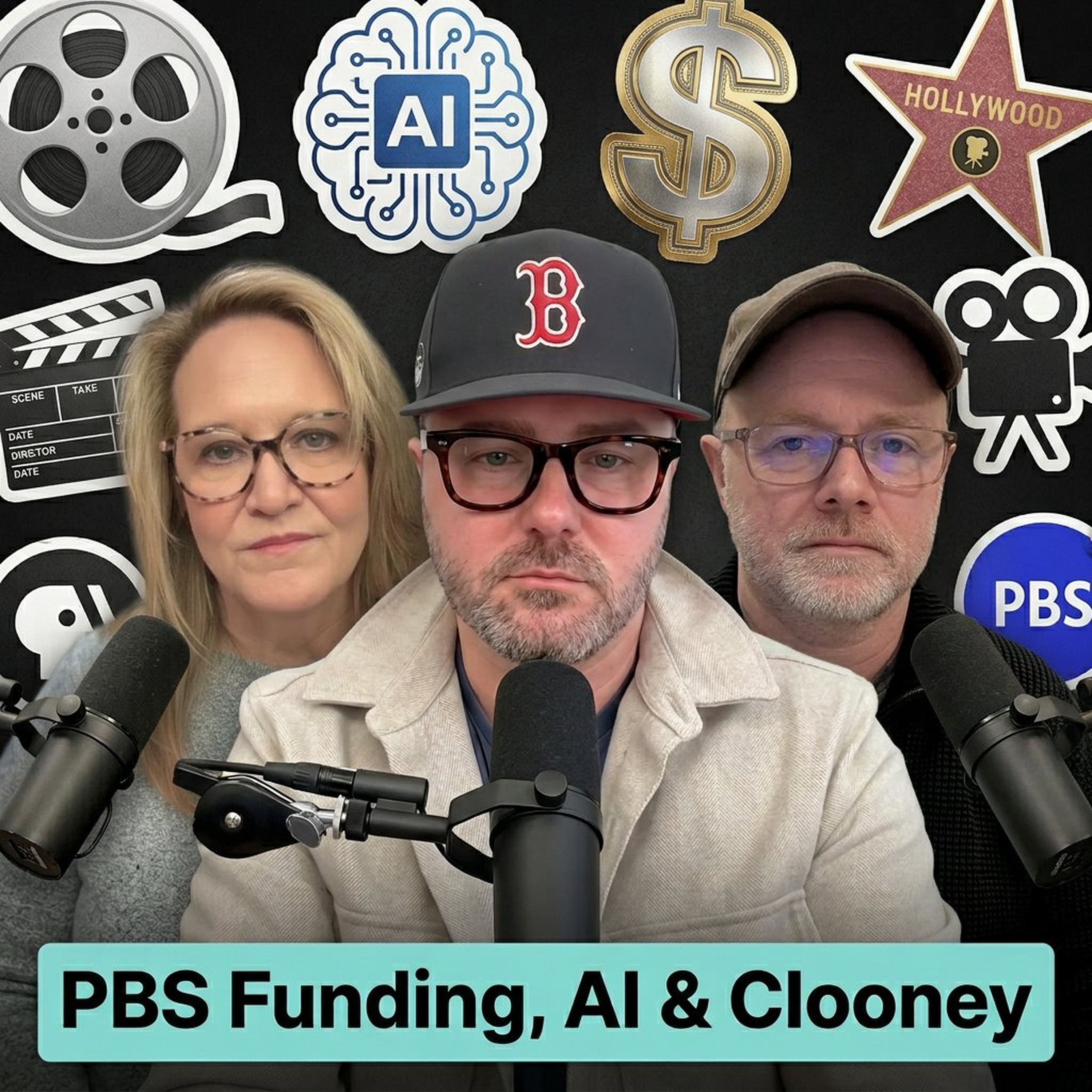
S6 Ep 275Ep. 275 I Erik & Chris Ewers on PBS Funding, AI & Directing Goldblum, Clooney & Streep
Even with Ken Burns and Don Henley attached, funding a PBS documentary is brutal. So what hope do the rest of us have?Erik and Christopher Ewers get real about PBS funding, AI’s impact on filmmaking, and how they landed George Clooney, Jeff Goldblum, Ted Danson, Tate Donovan and Meryl Streep for their new PBS documentary Henry David Thoreau.In Part 2 of this conversation, the Ewers Brothers open up about the financial realities of documentary funding, even with Ken Burns and Don Henley attached, why Chris sees AI as the next revolution instead of the apocalypse, how broadcast is giving way to streaming, and the stories behind casting some of Hollywood’s biggest voices. This is Part 2 of a two-part conversation.In Part 2, you’ll learn:— Why having Ken Burns and Don Henley as executive producers doesn’t make funding easy and who actually made the Thoreau film possible— Chris’s case for why AI is the digital camera revolution all over again, not the death of filmmaking— The best professional advice Chris ever received and why it will never change— How Chris kept his mouth shut on a commercial set with Jeff Goldblum and how that silence led to Goldblum voicing Thoreau— The story of how Don Henley quietly recruited George Clooney as narrator and Clooney’s reaction when asked how long he’d known Henley— Ken Burns’s advice on directing Meryl Streep: “You don’t.”— How streaming is changing episode length and why “the director’s cut” isn't what it used to be.— Erik’s approach to pre-planning edit cuts for PBS broadcast time slots without sacrificing the story— Why Ken Burns treats his mentorship like tough love — and why Erik is grateful for it— One thing filmmakers need to know about getting a documentary on PBSTimestamps:0:00 Introduction1:21 Unpacking the Thoreauvian mindset2:46 Thoreau’s prescience on consumerism3:50 Erik on Thoreau’s “cost of life” quote and the iPhone4:40 Thoreau and the birth of the Industrial Revolution6:03 Christian’s advice: think from the end back6:50 Chris on the state of the industry — Industrial Revolution to AI10:20 Christian: as a voice actor, AI is a challenge10:53 The best professional advice Chris ever received11:36 Christian on the struggle to fund the next film12:54 Money is always the biggest hurdle13:15 How the Ewers Brothers fund PBS docs without federal money14:49 Ken Burns’s two binders of rejection letters15:07 The Movies That Made Us — encouragement for indie filmmakers16:26 The reality: it’s hard for everybody17:52 Erik on Ken Burns’s legacy projects and the privilege of the brand20:58 Erik on earning the gift — Ken’s tough love mentorship22:00 Broadcast vs. streaming — why episode length is changing23:52 Erik’s editing strategy for PBS time slots25:37 Celebrity voice talent — how they landed Jeff Goldblum27:43 Don Henley’s connections — Ted Danson and Meryl Streep29:09 The George Clooney reveal — “If Don Henley calls, you say yes”30:43 What it’s like to direct celebrity voice talent30:55 Jeff Goldblum in the booth — pure instinct31:26 Ken Burns’s advice on directing Meryl Streep31:52 George Clooney: “Tell me if I suck”32:42 DocuVue Deja Vu — Erik’s picks and Chris’s all-time favoriteDocuView DejaVu Picks:Erik Ewers: Crumb (1994), Hearts of Darkness: A Filmmaker’s Apocalypse (1991), Jiro Dreams of Sushi (2011), The Thin Blue Line (1988)Christopher Loren Ewers: Man on Wire (2008)Christian Taylor: Buy Now: The Shopping Conspiracy (Netflix, 2024)This episode is supported by Virgil Films Entertainment.About the Guests:Erik Ewers — Director, Editor. Ken Burns’s senior editor for 33+ years. Multiple Emmy winner. ACE Eddie Award winner (The Roosevelts, 2015). Based in New Hampshire.Christopher Loren Ewers — Director, DP. 20+ years behind the camera. Commercial clients include Apple, Coca-Cola, Tiffany & Co., Stella Artois, Volvo, Peter Millar. Based in the NYC metro area.About Henry David Thoreau (PBS):A three-part, three-hour documentary — the first full-length documentary biography of Thoreau. Executive produced by Ken Burns and Don Henley. Narrated by George Clooney. Voices by Jeff Goldblum (Thoreau), Ted Danson (Ralph Waldo Emerson), Meryl Streep (Lidian Emerson, Margaret Fuller, Mary Merrick Brooks, Maria Thoreau), and Tate Donovan (William Ellery Channing). Available now on PBS and PBS Documentaries on Amazon.Resources Mentioned:— Henry David Thoreau (PBS, 2026)— Buy Now: The Shopping Conspiracy (Netflix, 2024)— The Movies That Made Us (Netflix)— Walden; or, Life in the Woods by Henry David Thoreau (1854)Listen & Follow:Apple Podcasts: https://tinyurl.com/DocFirstAppleSpotify: tinyurl.com/DocFirstSpotifyYouTube: tinyurl.com/DocFirstYouTubeAmazon Music: tinyurl.com/DocFirstAmazonSupport the show on Patreon: tinyurl.com/DocFirstPatreonConnect:Ewers Brothers Productions: ewersbrothers.comConnect with Christian Taylor on LinkedIn: linkedin.com/in/meetchristiantaylorAll Documentary First platforms: linktr.ee/doc1st
Erik & Chris Ewers: Quiet Desperation—Competence vs Self-Knowledge: Deep Dive on Episode 274
He edited nearly every Ken Burns film since The Civil War. He still didn't know who he was.Henry David Thoreau wrote that most people lead lives of “quiet desperation.” But what did he actually mean - and what does it look like inside a successful career?That’s the question Christian Taylor explores in this episode of Documentary First: The Deep Dive, after her conversation with Erik and Christopher Ewers—two brothers who just directed a three-part, three-hour PBS documentary on Thoreau. The film is narrated by George Clooney, with Jeff Goldblum voicing Thoreau, Ted Danson as Emerson, and Meryl Streep voicing several women in Thoreau’s life. It’s executive produced by Ken Burns and Don Henley.What struck Christian wasn’t the star-studded cast or the prestige credentials. It was a quiet confession from Erik - Ken Burns’s senior editor for 33 years - who admitted that despite decades of career confidence, he didn’t really know himself. He described himself as “lost and wayward.” And it was his own documentary about youth mental illness that finally woke him up.That led Christian back to Thoreau’s famous line and to a realization: Thoreau wasn’t describing unhappy people. He was describing people who don’t even know they’re suffering. People whose competence has become the hiding place.What You’ll Learn:Why competence can mask a total lack of self-knowledge - for decadesWhat Thoreau actually meant by “quiet desperation” (it’s not what most people think)How Erik Ewers’s own documentary became the mirror that showed him himselfThe connection between Thoreau’s grief, Christian’s grief, and the impulse to strip life down to what’s realA practical challenge for filmmakers and creators: rest is where the seeing happensThe Core Idea:Your craft can take you everywhere - except inward. The stories we tell have the power to tell us something back, but only if we’re paying attention. This episode explores what happens when the noise finally stops and we’re left standing on honest ground.Featured Guests:Erik Ewers – Director, Editor. Ken Burns’s senior editor for 33+ years. Multiple Emmy winner. ACE Eddie Award winner (The Roosevelts, 2015). Based in New Hampshire. Has worked on nearly every Burns film since The Civil War (1990). Co-director of Henry David Thoreau (PBS, 2026), Hiding in Plain Sight (2012) and The Mayo Clinic (2018)Christopher Loren Ewers – Director, DP. 20+ years behind the camera. World-class cinematographer. Has been shooting for Burns and Florentine Films since The Vietnam War. Commercial clients include Apple, Coca-Cola, Stella Artois, Volvo and Peter Millar. Based in the NYC metro area.Christopher Ewers Commercial WorkAbout Henry David Thoreau (PBS):A three-part, three-hour documentary – the first full-length documentary biography of Thoreau. Executive produced by Ken Burns and Don Henley. Narrated by George Clooney. Voices by Jeff Goldblum (Thoreau), Ted Danson (Ralph Waldo Emerson), Meryl Streep, and Tate Donovan. Henry David Thoreau premied on PBS on March 30 and 31, 2026. Available now on PBS and wherever you stream PBS content.Henry David Thoreau Series TrailerPart 2 of the interview with Erik and Chris Ewers drops April 9 - covering PBS funding realities, AI and the industry, and how they landed Jeff Goldblum, George Clooney, Tate Donovan and Meryl Streep.Resources Mentioned:Henry David Thoreau (PBS, 2026) - available on PBS and PBS Documentaries on AmazonHiding in Plain Sight: Youth Mental Illness (PBS, 2022)Walden; or, Life in the Woods by Henry David Thoreau (1854)About The Deep Dive:This companion podcast airs on alternate weeks from the main Documentary First podcast. Every other week, Christian takes one idea from a recent conversation and explores it more deeply - examining what it means, why it matters, and what to do about it.Hear the full interview:Listen to Episode 274 of Documentary First for Christian’s complete conversation with Erik and Christopher Ewers about the Thoreau documentary, working with Ken Burns, and the brother dynamic behind the filmmaking.If you’re enjoying the show, please subscribe and leave a review! For more in-depth discussions, early releases and extra content, support our Patreon: tinyurl.com/DocFirstPatreonListen & Follow:Apple Podcasts: tinyurl.com/DocFirstAppleSpotify: tinyurl.com/DocFirstSpotifyYouTube: tinyurl.com/DocFirstYouTubeAmazon Music: tinyurl.com/DocFirstAmazon

S6 Ep 274Ep. 274 I I Didn't Know Myself - Erik & Chris Ewers on Ken Burns, PBS & Thoreau
He's edited nearly every Ken Burns film ever made. But he couldn't edit himself.What does it take to build a filmmaking career inside Ken Burns's world — and what happens when the hardest part isn't the craft, but learning who you are?Erik and Christopher Ewers are brothers who co-direct for PBS under the Ken Burns banner. Erik has been Burns's senior editor for 33+ years. Chris is a DP who's shot for Apple, Coca-Cola, and Tiffany & Co. Their latest project: Henry David Thoreau, a three-part PBS documentary series executive produced by Ken Burns and Don Henley, narrated by George Clooney, with Jeff Goldblum voicing Thoreau, Ted Danson as Ralph Waldo Emerson, and Meryl Streep. Henry David Thoreau premieres on PBS March 30. This is Part 1 of a two-part conversation.In Part 1, you'll learn:— How Erik ended up working for Ken Burns through a real estate deal involving window treatments and carpets— How a 22-minute visitors center film became the doorway to a three-hour PBS series— What it's really like to co-direct a documentary with your brother (even Ken Burns couldn't do it with his)— How Chris balances high-end commercial work with documentary filmmaking to sustain a creative career— The challenge of filming Walden Pond with only two usable photographs of Thoreau— Why knowing yourself is the most important skill a filmmaker can develop — and Erik's deeply personal story about discovering that through his own filmPart 2 drops April 9 — covering PBS funding realities, AI and the industry, and how they landed Jeff Goldblum, George Clooney, and Meryl Streep.This episode is supported by Virgil Films Entertainment.About the Guests:Erik Ewers — Director, Editor. Ken Burns's senior editor for 33+ years. Multiple Emmy winner. ACE Eddie Award winner (The Roosevelts, 2015). Based in New Hampshire.Christopher Loren Ewers — Director, DP. 20+ years behind the camera. Commercial clients include Apple, Coca-Cola, Tiffany & Co., Stella Artois, Volvo. Based in the NYC metro area.About Henry David Thoreau (PBS):A three-part, three-hour documentary — the first full-length documentary biography of Thoreau. Executive produced by Ken Burns and Don Henley. Narrated by George Clooney. Voices by Jeff Goldblum (Thoreau), Ted Danson (Ralph Waldo Emerson), Meryl Streep, and Tate Donovan. Henry David Thoreau premieres on PBS March 30. Available on PBS and wherever you stream PBS content.Christopher Ewers Commerical WorkHenry David Throeau Series TrailerListen & Follow:Apple Podcasts: https://tinyurl.com/DocFirstAppleSpotify: tinyurl.com/DocFirstSpotifyYouTube: tinyurl.com/DocFirstYouTubeAmazon Music: tinyurl.com/DocFirstAmazonConnect:Ewers Brothers ProductionsChristian Taylor on XChristian Taylor on InstagramChristian Taylor on LinkedInDocumentary First on X Documentary First on InstagramDocumentary First ProductionsLinktree

What Francesca Bridgerton and a D-Day Veteran Both Discovered About Grief I Deep Dive on Ep. 273
In Bridgerton Season 4, Francesca Bridgerton stands in the middle of her husband’s funeral and says something no one expects: “I want to feel joy.”Eighty years earlier and four thousand miles away, a D-Day veteran stood on Utah Beach watching children play in the water where his friends had died—and said something just as unexpected: “That’s why we came.”In this episode of Documentary First: The Deep Dive, Christian Taylor connects these two moments to a discovery C.S. Lewis made in his grief journal A Grief Observed—and asks what it all means for the stories we tell as filmmakers. The answer surprised her. It might surprise you too.What You’ll Learn:What 20+ D-Day veterans told filmmaker Jake Schroeder when he asked if it was disrespectful to play on the beaches where men diedThe C.S. Lewis line that connects grief, praise, and joy—and why filmmakers need to hear itHow Bridgerton Season 4, Episode 7 modeled a radically different response to lossG.K. Chesterton’s 1908 concept that reframes everything: why joy might be bigger than the painChristian’s challenge to filmmakers: What if we gave our audiences permission to dance?The Core Insight:C.S. Lewis noticed that his grief wasn’t bringing him closer to his wife—it was cutting him off from her. Only in moments of least sorrow did she come rushing back, vivid and whole. He realized there are different modes of loving someone you’ve lost: grief focuses on the absence, but praise focuses on the fullness. And when love takes the form of praise, joy shows up inside it without being forced.That’s what Francesca Bridgerton discovered at John’s celebration of life. It’s what Anthony Malin was doing when he watched children splash on Utah Beach and wept. Same love. Different mode.Plus:Christian’s personal story of losing her mom and finding A Grief ObservedWhy the most powerful story we can tell might not be about the suffering—but about the moment afterHow The Girl Who Wore Freedom approaches joy in the soil soaked with bloodFeatured Guest:Jake Schroeder—Founder of the D-Day Leadership Academy, former professional musician and youth sports director. Jake brings high school students to Normandy to learn leadership through the stories of D-Day, and has spent years taking veterans back to the beaches where they fought.References Mentioned:Bridgerton Season 4, Episode 7: “The Beyond” (Netflix)C.S. Lewis — A Grief ObservedG.K. Chesterton — Orthodoxy (1908)Jake Schroeder / D-Day Leadership AcademyThe Girl Who Wore Freedom (Christian Taylor’s film)Anthony Malin — D-Day veteran, LST driver, Utah BeachAbout The Deep Dive:This companion podcast airs on alternate weeks from the main Documentary First podcast. Every other week, Christian takes one powerful idea from a recent conversation and explores it more deeply—examining what it means, why it matters, and what to do about it.Hear the full interview:Listen to Episode 273 of Documentary First for Christian’s complete conversation with Jake Schroeder about D-Day, leadership, and what veterans can teach us about purpose.https://open.spotify.com/episode/4lp6cdjyyd52omtOQB6Tz8?si=88968b4ec2794312If you’re enjoying the show, please subscribe and leave a review!

S6 Ep 273Ep. 273 | D-Day Leadership Academy: Jake Schroeder on WWII Veterans, Normandy & Redefining Success
He sang the national anthem for the Colorado Avalanche a thousand times, coached 4,000 inner-city kids, lost it all, and rebuilt on the beaches of Normandy — where a WWII veteran watched children playing on Utah Beach and said through tears: "That's why we came."Jake Schroeder—former frontman of OP Gone Bad, national anthem singer for the Colorado Avalanche, and executive director of the Denver Police Activities League—now runs the D-Day Leadership Academy, bringing inner-city youth to Normandy, France to learn leadership through the stories of World War II.After concussions, insurance costs, and political shifts dismantled his youth sports programs serving 4,000 kids a year, Jake pivoted. Inspired by the WWII veterans he’d been bringing back to Omaha Beach and Utah Beach since 2011, he transformed his nonprofit into a Normandy-based leadership program built on five pillars drawn from D-Day: leading from the front, total commitment to mission, chaos, preparation, and empathy. In this conversation, he and host Christian Taylor—director of the award-winning documentary The Girl Who Wore Freedom—explore what success really means when the money isn’t there but the mission keeps growing.What You’ll Learn:What does the D-Day Leadership Academy teach kids in Normandy?How do you pivot a nonprofit when your core programs collapse?What did WWII veterans say about people recreating on Normandy’s beaches?How do you define success when your documentary or nonprofit isn’t financially profitable?What are John Elway’s three rules for running a successful charity event?How does Stoic philosophy help when you’re facing failure in filmmaking or leadership?What documentary films should you watch? Elway to Marino, Miracle: The Boys of ’80, Cold War on IceTimestamps:00:00 Introduction03:07 How Christian and Jake met in Normandy, France04:56 The Girl Who Wore Freedom documentary connection06:19 Following up on failure: Epic Bill and redefining success09:00 OP Gone Bad band years: when the road is worth it12:16 Stoicism and choosing your response to hardship15:06 Virginia Beach at night: perspective and insignificance17:16 Documentary filmmaking relationships that last a lifetime18:36 Denver Police Activities League: origin and mission22:00 Starting inner-city hockey with the Colorado Avalanche23:56 Youth sports crisis: specialization, concussions, and insurance27:12 The pivot: shutting down programs and reimagining the mission28:04 How the Normandy leadership program began (2015)30:16 What the D-Day Leadership Academy program looks like today33:31 Five pillars of D-Day leadership: empathy, chaos, preparation36:04 Expanding to adult leadership retreats in Normandy42:45 Normandy tours: culinary, yoga, couples, and classical concerts45:13 The Girl Who Wore Freedom guided tour and charity auction47:55 What WWII veterans said about children playing on Utah Beach49:49 Message to documentary filmmakers: your film matters51:53 John Elway’s elevator advice on charity events55:58 DocuVue Déjà Vu: Elway to Marino, Miracle: The Boys of ’80, Cold War on IceAbout Jake Schroeder:Jake Schroeder is a fourth-generation Colorado native, former frontman of the funk-rock band OP Gone Bad, and sang the national anthem for the Colorado Avalanche (NHL) over 1,000 times across 25 years. He began volunteering with the Denver Police Activities League in 1999, became executive director in 2014, and transformed the organization into the D-Day Leadership Academy—a nonprofit that brings inner-city youth, police officers, and combat veterans to Sainte-Mère-Église, Normandy, France to learn leadership through the stories of D-Day, Omaha Beach, Utah Beach, and the 82nd and 101st Airborne Divisions. He lives in Golden, Colorado with his partner Brooke Ferguson, principal flutist of the Colorado Symphony. Website: Home | D-Day Leadership AcademyIf you’re enjoying the show, please subscribe and leave a review!VIRGIL FILMS LINKS:Home (New)Virgil Films (@VirgilFilms) on XVirgil Films and EntertainmentVirgil Films (@virgilfilms) • Instagram profile

Episode 4 I THE DEEP DIVE With Quinnolyn Benson-Yates - The Gift of Failure — Courage Is a Muscle
What if failure isn’t the enemy—but the training ground?That’s the question Christian Taylor explores in this episode of Documentary First: The Deep Dive, sparked by her conversation with filmmaker Quinnolyn Benson-Yates about the documentary Epic Bill. Bill Bradley lost his video rental empire to Netflix, went bankrupt, went through a divorce—and then rebuilt himself through extreme endurance athletics. His mantra? “Courage is a muscle.” And “Show up and suffer.”In this deeply personal episode, Christian connects Bill’s story to her own struggles as a filmmaker, podcast host, and business owner—and to the ancient wisdom of the Stoics, Scripture, and some of history’s greatest examples of failure-turned-triumph.What You’ll Learn:Why “courage is a muscle” is backed by actual scienceThe mental tennis lesson that changed Christian’s relationship with failureWhat Thomas Edison and Michael Jordan understood about reframing failureHow the 1980 “Miracle on Ice” wouldn’t have happened without a crushing 10-3 defeatWhat the Stoics and James 1:2-4 agree on about trials and perseveranceChristian’s honest confession about feeling like a failure—and choosing to keep goingKey Quotes:“I didn’t fail. I found out 2,000 ways how not to make a light bulb.” — Thomas Edison“I’ve failed over and over and over in my life. And that’s why I succeed.” — Michael Jordan“The impediment to action advances action. What stands in the way becomes the way.” — Marcus Aurelius“Valuing the courage to try again is a radical concept.” — Quinnolyn Benson-YatesFeatured Documentary: Epic Bill, directed by Quinnolyn Benson-Yates. Now streaming on Amazon and Apple TV. PBS nationwide distribution.Resources Mentioned: Vic Braden’s Mental Tennis • The Obstacle Is the Way by Ryan Holiday • Miracle: The Boys of ’80 (Netflix) • James 1:2-4, Romans 8:28About The Deep Dive: This companion podcast airs on alternate weeks from the main Documentary First podcast. Every other week, Christian takes one powerful idea from a recent conversation and explores it more deeply—examining what it means, why it matters, and what to do about it.Hear the full interview: Listen to Episode 272 of Documentary First for Christian’s complete conversation with Quinnolyn Benson-Yates about Epic Bill, seven years of documentary filmmaking, and the PBS distribution journey.If you’re enjoying the show, please subscribe and leave a review!

S8 Ep 272Episode 272 | Quinnolyn Benson-Yates on Epic Bill: Failure, Reinvention & the Filmmaker’s Endurance
Award-winning filmmaker Quinnolyn Benson-Yates made her first feature documentary before film school—and its seven-year journey from short film concept to PBS distribution holds lessons every indie filmmaker needs to hear.Epic Bill follows an endurance athlete who lost everything when his video rental empire collapsed (thanks, Netflix). Bill’s mantra—“show up and suffer”—became Quinn’s filmmaking philosophy as she navigated polar vortexes, battery failures in -50° weather, and the brutal realities of distribution. In this episode, she shares how she cut a 93-minute film down to 56 minutes for PBS, why credibility matters more than connections, and the uncomfortable truth about what distribution actually solves.DocuView Déjà Vu:Free Solo, 2018, 100 mins, Watch on on Disney + Package / Hulu, IMDB Link: Free Solo (2018) ⭐ 8.1 | Documentary, Adventure, SportMeru, 2015, 90 mins, Watch on Prime Video, IMDB Link: Meru (2015) ⭐ 7.7 | Documentary, SportCrip Camp: A Disability Revolution, 2020, 106 mins, Watch on Netflix, IMDB Link: Crip Camp (2020) ⭐ 7.7 | Documentary, HistoryWhat You’ll Learn:Why “fail early, fail often” should include “fail sustainably”How archival footage transformed a short film into a featureThe PBS application process (NETA) and what it requiresWhat intermediaries like Bitmax do for Apple TV/Amazon distributionWhy distribution doesn’t make your career—you doAbout Quinnolyn Benson-YatesQuinnolyn Benson-Yates is an award-winning filmmaker with an MFA from USC School of Cinematic Arts. Her feature documentary Epic Bill gained nationwide PBS distribution with promotions on CNN and SiriusXM, and is now available on Amazon and Apple TV. She’s a two-time winner of Santa Barbara International Film Festival’s 10-10-10 competition, and her short film Miss River screened at Palm Springs LGBTQ Film Festival. Her most recent short, a Western comedy called Man, premiered at Austin Film Festival. She’s currently developing her first narrative feature about a middle school girl starting a punk band with her dad—inspired by her own childhood as an eight-year-old punk rock singer.Website: QBY | Film: Epic Bill - The Film | Instagram: @quinnolynIf you’re enjoying the show, please subscribe and leave a review!Sponsor: Virgil Films http://www.virgilfilms.com/Support us by buying merch or watching our films: https://documentaryfirst.com/Follow our Substack Blog: https://documentaryfirst.substack.com/Join our newsletter (bottom of page): https://thegirlwhoworefreedom.com/Donate to help us tell more stories: https://givebutter.com/LivingStoriesLtdSupport us on Patreon00:00 Introduction04:27 Quinn’s journey: punk rocker to USC film grad06:44 Current projects: narrative feature development08:02 Epic Bill origin: short film becomes seven-year feature10:08 Why documentaries take so long13:22 Bill’s philosophy: “Show up and suffer”17:35 Applying endurance athlete lessons to filmmaking21:59 Filming in extreme conditions as a new filmmaker25:26 Fail early, fail often—fail sustainably27:01 Hardest scenes: -50° battery failures and emotional breakthroughs30:44 Bill’s financial story: millionaire to bankruptcy33:57 What beliefs needed to die for Bill to succeed38:52 Leslie Murphy: the stakes character (Free Solo comparison)43:36 The PBS path: NETA application and cutting from 93 to 56 minutes46:33 Bitmax and Apple TV/Amazon distribution51:02 Deliverables that surprised her54:13 CNN and SiriusXM promotion: cold emails and pitch packets56:45 Industry Stress Test: Plan A, B, C when nobody’s buying1:00:04 Uncomfortable truth: distribution doesn’t make your career1:01:01 Practical tool: scene-by-scene film study method1:03:49 DocuView Déjà Vu: Free Solo, Meru, Crip Camp

Episode 3 I THE DEEP DIVE With Joe Amodei - Finding The Good Guys
bonusHow do you know if you’ve found a Joe Amodei—or a predatory film distributor?That’s the question Christian Taylor explores in this episode of Documentary First: The Deep Dive, after her conversation with Joe Amodei—filmmaker, 40-year industry veteran, and owner of Virgil Films Entertainment (Supersize Me, Restrepo, Forks Over Knives). What struck her wasn’t just what Joe said about Cat Fest 2026—it was the warmth and trust in their conversation. In her experience, that kind of rapport between filmmaker and distributor is genuinely rare.So she did some digging. What she found was both infuriating and clarifying: there’s no Better Business Bureau for film distribution. No government agency protecting filmmakers. No licensing board. The system that exists is word of mouth, peer networks, and a few dedicated nonprofits trying to shine a light in the darkness.What You’ll Learn: - The 5 essential steps for vetting a film distributor before signing - Red flags that should make you walk away from any distribution deal - Why The Film Collaborative’s Distributor ReportCard is the closest thing to “Yelp for distributors” - What filmmakers really say about predatory distributors (anonymous quotes) - Christian’s own distribution horror story—and how she got her film backThe Framework for Finding the Good Guys: 1. Talk to other filmmakers (not the distributor’s references) 2. Check The Film Collaborative’s Distributor ReportCard 3. Watch for red flags (15-year contracts, Netflix promises, no expense caps) 4. Get an entertainment attorney who specializes in distribution 5. Know the system is broken—community is the safety netPlus: A powerful story from Minnesota about pizza shops and doughnut shops becoming the safety net when no infrastructure exists—and what it teaches us about looking out for each other.Featured Guest: Joe Amodei—Owner of Virgil Films Entertainment, with 40+ years in distribution. His company has distributed Supersize Me, Restrepo, and Forks Over Knives. According to The Film Collaborative, Virgil Films is “one of the more positively reviewed distributors.”Resources Mentioned: - The Film Collaborative Distributor ReportCard: The Film Collaborative - IMDb Pro for contacting filmmakers directly - Alex Ferrari / Indie Film Hustle: Indie Film Hustle® - Thrive & Survive in the Film Industry (podcasts, courses, and filmmaker protection resources) - Entertainment attorney Anne Easton: My Lawyer Friend PodcastAbout The Deep Dive: This companion podcast airs on alternate weeks from the main Documentary First podcast. Every other week, Christian takes one powerful idea from a recent conversation and explores it more deeply—examining what it means, why it matters, and what to do about it.Hear the full interview: Listen to Episode 271 of Documentary First for Christian’s complete conversation with Joe Amodei about theatrical distribution, VOD strategies, and why Cat Fest might be the future of cinema. https://open.spotify.com/episode/1xmIiD3Kvostpr3piuxi67?si=26185251dffe471cIf you’re enjoying the show, please subscribe and leave a review!

S8 Ep 271Episode 271 | Joe Amodei on Documentary Distribution: Budgets, Genres & Building Your Audience
Virgil Films founder Joe Amodei shares the hard truth: $250K is your budget ceiling, traditional marketing no longer is effective, and you must build your own audience.Joe has distributed films from the VHS era through streaming. In this episode, he breaks down which documentary genres actually sell (true crime, health/wellness, and ones that make us feel good—not adventure docs anymore), why 90% of his acquisitions come through referrals, and what separates films that make money from films that don’t. Plus: the 2025 Oscar nominations and Joe’s surprise announcement!DocuView Déjà Vu:Train Dreams, 2025, 102 mins, Watch on Netflix, IMDB Link: Train Dreams (2025) ⭐ 7.5 | DramaThe Alabama Solution, 2025, 117 mins, Watch on Disney+/Hulu, HBO Max, IMDB Link: The Alabama Solution (2025) ⭐ 7.8 | DocumentaryWhat You’ll Learn:• The maximum budget for an indie doc that can actually recoup ($250K—tops)• Which genres sell: true crime → health/wellness → inspirationalWhy adventure/mountain climbing docs have stopped workingThe 90-minute cat video compilation that sold out a 252-seat theater• TVOD vs AVOD: when to release on Tubi vs. keeping it on paid platforms• What successful filmmakers do differently (hint: audience building before release)• Why traditional film marketing—print ads, TV spots, newspaper reviews—is deadTimestamps:00:00 Introduction03:03 Joe praises Documentary First’s growth (Ken Burns, Billy Joel doc)04:55 Announcing Documentary First: The Deep Dive06:50 Joe’s career: VHS through streaming, Turner, Polygram, USA Home Entertainment08:02 Why podcasts have become essential for film discovery15:41 The budget question: $250K maximum for indie docs17:06 Documentary genres ranked: what sells, what doesn’t21:40 The cat video phenomenon: 90 minutes, sold-out theater25:23 2025 Oscar nominations discussion31:58 What successful filmmakers do differently41:20 Common mistakes: no homework, no identified audience, overspending50:48 Distribution pathway: transactional → SVOD → AVOD explained1:00:29 Joe’s surprise announcementAbout Joe Amodei: Founder of Virgil Films, one of the leading independent distributors in the US. 40+ year career spanning Turner Broadcasting, Polygram, and USA Home Entertainment (Traffic, Being John Malkovich). Distributor of The Girl Who Wore Freedom. Website: Home (New)If you’re enjoying the show, please subscribe and leave a review!Virgil Films (@VirgilFilms) on XVirgil Films and EntertainmentVirgil Films (@virgilfilms) • Instagram profileSponsor: Virgil Films http://www.virgilfilms.com/Support us by buying merch or watching our films: https://documentaryfirst.com/Follow our Substack Blog: https://documentaryfirst.substack.com/Join our newsletter (bottom of page): https://thegirlwhoworefreedom.com/Donate to help us tell more stories: https://givebutter.com/LivingStoriesLtd

Episode 1 I THE DEEP DIVE With Jeffrey Roth: Staying Present When the Dream Becomes Real
bonusImagine standing in an ancient Egyptian tomb, camera in hand, as a sarcophagus is opened for the first time in thousands of years. For filmmaker Jeffrey Roth, that moment sparked a realization: "No, this is real."This is the first-ever episode of Documentary First: The Deep Dive—a new companion series where Christian Taylor takes one insight from recent podcast conversations, explores it deeply, and connects it to the universal experience of creative work.In this episode, Christian unpacks why "mountaintop moments"—the ones you've worked years to reach—often feel completely different than you expect. Drawing from her own journey filming at Brecourt Manor in Normandy (the most famous house on D-Day), Christian explores the psychology behind why doubt doesn't disappear when dreams come true, and how the discipline of presence keeps us from missing the very moments we worked so hard to achieve.What You'll Explore:· • The Imposter Gap: Why calling yourself an "actor" or "filmmaker" for the first time feels like a lie· • Hedonic Adaptation: The psychological reason our brains move to the "next worry" before a breakthrough even sinks in· • Presence vs. Panic: How to stay grounded when you're terrified the "file won't play" during your big debut· • The Mountaintop Rule: Why valleys aren't failures—they're just part of the terrainThree Practical Steps to Stay Present:Breathe: Let the exact moment sink in; it will never come againGratitude: Think of the people who helped you get to this field or tombPerspective: Learn to ride the highs with joy and the lows with steadinessFeatured Filmmaker: Jeffrey Roth—documentary filmmaker whose work includes being embedded with archaeological teams uncovering ancient Egyptian tombs. His insight about realizing "no, this is real" sparked this entire exploration.About The Deep Dive: This new mini-podcast airs opposite weeks from the main Documentary First podcast. Every other week, Christian takes one powerful idea from a recent conversation and explores it more deeply—examining what it means, why it matters, and what to do about it.Hear the full interview with Jeffrey Roth: Listen to his complete Documentary First episode for the backstory behind this moment and his incredible filmmaking journey.https://open.spotify.com/episode/0fyVxSooH2HViLHVhAln3i?si=f6fe555b10d24a70If you're enjoying the show, please subscribe and leave a review!

Episode 2 I THE DEEP DIVE With Charles Olivier: What They’ll Remember — Sticky Storytelling
bonus“People are going to watch your movie for such an infinitesimally small percentage of their life. What they’re going to do is remember it.”That insight from Emmy-winning editor Charles Olivier—who’s cut The Jinx, The Redeem Team, and George Clooney’s Surviving Ohio State—stopped Christian Taylor cold. It cuts right to the heart of documentary filmmaking: your audience will forget most of your film. The question is whether you’ve given them something worth remembering.In this episode of Documentary First: The Deep Dive, Christian explores the neuroscience behind “sticky” storytelling—why emotional moments lodge in memory while everything else fades—and shares how she accidentally discovered this principle while making The Girl Who Wore Freedom.What You’ll Explore:The Memory Paradox: Why viewers forget 90% of your film—and why that’s okayBrain Synchronization: How emotional moments literally sync your audience’s neural patternsThe Gist vs. Detail Trade-Off: What neuroscience says about what sticks and what fadesHuman Connection Over Subject Matter: Why Charles focuses on relationships, not topicsThe Framework for Memorable Storytelling:Ask: What do I want people to remember six months from now?Find: The human moments—not the dramatic footageBuild: Your entire film around those momentsFeatured Filmmaker: Charles Olivier—Emmy-winning editor whose credits include The Jinx (HBO), The Redeem Team (Netflix), and Surviving Ohio State (HBO/George Clooney). His insight about what audiences remember sparked this entire exploration.About The Deep Dive: This companion podcast airs on alternate weeks from the main Documentary First podcast. Every other week, Christian takes one powerful idea from a recent conversation and explores it more deeply—examining what it means, why it matters, and what to do about it.Hear the full interview: Listen to Episode 270 of Documentary First for Christian’s complete conversation with Charles Olivier about editing, working with George Clooney, and structuring documentaries like symphonies. https://open.spotify.com/episode/3yEp5LhuBAlCZACwKpyamR?si=7cdcc3936bbe4256If you’re enjoying the show, please subscribe and leave a review!

S8 Ep 270Episode 270 | Charles Olivier on Editing "Surviving Ohio State" for HBO
Emmy-winning editor Charles Olivier reveals how he restructured HBO's Surviving Ohio State and what it's like getting notes from George Clooney.Charles has cut some of the biggest docs of the last decade—The Jinx, Magic and Bird, The Redeem Team. Surviving Ohio State, produced by Clooney and directed by Oscar winner Eva Orner, exposes decades of abuse in college athletics. In this episode, Charles breaks down how he pitched a new vision to the production team, why he structures documentaries like symphonies instead of three-act narratives, and his advice for editors finding their voice.What You'll Learn:How documentary editors get hired (the "fresh eyes" audition)The editor as "midwife" to the director's visionStructuring docs like music—themes, movements, dynamicsEditing trauma narratives without losing emotional resonanceFinding your film's "grain" (why the lead isn't always who you expect)What it's actually like working with George ClooneyTimestamps:00:00 Introduction03:00 What is Surviving Ohio State?09:00 How Charles got hired12:00 The editor as "midwife"14:00 Career path: film school to HBO17:00 Why relationships matter more than subject matter19:00 The message of the film24:00 Layers of betrayal: institutions vs. individuals28:00 Structuring documentary like a symphony34:00 Finding the emotional center37:00 Trusting yourself as an editor41:00 Collaboration: when to push back44:00 Working with George Clooney49:00 Advice for emerging editors52:00 DocuView Déjà Vu: FYRE (Netflix)About Charles Olivier:Emmy and Peabody Award-winning editor. Credits: Surviving Ohio State (HBO), The Jinx, The Redeem Team (Netflix), Magic and Bird. Based in France.If you're enjoying the show, please subscribe and leave a review!

S8 Ep 269Episode 269 | Egyptian “Indiana Jones”, Zahi Hawass, Director Interview of “The Man With The Hat”
Jeffrey Roth has spent his career letting extraordinary people tell their own stories—Apollo astronauts, President George H.W. Bush, and now Dr. Zahi Hawass. In this episode, Christian Taylor inquires about the logistics of independent documentary filmmaking in Egypt: working with fixers, navigating permits, shooting in ancient tombs with one hour of access, and why he withholds narration. Plus: the personal moments that make his films unforgettable.Links:Trailer- The Man with the Hat - Official TrailerThe Man with the Hatinstagram.com/themanwiththehatmovieTiktok: @themanwiththehatmovieSocials:instagram.com/themanwiththehatmovietiktok.com/@themanwiththehatmoviehttps://www.facebook.com/profile.php?id=61585782550439zahifilm.comDr. Zahi Hawass“41”, 2021, 98 mins, Watch on HBO MAX, IMDB Link: 41 (2012) ⭐ 6.6 | Documentary, BiographyPresident in Waiting, 2020, 77 mins, Watch on Fawsome or Pluto TV or Roku Channel or Tube or Prime Video, IMDB Link: President in Waiting (2020) ⭐ 7.8 | Documentary, HistoryDocuView Déjà Vu:“The Kid Stays In The Picture”, 2002, 93 mins, Watch on Amazon Prime, IMDB Link: The Kid Stays in the Picture (2002) ⭐ 7.3 | Documentary, BiographyTime Codes00:00:00 — Introduction: Jeffrey Roth’s filmmaking philosophy00:03:00 — Filming in Egypt: How Jeffrey connected with Dr. Zahi Hawass00:09:00 — The fixer system: Permits, crew, and equipment in Egypt00:15:00 — Self-funded filmmaking: Creative freedom vs. financial challenges00:21:00 — Character-driven documentary: Why no narration or talking heads00:27:00 — Shooting in tombs: One-hour windows and no scouting00:33:00 — The role of fixers: Language barriers and local crew00:39:00 — Unplanned magic: Discovering five mummies and the family photo moment00:45:00 — Filming during October 7th: 140 miles from Gaza00:51:00 — Making 41: How a screening led to three years with President George H.W. Bush00:57:00 — The Presidential Medal of Freedom: One camera, no audio, and a personal moment01:03:00 — Collaboration in filmmaking: Working with DPs and editors01:09:00 — The business of independent documentary distribution01:17:00 — DocuView Déjà Vu: Jeffrey’s documentary recommendation (The Kid Stays in the Picture)Sponsor: Virgil Films http://www.virgilfilms.com/Support us by buying merch or watching our films: https://documentaryfirst.com/

S8 Ep 268Episode 268 | Peter Kelly’s Archaeological Adventure in the Turks and Caicos
In this episode of Documentary First, host Christian Taylor sits down with filmmaker Peter Kelly to explore his remarkable journey from his Mississippi roots to documenting the rich cultural and maritime history of Salt Cay in the Turks and Caicos. Peter reflects on how growing up in a small Mississippi community shaped his storytelling sensibilities, his love of history, and the creative instincts that now guide his work.The conversation dives into the realities of filming in a remote island location—limited resources, environmental challenges, and the unexpected surprises that come with working far off the grid. Peter shares the thought process behind crafting his documentary: how he chose his subjects, the equipment he relied on, and why capturing a holistic portrait of the island mattered deeply to him.Ultimately, this episode celebrates the art of discovery—of place, of story, and of self. It’s a thoughtful look at the creative process behind documentary filmmaking and the passion that drives filmmakers to preserve cultural heritage and amplify unheard stories.Links:The ShipwreckSurvey: Home - The Shipwreck SurveyProm Night In Mississippi: Prom Night in Mississippi (2009) ⭐ 7.2 | DocumentaryCotopaxi: Cotopaxi - Gear For Good | Free shipping on orders $99+Ikelite: IkelitePK Production Services: Peter Kelly | Storyteller // Adventurer // SpeakerSocials: instagram.com/PCKELLY1369https://www.instagram.com/salt_n_silence/DocuView Déjà VuVirunga, 2014, 100 mins, Watch on Netflix, IMDB Link: Virunga (2014) ⭐ 8.1 | Documentary, WarTime Codes00:00 — Introduction: The Art of Documentary Filmmaking01:30 — Growing Up in Mississippi: The Roots of Peter’s Storytelling11:04 — Discovering Salt Cay: The Heartbeat of the Documentary15:34 — Creative Decision-Making: From Writing to Filming20:13 — Filming on a Remote Island: Gear, Environment & Resourcefulness27:19 — Maritime Archaeology: Uncovering Hidden History28:45 — Surprises, Setbacks & Learning Opportunities on Location33:02 — DocuView Déjà Vu: Documentary RecommendationsSponsor: Virgil Films http://www.virgilfilms.com/Support us by buying merch or watching our films: https://documentaryfirst.com/

S7 Ep 267Episode 267 | Alan Govenar’s New Film, “Quiet Voices in a Noisy World”
In this episode of Documentary First, host Christian Taylor interviews acclaimed documentary filmmaker, writer, photographer, and cultural documentarian Alan Govenar—a storyteller with a 44-year career devoted to preserving overlooked American lives and histories.The conversation centers on Govenar’s powerful film Quiet Voices in a Noisy World, which examines the struggle for change in Jasper, Texas, and the long shadow of racial violence on a community searching for truth, healing, and forward movement.Govenaris the president of Documentary Arts, a nonprofit media production company. He and Christian explore what it means to document communities with integrity—earning trust, listening deeply, and building narratives that uplifts the voices of others.Links:Documentary Arts: Documentary Arts, Inc. > HomeCigarette Blues: Cigarette Blues (Short 1985) ⭐ 6.8 | Short, DocumentaryStoney Knows How: Stoney Knows How (Short 1981) ⭐ 7.8 | Documentary, ShortTruth In Photography: TRUTH IN PHOTOGRAPHYQuiet Voices in A Noisy World: Quiet Voices in a Noisy World (2025) | Documentary , Quiet Voices in a Noisy WorldDocuView Déjà Vu“Night & Fog, 1956, 32 mins, French Short, Watch on HBO MAX, IMDB Link: Night and Fog (Short 1956) ⭐ 8.6 | Documentary, Short, HistoryTime Codes00:00 — Meet Alan Govenar + why his work matters02:49 — How Alan found documentary storytelling05:26 — The evolution of documentary arts (film, photo, writing, music)08:08 — Mentorship, networking, and learning the craft10:48 — Distribution realities filmmakers don’t talk about enough13:23 — Documentary arts as community impact16:14 — Preserving African-American history in Texas19:01 — Community, photography, and who gets seen21:42 — Juneteenth, local history, and cultural memory24:30 — Personal reflections on race and community27:04 — Storytelling as cultural dialogue30:11 — Upcoming projects + what’s next34:03 — Jasper and the legacy of racial violence40:13 — The art of documentary storytelling (craft + ethics)41:51 — Hope and resilience as a creative engine45:38 — The power of music in documentaries51:06 — Community connection and cultural preservation57:33 — DocuView Déjà Vu RecommendationSponsor: Virgil Films http://www.virgilfilms.com/Support us by buying merch or watching our films: https://documentaryfirst.com/

S7 Ep 266Episode 266 | Emmy-Award Winning Producer, Susan Lacy, “Billy Joel: And So It Goes” Interview
Susan Lacy—the iconic creator of PBS’s American Masters and one of the most influential voices in biographical documentary filmmaking joins us. From her early roots in journalism to building a landmark series that reshaped cultural storytelling on public television, Lacy shares the real behind-the-scenes truth of what it took to launch American Masters, fight for ambitious filmmaking, and evolve from producer to director.Together, Christian and Susan dig into what makes a documentary last: deep research, emotional access, trust with subjects, and interviews that go beyond “good questions” to uncover the soul of a story. Lacy also reflects on being a woman leading at the highest levels of the industry, the power of mentorship, and how shifting economics—from the DVD era to today’s streaming landscape—have changed development, financing, and distribution.If you care about documentary storytelling, PBS history, HBO documentaries, or how to direct intimate, character-driven films that preserve legacy and culture, this conversation is essential listening. No DocuView Déjà Vu Links: American Masters: American Masters (TV Series 1985– ) ⭐ 8.2 | Documentary, Biography, HistoryPentimento Productions: HOMESpielberg: Spielberg (TV Movie 2017) ⭐ 7.7 | Documentary, BiographyBilly Joel: And So It Goes: Billy Joel: And So It Goes (TV Mini Series 2025) ⭐ 8.6 | Documentary, Biography, MusicEpisode 256 | HBO Max "Billy Joel And So It Goes" Interview with Executive Producer, Steve Cohen - Part 1: https://open.spotify.com/episode/1v6X33Wu3IPCczl0uL4SvN?si=cc53ba405c254126 Episode 264 | Billy Joel: Telling the Story Behind the Musician (with Jessica Levin): https://open.spotify.com/episode/5GRU4wDlnYa9cmXBAo3eKz?si=1d721c5270ed4a37 Time Codes00:00 — Welcome + Susan Lacy Intro05:38 — Journalism roots and learning the value of truth08:55 — Breaking into PBS (Channel 13) and the art of public television12:06 — Launching a cultural institution: American Masters in 198622:08 — HBO era + Directing Debut32:16 — Billy Joel: And So It Goes Documentary43:00 — Interview + Story Tips57:12 — Final thoughts, American history Sponsor: Virgil Films http://www.virgilfilms.com/Support us by buying merch or watching our films: https://documentaryfirst.com/