Season 1 · Episode 415
Debt, savings and investments – how they really work
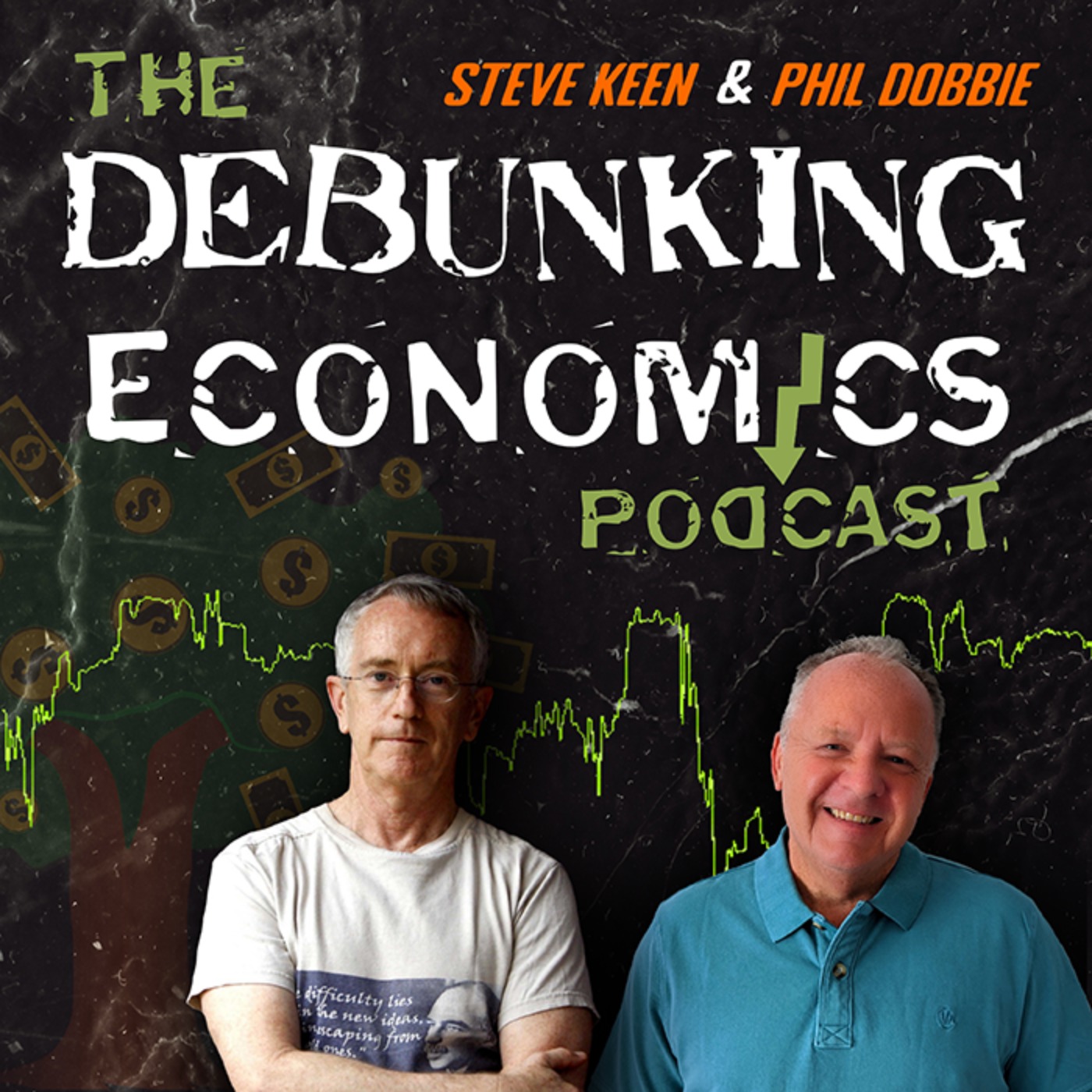
Why do we talk about savings when most people owe money? And how money we supposedly save to drive investments actually slow the economy. Steve Keen and I look at how we confuse savings, debt and investment.
Debunking Economics - the podcast · Steve Keen & Phil Dobbie
August 7, 202437m 21s
Audio is streamed directly from the publisher (sphinx.acast.com) as published in their RSS feed. Play Podcasts does not host this file. Rights-holders can request removal through the copyright & takedown page.
Show Notes
It’s curious isn’t it how we talk about household savings, rather than net debt. Many people do have money squirreled away in savings accounts, for a rainy day. That rainy day comes when hey lose a job and need that cash to pay their mortgage. So we are saving to help pay off an existing debt at a later date. How cockeyed it that? A lot of that money tied up in savings, including funds we’ve put away for our pension, ultimately become the source for investment. That’s supposedly a good thing. More money for investment means businesses can borrow more, and the bigger the availability of funds the lower the interest that will be charged to these businesses. But the more we save the less money we spend, therefore the less demand businesses will have and the less the appetite for borrowing for investment. Phil discusses all of this with Steve Keen, who challenges a lot of the conventional logic around savings, debt and investments.
Hosted on Acast. See acast.com/privacy for more information.