DataFramed
326 episodes — Page 4 of 7

#239 New Models for Digital Transformation with Alison McCauley Chief Advocacy Officer at Think with AI & Founder of Unblocked Future
The pressure to innovate with AI is immense. There is seemingly a race against the clock for organizations to incorporate AI into their product offering, aside from continual digital transformation. As the speed of AI development accelerates, many organizations struggle to keep up, facing challenges from data readiness to changing traditional business processes. How can businesses ensure that their AI initiatives not only align with strategic goals but also foster real, tangible progress? What steps can leaders take to build AI fluency across their teams and turn potential into actionable outcomes?Alison McCauley is a Best-Selling Author, Keynote Speaker, AI Strategist. She is Chief Advocacy Officer at Think with AI and Founder of Unblocked Future, a consultancy that leads the way in adopting emerging technologies, and has been collaborating with AI pioneers since 2010. With nearly 30 years of experience at the intersection of enterprise and disruptive innovation, Alison specializes in unlocking business value from cutting-edge technologies by focusing on the human aspects of change. She has been recognized as a Top Voice in AI, authored the book Unblocked, is a keynote speaker at global conferences, and her writings have appeared in Harvard Business Review, Forbes, and Venture Beat. Additionally, over 90,000 students have taken her LinkedIn course.In the episode, Richie and Alison explore digital transformation and AI’s role in it, strategic alignment and shifting mindsets, AI fluency, challenges in data readiness, organizational resistance fuelled by fear, the role of management in AI transformation, practical steps to avoid AI risks, the long term impact of AI in the future and much more. Links Mentioned in the Show:Think with AIUnlocked FutureUnblocked: How Blockchains Will Change Your Business (and What to Do About It)Connect with AlisonCourse - Artificial Intelligence (AI) StrategyRelated Episode: How are Businesses Really Using AI? With Tathagat Varma, Global TechOps Leader at Walmart Global TechRewatch sessions from RADAR: AI EditionNew to DataCamp?Learn on the go using the DataCamp mobile appEmpower your business with world-class data and AI skills with DataCamp for business

#238 Data & AI for Improving Patient Outcomes with Terry Myerson, CEO at Truveta
One of the prerequisites for being able to do great data analyses is that the data is well structured and clean and high quality. For individual projects, this is often annoying to get right. On a corporate level, it’s often a huge blocker to productivity. And then there’s healthcare data. When you consider all the healthcare records across the USA, or any other country for that matter, there are so many data formats created by so many different organizations, it’s frankly a horrendous mess. This is a big problem because there’s a treasure trove of data that researchers and analysts can’t make use of to answer questions about which medical interventions work or not. Bad data is holding back progress on improving everyone’s health.Terry Myerson is the CEO and Co-Founder of Truveta. Truveta enables scientifically rigorous research on more than 18% of the clinical care in the U.S. from a growing collective of more than 30 health systems. Previously, Terry enjoyed a 21-year career at Microsoft. As Executive Vice President, he led the development of Windows, Surface, Xbox, and the early days of Office 365, while serving on the Senior Leadership Team of the company. Prior to Microsoft, he co-founded Intersé, one of the earliest Internet companies, which Microsoft acquired in 1997.In the episode, Richie and Terry explore the current state of health records, challenges when working with health records, data challenges including privacy and accessibility, data silos and fragmentation, AI and NLP for fragmented data, regulatory grade AI, ongoing data integration efforts in healthcare, the future of healthcare and much more. Links Mentioned in the Show:TruvetaConnect with TerryHIPAACourse - Introduction to Data PrivacyRelated Episode: Using AI to Improve Data Quality in HealthcareRewatch sessions from RADAR: AI EditionNew to DataCamp?Learn on the go using the DataCamp mobile appEmpower your business with world-class data and AI skills with DataCamp for business

#237 Guardrails for the Future of AI with Viktor Mayer-Schönberger, Professor of Internet Governance and Regulation at the University of Oxford
Guardrails are not something we actively use in our day-to-day lives, they’re in place to keep us safe when we lack the control needed to keep us on course, and for that, they are essential. Navigating the complexities of decision-making in AI and data can be challenging, especially on a global scale when many are searching for any sort of competitive advantage. Every choice you make can have significant impacts, and having the right frameworks, ethics and guardrails in place are crucial. But how do you create systems that guide decisions without stifling creativity or flexibility? What practices can you employ to ensure your team consistently make better choices and flourish in the age of AI?Viktor Mayer-Schönberger is a distinguished Professor of Internet Governance and Regulation at the Oxford Internet Institute, University of Oxford. With a career spanning over decades, his research focuses on the role of information in a networked economy. He previously served on the faculty of Harvard’s Kennedy School of Government for ten years and has authored several influential books, including the award-winning “Delete: The Virtue of Forgetting in the Digital Age” and the international bestseller “Big Data.” Viktor founded Ikarus Software in 1986, where he developed Virus Utilities, Austria’s best-selling software product. He has been recognized as a Top-5 Software Entrepreneur in Austria and has served as a personal adviser to the Austrian Finance Minister on innovation policy. His work has garnered global attention, featuring in major outlets like the New York Times, BBC, and The Economist. Viktor is also a frequent public speaker and an advisor to governments, corporations, and NGOs on issues related to the information economy.In the episode, Richie and Viktor explore the definition of guardrails, characteristics of good guardrails, guardrails in business contexts, life-or-death decision-making, principles of effective guardrails, decision-making and cognitive bias, uncertainty in decision-making, designing guardrails, AI and the implementation of guardrails, and much more.Links Mentioned in the Show:Guardrails: Guiding Human Decisions in the Age of AI by Urs Gasser and Viktor Mayer-SchönbergerBook - The Checklist Manifesto by Atul GawandeConnect with ViktorCourse - AI EthicsRelated Episode: Making Better Decisions using Data & AI with Cassie Kozyrkov, Google's First Chief Decision ScientistRewatch sessions from RADAR: AI EditionNew to DataCamp?Learn on the go using the DataCamp mobile appEmpower your business with world-class data and AI skills with DataCamp for business

#236 Optimizing Sales Using AI with Ellie Fields, CPEO at Salesloft
Doing sales better is perhaps the most direct route to making more revenue, so it should be a priority for every business. B2B sales is often very complex, with a mix of emails and video calls and prospects interacting with your website and social content. And you often have multiple people making decisions about a purchase. All this generates a massive data—or, more accurately, a mess of data—which very few sales teams manage to harness effectively. How can sales teams can make use of data, software, and AI to clean up this mess, work more effectively, and most of all, crush those quarterly targets? Ellie Fields is the Chief Product and Engineering Officer at Salesloft leading Product Management, Engineering, and Design. Ellie previously led development teams at Tableau responsible for product strategy and engineering for collaboration and mobile portfolio. Ellie also launched and led Tableau Public.In the episode Richie and Ellie explore the digital transformation of sales, how sales technology helps buyers and sellers, metrics for sales success, activity vs outcome metrics, predictive forecasting, AI, customizing sales processes, revenue orchestration, how data impacts sales and management, future trends in sales, and much more. Links Mentioned in the Show:SalesloftConnect with EllieForrester ResearchCourse - Understanding the EU AI ActRelated Episode: Data & AI at Tesco with Venkat Raghavan, Director of Analytics and Science at TescoRewatch sessions from RADAR: AI EditionNew to DataCamp?Learn on the go using the DataCamp mobile appEmpower your business with world-class data and AI skills with DataCamp for business

#235 Developing Generative AI Applications with Dmitry Shapiro, CEO of MindStudio
One of the big use cases of generative AI is having small applications to solve specific tasks. These are known as AI agents or AI assistants. Since they’re small and narrow in scope, you probably want to create and use lots of them, which means you need to be able to create them cheaply and easily. I’m curious as to how you go about doing this from an organizational point of view. Who needs to be involved? What’s the workflow and what technology do you need?Dmitry Shapiro is the CEO of MindStudio. He was previously the CTO at MySpace and a product manager at Google. Dmitry is also a serial entrepreneur, having founded the web-app development platform Koji, acquired by Linktree, and Veoh Networks, an early YouTube competitor. He has extensive experience in building and managing engineering, product, and AI teams.In the episode, Richie and Dmitry explore generative AI applications, AI in SaaS, approaches to AI implementation, selecting processes for automation, changes in sales and marketing roles, MindStudio, AI governance and privacy concerns, cost management, the limitations and future of AI assistants, and much more. Links Mentioned in the Show:MindStudioConnect with Dmitry[Webinar] Dmitry at RADAR: From Learning to Earning: Navigating the AI Job LandscapeRelated Episode: Designing AI Applications with Robb Wilson, Co-Founder & CEO at Onereach.aiRewatch sessions from RADAR: AI EditionNew to DataCamp?Learn on the go using the DataCamp mobile appEmpower your business with world-class data and AI skills with DataCamp for business

#234 High Performance Generative AI Applications with Ram Sriharsha, CTO at Pinecone
Perhaps the biggest complaint about generative AI is hallucination. If the text you want to generate involves facts, for example, a chatbot that answers questions, then hallucination is a problem. The solution to this is to make use of a technique called retrieval augmented generation, where you store facts in a vector database and retrieve the most appropriate ones to send to the large language model to help it give accurate responses. So, what goes into building vector databases and how do they improve LLM performance so much?Ram Sriharsha is currently the CTO at Pinecone. Before this role, he was the Director of Engineering at Pinecone and previously served as Vice President of Engineering at Splunk. He also worked as a Product Manager at Databricks. With a long history in the software development industry, Ram has held positions as an architect, lead product developer, and senior software engineer at various companies. Ram is also a long time contributor to Apache Spark. In the episode, Richie and Ram explore common use-cases for vector databases, RAG in chatbots, steps to create a chatbot, static vs dynamic data, testing chatbot success, handling dynamic data, choosing language models, knowledge graphs, implementing vector databases, innovations in vector data bases, the future of LLMs and much more. Links Mentioned in the Show:PineconeWebinar - Charting the Path: What the Future Holds for Generative AICourse - Vector Databases for Embeddings with PineconeRelated Episode: The Power of Vector Databases and Semantic Search with Elan Dekel, VP of Product at PineconeRewatch sessions from RADAR: AI EditionNew to DataCamp?Learn on the go using the DataCamp mobile appEmpower your business with world-class data and AI skills with DataCamp for business

#233 Generative AI at EY with John Thompson, Head of AI at EY
By now, many of us are convinced that generative AI chatbots like ChatGPT are useful at work. However, many executives are rightfully worried about the risks from having business and customer conversations recorded by AI chatbot platforms. Some privacy and security-conscious organizations are going so far as to block these AI platforms completely. For organizations such as EY, a company that derives value from its intellectual property, leaders need to strike a balance between privacy and productivity. John Thompson runs the department for the ideation, design, development, implementation, & use of innovative Generative AI, Traditional AI, & Causal AI solutions, across all of EY's service lines, operating functions, geographies, & for EY's clients. His team has built the world's largest, secure, private LLM-based chat environment. John also runs the Marketing Sciences consultancy, advising clients on monetization strategies for data. He is the author of four books on data, including "Data for All' and "Causal Artificial Intelligence". Previously, he was the Global Head of AI at CSL Behring, an Adjunct Professor at Lake Forest Graduate School of Management, and an Executive Partner at Gartner.In the episode, Richie and John explore the adoption of GenAI at EY, data privacy and security, GenAI use cases and productivity improvements, GenAI for decision making, causal AI and synthetic data, industry trends and predictions and much more. Links Mentioned in the Show:Azure OpenAICausality by Judea Pearl[Course] AI EthicsRelated Episode: Data & AI at Tesco with Venkat Raghavan, Director of Analytics and Science at TescoCatch John talking about AI Maturity this SeptemberRewatch sessions from RADAR: AI EditionNew to DataCamp?Learn on the go using the DataCamp mobile appEmpower your business with world-class data and AI skills with DataCamp for business

#232 How are Businesses Really Using AI? With Tathagat Varma, Global TechOps Leader at Walmart Global Tech
There’s been a lot of pressure to add AI to almost every digital tool and service recently, and two years into the AI hype cycle, we’re seeing two types of problems. The first is organizations that haven’t done much yet with AI because they don’t know where to start. The second is organizations that rushed into AI and failed because they didn’t know what they were doing. Both are symptoms of the same problem: not having an AI strategy and not understanding how to tactically implement AI. There’s a lot to consider around choosing the right project and putting processes and skilled talent in place, not to mention worrying about costs and return on investment.Tathagat Varma is the Global TechOps Leader at Walmart Global Tech. Tathagat is responsible for leading strategic business initiatives, enterprise agile transformation, technical learning and enablement, strategic technical initiatives, startup ecosystem engagement, and internal events across Walmart Global Tech. He also provides support to horizontal technical and internal innovation programs in the company. Starting as a Computer Scientist with DRDO, and with an overall experience of 27 years, Tathagat has played significant technical and leadership roles in establishing and growing organizations like NerdWallet, ChinaSoft International, McAfee, Huawei, Network General, NetScout System, [24]7 Innovations Labs and Yahoo!, and played key engineering roles at Siemens and Philips.In the episode, Richie and Tathagat explore failures in AI adoption, the role of leadership in AI adoption, AI strategy and business objective alignment, investment and timeline for AI projects, identifying starter AI projects, skills for AI success, building a culture of AI adoption, the potential of AI and much more. Links Mentioned in the Show:Walmart Global TechConnect with Tathagat[Course] Data Governance ConceptsRelated Episode: How Walmart Leverages Data & AI with Swati Kirti, Sr Director of Data Science at WalmartRewatch sessions from RADAR: AI EditionNew to DataCamp?Learn on the go using the DataCamp mobile appEmpower your business with world-class data and AI skills with DataCamp for business

#231 Manage Your Data Better with Shinji Kim, CEO at Select Star
One of the most annoying conversations about data that happens far too often is: “Can you do an analysis and answer this business problem for me?” “Sure, where’s the data?” “I don’t know. Probably in one of our databases.” At this point more time is spent hunting for data than actually analyzing it. Rather than grumbling about it, it would obviously be more productive to learn how to solve data discoverability issues. What’s the best way to properly document data sets? How can you avoid spending all your time maintaining dashboards that no one actually uses? Shinji Kim is the Founder & CEO of Select Star, an automated data discovery platform that helps you understand your data. Previously, she was the CEO of Concord Systems (concord.io), a NYC-based data infrastructure startup acquired by Akamai Technologies in 2016. She led building Akamai’s new IoT data platform for real-time messaging, log processing, and edge computing. Prior to Concord, Shinji was the first Product Manager hired at Yieldmo, where she led the Ad Format Lab, A/B testing, and yield optimization. Before Yieldmo, she was analyzing data and building enterprise applications at Deloitte Consulting, Facebook, Sun Microsystems, and Barclays Capital. Shinji studied Software Engineering at University of Waterloo and General Management at Stanford GSB. She advises early stage startups on product strategy, customer development, and company building.In the episode, Richie and Shinji explore the importance of data governance, the utilization of data, data quality, challenges in data usage, why documentation matters, metadata and data lineage, improving collaboration between data and business teams, data governance trends to look forward to, and much more. Links Mentioned in the Show:Select StarConnect with Shinji[Course] Data Governance ConceptsRelated Episode: Making Data Governance Fun with Tiankai Feng, Data Strategy & Data Governance Lead at ThoughtWorksRewatch sessions from RADAR: AI EditionNew to DataCamp?Learn on the go using the DataCamp mobile appEmpower your business with world-class data and AI skills with DataCamp for business

#230 Scaling Experimentation at American Express with Amit Mondal, VP & Head of Digital Analytics & Experimentation at American Express
One of the best applications of data science is that it allows experimentation within any organization at scale. The ability to test a new checkout feature, the color of a button, and analyze whether that improves customer experiences can be truly magical when done correctly. However, doing this at scale means that the entire organization needs to be bought into the experimentation agenda. So how do you do this and how do you make sure this becomes part of your organization’s culture?Amit Mondal is the VP & Head of Digital Analytics & Experimentation at American Express. Throughout his career Amit has been a financial services leader in digital, analytics/data science and risk management, driving digital strategies and investments, while creating a data driven & experimentation first culture for Amex. Amit currently leads a global team of 200+ Data Scientists, Statisticians, Experimenters, Analysts, and Data experts.In the episode, Adel and Amit explore the importance of experimentation at American Express, key components of experimentation strategies, ownership and coordination in experimentation processes, the pillars that feed into a culture of experimentation, frameworks for building successful experiments, robust experiment design, challenges and trends across industries and much more. Links Mentioned in the Show:American ExpressDecoding Marketing Mix Modeling[Course] A/B Testing in PythonRelated Episode: Data & AI at Tesco with Venkat Raghavan, Director of Analytics and Science at TescoRewatch sessions from RADAR: AI EditionNew to DataCamp?Learn on the go using the DataCamp mobile appEmpower your business with world-class data and AI skills with DataCamp for business

#229 Inside Meta's Biggest and Best Open-Source AI Model Yet with Thomas Scialom, Co-Creator of Llama3
Meta has been at the absolute edge of the open-source AI ecosystem, and with the recent release of Llama 3.1, they have officially created the largest open-source model to date. So, what's the secret behind the performance gains of Llama 3.1? What will the future of open-source AI look like?Thomas Scialom is a Senior Staff Research Scientist (LLMs) at Meta AI, and is one of the co-creators of the Llama family of models. Prior to joining Meta, Thomas worked as a Teacher, Lecturer, Speaker and Quant Trading Researcher. In the episode, Adel and Thomas explore Llama 405B it’s new features and improved performance, the challenges in training LLMs, best practices for training LLMs, pre and post-training processes, the future of LLMs and AI, open vs closed-sources models, the GenAI landscape, scalability of AI models, current research and future trends and much more. Links Mentioned in the Show:Meta - Introducing Llama 3.1: Our most capable models to dateDownload the Llama Models[Course] Working with Llama 3[Skill Track] Developing AI ApplicationsRelated Episode: Creating Custom LLMs with Vincent Granville, Founder, CEO & Chief Al Scientist at GenAltechLab.comRewatch sessions from RADAR: AI EditionNew to DataCamp?Learn on the go using the DataCamp mobile appEmpower your business with world-class data and AI skills with DataCamp for business

#228 Are Spreadsheets Still Relevant For Data Analysis? with Jordan Goldmeier, Author of Data Smart
Excel often gets unfair criticism from data practitioners, many of us will remember a time when Excel was looked down upon—why would anyone use Excel when we have powerful tools like Python, R, SQL, or BI tools? However, like it or not, Excel is here to stay, and there’s a meme, bordering on reality, that Excel is carrying a large chunk of the world’s GDP. But when it really comes down to it, can you do data science in Excel?Jordan Goldmeier is an entrepreneur, a consultant, a best-selling author of four books on data, and a digital nomad. He started his career as a data scientist in the defense industry for Booz Allen Hamilton and The Perduco Group, before moving into consultancy with EY, and then teaching people how to use data at Excel TV, Wake Forest University, and now Anarchy Data. He also has a newsletter called The Money Making Machine, and he's on a mission to create 100 entrepreneurs. In the episode, Adel and Jordan explore excel in data science, excel’s popularity, use cases for Excel in data science, the impact of GenAI on Excel, Power Query and data transformation, advanced Excel features, Excel for prototyping and generating buy-in, the limitations of Excel and what other tools might emerge in its place, and much more. Links Mentioned in the Show:Data Smart: Using Data Science to Transform Information Into Insight by Jordan Goldmeier[Webinar] Developing a Data Mindset: How to Think, Speak, and Understand Data[Course] Data Analysis in ExcelRelated Episode: Do Spreadsheets Need a Rethink? With Hjalmar Gislason, CEO of GRIDRewatch sessions from RADAR: AI EditionNew to DataCamp?Learn on the go using the DataCamp mobile appEmpower your business with world-class data and AI skills with DataCamp for business

#227 DataFramed x Analytics On Fire: Riding the AI Hype Cycle with Mico Yuk, Co-Founder at Data Storytelling Academy
This special episode of DataFramed was made in collaboration with Analytics on Fire! Nowadays, the hype around generative AI is only the tip of the iceberg. There are so many ideas being touted as the next big thing that it’s difficult to keep up. More importantly, it’s challenging to discern which ideas will become the next ChatGPT and which will end up like the next NFT. How do we cut through the noise?Mico Yuk is the Community Manager at Acryl Data and Co-Founder at Data Storytelling Academy. Mico is also an SAP Mentor Alumni, and the Founder of the popular weblog, Everything Xcelsius and the 'Xcelsius Gurus’ Network. She was named one of the Top 50 Analytics Bloggers to follow, as-well-as a high-regarded BI influencer and sought after global keynote speaker in the Analytics ecosystem. In the episode, Richie and Mico explore AI and productivity at work, the future of work and AI, GenAI and data roles, AI for training and learning, training at scale, decision intelligence, soft skills for data professionals, genAI hype and much more. Links Mentioned in the Show:Analytics on Fire PodcastData Visualization for Dummies by Mico Yuk and Stephanie DiamondConnect with Miko[Skill Track] AI FundamentalsRelated Episode: What to Expect from AI in 2024 with Craig S. Smith, Host of the Eye on A.I PodcastRewatch sessions from RADAR: AI EditionNew to DataCamp?Learn on the go using the DataCamp mobile appEmpower your business with world-class data and AI skills with DataCamp for business

#226 Creating Custom LLMs with Vincent Granville, Founder, CEO & Chief Al Scientist at GenAltechLab.com
Despite GPT, Claude, Gemini, LLama and the other host of LLMs that we have access to, a variety of organizations are still exploring their options when it comes to custom LLMs. Logging in to ChatGPT is easy enough, and so is creating a 'custom' openAI GPT, but what does it take to create a truly custom LLM? When and why might this be useful, and will it be worth the effort?Vincent Granville is a pioneer in the AI and machine learning space, he is Co-Founder of Data Science Central, Founder of MLTechniques.com, former VC-funded executive, author, and patent owner. Vincent’s corporate experience includes Visa, Wells Fargo, eBay, NBC, Microsoft, and CNET. He is also a former post-doc at Cambridge University and the National Institute of Statistical Sciences. Vincent has published in the Journal of Number Theory, Journal of the Royal Statistical Society, and IEEE Transactions on Pattern Analysis and Machine Intelligence. He is the author of multiple books, including “Synthetic Data and Generative AI”.In the episode, Richie and Vincent explore why you might want to create a custom LLM including issues with standard LLMs and benefits of custom LLMs, the development and features of custom LLMs, architecture and technical details, corporate use cases, technical innovations, ethics and legal considerations, and much more. Links Mentioned in the Show:Read Articles by VincentSynthetic Data and Generative AI by Vincent GranvilleConnect with Vincent on Linkedin[Course] Developing LLM Applications with LangChainRelated Episode: The Power of Vector Databases and Semantic Search with Elan Dekel, VP of Product at PineconeRewatch sessions from RADAR: AI EditionNew to DataCamp?Learn on the go using the DataCamp mobile appEmpower your business with world-class data and AI skills with DataCamp for business

#225 The Full Stack Data Scientist with Savin Goyal, Co-Founder & CTO at Outerbounds
The role of the data scientist is changing. Some organizations are splitting the role into more narrowly focused jobs, while others are broadening it. The latter approach, known as the Full Stack Data Scientist, is derived from the concept of a full stack software engineer, with this role often including software engineering tasks. In particular, one of the key functions of a full stack data scientist is to take machine learning models and get them into production inside software. So, what separates projects from production?Savin Goyal is the Co-Founder & CTO at Outerbounds. In addition to his work at Outerbounds, Savin is the creator of the open source machine learning management platform Metaflow. Previously Savin has worked as a Software Engineer at Netflix and LinkedIn.In the episode, Richie and Savin explore the definition of production in data science, steps to move from internal projects to production, the lifecycle of a machine learning project, success stories in data science, challenges in quality control, Metaflow, scalability and robustness in production, AI and MLOps, advice for organizations and much more. Links Mentioned in the Show:OuterboundsMetaflowConnect with Savin on Linkedin[Course] Developing Machine Learning Models for ProductionRelated Episode: Why ML Projects Fail, and How to Ensure Success with Eric Siegel, Founder of Machine Learning Week, Former Columbia Professor, and Bestselling AuthorRewatch sessions from RADAR: AI EditionNew to DataCamp?Learn on the go using the DataCamp mobile appEmpower your business with world-class data and AI skills with DataCamp for business

#224 What History Tells Us About the Future of AI with Verity Harding, Author of AI Needs You
Conversations about the future of AI tend to be rather divisive, with opinions ranging from artificial superintelligence arriving to save the world, or to eradicate humanity. There's a sense that the latter is undesirable and that something ought to be done to prevent it. In order to get from that vague feeling to having steps that are practical in order to shape the future of AI, we can draw lessons from history. Looking back, to look ahead. Verity Harding is a globally recognised leader at the intersection of technology, politics and public policy. She is Founder of Formation Advisory Ltd, a bespoke technology consultancy firm, and Director of the AI & Geopolitics Project at Cambridge University's Bennett Institute for Public Policy. Her debut book ‘AI Needs You’ was published by Princeton University Press in March 2024.In the episode, Richie and Verity explore why history is important for the future of AI, the space race, the role of AI in society, historical analogies including comparisons of AI to the cold war, the evolution of the internet, IVF, the role of government and regulation, multi-stakeholder models and much more. Links Mentioned in the Show:Verity’s Book: AI Needs YouConnect with Verity on LinkedinThe Warnock Committee Outer Space Treaty[Skill Track] Developing AI ApplicationsRelated Episode: The History of Data and AI, and Where It's Headed with Cristina Alaimo, Assistant Professor at Luiss Guido Carli UniversityRewatch sessions from RADAR: AI EditionNew to DataCamp?Learn on the go using the DataCamp mobile appEmpower your business with world-class data and AI skills with DataCamp for business

#223 [Radar Recap] Charting the Path: What the Future Holds for Generative AI
Generative AI is here to stay, fundamentally altering our relationship with technology. But what does its future hold? In this session, Tom Tunguz, General Partner at Theory Ventures, Edo Liberty, CEO at Pinecone, and Nick Elprin, CEO at Domino Data Lab, explore how generative AI tools & technologies will evolve in the months and years to come. They navigate through emerging trends, potential breakthrough applications, and the strategic implications for businesses poised to capitalize on this technological wave. Links Mentioned in the Show:Rewatch Session from RADAR: AI EditionNew to DataCamp?Learn on the go using the DataCamp mobile appEmpower your business with world-class data and AI skills with DataCamp for business

#222 [Radar Recap] Scaling Data Quality in the Age of Generative AI
Generative AI's transformative power underscores the critical need for high-quality data. In this session, Barr Moses, CEO of Monte Carlo Data, Prukalpa Sankar, Cofounder at Atlan, and George Fraser, CEO at Fivetran, discuss the nuances of scaling data quality for generative AI applications, highlighting the unique challenges and considerations that come into play. Throughout the session, they share best practices for data and AI leaders to navigate these challenges, ensuring that governance remains a focal point even amid the AI hype cycle.Links Mentioned in the Show:Rewatch Session from RADAR: AI EditionNew to DataCamp?Learn on the go using the DataCamp mobile appEmpower your business with world-class data and AI skills with DataCamp for business

#221 [Radar Recap] The Future of Programming: Accelerating Coding Workflows with LLMs
From data science to software engineering, Large Language Models (LLMs) have emerged as pivotal tools in shaping the future of programming. In this session, Michele Catasta, VP of AI at Replit, Jordan Tigani, CEO at Motherduck, and Ryan J. Salva, VP of Product at GitHub, will explore practical applications of LLMs in coding workflows, how to best approach integrating AI into the workflows of data teams, what the future holds for AI-assisted coding, and a lot more.Links Mentioned in the Show:Rewatch Session from RADAR: AI EditionNew to DataCamp?Learn on the go using the DataCamp mobile appEmpower your business with world-class data and AI skills with DataCamp for business

#220 [Radar Recap] Building Tomorrow's Workforce, Today: Scaling Internal AI Academies
As AI continues to be a critical driver of innovation and competitive advantage, the imperative for organizations to upskill their workforce in this domain has never been more pressing. In this session, Mike Baylor, Vice President & CDAO at Lockheed Martin, Carolann Diskin, Senior Technical Program Manager at Dropbox, and Giorleny Altamirano Rayo, Chief Data Scientist at U.S. Department of State, outline the critical steps to creating a successful AI upskilling program within your organization. They focus on best practices for building internal AI academies, from curriculum development to engagement strategies and measuring impact. This session covers everything you need to launch and sustain an effective AI learning ecosystem that drives innovation and enhances organizational capabilities. Links Mentioned in the Show:Rewatch Session from RADAR: AI EditionNew to DataCamp?Learn on the go using the DataCamp mobile appEmpower your business with world-class data and AI skills with DataCamp for business

#219 Building a Data Platform that Drives Value with Shuang Li, Group Product Manager at Box
Whether big or small, one of the biggest challenges organizations face when they want to work with data effectively is often lack of access to it. This is where building a data platform comes in. But building a data platform is no easy feat. It's not just about centralizing data in the data warehouse, it’s also about making sure that data is actionable, trustable and usable. So, how do you make sure your data platform is up to par?Shuang Li is Group Product Manager at Box. With experience of building data, analytics, ML, and observability platform products for both external and internal customers, Shuang is always passionate about the insights, optimizations, and predictions that big data and AI/ML make possible. Throughout her career, she transitioned from academia to engineering, from engineering to product management, and then from an individual contributor to an emerging product executive.In the episode, Adel and Shuang explore her career journey, including transitioning from academia to engineering and helping to work on Google Fiber, how to build a data platform, ingestion pipelines, processing pipelines, challenges and milestones in building a data platform, data observability and quality, developer experience, data democratization, future trends and a lot more. Links Mentioned in the Show:BoxConnect with Shuang on Linkedin[Course] Understanding Modern Data ArchitectureRelated Episode: Scaling Enterprise Analytics with Libby Duane Adams, Chief Advocacy Officer and Co-Founder of AlteryxNew to DataCamp?Learn on the go using the DataCamp mobile appEmpower your business with world-class data and AI skills with DataCamp for business

#218 Designing AI Applications with Robb Wilson, Co-Founder & CEO at Onereach.ai
All the hype around generative AI means that every software maker seems to be stuffing chat interfaces into their products whenever they can. For the most part, the jury is still out on whether this is a good idea or not. However, design goes deeper than just the user interface, so it’s also useful to know about how the designs interact with the rest of the software. Once you move beyond chatbots into things like agents, there are also thorny questions around which bits of your workflow should still be done by a human, and which bits can be completely automated. True insight in this context lies in a gray area, across software, UX and AI.Robb is an AI researcher, technologist, designer, innovator, serial entrepreneur, and author. He is a contributor to Harvard Business Review and the visionary behind, OneReach.ai, the award winning conversational artificial intelligence platform that ranked highest in Gartner's Critical Capabilities Report for Enterprise Conversational AI Platforms. He earned an Academy Award nomination for technical achievement as well as over 130 innovation, design, technology, and artificial intelligence awards, with five in 2019 including AI Company of the Year and Hot AI Technology of the Year. Robb is a pioneer in the user research and technology spaces. He founded EffectiveUI, a user experience and technology research consultancy for the Fortune 500, which was acquired by WPP and integrated into the core of Ogilvy’s digital experience practice. He also created UX Magazine, one of the first and largest XD (experience design) thought leadership communities. In the episode, Richie and Robb explore chat interfaces in software, the advantages of chat interfaces over other methods of interaction with data & AI products, geospatial vs language memory, good vs bad chat interfaces, the importance of a human in the loop, personality in chatbots, handling hallucinations and bad responses, scaling chatbots, agents vs chatbots, ethical considerations for AI and chatbots and much more. Links Mentioned in the Show:Onereach.aiInvisible Machines PodcastGartner: The Executive Guide to Hyperautomation[Skill Track] Developing AI ApplicationsRelated Episode: Building Human-Centered AI Experiences with Haris Butt, Head of Product Design at ClickUpSign up to RADAR: AI EditionNew to DataCamp?Learn on the go using the DataCamp mobile appEmpower your business with world-class data and AI skills with DataCamp for business

#217 Data & AI at Tesco with Venkat Raghavan, Director of Analytics and Science at Tesco
Loyalty schemes are a hallmark of established retailers—not only do they build consumer trust, they are intelligent and constantly evolving, and Tesco’s Clubcard is the UK’s favorite retail loyalty program. The effects of these discounts are far-reaching, especially for families who rely on getting the best deals to make the most of their money. As Tesco’s tagline goes, every little helps. In turn, the identification and specific details of discounted products can have a profound impact on how consumers view the largest supermarket retailer in the United Kingdom, as well as the operational costs and profits that shareholders are concerned with. How do data and AI inform these offers, what goes into the enterprise-scale analytics that keeps Tesco’s Clubcard the UK’s favorite?Venkat Raghavan is Director of Analytics and Science at Tesco. Venkat’s area of expertise is customer analytics, having been very heavily involved with the Tesco Clubcard loyalty program. Venkat also set up an analytics center of excellence to help break down data silos between teams. Previously, he was a Director of Analytics at Boston Consulting Group and Senior Director for Advanced Analytics & AI for Manthan and a Cross Industry Delivery Leader at Mu Sigma.In the episode, Richie and Venkat explore Tesco’s use of data, the introduction of the clubcard scheme, Tesco’s data-driven innovations in online food retail, understanding customer behavior through loyalty programs and in-app interactions, improving customer experience at Tesco, operating a cohesive data intelligence platform that leverages multiple data sources, communication between data and business teams, pricing and cost management, the challenges of data science at scale, the future of data and much more. Links Mentioned in the Show:Tesco ClubcardMcKinsey: State of Grocery Europe 2024[Course] Data Science for BusinessRelated Episode: Scaling Enterprise Analytics with Libby Duane Adams, Chief Advocacy Officer and Co-Founder of AlteryxSign up to RADAR: AI EditionNew to DataCamp?Learn on the go using the DataCamp mobile appEmpower your business with world-class data and AI skills with DataCamp for business

#216 Perplexity & the Future of AI with Denis Yarats, Co-Founder and CTO at Perplexity AI
Arguably one of the verticals that is both at the same time most ripe for disruption by AI and the hardest to disrupt is search. We've seen many attempts at reimagining search using AI, and many are trying to usurp Google from its throne as the top search engine on the planet, but I think no one is laying the case better for AI assisted search than perplexity. AI. Perplexity doesn't need an introduction. It is an AI powered search engine that lets you get the information you need as fast as possible.Denis Yarats is the Co-Founder and Chief Technology Officer of Perplexity AI. He previously worked at Facebook as an AI Research Scientist. Denis Yarats attended New York University. His previous research interests broadly involved Reinforcement Learning, Deep Learning, NLP, robotics and investigating ways of semi-supervising Hierarchical Reinforcement Learning using natural language.In the episode, Adel and Denis explore Denis’ role at Perplexity.ai, key differentiators of Perplexity.ai when compared to other chatbot-powered tools, culture at perplexity, competition in the AI space, building genAI products, the future of AI and search, open-source vs closed-source AI and much more. Links Mentioned in the Show:Perplexity.aiNeurIPS Conference[Course] Artificial Intelligence (AI) StrategyRelated Episode: The Power of Vector Databases and Semantic Search with Elan Dekel, VP of Product at PineconeSign up to RADAR: AI EditionNew to DataCamp?Learn on the go using the DataCamp mobile appEmpower your business with world-class data and AI skills with DataCamp for business

#215 Seeing the Data Layer Through Spatial Computing with Cathy Hackl and Irena Cronin
Spatial computing is revolutionizing the way we interact with digital and physical worlds, but its adoption comes with questions about practicality and return on investment. As businesses explore this cutting-edge technology, they must consider how it can enhance productivity and streamline operations. What are the best strategies to integrate spatial computing into your current systems? How can you ensure that it not only boosts efficiency but also delivers measurable benefits to your bottom line? Cathy Hackl is a web3 and metaverse strategist, tech futurist, speaker and author. She's worked with metaverse-related companies such as HTC VIVE, Magic Leap, and AWS, and currently consults with some of the world's leading brands, including P&G, Clinique, Ralph Lauren, Orlando Economic Partnership and more. Hackl is one of the world's first Chief Metaverse Officers and the co-founder of Journey, where she works with luxury, fashion, and beauty brands to create successful metaverse and web3 strategies and helps them build worlds in platforms like Roblox, Fortnite, Decentraland, The Sandbox, and beyond. She is widely regarded as one of the leading thinkers on the Metaverse.Irena Cronin is SVP of Product for DADOS Technology, which is making an Apple Vision Pro data analytics and visualization app. She is also the CEO of Infinite Retina, which helps companies develop and implement AI, AR, and other new technologies for their businesses. Before this, she worked as an equity research analyst and gained extensive experience in evaluating both public and private companies.In the episode, Richie, Cathy and Irina explore spatial computing, the current viability of spacial computing and it's prominence alongside the release of Apple's Vision Pro, expected effects of spatial computing on gaming and entertainment, industrial applications as well as data visualization and AI integration opportunities of spatial computing, how businesses can leverage spatial computing, future developments in the space and much more. Links Mentioned in the Show:Cathy’s BookIrena’s BooksApple Vision ProMarvel Studios and ILM Immersive Announce 'What If...? - An Immersive Story'[Course] Artificial Intelligence (AI) StrategyRelated Episode: Why the Future of AI in Data will be Weird with Benn Stancil, CTO at Mode & Field CTO at ThoughtSpotSign up to RADAR: AI EditionNew to DataCamp?Learn on the go using the DataCamp mobile appEmpower your business with world-class data and AI skills with DataCamp for business

#214 Learning & Memory, For Brains & AI, with Kim Stachenfeld, Senior Research Scientist at Google DeepMind
Memory, the foundation of human intelligence, is still one of the most complex and mysterious aspects of the brain. Despite decades of research, we've only scratched the surface of understanding how our memories are formed, stored, and retrieved. But what if AI could help us crack the code on memory? How might AI be the key to unlocking problems that have evaded human cognition for so long?Kim Stachenfeld is a Senior Research Scientist at Google DeepMind in NYC and Affiliate Faculty at the Center for Theoretical Neuroscience at Columbia University. Her research covers topics in Neuroscience and AI. On the Neuroscience side, she study how animals build and use models of their world that support memory and prediction. On the Machine Learning side, she works on implementing these cognitive functions in deep learning models. Kim’s work has been featured in The Atlantic, Quanta Magazine, Nautilus, and MIT Technology Review. In 2019, she was named one of MIT Tech Review’s Innovators under 35 for her work on predictive representations in hippocampus. In the episode, Richie and Kim explore her work on Google Gemini, the importance of customizability in AI models, the need for flexibility and adaptability in AI models, retrieval databases and how they improve AI response accuracy, AI-driven science, the importance of augmenting human capabilities with AI and the challenges associated with this goal, the intersection of AI, neuroscience and memory and much more. Links Mentioned in the Show:DeepMindAlphaFoldDr James Whittington - A unifying framework for frontal and temporal representation of memoryPaper - Language models show human-like content effects onreasoning tasksKim’s Website[Course] Artificial Intelligence (AI) StrategyRelated Episode: Making Better Decisions using Data & AI with Cassie Kozyrkov, Google's First Chief Decision ScientistSign up to RADAR: AI EditionNew to DataCamp?Learn on the go using the DataCamp mobile appEmpower your business with world-class data and AI skills with DataCamp for business

#213 Building Trust Through Data with Prukalpa Sankar, Co-Founder of Atlan
In the fast-paced work environments we are used to, the ability to quickly find and understand data is essential. Data professionals can often spend more time searching for data than analyzing it, which can hinder business progress. Innovations like data catalogs and automated lineage systems are transforming data management, making it easier to ensure data quality, trust, and compliance. By creating a strong metadata foundation and integrating these tools into existing workflows, organizations can enhance decision-making and operational efficiency. But how did this all come to be, who is driving better access and collaboration through data?Prukalpa Sankar is the Co-founder of Atlan. Atlan is a modern data collaboration workspace (like GitHub for engineering or Figma for design). By acting as a virtual hub for data assets ranging from tables and dashboards to models & code, Atlan enables teams to create a single source of truth for all their data assets, and collaborate across the modern data stack through deep integrations with tools like Slack, BI tools, data science tools and more. A pioneer in the space, Atlan was recognized by Gartner as a Cool Vendor in DataOps, as one of the top 3 companies globally. Prukalpa previously co-founded SocialCops, world leading data for good company (New York Times Global Visionary, World Economic Forum Tech Pioneer). SocialCops is behind landmark data projects including India’s National Data Platform and SDGs global monitoring in collaboration with the United Nations. She was awarded Economic Times Emerging Entrepreneur for the Year, Forbes 30u30, Fortune 40u40, Top 10 CNBC Young Business Women 2016, and a TED Speaker.In the episode, Richie and Prukalpa explore challenges within data discoverability, the inception of Atlan, the importance of a data catalog, personalization in data catalogs, data lineage, building data lineage, implementing data governance, human collaboration in data governance, skills for effective data governance, product design for diverse audiences, regulatory compliance, the future of data management and much more. Links Mentioned in the Show:AtlanConnect with Prukalpa[Course] Artificial Intelligence (AI) StrategyRelated Episode: Adding AI to the Data Warehouse with Sridhar Ramaswamy, CEO at SnowflakeSign up to RADAR: AI EditionNew to DataCamp?Learn on the go using the DataCamp mobile appEmpower your business with world-class data and AI skills with DataCamp for business

#212 The History of Data and AI, and Where It's Headed with Cristina Alaimo, Assistant Professor at Luiss Guido Carli University
One thing we like to do on DataFramed is cover the current state of data & AI, and how it will change in the future. But sometimes to really understand the present and the future, we need to look into the past. We need to understand just exactly how data became so foundational to modern society and organizations, how previous paradigm shifts can help inform us about future ones, and how data & AI became powerful social forces within our lives.Cristina Alaimo is Assistant Professor (Research) of Digital Economy and Society at LUISS University, Rome. She co-wrote the book Data Rules, Reinventing the Market Economy with Jannis Kallinikos, Professor of Organization Studies and the CISCO Chair in Digital Transformation and Data Driven Innovation at LUISS University. The book offers a fascinating examination of the history and sociology of data. In the episode, Adel and Cristina explore the many of the themes covered in the book, from the first instance of where data was used, to how it became central for how organizations operate, to how usage of data introduced paradigm shifts in organizational structure, and much more.Links Mentioned in the Show:Data Rules, Reinventing the Market EconomyThe Age of Surveillance Capitalism by Shoshana ZuboffConnect with Cristina[Course] Artificial Intelligence (AI) StrategyRelated Episode: What to Expect from AI in 2024 with Craig S. Smith, Host of the Eye on A.I PodcastSign up to RADAR: AI EditionNew to DataCamp?Learn on the go using the DataCamp mobile appEmpower your business with world-class data and AI skills with DataCamp for business

#211 What is AIOps? With Assaf Resnick, Co-Founder & CEO of BigPanda
In today's fast-paced digital world, managing IT operations is more complex than ever. With the rise of cloud services, microservices, and constant software deployments, the pressure on IT teams to keep everything running smoothly is immense. But how do you keep up with the ever-growing flood of data and ensure your systems are always available? AIOps is the use of artificial intelligence to automate and scale IT operations. But what exactly is AIOps, and how can it transform your IT operations?Assaf Resnick is the CEO and Co-Founder of BigPanda. Before founding BigPanda, Assaf was an investor at Sequoia Capital, where he focused on early and growth-stage investing in software, internet, and mobile sectors. Assaf’s time at Sequoia gave him a front-row seat to the challenges of IT scale, complexity, and velocity faced by Operations teams in rapidly scaling and accelerating organizations. This is the problem that Assaf founded BigPanda to solve.In the episode, Richie and Assaf explore AIOps, how AIOps helps manage increasingly complex IT operations, how AIOps differs from DevOps and MLOps, examples of AIOps projects, a real world application of AIOps, the key benefits of AIOps, how to implement AIOps, excitement in the space, how GenAI is improving AIOps and much more. Links Mentioned in the Show:BigPandaGartner: Market Guide for AIOps Platforms[Course] Implementing AI Solutions in BusinessRelated Episode: Adding AI to the Data Warehouse with Sridhar Ramaswamy, CEO at SnowflakeSign up to RADAR: AI EditionNew to DataCamp?Learn on the go using the DataCamp mobile appEmpower your business with world-class data and AI skills with DataCamp for business

#210 Trust and Regulation in AI with Bruce Schneier, Internationally Renowned Security Technologist
Trust is the foundation of any relationship, whether it's between friends or in business. But what happens when the entity you're asked to trust isn't human, but AI? How do you ensure that the AI systems you're developing are not only effective but also trustworthy? In a world where AI is increasingly making decisions that impact our lives, how can we distinguish between systems that genuinely serve our interests and those that might exploit our data? Bruce Schneier is an internationally renowned security technologist, called a “security guru” by The Economist. He is the author of over one dozen books—including his latest, A Hacker’s Mind—as well as hundreds of articles, essays, and academic papers. His influential newsletter “Crypto-Gram” and his blog “Schneier on Security” are read by over 250,000 people. He has testified before Congress, is a frequent guest on television and radio, has served on several government committees, and is regularly quoted in the press. Schneier is a fellow at the Berkman Klein Center for Internet & Society at Harvard University; a Lecturer in Public Policy at the Harvard Kennedy School; a board member of the Electronic Frontier Foundation and AccessNow; and an Advisory Board Member of the Electronic Privacy Information Center and VerifiedVoting.org. He is the Chief of Security Architecture at Inrupt, Inc.In the episode, Richie and Bruce explore the definition of trust, the difference between trust and trustworthiness, how AI mimics social trust, AI and deception, the need for public non-profit AI to counterbalance corporate AI, monopolies in tech, understanding the application and potential consequences of AI misuse, AI regulation, the positive potential of AI, why AI is a political issue and much more. Links Mentioned in the Show:Schneier on SecurityBooks by Bruce[Course] AI EthicsRelated Episode: Building Trustworthy AI with Alexandra Ebert, Chief Trust Officer at MOSTLY AISign up to RADAR: AI EditionNew to DataCamp?Learn on the go using the DataCamp mobile appEmpower your business with world-class data and AI skills with DataCamp for business

#209 Effective Data Engineering with Liya Aizenberg, Director of Data Engineering at Away
Building a successful data engineering team involves more than just hiring skilled individuals—it requires fostering a culture of trust, collaboration, and continuous learning. But how do you start from scratch and create a team that not only meets technical demands but also drives business value? What key traits should you look for in your early hires, and how do you ensure your team’s projects align with the company’s goals?Liya Aizenberg is Director of Data Engineering at Away and a seasoned data leader with over 22 years of experience spearheading innovation in scalable data engineering pipelines and distribution solutions. She has built successful data teams that integrate seamlessly with various business functions, serving as invaluable organizational partners. She focuses on promoting data-driven approaches to empower organizations to make proactive decisions based on timely and organized data, shifting from reactive to proactive business strategies. Additionally, as a passionate advocate for Women in Tech, she actively contributes to fostering diversity and inclusion in the technology industry.In the episode, Adel and Liya explore the key attributes that forge an effective data engineering team, traits to look for in new hires, what technical skill sets set people up for success in a data engineering team, leveraging knowledge transfer between external experts and internal stakeholders, upskilling and career growth, aligning data engineering initiatives with business goals, measuring the ROI of data projects, working agile in data engineering, balancing innovation and practicality, future trends and much more. Links Mentioned in the Show:Away TravelConnect with Liya on Linkedin[Career Track] Data Engineer with PythonRelated Episode: Scaling Data Engineering in Retail with Mo Sabah, SVP of Engineering & Data at Thrive MarketSign up to RADAR: AI EditionNew to DataCamp?Learn on the go using the DataCamp mobile appEmpower your business with world-class data and AI skills with DataCamp for business
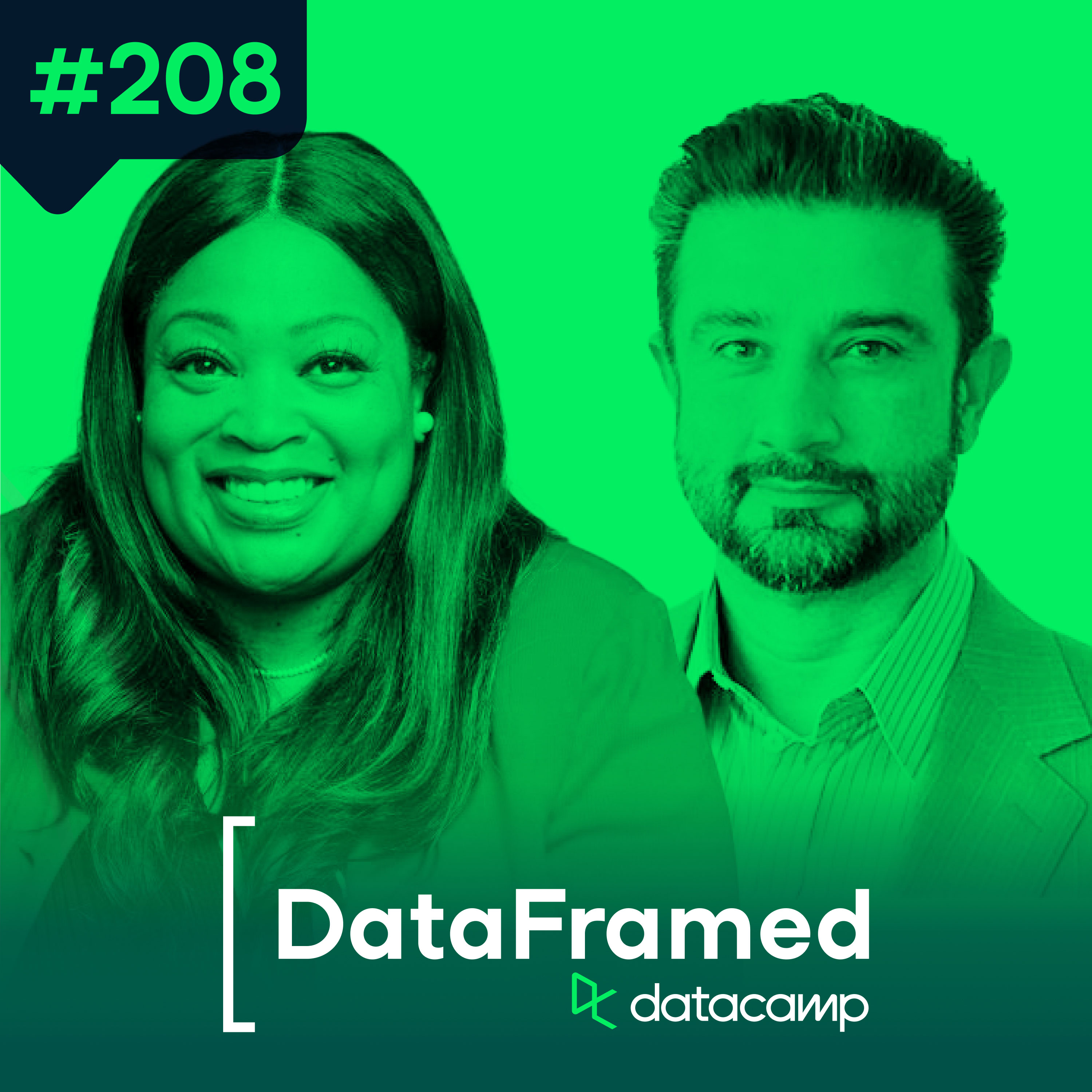
#208 Monetizing Data & AI with Vin Vashishta, Founder & AI Advisor at V Squared, & Tiffany Perkins-Munn, MD & Head of Data & Analytics at JPMC
Everything in the world has a price, including improving and scaling your data and AI functions. That means that at some point someone will question the ROI of your projects, and often, these projects will be looked at under the lens of monetization. But how do you ensure that what you’re working on is not only providing value to the business but also creating financial gain? What conditions need to be met to prove your project's success and turn value into cash?Vin Vashishta is the author of ‘From Data to Profit’ (Wiley), the playbook for monetizing data and AI. He built V-Squared from client 1 to one of the oldest data and AI consulting firms. For the last eight years, he has been recognized as a data and AI thought leader. Vin is a LinkedIn Top Voice and Gartner Ambassador. His background spans over 25 years in strategy, leadership, software engineering, and applied machine learning.Dr. Tiffany Perkins-Munn is on a mission to bring research, analytics, and data science to life. She earned her Ph.D. in Social-Personality Psychology with an interdisciplinary focus on Advanced Quantitative Methods. Her insights are the subject of countless lectures on psychology, statistics, and their real-world applications.As the Head of Data and Analytics for the innovative CDAO organization at J.P. Morgan Chase, her knack involves unraveling complex business problems through operational enhancements, augmented financials, and intuitive recruiting. After over two decades in the industry, she consistently forges robust relationships across the corporate spectrum, becoming one of the Top 10 Finalists in the Merrill Lynch Global Markets Innovation Program.In the episode, Richie, Vin, and Tiffany explore the challenges of monetizing data and AI projects, including how technical, organizational, and strategic factors affect your input, the importance of aligning technical and business objectives to keep outputs focused on core business goals, how to assess your organization's data and AI maturity, examples of high data maturity businesses, data security and compliance, quick wins in data transformation and infrastructure, why long-term vision and strategy matter, and much more.Links Mentioned in the Show:Connect with Tiffany on LinkedinConnect with Vin on LinkedinVin’s Website[Course] Data Governance Concepts Related Episode: Scaling Enterprise Analytics with Libby Duane Adams, Chief Advocacy Officer and Co-Founder of AlteryxNew to DataCamp?Learn on the go using the DataCamp mobile appEmpower your business with world-class data and AI skills with DataCamp for business

#207 Data Driven Venture Capital with Andre Retterath, Partner at Earlybird VC
As we close out our focus on how the venture capital industry identifies and decides which future companies to fund, it might be easy to fall into the trap of thinking that the latest methods for discovering future unicorns are ubiquitous among all VCs. However, many VCs still work ‘the old way,’ using data to back up human assumptions. But what happens when a data engineer pivots to VC? What does a data-driven, data-first approach look like, and how does it compare to the incumbent processes?Dr. Andre Retterath is a Partner in Earlybird’s Munich Office, focussing on enterprise software with a particular interest in developer, data and productivity tools, alongside AI-centric products and robotics. Before transitioning into VC in 2017, he gained more than 5 years of experience as a process automation and predictive maintenance engineer at ThyssenKrupp and further insights as a management consultant at GE North America. Andre also has his own VC, AI & data newsletter, Data-Driven VC.In the episode, Richie and Andre explore the concept of data-driven venture capital, the challenges of traditional VC and why digitization has had a huge impact on the industry, the data-driven VC process, the use of modern data and AI technologies in identifying potentially successful projects, the human element in VC, the challenges and opportunities of early-stage investments, the importance of early identification of these ventures, cultural and organizational indicators and much more. Links Mentioned in the Show:Data-Driven VCEarlybird VCAleph AlphaPareto PrincipleRelated Episode: Making Better Decisions using Data & AI with Cassie Kozyrkov, Google's First Chief Decision ScientistSign up to RADAR: AI EditionNew to DataCamp?Learn on the go using the DataCamp mobile appEmpower your business with world-class data and AI skills with DataCamp for business

#206 The Venture Mindset with Ilya Strebulaev, Economist & Professor at Stanford Graduate School of Business
In almost every industry, the rate of innovation is increasing, and this is great for consumers around the globe. However, with constant innovation and continual disruption of the status quo, where to innovate next becomes much harder to identify. If your industry hasn’t been disrupted yet, it’s next on the list. So, in order to deal with uncertainty, a new culture is needed, and there’s a clear group of companies that constantly deal with uncertainty and innovation—VC’s. Ilya A. Strebulaev is the David S. Lobel Professor of Private Equity and Professor of Finance at the Stanford Graduate School of Business, and a Research Associate at the National Bureau of Economic Research. He is an expert in corporate finance, venture capital, innovation financing, and financial decision-making. He is the founder and director of the Stanford GSB Venture Capital Initiative.In the episode, Richie and Ilya explore the venture mindset, the importance of embracing unknowns, how VC’s deal with unpredictability, how our education affects our decision-making ability, practical examples from Ilya’s teaching experiences at Stanford, adapting to market changes and continual innovation, venture mindset principles and much more. Links Mentioned in the Show:Ilya’s WebsiteSequoia CapitalStanford University Related Episode: Making Better Decisions using Data & AI with Cassie Kozyrkov, Google's First Chief Decision ScientistSign up to RADAR: AI EditionNew to DataCamp?Learn on the go using the DataCamp mobile appEmpower your business with world-class data and AI skills with DataCamp for business

#205 The 2nd Wave of Generative AI with Sailesh Ramakrishnan & Madhu Iyer, Managing Partners at Rocketship.vc
Speedily adopting new technologies can give your business a competitive advantage, but with so much happening in the world of generative AI, it's difficult to know what to adopt. In this episode, Richie chats to two venture capitalists to get their view on the global AI landscape, where we are in the AI hype cycle, and how to adopt AI tech. Beyond this, we explore Rocketship.vc's use of data and algorithms to make investment decisions in early-stage startups. If our previous episode’s deep dive into 2024’s data & AI trends with VC Tom Tunguz got you excited about how investors are looking at the market at the moment, then this episode is sure to do the same. This time, we have twice the insight, thanks to our two guests.Madhu Shalini Iyer is a Managing Partner at Rocketship.vc, a Silicon Valley based fund investing globally. She was the Chief Data Officer of Gojek and helped grow the business into a $10 billion unicorn. In addition to being a board member, she started the Singapore office and played an active role in the strategy, new business development, and ‘data as a competitive advantage’. Prior to Gojek, Madhu was part of the founding team of Intuit’s Quickbooks Lending Platform. As the data science leader at Intuit, Madhu helped grow the platform to $300 million and holds 2 patents in the areas of user data augmented algorithms for financial inclusion. Madhu was also the Chief Data Officer for Ethoslending. There she built the underwriting platform and was responsible for all b2c revenue, resulting in $65 million gross market value per month. Madhu was further responsible for building and running the marketing team. Prior, Madhu was a partner at a $150m private equity fund, Stem Financial, in Hong Kong. She started her career as a senior data scientist with a leading think tank in Menlo Park, CA.Sailesh Ramakrishnan is also a Managing Partner at Rocketship.vc. Prior to Rocketship.vc, Sailesh was CTO and co-founder of LocBox (acquired by Square), a startup focussed on marketing for local businesses. Sailesh worked with Anand and Venky at their previous startup Kosmix, and continued on to Walmart as a Director of Engineering at @WalmartLabs. Before jumping into the startup world, Sailesh worked as a Computer Scientist at NASA Ames Research Center. Sailesh earned his Bachelors degree in Civil Engineering from IIT Madras, his Masters degree in Construction Management from Virginia Tech and another Master degree in Intelligent Systems from University of Pittsburgh. He was a Ph.D. candidate in Artificial Intelligence at the University of Michigan.In the episode, Richie, Madhu and Sailesh explore the generative AI revolution, categorizing generative AI tools, the impact of genAI across industries, investment philosophy and data-driven decision-making, the challenges and opportunities when investing in AI, future trends and predictions, regulatory and ethical considerations of AI, and much more. Links Mentioned in the Show:Rocketship.vc[Course] Implementing AI Solutions in BusinessRelated Episode: Inside Algorithmic Trading with Anthony Markham, Vice President, Quantitative Developer at Deutsche BankSign up to RADAR: AI EditionNew to DataCamp?Learn on the go using the DataCamp mobile appEmpower your business with world-class data and AI skills with DataCamp for business
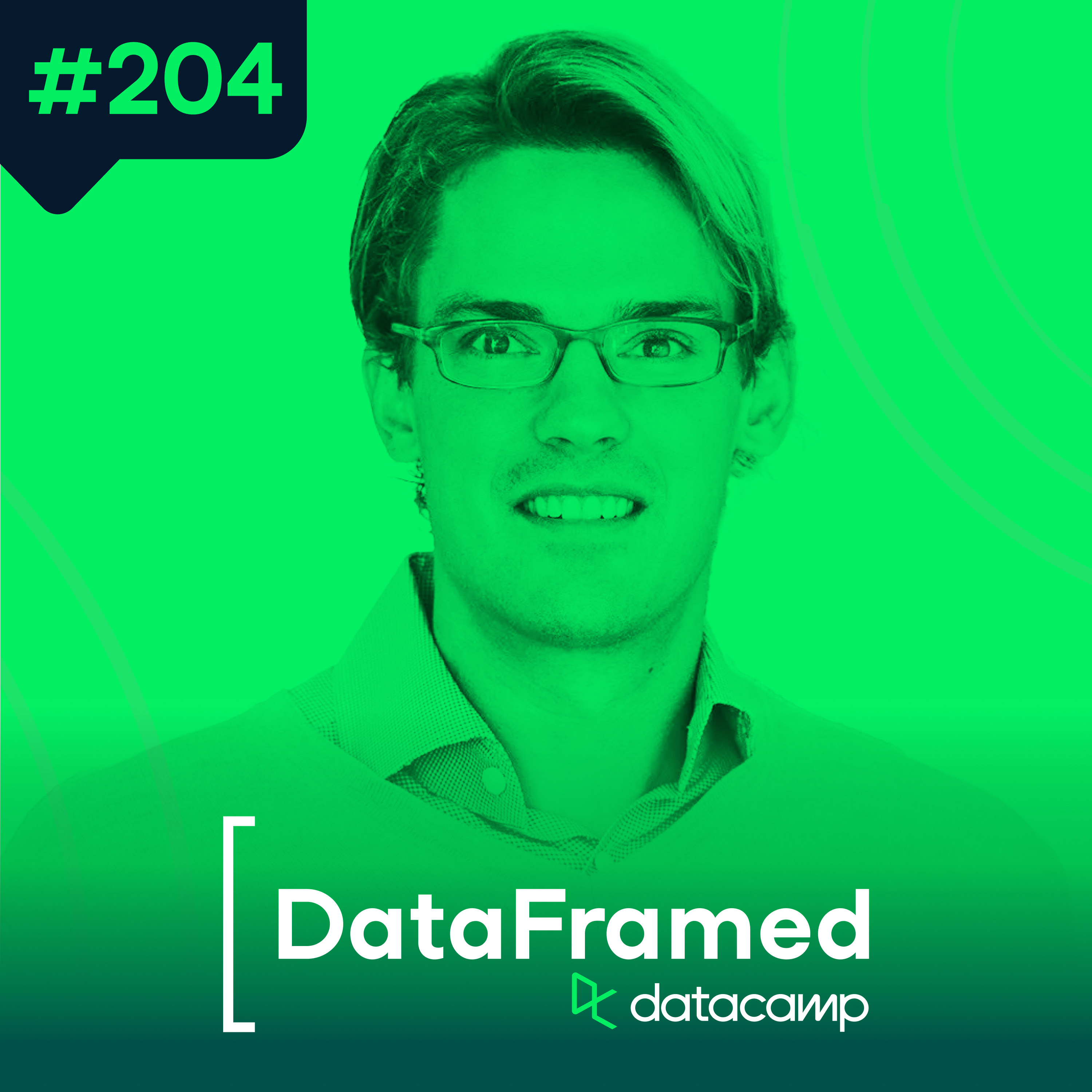
#204 Data & AI Trends in 2024, with Tom Tunguz, General Partner at Theory Ventures
Rapid change seems to be the new norm within the data and AI space, and due to the ecosystem constantly changing, it can be tricky to keep up. Fortunately, any self-respecting venture capitalist looking into data and AI will stay on top of what’s changing and where the next big breakthroughs are likely to come from. We all want to know which important trends are emerging and how we can take advantage of them, so why not learn from a leading VC. Tomasz Tunguz is a General Partner at Theory Ventures, a $235m early-stage venture capital firm. He blogs sat tomtunguz.com & co-authored Winning with Data. He has worked or works with Looker, Kustomer, Monte Carlo, Dremio, Omni, Hex, Spot, Arbitrum, Sui & many others.He was previously the product manager for Google's social media monetization team, including the Google-MySpace partnership, and managed the launches of AdSense into six new markets in Europe and Asia. Before Google, Tunguz developed systems for the Department of Homeland Security at Appian Corporation. In the episode, Richie and Tom explore trends in generative AI, the impact of AI on professional fields, cloud+local hybrid workflows, data security, and changes in data warehousing through the use of integrated AI tools, the future of business intelligence and data analytics, the challenges and opportunities surrounding AI in the corporate sector. You'll also get to discover Tom's picks for the hottest new data startups.Links Mentioned in the Show:Tom’s BlogTheory VenturesArticle: What Air Canada Lost In ‘Remarkable’ Lying AI Chatbot Case[Course] Implementing AI Solutions in BusinessRelated Episode: Making Better Decisions using Data & AI with Cassie Kozyrkov, Google's First Chief Decision ScientistSign up to RADAR: AI EditionNew to DataCamp?Learn on the go using the DataCamp mobile appEmpower your business with world-class data and AI skills with DataCamp for business

#203 How a Chief AI Officer Works with Philipp Herzig, Chief AI Officer at SAP
With seemingly every organization wanting to enhance their AI capabilities, questions arise about who should be in charge of these initiatives. At the moment, it’s likely a CTO, CIO, or CDO, or a mixture of the three. The gold standard is to have someone in the C-suite whose sole focus is their AI projects: the Chief AI Officer. This role is so new that it's not yet widely understood. In this episode, we explore what the CAIO job entails.Philipp Herzig is the Chief AI Officer at SAP. He’s held a variety of roles within SAP, most recently SVP Head of Cross Product Engineering & Experience, however his experience covers intelligent enterprise & cross-architecture, head of engineering for cloud-native apps, a software development manager, and product owner. In the full episode, Richie and Philipp explore what his day-to-day responsibilities are as a CAIO, the holistic approach to cross-team collaboration, non-technical interdepartmental work, AI strategy and implementation, challenges and success metrics, how to approach high-value AI use cases, insights into current AI developments and the importance of continuous learning, the exciting future of AI and much more. Links Mentioned in the Show:SAP’s AI CoPilot JouleSAP[Course] Implementing AI Solutions in BusinessRelated Episode: How Walmart Leverages Data & AI with Swati Kirti, Sr Director of Data Science at WalmartRewatch sessions from RADAR: The Analytics EditionNew to DataCamp?Learn on the go using the DataCamp mobile appEmpower your business with world-class data and AI skills with DataCamp for business

#202 Making Data Governance Fun with Tiankai Feng, Data Strategy & Data Governance Lead at ThoughtWorks
Countless companies invest in their data quality, but often, the effort from their investment is not fully realized in the output. It seems like, despite the critical importance of data quality, data governance might be suffering from a branding issue. Data governance is sometimes looked at as the data police, but this is far from the truth. So, how can we change perspectives and introduce fun into data governance?Tiankai Feng is a Principal Data Consultant and Data Strategy & Data Governance Lead at Thoughtworks, He also works part-time as the Head of Marketing at DAMA Germany. Tiankai has had many data hats in his career—marketing data analyst, data product owner, analytics capability lead, and data governance leader for the last few years. He has found a passion for the human side of data—how to collaborate, coordinate, and communicate around data. TIankai often uses his music and humor to make data more approachable and fun.In the episode, Adel and Tiankai explore the importance of data governance in data-driven organizations, the challenges of data governance, how to define success criteria and measure the ROI of governance initiatives, non-invasive and creative approaches to data governance, the implications of generative AI on data governance, regulatory considerations, organizational culture and much more. Links Mentioned in the Show:Tiankai’s YouTube ChannelData Governance Fundamentals Cheat Sheet[Webinar] Unpacking the Fun in Data Governance: The Key to Scaling Data Quality[Course] Data Governance ConceptsRewatch sessions from RADAR: The Analytics EditionNew to DataCamp?Learn on the go using the DataCamp mobile appEmpower your business with world-class data and AI skills with DataCamp for business

#201 The Database is the Operating System with Mike Stonebraker, CTO & Co-Founder At DBOS
Databases are ubiquitous, and you don’t need to be a data practitioner to know that all data everywhere is stored in a database—or is it? While the majority of data around the world lives in a database, the data that helps run the heart of our operating systems—the core functions of our computers— is not stored in the same place as everywhere else. This is due to database storage sitting ‘above’ the operating system, requiring the OS to run before the databases can be used. But what if the OS was built ‘on top’ of a database? What difference could this fundamental change make to how we use computers?Mike Stonebraker is a distinguished computer scientist known for his foundational work in database systems, he is also currently CTO & Co-Founder At DBOS. His extensive career includes significant contributions through academic prototypes and commercial startups, leading to the creation of several pivotal relational database companies such as Ingres Corporation, Illustra, Paradigm4, StreamBase Systems, Tamr, Vertica, and VoltDB. Stonebraker's role as chief technical officer at Informix and his influential research earned him the prestigious 2014 Turing Award.Stonebraker's professional journey spans two major phases: initially at the University of California, Berkeley, focusing on relational database management systems like Ingres and Postgres, and later, from 2001 at the Massachusetts Institute of Technology (MIT), where he pioneered advanced data management techniques including C-Store, H-Store, SciDB, and DBOS. He remains a professor emeritus at UC Berkeley and continues to influence as an adjunct professor at MIT’s Computer Science and Artificial Intelligence Laboratory. Stonebraker is also recognized for his editorial work on the book "Readings in Database Systems."In the episode, Richie and Mike explore the the success of PostgreSQL, the evolution of SQL databases, the shift towards cloud computing and what that means in practice when migrating to the cloud, the impact of disaggregated storage, software and serverless trends, the role of databases in facilitating new data and AI trends, DBOS and it’s advantages for security, and much more. Links Mentioned in the Show:DBOSPaper: What Goes Around Comes Around[Course] Understanding Cloud ComputingRelated Episode: Scaling Enterprise Analytics with Libby Duane Adams, Chief Advocacy Officer and Co-Founder of AlteryxRewatch sessions from RADAR: The Analytics EditionNew to DataCamp?Learn on the go using the DataCamp mobile appEmpower your business with world-class data and AI skills with DataCamp for business

#200 50 Years of SQL with Don Chamberlin, Computer Scientist and Co-Inventor of SQL
Over the past 199 episodes of DataFramed, we’ve heard from people at the forefront of data and AI, and over the past year we’ve constantly looked ahead to the future AI might bring. But all of the technologies and ways of working we’ve witnessed have been built on foundations that were laid decades ago. For our 200th episode, we’re bringing you a special guest and taking a walk down memory lane—to the creation and development of one of the most popular programming languages in the world.Don Chamberlin is renowned as the co-inventor of SQL (Structured Query Language), the predominant database language globally, which he developed with Raymond Boyce in the mid-1970s. Chamberlin's professional career began at IBM Research in Yorktown Heights, New York, following a summer internship there during his academic years. His work on IBM's System R project led to the first SQL implementation and significantly advanced IBM’s relational database technology. His contributions were recognized when he was made an IBM Fellow in 2003 and later a Fellow of the Computer History Museum in 2009 for his pioneering work on SQL and database architectures. Chamberlin also contributed to the development of XQuery, an XML query language, as part of the W3C, which became a W3C Recommendation in January 2007. Additionally, he holds fellowships with ACM and IEEE and is a member of the National Academy of Engineering.In the episode, Richie and Don explore his early career at IBM and the development of his interest in databases alongside Ray Boyce, the database task group (DBTG), the transition to relational databases and the early development of SQL, the commercialization and adoption of SQL, how it became standardized, how it evolved and spread via open source, the future of SQL through NoSQL and SQL++ and much more. Links Mentioned in the Show:The first-ever journal paper on SQL. SEQUEL: A Structured English Query LanguageDon’s Book: SQL++ for SQL Users: A TutorialSystem R: Relational approach to database managementSQL CoursesSQL Articles, Tutorials and Code-AlongsRelated Episode: Scaling Enterprise Analytics with Libby Duane Adams, Chief Advocacy Officer and Co-Founder of AlteryxRewatch sessions from RADAR: The Analytics EditionNew to DataCamp?Learn on the go using the DataCamp mobile appEmpower your business with world-class data and AI skills with DataCamp for business

#199 Creating an AI-First Culture with Sanjay Srivastava, Chief Digital Strategist at Genpact
Last year saw the proliferation of countless AI tools and initiatives, many companies looked to find ways where AI could be leveraged to reduce operational costs and pressure wherever possible. 2023 was a year of experimentation for anyone trying to harness AI, but we can’t walk forever. To keep up with the rapidly changing landscape in business, last year’s experiments with AI need to find their feet and allow us to run. But how do we know which initiatives are worth fully investing in? Will your company culture impede the change management that is necessary to fully adopt AI?Sanjay Srivastava is the Chief Digital Strategist at Genpact. He works exclusively with Genpact’s senior client executives and ecosystem technology leaders to mobilize digital transformation at the intersection of cutting-edge technology, data strategy, operating models, and process design. In his previous role as Chief Digital Officer at Genpact, Sanjay built out the company’s offerings in artificial intelligence, data and analytics, automation, and digital technology services. He leads Genpact’s artificial-intelligence-enabled platform that delivers industry-leading governance, integration, and orchestration capabilities across digital transformations. Before joining Genpact, Sanjay was a Silicon Valley serial entrepreneur and built four high-tech startups, each of which was successfully acquired by Akamai, BMC, FIS, and Genpact, respectively. Sanjay also held operating leadership roles at Hewlett Packard, Akamai, and SunGard (now FIS), where he oversaw product management, global sales, engineering, and services businesses.In the episode, Sanjay and Richie cover the shift from experimentation to production seen in the AI space over the past 12 months, the importance of corporate culture in the adoption of AI in a business environment, how AI automation is revolutionizing business processes at GENPACT, how change management contributes to how we leverage AI tools at work, adapting skill development pathways to make the most out of AI, how AI implementation changes depending on the size of your organization, future opportunities for AI to change industries and much more. Links Mentioned in the Show:Genpact[Course] Implementing AI Solutions in BusinessArticle: AI adoption accelerates as enterprise PoCs show productivity gainsRelated Episode: How Generative AI is Changing Business and Society with Bernard Marr, AI Advisor, Best-Selling Author, and FuturistRewatch sessions from RADAR: The Analytics EditionNew to DataCamp?Learn on the go using the DataCamp mobile appEmpower your business with world-class data and AI skills with DataCamp for business

#198 How Walmart Leverages Data & AI with Swati Kirti, Sr Director of Data Science at Walmart
There aren’t many retail giants like Walmart. In fact, there are none. The multinational generates 650bn in revenue, (including 50bn in eCommerce)—the highest revenue of any retailer globally. With over 10,000 stores worldwide and a constantly evolving product line, Walmart’s data & AI function has a lot to contend with when it comes to customer experience, demand forecasting, supply chain optimization and where to use AI effectively. So how do they do it? What can we learn from one of the most successful and well-known organizations on the planet?Swati Kirti is a Senior Director of Data Science, leading the AI/ML charter for Walmart Global Tech’s international business in Canada, Mexico, Central America, Chile, China, and South Africa. She is responsible for building AI/ML models and products to enable automation and data-driven decisions, powering superior customer experience and realizing value for omnichannel international businesses across e-commerce, stores, supply chain, and merchandising.In the episode, Swati and Richie explore the role of data and AI at Walmart, how the data and AI teams operate under Swati’s supervision, how Walmart improves customer experience through the use of data, supply chain optimization, demand forecasting, retail-specific data challenges, scaling AI solutions, innovation in retail through AI and much more. Links Mentioned in the Show:Article - Walmart’s Generative AI search puts more time back in customers' handsWalmart Global Tech[Course] Implementing AI Solutions in BusinessRelated Episode: How Generative AI is Changing Business and Society with Bernard Marr, AI Advisor, Best-Selling Author, and FuturistRewatch sessions from RADAR: The Analytics EditionNew to DataCamp?Learn on the go using the DataCamp mobile appEmpower your business with world-class data and AI skills with DataCamp for business
#197 The Future of Programming with Kyle Daigle, COO at GitHub
Generative AI has had a wide range of uses, but some of its strongest use cases are in coding and programming. One of the companies that has been leading the way in AI-assisted programming has been GitHub with GitHub CoPilot. Many software engineering teams now have tools like CoPilot embedded into their workflows, but what does this mean for the future of programming?Kyle Daigle is the COO of GitHub, leading the strategic initiatives, operations, and innovation of the world's largest platform for software development and collaboration. With over 10 years of experience at GitHub, Kyle has a deep understanding of the needs and challenges of developers and the ecosystem they work in.In the episode, Adel and Kyle explore Kyle’s journey into development and AI, how he became the COO at GitHub, GitHub’s approach to AI, the impact of CoPilot on software development, how AI tools are adopted by software developers, the future of programming and AI’s role within it, the risks and challenges associated with the adoption of AI coding tools, the broader implications tools like CoPilot might have and much more. Links Mentioned in the Show:GitHub CoPilotKyle on GitHub[Code Along] Pair Programming with GitHub Copilot[Course] GitHub ConceptsRelated Episode: What to Expect from AI in 2024 with Craig S. Smith, Host of the Eye on A.I PodcastRewatch sessions from RADAR: The Analytics EditionNew to DataCamp?Learn on the go using the DataCamp mobile appEmpower your business with world-class data and AI skills with DataCamp for business

#196 The Art of Prompt Engineering with Alex Banks, Founder and Educator, Sunday Signal
Since the launch of ChatGPT, one of the trending terms outside of ChatGPT itself has been prompt engineering. This act of carefully crafting your instructions is treated as alchemy by some and science by others. So what makes an effective prompt?Alex Banks has been building and scaling AI products since 2021. He writes Sunday Signal, a newsletter offering a blend of AI advancements and broader thought-provoking insights. His expertise extends to social media platforms on X/Twitter and LinkedIn, where he educates a diverse audience on leveraging AI to enhance productivity and transform daily life.In the episode, Alex and Adel cover Alex’s journey into AI and what led him to create Sunday Signal, the potential of AI, prompt engineering at its most basic level, strategies for better prompting, chain of thought prompting, prompt engineering as a skill and career path, building your own AI tools rather than using consumer AI products, AI literacy, the future of LLMs and much more. Links Mentioned in the Show:[Alex’s Free Course on DataCamp] Understanding Prompt EngineeringSunday SignalPrinciples by Ray Dalio: Life and WorkRelated Episode: [DataFramed AI Series #1] ChatGPT and the OpenAI Developer EcosystemRewatch sessions from RADAR: The Analytics EditionNew to DataCamp?Learn on the go using the DataCamp mobile appEmpower your business with world-class data and AI skills with DataCamp for business

#195 [Radar Recap] The Art of Data Storytelling: Driving Impact with Analytics with Brent Dykes, Lea Pica and Andy Cotgreave
Driving impact with analytics goes beyond numbers and graphs; it's about telling a story that resonates. In this session, Brent Dykes, author of "Effective Data Storytelling" & the Founder & Chief Data Storyteller at AnalyticsHero, Lea Pica, author of "Present Beyond Measure" & the Founder at Story-driven by Data, and Andy Cotgreave, co-author of "The Big Book of Dashboards" and Senior Data Evangelist at Tableau, will unveil how to transform data into compelling narratives. They shed light on the art of blending analytics with storytelling, a key to making data-driven insights both understandable and influential within any organization.

#194 [Radar Recap] Scaling Data ROI: Driving Analytics Adoption Within Your Organization with Laura Gent Felker, Omar Khawaja and Tiffany Perkins-Munn
You've just invested in licenses for your favorite analytics tool, but now what? In this session, Laura Gent Felker, GTM Analytics Lead at MongoDB, Tiffany Perkins-Munn, Managing Director & Head of Data & Analytics at JPMC and Omar Khawaja, CDAO & Global Head Data & Analytics at Givaudan will explore best practices when it comes to scaling analytics adoption within the wider organization. They will discuss how to approach change management when it comes to driving analytics adoption, the role of data leaders in driving a culture change around analytics tooling, and a lot more.

#193 [Radar Recap] From Data Governance to Data Discoverability: Building Trust in Data Within Your Organization with Esther Munyi, Amy Grace, Stefaan Verhulst and Malarvizhi Veerappan
Driving trust with data is essential to succeeding with analytics. However, time and time again, data quality remains an issue for most organizations today. In this session, Esther Munyi, Chief Data Officer at Sasfin, Amy Grace, Director, Military Engines Digital Strategy at Pratt & Whitney, Stefaan Verhulst, Chief Research & Development Officer, Director of Data Program at NYU Governance Lab, and Malarvizhi Veerappan, Program Manager and Senior Data Scientist at the World Bank will focus on strategies for improving data quality, fostering a culture of trust around data, and balancing robust governance with the need for accessible, high-quality data.

#192 [Radar Recap] Building a Learning Culture for Analytics Functions, with Russell Johnson, Denisse Groenendaal-Lopez and Mark Stern
Creating a culture of continuous learning within analytics functions isn't just beneficial; it's essential. In the session, Russell Johnson, Chief Data Scientist at Marks & Spencer, Denisse Groenendaal-Lopez, Learning & Development Business Partner at Booking Group, and Mark Stern, VP of Business Intelligence & Analytics at BetMGM will address the importance of fostering a learning environment for driving success with analytics. They will provide insights on developing a culture where continuous learning, experimentation, and curiosity are the norms—and strategies leaders can adopt today to drive up excitement around analytics adoption & upskilling.
#191 How Generative AI is Changing Business and Society with Bernard Marr, AI Advisor, Best-Selling Author, and Futurist
Everyone has seen the reach and impact of generative AI, and with countless use-cases across a variety of fields, the question is often not "can we do things with AI?", but rather "what should we do with AI?". What are the key areas where generative AI has had a profound impact already? Which economies, industries, and businesses have taken full advantage of the abilities of GenAI already? It takes a lot of wisdom and experience within the data & AI space to distill high-level insights from such a rapidly changing world, but, luckily we have one of the best people in the world to quiz on the current landscape and future of AI. Bernard Marr is an internationally best-selling business author, keynote speaker and strategic advisor to companies and governments. He advises many of the world’s best-known organizations such as Amazon, Google, Microsoft, IBM, Toyota, and more.LinkedIn has recently ranked Bernard as one of the top 5 business influencers in the world. He has authored 19 best-selling books, including his new book Generative AI in Practice: 100+ Amazing Ways Generative Artificial Intelligence is Changing Business and Society. Every day Bernard actively engages his over 4 million social media followers. He is one of the world’s most highly respected experts when it comes to future trends, strategy, business performance, digital transformation and the intelligent use of data and AI in business.In the episode, Richie and Bernard explore how AI will impact society through the augmentation of jobs, the importance of developing skills that won’t be easily replaced by AI, how generative AI is revolutionizing creative fields already, how AI will impact education, AI’s role in coding and software development, use cases of generative AI in business, how personalization is set to improve through AI, concerns and ethical considerations surrounding AI, why we should be optimistic about the future of AI, and much more. Links Mentioned in the Show:Bernard’s book: Generative AI in PracticeBernard’s Website, Twitter and Linkedin[Skill Track] AI Business FundamentalsRelated Episode: Adapting to the AI Era with Jason Feifer, Editor in Chief of Entrepreneur MagazineNew to DataCamp?Learn on the go using the DataCamp mobile appEmpower your business with world-class data and AI skills with DataCamp for business
#190 How Data Leaders Can Make Data Governance a Priority with Saurabh Gupta, Chief Strategy & Revenue Officer at The Modern Data Company
There is a concept in software engineering which is called ‘shifting left’, this focuses on testing software a lot earlier in the development lifecycle than you would normally expect it to. This helps teams building the software create better rituals and processes, while also ensuring quality and usability are key aspects to evaluate as the software is being built. We know this works in software development, but what happens when these practices are used when building AI tools?Saurabh Gupta is a seasoned technology executive and is currently Chief Strategy & Revenue Officer The Modern Data Company. With over 25 years of experience in tech, data and strategy, he has led many strategy and modernization initiatives across industries and disciplines. Through his career, he has worked with various Internation Organizations and NGOs, Public sector and Private sector organizations. Before joining TMDC, he was the Head of Data Strategy & Governance at ThoughtWorks & CDO/Director for Washington DC Gov., where he developed the digital/data modernization strategy for education data. Prior to DCGov he played leadership and strategic roles at organizations including IMF and World Bank where he was responsible for their Data strategy and led the OpenData initiatives. He has also closely worked with African Development Bank, OECD, EuroStat, ECB, UN and FAO as a part of inter-organization working groups on data and development goals. As a part of the taskforce for international data cooperation under the G20 Data Gaps initiative, he chaired the technical working group on data standards and exchange. He also played an advisor role to the African Development Bank on their data democratization efforts under the Africa Information Highway.In the episode, Adel & Saurabh explore the importance of data quality and how ‘shifting left’ can improve data quality practices, the role of data governance, the emergence of data product managers, operationalizing ‘shift left’ strategies through collaboration and data governance, the challenges faced when implementing data governance, future trends in data quality and governance, and much more. Links Mentioned in the Show:The Modern Data CompanyMonte Carlo: The Annual State of Data Quality Survey[Course] Data Governance Concepts[Webinar] Crafting a Lean and Effective Data Governance Strategy Related Episode: Building Trust in Data with Data GovernanceNew to DataCamp?Learn on the go using the DataCamp mobile appEmpower your business with world-class data and AI skills with DataCamp for business