DataFramed
326 episodes — Page 2 of 7
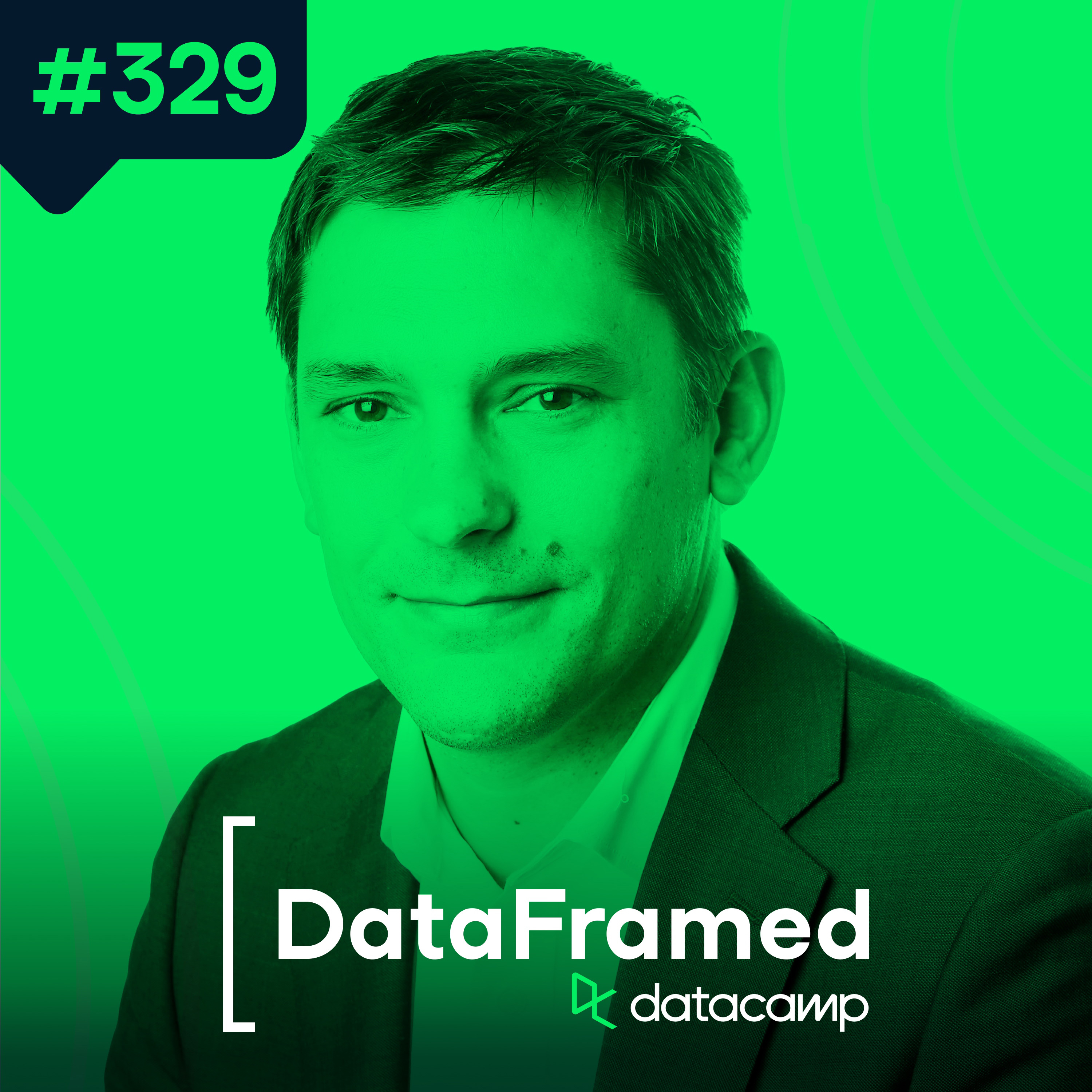
#329 Building Trust in AI Agents with Shane Murray, Senior Vice President of Digital Platform Analytics at Versant Media
Data quality and AI reliability are two sides of the same coin in today's technology landscape. Organizations rushing to implement AI solutions often discover that their underlying data infrastructure isn't prepared for these new demands. But what specific data quality controls are needed to support successful AI implementations? How do you monitor unstructured data that feeds into your AI systems? When hallucinations occur, is it really the model at fault, or is your data the true culprit? Understanding the relationship between data quality and AI performance is becoming essential knowledge for professionals looking to build trustworthy AI systems.Shane Murray is a seasoned data and analytics executive with extensive experience leading digital transformation and data strategy across global media and technology organizations. He currently serves as Senior Vice President of Digital Platform Analytics at Versant Media, where he oversees the development and optimization of analytics capabilities that drive audience engagement and business growth. In addition to his corporate leadership role, he is a founding member of InvestInData, an angel investor collective of data leaders supporting early-stage startups advancing innovation in data and AI. Prior to joining Versant Media, Shane spent over three years at Monte Carlo, where he helped shape AI product strategy and customer success initiatives as Field CTO.Earlier, he spent nearly a decade at The New York Times, culminating as SVP of Data & Insights, where he was instrumental in scaling the company’s data platforms and analytics functions during its digital transformation. His earlier career includes senior analytics roles at Accenture Interactive, Memetrics, and Woolcott Research. Based in New York, Shane continues to be an active voice in the data community, blending strategic vision with deep technical expertise to advance the role of data in modern business.In the episode, Richie and Shane explore AI disasters and success stories, the concept of being AI-ready, essential roles and skills for AI projects, data quality's impact on AI, and much more.Links Mentioned in the Show:Versant MediaConnect with ShaneCourse: Responsible AI PracticesRelated Episode: Scaling Data Quality in the Age of Generative AI with Barr Moses, CEO of Monte Carlo Data, Prukalpa Sankar, Cofounder at Atlan, and George Fraser, CEO at FivetranRewatch RADAR AI New to DataCamp?Learn on the go using the DataCamp mobile appEmpower your business with world-class data and AI skills with DataCamp for business

#328 The Challenges of Enterprise Agentic AI with Manasi Vartak, Chief AI Architect at Cloudera
The promise of AI in enterprise settings is enormous, but so are the privacy and security challenges. How do you harness AI's capabilities while keeping sensitive data protected within your organization's boundaries? Private AI—using your own models, data, and infrastructure—offers a solution, but implementation isn't straightforward. What governance frameworks need to be in place? How do you evaluate non-deterministic AI systems? When should you build in-house versus leveraging cloud services? As data and software teams evolve in this new landscape, understanding the technical requirements and workflow changes is essential for organizations looking to maintain control over their AI destiny.Manasi Vartak is Chief AI Architect and VP of Product Management (AI Platform) at Cloudera. She is a product and AI leader with more than a decade of experience at the intersection of AI infrastructure, enterprise software, and go-to-market strategy. At Cloudera, she leads product and engineering teams building low-code and high-code generative AI platforms, driving the company’s enterprise AI strategy and enabling trusted AI adoption across global organizations. Before joining Cloudera through its acquisition of Verta, Manasi was the founder and CEO of Verta, where she transformed her MIT research into enterprise-ready ML infrastructure. She scaled the company to multi-million ARR, serving Fortune 500 clients in finance, insurance, and capital markets, and led the launch of enterprise MLOps and GenAI products used in mission-critical workloads. Manasi earned her PhD in Computer Science from MIT, where she pioneered model management systems such as ModelDB — foundational work that influenced the development of tools like MLflow. Earlier in her career, she held research and engineering roles at Twitter, Facebook, Google, and Microsoft.In the episode, Richie and Manasi explore AI's role in financial services, the challenges of AI adoption in enterprises, the importance of data governance, the evolving skills needed for AI development, the future of AI agents, and much more.Links Mentioned in the Show:ClouderaCloudera Evolve ConferenceCloudera Agent StudioConnect with ManasiCourse: Introduction to AI AgentsRelated Episode: RAG 2.0 and The New Era of RAG Agents with Douwe Kiela, CEO at Contextual AI & Adjunct Professor at Stanford UniversityRewatch RADAR AI New to DataCamp?Learn on the go using the DataCamp mobile appEmpower your business with world-class data and AI skills with DataCamp for business
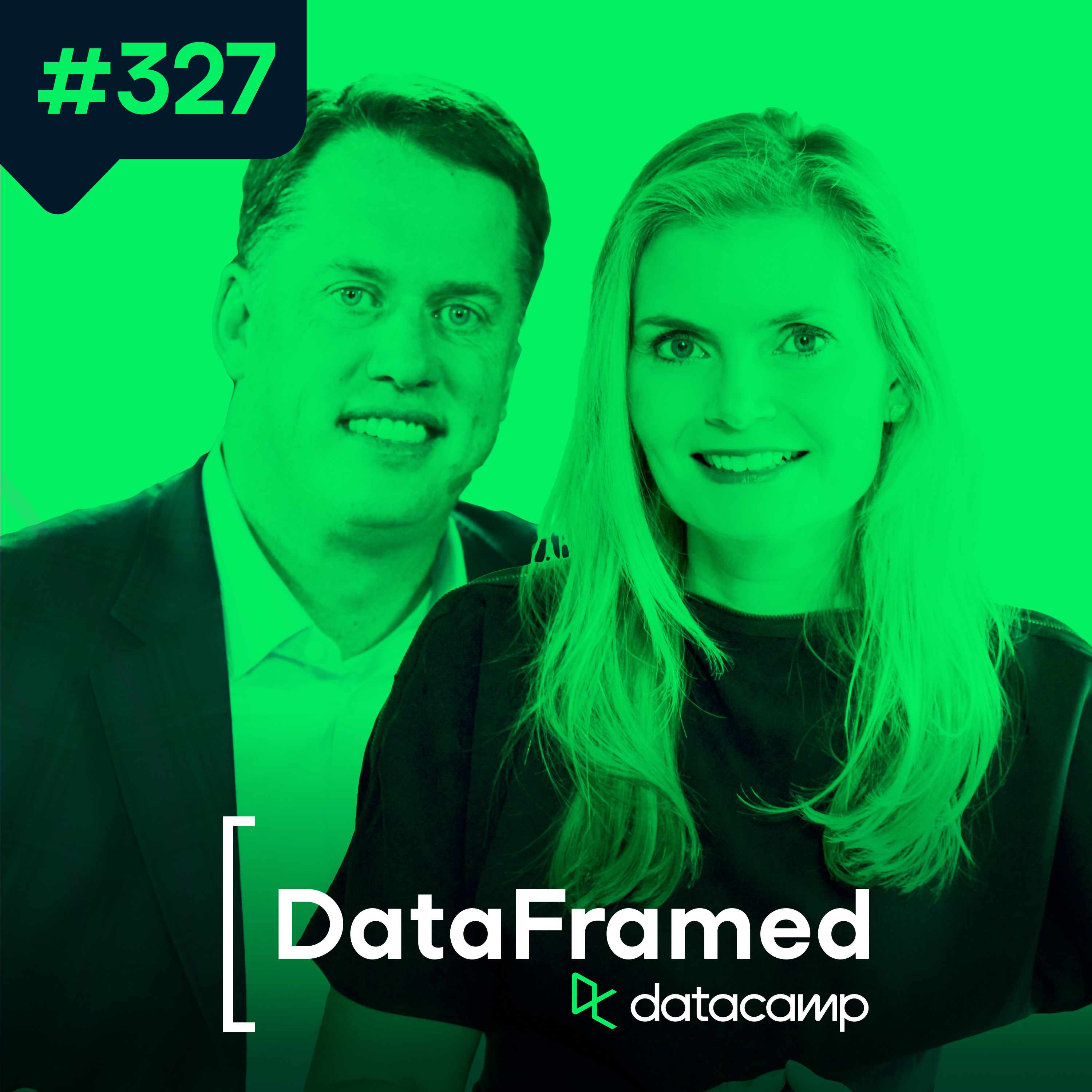
#327 Building a Sales and Marketing Capability for Data Applications with Denise Persson, CMO at Snowflake, and Chris Degnan, former CRO at Snowflake
The journey from startup to billion-dollar enterprise requires more than just a great product—it demands strategic alignment between sales and marketing. How do you identify your ideal customer profile when you're just starting out? What data signals help you find the twins of your successful early adopters? With AI now automating everything from competitive analysis to content creation, the traditional boundaries between departments are blurring. But what personality traits should you look for when building teams that can scale with your growth? And how do you ensure your data strategy supports rather than hinders your AI ambitions in this rapidly evolving landscape?Denise Persson is CMO at Snowflake and has 20 years of technology marketing experience at high-growth companies. Prior to joining Snowflake, she served as CMO for Apigee, an API platform company that went public in 2015 and Google acquired in 2016. She began her career at collaboration software company Genesys, where she built and led a global marketing organization. Denise also helped lead Genesys through its expansion to become a successful IPO and acquired company. Denise holds a BA in Business Administration and Economics from Stockholm University, and holds an MBA from Georgetown University.Chris Degnan is the former CRO at Snowflake and has over 15 years of enterprise technology sales experience. Before working at Snowflake, Chris served as the AVP of the West at EMC, and prior to that as VP Western Region at Aveksa, where he helped grow the business 250% year-over-year. Before Aveksa, Chris spent eight years at EMC and managed a team responsible for 175 select accounts. Prior to EMC, Chris worked in enterprise sales at Informatica and Covalent Technologies (acquired by VMware). He holds a BA from the University of Delaware.In the episode, Richie, Denise, and Chris explore the journey to a billion-dollar ARR, the importance of customer obsession, aligning sales and marketing, leveraging data for decision-making, and the role of AI in scaling operations, and much more.Links Mentioned in the Show:SnowflakeSnowflake BUILDConnect with Denise and ChrisSnowflake is FREE on DataCamp this weekRelated Episode: Adding AI to the Data Warehouse with Sridhar Ramaswamy, CEO at SnowflakeRewatch RADAR AI New to DataCamp?Learn on the go using the DataCamp mobile appEmpower your business with world-class data and AI skills with DataCamp for business
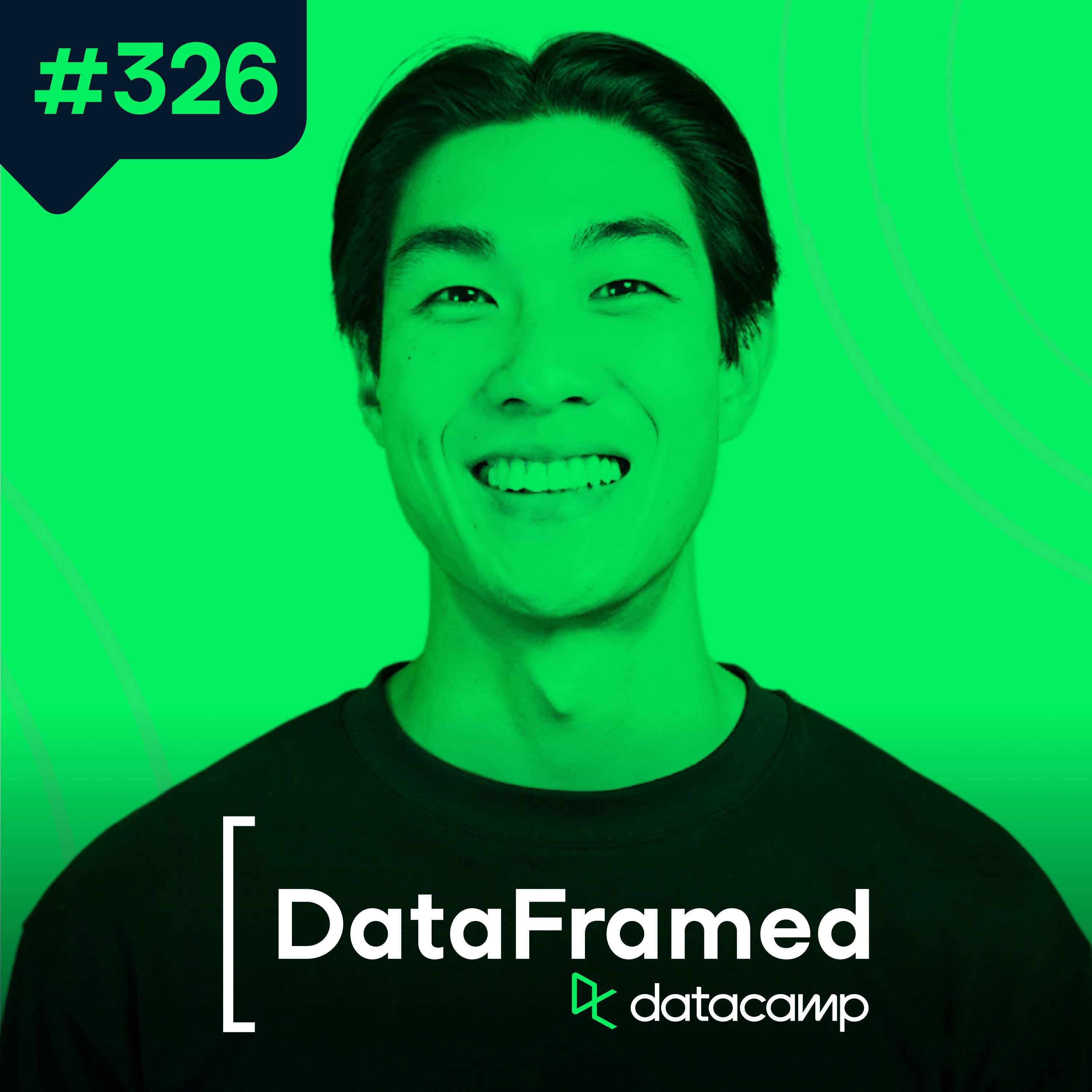
#326 Is the Data Analyst Role Dying Out? with Mo Chen, Data & Analytics Manager at NatWest Group
The role of data analysts is evolving, not disappearing. With generative AI transforming the industry, many wonder if their analytical skills will soon become obsolete. But how is the relationship between human expertise and AI tools really changing? While AI excels at coding, debugging, and automating repetitive tasks, it struggles with understanding complex business problems and domain-specific challenges. What skills should today's data professionals focus on to remain relevant? How can you leverage AI as a partner rather than viewing it as a replacement? The balance between technical expertise and business acumen has never been more critical in navigating this changing landscape.Mo Chen is a Data & Analytics Manager with over seven years of experience in financial and banking data. Currently at NatWest Group, Mo leads initiatives that enhance data management, automate reporting, and improve decision-making across the organization. After earning an MSc in Finance & Economics from the University of St Andrews, Mo launched a career in risk and credit portfolio management before transitioning into analytics. Blending economics, finance, and data engineering, Mo is skilled at turning large-scale financial data into actionable insight that supports efficiency and strategic planning. Beyond corporate life, Mo has become a passionate educator and community-builder. On YouTube, Mo hosts a fast-growing channel (185K+ subscribers, with millions of views) where he breaks down complex analytics concepts into bite-sized, actionable lessons.In the episode, Richie and Mo explore the evolving role of data analysts, the impact of AI on coding and debugging, the importance of domain knowledge for career switchers, effective communication strategies in data analysis, and much more.Links Mentioned in the Show:Mo’s Website - Build a Data Portfolio WebsiteMo’s YouTube ChannelConnect with MoGet Certified as a Data AnalystRelated Episode: Career Skills for Data Professionals with Wes Kao, Co-Founder of MavenRewatch RADAR AI New to DataCamp?Learn on the go using the DataCamp mobile appEmpower your business with world-class data and AI skills with DataCamp for business
#325 Using Data to Master the Cycles of Leadership with Carolyn Dewar, Global Practice Leader at McKinsey
Leadership in data-driven organizations requires a delicate balance of technical expertise and human understanding. As businesses navigate unprecedented uncertainty in global markets, geopolitics, and technological change, the role of data as a source of truth becomes increasingly vital. But how do you create a culture where data informs decisions at every level? What separates leaders who merely collect data from those who leverage it to drive bold, transformative action? For data professionals looking to advance their careers, the challenge extends beyond technical skills to understanding how data connects to broader business strategy and organizational purpose.Carolyn Dewar is the founder and global co-leader of McKinsey & Company’s CEO Practice, where she partners with CEOs, founders, boards, and senior executives to help them maximize their effectiveness and lead their organizations through critical moments, including hypergrowth, transformation, crises, and mergers. Drawing on her extensive research and experience, Carolyn works with leaders across all stages of the CEO journey to drive large-scale organizational change, set bold strategies, and shape company culture to align leadership teams, manage external stakeholders, and optimize executive time and operating models. She helps CEOs develop the mindsets and frameworks needed to succeed in their role, ensuring they deliver lasting impact and sustainable growth.A recognized thought leader, Carolyn is the co-author of CEO Excellence: The Six Mindsets That Distinguish the Best Leaders from the Rest (a New York Times bestseller) and A CEO for All Seasons: Mastering the Cycles of Leadership. She publishes the monthly Strategic CEO newsletter and has contributed over 30 articles to Harvard Business Review, The Conference Board, and McKinsey Quarterly. Carolyn is also a member of the McKinsey Global Institute Council, which advises on MGI’s research on global economic, business, and technology trends. With over 25 years of experience advising clients across industries, including financial services, technology, and consumer sectors, Carolyn is also a sought-after keynote speaker and panelist at global conferences.In the episode, Richie and Carolyn explore common mistakes for CEOs, the unique responsibilities of a CEO, the importance of data-driven decision-making, fostering a data-centric culture, aligning data and business strategies, and much more.Links Mentioned in the Show:CEO Excellence: The Six Mindsets That Distinguish the Best Leaders from the RestConnect with CarolynSkill Track: Artificial Intelligence (AI) LeadershipRelated Episode: From Panic to Profit, Via Data with Bill Canady, CEO at Arrowhead Engineered ProductsRewatch RADAR AI New to DataCamp?Learn on the go using the DataCamp mobile appEmpower your business with world-class data and AI skills with DataCamp for busines
#324 Using Behavioral Science to Hack Your Customers Minds with Richard Shotton, Founder at Astroten
Behavioral science is revolutionizing how businesses connect with customers and influence decisions. By understanding the psychological principles that drive human behavior, companies can create more effective marketing strategies and product experiences. But how can you apply these insights in your data-driven work? What simple changes could dramatically improve how your audience responds to your messaging? The difference between abstract and concrete language can quadruple memorability, and timing your communications around 'fresh start' moments can increase receptivity by over 50%. Whether you're designing user experiences or communicating insights, understanding these hidden patterns of human behavior could be your competitive advantage.Richard Shotton is the founder of Astroten, a consultancy that applies behavioral science to marketing, helping brands of all sizes solve business challenges with insights from psychology. As a keynote speaker, he is known for exploring consumer psychology, the impact of behavioral experiments, and how biases shape decision-making. He began his career in media planning over 20 years ago, working on accounts such as Coca-Cola, Lexus, Halifax, Peugeot, and comparethemarket. He has since held senior roles including Head of Insight at ZenithOptimedia and Head of Behavioral Science at Manning Gottlieb, while also conducting experiments featured in publications such as Marketing Week, The Drum, Campaign, Admap, and Mediatel. Richard is the author of two acclaimed books: The Choice Factory (2018), which was named Best Sales & Marketing Book at the 2019 Business Book Awards and voted #1 in the BBH World Cup of Advertising Books; and The Illusion of Choice (2023), which highlights the most important psychological biases business leaders can harness for competitive advantage.In the episode, the two Richards explore the power of behavioral science in marketing, the impact of visual language, the role of social proof, the importance of simplicity in communication, how biases influence decision-making, the fresh start effect, the ethical considerations of using behavioral insights, and much more.Links Mentioned in the Show:Richard’s Book—Hacking the Human Mind: The behavioral science secrets behind 17 of the world's best brandsAstrotenBlog: To create strong memories, use concrete languageConnect with RichardCourse: Marketing Analytics for BusinessRelated Episode: Career Skills for Data Professionals with Wes Kao, Co-Founder of MavenRewatch RADAR AI New to DataCamp?Learn on the go using the DataCamp mobile appEmpower your business with world-class data and AI skills with DataCamp for business
#323 The Evolution of Data Literacy & AI Literacy with Jordan Morrow, Godfather of Data Literacy
Data literacy and AI literacy are becoming essential skills in today's digital landscape. As organizations collect more data and deploy AI solutions, the ability to understand, interpret, and make decisions with these tools is increasingly valuable. But how do we develop these skills effectively across an organization? What does successful implementation of data and AI literacy programs look like in practice? The journey to becoming data literate doesn't require becoming a data scientist—it's about building confidence and comfort with data in your specific role. From change management strategies to measuring real value, understanding how to foster these skills can transform both individual careers and organizational outcomes.Jordan Morrow is known as the "Godfather of Data Literacy," having helped pioneer and invent the entire field. He is also the founder and CEO of Bodhi Data and currently is the Senior Vice President of Data & AI Transformation for AgileOne, helping to utilize data and AI in the total talent management space.Jordan is a global trailblazer in the world of data literacy and enjoys his time traveling the world speaking and/or helping companies. He served as the Chair of the Advisory Board for The Data Literacy Project, has spoken at numerous conferences around the world, and is an active voice in the data and analytics community. He has also helped companies and organizations around the world, including the United Nations, build and/or understand data literacy.In the episode, Richie and Jordan explore the progress and challenges in data literacy, the integration of AI literacy, the importance of storytelling and decision-making in data training, how organizations can foster a data-driven culture, practical tips for using AI in meetings and personal productivity, and much more.Links Mentioned in the Show:Pre-order Jordan’s upcoming book - Data and AI Skills: Gain the Confidence You Need to SucceedJordan’s BooksConnect with JordanDataCamp Webinar Featuring the Godparents of Data Literacy - Jordan Morrow and Valerie LoganRelated Episode: Scaling Responsible AI Literacy with Uthman Ali, Global Head of Responsible AI at BPRewatch RADAR AI New to DataCamp?Learn on the go using the DataCamp mobile appEmpower your business with world-class data and AI skills with DataCamp for business

#322 How Next-Gen Data Analytics Powers Your AI Strategy with Christina Stathopoulos, Founder at Dare to Data
The relationship between AI assistants and data professionals is evolving rapidly, creating both opportunities and challenges. These tools can supercharge workflows by generating SQL, assisting with exploratory analysis, and connecting directly to databases—but they're far from perfect. How do you maintain the right balance between leveraging AI capabilities and preserving your fundamental skills? As data teams face mounting pressure to deliver AI-ready data and demonstrate business value, what strategies can ensure your work remains trustworthy? With issues ranging from biased algorithms to poor data quality potentially leading to serious risks, how can organizations implement responsible AI practices while still capitalizing on the positive applications of this technology?Christina Stathopoulos is an international data specialist who regularly serves as an executive advisor, consultant, educator, and public speaker. With expertise in analytics, data strategy, and data visualization, she has built a distinguished career in technology, including roles at Fortune 500 companies. Most recently, she spent over five years at Google and Waze, leading data strategy and driving cross-team projects. Her professional journey has spanned both the United States and Spain, where she has combined her passion for data, technology, and education to make data more accessible and impactful for all. Christina also plays a unique role as a “data translator,” helping to bridge the gap between business and technical teams to unlock the full value of data assets. She is the founder of Dare to Data, a consultancy created to formalize and structure her work with some of the world’s leading companies, supporting and empowering them in their data and AI journeys. Current and past clients include IBM, PepsiCo, PUMA, Shell, Whirlpool, Nitto, and Amazon Web Services.In the episode, Richie and Christina explore the role of AI agents in data analysis, the evolving workflow with AI assistance, the importance of maintaining foundational skills, the integration of AI in data strategy, the significance of trustworthy AI, and much more.Links Mentioned in the Show:Dare to DataJulius AIConnect with ChristinaCourse - Introduction to SQL with AIRelated Episode: The Data to AI Journey with Gerrit Kazmaier, VP & GM of Data Analytics at Google CloudRewatch RADAR AI New to DataCamp?Learn on the go using the DataCamp mobile appEmpower your business with world-class data and AI skills with DataCamp for business
#321 Developing Financial AI Products at Experian with Vijay Mehta, EVP of Global Solutions & Analytics at Experian
Financial institutions are racing to harness the power of AI, but the path to implementation is filled with challenges. From feature engineering to model deployment, the technical complexities of AI adoption in finance require careful navigation of both technological and regulatory landscapes. How do you build AI systems that satisfy strict compliance requirements while still delivering business value? What skills should teams prioritize as AI tools become more accessible through natural language interfaces? With the pressure to reduce model development time from months to days, how can organizations maintain proper governance while still moving at the speed modern business demands?Vijay is a seasoned analytics, product, and technology executive. As EVP of Global Solutions & Analytics at Experian, he runs the department that creates Experian's Ascend financial AI platform. Promoted multiple times in eight years, Vijay now leads a team of more than 70 at Experian. He is one of the youngest execs at Experian, believing strongly in understanding and accepting risk. He has built and run data, engineering, and IT teams, and created market-leading products.In the episode, Richie and Vijay explore the impact of generative AI on the finance industry, the development of Experian's Ascend platform, the challenges of fraud prevention, education and compliance in AI deployment, and much more.Links Mentioned in the Show:ExperianExperian AscendConnect with VijayCourse: Implementing AI Solutions in BusinessRelated Episode: How Generative AI is Transforming Finance with Andrew Reiskind, CDO at MastercardRewatch RADAR AI New to DataCamp?Learn on the go using the DataCamp mobile appEmpower your business with world-class data and AI skills with DataCamp for business
#320 The Next Industrial Revolution is Industrial AI | Barbara Humpton, CEO at Siemens USA and Olympia Brikis, Director of Industrial AI at Siemens USA
The manufacturing floor is undergoing a technological revolution with industrial AI at its center. From predictive maintenance to quality control, AI is transforming how products are designed, produced, and maintained. But implementing these technologies isn't just about installing sensors and software—it's about empowering your workforce to embrace new tools and processes. How do you overcome AI hesitancy among experienced workers? What skills should your team develop to make the most of these new capabilities? And with limited resources, how do you prioritize which AI applications will deliver the greatest impact for your specific manufacturing challenges? The answers might be simpler than you think.Barbara Humpton is President and CEO of Siemens Corporation, responsible for strategy and engagement in Siemens’ largest market. Under her leadership, Siemens USA operates across all 50 states and Puerto Rico with 45,000 employees and generated $21.1 billion in revenue in fiscal year 2024. She champions the role of technology in expanding what’s humanly possible and is a strong advocate for workforce development, mentorship, and building sustainable work-life integration. Previously, she was President and CEO of Siemens Government Technologies, leading delivery of Siemens’ products and services to U.S. federal agencies. Before joining Siemens in 2011, she held senior roles at Booz Allen Hamilton and Lockheed Martin, where she oversaw programs in national security, biometrics, border protection, and critical infrastructure, including the FBI’s Next Generation Identification and TSA’s Transportation Workers’ Identification Credential.Olympia Brikis is a seasoned technology and business leader with over a decade of experience in AI research. As the Technology and Engineering Director for Siemens' Industrial AI Research in the U.S., she leads AI strategy, technology roadmapping, and R&D for next-gen AI products. Olympia has a strong track record in developing Generative AI products that integrate industrial and digital ecosystems, driving real-world business impact. She is a recognized thought leader with numerous patents and peer-reviewed publications in AI for manufacturing, predictive analytics, and digital twins. Olympia actively engages with executives, policymakers, and AI practitioners on AI's role in enterprise strategy and workforce transformation. With a background in Computer Science from LMU Munich and an MBA from Wharton, she bridges AI research, product strategy, and enterprise adoption, mentoring the next generation of AI leaders.In the episode, Richie, Barbara, and Olympia explore the transformative power of AI in manufacturing, from predictive maintenance to digital twins, the role of industrial AI in enhancing productivity, the importance of empowering workers with new technology, real-world applications, overcoming AI hesitancy, and much more.Links Mentioned in the Show:Siemens Industrial AI SuiteConnect with Barbara and OlympiaCourse: Implementing AI Solutions in BusinessRelated Episode: Master Your Inner Game to Avoid Burnout with Klaus Kleinfeld, Former CEO at Alcoa and SiemensRewatch RADAR AI where Olympia was a speakerNew to DataCamp?Learn on the go using the DataCamp mobile appEmpower your business with world-class data and AI skills with DataCamp for business

#319 Building & Managing Human+Agent Hybrid Teams with Karen Ng, Head of Product at HubSpot
The line between human work and AI capabilities is blurring in today's business environment. AI agents are now handling autonomous tasks across customer support, data management, and sales prospecting with increasing sophistication. But how do you effectively integrate these agents into your existing workflows? What's the right approach to training and evaluating AI team members? With data quality being the foundation of successful AI implementation, how can you ensure your systems have the unified context they need while maintaining proper governance and privacy controls?Karen Ng is the Head of Product at HubSpot, where she leads product strategy, design, and partnerships with the mission of helping millions of organizations grow better. Since joining in 2022, she has driven innovation across Smart CRM, Operations Hub, Breeze Intelligence, and the developer ecosystem, with a focus on unifying structured and unstructured data to make AI truly useful for businesses. Known for leading with clarity and “AI speed,” she pushes HubSpot to stay ahead of disruption and empower customers to thrive.Previously, Karen held senior product leadership roles at Common Room, Google, and Microsoft. At Common Room, she built the product and data science teams from the ground up, while at Google she directed Android’s product frameworks like Jetpack and Jetpack Compose. During more than a decade at Microsoft, she helped shape the company’s .NET strategy and launched the Roslyn compiler platform. Recognized as a Product 50 Winner and recipient of the PM Award for Technical Strategist, she also advises and invests in high-growth technology companies.In the episode, Richie and Karen explore the evolving role of AI agents in sales, marketing, and support, the distinction between chatbots, co-pilots, and autonomous agents, the importance of data quality and context, the concept of hybrid teams, the future of AI-driven business processes, and much more.Links Mentioned in the Show:Hubspot Breeze AgentsConnect with KarenWebinar: Pricing & Monetizing Your AI Products with Sam Lee, VP of Pricing Strategy & Product Operations at HubSpotRelated Episode: Enterprise AI Agents with Jun Qian, VP of Generative AI Services at OracleRewatch RADAR AI New to DataCamp?Learn on the go using the DataCamp mobile appEmpower your business with world-class data and AI skills with DataCamp for business
#318 Master Your Inner Game to Avoid Burnout with Klaus Kleinfeld, Former CEO at Alcoa and Siemens
The modern workplace often glorifies constant productivity and hustle culture, but at what cost? More professionals are burning out earlier in their careers, while elite athletes are extending their peak performance years. What can business leaders learn from high-performance sports about energy management and sustainable success? How do you distinguish between your 'inner game'—managing your energy and purpose—and your 'outer game' of business skills and execution? Could simple techniques like compartmentalization, breathing exercises, and finding deeper purpose transform your professional effectiveness? What if the key to avoiding burnout isn't working less, but working differently?Dr. Klaus Kleinfeld is an international executive, investor, and entrepreneur. He is the Founder and CEO of K2Elevation, which develops and invests in technology and biotech ventures across Germany, Austria, and the U.S. He serves as Chairman of KONUX and FERNRIDE, sits on the supervisory boards of GreyOrange, Fero Labs, and NEOM, and is an Advisory Partner at EMH Partners. Previously, he was the first CEO of NEOM, where he remains on the board and advises the Kingdom of Saudi Arabia on economic development. Earlier in his career, Dr. Kleinfeld was Chairman and CEO of Alcoa/Arconic, leading the company through a major transformation and successful split, and spent two decades at Siemens, ultimately becoming CEO of Siemens AG. He has also served on numerous global boards and advisory councils, including the Brookings Institution, Council on Foreign Relations, and World Economic Forum, and advised U.S. Presidents and international leaders. Born in Bremen, Germany, he holds an MBA from the University of Göttingen, a PhD from the University of Würzburg, and dual U.S.-German citizenship.In the episode, Richie and Klaus explore the causes of workplace burnout, the parallels between high-performing workers and athletes, the importance of managing energy and purpose, practical techniques for emotional and mental control, the role of downtime in productivity, and strategies for creating a supportive work culture, and much more.Links Mentioned in the Show:Klaus’ Book - Leading to ThriveConnect with KlausCourse: Understanding Prompt EngineeringRelated Episode: Becoming Remarkable with Guy Kawasaki, Author and Chief Evangelist at CanvaRewatch RADAR AI New to DataCamp?Learn on the go using the DataCamp mobile appEmpower your business with world-class data and AI skills with DataCamp for business

Industry Roundup #6: GPT-5 Launch & Scaling Limits, Meta’s Chatbot Guidelines Leak, and AI Safety Concerns
Welcome to DataFramed Industry Roundups! In this series of episodes, we sit down to discuss the latest and greatest in data & AI. In this episode, with special guest, DataCamp Editor Alex, we touch upon the launch of GPT-5, scaling limits in AI, Meta’s leaked chatbot guidelines, trust in AI tools from the Stack Overflow survey, why OpenAI and Anthropic are giving models away to the US government, AI safety concerns around reasoning, and much more.Links Mentioned in the Show:GPT-5 Is an Evolution, Not a RevolutionMeta’s AI rules have let bots hold ‘sensual’ chats with kids, offer false medical infoAI | 2025 Stack Overflow Developer SurveyOpenAI, Anthropic, both giving AI to federal workers for $1/agencyNew to DataCamp?Learn on the go using the DataCamp mobile appEmpower your business with world-class data and AI skills with DataCamp for business
#317 How to Reengineer Your Business Processes with Nelson Repenning, Distinguished Professor at MIT Sloan & Don Kieffer, Senior Lecturer in Operations Management at MIT Sloan
Every day, knowledge workers face the challenge of managing competing priorities and constant interruptions. When systems are managing us rather than us managing them, productivity suffers and morale plummets. But what if the key to improvement isn't complex reorganization but rather understanding how work actually flows through your team or organization? How can visualizing your workflow and regulating for flow transform productivity? What small, incremental changes might lead to dramatic improvements in both output and job satisfaction?Nelson P. Repenning is the Faculty Director of the MIT Leadership Center and the School of Management Distinguished Professor of System Dynamics and Organization Studies at the MIT Sloan School of Management. His early work focused on understanding the inability of organizations to leverage well-established tools and practices. He has worked extensively with organizations trying to develop new capabilities in both manufacturing and new product development. Nelson has also studied the failure to use the safety practices that often lead to industrial accidents and has helped investigate several major incidents. This line of research has been recognized with several awards, including best paper recognition from both the California Management Review and the Journal of Product Innovation Management. Building on his earlier work, Nelson now focuses on developing the theory and practice of Dynamic Work Design—a new approach to designing work that is both effective and engaging—and Dynamic Management Systems, a method for ensuring that day-to-day work is tightly linked to the strategic objectives of the firm. His book (co-authored with Don Kieffer) There Has Got to Be a Better Way describing Dynamic Work Design will be published by Public Affairs in 2025. He is also a partner at ShiftGear Work Design and serves as its chief social scientist. In 2003, Nelson received the International System Dynamics Society’s Jay Wright Forrester Award, which recognizes the best work in the field in the previous five years. In 2011 he received the Jamieson Prize for Excellence in Teaching. He was recently recognized by Poets and Quants as one of the country's top instructors in executive education.Donald Kieffer is a Senior Lecturer in Operations Management at MIT Sloan.He is a career operations executive and co-creator of Dynamic Work Design. Kieffer started working running equipment in factories at age 17. He was VP of operational excellence at Harley-Davidson where he worked for 15 years. Since 2007, he has been advising executive teams around the globe in a range of areas including strategy deployment, product development, and operational improvement. Don has worked with industries as diverse as oil/gas, medical, biomedical, and banking. His guidance was instrumental in transforming both the production and technical development areas of a Cambridge-based genomic sequencing organization, now an industry leader, using the techniques of Dynamic Work Design. He is founder of ShiftGear Work Design, LLC and also teaches Operations Management at AVT in Copenhagen.In the episode, Richie, Nelson and Don explore the challenges of daily firefighting at work, the principles of dynamic work design, how to improve productivity by addressing real problems, the role of AI in business, the importance of setting clear priorities, and much more.Links Mentioned in the Show:Nelson & Don’s Book - There's Got to Be a Better Way: How to Deliver Results and Get Rid of the Stuff That Gets in the Way of Real WorkConnect with Nelson & DonAI Business FundamentalsRelated Episode: From Panic to Profit, Via Data with Bill Canady, CEO at Arrowhead Engineered ProductsRewatch RADAR AI New to DataCamp?Learn on the go using the DataCamp mobile appEmpower your business with world-class data and AI skills with DataCamp for business
#316 Enterprise AI Agents with Jun Qian, VP of Generative AI Services at Oracle
Combining LLMs with enterprise knowledge bases is creating powerful new agents that can transform business operations. These systems are dramatically improving on traditional chatbots by understanding context, following conversations naturally, and accessing up-to-date information. But how do you effectively manage the knowledge that powers these agents? What governance structures need to be in place before deployment? And as we look toward a future with physical AI and robotics, what fundamental computing challenges must we solve to ensure these technologies enhance rather than complicate our lives?Jun Qian is an accomplished technology leader with extensive experience in artificial intelligence and machine learning. Currently serving as Vice President of Generative AI Services at Oracle since May 2020, Jun founded and leads the Engineering and Science group, focusing on the creation and enhancement of Generative AI services and AI Agents. Previously held roles include Vice President of AI Science and Development at Oracle, Head of AI and Machine Learning at Sift, and Principal Group Engineering Manager at Microsoft, where Jun co-founded Microsoft Power Virtual Agents. Jun's career also includes significant contributions as the Founding Manager of Amazon Machine Learning at AWS and as a Principal Investigator at Verizon.In the episode, Richie and Jun explore the evolution of AI agents, the unique features of ChatGPT, the challenges and advancements in chatbot technology, the importance of data management and security in AI, and the future of AI in computing and robotics, and much more.Links Mentioned in the Show:OracleConnect with JunCourse: Introduction to AI AgentsJun at DataCamp RADARRelated Episode: A Framework for GenAI App and Agent Development with Jerry Liu, CEO at LlamaIndexRewatch RADAR AI New to DataCamp?Learn on the go using the DataCamp mobile appEmpower your business with world-class data and AI skills with DataCamp for business
#315 DataFramed x Alter Everything: Future-Proofing Your Career in AI and Data Analytics | Richie & Megan Bowers
The relationship between AI and data professionals is evolving rapidly, creating both opportunities and challenges. As companies embrace AI-first strategies and experiment with AI agents, the skills needed to thrive in data roles are fundamentally changing. Is coding knowledge still essential when AI can generate code for you? How important is domain expertise when automated tools can handle technical tasks? With data engineering and analytics engineering gaining prominence, the focus is shifting toward ensuring data quality and building reliable pipelines. But where does the human fit in this increasingly automated landscape, and how can you position yourself to thrive amid these transformations?Megan Bowers is Senior Content Manager, Digital Customer Success at Alteryx, where she develops resources for the Maveryx Community. She writes technical blogs and hosts the Alter Everything podcast, spotlighting best practices from data professionals across the industry.Before joining Alteryx, Megan worked as a data analyst at Stanley Black & Decker, where she led ETL and dashboarding projects and trained teams on Alteryx and Power BI. Her transition into data began after earning a degree in Industrial Engineering and completing a data science bootcamp. Today, she focuses on creating accessible, high-impact content that helps data practitioners grow. Her favorite topics include switching career paths after college, building a professional brand on LinkedIn, writing technical blogs people actually want to read, and best practices in Alteryx, data visualization, and data storytelling.Presented by Alteryx, Alter Everything serves as a podcast dedicated to the culture of data science and analytics, showcasing insights from industry specialists. Covering a range of subjects from the use of machine learning to various analytics career trajectories, and all that lies between, Alter Everything stands as a celebration of the critical role of data literacy in a data-driven world.In the episode, Richie and Megan explore the impact of AI on job functions, the rise of AI agents in business, and the importance of domain knowledge and process analytics in data roles. They also discuss strategies for staying updated in the fast-paced world of AI and data science, and much more.Links Mentioned in the Show:Alter EverythingConnect with MeganSkill Track: Alteryx FundamentalsRelated Episode: Scaling Enterprise Analytics with Libby Duane Adams, Chief Advocacy Officer and Co-Founder of AlteryxRewatch RADAR AI New to DataCamp?Learn on the go using the DataCamp mobile appEmpower your business with world-class data and AI skills with DataCamp for business
#314 How to Have a Career in Data Science in 2025 with Dawn Choo, Data Careers Influencer, Co-Founder at Interview Master
Data science continues to evolve in the age of AI, but is it still the 'sexiest job of the 21st century'? While generative AI has transformed the landscape, it hasn't replaced data scientists—instead, it's created more demand for their skills. Data professionals now incorporate AI into their workflows to boost efficiency, analyze data faster, and communicate insights more effectively. But with these technological advances come questions: How should you adapt your skills to stay relevant? What's the right balance between traditional data science techniques and new AI capabilities? And as roles like analytics engineer and machine learning engineer emerge, how do you position yourself for success in this rapidly changing field?Dawn Choo is the Co-Founder of Interview Master, a platform designed to streamline technical interview preparation. With a foundation in data science, financial analysis, and product strategy, she brings a cross-disciplinary lens to building data-driven tools that improve hiring outcomes. Her career spans roles at leading tech firms, including ClassDojo, Patreon, and Instagram, where she delivered insights to support product development and user engagement.Earlier, Dawn held analytical and engineering positions at Amazon and Bank of America, focusing on business intelligence, financial modeling, and risk analysis. She began her career at Facebook as a marketing analyst and continues to be a visible figure in the data science community—offering practical guidance to job seekers navigating technical interviews and career transitions.In the episode, Richie and Dawn explore the evolving role of data scientists in the age of AI, the impact of generative AI on workflows, the importance of foundational skills, and the nuances of the hiring process in data science. They also discuss the integration of AI in products and the future of personalized AI models, and much more.Links Mentioned in the Show:Interview MasterConnect with DawnDawn’s Newsletter: Ask Data DawnGet Certified: AI Engineer for Data Scientists Associate CertificationRelated Episode: How To Get Hired As A Data Or AI Engineer with Deepak Goyal, CEO & Founder at Azurelib AcademyRewatch RADAR AI New to DataCamp?Learn on the go using the DataCamp mobile appEmpower your business with world-class data and AI skills with DataCamp for business
#313 Developing Better Predictive Models with Graph Transformers with Jure Leskovec, Pioneer of Graph Transformers, Professor at Stanford
The structured data that powers business decisions is more complex than the sequences processed by traditional AI models. Enterprise databases with their interconnected tables of customers, products, and transactions form intricate graphs that contain valuable predictive signals. But how can we effectively extract insights from these complex relationships without extensive manual feature engineering?Graph transformers are revolutionizing this space by treating databases as networks and learning directly from raw data. What if you could build models in hours instead of months while achieving better accuracy? How might this technology change the role of data scientists, allowing them to focus on business impact rather than data preparation? Could this be the missing piece that brings the AI revolution to predictive modeling?Jure Leskovec is a Professor of Computer Science at Stanford University, where he is affiliated with the Stanford AI Lab, the Machine Learning Group, and the Center for Research on Foundation Models.Previously, he served as Chief Scientist at Pinterest and held a research role at the Chan Zuckerberg Biohub. He is also a co-founder of Kumo.AI, a machine learning startup. Leskovec has contributed significantly to the development of Graph Neural Networks and co-authored PyG, a widely-used library in the field. Research from his lab has supported public health efforts during the COVID-19 pandemic and informed product development at companies including Facebook, Pinterest, Uber, YouTube, and Amazon.His work has received several recognitions, including the Microsoft Research Faculty Fellowship (2011), the Okawa Research Award (2012), the Alfred P. Sloan Fellowship (2012), the Lagrange Prize (2015), and the ICDM Research Contributions Award (2019). His research spans social networks, machine learning, data mining, and computational biomedicine, with a focus on drug discovery. He has received 12 best paper awards and five 10-year Test of Time awards at leading academic conferences.In the episode, Richie and Jure explore the need for a foundation model for enterprise data, the limitations of current AI models in predictive tasks, the potential of graph transformers for business data, and the transformative impact of relational foundation models on machine learning workflows, and much more.Links Mentioned in the Show:Jure’s PublicationsKumo AIConnect with JureCourse - Transformer Models with PyTorchRelated Episode: High Performance Generative AI Applications with Ram Sriharsha, CTO at PineconeRewatch RADAR AI New to DataCamp?Learn on the go using the DataCamp mobile appEmpower your business with world-class data and AI skills with DataCamp for business
#312 Can we Create an AI Doctor? with Aldo Faisal, Professor in AI & Neuroscience at Imperial College
Healthcare AI is rapidly evolving beyond simple diagnostic tools to comprehensive systems that can analyze and predict patient outcomes. With the rise of multimodal AI models that can process everything from medical images to patient records and genetic information, we're entering an era where AI could fundamentally transform how healthcare decisions are made. But how do we ensure these systems maintain patient privacy while still leveraging vast amounts of medical data? What are the technical challenges in building AI that can reason across different types of medical information? And how do we balance the promise of AI-assisted healthcare with the critical role of human medical professionals?Professor Aldo Faisal is Chair in AI & Neuroscience at Imperial College London, with joint appointments in Bioengineering and Computing, and also holds the Chair in Digital Health at the University of Bayreuth. He is the Founding Director of the UKRI Centre for Doctoral Training in AI for Healthcare and leads the Brain & Behaviour Lab and Behaviour Analytics Lab at Imperial’s Data Science Institute. His research integrates machine learning, neuroscience, and human behaviour to develop AI technologies for healthcare. He is among the few engineers globally leading their own clinical trials, with work focused on digital biomarkers and AI-based medical interventions. Aldo serves as Associate Editor for Nature Scientific Data and PLOS Computational Biology, and has chaired major conferences like KDD, NIPS, and IEEE BSN. His work has earned multiple awards, including the $50,000 Toyota Mobility Foundation Prize, and is regularly featured in global media outlets.In the episode, Richie and Aldo explore the advancements in AI for healthcare, including AI's role in diagnostics and operational improvements, the ambitious Nightingale AI project, challenges in handling diverse medical data, privacy concerns, and the future of AI-assisted medical decision-making, and much more.Links Mentioned in the Show:Aldo’s PublicationsConnect with AldoProject: What is Your Heart Rate Telling You?Related Episode: Using Data to Optimize Costs in Healthcare with Travis Dalton and Jocelyn Jiang President/CEO & VP of Data & Decision Science at MultiPlanRewatch RADAR AI New to DataCamp?Learn on the go using the DataCamp mobile appEmpower your business with world-class data and AI skills with DataCamp for business
#311 The Human Element of AI-Driven Transformation with Steve Lucas, CEO at Boomi
The relationship between humans and AI in the workplace is rapidly evolving beyond simple automation. As companies deploy thousands of AI agents to handle everything from expense approvals to customer success management, a new paradigm is emerging—one where humans become orchestrators rather than operators. But how do you determine which processes should be handled by AI and which require human judgment? What governance structures need to be in place before deploying AI at scale? With the potential to automate up to 80% of business processes, organizations must carefully consider not just the technology, but the human element of AI-driven transformation.Steve Lucas is the Chairman and CEO of Boomi, marking his third tenure as CEO. With nearly 30 years of enterprise software leadership, he has held senior roles at leading cloud organizations including Marketo, iCIMS, Adobe, SAP, Salesforce, and BusinessObjects. He led Marketo through its multi-billion-dollar acquisition by Adobe and drove strategic growth at iCIMS, delivering significant investments and transformation. A proven leader in scaling software companies, Steve is also the author of the national bestseller Digital Impact and holds a business degree from the University of Colorado.In the episode, Richie and Steve explore the importance of choosing the right tech stack for your business, the challenges of managing complex systems, the role of AI in transforming business processes, and the need for effective AI governance. They also discuss the future of AI-driven enterprises and much more.Links Mentioned in the Show:BoomiSteve’s Book - Digital Impact: The Human Element of AI-Driven TransformationWhat is the OSI Model?Connect with SteveSkill Track: AI Business FundamentalsRelated Episode: New Models for Digital Transformation with Alison McCauley Chief Advocacy Officer at Think with AI & Founder of Unblocked FutureRewatch RADAR AI New to DataCamp?Learn on the go using the DataCamp mobile appEmpower your business with world-class data and AI skills with DataCamp for business
#310 The State of BI in 2025 with Howard Dresner, Godfather of BI
Business intelligence has been transforming organizations for decades, yet many companies still struggle with widespread adoption. With less than 40% of employees in most organizations having access to BI tools, there's a significant 'information underclass' making decisions without data-driven insights. How can businesses bridge this gap and achieve true information democracy? While new technologies like generative AI and semantic layers offer promising solutions, the fundamentals of data quality and governance remain critical. What balance should organizations strike between investing in innovative tools and strengthening their data infrastructure? How can you ensure your business becomes a 'data athlete' capable of making hyper-decisive moves in an uncertain economic landscape?Howard Dresner is founder and Chief Research Officer at Dresner Advisory Services and a leading voice in Business Intelligence (BI), credited with coining the term “Business Intelligence” in 1989. He spent 13 years at Gartner as lead BI analyst, shaping its research agenda and earning recognition as Analyst of the Year, Distinguished Analyst, and Gartner Fellow. He also led Gartner’s BI conferences in Europe and North America. Before founding Dresner Advisory in 2007, Howard was Chief Strategy Officer at Hyperion Solutions, where he drove strategy and thought leadership, helping position Hyperion as a leader in performance management prior to its acquisition by Oracle. Howard has written two books, The Performance Management Revolution – Business Results through Insight and Action, and Profiles in Performance – Business Intelligence Journeys and the Roadmap for Change - both published by John Wiley & Sons.In the episode, Richie and Howard explore the surprising low penetration of business intelligence in organizations, the importance of data governance and infrastructure, the evolving role of AI in BI, and the strategic initiatives driving BI usage, and much more.Links Mentioned in the Show:Dresner Advisory ServicesHoward’s Book - Profiles in Performance: Business Intelligence Journeys and the Roadmap for ChangeConnect with HowardSkill Track: Power BI FundamentalsRelated Episode: The Next Generation of Business Intelligence with Colin Zima, CEO at OmniRewatch RADAR AI New to DataCamp?Learn on the go using the DataCamp mobile appEmpower your business with world-class data and AI skills with DataCamp for business
#309 What Science Fiction Can Tell Us About the Future of AI with Ken Liu, Sci-Fi Author
Technology and human consciousness are converging in ways that challenge our fundamental understanding of creativity and connection. As AI systems become increasingly sophisticated at mimicking human thought patterns, we're entering uncharted territory where machines don't just assist creative work—they actively participate in it. But what does this mean for the future of human creativity and our relationship with technology? How do we maintain meaningful human connections in a world where emotional labor is increasingly commoditized? As we navigate this rapidly evolving landscape, the question isn't just whether machines can think, but how their thinking will transform our own.Ken Liu is an American author of speculative fiction. A winner of the Nebula, Hugo, and World Fantasy awards, he wrote the Dandelion Dynasty, a silkpunk epic fantasy series, as well as short story collections The Paper Menagerie and Other Stories and The Hidden Girl and Other Stories. His latest book is All that We See or Seem, a techno-thriller starring an AI-whispering hacker who saves the world. He also translated Cixin Liu’s seminal book series, the Three-Body Problem. He’s often involved in media adaptations of his work. Recent projects include “The Regular,” under development as a TV series; “Good Hunting,” adapted as an episode in season one of Netflix’s breakout adult animated series Love, Death + Robots; and AMC’s Pantheon, with Craig Silverstein as executive producer, adapted from an interconnected series of Liu’s short stories. Prior to becoming a full-time writer, Liu worked as a software engineer, corporate lawyer, and litigation consultant. Liu frequently speaks on a variety of topics, including futurism, machine-augmented creativity, history of technology, bookmaking, and the mathematics of origami.In the episode, Adel and Ken explore the intersection of technology and storytelling, how sci-fi can inform AI's trajectory, the role of AI in reshaping human relationships and creativity, how AI is changing art, and much more.Links Mentioned in the Show:Ken’s BooksKen on Substack, Ken on XSkill Track: AI FundamentalsRelated Episode: What History Tells Us About the Future of AI with Verity Harding, Author of AI Needs YouRewatch RADAR AI New to DataCamp?Learn on the go using the DataCamp mobile appEmpower your business with world-class data and AI skills with DataCamp for business

Industry Roundup #5: AI Agents Hype vs. Reality, Meta’s $15B Stake in Scale AI, and the First Fully AI-Generated NBA Ad
Welcome to DataFramed Industry Roundups! In this series of episodes, we sit down to discuss the latest and greatest in data & AI. In this episode, with special guest, DataCamp COO Martijn, we touch upon the hype and reality of AI agents in business, the McKinsey vs. Ethan Mollick debate on simple vs. complex agents, Meta's $15B stake in Scale AI and what it means for data and talent, Apple’s rumored $20B bid for Perplexity amid AI struggles, EU’s push to treat AI skills like reading and math, the first fully AI-generated NBA ad and what it means for creative industries, a new benchmark for deep research tools, and much more.Links Mentioned in the Show:Meta bought Scale AIApple rumoured to buy trying to acquire Perplexity for $20BnMcKinsey's Seizing the Agentic AI Advantage reportThe first fully AI-generated NBA AdEU Generative AI Outlook reportMary Meeker's Trend in AI reportDeep research benchmarkRewatch RADAR AI New to DataCamp?Learn on the go using the DataCamp mobile appEmpower your business with world-class data and AI skills with DataCamp for business

#308 A Framework for GenAI App and Agent Development with Jerry Liu, CEO at LlamaIndex
The enterprise adoption of AI agents is accelerating, but significant challenges remain in making them truly reliable and effective. While coding assistants and customer service agents are already delivering value, more complex document-based workflows require sophisticated architectures and data processing capabilities. How do you design agent systems that can handle the complexity of enterprise documents with their tables, charts, and unstructured information? What's the right balance between general reasoning capabilities and constrained architectures for specific business tasks? Should you centralize your agent infrastructure or purchase vertical solutions for each department? The answers lie in understanding the fundamental trade-offs between flexibility, reliability, and the specific needs of your organization.Jerry Liu is the CEO and Co-founder at LlamaIndex, the AI agents platform for automating document workflows. Previously, he led the ML monitoring team at Robust Intelligence, did self-driving AI research at Uber ATG, and worked on recommendation systems at Quora.In the episode, Richie and Jerry explore the readiness of AI agents for enterprise use, the challenges developers face in building these agents, the importance of document processing and data structuring, the evolving landscape of AI agent frameworks like LlamaIndex, and much more.Links Mentioned in the Show:LlamaIndexLlamaIndex Production Ready Framework For LLM AgentsTutorial: Model Context Protocol (MCP)Connect with JerryCourse: Retrieval Augmented Generation (RAG) with LangChainRelated Episode: RAG 2.0 and The New Era of RAG Agents with Douwe Kiela, CEO at Contextual AI & Adjunct Professor at Stanford UniversityRewatch RADAR AI New to DataCamp?Learn on the go using the DataCamp mobile appEmpower your business with world-class data and AI skills with DataCamp for business

#307 Human Guardrails in Generative AI with Wendy Gonzalez & Duncan Curtis, CEO & SVP of Gen AI at Sama
The line between generic AI capabilities and truly transformative business applications often comes down to one thing: your data. While foundation models provide impressive general intelligence, they lack the specialized knowledge needed for domain-specific tasks that drive real business value. But how do you effectively bridge this gap? What's the difference between simply fine-tuning models versus using techniques like retrieval-augmented generation? And with constantly evolving models and technologies, how do you build systems that remain adaptable while still delivering consistent results? Whether you're in retail, healthcare, or transportation, understanding how to properly enrich, annotate, and leverage your proprietary data could be the difference between an AI project that fails and one that fundamentally transforms your business.Wendy Gonzalez is the CEO — and former COO — of Sama, a company leading the way in ethical AI by delivering accurate, human-annotated data while advancing economic opportunity in underserved communities. She joined Sama in 2015 and has been central to scaling both its global operations and its mission-driven business model, which has helped over 65,000 people lift themselves out of poverty through dignified digital work. With over 20 years of experience in the tech and data space, Wendy’s held leadership roles at EY, Capgemini, and Cycle30, where she built and managed high-performing teams across complex, global environments. Her leadership style blends operational excellence with deep purpose — ensuring that innovation doesn’t come at the expense of integrity. Wendy is also a vocal advocate for inclusive AI and sustainable impact, regularly speaking on how companies can balance cutting-edge technology with real-world responsibility.Duncan Curtis is the Senior Vice President of Generative AI at Sama, where he leads the development of AI-powered tools that are shaping the future of data annotation. With a background in product leadership and machine learning, Duncan has spent his career building scalable systems that bridge cutting-edge technology with real-world impact. Before joining Sama, he led teams at companies like Google, where he worked on large-scale personalization systems, and contributed to AI product strategy across multiple sectors. At Sama, he's focused on harnessing the power of generative AI to improve quality, speed, and efficiency — all while keeping human oversight and ethical practices at the core. Duncan brings a unique perspective to the AI space: one that’s grounded in technical expertise, but always oriented toward practical solutions and responsible innovation.In the episode, Richie, Wendy, and Duncan explore the importance of using specialized data with large language models, the role of data enrichment in improving AI accuracy, the balance between automation and human oversight, the significance of responsible AI practices, and much more.Links Mentioned in the Show:SamaConnect with WendyConnect with DuncanCourse: Generative AI ConceptsRelated Episode: Creating High Quality AI Applications with Theresa Parker & Sudhi Balan, Rocket SoftwareRegister for RADAR AINew to DataCamp?Learn on the go using the DataCamp mobile appEmpower your business with world-class data and AI skills with DataCamp for business

#306 The Next Generation of Business Intelligence with Colin Zima, CEO at Omni
The modern data stack has transformed how organizations work with data, but are our BI tools keeping pace with these changes? As data schemas become increasingly fluid and analysis needs range from quick explorations to production-grade reporting, traditional approaches are being challenged. How can we create analytics experiences that accommodate both casual spreadsheet users and technical data modelers? With semantic layers becoming crucial for AI integration and data governance growing in importance, what skills do today's BI professionals need to master? Finding the balance between flexibility and governance is perhaps the greatest challenge facing data teams today.Colin Zima is the Co-Founder and CEO of Omni, a business intelligence platform focused on making data more accessible and useful for teams of all sizes. Prior to Omni, he was Chief Analytics Officer and VP of Product at Looker, where he helped shape the product and data strategy leading up to its acquisition by Google for $2.6 billion. Colin’s background spans roles in data science, analytics, and product leadership, including positions at Google, HotelTonight, and as founder of the restaurant analytics startup PrimaTable. He holds a degree in Operations Research and Financial Engineering from Princeton University and began his career as a Structured Credit Analyst at UBS.In the episode, Richie and Colin explore the evolution of BI tools, the challenges of integrating casual and rigorous data analysis, the role of semantic layers, and the impact of AI on business intelligence. They discuss the importance of understanding business needs, creating user-focused dashboards, and the future of data products, and much more.Links Mentioned in the Show:OmniConnect with ColinSkill Track: Design in Power BIRelated Episode: Self-Service Business Intelligence with Sameer Al-Sakran, CEO at MetabaseRegister for RADAR AI - June 26New to DataCamp?Learn on the go using the DataCamp mobile appEmpower your business with world-class data and AI skills with DataCamp for business

#305 RAG 2.0 and The New Era of RAG Agents with Douwe Kiela, CEO at Contextual AI, Adjunct Professor at Stanford University, Inventor of RAG
Retrieval Augmented Generation (RAG) continues to be a foundational approach in AI despite claims of its demise. While some marketing narratives suggest RAG is being replaced by fine-tuning or long context windows, these technologies are actually complementary rather than competitive. But how do you build a truly effective RAG system that delivers accurate results in high-stakes environments? What separates a basic RAG implementation from an enterprise-grade solution that can handle complex queries across disparate data sources? And with the rise of AI agents, how will RAG evolve to support more dynamic reasoning capabilities?Douwe Kiela is the CEO and co-founder of Contextual AI, a company at the forefront of next-generation language model development. He also serves as an Adjunct Professor in Symbolic Systems at Stanford University, where he contributes to advancing the theoretical and practical understanding of AI systems.Before founding Contextual AI, Douwe was the Head of Research at Hugging Face, where he led groundbreaking efforts in natural language processing and machine learning. Prior to that, he was a Research Scientist and Research Lead at Meta’s FAIR (Fundamental AI Research) team, where he played a pivotal role in developing Retrieval-Augmented Generation (RAG)—a paradigm-shifting innovation in AI that combines retrieval systems with generative models for more grounded and contextually aware responses.In the episode, Richie and Douwe explore the misconceptions around the death of Retrieval Augmented Generation (RAG), the evolution to RAG 2.0, its applications in high-stakes industries, the importance of metadata and entitlements in data governance, the potential of agentic systems in enterprise settings, and much more.Links Mentioned in the Show:Contextual AIConnect with DouweCourse: Retrieval Augmented Generation (RAG) with LangChainRelated Episode: High Performance Generative AI Applications with Ram Sriharsha, CTO at PineconeRegister for RADAR AI - June 26New to DataCamp?Learn on the go using the DataCamp mobile appEmpower your business with world-class data and AI skills with DataCamp for business

#304 Accelerating Data Science with Nick Becker, Technical Product Manager at NVIDIA & Dan Hannah, Associate Director at SES AI
GPU acceleration is transforming how data scientists tackle computationally intensive problems in the AI and materials science fields. When dealing with billions of potential molecular combinations or massive datasets requiring dimensionality reduction, traditional CPU approaches often become prohibitively slow and expensive. How can data professionals determine when GPU acceleration will provide meaningful benefits to their workflows? Understanding the right applications for this technology can mean the difference between waiting hours versus minutes for critical results.Nick Becker is a Group Product Manager at NVIDIA, focused on building RAPIDS and the broader accelerated data science ecosystem. Nick has a professional background in technology and government. Prior to NVIDIA, he worked at Enigma Technologies, a data science startup. Before Enigma, he conducted economics research and forecasting at the Federal Reserve Board of Governors, the central bank of the United States.Dan Hannah is an Associate Director at SES AI Corporation. At SES, Dan leads a research program focused on discovering new battery materials using machine learning, chemical informatics, and physics-driven simulations. Prior to joining SES, Dan spent several years as a data scientist in the cybersecurity industry. Dan holds a Ph.D. in Physical Chemistry from Northwestern University and did a postdoctoral fellowship at Berkeley National Lab, where his focus was the discovery of novel inorganic materials for energy applications.In the episode, Richie, Nick, and Dan explore the quest for new battery technologies, the role of data science and machine learning in material discovery, the integration of NVIDIA's GPU technology, the balance between computational simulations and lab work, and much more.Links Mentioned in the Show:NVIDIA RAPIDSSES AI CorporationConnect with Dan and NickCareer Track: Machine Learning Scientist in PythonRelated Episode: Data Science Trends from 2 Kaggle Grandmasters with Jean-Francois Puget, Distinguished Engineer at NVIDIA & Chris Deotte, Senior Data Scientist at NVIDIARewatch sessions from RADAR: Skills EditionNew to DataCamp?Learn on the go using the DataCamp mobile appEmpower your business with world-class data and AI skills with DataCamp for business

#303 Increasing Your Organization's AI Maturity with Iwo Szapar & Eryn Peters, Founders at AI Maturity Index
AI maturity isn't achieved through technology alone—it requires organizational alignment, cultural readiness, and strategic implementation. Companies across industries are working to move beyond experimental AI use toward systematic integration that delivers measurable business value. How do you assess where your organization stands on the AI maturity spectrum? What frameworks can help prioritize your efforts?Eryn Peters, Co-founder & co-creator at AI Maturity Index, is a future of work evangelist. She is the co-creator of a tool for assessing AI maturity, and regularly advises companies on how to assess and improve their AI maturity. Eryn is also the Editor of the Weekly Workforce newsletter and the Principal at the Startup Consortium consultancy. Previously, she was the Global Director of the Association for the Future of Work, and VP of Marketing at Andela.Iwo Szapar is a serial entrepreneur with a passion for creating impactful solutions that enable people to work smarter, not harder. He is the co-founder of several innovative initiatives, including Remote-how, Remote-First Institute, AI-Mentor, and the Saudi AI Leadership Forum. Throughout his career, Iwo has helped transform how over 3,000 companies—including Microsoft, Walmart, and ING Bank—approach the future of work.In the episode, Richie, Eryn, and Iwo explore AI maturity in organizations, the balance between top-down and bottom-up AI adoption, the relationship between data and AI maturity, the importance of change management, practical steps for AI implementation, and much more.Links Mentioned in the Show:AI Maturity IndexEryn’s WebsiteIwo’s Book: Remote Work Is The WayConnect with Eryn and IwoState of Data & AI Literacy Report 2025Eryn’s previous webinar: Assessing Your Organization's AI MaturityRelated Episode: Scaling Responsible AI Literacy with Uthman Ali, Global Head of Responsible AI at BPRewatch sessions from RADAR: Skills EditionNew to DataCamp?Learn on the go using the DataCamp mobile appEmpower your business with world-class data and AI skills with DataCamp for business

#302 Making AI Applications like Greased Lightning with William Falcon, CEO at Lightning AI
AI tooling continues to expand with specialized solutions for every step of the development process. For data scientists and engineers, this creates a paradox: more options but potentially more complexity and integration challenges. How do you determine which tools actually improve productivity versus adding unnecessary overhead? Should you prioritize flexibility with individual best-of-breed components or streamline with integrated platforms? What's the most effective way to bridge the gap between experimentation and production-ready AI applications?William Falcon is an AI researcher and the CEO of Lightning AI. He is the creator of PyTorch Lightning, a lightweight framework designed for training models of any size. As the founder of Lightning AI, he leads the development of Lightning AI Studios and the AI Hub. Falcon also shares his expertise in AI research and machine learning engineering through educational content on YouTube and X (formerly Twitter). He is passionate about leveraging AI for social impact.In the episode, Richie and William explore the NY AI hub, the journey from AI idea to production, diverse perspectives in AI development, how Lightning AI simplifies AI workflows, the significance of open-source models, and much more.Links Mentioned in the Show:Lightning AIPyTorch LightningConnect with WilliamCourse: Introduction to Deep Learning in PyTorch CourseRelated Episode: Building Multi-Modal AI Applications with Russ d'Sa, CEO & Co-founder of LiveKitRewatch sessions from RADAR: Skills EditionNew to DataCamp?Learn on the go using the DataCamp mobile appEmpower your business with world-class data and AI skills with DataCamp for business

#301 What the Like Button Tells You About Your Customers with Bob Goodson, Inventor of the Like Button
The like button has transformed how we interact online, becoming a cornerstone of digital engagement with over 7 billion clicks daily. What started as a simple user interface solution has evolved into a powerful data collection tool that companies use to understand customer preferences, predict trends, and build sophisticated recommendation systems. The data behind these interactions forms what experts call the 'like graph' - a valuable network of connections that might be one of your company's most underutilized assets.Bob Goodson is President and Founder of Quid, a Silicon Valley–based company whose AI models are used by a third of the Fortune 50. Before starting Quid, he was the first employee at Yelp, where he played a role in the genesis of the like button and observed firsthand the rise of the social media industry. After Quid received an award in 2016 from the World Economic Forum for “Contributions to the Future of the Internet,” Bob served a two-year term on WEF’s Global Future Council for Artificial Intelligence & Robotics. While at Oxford University doing graduate research in language theory, Bob co-founded Oxford Entrepreneurs to connect scientists with business-minded students. Bob is co-author of a new book, Like: The Button That Changed the World, focussed on the origins of the ubiquitous Like Button in social media.In the episode, Richie and Bob explore the origins of the like button, its impact on user interaction and business, the evolution of social media features, the significance of relational data, and the future of social networks in the age of AI, and much more.Links Mentioned in the Show:Bob’s book—Like: The Button That Changed the WorldConnect with BobCourse: Analyzing Social Media Data in PythonRelated Episode: How I Nearly Got Fired For Running An A/B Test with Vanessa Larco, Former Partner at New Enterprise AssociatesRewatch sessions from RADAR: Skills EditionNew to DataCamp?Learn on the go using the DataCamp mobile appEmpower your business with world-class data and AI skills with DataCamp for business

Industry Roundup #4: O3 & O4-mini, LLama 4’s Rocky Release & Google’s Agent Ecosystem
Welcome to DataFramed Industry Roundups! In this series of episodes, Adel & Richie sit down to discuss the latest and greatest in data & AI. In this episode, we touch upon the launch of OpenAI’s O3 and O4-mini models, Meta’s rocky release of Llama 4, Google’s new agent tooling ecosystem, the growing arms race in AI, the latest from the Stanford AI Index report, the plausibility of AGI and superintelligence, how agents might evolve in the enterprise, global attitudes toward AI, and a deep dive into the speculative—but chilling—AI 2027 scenario. All that, Easter rave plans, and much more.Links Mentioned in the Show:Introducing OpenAI o3 and o4-miniThe Median: Scaling Models or Scaling People? Llama 4, A2A, and the State of AI in 2025LLama 4Google: Announcing the Agent2Agent Protocol (A2A)Stanford University's Human Centered AI Institute Releases 2025 AI Index ReportAI 2027Rewatch sessions from RADAR: Skills EditionNew to DataCamp?Learn on the go using the DataCamp mobile appEmpower your business with world-class data and AI skills with DataCamp for business

#300 End to End AI Application Development with Maxime Labonne, Head of Post-training at Liquid AI & Paul-Emil Iusztin, Founder at Decoding ML
The roles within AI engineering are as diverse as the challenges they tackle. From integrating models into larger systems to ensuring data quality, the day-to-day work of AI professionals is anything but routine. How do you navigate the complexities of deploying AI applications? What are the key steps from prototype to production? For those looking to refine their processes, understanding the full lifecycle of AI development is essential. Let's delve into the intricacies of AI engineering and the strategies that lead to successful implementation.Maxime Labonne is a Senior Staff Machine Learning Scientist at Liquid AI, serving as the head of post-training. He holds a Ph.D. in Machine Learning from the Polytechnic Institute of Paris and is recognized as a Google Developer Expert in AI/ML. An active blogger, he has made significant contributions to the open-source community, including the LLM Course on GitHub, tools such as LLM AutoEval, and several state-of-the-art models like NeuralBeagle and Phixtral. He is the author of the best-selling book “Hands-On Graph Neural Networks Using Python,” published by Packt.Paul-Emil Iusztin designs and implements modular, scalable, and production-ready ML systems for startups worldwide. He has extensive experience putting AI and generative AI into production. Previously, Paul was a Senior Machine Learning Engineer at Metaphysic.ai and a Machine Learning Lead at Core.ai. He is a co-author of The LLM Engineer's Handbook, a best seller in the GenAI space.In the episode, Richie, Maxime, and Paul explore misconceptions in AI application development, the intricacies of fine-tuning versus few-shot prompting, the limitations of current frameworks, the roles of AI engineers, the importance of planning and evaluation, the challenges of deployment, and the future of AI integration, and much more.Links Mentioned in the Show:Maxime’s LLM Course on HuggingFaceMaxime and Paul’s Code Alongs on DataCampDecoding ML on SubstackConnect with Maxime and PaulSkill Track: AI FundamentalsRelated Episode: Building Multi-Modal AI Applications with Russ d'Sa, CEO & Co-founder of LiveKitRewatch sessions from RADAR: Skills EditionNew to DataCamp?Learn on the go using the DataCamp mobile appEmpower your business with world-class data and AI skills with DataCamp for business

#299 From Panic to Profit, Via Data with Bill Canady, CEO at Arrowhead Engineered Products
Data-driven turnarounds are transforming how struggling businesses find their path back to profitability. When companies falter, the key to recovery can often lies in understanding which 20% of customers and products generate 80% of profits. But how do you quickly identify these critical assets when time is running out? What metrics should you prioritize when cash flow is tight? For data professionals, the challenge extends beyond analysis to implementation—balancing the need for automation of routine tasks while reskilling employees for higher-value work. The intersection of empathy and analytics becomes crucial as teams navigate the emotional journey of organizational change while making tough decisions based on hard numbers.Bill Canady is CEO at Arrowhead Engineered Products and a global business executive with over 30 years of experience across a range of industries. Bill is known for aligning with stakeholders to establish clear, growth-oriented strategies, as well as leading global public, private, and private equity-owned companies by building strong leadership teams and fostering deep relationships. As the former CEO of OTC Industrial Technologies, he oversaw $1 billion in annual sales. Under his leadership, OTC achieved over 43% revenue growth and a 78% increase in earnings. Throughout his career, Bill has guided organizations through complex challenges in regulatory, investor, and media landscapes. Drawing on his extensive experience, he developed the Profitable Growth Operating System (PGOS) to help business leaders worldwide drive sustainable, profitable growth.In the episode, Richie and Bill explore the journey from panic to profit in failing companies, the 100-day turnaround process, leveraging data for decision-making, the Pareto principle in business, automation's role in efficiency, and the importance of empathy and continuous learning in leadership, and much more.Links Mentioned in the Show:Bill’s new book: From Panic to ProfitThe 80/20 CEO by Bill CanadyConnect with BillBill’s websiteSkill Track: AI LeadershipRelated Episode: Leadership in the AI Era with Dana Maor, Senior Partner at McKinsey & CompanySign up to attend RADAR: Skills EditionNew to DataCamp?Learn on the go using the DataCamp mobile appEmpower your business with world-class data and AI skills with DataCamp for business
#298 Data Storytelling Skills to Increase Your Impact with Kat Greenbrook, Author of The Data Storyteller's Handbook
We live in an era where data is abundant, yet making sense of it is harder than ever. The best insights often go unnoticed—not because they lack value, but because they lack a compelling story. Simply presenting numbers isn’t enough; the way we shape and frame data determines whether it sparks action or fades into the background. Crafting a strong data story means knowing your audience, structuring your insights around a clear problem, goal, action, and impact, and ensuring your narrative is not just persuasive, but ethical. So how do we bridge the gap between information and understanding? How can we tailor data stories to resonate with decision-makers, stakeholders, and the public in ways that drive meaningful change?Kat Greenbrook is a Data Storyteller from Aotearoa, New Zealand. She is a consultant, workshop facilitator, industry speaker, and founder of the data storytelling company Rogue Penguin Ltd. With a unique blend of science, business, and design, she empowers data professionals to communicate data effectively through storytelling. Kat’s book, The Data Storyteller's Handbook, is the result of hundreds of data storytelling workshops, along with years of refining content and techniques. It represents the very best of what she has learned and witnessed.In the episode, Richie and Kat explore the art of data storytelling, the importance of audience-tailored narratives, the problem-goal-action-impact framework, ethical storytelling, and much more.Links Mentioned in the Show:Kat’s Book: The Data Storyteller's HandbookConnect with KatCourse: Data Storytelling ConceptsRelated Episode: Data Storytelling and Visualization with Lea Pica from Present Beyond MeasureRewatch sessions from RADAR: Skills EditionNew to DataCamp?Learn on the go using the DataCamp mobile appEmpower your business with world-class data and AI skills with DataCamp for business

#297 The Past and Future of Language Models with Andriy Burkov, Author of The Hundred-Page Machine Learning Book
Misconceptions about AI's capabilities and the role of data are everywhere. Many believe AI is a singular, all-knowing entity, when in reality, it's a collection of algorithms producing intelligence-like outputs. Navigating and understanding the history and evolution of AI, from its origins to today's advanced language models is crucial. How do these developments, and misconceptions, impact your daily work? Are you leveraging the right tools for your needs, or are you caught up in the allure of cutting-edge technology without considering its practical application?Andriy Burkov is the author of three widely recognized books, The Hundred-Page Machine Learning Book, The Machine Learning Engineering Book, and recently The Hundred-Page Language Models book. His books have been translated into a dozen languages and are used as textbooks in many universities worldwide. His work has impacted millions of machine learning practitioners and researchers. He holds a Ph.D. in Artificial Intelligence and is a recognized expert in machine learning and natural language processing. As a machine learning expert and leader, Andriy has successfully led dozens of production-grade AI projects in different business domains at Fujitsu and Gartner. Andriy is currently Machine Learning Lead at TalentNeuron.In the episode, Richie and Andriy explore misconceptions about AI, the evolution of AI from the 1950s, the relevance of 20th-century AI research, the role of linear algebra in AI, the resurgence of recurrent neural networks, advancements in large language model architectures, the significance of reinforcement learning, the reality of AI agents, and much more.Links Mentioned in the Show:Andriy’s books: The Hundred-page Machine Learning Book, The Hundred-page Language Models BookTalentNeuronConnect with AndriySkill Track: AI FundamentalsRelated Episode: Unlocking Humanity in the Age of AI with Faisal Hoque, Founder and CEO of SHADOKARewatch sessions from RADAR: Skills EditionNew to DataCamp?Learn on the go using the DataCamp mobile appEmpower your business with world-class data and AI skills with DataCamp for business

#296 How YPulse Built an AI Application for Market Research with Dan Coates, President at YPulse
The explosion of content in market research has created a paradox - more information but less time to consume it. Companies are now turning to AI chatbots to solve this problem, transforming how professionals interact with research data. Instead of expecting teams to read everything, these tools allow users to extract precisely what they need when they need it. This approach is proving not just more efficient but actually increases engagement with underlying content. How might your organization benefit from more targeted access to insights? What valuable information might be buried in your existing research that AI could help surface?With over 30 years of experience in marketing, media, and technology, Dan Coates is the President and co-founder of YPulse, the leading authority on Gen Z and Millennials. YPulse helps brands like Apple, Netflix, and Xbox understand and communicate with consumers aged 13–39, using data and insights from over 400,000 interviews conducted annually across seven countries. Prior to founding YPulse, Dan co-founded SurveyU, an online community and insights platform targeting youth, which merged with YPulse in 2009. He also led the introduction of Globalpark’s SAAS platform into the North American market, until its acquisition by QuestBack in 2011. In addition, Dan has held senior roles at Polimetrix, SPSS, PlanetFeedback, and Burke, where he developed cutting-edge practices and products for online marketing insights and transitioned several ventures from early stages to high-value acquisitions.In the episode, Richie and Dan explore the creation of an AI chatbot for market research, addressing customer engagement challenges, the integration of AI in content consumption, the impact of AI on business strategies, and the future of AI in market research, and much more.Links Mentioned in the Show:YPulseConnect with DanHaystack by DeepsetUnmanaged: Master the Magic of Creating Empowered and Happy Organizations by Jack SkeelsSkill Track: AI FundamentalsRelated Episode: Can You Use AI-Driven Pricing Ethically? with Jose Mendoza, Academic Director & Clinical Associate Professor at NYURewatch sessions from RADAR: Skills EditionNew to DataCamp?Learn on the go using the DataCamp mobile appEmpower your business with world-class data and AI skills with DataCamp for business

#295 How To Get Hired As A Data Or AI Engineer with Deepak Goyal, CEO & Founder at Azurelib Academy
The role of data and AI engineers is more critical than ever. With organizations collecting massive amounts of data, the challenge lies in building efficient data infrastructures that can support AI systems and deliver actionable insights. But what does it take to become a successful data or AI engineer? How do you navigate the complex landscape of data tools and technologies? And what are the key skills and strategies needed to excel in this field? Deepak Goyal is a globally recognized authority in Cloud Data Engineering and AI. As the Founder & CEO of Azurelib Academy, he has built a trusted platform for advanced cloud education, empowering over 100,000 professionals and influencing data strategies across Fortune 500 companies. With over 17 years of leadership experience, Deepak has been at the forefront of designing and implementing scalable, real-world data solutions using cutting-edge technologies like Microsoft Azure, Databricks, and Generative AI.In the episode, Richie and Deepak explore the fundamentals of data engineering, the critical skills needed, the intersection with AI roles, career paths, and essential soft skills. They also discuss the hiring process, interview tips, and the importance of continuous learning in a rapidly evolving field, and much more.Links Mentioned in the Show:AzureLibAzureLib Academy Connect with DeepakGet Certified! Azure FundamentalsRelated Episode: Effective Data Engineering with Liya Aizenberg, Director of Data Engineering at AwaySign up to attend RADAR: Skills Edition New to DataCamp?Learn on the go using the DataCamp mobile appEmpower your business with world-class data and AI skills with DataCamp for business

#294 Six Skills Data Professionals Need To Succeed with Abhijit Bhaduri, Brand Evangelist & Former General Manager of Global L&D at Microsoft
As data professionals, mastering the technical aspects of AI and data is only half the battle. The real challenge lies in effectively communicating insights to drive action and influence decisions. How do you ensure your data stories resonate with diverse audiences? It's not just about the numbers—it's about crafting a narrative that speaks to stakeholders. What strategies can you employ to make your insights not only heard but impactful?Abhijit Bhaduri advises organizations on talent and leadership development. As the former Partner and GM Global L&D of Microsoft, Abhijit led their onboarding and skilling strategy especially for people managers. Forbes described him as "the most interesting generalist from India." The San Francisco Examiner described him as the "world’s foremost expert on talent and development" and among the ten most sought-after brand evangelists. Abhijit also teaches in the Doctoral Program for Chief Learning Officers at the University of Pennsylvania. Prior to being at Microsoft, he led an advisory practice helping organizations build their leadership, talent and culture strategy. His latest book is called "Career 3.0 – Six Skills You Must Have To Succeed."In the episode, Richie and Abhijit explore the complexities of modern career paths, the importance of experimentation and adaptability, the evolution of career models from 1.0 to 3.0, the impact of longevity on career strategies, essential skills for career advancement, and much more.Links Mentioned in the Show:Abhijit’s newsletter on Linkedin - Dreamers and Unicorns Abhijit’s Book - Career 3.0 – Six Skills You Must Have To SucceedConnect with AbhijitSkill Track: AI FundamentalsRelated Episode: Career Skills for Data Professionals with Wes Kao, Co-Founder of MavenSign up to attend RADAR: Skills EditionNew to DataCamp?Learn on the go using the DataCamp mobile appEmpower your business with world-class data and AI skills with DataCamp for business

#293 Unlocking Humanity in the Age of AI with Faisal Hoque, Founder and CEO of SHADOKA
The integration of AI into everyday business operations raises questions about the future of work and human agency. With AI's potential to automate and optimize, how do we ensure that it complements rather than competes with human capabilities? What measures can be taken to prevent AI from overshadowing human input and creativity? How do we strike a balance between embracing AI's benefits and preserving the essence of human contribution?Faisal Hoque is the founder and CEO of SHADOKA, NextChapter, and other companies. He also serves as a transformation and an innovation partner for CACI, an $8B company focused on U.S. national security. He volunteers for several organizations, including MIT IDEAS Social Innovation Program. He is also a contributor at the Swiss business school IMD, Thinkers50, the Project Management Institute (PMl), and others. As a founder and CEO of multiple companies, he is a three-time winner of Deloitte Technology Fast 50™ and Fast 500™ awards. He has developed more than 20 commercial platforms and worked with leadership at the U.S. DoD, DHS, GE, MasterCard, American Express, Home Depot, PepsiCo, IBM, Chase, and others. For their innovative work, he and his team have been awarded several provisional patents in the areas of user authentication, business rule routing, and metadata sorting.In the episode, Richie and Faisal explore the philosophical implications of AI on humanity, the concept of AI as a partner, the potential societal impacts of AI-driven unemployment, the importance of critical thinking and personal responsibility in the AI era, and much more.Links Mentioned in the Show:SHADOKAFaisail’s WebsiteConnect with FaisalSkill Track: Artificial Intelligence (AI) LeadershipRelated Episode: Making Better Decisions using Data & AI with Cassie Kozyrkov, Google's First Chief Decision ScientistSign up to attend RADAR: Skills EditionNew to DataCamp?Learn on the go using the DataCamp mobile appEmpower your business with world-class data and AI skills with DataCamp for business

#292 Offline A/B Testing: Experimentation in Brick and Mortar with Philipp Paraguya, Chapter Lead Data Science at ALDI DX
In the retail industry, data science is not just about crunching numbers—it's about driving business impact through well-designed experiments. A-B testing in a physical store setting presents unique challenges that require careful planning and execution. How do you balance the need for statistical rigor with the practicalities of store operations? What role does data science play in ensuring that test results lead to actionable insights? Philipp Paraguya is the Chapter Lead for Data Science at Aldi DX. Previously, Philipp studied applied mathematics and computer science and has worked as a BI and advanced analytics consultant in various industries and projects since graduating. Due to his background as a software developer, he has a strong connection to classic software engineering and the sensible use of data science solutions.In the episode, Adel and Philipp explore the intricacies of A-B testing in retail, the challenges of running experiments in brick-and-mortar settings, aligning stakeholders for successful experimentation, the evolving role of data scientists, the impact of genAI on data workflows, and much more.Links Mentioned in the Show:Aldi DXConnect with PhilippCourse: Customer Analytics and A/B Testing in PythonRelated Episode: Can You Use AI-Driven Pricing Ethically? with Jose Mendoza, Academic Director & Clinical Associate Professor at NYUSign up to attend RADAR: Skills EditionNew to DataCamp?Learn on the go using the DataCamp mobile appEmpower your business with world-class data and AI skills with DataCamp for business

#291 Developments in Speech AI with Alon Peleg & Gill Hetz, COO and VP of AI at aiOla
The integration of speech AI into everyday business operations is reshaping how we communicate and process information. With applications ranging from customer service to quality control, understanding the nuances of speech AI is crucial for professionals. How do you tackle the complexities of different languages and accents? What are the best practices for implementing speech AI in your organization? Explore the transformative power of speech AI and learn how to overcome the challenges it presents in your professional landscape.Alon Peleg serves as the Chief Operating Officer (COO) at aiOla, a position he assumed in May 2024. With over two decades of leadership experience at renowned companies like Wix, Cisco, and Intel, he is widely recognized in the tech industry for his expertise, dynamic leadership, and unwavering dedication. At aiOla, Alon plays a key role in driving innovation and strategic growth, contributing to the company’s mission of developing cutting-edge solutions in the tech space. His appointment is regarded as a pivotal step in aiOla’s expansion and continued success.Gill Hetz is the VP of AI at aiOla where he leverages his expertise in data integration and modeling. Gill was previously active in the oil and gas industry since 2009, holding roles in engineering, research, and data science. From 2018 to 2021, Gill held key positions at QRI, including Project Manager and SaaS Product Manager.In the episode, Richie, Alon, and Gill explore the intricacies of speech AI, its components like ASR, NLU, and TTS, real-world applications in industries such as retail and pharmaceuticals, challenges like accents and background noise, and the future of voice interfaces in technology, and much more.Links Mentioned in the Show:aiOlaConnect with Alon and GillCourse: Spoken Language Processing in PythonRelated Episode: Building Multi-Modal AI Applications with Russ d'Sa, CEO & Co-founder of LiveKitSign up to attend RADAR: Skills EditionNew to DataCamp?Learn on the go using the DataCamp mobile appEmpower your business with world-class data and AI skills with DataCamp for business

#290 Scaling Responsible AI Literacy with Uthman Ali, Global Head of Responsible AI at BP
The rise of AI tools has democratized access to technology, but with it comes the responsibility to use these tools ethically. How do organizations ensure their employees are not only aware of AI's capabilities but also its risks? What does it mean to have a responsible AI strategy that is both comprehensive and adaptable to future advancements? As companies strive to align their AI initiatives with ethical standards, what are the best practices for training and upskilling teams to meet these challenges head-on?Uthman Ali is the Global Head of Responsible AI at BP and is an expert on AI ethics. As a former human rights lawyer and neuro-ethicist, he recognized how regulations were not keeping up with the pace of innovation and specialized in this emerging field. Some of his current projects include creating ethical policies/procedures for the use of robots, wearables and using AI for creativity.In the episode, Adel and Uthman explore the importance of responsible AI in organizations, the critical role of upskilling, the impact of the EU AI Act, practical implementation of AI ethics, the spectrum of AI skills needed, the future of AI governance, and much more.Links Mentioned in the Show:Report: The State of Data & AI LiteracyConnect with UthmanCourse: Responsible AI PracticesRelated Episode: Scaling AI in the Enterprise with Abhas Ricky, Chief Strategy Officer at ClouderaSign up to attend RADAR: Skills EditionNew to DataCamp?Learn on the go using the DataCamp mobile appEmpower your business with world-class data and AI skills with DataCamp for business

#289 How I Nearly Got Fired For Running An A/B Test with Vanessa Larco, Former Partner at New Enterprise Associates
The rise of A-B testing has transformed decision-making in tech, yet its application isn't without challenges. As professionals, how do you navigate the balance between short-term gains and long-term sustainability? What strategies can you employ to ensure your testing methods enhance rather than hinder user experience? And how do you effectively communicate the insights gained from testing to drive meaningful change within your organization?Vanessa Larco is a former partner at NEA where she led Series A and Series B investment rounds and worked with major consumer companies like DTC jewelry giant Mejuri, menopause symptom relief treatment Evernow, and home-swapping platform Kindred as well as major enterprise SaaS companies like Assembled, Orby AI, Granica AI, EvidentID, Rocket.Chat, Forethought AI. She is also a board observer at Forethought, SafeBase, Orby AI, Granica, Modyfi, and HEAVY.AI. She was a board observer at Robinhood until its IPO in 2021. Before she became an investor, she built consumer and enterprise tech herself at Microsoft, Disney, Twilio, and Box as a product leader.In the episode, Richie and Vanessa explore the evolution of A-B testing in gaming, the balance between data-driven decisions and user experience, the challenges of scaling experimentation, the pitfalls of misaligned metrics, the importance of understanding user behavior, and much more.Links Mentioned in the Show:New Enterprise AssociatesConnect with VanessaCourse: Customer Analytics and A/B Testing in PythonRelated Episode: Make Your A/B Testing More Effective and EfficientSign up to attend RADAR: Skills Edition - Vanessa will be speaking!New to DataCamp?Learn on the go using the DataCamp mobile appEmpower your business with world-class data and AI skills with DataCamp for business

#288 How Generative AI is Transforming Finance with Andrew Reiskind, CDO at Mastercard
Generative AI has transformed the financial services sector, sparking interest at all organizational levels. As AI becomes more accessible, professionals are exploring its potential to enhance their work. How can AI tools improve personalization and fraud detection? What efficiencies can be gained in product development and internal processes? These are the questions driving the adoption of AI as companies strive to innovate responsibly while maximizing value.Andrew serves as the Chief Data Officer for Mastercard, leading the organization’s data strategy and innovation efforts while navigating current and future data risks. Andrews's prior roles at Mastercard include Senior Vice President, Data Management, in which he was responsible for the quality, collection, and use of data for Mastercard’s information services and advisory business, and Mastercard’s Deputy Chief Privacy Officer, in which he was responsible for privacy and data protection issues globally for Mastercard. Andrew also spent many years as a Privacy & Intellectual Property Council advising direct marketing services, interactive advertising, and industrial chemicals industries.Andrew holds Juris Doctor from Columbia University School of Law and has his bachelor’s degree, cum laude, in Chemical Engineering from the University of Delaware. Andrew is a retired member of the State Bar of New York.In the episode, Adel and Andrew explore GenAI's transformative impact on financial services, the democratization of AI tools, efficiency gains in product development, the importance of AI governance and data quality, the cultural shifts and regulatory landscapes shaping AI's future, and much more.Links Mentioned in the Show:MastercardConnect with AndrewSkill Track: Artificial Intelligence (AI) LeadershipRelated Episode: How Generative AI is Changing Leadership with Christie Smith, Founder of the Humanity Institute and Kelly Monahan, Managing Director, Research InstituteSign up to attend RADAR: Skills EditionNew to DataCamp?Learn on the go using the DataCamp mobile appEmpower your business with world-class data and AI skills with DataCamp for business

#287 Self-Service Generative AI Product Development at Credit Karma with Madelaine Daianu, Head of Data & AI at Credit Karma
As businesses collect more data than ever, the question arises: is bigger always better? Companies are beginning to question whether massive datasets and complex infrastructures are truly delivering results or just adding unnecessary costs. How can you align your data strategy with your actual needs? Could focusing on smaller, more manageable datasets improve efficiency and save resources while still delivering valuable insights?Dr. Madelaine Daianu is the Head of Data & AI at Credit Karma, Inc. Before joining the company in June 2023, she served as Head of Data and Pricing at Belong Home, Inc. Earlier in her career, Daianu has held numerous senior roles in data science and machine learning at The RealReal, Facebook, and Intuit. Daianu earned a Bachelor of Applied Science in Bioengineering and Mathematics from the University of Illinois at Chicago and a Ph.D. in Bioengineering and Biomedical Engineering from the University of California, Los Angeles.In the episode, Richie and Madelaine explore generative AI applications at Credit Karma, the importance of data infrastructure, the role of explainability in fintech, strategies for scaling AI processes, and much more.Links Mentioned in the Show:Credit KarmaConnect with MaddieSkill Track: AI Business FundamentalsRelated Episode: Effective Product Management for AI with Marily Nika, Gen AI Product Lead at Google AssistantSign up to attend RADAR: Skills EditionNew to DataCamp?Learn on the go using the DataCamp mobile appEmpower your business with world-class data and AI skills with DataCamp for business

#286 Data Science Trends from 2 Kaggle Grandmasters with Jean-Francois Puget, Distinguished Engineer at NVIDIA & Chris Deotte, Senior Data Scientist at NVIDIA
With AI agents and GPU acceleration at the forefront, data science is entering a new era of efficiency and innovation. How are AI copilots transforming the way data scientists code and solve problems? Are they a reliable partner or a source of new complexities? On the other hand, the move to GPU-accelerated data science tools is revolutionizing model training and experimentation. What does this mean for the future of data science workflows? Explore these cutting-edge developments and their impact on the industry.Jean-Francois got a PhD in machine learning in the previous millennium. Given the AI winter at the time, he worked for a while on mathematical optimization software as dev manager for CPLEX in a startup. He came back to Machine Learning when IBM acquired the startup. Since then he discovered Kaggle and became one of the best Kagglers in the world. He joined NVIDIA 5 years ago and leads the NVIDIA Kaggle Grandmaster team there.Chris Deotte is a senior data scientist at NVIDIA. Chris has a Ph.D. in computational science and mathematics with a thesis on optimizing parallel processing. Chris is a Kaggle 4x grandmaster.In the episode, Richie, Jean-Francois, and Chris explore the transformative role of AI agents in data science, the impact of GPU acceleration on workflows, the evolution of competitive data science techniques, the importance of model evaluation and communication skills, and the future of data science roles in an AI-driven world, and much more.Links Mentioned in the Show:NVIDIANVIDIA RapidsFew shot learningConnect with Jean-Francois on Linkedin and Kaggle and check out Chris on KaggleCourse: Winning a Kaggle Competition in PythonRelated Episode: Becoming a Kaggle GrandmasterSign up to attend RADAR: Skills EditionNew to DataCamp?Learn on the go using the DataCamp mobile appEmpower your business with world-class data and AI skills with DataCamp for business

#285 Building an Analytics Production Line with Lee Feinberg, CEO at DecisionViz
Dashboards are everywhere in the data industry, but are they being used effectively? Many professionals find themselves creating dashboards that end up underutilized or misunderstood. The key is not just in the data presented, but in how it's communicated and used. How can you rethink your approach to dashboarding to ensure it aligns with business goals? What methods can you employ to engage users and drive meaningful actions?Lee is the President at DecisionViz, who provides training and consulting to organizations to improve their people, process, and culture around visualization and storytelling. He's a course creator for the University of Chicago, an instructor for TDWI, and an Adjunct Faculty Instructor for NYU School of Professional Studies. Lee is also a Tableau Certified Associate Consultant, 4 times Tableau Ambassador, and a long-term Tableau Partner. Previously, he was a Research Advisor for the International Institute of Analytics, the Founder of the 501c data community, and a senior manager at Nokia.In the episode, Richie and Lee explore the limitations of traditional dashboards, the importance of a product mindset in data visualization, the role of communication and standardization in analytics, the intersection of AI with dashboarding, and much more.Links Mentioned in the Show:DecisionVizConnect with LeeCourse: Understanding Data VisualizationRelated Episode: Data Storytelling and Visualization with Lea Pica from Present Beyond MeasureSign up to attend RADAR: Skills EditionNew to DataCamp?Learn on the go using the DataCamp mobile appEmpower your business with world-class data and AI skills with DataCamp for business

Industry Roundup #3: The Rise of Reasoning LLMs, OpenAI Operator, Project Stargate, and Gemini’s Struggle for Recognition
Welcome to DataFramed Industry Roundups! In this series of episodes, Adel & Richie sit down to discuss the latest and greatest in data & AI. In this episode, we discuss the rise of reasoning LLMs like DeepSeek R1 and the competition shaping the AI space, OpenAI’s Operator and the broader push for AI agents to control computers, and the implications of massive AI infrastructure investments like Project Stargate. We also touch on Google’s overlooked AI advancements, the challenges of AI adoption, the potential of Replit’s mobile app for building apps with natural language, and much more.Links Mentioned in the Show:YouTube Tutorial: Fine Tune DeepSeek R1 | Build a Medical ChatbotOpenAI Deep ResearchOpen OperatorGemini 2.0Lex Fridman Podcast Episode on DeepSeekRemoving Barriers to American Leadership in Artificial IntelligencePresident's Council of Advisors on Science and TechnologyProject Stargate announcements from OpenAI, SoftbankSam Altman's quest for $7tnReplit Mobile AppSign up to attend RADAR: Skills EditionNew to DataCamp?Learn on the go using the DataCamp mobile appEmpower your business with world-class data and AI skills with DataCamp for business

#284 How Optimization Powers Decision Intelligence with Duke Perrucci & Ed Klotz, CEO and Senior Mathematical Optimization Specialist at Gurobi Optimization
Optimization and decision intelligence are reshaping industries, from logistics to finance. But what does this mean for professionals navigating daily challenges? Whether you're scheduling employees or managing power grids, finding the optimal solution can mean the difference between success and failure. How do you leverage optimization to make smarter, data-driven decisions? And how do you ensure these solutions are embraced by your team? Join us as we delve into the practical applications of optimization in the workplace.Duke Perrucci is the CEO at Gurobi Optimization. Prior to being appointed CEO, Duke served as CRO and COO since 2018. Perrucci has over 25 years of experience in sales, marketing, and analytics roles. Before joining Gurobi, he served at Cambridge Analytica, FocusVision, and Unilever. He also spent nine years with Information Resources, Inc., where he worked across the entire PepsiCo enterprise.Dr. Ed Klotz is a Senior Mathematical Optimization Specialist at Gurobi Optimization. Klotz has over 30 years of experience in the mathematical optimization software industry. He is a technical expert who has helped customers solve some of the world’s most challenging mathematical optimization problems. Dr. Klotz works closely with Gurobi's customers to support them in implementing and utilizing mathematical optimization in their organizations. He also interacts heavily with the R&D team based on his experiences with the customers.In the episode, Richie, Duke, and Ed explore decision intelligence, optimization in various industries, the synergy between optimization and machine learning, overcoming challenges in model building, the role of large language models in democratizing optimization, and much more.Links Mentioned in the Show:Gurobi OptimizationConnect with Duke and EdSkill Track: Artificial Intelligence (AI) LeadershipRelated Episode: Making Better Decisions using Data & AI with Cassie Kozyrkov, Google's First Chief Decision ScientistSign up to RADAR: Skills EditionNew to DataCamp?Learn on the go using the DataCamp mobile appEmpower your business with world-class data and AI skills with DataCamp for business