Data Stories
170 episodes — Page 3 of 4

Ep 7070 | Rocket Science with Rachel Binx
We talk with Rachel Binx about developing data visualization software for NASA.
Ep 69069 | Data Visualization Literacy with Jeremy Boy, Helen Kennedy and Andy Kirk
We talk about data visualization literacy with Jeremy Boy, vis designer and postdoc at NYU, Helen Kennedy, Professor of Digital Society, and Andy Kirk, vis educator and editor of visualisingdata.com.

Ep 68068 | Poemage: Data Visualization for Poets with Miriah Meyer and Nina McCurdy
We talk with Assistant Professor Miriah Meyer and PhD candidate Nina McCurdy about Poemage, a data visualization tool they developed to analyze the sonic topology of poems.
Ep 6767 | ggplot2, R, and data toolmaking with Hadley Wickham
Hadley created a number of hugely popular libraries for the R language, including ggplot2, which is used throughout the world to analyze and present data with R. On the show we talk about how he created ggplot2 and how it became so popular, some of the other libraries he built and the R ecosystem, as well as strategies to create popular software for data analysis and visualization. Enjoy Hadley Wickham!

Ep 6666 | "I Quant NY" Finding Surprising Stories in NYC Open Data with Ben Wellington
We talk with Ben Wellington about his blog I Quant NY, where he writes about surprising facts he finds analyzing NYC open data.

Ep 65065 | What Happened in Vis in 2015? Year Review with Andy Kirk and Robert Kosara
We are recapping the year in data visualization with Andy Kirk and Robert Kosara — what were the biggest trends, the biggest misses, and what do we expect for 2016?
Ep 6464 | "Dear Data" with Giorgia Lupi and Stefanie Posavec
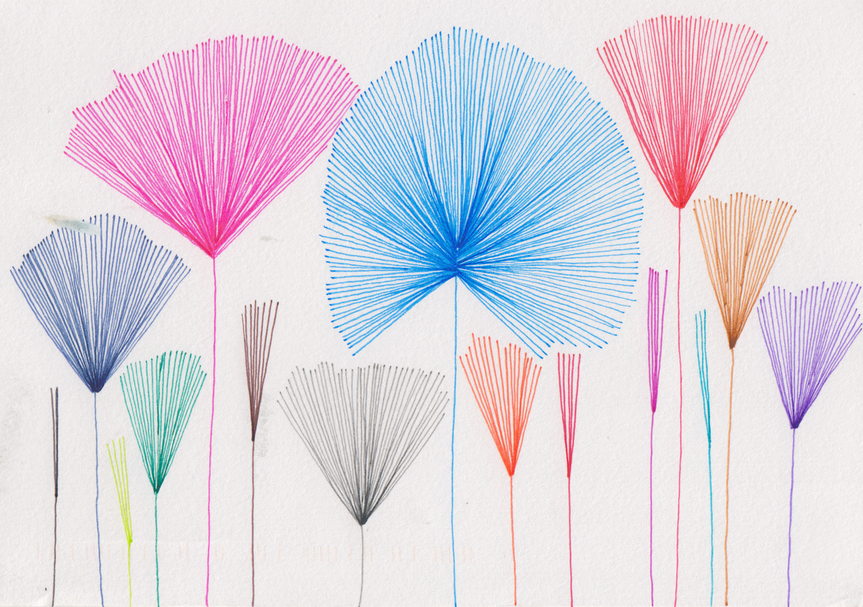
Hey folks, It's time for another project-centric episode, and we finally talk about one of our favorite projects of the year — "Dear Data" by the most fabulous tag team of data illustrators around: Giorgia Lupi and Stefanie Posavec. Their year-long project is about how "two women who switched continents get to know each other through the data they draw and send across the pond" and consists of 104 hand–drawn postcards all of which document one week of their lives. How much they cursed, laughed, read, smiled at strangers, … — all of this is documented in inventive, charming and very analogue ways. Learn all about the project — how they started it, what they learned, and how it will live on — in the episode. Links mentioned: Yay for slow data! Reporter app: http://www.reporter-app.com/ Notebook app: http://www.notebooksapp.com/ And read the episode transcript here! Data Stories is brought to you by Qlik, who allow you to explore the hidden relationships within your data that lead to meaningful insights. Check out this fun experiment on the qlik blog: "What Chart are You?". And, make sure to try out Qlik Sense, which you can download for free at www.qlik.de/datastories.
Ep 63063 | IEEE VIS’15 Recap with Robert Kosara and Johanna Fulda
Enrico recaps the IEEE VIS’15 conference with Robert Kosara and Johanna Fulda, and we compare notes about conference projects and papers. Check out our website for project links and video previews!

Ep 6262 | Text Visualization: Past, Present and Future with Chris Collins
We have Assistant Professor Chris Collins from University of Ontario Institute of Technology on the show to talk about text visualization. Chris explains what Text Vis is, provides examples from his and others' work, describes tools and knowledge to get started, and looks into the future of the field, including its challenges and opportunities. And here's a really cool new thing — we have a transcript of the whole show! Browse the text, search for quotes and chapters, and maybe even… visualize it? Let us know if it's useful! Enjoy the show! LINKS Chris Collins and His Lab FluxFlow (twitter rumors detection and visualization) | See also “How riot rumours spread on Twitter” (from the Guardian) Probing Projections Project DocuBurst Patterns in Passwords Book: “Graphs, Maps, and Trees” Lexichrome (visualizing the color of words) Literature Fingerprinting (showing how different authors write) (PDF) Visualizing Text Readability (PDF) Text visualization browser (collection/taxonomy of text vis projects) [good place to start looking into text vis!] NLTK (Natural Language Toolkit) Wordnet This episode is sponsored by Qlik who allows you to explore hidden relationships within data that lead to insights. Check out the virtual event on Nov 18: Are you seeing the whole story that lives within your data? You can download Qlik Sense for free at: www.qlik.de/datastories.

Ep 61061 | Visualizing Your "Google Search History" with Lisa Charlotte Rost
Here we go with a new project episode! This time we talk with Lisa Charlotte Rost about her project "My Google Search History." Lisa is a visualization designer based in Berlin and the project is about how she collected and visualized her google search history to look into her personal data. In the episode we discuss how she came up with the idea and all the steps she followed to realize it. She has also a nice page on github with code that you can reuse to do the same thing with your own data! This episode is sponsored by Qlik who allows you to explore hidden relationships within data that lead to insights. Check out the new blog post on the qlik blog called: "The role of multiple devices in our workspaces" by Donald Farmer. And, there is a big Qlik Sense Roadshow with over 100 events in Europe. You can download Qlik Sense for free at: www.qlik.de/datastories. LINKS Lisa's home page Lisa's tutorial on making histograms in R Lisa's tutorial on how to make your own google search visualization Lisa's tutorial on text analysis with R Take a look at the classic Wolfram's Personal Analytics project And of course see our episode with Nick Felton about his annual reports

Ep 60060 | Upcoming DS Events and Some of Our Recent Projects
Hey folks, we are back! We really hope you had a good summer. We start the new season with an "internal" episode. We give numerous updates on Data Stories. Things have changed recently -- we have future ideas and two great events to get in touch with us! Moritz talks about False Positive, an art project on data, privacy and identity. He also talks about the new Inclusive Growth Report from the World Economic Forum, for which he designed the graphics and website together with Stefanie Posavec and 9elements. Enrico talks about the RevEx tool and his collaboration with ProPublica for the analysis of millions of medical Yelp reviews, his work with Human Rights experts and a recently published paper on visualization design with climate scientists. This episode is sponsored by Qlik who allows you to explore hidden relationships within data that lead to insights. Read Patrik Lundblad's blog posts on the three pillars of data visualization(1,2,3). You can download Qlik Sense for free at: www.qlik.de/datastories. LINKS John Swabisch's PolicyViz Podcast Data Skeptic Podcast (Enrico's favorite data podcast) List of Data Science Podcasts - "The 7 Best Data Science and Machine Learning Podcasts" Data Stories Meetup at Visualized in NYC (sign-up here!) Data Is Beautiful on Reddit (where our Ask Me Anything will happen) False Positive (Moritz's project on personal data on the web) RevEx (Enrico's project on analyzing healthcare reviews from Yelp) Inclusive Growth (Moritz's project on visualizing growth) Upcoming Conferences: VIS'15 | Kikk Festival | art+bits festival

Ep 59059 | Behind the Scenes of "What's Really Warming The World?" with the Bloomberg Team
Hi folks! We have Blacki Migliozzi and Eric Roston from Bloomberg on the show to talk about their recent data graphic piece on climate change called "What's Really Warming The World?" The graphic shows, through a "scrollytelling," what factors may influence the world's temperature according to well-established climate models. It guides you through a series of questions and visuals to all you to see for yourself what correlates (spoiler: carbon emissions) and what does not. On the show we talk about how the Bloomberg team came up with this piece, their interaction with the NASA Goddard Institute for Space Studies (GISS) scientists who developed the model, and the many challenges of translating important scientific knowledge into more digestible, but not simplistic, articles that everyone can read. We also talk about how they took inspiration from the children book "Where's Spot?" (which is a nice narrative technique for vis!) and all the delicate design decisions they had to make. ... And don't miss the moment when Eric drops the huge IPCC (International Panel on Climate Change) report book to give a sense of how big it is! Enjoy the show! --- This episode is sponsored by Qlik who allows you to explore hidden relationships within data that lead to insights. Qlik was named a Top 10 Innovative Growth Company by Forbes, and they published an interesting blog post analyzing the data from the ranking. Check it out! Qlik Sense allows you to create personalized visualizations and dynamic dashboards. You can download it for free at: www.qlik.de/datastories. --- LINKS What's Really Warming the World? - the Bloomberg graphics "Where's Spot?" kids book The CIMIP5 Coupled Model Intercomparison Project (61 models from 28 countries evaluated and compared) The Intergovernmental Panel on Climate Change (IPCC) (the big tome) The IPCC synthesis reports (much shorter and easier to read / so many visuals could be improved!) Data on global land and ocean temperature records from NASA Scientific article on NASA GISS historical simulations Article on how temperature anomalies are calculated Datasets from the Bloomberg team: Observed land-ocean temperature Responses to climate forcings 850 year Preindustrial control experiment
Ep 58058 | Data Installations w/ Domestic Data Streamers
We have Dani Llugany Pearson from Domestic Data Streamers to talk about their studio and the amazing participatory data installations that they make. You really need to see examples of what they do! Go to http://domesticstreamers.com/ and take a look at their projects. In Data Strings they ask people to add their own thread to a set of physical parallel coordinates. In Life Line they use a grid of 800 balloons to show the point between one’s real age and the age at which one would like to die. In Golden Age they use a grid to let people mark with a log what is their age and what they believe is the best age in people's life. On the show we talk about how they got started and the process behind some of their projects. Enjoy the show! --- This episode is sponsored by Qlik who allows you to explore hidden relationships within data that lead to insights. Qlik Sense allows you to create personalized visualizations and dynamic dashboards. You can download it for free at: www.qlik.de/datastories. --- LINKS Domestic Data Steamers Paper on “Weight as an Embodiment of Importance” Yotta Project Data Strings The Mood Test Lifeline Golden Age Drip By Tweet
Ep 5757 | Visualizing Human Development w/ Max Roser
We have economist Max Roser from University of Oxford to talk about his Our World in Data project where he visualizes the social, economic, and environmental history of humanity up to the present day. Our World in Data is a remarkable project that Max started on his own and worked on little by little in his spare time until it evolved into a full website with plenty of interesting data, presentations, and visualizations to to better understand humanity. The nicest thing is that it provides a quite positive picture of the world and about the many ways that we are improving our conditions. Go to the website (http://ourworldindata.org/) and take a look at War and Violence, Poverty, Global Heath, Etc. On the show we talk about how Max started his work; the process behind finding a topic, collecting, and curating the data; and producing these nice visuals that people can easily understand. We also talk about human biases, persuasion, and how Max learned to build web sites and visualizations. Enjoy the show! --- This episode is sponsored by Visualizing Well-Being, the Wikiprogress Data Visualization Contest 2015. Enter the contest to win a trip to Mexico! To find out more, visit the Wikiprogress website (www.wikiprogress.org) or the facebook page or follow @wikiprogress on twitter. --- LINKS Our World in Data - http://ourworldindata.org Some of the projects: War and Peace - http://ourworldindata.org/data/war-peace/war-and-peace-before-1945/ Suicide - http://ourworldindata.org/data/health/suicide/ Violence http://ourworldindata.org/VisualHistoryOf/Violence.html#/title-slide Chartbook of economic inequality Pinker’s Book: Better Angles Of Our Nature Notebook software - Circus Ponies Scott Murray’s D3.js Book Hans Rosling’s Gapminder Presentation Zdenek Hynek - http://www.geographics.cz/
Ep 5656 | Amanda Cox on Working With R, NYT Projects, Favorite Data
“I'd give two of my left fingers for this data” - Amanda Cox on the show :) We have the great Amanda Cox from the New York Times on the show this time! Amanda is a graphic editor at NYT and she is behind many of the amazing data graphics that the New York Times has produced in recent years. In the show we talk about her background in statistics and how she ended up at the Times. We discuss how she uses R software to collect, analyze, and visualize data, and her thoughts on other tools. We also talk about how data graphics are produced at NYT, with lots of funny stories. Don't miss the parts about the "what, where, when" of data and the "net joy" concept. Lots a data wisdom in this show! --- This episode is sponsored by Tableau Software, helping people connect to any kind of data, and visualize it on the fly - You can download a free trial at http://tableau.com/datastories – check the new Tableau 9! --- LINKS Hadley Wickham - http://had.co.nz/ R Studio - http://shiny.rstudio.com/ Jake Barton: Local Projects - http://localprojects.net/about/ NYT Project: The Best and Worst Places to Grow Up: How Your Area Compares NYT Project: You Draw It: How Family Income Predicts Children’s College Chances Amanda and Kevin’s NYU Data Journalism Course Quadrigram - http://www.quadrigram.com/ (tool for data-driven web sites) Jeff Heer and his IDL Lab at UW - http://idl.cs.washington.edu/ FiveThirtyEight - http://fivethirtyeight.com/ The Upshot - http://www.nytimes.com/upshot/?_r=0
Ep 55055 | Disinformation Visualization w/ Mushon Zer-Aviv
Hi everyone! We have designer and activist Mushon Zer-Aviv on the show today. Mushon is an NYU ITP graduate and instructor at Shenkar University, Israel. mushon_bw-pic_2015He wrote the very interesting Disinformation Visualization piece for Tactical Tech's Visualizing Information for Advocacy and we decided to invite him to discuss the million different facets of disinformation through visualization. Is data and data visualization bringing some truth or should it always be considered an argument? Is there a way we can mitigate or even prevent disinformation? What strategies can designers use to make their opinions more apparent? These are some of the questions we discuss on the show. And don't miss the part on "data obfuscation," that is, how to use disinformation to increase our privacy! Enjoy this thought-provoking show! This episode is sponsored by Tableau Software, helping people connect to any kind of data, and visualize it on the fly - You can download a free trial at http://tableau.com/datastories – check the new Tableau 9! LINKS Mushon Zer-Aviv - http://mushon.com Shual Design Studio - http://shual.com Eyebeam / ShiftSpace - http://eyebeam.org Mushon’s Article: Disinformation visualization - How To Lie With Data Visualization Enrico et al.’s papers on vis persuasion and deception: How Deceptive are Deceptive Visualizations?: An Empirical Analysis of Common Distortion Techniques. A. V. Pandey, K. Rall, M. Sattarthwaite, O. Nov, E. Bertini. Proc. of ACM CHI Conference on Human Factors in Computing Systems (CHI), 2015. The Persuasive Power of Data Visualization. A. V. Pandey, O. Nov, A. Manivannan, M. Satterthwaite, and E. Bertini. IEEE Transactions on Visualization and Computer Graphics (Proc. of InfoVis), vol. 20, no. 12, pp. 2211 - 2220, 2014. Encoding / Decoding Model of Communication (wikipedia page) Edward Tufte’s Book: Beautiful Evidence Weinberger’s Book: Too Big To Know ISVIS http://www.isvisshenkar.org/ (israeli data visualization conference) Visualizing the Israeli Budget - oBudget.org AdNauseam - http://adnauseam.io (data obfuscation tool) Floodwatch - https://floodwatch.o-c-r.org (privacy vis tool from OCR) Columbia Professor Laura Kurgan NYU Professor Helen Nissenbaum Artist and Researcher Daniel C. Howe
Ep 54054 | Designing Exploratory Data Visualization Tools w/ Miriah Meyer
Hi all! We have Miriah Meyer with us in this episode to talk about how to build interactive data visualization tools for scientists and researchers. Miriah is Assistant Professor at University of Utah and one of the leading experts on the process of designing data visualizations for scientific discovery. To know more about her, take a look at her talk at TEDxWaterloo and her projects page, where she has numerous links to applications she developed in biology and other domains (see for instance MizBee and Pathline). On the show we talk about her work on analyzing and understanding the design process: required steps, major pitfalls and tips on how to collaborate with domain scientists. We also talk about her recent fascinating ethnographic work on "Reflections on How Designers Design With Data" and her ongoing work on building visualization tools for poetry! Enjoy the show! LINKS Miriah's Home Page Miriah's Projects TEDxWaterloo - Miriah Meyer - Information Visualization for Scientific Discovery Paper: How Designers Design With Data [ethnographic study] Paper: Design Study Methodology: Reflections from the Trenches and the Stacks [on the visualization design process] Paper: Visualization Collaborations What Works and Why The Lyra Visualization Design Environment (VDE) Paper: Overview: The Design, Adoption, and Analysis of a Visual Document Mining Tool For Investigative Journalists - Matthew Brehmer, Stephen Ingram, Jonathan Stray, and Tamara Munzner [one rare case of adoption study]
Ep 53053 | Data Safaris w/ Benedikt Groß
Hi folks! We have Benedikt Groß with us on the show. Benedikt defines himself as a "speculative and computational designer who works antidisciplinarily." Benedikt graduated from the Design Interactions course at the Royal College of Art and he works for his studio in Stuttgart, Germany. He is the co-author of ‘Generative Design,’ one of the standard books on the topic. In the show we talk about some of his amazing data projects at the intersection of art, design, science, sociology, etc. Aerial Bold, for instance, is a project about searching satellite images to find buildings and geographic features that look like letters. The Big Atlas of LA Pools, is a project about mapping all pools in LA. And Population.io is about showing demographic data in an engaging way and even giving you a prediction of when you are going to die! This is an amazing episode with stories about how Bill Gates crushed Population.io with one tweet, how they published 74 books of pool images totaling about 6000 pages, and how they outsourced some of the work to an Indian company to trace the pools. Amazing stuff! Enjoy it! LINKS Generative Design - Benedikt's book on generative design RCA Design Interactions The Big Atlas of LA Pools Aerial Bold Kickstarter Page Letter Hunt for Aerial Bold - help Benedikt and his team find letters! Population.io Foldit - Science Gamification Tool
Ep 52052 | Science Communication at SciAm w/ Jen Christiansen
Hey yo, we have Jen Christiansen from Scientific American with us in DS#52. Jen is art director of information graphics at Scientific American magazine where she is been for about then years and she has a background in natural science illustration from the University of California, Santa Cruz. Science communication is one of our favorite topics and we are so happy to have such an amazing expert like Jen on the show. Jen reveals the nitty gritty of scientific visualization and illustration as experienced by one of the top scientific communication magazines in the world. "How does a scientific piece come to life? Where does an idea for a new piece come from? How do they interact with the scientists to make sure everything they report is accurate and yet accessible for a broad audience? And what does need to be done before an illustration gets ready for print?" We discuss this and many other questions with Jen. Enjoy the show! This episode of Data Stories is sponsored by Tableau. You can download a free trial at http://tableau.com/datastories. jen-christiansen LINKS Jen Christiansen’s home page http://jenchristiansen.com Scientific American: http://scientificamerican.com A Look under the Hood of Online Data Visualization (collection of SciAm graphics from the past) Where the Wild Bees Are: Documenting a Loss of Native Bee Species between the 1800s and 2010s (Piece on Bees done with Moritz) (project’s page from Moritz) Jan Willem Tulp’s The Flavor Connection (on food pairings theory) - and original scientific article and graphics from Barabási’s lab (pdf) Pop Culture Pulsar: Origin Story of Joy Division’s Unknown Pleasures Album Cover (artists using scientists' images - transcending the context of a visualization)
Ep 5151 | Smart Cities w/ Dietmar Offenhuber
Hi Folks! Dietmar Offenhuber We have another great guest on the show. Dietmar Offenhuber visits us to talk about smart cities and visualizing data coming from cities. Dietmar has an interesting background. He has a background in architecture with a Dipl. Ing. from the Technical University Vienna and then he got a MS in Media Arts and Sciences from the MIT Media Lab and a PhD in Urban Planning from MIT. He's also been a key researcher at Ars Electronica Futurelab. Now he is an Assistant Professor at Northeastern University in the departments of Art + Design and Public Policy, where he does research on the technological and social aspects of smart cities and urban governance. In the show we talk about many of his super interesting projects such as Wegzeit (timespace visualizations of LA) and Trash Track (on tracking and visualizing where garbage goes), and interesting concepts such as Accountability Technologies and Infrastructure Legibility. We also talk about the future of smart cities and what we should expect to get our of smart cities. Enjoy the show! LINKS (Moritz Launched ON BROADWAY with Lev Manovich, Dominikus Baur, Daniel Goddemeyer) Our Guest: Dietmar Offenhuber Arts Electronica Future Lab MIT Senseable City Lab Northeastern University Department of Art + Design Wegzeit - timespace visualizations of LA Comment Flow (social media visualization) Semaspace (graph editing tool) Trash Track (tracking and visualizing trash) Smartcitizen (distributed crowdsourced sensors) Bill Mitchell (MIT Media Lab Professor of Architecture and Media Arts and Sciences) Mapping the archive (project with Dietmar and Moritz on the Arts Electronica Archive) Dietmar's Interview: Sorting Out Cities Deitmar's Book: Inscribing A Square (how urban data shapes public space / discourse, and what kinds of representations are involved, and what is their function) Dietmar's Book: Accountability Technologies – Tools for Asking Hard Questions Dietmar's Book: Decoding The City

Ep 5050 | Happy Birthday Data Stories!
Ah! We made it to 50 episodes and three years of this lovely podcast of ours. We have loved every bit of it, every guest, every single discussion and all the support we received from everyone. For this episode we asked repeatedly to submit a short audio snippet or text and we received a few amazing ones. We are very grateful to you all guys, this is amazing. In the episode we talk about a few statistics we extracted on episodes with highest number of listeners and blog posts with highest number of visits. We then read the text messages we received. And finally we have inserted the audio messages we received. THANKS A LOT! This is amazing. P.S. Special thanks to Erik Jacobson for his amazing collage! :) LINKS Most popular episodes (of about the last 12 months) Data Stories #39: DensityDesign w/ Paolo Ciuccarelli Data Stories #38: Visual Complexity w/ Manuel Lima Data Stories #40: Narrative Visualization Research w/ Jessica Hullman Data Stories #44: w/ Tamara Munzner Most popular pages: Data Stories #5 – How To Learn Data Visualization (with Andy Kirk) Data Stories #22: NYT Graphics and D3 with Mike Bostock and Shan Carter Data Stories #35: Visual Storytelling w/ Alberto Cairo and Robert Kosara Podcast recommendations: Talking Machines (on Machine Learning) Theory Of Everything Song Exploder Reply All
Ep 4949 | Data Journalism at ProPublica w/ Scott Klein
Hi everyone, In this episode we have Scott Klein from ProPublica with us. ProPublica is a nonprofit organization that does investigative journalism and Scott directs a team of data journalists and programmers to create new applications based on data and data visualization. In the show we talk about how ProPublica works and what challenges they are confronted with. How do you pick a story? How do you develop it? How do you make sure you are not making mistakes? This are some of the questions we discuss. We also talk about tools and libraries and how to train yourself to become a data journalist. This was a very much needed episode as we never had a proper episode on data journalism. Thanks Scott for coming on the show! --- LINKS ProPublica's Dollars for Docs Book: How Not To Be Wrong by Jordan Ellenberg PDF Scraping Tool: Tabula (http://tabula.technology/) The IPython Notebook (web-based interactive computational environment) ProPublica's Open Source Tools The New School's Program Journalism + Design The ProPublica Nerd Blog Knight-Mozilla Open News (community of data journalists) NICAR-L Mailing List (National Institute for Computer-Assisted Reporting)
Ep 4848 | Vis Going Mainstream w/ Stamen's CEO Eric Rodenbeck
Great episode here folks! We have Stamen's CEO Eric Rodenbeck on the show to talk about "Visualization Going Mainstream". Moritz took inspiration from Eric's Eyeo talk "And Then There Were Twelve – How to (keep) running a successful data visualization and design studio." and decided he must come on the show. Stamen is a design studio in San Francisco founded in 2001 by Eric. They have been real pioneers in data visualization and cartographic mapping with the production of great apps and libraries such as Pretty Maps, Trulia Hindsight, Crimespotting and many many more. (See also our episode with Mike Migurski) With Eric we discuss a broad range of important topics including: how to manage a vis business, how to have an impact with visualization and visualization success stories. Enjoy the show! LINKS Eric’s talk at Eyeo Stamen’s Digg Labs visualization Founder of Digg Kevin Rose First word art / last word art Book: Maps and Legends Out of Sight, Out of Mind - Pitch Interactive’s Drones Visualization James Bridle’s Dronestagram Stamen’s Crimespotting Project (mapping crime in San Francisco and Oakland) maptime.io: open learning environment to learn how to make maps The Atlantic’s Article on: Why I Am Not A Maker Stamen’s Work with San Francisco Museum Of Art
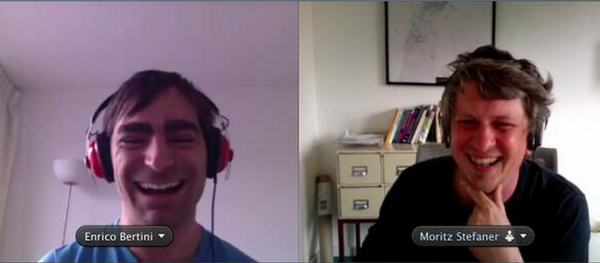
Ep 47047 | Moritz and Enrico on Books, Data Literacy, Their Projects, Etc.
Data visualization researcher Enrico Bertini and Truth & Beauty Operator Moritz Stefaner discuss their views on data visualization, infographics, information aesthetics and related themes. http://datastori.es http://twitter.com/datastories

Ep 46046 | Year 2014 Review w/ Robert Kosara and Andy Kirk
We have two classic guests for a classic episode: a year review with Robert Kosara and Andy Kirk. We talk about what happened in visualization in 2014 and what may happen in 2015. We start the show saying that nothing really special happened, but then you'll see we cover a lot of ground and end up eventually deciding that a lot did happen!
Ep 45045 | Nicholas Felton
Happy new year, everyone! We start 2015 with a bang, and have Nicholas Felton on the show. We talk about his personal annual reports, typography, privacy, and how we all deal with data and tracking today. Great conversation. One more link we only found later: Practical Typography is a great starting point for anyone who would like to learn more about typography and type. Thanks again to Tableau Software for sponsoring the show! Check out the free trial they have, it's a great piece of software. And, in other news: We are looking for support with the audio editing! So, if you have some experience with audio editing podcasts, and could also imagine to help us with collection the links and titling the chapters etc, this would be great. We can offer a small compensation, too. And, of course, you're among the very first people worldwide to listen to the new Data Stories recordings :) Next week, we will record a 2014 review with a few of the usual suspects. What moved you this year? Leave us a comment or tweet us!
Ep 4444 | Tamara Munzner
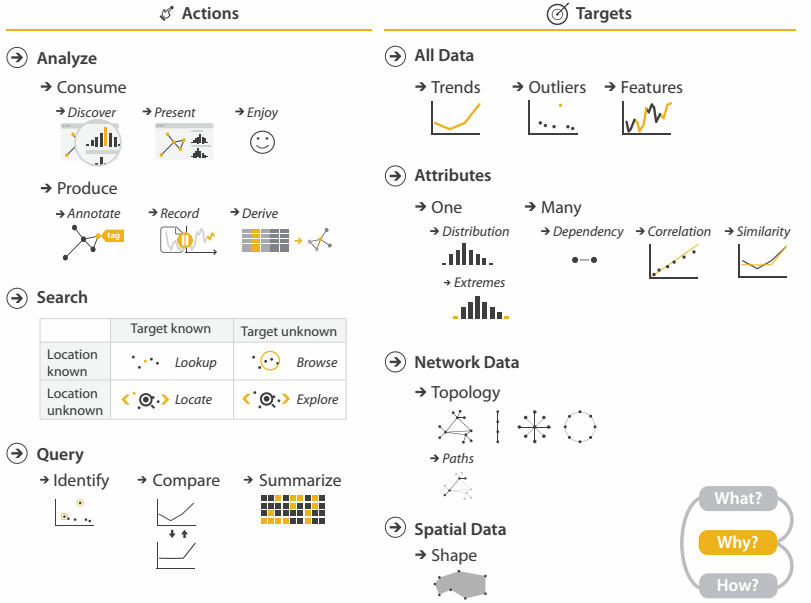
We have Prof. Tamara Munzner from University of British Columbia with us in this episode. Tamara is one of the most prominent figures in visualization research. She has done tons of interesting work starting from the nineties (look into her publications page) including the famous "Nested Model of Visualization Design" and her numerous design studies work, like the excellent "Overview," a tool for journalistic investigative analysis. We also talk about her new book "Visualization Analysis and Design." Finally a textbook teaching how to create visualization tools for analysis purposes!

Ep 43043 | IEEE VIS'14
It took us a while, but — here we go! A three part episode from IEEE VIS 2014. Thanks again to Robert Kosara for coming on our show again to talk shop, and look back on a week full of really interesting scientific findings about data visualization.
Ep 42042 | Santiago Ortiz
Hi all, we have the great Santiago Ortiz with us again in this episode. Santiago builds interactive data visualizations to "get deep insight from data, solve real problems and answer strategic questions." If you are an avid DS follower you may recall that we had him on the show in episode 19. In this episode he comes back to talk with us about visualization and data science, how he strives to create value out of his data visualization projects and how he is *not* interested data visualization! Enjoy the show!
Ep 41041 | With Lisa Strausfeld
Hi Folks! In this episode we have Lisa Strausfeld from Bloomberg with us. Lisa started doing VIS very early on. In the episode she tells us about her super interesting story of how she got into VIS and all the jobs she has had: starting as a student of Art and Computer Science (yes, Art and CS!), designing chips for Motorola, and now these days working at Bloomberg Visual Data and Bloomberg View.
Ep 40040 | Narrative Visualization Research w/ Jessica Hullman
We have a very researchy kind of episode this time. Jessica Hullman is on the show to talk about her research on narrative visualization. Jessica is a Postdoctoral Fellow at Berkeley and soon to be Assistant Professor at University of Washington iSchool. In the show we talk about lots of interesting basic visualization research issues like visualization literacy, bias and saliency, uncertainty, and some interesting automated annotation systems that Jessica has developed. We also talk about Jessica's background in experimental poetry!

Ep 3939 | DensityDesign w/ Paolo Ciuccarelli
Hi there! We have been chasing Paolo for a while and eventually we managed to have him on the show. Paolo is Associate Professor at Politecnico di Milano and he is the founder of Density Design, a lab with an interesting mix of research, design and visualization. With Paolo we talk about all things at the intersection of design and visualization, including a very interesting digression on architecture and how it helped him in the development of the lab. We also talk about how to teach design and the role of Visualization in the Humanities. We also talk about Raw, an online visualization tool they developed which has recently gained quite some popularity (if you don't know it you should try it). Enjoy the show! --- Links Cyber-Geography Maps (early inspiration) Density Design Flicker Stream Density Design Blog 99 Models of Design Processes Mapping the Republic of Letters (and this: http://athanasius.stanford.edu/) Franco Moretti's Distant Readings and Giorgio Caviglia (and the “incorporation” of design into humanities) Fineo (Sankey Diagrams Tool)

Ep 3838 | Visual Complexity w/ Manuel Lima
Hi all, Finally, after chasing him for a long while we have Manuel Lima on the show! Manuel has been around for a very long time. He created Visual Complexity in 2005, an archive of network visualizations which became very popular. He is also the author of two great books: Visual Complexity and The Book of Trees. In the show we talk about archiving visualizations, how to write and publish visualization books and how the whole field had developed and where it is heading. Great great show! Take care. Links Manuel’s master thesis at Parson’s: BlogViz Visual Complexity (Book) Visual Complexity (Website) The Book of Trees Information Visualization Manifesto (check the comments section!) Manuel’s Current Employer: Code Academy Infosthetics Blog Barabasi’s Linked: http://barabasilab.com/LinkedBook/ Johnson’s Emergence Visual Simplexity (Book) The Allosphere Display

Ep 37037 | The Challenge of Teaching Visualization w/ Scott Murray and Andy Kirk
That's a particularly tough but juicy episode folks! We turn a little bit inward and talk about the many challenges of teaching visualization. We have code artist Scott Murray on the show, the author of the lovely D3 book "Interactive Data Visualization for the Web" and our almost-cohost ever-present Andy Kirk with us from visualisingdata.com. Scott teaches visualization courses at Department of Art and Architecture University of San Francisco and Andy teaches some very popular 1-day workshop courses all around the world. We talk about our experience with teaching visualization, reporting about what seems to work and what does not. I think we mostly report about our constant struggle to make things work :) Hopefully this is going to be of help and fun for you guys! And once again, thanks to our audio editor Nathan Griffiths (twitter.com/njgriffiths) for taking care of this episode! Links Santiago Ortiz's: 45 ways to communicate two quantities John Swabisch's HelpMeViz (to teach by good/bad examples) Scott's Easy as Pi
Ep 3636 | Data Art w/ Jer Thorp
Hey yo ... super cool guest today on Data Stories. We have data artist Jer Thorp for a whole episode on Data Art and Visualization. We managed to catch him before he leaves for a deep dive in a submarine next week. Jer is former artist in residence at New York Times R&D Labs and now he is the co-founder of the Office For Creative Research, a studio/lab that mixes science and art. Among many other things he is the creator of the algorithm and software tool "to aid in the placement of the nearly 3,000 names on the 9/11 Memorial in Manhattan" and Cascade, a tool to visualize "the sharing activity of New York Times content over social networks." In this episode we talk about his past and new projects, teaching art and vis and the many intersections between art and science. Links - The IEEE VIS'14 Art Program (that's going to be in Paris) - NYU ITP Data Art Course - Cascade (vis of NYT sharing activity) - Shakespeare Machine (earstudio | video on vimeo) - Jer's HBR article on "Visualization as Process, Not Output" - Collection of vis development process images from OCR - Example of Data Performance: Thousands of Exhausted Things (OCResearch and The Elevator Repair Service) - Hans Rosling's TED Talk "The Best Stats You've Ever Seen" - Eyeo Festival
Ep 3535 | Visual Storytelling w/ Alberto Cairo and Robert Kosara
Hi all, Hot topic today! We invited Alberto Cairo and Robert Kosara to discuss the role of storytelling in visualization. What is storytelling? Is all visualization storytelling? Should we always strive for telling a story? How does storytelling match with exploratory visualization? Should we aim more for worlds and macroscopes than stories as Moritz advocated a while back at Visualized? We went on a somewhat lengthy discussion on these topics and I think we all ended up agreeing on a lot of things and developed a much more nuanced view of storytelling. As you can see from the picture we had lots of fun (thanks Robert for taking the screenshot). Fantastic chat! Note: Alberto has a lot more to say after the episode so he decided to publish a linked post that clarifies some of the things he said on the show. You find the post here: ... P.S. Big, big thanks to Fabricio Tavares for taking care of the audio editing of this episode! --- Links Lynn Chen on Implied Stories (and Data Vis) Periscopic's Dino Citraro on A Framework for Talking About Data Narration Book cited by Alberto: The Unpersuadables: Adventures with the Enemies of Science Great visualizations without stories (proposed by Moritz): Aron Koblin's Flight Patterns Martin Wattenberg's Map of the Market Moritz position on stories: Look ma, no story! | Worlds, not stories Enrico's position on stories: Telling a story doesn’t tell the whole story Robert series on storytelling: Stories Are Gateways Into Worlds | Story: A Definition Robert's mention of visualization on Copenhagen: Emissions, Treaties and Impacts Jessica Hallman's VIS'13 paper on: Deeper Understanding of Sequence in Visualization

Ep 34034 | Data journalism w/ Simon Rogers
[Thanks to our audio editor Nathan Griffiths (https://twitter.com/njgriffiths) for taking care of this episode] Hi everyone! After a long while ... we have a real British voice on the show again! In this episode we have the pleasure to host data journalist Simon Rogers. Simon has been leading data journalism initiatives at The Guardian for many years and he recently moved to Twitter (with the official role of Data Editor) where he takes care of creating visual stories out of Twitter data. In the show we talk about his past experience at The Guardian as well as the more recent and exciting developments at Twitter. Links The debate of Gregor & Moritz with Simon on colors (and Simon pissed off by it :)) Creative tools: CartoDB and DataWrapper? Twitter Data Blog (where new projects are announced) Overview page of Twitter visualizations Simon's post: Data Journalism as Punk [very interesting concept!] Simon's infographics kid books: Animal Kingdom and Human Body
Ep 3333 | HelpMeViz w/ Jon Schwabish
Hi Everyone! We have Jon Schwabish on the show in this episode. Jon is an economist who specializes in data visualization for politics and economics. You can see some of his work in the blog he writes called Policyviz. We invited him to talk about his recent new initiative called HelpMeViz, a web site where people can send requests to visualize some data of interest or redesign some particularly tricky charts. The web site quickly gained some momentum and already publishes quite a nice set of charts, suggested redesigns, and most of all very insightful discussions (it's not just the usual I like this, I like that). There is a lot to learn there. In the interview we talk about how HelpMeViz was born, how it works, what kind of entries they have been published so far and how it's going to evolve. Give a look to HelpMeViz and submit your own charts and data there! Links How HelpMeViz works ... Jon's "An Economist's Guide to Visualizing Data" (full of very nice examples of chart redesign) Interesting discussions from HelpMeViz: Budget Pie Chart Triplet State Migration Flows Debate About Colors --- And here's another piece of great news: For the first time, this episode was audio edited and annotated by a volunteer helper - woo! Fabricio Tavares was kind to help us. Thanks a million! The equation is simple: less audio editing work for Moritz means more episodes we can do in a year. Get in touch in case you would like help us, too!
Ep 32032 | High Density Infographics and Data Drawing w/ Giorgia Lupi
We have Giorgia Lupi from Accurat on the show with us this time in our first real face-to-face episode ever -- yes Moritz and Enrico in the same room! Giorgia's work, and generally the work done by her agency, has been super popular lately. You might have seen, for instance, their work visualizing Nobel Prizes or visualizing painters' lives. Giorgia kindly hosted us in the Accurat's studio in New York where we had a nice chat on hand-crafted visualization, high-density designs, design studios, and much much more.

Ep 31031 | Review, preview w/ Robert Kosara and Andy Kirk
Happy 2014! Here we go folks. Another year has passed. We review what was big and major trends in 2013 and what to expect in 2014. We have two old DS friends on the show to help us with the review: Andy "Visualisingdata" Kirk and Robert "Eagereyes" Kosara. Important announcement: in 2014 we want to hear more from you! Please feel free to contact us to ask questions, we will address them in our upcoming podcasts. You can also suggest new guests or topics you would like us to cover. You can reach us through: Twitter (@datastories) | Facebook | Email: [email protected]. We are looking forward to hearing from you! Take care. --- Links Periscopic's U.S. Gun Deaths Pitch Interactive's Drones NYT's Silkroad and Snawfall Wealth Inequality Video Interactive Things' NZZ Swiss Maps Sketchy Rendering for InfoVis Age of Buildings (pointillistic cartography) Nanocubes: Fast Visualization of Large Spatiotemporal Datasets Washington Post's Shots heard around the District Density Design's Raw Visualization Tool New Blogs: http://wtfviz.net/ | http://helpmeviz.com/ | http://thumbsupviz.com/ Book: Design for Information (Robert's Review) Nate Silver's Five Thirty Eight and the Vis Job Opening Tableau Story Points Infoactive - Kickstarter Vis Tool Project

Ep 3030 | The Information Flaneur w/ Marian Dörk
We have Marian Dörk on the show today to talk about the "Information Flaneur": an approach to data visualization centered on navigating, exploring, browsing and observing data with curiosity to learn about what's there, and to see and be surprised by new thoughts and discoveries. Marian is Research Professor at the University of Applied Sciences Potsdam near Berlin where he works on "exploring novel uses of interactive visualizations to support a wide range of information practices." We talk about many interesting new directions for visualization like visualizing data starting from a few seed points, whether we always need an overview first in visualization, and tips on how to design visualization for "information flaneurs."

Ep 2929 | Treemaps w/ Ben Shneiderman
We have a super guest this time on the show! Ben Shneiderman joins us to talk about his new treemap art project (beautiful treemap prints you can hang on the wall), treemaps and their history, and information visualization in general. Needless to say, we had a wonderful time chatting with him: lots of history and very inspiring thoughts (tip: we should look at vis 50-100 years from now!)
Ep 28028 | IEEE VIS'13 Highlights w/ Robert Kosara
Hi Folks! We did it again: we have a special episode directly from IEEE VIS'13 (the premier academic conference on visualization). Enrico caught Robert Kosara and recorded almost one hour of highlights from the conference. And there is a final message for Moritz too! Don't miss it. Take care. -- Links (some of the papers mentioned): Chart Memorability Sketchy Story (freeform data visualization) Understanding Sequence in Narrative Visualization Nanocubes (large-scale visualization on the web) Visual Sedimentation (handling dynamic/streaming data) Robert's Conference Report on Eagereyes IEEE (VisWeek) VIS Papers on the Web (collection of papers accessible on the web)

Ep 27027 | Big Data Skepticism w/ Kate Crawford
Here we go with another great episode. This time more on the data side. We have Kate Crawford, Principal Researcher at Microsoft Research, on the show talking about the other face of big data. That is, after all the excitement, hype, and buzz, she is the one who is asking the tough questions: Is more data always better? Is there any objective truth in it? Is big data really making us smarter?

Ep 26026 | Visualization Beyond the Desktop w/ Petra Isenberg
We are back after a relaxing summer with a brand new episode! We have Petra Isenberg, from the Aviz team at INRIA (we've had other guests from the same lab in the past) to talk about visualization on non-standard devices and environments. Yes, stuff like display walls, surfaces, tabletops, and people collaborating around them. It feels like the future is here and there's a ton of potentially interesting applications for visualization! Petra gives us hints about what works and what does not work, what the research says, what has been tried already, and what needs to be explored, etc. She also gives practical recommendations at the end about how to start doing visualization on these devices. Really cool stuff!

Ep 25025 | Visualization on Mobile & Touch Devices w/ Dominikus Baur
In this episode we talk about visualization on mobile and touch devices. How do you design visualization interfaces for these kinds of devices? How different is it to interact with your fingertips rather than with your mouse? Advantages, disadvantages, unexplored opportunities? We discuss with Dominukus Baur, interaction designer and mobile data visualization specialist.

Ep 24024 | The VAST Challenge: Visual Analytics Competitions with Synthetic Benchmark Data Sets
In this episode we talk about the VAST Challenge, a visual analytics contest organized every year. The VAST Challenge is co-located with the IEEE VIS Conference, the premier venue for academic work in visualization. The VAST Challenge has many unique features (like the generation of synthetic data sets with injected ground truth) and this year for the first time it features a predictive analytics and design mini-challenge. We talk with Prof. Georges Grinstein from UMass Lowell and Celste Paul from NSA. They give us lots of details about how the data is generated, how the entries are evaluated and how it looks like participating to the contest. You guys should actually give it a try and rock it!
Ep 23023 | Inspiration or Plagiarism? w/ Bryan Connor and Mahir Yavuz
In this episode we touch upon a tricky question: where is the fine line between taking inspiration from other projects and merely copying them? We discuss with Bryan Connor from The Why Axis and Mahir Yavuz from Seed Scientific. Note: We suggest you give a look to the links on our website before listening to the podcast. Most of the episode is centered around these examples, which we selected for discussion.
Ep 22022 | NYT Graphics and D3 with Mike Bostock and Shan Carter
We have graphic editors Mike Bostock and Shan Carter in this dense and long episode. It's great to finally have someone from the New York Times! We talk about many practical and more philosophical aspects of publishing interactive visualizations on the web. We also spend quite some time discussing the past, present and future of D3.js.
Ep 21021 | Can visualization save the world? With Kim Rees and Jake Porway
We have two fantastic guests to talk about using visualization for the good. We have on stage: Kim Rees co-founder of Periscopic, a data visualization company guided by the motto: "do good with data," and Jake Porway, founder of Data Kind, an organization that brings together data scientists and social organizations. We discuss the challenges of working in this world of big data opportunities and the risks and potentially negative implications of using big data.