Curious City
670 episodes — Page 1 of 14
What’s that dead zone in the 19th Ward?
‘Rivalry is our last name:’ Chicago and Detroit battle on the dancefloor
Industrial jobs left Detroit, Chicago, and Milwaukee. Why did it hit these cities differently?
Chicago, Milwaukee or Detroit: Which city has the best encased meats?
How Ella Jenkins’ Chicago childhood shaped her iconic children’s music
Did Chicago invent the rage room? A look inside “the Frustration Room”
How did a native Chicago plant disappear forever?
Why is the island in Washington Park behind a locked gate?
School lunch used to ace the test
Shipwrecks, mussels and sponges: Chicago is a scuba diving destination
Chicago has many block club signs. What are block clubs and what do they do?
“Like getting paid to party”: The life of cover bands on the Chicago festival circuit
Is that a lobster in the Chicago River?
‘Give while you live’: Who is Museum of Science and Industry founder Julius Rosenwald?
A good lake, not a Great Lake
Why does Chicago have so little love for the ‘Watchdog’ of the lakefront?
Is This Your Card? A Brief History Of Chicago-style Magic
Where did the term 'Chicagoland' come from?
How did Hollywood Beach become Chicago’s ‘gay beach’?
Why does Chicago use Comic Sans on some elevator inspection certificates?
Does Chicago have a Filipino neighborhood?
Why are there helicopters flying over my neighborhood every night?
Why does Chicago have a monument named for fascist leader Italo Balbo?
Standing on history: Who built Chicago’s WPA sidewalks?
‘This is how I speak’: The influence of the Black Chicago accent
How has the Black Chicago accent retained its Southern roots?
The story of the Lady Elgin, the deadliest shipwreck in Great Lakes history
What are Chicago area lighthouses used for?
How early Black Chicagoans used photography to redefine their image
At the turn of the 20th century, Black photographers were starting to make a name for themselves. Photographers like William E. Woodard, James Van Der Zee and Miles Webb were opening and running their own studios. In African American art history, the Harlem Renaissance in New York is often celebrated. But Chicago played a role in that as well. Photographs of Black life circulated in local and international publications at the time, and the photographers behind those images focused on the community, intentionally. “The photographers know of each other and are in some ways competing, yet they're also really supportive of each other's work,” said Amy Mooney, art history professor at Columbia College Chicago. In our last episode, we explored the first art galleries in Chicago. Many of those “established” spaces were owned by white people who exhibited works by white artists. But that didn’t mean skilled and prolific artists of color were scarce. Today, Mooney tells us more about the early Black photographers who opened up their studios to everyone.
What was Chicago's first art gallery?
What was Chicago's first art gallery? Curious City investigates. Nowadays, it’s easy to see and experience art all over Chicago. But where did it all begin, and who was allowed to show their art?
Chicago came under martial law after the Great Fire. Did it help?
The mayor of Chicago declared martial law after the Great Fire in 1871. The military occupation ended days later, after the death of a civilian. We look back at that history and get the help of legal experts to answer these questions: Was Operation Midway Blitz — the Trump administration's aggressive immigration enforcement campaign in Chicago — an example of martial law? What is martial law, anyway?
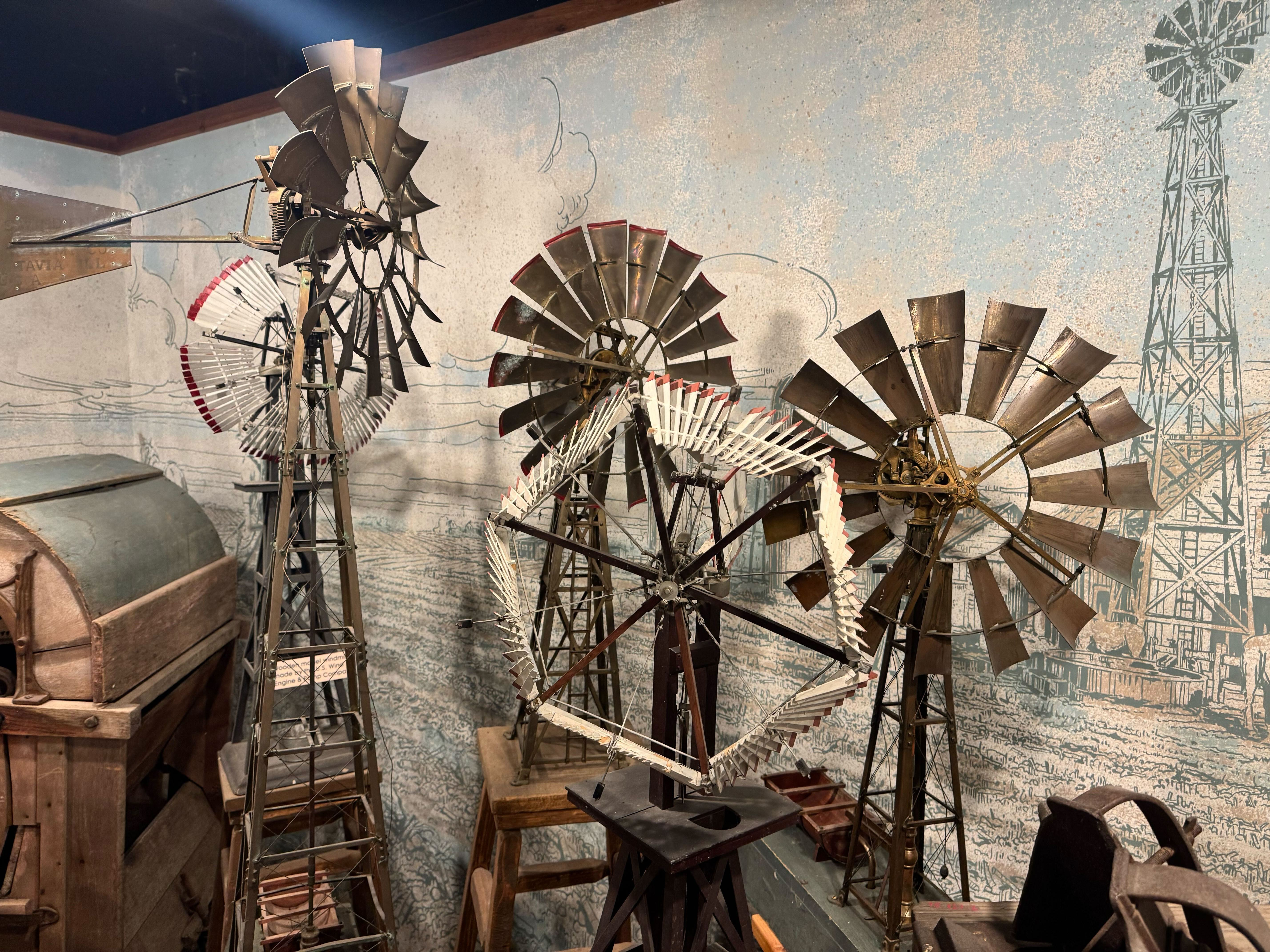
The ‘windmill capital of the world’ used to be down the road from Chicago
Suburban Batavia, just 30 miles west of Chicago, used to be known as the windmill capital of the world. But eventually, technological advances took the wind out of the industry’s sails. In our last episode, we looked into why there are no wind turbines in the Great Lakes even though conditions are favorable. Legal and political hurdles continue to challenge the offshore wind energy business in the Midwest. Today, we’re going to take an historical look at the wind industry in our region. In modern times, Batavia is known for Fermilab, America’s particle physics and accelerator laboratory. But long before that, Batavia was on the map for hosting six windmill factories. Batavia Mayor Jeff Schielke and City Clerk Kate Garrett dive into the town’s history. They take pride in the past, but look forward to the future.
Why aren’t there wind turbines in Lake Michigan?
Strong and consistent winds that sweep across Lake Michigan could provide significant electricity generation. But there are no wind turbines in the lake or any of the Great Lakes. This Curious City story is made possible through a partnership between WBEZ and Grist, a nonprofit environmental media organization.
No cars, no road salt: How one Midwestern community avoids salt all winter
Chicago — like so many other frigid American cities — can’t seem to kick its dependence on road salt. In our last episode, we learned how winter weather on both ends of the thermometer can impact the local economy. Some businesses come out on top during the coldest winters: auto mechanics repairing cars when they hit a pothole, snow plow companies shoveling out small businesses and rock salt providers when the roads get icy. But chloride from salt is harmful to both our natural and built environments. You’d be hard-pressed to find a cold-weather community that avoids road salt altogether, but we found one! In this encore presentation, we visit a place way up north, Mackinac Island, Michigan. Dominick Miller, chief of marketing at the Mackinac State Historic Parks, tells us about how the island deals with snow and ice in the winter without laying down a single grain of salt. And it has a lot to do with the fact that cars have been banned on Mackinac Island for over a century.
How does a mild winter affect Chicago’s economy?
Each Chicago winter’s wintery-ness has big implications for your sanity and your wallet. That led one Curious City listener to ask us if mild winters have a noticeable effect on the local economy.
What was it like for women working in Hoover’s FBI?
For decades, the FBI was a man’s world. Anybody else was just living in it, especially the administrative staff. In the last episode, we learned how the bureau recruited high school girls for clerical work during the 1940s. But for decades women were explicitly prohibited from becoming special agents. Western Springs resident Jane McCarty was hired out of high school in the late 1960s to work as a stenographer for the FBI. She held several positions during her more than four decades at the organization. Today, the former president of the Society of FBI Alumni talks about the ebbs and flows of women’s access to leadership and autonomy within the bureau. She endured a sexist work environment but later witnessed the first women become FBI special agents.
Why did the FBI recruit girls from Catholic high schools?
For a few decades starting in the 1940s, the FBI recruited high school girls for clerical work. A Chicago Catholic school was a go-to spot to make new hires.
How Ella Jenkins’ Chicago childhood shaped her iconic children’s music
From school assemblies to “Mr. Rogers Neighborhood,” Ella Jenkins was a rhythm specialist and children’s music pioneer. Her childhood in Chicago was her launching pad. In our last episode, we learned that the first Chicago public school named after a Black person was DuSable High School, in honor of Chicago’s first nonindigenous settler, Jean Baptiste Point DuSable. It turns out some of the most notable Chicagoans graduated from DuSable, including Mayor Harold Washington, historian Timuel Black and Jenkins. Today, we bring you a conversation about this music icon, who harnessed curiosity, life experience and charisma to create some of the most unique and prolific art of the 20th century. Jenkins forged a path in the music industry during a time when children’s musicians didn’t really exist. She persevered through the civil rights era, took ownership of her music in an industry that often took advantage of women and made the focus about children. Professor of American studies at George Washington University Gayle Wald sat down with Curious City Editor Susie An at the 2025 Evanston Folk Festival to talk about Jenkins’ life. Wald is the author of “This is Rhythm: Ella Jenkins, Children’s Music and the Long Civil Rights Movement.”
What's the first Chicago public school named in honor of a Black person?
Many of Chicago’s oldest schools are named after white men. The first named after a Black person goes back to the 1930s, and it came with some controversy.
Why did Chicago widen Ashland Avenue?
If you pay attention to street signs in Chicago, you’ll notice imperfections and many quirks. Paul Durica of the Chicago History Museum said a coworker informed him that North Avenue becomes North Boulevard when you’re east of Clark Street. “And I was like, what?” Durica recalled. “And it does! And it's because here we are, now in the park.” One of Chicago’s major arteries, Ashland Avenue, has a rich history of its own. In our last episode, we looked at why streets like Ashland are occasionally labelled boulevards (like North Boulevard, sometimes the answer is because the street is adjacent to a park). Today, we’re looking closer at the history of Ashland Avenue, including how it became a major thoroughfare and why the city widened it at great expense 100 years ago. (The short answer? To accommodate car traffic.) Contributing are Durica and Northwestern Professor Bill Savage, author of a forthcoming book on the anomalies and politics behind Chicago’s grid system.
Why is Ashland Avenue sometimes Ashland Boulevard?
Ashland Avenue is one of the longest and oldest streets in Chicago, but sometimes it’s a boulevard. Is this a misprint? Or is this part of the city’s history to promote park land?
We can’t name ‘em all, but here are some of Chicago’s greatest films
From high-speed chases to preposterous parades, Chicago dazzles on the silver screen. Last episode, we attempted to uncover the best movie ever filmed in Chicago. What we found was that it was impossible to name a definitive best, let alone name every movie that deserves recognition. Today, we dive deeper into movies that resonate with Chicagoans with two film critics: Marya E. Gates, author of Cinema Her Way: Visionary Female Directors in Their Own Words and Robert Daniels, associate editor of RogerEbert.com. They argue that the city doesn’t just look good on screen, it also helps tell stories that are reflective of its residents. Gates and Daniels talk about Chicago movies that highlight crime and political tropes (like “The Untouchables,” “Medium Cool,” and “Call Northside 777”), movies that bend space and time to navigate through Chicago’s geography (like “The Fugitive” and “Blues Brothers”), and movies that follow teenagers as they romp around the city (like “Cooley High” and “Ferris Bueller’s Day Off”). Plus, they’ve got recommendations for Chicago movies that may have flown under your radar.
From ‘The Fugitive’ to ‘The Dark Knight,’ what’s the best movie filmed in Chicago?
It’s awards season. Time to look at some of the best movies filmed in Chicago.
‘Weather is cool’: Weird Chicago weather, from northern lights to water spouts
Thanks to the powerful force that is Lake Michigan and the urban heat island that is Chicago, the city has witnessed some unusual and extreme weather events. Last episode was about lake-effect snow and a phrase you hear all the time: “Cooler by the lake.” But Chicago weather definitely gets stranger than that. We’re talking thundersnow, water spouts and even space weather. Why do these weather events happen, what makes them unusual and how can you have a little fun (safely!) when they come around? We talk with Jeff Frame, a teaching professor in the Department of Climate, Meteorology and Atmospheric Sciences at the University of Illinois Urbana-Champaign.
When is it no longer ‘cooler by the lake’?
You’ve heard it in the Chicago weather forecast time and time again: “cooler by the lake.” But how close to Lake Michigan do you need to be to feel that dip in the temperature? And why doesn’t Chicago get the same lake effect snow as Northwest Indiana? We look into the powerful force that is Lake Michigan.
‘It felt like a secret’: Remembering Chicago’s Berlin nightclub
Berlin nightclub in Chicago’s Lakeview neighborhood closed permanently in November 2023, after four decades in business. The closure happened amid stalled negotiations between the bar’s owners and its unionizing employees. Today, the space remains empty, and it’s unclear what will take its place. In our last episode, Curious City looked into a mural that was a staple at Berlin for much of its existence. Today, we revisit an episode of WBEZ’s The Rundown podcast from just after the club closed. In asking some of the people who worked there, danced there and made memories there, it’s obvious that Berlin was more than just a bar. “It felt like a secret almost,” said All The Way Kay, who DJed at Berlin for over 15 years. “It felt like something that you wanted to hold very, very close to you because spaces like that really don't exist.” We talked with Kay, queer historian Owen Keehnen, DJ Greg Haus and several listeners who called The Rundown podcast to share what Berlin meant to them and what they hope for the future.
What’s the story behind Berlin nightclub’s huge mural?
The large mural hung over the main bar at Berlin. Painted in the Art Deco style, the masculine and feminine figures in the painting watched over the nightly revelry at the storied nightclub until it closed in 2023.
Krampus is coming: The Christmas demon’s Chicago connection
On the morning of St. Nicholas Day, good kids rush downstairs to see what kind of gifts might be in their shoes. The bad kids? Unfortunately they might get a visit from Krampus, an ancient monster that has naughty children praying for a lump of coal instead. The origins of this half-goat, half-man folklore character date back centuries, largely to German-speaking countries in Europe. But these days, Krampus is more popular than ever — especially in America, with parades, festivals, Hollywood horror films, Ocean Spray commercials and endless amounts of merchandise. That popularity is largely attributed to Chicagoan Monte Beauchamp, who first published images of Krampus in his alternative comic magazine, Blab!, in 2000. “I can't believe what's taken place since I introduced Krampus in the pages of Blab! Magazine, which led to a book, and then from there it just exploded,” Beauchamp told Curious City. In our last episode, we looked at a long-running holiday tradition in Chicago, Goodman Theatre’s rendition of “A Christmas Carol.” In today’s episode, we explore the origins of this very different kind of Christmas tradition and its curious local connection.
“A Christmas Carol”: An amateur actor’s journey into a Chicago holiday tradition
The Christkindlmarket, the CTA holiday train and “A Christmas Carol” at the Goodman Theatre. Chicago is full of holiday traditions. In this episode, we get an intimate look at the annual theater production through the eyes of our Chicago Sun-Times colleague, Stefano Esposito as he takes to the stage.
The first Black-owned airport in the U.S. was in Robbins, Illinois
The Robbins Airport, just southwest of Chicago, was the first Black-owned and -operated airport in the country. Its founders were pivotal to Black aviation.