
Curiosity Chronicle
481 episodes — Page 10 of 10

Ep 31High-Leverage Storytelling
Welcome to the 312 new members of the curiosity tribe who have joined us since Friday. Join the 37,845 others who are receiving high-signal, curiosity-inducing content every single week.Today’s newsletter is brought to you by Tegus!When I started to dive in on Disney, Tegus was my first destination—a cheat code for my research and learning process. Tegus is the leading platform for primary research—a searchable database of thousands of instantly-available, investor-led interviews with experts on a wide range of industries, companies, and topics. It’s fast and cost-effective, enabling you to do great primary research without breaking the bank.Special Offer: Tegus is offering a free 2-week trial to all Curiosity Chronicle subscribers—sign up below to level up your investment research game today!Today at a Glance:Storytelling is a foundational skill for supercharging all human endeavors.Disney was arguably the first company to prove that storytelling can create a durable competitive advantage that builds pricing power and a legitimate long-term business moat.The key principles of high-leverage storytelling: (1) Suspended Reality, (2) Multisensory Experience, (3) Details Matter, and (4) Make It Shareable.High-Leverage StorytellingStorytelling is a foundational skill.Humans are storytelling animals—our species developed around fires, telling tales of successes, failures, and fantasies, of hopes and dreams. It is woven into our DNA.If we study the lives of the greatest humans, we quickly find that the vast majority were exceptionally strong storytellers. This is no coincidence—effective, high-leverage storytelling is a supercharger for all human endeavors.The problem? We don’t study or teach storytelling in the same way we do other foundational skills.Therein lies an opportunity, however—with few understanding the principles of storytelling, those who do are likely to capture tremendous career and personal upside.In finance terms, it’s (basically) free alpha…So in today’s piece, I’d like to talk about the principles of high-leverage storytelling, brought to life by a real world example of these principles in action…Disney World.Disney WorldThe Walt Disney World Resort—Disney World for short—opened on October 1, 1971. It was the second major theme park under the Disney umbrella, following Disneyland, which was opened in Anaheim, California in 1955.Disney World celebrated its 50th anniversary on October 1, marking a major milestone on a historic run for the company, which now operates theme parks around the world.Importantly, Disney was arguably the first company to prove that storytelling can create a durable competitive advantage that builds pricing power and a legitimate long-term business moat.Storytelling is ingrained into the DNA of the company—its founder, Walt Disney, was history’s most obsessive storyteller.So it is no surprise that storytelling is a superpower that's on full display at Disney World. The park—which covers 43 square miles (or 2x the size of Manhattan!) and has 77,000+ employees—can teach us valuable principles for enhancing our own storytelling. This piece deconstructs the principles of high-leverage storytelling that make Disney World so magical (and that you can start using today):Principle 1: Suspended RealityWalt Disney was famous for his focus on suspending reality for his audiences—allowing them to fully experience a new reality he was creating while still being grounded in the safety of their own reality.It is a balancing act—too cold and you never capture the audience, too hot and people retreat to the safety of their reality and disappear.The Imagineers—a brilliant group of creatives, artists, and engineers in charge of designing the theme parks—have executed against this principle brilliantly.It’s on exhibit in several secrets of the park:The Tunnel NetworkAn intricate web of tunnels lies underneath the park, enabling characters to navigate to their respective “worlds” without ever appearing out of world or duplicative.This is critical, because an out of place character breaks the suspended reality for the guests, so Disney created an (expensive) solution.Further, the entire park is designed to create a separation of worlds and maintain the distinction within each domain. You cannot see into other worlds, which creates a legitimate immersion that reinforces the suspended reality.Forced PerspectiveForced perspective is a visual technique which uses optical illusions to make an object appear farther, closer, larger or smaller than it actually is. The technique manipulates our visual perception by using scaled objects and the relationship between them and the viewing point of the customer.Disney uses forced perspective throughout its parks to create optical illusions that make objects appear different than reality.A key example: Cinderella's Castle, which has smaller bricks and windows near the top, making the castle look farther away and taller than it is.Purple Traffic SignsThe dep

Ep 30China's Energy Crisis
Welcome to the 924 new members of the curiosity tribe who have joined us since Friday. Join the 37,001 others who are receiving high-signal, curiosity-inducing content every single week.Today’s newsletter is brought to you by Tegus!When I started to dive in on the Chinese energy crisis, Tegus was yet again my first destination—a cheat code for my investment research and learning process. Tegus is the leading platform for primary research—a searchable database of thousands of instantly-available, investor-led interviews with experts on a wide range of industries, companies, and topics. It’s fast and cost-effective, enabling you to do great primary research without breaking the bank.Special Offer: Tegus is offering a free 2-week trial to all Curiosity Chronicle subscribers—sign up below to level up your investment research game today!Today at a Glance:China’s energy crisis is best understood through the simple, Econ 101 lens of supply and demand, with a particular focus on the coal market.Demand-side drivers primarily include a booming recovery from COVID-19 lows and a hotter-than-normal year that increased residential power usage. Supply-side drivers include coal shortages, import restrictions, utility price fixing, and CCP emissions targets.Net-net, we have demand up and supply down, leading to widespread shortages, rising costs, and a ripple effect that extends across the globe—the stage is set for what could be a long, cold winter.China’s Energy CrisisIn last week’s newsletter piece—the aptly named Supply Chain Apocalypse—I made brief reference to China’s burgeoning energy crisis as a supply dislocation further compounding our global supply chain woes.In the days since that piece was released, China’s energy crisis went from under-the-radar to front page news—hitting “above the fold” in the Wall Street Journal, Reuters, and Bloomberg, among others, as experts bemoaned its potential to hammer our weakened supply chains and derail the global recovery.I’ve always been fascinated by energy—it is, quite literally, what makes our world work—so yet again, I found myself going down the rabbit hole, exploring the crisis in detail and attempting to distill its key drivers and potential effects.Here’s a simple breakdown of what I learned.Spoiler Alert: This may be China’s Energy Crisis, but in an interconnected global economy, nobody is insulated from this disruption.BackgroundThe growing Chinese energy crisis had (mostly) happened outside the spotlight of the mainstream media.To be sure, among real energy market observers, it had been a key topic for months, alongside European natural gas price spikes, carbon credit markets, and the normal course OPEC debates—but the narrative accelerated meaningfully on the back of other China woes (Evergrande, supply chain disarray, etc.).China is most definitely feeling the pain, but we may be in the early innings (sorry, baseball analogies stick with you!), with the contagion likely poised to spread globally.The ImpactWhat are the visible impacts of China's energy crisis?More than half of China's mainland provinces have been forced to limit electricity usage due to shortages. According to a recent Bloomberg article, the Chinese microblogging site Weibo is filled with stories of people sharing how their daily lives are being impacted by the crunch—no tap water, no cell service, no traffic lights, and even a shortage of candles.In the industrial sector, the largest industrial provinces are facing significant cuts just as they try to dig their way out of the backlog that has been created by COVID restrictions and supply chain kinks.Looking outside of China, we see widespread concerns among politicians and energy market experts over rising coal and natural gas prices (the latter of which deserves its own piece in the future). Policymakers are expressing real angst over the ability of their countries to adequately heat homes as winter months approach.The price chart of European natural gas tells a pretty scary story—much of Europe could be in for a long, cold winter.Suffice to say, the impact of the energy crisis is already quite bad—but it has the potential to get much, much worse.The Drivers of China’s Energy CrisisIn attempting to understand the situation, it's important to understand that the economy is an interconnected web of activity. Nothing happens in a vacuum. This means that an energy crisis in China is not just about China—it has a complex set of causes and effects.In this situation, China's crisis is primarily related to coal. Why? Well, China is very reliant on coal—it has been the driving force of their economic growth. Here are two great visualizations of that reliance.While out of vogue due to its environmental impact, coal does remain a key source of electric power globally.The science is pretty simple (see the diagram below). Coal is burned, the heat released boils water, which produces steam, which drives a turbine, which produces electricity.To dissect the coal-

Ep 29Supply Chain Apocalypse
Welcome to the 1,016 new members (!!!) of the curiosity tribe who have joined us since Friday. Join the 35,181 others who are receiving high-signal, curiosity-inducing content every single week.Today’s newsletter is brought to you by Tegus!When I started to dive in on the global supply chain disruption, Tegus was my first destination—it’s a literal cheat code for my investment research and learning process. Tegus is the leading platform for primary research—a searchable database of thousands of instantly-available, investor-led interviews with experts on a wide range of industries, companies, and topics. It’s fast and cost-effective, enabling you to do great primary research without breaking the bank.Special Offer: Tegus is offering a free 2-week trial to all Curiosity Chronicle subscribers—sign up below to level up your investment research game today!Today at a Glance:The ongoing global supply chain crisis is best viewed through the simple, Econ 101 lens of supply and demand.Demand-side drivers primarily include unprecedented government support and economies roaring back to post-COVID life, both of which have driven up consumer spending on goods.Supply-side drivers include Labor Shortages, Factory Shutdowns, Port Shutdowns, Flight Reductions, Container Ship Challenges, Infrastructure Deficiencies, and the China Energy Crisis.Net-net, we have demand structurally higher and supply structurally lower, leading to delays, shortages, and rising costs across the value chain.Supply Chain ApocalypseBy now, you’ve probably heard that global supply chains are in a state of disarray. You’ve definitely felt it—from attempting to order a new bike or sofa, or just trying to get a McDonald’s milkshake—as delays and shortages have spread across the world.But if you’re like most people, you still have no idea how or why we got into this mess.In an effort to fix that, here's a simple breakdown of what’s causing our ongoing supply chain apocalypse:BackgroundThere's a lot of talk right now about the global supply chain crisis.To give you a sense of the drama here, consider the fact that Bloomberg—a traditionally less sensationalist media outlet—recently published an article subtitled “Inside the Brutal Realities of Supply Chain Hell”.Before we walk through the causes, let’s talk about the effects.What are some of the visible impacts of the crisis?Product Delays: Good luck getting furniture, appliances, cars, or Christmas gifts before 2022.Product Shortages: Many critical technology components (e.g. semiconductor chips) are in short supply.Port Buildups: The Los Angeles/Long Beach port has a historic backup that shows no signs of slowing down.Rampant Freight Costs: The cost of shipping a container from China to LA/Long Beach has risen from under $1,000 pre-COVID to over $20,000 at times in 2021.No exaggerations necessary—the effects are really quite bad.But what is causing all of this?Global supply chains are very complex. We live in a highly-interconnected world. A butterfly flaps its wings in Shenzhen and impacts when I receive my bike in New York.Ok, maybe not quite, but almost...To understand the drivers of the crisis, we need a simple framework. Let's break down what is happening using an Econ 101 classic: Supply and Demand.Note: In this framework, supply will refer to everything related to manufacturing, production, and transportation, while demand will refer to everything related to consumption.Demand-Side DriversFirst, demand.This one is pretty simple—it's through the roof. Unprecedented government support (yes, the money printer did go “brrrr”) and economies roaring back to post-COVID life have created a strong demand environment. Consumers are flush with cash and not afraid to spend. Furthermore, the early (and roving) lockdowns and restrictions have meant more spending on goods vs. services. The above chart of global exports shows the robust, sharp rebound from the COVID dip in 2020. Someone is buying all of these exported goods!Supply-Side DriversNext, supply.This one is more nuanced. The major supply drivers I see here:Labor ShortagesFactory ShutdownsPort ShutdownsFlight ReductionsContainer Ship ChallengesInfrastructure DeficienciesChina Energy CrisisLet’s walk through each one in a bit more detail…Labor ShortagesLabor shortages—at ports, in trucking and logistics, and in the manufacturing sector—are the first major supply disruption. Simply put, without efficient levels of labor in these areas, you have bottlenecks that start to slow the flow of goods through our global pipes.Truck driver shortages are all over the news as of late. The U.K. even began offering thousands of visas to foreign truckers in an attempt to ease the pain.COVID Factory ShutdownsFactories—particularly in Asia—have had a tough time managing and containing outbreaks of COVID, leading to sporadic closures and shutdowns.Nike and other large consumer brands have recently noted on earnings calls that they were forced to cut revenue forecasts and s
Ep 28The Evergrande Train Wreck
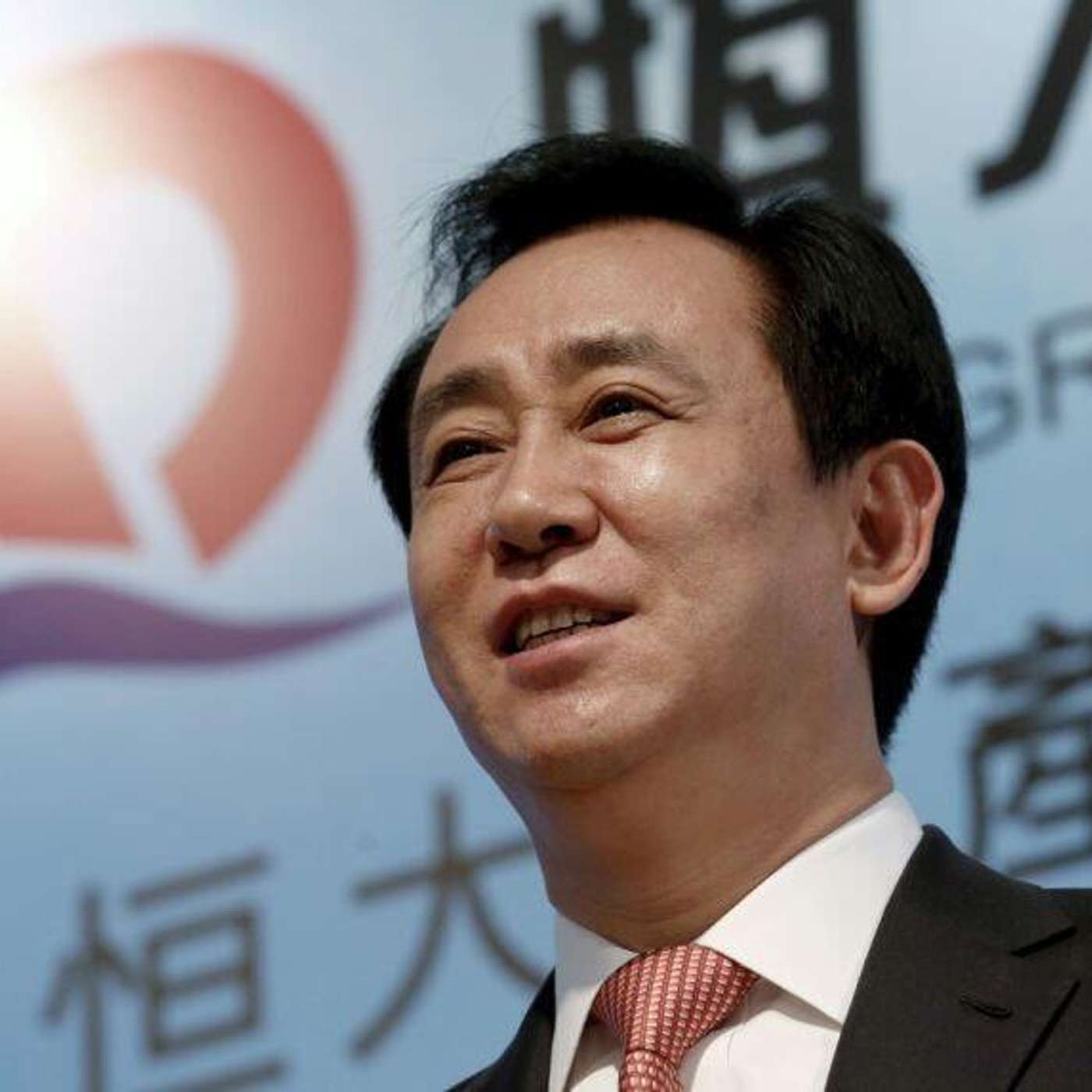
Welcome to the 645 new members of the curiosity tribe who have joined us since Friday. Join the 33,832 others who are receiving high-signal, curiosity-inducing content every single week.Today’s newsletter is brought to you by Demand Curve!The Growth Newsletter by Demand Curve is my new favorite newsletter subscription.They interview hundreds of Y Combinator founders to find out what works. Then they pack each issue with actionable growth insights—so you can apply them to your startup or personal brand. It gives me new ideas every single week. I can’t recommend it more highly. Catch their next issue by signing up today.The Evergrande Train WreckThe calamity surrounding The Evergrande Group—the massively over-indebted Chinese property developer—is the train wreck that the world can’t help but watch.It’s fascinating—and carries a lot of interesting learnings on finance and business—so I wanted to share more about the situation with all of you curious folks out there!Here’s a breakdown on the business, background, and its rapid, very public demise:BackgroundThe Evergrande Group is a Fortune 500 real-estate developer with headquarters in Shenzhen, Guangdong, China. It was founded in 1996 by Hui Ka Yan in Guangzhou and scaled up over time from a small local player into a national behemoth.Today, it's big…very big. As recently as 2020, it had sales of >$100 billion and adjusted core profits of ~$5 billion. The below chart of its financials gives a perspective on its recent and rapid growth.At its core, it's a homebuilder business—developing from the ground up and selling properties to Chinese consumers. Its website states that it has over 1,300 projects across 280+ cities.But recently, it has pushed the boundaries of its homebuilding circle of competence, making investments in electric vehicles (Evergrande New Energy Auto), an internet and media production unit (HengTen Networks), a theme park (Evergrande Fairyland), a soccer team (Guangzhou F.C.) and a mineral water company (Evergrande Spring).The Business ChallengeAs a developer, Evergrande had to contend with a highly cash-consumptive growth profile.Why? Well, building a new development project may take many months (even years) and requires a lot of cash outflows along the way—you have to buy the land, pay for construction costs and permitting, etc. Meanwhile, with the exception of smaller upfront deposits, cash collections from buyers typically don’t come in until much later, after the project is completed.This creates a challenging cash conversion cycle (the time it takes to convert investments in inventory/resources into cash) that almost any property developer has to deal with. So how did Evergrande fund its impressive growth?Debt—it borrowed aggressively, even by real estate property development standards.It became the world's most heavily-indebted developer, with a debt load of over $100 billion and over $300 billion in outstanding liabilities.As is pointed out in the brilliant thread below (tip of the hat!), there is a bit of a moral hazard problem that was created along the way. Evergrande was largely indifferent to pricing on the land and properties it was purchasing and building, knowing that the risk would be passed off to banks or other financial institutions financing the purchases.The debt-fueled growth propelled Evergrande—and its now billionaire founder—into an elite class. It entered the Fortune 500 at #496 in 2016 and reached #122 by the latest ranking. As the company amassed an enormous debt burden, it also paid out handsome dividends, with Hui Ka Yan (its largest shareholder) reportedly receiving over $5 billion in dividends since 2018.The Debt SpiralBut debt is a double-edged sword—and Evergrande was overdue to catch the other edge.As its debt burden grew, so did the interest payments on that debt. This is (mostly) fine, so long as revenues and profits—with which you can make these payments—continue to grow. But if the growth or profitability slows (or government restricts borrowing!), it's...well…not fine.Imagine a metaphorical boa constrictor tightening its grip on its prey. You can try to resist—borrow more to make your payments—but that only fuels the snake. Moreover, the knowledge of your precarious position increases risk and makes that borrowing more challenging and costly.In Evergrande's case, the snake formally tightened its grip in 2020. It had its first major liquidity scare—a potential inability to meet its liabilities—sending a letter to the local provincial government warning that its upcoming payments could cause a crisis with systemic financial sector risks.In a cynical sense, sending a letter to the government warning that your collapse poses “systemic financial risk” is a pretty savvy tactic—hype up your importance to force the government’s hand. If you collapse and they did nothing, you can point to the letter and say “I told you so” and make them look bad. More likely, they act in advance and bail you out to save you.
Ep 27The Best Advice You've Ever Received
Welcome to the 574 new members of the curiosity tribe who have joined us since Friday. Join the 32,682 others who are receiving high-signal, curiosity-inducing content every single week. Share this on Twitter to help grow the tribe!Today’s newsletter is brought to you by Tegus!Tegus has been a complete game changer for my research and learning process. Tegus is the leading platform for primary research—it offers a searchable database of thousands of instantly-available, investor-led interviews with experts on a wide range of industries, companies, and topics. It’s fast and cost-effective, enabling you to do great primary research without breaking the bank.Special Offer: Tegus is offering a free 2-week trial to all Curiosity Chronicle subscribers—sign up below to level up your research game today!The Best Advice You’ve Ever ReceivedA few weeks ago, I asked my audience a simple question:In 24 hours, 2,000+ responses flooded in from all corners of the world (if you haven’t realized it already, the internet is absolutely amazing).The advice ran the spectrum—from serious to lighthearted, from inspiring to morbid.So today, I want to do something a bit different. I want to share the best advice you’ve ever received. Prolific Idea was kind enough to make simple, powerful visualizations for many of them, which are made to be shared and enjoyed.My hope is that you find one piece of advice below that resonates with you and changes your outlook.Without further ado…here’s the best advice you’ve ever received:Strong FoundationsPut good things between you and the earth. Buy a good bed, boots, and tires.Closed MouthsIf you don’t ask, you don’t get. Closed mouths don’t get fed.Thinking vs. DoingIn regards to doing something you don't want to do...Don't think about it, just start doing it. The more you think about it, the more reasons you'll give yourself to not do it.Walking TallWalk like you have 3000 ancestors behind you.Proud DecisionsMake decisions today that you'll be proud of tomorrow.Life Isn’t FairLife gets a lot easier when you just accept that life isn’t always fair.Birth & DeathWhen you were born, you cried, but the whole world smiled at you. Live a life such that when you die, the whole world cries, but you smile.Find Your PeopleThe world is cold and nasty but there are still a lot of good people. You just have to find 1 or 2 and you will start loving the world.NegotiationsIn life, you don’t get what you deserve, you get what you negotiate.The Two Most Important DecisionsThe two most important decisions that you make in life are what you do for a living and who you marry.You get these two correct and you'll have a nice life.Uncomfortable ConversationsYour success in life is largely dependent on how many uncomfortable conversations you’re willing to have.Invest in YourselfInvest in yourself before you invest in others.OptionsThere are always more options than you realize and things are never as bad as they seem.Anything & EverythingYou can have anything you want in life, but you can't have everything.Stupid & ToughIf you’re gonna be stupid, you’d better be tough.Come at the KingYou come at the King, you best not miss.The Juicy PitchWait for a juicy pitch.Life doesn’t reward you for the number of swings you take. Focus on identifying the juiciest pitch. When it comes, swing hard and don’t miss it.Simple is BeautifulThe best moments you’ll ever have in your life are the simplest.Slipping into clean sheets. Hiking right after a storm. A night talking with friends. Being there for others. Helping a friend.What you think of as painful will simply be erased in time.Behavior vs. WordsPay attention to people's patterns of behavior. They are better guides than their words.Experience PyramidExperience is like a pyramid.The broader the base, the higher you can build. So, diversify your experience early in your career.Learn vs. EarnParticipate to learn, not to earn. The latter will come with practice.Can vs. ShouldJust because you can, doesn’t mean you should.So there you have it. 20 pieces of the greatest advice you’ve ever received. I hope you found one piece of advice that inspired you or changed your outlook on the week.Special thank you to Prolific Idea for the incredible visualizations.The original thread can be found below:Sahil’s Job Board - Featured OpportunitiesSkio - Founding Engineer ($50K REFERRAL BOUNTY!)Hyper - Chief of StaffConsensus - Lead Software EngineerScaled - Direct of OperationsFairchain - Software Engineer, Full StackCommonstock: Community Manager, Social Media Manager, Marketing DesignerIncandescent - Operations AssociatePractice - Chief of StaffMaven - GM of Partnerships & OpsOlukai - VP of E-CommerceHatch - Senior PM, Senior Product Marketing ManagerAbstractOps - Head of EngineeringOn Deck - Forum Director, CFO Forum, VP FinanceMetafy -

Ep 26Incentives: The Failure & The Fix
Welcome to the 716 new members of the curiosity tribe who have joined us since Friday. Join the 32,004 others who are receiving high-signal, curiosity-inducing content every single week. Share this on Twitter to help grow the tribe!Today’s newsletter is brought to you by Tegus!Tegus has been a complete game changer for my research and learning process. Tegus is the leading platform for primary research—it offers a searchable database of thousands of instantly-available, investor-led interviews with experts on a wide range of industries, companies, and topics. It’s fast and cost-effective, enabling you to do great primary research without breaking the bank.Special Offer: Tegus is offering a free 2-week trial to all Curiosity Chronicle subscribers—sign up below to level up your research game today!Today at a Glance:Incentives are everything—an uber-powerful force governing our interactions, organizations, and society.Unfortunately, humans are astonishingly bad at establishing incentives—we consistently create systems that invite manipulation and unintended consequences.The framework for better incentives involves six key pillars: Objectives, Metrics, Anti-Metrics, Stakes & Effects, Skin in the Game, and Clarity & Fluidity.Incentives: The Failure & The Fix“Show me the incentive and I will show you the outcome.” — Charlie MungerIncentives are everything—an uber-powerful force governing our interactions, organizations, and society.Well-designed incentives have the power to create great outcomes; poorly-designed incentives have the power to…well…create terrible outcomes.Unfortunately, humans are astonishingly bad at establishing incentives—we consistently create systems that invite manipulation and unintended consequences. More often than not, we wind up in the poorly-designed camp scrambling for answers and quick fixes.Let’s change that…In today’s piece, I will share a framework for establishing incentives (that actually create desired outcomes).Incentives: The FailureLet’s start with a basic definition of incentives:Incentives are anything that motivates, inspires, or drives an individual to act in a specific manner. They come in two forms: intrinsic and extrinsic.Intrinsic incentives are internal—created by self-interest or desire. Extrinsic incentives are external—created by outside factors, typically a reward (positive incentive) or punishment (negative incentive).For today, we'll be focusing on extrinsic incentives…In a (very) simple model, extrinsic incentives involve two key components:Measure: The metric that the individual or group will be judged upon. The measure can be quantitative (KPIs, metrics, etc.) or qualitative.Target: The level of the measure at which a reward or punishment will be initiated. The target can be specific (you receive your incentive if the KPI hits X level) or general (you receive your incentive if your manager is satisfied with your work).But there is a real problem here. This simple model of incentives—which will feel familiar if you have ever worked in the government, a large organization, or anywhere really—often leads to undesirable outcomes and unintended consequences.Goodhart’s LawGoodhart’s Law is quite simple: When a measure becomes a target, it ceases to be a good measure. If a measure of performance becomes a stated goal, humans tend to optimize for it, regardless of any associated consequences. The measure loses its value as a measure!Goodhart’s Law is named after British economist Charles Goodhart, who referenced the concept in a 1975 article on British monetary policy.“Any observed statistical regularity will tend to collapse once pressure is placed upon it for control purposes.” — Charles GoodhartBut the concept was popularized by anthropologist Marilyn Strathern. In a 1997 paper, she generalized the thinking and called it Goodhart’s Law.“When a measure becomes a target, it ceases to be a good measure.” — Marilyn StrathernIt became a mental model with considerable practical relevance—a phenomenon that has been observed time and again throughout history.Let's look at a few examples and use them to build a mental model for where incentives go awry.The Cobra EffectThere were too many cobras in India. The British colonists—worried about the impact of these deadly creatures—started offering bounties for cobra heads.Locals excitedly began breeding cobras, chopping off their heads, and turning them in to earn the bounties. When the breeding got out of hand, some of the breeders were forced to release the cobras onto the streets, thereby increasing the population of cobras.Clearly not what the British had in mind…The British viewed cobra heads as a simple way to measure cobra elimination, so it gave the population an incentive to deliver cobra heads. The result? Locals gamed the system, breeding cobras to earn the bounties.An incentive designed to reduce the cobra population actually increased it!Soviet NailsIn order to meet their ambitious goals, the Soviets n

Ep 25How to Learn Anything
Welcome to the 715 new members of the curiosity tribe who have joined us since Friday. Join the 30,964 others who are receiving high-signal, curiosity-inducing content every single week. Share this on Twitter to help grow the tribe!Today’s newsletter is brought to you by Tegus!Tegus is the leading platform for primary research—it offers a searchable database of thousands of instantly-available, investor-led interviews with industry experts on a wide range of industries, companies, and topics. It’s fast and cost-effective, enabling you to do great primary research without breaking the bank. I love the Tegus platform and am using it for my investment and general research purposes.Tegus is offering a free 2-week trial to all Curiosity Chronicle subscribers—sign up below to level up your research game today!Today at a Glance:Learning is a skill—but we need a new way to approach learning that is fast, nimble, and tailored for our ever-changing digital reality.The framework for learning anything: (1) Identify & Establish, (2) Research, (3) Skin in the Game, (4) Engage Community, (5) Teach, and (6) Reflect & Review.The New Way to LearnLearning is a skill—arguably the most important skill. But unfortunately, despite its importance to your career and life, it’s not one you’re ever explicitly taught how to approach.Let’s fix that.Today, I will share a tactical approach to learning anything.IntroductionCuriosity and inspiration are not predictable—they strike at random (and often inopportune!) times. But they must be acted on.Growth is a natural byproduct of acting on curiosity and inspiration.“Inspiration is perishable. When you have inspiration, act on it right then and there.” - NavalOk, so let’s assume you've been bit by the curiosity bug and are ready to act on it. Now what? You’re inspired and motivated to learn, but you don’t even know where to begin.All your years of school didn't really prepare you for this. The "old way" of researching and learning—reading textbooks cover-to-cover, checking books out of the library, scouring footnotes for primary and secondary sources—is slow, arduous, and a relic of our analog, industrial past. It may work for school (e.g. if you are writing a final thesis or research paper), but it fails spectacularly in the real world.You need a "new way"—a fast, dynamic, and nimble approach tailored to the new, ever-changing digital reality. I’d like to propose a “new way” for consideration.This learning framework involves six key steps:Identify & EstablishResearchSkin in the GameEngage CommunityTeachReflect & ReviewThe general structure is fixed, but its application is intended to be dynamic & iterative.Let's walk through the steps...Identify & EstablishThe framework begins with a blank page—one that you will progressively fill out as you work through the steps.Identify the topic and quickly write down everything you know about it. Put the topic at the top of the page and drop in the extent of your current knowledge below it. It’s ok if you know nothing about it. The goal is just to get something down on the page. There are very few things as intimidating as starting from zero, so we can use this quick blast to engage in some mental trickery to get going.Here’s a simple example of what this start might look like. Nothing fancy (other than my cool snake emoji icon).I use Notion for my notetaking—I like being able to pull in other links and resources—but anything works (including pen and paper if you are old fashioned).Paradoxically, starting by writing what you do know is the best way to highlight what you don't know. This first action highlights the gaps in your knowledge and understanding of the topic. The goal here is simply to set the stage—establish the holes before filling them.ResearchThis is where the real fun begins—it’s time to learn.The most effective strategy for research: start horizontal, then go vertical.Horizontal = BreadthVertical = DepthWith apologies for the poor artistry—though I might be able to sell this as an NFT for $2 million—this is a simple graphic of how to think about the time spent in each phase. The bulk of your time and learning will occur in the vertical research phase (red), but the horizontal research phase (green) is critical to foundation-setting.Allow me to elaborate:Horiztonal ResearchHorizontal research lays the foundation for your learning. When you start horizontal, you gather information across the full breadth of the topic area. This gives you the capacity to "see the entire field”—it draws a surface-level map of the topic.With horizontal research, it’s perfectly acceptable to keep it simple: Google and Wikipedia (sorry to all of my high school teachers!) are both great tools.Use your note-taking workspace to document the horizontal information. Take notes on the key pillars of a topic, add screenshots or links where relevant, and mark any particularly interesting areas for a deep-dive.Note the underlying sources that pr
Ep 24When Mental Models Attack
Welcome to the 198 new members of the curiosity tribe who have joined us since Friday. Join the 29,071 others who are receiving high-signal, curiosity-inducing content every single week. Share this on Twitter to help grow the tribe!Today’s newsletter is brought to you by M1 Finance!M1 Finance is an all-in-one finance super app - allowing you to invest, borrow, and spend on one easy-to-use, technology-driven platform. I’m a huge fan of their smart dollar-cost averaging features, which take the emotions out of your investment process. M1 has low minimums and offers smart auto-invest, zero commission trades, and so much more. I love the platform and know you will too!Join thousands of other happy customers and open an M1 account today!Today at a Glance:Mental models and maps are representations of reality. They take the complexity of reality and reduce it down to something more manageable.“The map is not the territory” is a meta mental model for assessing and understanding the applicability of mental models. If you don’t understand and appreciate a model’s applicability (or lack thereof) to a given situation, you are certain to get lost.Humans have a tendency to over-apply mental models after we see them work. Awareness and constant reflection is the path to avoid this tendency (and avoid getting lost).When Mental Models AttackIf you’ve been following me on Twitter (or if you’re a long-time subscriber to this newsletter), you know that I enjoy writing about mental models.If you’re new to the term, mental models are simply representations of how the world works. The world is filled with complexity, so we constantly create mental models to help us simplify the complexity by reducing it down to a more manageable representation of fact.In most of my writing, I cover the many successes of mental models - they can be extremely useful tools when applied appropriately. But unfortunately, when misapplied, these "useful" models become anything but.My key point? Mental models are only as good as the soundness of their application. Knowing how and when to apply the different models in your toolkit is just as important as having them in your toolkit in the first place.Today, I’d like to talk about a mental model to help you understand the failings of mental models.Very meta, I know…“The Map is Not the Territory”"The Map is Not the Territory" is a core, foundational mental model for assessing and understanding the applicability of mental models. It's a critical addition to your decision-making toolkit. If you don’t understand and appreciate a model’s applicability (or lack thereof) to a given situation, you are certain to get lost.Let’s begin with some basics. First off, for the purposes of this piece, I will use the terms “map” and “mental model” interchangeably. Both terms can simply be thought of as representations of reality. They take the complexity of reality and reduce it down to something more manageable. Because of the reduction in complexity, they enable faster, higher-powered decision-making.But there are two potential problems:What if you are using the wrong map? Trying to navigate Ohio with a map of Mississippi seems…bad.What if the map is overly-simplified? Trying to navigate a 100-yard stretch of Amazon River rapids with a map of the entire 4,000+ mile river seems…bad.In both situations, the map (your mental model) is not an accurate, helpful representation of the territory (the problem you are looking to solve). Pushing forward in spite of this would be dangerous, perhaps even deadly (in the case of the Amazon rapids!).“The map is not the territory” can be thought of as a simple, intuitive reminder (or mantra?) to constantly understand, evaluate, and critique the validity and applicability of your mental models to a given scenario.HistoryWhere did this concept - of the map, the territory, and their potential mismatch - originate?Well, the general concern has been around for centuries. Explorers have long known about the dangers of over-reliance on maps when venturing into new territories. All were aware that early cartographers took certain...liberties. Claudius Ptolemy - the famed Roman mathematician, astronomer, and geographer - was known for filling in blanks on his maps with reckless artistic license. Basically, if he didn’t know what went into a blank area on a map, he just…made it up.As you can imagine, these maps had limited usefulness. They were not accurate representations of the territories they were intended to simplify.The concept was popularized as a mental model by Polish-American mathematician Alfred Korzybski in 1931.In a paper on mathematical semantics, he cemented the concept by dictating two related, critical points:"A map is not the territory.""A map may have a structure similar or dissimilar to the structure of the territory."In simple terms:Maps are representations of reality, not actual reality.The quality of this representation of reality can vary greatly. Korzybski was pointing out t
Ep 23Productive Discomfort: The Socratic Method
Welcome to the 398 new members of the curiosity tribe who have joined us since Friday. Join the 28,496 others who are receiving high-signal, curiosity-inducing content every single week. Share this on Twitter to help grow the tribe!Today’s newsletter is brought to you by M1 Finance!M1 Finance is an all-in-one finance super app - allowing you to invest, borrow, and spend on one easy-to-use, technology-driven platform. I am a longtime fan of the product, but have truly been blown away by the accelerating pace of new product rollouts. M1 has no minimums and offers smart auto-invest, zero commission trades, and so much more. I love the platform and know you will too!Join thousands of other happy customers and open an M1 account today!Today at a Glance:Children ask questions to understand the world around them and establish first principles; but somewhere along the way, they are told to stop exploring.The Socratic Method is a cooperative, argumentative process of asking questions to expose flawed logic, establish first principles, and generate creative, imaginative solutions to complex problems.It can be put to use in a wide variety of scenarios, including in the worlds of investing, startup building, and education.Productive Discomfort: The Socratic MethodHumans are born with remarkable curiosity. But somewhere along the way, we are told to stop asking questions. We are told to just accept things. We are told to stop exploring.The result? Unimaginative, linear minds and atrophied critical thinking skills.Fortunately, there is a proven strategy for reclaiming your curiosity, stimulating critical thinking, and establishing first principles.The Socratic Method.IntroductionThe human mind is naturally wired for critical thinking.Children are born with an innate curiosity - a desire to understand the world and all of its complexities. If you have kids (or have been around them), you’ve seen this in action. They constantly, incessantly ask “Why?” about absolutely everything.Here’s a common occurrence for any parent:Mom: “Ok, it’s time for bed. You need to get some sleep.”Kid: “Why?”Mom: “Because you need sleep to think clearly and grow.”Kid: “Why?”I’ll stop. You can see where this is going…The reality is they aren’t doing it to be annoying (contrary to what many parents might think!). Children ask questions in order to develop a deeper understanding their existence and surroundings. The world is fascinating. Everything is so new to a child.They ask questions in an effort to dive deeper, think critically, and establish first principles. And newsflash…it works!How many times has a parent had the above interaction, only to realize that they themselves do not know the answer to the questions being asked? If open to the idea, it leads to new learning of fundamental truths (e.g. why humans need to sleep!).Children are the original first principles thinkers.Unfortunately, as we get older, we are typically told - by teachers, our parents, or otherwise - to stop asking questions. Responses like “Because I said so” or “Because that’s how we’ve always done it” pile up. Our critical thinking muscles begin a slow, steady decay into adulthood. We begin to rely on base assumptions that we have been told are true (but have not independently verified).In certain cases, this can be (mostly) fine. Heuristics and decision-making razors are helpful in making quick decisions.But when dealing with more complex edge cases where creativity is required, using heuristics can lead to unimaginative, linear solutions that closely resemble what has been done before.So how do we fight back, rebuild our critical thinking muscles, and establish first principles?Enter our powerful tool: The Socratic Method.HistoryThe Socratic Method is a process of asking and answering questions to stimulate critical thinking and expose and vet underlying assumptions and logic. It is both cooperative and argumentative. It is a strategy for establishing first principles (the basic, foundational truths) in a problem solving process or discussion.Its aim is to create an environment of productive discomfort for its participants.The Socratic Method is named after the Greek philosopher, Socrates, who developed it as an alternative method of debate and teaching. Socrates disagreed with the style of the “sophists” of the era - teachers who used rhetoric and gravitas to entertain and persuade students.Believing that sophists were promoting a self-centered style, he began promoting the Socratic Method as an alternative. The basic structure involved progressive questioning to expose flawed logic, eliminate hypotheses, and sharpen thinking.Let’s cover how it works…The Socratic Method in PracticeThe Socratic Method is dynamic, but typically follows a general four step structure:Start with open-ended questions.Propose ideas based on these questions.Probe these ideas with progressive questioning.Repeat steps 2 and 3 until the best ideas are developed.Imagine your team has encountered

Ep 22The Cognitive Bias Handbook Part II
Welcome to the 537 new members of the curiosity tribe who have joined us since Friday. Join the 27,544 others who are receiving high-signal, curiosity-inducing content every single week. Oh, and share this on Twitter to help grow the tribe!Today’s newsletter is brought to you by Morning Brew!Morning Brew is on my must-read list every single day. There's a reason over 3 million people start their day with Morning Brew — it’s a free daily email that delivers the latest news from Wall Street to Silicon Valley in an easy-to-digest format. Join millions of others and subscribe today!Today at a GlanceCognitive biases are systemic errors in thinking that negatively impact decision-making quality and outcomes.Combatting cognitive biases relies first and foremost on establishing a level of awareness of the biases, but each has its own specific combat strategies as well.Overview, examples, and combat tactics for common biases, including Loss Aversion, Endowment Effect, Ben Franklin Effect, Availability Bias, Survivorship Bias, Ikea Effect, Hindsight Bias, Plan Continuation Bias, Gambler’s Fallacy, and Curse of Knowledge.The Cognitive Bias Handbook - Part IICognitive biases are systemic errors in thinking that negatively impact decision-making quality and outcomes. I recently shared a Twitter thread covering the basics of 20 cognitive biases - but it was admittedly surface-level (280 characters only allows for so much depth and nuance on a topic!).Last week, I went deeper, with Part I of The Cognitive Bias Handbook, covering 10 common cognitive biases, including examples and ways to combat each. Today, I will cover the remaining 10. As a reminder, this two-part newsletter series was split as follows:Part I (last week) covered Fundamental Attribution Error, Bandwagon Effect, Egocentric Bias, Naïve Realism, Baader-Meinhof Phenomenon, Pygmalion Effect, Confirmation Bias, Backfire Effect, Anchoring, and Dunning-Kruger Effect.Part II (today) covers Loss Aversion, Endowment Effect, Ben Franklin Effect, Availability Bias, Survivorship Bias, Ikea Effect, Hindsight Bias, Plan Continuation Bias, Gambler’s Fallacy, and Curse of Knowledge.This handbook is designed to be a resource you can save and come back to whenever you need a refresher. Given the volume and importance of the information, I am considering working with an illustrator to convert it into a physical/digital book that you can reference as well. Stay tuned!Without further ado, let’s dive into Part II…Loss AversionWhat is it?The pain of losing something is more powerful than the pleasure of winning it.Loss aversion was first identified by famed behavioral scientists Amos Tversky and Daniel Kahneman, who found that humans had a tendency to prefer avoiding losses over acquiring equivalent gains. Accordingly, people were typically willing to take actions to avoid losses that they wouldn’t have taken to seek gains.Economists had previously assumed humans were rational actors - that $100 in losses would drive the same amount of pain as $100 in gains would create pleasure. Wrong. Humans are enigmatic creatures!ExamplesInvestors - professional and amateur alike - exhibit loss aversion. The pain and fear of realizing a loss often leads investors to hold onto losing positions much longer than they should.Gamblers who are in the red for a given night often risk much more to try to get back into the black (above breakeven) than they should.How do you combat it?Loss aversion is hardwired into our primate brains, but as always, awareness is the first step to fighting back against its influence.Avoid emotional connection to your possessions - whether they are investments, material items, or money. Attempt to distance your emotions from the decision-making process where possible.Ask questions:Am I being objective and rational in this decision?Am I letting my emotions influence my decision?Am I too connected emotionally to make a rational decision?If you are too connected to a given decision, you may need to outsource it to an objective third-party.The Endowment EffectWhat is it?A close relative of loss aversion, the endowment effect (sometimes called “divestiture aversion”) says that once we have something, we don't want to give it up.Specifically, we demand more to give up an object than we would be willing to pay to acquire it. In slightly more scientific terms, willingness to pay (“WTP”) to acquire an object is typically lower than willingness to accept (“WTA”) to give up an object.ExamplesIn a classic experiment performed by Richard Thaler, two groups of people were placed in a room and given either (a) a fancy pen or (b) a coffee mug. They were then asked if they would be willing to trade their item for the alternate item. Both groups expressed an unwillingness to trade their endowed item for the alternate item, even though they had similar objective values.In another study of NCAA Final Four ticket-holders, it was found that their WTA was ~10x+ higher than their WTP for the s
Ep 21The Cognitive Bias Handbook Part I
Welcome to the 840 new members of the curiosity tribe who have joined us since Friday. Join the 26,411 others who are receiving high-signal, curiosity-inducing content every single week! Oh, and share this on Twitter to help grow the tribe!Today’s newsletter is brought to you by MicroAcquire!MicroAcquire is revolutionizing the startup acquisition process. As the #1 startup acquisition marketplace in the world, MicroAcquire provides a platform covering everything you need in order to buy and sell startups. The company recently raised a $6.3 million seed round from a long list of technology entrepreneurs and investors (including this humble newsletter writer!) and is poised for rapid growth.If you are interested in buying or selling a startup, check out MicroAcquire today!Today at a GlanceCognitive biases are systemic errors in thinking that negatively impact decision-making quality and outcomes.Combatting cognitive biases relies first and foremost on establishing a level of awareness of the biases.Overview, examples, and combat tactics for common biases, including Dunning-Kruger Effect, Fundamental Attribution Error, Bandwagon Effect, Egocentric Bias, Naïve Realism, Baader-Meinhof Phenomenon, Pygmalion Effect, Confirmation Bias, Backfire Effect, and Anchoring.The Cognitive Bias Handbook - Part ICognitive biases are systemic errors in thinking that negatively impact decision-making quality and outcomes. I recently shared a Twitter thread covering the basics of 20 cognitive biases - but it was admittedly surface-level (280 characters only allows for so much depth and nuance on a topic!).So here we are. It’s time to dive deeper on cognitive biases, including examples and specific ways to combat each one. To avoid a monstrous newsletter piece that no one has the time to read (or listen to), I will be splitting the coverage of the 20 cognitive biases across 2 newsletters over the coming weeks (with each covering 10 common biases).This two-part newsletter series will be split as follows:Part I: Fundamental Attribution Error, Bandwagon Effect, Egocentric Bias, Naïve Realism, Baader-Meinhof Phenomenon, Pygmalion Effect, Confirmation Bias, Backfire Effect, Anchoring, and Dunning-Kruger Effect.Part II: Ben Franklin Effect, Loss Aversion, Endowment Effect, Availability Bias, Survivorship Bias, Ikea Effect, Hindsight Bias, Plan Continuation Bias, Gambler’s Fallacy, and Curse of Knowledge.This handbook is designed to be a resource you can save and come back to whenever you need a refresher. Without further ado, let’s dive into Part I…Dunning-Kruger EffectWhat is it?The Dunning-Kruger Effect says that people with a low objective ability at a task are prone to overestimate their ability at that task.Humans are notoriously incapable of objective evaluation of themselves, including of their competency levels.(Note: see below for a deep-dive thread I wrote on Dunning-Kruger!)Examples“Everyone is a genius in a bull market.”This is a common phrase heard in the investment world during bull markets. When everyone is making money, everyone starts to fancy themselves expert investors. They fail to separate their objective skill at the task from the outcomes.If you start hearing more and more people bragging about their stock market prowess, the market is entering the danger zone.How do you combat it?Several tactical strategies for combatting the Dunning-Kruger Effect:Identify your circle of competence: Know what you know, and what you don’t.Get comfortable with “I don’t know”: Most people are afraid of this phrase. Get comfortable with it.Challenge yourself: Consistently challenge your belief on your own competency ratings. Do you actually know something as well as you think you do? What would an unbiased third-party say?It will feel uncomfortable - you’ll be challenging your most basic instincts. If you persist, you’ll be less prone to falling victim to the Dunning-Kruger Effect.Fundamental Attribution ErrorWhat is it?Fundamental Attribution Error (or “FAE” for short) is the human tendency to hold others accountable (while giving ourselves a break).It says that humans will tend to:Attribute the actions of others to their character (and not to their situation or context).Attribute our own actions to situation and context (and not to our character).Why do we do this? Well, as with many of the biases we will cover, it likely developed as a heuristic (a problem-solving or decision-making shortcut), in this case for simplifying the process and judgement around new human relationships.From an evolutionary perspective, quickly attributing negative actions to character (rather than situation or context) may have kept you alive, as you’d be more likely to avoid that individual.But in a modern context, being prone to FAE can create real problems.ExamplesThe workplace is a common FAE breeding ground.It is easy to form perspectives on the character of colleagues and bosses based on small pieces of information. If a colleague arrives late for

Ep 20Invert, Always Invert
Welcome to the 750+ new members of the curiosity tribe who have joined us since Friday. Join the 24,766 others who are receiving high-signal, curiosity-inducing content every single week!Today’s newsletter is brought to you by AppSumo!AppSumo was founded with one goal in mind: to give entrepreneurs the tools they need to grow their businesses, at a fraction of their regular cost. To do this, AppSumo partners with the hottest tech companies and gets you insane deals on their products and services. You’ll save money and discover exciting, up-and-coming technologies. I’m a customer, you should be too. Check it out below to take advantage!Today at a GlanceInversion is a simple, powerful mental model for solving complex problems.When problems become challenging to solve forwards, they may be more readily solved backwards.Inversion has a wide variety of applications, ranging from investing to business to leadership to relationships.Invert, Always InvertThe world is an exceptionally complicated and competitive arena. On any given day, you wake up, encounter a wide array of challenging, multivariate problems, make decisions with highly-imperfect information, and then plan to do it all over again the next day.To outperform in this complicated and competitive arena, you need serious problem-solving skills. Fortunately, contrary to what many of you have been told, these skills can be learned.Today, I’d like to cover inversion - a simple, powerful mental model for thinking clearly and solving complex problems.The History of InversionWhen solving problems, the human mind is wired to think in linear, logical, forward terms. This is (probably, I’m not a scientist!) due to the types of problems our ancestors faced - avoiding getting eaten by large animals, hunting other large animals, searching for the next meal, etc. These problems were inherently ephemeral and discrete - they had clear lines of action/reaction and obvious allies and enemies. But as humanity entered the Agricultural Age, followed by the Industrial Age, followed by now the Digital Age, our problems seemed to change. They got much more complex. As Notorious B.I.G. famously said, “Mo technology, mo problems” (or something like that?). As the problems get increasingly complex, the forward, logical process evolved in our ancestors often fails. Enter our simple, powerful mental model: inversion.Let’s start with the basics. What is inversion?Inversion is a mental model and thinking tool used by some of the world’s greatest thinkers and problem solvers. Simply put, it says that when problems become challenging to solve forwards, they may be more readily solved backwards.Inversion as a general thinking tool has been around for millennia. Stoic philosophers would perform an exercise they called “premeditatio malorum” - roughly translating to “the pre-meditation of evils” - in which they would imagine the worst case scenario ahead of time. They believed that this exercise would force them to engage in behavior and make plans to avoid this outcome.The more formal mental model was popularized by German mathematician Carl Jacobi in the mid-1800s. Jacobi was famous for his work in advancing the field of elliptic functions. Wikipedia tells me elliptic functions are “a special kind of meromorphic functions, that satisfy two periodicity conditions” - which provided approximately zero clarity, so I’ll just stick to my lane.When faced with difficult problems (which happened frequently!), Jacobi had a strategy: “Man muss immer umkehren.”The loose translation: “Invert, always invert.”Jacobi frequently used this strategy if he were to be stumped on a challenging math problem. Rather than continuing to look at it the same way (forwards), he would restate it in inverse form (backwards). This new, creative perspective often allowed him to solve the problem more easily.Fast forward 100+ years and inversion went mainstream when Charlie Munger made one classic, quintessentially pithy remark:“All I want to know is where I’m going to die, so I’ll never go there.”Munger realized that forward, logical thinking can only take you so far. To solve certain problems, you have to think differently.Inversion is just that: a method for thinking about a problem differently. It requires you to look at things from a different angle to embrace a new perspective. Just as the captain surveys the battlefield for a new vector of attack, you too have to uncover a novel approach.Perhaps more importantly, inversion trains your mind to think dynamically. Athletes have long known that training in a single plane leads to stasis. The same principle applies to the mind. Inversion trains it from multiple angles.But let’s get practical. How and where can you apply it in your life?Inversion in InvestingWarren Buffett famously stated that there were only two rules of investing:"Rule #1: Never lose money. Rule #2: Never forget Rule #1."Buffett (and his business partner Charlie Munger) have often evangelized the bene
Ep 19Principles of Effective Storytelling
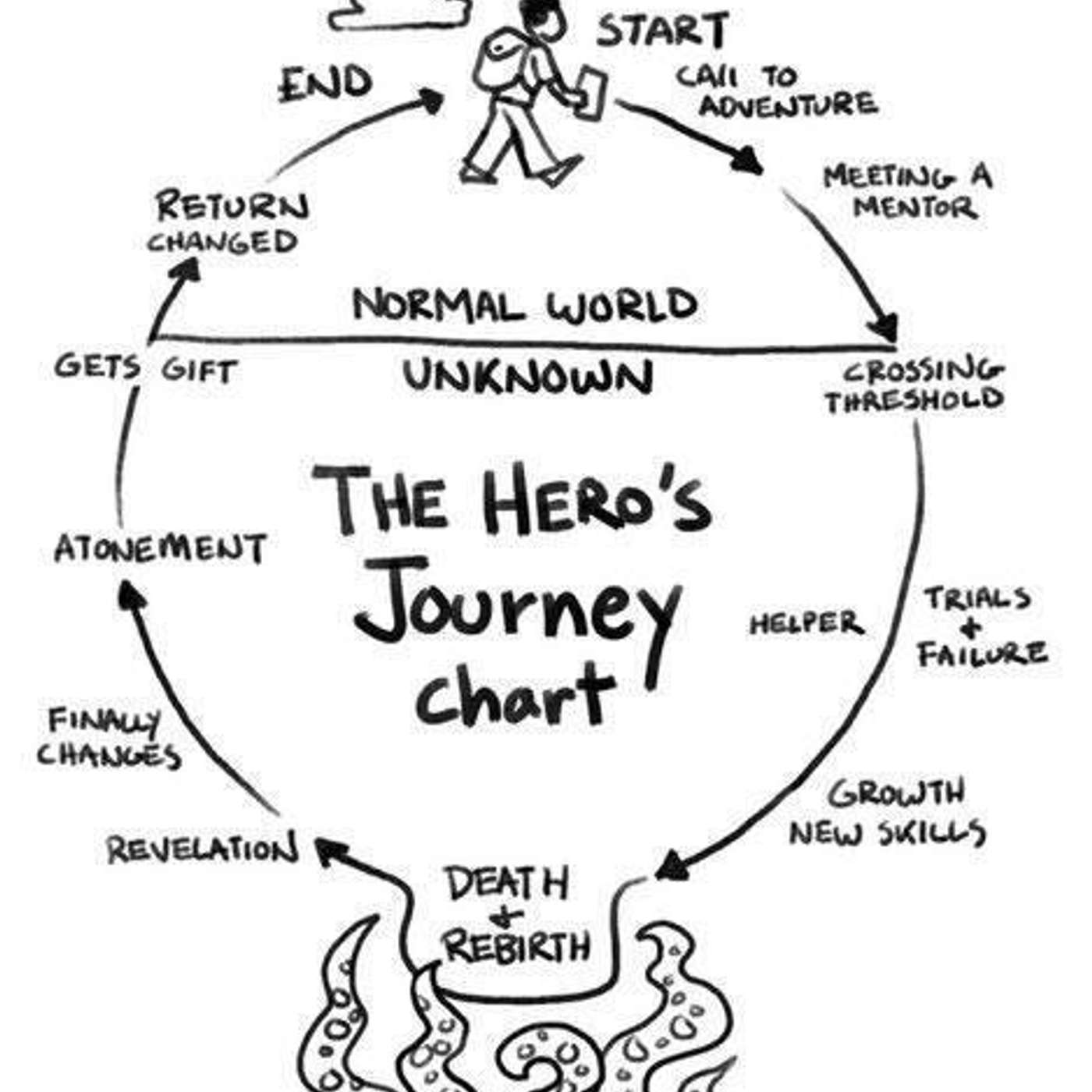
Welcome to the 500+ new members of the curiosity tribe who have joined us since Friday. Join the 23,529 others who are receiving high-signal, curiosity-inducing content every single week!Today’s newsletter is brought to you by AppSumo!Are you an entrepreneur? Do you like great deals? Great news: Sumo Day 2021 is finally here - an event for entrepreneurs hosted by my friends over at AppSumo. Think of Sumo Day as Amazon Prime Day, but for entrepreneurs. AppSumo is bringing entrepreneurs insane products, discounts, and giveaways for just 72 hours! Sign up to take advantage of the deals and get the updates straight to your inbox!Principles of Effective StorytellingStorytelling is a superpower. But it is - for one reason or another - an underrated one. It is rarely talked about alongside other key traits of highly-successful people. Instead, we glamorize traits like intelligence, creativity, and focus, calling these the “keys to success,” often completely ignoring the role that storytelling may play in the trajectories of great women and men.This misses the mark. Storytelling, I would contend, is one of the most important “weapons” to have in your arsenal. It is a key to unlocking growth in your writing, startups, marketing, business, career, or life. Moreover, it is not genetically endowed - anyone can become a great storyteller!So let’s begin our storytelling journey today…Here are 10+ principles of effective storytelling (that you can start using today):Clarity of PurposeThe best storytellers always define a clear purpose prior to crafting their story.What is the story trying to achieve? What does success look like with this story? Do you have a burning desire to tell this story? If so, why?If your answers to these questions are loose or dynamic, you’re going to have a difficult time capturing your audience from the start. The audience feeds off of your commitment and clarity. If you are lacking either, they will feel it. Guaranteed.Commit to answering these key questions before doing anything else.Define the AudienceEvery great story begins with a well-defined audience. The story you tell has to be catered to the audience to whom you will deliver it. Who is the audience? What do they consciously (or subconsciously!) want from the story?Be deliberate with this exercise. It will determine how you approach structure, emotion, novelty, and many of the other storytelling principles we will cover later in this piece.Be ruthlessly honest with yourself. The audience may look different than you expect.Establish Structure“People have forgotten how to tell a story. Stories don’t have a middle or an end any more. They usually have a beginning that never stops beginning.” – Steven SpielbergStories need structure! Imagine your story as a house - the structure is the foundation of that house. A flimsy foundation makes for a flimsy house - a sturdy foundation makes for a sturdy house. Moreover, a sturdy foundation allows the architect to get more creative with what goes on top of it, knowing that the ground will hold.There are structural archetypes you can use or leverage. Clear narrative arcs (like the “hero’s journey” often used by Pixar) work well.If you are struggling to establish structure, try using “the story spine” framework, first created by playwright Kenn Adams. It goes like this:Once upon a time there was [blank]. Every day, [blank]. One day [blank]. Because of that, [blank]. Until finally [bank].It has helped me more times than I can count. Fill it in and watch your story take shape.Weave in the EmotionEmotion is what makes great stories stick.Think about your favorite stories. How did they make you feel? It’s a safe bet that they elicited a strong emotional response - positive or negative.Take it one step further. Watch your favorite movie. Using emojis in a note document, map out your emotions (and the strength of each) that you are feeling at various points throughout during the movie. Your note doc may look something like this:😂😁😫😤😍☹️😆Learn from this. The best stories elicit deep, varied emotional responses. When you are approaching your own storytelling, make sure to weave emotion into the foundational fabric of what you create.Infuse NoveltyEvery great story is infused with novelty.Novelty comes in many different forms: Fresh, new perspectives. Surprising insights. Shock-and-awe moments. Unexpected twists.Novelty is what makes your audience say: “Oh, wow!” It is what catches them off-guard, what distances them from their linear ways of thinking. It immediately signals that this isn’t like anything they have seen, read, or experienced before.Are you meeting this burden? If you’re falling short, dig deeper.Create ContrastsStorytelling expert Nancy Duarte coined the simple “what is vs. what could be” framework for creating contrasts in your stories. This framework forces you to create contrasts to craft a captivating narrative.First, describe the reality (“what is”). Next, describe the potential future

Ep 18Hedgehogs & Foxes
Welcome to the 100+ new members of the curiosity tribe who have joined us since Friday. Join the 22,300+ others who are receiving high-signal, curiosity-inducing content every single week!Today’s newsletter is brought to you by AppSumo!Sumo Day 2021 is almost here - an event for entrepreneurs hosted by my friends over at AppSumo. Think of Sumo Day as Amazon Prime Day, but for entrepreneurs. Starting July 13th, AppSumo is bringing you insane products, discounts, and giveaways for just 72 hours! So sign up to get the updates straight to your inbox!Hedgehogs & FoxesWhat can hedgehogs and foxes teach us about startups, entrepreneurship, investing, and growth? A lot.For today’s newsletter, let me take you down the rabbit (er, fox) hole on a mental model on vision, focus, and the journey from good to great.Let's start at the beginning...In the 8th century BC, a Greek poet named Archilochus penned a line that has stood the test of time."The fox knows many things; the hedgehog knows one big thing."In the thousands of years since it was written, the meaning of Archilochus’ words has been debated by many of the greatest philosophers, historians, writers and thinkers.In a literal sense, the fox has an array of tricks at his disposal, but is defeated by the hedgehog's singular (and spiky) defense. In a figurative sense, Archilochus is highlighting the difference between those with singular vision and those with more scattered inspirations.The dichotomy of the hedgehog and the fox entered the more mainstream lexicon in 1953, when philosopher Isaiah Berlin published an essay entitled, The Hedgehog and the Fox, which would go on to be one of his most popular and well-regarded works.Berlin's essay sought to divide history's great writers and thinkers into two groups:Hedgehogs: who view the world through the lens of a single, all-encompassing ideaFoxes: who draw upon myriad experiences and cannot view the world through the lens of a single idea“For there exists a great chasm between those, on one side, who relate everything to a single central vision, one system, less or more coherent or articulate, in terms of which they understand, think and feel – a single, universal, organizing principle in terms of which alone all that they are and say has significance – and, on the other side, those who pursue many ends, often unrelated and even contradictory, connected, if at all, only in some de facto way, for some psychological or physiological cause, related to no moral or aesthetic principle.” - Isaiah Berlin, The Hedgehog and the Fox, 1953In The Hedgehog and the Fox, Berlin largely focused on categorizing writers and thinkers into these two groups. But he also - perhaps unintentionally - sparked the concept to leap into a new domain.Leadership and business.Enter stage left, Jim Collins...In 2001, renowned author Jim Collins released Good to Great, a book exploring why certain companies are able to achieve greatness after long periods of mediocrity (and why others don’t).In it, Collins referenced The Hedgehog and the Fox in building out what he referred to as The Hedgehog Concept. Collins asserted that the leaders of the good-to-great companies were all hedgehogs - people with a singular, all-encompassing vision.These leaders were uniquely capable of taking the complexity of their businesses and markets and simplifying it into a unifying idea.The Hedgehog Concept is a simple framework for identifying that unifying idea or vision.It is found at the center of:What you are passionate aboutWhat drives your economic engineWhat you can be the best atThis last point is nuanced and worth a brief aside...What can you be the best at?Most people and companies have a very tough time with this question. It's not about a process to become the best. It's not about a strategy, plan, or roadmap. It's a simple, self-reflective exercise in identifying what game you should be playing.Here's one way to go about it:Map a list of skills or attributes on a page. Where do you spike? Where do you lag? Mark the map with pluses (+) and minuses (-) accordingly. Reflect on your map.Questions to ask:What game am I playing?Am I uniquely positioned to "win" that game?What game should I be playing?The key point here is that succeeding on the journey from good to great requires you (or your company) to play a game that you can be great at! Far too many people and companies spend years languishing in the valley of mediocrity simply because they were playing the wrong game.Ok, after that brief aside (which probably deserves its own piece in the future), back to hedgehogs and foxes...We have established a mental model: Foxes have multiple motivations, while hedgehogs have a singular focus.So where might you apply this mental model in practice?InvestingWhether you are investing in startups or mature public companies, understanding management and their motivations is of paramount importance.This is often easier said than done.Try asking a simple, clarifying questio

Ep 17Mental Razors
Welcome to the 500+ new members of the curiosity tribe who have joined us since Friday. Join the 20,500+ others who are receiving high-signal, curiosity-inducing content every single week!Today’s newsletter is brought to you by Fundrise!Fundrise is the future of real estate investing - a platform that allows anyone to invest in a low-cost, diversified portfolio of institutional-quality real estate. With low minimums and no accreditation requirements, Fundrise is democratizing access to a historically exclusive asset class.Join 150,000+ other investors and start investing in real estate today!Mental RazorsRazors are rules that simplify decisions.20+ powerful razors (to help you cut through life’s noise):The ELI5 RazorComplexity and jargon are often used to mask a lack of true understanding.If you can’t explain it to a 5-year-old, you don’t really understand it. If someone uses a lot of complexity and jargon to explain something to you, they probably don’t understand it.Munger’s Rule of Opinions“I never allow myself to have an opinion on anything that I don’t know the other side’s argument better than they do.” - Charlie MungerOpinions aren’t free. You have to work to earn the right to have them.The Taleb “Look the Part” RazorIf forced to choose between two options of seemingly equal merit, choose the one that doesn’t look the part. The one who doesn’t look the part has had to overcome much more to achieve its status than the one who fit in perfectly.The Bezos Regret Minimization FrameworkThe goal is to minimize the number of regrets in life.When faced with a difficult decision:Project yourself into the futureLook back on the decisionAsk "Will I regret not doing this?"Take actionThe Boaster’s RazorTruly successful people rarely feel the need to boast about their success.If someone regularly boasts about their income, wealth, or success, it’s fair to assume the reality is a fraction of what they claim.The Steve Jobs Quality Razor“When you’re a carpenter making a beautiful chest of drawers, you’re not going to use a piece of plywood on the back, even though it faces the wall and nobody will ever see it. You’ll know it’s there, so you’re going to use a beautiful piece of wood on the back. For you to sleep well at night, the aesthetic, the quality, has to be carried all the way through.” - Steve JobsWhen building, take pride in carrying the quality all the way through. Would you be proud for your work to be seen from every angle and perspective? If not, keep working.Buffett’s Rule of Holes“The most important thing to do if you find yourself in a hole is to stop digging." - Warren BuffettWhen things aren’t working, change course and try something different. When you find yourself at the bottom of a hole, stop digging and climb out of it.The Paul Graham Crazy Idea RazorIf someone proposes a crazy idea, ask:Are they a domain expert?Do I know them to be reasonable?If yes on (1) and (2), you should take the idea seriously, as it may be an asymmetric bet on the future.The Circle of CompetenceBe ruthless in identifying your circle of competence (and its boundaries). When faced with a big decision, ask yourself whether you are qualified to handle it given your circle. If yes, proceed. If no, outsource it to someone who is.The Duck TestIf it looks like a duck, swims like a duck, and quacks like a duck, it’s probably a duck. You can determine a lot about a person by regularly observing their habitual characteristics.Buffett’s Juicy Pitch“You don't have to swing at everything - you can wait for your pitch." - Warren BuffettLife doesn’t reward you for the number of swings you take. Slow down and focus on identifying the juiciest pitch. When it comes, swing hard and don’t miss it.Occam’s RazorThe simplest explanation is often the best one. Simple assumptions > complex assumptions. Simple is beautiful.The Buffett Reputation Razor“It takes 20 years to build a reputation and five minutes to ruin it. If you think about that, you'll do things differently.” - Warren BuffettRemember that quote and act accordingly. Your character is your fate.Hanlon’s RazorNever attribute to malice that which can be adequately explained by stupidity.In assessing someone's actions, we should not assume negative intent if there is a viable alternative explanation, such as different beliefs, incompetence, or ignorance.Machiavelli’s RazorA simple modification of Hanlon’s Razor:Never attribute to malice that which can be adequately explained by self-interest.In assessing someone's actions, we should not assume negative intent if there is a viable alternative explanation that they are acting on rooted self-interest.Newton’s Flaming Laser SwordIf something cannot be settled by experiment or observation, it is not worth debating. This will save you from wasting a lot of time on pointless arguments.Hitchens’ RazorWhat can be asserted without evidence can also be dismissed without evidence. The burden of proof regarding a claim lies with the one who makes t
Ep 16Paradoxes of Life
Welcome to the 500+ new members of the curiosity tribe who have joined us since Friday. Join the 19,000+ others who are receiving high-signal, curiosity-inducing content every single week!Today’s newsletter is brought to you by Fundrise!Fundrise is the future of real estate investing - a platform that allows anyone to invest in a low-cost, diversified portfolio of institutional-quality real estate. With low minimums and no accreditation requirements, Fundrise is democratizing access to a historically exclusive asset class.You can join 150,000+ other investors and start investing in real estate today!Powerful ParadoxesFrom a young age, we are taught to view the world as black and white. But many of life’s most important truths appear contradictory on the surface.15 powerful paradoxes (on growth, business, careers, and life):Sprezzatura (“Studied Carelessness”)You have to put in more effort to make something appear effortless. Effortless, elegant performances are often the result of a large volume of effortful, gritty practice. Simple is not simple.Slow Down to Speed UpWant to speed up? Try slowing down. Slowing down gives you the time to be deliberate with your actions. You can focus, gather energy, and deploy your resources more efficiently. It allows you to focus on leverage and ROI. Move slow to move fast.Learn More to Know LessThe wisdom paradox - the more you learn, the more you are exposed to the immense unknown. This should be empowering, not frightening.“The more I learn, the more I realize how much I don't know.” - Albert EinsteinEmbrace lifelong learning.Shrink to GrowGrowth is never linear. In order to grow, sometimes you need to shrink. Shedding deadweight may feel like a step back, but it is a necessity for long-term growth. This principle applies to your career, startup, or life. One step back for two steps forward.Fail More to Succeed MoreWe fear failure, so most of us play it safe to avoid it. But our greatest moments of growth often stem directly from our greatest failures. Don’t fear failure, just learn to fail smart and fast. Fail more - you’ll learn, adapt, and grow.Take On Less, Accomplish MoreSuccess doesn’t come from taking on everything that comes your way. It comes from focus - deep, disciplined focus on the tasks that really matter. Say yes to what matters, say no to what doesn’t. Protect your time. It is a gift to be cherished.Memento MoriA favorite of Stoic philosophy, it is a reminder of the certainty and inescapability of death. It is not intended to be morbid or dark; rather, to clarify, illuminate, and inspire. You must know your death in order to truly live your life.Talk Less to Be Heard MoreFriday Night Lights (the movie) has a famous scene where a notoriously quiet player gives a riveting speech that turns around a game. He rarely spoke up, so when he did, it hit. Hard. If you want to be heard, talk less. You’ll find more power in your words.The Only Constant is ChangeEntropy is reality. The world is in a continuous state of change. It’s the one thing you can always count on - the only constant. Embrace it - be dynamic, be adaptable.“When you are finished changing, you are finished.” - Benjamin FranklinStop Looking to Find MoreHave you ever noticed that when you are looking for something, you rarely find it? Stop looking. What you’re looking for may just find you.More Choices, Less SatisfactionWe assume a positive linear relationship between choice and satisfaction. But is this wrong? “Choice paralysis” is a very real phenomenon. The relationship between choice and satisfaction is much more nuanced than you’ve been led to believe.Argue Less to Persuade MoreHave you ever noticed that the most argumentative people rarely persuade anyone of anything? The most persuasive people don’t argue more - they observe, listen, and ask questions. Persuasion is an art that requires a paintbrush, not a sledgehammer.Face Your FearsIf something scares you, you should probably go do it. Fears, when avoided, become limiters on our growth and life. Make a habit of getting closer to your fears. Then take the leap (metaphorically!) - you may just find growth on the other side.Get Vulnerable to Become StrongThe stigma of vulnerability has been broken. It’s ok to admit we aren’t ok. Strength comes from opening up to our vulnerabilities - embracing them, owning them, and growing through them. Want to get strong? Get vulnerable first.Nothing is Certain“The only certainty is that nothing is certain.” - Pliny the ElderUncertainty and randomness are features, not bugs. Embrace them.“It ain’t what you don’t know that gets you into trouble. It’s what you know for sure that just ain’t so.” - Mark TwainThose are 15 powerful paradoxes on growth and life. What are your favorites? What paradoxes am I missing?If you’ve been following along, you know that I write a lot about growth. It’s what I’m passionate about. I want to help you grow in your career. Check out my job board, where I curate amazing roles in fi
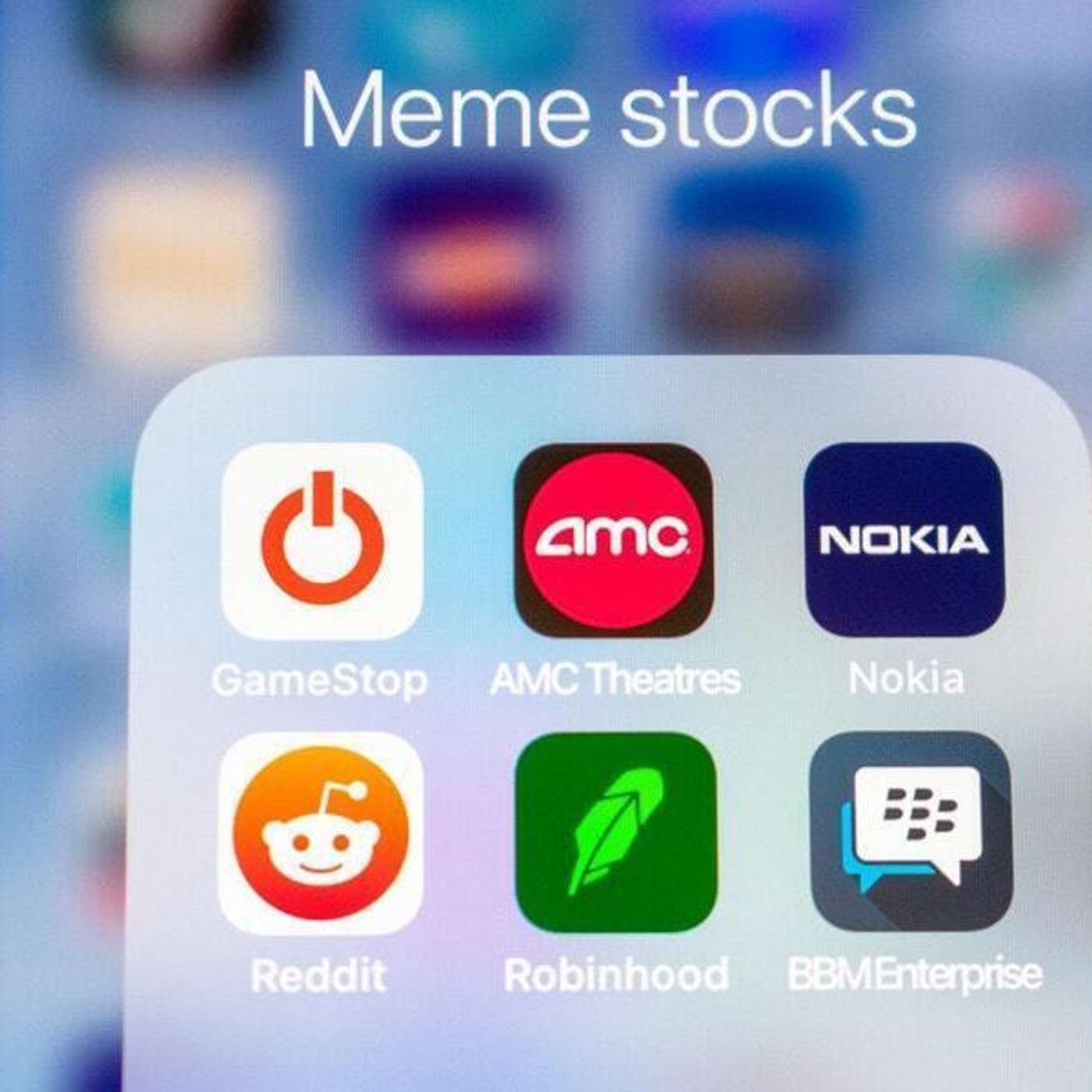
Ep 15The Mechanics of a Meme Stock Rally
Welcome to all of the new subscribers who have joined this growing tribe since Monday. If you’re not a subscriber, join the 18,500+ others and subscribe today!The Mechanics of a Meme Stock Rally“Meme stocks” like AMC and GameStop have captured the attention of the financial world. But few understand what is actually driving these furious price rallies. Let’s dive into the mechanics of a meme stock rally…First off, what is a meme stock? There is no single definition, but meme stocks can be understood as stocks that experience rapid upward price movements as a result of collective social media evangelism. The price movements are typically not related to business fundamentals.AMC and GameStop are the two most salient examples of meme stocks from recent memory. Both experienced furious, Reddit-fueled rallies that left the financial establishment scratching their heads. Heroes emerged, like fearless leader Roaring Kitty (who is not, in fact, a cat!). But how did it happen? Emotion (FOMO!) and the power of crowds played a role, but I’ll leave those to the sociologists and psychologists to analyze. There are two underlying financial dynamics at play: a short squeeze and a gamma squeeze.Let’s cover the mechanics of each…The Short SqueezeFirst, a short squeeze. The "short" in "short squeeze" refers to the concept of short selling. The basics are covered in my thread below. TL;DR - short selling is a way of betting against a stock - i.e. betting that its price will decline. "Short interest" is a measure of how heavily an asset is shorted by the market. It is the total number of shares that have been sold short (borrowed and sold), but have not yet been covered (bought and returned). It is usually measured as a % of the # of shares outstanding.A "short squeeze" occurs when a heavily-shorted asset experiences a rapid upward price movement. When this happens, short sellers may be forced to close their short positions (i.e. buy the stock and return it to the broker), further accelerating the upward price movement.In the case of the recent meme stocks, as AMC or GameStop stock rose, short sellers were forced to close their shorts all at once. This created a surge of buying (to return the borrowed shares) and drove the price up further. It created an accelerating upward price movement.The Gamma SqueezeSo that’s a short squeeze, but what about a gamma squeeze? It’s a bit more complicated, but let's attempt to simplify it here...A gamma squeeze is all about options contracts and their indirect impact on the underlying stock. For a primer on options, see my thread below.When you buy a call option on AMC, someone has to sell you that option contract. You pay them a bit of money (the premium) and they make a commitment to deliver you the underlying stock at a future date for the strike price of the option. It's a pretty simple transaction.But in the background, the seller (often called a "market maker") has to think about their risk exposure. If AMC rises above your strike price, they will have to buy the stock at the market price and sell it to you for the strike price, incurring a (potentially large!) loss.To hedge this risk, when the market maker sells you the option, she also goes into the market and buys a bit of the underlying stock. The amount of stock she buys is based on the "Delta" - a ratio of how much the option price moves relative to a $1 move in the stock."Gamma" is the rate of change of the "Delta" of the option. As Delta and Gamma rise, the market maker gets more and more nervous! She has to buy more stock to hedge the risk of the option being exercised in the money (i.e. with the underlying price above the strike price).So here we have the (simplified!) makings of the gamma squeeze. As call option purchasing volumes on AMC suddenly surged, market makers had to purchase a lot of AMC stock to hedge. This set in motion a self-fulfilling prophecy...Market makers rushed to purchase AMC stock to hedge exposure. This drove the price of AMC up! As the price of AMC went up, the Delta and Gamma of AMC call options rose. This meant market makers had to buy more stock, further driving up the AMC price! Reflexivity.So to summarize: With AMC and GameStop (and other meme stocks!), we had both (1) a short squeeze - short-sellers frantically buying the stock to close/cover their shorts and (2) a gamma squeeze - call option market makers frantically buying the stock to hedge their exposure.The result? Check the charts…I hope this piece was helpful and makes you feel more well-informed on what is happening under the surface with meme stocks!Enjoy this and want to share it with family and friends? You can find the original thread below. Subscribe now and follow me on Twitter so you never miss a beat.Until next time, stay curious, friends! This is a public episode. If you would like to discuss this with other subscribers or get access to bonus episodes, visit sahilbloom.substack.com

Ep 14Steve Jobs @ Stanford - 16 Years Later
Steve Jobs delivered the commencement speech at Stanford University on June 12, 2005. 16 years later, its wisdom remains.Lessons from Steve Jobs (on careers, startups, and life):Develop Independent ViewsTo carve your own path - in your career or life - you have to develop your own views. Steve Jobs originally went to college because it was what he was supposed to do after graduating high school. He dropped out when he couldn’t see the value in it.“I had no idea what I wanted to do with my life and no idea how college was going to help me figure it out. So I decided to drop out...it was one of the best decisions I ever made."Don't chart your course based on someone else's map for your life. Develop independent views.Let Curiosity Guide YouThere are no how-to books on life (or no good ones, at least). You have to develop your own guidebook that empowers you to navigate the endless, mysterious expanse. Curiosity can be that guide (if you embrace it).Steve Jobs experienced this when he began dropping in on random classes that sparked his interest."Much of what I stumbled into by following my curiosity and intuition turned out to be priceless later on."Curiosity is a mysterious and powerful force. Let curiosity guide you. Have Faith in the DotsIn following his curiosity, Steve Jobs dropped in on a calligraphy course for a semester."It was beautiful, historical, artistically subtle in a way that science can’t capture."But it had no practical relevance to his life...or so he thought."10 years later, when we were designing the first Macintosh computer, it all came back to me...It was the first computer with beautiful typography."You are just a series of "dots" - moments, decisions, successes, and failures. Your life is the line that connects them."You can’t connect the dots looking forward; you can only connect them looking backward. So you have to trust that the dots will somehow connect in your future...This approach has never let me down, and it has made all the difference in my life."Have faith in the dots.Go Back to the Starting LineAfter being fired from Apple, Steve Jobs felt the weight of tremendous public failure. He had been fired from the company he founded, after all. But through self-reflection, he came to see that this very public failure had freed him in a way.“The heaviness of being successful was replaced by the lightness of being a beginner again, less sure about everything. It freed me to enter one of the most creative periods of my life.”Don’t let the burden of external forces drain your life. Go back to the starting line.Never SettleIn your career, if you have the luxury of choice, never settle for less than love. Low tolerance for uncertainty often leads to this settling - we fear the uncertainty and settle to escape it. Resist this urge...“The only way to be truly satisfied is to do what you believe is great work. And the only way to do great work is to love what you do. If you haven’t found it yet, keep looking. Don’t settle.”Tolerate uncertainty for a bit longer. Never settle.Memento MoriOne year before his speech, Steve Jobs had survived a scare with pancreatic cancer. It was a very real reminder of his mortality and the inescapability of death. But rather than darkness, this experience brought light."Remembering that you are going to die is the best way I know to avoid the trap of thinking you have something to lose. You are already naked. There is no reason not to follow your heart."Remember that you must die. Memento Mori.Stay Hungry, Stay FoolishFight back against “fitting in” - fight back against normalcy.“Your time is limited, so don’t waste it living someone else’s life...Have the courage to follow your heart and intuition. They somehow already know what you truly want to become.”The world wants you to be normal and play by the rules. You have to fight - consistently and diligently - to maintain your uniqueness. Steve Jobs recognized this as well as anyone in the world. So it was that he closed with his most famous line:“Stay Hungry. Stay Foolish.”These were the powerful mental models and lessons from Steve Jobs, delivered during his commencement speech at Stanford University on June 12, 2005. The full text and video of the speech can be found here.If you are still looking to find that love in your career that Steve Jobs referenced, I want to help. Check out my job board for curated roles at high-growth companies in finance and technology that believe in open access recruiting.There are some amazing new roles on the board this week from companies like Commonstock, Beyond Protocol, and Mercury - check it out today!And if you are a growing company in finance or technology looking to access a unique pool of talent and have your roles promoted to my audience on Twitter or through the newsletter, post a job on the board or message me for additional information.Enjoy this and want to share it with family and friends? You can find the original thread below. Subscribe now and follow me on T

Ep 13Lifelong Learning
Today’s newsletter is brought to you by Ascend’s Leadership Program!Ascend’s Leadership Program for women will empower you with the skills and frameworks required to influence at all levels, conquer imposter syndrome, and accelerate your career.You’ll leave the program confident and armed with the skills, tools, and support to have your ideas taken seriously, empower your team, and move up faster in your career. It’s the only program I’ve seen that teaches these practical skills in a safe space with an incredible community for aspiring and new women leaders - I am proud to support!Ascend’s Leadership Program’s upcoming cohort will run from June 28 to August 5 and spots are filling up quickly. Apply today to secure your place in this amazing program!Lifelong Learning HabitsLifelong learning is a competitive advantage. But contrary to what you’ve been told, lifelong learners are built, not born.20 lifelong learning habits you can start developing today:Stimulate DynamicallyThe mind is a muscle - it needs to be stimulated dynamically to continue to grow. Don’t rely on one “exercise” - develop a menu of options. Write, read, listen, watch. Solve puzzles, play games. Enjoy it! Stimulate dynamically, learn dynamically.Build Learning CirclesThe most powerful learning is communal, not individual. Build learning circles with other intellectually curious minds. Engage regularly with no set intention or goal. Community is everything. Embrace it.Keep Asking Why“Why?” is the most useful tool in our learning toolkit. But somewhere along the line, we are told to stop asking why and just accept “facts” as we are told them. Reject the norm. If you want to understand the world, take a cue from our kids - keep asking why! Adopt a Process OrientationPrioritize process. Learn for the sake of learning, not always for a specific goal. When you prioritize process, you become flexible in where you are headed. Life is a winding, confusing journey - forward progress is all that matters.Become a PolymathA polymath is a person with wide-ranging, multi-disciplinary knowledge. Lifelong learners tend to be polymaths - their curiosity naturally leads to knowledge accumulation in a variety of disciplines. Learn both horizontally and vertically. Become a polymath.Build a Learning EngineThe “learning engine” is at the core of every lifelong learner. It is comprised of all the learning “inputs” regularly consumed - books, newsletters, podcasts, videos, etc. The internet has opened access to it all. Build an unstoppable learning engine.Avoid Noise BottlenecksConsuming more does not equate to knowing more. As you consume more data, you may find the noise-to-signal ratio increases (a classic Taleb “noise bottleneck” appears). Consume less, but consume intelligently. More signal, less noise. Embrace All Types of LearningThere are two types of learning: surface and deep. Surface learning is quick and easy. Deep learning is more challenging. It requires a willingness to slow down and let ideas mature in the mind. Lifelong learners embrace both.Seek Mentors & Coaches“If I have seen further, it is by standing on the shoulders of giants.” You can’t do it alone. Seek out mentors and coaches to help you on your journey. Never be afraid to ask. You’ll be amazed by the kindness of strangers and their willingness to help.Embrace FailuresLifelong learners recognize that failures are learning opportunities. They don’t fear them. They embrace them. It’s easier said than done. Failures are painful - physically and emotionally. But stay the course and you’ll find learning on the other side.Follow Your CuriosityWhen you have a spark of curiosity, follow it. Moments of pure, unadulterated curiosity are fleeting, so you have to prioritize them when they come. Seek out curiosity-inducing content (like my Curiosity Chronicle newsletter!).Become a TeacherTeaching is often the most powerful path to learning. The Feynman Technique (explained below) is a foundational mental model for unlocking learning and growth through teaching. Use it! If you want to learn, teach.Take BreaksHumans were not made for constant motion. Learn to sprint, then rest. Taking breaks can be the easiest, most effective unlock for learning and growth. If you want to learn to grow, first learn to rest.Learn from StrangersEvery conversation with a stranger is an opportunity to learn something new. Be present in every conversation with everyone you meet. You never know what might come of it.Seek a Stimulating JobTry to find a job that is intellectually stimulating. I know this is a luxury - if you are lucky enough, take advantage. P.S. I want to help. Check out my job board for interesting roles at companies that believe in open access.Change Your MindLifelong learners are always willing to change their mind. Believe something to be true? Ok, but be sure to open your mind to counterarguments. Stubborn refusal to acknowledge alternative perspectives stalls progress. Strive for strong opinions, wea

Ep 12Standing Out in a Hiring Process
Special Announcement: The BloomboardI’m excited to announce the launch of my job board - The Bloomboard - where I will curate and share unique, exciting roles in finance and technology every single week.The goal? To foster open access to jobs for candidates and spread awareness of amazing, high-growth companies and roles.The board will be curated by me personally, meaning it will only include companies and roles I would recommend (i.e. roles I would be excited to take if I were qualified!).We have some incredible companies and roles up for the launch, including:Synthesis - EdTech for nurturing innovators - VP of Growth & Head of PeopleFaves - curation-focused social app - Head of Partnerships & Growth PMMetafy - 1x1 e-sports coaching platform - Senior Product DesignerVivian Health - healthcare job placement platform - Product ManagerFundrise - real estate investment platform - Director of Product, GrowthM1 Finance - personal investment super app - Lifecycle Marketing ManagerCapchase - non-dilutive funding platform - Capital Markets AnalystPesto Tech - remote developer matching platform - Account ExecutiveBlockworks - crypto and macro media platform - Editor & Software EngineerTitan - democratized investment platform - Crypto Investment Analystand more at IEQ Capital, First Round Capital, Gather, Athletic Greens, Avicado, ConvertKit, and many others!If you are a company in finance or technology looking to gain direct access to a large, growing talent pool, post a job to the board or email me to add your roles.20 Ways to Stand Out in a Hiring ProcessThe hiring process is ultra-competitive. But you’ve incorrectly been told that the only way to stand out is by having fancy degrees and credentials.20 ways to stand out in a hiring process (that don’t involve your resume):Do Your ResearchBefore an interview, spend a few hours researching the company and role. At a minimum, learn the company mission, read up on recent news on the company or its market, and study the backgrounds of the key leaders. Google is a powerful asset. Use it.Embrace “I Don’t Know”You can’t know the answer to every question. And you know what? That’s ok! Don’t be afraid to say “I don’t know” - but then follow it with a plan to acquire that information. “I don’t know, but I’ll dig in and follow up with an email.” Then follow up!Stop Fearing RejectionI’m not embarrassed to admit that I’ve been rejected for more jobs than I can count. It happens. You can’t be a fit for everything and everyone. Stop being afraid of rejection and put yourself out there. You miss 100% of the shots you don’t take. Prepare for “Why Us?”Interviewers inevitably ask, “Why us?” Make sure you are prepared for it. What attracted you to this company? The more specific, the better. Generic answers (“I love investing”) get minus points. Specific answers win. Stalk (Non-Creepily!)If you know who you will be interviewing with, spend time learning about their background and experience. Identify potential bonding areas (e.g. same alma mater, similar interests or hobbies, etc.). This prior knowledge may help you connect more deeply.Seek Warm IntrosWarm intros and references are the holy grail of a competitive hiring process. Scan your networks for any connections to a company (yes, LinkedIn is actually useful for something!). If you find any that are close enough, use them. The smallest edge can help! Blend Deference & ConfidenceShow deference to your interviewer, but not at the expense of confidence. The power dynamics of an interview are nuanced. Blending deference and confidence is how you manage them effectively and leave the interviewer with a positive impression.Play to Your StrengthsDon’t fight on an even playing field. If you have unique attributes or competitive advantages, use them. Played a team sport? Talk about it! Taught yourself to code? Hype that up! Humility is great, but make sure they know what makes you special! Show Your PassionShowing a genuine passion and excitement for the company and role is the easiest way to stand out from the crowd. People want to hire candidates that want to be there. So smile, express your excitement (calmly!), and let that passion shine through.Carry a NotebookWhen you go to an interview, always bring a notebook. It’s not just pageantry - use it. If something comes up that is interesting or requires a follow up, make a point of writing it down. It shows attentiveness. Interviewers notice these little things. Personalized Thank YousAfter an interview, always send a thank you note to the interviewer. Make them punchy (so that...

Ep 11Commencement Wisdom
A great commencement speech is filled with wisdom.10 powerful lessons from the best commencement speeches of all time:#1: Connecting the Dots"You can’t connect the dots looking forward; you can only connect them looking backward. So you have to trust that the dots will somehow connect in your future." - Steve Jobs, Stanford 2005Life is uncertain. Have faith that your dots will somehow connect.#2: Master the Rescue"The difference between triumph and defeat, you’ll find, isn’t about willingness to take risks. It’s about mastery of rescue." - Atul Gawande, Williams 2012Failures are a given. The greatest don't fail less, they just succeed in rescuing more.#3: Be a Doer"I think a lot of people dream. And while they are busy dreaming, the really happy people, the really successful people, the really interesting, engaged, powerful people, are busy doing." - Shonda Rhimes, Dartmouth 2014It's not enough to dream. You have to do.#4: Learn to Improvise"Life is an improvisation. You have no idea what's going to happen next and you are mostly just making things up as you go along." - Stephen Colbert, Northwestern 2011Life has a habit of laughing at your best-laid plans. Let it flow - learn to improvise!#5: Appreciate the Sweetness"When things are going sweetly and peacefully, please pause a moment, and then say out loud: 'If this isn't nice, what is?'" - Kurt Vonnegut, Rice 1998Life moves fast. Slow down, pause, and appreciate moments of sweetness. You'll be glad you did.#6: Run Toward the Storm"Whatever you choose for a career path, remember the struggles along the way are only meant to shape you for your purpose." - Chadwick Boseman, Howard 2018Your career will be filled with struggles. Don't hide. Run toward them! Let them shape you.#7: Embrace Imposter Syndrome"I just directed my first film. I was completely unprepared, but my own ignorance to my own limitations looked like confidence and got me into the director's chair." - Natalie Portman, Harvard 2015We are all imposters...until we aren't. Embrace it!#8: Check the Assumptions"A huge percentage of the stuff that I tend to be automatically certain of is, it turns out, totally wrong and deluded." - David Foster Wallace, Kenyon 2005It's what you know for sure that just ain't so...To avoid trouble, always check the assumptions.#9: Look Up"The answer to a lot of your life's questions is often in someone else's face. Try putting your iPhones down every once in a while and look at people's faces." - Amy Poehler, Harvard 2011Look up from your phone. Observe and listen to those around you. Be present.#10: Make Your Bed"Making your bed will also reinforce the fact that little things in life matter. If you can't do the little things right, you will never do the big things right." - Admiral McRaven, Texas 2014Little things become big things. Take pride in the little things.These are 10 powerful lessons learned from some of the greatest commencement speeches of all time. What are your favorites that weren't included in the list?Enjoy this and want to share it with family and friends? You can find the original thread below. Subscribe now and follow me on Twitter so you never miss a thread.Until next time, stay curious, friends! This is a public episode. If you would like to discuss this with other subscribers or get access to bonus episodes, visit sahilbloom.substack.com

Ep 10Ransomware-as-a-Service
The story of the last few weeks in business has been the ransomware attack that took down the Colonial Pipeline.On ransomware-as-a-service, DarkSide, and what happens when publicity becomes really bad for business:First, a few definitions...What is ransomware? Ransomware is a type of malware - a software designed to cause harm to a computer, server, or network. Ransomware is used to encrypt the files on your system and hold it “hostage” until the demanded ransom is paid.Ransomware is not new, but ransomware attacks are most definitely on the rise. With the world increasingly moving online, the cyber-attackers have experienced a windfall.Both the frequency of attacks and the size of the average ransom payments have increased dramatically.The way a ransomware attack works is really quite simple (even if the underlying technology is complicated).A would-be attacker scans for vulnerable companies. They often look for dated systems or weak infrastructure - like an animal looking for injured prey.When a target is acquired, the cyber-attacker looks for an entry point. This could be using a phishing scam or other method to gain access to the network or company data and servers.Once inside, the cyber-attacker launches a program that encrypts all of the company’s data.Once encrypted, the data and systems become completely unusable without a decryption key. The company is immobilized.While this sounds complex, given the range of cybersecurity sophistication at companies, hackers say breaching some companies is “so easy a kid could do it.”After the encryption is complete, the ransom negotiation begins.The cyber-attackers reach out to the company, offering to provide a decryption key that will return access to the hostage data. In exchange, the company has to pay a ransom (usually in the form of Bitcoin).If ransom isn’t paid, the data may continue to be held (leaving the company immobilized) or sensitive data (credit cards, health records, etc.) may be leaked.Generally speaking, the company negotiates and pays the ransom, with its cyber insurance footing the bill.The ransomware market has operated in the shadows for a long time...until recently. The story of a high-profile attack on the Colonial Pipeline - and the fascinating “ransomware-as-a-service” entity that enabled it - has shined a light on the industry.Let’s dive in…Colonial Pipeline is the largest gas pipeline in the U.S. On May 7, it announced it had been hit by a ransomware attack and had shut down operations. This ransomware attack was different. It wasn’t an attack on a medium-sized business. It was much, much bigger than that.With the pipeline out of commission, gas prices spiked, impacting millions and drawing the immediate, full attention of the press (and the FBI). Suddenly, ransomware attacks were in the spotlight. And the services group enabling the attacks - DarkSide - was at center stage.DarkSide is a so-called “ransomware-as-a-service” company. It doesn’t engage in the actual cyberattacks. Instead, it provides a suite of tools and services that enable would-be cyber-attackers to conduct their business.DarkSide provides the malware that encrypts the data, but also much more.A communication service - making calls to the victim companies for negotiations. A hosting site for stolen data. Customer service. It can even sell inside info to stock traders for extra profit.Think of DarkSide as a cloud services provider for the modern ransomware era. It appears to be the market leader in providing such services! And it has an impressive economic model: DarkSide takes a 10-25% cut of the proceeds from the ransom payment.Normally, startups with strong market traction love publicity. It helps with new customer acquisition and growth! But the difference here is that when you are a ransomware-as-a-service market leader, publicity can be really, really bad for business.With the authorities now focused on them, DarkSide issued a statement: “Our goal is to make money and not create problems for society. From today, we introduce moderation and check each company that our partners want to encrypt to avoid social consequences in the future.”DarkSide learned the hard way what banks learned long ago: you have to know your customer! The Colonial Pipeline shutdown lasted about a week. Operations were restored after a rumored ransom payment of ~$5m (75-100 BTC). DarkSide’s cut was hefty - but it came at a cost.In the months to come, with the spotlight shined on the sophistication of the ransomware market - as well as the devastating nature of the attacks - companies will step up their cybersecurity infrastructure to defend themselves. This may be bad for ransomware profits...So is this just a classic market cycle? The ransomware market had predictable, large profits. This led to a rush of activity to exploit them. Now the market gets squeezed, making it less attractive to do ransomware attacks. Free markets at work...?That is the story of DarkSide, the Colonial Pipeline hack

Ep 9Intellectual Curiosity
Intellectual curiosity is a competitive advantage.But contrary to what you’ve been told, it has nothing to do with intelligence.10 ways to start developing your intellectual curiosity today:#1: Scrub Your Windows“Your assumptions are your windows on the world. Scrub them off every once in a while, or the light won't come in.” - Isaac AsimovCuriosity is a light that can only enter when your mental windows are clean. Scrub them off now and then. Let the light in.#2: Embrace “I Don’t Know”“The only true wisdom is in knowing you know nothing.” - SocratesAvoid false confidence (and the people that display it!). Embracing what you do not know is a superpower. Recognize your gaps and blind spots. Slowly, methodically fill them in.#3: Go Down Rabbit HolesWhen you find a spark of curiosity, dive in and don’t look back. You cannot control when they come, so you must embrace them when they do.The rabbit hole is the amusement park of the intellectually curious mind. Enjoy it!#4: Ask “Dumb” QuestionsWhen we are young, we always ask “Why?” But over time, we develop a fear of asking the “dumb” question that may draw the ire of our peers.That fear stifles our intellectual curiosity. Fight it back. Face it. When in doubt, ask.#5: Build Curiosity CirclesCuriosity is communal. Find a group of friends who are motivated by learning and growth. Share ideas, learnings, and insights with each other.You’ll build bonds and have a constant source of stimulation for your intellectual curiosity.#6: Make Learning the GoalLearning with a specific end goal in mind often becomes a chore - it is a fast track to stifled curiosity. Focus on the learning itself - not other outcomes. Take pride in learning something new every single day.“Learn as if you were to live forever.”#7: Open Up to the WorldThe diversity of human experience in our world is one of the greatest gifts to the intellectually curious mind. When you meet someone new, take genuine interest in their life and experiences.The world opens up to you, when you open up to the world.#8: Focus on Your PassionsForced learning is for school. It doesn’t work in practice. It stifles curiosity. Find what you truly enjoy learning about. It doesn’t matter what it is. It doesn’t have to be “intellectual” or impressive.Remember: You are learning for you!#9: Read FlexiblyBooks are a life-changing investment that you can make for under $100.But to take advantage, you must read flexibly. Read what you love. Read what draws you in. When it stops doing so, put it down. Forced reading is the antidote to curiosity.#10: The Curiosity ChronicleAnd last - but certainly not least - sign up for this newsletter...A weekly short-form newsletter with five pieces of content curated to spark your intellectual curiosity.So those are 10 ways to start developing your intellectual curiosity today.For additional writing related to cultivating intellectual curiosity in your children, check out my friend Ana Fabrega at Synthesis, who is putting out incredible content. Synthesis is building something special disrupting traditional childhood education. Check them out here!Enjoy this and want to share it with family and friends? You can find the original thread below. Subscribe now and follow me on Twitter so you never miss a thread.Until next time, stay curious, friends! This is a public episode. If you would like to discuss this with other subscribers or get access to bonus episodes, visit sahilbloom.substack.com

Ep 8Warren Buffett’s Wisdom
Warren Buffett is a treasure trove of wisdom.But contrary to what you have been told, most of it has nothing to do with investing.10 powerful lessons for life from the Oracle of Omaha:#1 - Wait For A Juicy Pitch“You don't have to swing at everything - you can wait for your pitch."Life doesn’t reward you for the number of swings you take.Focus on identifying the juiciest pitch.When it comes, swing hard and don’t miss it.#2 - Just Stop Digging“The most important thing to do if you find yourself in a hole is to stop digging."When things aren’t working, change course and try something different.Be nimble. Be agile.When you find yourself at the bottom of a hole, stop digging and climb out of it.#3 - Exploit Disconnects“Price is what you pay. Value is what you get.”Seek out situations where there is a clear disconnect between price and value.This applies to investing, but it’s more broadly a mental model for life.Identify disconnects. Exploit them to your advantage.#4 - Be Contrarian“Be fearful when others are greedy and greedy when others are fearful.”Following the crowd is easy, but it can be a trap.Learn to think independently. Come to your own decisions. Develop your own mental models.Your unique perspectives are your superpower.#5 - Optimize Value Capture“Opportunities come infrequently. When it rains gold, put out the bucket, not the thimble."Create structures that enable you to capture more of the value you create.The most successful people have simply optimized their value capture mechanisms.#6 - Make Time Your Friend“Time is the friend of the wonderful business, the enemy of the mediocre.”Don’t be in a rush.Set up your life to compound value over the long-term.Play long-term games with long-term people.Make time work for - not against - you.#7 - Protect Your Circle of Competence“Risk comes from not knowing what you're doing.”Be ruthlessly honest about what you know (your circle of competence) and what you don’t.Focus on playing games within your circle - otherwise, you’re just gambling.#8 - Never Get Caught Naked“It's only when the tide goes out that you discover who's been swimming naked.”Find a balance between pushing yourself for growth and being completely out of your depth.Never put yourself in a high-stakes position to get caught swimming naked.#9 - Reputation Matters“It takes 20 years to build a reputation and five minutes to ruin it. If you think about that, you'll do things differently.”In every interaction - big or small - always act in accordance with strong principles and values.Your character is your fate.#10 - Invest In Yourself“The most important investment you can make is in yourself."There is no better investment than an investment in yourself.Find time to read, to think, to learn.Surround yourself with amazing people who push you to become better.Invest in you.These are 10 powerful lessons for life from Warren Buffett, but there are so many more.What are your favorite lessons from the Oracle of Omaha?I have to admit, I am still shaking from this moment at the Berkshire Hathaway Annual Meeting in 2019...Enjoy this and want to share it with family and friends? You can find the original thread below. Subscribe now and follow me on Twitter so you never miss a thread.Until next time, stay curious, friends! This is a public episode. If you would like to discuss this with other subscribers or get access to bonus episodes, visit sahilbloom.substack.com

Ep 7The Fight Against Normalcy
In his final Amazon shareholder letter, Jeff Bezos shared a powerful mental model on maintaining your distinctiveness.On the fight against normalcy (in your career, startup, writing, or life):Jeff Bezos founded Amazon in 1994.In 27 years at the helm, he grew it into one of the largest and most influential companies in the world. Today, it is worth almost $1.7 trillion.Each year since its 1997 IPO, Bezos has written an annual letter to Amazon shareholders.In February, Jeff Bezos announced he would step down as CEO.In his final annual shareholder letter, he covered his “create more than you consume” mantra and hit on climate and employee issues.But its closing - on the fight against normalcy - held the most powerful lessons.Bezos set the stage for his mental model with a quote from Richard Dawkins’ The Blind Watchmaker:“The body tends to revert to a state of equilibrium with its environment...if living things didn’t work actively to prevent it, they would eventually merge into their surroundings.”With the stage set, Bezos makes his point:“In what ways does the world pull at you in an attempt to make you normal? How much work does it take to maintain your distinctiveness?...You have to pay a price for your distinctiveness...don’t expect it to be easy or free.”This is a powerful mental model for thinking about distinctiveness.If equilibrium with our surroundings - normalcy - is our natural state, we must fight to maintain distinctiveness.Constantly, relentlessly.Distinctiveness isn’t free - you have to pay your dues every day.Once you internalize this framework, you will see it all around you. You will see all of the ways that our systems and institutions are designed to keep you normal. You will start to see how hard it is to be different - the true cost of distinctiveness.One perfect example: Education.Our traditional education systems look like the early Ford Model T assembly lines.Standardized, one-size-fits-all curriculum and arbitrary assessments of competency.We leave some kids behind, we hold back others. We fail to foster innovation, ingenuity, and creativity.Traditional education systems are designed to maintain equilibrium.Conventional wisdom said it would be too hard to foster creativity at scale. It will be hard, but that’s the point!Innovation is coming: Synthesis is building something special, for example.The world wants you to be normal. Our systems and institutions are all designed to make it easy to be normal.Maintaining your distinctiveness is possible, but it will require effort - painful, constant, relentless effort.But stay the course. You’ll find it’s worth it.Enjoy this and want to share it with family and friends? You can find the original thread below. Subscribe now and follow me on Twitter so you never miss a thread.Until next time, stay curious, friends! This is a public episode. If you would like to discuss this with other subscribers or get access to bonus episodes, visit sahilbloom.substack.com

Ep 6The Archegos Saga
The story of the last few weeks in finance has been the secretive rise and rapid downfall of Archegos Capital Management.A thread on the underlying mechanics of the Archegos saga and how a $20 billion fortune vanished into thin air... First, let’s set the stage.Archegos Capital Management is the family office of Bill Hwang, a former prodigy of hedge fund legend Julian Robertson.Hwang previously built Tiger Asia Management - a so-called “Tiger Cub” fund due to its lineage from Robertson’s Tiger Management.Bill Hwang grew Tiger Asia Management into a highly successful hedge fund, reaching ~$10 billion in assets under management in the 2000s.He was a bit of an anomaly in the world of high finance - known as a devout Christian with simple tastes (seriously, he drives a Hyundai!).After winding down Tiger Asia Management following a few bad bets and a run-in with regulators, Hwang opened Archegos (a Greek word for “one who leads the way”) in 2013 with ~$200 million in personal capital.He began doing what he does best - trading and investing.Going long innovation, he scored big wins on stocks like Netflix and Amazon.Soon, Archegos’ capital had grown to $4 billion.But Hwang, a private and deeply religious man, was not one for the spotlight. He just appears to have genuinely enjoyed his work.Fortunately, there were features of the strategy that allowed the firm to remain anonymous.As a family office, it was not required to disclose its holdings on a 13F filing (as with all hedge funds).It used swap contracts to quietly amass large, leveraged positions.The 13F loophole is self-explanatory: Archegos was a family office with a specific structure, so it did not have to file quarterly 13Fs disclosing its holdings.Swap contracts (“swaps”) are a bit more complicated. Let’s simplify them here for everyone to understand...In simple terms, a swap contract is an agreement between two parties to exchange (swap!) the values or cash flows of one asset for another.Archegos entered swap contracts with banks to gain exposure to stocks without holding them.This is not an uncommon practice for funds.My banker buys $100 of Apple on my behalf but holds it on the bank B/S.I post $20 as “margin” (see my primer on margin) and agree to pay interest on the borrowed money ($80).I “own” $100 of Apple, but only had to put up $20 and no one knows I own it.At the end of every day, we settle up on the account.If the value of the Apple stock in my account rises, my banker pays me in cash the value of that rise.If the value of the Apple stock in my account falls, I have to post additional margin (to make my banker feel safe!).Note: I am definitely simplifying the mechanics of a swap contract for illustrative purposes. There are many types and flavors of swaps, but most follow the basic structure laid out above.Back to Archegos...Bill Hwang used swaps to amass large long positions (again, not an uncommon practice for hedge funds!).He built positions in stocks like ViacomCBS, Baidu, and GSX.He had accounts with many banks, including Goldman, Morgan Stanley, and Credit Suisse.As the stocks rose rapidly in early 2021, he used the cash his swap contracts were paying him to enter new swaps, increase his leverage, and buy even more.It was a self-fulfilling prophecy: rising prices enabled more leverage and more buying, further accelerating the rise.At its peak, Archegos had built a ~$100 billion portfolio and Bill Hwang was worth ~$30 billion.Importantly, as the positions were held at banks and not disclosed on 13F filings, the extent of the positions and leverage was largely unknown.But then it all came crashing down.On March 22, ViacomCBS, which had seen its stock 3x in the prior months (perhaps from Archegos’ aggressive buying) announced a $3 billion stock sale.Its share price tumbled 30% in the two days that followed the announcement.Suddenly, Archegos’ levered bets were underwater.This meant that the value of the stock being held on the bank balance sheets was lower than the amount that was loaned to buy the positions.The banks would be able to seize a portion of Archegos’ collateral in order to make themselves whole.The banks allegedly asked Archegos to sell its positions and close the contracts.This would mean Hwang would take a small loss but the banks would be whole.The problem was that if the stocks dropped much more, Archegos would be wiped out and even the banks might take a loss.The bankers from the different banks convened a meeting to discuss what to do.Some believed the best path was to wait - the stocks would recover and everything would be fine.Others weren’t so sure and began offloading large blocks of Archegos’ stock to mitigate their risk.A classic deleveraging spiral was set in motion.As the banks seized Archegos’ collateral and sold large blocks of the stock, the stock prices began to drop.Seeing the further stock price drops, Archegos’ other bankers, who had been inclined to wait, began doing the same.With the dust settled, it was ti

Ep 5The Magic of Continuous Improvement
Kaizen is a powerful concept for unlocking growth in your career, startup, business, writing, or life.A short thread on what it means and the magic of continuous improvement...Kaizen is a Japanese word meaning “improvement.”In practice, the term is used to convey continuous improvement.It is a dynamic process - ongoing, incremental, compounding daily improvements.The origin of the concept of Kaizen is long, winding, and global in nature.In the 1930s, Walter Shewhart - a Bell Labs engineer - had developed the Plan-Do-Study-Act System (PDSA) to assess the effectiveness of organizational changes in driving continued business improvement.Shewhart had mentored a young engineer named W. Edwards Deming, who went to Japan after WWII as part of the post-war recovery efforts.Deming implemented and improved upon his mentor’s ideas and helped to drive the remarkable post-war economic growth in Japan.But the concept of Kaizen began to build a mainstream following with the works of Masaaki Imai, a Japanese organizational theorist and consultant.In 1986, he published a best-seller, entitled “Kaizen: The Key to Japan’s Competitive Success” and founded The Kaizen Institute.Kaizen prioritizes small, daily improvements (rather than large, step-function leaps).It teaches that progress and growth are the result of daily actions to drive the small improvements.It teaches that progress and growth are achievable for anyone willing to put in the work.The great James Clear shared a powerful visualization of the magic of Kaizen.“If you get one percent better each day for one year, you'll end up thirty-seven times better by the time you’re done.”The math doesn’t lie. Kaizen - continuous improvement - is the way.“The journey of a thousand miles begins with a single step.” - Lao TzuAs you embark on your own thousand-mile journey - whether in your career or life - always remember the incredible power of small, consistent, daily progress.Always remember the power of Kaizen.Enjoy this and want to share it with family and friends? You can find the original thread below. Subscribe now and follow me on Twitter so you never miss a thread.Until next time, stay curious, friends! This is a public episode. If you would like to discuss this with other subscribers or get access to bonus episodes, visit sahilbloom.substack.com

Ep 4Focus as a Competitive Advantage
Focus is a competitive advantage.But in a noisy world, it is increasingly difficult to find.5 tactics for finding focus in your career, startup, or life:#1 - Eliminate Low-Value DecisionsMark Zuckerberg is famous for having only one outfit in his closet.While an extreme example, there is a lesson here: Eliminate decisions that require energy but do not create commensurate value.Redeploy that energy into high-value decisions.#2 - Sprint Then RestThe human mind is not designed to be on at all times.It needs rest.Work in short blocks (1-2 hours).You can schedule the blocks - I call it "deep work" on my calendar - or leave yourself more flexibility.Use biology to your advantage: sprint then rest.#3 - Noise CancellationThe world is noisy. We are constantly being hit by stimuli competing for our attention.Learn to tune out and zone in.Noise-canceling headphones can be an unimaginably helpful tool.Find your "in the zone" soundtrack and play it on repeat.#4 - Sleep TightIt may seem contrarian in the hustle culture era, but deep, restful sleep is critical to finding focus.I am a culprit. I used to say I would "sleep when I was dead" - I've changed my mind.Better sleep is perhaps the single greatest unlock for your performance.#5 - Train Your MindWe train our bodies, why not our minds?Practice meditation - start with 5 minutes a day and build up from there. There are plenty of great apps to help you get started.You'll find yourself better able to process daily stressors and focus on the task at hand. These are 5 tactics for finding focus. What are some others you would add to the list?Additionally, here are a few high ROI tools and resources related to these tactics that I have personally found useful:For better sleep and performance: White Noise Maker & Athletic GreensFor a powerful mind: Meditation AppFor tuning out the noise: Noise Canceling HeadphonesEnjoy this and want to share it with family and friends? You can find the original thread below. Subscribe now and follow me on Twitter so you never miss a thread.Until next time, stay curious, friends! This is a public episode. If you would like to discuss this with other subscribers or get access to bonus episodes, visit sahilbloom.substack.com

Ep 3The Power of Ikigai
Ikigai is a powerful concept for finding purpose and clarity to unlock growth in your career, startup, business, writing, or relationships.A thread on its meaning and how it can change your life...Ikigai is a combination of the Japanese words “iki” (or “life”) and “gai” (a term to describe value or worth).It roughly translates to “reason for being.”It is all-encompassing - it is not simply about work, money, or success - it is about the full scope of your existence.Ikigai is the point of balance and harmony in your life and work.It is found at the intersection of:What you love to doWhat you are good atWhat the world needsWhat you can be paid forImportantly, it is at the nexus of passion and practicality.The concept of Ikigai can be traced back to 12th century Japan, but its exact genesis is unknown.It gained a mainstream following after Dan Buettner’s famous 2009 Ted Talk on his research on Blue Zones (regions where people live longer than average).In his research, Dan Buettner found that purpose and fulfillment led to improved longevity.Put simply, embracing the concept of Ikigai contributed to enhanced health (mental and physical) and longer lifespans.To implement the concept of Ikigai in your life, create your personal Ikigai Venn diagram.Start with the passions: What do you truly love to do? What are you really good at? What can you become good at?Now get practical: What does the world need? What will it pay you for?The elegance of the concept of Ikigai is in its blend of passion and practicality.Life is a multivariate problem. Simple, uniplanar solutions and one-size-fits-all mantras fall short.Ikigai recognizes this and forces a dynamic, systems approach to finding purpose.Separately, for those of you who are interested in growing your audience on Twitter, I will be co-hosting a cohort-based course with my good friend Julian Shapiro that will teach you tactics for building an audience. You can sign up here to be on the list and learn more. Stay tuned - it’s going to be great.Subscribe now and follow me on Twitter so you never miss a thread.Until next time, stay curious, friends! This is a public episode. If you would like to discuss this with other subscribers or get access to bonus episodes, visit sahilbloom.substack.com

Ep 2The Containerization of the World
The story of the week in the business world is the blockage of the Suez Canal by a massive container ship. Weighing 200,000 metric tons, dislodging the ship is no easy problem to solve.But while it happened in 2021, the roots of this problem date back to 1937, when a truck driver from North Carolina had a simple idea that would completely change the world.Malcolm Purcell McLean was born in 1913 in Maxton, North Carolina.The son of a farmer, McLean learned the value of hard work from a young age.Unable to afford college, he went to work at a gas station. By age 21, he had saved enough money to buy a used truck.It was from these humble beginnings that Malcolm McLean founded McLean Trucking Co. in 1934.The business focused on transporting empty tobacco barrels, livestock feed, and produce. Originally confined to the Mid-Atlantic, McLean Trucking quickly expanded its reach.In 1937, after completing a haul from Fayetteville to Hoboken, McLean was forced to wait for hours in his hot truck while the stevedores worked their way to his load.He realized there had to be a more efficient way to do all of this.The current method - with individual crates unloaded by stevedores, placed into a sling, and lifted into the ship's hold - was time consuming, expensive, and inefficient.As he continued to build a trucking empire over the next decade, the idea constantly gnawed at him.By 1955, Malcolm McLean had built McLean Trucking Co. into one of the largest trucking operations in the country, with >1,700 trucks and locations.But the future he envisioned went well beyond trucking, so he set out to build a new reality.McLean dreamed up a standardized truck trailer that could be easily loaded and stacked onto ships or trains.In his mind, "containerized cargo" was to be the future of shipping and logistics.Efficient logistics would mean improved commerce and a thriving economy.In 1955, to expand his reach, he sought to acquire Pan-Atlantic Steamship Company - a cargo and passenger operation with docking rights at key port cities.But when railroad executives attempted to block the deal on anti-trust grounds, McLean was forced to make a decision.Malcolm McLean decided to bet on himself and his big idea. He sold his ownership stake in McLean Trucking for $6 million (~$58 million today) and used it to purchase Pan-Atlantic.He quickly set about to make his vision for the future of logistics into a reality.Renaming it Sea-Land Industries, in 1956, he purchased two World War II tankers and retrofitted them to carry his newly designed standardized containers.The SS Ideal X set sail on its maiden voyage in April 1956, carrying 58 of McLean's containers from New Jersey to Houston.With the initial success, McLean kicked off a marketing tour to convince key players to rethink their operations.With 25% lower transportation costs, safer storage, and cheaper insurance, he won over customers.With lower port labor costs, he won over port authorities.McLean's big idea for "containerization" took the shipping and logistics world by storm.By the late-1960s, Sea-Land Industries had 27,000+ containers, 36 ships, and covered 30 major ports.McLean had built the single largest cargo shipping business in the world.In 1969, R.J. Reynolds purchased Sea-Land Industries for $530 million (~$3.8 billion today).Malcolm McLean personally made $160 million (~$1.1 billion today) on the sale.His transformation from truck driver to global shipping magnate was officially complete.The legend of Malcolm McLean's innovation extends well-beyond his personal success."Containerization" enabled the rapid expansion of global trade. Without it, our global economy would simply not be possible, and the Suez Canal blockage may never have occurred.Malcolm McLean died in 2001 at age 87, but his legacy lives on.For more on the amazing story of Malcolm McLean and the containerization of the world, I highly recommend reading The Box by Marc Levinson.For those of you who are interested in growing your audience on Twitter or your newsletter, I will be co-hosting a cohort-based course with my good friend Julian Shapiro that will teach you tactics for building an audience. You can sign up here to be on the list and learn more. Stay tuned - it’s going to be great.Subscribe now and follow me on Twitter so you never miss a thread.Until next time, stay curious, friends! This is a public episode. If you would like to discuss this with other subscribers or get access to bonus episodes, visit sahilbloom.substack.com
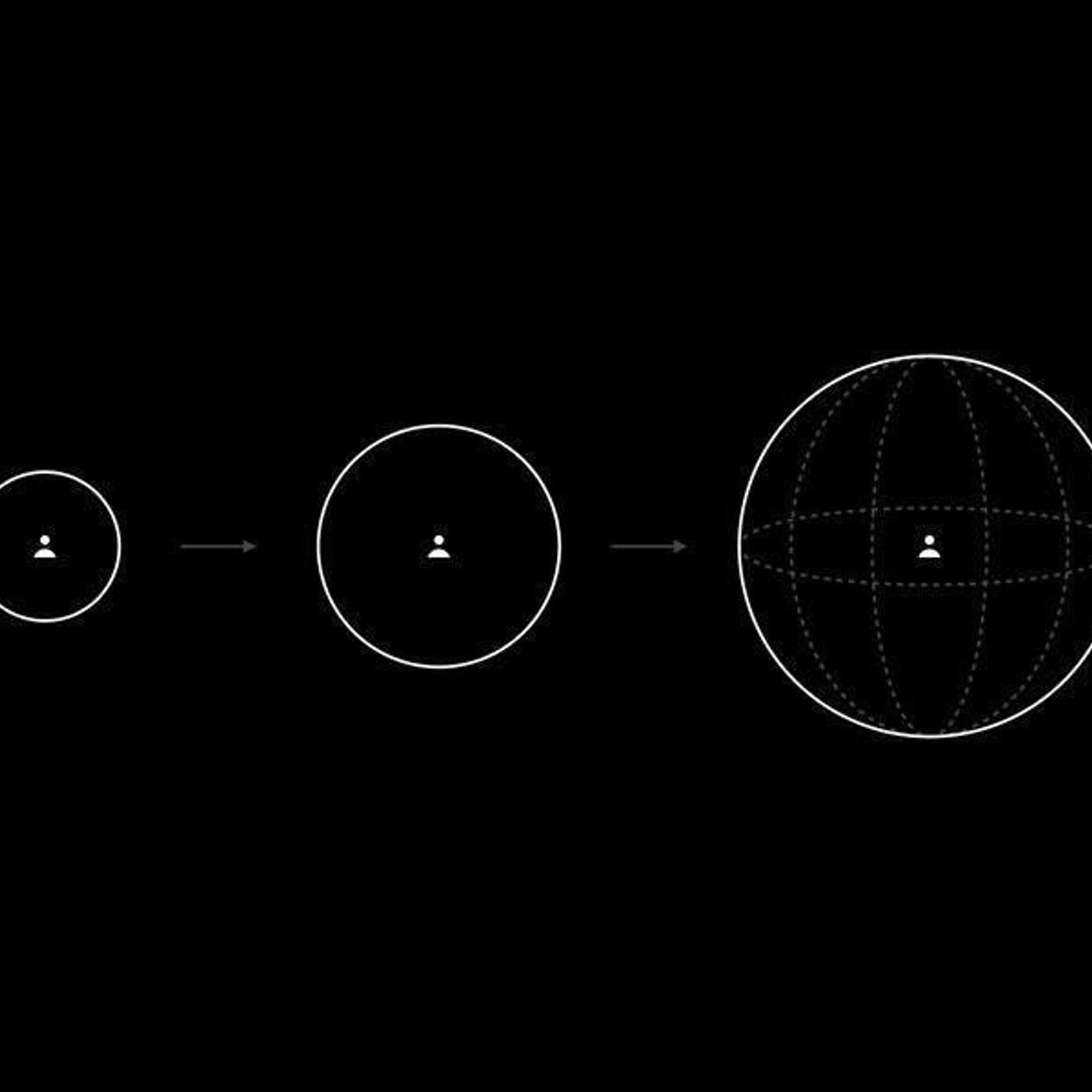
Ep 1On Competitive Advantage
To outperform, you need serious competitive advantages.But contrary to what you have been told, most of them don't require talent.10 competitive advantages that you can start developing today:1. Intellectual CuriosityIntellectual curiosity is a real-world superpower.We all have it, but most will never embrace it.For the curious mind, anything is possible.Fortune favors the curious mind.2. Comfort with DiscomfortWe are conditioned to avoid discomfort, so most of us do.The problem?Discomfort leads to growth. It is an absolute necessity.If you train yourself to accept and embrace discomfort, you will always have an edge.3. Simplify Where Others Complicate"The definition of genius is taking the complex and making it simple."Complexity and jargon are often used to mask a lack of deep understanding.Learn to convey extremely complex ideas in simple, digestible ways.Find beauty in simplicity.4. High Tolerance for FailureWe fear failure, so most of us play it safe to avoid it.But our greatest moments of growth often stem directly from our greatest failures.Do not accept failure, but do not fear it either.You will fail. Embrace it. Learn to fail smart and fast.5. Low Time PreferenceLife is a long game.Those with low time preference play it more effectively - they happily delay gratification to build real value.In a world of people seeking instant gratification, this is a meaningful edge.6. AntifragilityIn Greek mythology, the Hydra is a creature that has multiple heads. Every time one head is cut off, two grow back in its place.Life is random and chaotic.Do not be broken by this chaos and disorder; rather, adopt a mentality that you will benefit from it.7. PresenceWith the rise of technology - and the instant access to millions of people and things that it has provided - the ability to be truly present has become a rarity.When you are with someone - whether a new business contact, friend, or partner - be WITH them.Be present.8. Relentless ConsistencyMany people are able to produce bursts of energy. Few people are able to produce consistent, steady flows of energy.The former might be flashy, but the latter is relentless.Take pride in punching the clock - in showing up - day in, day out.9. Noise CancellationThe world is a noisy place. We are constantly hammered by stimuli competing for our attention.The ability to cancel out the noise - to truly focus on the task at hand - is both broadly applicable and extremely powerful.10. Be YourselfThe most important competitive advantage.Always be yourself.No one can compete with you, at being you.These are 10 competitive advantages that do not require talent. What are some others that you would add to the list?Enjoy this and want to share it with family and friends? You can find the original thread below. Subscribe now and follow me on Twitter so you never miss a thread.Until next time, stay curious, friends! This is a public episode. If you would like to discuss this with other subscribers or get access to bonus episodes, visit sahilbloom.substack.com