
Curiosity Chronicle
481 episodes — Page 9 of 10
Ep 81Attention Residue
Today at a Glance:When compared to our ancestors, our lives appear to be filled with significantly more attention-grabbing pulls in a variety of directions. Our attention is more divided than ever.Attention residue is the idea that there is a cognitive cost to shifting your attention from one task to another. When our attention is shifted, there is a "residue" that remains in the brain and impairs our cognitive performance on the new task.To fight back: (1) Work in deep focus blocks, (2) take regular walks or breathers between higher value tasks, and (3) batch processing times for messages. Implement these three strategies and you will immediately see a difference in your work quality and efficiency.
Ep 80Lessons from Steve Jobs' 2005 Commencement Speech

Ep 798 Life Rules Worth Breaking
Today at a Glance:The highest performers embrace software updates. They treat their minds like a code base that requires consistent updates and resets to improve upon the old.There are a variety of baseline rules for life that are deeply ingrained into our minds and in dire need of an update. Many of these rules are culturally ingrained, meaning they have been repeated and passed down with no regard for their continued accuracy, or the quality of their underlying assumptions.Today's piece shares 8 rules that have been commonly repeated, but that we should probably start breaking.

Ep 78The Paradox of Time
Today at a Glance:Becoming a father has changed a lot of things about my life. My relationship with time—specifically my awareness of the passing of time—has fundamentally morphed.The Paradox of Time: We are aware of the incredible value of our time but constantly take actions that are disrespectful of that value. We know how important our time is, yet we ignore its passage and engage in low value activities that pull us away from the things that really matter.Our time is finite, but we often fail to recognize it until it's too late. Asking the hard questions and doing the simple math that they require is how you can bring awareness to the surface and rethink your priorities and tradeoffs.
Ep 77How to Change Your Life in One Year
Ep 76The Importance of Embracing Friction
Episode at a GlanceAncient culture was marked by an embrace of friction. Modern culture is marked by an avoidance of friction.In our obsessive quest to reduce friction, we may be eliminating some of the moments, experiences, and texture that made us uniquely human.My Prediction: In a world of steadily decreasing friction, it will be those who are willing to embrace friction that will thrive. To become one, start by finding small ways to choose the hard way even as the easy way stares you in the face.
Ep 75Non-Obvious Traits of High Performers
Today at a GlanceA high performer is a person who consistently executes their craft at a top-1% level over an extended period of time.I'm very fortunate to be able to spend time with many such people during the normal course of my "work"—from CEOs to athletes to investors to artists. This means I have a front row seat for direct observation of what makes these people tick.This piece lays out 12 non-obvious traits of high performers, including the ability to modulate intensity, focus on questions, embrace healthy paranoia, and more.

Ep 74Escaping the Busy Trap
Today at a Glance:I spent most of my life as the “busy” guy. If anyone asked how I was doing, I would always respond with some variation of “so busy!” or “good, but really busy!” I was actually busy, but it also became part of my identity—a weird brag I developed to try to signal my value and improve my own self-worth.In the modern era, everyone seems really busy. We say we are busy as a status signal and for self-protection—we feel we are busy due to over-connectedness, obsessive optimization, and failures of prioritization.Busyness has a whole host of negative effects on our lives. We work more but actually get less done on the things that really matter. What's more, busyness negatively impacts our physical and mental health, as well as our enjoyment of daily life.Escaping the Busy Trap involves three key steps: (1) reframe the goal to focus on output per unit input, (2) prioritize what truly matters, and (3) embrace boredom and free time.

Ep 73Harsh Truths of Life
Today at a Glance:Whether we admit it or not, we spend a good portion of our lives protecting ourselves from reality. But there are times when our rose-colored glasses hold us back. In certain situations, when we fail to see the world as it is, we make sub-optimal decisions and miss out on critical growth and learning opportunities.Today's piece shares the "harsh truths" I've observed as life changing in their importance to our decision-making and progress.This piece is not intended to be dark or morbid. It's intended to make you think—to hopefully question some underlying (yet flawed) assumptions and spark active discussion with those around you.

Ep 72The Incredible Power of No
Today at a Glance:The most successful people in the world achieve compounding success through incredible focus on a small number of projects and opportunities.You have a personal flywheel. Before it gets spinning, saying yes will help you identify the actions that will get it moving. Once it gets spinning, saying no will help you ruthlessly prioritize the actions that accelerate its pace.Use the 2-list strategy for establishing core priorities: Make a list of 25 priorities, circle the top 3-5 items on the list, mark everything else as the avoid-at-all-costs items.One helpful razor for saying no: If you don't want to do something RIGHT NOW, it's probably a no.

Ep 71What Warren Buffett Can Teach You About Life
Today at a Glance:Warren Buffett is the most famous investor of all time. He is a treasure trove of frameworks, ideas, and insights, most of which apply well-beyond investing.Today's piece shares 8 of my favorite frameworks from the so-called Oracle of Omaha, including their application to your business, career, and life.
Ep 70The Most Powerful Razors
A “razor” is a rule of thumb that simplifies decision making.Humans are wired to take shortcuts in our decision-making. These shortcuts can lead us astray—but when used appropriately, the shortcuts can be extremely valuable.Today's piece shares a long list of powerful decision-making razors to help you make better decisions, faster than ever before.

Ep 69What Ben Franklin Can Teach You About Time
Today at a Glance:Studying the daily routines of people you admire is a worthy pursuit. You can learn a lot about a person's priorities by breaking down their typical day. You may also learn something that will dramatically improve your own systems, habits, and processes.Benjamin Franklin was one of the most prolific entrepreneurs, thinkers, and leaders in history. I expected his daily routine to be a reflection of his incredible output: long, unrelenting, and complex. But the beauty of this schedule is in its pristine simplicity: two core questions and six blocks of time.The 6 core principles to apply: (1) Establish a fixed sleep schedule, (2) Create Clarity Questions, (3) Become a polymath, (4) Work in sprints. (5) Create order, and (6) Make time to unwind.

Ep 68The 6 Principles of Incentive Design
Episode at a glance:Incentives are a powerful and ubiquitous force. "Show me the incentive and I will show you the outcome" - Charlie Munger. Thoughtfully-designed incentives are likely to create wonderful outcomes. Poorly-designed incentives are likely to create terrible outcomes.Goodhart's Law says that when a measure becomes a target, it ceases to be a good measure. Because of Goodhart's Law, incentive systems often suffer from unintended consequences.Poorly-designed incentives typically exhibit the McNamara Fallacy (what can't be measured isn't important), a narrow focus (missing the forest for the trees), or an obsession with vanity metrics (what looks impressive versus what actually matters).The 6 principles to consider in crafting thoughtful incentives: (1) Objectives, (2) Metrics, (3) Anti-Metrics, (4) Stakes & Effects, (5) Skin in the Game, and (6) Clarity & Fluidity.

Ep 67Lies You've Been Told About the World
Episode at a glance:What do you think you're in the top 0.1% of the world at? This question from a friend sparked me to think deeply about my own answer. I would encourage everyone to think about the question for themselves.My response: I legitimately enjoy being wrong. My father once told me that the most important thing wasn't being right; rather, it was finding the truth. From that point forward, I began embracing new information as “software updates" to improve upon the old.One result of this practice has been the logging of a long list of "truths" that I now believe are anything but. In today's piece, I share a portion of that list: 23 lies you've been told about careers, business, life, and more.Read the full post
Ep 66Be Like Hank
Hank is a 95-year-old man who asked to spend a day at Harvard for his 90th birthday. He arrived early, sat in the front row, took notes, and asked questions. He learns with no end in mind. He learns because he loves learning.The forced structure of our formal education years often saps the innate curiosity and excitement for learning. New knowledge is crammed into closed containers in our brains--it's not allowed to mingle and network in a way that sparks new thinking pathways.5 core habits of highly-effective lifelong learners: stimulate dynamically, build learning circles, build a learning engine, consistently ask why, and read daily.
Ep 65Letter to Your Future Self
Episode at a glanceRead the full postThe letter to your future self is a 10x unlock for life. The process of writing a letter forces deep reflection on the present and thoughtful rumination on the future.Use a baseline time horizon of 5 years in the future, but adjust as you see fit. A basic letter structure to follow: (1) Reflections on the Present, (2) Changes to Make, (3) Goals for the Future, and (4) Fun & Crazy Predictions.I handwrite the letters and store them in a cabinet, but if you’re looking for a more technology-enabled solution, there are tools like FutureMe that should do the trick.
Ep 64The 30-for-30 Challenge
Welcome to the 1,070 new members of the curiosity tribe who have joined us since Friday. Join the 100,000 others who are receiving high-signal, curiosity-inducing content every single week.Thank you to all the subscribers that have joined me on this journey. 100,000 is an amazing milestone—but to be honest, I feel like we’re still at the starting line. Let’s go!Today’s newsletter is brought to you by Flatfile!Personally, I have spent enough time in spreadsheets to get my excel PHD. This also means I’ve spent enough time pounding my face into my keyboard in frustration while trying to import spreadsheets.Data onboarding is a MASSIVE headache. Flatfile fixes this.Flatfile is an unmatched toolkit for data import that is helping teams save precious time to focus on the business tasks that matter. Instead of staring at cell D47 and wondering how a missing comma just caused you to miss your lunch break, Flatfile does the work for you and sends you on your way. With over $44 million in funding and blue chip clients like Square, Zuora, and Clickup, Flatfile is making serious waves. To level up your data onboarding and improve your customer experience, schedule a risk-free demo of Flatfile today!Today at a Glance:Our minds tend to overcomplicate the process required to achieve forward progress. We incorrectly assume that it requires herculean effort or intensity.The reality? Giant leaps forward are simply the macro output of tens, hundreds, or thousands of tiny daily steps.The Seinfeld Calendar Framework: (1) Hang a big calendar on the wall; (2) Use a big red marker to put an X over every day that you complete your daily habit; and (3) Don’t break the chain of Xs!The 30-for-30 Challenge: Choose the arena, commit to 30 days of 30 minutes per day, create pressure loops by stating your intentions publicly, and use a calendar or tool to track your daily execution.If you’re interested in being a part of a 30-for-30 Challenge community, fill out the form here to get exclusive first access when it’s launched.The 30-for-30 ChallengeI spend a lot of time thinking about progress.I find happiness and fulfillment in progression—in the feeling of being one step further down the path from where I was yesterday.I’m not quite sure where that path is headed, but I am sure that the only way I want to progress along it is forward.Over time, I’ve observed that our minds tend to overcomplicate the process required to achieve this forward progression. We incorrectly assume that it requires herculean effort or intensity.The reality? Giant leaps forward are simply the macro output of tens, hundreds, or thousands of tiny daily steps.My goal with my writing is always the same: take the complex and make it simple. So today, I’d like to share my simple, tactical approach for making forward progress.Seinfeld’s SecretJerry Seinfeld is an absolute legend—an inspiring figure to study for creatives and non-creatives alike.He is considered one of the top comedians of all time and has amassed a reported financial fortune of nearly $1 billion. He earned a total of $100,000 for the entire first season of Seinfeld. By season 9, he was earning over $1 million per episode.Jerry Seinfeld is impressive in many ways, but perhaps most impressive is the fact that he has exhibited such tremendous creative consistency over the years. As he is quick to point out in a number of interviews, this was not some gift he was simply born with.It was—at least partially—engineered.An up-and-coming comedian named Brad Isaac had a famous interaction with Jerry Seinfeld that revealed his strategy for hacking consistency and growth:He said the way to be a better comic was to create better jokes and the way to create better jokes was to write every day.He told me to get a big wall calendar that has a whole year on one page and hang it on a prominent wall. The next step was to get a big red magic marker. He said for each day that I do my task of writing, I get to put a big red X over that day.“After a few days you'll have a chain. Just keep at it and the chain will grow longer every day. You'll like seeing that chain, especially when you get a few weeks under your belt. Your only job is to not break the chain.”I call this the Seinfeld Calendar Framework:Hang a big calendar on the wall.Use a big red marker to put an X over every day that you complete your daily [insert habit]. The habit should be simple and manageable to complete.Don’t break the chain of Xs!Importantly, it was not about the writing or jokes being high quality—it was about the consistency of the daily practice.The beauty in this system was in its sheer simplicity. It emphasized a manageable daily practice that would compound effectively.Seinfeld knew: With daily practice comes long-term prowess.30-for-30 ChallengeAfter reading about Seinfeld’s calendar hack, I adapted it to create my own improvement approach.I call it the 30-for-30 Challenge: 30 days, 30 minutes per day.The mechanics are simple:Choose your arena f
Ep 63The Logical Fallacy Guide
Welcome to the 675 new members of the curiosity tribe who have joined us since Friday. Join the 98,027 others who are receiving high-signal, curiosity-inducing content every single week.Today’s newsletter is brought to you by Trends!Trends is my personal cheat code for generating new business and content ideas.It’s a premium newsletter from The Hustle that deconstructs the secret sauce of interesting businesses, side hustles, and emerging opportunities—and gives you the playbook to pounce on them. Even better, membership provides instant access to an exclusive community of 15,000+ entrepreneurs who are building the future.I learn something new from every single issue—it has become a core part of my content and learning engine. A true must-read. I can’t recommend it highly enough.Use the link below to join—no commitment, no catch, cancel anytime!Today at a Glance:Logical fallacies are errors in reasoning that undermine the quality of an argument.Combatting them relies first and foremost on establishing a level of awareness—both academically and practically.The Logical Fallacy Guide covers 20 common logical fallacies: Ad Hominem, Texas Sharpshooter, Sunk Cost Fallacy, Bandwagon Fallacy, Straw Man, Appeal to Authority, Post Hoc Ergo Propter Hoc, Personal Incredulity, False Dilemma, Burden of Proof, Red Herring, No True Scotsman, Hasty Generalization, Non-Sequitur, Tu Quoque, Slippery Slope, Begging the Question, Loaded Question, Equivocation, and Fallacy Fallacy.The Logical Fallacy GuideIf you’ve been reading this newsletter, you know that I like to say that humans are fascinating creatures.We possess the capacity to accomplish some complex feat of technology and engineering, and subsequently fall victim to the most obviously flawed base logic.Logical fallacies—errors in reasoning that undermine the quality of an argument—are classic examples of this fact.The Merriam-Webster Dictionary defines fallacy as a false or misleading idea. A logical fallacy, therefore, can simply be thought of as logic based on a false or misleading idea.Unfortunately, unless you went to law school—or took a robust philosophy course load in college—you’ve likely been minimally exposed to them in a formal context.Accordingly, we frequently fall victim to logical fallacies—our own emotional, psychological, and intellectual blindspots create the cracks and we fall right into them.There is no such thing as a perfect logician, but we can all strive to cover our blindspots and craft better arguments. Similar to the study of cognitive biases—which I’ve written about recently here and here—the first step in avoiding logical fallacies is developing an awareness of them.In that vein, today’s piece will cover 20 common logical fallacies to learn, identify, and avoid.Without further ado, let’s dive in…Ad HominemLatin phrase for "to the person”—an ad hominem attack is an attack of the individual rather than the argument.Instead of addressing the argument—its structure, logic, and merits—the offender attempts to refute the opposition on the basis of personal characteristics.It may be overt—openly attacking the person’s character or personality—or covert—subtly doing the same—but it always focuses on the person, not the argument.Often referred to as “mud-slinging” in political circles, if you’ve ever watched a political debate or political campaign ads, you’re already familiar with this one. It’s all-too-common on Twitter and other online discourse, as well.ExampleCandidate 1: “…and this is why I believe we need to implement a much more aggressive set of climate change regulations.”Candidate 2: “I’m sorry, but are we really expected to believe anything coming from a known liar who cheated on his college entrance exams to get to this position?”The offender (Candidate 2) has attacked Candidate 1 the individual, rather than the argument itself.The Texas SharpshooterThe name of this fallacy is based on a fable:A Texan fires a gun multiple times at a barn wall. He then walks over to the bullet-riddled wall and paints a target around the closest cluster of bullet holes to create the appearance of impressive marksmanship.Think of this as cherry-picking—selecting and highlighting evidence that supports the conclusion and systematically ignoring evidence that may refute it.Example“Tara is a really impressive and successful restauranteur. Her restaurant on Park Avenue is always full and gets really high ratings on Yelp.”This may be true, but it ignores the fact that Tara’s five other restaurant openings have failed. The cherry-picked data—the successful Park Avenue restaurant—is used to draw a broad conclusion about Tara’s quality as a restauranteur that may be inaccurate.Sunk Cost FallacyA favorite of behavioral economics.Sunk costs are the economic costs already invested in an activity that cannot be recovered. Money spent on non-refundable flights and hotels, time invested in a project, or energy put towards a relationship all qualify as sunk costs.The fal
Ep 62Bad Habits Holding You Back
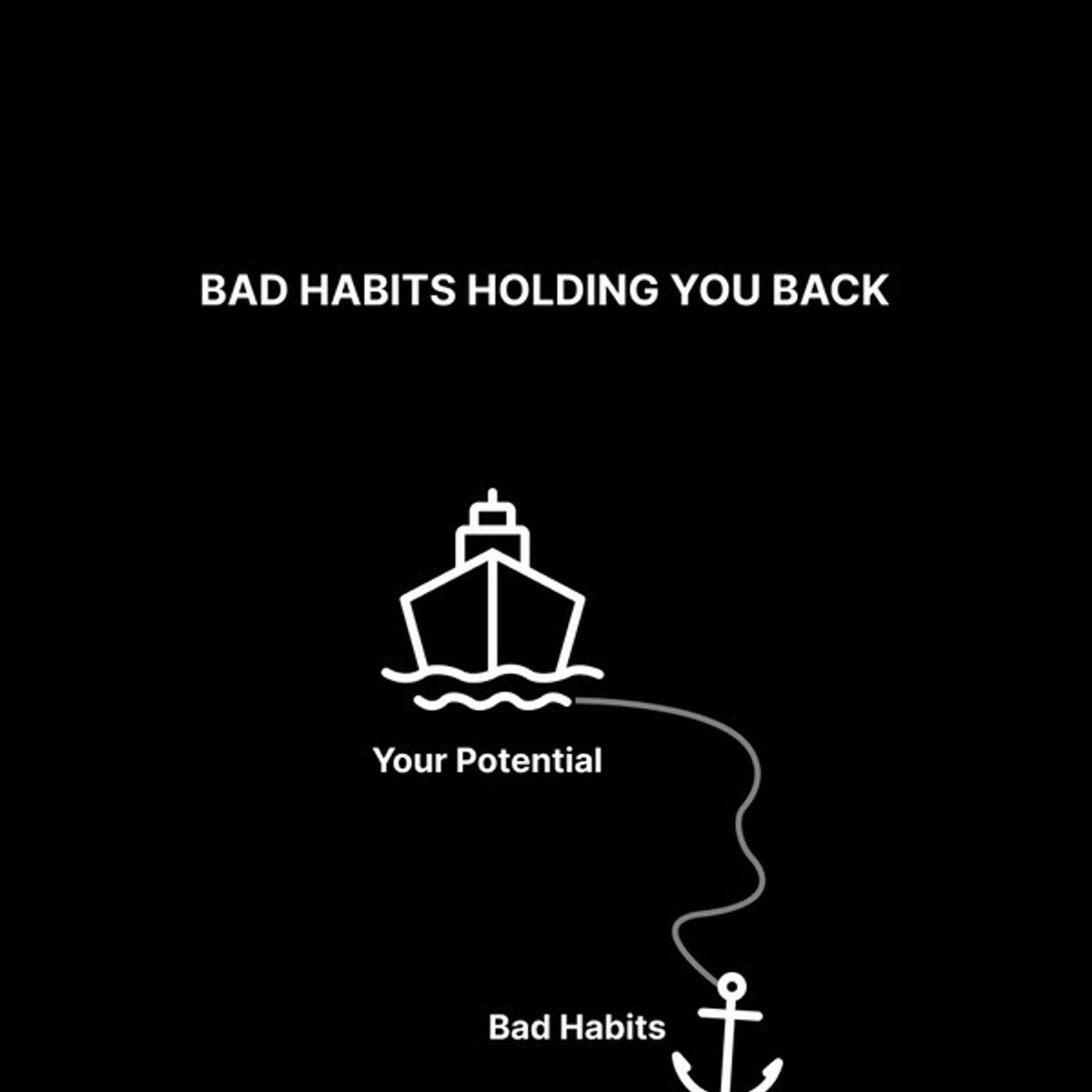
Welcome to the 853 new members of the curiosity tribe who have joined us since Friday. Join the 96,549 others who are receiving high-signal, curiosity-inducing content every single week.Today’s newsletter is brought to you by The Hustle!See why 2m+ professionals start their day with The Hustle newsletter.Anyone can regurgitate the news, few can make it interesting and entertaining. The Hustle does just that. Be the most interesting person in the room from reading The Hustle each day. While their Monday - Friday coverage is 5 star, their Sunday Deep Dives are epic. Ever wondered how all-you-can-eat-buffets make money? Or what happened to the 250K American Airlines lifetime pass? It’s free, it’s fun, and it’s ad free!Today at a Glance:There’s no such thing as an overnight success. Extraordinary success is simply the byproduct of a large volume of ordinary actions. The quality of our daily habits governs the ultimate quality of our long-term outcomes.I frequently write and speak about the good habits—the ones that positively contribute to your desired outcomes. But what about the bad habits? Just as we want to identify what will propel us forward, isn’t it at least as important to know that which is holding us back?Today’s piece covers 20 bad habits that are holding you back from reaching your potential. All of these are bad habits I have—or currently am—struggling with, so you definitely aren’t alone in this fight.Bad Habits Holding You BackI’m mildly obsessed with the myth of the overnight success.There’s a story I love about Spanish painter Pablo Picasso that captures the essence of the myth very well:Picasso was walking through the market one day when a woman approached him.She pulled out a piece of paper and said, “Mr. Picasso, I am a fan of your work. Please, could you do a little drawing for me?”Picasso smiled and quickly drew a small, but beautiful piece of art on the paper. He handed it back to her.“That will be one million dollars.”“But Mr. Picasso,” the woman protested, “It only took you thirty seconds to draw this little masterpiece.”Picasso smiled, “On the contrary, it took me thirty years to draw that masterpiece in thirty seconds.”The lesson: extraordinary success is simply the byproduct of a large volume of ordinary actions.The quality of our daily habits governs the ultimate quality of our long-term outcomes.I frequently write and speak about the good habits—the ones that positively contribute to your desired outcomes.But what about the bad habits?Just as we want to identify that which will propel us forward, isn’t it at least as important to know that which is holding us back?In that vein, today’s piece will cover 18 bad habits that are holding you back from reaching your potential. All of these are bad habits I have—or currently am—struggling with, so you definitely aren’t alone in this fight!These are designed to be short, punchy insights—I would encourage you to skip any that don’t apply and think deeply about those that specifically resonate with you.Without further ado, let’s dive right in…Focusing on the UrgentIt's easy to jump from one urgent task to the next.But when you focus on the short-term urgent, you lose sight of the long-term important.Spend most of your time focused on long-term important tasks—the compounders.Delegate or delete the rest.Saying Yes to EverythingConfession: I've always had a tough time saying no. I'd take on too much and then grind my way through—or even worse, under-deliver vs. expectations.The ability to say no is a superpower of successful people. Be deliberate about what you spend your time on—and who you spend it with.My rule of thumb: You should spend your 20s saying yes and your 30s and beyond saying no. Your 20s are a time to say yes to almost everything. Saying yes puts you into new and uncomfortable situations that expand your luck surface area. Your 30s and beyond are a time to say no to almost everything. Saying no allows you to focus & build leverage.Glorifying the Wrong ThingsWhat I used to glorify:No sleep100-hour workweeksBusy schedulesFancy titles and credentialsWhat I now glorify:Sleeping 8 hoursRegular physical activityUnstructured schedulesWorking in short sprintsSpending time with family and friendsThe realization: Freedom and control over your time is the one true status symbol. Success and wealth is meaningless if it doesn’t provide that freedom and control.Comparison TrapsThroughout your life and career, it's tempting to compare yourself and your progress to those around you.It’s borderline impossible to avoid:This person made X dollars last yearThat person got Forbes 30 Under 30So and so raised $100m for their startupThey just got a vacation home and new carIt's natural, but dangerous—comparison is like gas on your “more” fire—it tears away the enjoyment of the present and tells you that it’s not enough.Learn to turn it off.Focus on what you can control. When you notice yourself falling into the trap, reset and focus on yourself.Pr

Ep 61The Beauty of Enough
Welcome to the 1,719 new members of the curiosity tribe who have joined us since Friday. Join the 94,548 others who are receiving high-signal, curiosity-inducing content every single week.Today’s newsletter is brought to you by Morning Brew!There's a reason why over 4 million people read Morning Brew—the free daily email that covers the latest from Wall Street to Silicon Valley. Unlike traditional news, Morning Brew will keep you informed AND entertained.Morning Brew is one of my consistent daily reads. I know you’ll love it as much as I do!The Beauty of Enough“There are decades where nothing happens, and there are weeks where decades happen.”My son was born one week ago—it feels like one of those fabled weeks where decades happen.I spent the first three decades of my life trying to find the meaning and purpose of all of this—then one week, it all came into view.On Monday morning, I was with him in bed and had this profound sensation: For the first time in my life, I have enough.I’ve always been extremely driven—I’ve always been in this constant cycle of wanting more.But I feel…different.Really, what more could I want?This profound feeling prompted today’s piece—on our perpetual desire for more, and more importantly, on the beauty of enough.My hope is for you to come away from it feeling empowered to think clearly and deeply about finding your “enough” amidst the constant search for more.The Fisherman & The BankerThere’s a beautiful parable that I think about quite often…A wealthy investment banker goes on vacation to a tropical fishing village. As he walks along the docks one afternoon, he comes upon a small, run-down fishing boat with several large fish on its deck."How long did it take you to catch those fish?" he asks.The fisherman looks up from his work and smiles at his new visitor."Only a little while."The investment banker is caught off guard by this response. He likes the fisherman and wants to help."Why don't you fish for longer so you can catch more fish?"The fisherman shrugs and explains to his new friend that he has all he needs."Each day, I sleep late, fish a little, and spend time with my children and beautiful wife. In the evening, I go into town, drink wine, play the guitar, and sing and laugh with my friends."The investment banker is puzzled. He wants to help his new friend, who he recognizes is clearly confused. The investment banker has helped many businesses and has an MBA and other fancy credentials to his name. So he lays out a plan for the fisherman..."First, you spend more time fishing, so you can catch and sell more fish. You use the proceeds to buy a bigger boat, which allows you to catch and sell even more fish. Then you buy a fleet of boats. You hire a team. Vertically integrate! As CEO of a large, growing enterprise, you could move to the big city. You would take your company public and make millions!"The fisherman looks confused, but smiles."And then what?" he asks.The investment banker laughs at the silly question."Well, then you could retire to a quiet town! You could sleep late, fish a little, and spend time with your children and beautiful wife. In the evening, you could go into town, drink wine, play the guitar, and sing and laugh with your friends."The fisherman smiles broadly, thanks his new friend for the advice, and wanders off slowly into the warm afternoon sun.More vs. EnoughThis parable illustrates the importance of perspective.The story isn’t about the fisherman or the banker being “right”—it’s about personally identifying what success and purpose looks like to you, and then building a life that meets that definition.Fundamentally, it’s about a dichotomy that rules our lives: More vs. Enough.The Hedonic TreadmillHedonic adaptation is the tendency of humans to revert to a happiness baseline shortly after new positive or negative events.It (probably) developed as a survival mechanism of sorts—in the wild, you needed to stay on an even keel in order to survive to reproductive age. After a big hunt and kill, the thrill of the victory had to wear off quickly so that you didn’t let your guard down and get eaten by a lion. That seems…good.But in the modern age, hedonic adaptation has a darker side.It becomes a treadmill—the Hedonic Treadmill—a perpetual motion machine that keeps us running in search of the next thing.We create this magical universe in our minds where that one next thing will be exactly what makes us permanently, sustainably happier.The harsh reality? We get to that next thing, appreciate it for a moment, and then turn our gaze to the next, next thing, with no marked improvement in our happiness.You’ve undoubtedly seen this general dynamic play out:We can finally buy the second home in Florida we’ve always dreamed of. Two weeks later, we’re complaining about maintaining it and thinking that a third home in Sedona sounds nice.We buy that fancy car—we ride around smiling broadly with the music blasting, and then see someone in the newer model and start
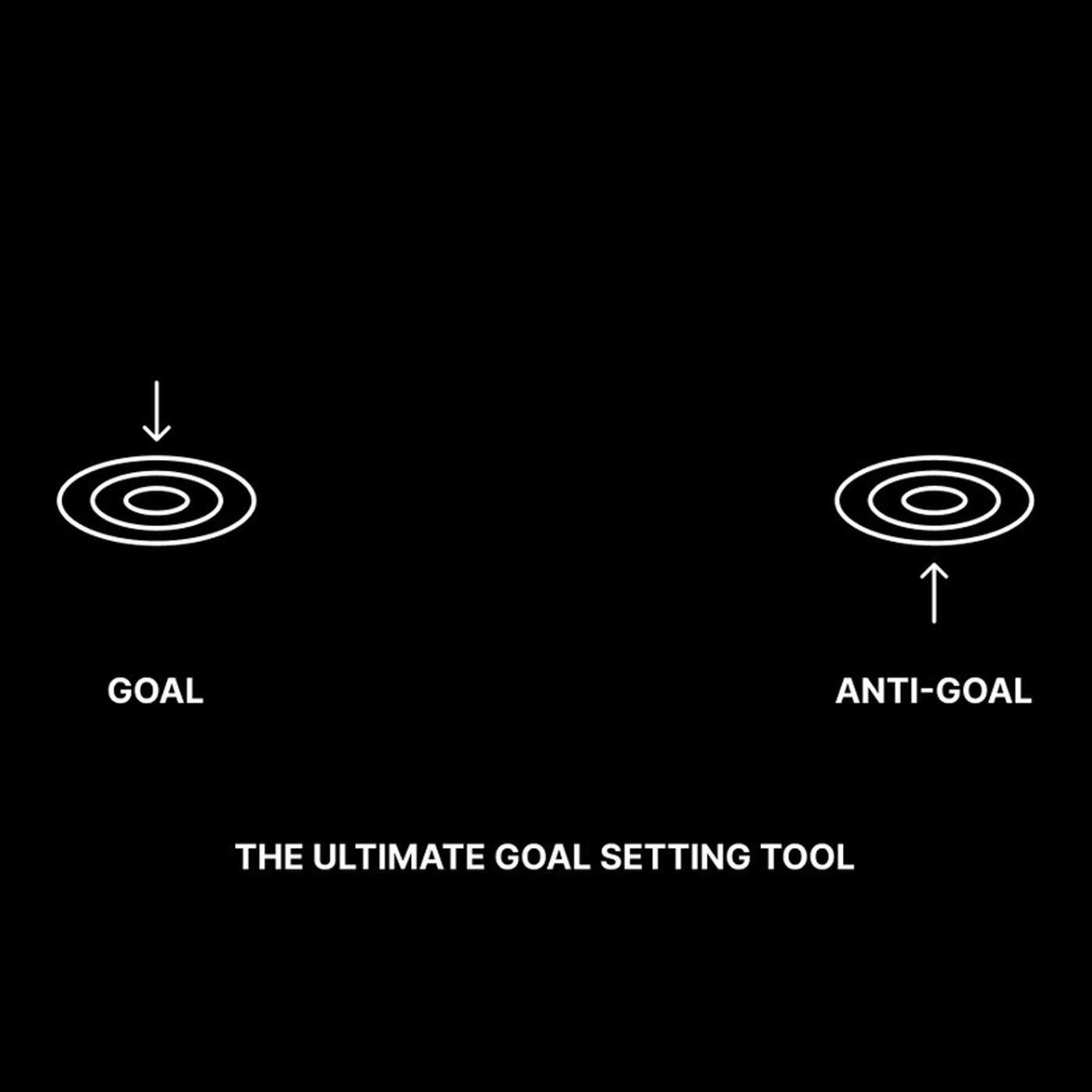
Ep 60The Ultimate Goal Setting Tool
Welcome to the most important new member of the curiosity tribe who joined us since Friday—my son, Roman Reddy Bloom.I spent the first 30 years of my life trying to find the meaning and purpose of all of this. Then one day, it was staring right back at me. My new best friend.Today’s newsletter is brought to you by LEX!What they do: make it easy to invest in real estate!Pop quiz: What asset class has created more millionaires than any other? Answer: Real estate.LEX has a really cool angle for investing in real estate. LEX does an “IPO” for a building, so you can directly invest in marquee commercial real estate. You can build a portfolio of buildings you want to invest in. Each building has a ticker, just like stocks. As a shareholder, you can get paid dividends flowing from the rent paid by the tenants. You can also earn tax advantaged passive income and trade without lockups.Check out LEX’s live assets in New York City and upcoming IPO in Seattle.Sign up for free here and get a $50 bonus when you deposit at least $500.Today at a Glance:Anti-goals are the things we DON'T want to happen—either as final outcomes or along the way. Establishing them allows you to win the battle AND the war.If traditional goals are the rudders that set your direction, think of anti-goals as the map that tells you where the rapids are. Awareness keeps you on smooth waters.The generalized process involves four steps: (1) Choose Your Arena, (2) Establish Traditional Goals, (3) Invert the Problem, and (4) Establish Anti-Goals. Test it out by establishing anti-goals when planning for new projects, designing your life, or creating self-improvement plans.The Ultimate Goal Setting ToolI love writing this newsletter.There are plenty of reasons, but at the top of the list is the fact that I get to take you all on a journey with me. Not a physical journey—though it would be fun to do a Curiosity Chronicle retreat someday!—but a learning journey.I’m able to share new insights and perspectives in *real time*.This isn’t some academic newsletter where I lecture you on truths and personal wisdom—this is simply me sharing ideas, frameworks, and models that I am battle-testing on my own journey.I am not a teacher—I am a student, learning alongside all of you.In that vein, today’s piece will share a new learning: the power of Anti-Goals.An Introduction to Anti-GoalsAt the start of 2022, I shared a piece called The Goal Setting Guide—a breakdown of my framework for setting—and smashing—goals.Shortly after I shared the piece, however, I came across the intriguing concept of “anti-goals” from my friend Andrew Wilkinson. I began to wonder if my goal setting framework was in need of a refresh.I like to personally battle-test new concepts before I share them publicly, so I started establishing “Anti-Goals” for all new projects.Everything changed.It quickly became a staple for:Planning for new projectsDesigning my lifeCreating self-improvement plansSo with sufficient battle-testing behind me, I'd like to share how to leverage anti-goals to level up your goal setting process.The concept is grounded in inversion—a foundational mental model that says that complex problems are often easier solved backwards vs. forwards.Inversion was made famous by one quote from Charlie Munger:All I want to know is where I’m going to die, so I’ll never go there.With traditional goals, we envision the optimal outcome. We then build systems that will—hopefully—lead to that outcome.This is important and necessary—but it’s incomplete. Anti-goals leverage inversion to complete the picture.Anti-goals are the things we DON'T want to happen—either as final outcomes or along the way.I think of anti-goals as being about avoiding the Pyrrhic victory—a term coined after King Pyrrhus of Epirus, who suffered devastating losses while defeating the Roman army in battle in 279 B.C.E.The term is now commonly used to refer to a victory that takes such a terrible toll on the victor that it might has well have been a defeat.My friend Shaan Puri, another proponent of anti-goals, elaborates:What if your dream was to be a musician. And guess what - you did it! But while you’re touring the world, you gain weight, get addicted to drugs, your marriage is in shambles, and your kids don’t recognize you....you won the battle but lost the war.Anti-goals allow you to win the battle AND the war!The Anti-Goal FrameworkOk, so how do you leverage anti-goals in your goal setting process?The generalized version involves four steps:Choose Your ArenaEstablish Traditional GoalsInvert the ProblemEstablish Anti-GoalsLet’s walk through each step:Choose Your ArenaThe arena is the "project" you’re going to be working on.A few broad categories to consider:PersonalWorkHealthYour arena should be a specific project under a larger category. It’s the place where you’re looking for achievement, progress, or growth.Establish Traditional GoalsThese are your standard goals—the desired outcomes from the chosen arena. This should b
Ep 59The Power Speaking Guide
Welcome to the 1,044 new members of the curiosity tribe who have joined us since Friday. Join the 91,634 others who are receiving high-signal, curiosity-inducing content every single week.SPECIAL ANNOUNCEMENT: Hyper startup accelerator is open for applications!If you're thinking about joining an accelerator or raising capital for your startup, Hyper is a new accelerator backed by the biggest venture capital firms in tech.A few reasons I’m a huge fan:More competitive terms than competitors ($300k for 5%).Hyper is the sister company of Product Hunt—companies get unique access to Product Hunt, the team, and launch support.World-class advisors including Sequoia’s Alfred Lin, Ryan Hoover, Deena Shakir, Disney’s Jeffrey Katzenberg, and a lot more.Small batches make for a far more personalized experience.Efficient 4 week long program.Participants get time with me on how to scale your storytelling!This is an amazing opportunity for startups all around the world. Apply for the program here.Today’s newsletter is brought to you by Air!If you’re still using Google Drive and Dropbox to store your files, you’re going to want to listen up. While those tools are fine for people who just need to store everything, they fall terribly flat when it comes to creative collaboration and scalability on images and videos.Walk with me…let’s talk about Air. Air has built a solution—a platform that allows marketers and creatives to collaborate seamlessly across the entire content library of a business. All the work happens directly in the visual asset. The end result? Businesses can 10x the power of their content to become storytelling machines.Air is the “holy s*** why didn’t this already exist?!” solution for marketing and creative collaboration. My startup portfolio loves it and you will too. Get a demo today and level up your content.Today at a Glance:Public speaking is scary. So scary that a number of surveys and studies have found that people rank public speaking ahead of death on a list of their greatest fears.It’s also one of the most critical skill sets for your career and life. Confident, powerful public speaking—whether informal or formal—will accelerate your personal and professional life.Strategies for more confident public speaking: avoid memorization, study the best, strike a power pose, practice relentlessly, find the anxiety killers, play the lava game, slow down to 0.75x, engage the audience, implement a storytelling structure, move with purpose, never self-sabotage, and cut the fear.The Power Speaking Guide"There are two types of speakers: those that are nervous and those that are liars." — Mark TwainOk, so public speaking is scary.How scary?Well, a number of surveys and studies have found that people rank public speaking ahead of death on a list of their greatest fears…THAT scary.Unfortunately, public speaking is also one of the most critical skill sets for your career and life. Confident, powerful public speaking—whether informal or formal—will accelerate your personal and professional endeavors. It sits in the all-important top-right quadrant of the Scary vs. Beneficial 2x2 grid.So we can’t just hide from it. We need a set of strategies to increase our confidence and level up our speaking game.In today’s piece, I’ll propose 12 such strategies. Some of the strategies will appear non-obvious or even counter-intuitive—but trust me, they work.Without further ado, let’s dive in…Avoid MemorizationWhen we’re nervous for a speech, toast, presentation, or talk, our bias is to memorize the content word-for-word.We memorize in a valiant effort to avoid screwing up.Ironically, memorization often has the opposite effect.Imagine you are driving to a friend’s new house. You look up the directions before leaving—they seem simple enough, so you just memorize them. On the way, there’s a bit or roadwork that forces you to make a slight detour. Suddenly, you’re completely lost. You memorized the directions from A to B, but the slight twist has taken you off course and you have no clue how to get back on track. You only memorized the directions for one specific scenario (going directly from point A to point B), but the situation became more dynamic.For most people, the same general principle applies to public speaking.When you memorize material, one tiny slip-up can throw you off. You only know the material in one fixed direction, so you're unable to adapt. All it takes is a glitch in the slides, an off-track question from the audience, or a slight stumble in your opener and all of your preparation is out the window.Furthermore, rote memorization can make you appear distant to the audience.Instead of memorizing:Focus on a few key moments. Perfect the opening line, transitions, and closing. When you nail these, you create momentum—with the audience and yourself. It instills a confidence you can build on. Manufacture these small "wins" that compound.Create “lego blocks” that you can piece together. Hone small chunks of stories and ideas

Ep 58Dangerous Mental Errors (You Don't Know You're Making)
Welcome to the 404 new members of the curiosity tribe who have joined us since Friday. Join the 89,181 others who are receiving high-signal, curiosity-inducing content every single week.Today’s newsletter is brought to you by LEX!What they do: make it easy to invest in real estatePop quiz…What asset class has created more millionaires than any other? Answer: Real estate.Today’s sponsor, LEX, has a really cool angle for investing in real estate. LEX does an “IPO” for a building, so you can directly invest in marquee commercial real estate. You can build a portfolio of buildings you want to invest in. Each building has a ticker, just like stocks. As a shareholder, you can get paid dividends flowing from the rent paid by the tenants. You can also earn tax advantaged passive income and trade without lockups.Check out LEX’s live assets in New York City and upcoming IPO in Seattle.Sign up for free here and get a $50 bonus when you deposit at least $500.Today at a Glance:Cognitive biases and logical fallacies are systematic errors in thinking and reasoning that negatively impact decision-making quality, logic, and outcomes.Combatting them relies first and foremost on establishing a level of awareness—both academically and practically.Part I of this series covered Fundamental Attribution Error, Naïve Realism, the Curse of Knowledge, Availability Bias, and Survivorship Bias.Today’s Part II covers Loss Aversion, the Spotlight Effect, Heaven’s Reward Fallacy, Confirmation Bias, and Baader-Meinhof Phenomenon.Dangerous Mental ErrorsA few weeks ago, I shared Part I of a multi-part series on cognitive biases and logical fallacies.In the opening to the piece, I commented on the fascinating dichotomy of our species:We possess the capacity to accomplish some complex feat of technology and engineering, and subsequently fall victim to the most obviously flawed base logic. For a hyper-intelligent species, our thinking and decision-making patterns can be pretty fractured.To be sure, many of these fractures were—for much of human history—features, not bugs. It’s logical to surmise that they were hardwired into our DNA because they made it incrementally more likely that we would survive to reproductive age.But the facts on the ground have changed—we live in a Digital Age—and our thinking and reasoning pathways have not had enough time to “catch up” to those new realities.So, we have to force it—we have to fight back and regain control over the quality of our decision-making and logic.In today’s Part II of the multi-part series, I’ll cover five common cognitive biases and logical fallacies that negatively impact decision-making quality, logic, and outcomes. To really bring it to life, for each one, I’ll provide a definition, example, and perspectives on how to fight back.Without further ado, let’s dive in…Loss AversionDefinitionThe pain of losing something is more powerful than the pleasure of winning it.Loss aversion was first identified by famed behavioral scientists Amos Tversky and Daniel Kahneman, who found that humans had a tendency to prefer avoiding losses over acquiring equivalent gains.Accordingly, people were typically willing to take actions to avoid losses that they wouldn’t have taken to seek gains. Economists had previously assumed humans were rational actors—that $100 in losses would drive the same amount of pain as $100 in gains would create pleasure. Wrong. Humans are enigmatic creatures!ExampleInvestors—professional and amateur alike—provide some of the most clear, trackable examples of loss aversion. The pain and fear of realizing a loss often leads investors to hold onto losing positions much longer than they should.The media contributes to this bias—dunking on investors who cut ties with losing positions rather than celebrating the fact that they may have exhibited clear, rational thinking.How to Fight BackAvoid emotional connection to your possessions—whether they are investments, material items, or money. Attempt to distance your emotions from the decision-making process where possible.Ask questions:Am I being objective and rational in this decision?Am I too connected emotionally to make a rational decision?If you are too connected to a given decision, you may need to outsource it to an objective third-party.The Spotlight EffectDefinitionHumans significantly overestimate the degree to which other people are noticing or observing our appearance or actions.It causes a lot of social anxiety—it keeps people from being themselves due to an irrational fear of judgement.We incorrectly assume that others are thinking about us. The reality: Everyone is just thinking about themselves.ExampleImagine you go to a dinner party. You’re nervous about the party, because you know there will be a lot of smart attendees and you won’t know anyone there.During the cocktail hour, you’re in a small group discussion and say something incorrect about the current state of domestic economic affairs. Your error is pointed out politely a

Ep 57Intellectual Sparring Partners
Welcome to the 1,146 new members of the curiosity tribe who have joined us since Friday. Join the 88,500 others who are receiving high-signal, curiosity-inducing content every single week.Quick Announcement: Audience Building Course is back May 3-6!It's a live cohort-based course designed to help you build a high-leverage audience. Results from prior cohorts were awesome—hundreds of thousands of new followers and subscribers and countless new monetization opportunities created.Only 25 spots remaining—you can grab your seat here.Today’s newsletter is brought to you by LMNT!LMNT is my healthy alternative to sugary sports drinks.I work out a lot and pay close attention to what I put in my body (other than the occasional whiskey). That means that I reject all the standard sports drinks and their sugar-filled formulas.LMNT is a tasty solution—an electrolyte drink mix with everything you need and nothing you don't. That means a science-backed electrolyte ratio with no sugar, no coloring, no artificial ingredients, or any other junk.Get your free LMNT Sample pack below (you only cover the cost of shipping). You’re going to love it.Today at a Glance:An intellectual sparring partner is a friend, colleague, or acquaintance whose combination of background, competency, and personality makes them well-suited to strengthen the quality of your reasoning and decision-making via active, grounded discussion and debate.To identify one, look for a combination of a different background from your own, clarity and depth of thinking, and a kind but direct personality.Establish structure with regular “sparring sessions”—1 hour on a fixed weekly or monthly cadence, with clear topics and desired outcomes to guide the discussion.Intellectual Sparring PartnersOver the weekend, I posted a thread on Twitter on the topic of ideas I can’t stop thinking about.It was intentionally broad—a running list of some of the most interesting concepts, frameworks, paradoxes, and mental models that have been percolating in my mind over the last several months.If you’ve been following along for a while, by now you’ve realized that my posts are rarely intended to give you “the answer”—they’re intended to make you think. I want to give you the tools, but leave it up to you to create your own maps of how to use them.If I can spark new curiosity about a topic—and that curiosity leads to active thinking, learning, discussion, and personal or professional growth—I’ve done my job.One idea from the list—Intellectual Sparring Partners—seemed to spark a lot of interest, discussion, and follow-up questions.Interestingly, when my friend Alex Lieberman asked me which of the ideas on the list has had the biggest impact on my life to date, intellectual sparring partners was my answer.Why?Well, one intellectual sparring partner—and one “sparring session”—completely changed my life.So in today’s piece, I’d like to shine a spotlight on this idea:What is an Intellectual Sparring Partner?The sparring session that changed my life.How can you find one?The makeup of a great “sparring session”.With that context in mind, let’s dive right in…IntroductionI’ve been fortunate to meet and interact with many top performers in my life.One common trait I’ve observed: they all legitimately enjoy being wrong. They embrace new information that forces them to change their viewpoints—their open mindsets allow them to accumulate and compound knowledge at an accelerated rate.This innate desire to be wrong—to get closer to the truth—leads them to seek out people who are willing and able to push their thinking in new directions and to greater depths.These people are their intellectual sparring partners…Let’s check Sahil’s Dictionary for a definition:Intellectual Sparring Partner (Noun): A friend, colleague, or acquaintance whose combination of background, competency, and personality makes them well-suited to strengthen the quality of your reasoning and decision-making via active, grounded discussion and debate.Put simply, an intellectual sparring partner is a person who is willing and able to question, critique, and pressure test your thinking.Friends come easy—intellectual sparring partners are harder to find, but are incredibly important and valuable.A Personal StoryTo bring this concept to life, I’ll share a quick personal story…In early 2021, I was completely lost. From the outside looking in, everything was fine—I had built a large following on Twitter, I had a good job, etc. But on the inside, I felt like I was wandering around with a blindfold on.I had decided to leave my stable job in private equity—and the wonderful group of colleagues that came with it—to pursue something new, but had run into a series of rejections along the way.In May 2021, at my point of peak uncertainty, I sat down for a meal with Shaan Puri, the host of the My First Million podcast and one of my go-to intellectual sparring partners.The conversation went something like this:Shaan: So, tell me how you’re thinking a

Ep 56It's Later Than You Think
Welcome to the 840 new members of the curiosity tribe who have joined us since Friday. Join the 86,375 others who are receiving high-signal, curiosity-inducing content every single week.Quick Announcement: Audience Building Course is back May 3-6!It's a live cohort-based course designed to help you build a high-leverage audience. Results from prior cohorts were awesome—hundreds of thousands of new followers and subscribers and countless new monetization opportunities created.50 spots remaining—you can grab your seat here.Today’s newsletter is brought to you by LEX!What asset class has created more millionaires than any other? Real estate. The problem is that it’s an asset class that has previously been inaccessible to most investors. LEX has changed that with a unique new way to invest in real estate.LEX does an “IPO” for a building, so you can build a portfolio of buildings you want to invest in. Each building has a ticker, just like stocks. Any US investor can open a LEX account, browse opportunities in various asset classes such as multifamily and office buildings, and buy shares of individual buildings.I’m a huge fan of the platform—you will be too! Get a $50 bonus when you deposit $500 by using the link below.It’s Later Than You ThinkYou work and work for years and years, you're always on the goYou never take a minute off, too busy makin' doughSomeday you say, you'll have your fun, when you're a millionaireImagine all the fun you'll have in your old rockin' chairEnjoy yourself, it's later than you thinkEnjoy yourself, while you're still in the pinkThe years go by, as quickly as a winkEnjoy yourself, enjoy yourself, it's later than you think- Guy Lombardo, Enjoy Yourself, It’s Later Than You ThinkA few weeks ago, I posted a thread on Twitter on harsh truths of life.Contrary to what you may believe, this piece was not intended to be dark or morbid. It was intended to make you think—to hopefully question some underlying (yet flawed) assumptions and spark active discussion with those around you.Today’s newsletter has the same intention.It’s more emotion-inducing than most of my work—I teared up several times during the writing!—but also arguably the most important piece I will ever write.My hope is for you to come away from it feeling cleansed, refreshed, and empowered to think clearly and deeply about your time and how you choose to spend it.With that context in mind, let’s dive right in…The Harsh TruthHarsh Truth: You’ll only see your loved ones a few more times.A Personal StoryI’ll start with a personal story.In May 2021, I had a conversation with a new friend that changed my life.We were having a chat—over a few whiskeys, of course—about living in California. He had grown up there and his entire family had settled there, so I was lamenting that it was so far away from my parents and sister in Boston.My friend asked how often I saw them and how old my parents were...I replied that I saw them about once per year, and that they were in their mid-60s. He looked me square in the face and plainly said:"Ok, so you'll see them 15 more times in your life."Gut punch.It sounds insensitive—but it's just real. It’s just…math. If the average life expectancy is ~80 years, my parents are in their mid-60s, and I see them one time per year, the math—however depressing—says I will see them 15 more times before they are gone.Our time together is finite, but we fail to recognize it until it's too late.Time is cruel. You’ll love it with all of your being, you may even pray for more of it, but the reality is that time doesn’t care about you.Your relationship with time is the ultimate unrequited love.The morning after this conversation, I woke up and had a very candid conversation with my wife about what we wanted in life. A few days later, we listed our brand new house in California on the market. Thanks to a blazing hot housing market, we sold our house within days, packed up our things, and shipped off to the East Coast to be closer to our parents.It’s been almost a year, and it was the best decision I've ever made.I'll never regret these tiny moments—of doing nothing in particular—that we'll get to spend together in the years ahead. I’ll never regret the moments my parents get to spend with my son once he is born.I’ll never regret any of this.Visualizing TimeWhen I first shared this story on Twitter, the response was pretty overwhelming. It seemed I wasn’t alone in having this painful, yet powerful, realization.Tim Urban—one of my favorite writers (and an upcoming guest on my podcast!)—wrote about this phenomenon in a recent New York Times op-ed.In classic Tim Urban fashion, he produced a simple visualizations to capture the sentiment of the entire piece.Quoting from the article:What it boils down to is this: My life, in the best-case scenario, will consist of around 20 years of in-person parent time. The first 19 happened over the course of my first 19 years. The final year is spread out over the rest of my life. When I

Ep 55Dangerous Mental Errors (Part I)
Welcome to the 4,178 (!!!) new members of the curiosity tribe who have joined us since Friday. Join the 84,638 others who are receiving high-signal, curiosity-inducing content every single week.Today’s newsletter is brought to you by LMNT!LMNT is my healthy alternative to sugary sports drinks.I work out a lot and pay close attention to what I put in my body (other than the occasional whiskey). That means that I reject all the standard sports drinks and their sugar-filled formulas.LMNT is a tasty solution—an electrolyte drink mix with everything you need and nothing you don't. That means a science-backed electrolyte ratio with no sugar, no coloring, no artificial ingredients, or any other junk.Get your free LMNT Sample pack below (you only cover the cost of shipping). You’re going to love it.Today at a Glance:Cognitive biases are systematic errors in thinking that negatively impact decision-making quality and outcomes.Combatting them relies first and foremost on establishing a level of awareness of the biases—both academically and practically.Today’s deep dive covers five common cognitive biases that derail decision-making: Fundamental Attribution Error, Naïve Realism, the Curse of Knowledge, Availability Bias, and Survivorship Bias.Dangerous Mental ErrorsHumans are fascinating creatures.We possess the capacity to accomplish some complex feat of technology and engineering, and subsequently fall victim to the most obviously flawed base logic. For a hyper-intelligent species, our thinking and decision-making patterns can be pretty fractured.Many of these fractures fall into the category of cognitive biases—systematic errors in thinking that negatively impact decision-making quality and outcomes.Importantly, these are typically subconscious, automatic errors. We are wired to take shortcuts in our decision-making—to be more efficient and effective in the wild—but shortcuts are a double-edged sword. Speed and efficiency can be great, but when we systematically misinterpret the data, signal, and information from the world around us, it dramatically impacts the consistency and rationality of our decisions.Fortunately, we can fight back and regain—at least a modicum of—control over the quality of our decision-making.In today’s piece, I’ll cover five common cognitive biases that derail decision-making. For each, I’ll provide a definition, example, and perspectives on how to fight back.This will be Part I of a multi-part series on cognitive biases and logical fallacies—as it’s a topic that deeply impacts all of our careers and lives. Developing an awareness of these errors—and a plan to combat them—will give you a legitimate competitive advantage in all of your pursuits.Let’s dive in…Fundamental Attribution ErrorDefinitionFundamental Attribution Error is the human tendency to hold others accountable while giving ourselves a break.It says that humans tend to:Attribute someone else's actions to their character—and not to their situation or context.Attribute our actions to our situation and context—and not to our character.In short: We cut ourselves a break, but hold others accountable.Why do we do this? Well, as with many of the biases we will cover, it likely developed as a heuristic—a problem-solving or decision-making shortcut—in this case for simplifying the process and judgement around new human relationships.From an evolutionary perspective, quickly attributing negative actions to character—rather than situation or context—may have kept you alive, as you’d be more likely to avoid that individual in future interactions to play it safe.But in a modern context, it can create real problems—a failure to recognize or empathize with the context and situational factors impacting others is at the core of many societal and organizational issues.ExampleThe workplace is a common breeding ground for Fundamental Attribution Error.It’s easy to form perspectives on the character of colleagues and bosses based on small pieces of incomplete information.If a colleague arrives late for work, they’re just lazy, right?This is clearly a flawed line of thinking, as there are numerous factors that could have contributed to your colleague’s lateness.The reality is that, in these instances, you are using limited information to create an overall picture of an individual. You’re seeing one square of a map and believing you know the map in its entirety.How to Fight BackYou’ll never completely eliminate Fundamental Attribution Error, but you can limit its impact.The first step is always awareness—keep it in mind, particularly as you build a body of experiences with new colleagues or acquaintances. This is when it’s most likely to strike.Force yourself to slow down and evaluate the potential circumstances or situational factors that may be influencing an individual’s actions or behaviors.You won’t always have the time to do so—shortcuts are often necessary and helpful—but with longer-term or important relationships, it’s worth the extra effort.
Ep 54How to Stop Procrastinating
Welcome to the 979 new members of the curiosity tribe who have joined us since Friday. Join the 80,207 others who are receiving high-signal, curiosity-inducing content every single week.Today’s newsletter is brought to you by Write of Passage!Fun Fact: This newsletter would not exist if not for David Perell.When we first met, David explained his concept of the Personal Monopoly and convinced me to go all in on building mine. One year later, here we are.The Internet unfairly rewards people who have a unique set of skills, experiences, and ideas. When that combination is so unique that it can’t be replicated, you create a Personal Monopoly.David Perell has become the go-to guy for writing online, and has helped thousands of students create their own personal monopolies. He’s created a free guide to help people uncover their strengths, clearly communicate their value, and start building their reputation online with a free lesson from his Write of Passage course.This is a life cheat code. I highly recommend checking it out!Today at a Glance:Type I Procrastination is common and generally not very harmful. We procrastinate on doing the laundry, taking out the trash, or replying to our emails. Type II Procrastination is equally common, but much more damning. Type II tasks tend to be the long-term important projects—the true growth creators. When we procrastinate on these projects, we fail to make progress.The Anti-Procrastination System involves five core steps: (1) Awareness, (2) Deconstruction, (3) Plan Creation, (4) Stake Creation, and (5) Action.The system is equally applicable for both Type I and II, but given its deliberate structure, it’s likely better to walk through for the first time in the context of Type II Procrastination.How to Stop ProcrastinatingConfession: I’ve spent most of my life as a chronic procrastinator.I’ve also spent most of my life justifying that chronic procrastination. “It’s just how I work,” I’d say to myself after yet another stress-inducing last-minute sprint to complete a project. The pressure of an imminent deadline was what I needed to thrive.Scientifically, I wasn't wildly off…The Yerkes-Dodson Law—originally developed by psychologists Robert Yerkes and John Dodson in 1908—says stress and performance are positively correlated…up to a point, after which more stress reduces performance.But there are two core issues here:It’s very difficult to honestly review where you sit on the curve. Are you really at optimal stress, or have you gone past that point on the curve?If procrastination is the only way you’re able to create optimal stress, you only work on the urgent tasks—very rarely the long-term important tasks. As you’ll recall from my piece on The Ultimate Productivity Tool, this is a recipe for stalled progress.What I realized: A modest amount of stress, pressure, and arousal is good—but relying on procrastination to create it is bad. Procrastination is a growth limiter—it restricts our potential.It became clear to me that I needed to develop a system to fight back.In today’s piece, I’d like to share that system with all of you.The Anti-Procrastination SystemI categorize procrastination-prone tasks into two types:Type I: Small & BoringType II: Big & ScaryType I Procrastination is common and generally not very harmful. We procrastinate on doing the laundry, taking out the trash, or replying to our emails.Type II Procrastination is equally common, but much more damning. Type II tasks tend to be the long-term important projects—the true growth creators. When we procrastinate on these projects, we fail to make progress—we stall. The Anti-Procrastination System involves five core steps:AwarenessDeconstructionPlan CreationStake CreationActionThe structure is sequential, but its practice is often dynamic & iterative.Note: The system is equally applicable for both Type I and II, but given its deliberate structure, it’s likely better to walk through for the first time in the context of Type II Procrastination.Let's walk through each of the steps...AwarenessAs with most mental hurdles, the first step is becoming aware of the problem.Procrastination is defined as the action of postponing or delaying something. Ancient Greek philosophers called it Akrasia—acting against your better judgement. We procrastinate when it's easier to delegate a task to our future self.Don’t beat yourself up about it. The proclivity to procrastinate is literally hardwired into our DNA. We value immediate rewards, even if we know that it isn’t what’s best for us in the long-term.To develop awareness, schedule a daily assessment of your day-to-day actions. Start by identifying the important long-term projects in your life.Then ask a few questions:Am I proud of the actions I am taking on these big projects?Am I doing what I should be doing?If the answers are “no”—that’s great.You're now aware of your procrastination and can proceed to the next step...DeconstructionThe driver of Type II Procrastination i

Ep 53The Career Success Guide
Welcome to the 1,002 new members of the curiosity tribe who have joined us since Friday. Join the 78,225 others who are receiving high-signal, curiosity-inducing content every single week.Today’s newsletter is brought to you by Veridas!Do you struggle with verifying the identity of your customers?Gone are the days of needing to ask customers over the phone to verify 3 pieces of information to prove their identity, and wasting your support rep's time. Veridas’ voice biometric authentication will confirm a person's identity simply by hearing them speak. No language requirements, no special phrase, just 3 seconds of chatter. In fact, 100 companies around the world already trust Veridas thanks to its simplicity, accuracy (+99.9%), and speed (150 milliseconds).Veridas is offering a special 15% discount for all Curiosity Chronicle subscribers that book a live demo in the next 30 days. Sign up at the link below to take advantage of the offer!Today at a Glance:Whether you’re just starting—or building—your career, you’ve undoubtedly faced new challenges that no textbook or classroom could have prepared you for. Early career years can be quite painful and anxiety-inducing. You face a completely new world with no map—no guide to help you navigate the uncharted terrain.Today’s piece provides that guide—a simple set of core principles that you can turn to and rely on as you start and build your career.If you prefer a printable, evergreen format that you can refer to in future, I turned this into a beautiful e-book, which you can buy here. It includes several additional principles and visualizations not in the newsletter version.The Career Success GuideWhether you’re just starting—or building—your career, you’ve undoubtedly faced new challenges that no textbook or classroom could have prepared you for.Early career years can be quite painful and anxiety-inducing. You face a completely new world with no map—no guide to help you navigate the uncharted terrain…So today, I’d like to provide that guide—a simple set of core principles that you can turn to and rely on as you start and build your career.All of the principles contained herein were developed and earned through my own experience, generally through failures or missteps. My hope is that by providing this in writing, you can avoid those same mistakes and accelerate your path.If you prefer a printable, evergreen format that you can refer to in future, I turned this into a beautiful e-book, which you can buy here. It also includes several additional principles and visualizations not in the newsletter version.With that context in mind, let’s dive right in: The Career Success Guide—10 principles to help you navigate the challenges of your early career…Build a Personal Board of AdvisorsThe general logic here is simple.If you treat your career lifecycle as a company...You start as a high-growth startupYou grow into a bigger businessYou IPO and are a public companyAt each phase, you're faced with a variety of difficult and new decisions and challenges.Traditionally, people have turned to "mentorship" to navigate the uncharted waters they encounter at each stage. But "mentorship" feels very formal. It carries a connotation of a fixed cadence and time commitment. From the mentor's perspective, it feels like a big commitment.Furthermore, having one formal mentor often falls short from a utility standpoint. Your mentor may not have encountered the challenge you're facing—they may not have a "map" that you can leverage to navigate the terrain. They may not be available when you need to make an important decision.Instead, build a Personal Board of Advisors. Companies have boards—ideally comprised of individuals from varying backgrounds and arenas. The board isn't involved in the day-to-day, but provides advice on strategy, key decisions, and challenges.Your Personal Board of Advisors is a group of 5-10 individuals.Important features:Unbiased (not family)Diverse experiences and backgroundsWilling to provide raw feedbackOver time, you can add and subtract from your board. The members don't need to know each other or that they are on your board. Informality is a feature, not a bug.As you encounter challenges, key decisions, or inflection points in your career, these are the people that you can reliably turn to for grounded perspectives, feedback, and advice.Swallow the Frog for Your BossThe “frog” is a difficult or annoying task your boss doesn’t want to do. But their frog is your opportunity!It presents one of the single greatest hacks to getting ahead early in your career:Observe your boss.Figure out what they hate doing.Teach yourself to do it.Take it off their plate (i.e. swallow the frog!).Swallowing the frog for your boss is a clear way to add value, put up a win, and build momentum.Create a Decentralized Growth TribeHaving a decentralized friend group to learn from and grow with is a legitimate competitive advantage.The features of a decentralized friend group:Unconnected to ot
Ep 52The New Way to Learn
Welcome to the 1,202 new members of the curiosity tribe who have joined us since Friday. Join the 76,887 others who are receiving high-signal, curiosity-inducing content every single week.Today’s newsletter is brought to you by Rows!After spending 7+ years in traditional finance, I had Chronic Excel Fatigue–the result of countless hours spent wrestling with the dated, legacy technology that hasn’t been updated since 2006!Fortunately, I discovered Rows—spreadsheets, reimagined. Rows is a truly magical product experience. It allows you to seamlessly pull data on stocks, crypto and more, and instantly integrate with services like Stripe, Google Analytics, Twitter, Salesforce, Instagram, Facebook and public databases like Crunchbase and LinkedIn.Rows is one of the most insane new product experiences I have had in recent memory. I use Rows for everything from managing my Startup Portfolio, social analytics, fund investing, and LPs to tracking household budgets and personal finance. I may never open Excel again.For your next spreadsheet, give Rows a try. You won’t be disappointed. Join thousands of teams that have stepped up their spreadsheet game with Rows.Today at a Glance:It has become in vogue to bash the traditional education system and the learning models it reinforces in our youth. I’m certainly guilty of it. In a broad sense, it’s always quite easy to criticize the incumbent—but much more difficult to propose a viable alternative, particularly one that works at scale.Traditional learning models fall short in two respects: (1) they endorse compartmentalized knowledge and (2) they create forced, linear progressions.The ultimate meta-goal of learning is for knowledge to compound over time. We want to learn in such a way that new knowledge builds on top of existing foundations—ideally in an accelerating, non-linear manner.Networked Learning is a way to return to our roots and allow knowledge to freely interact and compound. There are many ways to engage it, including: (1) Explore vs. Tour, (2) Analogize Constantly, (3) Paired Learning, (4) Read Broadly & Quit More, and (5) Slow Down Learning.The New Way to Learn“Traditional learning models are dead.”If you’ve been scrolling Twitter or attending any group events over the last five years, you’ve probably heard some variation of the above statement countless times.It has become in vogue to bash the traditional education system and the learning models it reinforces in our youth. I’m certainly guilty of it. In a broad sense, it’s always quite easy to criticize the incumbent—but much more difficult to propose a viable alternative, particularly one that works at scale.In today’s piece, I’d like to lay the foundation for an alternative, better learning model: Networked Learning. Let’s begin with the traditional model and its deficiencies before diving into the details of the new way and how to use it.Note: I say *foundation* because my thinking on the topic remains a work-in-progress. I believe I have identified a truly better way for children and adults to learn—and clear methods to use it—but the challenge of deploying it at scale remains.The Traditional ModelI graduated from my public high school thinking I hated most subjects.It was odd—I was a pretty interested kid, but I drifted from class to class, doing the bare minimum to deliver an adequate report card to my discerning parents and clear the academic hurdles required by Stanford Athletic Department’s admissions team.Reflecting on it with the benefit of hindsight—and a bit of maturity—what I actually hated was the learning model the traditional education system forced upon me: A learning model grounded in linear, compartmentalized learning. A learning model that praised rote memorization of facts.Unfortunately, this learning model is drilled into us for so many years that the bad habits stick with us throughout our life. As a result, few find a way to learn more effectively in adulthood.Stick with me today and I’ll help you break the vicious cycle…Let's start with a quick breakdown of the traditional model and why it's broken.Problem #1: CompartmentalizedTraditional education asks you to create containers in your mind.I imagine them like little houses. You have your history house, your English house, your science house, your math house, etc. Each house is discrete and closed off to the rest of the houses and world.Let’s say you have a history test on Monday. On Sunday night, you sit down with a coffee and cram some new abstract information about Genghis Khan into your designated history house. You remember it for the test on Monday and manage to ace it. Your teacher, parents, and friends pat you on the back and say "great job!”—but by the following Monday, you've forgotten it.“Oh well,” you say, “I didn’t need to know about Genghis Khan anyway…”This process repeats for every subject. Knowledge is crammed and trapped into its designated house.The problem? Trapped knowledge is basically useless. It's insula
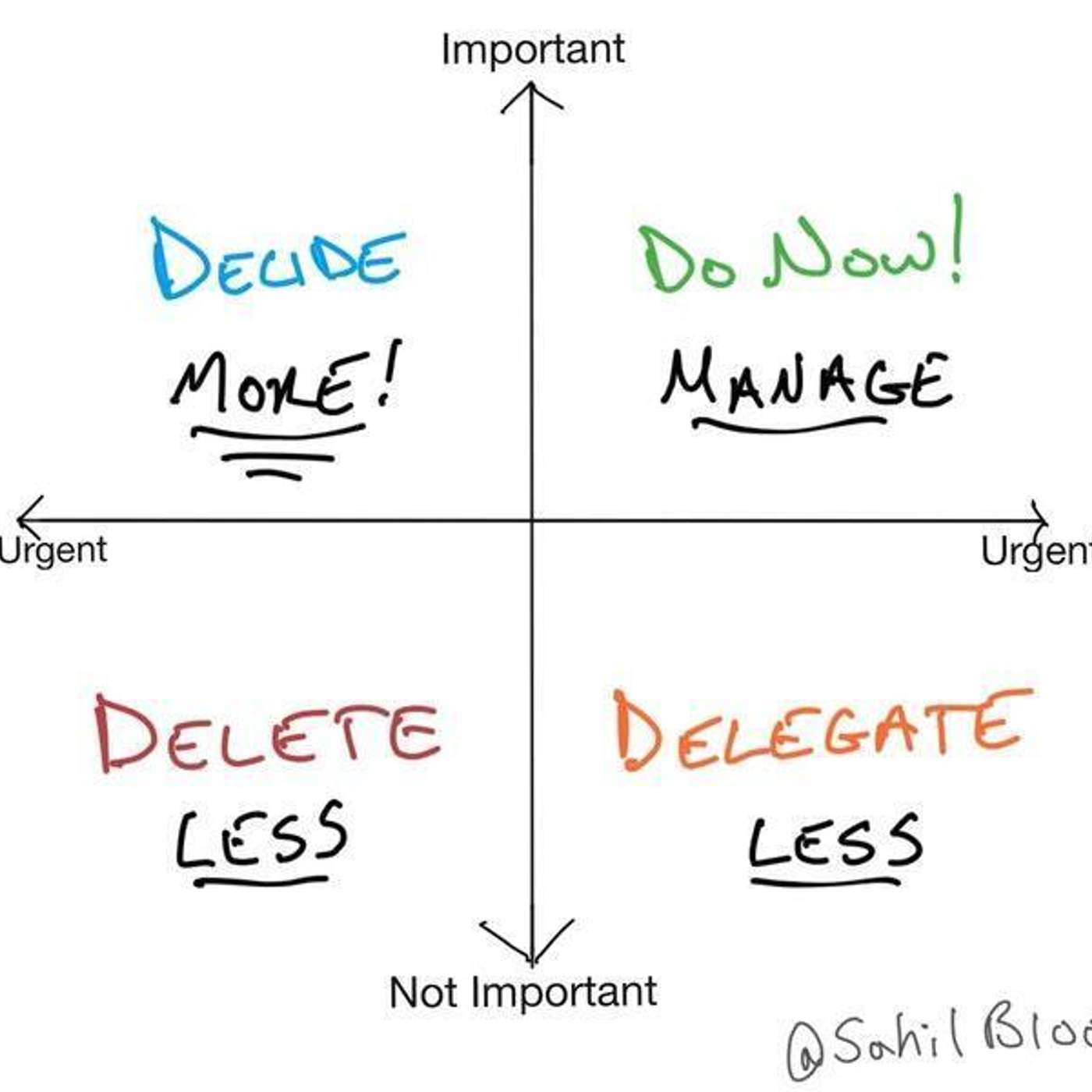
Ep 51The Ultimate Productivity Tool
Welcome to the 613 new members of the curiosity tribe who have joined us since Friday. Join the 75,508 others who are receiving high-signal, curiosity-inducing content every single week.Today’s newsletter is brought to you by Babbel!Start speaking a new language in 3 weeks!One of my goals for 2022 is to learn a new language. Studies show that learning a language increases the volume and density of gray matter, the volume of white matter, and brain connectivity.Babbel is the tool I’m using to achieve this goal—it’s one of the world’s top language learning platforms and prepares you for situations you’ll actually encounter in real life. I’ve been blown away by the experience thus far—lessons are just 10 minutes and you can start having basic conversations in the new language in just 3 weeks. Plus, you get access to podcasts, games, videos and more.It’s a great household activity to enjoy with your partner and your kids as well!For a limited time, you can join me on this journey and get up to 60% off your subscription by using the link below. Take advantage of this amazing offer and get your language learning on today!Today at a Glance:The Eisenhower Decision Matrix is a simple, powerful tool anyone can use to prioritize effectively and enhance daily productivity. It’s a visualization tool that forces you to differentiate between the urgent and the important.The four quadrants of the 2x2 matrix: Important & Urgent (“Do Now”), Important & Not Urgent (“Decide”), Not Important & Urgent (“Delegate”), and Not Important & Not Urgent (“Delete”).The goal is to spend more time on important tasks that further your long-term values, missions, goals, and principles. In Eisenhower Decision Matrix terms: Manage the top-right, optimize for the top-left, and remove the bottom half.The Ultimate Productivity ToolWe’ve all been there.Scrambling from task to task, moving from one stress-inducing fire to the next. The minute one fire is out, another one is sparked. The day becomes an energy-draining fight to survive.The worst part? At the end of it all, it’s hard to point to any substantive progress. There was a lot of movement, but no forward progress—a “rocking horse” day, if you will.Today, I’d like to share a simple, immediately-actionable solution to this all-too-common problem. To set the stage, a short history lesson…Dwight D. EisenhowerDwight David Eisenhower—or Ike as his friends called him—was an American military officer and politician born in Denison, Texas in 1890.He was a West Point graduate and rose through the military to achieve the 5-star rank of general in the United States Army. During World War II, he served as Supreme Commander of the Allied Expeditionary Force in Europe and led the famed invasion of Normandy from the Western Front.Eisenhower would serve as President of Columbia University and the first Supreme Commander of NATO before being elected as the 34th President of the United States, a role he occupied from 1953 to 1961.As his military and civilian accomplishments indicate, Eisenhower was a highly-effective leader and executive. He became known for his prolific, almost otherworldly productivity.His secret? He never confused the urgent with the important:"What is important is seldom urgent and what is urgent is seldom important." - Dwight D. EisenhowerWith this idea as a foundation, let’s dive into today’s prioritization and productivity solution…The Eisenhower Decision MatrixThe Eisenhower Decision Matrix is a simple, powerful tool anyone can use to prioritize effectively and enhance daily productivity. It’s a visualization tool that forces you to differentiate between the urgent and the important. The matrix was popularized by Stephen R. Covey in his famous 7 Habits of Highly Effective People. Here’s how the 2x2 matrix works:X-Axis: Not Urgent to UrgentY-Axis: Not Important to Important Two key definitions:Urgent: requires immediate, focused attention to complete.Important: promotes or furthers your long-term values, goals, or principles.The four quadrants of the Eisenhower Decision Matrix:Important & UrgentImportant & Not UrgentNot Important & UrgentNot Important & Not UrgentA quick discussion of each…Important & UrgentThese are the tasks that are both important and urgent.They require immediate, focused attention—but also contribute to our long-term vision, goals, or principles.I call these the "Do Now!" tasks. They are time sensitive, but also contribute to real forward progress.Important & Not UrgentThese are the tasks that are important but not very urgent.I like to think of these tasks as the compounders—the tasks that compound long-term value in your life. The most successful people in the world find a way to focus their energy on these tasks.This is where you should try to spend most of your time and energy. You can decide when to attack them, but you need to prioritize this quadrant.Not Important & UrgentThese are the tasks that are not important,
Ep 50How to Get Lucky
Welcome to the 930 new members of the curiosity tribe who have joined us since Friday. Join the 73,957 others who are receiving high-signal, curiosity-inducing content every single week.Today’s newsletter is brought to you by Trends!Trends is my personal cheat code for generating new business and content ideas.It’s a premium newsletter from The Hustle that deconstructs the secret sauce of interesting businesses, side hustles, and emerging opportunities—and gives you the playbook to pounce on them. Even better, membership provides instant access to an exclusive community of 15,000+ entrepreneurs who are building the future.I learn something new from every single issue—it has become a core part of my content and learning engine. A true must-read. I can’t recommend it highly enough.Use the link below to join—no commitment, no catch, cancel anytime!Today at a Glance:Much of what we come to call "luck" is actually the macro result of 1,000s of micro actions. Your daily habits put you in a position where “luck” is more likely to strike.In order to get lucky, you have to remove the “black holes” (anti-luck) from your existence. You have to take actions to expand your personal luck surface area.Today’s piece shares 20 ways to expand your luck surface area.How to Get Lucky“Diligence is the mother of good luck.” - Benjamin Franklin“Luck has nothing to do with it, because I have spent many, many hours, countless hours, on the court working for my one moment in time, not knowing when it would come.” - Serena Williams“Shallow men believe in luck. Strong men believe in cause and effect.” - Ralph Waldo EmersonLuck is an interesting concept.There is certainly “luck” that is uncontrollable—pure and raw. Where you are born, who you are born to, and the base circumstances of your life all fall into this category of luck.But as we push beyond this baseline, the concept of luck morphs into something more impure and fluid.In fact, I believe that much of what we come to call "luck" is actually the macro result of 1,000s of micro actions. Your daily habits put you in a position where “luck” is more likely to strike.Interstellar & Luck Surface AreaIn the movie Interstellar (slight spoiler if you haven’t seen it!), there’s a scene in which the main characters discuss the habitability of a planet on the edge of a large black hole.The protagonists realize that the proximity to the black hole makes life unlikely to exist on the planet—the black hole absorbed all of the “lucky” events that might have been the spark for life. The asteroids carrying the seeds of life, the chance collisions—none of them could occur because the “luck surface area” of the planet was minuscule given its proximity to the all-absorbing black hole.I think about this scene a lot—it’s a sneakily powerful metaphor for life.In order to get lucky, you have to remove the “black holes” from your existence. You have to take actions to expand your personal luck surface area.In today’s piece, I’d like to get you started on this journey…Here are 20 ways to expand your luck surface area:Be the Dumbest in the RoomIf you have a choice between entering two rooms, choose the room where you are more likely to be the dumbest one in the room.Once you’re in the room, talk less and listen more. It’s bad for your ego, but it’s great for luck.Good things tend to happen in these rooms.Hang Out With OptimistsPessimists sound smart, optimists get rich.When choosing who to spend time with, prioritize spending time with optimists. Pessimists see the doors that are closed. Optimists see the doors that are open—and probably kick down the closed doors.Pessimists are “black holes” in your life that need to be removed in order for you to get lucky.Get in the ArenaThere's no luck on the sidelines—the arena is where it strikes.It's lonely and vulnerable, but it's the only path that bears real fruit. When faced with two paths, choose the path that puts you in the arena—where collisions happen, where luck can strike.Furthermore, surround yourself with people who are also in the arena. Sideline rock slingers never get lucky.Write in PublicWhen you write and publish your ideas and insights, you are casting a web of magnets out into the world.Those ideas and insights will attract some people to you—and perhaps repel others.As your web grows, the connections—and luck—compound accordingly.Sahil Note: I am a testament to this fact. My luck has increased significantly since I started writing in public. There are no qualifications or requirements to get started—just energy.Talk to Strangers"Don't talk to strangers" is a classic we are told as children—the residue of which carries into adulthood for far too many people.New relationships spark new ideas, insights, and opportunities—these compound just as well as any financial investment.Broad Network = Broad Luck."There are no strangers here; Only friends you haven't yet met." - William Butler YeatsSend More Cold EmailsCold emails are responsible for som

Ep 49A Primer on SWIFT & Sanctions
Welcome to the 498 new members of the curiosity tribe who have joined us since Friday. Join the 72,546 others who are receiving high-signal, curiosity-inducing content every single week.Today’s newsletter is brought to you by Rows!After spending 7+ years in traditional finance, I had Chronic Excel Fatigue–the result of countless hours spent wrestling with the dated, legacy technology that hasn’t been updated since 2006!Fortunately, I discovered Rows—spreadsheets, reimagined. Rows is a truly magical product experience. It allows you to seamlessly pull data on stocks, crypto and more, and instantly integrate with services like Stripe, Google Analytics, Twitter, Salesforce, Instagram, Facebook and public databases like Crunchbase and LinkedIn.Rows is one of the most insane new product experiences I have had in recent memory. I use Rows for everything from managing my Startup Portfolio, social analytics, fund investing, and LPs to tracking household budgets and personal finance. I may never open Excel again.For your next spreadsheet, give Rows a try. You won’t be disappointed. Join thousands of teams that have stepped up their spreadsheet game with Rows.Today at a Glance:Economic sanctions fall into the category of economic statecraft—the use of financial levers to drive desired geopolitical outcomes. They can be broadly defined as any planned commercial or financial penalties applied by one or more countries on another country, group, organization, or individual.The goals of the sanctions include constraining cross-border money flows that are necessary for financing a long-term war effort, punishing the oligarchs who support Putin and his war efforts, depleting Russia’s financial reserves, and creating political unrest within Russia that puts Putin under pressure.While the base package of sanctions was considered standard, the weekend announcements of a cutoff from SWIFT and a Central Bank reserve freeze is potentially much more damaging to Russia and Putin.A Primer on SWIFT & Sanctions“There are decades where nothing happens, and there are weeks where decades happen.” — Vladimir LeninThe world is in a dramatically different state since you last received a deep-dive piece from me just one week ago. Russia’s invasion of Ukraine has tragically plunged countless lives into chaos and encouragingly rallied much of the world to support the besieged Ukrainians. In the vein of support, I will be donating the proceeds from today’s newsletter to UNICEF: Protect Children in Ukraine.The situation is an intensely complicated one. There are two wars being waged here: a military war and an economic war.Today, I’d like to talk about that economic war and provide a simple breakdown of the most important weapons involved. I hope this piece makes you feel more well-informed in the days and weeks ahead.A Brief History of SanctionsEconomic sanctions have become a staple of modern statecraft.Economic sanctions fall into the category of economic statecraft—the use of financial levers to drive desired geopolitical outcomes. They can be broadly defined as any planned commercial or financial penalties applied by one or more countries on another country, group, organization, or individual.They are not new.Most historians agree that the first formal economic sanctions were in 432 B.C., when Athens restricted merchants from a rival city-state called Megara from participating in its marketplaces. The action choked off economic activity in Megara—the sanctions were highly-effective.Fast forward several millennia to World War I and economic sanctions had become a core tool in the geopolitical toolkit. A prolonged naval blockade by the Allies was used to restrict the flow of goods to Germany and the other Central Powers.As the 20th century progressed, sanctions were used time and again—the industrial logic was that their potential dire impact on an economy would cause would-be aggressors to think twice before taking military action.Unfortunately, this didn’t take into account the human impact of the collateral damage of these sanctions, which was often devastating.In the post-9/11 world, the increased awareness of this human impact gave rise to so-called “targeted” sanctions—sanctions specifically designed to mitigate collateral damage and have precise impact. If general sanctions had been a shotgun blast historically, targeted sanctions were designed to be a sniper shot.This is largely where we are today and how we got here. The U.S. and Western world continue to make heavy use of sanctions due to broad global reliance on the dollar for trade and commerce.With that history in mind, let’s turn to our present situation…The Russia SanctionsOver the weeks preceding Russia’s formal invasion of Ukraine, as its military aspirations became increasingly well-understood, the U.S. and Western world began preparing its financial response.There are several interconnected goals of the sanctions package here:Constrain cross-border money flows that are

Ep 4815 Life Rules Worth Breaking
Welcome to the 577 new members of the curiosity tribe who have joined us since Friday. Join the 71,548 others who are receiving high-signal, curiosity-inducing content every single week.Today’s newsletter is brought to you by Revelo!If you’re a growing technology company, chances are you’re struggling to find talented developers right now.Revelo helps companies like GitHub, Intuit, and Carta hire faster, so they can grow faster! It’s a talent platform that matches you with vetted remote developers in Latin America who work in US time zones. It offers a full-suite platform that covers payroll, benefits, compliance, and more, allowing you to hire full-time remote developers without the headaches.Get matched with vetted candidates within 3 days—guaranteed. They even offer a 100% risk-free 14-day trial. If you’re not satisfied, you pay nothing.SPECIAL OFFER: Revelo is offering Curiosity Chronicle subscribers 20% off the first 3 months of any hire! Use the link below to take advantage of this crazy deal!Today at a Glance:“The young man knows the rules, but the old man knows the exceptions.” - Oliver Wendall Holmes, Sr.As children, we are taught to live by an ever-expanding set of rules. The rules keep us safe. They limit our downside during a fragile period of our lives. They also limit our upside, as they create artificial constraints on our movement and collisions as we travel through the universe.Rules are good—but just like the old man in the quote above, you have to know when to bend and break them.15 Life Rules Worth BreakingI’d like to open with one of my favorite quotes of all time:“The young man knows the rules, but the old man knows the exceptions.” - Oliver Wendall Holmes, Sr.Read that again.So much wisdom contained in such a short, concise statement.As children, we are taught to live by an ever-expanding set of rules. This is (mostly) good—it gives us a concrete, stable way to view the increasingly complex, dynamic world that we have entered.The rules keep us safe. They limit our downside during a fragile period of our lives.The problem? They also limit our upside, as they create artificial constraints on our movement and collisions as we travel through the universe. They force us to walk down a narrow path with bumpers on both sides—they eliminate the flashes of serendipity, the asymmetries that define the lives of the greatest among us.Rules may limit your risk, but they also limit your reward.Rules are good—but if you’re looking to play asymmetric games—those with low downside and uncapped upside—you have to know when to bend and break them.Here are 15 life rules worth breaking:Wait for the Perfect MomentThis rule has paralyzed would-be action-takers for generations.The reality: there is no such thing as the perfect moment.Sometimes you just have to open the door, jump out of the plane, and hope you packed the parachute tight.You Have to Work Hard to SucceedHard work is important—but it's relative, not absolute.In the Digital Age—when creative and inspired work stands out and is rewarded—what you work on is more important than how hard you work.Play your game, not theirs. You’ll play it better.Become an Expert, Not a GeneralistSociety celebrates experts in any given field.But as David Epstein finds in Range, many experts succeed because of the range of pursuits that preceded their main endeavor.Become a polymath. Generalize first, specialize later.Let Things Play OutThis isn't a movie that you're watching on your TV.You are not a passive observer of your own life. There are times to sit back, and there are times to push.Learn to identify the difference and never be afraid to provide a little push.Don't Ask Too Many QuestionsChildren are born with an insatiable curiosity, but somewhere along the line, we are told to stop asking questions.The most successful people in the world never listened—they broke this rule.Ask questions. Be curious. Be interested.If It Ain't Broke, Don't Fix ItComplacency will always lead you down a bad path.Just because something isn't broken, doesn't mean it can't be improved.Continuous improvement is the way. Focus on small, incremental improvements—day in, day out.Get a Stable JobThis might have been a good rule in the Industrial Age, but its foundation is crumbling in the Digital Age.The way we work is fundamentally changing—opportunities for creative, unstructured career paths are endless.Find your Zone of Genius and operate in it.Stay in Your LaneA rule of the fixed, stagnant, and hierarchical—often used to keep employees in line.It's great to double down on your strengths, but never let external pressures prevent you from expanding your domains.Growth mindsets rule the world.Think Through Every Big DecisionWe are told to methodically consider the pros and cons of every big decision in our lives.As a result, many of us have decision paralysis.With big decisions, you're actually better off making them fast—let your gut and instincts guide you.Don't Talk to StrangersA cl
Ep 47The Most Valuable Razors
Welcome to the 542 new members of the curiosity tribe who have joined us since Friday. Join the 70,546 others who are receiving high-signal, curiosity-inducing content every single week.Today’s newsletter is brought to you by Rows!After spending 7+ years in traditional finance, I had Chronic Excel Fatigue–the result of countless hours spent wrestling with the dated, legacy technology that hasn’t been updated since 2006!Fortunately, I discovered Rows—spreadsheets, reimagined. Rows is a truly magical product experience. It allows you to seamlessly pull data on stocks, crypto and more, and instantly integrate with services like Stripe, Google Analytics, Twitter, Salesforce, Instagram, Facebook and public databases like Crunchbase and LinkedIn.Rows is one of the most insane new product experiences I have had in recent memory. I use Rows for everything from managing my Startup Portfolio, social analytics, fund investing, and LPs to tracking household budgets and personal finance. I may never open Excel again.For your next spreadsheet, give Rows a try. You won’t be disappointed. Join thousands of teams that have stepped up their spreadsheet game with Rows.Today at a Glance:Razors are rules of thumb that help simplify decisions and drive better outcomes.When used appropriately, they can meaningfully improve the quality of your decision-making (and reduce stress along the way).The article below provides 20+ valuable razors, when to use them, and a few additional notes from the author.The Most Valuable RazorsThe Feynman RazorNamed after famed American theoretical physicist Richard Feynman—the Feynman Razor is a simple recognition that complexity and jargon are often used to mask a lack of deep understanding.If you can’t explain it to a 5-year-old, you don’t really understand it.If someone uses a lot of complexity and jargon to explain something to you, they probably don’t understand it.Use It When: You’re faced with a hand-waving, jargon-heavy explanation to a simple question.The Smart Friends RazorIf your smartest friends are all interested in something, it’s worth paying attention to.If that something seems crazy, it's worth paying a lot of attention to.The passions of the smartest people in your circles are a looking glass into the future.Use It When: Your smart friends have mentioned something that sounds crazy 3+ times.Sahil Note: I’ve ignored this signal on two occasions: Bitcoin (2013) and NFTs (BAYC). Both cost me a lot of money. I’ll never make that mistake again, and I suggest you don’t either.The Rooms RazorIf you have a choice between entering two rooms, choose the room where you are more likely to be the dumbest one in the room.Once you are in the room, talk less and listen more.Bad for your ego, great for your growth.Use It When: Deciding what to do on your next free night out.The Man in the Arena RazorIt's easy to throw rocks from the sidelines—it's hard to step into the arena.It's lonely and vulnerable, but it's where growth happens.When faced with two paths, choose the path that puts you in the arena—choose the path with real skin in the game.Use It When: Choosing how to approach a new and scary endeavor.Sahil Note: This is often a very challenging one, but it’s the one I feel most strongly about. It’s so much more comfortable to stay on the sidelines—it’s easy to convince yourself that it’s the safe or appropriate path. Ultimately, it’s very hard to create asymmetric outcomes on the sidelines. You have to be in the arena if you want to reap the outsized rewards.The Serendipity RazorSome of what we call luck is actually the macro result of 1,000s of micro actions.Your daily habits put you in a position where luck is more likely to strike.When choosing between two paths, choose the path that has a larger serendipity surface area.Use It When: Choosing what to do on a free night (when you have some energy).Sahil Note: The topic of “serendipity surface area” is one I plan to write about in greater depth in the future. It’s hard to get lucky watching TV at home. It’s (relatively) easy to get lucky when you’re engaging with people, interacting, and learning—physically or digitally. It’s possible to put yourself in a position to get lucky.The Uphill Decision RazorWhen faced with two options, choose the one that’s more difficult in the short-term.Naval calls this making "uphill decisions”—overriding your biological pain avoidance instinct.It's worth it—short-term pain creates compounding long-term gain.Use It When: Deciding between two near-term development pathways.The Rare Opportunity RazorThere is a rare class of opportunities that the average person will get 0 to 1 chances at in their lifetime.They look scary, but have insanely asymmetric return profiles.If you are fortunate to be faced with one of these opportunities, jump at it.Use It When: Making a decision on that one big opportunity.The Buffett Reputation Razor“It takes 20 years to build a reputation and five minutes to ruin it. If you think about
Ep 46How to Retain What You Learn
Welcome to the 1,116 new members of the curiosity tribe who have joined us since Friday. Join the 68,953 others who are receiving high-signal, curiosity-inducing content every single week.Today’s newsletter is brought to you by Trends!Trends is my personal cheat code for generating new business and content ideas.It’s a premium newsletter from The Hustle that deconstructs the secret sauce of interesting businesses, side hustles, and emerging opportunities—and gives you the playbook to pounce on them. Even better, membership provides instant access to an exclusive community of 15,000+ entrepreneurs who are building the future.I learn something new from every single issue—it has become a core part of my content and learning engine. A true must-read. I can’t recommend it highly enough.Use the link below to join—no commitment, no catch, cancel anytime!Today at a Glance:Learning is a meta-skill—arguably the most important meta-skill.School taught us many things, but unfortunately, how to learn was not one of them.The retention framework I use involves five steps: (1) Inspired Consumption; (2) Unstructured Note-Taking; (3) Consolidation; (4) Analogize; and (5) Idea Exercise. The structure is sequential, but its practice is often dynamic & iterative.Spaced Repetition is the most formal—and powerful—idea exercise method. It’s a method in which information is consumed at increasing intervals until it's committed to long-term memory. It leverages cognitive science—the way our brains work to convert short-term to long-term memory—to help you retain newly-consumed information.How to Retain What You LearnLearning is a meta-skill—arguably the most important meta-skill.School taught us many things, but unfortunately, how to learn was not one of them.Learning is how we adapt to our changing environments, circumstances, and situations. Learning allows us to create new “maps”—and edit old ones—in order to navigate the dynamic, highly-complex world with confidence.Growth is fundamentally driven by the long-term accumulation and compounding of usable learning. We accumulate and compound this learning through consumption and retention. Consumption is the inputs—what comes in. Retention is what remains after any leakage.Imagine your brain like a bathtub.The faucet is the entrance, the drain is the exit. Everything you research and consume flows in through the faucet. Everything you forget flows out through the drain.I’ve written a lot about the faucet in the past—here and here most recently—but I’ve never talked about the drain.Let’s fix that today—let’s talk about learning retention.Learning from The MatrixI love The Matrix. It’s not just sci-fi, there is a lot we can draw from it about learning and retention.Bear with me…In one of the early scenes of the first film, Keanu Reeves’ character—Neo—is plugged into the system and has a program uploaded into his brain. He has a moment of shocked revelation where he looks up and says, “I know kung fu.” He proceeds to demonstrate his new mastery in a virtual sparring room. Most importantly, Neo never forgets this new skill.To be sure, this isn’t that crazy an idea. Our brains are just software. When we learn, we are updating that software. But in the real world, though, our software is flawed and buggy—we forget important things or overwrite old data all the time.Our best bet? Develop a strategy for retention that is grounded in science. An approach to retention that is as integrated and comprehensive as our approach to learning. We may not become Neo, but we can become more Neo-like.The Retention FrameworkHere's a tactical framework for improving your retention…The retention framework I use involves five steps:Inspired ConsumptionUnstructured Note-TakingConsolidationAnalogizeIdea ExerciseThe structure is sequential, but its practice is often dynamic & iterative.Let's walk through each of the steps...Step 1: Inspired ConsumptionRetention starts with consumption.I bucket consumption into two types:Forced: Compelled, either internally or externally. Inspired: Driven entirely by your internal inspirations.If you've ever been in school, you know what forced consumption looks like. Forced consumption is the book you're told to read, despite the topic being of zero interest to you. It's the foundation of much of the traditional education system—yet another reason why so many of us are bad at learning retention!Inspired consumption is when you feel genuinely pulled to consume—when you enjoy the consumption process.It requires the willingness to put ego aside and "quit” more books (or content) when that genuine inspiration fades.Inspired consumption is important for retention for two key reasons.Inspiration is a precursor to flow. More flow state, more retention.Inspiration fuels engagement. Engage with the content, retain the content.Inspired consumption is the foundation of retention.Step 2: Unstructured Note-TakingWhen you start consuming, you should have a note-taking system in fron

Ep 45Diamonds Aren't Forever: The Story of De Beers
Welcome to the 1,151 new members of the curiosity tribe who have joined us since Friday. Join the 67,557 others who are receiving high-signal, curiosity-inducing content every single week.Today’s newsletter is brought to you by Babbel!One of my goals for 2022 is to learn a new language. Studies show that learning a language increases the volume and density of gray matter, the volume of white matter, and brain connectivity.Babbel is the tool I’m using to achieve this goal—it’s one of the world’s top language learning platforms and prepares you for situations you’ll actually encounter in real life. I’ve been blown away by the experience thus far—lessons are just 10 minutes and you can start having basic conversations in the new language in just 3 weeks. Plus, you get access to podcasts, games, videos and more. It’s a great household activity to enjoy with your partner and your kids!For a limited time, you can join me on this journey and get up to 60% off your subscription by using the link below. Take advantage of this amazing offer and get your language learning on today!Today at a Glance:De Beers created the modern diamond industry through the use of market manipulation, psychological hacks, and clever marketing.At its height, De Beers had direct or indirect control of the majority of the global diamond supply chain, allowing it to wield its influence to manage prices.“A Diamond is Forever” was the genius marketing campaign that created the diamond industry as we know it—convincing generations of men and women (1) that diamonds are a show of love—and that the size and quality of the diamond is proportional to the size and quality of the love and (2) that courtship and engagement involve a diamond.Broad-based pushback against the industry and its roots has led to the rise of alternatives—like lab-grown diamonds—but diamonds remain the standard show of love in most Western cultures.Diamonds Aren’t ForeverThe mandate of this newsletter is simple: I explore my curiosity and share what I learn along the way. To be clear, this is an intentionally-broad mandate—I don’t believe that curiosity follows any fixed lesson plan.The topics I will continue to cover include:Growth and decision-makingStartups, investing, business, and financeWriting and storytellingMarketingLifeThe one constant across all of this: I can guarantee you will learn something new and interesting from each and every piece I share. One new idea or insight that will make you smarter or spark your curiosity to go deeper.This is a learning-rich journey and I am fortunate to have almost 70,000 of you along for the ride. We’re just getting started.This felt like a fitting preface to today’s piece. Why? Well, every now and then, a story comes along that grabs my attention and simply won’t let go until I write about it.The story of De Beers and the making of the modern diamond industry is one of those stories. It stands out because it’s not a clear fit for any one of those buckets above—rather, it’s a fit for all of them!So sit back, grab a coffee (or whiskey), and let’s go down this rabbit hole together…The BeginningsThe story of De Beers starts well before the international giant existed.It may be difficult to believe in the current context, but for most of history, diamonds were not a particularly important gem. Largely found in parts of India and Brazil, they were considered rare and beautiful, but had little intrinsic value due to their lack of industrial or monetary use cases. Diamonds were a vanity item of the ultra-ultra-rich—a very niche market.But in 1870, everything began to change.Massive diamond stores were discovered in South Africa near the Orange River, setting off the first diamond rush. South Africa was officially a British colony at the time, which meant that British investors immediately flocked to the region and commissioned labor—both forced and paid—to begin building the diamond mines.It quickly became clear that the new South African mines would be producing never-before-seen quantities of diamonds.The British investors grew worried. In a free market, the glut of supply—and associated dent in the perception of scarcity—would send the price of diamonds into free fall. Given diamonds did not have any major industrial use cases to buoy demand, the perception of scarcity was critical to their price and desirability.So in 1888, one British financier and mining operator proposed a plan…The Making of De BeersCecil Rhodes was born in England in 1853, but after a sickly adolescence marked by severe asthma, his father sent him to South Africa, a climate he believed would be better for his health.Rhodes entered the diamond industry at age 18 in 1871 and began to systematically acquire and consolidate mining operations in South Africa. By 1888, he had built one of the most powerful mining operations in the region.But the diamond industry was in turmoil, with wild price fluctuations and uneven demand. Sensing an opportunity, Cecil Rhodes and hi
Ep 44First Principles Thinking
Welcome to the 600 new members of the curiosity tribe who have joined us since Friday. Join the 66,096 others who are receiving high-signal, curiosity-inducing content every single week.Today’s newsletter is brought to you by Revelo!If you’re a growing technology company, chances are you’re struggling to find talented developers right now.Revelo helps companies like GitHub, Intuit, and Carta hire faster, so they can grow faster! It’s a talent platform that matches you with vetted remote developers in Latin America who work in US time zones. It offers a full-suite platform that covers payroll, benefits, compliance, and more, allowing you to hire full-time remote developers without the headaches.Get matched with vetted candidates within 3 days—guaranteed. They even offer a 100% risk-free 14-day trial. If you’re not satisfied, you pay nothing.SPECIAL OFFER: Revelo is offering Curiosity Chronicle subscribers 20% off the first 3 months of any hire! Use the link below to take advantage of this crazy deal!Today at a Glance:First principles thinking is the most powerful framework for deconstructing complex problems, generating creative solutions, and driving non-linear outcomes.A first principle is a basic, foundational assumption—one that cannot be deduced or broken down any further. In simple terms, think of first principles as foundational truths that do not require any additional assumptions.As a simple rule of thumb: when speed and efficiency are critical, use reasoning by analogy; when creativity and innovation are required, use first principles thinking.To leverage first principles thinking, use Socratic Questioning to drill down to the foundational truths of a problem. Once you uncover them, you can begin to slowly build up to a more creative, imaginative solution.First Principles ThinkingThe most successful entrepreneurs, investors, and scientists in the world often reference first principles thinking as having been critical to their success.Run a simple Google search of the term and you’ll find countless articles, videos, and quotes from an array of billionaires and Nobel Prize winners who all point to the importance of first principles thinking.Accordingly, first principles thinking has become something of a buzz-phrase—often talked about, yet rarely understood (let alone employed effectively).In this post, I’d like to provide a simple, intuitive breakdown of first principles thinking: what it is, how it works, when to use it, and how to leverage it in your problem solving journey.Introduction to First PrinciplesFirst principles thinking is the most powerful framework for deconstructing complex problems, generating creative solutions, and driving non-linear outcomes.Let’s start with the basics: what is a first principle?Aristotle—the Ancient Greek philosopher, polymath, and student of Plato—defined a first principle as "the first basis from which a thing is known."A first principle is a basic, foundational assumption—one that cannot be deduced or broken down any further. In simple terms, think of first principles as foundational truths that do not require any additional assumptions.They are the base layer—the atomic unit.First principles thinking—sometimes referred to as "reasoning from first principles”—is a problem-solving and innovation framework that requires you to deconstruct a complex problem down to these most foundational elements.The aim: to ground yourself in the foundational truths and build up from there.Elon Musk explained this in a 2013 interview:“First principles is kind of a physics way of looking at the world. You boil things down to the most fundamental truths and say, ‘What are we sure is true?’ … and then reason up from there.”This method runs in contrast to our natural wiring.When we encounter challenging problems, our tendency is to rely on base level assumptions we have been told are true (or we believe to be true). Why? It’s quick and easy to do.This is called "reasoning by analogy”—it leads to solutions that are much like something else. Slight modifications or iterations on an existing solution. The unimaginative, linear solutions that closely resemble what has been done before.To be sure, it can be very useful when speed is the priority. Moving fast has its advantages at times—like if our ancestors were trying to avoid being eaten by a lion! But reasoning by analogy falls short when dealing with complex problems requiring creative, imaginative solutions.Imagine the solution to a problem as a house:The foundation of the house is the assumptions upon which the ultimate solution will rest.If it's a shoddy, quickly-built foundation, the house may collapse. Even if it remains standing, the architect and builder will know that they are limited in what they can build on top of it.If it's a sturdy, deliberately-built foundation, the house will thrive. The architect and builder can get creative with what they build on top of it, as they know the base is strong.First principles form tha

Ep 43The Most Powerful Ideas
Welcome to the 1,441 new members of the curiosity tribe who have joined us since Friday. Join the 64,851 others who are receiving high-signal, curiosity-inducing content every single week.Today’s newsletter is brought to you by Athletic Greens!On last week’s episode of the Where It Happens podcast, we interviewed new Athletic Greens President & COO Kat Cole. Athletic Greens is the one product I use every single day. I have been taking their halo product—AG1—first thing when I wake up for the last 5+ years. It’s my personal nutritional insurance policy.Special Offer: Athletic Greens is offering a free 1-year supply of Vitamin D (for those dark winter months) and 5 travel packs with all new orders to Curiosity Chronicle subscribers. Use the link below to take advantage of this offer!Today at a Glance:In the normal course of my content consumption habits, I come across a steady stream of learnings, ideas, and connections, some of which have an asymmetrical impact on my life.In this post, I share a list of 20+ high-impact ideas on business, investing, growth, and life, all of which were learned or surfaced in the last year.I plan to begin sharing a regular quarterly post of new ideas to bring you along for this learning journey.The Most Powerful IdeasI am an avid content consumer.Content consumption is a core part of my “job”—a critical element of my personal flywheel. I have built a “content engine” (more on that in a future post!) that provides a steady stream of learnings, ideas, and connections, all of which amplify the quality of my investing, business building, and content creation pursuits.In this post, I’d like to share some of the most powerful ideas I have come across over the last year, with additional notes and insights where helpful.So let’s dive right in: 20+ high-impact ideas on business, investing, growth, and life…Time BillionaireTime is our most precious asset.When you're young, you are a "time billionaire”—rich with time. Too many people fail to realize the value of this asset until it is gone.Treat time as your ultimate currency—it’s all you have and you can never get it back.Sahil Note: When I first learned this concept—from a Tim Ferriss podcast with Graham Duncan—it hit me hard. I had spent most of my life prioritizing the value of money or power, when the reality is that time is our most valuable asset, and the only one that cannot be bought or sold. It forced me to think deeply about how I want to spend my time, who I want to spend it with, and why I want to pursue certain paths over others. I would encourage you to think deeply about the same…Darkest Hour FriendsIt's easy to be there for people to celebrate their wins. It takes character to show up for them in their darkest hour.People never forget those who supported them when the chips were down.I call these your “darkest hour friends”—find them, treasure them.Engineered SerendipitySome of what we call "luck" is actually the macro result of thousands of micro actions. Your daily habits can put you in a position where "luck" is more likely to strike.It's possible to increase your serendipity surface area and engineer your own luck.Sahil Note: Serendipity surface area is an interesting concept. When you’re on a “track” in your life or career, you are walking on such a narrow path that very little luck can hit you. The more you open yourself up to the world—to new experiences and people—the more you expand your serendipity surface area. There’s quite literally more area for luck to strike.Leverage"Give me a place to stand and a lever long enough and I shall move the world." - ArchimedesLeverage is anything that multiplies the force of your inputs.Building systems that provide leverage on your time, money, and energy will allow you to create a life you deserve.Sahil Note: Leverage can cut both ways. When used too aggressively, it can be a negative (just ask Archegos or the founders at Long-Term Capital Management). Beware of over-leveraging your life or pursuits!Free Time as a Call OptionYou've incorrectly been told that free time is bad—hustle culture lied to you.The reality: Free time is a call option on future interesting opportunities.When you have free time, you have the headspace and bandwidth to pursue high-upside ideas.Sahil Note: I have learned that the same idea applies to cash. I used to believe that I had to be fully invested, otherwise I was leaving return/yield on the table. But I later realized that cash is a call option on future interesting opportunities. Having some idle cash allows you to invest in that new idea, pursue a weekend project, etc. It’s worth it.Decentralized Friend GroupsThere are two types of friend groups:Centralized: one cluster of friends with shared backgrounds & beliefs.Decentralized: small, varied, unconnected clusters of friends.When in doubt, opt for decentralized friend groups. The variety of backgrounds and beliefs is the key to developing independent thought.Sahil Note: I picked this up
Ep 42The Feynman Technique: How to Learn Anything
Welcome to the 808 new members of the curiosity tribe who have joined us since Friday. Join the 63,073 others who are receiving high-signal, curiosity-inducing content every single week.Today’s newsletter is brought to you by Revelo!If you’re a growing technology company, chances are you’re struggling to find talented developers right now.Revelo helps companies like GitHub, Intuit, and Carta hire faster, so they can grow faster! It’s a talent platform that matches you with vetted remote developers in Latin America who work in US time zones. It offers a full-suite platform that covers payroll, benefits, compliance, and more, allowing you to hire full-time remote developers without the headaches.Get matched with vetted candidates within 3 days—guaranteed. They even offer a 100% risk-free 14-day trial. If you’re not satisfied, you pay nothing.SPECIAL OFFER: Revelo is offering Curiosity Chronicle subscribers 20% off the first 3 months of any hire! Use the link below to take advantage of this crazy deal!Today at a Glance:Curiosity and inspiration are perishable—they must be acted upon when they strike. But unfortunately, despite its importance to your career and life, learning is not a skill we’re ever explicitly taught how to approach.The Feynman Technique is a beautiful, intuitive framework for learning literally anything.The process in a nutshell: identify a topic, research it deeply, attempt to explain it to a child, and then study to fill in the gaps.The Feynman TechniqueCuriosity is unpredictable.It strikes at random—and often inopportune—moments. But it is also notoriously perishable, so it must be acted upon.Let’s assume for a moment that you've been bit by the curiosity bug and are ready to act on it—ready to learn something new and (hopefully) exciting.Now what? Where do you start? What approach do you take?You’re inspired and motivated to learn, but you don’t even know where to begin.Unfortunately, despite its importance to your career and life, learning is not a skill we’re ever explicitly taught how to approach.Let’s fix that…In today’s piece, I’d like to talk about a beautiful, intuitive framework for learning literally anything: The Feynman Technique.IntroductionRichard Feynman was an American theoretical physicist born in 1918 in New York City.Feynman was a very late talker—he didn’t utter a word until he was three—but it was clear from a young age that he was extremely observant and intelligent. His parents valued non-consensus thinking—they constantly encouraged young Richard to ask questions and think independently.Feynman taught himself advanced mathematics in his teens and would go on to earn a B.S. from the Massachusetts Institute of Technology and a PhD from Princeton University. He would then become famous for his work in quantum electrodynamics and receive the Nobel Prize in Physics in 1965 for his contributions to the field.So yes, you could say that Richard Feynman was intelligent...But there are a lot of intelligent people in the world. Feynman's true genius was in his ability to convey extremely complex ideas in simple, elegant, digestible ways—to abstract complexity and deliver simplicity.He had observed at a young age that complex language is often used to mask a lack of deep understanding. As a rule of thumb, if someone uses a lot of acronyms and jargon to explain something to you, they probably don’t understand it very well themselves.We've all encountered this type of “expert” at one time or another…What was Richard Feynman’s secret? He had developed a learning framework—accidentally or intentionally—that forced a deep, elegant understanding of a topic that most people never achieve.The Feynman Technique: How It WorksThe Feynman Technique can be broken down into five key steps:Set the StageRead & ResearchELI5 (Explain It To Me Like I'm 5)Assess & StudyOrganize, Convey & ReviewLet's walk through each step, including notes on how I personally implement each one in my own learning processes…Step 1: Set the StageWhat’s the topic you want to learn?Starting with a blank page, write the topic at the top and jot down everything you know about it. For some topics, that might be precisely nothing; for others, it might be a lot.The starting point is irrelevant, you’re just setting the stage.Sahil Notes: I like to use Notion for tracking and managing my various research and learning efforts. It’s just a personal preference, so you can identify what works for you. I keep a “Knowledge Neural Net” board and for each new topic, I create a new page. I can then go back and connect ideas and topics as I see fit.Step 2: Read & ResearchNow that you have a baseline of your starting knowledge, you can begin your reading and research.The most effective strategy for research: start horizontal, then go vertical.Horizontal = BreadthVertical = DepthHere’s a simple visualization of how I think about this process:Horizontal Research (“HR”): Lays the foundation for your learning. When you star
Ep 41The Goal Setting Guide
Welcome to the 3,290 new members of the curiosity tribe who have joined us since Friday (🤯). Join the 61,177 others who are receiving high-signal, curiosity-inducing content every single week.Today’s newsletter is brought to you by Revelo!If you’re a growing technology company, chances are you’re struggling to find talented developers right now. It’s a massive problem.Revelo is your solution—the largest talent platform to match you with vetted full-time remote developers in Latin America who work in US time zones. It offers an all-encompassing platform that covers payroll, benefits, compliance, and more, allowing you to hire full-time remote developers without the logistical headaches.Revelo helps companies like GitHub, Intuit, and Carta hire faster, so they can grow faster! Get matched with vetted candidates within 3 days—guaranteed. They even offer a 100% risk-free 14-day trial. If you’re not satisfied, you pay nothing.SPECIAL OFFER: Revelo is offering Curiosity Chronicle subscribers 20% off the first 3 months of any hire! Use the link below to take advantage of this crazy deal!Today at a Glance:Goal setting is everywhere—we all set goals, but very few do it well. Why? Goal setting is equal parts art and science—it’s a craft that must be honed like any other.The new framework for goal setting involves five core steps: (1) Set the Stage, (2) Identify BHAG, (3) Work Backwards, (4) Establish Process Goals, (5) Track & Adjust.It’s critical to avoid goal competition and paralysis. To stay focused, the framework only allows for 1 BHAG (Big Hairy Audacious Goal), 1 connected medium-term goal, and 2-3 daily process goals per category.The Goal Setting GuideWell, we made it. Welcome to 2022!2021 had a whole lot of twists and turns, but if you’re reading this, you managed to navigate them all and come out on the other side. Congratulations on surviving another year in this crazy simulation we call life.Pardon the cliché, but a new year signifies a new opportunity. It’s officially time to look ahead to the opportunity before us, plant a stake in the ground, and attack 2022 with boundless energy.Hopefully you rested up over the holiday break, because it’s time to go…An Intro to Goal SettingFrom a young age, we are taught to set goals—first for our grades and athletic endeavors, next for our careers, and last for our health and lives.Goal setting is everywhere—we all set goals, but very few do it well.Take me as an example. I'm very goal-oriented. But I've set—and then failed to achieve—many over the years. I would start the new year with an ambitious set of goals and then slowly fall short on most of them.Discouraged, I started reading more on goal setting to understand why…What I’ve learned: Goal setting is equal parts art and science—it’s a craft that must be honed like any other. Most importantly, there is a clear framework for successful goal setting—a better way.Put simply, consistent goal achievement is never an accident.In this piece, I will share my new framework for goal setting.Goal Setting: A New FrameworkFirst, it’s worth pointing out that most of us struggle with the same set of issues with respect to goal setting.The most common issues:Too Many: Goal competition occurs, with goals effectively competing against one another for your time and mindshare. Too Loose: Weak, unstructured goals lacking clear metrics or time bounds.Not Tied to Actions: Lack of clear process actions to achieve them.Unfit Environment: Environment unsuited for consistent execution.If you've struggled with goal setting (like me), chances are one of these issues is to blame.But let’s get to the better way—a new framework for goal setting that will allow you to set and smash your goals for 2022.It involves five core steps:Set the StageIdentify BHAGWork BackwardsEstablish Process GoalsTrack & AdjustThe general framework is fixed, but its application is intended to be dynamic and iterative.Let's dive right in…Step 1: Set the StageIn the first step, you’ll establish the categories that you'll be building goals around.For me, it’s three:PersonalProfessionalHealthNote: I find that covering these three areas forces progress in all major domains of my life, but some people will likely prefer a more narrow focus with just one. That’s totally fine!Within each category you choose, you only have room for:1 BHAG (Big Hairy Audacious Goal): Your big, bold goal.1 Connected Medium-Term Goal: Interim goal on the path to the BHAG.2-3 Daily Process Goals: Daily actions and habits.That's it—that’s all you’re allowed. Nothing more. The clarity and simplicity this limitation forces is a core feature of the framework.Step 2: Identify BHAGYour BHAG—Big Hairy Audacious Goal—is exactly what it sounds like. It should be big and ambitious (but stop short of being completely ridiculous).Think of this as your North Star for the year.It's the metaphorical poster on your wall—motivating on an abstract macro scale, but perhaps too grand and scary to be motiva
Ep 4021 Lessons Learned in 2021
Welcome to the 1,253 new members of the curiosity tribe who have joined us since Friday. Join the 56,355 others who are receiving high-signal, curiosity-inducing content every single week. Also be sure to follow and subscribe to my new podcast—Where It Happens—and join our 3,000+ person community on Discord!Today’s newsletter is brought to you by Trends!Trends is my personal cheat code for generating new business ideas.It’s a premium newsletter from The Hustle that deconstructs the secret sauce of interesting businesses, side hustles, and emerging opportunities—and gives you the playbook to pounce on them. Even better, membership provides instant access to an exclusive community of 15,000+ entrepreneurs who are building the future.I learn something new from every single issue—it has become a core part of my content and learning engine. I can’t recommend highly enough.Use the link below to join—no commitment, no catch, cancel anytime!Today at a Glance:At the end of every year, I sit down and reflect on what I learned. There is no specific aim or purpose to the exercise—the goal is to put on wings, fly up to 10,000 feet, and assess myself and the year that has passed.2021 was a uniquely transformative year for my life. So for the first time, I attempted to synthesize that jumble.Today’s piece is the result of that attempt: 21 lessons learned in 2021.21 Lessons Learned in 2021At the end of every year, I sit down and reflect on what I learned.I’ve been conducting this self-reflection exercise for the last 10 years, with varying degrees of structure and rigor.There is no specific aim or purpose to the exercise—the goal is to put on wings, fly up to 10,000 feet, and assess myself and the year that has passed.Generally speaking, the reflection has been free flowing and resulted in a jumble of words and thoughts in a notebook. But this year felt different. It was a uniquely transformative year for my life.So for the first time, I attempted to synthesize that jumble—to abstract the chaos into something simple and coherent.Today’s piece is the result of that attempt: my 21 lessons learned in 2021…Engineered SerendipityI believe that some of what we call "luck" is actually the macro result of 1,000s of micro actions.Your daily habits can put you in a position where "luck" is more likely to strike.Increase your serendipity surface area. Engineer your own serendipity.Pessimists Sound Smart, Optimists Get RichPessimists look at the future and see the doors that are closed.Optimists look at the future and see the doors that are open—and probably kick down the closed doors, too.Surround yourself with optimists—those who believe the future is bright will make it so.The Exponential Growth ChallengeHuman brains cannot fathom the insane power of exponential growth. We consistently underestimate its impact.When you're on an exponential growth curve—stop trying to set specific goals.Strap in, keep your head back, and enjoy the ride.Work Like a LionMost people are not wired to work 9-5.Modern work culture is a remnant of the Industrial Age—long periods of steady, monotonous work.If your goal is to do inspired, creative work, you have to work like a lion.Sprint when inspired. Rest. Repeat.Overestimate a Day, Underestimate a YearWe overestimate what we can accomplish in a day, and underestimate what we can accomplish in a year.To fight this, focus on small daily actions that compound over the long-term.Small things become big things. When in doubt, zoom out.Ruthlessly Eliminate NegativityEveryone has a few negative people in their circle. They tell you to be realistic. They laugh at your ambition.Eliminate this negativity from your life. It's a boat anchor holding you back from your true potential—cut the damn line.Tolerance for UncertaintyHaving a high tolerance for uncertainty is a unique competitive advantage. It prevents you from settling.When we fear uncertainty, we settle to escape its grasp.Tolerate uncertainty for a bit longer—never settle for less than you deserve.Step into the ArenaIt's easy to stand on the sidelines.It's hard to step into the arena. It's scary to put yourself out there, to expose yourself, to become vulnerable.But it makes all the difference. Get off the sidelines. Be the Man—or Woman!—in the Arena.Go For More WalksWant to get unstuck? Go for a walk.No phone. No music. No podcasts. Just you, your thoughts, and the fresh air.When you let your mind wander—in its true natural state—good things happen. It works—I guarantee it.Put Family FirstIn May, I woke up one morning and told my wife that I wanted to move back to the East Coast to be closer to family.That month, we sold our house in California and moved to New York. It has been one of the best decisions I’ve ever made. The simple moments with family and friends are, quite literally, priceless.Life is short & fragile—you'll never regret spending more time with your loved ones.The Dots Really Do ConnectIn his 2005 Stanford Commencement Speech, Steve Jo
Ep 39The Power Business Writing Guide
Welcome to the 749 new members of the curiosity tribe who have joined us since Friday. Join the 54,500 others who are receiving high-signal, curiosity-inducing content every single week. Also be sure to follow and subscribe to my new podcast—Where It Happens—on Apple, Spotify, and YouTube!Today’s newsletter is brought to you by Lemon.io!Lemon.io fixes the developer headache—it makes hiring remote developer talent as easy as ordering a meal on DoorDash. Tell them about your project and they match you with an affordable, vetted developer in Eastern Europe within 48 hours. Guaranteed. I’ve used it for several quick projects and have loved the experience.SPECIAL OFFER: 15% discount for the first 4 weeks of work for all Curiosity Chronicle subscribers. Take advantage by using the link below!Today at a Glance:Study the lives and practices of today’s most successful entrepreneurs, financiers, and builders and you’ll find one common trait: a deep, visceral understanding of the importance of powerful, efficient, high-leverage writing.Why? These leaders know that powerful writing isn't an accident—clear writing is clear thinking.The four key principles of powerful business writing: (1) Draft Fast, Edit Slow, (2) KISS, (3) Clear Target Reaction, and (4) Storytelling.The Power Business Writing GuideWant to accelerate your career? Write better. Period.Study the lives and practices of today’s most successful entrepreneurs, financiers, and builders and you’ll find one common trait: a deep, visceral understanding of the importance of powerful, efficient, high-leverage writing.Jeff Bezos famously installed memo writing as a mainstay of Amazon’s business culture. Prior to kicking off a meeting, attendees would be asked to read and digest several pages of written memos from the meeting leads. Why? Bezos deeply believed in the value of these memos, not only for the uninformed participants, but also for the meeting leads to clarify their thinking through the writing process.Warren Buffett famously writes an annual shareholder letter, distilling insights on billions of dollars in investments into a single memo.The list of writing advocates goes on and on…Why? These leaders know that powerful writing isn't an accident—clear writing is clear thinking.In this piece, I will attempt to deconstruct the four key principles of powerful business writing…They are as follows:Draft Fast, Edit SlowKISSClear Target ReactionStorytellingI’ll cover each principle and provide some additional learning resources:Principle 1: Draft Fast, Edit SlowThere's nothing more daunting than a blank page.We have all experienced it at one time or another—sitting at our desk, staring into the abyss of a blank Word document or notebook page, with no idea where to start. The perfect line is illusive, and everyone knows you need a perfect first line…The solution?Play a trick on yourself. Start writing, fast. Get a draft down—and don’t worry at all about the quality (seriously, it’s ok if it sucks).My friend Julian Shapiro said it best: “Making something bad then iterating until it’s good is faster than making something good upfront.”Here's a framework that works for me: Write-Rest-Review.Write-Rest-ReviewGet the first draft down as quickly as possible.Walk away for 5 minutes—go for a walk, grab a coffee, listen to some music, whatever. Come back and review the draft with the benefit of that refresh.Ask a bunch of questions:What's missing?Where are the logical flaws?Where are the cracks?Where is the writing loose or flimsy?When you review with "new" eyes, good things tend to happen.Try out Write-Rest-Review and let me know how it works for you!Principle 2: Keep It Simple, StupidMost people assume that longer, more complex writing will impress and inspire.Sorry, it doesn't.Great business writing is simple and direct. There's no fluff or handwaving—it's tactical.A few actionable tips to tighten and simplify:Cut the FluffIn school, we were taught to heap descriptors into our writing. We were told it made it more vibrant. It also helped fill out the word or page count we were forced to hit…In the real world, those fluff words are the silent killers of powerful business writing.Review your draft with an eye towards removing any unnecessary words & sentences.Some common fluff:"I think X""Very" (or similar adverbs)AcronymsJargon$10 words (i.e. fancy, big, long words)Be ruthless in identifying and eliminating the fluff words & sentences from your writing.Shorten EverythingPowerful business writing is very similar to powerful Twitter writing: short, punchy writing is better.Use short sentence structures.Space sentences or paragraphs out to make the writing more optically pleasing. Great business writing should be engaging to the eye.I have found writing more on Twitter to be a force amplifier for my business writing—it’s a forced brevity training ground. Use it to your advantage as you work at your craft.Add DataThis is a classic principle instilled by Jeff Bezos in
Ep 38Principles of Life
Welcome to the 1,456 new members of the curiosity tribe who have joined us since Friday. Join the 53,312 others who are receiving high-signal, curiosity-inducing content every single week.And if you haven’t already done so, check out the Where It Happens podcast! Follow us on Apple Podcasts and Spotify, plus subscribe on YouTube so you never miss a beat.Today’s newsletter is brought to you by Eight Sleep!Eight Sleep has legitimately changed my life.Great sleep = great performance. Sleep is the secret weapon of the world’s top performers. Thousands of CEOs, investors, and operators—and this humble newsletter writer—rely on the Eight Sleep Pod Pro to power their performance. It has patented technology to help you sleep at the perfect temperature all night, which research has shown can make you fall asleep faster and sleep deeper—so you can wake up energized to attack the day.Special Offer: For a limited time, Curiosity Chronicle subscribers can use the special link below to get $250 off on their first Eight Sleep purchase!Today at a Glance:I recently found out I’m going to be a father. In reflecting on my own life, I sketched out a long list of principles I hope to teach my child as they grow up.While I readily acknowledge that he will—as I did—have to fall painfully to learn many of these, I will do my best to teach—and embody!—all of them.Perhaps I need to lower my expectations and embrace the chaos. I’ve never really been the type to walk away from a challenge, though, so consider this piece my stake in the ground.Principles of LifeI recently found out I'm going to be a father.I’ve always considered myself something of an introspective individual—I try to reflect regularly on my motivations, mistakes, learnings, principles, and frameworks. I find that the act of reflection provides value—it helps the good stick and the bad wither.So perhaps it isn’t all that surprising that the news of my upcoming responsibility raise—to that of “Dad”—has taken my introspection to another level.With that in mind, I sat down recently to sketch out a long list of principles of life—formed through my failures, missteps, stumbles, and successes—that I hope to be able to teach my child as they grow up.While I readily acknowledge that he will—as I did—have to fall painfully to learn many of these, I will do my best to teach—and embody!—all of them.With that as a backdrop, here are the 20+ principles I hope to teach my child to live by…Be InterestedTalent is overrated—interest is not.What does it mean to be interested? Interested people are prone to giving their deep attention to something to discover more about it. They ask questions, listen, & observe. They open up to the world around them.Being interested is a key to a fulfilling life.Show Up in the Darkest HourIt's easy to be there for people to celebrate their wins. It takes character to show up for them in their darkest hour.People never forget who supported them when the chips were down.Be the friend who is always there—in good times and bad.Different is BeautifulWhen you’re a kid, you’re told that different is ugly. Growing up, I feared being different—I desperately wanted to fit in, but I couldn't figure out how.Was I Indian or white? Was I an athlete or a nerd? The struggle to conform to a single identity led to bad decisions grounded in insecurity. The reality was I was all of those things. I was just different.It took growing up and a lot of mistakes and soul searching to realize: being different is an edge—it’s the ultimate competitive advantage.No one can compete with you, at being you.Work HardIf you want to accomplish anything in life, you have to work hard. Full stop.But beware the hype. Hard work isn't the sexy, flashy social media posts saying "rise & grind”—it's the ugly, painful effort in the dark, when no one is watching.If you want something, go get it. Period.Be Kind to OthersKindness remains severely underrated.It fosters relationships, reduces stress and anxiety, and improves overall happiness.When you are consistently, genuinely kind, you become a magnet for the highest-quality people.Change Your MindWillingness to change one's mind is a rarity in today's society.It's great to have a strong view, but always open your mind to counterarguments.Stubborn objection to alternative perspectives stalls progress. Strive for strong opinions, weakly held.Operate in Your Zone of GeniusYour Zone of Genius is where your interests, passions and skills align.Operating in your Zone of Genius means playing games you are uniquely well-suited to win. Once you identify it, you can stop playing *their* games and start playing *yours*.Be AccountableA sad, troubling reality: Life isn't fair.But instead of wasting energy on every obstacle in your way, focus on what you can control and how you can break through the wall.Stop looking out. Look in. Own your s***.Listen More & Argue LessHave you noticed that the most argumentative people rarely persuade anyone of anythi

Ep 37The Cold Email Guide
Welcome to the 521 new members of the curiosity tribe who have joined us since Friday. Join the 51,175 others who are receiving high-signal, curiosity-inducing content every single week.And if you haven’t already done so, check out the Where It Happens podcast! Follow us on Apple Podcasts and Spotify, plus subscribe on YouTube so you never miss a beat.Today’s newsletter is brought to you by Lemon.io!I was recently working on a project and needed a developer, but I knew the process of finding, vetting, and hiring one was going to be an expensive headache.Lemon.io fixes this—it makes hiring remote developer talent as easy as ordering a meal on UberEats. Tell them about your project and they match you with an affordable, vetted developer in Eastern Europe within 48 hours. It’s as simple as that.Lemon.io is offering a special 15% discount for the first 4 weeks of work for all Curiosity Chronicle subscribers. Sign up at the link below to take advantage of the offer!Today at a Glance:One cold email can literally change your life. But a cold email success is never an accident. You need a framework for writing and executing highly-effective cold outreach.The principles of a great cold email: Short & Sweet, Personalized, Credentials or Social Proof, Create Value, and a Clear Call-to-Action.Importantly, these principles apply to any form of cold outreach (Twitter DM, etc.), so can be leveraged broadly for a variety of use cases and needs.The Cold Email GuideOne cold email can change your life. It can open doors to a new job, secure a new mentor, or unlock new opportunities.A cold email—as an investment—has the ultimate asymmetric return profile: Huge upside, limited downside.In this piece, I will attempt to deconstruct a framework for optimizing your cold outreach in order to further accentuate that beautiful return profile…BackgroundI’ve sent (and received) a lot of cold emails—some great, some not.What I've learned: a cold email success is never an accident. There are very specific principles of great cold emails that you can apply to enhance your cold outreach efforts today.The best part? The results are instantaneous.So let’s just dive right in…the core principles of a great cold email:Short & SweetPersonalizedCredentials or Social ProofCreate ValueClear Call-to-ActionI’ll cover each principle and then workshop a few examples:Short & SweetIf you're sending a cold email to someone, remember that the person receiving it probably gets a lot of these. They don't have time—or energy—to read through long and winding notes.Keep it short and sweet!Space out the text to make it optically inviting. To bring this point to life, here are two emails—identical content, different spacing.Option A:Option B:Same exact email—one a block of text, one spaced out. Option B (the spaced out version) is so much more digestible and optically inviting for a reader. As such, Option B is much more likely to elicit a response.PersonalizedNo one likes a generic email—it's going to get auto-deleted 99% of the time.Personal touches can make all the difference in the effectiveness of a cold email. They require a bit more upfront time investment—for background research, diligence, and execution—but have the potential to create a 10x+ impact.Do your research on the person you are emailing. A simple search across Google, Twitter, and LinkedIn will probably take you 15 minutes and is definitely worth it.Then include some of these findings in your note.A few to consider:Reference a book they loveMention a podcast they were on (with a specific insight you gleaned from listening to it)Compliment their workThe goal: Make it clear you didn't send out hundreds of the note (even if you did).Credentials or Social ProofThe infusion of credentials or social proof is an important—yet often overlooked—element of successful cold outreach. Credentials and social proof are, in effect, the reasons the person should take you seriously.Credentials are just the outward markers of your success to date—degrees, accolades, awards, etc.Social Proof is formally defined as a psychological phenomenon where people imitate the actions of others in an attempt to behave appropriately for a specific situation.In the context of cold emails, this means that the receiver should be given examples of others—hopefully impressive others—who have responded in the way that you want this receiver to respond.“In recent weeks, I’ve interviewed Barack Obama, Elon Musk, and the Pope.”The receiver immediately sees (a) big names and (b) the action—it sparks their intrinsic psychological desire to follow suit.In infusing these credentials and social proof, don't be humble—let it shine.What have you done or created that is interesting or notable? Who has engaged? Show the receiver that they would be crazy to ignore your email!Create ValueMy foundational rule (in business & life): create value, receive value.If you create value for the person you’re emailing, they are much more like

Ep 36Paradoxes of Life
Welcome to the 2,497 (!!!) new members of the curiosity tribe who have joined us since Friday. Join the 49,371 others who are receiving high-signal, curiosity-inducing content every single week.Today’s newsletter is brought to you by AppSumo!I have found some life changing products on AppSumo. From productivity tools to teleprompter portals, AppSumo is my go-to place for discovering and investing in unique business-building products at a deep discount to their market rate.This Black Friday, AppSumo is rolling out some insane deals on digital products at discounts of up to 90% off. This is their biggest sale of the year and they sell out quickly! Click the link below and grow your startup today. Trust me, you won’t want to miss this.Today at a Glance:A paradox is defined as a seemingly absurd or self-contradictory statement or proposition that when investigated or explained may prove to be well founded or true.Life is full of paradoxes. Once you become aware of them, you will find yourself empowered to use them to your advantage.Paradoxes of LifeParadox: a seemingly absurd or self-contradictory statement or proposition that when investigated or explained may prove to be well founded or true.From a young age, we are pressured to view the world as linear and logical—when in reality it is anything but. Many of life’s most important truths appear contradictory or convoluted on the surface.Look around long enough and you’ll realize the ultimate truth:Life is full of paradoxes.They are everywhere around you. They have the potential to confuse…or empower.Once you become aware of these paradoxes—once you truly internalize them—you will find yourself empowered to use them to your advantage.To get you started on this journey, here are 20+ powerful paradoxes of life…The Persuasion ParadoxHave you noticed that the most argumentative people rarely persuade anyone of…well…anything?The most persuasive people don’t argue—they observe, listen, and ask questions.Argue less, persuade more.Persuasion is an art that requires a paintbrush, not a sledgehammer.The Effort ParadoxSprezzatura is an Italian word meaning “studied carelessness”—it encapsulates the effortful art of appearing effortless.You have to put in more effort to make something appear effortless.Effortless, elegant performances are often the result of a large volume of effortful, gritty practice.Watch videos of Roger Federer playing tennis in his prime. There is a certain nonchalance to his actions on the court, but this nonchalance was the earned result of endless hours of studied, careful, meticulous practice.Small things become big things. Simple is not simple.The Wisdom Paradox“The more I learn, the more I realize how much I don't know.” — Albert EinsteinThe more you learn, the more you are exposed to the immense unknown.This should be empowering, not frightening. Embrace your own ignorance. Embrace lifelong learning.The Productivity ParadoxParkinson's Law says that work expands to fill the time available for its completion.Work longer, get less done.When you establish fixed hours to your work, you find unproductive ways to fill it.Modern work culture is a remnant of the Industrial Age. It encourages long periods of steady, monotonous work unsuited for the Information Age.To do truly great, creative work, you have to be a lion. Sprint when inspired. Rest. Repeat.The Money ParadoxYou have to lose money in order to make money.Every successful investor & builder has stories of the invaluable lessons learned from a terrible loss in their career. Sometimes you have to pay to learn.Put skin in the game. Scared money don't make money!The Growth ParadoxGrowth takes a much longer time coming than you think, and then it happens much faster than you ever would have thought.Growth happens gradually, then suddenly.When you realize this, you start to do things differently—apply effort appropriately, stay the course, and let compounding work its magic.The Failure ParadoxYou have to fail more to succeed more.Our greatest moments of growth often stem directly from our greatest failures.Don’t fear failure, just learn to fail smart and fast.After all, getting punched in the face—a few times, but not too many—builds a strong jaw.The Say No ParadoxTake on less, accomplish more.Success doesn’t come from taking on everything that comes your way. It comes from focus—deep focus on the tasks that really matter.Say yes to what matters, say no to what doesn’t. Protect your time as a gift to be cherished.The Speed ParadoxYou have to slow down to speed up.Slowing down gives you the time to be deliberate with your actions. You can focus, gather energy, and deploy your resources more efficiently.It allows you to focus on leverage and ROI, not effort.Move slow to move fast.The Death ParadoxYou must know your death in order to truly live your life.Memento Mori is a Stoic reminder of the certainty and inescapability of death. It is not intended to be morbid; rather, to clarify, illuminate, an
Ep 35The Cantillon Effect: How the Rich Get Richer
Welcome to the 1,236 new members of the curiosity tribe who have joined us since Friday. Join the 46,076 others who are receiving high-signal, curiosity-inducing content every single week.Today’s newsletter is brought to you by Eight Sleep!The Eight Sleep Pod Pro has legitimately changed my life.Sleep is the secret of the world’s top performers. Thousands of the world’s greatest CEOs, investors, and operators—and this humble newsletter writer—rely on the Eight Sleep Pod Pro to power their performance. It has patented technology to help you sleep at the perfect temperature all night, which research has shown can make you fall asleep faster and sleep deeper—so you can wake up energized to attack the day.Special Offer: For a limited time, Curiosity Chronicle subscribers can use the special link below to get $250 off on their first Eight Sleep purchase!Today at a Glance:The Cantillon Effect is an economic concept on the distributional consequences of new money creation created by Irish-French economist and philosopher Richard Cantillon in a 1755 paper.In simple terms, the Cantillon Effect says that the flow path of new money matters—those closest to the source and entry point of the new money benefit first and most handsomely.The robust monetary and fiscal response to COVID-19—and a surging wealth inequality problem—has re-ignited the discussion over the distributional consequences of the crisis response and thrown the Cantillon Effect back into the mainstream lexicon.The Cantillon Effect: How the Rich Get RicherThe Cantillon Effect is the most important economic concept you’ve likely never heard of. In today’s newsletter, I’d like to fix that.Here’s a simple breakdown of the Cantillon Effect—what it is, how it works, and why you should care.BackgroundRichard Cantillon was an Irish-French economist and philosopher born in the 1680s.He is something of a mystery man—not much is known about his life. Early in his career, he achieved material success as a banker and merchant—success that historians have attributed to the formidable political and business connections Cantillon made through his family and employer.This fact would prove relevant to his work later in life. At a young age, he had learned of the impact and importance of proximity to power...In the early 1700s, Cantillon is believed to have accumulated significant wealth through speculation in a variety of ventures, including John Law’s infamous Mississippi Company (which would collapse spectacularly, see this thread for more).Around 1730, influenced by his experience to date, Cantillon wrote a paper—Essai Sur La Nature Du Commerce En Général (translation: Essay on the Nature of Commerce in General)—today considered a foundational work in the study of the political economy. It is a broad, overarching paper with significant contributions to the study of economics.While it achieved wide circulation in manuscript form, it was not published until 1755, well after his death in a house fire in 1734.The Cantillon EffectWhile recognized for a variety of insights and contributions, Essai is most well known for its discussion of the distributional consequences of new money creation and the concept of relative inflation.In the paper, Cantillon posited that the early recipients of new money entering an economy will benefit more significantly than those it trickles down to.In other words, the "flow path" of the new money through a system matters.In 18th century terms, Cantillon effectively observed that those closest to the king—the source of money and power of the era—benefitted first when new money entered the economy. In the 18th century, proximity to money and power really mattered.Broadly speaking, Cantillon noted that new money creates disproportionate effects based on where it enters the system.The Cantillon Effect was born...A Simple IllustrationTo bring this theory to life, let's walk through a (very) simple story to illustrate Cantillon's central point.Imagine you live in a tiny, enclosed island society.One morning, you wake up to find a small package on your doorstep. You open it up and gasp—it has $1 million in it.Great! But now what?No one else knows you received this package. You now secretly have $1 million new dollars. Naturally, you start spending it (and maybe investing it) quickly. Prices are still low, because no one knows these new dollars exist yet!Your standard of living improves rapidly. You buy yourself the nicest house, the most beautiful clothes, and a bunch of land.But now, the other island inhabitants start to see and feel this new money flowing through the system. Prices begin to rise as demand surges but supply has yet to "catch up" to the new consumption. It takes time for supply to ramp.So while the money improved your life, it didn’t benefit others in the same way:The sellers of the goods—who received your cash—now face rising prices when they consume.The workers who produced the goods—who earned wages from the sellers—similarly face
Ep 34The Framework Handbook
Welcome to the 1,050 new members of the curiosity tribe who have joined us since Friday. Join the 44,581 others who are receiving high-signal, curiosity-inducing content every single week.Today’s newsletter is brought to you by Pesto!Problem: You’re a fast-growing startup, but you’re struggling to hire great engineers right now.Solution: Pesto—a platform that matches the millions of talented developers in India with the one million unfilled engineering roles in the West. Pesto’s developers are trained—on both hard and soft skills—through a rigorous bootcamp. The result? Access to a growing pool of highly-qualified, vetted engineering talent, right at your fingertips.Pesto has successfully placed developers at companies like Synthesis School, Rippling, OnDeck, Alloy Automation, and more.To talk to Pesto about filling those engineering roles that have been plaguing your investor updates for months, click the link below and tell them Sahil sent you!Today at a Glance:Frameworks are compasses—they provide clarity by creating structure through which to evaluate situations, deploy shortcuts, and execute sound decisions.When used appropriately, they can meaningfully improve the quality of your decision-making (and reduce stress along the way).The Framework Handbook below provides 20 useful frameworks and tips on when to put them to use.The Framework HandbookEvery single day, you are faced with thousands of questions, challenges, and decisions.These decisions can range from small and simple (what color shirt to wear) to large and complex (whether to quit your job). While an individual decision may not feel overwhelming, when taken in total, our lives can begin to feel like we are navigating a small boat on the open ocean—during a hurricane.Fortunately, there are frameworks that can help us navigate these treacherous waters—our compasses, if you will.Frameworks provide clarity by creating structure through which to evaluate situations, deploy shortcuts, and execute sound decisions. When used appropriately, they can meaningfully improve the quality of your decision-making (and reduce stress along the way).Here are 20 useful frameworks & when to use them:The Feynman TechniqueThe Feynman Technique—developed by famed American theoretical physicist Richard Feynman—is a proven method for learning anything.Here’s how it works:Identify a topic: What is the topic you want to learn more about? Identify the topic and write down everything you know about it. Read and research the topic and write down all of your new learnings (and the sources of each). This first step sets the stage for what is to come.Try to explain it to a 5-year-old: Attempt to explain the topic to a child. Once again, write down everything you know about your topic, but this time, pretend you are explaining it to a child. Use simple language and terms. Focus on brevity.Study to fill in knowledge gaps: Reflect on your performance in Step 2. How well were you able to explain the topic to a child? Where did you get frustrated? Where did you resort to jargon or get stuck? These are the gaps in your understanding. Read and study to fill them.Organize, convey, and review: Organize your elegant, simple language into a compelling story or narrative. Convey it to others. Test-and-learn. Iterate and refine your story or narrative accordingly. Review (and respect) your new, deeper understanding of the topic.True genius is the ability to simplify, not complicate. Simple is beautiful.Use It When: You need to learn anything new.Directional Arrow of Progress"Study the undeniable arrows of progress." — Josh WolfeThe future is extremely difficult to predict—but there are clues. Look at the trend line of progress and where it's pointing—directionally, not precisely. Invest (or build) accordingly.Famed investor Josh Wolfe—one of the smartest, kindest people I have ever met—developed this framework to accurately predict where the future of technology is heading. If it’s good enough for Josh, it’s good enough for all of us.Use It When: You are deciding what to invest or build on a longer time horizon.The Eisenhower Decision MatrixPresident Dwight Eisenhower was an American military officer and 34th President of the United States. He was known for his prolific productivity.His secret? He always differentiated between the urgent and the important.An "urgent" task is one that requires immediate, focused attention to complete. An "important" task is one that promotes or furthers your long-term values, goals, or principles. Remember: Tasks can be both urgent and important.Place all of your tasks on a 2x2 matrix of urgency and importance:Important & UrgentImportant & Not UrgentNot Important & UrgentNot Important & Not UrgentPrioritize, delegate, or delete accordingly.Use It When: You are prioritizing your to-do list.The Regret Minimization FrameworkA framework developed by Jeff Bezos as part of his decision to leave a lucrative hedge fund job at D.E. Shaw to pursue

Ep 33Your Zone of Genius
Welcome to the 590 new members of the curiosity tribe who have joined us since Friday. Join the 42,681 others who are receiving high-signal, curiosity-inducing content every single week.Today’s newsletter is brought to you by Eight Sleep!Trust me…you can’t find and operate in your Zone of Genius without proper sleep. Thousands of the world’s greatest CEOs, investors, and operators—and this humble newsletter writer—rely on the Eight Sleep Pod Pro to power their performance. It has patented technology to help you sleep at the perfect temperature all night, which research has shown can make you fall asleep faster and sleep deeper—so you can wake up energized to attack the day. I love my Eight Sleep Pod Pro and know you will too.Special Offer: For a limited time, Curiosity Chronicle subscribers can use the special link below to get $150 off on their first Eight Sleep purchase!Today at a Glance:Your Zone of Genius is where your interests, passions and skills align. Operating in it means you stop playing their games and start playing yours. It means you start playing games you are uniquely well-suited to win.Finding and operating in your Zone of Genius is a direct path to a more fulfilling, productive, and successful career.My simple framework is four steps: (1) Experiment & Collect, (2) Build Your Matrix, (3) Identify Your Zones, and (4) Execute.Your Zone of Genius“Everybody is a genius. But if you judge a fish by its ability to climb a tree, it will live its whole life believing that it is stupid.” — UnknownA few weeks ago, I shared a thread—How to Win (without talent or luck)—that earned a lot of attention.One of the most popular insights in the piece was the idea of operating in your Zone of Genius.But I got a lot of questions about how to practically achieve that, so I decided to dive in deeper on the topic.I first came across the concept of the Zone of Genius in an interview of Naval Ravikant, though have since been informed that the origin of the idea is Gay Hendricks and his book, The Genius Zone (which is now on my reading list!).My perspectives and framework—which are shared in this newsletter—are the result of my own personal 10+ year struggle with finding and operating in my Zone of Genius. My hope is that this piece helps you find and operate in yours.BackgroundWhat is a Zone of Genius?Your Zone of Genius is roughly defined as where your interests, passions and skills align—it is your place of harmony. Operating in it means you stop playing their games and start playing yours. It means you start playing games you are uniquely well-suited to win.Imagine Serena Williams playing on a grand stage in the finals at Wimbledon. She knows exactly what match she wants to play. She doesn’t want to play her opponent’s game—she wants to play her game. She wants to play the game that she is uniquely well-suited to win—the one that plays into her strengths and away from her weaknesses. She wants to operate within her Zone of Genius.But let's get one thing straight: This concept isn’t just for the most elite among us (like Serena!). Everyone has a Zone of Genius!"Genius" here is a relative term, not an absolute. It's not about being top 1% at some craft—it's about the unique space where your relative strengths are accentuated (and relative weaknesses masked).Furthermore, everyone’s Zone of Genius is different and completely unique to them as an individual. The goal of a founder, startup, or organization, therefore, is to build a team with complementary—not conflicting—Zones of Genius. This is where 1+1=3!Sounds great—but how do you identify your Zone of Genius and operate more frequently in it?My simple framework is effectively 4 steps:Experiment & CollectBuild Your MatrixIdentify Your ZonesExecuteLet's walk through each step...Experiment & CollectThe notion that you should know what you want to do with your life by the time you graduate college is one of the greatest lies you've been told by the world.You wouldn’t buy a car without a test drive, so why buy a career or life without one?You have to experiment and collect data in order to make informed decisions.Importantly, you should experiment wildly. Try different things. Test out different working styles. This doesn't mean skipping from job to job—you can experiment on nights, on weekends, etc.One of the best ways to experiment and data collect is simply talking to as many different people as possible. Ask them about their work and path. Learn from the experiences of others. It’s an invaluable way to de-risk your own decision-making.Additionally, the data collection should be both internal—your own perspectives—and external—the perspectives of others.To collect data from those around you, ask about their experiences working with you:What am I great at?What am I bad at?When do you perceive me as being in the flow?When do you perceive me as being forced?The goal from the experimentation and data collection is to build a wide base of information from whi
Ep 32How to Win (without talent or luck)
Welcome to the 2,038 new members (!!!) of the curiosity tribe who have joined us since Friday. Join the 40,307 others who are receiving high-signal, curiosity-inducing content every single week.Today’s newsletter is brought to you by Eight Sleep!Winning starts with your sleep. Thousands of the world’s greatest CEOs, investors, and operators—and this humble newsletter writer—rely on the Eight Sleep Pod Pro to power their performance. It has patented technology to help you sleep at the perfect temperature all night, which research has shown can make you fall asleep faster and sleep deeper—so you can wake up energized to win the day. I love my Eight Sleep Pod Pro and know you will too.Special Offer: For a limited time, Curiosity Chronicle subscribers can use the special link below to get $150 off on their first Eight Sleep purchase!How to Win (without talent or luck)We all want to win.Our definitions of “winning” vary—it may mean happiness and fulfillment to some, money and fame to others—but in some way, shape, or form, we all want to win.The problem? We’ve been told that we can’t win without incredible talent (or sensational luck).This is wrong.Here’s How to Win (without talent or luck): 20+ principles for your career, relationships, and life…Operate in Your Zone of GeniusYour Zone of Genius is where your interests, passions and skills align.Operating in your Zone of Genius means playing games you are uniquely well-suited to win.Once you identify it, you can stop playing *their* games and start playing *yours*.Adopt a Positive Sum MentalityWant to get ahead in life? Start genuinely rooting for others to succeed.When one of us wins, we all win—winning spreads. If you adopt that mentality, you’ll become a magnet for the highest quality people.Speak UpClosed mouths don’t get fed. A little push goes a long way.Don't sit back and wait for good things to happen. If you want something—and you’ve put in the work for it—speak up and ask for it.Worst Case: you’re told no and nothing has changed.Best Case: it’s yours.Play Long-Term GamesLife is the ultimate long game.Those with low time preference play it more effectively—they happily delay gratification to allow compounding to work its magic. In a world of people seeking instant gratification, this is a meaningful edge.Have a High Tolerance for FailureWe fear failure, so most of us play it safe to avoid it. But our greatest moments of growth often stem directly from our greatest failures.Don't accept failure, but don't fear it either.You will fail. Embrace it. Fail smart and fast.Follow Your CuriosityHumans are born with astonishing curiosity. But somewhere along the way, we're told to stop asking questions.Push back.Learn to follow your curiosity—trust it. For the curious mind, anything is possible. Fortune favors the curious.Adopt a Process OrientationPrioritize process, not outcomes.When you prioritize process, you become flexible in where you are headed—you focus on the inputs and stop worrying about the outputs.Just keep laying one brick at a time—forward progress is all that matters.Prioritize PeopleEverything in life comes down to people and relationships.Networks compound as well as any financial investment. Build an army of mentors, friends, and evangelists that is deep and wide. Cultivate deep relationships, but also embrace the power of weak ties.Work Like a LionModern work culture is a remnant of the Industrial Age. It encourages long periods of steady, monotonous work unsuited for the Information Age.If your goal is to do inspired, creative work, you have to work as a lion works.Sprint when inspired. Rest. Repeat.Become AntifragileIn Greek mythology, the Hydra is a creature that has multiple heads. When one head is cut off, two grow back in its place.Life is random and chaotic. Don't be broken by the chaos—rather, adopt a mentality and build structure and systems such that you will benefit from it.Change Your MindWillingness to change one's mind is a rarity in today's society.It's great to have a strong view, but always open your mind to counterarguments. Stubborn objection to alternative perspectives stalls progress. Strive for strong opinions, weakly held.Never Get Too Big to Do the SmallThe leaders of the New Zealand All Blacks rugby team famously stay late to “sweep the shed” after a match.Why? Because small things become big things.Whether you're working in the mailroom or the corner office, never get too big to do the small things well.Learn StorytellingStorytelling is a foundational skill—but it's one we don’t learn in the traditional education system.It's no coincidence that the highest performers are the strongest storytellers.High-leverage storytelling is a supercharger for all human endeavors.Develop a Bias for MotionA body in motion tends to stay in motion—a body at rest tends to stay at rest.When in doubt, just start moving.Become Relentlessly ConsistentMany people are able to show up once or twice and produce wild, disorganized bursts of ene