
Cultivating Indigenous Voices
53 episodes — Page 2 of 2

Ep. 5: More Than A Food Truck
This episode was pre-recorded at the Amity Foundation Circle Tree Ranch located on Tanque Verde Road on the far east side of Tucson. The topic of conversation led me to this unique area that quietly sits on a huge ranch full of large trees, a community garden, housing for recovering residents, and so much more. The majority of the population is Native American that represents many tribal affiliations from all over the states. In this episode I interviewed Steve James, who is the manager of the Nations Creations food truck, along with head chef Jeremy Christianson, and Josie Wilson (Dine/Pascua Yaqui), a counselor at the ranch. During my visit Steve took me on a short tour of the grounds and shared with me the remarkable work that is happening there. When I first discovered the food truck at the Loft Cinema, I wanted to do more than try their food, I wanted to share their story. Here you will hear more of the background story to the Nations Creations food truck and how community has healed many individuals on the road to recovery.
Ep. 2-Shooting Columbus: An Indigenous Perspective
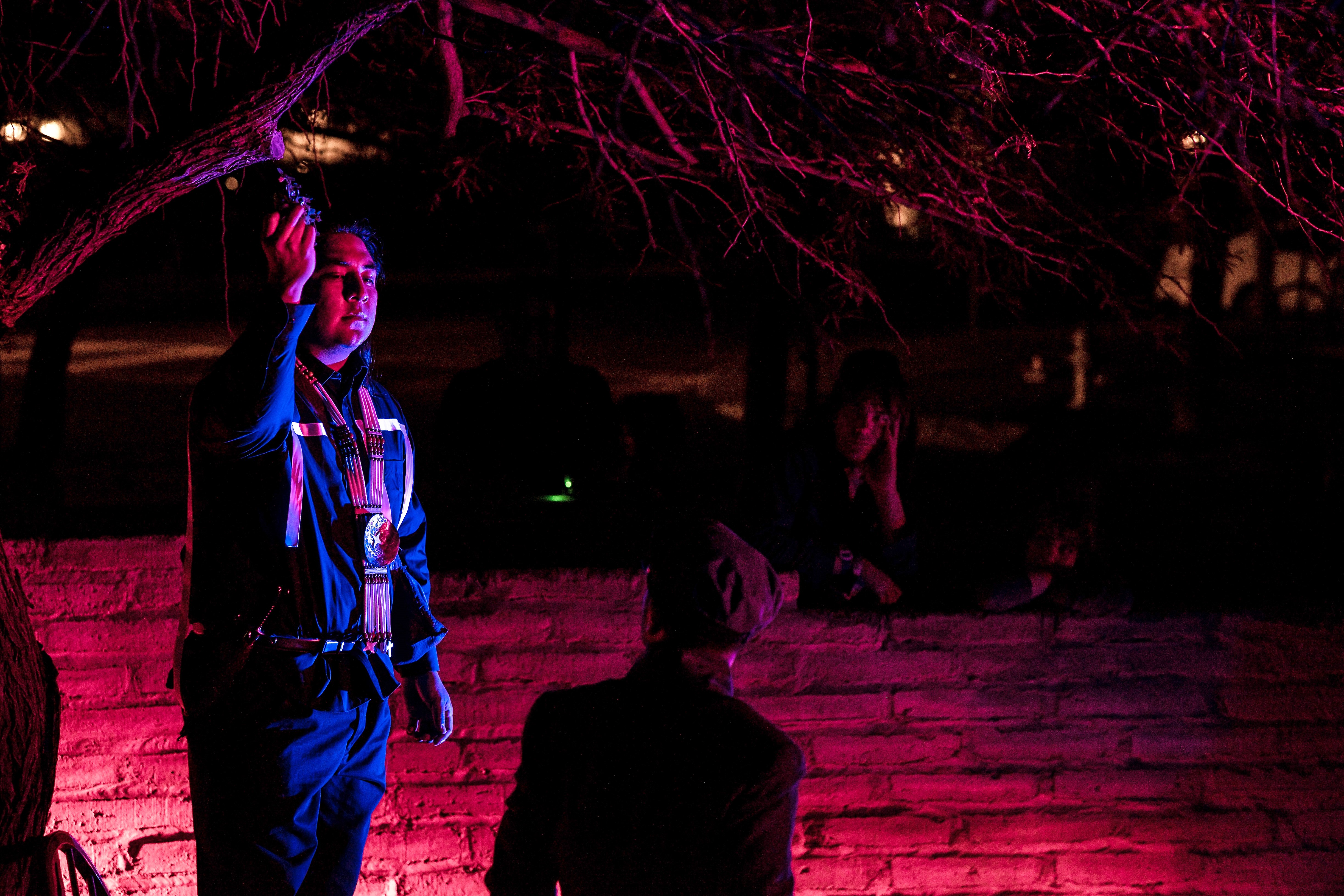
During this interview I sat with Matthew Saraficio who is a recent graduate from Arizona State University earning a Bachlor’s degree in Acting. He talked about his role and experience during the production of “Shooting Columbus.” The performance was presented by Borderlands Theater and created by the group Fifth World Collective. The group consisted of indigenous and non-indigenous actors who portrayed dramatic representations of a truthful reality of past and present issues within Indian country. Some of those issues include historical trauma that so many native people endured during the boarding school era on into today’s pressing issues like the proposed border wall. The existing concerns are native language loss, degradation to the environment for natural resources, and lack of consultation with native tribes. The stunning visual effects and the artistic presence of dance movement and metaphorical performance was executed very well. The preshow began with a walk through, through various rooms within the La Pilita Museum that included images, video projections, and acting scenes. Each visual and acting performance characterized a deeper understanding of what America’s first people have been through since the first European contact. The question posed throughout this performance challenged the audience by asking: If settlers never arrived on this land, how would your life be different? During this podcast episode you will hear a short audio clip from the Arizona Public Media video shoot production of “Shooting Columbus.”
Ep. 1: Indigenous Women for Equality
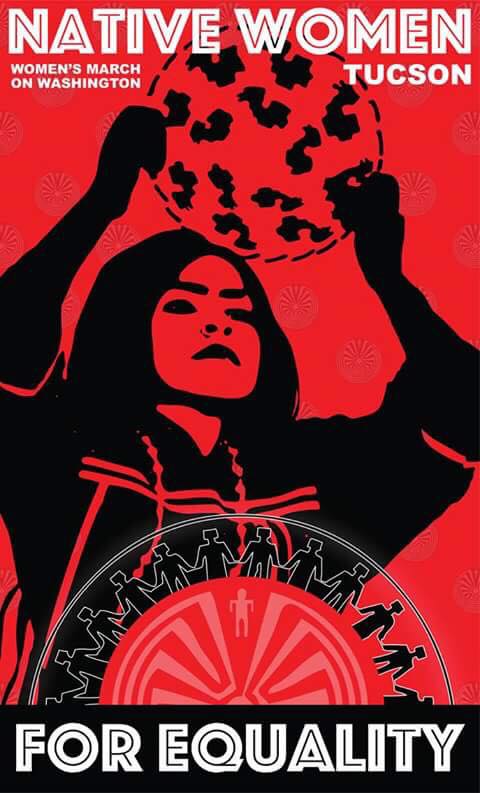
“The Tucson women’s march was a part of a nation-wide and global movement for believers in equality to stand together in solidarity the day after Donald Trump was sworn in as the 45th president of the United States. The movement itself was not anti-Trump but rather a non-partisan pro-equality demonstration intended to show the world that we stand together for the protection of our rights, our safety, our health, our families, and our environment.” – Gabriella Cazares-Kelly Many groups were represented during the Women’s March on Washington and amongst the thousands was a group of indigenous women who represented their cultures and marched for equality! Gabriella Cazares-Kelly was one of many who marched unitedly with numerous women of color during this time. She helped organize the “Indigenous Women for Equality” which is a group of indigenous women and their supporter’s in the Tucson/Tohono O’odham Nation area who simply believe in equality. Here you will listen to a discussion with Gabriella and her role in the midst of this historical march. #WeAreStillHere #HearOurVote