Costing the Earth
331 episodes — Page 4 of 7
Tourist Tide
Can beautiful places welcome mass tourism without environmental destruction? Tom Heap reports.There's been a summer of discontent in some of Europe's most popular tourist destinations. In Venice and Barcelona there have been a series of protests over their inundation by visitors. In the capital of the Basque country, San Sebastian, 'tourists go home' graffiti has appeared. Dubrovnik is capping the number of visitors allowed in the old city. Even the Isle of Skye told people not to come unless they had accommodation already booked.So how can the most popular places find a way to continue attracting visitors and their cash without destroying the beauty that was so appealing in the first place? Tom travels to Orkney which has become the most popular cruise destination in the UK and to Amsterdam which is trialling innovative ways to spread its millions of visitors beyond the Rijksmuseum, the coffee shops and the Red Light District.Producer: Sarah Swadling.
James Wong on the World's Toughest Plants
Between 20 and 33% of the world's plant species are currently at risk of global extinction. That's the estimation of recently published studies. So how much will climate change impact on the variety, availability and price of the food on our plates? Botanist James Wong investigates the links between global warming and the rate at which crops are able to adapt and evolve to rapidly changing conditions. Speaking to farmers, plant breeders and scientists at the Royal Botanic Gardens, Kew and elsewhere he hears about the plant world's likely 'winners' and 'losers'. Having deeper roots and more efficient water-use strategies is a clear bonus, and one that's being addressed by British plant scientists who are developing more drought-resistant wheat varieties by breeding them with ancient antecedents of one of the world's most important crops. That's in the UK, but elsewhere around the world, James Wong learns that many plants are facing extinction before they have been recognised as being at risk, and perhaps in some cases even before they have been discovered. Producer: Mark Smalley.
Future Forests
Can Britain revive its forests and grow the wood we need for a greener economy? Tom Heap investigates as we approach the 800th anniversary of the 1217 Charter of The Forest. Tree planting in England has hit a forty five year low which is alarming both the timber industry and environmentalists. Tom visits a new woodland in Central Scotland combining conifers with native tree species to offer wildlife habitats, flood prevention, and public access as well as timber. Foresters hope this new generation of mixed woodland will overcome resistance to tree planting, from those who fear a dark monoculture of conifers. Meanwhile, Ella McSweeney reports on a conifer planting boom in Ireland which, it's claimed, could damage the environment and price small farmers off the land. Back in the UK, Tom discusses how producing hardwood timber from broadleaved woodlands might give them a more secure future. Producer: Sarah Swadling.
Mekong Delta Blues
New dams threaten life on South-East Asia's most vital river, a river that provides food and water to 70 million people. The government of Laos is determined to develop the nation by building hydroelectric dams for electricity. Many people in the downstream countries of Cambodia and Vietnam are worried that the flow of the life-giving waters of the Mekong will be much reduced and fish life devastated. Peter Hadfield reports from the banks of the Mekong.Producer: Alasdair Cross.
Exploding Penguins
The penguins of the Falkland Islands have thrived since the war of 1982, protected from human interference by Argentine landmines. Peter Gibbs finds out what happens when the mines are cleared.Producer: Matthew Teller.
Made to Last?
How long do you reasonably expect your electronic gadgets and clothes to last? Has the cheapening of products meant we're too ready to let them go when they break and buy new? Jheni Osman is sick of things breaking and the energy and resources that went to making them going to waste. She meets those who are fighting back and lengthening the lifecycle of their goods. Around the country those who lack the skills or know-how to fix things are learning how in community parties and online. But some products are now being built so they're difficult or costly to repair. She meets the campaigners who are calling for companies to be upfront about the life expectation of a product alongside the price tag and learns how some companies are offering a 'lifetime product' with repairs and replacements offered if the items break. Is this the way more companies will go or is it commercial suicide? Can the fulfilment of fixing a laptop or amp transfer to clothing? We hear why we'll only go a certain way to 'make do and mend' but how even retailers, who've been part of the fast fashion fad, are pioneering new techniques to reuse clothes, find new fabrics and make them last longer. Can the new frock feelgood factor translate to making clothes last longer. Presented by Jheni Osman and Produced by Anne-Marie Bullock.
Insulation for the Nation
Our homes are responsible for 25% of our carbon emissions in the UK. Tom Heap asks if we can retrofit our homes to fight climate change.An Englishman's home is his castle, but most homes are not well defended against cold air and high fuel bills and if we are going to hit our 2050 carbon dioxide emissions targets we need to start a retrofit revolution from our front doors. Tom visits the house of his producer, Martin, to take stock of his 'typical' Edwardian terrace. Pre-1920s housing makes up a big proportion of UK homes and what Tom and a team of eco-house experts discover in Martin's house is not uncommon: draughty doorways, patches of damp, hot-spots and cold spots. Martin's home has room for improvement and so Tom then makes a whistle-stop tour of homes that are part of the SuperHomes network. SuperHomes is an organisation of determined householders who have made big changes to their dwellings to improve energy efficiency, cut bills and reduce emissions. They show that small changes can make a big difference.However, in order to tackle our ageing housing stock, a lot of skilled workers are needed. Energy consultant Peter Rickaby, and Gavin Killip from the Environmental Change Institute at Oxford University explain that we simply do not have the skilled workforce to carry out the necessary retrofit renovations. The problem will be, according to Professor Linda Clarke from the Westminster Business School, exacerbated by Brexit.Meanwhile, at his 'power station' in Notting Hill, Michael Liebreich, director of New Energy Finance at Bloomberg thinks we should think big: renovating all our homes could mean that we don't need big new power stations like Hinkley.Presenter: Tom Heap Producer: Martin Poyntz-Roberts.
Sinking Solomon Islands
Five of the Solomon Islands have already been lost to sea level rise and many more are being rendered uninhabitable. For wildlife film-maker and marine biologist, Ellen Husain that's not just a disturbing quirk of climate change, it's a family concern.At the beginning of the 20th century her great uncle, Stanley Knibbs was the Chief Engineer and Surveyor of the Solomon Islands, drawing up some of the first maps of the region for the British Empire. He fell in love with this Pacific paradise and wrote a warm and witty memoir of his time with the islanders. One hundred years on Ellen is anxious to find out how the islands have changed. How is sea level rise at three times the global average disturbing the ancient rhythms of life? Can crops continue to be grown in land that grows saltier by the day? Can ancient traditions like shark-calling and megapode egg-collecting survive as tribal communities are broken up and moved to higher ground.? And what lessons can the rest of the world learn from the people on the frontline of sea level rise that we're all likely to endure over the next century.Producer: Alasdair CrossStanley Knibbs played by Mark MeadowsAll photos by Ellen Husain.
Reasons to Be Cheerful?
The Skoll World Forum was set up by eBay founder, Jeff Skoll to pursue his optimistic vision of a sustainable world of peace and prosperity. But can the world's most pressing problems be solved by investing in, connecting, and celebrating social entrepreneurs and innovators? This year the forum will be attended by key speakers such as Bono, Atul Gawunde, Michael Porter and Don Henley. Tom Heap will be reporting from Oxford to ask whether there are reasons for optimism in poverty, health and conservation as we face fresh challenges from climate change and political uncertainty.Producer: Helen Lennard.
Fishing Future
The British fishing industry suffered decades of sharp decline during our membership of the European Union. The European Common Fisheries Policy has long been regarded by many as a disaster, both for fishermen and for fish stocks. So will Brexit bring a bright new dawn? Will fishing boats from other nations be forced from our waters, could new 200 mile limits provide our fleet with copious fish to catch? Or will our Brexit negotiators focus on maintaining markets for big businesses like finance and the car industry, offering our fish stocks as sacrificial prawns?Tom Heap visits fishing communities in Peterhead, Hastings and Brixham to gauge the mood and meets the conservationists hoping that new measures could revive our fish stocks.Producer: Sarah Swadling.
Unfrozen North
What happens in the world's most northerly town when the permafrost de-frosts? Eleanor Rosamund Barraclough visits Svalbard to find out.Longyearbyen, a three hour flight north of Oslo, is a mining town of just 2000 people, but a pretty high proportion of them are research scientists. They cluster in this relatively sheltered corner of the enormous Svalbard archipelago to study the geology and wildlife. As the Arctic rapidly warms nature is changing with it and there's nowhere better to study the impacts. Can Arctic plant species survive a warmer, wetter climate? Can reindeer, fox and polar bear adapt to the new conditions? And how are the people enjoying the relatively balmy new climate? Nordic scholar, Eleanor Rosamund Barraclough meets the stoical residents and experiences the 24 hour darkness of the Arctic winter for herself. Producer: Alasdair Cross.
Trump's Big Sell Off
Tom Heap examines the future for America's Wild West- and its Mild East- under a Donald Trump administration threatening to sell off Federal land.The Bears Ears are two mountains in the south east corner of Utah that, along with the surrounding area, were designated a National Monument by President Obama at the end of 2016. In America, a national monument gives Federal Protection second only to a National Park. damaging commercial activities are largely banned.There are fears that the new Presidential administration will attempt to overturn the decision to protect the area and in his fiscal budget for 2018, President Trump has pledged to strengthen America's energy security by increasing funding for the development of oil, natural gas, coal, and renewable energy on public lands.That could mean that the Bears Ears, and other parts of the United States that are currently protected could be opened up to a new wave of exploration and exploitation.Meanwhile there are fears that President Trump could also overturn much of the progress that had been made to protect the environment made by previous administrations. Tom visits Boston, America's academic heart, to hear from Obama's former energy secretary, Professor Ernest Moniz and former administrator of the Environmental Protection Agency, Gina McCarthy, to find out what impact they think the next four years of a Trump presidency will have on the environment.Presenter: Tom Heap Producer: Martin Poyntz-Roberts.
Heroines of the Rainforest
The Indonesian rainforest has suffered enormous damage over the last few decades. Logged for timber and cleared for palm oil production, the habitat of remarkable creatures has declined at an extraordinary rate, leaving the region's iconic Orangutan critically endangered.Peter Hadfield has travelled across Borneo to meet two remarkable women who have found a formula to reverse the decline. Dentist, Hotlin Ompusunggu and doctor, Kinari Webb set up a clinic which offered cheap healthcare to villages that agree to stop logging in their neighbourhood. The clinic also teaches low intensity farming practices, providing local people with fresh vegetables and a new income stream, bringing the traditional slash and burn agricultural techniques to an end.Hotlin has been awarded one of the Oscars of the conservation world- a Whitley Gold Award- and the hope is that the formula can be rolled out to other regions of the world threatened by deforestation.Producer: Alasdair Cross.
Delivering Clean Air
Internet shopping continues to rise worldwide. That means a lot more delivery vans on the streets of our towns and cities. Those vans and trucks, often powered by dirty diesel engines, are contributing to air pollution problems that can cause significant increases in premature death and great discomfort for people suffering from heart and lung conditions.As part of the BBC's 'So I Can Breathe' season Tom Heap sets out to find innovative solutions. Could drones or robots be the answer? Could we cut out the middle man and use 3D printers to create everything we want at home? Perhaps it's simply a matter of converting all those vans to electric or gas power or even carrying out the majority of home deliveries by bike. With the promise of ever-quicker delivery times the search for a solution becomes ever more urgent if we're to prevent our consumer addiction becoming an air pollution crisis on every doorstep.Producer: Helen Lennard.
Soil Saviours
Can soil play a role in the fight against climate change? Our soils are the biggest store of terrestrial carbon on the planet. This crucial non-renewable natural resource is under threat, and millions of hectares of farmland are lost every year through erosion and degradation of topsoil, releasing significant quantities of carbon dioxide back into the atmosphere. The French Government believes that soil can play a significant part in keeping the rise in global average temperatures below 2 degrees. They've introduced an initiative called "4 per 1000", which aims to improve the organic carbon matter in soil stocks by 4 parts in 1000 per year. They claim such an increase in soils around the world would be enough to offset all human emissions of greenhouse gases each year. Tom Heap talks to scientists and farmers to find out what can be done to put carbon back below our feet.Producer: Sophie Anton.
Black Gold in Paradise
Yasuni National Park in Ecuador is widely recognised as the most biodiverse place on earth. Around 10% of all known life forms can be found within a few hundred acres of this part of the Amazon rainforest. Yet the forest sits on top of thousands of barrels of crude oil and the Ecuadorian government has now given the go-ahead for drilling. Tom Heap finds out what is at stake and asks why the Ecuadorian government which has one of the greenest constitutions in the world has decided to exploit the reserves.Producer: Helen Lennard.
Rig Retirement
As many of the oil and gas platforms in the North Sea come to the end of their useful life, they're due to be decommissioned - sealed off, cleaned up and taken apart. The cost of this has been estimated to around £50bn and much of this will be footed by the taxpayer due to the tax breaks offered. But are there alternative solutions which might benefit the environment more? Tom Heap has exclusive access to an onshore decommissioning facility in Norway to which an oil platform has just been transported whole in a 'single lift'. He investigates the clean up process and asks how easily the sea floor can be returned to its natural state. He investigates if the alternatives are worth considering - could cleaning them up and leaving them in place actually form a sanctuary for marine and wildlife and allow the billions saved to be invested into environmental issues instead? Produced by Anne-Marie Bullock.
Fighting Fire
When wildfires engulfed the Canadian city of Fort McMurray last May 90,000 people were displaced and well over £2bn of damage was caused, making it one of the costliest natural disasters of all time. That fire proved to be just the start of a summer of flames that ripped through California, Greece and France. An area the size of India now burns every year and climate change is blamed for an increase in the length of the fire season across the boreal forests of North America.Tom Heap visits Fort McMurray to find out how a city could be so easily engulfed by fire and to meet the local scientists and firefighters working out fresh strategies to make sure it doesn't happen again.Producer: Alasdair Cross.
America's Energy Independence
New President elect of the USA Donald Trump is a climate change denier, and so what does his rise to power mean for the environment? Among his early pledges he states: "The Trump Administration will make America energy independent. We will end the war on coal, and rescind the coal mining lease moratorium, the excessive Interior Department stream rule, and conduct a top-down review of all anti-coal regulations issued by the Obama Administration. "He promises to rip up climate deals and get the USA mining and burning fossil fuels again, giving jobs back to areas that need them.Costing The Earth will take each sector and try to predict what the next four years will hold for each energy generator. Is there any good news for the environment or will Trump's election usher in a return to dirty, polluting, fossil fuel-burning days that we were pulling away from?Presenter: Tom Heap Producer: Martin Poyntz-Roberts.
Cruising: A Dirty Secret
A new cruise ship terminal is planned for Greenwich. Enderby Wharf will bring holiday makers right into the heart of the UK's capital city.Greenwich is an existing pollution hotspot. Heavy traffic from nearby Trafalgar Road and the Blackwall Tunnel mean that air quality limits are frequently breached. Bringing a cruise ship into the area will further exacerbate the problem, increasing traffic bringing goods and services to the terminal.Residents have raised concerns that visiting ships would burn 700 litres of diesel an hour whilst in dock. That's the equivalent of over 650 HGV lorries idling in an already polluted part of the city. At least 9000 Londoners already die prematurely each year as a result of breathing dirty air.Southampton is a city built around its docks and so Tom Heap visits the Solent to find out how bad air pollution from cruise ships can be and asks what can be done by the industry to cut down on harmful emissions when the ships are in berth.Producer: Martin Poyntz-Roberts.
Putting the Fizz Back into Planet Earth
Can we find a use for all that pesky climate-changing carbon dioxide? If we can turn excess CO2 into something useful we might just be able to slow down the rate of global warming. It's a dream shared by lots of scientists, inventors and entrepreneurs.At the ACI Carbon Utilisation conference in Lyon, Tom meets the Germans turning CO2 into a fuel and the French researchers aiming to mimic nature's photosynthesis process. In Oxford he talks to a company making fertiliser from waste and a chemist creating innovative plastics whilst in Avonmouth he sees CO2 transformed into concrete blocks that are already being used in house building around the country.Producer: Alasdair Cross.
Nuclear Futures
Our nuclear power stations are being pushed to run well past their planned life-span. Matthew Hill asks if this is putting us all in danger.Producer: Alasdair Cross.
Forests of the Orangutan
Some of the last refuges of the Orangutan are under threat. As food manufacturers demand more palm oil for their processed products so the pressure grows on the forests of Indonesia which contain some the last of the Orangutan and some of the world's densest reserves of carbon-capturing peat. Peter Hadfield travels to Borneo to witness the forest being cleared and the peat being destroyed.Producer: Alasdair Cross.
The British Countryside after Brexit
Tom Heap hears four radical visions for the future of the British countryside after Brexit. He's joined by Baroness Young, Chair of the Woodland Trust and former head of the Environment Agency and the RSPB, the writer and Guardian columnist George Monbiot, economist Michael Liebreich and by Welsh hill farmer Gareth Wyn Jones.Can they come up with a plan for the British landscape once the Common Agricultural Policy and European environmental legislation are consigned to history?Producer: Martin Poyntz-Roberts.
Wildlife-Friendly Motorways
Motorways kill animals. That's unavoidable. But can road builders minimise the death toll with badger tunnels, bat flyovers, and green bridges covered in plants rather than tarmac? Tom Heap travels to the Gwent Levels and the Netherlands to find out.Producer: Sarah Swadling.
Spiritual Greens
Tom Heap drops in on the 50th anniversary celebrations of the green magazine Resurgence. With its origins in the peace movement, the magazine has championed the spiritual side of the ecological movement. Tom talks to some of its most famous contributors - and their critics - to take stock of what the last half century of green activism has - and hasn't - achieved.Producer: Chris Ledgard.
The Growing Season
The Met Office recently issued a report which states that the growing season in the UK is now one month longer than it was in the 1960's. Keen gardeners may notice that spring bulbs are coming up much earlier and that fruit like apples are flowering sooner in the year whilst some farmers can now bring in their harvest before the end of the summer. Peter Gibbs discovers that whilst there are opportunities for growers in more Northerly latitudes rapid changes globally may put yields of vital crops at risk. The UK's gardeners, crop scientists and farmers are not simply sitting back and admitting defeat though. A changing climate is a challenge which many growers are busy preparing for.Producer: Helen Lennard.
Fruits of the Forest
Can the growing of fashionable super fruits save the Amazon rain forest? Peter Hadfield meets the native farmers finding ways to profit from the forest without chopping it down.In the dark days of the 1980s vast tracts of the Amazon disappeared every year, the trees sold for furniture production and the naked land converted into cattle pasture. International campaigns and the brave struggle of local activists eventually led to reserves being set up in which native people could harvest forest nuts, herbs and fruits without cutting down the trees. The fruits of the forest such as acai berries, cacao and passion fruit have proven such a hit with healthy eating enthusiasts that the business is booming, attracting the attention of big international food companies. Could the reserves turn out to be a victim of their own success? Could the forest's natural bounty be over-exploited? Peter Hadfield travels along the Amazon to meet the local people trying to balance their livelihood with the health of the forest.Producer: Alasdair Cross.
Cities Without Cars
The battle in big cities continues: how do you keep cars out to cut congestion and reduce pollution? Chris Ledgard visits Paris and Barcelona to explore two different approaches. In Paris, the mayor's office wants to ban the most polluting cars, and coloured stickers are being introduced to help the authorities determine which vehicles can enter the city centre. Meanwhile, more and more Paris residents are turning to the electric car-sharing scheme, Autolib. We hear how it works. In Barcelona, urban ecologists are adapting the famous grid system designed by Ildefons Cerda to create 'superblocks' - large traffic-free spaces across the city where the sound of traffic is only distantly heard. Chris talks to the scheme's inventor, Salvador Rueda, and hears about his vision for Spain's second biggest city.Producer: Chris Ledgard.
Big Oil Big Trouble
The big oil companies are the pantomime villains of the global warming debate. They've been accused of everything from climate change denial to commercial incompetence in a rapidly changing world. Campaigners attack their boardroom practices and push pension funds and universities to withdraw their investments.Tom Heap examines the reactions of the likes of Exxon, Shell, BP and Total to the mounting evidence of man-made climate change. How much did they know? How much did they lobby against meaningful action? He meets Lord Browne, the former head of BP who famously rebranded his company as 'Beyond Petroleum' to find out why the rest of the industry failed to join his campaign to cut emissions and invest in renewable energy.Tom and Lord Browne also discuss the changing rhetoric since the signing of the 2015 Paris climate change agreement. With fresh commitments to alternative fuels could the oil companies finally turn themselves from the villain to the principal boy, using their engineering expertise to halt the planet's changing climate?Producer: Alasdair Cross.
The Sun King of China
Meet Huang Ming, the Chinese inventor who describes himself as, 'the number one crazy solar guy in the world'.One of the prize exhibits of his museum in northern China is a vintage solar panel. It's a water heater, installed by President Jimmy Carter on the roof of the West Wing of the White House. Back in 1979 the installation was meant to symbolise a new solar-powered future for America. Instead, oil prices fell and Ronald Reagan removed the White House panels.37 years on and it's China, not the US that's embracing the idea of a solar-powered economy. Huang Ming, an engineer, prominent political figure and businessman is leading the way with his foundation of Solar Valley. In 800 acres of land south of Beijing he employs 3000 people in solar research, development and manufacture.Peter Hadfield visits Solar Valley to see the fruits of the sun, from a solar-powered yurt to the world's biggest solar-powered building. He asks if Huang Ming can persuade his nation to turn its back on coal and oil and angle its face toward the sun.Producer: Alasdair Cross.
Four Menus to Save the Planet
How should we eat to reduce our carbon footprint and save the planet? Should we all give up meat? Or eat only meat that's reared on grassland which couldn't be used for anything else? Or maybe eat intensively-reared meat that grows so fast that it has no time to emit a lot of methane before it's slaughtered? Aside from meat, how important are food miles? Some argue that food grown in hot countries and transported here by boat has a lower overall carbon footprint than food grown in Britain. Tom Heap chairs a debate from the Bristol Food Connections festival with four experts who have very different views, and present their own menus for low-carbon eating: Jasmijn de Boo, Chief Executive of the Vegan Society, Simon Fairlie, author of "Meat - A Benign Extravagance", Mark Lynas, environmental author, and Sean Rickard, agricultural economist. Producer: Jolyon Jenkins.
After Chernobyl
When radioactive particles from the Chernobyl disaster landed in Germany's Black Forest one woman decided to change her country's relationship with nuclear energy forever.Julian Rush meets Ursula Sladek, founder of EWS Energy and prime mover in Germany's abandonment of nuclear energy.Following the story from the first detection of radioactive particles, through the persistent impact of radioactive caesium in the soil to the rapid development of renewable energy after the Fukushima disaster of 2011, Julian tells the story of the transformation that's known in Germany as the Energiewende. With Ursula's son, Sebastian he discusses the future for renewable energy in a nuclear-free nation and considers the influence Germany may have on the rest of Europe.Produced by Alasdair Cross and Melanie Brown.
The Mars of the Mid-Atlantic
Ascension Island is a tiny scrap of British territory, marooned in the tropical mid-Atlantic roughly halfway between Brazil and Africa. It's the tip of a giant undersea volcano - rugged, remote and, up until around 150 years ago, almost completely devoid of vegetation.Peter Gibbs visits to learn how 19th-century botanist Joseph Hooker, encouraged by Charles Darwin, planted a forest on the island's summit to trap moisture brought by the trade winds, introducing a panoply of flora from around the world - ginger, guava, bamboo, ficus and dozens more.But is Ascension's cloud forest all it appears? He talks to conservationists struggling to cope with invasive species running riot, hears about the rescue of Ascension's tiny endemic ferns, encounters nesting turtles on the beaches and ventures among the chattering 'wideawakes' on the sweltering lava plains by the coast.Producer: Matthew Teller.
Digging Climate Change
Professor Alice Roberts asks if archaeology can help us understand climate change.Producer: Helen Lennard.
From Iceland with Love
The Ice Link interconnector would link Iceland's cheap and carbon free electricity from hydro and geothermal to the UK. It could provide the equivalent power of a medium sized power plant through a copper cable laid under the sea between the two countries. Crucially the power would be reliable and available when other renewable sources such as wind and solar are not. However, as Tom Heap discovers when he visits the land of fire and ice, environmental campaigners like Bjork fear that this green solution for UK homes could create a need to develop into the pristine wilderness of Iceland's Highlands. Should we pursue our global climate goals even if it has the potential to affect untouched and fragile landscape elsewhere? Tough decisions for Iceland and for us all. Producer: Helen Lennard.
Beasts of the Border
As gates close against migrants entering Europe Tom Heap is in Croatia to examine the wildlife impact of the continent's new borders.Red deer have been found dying on the razor wire and the vulnerable local population of lynx is now split between Slovenia and Croatia. With a shrunken gene pool the lynx could soon be lost from the region.From the Austrian Alps, south through the Balkans to Greece the mountains provide a vital habitat for large carnivores like bear and wolf. As new fences rise across the region Europe's peak predators face a bleak future. Producer: Alasdair Cross.
Litter
The government in Westminster has promised England a new, national anti-litter strategy. But how do you persuade a throwaway society to use a bin? Chris Ledgard reports on anti-littering campaigns, from the litter ambassadors in the Swiss mountains, to litter enforcement officers in Wolverhampton. And he meets David Sedaris, a man dedicated to cleaning up the streets where he lives. Producer: Chris Ledgard.
The Environment after Exit
From Roman Snails and Great Crested Newts in East Anglia to the lemon sole of the English Channel and the wind turbines of Fife, European legislation has a significant impact on the look and health of our wildlife and landscape.Tom Heap examines the potential impact on the British environment of an exit from the European Union.Produced by Alasdair Cross and Robin Markwell.

New York's Big Green Clean
Tom Heap visits New York to find out how the city is cleaning up its dirty waterways and bringing back oysters to the harbour.New York is highly populated. The 8 and a half million inhabitants of the five boroughs of Manhattan, Queens, Brooklyn, The Bronx and Staten Island use a lot of water and create a lot of waste. As a result the myriad of waterways, streams and creeks that all flow around the city, the network of 'sewersheds' that meander below the sidewalks, not to mention the vast rivers: the Hudson and the East River have all, over several centuries become increasingly dirty, polluted with litter, oil and worst of all raw sewage. Each time rainfall exceeds around half an inch, the aged Combined Sewage Overflow systems discharge into the rivers.But in light of 'Super Storm' events such as Sandy and Irene, New York has begun to tackle the problem.The city's Department of Environmental Protection has embarked on on a 'Green Infrastructure Plan'. Over the next 15 or so years $2.4 billion dollars will be spent on rebuilding the city to help it deal with high rainfall. There are 'green roof' projects, tree-planting programmes, and 'bioswales' are being constructed: all measures to try and reduce the impact of a storm of a similar ferocity wreaking such havoc in the future.Meanwhile a group of plucky scientists are attempting to bring oysters back to New York harbour: once home to the largest oyster beds in the world, New York produced more oysters than the rest of the world combined. New Yorkers rich and poor alike dined on the shellfish. The waters of the harbour became so polluted that they no longer thrive there, but scientists from the Billion Oyster Project aim to have a billion oysters living in the harbour by 2030, so convinced are they that the water quality will have improved sufficiently by then. Recent storms in the UK have shown that basic infrastructure struggles to cope when facing a deluge of heavy rain and strong winds, and so when a major storm event hits a major urban centre the results can be devastating.Tom Heap discovers what knowledge could be gained from the New York project and whether similar sorts of measures could be taken in towns and cities in the UK.Presenter: Tom Heap Producer: Martin Poyntz-Roberts.
Acoustic Ecology
Peter Gibbs asks whether sound could become a vital tool in conservation, helping us understand far more about how wildlife interacts and how it is affected by changes in the environment . Technological advances in recording mean that we can now record huge amounts of data in remote locations. By using algorithms scientists hope to break down complex interactions between animals and their environment and be able to predict change or protect species. This is the emerging science of soundscape ecology. Scientists are hoping to apply big data solutions learnt from fields such as genetics to re-imagine conservation and asking all of us to listen and imagine what a world without natural sounds such as birdsong might be like.Producer: Helen Lennard.
The City That Fell into the Earth
How do you move a city? Lesley Riddoch travels to Arctic Sweden to find out. Kiruna is gradually sliding into Europe's biggest iron ore mine. The city has to be rebuilt two miles away. That requires an extraordinary blend of planning, architecture, technology and stoicism. If anyone can do it then it's the Swedes.Producer: Alasdair Cross.
Requiem for a King
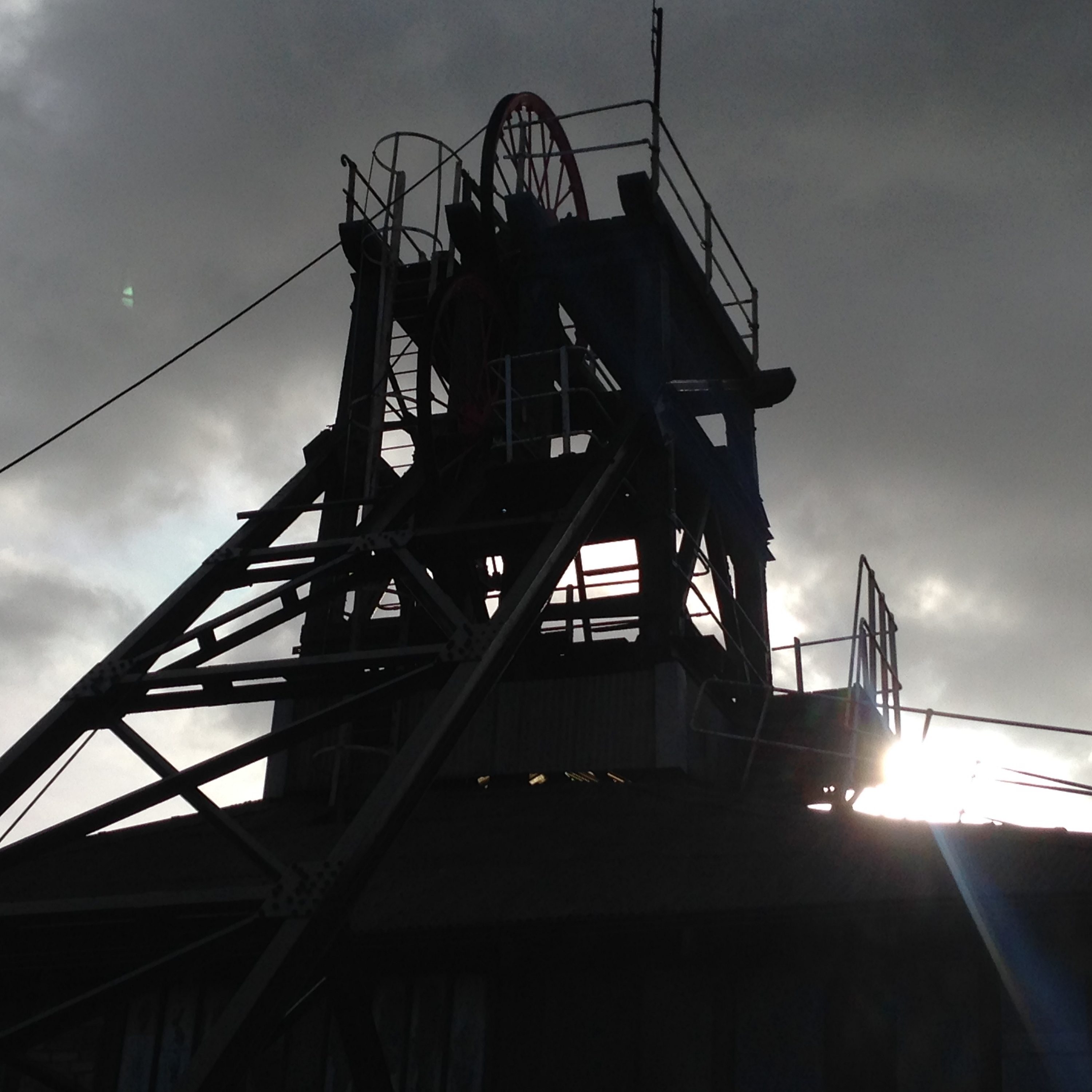
Tom Heap tells the story of coal from Industrial Revolution to its apparent demise. As the world begins to fall out of love with coal, is it too early to write its obituary?Coal drove the Industrial Revolution in this country. It could be argued that it helped to put the 'Great' into Great Britain.Now, at least in Britain, we're turning our back on the sooty black stuff. The last deep pit, Kellingley Colliery, closed in December 2015 and all of the coal-fired power stations in the UK are set to close in the next decade. Coal is on its knees.But what about the rest of the world? China and the US have had an enormous appetite for coal and while both will continue to mine and burn the stuff for the coming decades, it is possible that we may have already reached 'peak coal' - the point at which coal demand will plateau, before declining.Coal will continue to lift developing countries through the various economic growth. It is expected that areas of South Asia will continue to depend on coal to generate power but even in those places they are hoping to implement new, cleaner ways of burning coal. The fuel could be facing a 'long sunset'.But is there a glimmer of hope?Carbon Capture and Storage has often been hailed as a potential cure-all for Carbon Dioxide emissions from fossil fuels, so could it step in now to save coal before it is confined to the annals of history?It may be too early to say. However in Canada there is one commercially operating plant. Many experts believe that we need CCS if we are going to seriously tackle our global CO2 emissions because, at least in the short term, coal will remain on his dusty throne for the coming decades.Presenter: Tom Heap Producer: Martin Poyntz-Roberts.
Britain Disconnected
Extreme weather this winter has cut off large areas of Britain from the outside world. Does our Victorian infrastructure need an urgent update? With parts of Cumbria cut-off since early December, bridges down in Yorkshire, hundreds of ferry cancellations and the West Coast train line out of action until March it's increasingly clear that Britain can't cope with the strong winds and floods that are becoming the new norm.Should we embark on a new transport revolution, pouring concrete and laying steel to future-proof our roads and railways or should we accept a disconnected Britain? Presenter: Tom Heap Producer: Sarah Swadling.
Murder in Cambodia
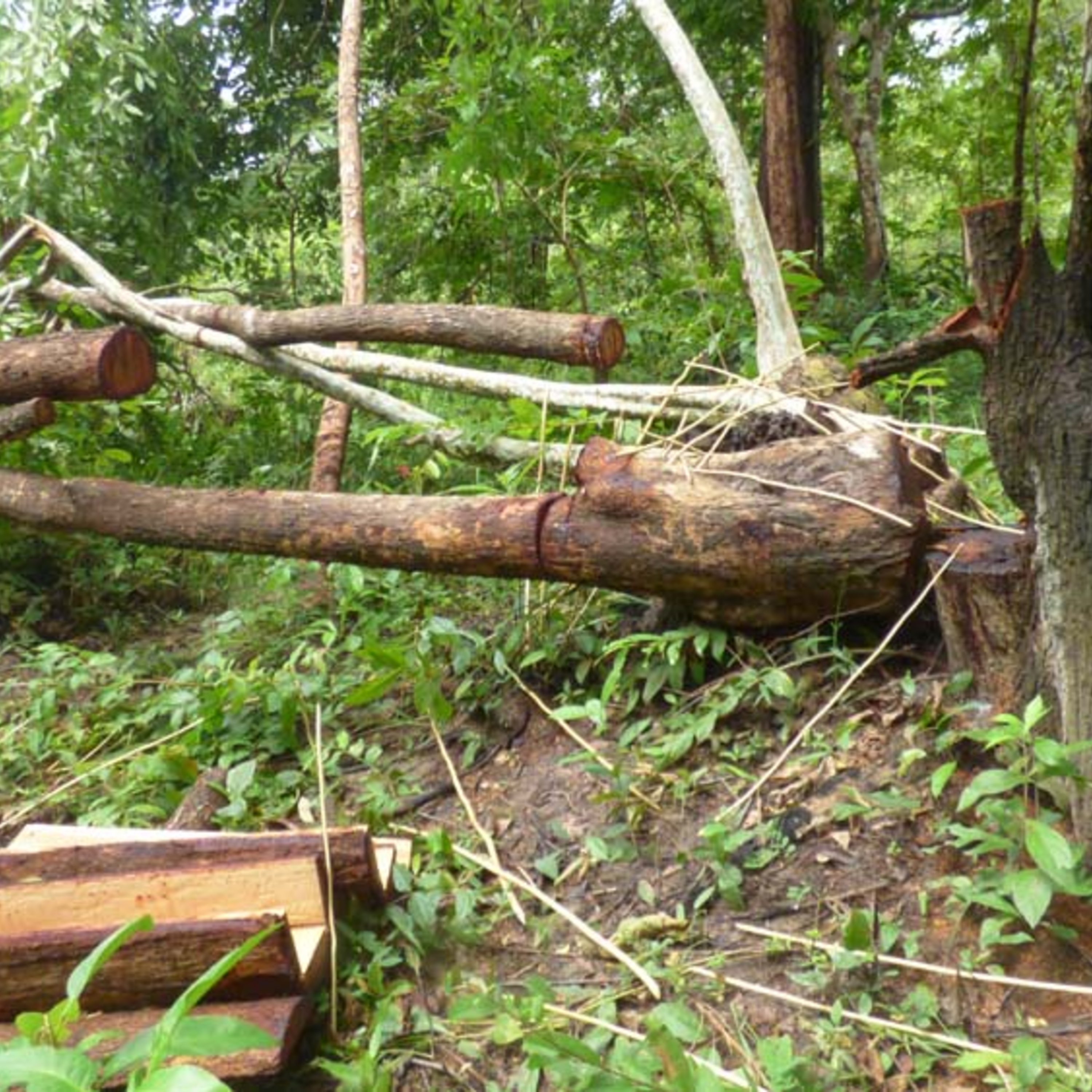
Peter Hadfield travels to Cambodia, Thailand and Vietnam to investigate the illegal trade in Siamese Rosewood.Rosewood is a hard wood that is highly prized because it can be carved into ornate items of furniture, but the appetite for the wood is so voracious that Siamese Rosewood is now becoming critically endangered. The wood is traded on the black market and now the Siamese Rosewood tree is close to being totally eradicated. Not only that, those responsible for the smuggling are leaving a trail of death and environmental destruction in their wake.Peter Hadfield goes in search of the tree. He's on the trail of the smugglers and discovers the measures being taken to try and safeguard the surviving trees.Presenter: Peter Hadfield Producer: Martin Poyntz-Roberts.
In Conversation with David Attenborough
David Attenborough and a panel of influential thinkers on the natural world join Tom Heap to preview this month's Climate Summit in Paris. Can the world's leaders come to an agreement to save a warming planet?The director of Titanic, Avatar and Terminator, James Cameron tells Tom that a vegan diet can slash our carbon emissions. Former Australian Prime Minister, Kevin Rudd recalls what went wrong at the last climate summit in Copenhagen and explains why he's so much more hopeful of real commitments on carbon emissions from the Paris meeting.David MacKay, the government's chief scientific advisor on energy policy until 2014, tells Tom that Europe's renewable energy policy is unfit for purpose and David Attenborough raises the thorny issue of our rising population.Producer: Alasdair Cross.
River Quality
Campaigners claim England's river life is under threat from 'insidious' pollution, yet the Environment Agency says rivers are at their healthiest in 20 years. Tom Heap visits the River Itchen, in Hampshire, and the River Thames to discover where the truth might lie. This is an important moment for rivers, the next five year plan for improving them is about to be published. The Government Minister for the Natural Environment, Rory Stewart, tells Tom what his priorities will be. Presenter: Tom Heap Producer: Sarah Swadling.
Antipasto Agony
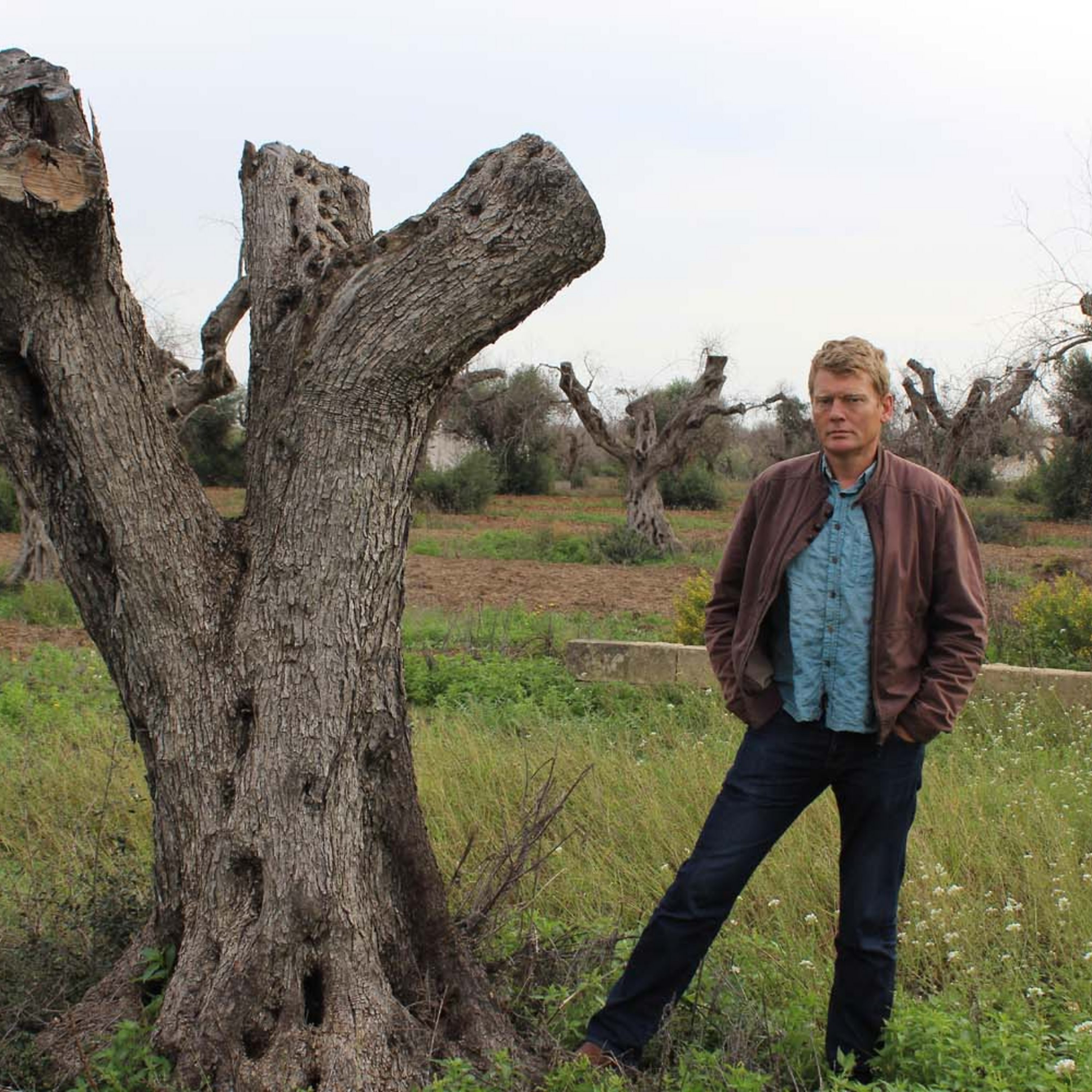
Bad news for lovers of tapenade and pesto. Olive trees are succumbing to a new disease. Tom Heap reports from Puglia on the ultimate foodie nightmare.The heel of Italy is currently gripped by an outbreak of Xylella fastidiosa, a voracious tree disease that is systematically devastating olive groves in the main areas of production for olive oil.95% of the world's olive trees are in the Mediterranean, and Italy is the world's second largest exporter of oil, behind Spain.Rural communities risk being torn apart as the disease threatens the livelihoods of farming families that have grown olives in the region for centuries. The whole environment is set to change as trees die, leaving the landscape totally bare.Tom meets the scientists about to wage war on the bacteria: Professor Giovanni Martelli and Dr Donato Boscia from the University of Bari. They are working to find a way of stopping the disease from spreading. If they are unsuccessful, olive production in the whole of the Mediterranean basin could be at risk.Producer: Martin Poyntz-Roberts.
Coast: 50 Years of Change
A new report from the National Trust reveals how how our coast has changed over the last 50 years. Tom Heap asks if we've become better or worse at protecting the nation's prime asset.He joins John Whittow who led a team of students to survey the coast in 1965 and compares his findings with a brand new study from Leicester University. Has the rapid urbanisation of the 1960s continued or has the tide been turned? What new threats are on the horizon?Producer: Alasdair Cross.
Paying For Our Parks
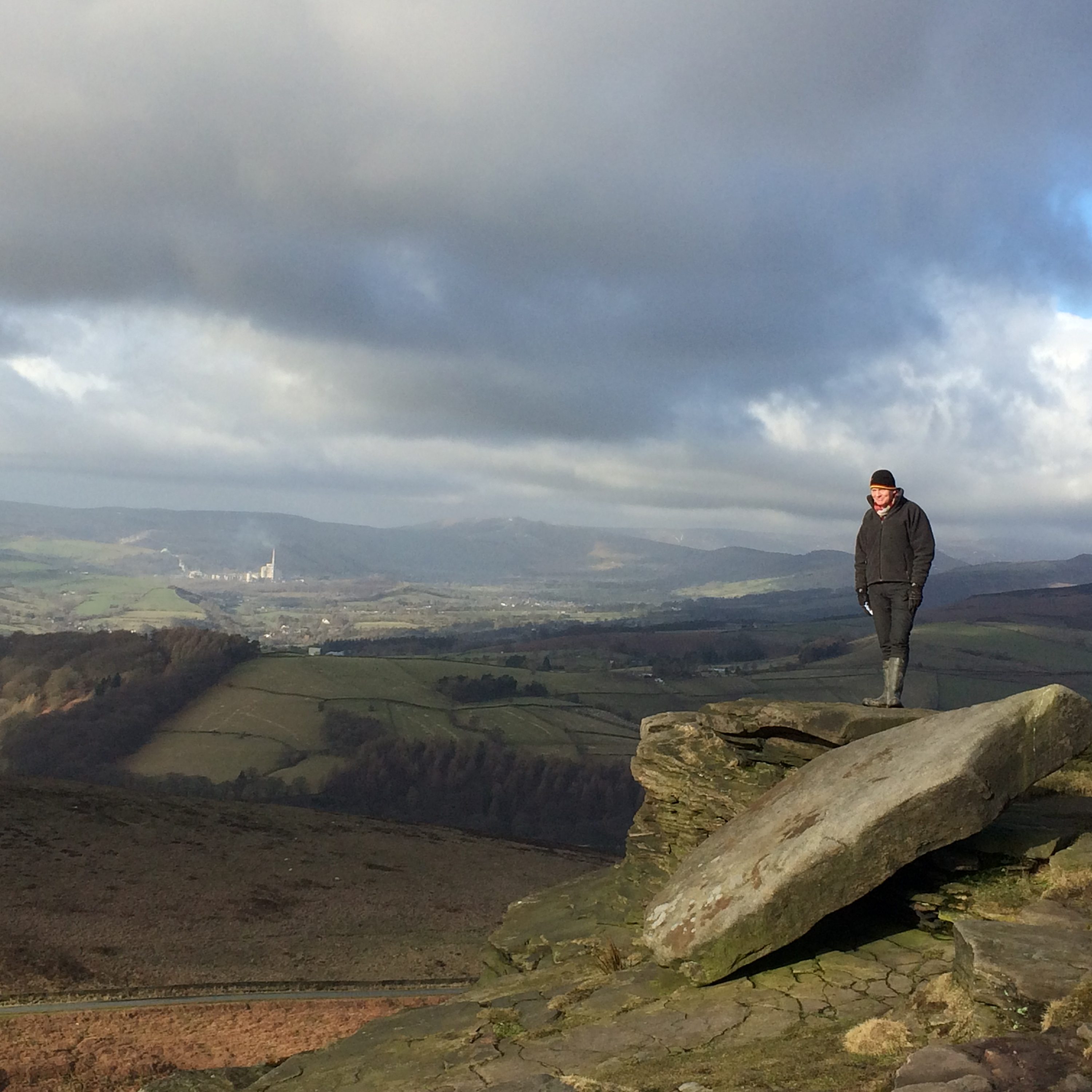
Our National Parks are getting less money from central government - some have seen their grant cut by 40% in the past 5 years. To make up the shortfall, they're exploring new commercial opportunities.As well as coming up with individual fund-raising plans, the 15 National Parks in England, Wales and Scotland have formed a joint body, called National Parks Partnerships. It's exploring new ways of selling their collective logo: "Britain's Breathing Spaces". The idea is modeled on a similar organisation in the USA, which has done million dollar deals with companies like Disney and Coca-Cola.So, how far should our parks go down the commercial route? Tom Heap investigates.Producer: Chris Ledgard.