Costing the Earth
331 episodes — Page 2 of 7
Earthshot: Fresh Ideas For the Environment
Taking inspiration from President Kennedy’s Moonshot which united people around a goal to put man on the moon and spurred the development of new technology in the 1960s, the Earthshot Prize is centred around five simple but ambitious goals for our planet. Over the next three editions of Costing the Earth, Chhavi Sachdev meets the prize nominees from all around the world.This week Chhavi concentrates on the innovators working to protect nature on land and in the oceans and meets those striving to improve the air quality of our cities. Vinisha Umashankar, an Indian schoolgirl, reveals her solar powered ironing cart which cuts pollution in her neighbourhood and the Living Seawalls team show off their beautifully carved additions to Sydney Harbour- works of art which provide marine life with a place to hide, feed and breed on the previously sterile sea walls of the harbour. Producer: Julian SiddlePhoto: Life returns to Sydney Harbour- courtesy of Leah Wood, Living Seawalls project
Qasa’s Farm - Building Resilience in Bangladesh
Qasa Alom has always been told that his family farm in Sylhet, Bangladesh is his heritage. His parents have spent their time and money trying to maintain the estate and his father has always hoped Qasa would take on some of the strain. Born in Britain, Qasa had other ideas about how he wanted to spend his time but he now faces a new challenge; how to protect his family’s roots from climate change.Bangladesh’s low elevation and high population density make it one of the most vulnerable countries as climate change accelerates extreme weather conditions such as heat and floods and sea-levels rise. Qasa’s village has always faced flooding but the future looks more unpredictable. Now as Qasa considers his future commitment to the farm he finds a country that is battling extremes but also finding solutions.Early weather warning systems which incorporate local knowledge and using community resolve to insure everyone gets to safety are one example. Changing crops, farming shellfish and growing jute to build up soil naturally are also being trialled and, most importantly, migration by climate refugees is being planned for. As a leader in climate adaptation Bangladesh is leading the world but will it be enough to keep Qasa committed to helping to maintain his family’s way of life here?
Britain's Changing Flowers
Naturalist and broadcaster Mike Dilger takes to the road to map the impact that global warming is having on Britain's plants and flowers. From the highest peaks of the Highlands to the lowest points of the East Anglian Brecklands our flowers are adapting to the changing seasons, but how many will survive and thrive into the future?Producer: Alasdair Cross
Beaver Town
Adrian has a big idea. His home of Braunton, a village in North Devon, has a problem with flooding. Over the last decade he has seen it get worse. The village flooded badly in 2012 just after a million pound flood defence scheme was completed, and there was more flooding in 2016. Braunton has since had those defences upgraded, but more work is needed further up the valley. Instead of more expensive schemes, Adrian has an alternative solution - bringing back beavers to do the work for them.Beavers are nature’s engineers, their dams prevent flooding by holding water upstream and slowing the flow in rivers, while simultaneously creating new wetland habitats for species of insects, amphibians, birds, fish and plants to flourish in. These industrious rodents were hunted to extinction in Britain about 400 years ago, and are now beginning to make a comeback. A record number of beavers will be released by the Wildlife Trusts this year, but so far pretty much all licensed beaver reintroductions have been on individual private estates or within fenced enclosures.What Adrian is proposing would be the first community-led reintroduction of beavers on a landscape scale, and if successful in gaining permission, the project could provide a model for others. Working together with the Beaver Trust, Adrian now has nearly 50 local landowners on board and the project is gaining momentum. However there are many obstacles to overcome, not least that not everyone is in favour of beavers flooding their land. We visit Braunton as it begins its beaver journey and hear what can be learnt about managing the species from the River Otter Beaver Trial in South Devon, and from Scotland where there is a wild population in Tayside causing problems for farming. Can we move beyond keeping beavers in enclosures and learn to live alongside them?Presented by Lindsey Chapman and produced by Sophie Anton
"Greenfinger"
Government action on climate change is sluggish. Could rich individuals cut through red tape and fund measures to cool the planet from their own pockets? And should they be allowed?Presenter/producer: Jolyon Jenkins
New Grid for the New Age
How will Britain's power system need to change for a zero carbon world? Tom Heap investigates.Producer: Alasdair Cross
The South Australian Miracle
Australia's government is famous for its lack of interest in climate change. Despite increasing problems from bushfires and droughts, Prime Minister Scott Morrison and his Liberal-led coalition government continue to promote coal-mining and dodge efforts to reduce the country's carbon emissions. It's all the more extraordinary then that one Australian state, governed by Mr Morrison's party is streets ahead of most of the world in its conversion to renewable energy. Peter Hadfield reports from Adelaide on the South Australian miracle.Producer: Alasdair Cross
Shipping
When a cargo ship blocked the Suez canal for nearly a week, the eyes of the media focussed on shipping. Hundreds of vessels were stuck as tailbacks built up at the entrance to what is one of the world's busiest trade routes. What effect does the sheer quantity of goods which we routinely move around the globe have on the environment? Are there ways of 'greening' shipping and lessening its environmental impact? In this programme, Lucy Siegle chairs a panel discussion which aims to find out.Producer: Emma Campbell
Landfill Legacy
The UK has dramatically reduced the amount of waste which goes into landfill over the last 25 years, but there are are still decades worth of rubbish underground, buried by generations gone by. Until the 1970s there were almost no rules about what could be put into landfill and very few records were kept before the 1980s, so no-one really knows what's lurking underground. The 1990s saw a change of attitude, with the EU landfill directive and the introduction in the UK of the landfill tax. But coastal erosion means that some our old landfill sites are now disgorging their contents, and leaking rubbish from half a century ago back into the environment. Tom Heap visits a site on the Thames estuary, and sees bin bags, old tyres, broken glass, corroded batteries and bits of asbestos spilling out onto the shore. With more than a thousand UK landfill sites now believed to be at risk from erosion or flooding, Tom learns that the ghosts of our old disposal habits are coming back to haunt us - and asks what can be done about it.Producer: Emma Campbell
Maritime Nation
How well protected is Britain's coast and its wildlife after Brexit? Chef and fisheries campaigner, Hugh Fearnley-Whittingstall joins Peter Gibbs to examine the health of our seas.Can our network of Marine Protected Areas be strengthened and expanded? What impact is climate change having on our waters? How can we lift the curse of plastic pollution from our beaches? Surfers, fishermen, campaigners and conservationists join Peter and Hugh to consider the issues.Producer: Jonathan Wiltshire
Gene Editing Nature
The powerful gene editing technique CRISPR that allows us to rewrite DNA may soon provide a tool to help save our planet’s biodiversity. CRISPR has been described as ‘molecular scissors’ and is used to make targeted, precise changes to the DNA of plants and animals, with all the ethical questions it raises. Since it was developed by scientists 9 nine years ago, research into uses of CRISPR has been increasing in medicine and agriculture, as well as entering the fields of public health and environmental conservation, where genetic engineering had previously not been a realistic possibility. With the threat of climate change and the loss of species and habitats worldwide, gene editing has the potential to be able to help revive endangered species, and help them adapt to changing temperatures. And by combining CRISPR with a ‘gene drive’ – a technique that forces genes to spread through a population, we now have the ability to bend the rules of natural selection and control populations of invasive species or a pest that carries disease. But what are the risks and potential consequences of meddling with the complex processes of the natural world? Jheni Osman talks to scientists currently researching potential uses of gene editing for environmental conservation, including combining it with a gene drive to control grey squirrel populations, using CRISPR to find the genes responsible for heat tolerance in coral, and editing genetic diversity into species on the brink of extinction. At this early stage of the development of the science, Jheni hears about the particular ethical and practical considerations of altering the genomes of wild species and releasing them into the wild. Should we use this power to edit nature, and if so, how should it be controlled?Producer: Sophie Anton
Killer Kitties
Realising your pet cat has brought home a 'gift' or perhaps a snack they plan to eat in front of you is never pleasant. Many owners will scramble to intercept and release the poor prey but that may be too little, too late. Cats have been blamed for an estimated 100million wildlife kills in the UK each Spring and Summer but it's hard to know what really goes on when they're out on the prowl at night. Birds, mammals, insects, amphibians...and sometimes the odd snake in some cases...but others don't seem fussed at all. Scientists have been monitoring and logging cat kills to build a clearer picture of their behaviour and take this beyond what they choose to bring home. Miranda Krestovnikoff explores the factors that may influence a cat's desire to kill and speaks to Hannah Lockwood from the University of Derby whose 'What the Cat Dragged In' project charting hundreds of cats and even using cameras to reveal the hidden truth about their nocturnal behaviour. She hears about more drastic measures and proposals outside the UK which put more responsibility on cat owners for what they hunt and gets practical advice about how cat owners might deter their pretty kitties from being savage predators, while still keeping it happy. Presented by Miranda Krestovnikoff and produced by Anne-Marie Bullock for BBC Audio Bristol.
The New Environmental Sheriff in Town
Dame Glenys Stacey is charged with the job of keeping the government on track toward a greener future. She talks to Tom Heap in her first interview as the head of the new Office for Environmental Protection.If public bodies in England such as the Environment Agency, Natural England and local authorities fail to keep rivers clean and city air breathable then it will be Glenys Stacey who will try to make them to do better She was a well respected regulator of examinations at Ofqual and has plenty of experience of holding authorities to account, but does she have the powers and budget to keep the government green?Producer: Alasdair Cross
The Lorax
Dr Seuss' fable of needless consumerism and environmental ruin, The Lorax, is half a century old this year. The 'shortish, brownish, oldish and mossy' character who 'speaks for the trees' increasingly features on placards at demos. Michael Rosen looks at the book's influence on the modern environmental movement and charts its journey from ignored to censored, embraced by the mainstream and inevitably turned into a Hollywood movie and used to sell SUVs.With Children's Laureate Cressida Cowell, Writer George Monbiot, Economist Kate Raworth, Playwright David Greig, Advertising 'guru' Rory Sutherland, Ben Stewart from Greenpeace, Steve Brezzo, Josh Golin, Terri Birkett and more.Producer: Ellie Richold
Lockdown Planet
How has one year of lockdown changed our environment in the UK and around the world? Tom Heap is joined by air quality expert, Ally Lewis, psychologist Lorraine Whitmarsh and the BBC's South Korea correspondent, Laura Bicker to find out how we- and the natural world- have been changed by the pandemic.Producer: Maggie Latham
How to Halve Emissions by 2030
The COP26 conference in Glasgow in November is going to be a very important moment in tackling climate change. We are currently not on track to meet the goal of limiting global temperature rise to between 1.5 and 2 degrees above pre-industrial levels. According to the UN Intergovernmental Panel on Climate Change, we need to halve total emissions by the end of 2030 if we’re to be on track to hit the 1.5 degree target and avoid the worst effects of a changing climate. To close the gap between pledges and action, countries need to sign up to policies and strategies that start to reduce emissions now. This is the challenge for the summit in Glasgow. Tom Heap is joined in the studio by Nigel Topping, the High Level Climate Action Champion for COP26, to discuss the ambition of the summit and the momentum that is building not just among governments but cities, investors and businesses to deliver net zero by mid-century. They hear from three experts who will give us real world practical solutions to achieve far-reaching carbon cuts by 2030: Dr Rhian-Mari Thomas, Chief Exec of the Green Finance Institute; Dr Stephen Cornelius, Chief advisor on Climate Change at WWF UK; and Dr Angela Wilkinson, CEO of the World Energy Council. Can we really halve emissions by 2030?Producer: Sophie Anton
China 2060
In September at the UN General Assembly China announced that it will aim for carbon neutrality by 2060. Celia Hatton and guests discuss how China might meet this target, and what this means for the world. With Barbara Finamore, Senior Strategic Director at the Natural Resources Defense Council, Sha Yu, Co-Director of the China Program at the Centre of Global Sustainability at the University of Maryland, and Steve Tsang, Director of China Institute at SOAS University of London.Producer: Toby Field
Too darn hot
As some places in the world become too hot for humans to live, Tom Heap explores the cost to the environment of air conditioning.Air conditioning is one of the fastest growing sources of energy consumption, but it's already placing enormous strains on power grids, while also contributing to climate change. Across the world, building codes are making it virtually impossible to build new offices without it, and are setting "comfort standards" that don't take account of geography, climate or culture. As a result some of the hottest places in the world, such as Qatar, have buildings that are so cool that workers shiver and have to bring warm clothing to work. Meanwhile poor countries like Sudan have abandoned traditional architecture which allow a degree of natural cooling in favour of modern international building styles that require air conditioning in order to function. Which might be fine, except that the capital has frequent electricity blackouts which turn off the air conditioning and makes buildings unbearably hot. As more parts of the globe head towards temperature and humidity combinations that would make human life impossible without air conditioning, we are in danger of setting up systems that, should they fail, would have disastrous consequences.Meanwhile, the more we get used to living in temperatures that rarely change much, the less well equipped are bodies are becoming to deal with big changes when they occur. Luckily, there are techologies that could help solve some of the problem. It may not be necessary for us to cool and dehumidify the air around us in order to feel cool. Devices that suck radiant heat from us, like a cool sun, could keep us fresh at a fraction of the energy cost. Producer: Jolyon Jenkins
The Future of Environmentalism
As our planet continues to warm, and climate issues move rapidly up the political agenda, the environmental movement itself is also changing shape.In the second of a two-part series looking at the past, present and future of the environmental movement, Journalist and Black and Green Ambassador Jasmine Ketibuah-Foley looks to the future. Speaking to academics, futurologists, and the activists and campaigners on the front lines, she asks how things are changing, who is changing them, and what they'll need to do to make sure the message gets through. From tactics to technology, from local to global, and from the affluent western world to some of the places climate change is hitting hardest, Jasmine follows the campaign for climate justice into the coming decades, and finds out what it might look like.Produced by Emily Knight
A short history of environmental protest
It's fifty years since the first blossoming of environmental campaign groups. Friends of the Earth, Greenpeace and the organisation which was eventually to become the Green Party were all set up in the early 1970s - all within just a few years of each other. In part 1 of this two-part series, Tom Heap takes a look back over the last half century of environmental protest. He talks to some of the big names involved in green campaigning - from the early days up to the present and the rise of Extinction Rebellion. He asks what the movement has achieved and what challenges still lie ahead.Producer: Emma Campbell
World on Fire
Last year wildfires in the Amazon made headlines news. This year we've hardly heard about them - but that doesn't mean they're not happening. In fact the number of rainforest fires in Brazil rose by almost 20% in June, reaching a 13 year high, according to government data. Some estimates now point to 2020 being an even worse year for forest destruction than 2019. Meanwhile, from California to Siberia, fires have been devastating landscapes and throwing more greenhouse gases up into the atmosphere. In this programme, Lucy Siegle and a panel of experts explore the causes of fires around the world, and asks what can be done to tackle them.Produced for BBC Audio in Bristol by Emma Campbell.
Bushfire Animal Rescue
Record-breaking temperatures and months of severe drought fuelled a series of massive bushfires across Australia last winter. Dozens of people died and millions of hectares of bushland and forest were burnt.Australia's plant and animal life are well adapted to natural fire but the additional burden of climate change ensured that many of the fires were more intense and widespread than ever before. Much of the country's unique fauna had nowhere to hide.Peter Hadfield travels through the fire-ravaged regions of New South Wales to discover how local people are working to return injured animals to the wild and prepare habitats for a future that can only get hotter.Producer: Alasdair Cross
The Great Leaky Loo Scandal
Do you know how much water you use? Despite campaigns to reduce our personal water usage from around 143 litres each per day to closer to 100, it's not improving. Meanwhile Tom Heap has discovered that an innovation to a product we use every day, an innovation which promised to save water is actually making things worse. Billions of litres are being wasted every week – enough to supply the cities of Edinburgh, Cardiff, Sheffield, Manchester, Liverpool, Bristol and Belfast combined – welcome to the Great Leaky Loo Scandal. We reveal how this is happening and what can be done. Tom gets a revealing look behind the scenes at a plumbing manufacturer where flushing systems are tested and the science of 'solids discharge' is analysed. When water is being abstracted from rivers and being treated to meet our demands we ask if we need to take the resource more seriously. Produced by Anne-Marie Bullock for BBC Audio in Bristol
Swimming in Superbugs?
Ellen Husain investigates the presence of pathoghens in the marine environment. She learns how surfers and regular sea swimmers may be more likely to have anti-microbial resistant bacteria in their bodies, and finds out about the ways in which antibiotics find their way into our oceans. Is the way we manage our seas actually fuelling the rise of antibiotic resistant bacteria and increasing the risk of untreatable disease in future?Producer: Emma Campbell
Build, Build, Build
With an ever greater demand for more housing, and Boris Johnson calling for the country to "build buld bulid" post lockdown, Peter Gibbs looks at current trends in house-building. Are the government's plans for "garden communities" as environmentally-friendly as they sound? And how could developers be encouraged to build in a way which incorporates nature rather than squeezing it out? Produced for BBC Audio in Bristol by Emma Campbell.
Autopia to Utopia? Car-Free Cities
Lockdown saw many more people jumping on bikes and walking - as much as a way to get out of the house as get around - but pollution levels dropped and nature could be heard without the background roar of traffic. Jheni Osman asks if this the way it could or should be? Has this given us a new way of thinking about how we get around and can city leaders bank on this to change the infrastructure to be 'car free'?After 100 years of city design being built around the private car, this is a rare opportunity to bank on the behaviour change to reduce pollution, improve air quality and get more of us active. Temporary moves to give over more road space to public transport, bikes and pedestrians may give way to more permanent measures and has accelerated plans for 'Car Free Cities'. Jheni explores models that have been applied elsewhere, looks at changes coming in across Milan, Bristol and Birmingham and asks what's needed to make them work? Will we be zooming about on e-scooters and goods transported underground instead? Plans aren't without cost or controversy but is this a rare moment to make a radical change the new normal?Presented by Jheni Osman Produced by Anne-Marie Bullock for BBC Audio in Bristol.
Forests of the Future
Just a few months ago politicians across the spectrum were promising trees, glorious trees, in abundance. In an unlikely game of Top Trumps the numbers of trees promised reached into billions, ultimately settling at an ambitious promise of 30,000 hectares a year by 2025.So, how are we going to reach this target over the next 5 years and is it even the right goal? Things have not begun well with thousands of saplings left to rot after they could not be planted due to coronavirus restrictions and campaigners condemning the government targets as ‘inadequate’. At the same time many experts urge caution as the current push for more trees could result in trees being planted on land which should be used for agriculture or on landscapes which are important carbon stores such as peatland.Even if we can find the space we may not have the tree stocks or the skilled workforce to create sustainable woodlands. The current coronavirus crisis has highlighted just how vulnerable the UK nursery industry is without long term planning. We need a trained workforce to plant and care for trees as well as plans for the trees grown to be used sustainably.However, there are other ways. Natural regeneration and nurturing existing woodlands could be a better way to capture carbon long term and improve biodiversity. What we plant and how will have a huge affect on how much carbon the tree absorbs depending on how long they will be left standing but landowners will want to see some return on land used for tree planting. Peter Gibbs delves into the detail behind the mantra of ‘right tree, right place’ to find out what we should be planting, where we should plant and how to create a forest fit for the future. Producer Helen Lennard
Flooding Britain
What's the best way to prevent flooding? Caz Graham finds out whether there might be environmental alternatives to building ever-higher flood defences. She talks to a campaign group in Kendal in Cumbria, where there are multi-million pound plans to build flood barriers through the town centre, and asks the Environment Agency whether there could be more imaginative alternatives. Is Natural Flood Management the answer? Caz talks to academics and experts to find out what new solutions there might be, and what other countries are doing.Produced by Emma Campbell. Photograph by Stuart Atkinson.CORRECTION 22/06/2020 In the programme we said: "Those with doubts about the Environment Agency’s walls point to alternative strategies like Natural Flood Management – which holds water further upstream, slowing the flow into town, so the flood peak is lower. That’s phase 3 of the Environment Agency’s plan, and gets a tiny fraction of the £76 million budget – just £800,000." In fact the £800,000 for Natural Flood Management is actually in addition to the overall budget.
Is this something I should be doing?
A decade ago, many people saw carbon offsetting as an excuse for carrying on bad behaviour. Need to fly? I can still fly ... look at me - I'm not so bad after all. And the critics lined up to shoot it down. So what has changed, asks Tom Heap, and is it something we should all be doing? With contributions from Juliet Davenport of Good Energy, Charlotte Ashton in Zimbabwe, Tim Brown of Tradewater, Mike Childs from Friends of the Earth and Professor Julia Jones who tells us about her experience of conservation projects in Madagascar.The producer in Bristol is Miles Warde
Silencing with Noise
Sound is what the world does. From the tiniest bugs to the largest whales, animals use sound to communicate, for example, they sing to attract a mate and establish a territory. But this is all happening against a background of man-made noise that was, until the last few weeks, increasing in volume all the time. So what happens if you can’t hear or make yourself heard or you are too stressed or distracted to behave normally? Andy Radford, Professor of Behavioural Ecology at the University of Bristol explores the impact of this global pollutant and the mitigation measures that could help. Producer: Sarah Blunt
Zero Carbon Britain
In June last year the UK government committed us all to reaching net zero carbon emissions by 2050. To reach that ambitious target we're going to have to change the way we travel, heat our homes and farm our food. Tom Heap is joined by an expert panel to measure our progress and gauge our chances of reaching net zero.Tom's joined by physicist Helen Czerski of University College London, James Murray, editor of Business Green and the author of Our Final Warning, Mark Lynas.Producer: Alasdair Cross
Music's Green Day
In November 2019 the band Massive Attack announced it was working with the Tyndall Centre in Manchester to devise a strategy for touring without emitting carbon dioxide. They join a host of acts including Coldplay, The 1975, Radiohead and Billie Eilish all of whom intend to tour in as green a way as possible in the future. Tom Heap speaks to Chris Jones of the Tyndall Centre to find out what the key components are to produce a 'green' gig and how this could provide a template for bands in the future. But what of the smaller bands for whom touring is their main source of income? This is the question he puts to Kate Stables of the band This is the Kit who talks about the difficulties of balancing her environmental conscience with her desire to play music to a live audience. He also speaks to musicians Fay Milton and Sam Lee from the organisation Music Declares Emergency about what a band can do and where their responsibilities start and finish. Murray Matravers from the band Easy Life explains how shooting a video on a plastic recycling site in Morocco brought these issue home to him, and Surrey-based artist Bruch talks about how the environment sits at the heart of every decision she makes as a musician. Also featured are BBC Introducing bands Brand New Friend, Roving Crows, Lucy Leave and October Drift. This is more than just a debate about who should and shouldn't play live. This is a discussion about the role music plays in our lives and how we can best experience it whilst acknowledging its impact on the planet.Producer: Toby Field
Covid-19: the environmental impact
Tom Heap talks through the environmental issues emerging during the coronavirus pandemic and asks what the legacy might be. He's joined by climate change expert Dr Tamsin Edwards from King's College, London to examine the effect of the lockdown. With millions of people now working from home, planes being grounded and fewer cars on the roads, what level of environmental improvement has there been, and will that be reversed once our lives return to normal? With the help of experts from the fields of climate change, remote working, ecology and environmental standards, we track the changes in air pollution and global temperature. What will the return to ‘normal' look like? With the UK aiming to be carbon neutral by 2050, Tom asks whether the pandemic can be seen as a trial run for a zero-carbon world. And, with the international climate meeting COP26 postponed, Tamsin considers how international climate targets might be affected. With contributions from Christiana Figueres - architect of the Paris climate agreement, environmental psychologist Lorraine Whitmarsh, air quality expert David Carslaw, Gina McCarthy of the Natural Resources Defense Council, business communications specialist Jon Sidwick and Julian Newman from the Environmental Investigation Agency.Producer: Melvin Rickarby
Fantastic Plastic
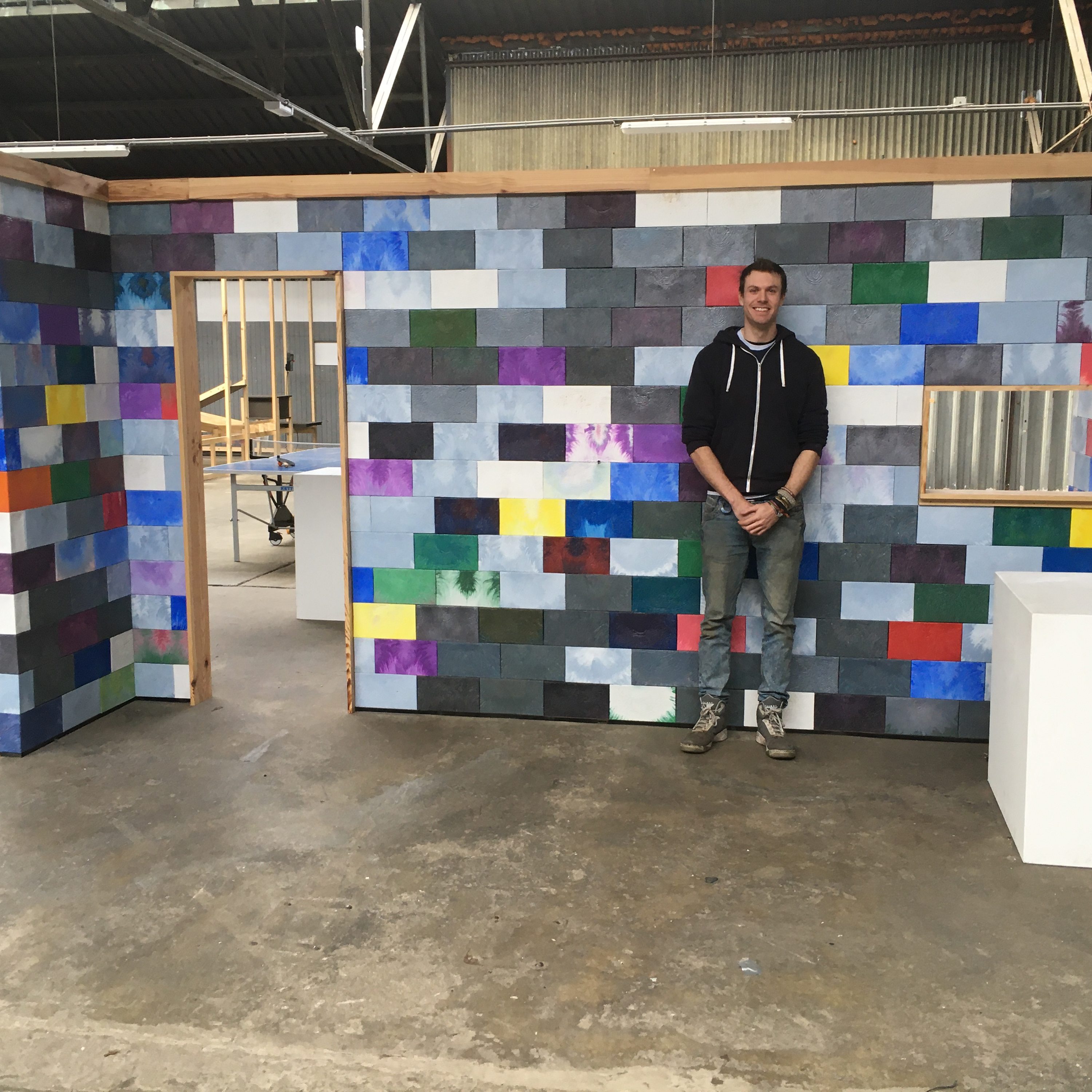
Plastic waste is the scourge of developing countries. Many have poor waste collection and virtually no recycling. But there may be ways in which local people can put the waste to good useIn Cameroon a child called Pierre Kamsouloum wanted to play football, but had no ball. He got the idea of melting soft plastic, the kind that food is wrapped in, and moulding it into a crude football. A few years later, without a job and looking for a way to make money, he came back to the idea, and realised that if you mixed the molten plastic with sand, you could turn it into tough paving slabs, competitively priced. Now, with the help of NGOs, thousands of people across Cameroon and Gambia have been trained in the technique.In the Netherlands, design student Dave Hakkens had the idea of creating machines that people could use to recycle their plastic locally. Using quite basic technology, these machines shred, melt and then extrude plastic into moulds to make flat sheets, bowls, and even giant Lego-style house building bricks. The designs are all open-source and online, and a movement of thousands of people has grown up, building, improving and using Dave’s machines. In Guatemala, German environmentalist Susanne Heisse was depressed by the plastic pollution collecting at the side of Lake Atilan. Inspired by the actions of a neighbour, she started stuffing the waste into plastic drinking bottles, and so the idea of the eco-brick was born – a building block that can be strong and durable and at the same time sequesters the plastic and stops it breaking down into dangerous plastics.None of these ideas is without its difficulties and each has its critics. But until we find ways to live without plastic, could they be part of the solution?Presenter/Producer: Jolyon Jenkins
Plastic Burnout
Every year billions of products are sold around the world in plastic packaging. But some countries lack a waste system to collect and recycle or dispose of the rubbish. The result can be that waste is dumped, set on fire or used as an accelerant in domestic fires.A new report by Tearfund claims to reveal the scale of the uncontrolled burning in six key countries. Tom Heap finds out what the implications of this are and asks if the product manufacturers which profit have a 'moral responsiblity' to help clear up. Producer: Anne-Marie Bullock
Turning Japan Green
Cherry blossom is a perfect symbol of Japan's relationship with nature and the broader environment. It's beautiful, flawless and disappears with the wind. The organisers of the Tokyo Olympics are keen to use the event to push the nation further toward a sustainable future. When the delayed Games finally go ahead they're promised to run on 100% renewable energy and use recycled rainwater. Even the medals and podiums will be made from old mobile phones and recycled shampoo bottles.Peter Hadfield, a journalist based for many years in Japan, examines the efforts of the organisers and asks how far their efforts can push the Japanese people toward a greener future.Producer: Alasdair CrossPhoto courtesy of @nickluscombe
Eco Homes Now!
The demand for housing is pushing through developments of millions of new build homes. So why aren't these all being built to the best energy efficiency standards possible with the technology that's now available? Tom Heap reveals how the scrapping of zero carbon homes has meant years of construction has not had to meet the higher standards hoped for. The new Future Homes Standard has just been consulted on but Tom Heap hears it's not just missing the mark for some groups but is at risk of reducing some standards altogether. Homes now come with an EPC - an Energy Performance Certificate - to test how reliable they are Tom trains thermal cameras onto a new build house to reveal any leaks or hidden short cuts that may be lurking behind the walls.Tom also gets a vision of the future - where clever design on village scale and with artificial intelligence could see us living in a low carbon way without even having to think too hard about it. Presented by Tom Heap Producer: Anne-Marie Bullock.
Fate of the Falcons
The Naga people of north-east India and Myanmar have long been famed for their hunting prowess. In the days of traps and catapults a balance was maintained but the influx of high calibre guns and the arrival of the Chinese Medicine Trade have wiped out much of the jungle wildlife. Tigers and Asian Black Bear are now very rare sights and even deer are increasingly hard to find.Travel writer, Antonia Bolingbroke-Kent visits Nagaland to meet the local tribal people who have decided that enough is enough. They've banned hunting around their villages and created their own wildlife refuges. Already the signs are positive, with the revival of the Amur Falcon which was once hunted by the thousand and now nests peacefully in enormous flocks in the forest canopy. Producer: Alasdair Cross
Mark Ruffalo vs Chemical Pollution
When a frustrated farmer dumped a bag of VHS video tapes onto the desk of Cincinnati lawyer Rob Bilott it kick-started a legal process that would ultimately reveal that one of the world’s biggest chemical companies had poisoned thousands of people. The story of DuPont and their manufacture of the non-stick chemical family PFAS matters to the factory workers of Parkersburg, West Virginia but it also reveals the extent to which virtually all of us have been exposed to a chemical that for decades has lined our frying pans and takeaway food containers and guarded our sofas and carpets against stains.Rob’s story of his two decade battle with DuPont has inspired 'Dark Waters', a Hollywood film starring Mark Ruffalo and Anne Hathaway. In the first of a new series Tom Heap meets Rob and Mark to discuss the impact on the environment and human health of a family of chemicals that can build up in our bodies and take tens of thousands of years to decay.Producer: Alasdair Cross
Election 2019
Britain's politicians have been promising the Earth on climate change. Tom Heap chews over the plausibility of their pledges.He's joined by Angela Francis of WWF, green finance expert Michael Liebreich, Ellie Whitlock from the UK Youth Climate Coalition and the editor of Business Green, James Murray.Producer: Alasdair Cross
Vegan World
What would the British countryside look like if we all adopted the vegan diet recommended by many environmental campaigners? Tom Heap hosts a discussion with panellists from the National Farmers Union and the Vegan Society. We also hear from expert witnesses from Oxford University, Aberystwyth University, Harvard Law School and Rothamsted Research.Producer: Anne-Marie Bullock
Dry Me A River
Whilst this Autumn’s heavy rainfall has caused some rivers in the north of England to burst their banks and flood neighbourhoods there are rivers in the south-east with barely a drop of water in them. Tom Heap asks what impact this is this having on aquatic ecosystems. He talks to water companies and environmental campaigner Feargal Sharkey to find out how flora and fauna are changing as a result of the shortage of water. It's a particular concern for chalk streams, which provide a unique wildlife habitat found in very few places in the world. Tom asks who's the blame - the water companies for taking water out of the rivers, the Environment Agency for giving them permission to do it, or us consumers for using more water per person than we ever have before?Producer: Emma Campbell
Iron Curtain Turns Green
The Iron Curtain was an accidental wildlife haven. 30 years since the fall of the Berlin Wall, Tom Heap walks the borderlands to see how nature has continued to thrive.Before the fall of the wall naturalists in West Germany had noticed that some bird and mammal species favoured life in the deathzone with its lack of human disturbance. When the Soviet bloc crumbled they joined friends and colleagues in the East to declare a Greenbelt through Europe, from Trieste on the Adriatic to Lubeck on the Baltic.Against the odds their campaign has met with great success, creating new migration routes for some of Europe's biggest mammals whilst keeping developers away from most of the old border between East and West.Producer: Alasdair Cross
Plastic Gardens
The last decade has seen a huge rise in the number of people opting for artificial turf in their gardens. Meanwhile businesses and corporations are making more use of plastic plants in both indoor and outdoor spaces. What effect does choosing fake over real plants have on the environment? Peter Gibbs investigates.Producer: Emma Campbell
Powering Britain
Britain urgently needs a zero carbon source of reliable energy for our homes, industry and the new generation of electric vehicles. This summer's electricity blackouts suggest that we're a long way from achieving the goal. Tom Heap and a panel of power experts offer their solutions.Tom is joined by Jillian Ambrose, Energy Correspondent of The Guardian, the Chief Executive of the Committee on Climate Change, Chris Stark and CEO of power company Good Energy, Juliet Davenport.Producer: Alasdair Cross
Carbon Free Islands
Orkney's strong winds and powerful tides have attracted renewable energy pioneers for decades. For much of the year the islands produce more energy than they can use. Turbines are shut down and green energy goes to waste. The UK government has spotted an opportunity, funding the REFLEX project which aims to use that excess energy to develop new ways to power a community. Tom Heap visits Orkney to see how hydrogen storage, huge batteries and electric ferries and cars can be lashed together with clever software to remove fossil fuels from an entire energy system.Producer: Alasdair Cross
The e-DNA Revolution
From the Loch Ness Monster and mammoths to the Amazon river and uncharted river flies - 'environmental DNA' is revolutionising how we tell what species are present in a certain landscape. Traces of skin, mucus or gametes can be left by creatures in their environment and scientists can use samples from the water, air or soil and sequence the DNA found within to test for a specific species or to get a broader picture of what is there. It can help monitor for invasive species and even look back to ancient history. Samples can be taken by non-experts, in remote locations, quicker than some traditional methods and it's non invasive. Scientists say this can speed up and revolutionise how we chart our living world....which in some cases might flag up the most urgent need to intervene where species are threatened. The technique has been used recently by Prof Neil Gemmell from University of Otago working with experts from the Loch Ness Centre - to search for evidence of what is and isn't present in the depths but it's also being used in more applications around the world. Jheni Osman explores why scientists are so excited about this modern technique, how long the traces last and what it might reveal in the future. Produced by Anne-Marie Bullock
Ghost Fishing
Plastic nets and equipment left in the ocean by fishing boats is estimated to make up over 10% of marine rubbish and in the 'Great Pacific Garbage Patch' over 40% of the accumulated plastic is lost fishing gear. Even worse these plastic 'ghost nets' can go on catching fish and attracting other wildlife which then become entangled too. Often these nets are very old and once they finally do start to degrade they add to the problem of 'microplastics' which are ingested by sea creatures. It's a big global problem but as Lucy Siegle discovers in Cornwall and Italy there are lots of solutions on offer and teams of enthusiastic volunteer divers who want to get these old nets out of the sea and into a recycling scheme.With the help of 'Ghost Fishing UK' Lucy takes a look at what can be done to prevent more 'ghost gear' being lost and to help get existing nets out of our oceans.
Fire in the Amazon
How can we prevent a repeat of the devastating fires in the Amazon? Tom Heap and Lucy Siegle search for solutions.Producer: Emma Campbell
Verity's Wild Garden
Verity Sharp wants to turn her small garden into a haven for wildlife. She's inspired by the Rewilding movement, but her neighbours aren't too keen on wolves in Wiltshire.Inspired by the work being done at Knepp Castle Estate in West Sussex, Verity loves the idea of abandoning the lawn mower and letting nature take control. But will her abandoned garden turn into a natural paradise or an embarrassing mess that lowers the tone of the neighbourhood?Verity calls on the author of 'Wilding', Isabella Tree and rewilding pioneer, Germaine Greer for sage advice.Producer: Alasdair Cross