
Cosmopod
343 episodes — Page 6 of 7

Cuba: Past, Present, and Future with Helen Yaffe
Christian and Connor sit down with Helen Yaffe to discuss her book We Are Cuba. We talked about the history and political economy of revolutionary Cuba before and after the post-Soviet period. Some of topics we touched on were the nature of democracy on the island, the relationship of Cuba to the United States, and how Cuba has dealt with the pandemic and coming crisis of climate change. Other resources mentioned: Emily Morris - Unexpected Cuba The documentary Cuba & COVID 19 Public Health, Science and Solidarity and Helen's article on Cuban vaccines. Piero Gleijeses' work on Cuba, in particular Visions of Freedom: Havana, Washington, Pretoria, and the Struggle for Southern Africa, 1976–1991 and Conflicting Missions: Havana, Washington and Africa, 1959–1976.

A life in Marxist Economics and Education with Sam Bowles
Amelia Davenport joins Samuel Bowles for a short discussion on his life-long research on global poverty and education. They discuss Bowles's history and how this led to his orientation, his work on education "Schooling in Capitalist America", including what he has changed his mind on, his thoughts about markets, incentives, central planning and capitalist economies, as well as other theories such as the value-form abolition, neo-liberal economics. He also talks about teaching economics to undergraduates and what thinkers socialists should engage with even if they're outside the Marxist tradition. Make sure to check out the CORE project and their completely free undergraduate level coursebook on economics.

[Audiobook] Lenin Rediscovered: Chapter One
This is a narration of the first chapter of Lars Lih's excellent book Lenin Rediscovered: What Is to Be Done? In Context. In this chapter, Lih explains how the legacy of figures like Marx, Engels, Lassalle, Kautsky, and others influenced Lenin. There's also a wonderful exploration of how the pre-war SPD served as the original model for the "vanguard party" (though in a very different way from how the term is used today). The full audiobook is currently in production by the team at Cosmonaut Magazine. You can find more episodes (and other audio books) on our Youtube channel, and you can purchase a physical copy of the book itself at Haymarket books. Narration and editing by Cliff Connolly.

Organizing Amazon: AU's Shop Floor Alternative
Rudy joins Zama and Jonathan from Amazonians United to discuss their shop floor alternative which has organized walkouts in Chicago, and started a national fight for PTO. They discuss the way they bond with co-workers on the shop floor, what their next steps are, and how different their organizing looks like to that of RWDSU which organized the Bessemer (Alabama) unionization effort. We also discuss medium- and long-term goals, as well as how they relate to the existing socialist movement.

Cults of our Hegemony: An Inventory of Left-Wing Cults
Destructive cults are usually considered the domain of religious movements. The Left, however, has its own track record of cults. Gus Breslauer sympathetically examines this history in search of the political questions that produce such groups, how they operate, and how to overcome them. Robert Fish reads the article out loud.

Strikes & Boycotts: The Two Souls of the United Farm Workers with Frank Bardacke
Roger and Rudy join Frank Bardacke, author of Trampling out the Vintage: Cesar Chavez and the Two Souls of the United Farm Workers for a discussion on the UFW, its history, its tactics, its structure and its slow loss of relevance. We focus on the boycott as a tactic: how the UFW pioneered the use of boycotts, how winning the 1965-70 Delano grape campaign through a boycott shifted the power in the union from workers to staffers, and how both tactics, and what they represented in the union, would come into conflict in the 1979 Salinas Lettuce struggle. We also talk about Cesar Chavez the man, the UFW's changing relationship to undocumented migrants, present-day farm organizing and what lessons we can draw from the UFW for today, in particular on the use of boycotts and on union democracy.

[Audiobook] Lenin Rediscovered: Introduction
This is a narration of the 37-page introduction to Lars Lih's excellent book Lenin Rediscovered: What Is to Be Done? In Context. Going against conventional wisdom, Lih presents a detailed study that paints Lenin as an optimist inspired by the capacity of the working class and determined to guide them to carry out their historic mission. Furthermore, Lih identifies the German Social Democratic Party as Lenin's ideal model of a revolutionary party, which he tried to implement to the greatest extent possible in Russia. The full audiobook is currently in production by the team at Cosmonaut Magazine. You can find more episodes (and other audio books) on our Youtube channel, and you can purchase a physical copy of the book itself at Haymarket books. Narration and editing by Cliff Connolly.

The Class Struggle in Contemporary China with Yueran Zhang
Parker and Matthew sit down with sociologist and labor activist Yueran Zhang to discuss workers' struggles in contemporary China. Topics discussed include public memory of Tiananmen Square, the Chongqing model, trade unionism and labor activism in the Pearl River Delta, the Jasic workers' struggle, and prospects for the revolutionary left. ------ Check out Yueran's articles on The Forgotten Socialists of Tiananmen Square and Leninists in a Chinese Factory

From Ruins to Ruins in East Germany
Alex, Rudy and Christian sit down to discuss the history of the German Democratic Republic from its foundation atop the ruins of WW2 to the prelude of reunification. They discuss the challenges of building socialism in the fourth of ruined country, the challenges of brain drain, the economy before and after the Wall was built, the intelligentsia/worker divide, the varying responsiveness of the ruling party to criticism and how the GDR was able to provide a normal life to most of its population for decades. Main References: The People's State: East German Society from Hitler to Honecker - Mary Fulbrook A Socialist Defector: From Harvard to Karl-Marx-Allee - Victor Grossman The Human Rights Dictatorship: Socialism, Global Solidarity and Revolution in East Germany - Ned Richardson-Little Complementary references: The Making of the GDR, 1945-53 - Gareth Pritchard Where was the Working Class?: Revolution in Eastern Germany - Linda Fuller Dissolution: The Crisis of Communism and the End of Eastern Germany - Charles S. Maier

Fight the Constitution! Demand a New Republic!
Jonah Martell proposes a radical New Union Act to throw the antiquated US Constitution into the dustbin of history. Cliff Connolly reads the article out loud.

Ethiopia: From the '74 Revolution to the present with Ian Scott Horst
Sam and Rudy join Ian Scott Horst, author of Like Ho Chi Minh! Like Che Guevara! The Revolutionary Left in Ethiopia, 1969–1979 (Foreign Languages Press) for a discussion on the 1974 revolution in Ethiopia and the relationship to the Ethiopian present, as well as what we can learn and apply from it for today's world. We talk about the questions of Eritrean and Ethiopian nationalism, the role of the military in a revolution, the student movements in Ethiopia and their role, with a comparison to the current young US left, definitions of fascism, the role of the USSR & Cuba in propping up the Derg military dictatorship and how to relate to past and failed socialist projects. --- Further reading: Ian Scott Horst's Cosmonaut article on this topic "Which side are you on? The Challenge of the 1974 Ethiopian Revolution" as well as his translation "The struggle for democracy in Africa" by Iyasou Alemayehu. John Markakis and Nega Ayele, Class and Revolution in Ethiopia is a good complement to Ian's book and goes deeper into the social classes that formed Ethiopia.

The Early Communist Women's Movement with Daria Dyakonova
Lydia and Anne sit down with Daria Dyakonova to discuss the often neglected history of the Communist Women's Movement (1920-22). They talk about the origins of the movement, its most important figures, the debates around what the base of the CWM would be, and what would be the main issues it tackled, its changing relationship to the Comintern and its recurring fight against male chauvinism within the communist and broader workers movement. The discussion finishes with the slow eclipse of the CWM until its final demise and how that affected the future generations of communist women. Daria and Mike Taber have an upcoming book on this topic through Brill's Historical Materialism series. ------- Other resources: Interview with Daria and Mike Taber on the CWM, and their upcoming book on it. The Communist Women's Movement - John Riddell

Organizing our Organizations
Amelia, Jake, Steve and Rudy sit down for a discussion of what experiences in organizing brought them to be interested in Cybernetics and Beer's viable system model, and how they try to think through the structures of the organizations they currently are members of in Beerian terms. They discuss the dichotomies of centralization/de-centralization and here/now vs then/there, and how to balance them as well as the need for regulation in organization in the shape of arbitration and policies. ------------------ Stafford Beer's Designing Freedom Massey Lectures and his Falcondale Lectures are good places to begin with his work. A 10-min explanation is also provided by Auxiliary Statements. The General Intellect Unit podcast also features prominently in our discussion as a resource.

Create a Mass Party!
Cliff Connolly critiques CounterPower's vision of the "party of autonomy" and offers an alternative vision of the mass party. Cliff reads his article aloud.

Class and race in Israel/Palestine with Emmanuel Farjoun
Lydia, Isaac and Rudy join Emmanuel Farjoun from Matzpen for a discussion on his 1983 piece Class divisions in Israeli society and how the divisions have changed in the present day. We discuss the changing strength of the Palestinians inside Israel and how that is reflected in their changing political aims, the differences between whiteness in the US and the construction of race in Israel, and the BDS movement internationally.

Mission Statement of the Marxist Unity Slate
Matt Strupp reads aloud the a reprint of the mission statement of Marxist Unity Slate, a set of proposals for the 2021 DSA convention with the aim of fostering democratic discipline and principled election campaigns, as well as uniting Marxists in DSA around a vision of a mass socialist party. The proposals can be read and signed here, 100 signatures are needed to bring these to the convention. Most of the participants in Marxist Unity Slate are associated with Cosmonaut Magazine, either as contributors or board members. However, this should not be seen as an effort by Cosmonaut itself, but rather an attempt by like-minded comrades active in DSA to advocate for a specific direction. Cosmonaut hosts a diversity of views and Marxist Unity Slate is one of a number of personal initiatives of individuals associated with Cosmonaut.

A Marxist Education with Wayne Au
Donald and Rudy sit down with Wayne Au, author of A Marxist Education. They discuss his experiences on providing a critical education, how education in the US currently stands and how Covid has just brought to the forefront issues faced by students. They discuss the Au's work on Paulo Freire and Lev Vygotsky, and end up envisioning how a socialist school could look like.

Beyond Work? The Shortcomings of Post-Work Politics
Mikael Lyngaas argues that post-work theorists ranging from Bob Black to Srnicek and Williams are utopian socialism for the current era. Sam Wiles reads the article out loud.
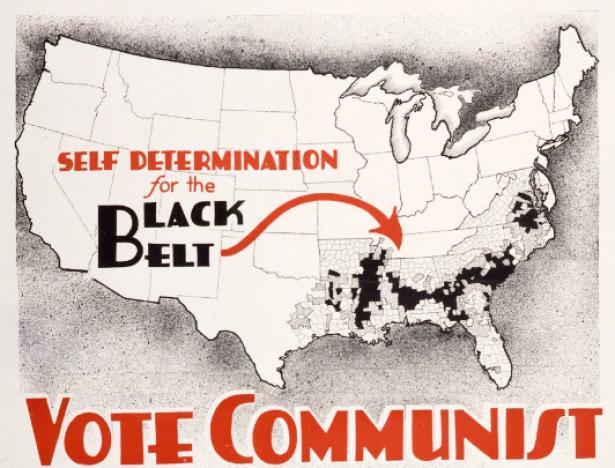
Reparations and Self-Determination: Loosening the Black-Belt
Renato Flores argues for self-determination and reparations for Black Americans as a key part of the revolutionary struggle in the USA. Robert Fisher reads the article out loud.

Republicanism and Freedom in Marx with William Clare Roberts
Ian and Donald join William Clare Roberts (@MarxInHell), author of Marx's Inferno for a discussion on the wider themes of his book: republicanism, non-domination, theories of freedom, the early communist movement, and how to read capital both politically and scientifically.

The origins of Matzpen: the Israeli Anti-Zionist New Left with Moshé Machover
Isaac and Rudy join Moshé Machover, one of the four founding members of the Israeli Socialist Organization, better known as Matzpen after the name of their publication for a discussion on the group's origins, how their anti-zionist consciousness originated and developed, their marginalization by Israeli society during the 1967 war and how Arab/Jewish solidarity was built. The conversation then pivots to how the Israeli Class Structure has changed since its early analysis by Matzpen and what that bodes for the future. They also address the topics of diasporism and how Israel compares to other settler (and non-settler) societies in the world. ----- Further resources: Youtube documentary on Matzpen, Anti-Zionist Israelis Moshé's articles on Belling the Cat, Colonialism and the Natives and Hebrew self-determination . Check out his Weekly Worker archive. Matzpen's archives

The Revolutionary Karl Kautsky with Ben Lewis
Parker and Alex have a conversation with the editor and translator of Karl Kautsky on Democracy and Republicanism (Haymarket, 2020) on the legacy of Karl Kautsky before he turned renegade. They discuss the convergence of various conflicting political views, from 'Leninists' to Social Democrats and Cold War Warriors, into what Ben Lewis calls in his book a "peculiar consensus" that fundamentally misrepresents the historical figure of Kautsky. Please support Ben Lewis's work Marxism Translated on Patreon as he strives to bring classical texts of German Marxism to an English audience for a first time.

The Family is Dead, Long Live the Family
With family abolition a controversial topic in the current-day leftist discourse, Alyson Escalante argues for a more nuanced and sensitive approach to the topic by looking at the works of Karl Marx and Alexandra Kollontai while exploring the relation of colonialism to the family. Sam Wiles reads the article aloud.

The Chinese Rural Commune with Zhun Xu
Matt and Christian join Zhun Xu, author of From Commune to Capitalism: How China's Peasants Lost Collective Farming and Gained Urban Poverty for a discussion on China's communes from their construction to their dismantling. They contextualize land reform globally, elaborate on how the Chinese land reform process looked different from the Soviet one, discuss how the communes looked and functioned, and what services they provided as well as their achievements and their points of failure. They then take a general look at the cultural revolution, and how it was slowly reversed after Mao's death, why and how the rural communes were targeted first for reform, and they finish by looking at the fate of the urbanized peasantry and why they have not yet joined the urban struggles in China.

Holocaust Capitalism
Richard Hunsinger argues that migrant concentration camps represent a descent into fascist barbarism and are related to the inherent tendencies of capitalism. Remi Debs reads the article aloud. -------------------- Find more information about Richard's case in: https://twitter.com/DefendRichard/ , and please donate to the Atlanta Solidarity Fund

An X-Ray of the Yugoslav Experiment in Self-Management
For the latest episode of our series on Actually Existing Socialism, Christian, Rudy, Donald and Connor join forces for a discussion on the Yugoslav self-management in its different iterations. We use Darko Suvin's Splendor, Misery and Possibilities: An X-Ray of Socialist Yugoslavia as a background to outline an exploration of the successive reforms where self-management was first brought in as a response to the failures of the command economy to take advantage of plebian creativity, and how slowly the market and decentralizations became a magic bullet for solving all problems, a fetish which caused the arising of significant inefficiencies, consumerist culture and inequalities both between republics and between workers and managers in the factories. We analyze why successive waves of marketization were supported, and how this led to the formations of new classes that would eventually disintegrate Yugoslavia. Other Sources: Yugoslav Marxists B. Horvat, "Towards a Theory of a Planned Economy" B. Kidric, "Some Theoretical Questions of the New Economic System" E. Kardelj, "Directions of the Development of the Political System of Socialist Self-Administration" Other Marxists E. Mandel, "Self-Management: Dangers and Possibilities" E. Hoxha, "Yugoslav "Self-Administration" - Capitalist Theory and Practice" Academic D. Granick, "Enterprise Guidance in Eastern Europe: A Comparison of Four Socialist Economies" P. H. Patterson, "Bought & Sold: Living and Losing the Good Life in Socialist Yugoslavia"

Radio Free Punjab
Rudy is joined by Jasdeep and Sangeet to talk about the recent farmers protests going on in Northern India, especially around the regions of Punjab and Haryana. They discuss the origins of the movement and of the farmers union, how the movement relates to workers and urban dwellers and how the questions of caste, religion and gender are dealt with. The conversation then examines the total participation of society in the movement and how this was achieved, and what we can learn from it. We finalize by discussing the future of the movement, and what we can do to help it from anywhere. Check out Sangeet's work on women's participation in the ongoing movement and on another historical movement hundred years ago, and how religion plays a role in the culture of defiance.

Attic Communists of the Netherlands
Parker and Alex join Emil Jacobs of the Socialist Party of the Netherlands to discuss the factional struggle and expulsion of the Communist Platform group. They discuss the party's bureaucratic centralism and opposition to open democratic struggle by the party's parliamentary fraction. Should communists bother to try to push for principled politics within the broader workers movement? Why or why not? Emil also asks for context on the struggle for socialism in the US and the Democratic Socialists of America as well as Marxist Center groups. Weekly Worker articles added for context and updates to the struggle within the Dutch SP: Bureaucratic Control Freakery Youth Section Will Win Communist Platform website ROOD fundraiser

Driving in reverse: Prop 22 and AppBased Drivers' resistance with Boston Independent Drivers Guild
Rudy is joined by Jonathan, Henry and Felipe from the Boston Independent Drivers Guild for a discussion on how gig drivers are resisting and organizing against precarity in their jobs. We discuss what a typical working day looks like and how drivers relate to their jobs and what the workforce looks like and what challenges that entails when organizing, such as multilingualism. Felipe discusses how Uber and Lyft workers can meet each other, how BIDG was started, its current organizing strategy and the long-term goals of the guild, and what their relationship to others unions is. The episode then pivots to the context of Prop 22, how that battle was lost and how the guild is planning for future fights. We end by discussing Uber's interface with venture capital and its common lie that the company is not profitable As Felipe said, if you are a gig worker, or a ride-sharing driver, you are not alone. There is probably a driver union somewhere near you, with people getting organized to fight.

Faith, Family and Folk: Against the Trad Left
Donald Parkinson takes issue with the calls for a "socially conservative leftism" that have increased in popularity since Jeremy Corbyn's defeat in the UK election. Matthew Strupp reads the article aloud.

Revisiting the Lysenko Affair
In the second episode of our Soviet Science series, Donald, Djamil and Rudy sit down to contextualize an infamous episode of this story: The case of T. D. Lysenko and Lysenkoism. We discuss the origins of vernalization and Lysenkoism in peasant folk knowledge and Michurin's plant garden, how the state of Soviet scientifical structures and Soviet agriculture favoured his rise, how he took advantage of the Soviet purges to solidify his standing, how he managed to absolutely ban the research of genetics in 1948, and how this ban was negotiated by other scientists, his many downfalls and rehabilitations starting in the early 1950s all the way up to the removal of Khruschev, and the shadow Lysenkoism cast on Soviet agronomy and biology for decades both internally and in the West. We also contextualize Lysenko's agricultural and biological theories using modern knowledge about epigenetics. Sources/Further Reading: David Joravsky, The Lysenko Affair (Chicago: University of Chicago Press, 1970) Robert M. Young, Getting Started on Lysenkoism (1978) Levins & Lewontin, The Dialectical Biologist (1985) Loren Graham, Lysenko's Ghost (2016) Dominique Lecourt, Proletarian Science? The case of Lysenko (1977)

Revolutionary Discipline and Sobriety
Cliff Connolly argues for a culture of sobriety within our organizations, drawing from the example of Austrian Socialism.

The Tragedy of American Science with Cliff Conner
Alex and Rudy welcome historian Cliff Conner for a discussion of his recent book The Tragedy of American Science: From Truman to Trump published by Haymarket Books. They discuss how this tragedy is a tragedy of capitalist science which is seen across the capitalist world, the role of science as an unchallengeable source of authority and how that is squared with the antiintelectualism needed to sustain a power structure, the influence of money in regulation and research, the precautionary principle and the risk-assessment principles for commercializing new products and the use of reductionism in research and how that is unseparable from the bourgeois mentality. The conversation then moves to the American university and the effect of the Bayh-Dole act, and the relationship between military spending and research, including the US's economy addiction to "weaponized Keynsianism" and how American policy makers do not care about the failures of military technology as long as the money keeps flowing. They discuss the ideals of objectivity and neutrality, 'value-free' science as an ideological tool and how the social sciences can strive for objectivity. They end off talking about what changes and what things will stay the same with Biden, and and how non-capitalist economies have shown that other models of science are possible where innovation did not rely on profit as a motive. ---- Details on the financial interests behind Operation Warp Speed, by Marjorie Cohn: https://truthout.org/articles/trump-administration-is-paying-big-pharma-billions-in-rush-for-vaccine/ Science for the People can be found here: https://scienceforthepeople.org

An Accumulation of Affect
This article's author, Richard Hunsinger, is currently being held without bail in an ICE detention facility and could use our support. Donations to the Atlanta Solidarity Fund help political prisoners like Richard, and can be made at https://atlsolidarity.org/ Letters can be sent to Richard by emailing [email protected] Donations to his commissary can be sent on Venmo to Kat-Richards-1 or cashapp to $KatRichards. Discourse related to the concept of emotional labor can highlight the way capitalism distorts our humanity or merely naturalize capitalism, argues Richard Hunsinger. Cliff Connolly reads the article aloud.

Pull the Plugs? Labor, Power, and the Rise of Fossil Capitalism
Join the Cosmonaut Ecocrew as they discuss Andreas Malm's piercing 2016 text Fossil Capital and attempt to dispel the myriad of myths that have been erected around the energetic transition to coal. The fateful intertwining in mid-19th century British cotton districts of capital and fossil fuels is examined in the context of class struggle, the ascendancy of the steam engine, and alternative futures which were incompatible with the logic of capital. ----- Check the previous episodes of this series: Karl Marx's Ecosocialism: Capital, Nature and the Unfinished Critique of Political Economy with Red Library Capitalism in the Web of Life: A Discussion Marx's Ecology: Materialism and Nature

Without a Party, We Have Nothing
Donald Parkinson responds to Taylor B's Beginning's of Politics: DSA and the Uprising, arguing that a workers' party is necessary to advance an emancipatory politics. Cliff Connolly reads the article aloud.

Organizing the Oppressed with Mara & Janaya of Philly Socialists
Rudy and Annie join the two co-chairs of Philly Socialists, Mara and Janaya, for what starts as a conversation on the issues women and non-men comrades face when organizing, and ends up being a discussion of Philly Socialists' base-building activities and their philosophy on the party. The episode starts off with a discussion of the experiences in PS to make the spaces more welcoming to everyone, the role of child-care and of strong sexual harassment policies, and how to provide spaces for everyone to become leaders. This is grounded in what PS calls base-building: for example, their English as a second language classes, their work in the Philadelphia Tenants Union and their community garden, where PS organize neighborhood residents to fight back against gentrification and reclaim land in Philadelphia. The conversation continues to PS's view of how the party should arise, before cycling back to the issues that started it.

Was Mao a Bukharinist?: The "Three-Line Struggle" in Economic Debates Preceding the Great Leap Forward
Matthew Strupp examines economic debates in China during the leadup to the Great Leap Forward and assesses comparisons made between Mao and Bukharin. Cliff Connolly reads the article aloud.

Revolutionary Parliamentarism with August Nimtz
Parker and Peter join August Nimtz, the author of Lenin's Electoral Strategy (now reprinted as The Ballot, The Streets-- or Both) to discuss how Lenin and the Bolsheviks approached electoral politics and what we can learn from them to apply to today's situation. They talk about the origins of Nimtz's research project as an attempt to refute the point that electoralism must mean programmatic compromises, the influence on Lenin of Marx and Engels' 1850 address to the Communist League and how Lenin's relation to the ballot depended on the temperature of the street and meant alternating boycotts with participation on an independent ballot line. They pivot towards analyzing the behaviour and discipline of the Bolshevik faction including the consistent attempts to build an alliance with the peasantry, and the contrast between the Bolsheviks and the pre-WW1 German Social-Democratic Party, and the role of democratic centralism in disciplining parliamentary factions. They end with a reflection of what the ballot means today. --- Check out August Nimtz's Amazon Author Page. Works mentioned: Marx & Engels, Address of the Central Committee to the Communist League (1850): https://www.marxists.org/archive/marx/works/1847/communist-league/1850-ad1.htm Marx & Engels, Demands of the Communist Party in Germany (1848): https://www.marxists.org/archive/marx/works/1848/03/24.htm Marx & Engels, Circular Letter to Bebel, Liebknecht, Bracke and Others (1879): https://marxists.catbull.com/archive/marx/works/1879/09/18.htm

Knowledge Democratization, Bourgeois Specialists and the Organization of Science in the Early Soviet Union
For the first instalment of our in-depth study of Soviet Science, Djamil, Donald and Rudy sit down to discuss the scientific institutions and the practice of Science in the early Soviet Union up to the conclusion of the Stalin Revolution. They start off with a survey of the Tsarist Academy, and what kind of structures and specialists the Bolsheviks inherited. The conversation continues with the changing ways the Bolsheviks related to specialists during the Civil War and the NEP, and how they were trying to assimilate the culture of specialists when they realized it was impossible to seize cultural power, and how this relates to the present day debate around the Professional Managerial Class. They then discuss the role of the two anti-specialist trials that kick off the Stalin revolution: the Shakhty affair and the Industrial Party Trial, and how that served to strengthen Stalin's hand in taking over the politbureau and resulted in a culture of blaming specialists for the failure of five-year plans. They finish by analyzing the resulting academy and intelligentsia of the 1930s, fully loyal to Stalin, and how that sets the stage for the rise of someone like Lysenko.

The Politics of Drugs and Harm Reduction with Michael Gilbert
Annie and Cliff join Michael Gilbert, a public health technologist and a harm reduction organizer for a conversation on how communists should relate to harm reduction efforts. They discuss the reasons why people use drugs, the role of drug availability in harm reduction, how international regulations shape the drug trade and how that is used to justify politics such as strong borders and even invasions. They also discuss the roots of drug criminalization in the US and how that relates to public health outcomes, how harm reduction can be both self-organization of drug users and something brought from outside, the particularity of the words harm reduction and how that reflects on the ethics of drug use. Finally they touch on Michael's personal experiences organizing around harm reduction, and how to go beyond just being a red charity.

Hold Your Fire!: A Warning to the Left
Daniel Newman urges patience and caution in the face of current political turmoil. Cliff Connolly reads the article aloud.

The Zhenotdel and Women's Emancipation in the Central Asian Republics with Anne McShane
Donald and Lydia join human rights lawyer and fellow Marxist Anne McShane to discuss her recent PhD thesis on the Zhenotdel, the women's department of the Communist Party of the Soviet Union. They discuss the origins of the Zhenotdel, how it attempted to solve the shortcomings of the women's movement in the second international and its role in women's liberation after the October Revolution. The conversation then pivots to the specific focus of Anne's thesis: the changing role the Zhenotdel played in women's emancipation in the Central Asian Republics. They discuss how the Zhenotdel related to and incorporated indigenous women into organizing, the Central Committee's takeover of Zhenotdel policy that resulted in the hujum campaign of mass unveiling and the disastrous reaction that followed, how this campaign can be contextualized within the rise of Stalinist policies. They end the episode with the final dissolution of the Zhetnodel in 1930 and the sanitization of Nadezhda Krupskaya's figure. ----- Anne's research interest is in women's liberation. Check out her Weekly Worker pieces among which we highlight: A barometer of Progress, Soviet Russia and Women's emancipation, The Will to Liberate and How Women's Protests Launched the Revolution. Her PhD thesis can be found in the University of Glasgow's repository. ---- Picture of a mass veil-burning from Uzbekistan (1920s). Originally from the Great Soviet Encyclopedia, obtained from Wikipedia.

Marxist Center Double Feature
Two articles from the archive pertaining to MC. The first is Building Revolution in the USA: Notes on Marxist Center Conference, 2018, by Parker McQueeney and Donald Parkinson. The second article is For the Unity of Marxists with the Dispossessed: The Bolsheviks and the State, 1912-1917, by Medway Baker. Cliff Connolly reads both articles aloud.

No Replacement For The Marxist Theory Of Revolution
Gabriel Palcic argues that various attempts in academia to develop theories of revolution as alternatives to Marx's theory of revolution and historical materialism only serve to disguise the centrality of class contradiction in these events. Cliff Connolly reads the article aloud.

Karl Marx's Ecosocialism: Capital, Nature and the Unfinished Critique of Political Economy with Red Library
Remi and Niko join Comrade Adam from Red Library to discuss Kohei Saito's Capital, Nature, and the Unfinished Critique of Political Economy: Karl Marx's Ecosocialism. We discuss the concept of metabolism, Marx's evolution of thought on ecology being the core realm of capitalist crisis, agricultural chemistry, the role of a Marxist ecosocialist perspective to stop the destruction of capital across the planet, and much more even including Žižek's thoughts on ecology! Note: The episode ends a bit abruptly as technology bailed on us in the final moments.

The Practical Policy of Revolutionary Defeatism
Matthew Strupp lays out the politics of revolutionary defeatism in contrast to the approaches of third-campism and third-worldism. Cliff Connolly reads the article aloud.

Different Horizons of Science Fiction under Socialism with Virginia Conn
Rudy and Medway are joined by recently graduated Dr. Virginia Conn to discuss about her research on science fiction in the USSR, the German Democratic Republic and China. We discuss what the purpose of science fiction under socialism is, the continuities and ruptures of science fiction in the People's Republic of China during it's diverse political periods, how the new Soviet citizen contrasted with the Chinese new citizen, the figure of Bogdanov within Russian Cosmism, how the particularities of the GDR reflected in its Science Fiction, and how many male-written stories in socialist science fiction both succeed and fail in capturing the intricacies of gender and social reproduction. ------ Read Virginia's article "Economic Circulations: Blood-Based Systems of Value in Alexander Bogdanov's Red Star" here: https://cosmonaut.blog/2020/02/01/economic-circulations-blood-based-systems-of-value-in-alexander-bogdanovs-red-star/

From Trade-Union Consciousness to Socialist Consciousness with Chris Townsend
Three of our writers are joined by veteran union organizer Chris Townsend to discuss labor organizing across history and in the present day. Chris, Remi, Peter and Annie will explore how to do what Lenin emphasized had to be done: how do we inject the political 'good news' of socialism into the workers' economistic struggle? They recapitulate how the Russian Social-Democratic Labor Party situated itself in the labor organizing of the early 1900s, how the 'third period' of the Comintern laid the basis of the formation of the CIO in the US, and attempt to extrapolate what can we learn from those tactics to apply in the present day.

Che Guevara and the Economics of Socialist Transition
Christian, Donald and Rudy sit down to discuss Che Guevara's program for a socialist transition using Helen Yaffe's book Che Guevara: The Economics of Revolution as a background. We visit the economic "Great Debate" of Cuba in the early 1960s, the different approaches to using the law of value for socialist transformation, Che's critique of market socialism, his model of Cuba as a single socialist factory, and how this model compares to contemporary approaches such as the People's Republic of Walmart. We emphasize how Che's humanistic outlook in molding new humans prefigured some of the problems that other socialist societies such as Yugoslavia or the Brezhnev USSR would face, and how his contributions add to the debate around cybernetical socialism today.