
Cosmopod
343 episodes — Page 4 of 7

The Machiavellian State, Fascism, and the Tribune of the Proletariat
Sam Thomas argues that Machiavelli can help us understand the bourgeois nature of fascism, and how anti-fascism must empower the proletariat.

Stalin pt. 1: The Long Road to the Red Inquisition
Donald, Christian, and Connor sit down and discuss the man of steel: Joseph Stalin. Less of a focused biography, we put Stalin in his historical context. In this episode we focus primarily on his ascension to power over the course of 1920s and the road to the Great Terror. Other important topics covered include the Agrarian Question, the First Five Year plan, along with a brief detour into the adventures of a young Stalin and the Russian Civil War. We end the first part here because of the important historical lessons to be drawn from the logic of the purges. A second episode will cover Stalin through World War 2 up to his death. References:Farm to Factory: A Reinterpretation of the Soviet Industrial Revolution - Robert C. Allen Soviet Fates and Lost Alternatives: From Stalinism to the New Cold War - Stephen F. Cohen Everyday Stalinism: Ordinary Life in Extraordinary Times : Soviet Russia in the 1930s - Sheila Fitzpatrick The Road to Terror: Stalin and the Self-Destruction of the Bolsheviks, 1932-1939 - J. Arch Getty and Oleg V. Naumov Let History Judge - Roy Medvedev Russian Peasants and Soviet Power: A Study of Collectivization - Moshe Lewin Stalinism and the Politics of Mobilization: Ideas, Power, and Terror in Interwar Russia - David Priestland Stalin's Library: A Dictator and his Books - Geoffrey Roberts Factory and Community in Stalin's Russia: The Making of an Industrial Working Class - Kenneth M. Straus Stalinism: Essays in Historical Interpretation - Robert C. Tucker Stalin in Power: The Revolution from Above, 1928-1941 - Robert C. Tucker

The Democratic Republic of Afghanistan: Origins to Collapse
Eric, Rob and Rudy join to discuss Afghanistan, focusing on its socialist period from 1979 to 1992. We discuss the history of the Afghan state from its beginnings as the Durrani empire, its interactions with Russia and the British empire, the Zahir Shah monarchy and the Daoud period all the way up to the Saur revolution, including a discussion of the communist and Islamist factions in the country. We talk about the initial reforms the People's Democratic Party of Afghanistan (PDPA) tried to make, and why this caused uprisings that would eventually lead to the long Soviet intervention in the 80s. We discuss the war, including the radical changes of policies of the government, which slowly abandoned the idea of socialism in the late 80s. We end by discussing the Soviet withdrawal and the ultimate causes for the collapse of the government of Najibullah. Main References: Niamatullah Ibrahimi - The Hazaras and the Afghan State: Rebellion, Exclusion and the Struggle for Recognition Antonio Giustozzi - War, Politics and Society in Afghanistan, 1978-1992 Gilles Dorronsoro - Revolution Unending: Afghanistan, 1979 to the Present Rodric Braithwaite - Afgantsy: The Russians in Afghanistan 1979-89 Jonathan Neal - Remembering the Saur Revolution

[Audiobook] Karl Kautsky on Democracy & Republicanism: Part III
This is a narration of chapters 4-8 of Karl Kautsky's Parliamentarism and Democracy (1893-1911), from Karl Kautsky on Democracy & Republicanism by Ben Lewis. The full audiobook is currently in production by the team at Cosmonaut Magazine. A copy of the book itself can be purchased at Haymarket Books. Narration and editing by Myk Labas. Music: 'Class War', the Dils 'Aired Out', blackchai

Marxism and the Philosophy of Science with Helena Sheehan
Djamil and Donald join Helena Sheehan, author of Marxism and the Philosophy of Science: A Critical History for a deep dive on the interactions between these two fields. They start off with Sheehan's intellectual history, before discussing what Marxism is and how it relates to other philosophies of science. They talk about Marx & Engels' relationship to science, in particular to Darwinism, Engels' much maligned Dialectics of Nature, its relationship to Hegel, and the laws of dialectics. They continue with the Austromarxists and Neokantianism, its influence on Bogdanov and the Bolshevik Machists, and Lenin's reply in Materialism and Empirio-criticism. They also discuss the criterium of practice, Bukharin's philosophy of science and his influence via Science at the Crossroads on a generation of British Marxists including Bernal, Haldane and Caudwell. They finish with discussing the cold & warm split in Marxism.

Socialism of the Oppressed: The Stakes of the Bowman Affair
Jean Allen and Marisa Miale, authors of For An Internationalist DSA, sketch out a strategy for building a left opposition committed to electoral discipline and unity between socialism and the international working-class. Read by LC

Organizing The Social Care Factory: Careworkers, Houseworkers and the Women's Strike with Imogen Woods
Lydia and Rudy join Imogen Woods from Prometheus Journal to discuss her articles on organizing social care workers and houseworkers. We talk about the concept of social care factory, and how the mass privatization has resulted in declining care standards as well as working standards. We talk about how democratically run care system can look like, how to organize social care workers and how "love" is used as a currency. We then switch to a discussion of the International Feminist Collective and the Wages for Housework movement, and contrast it to Maria Macciocchi's political work with the housewives of Naples. We briefly discuss the use/exchange value debate of housework, and what the role of a housewife or women's strike can be, and finish off by discussing how women should address sexism in the left. Aside from Imogen's two articles, we mention Louise Toupin's history of the Wages for Housework movement.

[Audiobook] Karl Kautsky on Democracy & Republicanism: Part II
This is a narration of the two prefaces, introduction, and chapters 1-3 of Karl Kautsky's Parliamentarism and Democracy (1893-1911), from Karl Kautsky on Democracy & Republicanism by Ben Lewis. The full audiobook is currently in production by the team at Cosmonaut Magazine. A copy of the book itself can be purchased at Haymarket Books. Narration and editing by Myk Labas.

A Brief History of The Paris Commune with Carolyn Eichner
Charlie and Rudy join Carolyn Eichner, author of The Paris Commune: A Brief History and Surmounting the Barricades: Women in the Paris Commune for a discussion on the Paris Commune, its origins, its place as a transitional state in a civil war, its tragic end as well as its legacies. We talk about the situation of Paris in 1871, the forming of the Commune, the meaning of "social republic" and how women had to fight for a place in it, the political tendencies in the Commune, the cooperatives and their contradictions, and the grassroots movements in the form of political clubs. We discuss the Union des Femmes (Women's Union), the struggle against patriarchy and the Catholic church, how public space was reclaimed and how education and culture were re-imagined. We continue with the end of the commune in the Bloody Week, how women were particularly demonized through the myth of the pétroleuses, and the mass executions. We end by discussing the legacies of the Commune in feminisms and political thought, as well as the more negative episodes with the deportation of communards to New Caledonia and their role in upholding settler-colonialism.

[Audiobook] Karl Kautsky on Democracy & Republicanism: Part I
This is a narration of the preface and introduction for Karl Kautsky on Democracy & Republicanism by Ben Lewis, who has also provided a preface to the audiobook. The full audiobook is currently in production by the team at Cosmonaut Magazine. A copy of the book itself can be purchased at Haymarket Books. Narration and editing by Myk Labas.

Dissolving the People and Electing Another
Drawing from the experience of the Democratic Socialists of America and Marxist Center, Marisa Miale examines the everyday, interpersonal level of party-building and argues for a revolutionary strategy that can weave together cultural intervention, base-building and political unity. Comrade Lacus reads aloud.

Western Sahara: Colonialism, Settler-Colonialism and Resistance with Garazi Hach Embarek
The Spanish government has just sided with the Moroccan government on the issue of the Western Sahara. Djamil and Rudy join Garazi Hach Embarek for an introductory discussion on the history and present of the Sahrawi Arab Democratic Republic of the Western Sahara. We discuss the pre-colonial and Spanish colonial history, the context and formation of the Polisario Front liberation organization. We follow up by talking about the liberation wars against Morocco and Mauritania, the place of the Polisario in the national liberation movement, as well as the occupation and repression of the Western Sahara, and the situation of the refugee camps in western Algeria. We continue by speaking on the ongoing process to colonize and settle the Western Sahara by Morocco and the role of the UN, the African Union, as well as Algeria and Libya in the situation. We finish by analyzing the present situation, Trump's declaration in 2020 to support Moroccan colonization as quid pro quo for Moroccan recognition of Israel, as well as the Spanish governments flip from "neutrality" to a blatantly Moroccan position.

Disarming the Magic Bullet
Renato Flores responds to Cam W's argument for Maoism and the mass line. Gabriel Palcic reads aloud.

American Communist Labor Strategy during the Third Period (1929-34) with Victor Devinatz
Annie and Cliff join Victor Devinatz, a management theorist and labor historian, to discuss the formation of the Trade Union Unity League (TUUL), its successes and failures, and the role it played in the development of the labor movement. We focus on its emergence from the end of the Trade Union Education League (TUEL), its relationship between bottom-up initiative and Comintern direction in the shift toward dual unionism; CPUSA's three-pronged strategy of constructing the TUUL, building an opposition within the American Federation of Labor, and working with independent unions; the united front from below policy; and the transition toward the Popular Front and the formation of the Congress of Industrial Unions (CIO) after the mass strikes of 1934. Check out Victor's A reevaluation of the Trade Union Unity League 1929-1934.

Which Way Forward for the Marxist Left?
In light of the liquidation of DSA's BDS working group, Charlie Frank argues that Marxists must continue the political fight rather than turn towards localist activism or the various left-wing sects. Comrade Mike reads aloud.

The Farthest Promised Land: An Introduction to New Zealand's Political Economy
Giacomo Bianchino and Rudy join Amal for an introductory discussion on New Zealand's (Aotearoa in the Maori language) political economy, with a focus on how the country was settled and connected to the world market. We discuss the nature of the first settlements, the dispossession of the Maori, the Treaty of Waitangi and why it is a cornerstone of the myth of biculturalism, why the colonization process of the Maori was different when compared to the one in Australia and why New Zealand is an independent country. We continue by discussing the Maritime Strike and the origins of arbitration, the birth of the Labour party, the formation of the welfare state, the Labour party's political degeneration and the 1951 Waterfront process. We finish by discussing New Zealand's (sub-)imperialism in the Pacific and the 1999 voting reform. References: Rollo Arnold - The Farthest Promised Land: English villagers, New Zealand immigrants of the 1870s James Robb's series on the Origins of the Working Class in New Zealand (Pts 1, 2, 3), his history of the founding of the labour party, and the history of the Waihi strike (Pts 1, 2) Towards a Socialist Polynesia (Spartacist League of New Zealand program of 1982) Phillip Ferguson - New Zealand: Neo Colony or Junior Imperialist? D. Bedggood - Rich and Poor in New Zealand A Critique of Class, Politics and Ideology Te Ahu - The Evolution of Contemporary Maori Protest E.S. Te Ahu Poata-Smith - The Political Economy of Maori Protest Politics 1968-1995: A Marxist Analysis of the Roots of Maori Oppression and the Politics of Resistance Katjo Buissink - Socialists and Trade Unionists Led the Fight for Electoral Reform in New Zealand

Beyond Son Nica: Revolutionary Popular Music in Sandinista Nicaragua with T.M. Scruggs
Jackson joins ethnomusicologist and anthropologist T.M. Scruggs to discuss Nicaraguan popular music in the decades leading up to the 1979 Sandinista Revolution, as well as during the first Sandinista government from 1979 to 1990. With a focus on the work of FSLN-affiliated musician Carlos Mejía Godoy, we dive into the history of the Nicaraguan political song movement that emerged in the late-60s and early 70s and discuss how, especially after the 1972 earthquake that devastated Nicaragua's capital of Managua, this musical movement merged with the FSLN to form a part of its artist-intellectual cadre. We also take a look at the FSLN's post-revolutionary musico-cultural policy in the 1980s, exploring the work of the Empresa Nicaragüense de Grabaciones Artisticas y Culturales (ENIGRAC), the state-owned record company established as a part of the FSLN's Ministry of Culture. Tracklist: Carlos & Luis Enrique Mejía Godoy - 'Que Es El FAL?' (0:00) Elías Palacios - 'Aquila Indita' (12:45) Carlos Zapata - 'Flor de mi Colina' (17:10) Carlos Mejía Godoy - 'Vivirás Monimbo' (21:18) Carlos Mejía Godoy - 'Pancho Escombros' (26:10) Jorge Issac Carvalho - 'Campesino' (29:02) Carlos Mejía Godoy - 'Los Explosivos' (32:07) Carlos Mejía Godoy - 'Canto de Entrada' (41:20) Carlos Mejía Godoy - 'Miskitu Lawana' (44:32) Grupo Pancasan - 'Pancasan' (47:08) Luis Enrique Mejía Godoy - 'Pan con Dignidad' (49:40) Grupo Pancasan - 'Juventud Sandinista' (52:49) Mario Montenegro - 'El Gallo Ennavajado (1:10:31) Duo Guardabarranco -'Ya Era Santo De Nombre' (1:13:35) Grupo Pancasan - 'El Yankee se Va a Joder' (1:20:43)

Why Machines Don't Create Value
Ian Wright defends Marx's theory of surplus-value and its claim that human labor is the ultimate cause of economic profit. Gabriel Palcic reads aloud.

The Historic Defeat of the Female Sex: Revisiting Engels' The Origin of the Family
Agata, Anne, Lydia and Rudy join to talk about the historic context of Engels' The Origin of the Family, Private Property and the State, and how we can apply it today. We discuss Engels' theories on the historically evolving family structure and the origin of the state, how the evolution of women's conditions in the 20th century changed from what he expected, how the economic base interacts with the family structure and women's liberation, how families today both help and oppress people, the issues of housework and domestic violence, the present image of 'perfect families' and the striving for a new culture. We also discuss some pitfalls of the book such as homosexuality and the absence of "third genders" and finish by reflecting on the issues women face when joining leftist groups.

Five Letters On Russia/Ukraine
Myk Labas reads five letters in dialogue with each other around the topic of Alexander Gallus' recent article "The Russian "Threat to Freedom and Democracy"". Letters can be read at: 1. "Comments On "The Russian Threat"" 2. "Letter on the Reply to "The Russian 'Threat to Freedom and Democracy'" 3. "Regarding Gallus' The Russian "Threat to Freedom and Democracy"" 4. "The Hegemony of Humanitarian Intervention" 5. "On Russia and Ukraine and Geopolitical Realpolitik" Music featured: 'Sickles and Hammers' & 'Paranoid Chant', by Minutemen

The Eco-Centrist Movement: The Sierra Club & Earth First! with Keith Makoto Woodhouse
Rudy joins Keith, author of The Ecocentrists: A History of Radical Environmentalism for a discussion on the history of the mainstream environmental movement in the US. We discuss the term ecocentrist, the philosophy behind the environmental movement, how it led to Neo-Malthusianism as well as the critics of this philosophy like Murray Bookchin. We also discuss the Sierra Club's origins as a promoter of Nature and how it turned into an organization for the defense of Nature, its defeat around Glen Canyon Dam and how that changed the strategies and the position of environmentalism in the mid-20th century, its complicated relationship to the New Left, and why Nixon became the greatest environmental president. We then turn to RARE II and how this led to the birth of Earth First! and the slogan of No Compromises, what Earth First! was, the differing class and geographical bases of Earth First, its relationship to the indigenous movement and the figure of Judi Bari and the debate around tree spiking. We finish by discussing the disappearance of Earth First!, the rise of the Earth Liberation Front, as well as the lobby-fication of the Sierra Club. References: Book Roundtable Chad Montrie's webpage

The Russian "Threat to Freedom & Democracy"
Gabriel Palcic reads The Russian "Threat to Freedom & Democracy", wherein comrade Alexander Gallus takes a closer look at the developments leading up to this week's dramatic events and offers some explanations for how we got to this moment.

Understanding & Learning with the Working Class: Workers' Inquiry and Social Investigation
AJ, Annie, Ira and Rudy discuss the methods of workers' inquiry and social investigation and how they have applied it to their organizing. They talk about the history of workers inquiry and its uneven use across tendencies, the usefulness of the method and the varying objects and objectives of the investigation. They also reflect on the ways that have used the methods of inquiry in their organizing. References: A Workers Inquiry (1880) - K. Marx Struggle at FIAT - R. Alquati Socialist Uses of Workers Inquiry - R. Panzieri Workers' Inquiry: A Genealogy - A. Haider, S. Mohandesi Workers' Inquiry and Global Class Struggle: Strategies, Tactics, Objectives - R. Ovetz (ed.) Sites of a Communist beginning - M. Ely Class Consciousness or Class Composition? - S. Mohandesi (Science & Society) A Worker in a Worker's State: Piece-rates in Hungary - M. Haraszti A call for communist social investigation a year after the summer of rebellion - Kites Journal Workers Inquiry and Social Composition - Notes from Below No Politics Without Inquiry - Notes from Below
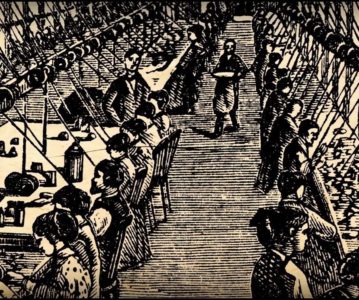
The Genesis of the Transformation Problem
The infamous Transformation Problem has long stood as a supposed example of the failure of Marx's economic theories. Ian Wright gives an explanation of the problem to help pave the way for a possible solution. Gabriel Palcic reads aloud.

From the Fields to the Stars!: Sputnik, Spaceflight and the Soviet Imagination
For our 100th episode, we go back to our roots. Djamil, Virginia and Rudy sit down to discuss the launch of Sputnik, using Asif A. Siddiqi's The Red Rockets Glare: Spaceflight and the Soviet Imagination 1853-1957 to ground the discussion. We talk about the intellectual origins of the Soviet space program in Cosmism, the figures in the space race, the science-from-below and from-above aspects of the space program, how the space program evolved through the eras of NEP, Five Year Plans, Purges and the Zhdanov doctrine, the influences of WW2 and Nazi Germany and the Cold War, and how the launch of Sputnik became a global event which started the Space Race. We finish by reflecting on 'science from below' in today's context, and on space exploration, its links to colonialism and our imaginaries.

Profits Beyond Reason and Reason Beyond Profit
Is the economic calculation problem a valid argument against planned economies? Max Black argues that this so-called problem is based on flawed reasoning and that a world beyond markets is possible. Robert Fisher reads aloud.

Modes of Production and the Transition to Capitalism with Jairus Banaji
Donald and Rudy join Jairus Banaji, author of Theory as History and A Brief History of Commercial Capitalism to discuss his theoretical contributions around the mode of production debates. We begin with his political starts in the UK and in India, and how he saw the organizational and cultural failures of the left in both countries, the debates on the mode of production in India and what he brought to this debate using the theories of formal and real subsumption. We turn to his analysis of the modes of production in Ancient Rome, the method of historical materialism, the origins of capitalism and the moments of truth in the existing camps, the very particular emergence of capitalism in the US, the importance of vertical integration and how all of this plays in to the debates around merchant capitalism. Finally, we discuss capitalism in the Islamic world, imperialism and unequal exchange, and the importance of having open theoretical debate in Marxism.

On the Stalin Question
Parker McQueeney introduces two of Paul Costello's essays on the topic of Stalin and Stalinism: Stalin and Historical Reality and Stalin and the Problem of Theory.

The Unknown Cultural Revolution: Life and Change in a Chinese Village with Dongping Han
Matt and Rudy join Dongping Han, author of The Unknown Cultural Revolution: Life and Change in a Chinese Village for a discussion on his experiences growing up in Maoist China. We discuss his hometown in Jimo County, his experiences with the Great Leap Forward and how they compare to common historiography of the period, the attitude of Communist Party officials and how the Cultural Revolution changed the long tradition of politics in rural China by empowering the common people to fight back against corrupt officials, the educational reforms during the Cultural Revolution and how it helped bridge the urban-rural divide. We finish by discussing the end of the Cultural Revolution and how the Deng reforms set back the countryside.

Historiography Wars: The French Revolution
Historiographical debates around the French Revolution are ultimately political debates, not just debates about the facts. Donald Parkinson argues for revitalizing the tradition of the social historians against the new revisionist orthodoxy. Myk Labas reads aloud. https://cosmonautmag.com/2019/09/historiography-wars-the-french-revolution/

The Colony Hates its Own Black People: Australian Indigenous Struggles with Boe & Kieran
Rudy and Giacomo Bianchino join Boe Spearim, host of Frontier Wars and Kieran from the Australian Communist Party and the NSW Aboriginal Land Council association for an introductory discussion on indigenous Australians. We discuss the history of indigenous Australians before the arrival of Europeans, what the "Frontier Wars" were and the "historiography wars" around their story, how the indigenous struggle changed after the "end" of these wars, including the day of mourning protests, the Freedom rides, the Springbok boycott and the tent embassy, and how land back was put into the Australian political agenda. They tell us about the international relationships of the black Australian struggle including their the US Black Panthers and solidarity with other indigenous groups around the world. We also discuss the relationship between indigenous struggles and Marxism, the history of solidarity among oppressed groups in Australia, before finishing with the prospects for anti-colonial solidarity and the issues aboriginal people usually face when trying to build this solidarity.

Workers and Writers: The Communist Novel in Britain
The history of the British communist novel is ultimately the story of the political degeneration of the Communist Party of Great Britain. By Lawrence Parker. Narration by LC.

End of an Era: 30 Years After the Soviet Collapse
Connor, Christian and Donald sit down to discuss the collapse of the Soviet Union. They begin by situating the economic and political problems of the system, such as the siege economy and the centralization/decentralization dichotomies which led to the general malaise of the late Brezhnev period. They continue by discussing the rise of Andropov and Gorbachev, and what reforms they tried to implement: bans on alcohol and the opening of political discussion, and how those reforms ended up backfiring. They follow up by discuss the Five Year Plan of 86-90, the two stages of economic reforms and their adverse effects, the coalition that appears which pushes for the dismantling of the Soviet Union, the rise of Boris Yeltsin and his association to Russian nationalism and the failed coup and how it signaled the transition of sovereignty and the end of the USSR. They also discuss what happened after the collapse, including shock therapy, the 1993 bombing of the parliament and the legacy of the USSR's collapse in Russia's present political system and economical situation, before finishing with an evaluation of all attempts to reform the Soviet Union. References: The Russian Revolution 1917-1932 - Sheila Fitzpatrick Revolution from Above: The Demise of the Soviet System - David M. Kotz Inside Gorbachev's Kremlin: The Memoirs of Yegor Ligachev - Yegor Ligachev Soviet Baby Boomers: An Oral History of Russia's Cold War Generation - Donald J. Raleigh Everything was Forever, Until it was No More: The Last Soviet Generation - Alexei Yurchak

Bismarck, Browder, Biden: Joe's Hegemony versus Ours
Sam Miller polemicizes against the delusions of the left in the Biden administration and proclaims the necessity for a class independent approach to politics. Myk Labas reads aloud. https://cosmonautmag.com/2021/10/bismarck-browder-biden-joes-hegemony-versus-ours/

The Dialectic of Assimilation
How have Jews in the US have gone from an unwelcome immigrant group prone to left-wing radicalism to Zionists and beneficiaries of whiteness? Lane Silberstein investigates. Harley Oliviera reads the article aloud.

On the Giving of Orders: Power and Freedom in Democratic Organizations
Dillon, Jake, Rudy and Amelia discuss the work of management consultant Mary Follett and how to use her ideas to enable democratic problem-solving and functioning of mass organizations. We discuss several common problems faced when organizing such as how to adequately replace leaders, how the person who does the work leads and how to effectively give orders. We follow by talking about how we can use Follett's ideas on integrating experience and the law of the situation to make leadership increasingly invisible. We also discuss her ideas on the role of experts and managers, power with vs power over and how to better relate to new members of an organization. We end by contextualizing Follett's ideas with other better known methods such as the Maoist mass line, and how they can be applied to the current debates around Jamaal Bowman. References: Mary Follett - Creative ExperienceH. C. Metcalf, L. Urwick (ed.) - Dynamic Administration: The Collected Papers of Mary Follett

Plowed Under: Communist Folk-Revival and Mid-Century Suppression with Aaron J. Leonard
Donald and Jackson are joined by historian Aaron J. Leonard, author of The Folk Singers and the Bureau: The FBI, The Folk Artists and the Suppression of the Communist Party USA 1939-1956, to discuss the folk-revival music scene that emerged within and around the American Communist Party in the mid-1930s and which continued through the early 1950s. We dive into the scene's relationship with the Party's changing strategy and platform, how Earl Browder related to this revival, the scene's institutional development in the late-1940s, as well as the suppression and surveillance of its leading members in the immediate post-WWII period and beyond.

The Counterinsurgency State
To commemorate the anniversary of Salvador Allende's death and the fall of Chile's Popular Unity government, we present this analysis of reactionary military governments in Latin America by Ruy Mauro Marini in honor of all who have died fighting for socialism in the hands of Pinochet's counter-revolutionary military regime. Translation by Jorge M and introduction by Renato Flores. Mick Labas reads the article aloud.

The History of Palestine Solidarity in the US with Michael Fischbach
Josh and Rudy join Michael Fischbach, author of Black Power and Palestine: Transnational Communities of Color and The Movement and the Middle East: How the Arab-Israeli Conflict Divided the American Left for a discussion on the history how the Left and the black liberation movements have historically related to the Israel-Palestine conflict, exploring the distinct factions of these movements which were pro-Zionism and pro-Palestinian. We discuss the initial reaction of the left parties to the '48 war and to the Suez invasion of '56, how Malcolm X reacted to, and influenced pro-Palestine solidarity before his murder, how Zionism divided the black struggle, how the Andrew Young affair solidified black mainstream attitudes towards Palestine and the meetings between black leaders and Arafat in the late 70s-early 80s. We then talk about how the Old and New left reacted to the '68 war, and how Zionism generated a 'civil war' between Jewish leftists and helped form a Jewish conservative base. We finish off by talking about the role of Zionism in the founding of DSA and how Palestinian solidarity today sees very similar faultlines.

[Audiobook] Revolutionary Strategy - Chapter Nine
This is a narration of Chapter Nine of Mike Macnair's groundbreaking book Revolutionary Strategy. Narration and editing by Lydia Apolinar. The free market triumphalism of the 1990s is over. Early 21st century capitalism looks like Karl Marx's description: growing extremes of wealth and poverty, and irrepressible boom-bust cycles. But for the moment, rightwing religious and nationalist nostalgia politics is the main beneficiary of the opposition this has spawned. The political left remains in the shadow of its disastrous failures in the 20th century. The centre-left - where it has not joined forces with the neoliberal right - clings to nationalist and bureaucratic-statist nostalgia for the social-democratic Cold War era. The far left clings to the coat-tails of the centre-left. It cannot unite itself - let alone anyone else - because it is unwilling to reinterrogate the ideas of the early Communist International, especially on the 'revolutionary party'. To move beyond this impasse we need to re-examine critically the strategic ideas of socialists since Marx and Engels' time. This book begins the task. You can purchase a physical copy of the book itself at Lulu. To support the project, sign up for our Patreon.

Voices from the Bolivarian Revolution: Communes and the Transition to Socialism with Chris and Cira
Christian and Rudy join Chris Gilbert and Cira Pascual Marquina, authors of Venezuela, The Present as Struggle: Voices from the Bolivarian Revolution for a discussion on the past, present and future of the Bolivarian revolution. We cover the history of the revolution from its origins as a reaction against the neoliberal adjustments in the late 80s, through the electoral victory up to the declaration of the revolution as socialist in 2006. We discuss Communes in both urban and rural settings, and their role in the transition to socialism, the questions around Oil and the Economy, the economic problems of the revolution, the shadows of bureaucratization, the differences between the cities and the countryside and possible way forwards for the revolution. Make sure to check Venezuela Analysis, and in particular their Youtube videos where they visit the Panal and Che Guevara communes.

Class Struggle in the Carpenters Union with Art Francisco
Annie talks with Art Francisco, a rank-and-file carpenter in the Seattle area and leader of the Peter J McGuire Group, a caucus in the United Brotherhood of Carpenters that fights for accountability and class struggle in the union. They discuss the origins of the recent carpenters strike in the Pacific Northwest, corruption and bureaucracy in the UBC, City Councilor Kshama Sawant's relationship to the strike, and the Peter J McGuire Group's unique vision of unionism and how it compares to other efforts of union reform. The Peter J McGuire Group's Gofundme for legal aid is linked.

[Audiobook] Revolutionary Strategy - Chapter Eight
This is a narration of the eighth chapter of Mike Macnair's groundbreaking book Revolutionary Strategy. Narration and editing by Lydia Apolinar. The free market triumphalism of the 1990s is over. Early 21st century capitalism looks like Karl Marx's description: growing extremes of wealth and poverty, and irrepressible boom-bust cycles. But for the moment, rightwing religious and nationalist nostalgia politics is the main beneficiary of the opposition this has spawned. The political left remains in the shadow of its disastrous failures in the 20th century. The centre-left - where it has not joined forces with the neoliberal right - clings to nationalist and bureaucratic-statist nostalgia for the social-democratic Cold War era. The far left clings to the coat-tails of the centre-left. It cannot unite itself - let alone anyone else - because it is unwilling to reinterrogate the ideas of the early Communist International, especially on the 'revolutionary party'. To move beyond this impasse we need to re-examine critically the strategic ideas of socialists since Marx and Engels' time. This book begins the task. You can purchase a physical copy of the book itself at Lulu. To support the project, sign up for our Patreon.

Zapatismo through Women's Eyes: Democracy, Autonomy and Liberation with Hilary Klein
Rudy joins Hilary Klein, author of Compañeras: Zapatista Women Stories for a discussion on the history of the Ejercito Zapatista de Liberacion Nacional (EZLN) from its foundation in the 1980s through their 1994 uprising and their continued existence as a social movement that holds power in areas of Chiapas. We focus on the alternative government structures of the movement: participatory democracy, economic cooperatives, transformative justice and Juntas de Buen Gobierno. Other things we discuss are : the rise and fall of Zapatismo as a north star for the American left, how Zapatismo built a mass base, the dynamics of women's liberation within the Zapatista movement and the broader population, as well as their multiple efforts to win the local population, the local splits between pro-Government and pro-Zapatistas and the future of the movement.

[Audiobook] Revolutionary Strategy - Chapter Seven
This is a narration of the introduction to Mike Macnair's groundbreaking book Revolutionary Strategy. Narration and editing by Lydia Apolinar. The free market triumphalism of the 1990s is over. Early 21st century capitalism looks like Karl Marx's description: growing extremes of wealth and poverty, and irrepressible boom-bust cycles. But for the moment, rightwing religious and nationalist nostalgia politics is the main beneficiary of the opposition this has spawned. The political left remains in the shadow of its disastrous failures in the 20th century. The centre-left - where it has not joined forces with the neoliberal right - clings to nationalist and bureaucratic-statist nostalgia for the social-democratic Cold War era. The far left clings to the coat-tails of the centre-left. It cannot unite itself - let alone anyone else - because it is unwilling to reinterrogate the ideas of the early Communist International, especially on the 'revolutionary party'. To move beyond this impasse we need to re-examine critically the strategic ideas of socialists since Marx and Engels' time. This book begins the task. You can purchase a physical copy of the book itself at Lulu. To support the project, sign up for our Patreon.

Socialist States and the Environment with Salvatore Engel-Di Mauro
Rudy sits down with Salvatore Engel-Di Mauro, author of Socialist States and the Environment, for a discussion on environmental history of socialist states, as well as on doing science from a socialist standpoint. We cover what studying soils reveals, why they had an impact on Marx, and what the history of soils shows about economic transitions in Hungary. We talk about the unfairness of comparisons done in current scholarship, the environmental record of the USSR and what happened after the collapse of the Soviet union, the effects of the economic transition of China on its environment, and the heroic achievements in Cuba to overcome the legacies of colonialism in the environment. We apologize for the lower than usual quality on this audio. We had sound issues which are unfortunately reflected throughout the episode.

[Audiobook] Revolutionary Strategy - Chapter Six
This is a narration of the introduction to Mike Macnair's groundbreaking book Revolutionary Strategy. Narration and editing by Lydia Apolinar. The free market triumphalism of the 1990s is over. Early 21st century capitalism looks like Karl Marx's description: growing extremes of wealth and poverty, and irrepressible boom-bust cycles. But for the moment, rightwing religious and nationalist nostalgia politics is the main beneficiary of the opposition this has spawned. The political left remains in the shadow of its disastrous failures in the 20th century. The centre-left - where it has not joined forces with the neoliberal right - clings to nationalist and bureaucratic-statist nostalgia for the social-democratic Cold War era. The far left clings to the coat-tails of the centre-left. It cannot unite itself - let alone anyone else - because it is unwilling to reinterrogate the ideas of the early Communist International, especially on the 'revolutionary party'. To move beyond this impasse we need to re-examine critically the strategic ideas of socialists since Marx and Engels' time. This book begins the task. You can purchase a physical copy of the book itself at Lulu. To support the project, sign up for our Patreon.

Cambodia 1975-89: From Year Zero to Capitalism
Donald, Connor, Christian and Rudy sit down for a discussion on Cambodia throughout the Democratic Kampuchea period under Pol Pot (75-79) and the People's Republic of Kampuchea period under Heng Samrin (79-89). We talk about the ideological and material origins of Pol Pot's faction within the Communist Party of Kampuchea, and clarify its relationship to the other pro-Vietnamese factions in the CPK. We discuss what the material conditions were in '75 when the CPK takes power, the events during the Pol Pot period including city evacuations, ethnic repression, party purges and the relationships of production in the countryside. We follow with talking about how the DK's aggressive border policies led to the Vietnamese invasion in '79 and the PRK period. We also discuss the PRK period, and how it ended up restoring capitalist relationships and paving the way for the return of Sihanouk and the current form of the Cambodian state. Primary References:Red Brotherhood at War: Vietnam, Cambodia and Laos since 1975 - Grant Evans & Kelvin Rowley The Pol Pot Regime: Race, Power, and Genocide in Cambodia under the Khmer Rouge, 1975-79 - Ben Kiernan The People's Republic of Kampuchea, 1979-1989: The Revolution After Pol Pot - Margaret Slocomb Cambodia, 1975-1982 - Michael Vickery Secondary references:Kampuchea: Politics, Economics and Society - Michael Vickery What Went Wrong with the Pol Pot Regime - F.G. Kampuchea: The Revolution Rescued - Irwin Silber

The Worker and the Hydra: A Reply to Partisan Mag
The development of working-class consciousness requires more than struggles against the employer on the shopfloor, argues Marisa Miale. Mick Labas reads the article aloud.

Indigenous Flows of Resistance with Mike Gouldhawke
Jackson and Rudy join Mike Gouldhawke, a Métis and Cree writer whose family is from kistahpinanihk (City of Prince Albert) and nêwo-nâkîwin (Mont Nebo) in Treaty 6 territory in Saskatchewan, for a discussion on indigenous issues in Canada with a focus on the Métis. We talk about the history of the Métis, through ethnogenesis, the Red River Resistance and the North-West Resistance. The conversation continues with cross-border organizing, the similarities and differences between Canadian and US Indian populations, the red power movement in the 60s and the origin of the Land Back demand and how that demand has become popular again. We also discuss the different meanings of Land Back in the present, solidarity across Indigenous Nations, and the recent small bouts of solidarity between unions and indigenous struggle, the George Williams affair and alliances between Canadian diasporic communities and indigenous nations, indigenous thinkers who have tried to bridge Marxism and Indigenous thought. We finish by discussing the relationships to the Quebec sovereignty movement and the new relationships between the Canadian state and indigenous nations. Further reading Books: Prison of Grass - Howard Adams Bobbi Lee, Indian Rebel - Lee Maracle Roots of Oppression - Steve Talbot Articles:Marxism from a Native Perspective – John Mohawk The Red Path and Socialism – ᐊᓯᓂ Vern Harper Marxism and Native Americans – Reviewed by Howard Adams Below the Barricades: On Infrastructure, Self-Determination, and Defense - Cam Scott