
Congressional Dish
351 episodes — Page 7 of 8

Ep 50CD050: Privatize Water Projects
Now that the government is back up and running and the American public has looked away, the House of Representatives got back to work privatizing our government. H.R. 3080 takes the first steps towards privatization of water projects typically done by the Army Corps of Engineers, using entirely fixable budget issues as the justification. Links to Information in This Episode Intro and Exit Music: Tired of Being Lied To by David Ippolito (found on Music Alley by mevio) Music: Furlough Friday by Tiamo "T-money" DeVettori and Josh "JG" Galea'i (VIDEO) Music: Old People by Odd Austin (found on Music Alley by mevio) H.R. 3080: Water Resources Reform and Development Act of 2013, passed the House 417-3 H.R. 3302: Renames a veteran's medical center after the late Rep. Bill Young of Florida Quote from Josh Lyman, character played by Bradley Whitford on the West Wing Natural Gas "fracking" companies have used so much water in Texas that wells are going dry Army Corps of Engineers Learning to Do Less With Less, newsletter, October 18, 2012. Army Corps Fiscal Challenges: Frequently Asked Questions, Congressional Research Service, August 18, 2011. Use the Harbor Maintenance Fund to Maintain Harbors by Rep. Janice Hahn, The Hill, September 17, 2013. Goldman Sachs bought the privatized ports in Britain in 2006 for about 2.8 billion pounds Army Corps. of Engineers Olmstead Lock & Dam project summary, also known as the "Kentucky Kickback" CD049: Congressional Dish episode with details of the bill that ended the shutdown and contained the "Kentucky Kickback" Rep. Bill Young of Florida passed away October 18, 2013 at age 82. List of current Representatives by age

Ep 49CD049: Crisis… Postponed
The shutdown is over & the debt ceiling postponed; we take a close look at the new law that finally ended the unnecessary crisis. Links to Information in This Episode Intro and Exit Music: Tired of Being Lied To by David Ippolito (found on Music Alley by mevio) Music: Now It's Over by Smile Smile (found on Music Alley by mevio) Music: Democracy is Dangerous by Thomas Pace (found on Music Alley by mevio) Text of H.R. 2775, the law that ended the shutdown and suspends the debt ceiling 144 House Republicans - a majority - voted against the new law The Monsanto Protection Act is officially dead! Standard & Poors estimates the government shutdown cost us $24 billion. Senator Frank Lautenberg died in office in June 2013 of pneumonia at age 89. Frank Lautenberg's widow was given $174,000 in the new law despite the fact that her late husband's net worth was between $57 and $117 million. Olmstead Lock project funding increased by over $2 billion. Army Corps. of Engineers Olmstead Lock & Dam project summary. Army Corps of Engineers project description with pictures Olmstead Locks & Dam Deterioration video YouTube video of Rep. Chris Van Hollen clarifying that GOP House leadership changed the rules to prevent Democrats from bringing the Senate's continuing resolution - which would have ended the shutdown - up for a vote. Dianne Reidy, the stenographer in the House of Representatives, lost her mind and yelled about Freemasons and Jesus during the vote to end the shutdown. Representatives Quoted in This Episode: Rep. Chris Van Hollen of Maryland Rep. Jason Chaffetz of Utah Representatives Mentioned in This Episode: Senator Mitch McConnell of Kentucky Senator Diane Feinstein of California Senator Lamar Alexander of Tennessee Jen Briney's Recent Podcast Guest Appearances: The David Seaman Hour, episode #154 The Mike Herrera Hour, episode #36 Political Discontent: October 16, 2013 episode

Ep 48CD048: The Affordable Care Act (Obamacare)
For this episode, I read the entire Patient Protection and Affordable Care Act. The following is a resource for finding information within the Patient Protection and Affordable Care Act. My goal was to highlight the portions of the bill that will most directly affect our lives and put them into plain, understandable English. I'd also like for you to be able to find the text that makes these rules within the bill. The easiest way to search within a bill is by section number. You'll have to read a bit to find exactly what you're looking for, but this outline will tell you which section you can find the different provisions in. Anything "in quotes" is exact text from the bill. There are two versions of the Patient Protection and Affordable Care Act (Public Law 111-148) you can read. This version is 906 pages. This version is 2,409 pages (the margins and the font are bigger). If you are going to attempt to read the Patient Protection and Affordable Care Act, you must know that Title X amends the first nine titles and The Reconciliation Act amended the whole bill. This means that the law is often not what the text says. Here is a section by section summary of the changes made by Title 10 and the Reconciliation Act. This document was provided to the United States Senate for clarification. TITLE I: "QUALITY, AFFORDABLE HEALTH CARE FOR ALL AMERICANS Subtitle A: "Immediate Improvements in Health Care Coverage for All Americans" Section 1001: Rules on health insurance minimums that became effective immediately Insurance company can't drop you when you get sick, unless you committed fraud Health insurance plans have to provide - at no extra charge: All of the preventatives services on this list Immunizations Preventative care screenings for kids Kids can stay on their parent's insurance plans until their 26th birthday Insurance companies must cover at least 60% of medical payments The health insurance companies need to provide customers with a summary of benefits, which can only be 4 pages long with a minimum of 12-pt font and must include limitations, co-payments, deductibles, and percentage of medical costs covered by the insurance company. If they fail to provide the summary, the health insurer has to pay $1,000 for each customer who didn't receive it Employers are not allowed to only offer coverage to their high-paid employees Section 1001 as changed by amendment (See Section 10101): No lifetime limits or "unreasonable annual limits" on the value of benefits for any customer They can place limits on things that are not essential health benefits Gun ownership health dangers must be ignored: Prevention programs can not collect information related to the presence of guns or ammunition in someone's home Premium rates can not be affected by the presence of a gun in someone's home Medical Loss Ratio Health insurance companies covering large groups must spend 85% of your premiums on you, or they have to issue a rebate check. Health insurance companies covering people in the individual market or small groups through exchanges have to spend 80% of your premiums on you or issue a rebate check. Hospitals must publish a list of standard charges for their services. Health insurance companies have to let you go to any primary care doctor that you choose and who can accept you The insurance company must have an appeals process for customers and must continue coverage while claims are in appeals If you get treatment in an out-of-network emergency room, your health insurance has to pay for those services. Health insurance companies can't require prior approval for emergency services. Health insurance companies can not require advance approval to go to get gynecological services. Section 1003: Premium Increase Reviews The Federal government and the States will review annual premium increases. States can recommend that a health insurance company be excluded from the exchange for unjustified premium increases. Subtitle B: "Immediate Actions to Preserve and Expand Coverage" Section 1101: Creates the "high risk health insurance pool program" to cover people with pre-existing conditions until January 1, 2014 Could only be run by non-profit private insurers or States Insurer had to cover at least 65% of customer's medical costs Could vary premiums based on age no more than a 4:1 ratio Only open to United States citizens or lawful residents who had no health insurance for the 6 months prior to enrollment Provided $5 billion (this money ran out & the government stopped accepting new applicants on February 15, 2013 - the House Republicans would have added money only if the Public Health fund were defunded, as explained in episode CD026) High risk pool ends on January 1, 2014 and customers will then buy their insurance on the exchanges, when health insurers will not be allowed to deny them coverage anymore Section 1102: Reimbursement for employers who give health coverage to "early retirees" Employers who provide health insurance to people o
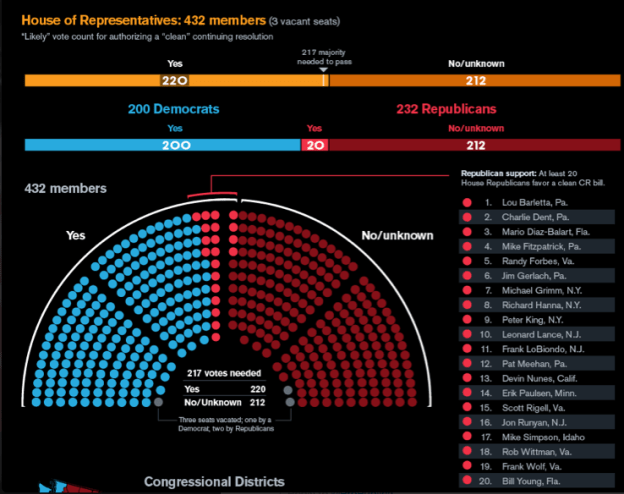
Ep 47CD047: Talking Pointing
In the hours before the government shutdown, the crisis could have been averted. We take a look at the hours before the deadline and see what Congress has done since they slammed the government's doors shut. Links to Information in This Episode Intro and Exit Music: Tired of Being Lied To by David Ippolito (found on Music Alley by mevio) Music: We Can Make the World Stop by Alun Parry (found on Music Alley by mevio) Music: Democracy is Dangerous by Thomas Pace (found on Music Alley by mevio) The Senate Continuing Resolution is the one that has no attacks on the Affordable Care Act; if this bill comes up for a vote, it will almost certainly pass. Who to call to end the shutdown: Rep. John Boehner, Speaker of the House Rep. Eric Cantor, House Majority Leader The bills that passed before the shutdown: (CR = Continuing Resolution) Bill #1: The House CR that didn't really defund Obamacare the Affordable Care Act (Episode CD044) Bill #2: The Senate CR that has not had a vote yet in the House (Episode CD045) Bill #3: The House CR that delays the Affordable Care Act for year (Episode CD046) Bill #4: The House CR that delays the Affordable Care Act & kills employer-paid health benefits subsidies for Congress and their staff. Bill #5: The House bill that requests a conference committee with Senate The bills that have passed the House of Representatives since the shutdown: Bill #6: Funds National Parks and some museums Bill #7: Funds operations in Washington D.C. Bill #8: Funds veterans benefits Bill #9: Funds the National Institutes of Health Bill #10: Funds the National Guard and reserves Representatives quoted in this episode who lied on the floor of the House of Representatives regarding a not-real Congressional exemption from the Affordable Care Act: Rep. Mark Sanford of South Carolina Rep. Doug Lamborn of Colorado Rep. Tom Cotton of Arkansas Rep. Kenny Marchant of Texas Rep. Phil Roe of Tennessee Rep. Andy Barr of Kentucky Reality: Congress is required buy insurance on the Affordable Care Act exchanges. The Republicans refused for six months to go to conference & work out the budget differences with the Senate. CD018: The Ryan Budget Representatives quoted in this episode who claimed that Democrats refused to compromise: Rep. Tom McClintock of California Rep. Mike Conaway of Texas Rep. John Mica of Florida YouTube video of Mitch McConnell and Rand Paul Representatives quoted in this episode who ran with the 'negotiate' talking point: Rep. Mark Meadows of North Carolina Rep. Rob Woodall of Georgia Rep. Bill Shuster of Pennsylvania Rep. Blake Farenthold of Texas Rep. Marlin Stutzman of Indiana Rep. Joe Wilson of South Carolina Rep. James Lankford of Oklahoma Rep. Andy Harris of Maryland Rep. Susan Brooks of Indiana Rep. Steve King of Iowa The individual mandate - the key to the Affordable Care Act - was a Republican idea Consequences of a default caused by a refusal by House Republicans to raise the debt ceiling Roll Call's list of items the House Republicans are considering attaching to a debt ceiling bill. The House plans to vote on bills that deregulate Wall Street as soon as the spotlight is gone. H.R. 992: The bill that deregulates the derivatives market Report that explains why the House Financial Services Committee wants to deregulate the derivitives market H.R. 2374: Prevents regulations that protect 401(k) retirement accounts Report that explains why the House Financial Services Committee wants to stop 401(k) protecting regulations Representatives Quoted in This Episode Rep. Pete DeFazio of Oregon
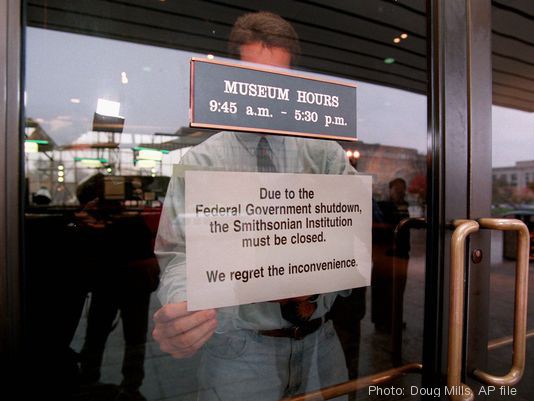
Ep 46CD046: Shutdown Assured
In this bonus episode, we take a detailed look at the House GOP's latest version of the short-term government funding bill which would delay the implementation of the Affordable Care Act and therefore guarantee that the government will shut down. Links to Information in This Episode Intro and Exit Music: Tired of Being Lied To by David Ippolito (found on Music Alley by mevio) Music: Schoolhouse Rock, How a bill becomes a law (YouTube) Text of the House's second version of the continuing resolution which would delay the implementation of the Affordable Care Act IRS fact sheet on the medical device tax What happens in a government shutdown? Congressional Dish episode CD044 on the House's first version of a continuing resolution Congressional Dish episode CD045 on the Senate's version of a continuing resolution

Ep 45CD045: Stop the Shutdown
The Senate edited the House's version of the short-term government funding bill, stripping out the language that would not-really defund Obamacare. Full details on the Senate's version, including some surprising good news, and a quick recap of the tiny bit of work the House accomplished this week. Links to Information in This Episode Intro and Exit Music: Tired of Being Lied To by David Ippolito (found on Music Alley by mevio) Text of the Senate version of the 2014 Continuing Resolution Senator Ted Cruz reads Green Eggs and Ham during a fake filibuster (VIDEO) What is a filibuster? What Senator Ted Cruz did was not a filibuster What is the Monsanto Protection Act, the provision that would be killed by the Senate version? H.R. 1961: The bill that exempts the Delta Queen from fire safety regulations Back story on the Delta Queen fire safety exemption Representatives Quoted in This Episode Senator Dan Coats of Indiana Senator Lamar Alexander of Tennessee Senator Jeff Sessions of Alabama Representative Steve Chabot of Ohio

Ep 44CD044: Pretend to Defund ObamaCare
This week the House of Representatives passed a government funding bill that allegedly "defunds ObamaCare" but... not really. They also tried to cut food stamps, push nuclear power, exempt mining from environmental regulations, and more... Links to Information in This Episode Intro and Exit Music: Tired of Being Lied To by David Ippolito (found on Music Alley by mevio) Music: And the Good News Is by Sean Patrick McGraw (found on Music Alley by mevio) Music: I See Trouble Comin' by Scott DeCarlo (found on Music Alley by mevio) Bills Discussed in this Episode Continuing Resolution (H.J. Res. 59) for 2014, the bill that funds the government until December 15, 2013 and supposedly "defunds ObamaCare". H.R. 3102: "Nutrition Reform and Work Opportunity Act", the bill the cuts food stamps by $40 billion. H.R. 1410: "Keep the Promise Act", the bill that stops construction of a casino near the Arizona Cardinals' football stadium. S. 793: "Organization of American States Revitalization and Reform Act", the bill that promotes the OAS as the main diplomatic group in Latin America and prevents the U.S. from funding over 50% of the OAS. H.R. 761: "National Strategic and Critical Minerals Production Act", the bill that changes the definition of "infrastructure" to include mining projects and exempts them from environmental regulations. Congressional Dish episodes that detailed the Continuing Resolution for 2013, the provisions of which are extended in the Continuing Resolution for 2014: CD019: Continuing Resolution, Part 1 CD020: Continuing Resolution, Part 2 CD021: Trailblazer vs. Thinthread (the first half) "Wonkbook: Shutting down the government won't stop Obamacare. It might even help it." by Ezra Klein and Evan Soltas, September 20, 2013, Washington Post blog "New resources available to help consumers navigate the Health Insurance Marketplace", U.S. Department of Health & Human Services press release, August 15, 2013. Indian Tribes Get Obama Casino Support That Bush Blocked by Julie Bykowicz, Bloomberg, September 17, 2013. Trent Franks' (author of H.R. 1410, the casino bill) #10 largest contributor in the last election was Akin Gump, the lobbying firm that represented the wealthy Gila River Indian Community - current casino owners- in lawsuits attempting to shut down the new casino. The Council on Foreign Relations background information page on the Organization of American States. Buy the Shock Doctrine & support Congressional Dish CD003: The Free Market vs. US Representatives Quoted in This Episode Rep. Raul Grijalva of Arizona

Ep 43CD043: Nothin'
This week, after Russia took the Syria vote off the House schedule, the House did not fund the government for 2014 despite their September 30th deadline. In this episode, we look at what they did instead. Links to Information in This Episode Intro and Exit Music: Tired of Being Lied To by David Ippolito (found on Music Alley by mevio) President Obama's speech from Tuesday, September 10th regarding Syria: Video and transcript Music: Get Out of Our House by David Ippolito (found on Music Alley by mevio) Incorrect assertion that the Monsanto Protection Act is already extended was made by RT, Salon, and Nation of Change The Center for Food Safety press release that prompted the lazy news organizations above to report the fake extension House spending bill was pulled from the floor this week; it did not get voted on Rodney Alexander resigned this week to become Louisiana's Secretary of Veteran's affairs S. 157: The "Denali National Park Improvement Act" allows permits for small hydroelectric projects and a natural gas pipeline to cut through an Alaska national park. Senator Lisa Murkowski, lead sponsor of S. 157, has taken over $720,000 from electric utilities and over $670,000 from the oil & gas industry Representative Don Young, Alaska's only Representative and person credited with pushing S. 157 through the House, has taken almost $1.2 million from the oil & gas industry HR 2844: The Federal Communications Commission Consolidated Reporting Act of 2013 Thank you for clicking this link to buy The Fine Print by David Cay Johnston HR 2775: Another ObamaCare Attack Bill Federal Poverty rate guidelines California's ObamaCare exchange website President Obama's letter to Congress extending the National Emergency from 9/11/01 Representatives Quoted in This Episode Rep. Tom McClintock of California Rep. Steve King of Iowa Rep. Virginia "Grandma" Foxx of North Carolina Rep. Jared Polis of Colorado
Ep 42CD042: House DHS Funding Bill
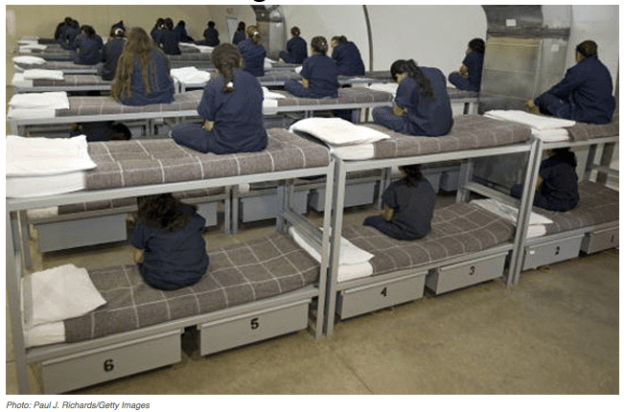
In June 2013, the House of Representatives passed their version of a Department of Homeland Security funding bill. The House prioritizes border security and locking up immigrants at the expense of emergency preparedness and the TSA. Details and much more in this episode... Links to Information in This Episode H.R. 2217: The House version of the Department of Homeland Security funding bill (has not been signed into law) Committee Report for H.R. 2217: The explanation for funding levels, which is more interesting to read than the bill itself Episode CD040: History of the Department of Homeland Security Intro and Exit Music: Tired of Being Lied To by David Ippolito (found on Music Alley by mevio) Song: Warden Pale's Big Profit Prison by William Brooks Agencies inside the Department of Homeland Security Janet Napolitano's final speech as DHS Secretary to the National Press Club on August 27, 2013 DHS's headquarters is still not complete Democracy Now interview with Judy Greene, justice policy analyst for Justice Strategies, from May 4, 2006 Story of the Boston Marathon bombers: Jahar's World, Rolling Stone, July 2013. Story of Jeff Bauman, the unlucky but badass guy who remembered Tamerlan's face and helped the F.B.I. catch the Boston bomber brothers. Page 36 of the Committee Report "DoD has researched, developed and employed advanced surveillance technologies for service in overseas con flits such as Iraq and Afghanistan. As these conflicts come to a close, technologies such as VADER, aerostats, manned and unmanned aerial systems, and associated audio, visual, radar, and other detection and monitoring systems in use or under development may become excess equipment... ... DHS should actively seek to capitalize on DOD's expertise and work with DOD to expedite the identification, designation, transfer and integrations of technologies and equipment to support border security improvements." VADER: The "excess military article" DHS may soon receive which can see people from 25,000 feet in the air aerostats: The spy blimps What are Automated Targeting Systems? -see page 6 for ATS-P(assenger) information TSA PreCheck website Ammonium nitrite was used for the Oklahoma City bombing 270 tons of ammonium nitrite exploded on April 17, 2013 in West, Texas and caused this explosion: And this is what it was like for the resident's of West, Texas: The storage facility that exploded had 270 tons of ammonium nitrite (they're allowed to have 1 ton) but DHS didn't know about it. The facility had last been inspected by the Department of Labor in 1985. The facility had almost no security. Section 549: Sets out the rules for intelligence sharing that says the software they use must not transmit any personally identifiable information in accordance with privacy law but.. "This section shall not apply to the legislative and judicial branches of the Federal Government and shall apply to all Federal agencies within the executive branch except for the Department of Defense, the CIA, and the Office of the Director of National Intelligence" "See Something, Say Something" videos

Ep 41CD041: Why Attack Syria?
While the U.S. Congress remained on vacation, British Parliament was called back to debate a pending attack on Syria. We also look at some facts about Syria that suggest we might be getting into a Shock Doctrine type of situation. Links to Information in This Episode Intro Music: Tired of Being Lied To by David Ippolito (found on Music Alley by mevio) Song: Blood is Thicker Than Oil by The Undercover Hippy (found on Music Alley by mevio) Buy The Shock Doctrine by Naomi Klein (Amazon) Episode CD003: The Free Market vs. US Transcript of the British Parliament debate on August 29, 2013 Reddit thread with videos of the Syrian chemical attack on August 20, 2013 Obama Administration says an attack will not be motivated by regime change According to the British, there have been 14 chemical attacks in Syria The twitter feed of the random Syrian Assad supporter The twelve things about Syria the Assad supporter wanted Americans to know: Syria does support Hezbollah Syria does support the Palestinian resistance Syria is against Israel Syria is Iran's closest ally There is a water shortage in Syria, and in the Middle East in general Syria must share its water with neighbors: Syria has natural gas reserves Syria has oil reserves A third of Syria's budget comes from oil sales Syria is #33 on the world's largest oil producers list Assad's "Four Seas Strategy" intends for Syria to become a transportation hub for fossil fuels Turkey also wants to be the fossil fuel hub July 25, 2011: Syria, Iraq, and Iran signed a $10 billion deal for a natural gas pipeline that would export Iranian natural gas out of Damascus (read this too) August 18, 2011: President Obama announces that Assad must resign The United States sanctions on Iran target Iran's nationalized oil industry Assad banned genetically modified food The State Department pushes genetically modified food around the world on behalf of the American monopoly patent holders USAID distributes genetically modified food in their humanitarian missions Syrian local businesses have been destroyed by financial reforms Syrian citizens are getting poorer since financial reforms What the International Monetary Fund (IMF) wants Syria to do: Strengthening the monetary policy framework and the financial sector 29. Notwithstanding the progress in activating monetary policy in the past two years, Syria's monetary policy framework remains rudimentary and in need of major strengthening to allow the central bank to use indirect instruments of monetary control to operate effectively in a financial system that will increasingly become market-based. Indirect instruments will strengthen the price mechanism in the financial sector, ensuring a more efficient allocation of financial resources and a proper pricing of financial risks. 30. Progress toward this medium-term goal should start by having the central bank gain full control of existing direct instruments. The central bank should have the right to decide on credit ceilings and credit policies of banks with a view to ensuring a pace of credit and monetary expansion consistent with maintaining price stability while fostering economic activity and employment. Banks have to abide by all prudential regulations. Beyond this, the role and responsibilities of the central bank and the ministry of finance in exercising oversight on the banks should be clearly defined. While the government could play a lead role in choosing the board and the management of public banks, the CBS should have the authority to evaluate and approve banks' policies, and procedures related to the credit and investment. 31. Furthermore, the CBS should have operational independence and the institutional capacity to exercise effective banking supervision. Indeed, in the absence of effective banking supervision, the strong credit growth and the rapid opening of the banking system could endanger the soundness of the financial sector. Therefore, the mission urges the authorities to: give the central bank power to: (i) address noncompliance, as well as safety and soundness concerns it may have for certain banks, and (ii) to ensure that fit and proper criteria are met in appointing senior staff in public and private banks and that credit policies are consistent with safe and sound best practices; allocate adequate resources to continue to build capacity for banking supervision; and complete the banking supervision framework including a licensing manual to ensure prudent and transparent licensing policy. The majority of Syria's banking sector is still government owned (Another article here) Afghanistan's banking system was privatized after invasion Iraq's banking system was privatized after invasion "Rebels" set up a central bank in Libya after Qaddafi was removed from power The Central Bank of the Islamic Republic of Iran is entirely government owned

Ep 40CD040: History of the Department of Homeland Security
The Department of Homeland Security (DHS) and the Transportation Security Administration (TSA) did not exist before September 11, 2001. In this episode, we look back at the bills that created these new government agencies. Links to Information in This Episode Intro and Exit Music: Tired of Being Lied To by David Ippolito (found on Music Alley by mevio) Music: Homeland Security Blues by Spartacus Jones (found on Music Alley by mevio) The Department of Homeland Security was created by the Homeland Security Act of 2002 (signed into law on November 25, 2002). Democracy Now episode from November 26, 2002: President Bush signs the Homeland Security Act into law. Contains an interview with Joan Claybrook, former President of Public Citizen The stated purpose was to consolidate all departments related to "homeland security" into one cabinet in response to the September 11 attacks. Twenty-two agencies were brought into the new department: New $4.5 billion Department of Homeland Security headquarter complex only houses the Coast Guard; they just moved over the last few weeks. The Homeland Security Act was passed after many members of a lame duck Congress had left for vacation; corporate friendly provisions were slipped into the bill. Section 201, paragraph 14 orders the Department of Homeland Security to start data-mining: "To establish and utilize, in conjunction with the chief information officer of the Department, a secure communications and information technology infrastructure, including data-mining and other advanced analytical tools, in order to access, receive, and analyze eta and information in furtherance of the responsibilities under this section, and to disseminate information acquired and analyzed by the Department, as appropriate." Democracy Now episode from November 21, 2002 Contains a Pentagon press conference by Pete Aldridge, then Under Secretary of Defense for Acquisition, Logistics, and Technology, during which he explains the plan for Total Information Awareness Contains an interview with Gail Russell Chaddock, author of an Christian Science Monitor article about the creation of the Department of Homeland Security Total Information Awareness programs were split up and transferred to private contractors hired by the NSA. What are fusion centers? "According to government documents, the fusion centers collect cell phone numbers, insurance claims, credit reports, financial records, and names of relatives and associates. The information is shared among law enforcement officials nationwide." - Democracy Now, April 3, 2008 Fusions centers collect state and local information from license plate readers Secure Communities collects the fingerprints of everyone who has been arrested Private intelligence companies such as Stratfor do surveillance work for private corporations, the Department of Homeland Security, the military, and intelligence agencies. Democracy Now episode from October 3, 2012 Contains details on a Senate report that concluded Department of Homeland Security fusion centers to be "useless" [caption id="" align="alignright" width="275"] Border Patrol drones (Source: DHS.gov)[/caption] Democracy Now episode from May 4 2006 about immigration prisons Contains and interview with Judy Greene, justice policy analyst for Justice Strategies The Transportation Security Administration was created by the Aviation and Transportation Security Act signed into law on November 19, 2001. The act federalized airport security. Democracy Now episode from October 15, 2001 Contains information about the Bush administrations resistance to federalizing airport security Contains information on Argenbright Security, the private security company which failed to detect the 9/11 hijackers at Newark International Airport and Washington-Dulles International Airport. Watch the September 11 hijackers walked by - not through- the metal detectors monitored by employees of Argenbright Security. Huntleigh, the subsidiary of Israeli firm ICTS International, was the security firm at Boston Logan airport on September 11, 2001. Both of the planes that hit the World Trade Center in New York City originated from Boston Logan International Airport & all the hijackers went undetected through security managed by Huntleigh. After airport screening operations were federalized, Huntleigh sued the United States for it's lost business, calling the federalization "unfair". The Screening Partnership Program allows airport security operations to be re-privatized. Sixteen airports currently have private security. Section 147 of the Aviation and Transportation Security Act limited liability for the owners and operators of the World Trade Center and New York City for the events of September 11: (b) EXTENSION OF LIABILITY RELIEF TO AIRCRAFT MANUFACTURERS AND OTHERS- Section 408 of that Act is amended-- (1) by striking `air carrier' in the section heading; (2) by striking subsection (a) and inserting the following: `(a) IN GENERAL- `(1) LIABILITY LIM

Ep 39CD039: The Charter School Bill
On July 19, 2003, the House of Representatives passed a bill that would largely eliminate the Federal government's role in K-12 education and expand the number of charter schools in the United States. H.R. 5: Student Success Act's stated purpose is to undo a portion of the 2009 stimulus bill (the American Recovery and Re-Investment Act) called Race to the Top, along with a program that Race to the Top helped enact in most of the United States. Common Core Race to the Top was a $4.35 billion contest between the States. Financial prizes were awarded to states based on school performance, teacher performance, data reporting, among other factors; one of the most critical factors was the adoption of Common Core standards. Common Core standards are national minimum standards for English and math education that are intended to be adopted by the entire country. The standards were cleverly implemented. In 2009, the National Governors Association Center for Best Practices and the Council of Chief State School Officers wrote the standards and then copyrighted the text. By copyrighting the text, the authors ensured that the standards could not be changed by individual states after their adoption, which in effect, created a national standard. The next step was to get the states to adopt the standards. That's where Race to the Top came in. In order to be eligible to participate in the Race to the Top contests, States had to adopt the Common Core standards. All but five states did; Texas, Virginia, Alaska, and Nebraska refused to participate. Minnesota adopted English standards, but not math. Essentially, the States had a choice whether or not they would participate in implementing a national standard for education; Race to the Top gave the States incentives and the push mostly worked. [caption id="attachment_820" align="aligncenter" width="645"] Common Core has been adopted in most states[/caption] Since then, a concentrated effort to stop Common Core has emerged; Alabama, Georgia, Indiana, Michigan, Oklahoma legislatures are actively trying to stop implementation. H.R. 5 would help the haters get rid of the Common Core national standards and put control of education policy firmly in the hands of individual states: States can only receive Federal money if they have developed standards for reading, math, and science and have students take annual math and reading tests. The Secretary of Education must approve a State's plan within 120 days. If it disapproves, the Federal government can't list specific things the State should change. The Federal government is prohibited from directly or indirectly forcing or incentivizing the adoption of national standards, specifically Common Core. (TITLE V) In fact, the bill aimed to take the Federal government out of all aspects of education: No State would need Federal approval for academic standards to receive Federal money (TITLE V) The Federal government can't influence a State's choice of curriculum (TITLE V) The Federal government can't test students or teachers. (TITLE V) States will fill out their own annual report cards. (Section 111) New school programs would not be required to work specifically with Head Start and other government pre-school programs (Section 115) Charter Schools One aspect of Race to the Top would continue, however, is the provision lifting the caps on the number of charter schools. In fact, the expansion of charter schools is a clearly stated goal of H.R. 5: "It is the purpose of this subpart to - (2) provide financial assistance for the planning, program design, and initial implementation of charter schools; (3) expand the number of high-quality charter schools available to students across the nation; (page 257) Charter schools are sort-of public schools; they are funded by our taxpayer money but they are exempt from some education standards. Naomi Klein, author of The Shock Doctrine, described them as "publicly funded institutions run by private entities according to their own rules." Charter schools are allowed to create their own curriculum and often are not required to provide student services such as transportation and meals like the traditional public schools. Funding for charter schools is determined state by state, but often the states fund charter schools by diverting money away from the traditional public school district where the new charter school is built. Charter schools are not allowed to charge tuition or use taxpayer money to upgrade their facilities. Unlike traditional public schools, there are avenues for private profit to be made in the charter school system. Charter schools - whether started by a non-profit, university, or our government- can be managed by for-profit corporations. Highlights of H.R. 5 TITLE III: "Parental Engagement & Local Flexibility" expands the charter school system Charter schools will get as much money as public schools States must pass a law giving charter schools money per student to be eligible for Federal gran

Ep 38CD038: Wasting July
In this episode, we catch up on most of the bills that passed the House during the last two weeks of August. A lot of bills were passed; very few have a prayer of becoming law. Intro and Exit Music: Tired of Being Lied To by David Ippolito (found on Music Alley by mevio) S. 622: The Animal Drug Bill Is now law Covered in detail in the second half of episode CD030 Continues a system designed to expedite the approval of anti-biotics for animals Caps revenues from application fees paid by pharmaceutical companies Music: Don't Waste My Time by Planet Killers (found on Music Alley by mevio) H.R. 1911: The Student Loan Bill Has been amended by the Senate, passed the House again on July 31, and is now on the President's desk Original version covered in episode CD029 Now ties student loan interest loan rates to the market and caps rates at 8.25% for undergraduates and 9.5% for graduate students Student loan rate will be fixed at the rate where it starts for the life of the loan CBO predicts the rates will be above the current 6.8% starting in 2017 [caption id="attachment_801" align="aligncenter" width="912"] Congressional Record for July 31, page H5219[/caption] H.R. 2094: The Epinephrine Bill Passed the House on July 30, 2013 Public schools will be allowed to stockpile epinephrine for students with food allergies and train staff to administer it H.R. 2218: The Coal Waste Bill Passed the House on July 25, 2013 States will be allowed the regulate coal waste instead of the Federal government Gives the coal industry 10 years to meet groundwater protection standards Prohibits the EPA from categorizing waste from burning coal, oil, natural gas, and tar sands as 'hazardous waste'. The EPA rule from May 2000 saying that fossil fuel waste should not be classified as hazardous: Today's action applies to all remaining fossil fuel combustion wastes other than high volume coal combustion wastes generated at electric utilities and independent power producing facilities and manage separately which were addressed by a 1993 regulatory determination. These include: Large-volume coal combustion wastes generate at electric utility and independent power producing facilities that are co-managed together with certain other coal combustion wastes; coal combustion wastes generated at facilities with fluidized bed combustion technology; petroleum coke combustion wastes, wastes from the combustion of mixtures of coal and other fuels (i.e, co-burning); wastes from the combustion of oil, and wastes from the combustion of natural gas. The Agency has concluded these wastes do not warrant regulation under subtitle C or RCRA and is retaining the hazardous waste exemption under RCRA section 3001(b)(3)(C). President Obama and his EPA wanted to classify fossil fuel wastes a hazardous But they backed down Petroleum Coke blowing over Detroit H.R. 1582: Stop EPA Regulations Bill Passed the House on August 1, 2013 EPA is not allowed to issue a regulation costing over $1 billion The social cost of carbon - climate change, cancer rates, etc. - can't be used in a cost-benefit analysis H.R. 367: Stop All Regulations - Except the Ones From the Federal Reserve Passed the House on July 31, 2013 Was called the REINS ACT in the 112th Congress Forces Federal agencies to get Congressional approval for all major rules that cost over $100 million, affect the finances of businesses, or create a carbon tax If Congress does nothing for 70 working days, the rule can't be enacted None of this is subject to judicial review Monetary policy by the Federal Reserve is exempted H.R. 313: The Government Conferences Bill Passed the House on July 31, 2013 Government can't spend more than $500,000 on any individual conference All materials presented at the conference must be posted online Private companies can spend money on government conferences H.R. 2879: "Stop Government Abuse Act" Three bills were combined into one and passed the House on August 1, 2013 Allows businesses to record in-person and telephone conversations with Executive Branch agencies such as the EPA, OSHA, and the IRS. Makes it easier to fire high level federal employees Caps the bonuses of federal employees and prevents 2/3 of eligible federal employees from getting bonuses at all Government doesn't create jobs, the private sector does. — Eric Cantor (@GOPLeader) August 4, 2013 H.R. 1660: The Customer Service in Government Bill Passed the House on July 31, 2013 Each agency must establish customer service standards including targets for response times, processing of benefits & payments, etc. Create a pilot program for the IRS and two other agencies to collect taxpayer complaints Gives no money or extra personal to the agencies to implement these new policies The full story of the IRS scandal: Episode CD028 H.R. 2769: No IRS Conferences IRS can't have any conferences until they implement a bunch of recommendations H.R. 2768: Demeaning Reprimand For IRS Agents IRS agents must be reminded that taxpayers have right

Ep 37CD037: NSA Spying Debate
Rep. Justin Amash of Michigan tried to attach an amendment to the Department of Defense funding bill for 2014 which would have limited the government's authority to collect our telephone records. The amendment failed but not by much; the episode highlights the debate. Links to Information in This Episode Text of the Amash Amendment At the end of the bill (before the short title), insert the following new section: Sec. __. None of the funds made available by this Act may be used to execute a Foreign Intelligence Surveillance Court order pursuant to section 501 of the Foreign Intelligence Surveillance Act of 1978 (50 U.S.C. 1861) that does not include the following sentence: ``This Order limits the collection of any tangible things (including telephone numbers dialed, telephone numbers of incoming calls, and the duration of calls) that may be authorized to be collected pursuant to this Order to those tangible things that pertain to a person who is the subject of an investigation described in section 501 of the Foreign Intelligence Surveillance Act of 1978 (50 U.S.C. 1861).''. Who Voted for/against the Amash Amendment? The FISA court In Secret, Court Vastly Broadens Powers of the N.S.A by Eric Lichtblau, published by The New York Times, July 6, 2013. The death of Thinthread: The system that could have stopped 9/11 Obama's War on Whistleblowers by Tom Shorrock, published by The Nation, March 26, 2013 The Secret Sharer by Jane Mayer, published by The New Yorker, May 23, 2011 Total Information Awareness Wikipedia The NSA is Building The Country's Biggest Spy Center (Watch What You Say) by James Bamford, published by Wired, March 15, 2012. The Secret War by James Bamford, published by Wired, June 12, 2013 NSA Slides Expain the PRISM Data-Collection Program, Washington Post, updated July 10, 2013 Edward Snowden worked for Booz Allen Hamilton, not the U.S. government "Company filings show that 99% of Booz Allen's revenue comes from various levels of the federal government" from Booz Allen Hamilton In Spotlight Over Leak by Charles Riley, published by CNN, June 10, 2013. Representatives Quoted in This Episode Rep. Justin Amash of Michigan Rep. Mike Rogers of Michigan Rep. James Sensenbrenner of Wisconsin Rep. Michele Bachmann of Minnesota Rep. Ted Poe of Texas Rep. Joe Barton of Texas

Ep 36CD036: Factory Farm Bill
During the week of July 10-11, the House of Representatives passed a funding bill for agriculture programs which had only been available to read for 20 hours. In this episode, we take a closer look at what was in that surprise bill. Links to Information in This Episode Intro and Exit Music: Tired of Being Lied To by David Ippolito (found on Music Alley by mevio) Text of H.R. 1947: The original Farm Bill which failed to pass the House in mid-June Status of H.R. 2642: The Factory Farm Bill, which passed the House on July 11, 2013. Text of H.R. 2642: The Factory Farm Bill TITLE I: Commodities programs TITLE X: Crop Insurance Who voted for H.R. 2642? US Pushed to Reform Cotton Subsidies in Farm Bill as Brazil Watches, Paige McClanahan published by The Guardian, July 19, 2012 Music: Old MacDonald by Beth Burrows (found on Music Alley by mevio) Representatives Quoted in This Episode Rep. Steny Hoyer of Maryland Rep. Rosa DeLauro of Connecticut Rep. Nancy Pelosi of California Rep. Michael Burgess of Texas Rep. Louise Slaughter of New York During the week of July 10-11, the House of Representatives passed a funding bill for agriculture programs which had only been available to read for 20 hours. In this episode, we take a closer look at what was in that surprise bill. Links to Information in This Episode Intro and Exit Music: Tired of Being […]

Ep 35CD035: Energy & Water
Most of this episode is dedicated to the Energy & Water funding bill that passed the House of Representatives; however, the House also pulled a fast one this week, passing a 608-page agriculture bill that was available for public-reading for less than one day. Links to Information in This Episode Intro Music: Tired of Being Lied To by David Ippolito (found on Music Alley by mevio) Music: After the Flood by William Brooks David Seaman's Indiegogo fundraiser for Rise, his new morning news show Congressional Dish summary of H.R. 2609 "Energy and Water Development and Related Agencies Appropriations Act, 2014" Status and text of H.R. 2609 from GovTrack Appropriations Committee report that explains the reasoning behind the funding levels in H.R. 2609 Status and text of H.R. 2642, the 608-page bill that was passed in less than one day Republicans promised to prohibit votes on bills that haven't been posted online for 72 hours. The problems in Kettleman City, California. Current United States drought conditions Flooding is happening in the Midwest in 2013 What are small modular nuclear reactors? Japan confirms that Fukushima has been leaking radioactive chemicals into the ocean for two years The Mark Sanchez Butt Fumble Representatives Quoted in this Episode Speaker of the House, John Boehner of Ohio Rep. Jim McGovern of Massachusetts

Ep 34CD034: Let's Drill Offshore
Before taking a week off for July 4th, the House passed a bill forcing the Obama administration to sell offshore leases to the oil and gas industry. Links to Information from this Episode Music: "At the Beach" by Andrew Dean & The Farm Machine (found on Music Alley by mevio) Congressional Dish summary of H.R. 2231: "Offshore Energy and Jobs Act" Text and status of H.R. 2231 President Obama put a moratorium on offshore drilling after the Deepwater Horizon spill Document detailing the areas with most untapped oil and gas resources Lease 220 off of Virginia's coast cancelled by the Obama Administration Santa Barbara doesn't want new drilling off their coastline 2010: Bill signed into law allowing old rigs to serve as reefs off of the California coast [caption id="" align="aligncenter" width="621"] Areas affected by the 1969 Santa Barbara oil spil[/caption] Solyndra was manufacturing a different kind of solar panel: Thin film solar panels Representatives Quoted in This Episode Rep. Doc Hastings of Washington Rep. Carol Shea-Porter of New Hampshire Rep. Bill Pascrell of New Jersey Rep. Hank Johnson of Georgia Rep. Dana Rohrabacher of California
Ep 33CD033: Let's Deepwater Drill
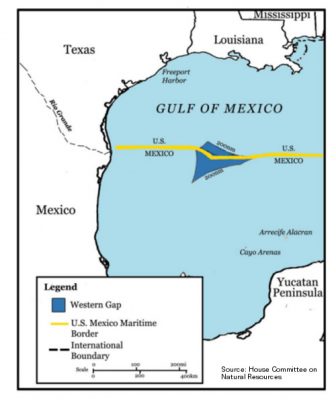
In this episode, the House of Representatives tries to approve ultra-deepwater drilling in the "Western Gap": The middle of the Gulf of Mexico. Links to Information in This Episode Song: The Oil Spill song by Steve Clark Congressional Dish summary of H.R. 1613: The Outer Continental Shelf Transboundary Hydrocarbon Agreements Authorization Act Text of H.R. 1613 Jamie Dupree: The guy who told me that the NDAA is not a funding bill How ultra-deepwater drilling is done The Bubba shrimp scene from Forrest Gump "Gulf oil spill's effects still has seafood industry nervious" - Craig Pittman, TampaBay.com, April 13, 2013 "Empty nets in Louisiana three years after the spill" - Matt Smith, CNN, April 29, 2013 Where is the Western Gap? "U.S., Mexico Sign Deal on Oil Drilling in Gulf - Tom Fowler, Wall Street Journal, February 21, 2012 Existing leases in the Western Gap area The Trans Pacific Partnership: The creepy free trade agreement Hillary Clinton promoted as Secretary of State Representatives Quoted in This Episode Rep. Jeff Duncan of South Carolina Rep. Doc Hastings of Washington Rep. Matt Salmon of Arizona Rep. Peter DeFazio of Oregon Rep. Maxine Waters of California

Ep 32CD032: The Abortion Bill
In this episode, the House schedule has Jen frustrated, the House Farm Bill unexpectedly dies, and the House passes an abortion bill. Links to Information in This Episode Govtrack: text and other information about H.R. 1947, the failed House Farm Bill Congress wants to get rid of direct payments to farmers. NPR: Why the Farm Bill's Provisions Will Matter to You Comparison of House and Senate farm bills Government statistics for SNAP (food stamp) program Congressional Dish summary of H.R. 1797, the abortion bill Text of H.R. 1797 Representatives Quoted in This Episode John Fleming of Louisiana Jerrold Nadler of New York

Ep 31CD031: First Draft of 2014 NDAA
In this episode, we take a look at the first draft of the 2014 Department of Defense funding bill and see what it tells us about the United States future in war. We also look at three bills the House passed for Wall Street. Links to Information in this Episode Music: I Disagree by 20 Riverside (found on Music Alley by mevio) Congressional Dish summary of H.R. 1960: The House 2014 NDAA Text of H.R. 1960 House Armed Services Committee report on H.R. 1960 Army plans for Abrams tanks Why the F-35 fighter tanks are such an expensive mess Senator McCain's comments on the F-35 Military accepts unfinished planes from Boeing Military gets it's digital data from the NSA The NSA is collecting and storing all digital data Benghazi embassy was being guarded by a British private contractor Music: Gambler's Blues by Tin Pan (found on Music Alley by mevio) Congressional Dish summary of H.R. 634, H.R. 742, and H.R. 1256: The Wall Street bills Rolling Stone article on Wall Street bills by Matt Taibbi Artwork:

Ep 30CD030: Military Construction & Anti-Biotics
In this episode, a look at the House's 2014 military construction and veterans funding bill's first-draft and then examine whether it's wise to continue a system that fast-tracks applications for animal anti-biotics. Links to Information in this Episode Music: "In Your Name" by The Undercover Hippy (found on MusicAlley by mevio) Congressional Dish summary of H.R. 2216: Funding for military construction and the Department of Veteran's Affairs Text of H.R. 2216 Transcript of President Obama's May 23, 2013 speech on national defense to National Defense University in Washington, D.C Video/Audio of President Obama's speech Example of the strategy allowed in Section 123 that transfers expired funds to the "Foreign Currency Fluctuations, Construction, Defense" account so that it can magically become unexpired A full explanation of what we did in Iraq: The privatization of their government for the benefit of U.S. corporations leaving Iraqi industries - including cement - to watch and go broke (by Naomi Klein) Music: "They're Calling My Flight" from the Contagion soundtrack (score by Cliff Martinez) Text of S. 622: "Animal Drug and Animal Generic Drug User Fee Re-authorization Act of 2013" Thom Hartmann segment on the consequences of factory farming from January 2013 Music: "Ask Your Doctor" by Neal Fox (found on Music Alley by mevio) Congressional Dish summary of H.R. 1919: "The Safeguarding America's Pharmaceuticals Act of 2013" Representatives Featured in this Episode (in order of appearance) Rep. Louise Slaughter of New York

Ep 29CD029: Keystone XL Pipeline
The House passed H.R. 3, a bill waiving permit requirements for the Keystone XL tar sands pipeline and passed H.R. 1911, a bill that could raise interest rates for college students while tying their rates to the market. Links to Information in this Episode: Music: We've Got Balls by Robin and the Giant (downloaded from Music Alley) Congressional Dish summary of H.R. 3, the Keystone XL bill. James Hansen's warning about Keystone XL's effect on the climate. Refineries in Texas are hunting for business. Keystone XL route from Canada to Texas Canadians don't want tar sands pipelines running through their land. [caption id="attachment_577" align="aligncenter" width="758"] Bitumen is not oil; it's tar and is sticky like peanut butter.[/caption] 2010 tar sands spill in Kalamazoo, Michigan isn't clean yet. EPA photos from the Kalamazoo spill [caption id="attachment_578" align="aligncenter" width="300"] Tar sands oil sinks near Kalamazoo, Michigan: August 1, 2010. Source: EPA[/caption] Keystone XL will go over the Ogallala Aquifer EPA photo gallery from the tar sands spill in Mayflower, Arkansas [caption id="attachment_580" align="aligncenter" width="300"] Tar sands oil next to a home in Mayflower, Arkansas. Source: EPA[/caption] [caption id="attachment_581" align="aligncenter" width="300"] Tar sands oil flows onto a residential street in Mayflower, Arkansas. Source: EPA[/caption] [caption id="" align="aligncenter" width="600"] Another river of tar sands oil in Mayflower, Arkansas.[/caption] Tar sands oil is exempt from the oil spill fund [caption id="attachment_582" align="aligncenter" width="640"] The pipe that burst in Mayflower, Arkansas was 20 inches in diameter; Keystone XL will be 36 inches in diameter.[/caption] Tar sands energy will make climate change worse James Hansen, NASA climatologist, NYT Op-Ed "Game Over For the Climate" [caption id="" align="aligncenter" width="464"] Look how big these earth movers are! Takes a lot of carbon to operate these beasts.[/caption] State Department review of the Keystone XL pipeline EPA comment saying the State Department review isn't good enough Rail transport is not a good option for Canadian tar sands. Keystone XL jobs are mostly temporary Keystone XL probably won't lower gas prices Keystone XL will not stop U.S. imports of Middle Eastern oil Oil industry gave Keystone XL cheerleaders in the House a LOT of money Americans are not paying attention to Keystone XL Music: All Hail to the Market by Alun Parry (found on Music Alley by mevio) Congressional Dish summary of H.R. 1911, the student loan bill. Music: The Veteran by EJ Fortin (found on Music Alley by mevio) Congressional Dish summary of H.R. 258, the bill that prohibits lying about military medals. H.R. 1344, the "Helping Heroes Fly Act" Congressional Dish summary of H.R. 1073, the bill that penalizes chemical attacks and attacks on ships and gives corporations U.S. protection. Representatives Quoted in Order of Appearance Rep. Nick Rahall of West Virginia Rep. John Kline of Minnesota Rep. Tom Petri of Wisconsin Rep. Luke Messer of Indiana

Ep 28CD028: The IRS Scandal
In this episode, highlights from the House Ways and Means Committee IRS scandal hearing. IRS staffers made a list of keywords including Tea Party, 9-12, Patriot, etc. to help them find social welfare groups applying for tax exempt status that were actually political in nature. This is the scandal you've been told about; the real scandal is how many of them have been approved. Background How IRS "streamlining" in the 1990s led to mismanagement In January of 2010, the Supreme Court ruled in the infamous Citizen's United case that corporations count as people and that corporation donations count as speech, making them protected by the Constitution. This opened the floodgates to large amounts of corporate money making its way into U.S. elections. At the same time, the IRS saw a sharp increase in the number of groups claiming tax-exempt status under section 501(c)(4) of the U.S. tax code. Groups that qualify do not have to pay taxes to the U.S. government and, more importantly to political groups, do not have to disclose their donors. The law for 501(c)(4) groups says that they must exist "exclusively" for social welfare purposes, but an IRS regulation from 1959 says that they must exist "primarily" for social welfare purposes. That wiggle room has been applied broadly, to put it mildly, and we now have clearly political groups claiming tax-exempt status as 501(c)(4) organizations. In March of 2010, the division of the IRS charged with making sure that groups claiming tax-exempt status under section 501(c)(4) of the U.S. tax code were "primarily" social welfare groups, not political groups, made a list of keywords to look for in the names of groups that might indicate the groups were political in nature. The keywords they looked for include: "Tea Party" "Patriots" "9/12 Project" References to government spending, government debt, or taxes "Make America a better place" Statements criticizing how the country is being run. View the Inspector General report on the IRS scandal The IRS employees also asked questions that were considered unnecessary when they were finally analyzed by IRS management. Although the list was inappropriate, most of the groups analyzed during the same time period had names unrelated to the list. In the end, the IRS Inspector General found no evidence of corruption at the IRS; instead, they concluded the problems arouse out of mismanagement. However, the real problem as far as us American citizens are concerned, is that clearly political groups are being given tax-exempt status, allowing them to keep their donors secret. Out of the 298 applications the IRS Inspector General reviewed, 0 had been denied. Here are some examples of groups that enjoy tax-exempt status as social welfare groups: Crossroads GPS, the group co-founded by Karl Rove Priorities USA, the group that worked on behalf of the Obama campaign. Americans for Prosperity and Freedomworks, front groups for the billionaire Koch brothers' interests MoveOn.org, the group that focuses on "building the progressive movement". Further Reading How Real Disclosure Laws Could Help Fix the IRS Problem Also in This Episode Bills that passed the House of Representatives this week: Congressional Dish summary of H.R. 45, the Repeal ObamaCare Act Congressional Dish summary of H.R. 1062, the Prevent Wall Street Regulations Act People Quoted in This Episode Steve Miller, acting Commission of the IRS (has since resigned) Russel George, Treasury Inspector General for Tax Administration Rep. Dave Camp of Michigan Rep. Lloyd Doggett of Texas Rep. Adrian Smith of Nebraska

Ep 27CD027: Overtime
After a health care rant, we look at H.R. 1406, a bill that would have allowed workers to get vacation time instead of cash for their overtime. It's a bill I'd actually like to see survive. Links to Information in this Episode Previous episode CD026 about H.R. 1549 Congressional Dish summary of H.R. 1549 "Help Sick Americans Now Act" Music: Overtime by Man Born Blind Congressional Dish summary of H.R. 1406 "Working Families Flexibility Act of 2013" Status and text of H.R. 1406 Music: Playing Games by Country Drive (found on Music Alley by mevio) Congressional Dish summary of H.R. 807 "Full Faith and Credit Act" Status and text of H.R. 807 Music: Democracy is Dangerous by Thomas Pace (found on Music Alley by mevio) It just keeps getting worse. I am scheduling a vote for next week on the full repeal of #Obamacare. — Eric Cantor (@GOPLeader) May 8, 2013 Representatives Quoted in Order of Appearance Repeal ObamaCare montage Rep. Lynn Westmoreland of Texas Indiana Governor and former Congressman Mike Pence Rep. John Fleming of Louisiana Rep. Andy Harris of Maryland Rep. Michael Burgess of Texas Rep. Kevin Brady of Texas Rep. George Miller of California "Interest-free loan" montage Rep. Jared Polis of Colorado Rep. Donald Payne of New Jersey Rep. Pete DeFazio of Oregon Rep. Suzanne Bonamici of Oregon Rep. Steny Hoyer of Maryland Rep. Joe Courtney of Connecticut Rep. Debbie Wasserman-Schultz
Ep 26CD026: A Tale of Two Bills
The House worked on two bills this week. H.R. 527, which changes the way we sell helium, passed in a beautifully bipartisan way. H.R. 1549, which dismantles a piece of ObamaCare, died a uniquely Republican death. Links to Information in this Episode Music: All Hail to the Market by Alun Parry (found on Music Alley by mevio) Text of H.R. 527: Responsible Helium Administration and Stewardship Act Natural Resources Committee hearing on H.R. 527, an example of government functioning properly. Music: Ask Your Doctor by Neal Fox (found on Music Alley by mevio) Text of H.R. 1549: "Help Sick Americans Now Act" Congressional Dish summary of H.R. 1549 Washington Post: Funds run low for health insurance in state 'high-risk pools' by N.C. Aizenman (2/15/13) What is the public health fund? The public health fund has already been cut FreedomWorks blog post by Dean Clancy, the Vice President of Public Policy Representatives Featured in this Episode (in order of appearance) Rep. Doc Hastings of Washington Rep. Jim McGovern of Massachusetts Rep. Michael Burgess of Texas
Ep 25CD025: What's in CISPA?
H.R. 624: The "Cyber Intelligence Sharing and Protection Act", better known as CISPA, passed the House of Representatives and is now moving into the Senate. It's a better bill than it was in the last Congress, but it's still not ready to become law. Links to information in this podcast Music: Democracy is Dangerous by Thomas Pace (found on Music Alley by mevio) Text of H.R. 624: CISPA as it passed the House of Representatives Congressional Dish summary of CISPA White House veto threat Representatives Quoted in This Episode (in order of appearance) Rep. Alcee Hastings of Florida Rep. Rob Woodall of Georgia Rep. Mike Rogers of Michigan Rep. Jared Polis of Colorado Rep. Adam Schiff of California Rep. Bill Enyart of Illinois Further Reading Sunlight Foundation article on lobbying efforts for CISPA

Ep 24CD024: Let's Gut the STOCK Act
In the hours before the Boston marathon bombing, President Obama quietly signed a bill gutting the STOCK Act. Full details on the shady way both houses of Congress passed the bill in under two days. Executive Producer: Anonymous Please Support Congressional Dish Contribute monthly or a lump sum via PayPal Support Congressional Dish via Patreon (donations per episode) Send Zelle payments to: [email protected] Send Venmo payments to: @Jennifer-Briney Send Cash App payments to: $CongressionalDish or [email protected] Use your bank's online bill pay function to mail contributions to: 5753 Hwy 85 North, Number 4576, Crestview, FL 32536. Please make checks payable to Congressional Dish Thank you for supporting truly independent media! Background Sources Frank Konkel. March 22, 2013. "CIA CTO sheds light on intelligence community's need for cloud." FCW. STOCK Act Signing. April 4, 2012. C-SPAN. 60 Minutes. Nov 13, 2011. "Congress: Trading stock on inside information?" CBS News. Senate passage of S. 716 took 10 seconds. The Chicago Tribune. url: http://www.chicagotribune.com/news/politics/sns-rt-us-usa- congress-securitybre93b0zj-20130412,0,6596065.story Chris Coons. "Modifying the Requirements Under the STOCK Act." Congressional Record -- Senate. S2583. "S. 716 Gut the STOCK Act Passes House." April 12, 2013. Congressional Dish Clip Archive. Laws S. 716: A bill to modify the requirements under the STOCK Act regarding online access to certain financial disclosure statements and related forms. Sponsor: Sen. Harry Reid (D-NV) Summary of S. 716 H.R. 882 : Contracting and Tax Accountability Act of 2013 Sponsor: Rep. Jason Chaffetz (R-UT) Summary of H.R. 882 H.R. 1163: Federal Information Security Amendments Act of 2013 Sponsor: Darrell Issa (R-CA) Summary of H.R. 1163 H.R. 756: The Cybersecurity Enhancement Act Sponsor: Michael McCaul (R-TX) H.R. 249: Federal Employee Tax Accountability Act of 2013 Music Presented in This Episode Money, Money, Money by The Undercover Hippy (found on MusicAlley by mevio)

Ep 23CD023: Boston Marathon
This episode is dedicated to my family, friends, and neighbors in Boston.
Ep 22CD022: Crippling the Regulators
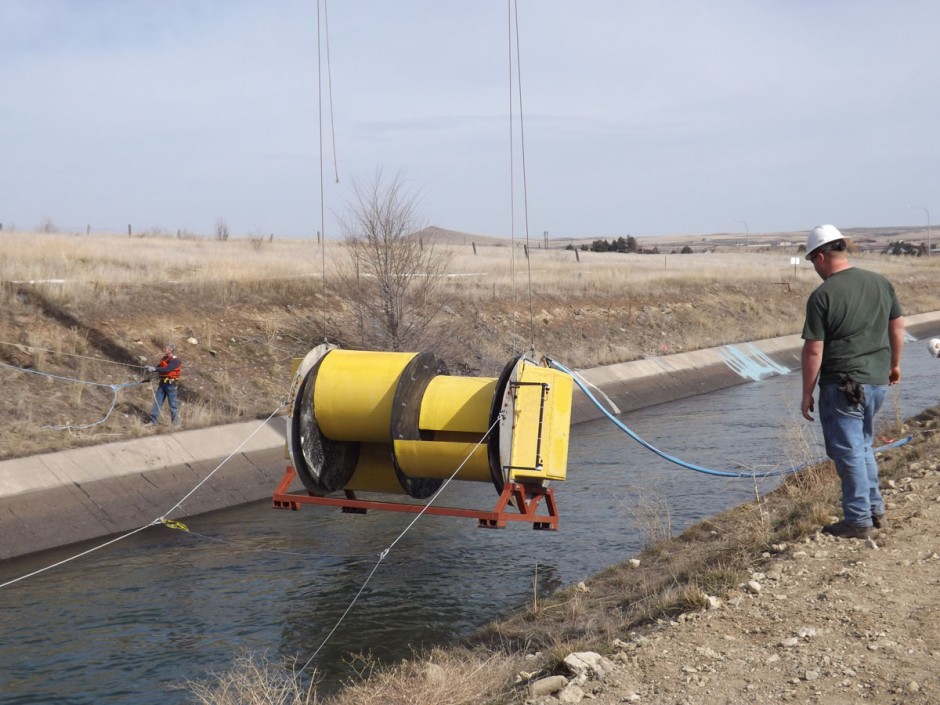
The House passed two bills this week designed to prevent regulation enforcement; one prevents environmental reviews on certain hydro-power projects, the other prevents the National Labor Relations Board from functioning at all. A small conduit hydroelectic project[/caption] Links to Information in this Podcast Song: We've Got Balls by Robin and the Giant (downloaded from Music Alley) Text of the bill: H.R. 678: "The Bureau of Reclamation Small Conduit Hydropower Development and Rural Jobs Act" Congressional Dish summary of H.R. 678 Bureau of Reclamation report and maps of potential projects in 13 states Bill passed with only 15 House members either voting against it or not voting at all. Song: Work Til You Die by The Undercover Hippie (downloaded from Music Alley) Text of the bill: H.R. 1120: "Preventing Greater Uncertainty in Labor-Management Relations Act" Congressional Dish summary of H.R. 1120 Video from the H.R. 1120 mark-up hearing in the House Education and Workforce Committee What is the National Labor Relations Board? Office of Legal Council memo saying President Obama's recess appointments are legal U.S. Court of Appeals rules President Obama's recess appointments were unconstitutional Representatives quoted in this episode: Scott Tipton (CO-3) Grace Napolitano (CA-32) Tom McClintock (CA-4) John Kline (MN-2) Tim Bishop (NY-1) Rob Andrews (NJ-1)

Ep 21CD021: Trailblazer vs. ThinThread
Part 3 of the continuing resolution followed by a history of Trailblazer and ThinThread, the NSA's spying programs. *Forward to 28:20 to hear the Trailblazer vs. Thinthread (NSA spying) story* Executive Producer: Kevin H.R. 933: Consolidated and Further Continuing Appropriations Act of 2013 B= Billion M= Million DIVISION E: VETERANS Title I—Department of Defense Construction (TOTAL: $10.6 B) $1.7 B: Army construction available until 2017 for "acquisition, construction, installation, and equipment of temporary or permanent public works, military installations, facilities, and real property… and host nation support" $1.5 B: Navy & Marine construction available until 2017 $323 M: Air Force construction available until 2017 $3.5 B: Defense-wide construction available until 2017 Includes $27 M for a new NATO headquarters $614 M: Army National Guard construction available until 2017 $42 M: Air National Guard construction available until 2017 $306 M: Army Reserve construction available until 2017 $50 M: Navy Reserve construction available until 2017 $11 M: Air Force Reserve construction available until 2017 $254 M: NATO construction of military facilities and installations available indefinitely $535 M: Army family housing, available until 2017 See Section 8058 (DoD Division) $480 M: Navy & Marines housing, available until 2017 $582 M: Air Force housing, available until 2017 $54 M: Defense-wide housing, available until 2017 $151 M: For chemical destruction, available until 2017 $536 M: Base closures, available indefinitely Section 101 No cost-plus contracts over $25,000 except in Alaska Section 105 No money can be used to buy land for more than it's worth except When it's negotiated by the Attorney General The value is less than $25,000 Defense Secretary says it's cool Section 109 No money can be used to pay property taxes in foreign nations Section 111 No money can be used for contracts over $500,000 for projects in Japan, a NATO member country, or a country bordering the Arabian Sea unless the contract goes to a US company or a partnership including US companies Section 126 No money can be used to expand the Pinon Canyon Maneuver Site in Colorado Title II—Department of Veterans Affairs (TOTAL VETERANS BENEFITS: $127.5 B) $60.5 B: Veteran's benefits $12 B: Readjustment benefits $55 B: Veteran's medical care $2 B: Overseas Veterans Benefits Administration employee mail $3 B + reimbursements: IT upgrades Title III—Related agencies Title IV—Overseas contingency operations Title V—General provisions Section 503 No money can be used by the executive branch for any media productions designed to support or defeat Congressional legislation, except for media for a presentation to Congress itself. Section 509 No porn allowed. Section 511 No transfers out of Guantanamo Bay. Section 512 No first class travel for the executive branch. Section 513 Can't use illegal immigrants for construction work. Section 514 Can't contract with a corporation that's been convicted of a felony unless "agency" says it's cool Section 515 Can't contract with a corporation with unpaid taxes unless agency say's it's cool DIVISION F—ENERGY, FINANCIAL SERVICES, ENVIRONMENT, QUALITY OF LIFE, CONGRESS, FOREIGN AFFAIRS, HOUSING & TRANSPORTATION Title I—General Provisions Keeping the 2012 appropriations for the following departments (public law 112-74) Department of the Interior Department of Energy Department of Treasury District of Columbia Environmental Protection Agency Department of Labor Department of Health and Human Services Department of Education Legislative Branch Department of State Department of Transportation Department of Housing and Urban Development Section 1104 None of these departments can start or resume a project that wasn't authorized during 2012 Section 1109 Extra money for: $40 M: Disabled coal miners $106 B: Medicaid grants to states $1 B: Child support enforcement $2 B: Foster care $19 B: Social Security Title II—Energy and Water Development Section 1203 1.8 B: Renewable energy and energy efficiency Section 1205 $7.5 B: Nuclear weapons activities Section 1206 Extra $110 M for "domestic uranium enrichment, research, development, and demonstration." Title III—Financial Services and General Government Title IV—Interior, Environment, and Related Agencies Section 1401 Decrease Bureau of Land Management from $962 M to $951 M $0 for BLM construction $2.2 B: National Park Service $726 M: Wildland fire management Section 1405: Environmental Protection Agency (Total: $8 B) $785 M: Science and Technology $2.6 B: Environment Programs and Management $1.1 B: Hazardous Substance Superfund (lowered by $40 M) $3.5 B: State and Tribal Assistance Grants Section 1408 $1.5 B: Forest Service $2 B: Forest Service Wildland fire management Section 1412 Defunds the Presidio Trust fund, which helped turn a military installation into a part in San Francisco Section 1416 (Amendment 29 by James Inhofe… agreed to by unanimous consent) Prohibits EPA from enfor
Ep 20CD020: Continuing Resolution, Part 2
Part 2 of the Continuing Resolution which funds the government until September 30th. In this section, we look at the funding for the Defense Department and the Department of Homeland Security. H.R. 933: Consolidated and Further Continuing Appropriations Act of 2013 B= Billion M= Million DIVISION C: DEFENSE DEPARTMENT (TOTAL FUNDING: $597,086,714,000) Title I—Military Personnel $127.5 B: Total funding Title II—Operation and Maintenance $173 B: Total funding Title III—Procurement $100 B: Total funding Public funding for private procurements In every category: "Expansion of public and private plants including the land necessary" "Procurement and installation of equipment, appliances, and machine tools in public and private plants" "contractor-owned equipment lay-away" = no interest is charged Shipbuilding and Conversion, Navy No money can be used to construct ships in foreign shipyards Title IV—Research, Development, Test and Evaluation $70 B: Total funding Title V—Revolving and Management Funds $1.5 B: Defense Working Capital Funds Title VI—Other Department of Defense Programs $32.7 B: Health programs $1.1 B: Drug rehab programs for military personnel $350 M: Inspector General Title VII—Related agencies Title VIII—General provisions Section 8001 No money can be used for publicity or propaganda Section 8002 Laws prohibiting employment of non-citizens doesn't apply to the Department of Defense Salary increases for foreigners can't be more than civilian DoD employees get or more than the person's home country provides, whichever is higher This doesn't apply to Turkish citizens working for the Defense Department. Section 8020 No money can be used for national or international political or psychological activities Section 8024 No money can be used to by steel plates which were not produced in the U.S. or Canada Section 8026 DoD may contract out depot maintenance activities to private firms if done in a competitive way The Bush administration's procedure was known as an OMB Circular A-76 will not be used Became prohibited after the Walter Reed Army Medical Center scandal in 2007 Walter Reed was privatized in 2006 to IAP Worldwide Services, which was owned by a capital management company headed by Bush's former Treasury Secretary, John Snow. The company itself was headed by former high ranking executives from KBR, the Halliburton subsidiary. 2004: The Army it would be more cost-effective to do the work in-house Immediately after taking control of Walter Reed, the company cut staff from 180 workers to 100. The A-76 process seemed to favor the private sector and allowed inherently governmental functions to be transferred to the private sector Section 8035 If someone puts a label saying "Made in America" on a product that wasn't, that person may be prohibited from contracting with the Defense Department. Section 8039 No money can be used to contract a Defense Department function that is currently done by government employees unless: A price competition is performed The private contractor would be less expensive by at least 10% or $10 M The contractor doesn't skimp on employee health insurance coverage in order to win the bid This doesn't apply to depot maintenance $23.5 B appropriated for depot maintenance, which is over $811 M more than requested. Section 8044 No money can go towards reducing the staff at medical treatment facilities below levels from September 30, 2003 Section 8047 Defense Department can only purchase supercomputers that are made in the United States, unless they want something that isn't available here Section 8050 No Defense Department funds can go towards paying a contractor bonus that is more than 100% of that person's salary or a bonus that's part of a merger Section 8054 The Defense Department can upgrade the heating system at the Kaiserslautern Military Community in Germany as long as the new system uses United States coal Section 8057 Defense Department can't train any foreign security forces that have committed human rights abuses, but this can be waived by the Defense Secretary in "extraordinary circumstances" Section 8058 No funds can be used for repairs or maintenance to military family housing units Section 8063 No funds can be used to transfer armor piercing weapons to any non-governmental entity Section 8065 Defense Department money spent on stocking or selling alcohol on military bases needs to go to locally produced beer and wine. Applies to bases in States "which are not contiguous with another State." Section 8070 $479,736,000 for Israel $211 M for Iron Dome Missile defense ($0 requested) Section 8076 No money can go towards developing nuclear armed missile interceptors Section 8079 No money will be available for using foreign intelligence that wasn't lawfully collected "Information pertaining to United States' persons shall only be handled in accordance with protections provided in the Fourth Amendment of the United States Constitution as implemented through Executive Order No. 12
Ep 19CD019: Continuing Resolution, Part 1
Part 1 of a two part series on the continuing resolution that will fund the government until the end of September. In this episode, we examine the funding for the Department of Agriculture, Department of Commerce, Department of Justice, and science related appropriations. H.R. 933: Consolidated and Continuing Appropriations Act of 2013 B = billion M = million DIVISION A: AGRICULTURE, FOOD & DRUG ADMINISTRATION Totals Grand total of division: 139 B for 2013 ($137 B in 2012) ($144 B requested) Food and Drug Administration (FDA): $4 B in 2013 Food Stamps: $77 B for 2013 ($80 B in 2013) ($82 B requested) All domestic food programs: $105 B for 3013 ($106 B in 2012) ($109 B requested) Subject to 2.513% sequester cut TITLE I - Agricultural Programs Extension Activities People eligible for taxpayer food: States, DC, Puerto Rico, Guam, the Virgin Islands, Micronesia, the Northern Marianas, and American Samoa Food Safety & Inspection Must have at least 148 inspectors Hazardous Waste Management: LIMITED to $5 M for site investigations and cleanup expenses TITLE II- Conservation Programs $831 M: water & soil conservation including water management to prevent floods Title III—Rural Development Programs Rural Electrification and Telecommunications Loans Program Account $2 B limit: Loans for construction or purchase of fossil fuel burning electric plants that use carbon sequestration systems. TITLE IV—Domestic Food Programs Special Supplemental Nutrition Program for Women, Infants and Children (WIC) $7 B available until September 30, 2014 Commodity Assistance Program $1.3 M yearly until 2023: Planting and agricultural maintenance programs for Marshall islands because our nuclear test 'Castle Bravo' exposed them to radiation in 1954. TITLE V—Foreign Assistance and Related Programs Food for Peace Program $1.5 B grants available until whenever TITLE VI—Related Agency and Food and Drug Administration Food and Drug Administration $887 M for food safety inspectors TITLE VII—General provisions Section 721 Prohibits funding the salaries or expenses of people to carry out the Watershed Rehabilitation Program "The purpose of rehabilitation is to extend the service life of the dams and bring them into compliance with applicable safety and performance standards, or to decommission the dams so they no longer pose a threat to life and property." Section 725 Prohibits funding for the salary or expenses of a person who prepares or submits language into the President's budget proposal that assumes revenues or money from fees that have not been passed into law. The person would be paid if they submit, along with the revenue language, a corresponding cut that would go into effect if the suggested revenue is not enacted by the time the 2014 Appropriations conference begins. Section 732 No money can go towards a contract with a corporation that has been convicted of a felony in the previous 2 years, unless the contract officer says it's not necessary to protect the government. Section 733 No money can go towards a contract that hasn't paid all their Federal taxes, unless the agency says it's not necessary to protect the government. Section 735 Section 411 of the Plant Protection Act prohibits regulated plant "pests", like weeds, that are somehow considered harmful if allowed to be freely grown in the United States. Anyone is allowed to petition to have a plant removed from the regulated list. If the Secretary of Agriculture chooses to regulate a plant that was previously unregulated, this bill says the Secretary "shall" "immediately grant temporary permits" which will authorize the movement, introduction, continued cultivation, or commercialization, while the petition is evaluated. Section 736 No money will be allowed to pay for "mitigation" associated with removal of a dam on the White Salmon River in Washington state on October 26, 2011. "Mitigation" according to FEMA: "Mitigation is the effort to reduce loss of life and property by lessening the impact of disasters. Mitigation is taking action now- before the next disaster- to reduce human and financial consequences later… Without mitigation actions, we jeopardize our safety, financial security, and self-reliance." Section 742 Prohibits any money from going towards implementing proposed and some existing regulations in the poultry market. Regulations prohibited: Terms eliminated "Tournament system": Methods used by poultry dealers to calculate the payment rate to poultry farmers by comparing one one farmer's performance with another's. "Additional capital investment": $25,000 or more paid by the poultry or pig farmer beyond his initial investment for expanding facilities. "Competitive injury": When conduct distorts competition in the marketplace "Likelihood of competitive injury": When their's reason to believe a competitive injury is likely to occur. Examples: When a dealer kills competition through large-scale exclusive dealings When a poultry/pig dealer raises competitor's costs When a
Ep 18CD018: The Ryan Budget
Low-lights of the Ryan budget are described after we run down the bills passed by the House this week. We also look into an eighteen-year emergency continued this week by President Obama. H.R. 749: Eliminate Privacy Confusion Act The banks currently have to send out a notice regarding their privacy policies every year. This bill would change the law so the banks only have to send the privacy notices out when they change their privacy policies. The privacy policies will be posted online. HR 890: Preserving the Welfare Work Requirement and TANF Extension Act This bill extends the the Temporary Assistance for Needy Families Program, which is welfare, through the end of this calendar year. The bill also prohibits the Obama administration from following through with a plan to give states waivers which would allow them to operate their own welfare programs, so long as there is a proven 20% increase in the number of welfare recipients who find work. This bill would effectively make sure the Federal government has a one-size-fits all approach to welfare. HR 803: SKILLS Act [caption id="" align="alignright" width="159"] Grandma Foxx of North Carolina sponsored the SKILLS Act[/caption] Would be effective for fiscal year 2014 Most significant effect: It would change the make up of local boards that decide how our taxpayer money would be spent on welfare-to-work and job training programs. The local boards would effectively be in corporate control. Currently: The boards are already required to be a majority of people from the business community, specifically business owners. This bill would change it so that a 2/3 majority of the boards would be business owners. Also, the seat for representatives from labor organizations would be eliminated. The boards are required to come up with a plan for the states on how they run their work programs, including how the state will spend taxpayer money. The boards would also be able to award government funded contracts to the entities that provide training services. It would effectively allow businesses to tell states how to govern. It also prohibits the government job training centers from competing with private employment agencies. The bill would also consolidate 35 different programs into one giant program. The bill would order an accounting of the number of federal workers who administer job training programs and within one year, fire all the federal workers whose positions were gobbled up in the merge. President Obama and the Senate Democrats have already said they don't support it; it won't become law. Ignored Subpoenas Ted Poe (TX) informed Congress that he intends to ignore a subpoena sent by Orly Taitz, a lawyer from Rancho Santa Margarita, CA. Orly Taitz is part of the Defend our Freedoms Foundation and her website proclaims to be the "World's Leading Obama Eligibility Challenge Website". Taitz filed a temporary restraining order to prohibit President Obama's inauguration because they claim that he's using a fake social security number and his birth certificate is forged. US Attorney's filed an opposition on behalf of Congress to stop Taitz's restraining order. Now she's sending subpoena's to members of Congress to try to get them to say they didn't support the US Attorney's effort to squash her restraining order against the President. Ted Poe's response: "After consultation with the Office of Gen-eral Counsel, I have determined under Rule VIII that the subpoena seeks information that is not ''material and relevant'' and that it is not ''consistent with the privileges and rights of the House.'' Accordingly, I intend to move to quash the subpoena. God and Texas, TED POE" Another subpoena was ignored this week by the Permanent Select Committee on Intelligence. The subpoena was issued for a criminal trial being prosecuted by the US District Court for the District of Arizona. The stated reason the subpoena was ignored was because the "documents sought are not material and relevant" and that subpoena is not consistent with the privileges and rights of the House." No more information could be found. Continuing Emergency from 1995 National Emergencies Act automatically ends a National Emergency after 90 days unless the President informs Congress that the emergency needs to continue. President Clinton signed an Executive Order on March 15, 1995 that puts sanctions on Iran's nationalized oil industry. The sanctions prohibit any United States citizen or company from entering into a contract to develop Iran's oil resources, either by physically managing the development or financing it. President Clinton enacted these sanctions after Iran opened their petroleum resources to foreign investment, allowing our corporations to get their invested money back, but not take home profits. Obama Emergency Notification sent to Congress on March 12, 2013: "The actions and policies of the Government of Iran are contrary to the interests of the United St ates in the region and continue to pose an unus
Ep 17CD017: VAWA & Funding Defense
We take a close look at the Violence Against Women Act re-authorization as the President signs it into law. We also look at the continuing resolution passed by the House, which funds defense while leaving the rest of the government in chaos. S. 47: Violence Against Women Re-Authorization Act of 2013... Was signed by the President! This one is law. President Obama signs VAWA on March 7, 2013 Definition Changes Adds stalking and date rape to the list of offenses. Includes cyber stalking in the definition of stalking. Replaces "spouses" with "parties' Indian Affairs Adds "sex trafficking" and "stalking" to eligible grant programs for Indian women Allows Indian tribes to have jurisdiction over domestic violence crimes unless neither the victim or defendant are Indians. Includes D.C., Indian tribes, and Puerto Rico in the grant funding (decreases funding) Immigrants Allows children to stay in U.S. on their victimized parent's U Visa even if they turn 21 while the VISA is pending New Programs Grants for training programs for law enforcement and medical personnel Funding for pro-bono legal assistance for victims Protects the confidentiality of child victims of domestic violence or sexual assault Protects students from violence stemming from their immigrant status and gender identity Grants for elder abuse training; Defines "elder" as someone over the age of 50 Prevents victims from being evicted from public housing because they were involved in a domestic violence incident, however, the violent person can be evicted. Public housing authorities will need to transfer victims to new housing if their safety is at risk and they request the transfer. Orders an audit of unprocessed DNA evidence for sexual assault crimes that haven't passed the statute of limitations. Program ends 12/31/18. Prohibits any lobbying activity in relation to DNA audit grants and prohibits violators from receiving a grant for at least 5 years. 6 months after President Obama signs the bill, DHS has to publish final standards for the punishment of sexual assault in immigrant prisons, including private prisons. Prevents marriage brokers from providing information on minors Penalty Changes Penalty for assault with intent to murder is limited to 20 years and a fine Penalty for assault by attempted suffocation limited to 10 years and a fine… suffocation is regardless of intent or visible injury Report Comptroller General of the United States will issue a report to Congress in two years on the use of foreign labor contractors by U.S. employers. It will include the role of labor recruiters that provide low-wage foreigners to companies, the effectiveness of current regulators enforcement of laws already on the books, describe the jobs the foreigners are doing and how many of them are here, and identify abuses of foreigners including use of fees and debts. Funding Deletes ''non- profit, non-governmental victim services or-ganizations,'' or "non-profit, private" programs and replaces it with ''victim service providers, staff from population specific organizations,' in a couple of sections; but not all. Prohibits grants from going to non-profits with offshore tax havens Prohibits more than $20,000 of grant money from going towards conferences Vast majority of funding going DOWN Human Trafficking Title 12: Secretary of State will establish a fund (amount unknown) to give to foreign governments to prevent human trafficking. Orders them to come up with a strategy and suggest ways for oversight; very broad. Qualifying gov'ts need to have high prevalence of trafficking and a "demonstrated political motivation" to address it. Funding can be terminated if State determines the country is doing things contrary to our national interest or doesn't "adhere to it's responsibilities" under the agreement. Issues four grants up to $2 million each for combatting sex trafficking of minors. One of the grants needs to go to a small state with less than 5 million people. Most of the money needs to go towards residential care of minor victims of sex trafficking. Overhead can't exceed 3%. Recipients need to match the grant for every year they get the gov't money and their match percentage goes up every year the grant is renewed, topping out at 50% on their third year. Program good for four years. Decreases funding by half, from 20 to 10 million for law enforcement grants for trafficking. Increases funding for victims in other countries from 12.5 million to 14.5 million/year H.R. 933: House Continuing Resolution Right now, we are in the middle of two crisis': The sequester is one, an unfunded government that would have to shut down on March 27th is the other. This bill does nothing to solve the sequester. In fact, it expressly keeps it in place. Two of the 12 appropriations categories are funded until the end of the year in the responsible appropriations way in this bill. The other 10 are funded as a continuing resolution, that keeps the funding at old chaotic levels. The House d
Ep 16CD016: They Want Cuts
No one really tried to avert the sequester, the House of Representatives travels in style, and something good actually happened this week in Congress. Sequester Here is a rundown of what kind of effort each division of Congress put forth to try to avert the sequester. Senate Democrats offered S. 388: The American Family Economic Protection Act of 2013 Freezes the sequester, keeping the budget the same for 2013. Lowers the spending caps from the Budget Control Act, totaling $39 billion in future spending (not a cut) Eliminates direct payments to farmers for peanuts, sugarcane, and sugar beets Protects other agricultural programs by making them mandatory spending, extending their funding, or exempting them from sequestration. Increases taxes on earnings over $1,000,000 to 30% starting in 2014 Eliminates tax deductions for business expenses relating to moving a business out of the United States Defines bitumen products (tar sands) as oil so that it can be taxed as oil This bill failed to pass the Senate; Republicans don't like it. Senate Republicans offered S. 16: Sequester Replacement Gives the President until March 15th to create a sequester replacement plan Caps defense cuts at $42.7 billion Prohibits amendments to the the President's bill when it comes up for a vote in Congress Enacts the President's cuts if there is no Congressional vote of disapproval This bill failed to pass the Senate; Senators were uncomfortable giving the President the authority to do Congress' job. House Democrats wanted to vote on H.R. 699: The Stop the Sequester Job Loss Now Act Cancels the 2013 sequester Repeals a 2% sequester cut to veteran's medical care Eliminates direct payments to farmers for wheat, corn, barley, oats, cotton, long grain rice, medium grain rice, soybeans, and peanuts. Eliminates tax deductions for oil and natural gas companies Increases taxes on earnings over $1,000,000 to 30% starting in 2014. The House Republicans leadership wouldn't allow this bill to come up for a vote. House Republicans... did nothing. House Committee Travel Report, Oct 1 - Dec 31 2012 Examples of airfare we paid to send our Representatives on trips: $15,037 to send Todd Platts (R-PA) to India/Afghanistan for 4 days. Orbitz: $6,800 $19,743 to send Steven Pearce (R-NM) to Egypt/England for 4 days. Orbitz: $3,400 We paid similar costs per person for him to bring along 3 staff members. $8,023 to send Jason Chaffetz (R-UT) on a weekend trip to Germany. Staff member on same trip flew for $1,821. $10,200 each for Robert Wittman (R-VA), Madeleine Bordallo (D-Guam delegate) and two staff members to spend 3 days in Taiwan and Japan. Orbitz: $1,900 per person. $13,575 for Bill Flores (R-TX) to go on the same trip on the same days $21,063 to fly Duncan Hunter (R-CA) to Afghanistan for a day. Orbitz: $8,800. Military transportation: Free. Total spent on House of Representatives travel in 3 months: $855,743.25 Good News: Violence Against Women Act (VAWA) Passes Congress ... Despite an attempt by House Republicans to eliminate protections for lesbians, immigrants, Native Americans, and college students.

Ep 15CD015: Who Caused Sequester?
House Republicans tried hard during their week off to label the huge March 1 cuts as "the President's sequester", but was President Obama really the cause? We go back to August 1, 2011, the day sequester was born, to see who was celebrating the cuts and how they passed the House. August 1, 2011: The House of Representatives passed the Budget Control Act. The Budget Control Act: Raised the debt ceiling for 18 months, allowing the United States to pay its bills until the fiscal cliff crisis in January 2013. Mandated a vote on the Tea Party's Balanced Budget Amendment to the U.S. Constitution. Enacted spending caps until 2021 designed to reduce the debt by $1.2 trillion. Stopped graduate students from getting student loans from the government. Created the SuperCommittee tasked with agreeing on $1.2 trillion of additional government cuts. Created across-the-board, percentage based cuts - 50% to discretionary spending and 50% to defense spending- to take a effect if the SuperCommittee failed. This is "sequester". So far, we know that if if the sequester goes into effect on March 1... Air traffic controller offices will be closed across the country. See the list. Defense Department will furlough civilian workers. Active duty members are protected from cuts. Contractors are also going to be shielded from cuts, not by law but by choice. Unemployed people can expect a 9.4% cut to their benefits. 700,000+ people will lose their jobs. People mentioned in the podcast: @BillTaylor2: Came up with "sequester finger-pointing week". Funny Boston dude. Follow him. Political DisContent: A conversational, educational, and funny podcast I just discovered and enjoy. Give 'em a try. New episode next week! Congress comes back from vacation. Will they stop the sequester?
Ep 14CD014: Marching Towards Sequester
Hydropower and veterans get some love from the House this week, while churches get taxpayer money and Federal workers get screwed… again. H.R. 267: Hydropower Regulatory Efficiency Act * Fast Tracks licensing for hydro-power generation on existing dams. * Passed with 0 No votes. * Only 3% of the 80,000 dams in the U.S. currently generate electricity H.R. 235: Veteran Emergency Medical Technician Support Act Federal grants will be awarded to States to streamline State requirements and procedures for veterans who were military emergency medical technicians while serving in the Armed Forces to meet certification, licensing, and other requirements applicable to becoming an emergency medical technician in their State. The State must show they have a shortage of emergency medical technicians to be eligible for the money. Funding: $1,000,000 for the period of fiscal years 2014 through 2018.'' $5,000 per state, per year. Rural Communities and big cities have shortages of emergency medical personnel; in fact, many of our emergency services are volunteer. H.R. 592: Federal Disaster Assistance Nonprofit Fairness Act (Tax Money to Churches Act) Re-categorizes houses of worship, regardless of which religion, as public buildings on par with community centers, museums, homeless shelters, etc. in order to allow churches, synagogues, and other religious buildings access to cash grants to repair, restore, or rebuild buildings used for a primarily religious purpose. Problems: Direct government funding of religious buildings is unconstitutional under the First Amendment. Supreme Court ruling on State grants for maintaining religious schools: "If the State may not erect buildings in which religious activities are to take place, it may not maintain such buildings or renovate them when they fall into disrepair." Religious buildings are not available for use by the general public. Prayer and worship are not essential government functions. Bill never went through committee process. No amendments were allowed. Religious buildings have access to FEMA money and SBA loans Religions don't pay taxes. Passed the House, with 72 voting No. The 72 were an interesting mix of liberal and Tea Party Congressmen. H.R. 273: Eliminate Promised .5% Pay Increase to Federal Workers Eliminates the pay increase that was promised to Federal workers via an Obama Executive order because they have been given no cost of living adjustment in 2 years. Freezes Congressional pay until December, even though it's already frozen through October because of the fiscal cliff bill. They spent two days on this bill even though the sequester takes effect March 1. JIM MCGOVERN (MA) "The Republicans are going to go on vacation tomorrow. We're not going to be back for a week, and then we'll have 4 legislative days left to deal with this thing called ''sequestration.'' On March 1, all of these across-the-board cuts go into play. And guess what? We're going to lose at least 750,000 jobs. That's not my estimate. That's what the head of OMB says. There will be 750,000 Americans unemployed because of their inaction. Guess what? What are these people going to do? They're going to have to look for employment. They're going to be without work. It's going to slow down our economic growth. Give me a break. There should be some urgency here." Job loss estimates range from 750,000 at the low end and over 2 million at the high end. ROB WOODALL (GA) Here we are at midnight on sequestration day, saying, Hey, let's do it. Folks, let's do it. Let's do it. Back in May, we passed a bill here. Let's do it with the bill we passed in August to solve the fiscal cliff. Let's do it with the one we passed in September. Let's do it with the one we passed in December. What did the House's sequester-solving bills do? Reduced food funding Defunded health insurance exchanges Repealed the part of Wall Street reform that provides for the orderly break up of criminal banks Eliminated the program that lets homeowners renegotiate their mortgage rates Limited medical injury lawsuits Put a $250,000 cap on punitive damages (a cap the jury would be prohibited by law from knowing about) Deleted all defense cuts from the sequester How might the sequester be avoided? Chris Van Hollen of Maryland has a bill that the House leadershiop won't allow a vote on. The Senate: An agreement made that will allow votes on sequester replacement bills - one from D's, one from R's - on Monday or Tuesday, Fed 25 or 26, after their vacation. Department of Defense Excess Weapons Going to States Max Blumenthal article Defense Property Disposal Service established in 1972. Responsible for disposal and sale of surplus and excess defense equipment and supplies. Half of their extra goodies go to the foreign military sales program. Operates in 16 countries with field offices in Afghanistan, Iraq, and Kuwait NDAA 2013 appropriated $250 million per year for equipment ("excess defense articles") in Afghanistan, but there are no caps in 2013 an
Ep 13CD013: Surveillance, Stupidity, & Drones
The House passes a surveillance bill masked as pediatric research and then wastes our time. Also, highlights from the leaked legal justification for the Obama Administration's "lawful" drone bombing of American citizens. H.R. 225: National Pediatric Research Network Act of 2013 Introduced by Democrat Lois Capps of Northern California. The bill says the Director of the National Institutes of Health (a gov't agency) can create a network of up to 20 groups of public or private non-profits to work together to do pediatric research. As a condition of accepting an award, the groups need to agree to help the Centers for Disease Control with the establishing patient registries and "other surveillance systems as appropriate and upon request by the Director of the Centers." The bill establishes a "Data Coordinating Center" to... 1. Distribute scientific findings 2. Help design and conduct research projects and to manage the resulting data 3. "To organize and conduct multi-site monitoring activities" But the bill doesn't give the NIH any money to do this. Congressional Budget Office Analysis NIH already supports many research networks that support research and training focused on pediatric health care needs and operates data coordinating centers for those networks. Those networks perform essentially the same activities as the groups described in the bill. The existing networks are not helping the CDC to establish surveillance systems. ...CBO estimates that implementing H.R. 225 would have "no effect on the number" of research groups or data coordinating centers that NIH would support. "CBO expects that CDC would request assistance from a few networks to establish surveillance systems." H.R. 444: The Require a Plan Act The President generally begins working on a budget in Nov/Dec The fiscal cliff deal wasn't done until January 2 meaning we didn't know how much revenue the United States would be collecting until then. President Obama will be submitting his budget late. Require a PLAN Act requires the President to give Congress another budget if the President's budget for fiscal year 2014 is not balanced. Not later than April 1, 2013, the President shall submit to Congress an addition to his budget that includes— * An estimate of the earliest fiscal year in which the additional budget will eliminate the deficit (Ryan budget was around 2030) * A detailed description of additional policies to be implemented in order to achieve such result (would have to be extreme measures) * An evaluation of what agency functions can be eliminated or consolidated. (Fleming Amendment) * An explanation of the differences between the President's original budget for fiscal year 2014 and the extra budget referred to in this subsection. * An estimate of the cost per taxpayer of the deficit for each year until the budget is balanced. (Messer Amendment) Republicans seem to believe that creating a budget is an Executive Branch responsibility. "It is astounding that the President has shirked his responsibility to submit a budget on time for 4 of the last 5 years." - Rep. Roger Williams (TX) It isn't. "The fact of the matter is it is our responsibility. Not a nickel can be spent in America unless the Congress authorizes it to be spent. The President can't spend money on his own. Not a nickel can be raised in this country, of revenue, without the Congress acting on it. The President can't do that. It is the Congress of the United States, under article I, that has this responsibility. We're not taking that responsibility. We're trying to shove it off on somebody else, in this case, the President of the United States." - Rep. Steny Hoyer (MD) What's really happening is the House is wasting almost all of February and to let the sequester crisis come down to the last minute. A deal needs to be done by Friday, March 1. Republicans are trying to re-write history and pretend President Obama created the sequester. "To add to the uncertainty, the President's proposed sequestration is set to take effect this March…." -Rep. Austin Scott (GA) "President Obama's sequester is an important issue." -Rep. Tom Price (GA) "What we should do is replace the President's sequester with responsible reforms that will help balance the budget in 10 years." -Rep John Boehner (OH), Speaker of the House Reality: In 2011, the GOP was refusing to raise the debt ceiling. In order to pay our bills, the President and Senate had to promise the GOP House that they would get $2 trillion in government cuts. $1 trillion in cuts were in the Budget Control Act. The second trillion was supposed to be decided on by the SuperCommittee. The sequester was the painful-for-everyone-so-it'll-never-happen penalty that was supposed to bring everyone to the bargaining table. "We put sequester in place thinking it was so irrational and would have such a negative effect that clearly we would address the matter in the last 14 months. We didn't…. It was a silly bill. The Senate passed it and the President
Ep 12CD012: ALEC
A quick fact check followed by an introduction to ALEC, the association of lawmakers and corporations working together to write bills. Fact Checking CD011 Conversation Kim DotCom's Story Al Qaeda has been reported to be operating in the following countries Afghanistan Iraq Pakistan Sudan Bosnia Syria Somalia Egypt Saudi Arabia Yemen Algeria Mali Mauritania Morocco Niger Tunisia Turkey Kenya Tanzania United States What happened in Virginia: Last week, a bill was rammed through the Virginia State Senate that redraws the maps for their State Senate races in a way that gives more votes to Republicans. Henry Marsh is a civil rights lawyer and Democratic VA Senator who went to Washington D.C. for the inauguration. The VA State Senate is a 20-20 split, so while he was gone, the GOP surprised the DEM's by bringing the bill up for a vote knowing they would be able to pass it with a DEM Senator missing. The House and Governor of Virginia are Republicans. The bill's chances look good. There is SEPARATE bill that addresses the Electoral College that was just born in Subcommittee. The electoral college bill's path to law looked good but the bill was defeated in committee Tuesday on an 11-4 vote after the Governor came out against the bill. ALEC The American Legislative Exchange Council Click on the above link to go to their website. They only barely hide the fact they the provide a way for corporations to write laws. "Works to advance the fundamental principles of free-market enterprise, limited government, and federalism at the state level" "Legislators welcome their private sector counterparts to the table as equals, working in unison to solve the challenges facing the nation." "ALEC provides the private sector with an unparalleled opportunity to have their voices heard and their perspectives appreciated." ALEC's Legislative Agenda for 2013 For More Information...

Ep 11CD011: No Budget, Still Get Paid
Lobbyist Jo Ann Emerson quits Congress early, the House votes to temporarily suspend the debt ceiling and probably-not postpone their own paychecks, and the Brineys drunkenly ramble on a Friday night. Jo Ann Emerson Resigns from the House Said she was leaving Congress in February, left early (Tuesday, January 22) Used to represent the 8th district of Missouri; left to become President and CEO of the National Rural Electric Cooperative Association, a trade association/lobbying group. It has about 900 member utilities that serve 42 million people in 47 states and own almost half of the US power grid. Replacing Glenn English (also a former Congressman) who made $9,294,207 in his 6 years = $1.5 million a year. Won her district in 2012 with over 65% of the votes. Missouri to pay about $1 million for a special election H.R. 307- PANDEMIC AND ALL-HAZARDS PREPAREDNESS REAUTHORIZATION ACT OF 2013 Passed the House Tuesday, January 22. It now moves into the Senate. Gives 6 months for the Secretary to create a plan for responding to chemical, biological, radiological, and nuclear threats. Orders the disaster plan to specifically address the needs of at-risk individuals and children Cuts funding for training emergency response volunteers in half, from $22 million/year to $11million/year Government wants a "national biosurveillance system for human health, with international connectivity" that allows for "two-way information flow" between government and health care providers. Loosens the definition of "emergency" to include "threat justifying emergency authorized use". Allows the use of an unapproved medical devices or products if declared necessary by the government. Allows the government to extend the expiration date of medical products and "authorize the introduction or delivery for introduction into interstate commerce" if doing so protects the public health or military preparedness and effectiveness. Allows the government to waive "requirements regarding current good manufacturing practice otherwise applicable to the manufacture, processing, packing, or holding of products." Allows $1.4 billion of taxpayer money to be spent on private research and development costs. H.R. 325: NO BUDGET, NO PAY ACT OF 2013 The debt ceiling will be suspended from the day the President signs this bill until May 18, 2013. By April 15, 2013, the House and Senate need to each pass their own version of a budget for fiscal year 2014.* If one of the branches of Congress does not pass a budget, their salaries will be set aside in an account and they will be paid either when a budget is passed or on the last day of the 113th Congress. This means that the House could pass the Paul Ryan 'screw the poor' budget and the Senate could pass a budget giving private jets to homeless people and both parts of Congress would be paid. There is no need for a conference to merge the two budget bills to send a real budget to the President.

Ep 10CD010: House (Finally!) Votes On Sandy Aid
Before the House (finally) agreed to give recovery money to Hurricane Sandy victims, they made new rules for the 113th Congress, including more private jets for themselves and less rights for gays. Then, despite Republican efforts to short them, the House finally voted to give Hurricane Sandy victims the $60 billion they asked for... Well, sort of. THE RULES FOR THE 113TH CONGRESS: H.RES. 5 Changed the Nepotism rule to include grandchildren. Allows members to take private jets using official funds. Starts to open the door to using campaign funds (which Senate members can do) but a statute still prohibits that from members of the House. Eliminates a portion of ObamaCare that prevents the House from repealing authority for IPAB. Enacts the Ryan budget until a budget for 2014 is adopted. Prohibits lobbyists from trolling the Congressional gym. Authorizes the continuation of the "Fast and Furious" investigation. Authorizes the Bipartisan Legal Advisory Group (the five members are John Boehner as Speaker of the House, Eric Cantor as House Majority Leader, Nancy Pelosi as House Minority Leader, Kevin McCarthy as Majority Whip, and Steny Hoyer as Minority Whip) to direct the House Office of General Counsel to defend the Defense of Marriage Act -the gay marriage ban- to "protect the interests of the House." Karen Golinski has been fighting the House for four years to get her wife health insurance. HURRICANE SANDY RECOVERY October 29, 2012: Hurricane Sandy hits the Northeast, devastating the coastlines of New Jersey, New York, and Connecticut and causing widespread damage to the surrounding states. (Amazing before and after pictures from NOAA) December 2012: The Senate passed a $60 billion aid package and sent it to the House of Representatives. January 2, 2012: After voting on the fiscal cliff bill on the last day of the 112th Congress, Speaker Boehner had promised a vote on the Senate's Sandy bill. He lied. There was no vote. The bill died when the 112th Congress adjourned. January 4, 2012: The House passed HR 41, a piece of the dead Senate bill which authorized FEMA to borrow about $9.5 billion to make payments to victims insured through the National Flood Insurance Program. January 15th, 2012: The House passed HR 152, a bill which, after being heavily amended by a Republican congressman from New Jersey, finally authorized the remaining $50.5 billion requested by the states damaged by Hurricane Sandy. HR 152: "Disaster Relief Appropriations Act of 2013" The original bill, written by Hal Rogers of Kentucky, gave the Northeast $17 billion, which was $33 billion short of what was requested. An amendment by Rodney Frelinghuysen of New Jersey gave the Northeast states the rest of the money. TITLE I DEPARTMENT OF AGRICULTURE $6 million from Rogers (Kentucky) bill + $218 million from Frelinghuysen (New Jersey) amendment to be spent on: Food for victims of Hurricane Sandy Floodplain protection Forest Restoration Money to help farmers from drought TITLE II (Completely replaced by Frelinghuysen amendment) ARMY CORPS OF ENGINEERS $20 million $50 million for a study of flood risks to coastal populations affected by Hurricane Sandy (due 2 years after bill is signed). $9 million $3.461 billion for repairs to projects that were under construction and damaged by Hurricane Sandy. $7.42 million $8.21 million to dredge navigation channels damaged by Hurricane Sandy. $500 million $1 billion for emergency operations and repairs. TITLE III (Completely replaced by Frelinghuysen amendment) SMALL BUSINESS ADMINISTRATION $10 million $20 million for grants to organizations helping with disaster recovery, response, and long term recovery to small businesses damaged by Hurricane Sandy. $1 million $5 million to the Inspector General to perform oversight on the grants. $100 million $520 million for direct loans for disaster recovery. $50 million $260 million for "direct administration expenses" of loan making TITLE IV DEPARTMENT OF HOMELAND SECURITY - COAST GUARD $144 million $274 million for expenses caused by Hurricane Sandy FEDERAL EMERGENCY MANAGEMENT AGENCY - DISASTER RELIEF FUND $5.4 billion $11.5 billion for national disaster relief (not limited to Hurricane Sandy). SCIENCE AND RESEARCH $585,000 $3.2 million available until September 30, 2013 2014 TITLE V DEPARTMENT OF THE INTERIOR $50 million $78 million for construction expenses of the Fish and Wildlife Service $234 million $348 million for construction by the National Park Service TITLE VI DEPARTMENT OF HEALTH AND HUMAN SERVICES - PUBLIC HEALTH AND SOCIAL SERVICES EMERGENCY FUND $100 million (Rogers of Kentucky bill) + $800 million (Frelinghuysen of New Jersey amendment) for the Head Start program and the costs of repairing and rebuilding health care facilities, child care centers, or other social services facilities. The money is only available to victims of Hurricane Sandy. TITLE VII DEPARTMENT OF DEFENSE $24.2 million, available until September 30, 2017, for construction by the Ar
Ep 9CD009: What's In the Fiscal Cliff Bill
The back story on the "fiscal cliff" debacle, the House's sad excuse for a compromise, and the contents of the fiscal cliff bill that became law on 1/3/13. H.R. 8: THE OBAMA-SENATE FISCAL CLIFF BILL (SIGNED INTO LAW 1/3/13) ''American Taxpayer Relief Act of 2012'' TITLE I—GENERAL TAXES SEC. 101. PERMANENT EXTENSION OF MOST 2001 BUSH TAX CUTS People making over $400,000 as individuals, or $450,000 as a couple, will be taxed at 39.6% instead of the current 35% Estate tax rate will be raised to 40% from 35%. No taxes on the first $5 million of inheritance. SEC. 102. INCREASE CAPITAL GAINS TAXES TO 20%, FROM 15% SEC. 103. EXTENSION OF 2009 STIMULUS BILL TAX CREDITS 5 year extension of college tax credits Total credit cannot exceed $2,500 Tax credit decreases for families with gross incomes of $80,000 or $160,000 for a married couple. 5 year extension of the Child Tax Credit Eligible families receive $1,000 tax credit per child under age 17. Tax credit decreases for families with gross incomes of $75,000, or $110,000 for married taxpayers filing a joint return. TITLE II—INDIVIDUAL TAXES SEC. 201. TAXPAYER DONATION TO SCHOOL TEACHERS' SUPPLIES. SEC. 203. BOSS-PAID PARKING AND TRANSIT FARE WILL NOT COUNT AS INCOME TITLE III—BUSINESS TAXES SEC. 301. TAX CREDIT FOR PRIVATE COMPANY RESEARCH SEC. 306. TAX CREDIT FOR PRIVATE RAILROAD MAINTENANCE. SEC. 307. TAX CREDIT FOR PRIVATE MINING COMPANIES' SAFETY EQUIPMENT AND TRAINING SEC. 312. TAX CREDIT TO PRIVATE ENTERTAINMENT RACETRACKS (NASCAR) SEC. 317. TAX CREDIT FOR HOLLYWOOD MOVIE STUDIOS. SEC. 318. TAX CREDIT FOR RUM PRODUCERS IN PUERTO RICO. SEC. 322. TAX LOOPHOLE FOR MULTINATIONAL BANKS AND MANUFACTURERS. Multinationals, including banks since 1997, don't have to pay taxes on money they earn through overseas subsidiaries. JP Morgan Chase, General Electric, Caterpiller paid for the legislation SEC. 323. MULTINATIONALS WILL NOT PAY TAXES ON INCOME EARNED FROM THEIR SMALLER BUSINESSES IN FOREIGN COUNTRIES SEC. 328. USE TAX-FREE 9/11 RECOVERY BONDS TO BUILD MANHATTAN OFFICES AND APARTMENT BUILDINGS Goldman Sachs used this to get $1.6 billion tax-free financing for its new headquarters. Lloyd Blankfein met with President Obama in December SEC. 330. TAX CREDIT FOR STARKIST AS THE LARGEST EMPLOYER IN AMERICAN SAMOA. SEC. 331. TAX CREDIT FOR BUSINESSES BUYING SMALLER BUSINESSES (Good Read: How did these business tax credits get into the fiscal cliff bill?) TITLE IV—ENERGY TAXES SEC. 401. TAX CREDIT FOR ENERGY-EFFICIENT EXISTING HOMES. SEC. 403. TAX CREDIT FOR 2- OR 3- WHEELED PLUG-IN ELECTRIC VEHICLES. 10% of the purchase price or $2,500. Must go at least 45mph SEC. 404. TAX CREDIT FOR BIOFUEL PRODUCERS. SEC. 405. TAX CREDIT FOR BIO-DIESEL AND RENEWABLE DIESEL. SEC. 406. TAX CREDIT FOR INDIAN COAL FACILITIES. SEC. 407. TAX CREDIT FOR WIND FACILITIES SEC. 408. TAX CREDIT FOR ENERGY-EFFICIENT NEW HOMES. SEC. 409. TAX CREDIT FOR ENERGY-EFFICIENT APPLIANCES. TITLE V—UNEMPLOYMENT SEC. 501. FEDERAL UNEMPLOYMENT INSURANCE PAYMENTS WILL CONTINUE TO BE PAID SEC. 503. TAX CREDIT FOR REEMPLOYMENT SERVICES TITLE VI—MEDICARE AND OTHER HEALTH EXTENSIONS SEC. 601. NO PAYMENT CUT TO MEDICARE DOCTORS SEC. 642. REPEAL OF "CLASS" LONG-TERM HEALTH CARE PROGRAM. SEC. 643. COMMISSION ON LONG-TERM CARE. TITLE VII—EXTENSION OF AGRICULTURAL PROGRAMS SEC. 701. EXTENSION OF FARM BILL UNTIL SEPTEMBER 2013 SEC. 802. NO PAY RAISE FOR CONGRESS TITLE IX—BUDGET PROVISIONS SEC. 901. TWO MONTH DELAY ON SEQUESTER CUTS TO GOVERNMENT Cuts must be ordered on March 1, 2013 and implemented on March 27, 2013. H.R. 6684: THE HOUSE FISCAL CLIFF BILL (DID NOT BECOME LAW) OFFICIAL TITLE: "Spending Reduction Act of 2012''. TITLE I—AGRICULTURE SEC. 101: REDUCE FOOD FUNDING TO PUERTO RICO AND AMERICAN SAMOA 8 MONTHS EARLY. TITLE II- COMMITTEE ON ENERGY AND COMMERCE SEC. 201. DEFUND HEALTH INSURANCE EXCHANGES. 'Health Insurance Exchange' is a website designed so consumers can easily compare and buy their own health insurance. SEC. 202. REPEAL PREVENTION AND PUBLIC HEALTH FUND. TITLE III- FINANCIAL SERVICES SEC. 311. REPEAL THE PART OF WALL STREET REFORM THAT BREAKS UP CRIMINAL BANKS. SEC. 321-324. "HAMP Termination Act of 2012" HAMP is the program designed to help homeowners renegotiate their mortgage rates with the banks. SEC. 331. LET CONGRESS FUND THE BUREAU OF CONSUMER FINANCIAL PROTECTION The Consumer Financial Protection Bureau (CFPB) was created in the Dodd-Frank Wall Street Reform bill to be the first government agency to protect consumers from getting screwed by their banks. The CFPB has guaranteed funding because it gets its money from the Federal Reserve. Congress would gain the ability to defund the CFPB if this bill were law. TITLE IV—COMMITTEE ON THE JUDICIARY SEC. 402. 3 YEAR TIME LIMIT ON MEDICAL INJURY LAWSUITS. "In no event" can a health care lawsuit begin 3 years after the date the patient gets injured or 1 year after the patient discovers the injury, whichever occurs first, unless Lawsuits by a child und

Ep 8CD008: NDAA for 2013
Congress passes the National Defense Authorization Act for 2013; highlights include lots of money for other countries, a continuation of indefinite detention, Christmas gifts given to Northrup Grumman and other campaign contributors, and rules will finally apply to defense contracting. All that and more in this summary of 2013's NDAA… National Defense Authorization for Fiscal Year 2013 The Bad Money to Other Countries - (Section 222) $211 million to Israel for IRON SHEILD, their missile defense system - (Section 1211) $508 million for Iraq. - (Section 1219) $350 million for infrastructure in Afghanistan. - (Section 1222) $250 million for equipment ("excess defense articles") in Afghanistan, no caps in 2013 and 2014. - (Section 1227) Authorizes up to $1.2 billion in payments to Pakistan, but they get no money for time when they close supply routes into Afghanistan to the US military. Pakistan also needs to hunt al Qaeda and try to stop IEDs to get money. All limitations can be waived if the Defense Secretary says in writing that they need to be. - (Section 1203) Gives Defense Secretary authority to use $75 million for equipment, supplies, training, and minor military construction in Yemen to fight al Qaeda and al Qaeda affiliates and another $75 million for the same thing in Djibouti, Ethiopia, Kenya and Somalia. - (Section 1010) Continuation of drug war in Columbia. No amount given. Drones - (Section 527) REPORT: due in 6 months, reasons drone operators have "persistently lower average education, training, and promotion rates" and how to improve those rates. Nuclear Weapons - (Section 211) Requirement that next-generation aircraft be able to transport and use nuclear weapons within 2 years of the aircraft's completion. Indefinite Detention Rep. Jerold Nadler of Colorado: As a Nation, no matter what adversity we have faced we have done so as Americans. We have united behind the values and freedoms that gave birth to this Nation and that have made it a moral force in the world. In the last decade, however, we have begun to let go of our freedoms bit by bit, with each new Executive order, each new court decision, and yes, each new act of Congress. We have begun giving away our right to privacy, our right to our day in court when the government harms us, and with this legislation we are continuing down the path of destroying the right to be free from imprisonment without due process of law. The conference report states that: Nothing in the Authorization for Use of Military Force or the National Defense Authorization Act for fiscal year 2012 shall be construed to deny the availability of the writ of habeas corpus or to deny any constitutional rights in a court ordained or established by or under Article III of the Constitution to any person inside the United States who would be entitled to the availability of such writ or to such rights in the absence of such laws. This language simply continues the flawed policies established in the 2011 defense authorization bill. First, it applies only to ''any person inside the United States.'' That is important, but most of the debate on indefinite detention without charge and on the lack of due process has to do with people held by our government outside our borders—including, potentially, U.S. citizens. The language in this bill, combined with the prohibitions against moving these detainees into the United States, guarantees that we will continue holding people indefinitely without charge—contrary to our traditions of due process and civil rights. Second, this text continues the claimed authority of the United States Government to hold even U.S. persons captured on United States soil indefinitely and without charge. Some people may take comfort in the provision that states that those of us entitled to certain rights prior to the passage of the AUMF and of last year's defense authorization bill continue to have the same rights afterwards. But this bill does not say who among us are fortunate enough to have those rights, nor does it tell us what those rights might be. It does not specify how the executive branch is to determine which of us are entitled to these constitutional protections and which of us are not. And it does not provide us with recourse if the President gets it wrong. The Exact Text "SEC. 1029. RIGHTS UNAFFECTED. Nothing in the Authorization for Use of Military Force (Public Law 107–40; 50 U.S.C. 1541 note) or the National Defense Authoriza-tion Act for Fiscal Year 2012 (Public Law 112–81) shall be construed to deny the avail-ability of the writ of habeas corpus or to deny any Constitutional rights in a court or-dained or established by or under Article III of the Constitution to any person inside the United States who would be entitled to the availability of such writ or to such rights in the absence of such laws." - (Section 1022) Prohibits updating U.S. facilities to house Guantanamo detainees, except at Guantanamo. - (Section 1027) Prohibits the transfer

Ep 7CD007: The Realities of Solar Power
Doing nothing, literally, is planned until 12/28 and a special guest helps filter fact from fiction in regards to solar power. *Correction from CD004: H.R. 6190 (The Give Me My Damn Inhalers Act) failed this week. 1 million Primatene Mist (manufactured by Armstrong Pharmaceuticals) inhalers in a CA warehouse Primatene Mist and all other inhalers with ozone-depleting chemicals have been off the market for 11 months Needed 2/3 aye votes to pass because it was brought up under "suspension" H. Res 827: Extra "work" days during the holidays will be filled with fluff (passed House) Gives the House GOP the authority to bring up suspension bills until December 28th Suspension bills = insignificant bills that generally pass with a voice vote = time wasters H.R. 5817: No More Annual Privacy Notices From Banks (passed House) Banks will only have to send a notice if they change their policy Saves banks money * Conferees chosen to work on the 2013 National Defense Authorization Act (NDAA) The House and Senate will be merging their bills into one to be sent to the President. Vote possible next week. Interview: Special guest Joe Briney, commercial solar power engineer, discusses the solar industry.
Ep 6CD006: A Shortened Week in Congress
Rep. Jo Ann Emerson quits Congress to become a lobbying titan, the Coast Guard is funded, Louie Gohmert votes for 'lunatic', GOP confuses net neutrality, and a crisis is engineered during a short week in Congress. Rep. Jo Ann Emerson Quits to Make Millions in Private Sector - Represents southeast Missouri: - Leaving Congress in February to become President and CEO of the National Rural Electric Cooperative Association, a trade association/lobbying group. - It has about 900 member utilities that serve 42 million people in 47 states and own almost half of the US power grid. - Replacing Glenn English (also a former Congressman) who made $9,294,207 in his 6 years = $1.5 million a year. - A key accomplishment: weakening climate bills on behalf of coal-dependent electric cooperatives. - We have to pay for a special election to replace her in Congress. - Good news: we got rid of a gay hater in Congress. H.R. 2838: Coast Guard Appropriations Bill - Already passed the Senate. - Gives Coast Guard about $10 billion total. - Orders a risk assessment (due 6 months after bill becomes law) for transporting Canadian tar sands by sea which will detail: How much barge, tanker, and supertanker traffic may increase. Whether transportation of tar sands through the Salish Sea will bring it through U.S. waters. A list of rules and regulations that restrict super-tanker traffic in U.S. waters and "an assessment of whether there are methods to bypass those rules." A list of rules and regulations that restrict the amount of oil transported in tankers and how to get around those rules too. Whether tar sands oil has different properties from other oils. A risk assessment of increasing tar sands traffic. "The potential costs and benefits to the U.S. public and the private sector of transporting Canadian tar sands by sea. - The bill also includes this: SEC. 701. LIMITATION ON AVAILABILITY OF FUNDS FOR PROCUREMENT OF ALTERNATIVE FUEL. None of the funds authorized to be appropriated by this Act or otherwise made available during fiscal year 2013 or 2014 for the Coast Guard may be obligated or expended for the production or purchase of any alternative fuel if the cost of producing or purchasing the alternative fuel exceeds the cost of producing or purchasing a traditional fossil fuel that would be used for the same purpose as the alternative fuel. - Creates a website detailing the crime rates of cruise lines. H.R. 6620: Gives lifetime secret service protection to George W. Bush and Barack Obama. - Lifetime protection is only for Presidents who served before 1997. - Would otherwise only be protected for 10 years. S. 2367: Eliminates 'lunatic' from English language. - Rep. Louie Gohmert (TX) was the only person to vote against it. S. Con. Res. 50: Statement about the internet. Rep. Greg Walden (R-OR)(Telecommunications Industry mole) - Commitment to unregulated internet. - Attacks FCC net neutrality rules. GOP Leadership Changes Schedule, Setting Up "Fiscal Cliff" Crisis Mode - ""Only a crisis- actual or perceived- produces real change." - Milton Friedman - House only worked 3 days this week. - House has cancelled work next Friday. They will only work Tuesday-Thursday at 3:00pm. - Eric Cantor warned members to plan to work the week of December 17th, even though they were supposed to be done by the 14th.
Ep 5CD005: Lame Ducks Return
During another slow week in Congress, Jesse Jackson Jr. resigns, Nydia Velazquez (NY) ignores a subpoena, the Department of Homeland Security gets investigated, the Senate fights about filibusters, and the Trans-Pacific-Partnership is confirmed as real, secret, and scary. Bills Signed Into Law: - HR 2606: Fast tracks Rockaways gas pipeline for Transcontinental Gas Pipeline Company (Transco) - S 1956: Prohibits airlines from participating in EU cap & trade program. Jesse Jackson Resignation - Hasn't been seen since June and didn't campaign but still won his seat - Is under investigation for allegedly trying to buy Barack Obama's vacant Senate seat in 2008. Nydia Velazquez (NY) sent a letter to Congress saying she is going to ignore a subpoena - No information available on the court case she is involved in or why she is ignoring the subpoena. - Represents Brooklyn, Lower Manhattan, Queens. - Has been serving for 20 years - Top contributor is Goldman Sachs (she's on the financial services committee) - Got the vast majority of her 2012 money from large individual donors (rich people) and secret PACs (almost half a million) - Voted for bailouts and against auditing the Fed HR 5913: Department of Homeland Security (DHS) Accountability Act- passed the House 11/27 - Independent panel to do an assessment of DHS because its creation was and remains high risk. - DHS was a creation of the Bush administration in 2002 - 22 agencies were merged = dysfunctional government - FEMA - issued huge contracts with little to no oversight after Katrina. - TSA - hundreds of employees have been arrested for thefts. - Immigration & Border Patrol- employees arrested for accepting bribes. - Federal protective service - short staffed and not performing their duties sufficiently. - Senate also passed S. 1998: tells DHS to keep financial records for an audit next year HR 6429: STEM Jobs Act- passed the House 11/30 - Legislation backed by Apple, Oracle, Cisco, & Adobe - Makes it easier for foreign students graduating with degrees in science, technology, engineering, and math to get visas - Limits the number of visas for regular families - Eliminates the diversity visa program that gives visas to people from more random countries - Won't be become law; Obama administration is opposed Filibuster Change in Senate - Filibuster = Objection that postpones a bill from coming up for a vote. - One strategy is endless debate: Senate rules allow Senators to speak as long as they wish unless 60 Senators vote to shut them up (cloture). - Another strategy is an individual Senator placing a hold; if 60 votes aren't there to over-ride the hold, the bill is blocked from a vote. - Changes to Senate rules can be done by a simple majority but only on the first day of the session in January. - Most likely change: the next Congress might require the blocker to stay on the floor and defend their objection. - 1960's: No Congress had more than 7, 2000's: Avg over 100 in each of the last 3 Congresses Trans Pacific Partnership - A trade deal being crafted in secret with the cooperation of 600 corporations. - Will manage 40% of all global trade (according to Secretary of State Clinton). - Congressional representatives have been denied access to TPP negotiations and documents. - Next round scheduled for next week (Dec. 3-12) in Auckland, New Zealand

Ep 4CD004: Screw You E.U. & Give Me My Inhaler
During a slow week in the House of Representatives, inhalers are given relief, airlines are forced to ignore a European carbon law, and trade with Russia is "normalized." *Mistake in CD003: Pete Sessions, not Jeff Sessions. * Hazardous Waste Manifest was bill signed into law during recess. H.R. 6190 - Asthma Inhalers Relief Act of 2012 (Sponsored by Rep. Michael Burgess / Energy and Commerce Committee) From FDA website: Epinephrine CFC Metered-dose Inhalers - Questions and Answers Epinephrine CFC metered-dose inhalers used to treat asthma (known as Primatene Mist or Epinephrine Mist) cannot be made or sold in the United States after December 31, 2011. 4. What other inhalers can I use for my asthma? There are inhalers that contain other medicines that can treat asthma, such as albuterol HFA inhalers. Hydrofluoroalkanes (HFAs) are different propellants (spray) than CFCs. You will need a doctor's prescription to buy these. 10. Why are over-the-counter epinephrine CFC inhalers being phased out? Manufacturers use chlorofluorocarbons, or CFCs, as propellants (spray) in these inhalers to move the medicine out of the inhaler so patients can breathe the medicine into their lungs. The United States signed an international agreement, called the Montreal Protocol on Substances that Deplete the Ozone Layer4 along with many other countries. These countries promised to make it illegal to make or sell substances that decrease the ozone layer, including CFCs, after certain dates. 12. Is it safe for epinephrine users to "purchase sufficient" amounts of Primatene Mist to use following the phase out date of December 31, 2011? Epinephrine users can use the product after December 31 because the product phase-out only applies to the manufacture and sale of the product after December 31. If you haven't used up your Primatene Mist by Dec. 31, 2011, it's safe to continue using it as long as it hasn't expired. Summary of H.R. 6190: The Give Me My Damn Inhaler Act (a) In General- The Environmental Protection Agency -- (1) shall allow for the distribution, sale, and consumption in the United States of remaining inventories of CFC epinephrine over-the-counter inhalers. (2) shall not take any enforcement action or otherwise seek to restrict the distribution, sale, or consumption of such inhalers on the basis of any Federal law implementing the Montreal Protocol. (3) shall give any company who sells these over-the-counter inhalers a No Action Assurance Letter stating that the Environmental Protection Agency will not bust you prior to August 1, 2013. S. 1956 - European Union Emissions Trading Scheme Prohibition Act of 2011 (Sponsored by Sen. John Thune / Transportation and Infrastructure Committee) November 12, 2012: The European Union announced they are postponing the imposition of the Emissions Trading Scheme until 2014, making this bill unnecessary. The bill prohibits airlines from complying with European law, preventing them from paying taxes on carbon emissions the European Union MIGHT enact in 2014. Henry Waxman (CA) If we bar the airlines from complying, they will incur steep pen-alties estimated at over $20 billion by 2020. The Thune bill then says the gov-ernment is going to have to hold the airlines harmless from this cost. That means that taxpayers may be on the hook for over $20 billion, although the bill also limits the use of appropriated funds. Or the hold harmless provision would force the Secretary to use exist-ing authority to require European air-lines to pay the fees to compensate the U.S. airlines. Rather than doing something con-structive about global warming, we are going to ignite a trade war with the Europeans. Has now passed both Houses of Congress and is on its way to the President's desk. H.R. 6156 - Russia and Moldova Jackson-Vanik Repeal and Sergei Magnitsky Rule of Law Accountability Act of 2012, Rules Committee Print (Subject to a Rule) (Sponsored by Rep. Dave Camp / Ways and Means Committee / Foreign Affairs Committee) A free trade bill with Russia, that does nothing for Russia; it opens the 142 million person market to multi-national corporations. The bill also prohibits certain Russian murderers from getting U.S. visas and freezes any bank accounts they may hold in the United States. Passed the House, now moves into the Senate.

Ep 3CD003: The Free Market vs. US
This episode is a history of free market policies implemented around the world for the last fifty years. The Basics Corporatist system: Its main characteristics are huge transfers of public wealth to private hands, often accompanied by exploding debt, an ever-widening chasm between the dazzling rich and the disposable poor and an aggressive nationalism that justifies bottomless spending on security. Chicago School Theory -advanced by Milton Friedman: The starting premise is that the free market is a perfect scientific system, on in which individuals, acting on their own self-interested desires, create the maximum benefits for all. It follows ineluctably that if something is wrong within a free-market economy- high inflation or soaring unemployment- it has to because the market is not truly free. There must be some interference, some distortion in the system. The Chicago solution is always the same: a stricter and more complete application of the fundamentals. The economic agenda of the neoconservative movement: First, governments must remove all rules and regulations standing in the way of the accumulation of profits. Second, they should sell off any assets they own that corporations could be running at a profit. Third, they should dramatically cut back funding of social programs. Specifics to watch for: Taxes, when they exist, should be low, and rich and poor should be taxed at the same flat rate. Corporations should be free to sell their products anywhere in the world, and governments should make no effort to protect local industries or local ownership. All prices, including the price of labor, should be determined by the market. There should be no minimum wage. Historical Evidence Free Market in Chile Chile before Chicago School infiltration: Strong social safety net Protections for national industry Trade barriers Controls on prices Chicago School infiltration: 1953: The Ford Foundation fundeda plan to send Chilean students to study economics at the University of Chicago on Chicago School fundamentals. Students returned to the Catholic University in Chile to teach in their Economics Department These students-turned-professors were called the "Chicago Boys". 1970 Elections: All parties wanted to nationalize the copper mines then controlled by U.S. mining corporations (the U.S. corporations had invested $1 billion over fifty years in the Chilean mining industry but had collected $7.2 billion in profit). Salvador Allende won the election. A group of U.S. mining companies and the Internatioal Telephone and Telegraph Company (ITT) (which owned 70% of Chile's soon-to-be nationalized phone company) tried to collapse Chile's economy. ITT prepared an eighteen point strategy for the Nixon administration that contained a clear call for a military coup. Meanwhile, a the Chicago boys and the CIA created "The Brick", an economic program based on Milton Friedman's free market ideas. Allende's government was overthrown in a CIA backed coup who then installed Augusto Pinochet; Pinochet followed the Chicago Boy's economic plan. Augusto Pinochet: Privatized some banks. Opened the borders to foreign imports. Cut government spending by 10 percent, except the military which got an increase. He eliminated price controls. A small clique of financiers known as the "piranhas" made a killing on speculation. People were pissed. Pinochet took to murder and torture to keep the population under control. Friedman told Pinochet it was not enough. He told him to cut government spending by 25 percent within six months across the board while adopting pro-business policies moving toward "complete free trade". He knew that hundreds of thousands of people would be fired in the public sector. 1975: Pinochet cut public spending by 27 percent; by 1980, they had cut it in half. The results: Chile lost 177,000 jobs public sector jobs. Unemployment went from 3 to 20 percent. Public school was replaced by vouchers and charter schools. Heath care became pay-as–you-go Chile's social security system was privatized. 1982: Chile's economy crashed. Debt exploded, unemployment hit 30 percent. 1988: 45 percent of the population had fallen below the poverty line. The richest 10 percent of Chileans, however, had seen their incomes increase by 83 percent. After 17 years, before Pinochet's reign ended, the Chicago Boys Boys rigged the constitution and the courts so it was legally impossible to reverse their laws. Free Market in Indonesia 1965: Sukarno, the President of Indonesia, threw out the International Monetary Fund and the World Bank, which he accused of being facades for the interests of Western multinationals October 1965; General Suharto, backed by CIA, began the process of seizing power and destroying the left. CIA made a list of targets, the Pentagon hooked up Suharto's guys with weapons and field radios, and names were crossed off until the left was physically gone. The Berkeley Mafia, a group of Indonisean economists educated at the University of

Ep 2CD002: Iran Sanctions, the Buffett Rule, & a "War on Coal"
Iran sanctions are signed into law, a gas pipeline gets fast tracked through a NYC park, the Buffett Rule is (sort of) passed, a "War on Coal" is not really waged, and more from this week in Congress... HR 1905: Iran Sanctions *Signed into law* Sanctions = Shut down trade in and out of Iran. People can't get what they need, they get mad at their government, the government needs to do what we want them to do in order to make the sanctions go away and get their people to back off. What do we want them to do? Stop developing nuclear weapons (if they actually are – hasn't been proven). Stop human rights abuses. Open their oil industry to the "free market" Exxon Mobil, BP and others were welcomed into Iraq after we took over the country History of Iran Pre 1951- Iran's oil was owned by the Anglo-Iranian Oil Company, now known as BP. 1951- Iran nationalized their oil industry. 1953- CIA, with lots of help from the British, overthrew the democratically elected government, installing the Shah. Oil companies were allowed back in and helped themselves to 50% of the oil profits. 1979- Iranians overthrew the Shah (the dictator installed by the US) and installed the Islamic Republic, who were not US-approved and are still in power today. The Islamic Republic nationalized the banking system and imposed controls on imports and exports, reversing the Shah's free trade policies. They also re-nationalized the oil industry. Current sanctions take aim at that nationalized oil company… Prohibits any country or company from: 1) Helping Iran develop their oil. 2) Helping Iran construct, maintain, or repair their refineries. 3) Helping Iran construct port facilities, railways, or roads that will be used to deliver their oil. Prevents shipping companies from transporting any oil products to or from Iran. Prevents insurance companies from insuring the National Iranian Oil Company or the National Iranian Tanker Company. Section 312: Orders a report in 45 days listing the reasons that the National Iranian Oil Company and the National Iranian Tanker Company are "agents" of Iran's Revolutionary Guard Corps (their military). Turns the Iranian oil companies into military targets. Orders a report on whether sanctions on Iran's natural gas could be applied as they are to oil. HR 3783: "Countering Iran in the Western Hemisphere Act" Gives the Secretary of State 180 days to create a report to address Iran's "growing hostile presence and activity" in the Western Hemisphere. Report needs to include a plan "ensuring energy supplies from the Western Hemisphere that are free from the influence of any foreign government that would attempt to manipulate or disrupt global energy markets." Report needs to describe the terrain, population, ports, airports, borders, media outlets, financial centers, foreign embassies, charities, religious and cultural centers, and income-generating activities in the Western Hemisphere utilized by Iran. Listed countries of concern are Venezuela, Bolivia, Nicaragua, Ecuador, Argentina, and Brazil. Four of the countries on the list have already nationalized their oil: Venezuela Bolivia Ecuador Argentina (happening right now) The other 2 may be on the list because: Nicaragua – President Ortega was the President the Contras were trying to overthrow. Iran-Contra scandal is when Reagan's CIA sold weapons to Iran and gave the money to the Contras… to beat President Ortega… who is President again. President Ortega has an alliance with Hugo Chavez of Venezuela. Brazil – just elected a friendly government but also has found huge amounts of offshore oil since 2007. They might have more than us. Passed by the House, now moves into the Senate. HR 4155: Military Training Sufficient for Federal Training and Certification *Signed into law* H.R. 4124: Veteran Work Experience in Medical Field Gives money to states to change their processes for licensing veterans with medical experience in combat. Money only given to states with a shortage in medical technicians $1 million over four years = $250,000 per year = $5,000 per year per state. Passed the House, moves into the Senate. H.R. 5948: Veterans Fiduciary Reform & Honoring Noble Service Act Establishes rules for dividing the assets of dead soldiers both with and without a known next of kin. Let's the government provide caskets and urns for dead soldiers who don't have family to pay for them. Gives Bush Wars veterans a spot for remembrance at Arlington National Cemetery. Passed the House, moves into the Senate. H.R. 2606: Gas Pipeline Through NYC Recreation Area [caption id="attachment_36" align="aligncenter" width="625"] The proposed Rockaway natural gas pipeline (Source: Williams)[/caption] Written for the Transcontinental Gas Pipeline Company (Transco). Tells the Secretary of Interior that he can feel free to give them a permit good for 10 years. Passed the Senate; it's on it's way to President's desk.* *Whoopsie: the bill actually went back to the House. (11/13/2012) H.R. 6410: "Buffet
Ep 1CD001: A Resignation, a Land Grab, & a State of Emergency
Congress returns from vacation, Dennis Cardoza (CA-18) resigns, President Obama continues the 9/11 State of Emergency, FISA is reauthorized, veterans benefits are held hostage, mining companies get a gift from Congress, solar power is attacked, and more from this week in Congress... Executive Producer: William Monroe Dennis Cardoza (CA-18) Resigns Why he said he was resigning: "In light of the fact that nothing is going to happen for the rest of the year, and in light of the fact that (my wife) and I are facing increasing parenting challenges, this seemed the right time to make this move," Cardoza said in an interview published Tuesday by the Sacramento Bee's Capitol Alert (8/14/2012) The real reason he resigned: "Manatt, Phelps & Phillips, LLP, today announced that U.S. Congressman Dennis Cardoza (D-CA) has joined the firm as a Managing Director in the firm's rapidly growing federal government affairs and public policy practice. Cardoza, a former co-chair of the moderate Blue-Dog Coalition, key member of the House Agriculture and Foreign Affairs Committees, and former California State Assemblyman, will utilize his extensive federal and state government experience to advise and strategize with clients on agriculture, energy, foreign affairs and other legislative and regulatory matters. Cardoza will be based in Washington, D.C. but will advise clients facing issues in California and Washington." (8/14/2012) Manatt, Phelps, & Phillips, LLP is a lobbying firm. No special election will be held because resignation is so close to election 2012. 9/11 State of Emergency Letter to both houses of Congress from President Obama: "Section 202(d) of the National Emergencies Act (50 U.S.C. 1622(d)) provides for the automatic termination of a national emergency unless, within the 90- day period prior to the anniversary date of its declaration, the President publishes in the Federal Register and transmits to the Congress a notice stating that the emergency is to continue in effect beyond the anniversary date…" "The emergency declared with respect to the terrorist attacks on the United States of September 11, 2001, is to continue in effect for an additional year" Because… "The crisis constituted by the grave acts of terrorism and threats of terrorism committed by foreign terrorists, including the terrorist attacks on September 11, 2001, in New York and Pennsylvania and against the Pentagon, and the continuing and immediate threat of further attacks on United States nationals or the United States that led to the declaration of a national emergency on September 23, 2001, has not been resolved" FISA Reauthorization Brief History of FISA (Foreign Intelligence Surveillance Act) Created in 1978- established secret courts for getting warrants for spying on foreign communications Needed probable cause Needed to show that foreign intelligence was main objective FISA Reauthorization of 2008 No warrant needed anymore as long as they say a foreigner is involved What is being done with warrentless wiretapping authority? Building the Utah Data Center "Utah Data Center" being built for NSA Collects emails, phone calls, texts, internet searches, parking receipts, travel itineraries, bookstore purchases, etc. Will be completed in September 2013 Costs 2 billion tax dollars Introduced by Glenn Gaffney, spent most of his career at CIA "The Program" by The New York Times. Watch this. The FISA reauthorization was signed into law. H.R. 4057: Veterans' Jobs Bill Good things - States to give credit to job applicants for military training - Online description of financial aid opportunities - Online information about schools (see below) - Burn pit registry - No more than $1 million per year in VA executive "performance awards" Passed the House. Blocked in Senate. Who killed it? Senate Republicans. Attached random killers - Keystone pipeline approval - Elimination of public campaign financing - Eliminated wealthy deductions: mortgage interest, rental expenses, gambling losses, electric plug in vehicles, etc. - Rand Paul (KY): eliminated funds to Pakistan, Yemen, Egypt, and Libya Why did they kill it? My guess is because the clause requiring online information given to veterans about schools. They would have been given: 1) The school's accreditation status. 2) If the school is public, non-profit, or for-profit. 3) Name of accrediting agency and their contact info for student complaints. 4) How much student loan debt is held by their students. 5) Enrollment rates, graduation rates, and retention rates of the school. 6) If they accept credits transferred from for-profit institutions. Also, schools wouldn't have been eligible for financial aid money if it awards commissions for enrolling people with financial aid. Why do I think this was the killer? February 2012: HR 2117 was a Republican bill that passed the House of Representatives. It removed regulations that prevent the over-charging of students with financial aid by for-profit schools. Minnesota Minin