
Congressional Dish
351 episodes — Page 6 of 8

Ep 100CD100: Intro to Lobbying with Jack Abramoff
In this special 100th episode of Congressional Dish, Jen interviews Jack Abramoff, the most famous lobbyist in the world. After spending 3.5 years in prison, Jack has been speaking out against the systemic corruption he participated in during his time in Washington D.C. and in this episode, he tells us Washington's secrets. Jack Abramoff's book: Please support Congressional Dish: Click here to contribute with PayPal or Bitcoin; click the PayPal "Make it Monthly" checkbox to create a monthly subscription Click here to support Congressional Dish for each episode via Patreon Mail Contributions to: 5753 Hwy 85 North #4576 Crestview, FL 32536 Thank you for supporting truly independent media! Information Presented in This Episode Fact Check: Politifact: Donna Brazile: No conspiracy here, IRS targeted liberals too by Steve Contorno OpenSecrets.org: Senator Harry Reid's campaign finance information August 18th Meet Up: 7pm: Emerge Miami's website 8:30pm: Elwoods Jen's Recent Appearances July 7, 2015 episode: Off the Grid with Gov. Jesse Ventura July 1, 2015 episode: The Peter Collins Show Episode #118: The Mike Herrera Hour Music Presented in This Episode Intro & Exit: Tired of Being Lied To by David Ippolito (found on Music Alley by mevio) Have You Had Enough by Rotflmao (found on Music Alley by mevio)

Ep 99CD099: April Takes a Turn
Medicare, cybersecurity, favors for banks, mortgages, IRS bullying, a tax cut for the rich, and a couple of good ideas are highlighted from the law and bills that passed Congress in April. Please support Congressional Dish: Click here to contribute with PayPal or Bitcoin; click the PayPal "Make it Monthly" checkbox to create a monthly subscription Click here to support Congressional Dish for each episode via Patreon Mail Contributions to: 5753 Hwy 85 North #4576 Crestview, FL 32536 Thank you for supporting truly independent media! Laws H.R. 2: Medicare Access and CHIP Reauthorization Act of 2015 Sustainable Growth Rate (SGR): Enacted in 1997, the SGR paid doctors for Medicare patients based on the growth in gross domestic product (GDP). If Medicare costs increased more than GDP, doctors payments were cut across the board. According to the American College of Physicians, this formula for payment has meant that the Medicare payment rate to doctors is essentially the same as it was in 2001 and cuts have been postponed so many times that doctors' payments would have been cut by 21% if this bill was not signed into law by April 1. This new law: Repeals the Sustainable Growth Rate formula for Medicare payments to doctors. Increases payments to doctors by 0.5% through 2019 while the payment rate transitions away from a pay-per-service model. The new system will be based on scores assessed by a "Merit-based Incentive Payment System" which will be created by the Secretary of Health and Human Services which will go into effect on January 1, 2019. A list of "quality measures" will be posted every November and doctors can choose which one's will be used in their performance assessments. Doctors will be rated and paid based on a performance score from 0 to 100, which will take improvement into account starting in the second year of the program. The GAO will report on the effectiveness of the system by October 1, 2021. An advisory committee will be created to propose alternative payment models, which will be lump sum payments to group practices and medical homes. Sets a goal for Medicare records to be electronic nation-wide by December 31, 2018. Extends a bunch of existing Medicare programs, including the Children's Health Insurance Program (which covers low income kids whose parents make too much for Medicaid) for two years. Doubles the length of Medicare administrator contracts from five to ten years. Expands nationally a prior authorization requirement for "repetitive scheduled non-emergent ambulance transport" Prohibits the printing of social security numbers on Medicare cards Pays for the new system by... Denying access to policies with no out of pocket costs to people who enter Medicare after January 1, 2020. For all future beneficiaries, they will have to pay at least $147 per year (the cost of the Medicare Part B deductible). Increasing the premiums for relatively high income individuals. People who have a gross income between $133,501 and $160,000 ($267,000 and $320,000 for a couple) will pay a 65% premium instead of 50%, and people above that will pay an 80% premium rate. This would increase with inflation beginning in 2020. Has a huge increase in the levy that the Treasury Department can impose on tax delinquent service providers, increasing it from 30% to 100%, effective on October 16, 2015. Will have auditors distribute information about improper payments to help reduce the number of them. Creates a paper-free option for Medicare notices, saving mail fees. The effect this bill will have on the budget will not be counted. The Congressional Budget Office (CBO) estimates this bill will increase the budget deficit by $141 billion. Passed 392-37 in the House and 92-8 in the Senate Sponsored by Rep. Michael Burgess of Texas 95 pages Bills H.R. 1731: National Cybersecurity Protection Advancement Act of 2015 For reference, here's the text as of March 2015 of the Homeland Security Act, which is amended by this bill. This bill: Adds "private entities" to the list of groups that will be part of the National Cybersecurity and Communications Integration Center, which coordinates information sharing between the Federal government and other entities. Adds new groups to the list of who will be included in the National Cybersecurity and Communications Integration Center who will coordinate with all sizes of businesses. Expands the type of information that the National Cybersecurity and Communications Integration Center will share between the Federal government, local governments, and private sector. Authorizes the National Cybersecurity and Communications Integration Center to share information internationally. Requires the government and businesses to use existing technology to "rapidly advance" implementation of "automated mechanisms" for sharing between the National Cybersecurity and Communications Integration Center and Federal agencies. Participation by non-Federal entities will be voluntary. Agreements that exist befor
Ep 98CD098: USA Freedom Act: Privatization of the Patriot Act
It's law! The USA Freedom Act, which reauthorizes and privatizes portions of the Patriot Act, is being called a victory for privacy... but it's not. In this episode, find out all the details of the bill that was signed into law just hours after this episode was recorded, including how it continues bulk data collection and lets the most powerful men in the United States get away with breaking the law. Executive Producer: Brandon K. Lewis Please support Congressional Dish: Click here to contribute with PayPal or Bitcoin; click the PayPal "Make it Monthly" checkbox to create a monthly subscription Click here to support Congressional Dish for each episode via Patreon Mail Contributions to: 5753 Hwy 85 North #4576 Crestview, FL 32536 Thank you for supporting truly independent media! H.R. 2048: USA Freedom Act of 2015 Title I: FISA business records reforms The government will need to provide "a specific selection term to be used for the basis" for the data being collected The term can't be the name of a telecom, unless that telecom is under investigation The term can't be a "broad geographic region, including the United States, a city, a county, a State, a zip code, or an area code" The term must be something that "specifically identifies an individual, account, or personal device." The government will have 180 days to comply after the bill is signed into law Limits ongoing phone call record collection to 180 days unless extended Orders the telecoms to keep secret the order from the government to turn over call records The Attorney General can require records be turned over in "emergencies" if he/she informs a judge and applies for the warrant within 7 days. If the warrant is denied, nothing collected under the Attorney General's emergency power will be admissible in court, "except with the approval of the Attorney General if the information indicates a threat of death or serious bodily harm to any person." The Attorney General will be in charge of determining if the standards above are met. Eliminates a clause that lets a judge immediately dismiss a protest from a company fighting a FISA order Gives immunity to any company that hands over information under a FISA order or an emergency order from the Attorney General Companies will be paid for "expenses incurred" producing the information or assisting the government with FISA or emergency orders "Call detail record" will not include the contents of the call, the person's name, address or financial information, or the cell phone's GPS location. The bill expressly says that nothing in the USA Freedom Act will limit the government's authority to get orders from the secret FISA court, as authorized in by the Foreign Intelligence Surveillance Act of 1978 Title II: FISA pen register and trap and trace device reform The Attorney General will get to determine the privacy procedures for the use of tracing devices installed to track phone numbers dialed in monitor Internet communications. Title III: FISA acquisitions targeting person outside the United States reforms "Limits on use of unlawfully obtained information" can be waived if the government fixes whatever illegal thing they were doing, which would allow information they collected before the fix to be used in court. Within 180 days after enactment, FISA court judges will pick at least five people to serve as amicus curiae - "friends of the court" - to argue on behalf of privacy and civil liberties. FISA court judges will write the rules for the amicus curiae participation. The FISA court gets to decide if the amicus curiae's participation is appropriate The Director of National Intelligence must make publicly available "to the greatest extent practicable" any FISA court decision that includes "a significant construction or interpretation of any provision of law" The decision, order, or opinion can be released to the public in redacted form The Director of National Intelligence can waive the requirement to make FISA decisions, orders, and opinions public as long as they say it's "necessary to protect the national security of the United States or properly classified intelligence sources or methods". Title V: National Security Letter reform National Security Letter (NSL): Letters served by the FBI to telecoms that allow the FBI to secretly demand data. There is a gag order on anyone who receives these letters, guaranteeing that the public is not told and that there is no judicial review. Allows NSLs to be issued for telephone, financial, and consumer records if the order "specifically identifies a person, entity, telephone number, or account as the basis for a request". There will be a gag order, preventing companies from telling anyone that the FBI is requesting the information, as long as the order also has a notification of the telecoms right to judicial review and if the FBI says disclosure could result in: "A danger to the national security of the United States" "Interference with a criminal, counterterrorism or c

Ep 97CD097: Nothing Horrible in March
A resignation, renewed "national emergencies", help for a (very) few veterans, screwing over of VA employees and Native Americans, favors for drug companies, changes to Amtrak, a veto threat and more are highlighted from a relatively calm March in Congress. In the second half of this episode, Jen discusses her plan to keep producing Congressional Dish full time, extends an invitation to hang out, reads some of your letters, and answers your questions. Please support Congressional Dish: Click here to contribute with PayPal or Bitcoin; click the PayPal "Make it Monthly" checkbox to create a monthly subscription Click here to support Congressional Dish for each episode via Patreon Mail Contributions to: 5753 Hwy 85 North #4576 Crestview, FL 32536 Thank you for supporting truly independent media! Resignation Representative Aaron Schock of Illinois's 18th district resigned on March 17th, 2015 after it was discovered that he overcharged taxpayers and his campaign for miles driven on his personal car. Article: Aaron Schock resigns after new questions about mileage expenses by Jake Sherman, Anna Palmer and John Bresnahan of Politico, March 17, 2015. Article: After 'Downton Abbey' scandal, Rep. Aaron Schock to resign from Congress by Donna Cassata of AP, March 17, 2015. Article: Congressman's spending brings Schock and awe by Jake Sherman, John Bresnahan, and Anna Palmer of Poltico, February 9, 2015. Article: Taxpayers pay thousands for Rep. Schock's renovations by Paul Singer of USA Today, February 3, 2015. Article: Aaron Schock is looking for a job by Lynn Sweet of the Chicago Sun Times, May 6, 2015. Executive Orders EO 13660, March 6, 2014, Ukraine EO 13288, March 6, 2003, Zimbabwe March Laws H.R. 1527: Slain Officer Family Support Act Allows contributions made to funds set up for NYPD detectives Wenjian Liu and Rafael Ramos to be deductible in 2014, instead of 2015. Sponsored by Hakeem Jefferies of New York 2 pages S. 535: Energy Efficiency Improvement Act Requires the Administrator of General Services to develop model commercial leasing provisions that encourage tenants and government landlords to invest together in energy efficiency measures. The model provision will be published publicly to "encourage" private sector landlords to use them. The EPA will create a "Tenant Star" program to "recognize" energy efficiency by tenants in commercial buildings. Grid enabled water heaters will have activation keys that are only given to the utility or company that operates the grid. Grid enabled water heaters will have permanent labels informing people not to buy it unless he home is enrolled in a demand response program. It will be illegal for anyone to activate a grid-enabled water heater that is not part of an electric thermal storage or demand response program. Creates a public database for researching the energy use of commercial and multifamily buildings. Sponsored by Rob Portman of Ohio 10 pages March Bills H.R. 294: "Long-Term Care Veterans Choice Act" For three years, starting on October 1, 2015, the Veteran's administration can place veterans who can not live independently but want a family setting into "medical foster homes" No more than 900 veterans may have their "medical foster home" care paid for by the government Limits the amount that the Secretary of Veterans Affairs can award According to a fact sheet issued by the U.S. Census on Veteran's Day 2014, there are 957,504 veterans with a rating of 70 or higher. Sponsored by Rep. Jeff MIller of Florida 4 pages Passed 405-0 H.R. 280: Authorizes the government to take back Department of Veterans Affairs employees' bonuses Allows the government to force an employee of the Department of Veteran's Affairs to pay back bonuses they previously received. The employees can be ordered to give back their bonus if the Secretary of Veterans Affairs determines that it's appropriate under regulations that the Secretary of Veteran's Affairs will eventually write. The employee will be given a notice and be allowed an opportunity for a hearing conducted by another part of the Federal Government. The decision to order a bonus repayment will be final and may not be reviewed by any agency or court. The Senior Executives Association (SEA), which represents Federal executives, wrote Rep. Jeff Miller a letter in opposition to this bill. Sponsored by Rep. Jeff Miller of Florida 3 pages Passed by voice vote H.R. 216: Department of Veterans Affairs Budget Planning Reform Act Requires the Veteran's Administration to create more reports Creates a 'Chief Strategy Officer' position to do the reports Prohibits any additional money for the Veterans Department to use for the extra work Sponsored by Corrine Brown of Florida 17 pages Passed by 420-0 H.R. 639: "Improving Regulatory Transparency for New Medical Therapies Act" Article: House Passes DEA Reform Bill Changing Definition of When a Drug is 'Approved', Alexander Gaffney, Regulatory Affairs Professionals Society, March 17, 2015. Fact She

Ep 96CD096: Fast Tracking Fast Track (Trade Promotion Authority)
Time-sensitive episode! Congress is rushing to pass a bill that would grant the President Trade Promotion Authority (TPA), which hands Congress' power to negotiate international treaties to the Executive Branch. In this episode, we look at the details of the Trade Promotion Authority bill. Is giving the Executive Branch this power a good idea? Please Contact Your Representative in the House www.house.gov Please Contact Your Two Senators www.senate.gov Please support Congressional Dish: Click here to contribute with PayPal or Bitcoin; click the PayPal "Make it Monthly" checkbox to create a monthly subscription Click here to support Congressional Dish for each episode via Patreon Mail Contributions to: 5753 Hwy 85 North #4576 Crestview, FL 32536 Thank you for supporting truly independent media! Trade Promotion Authority (TPA) or Fast Track H.R. 1890: "Bipartisan Congressional Trade Priorities and Accountability Act of 2015" S. 995: "Bipartisan Congressional Trade Priorities and Accountability Act of 2015" The following links are to the text of H.R. 1890, as introduced in the the House Ways and Means Committee. The Senate, as of April 26, has not sent the text of their version to the Government Publishing Office to be released to the public. [caption id="attachment_1743" align="aligncenter" width="968"] Despite having been introduced on April 16 and passed out of the Senate Finance Committee on April 22, the text of Trade Promotion Authority had still not been submitted for public publishing on April 26[/caption] Section 2: Negotiating Objectives Elimination of trade laws that keep multinational corporations out of foreign countries Expand the Investor State Dispute System Allow multinational corporations access to the world's resources Get other countries to change their laws Eliminate taxes that companies have to pay to sell their products in other countries (tariffs) Remove regulations that prevent businesses from operating in other countries Agriculture Prevent countries from refusing foreign food for safety reasons unless an approved international scientific organization says the concerns are legit. Force countries to eliminate subsidies for their own industries Eliminate government owned industries Prohibit labeling requirements for food that "affect" biotechnology (for example, genetically modified foods) and making labeling requirements eligible for lawsuits in the Investor State Dispute System Prohibits restrictions "not based on scientific principles" Foreign Investment Eliminate exceptions for when a foreign corporation is treated the same as a domestic corporation Allow money to be transferred into and out of the country Eliminate performance requirements for opening and operating a business in a foreign country Create laws that force governments to pay companies for law that reclaim their land from corporations Create an appeal process for the Investor State Dispute System Ensure that Investor State Dispute System rulings are made public, that hearings are open to the public, and that businesses, unions, and NGO's have a way to make their opinions heard in Investor State Dispute System cases, even if those businesses, unions and NGOs are not a part of the case. Intellectual Property Make sure that companies have the legal and technological means to prevent unauthorized use of their copyrighted material over the Internet Enforcement must include civil, administrative, and criminal mechanisms Prohibit laws that require local storage or processing of digital data Prohibit taxes on electronic transfers Regulatory Practices Require regulations be "based on sound science, cost benefit analysis, or risk assessment" Have countries match their laws Eliminate price controls Government-Owned Industries Eliminate government owned industries that compete with private companies Localization Eliminate and prevent laws that require multinational corporations to operate facilities or keep assets in a country where they want to do business Labor and Environment Require countries to adopt "internationally recognized core labor standards" Allows environmental laws to be weakened (see exception) Allow countries to enforce labor and environmental laws at their discretion "Ensure that labor, environmental, or safety politics and practices of the parties to trade agreements with the United States do not arbitrarily or unjustifiably discriminate against United States exports or serve as disguised barriers to trade." Ensure that labor and environmental laws are subject to the Investor State Dispute System Prohibit foreign countries from enforcing labor and environmental law within the United States Anti-Corruption "Encourage and support" anti-corruption and anti-bribery initiatives Section 3: Trade Promotion Authority for the President The President may enter into agreements with foreign countries before July 1, 2018 That can (and likely will) be extended until July 1, 2021. The President has to request the extension in wr

Ep 95CD095: Secret International Regulations (TPA & TPP)
In this special episode, we prepare for the Senate's upcoming push to fast-track multiple "free trade" agreements, including the Trans-Pacific Partnership (TPP). We also look into the January 2015 draft text of the leaked TPP Investment Chapter. Please support Congressional Dish: Click here to contribute with PayPal or Bitcoin; click the PayPal "Make it Monthly" checkbox to create a monthly subscription Click here to support Congressional Dish for each episode via Patreon Mail Contributions to: 5753 Hwy 85 North #4576 Crestview, FL 32536 Thank you for supporting truly independent media! Information Discussed in this Episode Leaked Trans-Pacific Partnership Chapters Wikileaks: The January 2015 draft text of the TPP Investment Chapter Wikileaks: The August 2013 draft text of the TPP Intellectual Property Chapter Wikileaks: The May 2014 draft text of the TPP Intellectual Property Chapter Wikileaks: The November 2013 draft text of the TPP Environment Chapter Additional Information Hearing: US Trade Policy, Senate Finance Committee, January 27, 2015. Video: Defense Secretary Ashton Carter's speech at the McCain Institute at Arizona State University. Fox 10 Pheonix via YouTube. April 6, 2015. Article: Trade bill timeline could push Senate to act by Adam Behsudi. Politico. April 2, 2015. Article: U.S. Defense Secretary Supports Trade Deal with Asia by Helene Cooper. New York Times. April 6, 2015. Congressional Research Service Paper: The Trans-Pacific Partnership (TPP) Negotiations and Issues for Congress, March 20, 2015. Monsanto Press Release: Why Does Monsanto Sue Farmers Who Save Seeds? Report from Public Citizen: Table of Foreign Investor-State Cases and Claims Under NAFTA and Other U.S. "Trade" Deals, March 2015. List of the 600+ corporate advisors who have been given access to the TPP text Music Presented in This Episode Intro & Exit: Tired of Being Lied To by David Ippolito (found on Music Alley by mevio) Change the World by Dona Oxford (found on Music Alley by mevio)

Ep 94CD094: A Damage-Free February
A summary of all the bills that passed at least one branch of Congress in February, including six bills destined for a veto and one new law. Please support Congressional Dish: Click here to contribute with PayPal or Bitcoin; click the PayPal "Make it Monthly" checkbox to create a monthly subscription Click here to support Congressional Dish for each episode via Patreon Mail Contributions to: 5753 Hwy 85 North #4576 Crestview, FL 32536 Thank you for supporting truly independent media! Information Discussed in this Episode Read Jennifer Briney's Reddit Ask Me Anything from March 23, 2015. Check out The Marketers Guide to Reddit AMAs, written by Paul and David DiGiovanni. [caption id="attachment_1731" align="aligncenter" width="266"] This is the tool I used to help my AMA raise to #1 on Reddit's front page[/caption] Follow Paul DiGiovanni and David DiGiovanni, the Reddit Marketers on Twitter Listen to the details of Jen's front-page of Reddit experience on Episode 145 of The Pursuit Podcast [caption id="attachment_1732" align="aligncenter" width="549"] Listen to this episode to find out what it's like to have your first reddit AMA end up at #1 on the front page[/caption] Rep. Alan Nunnelee of Mississippi died of brain cancer at age 56 February Laws H.R. 203: Clay Hunt Suicide Prevention for American Veterans Act Requires annual independent evaluations of Veteran's Administration mental health programs Requires the Veteran's Administration to create a website for information about their mental health services that needs to be updated at least every 90 days. Creates a three year pilot program to repay psychiatrists' loans ($30,000 a year) if they work for at least two years at the Veteran's Health Administration. Prohibits any additional money to get this done. Written by Democrat Rep. Timothy Walz of Minnesota February Bills S.1: Keystone XL Pipeline Approval Act Authorizes TransCanada to construct, operate, and maintain the KeystoneXL pipeline. Deems the environmental impact analysis complete Forces all challenges in court to be heard in Washington D.C. or in the Supreme Court. Orders the Department of Energy to create a website to coordinate Federal assistance for making schools energy efficient Expresses a "sense of the Senate" that Congress should tax bitumen as oil for the Oil Spill Liability Trust Fund Requires the General Services Administration to develop commercial leasing provisions that encourage tenants to invest in energy and water efficiency Requires the EPA to develop a voluntary "Tenant Star" program to recognize commercial tenants who achieve high standards of energy efficiency. Makes it illegal for people to tamper with grid-enabled water heaters Passed 62-36 in the Senate, with nine Democrats joining all Republicans. It passed 270-152 in the House, with all but Justin Amash of Michigan voting yes on the Republican side and with 29 Democratic yes votes. Sponsored by Senator John Hoeven of North Dakota, whose top contributing industry is Oil and Gas, which has given him over $330,000 President Obama vetoed the bill and the Senate failed to over-ride that veto by the two-thirds majority they would need to do so. H.R. 596: To repeal the Patient Protection and Affordable Care Act Repeals the Affordable Care Act, effective 6 months after it would become law. The effects this would have on the budget would not be counted. Would require three House Committees to write replacement bills. There is no deadline. Would be vetoed by the President Written by new Rep. Bradley Byrne of Alabama, whose #1 contributor) in his first election was Blue Cross/Blue Shield, who gave him over $30,000 that we know of. In total, he took over $180,000 from the Insurance and Health industries. H.R. 50 and S. 189: Unfunded Mandates Information and Transparency Act of 2015 Forces the government to consult with the private sector when creating regulations. Would be vetoed by the President Sponsored by Rep. Virginia Foxx of North Carolina in the House and Senator Deb Fischer of Nebraska. H.R. 527: Small Business Regulatory Flexibility Improvements Act of 2015 Would make creating regulations harder and make the government analyze a regulations effect on businesses finances. Blog: Deregulating big business in the name of small business by Amit Narang. The Hill. February 2015. Passed 260-163 in the House. Would be vetoed by the President Written by Rep. Steve Chabot of Ohio H.R. 644: Fighting Hunger Incentive Act of 2015 Makes permanent a tax deduction for businesses that donated food inventory to charity Increases the amount corporations can deduct for food inventory they donate to charity Passed 279-137, with 39 Democrats joining all but one Republican (Rep. Walter Jones of North Carolina). Would be vetoed by the President because it would increase the budget deficits by about $2.2 billion over the next 10 years. Written by Rep. Tom Reed of New York H.R. 636: America's Small Business Tax Relief Act of 2015 Makes permanent a tax

Ep 93CD093: Our Future in War
In this episode, learn about our global war strategy for the 114th Congress through highlights of two Senate Armed Services Committee hearings. Witnesses include former Secretaries of State Henry Kissinger, Madeline Albright, and George Shultz and retired military leaders General James Mattis, General Jack Keane, and Admiral William Fallon. Please support Congressional Dish: Click here to contribute with PayPal or Bitcoin; click the PayPal "Make it Monthly" checkbox to create a monthly subscription Click here to support Congressional Dish for each episode via Patreon Mail Contributions to: 5753 Hwy 85 North #4576 Crestview, FL 32536 Thank you for supporting truly independent media! Global Challenges and US National Security Strategy Senate Committee on Armed Services, January 27, 2015 General James N. Mattis, USMC (Ret.) Former Commander, United States Central Command 2010-2013 On the Board of Directors of General Dynamics Board Member at Theranos, a blood diagnostics company General John "Jack" M. Keane, USA (Ret.) Former Vice Chief of Staff of the Army 1999 - 2003 Member of the Council on Foreign Relations On the Board of Directors of General Dynamics Strategic advisor and consultant for Academi (Blackwater) as of July 2012 Is a Venture Partner at SCP Partners, a private equity firm with investments in IT, medical devices & pharmaceuticals, and surveillance, and defense. On the Board of Directors at International Battery Inc., which manufactures lithium ion batteries. On the Board of Directors at MetLife On the Board of Directors at CDC Real Estate Opportunity Fund, a commercial real estate service in Washington D.C. Quadrennial Defense Review, 2014 Admiral William J. Fallon, USN (Ret.) Former Commander, United States Central Command Executive Vice President of Strategy of SM&A, which help companies score defense procurement contracts Independent Non-Executive Director of Frontier Services Group Limited. as of April 201, which is "Africa's Premier Expeditionary Logistics Provider" The Executive Chairman of the Board is Eric Prince of Blackwater Partner at Tilwell Petroleum Inc. Chairman of the Board of Directors at Countertack Inc., a cybersecurity company. On the Board of Directors at Cylance, Inc., which is a cybersecurity company. On the Board of Directors at the American Security Project Owns his own consulting and advisory business, William J. Fallon & Associates, Inc. Global Challenges and the U.S. National Security Strategy Senate Committee on Armed Services, January 29, 2015 Henry Kissinger Government Positions Secretary of State and National Security Advisor to Presidents Ford and Nixon Coordinated the CIA coup that overthrew Allende and installed Pinochet in Chile (Project FUBELT) Private Positions Member of the Breton Woods Committee Member of the Council on Foreign Relations Board member at the Atlantic Council Trilateral Commission member Honorary Council of Advisors on the US-Azerbaijan Chamber of Commerce Member of the J.P. Morgan Chase International Council Board Member at Theranos, a blood diagnostics company Member of the 1994 CSIS American-Ukrainian Advisory Committee (with Brzezinski) Advisor to the Board of Directors at American Express On the Board of Directors at the Continental Grain Company, New York's 17th largest private company Madeleine Albright Government Positions President Clinton's Secretary of State Private Positions Member of the Breton Woods Committee Member of the Council on Foreign Relations Trilateral Commission member Chair of Albright Stonebridge Group, and Chair of Albright Capital Management, an affiliated investment advisory firm focused on emerging markets. Albright Capital Management is a investor in Helios Towers Africa, a telecommunications company in Africa. Albright Capital Management is an investor in Flemingo International, an international retail company with over 120 stores, that sells things in airport, seaports, and borders, including duty free stores and jewelry stores. Albright Capital Management is also an investor in APR Energy, which supplies government utilities in developing nations with power equipment. Dr. George P. Shultz Government positions President Nixon's Labor and Treasury Secretary President Reagan's Secretary of State Advisor to President George W. Bush: The Wall Street Journal called him "The Father of the Bush Doctrine" Private positions President and Director of the Bechtel Group from 1974-1982, until he became Reagan's Secretary of State 1976: Bechtel gets contracts build a Saudi Arabian city, Jubail Member of the Breton Woods Committee Member of the Council on Foreign Relations Chairman of the Energy Task Force, member of the Economic Policy Working Group and the Arctic Security Working Group at the Hoover Institution Educated at the University of Chicago Former Chairman of the JP Morgan Chase International Council On the Board of Directors of Gilead Sciences Board Member of Acuitus, which has something to do with DARPA trainin

Ep 92CD092: The Story of the DHS Almost-Shutdown
On February 27, 2015 the Department of Homeland Security came within hours of shutting down. In this episode, get the full story, from start to finish, of this unnecessary funding crisis. Please support Congressional Dish: Click here to contribute with PayPal or Bitcoin; click the PayPal "Make it Monthly" checkbox to create a monthly subscription Click here to support Congressional Dish for each episode via Patreon Mail Contributions to: 5753 Hwy 85 North #4576 Crestview, FL 32536 Thank you for supporting truly independent media! Information Discussed in this Episode H.R. 240: The DHS funding bill that was signed into law H.R. 240: The Dingleberry Version Theoretically defunded 15 Executive Orders and Memorandum regarding immigration going back to 2011. Included an executive order that allows DHS to postpone deportation of undocumented immigrants for three years. Included a DHS memorandum that prioritizes deportations, with criminals being kicked out first. Included an executive order that allows the immigrant spouses and children of U.S. military members to stay in the United States. The "Crazy" Ones List And here are the 52 Republicans who voted against the DHS bill. pic.twitter.com/BKXmeaiCJG — Matt Fuller (@MEPFuller) February 27, 2015 Speaker Boehner Clarifies the Rules Speaker John Boehner scolds Congress about following the rules on February 26, 2015, the day before the DHS funding would have run out. Music Presented in This Episode Intro & Exit: Tired of Being Lied To by David Ippolito (found on Music Alley by mevio) We've Got to Find a Solution by The Undercover Hippy (found on Music Alley by mevio) There's No Place Like America by The Manatee Man (found on Music Alley by mevio)

Ep 91CD091: DHS Shutdown Averted… For a Week
In this special episode, catch up on all the drama that surrounded the near shutdown of the Department of Homeland Security. First, sit on the couch with Jen and Matt as they watch the first plan to avert a shutdown go down in flames, then sit in on a conversation between Jen and her step-brother Mike, a member of the Coast Guard who may have to work for free if the DHS is shut down next week. Please support Congressional Dish: Click here to contribute with PayPal or Bitcoin; click the PayPal "Make it Monthly" checkbox to create a monthly subscription Click here to support Congressional Dish for each episode via Patreon Mail Contributions to: 5753 Hwy 85 North #4576 Crestview, FL 32536 Thank you for supporting truly independent media! Information Discussed in This Episode The 47 page Department of Homeland Security Shutdown Procedures Information on the Obama Administration's Executive Actions on Immigration, which caused the Republican revolt. The White House thought the three week CR would pass Check out Jen's appearance on The Pursuit Podcast with Robert Garza Music Presented in This Episode Intro & Exit: Tired of Being Lied To by David Ippolito (found on Music Alley by mevio) Thanks for Nothing by Kito Peters (found on Music Alley by mevio)
Ep 90CD090: January: Wall Street Gets Some Love
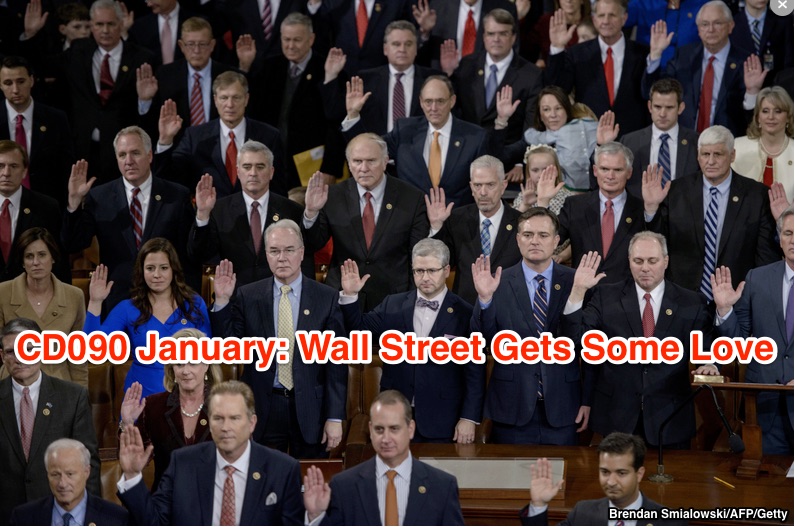
A summary of January, the first month of the 114th Congress. In this episode, a favor for Wall Street is signed into law, the Senate did almost nothing, and the House passed bills that benefit Wall Street, fossil fuel companies, and companies that don't want to give you health insurance. There were a few good bills mixed in there too. Please Support Congressional Dish: Click here to contribute with PayPal or Bitcoin; click the PayPal "Make it Monthly" checkbox to create a monthly subscription Click here to support Congressional Dish for each episode via Patreon Mail Contributions to: 5753 Hwy 85 North #4576 Crestview, FL 32536 Thank you for supporting truly independent media! January Laws HR 26: Terrorism Risk Insurance Program ReAuthorization Act of 2015 The bill reauthorizes and changes the terms of the program that provides Federal insurance to businesses damaged in a terrorist attack. The program was dead for 12 days after expiring on December 31, 2014. Extends the program until December 31, 2020 Decreases the Federal share of compensation from 85% to 80% over the course of the next five years. There's a $100 billion cap on Federal losses. The program trigger, which is the point at which insurance companies get Federal money, gradually increases from $100 million now to $200 million. The Secretary of Treasury alone will certify the act of terrorism; the Secretary of State will no longer be involved. A rollback of the Dodd Frank financial reform bill was attached. The attachment prevents the SEC from telling swaps traders how much cash they need to put up front to make a swaps trade. The attachment is the text of the Business Risk Mitigation and Price Stabilization Act, which was written by Rep. Michael Grimm. He tried to get it passed in the 112th and 113th Congresses, before he resigned on the first day of the 114th Congress after pleading guilty to tax fraud. The Securities and Investment industry was his #2 contributor, giving him over $400,000. Rep. Jeb Hensarling, who fought to keep this provision in the bill, has taken at least $2.8 million from the financial industry. January Bills H.R. 22 and S. 12: Hire More Heroes Act Veterans with government health care will not count towards the 50 employee Affordable Care Act threshold which triggers a company's obligation to give employees health insurance. The bill is sponsored by Rep. Rodney Davis in the House, who has taken over $180,000 from health professionals and over $160,000 from the insurance industry. The bill is sponsored by Senator Roy Blunt of Missouri, who has taken almost $1.3 million from health professionals and almost a million from the insurance industry. H.R. 23: National Windstorm Impact Reduction Act Reauthorization of 2015 Reauthorizes and updates the National Windstorm Impact Reduction Program The program designed to improve weather modeling, coordinate post-storm investigations, improve understanding of wind's impact on buildings and vital infrastructure, and promote adoption of storm preparation measures. Appropriates about $21 million per year for the next three years Written by Rep. Randy Neugebauer of Texas H.R. 34: Tsunami Warning, Education, and Research Act of 2015 Consolidates tsunami warning systems for the Pacific and Arctic Oceans and for the Atlantic Ocean into a single warning system, which will cooperate with other countries' warning systems. Appropriates $27 million per year through 2017 to get this done. Passed unanimously. Written by Rep. Suzanne Bonamici of Oregon H.R. 203: Clay Hunt Suicide Prevention for American Veterans Act Requires annual independent evaluations of Veteran's Administration mental health programs Requires the Veteran's Administration to create a website for information about their mental health services that needs to be updated at least every 90 days. Creates a three year pilot program to repay psychiatrists' loans ($30,000 a year) if they work for at least two years at the Veteran's Health Administration. Prohibits any additional money to get this done. Written by Democrat Rep. Timothy Walz of Minnesota H.R. 351: LNG Permitting Certainty and Transparency Act Forces the Department of Energy to decide on applications to construct, expand, or operate liquified natural gas export facilities within 30 days of the completed NEPA review. Requires the applicant to publicly disclose the specific destination of the liquified natural gas exports. Written by Rep. Bill Johnson of Ohio, whose top three contributing industries are #1 Leadership PACs, who have given him over $387,000, #2 Mining, who has given him over $250,000, and #3 Oil and Gas, who has given him over $244,000. H.R. 3: and S. 1 Keystone XL Pipeline Act Explicitly approves the Keystone XL pipeline. Forces any lawsuits against the pipeline to be filed in Washington D.C. or in the Supreme Court Written by Rep. Kevin Cramer of North Dakota, whose #1 contributing industry is Oil & Gas, who have given him over $322,000. The House version would
Ep 89CD089: Secrets of the CRomnibus (2015 Budget)
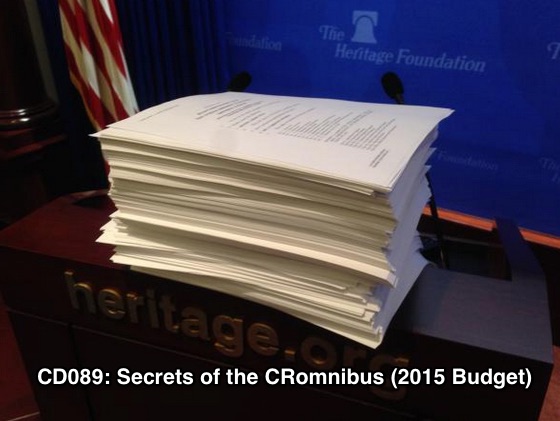
In this episode, we look at the riders added to the must-sign 2015 budget, including favors for Wall Street, unions, agribusiness, the oil and gas industry, electric utilities, the vending machine industry, telecoms, the trucking industry, the insurance industry, and the politicians themselves. Please Support Congressional Dish: Click here to contribute with PayPal or Bitcoin; click the PayPal "Make it Monthly" checkbox to create a monthly subscription Click here to support Congressional Dish for each episode via Patreon Mail Contributions to: 5753 Hwy 85 North #4576 Crestview, FL 32536 Thank you for supporting truly independent media! CRomnibus Article: CRomnibus Disaster Signals a Sad New Normal in D.C. by David Dayen. The Fiscal Times. December 2014. Article: Wall Street's Omnibus Triumph, and Others by Russ Choma, OpenSecrets Blog, December 2014. Division A Agriculture & FDA Section 741: Defunds an advisory board made up of scientists that evaluates the effectiveness of food safety inspection processes. Section 750: Prohibits funding from being used to inspect livestock slaughterhouses to make sure diseased animals are separated from animals who will be eaten and to make sure the animals are being slaughtered humanely. Section 751: States can exempt schools from the requirement to provide whole grains to students in school lunches. Section 752: No money can be used to implement a law that would require a sodium reduction in school lunches. Division B Commerce, Justice, & Science Section 202: The Department of Justice can't pay for an abortion unless the mother's life is in danger or unless she was raped. The bill acknowledges that this might be unconstitutional and if so, this provision will be "null and void". Section 501: Money can't be used for propaganda that is not authorized by Congress. Section 509: No money can be used to seek the removal of another country's tobacco marketing restrictions, "except for restrictions which are not applied equally to all tobacco or tobacco products of the same type". Article: US floats cutting tobacco from part of Pacific trade pact, Krista Hughes, Reuters, October 21, 2014. Section 516: "None of the funds made available in this Act shall be used in any whatsoever to support or justify the use of torture by any official or contract employee of the United States Government." Section 517: Fully automatic weapons may be exported to Canada without an export license if they are to be used by the US Federal Government or the government of Canada. Section 519: Prohibits new trade agreements from including language that forces countries to police the unauthorized distribution of patented pharmaceuticals, language that prevents generic versions of drugs before the patent has expired, and language that allows patent owners to prevent importation of products even if their product is available in other countries. Section 528: No money can be used to transfer Khalid Sheikh Mohammaed or any other detainee from Guantanamo Bay prison to another location in the United States. Section 530: The government should purchase Energy Star light bulbs to the extent practicable. Section 533: Prohibits government employees from denying or ignoring a permit to import shotguns. Section 538: Prevents the Department of Justice from using it's money to prevent States from implementing their medical marijuana laws. TITLE VI- Travel Promotion Enhancement and Modernization Act Passed the House in July 2014 and was discussed on CD081: The July Bills. Changes the board of directors of Brand USA – a non-profit organization that advertises U.S. tourism – from being made up of travel industry specialists to one made up of entirely of executives, with five seats reserved for people with ties to multinational corporations. It eliminates the seat for the specialist in intercity passenger rail. Extends the authorization for the government to spend $100 million per year on Brand USA through 2020. Extends the Travel Promotion Fee – a $10 fee charged to people who get a visa to travel into the United States – until 2020. Division C Defense Coming Soon Division D Energy & Water Section 107: Federal funding can't be used to enforce the mitigation regulations known as the "Modified Charleston Method." The Modified Charleston Method was implemented in May 2011 and is a formula for calculating how much wetlands need to be protected for each acre of private development. This method protects more wetlands than are protected when it is not used, generally requiring 3 acres of wetland conservation for every acre destroyed. InfoPacket: The University of New Orleans 2013 Economic Outlook & Real Estate Forecast Seminar for the Northshore One of the projects impacted is a Kinder Morgan natural gas pipeline. Kinder Morgan has given almost $80,000 to the Boehner for Speaker Committee. Article: Wetlands Mitigation Rules Get Tougher, and St. Tammany Officials Get Worried by Christine Harvey. The Times-Picayune. March 2012. Amend

Ep 88CD088: What is the 114th Congress?
In this bonus episode, a quick overview of Congressional basics. We also examine the priorities of the 114th Congress by reviewing the bills that were passed during its first week. Please Support Congressional Dish: Click here to contribute with PayPal or Bitcoin; click the PayPal "Make it Monthly" checkbox to create a monthly subscription Click here to support Congressional Dish for each episode via Patreon Mail Contributions to: 5753 Hwy 85 North #4576 Crestview, FL 32536 Thank you for supporting truly independent media! 114th Rules of the House The 114th Congress passed the new rules, which amended the rules passed by the 113th Congress. The Congressional Budget Office (CBO) will have to estimate the budgetary effects of major bills on businesses by requiring estimates of "economic output, employment, and capital stock" that would result if the bill became law. Allows the Committee on Oversight and Government Reform to continue the lawsuit against Attorney General Eric Holder and the investigations into the "Fast and Furious""scandal". Continues a lawsuit that aims to stop the Obama Administration from paying for subsidies to health insurance companies to offset the cost of low-income health insurance plans. Prohibits a bill that would shift funds out of the Social Security trust fund. Continues the Benghazi investigation. Bills Passed in the First Week House of Representatives HR 26: Terrorism Risk Insurance Program ReAuthorization Act of 2015 The bill reauthorizes and changes the terms of the program that provides Federal insurance to businesses damaged in a terrorist attack. A rollback of the Dodd Frank financial reform bill was attached. The bill passed both chambers of Congress and is expected to be signed into law by President Obama. HR 22: The Hire More Heroes Act of 2015 The Affordable Care Act requires employees with over 50 workers to provide their workers with health insurance benefits. If this bill becomes laws, workers who are military veterans will not count towards the 50 employee threshold. The bill passed the House unanimously. HR 30: Save American Workers Act of 2015 The Affordable Care Act requires that an employee that works over 30 hours per week is considered full time and, if the employer is required to provide health insurance to full time staff, is eligible for employer-paid health insurance benefits. This bill would change the threshold for health insurance eligibility to 40 hours per week. HR 3: Keystone XL Pipeline Act Allows TransCanada to "construct, connect, operate, and maintain" the Keystone XL pipeline. Only the Supreme Court and the Court of Appeals for Washington DC can hear civil cases against the pipeline. The bill passed with the entire Republican Party and 28 Democrats voting Yes. Sponsored by Rep. Kevin Cramer, North Dakota's only Representative. His top contributing industry is Oil & Gas; he's taken over $400,000. Defeated... For Now HR 37: Promoting Job Creation and Reducing Small Business Burdens Act A package of 11 bills from the 113th Congress that would have rolled back Dodd Frank financial reform even further. Was defeated as an uncontroversial suspension bill, which required 2/3 of the House for passage. Expect to see this bill come up for a vote under regular order in the near future. The bill was sponsored by Rep. Michael Fitzpatrick of Pennsylvania, who is retiring from Congress at the end of this term. His #1 contributing industry is leadership PACs but his #4 is the finance industry. He's taken almost half a million dollars. Music Presented in This Episode Intro & Exit: Tired of Being Lied To by David Ippolito (found on Music Alley by mevio) Be Heard Have something to say? Leave a message on the Congressional Dish voicemail line and it might be featured on the show! Call (339) 707-0307 Help Congressional Dish Rate Congressional Dish with 5 stars on iTunes and leave a rave review. Download and share the FREE Congressional Dish app for iPhones & iPads and all Android devices. Submit your favorite episodes to Reddit. Musicians: Share your music with Congressional Dish (and the world) - email the mp3 to Jen at Congressioanldish dot com. Share your favorite episodes with other podcasters, share with your Facebook friends, share with your Tweeps, share, share, share! Thank you for supporting Congressional Dish
Ep 87CD087: Run for Congress with Chris Clemmons
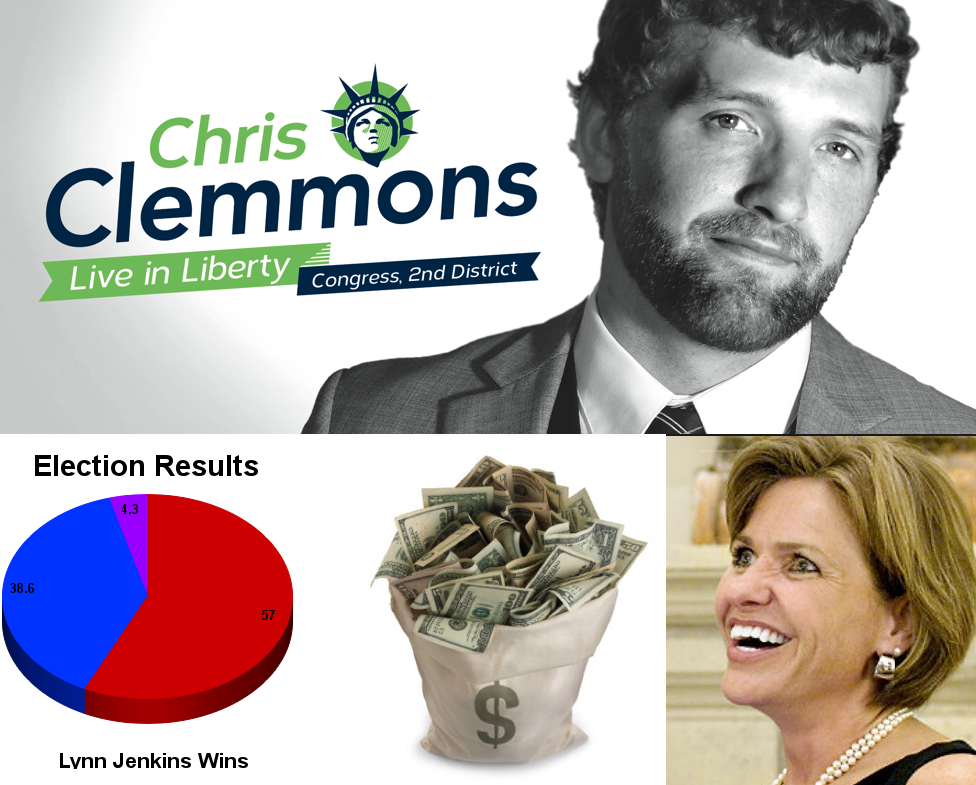
In this episode, an interview with Chris Clemmons, a member of the Congressional Dish family who ran for the House of Representatives in Kansas' 2nd district. In this episode, we discuss the experience of running for Federal office, the election results, and begin to brainstorm how to win without corporate cash in 2016. Please Support Congressional Dish: Click here to contribute with PayPal or Bitcoin; click the PayPal "Make it Monthly" checkbox to create a monthly subscription Click here to support Congressional Dish for each episode via Patreon Mail Contributions to: 5753 Hwy 85 North #4576 Crestview, FL 32536 Thank you for supporting truly independent media! Information Presented in This Episode Chris Clemmons is running for Congress in Kansas' 3rd district in 2016: Campaign website Follow Chris on Twitter Campaign Facebook page Chris ran against and was defeated by Rep. Lynn Jenkins: Lynn Jenkins took over $2.5 million in campaign contributions. Kansas' 2nd district election results. Chris will be running against Rep. Kevin Yoder in 2016. Kevin Yoder proudly inserted the bill written by Citigroup, which allows banks to gamble with our deposits on risk using "swaps", into the 2015 "CRomnibus" budget, which was signed into law. Music Presented in This Episode Intro & Exit: Tired of Being Lied To by David Ippolito (found on Music Alley by mevio) Have You Had Enough? by rotflmao (found on Music Alley by mevio) Step Up by Dona Oxford (found on Music Alley by mevio) Be Heard Have something to say? Leave a message on the Congressional Dish voicemail line and it might be featured on the show! Call (339) 707-0307 Help Congressional Dish Rate Congressional Dish with 5 stars on iTunes and leave a rave review. Download and share the FREE Congressional Dish app for iPhones & iPads and all Android devices. Submit your favorite episodes to Reddit. Musicians: Share your music with Congressional Dish (and the world) - email the mp3 to Jen at Congressioanldish dot com. Share your favorite episodes with other podcasters, share with your Facebook friends, share with your Tweeps, share, share, share! Thank you for supporting Congressional Dish

Ep 86CD086: The CRomnibus Hearing
In this special episode, Matt Acalin joins Jen to watch the only hearing that will ever take place regarding the 1,603 page "CRomnibus", which funds most of the government for 2015. Please support Congressional Dish: Click here to contribute with PayPal or Bitcoin; click the PayPal "Make it Monthly" checkbox to create a monthly subscription Click here to support Congressional Dish for each episode via Patreon Mail Contributions to: 5753 Hwy 85 North #4576 Crestview, FL 32536 Thank you for supporting truly independent media! The "CRomnibus" Hearing Text of the "CRomnibus" Information Presented in this Episode Green Party Candidates Arrested, Shackled to Chairs For 8 Hours After Trying to Enter Hofstra Debate, Democracy Now, October 17, 2012. Sporcle: Trivia, Quizzes, and Brain Games Salmon is a color in the Crayola box New IAM Ad Targets Congress' Attack on U.S. Pensions, International Association of Machinists and Aerospace Workers, December 9, 2014. Music Presented in This Episode Intro: Tired of Being Lied To by David Ippolito (found on Music Alley by mevio) Where'd That Money Go? by David Ippolito (found on Music Alley by mevio)
Ep 85CD085: The November Bills
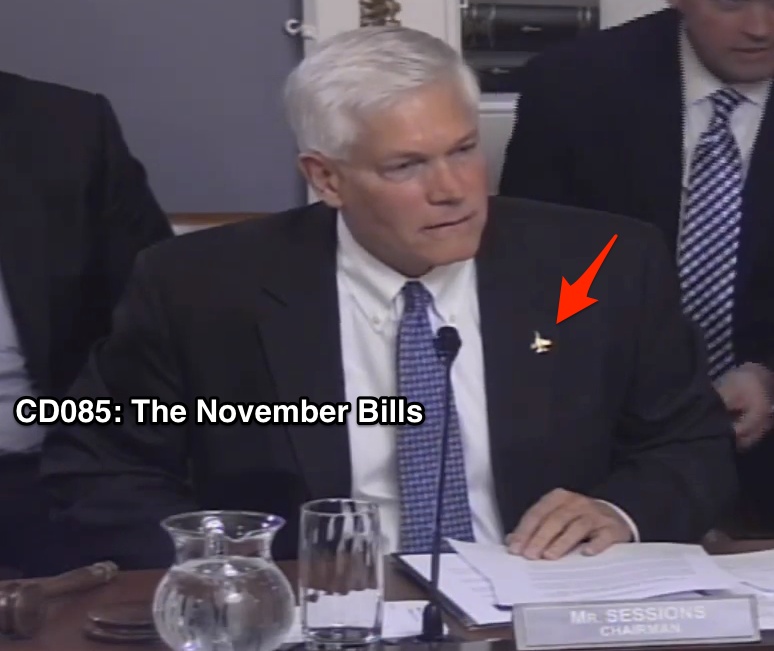
After the election, the House of Representatives passed five bills that would help the fossil fuel industry. Included in this episode are a bill to approve the Keystone XL pipeline, a bill to sell off oil-rich public land to a private corporation, and three bills that make life harder at the EPA. Finally, we end with a sound clip straight out of 1984. Click here to contribute with PayPal or Bitcoin; click the PayPal "Make it Monthly" checkbox to create a monthly subscription Click here to support Congressional Dish for each episode via Patreon Mail Contributions to: 5753 Hwy 85 North #4576 Crestview, FL 32536 CD085: November Bills H.R. 5682: Approves the Keystone XL Pipeline Approves the construction and operation of the Keystone XL pipeline, specifically approving any route through the State of Nebraska. Forces anyone who want to challenge the Keystone XL pipeline in court to go to Washington D.C. to do it. Written by Rep. Bill Cassidy of Louisana, who has taken over $377,000 from the oil and gas industry for the 2014 election alone. In total, he has taken over $646,000 from the oil and gas industry over the course of his career. H.R. 5167: Sell Property in the National Petroleum Reserve in Alaska to a Corporation Forces the sale of 1,518 acres of Federal land in the National Petroleum Reserve in Alaska to the Olgoonik Corporation. Allows the Olgoonik Corporation to begin construction before the sale is complete. The land sale will be exempt from the National Environmental Policy Act (NEPA). Written by Rep. Don Young of Alaska, who has taken over $1.2 million from the Oil and Gas Industry. Related Articles US: Little Big Companies. How did corporations like Halliburton get millions in government contracts designated for small minority businesses? Michael Scherer, Mother Jones, January/February 2005. H.R. 4795: "Promoting New Manufacturing Act" The EPA would have to issue implementation regulations at the same time they publish or revise air quality rules. Written by Rep. Steve Scalise of Louisiana's 1st district. H.R. 4012: "Secret Science Reform Act" The EPA must publish all their scientific and technical information online before they can propose, distribute, or finalize assessments or regulations. Written by Rep. David Schweikert of Arizona's 6th district. H.R. 1422: EPA Science Advisory Board Reform Act Changes the make-up of the Scientific Advisory Board to allow some people with conflicts of interest to serve. Makes all information used by the board available to the public. The EPA and the board will have to respond in writing to all public comments. The board will be discouraged from making policy recommendations. Written by Rep. Chris Stewart of Utah's 2nd district, who has taken over $111,000 in the last four years from Oil & Gas - his top contributing industry. Clips November 17, 2014 Rules Committee Hearing Rep. Susan Bonamici of Oregon: HR 1422 would add an extra comment period during which the government would have to give commenters written responses. Rep. Susan Bonamici of Oregon: HR 1422 would loosen rules on recusing oneself when there are financial conflicts of interest. Rep. Jim McGovern of Massachusetts: I thought we'd be debating war in Iraq during the lame duck session. Rep. Pete Sessions of Texas and Rep. Chris Steward of Utah: Rep. Pete Sessions wears a fighter jet lapel pin because it fits one of his favorite sayings: "Peace through Superior Fire Power" Additional Information Loretta Lynch's Wall Street friends: What you should know about AG nominee's finance past by David Dayen. Salon. November 2014. Music in this Episode Intro: Tired of Being Lied To by David Ippolito (found on Music Alley by mevio) Oil by Spicehouse (found on Music Alley by mevio) Who Would Jesus Bomb? by Nashville Session Players (found on Music Alley by mevio) Exit: I Sure Hope Not by Sam Levin

Ep 84CD084: Corporations Win the Midterm Election
In this episode, the Republicans won control of both the House of Representatives and the Senate. A press conference by soon-to-be Senate Majority Leader Mitch McConnell gives us an idea of what they intend to do with their new power. Please support Congressional Dish: Click here to contribute with PayPal or Bitcoin; click the PayPal "Make it Monthly" checkbox to create a monthly subscription Click here to support Congressional Dish for each episode via Patreon Mail Contributions to: 5753 Hwy 85 North #4576 Crestview, FL 32536 Thank you for supporting truly independent media! Information Presented in this Episode Video: Mitch McConnell's press conference on November 5, 2014, the day after the midterm election. Article: United States Election Project estimate of voter turnout in the 2014 midterm election. Article: Jim Crow Returns: Millions of Minority Voters Threatened by Electoral Purge, Al Jazeera, October 2014. Article: Where Are the Millennials? Midterm Voters Skew Old, NBC News, November 2014. [caption id="" align="alignnone" width="520"] 88% of young people didn't vote in 2014.[/caption] Information Presented in This Episode Intro and Exit Music: Tired of Being Lied To by David Ippolito (found on Music Alley by mevio)
Ep 83CD083: The Story of the 113th Congress
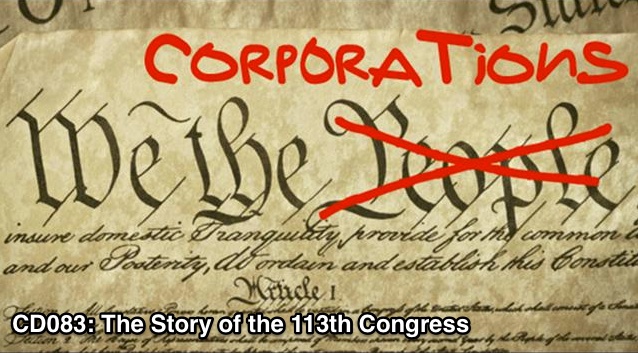
This episode is the summary of everything that happened in the House of Representatives during the 113th Congress. Please support Congressional Dish: Click here to contribute with PayPal or Bitcoin; click the PayPal "Make it Monthly" checkbox to create a monthly subscription Click here to support Congressional Dish for each episode via Patreon Mail Contributions to: 5753 Hwy 85 North #4576 Crestview, FL 32536 Thank you for supporting truly independent media! Information Presented in This Episode The One Bill by Which All Representatives Should be Judged Find out how your Representative voted on H.R. 992, the "bill written by CitiGroup that would allow banks to use our deposits to gamble with the same financial scam products that crashed the economy in 2008 and would give these banks - foreign and domestic - taxpayer funded bailouts when it inevitably blows up in their faces again." Travel Expenses [caption id="" align="aligncenter" width="998"] An example of how much money the Representatives in the House have spent on travel, possibly because they were allowed to use our money on private jets.[/caption] The Fiscal Cliff Law Article: Senate report: Apple claims subsidiaries to avoid paying billions in taxes each year, InfoWorld, May 2013. Ebola FactSheet: Malaria kills about 500,000 Africans per year. Article: New discoveries raise West Africa oil hopes, Reuters, February 2012. Report: The West African Oil & Gas Market 2013-2023, MarketWatch, September 2013. Article: U.S. Ebola fighters head to Africa, but will the military and civilian effort be enough?, Washington Post, October 2014. Ebola FearMongering from Russell Howard's Good News Article: Millions of Doses of Ebola Vaccine to Be Ready by End of 2015, Scientific American, October 2014. Article: Ebola outbreak: Johnson & Johnson get OK to fast-track vaccine trials, CBC News, September 2014. Op-Ed: Ebola and the most important agency America has never heard of by Rep. Mike Rogers, The Hill, October 2014. Ukraine Article: Ukraine Crisis Death Toll Nears 4K: United Nations, International Business Times, October 2014. Syria Article: The death toll in U.S. airstrikes in Syria, broken down, The Washington Post, October 2014. We Always Give Them Their Jobs Back Article: Voters Throw Bums In While Holding Congress in Disdain, Bloomberg, December 2012.
Ep 82CD082: Last Bills Before The Election
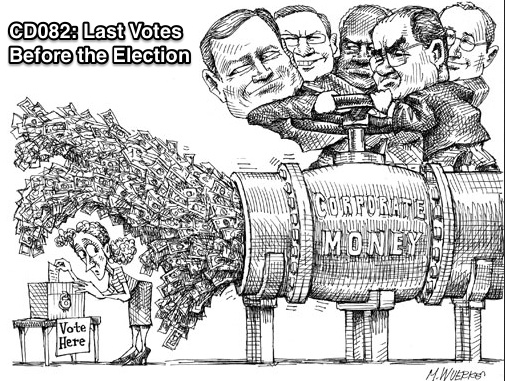
In this episode, we discuss the bills that passed in August and September, the last bills to pass before the election. Included are bills that give money to Israel, screw over immigrant kids, audit the Fed, poison the environment, create huge corporate tax cuts, and more. Also, the story of CryptoWall, the computer virus holding our memories hostage. Please support Congressional Dish: Click here to contribute with PayPal or Bitcoin; click the PayPal "Make it Monthly" checkbox to create a monthly subscription Click here to support Congressional Dish for each episode via Patreon Mail Contributions to: 5753 Hwy 85 North #4576 Crestview, FL 32536 Thank you for supporting truly independent media! H.J. Res 76: A bill that gives $225 million to Israel's Iron Dome Iron Dome By Israel Defense Forces and Nehemiya Gershoni Gave $225 million to Israel for their Iron Dome missile defense system. Article: Gaza Crisis: Toll of Operations in Gaza, BBC World, September 2014. Article: Raytheon a key in Israeli defense plan, Boston Globe, July 2014. Written by Rep. Rodney Frelinghuysen of New Jersey's 11th district. It passed the House of Representatives with by a vote of 248-176. All Republicans voted yes. There was no recorded vote in the Senate. H.R. 5272: Ship Off Children of Immigrants Act of 2014 Prevents leniency as ordered in a 2012 Department of Homeland Security directive that discourages deportation proceedings for illegal immigrants who were brought to the U.S. as young children. Prevents all undocumented people from working in the United States. Written by Rep. Marsha Blackburn of Tennessee's 7th district. Passed the House of Representatives by a vote of 216-192. Every Representative from the following states voted yes: Alaska Arkansas Idaho Kansas Montana Nebraska North Dakota Oklahoma South Dakota West Virginia Wyoming H.R. 5078: Waters of the United States Regulatory Overreach Protection Act of 2014 Prevents implementation and enforcement of a proposed EPA rule that would clearly protect seasonal and rain-dependent streams and wetlands near streams and prevents any rule like it in the future. Written by Rep. Steve Southerland of Florida's 2nd district. The bill passed the House of Representatives by a vote of 262-152. H.R. 3522 A bill that allows health insurance companies to provide less coverage. Allows health insurance companies to continue to offer health plans to employer that don't comply with the minimum standards set by the Affordable Care Act until 2019. Written by Rep. Bill Cassidy of Louisiana's 6th district The bill passed the House of Representatives by a vote of 247-167. All Republicans voted yes. H.R. 24 Federal Reserve Transparency Act of 2013 Requires an audit of the Board of Directors of the U.S. Federal Reserve and the Federal Reserve banks within a year of this bill becoming law. Eliminates a list of things in the Federal Reserve that are not allowed to be audited, including: Transactions for or with foreign central banks, foreign governments, or international financing organizations. Debates and decisions on monetary policy The amount of money in member banks Written by Rep. Paul Broun of Georgia's 10th district. The bill passed the House of Representatives by a vote of 333-92. H.R. 5462 A bill that increases air travel fees Increases the TSA fee from a maximum $5 each way to $5.60 each way or $11.20 roundtrip. Written by Rep. Richard Hudson of North Carolina's 8th district. Passed the House of Representatives by a vote of 423-0. H.R. 4 Jobs for America Act This bill is a package of bills that have already passed the House of Representatives in the 113th Congress. The entire bill will not be counted in the PAYGO budget. Ways and Means Includes the Save American Workers Act, which requires an employee to work 40 hours per week, instead of 30 hours per week, in order to be considered "full-time" and get employer-provided health insurance. CBO said this bill would increase the deficit by $45.7 billion over the next ten years. This bill was discussed in CD075: The April Bills. Includes the American Reseach and Competitiveness Act of 2014, which expands and permanently extends the tax credits businesses receive for research and development expenses. The CBO said this bill alone would increase the deficit by $156 billion over the next ten years. This bill was discussed in CD077: The May Bills. Includes the America's Small Business Tax Relief Act, which expands and makes permanent an expiring corporate tax cut. CBO said this bill would increase the deficit by $73 billion over the next ten years. This bill was discussed in CD078: The June Bills. Includes the S Corporation Permanent Tax Relief Act, which reduces the number of years that some corporate income is taxable. CBO said this bill would increase the deficit by $1.5 billion over the next ten years. This bill was discussed in CD078: The June Bills. Includes the corporate tax cuts for upgrading the inside of retail stores which CBO said would
Ep 81CD081: The July Bills
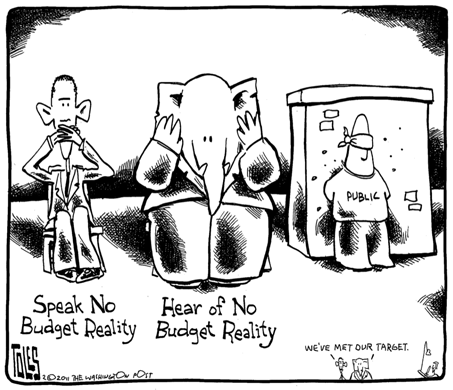
In this episode, we look at the bills that passed the House of Representatives in July but haven't yet become law. Topics include tax cuts, student loans, education, Hezbollah, and pesticides in our water. Please support Congressional Dish: Click here to contribute with PayPal or Bitcoin; click the PayPal "Make it Monthly" checkbox to create a monthly subscription Click here to support Congressional Dish for each episode via Patreon Mail Contributions to: 5753 Hwy 85 North #4576 Crestview, FL 32536 Thank you for supporting truly independent media! H.R. 4718 Permanent Bonus Depreciation Tax Cut Brings back a tax cut that expired on December 31, 2013 and makes it permanent. The cut they want to make permanent is for upgrading the inside of retail stores. Expands the tax cuts to include deductions for "trees and vines bearing fruits and nuts". Gives corporations more choices about how they'd like to get taxed. The effects of this bill won't be counted in the PAYGO budget. CBO Score: "Enacting H.R. 4718 would reduce revenues, thus increasing federal budget deficits, by about $287 billion over the 2014-2024 period." Article: New Estimate Puts Rising Big Dig Costs at $24.3 billion. July 2012. The bills passed the House of Representatives on July 11 by a vote of 258-160. Only two Republicans voted against it: Retiring Rep. John Campbell of Orange County, CA Rep. Walter Jones of North Carolina The bill was written by Rep. Patrick Tiberi of Ohio's 12th district. H.R. 4195 Federal Register Modernization Act Says that copies of the Federal Registrar don't need to be printed on paper. CBO Score: It would have no effect on the Federal budget. Passed the House of Representatives on July 14 by a vote of 386-0. Written by Rep. Darrell Issa of southern California's 49th district H.R. 4719 America Gives More Act of 2014 Eliminates the tax deduction for donating stuffed actual animals to charity. Increases the charitable deduction limit for food donations from 10% of a person's net income to 15%. Charitable donations that exceed the cap can be carried over for five years. This would be effective for 2014 taxes. Makes permanent a tax cut that expired in 2013 for charitable contributions direct from retirement funds. Makes permanent tax credits for charitable donations towards conservation and tax credits for corporate farmers and ranchers. Allows people to claim charity deductions for a year that is over if the donation happens before tax day. Cuts the excise tax rate for private foundations investment income in half. The effects of this bill the budget will not be counted in the PAYGO budget. CBO Score: "enacting H.R. 4719 would reduce revenues, thus increasing federal budget deficits, by about $1.9 billion over the 2014-2024 period" The bill passed the House of Representatives on July 17 by a vote of 277-130. The bill was written by Rep. Tom Reed of New York's 23rd district H.R. 4450 Travel Promotion, Enhancement, and Modernization Act of 2014 Changes the board of directors of Brand USA - a non-profit organization that advertises U.S. tourism - from being made up of travel industry specialists to one made up of entirely of executives, with five seats reserved for people with ties to multinational corporations. It eliminates the seat for the specialist in intercity passenger rail. Extends the authorization for the government to spend $100 million per year on Brand USA through 2020. Extends the Travel Promotion Fee - a $10 fee charged to people who get a visa to travel into the United States - until 2020. CBO Score: The bill would decrease the deficit by $231 million over the next ten years. Passed the House of Representatives on July 22 by a vote of 347-57 Written by Rep. Gus Bilirakis of Florida's 12th district H.R. 4411 Hezbollah International Financing Prevention Act of 2014 Prohibits United States banks from completing large financial transactions for Hezbollah. The worst penalty for completing a Hezbollah transaction can be for twice the amount of the transaction. This won't apply to "authorized intelligence activities of the United States" The bill is paid for by reducing our yearly financial gift to Pakistan by $3 million. The bill passed the House of Representatives on July 22 by a vote of 404-0. Written by Rep. Mark Meadows of North Carolina's 11th district H.R. 3136 Advancing Competency-Based Education Demonstration Project Act of 2014 Authorizes a maximum of 30 "entities" to launch demonstration projects of "competency-based" education programs, which would replace credit hours as the system of measurement to get a degree. Schools that participate would be exempted all kinds of existing educational regulations. Projects that reduce the amount of time and/or money required to get a degree would be prioritized. The only restriction to make a school eligible is that it has to be in the United States. Each demonstration project would have between 50 and 3,000 students. After the program has been around awhile, that num

Ep 80CD080: The July Laws
This episode examines three bills that passed Congress in July and have since become law. The first new law will give veterans quicker access to health care. The second new law is designed to provide job training to poor people, but a hidden provision will likely take us one step closer to 1984. The third new law is another glaring example of this Congress failing to do its job. Also, Jen tells you her plans for Congressional Dish's future. July Bills that Became Law H.R. 3230 Veterans Access, Choice, and Accountability Act of 2014 Allows veterans to get medical care outside the Veteran's Administration system; they can go to any health facility that serves Medicare patients, health centers, the Defense Department, and the Indian Health Service. Veterans are only given this option if they'd have to wait over 30 days for an appointment with the Veteran's Administration or if they live 40 miles or further from a Veteran's Administration clinic. If eligible, the veteran will receive a special identification card. How it works: Veteran notifies VA, VA puts Veteran on an electronic waiting list or authorizes their request, VA works out a payment agreement with the health care provider, VA reimburses health care provider but no more than they would for Medicare services. If the veteran gets treated for a problem that was not related to their military service, their health insurance plan will be responsible for payment and the health care provider will be responsible for going after the insurance company for the money. Veterans can not be charged higher co-payments for care at private facilities than they would have been charged at the Veteran's Administration. This program will end in three years. Orders a private-sector review, establishes a fifteen person commission, and creates a technology task force to review VA practices. Wait times for care can not be considered when determining performance bonuses for top officials at the Veteran's administration and performance goals that disincentivize using private health providers for veteran care will be eliminated. Wait times for health care at the VA, VA facility quality measures, and VA doctor credentials will be published online. The VA will add 1,500 graduate medical education residency positions for five years to address staffing shortages. Extends the program that reimburses medical students for education costs and increases the amounts they'll receive for working for the VA. Expands coverage for mental health care related to sexual assaults, which will include veterans on inactive duty. This will be effective August 7, 2015. Extends a pilot program for assisted living care for veterans with traumatic brain injuries until October 2017. Disqualifies public colleges that charge veterans more than State residents from being qualified schools for veteran education benefits. Makes it easier to fire or transfer senior executives at the Department of Veteran's Affairs. Appropriates $15 billion to implement these changes. The bill passed the Senate on July 31st by a vote of 91-3. The bill passed the House of Representatives on July 30 by a vote of 420-5. Rep. Walter Jones of North Carolina's statement H.R. 803 Workforce Innovation and Opportunity Act This bill was originally passed on March 15, 2013 as the SKILLS Act and was discussed in episode CD018: The Ryan Budget. The bill that became law was drastically different. Job Training Programs Keeps the make up of the boards largely the same: Most members will be representatives of the business community, twenty percent of the members must be State officials, and labor will be represented. The Chairmen will be from the business community. The State boards will advise local boards that will determine how funds are best spent in their local communities. States will be allowed to keep their current government-controlled boards, if they had established them before this bill became law. The goal is to come up with 4 year State and local plans to best provide workforce training to give the unemployed the skills most desired by the businesses that operate in the state. The State plans must be approved by the Secretary of Labor and Secretary of Education. The plans are deemed approved after 90 days if the agencies have not formally disapproved in writing. Government officials will be in charge of - and held liable for- disbursing government money for the job training programs. Local boards will have no control over curricula taught in job training courses. Success will be measured by the percentage of people who are employed and how much they're earning six months and a year after leaving the job training programs. If a state fails to meet performance requirements, the state will lose money. If a local board fails to meet performance requirements, their board may be replaced or job trainers may be disqualified. Job training funds are allowed to be spent on services provided by for-profit entities. Twenty percent of the funds wi

Ep 79CD079: The June Bills
This episode highlights the laws and bills that passed the House of Representatives in June. Most of the bills this month were dedicated to cutting corporate taxes and keeping us hooked on fossil fuels. Laws S 1044: WWII Memorial Prayer Act The bill originated in the Senate, where it passed unanimously; it passed the House on June 23 by 370-12 and was signed into law a week later. A plaque will be installed at the Washington D.C. World War II memorial that says that President Roosevelt prayed on the morning of D-Day. The plaque will be privately funded. Written by Sen. Rob Portman of Ohio. No Republicans voted against it. HR 316: Collinsville Renewable Energy Production Act Allows the Federal Energy Regulatory Commission to reinstate a license for two hydro-electric projects in Connecticut and allows the license to be transferred to the town of Canton, Connecticut. Written by Elizabeth Esty, a Democrat from Connecticut. The bill passed unanimously in the Senate and was supported by every Democrat in the House; only three Republicans voted against it. It was signed into law on June 30th. Bills HR 4457: America's Small Business Tax Relief Act of 2014 Makes permanent a four year business tax cut that allowed businesses to deduct up to $500,000 in property from their taxes. This is supposed to revert back to $25,000 in 2014. Adds things that can be deducted such as air conditioning, heating, and computer software. Eliminates some limits on what can be deducted. The amounts that can be deducted would increase yearly with inflation. The effects this bill would have on the budget would not be counted. Written by Rep. Patrick "Pat" Tiberi of Ohio. The bill passed with a vote of 272-144. HR 4453 S Corporation Permanent Tax Relief Act of 2014 Lowers the number of years that a kind of corporate income is taxable from ten years to five years. The effects this bill would have on the budget would not be counted. The bill passed 263-155 with the same two Republicans who voted against HR 4457 - Walter Jones of North Carolina and retiring Congressman John Campbell of California- voting against it. Forty-two Democrats said yes to this bill. The bill was written by Rep. David Reichert of Washington. HR 4413: Customer Protection and End User Relief Act Title I requires traders to have enough money to pay out customer bets and adds reporting requirements, but implements no punishment for non-compliance. Title II makes the Commodity Futures Trading Commission publish the costs and benefits of proposed regulations and creates a new Office of the Chief Economist within the Commodities Futures Trading Commission which has no specific purpose. The Commodity Futures Trading Commission could taken to court by a person - or corporation - that doesn't like their rules. The court can overturn the rules. Exempts some swaps gamblers from having to set aside money. Classifies fewer gamblers as "financial entities", which would effectively exempt them from some regulations. These changes are retroactive to July 21, 2010 (the effective date of the Dodd-Frank financial reform law). Walter Jones of North Carolina was the only Republican to vote against this bill (John Campbell didn't vote) and 46 Democrats joined the rest of the Republicans to pass it 265-144. The White House didn't issue a veto threat but said they "strongly oppose" the passage of this bill. It has little chance of becoming law. Written by Frank Lucas of Oklahoma. HR 3301: North American Energy Infrastructure Act Gives the Secretary of State, instead of the President, the authority to approve cross-border oil pipelines and forces them to make a decision within 120 days of the final environmental impact statement. No permit will be required to modify existing cross-border oil or gas pipeline. Allows the export and import of natural gas to Canada and Mexico without approval by the Federal Power Commission, which is required now. Allows the United States to transfer electricity to other countries without approval by the Federal Power Commission, which is required now. These provisions would be effective July 1, 2015. Written by Rep. Fred Upton of Michigan, who has taken over $2 million from the Energy and Natural Resources sector. The only Republican to vote against this bill was once again, Walter Jones of North Carolina. Seventeen oily Democrats joined the vast majority of the Republicans to pass this bill 238-173. HR 6: Domestic Prosperity and Global Freedom Act The Department of Energy would have to make their final decision on applications for gas export facilities within 30 days of the finished NEPA review. The public would have to be told where the gas is being exported. This bill was written by Rep. Cory Gardner, who is currently running for the Senate in Colorado. The bill passed 266-150. HR 4899: Lowering Gasoline Prices to Fuel an America that Works Act The government must lease at least 50% of the outer Continental Shelf that is thought to have the most oil and gas (a
Ep 78CD078: ISIS ISIL Bogeymen
In this bonus episode, details and analysis of the authorization to create a new military in Syria which is speeding towards becoming law. Information Presented in This Episode Clips in this episode are from the September 16, 2014 hearing in the Senate Armed Services Committee with testimony from Defense Secretary Chuck Hagel and Chairman of the Joint Chiefs of Staff General Martin Dempsey. Text of the amendment that was attached to the Continuing Resolution which will authorize the creating of a military in Syria. Congress plans to move forward with an Authorization for Military Force (AUMF) after the election. How did your representative vote?

Ep 77CD077: The May Bills
In this episode, we look at a bill that furthers the "new normal" in Africa, a bill that sanctions Venezuela, a banking bill, a charter school bill, some silly bills that won't become law, and a few Presidential declarations. Presidential Declarations H. Doc. 113-107: Withdrew Russia as a beneficiary country under the Generalized System of Preferences program Russia loses duty-free treatment. On what? State Dept website says: Products that are eligible for duty-free treatment under GSP include: most manufactured items; many types of chemicals, minerals and building stone; jewelry; many types of carpets; and certain agricultural and fishery products. USTR numbers sheet: Top 6 Products: Car parts, metals, tires, oil, precious metal jewelry, corn H. Doc. 113-108: Continued National Emergency in Syria H. Doc 113-109: Proposed agreement for nuclear energy with Vietnam Bills That Passed the House HR 4386: State Supervision of Banks Allows state examinations of banks if the state examines the banks for compliance with federal rules. Became Law on August 8th without any recorded votes. H.R. 3080: Water Project Funding This was the bill that privatized water projects that was the subject of episode CD050: Privatize Water Projects. The version that became law didn't rush environmental reviews. There's no deemed approval of projects and lawsuits against a permit will be barred after 3 years, not five months. The bill keeps the provision that allows natural gas companies and utilities to pay the Army to speed up their permitting process, but added that the authority will expire in seven years and the permits have to be available to the public on the Internet. The House version would have allowed privatization of facility management and emergency water projects but the law allows privatization of the construction of publicly paid-for water projects in the United States. The pilot program to privatize fifteen flood mitigation projects also survived. [caption id="attachment_1556" align="aligncenter" width="300"] Escape from privatized flood control projects in style![/caption] HR 2548: Economic Hitmen to Africa Act of 2014 Passed 297-117 on May 8, 2014 "The Millennium Challenge Corporation's work in the energy sector shows high projected economic rates of return that translate to sustainable economic growth and that the highest returns are projected when infrastructure improvements are coupled with significant legislative, regulatory, institutional, and policy reforms." Orders a report on "Administration policy to support partner country efforts to attract private sector investment and public sector resources." Would be US policy to promote installation of 20,000 megawatts of electricity in sub-Saharan Africa by 2020 and support "the necessary in-country legislative, regulatory and policy reforms to make such expansion of electricity access possible." Electricity would come from new hydroelectric dams "supported" by the private sector. The President needs to establish the policy and funding strategy which includes efforts "to attract private sector investment and public sector resources". It's the sense of Congress that USAID should give loan guarantees to banks in Africa and grants to undefined groups to support this plan. USAID is requesting $1.5 billion from Congress in 2015. Part of the strategy includes providing technical assistance to African governments "to remove unnecessary barriers to investment" in commercial projects. "Trade and development policy: In general, the director of the Trade and Development Agency should promote United States private sector participation in energy sector development projects..." Introduced by Rep. Ed Royce, who represents the hot and dusty parts of Orange County, California. S. 2508, an almost identical bill, was introduced in the Senate in June by a Democrat. The White House has not issued a veto threat. H.R. 4578: Sanction Venezuela Act No Recorded Vote - Passed Unanimously After the former President of Venezuela, Hugo Chavez, died in 2013, his hand-picked Vice President, Nicholas Maduro, became President. President Maduro continued the policies of Hugo Chavez which are not liked by the multi-national corporations. For example, he recently cracked down on electronics and car dealers for price gauging, making good on an announcement from late last year during which he said he wants limits on business' profit margins. President Nicholas Maduro is not a free-market kind of leader. Since February, there have been protests in the wealthier areas of Venezuela. This is where things get murky. The protests were started by students who were apparently protesting the high crime rate, inflation, and inability to get certain products. People against President Maduro quickly joined. President Maduro has accused the United States of stirring up the protests to attempt what he called a "slow-motion" coup, like the recent successful coup in Ukraine. It's worth remembering that the U.S. was prove

Ep 76CD076: Weapons for the World
A look at the funding for foreign militaries that might become law as part of the 2015 National Defense Authorization Act (NDAA) that passed the House of Representatives in May. Included is a look at the US funding for Israel's military, the funding for the "drug war" in Columbia, the "new normal" in Africa, the continuation of our wars in Afghanistan and Iraq, and the brewing war with Russia. Congress has passed a National Defense Authorization Act for 53 straight years. Money for Israel Congressional Research Service report from April 2014 on U.S. Foreign Aid to Israel. After the holocaust, Jewish survivors who had just been put through Hell on Earth needed a place to go. In 1948, the United Nations decided to give them a country. That's what Israel is- a country created after World War II for the Jewish people. Now, the fair thing to do would have been to give them some of Germany's land. After all, Germany was responsible for the Holocaust. But instead, because of their religion, the men in charge gave the Jewish people their Holy land around Jerusalem. There was one huge problem with this course of action: The land they wanted for Israel already had people living there, the Palestinians. In 1948, the land around Jerusalem that had been a British colony was split and Isreal was officially created. In the process, Palestinians were kicked out of their homes. The people who were kicked out - most of them Arab - were pissed about it. They're still pissed, not only about that original injustice but also because of the continued land grabs that have happened ever since. Over the years, the map of Israel has been redrawn, each time more land going to the Jewish people and less land remaining for the Palestinians. The Palestinians have been pushed into two bubbles - One is a large chuck in the Eastern part of Israel, which borders the Dead Sea and Jordan called the West Bank. The other chunk is a teeny tiny strip of land in the south part of Israel called Gaza. Gaza is surrounded by Israel on two sides, the sea on one side, and Egypt on the other. Inside that little strip are 1.8 million people, 70% of them refugees from the land that now makes up Israel. In 2005, the Palestinians scored a victory in the smaller bubble known as Gaza. Israeli condo builders had to abandon the home's they built on Palestinian land - described on the TV as "settlements" - and the Israeli military withdrew their troops from the tiny Gaza strip. However, Israel would still control the airspace over Gaza and the sea off Gaza's shore, meaning Gaza is still surrounded and controlled by Israel on three of it's borders; Egypt controls the other. In 2007, the Palestinians elected a political group called Hamas to run their government. Hamas is openly anti-Israel - they say so right in their charter - and the Palestinians would be punished by Israel for their electoral decision. Since 2007, Israel has enacted a blockade, allowing very few products into or out of Gaza. Because of the Israeli blockade, Gaza residents can't export their products, which means they have few opportunities to make money. Israel has also limited what products can come in: They've limited food, medicine, access to doctors, drinking water, energy, etc. In addition to blocking products, the people themselves are not allowed to leave. Gaza is often compared to an open air prison; the residents stuck there and their every move monitored by the Israeli government. The Ralph Nader Hour: The situation in Gaza During this latest Israeli-Gaza war, as of this recording, 1,915 Palestinians have been killed with the UN estimating that over 85% of them are civilians. With their intricate knowledge of the layout and personal details of all the Gazan residents, there's no way that is an accident. The proof that stands out in my head is the UN school - the United Nations was housing Gaza refugees in a school and told Israel the location 17 times. Israel bombed it anyway. Hamas - the political party currently running Gaza- is also behaving immorally. Hamas has been firing rockets into Israel and has said they won't stop until the economic blockade is lifted.. They've put up their best fight, launching thousands of rockets but have only managed to kill three Israeli civilians along with 64 Israeli soldiers. The law of the United States is that it is our responsibility to make sure that Israel has a "Qualitative Military Edge" over other countries, which means we need to make sure Israel can defeat any military "through the use of superior military means…" As of April 2014, the United States has given Israel $121 billion dollars, almost all of that going towards the military. Money from the United States makes up a quarter of Israel's military funding. This is sold to the American public by saying that this spending protects Israel - which it certainly does- and on our end, it creates American jobs. But due to a deal made by the Bush administration, Israel is allowed to spend 26.3%
Ep 75CD075: The April Bills
This episode highlights the bills that passed the House of Representatives in April including a bill that makes it tougher for wage slaves to get health insurance, a bill that gives away weapons to other countries, a bill written for the banks that lets them gamble with risky financial products, and more. Bills Highlighted in This Episode Passed on April 8, 2014 by 230-185 Changes the way the budget baseline is calculated by not factoring inflation. Congressional committees will be able to do the report on how much new programs will cost. Representatives Quoted in This Segment Rep. Rob Woodall of Georgia Rep. Alcee Hastings of Florida Passed on April 7, 2014 by 230-165. Starting in 2017, the President's budget must include the costs of direct loan and loan guarantee programs. Starting in 2017, no new loans may be issued or existing loans increased unless the money is provided in advance by a Congressional appropriations Act. Exemptions include entitlement loans such as student loan programs and veteran's home loan guaranty programs, loans for farmers giving by the Commodity Credit Corporation, or loans provided by Fannie Mae or Freddie Mac. All loans, including those made by Fannie Mae and Freddie Mac, will count against the budget. Representatives Quoted in This Segment Rep. Scott Garrett of New Jersey Rep. Bill Pascrell of New Jersey Passed on April 4 by 224-182. Requires the Congressional Budget Office to analyze the economic impact of each bill or resolution for forty years on the gross domestic product, businesses, stocks, employment, interest rates, and labor supply using "a variety of economic models." The Congressional Budget Office will have to do a follow up report for every new law on the accuracy of their original economic impact analysis. Any estimations of changes in tax revenue will be done by the Joint Committee on Taxation, a group made up of ten members of Congress. [caption id="attachment_1485" align="aligncenter" width="605"] Current Joint Committee on Taxation Members[/caption] Representatives Quoted in This Segment Rep. Gerald Connolly of Virginia Passed on April 1, 2014 without a recorded vote. [caption id="" align="aligncenter" width="600"] The Doppler radar debris ball from the tornado that ripped apart Vilonia, AR on April 27, 2014.[/caption] Office of Oceanic and Atmospheric Research would be authorized to receive $83 million in 2014 and $100 million per year in 2015 -2017 to create a program to research weather, research public response to weather warnings and forecasts, and transfer information and technologies between government and the private sector. Office of Oceanic and Atmospheric Research would give money to the private sector, universities, and nongovernmental organizations. 30% of the research money authorized has to be given to these non-governmental groups. Directs the Office of Oceanic and Atmospheric Research to make plans for improving hurricane warnings, data collection, and tornadoes. Gives a specific goal of increasing tornado warning times to one hour. Requires experiments to be done with new private sector produced technologies and data before the government buys it, if it costs more than $500,000,000. Current law: "Neither the President nor any other official of the Government shall make any effort to lease, sell, or transfer to the private sector, or commercialize, any portion of the weather satellite systems operated by the Department of Commerce or any successor agency." Changes the current law above to allow the government to buy weather data from private researchers and to pay to put satellites on private land. Tells the Dept. of Commerce to create a strategy for buying weather data from the private sector. The strategy needs to evaluate financial benefits and risks with buying private weather data, figure out what to do about private cancellation fees, determine how to set standards, and guarantee public access to weather information. Allows the Office of Oceanic and Atmospheric Research and the National Weather Service to swap up to ten staff members for a year. Passed on April 3, 2014 by 248-179. Requires an employee to work 40 hours per week, instead of 30 hours per week, in order to be considered "full-time" and get employer-provided health insurance. Rep. Todd Young has collected over $5 million in the last five years from all kinds of industries. "Labor" isn't on the list. Additional Information CBO analysis of the budgetary effects of HR 2575 Rep. Dave Camp of Michigan just beat cancer. The House of Representatives didn't work much in 2013. The House of Representatives isn't working much in 2014 either. Representatives Quoted in This Segment Rep. Todd Young of Indiana Rep. Steny Hoyer of Maryland Rep. Tim Griffin of Arkansas Rep. Dave Camp of Michigan Rep. Markwayne Mullin of Oklahoma Rep. Steve King of Iowa Rep. Kevin McCarthy of California Rep. Stephen Lynch of Massachusetts Rep. George Miller of California Passed on April 7, 2014 without a rec

Ep 74CD074: The March Bills
This episode highlights the bills that passed the House of Representatives in March, including a bill that allows toxic mountaintop removal waste to be dumped in streams, a bill that skips environmental reviews for new nuclear power plants, a bill that wasn't meant to become law but could screw over every government employee if it did, a bill that prevents the government from managing water rights, multiple bills to chip away at ObamaCare, and more. Bills Presented in This Episode Every one of these bills passed the House of Representatives in March, 2014 and is now awaiting action in the Senate. HR 311: "Farmers Undertake Environmental Land Stewardship Act" FUELS Act Sponsored by Rep. Eric "Rick" Crawford of Arkansas Relaxes the EPA rule that requires farms install spill prevention equipment if they store oil on their properties. This bill became law as part of the Water Resources Reform and Development Act, although with different numbers. The previous law said that a farm would need to install spill prevention equipment if they stored more than 1,320 gallons of oil on their property and would have to have that equipment inspected and certified by an engineer if they stored more than 10,000 gallons of oil. The new law says that the farm must get oil spill prevention equipment if they store more than 6,000 gallons of oil on their property and must have that equipment inspected and certified by an engineer if they have over 20,000 gallons of oil. H.R. 311 would have allowed farms to store up to 42,000 gallons of oil before they would have to have oil spill prevention equipment installed and certified by and engineer. The author of H.R. 311 was Rep. Rick Crawford of Arkansas; he has taken over $278,000 from the crop production and basic processing industry. H.R. 938: United States-Israel Strategic Partnership Act of 2014 Sponsored by Ileana Ros-Lehtinen of Florida Would add Israel to a list of countries that gets approved faster for weapons shipments from the United States. Title II: Takes a $2 million a year grant program for renewable energy research and development and shifts its money towards natural gas. Ileana Ros-Lehtinen's top contributor is the "Pro-Israel" lobby, which has given her over $893,000. The bill passed 410-1. Additional Information: Analysis: Israeli natural gas fields hold big promise for Noble Energy, Reuters, February 10, 2014. HR 1459: Ensuring Public Involvement in the Creation of National Monuments Act Sponsored by Rob Bishop of Utah Changes the rules for creating a National Monument. Requires environmental reviews of proposed National Monuments. The President can only create one National Monument per state per term; any additional National Monument declarations must be created by Congress. Rep. Rob Bishop's campaign's top contributing industry for the upcoming election is the oil and gas industry, which has given him $22,000. In total, the oil and gas industry has given Rep. Rob Bishop over $150,000. Another industry that benefits from this bill is real estate, Rep. Rob Bishop's fourth most generous contributing industry, which has given him over $100,000. This bill had the closest vote of the month, passing 222-201. HR 1814: Equitable Access to Health and Care Act (EACH Act) Sponsored by Aaron Schock of Illinois On Monday, June 30, the Supreme Court ruled that corporations can pick and choose what is included in their employee's health coverage, so long as they say that that coverage is against the owners' religion. This ruling means that H.R. 1814 would have far wider implications than originally intended if it were to become law. HR 1814 let's people get out of buying health insurance entirely if they say their "sincerely held religious beliefs" say they can't get medical care. If someone went to the doctor that year voluntarily, the exemption would be nullified. There's no penalty for lying. After the Supreme Court decision, if H.R. 1814 were to become law, corporations might be able to get out of providing for their employees by claiming that doing so is against their religion. The bill passed overwhelmingly in March, without a recorded vote, but it's future now looks bleak in the Senate. H.R. 2641: Responsibly and Professionally Invigorating Development Act (RAPID Act) Sponsored by Rep. Tom Marino of Pennsylvania Prohibits more than one environmental impact statement and one environmental assessment per project. Allows the company applying for a permit to conduct that environmental review. Lets the Federal government, at the company's request, accept an environmental analysis that was prepared under State laws; the State laws have to be "substantially equivalent to NEPA" - not entirely, meaning that the Federal government can accept environmental studies that are not as stringent as NEPA. The Federal government can use the environmental analysis of a completely different but similar project in "geographical proximity" that was prepared within the last five years. "Geographic

Ep 73CD073: Amtrak
In this bonus episode, we look into the state of passenger rail service in the United States by examining the history and current condition of Amtrak, the only choice for passenger rail service in the nation. The United States has a third world passenger rail transportation system. There's no denying it. There is only one company, Amtrak, that operates nationwide. Amtrak train cars are decades old, the employees are over-worked, and it's incredibly unreliable. But why is that the case? How can we do better? Passenger rail service is a worthy investment for the United States government. Trains consume far less energy than our other available modes of transportation: Passenger trains consume 17% less energy than airplanes and 21% less energy than cars. Passenger trains also burn far less carbon dioxide: The average intercity passenger train burns 50% less carbon dioxide per passenger mile than an airplane and 60% less than cars. Rail transportation is also a safe mode of transportation, especially when compared to cars; automobile accidents kill an average of 33,000 Americans every year compared to an average of ten deaths caused by accidents on passenger trains. [caption id="attachment_1443" align="aligncenter" width="598"] Automobiles kill 33,000 in the US every year. Trains kill 10.[/caption] But if passenger trains are such a good investment, why is the United States system so behind other countries? It wasn't always this way. In the 1920's, more than 1,000 companies operated on a network of 380,000 miles of track in the United States. 1.27 billion passengers traveled on the United States' rail network every year, at a time when our population was much less than it is today. However, in the 1970's, after the interstate highway system was completed and air travel became affordable for the middle class, the private railroads didn't find passenger trains to be as profitable as freight and they wanted to eliminate passenger services entirely. The government agreed to take over the passenger service that the private sector didn't want to provide for their own financial reasons. Amtrak was created in 1971 as a quasi public-private entity to provide public rail transportation service nationwide. Amtrak was a compromise between the members of Congress who wanted to keep a passenger rail system in the United States and the Nixon administration, who wanted passenger rail to disappear. In the deal that created Amtrak, the private railroad companies would no longer have to provide passenger services but they would have to provide Amtrak with start-up cash and equipment. The private railroads would maintain ownership of the infrastructure - the railraod tracks - but they would not be allowed to deny Amtrak the right to use them. The only place in the United States where the private railroad companies do not own the infrastructure is in the Northeast Corridor, between Boston and Washington D.C., which just so happens to be the area of the country with the best and most reliable passenger rail service in the country. However, Amtrak is responsible for maintaining the infrastructure; as a result, about 75% of Amtrak's budget goes towards maintaining the Northeast Corridor. Amtrak was given two mandates. The first was to provide a nationwide passenger rail service. The second was to turn a profit. While turning a profit is a worthy goal, no passenger rail service in the world is currently profitable even in countries where the passenger train company is not responsible for maintaining the rail infrastructure. The situation got worse for Amtrak in the 1980's due to the Staggers Act, which deregulated the railroad industry. As a result, railroad companies gobbled each other up in mergers and ripped out even more tracks. Since the 1960's, almost half of the countries' rail infrastructure has been abandoned or removed. Today, the vast majority of the country's remaining railroad tracks are controlled by only four companies: BNSF, CSX Transportation, Norfolk Southern, and Union Pacific. Bills Discussed in This Episode Amtrak has been starved of funding since it's creation, a problem that continues today. Amtrak needs about $5 billion just to maintain old bridges, tunnels, and walls in the Northeast Corridor, the only section of the country where Amtrak owns the tracks it runs on. H.R. 4745, the transportation funding bill for fiscal year 2015 which passed the House of Representatives on June 10, would not authorize that money, nor much else for operations in other parts of the country. H.R. 4745: The Transportation, Housing and Urban Development, and Related Agencies Appropriations Act for 2015 Provides over $15 billion in Federal subsidies for the aviation industry. Provides over $40 billion in Federal subsidies for the highway trust fund. Provides $1.2 billion in Federal subsidies for Amtrak. Amtrak is also authorized to borrow $5.6 billion. In addition, H.R. 4745 contains some outright fiscal attacks on Amtrak's ability to

Ep 72CD072: The February Bills
Catching up the the bills that passed the House of Representatives in February, this episode details a bill designed to keep campaign donors secret, a bill to make all regulations more difficult to enact, a bill that makes unlocking your cell phone legal, a bill that prohibits states from seizing your land for another private interest's gain, a bill that sets up the defunding of the Consumer Financial Protection Bureau... and more. H.R. 3308: "Taxpayer Transparency Act of 2014" Introduced by Rep. Billy Long of Missouri Advertisements and/or information provided by the government on radio, TV, internet, and through the mail need to clearly state that it is paid for and distributed "at taxpayer expense". Representatives Quoted [caption id="" align="alignright" width="268"] "I sometimes have to Google what some of the agencies in the Federal Government do." – Rep. Blake Farenthold of Texas[/caption] Gerald Connolly of Virginia Blake Farenthold of Texas H.R. 3865: Stop Targeting of Political Beliefs by the IRS Act of 2014 Introduced by Rep. Dave Camp of Michigan Would prohibit the Treasury Department from changing the rules that allow social welfare groups to claim tax exempt status. Representatives Quoted Rob Woodall of Georgia Chris Van Hollen of Maryland Sandy Levin of Michigan Dave Camp of Michigan Lynn Jenkins of Kansas Charles Boustany of Louisiana Kevin Brady of Texas HR 2804: "All Economic Regulations are Transparent Act of 2014" Introduced by Rep. George Holding of North Carolina Title I: All Economic Regulations are Transparent Act of 2014 Makes every Federal agency submit monthly reports on the status of every rule they are working on. Rules can't go into effect until they have been published on the Internet for at least 6 months. Exemption for national security, emergencies, or implementing international trade agreements. Title II: Regulatory Accountability Act Agencies must justify the rules they make and provide alternatives including "no action" alternatives, eliminating existing rules, and "specifying performance objectives" instead of giving specific actions necessary for compliance Agencies must do a cost-benefit analysis of the proposed rules and all alternatives. There must be a 60 day mandatory comment period (120 days for a major rule - which they changed the definition of to basically mean any rule that costs companies money). There will be no judicial review allowed of an agency's decision to withdraw a proposed rule. The agencies must adopt the "least costly rule considered". None of these new procedures will apply to monetary policies made by the Federal Reserve. Title III: Regulatory Flexibility Improvements Act of 2014 Rule makers must list alternatives that cost businesses the least or benefit "small businesses" the most financially. Every rule needs to be reviewed every 10 years. Title IV: Sunshine for Regulatory Decrees and Settlements Act Changes the rules for suing the government in regards to their rule making decisions. HR 1944: "Private Property Rights Protection Act" Introduced by Rep. James Sensenbrenner of Wisconsin A State that uses it's power of eminent domain to seize a person's private property for "economic development" will be barred from receiving Federal economic development funds for two years after a court rules that the State took the property for this purpose. States can get Federal money is they return the land. Additional Information Wikipedia:: Kelo vs. New London Supreme Court decision Yahoo NewsNebraska law that allowed Keystone XL struck down SF Gate: Richmond mortgage eminent domain battle expanding, December 9, 2013. NY Times: Richmond, CA a long shot against blight, January 12, 2014. Representatives Quoted Bob Goodlatte of Virginia Mick Mulvaney of South Carolina "Dozens of communities across the country are considering a vulture fund- developed investment scheme by which the municipality's eminent domain power is used to acquire underwater— but otherwise performing—mortgage loans held by private-label mortgage- backed securities and then refinance those loans through programs administered by the Federal Housing Administration (FHA). Our housing finance system depends on private capital to take risk, make loans, purchase mortgage-backed securities, and help millions of Americans fulfill the dream of homeownership. What this eminent domain scheme considers would be incredibly destructive to the finance of homeownership and would do little more than help a few homeowners who can already afford their mortgage and line the pockets of the investors who developed this proposal. Who would invest in a mortgage knowing that their investment could be stolen just a few months or years later? Ironically, this new risk to the housing finance system would freeze the return of private capital to our markets at a time when many in Congress are looking for ways to increase the role of the private sector and decrease the federal government's footprint. Using eminent dom

Ep 71CD071: Our New Laws
In this episode, we look at all the important bills that become laws since the start of 2014, including a law that might cost you thousands of dollars per year, a law that ends public financing of political party nominating conventions, and a law that President Obama openly intends to ignore. We also discuss the resignation of Rep. Rob Andrews of New Jersey from the House of Representatives. Laws Discussed in This Episode S. 25: "South Utah Valley Electric Conveyance Act" Introduced by Senator Orrin Hatch This law has nothing to do with the South Utah Valley Electric Service District. S.25 changes the cost of living adjustment included in the budget agreement that was created after the shutdown ended which cut cost of living adjustments to pensions paid to veterans by 1%, which would short them each tens of thousands of dollars over the course of their lives. Now, we're going to short change military members who enroll on or after January 1, 2014. Makes changes to which fund we use to pay Medicare doctors. Pays for all of this by extending the sequester for another year. It'll now go through 2024. HR 4302: "Protecting Access to Medicare Act" Introduced by Rep. Joe Pitts of Pennsylvania In 1997, Congress invented the "Sustainable Growth Rate" (SGR) system for paying Medicare doctors. It tied the amount of money doctors get for Medicare doctors to projected growth of the economy. Since health care costs have skyrocketed at the same time that the economy has gone sour, doctors would see a huge pay cut of 24% if the SGR system of payment were used. H.R. 4302 delays the cuts to Medicare doctors for another year. Section 213 repeals the limitation on cost-sharing (deductibles) for employer-sponsored health plans for companies with 100 employees or fewer. It is retroactive to March 2010. HR 2019: "Gabriella Miller Kids First Research Act" Introduced by Gregg Harper of Mississippi Eliminates all public funding of "any major or minor" political party nominating convention. Authorizes - but does not appropriate - the money to go towards a ten year pediatric research fund NPR segment on H.R. 2019 S. 2195: Denys US admission to UN Reps who were spies or terrorists Introduced by Senator Ted Cruz of Texas and Rep. Doug Lamborn of Colorado Denies visas to United Nations representatives who have been "found to have been engaged in espionage activities or a terrorist activity." This new law was designed to keep Iran's representative to the United Nations out of the United States. The United States says that Hamid Aboutalebi was involved in the Iran hostage crisis in 1979. President Obama called the new law "advisory", basically saying he has the right to waive it using his power to receive or reject ambassadors. President Obama claims that Bush set the precedent for waiving laws in this manner. S. 404: Green Mountain Lookout Heritage Protection Act Introduced by Patty Murray of Washington Green mountain lookout can't be moved except for safety reasons S. 2183: Propaganda for Ukraine Introduced by Mitch McConnell of Kentucky Radio Free Europe/ Radio Liberty Incorporated and Voice of America will provide "news and information" to Ukraine & Ukraine's neighboring countries We will conduct a "programming surge" broadcasting 24-7 to "target populations" We will "highlight inconsistencies and misinformation provided by Russian or pro-Russian media outlets" We will focus on areas dominated by Russian media We will put more reporters and "organizational presence" in eastern Ukraine We will "partner with private sector broadcasters" to create content and spread the word. We can use "jamming and circumvention technology to overcome any disruptions to service." Congress is allowed to use $10 million of our money for this, if they appropriate the funds. Emergency Declarations President Obama continued national emergency declarations for "the situations" in: Cuba Zimbabwe Iran Somalia President Obama declared new national emergencies for situations in: Ukraine South Sudan Rob Andrews Resigns from Congress On February 18, Rep. Rob Andrews of New Jersey resigned from Congress, citing his family has the reason when the real reason was because he was under investigation by the House Ethics Committee. Read the House Ethics Committee Report Rob Andrews under investigation for, among other things: Spending over $16,000 of campaign funds to fly his family to a wedding in Scotland. Using campaign funds to fly himself and his daughter to Los Angeles six times in 2011 so that she could pursue an acting career in Hollywood. Using campaign funds to donate thousands of dollars to theaters that hired his daughter to appear in their productions. Earmarking over $1.5 million to the Rutgers University School of Law, where his wife is an Associate Dean. By resigning, Andrews made all these investigations go away because the House Ethics Committee said it lacks jurisdiction over ex-members. On May 5, Rob Andrews registered as a lobbyist based out of a Phila

Ep 70CD070: New Flood Insurance Law
In March, the President signed into a law some changes to our flood policy law. What is our flood policy law in the United States? How did we change it? Are the changes good? In the United States, we have a nationalized flood insurance industry. The question becomes then, does our flood insurance system have protections in place to make sure that our tax money is protected? Does is make the people in flood zones pay enough to cover the replacement of their homes? Do the rules make sense? Unfortunately, the answers to these questions are all the same: No. The National Flood Insurance Program was created in 1968 because the private market refused to offer flood insurance after recurring, expensive flooding of the Mississippi River in the 1960s. The refusal of the private sector to provide flood insurance, a product that was in high demand by people in flood zones, left the government with the option of either bailing out flood victims or creating an insurance program itself, so that people in flood zones would at least chip into the pot of money that would inevitably be used to rebuild after floods occur. The National Flood Insurance Program is managed by FEMA and has three main goals: To provide flood insurance To improve flood plain management To develop maps of flood hazard zones However, because of this dilution that private sector involvement is a good thing in it's own right, private insurance companies manage our flood insurance program even though they are not exposed to any risks. But this sweet deal isn't quite sweet enough for the private market as they still want out of the program. "The main reason carriers have been leaving the National Flood Insurance Program is #1, the profit margin is very slim. We receive approximately 30% for administering this program. Out of that 30%, we pay our agents 20%. We then pay state premium taxes of of 2%, which leaves us 8 points to manage this program and to pay for all of our costs. - Donna Jallick, Flood Insurance Vice President of Harleysville Insurance in Pennsylvania, March 2011. Flood insurance is only mandatory for people with a federally backed mortgage. It's still optional for everyone else and many people opt not to buy it, even though they're in a flood zone. However, even the people required to get flood insurance as a term in their mortgage agreement, often just let the policy lapse once they're in their home or business. With only the truly responsible paying into the program, we end up paying through emergency FEMA funds to rebuild buildings for people who chose not to insure their property. Smart freeloaders know that the government will pay for them either way. Despite the low participation numbers, flood insurance pretty much paid for itself until 2005, the year of Hurricanes Rita, Wilma, and Katrina. After that year, the flood insurance program went from pretty much solvent to $18 billion in debt. Number of Flood Insurance Policies by 113th Congressional District Despite the debt, as of 2012, the flood insurance program was still only collecting about $3.5 billion in premiums. About $1 billion of that goes to private insurance companies, who assume none of the risk and merely sign people up for a profit. One of the reasons that premiums are so low is because we offer subsidies to about 20% of buildings with flood insurance. These people can pay as little as 40% of their own premiums, with the rest of us picking up the rest of their premium tabs and rebuilding their homes - often in the same exact spot where it was destroyed. Subsidy Percentage by 113th Congressional District For example, a home in Biloxi, Mississippi flooded over 15 times in a decade. The home, valued at $183,000 has cost us $1.47 million to repeatedly repair and rebuild. Another problem is that local communities often fight flood prevention measures. Communities in New York and New Jersey have fought recommendations by the Army Corps of Engineers to put up sand dunes on the beaches to protect from ocean flooding. Their reason? They might block ocean views. Another example is in Tuckerton, NJ, which was told by FEMA and the Army Corps of Engineers to elevate houses on the shore and/or relocate them to somewhere outside the flood zone. They didn't bother and Hurricane Sandy wiped out almost half the homes in their community, except for the few that were elevated by individual, responsible homeowners. Another huge issue that we're having with the flood insurance program is that our flood zone maps aren't accurate. Now, what we're seeing is that communities that are newly placed into flood zones by updated maps are getting pissed and demanding the maps be redrawn. They insist they are not in flood zones and that they should not have to pay more for insurance because a new map says they are in a flood zone. That's the problem with the mapping process, we just don't know how accurate they are. Many, many counties in this country are still operating under old maps, which underestim

Ep 69CD069: Giving Away Your Land
In February, the House passed a package of ten bills that give away or sell Federal land, most of them so that private interests can use our land for profit. To contribute to Congressional Dish, please use the PayPal link below. Thank you. HR 2954: Public Access & Lands Improvement Act The Congressional Budget Office analysis of HR 2954 RAUL GRIJALVA (AZ):" Let's be clear: we are talking here about Federal property, that is, property owned by all Americans. The land in question in Escambia County, Florida; Anchorage, Alaska; Fernley, Nevada; Cape Hatteras, North Carolina; Yellowstone and Grand Teton and the land on which Federal grazing occurs, the land impacted by this package is Federal land, owned by each and every American taxpayer. In the case of these land transfers, the Federal Government gave the land, gave it to a local community as a means of Federal support, and the only requirement, in most cases, was that the land always be used for public purposes. As long as it is a park or a school or a fire station, it is yours, for free. What these bills do is end those public purpose requirements. The communities want to use these lands for private profit. They want to close them to the public, in many cases. This is not a land grab by Uncle Sam. This is not some silly scheme by the Feds to harm local communities and to use their power to hold down the tax-payers and keep the public out. This is a community asking to make money off land that was owned by all Americans, and it is the job of Congress to decide if that is a good idea or not. TITLE I: Florida land transfer Allows Escambia County, FL to give away it's title, right, and/or interest in Santa Rosa Island "to any person or entity", without restrictions. Escambia County has 2 years to transfer its rights, title, and interest in its property that falls within Santa Rosa Country to Santa Rosa County. The transfer is final and "shall terminate" "any regulation of Santa Rosa County by Escambia County" RAUL GRIJALVA (AZ): "This is public land, not land to give away and, as stated before, over and over again, be dredged and used for a harbor for potential windfall profit." The concern raised by Raul Grijalva is over the possible dredging of Navarre Pass. A pass was dredged for boats in 1965 but was almost immediately destroyed by Hurricane Betsy. In 1968, a permit to re-dredge the pass was denied. The fighting over this has continued ever since. From what I can gather, Santa Rosa county wants to dredge the pass again but Escambia County does not. Both counties currently get a vote on this issue. Terminating any regulation of Santa Rosa County by Escambia County could potentially take Escambia's vote away and allow the pass to be dredged. TITLE II: Transfer of Federal land rights to the City of Anchorage Section 203: Secretary of the Interior will give all rights to land it currently leases to the City of Anchorage "to enable economic development" of that land. City of Anchorage will pay all costs. TITLE III: Sale of Federal land to Fernley, Nevada Introduced by Mark Amodei (NV-2) Section 302: Forces the Secretary of Interior to process a sale of 9,407 acres of Federal land to the City of Fernley in Nevada. Secretary of Interior will determine the "fair market price" CBO estimate's that to be $3,500 per acre = almost $33 million worth of land The map of the land will be available for public inspection, but it doesn't say it has to be available before the sale is completed. The land transfer will not be considered a "major Federal action", which exempts it from evaluation under the National Environmental Policy Act Section 303: Releases the Federal government from any liability from "the presence, release, or threat of release of any hazardous substance, pollutant, contaminant, petroleum product (or derivative of a petroleum product of any kind), solid waste, mine materials… on the Federal land in existence on or before the date of conveyance." Section 304: Appears to exempt the land from public land, mineral leasing, mining, and geothermal leasing laws. *confusing - not sure* "Current uses of these lands include grazing, mining, a public airport lease, and a geothermal lease... The Federal government owns both the surface and mineral estate in much of the parcels and the value of the mineral estate may be substantial." "The city has said possible uses could include parks, an airport, hospital, convention center and other businesses." TITLE IV: Prevents Federal land purchases Introduced by Rob Bishop of Utah RAUL GRIJALVA (AZ): "Let's put one other misleading claim to rest. While Republicans claim the Federal Government owns too much land, the historic trend has been one of divestiture and fragmentation. As recently as the late 1860s, the Fed-eral Government owned 1.8 billion of the 2.3 billion acres in the contiguous United States. Grants to States, home-steaders, land-grant colleges, railroads and others settling in the Alaska and the West have reduced F

Ep 68CD068: Ukraine Aid Bill
We have a new law! President Obama signed a bill loaning a billion dollars and giving another $150 million to Ukraine. In this episode, we find out exactly what's in it and why we are giving money to Ukraine - and other countries in Central and Eastern Europe. HR 4152: Ukraine Aid Bill Highlighted pdf of the Ukraine Aid bill that was signed into law by President Obama: Key Sections: Section 3: Lists seventeen aspects of United States policy toward Ukraine. Section 5: The Secretary of State will assist the new Ukraine government, the European Union, and "other appropriate countries" with investigative assistance and training to "support the identification, seizure, and return to the Government of Ukraine of assets linked to acts of corruption." Will be aided by the Financial Crimes Enforcement Network of the Department of the Treasury Specifically names the former President, his family, and other government officials. Section 6: $50,000,000 will be given to the Secretary of State for 2015- either directly or by giving money to non-governmental organizations -for election monitoring, "diversifying Ukraine's economy, trade, and energy supplies, including at the national, regional, and local level," expanding their access to independent media, and supporting political and economic reforms. The President will make the actual strategy for how this will be done. Section 7: $100,000,000 will be used to provide defense articles, defense services, and military training "to countries in Central and Eastern Europe, including Ukraine." Additional amounts are allowed to be appropriated under other provisions of law. Section 8: Sanctions will be levied against any former or current Ukrainian government officials, anyone acting on behalf of the old government who the President says ordered or controlled acts of violence against antigovernment protestors on November 21, 2013. Sanctions also will be levied against Russian government officials, "close associates" and family members of that official that the President says has expropriated Ukrainian or Russian private or public assets for personal gain, corruption related to government contracts, the extraction of natural resources, bribery, or transferring their proceeds from these things to other countries Sanctions include exclusion from the United States and blocking and prohibiting all transactions of property and/or money that is either in the United States or in the possession of "United States persons". This is the Citizens United version of "United States persons" as "persons" includes "legal entities" - corporations - and the law specifically says that it includes foreign branches of United States corporations. The sanctions don't apply to the importation of goods. Section 10: Annual report detailing the capability of Russia's military, Russia's space program, Russia's nuclear program. Information about Moldova People in one region are asking to be a part of Russia. One of those two huge natural gas pipelines goes through Moldova. Actually goes into Moldova, back into Ukraine, and then into Romania. Information about Lithuania Russia has refused Lithuanian exports - dairy, pork, cars - which hurts Lithuanian businesses because Russia buys 20% of their crap. March 14, 2014: Lithuania's Prime Minister said the political crisis in Ukraine should steer Lithuanian public opinion towards becoming a part of the European Union in 2015. March 17, 2014: A plan to establish a joint Polish, Ukrainian, and Lithuanian military brigade was "re-launched" Information about NATO Since we promised not to expand East, NATO has absorbed Czech Republic, Hungary, Poland, Bulgaria, Estonia, Latvia, Lithuania, Romania, Slovakia, Slovania, Albania, and Croatia. 2008: "A powerful military bloc appearing near our borders will be perceived in Russia as a direct threat to the security of our country." - President Putin of Russia. Article V of the North Atlantic Treaty says an attack on one NATO country is considered an attack on all NATO countries. Music in This Episode Intro and Exit music: Tired of Being Lied To by David Ippolito (found on Music Alley by mevio) I Disagree by 20 Riverside (found on Music Alley by mevio)
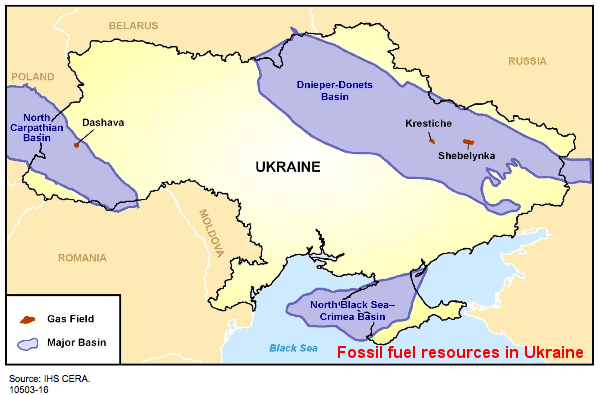
Ep 67CD067: What Do We Want In Ukraine?
The United States appears prepared to restart the Cold War and loan at least $1 billion of our tax money to Ukraine through the International Monetary Fund (IMF). Why? In this episode, we look at what we're asking for in Ukraine in return for our generosity. Executive Producer: Anonymous * For an excellent perspective on the Russian invasion of Crimea, listen to Episode 270: Poking the Bear and Episode 271: Cashing the Doomsday Cheque of Common Sense with Dan Carlin. The International Monetary Fund (IMF) loans struggling countries money but in return the IMF demands that the country change its economic laws to make them much more corporate friendly. As explained in the The Shock Doctrine by Naomi Klein, there are three economic principles that the free marketeers want their target countries to adhere to: Governments must remove all rules and regulations standing in the way of the accumulations of profits. Governments should sell off any assets they own that corporations could be running at a profit. Governments should dramatically cut back funding of social programs. In Ukraine's case, Their elected government - an elected government that had recently backed out of a "free trade" deal with Europe and was recently cut off from promised IMF cash because it didn't change Ukraine's economic laws - was overthrown and it was replaced by an IMF-friendly government, which has restarted the "free trade" deal with Europe and has promised to enact the "painful" IMF economic reforms. The new government is currently being promised $27 billion. "You know that we resumed talks with the IMF, we do understand that these are tough reforms, but these reforms are needed for the Ukrainian state. We are back on track in terms of delivering real reforms in my country. Probably in the near future, next week, or in ten days, Ukraine is to sign the political part of an association agreement with the European Union and we want to be very clear that Ukraine is and will be a part of the Western world." -Interim Ukrainian Prime Minister Viktor Yanukovich, March 12, 2014 Our government is supporting this new government. Here's my answer to "Why?". Potential Profits in Ukraine The two most promising areas are in energy and agriculture. First, energy. Poor Ukraine has the potential to become filthy rich because of the country's untapped natural gas supplies. Ukraine has not one, but two, big shale formations that are mostly unfracked. Ukraine is completely hooked on natural gas for energy, but they have been buying it from Russia. Russia has been giving Ukrainians discounts on their natural gas that keep Ukrainian's prices just low enough that Ukraine's natural gas company hasn't bothered to start fracking at home. And yes, that's the other thing. Ukraine's natural gas industry is nationalized. Ukraine's natural gas belongs to the state, it belongs to the government, it belongs to the people. In fact, in 2011, Ukrainians passed a law that said that all natural gas fracked in Ukraine must be sold to Ukrainians. No exports allowed. What that means for The People is that they will be able to use their own resources for energy - become energy independent, if you will. What that means for multinational fossil fuel corporations is that they can't profit from exporting Ukraine's nationalized natural gas. According to Morgan Williams, President and CEO of the US-Ukraine Business Council, "The new prime minister says he wants to privatize the state-owned energy companies." Second, agriculture is big business in Ukraine. Ukraine has been nicknamed the "breadbasket of Europe" for centuries and in January, The Financial Times called Ukraine "one of the world's most promising agriculture commodity producers". The reason is that in 2013, Ukraine had their best year ever for corn. The market is practically drooling over the prospects of getting control of this land. Morgan Williams, President and CEO of the US-Ukraine Business Council - the group I think is really calling the shots here - said, "The potential here for agriculture/agribusiness is amazing ... production here could double. The world needs the food Ukraine could produce in the future. Ukraine's agriculture could be a real gold mine." So Ukraine is a country with huge, untapped natural gas reserves, which can be easily transported and sold to Europe since Ukraine already houses two of the most important gas pipelines which transport natural gas from Russia to Europe. Ukraine is also a country with fertile land in a time when other "breadbaskets of the world" are either flooded or withering in drought. Add to that Ukraine's educated workforce ripe for corporate slavery and you've got a country that the market would love to take advantage of. This is why Ukraine is a target. This is why we're involved. What Are We Fighting For? According to a 96 page document prepared by the IMF in 2012, the IMF wants Ukraine to, first and foremost, cut heating assistance for Ukrainian citizens. The IMF is also

Ep 66CD066: A Hunter's Point of View
In early February, the House passed a package of eight bills that are supposed to appeal to hunters and fisherman. For this episode, Jen is joined by Cody Herman, host of Day One Outdoors and owner of Day One Outdoors adventure tour company, who helps Jen understand the bills and discusses whether or not the changes are good. HR 3590: "SHARE Act" "Sportsman Heritage and Recreational Enhancement Act" Passed the House of Representatives on February 5, 2014 by 268-154. H.R. 3590 is a collection of eight bills, two of which never went through the committee process. The bill in its entirely also never went through committee. TITLE I: Prevents the EPA from regulating the chemicals in bullets, shot, projectiles, propellents, and primers. Written by Jeff Miller (R-FL) In 2012, a group of 100 environmental organizations asked the EPA to regulate lead in ammunition and fishing tackle as a toxic substance because of the risk lead poisoning poses to animals and humans who eat animals killed by lead bullets and tackle. Lead poisoning has been found in California condors, turkey vultures, ravens, and a mountain lion. Livestock that graze on land contaminated with lead shot often ingest the metal, leading to lead-contaminated meat and dairy products. In October of 2013, California became the first state to ban lead ammunition. The law will be effective July 2019. EPA doesn't currently have the authority under the Toxic Substances Control Act to regulate the manufacture or sales of ammunition or tackle containing lead. This title would explicitly prohibit EPA from doing so. TITLE II: Creates public shooting ranges Taxpayers currently pay 75% of the construction, operation, and maintenance of public shooting ranges. This bill increases taxpayer obligation to 90% of construction costs and we'll pay 90% of the cost for buying land for public shooting ranges. Also, the United States can't be sued in civil court or in any case demanding money for injury, property loss or damage, or "death caused by an activity occurring" at the public shooting range. TITLE III: Public Lands Filming for Groups of 5 or Fewer This title will require a permit and a $200 annual fee for commercial filming activities; if you have a permit, you can't be assessed "any additional fee" for commercial activities that occur in areas designated for public use during public hours. Also, the government can't prohibit the use of motor vehicles from being used for filming on Federal lands and waterways. TITLE IV: Polar Bear bill The polar bear was added to the Endangered Species Act on May 15, 2008. On that day, it became illegal for US big-game hunters to bring back polar bear body parts to the United States. This title allows 41 polar bear killers to bring home their dead polar bear body parts - or trophies. The bears were hunted in early 2008, but their killers didn't import their body parts in time so the parts are now stuck in Canada. The bill would let them bring their hides, claws, teeth, and bear penises into the United States to show off to their friends. This title is being pushed by Don Young of Alaska, who pushed for it last Congress too. Don Young proudly proclaims to be the only US Congressman to hunt a polar bear. Many of the 41 hunters are members of Safari Club International, which has given at least $57,897 to Don Young of Alaska, with the largest chunk of that cash coming in for the 2012 election, after he introduced this favor to the Safari Club International members the first time. TITLE V: Electronic Duck Stamps States will be allowed to issue electronic duck stamps- a hunting license/collectors item that serves as an entrance pass to wildlife refuges- which will be valid for 45 days. 98 cents of every dollar for them goes towards conservation. TITLE VI: Weapons Should be Allowed at Water Resource Facilities Overturns current law that prohibits weapons at water resource projects. TITLE VII: Establishes an Advisory Committee to the Secretary of the Interior The committee will direct the Secretary of the Interior on how to expand hunting and fishing, promote hunting and fishing, create programs to recruit and retain new hunters and shooters, create programs to "increase public awareness of ...the benefits of recreational hunting and shooting", and programs for conservation. TITLE VIII: Open Most Federal Land to Hunting and Fishing Actions to open up land - including land in National Monuments - will not count as "major actions" and will not be subject to environmental impact analysis Lands can be closed for public safety, resource extraction, or compliance with other laws. Orders the government to open more shooting ranges and exempts the government from any liability for injuries, damages, or deaths that occur on those shooting ranges National Parks will not be affected Prohibits any further restriction of motorized vessels in the Ozark National Scenic Riverways, which is a battle being waged by freshman Rep. Jason Smith of Missouri's 8th di
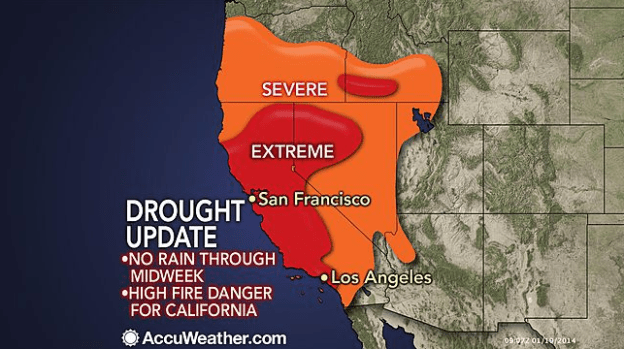
Ep 65CD065: Federal Intervention in California Water Rights
On February 5, the House of Representatives passed a bill that takes away California's right to divide its dwindling water supply. The bill forces California to take water away from the Sacramento-San Joaquin Bay Delta and give it to Agribusiness in the San Joaquin Valley, voiding a bunch of State and environmental laws in the process. Summary of the Bill HR 3964: "Sacramento- San Joaquin Valley Emergency Water Delivery Act" This is the second time the Republican-controlled House of Representatives has passed this bill. A similar bill was passed during the 112th Congress. TITLE I: Eff The Fish [caption id="" align="aligncenter" width="360"] Water would be diverted away from this delta and given to Big Agriculture in the San Joaquin Valley[/caption] Section 101: Makes sure that water currently dedicated to fish and wildlife is given Central Valley Project contractors by December 31, 2018. Most Central Valley Project contractors are agricultural in the San Joaquin Valley. Section 102: New terms for water contracts: Eliminates a provision that makes sure the EPA approves new contracts for water delivery. Extends the renewal length of existing contracts from 25 years to 40 years and eliminates requirements for environmental reviews Adds a provision that contracts must only charge water customers for the water actually delivered Section 105: Water usage will be prioritized to go towards agricultural, municipal, and industrial purposes Section 107: Private for-profit organizations would be eligible for water storage and delivery contracts paid for with taxpayer money, which is not currently allowed. If by September 30, 2018, the Central Valley doesn't get an additional 800,000 acre-feet of water, all non-mandatory water uses will be cut off until the Central Valley gets their water. Section 108: Rules will revert back to the law as of 1994. [caption id="" align="alignright" width="314"] The delta smelt, the "stupid little fish" the House GOP is pretending is the only species affected by drying up the delta[/caption] Operations of this new water plan "shall proceed without regard to the Endangered Species Act" Prohibits the Federal government and any agency of the State of California from enforcing a State law that restricts water usage for the Central Valley Project or State Water Project (which gives water to Southern California) to protect any species affected by this new water diversion. Prohibits the State of California from enforcing any of their laws that restricts Central Valley "water rights" "under the Public Trust Doctrine. No costs associated with diverting water to Central Valley contractors will be paid by Central Valley contractors "California law is preempted" from restricting the size of a fish allowed to be taken out of the Sacramento and San Joaquin Rivers or the Sacramento-San Joaquin Rivers Delta. Section 111: Federal agencies can not be forced to change their actions by a National Environmental Protection Act determination. *New to the 113th Congress version* Section 112 & 113: Gives 10 year water contracts to the Oakdale, South San Joaquin, and Calaveras County water districts if it doesn't take water away from the Central Valley *New to the 113th Congress version* Section 114: A pilot program to remove "non-native" bass species from the Stanislaus River. The districts will pay 100% of the costs The government "shall issue" permits for the program under the Endangered Species Act within 180 days; if it's not done in 180 days, the permits "shall be deemed approved" Permitting can be outsourced to "any qualified private contractor' National Environmental Protection Act "shall not apply" to permitting for the program. "Any restriction imposed under California law" on catching fish in the Stanislaus River "is herby void and is preempted" Pilot fish-murdering program will sunset in seven years. TITLE II: Overturns a Court Settlement The Settlement ruled in 2004 that the Bureau of Reclamation illegally dried the San Joaquin River and ruled that they will have to release water from the Friant Dam for the first time in 55 years in order to allow the fish - specifically salmon- in the river to survive. The lawsuit was first filed in 1998 and was one of California's longest running water disputes. It also restores water supplies to farmers near Stockton Section 201: Repeals the settlement and enacts a whole new plan. The new plan "preempts and supersedes any State law" that imposes stricter requirements. Central Valley water contractors are allowed to sue the Federal government if it fails to enact the new plan. Section 211: Repeals a requirement that salmon be reintroduced to the San Joaquin River TITLE III: Payments to Central Valley water contractors Section 301: Federal government has to reimburse water contractors for construction costs already accrued by January 31, 2018; future costs need to be reimbursed by the government within five years. Power revenues can't be used towards construction cos
Ep 64CD064: Chemicals Shall Spill
In this episode, we catch up on all the bills that passed the House of Representatives in January, including a bill to protect chemical storage companies from having to pay for their messes, a few bills to damage ObamaCare, and a bill to make sure private health insurance companies can't pay for abortions. Information Presented in This Episode Mel Watt Resigns On January 7, Rep. Mel Watt of North Carolina's 12th district resigned to become Director of the Federal Housing Finance Agency after being appointed to the position by President Obama. The Federal Housing Finance Agency was created during the 2008 financial meltdown, a meltdown created largely by giant private banks chopping up bad mortgages, mixing them with good mortgages, and selling them to other companies such as Frannie Mae and Freddie Mac. The FHFA is in charge of regulating sort-of Federal mortgage companies Fannie Mae and Freddie Mac. Private banks want Fannie Mae and Freddie Mac gone because Fannie and Freddie are more heavily regulated than private banks and create a basement of rules that banks sort-of have to play by. Private banks want the "free market" to control mortgages so that they can, once again, do whatever they want and make enormous profits with new financial scams models. Last August and again in the State of the Union, President Obama sided with the "free marketeers" and voiced his support for getting rid of Fannie Mae and Freddie Mac in favor of more private banker control of our mortgages. Who will President Obama's choice to regulate Fannie Mae and Freddie Mac side with? Well, former Representative Mel Watt's top two campaign contributors over the course of his Congressional career were Bank of America and the American Bankers Association. In total, he took over $1.3 million from the Finance, Insurance, and Real Estate sector. Representative Watt's former district, North Carolina's 12th district, is a funny shaped, likely gerrry-mandered district that cuts through the center of the state; it includes portions of Charlotte, Salisbury, and Lexington. The district will remain unrepresented until the November election. HR 2279: Protects Finances of Chemical Storage Companies On January 9, the House passed H.R. 2279. The one good thing about this bill is that it would require owners of chemical storage facilities to report to their states the quantities of dangerous chemical that they store in their buildings. This is a direct response to the giant explosion at the West Fertilizer Company in West Texas, which took place on the same week as the Boston Marathon bombing, killed five times as many people, but didn't get nearly as much press coverage. The explosion happened after the building caught fire and ignited ammonium nitrite - the same stuff used in the Oklahoma City Federal Building bombing- which was being stored in the building in huge quantities which were never reported to Texas regulators or the Department of Homeland Security. The building had not been inspected by Federal worker safety regulators since 1985, when it was cited for improper storage of dangerous chemicals and given a $30 fine. It had been fined again in 2012 by the Department of Transportation for improper storage of dangerous chemicals. The explosion killed fifteen people, injured 160, and destroyed 50 homes. So had this bill been law early last year, in theory, Texas and the Department of Homeland Security would have known how much the company was storing and may have done inspections more regularly. That's a good thing. But that's where the good things stop. The company responsible for the West, Texas explosion was only insured for $1 million in damage, which wasn't nearly enough to cover the damage they caused. The damage was estimated at $100 million, at least. The State of Texas has no requirement for storage facilities to have any insurance, and so FEMA had to pay 75% of the costs of the damage. Despite the fact that the Federal government had to pick up the tab for that explosion, H.R. 2279 would make it more difficult for the Executive Branch, and therefore the Federal government, to require companies that store hazardous materials to have insurance or cash on hand to pay for their accidents; it prohibits the Feds from requiring any more insurance than the States require. Rep. Cory Gardner of Colorado, argued for H.R. 2279 on the House floor on January 9; he is the author of the bill: "Solid waste must be disposed of in a responsible, efficient, and environmentally friendly manner; but there is no need for overly burdensome regulations that put a strain on businesses." In addition, the law currently says that the President needs to create and annually update a list of facilities with hazardous materials and that each State must designate one facility as their most dangerous. H.R. 2279 says the States no longer need to do this and replaces that requirement with one that says the President can't add a facility to the list if the State objects. E

Ep 63CD063: 2013 The Year in Review
In this episode, Jen and Joe recap all the bills that passed the House of Representatives and were covered on Congressional Dish in 2013. Also, an update on the debt ceiling. Music in This Episode: Intro and Exit Music: Tired of Being Lied To by David Ippolito, In Your Name by The Undercover Hippy, Debt Ceiling See how your representative voted on S. 540, the bill that suspends the debt ceiling until March 16, 2015, which passed the House on February 11 and the Senate on February 12. If we don't suspend the debt ceiling, we probably will not default on our debt as doing so would be unconstitutional. However, the only way that we would avoid a default would involve a scenario along the lines of the one described by Jeffrey Dorfman in Forbes, which involved slashing the Federal government and even eliminating whole departments. The debt ceiling either needs to be raised or suspended or the government drastically slashed by February 27. Bills Covered by Congressional Dish in 2013 (In Chronological Order) H.Res.5: House Rules for the 113th (Agreed to 1/3/13) Highlighted in episode CD010: House (Finally!) Votes on Sandy Aid Members can take private jets using government money (CD016) Speaker John Boehner promised we would have at least 72 hours to read bills, but this promise wasn't put in the official House rules. (112th Congress) H.R. 8: The Fiscal Cliff Bill (Passed House & Senate 1/1, LAW 1/2) Highlighted in episode CD009: What's in the Fiscal Cliff Bill Extended unemployment insurance Extended Farm bill until September 2013 Extended the Bush tax cuts Increased capital gains taxes from 15% to 20% Extended the college and child tax credits Multinationals -including banks- don't have to pay taxes on income from foreign subsidiaries H.R. 152: Funded Hurricane Sandy relief (Passed House 1/15, Senate 1/28, LAW 1/29) Highlighted in episode CD010: House (Finally!) Votes on Sandy Aid Sandy was on 10/29/12, funding for the recovery was finally provided on 1/15/13 All Reps from Idaho, Montana, Wyoming, South Dakota, Nebraska, and Kansas voted against it H.R. 307: Prepares for Biological Attacks (Passed Senate 2/27, House 3/4, LAW 3/13) Highlighted in episode CD011: No Budget, Still Get Paid Loosened the definition of an "emergency" to include "threat justifying emergency authorized use" of unapproved medical devices H.R. 325: "The No Budget, No Pay Act of 2013" (Passed House 1/23, Senate 1/31, LAW 2/4) Highlighted in episode CD011: No Budget, Still Get Paid Suspended the debt ceiling until May 18, 2013 House & Senate both have to pass budgets by April 15, 2013 (which they did). Would have paid Congress no matter whether or not they passed their budgets; they would have been back paid. H.R. 225: Pediatric Research (Passed House 2/4) Highlighted in episode CD013: Surveillance, Stupidity, and Drones Public & private non-profits need to help CDC with surveillance systems in order to get pediatric research grants but provided no money. H. R. 444: "Require A Plan Act" (Passed House 2/6) Highlighted in episode CD013: Surveillance, Stupidity, and Drones President would have to submit a second budget if his first budget wasn't balanced. H.R. 235: Helping Veterans Become Emergency Medical Technicians (Passed House 2/12) Highlighted in episode CD014: Marching Towards Sequester Gives grants to States to streamline requirements for veteran EMTs to become civilian EMTs H.R. 592: Gave Hurricane Sandy Money to Repair Churches (Passed House 2/13) Highlighted in episode CD014: Marching Towards Sequester The first amendment to the Constitution prohibits direct funding of religious buildings [caption id="attachment_419" align="alignright" width="150"] A small conduit hydro-electric project[/caption] H.R. 267: Fast Tracks Hydro-Power Projects (Passed House 2/13, Senate 8/1, LAW 8/9) Highlighted in episode CD014: Marching Towards Sequester Fast tracks hydro-power projects on existing dams. H.R. 273: Eliminates Federal Workers' First COLA in 3 Years (Passed House 2/15) Highlighted in episode CD014: Marching Towards Sequester S. 47: Violence Against Women Act Re-authorization (Passed Senate 2/12, House 2/28, LAW 3/7) Highlighted in episode CD017: VAWA & Funding Defense Adds stalking and date rape to list of punishable offenses Cyber stalking counts as stalking Most of the funding decreased from previous levels H.R. 749: Banks Only Send Privacy Notices When Something Changes (Passed House 3/12) Highlighted in episode CD018: The Ryan Budget H.R. 890: Extended a welfare program and prohibits states from operating their own (Passed House 3/13) Highlighted in episode CD018: The Ryan Budget H.R. 803: "SKILLS Act" (Passed House 3/15, S. 1911 introduced in Senate committee 1/9/2014) Highlighted in episode CD018: The Ryan Budget Would effectively put decisions on welfare-to-work training programs in corporate control by changing the make-up of local boards. Would have required layoffs of Federal workers by consolidating 35 programs into one. H.R. 933

Ep 62CD062: The Farm Bill
On February 7, President Obama signed the Farm Bill into law, which will govern our food policy for the next five years. In the new law are cuts to food stamps, an expansion of an extremely generous crop insurance program, bailouts for livestock producers, a big favor for chemical companies, and much more. Music in This Episode: Intro and Exit Music: Tired of Being Lied To by David Ippolito, Have You Had Enough by rotflmao I'm Farming and I Grow It by The Peterson Farm Bros Farming in the United States We often hear that most United States farms are "family farms", which is true; in 2011, 96 percent of U.S. crop farms were family farms, and they accounted for 87 percent of the value of crop production. The term is misleading, however, because family farms can be sole proprietorships, partnerships or corporations. Using the term 'family farm' implies a small farm like the one Auntie Em owned in the Wizard of Oz. In reality, family farms are often enormous and are owned by wealthy individuals; 86 percent of farms with at least 10,000 acres of cropland are family operations. The way these large farms qualify as 'family farms' but actually produce the products of giant corporations is through the use of contracts. The farms themselves are owned and operated by individuals, but their crops belong to and are sold by a corporation. For example, Dole Foods leases 14,000 acres in Arizona and California from landowners who purchased the land from Dole Foods. Most of that land is now farmed by independent growers, most of which are family operations, under contract arrangements with Dole. According to the USDA, larger operations are more likely to use contracts, which can reduce the price and marketing risks faced by farmers. Large farms now dominate crop production in the United States. From 1987-2007, consolidation lead to larger farms for every major crop except for cantaloupe and plums. Between 1950 and 1997, consolidation caused the number of farms in the U.S. to decline dramatically—from 5.4 million to 1.9 million. A report by the USDA in 2013 concluded that this consolidation is due in part to the expansion of crop insurance in the United States. By reducing risk to farmers, crop insurance encourages farmers to invest more in labor-reducing equipment and to specialize in specific crops instead of diversifying crops and livestock as had been traditional in the past. Crop insurance also guarantees a certain amount of income to farmers which allows the large farms with only one crop to survive even if their product is devastated by drought, fire, or other national disaster. This guaranteed financial return has allowed larger farms to gobble up smaller farms, leading to the rapid consolidation of the last 60 years. Wealthy farmers' ability to buy vast amounts of land and huge equipment has increased production so much that now very few people are needed to do the actual work. In 1945, it took 14 labor hours to produce 100 bushels of corn on 2 acres of land; in 2002, it took just 3 labor hours to produce the same amount of corn on less than half the amount of land. That increased productivity resulted from bigger, more powerful machines, commercial fertilizers, genetically modified seeds, and other technologies. As a consequence of the substitution of equipment and chemicals for human labor, fewer than 2 percent of Americans farm for a living today. H.R. 2642: The Farm Bill The Farm Bill was signed into law on Friday, February 7, 2014. It will govern food policy in the United States for the next five years. Cuts to SNAP: Food Assistance for Needy Families The farm bill cuts $8 billion from SNAP (which is less than the $40 billion in cuts the House Republicans originally planned); the cut will take about $90 per month away from a typical poor family. The law kept the mean, unnecessary, and probably unenforceable provision that prevents food stamp recipients from recycling for cash the bottles and cans they bought with food stamps (Section 4001). Stores and restaurants that accept food stamps will be forced to pay for 100% of the electronic equipment and supplies needed to process food stamp cards while the law also prohibits manual vouchers (Section 4002). Murderers and sex offenders will not be eligible for food stamps (Section 4008). Government sponsored advertisements for the food stamp program will be prohibited (Section 4018). Direct Payments Direct payments - tax money given to food manufacturers for each acre they owned, regardless of production - were eliminated (Section 1101). Direct payments had cost approximately $4.5 billion per year. The House version had kept direct payments to upland cotton growers until 2016; the law will not. Crop Insurance The farm bill shifted the gifts to Agribusiness from direct payments to crop insurance, a program that will cost $90 billion per year, an increase of $7 billion, likely more. The increase in crop insurance cancels out all savings generated by eliminating direct pa
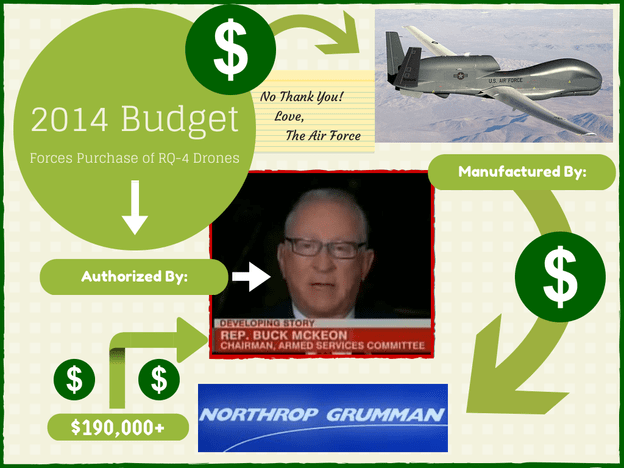
Ep 61CD061: State of the Budget
This episode is a mash-up of the State of the Union and the 2014 budget. We compare the impression President Obama gave us about what to expect for this upcoming year with the reality of what was funded in the last-minute and little-examined budget which he signed into law just two weeks before the speech. Information Presented in this Episode The following quotes are from the 2014 State of the Union. Let's compare them to what was in the budget which he recently signed into law: The 2014 Budget (H.R. 3547) "Last month, thanks to the work of Democrats and Republicans, Congress finally produced a budget that undoes some of last year's severe cuts to priorities like education. Nobody got every-thing they wanted, and we can still do more to invest in this country's future while bringing down our deficit in a balanced way, but the budget com-promise should leave us freer to focus on creating new jobs, not creating new crises." - President Obama The budget should have been done by September 30, 2013. This new law puts all 12 appropriations bills into one big monster law. The bill was put on the House's schedule on January 13th at 8pm and was passed on January 15. The budget is 1,582 pages long. The budget was attached as an amendment to H.R. 3547, the bill extending the insurance program for commercial space flight which was highlighted in episode CD058. The insurance program was originally extended for a year; the budget bill extended it until 2017.) Fossil Fuels "Now, one of the biggest factors in bringing more jobs back is our commitment to American energy. The all-of- the-above energy strategy I announced a few years ago is working, and today, America is closer to energy independence than we have been in decades. One of the reasons why is natural gas. If extracted safely, it is the bridge fuel that can power our economy with less of the carbon pollution that causes climate change. Businesses plan to in-vest almost $100 billion in new factories that use natural gas. I will cut red tape to help States get those factories built and put folks to work, and this Congress can help by putting people to work building fueling stations that shift more cars and trucks from foreign oil to American natural gas." - President Obama (Division G - Section 108) The Interior Secretary will set up Internet program for oil and gas leasing. Lip Service to Fracking Water Poisoning "Meanwhile, my administration will keep working with the industry to sustain production and job growth while strengthening protection of our air, our water, and our communities." (Explanatory Statement) Prohibits more than $6 million for a joint research effort by the EPA and USGS into hydraulic fracturing that aims "to address the health, safety, and environmental risks of shale gas extraction." Solar "It is not just oil and natural gas pro-duction that's booming. We are becom-ing a global leader in solar, too. Every 4 minutes, another American home or business goes solar, every panel pounded into place by a worker whose job cannot be outsourced. Let's con-tinue that progress with a smarter tax policy that stops giving $4 billion a year to fossil fuel industries that don't need it so that we can invest more in fuels of the future that do." - President Obama Solar will receive $257 million in 2014. (Explanatory Statement) Energy Efficiency & Renewable Energy = $1.7 billion, about half of what was requested (Wind & Solar = 20% of budget at $345 million) Fossil Fuel Research and Development will get $562 million, $142 million more than requested Only time the word 'solar' appears in the budget, the law prohibits the Department of Interior from processing a grant or lease for a commercial scale solar project on public land in the Mojave Desert (Division G - Section 116) Money is given to the Air Force to upgrade the heating at Kaiserslautern Military Community in Germany and forces the little town to use United States coal as the power source, even though the power comes from German municipal sources. Climate Change - Flood Preparation [caption id="" align="alignright" width="340"] FEMA/Bill Brown[/caption] "Taken together, our energy policy is creating jobs and leading to a cleaner, safer planet. Over the past 8 years, the United States has reduced our total carbon pollution more than any other nation on Earth. But we have to act with more urgency because a changing climate is already harming Western communities struggling with drought and coastal cities dealing with floods." - President Obama Authorizes $1.6 billion for a maximum of 4 new Army Corps of Engineers construction projects. One has to be for environmental restoration, the other three are for navigation OR flood and storm damage reduction, which means that it is possible that none of these projects will be for storm damage reduction. (Division D) Authorizes $28 million for preparation for floods, hurricanes, and other natural disasters. (Division D) and $154 million for flood plain mapping and ma

Ep 60CD060: Fast Track for TPP
This week, a bill was introduced in both the House and the Senate that would hand Congress' power to negotiate trade deals, such as the Trans-Pacific Partnership, over to the President. We also look at the budget agreement to get an idea of what Congress is putting into their last-minute must-sign-by-next-week budget. Finally, thoughts on the golf swing. Information Presented in This Episode Fast Track for Trade Agreements On Thursday, January 9, Max Baucus, retiring Democrat in the Senate, and Orrin Hatch and Dave Camp, two shameless Republicans in the House, introduced a bill that would hand their power to negotiate and enter into trade agreements to the President. This bill would provide the President with so-called "fast track" authority to enter into both the Trans-Pacific Partnership (TPP) and a trade deal with the European Union. Fast track authority makes it much, much easier for these controversial deals to become law. Text of the "Bipartisan Congressional Trade Priorities Act of 2014" CD052: Episode detailing what we know about the secretive TPP CD053: Episode detailing the leaked Intellectual Property chapter of the TPP The bill starts off with Section 2, which lists a whole bunch of wonderful sounding goals - "objectives"- for the United States' trade agreements with other nations. Some of these lofty goals include opening up new markets, protecting the environment, protecting United States' family farms, encouraging foreign investment in the United States, protection of intellectual property rights, transparency, fair labor practices, and anti-corruption. Too bad none of these things are actually enforceable. The reason these goals are unenforceable is that regardless of whether any of these "objectives" are actually met by the trade agreement, page 35 authorizes the President of the United States, and only the President of the United States, to enter into trade agreements with foreign countries on or before July 1, 2018. There's some wiggle room with that date. The expiration date will be automatically extended until July 1, 2021 if the President asks for the extension as long as "neither House of Congress adopts an extension disapproval resolution" before July 1, 2018. If Congress does nothing; the extension is automatically approved. And doing nothing is one area where Congress performs extremely well. In order to enter into a trade agreement, the President merely has to inform Congress of his intentions to do so. He also has to let them pretend to have a say in "consultation" meetings, but there are no consequences if the majority of Congressional representatives disagree with the substance of the trade agreement, even if they can prove that the trade agreement does not meet the "objectives" listed in the beginning of the bill. In fact, Congress might not know the substance of the trade agreement because page 83 doesn't require the President to submit the final text to Congress until after he has entered into the agreement. From there, Congress will only be permitted to vote on whether or not to implement the President's trade agreement; no amendments to the agreement will be allowed. Congress did insert some language into the bill that is supposed to make us feel better about all this. First, page 87 says that Congress must be given the text of the trade agreement before the "implementing bill" comes up for a vote. What it doesn't say is how much time they'll get to read it. In theory, the President could give them the text of the trade agreement an hour before the vote and he will have fulfilled his obligations. Section 8 is the only source of real hope in the bill. It essentially says that trade agreement provisions that are different from or that change United States laws are not enforceable. It also says that any findings or recommendations of "dispute settlement panels" will have "no binding effect" on the law of the United States. Canada is being sued for $250 million in lost profits for their fracking ban thanks to NAFTA. The Budget Agreement On December 12th, 2013, the House of Representatives passed the budget agreement that was crafted by Democratic Senator Patty Murray and Republican Representative Paul Ryan. The budget agreement is the general rules they will follow while crafting the omnibus budget for 2014 and 2015. The omnibus budget is all twelve appropriations bills wrapped up into one monster bill, with all kinds of non-related gifts to campaign contributors attached to the must-sign legislation. The text of the omnibus legislation isn't finished yet. It must be signed into law next week to avoid another government shut down. One creepy provision (Section 203) in the budget agreement will restrict our access to the Death Master File for three years. The Death Master File lists the name, social security number, birthday, and date of death of everyone who dies in the United States. Currently the list is updated weekly and available both for a fee and for free on various web

Ep 59CD059: NDAA 2014
Congress and President Obama worked together to fast-track a new & unexamined NDAA into law. The new law essentially makes NSA data collection legal, cuts military pensions, and spends an enormous amount of money making sure the United States is able to destroy the entire world at a moment's notice. Links to Information in This Episode H.R. 3304: The National Defense Authorization Act of 2014 *The title has been changed to the National Defense Authorization Act of 2014 since it was signed into law. Previously, it was titled "To authorize and request the President to award the Medal of Honor to Bennie G. Adkins and Donald P. Sloat of the United States Army for acts of valor during the Vietnam Conflict and to authorize the award of the Medal of Honor to certain other veterans who were previously recommended for award of the Medal of Honor" The Cyber-security bill (Sections 932- 942) was added by Senator Jay Rockefeller. Section 1071 creates the "Conflicts Records Research Center" and allows states, foreign governments, and "any source in the private sector" to give money to the Department of Defense. Section 143 prohibits the military from retiring the RQ-4 Block 30 Global Hawk drones, which the Air Force doesn't want. Section 234 gives $15 million taxpayer dollars to "United States" companies so they can set up assembly lines for the Iron Dome missile defense system in Israel. No requirement for profit-sharing with the taxpayers was included. Section 242 says the United Stats shouldn't buy products that don't work unless the purchase is "to mainatin a warm line for the industrial base". Section 811 allows private contractors specializing in science, technology, engineering, math, medical, and cyber-security to be paid up to $625,000/year. The President of the United States makes $400,000/year. Section 813 makes it easier for the Department of Defense to hide their reasons for contracting with suspended or disbarred companies. Section 1011 extends the CIA/military program in Columbia for another year. Section 1013 expands the drug war to Chad, Libya, Mali, and Niger. Section 1033-1039 prevent prisoners from Guantanamo Bay prison from being transferred to prisons in the United States, but allows them to be transferred to their home countries if certain conditions are met. Section 1043 orders a report from the President regarding how he creates his kill lists. Section 1056 only allows the military to "prepare" to comply with the New Start Treaty, not to actually comply with the New Start Treaty. Section 1062 says that upgrading nuclear bombers "must remain a high budget priority." Sections 1701-1753 create new rules governing sexual assault in the military. The Congressional Research Service summary of the 2014 NDAA; note that the "Conference Report" numbers (H.R. 3304 is the conference report) are blank. The NDAA was passed via fast-track, which means no amendments were allowed. H.R. 1960: The National Defense Authorization Act version that passed the House of Representatives earlier this year; it is officially a dead bill. Congressional Dish episode CD031 highlighted the House's original version of the 2014 NDAA. Section 403 of the Budget Agreement - which has been signed into law - cuts the cost of living adjustments to pensions for military veteran's under age 62 by 1% per year. Defense Secretary Chuck Hagel's comments on the pension cuts. The NSA has full access to Apple iPhones Music in This Episode Intro and Exit Music: Tired of Being Lied To by David Ippolito (found on Music Alley by mevio) Somebody's Watching Us by Skybridge (found on Music Alley by mevio)

Ep 58CD058: Space Travel, TSA, Wall Street, & Patents
During the first week of December, the House of Representatives passed bills to extend an insurance program that provides taxpayer bailouts to private space exploration companies, made changes to TSA policies, tried (again) to deregulate Wall Street gamblers, and tried to shut down patent trolls. Executive Producer: Brandon K. Lewis Information Presented in this Episode H.R. 3547: "Space Launch Liability Indemnification Extension Act" Extends an existing government insurance program for private companies that launch vehicles into space through 2014. The program has three tiers: The private companies buy insurance from a private insurance company for the "maximum probably loss" that would occur if there were an accident; the insurance is capped at $500 million. The "maximum probable loss" is determined by the Federal Aviation Administration (FAA); the Government Accountability Office says that the FAA's method for calculating the risk is outdated. If the "maximum probably loss" is not actually the maximum loss, taxpayers will pay up to $2.8 billion (in 2013 dollars -this number increases with inflation) for damage caused by the private companies' accident. Any amount over the insurance payment plus the taxpayers' $2.8 billion must be paid by the private company who caused the accident. The insurance program extension has been requested by the private companies who stand to profit from launching vehicles into space. [caption id="attachment_1162" align="aligncenter" width="261"] Rep. Lamar Smith (TX), author of H.R. 3547[/caption] Rep. Lamar Smith (TX), author of H.R. 3547, has taken money for the 2014 election from companies requesting the insurance program. [caption id="attachment_1163" align="aligncenter" width="773"] Source: OpenSecrets.org on December 20, 2013[/caption] Passed the House of Representatives on December 2, 2013 [caption id="attachment_1165" align="aligncenter" width="641"] Source: Govtrack.us[/caption] H.R. 1095: "TSA Loose Change Act" Would divert approximately $500,000 per year in abandoned change from airports from TSA airport security, where it currently goes, to building areas of "rest and recuperation" for military families at airports. [caption id="attachment_1166" align="aligncenter" width="273"] Rep. Cedric Richmond (VA), December 3, 2013 Congressional Record[/caption] Passed the House of Representatives without a recorded vote on December 3, 2013. H.R. 2719: "Transportation Security Acquisition Reform Act" TSA must develop and publicly publish a plan for what security technology they plan to buy. Bill is necessary because the TSA is "wasting hundreds of millions of taxpayer dollars by inefficiently deploying screening equipment and technology to commercial airports." Former Department of Homeland Security officials, including Michael Chertoff, have profited from airport body scanners since leaving their government jobs. The plan must identify "opportunities for public-private partnerships". Private sector suggestions must be included in the plan. The Obama administration must report "subcontracting goals" and why they haven't been met (if applicable). Passed the House of Representatives unanimously on December 3, 2013. H.R. 3626: Extends Undetectable Firearms Act for 10 Years Was signed into law on December 9, 2013. It is illegal to "manufacture, import, sell, ship, deliver, possess, transfer, or receive a firearm not detectable by metal detectors." Plastic Guns Made With 3-D Printers Pose New Security Concerns by Carrie Johnson, NPR, November 14, 2013. H.R. 1105: Deregulate Wall Street Gamblers Real name: "Small Business Capital Access and Job Preservation Act" (hello, Orwell). Exempts private equity fund advisers from registering with the Securities and Exchange Commission (SEC). Passed largely along Party lines, getting almost unanimous Republican support. Unsurprisingly, the bill was supported by Democrat Jim Himes of Connecticut, a former Vice President of Goldman Sachs. [caption id="attachment_1169" align="aligncenter" width="647"] Rep. Jim Himes (CT), OpenSecrets.org as of 12/20/2013[/caption] Just a few weeks ago, the House passed H.R. 992, an even more offensive bill that would allow United States' government bailouts for domestic AND FOREIGN banks that participate in credit default swaps trading - the type of behavior that crashed the global economy. H.R. 3309: "Innovation Act" Requires more details when filing a lawsuit for patent infringement. Losers of lawsuits must pay expenses and fees of the winners, but the court can intervene. Limits discovery requests; they must be specific. Patent claims must be available on a searchable, public website. Limits lawsuits down the supply chain (for example, patent trolls have been suing coffee shops and hotels for offering Wifi and have sued podcasters, including Adam Corrolla, claiming they own the technology The bill passed on December 5, 2013 with 91 Representatives voting against it because they say the bill was rushed and not

Ep 57CD057: DATA Act-tually Pretty Good
Hudson Hollister, Executive Director of the Data Transparency Coalition, schools Jen on the DATA Act, the bill from episode CD054. Turns out, the bill is not so bad; In fact, the bill could be really, really good. Links to Information Presented in This Episode CD054: The Hidden DATA Act episode with a detailed summary of the bill. Status and text of the Digital Accountability and Transparency Act (DATA) Act USASpending.gov is the website that would be improved by the DATA Act. Follow @hudsonhollister on Twitter The Data Transparency Coalition's website DATA Act informational YouTube video by the Data Transparency Coalition Music Intro and Exit Music: Tired of Being Lied To by David Ippolito (found on Music Alley by mevio) Thank You by Bill Willmott (found on Music Alley by mevio)

Ep 56CD056: Fired
Jen's husband loses his job; in this episode, the political situation that doomed his solar power company. Then we make a rough plan for the future, for ourselves and Congressional Dish. Joe Briney co-hosts. Links to Information in This Episode A solar farm seen from an airplane[/caption] *Correction: Jen said that the sun shines in Western Oregon; it does not. She meant Eastern Oregon. Representatives Discussed in This Episode Rep. Greg Walden - Oregon, District 2 Greg Walden's Legal Bribes Campaign Contributions [caption id="attachment_1151" align="aligncenter" width="946"] OpenSecrets.org, Dec. 6, 2013.[/caption] Music Intro and Exit Music: Tired of Being Lied To by David Ippolito (found on Music Alley by mevio)

Ep 55CD055: Three Bills for Fossil Fuels
Before going home for Thanksgiving, the House passed three bills designed to fast-track permits for oil and natural gas drilling. This episode highlights the Congressmen who pushed these bills through the House. Bill Summaries H.R. 1965: "The Federal Lands Jobs and Energy Security Act of 2013" passed the House of Representatives 228-192 on Wednesday, November 20, 2013. H.R. 1965 will not become law; President Obama would veto the bill. TITLE I, Subtitle A: Speeds Up Oil and Gas Permitting ("Streamlining Permitting of American Energy Act of 2013") Introduced by Rep. Doug Lamborn (CO-5) The government will have 30 days to decide on a drilling permit: If the government does not decide whether or not to issue a drilling permit in 60 days, the permit is automatically approved: It will cost $5,000 to challenge a drilling permit in court: Lawsuits that challenge a drilling permit must be filed within 90 days: If a citizen wins a lawsuit challenging a drilling permit, they cannot be reimbursed for their attorney's fees and court costs: American taxpayers will pay $50 million to map our oil and gas resources for the fossil fuel companies: TITLE I, Subtitle B: Hand Our Land to Fossil Fuel Companies ("Providing Leasing Certainty for American Energy Act of 2013") Introduced by Rep. Mike Coffman (CO-6) Every year, we must lease at least 25% of our available land; these leases cannot be challenged in court: Once we lease the land to the energy companies, we can't change our minds: Protests against lease sales that are not settled in 60 days are automatically denied: The Bureau of Land Management Instruction Memorandum 2010-117 - a process that examines environmental concerns and involves the public in oil and gas leasing decisions - will have "no force or effect". TITLE I, Subtitle C: Bring Back Bush Administration Regulations for Oil Shale Development ("Protecting Investment in Oil Shale the Next Generation of Environmental, Energy, and Resource Security Act" or the "PIONEERS Act") Introduced by Rep. Doug Lamborn (CO-5) Oil Shale is a technology - that still doesn't work - which involves melting rocks to access the oil inside of them: Regulations for oil shale will return to the regulations issued by the George W. Bush administration: The Bush administration regulations - would would come back - require fewer environmental studies and allows oil companies decide which new regulations to obey: We would have to lease at least 125,000 additional acres to the oil companies for oil shale experimentation: TITLE III: "The National Petroleum Reserve Alaska Access Act" Introduced by Rep. Doc Hastings (WA-4) The national policy of the United States will be to drill, baby, drill in Alaska; we must give the oil companies at least 10 leases by 2023: We will throw out a completed Environmental Impact Statement and replace it with one designed to "promote efficient and maximum development of oil and natural gas resources" of the Alaska Petroleum Reserve: TITLE V: Prevent Native American Anti-Drilling Lawsuits ("Native American Energy Act") Introduced by Rep. Don Young (Alaska) Appraisals that determine the market value of Native American land will be automatically approved after 60 days: Environmental reviews of projects on Native American lands will not be available to the public; only Native Americans and local residents can get access: Native Americans can not file a lawsuit against a drilling lease after 60 days; they cannot file lawsuits locally, only in Washington D.C.: If Native Americans win a lawsuit against the United State government challenging a drilling decision, they cannot be paid for their court costs: If Native Americans lose a lawsuit against a drilling lease, they must pay the oil companies' court costs: Current law says the Secretary of the Interior needs to approve drilling projects on Navajo Nation land; Section 5008 reverses the law and extends the length of drilling leases by making the following edits: (e) Leases of restricted lands for the Navajo Nation (1) Any leases by the Navajo Nation for purposes authorized under subsection (a) of this section, and any amendments thereto, except a lease for including leases for the exploration, development, or extraction of any mineral resources, shall not require the approval of the Secretary if the lease is executed under the tribal regulations approved by the Secretary under this subsection and the term of the lease does not exceed - (A) in the case of a business or agricultural lease, 25 99 years, except that any such lease may include an option to renew for up to two additional terms, each of which may not exceed 25 years;... Federal regulations governing fracking will not automatically apply to Native American land: H.R. 2728: "Protecting States' Rights to Promote American Energy Security Act" passed the House of Representatives 235-187 on Wednesday, November 20, 2013. H.R. 2728 will not become law, President Obama would veto the bill. TITLE I: Only States Can Reg

Ep 54CD054: Hidden Data Act
A bill marketed as for "transparency" appears to keep information secret from the public and gut an oversight board. Taxpayers treat a group of Representatives to an expensive Summer getaway. Cocaine. HR 2061: "The Digital Accountability and Transparency Act (DATA) of 2013" passed the House of Representatives 388-1 on Monday, November 12, 2013. Section 3: The following information would be published on the USASpending.gov website: A "pilot program" will "consolidate reports" that agencies and companies who receive Federal money must turn in: The agencies and companies allowed into the pilot program must be worth at least $1 billion total; there's no limit to the number of participants. The Recovery Board would start investigating the Inspectors General: Section 5: Expands the amount of information that can be kept secret: Section 3 of the Federal Funding Accountability and Transparency Act of 2006 says: Section 5 of the DATA Act changes it to say: The "information protected" under the Freedom of Information Act which the DATA Act would keep secret from the public is: Some information from the Privacy Act of 1974 that the DATA Act would keep secret from the public is: The information from the US Tax Code that the DATA Act would keep secret from the public is: The Recovery Board investigates companies that are given government money - "recipients". [caption id="attachment_1065" align="aligncenter" width="336"] Quote by Rep. Darrell Issa, House Floor, November 18, 2013.[/caption] The DATA Act extends the Recovery Board but lets its functions and website expire six weeks from now: H.R. 313- which passed the House in May 2013- is attached to the end of the DATA Act. Limits spending on conferences to $500,000. Extraordinarily detailed reports required for conferences over $10,000. Cuts agencies' travel budget by at least 30%. Congressional Travel Expenses Five Representatives and two staffers took a $179,938 six-day all expense paid-by-taxpayers trip to Singapore and Australia in Summer 2013. Representatives Discussed in This Episode Rep. Rush Holt of New Jersey was the only Representative to vote against the DATA Act. As a scientist, I know firsthand how important scientific conferences and meetings are. I opposed H.R. 2061, the Digital Accountability and Transparency Act, because it would cut by 30 percent the amount of travel federal employees could undertake for conferences, meetings, and other crucial events. - Rep. Rush Holt Rep. Henry "Trey" Radel of Florida is on a leave of absence due to his proven cocaine habit. [caption id="attachment_1049" align="alignright" width="300"] Rep. Darrell Issa represents California's 49th district[/caption] Rep. Darrell Issa of California was the main author of the DATA Act. Darrell Issa is the richest person in Congress in 2013. He has at least $430 million; he made $135 million in 2012 on Wall Street. Darrell Issa does the bidding of Big Business. Representatives Quoted in this Episode Rep. Darrell Issa of California Additional Information Sunlight Foundation blog in support of HR 2061 Music Intro and Exit Music: Tired of Being Lied To by David Ippolito (found on Music Alley by mevio) Dirty Little Secret by 54 Seconds (found on Music Alley by mevio) Cocaine by Eric Clapton Homework Watch Chasing Ice

Ep 53CD053: TPP – The Leaked Chapter
The Trans-Pacific Partnership (TPP) is an international treaty being negotiated in almost total secrecy by the United States and eleven other nations. This week, Wikileaks published one of the twenty-nine chapters, the chapter on Intellectual Property. In this episode, we highlight the details of the patent and copyright laws contained in the leaked TPP chapter and then we quickly look at the bills that passed the House of Representatives this week. Music in This Episode Intro and Exit Music: Tired of Being Lied To by David Ippolito (found on Music Alley by mevio) The English and Japanese versions of "Lets Stop the TPP" produced by Consumers International. I Don't Need a Doctor by David Pannozzo (found on Music Alley by mevio) Links to Information in This Episode The leaked chapter of the Trans-Pacific Partnership, released on November 13, 2013 by Wikileaks . PDF and web version available CD052: The Trans-Pacific Partnership Congressional Dish episode that presented an overview of the Trans-Pacific Partnership. Genetically modified corn has pesticides in the corn itself Information sheet from the University of Kentucky, College of Agriculture, Food, and Environment. Aereo gives you access to basic cable stations for about $8/month (if available in your city). S. 252: PREEMIE Reauthorization Act Funds research into premature births and funds the care of chimpanzees at the National Institutes of Health. Funds these things at a lower rate than they were funded from 2007-2011. S. 330: "HIV Organ Policy Equity Act" Allows organs taken from people with HIV to be transplanted into people with HIV. S. 893: "Veteran's Compensation Cost-of-Living Adjustment Act of 2013" Gives a cost of living increase to disabled veterans. H.R. 2922: Supreme Court Security Allows the Supreme Court to have personal security outside of the Supreme Court H.R. 982: "Furthering Asbestos Claim Transparency (FACT) Act of 2013" Requires public publication of the names and diseases of any person who makes a claim from the asbestos trust fund. H.R. 2655: Lawsuit Abuse Reduction Act of 2013 Imposes mandatory financial penalties for filing "frivolous" lawsuits. Eliminates the 21-day grace period to withdraw a lawsuit without financial penalty. H.R. 3350: Keep Your Health Plan Act of 2013 Allows insurance companies to sell insurance plans that don't meet the minimum standards set by the Affordable Care Act during 2014. Presidential Message to Congress: Continuation of the National Emergency in Respect to Iran Continues the National Emergency begun during the Iran Hostage Crisis of 1979. Continues Executive Order 12170, which blocks property of the Iranian Government and Central Bank
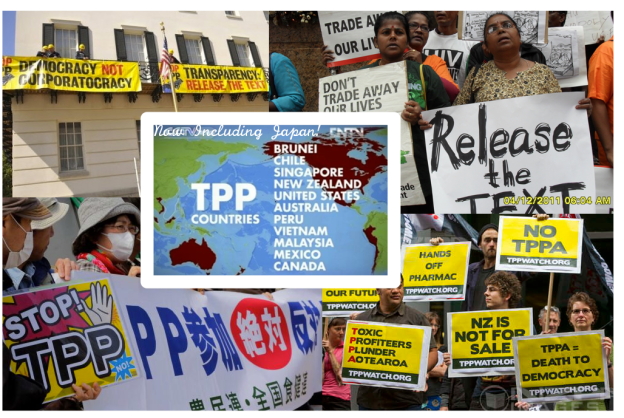
Ep 52CD052: The Trans-Pacific Partnership (TPP)
The Trans-Pacific Partnership (TPP) is a secret international treaty designed to give corporations power over governments; it is labeled as a "free trade agreement". The TPP will likely allow corporate control of the Internet, endanger food safety, increase medicine costs, remove environmental laws, prohibit financial regulations, and almost certainly would force the United States to give tax money to private corporations if our democracy creates laws that interfere with corporate profits. The Obama administration aims to have it signed into law by the end of 2013. *Full text of draft Intellectual Property Chapter (text as of August 30, 2013), released by Wikileaks on November 13, 2013. Sources of Clips Presented in This Episode YouTube Video: "The Top Secret Deal Between 11 Countries That Will Affect Your Lives" by Lee Camp, episode #186 of the Moment of Clarity series, November 14, 2012. Lee Camp is an angry comedian who has blessed the world with his 5 minute Moment of Clarity videos, which tackle all the horrible problems of the world with justified anger, passion, and lots of laughs. Check him out. The link above his to his episode on the Trans Pacific Partnership. YouTube Video: "Conversations with Great Minds: Lori Wallach on the Trans-Pacific Partnership, part 1" by Thom Hartmann, RT: The Big Picture, July 16, 2012. Provides the history of Global Trade Watch and Lori Wallach's interest in trade agreements. Examples of American laws being circumvented with trade agreements, including the creation of the World Trade Organization (WTO) and the North American Free Trade Agreement (NAFTA). YouTube Video: "Conversations with Great Minds: Lori Wallach on the Trans-Pacific Partnership, part 2" by Thom Hartmann, RT: The Big Picture, July 16, 2012. Details from the leaked chapter of the Trans-Pacific Partnership. What is the difference between a treaty and an agreement? A treaty must be agreed to by 2/3 of the Senate; an agreement only needs a simple majority. The Trans-Pacific Partnership will create tribunals that will allow corporations to sue governments if the governments enact laws that interfere with corporate profits. Video with transcript: "A Corporate Trojan Horse: Obama Pushes Secretive TPP Trade Pact, Would Rewrite Swath of U.S. Laws" by Amy Goodman and Juan Gonzales, Democracy Now!, October 4, 2013. Interview with Lori Wallach, director of Public Citizen's Global Trade Watch. Details from the leaked chapter of the Trans-Pacific Partnership. What is "fast track"? Basically, fast tracking the TPP would involve Congress handing their power to approve treaties to the Executive Branch and would essentially eliminate any public role in trade negotiations. [caption id="" align="alignright" width="175"] Michael Froman, U.S. Trade Representative, sounds like Dick Cheney, dead inside[/caption] Video with transcript: "Obama-Backed Trans Pacific Partnership Expands Corporate Lawsuits Against Nations for Lost Profits" by Amy Goodman and Juan Gonzales, Democracy Now!, June 6, 2013. Details on the tribunal system that will allow corporations to sue governments for lost profits. Sound clip of Michael Froman, the United States Trade Representative who is negotiating the Trans-Pacific Partnership on behalf of the United States. Video with transcript: "Breaking '08 Pledge, Leaked Trade Doc Shows Obama Wants to Help Corporations Avoid Regulations" by Amy Goodman and Juan Gonzales, Democracy Now!, June 14, 2012. Interview with Lori Wallach, director of Public Citizen's Global Trade Watch. An agreement was made to publish the text of the Trans-Pacific Partnership four years after completion. Sound clip of a corporate tool giving former U.S. Trade Representative Ron Kirk a fake award for pushing the TPP, which the corporate tool says will provide companies with expanded profits despite what the citizens think. Video with transcript: "Trans Pacific Partnership Could Damage Australia" by Kerry Brewster, Lateline, October 10, 2013. Australian news segment highlighting the Trans-Pacific Partnerships dangers to Australian citizens. Canada is being sued for their fracking moratorium. TPP would extend the length of pharmaceutical patents, thereby delaying cheaper generics. Music In this Episode Intro and Exit Music: Tired of Being Lied To by David Ippolito (found on Music Alley by mevio) YouTube Video: "TPP = Corporate Power Tool of the 1%" by Public Citizen, May 7, 2012. YouTube Video: "Stop the TPP (English Version)" by Jeremy Malcolm, September 30, 2013. Links to Additional Information About the Trans Pacific Partnership PDF: The leaked chapter of the Trans-Pacific Partnership. Public Citizen's Trans Pacific Partnership Information Website Simply the best resource available for finding information on the Trans-Pacific Partnership. Upcoming TPP Meetings, Office of the United States Trade Representative website. A Pacific Trade Deal by The Editorial Board of the New York Times, November 5, 2013. An endorsement of the Trans-P

Ep 51CD051: Expand Bank Bailouts
The House passed a bill this week that would expand the number of banks that will be eligible for government bailouts and eliminated rules to prevent the banks from making really risky bets with our money. New Information (Found Since this Podcast Episode Was Released) YouTube video: Insanity in the House, Part 2 by Mansur Gidfar. Has additional information on the corrupt Congressmen who moved H.R. 992 through the House. Links to Information in This Episode Intro and Exit Music: Tired of Being Lied To by David Ippolito (found on Music Alley by mevio) H.R. 992: "Swaps Regulatory Improvement Act of 2013" Expands the eligibility of American foreign banks that would be eligible for a bailout. Allows banks to eligible for bailouts to trade credit default swaps. Citigroup wrote most of H.R. 992 Banks Lobbyists Help in Drafting Financial Bills by Eric Lipton and Ben Protess, New York Times, May 23, 2013. See How Citigroup Wrote a Bill So They Could Get a Bailout by Erika Eichelberger, Mother Jones, May 24, 2013. Contact your Senators here (search tool is in the top right hand corner) Contact the White House here White House phone number: 202-456-1111 Music: Greed is Good by Leeman BrothaZ Frontline: Money, Power, Wall Street, documentary, April-May 2012. H.R. 2374: "Retail Investor Protection Act" Prevents a Department of Labor regulation that would force broker-dealers to have a fiduciary duty to their customers and act in their customer's best interest President Obama has issued a veto threat for H.R. 2374 but not for H.R. 992 H.J Res 99: Bring Back the Debt Ceiling Early H.J Res 99 is the first step in the expedited process for bringing back the debt ceiling established in the law that ended the shutdown and extended the debt ceiling. The clause that brings back the debt ceiling is in Section 1002 Details of the law were in CD049: Crisis... Postponed