
cloud2030
521 episodes — Page 6 of 11

Ops Research and Mapping
We explored Operations Value mapping. This lead to an a very interesting discussions of complexity budgets and how to measure complexity budgets. This includes managing supply chain, and value pipelines, and system coupling. Complexity budgets could be a very powerful measuring tool for understanding operations value In an organization. Overall, this helps you explain the cost of complexity to organizational leadership. Transcript: https://otter.ai/u/T1jXorfZO6Yc7fovBEXKgxSnxao Image: https://www.pexels.com/photo/old-map-of-iceland-on-wall-4338273/

Supply Chain Disruption and Recovery
Today's episode is about supply chains but with a Cloud2030 twist. We focused on forward leaning futures by looking into how supply chains are being disrupted. It's going to be hard to get them working again if they can ever come back! Transcript: https://otter.ai/u/fBMFUh1TtBwdFvh7q0tKgpwW7kA Image: https://www.pexels.com/photo/buildings-cars-city-cross-harbour-tunnel-262100/

Implementing Biometric Privacy at the Camera?
We start talking about conferences using biometric security, edge detection, and included your right to be forgotten. In this fascinating conversation, we go into future projections of what it's going to take for people get privacy including the idea of using AI so face are left out the photographs! Would be possible? If so, what would drive that as potential thing. We started it humorously thinking about all the cameras and all the biometrics that could be collected during AWS reinvent, which a lot of us will be at, at least in the shadows. Transcript: https://otter.ai/u/fqYayHreB9FVPt2SzFFSMu7QAgo Photo by Cleyton Ewerton from Pexels [ID 5063551]

Why are Backups so Tricky?
Why are Backups so Tricky? Backups are really, really tricky! We talk through a lot of different things that you have to consider in making successful backups like security, resilience, how you store the data, how you recover the data and rebuild the systems. Basically, we ran the gamut on backup challenges. You really need to think through a lot of the considerations! Our discussion will help make you better at backups. Transcript: https://otter.ai/u/icmWxa0LmLT1Um-uAVWwGFc9Wq4 Photo by Alena Darmel from Pexels [ID 9037305]

You need an IaC Pipeline! [KubeCon & VMworld retro]
We talk about Infrastructure as Code through a Kubernetes filter. We started with a check in on KubeCon and VMworld, both of which had just ended. Both of those shows are very relevant in our IaC discussion and considerations because we dig into how we build on those platforms. Ultimately, that lead to the idea of pipelines and processes for building sustainable automation and operations. That got into very interesting places! Transcript: https://otter.ai/u/O1UZds25tjCKUr0337HHOo-hxu4 Photo by Evan Velez Saxer from Pexels [ID 7417579]

Does Business Value Mapping Deliver?
Today's episode is about business value mapping. Instead of focusing on Ray Wang's "Who wants to rule the world" book, we got really deep into the why. We discuss what is business value mapping, how it works, why it works, when it doesn't work, and what it takes to make it succeed. So if you've read Ray's book, I think you'll get a lot of extra depth out of this, if you haven't read it at all, it might be a good primer on why you want to learn more about business value mapping and how to apply it within your own organization. This is part one, we're actually having a whole other session about operations, value mapping, and talking that through in the next session. Transcript: https://otter.ai/u/P_8lounzOlH-Ufw4urRDMpU9ILs Photo by cottonbro from Pexels [ID 5370916]

Can we Secure SaaS? RE: Facebook & Twitch
During this 20 minute check-in we dive security and SaaS infrastructure. Can we protect the secrets that people are trusting to SaaS providers to store for us? The topic was inspired by the Twitch leak where a lot of sensitive information was exposed exposed to the public. That comes on the heels of all sorts of other leaks, compromises and down time on systems. Overall, it seems like bad news is coming faster and faster for operators. The fundamental question is NOT can we trust a SaaS provider to secure information. We know the answer is NO. But what to do about it? Transcript: https://otter.ai/u/bHe8mibvYE4vTIjWleOfJ2Z7iwI Photo by Joy Marino from Pexels [ID 3054158]

Does Minimal Viable Product (MVP) work?
Today's episode is about Minimal Viable Product (MVP) which is a product development process focused on learning. It is an important element to building good resilient products and spending the right amount of time doing the right things. But it's not a cure all! It might be right for what you're trying to accomplish. In this podcast, we really go through when MVP works, when it doesn't work, and what goals to set when using minimal viable product. This podcast will make you think about what should go into making product decisions. Transcript: https://otter.ai/u/iuQMTRlDebdqhdhSAsXa5O0Qb2A Photo by Victor Puente from Pexels [ID 410091210]

Edge Networking: Facebook, BGP and 5G
Edge networking is hard! Because before we can talk about edge networking, we actually have to talk about edge management and edge control, and what it takes to build resilient infrastructure and train people to use it. In the first half, we're talking about the challenges of managing infrastructure, using the Facebook outage of the week we recorded as a starting point for how challenging it is to build resilient infrastructure. In the second, we talk about edge networking with solid insights about how challenging edge networking really is not just creating networks in edge locations, but what does it take to sustain an edge network and the integration and technologies over the course of multiple technology generations? Caption: https://otter.ai/u/U6PvW4S34DUi1Awiu4gcYMLp-pk Photo by Tony Mucci from Pexels [ID 5367334]

Is AI the Future Of Conferences?
What was working what wasn't working with conferences. But in traditional Cloud2030 style, we dove into the future, what would make great conferences, what makes conferences good, what made them good in the past and what technology changes we think could be coming in the future. We extended that from conferences into meetings and meeting technology and transcription in the second half of this podcast. We really dive into how to help people connect together better since that's what conferences are about, too. Then we extended it more broadly, and brought up some interesting things like sentiment analysis, and adding new dimensions into the types of tools that we're using today. Transcript: https://otter.ai/u/k5RptA109SprrofV5QeEPHVg6yU Photo by Belle Co from Pexels [ID 1000445]

Certificate Management (Let's Encrypt Expiry)
Understanding and Managing Certificates is a critical operational skill in which we cover the basics and then go deeper. If you are familiar with SSL HTTPS, you are using certificates on a daily basis. And yet, actual management of trust and root CA is and distributing private and public keys or distributing public keys and managing private keys is tricky. Even our expert panel still struggles while we understand what's going on. One of the challenges with this is in education and having people understand what they're actually getting from certificates and trust, and what they're not getting. Transcript: https://otter.ai/u/CpGE5ybdVqiIlfoNqMIknTsLId4 Photo by Andres Ayrton from Pexels [ID 6551298]

Modular Automation via Pipelines and Digital Twins
Today's episode, we talked about the challenge of making Modular Automation. We broke down why that is so hard and really dug into ways in which we can increase the modularity and reuse of automation. That led us to talking about infrastructure pipelines, infrastructure, reuse, and sharing state via digital twins in infrastructure. All of this comes together really fascinating ways! Transcript: https://otter.ai/u/O1KFCsmEpMpV-hNZjTzJ_ewxaUA Photo by Alena Darmel from Pexels [ID 7751055]

Deep Dive into Secrets Management
We go into the details about Secrets Management. We explore how the process works, and how to do it right. We also cover the alternatives. This podcast is for you if you are trying to understand how secrets management works. We cover different scenarios where it can be applied, and where can go wrong. Transcript: https://otter.ai/u/SvO6_I3RIiGmc2FLJM70y9xoQB4 Photo by Anna Shvets from Pexels [ID 4587991]

A Peak Of Trustability?
"The peak of trustability" came up during our discussion of Trust in general. We really unwound what trust means starting from simple concepts like credentials and certificates and other security items. We got to a point where trust is also about software supply chain! Security includes how much you keep up with changes and what the latest things are. Then we realized that trust has an important time value: you don't trust, initially, you build trust, and then you lose trust. This creates a peak of trust ability concept that I hadn't heard articulated before. I think is really important in understanding trust in a broader sense, especially when we think about Zero Trust. That;s not the end. It's an end point and it's also a starting point for building interconnections and relationships with people and tech. Transcript: https://otter.ai/u/TNRiua5DxzsdR3Yh0eEjRJ45FB0 Photo: Photo by cottonbro from Pexels

Continuous Infrastructure Automation
Continuous Infrastructure Automation is a critical concept about driving much more resilient and repeatable systems. As we build out applications on infrastructure, we should not treat them as a static deployment. Instead, we should think of infrastructure as constantly evolving, growing and changing. There's a lot of technology and challenges in building that! In discussion, we firmly believe that this is the right path, but the path to get there is challenging. There are a lot of components that have to be considered: everything from artificial intelligence or machine learning, to how to manage and control and standardize the automation that does all that work. Transcript: https://otter.ai/u/KmdQpMPJDPL1BjzXjEIEeavQRco Photo by Aleksejs Bergmanis from Pexels [ID 681335]

Your next DC...Edge or Cloud?
Cloud versus Edge? This panel dove into what makes edge different than cloud. There are a lot of different technical and commercial drivers. And fundamentally, it matters who owns the sources of data and how data sources are different. This underscores how it is critical to understand data sources, infrastructure ownership, and how everything fits together. This discussion will change to you rethink what makes Edge different than Cloud. Transcript: https://otter.ai/u/y2ubHGGIhY31hRyiV6mW_B8e-os Photo by Agafonova Photo from Pexels [ID 5284983]

Topics for a Security Training Course
DevOps Lunch and Learn was about security practices. Specifically, we built an outline of topics in security that we think are necessary for developers and operators to build secure applications. We basically built a week long course curriculum! As we go through what this course curriculum we walk through who needs to know this information and why. If you want to see all of the detail here, please see: https://docs.google.com/document/d/1x5QLP77mg2Dml_tWsK6IH66GPohF0B_Lvz4lUmZFXZQ/edit#heading=h.c2phqte5q4pl Transcript: https://otter.ai/u/UyMAmiHi-rRAreMa0FjxaVNomhQ Photo by PhotoMIX Company from Pexels [ID 226746]

Edge Impact of Digital Twins
We talk about Digital Twins and the Edge with Simon Crosby from Swim.AI. They are literally building digital twins in edge locations so he has a lot to share. We work to expand and understand how Simon's experience translates into general cases and what we're seeing in the edge. The systems that we're trying to build are at the intersection of models and "connectedness" of all the components for the edge. These designs don't fit traditional models and it is what makes edge unique. Edge is not a single application, but a connected system that going to have to emerge to make all this work together. Transcript: https://otter.ai/u/-uFSclONwRhhc4QlFywiSJAIF10 Photo by Dmitriy Ganin from Pexels [ID 7538096]

Distributed Infrastructure
With Distributed Infrastructure and the Edge, we cover the challenges of managing applications that are, by definition spread out throughout heterogeneous infrastructure. Distributed Control is designed to control systems that are are not in cloud data centers with localized compute and storage. But then how do we manage it? We discussed details about how these systems get built, and kept coming back to "do we need to have localized processing?" If we do, how do we manage it? Transcript: https://otter.ai/u/BkxvOrQMmmQiYQpxa-OogrMyNNw Photo by KEHN HERMANO from Pexels [ID 3881034]

That's Not Terraform Orchestration!
This episode is about Terraform orchestration, what some people might call a TACO, in which we actually tried to do cloud provisioning in a orchestrated way. But this is a really challenging thing to do! Orchestration is really hard so our discussion kept coming back to saying that this isn't orchestration at all: it's Infrastructure as Code and management. We need to find a consistent way to to run a workflow or a control plane. We're not even getting to the point where we're coordinating or orchestrating aspects of different systems and using remote or API driven infrastructure. Even if you use Terraform, you will get a lot out of this discussion! Transcript: https://otter.ai/u/Ohbfr0Uprm95WYYI4357IdUodOU Photo by Gabriel Santos Fotografia from Pexels [ID 2102568]

Do we have a Right To Repair for Data & IP?
Right to Repair is the idea that when you buy a product, you're able to fix it. We've been building products lately that don't have that inherent part of the contract. In this episode, we really took Right to Repair to another level talking about Intellectual Property (IP) and ownership of that IP in the software components. This topic impacts every single business and every single consumer! Transcript: https://otter.ai/u/7EVT0C9T0KDCcUIWBsGYKHdiT6Y Photo: Photo by Blue Bird from Pexels [ID 7218008]

Designing for 5G And Digital Twins
We talked about 5G, factories and edge infrastructure. They are very interconnected because they live at the network edge and are sensitive to how we need to route traffic. This is important as the basis for using digital twinning as a new user experience (UI/UX) around interacting with systems. This new approach is starting to emerge and it will be very network intensive, visually oriented, and involve overlaying the physical world with the virtual world. How the heck are we going to connect all these things together? Transcript: https://otter.ai/u/7lSSCwLdGiF9JqyunUHo19m6yPk Photo: https://www.pexels.com/photo/two-boys-sitting-on-crescent-moon-1651483/

Terraform Usage Patterns (Gitops, IaC, Templates)
Cloud provisioning is very difficult when you go beyond simple provisioning and start thinking about how to to stitch together infrastructure in a repeatable way! Specifically, today's episode is a deep dive into Terraform usage patterns. We get very hands on as we talk about how you manage state files and how you connect things together with Terraform. We will spend a significant amount of time discussing in the fall because building infrastructure in a scalable automatable way, is a critical topic for the group. This is an ongoing topic for us - stay tuned for more episodes! Transcript: https://otter.ai/u/A-NgZOfa1xeIPA1uQOh8_bSStck Photo by Artem Beliaikin from Pexels [ID 1079033]

Building our IT Talent Pipeline
In this episode, we question the IT talent pipeline. We really work through boot camps and how we are building talent and skills for the generation of IT workers. We ask some key questions like: Are degrees necessary? Can you teach these things quickly? How do we actually learn the skills that are necessary to build resilient systems? And what would it look like if we were creating certification programs, real certification programs, like we have in other trades? Transcript: https://otter.ai/u/FTOvatXEYSxNze00HKXVz8OZHxU Photo by Yan Krukov from Pexels [ID 8613305]

Is Open Source Working?
Is open source driving innovation? And Is it a necessary component of Right to Repair and ownership? Are there commercial drivers where people want those open capabilities? We transition into a deeper conversation about what's going on with open source. Is it being innovative? Who is leading? How is it working? Transcript: https://otter.ai/u/vto0yPpBuZtqngkc_zqMDp9J39M Photo by Jeffrey Czum from Pexels [ID 4118958]

Challenges of API Design
Good APIs are hard to design! Making them long lasting and scalable is even harder. We discussed two aspects of API design. First, making about Event Bus for system integration and then RackN CTO, Greg Althaus, discusses what his team considers a good API design from Digital Rebar. Transcript: https://otter.ai/u/2Pz3LwG4qPl58s3ewwGFCCFmg8w Photo by Tsunami Green from Pexels [ID 5192790]

Edge Control Planes
Building an edge control plane is challenging! It's not clear even what is currently available. As always, data, data pipelines, data orchestration, and data choreography are all influential for edge infrastructure. Transcript: https://otter.ai/u/yfa6Kzsd6CTjXOJ1MQjHBxp2J4Q Photo by Taryn Elliott from Pexels [ID 3889936]
Nextgen Servers? IPU & SmartNICs
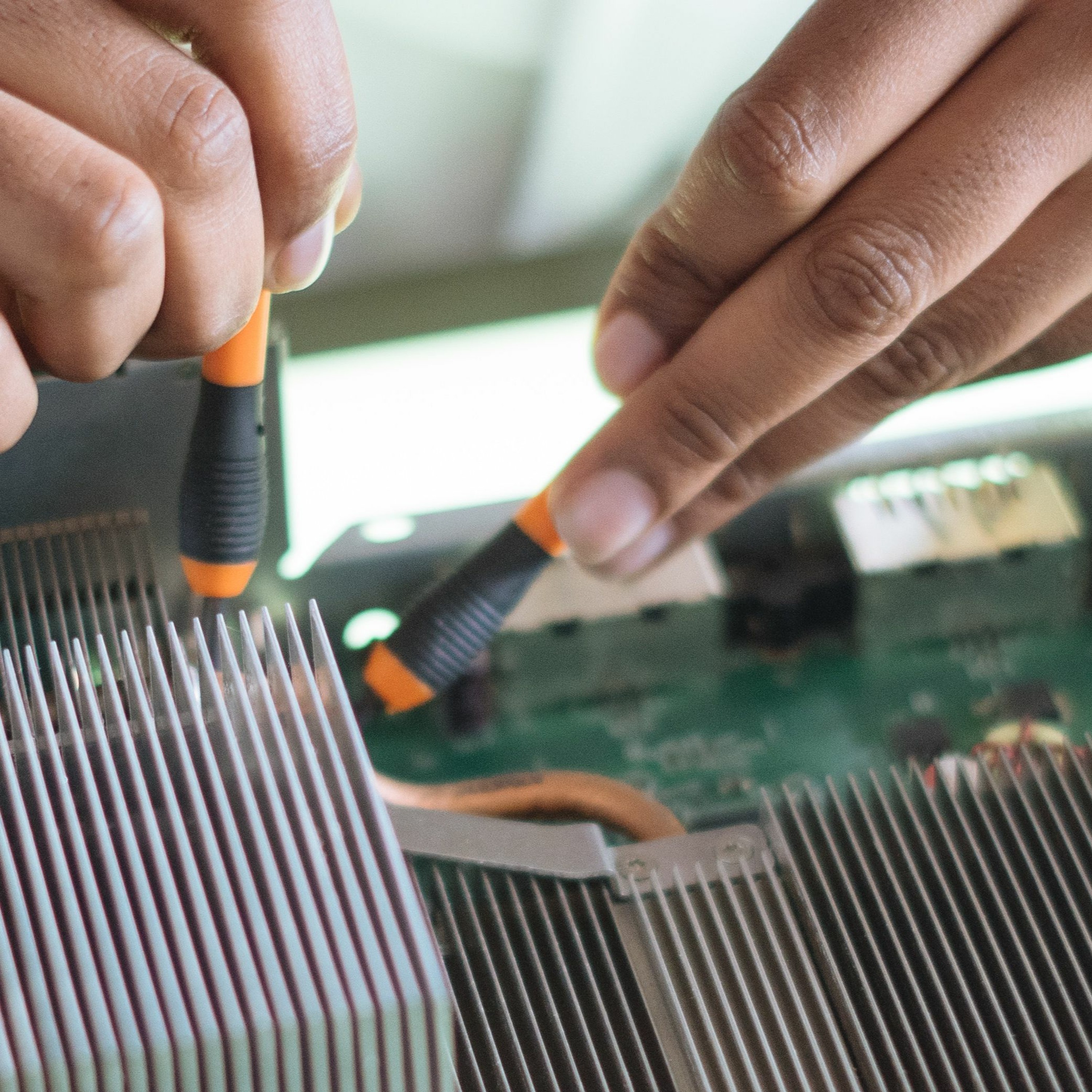
IPUs, intelligent processing units, are also known as smart NICs, side cars, or supervisory computers. A well known example is Amazon's Nitro. We discuss the impacts of these supervisory processors, and how they can change the industry. This is clearly the trend of the future. Building supervisory systems as additional processing capability into our core servers that then abstract out how the bus is interfaced how the routine peripherals, network activity, GPU or storage is abstracted in these systems. BUT will they create a new way to manage heterogeneity and diversity inside of our hardware and server ecosystems? Can they have a dramatic impact on edge computing? Transcript: https://otter.ai/u/NXx-LgMzI5jEmP2irldOwGpeKlg Photo by RF._.studio from Pexels [ID 3825581]

Software Right to Repair? Is that OSS?
The "right to repair" is a really thorny and political issue! We talked a lot about John Deere, Apple and Tesla not letting people fix the products they've bought from those companies. We have a lot of questions! Why they do that? What the challenges are with RTR? How we could avoid them? What pressures keep us coming back to companies that are offering goods that we don't have the ability to repair? Transcript: otter.ai/u/mDxnSfDXWqKOFA5Gbw8rG6TkDkE Photo by Kateryna Babaieva from Pexels [ID 2880871]

Will Cloud Economics disrupt Hyperscalers?
How can cloud economics of hyperscalar clouds be used to ended or limit their control? We discussed the state of the cloud ecosystem with a focus on where its going to go. After a full, rich, and dynamic conversation, we came back to security security, software (as opposed to SaaS), owning your own infrastructure, and the ROI of that infrastructure. Transcript: https://otter.ai/u/Y7ZO7Y6e0JQr5Wz4hOWyyMRsGb8 Photo by Mikhail Nilov from Pexels [ID 77335782]

Can we unit test CI/CD Pipelines?
To understand CI/CD of infrastructure, you have to actually understand how the systems work together. In this podcast, we talked about low code, no code and how you would do integration testing for that. We also explore the idea of unit tests and code coverage for CI/CD presents challenges. Transcript: https://otter.ai/u/oPGkPe8w-hG2LKXkQJhHAeJebe0 Photo by Karolina Grabowska from Pexels [ID 4021773]

Zero Trust Service Mesh
How do we secure service meshes for zero trust? Especially since we don't know how they're going to be used or integrated? We went very deep into what it takes to secure service mesh. That included what type of application frameworks are going to be required to provide multi-service infrastructures that are secure and trusted in a performing way. Transcript: https://otter.ai/u/CUJdKeyT_hHLAZG9XKqzb-Y9N00 Photo by Alexas Fotos from Pexels [ID 2317932]

DevOps | Automation | Infrastructure Pipelines
Can you composing infrastructure tasks: provisioning, configuration, security and monitoring, all together? Basically a Linux Pipe for automation? Maybe! We talked about how hard it is to build robust, resilient infrastructure. The theme was supposed to be what could go wrong and finding the weak links in our infrastructure automation. Fundamentally we think that it's all weak links! We had a good conversation about how we actually build and automate robust applications. But we didn't come to consensus. Transcript: https://otter.ai/u/Qg_KgyXe7X4pl2E60gb6tunFshw Photo by Luis Quintero from Pexels [ID 2339722]

Let's automate GitOps and IaC! [1x1 w Tim Davis from Env0]
How can GitOps and Infrastructure as Code scale your team's ability to write automation? We answer how to take your DevOps to the next level. We really dig into what the automation challenges are and how you can do better as you build an integrated infrastructure system. And of course, we did talk about Env0 and how Env0 solves the problem. And you will learn a lot about Env0 during this podcast. Tim and I did discuss what it takes to build real infrastructure, automation pipelines, Transcript: https://otter.ai/u/6ccxxk0MDmB67_xhlS3gohqM7gM

Vendor Gossip about Fastly, Terraform, Anisble and others.
We talk about the impacts of Terraform going 1.0, Ansible, and the Fastly outage. We mix all those things together with a little bit of vendor gossip. How might Terraform being "stable" change things? And is that going to help the industry hurt the industry? And what changes might be in stock? Transcript: https://otter.ai/u/mL1fLJUiXO7qOhfcdC1f6E2LGEs Photo by Ba Tik from Pexels [ID 3754294]
How Can I Learn DevOps?
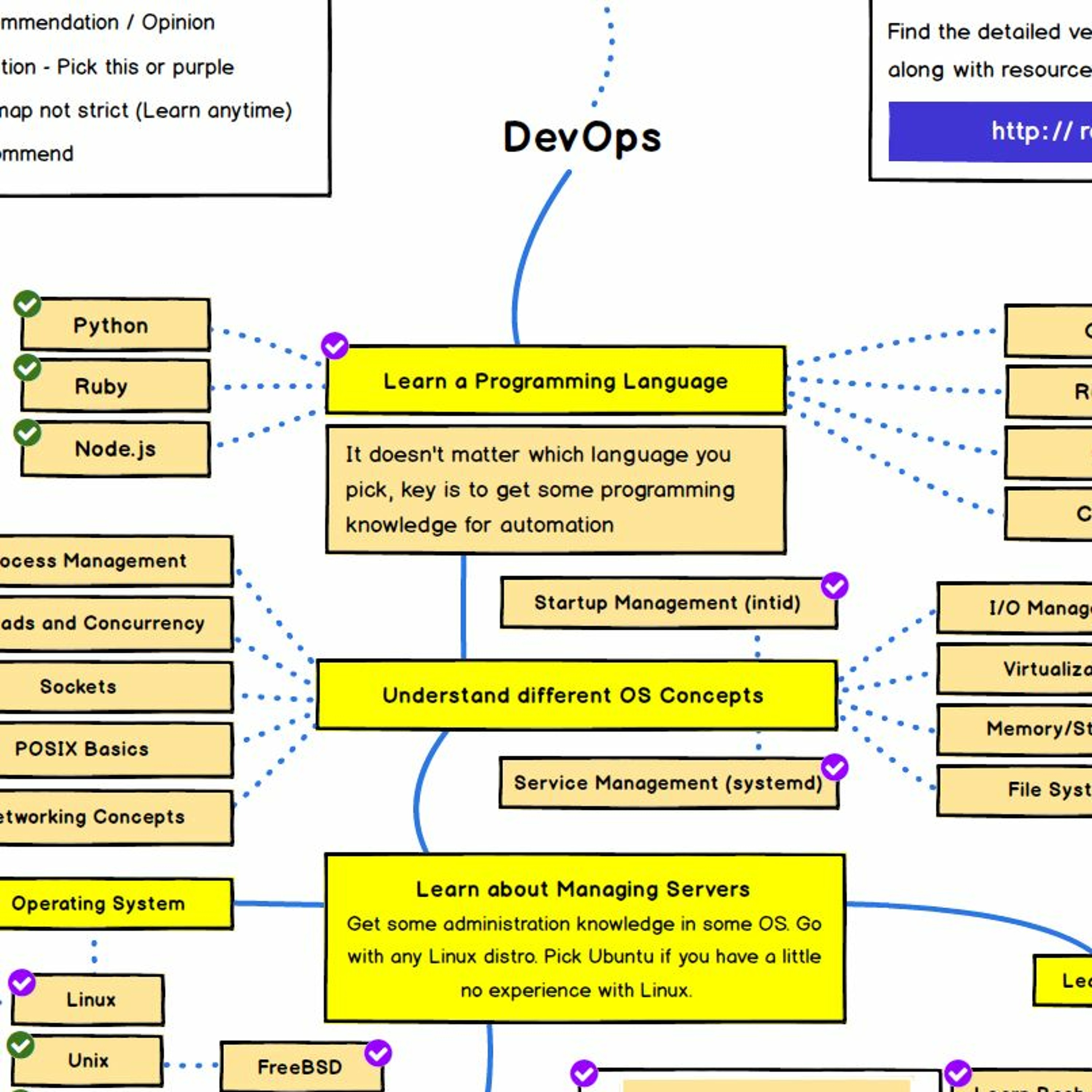
Learning DevOps is a challenge! We discuss using the DevOps Roadmap to coach people to get into the field of DevOps and infrastructure automation. DevOps is hard and challenging because the thing we kept coming back to there being so much to learn and understand. It can be really intimidating to get started! We spent some time actually trying to break that down and give some starting points on how that works. Roadmap: https://roadmap.sh/devops Transcript: https://otter.ai/u/jYcQ6eIoJWLGv1JKEBN_Iqh7w1M

Edge Service Mesh Or Mess?
Our Service Mesh discussion leaned heavily into the needs around edge infrastructure because there are so many missing parts for the edge deployment systems, When we started talking about service meshes, we really realize is that the actual control plane, communications grid and security for edge are not defined enough for us to layer on what has become sort of a standard in cloud deployments of service mesh into that discussion. How we got there, how we discussed it, and the components of why that's important, is much more interesting than the conclusion itself. Transcript: https://otter.ai/u/RuXigltfMAuE4z-NZETAvNQNbRY Image: Photo by Zachary DeBottis from Pexels [ID 1888883]

Test and Config of CD Pipelines
Taking Configuration management for deployment pipelines and make it productive and effective. And we really got into a lot of the challenges about scaling, rolling deployments, split tests, schema, migrations, rollbacks, and multi-site infrastructure. We dug in on the challenges that are related to making this actually work in a scale production environment. Ultimately, we looked a system principles. How to deal with one component when you actually have to think through how you're building the software. Architecture makes a difference in how you manage the infrastructure and deployment pipelines. Transcript: https://otter.ai/u/9A0U1YERv9ffOLGffzAd41E6VYc Image: Photo by Aleksejs Bergmanis from Pexels [ID 681335]

Hybrid Security [1x1 w Emil Sayegh of Ntirety]
1x1 with Emil of Ntirety, which is an MSP that specializes in hybrid security. They're working with both huge and small customers by helping them build a coherent IT strategy. with a focus on holistic security and hybrid cloud. We had a fantastic discussion about those topics and more. And if you're into security, you will find this a fascinating discussion. Transcript: https://otter.ai/u/PvTlUBQC0FOg0rQdTh6GMIhN9wU
Defending Your Data Moat
We keep coming back to "how do we defend our data advantage" but we don't know how, or why we should share data with people. It's very clear that we should be sharing data and that there's economic benefit to us to do it. But we haven't figured out how to do it. And that's the question that we're sort of struggling with in this whole conversation. Transcript: https://otter.ai/u/nGfmf-7f0EZinGNGbdmHn2b4TL8 Image: Photo by Egor Kunovsky from Pexels [ID 5598634]

Preventing Ransomware Attacks
We discuss security related to the colonial pipeline, and what we could do to improve against ransomware attacks. What are the different things that are impacts in that type of attack. And it's really a good exercise in thinking about security, especially security of secondary systems, and hard networks. very robust, resilient conversation. transcript: https://otter.ai/u/rKh9TTyqrBeHxzsdClBtQi2admA image: Photo by Polina Tankilevitch from Pexels [id 4110404]

Andi Mann 1x1 Podcast
1x1 discussion with Andi Mann, He's a real leader when it comes to infrastructure, automation, DevOps, analysis, just putting everything together. And we had an amazing conversation, ranging the whole gamut of how to make technology better. complexity, hybrid, open source. You name it, we covered it! Transcription: https://otter.ai/u/F7jazWNoRp3LJ8FNkWlJ8zPa4yU

Hot Topics in DevOps Discussion
General topics of interest: learning DevOps, and tech roadmaps, and how to build up to skills, infrastructure pipelines, release management, and more. These are topics that we want to dig into over the next several months. Transcript: https://otter.ai/u/WZPhi8R_Uev2Ltc69RC6kl8eepI Image: https://www.pexels.com/photo/photo-of-graffiti-on-building-2600116/

Security Supply Chains
How will we secure infrastructure in the future? Why is so hard to get security taken seriously? Because it's a supply chain problem. a vendor problem, AND a customer problem. We have to solve this because it threatens to undermine very fabrics of what we've been building together. Transcript: https://otter.ai/u/O3DTK6VPhYdSOc7HxbrzFwYElxk Image: https://www.pexels.com/photo/child-sipping-from-pipe-graffiti-2103127/

Image and Immutable Deploy Processes
We go DEEPLY into the practice of image base (aka immutable) deployment. Image based deployment is when we building infrastructure by cloning systems. That means actually writing the system image directly to disk. We typically start a VM, where it's already on the disk, and then clone that to an existing system. Transcription: https://otter.ai/u/rOrf9VJ8lSOXkjLcRpfAd8R26SI Image: Photo by Lidia Riehman from Pexels [ID 5713996]

What's Ideal tech? How can we get there?!
We started with the idea of what should our infrastructure be if we were going to get the perfect thing, the ideal thing and then work backwards? We focused in on home and industrial uses. That led us into the way we think about building technology. Transciption: https://otter.ai/u/KcUBUZvpOqXYlY-onF48OFZ7gSA Photo by Matheus Natan from Pexels [ID 3689875]

Zero Trust and Homomorphic Data Security
All about security, zero trust data, and shared homomorphic security. If those terms mean something to you, you will find our conversation fascinating. And if they don't, you better be listening, because these are really important concepts that come together for how we will secure data in the future. And we really believe that these are transformative technologies that challenge the current status quo. Transcript https://otter.ai/u/yd3zfHMXZ-eE9QUuTYDIIojhT0s Photo by cottonbro from Pexels [ID 8088682]

Tea Time? We spill vendor gossip & strategy
We went deep into vendors, specifically Red Hat. So if you like vendor gossip and speculation then you'll love this. We talked about Red Hat, IBM, Oracle, a couple other vendors of note and speculated on their strategy. Transcript https://otter.ai/u/L_uP42EK4AVjVmDxERD3f0V-2Yw Photo by Anna Shvets from Pexels [ID 4587991]

How Much Complexity Is Too Much?
Is there a Jevons Paradox of Complexity? We started by asking key questions like: How much complexity is too much? How do we measure it? What's the business risk? DId we make complexity cheaper or just hide it away? Is there a price to be paid for building incredibly complex systems? We answered these and more in the reference of business concerns and the business value. Transcript: https://otter.ai/u/WfbSCL5GUiXCoSpFqe8DsTqxzw4 Photo by Ekrulila from Pexels [ID 2218344]

Service Mesh - How and Why
How Service Mesh works and why they're important. Towards the end, we start talking about the rationale and whys and hows of the architecture. Transcript: https://otter.ai/u/OPEKGyWT6iDjMLVQlHZeKVWkh_I Photo by Karolina Grabowska from Pexels [ID 5422821]