Classroom Narratives: Healing in Education
100 episodes — Page 1 of 2
100 Ingredients in the Secret Sauce of Education
Beyond the Diagnosis: Listening Without Rescuing Students with Morgan DiPrimo
Beyond the Institution: What Fiction Reveals About Power, Leadership, and Humanity in Schools with John Infortunio
Teaching with the HEART and SOUL: Going BEYOND the HEART
Beyond the Hurdle: Building Resilience Through Identity, Failure, and the Courage to Keep Going with Dr. Vonetta Kalieta
Teaching with HEART and SOUL: TRUTH Beyond a Story
Teaching By Day: The Boundaries that Sustain Great Teachers with Yvette Dixon Ledford
Teaching with HEART and SOUL: RESILIENCE Beyond "I Can't"
Leading with Culture: Building Schools Students and Teachers Want to Attend with Shaun Hurtado
Teaching with HEART and SOUL: AWARENESS Beyond "Why Does This Matter?"
Beyond the Plate: Helping Students Build Healthy Relationships with Food, Body, and Mind with Lauren Dorman
From the Classroom to Congress: Why Leadership Begins with Service with Amanda Bell
Teaching with HEART and SOUL: ENGAGEMENT Beyond a Right Answer
Listening Beyond the Answer: Narrative Medicine, Grief, and the Courage to Witness with Dr. Rondalyn Whitney
Teaching with HEART and SOUL: The HABITS That Evolved Community Beyond Compliance
The Power of Love in Caregiving: Winston Meikle on Connecting With Care Instead of Fear
Teaching with HEART and SOUL: "The Look" That Taught Me to Care, Not Carry
Making Moments Matter: Weisler Alumni (Pt. V)-- Growing Up Through Grief, Friendship, and Parkland
Adjust the Flame: Exploring Anger and Emotional Intelligence in Schools with Dr. Mitch Abrams
When Presence Becomes Prevention: School Safety, Trauma, and Educator Voice with Abbey Clements
"The Pie Just Gets Bigger”: Parenting, Identity, and Emotional Survival in Schools with Dr. Julie Davelman
Listening as Witness: How Art, Community, and Invitation Create Space for Healing with Rosa McAllister and Tieshka K. Smith
Listening Isn’t Fixing: Creating Space for Presence in the Classroom with Kathryn Pannepacker
Meeting Your Inner-Hero and Healing Your Inner-Child: with Ron Yap @mentalhealthceo
Empathy Without Self-Abandonment: Unhooking from Survival Mode in Leadership and Teaching with Leila Boutaleb Brousse
Invitation Over Compliance: Design Thinking in Classrooms with Dr. Fred Estes
“Changing the Narrative: Identity, Power, and the Weight Educators Carry” with Dr. Dwight “Kofi” Rogers
S4 Ep 14“We’re Never Doing Too Much for Kids”: Rethinking Resilience with Dr. Rob Martinez
🎧 Episode Synopsis (for notes/description)What if resilience isn’t something you “have”…but something that’s built—moment by moment, relationship by relationship?In this episode of Classroom Narratives, Dr. Joey Weisler sits down with Dr. Rob Martinez—educator, former superintendent, and author of Recipes for Resilience—to challenge everything we think we know about resilience in schools.From losing his mother at 13 to rebuilding his life through connection, mentorship, and education, Rob shares a deeply personal story that reshapes resilience as a process rooted in safety, care, and community—not grit alone.Together, Joey and Rob explore the tension between transactional education vs. human-centered learning, the dangers of toxic school cultures, and what it truly means to create classrooms where students feel safe enough to grow.This is a conversation about what schools get wrong, what great educators do differently, and why—at the end of the day—we’re never doing too much for kids..📌 Episodic show notes and resources✏️ Rob's website (@ResiliencyGuy) and link to social medias✏️ Recipes For Resilience✏️ The Story of Sparkle and Shine✏️ Dave Burgess: Teach Like a Pirate
S4 Ep 13“I’m Doing My Best”: Burnout, the Nervous System, and the Weight Educators Carry with Dr. Claire Plumbly
📝 Episode SynopsisIn this deeply honest and affirming conversation, Dr. Joey Weisler sits down with clinical psychologist Dr. Claire Plumbly to explore the lived reality of burnout—what it is, how it shows up in the body, and why so many educators find themselves quietly unraveling while trying to hold everything together.Drawing from her work in trauma and her book The Trauma of Burnout, Dr. Plumbly breaks down the difference between stress and burnout, guiding listeners through the emotional, cognitive, and physical signs that often go unnoticed until it’s too late. Together, Joey and Claire reflect on the intersection of teaching, trauma, and identity—what happens when passion turns into depletion, and when caring deeply begins to cost too much.Through personal story, clinical insight, and practical tools, this episode offers something essential: permission. Permission to pause, to recalibrate, and to remember that being human in this work is not failure—it’s the foundation.At the heart of the episode is a simple but powerful reminder:“I’m doing my best. And that’s enough.”📝 Show Notes📌 Dr. Claire Plumbly website📌 Dr. Claire Plumbly "Feel Better" page📌 Dr. Claire Plumbly Burnout/Recovery book📌 Dr. Claire Plumbly instagram: @drclaireplumbly📌 Dr. Claire Plumbly linkedin📌 Follow here to understand the Yerkes-Dodson model📌 Two conversations with Christopher S Mukiibi on the nervous system (Classroom Narratives podcast-- Pt 1 and Pt 2)
S4 Ep 12Windows, Mirrors, and the Stories That Save Us with Dr. Katie Egan Cunningham
📌Episode Synopsis In this powerful episode of Classroom Narratives: Healing in Education, Dr. Joey Weisler sits down with literacy scholar and educator Dr. Katie Egan Cunningham to explore how stories shape the human experience—both inside and outside the classroom.Together, they examine why stories matter not only as texts but as lived experiences. From novels and playlists to social media and personal memory, stories help young people make sense of the world and themselves. Dr. Cunningham reflects on how literature allows students to see themselves and others through what educators call “windows and mirrors,” while also urging educators to think carefully about how stories are selected and taught.The conversation moves into deeply personal territory as Dr. Cunningham shares how navigating her son’s dyslexia reshaped her understanding of literacy systems and advocacy in education. She explains how school structures can unintentionally fail children who learn differently—and how educators can recognize early warning signs before students fall through the cracks.Dr. Weisler and Dr. Cunningham also discuss grief, vulnerability, and the emotional realities that students bring into classrooms. From experiences of trauma and loss to the pressures of school systems that prioritize certainty over humanity, the episode asks a critical question: What happens when educators create classrooms where students feel seen?Ultimately, this conversation reminds us that literacy instruction is not only about decoding words—it is about helping students navigate the stories of their own lives.📌 Show Notes🔗 Dr Katie Egan Cunningham's website 🔗 Dr. Cunningham's article: In Search of Hope and Healing: Guideposts for Whole-Hearted Living, Loving, and Teaching after Loss 🔗 Article: Catching Readers Before They Fall (Torgesen)🔗 PODCASTS: Dr. Susan B Neuman, Dr. Adam WolfsdorfTheorists and thinkers: Grace Enriques from Lesley University, Pam Allyn,
S4 Ep 11Early Warnings: What Educators Need to Know About Preventing School Violence (with Bruce Liebe)
Episode SynopsisIn this episode of Classroom Narratives: Healing in Education, Dr. Joey Weisler speaks with Bruce Liebe, a retired Illinois State Police officer with over 30 years of law enforcement experience and a longtime instructor in active threat training and tactical response.Together, they explore the intersection between education and prevention—specifically how educators, administrators, and communities can recognize early warning signs that may indicate a student in distress or at risk of causing harm.Drawing from research, real cases, and decades of field experience, Bruce explains the five phases many active attackers move through, emphasizing that the earliest stages—fantasy, planning, and preparation—often contain visible signals that educators may encounter through student behavior, communication, or writing.Dr. Weisler reflects on his own teaching experiences following the Parkland tragedy, discussing the challenges educators face when trying to report concerning student behavior while navigating institutional pressure, stigma, and uncertainty.This conversation offers practical insights into threat assessment processes, school-community collaboration, and how educators can remain attentive without creating fear or trauma within school environments.Ultimately, the episode reminds listeners that prevention is rarely about a single person acting alone—it requires a village of educators, families, counselors, and community members willing to listen, observe, and act early.Show Notes Guest: Bruce Liebe Retired Illinois State Police officer (30 years of service) Former statewide SWAT coordinator and active threat instructor Contributor to The Tactical Edge and international law enforcement consultantFurther ReferencesBev JohnsSue Klebold – A Mother’s ReckoningPeter Langman – Research on School ShootersDave Cullen – Columbine and Parkland ReportingWhy Meadow Died – Andrew Pollack and Max Eden
S4 Ep 10Beyond Behavior: Bev Johns on Advocacy, Trauma, and Supporting Teachers Who Speak Up (Bev Johns)
📝 Episode Synopsis (for episode description)In this powerful conversation, Dr. Joey Weisler sits down with nationally recognized special education leader and behavioral consultant Bev Johns, whose four-decade career has helped shape special education law, classroom practice, and behavioral supports across the United States. Bev shares deeply personal stories—from teaching students who were once denied access to school altogether, to advocating for legislation protecting students from harmful disciplinary practices.Together, they explore what happens when behavior is misunderstood, why teachers’ calls for help often go unheard, and how trauma, anxiety, and invisible disabilities manifest in classrooms. Bev challenges punitive approaches and urges educators and systems alike to see behavior as communication—not defiance.This episode highlights the life-changing power of relationships, the necessity of documentation and advocacy, and the restorative role of the arts in helping students regulate emotion and reclaim dignity. Above all, Bev reminds us that supporting students begins with supporting teachers—and that education, at its core, is an act of human connection.🤞🏻A Message of HopeSupporting educators is key to sustaining the profession.Collaboration between families, schools, and community services is essential.Positive relationships remain the most powerful force for change in education.📌 Show Notes (Key Ideas and Highlights)Check out Bev Johns website here"Sally Sits On My Shoulder" article Classroom Narratives podcast segment with Dr. Lisa KayRestorative Practices in Education Through the Arts (Book)
S4 Ep 9More Than Just a Principal: Servant Leadership, Differentiation, and the Human Side of School Leadership (Robert Hinchcliffe)
🗒️ Episodic Synopsis In this episode of Classroom Narratives: Healing in Education, Dr. Joey Weisler speaks with Principal Robert Hinchcliffe—award-winning school leader, author of More Than Just Principals, and nationally recognized advocate for human-centered school leadership.Drawing on more than two decades as an elementary school administrator, Hinchcliffe shares what it truly means to lead a school in today’s climate. He reflects on servant leadership, the emotional complexity of guiding teachers and students, and why visibility, relationships, and trust must come before compliance. He challenges rigid curriculum systems, emphasizing the importance of differentiation, teacher autonomy, and honoring the individuality of every student.Together, they explore the tension between leadership and humanity—how principals balance accountability with compassion, how new teachers can be supported rather than judged, and why schools must stop “eating their own” through negativity and isolation. At its core, this conversation reframes leadership not as authority, but as presence—showing up for students, teachers, and communities every day.As Hinchcliffe reminds us, leadership isn’t clean or predictable—it’s messy, relational, and deeply human.🔗 Show Links and Resources 📌 Follow Principal Hinchliffe's Linktree for his books, social media, and ways to stay connected!📌 Brad Johnson's Memoir "Room 212"📌Learn more about the Ron Clark Academy (RCA)
S4 Ep 8From Crisis Response to Proactive Care: Safety, Systems, and Servant Leadership (Part II with Jeremy Brooks)
Episodic SynopsisIn Part II of this conversation with Jeremy Brooks, Classroom Narratives shifts from leadership identity to leadership responsibility — exploring school safety, crisis response, and the systems that support students, educators, and families during difficult moments.Jeremy reflects on guiding school communities through loss, the importance of transparent communication during crises, and the responsibility educators carry in balancing emotional care with professional boundaries. Together, he and Dr. Joey Weisler discuss proactive safety planning, SEL practices across disciplines, and the role of and PBIS frameworks in creating supportive school climates.At the center of this conversation is a powerful leadership principle: meaningful change in schools happens through servant leadership, shared responsibility, and what Jeremy calls “radical interdependence.” While schools cannot prevent every crisis, they can build systems of care that help communities respond with compassion and connection.Jeremy Brooks' extended bioJeremy Brooks is the CEO of Brooks Broadcasting LLC and the host of The Education Talk Show with Jeremy Brooks, an international education media platform that has reached more than 1.5 million viewers from around the world and over 295,000 subscribers.Under his leadership, The Education Talk Show with Jeremy Brooks has earned five Communicator Awards from the Academy of Interactive & Visual Arts as well as the YouTube Silver Creator Award, establishing it as a leader in digital education media. Brooks Broadcasting LLC also produces The Weekly Recess, an award-winning live, panel-style show that expands conversations around education, leadership, and culture.Jeremy is also a published author and contributor, having written “7 Effective Steps to Improve Your School’s Attendance” for Leadership magazine. He is featured in the book More Than Just Principals by Robert Hinchliffe, which highlights educators who go above and beyond in service to students and school communities.In addition to his media work, Jeremy is a former school administrator who has served in key professional leadership roles, including past president of a county charter of the Association of California School Administrators (ACSA) and former Chair of Legislative Policy, representing five counties on ACSA’s State Public Policy Committee. Through this work, he has contributed to statewide and national education policy conversations in Washington, D.C.Alongside his leadership and media roles, Jeremy still finds time to play an active role as a classroom educator, teaching courses like Psychology and college-level Advanced Placement American Government and Politics for high school students. He is a recipient of the Crystal Apple Award, recognizing his work for going above and beyond for students.🔗 Show LinksMore Than Just Principals (Robert Hinchliffe)Seven Effective Steps to Improve Your School’s Attendance (ACSA Leadership Article)Jeremy Brooks — The Ed Talk WebsiteThe ED Talk Show — YouTube ChannelThe Anxious Generation (book by Jonathan Haidt)
S4 Ep 7More Than a Title: Leadership Through Service and Presence (Part I with Jeremy Brooks)
Episode SynopsisIn Part I of this two-part conversation, Dr. Joey Weisler sits down with educator, former principal, doctoral researcher, and media host Jeremy Brooks to explore what leadership truly looks like during difficult moments in education.Drawing from his journey from classroom teacher to administrator to founder of Brooks Broadcasting, Jeremy reflects on how leadership is not defined by titles, but by presence, integrity, and service to students and educators. Together, Joey and Jeremy discuss teacher burnout, compassion fatigue, the importance of visible leadership in school communities, and how trauma-informed practices can shape healthier school cultures.This episode centers on a powerful idea: strong leadership keeps educators in the profession — especially when systems feel overwhelming and teachers are asked to support students while carrying their own emotional weight. Part II will continue the conversation by examining school safety, accountability, and the shared responsibility of building supportive educational systems.Jeremy Brooks' extended bioJeremy Brooks is the CEO of Brooks Broadcasting LLC and the host of The Education Talk Show with Jeremy Brooks, an international education media platform that has reached more than 1.5 million viewers from around the world and over 295,000 subscribers.Under his leadership, The Education Talk Show with Jeremy Brooks has earned five Communicator Awards from the Academy of Interactive & Visual Arts as well as the YouTube Silver Creator Award, establishing it as a leader in digital education media. Brooks Broadcasting LLC also produces The Weekly Recess, an award-winning live, panel-style show that expands conversations around education, leadership, and culture.Jeremy is also a published author and contributor, having written “7 Effective Steps to Improve Your School’s Attendance” for Leadership magazine. He is featured in the book More Than Just Principals by Robert Hinchliffe, which highlights educators who go above and beyond in service to students and school communities.In addition to his media work, Jeremy is a former school administrator who has served in key professional leadership roles, including past president of a county charter of the Association of California School Administrators (ACSA) and former Chair of Legislative Policy, representing five counties on ACSA’s State Public Policy Committee. Through this work, he has contributed to statewide and national education policy conversations in Washington, D.C.Alongside his leadership and media roles, Jeremy still finds time to play an active role as a classroom educator, teaching courses like Psychology and college-level Advanced Placement American Government and Politics for high school students. He is a recipient of the Crystal Apple Award, recognizing his work for going above and beyond for students.🔗 Show LinksMore Than Just Principals (Robert Hinchliffe) Seven Effective Steps to Improve Your School’s Attendance (ACSA Leadership Article) Jeremy Brooks — The Ed Talk Website The ED Talk Show — YouTube Channel Principal Earnshaw segment
S4 Ep 6The Invitation to Play: Building Community Through Storytelling with Rachael Harrington
📌 Episode Synopsis In this episode of Classroom Narratives: Healing in Education, Dr. Joey Weisler sits down with storyteller and teaching artist Rachael Harrington to explore how storytelling can rebuild connection, imagination, and community in the aftermath of isolation and disruption.Drawing from her background as a middle school art teacher and illustrator, Rachael shares how the “invitation to play” became central to her teaching philosophy and later evolved into her storytelling work with schools, libraries, and families. She reflects on creating Morning Circle during the COVID shutdown, using stories and art-making to provide routine, creativity, and emotional respite for children and educators navigating uncertainty.Together, Joey and Rachael discuss storytelling as a deeply human act—one that strengthens listening skills, builds shared language and memory, and fosters empathy across communities. Through folktales, imagination, and interactive performance, storytelling becomes more than entertainment—it becomes a pathway toward reconnection.As Rachael reminds us, rebuilding community often begins with something simple: sharing our stories with one another🔗 Link here to Rachael's website🔗 Rachael's podcast: The Fairytale Art Cart
S4 Ep 5Rising Through the Unknown: Advocacy, Trust, and the Families Schools Don’t Always See--with Mark Ingrassia
📝 Episodic SynopsisWhat does it really mean to rise when the special education system feels overwhelming, opaque, and emotionally exhausting?In this episode of Classroom Narratives: Healing and Education, Dr. Joey Weisler is joined by Mark Ingrassia, longtime special education advocate, former teacher, parent-coach, and founder of Special Ed Rising: No Parent Left Behind. Together, they explore what families are facing behind the scenes—burnout, fear, withheld information, and the constant pressure to advocate without clear guidance.Mark shares both professional insight and lived experience, offering a compassionate look at why parents need trusted allies, why educators need better support and training, and how true collaboration between schools and families can change outcomes for students. This conversation moves beyond policy and paperwork to center humanity, presence, and the quiet, daily work of rising—together.This episode is for parents, teachers, school leaders, and caregivers who believe that advocacy is not about conflict, but about connection.📌 Show Notes / Key TakeawaysParents carry more than paperwork Families navigating special education are managing daily emotional labor, fear for the future, burnout, and uncertainty—often unseen by schools.The school–home connection is everything Progress happens when parents are treated as partners and experts on their own children, not as adversaries.The IEP is a living, legal roadmap Mark emphasizes the importance of early, consistent advocacy—starting as early as age 14—to ensure families are prepared for post–high school transitions.Advocacy doesn’t have to mean confrontation Advocates can be parents, retired educators, professionals, or community members who help families understand their rights and the process.Information gaps harm trust When schools withhold or fail to fully communicate information, families are left reacting instead of participating proactively.Mainstreaming without training hurts everyone New and general education teachers are often placed in high-need classrooms without adequate preparation, leading to burnout and inequitable outcomes.Teacher retention is tied to feeling valued Recognition, mentorship, collaboration, and simple affirmation (“you did a good job”) matter deeply—and are often missing.Rising is not performative Rising means getting out of bed, meeting the moment imperfectly, pausing before reacting, and choosing compassion over fear.Knowledge empowers families Each piece of understanding helps parents rise—reducing isolation and restoring agency.Community is the antidote to exhaustion No parent, teacher, or student is meant to navigate this system alone.🔗 Links to Include in Show Notes🌐 Special Ed Rising – Home Page https://specialedrising.com/home-page/🎧 Special Ed Rising Podcast https://special-ed-rising.captivate.fm/
S4 Ep 4A Conversation With Dr. Adam Wolfsdorf (Pt II): Teaching in the Riptide: Trauma, Authority, and the Ethics of Response in the Classroom
🧭 Episodic SynopsisIn Part II of this conversation, Dr. Joey Weisler sits down again with educator-scholar Dr. Adam Wolfsdorf to examine what happens after disruption—when trauma, authority, and behavior collide in the classroom. Moving beyond theory, this episode focuses on the ethical decisions educators must make in real time: when to intervene, when to pause, and when restraint is the most powerful pedagogical move.Drawing from personal experience—including a formative moment as a Harvard undergraduate, classroom eruptions involving student crisis, and decades of teaching across secondary and higher education—Wolfsdorf interrogates how educators’ unresolved wounds can shape classroom dynamics, sometimes creating the very behaviors they seek to control. Together, Weisler and Wolfsdorf explore reflective functioning, countertransference, and the danger of reactive discipline in trauma-laden spaces.This episode reframes classroom management as a relational practice rather than a punitive one, arguing that trust, emotional regulation, and curricular flexibility are not signs of weakness—but prerequisites for meaningful learning. For educators navigating burnout, behavioral challenges, and ethical uncertainty, Teaching in the Riptide, Part II offers a grounded, humane approach to holding both students and ourselves to higher standards.📝 Show Notes: Key Ideas & TakeawaysWhen Teachers Create “Bad Students” Wolfsdorf revisits a pivotal experience as an 18-year-old Harvard student, illustrating how rigid authority and intellectual gatekeeping can wound learners and distort identity—often unintentionally. Trauma Does Not Stay Outside the Classroom Both educators and students bring lived experiences into learning spaces; unexamined trauma in teachers can quietly shape grading, discipline, and expectations. Countertransference in Education Borrowed from psychology, this concept helps explain why certain students trigger disproportionate reactions—and why self-awareness is essential for ethical teaching. Punishment vs. Empathy Not all misbehavior requires escalation. In moments of student crisis, empathy and delayed response often produce better long-term outcomes than immediate discipline. Reflective Functioning Under Pressure Wolfsdorf emphasizes the educator’s ability to regulate emotion before responding, especially after explosive incidents, as a defining professional skill. The Aftermath Matters More Than the Outburst How teachers handle follow-up conversations—tone, timing, and intent—shapes whether a rupture becomes a turning point or a lasting fracture. Reading the Room as Pedagogy Teaching requires the same situational awareness as performance—knowing when to pivot, slow down, or lean into what students are already carrying. Good Teaching Is Developmentally Flexible While structure varies across K–12 and higher education, the core principles of trust and intellectual respect remain constant. Holding Ourselves to High Standards Wolfsdorf closes by urging educators to be relentless with their own growth, arguing that teacher self-reflection is the most underused assessment tool in education.🔗 Learn More About Dr. Adam Wolfsdorf🔗 Get the Book: Teaching in the Riptide
S4 Ep 3A Conversation With Dr. Adam Wolfsdorf (Pt I): Teaching in the Riptide: Subversion, Power, and the Moments That Redefine the Classroom
🧭 Episodic SynopsisIn this return conversation (since spring 2025), Dr. Joey Weisler welcomes back Dr. Adam Wolfsdorf—English educator, scholar, and author of Teaching in the Riptide—for a deep exploration of the moments in education that pull teachers off balance and force reckoning, reflection, and growth. Drawing on vivid classroom narratives, Dr. Wolfsdorf introduces the metaphor of the “riptide”: those unpredictable, disorienting moments that no amount of lesson planning or graduate training can fully prepare educators for.Together, Weisler and Wolfsdorf examine obstructive and constructive subversions, unpacking how power shifts in classrooms when students challenge authority, disrupt norms, or exceed expectations in profound and unexpected ways. From a graduate seminar overtaken by cupcakes and balloons to a ninth grader’s devastatingly honest poem about loss, this episode interrogates what happens when teaching collides with humanity.At its core, this conversation asks educators to rethink control, creativity, and compliance—arguing that meaningful learning often emerges not from obedience, but from ethical risk-taking, reflective restraint, and a willingness to sit with uncertainty. For anyone teaching in today’s trauma-aware landscape, Teaching in the Riptide offers both a warning and an invitation: the work will unsettle you—and that may be precisely the point.📝 Show Notes: Key Ideas & TakeawaysThe Riptide as Pedagogical Reality Wolfsdorf defines “riptide moments” as those classroom experiences that disorient educators—moments where control dissolves and certainty disappears, yet reflection can transform futility into growth.The Illusion of Preparation Graduate seminars and teacher training often simulate idealized classrooms, failing to reflect the emotional, psychological, and social complexities students bring into real learning spaces.Obstructive Subversion When students challenge authority in ways that derail learning—such as boundary-crossing behavior—the educator is forced to navigate power, professionalism, and self-preservation in high-stakes moments.Constructive Subversion Not all disruption is harmful. Some of the most transformative learning emerges when students exceed expectations, reshape assignments, and radically reframe what is possible in the classroom.Power, Authority, and Fear The episode explores how evaluation culture, student ratings, and institutional pressure can make educators fearful of confrontation—sometimes leading to silence as a survival strategy.Creativity as Ethical Practice From poetry to video games to performance, creative freedom becomes a pathway for students to engage deeply without forcing therapeutic disclosure or retraumatization.Resisting Compliance Culture True learning, Wolfsdorf argues, is inherently radical. Obedience may feel safe, but subversion—when guided ethically—creates thinkers, not replicators.Educator Subversion The episode closes by challenging teachers to examine their own subversive identities, suggesting that comfort with personal nonconformity allows educators to better support student resistance and creativity.🔗 Learn More About Dr. Adam Wolfsdorf🔗 Get the Book: Teaching in the Riptide
S4 Ep 2A Conversation With Christopher S. Mukiibi (Part II): Connection Is the Cure: Burnout, Belonging, and the Future of Teaching
📘 Episodic SynopsisIn Part II of this two-part conversation, Dr. Joey Weisler and Christopher S. Mukiibi turn toward the heart of the work: connection, burnout, courage, and the deep human need to feel seen. Chris shares what his burnout research revealed — that connection, not rest alone, is what keeps teachers alive in the work — and how isolation inside classrooms can quietly erode purpose.The conversation explores imposter syndrome, the nervous system in schools, public skepticism toward education, and why many educators still do the work despite misunderstanding or dismissal. Joey and Chris also reflect on the lifelong impact of mentors who make students feel seen, and how modeling courage and curiosity gives students permission to grow.This episode is for educators who are tired, hopeful, introverted, overwhelmed, committed — and still here.📝 Show Notes – Key Ideas & HighlightsConnection as the strongest protective factor against burnoutWhy rest alone doesn’t cure burnout — belonging doesThe isolating structure of K–12 classrooms and its emotional costImposter syndrome and why courage and faith are foundational virtuesHow mentors who see us change the trajectory of our livesBuilding campus relationships as a burnout antidoteThe nervous system in the classroom: regulation, safety, and presenceHow educators absorb student pain — and why it feels so heavyPublic skepticism about education and how teachers persist anywayReframing expertise: anyone can build competence and agencyEducation as a tool to alleviate unnecessary suffering“Feeling seen” vs. “being assessed” — and why the difference matters🔗 Links and ContactChristopher's Linkedin Username: Christopher MukiibiInstagram: @mrmukiibiEmail: [email protected]: https://stan.store/mrmukiibi
S4 Ep 1A Conversation With Christopher S. Mukiibi (Part I): Real Learning Beyond Trauma and How Education Helps Us Suffer Less
📘 Episodic Synopsis In this powerful conversation, Dr. Joey Weisler sits down with educator, mentor, and creator Christopher S. Mukiibi to explore what real learning actually is—and why education must help students suffer less, not just perform better. Drawing from his own first year of teaching after the pandemic, his “Learning Compass” framework, and his experiences supporting students living through trauma, Chris speaks candidly about apathy, burnout, literacy, discipline, identity, and the deep human need for connection in schools.Together, Joey and Chris discuss how literacy gives language to pain, how students “act out” experiences they cannot yet express, and why connection—not perfection—protects both teachers and students. This episode is for anyone who believes education should change lives, not just test scores, and who is searching for meaning in the work again.📝 Show Notes – Key Ideas & HighlightsThe meaning of “real learning”—understanding, behavior change, and moving closer to the life we actually wantEducation as a path to reducing unnecessary sufferingWhy connection protects against burnout more than rest aloneThe crisis of apathy and disengagement post-pandemicHow students “act out” when they lack the vocabulary for their painThe role of literacy and writing in healing trauma and PTSDFirst-year teaching challenges: parenting, pandemic return, instability, and grief in studentsWhy teachers matter even when lessons “don’t land”The unseen curriculum: students learn who we are, not only what we teachReframing metrics of success: measuring growth instead of just participationThe danger of treating reading as punishment or complianceThe life-changing impact of safe adults who notice and interveneChemistry, language, and story: “We are made of stories more than atoms.”🔗 Links and ContactChristopher's Linkedin Username: Christopher MukiibiInstagram: @mrmukiibiEmail: [email protected]: https://stan.store/mrmukiibi
S3 Ep 20Making Moments Matter: Weisler Alumni (Pt. IV) -- Returning to College After Service: Trauma, Voice, and the Student Experience
🧭 Episodic SynopsisIn this Weisler Alumni segment of Classroom Narratives: Healing in Education, Dr. Joey Weisler sits down with Tom —Army Reserve Staff Sergeant, communications specialist, husband, and returning college student—to explore what happens when education becomes a space for recovery rather than survival.Reflecting on his experience growing up in an underfunded rural school system, Tom shares how rigid, checkbox-driven classrooms pushed him away from higher education—and how the military unexpectedly reintroduced him to learning as a form of leadership, reflection, and meaning-making. Through trauma-informed writing, open classroom design, and mentorship-centered dialogue, Tom describes how returning to college in his mid-twenties allowed him to reclaim his voice and reframe trauma with nuance and respect.This episode is a powerful reminder that learning doesn’t follow a straight line—and that when classrooms invite humanity instead of rigidity, education can become a catalyst for healing, connection, and purpose.
S3 Ep 19Making Moments Matter: Weisler Alumni (Pt. III) —Beyond Survival: Finding Voice and Purpose as a Student in Higher Education (reflection by Dieunise Pacius)
🎧 Episodic Synopsis In this powerful alumni spotlight episode of Classroom Narratives: Healing in Education, Dr. Joey Weisler reconnects with a former student, Dieunise, for an unfiltered conversation about what it truly means to be a student in today’s education system. From K–12 classrooms to college lecture halls, Dieunise reflects on how education has shifted from learning to survival—and why that shift is failing so many students.As a film and video student navigating an underfunded arts pathway, Dieunise shares the stark contrast between institutional support for STEM students and the isolation experienced by students in the humanities. She speaks candidly about being labeled “lazy” for learning differently, the emotional cost of rigid systems, and the resilience required to carve out one’s own path.This episode challenges educators, policymakers, and listeners alike to ask a critical question: Who is education really working for? And more importantly—who is being left out of the room when decisions are made?
S3 Ep 18Making Moments Matter: Weisler Alumni (Pt. II) —Designing Classrooms with Voice and Ownership (Florence Shirman)
🧠 Episodic Synopsis In this student-voice segment of Classroom Narratives: Healing in Education, Dr. Joey Weisler sits down with former student Florence Shirman, a neuroscience and behavior major at Florida Atlantic University, to reflect on what learning feels like when education moves beyond grades and toward meaning.Florence speaks candidly about her journey through school—from early experiences shaped by internal pressure rather than external expectations, to a college classroom where choice, conversation, and community transformed how she engaged with writing and learning. She shares how her semester-long Your Voice, Your Change project allowed her to respond academically and personally to the October 7, 2023 attacks in Israel, using writing as a way to speak from identity, process real-world events, and contribute her voice beyond the classroom.Together, Florence and Dr. Weisler explore how classroom design, tone, and trust shape student participation—and why education is most powerful when students are seen, heard, and invited into genuine dialogue.LINKS AND RESOURCES: Dr. Joey Weisler on teaching to the HEART
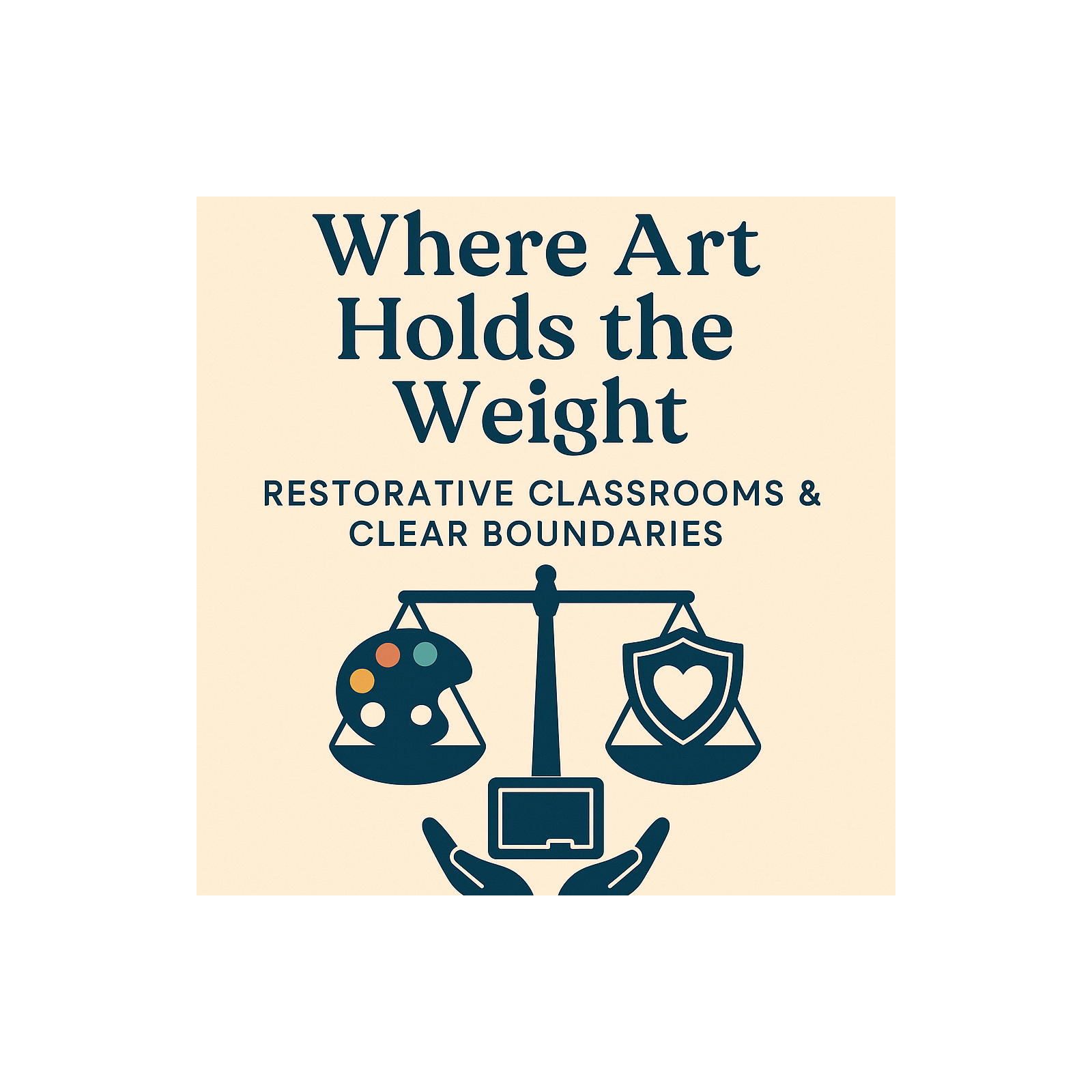
S3 Ep 17Where Art Holds the Weight: Restorative Classrooms, Clear Boundaries, and the Role of Art with Dr. Lisa Kay
🔗 Show Notes In this episode, Dr. Joey Weisler sits down with Dr. Lisa Kay—art therapist, professor, and national leader in art education—to unpack why classrooms can feel restorative but are not therapy rooms.Dr. Kay breaks down the essential differences between therapeutic spaces and clinical spaces, offers four pillars that make classrooms safer (predictability, flexibility, connection, empowerment), and explains how art-making helps students hold stress, regain control, and express what words can’t.She also draws a clear boundary between art facilitation and art therapy, while sharing practical, classroom-ready art practices like “Stress/De-Stress” and “Scribble It Out.” A must-listen for educators navigating dysregulation, creativity, and care—without crossing into clinical territory.🔗 Show ResourcesLisa Kay – Faculty Profile (Temple University)Learn more about Dr. Kay’s academic work as Professor and Chair of Art Education & Community Arts Practices at Temple University, where she also directs graduate studies in Art Therapy and leads national research at the intersection of art, trauma, and education. Dr. Lisa Kay's Official WebsiteExplore Dr. Kay’s full body of work, including her publications, research projects, courses, speaking engagements, and resources designed for educators, art therapists, and community practitioners. Restorative Practices in Education Through the Arts (Book)This edited collection shows how restorative principles and the arts work together to build connection, agency, and resilience in classrooms and community spaces. It offers real-world strategies for nurturing supportive, choice-based environments for learners of all ages. Therapeutic Approaches in Art Education (Book)Dr. Kay’s foundational text for educators who want to integrate therapeutic art-making into their classrooms without crossing into clinical practice. The book outlines trauma-sensitive approaches, explains key distinctions between art education and art therapy, and offers practical, classroom-ready activities. MA in Art Therapy – Temple UniversityThis graduate program prepares students to become credentialed art therapists through intensive studio practice, supervised clinical training, psychological theory, and ethical community-based work. 🔗 Referenced "Classroom Narratives" segments in this episode“Art as Lifeline: Traci Molloy on Collective Creation After 9/11 and Beyond”“Navigating Trauma in the English Classroom: Dr. Adam Wolfsdorf on Relational Teaching, Boundaries, and the Power of Story”
S3 Ep 16What Literacy Really Looks Like—in Policy, in Classrooms, and in the Communities Kids Call Home (Dr. Susan B. Neuman)
📘 Episodic SynopsisIn this powerful episode, Dr. Joey Weisler sits down with Dr. Susan B. Neuman—NYU Professor of Childhood Education, former U.S. Assistant Secretary for Elementary & Secondary Education, and one of the most influential voices in early literacy. Together they trace the complex landscape of American reading practices, the politicization of literacy, and what it truly takes to build lifelong readers.Dr. Neuman challenges traditional narratives about literacy by reframing it as both a social experience and a community-driven practice, while naming the systemic forces that shape how children learn. From laundromats to grocery stores, from multilingual classrooms to policymaking tables, she reminds us that literacy lives everywhere—and that teachers hold powerful keys to shaping children’s futures.This episode is essential listening for educators, literacy advocates, and anyone who believes reading is both a right and a relationship.
S3 Ep 15From Disillusionment to Fulfillment: Teaching with the HEART...A Mindset by Dr. Joey Weisler
In this deeply personal solo segment, Dr. Joey Weisler traces the journey from his childhood dream of teaching, to the profound disillusionment he faced entering the classroom months after the Marjory Stoneman Douglas tragedy, to the transformation that led him toward resilience, boundary-setting, and wholehearted teaching.Drawing on stories from his first year in the classroom, his doctoral research, and the wisdom of his kindergarten teacher Ms. Lynch, Dr. Weisler introduces The H.E.A.R.T. Mindset—a trauma-informed, relationship-centered approach rooted in Habits, Engagement, Awareness, Resilience, and Telling Stories.This episode reframes what it means to teach today: not with perfection, not with saviorhood, but with presence, authenticity, and humanity. Whether you’re a new teacher or a veteran craving renewal, this conversation reminds you that you can meet standards without becoming standardized, and that the connections you build will outlast anything printed in a pacing guide.Join Dr. Weisler as he shows how educators can turn scars into stars, lead with heart, and carry purpose through pain.H — HabitsCreate routines that regulate you and provide stability for students. In Joey’s classroom, this includes circles, choice-based discussions, and flexible methods of engagement. E — EngagementStudents engage when they feel invited, not commanded. Joey uses co-regulation, options for sharing (verbal or written), and “written alternative assignments” instead of punitive homework. A — AwarenessStudents grow when they connect learning to their own world. Projects like Your Voice, Your Change help students locate themselves inside bigger conversations — from mental health and substance use to gluten-free advocacy and athletic pressure. R — ResilienceResilience isn’t pushing through — it’s protecting your energy. Joey discusses the power of giving yourself permission to set boundaries, regulate, and refuse to be standardized by a pacing guide. T — Telling StoriesStories help us bridge meaning and reclaim truth. From students’ letters to intergenerational wisdom, Joey emphasizes how storytelling becomes “our day in court” — a way to honor impact and find clarity after trauma.ADDITIONAL INSIGHTS FROM THE SEGMENTSafety isn’t announced — it’s practiced through invitational language.You can meet standards while still being human, warm, and flexible.Students won’t remember every formula, but they’ll remember your grace.Perseverance after hardship is always possible.You are whole and enough as you are.RESOURCES:Contact Dr. Joey Weisler by visiting his website hereGet your free HEART poster with additional resources linked inside!
S3 Ep 14Thrillers, Humanity, and the Classroom: Inside the Mind of Author and Educator Lincoln James
📘 Episode SynopsisIn this episode of Classroom Narratives: Healing and Education, Dr. Joey Weisler sits down with author and educator Lincoln James, whose work spans decades, genres, and emotional terrain. Known for his haunting thrillers and his compassionate presence in the classroom, Lincoln shares how his novels—We Are Human, Written Just for You, The Vanishing Eight, and more—explore the unspoken corners of grief, love, and identity. Together, they unpack how storytelling can be both a survival instinct and an act of healing, and why the same empathy that drives a good novel can transform how we teach, connect, and lead.🗝️ Show NotesGuest: Lincoln James — author of We Are Human, Written Just for You, The Vanishing Eight, Devils Like Us, and All the Time; Communication professor in New York City.Host: Dr. Joey Weisler, creator of Classroom Narratives: Healing and Education.Key Topics:Humanity in Horror: How We Are Human reframes Frankenstein-like themes to explore trauma, identity, and survival in a fractured world.Thrillers as Emotional Architecture: Why thrillers allow readers to confront fear, loss, and shame in “safe” emotional spaces—and why catharsis matters.Teaching Through Storytelling: Lincoln’s reflections on how his classroom work mirrors his fiction: guiding students to find voice, confidence, and meaning through narrative.From Fourth Grade to Fiction: A childhood teacher who said “yes” to his stories sparked a lifetime of creative courage—and shaped his teaching philosophy today.The Writer’s Craft: Lincoln’s meticulous research process—character sheets, historical detail, and authenticity that brings each era to life.Sustaining Creativity Without Burnout: Why writing “for himself” keeps him balanced while juggling teaching, editing, and nationwide book signings.Connection and Continuity: How all of Lincoln’s books exist within a shared universe of emotional echoes and Easter eggs, inviting readers to look deeper.Looking Ahead: Sneak peek into The Ninth Layer, his upcoming thriller set in 2002, where a college class finds itself trapped beneath the earth—both literally and psychologically.Emotion as the Goal: “If my words can make someone feel something—that’s all I could ever hope for.”Bridging Story and Humanity: Both the classroom and the written page become spaces where courage meets empathy, and where tension meets tenderness.🔗 Connect with Lincoln James🌐 Website: thelincolnjames.com📸 Instagram: @lincolnjjames📖 New Book: We Are Human (released Tuesday, 11/11/2025!)
S3 Ep 13Safe Enough: Redefining Healing, Safety, and Story with Dr. Jamie Marich
📘 Episode Synopsis In this deeply reflective episode, Dr. Joey Weisler welcomes Dr. Jamie Marich—trauma specialist, expressive artist, author of over a dozen books, and founder of the Institute for Creative Mindfulness. Together, they explore how trauma is not a life sentence but an unhealed wound that can mend through care, validation, and creative expression. From the limits of “safe space” language to the role of belonging, narrative, and authenticity in classrooms, this conversation bridges psychology and pedagogy with heart. Dr. Marich’s lived experience and clinical insight invite us to see healing as both personal and collective—a process of being safe enough to connect, express, and grow.🗝️ Show NotesFeatured Guest: Dr. Jamie Marich — Trauma specialist, EMDR educator, expressive artist, and founder of The Institute for Creative MindfulnessKey Discussion Points:Redefining Trauma: Trauma isn’t a death sentence—it’s an unhealed wound that can recover through proper care, presence, and validation.Beyond “Safe Spaces”: Why “safe enough” and “safe moments” may better honor the lived realities of students navigating trauma and identity.The Power of Invitation: How invitational language fosters belonging without forcing vulnerability.Belonging and Kindness: The small, daily gestures of empathy that build classroom trust—especially for marginalized students.Story as Healing: How narrative, expression, and creative arts bridge emotional and intellectual learning.Balancing Logic and Emotion: Dr. Marich and Dr. Weisler discuss blending emotional intelligence and academic rigor in writing and literature classrooms.Boundaries in Authentic Teaching: Sharing personal experience responsibly—being transparent without oversharing.Education and Collective Healing: “We’re all just walking each other home”—what it means to teach as an act of shared humanity.Narrative Medicine in Education: How writing, art, and reflection can become tools of safety and renewal for students.Cross-Disciplinary Healing: Dr. Marich calls for educators, clinicians, and artists to collaborate beyond silos to create cultures of compassion.Referenced Works and Connections:TEDx Youngstown Talk — “Healing the Public Health Crisis of Trauma”Navigating Trauma in the English Classroom by Dr. Adam Wolfsdorf Paula Reed’s Classroom Narratives episode Jamie’s primary sites: 🔹 www.jamiemarich.com 🔹 www.redefinetherapy.com
S3 Ep 12A Two-Part Conversation With Dr. Matthew Arau: Circles, Culture, and the Power of GET (Pt II: The Outter-Work)
Episodic SynopsisIn Part Two, Dr. Matthew Arau shares practical ways to transform classrooms through circles, peer-to-peer leadership, and his Power of GET — a mindset of gratitude, enthusiasm, and treasure that helps teachers and students thrive🔗 Featured Links & ResourcesPower of GET Discover Dr. Arau’s signature mindset shift — moving from “have to” to “get to” — with resources, stories, and tools to help you bring gratitude, enthusiasm, and treasure into your daily practice.Power of GET – Leadership Quiz Take a free 4-question quiz to uncover your GET leadership style (Grower, Energizer, or Trailblazer) and receive tailored strategies for elevating your leadership.Upbeat Global Home of Dr. Arau’s Upbeat philosophy — connecting mindset, mindfulness, and leadership practices to reenergize teachers, transform classrooms, and build positive cultures worldwide.GIA Music – Upbeat Book Collection Order Matthew Arau’s books and resources, including Upbeat!, The Upbeat Daily Journal, Upbeat Daily Planner, and The Upbeat Leadership Workbook — with bundle pricing options.Upbeat Leaders Facebook Group Join thousands of educators and leaders in an uplifting community where members share authentic stories, resources, and encouragement for sustaining positivity in education.Lawrence University Faculty Profile Read about Dr. Arau’s role as Associate Professor of Music Education and Associate Director of Bands at Lawrence University.About Matthew Arau – Upbeat Global Learn more about Matthew’s journey, mission, and the development of his Upbeat leadership philosophy.VanderCook College of Music Profile View Dr. Arau’s faculty profile as part of the VanderCook College of Music, where he contributes to leadership and teacher development.Matthew Arau on LinkedIn Connect with Dr. Arau professionally and follow his updates on leadership, education, and speaking engagements.Upbeat! on Amazon Purchase Dr. Arau’s bestselling book, Upbeat: Mindset, Mindfulness, and Leadership in Music Education and Beyond.