Classic Baseball Daily Highlights
274 episodes — Page 3 of 6
S2 Ep 21Rollie Fingers
February 21, 1986, Rollie Fingers passes up an opportunity to return to the majors. Fingers is invited to spring training by the Cincinnati Reds, who ask him to shave off his handlebar mustache to comply with team rules. Fingers refuse to do so and decides to retire.The future Hall of Fame reliever, who leaves the game with 341 saves, had been offered a contract by Cincinnati’s skipper Pete Rose after being released by the Brewers at the end of last seasonMentioned in this episode:Classic Baseball BroadcastsClassic Baseball BroadcastsMentioned in this episode:Post Roll March 26New CBB Podcast Intro
S2 Ep 20Billy Ball
February 20, 1980 — The Oakland Athletics sign Billy Martin to a two-year contract for $125,000 as manager. Martin, who was fired by the Yankees only four months earlier, will popularize the notion of “Billy Ball” with the A’s and lead the team to a split-season crown in 1981. He will compile a 215-218 record and destroy the young arms of several would be long term starting pitchers. His style also allowed Ricky Henderson to run free on the bases and set the all-time record for stolen bases in a season.Join the Daily Rewind - Join.Classic Baseball Broadcasts - reconnect with baseball history.Billy Martin Audio VaultMentioned in this episode:Classic Baseball BroadcastsClassic Baseball BroadcastsMentioned in this episode:New CBB Podcast Intro Post Roll March 26
S2 Ep 19Art Ditmar - the Right-Hander Who Made His Mark
February 19 1957 — The Kansas City Athletics ship pitchers Art Ditmar, Bobby Shantz, and Jack McMahan, and infielders Clete Boyer, Curt Roberts and Wayne Belardi to the Yankees. In return they receive pitchers Mickey McDermott, Tom Morgan, Rip Coleman and Jack Urban, OF Irv Noren, plus infielders Billy Hunter and Milt Graff.There entire interview can be found at Passed Ball PodcastJoin the Daily Rewind - Join.Classic Baseball Broadcasts - reconnect with baseball history.Notes & Featured AudioArt Ditmar Audio Vault1960 World Series 1958 World SeriesMentioned in this episode:Classic Baseball BroadcastsClassic Baseball BroadcastsMentioned in this episode:Post Roll March 26New CBB Podcast Intro
S2 Ep 18Harry Caray The Voice of Baseball passes away
February 18 1998 — Chicago Cubs broadcaster Harry Caray dies four days after collapsing at a Valentine’s Day supper. Caray, age 84, after suffering a heart attack four days earlier while having Valentine’s Day dinner with his wife, Dutchie. – 1957 All Star Game called by Harry Caray.From a compilation aired in 2016 from ESPN Classic, appearances from Harry Caray on Up Close with Roy Firestone.Show Notes & Featured AudioHarry Caray Game BroadcastsJoin the Daily Rewind - Join.Classic Baseball Broadcasts - reconnect with baseball history.Mentioned in this episode:Classic Baseball BroadcastsClassic Baseball BroadcastsMentioned in this episode:New CBB Podcast Intro Post Roll March 26
S2 Ep 17Rise & Fall of Denny McLain
Originally aired February 17, 1970, this clip features coverage of Denny McLain, pitcher of the Detroit Tigers. This story covers the news of an impending article in Sports Illustrated regarding alleged activities of McLain consorting with gamblers.Join the Daily Rewind - Join.Classic Baseball Broadcasts - reconnect with baseball history.Audio Links & CreditsDenny McLain Games & InterviewsNews Report 30th WinMentioned in this episode:Classic Baseball BroadcastsClassic Baseball BroadcastsMentioned in this episode:New CBB Podcast Intro Post Roll March 26
S2 Ep 16Gary Carter - The Kid
February 16 2012 – Hall of Fame catcher Gary Carter dies of brain cancer in Palm Beach Gardens, FL. After becoming a perennial All-Star with the Montreal Expos, Carter led the New York Mets to a World Series title in 1986.Join the Daily Rewind - Join.Classic Baseball Broadcasts - reconnect with baseball history.Show Notes & Featured AudioGary CarterMontreal ExposMentioned in this episode:Classic Baseball BroadcastsClassic Baseball BroadcastsMentioned in this episode:New CBB Podcast Intro Post Roll March 26
S2 Ep 15Glory of Their Times - Larry Ritter recaptures his youth
February 15, 2005 Lawrence Ritter passed away. He was the author of Glory of Their times. The Glory of Their Times: A Timeless Baseball ClassicFew books in the vast library of baseball literature hold the revered status of The Glory of Their Times by Lawrence Ritter. Published in 1966, this groundbreaking work captures the essence of early 20th-century baseball through the voices of the men who played the game. Hailed as one of the greatest books ever written about baseball, it remains a cherished piece of sports history, offering readers an intimate look at the sport's formative years.Larry talks about his Dad and I talk about mine. Enjoy! Mentioned in this episode:Classic Baseball BroadcastsClassic Baseball BroadcastsMentioned in this episode:Post Roll March 26New CBB Podcast Intro

S2 Ep 14The Ballard of Three Fingers Brown
On February 14, 1948, Hall of Fame pitcher Mordecai “Three Finger” Brown dies at the age of 71. Here is his unlikely journey to Cooperstown. The Ballard of Three Fingers Brown on Youtube - https://www.amazon.com/Ballad-Three-Finger-Brown/dp/B01INYFH52Mentioned in this episode:Classic Baseball BroadcastsClassic Baseball BroadcastsMentioned in this episode:New CBB Podcast Intro Post Roll March 26
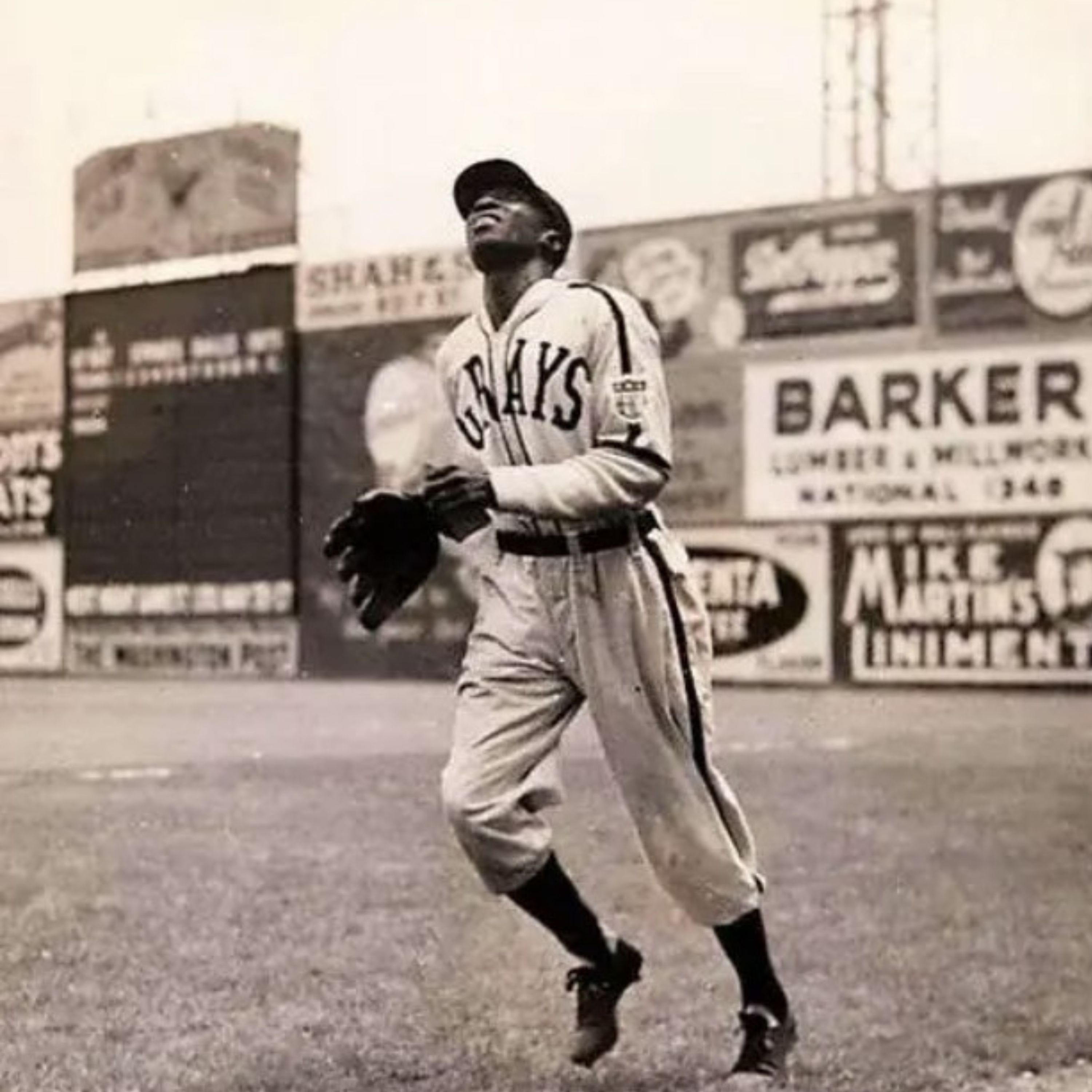
S2 Ep 13Cool Papa Bell goes to Cooperstown
February 13, 1974 Cool Papa Bell goes to Cooperstown joining Josh Gibson and Buck Leonard as just the third man to play exclusively in Negro Leagues to be inducted. Listen to him talk about Jackie Robinson, Satchel Paige, Education and how he was able to turn a light off and get into bed before the light went out. Sources - Baseball Hall of fame - https://collection.baseballhall.org/PASTIME/cool-papa-bell-oral-history-interview-1981-september-26-0MS History now - http://www.mshistorynow.mdah.ms.gov/articles/277/cool-papa-bellMentioned in this episode:Classic Baseball BroadcastsClassic Baseball BroadcastsClassic Baseball BroadcastsMentioned in this episode:Post Roll March 26New CBB Podcast Intro

S2 Ep 12Dazzy Vance Wins the MVP February 12
FREE GIFT! Subscriber to the Daily Highlights, all the baseball news you need to start your day. Plus - FREE GIFT! For all new newsletter subscribers - Daily HighlightsInterested in 10,000 hrs of baseball history? Check out Classic Baseball Broadcasts! Free trial and a special discount just type in Podcast. Mentioned in this episode:Post Roll March 26New CBB Podcast Intro
S2 Ep 11St Louis gets a wizard Ozzie Smith trade is finalized
On February 11, 1982 — Ozzie Smith agrees to go to the St. Louis Cardinals to complete the December deal that finally sends Gary Templeton to the San Diego Padres.An outside arbitrator, Tom Roberts, will determine ‘the Wizard of Oz’s’ Cardinal salary before the season starts, awarding the light-hitting Gold Glove shortstop $450,000, rather than the $750,000 he requested. Smith batted only .222 for the Padres in 1981, but will blossom into stardom in St. Louis.Mentioned in this episode:Classic Baseball BroadcastsMentioned in this episode:Post Roll March 26New CBB Podcast Intro

S2 Ep 10Allie Reynolds the Super chief
February 10 - Happy Birthday to Allie Reynolds. Allie Reynolds, born in 1917 in Bethany, Oklahoma, faced religious restrictions on playing organized baseball due to his parents' Nazarene beliefs. Overcoming this, he excelled in various sports during high school and later earned a track scholarship at Oklahoma A&M. After an impressive college career, he joined professional baseball, pitching for the Cleveland Indians and eventually the New York Yankees. Renowned for his achievements, including two no-hitters in 1951, Reynolds played a crucial role in the Yankees' dominance, contributing to five consecutive World Championships from 1949 to 1953. After retirement, he succeeded in the oil business and supported charitable causes. Reynolds passed away in 1994.Mentioned in this episode:Classic Baseball BroadcastsClassic Baseball BroadcastsClassic Baseball BroadcastsMentioned in this episode:Post Roll March 26New CBB Podcast Intro

S2 Ep 9Edd Roush Gets Traded February 9
Edd Roush, the fiery baseball player known for his Hall of Fame career, wielded a heavy bat and mastered the art of place hitting. Born in 1893 in Indiana, Roush's strong hands and arms, developed on his family's farm, propelled him into baseball. Beginning with the Cincinnati Reds in 1916, he quickly became a defensive standout, often compared to Tris Speaker. Roush secured two batting titles in 1917 and 1919 and led the Reds to a World's Championship in 1919. Despite salary disputes and his aversion to the bean ball, Roush's career soared. He retired in 1931, leaving a lasting legacy in baseball history.Mentioned in this episode:Classic Baseball BroadcastsClassic Baseball BroadcastsClassic Baseball BroadcastsMentioned in this episode:Post Roll March 26New CBB Podcast Intro

S2 Ep 8Connie Mack Passes Away February 8
On February 8, 1956, one of baseball’s most prominent figures, Connie Mack, dies at the age of 93 from old age and hip surgery. He was known as “The Tall Tactician” and was baseball’s grand old gentleman for more than a generation. Statuesque, stately, and slim, he clutched a rolled-up scorecard as he sat or stood ramrod straight in the dugout, attired in a business suit rather than a uniform, a derby or bowler in place of a baseball cap. He carried himself with quiet dignity, and commanded the respect of friend and foe.After his 11 year career as a journeyman catcher and managing Pittsburgh's National League he became a prominent figure in Ban Johnson's Western League. A founder of the American League in 1901, Mack managed and owned the Philadelphia Athletics from 1901 to 1950, leading the team to five World Series titles and nine American League pennants. The 'Tall Tactician' set records for the major league wins (3,731) and losses (3,948), compiling a .486 managerial mark during his 54 years as a skipper, including his three seasons with the Pirates before the turn of the century.He won election to the Hall of Fame in 1937.Interview with Connie Mack, conducted by legendary vaudevillian Joe Cook on his Shell Chateau radio broadcast of May 29, 1937, in which Mack picks his all-time all-star team and discusses his rivalry with New York Giants manager John McGraw Mentioned in this episode:Classic Baseball BroadcastsClassic Baseball BroadcastsClassic Baseball BroadcastsMentioned in this episode:New CBB Podcast Intro Post Roll March 26
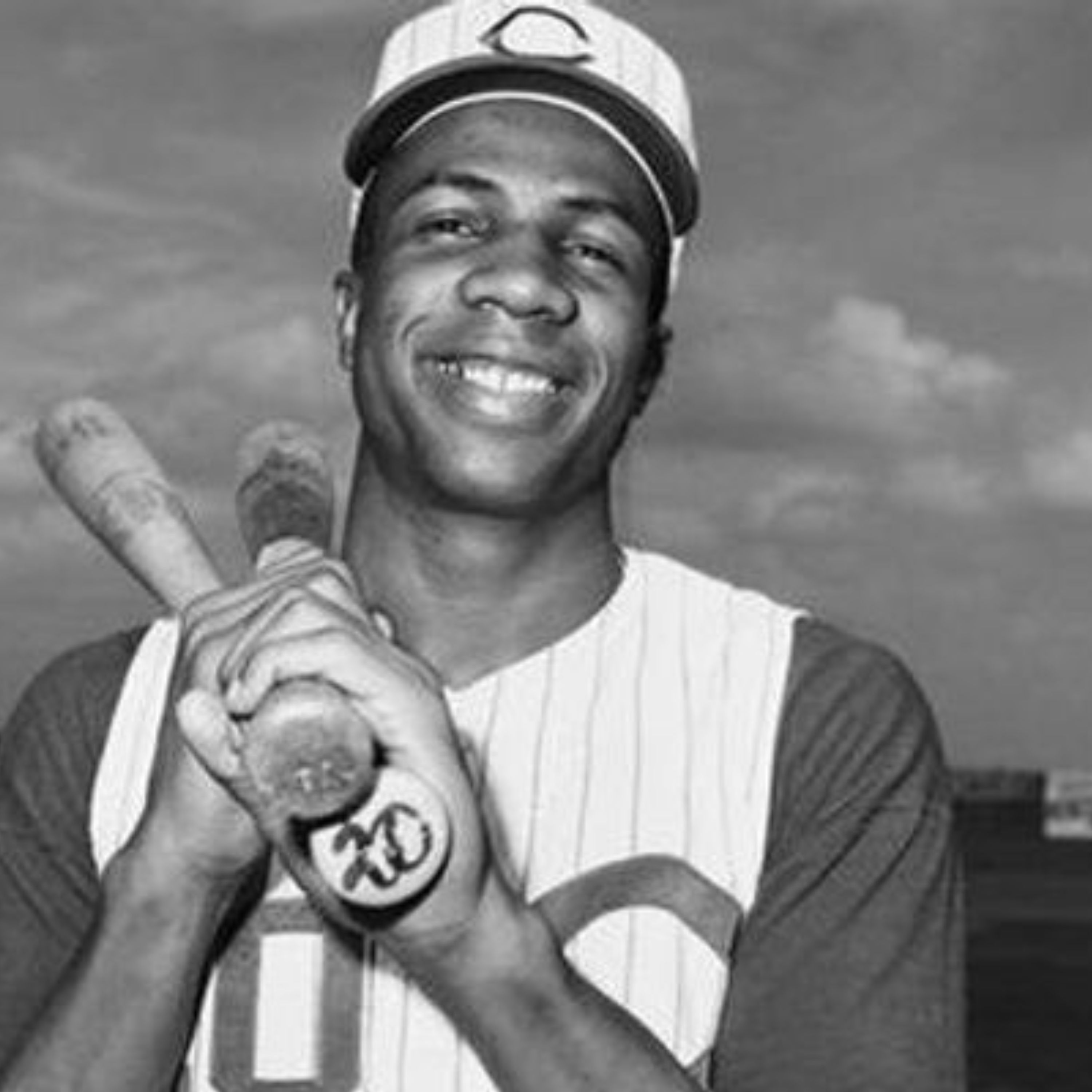
S2 Ep 7Frank Robinson Passes away - February 7
On February 7 2019 — Hall of Famer Frank Robinson, a member of the 500 Home Run Club, a Triple Crown winner, the first player to win the MVP Award in both leagues, and the first African-American manager in major league history, passes away in hospice care in Los Angeles, CA at the age of 83. He was also a senior executive for Major League Baseball and was still serving as the honorary President of the American League. Robinson was one of the greatest players in MLB history, he was an All-Star in 12 seasons, won 2 MVP Awards, won a Triple Crown in 1966, won the NL Rookie of the Year Award in 1956, won a Gold Glove Award in 1958, and was on 2 World Series champions (1966, 1970 Baltimore Orioles), winning the World Series MVP Award in 1966. His uniform #20 is retired by the Orioles, Cincinnati Reds, and Cleveland Indians. He was elected to the Hall of Fame in 1982 (89.2% on the 1st ballot). Robinson had a very prominent post-playing career. Most notably, he became the first Black manager in MLB history in 1975 (with the Indians). He won the AL Manager of the Year Award in 1989 (with the Orioles). In his amazing 21-year playing career (1956-1976), Frank had 2,943 hits, 586 HR, 528 doubles, 204 SB, 1,812 RBI, 1,829 runs, 1,420 BB, .294 BA, .389 OBP, .537 Slg., & .926 OPS.Mentioned in this episode:Classic Baseball BroadcastsClassic Baseball BroadcastsMentioned in this episode:New CBB Podcast Intro Post Roll March 26

S2 Ep 6Lew Burdette - He was the original Mark Fidrych
When he posed for his 1959 Topps baseball card, Lew Burdette grabbed teammate Warren Spahn’s glove and pretended to be a lefty. Topps missed the joke and printed the card with the error.Burdette would sign his name “Lewis” on his contracts, and would alternate between “Lou” and “Lew” for autograph-seekers. He said he really didn’t care how his first name (which was actually his middle name) was spelled.Years before Mark Fidrych became famous for talking to the baseball, Lew Burdette used the same antics to psych himself up on the mound. Often accused of throwing a spitball, Burdette never bothered to refute that charge, and used the paranoia to his advantage. In the 1957 World Series, he shut out the New York Yankees twice in four days to give the Milwaukee Braves their only World Championship.Lew BurdetteOn October 10, 1957, Burdette shut out the Yankees for the second time in four days. He was the first pitcher in 37 years to win three complete games in a single WS and the first since Christy Mathewson (1905) to throw two shutouts in a single Series. The win gave Milwaukee the world championship and earned Burdette Series MVP honors.Hall of Fame lefty Warren Spahn and righthander Burdette gave the Braves a formidable one-two punch, with 443 victories between them in 13 seasons. A slider and sinkerball pitcher, Burdette was widely accused of throwing a spitball as well. His constant fidgeting on the mound fed that suspicion; it didn’t indicate nervousness. Teammate Gene Conley said, “Lew had ice water in his veins. Nothing bothered him, on or off the mound. He was a chatterbox out there … He would talk to himself, to the batter, the umpire, and sometimes even to the ball.”Besides winning 20 games in 1958 and 21 in ’59, Burdette won 19 twice and 18 once. His 2.70 ERA topped the NL in 1956. In two All-Star Games, he allowed only one run in seven innings. He no-hit the Phillies on August 18, 1960.On May 26, 1959, he was the winning pitcher when Pittsburgh’s Harvey Haddix hurled 12 perfect innings against the Braves, only to lose in the 13th. That winter, the puckish Burdette asked for a $10,000 raise, explaining: “I’m the greatest pitcher that ever lived. The greatest game that was ever pitched in baseball wasn’t good enough to beat me, so I’ve got to be the greatest!”“My best pitches were a sinker and slider,” Burdette said. “I’d move the ball in and out. I always tried to keep it down. I was always being accused of throwing at the hitters. Early Wynn always said that he was the meanest pitcher in the American League, and I was the meanest in the National League.” — Sports Collectors Digest, September 4, 1998"I'm the greatest pitcher that ever lived. The greatest game that was ever pitched in baseball wasn't good enough to beat me, so I've got to be the greatest!" - Lew Burdette, 1959""There should be 3 pitching statistics for Burdette: Wins, Losses, and Relative Humidity." - Red Smith, The New York TimesJoin the Daily Rewind - Join.Classic Baseball Broadcasts - reconnect with baseball history.Mentioned in this episode:Classic Baseball BroadcastsClassic Baseball BroadcastsClassic Baseball BroadcastsMentioned in this episode:Post Roll March 26New CBB Podcast Intro
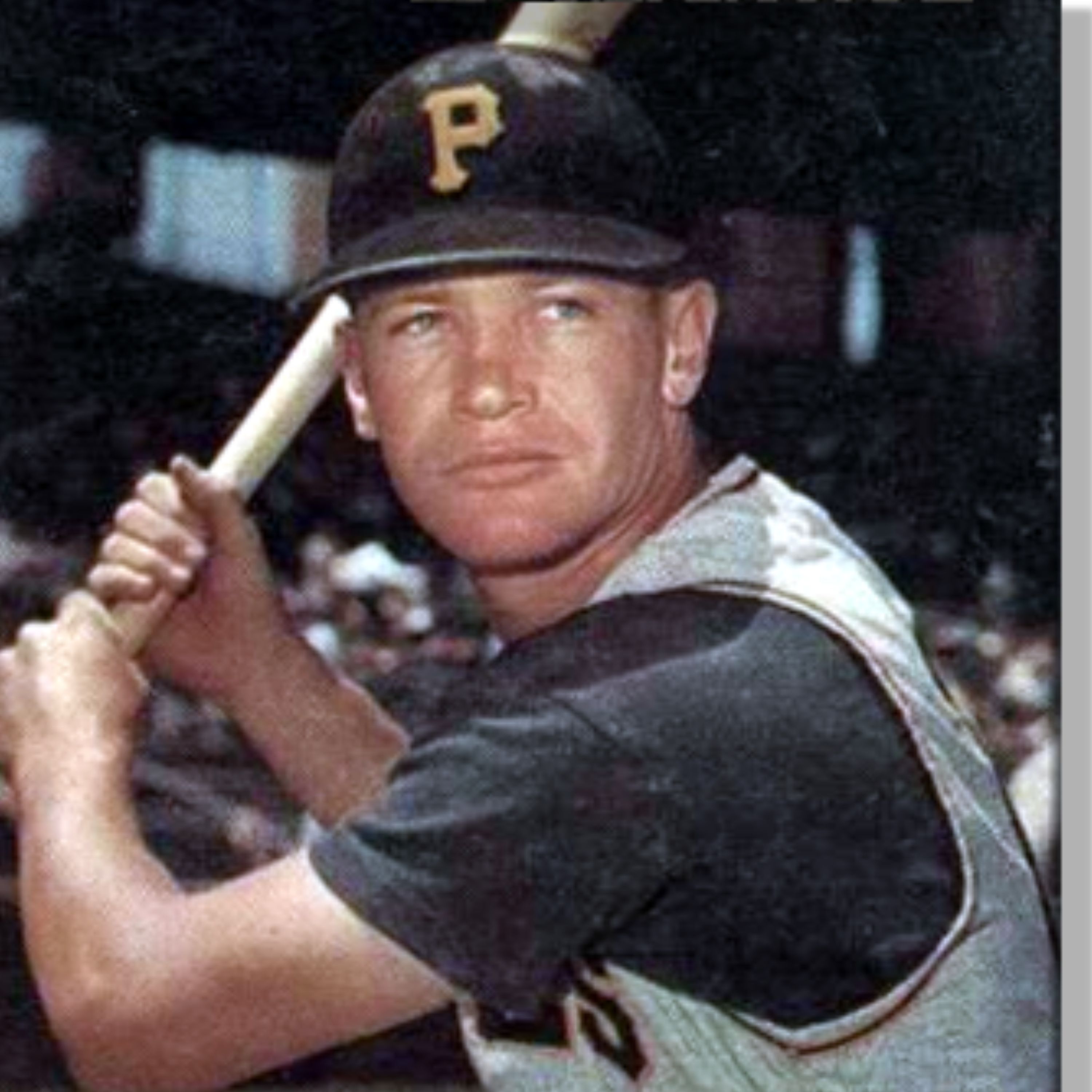
S2 Ep 5Don Hoak unsong hero - February 5
Born: Sunday, February 05, 1928 in Roulette, PA USAHe was the kind of player who’s worth doesn’t always show up in the box score, but yet his determination and aggressiveness to win made him one of the most valuable players on the world championship of 1960. Don Hoak, nicknamed Tiger by Dodger pitcher Clem Labine because he was always starting fights, was a solid fielder who twice led the circuit in fielding percentage at third base who also would contribute at the plate, hitting over .280 in three of his four seasons with the Bucs.Many players felt he was such an important cog to the club’s championship run. Cy Young Award winner Vern Law felt his fighting spirit rubbed off on everyone helped push the club over the hump to the title, while legendary reliever Roy Face thought he was the most underrated player on the team. What ever it was, Hoak definitely wanted to fit the tough boy persona. He was a Marine in World War II where he saw some action in the Pacific theater and also spent sometime as a boxer in the middleweight division and his tough image was something he prided himself on.Tiger came up with the Dodgers in 1954 and was part of their memorable 1955 world championship team, the only title that the legendary team from Brooklyn would win. He was dealt to the Cubs the year after where he hit .215 and went on his way Cincinnati in 1957. It was there that his career finally started to take shape as he led the senior circuit in doubles with 39 and fielding percentage with a .971 mark while hitting career highs in both homers 19, and RBI’s with 89. Hoak was named to his one and only selection in the mid –summer classic that year. Don slumped in 1958 and was dealt to the Bucs along with Smoky Burgess and Harvey Haddix in a seven-player deal that many felt was the final piece in the Pirate 1960 championship machine.In 1959, Tiger proved that his .261 average in 1958 was just a fluke as he broke .290 for the first time when he hit .294, before moving into his best all around season in the Steel City. Hoak would show a rare glimpse of power during that magical season, hitting 16 homers to go with 79 RBI’s and a .282 average. While his numbers were good, it was his grit, determination and leadership that found him finishing second to teammate Dick Groat in the National League Most Valuable Player voting ahead of such Hall of Famers as Willie Mays, Ernie Banks, Roberto Clemente and Eddie Mathews.Mentioned in this episode:Classic Baseball BroadcastsClassic Baseball BroadcastsClassic Baseball BroadcastsMentioned in this episode:New CBB Podcast Intro Post Roll March 26
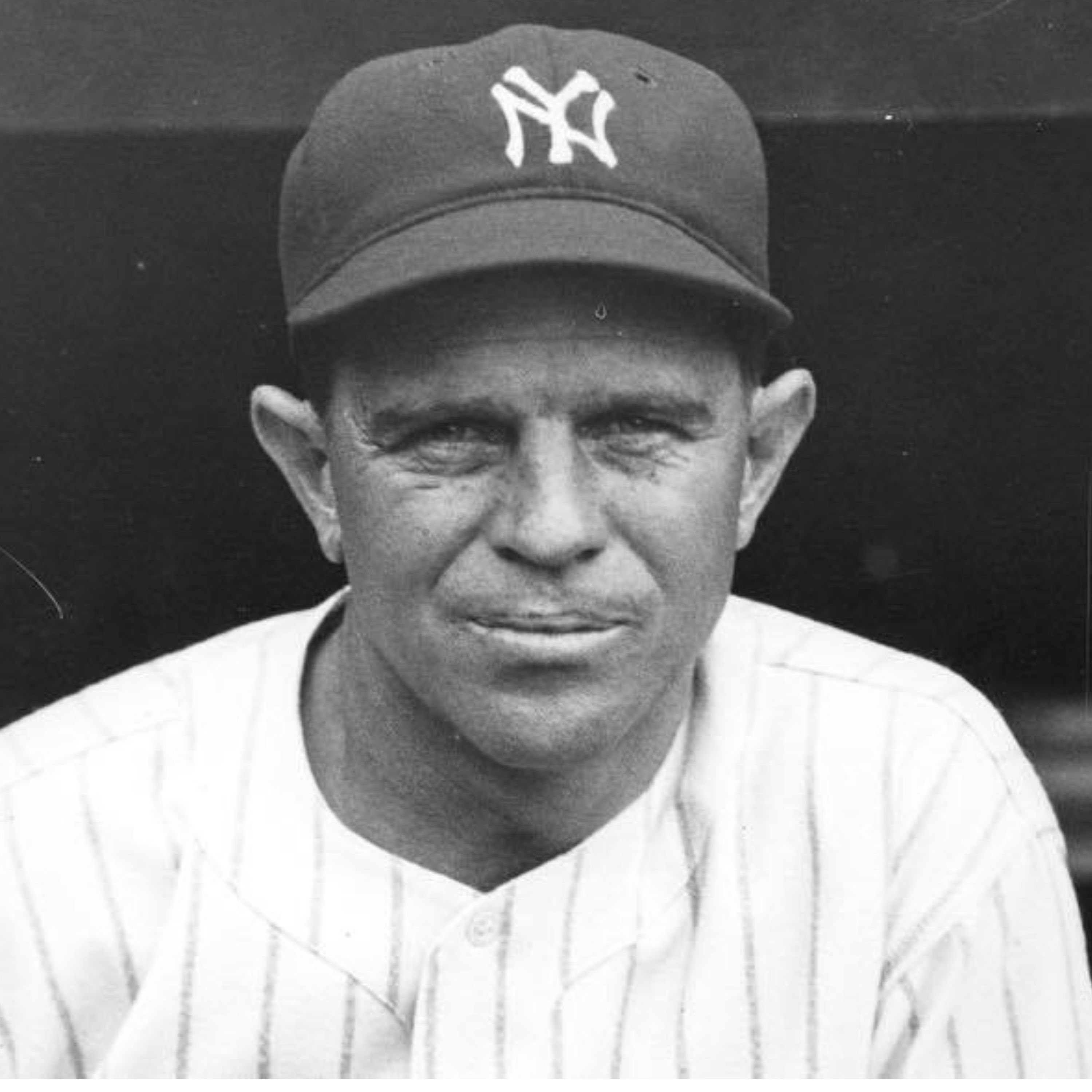
S2 Ep 4Joe McCarthy the winningest manager in history
February 4, 1957, manager Joe McCarthy and outfielder Sam Crawford are elected to the Hall of Fame. McCarthy, the winningest manager in history, won nine pennants and four consecutive World Championships with the New York Yankees. Crawford, one of the greatest hitters of the dead-ball era, finished his career with 309 triples, first on the all-time list. Some have challenged Sam Crawford's status as a Hall of Famer, but the truth is that Crawford was one of the best sluggers of his era, hands down. Consider: Crawford retired as the American League career leader in home runs, extra-base hits, total bases, RBI, and triples. From 1910 to 1915 (when he was 30-35 years old), Sam led the AL in games played, total bases, RBI, extra-base hits, and triples. He was second in homers and hits, third in runs created, fourth in slugging, and batted .320 for that six-year stretch. He ranked that high while Ty Cobb, Tris Speaker, Home Run Baker, and Joe Jackson were in their prime. His total of 643 RBI from 1910-1915 were 118 more than his closest rival in the American League! Somehow however, it took a campaign by Cobb to get his teammate into the Hall of Fame.Though he never played in the major leagues, Joe McCarthy earned the respect of his players as one of the most successful managers in history. He guided two teams to the World Series, and orchestrated four consecutive World Championships at the helm of the Yankees, from 1936 to 1939. He relied on his remarkable memory, his "Ten Commandments of Baseball," and his brillant ability to manage all types of players, and ended up with the highest winning percentage in the history of the game.Description"With his lantern jaw and chunky body," wrote author David Kaiser, "he could be an impressive presence on the field, and although he respected umpires, he also knew how to try to intimidate them in a key game."Mentioned in this episode:Classic Baseball BroadcastsClassic Baseball BroadcastsClassic Baseball BroadcastsMentioned in this episode:New CBB Podcast Intro Post Roll March 26
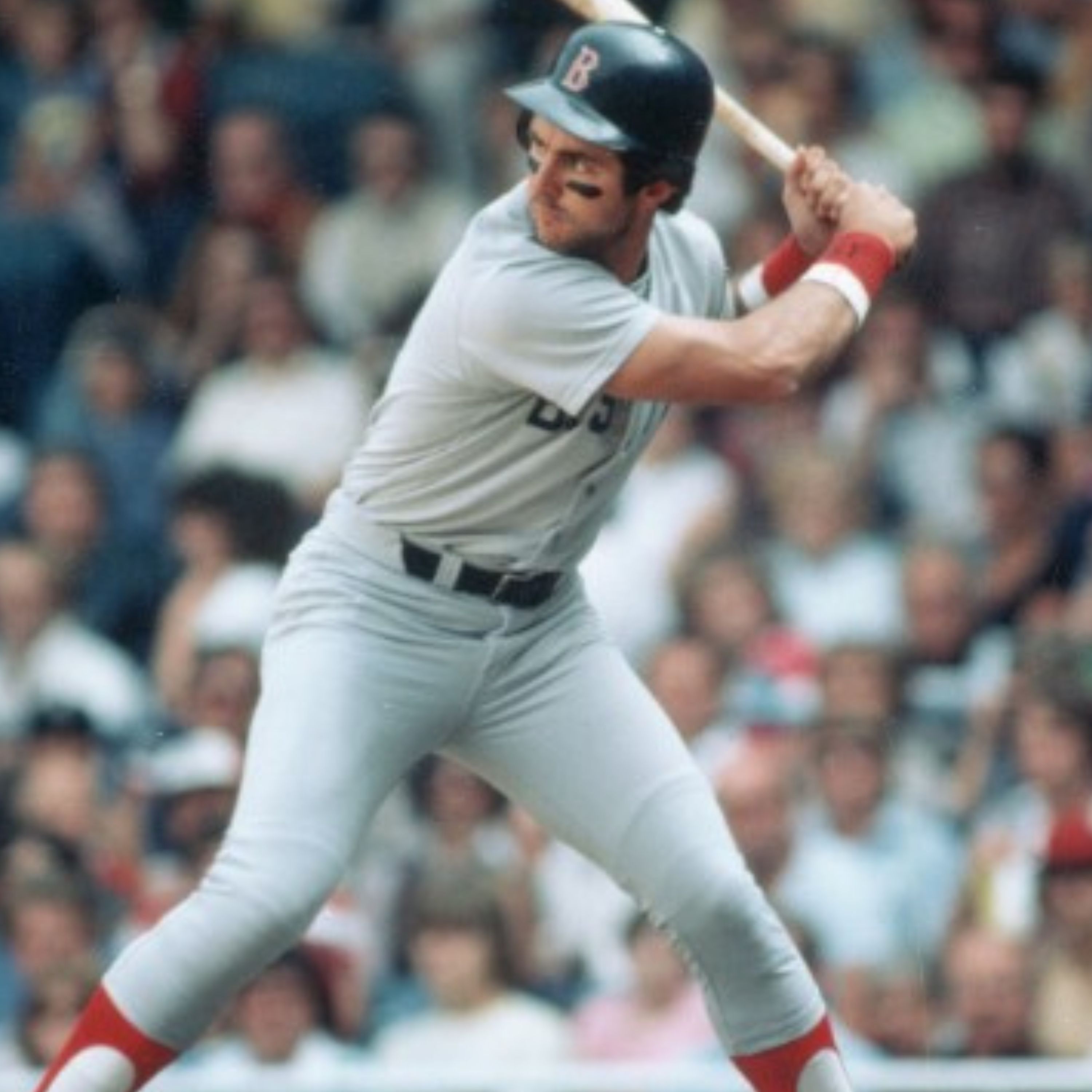
S2 Ep 3Fredric Michael Lynn was born on February 3, 1952
Fredric Michael Lynn was born on February 3, 1952He arrived on the big league scene like a bolt of lightning through the evening sky. Fred Lynn played in his first game on September 5, 1974 and proceeded to smash major league pitching to the tune of a .419 batting average and a .698 slugging average over his first 15 games. He followed that up with one of the greatest rookie seasons of all time, leading the Red Sox to the World Series and earning the Rookie of the Year, Most Valuable Player, and Gold Glove awards for the 1975 season. Lynn was the first player to achieve this trifecta, an accomplishment matched by Ichiro Suzuki of the Seattle Mariners in 2001.Fred Lynn had the greatest coming out party in baseball history in 1975, when as a rookie, he played a stellar center field for the Red Sox and earned the American League Most Valuable Player Award. All season, opposing pitchers searched in vain for a way to get the left-handed hitter out, and all season they were left scratching their heads. Lynn hit .331 in his freshman campaign, and followed it with a .314 mark in 1976, but injuries kept him out of the lineup all too frequently for the remainder of his career. He was healthy in 1978 and 1979, and in the latter year, he had his best overall campaign, belting 39 homers to go with 122 RBI, 116 runs scored, 42 doubles, 82 walks, and a .333 average. But after he was traded by Boston to the Angels, he was never quite the same player. He did recapture his magic twice after leaving Red Sox Nation, however. In 1983 he hit the first grand slam in All-Star Game history, and in the 1982 League Championship Series, he punished Brewers' pitchers for a .611 batting average and 11 hits in the Angels' five-game defeat. Seemingly destined to become one of the game's greats, Lynn never met those lofty (and unfair) expectations, but he still produced 306 homers and more than 1,100 RBI in his injury-riddled career.After he collected 11 hits in five games and batted .611 in the 1982 Playoffs, Fred Lynn became the first player on a losing team to be named Most Valuable Player in a League Championship Series.Mentioned in this episode:Classic Baseball BroadcastsClassic Baseball BroadcastsClassic Baseball BroadcastsMentioned in this episode:Post Roll March 26New CBB Podcast Intro
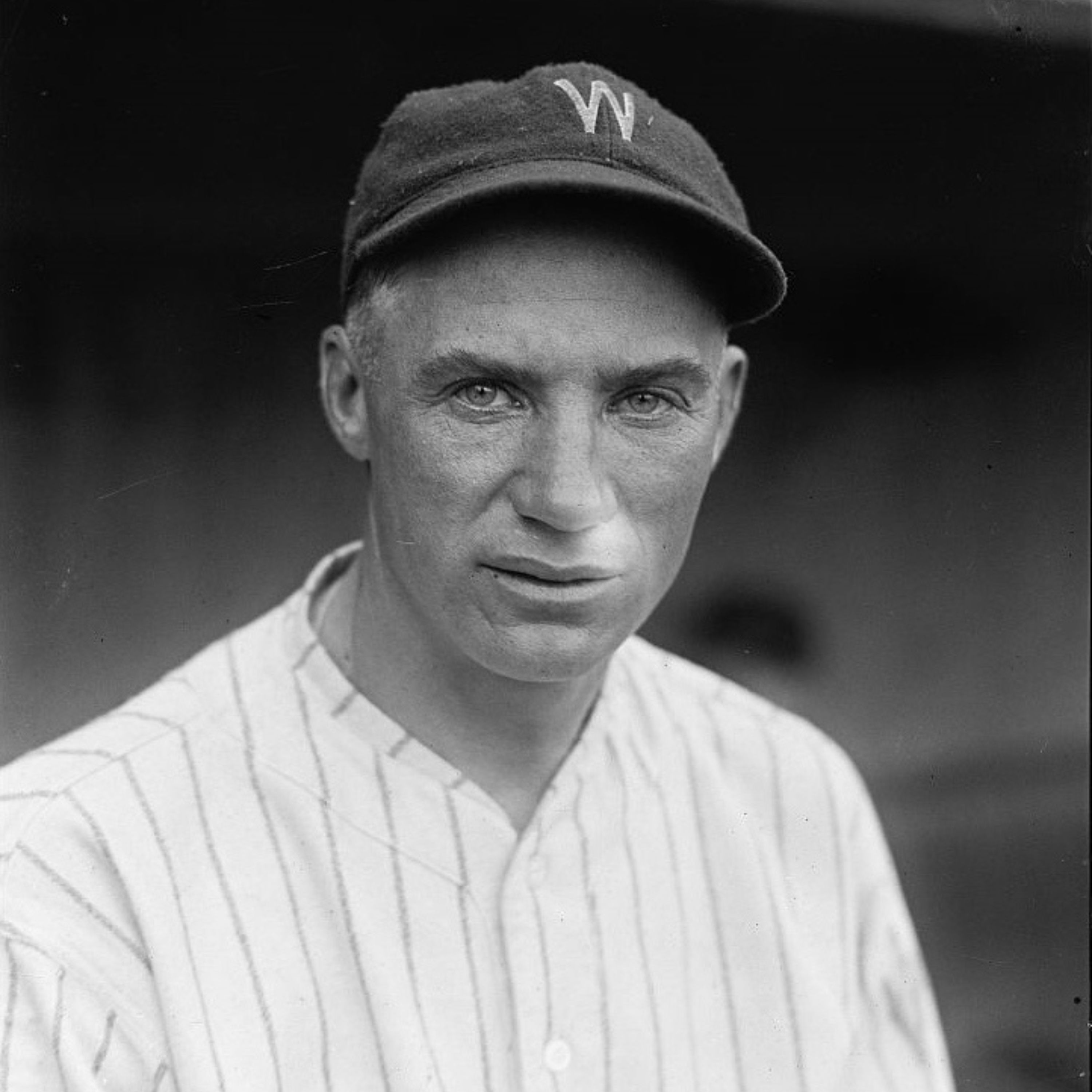
S2 Ep 2Stan Coveleski and Waite Hoyt are voted into the Hall of Fame
February 2, 1969 – Pitchers Stan Coveleski and Waite Hoyt are voted into the Hall of Fame by the Special Veterans Committee.Stan Coveleski learned control as a youngster by throwing rocks at tin cans that swung from a tree. Though he pitched a shutout in his first big league start with the Athletics in 1912, it was the spitball he later learned in the Minor Leagues. in 1913-1915, earning a permanent spot in the big leagues in 1916 when the Indians bought his contract.Using a fluttering spitball that dove sharply and broke inside on lefties and righties, Stan Coveleski helped two unlikely teams to the World Series. He won three games in the 1920 Series — the first championship for Cleveland, against Brooklyn while yielding only two runs, he was traded on December 12, 1924: Traded by the Cleveland Indians to the Washington Senators for By Speece and Carr Smith, and in 1925 he helped the Senators to the World Series in his first year with that club, winning 20 games. He consistently topped 275 innings pitched and was a valuable pitcher well into his mid-thirties. A longtime resident of South Bend, Indiana, the ballfield in that college town bears his name.What's in a Name?He was born Stanislaus Kowalewski in Shamokin, Pennsylvania, which was mining country. He and four brothers all became professional baseball players. The last name was changed to "Coveleskie" for all formal matters, but somewhere along the line sources dropped the last "e" and made it "Coveleski." Stan's Hall of Fame plaque, and the stadium in South Bend, Indiana that bears his name, both spell the last name "Coveleski," but during their playing days, Harry (the only other brother to make the big leagues) and Stan were known as "Coveleskie."World Series AcesPitchers who have hurled three complete game wins in one World Series:Christy Mathewson, Giants (1905 vs. A's)27 IP, 14 H, 18 K, 1 BB, 0.00 ERABabe Adams, Pirates (1909 vs. Tigers)27 IP, 18 H, 11 K, 6 BB, 1.33 ERAStan Coveleski, Indians (1920 vs. Robins)27 IP, 15 H, 8 K, 2 BB, 0.67 ERALew Burdette, Braves (1957 vs. Braves)27 IP, 21 H, 13 K, 4 BB, 0.67 ERABob Gibson, Cardinals (1967 vs. Red Sox)27 IP, 14 H, 26 K, 5 BB, 1.00 ERAMickey Lolich, Tigers (1968 vs. Cardinals) 27 IP, 20 H, 21 K, 6 BB, 1.67 ERAWaite "Schoolboy" Hoyt pitched his first inning in the majors at the age of 18, and when he threw his last pitch 20 years later he had more than 230 wins in his Hall of Fame career. Originally signed by the New York Giants, Hoyt fell from the grasp of John McGraw and was with the Boston Red Sox in 1919-1920 before he was shipped off with the rest of Harry Frazee's big names prior to the 1921 season. Like many other Red Sox castoffs, Hoyt ended up with the New York Yankees, and it was there that he emerged as an ace. A clutch performer, Hoyt was 6-3 with a stellar 1.62 ERA for the Bronx Bombers in the World Series. He anchored the pitching staff for three Yankee championship clubs before moving on to several teams in his 30s.Mentioned in this episode:Classic Baseball BroadcastsClassic Baseball BroadcastsMentioned in this episode:Post Roll March 26New CBB Podcast Intro
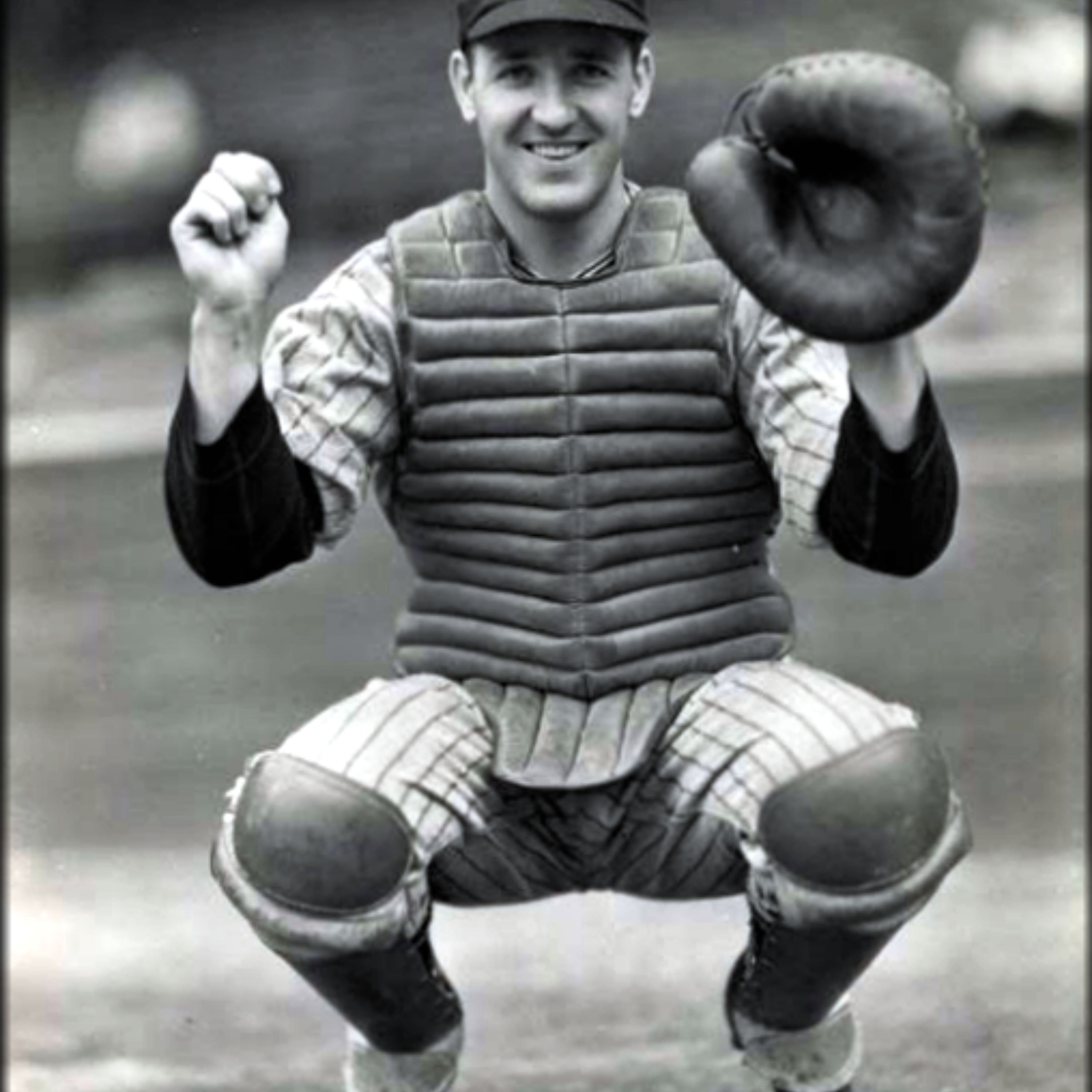
S2 Ep 1Billy Sullivan Jr the first father son team to play in World Series
Feb 1 1875 Billy Sullivan born is born, he will debut in 1898. Despite being a notoriously poor hitter, Billy Sullivan is generally regarded as one of the best defensive catchers of the Deadball Era.In 1901, Sullivan jumped to the Chicago White Sox of the new American League and was the catcher in the circuit's first game, collecting a pair of hits in an 8-2 Chicago victory over the Cleveland Blues on April 24. He batted only .245 that season, but would never again top .229, hitting as low as .162 in a full season and having an average below .200 five times. Between 1901 and 1911, the Sox never finished lower than fourth with Sullivan as their starting catcher and won two pennants, in 1901 and 1906. During the two seasons in which he missed significant playing time because of injuries, in 1903 and 1910, the team finished more than 30 games out of first place.Sullivan is perhaps most famous for going hitless during the 1906 World Series, finishing 0 for 21 with 9 strikeouts. In spite of this lack of production, he played every inning of the Series as the White Sox beat their cross-town rivals the Chicago Cubs in six games.Sullivan batted only .213 lifetime, the second-lowest batting average for a player with over 3000 at-bats (the lowest average belongs to Bill Bergen, a contemporary catcher). As poor as his offense was, his defense was outstanding: he was reckoned to have the best throwing arm in the American League and his ability to work with pitchers was second-to-none. During his career, he led the AL in fielding four times.Todays catchers have Sullivan to thank who actually patented shin pads Sullivan's son Billy Sullivan Jr. played in the majors from 1931 to 1943. When Billy Jr. played in the 1940 World Series for Detroit, the Sullivans became the first father-son pair to have played in the World Series.Listen to his son Billy Sullivan JR discuss his father and what Ty Cobb thought of him Mentioned in this episode:Classic Baseball BroadcastsClassic Baseball BroadcastsMentioned in this episode:Post Roll March 26New CBB Podcast Intro
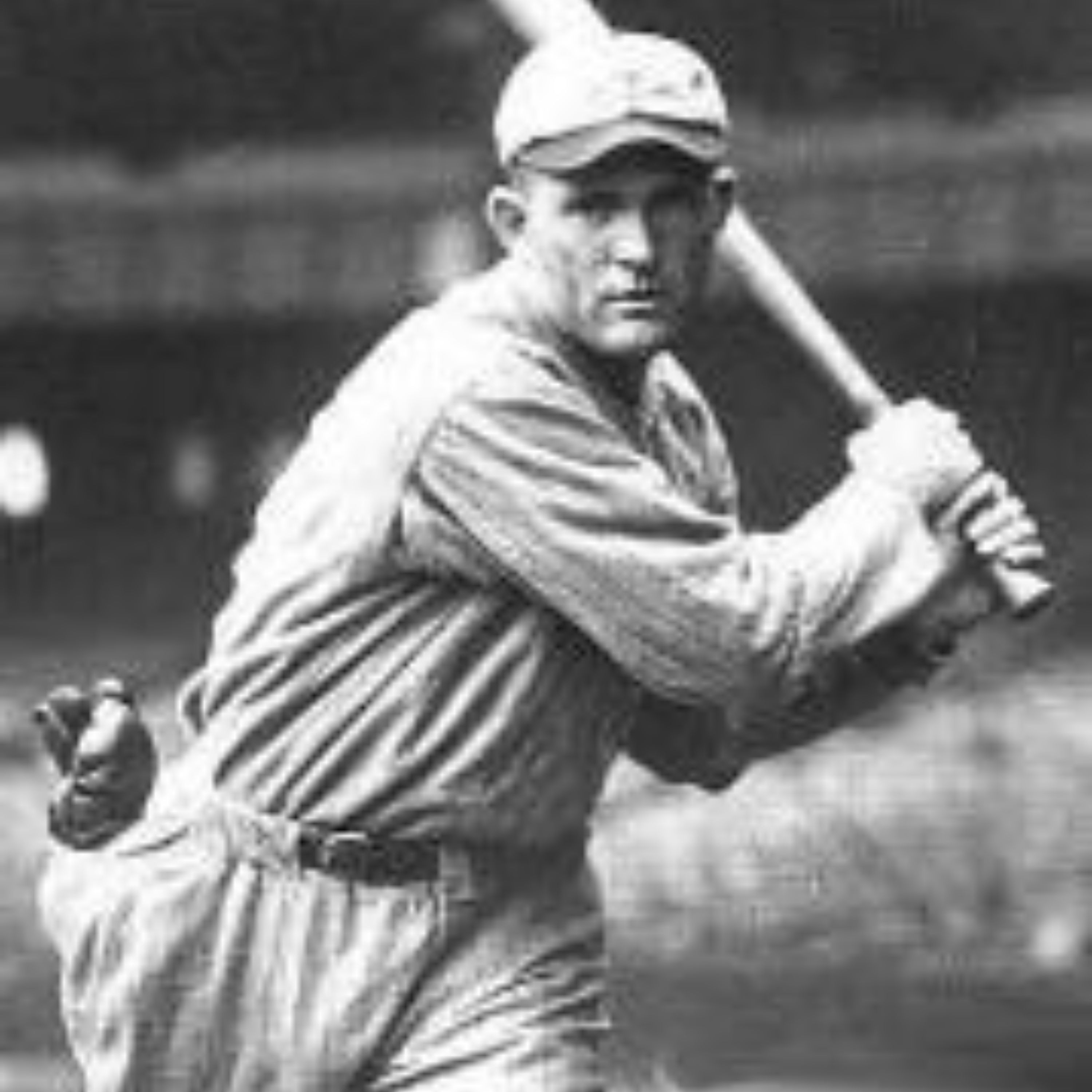
S1 Ep 31Rogers Hornsby amazing streak
On January 31 1927 – National League President John Heydler rules that Rogers Hornsby cannot continue to both hold stock in the St. Louis Cardinals and play for the New York Giants. Seemingly oblivious, the Cards’ board of directors, meeting in St. Louis, votes stockholders a 10% dividend, earning Hornsby $2916 for his 1167 shares.Hornsby had a fabulous stretch from 1921-1925. For that five-year period, his average season included a .402 batting average, 120 RBI, 123 runs scored, 216 hits, 41 doubles, 13 triples, and 29 home runs. If injuries in 1923 hadn't kept him from playing only 107 games, those yearly averages would look even more impressive. He won two Triple Crowns and hit over .400 three times in four years, peaking at .424, the highest average in the past hundred years. Nobody could rain base hits all over a ballpark like Hornsby, and he stayed hotter than hot for five straight years.1921: Hornsby had 33 games with at least three hits, including five times in six games in July. In August he had 49 hits, and on September 25 he raised his average to .404. But he went only 5-for-22 the rest of the way, going hitless in his final two games to drop to .397. That's how close he came to hitting .400 four times in five years.1922: This was Hornsby's best year, when he won the Triple Crown by hitting .401 with 42 home runs and 152 RBI. Late in the season, he put together a 33-game hit streak, batting .466 with 68 hits. He had multiple hits in 22 of the 33 games. Like Ted Williams in 1941, he was technically hitting .400 going into the last day of the season, with an average of .39967. Like Williams, he chose to play rather than protect his average. He banged out three singles to finish at .401.1923 : After missing several weeks early in the season, Hornsby came back strong in July, batting .488 with a mind-boggling 61 hits. That included a stretch of 13 straight multi-hit games, when he went 33-for-56 (.589). Hobbled by injuries in September, he saw his average drop from .396 to .384 before missing the final 19 games.1924: Hornsby started fast, hitting .429 in April, and dipped below .400 only briefly, in June. He got hot in July, including five three-hit games in one week. But that was nothing compared to what he did from August 20-26, arguably the best week any hitter has ever had. His Cardinals played three doubleheaders that week, so he played 10 games, starting with back-to-back twin bills. Against the Phillies on August 20, he went 6-for-7 with three doubles. The next day, facing the Giants, he went 7-for-7, giving him 13 hits in two days! The week ended with a 4-for-4 performance (three doubles and a home run) against Hall of Fame pitcher Burleigh Grimes of the Dodgers. Can you imagine someone getting 27 hits in a week? That's what Hornsby did. He went 27-for 39 (.692), with eight doubles, one triple, six home runs, 16 runs scored, 12 runs batted in, and a slugging percentage of 1.410. That sounds more like some bopper in a slow-pitch softball league. No, it was Rogers Hornsby at his best. He got six hits the next two days, but that was another week. For the month of August, he was 54-for 106, a .509 average.1925: The hits kept on coming for "The Rajah" as he ran away with his second Triple Crown, hitting .403 with 39 home runs and 143 RBI. A cold July, when he missed a week and hit only .326, forced him to finish fast to surpass .400 again. On September 15, his average stood at .389, and it's tough to gain points that late in the season. No problem for Mr. Hornsby. He got 18 hits in his final 29 at-bats. Before a September 27 doubleheader, he was hitting .399. He went 2-for-5 in the opener to stay at that mark, then had a single, a triple, a home run and a walk in the nightcap. The next day, he fouled a ball off his foot in batting practice, splitting open a toenail. That forced him to sit out the final four games of the season.Here is Horsby on Tops in sports . .Mentioned in this episode:New CBB Podcast Intro Post Roll March 26
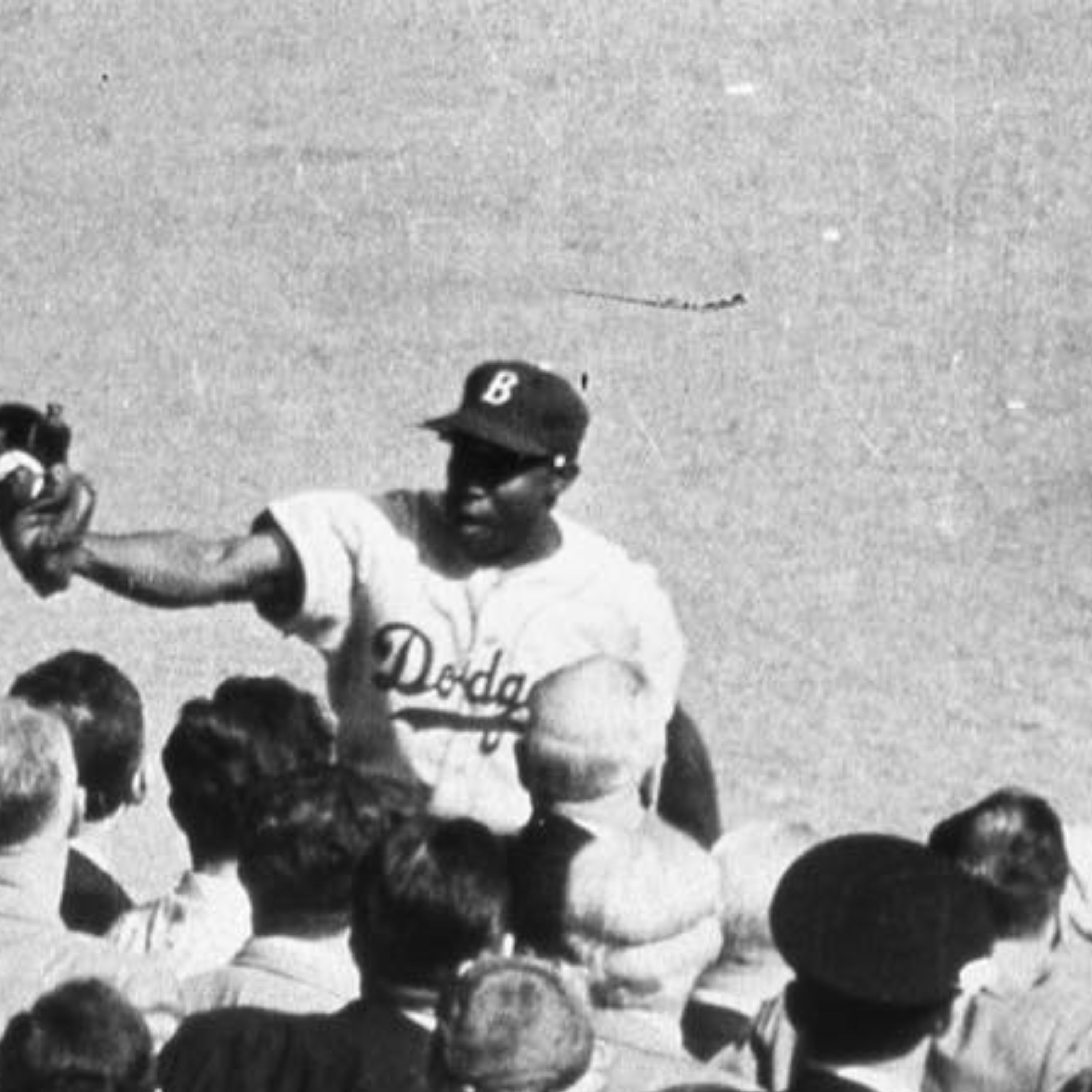
S1 Ep 30Sandy Amoros makes the catch
January 30, 1930 Sandy Amoros is born in Matanzas, CubaAt 20 he made the 1950 Central American and Caribbean Games, Amorós led Cuba to a Gold Medal with 6 home runs in 7 games. He then turned to America to turn pro, first playing for the New York Cubans in the Negro Leagues in 1950 and in the Dominican Republic during the summer of 1951, he will finally debut for the Brooklyn Dodgers August 22, 1952.He was a good hitter with a keen eye, not quite a regular he did play in over 100 games in both 1955 & 1956 & 1957 and posted a 902 OPS in 1956. He hit a career high in hrs in 1956, 16 and from 1954-1957 in Brooklyn he had some nice spilts including a 369 career OBP. LA wasn’t as kind to Sandy. The defining moment of Amorós' career with the Brooklyn Dodgers was one of the memorable events in World Series history. It was the sixth inning of the decisive Game 7 of the 1955 World Series. The Dodgers had never won a World Series and were now trying to hold a 2–0 lead against their perennial rivals, the New York Yankees. The left-handed Amorós came into the game that inning as a defensive replacement, as the right-handed throwing Jim Gilliam moved from left field to second base in place of Don Zimmer. The first two batters in the inning reached base and Yogi Berra came to the plate. Berra, notorious for swinging at pitches outside the strike zone, hit an opposite-field shot toward the left field corner that looked to be a sure double, as the Brooklyn outfield had just shifted to the right. Amorós seemingly came out of nowhere, extended his gloved right hand to catch the ball and immediately skidded to a halt to avoid crashing into the fence near Yankee Stadium's 301 distance marker in the left field corner. He then threw to the relay man, shortstop Pee Wee Reese, who in turn threw to first baseman Gil Hodges, doubling Gil McDougald off first; Hank Bauer grounded out to end the inning.According to winning pitcher Johnny Podres: “As great a catch as Amoros made, his relay to Pee Wee [Reese] (to double up Gil McDougald) was even better.” When a reporter asked Amoros if he thought he would make the catch, he said, “I dunno. I just run like hell.”Mentioned in this episode:Classic Baseball BroadcastsClassic Baseball BroadcastsMentioned in this episode:New CBB Podcast Intro Post Roll March 26
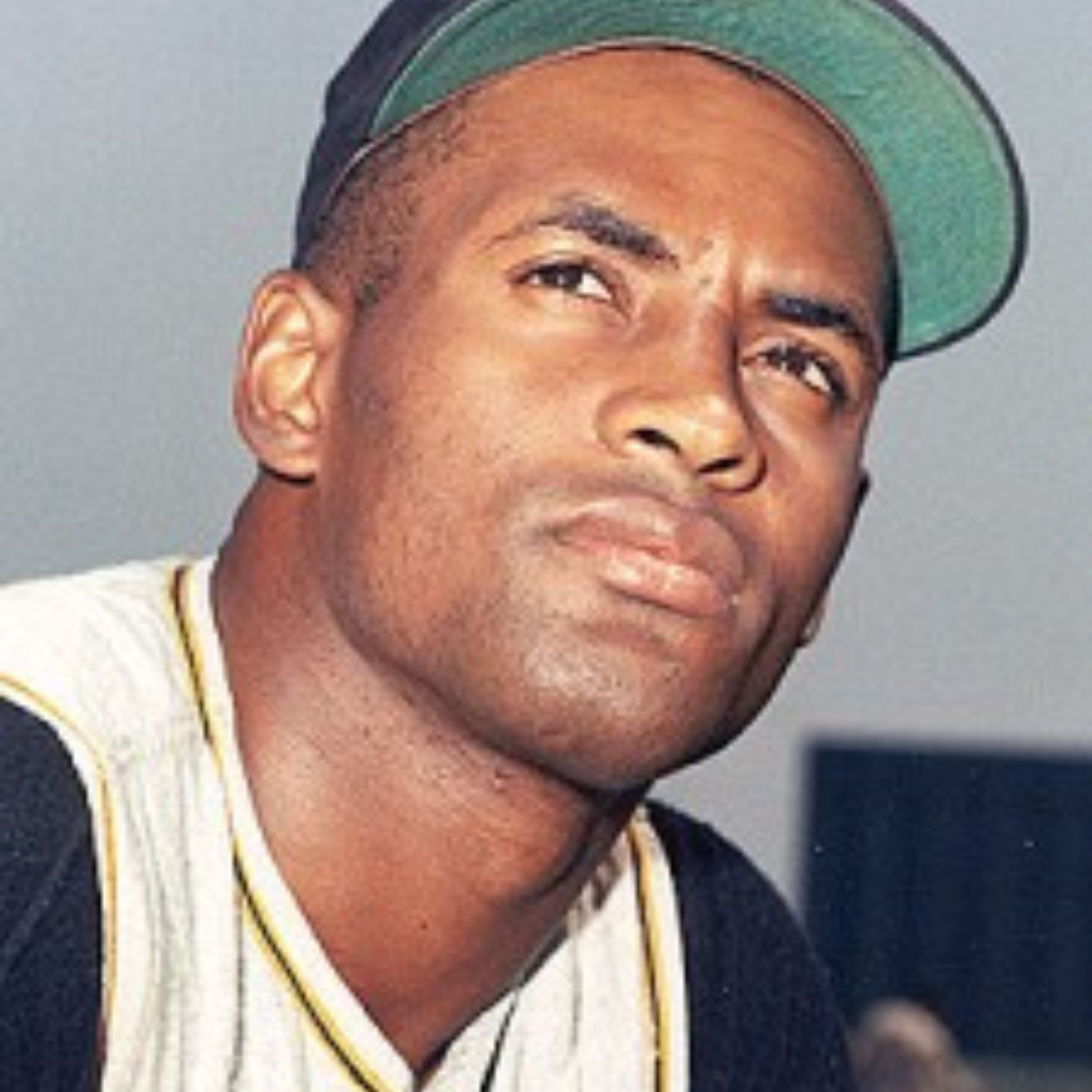
S1 Ep 29Roberto Clemente picks up Tris Speaker Award
On January 29 1971 — In accepting the Tris Speaker Award from Houston sportswriters, Roberto Clemente gives a speech which, apart from being called by many of those in attendance “the best talk any baseball player ever made,” is the source of Clemente’s most famous – if oft misquoted – assertion: “If you have an opportunity to accomplish something that will make things better for someone coming behind you, and you don’t do that, you are wasting your time on this earth.”A member of the 3,000-hit club, Roberto Clemente was a tremendously proud man who was often misunderstood by the press and his teammates. He was criticized for refusing to play with minor injuries, despite the fact that he won four batting championships. He played on two Pirate World Series winners and became more legendary after his tragic death while delivering supplies to victims of the Nicaraguan earthquake in 1972 than during his playing days.His tragic death prompted the Hall of Fame's Board of Director's to unanimously wave the customary five year period for induction, opening the door for the Baseball Writers Association of America (BBWAA) to hold a special election on Clemente's behalf. By an overwhelming vote of 93%, Clemente became the first player of Latin American descent to be inducted into the Hall of Fame.Mentioned in this episode:Classic Baseball BroadcastsClassic Baseball BroadcastsClassic Baseball BroadcastsMentioned in this episode:New CBB Podcast Intro Post Roll March 26

S1 Ep 28Goose Goslin credits an interview for his Hall Call
On January 28, 1968 — Goose Goslin, a former Washington Senator and Detroit Tigers Tiger outfielder who retired with a career .316 batting average after playing in five World Series, and Kiki Cuyler, a .321 career hitter who won four stolen base crowns while running the bases for the Pittsburgh Pirates and Chicago Cubs, are elected into the Hall of Fame by a unanimous vote of the Veterans Committee. Goslin believed his enshrinement in Cooperstown was helped by his interview that was shared in Lawrence Ritter’s 1966 book, The Glory of Their Times: The Story Of The Early Days Of Baseball Told By The Men Who Played It.Kiki Cuyler delivered the World Series-winning blow in the 1925 Fall Classic, clearing the bases with a double off Walter Johnson in the eighth inning of Game Seven. He is probably the only Hall of Famer to be benched for a month by his manager for lackadaisical play in his prime. He won four stolen base titles and led the National League in doubles, runs, and triples, but is still considered by some experts as a marginal Hall of Famer.Leon "Goose" Goslin won batting titles in the minor leagues and the American League. He won World Series with the Senators and the Tigers. He drove in 100 or more runs eleven times, and was known as one of the best fastball hitters of his time. The Washington Post called Goslin, "Washington's answer to Babe Ruth." A clutch hitter, Goslin was famous for driving in the winning run in Detroit's first World Series championship."Leon Goslin was tabbed "Goose" while still in the minor leagues, because of his beak-like nose and gawky physical features. Goslin used a closed batting stance, and once joked that he would have "hit .500 if he could have seen over his nose.""FactoidDuring the 1935 World Series against the Cubs, Goslin kept an entire rabbit in the clubhouse, figuring if a rabbit's foot was good luck, then an entire rabbit must be even better. Goslin delivered the Series-winning hit in Game Six.Speaking of Glory of their times here is a short exerpt from that interviewMentioned in this episode:Classic Baseball BroadcastsClassic Baseball BroadcastsMentioned in this episode:Post Roll March 26New CBB Podcast Intro

S1 Ep 27Ty Cobb and Tris Speaker get cleared for fixing games
On January 27 1927 -- Citing accuser Dutch Leonard's refusal to appear at the hearings of January 5th, Commissioner Kenesaw Mountain Landis issues a lengthy decision clearing Ty Cobb and Tris Speaker of any game-fixing charges. Landis orders the Philadelphia Athletics to reinstate Cobb and the Washington Senators to restore Speaker. Both are then made free agents. Philadelphia owner Connie Mack will sign Cobb on February 8th, and Speaker will sign with Washington on January 31st for a reported $35,000.Joe Wood interview is from Glory of their Times I highly recommend this audiobook, it is music to the ears for any baseball for fan. Mentioned in this episode:Classic Baseball BroadcastsClassic Baseball BroadcastsMentioned in this episode:New CBB Podcast Intro Post Roll March 26

S1 Ep 26Ford Frick ushers in new deadball era
On January 26, 1963, Alarmed by such increased home run numbers across the Majors, Ford Frick convinced the owners to agree to having the strike zone widened before the 1963 season. The zone will stretch from the top of the batter’s shoulders to the bottom of the knees. The committee hopes the return to the 1950s strike zone will result in a decrease in runs scored.The results will exceed the committee’s expectations, in 1962 teams average 4.46 runs per game, in 1963 that number dropped to 3.95 and will hover around 4, until 67 when it drops to 3.77 and then in 1968 it was deadball like 3.42 runs per game. The Indians ‘63 staff would set a new AL record while being the first staff to K over 1000 in a season. Led by Sam McDowell and rookies Sonny Siebert and Luis Tiant, they would go on to set a new record in ‘64, with over 1100 Ks. They would set record numbers and lead the AL in Ks from ‘64-68, a feat still not matched!In 1968 we all know Bob Gibson had a record 1.12 ERA, but 6 other starters had ERAs under 2. Which was remarkable. Don Drysdale set a record with the longest scoreless inning streak ever. Denny McLain became baseball’s first 30-game winner in a generation. Denny McLain was the last pitcher to win 30 in 1968, including a 1.96 ERA. McLain and Lolich will face off twice in the 1968 World Series and Gibson will beat him twice, McLain will win game 6 going the distance on 2 days rest and after the “Year of the Pitcher” in 1968, the strike zone will be tweaked again, and the mound will be lowered from 15 inches to 10 inches and by 1970 the league would be back up to 4.46 runs per game. It has been long speculated that Frick, a Friend of Ruth increased the strike zone so no one else could dimmish the Babe. Here is Frick on Tops on Sports . . . . Mentioned in this episode:Classic Baseball BroadcastsClassic Baseball BroadcastsMentioned in this episode:New CBB Podcast Intro Post Roll March 26

S1 Ep 25Lefty Gomez - SOLD by Bombers
On January 25, 1943, the Yankees sell future Hall of Famer Lefty Gomez to the rival Boston Braves. Gomez will never pitch in a game for the Braves, who decided to release the veteran southpaw. Gomez will eventually sign with the Washington Senators. Gomez will make 1 start for the Senators, and never pitch again allowing 3 runs over 4.2 innings. Years before Joe DiMaggio came out of SF, the Bay Area produced Vernon Louis Gomez, a talented and colorful left-handed hurler. "Lefty" starred for the Yankees during the 1930s and early 1940s, teaming with Red Ruffing to form one of the best pitching duos in baseball history. Gomez posted a 6-0 record in the Fall Classic, winning five rings with the Yankees. Originally a hard thrower, Gomez suffered arm injuries in 1933, 1936 and 1939, eventually re-tooling himself as a finesse pitcher. He enjoyed a 165-89 record for the Yankees for the decade of the 1930s, finishing in the top ten in MVP voting three times.He won the triple crown twice, 7X All Star, 2x Era Title he will eventually be inducted into the hall of fame in 1972, The Mel Ott Podcast features multiple at bats against Lefty and we have dozens of Classic Radio Broadcasts including the 36 & 39 World Series as well as multiple All Star Games from the 30’s featuring Lefty who ironically is the last pitcher to go 6 innings of an all star game , there is also a great full featured interview you don’t want to miss! Mentioned in this episode:Classic Baseball BroadcastsClassic Baseball BroadcastsMentioned in this episode:New CBB Podcast Intro Post Roll March 26
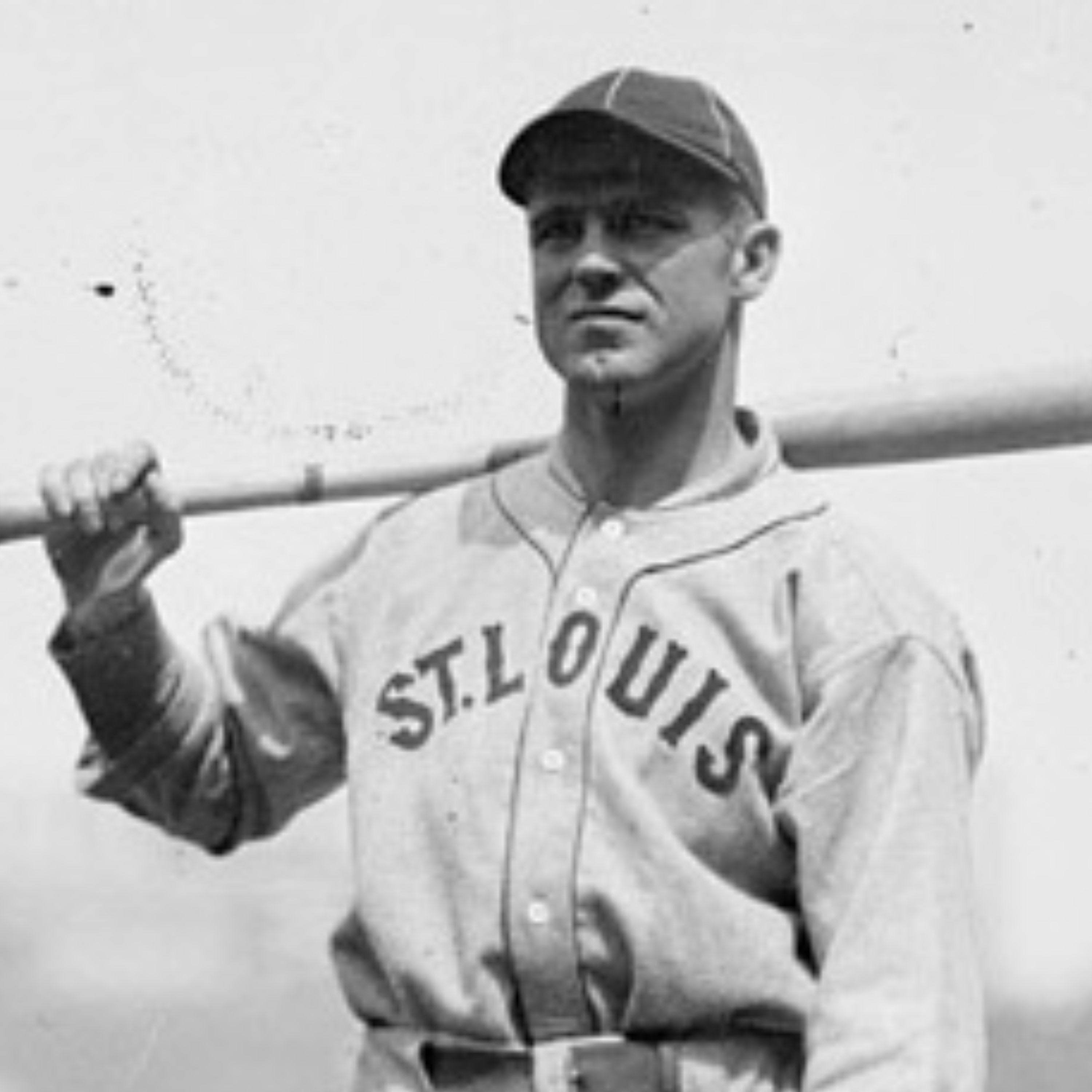
S1 Ep 24The original hit king - Gorgeus George Sisler
On January 24, 1939, the baseball writers select EddieCollins, Willie Keeler and George Sisler to the Hall of Fame. George Sisler never played on a pennant winner and he wasn't a slugger, but in spite of that he earned a reputation as the best first baseman in the first 30 years of the 20th century. The greatest player in St. Louis Browns' history, he twice batted over .400, and his 257 hits in 1920, hitting 420 for the season, his hit record remained a modern major league record. later broken by Ichiro SuzukiThat same year, the lefty-swinging Sisler hit in 41 consecutive games, an American League record that stood until surpassed by Joe DiMaggio. Sisler, who attended the University of Michigan, where he played for Branch Rickey, FactoidOn September 1, 1918, Sisler hit a double off Ty Cobb. Cobb was making his first major league appearance on the mound. Sisler also pitched in the game for St. Louis, pitching a scorless 9th in the Browns win. He made 24 apperances over his career with a 2.35 ERA and has a shutout to his credit in 1916. Collins batted an even .333 for his career, collected 3,315 hits and stole 744 bases as. A member of four World Championship teams, Eddie Collins was a winner with a confident and aggressive style of play. He played 25 years in the major leagues and was considered the finest second baseman of his time. He led his league in fielding nine times, and he accepted more chances, had more assists, and made more putouts than any other pivot man in history. He was one of the best performers in World Series play, hitting .328 with 42 hits and 14 stolen bases in 34 games.Eddie Collins buried his bats during the off-season in shallow holes in his backyard that he called "graves" in order to keep them "lively."Keeler, who “hit ’em where they ain’t”, batted .341 and collected 2,932 hits. A master with a bat, Willie Keeler was a demon at the top of the lineup for Ned Hanlon's Orioles in the 1890s. Keeler led his team to four pennants, two each in Baltimore and Brooklyn, winning two batting titles. As a member of the 1890s Orioles' teams that revolutionized the way baseball was played, Keeler was adroit at laying down a bunt, chopping the ball into the ground to beat it out for an infield hit, performing the suicide squeeze, and parlaying the double steal. Keeler's 44-game hitting streak in 1897 was a record until surpassed by Joe DiMaggio in 1941.He is highlighted on the January 1 podcast –the Brooklyn MillionaireMentioned in this episode:Classic Baseball BroadcastsClassic Baseball BroadcastsMentioned in this episode:New CBB Podcast Intro Post Roll March 26
S1 Ep 23Jackie Robinson and Bob Feller make history
On January 23 1962 -- Pitcher Bob Feller and infielder Jackie Robinson are elected to the Hall of Fame by the Baseball Writers Association of America in their first year of eligibility.Jackie Robinson burst onto the scene in 1947, breaking baseball's color barrier and bringing the Negro leagues' electrifying style of play to the Majors. He quickly became baseball's top drawing card and a symbol of hope to millions of Americans. With Robinson as the catalyst, the Dodgers won six pennants in his 10 seasons. He dominated games on the basepaths, stealing home 19 times while riling opposing pitchers with his daring baserunning style. Robinson was named National League MVP in 1949, leading the loop in hitting (.342) and steals (37), while knocking in 124 runs.Bob Feller's blazing fastball set the standard against which all of his successors have been judged. Rapid Robert spent his entire 18-year career with Cleveland, amassing 266 victories and 2,581 strikeouts, while leading the league in strikeouts seven times. He missed nearly four full seasons in his prime serving his country during World War II, for which he was decorated with five campaign ribbons studded with eight battle stars. Fresh from high school, Feller struck out 17 Athletics in 1936. The fireballer authored three no-hitters and 12 one-hitters while winning 20 or more games six times.Mentioned in this episode:Classic Baseball BroadcastsClassic Baseball BroadcastsMentioned in this episode:New CBB Podcast Intro Post Roll March 26
S1 Ep 22Robin Roberts & The Whiz Kids January 22
On January 22 1976 — Pitchers Robin Roberts and Bob Lemon are voted into the Hall of Fame by the Baseball Writers Association of America. Roberts led the National League in starts and innings pitched for five straight seasons and was tops in victories for four consecutive years on his way to 286 career wins. Lemon earned 20 victories six times and won 207 career games.Robin Roberts was the ace of the Phillies staff for most of his 14 years in a brilliant 19-season Major League career. The durable workhorse with a superiorfastball and pinpoint control won 286 games and compiled six consecutive 20-victory seasons. In 1950, he paced the Phils to their first flag in 35 years with a 20-11 record. A tough competitor, he was a frequent league leader in victories, innings pitched, complete games, shutouts and strikeouts, topping the National League in wins from 1952-55.Bob Lemon realized his destiny as a pitcher eight years after making his professional debut as an infielder-outfielder. At the age of 25, he embarked on a Major League pitching career that included seven 20-win seasons over a nine-year span. The right-handed ace became a key factor in Cleveland’s 1948 and ’54 pennant drives, postingrecords of 20-14 and 23-7, respectively. After his playing days, Lemon became a successful manager, leading the Yankees to the world championship in 1978.Mentioned in this episode:Classic Baseball BroadcastsClassic Baseball BroadcastsMentioned in this episode:New CBB Podcast Intro Post Roll March 26
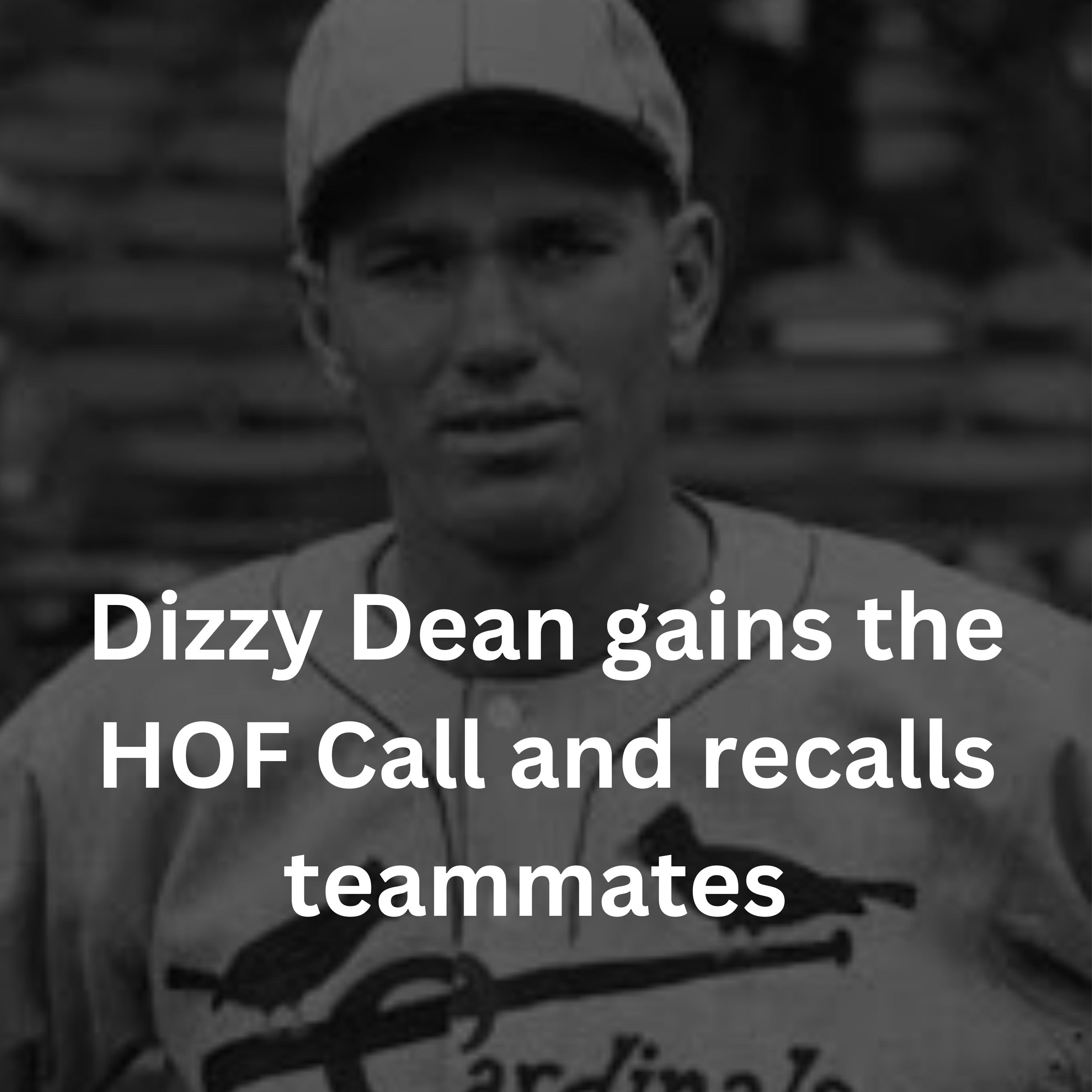
S1 Ep 21Dizzy Dean gains the HOF Call and recalls teammates
Start Listening today to 2500+ games and interviews FREE to start! www.classicbaseballbroadcasts.comFull Dizzy Dean playlist - Dizzy Dean Show, Dean interviews, Dean game broadcasts, games he played in (1934 WS and 37 AS Game) over 25 Dizzy Dean specials. Join the email list: Join HereOn January 21, 1953, pitcher Dizzy Dean and outfielder Al Simmons are elected to the Baseball Hall of Fame. The Baseball Writers’ Association of America surprisingly bypasses former New York Yankees great Joe DiMaggio in his first year on the Hall of Fame ballot.DiMaggio will gain an election two years later.Dean gathers 209 votes while Simmons’ total of 199 is one more than needed. The colorful Dean had a .644 career winning percentage and won 120 games from 1932 through 1936, including 30 wins in 1934. Simmons, who drove in 100 runs in each of his first eleven major league seasons, was one of the most feared hitters of his time. Also joining DiMaggio, who finishes 8th in the voting, are in order Bill Terry, Bill Dickey, Rabbit Maranville, Dazzy Vance, Ted Lyons, Chief Bender (9th) and Gabby Hartnett (10th). All will eventually make it.The Yankee Clipper will have to wait until 1955 when 88.8% of the BBWAA scribes put his name on their ballot.Mentioned in this episode:Classic Baseball BroadcastsClassic Baseball BroadcastsMentioned in this episode:Post Roll March 26New CBB Podcast Intro
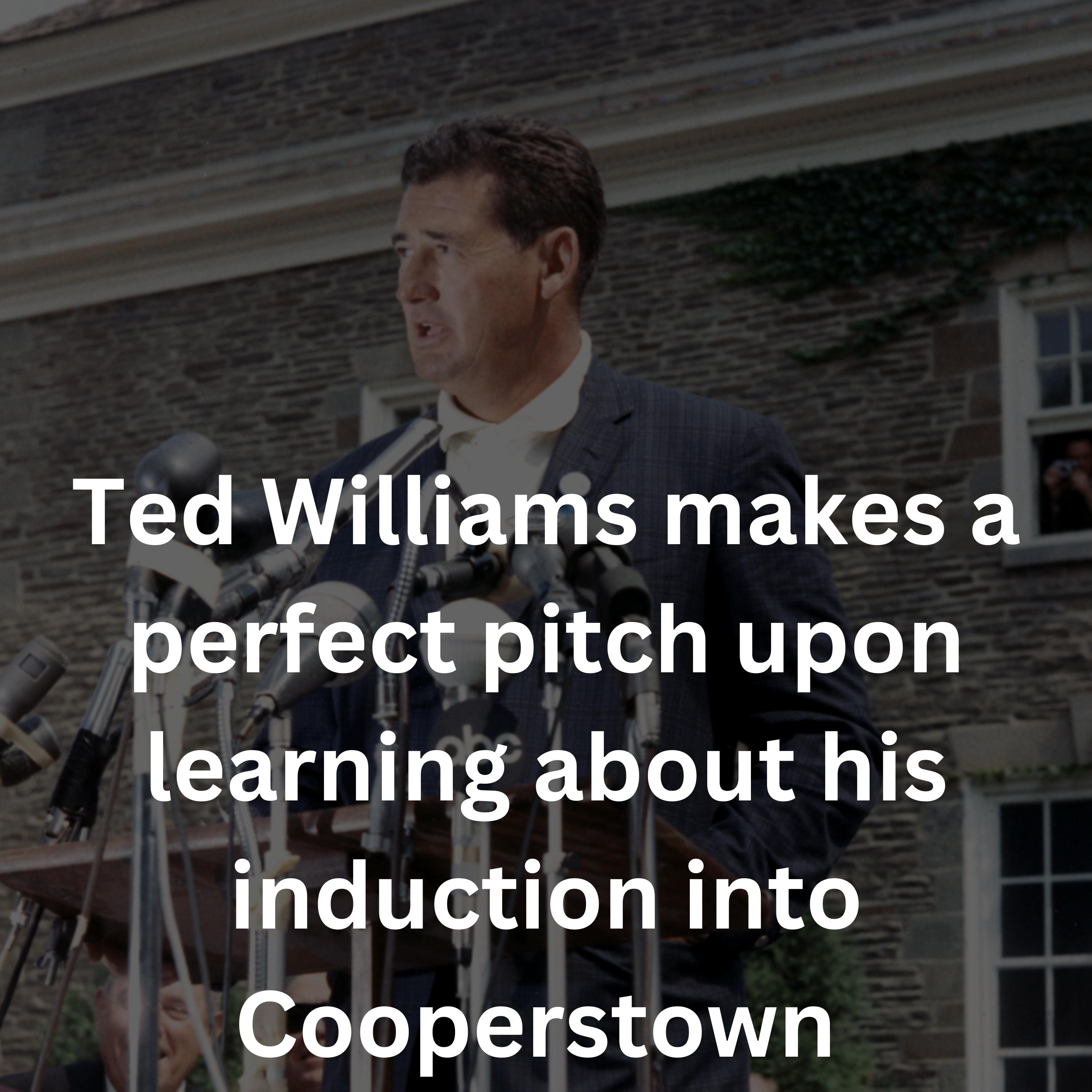
S1 Ep 20Ted Williams makes a perfect pitch January 20
Start Listening today to 2500+ games and interviews FREE to start! www.classicbaseballbroadcasts.comJoin the email list: Join HereOn January 20 1966 — The Baseball Writers Association of America elects former Boston Red Sox outfielder Ted Williams to the Hall of Fame. Williams, the last major league batter to hit .400, receives 282 of a possible 302 votes. He won the Triple Crown twice, the American League MVP Award twice, and produced the highest career on-base percentage of all time (.483), even though he lost five years to military service.American League Triple Crown: 1942 and 1946. In neither of those years did Williams win the MVP Award; in todays game he would have won the award because he had the highest WAR, he also had the highest WAR in the AL 6 times including posting 10+ three times. He is one of 11 positions players since 1900 to post a War over 10 multiple times. Hit for the cycle on July 21, 1946; blasted three homers and drove in 8 runs on July 14, 1946; collected more RBI's 159 than games played 155 (1949); had RBI in 12 straight games (thru September 13, 1942); RBI in 11 consecutive games (thru June 10, 1950); homered in four straight at-bats (September 7th and September 22nd, 1957); combined with Bobby Doerr for 549 homers as teammates (Williams 333, Doerr 216)...During Ted’s speech in the summer of 1966 he may have done the most selfless thing during his association with baseball. Williams was born of Mexican decent and it was something he kept to himself, he may have never played MLB if he had not. He was sensitive to the color barrier and made a pitch for the Negro League players inclusion into Cooperstown. The voters will listen and begin with Satchel Paige in 1971. Here is Ted’s speech the day he learned he was voted in. Mentioned in this episode:Classic Baseball BroadcastsClassic Baseball BroadcastsMentioned in this episode:New CBB Podcast Intro Post Roll March 26

S1 Ep 19Stan Musial Enlists for WWII
Start Listening today to 2500+ games and interviews FREE to start! www.classicbaseballbroadcasts.comJoin the email list: Join HereOn January 19, 1945, media reports say that Stan “The Man” Musial will enlist in the U.S. military for duty in World War II. Musial will miss the entire 1945 season before returning to the St. Louis Cardinals in 1946.Since big league ball wasn’t played any further west than the city of St. Louis until the Dodgers and Giants moved to California in 1958, Musial was a hero to virtually every young boy who lived beyond the banks of the Mississippi River during the 1940s and 1950s. The Cardinal outfielder’s warm, unpretentious, and easy-going manner also made him a favorite of teammates and opponents alike. Musial’s popularity was further enhanced by the greatness he displayed on the ballfield – a greatness that enabled him to win seven batting championships and three National League Most Valuable Player Awards during his 22-year career with the Cardinals. Stan Will pass away on January 19, 2013 in Ladue, MOIn discussing Musial’s legacy on ESPN’s Sports Century, Bob Costas noted, “He didn’t hit a homer in his last at-bat; he hit a single. He didn’t hit in 56 straight games. He married his high school sweetheart and stayed married to her – never married a Marilyn Monroe. He didn’t play with the sheer joy and style that goes alongside Willie Mays’ name. None of those easy things are there to associate with Stan Musial. All Musial represents is more than two decades of sustained excellence and complete decency as a human being. Listen to stan on the American Legion Baseball 1949 Radio show with Stan Musial. Mentioned in this episode:Classic Baseball BroadcastsClassic Baseball BroadcastsMentioned in this episode:Post Roll March 26New CBB Podcast Intro
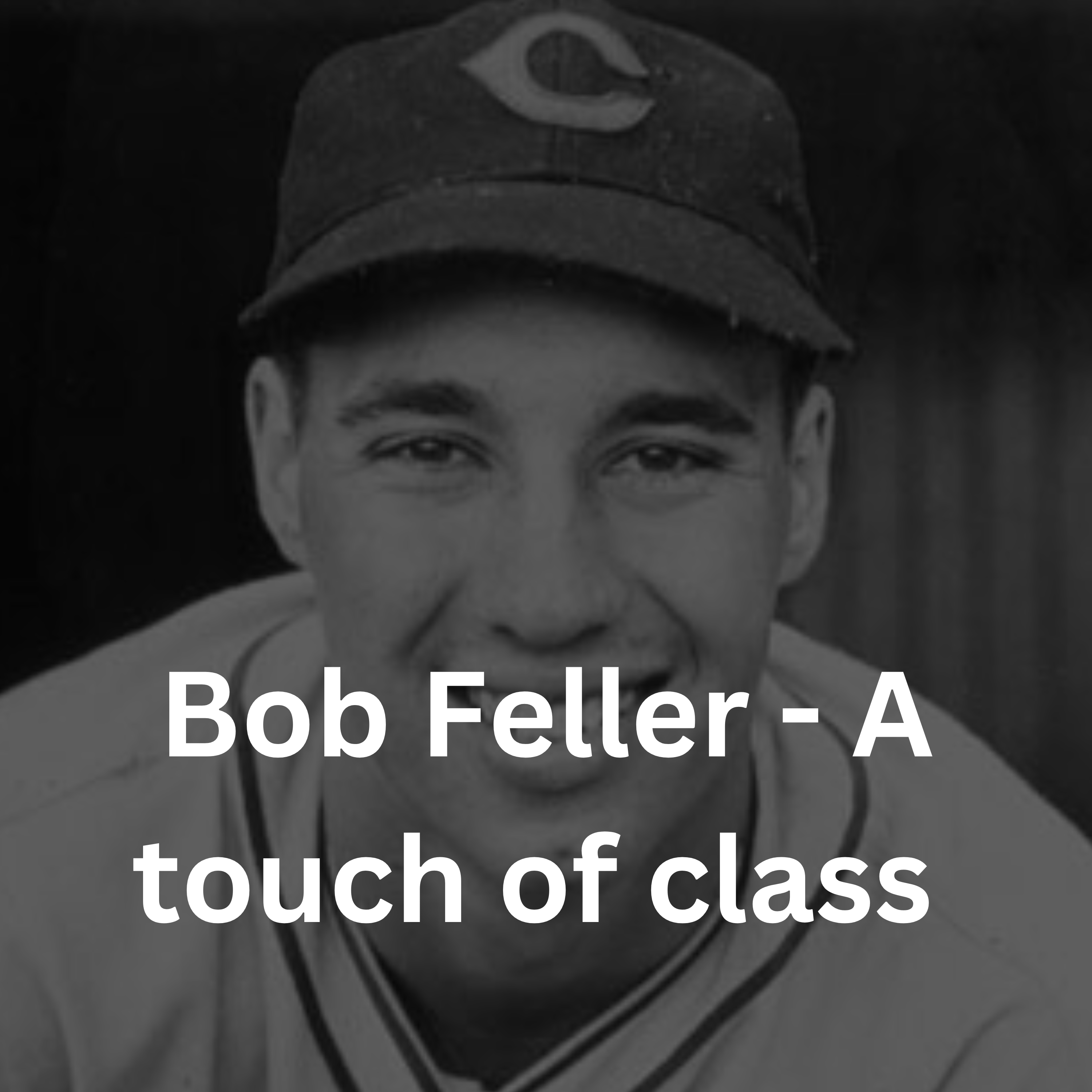
S1 Ep 18Bob Feller - A touch of class January 18
Start Listening today to 2500+ games and interviews FREE to start! www.classicbaseballbroadcasts.comJoin the email list: Join HereOn January 18, 1950, star right-hander Bob Feller tells the Cleveland Indians that he should receive a cut in pay after a subpar 15-14 season in 1949. The Indians agree to the suggestion, cutting the future Hall of Famer’s pay by $20,000. Feller will receive a salary of $45,000 in 1950. A farmboy from Van Meter, Iowa, in 1936 Feller was only 17 when he struck out eight members of the St. Louis Cardinals in three innings of an exhibition game. After this awesome display of pitching, Feller was advised to seek voluntary retirement from high school in order to sign a pro-baseball contract. In his first major league start, against the St. Louis Browns, Feller fanned 15 hitters and never looked back. For twenty years, all with theIndians, the teenage phenomena dominated AL batters with his blazing fastball and bending curve. He hurled three no-hitters, including the only opening day gem on April 16, 1940, he will also win the triple crown in 40. His second came in 1946 when he set the AL record with 348 strikeouts. He also notched 12 one-hitters, and won 19 games for Cleveland's last world series winner in 1948. You can listen to all 6 games on our Classic Radio Broadcasts. Feller career was put on hold when he became the second big league star to enter the service for World War II (following Hank Greenberg).He lost almost four seasons to military duty While in the U.S. Navy, Feller won eight battle stars. I am going to play him recalling his first game back from the War Mentioned in this episode:Classic Baseball BroadcastsClassic Baseball BroadcastsMentioned in this episode:Post Roll March 26New CBB Podcast Intro

S1 Ep 17January 17 - Carl Hubbell gets rewarded
Start Listening today to 2500+ games and interviews FREE to start! www.classicbaseballbroadcasts.comJoin the email list: Join HereOn January 17, 1934, the New York Giants come to contract terms with National League Most Valuable Player Carl Hubbell. “The King,” who won league honors unanimously in 1933, will earn $18,000 for the upcoming season. The Giants will be well rewarded as Hubbell will lead the league in ERA, CG and SV’s and finish 9th in the MVP Voting. The 1934 season is best remembered for Hubbell’s historic achievement in the All-Star Game, when he struck out five straight future Hall of Famers, none of them familiar with the screwball. With two American Leaguers on base in the first inning at the Polo Grounds, Hubbell struck out Babe Ruth with three consecutive screwballs. Lou Gehrig took a ball and then swung through three more screwballs. Jimmie Foxx distinguished himself by comparison, at least managing one foul tip in the process of striking out. With the fans still buzzing, Hubbell struck out Al Simmons and Joe Cronin, the first two hitters in the second inning, before allowing a single to Bill Dickey.Mentioned in this episode:Classic Baseball BroadcastsClassic Baseball BroadcastsMentioned in this episode:Post Roll March 26New CBB Podcast Intro

S1 Ep 5January 5 - Don Wilson sadly passes away in his home
Don Wilson's Page - https://thisdayinbaseball.com/don-wilson-page/Jan 5 1975 – Houston Astros pitcher Don Wilson is found dead of monoxide poisoning in his garage in Houston, a suicide victim at age 29. The Astros will retire his uniform number 40. This show features a great article from the Sons of Same Horn on Don Wilson Don Wilson bio Events on Jan 5 The End of the 1967 No Hitter against Atlanta. Mentioned in this episode:Classic Baseball BroadcastsClassic Baseball BroadcastsMentioned in this episode:Post Roll March 26New CBB Podcast Intro

S1 Ep 4January 4 - The Rajah goes to Cooperstown
On January 4, 1942 — Rogers Hornsby becomes the 14th player selected to the Hall of Fame, getting 78 percent of the vote, while both Frank Chance (58%) and Rube Waddell (54%) miss out. Mentioned in this episode:Classic Baseball BroadcastsClassic Baseball BroadcastsMentioned in this episode:Post Roll March 26New CBB Podcast Intro
S1 Ep 3The Red Sox Sell Ruth to New York - but was it really for play?
January 3, 1920, The details of the Babe Ruth to New York sale are revealed. The Red Sox owner received $100K plus a $300K note to remortgage Fenway Park. But what about the play? We take a deeper look into the trade on the Daily rewind. Start Listening today to 2500+ games and interviews FREE to start! www.classicbaseballbroadcasts.comJoin the email list: Join HereMentioned in this episode:Classic Baseball BroadcastsClassic Baseball BroadcastsMentioned in this episode:New CBB Podcast Intro Post Roll March 26
S1 Ep 2Future Hall of Famers - Grimes and Stengel traded for each other
On January 2, 1918, the Pittsburgh Pirates acquire outfielder Casey Stengel and infielder George Cutshaw from the Brooklyn Robins for 3 players - pitcher Burleigh Grimes, Al Mamaux, and infielder Chuck Ward.Stengel will play only two seasons with the Pirates before moving on to Philadelphia, but will eventually enjoy his true success as a manager.Grimes will win 158 games during a nine-year stint with Brooklyn and pitch in the 1920 World Series that Brooklyn lost to Cleveland, he went 1-2 over 3 starts.His most wins in a season though will be back in Pittsburgh in 1928. When he will go 25-14 and he will finish 3rd and 4th respectively in the MVP race in 28 & 29 for the Pirates.Grimes will win 270 games vs 212 loses over 19 seasons, playing for 6 different NL franchises and a short stint with the Yankees.Grimes, known as Ol’ Stubblebeard, and will be inducted in Cooperstown in 1964 by the Veterans Committee. Stengel will earn his fame managing the New York Yankees from 1949 – 1960 going to the World Series 10 times and winning 7 titles. He will win 1905 over his amazing career as a manager. Stengel - Dubbed The Old Professor, will both be enshrined in Cooperstown two years later in 1966 again by the Veteran committee.I have something special for you an interview with Burleigh Grimes, listen to him talk about his playing days, Babe Ruth, how he hating managing and the great players he signed as a scout for the New York Yankees.Mentioned in this episode:Classic Baseball BroadcastsClassic Baseball BroadcastsMentioned in this episode:Post Roll March 26New CBB Podcast Intro

S1 Ep 1Wee Willie Keeler - The Brooklyn Millionaire
On January 1, 1923, 19th century star Wee Willie Keeler dies at the age of 50. Having promised his fans and former teammates he’d live to see 1923, Wee Willie Keeler dies on New Year’s Day of that year as a result of heart failure. The five-foot, four-and-a-half-inch Keeler amassed 2,932 hits, and won consecutive batting titles in 1897 and 1898. He batted .341 over a 19-year career, placing him in the top 10 on the all-time batting list. He played for the National League’s Superbas (Dodgers), Orioles, and Giants and the Highlanders (Yankees) of the American League will win election to the Hall of Fame in 1939. He is credited with the baseball axiom, “Keep your eyes clear, and hit ’em where they ain’t.”Wee Willie Keeler - BiographyJim Austin talks about his teammate Wee Willie Keeler Events for January 1 Mentioned in this episode:Classic Baseball BroadcastsClassic Baseball BroadcastsMentioned in this episode:New CBB Podcast Intro Post Roll March 26
S12 Ep 26December 26 Carlton Fisk & Ozzie Smith
December 26th Show NotesDecember 26, 1919 — Boston Red Sox owner Harry Frazee makes a secret agreement to sell Babe Ruth to the New York Yankees for $100,000 (one-fourth cash, plus $25,000 a year at 6 percent) plus guaranteeing a $300,000 loan with Fenway Park as collateral. The transaction will be announced publicly in one week.December 26, 2005 — The Associated Press reports that baseball took a lot of shots in 2005 from politicians, commentators and players themselves as the sport struggled with steroids. MLB went from no drug policy in 2002 to anonymous testing in 2003, to counseling for positive tests in 2004, to a dozen 10-day suspensions this year. Starting next year, an initial positive test will result in a 50-game suspension, and players will be tested for amphetamines for the first time, with penalties for a second positive result.MLB took similar shots in 1973, many people don’t realize this, but they were on the hot seat by the Staggers Committee that found steroid and amphetamine use in baseball was alarming in November of 1973. Bowie Kuhn was there and testified under oath along with Bud Selig.They did vow to clean up the game and congress let them off easy and never reviled the names of the players, unlike 2003. Tom House would later tell folks that 6 of 8 players were using steroids and his famous line was we never felt we lost, we were out-milligrammed. Born: December 26, 1954 in Mobile, AL. Defying critics who said he was too small and would never hit enough to stay in the big leagues, Ozzie Smith soared through the infield with his acrobatic moves, redefining the role of shortstop. He won 13 consecutive Gold Gloves and set a major league record for assists by a shortstop. Dealt to the St. Louis Cardinals early in his career, Smith became one of the most popular players in franchise history. A switch-hitter, Ozzie blasted one of his few home runs from the left side of the plate to win the 1985 National League pennant. He was elected to the Hall of Fame in 2002, his first year of eligibility.Died: December 26, 2013 in Baltimore, MDAn eight-time Gold Glove Award winner, Paul Blair was the best defensive center fielder in the American League in the late 1960s and early 1970s. With uncanny instincts and great speed, Blair positioned himself perfectly, often gliding into shallow center to snare would-be singles. He had several great moments in the postseason, including a game-winning homer in Game 3 of the 1966 World Series, and a leaping catch the next day to prevent a home run.In 1970, Blair was hit in the cheek, under his left eye, by a fastball from Ken Tatum of the Angels. It shattered about four different bones in his face and he underwent surgery. He missed 21 games but rebounded to play another 10 seasons. Contrary to some who say he was never quite the same hitter, Blair claimed he was...Mentioned in this episode:Post Roll March 26New CBB Podcast Intro
S12 Ep 22December 22 - Connie Mack
December 22nd Show NotesBorn on December 22, 1862 in East Brookfield, MA, Player, manager, scout, general manager, owner — Cornelius MacGillicuddy (Connie Mack) — did it all. For more than half a century, he owned and managed the Philadelphia A’s — nearly their entire existence. He built two dynasties that won a total of five World Series titles.Mack was often described as the “grand old gentleman of the game,” but he wasn’t above stretching the rules to gain a competitive advantage. He was rumored to have kept frozen baseballs handy to insert into the game when his pitchers were on the mound. He also employed a special coach who stationed himself in center field at Shibe Park to steal signs from opposing teams.Connie Mack pieced together a tremendous baseball team in the first decade of the 20th century, built in large part, around his famous “$100,000 Infield.” At the time, Mack claimed that even that lofty dollar-amount would not pry the four star players away from him. In 1911, John “Stuffy” McInnis was switched to first base to replace the aging Harry Davis, a fine player. McInnis, who earned his nickname because he had the “right stuff” as a young ballplayer in Boston, joined Eddie Collins, Jack Barry, and Frank Baker to form the greatest infield of the era.His A’s from 1929-1931, had a team second to none, which featured Jimmie Foxx, Mickey Cochrane, Al Simmons, Lefty Grove, George Earnshaw, Rube Walberg, and Jack Quinn.Mack holds the all-time record for most games managed (7,755), most games won (3,731), and most games lost (3,814). His record of 50 years managing one team, and 53 years overall will most likely never be broken.Tom December 22, 1944 – Future Hall of Famer Steve Carlton is born in Miami, Florida. Rivaling Tom Seaver as the finest pitcher of the 1970s, Steve Carlton won the National League Cy Young Award in 1972 and 1977 before capturing another two trophies during the early portion of the ensuing decade. One of the greatest...Mentioned in this episode:Post Roll March 26New CBB Podcast Intro

S12 Ep 19December 19 - Doc Ellis Passes Away
December 19th Show Notes December 19, 1934 – The New York Yankees send five players to the San Francisco Seals of the Pacific Coast League as partial compensation for the acquisition of Joe DiMaggio. The Yankees had previously paid $25,000 for the future Hall of Famer. DiMaggio will play one more season in the PCL before reporting to the Yankees in 1936. In ‘36, DiMaggio will hit .323 with 125 RBIs in helping the Yankees to a World Series title.December 19, 1976 — A single-engine Piper Cherokee plane crashes into the upper deck of Baltimore’s Memorial Stadium, home of the Orioles, injuring the pilot and three others. Minutes prior to the mishap, the plane had buzzed the stadium during the final moments of the Steelers’ playoff victory over the Colts.The pilot of the Piper Cherokee was 33-year-old Donald Kroner. Kroner served three months of a two-year sentence for malicious destruction of property and violation of aviation ordinances.Kroner had been arrested prior to the Stadium incident for making threats against former Colt Bill Pellington. This included Kroner being accused of dropping a bottle and toilet paper from his plane onto the roof of Pellington’s Timonium restaurant. According to news reports, Kroner was upset over being thrown out of the restaurant. Kroner died in 2013.Kroner had been fired as an MTA bus driver the day before the crash. He also had been a flight instructor and, according to some accounts, had worked as an air traffic controller. In 1980, Kroner was charged with stealing a Greyhound bus from Dulles International Airport. December 19, 1990 — At a press conference, Tiger management and WJR announce 1991 will be Ernie Harwell’s 32nd and final season in the broadcast booth. The dismissal of the Motor City’s popular play-by-play announcer starts a furor among fans, which includes a threatened boycott of Domino’s Pizza, a business of club owner Tom Monaghan, and the rise of the slogan, “Say It Ain’t So, Bo”, which appears on bumper stickers and T-shirts all over Detroit, referring to Bo Schembechler, the team president and former University of Michigan football coach."[Harwell's situation is] not going to change no matter how much clamor is made over it," said team president Bo Schembechler. The situation caused outrage so much that some made threats of violence against Schembechler. Some, such as Mitch Albom, blamed the situation causing as much negative feeling as it did on WJR executive Jim Long who was the one who pushed the quick, no severance pay removal of Harwell.[6] The movement in favor of keeping Harwell was so strong that even billboards in favor of his remaining were put up.[7] Rick Rizzs was hired away from the Seattle...Mentioned in this episode:Post Roll March 26New CBB Podcast Intro

S12 Ep 15December 15 Bob Feller on First Start after WWII
Matt and Tom Discuss -Bob Feller, Pitching Machines, December 15th, Free Agency, Bill Hamilton and Tommie AgeeDecember 15th Show Notes December 15, 1896 –THE PITCHING CANNON AT WORKIn 1896, Princeton University mathematics instructor Charles Hinton designed a gunpowder-powered baseball pitching machine for the Princeton University baseball team’s batting practice. According to one source it caused several injuries and may have been partly responsible for Hinton’s dismissal from Princeton that year. A demonstration was given in the school’s gymnasium on December 15, 1896.Hinton died unexpectedly in 1907 from a cerebral hemorrhage and while he is mostly remembered for his work on the fourth dimension, in stark contrast, he is also credited with designing the first playground jungle gym. December 15, 1967 — The Mets obtain Tommy Agee, the 1966 Rookie of the Year, and utility infielder Al Weis from the White Sox in exchange for Buddy Booker, Tommy Davis, Jack Fisher, and Billy Wynne. New York’s newest additions will both play a pivotal role in the team’s 1969 World Championship season.December 15, 1974 — Oakland A’s pitching star and Cy Young Award winner Catfish Hunter is declared a free agent. Arbitrator Peter Seitz rules that A’s owner Charlie Finley committed a breach of contract by failing to make a payment to Hunter’s life insurance fund. The four-time 20-game winner, who helped Oakland to World Championships in 1972, 1973 and 1974, will sign a five-year contract worth a record $3.75 million with the New York Yankees. The decision will usher in a new era in the owners’ relationship with their players.Died: December 15, 2010 in Cleveland, OH. Blessed with a resilient arm and an overpowering fastball that frequently approached 100 miles per hour, Bob Feller was the most dominant pitcher of his era. Despite missing four full seasons during the peak of his career to join the war effort, Feller compiled 266 victories over the course of 18 big-league seasons, including three no-hitters and a record 12 one-hitters. Many people still feel that no one has ever thrown a baseball harder than the Cleveland Indian Hall of Famer.Robert William Andrew Feller was born on November 3, 1918 in the small midwestern town of Van Meter, Iowa. Growing up an Iowa farm boy during the 1920s, much of Feller’s childhood consisted of performing household chores and playing baseball. Feller later credited milking cows, picking corn, and baling hay with strengthening his arms and giving him the capacity to throw as hard as he did.After pitching for...Mentioned in this episode:New CBB Podcast Intro Post Roll March 26
S12 Ep 12December 12 - Five Cool Things and Willie Mays makes the Catch
December 12, 1941 – Future Hall of Famer Arky Vaughan is traded by the Pittsburgh Pirates to the Brooklyn Dodgers. The Bucs receive four players in return, catcher “Hot Potato” Hamlin, Pete Coscarart, Babe Phelps and Jimmy Wasdell.Shifted to third base by the Dodgers, Vaughan had an off year in 1942, batting just .277, to finish under .300 for the first time in his career. However, he rebounded in 1943, batting .305 and leading the National League with 112 runs scored and a career-high 20 stolen bases. December 12, 1954 – Willie Mays and Roberto Clemente lead the North to victory in the Puerto Rican Winter League’s annual All-Star fundraiser. The Sporting News correspondent, Pita Alvarez De La Vega, gives the exuberant young duo’s exploits some national exposure: “The league took a break from its pennant battle to stage the annual ‘Three Kings’ all-star game at Mayaguez. All proceeds went into a YMCA fund to buy gifts for the island’s poor children in keeping with the old Latin tradition of the Three Kings bringing gifts on January 6… The All-Star North team, made up of players from the Santurce and Mayaguez clubs, won the game, 7 to 5. Willie Mays and Roberto Clemente hit home runs for the winners.” December 12, 1969 — Cleveland trades pitchers Luis Tiant and Stan Williams to the Twins for 3B Graig Nettles, OF Ted Uhlaender, and pitchers Dean Chance and Bob Miller.Tiant posted a 9-20 record with a 3.71 ERA in 1969. However, his strikeout-to-walk ratio completely tanked, leading to suspicions that he was pitching hurt. He pitched very well at the start of the 1970 season. Tiant was 6-0 with a 3.12 ERA by the end of May, which was followed by him going on the disabled list with arm troubles. He came back in early August, but only won one more game the rest of the way, and then gave up a run in two-thirds of an inning in a relief appearance when...Mentioned in this episode:Post Roll March 26New CBB Podcast Intro
S12 Ep 9Tribute to Dick Allen - Listen to his classic homeruns
Tribute to Dick Allen - Listen to his classic homeruns Mentioned in this episode:Classic Baseball BroadcastsClassic Baseball BroadcastsMentioned in this episode:Post Roll March 26New CBB Podcast Intro
S12 Ep 5December 5 Pete Rose Signs with Philadelphia
On December 5, 1921, Babe Ruth and two other members of the New York Yankees are suspended for participating in an “illegal” barnstorming tour after the 1921 World Series. Commissioner Landis punishes Ruth, outfielder Bob Meusel, and pitcher “Wild Bill” Piercy for the first six weeks of the 1922 season. This will have little impact as the Yankees will make World Series for the second straight year (although they lost to the NY Giants for the second consecutive time). However, Ruth had the worst year of his career posting a 6.4 WAR, and as an everyday player, his 1.106 OPS was his second worst mark of the 20's. He did bounce back in 1923, winning the MVP. He still managed to hit 35 homers with 96 RBI, so it was a pretty good year. What I marvel at is how much of his Baseball Reference page is bolded. Between 1918 and 1931, he wasn't the league leader in home runs just twice. Once was this 1922 season and the other was 1925, when he appeared in just 98 games. On December 5, 1973 — Ron Santo becomes the first player to invoke the new 10 and 5 rule. The Cubs want to trade Santo to the Angels for two pitchers, but he vetoes the deal. The 10-5 rule, which was agreed upon during the 1972 players strike, gives a player with 10 years’ service and 5 consecutive years with a team the right to veto a trade. In this case Santo was from the west coast but was comfortable in Chicago and desired to stay in the area. The Cubs honored the new agreement, and he will eventually be traded to the cross-town White Sox. It did not work out well as Bill Melton was the third baseman, and Santo moved around between second and the DH role. He will hang up the cleats in 1974. Ironically on this day in 2011, Santo will finally get his due and be voted into Baseball's Hall of Fame. A long overdue honor for Santo who passed away the previous year. He receives 15 of 16 votes from members of the “Golden Era” Committee. On December 5, 1978 — After sixteen years with the Cincinnati Reds, Pete Rose signs a four-year, $3.2 million deal with the Philadelphia Phillies. Other teams which pursued “Charlie Hustle” include the Mets, Braves, Pirates and the Royals. The deal temporarily makes Rose the highest-paid athlete in team sports. In 5 years with the Phils (1979-1983), Pete will be a 4X All-Star and help the Phillies to 2 NL Pennants including the Phillies first Championship in 1980. He led the league in hits in 1981 with 140 base knocks, and he finished his Phillies career with a slash line of .291/.365/.361. That was a period that covered his age-38 to age-42 seasons. On December 5, 1990, the San Diego Padres and Toronto Blue Jays collaborate on an old-fashioned blockbuster trade. San Diego deals Roberto Alomar and Joe Carter to Toronto for Fred McGriff and Tony Fernandez. Alomar and Carter will help the Blue Jays to two World Championships. Alomar will become one of baseball’s best players during his 6 years, hitting .307 with 206 stolen bases, a .382 OBP and .833 OPS. He will finish in top 10 in the MVP vote 3 times and win 6 Gold Globes. Carter, a premium RBI man, will drive in 100+ runs in 6 of his 7 years in Toronto. Only the strike shortened year stopped him in 1995. He will finish in the top 5 for MVP voting twice and hit one of the most historic homeruns in World Series history off Mitch Williams. Fred McGriff will go on to hit 493 home runs over his career playing for multiple teams. It remains an injustice he is not in Cooperstown.Tony Fernandez will play for 2 seasons in San Diego end up back on Toronto and play on the 1993 World Championship team, playing in all 6 games and driving in 9 runs. On December 5, 1951, “Shoeless” Joe Jackson dies at the age of 62. Jackson, who succumbs to a heart attack, batted .356 over his 13-year career. Jackson had the talent to be the greatest player in history, but he threw it away...Mentioned in this episode:New CBB Podcast Intro Post Roll March 26
S12 Ep 1December 1 - Frank Robinson & Luis Aparicio wins ROY, Walter Alston, George Foster, DH, and Joe Rudi
Five Cool Things About December 1 in Baseball history When was the DH first discussed? 1911 - Hall of Fame Manager Walter Alston was Born. Alston put himself through College playing pool, and despite just 1 at bat, would eventually come to manage the Dodgers from 1954 to 1976. 1928 - The DH narrowly gets voted down by the AL 1948 - George Foster is born and becomes a key cog in the big Red Machine blasting 52 homeruns in 1977.1956 - Frank Robinson who tied the NK Rookie HR record with 38, wins the NL ROY. Luis Aparicio wins the AL Award. They will be teammates in Cooperstown some 20 odd years later. 1965 - The KC A's get Joe Rudi back from Cleveland. It will be a key trade as he becomes a gold glove outfielder and contributor to the three title teams Mentioned in this episode:Classic Baseball BroadcastsClassic Baseball BroadcastsMentioned in this episode:Post Roll March 26New CBB Podcast Intro

S11 Ep 30Bo Jackson November 30
Five cool things in Baseball History from November 30 Born on November 30, 1962 in Bessemer, AL, Superathlete Bo Jackson. “Sometimes the best trades are the ones you never make” – BILL VEECK, the Indian owner’s observation about a possible deal that wasn’t made. Lou Boudreau is selected as the American League Most Valuable Player, becoming the only manager to win a World Series and be named the League MVP in the same season. Listen to the entire 1948 World Series Billy Williams wins NL Rookie of the Year. Randy Johnson signs a four-year deal with Arizona. Derek Jeter wins Sportsman of the Year Award https://thisdayinbaseball.com/this-day-in-baseball.../Mentioned in this episode:Classic Baseball BroadcastsClassic Baseball BroadcastsMentioned in this episode:Post Roll March 26New CBB Podcast Intro