
Cider Chat
519 episodes — Page 6 of 11

S6 Ep 266266: Vermont Quince Co. Elevates a Forgotten Pomme
Vermont Quince Hosts the New England Quince Taste Test of 2020 Perhaps before you listen to this episode 266 you might like to go to episode 248 to hear the initial blind tasting to compare the notes with this episode. The Inspiration Behind Vermont Quince A mother and son trip to Spain, inspired Nan Stefanik to incorporate Vermont Quince Company was in 2012. Since that time her one person company has not only wowed the foodie market with her many quince marmalades and pastes, but she also secured a Specialty Crop Grant for the #GrowQuince Initiative. Nan notes that she is "Still amazed that even at her age, she knew so little about quince" which had first been introduce to New England in 1629. At the time quince became a staple as it is a great resource for pectin used in the making of jams. From New England, the quince traveled to Texas in 1850 and then California. The Golden State became a top producer of 90% of the commercial quince on the market. In the mid 20th century the producing artificial pectin led to the demise of quince production. Market Research and Vermont Quince Nan credits her son for encouraging her to do a bit of market research on Quince. She found that US chefs were sourcing their quince from overseas from Spain, Italy, Australia and New Zealand. The thought of importing this once beloved pomme fruit (in the same family as apples and pears) inspired her to start her business Vermont Quince which produces a lovely assortment of quince condiments and preserves....and she even plays at home with infusing quince to make a delightful liquor. The quince is listed below in the order that they were presented in this blind tasting. Aromatnaya A Russian variety that bears a very large, bright yellow, aromatic fruit with a delicious, lemony flavor. Aromatnaya fruit can be eaten fresh, when thinly sliced and used to make marmalade and jellies. ID: This variety is typically squat and with ridges like a pumpkin Kuganskaya Known to be from the region of the southern Caucasus, north of Turkey and Armenia. ID: This variety has very smooth skin and doesn't tend to split Smyrna Extremely large fruit with light yellow flesh, bright yellow skin. Attractive tree (or multi-stemmed shrub) has dark green foliage & very showy bloom. Tolerates wet soil. ID: Described by Nan as being a "big honking' fruit that can appear bulbous van Deman - this quince variety was developed by Luther Burbank, (March 7, 1849 – April 11, 1926) who was an American botanist and horticulturist based in California. Van Deman bears good crops of large and delicious, bright yellow fruit. Expect a spicy flavored from this quince. Orange Expect ripening to occur October through December and to also extend through February in some colder areas. The Orange Quince is a self fertile tree and requires 300 chill hours. ID: round and apple like Follow the #GrowQuince Initiative by going to the links below as Nan continues to make available more ID tools and info on this once forgotten fruit! Contact info for Vermont Quince Company Shop for all the products Nan discussed and more at Vermont Quince email [email protected] Facebook page: GrowQuince. Mentions in this Chat Fermentis by Lesaffre - Q&A #14 - Can you explain a little bit about the difference between mineral and organic nutrient/nutrient additions? Quince Episodes on Cider Chat Episode 248 New England Quince Taste Test 2020 Episode 252 #GrowQuince | Part 1 Episode 253 #GrowQuince |Part 2 - The Harvest Help Support Cider Chat Please donate today. Help keep the chat thriving! Find this episode and all episodes at the page for Cider Chat's podcasts. Listen also at iTunes, Google Play, Stitcher (for Android), iHeartRadio , Spotify and wherever you love to listen to podcasts. Follow on Cider Chat's blog, social media and podcast Twitter @ciderchat Instagram: @ciderchatciderville Cider Chat FaceBook Page Cider Chat YouTube

S6 Ep 265265: Calvados with Étienne Dupont | Normandy
Tasting Calvados with Étienne Dupont Étienne Dupont took over the Domaine Familial Etienne Dupont in the Pays d'Auge region of Normandy France from his father Louis and grandfather Jules in 1980. Episode 098: Jérôme Dupont | Domaine Dupont is a conversation with Étienne son who sadly passed away in 2018. The recording with Jérôme provides the backdrop of the story behind the Dupont families acquiring the estate or what is called a Domaine in France. Eitenne Dupont and Benoit at Cave Pepins In this episode Étienne and I are in the city of Caen and we are visiting Cave Pepin - wonderful store filled with Calvados, Cider, Poire and Pommeau. We are assisted by Benoit or Ben who works at the store and brought us through a tasting of Calvados. Etienne begins by describing the Étienne's Notes Three Sources of Aroma in Calvados The fruit The Yeast The Cask in which the Calvados has been kept If the cask is new wood you will taste the sap which presents itself as grainy. Classical Calvados - the cask only contained cider and Calvados Étienne asks if we suspect acetone in the Calvados as we are tasting. During our first tasting we are delve into the taste and as Étienne says, "We are fighting the acetone, we are too professional" Étienne's Tips on Distillation of Cider He prefers a quick fermentation of 3 days and then distillation. But alas the rules in Normandy require that distillation now must be done 3 weeks from the point of initial distillation. Use clean apples. When Domaine Dupont presses the juice goes directly into concrete vats at the Pressoir and then it is pumped underground via tubing to the pot still. The cider is racked off the gross lees at this point, with only the fine lees being distilled His preferred temperature to ferment the cider is 22 to 23 degrees celsius (71 Fahrenheit) and no fermentation below 8 degrees Celsius (46 Fahrenheit). Determining Age of Calvados Fine is younger 2-3 years old Hors d'Age is at least 6 years old Étienne jokes that Hors d'Age which can range from 6 years to 20 is designed to get you lost. I agree and so best to ask the producer! Or as Étienne says that "You must rely on your palate." Contact for Cave Pepin I recommend following - Cave Pepin's Facebook page Contact for Domaine Familial Etienne Dupont Website: https://www.calvados-dupont.com/en/ciders-calvados.htm Mentions in this chat Piotr Marzęcki of Polandski Read about Piotr ciders via Cider From Poland Fermentis yeast that Piotr uses for his ciders. UCLM S325 Listen also at iTunes, Google Play, Stitcher (for Android), iHeartRadio , Spotify and wherever you love to listen to podcasts. Follow on Cider Chat's blog, social media and podcast Twitter @ciderchat Instagram: @ciderchatciderville Cider Chat FaceBook Page Cider Chat YouTubeFermentis Q&A #13 Fermentis by Lesaffre -This week's Q&A with Kevin Lane from Fermentis: What are the sulfite additions effects on cider/yeast that you are planning to use? Help Support Cider Chat Please donate today. Help keep the chat thriving! Find this episode and all episodes at the page for Cider Chat's podcasts.

S6 Ep 264264: Grandma's Perfect Apple Orchard | John Bunker
Grandma's Apple Orchard John Bunker, of Maine, Presents: Grandma's Apple Orchard: the perfect orchard with only twelve trees. How did she do it? John is a Colby alumnus and was presented the 2019 Commissioner's Distinguished Service Award by Governor Janet Mills and Commissioner Amanda Beal for Saving Maine's Apple Heritage. He has also authored two books: Apples and the Art of Detection: Tracking Down, Identifying, and Preserving Rare Apples, and Not Far From the Tree--a Brief History of the Apples and the Orchards of Palermo Maine 1804-2004. The Palermo Community Library hosted this virtual presentation by John Bunker on Wednesday, February 24th 2021 and granted permission to Cider Chat to edit and repost this delightful presentation. Find the link to this the full Zoom presentation CLICK HERE "The apples are longing to be planted in your yard. They want you to put down your roots with them here in your Community now When Dostoyevsky wrote about the renewal in the orchard, he talked about 100 years. That hundred years is now. He knew that he was speaking to us now, he meant us. We are it." Recommended websites presented during Grandma's Apple Orchard Out on the limb apples Maine Organic Farmers and Gardeners Association More chats with John Bunker on Cider Chat 016: John Bunker | Super Chilly Farm, Maine 028 John Bunker | Apple Identification Where to Start In humanities renewal, let the apple trees lead the way. Mentions in this chat Fermentis Q&A #12 Fermentis by Lesaffre -This week's Q&A with Kevin Lane from Fermentis: What is the reasoning behind adding adding Sulfites to the fresh pressed apple juice before fermentation? Help Support Cider Chat Please donate today. Help keep the chat thriving! Find this episode and all episodes at the page for Cider Chat's podcasts. Listen also at iTunes, Google Play, Stitcher (for Android), iHeartRadio , Spotify and wherever you love to listen to podcasts. Follow on Cider Chat's blog, social media and podcast Twitter @ciderchat Instagram: @ciderchatciderville Cider Chat FaceBook Page Cider Chat YouTube
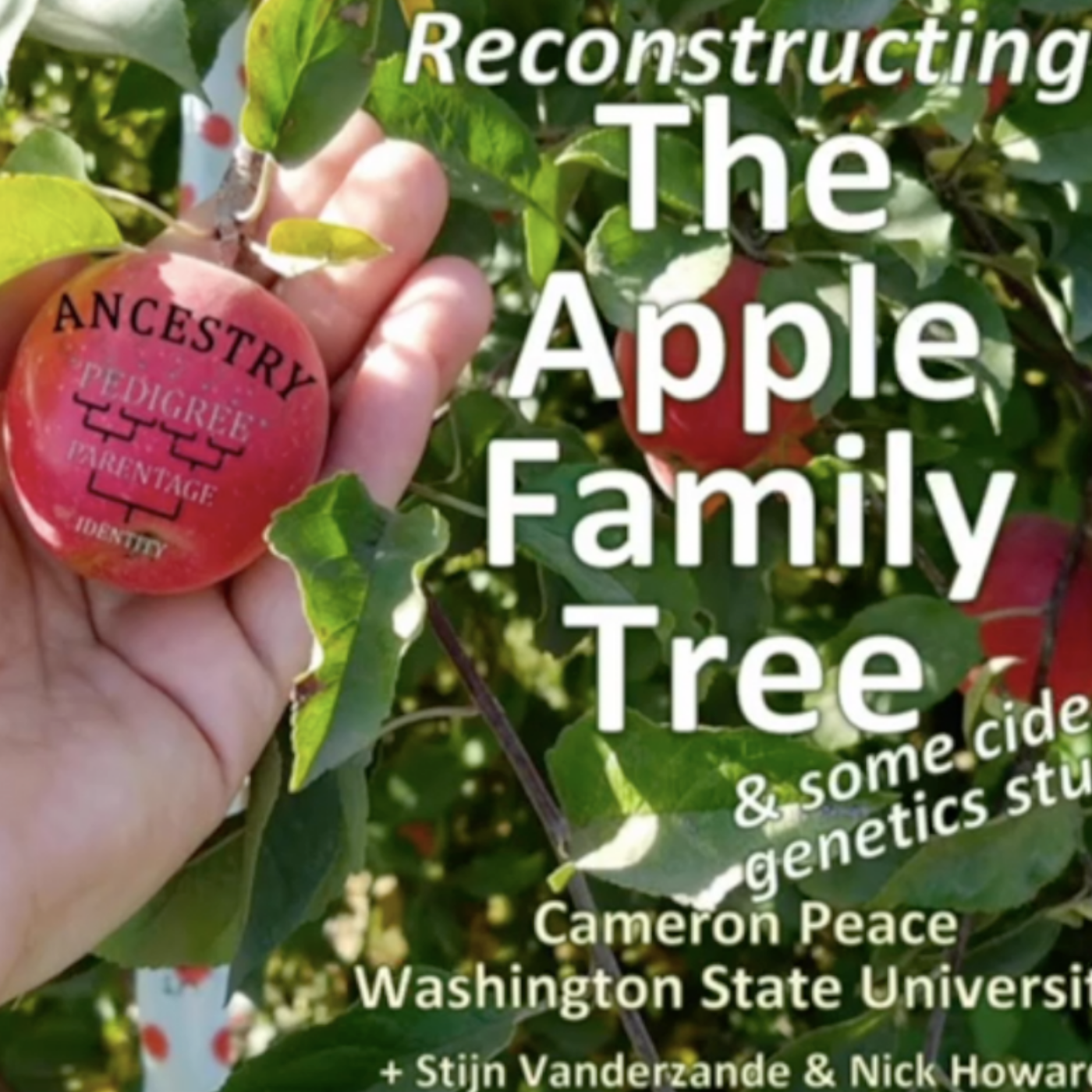
S6 Ep 263263: Apple Identification and Genetics
Science Based Resource for Apple Identification Up to this point we've all been reliant upon drawings and descriptions from historical books and "those in the know" to identify specific apple varieties. Today, as you will see below, there is now an option to have an apple's parentage checked via the DNA. Apple Identification via Genetics has arrived! Cameron Peace PhD of Washington State University's presentation on "The Reconstruction of the Apple Family and other cider genetics". This video is synced with the power point presentation presented by Dr. Peace at Franklin County CiderDays 2019. Extra notes from Dr. Peace: Cost of DNA profiling to determine identity and/or parentage is currently $120 per tree (sorry). Your photos and background stories of each mystery tree to be tested are welcome and requested – I'm interested in learning about each tree and joining you in making discoveries. Please note that this is NOT a commercial service but rather a research opportunity. Besides genetics answers provided back to you, knowledge of public interest might be revealed such as filling of gaps in the cultivated apple family tree. DNA profiles of apple tree submissions (your name redacted) are added to a larger dataset (publicly accessible by scientists) and might be used as examples in future scientific presentations and studies. To obtain leaf sample collection instructions, please email me at [email protected] Heritage Orchard Conference For a recently recorded and complementary talk by Dr. Peace on "Apple Identification with DNA: Identity and Parentage Revelations using New Tools" and other great talks by heritage apple experts, please see the Heritage Orchard Conference webinar series based out of the University of Idaho. Here is one of the first webinar on the series. This one below is on Sleuthing for Lost Apples. Help Support Cider Chat Please donate today. Help keep the chat thriving! Find this episode and all episodes at the page for Cider Chat's podcasts. Listen also at iTunes, Google Play, Stitcher (for Android), iHeartRadio , Spotify and wherever you love to listen to podcasts. Follow on Cider Chat's blog, social media and podcast Twitter @ciderchat Instagram: @ciderchatciderville Cider Chat FaceBook Page Cider Chat YouTube

S6 Ep 262262: Virtual Cidery | Building a Cidery Part 8
What is a Virtual Cidery? A virtual cider is a cidery managed out of someone's else's cidery, or winery and in some cases a brewery. This week's featured guest is Ryan Monkman of FieldBird Cider in Prince Edward County Ontario. I met Ryan in 2018 and visited his Virtual Cidery host Keint-He Winery. The location was ideal being close to where Ryan lives making it very easy for him to manage the barrels of cider stored in the amazing underground barrel room. Ryan Monkman The arrangement or agreement is key to the success of this cidery model. Ryan discusses the following options to consider. The virtual maker (VM) does sales, while the host does packaging. The VM does everything. Virtual Makers must decide: How involved do you want to be? Benefits of the Virtual Cidery Model Low risk - you get to test your brand and product without having to set up a full brick and mortar site Low financial up front costs The VM and host have the potential to do collaborations. Selecting the right Virtual Host For Ryan, he found three key areas to consider People : Can you get along with the people who work there and the owner? Equipment: is the host site equipment going to meet the VM needs? Maintenance: If equipment breaks, can you wait till the host fixes it? Plan for unexpected costs - If the barrel steamer is broke, it is in everyone's best interest to get it fixed instead of waiting for the host who might be strapped for cash. Contact for FieldBird Cider and Ryan Monkman Website: https://fieldbird.ca/ Address: 1385 Highway 62 Prince Edward County, ON Mentions in this chat The Building a Cidery Series Part 1-7 255: Trademark Law | Building a Cidery Part 1 256 Securing a Trademark | Building a Cidery Part 2 257: Courthouse Creek Garagistes | Building a Cidery Part 3 258: Ragged Hill Design | Building a Cidery Part 4 259: Artifact Cityscape | Building a Cidery Part 5 260: Eris Brewery and Cider House | Building a Cidery Part 6 261: Yonder & The Source | Building a Cidery Part 7 Help Support Cider Chat Please donate today. Help keep the chat thriving! Find this episode and all episodes at the page for Cider Chat's podcasts. Listen also at iTunes, Google Play, Stitcher (for Android), iHeartRadio , Spotify and wherever you love to listen to podcasts. Follow on Cider Chat's blog, social media and podcast Twitter @ciderchat Instagram: @ciderchatciderville Cider Chat FaceBook Page Cider Chat YouTube
S6 Ep 261261: Yonder & The Source | Building a Cidery, Part 7
What is Yonder? Yonder Cider is made at the production facility in Wenatchee, Washington. Cider are made with both culinary and classic cider varieties that co-owner Caitlin Braam, who is our featured guest in this episode, says is key to the Yonder label. Wenatchee is also the home of Snowdrift Cider Company where Tim Larsen is based and who also co-owns Yonder. Listen to episode 37 featuring Tim Larsen to learn more about his background and why this region of Washington state is so important the apple industry of the Pacific Northwest. Caitlin Braam What is The Source The Source is a separate business, but also based at the Wenatchee site. Sourcing juice is jargon widely used in the cider industry for makers needing to "source" juice from orchards to make cider. The Source provides both customized blends and apples to makers. The Source in Wenatchee The Future of Yonder The future looks bright despite the closing of the Yonder Bar on February 15, 2021. The garage bar for Yonder was set up in Caitlin's own garage in response to Covid. Despite the overwhelming support of neighbors, one anti cider fan was out to close the "garage bar" and the city finally conceded. Later this year (2021) a new Tasting Venue will be opening with ample outdoor seating. This new site is a collaboration with Bale Breaker Brewing and will be located in the Ballard Brewery District of Seattle, which is 15 minutes to the north of the Seattle Fish Market. Expect 6200 feet of outdoor space and a shared Tasting Room inside. Thinking out Yonder of the Box Because of licensing regulations, Caitlin had to secure the licensing for a distillery so that the Bale Breaker and Yonder project could work. Contact Yonder Cider and The Source https://www.yondercider.com/ https://www.thesourcecider.com/ Mentions in this Chat Alma Cider and Beer Bar - 904 N. Virgil Ave. LA, CA Telephone323-522-3362 Fermentis by Lesaffre -This week's Q&A with Kevin Lane from Fermentis: Q: Which yeast should I use to expand the attributes of the cider Help Support Cider Chat Please donate today. Help keep the chat thriving! Find this episode and all episodes at the page for Cider Chat's podcasts. Listen also at iTunes, Google Play, Stitcher (for Android), iHeartRadio , Spotify and wherever you love to listen to podcasts. Follow on Cider Chat's blog, social media and podcast Twitter @ciderchat Instagram: @ciderchatciderville Cider Chat FaceBook Page Cider Chat YouTube

S6 Ep 260260: Eris Brewery and Cider House | Building a Cidery Part 6
What is Eris? Eris is the name of the goddess of chaos. Her splendor in creating chaos is exactly why co-owners Michelle Foik and Katie Pizza named their craft beer and cider bar Eris, but there is more. Katie's "elevator pitch' for Eris tells it all saying, "Eris is a brewery, cider house and full service restaurant all under one roof in Chicago." Eris situated in the Howler Building The path to Eris Michelle and Katie began conceptualizing Eris back in 2014, though the actual name of the bar came about much later. It took four years before they could opened the door in February of 2018. The building itself was originally used as a Masonic Temple. Today, the cidery is situated in the basement, the brewery and restaurant on the first floor and the second floor is sighted to be a 200 person event space. There is also outdoor seating, which got a major boost when infrared heaters were added this past November, making the covid safe space super toasty even in the winter months! Katy Pizza and Michelle Foik Planning ahead What equipment feel out of favor? The cross flow filter is used to ensure that the cider stays stable on the shelf. Michelle found that it couldn't keep up with the flow of cider being canned. Tanks through the window What equipment did they get right? Building for the future by having a 30 barrel brewery and enough tank space in the cidery to avoid the need to scale up for a very long time. Both women noted that with the cidery in the basement they had only one shot to get the tanks in. To do so later would be impossible. That said, perhaps they could have gotten away with a smaller brewing system, but something tells this podcasters that in time they will be very happy to have the larger system in the long run. ] Summer Patio and now a winter patio too with infrared heaters outside at Eris Contact for Eris Brewery and Cider House Website: https://www.erischicago.com/story Address: 4240 W Irving Park Road, Chicago, IL 60641 Telephone: 773-943-6200 Mentions in this Chat Fermentis by Lesaffre -This week's Q&A with Kevin Lane from Fermentis: Q: I though Apples were filled with nutrients, so do I need to add nutrients to the ferment and if so which ones? Help Support Cider Chat Please donate today. Help keep the chat thriving! Find this episode and all episodes at the page for Cider Chat's podcasts. Listen also at iTunes, Google Play, Stitcher (for Android), iHeartRadio , Spotify and wherever you love to listen to podcasts. Follow on Cider Chat's blog, social media and podcast Twitter @ciderchat Instagram: @ciderchatciderville Cider Chat FaceBook Page Cider Chat YouTube

S6 Ep 259259: Artifact Cityscape | Building a Cidery - Part 5
Artifact Cider Project Soham Bahatt and Jake Mazar co-founded Artifact Cider Project in 2014. The cidery was originally located in the city of Springfield, Massachusetts, then moved out towards Boston and eventually back to western Massachusetts. Today, Artifact has two locations, a Tasting Room and production facility in Florence and one in Cambridge. Soham Bahatt at Artifact Tasting Room and cidery in Florence, Massachusetts 1. What kind of scale are we looking at [for the size of a cidery]? 2. What are our goals? Artifact's Plan to Become a 100 year old Company Soham looks at the question of "What does it take to grow a 100 year company?" Make sure the cider is good Make sure we are listening to our customers Don't out grow our suppliers Artifact Equipment Tips Baseline equipment and strategy tips for a small scale cidery start up Focus on sourcing your raw material, which for a cidery is apples Equipment IBC tanks are used widely in the industry for start ups and ongoing ferments Tri clamps - don't cheap out on quality Decent pump - all makers in this series stress the need to have a quality pump Bottle by hand. Canning can come in later as it takes a bit of capital to get this jump started Don't worry about a filter - use the luxury of time and let the cider settle to gain clarity Equipment that Soham doesn't like? Filter - plate and frame is a pain in the butt Artifact used a lenticular filter for a while and now has a Cross Flow Filter Contact Artifact Cider Project Website: https://www.artifactcider.com/ciders 2 Locations The Cellar in Florence 34 N. Maple Street, Suite 15, Florence, Massachusetts 01062 (617) 544-3494 The Station x Central Square 438 Massachusetts Avenue, Cambridge, Massachusetts 02139 (617) 714-4076 Mentions in this Chat Fermentis by Lesaffre -This week's Q&A with Kevin Lane from Fermentis: Q: Can I use a "beer yeast" or "wine yeast" in my cider? Ria's CiderCon2021 Notes from the Virtual Conference 2021CiderCon | Day 1 2021CiderCon Day 2 Notes 2021CiderCon Day 3 Help Support Cider Chat Please donate today. Help keep the chat thriving! Find this episode and all episodes at the page for Cider Chat's podcasts. Listen also at iTunes, Google Play, Stitcher (for Android), iHeartRadio , Spotify and wherever you love to listen to podcasts. Follow on Cider Chat's blog, social media and podcast Twitter @ciderchat Instagram: @ciderchatciderville Cider Chat FaceBook Page Cider Chat YouTube

S6 Ep 258258: Ragged Hill Design| Building a Cidery Part 4
Ragged Hill Cidery since 2017 Steve Garwood is the Head Cidermaker at Ragged Hill Cidery. He and his daughter Anne Garwood Hampp who manages Sales and Marketing and orchardist Keith Arsenault form the Ragged Hill Cider Company in West Brookfield, Massachusetts. Keith began planting the orchard back in 1984. Find Apple Varieties at Ragged Hill Orchard on their page at New England Apple Association There are 15 acres of apples which are all dwarf tree (predominantly) and they are trellised. Anne Garwood Hampp, Louise and Steve Garwood. Photo taken in November 2020 Building Out Ragged Hill Apples trees had to be removed (gasp!) to be build the current cidery alongside the Farm Store. The shed roof cidery dimensions are 20' wide x 75' long x 12' high The cold room stores around 20,000 bushels which allows for apples bin to be stored 4 at a time on top of each other Steve ideal storage area would be 40' wide x 60 long x 15 high with no posts to maneuver the fork lift around The cidery is very well insulated: 6 inches of foam in the walls and 12 inches in the ceiling. Says Steve, "Since one long wall is shared with our cold storage which has a tremendous thermal flywheel effect , we figured the cidery wouldn't get TOO cold in the winter, but the first summer we realized that we needed to keep the cidery cool because mold was growing everywhere. So we installed a wonderfully efficient Mitsubishi mini-split system with this fantastic gadget called a COOLBOT. The coolbot allows us to hack the mini-split and operate it below its normal operating temperature to keep the cidery at 55 degrees year 'round. At the same time it gives us heat and AC in the tasting area. We generate all our own electricity (and sell it as well) so it's all 100% green energy." Ragged Hill also "farms photons". In the way back of the orchard there is an array of solar panels that allows the farm to sell back energy into the grid. Ragged Hill Cidery and Orchard - Tasting Room to the left and Farm Store to the right Ragged Hills 3 Key Cidery Fundamental Apple processing Fermenting and cellaring Bottling and Lab. Plus, #4 & #5 - Laboratory and Tasting Room Contact Ragged Hill Orchard and Cidery: Address: 94 John Gilbert Road, West Brookfield MA 01585 Mentions in this Chat CiderCon2021 February 3-5, 2021 - A virtual trade conference for the cider industry hosted by the American Cider Association New York International Cider Competition - February 21, 2021 3rd Annual New York International Cider Competition for commercial makers. Judges are real buyers making this competition stand apart from all others in cider. Send in your ciders now. Fermentis by Lesaffre -This week's Q&A with Kevin Lane from Fermentis: Q: What temperature should one's apple juice be at before pitching yeast? Eliza Greenman - grafting orchards - https://elizapples.com Help Support Cider Chat Please donate today. Help keep the chat thriving! Find this episode and all episodes at the page for Cider Chat's podcasts. Listen also at iTunes, Google Play, Stitcher (for Android), iHeartRadio , Spotify and wherever you love to listen to podcasts. Follow on Cider Chat's blog, social media and podcast Twitter @ciderchat Instagram: @ciderchatciderville Cider Chat FaceBook Page Cider Chat YouTube Haven't downloaded this episode yet? Here it is again for your listening pleasure.
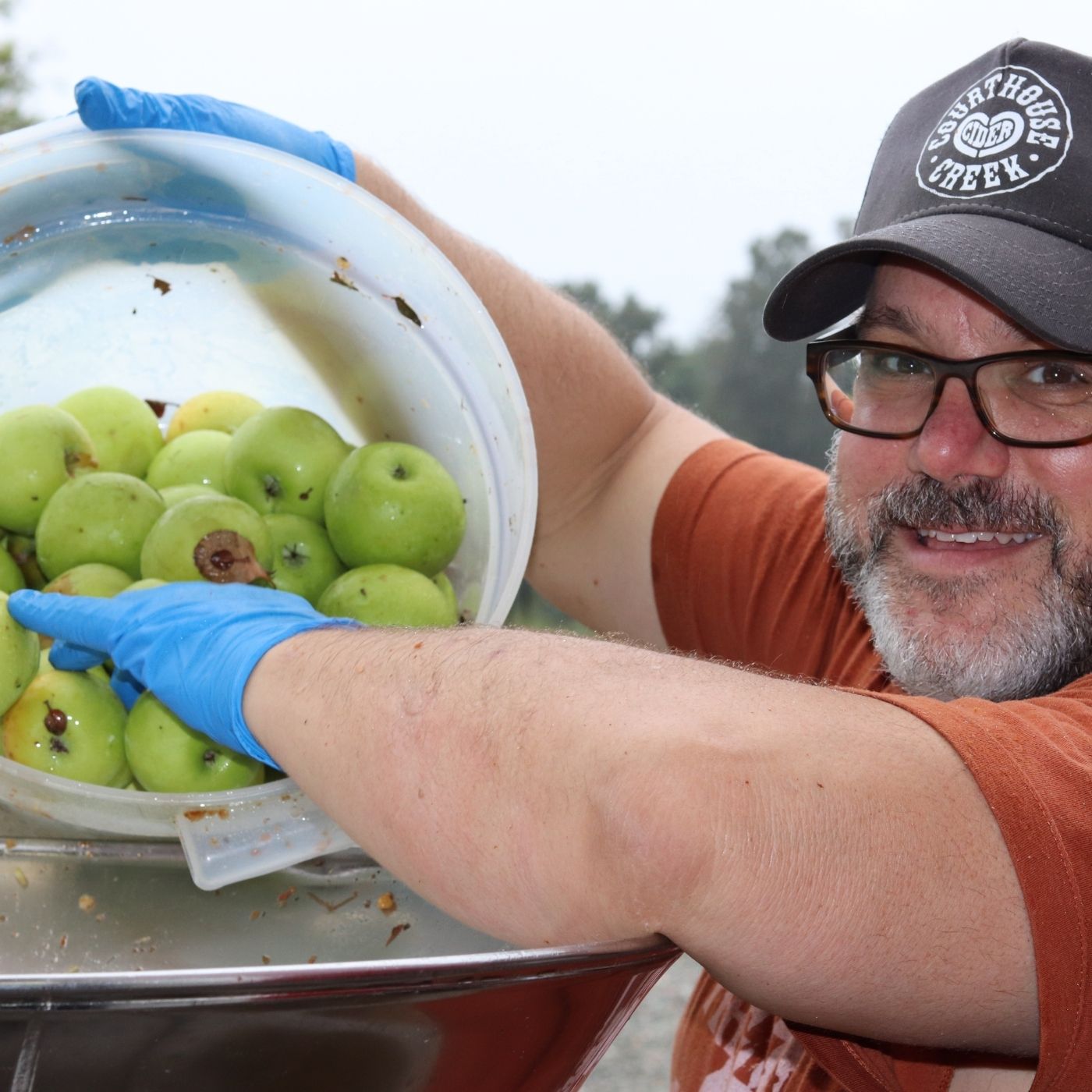
S6 Ep 257257: Courthouse Creek "Garagistes" | Building a Cidery Part 3
We are Garagiste! Liza and Eric Coffi - Courthouse Creek Garagistes Liza and Eric Coffi jokingly call themselves 'Garagistes' of the cider world. Courthouse Creek is a family-run, small agri-business committed to respecting our land and our community. They grow apples and other fruits and vegetables using sustainable, low impact practices, and produce orchard-based cider by adhering to natural methods. Their cidery model is premised upon the small wine boutiques that they are familiar with from their time living in the Central Coast of California. Liza Coffi at Courthouse Creek Tasting Room Initial estimation of build out vs the actual time it took In the orchard: "We planted our first section of the orchard in 2014, and the second section about six months later.. We knew it would take about four or so years to start seeing an appreciable yield for production purposes. It took six years. This past harvest, the 2020 harvest, was the first year where we had enough apples to produce a decent amount of cider. We ended up with three barrels – about 180 gallons." In the cidery: "The plan was to launch our cidery as true garagistes — producing in our garage. After doing this and making sure there was a market for our product, the plan was to build a production barn and a separate tasting room on the farm by the second year, maybe third year." Courthouse Creek outdoor tasting room The Coffi's started producing some cider in the garage in 2014 (which is partly why they are called garagistes!) , but the real first year of production was 2015. That first and second year, 2015-2016, they produced 450 cases, or about 18 barrels. Says Eric, "Because our methods are low-fi (ie, no filtering, no fining, adhering to natural methods), this initial build-out was very basic. [ The Coffi's had an oak barrel fermenting in their living room - and used the family's two car garage as the cidery. True Garagistes![/caption] By 2016, they knew their plans had to change. Somewhere in the middle of building the production barn they realized that there was no way they could afford to build a separate tasting room. So, they converted the front third of the production barn into the tasting room. They opened the tasting room in March of 2017 and are currently expanding this tasting room to get to the square footage they anticipated having from inception. Initial estimate of production (barrels) vs what the actual production is now or where you expect it to grow in next 5 years post covid We initially planned to reach 3000 cases, or roughly 120 barrels, by year three (2018). Actual production has not hit our target: In 2017 season 935 cases (750ml) and 1395 gals in kegged product = 60 barrels. In 2018 season 1250 cases (750ml) and 1000 gals in kegged product = 65 barrels In 2019 season 1250 cases (750ml) and 1000 gals in kegged product = 65 barrels In 2020 season 1050 cases (750ml) and 850 gals in kegged product = 56 barrels Initial projections included a split of about 75% tasting room sales, and 25% distribution. Says Eric, "The reality for us is simple—the tasting room model works very well. Indeed, the silver lining of COVID has been a boon at the farm—we had the space in the orchard for people to properly social distance. Our new projections are more of an 85 to 90% tasting room, and the remainder targeted distribution at small, local bottle shops and high-end restaurants." Equipment you love having on hand from the start Barrel steamer Equipment you would reconsider had you known then what you know now. "For the orchard, we didn't need to put in irrigation. We put in a drip line in the first section, but realized we don't need it, we can successfully dry farm in Virginia." Purchased a good pump straight away—and do not skimped on a cheaper model. The Coffi's use a pump from US-FIP It is important to really map out your production flow so you can get a handle on what you need in regards to hoses, fittings, etc. It is a bit of pain to buy things piecemeal, or on the fly. 2-3 Tips for folks getting into this industry from the Garagistes! Know "Your who and why?" Who are you, and why do you want to start a cidery. This is critical for a few reasons. One is that if you know who you are and why you want to do it, it makes it easier to figure out the what—like, what kind of style cider you want to make, what kind of tasting room experience do you want, etc. Another, probably the most important, is that it makes marketing and advertising that much easier—it is far easier to market your own truth than to make up some story and brand after the fact. Whatever size production space you think you need, double it. After mapping out production flow and get an idea of the volume of cider you anticipate making, make sure you map out your tasting room. IF you are going to rely mostly on tasting room for your stream of income, make sure the tasting room can actually sell your volume. How many seats can you fit in your tasting room? What is the projected

S6 Ep 256256: Securing a Trademark | Building a Cidery Part 2
Securing a Trademark This episode is Part 2 of the series "Building a Cidery". In Part 1 episode 255 "What is a Trademark" and "Why it matters" was presented by attorney Kevin Regan. Both episodes on Trademark Law were originally presented by attorney Kevin Regan at CiderCon 2020. If you would like to view the power point presentation that Kevin is referring to during this lecture, you will find it as a free download at the Cider Chat Patreon page. While there, please consider becoming a patron of Cider Chat to help keep this chat on the air. Take the steps to secure your trademark Brand names and images become a part of an owner's persona. Getting the public emotionally attached to a brand is a good thing and exactly what one might hope to have happen when building a business. Securing one's brand is time well spent. There are steps that one can take now, whether you have been in business for 20 years or are in the startup phase, to set a solid foundation for your brand. Kevin delivers tips and info to help navigate the key steps to Building a Cidery. In episode 256, Kevin shares the steps necessary to secure a trademark. Common Law Trademarks TM vs R on your brand Use and Commerce in trademark law Intent to Use applications Consent agreement with trademarks Distinctive Trademarks not generic Descriptive Trademark Policing your trademark Contact Kevin Regan Website: https://lowegrahamjones.com/attorneys/kevin-regan/ Cell: 206 601 -5180 Mentions in this Chat CiderCon2021 February 3-5, 2021 - A virtual trade conference for the cider industry hosted by the American Cider Association New York International Cider Competition - February 21, 2021 3rd Annual New York International Cider Competition for commercial makers. Judges are real buyers making this competition stand apart from all others in cider. Send in your ciders now. Fermentis by Lesaffre -This week's Q&A with Kevin Lane from Fermentis: Q: Do you need to rehydrate dry yeast? Help Support Cider Chat Please donate today. Help keep the chat thriving! Find this episode and all episodes at the page for Cider Chat's podcasts. Listen also at iTunes, Google Play, Stitcher (for Android), iHeartRadio , Spotify and wherever you love to listen to podcasts. Follow on Cider Chat's blog, social media and podcast Twitter @ciderchat Instagram: @ciderchatciderville Cider Chat FaceBook Page Cider Chat YouTube

S6 Ep 255255: Trademark Defined | Building a Cidery Part 1
Trademark Defined This episode kicks off a new series called "Building a Cidery". This episode and #256 are both on Trademark Law as presented by attorney Kevin Regan at CiderCon 2020. If you would like to view the power point presentation that Kevin is referring to during this lecture, you will find it as a free download at the Cider Chat Patreon page. While there, please consider becoming a patron of Cider Chat to help keep this chat on the air. Why Trademarks Matter Brand names and images become a part of an owner's persona. Getting the public emotionally attached to a brand is a good thing and exactly what one might hope to have happen when building a business. Securing one's brand is time well spent. There are steps that one can take now, whether you have been in business for 20 years or are in the startup phase, to set a solid foundation for your brand. Kevin delivers tips and info to help navigate the key steps to Building a Cidery. In episode 256, Kevin shares the steps necessary to secure a trademark. Contact Kevin Regan Website: https://lowegrahamjones.com/attorneys/kevin-regan/ Phone: 206 601 -5180 Mentions in this Chat CiderCon2021 February 3-5, 2021 - A virtual trade conference for the cider industry hosted by the American Cider Association New York International Cider Competition - February 21, 2021 3rd Annual New York International Cider Competition for commercial makers. Judges are real buyers making this competition stand apart from all others in cider. Send in your ciders now. Fermentis by Lesaffre -This week's Q&A with Kevin Lane from Fermentis: Q: Do you need to rehydrate dry yeast? Help Support Cider Chat Please donate today. Help keep the chat thriving! Find this episode and all episodes at the page for Cider Chat's podcasts. Listen also at iTunes, Google Play, Stitcher (for Android), iHeartRadio , Spotify and wherever you love to listen to podcasts. Follow on Cider Chat's blog, social media and podcast Twitter @ciderchat Instagram: @ciderchatciderville Cider Chat FaceBook Page Cider Chat YouTube

S6 Ep 254254: Blending as Maker Like Chef | Albemarle
Blending as Maker like Chef Blending is a key part of cidermaking. It can take place at the pressing of the apple juice prior to ferment or after the cider has finished fermenting. Knowing when to blend is not something you can learn from reading a book, because is not a strict science. To blend well requires a fine palate, a developed nose and a bounty of apple knowledge. Makers are much like chefs in a kitchen. They both may be following a recipe, but the final product is reliant upon their own palate and understanding of the ingredients. Michelin Star chefs don't happen over night and neither do fine cidermakers. Featured Guest in this Episode 254 For this episode on blending, I wanted to hear from Chuck Shelton of Albemarle Ciderworks & Vintage Virginia Apples. Chuck credits author of Apples of North America: Exceptional Varieties for Gardeners, Growers, and Cooks Tom Burford (1935-2020) a champion of heirloom apples and author of Ben Watson author of Cider, Hard and Sweet: History, Traditions, and Making Your Own (Second Edition) and Peter J.Hatch, author of The Fruits and Fruit Trees of Monticello who also happens to be a professional gardener and historian in the restoration care at Thomas Jefferson's Monticello. Albemarle produces both single varietal ciders and blends. I have found the ciders from this Virginia cidery that is family owned to be perfectly balanced representation of what Chuck refers to as American Cider. Chuck Shelton Also joining this chat is maker David Timmerman. Chuck wanted David to join in because as he puts it, "His palate is better than mine." David Timmerman Filling Albemarle Press I met David myself at the 2018 CiderCon in Baltimore, Maryland and then again when he came along on the 2018 Normandy Cider Tour that I led via Totally Cider Tours. Like Chuck, I agree that David has an exemplary palate and is just simply a fine person - making this working relationship at Albemarle a perfect blend. David Pressing Red Flesh 2019 Contact info for Albemarle Ciderworks and Vintage Virginia Apples Tasting Room and Information 2545 Rural Ridge Lane North Garden, VA 22959 Tasting Room Hours and Information Office Phone: 434.297.2326 Tasting Room Phone: 434.979.1663 Email: [email protected] Mentions in this Chat CiderCon2021 February 3-5, 2021 - A virtual trade conference for the cider industry hosted by the American Cider Association New York International Cider Competition - February 21, 2021 3rd Annual New York International Cider Competition for commercial makers. Judges are real buyers making this competition stand apart from all others in cider. Send in your ciders now. Fermentis by Lesaffre -This week's Q&A with Kevin Lane from Fermentis: Q: Does Fermentis have liquid and dry yeast for sale and what is the difference? Help Support Cider Chat Please donate today. Help keep the chat thriving! Find this episode and all episodes at the page for Cider Chat's podcasts. Listen also at iTunes, Google Play, Stitcher (for Android), iHeartRadio , Spotify and wherever you love to listen to podcasts. Follow on Cider Chat's blog, social media and podcast Twitter @ciderchat Instagram: @ciderchatciderville Cider Chat FaceBook Page Cider Chat YouTube

S6 Ep 253253: #GrowQuince | Part 2 The Harvest
Harvest the brightest fruit on the Quince Tree In late 2019, Vermont Quince Company was awarded USDA-funded Specialty Crop Block Grant Program funding through the Vermont Agency of Agriculture, Food & Markets (VAAFM) to support commercial and backyard growers by compiling and disseminating resources and expertise about growing quince in New England. Knowing when to harvest is key to this discussion! On March 8, 2020, the #GrowQuince initiative kicked off in West Townshend with a roundtable discussion featuring regional quince growers, followed by a scion exchange. This episode and the upcoming episode 253 is from the West Townsend forum. Part 2 Factors for the Harvest of Quince This episode follow up from Part one where Zeke Goodband led us through tips on propagation. In Part 2 he provides tips on when this aromatic fruit is ready to be picked Additional Topics in Part 2: Different varieties Cracking of fruit Markets for quince Storage Cold temps before harvest Grafting Contact info for Vermont Quince Company Website: Vermont Quince email [email protected] Facebook page: GrowQuince. Mentions in this Chat New York International Cider Competition - February 21, 2021 3rd Annual New York International Cider Competition for commercial makers. Judges are real buyers making this competition stand apart from all others in cider. Send in your ciders now. Fermentis by Lesaffre -This week's Q&A with Kevin Lane from Fermentis: Q: Are all Fermentis yeast cultures gluten free? For instance, if I choose a yeast typically used by brewers such as a Saison culture can I assume that it too is gluten free? A: Yes, all Fermentis yeast are certified gluten free that are specific for cider. Help Support Cider Chat Please donate today. Help keep the chat thriving! Find this episode and all episodes at the page for Cider Chat's podcasts. Listen also at iTunes, Google Play, Stitcher (for Android), iHeartRadio , Spotify and wherever you love to listen to podcasts. Follow on Cider Chat's blog, social media and podcast Twitter @ciderchat Instagram: @ciderchatciderville Cider Chat FaceBook Page Cider Chat YouTube

S6 Ep 252252: #GrowQuince Tips | Part 2
#GrowQuince - it is easy to do! In late 2019, Vermont Quince Company was awarded USDA-funded Specialty Crop Block Grant Program funding through the Vermont Agency of Agriculture, Food & Markets (VAAFM) to support commercial and backyard growers by compiling and disseminating resources and expertise about growing quince in New England. The #GrowQuince is helping to spotlight this forgotten fruit On March 8, 2020, the #GrowQuince initiative kicked off in West Townshend with a roundtable discussion featuring regional quince growers, followed by a scion exchange. This episode and the upcoming episode 253 is from the West Townsend forum. Part 1 #GrowQuince - Disease/Pest Management Nan provides an overview of the #GrowQuince goals and then renown horticulturist Zeke Goodband who has extensive experience growing quince for over 25 years leads this conversation. Contact info for Vermont Quince Company Website: Vermont Quince email [email protected] Facebook page: GrowQuince. Mentions in this Chat New York International Cider Competition - February 21, 2021 3rd Annual New York International Cider Competition for commercial makers. Judges are real buyers making this competition stand apart from all others in cider. Send in your ciders now. Fermentis by Lesaffre - Q&A on yeast in this episode:What Fermentis yeast cultures are best for creating a dry finish to my cider?I typically use a blend of apples that are high in acid and very low in tannin Answer: Fermentis AB1 and AC4 Find all your cider yeast needs via Fermentis Help Support Cider Chat Please donate today. Help keep the chat thriving! Find this episode and all episodes at the page for Cider Chat's podcasts. Listen also at iTunes, Google Play, Stitcher (for Android), iHeartRadio , Spotify and wherever you love to listen to podcasts. Follow on Cider Chat's blog, social media and podcast Twitter @ciderchat Instagram: @ciderchatciderville Cider Chat FaceBook Page Cider Chat YouTube
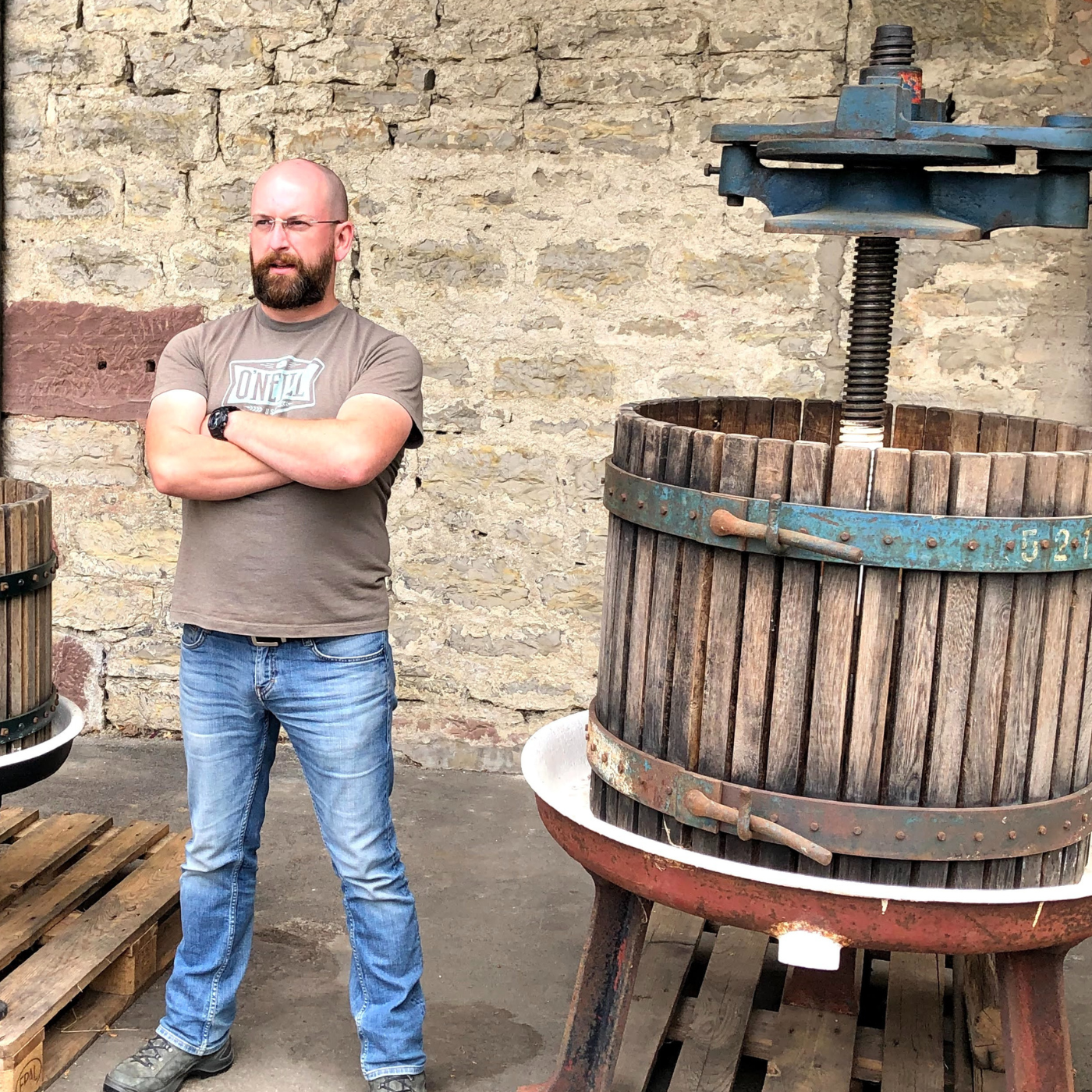
S6 Ep 251251: Irish Expat in Germany | Kertelreiter Cider
Kertelreiter Cider Kertelreiter Cider is based in the village of Schefflenz in North Baden, Germany. The cidery came about when Irishman Barry Masterson fell in love with a German lass and moved to her homeland to raise a family. Though Barry's first love was beer, this full time land surveyor found himself eyeing and then eventually fermenting the ample supply of culinary apples in his area. Barry Masterson and reworked cider presses Kertelreiter is as Barry puts it is "tiny". Considering that in 2017 Kertelreiter produced close to 1000 liters (L) , about 220 gallons "tiny' is likely a good description, but it also lends the maker time to hone one's skills. Says Barrys, "We'd doubled the orchard size in early 2019, and had been thinking about selling our cider. I had planned to step up to 2000 liters as a start. However, the harvest was really poor as a result of a combination of stress from drought the previous year and if I remember correctly a disagreeable frost. Because we had excess capacity due to the lack of apple, I went begging for Perry Pear trees to harvest from. In the end we managed just short of 1000L again allowing up to produce enough to make a start with selling." To supplement the apple harvest, Perry Pears are used for both making Perry and to add structure such as tannins to the cider. Anu, the dog, and a Perry Pear tree Barry estimates that, "If the orchard at Kertelreiter carried a full load, we could easily make 5000L (1320 gallons) or more. But for the moment, I'm happy to stay small..." Kertelreiter has a full line up of Ciders, Perry and Fruit Ciders, such as Out of the Sun, a cider with quince! Harvest rights for orchards in Germany for Kertelreiter Barry and his wife were concerned about the amount of fruit going to waste, especially as the local town hall stopped auctioning off harvest rights, so they have tried to fill this gap by creating a local fruit tree exchange. This means they try to connect people with trees that are not being used and people who would like fruit for making their own juice or cider. It's early days, but Barry is confident they can build a good catalog, and maybe combine it with teaching people to make their own cider to encourage use of fruit that would otherwise go to waste." Providing structure in Kertelreiter ciders Barry add Perry Pears to his cider to bring in some tannins and he also uses wood aging to add structure to some of his ciders. For instance using an ex Cabernet Sauvignon Barrique, and a really old German cider barrel that he says helps mature and soften the acids in his ciders. And he's been using oak chips and other kinds of wood to add other dimensions, while trying to keep the fruit to the fore". Organic Tools apple picker upper - contact Barry for more info Contact Kertelreiter Cider website: https://kertelreiter.de/en/home/ Address: Kertelweg 4 74850 Schefflen Telephone +49 (0)6293 927512 email: [email protected] Twitter: @kertelreiter Barry's Twitter Feed: @barmas Mentions in this Chat Tip of the glass to the following sponsors of this episode 251 New York International Cider Competition - February 21, 2021 3rd Annual New York International Cider Competition for commercial makers. Judges are real buyers making this competition stand apart from all others in cider. Send in your ciders now Fermentis by Lesaffre - Find all your cider yeast needs via Fermentis Help Support Cider Chat Please donate today. Help keep the chat thriving! Find this episode and all episodes at the page for Cider Chat's podcasts. Listen also at iTunes, Google Play, Stitcher (for Android), iHeartRadio , Spotify and wherever you love to listen to podcasts. Follow on Cider Chat's blog, social media and podcast Twitter @ciderchat Instagram: @ciderchatciderville Cider Chat FaceBook Page Cider Chat YouTube

S5 Ep 2020250th Cider Podcast Celebration
We are celebrating the 250th episode of Cider Chat. Each season we invite The Nose to come on into the Cider House recording room and have a chat. We also have the opportunity to hear a bit more on how The Nose became The Nose! She even has a special tip on how to train your own nose! We take look back at Season 5 of Cider Chat and look forward to the year ahead in Season 6! Check out the New**** Cider Chat Swag featuring the Cider Zone Apple! Cider Zone t-shirt - Cider Chat Swag[/caption] Mentions in this Chat Clarkdale Orchard SpaceTime Mead & Cider Works EsoTerra Ciderworks InCiderJapan Duckchicken Cider Ross Cider and Perry Company Process NMR Analysis Help Support Cider Chat Please donate today. Help keep the chat thriving! Find this episode and all episodes at the page for Cider Chat's podcasts. Listen also at iTunes, Google Play, Stitcher (for Android), iHeartRadio , Spotify and wherever you love to listen to podcasts. Follow on Cider Chat's blog, social media and podcast Twitter @ciderchat Instagram: @ciderchatciderville Cider Chat FaceBook Page Cider Chat YouTube

S5 Ep 249249: Old School Cider for Modern Times
Old School Cider for Modern Times episode 249 is about this cider podcaster's backstory on making cider over the course of 26 years. This episode was inspired by my good friend Ryan Monkman of FieldBird Cider in Ontario. It was his idea to interview me about my backstory in cider as this podcast rolled up to episode 250. Seeing that I never turn down an opportunity to talk with Ryan so of course I said "Yes". Ryan came to the recording with 4 categories of questions. How Wild Why Mystery Box question I hope you enjoy this special episode with guest interviewer Ryan Monkman and myself as we take you behind the scenes of Cider Chat and how we got here. A box of Golden Hornets Ryan Monkman, FieldBird Cider Mentions in this Chat FieldBird's Flock once a month cider special - providing you a chance to get select experimental bottles Go to http://eepurl.com/hj2EZX and sign up now for Flock news! Help Support Cider Chat Please donate today. Help keep the chat thriving! Find this episode and all episodes at the page for Cider Chat's podcasts. Listen also at iTunes, Google Play, Stitcher (for Android), iHeartRadio , Spotify and wherever you love to listen to podcasts. Follow on Cider Chat's blog, social media and podcast Twitter @ciderchat Instagram: @ciderchatciderville Cider Chat FaceBook Page Cider Chat YouTube

S5 Ep 248248: New England Quince Taste Test
The New England Quince Taste Test 2020 was hosted by Vermont Quince. Nan Stefanik founded Vermont Quince in 2012 and coined the hashtag #growquince Her passion for this pomme is contagious and her quince based products help to further showcase the versatility of the quince. This year's New England Quince Taste Test was a virtual event. Boxes of quince juice, raw quince and poached quince were sent out to a group of tasters that included chefs and author of Simply Quince Barbara Ghazarian who is also known as the "Queen of Quince". A box was also sent to Cider Chat central where The Nose and Ria tasted and filled out the Taste sheet to be sent back to Vermont Quince. Do expect a follow up summary of the tasting results once the results are in. List of Quince varieties in the 2020 New England Quince Test Aromatnaya A Russian variety that bears a very large, bright yellow, aromatic fruit with a delicious, lemony flavor. Aromatnaya fruit can be eaten fresh, when thinly sliced and used to make marmalade and jellies. Kuganskaya Known to be from the region of the southern Caucasus, north of Turkey and Armenia. Orange Expect ripening to occur October through December and to also extend through February in some colder areas. The Orange Quince is a self fertile tree and requires 300 chill hours. Smyrna Extremely large fruit with light yellow flesh, bright yellow skin. Attractive tree (or multi-stemmed shrub) has dark green foliage & very showy bloom. Tolerates wet soil. van Deman - this quince variety was developed by Luther Burbank, (March 7, 1849 – April 11, 1926) who was an American botanist and horticulturist based in California. Van Deman bears good crops of large and delicious, bright yellow fruit. Expect a spicy flavored from this quince. Poached Quince Quinces are gritty, astringent, and hard even when ripe. The bitter astringency is as a result of the tannins. The tannins in the quinces are destroyed when cooked, while the delicate rich flowery aroma of a raw quince is maintained, turning the hard, tannic, astringent fruit into a softened and milder flavored fruit. The testers did not know what variety corresponded with the samples provided, making this a "blind tasting" This episode is a condensed version of the taste test conducted by The Nose and Ria. Help Support Cider Chat Please donate today. Help keep the chat thriving! Find this episode and all episodes at the page for Cider Chat's podcasts. Listen also at iTunes, Google Play, Stitcher (for Android), iHeartRadio , Spotify and wherever you love to listen to podcasts. Follow on Cider Chat's blog, social media and podcast Twitter @ciderchat Instagram: @ciderchatciderville Cider Chat FaceBook Page Cider Chat YouTube

S5 Ep 247247: Marijuana, Cider and the Law
Marijuana as of 2020 is now legal in 15 states in the United States. CBD products are popping up in can drinks nearly every where you look these days. Is it legal? Can cider now be fused with cider or at least CBD or perhaps THC? Find out in this special presentation prerecorded at CiderCon2020. Opening slide to: Current regulatory status of marijuana and CBD beverages Presentors Attorney Marc Sorini and Attorney Alva Mather of McDermott Will & Emery LLP Marc Sorini Alva Mather Topics presented: How The Controlled Substance Act (CSA) impacts marijuana use. Status of marijuana Under Federal Law The politics and law relating to cannibus The Cole Memo during the Obama Administration running through the Trump administration Appropriation restrictions affecting marijuana law Tetrahydrocannabinol (THC) vs Cannabidiol (CBD) Industrial Hemp Agricultural Act of 2014 (2014 Farm Bill) vs Agriculture Improvement Act of 2018 (2018 Farm Bill) Former Commissioner Gottlieb statement in 2018 and its impact on FDA regulations How the Food Drug Administration(FDA) and the Alcohol and Tobacco Tax and Trade Bureau (TTB) work together regulation cider Is marijuana Generally Recognized as Safe (GRS) by the FDA? What is the enforcement concerning CBD products? What does the future hold for having THC in cider? Why labeling (COLA) counts! From the presenter's presentation: TTB has made it clear that it will not approve any formula for a product containing a Schedule I controlled substance TTB has also made it clear that it has conferred with FDA and will not approve a formula for a product containing ingredients not recognized as GRAS Help Support Cider Chat Please donate today. Help keep the chat thriving! Find this episode and all episodes at the page for Cider Chat's podcasts. Listen also at iTunes, Google Play, Stitcher (for Android), iHeartRadio , Spotify and wherever you love to listen to podcasts. Follow on Cider Chat's blog, social media and podcast Twitter @ciderchat Instagram: @ciderchatciderville Cider Chat FaceBook Page Cider Chat YouTube

S5 Ep 246246: Becoming Pomona
Becoming Pomona was recorded at the 25th Franklin County CiderDays in November of 2019. The goal of this pomona panel discussion was to share personal stories on the inspirational effect of CiderDays on women in the cider industry, specifically the following women: CiderDays co-founder Judith Maloney of West County Cider. Judith was crowned Queen Pomona the night prior to this panel discussion Judith Maloney | West County Cider Autumn Stoscheck - Eve's Cidery Autumn Stoscheck, Even's Cidery Ria Windcaller - Cider Chat & Totally Cider Tours Ria at Bulk Cider April Woodard - Panel moderator, Cidermaker, and CiderDays Committee April Woodard April moderated this talk, with Judith speaking first, then Autumn, Ria and April. Below are two 2 Key quotes from Judith on CiderDays and Cider that absolutely says it all: Referring back to CiderDays. "People loved their cider no matter what it tasted like." And on the impact of this event moving forward, "We created more than something that is drunk - it is in the spirit." In 2020, due to the coronavirus 19, a Cider Trail was created for western Massachusetts and the Berkshires. The trail extended the offerings that usually took place just on one weekend expanding it over October into the new year. Help Support Cider Chat Please donate today. Help keep the chat thriving! Find this episode and all episodes at the page for Cider Chat's podcasts. Listen also at iTunes, Google Play, Stitcher (for Android), iHeartRadio , Spotify and wherever you love to listen to podcasts. Follow on Cider Chat's blog, social media and podcast Twitter @ciderchat Instagram: @ciderchatciderville Cider Chat FaceBook Page Cider Chat YouTube
S5 Ep 245245: Apples of New England
245: Apples of New England "Apples of New England" was presented by Russell Steven Powell Powell served as executive director of the New England Apple Association from 1998 to 2024 ( the NEAA closed it's doors on June 30, 2024) go to Episode 417 to hear more about the legacy and shuttering of this 89-year-old organization. He published the blog newenglandorchards.org, and is the author of America's Apple. And Apples of New England More on the author of Apples of New England Powell was founding editor and publisher of New England Watershed Magazine, named Best New Publication of 2006 by Utne Reader. He lives in Hatfield, Massachusetts "As American as apple pie…" Apples have been part of American history and folklore since colonial days. Orchards used to cover the hillsides of New England until Prohibition times when most of the trees, which were used more for the production of hard cider than edible fruit, were cut down. But now that cider is coming back into fashion, the orchards with their many varieties of new and heirloom apples are being regrown. In this Lecture on Apples of New England This fascinating lecture will offer advice about rare heirlooms and newly discovered varieties, comments on the rich tradition of apple growing in New England and on the "fathers" of American apples―Massachusetts natives John Chapman ("Johnny Appleseed") and Henry David Thoreau. Apples of New England will present the apple in all its splendor: as biological wonder, super food, work of art, and cultural icon. Apples of New England was presented as part of the Amherst Historical Society – History Bites, a lunch time series that is currently being conducted via online video presentations. View the YouTube video of this presentation at Cider Chat's YouTube channel and while there do Subscribe! Help Support Cider Chat Please donate today. Help keep the chat thriving! Find this episode and all episodes at the page for Cider Chat's podcasts. Listen also at iTunes, Google Play, Stitcher (for Android), iHeartRadio , Spotify and wherever you love to listen to podcasts. Follow on Cider Chat's blog, social media and podcast Twitter @ciderchat Instagram: @ciderchatciderville Cider Chat FaceBook Page Cider Chat YouTube

S5 Ep 244244: Traveling the Cider Trail | Part 2
Franklin County CiderDays now has a "Cider Trail" with 16 stops covering western Massachusetts and the Berkshires! This is part 2 of the series on traveling the Cider Trail and we will look at 10 stops along the trail. Episode 243 is part 1 of this series and details a 5 stop loop and day trip. View from West County Cider - picnic area looking out to Vermont and New Hampshire[/caption] This episodes brings us west of the Connecticut River and into the rolling hills of west county. We begin with: Bear Swamp Orchard - Distillery and Cidery 1209 B Hawley Road, Ashfield MA 01330Bottle Shop Saturday and Sunday 1-5 on November 7th & 8th Bear Swamp Orchard WebsiteTelephone (413) 625-2849 The apple brandy/hard cider bottle shop and tasting room is open November 7th & 8th (traditional cider days weekend) 1-5 PM all dates. Besides that we will still offer Saturday afternoon in person pick up for orders through our online store until the end of November. Bear Swamp is at the top of the hills on the east side of the Berkshires in western Massachusetts, with views that reach out to Vermont and New Hampshire. The farm borders the Trustees of Reservations Bear Swamp Reservation, which offers miles of scenic hiking trails and views of its own.Look for: Hard Cider, brandy and liqueurs. Vinegar (raw, unpasteurized, untreated) Jams and Jellies Maple syrup Headwater Cider 112 Forget Road, Hawley, MA 01339 Open weekends, Oct. 10-November 8; 10-5 Saturdays and Sundays Headwater Cider Website (413) 695-6099 Grow What You Press. Press What You Grow.Estate Cider from Franklin County. Crisp and Dry. Grown, Pressed, and Bottled here at the orchard. Sample and purchase a range of alcoholic ciders at the source! $12 / 750ml bottle Pine Hill Orchards 248 Greenfield Road, Colrain, MA 01340 Store open daily 9am-6 pm, year-round. Food trailer operates Thursday-Sunday 9 am-4 pm, seasonally Pine Hill Orchard website Pine Hill Orchards on Facebook (413) 624-3325 Orchard selling apples, cider and locally made foods. Special Blend Cider Sale for Cider Days Weekend: Bring your carboys and barrels to fill up with fresh-pressed specialty blends for bulk sale! Four different blends with multiple cider varieties used. 4000+ gallons will be available on November 7th and 8th from 9am to 5pm ONLY!! First come first served! Bob DeLisle and Charlie Olchowski will be available all Saturday morning at the juice room to answer cider making questions and to give guidance. The Farm Store is open year-round from 9 am to 6 pm daily. The New Food Trailer is open seasonally Thursday through Sunday serving over-the -top burgers, poutine, irresistible fried dough, and more! Make sure to grab a bag of Cider Donuts! Ryan & Casey Liquors 55 Main St., Greenfield, MA 01302 Hours of operation: Mon-Sat, 8 am-11 pm; Sun 10 am-9 pm Ryan & Casey Website (413) 775-6585 Bottle shop featuring ciders from Western MA producers, as well as other national and international brands, plus wines, beers, and spirits. There will be samples and discounts on cider and all things apple from mid-October through Franklin County CiderDays weekend (Nov. 7-8). Shelburne Falls Cork 1 Deerfield Avenue, #2, Shelburne Falls, MA 01370 Wednesday- Saturday 11am - 6pm; Sunday 2pm - 5pm Shelburne Falls Cork Website Shelburne Falls Cork on Facebook (413) 362-0265 Hard cider, artisanal wine, craft beer, local cheese, charcuterie, chocolate, and preserves. It is my desire to sell local hard ciders, craft beer, and wine from family-owned wineries, where I think the best values are found. We also carry local cheese and charcuterie from Massachusetts and Vermont. And of course, we have case discount of 10% for mixed or not mixed cases of hard cider and wine. West County Cider 208 Peckville Rd. Shelburne MA 01370 Thurs. 2-5, Fri. 3-6, Sat 11-6, Sun 11-6 West County Cider Website (413) 768-9318 Come visit the oldest running cider house in the country. Our tap room and bottle shop at 208 Peckville Road in Shelburne will be open Thursday through Sunday this fall. Come for our legendary ciders while enjoying our hiking trails and picnic grounds with a glorious three state view. West County Cider was started by the Maloney family in 1984 with a commitment to making small-batch ciders with impeccable apples from local orchards. Thirty-five years later, our family has grown but the tradition continues. We use fine-winemaking techniques and focus on freshness of flavor and total respect for each individual apple variety. Every harvest year represents a new a foray into the possibility of the apple. Artifact Cider Project 34 N. Maple Street, Suite 15, Florence MA 01062 Fridays, 3 - 9 pm; Saturdays, 1 - 9 pm; Sundays, 1 - 7 pm Artifact Cider Project Website Artifact Cider Project on Facebook (508) 308-7361 We make cider for the new Northeast. We produce craft cider in a variety of styles by respecting tradition, but refusing to let it limit us. Using local apples and innovative cidermaking practices, we create ciders tha

S5 Ep 243243: Cider Trail 2020 | CiderDays Part 1
Plan the Perfect Cider Road Trip! This is Part 1 of a two part series on the new Cider Trail for Franklin County CiderDays 2020. The following is a recommended loop to visit 5 venues on the map. You can go in either direction of this loop - look to ciderdays.org to find the map and additional info on the other stops along the Cider Trail 1. Beaver Pond Distillery A German-made copper still for only 50 gallons, means every batch is hand-crafted and lovingly distilled, catching the heart of each run. Look for the Apple Brandy - double distillation - 1 year in oak Contact: 88 Woodward Rd. Petersham, MA 01366 By appointment only Beaver Pond Distillery Website Beaver Pond Distillery Facebook Page (978) 724-3443 Also available at Stan's Liquor Mart New Salem General Store - by the Next stop on the Cider Trail Ryan & Casey Liquors 2. Stan's Liquor Mart, with over 75 different hard ciders with their main focus on ciders made in New England! With everything from artisanal table ciders to 4 packs of fruited sweet ciders they try to carry a broad spectrum of the category. Stan's Liquor Mart is a family-run business with over 30 years of experience. Besides the large selection of hard ciders, they focus on craft beer and fine wines and have an extensive selection of whiskies and other liquors. experience a a safe clean shopping experience and located 5 minutes off of Route 2. Contact: 1586 South Main Street, Athol, MA 01331 (Covid hours) Monday – Saturday 10-8 Sunday 11-5 (978) 249-9550 3. New Salem Cider In addition to apples, cider donuts, sweet and hard ciders and preserves, several vendors will also be on site to sell local products. Space will be limited by state restricted event capacity and we will post this as well as any updates on the website and Facebook pages as the dates approach. Contact 67 South Main St. in New Salem, Massachusetts. Parking available in marked areas across from driveway. Farm Store open every day, 10am-6pm Cider Garden open 12pm – 6pm and staffed on weekends (617) 634-9392 The cider garden will stay open up to Thanksgiving, with a fire pit lit on weekends, and growlers will be for sale the first two weeks of December. Halloween weekend, weather permitting, we will be offering small outdoor workshops on home cider making, vinegar making, pruning and orcharding; check the website and Facebook page for additional information and times. 4. Phoenix Fruit Farm Orchard with 20 acres of apples, 5 acres of peaches, and a farm store featuring locally grown produce and locally made foods. Phoenix Fruit Farm was founded in 2017 by Elly Vaughan, a graduate of U. Mass with a degree in Plant and Soil Science. We press and sell our own ra of raw, unpasteurized cider and actively building toward making our own hard cider, as part of our diversification plans. Contact 49 Sabin Street (farm), 401 Mill Valley Road (store), Belchertown, MA 01007 Store open daily, Mon-Sat 8-6, Sun 10-6 (978) 430-9459 5. Ragged Hill Cider Ragged Hill Cider Company is an award-winning orchard-based craft cidery, specializing in small batch ciders made using traditional methods with no added sugar. All the apples we use are proudly grown, picked, pressed, fermented and bottled at our 100% solar-powered orchard and cidery in West Brookfield, Massachusetts. Located in a beautiful hilltop orchard just East of the Quabbin Reservoir. The orchard offers pick-your-own blueberries, raspberries, peaches, pears and about 30 varieties of apples. All of our ciders are made in the orchard with fruit grown solely at the orchard. Cider Offerings: Traditional Dry ABV 6.4% -Light, crisp, refreshing Traditional Semi-Dry ABV 5% - Light, aromatic, fruity Rasé (Raspberry Rosé) ABV 5% - Semi-dry, raspberry infused Honeycrisp ABV 7.1% - Semi-sweet, medium bodied, notes of honey and ripe stone fruit Ice Cider ABV 12% Our location is easily accessed from Route 9 or Route 32. Other local attractions include hiking at Rock House Reservation and the Quabbin Reservoir, breads and pastries at Rose32 Bakery, and Farm to Table dining at Salem Cross Inn & Tavern. Contact 94 John Gilbert Rd, West Brookfield, MA 01585 From Sept. 1-Dec 31, Friday 2p-5p, Saturday 11a-4p, Sunday 11a-4p (415) 405-5215 This next stop can be a full stand alone day trip with stops at The Spruces , The Clark Art Institute and MassMoCA. Berkshire Cider Project Berkshire Cider Project is a new craft cidery focused on dry sparkling ciders. Located in a beautiful former textile mill with adjacent café and distillery. We're open for tastings, CIDER merch, and bottles to-go. Berkshire Cider Project opened in July 2020. Our dry ciders start in the orchards and forgotten apple trees across Berkshire country. We focus on traditional techniques to craft sparkling ciders that are refreshingly complex yet accessible! Our bright labels and tie-dye accessories are inspired by warm Berkshire summers and the modern art at MassMoCA, just down the road. By partnering with orchards across the county we hop

S5 Ep 242242: Selecting Cider
Tips on "SelectIng Your Perfect Cider" With so many choices on the shelf, purchasing cider can begin to feel daunting! This episode will provide tips to help you make that choice when faced with a wide range of cider styles. Here are the key tips to consider when - Purchasing Cider Look for: Cider made from 100% apples. Look for single varietal ciders to begin honing in on the wide variation of one cider to another Stay away from the fruit and hopped cider until you have a sound idea of what a dry cider to semi sweet cider presents Look for a Dry Scale Look for the horizontal graph below on most of all New York ciders Color - the range can be from light straw to deep amber. There are redflesh apples like Redfield, which will lend a red hue like a Rosè. Cans or Bottles - what really matters is the cider within. Cans have become increasingly popular with even some high end cider finding their way into cans. Plus they are better for the environment, because they are easier to recycle than glass, weigh less than glass thus decreasing shipping cost and are more compact to pack. bottles are nice objects with long stems, often cork and cage which offer up a "Pop" when opened. For a date night, it is always bottle 100%! Help Support Cider Chat Please donate today. Help keep the chat thriving! Find this episode and all episodes at the page for Cider Chat's podcasts. Listen also at iTunes, Google Play, Stitcher (for Android), iHeartRadio , Spotify and wherever you love to listen to podcasts. Follow on Cider Chat's blog, social media and podcast Twitter @ciderchat Instagram: @ciderchatciderville Cider Chat FaceBook Page Cider Chat YouTube

S5 Ep 241241: How to Bottle Cider at Home
How to Bottle Cider at Home is Part 6 and the final episode of the Cidermaker Series "Oh September" for 2020 Learn How to Make Cider at Home in Part 1 of this Cidermaking Series. Part 5 To Rack or Not To Rack is a must listen too because it brings you through the conditioning of your cider before bottling. Now lets get into the basic of bottling cider at home! When to bottle When the Specific Gravity is at least 1.000 or lower. What is Specific Gravity (SG)? Specific Gravity is always discussed as a measurement of "relative density" between the water in solution and all else. Apple juice is primarily water and the rest I consider luscious apple sugars. Fermentation is the process of yeast converting the sugars into ethanol and carbon dioxide. Tap water has a SG of 1.000. Apple Juice, on average, before fermentation has begun has a SG of 1.040 to 1.065. Apple Juice SG will vary depending upon the growing season that year, was it dry or wet year, are the apples fully ripe, the age of the apple tree, and the apple variety are some of the key factors affecting Specific Gravity. You might not see the airlock bubbling away, but your cider may still be fermenting. To be safe and avoid bottling cider that is still off gassing CO2 - Check the SG! How to measure SG? Measure Specific Gravity with a Hydrometer. The Hydrometer typically comes with a plastic tube that can be filled at least 3/4 of the way with fresh pressed apple juice. Make sure that the temperature of the juice is no cooler than 60 degrees Fahrenheit or 15 degrees Celsius and no hotter than 70F or 21C. What happens if I bottle my cider while it is still fermenting? The bottle of cider can explode. Bottle bombs are very dangerous and can inflict serious injury to anyone nearby. When in doubt - check the SG. During Bottling you get to choose whether you want: Still Bubbly Dry Semi Sweet Sweet How to make Still and/or Dry Cider? Siphon the cider directly into your clean and sanitize bottles and cap! How to make your cider "Bubbly" in the bottle is called Bottle Conditioning. Options 1,2,3 In order of ease. 1. For beginner makers starting out, the safest and most tried and true method is to add both yeast and priming sugar at the time of bottling. SG needs to be at or below 1.000 2. Pet Nat is bottling the cider before it has completely fermented and the yeast are still active, but not over active. Priming Sugar then added at the time of bottling helps reboot the remaining yeast and thus create delightful bubbles. Pet Nat best done after you have made a couple batches of cider and have the gist of bottling. 3. Méthode Champenoise is the classical way of adding bubbles and is a 2-step process. I recommend listening to my chat with Chuck Shelton of Albemarle Ciderworks in Virginia as he explained this technique quite well. Forced Carbonation is done when kegging cider to make it bubbly. Making Semi Sweet or Sweet Cider requires adding a bit of sugar to the cider, which is called "Back Sweetening " Back Sweetening is done right before you bottle. You get to chose how sweet you want your cider, by adding sugar and tasting! Tons of fun!!! Any sugar will work. It is really a about your personal preferences, be it honey, store bought priming sugar, raw sugar, maple syrup. Experimenting and finding the right fit is part of the joy of Cidermaking. How racking affects the amount of yeast in cider. I usually rack my cider 3 times over the course of 7 months and then a day or two before bottling if I see Fine Lees on the bottom of the carboy. If you are bottling 3 months after primary fermentation has ended, chance are there will still be some yeast cells in the cider. Those cells will get kicked started when you add sugar to the cider right before you bottle. The key is to add the right amount of sugar so that you get s one bubbles, but not so much the cider froths over when you open a month later. Equipment Needed to Bottle Cider - go to Shop tab and find links to purchase items below. 2 cases of cleaned and sanitized 12 ounce bottles Hydrometer Sanitizing solution Racking Siphon, Tubbing and bottle filler 26 mm Bottle Caps Bottle Capper for 26mm caps Mentions in this Chat Finger Lakes Ciderweek Oct 2-oct 11, 2020 Cider Summit Portland Help Support Cider Chat Please donate today. Help keep the chat thriving! Find this episode and all episodes at the page for Cider Chat's podcasts. Listen also at iTunes, Google Play, Stitcher (for Android), iHeartRadio , Spotify and wherever you love to listen to podcasts. Follow on Cider Chat's blog, social media and podcast Twitter @ciderchat Instagram: @ciderchatciderville Cider Chat FaceBook Page Cider Chat YouTube

S5 Ep 240240: To Rack or Not to Rack | Cidermaking Series Part 5
This chat provides a a sip of something for everyone, from makers who want to improve their skills to consumers who enjoy knowing why a cider tastes a particular way. In this Cider Chat, we look at the next step after primary fermentation of cider and discuss the benefits of racking the cider over and why you may chose to not rack your cider. If you are a newbie to cidermaking, I recommend that you first listen to Part 1 of the Cidermaking Series How to Make Cider at Home Part 2-4 of the Cidermaking Series feature conversations with the Cider Team as Stormalong. These 3 chats are technical and help both DIY and commercial makers sort through cleaning techniques. Cidermaking Series Part 2 - Maker Tips for Growth and Cleanliness Part 3 - Cidery Sanitation Tips Part 4 - Scrub-A-Dub Valves and Vessels In this chat, I am going to lend my views and tips on Racking Cider. What does it mean to Rack Cider? Racking Cider is transferring cider from one vessel to another. Racking does not fully stop fermentation. I consider it a slowing down of the fermentation. Why should I rack the cider? Racking is done to help clarify the cider. When should I rack my cider? Racking is done after primary fermentation. Look for dead yeast cells and apple particles to fall to the bottom of the vessel. I usually wait approximately 1 month after primary fermentation to do my initial rack. This time varies and could be up to 2 months. What happens if I don't rack my cider? The dead yeast cells which drop to the bottom of the vessel are called the lees. Lees left to sit for any extended period of time can give off flavors to your cider especially if you have to much head space. Headspace is the gap between the liquid and the stopper. If the headspace is larger than 2 inches the cider can oxidized and develop off flavors. When cider is oxidized it can taste like cardboard and that is not desirable at all. Leaving the lees in the cider and stirring them in is called Bâtonnage. Bâtonnage is stirring the yeast into solution. Benefits of Bâtonnage From episode 233 with Ryan Monkman - Ask Ryan | Quarantine Quad Series Part 3 Nano proteins are the biggest benefit of Bâtonnage They release into the cider providing a perception of sweetness and body with out the sugar Need at least 9 months to a year to get the nano proteins There are short term benefits. Yeast produces less carbon dioxide and bubbles. They slow down after the first primary ferment. Fermentation may have stopped but there is still sugar left. Lees absorb off aromas, except for H2S rotting egg smell. Bâtonnage helps to maintain a reductive state. Full reduction - rotting smell is a type of reduction. Which helps protect the cider from oxidization and protect the flavor components. Equipment needed to Rack Cider Second vessel of equal size - make sure it is food grade and sanitize before racking Food grade hose and racking cane extra stopper and airlock for 2nd vessel potassium metabisulfite Mentions in this Chat Listen to - Not all lees are Gross with Curt Sherrer Help Support Cider Chat Please donate today. Help keep the chat thriving! Find this episode and all episodes at the page for Cider Chat's podcasts. Listen also at iTunes, Google Play, Stitcher (for Android), iHeartRadio , Spotify and wherever you love to listen to podcasts. Follow on Cider Chat's blog, social media and podcast Twitter @ciderchat Instagram: @ciderchatciderville Cider Chat FaceBook Page Cider Chat YouTube
S5 Ep 239239: Scrub-a-Dub Valves & Vessels
Cleaning considerations for 3 different cider operations - DYI, Farm Winery and Production with Stormalong Cider. (l-r) Ben Roberts-Sano, Bright McConnell, Shannon Edgar DIY - Home Cidermaking It is soak and scrub for the DIYers. Soak carboys parts nylon bags airlocks all threaded parts Rinse with copious amounts of water thoroughly and sanitize. Boil with hot water, if possible. Drainage and setup are a major consideration Due to the common lack of pumps/ floor drains. Effluent should not affect your septic, if you brew a batch or 2 per year. Biggest maker hang ups Using low quality materials which can't stand the cleaning Not scrubbing enough Not disassembling/boiling threaded or other non sanitary parts Farm winery set up Have some sort of floor drain, and some sort of pump capable of driving a spray ball. Rinse by pumping into a spray ball Drain to floor when rinsing tanks Always pump the water from a fully clean and neutralized tank, to the tank being cleaned Spray gross soils in the tanks out before starting to clean Tanks must be vented during cleaning, and all parts should be removed. Any areas under manways or probes that might obstruct the spray must manually be scrubbed. Take off and clean manway gaskets, and ensure sight lines are cleaned Clean and sanitize throughly racking arms and carb stones for best results Biggest hangups for Farm Winery Not Enough hot water Not having adequate drainage and wastewater handling Some small cideries with no wastewater handling will skip all of this in lieu of a steam or hot water pressure washer. They spray the tanks to remove soils, then partially close them up and allow the metal to reach 170-180 degrees to sanitize, then purge out any air with nitrogen argon or CO2. Commercial scale Set Up Automation and verification, regular inspection and replacement of parts Rubber parts and hoses that become cracked can no longer be adequately cleaned and must be thrown out. Even steel parts can become too scratched to be cleaned properly. Chemicals are tested for potency to determine if they are depleted by cleaning, and to insure adequate rinsing The inside of the tank may be tested for microbial action by plating or ATP test Commercial Plants at this scale invest in better Jet or rotating spray balls Dedicated cleaning tanks / pumps, caustic recovery, re heat, and re use More, and hotter water for cleaning To sanitize commercial cider makers may use plant steam/ PAA with a dosatron or CLO2 to kill remaining microbes Biggest hang ups for Commercial operators Not inspecting enough Not rinsing enough Trying to be too efficient Mentions in this Chat Listen to initial Season 1 recording with Stormalong - 36 Shannon Edgar and Ben Roberts-Sano | Stormalong Cider, MA Cidermaking Series Part 1 - How to Make Cider at Home Part 2 - Maker Tips for Growth and Cleanliness Part 3 - Cidery Sanitation Tips Contact info for Stormalong Website https://www.stormalong.com/ Help Support Cider Chat Please donate today. Help keep the chat thriving! Find this episode and all episodes at the page for Cider Chat's podcasts. Listen also at iTunes, Google Play, Stitcher (for Android), iHeartRadio , Spotify and wherever you love to listen to podcasts. Follow on Cider Chat's blog, social media and podcast Twitter @ciderchat Instagram: @ciderchatciderville Cider Chat FaceBook Page Cider Chat YouTube

S5 Ep 238238: Cidermaking Chemistry | Pt 3
This is Part 3 featuring chemistry safety tips for cidermakers! Part 1 - How to Make Cider at home, provides a recipe for making a 1 gallon jug of cider Part 2 - Makers Tips for Growth and Cleanliness was the first part of a conversation with the Cider Team at Stormalong Cider in Leominster, Massachusetts. Stormalong Head Cidermaker, Ben Robert-Sano begins with an overview of these 3 components to and then Stormalong Operations Manager Bright McConnell discusses recommended sanitizers to use in cidermaking. [caption id="attachment_5428" align="aligncenter" width="300"] Shannon, Bright, and Ben of Stormalong, MA[/caption] In Part 3 we continue our conversation focusing on Caustic chemicals to use Managing chemicals Acids Chemicals Caustics For cleaning fermentation soils, I recommend gluconated caustic at 1%, or PBW for those of you with aluminum parts. These are dangerous chemicals so wear a dust mask(pbw ) , long gloves and eye goggles when working with the chemicals Cleaning chemicals are most dangerous before dilution, so don't spill. Even a few drips of pure caustic will take gallons of water to wash off , and the residue can transfer, say from your shoes to your hands. Take extra care when handling chemical concentrates and keep a gallon of white vinegar (or hard cider) and a box of baking soda handy for neutralizing, should it get on your skin or clothing.1-1.5 oz per gallon Acids Cleaning also kills bacteria which live in biofilms. In order to maximize this kill, Ben recommends: treating hard water buildup rejuvenate the surface of your stainless steel parts with occasional acid cleaning use strong citric, or Methanesulfonic acid for acid cleaning. nitric/ phosphoric are also effective, but have more environmental impact if on a septic sysytem 1-1.5 oz per gallon Sanitizers For sanitizing the Stormalong Cider team recommends: Iodophor. It is easy to see when it is active. It is effective, requires no rinse, and has minimal flavor impact when properly diluted DO NOT USE STAR SAN it is not an EPA registered cleaner. The Five Star brand makes an iodophor if you prefer their products. Use 1 ounce of Iodophor per 5 gallons, not 1 oz per gallon like the other cleaners CAUTION: Idophor can cause blindness if it contacts your eye. Wear glasses when used. PAA, Sulfites, and CL02 are very effective but are only to be used by commercial scale cideries. spraying or handling these chemicals can cause immediate respiratory or eye damage if used incorrectly. You should always dose these chemicals directly into water, never remove the concentrates from the barrel using a drum pump. Dousatron - for eye dousing set ups in production facility. Mentions in this Chat Cockrell Cider - Puyallup, Washington Listen to Season 1 recording with Stormalong - 36 Shannon Edgar and Ben Roberts-Sano | Stormalong Cider, MA Contact info for Stormalong Website https://www.stormalong.com/ Help Support Cider Chat Please donate today. Help keep the chat thriving! Find this episode and all episodes at the page for Cider Chat's podcasts. Listen also at iTunes, Google Play, Stitcher (for Android), iHeartRadio , Spotify and wherever you love to listen to podcasts. Follow on Cider Chat's blog, social media and podcast Twitter @ciderchat Instagram: @ciderchatciderville Cider Chat FaceBook Page Cider Chat YouTube

S5 Ep 237237: Maker Tips for Growth & Cleanliness
Stormalong Cider scaled up their operations in 2017 when they moved from their cozy barn centered cidery to a shared production facility in Leominster in Massachusetts. We begin with considerations for growth of a cidery and then begin a dive deep into the production side of making cider with a specific focus on cleaning. Featuring Stormalong owner, Shannon Edgar, Head Cidermaker Ben Roberts-Sano and Operation Manager Bright McConnell. [ Shannon, Bright, and Ben of Stormalong What is sanitary/cleanable what is clean in place? Materials that touch cider must be made with a non porus surface which is resistant to scratching and chemical degradation These include stainless steel, glass, HDPE and PP plastics, silicone and other food grade rubber, teflon, specially prepared concrete or enamel coated steel vessels What materials to avoid? Metals like aluminum, brass, mild steel, copper, bronze, or chrome plated parts are NOT rated for food contact, and should not be used on any part of your system that touches product or co2. Copper is toxic and can easily absorb into cider on contact. Aluminum will corrode in caustic, and permanently stain steel parts in the same cleaning bucket. Chrome parts will always chip. Brass can leach lead (if not lead free) and copper into cider or common cleaning buckets What is sanitary? in order for a cleanable container or pipe part to be sanitary, it must have a smooth geometry, with no hidden or "dead spots" and must be easily disassembled for cleaning. a ball valve cannot be sanitary, because some of the surfaces of the ball are always hidden from the chemical action. threaded parts cannot be considered. pipes or vessels that contain areas that do not contact cleaning chemicals, or areas that cannot drain completely, cannot be considered sanitary, and cannot be properly cleaned without additional measures Vessels like wooden barrels rely on temperature (steam/190 water) or food safe chemicals, like phosphate, ozone, citric acid, or sulfites and microbial communities in order to stay "clean" or at least repeatably infected. Cleaning theory The 4 factors of cleaning dirty vessels Time Temperature Mechanical action (how hard your spray, shake or scrub) Chemical concentration In order to clean different materials, and different soils. For instance, a food grade plastic that is temperature sensitive and too soft to scrub, you could use 50% more chemicals and a significantly longer soak time to achieve the same result Water won't get quite as hot as you like? Turn the pump speed up, and run the clean for longer, perhaps add more chemicals. Even stainless steel can be worn by heavy cleaning over time, so make sure to clean enough. BUT there is such a thing as too much of a good thing! Biofilms Bioflims can form when parts get dirty for too long. Normal cleaning procedures may not be effective, and the film may stay active for some time SO YOU MUST CLEAN DIRTY THINGS BEFORE THEY DRY (same day) A part with any visible soils cannot be considered clean, a part that is not clean cannot be sanitized, and any part that touches the floor or any other visibly unclean surface, must not pass go, and return directly to the dirty parts bucket Mentions in this Chat Listen to Season 1 recording with Stormalong - 36 Shannon Edgar and Ben Roberts-Sano | Stormalong Cider, MA Contact info for Stormalong Website https://www.stormalong.com/ Help Support Cider Chat Please donate today. Help keep the chat thriving! Find this episode and all episodes at the page for Cider Chat's podcasts. Listen also at iTunes, Google Play, Stitcher (for Android), iHeartRadio , Spotify and wherever you love to listen to podcasts. Follow on Cider Chat's blog, social media and podcast Twitter @ciderchat Instagram: @ciderchatciderville Cider Chat FaceBook Page Cider Chat YouTube
S5 Ep 236236: How to make cider at home
Make Cider at home! It is fun and easy to do! In this episode on How-to Make cider: Benefits to you when you make cider at home Where to get your juice, what kind of juice and "what if you have an apple tree in your yard?" Basic equipment needed to make a gallon to 5 gallons of cider. The process for both a "controlled" cider and a wild ferment. How to clean your equipment Equipment and Juice By buying your equipment via the links provided, you provide a monetary kick back to Cider Chat at no extra cost to YOU. Fresh pressed apple juice - try to find a cider mill that has on hand fresh pressed juice! Carboy - A carboy or some sanitized vessel to hold the juice, with enough room for it to ferment and not bubble over. Airlock - The airlock helps release carbon dioxide (CO2) and keep out Oxygen! The 1 piece, S-curved airlock design comes with a stopper. Stoppers and Airlocks buy as one unit Juice Options to Make Cider Pick your own apples and press on site Buy fresh pressed juice from a cider mill Buy a gallon of juice at the grocery story - not top quality, but not a bad start to see if you want to go full in on making cider as a hobby. Books on Making Cider The Big Book of Cidermaking

S5 Ep 235235: Maxim Brecht Russian Cider | Part 4
Maxim Brecht didn't grow up thinking he wanted to become a cidermaker. Cider in Russia is barely known. Maxim says, "People think of cider as being very acetic and dry." Maxim Brecht His path towards cider began when he saw the surplus of apples in the country. He had heard the word cider and thus started researching online, which led him to taking a cidermaking course in England, by Peter Mitchell. His time in England made him a fan of English ciders. Today, he is planting orchards and making three kinds of ciders under his name Maxim Brecht, which looks like Максим Брехт, in the Russian alphabet. Maxim's Traditional Méthode Champenoise, (6.0%) was delicious! A perfect representation of what cider can bring to a table! I wanted to drink the whole bottle, but my better self said, "Share this one of a kind with other cider fans." I saved a 1/3 of the bottle and a reluctantly, but happily passed it on." Maxim also makes a Still Ice Cider and Sparkling Ice Cider. I did have a bottle of his Still Ice Cider too. Though it wasn't as remarkable as the Traditional, it was still quaffable. Note in this episode we talk a bit about climate change affects on apples world wide and in Russia. A big tip of the glass to Maxim for organizing the 4 Part Series featuring Russian makers. He can be heard on all 4 episodes acting as translator. We met at Cidrexpo 2020 held in Normandy, France on February 14th. Contact info for Maxim Brecht Website: https://ciderbrekht.typeform.com/to/MVR1RA Instagram: @cider.brekht Listen to Part 1 - 3 on Russian Makers 232: Russia Cider Party Starts Now! | Part 1 233: Oh My God Russian Cider! | Part 2 234: Russian's Knightberg Cider | Saint Petersburg (Part 3) Help Support Cider Chat Please donate today. Help keep the chat thriving! Find this episode and all episodes at the page for Cider Chat's podcasts. Listen also at iTunes, Google Play, Stitcher (for Android), iHeartRadio , Spotify and wherever you love to listen to podcasts. Follow on Cider Chat's blog, social media and podcast Twitter @ciderchat Instagram: @ciderchatciderville Cider Chat FaceBook Page Cider Chat YouTube
S5 Ep 234234: Russia's Knightberg Cider | St Petersburg
Elena V. Tyukina is the Brewmaster and co-owner along with her husband of Knightberg Brewery in Saint Petersburg, Russia. Located in the historical district of this premier European city of distinction, is not small task. Think small road ways and antiquated systems that need to be revved up to meet the modern demand of brewing and fermenting. Fermenters world wide are not afraid of doing the impossible and Knightberg is a classic example of this fact. For instance, Knightberg was the first brewery in Russia to brew an India Pale Ale (IPA) and now producing cider! Elena V. Tyukina Having studied how cider was made in other countries Elena started making cider in 2014 at the brewery. local apples Want to make ciders in a Russian style The 2017 Force of Gravity, a brut cider aged in oak 4.5%, won a Silver Medal at the 2019 Great Lakes International Cider and Perry Competition. This cider was aged for 9 months, which meant she had to hide the barrels in the back so that her brew team would not try to sell it before it was ready. Elena likes dry cider with a bit of sparkle (bubbles) and this cider fit the ticket. Expect more quality ciders from the dynamic team at Knightberg. Knightberg's Classic Dry Cider label Contact Knightberg Brewery Website: http://www.knightberg.ru/ Mentions in this Chat Seattle Cider Summit to Go Tasting Kits! - order by August 30, 2020 075 Alan Shapiro Cider Summit Help Support Cider Chat Please donate today. Help keep the chat thriving! Find this episode and all episodes at the page for Cider Chat's podcasts. Listen also at iTunes, Google Play, Stitcher (for Android), iHeartRadio , Spotify and wherever you love to listen to podcasts. Follow on Cider Chat's blog, social media and podcast Twitter @ciderchat Instagram: @ciderchatciderville Cider Chat FaceBook Page Cider Chat YouTube

S5 Ep 233233: "OMG" Russian Cider | Part 2
OMG and the story of two sommeliers! Meet Olga and Micheal Efremov are Russian Sommeliers with two cider brands, OMG and Incider. Michael and Olga Efremov They are based outside of Moscow in a small town, but close enough to work with restaurants in the city. Micheal is the cidermaker and Olga, the educator, leading tasting workshops. During this chat recorded in February of 2020 at Cidrexpo, Olga discussed the apple variety known as "Antonovka". She says it is difficult to make a single varietal cider from this apple because of the lack of aromas. Antonovka is used widely in the US as a rootstock for growing other apple varieties because Antonovka is so vigorous. Labels from OMG and Incider. Note the first label features a painting from Giuseppe Arcimboldo. Listen to a special episode on Cider Chat featuring the era of the Mannerist painters and the current Omni Era of Cider. Get on Cider Chat! Audio Snapshots from Ciderville - are you in the cider trade? Please send along an audio snap shot (2mins or less) with news from your special spot in Ciderville. Cider soon to be released, orchard news, Tasting Room hours - let us hear your good news! Send your snap shot to [email protected] Have a story to tell for the "Stories in Ciderville" segment? Must be 3000 words or less or under 4 audio minutes Apples and pommes must be integrated into the story line Send your essay and a recording of yourself reading your essay to [email protected] Mentioned on this Chat Ross on Wye Cider and Perry Company Audio Snapshot Little Pomona - in last week's episode 232 shared an Audio Snapshot. Here is an update on the varieties of quince they have planted! Help Support Cider Chat Please donate today. Help keep the chat thriving! Find this episode and all episodes at the page for Cider Chat's podcasts. Listen also at iTunes, Google Play, Stitcher (for Android), iHeartRadio , Spotify and wherever you love to listen to podcasts. Follow on Cider Chat's blog, social media and podcast Twitter @ciderchat Instagram: @ciderchatciderville Cider Chat FaceBook Page Cider Chat YouTube

S5 Ep 232232: Russia's Cider Party Starts Now | Pt1
Russia is having a party and cider is invited! The first ever Cider Party was held in Moscow this July and over 200 people attended dancing into the night and drinking cider! This episode 232 is Part 1 of a 4 part series featuring 4 makers whom I had a chance to sit down and have a chat with while I was attending Cidrexpo in February of 2020. This episode introduces Alina Lotkeva, whom helped produce the first ever Cider Party. She calls herself a cider enthusiast, but she also has high hopes for producing a cider and picked the brand name "Ugly Cake Cider". Alina Lotkeva Follow Alina and her cider adventures on Instagram: I love Cider Cider Party photos! Get on Cider Chat! Audio Snap Shots from Ciderville - are you in the cider trade? Please send along an audio snap shot (2mins or less) with news from your special spot in Ciderville. Cider soon to be released, orchard news, Tasting Room hours - let us hear your good news! Send your snap shot to [email protected] Have a story to tell for the "Stories in Ciderville" segment? Must be 3000 words or less or under 4 audio minutes Apples and pommes must be integrated into the story line Send your essay and a recording of yourself reading your essay to [email protected] Mentioned on this Chat 216: Alex Ionov | Rebel Cider, Moscow Patron Robert Tinnell - Movie short for Hawk and Knob Mead and Cider Little Pomona - sent in an Audio Snap Shot Help Support Cider Chat Please donate today. Help keep the chat thriving! Find this episode and all episodes at the page for Cider Chat's podcasts. Listen also at iTunes, Google Play, Stitcher (for Android), iHeartRadio , Spotify and wherever you love to listen to podcasts. Follow on Cider Chat's blog, social media and podcast Twitter @ciderchat Instagram: @ciderchatciderville Cider Chat FaceBook Page Cider Chat YouTube

S5 Ep 231231: The Big Book of Cidermaking
The Big Book of Cidermaking authors Christopher Shockey and Kristen K. Shockey are this episode's featured guest! The book will be released on September 1, 2020. Go to http://ferment.works/ to pre-order you copy today! Moved to Applegate, Oregon in 1998 and found apple trees on their property and began fermenting cider. They also began fermenting vegetables. Soon they were writing about the skill of fermenting and writing books! Fermented Vegetables Fiery Ferments Miso, Tempeh, Natto & Other Tasty Ferments: A Step-by-Step Guide to Fermenting Grains and Beans In 2020, their newest book, The Big Book of Cidermaking was published . In this chat we discuss, What the Shockey's home smell like with so many ferments. How a married couple co-write a book Choosing your adventure in cidermaking Making Cider Equipment needed from the basic set up to advance cidermaking Wild Cider Cultivated Ciders The Shockey's wrote this book to encourage makers to find their adventure in cidermaking. Christopher and Kristen Shockey Get on Cider Chat! Audio Snap Shots from Ciderville - are you in the cider trade? Please send along an audio snap shot (2mins or less) with news from your special spot in Ciderville. Cider soon to be released, orchard news, Tasting Room hours - let us hear your good news! Send your snap shot to [email protected] Have a story to tell for the "Stories in Ciderville" segment? Must be 3000 words or less or under 4 audio minutes Apples and pommes must be integrated into the story line Send your essay and a recording of yourself reading your essay to [email protected] Mentioned on this Chat Cider Con 2021 February 2-5, 2021 in Chicago Cidrexpo 2021 February 6-8, 2021 Help Support Cider Chat Please donate today. Help keep the chat thriving! Find this episode and all episodes at the page for Cider Chat's podcasts. Listen also at iTunes, Google Play, Stitcher (for Android), iHeartRadio , Spotify and wherever you love to listen to podcasts. Follow on Cider Chat's blog, social media and podcast Twitter @ciderchat Instagram: @ciderchatciderville Cider Chat FaceBook Page Cider Chat YouTube

S5 Ep 230230: Ciderville Updates & Coming Attractions
Ciderville Updates & Coming Attractions is a mini episode beginning with info on the England Cider Tour scheduled for September 1-6, 2020. I also discuss Totally Cider Tours that I will be look forwarding to once we get by coronavirus. Next up is an Audio Snap Shop from Denmark listener, Sune! Find out about the October 10, 2020 cider fest for this country. Coming Attractions features a reading by author Christopher Shockey. He and Kristen Shockey co-wrote the Big Book of Cidermaking which will be released on September 1, 2020. Subscribe to this podcast today, to listen to the full chat on episode 231, which will be released on July 22nd. Get on Cider Chat! Audio Snap Shots from Ciderville - are you in the cider trade? Please send along an audio snap shot (2mins or less) with news from your special spot in Ciderville. Cider soon to be released, orchard news, Tasting Room hours - let us hear your good news! Send your snap shot to [email protected] Have a story to tell for the "Stories in Ciderville" segment? Must be 3000 words or less or under 4 audio minutes Apples and pommes must be integrated into the story line Send your essay and a recording of yourself reading your essay to [email protected] Help Support Cider Chat Please donate today. Help keep the chat thriving! Find this episode and all episodes at the page for Cider Chat's podcasts. Listen also at iTunes, Google Play, Stitcher (for Android), iHeartRadio , Spotify and wherever you love to listen to podcasts. Follow on Cider Chat's blog, social media and podcast Twitter @ciderchat Instagram: @ciderchatciderville Cider Chat FaceBook Page Cider Chat YouTube

S5 Ep 229229: Orchard Mystery Series
The Orchard Mystery Series is written by author Sheila Connolly who passed away in April of 2020. This episode 229 is dedicated to her for taking readers on a journey into the orchards of western Massachusetts, where this series takes place. The first book in the Orchard Series is titled One Bad Apple (2008). There are a total of 12 books with the last one Nipped in the Bud being published in 2018. The main character is Meg Corey, who moves from Boston to western Mass to a town that she makes up, but I think it might be Granby or Belchertown. As she takes on a project of renovating an old house, she keeps finding bodies on her land which also has an old orchard! Locals to this region and even visitors to Franklin County CiderDays will find lots of references to beloved spots in the Pioneer Vally. A few years back, she bought a cottage in County Cork, Ireland. There are 8 books in the County Cork Mystery Series. Which leads up to one of the two Audio Snap Shots on this episode. The first snap shot is from Lee Reeve of InCiderJapan who shares updates on the cider in Japan. Plus the new on the Summer edition of this bilingual (English and Japanese) magazine. This issue features James Forbes of Little Pomona's visit to Japan. Back to Ireland, we hear from Barry Walsh with an update on Killahora Orchards Cider. This award winning cidery was featured on episode 157 Barry not only makes cider with his cousin and family in Cork, but also is a fine singer. He first shared a tune with us on that episode 157 and so I asked if he would do so again for this episode 229. Barry obliged by playing a tune called the Rocky Road To Dublin. What continues to amaze me is the small world happenstances that keep taking place around orchards and cider. Sheila Connolly's book is based in West Cork and I just happened to find out about her when I found a copy of One Bad Apple. Wanting to share the good news about this read was a given for this episode, but I didn't know at the time that I would also be posting an Audio Snap Shot from a Cork maker. Cider Synchronicity strikes again! Audio Snap Shots from Ciderville - are you in the cider trade? Please send along an audio snap shot (2mins or less) with news from your special spot in Ciderville. Cider soon to be released, orchard news, Tasting Room hours - let us hear your good news! Send your snap shot to [email protected] Have a story to tell for the "Stories in Ciderville" segment? Must be 3000 words or less or under 4 audio minutes Apples and pommes must be integrated into the story line Send your essay and a recording of yourself reading your essay to [email protected] Help Support Cider Chat Please donate today. Help keep the chat thriving! Find this episode and all episodes at the page for Cider Chat's podcasts. Listen also at iTunes, Google Play, Stitcher (for Android), iHeartRadio , Spotify and wherever you love to listen to podcasts. Follow on Cider Chat's blog, social media and podcast Twitter @ciderchat Instagram: @ciderchatciderville Cider Chat FaceBook Page Cider Chat YouTube

S5 Ep 228228: Philadelphia Orchard Project
The Philadelphia Orchard Project (POP) was founded in 2007 and serves Philadelphia and it surrounding area. This nonprofit organization both plants and supports community orchards in the city of Philadelphia. 2019 Harvest Festival at Sankofa Community Farm at Bartram's Garden This chat features a chat with Kim Jordan who has been with POP since its founding. In 2019, she became a full time employee of POP. And is most currently the Co-Executive Director. About POP Community orchards are set up in vacant lots to help build green spaces. POP works with any groups regardless of need All the fund raising requires POP to plan, Plant and help organize the maintenance of the orchard. In the fall when the harvest is in there are harvest festivals, Like "Juneberry Joy" that take place in October. POP Harvest Festivals take place in October POP also offers curriculum for teachers and farm educators. Go to the POP resource page to see the full list of offerings. POPHarvest event on the University of Pennsylvania campus from October 2018 Mentions in this Chat Audio Snap Shots from Ciderville - are you in the cider trade? Please send along an audio snap shot (2mins or less) with news from your special spot in Ciderville. Cider soon to be released, orchard news, Tasting Room hours - let us hear your good news! Send your snap shot to [email protected] Have a story to tell for the "Stories in Ciderville" segment? Must be 3000 words or less or under 4 audio minutes Apples and pommes must be integrated into the story line Send your essay and a recording of yourself reading your essay to [email protected] Help Support Cider Chat Please donate today. Help keep the chat thriving! Find this episode and all episodes at the page for Cider Chat's podcasts. Listen also at iTunes, Google Play, Stitcher (for Android), iHeartRadio , Spotify and wherever you love to listen to podcasts. Follow on Cider Chat's blog, social media and podcast Twitter @ciderchat Instagram: @ciderchatciderville Cider Chat FaceBook Page Cider Chat YouTube

S5 Ep 227227 The Color of Cider
The Color of Cider provides a snap shot of an early practices used to deter black farmers gaining true equality and the difficulties facing African Americans today who may view farming as a step back to the plantation. We begin this episode with a quote from Booker T. Washington who born into slavery on April 5, 1856. He was able to learn to read and write despite the tendency of slave owners to not allow blacks to gain education. He help co-found the Tuskegee Institute. On September 18, 1895 Washington gave a speech at the Cotton States and International Exposition in Georgia. He asserted that vocational education, which gave blacks an opportunity for economic security, was more valuable to them than social advantages, higher education, or political office. Washington asked blacks to "Cast down your buckets where you are" and focus instead on becoming agricultural and industrial laborers. In essence he was asking for blacks to not push against racial segregation. In turn for this act of accepting one's station in the black community, he asked for a guarantee that blacks would receive a basic education and due process in the law. The largely white audience in attendance loved the speech. The fall back from the black community, who were called at the time "Black Intellectuals" was immediate outrage. W.E.B. DuBois, also a famous black activist called Washington's speech, the"Atlanta Compromise." Du Bois denounced Washington platform to accept ones position. What was curious about Washington was that he asked Black Americans to accept their unequal position, while at the same time secretly funded litigation for civil rights cases. Five years later, in 1900 Washington founded the National Negro Business League, with the mission of promoting the economic development of African Americans. He wrote a ground breaking auto biographical book called Up From Slavery. One particular quote/story from B. T. Washington makes the case of why it was and so hard for Black to gain upward mobility. This comes from an article in the Country Gentleman magazine described as a journal for The Farm, The Garden and The Fireside. "In one case I happen to remember a family that had three or four strong persons at work every day that was allowed to rent only about ten acres of land. When I asked the owner of the plantation why he did not let this family have more land he replied that the soil was so productive that if he allowed them to rent more they would soon be making such a profit that they would be able to buy land of their own and he would lose them as renters. This is one way to make the Negro inefficient as a laborer—attempting to discourage him instead of encouraging him." One doesn't need to be a rocket scientist to see that Cider today is white because blacks did not have the same opportunity to own land and farm. Washington died on November 14, 1915. Today in 2020, we are witnessing an uprising of Black Lives Matter taking place not only in the US, but world wide. Today's Black Live Matters shows I believe that Washington's call for acceptance of one's status didn't work. Blacks have never been treated with a fair due process in the law. For our modern times, I recommend the following book. Farming While Black : Soul Fire Farm's Practical Guide to Liberation on the Land by, Leah Penniman Published by Chelsea Green Printing Contact for Soul Fire Farm Help Support Cider Chat Please donate today. Help keep the chat thriving! Find this episode and all episodes at the page for Cider Chat's podcasts. Listen also at iTunes, Google Play, Stitcher (for Android), iHeartRadio , Spotify and wherever you love to listen to podcasts. Follow on Cider Chat's blog, social media and podcast Twitter @ciderchat Instagram: @ciderchatciderville Cider Chat FaceBook Page Cider Chat YouTube

S5 Ep 226226: Northern Spy and the Underground Railroad
Northern Spy is a short story that weaves the tale of the early grafting of the apple known as the Northern Spy, Quaker values, and the Underground Railroad. Read and written by Ryan Monkman, for the new Cider Chat segment titled "Stories in Ciderville". For additional reading and inspiration look to the children's book An Apple for Harriet Tubman. Northern Spy by Ryan Monkman About 200 years ago, somewhere in Upstate New York, a boy ran through the woods. He hid in a bush under a tree. Then, when no one found him, he stood up and grabbed an apple above him. He bit the apple then spat it out. It was horribly acidic. The boy ran back to town and convinced a friend to take a bite of the "wonderful" apple. Soon it was a game: try the apple, spit it out. But the boy's father liked the acid. The two of them walked back to the forest and picked the tree clean. They put the apples in bins then put those bins in their root cellar. Everyday the father would have an apple with breakfast. Everyday the son would try to sucker a new friend. After a few weeks in storage, the apples grew sweet. The father didn't like them anymore and the son's game grew boring. So the crates sat, untouched and unloved, next to the potatoes. The boy's mother found the apples in mid Spring. Somehow they still looked and tasted like apples after months underground. She took them to a church picnic. There's a tradition in Quaker communities; speak boldly when the Spirit calls you to. A neighbor spoke and the town listened. That summer they propagated the wild apple. If you plant an apple seed, you'll get an apple tree but the fruit will be different. With each generation the seeds morph and mutate. The apple changes. If you want to preserve the beauty of a varietal, you have to take a cutting of the original tree and plant the cutting. That's what the town did. They sent a team into the woods to collect small clippings of the wild tree. Each cut was only two inches long. Those cuttings were then slipped into a piece of root from another tree then the two were planted together. The bottom half rooted in the ground, the top half bearing identical fruit to the wild tree. The grafted trees were divided throughout the town. Each family grew a handful of trees and the church planted an orchard. Eight years past. Then one day in May the town awoke to a bursting of pink flowers. That Summer they saw their first fruit. That Fall they picked their first apples. The boy, now a man, loaded up a wagon and headed South. Then another wagon followed. And another. That Winter the town was empty. The wagons would pull into a new town. The driver asked for the Station Master, dropped off a whack of apples, then left without another word. In each town the pattern repeated. When the wagon was empty the driver returned home, refilled, then hit the road again. By February the town was out of apples. Traffic on the Underground Railroad surged that Spring. One of the first tastes of freedom was a piece of fruit that never seemed to rot. Cloaked in secrecy, the apple earned a nickname; the Northern Spy. by Ryan Monkman Ryan lives in Prince Edward County, Ontario making and selling cider with his family and cider team at FieldBird Cider. ___________ Have a story to tell for the "Stories in Ciderville" segment? Must be 3000 words or less or under 4 audio minutes Apples and pommes must be integrated into the story line Send your essay and a recording of yourself reading your essay to [email protected]

S5 Ep 225225: Terroir Spotlight | western Massachusetts
New England was the Plymouth Rock of cider in the US for the colonist and western Massachusetts is the launch pad of the modern day US cider market. It was here in 1984 that West County Cider and The Maloney family rekindled America's love affair with cider. Thirty Six years forward to 2020, provides a perfect time to explore the terroir of cider in western Massachusetts with Field Maloney, Soham Bhatt of Artifact Cider, and Steve Gougeon of Bear Swamp Orchard, Cider and Distillery and Steve Garwood of Ragged Hill Cider. This Tasting and Talk was moderated by Ria Windcaller, of Cider Chat podcast and presented at CiderCon 2020 in Oakland, California. We begin this talk with Soham Bahatt of Artifact Cider with a newly built Tasting Room and production center in Florence, Massachusetts. We taste the 2017 Roxbury Russett! Next up is Steve Garwood of Ragged Hill Cider based in West Brookfield, Massachusetts. We taste the Traditional Dry! Steve G0ugeon of Bear Swamp Orchard, Cider and Distillery shares with us the 12% New England Style Cider Then Field Maloney of West County Cider shares two ciders, Riene de Pomme and Pura Vida Watch this presentation sync'ed with the power point in the exhibit at the Cider Chat YouTube channel Mentions in this chat September 1-6, 20202 England Cider Tour Stories in Ciderville: Submit a cider/pomme focused essay (up to 3000 words) to: [email protected] All accepted essays will be read by the author on an episode of Cider Chat. Send in a 90 second audio snapshot telling listeners what is happening in your perfect spot of Ciderville Send to [email protected] Help Support Cider Chat Please donate today. Help keep the chat thriving! Find this episode and all episodes at the page for Cider Chat's podcasts. Listen also at iTunes, Google Play, Stitcher (for Android), iHeartRadio , Spotify and wherever you love to listen to podcasts. Follow on Cider Chat's blog, social media and podcast Twitter @ciderchat Instagram: @ciderchatciderville Cider Chat FaceBook Page Cider Chat YouTube

S5 Ep 224224: Ask Ryan | Quarantine Quad Series, Part 4
What is Flor aka Film Yeast and can the cider be saved? It's all in Part 4 of the Quarantine Quad Series called "Ask Ryan" with Ryan Monkman of FieldBird Cider, Ontario Canada answering questions from Cider Chat listeners. Plus, Why are FieldBird Ciders so wine like and "How did Ryan get into cider?" Ryan Monkman Listen Part 1, Part 2 , Part 3 of the Quarantine Quad Series. Ryan's chat begins at 7:35 minutes Flor Tips First indicator of film yeast is seeing what looks like an oil slick on top of the cider. Film yeast will chew up oxygen. If it goes on for more than a couple of weeks you will lose aromatics. Acetobacter will form film yeast that is more bubbly and it will eventually form vinegar. How FieldBird manages "Flor" 1. Over top the barrel, because film yeast will float. Plunge into the barrel and allow the film yeast to overflow out of the barrel That barrel will get capped and topped off every week. 2. Bottom rack. Go right to the bottom of the barrel and take everything and leave the top couple of inches behind. There is a substantial difference in the flavor depending upon where you are pulling the cider out of the barrel. Respond quickly - because of acetobacter growth and loss of aromatics. Luckily, 9 out of 10 times the cider isn't impacted. Contact for Ryan Monkman at FieldBird Cider website: https://www.fieldbird.ca/ Instagram FieldBird https://www.instagram.com/fieldbird.cider/ Ryan Monkman https://www.instagram.com/rgmonkman/ Mentions in this chat September 1-6, 20202 England Cider Tour 214: Cider 'Art + Science' w/ Kim & Dan, OR Stories in Ciderville: Submit a cider/pomme focused essay (up to 3000 words) to: [email protected] All accepted essays will be read by the author on an episode of Cider Chat. Process NMR for cider analysis: https://www.process-nmr.com/ Help Support Cider Chat Please donate today. Help keep the chat thriving! Find this episode and all episodes at the page for Cider Chat's podcasts. Listen also at iTunes, Google Play, Stitcher (for Android), iHeartRadio , Spotify and wherever you love to listen to podcasts. Follow on Cider Chat's blog, social media and podcast Twitter @ciderchat Instagram: @ciderchatciderville Cider Chat FaceBook Page Cider Chat YouTube

S5 Ep 223223: Ask Ryan | Quarantine Quad Series, Part 3
Discover two cidermaking techniques that are also used in winemaking, called Maderisation and Bâtonnage. We delve into both of these topics in Part 3 of the Quarantine Quad Series called "Ask Ryan" with Ryan Monkman of FieldBird Cider, Ontario Canada answering questions from Cider Chat listeners. Maderisation: What is this technique and can it be used with cider? Bâtonnage: are there any short term benefits from bâtonnage or does one need to "stir up the barrel" for a long period (1 year at the least) to benefit from this technique? Listen Part 1 and Part 2 of the Quarantine Quad Series. Maderisation - The barrels are cooked - sometimes for years. Developing flavors called "maderised". If done well it can be delicious. High alcohol cider is best for maderisation - slower bacterial growth. Cider that is has a low alcohol by volume - likely to get organism spikes. FieldBird is planning to do a maderized cider from the 2020 harvest Northern Spy, fermented half way and fortified with apple brandy and let the barrel sit in a hot place. 17 Brix on the Spys (9%) ferment down half way and then add brandy. Getting 8% sugar. Sugar helps - creates the caramel flavor and provides an appearance of freshness. No MLF in the presence of sugar. Leave in cellar over the winter. Then leave the barrel outside all summer. 30 Celsius - 86 Farenheit. This will cause the maderisation The risk of maderisation is cooking a barrel to much The final product will be around 17-18% Battonage: Is it worth it if you don't have a full year to do Bâtonnage on a barrel? Nano proteins are the biggest benefit of Bâtonnage They release into the cider providing a perception of sweetness and body with out the sugar Need at least 9 months to a year to get the nano proteins There are short term benefits. Yeast produces less carbon dioxide and bubbles. They slow down after the first primary ferment. Fermentation may have stopped but there is still sugar left. Lees absorb off aromas, except for H2S rotting egg smell. Bâtonnage helps to maintain a reductive state. Full reduction - rotting smell is a type of reduction. Which helps protect the cider from oxidization and protect the flavor components. In wine, a Sauvignon Blanc, has rich tropical flavors which come from a rich reductive state, At FieldBird, they save lees in the freezer. Cracking - the freeze helps the lees cells break down. Using frozen lees that have cracked - means it will takes only 4-5 months versus 8-9 months in the barrel to get the benefits from Bâtonnage Contact for Ryan Monkman at FieldBird Cider website: https://www.fieldbird.ca/ Instagram FieldBird https://www.instagram.com/fieldbird.cider/ Ryan Monkman https://www.instagram.com/rgmonkman/ Mentions in this chat Stories in Ciderville - send in fiction and nonfiction essays to read out loud on Cider Chat to [email protected] September 1-6, 20202 England Cider Tour Help Support Cider Chat Please donate today. Help keep the chat thriving! Find this episode and all episodes at the page for Cider Chat's podcasts. Listen also at iTunes, Google Play, Stitcher (for Android), iHeartRadio , Spotify and wherever you love to listen to podcasts. Follow on Cider Chat's blog, social media and podcast Twitter @ciderchat Instagram: @ciderchatciderville Cider Chat FaceBook Page Cider Chat YouTube

S5 Ep 222222: Ask Ryan | Quarantine Quad Series | Part 2
Part 2 of the Quarantine Quad Series called "Ask Ryan" continues with Ryan Monkman of FieldBird Cider, Ontario Canada answering questions from Cider Chat listeners on working with oak barrels. Listen Part 1 of the Quarantine Quad Series Ryan addresses: Stacking Oak Barrels At FieldBird they call climbing up stacked barrels: Monkey climbing, where they uses e barrels as a ladder. Managing Head space in a barrel Using a solid bung for a full seal and not a bung with airlock How to sanitize a barrel that's been sitting for 6 months untreated. First smell barrel - if not funky you likely are ok Find out if it will hold water. Can take 2-3 days for water to absorb into the staves. Avoid chlorinated water or find a way to dechlorinate the water (Do reverses osmosis to remover the chlorine) TCA - is formed when oak is mixed with Chlorine Also known as cork taint The Gold Standard for cleaning an empty barrel is steam. A winery may have a gamajet that is used to clean the barrels via steam. Turn on for 15 minutes Burning sulfur sticks or barrel disks in empty barrels to protect barrel from oxygen which deters spoilage from occurring. Light on the sulfur on fire and seal the barrel Hang the sulfur and avoid drop the disk of sulfur into the barrel Lighting sulfur disks to put into barrels More caustic ways to clean oak barrels In the US - Scotts Labs has oak restorer that can be used to clean barrels. A caustic cleaner to mix with water Citric acid and 300 ppm sulfur (Potassium metabisulfite - KMS) KMS is water soluble. - should taste like lemon water hold unpleasant aroma out of wood and knock back the population of spoilage Ryan has had to do this up to 3x to clean out the barrel If using KMS - use 600 ppm - because 1/2 of KMS is sulfur Avoid used Sodium Metabisulfite because is can cause instability in the cider and the sodium sticks around. A Cooper can re-cooper a barrel, but this might cost more than a new barrel and should be a last resort Contact for Ryan Monkman at FieldBird Cider website: https://www.fieldbird.ca/ Instagram FieldBird https://www.instagram.com/fieldbird.cider/ Ryan Monkman https://www.instagram.com/rgmonkman/ Mentions in this chat Stories in Ciderville - send in fiction and nonfiction essays to read out loud on Cider Chat to [email protected] Full Juice Magazine Spring Edition September 1-6, 20202 England Cider Tour Help Support Cider Chat Please donate today. Help keep the chat thriving! Find this episode and all episodes at the page for Cider Chat's podcasts. Listen also at iTunes, Google Play, Stitcher (for Android), iHeartRadio , Spotify and wherever you love to listen to podcasts. Follow on Cider Chat's blog, social media and podcast Twitter @ciderchat Instagram: @ciderchatciderville Cider Chat FaceBook Page Cider Chat YouTube

S5 Ep 221221: Ask Ryan | Quarantine Quad Pt1 Q&A
"Ask Ryan" features Ryan Monkman of FieldBird Cider, Ontario Canada answering questions from Cider Chat listeners. Ryan expertise with oak barrel ferments and oak barrels in general inspired this 4 part series. The fact that he also makes mighty fine cider and perry is also a factor. [caption id="attachment_5059" align="aligncenter" width="300"] Ryan in the barrel room[/caption] Ryan has been featured in the following Cider Chat episodes: 132: Barrels & Bâtonnage 168: Barrel Aging Cider Inspiration 218: FieldBird Cider | Canada Covid Time Update In this segment Ryan answers the following questions from Cider Chat listener: Michael Is there a general aging graph for size and barrel Barrel Char to achieving a standard level of Tannins and oak flavor? I'm assuming that your answer will probably be no due to so many variables wood, level of char if any, temperatures, rankings etc. Ryan discusses the difference between French Oak vs American Oak French Oak barrels which provide more tannin and less aromatic vs American oak with more aromatic and flavor but less tannin The way a barrel is charred The more toasted - the less tannin vs less toasted more tannin The FieldBird Cider Barrel program manages the wide range of flavor profiles in oak by having a Large Barrel program that provides a mix of barrel types. What to look for in a barrel Size - look at surface area ratios How much of the cider is touching the barrel at any point. The more touching the more flavor you will get from the barrel 2 standard sizes of barrels Burgundian barrels - 228 liter / 60 gallons Bordeaux - skinny and longer hold 225 liters - just under 60 gallons. These barrels provide more cider in contact with wood. The higher the % of cider touching the barrel - the quicker you are going to extract. Oak Tannin is called - sacrificial tannin and it happens to bind with proteins, whereas the tannin in Apples are much slower to react. Recommend temperature for barrel aging? Ryan breaks it down into 3 stages to consider. 1 Primary Fermentation 2. Secondary or Malolactic Fermentation 3. Tertiary What to consider for each stage: Depends on what stage you are at during the cidermaking process and what you are trying to say with your cider Where will the barrel be stored A cooler ferment: 14-16 celsius - rich flora, pretty aromatic, but won't have a lot of body At 20-23 celsius - 70-75 F - more body less aromatic Note: Yeast produces alcohol and it also produces heat. It is hard to cool down a barrel. Ferment at a cooler temperature until fermentation is over. MLF- convert the acid in the apples into Lactic acid which provides a creamy bitterness - you need about 70 F. If cooler it will take a really long time. This long time leaves your cider at risk for bacteria. 3. Tertiary or aging from 3days to 3 years Store at 65 Farhenheit is ideal, but takes a long time to extract FieldBird uses a Submersible Aquarium heater Make sure it is a fully immersible heater. Have a couple different sizes. In the next episode 222: Ask Ryan - he will answer: 2. Do you see a large difference in profiles when stacking barrels on racks of the same batch of cider due to temperature changes from say a rack of barrels 3-4 high. And Barrel cleaning Mentions in this chat England Cider Tour September 1-6, 2020 Help Support Cider Chat Please donate today. Help keep the chat thriving! Find this episode and all episodes at the page for Cider Chat's podcasts. Listen also at iTunes, Google Play, Stitcher (for Android), iHeartRadio , Spotify and wherever you love to listen to podcasts. Follow on Cider Chat's blog, social media and podcast Twitter @ciderchat Instagram: @ciderchatciderville Cider Chat FaceBook Page Cider Chat YouTube

S5 Ep 220220: Can Sorbs Save the World?
This is a continuation of our conversation with Arnould Narzain of Paris. Listen to Part 1 in episode 218: Sorbs not Sulfites Arnould Narzain with a drop backdrop of Sorbs In this episode Arnould shares even more attributes of the Pomme Sorbus Domestica. George Washington brought a Sorb tree back from his visit to France and planted it at Mount Vernon Women long ago used it for wrinkles. Green Sorbs are said to help cure diarrhea What else can Sorbs do? That will be for the future to show. Ria's Ramblings: Accept Your Species After Arnould's chat, I pontificate a bit about my view on the current state of affairs with Covid, quarantine and helping each other through it all. To mark this episode I even created a new t-shirt design Titled "Accept Your Species". Mentions in this Cider Chat Spencer in Sonoma Instagram feed: https://www.instagram.com/species.plantarum/ Help Support Cider Chat Please donate today. Help keep the chat thriving! Find this episode and all episodes at the page for Cider Chat's podcasts. Listen also at iTunes, Google Play, Stitcher (for Android), iHeartRadio , Spotify and wherever you love to listen to podcasts. Follow on Cider Chat's blog, social media and podcast Twitter @ciderchat Instagram: @ciderchatciderville Cider Chat FaceBook Page Cider Chat YouTube

CCL: NY Cider Association | Ex Dir. S.Ramsey
bonusBonus Cider Chat Live with the New York Cider Association's Scott Ramsey Scott Ramsey stepped into his role as Executive Director of the New York Cider Association on March 1, 2020. New York State was soon to become the hot spot for Covid-19. In short, Scott started his new job while a global pandemic was raging world wide and quickly spreading in the US. The Northeastern Cider Conference scheduled for later that same month in Albany, NY need to be addressed. Within days, the Association made the executive decision to postpone the 3 day conference. In this chat we find out a bit more about Scott's background and what the Association is currently working on and what opportunities lie ahead for this active apple state. Contact the New York Cider Association Website: https://www.newyorkciderassociation.com/ Help Support Cider Chat Please donate today. Help keep the chat thriving! Find this episode and all episodes at the page for Cider Chat's podcasts. Listen also at iTunes, Google Play, Stitcher (for Android), iHeartRadio , Spotify and wherever you love to listen to podcasts. Follow on Cider Chat's blog, social media and podcast Twitter @ciderchat Instagram: @ciderchatciderville Cider Chat FaceBook Page Cider Chat YouTube
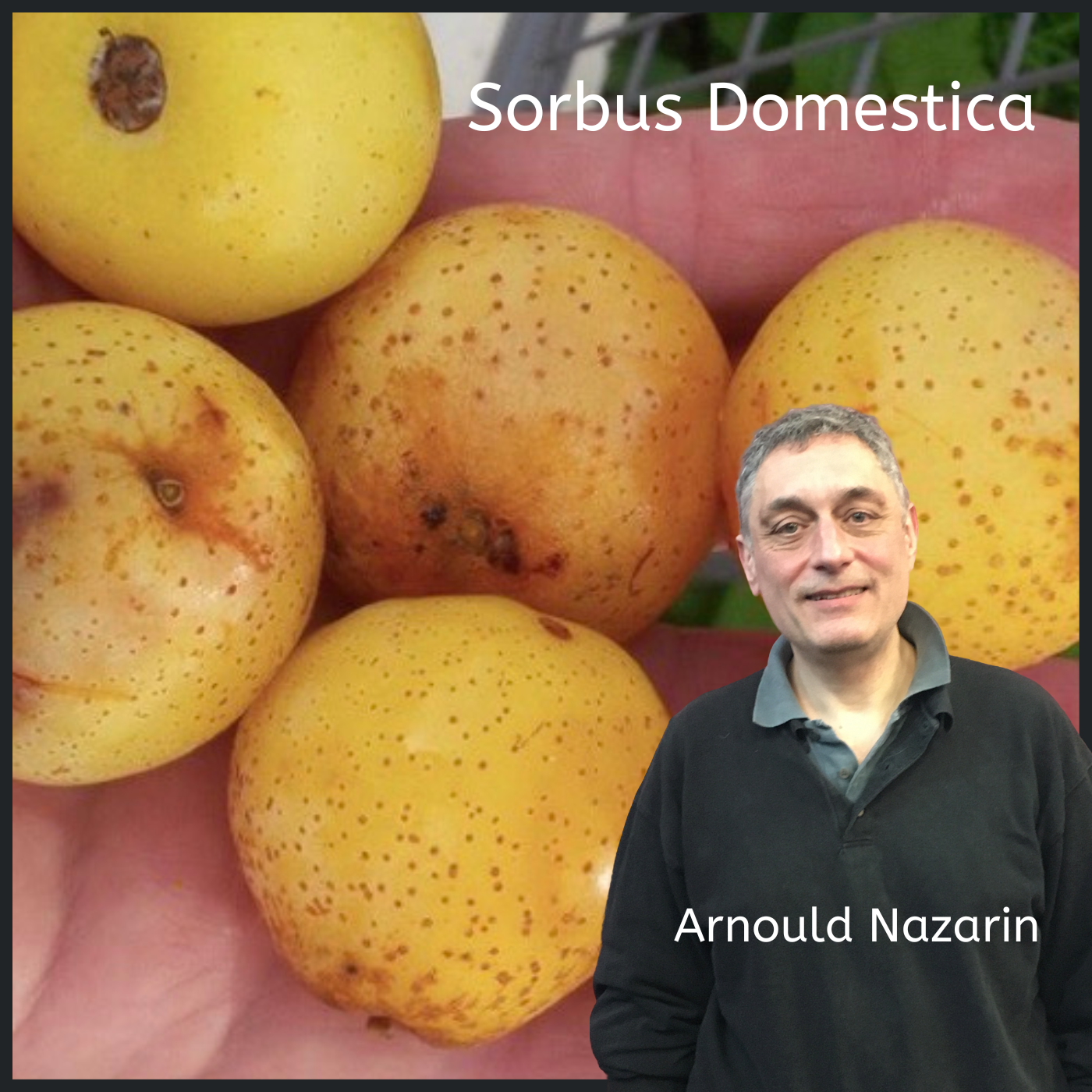
S5 Ep 219219: Sorbs Not Sulfites
Sorbus Domestica enthusiast Arnould Narazian of Paris France, shares his knowledge and passion for this King of all Pommes. This "Service Tree's wood was used for wooden screws used in wine presses and the fruit to help cure ailing cider and wine. This chat was recorded at Cidrexpo in February 2020 in Caen France. The main chat begins at 9:20 minutes Arnould Nazarian What are some of the cultural/traditional name for Sorbus Domestica? North of France it is called "Cormé" South of France it is referred to as "Sorb" Service Tree Spierling - German What inspired Arnould's affection for Sorbus Domestica A dream and a visit to a train station in the north of Paris called Gare d'Achères–Grand-Cormier based to the North west of Paris in the town of Achères What are the special attributes of Sorbus Domestica? Sorb was used for making mechanical devices such as cog wheels for mills. This was very important for milling up corn and grains for food. These mechanisms came about in the Middle Ages of the 11-12th century The wood was also used for the main screw used to press both wine and olives for olive oil. And, early printing presses used Sorb wood too! Germinating Sorbus Domestica seeds Germinating Sorbus Domestica For the seeds to geminate they must be eaten by a bird or rabbit first. But Arnould has since found some other ways to germinate this King of Pommes. Source seeds in October/November - they must be immediately be placed into moist sand. Then placed in a refrigerator at 2degree Celsius or 35 degrees Fahrenheit. Then the seeds are put outdoors in March The odds of the seed germinating is 95%. Sorbs like Sandy soil Sun light Not a lot of water And the roots can be 6-8 meters down which translate to 26 feet! Sorb Fruit What does the Sorb fruit look like? The fruit of a Sorbus Domestica look like miniature apples and pears and have a range of colors from red, green, yellow and orange. The shape can be round or pear like. Are there different varieties of Sorbus Domestica? Arnould says yes, but those varieties are now lost. Sorbs though large have a special attribute that enables farmers to plant these trees in crop fields Arnould calls the leaves "Peanut Leaves" which means they are small and thus cast a very light shadow for the surrounding area The Day of the Cormé - a celebration of Sorb held in November Buy trees, marmalade, wood products, held in Normandy. Contact Arnould via Instagram: https://www.instagram.com/arnouldnz/?hl=en Mentions in this Chat TeePublic Cider Chat Swag Store - new designs Sorbus Domestica -t shirt at Cider Chat Teepublic Store Find this episode and all episodes at the page for Cider Chat's podcasts. Listen also at iTunes, Google Play, Stitcher (for Android), iHeartRadio , Spotify and wherever you love to listen to podcasts. Follow on Cider Chat's blog, social media and podcast Twitter @ciderchat Instagram: @ciderchatciderville Cider Chat FaceBook Page Cider Chat YouTube Help Support Cider Chat Please donate today. Help keep the chat thriving!

S5 Ep 218218: FieldBird Cider | Canada: Covid Time Update
Ryan Monkman of FieldBird Cider based in Prince Edward County provides an overview of Canada's response to the Covid-19 crisis gripping the world in this episode. Ryan's chat begins at approximately 11:49 minutes into this episode. Ryan in the barrel room Ryan has worked as an international consultant to winemakers, worked as a winemaker and has been an avid cider fan for years. More recently, he and his wife Nicole started FieldBird Cider based in Prince Edward County, Ontario in Canada. His episode 168: Barrel Making Inspiration is one of the most popular episode on this podcast platform. Now you can "Ask Ryan" cidermaking questions. Send your question by April 20, 2020 for the first segment of "Ask Ryan" Send to [email protected] We will be recording this episode in late April 2020, with it airing shorty after. Contact FieldBird website: https://www.fieldbird.ca/ Help Support Cider Chat Please donate today. Help keep the chat thriving! Find this episode and all episodes at the page for Cider Chat's podcasts. Listen also at iTunes, Google Play, Stitcher (for Android), iHeartRadio , Spotify and wherever you love to listen to podcasts. Follow on Cider Chat's blog, social media and podcast Twitter @ciderchat Instagram: @ciderchatciderville Cider Chat FaceBook Page Cider Chat YouTube