
ChatChat - Claudia Cragg
99 episodes — Page 1 of 2

Asylum, Umberto Nicola Nicoletti on
Asylum: Author Umberto Nicola Nicoletti, Introduction by Filippo Grandi Claudia Cragg speaks here with author, Umberto Nicola Nicoletti, about his fine-art book Asylum. We discusses the phenomenon of LGBTIQ+ refugees, asylum seekers, and those subject to discrimination in their home countries based on their gender or sexual orientation. More the 40 percent of the countries in the world today still impose prison sentences or the death penalty just for being LGBTIQ+. Asylum is an international project that arose from a collaboration between five associations around the world and photographer Umberto Nicola Nicoletti. Through the use of beautiful "glossy images," such as those used in fashion and advertising, the project seeks to engender empathy for the subjects involved and their stories. Asylum seekers become celebrities, idols, and heroes as they are. Therefore, it is not photographic reportage but, rather, an art project focused on restoring their dignity. LGBTIQ+ refugees often face double discrimination: in their home country and in their destination, as they are both immigrants and LGBTIQ+. This is especially true in refugee camps, where they are subject to assaults by other migrants. The aim of this project is to give these individuals the identity they are often deprived of when they are reduced to an indistinct mass—and to show the world their true beauty. Umberto Nicola Nicoletti is an Italian photographer and director. He specializes in portrait photography in the fields of advertising, music, fashion, and publishing. He has created international ad campaigns, commercials, book covers and music videos. The introduction in the book, Asylum, is written by Filippo Grandi, the United Nations High Commissioner for Refugees. Related organizations: The 519 TORONTO / CIG Arcigay MILAN / The DC Center WASHINGTON DC / Rainbow Migration LONDON / RusaLGBT NEW YORK

The Museum, Repositories of Controversy and The Stuff of Life
@claudiacragg (DM Twitter) speaks here with Samuel J Redman @samueljredman about his new book, A Short History of Crisis and Resilience. The work, Professor Redman says, celebrates as he sees it the resilience of American - and it must be said many worldwide - cultural institutions in the face of nationl crises and challenges. On one afternoon in January 1865, a roaring fire swept through the Smithsonian Institution. Dazed soldiers and worried citizens could only watch as the flames engulfed the museum's castle. Rare objects and valuable paintings were destroyed. The flames at the Smithsonian were not the first —and certainly would not be the last—disaster to upend a museum in the United States. Beset by challenges ranging from pandemic and war to fire and economic uncertainty, museums have sought ways to emerge from crisis periods stronger than before, occasionally carving important new paths forward in the process. Redman explores the concepts of "crisis" as it relates to museums, and how these historic institutions have dealt with challenges ranging from depression and war to pandemic and philosophical uncertainty. Fires, floods, and hurricanes have all upended museum plans and forced people to ask tough questions about American cultural life. With chapters exploring World War I and the 1918 influenza pandemic, the Great Depression, World War II, the 1970 Art Strike in New York City, and recent controversies in American museums from the COVID-19 pandemic to race and gender issues, this timely book takes a novel approach to understanding museum history, present challenges, and the future. By diving deeper into the changes that emerged from these key challenges, Samuel J. Redman argues that cultural institutions can—and should—use their history to prepare for challenges and solidify their identity going forward. The work is a captivating examination of crisis moments in U.S. museum history from the early years of the twentieth century to the present day, The Museum offers inspiration in the resilience and longevity of America's most prized cultural institutions.

A Boost From The Late Great Maya Angelou
What better way to jump into 2022 than with a boost from a rebroadcast of our Maya Angelou interview? This month the US Mint will start shipping quarters featuring Angelou, the first black woman to ever grace the coin. The program was conceived in 2017 and was officially signed into law in 2020. Potential honorees were nominated by the public last year. A fitting tribute to a remarkable person and a remarkable talent. In May of 2013, the then KGNU News Director, Joel Edelstein, generously invited colleague Claudia Cragg Twitter: @claudiacragg to speak by phone with Dr. Maya Angelou for a one on one interview. It turned out to be one of the very last she ever gave to talk about her then latest book. Explored here is the influence the great woman has had on another Maya, Maya Carter. She was then a 19 year old from Denver,(now just finishing her College freshman year) and, listening to the original KGNU interview, young Maya here tries to explain the effect that Dr.Angelou's life, work, poetry and thinking has had on her and in her initiation of the Motivate & Empower Movement she has founded in her honour.

For The Holidays, Become a 'Wallet Activist' with Tanja Hester
Tanja Hester, @TanjaHester is the author of Wallet Activism: How to Use Every Dollar You Spend, Earn, and Save as a Force for Change (November 2021). Clear-eyed and practical, #WalletActivism helps angry, overwhelmed, and disillusioned consumers cut through the marketing lies of companies that have rebranded their problematic practices as "green," "woke," and "ethical" to learn how to use their financial power to fight back. Hester doesn't offer easy solutions or simple answers. Instead, she helps readers (1) understand the complex, nuanced impact their financial decisions have on both people and the planet, (2) define their own personal financial values, and (3) begin to make better (not perfect), more intentional money moves (from deciding where you live to where you bank and more). Hester can help your listeners channel their anger into meaningful, realistic wallet activism through an excerpt or interview on: How to define your financial values and decode marketing messages to make more ethical money decisions Where your money lives dictates exactly what you're funding: How to mindfully choose financial partners (banks, lenders, investments) Former political consultant on how to vote with your wallet Where to channel your energy and activism between elections Understanding scale of food waste + why we have to take it seriously Tips on how to "rightsize" your household consumption to minimize waste How to travel responsibly: Considerations for destination, lodging, and transportation Questions you should ask yourself when choosing companies to work for Sustainable gift giving practices (including secondhand & experiential gifts) Understanding the dark side of decluttering

First Genocide Verdict against Islamic State For Killings of Yazidis
(REPOST of June 2018 Interview with Dunya Mikhail) This week, a German court on Tuesday jailed a former Islamic State militant for life after convicting him of involvement in genocide and crimes against humanity over mass killings of minority Yazidis by IS in Syria and Iraq. It was the first genocide verdict against a member of the Islamic State, an offshoot of al Qaeda that seized large swathes of Iraq and Syria in 2014 before being ousted by US-backed counter-offensives, losing its last territorial redoubt in 2019. Claudia Cragg (@KGNUClaudia) speaks here for KGNU (@KGNU) to the acclaimed poet and journalist Dunya Mikhail (@dunyamikhail) In her latest work, 'The Beekeeper of Sinjar', Mikhail - who is herself an Iraqi exile, tells the harrowing stories of (mostly) Yazidi women from across Iraq who have managed to escape the clutches of ISIS. ISIS persecuted the Yazidi people, killing or enslaving those who would not convert to Islam. The women have lost their families and loved ones, along with everything they've ever known. Dunya Mikhail weaves together the women's tales of endurance and near-impossible escape with the story of her own exile and her dreams for the future of Iraq. In the midst of ISIS's reign of terror and hatred, an unlikely hero has emerged: the Beekeeper. Once a trader selling his mountain honey across the region, when ISIS came to Sinjar he turned his knowledge of the local terrain to another, more dangerous use. Along with a secret network of transporters, helpers, and former bootleggers, Abdullah Shrem smuggles brutalized Yazidi women to safety through the war-torn landscapes of Iraq, Syria, and Western Turkey. Mikhail was born in Baghdad and earned a BA at the University of Baghdad. She worked as a translator and journalist for the Baghdad Observer before being placed on Saddam Hussein's enemies list. She immigrated to the United States in the mid-1990s and earned an MA at Wayne State University. Mikhail, a Christian, is the author of several collections of poetry published in Arabic. Her first book published in English, The War Works Hard(2005), translated by Elizabeth Winslow, won the PEN Translation Award, was shortlisted for the Griffin Poetry Prize, and was selected as one of the 25 Best Books of 2005 by the New York Public Library. Elena Chiti translated The War Works Hard into Italian in 2011. Diary of a Wave Outside the Sea(2009), which Mikhail co-translated with Elizabeth Winslow, won the Arab American Book Award. Mikhail's collection of poetry The Iraqi Nights (2014) was translated into English by Kareem James Abu-Zeid and published by New Directions.

The Struggle to Protect Health Care from the Violence of War
Claudia Cragg (@claudiacragg) speaks here with Dr Leonard Rubinstein. @JohnsHopkins @bermaninstitute #CentreForPublicHealthAndHumanRights #CentreForHumanitarianHealth Bringing together extensive research, firsthand experience, and compelling personal stories, Perilous Medicine also offers a path forward, detailing the lessons the international community needs to learn to protect people already suffering in war and those on the front lines of health care in conflict-ridden places around the world. Rubenstein―a human rights lawyer who has investigated atrocities against health workers around the world―offers a gripping and powerful account of the dangers health workers face during conflict and the legal, political, and moral struggle to protect them. Pervasive violence against hospitals, patients, doctors, and other health workers has become a horrifically common feature of modern war. These relentless attacks destroy lives and the capacity of health systems to tend to those in need. Inaction to stop this violence undermines long-standing values and laws designed to ensure that sick and wounded people receive care. In a dozen case studies, he shares the stories of people who have been attacked while seeking to serve patients under dire circumstances including health workers hiding from soldiers in the forests of eastern Myanmar as they seek to serve oppressed ethnic communities, surgeons in Syria operating as their hospitals are bombed, and Afghan hospital staff attacked by the Taliban as well as government and foreign forces. Rubenstein reveals how political and military leaders evade their legal obligations to protect health care in war, punish doctors and nurses for adhering to their responsibilities to provide care to all in need, and fail to hold perpetrators to account.

Celine-Marie Pascale Discusses 'Living On The Edge'
Claudia Cragg (Twitter: @claudiacragg) talks to Celine-Marie Pascale @cmpascale about her new book, 'Living On The Edge: When Hard Times Become A Way Of Life' published by @politybooks. For the majority of Americans, hard times have long been a way of life. Some work multiple low-wage jobs, others face the squeeze of stagnant wages and rising costs of living. Sociologist Celine-Marie Pascale talked with people across Appalachia, at the Standing Rock and Wind River reservations, and in the bustling city of Oakland, California. Their voices offer a wide range of experiences that complicate dominant national narratives about economic struggles. Yet Living on the Edge is about more than individual experiences. It's about a nation in a deep economic and moral crisis. It's about the long-standing collusion between government and corporations that prioritizes profits over people, over the environment, and over the nation's well-being. It's about how racism, sexism, violence, and the pandemic shape daily experience in struggling communities. And, ultimately, it's a book about hope that lays out a vision for the future as honest as it is ambitious. Most people in the book are not progressives; none are radicals. They're hard-working people who know from experience that the current system is unsustainable. Across the country people described the need for a living wage, accessible health care, immigration reform, and free education. Their voices are worth listening to. As a sociologist who studies language, Dr. Pascale's research concerns culture, knowledge and power. Her most recent book, Living on the Edge: When Hard Times Become A Way of Life is forthcoming in 2021 from Polity. Living on the Edge draws from conversations and in-depth interviews with people across Appalachia, on Standing Rock and Wind River Reservations, and in struggling communities within the bustling city of Oakland, California. Dr. Pascale is also the author of three other books. Her first, Making Sense of Race, Gender and Class: Commonsense, Power and Privilege in the United States (Routledge, 2007) won the Distinguished Scholarship Award from the American Sociology Association Section on Race, Class and Gender. Her second book, Cartographies of Knowledge: Exploring Qualitative Epistemologies (Sage 2011) won the 2012 Distinguished Book Award from the International Congress of Qualitative Inquiry for "charting new territories." Pascale's third book Social Inequalities & The Politics of Representation: A Global Landscape was published in 2013, has been recognized as a field defining collection of original scholarship. For more information see: https:cmpascale.org

Solving The Essential Racism and Sexism In The Occupy Movement
Claudia Cragg (@claudiacragg - Twitter) talks with Heather Hurwitz about her book, 'Are We The 99%." Despite cries of "We are the 99%," signaling solidarity, certain groups were unwelcome or unable to participate. Moreover, problems with racism, sexism, and discrimination due to sexuality and class persisted within the movement. The protestors that comprised the #OccupyWallStreet movement came from diverse backgrounds. But how were these activists—who sought radical social change through many ideologies—able to break down oppressions and obstacles within the movement? And in what ways did the movement perpetuate status-quo structures of inequality? Are We the 99%? is the first comprehensive #feminist and intersectional analysis of the Occupy movement. Heather McKee Hurwitz considers how women, people of color, and genderqueer activists struggled to be heard and understood. Using immersive first-hand accounts of activists' experiences, online communications, and media coverage of the movement, Hurwitz reveals lessons gleaned from the conflicts within the Occupy movement. She compares her findings to those of other contemporary protest movements—nationally and globally—so that future movements can avoid infighting and deploy an "intersectional imperative" to embrace both diversity and inclusivity. Dr. Hurwitz Ph. D. is currently a Project Staff Researcher at Cleveland Clinic and can be reached on Twitter at @heathermhphd (with related info. at @funwsoc and @BarnardCollege.)

Human and Material Detritus at Mumbai's Deonar Waste Mountains
"'I came to see the mountains as an outpouring of our modern lives,' Roy writes, 'of the endless chase for our desires to fill us.' Readers of Behind the Beautiful Forevers will be drawn to this harrowing portrait." — Publishers Weekly Claudia Cragg (@claudiacragg) speaks here with journalist Saumya Roy about her new non-fiction work, Castaway Mountain. All of Mumbai's possessions and memories come to die at the Deonar garbage mountains. Towering at the outskirts of the city, the mountains are covered in a faint smog from trash fires. Over time, as wealth brought Bollywood knock offs, fast food and plastics to Mumbaikars, a small, forgotten community of migrants and rag-pickers came to live at the mountains' edge, making a living by re-using, recycling and re-selling. Among them is Farzana Ali Shaikh, a tall, adventurous girl who soon becomes one of the best pickers in her community. Over time, her family starts to fret about Farzana's obsessive relationship to the garbage. Like so many in her community, Farzana, made increasingly sick by the trash mountains, is caught up in the thrill of discovery—because among the broken glass, crushed cans, or even the occasional dead baby, there's a lingering chance that she will find a treasure to lift her family's fortunes. As Farzana enters adulthood, her way of life becomes more precarious. Mumbai is pitched as a modern city, emblematic of the future of India, forcing officials to reckon with closing the dumping grounds, which would leave the waste pickers more vulnerable than ever. In a narrative instilled with superstition and magical realism, Saumya Roy crafts a modern parable exploring the consequences of urban overconsumption. A moving testament to the impact of fickle desires, Castaway Mountain reveals that when you own nothing, you know where true value lies: in family, community and love. Saumya Roy is a journalist and activist based in Mumbai. She has written for Forbes India magazine, Mint newspaper, Outlook magazine, wsj.com, thewire.in and Bloomberg News among others. In 2010 she co- founded Vandana Foundation to support the livelihoods of Mumbai's poorest micro entrepreneurs by giving small, low interest loans. She has received fellowships from the Rockefeller Foundation's Bellagio Center, Blue Mountain Center, Carey Institute for Global Good and Sangam House to write this book. She attended a conference on environmental humanities at KTH, Stockholm in 2017 to share her research, and contributed a chapter to Dharavi: The Cities Within/ (HarperCollins, 2013), an anthology of essays on Asia's largest slum. Roy was a fellow of the National Foundation of India in 2012, and has Masters Degrees in journalism from Northwestern University and Mumbai's Sophia College, where she teaches magazine writing.

Isn't The Case For Us All To Work With Our Hands Not Stronger Than Ever Now?
In this (reposted) interview, Dr. Matthew B. Crawford talks to Claudia Cragg @KGNU about 'Why Office Work is Bad for Us and Fixing Things Feels Good. This iconic book also explores why some jobs offer fulfilment while others leave us frustrated. It answers the question as to why we so often think of our working selves as separate from our 'true' selves? Over the course of the twentieth century, Dr. Crawford argues that we have separated mental work from manual labour, replacing the workshop with either the office cubicle or the factory line. In this inspiring and persuasive book, he explores the dangers of this false distinction and presents instead the case for working with your hands. It will also force many a parent to question why today they are only pushing their kids hard towards academic (grade-based rote-learning, mulitple choice) success, turning them only into knowledge workers many of whom will be doomed to remain for an eternity on the very bottom of the pile. The publishers believe that Dr Crawford "delivers a radical, timely and extremely enjoyable re-evaluation of our attitudes to work" and no doubt a great many listeners to this interview might well agree. Matthew B. Crawford majored in physics as an undergraduate, then turned to political philosophy (Ph.D. Chicago). His writings for The New Atlantis, A Journal of Technology and Society, bring the two concerns together, and consider how developments in the sciences influence our view of the human person. Currently a fellow at the Institute for Advanced Studies in Culture at the University of Virginia, he also runs a small business in Richmond. He earned his PhD from the University of Chicago. He is a contributing editor at The New Atlantis, and is also a motorcycle mechanic.

COVID19, Its Possible Lab Origins and the indispensable Horseshoe Crab
Claudia Cragg (Twitter: @claudiacragg) speaks here with William Sargent about his book, Crab Wars, now out in a newly revised edtion. Surviving almost unmolested for 300 million years, the horseshoe crab is now the object of an intense legal and ethical struggle involving marine biologists, environmentalists, US government officials, biotechnologists, and international corporations. The source of this friction is the discovery 25 years ago that the blood of these ancient creatures serves as the basis for the most reliable test for the deadly and ubiquitous gram-negative bacteria. These bacteria are responsible for life-threatening diseases like meningitis, typhoid, E. coli, Legionnaire's Disease and toxic shock syndrome. Because every drug certified by the FDA must be tested using the horseshoe crab derivative known as Limulus lysate, a multimillion dollar industry has emerged involving the license to "bleed" horseshoe crabs and the rights to their breeding grounds. Since his youthful fascination with these ancient creatures, William Sargent has spent much of his life observing, studying, and collecting horseshoe crabs. 'Crab Wars' is a thoroughly accessible insider's guide to the discovery of the lysate test, the exploitation of the crabs at the hands of multinational pharmaceutical conglomerates, local fishing interests, and the legal and governmental wrangling over the creatures' ultimate fate. In the end, the story of the horseshoe crab is a sobering reflection on the unintended consequences of scientific progress and the danger of self-regulated industries controlling a limited natural resource. In his 'Terror by Error: The COVID Chronicles' Sargent delves into the murky, often intertwined worlds of medical research and biological warfare to determine if Covid-19 was caused by accidents similar to those that have occurred from 1617 to the present.

How Ordinary People Saved a Country From Greed
Claudia Cragg @claudiacragg speaks with Robin Broad and @IPS_DC's John Cavanagh, authors of The Water Defenders: How Ordinary People Saved a Country from Corporate Greed. In a time when countless communities are resisting powerful corporations: from Flint, Michigan to the Standing Rock Reservation, from Didipio in the Philippines to the Gualcarque River in Honduras, The Water Defenders presents the inspirational story of a community that took on an international mining corporation at seemingly insurmountable odds and won not one but two historic victories. In the early 2000s, many people in El Salvador were at first excited by the prospect of jobs, progress and prosperity that the Pacific Rim mining company promised. However, farmer Vidalina Morales, brothers Marcelo and Miguel Rivera, and others soon discovered that the river system supplying water to the majority of Salvadorans was in danger of catastrophic contamination as a result. With a group of unlikely allies, local and global, they committed to stopping the corporation and the destruction of their home. Based on over a decade of research and their own role as international allies of the community groups in El Salvador, Robin Broad and John Cavanagh unspool this little-known story – a tale replete with corporate greed, a transnational lawsuit at a secretive World Bank tribunal in Washington, violent threats, murders and – surprisingly – victory. The husband-and-wife duo immerses the reader in the lives of the Salvadoran villagers, the journeys of the local activists who sought the truth about the effects of gold mining on the environment, and the behind-the-scenes maneuverings of the corporate mining executives and their lawyers. The Water Defenders demands that we examine our assumptions about progress and prosperity, while providing valuable lessons for those fighting against destructive corporations in the United States and around the world. Robin Broad and John Cavanagh are a husband-and-wife team who have been involved in the Salvadoran gold mining saga since 2009. Robin is an expert in international development and won a prestigious Guggenheim Fellowship for her work on this project, as well as two previous MacArthur fellowships. A professor at American University, she served as an international economist in the US Treasury Department, in the US Congress, and at the Carnegie Endowment for International Peace. John is Director of the Washington-based Institute for Policy Studies, an organization that collaborates with the Poor People's Campaign and other dynamic social movements to turn ideas into action for peace, justice and the environment. He previously worked with the United Nations to research corporate power. Broad and Cavanagh helped build the International Allies group that spearheaded the global fight against mining in El Salvador. They have co-authored several previous books together.-

Just Because.... Joanne Greenberg, One Of Our Most Interesting Past Guests
No apologies. She is always just delightful. Claudia Cragg @claudiacragg speaks here with Joanne Greenberg (born September 24, 1932 in Brooklyn, New York) is an American author who published some of her work under the pen name of Hannah Green. She was a professor of anthropology at the Colorado School of Mines[1][2] and a volunteer Emergency Medical Technician.[3] Greenberg is best known for the semi-autobiographical bestselling novel I Never Promised You a Rose Garden (1964). It was adapted into a 1977 movie and a 2004 play of the same name. She received the Harry and Ethel Daroff Memorial Fiction Award as well as the National Jewish Book Award for Fiction[4] in 1963 for her debut novel The King's Persons (1963), about the massacre of the Jewish population of York at York Castle in 1190. Greenberg appears in the Daniel Mackler documentary Take These Broken Wings (2004) about recovering from schizophrenia without the use of psychiatric medication.[5] Her book In This Sign (1970) was made into a Hallmark Hall of Fame television movie titled Love Is Never Silent, aired on NBC in December 1985.

M. J. Fièvre on How To Be A 'Bad Ass Black Girl' (w update to help Haiti!)
UPDATE: For those who want to help Haiti, M.J. suggests there are two options for two different solid organizations. Ayiti Community Trust and Fokal. https://secure.givelively.org/donate/ayiti-demen/fokal-haiti-relief-support-for-organizations-in-the-southern-peninsula-of-haiti?fbclid=IwAR0WvzHvrOUY5aAz5hMxyhJJmg7ZV97lNODwOKS4HCxRVQYJ1URzvqZJMWE and https://www.classy.org/campaign/earthquake-relief-fund/c352932 ************************************************************** Claudia Cragg (@claudiacragg) speaks here with M.J. Fièvre, 9@MJ_Fievre), a Haitian-born writer and educator who has lived in Florida since 2002. Her latest book is 'Bad Ass Black Girl' from Mango Publishing. "This book is a celebration, an affirmation, a history text, a little bit of memoir, and an exuberant prayer for the prosperity of Black women." ―Ashley M. Jones, author of Magic City Gospel Fièvre was born in Port-au-Prince and was educated there, going on to earn a BEd from Barry University and a MFA in Creative Writing from Florida International University. She self-published her first mystery novel Le Feu de la vengeance at the age of 16. At age 19, she signed her first book contract for a Young Adult novel. Fièvre was editor for the 2012 anthology Ainsi parla la terre / Tè a pale / So Spoke the Earth. She is secretary for Women Writers of Haitian Descent, an organization based in Florida. She has published stories in English and French in several American literary journals. She has worked as a translator and interpreter and taught at a middle school in Davie. Most recently, she has been a professor at Miami Dade College. Fièvre is editor for the literary journal Sliver of Stone. She is the head of Florida publishing company Lominy Books.

stef m. shuster On The Banning of Medical Care for Transgender Youth
In the US, several states are making strong moves to ban medical treatment for transgender youth. The laws are intended to prohibit doctors from providing gender confirming hormone therapy, puberty blockers or gender-confirmation surgeries or from referring patients to other health care providers. Claudia Cragg (Twitter: @claudiacragg) speaks here for @KGNU with stef shuster (Twitter: @stefshuster). shuster is an Assistant Professor at Michigan State University in Lyman Briggs College and the Department of Sociology. shuster earned their M.A. and Ph.D. in Sociology from the University of Iowa with a certificate in Gender Studies, and a B.A. in Sociology from Indiana University, Bloomington. Broadly, their research and teaching interests include medical sociology, gender, inequality, and social movements. In their book, Trans Medicine: The Emergence and Practice of Treating Gender (NYU Press, 2021), shuster makes an important intervention in how we understand the development of this field and how it is being used to "treat" gender identity today. Drawing on interviews with medical providers as well as ethnographic and archival research, shuster examines how health professionals approach patients who seek gender-affirming care. From genital reconstructions to hormone injections, the practice of trans medicine charts new medical ground, compelling medical professionals to plan treatments without wide-scale clinical trials to back them up. Relying on cultural norms and gut instincts to inform their treatment plans, shuster shows how medical providers' lack of clinical experience and scientific research undermines their ability to interact with patients, craft treatment plans, and make medical decisions. This situation defies how providers are trained to work with patients and creates uncertainty. As providers navigate the developing knowledge surrounding the medical care of trans folk, Trans Medicine offers a rare opportunity to understand how providers make decisions while facing challenges to their expertise and, in the process, have acquired authority not only over clinical outcomes, but over gender itself.

Now streaming on Amazon Prime, from Maria Diane Ventura, 'Your Color'
Claudia Cragg @claudiacragg speaks here with Filipina American filmmaker, Maria Diane Ventura (Instagram @mariadianeventura) whose new film 'Color' (German: Deine Farbe) is streaming on Amazon Prime from today, 15 July 2021. The movie, written and directed by music producer and artist manager Ventura, is a tale of friendship between two young men who leave their German hometown for a freer life in majestic Barcelona, where fate and choices threaten their once unbreakable bond. It is a multi-cultural production from Europe, Asia, and America. The story revolves around reluctantly studious Karl and free spirit Albert who document their youthful adventures and provocative ideas whilst breaking free from their small town and their predetermined futures. Although they dream of becoming voices of their generation, their new lives in the big city are not as easy as they had once envisioned. As the adolescents ponder their purpose on camera, diverging ambitions take a dark turn. This film serves as a timely commentary on mental health, self-limitations, and connection in the digital age. Ventura wrote the film as a reflection of her own internal state and feelings of displacement after leaving her comfort zone. "As an immigrant myself, who moved to New York to find a better future for my family and at the same time immerse and acclimate to a new culture and environment, I started writing this film while I was still living in Manila dreaming of a better life thinking that, if I move away, all my problems and suffering would magically disappear," she said. "I wrote this film about two boys wanting to escape their small town only to find themselves with a different set of problems in the real world." "Your Color" stars established German actors Jannik Schümann The Aftermath and Monster Hunter) as Karl and Nyamandi Adrian (Tribes of Europa) as Albert. The film also stars Juan Carlos Lo Sasso (Another Cloudy Day) as Julio and Romina Küper (Baby Bitchka) as Kristina.

"Smart and Just On One Side, vs. Free and Real On The Other"
Claudia Cragg @claudiacragg (comments, suggestions, ratings welcome) speaks here with George Packer staff writer at The Atlantic. He is the author of Last Best Hope: America in Crisis and Renewal, Our Man: Richard Holbrooke and the End of the American Century, The Unwinding: An Inner History of the New America, and The Assassins' Gate: America in Iraq. Americas, says Packer, is"...trapped in two countries. Each one is split by two narratives—Smart and Just on one side, Free and Real on the other. Neither separation nor conquest is a tenable future. The tensions within each country will persist even as the cold civil war between them rages on.

Dennis Kucinich, the Energizer Politician
Claudia Cragg @claudiacragg, speaks here with former Cleveland Mayor Dennis J. Kucinich (1977 – 1979). Twitter: @Dennis_Kucinich In his new book, Kucinich gives an unprecedented, fully documented insider's account of his battle against a shadow city government which allegedly engaged in corporate espionage, sabotage, price-fixing, cut-throat competition, anti-trust activities, organized crime, and wholesale fraud. That is, until Kucinich, then America's youngest big-city mayor at age 31, fought back, risking assassination attempts and the destruction of his personal life. One of America's largest banks threatened to upend the city financially unless the new Mayor Kucinich agreed to sell the city's publicly owned electric system, Muny Light, to the bank's utility business partner, handing them a monopoly and the ability to raise electric rates to the sky. The "powers that be" subverted the media. They tried to buy Kucinich, and when they discovered he could not be bought, they tried to kill him. Key points are:- A political battle that is more relevant today than ever, given corporate influence over government decisions at all levels - - which is why utility monopolies in Texas, California, Illinois, and Ohio have crushed consumers with sky-high rates, price gouging and criminal behavior. Why utility bills and taxes are so high and who is really making the decisions effecting their social and economic life. A road map showing how a principled approach to everyday life can empower each of us to find the courage to do the right thing. THE DIVISION OF LIGHT AND POWER by Dennis Kucinich (Finney Avenue Books; June 8, 2021)

Former Ag Secretary and Congressman Dan Glickman
Claudia Cragg speaks to former Congressman Dan Glickman, @DanRGlickman, about his new book from the University Press of Kansas, Laughing at Myself: My Education in Congress, on the Farm, and at the Movies. Secretary Glickman (he held the post of Agricultural Secretary in the Clinton administration) tells his story of a classical family background, religious heritage, and "Midwestern-nice" roots, and how it led to a long and successful career in public office. Now at almost 77 and newly retired from the Aspen Institute, Dan is known throughout Washington as one of the most approachable politicians with relationships on both sides of the aisle. He tells a now infamous story of how his name was actually proposed for the job as Secretary of Agriculture by Bob Dole and Leon Panetta. What he has written combines Dan's sense of humor with serious reflection on his rise from the middle of nowhere to becoming a successful U.S. politician and the first Jewish secretary of agriculture. A religious man that cherishes his strong family ties, Glickman shares the lessons he has learned about success, compromise and staying true to yourself – even when stepping into the shoes of the most powerful man on Earth (a chapter in the book and his recounting of the 1997 Inauguration when he was chosen as the designated survivor).

Dr Neil Schachter in the NY War On Covid For More Than 16 Months
After 16 months on the front lines of the COVID war in New York at Mount Sinai, Dr Schachter @MountSinaiNYC does not focus on exhaustion or trauma, but rather the possibilities that have come with dealing with such wide-scale and going medical trauma. Dr. Schachter is currently the Maurice Hexter Professor of Pulmonary and Community Medicine and Medical Director of Pulmonary Rehabilitation at Mount Sinai Medical Center. He has established and directs the Mount Sinai Pulmonary Rehabilitation program. Author of five books and over 400 articles and abstracts on pulmonary disease, Dr. Schachter is past president of the American Lung Association of the City of New York, the Connecticut Thoracic Society and the National Association of Medical Directors of Respiratory Care. He currently serves on the board of directors and as the chairman of the Scientific Advisory Committee of the American Lung Association of the Northeast. In 2005 he was an honoree of the American Lung Association of the City of New York at their annual Life and Breath Gala. In 2016 he received the Will Ross Medal Award from the Lung Association. Dr. Schachter is an advocate for environmental lung issues. He worked with the Southern Poverty Law Center for healthier factory standards and increased workers' compensation for men and women in cotton textile mills. He lobbied for tougher anti-smoking laws in New York City on behalf of the Lung Association and the Coalition for Smoking or Health. He is currently completing a study on the health effects of air pollution on children with asthma in the inner city neighborhoods of New York City. In Schachter's new book, The Good Doctor's Guide to Colds and Flu, you can learn how to learn strategies to avoid getting pummeled by a cold.
The Urgent Housing Issue, All Hands On
Jonathan Cappelli is a true champion for affordable housing in the Denver metro area. An experienced urban planning, real estate, and community development professional, Cappelli is focused on finding ways to bring equitable and sustainable development to communities across Colorado. N.B. In this interview, Mr. Cappelli focused on Denver and, he says, neglected to mention "Homeless Solutions for Boulder County". People living in Boulder, they can call them too. The Neighborhood Development Collaborative (NDC) is a coalition of 16 Metro-Denver nonprofits that build homes for middle- and low-income residents and who seek to strengthen neighborhoods with community-oriented businesses and innovative human services. In addition, NDC works to educate metro-area stakeholders and municipalities about the importance of affordable housing and decrease the percentage of metro-area residents who are housing-cost burdened by facilitating strategic collaboration between members. Launched in 2009, NDC initially worked to coordinate the efforts of metro-area nonprofits in the implementation of the Neighborhood Stabilization Program, a Congressionally funded initiative aimed at mitigating the effects of foreclosures in areas of greatest need.NDC was a big advocate for Denver creating an affordable housing plan in 2013 and a dedicated affordable housing fund in 2015, by demonstrating the increasing need for additional housing resources as Federal funding lagged. Collectively, the collaborative has an impressive resume, having created 7,000 affordable multifamily and single-family homes; helped 3,492 families with foreclosure prevention, housing rehabilitation, and down-payment assistance loans; and provided home-buyer assistance counseling to over 35,776 households over the last nine years.

Denver Post columnist, Sue McMilllin
Claudia Cragg speaks with Denver Post columnist, Sue McMilllin on the difficulties of trying to rent an affordable apartment.

Speaking with Mother Jones Michael Mechanic, 'Jackpot' Author\
Claudia Cragg speaks here with Mother Jones' senior editor @MichaelMechanic (Michael Mechanic) who offers a harsh wake-up call for the millions of American dreamers who still believe that winning the lottery—or just simply having obscene wealth—will change their lives for the better. The author ushers readers past the velvet rope to reveal the lifestyles of the ultrawealthy and the ever more expensive ventures they have to indulge in to not only keep themselves amused, but to outdo their wealthy peers. One of the most interesting factoids in this well-researched book is that, according to one study, a person's "self-reported positive emotions improved with rising earnings up to a satiation point at about $65,000 per year. Negative emotions…declined as earnings increased, reaching an inverse satiation point at $95,000." As Mechanic demonstrates throughout this eye-opening book, once the contentment with one's finances ends, the addiction to "extrinsic" goals—e.g., buying mansions, cars, and other luxury goods—leaves less time for the "intrinsic" pursuits that give us real grounding. Mechanic shows how the ultrawealthy make their money and how U.S. tax laws and loopholes allow them to keep building it—but he also provides a cautionary tale about the myriad headaches that unbridled wealth can bring. Mechanic is happy to report that the rich are often bored and miserable—and (surprise!) less compassionate unless they can balance their extrinsic and intrinsic pursuits. Though the text is often a gleeful sendup of the absurd eccentricities of the superrich, the author also spotlights a few billionaires who find genuine spiritual contentment in giving their wealth away. "For an actual rags-to-riches tale," writes the author, "one might turn to Ford Foundation president Darren Walker, who grew up penniless in rural Texas and went on to become an icon in the world of philanthropy." [Kirkus Reviews]

Donnel Baird's BlocPower
Claudia Cragg (@claudiacragg - all comments, reviews, suggestions welcome) speaks here for @KGNU #ItsTheEconomy with Guyana-born Donnel Baird, founder of BlocPower, This is a startup that markets, finances and installs solar and #green #energyefficiency technology to help houses of worship, non-profits, small businesses and multifamily projects to slash their energy costs. Baird spent three years as a community organizer in Brooklyn and one year as a voter contact director for Obama For America. He managed a national Change to Win/LIUNA campaign to leverage Dept. of Energy energy efficiency financing to create green construction jobs for out of work populations. He partnered with the Washington Interfaith Network to generate a $100m government investment in underserved communities in the District of Columbia. Baird has a B.A. from Duke University and an M.B.A from Columbia Business School.

The Black Panthers Context From Mary Williams, Jane Fonda's Daughter
If you watched Sunday evening's 2021 Oscars and learned of British actor, Daniel Kaluya's, stunning and accolade-winning performance and have not gone on to watch 'Judas And The Black Messiah', maybe you should ask yourself why? If you have, you will have learned that it is an American biographical drama about the betrayal of Fred Hampton (played by Daniel Kaluuya), chairman of the Illinois chapter of the Black Panther Party in late-1960s Chicago, at the hands of William O'Neal (played by Lakeith Stanfield), an FBI informant. Watching it may have left you trying to find out more context and so in this podcast we revisit our #KGNU interview with Mary Williams. Mary Luana Williams, author of 'Lost Daughter', is Jane Fonda's adopted daughter. She speaks here for KGNU with Claudia Cragg. Williams grew up with the Black Panther movement in Oakland, CA. In her early teens, she was raped by a pseudo 'theatrical agent' and subsequently adopted by Fonda taking her out of Oakland and the Panther community. She now works extensively with foundations for 'Lost Boys' in Morocco, the Sudan and Tanzania, which she says is in many ways working the same principles she learned from her mother. This conversation does not focus at all on 'celebrity issues', but instead on politics, race and gender and also on her adopted mother's, Ms. Fonda's, gamut of political passions. Ms. Williams has also been making strenuous attempts to re-connect her life through time spent with her extended birth family most of whom have remained in Oakland.
As President Biden Prepares To Declare The Armenian Massacre A "Genocide"
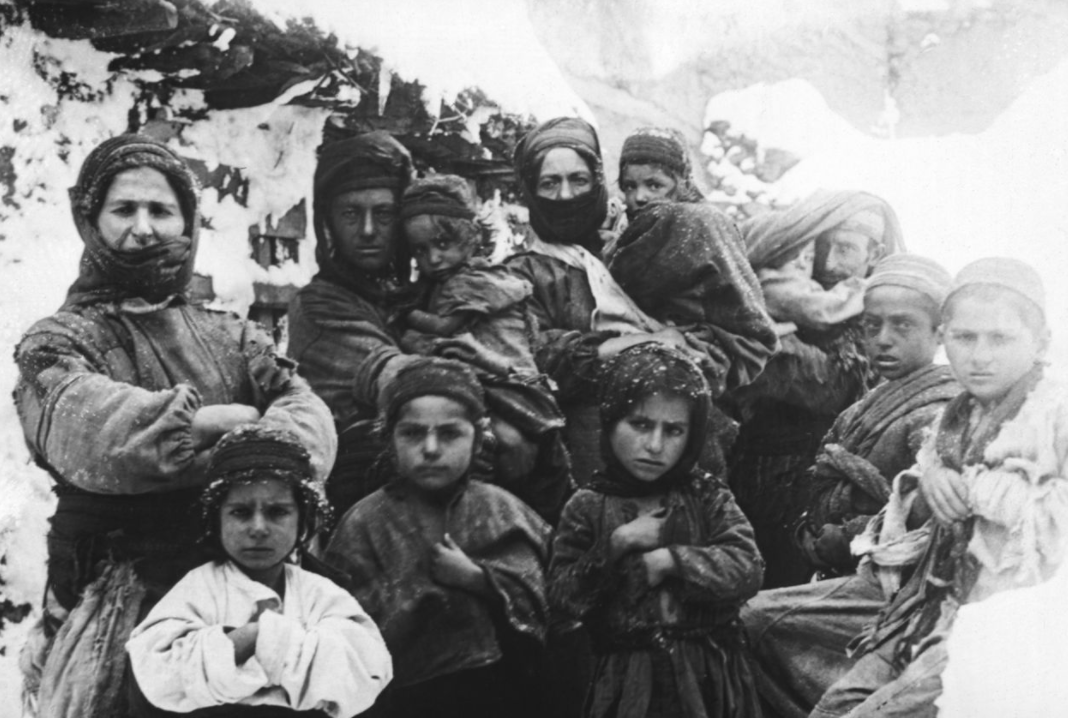
President Joe Biden is to declare the massacre of an estimated million or more Armenians under the Ottoman Empire a "genocide", risking a potential fracture with Turkey but fulfilling a campaign pledge. This pledge was to, at long last, use the word to describe the horrendous mass killings after a series of his predecessors stopped short. Two sources have today, Thursday 22nd April, 2020, said that President Biden will make the declaration as part of an official statement this Saturday. There are many people all over the world who have worked solidly towards this moment, towards this recognition of a historical horror. One such is Lou Ureneck, formerly of The Philadelphia Inquirer, who we revisit here with our @KGNU interview. Ureneck was a prime mover behind the movie 'The Promise', set against the background of World War I dealing with the program by The Ottoman Turks to exterminate the Armenians. This was a cinematic project dear to the late Kirk Kerkorian, perhaps best known for his Las Vegas hotel and casino connections and his ownership of MGM, but himself an Armenian for whom the massacre was not just some tale of history.. The events covered in the movie and in his book, 'The Great Fire' @smyrnafire Ureneck explains, constituted the final episode of what he terms "the 20th Century's first #genocide" — the slaughter of three million Armenians, Greeks and Assyrians of the Ottoman Empire. The massacre occurred as warships of the great powers stood by — the United States, Great Britain, France and Italy. The deaths of hundreds of thousands seemed inevitable until a minister, who happened to be an American, staged a bold rescue with the help of a courageous naval officer.

Vermont's Dinah Yessne, Successful But Unknown, Always Politically Defined
Claudia Cragg @claudiacragg speaks here for @KGNU with Dinah Yessne. A native of St. Paul, Minnesota, Yessne's parents were active in the Progressive movement of the 1940s and 50s, earning them the enmity of their neighbors during the "Red Scare" hysteria and causing them to remove both her and her brother from the St. Paul public school system, never to return. Twelve years later, she emerged from the University of Minnesota's law school politically primed by classmates whose parents included the mayor of Minneapolis, the governor of Minnesota, and the son of a president of the United States. 'Politically Defined', Yessne's memoir, examines her binary development in the political hotbed that was the University of Wisconsin in the mid-1960s, where she learned the basics of electoral politics while at the same time demonstrating against the war in Vietnam and capping her political education with tours of Harlem, Milwaukee's freedom schools, and an angrily divided South. From there, her journey continued through six states and the siege of Chicago as a member of Eugene McCarthy's 1968 presidential campaign staff, then through five more states as an organizer for the National Women's Political Caucus. Landing in Vermont's Northeast Kingdom in 1970 (quite by chance), she went on to live a personal and professional life advocating for underrepresented people as a social worker, attorney and lobbyist, and as a much-needed voice in Vermont's contentious civil union election of 2000. Everyday US newspapers offer a glimpse of the work of national leaders on the civic and political stage. What most rarely get to see in detail is the work and workmanship of those closer to the front line, where service delivery happens. Yessne's book goes a long way towards revealing the details and challenges of delivering those same services. Though unknown to all but her immediate circle of friends, family and colleagues, Dinah's life is a lesson in how one ordinary person CAN make things better for many.

Get the 'Wealth Hoarders' To Pay For the Biden Infrastructure Bill
Claudia Cragg @claudiacragg speaks here for @KGNU (Denver, Boulder, Fort Collins, www.kgnu.org) for #ItsTheEconomy with Chuck Collins, senior scholar at the Institute for Policy Studies. There, he directs the Program on Inequality and the Common Good. Collins latest book is The Wealth Hoarders: How Billionaires Pay Millions to Hide Trillions. He has written a number of other books including '99 to 1: How Wealth Inequality is Wrecking the World and What We Can Do About It', and 'Born on Third Base: A One Percenter Makes the Case for Tackling Inequality', 'Bringing Wealth Home', and 'Committing to the Common Good'. He has also written numerous reports about billionaire wealth during the pandemic. Discussion in this latest interview for @KGNU focuses on getting the Biden Infrastructure Bill paid for in a way that is also combined with tackling the egregious crisis of inequality in the United States. This is is so serious now, says Collins, that President Joe Biden is declaiming that, "It's time to build our economy from the bottom up and from the middle out, not the top down." In recent speeches promoting his Infrastructure Bill and his American Jobs Plan, President Biden said, "I'm proposing a plan for the nation that rewards work, not just rewards wealth." In admitting that our current system rewards wealth, President Biden revealed what American financial and political elites have known for decades: that we do NOT live in a meritocracy. Instead, we live in a nation where you have to be rich to get richer.

Denver's Erik J Clarke on President Biden's 'American Jobs Plan'
Claudia Cragg @claudiacragg speaks here with @ErikJClarke about the implications for Denver, Colorado and the nation from President Biden's new infrastructure plan to fulfill his campaign promise to "rebuild the backbone of America". The expansive proposal, called the American Jobs Plan, intends to build 20,000 miles of roads and highways and to repair the 10 most economically significant bridges in the country among a sprawling list of other projects that Biden said would confront the climate crisis, curb wealth inequality and strengthen US competitiveness. The measure includes hundreds of billions of dollars to expand access to high-speed broadband; replace lead water pipes, ensuring access to clean drinking water; and upgrade the electric grid, making it more reliable while shifting to new, cleaner energy sources.It also seeks to improve community care facilities for seniors and people with disabilities, modernize schools and retrofit homes and office buildings while dedicating funding to training millions of workers and supporting initiatives that strengthen labor unions. The spending over eight years would generate millions of new jobs, Biden said. To pay for the package, he proposed a substantial increase on corporate taxes that would offset the spending over the course of 15 years. Among the changes, Biden called for a rise in the corporate tax rate to 28% from 21% and measures to force multinational corporations to pay more taxes in the US on profits earned abroad. The funding plan would unwind major pieces of Donald Trump's tax-cut law, which lowered the corporate tax rate from 35% to 21% and was his predecessor's signature legislative achievement.

No More Growth At Any Price, How To Build Back Better w Rob Dietz
If COVID19 has shown us anything at all, it must be that growth at any price is not an option going forward. 'Build Back Better' is an opportunity to ensure that growth is of the most productive and valuable kind to ALL members of our society, not just for the all too many CEOs who prize above all the growth of their stock price and their pay packet. This has to change. Claudia Cragg (@claudiacragg on Twitter, comments/suggestions welcome) speaks here with Rob Dietz who brings a fresh perspective to the discussion of economics and environmental sustainability and the SteadyState His diverse background in economics, environmental science and engineering, and conservation biology (plus his work in the public, private, and nonprofit sectors) has given him an unusual ability to connect the dots when it comes to the topic of sustainability. Rob is the author, with Dan O'Neill, of Enough Is Enough: Building a Sustainable Economy in a World of Finite Resources. As past editor of the Daly News, Rob is a devoted advocate for revamping the economy to fit within biophysical limits. He writes with humor, clarity, and a personal touch as he considers the complex set of institutions and activities that make up the economy. Rob continues in his attempts he says to align his personal life with the principles of a steady state economy. He lives with his wife and daughter in a co-housing community striving for development rather than growth.

The COVID Relief Bill Will Help Greatly But Will Food Banks Still Be Busy?
Claudia Cragg @claudiacragg speaks here for #ItsTheEconomy @KGNU with Sheen Kadi of #Metro Caring Denver. As Colorado's leading frontline anti-hunger organization, Metro Caring works with the community to meet people's immediate need for nutritious food while building a movement to address the root causes of hunger. The organization offers innovative programming in Healthy Foods Access, Nutrition Education and Cooking Classes, ID Procurement, Urban Gardening and Agriculture, and Community Organizing and Activation.

Racist Attacks on Asian Americans in Denver and Beyond
Claudia Cragg @claudiacragg speaks here for @KGNU #ItsTheEconomy with Fran Campbell, President of the Asian Chamber of Commerce in Colorado The last 6 months have been an unprecedented challenge to the health of all, to our economy, and to our concepts of racial equity. This makes the work for the Asian Chamber of Commerce more important now than ever, says Campbell. Despite very tough conditions, the ACC continues to provide culturally competent economic development and business opportunities for its Members. The ACC also advocates a strong understanding of the Asian American Pacific Islander communities that conduct business in a manner that is unique to their heritage..
Reforming The World's Financial Systems Heretically - Brett Scott
(Reprise from 2014, but very sadly the US - and indeed the world's - financial system has not been reformed to offset inbuilt disadvantages against the economically underserved or deprived. Here at #ItsTheEconomy there is hope that perhaps #COVID19 might offer an opportunity for a much needed rethink.) Popular anger against the financial system has never been higher, yet the practical workings of the system remain opaque to many people. The Heretic's Guide to Global Finance aims to bridge the gap between protest slogans and practical proposals for reform. Claudia Cragg (comments and suggestions warmly welcomed at @claudiaragg) speaks here for @KGNU #ItsTheEconomy broadcast show with Brett Scott @Suitpossum. Brett is a campaigner and former derivatives broker who has a unique understanding of life inside and outside the financial sector. He builds up a framework for approaching it based on the three principles of 'Exploring', 'Jamming' and 'Building', offering a practical guide for those who wish to deepen their understanding of, and access to, the inner workings of financial institutions. Scott covers aspects frequently overlooked, such as the cultural dimensions of the financial system, and considers major issues such as agricultural speculation, carbon markets and tar-sands financing. Crucially, it also showcases the growing alternative finance movement, showing how everyday people can get involved in building a new, democratic, financial system.

Texas Proves Anti-Racist, Feminist Policies Must Be Applied vs. Climate Change
Claudia Cragg speaks here for @KGNU with Dr. Jennie C. Stephens, @jenniecstephens, the Director of the School of Public Policy and Urban Affairs and the Dean's Professor of Sustainability Science & Policy at Northeastern University in Boston, Massachusetts. She is also the Director for Strategic Research Collaborations at Northeastern University's Global Resilience Institute, and is affiliated with the Women's, Gender and Sexuality Studies Program, the department of Civil & Environmental Engineering and the department of Cultures, Societies & Global Studies. Her research, teaching, and community engagement focus on integrating social justice, feminist, and anti-racist perspectives into climate and energy resilience, social and political aspects of the renewable energy transition, reducing reliance on fossil fuels, energy democracy, gender in energy and climate, and climate and energy justice. Her unique trans-disciplinary approach integrates innovations in social science and public policy with science and engineering to promote social justice, reduce inequalities and redistribute power (electric power, economic power and political power). Diversifying Power: Why We Need Antiracist, Feminist Leadership on Climate and Energy to be published by Island Press in 2020, she argues that effectively addressing climate change requires diversifying leadership, redistributing wealth and power, and moving beyond mainstream male-dominated technocratic solutions to climate change. Throughout her career she has explored institutional and cultural innovation in the energy sector, including gender diversity, energy democracy, and technological optimism as well as the "usability" of climate science in climate resilience efforts. Professor Stephens was a 2015-2016 Leopold Leadership fellow, and her book "Smart Grid (R)Evolution: Electric Power Struggles" (Cambridge University Press, 2015) explores social and cultural debates about energy system change (co-authored with Wilson & Peterson). Before coming to Northeastern, Professor Stephens was on the faculty at the University of Vermont (2014-2016) and Clark University (2005-2014). She did post-doctoral research at Harvard's Kennedy School and she has taught courses at Tufts, Boston University, and MIT. She earned her PhD at the California Institute of Technology in Environmental Science & Engineering and her BA at Harvard University in Environmental Science and Policy.

The Democratization of Tech as Business Aide during COVID TImes
Claudia Cragg @KGNU (@claudiacragg) addresses the business operational adjustments everyone is having to make in what we hope will soon be a post-COVID world. At Zenreach, where he is CEO, John Kelly (@zenreach) is addressing entrepreneurs and operators, both small and large, to let them know that as a company they do recognize the unique challenges that have presented themselves during these unprecedented times. in this wide-ranging conversation, a number of issues are explored. Listeners might also want to know that ZenReach has started a weekly webinar series showcasing merchants and industry experts who have found creative ways to adapt—and in some cases thrive—in this environment where most have had to shut our doors. Second, they have compiled a very useful dedicated section of our website with some best practices that we have learned from our merchant partners. You can find that here: https://zenreach.com/covid-19/.

Rape, (inJustice) and The Objects That Remain
Claudia Cragg @claudiacragg speaks here with Laura Levitt @llevitttemple about her book, The Objects That Remain. On a November evening in 1989, Laura Levitt was raped in her own bed. Her landlord heard the assault taking place and called 911, but the police arrived too late to apprehend Laura's attacker. When they left, investigators took items with them—a pair of sweatpants, the bedclothes—and a rape exam was performed at the hospital. However, this evidence was never processed. Decades later, Laura returns to these objects, viewing them not as clues that will lead to the identification of her assailant but rather as a means of engaging traumatic legacies writ large. The Objects That Remain is equal parts personal memoir and fascinating examination of the ways in which the material remains of violent crimes inform our experience of, and thinking about, trauma and loss. Considering artifacts in the United States Holocaust Memorial Museum and evidence in police storage facilities across the country, Laura's story moves between intimate trauma, the story of an unsolved rape, and genocide. Throughout, she asks what it might mean to do justice to these violent pasts outside the juridical system or through historical empiricism, which are the dominant ways in which we think about evidence from violent crimes and other highly traumatic events. Over the course of her investigation, the author reveals how these objects that remain and the stories that surround them enable forms of intimacy. In this way, she models for us a different kind of reckoning, where justice is an animating process of telling and holding. Laura Levitt is Professor of Religion, Jewish Studies and Gender at Temple University where she has chaired the Religion Department and directed both the Jewish Studies and the Gender, Sexuality and Women's Studies Programs.

Small Planet's Moore Lappe - Igniting Power, Meaning, and Connection for the America We Want
Many Americans have been distraught for the last four years as tightly held economic and political power drowned out their voices and values. But now, with a new administration and the Biden-Harris partnership, there is hope that building on small past successes real success could be found. Claudia Cragg @KGNU speaks here (2017) with legendary Diet for a Small Planet author Frances Moore Lappé @fmlappe who together with co-writer and organizer-scholar Adam Eichen offers a fresh, surprising response to this core crisis. This intergenerational duo opens with an essential truth: It's not the magnitude of a challenge that crushes the human spirit. It's feeling powerless—in this case, fearing that to stand up for democracy is futile. It's not, Lappé and Eichen argue. With riveting stories and little-known evidence, they demystify how we got here, exposing the well-orchestrated effort that has robbed Americans of their rightful power. But at the heart of this unique conversation are solutions. Even in this divisive time, Americans are uniting across causes and ideologies to create a "canopy of hope" the policy advocates call the Democracy Movement. In this invigorating "movement of movements," millions of Americans are leaving despair behind as they push for and achieve historic change. The movement and democracy itself are vital to us as citizens and fulfill human needs—for power, meaning, and connection—essential to our thriving. In this timely and necessary interview, Lappé and Eichen offer proof that courage is contagious in the daring fight for democracy. c.f. Anna Lappe @annalappe

Nuclear Disaster Update for Fukushima Daichi Japan
Claudia Cragg speaks here for @KGNU with Caitlin Stronell, for an update about the Fukushima Daiichi nuclear disaster, an 11 March 2011 nuclear accident at the Fukushima Daiichi Nuclear Power Plant in Ōkuma, Fukushima Prefecture, Japan. The event was caused by the 2011 Tōhoku earthquake and tsunami. It was the most severe nuclear accident since the Chernobyl disaster in 1986. Stronell of @CNICJapan, is Editor of Nuke Info Tokyo. She explains here that plans remain in place by the Japanese government and TEPCO to dump massive volumes of contaminated water stored at Fukushima Daiichi into the Pacific Ocean which thus far have been stalled by strong domestic and international opposition and the official announcement that the dumping has again been postponed. International pressure to save the world's oceans from radioactive contamination, Stronell says, is very important, and Gensuikin (the Japan Congress Against Atomic and Hydrogen Bombs) is calling for international comments which they will hand to the government at a hearing to take place soon. Please see their website linked above in this paragraph for details. There is also an online petition here:

In Her Own Words, An Essential Mental Health Worker on the CO Covid Frontline
Claudia Cragg @claudiacragg speaks here with an essential mental health worker on the Colorado front lines in the age of the COVID19 pandemic.

Christa Parravani, on Her Reckoning with Life, Death and Choice.
Claudia Cragg @claudiacragg speaks here with Christa Parravani @cparravani about her harrowing account, Loved and Wanted, the story of one woman's reckoning with life, death and "choice". It is, she says, a memoir of 'Choice, Children and Womanhood.' In 2017 Christa Parravani had recently moved her family from California to West Virginia and was surviving on a teacher's salary and raising two young children with her husband, screenwriter Anthony Swofford. Another pregnancy, a year after giving birth to her second child, came as a shock. Christa had a history of ectopic pregnancies, and worried that she wouldn't be able to find adequate medical care. She immediately requested a termination, but her doctor refused to help. The only doctor who would perform an abortion made it clear that this would be illicit, not condoned by her colleagues or their community. Christa Parravani has crafted, through her own harrowing experiences with healthcare in contemporary America, a brilliant and moving exploration of the choices women have. Christa Parravani is the author of the Indie bestselling Her: A Memoir, which shares Parravani's journey through grief after the loss of her identical twin sister Cara. Her was named the Amazon Debut Spotlight Pick for March 2013, an Amazon best book of the month, and an NPR critics pick. Vanity Fair calls Her "astonishing." Her was an Indie Bound Next Pick, a 2013 Books for a Better Life nominee, and both an Oprah and People Magazine must-read memoir. In a starred review, Booklist calls Her "raw and unstoppable... a triumph of the human spirit." In Bookforum, Heidi Julavits says "Her invites obsessional reader behavior because Parravani has the ability to make life, even at its worst, feel magic-tinged and vital and lived all the way down to the bone." Review - 'Haunting, wild, and quiet at once. A shimmering look at motherhood, in all gothic pain and glory. I could not stop reading' - Lisa Taddeo, bestselling author of Three Women
KGNU Special: "Broke In America", Preview w Joanne Samuel Goldblum, Colleen Shaddox
This interview is a special KGNU pre-publication interview (the book comes out in February 2021 from BenBella Books) of 'Broke In America. The authors, Joanne Samuel Goldblum, (@jgoldblum), founder of the National Diaper Bank Network, and journalist Colleen Shaddox who argue that the systems that should protect our citizens are broken and that poverty results from flawed policies—compounded by racism, sexism, and other ills—rather than people's "bad choices." Federal programs for the poor often fall far short of their aims: The U.S. has only 36 affordable housing units available for every 100 extremely low-income families; roughly 1 in 3 households on Navajo reservations lack plumbing; and inadequate counsel by public defenders can lead to harsher penalties for crimes or time in "debtors' prisons" for those unable to pay fines or court fees. An overarching problem is that the U.S. determines eligibility for government benefits with an outdated and "irrationally low" federal poverty level of $21,720 for a family of three, which doesn't take into account necessities such as child care when women work outside the home. The authors credibly assert that it makes more sense to define poverty as an inability to afford basic needs in seven areas—"water, food, housing, energy, transportation, hygiene, and health"—each of which gets a chapter that draws on academic or other studies and interviews with people like a Baltimore resident who had to flush his toilet with bottled water after the city shut it off due to an unpaid bill. This plainspoken primer in the spirit of recent books like Anne Kim's Abandoned and Nicholas D. Kristof and Sheryl WuDunn's Tightrope, Goldblum and Shaddox interweave macro analyses with examples of micro interventions that might work in any community. A Head Start teacher in Lytle, Texas, says her program saw benefits just from giving toothbrushes (and a chance to use them at a classroom sink) to children who had none at home: "They come here, and they scrub like there's no tomorrow."
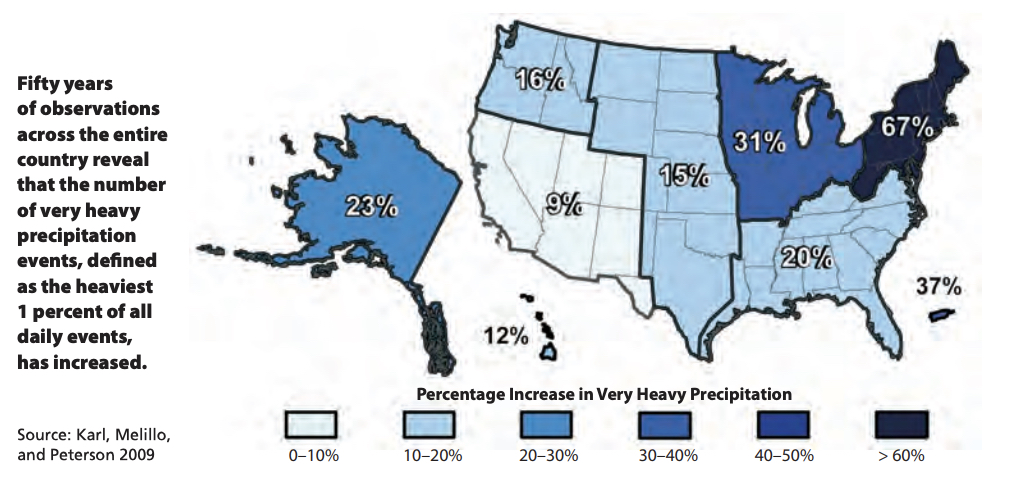
The Biden-Harris Administration, Climate, with John Kerry, On Board
We can only hope, going forward from increasingly alarming climate change horrors of the past few years, that the Biden-Harris administration will make climate change a top policy concern after COVID19. The appointment of John Kerry as The Special Presidential Envoy for Climate certainly suggests this intention. And, just in time, since this past August saw the US facing unprecedented climate emergencies, struggling to tackle the biggest wildfire in modern history. And for climate at the world at large, for the first time on record, the Arctic sea ice did not start to freeze at the end of October This interview is a reprise of a conversation we had for @KGNU with Dr Todd Sanford during his time at The Union of Concerned Scientists. UCS is the leading science-based nonprofit working for a healthy environment and a safer world. The organization "strives for independent scientific research and citizen action to develop innovative, practical solutions and to secure responsible changes in government policy, corporate practices, and consumer choices." What began as a collaboration between students and faculty members at the Massachusetts Institute of Technology in 1969 is now an alliance of more than 400,000 citizens and scientists. UCS members are people from all walks of life: parents and businesspeople, biologists and physicists, teachers and students. The organization's achievements over the decades show that thoughtful action based on the best available science can help safeguard our future and the future of our planet.
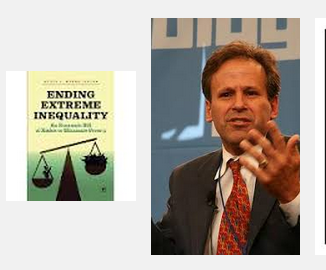
Scott Myers Lipton: Note From Us To #BidenHarris On Anti-Poverty
Five years on from this interview, it should NOT be necessary to remind people that with #COVID19, poverty and inequality are at record levels. Through the roof, they are, as foodbanks around the country increasingly bear witness. As Scott Myers-Lipton, @smlipton, showed us @KGNU in his book, "Ending Extreme Inequality: an Economic Bill of Rights to Eliminate Poverty", there are possibilities for real and long-lasting solutions. Conditions have renewed demands for a new Economic Bill of Rights, an American idea proposed by Franklin D. Roosevelt, Harry Truman, and Martin Luther King Jr. The new Economic Bill of Rights has a coherent plan and proclaims that all Americans have the right to a job, a living wage, a decent home, adequate medical care, a good education, and adequate protection from economic fears of unemployment, sickness, and old age. Integrating the latest economic and social data, his book explores each of these rights. Each chapter includes an analysis of the social problems surrounding each right, a historical overview of the attempts to implement these rights, and assessments of current solutions offered by citizens, community groups, and politicians. These contemporary, real-life solutions to inequality can inspire students and citizens to become involved and open pathways toward a more just society.

It's Such an Interesting Moment, Says Biden Biographer, Evan Osnos
On Election eve, Claudia Cragg speaks for @KGNU with Evan Osnos @eosnos about his book about Joe Biden, 2020 Presidential Candidate for The Democratic Party. Former vice president Joseph R. Biden Jr. has been called both the luckiest man and the unluckiest—fortunate to have sustained a fifty-year political career that reached the White House, but also marked by deep personal losses and disappointments that he has suffered. Yet even as Biden's life has been shaped by drama, it has also been powered by a willingness, rare at the top ranks of politics, to confront his shortcomings, errors, and reversals of fortune. As he says, "Failure at some point in your life is inevitable, but giving up is unforgivable." His trials have forged in him a deep empathy for others in hardship—an essential quality as he addresses Americans in the nation's most dire hour in decades. Blending up-close journalism and broader context, Evan Osnos, who won the National Book Award in 2014, draws on his work for The New Yorker to capture the characters and meaning of an extraordinary presidential election. It is based on lengthy interviews with Biden and on revealing conversations with more than a hundred others, including President Barack Obama, Cory Booker, Amy Klobuchar, Pete Buttigieg, and a range of progressive activists, advisers, opponents, and Biden family members. This portrayal illuminates Biden's long and eventful career in the Senate, his eight years as Obama's vice president, his sojourn in the political wilderness after being passed over for Hillary Clinton in 2016, his decision to challenge Donald Trump for the presidency, and his choice of Senator Kamala Harris as his running mate. Osnos ponders the difficulties Biden will face if elected and weighs how political circumstances, and changes in the candidate's thinking, have altered his positions. In this nuanced portrait, Biden emerges as flawed, yet resolute, and tempered by the flame of tragedy—a man who just may be uncannily suited for his moment in history.

Universal Suffrage a US Given - NOT in Indian Country, says Jean Reith Schroedel
Claudia Cragg @claudiacragg speaks with Jean Reith Schroedel about her new book, Voting in Indian County: The View from the Trenches. Schroedel is professor emerita of political science at Claremont Graduate University and in this work she weaves together historical and contemporary voting rights conflicts as they related particularly to Native Peoples. In response to the COVID-19 pandemic, South Dakota encouraged voters to use absentee ballots in the June 3 presidential primary election. Although the state received almost 89,000 absentee ballots in the primaries — five times the number of absentee ballots cast in the June 2016 primaries — and voting increased across the state, voter turnout on the Pine Ridge Reservation remained low, at approximately 10%. As Schroedel explains in her book, barriers to Indigenous voting are nothing new. Absentee ballots may only make them worse. Though the 1924 Indian Citizenship Act granted citizenship to all Indigenous people born within the United States, voting can still be difficult for tribal communities. During South Dakota's 2020 primary election, any voter who used an absentee ballot was required to mail in a ballot application accompanied by a photocopy of an acceptable photo ID card, or else have a public officer notarize the application. For people on the Pine Ridge Reservation, where businesses are often few and far between, producing a photocopy, or even finding a notary public, can pose significant barriers to applying for absentee ballots. In many cases, this is deliberate. Strategies designed to suppress the Indigenous vote, range from having too few polling stations on reservations to gerrymandering to dilute the impact of tribal votes to failing to adhere to the minority language requirement of the Voting Rights Act. Indigenous voters sometimes have to travel up to 200 miles to even reach a voter registration site or polling location. Indigenous voters also face blatant voter discrimination from local governments; many have had to engage in costly and burdensome lawsuits and court battles simply to gain access to the ballot box. In 2014 in South Dakota, the Jackson County Commission refused to place a satellite polling station in Wanblee, on the Pine Ridge Reservation, in time for the 2014 midterms. The county eventually installed the station, but only after four enrolled members of the Oglala Sioux Tribe sued. Since the U.S. Supreme Court ruling struck down part of the Voting Rights Act in 2013, a surge of laws has made it even more difficult to vote in Indian Country. In 2016, for example, Arizona passed a so-called "ballot harvesting" law that made it a felony for third parties to mail in or drop off another person's ballot. But many rural Indigenous voters rely on other people, including workers from voter assistance organizations, to collect and turn in their absentee ballots.

All Politics is Local, and Now More Than Ever, Says Heather Lende
Claudia Cragg (@claudiacragg) talks here to Heather Lende, (@HeatherLende) a New York Times bestselling author who writes about her hometown -- Haines, Alaska, She has been discussing what community means since she published If You Lived Here, I'd Know Your Name in 2006 (selling more than 125,000 copies). After the 2016 elections, Lende was inspired to take a more active role in politics and decided to run for office in Haines.And…She won! In OF BEARS AND BALLOTS: An Alaskan Adventure in Small-Town Politics (Algonquin Books), Lende uses her trademark humor, wit, and compassion to tell the funny and entertaining story of her first term on her small-town assembly, where we learn that the political, social, and environmental issues her community faces are not so different from the issues that are being played out on the national stage. The book is a "how to guide" for anyone thinking of beginning a career in local politics. She explains how the local government makes decisions on things that impact us everyday -- roads, schools, zoning for housing and stores, libraries, and the list goes on and on. "I think that social justice and public health are very much in the realm of local governments, and so much of what happens going forward will fall on the shoulders of people like me— elected to local councils and commissions— and how we interact with the community and the pressure from different interest groups, and I think my experience might help make that work out better than it has previously." Writes Lende. "All politics is local, and now more than ever— so why not learn about it from a citizen lawmaker who.. did okay, but was not perfect?" Heather Lende has contributed essays and commentary to NPR, the New York Times, and National Geographic Traveler, among other newspapers and magazines, and is a former contributing editor at Woman's Day. A columnist for the Alaska Dispatch News, she is the obituary writer for the Chilkat Valley News in Haines and the recipient of the Suzan Nightingale McKay Best Columnist Award from the Alaska Press Club. Her previous bestselling books are Find the Good, Take Good Care of the Garden and the Dogs, and If You Lived Here, I'd Know Your Name. Lende was voted Citizen of the Year, Haines Chamber of Commerce, in 2004. Her website is heatherlende.com

Harvard's Planetary Planetary Health Alliance - Dr Sam Myers
Claudia Cragg @claudiacragg speaks here with Samuel Myers of the Harvard Planetary Health Alliance. In a recent article he wrote for The Lancet with his colleague, Howard Frumkin, Myers states that, of course, elections impact health through changes in both health-care delivery and upstream social and environmental policies. The upcoming US election presents stark contrasts in environmental policies that will affect health in the USA and globally. His new book with Frumkin is Planetary Health: Protecting Nature to Protect Ourselves. Elections impact health through changes in both health-care delivery and upstream social and environmental policies. The upcoming US election presents stark contrasts in environmental policies that will affect health in the USA and globally. Here we examine these contrasts through the lens of planetary health. A hallmark of the current US administration, say Myers and Frumkin, has been its hostility to environmental stewardship and its embrace of an antiregulatory agenda. President Donald Trump has appointed administration officials from the ranks of polluting industries and their lobbying firms; eviscerated some key government agencies; and diluted or overturned environmental regulations. Notably, Trump has called climate change a hoax and has cast doubt on established science. The Democratic presidential candidate, Joe Biden, has stronger pro-environmental positions as evidenced by the actions of the Obama administration in which he served and by his published 2020 election platform on a clean energy revolution and environmental justice

Why Women Have To Do It For Themselves, Getting Better Healthcare
Claudia Cragg speaking for @KGNU to @Rosemarie_Day1 on #Women and #Healthcare #Obamacare and her new book Marching Toward Coverage: How Women Can Lead the Fight for Universal Healthcare Rosemarie Day is the former deputy director and chief operating officer of the Massachusetts Health Connector—the model for the Affordable Care Act. She is the director and chief operating officer of the Massachusetts Health Connector—the model for the Affordable Care Act. Medical insurance is complicated and, like virtually everything in American public life these days, has been politicized and in the process made still more confusing. Yet the present collection of crises—a pandemic, the challenge of accessing quality medical care, unemployment and its attendant loss of health insurance—has made clear more than any other moment in modern memory the importance of universal coverage. Add to this the fact that women are responsible for up to 80% of healthcare decisions for their families. Day has written a primer specifically for women on the ins and outs of medical insurance, with the objective of transforming our healthcare system using feminism as the lens and women as the drivers.

Revisiting T R Reid in the Age of Coronavirus
REPRISE of an interview for @KGNU in which Claudia Cragg talks for with T.R. Reid who was a bureau chief in Tokyo and London for The Washington Post. His book, "The Healing of America: A Global Quest for Better, Cheaper, and Fairer Health Care," is as valid with #COVID19 in 2020 as it was when originally published. It is a great shame that, in the intervening years, the lessons Reid so succinctly and expertly drew on from his wide experience of living outside of the US were not paid more attention to. His work is a systematic study of the health systems in seven countries that was inspired in part by his family's experiences living overseas and receiving health care abroad. Mr. Reid also produced a 2008 documentary on the same topic for PBS called "Sick Around the World."

RGB's SCOTUS Replacement as The Apotheosis of 'Religious Nationalism'
Claudia Cragg @claudiacragg speaks here with Katherine Stewart @kathsstewart about her book, 'The Power Worshippers: Inside the Dangerous Rise of Religious Nationalism.' With a sad nation still mourning the tragic loss of Ruth Bader Ginsburg, Stewart's work takes on new relevance in its opinion that for too long the 'Religious Right' has masqueraded as a social movement preoccupied with a number of cultural issues, such as abortion and same-sex marriage. In her deeply reported investigation, she reveals a disturbing truth: this is a political movement that seeks to gain power and to impose its vision on all of society. America's religious nationalists aren't just fighting a culture war, they are waging a political war on the norms and institutions of American democracy. Stewart pulls back the curtain on the inner workings and leading personalities of a movement that has turned religion into a tool for domination. She exposes a dense network of think tanks, advocacy groups, and pastoral organizations embedded in a rapidly expanding community of international alliances and united not by any central command but by a shared, anti-democratic vision and a common will to power. She follows the money that fuels this movement, tracing much of it to a cadre of super-wealthy, ultraconservative donors and family foundations. She shows that today's Christian nationalism is the fruit of a longstanding antidemocratic, reactionary strain of American thought that draws on some of the most troubling episodes in America's past. It forms common cause with a globe-spanning movement that seeks to destroy liberal democracy and replace it with nationalist, theocratic and autocratic forms of government around the world. Religious nationalism is far more organized and better funded than most people realize. It seeks to control all aspects of government and society. Its successes have been stunning, and its influence now extends to every aspect of American life, from the White House to state capitols, from our schools to our hospitals. The Power Worshippers is a brilliantly reported book of warning and a wake-up call. Stewart's probing examination demands that Christian nationalism be taken seriously as a significant threat to the American republic and our democratic freedoms.