
ChatChat - Claudia Cragg
99 episodes — Page 2 of 2

Systemic Racism IS Built In To The US Through White Christian Privilege
Claudia Cragg @claudiacragg speaks here with Kyathi Joshi @profkjoshi about her book 'White Christian Privilege: The Illusion of Religious Equality in America.' The United States is recognized as the most religiously diverse country in the world, and yet its laws and customs, which many have come to see as normal features of American life, actually keep the Constitutional ideal of "religious freedom for all" from becoming a reality. Christian beliefs, norms, and practices infuse our society; they are embedded in our institutions, creating the structures and expectations that define the idea of "Americanness." Religious minorities still struggle for recognition and for the opportunity to be treated as fully and equally legitimate members of American society. From the courtroom to the classroom, their scriptures and practices are viewed with suspicion, and bias embedded in centuries of Supreme Court rulings create structural disadvantages that endure today. In White Christian Privilege, Khyati Y. Joshi traces Christianity's influence on the American experiment from before the founding of the Republic to the social movements of today. Mapping the way through centuries of slavery, westward expansion, immigration, and citizenship laws, she also reveals the ways Christian privilege in the United States has always been entangled with notions of White supremacy. Through the voices of Christians and religious minorities, Joshi explores how Christian privilege and White racial norms affect the lives of all Americans, often in subtle ways that society overlooks. By shining a light on the inequalities these privileges create, Joshi points the way forward, urging readers to help remake America as a diverse democracy with a commitment to true religious freedom.

How Did China Get The Better of COVID19 and Why Can't We?
Claudia Cragg @claudiacragg speaks here with Peter Hessler @peterhessler. @NewYorker For @KGNU we discuss here what may be learned from how China managed and appears to have controlled #Coronavirus. #COVID19. Hessler has been teaching and living with his wife, the journalist Leslie T Chang, and their family in Sichuan throughout the pandemic. Peter Hessler joined The New Yorker as a staff writer in 2000. From 2000 until 2007, he was the magazine's correspondent in China and, from 2011 to 2016, he was based in Cairo, where he covered the events of the Egyptian Arab Spring. His subjects have included archeology in both China and Egypt, a factory worker in Shenzhen, a garbage collector in Cairo, a small-town druggist in rural Colorado, and Chinese lingerie dealers in Upper Egypt. Before joining The New Yorker, he was a Peace Corps volunteer in Fuling, a small Chinese city on the Yangtze River. He is the author of six books, including a trilogy about the decade-plus that he spent in China: "River Town," "Oracle Bones,"which was a National Book Award finalist, and "Country Driving." His book about Egypt, "The Buried," was published in May. He is the winner of an American Society of Magazine Editors award and, in 2011, was named a MacArthur Fellow. He lives in southwestern Colorado.
Film-Maker Motaz H Matar, a Syrian and Palestinian, on His New Book
@claudiacragg speaks here with @motazhmatar about his new book, The Pigeon Whispeer. It is a magical book which, nevertheless, raises such important issues such as hope, hopelessness, belonging, war, migration, love, and loss Dabbour is a 25-year-old Syrian refuge and introvert and a pigeon herder. He fled with to Berlin with Yasser, his childhood friend and the two have succeeded in finding a new home using fake passports. Dabbour is trying to learn the ropes in this new country; while trying to learn German he's fallen for his German teacher, Zara. One day, Dabbour jumps on the railway tracks to save an injured pigeon and almost gets himself killed. For this, he gets arrested by the police – and realizes how much he misses home and the birds. Yasser asks Dabbour to use his talents as a "pigeon whisperer" and steal stray pigeons to transport drugs. Dabbour agrees, then realizes it was a big mistake. Dabbour is forced to choose between his loyalty to his friend and the promise of a new "family" and doing the right thing. Dabbour sinks further and further into the world of crime and drug smuggling. Website: http://www.motazhmatar.com Facebook: Facebook profile LinkedIn: https://www.linkedin.com/in/motazmatar/ Blog: http://motazhmatar.com/blog Motaz Matar is an award-winning Palestinian Film and TV Director and Screenwriter. He holds an MFA degree in Cinematic Arts, and an MA in Serial storytelling from Cologne, Germany where he was the first Arab selected in the third cohort amongst 10 International students. For four years he taught university-level film production, and design in Dubai, Sharjah, and Jordan. With his experience as an independent film and TV director, Motaz achieved recognition in several regional TV Channels and Film Festivals in the Middle-East and throughout the world. In 2012 he was awarded the Golden Award at the PromaxBDA Arabia for a Television teaser he wrote and directed. In 2017 Motaz's first feature film "Slingshot" was officially selected in the Mediterranean film festival in Cannes and the Calcutta International film festival. Motaz is the founder of the First Arab Chat Fiction Mobile Application "Hakawaty" which aims to revolutionize the way stories are consumed in the Arab world. His creative vision, he believes, is try to use his passion for storytelling to share meaningful human experiences through art and education.

Dr Carolyn L. White, The Virtual Burning Man Still Has Many Life Lessons for All
@claudiacragg speaks here for @KGNU with archeologist Dr. Carolyn White who, for over a decade, has been studying The #BurningMan and its California location. Her studies continue this year even though the festival has gone virtual due to #COVID19. Because the event requires participants to "leave no trace," the site is according to White "an archaeologist's worst nightmare." And yet she finds that #BlackRockCity is also the perfect site at which to conduct "active site" research, which looks not at ancient ruins, but at places that are currently inhabited. How does one do archeology in a city that is at once growing and disappearing? And what can we learn about cities from looking at one so ephemeral? In her forthcoming book, The Archaeology of Burning Man: The Rise and Fall of Black Rock City, White explains that there is something distinctive about active-site archaeology. When conducting this type of research, one must "confront on a minute-by-minute basis the ways that the city's residents are the creators, users, and destroyers of the city…. Black Rock City is not just a place where something curious is happening; it is a place where the rhythm of daily life is accelerated and where all archaeologists might imagine the role that similar elements may have played at other sites." White's work sheds light on the noise, disruption, and movement that mark all cities: "Cities are built and cities are destroyed, and in between their birth and death people inhabit them. In the interval between construction and devastation there are thousands and thousands of small and messy events of building and undoing." Burning Man is interesting because of the tension between it being an amazing place and a typical place. And this is true of everyplace. Every place is both typical and unique. In the end, "All cities are temporary," writes White, "but some are more temporary than others."

To Avoid the COVID19 Education Slide, Become a Tiger Parent?
@claudiacragg speaks here for @KGNU with Pawan Dhingra, @phdhingra1 author of Hyper Education Why Good Schools, Good Grades, and Good Behavior Are Not Enough? In this book, Dr. Dhingra offers an up-close look at the arms race in at home/after-school learning, academic competitions – and the perceived failure of even our best schools to educate children. Dhingra offers a useful critique of how privileged families are skewing the educational system in pursuit of advantages for their kids. He also makes a case that all of this "hyper-ness" is about achieving and exceeding the American Dream, something some immigrant communities, in particular, take very seriously. Dr. Dhingra is Professor of American Studies; Faculty Diversity and Inclusion Officer @AmherstCollege.

Start Ups, Says Brad Feld, More Important Now Than Ever
Claudia Cragg speaks here for @KGNU #ItsTheEconomy with Brad Feld @bfeld. He has been an early stage investor and entrepreneur since 1987. Prior to co-founding Foundry Group, he co-founded Mobius Venture Capital and, prior to that, founded Intensity Ventures. Brad is also a co-founder of Techstars. Brad is a writer and speaker on the topics of venture capital investing and entrepreneurship. He's written a number of books as part of the Startup Revolution series and writes the blogs Feld Thoughts and Venture Deals. Boulder, CO, he says is important as an example right now, not not only exemplifying his BoulderThesis, but laying out a blueprint that other communities can follow.

Hard Lessons and Sound Advice from The CA (Camp) 'Fire in Paradise'
Fire season is upon us and for @KGNU Claudia Cragg @claudiacragg speaks here with @Dani_Anguiano and @alastairgee for an update on their reporting work for The Guardian @guardian about the devastating Camp Fire in California of nearly two years ago. Fire in Paradise: An American Tragedy is the harrowing story of the most destructive American wildfire in a century. There is no precedent in postwar American history for the destruction of the town of Paradise, California. On November 8, 2018, the community of 27,000 people was swallowed by the ferocious Camp Fire, which razed virtually every home and killed at least 85 people. The catastrophe seared the American imagination, taking the front page of every major national newspaper and top billing on the news networks. It displaced tens of thousands of people, yielding a refugee crisis that continues to unfold.

The Elaine Arkansas Massacre - Racism Then and Now
@claudiacragg speaks here with J Chester Johnson about a side of his grandfather, Lonnie Burch, that he never knew and only discovered late in his own life. His new book is Damaged Heritage and is he says a 'story of reconciliation'. The 1919 Elaine Race Massacre, arguably the worst in US history (see more details below), has been widely unknown for the better part of a century, thanks to the whitewashing of history. In 2008, Johnson was asked to write the Litany of Offense and Apology for a National Day of Repentance, where the Episcopal Church formally apologized for its role in transatlantic slavery and related evils. In his research, Johnson happened upon a treatise by historian and anti-lynching advocate Ida B. Wells on the Elaine Massacre, where more than a hundred and possibly hundreds of African-American men, women, and children perished at the hands of white posses, vigilantes, and federal troops in rural Phillips County, Arkansas. Johnson would discover that his beloved grandfather had been a member of the KKK and participated in the massacre. The discovery shook him to his core. Thereafter, he met Sheila L. Walker, a descendant of African-American victims of the massacre, and she and Johnson committed themselves to reconciliation. Damaged Heritage brings to light a deliberately erased chapter in American history, and offers a blueprint for how our pluralistic society can at last acknowledge—and repudiate—our collective damaged heritage and begin a path towards true healing. The Elaine Massacre occurred on September 30–October 1, 1919, at Hoop Spur in the vicinity of Elaine in rural Phillips County, Arkansas. Some records of the time state that eleven black men and five white men were killed.[4] Estimates of deaths made in the immediate aftermath of the Elaine Massacre by eyewitnesses range from 50 to "more than a hundred".[5] Walter White, an NAACP attorney who visited Elaine, AR shortly after the incident stated "... twenty-five Negroes killed, although some place the Negro fatalities as high as one hundred"[6]. More recent estimates of the number of black people killed during this violence are higher than estimates provided by the eyewitnesses, recently ranging into the hundreds.[2][1] The white mobs were aided by federal troops (requested by Arkansas governor Charles Brough) and vigilante militias like the Ku Klux Klan.[7] According to the Encyclopedia of Arkansas, "the Elaine Massacre was by far the deadliest racial confrontation in Arkansas history and possibly the bloodiest racial conflict in the history of the United States".[8][9] After the massacre, state officials concocted an elaborate cover-up, falsely claiming that blacks were planning an insurrection.[7] The cover-up was successful, as national newspapers repeated the falsehood that blacks in Arkansas were staging an insurrection.[7] A New York Times headline read, "Planned Massacre of Whites Today," and the Arkansas Gazette (the leading newspaper in Arkansas) wrote that Elaine was "a zone of negro insurrection."[7] Subsequent to this reporting, more than 100 African-Americans were indicted, with 12 being sentenced to death by electrocution.[7] After a years-long legal battle by the NAACP, the 12 men were acquitted.[7] Because of the widespread attacks which white mobs committed against blacks during this period of racial terrorism against black citizens, the Equal Justice Initiative of Montgomery, Alabama classified the black deaths as lynchings in its 2015 report on the lynching of African Americans in the South.[10]

"White Privilege" and Sexual Assault - Ssssssshhhhhhhh.
Claudia Cragg @claudiacragg speaks here for @KGNU with Lacy Crawford @lacy_crawford about her memoir, 'Notes On A Silencing'. One night in October 1990, a young Lacy Crawford took a phone call at her dorm, surprised to hear an older boy pleading for her to come help him. Crawford was mystified but convinced there must be a reason, so she slipped across her boarding school campus and met the boy at his dorm window. When she climbed inside, she was confronted by the boy and his roommate, both stripped down to their underwear. That night would haunt her for decades to come. Crawford emphasizes that the sexual assault she experienced was not unusual. "It's so simple, what happened at St. Paul's. It happens all the time," she writes. "First, they refused to believe me. Then they shamed me. Then they silenced me." She describes St. Paul's as a lauded, sometimes lonely place where privileged teens were obsessed with their academic futures. (The author, when faced with the possibility of not returning for her senior year, pleaded with her parents: But what about Princeton?) Crawford, a novelist, uses her storytelling skill to illuminate the myriad ways female students were taught that their desires and bodies were less valuable than—even subject to—those of their male peers. She'd had other sexual experiences as a teenager, a fact her teachers later used against her. When she began to experience physical ailments because of her assault, Crawford was certain it was a result of "what she had done." She was so wrecked by the experience that she saw herself, not the boys, as the one to blame. Crawford's detailed account of her assault and its aftermath relies on an indelible memory as well as careful research. Medical reports and other documentation help her piece together the school's reaction when she revisits it decades later, after other victims began holding the school accountable. Notes on a Silencing is a ghastly account that all would wish Crawford would never have hard to write, of a teenage girl learning that people in power often value reputation above all else.

The Legendary Joanne Greenberg Revisited
When our younger son finished reading Sylvia Plath's The Bell Jar some years ago, he commented that it was not only an extraordinary literary work but also, of course, a source for rare insight into the complications of mental illness. This reminded me of a conversation (not so much a formal interview, you understand) I had a few years ago with the fabulous and extraordinary author, Joanne Greenberg, who as Hannah Green wrote I Never Promised You a Rose Garden. This work is a fictionalized depiction of Joanne Greenberg's own treatment experience decades ago at Chestnut Lodge Hospital in Rockville, Maryland, during which she was in psychoanalytic treatment with Frieda Fromm-Reichmann. The book takes place in the late 1940s and early 1950s, at a time when Harry Stack Sullivan, Frieda Fromm-Reichmann, and Clara Thompson were establishing the basis for the interpersonal school of psychiatry and psychoanalysis, focusing specifically, though by no means exclusively, on the treatment of schizophrenia. Greenberg has written that :- "I wrote [I Never Promised You a Rose Garden] as a way of describing mental illness without the romanticisation that it underwent in the sixties and seventies when people were taking LSD to simulate what they thought was a liberating experience. During those days, people often confused creativity with insanity. There is no creativity in madness; madness is the opposite of creativity, although people may be creative in spite of being mentally ill." (From the National Association for Rights Protection and Advocacy website)

Simon Winchester on #China and Joseph Needham
With all the #Chinabashing going on, it's perhaps important to remember why the #PRC, its people and culture rather than its national entity, matters to the rest of the world. It is easy to lose sight of now but that is why perhaps in June 2020 it's a good time to reprise a previously broadcast interview with Simon Winchester @simonwwriter. @claudiacragg speaks here with Winchester about Joseph Needham and 'The Needham Question'. The subject caused the most tremendous brouhaha in The New York Times over a decade ago (Simon Winchester, New York Times, Op Ed, May 15th, 2008). At the time, I commented that I can only think those who responded with such vitriol to Winchester knew absolutely nothing at all about Winchester and his work, nor anything about the subject of his new book. In this latest opus, the award-winning Foreign Correspondent, Simon Winchester returns with the remarkable story of the growth of a great nation, China, and the eccentric and adventurous scientist who defined its essence for the world in his multi-volume opus, 'Science and Civilization in China'. Winchester relates how most of us know that the Chinese invented a great variety of objects and devices long before they were known of in the West. Not simply famous things like gunpowder and paper, but also harnesses for horses which had a huge effect on the West when they arrived. Why, though, did Modern Science develop in Europe when China seemed so much better placed to achieve it? This is the so-called 'Needham Question', after Joseph Needham, the 20th century British Sinologist who did more, perhaps, than anyone else to try and explain it. Needham was a British biochemist and was elected a fellow of both the Royal Society and the British Academy. In China, he is known mainly by his Chinese name Li Yuese He was also cited by the United States during the McCarthy era for his investigation into the use of illegal weapons by the US on the Koreans in the Korean War. Winchester, The New York Times bestselling author of The Professor and the Madman and Krakatoa is a writer and adventurer whose articles have appeared in such publications as the National Geographic and Conde Nast Traveler . He has now written well over a dozen books on travel and history.

Walter Schaub, Former OGE Director, now CREW Senior Advisor
Walter Schaub @waltshaub speaks here with @claudiacragg for @KGNU @KGNUNews about ethics in government and the filing of a complaint with regard to the management of #COVID19 and a member of the administration. Schaub is a senior advisor to CREW, Citizens for Responsibility and Ethics in Washington who previously served as director of the U.S. Office of Government Ethics (OGE). He is a frequent cable news contributor and has also worked at the Department of Health and Human Services, the Department of Veterans Affairs, the Campaign Legal Center @OfficeGovEthics

"YOU don't understand The Second Amendment" -
Claudia Cragg, @claudiacragg (all comments greatly welcomed) speaks here with Jonathan Hennessey, @iamaraindogtoo filmmaker and documentarian. He is the author of several books addressing American history, including: The United States Constitution: A Graphic Adaptation, Alexander Hamilton: The Graphic History of an American Founding Father and The Gettysburg Address: A Graphic Adaptation and more. His new film is called You Don't Understand the Second Amendment.

Ratf**ked David Daley Battles Back with UNRigged to Save Democracy
@claudiacragg speaks with @davedaley3, author: "Ratf**ked: Why Your Vote Doesn't Count" & "Unrigged: How Americans Battled Back To Save Democracy," ex-EIC @salon [email protected] Following Ratf**ked, his "extraordinary timely and undeniably important" (New York Times Book Review) exposé of how a small cadre of Republican operatives rigged American elections, David Daley emerged as one of the nation's leading authorities on gerrymandering. In Unrigged, he charts a vibrant political movement that is rising in the wake of his and other reporters' revelations. With his trademark journalistic rigor and narrative flair, Daley reports on Pennsylvania's dramatic defeat of a gerrymander using the research of ingenious mathematicians and the Michigan millennial who launched a statewide redistricting revolution with a Facebook post. He tells the stories of activist groups that paved the way for 2018's historic blue wave and won crucial battles for voting rights in Florida, Maine, Utah, and nationwide. In an age of polarization, Unrigged offers a vivid portrait of a nation transformed by a new civic awakening, and provides a blueprint for what must be done to keep American democracy afloat.
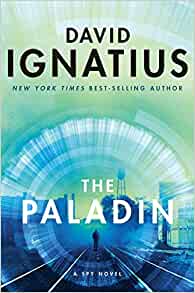
#WaPo David Ignatius on The FBI, The CIA, Short Selling and Deep Fakes
@claudiacragg speaks with The Washington Post's David Ignatius @ignatiuspost about his new novel, The Paladin. He is a prize winning novelist who has been covering the Middle East and the CIA for nearly four decades. The story is this: when a daring, high-tech CIA operation goes wrong and is disavowed, the protagonist Michael Dunne sets out for revenge. A CIA operations officer Dunne is tasked with infiltrating an Italian news organization that smells like a front for an enemy intelligence service. Headed by an American journalist, the self-styled bandits run a cyber operation unlike anything the CIA has seen before. Fast, slick, and indiscriminate, the group steals secrets from everywhere and anyone, and exploits them in ways the CIA can neither understand nor stop. Dunne knows it's illegal to run a covert op on an American citizen or journalist, but he has never refused an assignment and his boss has assured his protection. Soon after Dunne infiltrates the organization, however, his cover disintegrates. When news of the operation breaks and someone leaks that Dunne had an extramarital affair while on the job, the CIA leaves him to take the fall. Now a year later, fresh out of jail, Dunne sets out to hunt down and take vengeance on the people who destroyed his life. Reviewers have compared Ignatius's work to classic spy novels like those by Graham Greene. Ignatius's novels have also been praised for their realism; his first novel, Agents of Innocence, was at one point described by the CIA on its website as "a novel but not fiction." His 1999 novel, The Sun King, a reworking of The Great Gatsby set in late-20th-century Washington, is his only departure from the espionage genre. His 2007 novel, Body of Lies, was adapted into a film by director Ridley Scott. It starred Leonardo DiCaprio and Russell Crowe. Disney and producer Jerry Bruckheimer have acquired the rights to Ignatius's seventh novel, The Increment.[19] The Quantum Spy, published in 2017, is an espionage thriller about the race between the United States and China to build the world's first hyper-fast quantum computer. His most recent book is The Paladin: A Spy Novel (2020). He is a former adjunct lecturer at the Kennedy School of Government at Harvard University and currently Senior Fellow to the Future of Diplomacy Program. He has received numerous honors, including the Legion of Honor from the French Republic, the Urbino World Press Award from the Italian Republic, and a lifetime achievement award from the International Committee for Foreign Journalism.

COVID19 Kills Cash Too
A growing number of businesses and individuals worldwide have stopped using banknotes in fear that physical currency, handled by tens of thousands of people over its lifetime, could be a vector for the coronavirus. Public officials and health experts have said the risk of transferring the virus person-to-person through the use of banknotes is low, but they don't rule it out. While it is of course eminently sensible to avoid every possible source of Covid 19 contamination, the consequences of a cashless society inevitably hit hard the credit-poor, those who can least afford it. 'And the cashless society', says Brett Scott, is a euphemism for the "ask-your-banks-for-permission-to-pay society". Rather than an exchange occurring directly between the hotel and me, it takes the form of a "have your people talk to my people" affair. Various intermediaries message one another to arrange an exchange between our respective banks. That may be a convenient option, but in a cashless society it would no longer be an option at all. You'd have no choice but to conform to the intermediaries' automated bureaucracy, giving them a lot of power, and a lot of data about the micro-texture of your economic life.

COVID 19 - an Unequal Opportunity Killer, with Daniel E. Dawes, Esq.
According to a new report from the CDC, the Center for Disease Control, African Americans are being "disproportionately affected by COVID-19." The data showed that 33% of those hospitalized are black, a rate that outstripsrelative population size. KGNU's Claudia Cragg, @claudiacragg speaks here with Daniel E. Dawes, a nationally recognized leader in healthcare law and policy, who has been an instrumental figure in shaping the Affordable Care Act, aka 'Obamacare' and who also founded and chaired the largest advocacy group focused on developing comprehensive legislation to reform the US health care system. This advocacy group of more than 300 national organizations and coalitions, the National Working Group on Health Disparities and Health Reform, worked to ensure passage of the landmark health reform law and to include provisions to improve healthcare quality and delivery.

Is CARES enough with millions of COVID unemployed?
At least 10 percent of American workers have lost their jobs in the past three weeks amid the coronavirus pandemic and a record 6.6 million new claims for unemployment benefits were filed last week. Weekly new claims topped 6 million for the second straight time last week as tough measures to control the novel coronavirus outbreak abruptly ground the country to halt. The Labor Department said today that first-time claims for unemployment benefits in the week ending April 4 totaled 6.6 million, down slightly from an upwardly revised 6.87 million the week before. In total, at least 16.8 million Americans have now filed for unemployment aid in the past three weeks as the coronavirus spread throughout the country and businesses closed. In response the Administration has passed the CARES act. To discuss this act, and with suggestions on how best perhaps the federal government should move forward with truly effective efforts to help the most people in the quickest time, Claudia Cragg, @claudiacragg, speaks here with Ellen Brown. Ellen Brown is the founder of the Public Banking Institute and the author of a dozen books and hundreds of articles. She developed her research skills as an attorney practicing civil litigation in Los Angeles. In the best-selling Web of Debt (2007, 2012), she turned those skills to an analysis of the Federal Reserve and "the money trust," showing how this private cartel has usurped the power to create money from the people themselves and how we the people can get it back. In The Public Bank Solution (2013) she traces the evolution of two banking models that have competed historically, public and private; and explores contemporary public banking systems globally. She has presented these ideas at scores of conferences in the US and abroad, including in England, Ireland, Scotland, Wales, Canada, Iceland, Ireland, Switzerland, Sweden, the Netherlands, Germany, Croatia, Malaysia, Mexico and Venezuela. Brown developed an interest in the developing world and its problems while living abroad for eleven years in Kenya, Honduras, Guatemala and Nicaragua. She returned to practicing law when she was asked to join the legal team of a popular Tijuana healer with an innovative cancer therapy, who was targeted by the chemotherapy industry in the 1990s. That experience produced her book Forbidden Medicine, which traces the suppression of natural health treatments to the same corrupting influences that have captured the money system. She also co-authored the bestselling Nature's Pharmacy, which has sold 285,000 copies. Ellen ran for California State Treasurer in 2014 with the endorsement of the Green Party garnering a record number of votes for a Green Party candidate. Her 330+ blog articles are at http://EllenBrown.com. The Public Banking Institute is at http://PublicBankingInstitute.org.

Reprise - Because If There Is Ever A Need For 'Magical Thinking'...
Isabel Allende @isabelallende has been through a great deal in her life and that is why perhaps listening to her story now might be helpful to some? Believe it or not, the esteemed poet Pablo Neruda once called Isabel Allende "the worst journalist he had ever met..." This was because she had the effrontery to try and write his memoirs. Nevertheless, today Allende is the author of over a dozen books and memoirs of her own which together have sold fifty-one million copies. Her debut novel in 1982, The House of the Spirits, told the tale of four generations of a Chilean family and at ths time of this interview her latest work was a memoir The Sum of Our Days. This picks up the story where her last memoir, Paula, ended. She recently discussed politics and Pinochet, feminism, her home in Marin County with her second husband, the lawyer Willie Gordon and her extended family, the death of her daughter Paula, as well as the death of Willie's daughter, Jennifer. from a drug overdose and other details of her fascinating life with Claudia Cragg. Allende started the Isabel Allende Foundation on December 9, 1996 to pay homage to her daughter, Paula Frías Allende who experienced a coma after complications of the disease porphyria placed her on a hospital bed. Paula was only twenty-eight years old when she died in 1992. The foundation is "dedicated to supporting programs that promote and preserve the fundamental rights of women and children to be empowered and protected.

The Congressional 'Squad' vs. 'Badasses' Take on Rebalancing Values
Claudia Cragg @claudiacragg speaks here with Jennifer Steinhauer @jestei @nytimes about her lively study, "The Firsts: The Inside Story of the Women Reshaping Congress." In January 2019, the largest number of women ever elected to Congress was sworn in—87 in the house and 23 in the Senate - this was a dress rehearsal for the 2020 primary and general election. Democratic women won largely on painting the GOP as incompetent especially around health care. This history-making Class of '19 included many remarkable firsts: the youngest woman ever to serve; the first two Muslim women; the first two native American women, one openly gay; a black woman from a nearly all-white Chicago suburb; and a Hispanic woman from a heavily Republican border region. In many instances, these were the first women and/or persons of color and/or youngest persons to serve from their state or district. Veteran New York Times Capitol Hill reporter Jennifer Steinhauer has been following this historic transition from day one. She uses her rare vantage point to take a behind-the-scenes look at these newcomer's individual and collective attempts to usher in real change in Washington.Offering expert historical context, intimate detail, and you-are-there access to the halls of the Capitol, Steinhauer followed these women closely for their first year, interviewing them and their staff and colleagues. With her seasoned political eye, she assesses not only how these women are doing, but whether their election will have a long-term impact… Will the issues they and their constituents most care about—such as health care, childcare, and pay equity—finally get a permanent place at the table? Can these women, many already social media stars and political punching bags, find a way to break through the partisan stalemate and hidebound traditions of Washington, DC? Which is a more salient marker of change—their gender, or the diversity of age, race, religion and economic status they bring to Congress? Who will have staying power in our era of twenty-four-hour news cycles and nonstop social media feeds, and who will be gone in two years? Jennifer Steinhauer has covered numerous high-profile beats in her twenty-five-year reporting career at the New York Times, from City Hall bureau chief and Los Angeles bureau chief to Capitol Hill. She won the Newswoman's Club of New York Front Page Deadline Reporting Award in 2006 for her reporting on Hurricane Katrina. She has also written a novel about the television business, and two cookbooks.

ISOLATION - Community and Love in a Time of Coronavirus
Claudia Cragg @claudiacragg speaks here with Val Walker @ValWalkerAuthor about her friendly, candid, and comforting guide for isolating times when we have no one to count on, 400 Friends and No One to Call. As we potentially enter a time for mass isolation, the guide may just help some to cope a little more and also encourage those who ARE coping to help those who are not. Despite the inclusive promise of social media, loneliness is in any case, even in far more 'normal' times, a growing epidemic in the United States and throughout the world. Social isolation can shatter our confidence. In isolating times, we're not only lonely, we're also ashamed because our society stigmatizes people who appear to be without support. As a single, fifty-eight-year-old woman, Val Walker found herself stranded and alone after major surgery when her friends didn't show up. As a professional rehabilitation counselor, she was too embarrassed to reveal how utterly isolated she was by asking for someone to help, and it felt agonizingly awkward calling colleagues out of the blue. As she recovered, Val found her voice and developed a plan of action for people who lack social support, not only to heal from the pain of isolation, but to create a solid strategy for rebuilding a sense of community. 400 Friends and No One to Call spells out the how-tos for befriending our wider community, building a social safety net, and fostering our sense of belonging. On a deeper level, we are invited to befriend our loneliness, rather than feel ashamed of it, and open our hearts and minds to others trapped in isolation.

How Are You Coping Right Now?
Claudia Cragg (@claudiacragg) speaks here with Dr. Richard J. Davidson (@healthyminds) about the book he co-wrote, 'Altered Traits'. In the last twenty years, meditation and mindfulness have gone from being kind of cool to becoming an omnipresent Band-Aid for fixing everything from your weight to your relationship to your achievement level. Unveiling here the kind of cutting-edge research that has made them giants in their fields, Daniel Goleman and Richard Davidson show us the truth about what meditation can really do for us, as well as exactly how to get the most out of it. Sweeping away common misconceptions and neuromythology to open readers' eyes to the ways data has been distorted to sell mind-training methods, the authors demonstrate that beyond the pleasant states mental exercises can produce, the real payoffs are the lasting personality traits that can result. But short daily doses will not get us to the highest level of lasting positive change—even if we continue for years—without specific additions. More than sheer hours, we need smart practice, including crucial ingredients such as targeted feedback from a master teacher and a more spacious, less attached view of the self, all of which are missing in widespread versions of mind training. The authors also reveal the latest data from Davidson's own lab that point to a new methodology for developing a broader array of mind-training methods with larger implications for how we can derive the greatest benefits from the practice.

ABANDONED: Up to 4.5 million young people, ages 16 - 24, Anne Kim
Claudia Cragg @claudiacragg speaks here with @Anne_S_Kim about those millions of young people Kim considers 'Abandoned'. Anne Kim is a writer based in northern Virginia and the author of Abandoned: America's Lost Youth and the Crisis of Disconnection. She was special projects editor at the Washington Monthly in 2013 and senior writer from 2015 to 2018. Americans under the age of 25 grab headlines when they launch flashy startups or become activists for social change. However, as Washington Monthly Anne Kim shows, both in this discussion and her book, the success of such leaders masks an alarming reality ill-served by current public policy: "In 2017, as many as 4.5 million young people" ages 16-24 were neither in school nor working. Social scientists call them "disconnected youth" (or, in Europe, NEETs, for "not in employment, education, or training"), and many of them have aged out of foster care or spent time in prison and lack the support of trusted adults. A vice president of the Progressive Policy Institute, Kim shows clearly how their plight tends to result from years of systemic failures.

"Power, Homosexuality and Hypocrisy" in The Closet of the Vatican
Claudia Cragg (@claudiacragg) speaks here with Frederic Martel (@martelf) for the new paperback publication of his latest book, In The Closet of The Vatican. Pope Francis declared that "behind rigidity there is always something hidden, in many cases a double life." These are the disturbing words that the Pope himself has used to unlock the "closet." In the new paperback edition of this New York Times bestseller,(Bloomsbury Continuum; 9781472966186; paperback now out), author and renowned French journalist Frédéric Martel reveals new events that have occurred since the original text's publication. In the Closet of the Vatican provides a shocking and detailed account of the abuse and malpractice—sexual, political and financial—in the Catholic Church. Now in a revised translation and with updated material, this brilliant piece of investigative writing is based on four years' authoritative research, including extensive interviews with those in power.
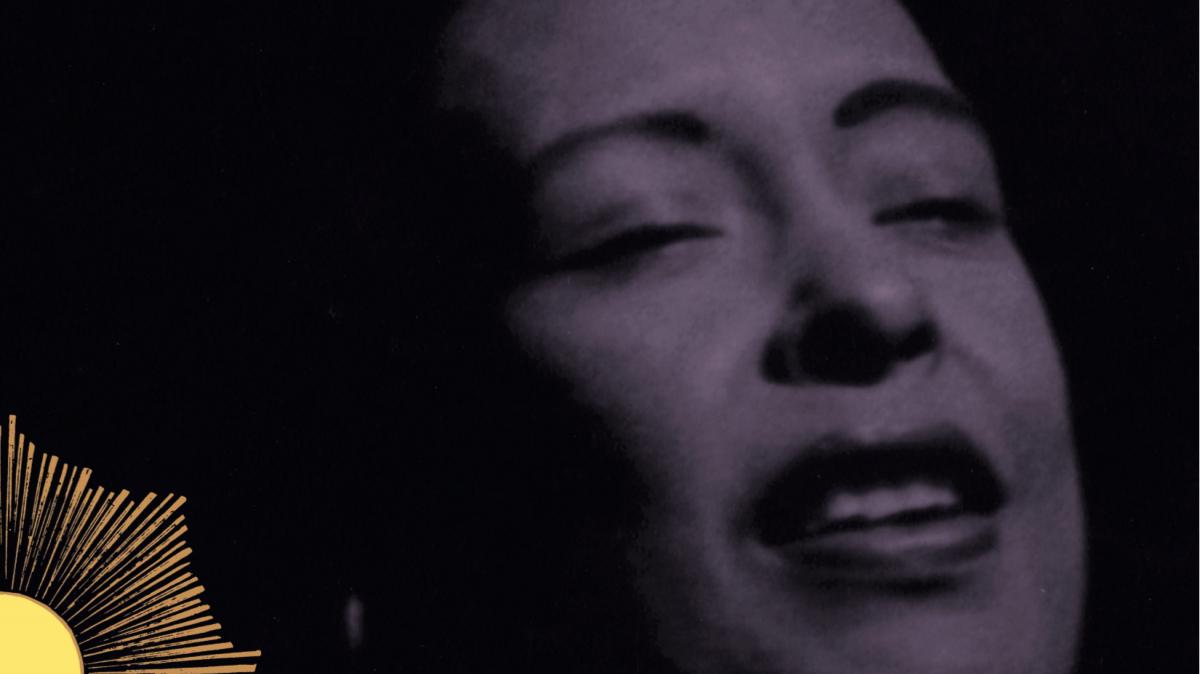
What Made 'The Lady Sing The Blues'?
Soulful jazz singer Billie Holliday is remembered these days for her unique sound, troubled personal history, and a catalogue that includes such resonant songs as Strange Fruit and God Bless the Child. Claudia Cragg, @claudiacragg, speaks here with Tracy Fessenden about the surprising ways in which Holiday and her music were also strongly shaped by religion. Religion Around Billie Holiday is not a new biography of the jazz legend, nor does the book come up with many new findings about the life of the much-studied singer or the thoroughly documented jazz milieu she inhabited. Rather, the book offers a subtle recontextualization of Holiday's life. It presents a vivid portrait of an iconic jazz artist not known for piety or ties to organized religion. Fessenden does investigate in greater detail than previous books the influence of Holiday's Catholic upbringing, in particular her two stints at the House of the Good Shepherd for Colored Girls. Mixing elements of biography with the history of race and American music, she will explore the multiple religious influences on Holiday's life and sound, including her time spent as a child in a Baltimore convent, the echoes of black Southern churches in the blues she heard in brothels, the secular riffs on ancestral faith in the poetry of the Harlem Renaissance, and the Jewish songwriting culture of Tin Pan Alley. Growing out of Fessenden's most recent publication, Religion Around Billie Holiday (Penn State UP, 2018), the lecture aims to illuminate the power and durability of religion in the making of an American musical icon. Tracy Fessenden holds the Steve and Margaret Forster Professorship in Comparative Mythology at Arizona State University, where she is a member of the faculty of Religious Studies. She is a scholar of American religion and the secular who focuses on literature and the arts in the nineteenth and twentieth centuries. In addition to Religion Around Billie Holiday, Fessenden is the author of Culture and Redemption: Religion, the Secular, and American Literature (Princeton UP, 2007) and co-editor of The Puritan Origins of American Sex: Religion, Sexuality, and American Literature (Routledge, 2001), and Religion, the Secular, and the Politics of Sexual Difference (Columbia UP, 2013). She is Editor of Religion and American Culture: A Journal of Interpretation and General Editor of the North American Religions series at New York University Press.

Literary Lion, Michael Korda Speaks of Love and Loss
(At the end of this interview, Cleo Z. reads Mary Oliver's poem, 'I Worried'. To learn more or contact Cleo Z., please DM @claudiacragg) Claudia Cragg @claudiacragg speaks here with #MichaelKorda about his new book, #Passing. It is a legendary editor's unflinching love song about his radiant wife, #MargaretMogford, and her battle with cancer. Born in London, Michael Korda is the son of English actress Gertrude Musgrove, and the Hungarian artist and film production designer Vincent Korda. He is the nephew of film magnate Sir Alexander Korda and brother Zoltan Korda, both film directors.Korda grew up in England but received part of his education in France where his father had worked with film director Marcel Pagnol Michael Korda is Editor-in-Chief Emeritus for Simon & Schuster where he ruled for 48 years. Among the many books Korda has written personally are Charmed Lives, the story of his father and his two uncles, and the novel Queenie, which is a roman à clef about his aunt, actress Merle Oberon, which was later adapted into a television miniseries. His mother, Gertrude Musgrove was an actress known for The Scarlet Pimpernel (1934), The Fugitive (1939) and The Girl from Maxim's (1933). Korda said he felt that Charmed Lives was the book he was born to write, "as if I had been observing and storing up memories with just that purpose in mind for years. But it was a warm April in Pleasant Valley when Margaret Korda, normally a fearless horsewoman, dropped her horsewhip while she was riding. Such a mild slip was easy to ignore, but when other troubling symptoms accumulated, she confided to her husband, "Michael, I think something serious is wrong with me." Within a few rapid weeks, the fiercely independent, former fashion model was diagnosed with brain cancer, while Michael, once reliant on her steeliness, became her caregiver, deciphering bewildering medical reports and packing her beloved toiletries for the hospital. An operation performed by a renowned surgeon allowed Margaret to ride her favorite competition horse Logan go Bragh a few more times, but Margaret's tumors quickly returned - leaving her to grapple with the reality of impending death. In rapturous prose, Korda, a modern-day Orpheus, braids her heroic story with heartrending details of their final year together. Passing, a tender memoir, is a testament to the transcendent possibilities of love.

Oh, What a Relief: None of this May Be REAL?
What if the real world isn't 'REAL' but just some kind of computer program? Claudia Cragg (@claudiacragg) speaks here with Riz Virk @Rizstanford As Virk (Treasure Hunt, 2017) puts it, "The fundamental question raised by the Simulation Hypothesis is: Are we all actually characters living inside some kind of giant, massively multi-player online video game, a simulated reality that is so well rendered that we cannot distinguish it from 'physical reality'?" These ideas may well have first been most discussed because of the Matrix films, but many people have been fascinated with the potential for far longer than video games have been around. Plato's Allegory of the Cave suggests a similar concept, as do the teachings of Buddhism, Islam and Hinduism. Carl Jung, Swiss psychiatrist and psychoanalyst, was interested in the notion of mental projection while Philip K. Dick—who frequently imagined such situations in his fiction—firmly believed that the world was a simulation. Virk says the Simulation Hypothesis is not as far-fetched as it may seem. He explains computer science, humanity's understanding of physics, and mystical traditions going back thousands of years all point to the idea that the world may not be as "real" as people think it is. "The goal of what we call science," he says, " is to understand the nature of reality. If we are in fact inside a video game, then science becomes a matter of 'discovering' the rules of this video game." Virk demonstrates that what we call 'reality' is a harder concept to engage with than people admit.

Jennifer Neitzel, Addressing Educational Imbalances and Inequities
Claudia Cragg speaks with Dr. Jennifer Neitzel of the Educational Equity Institute. Their mission is to facilitate authentic engagement and relationships that empower communities to guide the work of systems change throughout the halls of learning nationwide. Barriers to educational equity include disproportionate poverty. This type of poverty remains one of the most significant moral dilemmas that US society faces today. Labor, housing, and education laws, particularly during Jim Crow, primarily set-up a racial caste system. This system continues to make it very difficult for people of color to achieve upward mobility. According to the National Center for Children in Poverty (2016), 12% of White children are poor compared to 34% of Black children. Similarly, 17% of Black children live in deep poverty, while only 5% of White children experience the same living conditions. (Koball and Jiang 2018). Nearly two out of three children born into the bottom fifth of the income distribution remain in the bottom two-fifths of the income distribution as adults. (Isaacs, Sawhill, and Haskins 2009). Meaning, for a child born into poverty, there's an excellent chance the child remains in poverty as an adult. Neitzel started her career in early childhood education over 20 years ago in the classroom where she taught young children with significant behavioral challenges in Pittsburgh, PA. After several years, she moved to Chapel Hill, NC, to begin her graduate studies at the University of North Carolina where she earned both her Master's and Doctorate degrees in early childhood education.

An "Illegal Occupation" Celebrates Its 127th Anniversary
Today is the 127 anniversary of what many Hawaiians consider to be an "illegal occupation" of their lands. On Jan. 17, 1893, Queen Lili`uokalani of the independent kingdom of Hawai`i was overthrown as she was arrested at gunpoint by U.S. Marines. Native Hawaiians say they are now fighting to stop the construction Thirty Meter Telescope on sacred Mauna Kea. As Patrick Wolfe theorized, "settler colonialism is a structure, not an event. The violence of colonialism — and the fight for Indigenous sovereignty — continue. " (visit www.nohohewa.com) #neweconomycoalition In this interview, Claudia Cragg (@ClaudiaCragg) speaks with Hawaiian journalist, AK Kelly (@KealaKelly)

A Much-Needed Antidote to Racism, from Max Klau
As of production time, the 2020 Presidential Race has only 'Old White Men' contenders. We could debate why endlessly, but perhaps something deeper is at play? Claudia Cragg (@ClaudiaCragg) speaks here with Max Klau, (@maxklau) who as a Harvard doctoral student was researching the topic of 'youth leadership'. Klau stumbled upon a provocative educational exercise, he says, that changed the course of his life. Klau is an author, leadership scholar, educated and Chief Program Officer @NewPoliticsAcad. To inquire about joining the New Politics Leadership Academy team, email [email protected]. This is a a non-profit, Klau says, is dedicated to recruiting and developing military veterans and alumni of national service programs to seek political office. The education-focused AmeriCorps program that engages more than 3,000 young adults across 27 U.S. cities in a year of demanding, full-time citizen service. But, back to Klau's epiphany, on the last morning of a week-long residential youth leadership program focused on teaching about social justice, high-school aged participants gather before breakfast for what they think will be normal day. Instead, something unusual happens: They are told by the Program Directors to separate into groups: Whites, Asians, Jews, Latinos, LGBTG, Latinx, Black. They are instructed not to make eye contact with other groups or talk with other groups, and then they are told to go to breakfast: The White group goes in first, sits at a big table and gets double servings, and every group lower in the hierarchy gets less food and a smaller table. The Black group ends up sitting on the floor with almost nothing to eat. It's called the Separation Exercise, and it's an attempt to simulate a hierarchical, segregated, Jim Crow-style social system. Over the course of the morning, the participants begin to challenge these unjust norms, and events unfold that mirror events of the real-life civil rights movement in surprising ways. The Separation Exercise, it turns out, provides a remarkable opportunity to observe the unfolding of social change using the tools of empiricism and social science. Arguably, it also inhibits, nay interferes with, candidates who rise to the top of US Politics? Klau spent the next four years of his life engaged in rigorous research of three more of these Separation Exercises in a quest to discover what might be learned from observing the unfolding of multiple simulated civil rights movements. This book describes the personal journey that led to this effort, the ethical considerations surrounding this kind of study, the surprising findings that emerged from this inquiry, and the implications that all this has for matters of race and social change in the real world today. Klau's 'quest' is one best adopted sooner rather than later if true democracy is ever to be realized.

"Trick and Trap", "Ghetto Taxes" as Hidden Fees
Claudia Cragg (@claudiacragg) speaks here with Devin Fergus (@devin_fergus), the Distinguished Professor of History and Black Studies, at the University of Missouri, about his new book, '"Land of the Fee: The Decline of the Middle Class and the Making of the New World Financial Order". "Consumer financial fees have helped to choke off dreams of the middle class and middle class aspirants alike," argues Fergus (History and Black Studies/Univ. of Missouri; Liberalism, Black Power, and the Making of American Politics, 1965-1980, 2009, etc.). In particular, Fergus investigates several common financial transactions that he contends involve hidden or excessive fees so egregious that they are damaging the economic well-being of Americans, including subprime mortgages, student loans, and payday lending. The damage these forms of borrowing have done to American households during and after the Great Recession is already well-known. Fergus traces in detail the discouraging story of congressional inaction by both political parties that has permitted lenders to sidestep usury laws as they burden unsophisticated borrowers with excessive interest and charges like origination fees and prepayment penalties.

Anne Nelson on Shadow Nework: Media, Money and The Radical Right
For this episode, Claudia Cragg (@claudiacragg) speaks with Anne Nelson (@anelsona), about her new book. Shadow Network:Media, Money, and The Secret Hub of the Radical Right. An award-winning author and media analyst, Nelson chronicles the astonishing history and illuminates the coalition's key figures and their tactics. She traces how the collapse of American local journalism laid the foundation for the Council for National Policy's information war and listens in on the hardline broadcasting its members control. And she reveals how the group has collaborated with the Koch brothers to outfit Radical Right organizations with state-of-the-art apps and a shared pool of captured voter data - outmaneuvering the Democratic Party in a digital arms race whose result has yet to be decided. In 1981, emboldened by Ronald Reagan's election, a group of some fifty Republican operatives, evangelicals, oil barons, and gun lobbyists met in a Washington suburb to coordinate their attack on civil liberties and the social safety net. These men and women called their coalition the Council for National Policy. Over four decades, this elite club has become a strategic nerve center for channeling money and mobilizing votes behind the scenes. Its secretive membership rolls represent a high-powered roster of fundamentalists, oligarchs, and their allies, from Oliver North, Ed Meese, and Tim LaHaye in the Council's early days to Kellyanne Conway, Ralph Reed, Tony Perkins, and the DeVos and Mercer families today.

'Who Says You're Dead' with Jacob M Appel
Claudia Cragg (@ClaudiaCragg) speaks here with Dr Jacob M Appel, about his newest book, #WhoSaysYoureDead Medical & Ethical Dilemmas for the Curious & Concerned from @AlgonquinBooks Appel presents an invigorating way to think about vital health and ethical issues that many will confront as individuals, or we as a society must reckon with together. Drawing upon the author's two decades teaching medical ethics, as well as his work as a practicing psychiatrist, this profound and addictive little book offers up challenging ethical dilemmas and asks readers, What would you do? Appel is an author, poet, bioethicist, physician, lawyer and social critic. He is best known for his short stories, his work as a playwright, and his writing in the fields of reproductive ethics, organ donation, neuroethics and euthanasia. Appel's novel The Man Who Wouldn't Stand Up won the Dundee International Book Prize in 2012. He teaches bioethics at the Icahn School of Medicine at Mount Sinai, where he is Director of Ethics Education in Psychiatry and a member of the Institutional Review Board. He is also an attending psychiatrist in the Mount Sinai Healthcare System. He holds a medical degree from Columbia University's College of Physicians and Surgeons, a law degree from Harvard Law School, and a master's in bioethics from the Alden March Bioethics Institute of Albany Medical College. A frequent lecturer, his essays and columns relating to bioethics have appeared in the New York Times, the Chicago Tribune, the San Francisco Chronicle, the Huffington Post, and Education Update. Dr. Appel has also published novels and prize-winning short stories.

David Farber on 'Crack: Rock Cocaine, Street Capitalism, and the Decade of Greed'
Claudia Cragg (@ClaudiaCragg) speaks here with , David Farber about his shattering account of the crack cocaine years, Crack. Please send any comments or questions or ideas for future shows to @ClaudiaCragg. This book from the award-winning American historian, tells the story of the young men who bet their lives on the rewards of selling 'rock' cocaine, the people who gave themselves over to the crack pipe, and the often-merciless authorities who incarcerated legions of African Americans caught in the crack cocaine underworld. Based on interviews, archival research, judicial records, underground videos, and prison memoirs, Crack explains why, in a de-industrializing America in which market forces ruled and entrepreneurial risk-taking was celebrated, the crack industry was a lucrative enterprise for the 'Horatio Alger boys' of their place and time. These young, predominately African American entrepreneurs were profit-sharing partners in a deviant, criminal form of economic globalization. Hip Hop artists often celebrated their exploits but overwhelmingly, Americans - across racial lines -did not. Crack takes a hard look at the dark side of late twentieth-century capitalism.

Peter Singer, The Life You Can Save 10th Anniversary
Pete Singer, The Life You Can Save, and many are celebrating the 10th anniversary of the publication (originally published 3rd December 2009) and the global initiative which it launched. He is also the author of the iconic book on Animal Liberation. This book is available FREE as a download (at https://www.thelifeyoucansave.org/the-book/) to all listeners as he mentions in the piece. He says "this is to 'reach the most readers/listeners and help the most people who live in poverty." Singer believes that the end of global poverty is in our reach. THE LIFE YOU CAN SAVE gives concrete directives about what all of us should and can do to help bring that end more quickly. Since the book's 2009 first-edition release, dramatic progress has been made in reducing extreme global poverty, and the book and organization have contributed to that effort by helping raise millions of dollars for effective charities. However, millions of people across the world still live in abject poverty, so much work has yet to be done. Widely considered to be one of the most influential living philosophers, Singer was named one of Time magazine's 100 most influential people in the world in 2005, and in 2009 The Sydney Morning Herald and The Age included him among the most influential Australians of the past half-century. Among the 50 books he's co-authored, edited, or co-edited, is Animal Liberation, considered the "bible" of the animal rights movement. He is the founder of the non-profit The Life You Can Save.

Can 'Fakes' teach us what matters or what is 'Real'?
Claudia Cragg (@claudiacragg) takes up a discussion with Lydia Pyne (@LydiaPyne), historian, about whether or not an authentic Andy Warhol painting needs to be painted by Andy Warhol? And should we be outraged that some of those famous scenes in Blue Planet were filmed in a lab? Who are the scientists putting ever-more improbable flavors in our Jelly Belly beans? Welcome to the world of "genuine fakes"--the curious objects that fall in between things that are real and things that are not. Unsurprisingly, the world is full of genuine fakes that defy simple categorization. Whether or not we think that those things are authentic is a matter of perspective. In Genuine Fakes, Lydia Pyne explores how the authenticity of eight genuine fakes depends on their unique combinations of history, science and culture. The stories of art forgeries, fake fossils, nature documentaries, synthetic flavors, museum exhibits, Maya codices and Paleolithic replicas shows that genuine fakes are complicated and change over time. Drawing from historical archives, interviews, museum exhibits, science fiction as well as her own research, Pyne brings each genuine fake to life through unexpected and often outrageous stories. Can people move past assuming that a diamond grown in a lab is a fake? What happens when a forged painting or manuscript becomes more valuable than its original? Genuine Fakes will make readers think about all the unreal things that they encounter in their daily lives and why they invoke the reactions--surprise, wonder, understanding or annoyance--that they do.

For Veteran's Day, "Aftershock:The Human Toll of War"
Claudia Cragg (@claudiacragg) speaks here for ChatChat with Richard Cahan (@Picturetweeter) about the book he has put together with Mark Jacob and Michael Williams, Aftershock:The Human Toll of War. Richard Cahan is the author of 12 books including an acclaimed history of the federal court in Chicago, A Court That Shaped America. He served as the picture editor of the Chicago Sun-Times and is currently an independent scholar at the Newberry Library in Chicago. The world was in ruin at the end of #WorldWarII: from the #Blitz in London to the atomic bomb blasts in #Hiroshima and #Nagasaki. A small group of Army soldiers witnessed it all. They photographed Germany's last push, the Battle of the Bulge, and they rode into Germany to witness unimagined destruction. They documented the Burma Road, which opened Mainland China to supplies, and saw war atrocities as far away as the Philippines. These soldier photographers are acclaimed for their war photographs, but their work showing the impact of total war has never been compiled in a book. As towns fell and the result of years of war were being laid bare, the world began to comprehend the impact of the war. Ruined cities were unearthed. The gates of concentration camps were flung open. Former prisoners, captured soldiers, and desperate refugees scoured the landscape for food and shelter. These GIs used cameras instead of guns, witnessing and capturing the loss and destruction on film. Their work is a remarkable record of pictures that is now housed at the National Archives. The photos they left behind are beautiful and brutal: cemeteries and churches. POWs and DPs. Surrenders and suicides. Liberators and prisoners. Many of the photos have never before been seen. None have been seen like this―scanned directly from original negatives for this book. Aftershock is a permanent record that shows what these soldiers saw. And it tells the story of these young photographers, whose lives were changed forever because of 1945.

Psychologist Doreen Dodgen-Magee about her new book, 'Deviced!'.
Kindly consider taking part in a short survey on this podcast (on THIS CLICKABLE LINK). Your feedback would be greatly appreciated. Claudia Cragg (@ClaudiaCragg) speaks here with psychologist Dr Doreen Dodgen-Magee (@drdoreendm) about her new book, 'Deviced!'. With current statistics suggesting that the average American over the age of 14 engages with screens upwards of 10 hours a day, the topic of our growing dependence upon technology applies to nearly everyone. While the effects differ at each point of development, real changes to the brain, relationships, and personal lives are well documented. Deviced! explores these alterations and offers a realistic look at how we can better use technology and break away from the bad habits we've formed. Dodgen-Magee makes a detail-rich, persuasive case for the need to embrace technology yet also "make some conscious decisions about what place we want technology to hold in our lives." The dilemma, as she explains it, is that people feel "gratitude for the ways that technology benefits society" but "many are experiencing niggling questions about how a near-constant engagement with devices" affects everyday life. The concerns range from losing touch with the physical senses and having "no sense of our larger environs" to obesity and social isolation. "Take Action" sidebars throughout the book offer suggestions for modifying behavior, along with strong reasons for doing so. People's lives are changing irrevocably and unintentionally, Dodgen-Magee points out; increased interaction with one's device encourages a blinkered perspective as users merely "reflect [their] own little worlds back to [themselves]." The overall message Dodgen-Magee strongly presents is the necessity of moving toward "intention" regarding one's use of devices and technology. A five-component assessment tool will help users understand their "tech engagement and impact" and then develop appropriate "delay skills." Dodgen-Magee leaves readers with a "Ten (RICH) Minutes a Day" exercise, useful in its simplicity, grounded in meditation, and firmly directed toward "emotional well-being." This educational, encouraging book leaves its audience with a plethora of helpful suggestions. Using personal stories, cutting edge research, and anecdotes from youth, parents, and professionals, Dodgen-Magee highlights the brain changes that result from excessive technology use and offers an approach to the digital world that enables more informed and lasting change and a healthier long-term perspective. Given that the reader is living within a culture of ever-changing and advancing technologies, Deviced! offers a mindful approach to assessing current technology use, breaking bad habits, setting new norms, and re-engaging with life with renewed richness and awareness.

Robert Kuttner, co-founder and co-editor of The American Prospect
Claudia Cragg (@ClaudiaCragg) speaks here with Robert Kuttner (@rkuttnerwrites) whose latest book is The Stakes: 2020 and the Survival of American Democracy. Some of those interviewed in this long-running series are in such high demand that time in discussion is sorely limited. Recently, one such has been Robert Kuttner, co-founder and co-editor of The American Prospect, and professor at Brandeis University's Heller School. In 'The Stakes....', Kuttner argues that the 2020 presidential election will determine the very survival of American democracy. To restore popular faith in government―and win the election― Kuttner believes that Democrats need to nominate and elect an economic progressive. The Stakes explains how the failure of the economy to serve ordinary Americans opened the door to a demagogic president, but also how democracy can still be taken back from Donald Trump. Either the United States continues the long slide into the arms of the bankers and corporate interests and the disaffection of working Americans―the course set in the past half century by Republican and Democratic presidents alike―or a progressive Democrat is elected in the mold of FDR. At stake is nothing less than the continued success of the American experiment in liberal democracy. That success is dependent on a fairer distribution of income, wealth, and life changes ―and a reduction in the political influence of financial elites over both parties. The decay of democracy and economic fairness began long before Trump. The American republic is in need of a massive overhaul. It will take not just a resounding Democratic victory in 2020 but a progressive victory to pull back from the brink of autocracy. The Stakes demonstrates how a progressive Democrat has a better chance than a centrist of winning the presidency, and how only this outcome can begin the renewal of the economy and our democracy. The American Prospect is "devoted to promoting informed discussion on public policy from a progressive perspective. In print quarterly and online daily, the Prospect brings a narrative, journalistic approach to complex issues, addressing the policy alternatives and the politics necessary to create good legislation. (They) help to dispel myths, challenge conventional wisdom, and expand the dialogue." We are delighted to run this interview here even though it was curtailed by sheer pressure of those in a long long queue wanting to pick Kuttner's brains to promote a winning outcome in 2020. We were lucky to get to speak to him at all. Kuttner also writes for HuffPost, The Boston Globe, and The New York Review of Books.

Elderhood, Louise Aronson, Transforming How We Think and Feel About Ageing
Claudia Cragg (@KGNUClaudia) speaks here with geriatrician and author, Dr. Louise Aronson (@LouiseAronson) on her new book, Elderhood, an essential, empathetic look at a vital but often disparaged stage of life. For more than 5,000 years, "old" has been defined as beginning between the ages of 60 and 70. That means most people alive today will spend more years in elderhood than in childhood, and many will be elders for 40 years or more. Yet at the very moment that humans are living longer than ever before, we've made old age into a disease, a condition to be dreaded, denigrated, neglected, and denied. Reminiscent of Oliver Sacks, noted Harvard-trained geriatrician Louise Aronson uses stories from her quarter century of caring for patients, and draws from history, science, literature, popular culture, and her own life to weave a vision of old age that's neither nightmare nor utopian fantasy--a vision full of joy, wonder, frustration, outrage, and hope about aging, medicine, and humanity itself. Elderhood is for anyone who is, in the author's own words, "an aging, i.e., still-breathing human being."

Ukraine, Russia, always in the news: what about the people?
The news cycle rarely passes these days without negative news of Russia and, sadly for the people of that region, Ukraine. What about the people? Claudia Cragg (@KGNUClaudia) speaks here with Caroline Walton (@carolineski) who, during three decades of visiting Russia and Ukraine, met some exceptional women and men, people who had known famine, war and nuclear disaster. Each of them underwent a process of transformation, and in so doing they transcended their circumstances in ways that were little short of miraculous. "Where there was the 'holodomor'," she says, "there was my grandfather-in-law, Petro, who forgave everything. Where there was the Gulag, there were people such as de Beausobre who made it her personal Calvary. And where there was the most terrible siege in human history, there were people who sang Ode to Joy to their Nazi besiegers." From a village wise-woman to survivors of the siege of Leningrad and the Chernobyl disaster, to the family she married into, they helped Caroline transform her own western-centric world view. "A wonderful combination of meticulous research and wide personal experience. Caroline Walton has met so many extraordinary people in Russia and Ukraine who have developed their cultures' spirituality to survive the impossible. " - says, Dr Mary Hobson, Pushkin Medal winner. Caroline Walton's love for this part of the world began with her teenage reading of Tolstoy and Dostoevsky. She visited the Soviet Union twice before its collapse and in 1992 she went to live in Samara, Russia. Later she travelled to Moscow, St Petersburg, Kiev and the Crimea. She has written several books on Russia and the USSR (including The Besieged and Smashed in the USSR). She lives in London where she also works as a Russian to English literary translator. Caroline is married to a Ukrainian-Russian of Cossack descent.

From a Filipino shanty to Galveston, De Parle's Good Provider is One Who Leaves
For this show, Claudia Cragg (@ClaudiaCragg) speaks here with Jason DeParle (@JasonDeParle) a veteran reporter for The New York Times, about his new book, A Good Provider is One Who Leaves (Viking, 1st Edition edition, August 20, 2019. Throughout his career, De Parle has written extensively about poverty and immigration. His book, American Dream: Three Women, Ten Kids, and a Nation's Drive to End Welfare was a New York Times Notable Book and won the Helen Bernstein Award from the New York City Library. He was an Emerson Fellow at New America. He is a recipient of the George Polk Award and is a two-time finalist for the Pulitzer Prize. De Parle's latest work is powerful examination of one of the day's most important topics: global migration. In many ways, the latest is a summary effort of the past three decades of his core research that began in the Philippines when he was a much younger reporter launching his career. Some of the close relationships he forged during his time there became lifelong friendships—and helped lead to this crucial and timely volume about the increasingly explosive and controversial phenomenon of global migration. Three decades ago, when the author was reporting on the poverty of the shantytowns of Manila, he met Tita Comodas, who reluctantly took him in as a boarder. Unable to provide for his family, Emet, Tita's husband, was forced to take a job abroad in Saudi Arabia, and he spent the next 20 years living far from his loved ones in order to send remittances home and afford his children a higher standard of life. Identifying the book's title as the family mantra, DeParle focuses on their daughter, Rosalie, then a 15-year-old studying nursing. He follows her through the years as she graduated and took nursing jobs abroad, eventually arriving in Galveston, Texas, and her own lifelong dream fulfilled: a job in the U.S. Moving in and out of the narrative of Rosalie's journey, the author chronicles her daily struggles, tying them to the bigger picture of migration movements and globalism as well as the economic, political, and cultural particulars of immigration in North America. Giving a human face to the issue of immigration, De Parle does a great service to his readers and his subjects.
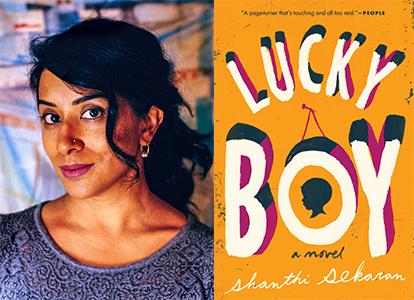
Shanthi Sekaran and her 'Lucky Boy' (REPRISE)
In Shanthi Sekaran's, 'Lucky Boy, Solimar Castro Valdez is eighteen and drunk on optimism when she embarks on a perilous journey across the US/Mexican border. Weeks later she arrives on her cousin's doorstep in Berkeley, CA, dazed by first love found then lost, and pregnant. This was not the plan. But amid the uncertainty of new motherhood and her American identity, Soli learns that when you have just one precious possession, you guard it with your life. For Soli, motherhood becomes her dwelling and the boy at her breast her hearth. Kavya Reddy has always followed her heart, much to her parents' chagrin. A mostly contented chef at a UC Berkeley sorority house, the unexpected desire to have a child descends like a cyclone in Kavya's mid-thirties. When she can't get pregnant, this desire will test her marriage, it will test her sanity, and it will set Kavya and her husband, Rishi, on a collision course with Soli, when she is detained and her infant son comes under Kavya's care. As Kavya learns to be a mother - the singing, story-telling, inventor-of-the-universe kind of mother she fantasized about being - she builds her love on a fault line, her heart wrapped around someone else's child. Lucky Boy is an emotional journey that will leave you certain of the redemptive beauty of this world. There are no bad guys in this story, no obvious hero. From rural Oaxaca to Berkeley's Gourmet Ghetto to the dreamscapes of Silicon valley, author Shanthi Sekaran has taken real life and applied it to fiction; the results are moving and revelatory. Shanthi Sekaran is a writer and educator from Berkeley, California. Her writing has also appeared in The New York Times, Salon.com, LA Review of Books and Huffington Post. She teaches creative writing and literature at Mills College in Oakland, CA.

The #DemocracyCollaborative, a"Democratic Economy' IS possible, with Ted Howard
The US economy is designed by the 1 percent, for the 1 percent, says Ted Howard in conversation here with Claudia Cragg (@ClaudiaCragg). His new book, The Making of a Democratic Economy, written with Marjorie Kelly, offers a compelling vision of an equitable, ecologically sustainable alternative that meets the essential needs of all people. Ted Howard is the Co-founder and President of The Democracy Collaborative. Previously, he served as the Executive Director of the National Center for Economic Alternatives. Howard and Kelly argue cogently that we now live in a world where 26 billionaires own as much wealth as half the planet's population. The extractive economy we live with now enables the financial elite to squeeze out maximum gain for themselves, heedless of damage to people or planet. But Marjorie Kelly and Ted Howard show that there is a new economy emerging focused on helping everyone thrive while respecting planetary boundaries. At a time when competing political visions are at stake the world over, this book urges a move beyond tinkering at the margins to address the systemic crisis of our economy. Kelly and Howard outline seven principles of what they call a Democratic Economy: community, inclusion, place (keeping wealth local), good work (putting labor before capital), democratized ownership, ethical finance, and sustainability. Each principle is paired with a place putting it into practice: Pine Ridge, Preston, Portland, Cleveland, and more. This book tells stories not just of activists and grassroots leaders but of the unexpected accomplices of the Democratic Economy. Seeds of a future beyond corporate capitalism and state socialism are being planted in hospital procurement departments, pension fund offices, and even company boardrooms. The road to a system grounded in community, democracy, and justice remains uncertain. Kelly and Howard help us understand we make this road as we walk it by taking a first step together beyond isolation and despair.

How To Become a New Technology Entrepreneur with Ran Poliakine
Claudia Cragg (@KGNUClaudia) speaks here with Ran Poliakine, a serial entrepreneur, inventor and industrial designer. In 2007, Poliakine founded Powermat Technologies, a company that utilized inductive charging technology to develop wireless power solutions. Then, in 2009, through Wellsense he developed the world's first bedsore monitoring system and the Monitor Alert Protect (MAP) system. This continuously monitors a patient to display potential development of high-pressure points that lead to bedsores and pressure ulcers and is used in major hospitals throughout the world and in the US including the Cleveland Clinic, Baylor College of Medicine, Houston Methodist Hospital and Kentucky's Jewish Hospital. Today he is involved in a myriad of new companies all developing far-reaching new technologies. Poliakine was born in Jerusalem, Israel where he lives with his wife and five children. You can find his blog here.
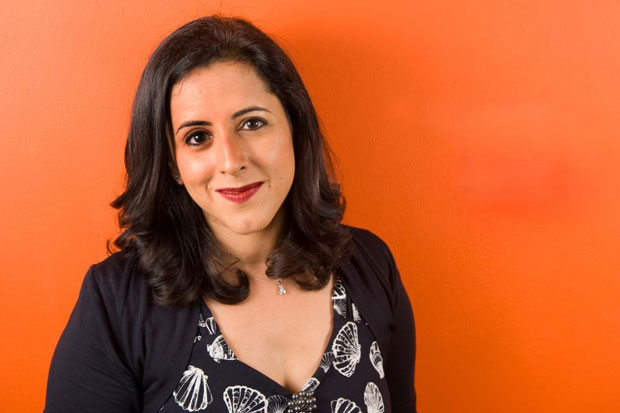
The BBC's Anita Anand discusses her 'Patient Assassin'
On April 13, 1919, a column of British troops marched into the Jallianwala Bagh, a public garden in Amritsar, a city in Punjab, where more than 15,000 Indians had gathered for a peaceful protest against the increasingly restrictive policies of the British government, and in particular the deportation of two followers of Gandhi. At the orders of Brig. Gen. Reginald Dyer, the soldiers began firing into the crowd without warning. When screaming men, women and children rushed toward the exits, Dyer ordered his troops to aim at them. Many who were attempting to climb over the high perimeter wall were gunned down, their bloodied bodies falling in heaps. The firing went on for 10 minutes, killing an estimated 500 to 600 people and wounding many more. While Dyer was the one to order the killings, another man was also responsible for the massacre: Michael O'Dwyer, the lieutenant governor of Punjab, who justified the carnage and defended Dyer's actions. Anita Anand's "The Patient Assassin" is the story of Udham Singh, an Indian who sought to avenge the murders of his fellow countrymen by shooting O'Dwyer to death in London in March 1940. In recounting the lives of these three main characters — Singh, O'Dwyer and Dyer — Anand, a British-Indian biographer and broadcast journalist, provides a revealing look at the brutality and oppression of British rule, and how it seeded the desire for retribution in the hearts of so many Indians. After training as a journalist, British born and raised Anand became European Head of News and Current Affairs for Zee TV, and one of the youngest TV news editors in Britain at the age of 25. She presented the talk show The Big Debate and was political correspondent for Zee TV presenting the Raj Britannia series – 31 documentaries chronicling the political aspirations of the Asian community in the most marginal constituencies in 1997. After Zee, Anand joined the BBC in various roles then in June 2012, she took over presenting BBC Radio 4's Any Answers the Saturday afternoon current affairs phone-in programme between 2:00 and 2:30 pm UK time from Jonathan Dimbleby Interestingly, Anand has also appeared in and won the 2017/2018 UK Celebrity Master Mind (4/10) beating singer Rachel Stevens, actor Asim Chaudhry and comedian Andy Zaltzman. She also appeared on the 2018/2019 Christmas University Challenge representing King's College London as captain alongside Angela Saini, Zoe Laughlin, and Anne Dudley

"Ted Talker" Priya Parker
In The Art of Gathering, Priya Parker argues that the gatherings in our lives are lackluster and unproductive--which they don't have to be. We rely too much on routine and the conventions of gatherings when we should focus on distinctiveness and the people involved. At a time when coming together is more important than ever, Parker sets forth a human-centered approach to gathering that will help everyone create meaningful, memorable experiences, large and small, for work and for play. Drawing on her expertise as a facilitator of high-powered gatherings around the world, Parker takes us inside events of all kinds to show what works, what doesn't, and why. She investigates a wide array of gatherings--conferences, meetings, a courtroom, a flash-mob party, an Arab-Israeli summer camp--and explains how simple, specific changes can invigorate any group experience.

Christopher De Hamel and his Meetings with Remarkable Manuscripts
Claudia Cragg (@ClaudiaCragg) speaks here with Christopher de Hamel, whose most recent book is Meetings with Remarkable Manuscripts. This work won the Wolfson History Prize for history written for the general public and the Duff Cooper Prize for best work of history, biography, or political science. For 25 years from 1975, he was responsible for all catalogues and sales of medieval manuscripts at Sotheby's worldwide, and from 2000 to 2016 he was librarian of the Parker Library in Cambridge, one of the finest small collections of medieval books in the world. De Hamel is a Fellow of Corpus Christi College, Cambridge University. He has doctorates from both Oxford and Cambridge, as well as several honorary doctorates. He is a Fellow of the prestigious Society of Antiquaries of London and a member of the Roxburghe Club.

#WaPo Journalist and Author Liza Mundy on the 10,000 US 'Code Girls'
@claudiacragg speaks here (reprise of earlier interview) with Liza Mundy on Code Girls. This is the story of the young American women who cracked German and Japanese communications code to help win the Second World War. Recruited from settings as diverse as elite women's colleges and small Southern towns, more than ten-thousand young American women served as codebreakers for the U.S. Army and Navy during World War II. While their brothers, boyfriends, and husbands took up arms, these women went to the nation's capital with sharpened pencils–and even sharper minds–taking on highly demanding top secret work, involving complex math and linguistics. Running early IBM computers and poring over reams of encrypted enemy messages, they worked tirelessly in a pair of overheated makeshift code-breaking centers in Washington, DC, and Arlington, Virginia, from 1942 to 1945. Their achievements were immense: they cracked a crucial Japanese code, which gave the U.S. an acute advantage in the Battle of Midway and changed the course of the war in the Pacific Theater; they helped create the false communications that caught the Germans flat-footed in the lead-up to the Normandy invasion; and their careful tracking of Japanese ships and German U-boats saved countless American and British sailors' lives. Liza Mundy is a journalist and author of four books, apart from Code Girls. She is a former staff writer for the Washington Post, where she specialized in long-form narrative writing, and her work won a number of awards. Her 2012 book, The Richer Sex, was named one of the top non-fiction books of 2012 by the Washington Post, and a noteworthy book by the New York Times Book Review. Her 2008 book, Michelle, a biography of First Lady Michelle Obama, was a New York Times best-seller and has been translated into 16 languages. Her 2007 book, Everything Conceivable, received the 2008 Science in Society Award from the National Association of Science Writers as the best book on a science topic written for a general audience. She writes widely for publications including The Atlantic, Politico, The New York Times, Slate, and TIME. She has appeared on The Colbert Report, The Today Show, Good Morning America, CBS This Morning, MSNBC, CNN, C-Span, Fox News, Democracy Now, Bloggingheads TV, the Leonard Lopate Show, National Public Radio's Weekend Edition, All Things Considered, the Diane Rehm Show, Fresh Air with Terry Gross, Tell Me More, Talk of the Nation, On Point, and other television and radio shows. A senior fellow at New America, a non-partisan thinktank, Liza has an AB from Princeton University and an MA in English literature from the University of Virginia. She lives in Arlington, Virginia, with her husband and two children, just about a mile from Arlington Hall, where the Army code-breaking women worked, and about four miles from the Naval Annex. At various points in her career she has worked full-time, part-time, all-night, at home, in the office, remotely, in person, on trains, in the car, alone, with other people, in dangerous places, under duress, and while simultaneously making dinner.