
CG Garage
570 episodes — Page 9 of 12

Ep 169Episode 169 - Rob Redman - Vertex 2018
Rob Redman is a man of many skills: motion graphics and 3D art, guitar and amp building, "The Cinema 4D Guy" on social media. In his current role he edits 3D World magazine, and helped conceive and organize the Vertex CGI event in London — which is where Chris delivered a keynote speech and recorded this podcast. In this chat, Rob talks about how he and his team have created a unique and all-inclusive gathering for London's well-storied visual effects industry. He also discusses his role at 3D World magazine, the challenges of translating 3D workflows to a 2D page, and its relationship with social media, its online presence CreativeBloq, and its sister title 3D Artist.

Ep 168Episode 168 - Josh Naylor, Brian Sharp & Agnus Mckay - Unity and Oculus Medium
This week's podcast is another THU two-parter, recorded with Unity's Josh Naylor and Angus Mackay, and Oculus Medium's Brian Sharp. As an evangelist for Unity, Josh has one of the best jobs in the world. He travels to global conferences and high-tech organizations — including NASA — to discuss the benefits of the Unity engine. In his three years at the company, he's seen Unity evolve from a game development platform to a tool for research, entertainment and training, and he talks about how its ease of use, versatility and low cost have helped it build a passionate community of users. One of the fruits of Unity's success is VR modeling tool Oculus Medium. As its engineer and director Brian Sharp explains in part two, Medium was prototyped on Unity's VR platform. Brian and Unity product marketing manager Angus Mackay discuss how they're building a platform which feels familiar to artists, as well as the Inception-like conundrum of creating engines within engines, and the future of rasterization and ray tracing.

Ep 167Episode 167 - Boris Simandoff - V-Ray Cloud
Six years ago, Chaos Group developer Boris Simandoff had a dream: that cloud rendering could be as simple as clicking a button. Today, that dream is becoming a reality, with fast and easy cloud rendering seamlessly integrated into V-Ray for Rhino, Revit and SketchUp — and more products coming soon. In this podcast, Boris tells Chris how he and his team at Chaos Group overcame some of the headaches of cloud computing, such as security concerns and clunky interfaces. You'll find out how CPU vulnerabilities were discovered as a direct result of cloud computing, and how preemptible machines cut the costs of rendering on the cloud. Boris also talks about his vision for the future, including potentially accessing thousands of cores from a simple machine.

Ep 166Episode 166 - Dan Thron - Martini Giant - Blade Runner 2049
EA bottle of Trader Joe's Blended Scotch Whisky fuels Chris and Dan Thron for this in-depth discussion of Blade Runner 2049. Like its 1982 predecessor, 2049 is an eye-catching and thought-provoking movie which tackles themes of identity, emotion and mortality in a dystopic, dysfunctional metropolis. And, like its forebear, it's underperformed at the box office — although it's clearly destined for cult status. In typical Dan and Chris fashion, Blade Runner 2049 is thoroughly dissected, leaving no stone unturned and no replicant unretired. They talk about how the iconography, ideology and characters of Blade Runner are updated to reflect contemporary concerns. Dan discusses his work on the movie, its success in the visual effects category at the Oscars, and how it compares to competing sci-fi films Star Wars: The Last Jedi and The War for the Planet of the Apes. There are inevitably a few spoilers, but Dan and Chris have some interesting theories about the film's more ambiguous moments. By the end, you'll want to step into 2049's world again.

Ep 165Episode 165 - Zorana Gee & Ross McKegney - Adobe Dimension
Chris and Lon jetted off to San Francisco to record this podcast with Adobe product manager Zoana Gee, and engineering director Ross McKegney. They reveal how they've created Adobe Dimension, formerly known as Project Felix, a clever box of tricks which marries photorealistic 3D imagery with Adobe's trademark ease of use Of course, 3D is notoriously complicated, and Zorana and Ross discuss the machine learning Dimension uses to build and configure 3D scenes from 2D images, and the role of V-Ray's AppSDK behind the scenes. There are knock-on effects from this democratization of 3D: it cuts out human-shaped bottlenecks in workflows, and changes the way artists and designers interact with clients. Listen to find out how Dimension fits into the bigger picture of Adobe products, and how AI and the cloud figure in its future.

Ep 165Episode 164 - Ludger Pfanz, Kelli Townley, Ciaran Wills & Mach Kobayashi - THU 2017
Recorded at THU last year, this podcast features another awesome foursome of guests: Ludger Pfanz, from Karlsruhe University of Art and Design, Kelli Townley from Oculus Medium, and Ciaran Wills and Mach Kobayashi from Google Tilt Brush. Ludger spent 25 years making documentary films about indigenous people around the world, before becoming a film lecturer. This knowledgeable and philosophical explorer is taking his passion for anthropology into new mediums, explaining how psychedelic drugs, cave paintings, and John Malkovich can help us understand the phantasmagoric worlds of VR. Creating these worlds, and using VR as an artistic medium, requires a whole new set of tools — which is where Oculus' Medium and Google's Tilt Brush come in. In the second part of the podcast, Chris is joined by developers Kelli, Ciaran and Mach. They talk about the challenges they face in helping artists work in an infinite and scaleless space, and VR's applications in filmmaking, game design, and architecture. It's essential listening if you want to know more about the fascinating possibilities of VR, and how it can help artists think outside the box.
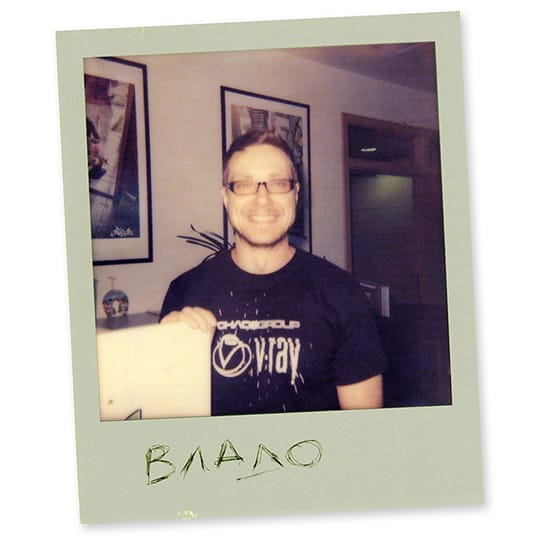
Ep 163Episode 163 - Vlado - V-Ray Next
Since Chris and Lon were in Sofia for a week to hang out at our headquarters in snowy Sofia we decided to sit down with the man behind the V in V-Ray. Vlado, no stranger to the CG Garage, spends some time with Chris to give our listeners a better idea about all the work going into the next version of V-Ray, and beyond. Many people already know a bit about these features, but there are also many other things you may not know about. We discuss why the next version of V-Ray is actually called Next, how the actual core of V-Ray is being completely revamped, as well as some of the many exciting new features. We also tease some new features that are not still coming up such as a complete redesign of the frame buffer, and our very own cloud service, called V-Ray Cloud. V-Ray Next beta is available today to registered V-Ray users of V-Ray for 3dsmax. check out all the following links for more information and more in depth looks at some of those upcoming features.

Ep 162Episode 162 - Alex McDowell
This week's CG Garage is a special episode because I got a chance to sit down with Alex McDowell, the founder of World Building Institute and Experimental Design. You might have seen his name pop up in Fast Company and Wired from time to time, and it's no mystery why they want to talk to him. On top of his current roles, which we'll get into in a minute, this is a man who helped set up the Sex Pistols first gig, made music videos with Depeche Mode, led production designs on Fight Club, and designed the entire world, including all of its rules and attributes, for Minority Report. And it's in that last point, world building, where he can really offer all of us - architects, filmmakers and general 3D artists- some serious food for thought. Instead of thinking about stories and digital experiences like linear elements, Alex approaches his designs spherically, like you would a VR space. He asks questions like "What are the conditions of the world and what is going to drive it forward?" and then figures out how elements like different types of humans will define or navigate this environment. An elderly person, for instance, could live in the same world as a Olympian, but endure radically different challenges. And from what Alex has learned, as the challenges and context around your focal points change, so do the stories you can tell. With world building, storytellers are encouraged to consider more possibilities, which in turn, open up a greater understanding of the environments and characters they create. At first glance, you may think this only works for feature films. But consider the 3D world's most common thread: storytelling. Architects also tell visual stories full of context and character, only they do it through spaces. So imagine what happens when architects apply world building concepts to their art. Designs can be influenced by wider factors than form and function, including how different types of people will navigate the space. Using these concepts, architects can also consider how the mechanisms of the city, or even society at large, will change the experience they are offering, even if that change resides at a granular or subconscious level. As elements are defined, they compound, helping an artist (or your team) gain an elevated knowledge of any design that incorporates narrative. It really can be quite powerful, and like I said, is not limited to a single field. I hope you'll give it a shot.

Ep 161Episode 161 - Dan Thron & Justin Goby Field - Martini Giant - The Last Jedi Part 2
EThey're back! Star Wars aficionados, film buffs and visual effects artists Dan Thron and Justin Fields join Chris for the second part of this follow-up to the original, divisive Last Jedi podcast. This episode continues to pore over The Last Jedi to work out if the good bits outweigh the bad, and whether director Rian Johnson can shake off the franchise's excessive baggage and build a fresh universe for a new audience. It's a podcast that packs as many twists, crises of confidence and character arcs as the movie itself, and Dan, Justin and Chris discover their opinions are more in line than they first thought. They also delve into the other Star Wars movies, and films including Pulp Fiction, Blade Runner 2049, The Goonies and Justice League. You'll find out what effects industry acronym CBB stands for, a surefire way to tell when Yoda is being goofy, and how Hitchcock's The Birds cleverly creates a sense of tension and unease. Dan will return for another discussion of a classic film. As for young Justin, we'll watch his career with great interest.

Ep 160Episode 160 - Viki Chan - Digital Domain
On-set data integration people fill a crucial role in the modern movie making process. They capture reference materials such as HDR images, camera data, and reference photography so effects artists can ensure their CG creations fit perfectly into the shot. As data integration lead Viki Chan explains, the job combines the glamor of traveling the world to work with a-list actors and directors, with 17-hour days and having to stay away from home for months at a time. She breaks down what her job involves, whether it's placing tracking markers on the set, negotiating with ADs and gaffers, or minimizing the amount of CG involved on a production. Viki comes across as friendly and professional – exactly the sort of person you'd want to work with on a chaotic movie set. And she's got some great anecdotes about Harrison Ford and Brad Pitt.

Ep 159Episode 159 - Dan Thron & Justin Goby Field - Martini Giant - The Last Jedi
EChris, Dan and David's take on The Last Jedi in podcast #156 stirred up many emotions on social media – especially among listener Justin Goby Fields. In fact, Justin posed such a good take on why The Last Jedi is a good movie that Chris invited him to appear on the podcast for a two-episode discussion. In part one, Justin points out the clever ways The Force Awakens and The Last Jedi break down characters and ideas from previous Star Wars movies and reconfigure them to feel diverse and fresh. And he raises some interesting questions: could Poe Dameron become Star Wars' best hero? And is Kylo Ren its best, and bustiest, villain? In this occasionally heated discussion, the trio also branch out into other franchises, like Logan and Deadpool's brutal, potty-mouthed diversions from the X-Men universe, and talk about what DC, Marvel and Lucasfilm can learn from big budget TV series such as The Handmaid's Tale and Mindhunter. No matter what you think of The Last Jedi – and your opinion will almost certainly change a little by the end of the podcast – this is an in-depth discussion of the movie's successes and failings, and the current state of movie making in general. Justin, Chris and Dan will return in a couple of weeks for Episode Two: Martini Giant Strikes Back.

Ep 158Episode 158 - Grayson Davis, Eric Miller, Daniel Wade & Te "Ford" Hu - THU 2017
While the THU festival is all about bringing brilliant artists together, a lot of it couldn't happen without its media partners. In this podcast, Chris chats with some the people who help out behind the scenes. In the first part, Chris is joined by Lenovo senior product manager Greyson Davis and Gnomon chief technology officer Eric Miller. Eric is fresh from a presentation featuring Lenovo's latest tech, and they talk about how laptops are on the verge of usurping desktop PCs, the future of GPU and cloud rendering, and the varying hardware requirements of digital artists. In part two, Chris meets Te Hu, a coder and artist who won ArtStation's THU Golden Ticket contest. Te, better know as Ford, used an innovative modular system to generate characters for the winning piece, and he also talks about his day job at ILM's ILMxLAB VR/AR department, and how he uses technical skills to create cinematic visions. Te is joined by ArtStation's product manager Daniel Wade, who tells Chris how ArtStation has gone from a small startup to an essential recruitment and analysis platform for the games, film, media, and entertainment industries.

Ep 157Episode 157 - Greg Teagraden - Digital Domain
Greg Teegarden's first role in Hollywood was suitably iconic: he designed the famous gates for Steven Spielberg's Jurassic Park. From here, Greg worked as a modeler on Spielberg's ambitious seaQuest DSV TV project, then helped create effects for Titanic and cars for The Fifth Element. In this podcast, Greg talks about his career, and how his dad and uncle's collaboration on TV series Supertrain helped set it up. He and Chris reminisce about the late nights they had at Digital Domain, and the huge cast of characters who made up the team there, including Eric Barba, Victoria Alonso, Ed Ulbrich, and Steve Worley, the software genius who'd write entire LightWave plugins on the plane. Greg finishes with a discussion of his current work at Digital Domain on piractical TV series Black Sails — and reminds Chris of the time they hung out with dozens of bikini-clad models at his pool during the making of a short film.

Ep 156Episode 156 - Dan Thron & David Tracy - Martini Giant - The Last Jedi
EAs the dust settles on 2017, one question lingers on everyone's minds: was Star Wars: The Last Jedi a good movie? The critics have embraced indie auteur Rian Johnson's continuation of the new Star Wars universe, but the response from audiences and internet nerds has ranged from ecstatic, to meh, to Kylo Ren-like levels of rage. To dissect this divisive movie, Chris is joined by Star Wars revisionist and podcast regular Dan Thron, Chaos Group's Communications Director David Tracy — and a bottle of Colorado's finest whisky. They talk about what makes the film work: the incredible visuals, the performances and chemistry, and the ways it wipes the slate clean and takes apart what Star Wars means for younger audiences. But they also highlight the film's negatives: the goofy humor, tonal inconsistencies, and Death Star-sized plot holes. It's an thought-provoking and increasingly drunk conversation which touches on Dan's arguments about the original trilogy, David's formative experiences with Darth Vader, and the future of both the Star Wars universe and colossal movie franchises. Whether you loved or hated The Last Jedi, this is a great way to spend two hours of 2018.

Ep 155Episode 155 - John Cipriani, Carlos Ortega & LipComarella - THU 2017
Mobile games are big business — bigger, in fact, than their console counterparts. They're cheaper to make, require smaller teams, and they can generate huge amounts of money. In the first part of this podcast, Chris talks to John "Cip" Cipriani, senior artist at enormously successful mobile games company Supercell (Clash of Clans, Clash Royale, Boom Beach). Of course, mobile games have their own complications — hundreds are released every day, and established titles continually add new features. John tells Chris how Supercell has succeeded with quick but gratifying gameplay, distinctive art styles, and games which cater to gamers of all ages, no matter what device they're using. The increasing power of phones and tablets, combined with easy access to cloud resources and intuitive interfaces, make them an ideal candidate for 3D modelling and rendering. This topic comes up in a Chris' second conversation, with artists Carlos Ortega and Lip Comarella. As well as discussing the future of 3D, animation director Lip and character artist Carlos talk about their experiences at THU. At last year's event, Lip posed an interesting personal question about relationships and art, while Carlos has previously served as a "Knight" at the festival.

Ep 154Episode 154 - Maxx Burman - Kitbash3d
EMaxx Burman was destined for a career in the film industry — but how he got there is surprising. His grandfather and parents were practical effects artists, creating the groundbreaking makeup for The Wolfman and The Planet of the Apes, respectively. Helping his parents out on all-nighters gave Maxx a strong worth ethic, and a hard-earned knowledge of what happens behind the scenes in Hollywood. But an early viewing of The Matrix inspired him to carve out his own career path in the less-messy world of VFX. After establishing himself as a freelance matte painter and VFX supervisor, Maxx's entrepreneurial spirit kicked in. His most recent venture is Kitbash3D, a handy online repository of professional, optimized 3D models of different styles of architecture, from "Victorian" to "Neo Tokyo," ready to be "bashed" into backdrops, matte paintings and 3D environments. It takes the guesswork, and hard work, out of creating believable cityscapes. As Maxx reveals in this podcast, that's not all he's working on. He's creating a game for Nintendo, still working as a freelance matte artist, and even starting a company to manage all his endeavours. He and Chris talk about adventures in Digital Domain's keyboard graveyard, how Maxx has gone from artist to businessman, and how he ensures his projects succeed.

Ep 153Episode 153 - Shisha van Horn
Summer 1993. Jurassic Park is about to be unleashed in theatres. Meanwhile, at the Rice School of Architecture in Houston, Texas, a young student named Chris Nichols is learning how to use AutoCAD, 3dstudio v2, and Wavefront. Overseeing Chris is Shisha van Horn, a paleontologist turned architecture student, then lecturer. Chris and Shisha are reunited for this trip down memory lane. Shisha talks about how she set up the school's first computer network, and cajoled Chris into creating 3dstudio online manuals using nothing more than notepad and HTML tags. It's a reminder of how much has changed. Most of Chris' portfolio from the time now fits on a single SD card, but in 1993 it would have filled a hard drive. The arch viz industry didn't exist. The department used a dye-sublimation printer which cost $6,300, Gopher and Mosaic were the only ways to look at web content, and Chris even built his own render farms so he could get his thesis done in time. It's also testament to the talent and energy Chris brought to the university, then the architecture and VFX industries, and now to Chaos Group. And it's nice to hear from Shisha, who was an instrumental and influential part of Chris' life and career.

Ep 152Episode 152 - Miguel Ortega - The Ningyo
EChaos Group has been involved in The Ningyo for about four years now, and it's finally come to fruition. The ambitious 27-minute film tells the story of Professor Marlowe, an Indiana Jones-esque cryptozoologist, as he hunts for the titular aquatic creature from Japanese folklore. In this podcast, director Miguel Ortega tells Lon and Chris about the trials and tribulations of making his movie. He and partner Tran Ma came up with the story, funded it on Kickstarter, turned their house into a film set, and learned VFX software as they went along. He talks about how the clever and occasionally risky ways they cut costs, but produced something so good that it even surprised the crew who worked on it. This is essential listening for behind the scenes geeks, and it shows how movie budgets can spiral out of control so quickly. Miguel also talks about the exciting future plans for The Ningyo, and his career. One to watch.

Ep 151Episode 151 - Keely Colcleugh & Jeff Mottle; Jessica Rudzewicz - THU 2017
For this THU double bill, Chris is joined by friends old and new. In the first part, he chats with VFX artist turned arch viz expert Keely Colcleugh, and CG Architect founder Jeff Mottle — both of whom have previously featured on podcasts. They're perfect examples of how this year's THU festival embraced architectural professionals and the crucial knowledge they can bring to concept art and character design. Using films like Minority Report and Blade Runner as examples, they talk about how movies can blend architectural design and futurism to provide evocative backdrops for their characters. They also ponder the importance of IP in architectural visualization images. User experience (UX) design doesn't sound like something that would be tied to architectural visualization. But in the second part of this podcast, a discussion with designer Jessica Rudzewicz highlights many parallels. In essence, UX design is about hiding technical aspects in a way which is aesthetically pleasing and easy to understand — which is quite a lot like architecture. But Jessica also talks about systems without a visual interface, like Siri or Alexa, or bridging the virtual and physical worlds on the HTC Vive. It's interesting to hear how much hard work goes into making something as unnoticeable as possible.

Ep 150Episode 150 - Corey Harper & Ramy Hanna - Tiltpixel
In this podcast, Chris talks to Corey Harper and Ramy Hanna, the co-founders of Tiltpixel. This Houston-based arch viz company has gone from two people working from home, to a thriving office filled with the latest kit - and lots of LEGOs. Corey also serves as the 2017 president of the American Society of Architectural Illustrators (ASAI), a role which will be filled in 2018 by Chaos Group CCO Lon Grohs. Corey talks about the history of the society, its Architecture in Perspective event, and this year's unusual winner of the prestigious Hugh Ferriss Memorial Prize. The duo also discuss how they balance client expectations with artistic freedom, death-defying flights around Houston with crazy helicopter pilots, and using cutting-edge tech such as drones, 8K 360-degree cameras and green screens to create VR experiences.

Ep 149Episode 149 - Manuel Carrasco, Ruari Robinson, David Levy, Ryan Woodward - THU 2017
For this podcast, Chris is joined by a quartet of artists, directors and filmmakers at THU festival in Portugal. The first is Manny "MANu" Carrasco. This sweet and humble artist started out in traditional animation, before going 3D for the Turok video games, and then moving into concept art for movies such as Anastasia, Prince of Egypt and Space Jam. Throughout his career, Manny has always found solace in nature, and he's turned a love of animals into a new venture: Expedition Art. This NGO invites artists from the visual effects and gaming industries to contribute works to help protect endangered species around the world. One of Expedition Art's panel members is David Levy, who joins Chris in part two, alongside director Ruari Robinson and concept artist/filmmaker Ryan Woodward. Each has experience of making short films, from Ruari's high-concept Leviathan pitch, to David's award-winning short Plug, to Ryan's beautiful animated passion project Thought of You. David talks about taking a step back from the industry and spending time with his family in North Carolina, Ruari discusses the intense hard work which went into Leviathan and Ryan goes behind the scenes on how he created 20,000 drawings for his short. This is an essential listen if you want to hear about the extraordinary pressure the entertainment industry can put on artists, as well as the coping methods they employ to get through tough times.

Episode 148 - Lars Lerup - Rice School of Architecture
Some 20 years ago, Chris graduated with a master's in architecture from Rice University in Houston, Texas. His thesis advisor and dean at the time was Lars Lerup, himself an esteemed architectural professor, author, artist, and designer. For this podcast, Chris and Lars are reunited in the hallowed halls of Rice School of Architecture. As someone who's seen architecture and its students completely change over the last few decades, dean emeritus Lerup knows what he's talking about. Lars discusses the immeasurable impact of the human race on the planet, and the how it's now the responsibility of architects to think on a global scale. At the same time, he argues that there's a dearth of imagination and risk taking in the industry, which isn't helped by stark cultural, generational and financial divisions. Which begs the question: why isn't architecture more fun? Together, Chris and Lars tackle this question in a conversation which takes in teaching methods, Lars' new book The Continuous City, and the role of 3D software in real and imagined spaces. Lars is bursting with knowledge and enthusiasm for the subject, and by the end you'll realize that the people involved in architecture make it an interesting, innovative and fun medium.

Episode 147 - Kevin Gøhler and Pedro Fernandes - THU2017
Here's another pair of podcasts Chris recorded at this year's THU festival in Portugal. Kevin the Dane: The first podcast features Kevin Gøhler, better known as Kevin the Dane to V-Ray fans thanks to the tutorials and reviews on his popular YouTube channel. He also works as technical director at architectural visualization company Dimension Design ApS, and he's currently designing his own VR video game. Pedro Fernandes, Arqui9: Like Kevin, Pedro currently works in arch viz, as founder and creative director of the renowned Arqui9 visualization. He returned from the UK to his native Portugal especially for THU. Both recordings are testament to the power of THU in bringing like-minded and talented artists together. Among other things, Kevin talks about how to build the brand of a YouTube channel, while Pedro dives into the deep end of the theory behind architectural visualization.

Episode 146 - John SanGiovanni - Visual Vocal
We're only just starting to tap into the power of VR for collaboration in architecture — but there are many, many hurdles along the way. For instance: How do you get everyone into the same shared space? How do you represent attendees? How do you point things out within this virtual space? And how do you get tech-phobic participants to embrace the medium without getting scared or frustrated? Entrepreneur, strategist, inventor — and former Ninja Turtle — John San Giovanni's company Visual Vocal is revolutionizing this meeting space by making things as simple as possible. Download the app and it syncs with others via clever audio fingerprint tech. Pop your phone into a Homido Mini VR headset and you can look around with other people, and even point out issues. It makes VR meetings as easy as entering an internet chatroom. In this enjoyable podcast, John helps Lon and Chris grok with Visual Vocal's concept. And it gazes into the crystal ball of the future of VR, AR and XR, drawing on the video game Myst, "productive hallucinations," Lon's hatred of QR codes, and the fascinating Never Built NYC and LA projects.

Episode 145 - Ian Spriggs, Scott Eaton, Steven Wang & Phil Liu - THU 2017
Chris recorded a lot of podcasts at THU — and this episode treats you to not one, but two 25-minute recordings. In the first, Chris chats with celebrated CG portrait artist Ian Spriggs, and digital anatomy expert Scott Eaton. They discuss the history of portraits, and how the fundamental idea of representing humans hasn't really changed from cave paintings, to paintings, to photographs, and now the world of CG. And they talk about the tech which has got us here, from early days of editing vertices in C, to the seamless artistry made possible with packages such as ZBrush and Mudbox. Chris's talk with Steven Wang and Phil Liu nicely complements the first part. Steven now works as a concept artist a Microsoft's The Coalition game studios, but his prior role was alongside Ian Spriggs at Neill Blomkamp's Oats Studios — Steven even posed for a portrait for Ian. Phil, meanwhile, serves as world artist at Monolith Productions. They discover a shared history in product design, and talk about how ArtStation, Instagram and Facebook have given artists invaluable exposure — but made the industry more competitive than ever. They're both engaging discussions, and Chris does a great job of packing important questions into a short amount of time.

Episode 144 - Nimrod Friedman & Carlie Pratt - Cl3ver
Presentations are a surprisingly big challenge in the architecture community. It's easy to wow clients with stills and videos, but if they want changes architects and arch viz studios have to re-render shots and animations. Barcelona-based company CL3VER has created a clever solution to this issue - a browser-based system which can render realistic 3D models. In this podcast, Chris talks to CL3VER's creative director Nimrod Friedman, and marketing manager Carlie Pratt. Despite its simple premise and intuitive, Apple-like controls, Nimrod reveals the huge amount of behind-the-scenes work on a system which reproduces masses of geometry on limited hardware and software. He talks about how it can handle global illumination, ray tracing and reflections, its VR applications, and how they've built a cloud-based backend from scratch. Chris's enthusiasm and curiosity for the potential applications of CL3VER makes this an animated and interesting discussion. https://www.cl3ver.com/ http://www3.cl3ver.com/l/212992/2017-10-10/2428q

Episode 143 - Mahmoud Alkawadri
THU has become a staple for digital artists, and now the festival is increasingly welcoming members of the arch viz community. Syria-born Mahmoud Alkawadri has attended the event twice now – and he's a poster child for the transformative effects of THU. In this podcast with Chris, recorded at THU, Mahmoud discusses his experience in VFX and exhibitions in Syria and Germany, his current role as a freelance arch viz artist, and his plans to return to VFX and filmmaking. Along the way, he talks about setting up his own business, the importance of managing your time, and architecture in Dubai. It's a deep and insightful conversation about how films and architecture can influence and share ideas with one another.

Episode 142 - Ben Bancroft and Brett Fisher - ArchMedia
Visualization company ArcMedia has just reached its 15th birthday. To celebrate, Founder and Managing Director Brett Fisher and Creative Director Ben Bancroft joined Chris for a few beers at the D2 conference in Vienna. Naturally, Chaos Group's acquisition of Render Legion and Corona comes up, but Brett and Ben highlight an unexpected benefit of the move. They also talk about ArcMedia's beginnings in visual effects, and its subsequent switch to arch viz, interiors and even luxury yacht renders. It's a laid-back, freewheeling conversation which nonetheless highlights some important points about working with clients, getting repeat business, and how Phoenix is changing the way they work.

Episode 141 - Paul Nicholls - Factory Fithteen
Paul Nicholls is a third of the team behind Factory Fifteen, a London-based directing collective and arch viz and production studio. From a background in architecture, Paul has made a name for himself in creating ambitious short and feature-length films, music videos and VR experiences. In this podcast, recorded at the D2 Conference in Vienna, Paul talks about how Factory Fifteen was formed, the numerous awards it's won for its groundbreaking projects, and how he uses Tiltbrush to sketch in virtual reality without any aches and pains. He also poses some pertinent technical and business questions about what Chaos Group's acquisition of Render Legion's Corona will mean for users. Paul finishes with a few hints as to the exciting design-driven direction Factory Fifteen will take in the future.

Episode 140 - Johnny Gibson - Pixomondo
Johnny Gibson has created ballistic missile detection software, worked on stealth bombers, and covertly filmed on the Russia/China border. These might sound like missions assigned to a secret agent, but Johnny's actually a VFX artist and supervisor, and in this podcast he discusses his incredible career with Chris. Having worked on over 30 feature films, including Fight Club, Transformers and three X-Men movies, Johnny has a unique insight into the effects industry. He talks about what a technical director does, why the best people aren't necessarily on the biggest movies, and how rotoscoping is a great fundamental skill to have. It's a gripping episode, full of amusing anecdotes, and revelations of when Johnny and Chris's career paths met.

Episode 139 - Fabio Palvelli & Jason Bergeron - d2 Conferences
The d2 Conference has grown from a humble meeting of 85 people to an indispensable event for arch viz studios and artists around the world. This year's event was of particular significance; the industry's leading lights celebrated Chaos Group's acquisition of Render Legion and Corona Renderer. In this short but sweet podcast, Chris talks to Fabio Palvelli and Jason Bergeron, the Italian and American brains behind this influential Viennese convention. They talk about the inspiration which lead to the conference, the joy of helping artists make connections and pursue careers, and how they've seen arch viz evolve and branch out into other mediums. We'll see you in Vienna next year!
Episode 138 - Darren Hendler - Digital Domain
Originally from South Africa, Darren Hendler has worked on movies such as The Grinch, I Robot, and Maleficent. At the same time he's become a key figure in the research and development of virtual humans at Digital Domain. Darren has a lot in common with the similarly digital human obsessed Chris, and this podcast poses many questions around digital humans, such as why is it easier to make an old Brad Pitt, but harder to make a young Jeff Bridges? What are the ethics of reanimating deceased actors, or manipulating news footage? And, how can deep learning help us create more believable digital humans? It's fascinating to hear experts in the field pick each other's brains about this cutting-edge tech. It's also, as Darren puts it, "a huge amount of fun."

Episode 137 - Ondrej and Vlado - Corona and V-Ray
Chaos Group promised a big announcement at the D2 Conference in Vienna. Not only did they not disappoint, but they took the world by surprise. On Friday, August 25, they announced that Chaos Group has acquired Render Legion, the makers of the Corona renderer. Corona has become extremely popular in recent years, especially in the Architecture and ArchViz community. Just after the announcement, Chris sat down with Ondrej and Vlado, the respective brains that started Corona and V-Ray. We cover how this acquisition was not a choice made in haste and that it took over a year to happen. We also learn that Ondrej has great respect for Vlado which is why Render Legion approached Chaos Group first when they wanted to find a way to grow their company. At the same time, you'll hear Vlado's big respect for Ondrej and that their goal is to keep each renderer developed separately, as they have a different general philosophy.

Episode 136 - Marc Petit and Ken Pimentel - Epic Games
One of the biggest and most well-received surprises at this year's SIGGRAPH was Epic Games' announcement that it's added V-Ray rendering to Unreal Engine. In this podcast, recorded at the conference, Chris sits down with Epic's Marc Petit and Ken Pimentel to discuss what this meeting of minds means. They talk about how the Unreal Engine has gone from a solid platform for game development to a multipurpose tool for photorealistic architecture and visual effects, as well as AI and autonomous vehicles. They also discuss how Chaos Group and Epic Games have similar, customer-focused business models, and how they're working together to help everyone create amazing imagery. It's a tantalizing peek into a future where the boundaries between realtime and ray-traced are becoming increasingly blurred.

Episode 135 - Jay Busch and Mike Seymour - Wikihuman
Recorded live at V-Ray Days @ SIGGRAPH 2017, this podcast unites host Chris with previous guests, and Wikihuman members, Mike Seymour (FXGuide) and Jay Busch (Google). If you attended SIGGRAPH, you'll know that the virtual representation of Mike - aka Meet Mike - was a star of the convention, and this podcast delves into the trials and tribulations of his creation. Along the way, the team talks about the immense amount of research and design which has gone into this avatar, such as Lightstage facial scanning, Disney Research's on eyeballs in Zurich, and the motion capture tech. They also talk about the future of Digital Mike in the Wikihuman project, and how tech such as deep learning and muscle simulations could help him evolve further. It's an engrossing discussion and one which highlights the passion the project has stirred in the guests, their colleagues, and the CG industry — even between competing companies.
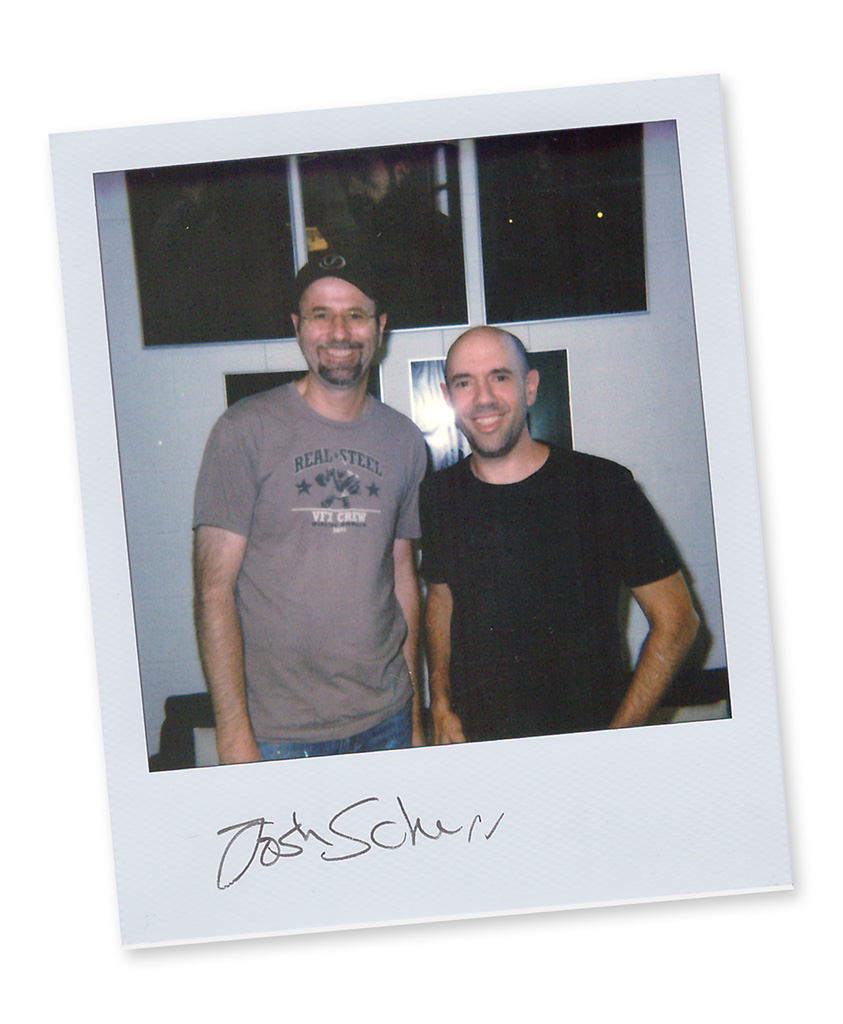
Episode 134 - Josh Scherr - Naughty Dog
EThe worlds of videogames and VFX are colliding. Realtime rendering is changing the way movies are made, while blockbuster games borrow techniques and tech from Hollywood. No one knows this landscape better than Naughty Dog's Josh Scherr, who's worked his way from animator on PS2 flagship Jak and Daxter to co-writer of the epic Uncharted 4: A Thief's End. In this podcast, Josh gives Chris a comprehensive guide to gaming. He goes from its humble origins in the basements and arcades of the 1980s, through Hollywood's ill-fated attempts to piggyback the industry, to today's ubiquitous, multifaceted gaming culture — and its superstars and controversies. Hardcore gamers will get a kick from Josh's deconstruction of the design process, while VFX fans will find out how Naughty Dog creates cinematic visuals on limited hardware.

Episode 133 - Chris Knight and Phil Crowe - The Mill
Established in London in 1990, visual effects and post-production company the Mill has grown with offices in New York, Chicago, and Los Angeles, with over 200 employees in the later. Among those who made the jump to the LA office are Head of 2D/Creative Director Chris Knight, and Executive Creative Director Phil Crowe. As becomes apparent in this podcast, neither has lost their accent — or their cheeky British sense of humour. The BFFs talk about their first meeting at the prestigious Ravensbourne College in the mid-90s, then delve into the early days of VFX, when crazy characters at The Mill taught them how to use Flame and Henry. Chris and Phil come across as passionate and knowledgeable professionals who are as well-versed in episodes of Columbo as they are in visual effects tools.

Episode 132 - Lon and David - The End of Rendering
ERendering is dead. Long live rendering. As computers become faster and more powerful, and 3D software becomes easier to use, rendering could be about to change dramatically. And it may even cease to exist as we know it today. In this podcast, Chris gazes into his crystal ball with Chaos Group's CCO Lon Grohs and Communications Director David Tracy. It's an animated discussion which raises some important questions about the mass adoption of 3D creative technology. Will we see a proliferation of deeply terrible CG? Or will artists be able to realize their visions more easily?

Episode 131 - Alex Nice
Multitalented VFX artist Alex Nice's career began in the very early days of 3D Studio on a 386 computer — complete with vigorous turbo button action. After a rebellious phase as an amateur tattoo artist, he settled into a role as a 3D generalist at Sway Studio via a stint in courtroom animations. Alex recently served as art director for innovative effects studio Magnopus, alongside previous podcast guests Sally Slade and Ben Grossmann. He's also worked on matte paintings for movies such as 2012, Hugo, Elysium, Pacific Rim and a tantalizing upcoming sci-fi project. He recently joined the Art Director's guild doing concept art and tells Chris how astounding it is to see his concept art come to life as a million-dollar film set, how VR has dramatically changed the way he works with directors, and they discuss future of the VFX industry in Hollywood and beyond.

Episode 130 - Marientina Gotsis - USC Creative Media & Behavioral Health Center
Like Chris, Marientina Gotsis spent her childhood in Greece, growing up on a very limited TV diet of imported American shows and old movies. And, like Chris, Marientina has a strong interest in virtual reality, and how computer-generated experiences can help us experience the real world. Coming from an artistic background, Marientina worked on the University of Illinois' CAVE (Cave Automatic Virtual Environment) in the mid-90s, a 3D-projected space which could simulate environments, and served as a precursor to modern VR. As tech got smaller and smarter, Marientina created a game-based experience to help people understand cognitive development, and used VR to treat ADHD and physical therapy Marientina is a fascinating interviewee who has a sound theoretical understanding of VR and gaming, and how they can be used as real-world therapies. It's an engaging discussion which covers everything from depictions of genocide in videogames, to the sky in different cities, to the perfect movie for 3D.

Episode 129 - Jay Barton - Digital Domain
For visual effects supervisor Jay Barton, a chance to work on the Fate of the Furious was a dream come true. As well as having over 18 years experience in visual effects, he's a car fanatic who knows high-performance autos inside-out — literally. Fresh from a visit to China, where DD's presence is increasing, Jay chatted to Chris about his career trajectory, from creating animated videos of environmental catastrophes to win over juries, to big budget commercials and feature films at Digital Domain. Jay shares stories about his ad work for Bacardi, Pontiac and Audi, and VFX in Rock of Ages, 47 Ronin and the physically-based stunts in Fate of the Furious. Jay's a charming, charismatic guest who talks candidly about the fake-it-til-you-make-it nature of the early days of VFX.
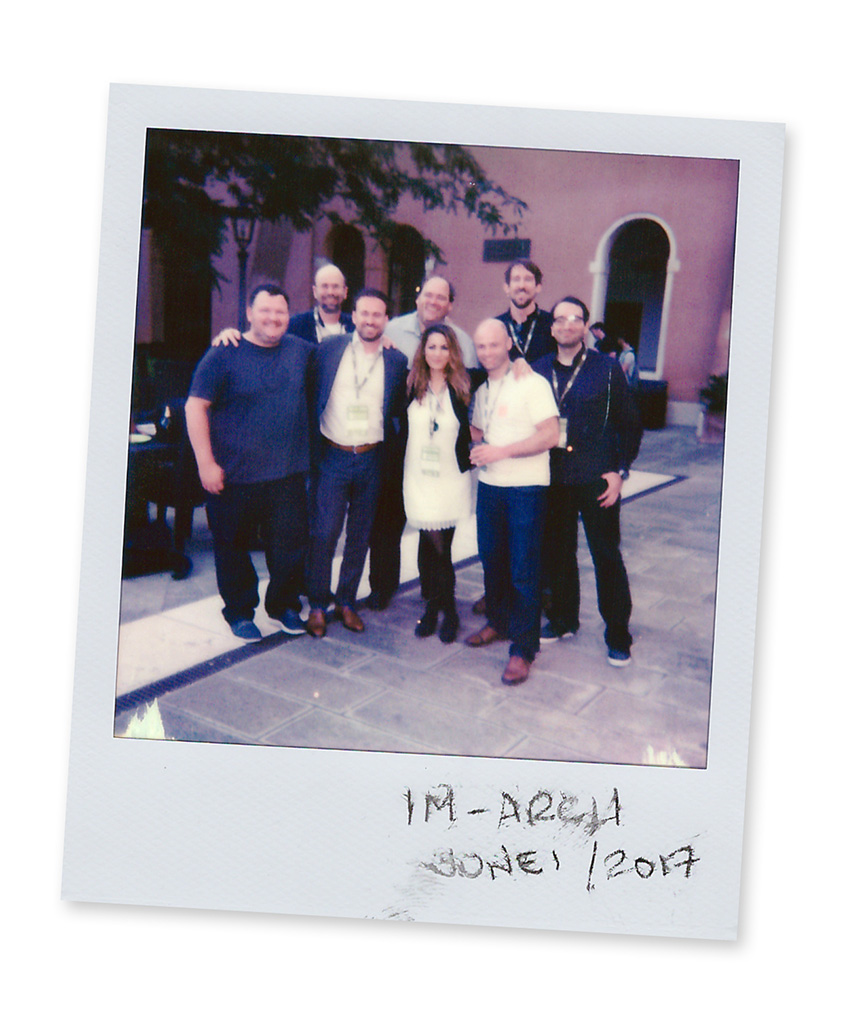
Episode 128 - Immersive Architecture 2017
The Immersive Reality in Architecture conference, which took place in Venice earlier this month, focuses on the application of VR and AR in the world of visualization and design. This panel discussion, led by CGarchitect's Jeff Mottle, tackles the pros and cons of these emergent technologies. CG Labs' Chris Nichols, and Chaos Group's CCO Lon Grohs are among the guests, as well as Patricio Navarro (ArX Solutions), Luciana Carvalho Se (Realities Centre London), Dan Harper (Cityscape), Christiaan Klaassen (DBOX) and Scott DeWoody (Gensler). It's a candid chat about the ways architects use VR, the practicalities of programing experiences, and how consumers and companies such as Apple are shaping the future of the medium.

Episode 127 - Daniel Thron - Martini Giant - La La Land
EMultiple Oscar winner, modern musical and box office smash La La Land has divided audiences. Is it a shameless and unsubtle Happy Meal of nostalgia? Or does it use cinema, musicals and popular culture as a launchpad to tell a human story of growth and transformation? In this podcast, Chris and film buff Dan Thron (aka the Martini Giant) talk about the film's successes and failings. In doing so, they discuss a range of other movies, from classic musicals Singin' in the Rain and The Umbrellas of Cherbourg, to modern classics Pulp Fiction, LA Confidential, Brokeback Mountain and Inception. It's a fascinating discussion which examines our relationship with the past, and one which potentially reaches the same conclusions as La La Land.

Episode 126 - PatrikSchumacher - Zaha Hadid Architects
The untimely passing of revolutionary architect Zaha Hadid last year has left a big hole in the world of architecture. Filling it is Patrik Schumacher, now a principal at Zaha Hadid Architects, and one of the world's most respected architects in his own right. In this deep dive into the theory and practice of architecture, Patrik talks about how architects preempted computer aided design in the 1980s, and how philosophy, nature, and mathematics are integral parts of the medium. As the author of the manifesto of parametricism, Patrik examines the dogmas and taboos of this architectural movement, and how it embraces computer algorithms. He also discusses how he designs places based around how people congregate in them, and how VR and particle physics are instructing new ways of creating architecture.
Episode 125 - Johanne Beaupied and Dorian Marchesin - Unit Image
If you've seen Chaos Group's showreel, you'll be familiar with Unit Image's work. The Parisian visual effects studio has created entertaining and witty commercials for Peugeot, Cartier, and Canal Plus. As it was founded by gamers, it's also produced gritty trailers for AAA titles such as The Crew, The Division, and For Honor. Fresh from their presentation at FMX, Unit Image's slightly hungover Johanne Beaupied (Business Development and Production Management) and Dorian Marchesin (CG Supervisor) join Chris for this engaging podcast. Johanne's background lies in games, from playing Doom at age six to working at Ubisoft, which has given her a unique perspective on the industry. Dorian, meanwhile, studied engineering but became drawn in to the world of 3ds Max. His love of cars - and V-Ray - meant that working on some of Unit Image's productions has been a dream come true. Johanne and Dorian talk to Chris about how they get lose themselves in game universes both professionally and in their spare time, Unit Image's Scan Engine tech, and the French film industry.

Episode 124 - Keely Colcleugh and Fredy Castellanos — Kilograph
Chris's input into this year's THU digital arts festival has resulted in a focus on architecture. As prep, he invited prospective speakers Keely Colcleugh and Fredy Castellanos, from creative visualization studio Kilograph, to the podcast studio. Founder and CEO Keely dropped out of the prestigious Rice University to work with renowned architect Rem Koolhaas, and her multidisciplinary career has covered design (For Bruce Mau) and VFX (For PLF). Fredy, meanwhile, left his native Colombia to work for Vyonyx in London, and now serves as Kilograph's art director. It's an energetic podcast which covers everything from Thom Mayne and Frank Gehry's influence on the teaching of architecture, to virtual reality and videogames. Chris and Keely share some great anecdotes, too, including telegrams from universities, "The Liquids" spouting mathematical nonsense, and the role of wheelbarrows in arch viz movies.
Episode 123 - Aaron Sims - Aaron Sims Creative
An early start in stop motion 8mm film making propelled Aaron Sims on a career trajectory through Hollywood. He assisted with the gooey practical effects for cult 80s movies such as "From Beyond," "Evil Dead 2," and "Gremlins 2." The sleazy, show-stealing worms for "Men in Black," were created by Aaron, and he applied his knowledge of prosthetics and puppetry to the CGI robots in Steven Spielberg's "A.I. Artificial Intelligence." Now Aaron heads up Aaron Sims Creative, a concept art and VFX company which has designed creatures and locations for movies such as "Independence Day: Resurgence," "Logan," and "Wonder Woman." In this entertaining podcast, Aaron talks about creating the terrifying Demogorgon for Netflix series "Stranger Things," choosing between practical effects and CGI, and the importance of always moving forwards.

Episode 122 - Tomasz Wyszolmirski and Vlado - Live at FMX 2017
The FMX digital arts festival in Stuttgart, Germany, forms a bustling backdrop for this live podcast. Host Chris is joined by Chaos Group's co-founder and CEO Vladimir "Vlado" Koylazov, and Dabarti's Tomasz Wyszolmirski, whose feedback has been instrumental in the development of V-Ray GPU. Vlado talks about how GPU computing has evolved, and reveals V-Ray's new game-changing hybrid GPU/CPU features. Then questions come thick and fast from an audience hungry for free V-Ray t-shirts. The subjects Vlado and Tomasz cover include adaptive lights, compatibility for Psyops' Cryptomatte, fur and memory limitations, cloud computing, and how game engines are influencing the development of V-Ray. As with all live our live podcasts, this is a particularly engaging and enjoyable listen. If you haven't already, now's a great time to subscribe to the podcast, and check out previous recordings.

Episode 120 - Johan Thorngren - ILM
Sweden's long, harsh winters compelled Johan Thorngren to pursue creative endeavours, and after a stint in advertising he accepted an enviable position with ILM in San Francisco. As a generalist, Johan's job is to pick up VFX shots which don't fit into the typical pipeline. His workload has increased from a handful of shots on movies such as Star Wars: Episode III, to thousands for Avengers: Age of Ultron. In this podcast, Johan talks about changes he's seen in the visual effects industry over the past decade, creating the almost full-CG Leipzig airport battle for Captain America: The Winter Soldier, and the wide range of software ILM has at its disposal to create stunning VFX shots. Chris and Johan also discuss the popular press's opinion on CGI in movies, and invisible effects.
Episode 120 - Thom Mayne - Morphosis
Architect Thom Mayne should need no introduction — but here's a potted history for the uninitiated. A graduate of the University of Southern California and Harvard, Thom co-founded Morphosis Architects in 1972. This experimental studio rejected contemporary ideas of architecture, instead using metal and concrete to create angular buildings which reflect their purpose and surroundings. Despite his importance in revolutionizing the form, Thom modestly admits that no architect ever quite feels like they've mastered it. He talks about how Nietzsche, Darwin and Freud changed architecture in the early 20th century, and how computers and 3D printing have changed it in the 21st. He also goes into how unique architecture is as an art form and medium, especially in the way it's taught and learned. By the end of this absorbing podcast you'll be as passionate about architecture as Thom is. Morphosis [https://www.morphosis.com/] How architecture can connect us: Thom Mayne's Ted Talk [https://www.ted.com/talks/thom_mayne_on_architecture_as_connection]